Enzyme-Constrained Metabolic Models: A Comprehensive Guide for Biomedical Research and Therapeutic Discovery
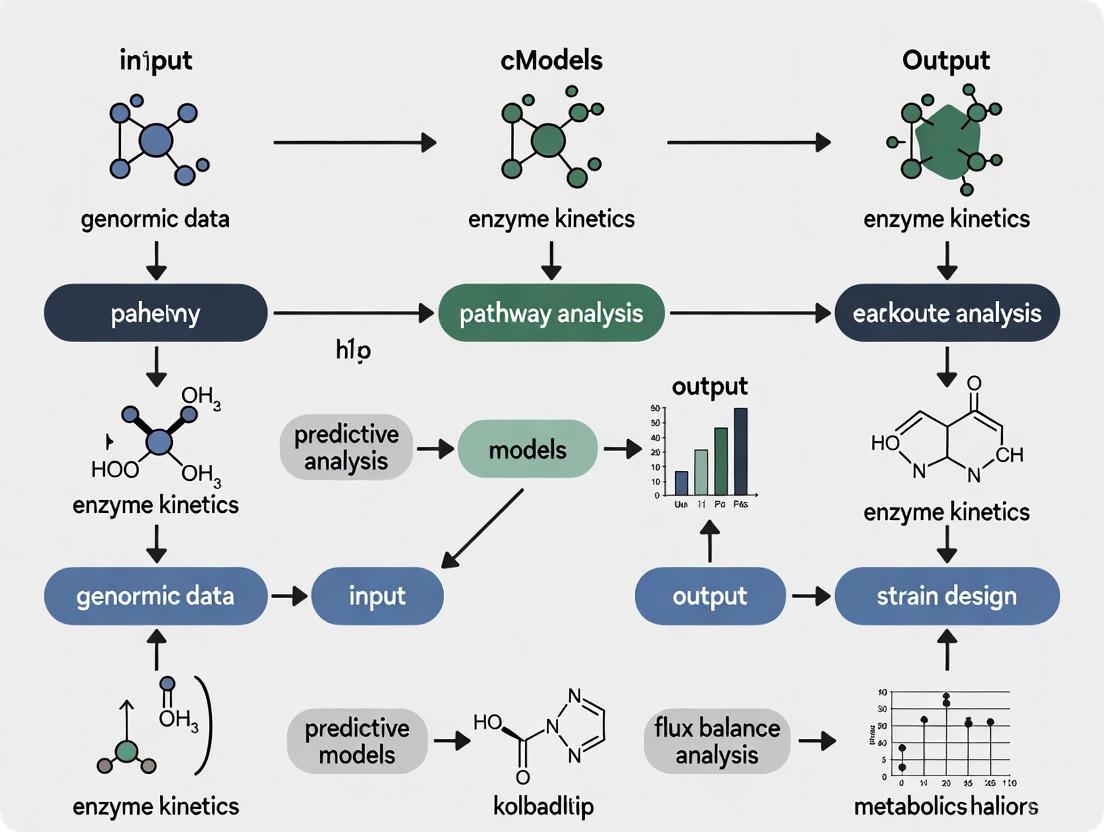
Enzyme-constrained metabolic models (ecModels) represent a transformative advancement over traditional genome-scale metabolic models by integrating catalytic constraints and proteomic data.
Enzyme-Constrained Metabolic Models: A Comprehensive Guide for Biomedical Research and Therapeutic Discovery
Abstract
Enzyme-constrained metabolic models (ecModels) represent a transformative advancement over traditional genome-scale metabolic models by integrating catalytic constraints and proteomic data. This article provides a comprehensive exploration for researchers and drug development professionals, covering the foundational principles of ecModels, key methodologies including GECKO, AutoPACMEN, and ECMpy frameworks, and their diverse applications from metabolic engineering to drug discovery. We detail practical approaches for parameter optimization and kcat prediction using deep learning tools like DLKcat, present rigorous model validation techniques, and compare predictive capabilities across different platforms. Through case studies in cancer research and industrial biotechnology, we demonstrate how ecModels enable more accurate prediction of cellular phenotypes, identification of therapeutic vulnerabilities, and design of efficient microbial cell factories.
Understanding Enzyme Constraints: The Foundation of Next-Generation Metabolic Modeling
Constraint-Based Reconstruction and Analysis (COBRA) has revolutionized systems biology by providing a mathematical framework to study metabolic networks. Genome-scale metabolic models (GEMs) represent the biochemical reactions occurring within an organism and enable the prediction of metabolic phenotypes using computational methods like Flux Balance Analysis (FBA). However, traditional GEMs consider only stoichiometric constraints, leading to a linear increase in predicted growth and product yields as substrate uptake rates rise, which often diverges from experimental observations [1] [2].
The integration of enzymatic constraints into GEMs has emerged as a transformative advancement, addressing fundamental limitations of traditional models. Enzyme-constrained models (ecModels) incorporate kinetic parameters and proteomic limitations, enabling more accurate predictions of metabolic behaviors, including overflow metabolism and protein resource allocation [1] [3]. This evolution from GEMs to ecModels represents a significant milestone in constraint-based modeling, enhancing its applications in metabolic engineering, biotechnology, and drug development.
This protocol article details the methodologies for constructing and analyzing ecModels, framed within the broader context of a thesis on enzyme-constrained metabolic models. We provide comprehensive application notes, experimental protocols, and visualization tools to empower researchers in implementing these advanced modeling approaches.
Background and Theoretical Framework
The Need for Enzyme Constraints
Traditional GEMs assume that metabolic fluxes are constrained only by reaction stoichiometry and uptake rates. While valuable for many applications, this approach fails to account for the physiological limitations imposed by enzyme kinetics and the cellular proteome. Consequently, GEMs cannot predict the seemingly wasteful strategy of overflow metabolism, where cells utilize fermentation instead of more efficient respiration under certain conditions [1] [3].
ecModels address these limitations by incorporating fundamental physicochemical constraints:
- Enzyme kinetics: Catalytic constants (kcat values) define the maximum turnover rate for each enzyme
- Proteome allocation: The total cellular protein content limits the sum of all enzyme concentrations
- Molecular crowding: The finite physical space within cells restricts the maximum concentration of enzymes [3]
The integration of these constraints has proven particularly valuable for predicting metabolic engineering targets to enhance the production of commodity chemicals, including riboflavin, menaquinone 7, and acetoin in Bacillus subtilis [1].
Key Methodological Approaches
Several computational frameworks have been developed for constructing ecModels, each with distinct advantages:
Table 1: Comparison of Major ecModel Construction Platforms
| Platform | Primary Language | Key Features | Representative Applications |
|---|---|---|---|
| GECKO | MATLAB | Automated retrieval of kinetic parameters from BRENDA; direct integration of proteomics data | S. cerevisiae, E. coli, Homo sapiens [3] [4] |
| ECMpy | Python | Machine learning-predicted enzyme kinetics; accounts for protein subunit composition | B. subtilis (ecBSU1), E. coli [1] [2] |
| AutoPACMEN | Not specified | Simplified model structure with minimal pseudo-reactions and metabolites | Early B. subtilis models [1] |
Protocols for ecModel Reconstruction and Analysis
Protocol 1: ecModel Construction with GECKO Toolbox 3.0
The GECKO (Enhanced GEMs with Enzymatic Constraints using Kinetic and Omics data) toolbox represents one of the most comprehensive platforms for ecModel development [4]. The protocol consists of five main stages:
Stage 1: Expansion from a Starting Metabolic Model to an ecModel Structure
- Begin with a high-quality GEM in SBML format
- Add enzyme pseudometabolites and enzyme usage reactions for each metabolic reaction
- Incorporate constraints representing the total protein pool available for metabolism
Stage 2: Integration of Enzyme Turnover Numbers
- Retrieve kcat values from the BRENDA database using automated hierarchical matching
- Implement deep learning-predicted enzyme kinetics for reactions lacking experimental data
- Apply wildcard search for enzymes with missing specific EC numbers (56.03% of kcat values in ecYeast7 were obtained this way) [3]
Stage 3: Model Tuning
- Calibrate the model to reproduce known physiological growth rates
- Identify and correct kinetically limiting reactions that may create bottlenecks
- Adjust enzyme mass fraction constraints based on proteomic data
Stage 4: Integration of Proteomics Data
- Incorporate absolute protein abundance measurements from resources like PAXdb
- Calculate enzyme mass fractions using the formula: $f = \frac{\sum{i=1}^{p_num} Ai MWi}{\sum{j=1}^{g_num} Aj MWj}$ where $Ai$ and $Aj$ represent protein abundances, and $MW$ represents molecular weights [1]
- Apply individual enzyme constraints for measured proteins while constraining unmeasured enzymes by the remaining protein pool
Stage 5: Simulation and Analysis
- Perform phenotype predictions using constraint-based methods
- Analyze flux distributions under various environmental conditions
- Identify potential metabolic engineering targets
Diagram 1: GECKO 3.0 Workflow
Protocol 2: ecModel Development with ECMpy 2.0
ECMpy provides a Python-based alternative for ecModel construction, with particular emphasis on automated parameter retrieval and machine learning approaches to enhance parameter coverage [2].
Step 1: Model Preprocessing
- Systematically correct EC numbers and Gene-Protein-Reaction (GPR) relationships
- Convert metabolite and reaction identifiers to BiGG IDs for consistency
- Divide reversible reactions into pairs of irreversible reactions
- Split reactions catalyzed by multiple isoenzymes into separate reactions
Step 2: Enzyme Molecular Weight Calculation
- Download molecular weights from UniProt database according to gene IDs
- Parse 'Interaction information' in UniProt to determine subunit composition
- Calculate molecular weight for enzyme complexes using: $MW = \sum{j=1}^{m} Nj \times MWj$ where $m$ represents different subunits, and $Nj$ represents the number of jth subunits [1]
Step 3: Kinetic Parameter Acquisition
- Obtain kcat values from BRENDA and SABIO-RK databases using EC numbers
- Apply machine learning prediction to fill gaps in kinetic parameters
- Use hierarchical matching criteria when organism-specific parameters are unavailable
Step 4: Incorporation of Enzyme Constraints
- Introduce enzymatic constraint: $\sum{i=1}^{n} \frac{vi \times MWi}{\sigmai \times kcati} \leq ptot \times f$ where $ptot$ is total protein content, $f$ is enzyme mass fraction, and $\sigmai$ is enzyme saturation coefficient [1]
- Implement total enzyme amount constraint directly into the GEM
Step 5: Parameter Calibration
- Calculate enzyme cost of each reaction with biomass maximization as the objective
- Rank reactions by enzyme cost and select reactions with largest costs as candidates for correction
- Modify reaction kcat to maximal corresponding kcat in databases iteratively until growth rate reaches experimentally reported values [1]
Diagram 2: ECMpy 2.0 Workflow
Protocol 3: Analysis of Enzyme-Constrained Models
Phenotype Phase Plane (PhPP) Analysis
- Vary substrate uptake and oxygen supply rates within physiological ranges (e.g., 0-15 mmol/gDW/h glucose, 0-50 mmol/gDW/h oxygen)
- Perform parsimonious FBA (pFBA) calculations with biomass maximization as objective
- Identify optimal growth regions and phase transitions between metabolic states [1]
Growth Rate Prediction on Different Carbon Sources
- Simulate growth on multiple carbon sources (e.g., 8 substrates for B. subtilis)
- Compare prediction results with literature values
- Calculate estimation error for growth rate and normalized flux error [1]
Overflow Metabolism Simulation
- Analyze the transition between respiratory and fermentative metabolism
- Identify critical dilution rates where overflow metabolism occurs
- Examine the trade-off between biomass yield and enzyme usage efficiency
Applications and Case Studies
Case Study 1: ecBSU1 forBacillus subtilis
The construction of ecBSU1, the first genome-scale ecModel for B. subtilis, demonstrates the practical implementation of these protocols. Using ECMpy, researchers systematically updated the iBsu1147 model through GPR correction and biomass reaction standardization [1].
Table 2: Key Improvements in ecBSU1 Compared to Traditional GEM
| Feature | iBsu1147 (GEM) | ecBSU1 (ecModel) | Impact |
|---|---|---|---|
| Constraints | Stoichiometry only | Enzyme kinetics + proteome allocation | More realistic flux predictions |
| Overflow Metabolism | Unable to predict | Accurate prediction of fermentative/respiratory transitions | Explains experimental observations |
| Growth Prediction | Moderate accuracy (varies with substrate) | High accuracy across 8 carbon sources | R² = 0.94 with experimental data [1] |
| Engineering Targets | Limited identification | Enhanced identification of gene targets | Improved guidance for strain design |
The model successfully identified target genes for enhancing the yield of commodity chemicals, most of which were consistent with experimental data, while some may represent novel targets for metabolic engineering [1].
Case Study 2: ecModels for Microbial Communities
Recent advances have extended ecModel applications to microbial communities. Comparative analysis of community models reconstructed from automated tools (CarveMe, gapseq, KBase) reveals significant structural and functional differences [5].
Consensus approaches that combine multiple reconstruction tools yield models with:
- Larger number of reactions and metabolites (enhanced coverage)
- Reduced dead-end metabolites (improved network connectivity)
- Stronger genomic evidence support for reactions [5]
These consensus models facilitate more accurate prediction of metabolite exchanges and interactions in complex microbial systems.
Table 3: Key Research Reagent Solutions for ecModel Development
| Resource | Type | Function | Access |
|---|---|---|---|
| BRENDA Database | Kinetic database | Primary source of enzyme turnover numbers (kcat) | https://www.brenda-enzymes.org/ [3] |
| SABIO-RK | Kinetic database | Supplementary source of enzyme kinetic parameters | http://sabio.h-its.org/ [1] |
| UniProt | Protein database | Molecular weights and subunit composition data | https://www.uniprot.org/ [1] |
| PAXdb | Proteomics database | Protein abundance data for constraint calculation | https://pax-db.org/ [1] |
| ModelSEED | Biochemical database | Reaction database for gap-filling and validation | https://modelseed.org/ [5] |
| COBRA Toolbox | Software platform | Constraint-based modeling and simulation | https://opencobra.github.io/ [3] |
The evolution from GEMs to ecModels represents a paradigm shift in constraint-based modeling, addressing fundamental limitations through the integration of enzymatic constraints. The protocols outlined herein provide researchers with comprehensive methodologies for constructing, validating, and applying ecModels to diverse biological questions.
Future developments in this field will likely focus on:
- Enhanced machine learning approaches for kinetic parameter prediction
- Integration of multi-omics data for context-specific constraints
- Expansion to eukaryotic systems and complex microbial communities
- Development of standardized validation frameworks
As ecModels continue to mature, they will play an increasingly vital role in metabolic engineering, drug development, and fundamental biological research, enabling more accurate predictions of cellular behavior under various genetic and environmental conditions.
Enzyme-constrained metabolic models (ecModels) represent a significant advancement in systems biology by integrating catalytic and proteomic constraints into traditional genome-scale metabolic models (GEMs). While classical GEMs have been cornerstone tools for predicting cellular metabolism, they operate on stoichiometric and steady-state principles, lacking crucial information on enzyme kinetics, abundance, and the metabolic costs of protein synthesis [6]. This limitation restricts their ability to predict quantitative metabolic responses across diverse phenotypes, particularly under dynamic conditions or when subtle gene modifications are involved [6]. ecModels address this gap by explicitly incorporating enzyme turnover numbers (kcat), molecular weights, and enzyme mass fractions, enabling more accurate predictions of physiological states, metabolic fluxes, and growth rates by accounting for the inherent proteomic limitations faced by the cell [1]. The integration of these constraints has proven valuable across multiple domains, from fundamental physiological discovery to applied metabolic engineering in biotechnology and drug development [7] [1].
The theoretical foundation of ecModels rests on the principle that cellular metabolism is subject to resource allocation constraints, where the total pool of available enzyme protein is limited. These models mathematically represent the trade-off between biomass yield and enzyme usage efficiency, allowing researchers to simulate overflow metabolism and identify rate-limiting enzymes in biosynthetic pathways more effectively than traditional methods [1]. By directly coupling enzyme levels, metabolite concentrations, and metabolic fluxes within a single modeling framework, ecModels provide a more physiologically realistic representation of cellular processes, capturing dynamic regulatory effects and complex interactions that steady-state models cannot [6]. Recent methodological advancements, increased availability of enzyme kinetic parameters, and enhanced computational resources have accelerated the development and application of ecModels across diverse organisms, paving the way for their use in high-throughput studies and large-scale metabolic engineering projects [6].
Key Methodologies and Modeling Frameworks
Comparative Analysis of ecModel Construction Approaches
The construction of enzyme-constrained models has been streamlined through several automated and semi-automated computational workflows, each with distinct advantages and implementation considerations. The table below summarizes the principal methodologies currently employed in the field.
Table 1: Comparative Analysis of ecModel Construction Methodologies
| Method | Core Approach | Key Features | Typical Applications | Considerations |
|---|---|---|---|---|
| GECKO [1] | Adds enzyme pseudo-metabolites and usage constraints | Introduces enzyme saturation coefficients; Proteomic data integration | Growth prediction; Metabolic engineering | Increased model complexity; Manual calibration in initial versions |
| AutoPACMEN [1] | Simplified constraint addition | Single pseudo-reaction and metabolite; Database-driven kcat assignment | Genome-scale ecModel construction | Less complex than GECKO; Direct parameter expansion |
| ECMpy [1] | Direct total enzyme amount constraint | Automated kcat calibration; Cost-based parameter correction | High-throughput ecModel development; Target identification | Python-based; Automated wrong parameter identification |
| CORAL [8] | Incorporates underground metabolism | Integrates promiscuous enzyme activities; Increases flux flexibility | Robustness analysis; Metabolic defect simulation | Requires knowledge of enzyme promiscuity |
| ET-OptME [7] | Layered enzyme-thermo constraints | Combines enzyme efficiency with thermodynamic feasibility | Metabolic engineering design; DBTL cycle acceleration | Mitigates thermodynamic bottlenecks |
Workflow for ecModel Construction and Implementation
The development and application of ecModels follow a systematic protocol that integrates diverse biological data into a cohesive computational framework. The following diagram illustrates the core workflow for constructing and implementing ecModels, from initial data acquisition to final model application.
Protocol for Building an Enzyme-Constrained Model Using ECMpy
Protocol 1: Genome-Scale ecModel Construction with ECMpy Workflow
This protocol describes the systematic process for constructing an enzyme-constrained metabolic model using the ECMpy workflow, as demonstrated for Bacillus subtilis (ecBSU1) [1]. The procedure integrates enzymatic constraints into a base GEM through sequential data integration and constraint layering.
Initial Requirements:
- A well-annotated genome-scale metabolic model (GEM) in standard format (SBML)
- Python environment with ECMpy installed
- Access to biological databases (UniProt, BRENDA, SABIO-RK, PAXdb)
Step-by-Step Procedure:
Model Preprocessing and Quality Control
- Systematically correct Gene-Protein-Reaction (GPR) relationships and EC number annotations using tools like GPRuler and protein homology analysis [1].
- Convert metabolite and reaction identifiers to a consistent namespace (e.g., BiGG IDs) to ensure database compatibility.
- Validate mass and charge balance for all reactions, and standardize the biomass reaction composition based on experimental data.
Data Acquisition and Curation
- Molecular Weight Data: Retrieve molecular weights (MW) for each enzyme from UniProt using gene identifiers. For enzyme complexes, calculate total MW as the sum of all subunits: ( MW = \sum{j=1}^{m} Nj \times MWj ), where ( Nj ) is the copy number of the jth subunit [1].
- Kinetic Parameters: Obtain kcat values from BRENDA and SABIO-RK databases using EC numbers as primary search terms. Resolve conflicting values through geometric mean calculation or manual literature verification [9] [1].
- Proteomic Data: Download protein abundance data from PAXdb or organism-specific databases. Calculate the enzyme mass fraction using the formula: ( f = \frac{\sum{i=1}^{p_num} Ai MWi}{\sum{j=1}^{g_num} Aj MWj} ), where ( A ) represents protein abundance, and ( p_num ) and ( g_num ) represent proteins in the model and entire proteome, respectively [1].
Enzyme Constraint Integration
- Split reversible reactions into irreversible forward and backward reactions.
- Separate reactions catalyzed by multiple isoenzymes into distinct reactions, ensuring each reaction maps to a single enzyme.
- Introduce the enzymatic capacity constraint: ( \sum{i=1}^{n} \frac{vi \times MWi}{\sigmai \times kcati} \leq p{tot} \times f ), where:
- ( vi ) = flux through reaction i
- ( \sigmai ) = enzyme saturation coefficient
- ( p_{tot} ) = total protein fraction [1]
Model Calibration and Validation
- Identify reactions with disproportionately high enzyme usage costs during biomass maximization.
- Iteratively replace problematic kcat values with the highest available database values until the growth rate reaches experimentally reported levels.
- Validate the calibrated model by predicting growth rates on different carbon sources and comparing with literature values. Calculate normalized flux errors to quantify predictive accuracy [1].
Troubleshooting Tips:
- If model fails to produce realistic growth rates: Check kcat values for transport and ATP maintenance reactions, as these often require calibration.
- If numerical instability occurs: Verify reaction directionality and thermodynamic consistency.
- If enzyme costs seem unrealistic: Ensure correct molecular weight calculations for enzyme complexes.
Advanced Applications and Experimental Protocols
Simulating Metabolic Robustness with Underground Metabolism
Protocol 2: Analyzing Metabolic Flexibility Using the CORAL Toolbox
This protocol utilizes the CORAL toolbox to integrate underground metabolism (enzyme promiscuity) into constraint-based models, enabling analysis of metabolic robustness and flexibility in response to genetic perturbations [8].
Theoretical Background: Underground metabolism refers to the native promiscuous activities of enzymes that are not their primary catalytic functions. Integrating these activities into metabolic models significantly increases predicted metabolic flux variability and improves the accuracy of simulating growth under metabolic defects [8].
Procedure:
Model Expansion with Promiscuous Activities
- Identify potential promiscuous enzyme activities through literature mining, enzyme homology analysis, or experimental data.
- Add secondary reactions for promiscuous enzymes to the base metabolic model using the CORAL toolbox.
- Define stoichiometry and directionality for each promiscuous reaction based on biochemical evidence.
Flux Variability Analysis
- Perform flux variability analysis (FVA) on both the original and CORAL-expanded models.
- Compare the range of possible fluxes for each reaction between the two models.
- Calculate the percentage increase in flux solution space: ( \frac{FV{expanded} - FV{original}}{FV_{original}} \times 100\% )
Simulating Metabolic Defects
- Simulate gene knockout strains by constraining the flux through the primary reaction of a promiscuous enzyme to zero while allowing its promiscuous activities to remain active.
- Quantify the redistribution of flux through alternative pathways and promiscuous activities.
- Compare growth rate predictions between the original and expanded models for single and double gene knockout scenarios.
Data Interpretation
- Promiscuous enzymes typically show less impact on growth when knocked out compared to non-promiscuous enzymes, demonstrating their role in metabolic robustness [8].
- Analyze flux distributions to identify which promiscuous activities contribute to growth maintenance under metabolic defects.
Application Example: When applying CORAL to an E. coli enzyme-constrained model, simulations revealed that underground metabolism increased flux flexibility by 15-30% across different conditions. Knockout simulations showed that promiscuous enzymes could compensate for metabolic defects, with only minimal enzyme redistribution to side activities required to maintain cellular function [8].
Integrating Thermodynamic and Enzyme Constraints for Metabolic Engineering
Protocol 3: Enzyme-Thermo Optimization with ET-OptME Framework
This protocol describes the implementation of ET-OptME, a framework that systematically incorporates both enzyme efficiency and thermodynamic feasibility constraints into GEMs for improved metabolic engineering design [7].
Principle: ET-OptME combines kcat-derived enzyme usage constraints with thermodynamic feasibility analysis to identify and mitigate kinetic and thermodynamic bottlenecks in metabolic pathways, resulting in more physiologically realistic intervention strategies [7].
Experimental Workflow:
Base Model Preparation
- Start with a genome-scale metabolic model with accurate GPR rules and elemental balancing.
- Ensure all reactions are elementally and charge-balanced to enable thermodynamic calculations.
Thermodynamic Constraint Layering
- Estimate standard Gibbs free energy (ΔG'°) for each reaction using group contribution or component contribution methods.
- Calculate the Gibbs free energy (ΔG') for reactions under physiological conditions: ΔG' = ΔG'° + RTln(Q), where Q is the mass-action ratio.
- Constrain reaction directionality based on thermodynamic feasibility: reactions can only proceed in the direction of negative ΔG' [7].
Enzyme Constraint Integration
- Integrate kcat values as described in Protocol 1, ensuring consistency with thermodynamic constraints.
- Add total enzyme capacity constraint based on measured or estimated cellular protein content.
Optimal Strain Design Identification
- Use the constrained model to identify gene knockout, upregulation, and downregulation targets for enhanced product synthesis.
- Compare predictions with those from stoichiometric methods (e.g., OptForce) and enzyme-constrained methods without thermodynamic constraints.
- Calculate prediction accuracy and precision metrics: ( Precision = \frac{TP}{TP+FP} ), ( Accuracy = \frac{TP+TN}{TP+TN+FP+FN} ), where TP, TN, FP, FN represent true/false positives/negatives compared to experimental data [7].
Validation Metrics: In evaluations using Corynebacterium glutamicum models for five product targets, ET-OptME demonstrated at least 292%, 161%, and 70% increase in minimal precision and at least 106%, 97%, and 47% increase in accuracy compared to stoichiometric methods, thermodynamic-constrained methods, and enzyme-constrained algorithms respectively [7].
Essential Research Reagents and Computational Tools
Successful implementation of enzyme-constrained modeling requires specialized computational tools and data resources. The following table comprehensively catalogs the essential reagents, databases, and software platforms referenced in the protocols.
Table 2: Essential Research Resources for ecModel Development
| Category | Resource Name | Primary Function | Key Features | Access Information |
|---|---|---|---|---|
| Kinetic Parameter Databases | BRENDA [9] [1] | Comprehensive enzyme kinetic data | Manually curated data; Extensive coverage | https://www.brenda-enzymes.org/ |
| SABIO-RK [9] [1] | Enzyme kinetic parameters | High-quality manual curation | http://sabio.h-its.org/ | |
| SKiD [9] | Structure-oriented kinetics dataset | Links 3D enzyme structures with kinetics | https://www.nature.com/articles/s41597-025-05829-5 | |
| Protein and Genomic Databases | UniProt [1] | Protein sequence and functional information | Molecular weights; Subunit composition | https://www.uniprot.org/ |
| PAXdb [1] | Protein abundance data | Whole-organism proteomic data integration | https://pax-db.org/ | |
| Software and Modeling Platforms | ECMpy [1] | ecModel construction workflow | Automated kcat calibration; Python-based | https://github.com/NaGeZ/ECMpy |
| CORAL [8] | Underground metabolism integration | Analyzes enzyme promiscuity effects | Reference implementation from publication | |
| ET-OptME [7] | Enzyme-thermo optimization | Combines kinetic and thermodynamic constraints | Reference implementation from publication | |
| RAVEN Toolbox [10] | De novo model reconstruction | KEGG/MetaCyc integration; Gap-filling | https://github.com/SysBioChalmers/RAVEN | |
| Modeling Frameworks | SKiMpy [6] | Kinetic modeling framework | Efficient parameter sampling; Parallelizable | https://github.com/skimpys/skimpy |
| MASSpy [6] | Kinetic modeling with mass action | COBRApy integration; Computationally efficient | https://github.com/SysBioChalmers/MASSpy |
Future Directions and Implementation Considerations
The integration of enzyme kinetics and protein allocation constraints represents a paradigm shift in metabolic modeling, moving from purely stoichiometric representations toward more physiologically realistic models. As the field advances, several emerging trends are poised to further enhance the capabilities and applications of ecModels. The incorporation of machine learning approaches with mechanistic models is accelerating parameter estimation and model construction, reducing development time from months to days while maintaining biochemical realism [6]. Additionally, the growing availability of structure-oriented kinetic datasets like SKiD, which maps kcat and Km values to three-dimensional enzyme structures, promises to enhance our understanding of the structural determinants of catalytic efficiency and enable more accurate prediction of enzyme kinetics from structural features [9].
For research teams implementing these methodologies, successful adoption requires careful consideration of several practical factors. Organizations should establish standardized workflows for continuous data integration from the expanding ecosystem of kinetic databases, ensuring model parameters remain current with the latest experimental findings. Computational infrastructure must be scaled appropriately, as enzyme-constrained models typically require greater processing power and memory than traditional GEMs, particularly for large-scale flux variability analyses or parameter sampling studies. Finally, interdisciplinary collaboration between biochemical modelers, enzymologists, and experimentalists remains essential for validating model predictions and refining parameter estimates, creating an iterative cycle of model improvement and biological discovery.
As these technical and collaborative frameworks mature, enzyme-constrained models are positioned to become indispensable tools in both basic research and applied biotechnology, enabling more accurate prediction of metabolic behavior and more efficient design of engineered biological systems for therapeutic and industrial applications.
Classical Flux Balance Analysis (FBA) employing stoichiometric genome-scale metabolic models (GEMs) has become an established tool for predicting cellular phenotypes across diverse organisms. However, these traditional models face inherent limitations as they do not explicitly account for critical biological constraints, including enzyme kinetics, enzyme availability, and proteome allocation. This often results in overly optimistic predictions of metabolic capabilities and growth rates, failing to capture well-known physiological phenomena such as overflow metabolism [11] [12]. Enzyme-constrained GEMs (ecGEMs) have emerged as a powerful extension that addresses these limitations by incorporating enzymatic constraints based on kinetic parameters and proteomic information, leading to more accurate and biologically relevant predictions [13] [14] [15].
The integration of enzyme constraints fundamentally changes the solution space of metabolic models. Where traditional FBA with a single constraint typically selects the pathway with the highest yield (biomass per substrate), ecGEMs operate under multiple constraints that better reflect cellular reality [11]. This advancement allows researchers to exclude thermodynamically unfavorable and enzymatically costly pathways that would otherwise be selected in standard FBA simulations, resulting in more realistic phenotype predictions [13].
Key Advantages of Enzyme-Constrained Models
Enhanced Prediction Accuracy for Metabolic Phenotypes
Enzyme-constrained models demonstrate superior performance in predicting critical physiological parameters compared to traditional GEMs. By incorporating enzyme kinetics and abundance data, these models can more accurately simulate cellular growth rates, substrate uptake rates, and metabolic flux distributions under various genetic and environmental conditions [14] [16] [17].
Table 1: Quantitative Improvements in Prediction Accuracy with ecGEMs
| Organism | Model Comparison | Key Improvement | Reference |
|---|---|---|---|
| Saccharomyces cerevisiae | ecGEM vs. traditional FBA | Accurately predicted increased glucose uptake (29 vs. 23 mmol/gCDW/h) and product formation in engineered strain | [16] |
| Aspergillus niger | ecGEM (eciJB1325) vs. base model | Significantly reduced flux variability in >40% of metabolic reactions | [14] [17] |
| Escherichia coli | EcoETM (with enzymatic/thermodynamic constraints) vs. iML1515 | Excluded thermodynamically unfavorable and enzymatically costly pathways | [13] |
| Myceliophthora thermophila | ecMTM vs. iYW1475 | Improved prediction of substrate hierarchy utilization from plant biomass | [18] |
A notable example comes from metabolic engineering of Saccharomyces cerevisiae for anaerobic co-production of 2,3-butanediol and glycerol. The enzyme-constrained model accurately predicted the necessary increase in glucose consumption rate (29 mmol/gCDW/h) and corresponding enzyme reallocation from ribosomes to glycolysis that was subsequently confirmed experimentally [16]. This demonstrates how ecGEMs can reliably guide metabolic engineering strategies and predict consequent physiological adaptations.
Overcoming Fundamental FBA Limitations
Traditional FBA suffers from several significant limitations that ecGEMs effectively address:
Explanation of Overflow Metabolism: Standard FBA often fails to explain why microorganisms utilize seemingly inefficient metabolic strategies such as overflow metabolism (e.g., ethanol production in yeast under aerobic conditions). Enzyme-constrained models successfully predict these metabolic behaviors by accounting for the limited proteomic capacity and different enzyme costs of alternative pathways [11] [15]. The Crabtree effect in yeast, characterized by a switch to fermentative metabolism at high glucose uptake rates, is accurately captured by ecGEMs without needing to artificially constrain substrate uptake rates [15] [17].
Reduction of Solution Space: The incorporation of enzyme constraints significantly reduces the feasible solution space of metabolic models. In the case of Aspergillus niger, enzyme constraints reduced flux variability in over 40% of metabolic reactions, leading to more precise and biologically relevant predictions [14]. This reduction in flexibility more accurately reflects the limited metabolic options available to cells under physiological constraints.
Exclusion of Infeasible Pathways: ecGEMs naturally exclude metabolically expensive or thermodynamically unfavorable pathways that might be selected in traditional FBA. For E. coli, the synthesis pathway for carbamoyl-phosphate was identified as both thermodynamically unfavorable and enzymatically costly, and was consequently excluded in the enzyme-constrained model, leading to more realistic production pathways for derived metabolites like L-arginine and orotate [13].
Experimental Protocols and Methodologies
Protocol: Constructing Enzyme-Constrained Models with GECKO
The GECKO (Genome-scale model enhancement with Enzymatic Constraints accounting for Kinetic and Omics data) toolbox provides a standardized framework for constructing enzyme-constrained models [14] [15] [17]. The following protocol outlines the key steps:
Step 1: Model Preparation
- Obtain a high-quality stoichiometric GEM in standard format (SBML)
- Convert all reversible reactions to irreversible representations
- Verify gene-protein-reaction (GPR) associations for completeness and accuracy
Step 2: Kinetic Parameter Collection
- Retrieve enzyme turnover numbers (kcat) from databases (BRENDA, SABIO-RK)
- Implement hierarchical matching: first organism-specific, then enzyme-specific, and finally reaction-specific kcat values
- For less-studied organisms, utilize machine learning-based kcat prediction tools (TurNuP, DLKcat) [18]
- Apply manual curation for key metabolic enzymes to ensure biological relevance
Step 3: Proteomics Data Integration
- Obtain absolute protein abundance data from proteomics studies or databases (PAXdb)
- For proteins without experimental data, use homolog-based abundance estimation
- Set upper bounds for enzyme usage reactions based on abundance measurements
Step 4: Model Extension
- Introduce enzymes as pseudo-metabolites in reactions with stoichiometry of 1/kcat
- Add enzyme usage reactions to represent enzyme allocation
- Incorporate pseudo-metabolites to distinguish isozyme activities
- Implement total enzyme pool constraint based on cellular protein capacity
Step 5: Model Validation and Calibration
- Validate model predictions against experimental growth rates and flux measurements
- Calibrate total enzyme pool size to match physiological protein content
- Adjust kcat values for key reactions if necessary to improve prediction accuracy
Figure 1: Workflow for constructing enzyme-constrained metabolic models using the GECKO framework.
Protocol: Validating ecGEM Predictions Experimentally
Experimental validation is crucial for verifying ecGEM predictions. The following protocol outlines key validation approaches:
Growth Rate and Substrate Consumption Measurements:
- Cultivate organisms under defined conditions (carbon sources, nutrient limitations)
- Measure growth rates (optical density or dry cell weight)
- Quantify substrate consumption rates and metabolic byproduct secretion
- Compare experimental values with model predictions across multiple conditions
Proteomic Analysis for Enzyme Allocation:
- Perform absolute quantitative proteomics to determine enzyme abundances
- Compare predicted versus measured enzyme allocation patterns
- Verify proteome reallocation in response to genetic or environmental perturbations
- For the engineered S. cerevisiae strain, proteomics confirmed the predicted reallocation from ribosomes (decrease from 25.5% to 18.5%) to glycolysis (increase from 28.7% to 43.5%) [16]
Metabolic Flux Analysis:
- Employ 13C-labeling experiments to determine intracellular flux distributions
- Compare measured fluxes with ecGEM predictions
- Validate exclusion of thermodynamically infeasible pathways
Gene Knockout Studies:
- Construct knockout strains for key metabolic enzymes
- Measure growth phenotypes and metabolic capabilities
- Verify ecGEM predictions of essential genes and metabolic adaptations
Table 2: Key Research Reagents and Computational Tools for ecGEM Development
| Resource Type | Specific Tool/Database | Function and Application | Reference |
|---|---|---|---|
| Software Toolboxes | GECKO Toolbox | MATLAB-based toolbox for automated ecGEM construction | [14] [15] |
| ECMpy | Python-based framework for ecGEM construction | [18] | |
| AutoPACMEN | Automated parameter collection and model enhancement | [19] | |
| Kinetic Databases | BRENDA | Comprehensive enzyme kinetics database | [15] [19] |
| SABIO-RK | Database for biochemical reaction kinetics | [19] | |
| Proteomics Data | PAXdb | Protein abundance database across organisms | [14] [17] |
| Machine Learning Tools | TurNuP | Predicts kcat values using protein sequences | [18] |
| DLKcat | Deep learning-based kcat prediction | [18] | |
| Modeling Frameworks | COBRA Toolbox | MATLAB package for constraint-based modeling | [14] [17] |
| COBRApy | Python implementation of COBRA tools | [15] |
Implementation Considerations and Future Directions
The successful implementation of enzyme-constrained models requires careful consideration of several factors. The quality and coverage of kinetic parameters significantly impact model performance, with organism-specific kcat values preferred over generic estimates [15] [18]. For less-studied organisms, machine learning approaches for kcat prediction have shown promising results, though manual curation of central metabolic enzymes remains advisable [18].
Computational frameworks for ecGEM construction continue to evolve, with GECKO 2.0 offering improved parameterization procedures and expanded organism coverage [15]. The integration of enzyme constraints with other cellular limitations, such as thermodynamic constraints [13] and membrane space limitations [12], represents a promising direction for further improving prediction accuracy.
Future applications of ecGEMs span basic science, metabolic engineering, and synthetic biology. In drug development, these models can enhance our understanding of metabolic adaptations in disease states and support the identification of novel therapeutic targets [12] [20]. For industrial biotechnology, ecGEMs provide powerful tools for predicting optimal enzyme allocation patterns and guiding strain engineering strategies for improved product yields [16] [18].
Figure 2: Logical framework showing how enzyme constraints enhance traditional metabolic models and enable diverse applications.
Enzyme limitations are a fundamental governing principle in cellular metabolism, determining metabolic phenotypes, flux distributions, and cellular fitness across biological kingdoms. While stoichiometric genome-scale metabolic models (GEMs) have enabled remarkable advances in predicting cellular behavior, they often yield overly optimistic predictions by not accounting for the substantial protein cost of enzymatic catalysis [12]. The incorporation of enzyme constraints into metabolic models represents a paradigm shift in systems biology, moving from what is stoichiometrically possible to what is physiologically feasible given the finite proteomic resources of the cell [21] [22].
The biological rationale for enzyme constraints stems from three fundamental physical and evolutionary realities: (1) cells operate in a molecularly crowded environment with limited capacity for enzyme deployment [23], (2) enzymatic catalysis requires substantial protein investment with significant biosynthetic costs [22], and (3) evolution has shaped metabolic networks to balance efficiency, yield, and rate under these inherent constraints [24] [23]. This application note explores the biological foundations of enzyme limitations and provides practical methodologies for incorporating these constraints into predictive metabolic models.
Table 1: Fundamental Energy Demands and Enzyme Limitations in Cellular Metabolism
| Energy Demand Scale | Quantitative Range | Governing Enzyme Constraint | Physiological State |
|---|---|---|---|
| Maintenance Energy | ~0.3 mol ATP/L/h (mammalian cells) | Molecular motors fluidizing cytoplasm [23] | Basal metabolic state |
| Metabolic Switch Threshold | ~2 mol ATP/L/h (10x maintenance) | Molecular crowding limits oxidative phosphorylation enzymes [23] | Transition to aerobic fermentation |
| Maximum Metabolic Rate | ~8 mol ATP/L/h (mammalian cells) | Absolute enzyme packing density limitation [23] | Maximum growth conditions |
Fundamental Principles of Enzyme-Driven Metabolism
The Physical Basis of Enzyme Limitations
Cellular metabolism operates within the context of an intracellular milieu crowded with macromolecules and organelles [23]. Molecular crowding imposes a fundamental limit on the maximum density of metabolic enzymes, thereby constraining maximum metabolic rate [23]. This physical limitation creates a trade-off between pathway efficiency and enzyme molecular crowding cost—at low metabolic rates, cells can utilize high-yield pathways like oxidative phosphorylation, but at high metabolic rates, they must employ pathways with higher horsepower per enzyme volume, such as fermentation [23].
The entropic pressure of molecular crowding can be quantified as:
[ PS \approx \frac{kB T}{V_c} \ln \frac{\Phi}{\Phi - \phi} ]
where (kB) is Boltzmann's constant, (T) is temperature, (Vc) is crowder volume, (\Phi) is maximum packing density, and (\phi) is excluded volume fraction [23]. Cells counteract this entropic pressure through ATP-driven molecular motors that fluidize the cytoplasm, representing a significant component of the maintenance energy demand [23].
Evolutionary Retention of Non-Enzymatic Reactions
Despite the evolution of highly specific enzymes, modern metabolism retains numerous non-enzymatic reactions that occur either spontaneously or through metal catalysis [24]. These non-enzymatic reactions divide into three classes: (I) broad chemical reactivity with low specificity, (II) specific reactions occurring exclusively non-enzymatically, and (III) reactions occurring parallel to enzyme functions [24]. The retention of Class III reactions, which operate alongside enzymatic counterparts, demonstrates that enzyme constraints have shaped metabolic network evolution, with many enzymes functioning primarily to prevent undesirable side products rather than to enable thermodynamically favorable reactions [24].
Figure 1: Fundamental principles of enzyme constraints in cellular metabolism, showing physical and evolutionary factors that govern metabolic network structure and function.
Methodological Approaches for Incorporating Enzyme Constraints
Enzyme-Constrained Genome-Scale Metabolic Models (ecGEMs)
Several computational frameworks have been developed to incorporate enzyme constraints into genome-scale metabolic models, significantly improving phenotype predictions [21] [22]. The core mathematical formulation introduces an enzymatic constraint to traditional flux balance analysis:
[ \sum{i=1}^{n} \frac{vi \cdot MWi}{\sigmai \cdot k{cat,i}} \leq p{tot} \cdot f ]
where (vi) is metabolic flux, (MWi) is enzyme molecular weight, (k{cat,i}) is turnover number, (\sigmai) is enzyme saturation coefficient, (p_{tot}) is total protein fraction, and (f) is the mass fraction of enzymes [21].
Table 2: Comparison of Major ecGEM Construction Frameworks
| Framework | Mathematical Approach | Key Features | Organisms Applied |
|---|---|---|---|
| GECKO [22] | Enhances GEM with enzyme usage reactions | Automated BRENDA parameter retrieval; proteomics integration | S. cerevisiae, E. coli, H. sapiens |
| ECMpy [21] [18] | Direct enzyme constraint without S-matrix modification | Simplified workflow; machine learning kcat prediction | E. coli, M. thermophila, B. subtilis |
| AutoPACMEN [18] | Combined MOMENT and GECKO principles | Automatic enzyme data retrieval from databases | C. ljungdahlii, S. coelicolor |
| MOMENT [12] | Metabolic modeling with enzyme kinetics | Incorporates known enzyme kinetic parameters | E. coli, S. cerevisiae |
Experimental Protocol: Constructing an Enzyme-Constrained Model with ECMpy
Protocol 1: Enzyme-Constrained Model Construction Using ECMpy
Research Reagent Solutions:
- Genome-Scale Metabolic Model: Stoichiometric model in JSON or SBML format (e.g., iML1515 for E. coli)
- Enzyme Kinetic Parameters: kcat values from BRENDA, SABIO-RK, or machine learning prediction tools (TurNuP, DLKcat)
- Molecular Weight Data: Enzyme molecular weights from UniProt or model-specific databases
- Protein Content Constraint: Experimentally determined total enzyme mass fraction for target organism
Methodology:
- Model Preparation: Convert reversible reactions to irreversible representations to accommodate direction-specific kcat values [21].
- Enzyme Data Integration: Collect kcat values and molecular weights for each reaction enzyme:
- For isoenzymes: Split reaction into multiple isoenzyme-catalyzed reactions
- For enzyme complexes: Use minimum kcat/MW value among complex subunits [21]
- Constraint Formulation: Implement the enzyme capacity constraint using the equation above, with organism-specific ptot and f values [21].
- Parameter Calibration: Adjust kcat values to ensure biological consistency:
- Identify reactions with enzyme usage >1% of total enzyme content
- Correct reactions where 10% of total enzyme capacity yields flux below experimentally determined values [21]
- Model Simulation: Utilize COBRApy functions for constraint-based analysis and phenotype prediction [21].
Figure 2: Workflow for constructing enzyme-constrained metabolic models using computational frameworks such as ECMpy, showing key steps from initial model preparation to final application.
Applications and Biological Insights from Enzyme-Constrained Models
Predicting Overflow Metabolism and Substrate Utilization
Enzyme-constrained models have successfully explained the long-standing puzzle of overflow metabolism—the seemingly wasteful fermentation of glucose to acetate or ethanol even in the presence of oxygen [21] [23]. Traditional stoichiometric models predict pure respiratory metabolism as optimal, but ecGEMs reveal that under high carbon uptake rates, the enzyme cost of oxidative phosphorylation becomes prohibitive due to molecular crowding constraints [23]. For E. coli, ecGEMs have demonstrated that redox balance, not just glucose abundance, drives the transition to overflow metabolism [21].
Protocol for Predicting Metabolic Engineering Targets
Protocol 2: Identifying Enzyme Optimization Targets with ecGEMs
Research Reagent Solutions:
- Enzyme-Constrained Model: Validated ecGEM for target organism (e.g., ec_iHN637 for C. ljungdahlii)
- Flux Sampling Algorithm: OptKnock or similar constraint-based optimization tools
- Proteomics Data: (Optional) Absolute protein abundances for key enzymes
- Kinetic Parameter Database: Organism-specific kcat values for alternative enzyme variants
Methodology:
- Growth-Coupled Production Analysis: Use OptKnock framework to identify reaction knockouts that enhance product formation while maintaining growth capability [25].
- Enzyme Cost Evaluation: Calculate reaction enzyme cost using: [ \text{Reaction enzyme cost}i = \frac{vi \cdot MWi}{\sigmai \cdot k{cat,i}} ] and energy synthesis enzyme cost as: [ \text{Energy synthesis enzyme cost}i = \frac{\sum{i=1}^{n} \text{Reaction enzyme cost}i}{v_{net_generated_ATP}} ] [21]
- Enzyme Usage Efficiency Trade-off Analysis: Determine the optimal balance between biomass yield and enzyme usage efficiency by minimizing total enzyme amount while maximizing growth rate at varying substrate uptake rates [21].
- Implementation in C. ljungdahlii: For mixotrophic growth targeting acetate and ethanol overproduction, identify knockouts that redirect carbon flux while maintaining CO2 fixation capability [25].
Insights from Multi-Organism ecGEM Analysis
Large-scale implementation of enzyme constraints across multiple organisms has revealed fundamental principles of proteome allocation. Analysis of enzyme-constrained models for S. cerevisiae, Yarrowia lipolytica, and Kluyveromyces marxianus under stress conditions demonstrated consistent upregulation and high saturation of enzymes in amino acid metabolism, suggesting metabolic robustness rather than optimal protein utilization as a key cellular objective under nutrient limitation [22].
Table 3: Performance Improvements with Enzyme-Constrained Models
| Organism | Traditional GEM | Enzyme-Constrained GEM | Key Improvement |
|---|---|---|---|
| E. coli [21] | iML1515 | eciML1515 | Accurate prediction of overflow metabolism and growth on 24 carbon sources |
| S. cerevisiae [22] | Yeast7 | ecYeast7 | Prediction of Crabtree effect and protein allocation profiles |
| C. ljungdahlii [25] | iHN637 | ec_iHN637 | Improved prediction of product profiles and mixotrophic growth |
| M. thermophila [18] | iYW1475 | ecMTM | Prediction of hierarchical carbon source utilization |
Future Directions and Implementation Challenges
While enzyme-constrained models represent a significant advancement in metabolic modeling, several challenges remain. Kinetic parameter coverage, especially for less-studied organisms, requires improved machine learning approaches for kcat prediction [18] [22]. Integration of proteomics data enhances model accuracy but introduces technical variability that must be accounted for [22]. Future developments will likely focus on multi-scale models that incorporate transcriptional regulation, signaling networks, and metabolic adaptation over temporal scales [26].
The biological rationale for enzyme constraints extends beyond microbial systems to human metabolism and disease. Enzyme-constrained models of human cells have already provided insights into cancer metabolism and potential therapeutic targets [22], demonstrating the broad applicability of this fundamental principle across biological systems.
Enzyme-constrained metabolic models (ecModels) represent a significant advancement over traditional stoichiometric models by incorporating fundamental enzyme kinetic and proteomic constraints. These models rely on three core quantitative parameters to accurately simulate cellular metabolism: enzyme turnover numbers (kcat), molecular weights (MWs) of enzymes, and the total enzyme pool capacity. The integration of these constraints enables more accurate predictions of metabolic phenotypes, proteome allocations, and physiological diversity across different organisms and environmental conditions [27] [21].
The kcat value, or turnover number, defines the maximum number of substrate molecules converted to product per enzyme molecule per unit time, serving as a direct measure of catalytic efficiency. Molecular weights determine the metabolic cost of enzyme synthesis, while the enzyme pool represents the finite cellular resources allocated to metabolic proteins. Together, these parameters constrain flux distributions through metabolic networks, explaining phenomena such as overflow metabolism and metabolic switches that traditional models fail to capture [21] [19].
This application note provides a comprehensive guide to the essential components of ecModels, including current methodologies for parameter acquisition, experimental protocols for kinetic characterization, and computational workflows for model construction and validation, framed within the context of ongoing research in systems biology and metabolic engineering.
Core Components of ecModels
Key Parameter Definitions and Significance
Table 1: Essential Components of Enzyme-Constrained Metabolic Models
| Parameter | Symbol | Definition | Role in ecModel | Common Units |
|---|---|---|---|---|
| Turnover Number | kcat |
Maximum substrate molecules converted per enzyme per second | Limits maximum flux through enzymatic reactions | sâ»Â¹ (or hâ»Â¹) |
| Molecular Weight | MW | Mass of one mole of the enzyme protein | Determines metabolic cost of enzyme synthesis | g/mmol |
| Enzyme Pool | P | Total mass fraction of proteome allocated to metabolic enzymes | Global constraint on all enzyme-catalyzed reactions | g/gDW |
The kcat value represents the intrinsic catalytic efficiency of an enzyme under saturating substrate conditions, defining the upper thermodynamic limit for reaction flux. Molecular weights determine the biosynthetic cost of producing and maintaining enzymes within the cell. The enzyme pool size represents the finite proteomic resources available for metabolic functions, creating competition between pathways for catalytic capacity [21] [19].
In ecModels, these parameters collectively implement the enzyme capacity constraint formalized in the following equation:
Where vi represents the flux through reaction i, σi is the enzyme saturation coefficient, ptot is the total protein content, and f is the mass fraction of enzymes in the proteome [21]. This constraint fundamentally alters model predictions by introducing protein allocation trade-offs that mirror biological reality.
Research Reagent and Computational Solutions
Table 2: Essential Research Tools for ecModel Development
| Tool Category | Specific Solutions | Primary Function | Application Context |
|---|---|---|---|
| Kinetic Databases | BRENDA, SABIO-RK | Repository of curated enzyme kinetic parameters | Primary source for experimental kcat and KM values |
| Kinetic Analysis Software | ICEKAT, renz (R package) | Calculate initial rates and kinetic parameters from raw data | Analysis of continuous enzyme kinetic assays |
| ecModel Construction Tools | ECMpy, GECKO, AutoPACMEN | Automated pipeline for building enzyme-constrained models | Integration of kinetic parameters into GEMs |
| kcat Prediction Tools | DLKcat, UniKP | Deep learning-based prediction of missing kcat values |
Genome-scale parameter estimation |
| Experimental Platforms | BMG LABTECH microplate readers | High-throughput kinetic measurements | Experimental determination of kinetic parameters |
These tools collectively enable researchers to acquire, analyze, and implement the core parameters required for ecModel construction. Database resources provide curated experimental values, analysis software facilitates parameter determination from raw data, and computational pipelines automate model construction and parameter integration [27] [21] [2].
Methodologies for Parameter Acquisition
Experimental Determination of kcat Values
Continuous Assay Protocol Using Microplate Readers
Materials:
- Purified enzyme solution
- Substrate stock solutions in appropriate buffer
- 96-well or 384-well microplates
- Microplate reader with temperature control and injectors (e.g., BMG LABTECH)
- Product standard solutions for calibration curve
Procedure:
- Prepare substrate dilutions spanning a concentration range typically from 0.1× to 10× the estimated KM value.
- Pipette 190 μL of assay buffer and 10 μL of enzyme preparation into each well.
- Program the microplate reader to inject 40 μL of substrate solution using onboard injectors.
- Configure absorbance measurements (e.g., 410 nm for p-nitrophenol assays) every second for 90 seconds at the optimal temperature (e.g., 37°C).
- Include appropriate controls: substrate without enzyme (autohydrolysis blank) and enzyme without substrate (negative control).
- Generate a product standard curve by measuring known concentrations of the reaction product under identical assay conditions [28].
Data Analysis:
- Convert raw absorbance values to product concentration using the extinction coefficient derived from the standard curve.
- Calculate initial velocities (vâ‚€) from the linear portion of the progress curve for each substrate concentration.
- Fit the [S] vs. vâ‚€ data to the Michaelis-Menten equation to determine KM and Vmax.
- Calculate
kcatusing the formula:kcat = Vmax / [E]total, where [E]total is the molar concentration of active enzyme [29] [28].
Software tools such as ICEKAT (Interactive Continuous Enzyme Analysis Tool) semi-automate initial rate calculations through multiple fitting modes, including Maximize Slope Magnitude, Linear Fit, Logarithmic Fit, and Schnell-Mendoza global fitting to the integrated Michaelis-Menten equation [29]. The R package 'renz' provides complementary analysis capabilities through both linear transformation methods and direct nonlinear regression, minimizing error propagation in parameter estimation [30].
Computational Prediction of Missing kcat Values
Deep Learning-Based Prediction (DLKcat):
For reactions lacking experimental kinetic data, deep learning approaches such as DLKcat predict kcat values using substrate structures and protein sequences as inputs. The methodology employs a graph neural network (GNN) for substrate representation and a convolutional neural network (CNN) for protein sequences, trained on curated datasets from BRENDA and SABIO-RK [27].
Protocol for Genome-Scale kcat Prediction:
- Data Curation: Compile enzyme kinetic data from BRENDA and SABIO-RK, filtering incomplete entries and ensuring unique substrate-enzyme pairs.
- Input Preparation: Convert substrates to molecular graphs from SMILES strings and split protein sequences into overlapping n-gram amino acids (typically 3-gram).
- Model Training: Configure optimal parameters (r-radius substrate subgraphs = 2; vector dimensionality = 20; time steps in GNN = 3; CNN layers = 3).
- Validation: Assess model performance using root mean square error (RMSE) and Pearson correlation coefficients on test datasets [27].
This approach has demonstrated a test set RMSE of 1.06, with predictions within one order of magnitude of experimental values, and successfully differentiates between native and underground metabolism substrates [27].
ecModel Construction Workflow
Automated Pipeline for ecModel Reconstruction
ECMpy Workflow Protocol:
- Model Preparation: Start with a genome-scale metabolic model in SBML format (e.g., iML1515 for E. coli).
- Reaction Processing: Split reversible reactions into forward and backward directions to accommodate direction-specific
kcatvalues. - Parameter Integration:
- Incorporate
kcatvalues from experimental data or computational predictions - Add enzyme molecular weights from UniProt annotations
- Define enzyme subunit composition for complex reactions
- Incorporate
- Constraint Implementation: Add the enzyme capacity constraint as a mass balance equation:
- Model Calibration: Adjust
kcatvalues and the enzyme pool size to fit experimental growth and flux data [21] [2].
Alternative tools such as AutoPACMEN implement simplified frameworks (sMOMENT) that reduce model complexity while maintaining predictive accuracy by directly incorporating enzyme constraints without adding numerous variables [19].
Model Validation and Quality Assessment
Protocol for ecModel Validation:
- Growth Rate Predictions: Simulate maximal growth rates across multiple carbon sources and compare with experimental measurements.
- Flux Predictions: Validate intracellular flux distributions against ¹³C fluxomics data where available.
- Proteome Comparisons: Compare predicted enzyme usage with experimental proteomics data.
- Phenotype Screens: Assess accuracy in predicting auxotrophies and substrate utilization patterns [21] [31].
The Bayesian calibration pipeline in DLKcat automatically adjusts parameters to improve consistency with experimental growth phenotypes and proteomic allocations [27].
Workflow Diagram
Workflow for ecModel Construction and Application
This workflow illustrates the integrated process for constructing ecModels, highlighting the critical role of kcat values, molecular weights, and enzyme pool parameters in transforming traditional GEMs into enzyme-constrained frameworks with enhanced predictive capabilities.
Applications in Metabolic Research
Predictive Phenotype Analysis
ecModels parameterized with accurate kcat values, molecular weights, and appropriate enzyme pool constraints significantly improve predictions of microbial growth phenotypes. For example, enzyme-constrained E. coli models have demonstrated superior accuracy in predicting growth rates on 24 single-carbon sources compared to traditional models [21]. Similarly, ecModels successfully explain overflow metabolism in E. coli and the Crabtree effect in S. cerevisiae by capturing the proteomic trade-offs between different metabolic pathways [21] [19].
Metabolic Engineering and Synthetic Biology
The integration of enzyme constraints dramatically alters predicted optimal metabolic engineering strategies. By accounting for the metabolic cost of enzyme expression, ecModels identify different gene knockout targets compared to traditional models. For instance, enzyme-constrained models of Clostridium ljungdahlii have been used to identify knockout strategies for enhancing production of valuable metabolites under both syngas fermentation and mixotrophic growth conditions [32].
Physiological Diversity and Proteome Allocation
ecModels facilitate comparative analysis of metabolic strategies across different organisms by linking catalytic efficiency with proteome allocation. DLKcat-based analysis of 343 yeast species revealed how kcat differences contribute to physiological diversity and evolutionary adaptation [27]. These models enable quantitative prediction of how microorganisms allocate their limited proteomic resources to different metabolic pathways under varying environmental conditions.
The essential components of kcat values, molecular weights, and enzyme pools form the foundation of next-generation enzyme-constrained metabolic models. The integration of these parameters transforms traditional stoichiometric models into predictive frameworks that accurately capture proteome allocation constraints and metabolic trade-offs. Current methodologies combining experimental determination, computational prediction, and automated model construction have made ecModels increasingly accessible for researching diverse biological systems. As these approaches continue to mature, they promise to enhance both fundamental understanding of cellular metabolism and applied efforts in metabolic engineering and drug development.
Building and Applying ecModels: Methodologies and Real-World Implementations
Genome-scale metabolic models (GEMs) have become powerful frameworks for predicting cellular phenotypes, but they possess a significant limitation: they consider only stoichiometric constraints, leading to predictions where growth and product yields increase linearly with substrate uptake rates, a pattern that often deviates from experimental observations [21] [33]. This discrepancy arises because traditional GEMs ignore the fundamental biological limitation of finite enzyme resources and their catalytic capacities. Enzyme-constrained metabolic models (ecModels) address this gap by incorporating enzymatic parameters, notably the turnover number (kcat) and enzyme molecular weight (MW), to impose additional constraints on metabolic fluxes, thereby generating more biologically realistic predictions [19] [34]. The integration of these constraints has proven essential for explaining critical metabolic phenomena, such as overflow metabolism in E. coli and the Crabtree effect in yeast, which cannot be accurately predicted by stoichiometric models alone [19] [21] [34]. Over the past decade, several computational toolboxes have been developed to automate the construction of ecModels, with GECKO, AutoPACMEN, and ECMpy representing three prominent approaches. This article provides a detailed comparison of these toolboxes, offering application notes and protocols to guide researchers in selecting and implementing the appropriate framework for their specific biological research contexts.
Toolbox Comparison: Core Methodologies and Features
The GECKO, AutoPACMEN, and ECMpy toolboxes share the common goal of enhancing GEMs with enzyme constraints but employ distinct methodological approaches and offer different features, as summarized in Table 1.
Table 1: Comprehensive Comparison of ecModel Construction Toolboxes
| Feature | GECKO | AutoPACMEN | ECMpy |
|---|---|---|---|
| Core Methodology | Expands the stoichiometric matrix (S-matrix) with enzyme pseudometabolites and usage reactions [34] [35]. | Implements a simplified MOMENT (sMOMENT) approach; uses a single pooled enzyme constraint [19] [35]. | Adds a global enzyme amount constraint directly to the model without modifying the S-matrix [21] [33]. |
| Primary Input | A starting GEM in SBML format [34]. | A starting GEM in SBML format [19]. | A starting GEM (initially iML1515 for E. coli) [21]. |
| Enzyme Kinetic Parameter Acquisition | Manual curation and deep learning predictions [2] [34]. | Automated retrieval from BRENDA and SABIO-RK databases [19] [35]. | Automated retrieval from databases (BRENDA, SABIO-RK) and machine learning prediction in v2.0 [2] [36]. |
| Handling of Protein Complexes | Explicitly considered in the model expansion [34]. | Requires correction of GPR rules and subunit composition for accurate MW [35]. | Requires consideration of subunit composition for accurate MW calculation [21] [35]. |
| Proteomics Data Integration | Direct integration of measured enzyme concentrations as flux constraints [34] [37]. | Can incorporate enzyme concentration measurements [19]. | Calculates enzyme mass fraction from proteomics data [21] [33]. |
| Key Output | An ecModel with expanded S-matrix [34]. | An sMOMENT model in standard constraint-based format [19]. | An enzyme-constrained model in JSON format compatible with COBRApy [21] [33]. |
| Model Tuning/Calibration | Includes a model tuning step to adjust parameters [34]. | Provides tools to adjust kcat and enzyme pool parameters based on flux data [19]. | Automated calibration of enzyme kinetic parameters based on enzyme usage and 13C flux data [21] [33]. |
The fundamental workflows for constructing ecModels with each toolbox can be visualized in the following diagrams, highlighting their distinct logical sequences.
Diagram 1: GECKO Toolbox Workflow
The GECKO workflow begins with a genome-scale metabolic model (GEM) in SBML format. It first expands the model structure by adding enzyme pseudometabolites and reactions that represent enzyme usage. The next critical step is the integration of enzyme turnover numbers (kcat), which can be sourced from databases or deep learning predictions. The model then undergoes a tuning process to calibrate parameters, followed by the optional integration of proteomics data to further constrain enzyme levels. Finally, the tuned ecModel is used for simulation and analysis [34].
Diagram 2: AutoPACMEN Workflow
The AutoPACMEN workflow also starts with a GEM in SBML format. It includes a preprocessing step where reversible reactions are split. A key feature is the automatic retrieval of enzymatic data (kcat and molecular weights) from databases like BRENDA and SABIO-RK. The core of the workflow is the application of the sMOMENT method, which incorporates enzyme constraints using a simplified, pooled approach. The model is then refined through parameter calibration using experimental flux data [19].
Diagram 3: ECMpy Workflow
The ECMpy workflow emphasizes simplicity. After starting with a GEM, it involves preprocessing the model and correcting Gene-Protein-Reaction (GPR) rules to ensure accurate protein complex representation. It then gathers kcat values, with version 2.0 leveraging machine learning to enhance parameter coverage. The central step is to add a global enzyme amount constraint directly to the model without altering the stoichiometric matrix. This is followed by an automated calibration process based on principles of enzyme usage and consistency with 13C flux data, resulting in an ecModel stored in JSON format for simulation with standard tools like COBRApy [21] [2] [33].
Application Notes and Experimental Protocols
Protocol for Constructing an ecModel with GECKO 3.0
The following detailed protocol, adapted from the Nature Protocols publication, outlines the construction of an ecModel using GECKO 3.0 [34].
Stage 1: ecModel Structure Expansion
- Input Preparation: Obtain a high-quality GEM for your target organism in SBML format. Ensure that gene identifiers are consistent with a source that can be mapped to UniProt IDs for accurate enzyme assignment.
- Model Enhancement: Use the GECKO functions to expand the base model. This involves:
- Adding enzymatic reactions as new columns to the S-matrix.
- Introducing enzyme pseudometabolites as new rows.
- Defining exchange reactions for each enzyme to represent their usage.
- Total Protein Pool: Introduce a metabolite representing the total protein pool and a reaction that draws from this pool to supply the required enzymes.
Stage 2: Integration of Enzyme Turnover Numbers
- kcat Collection: Collect turnover numbers for as many enzyme-catalyzed reactions as possible. GECKO 3.0 facilitates this by incorporating deep learning-predicted kcat values, which are particularly valuable for organisms with limited experimental data [34].
- kcat Assignment: Match the collected kcat values to the corresponding enzymatic reactions in the model. For reactions without a specific kcat, implement a decision process (e.g., using the minimum, maximum, or median kcat from isozymes, or employing a geometric mean of kcat values from similar organisms).
Stage 3: Model Tuning
- Simulate Growth: Perform a simulation to predict the maximal growth rate using the ecModel.
- Adjust Total Enzyme Pool: Compare the simulated growth rate with experimental data. If the prediction is too low, the total enzyme pool might be underestimated; if it is too high, the pool might be overestimated. Adjust the total protein pool constraint accordingly.
- Fit kcat Values: Systematically adjust the kcat values for reactions that are identified as flux-limited, ensuring that the model can achieve experimentally observed growth rates and flux distributions.
Stage 4: Integration of Proteomics Data
- Data Input: Incorporate absolute proteomics measurements if available.
- Apply Constraints: Use the proteomics data to set upper bounds for the respective enzyme usage reactions, thereby constraining the maximum flux based on the measured enzyme abundance [34] [37].
Stage 5: Simulation and Analysis
- Phenotype Prediction: Use the finalized ecModel to run simulations such as Flux Balance Analysis (FBA) to predict growth rates, nutrient uptake, and byproduct secretion under different conditions.
- Advanced Analysis: Leverage the ecModel for more complex analyses, including flux variability analysis (FVA), and prediction of metabolic engineering targets.
Key Research Reagent Solutions
The construction and validation of ecModels rely on a combination of computational tools and biological data resources. The table below details essential "research reagents" for this field.
Table 2: Essential Research Reagents and Resources for ecModel Construction
| Resource Type | Name | Function in ecModel Construction |
|---|---|---|
| Kinetic Database | BRENDA [19] [35] | A comprehensive enzyme database providing curated kcat values for a vast number of enzymes from diverse organisms. |
| Kinetic Database | SABIO-RK [19] [35] | A database specializing in biochemical reaction kinetics, including kinetic parameters and related rate laws. |
| Machine Learning Tool | TurNuP [18] / DLKcat [2] | Predicts kcat values for enzyme-metabolite pairs, filling gaps in experimental data and enabling ec construction for less-studied organisms. |
| Modeling Software | COBRA Toolbox [34] | A MATLAB-based suite for constraint-based modeling. Essential for simulating and analyzing models built with GECKO. |
| Modeling Software | COBRApy [21] [33] | A Python version of the COBRA toolbox, used as the simulation backend for ECMpy-generated models. |
| Protein Database | UniProt [35] | Provides protein sequences, functional information, and crucially, molecular weights (MW) for enzymes, which are needed to calculate enzyme mass constraints. |
| Complex Database | Complex Portal [35] | A resource of macromolecular complexes, which aids in determining the correct subunit composition for accurate molecular weight calculation. |
Case Studies and Applications in Research
The practical utility of ecModels is demonstrated by their successful application across various organisms to predict metabolic phenotypes and identify engineering targets.
- Predicting Overflow Metabolism in E. coli: The ECMpy toolbox was used to construct an enzyme-constrained model for E. coli, eciML1515. This model accurately simulated overflow metabolism—the production of acetate under high glucose conditions—which the standard stoichiometric model could not explain. By analyzing enzyme costs, the model revealed that redox balance, rather than just ATP yield, is a key driver of this metabolic switch in E. coli [21] [33].
- Guiding Metabolic Engineering for Amino Acid Production: An enzyme-constrained model for Corynebacterium glutamicum (ecCGL1) was built using the ECMpy workflow. This model was employed to identify gene knockout and overexpression targets for enhancing L-lysine production. The predictions from ecCGL1 were consistent with previously reported successful genetic modifications, validating the model's utility in providing reliable guidance for metabolic engineering [35].
- Simulating Substrate Hierarchy in a Filamentous Fungus: The first ecModel for Myceliophthora thermophila (ecMTM) was constructed using ECMpy with machine learning-predicted kcat values. This model successfully captured the hierarchical utilization of five different carbon sources derived from plant biomass hydrolysis, a phenomenon that is difficult to predict with traditional GEMs. Furthermore, ecMTM predicted new potential metabolic engineering targets for chemical production in this industrially relevant fungus [18].
The adoption of enzyme constraints has undeniably enhanced the predictive power of genome-scale metabolic models. GECKO, AutoPACMEN, and ECMpy offer robust, automated pathways to this end. The choice among them depends on the specific research goals, available data, and desired model characteristics.
- Select GECKO when seeking a highly detailed and mechanistically explicit representation of enzyme usage, when proteomics data integration is a key component of the study, and when working within a MATLAB/COBRA Toolbox environment [34].
- Choose AutoPACMEN for a method that balances model complexity and computational efficiency, leveraging a simplified MOMENT approach and automated parameter retrieval from kinetic databases [19].
- Opt for ECMpy for a streamlined and computationally lightweight workflow that avoids model expansion and is designed for the Python/COBRApy ecosystem. Its integration of machine learning for kcat prediction makes it particularly suitable for organisms with scarce experimental kinetic data [21] [2].
As the field progresses, the continued development of these toolboxes—especially through the integration of machine learning to overcome data scarcity—is poised to make ecModels a standard and indispensable tool in fundamental metabolic research and applied metabolic engineering.
The construction of enzyme-constrained metabolic models (ecModels) has emerged as a pivotal advancement in systems biology, enabling more accurate predictions of cellular phenotypes by incorporating enzymatic constraints. A critical step in developing these models is the acquisition of reliable enzyme kinetic parameters, particularly turnover numbers (kcat), which directly constrain reaction fluxes in metabolic networks. This protocol details comprehensive methodologies for mining these essential parameters from primary databases—BRENDA and SABIO-RK—and supplementing them with custom data processing to address gaps. The acquired parameters transform stoichiometric genome-scale models into condition-specific, predictive ecModels that accurately simulate metabolic phenotypes, resource allocation, and engineering targets.
BRENDA (BRaunschweig ENzyme DAtabase) and SABIO-RK are the two most comprehensive repositories for enzyme kinetic data. The table below summarizes their core characteristics to guide researchers in selecting the appropriate source.
Table 1: Comparison of Major Kinetic Parameter Databases
| Feature | BRENDA | SABIO-RK |
|---|---|---|
| Full Name | BRaunschweig ENzyme DAtabase | SABIO Biochemical Reaction Kinetics Database |
| Year Founded | 1987 [38] | - |
| Latest Update | Release 2025.1 (2025) [38] | - |
| Primary Data | Functional enzyme & ligand information; enzyme classification, reaction & specificity, functional parameters, occurrence, structure, stability, disease [38] | Biochemical reactions and their kinetic properties, kinetic rate equations with parameters, experimental conditions [39] |
| Data Extraction | Manual curation from primary literature, text/data mining, data integration, prediction algorithms [38] | Manual curation from primary literature [40] |
| Key Strength | Comprehensive enzyme information; extensive ligand data; functional parameter statistics [38] | Focus on kinetic parameters and experimental context; advanced visualization tools for data exploration [40] |
| Visualization Tools | Functional parameter statistics (non-interactive) [40] | Interactive heat maps, parallel coordinates, scatter plots for visual data mining [40] |
Experimental Protocols for Parameter Acquisition
Automated Data Retrieval Using the AutoPACMEN Toolbox
The AutoPACMEN (Automatic integration of Protein Allocation Constraints in MEtabolic Networks) toolbox enables high-throughput, automated construction of ecModels by directly interfacing with kinetic databases [19].
Table 2: Key Software Tools for ecModel Construction
| Tool Name | Function | Application |
|---|---|---|
| AutoPACMEN | Automated creation of enzyme-constrained models; automatic read-out of enzymatic data from SABIO-RK and BRENDA [19] | Used to generate ecModels for E. coli; can be applied to any organism with a stoichiometric model [19] |
| ECMpy | Workflow for constructing enzyme-constrained models; incorporates kcat values and molecular weights [35] | Used to build ecCGL1, an enzyme-constrained model of Corynebacterium glutamicum [35] |
| GECKO | Enhances GEMs with Enzymatic Constraints using kinetic and omics data; adds enzyme usage reactions [19] | Constructed ecModel for S. cerevisiae; explains metabolic switches like the Crabtree effect [19] |
Step-by-Step Protocol:
- Input Preparation: Provide the stoichiometric model in SBML format. Ensure gene and reaction identifiers are consistent with major databases (e.g., UniProt for genes) [35].
- Database Query: AutoPACMEN automatically queries SABIO-RK and BRENDA via their APIs using EC numbers, organism names, and gene identifiers [19].
- Data Processing: The tool processes retrieved kcat values, applying organism-specific prioritization when available.
- Model Enhancement: Integrates kcat values and enzyme mass constraints into the stoichiometric model using the sMOMENT method, which minimizes computational complexity [19].
- Model Calibration: Adjusts undefined kcat values and the total enzyme pool mass (g/gDW) using experimental growth rate or flux data to improve predictive accuracy [19].
Manual Curation and Data Filtering via SABIO-RK's Visual Interface
For targeted queries or model refinement, SABIO-RK's Visual Search interface provides powerful data exploration capabilities [40].
Step-by-Step Protocol:
- Initial Query: Enter search terms (e.g., enzyme name, EC number) in the SABIO-RK search field [40].
- Visual Data Mining:
- Access the "Visual Search" tab to view interactive visualizations including heat maps, parallel coordinates, and scatter plots [40].
- Use the heat map overview to quickly scan attributes like organism, tissue, pH, and temperature across multiple entries [40].
- Apply parallel coordinates to identify relationships between multiple parameters (e.g., pH, temperature, kinetic parameters) and select data clusters by brushing across axes [40].
- Utilize scatter plots with histograms to visualize the distribution of specific kinetic parameters and detect potential outliers [40].
- Data Selection and Export: Select optimal parameter sets based on experimental context matching (e.g., physiological pH, temperature, organism) and export data for model integration.
Handling Missing and Inconsistent Data
Kinetic databases often contain gaps and variations. The following protocol addresses these challenges:
- Gap Filling: For reactions lacking kcat values:
- Prioritize organism-specific data from closely related species.
- Utilize machine learning predictors (e.g., based on enzyme substrate and reaction features) to estimate missing kcat values [19].
- Apply conservative default values (e.g., median kcat from similar enzymes) as a last resort.
- Data Consistency: Resolve conflicting values from multiple sources by:
- Giving precedence to values obtained under conditions closest to the modeled environment.
- Prioritizing data from high-throughput studies with standardized protocols.
- Using visualization tools in SABIO-RK to identify and exclude clear outliers [40].
The Scientist's Toolkit: Essential Research Reagents and Materials
Table 3: Key Research Reagents and Computational Tools for Parameter Acquisition
| Item/Tool | Function in Protocol | Application Context |
|---|---|---|
| BRENDA Database | Source of enzyme kinetic parameters, functional data, and enzyme-ligand interactions [38] | Primary resource for kcat values and enzyme characteristics; used in automated model building pipelines [19] |
| SABIO-RK Database | Source of curated biochemical reaction kinetics and experimental conditions [39] | Primary resource for context-specific kinetic parameters; essential for manual curation and data validation [40] |
| AutoPACMEN Toolbox | Automated pipeline for retrieving kinetic parameters and constructing ecModels [19] | High-throughput ecModel development; integrates data from BRENDA and SABIO-RK [19] |
| ECMpy Workflow | Python-based workflow for constructing enzyme-constrained models [35] | Building and testing ecModels for microbial species like C. glutamicum [35] |
| UniProt Database | Provider of protein sequence and functional information, including molecular weights [35] | Critical for obtaining correct molecular weights of enzyme subunits for proteomic constraints [35] |
| COBRA Toolbox | MATLAB/Python suite for constraint-based modeling and analysis [41] | Simulation and analysis of ecModels; implementation of sMOMENT method [41] |
| Mirandin B | Mirandin B, MF:C22H26O6, MW:386.4 g/mol | Chemical Reagent |
| Kanzonol D | Kanzonol D, MF:C20H18O4, MW:322.4 g/mol | Chemical Reagent |
Case Study: Application in Metabolic Engineering
The power of ecModels built using these parameter acquisition methods is demonstrated by the construction of ecCGL1, an enzyme-constrained model of Corynebacterium glutamicum for L-lysine production [35].
Implementation:
- Parameter Acquisition: Kinetic parameters were gathered using an adapted AutoPACMEN approach from BRENDA and SABIO-RK [35].
- Critical Correction: The GPRuler tool was extended to correct gene-protein-reaction (GPR) relationships and obtain quantitative subunit composition for accurate molecular weight calculation of enzyme complexes [35].
- Model Construction: The ECMpy workflow integrated these parameters to build ecCGL1, which successfully predicted metabolic phenotypes and simulated overflow metabolism [35].
- Engineering Application: The model identified several gene modification targets for enhancing L-lysine production, most of which aligned with previously reported genes, validating the approach [35].
Workflow Visualization
Database Mining and ecModel Construction Workflow
This protocol provides a comprehensive framework for acquiring kinetic parameters from BRENDA, SABIO-RK, and custom databases to construct predictive enzyme-constrained metabolic models. By leveraging both automated pipelines like AutoPACMEN and manual curation through SABIO-RK's visual tools, researchers can build context-specific ecModels that accurately simulate metabolic phenotypes. The resulting models have demonstrated significant value in metabolic engineering and biotechnology, enabling more precise prediction of enzyme targets for strain optimization and providing insights into fundamental cellular processes.
The field of industrial biotechnology is increasingly leveraging enzyme-constrained metabolic models (ecModels) to engineer microbial cell factories with enhanced production capabilities for chemicals, fuels, and pharmaceuticals. Unlike traditional stoichiometric models, ecModels incorporate constraints based on enzyme kinetics, catalytic efficiency, and protein allocation, enabling more accurate predictions of cellular behavior and identification of effective metabolic engineering targets [7] [18] [42]. This paradigm shift addresses a critical limitation of conventional models by explicitly accounting for the resource costs of protein expression and the physiological trade-offs between growth and product synthesis [43]. The integration of these sophisticated modeling approaches with advanced machine learning techniques is accelerating the development of efficient bioprocesses, moving the industry closer to sustainable, bio-based manufacturing of valuable chemicals.
Theoretical Foundations: Why Enzyme Constraints Matter
The Fundamental Growth-Synthesis Trade-off
Microbial chemical production faces an inherent growth-synthesis trade-off due to competition for the host's limited cellular resources. When engineers introduce heterologous production pathways, these systems compete with native metabolism for shared pools of metabolic precursors, energy cofactors, and gene expression machinery (ribosomes, amino acids). This competition inevitably attenuates host growth, creating a fundamental constraint on production efficiency [43]. ecModels successfully capture this trade-off by imposing constraints on total enzyme capacity based on measured cellular protein content, revealing that maximum productivity requires an optimal sacrifice in growth rate to redirect resources toward synthesis [43].
From Stoichiometric to Enzyme-Constrained Modeling
Traditional genome-scale metabolic models (GEMs) simulate metabolism using only stoichiometric constraints (mass-balance) and optimization principles, typically assuming cells maximize growth rate. While useful, these models lack physiological constraints on enzyme abundance and catalytic capacity, often leading to predictions of unrealistically high flux through thermodynamically challenging pathways [18]. ecModels address this limitation by incorporating:
- Enzyme turnover numbers (kcat values) representing catalytic efficiency
- Enzyme molecular weights for calculating mass-based allocation
- Measured total protein content as a global constraint on enzyme pool sizes
- Thermodynamic feasibility constraints to eliminate infeasible cycles [7] [18]
This multi-constraint approach significantly improves prediction accuracy for growth rates, substrate uptake rates, and metabolic flux distributions compared to traditional GEMs [18].
Table 1: Comparison of Metabolic Modeling Approaches
| Feature | Traditional GEMs | Enzyme-Constrained GEMs |
|---|---|---|
| Constraints | Mass balance, Reaction bounds | Mass balance, Enzyme kinetics, Protein capacity, Thermodynamics |
| Key Parameters | Stoichiometric coefficients | kcat values, Enzyme molecular weights, Protein content |
| Growth Predictions | Often overestimated | More physiologically accurate |
| Resource Allocation | Not explicitly considered | Explicitly models protein investment |
| Engineering Targets | May be thermodynamically infeasible | Account for enzyme cost and feasibility |
Application Note: Implementing ecModels for Bioprocess Optimization
Workflow for ecModel Construction and Application
The following diagram illustrates the comprehensive workflow for constructing and applying enzyme-constrained metabolic models to optimize microbial chemical production:
Diagram 1: ecModel Construction and Application Workflow
Protocol 1: De Novo Reconstruction of Enzyme-Constrained Metabolic Models
This protocol outlines the semiautomated platform for de novo generation of genome-scale metabolic models with enzyme constraints, adapted from established methodologies [10] [18].
Materials and Equipment
Table 2: Key Research Reagents and Computational Tools
| Item | Function/Purpose | Examples/Alternatives |
|---|---|---|
| Annotated Genome | Foundation for model reconstruction | GenBank assembly data (e.g., GCA_025026875.1 for C. ohadii) |
| Metabolic Databases | Reaction and pathway information | KEGG, MetaCyc, BiGG, BRENDA |
| Reconstruction Tools | Automated model building | RAVEN Toolbox, ModelSEED, CarveMe |
| kcat Prediction | Enzyme kinetic parameter estimation | TurNuP, DLKcat, AutoPACMEN |
| Constraint Modeling | Implementing enzyme constraints | GECKO, ECMpy, CORAL toolbox |
| Simulation Environment | Flux analysis and prediction | COBRA Toolbox, MATLAB, Python |
Step-by-Step Procedure
Draft Reconstruction
- Input annotated genome (FASTA format) into reconstruction pipeline
- Use RAVEN toolbox with both KEGG and MetaCyc databases
- KEGG-based reconstruction: Query protein sequences against pre-trained Hidden Markov Models (HMMs)
- MetaCyc-based reconstruction: Employ Blastp for querying protein sequences against curated enzymes
- Combine models from both databases into a unified draft GEM [10]
Biomass Reaction Determination
- Define biomass composition for relevant growth conditions (photoautotrophic, mixotrophic, heterotrophic)
- Categorize biomass into: DNA, RNA, proteins, carbohydrates, chlorophyll, lipids/fatty acids
- Determine coefficients using experimental data where available and genome-based estimations
- Rescale coefficients from established models (e.g., iCre1355 for C. reinhardtii) when organism-specific data is unavailable [10]
Gap-Filling and Compartmentalization
- Identify and fill metabolic gaps using pathway databases
- Assign subcellular localization using prediction tools (e.g., TargetP, WolfPSORT)
- Manually curate compartmentalization to avoid propagation of prediction errors
- Correct gene-protein-reaction (GPR) associations based on experimental evidence and KEGG annotation [10] [18]
Integration of Enzyme Constraints
- Collect enzyme kinetic parameters (kcat values) using multiple approaches:
- Database mining (BRENDA, SABIO-RK)
- Machine learning predictions (TurNuP, DLKcat)
- Experimental measurements when available
- Implement constraints using ECMpy or GECKO toolbox
- Constrain total enzyme pool based on experimentally measured protein content [18] [42]
- Collect enzyme kinetic parameters (kcat values) using multiple approaches:
Model Validation
- Compare simulated growth rates with experimental measurements
- Validate substrate uptake and secretion profiles
- Test prediction of known auxotrophies
- Verify capability to simulate metabolic adjustments under different nutrient conditions [18]
Protocol 2: Flux Analysis and Target Identification for Growth Improvement
Materials and Equipment
- Validated enzyme-constrained metabolic model
- Flux balance analysis software (COBRA Toolbox, etc.)
- Experimental growth rate and substrate uptake data
- Computing environment with sufficient memory for flux variability analysis
Step-by-Step Procedure
Growth Simulation Under Target Conditions
- Set constraints to match cultivation conditions (carbon sources, light intensity for phototrophs, nutrient limitations)
- Define objective function (typically biomass production or product synthesis)
- Perform flux balance analysis (FBA) to predict growth and flux distributions
Flux Variability Analysis (FVA)
- Perform FVA to determine range of possible fluxes through each reaction
- Compare variability between models with and without underground metabolism (promiscuous enzyme activities)
- Identify reactions with high flux flexibility as potential regulation points [42]
Comparative Flux Analysis
- Simulate fluxes across multiple microbial strains or conditions
- Identify differential flux patterns correlated with productivity
- Calculate flux control coefficients for potential engineering targets
Identification of Engineering Targets
- Apply optimization algorithms (OptKnock, OptForce) to predict gene knockout/knockdown targets
- Use MOMA (Minimization of Metabolic Adjustment) to predict adaptive evolution outcomes
- Prioritize targets based on predicted impact on productivity and feasibility of implementation
Accounting for Underground Metabolism
- Integrate promiscuous enzyme activities using CORAL toolbox
- Model resource allocation between main and side reactions
- Assess metabolic robustness to genetic perturbations [42]
Case Studies and Applications
Maximizing Chemical Production from Batch Cultures
Computational studies using host-aware modeling frameworks have revealed key design principles for engineering bacterial strains that maximize volumetric productivity and yield from batch cultures:
Strain Selection Strategy: Strains with slow growth but fast synthesis rates achieve high yields, while strains with moderate growth and synthesis rates achieve maximum productivity. Strains with very high growth rates consume most substrate for biomass rather than product, resulting in low productivity [43].
Two-Stage Production Optimization: Implementing genetic circuits that switch cells from high-growth to high-synthesis states after reaching sufficient biomass can overcome limitations of one-stage processes. Circuits that inhibit host metabolism to redirect flux to product synthesis show highest performance [43].
Enzyme Expression Tuning: For high-yield strains: high expression of synthesis enzymes but low expression of competing host enzymes. For high-productivity strains: moderate expression of both synthesis and host enzymes [43].
Table 3: Performance Metrics for Different Engineering Strategies
| Engineering Strategy | Volumetric Productivity | Product Yield | Growth Rate | Synthesis Rate |
|---|---|---|---|---|
| High Growth/Low Synthesis | Low | Low | High | Low |
| Medium Growth/Medium Synthesis | Maximum | Medium | Medium | Medium |
| Low Growth/High Synthesis | Low | High | Low | High |
| Two-Stage Process | High | High | Variable (by stage) | Variable (by stage) |
Advanced Applications: Underground Metabolism and Robustness
The integration of underground metabolism (promiscuous enzyme activities) into enzyme-constrained models reveals important insights for metabolic engineering:
Metabolic Flexibility: Inclusion of promiscuous enzyme activities increases flux variability by ~80%, providing alternative routes that enhance metabolic flexibility [42].
Robustness to Metabolic Defects: When main enzyme activities are blocked, CORAL toolbox simulations show redistribution of enzyme resources to promiscuous activities, maintaining ~30-40% of metabolic functionality and enabling cell survival [42].
Evolutionary Guidance: Understanding underground metabolism aids in predicting adaptive laboratory evolution outcomes and designing more robust production strains.
Troubleshooting Guide
| Problem | Potential Cause | Solution |
|---|---|---|
| Unrealistically high predicted growth rates | Insufficient enzyme constraints | Verify kcat values, check total protein constraint, consider additional proteome allocation constraints |
| Inability to simulate growth on known substrates | Gaps in metabolic network | Perform comprehensive gap-filling using multiple databases, check transport reactions |
| Poor prediction of substrate utilization hierarchy | Missing regulatory constraints | Incorporate additional constraints (expression, thermodynamic), verify maintenance energy requirements |
| Model instability during simulation | Thermodyamically infeasible cycles | Apply loop law constraints, verify reaction reversibility assignments |
| Discrepancy between predicted and experimental enzyme usage | Inaccurate kcat values | Curate kcat values for key reactions, use machine learning predictions with organism-specific training |
Enzyme-constrained metabolic models represent a significant advancement in our ability to predictively design microbial cell factories for chemical production. By explicitly accounting for the proteomic costs of metabolic functions, these models provide more realistic predictions and better engineering targets than traditional stoichiometric approaches. The integration of machine learning for parameter estimation, underground metabolism for robustness, and multi-scale modeling of culture dynamics will further enhance the predictive power of these tools. As the field advances, ecModels will play an increasingly central role in accelerating the DBTL (Design-Build-Test-Learn) cycle, ultimately enabling more efficient and sustainable biomanufacturing processes.
Cancer cells undergo profound metabolic reprogramming to support their rapid growth and survival, making metabolic pathways attractive targets for therapeutic intervention [44] [45]. Genome-scale metabolic models (GEMs) provide a powerful computational framework for systematically studying this rewiring of cancer metabolism. These models, particularly when enhanced with enzymatic constraints (ecModels), enable researchers to simulate metabolic flux distributions under various physiological and therapeutic conditions [46] [22]. By integrating transcriptomic, proteomic, and kinetic data, constraint-based approaches can predict how cancer cells respond to drug treatments at a systems level, offering insights into mechanisms of drug action and synergy that are difficult to obtain through experimental approaches alone [44] [47]. This application note details protocols for utilizing enzyme-constrained metabolic models to investigate drug-induced metabolic changes in cancer cells, with specific examples from recent research on kinase inhibitors in gastric cancer models.
Key Research Reagent Solutions
Table 1: Essential computational tools and resources for constraint-based modeling of cancer metabolism.
| Resource Category | Specific Tool/Resource | Function and Application |
|---|---|---|
| Metabolic Modeling Platforms | GECKO Toolbox 2.0 [22] | Enhances GEMs with enzymatic constraints using kinetic and proteomics data |
| COBRA Toolbox [22] | Provides fundamental algorithms for constraint-based reconstruction and analysis | |
| COBRApy [22] | Python implementation of COBRA methods for simulation and analysis | |
| Specialized Algorithms | TIDE (Tasks Inferred from Differential Expression) [44] [45] | Infers metabolic pathway activity changes from transcriptomic data |
| TIDE-essential [44] [45] | Variant focusing on task-essential genes without flux assumptions | |
| MTEApy [44] | Open-source Python package implementing TIDE frameworks | |
| ecFactory [46] [48] | Predicts metabolic engineering targets using ecModels | |
| Data Resources | BRENDA Database [22] | Comprehensive enzyme kinetic parameter repository |
| SABIO-RK [22] | Database for biochemical reaction kinetics | |
| Human Metabolic Models [47] | Community-developed genome-scale metabolic reconstructions |
Metabolic Network Reconstruction and Integration with Cancer Biology
The reconstruction of context-specific metabolic networks begins with a high-quality generic GEM, which is subsequently refined using omics data to represent particular cancer cell types or tissues [47]. The GECKO (Enzymatic Constraints using Kinetic and Omics data) toolbox automates the enhancement of GEMs with enzyme constraints, enabling the creation of ecModels that incorporate proteomic limitations and kinetic parameters [22]. This methodology has been successfully applied to generate enzyme-constrained models for various organisms, including Homo sapiens, providing a crucial resource for cancer metabolism research [22]. The resulting ecModels simulate metabolic behavior that more closely aligns with physiological observations by accounting for the limited cellular capacity for enzyme expression.
A critical advancement in this field is the integration of these models with transcriptomic data to infer pathway activity changes in response to therapeutic interventions. The TIDE algorithm and its recently developed variant, TIDE-essential, leverage differential gene expression data to identify metabolic tasks that are significantly altered under different conditions [44] [45]. This approach allows researchers to move beyond descriptive analyses of gene expression changes to predictive models of metabolic flux alterations, providing mechanistic insights into drug action.
Diagram 1: Workflow for building context-specific enzyme-constrained metabolic models. The pipeline integrates generic models with omics and kinetic data to generate predictive models for cancer metabolism.
Case Study: Analyzing Kinase Inhibitor Effects in Gastric Cancer
Experimental Background and Design
A recent investigation demonstrated the application of constraint-based modeling to study metabolic effects of kinase inhibitors in the AGS gastric cancer cell line [44] [45]. Researchers treated AGS cells with three kinase inhibitors—TAK1 inhibitor (TAKi), MEK inhibitor (MEKi), and PI3K inhibitor (PI3Ki)—both individually and in synergistic combinations (PI3Ki–TAKi and PI3Ki–MEKi). Transcriptomic profiling through RNA sequencing identified differentially expressed genes (DEGs) using the DESeq2 package, followed by gene set enrichment analysis to determine functional categories affected by drug treatments [44]. This experimental design generated comprehensive gene expression datasets that served as input for subsequent metabolic modeling.
The analysis revealed distinctive patterns of gene expression changes across treatment conditions. Individual treatments with MEKi induced the most significant transcriptional alterations, followed by TAKi and PI3Ki [44]. Combinatorial treatments showed both additive and synergistic effects, with PI3Ki–MEKi demonstrating particularly strong synergy evidenced by a higher proportion of unique DEGs not observed in single treatments [44]. These unique expression patterns suggested distinct mechanisms of action for the synergistic drug combinations that warranted further investigation at the metabolic level.
Metabolic Task Analysis Using TIDE Frameworks
The transcriptomic data were analyzed using both the original TIDE algorithm and the TIDE-essential variant to infer changes in metabolic pathway activity [44] [45]. The MTEApy Python package provided an open-source implementation of both frameworks, facilitating reproducible analysis of metabolic task alterations [44]. This dual approach enabled researchers to distinguish metabolic processes consistently identified by both methods, strengthening confidence in the resulting predictions.
The analysis revealed widespread down-regulation of biosynthetic pathways across all treatment conditions, with particularly strong suppression of amino acid and nucleotide metabolism [44]. These findings align with the expected effects of kinase inhibitors, which target signaling pathways that promote cell growth and proliferation, processes that require substantial biosynthetic precursor production. The consistent down-regulation of these pathways across individual and combinatorial treatments suggests a common mechanism of action targeting cancer cell anabolism.
Table 2: Key metabolic pathways altered by kinase inhibitor treatments in AGS gastric cancer cells.
| Metabolic Pathway Category | Specific Affected Pathways | Direction of Change | Treatment Condition with Strongest Effect |
|---|---|---|---|
| Amino Acid Metabolism | General amino acid biosynthesis | Down-regulation | All conditions |
| Ornithine biosynthesis | Down-regulation | PI3Ki-MEKi (synergistic) | |
| Nucleotide Metabolism | Purine and pyrimidine biosynthesis | Down-regulation | All conditions |
| Polyamine Metabolism | Polyamine biosynthesis | Down-regulation | PI3Ki-MEKi (synergistic) |
| Energy Metabolism | Mitochondrial gene expression | Down-regulation | All conditions |
| Translational Machinery | rRNA biogenesis | Down-regulation | All conditions |
| tRNA aminoacylation | Down-regulation | All conditions |
Synergistic Mechanisms in Combinatorial Treatments
The application of constraint-based modeling to combinatorial treatments revealed condition-specific metabolic alterations that provided mechanistic insights into drug synergy [44]. The PI3Ki–MEKi combination exhibited particularly strong synergistic effects on ornithine and polyamine biosynthesis pathways [44] [45]. Polyamines are essential for cell proliferation, and their depletion represents a vulnerability in cancer cells. The identification of this specific metabolic alteration suggested a mechanism for the observed therapeutic synergy between PI3K and MEK inhibition in gastric cancer cells.
To quantify synergy at the metabolic level, researchers introduced a scoring scheme that compared the effects of combination treatments with those of individual drugs [44]. This approach enabled systematic identification of metabolic processes specifically altered by drug synergies, moving beyond traditional methods that focus primarily on phenotypic measures of synergy such as cell viability. The metabolic synergy scoring provided a more nuanced understanding of how combination therapies disrupt cancer cell physiology at the network level.
Diagram 2: Signaling and metabolic pathways affected by kinase inhibitor combinations. Dashed red lines highlight synergistic effects specific to the PI3Ki-MEKi combination.
Detailed Protocol: Analyzing Drug-Induced Metabolic Changes
Prerequisite Data Collection and Preprocessing
Step 1: Transcriptomic Profiling
- Treat cancer cells (e.g., AGS gastric cancer cell line) with individual drugs and combinations across appropriate time points
- Perform RNA sequencing using standard protocols (e.g., Illumina platforms)
- Include sufficient biological replicates (minimum n=3) for robust statistical analysis
Step 2: Differential Expression Analysis
- Process raw sequencing data through standard bioinformatic pipelines
- Identify differentially expressed genes using DESeq2 [44] or similar tools
- Apply appropriate multiple testing correction (e.g., Benjamini-Hochberg FDR < 0.05)
Step 3: Context-Specific Model Reconstruction
- Obtain a relevant human metabolic reconstruction (e.g., Human1 [22])
- Generate context-specific models using transcriptomic data and appropriate algorithms
- Enhance models with enzymatic constraints using GECKO toolbox [22]
- Incorporate available proteomic data to refine enzyme capacity constraints
Metabolic Task Analysis with MTEApy
Step 4: Implement TIDE Analysis
- Install MTEApy Python package (available via PyPI or GitHub)
- Prepare differential expression data in required format
- Run TIDE algorithm to identify altered metabolic tasks:
Step 5: Apply TIDE-Essential Framework
- Execute TIDE-essential analysis as complementary approach:
Step 6: Identify Conserved and Specific Alterations
- Compare results from both TIDE frameworks
- Identify metabolic tasks consistently altered across methods
- Note condition-specific alterations, particularly in combinatorial treatments
Synergy Quantification and Validation
Step 7: Calculate Metabolic Synergy Scores
- Implement synergy scoring scheme comparing combination vs. individual treatments
- Focus on metabolic tasks showing non-additive effects in combinations
- Prioritize tasks with strong synergy scores for further investigation
Step 8: Experimental Validation
- Design targeted experiments to validate key predictions (e.g., LC-MS for metabolite levels)
- Measure flux through identified pathways (e.g., stable isotope tracing)
- Correlate metabolic changes with phenotypic responses (e.g., proliferation, apoptosis)
Applications in Drug Discovery and Development
The integration of constraint-based metabolic modeling with drug discovery pipelines offers powerful opportunities to identify novel therapeutic vulnerabilities and optimize combination therapies [44] [47]. By simulating metabolic responses to perturbations, these approaches can predict drug efficacy, identify mechanisms of resistance, and propose rational drug combinations that target complementary metabolic pathways. The ability to generate context-specific models for individual patients or cancer subtypes further enhances the potential for personalized medicine applications.
These computational approaches align with emerging trends in drug development that emphasize human-relevant models over traditional animal testing [49]. The FDA Modernization Act 2.0 has facilitated increased adoption of these alternative approaches, recognizing their potential to improve clinical translation while reducing costs and development timelines [49]. Constraint-based modeling of cancer metabolism represents a key component of this evolving paradigm, providing mechanistic insights that bridge the gap between in vitro models and clinical outcomes.
Constraint-based modeling of cancer metabolism, particularly through enzyme-constrained frameworks, provides powerful capabilities for elucidating drug-induced metabolic changes and identifying mechanisms of drug synergy. The protocols outlined in this application note demonstrate how integrating transcriptomic data with metabolic models through TIDE analysis can reveal therapeutic vulnerabilities and inform combination therapy design. The recent identification of synergistic effects on ornithine and polyamine metabolism in gastric cancer cells treated with PI3K and MEK inhibitors exemplifies the potential of these approaches to uncover non-obvious metabolic dependencies [44] [45].
Future developments in this field will likely focus on expanding multi-omic integration, incorporating additional layers of regulation such as phosphorylation and allosteric control, and developing more sophisticated methods for predicting patient-specific treatment responses. As enzyme-constrained models continue to improve in coverage and accuracy, their application in preclinical drug development is expected to grow, ultimately contributing to more effective and targeted cancer therapies.
Enzyme-constrained genome-scale models (ecGEMs) represent a significant advancement over traditional stoichiometric models by incorporating enzymatic constraints based on enzyme turnover numbers (kcat) and molecular masses. This integration more accurately captures cellular metabolism by accounting for the proteomic cost of catalyzing metabolic reactions [25] [32]. The application of ecGEMs to acetogenic bacteria like Clostridium ljungdahlii provides unprecedented opportunities for optimizing syngas fermentation processes, which convert waste gases (CO, COâ‚‚, Hâ‚‚) into valuable biochemicals [25] [32].
Clostridium ljungdahlii utilizes the Wood-Ljungdahl pathway (WLP) as its central metabolic route for autotrophic growth on syngas, fixing COâ‚‚ and CO to produce acetyl-CoA, which subsequently leads to formation of native products including acetate, ethanol, and small amounts of 2,3-butanediol and lactate [32]. This case study examines the development, validation, and application of ecGEMs for C. ljungdahlii, highlighting their transformative potential in guiding metabolic engineering strategies for enhanced syngas valorization.
Model Development and Computational Methodology
Base Model Reconstruction
The enzyme-constrained model for C. ljungdahlii (ec_iHN637) was constructed using the existing genome-scale metabolic model iHN637 as a foundation [25] [32]. The iHN637 model contains 637 genes, 785 reactions, and 698 metabolites, representing the core metabolic network of C. ljungdahlii [32]. This model provided the gene-protein-reaction (GPR) associations and stoichiometric constraints essential for subsequent enzyme integration.
Enzyme Constraint Implementation
The AutoPACMEN computational approach was employed to incorporate enzyme constraints into the base model [25] [32]. This Python-based method automatically retrieves enzyme kinetic parameters, including turnover numbers (kcat) and molecular masses, from biochemical databases such as BRENDA and SABIO-RK [32]. The key steps in this process included:
- kcat Data Collection: Enzyme turnover numbers were gathered from published datasets and databases, with preferences for organism-specific kcat values when available.
- Molecular Weight Assignment: Protein molecular weights were included to calculate enzyme capacity constraints.
- Constraint Integration: The enzyme usage information was incorporated as additional constraints to the stoichiometric matrix, effectively bounding reaction fluxes by their enzymatic capacity.
The resulting ec_iHN637 model explicitly accounts for the proteomic cost of metabolic functions, providing a more biologically realistic representation of cellular metabolism than the enzyme-free model [25].
Simulation and Optimization Techniques
The constrained model was simulated using Flux Balance Analysis (FBA) with the biomass production rate typically set as the objective function [32]. For metabolic engineering applications, the OptKnock computational framework was employed to identify gene knockout strategies that optimize the production of desired metabolites while maintaining cellular growth [25] [32]. All simulations and computational analyses were performed using Python-based computational tools, including the COBRApy package for constraint-based modeling [32].
Table 1: Key Components of the ec_iHN637 Model for C. ljungdahlii
| Component | Description | Source/Reference |
|---|---|---|
| Base Model | iHN637 (637 genes, 785 reactions, 698 metabolites) | Nagarajan et al. [32] |
| Constraint Method | AutoPACMEN (Python-based) | Bekiaris et al. [32] |
| Enzyme Parameters | kcat values, molecular masses | BRENDA, SABIO-RK [32] |
| Simulation Framework | Flux Balance Analysis (FBA) | [32] |
| Engineering Algorithm | OptKnock | [25] [32] |
Experimental Validation and Performance
Growth and Product Formation Predictions
The ec_iHN637 model demonstrated improved predictive accuracy for growth rates and product profiles compared to the original iHN637 model [25] [32]. Under autotrophic conditions with syngas as the carbon and energy source, the model accurately predicted the trade-off between biomass formation and metabolite production, closely matching experimental fermentation data [32].
For mixotrophic growth conditions (syngas with organic carbon supplementation), the enzyme-constrained model successfully predicted the enhanced growth rates and COâ‚‚ fixation capabilities observed in laboratory cultures [32]. This condition, where C. ljungdahlii simultaneously utilizes gaseous and organic substrates, resulted in improved coupling of cell growth with acetate and ethanol productivity while maintaining net COâ‚‚ fixation [32].
Proteomic Validation
The enzyme allocation patterns predicted by ec_iHN637 were consistent with known proteomic constraints in acetogenic bacteria [32]. The model accurately captured the significant protein investment required for the Wood-Ljungdahl pathway, which serves as the central COâ‚‚ fixation machinery in C. ljungdahlii [32]. This validation confirms that ecGEMs can reliably predict proteome reallocation in response to metabolic engineering interventions or environmental perturbations.
Metabolic Engineering Applications
Strain Design Strategies
The ec_iHN637 model was utilized to identify strategic gene knockouts that enhance production of valuable metabolites without compromising cellular growth [25] [32]. OptKnock simulations predicted distinct knockout strategies for different target products and growth conditions, demonstrating the context-dependent nature of optimal metabolic engineering interventions [32].
Table 2: Representative Metabolic Engineering Strategies Predicted by ec_iHN637 for C. ljungdahlii
| Target Product | Growth Condition | Proposed Knockouts | Expected Outcome |
|---|---|---|---|
| Acetate | Syngas fermentation | Strategic deletions to redirect carbon flux | Enhanced acetate yield |
| Ethanol | Mixotrophic (Syngas + Fructose) | Knockouts to minimize byproducts | Increased ethanol productivity with COâ‚‚ fixation |
| 2,3-Butanediol | Autotrophic (COâ‚‚ + Hâ‚‚) | Targeted pathway manipulations | Optimized redox balance and product yield |
| Non-native Products | Various substrate conditions | Identification of non-essential competing pathways | Diversified product portfolio |
Process Optimization Insights
Beyond genetic modifications, the ecGEM provided valuable insights for process optimization. Model simulations revealed that high hydrogen-to-carbon source ratios promote production of reduced chemicals such as butyrate, isobutyrate, and caproate [50] [51]. This finding guides gas composition optimization in industrial syngas fermentation setups to maximize value-added chemical production.
The model also highlighted the energetic advantages of mixotrophic cultivation, where simultaneous utilization of syngas and organic substrates (e.g., fructose) enhances both growth and production metrics while maintaining net carbon fixation [32]. This strategy addresses a key limitation in commercial gas fermentation - slow growth and low productivity under purely autotrophic conditions [32].
Research Protocols
Protocol 1: Construction of an Enzyme-Constrained Model for C. ljungdahlii
Purpose: To develop an enzyme-constrained genome-scale metabolic model for C. ljungdahlii using the AutoPACMEN workflow.
Materials:
- Base metabolic model (iHN637) in SBML format
- Python environment with COBRApy, AutoPACMEN, and associated dependencies
- Biochemical databases (BRENDA, SABIO-RK) for kcat values
Procedure:
- Model Preparation: Download the iHN637 model from BiGG Models database and validate using MEMOTE for quality assurance [32].
- Enzyme Data Retrieval: Use AutoPACMEN to automatically retrieve enzyme kinetic parameters (kcat values) and molecular masses from BRENDA and SABIO-RK databases [32].
- Constraint Integration: Incorporate enzyme constraints into the stoichiometric model by adding rows representing enzymes and columns representing enzyme usage, following the GECKO method [32] [18].
- Model Validation: Compare predictions of the ecGEM against experimental data for growth rates and product profiles under autotrophic and mixotrophic conditions [32].
- Parameter Refinement: Adjust kcat values for improved prediction accuracy where experimental data shows discrepancies.
Troubleshooting:
- If enzyme parameters are unavailable for specific reactions, use machine learning-based kcat prediction tools (e.g., TurNuP, DLKcat) as implemented in ECMpy workflow [18].
- For computational constraints during simulation, consider reducing the model scope to central metabolic pathways.
Protocol 2: In Silico Metabolic Engineering with OptKnock
Purpose: To identify gene knockout strategies for enhanced metabolite production using constraint-based modeling.
Materials:
- Enzyme-constrained model (ec_iHN637)
- OptKnock algorithm implementation
- Growth and production media conditions
Procedure:
- Condition Specification: Define the substrate uptake rates and environmental conditions corresponding to the target fermentation setup (e.g., syngas composition) [32].
- Objective Setting: For bi-level optimization, set biomass production as the inner objective and desired metabolite production as the outer objective [32].
- Knockout Identification: Run OptKnock simulation to identify gene knockout strategies that couple growth to enhanced production of the target metabolite.
- Strategy Evaluation: Analyze flux distributions of proposed knockout strains to verify metabolic feasibility and identify potential redox or energy imbalances.
- Condition-Specific Optimization: Repeat simulations for different substrate conditions (autotrophic, mixotrophic) to identify context-dependent engineering strategies [32].
Validation:
- Compare predicted growth rates and product yields with experimental data where available.
- Use flux variability analysis (FVA) to assess robustness of predicted phenotypes.
The Scientist's Toolkit
Table 3: Essential Research Reagents and Computational Tools for ecGEM Development
| Tool/Reagent | Type | Function/Application |
|---|---|---|
| iHN637 Model | Computational | Base metabolic model for C. ljungdahlii [32] |
| AutoPACMEN | Software Tool | Automated retrieval of enzyme parameters and constraint integration [32] |
| COBRApy | Python Package | Constraint-based reconstruction and analysis of metabolic models [32] |
| OptKnock | Algorithm | Identification of gene knockout strategies for metabolic engineering [25] [32] |
| BRENDA Database | Biochemical Database | Source of enzyme kinetic parameters (kcat values) [32] |
| MEMOTE | Software Tool | Quality assurance and testing of genome-scale metabolic models [32] |
| Condurango glycoside E3 | Condurango glycoside E3, MF:C66H98O26, MW:1307.5 g/mol | Chemical Reagent |
| Stigmast-5-ene-3,7-dione | Stigmast-5-ene-3,7-dione, MF:C29H46O2, MW:426.7 g/mol | Chemical Reagent |
Visualizations
Workflow for ecGEM Development and Application
Metabolic Engineering Strategy for Syngas Fermentation
The development and application of enzyme-constrained models for C. ljungdahlii represents a paradigm shift in metabolic engineering for syngas fermentation. The ec_iHN637 model demonstrates superior predictive capability compared to traditional stoichiometric models, enabling more reliable design of industrial strains for gas fermentation [25] [32]. The integration of enzyme constraints provides critical insights into the proteomic trade-offs that govern cellular metabolism, particularly under the energy-limiting conditions of autotrophic growth on syngas [32].
The successful application of ecGEMs to guide metabolic engineering strategies highlights their transformative potential in industrial biotechnology. By enabling in silico testing of genetic interventions and process conditions, these models accelerate the development of efficient microbial cell factories for sustainable chemical production from waste gases [25] [32]. As ecGEM methodologies continue to evolve with improved kcat prediction algorithms and integration of additional cellular constraints, their value in guiding the rational design of production strains will further increase, paving the way for more economically viable and environmentally sustainable bioprocesses.
Gastric cancer (GC) is a major cause of global cancer mortality, with limited treatment options and poor prognosis for advanced-stage disease [52]. A key characteristic of cancer cells, including gastric cancer, is the reprogramming of their metabolism to support rapid growth and survival, making metabolic pathways attractive therapeutic targets [44]. Kinase inhibitors (KIs) represent a promising class of targeted therapy that can disrupt oncogenic signalling networks and their downstream metabolic effects.
This case study investigates the metabolic consequences of kinase inhibitor treatments in gastric cancer models, utilizing an enzyme-constrained metabolic model (ecModel) approach. We detail the application of constraint-based modeling and transcriptomic profiling to analyze how kinase inhibitors alter metabolic flux in the AGS gastric cancer cell line, providing a structured protocol for researchers to replicate and extend these analyses in their own work.
Key Experimental Findings
Transcriptional and Metabolic Response to Kinase Inhibitors
Treatment of AGS gastric cancer cells with three kinase inhibitors (TAK1i, MEKi, PI3Ki) and their combinations (PI3Ki–TAKi and PI3Ki–MEKi) revealed significant transcriptomic and metabolic alterations [44].
Table 1: Differentially Expressed Genes (DEGs) in AGS Cells After KI Treatment
| Treatment Condition | Total DEGs | Up-regulated Genes | Down-regulated Genes | Metabolic DEGs |
|---|---|---|---|---|
| TAKi | ~2000 | ~1200 | ~700 | Data not specified |
| MEKi | ~2000 | ~1200 | ~700 | Data not specified |
| PI3Ki | ~2000 | ~1200 | ~700 | Data not specified |
| PI3Ki–TAKi (Combinatorial) | ~2000 | ~1200 | ~700 | Data not specified |
| PI3Ki–MEKi (Combinatorial) | >2000 | >1200 | >700 | Data not specified |
The PI3Ki–MEKi combination demonstrated potential synergistic effects, evidenced by a higher number of DEGs and a greater proportion (~25%) of unique differentially expressed genes not observed in individual treatments [44].
Table 2: Key Metabolic Pathway Alterations Identified via TIDE Algorithm
| Affected Metabolic Pathway | Regulation Direction | Treatment Condition with Strongest Effect | Biological Implication |
|---|---|---|---|
| Amino acid metabolism | Down-regulation | All conditions | Reduced biosynthetic capacity |
| Nucleotide metabolism | Down-regulation | All conditions | Impaired proliferation potential |
| Ornithine biosynthesis | Down-regulation | PI3Ki–MEKi (Synergistic) | Potential therapeutic vulnerability |
| Polyamine biosynthesis | Down-regulation | PI3Ki–MEKi (Synergistic) | Potential therapeutic vulnerability |
Identification of ALK as a Therapeutic Target
A separate kinase inhibitor screening study identified the Anaplastic Lymphoma Kinase (ALK) gene as a potential therapeutic target and prognostic biomarker in gastric cancer [52]. Three selective KIs that significantly inhibited AGP-01 gastric cancer cell viability shared ALK as a common target. High ALK expression was correlated with lower survival rates in TCGA-STAD analysis, reinforcing its clinical relevance [52].
Experimental Protocol: Analyzing KI Effects Using ecModels
Transcriptomic Profiling and Differential Expression Analysis
Purpose: To identify gene expression changes in gastric cancer cells following kinase inhibitor treatment.
Materials:
- Gastric cancer cell line (e.g., AGS or AGP-01)
- Kinase inhibitors of interest (e.g., TAK1i, MEKi, PI3Ki)
- RNA sequencing library preparation kit
- DESeq2 software package for differential expression analysis
Procedure:
- Cell Culture and Treatment: Culture gastric cancer cells in appropriate medium. Treat with individual KIs and synergistic combinations for a predetermined duration (e.g., 24-72 hours). Include DMSO-treated controls.
- RNA Extraction: Harvest cells and extract total RNA using a commercial kit. Assess RNA quality and integrity.
- Library Preparation and Sequencing: Prepare RNA sequencing libraries and sequence on an appropriate platform (e.g., Illumina).
- Differential Expression Analysis: Process raw sequencing data using a standard bioinformatics pipeline. Apply DESeq2 to identify statistically significant DEGs (adjusted p-value < 0.05 and |log2 fold change| > 1) [44].
- Functional Enrichment Analysis: Perform Gene Ontology (GO) and KEGG pathway enrichment analysis on DEGs to identify affected biological processes and pathways.
Metabolic Task Inference Using TIDE
Purpose: To infer changes in metabolic pathway activity from transcriptomic data without constructing a full context-specific model.
Materials:
- List of differentially expressed metabolic genes
- Genome-scale metabolic model (e.g., Recon3D)
- MTEApy Python package (implements TIDE framework)
Procedure:
- Data Preparation: Format the list of differentially expressed genes with their log2 fold changes and adjusted p-values.
- TIDE Implementation: Utilize the MTEApy Python package to apply the TIDE algorithm. The framework requires:
- A genome-scale metabolic model
- Differential gene expression data
- A predefined set of metabolic tasks to evaluate
- Pathway Activity Inference: Execute TIDE to calculate pathway activity scores for each treatment condition compared to control.
- TIDE-Essential Application: Run the complementary TIDE-essential algorithm, which focuses on task-essential genes without relying on flux assumptions [44].
- Synergy Scoring: Quantify metabolic synergy by comparing pathway activity changes in combination treatments versus individual drugs.
ecModel Construction and Integration
Purpose: To build an enzyme-constrained metabolic model for improved prediction of metabolic fluxes.
Materials:
- Base genome-scale metabolic model
- Enzyme kinetic parameters (kcat values from BRENDA or SABIO-RK)
- Molecular weights of enzymes
- AutoPACMEN toolbox or ECMpy Python package
Procedure:
- Base Model Selection: Obtain a comprehensive genome-scale metabolic model for human cells.
- Enzyme Data Collection: Compile enzyme kinetic parameters (kcat values) and molecular weights from databases like BRENDA or SABIO-RK [19].
- Model Enhancement: Use the AutoPACMEN toolbox to automatically incorporate enzyme constraints into the base model, following the sMOMENT method [19].
- Integration of Transcriptomic Data: Map differential expression data onto the ecModel to create a condition-specific model.
- Flux Prediction: Perform flux balance analysis with the ecModel to predict metabolic fluxes under different treatment conditions.
Signaling Pathways and Experimental Workflow
Kinase Inhibitor Targets in Gastric Cancer Signaling
Experimental Workflow for Analyzing KI Effects
Research Reagent Solutions
Table 3: Essential Research Reagents for KI Metabolic Analysis
| Reagent/Category | Specific Examples | Function/Application | Experimental Notes |
|---|---|---|---|
| Gastric Cancer Cell Lines | AGS, AGP-01, MKN45, SNU620 | In vitro models for KI screening and metabolic studies | AGP-01 derived from metastatic adenocarcinoma; MKN45 shows MET amplification [52] [53] |
| Kinase Inhibitors | TAK1i, MEKi, PI3Ki, Savolitinib, Capmatinib | Target specific kinase signaling pathways | Synergistic effects observed in PI3Ki-MEKi combination [44] |
| Analysis Software | DESeq2, MTEApy, AutoPACMEN, ECMpy | Bioinformatics analysis of transcriptomic data and ecModel construction | MTEApy implements TIDE framework; AutoPACMEN automates ecModel construction [44] [19] |
| Metabolic Models | Recon3D, Human1, iJO1366 (E. coli) | Base models for constructing enzyme-constrained models | Enzyme constraints improve flux prediction accuracy [32] |
| Enzyme Kinetics Databases | BRENDA, SABIO-RK | Sources of kcat values and enzyme molecular weights | Essential parameters for ecModel construction [19] |
The integration of enzyme-constrained metabolic modeling with transcriptomic profiling provides a powerful framework for understanding the metabolic effects of kinase inhibitors in gastric cancer. The key findings from this case study reveal:
Widespread Metabolic Down-regulation: Kinase inhibitors consistently down-regulated biosynthetic pathways, particularly in amino acid and nucleotide metabolism, reflecting impaired anabolic capacity [44].
Synergistic Effects in Combination Therapy: The PI3Ki-MEKi combination demonstrated strong synergistic effects, specifically affecting ornithine and polyamine biosynthesis pathways [44].
Novel Therapeutic Targets: Beyond the kinases initially targeted, ALK was identified as a promising biomarker and therapeutic target in gastric cancer [52].
The methodological approach outlined here enables researchers to move beyond descriptive transcriptomic changes to gain functional insights into metabolic vulnerabilities induced by kinase inhibition. The application of ecModels, in particular, enhances the prediction of metabolic fluxes under different treatment conditions and provides a more accurate representation of cellular metabolism.
This integrated protocol offers a standardized approach for identifying metabolic vulnerabilities and synergistic drug combinations, ultimately contributing to the development of more effective therapeutic strategies for gastric cancer.
Overcoming Implementation Challenges: Parameter Optimization and Advanced Solutions
Enzyme turnover numbers (kcat) are fundamental kinetic parameters that define the maximum catalytic rate of an enzyme, serving as critical inputs for enzyme-constrained genome-scale metabolic models (ecGEMs). These models enhance predictions of cellular metabolism, proteome allocation, and physiological diversity. However, the coverage of experimentally measured kcat values in databases like BRENDA and SABIO-RK remains sparse and noisy, creating a significant bottleneck for reliable ecGEM reconstruction. This application note details computational strategies and experimental protocols for kcat imputation to address this data gap, enabling more accurate metabolic modeling for research and therapeutic development.
The kcat Data Landscape and Imputation Challenges
Experimental kcat determination is resource-intensive, resulting in limited data coverage. In a typical Saccharomyces cerevisiae ecGEM, only approximately 5% of enzymatic reactions have fully matched kcat values in the BRENDA database [27]. This sparsity necessitates imputation methods to predict missing values. Key challenges include:
- Data Variability: Experimentally measured kcat values show considerable variability due to differing assay conditions (pH, cofactor availability) and experimental methods [27].
- Generalization Limitations: Predictive models often perform poorly for enzymes with <60% sequence identity to training data, sometimes performing worse than assuming a constant average kcat value [54].
- Data Structure Issues: Standard random splitting of kcat datasets can lead to overoptimistic performance estimates when closely related enzyme variants appear in both training and test sets [54].
Table 1: Key Database Sources for kcat Data Collection
| Database Name | Data Content | Access Method | Considerations |
|---|---|---|---|
| BRENDA | Comprehensive enzyme functional data including kcat values | Manual query or automated scripting via API | Considerable variability in measurement conditions [27] |
| SABIO-RK | Kinetic data and reaction parameters | Manual query or automated scripting via API | Structured kinetic data from various sources [27] |
| UniProt | Protein sequence and molecular weight data | Database download or API queries | Essential for enzyme molecular weight in ecGEM constraints [1] |
Computational kcat Imputation Strategies
Deep Learning Approaches
DLKcat is a deep learning approach that predicts kcat values from substrate structures and protein sequences using a graph neural network (GNN) for substrates and a convolutional neural network (CNN) for proteins [27].
Protocol: DLKcat Implementation Workflow
Data Preparation:
- Compile kcat measurements from BRENDA and SABIO-RK with associated substrate structures (as SMILES strings) and protein sequences.
- Filter incomplete entries and remove redundancies to create a unique dataset.
- Split data into training (80%), validation (10%), and test sets (10%) using a sequence-aware splitting strategy to prevent data leakage between highly similar sequences.
Model Architecture Configuration:
- Substrate Processing: Convert SMILES strings to molecular graphs. Use a Graph Neural Network with radius-2 substrate subgraphs and 3 time steps.
- Protein Processing: Split protein sequences into overlapping 3-gram amino acids. Process using a CNN with 3 layers.
- Set vector dimensionality to 20 for both input types.
Model Training and Validation:
- Train model with root mean square error (r.m.s.e.) as the loss function.
- Monitor performance on validation set for early stopping.
- Evaluate final model on test set, targeting r.m.s.e. of ~1.06 (predictions within one order of magnitude of experimental values) [27].
Addressing Model Limitations
Recent evaluations indicate DLKcat predictions become unreliable for enzymes with <60% sequence identity to training data, performing worse than using a constant average kcat value [54]. For mutations, DLKcat captures minimal variation across mutants not included in training data.
NNKcat offers an alternative architecture with separate substrate and protein processors to address data imbalance issues, using Attentive FP for substrates and Long Short-Term Memory (LSTM) networks for proteins. This approach demonstrates improved stability (R² = 0.54 vs. DLKcat's 0.50) and allows fine-tuning for specific enzyme classes [55].
Protocol: Model Selection and Validation
Assess Sequence Similarity:
- Calculate maximum sequence identity between your target enzymes and proteins in the model's training set.
- Use BLAST or similar tools for sequence alignment.
Evaluate Prediction Reliability:
- For sequences with >80% identity to training data, deep learning models (DLKcat, NNKcat) generally provide reliable predictions.
- For sequences with 60-80% identity, interpret predictions with caution and prioritize experimental validation.
- For sequences with <60% identity, rely on alternative methods (e.g., enzyme family averages).
Experimental Validation Priority:
- Prioritize experimental validation for predictions involving novel enzyme families or engineered mutants with low similarity to training data.
- Focus validation efforts on metabolic pathways critical to your research objectives.
Table 2: Comparison of Computational kcat Prediction Tools
| Tool Name | Approach | Input Requirements | Strengths | Limitations |
|---|---|---|---|---|
| DLKcat | GNN + CNN | Substrate (SMILES) + Protein sequence | High accuracy for similar enzymes; captures enzyme promiscuity [27] | Poor generalization to novel sequences; sensitive to data splitting [54] |
| NNKcat | Attentive FP + LSTM | Substrate (SMILES) + Protein sequence | Better stability; customizable for enzyme classes [55] | Lower performance on highly diverse enzyme sets |
| UniPK | Protein Language Models | Substrate + Protein sequence | Robust performance (R² = 0.65); captures mutation effects [55] | Complex model architecture |
| TurNup | Reaction fingerprints + Transformer | Chemical reactions + Protein sequences | Robust for enzymes without close homologs (R² = 0.33 at ≥40% identity) [55] | Moderate overall performance |
Integration of Imputed kcat Values into ecGEMs
Automated ecGEM Construction Pipelines
ECMpy 2.0 is a Python package that automates the construction and analysis of enzyme-constrained models. It automatically retrieves enzyme kinetic parameters and can incorporate machine learning-predicted kcat values to significantly enhance parameter coverage [2].
Protocol: ecGEM Reconstruction with Imputed kcat Values
Model Preparation:
- Start with a high-quality genome-scale metabolic model (GEM) with correct gene-protein-reaction (GPR) rules and EC number annotations.
- Systematically correct GPR relationships and EC numbers using tools like GPRuler and protein homology similarity [1].
kcat Data Integration:
- Collect experimental kcat values from BRENDA and SABIO-RK using EC numbers.
- Supplement missing values with imputed kcat from computational tools (DLKcat, NNKcat).
- For multi-substrate reactions, implement the kcat value for each enzyme-substrate pair.
Enzyme Molecular Weight Calculation:
- Obtain molecular weights from UniProt database.
- For enzyme complexes, calculate total molecular weight as the sum of all subunit molecular weights [1].
Model Constraining:
- Introduce enzyme capacity constraint: ∑(vi × MWi / (σi × kcat,i)) ≤ ptot × f
- where vi is flux, MWi is molecular weight, σi is enzyme saturation coefficient, ptot is total protein content, and f is enzyme mass fraction [1].
Model Calibration:
- Identify reactions with unrealistically high enzyme usage costs during simulation.
- Iteratively correct kcat values for these reactions to maximal values from databases until growth predictions match experimental data [1].
Model Validation and Application
Validated ecGEMs with imputed kcat values have successfully predicted microbial growth rates on various substrates, simulated overflow metabolism, and identified metabolic engineering targets. The ecBSU1 model of Bacillus subtilis demonstrated accurate prediction of growth rates on eight different carbon sources and identified gene targets for chemical production [1].
The Scientist's Toolkit: Research Reagent Solutions
Table 3: Essential Resources for kcat Imputation and ecGEM Construction
| Resource Category | Specific Tools/Databases | Primary Function | Application Notes |
|---|---|---|---|
| Kinetic Databases | BRENDA, SABIO-RK | Source of experimental kcat values | Always check measurement conditions; significant variability exists [27] |
| Protein Databases | UniProt | Protein sequence and molecular weight information | Essential for calculating enzyme molecular weights in ecGEMs [1] |
| ecGEM Tools | ECMpy 2.0, GECKO | Automated ecGEM construction | ECMpy 2.0 automatically integrates ML-predicted kcat values [2] |
| Modeling Environments | COBRApy, MATLAB | Metabolic flux simulation | Required for implementing and simulating ecGEMs |
| Sequence Analysis | BLAST, HMMER | Sequence similarity assessment | Critical for evaluating prediction reliability for target enzymes [54] |
| Cynanoside J | Cynanoside J, MF:C41H62O14, MW:778.9 g/mol | Chemical Reagent | Bench Chemicals |
| Oxytroflavoside G | Oxytroflavoside G, MF:C34H42O19, MW:754.7 g/mol | Chemical Reagent | Bench Chemicals |
kcat imputation through computational methods represents a powerful strategy for addressing the critical data gap in kinetic parameters for ecGEM reconstruction. While deep learning approaches show promise, particularly for enzymes with close homologs in training data, careful attention to model limitations and appropriate validation is essential. Integration of these imputed values through automated pipelines like ECMpy 2.0 enables reconstruction of high-quality ecGEMs for diverse organisms, advancing research in systems biology, metabolic engineering, and therapeutic development.
The kinetic parameter kcat, or turnover number, is a fundamental property of an enzyme that defines the maximum number of substrate molecules converted to product per enzyme active site per unit time. Accurate kcat values are essential for constructing predictive enzyme-constrained metabolic models (ecModels), which enhance classic genome-scale metabolic models by incorporating enzymatic limitations [3]. The DLKcat deep learning tool addresses the critical bottleneck of experimentally characterizing kcat values across diverse enzymes and organisms, enabling high-throughput prediction of this essential parameter from sequence and substrate information alone [56].
DLKcat Methodology and Architecture
Core Model Design
DLKcat employs a specialized deep learning architecture that integrates two parallel neural networks to process enzyme and substrate information respectively [56]:
- Protein Sequence Processing: A Convolutional Neural Network (CNN) analyzes amino acid sequences, treating them as overlapping n-grams to capture local sequence motifs and patterns critical for catalytic function.
- Substrate Structure Processing: A Graph Neural Network (GNN) represents substrates as molecular graphs, analyzing their topological structure and functional groups to understand substrate-enzyme compatibility.
These networks generate low-dimensional vector representations that are combined and processed through a neural attention mechanism to predict kcat values while simultaneously identifying which amino acid residues contribute most significantly to enzyme activity toward a specific substrate [56].
Experimental Workflow
The following diagram illustrates the complete DLKcat prediction workflow, from data input to result interpretation:
Training Data and Model Development
DLKcat was trained on a extensive dataset of over 16,000 unique entries curated from the BRENDA and SABIO-RK databases, containing experimentally measured kcat values paired with enzyme sequences and substrate structures [56]. This comprehensive training enables the model to generalize across diverse enzyme classes and organisms.
Performance Comparison of kcat Prediction Tools
Quantitative Assessment
The table below summarizes the performance metrics of DLKcat and other contemporary kcat prediction tools:
| Tool | Publication Year | Key Features | Pearson Correlation Coefficient (PCC) | RMSE | Strengths |
|---|---|---|---|---|---|
| DLKcat | 2022 | CNN + GNN architecture, attention mechanism | 0.68-0.72 [57] | ~1.0 [57] | High-throughput capability, residue importance analysis |
| TurNuP | 2023 | Gradient-boosted trees, protein language model features | Comparable to DLKcat [58] | 0.89 [57] | Better generalization for low-similarity sequences [58] |
| DeepEnzyme | 2024 | Transformer + GCN, incorporates 3D structural features | 0.77 [57] | 0.95 [57] | Superior accuracy with structural data, robust for low-similarity sequences |
| CataPro | 2025 | ProtT5 embeddings + molecular fingerprints | Higher than baseline models [59] | N/A | Enhanced accuracy and generalization on unbiased benchmarks |
| CatPred | 2025 | Protein language models, uncertainty quantification | Competitive with existing methods [58] | N/A | Reliable uncertainty estimates, out-of-distribution performance |
Application Scope and Limitations
DLKcat demonstrates particular utility for high-throughput kcat prediction across diverse organisms, enabling the reconstruction of ecModels for species with limited experimental data [56]. The model effectively captures the effects of amino acid substitutions on kcat values, providing valuable insights for protein engineering [56]. However, its performance may diminish for enzyme sequences with low similarity to those in its training set, where tools incorporating protein language model features like TurNuP or 3D structural information like DeepEnzyme may offer advantages [58] [57].
Protocol: Implementing DLKcat for ecModel Construction
Web-Based Implementation via Tamarind Bio
For researchers without specialized computational resources, DLKcat is accessible through the Tamarind Bio no-code platform [56]:
- Platform Access: Navigate to the Tamarind Bio website (tamarind.bio) and create an account.
- Tool Selection: From the available model list, select "DLKcat".
- Input Preparation:
- Enzyme Sequence: Provide the amino acid sequence in FASTA format.
- Substrate Information: Input the SMILES string of the substrate. For multi-substrate reactions, concatenate all relevant SMILES strings.
- Execution: Run the prediction model using the platform interface.
- Result Analysis: The output includes:
- Predicted kcat value (in sâ»Â¹)
- Attention weights highlighting important residues for catalytic activity
Integration with ecModel Development Workflow
The following diagram illustrates how DLKcat predictions are incorporated into ecModel construction and refinement:
Advanced Implementation: Command-Line Usage
For researchers requiring batch processing or integration into automated pipelines:
- Data Preparation: Compile a CSV file with columns for enzyme ID, amino acid sequence, and substrate SMILES.
- Model Configuration: Set appropriate parameters for the CNN and GNN architectures based on sequence length and substrate complexity.
- Batch Processing: Execute predictions for multiple enzyme-substrate pairs simultaneously.
- Result Export: Output predictions in formats compatible with ecModel construction tools like GECKO [3].
Research Reagent Solutions
The table below catalogues essential computational tools and resources for implementing DLKcat in ecModel research:
| Resource | Type | Function | Access |
|---|---|---|---|
| DLKcat Model | Deep Learning Tool | Predicts kcat values from sequence and substrate data | Tamarind Bio web server [56] |
| BRENDA Database | Kinetic Database | Source of experimental kcat values for model training and validation | https://brenda-enzymes.org/ [3] [58] |
| SABIO-RK | Kinetic Database | Repository of enzyme kinetic parameters | http://sabio.h-its.org/ [3] [58] |
| GECKO Toolbox | Modeling Software | Enhances GEMs with enzyme constraints using kcat values | GitHub: SysBioChalmers/GECKO [3] |
| ecModels Container | Model Repository | Provides continuously updated catalog of ecModels | GitHub: SysBioChalmers [3] |
| Tamarind Bio Platform | No-Code Bioinformatics | Web-based interface for running DLKcat without programming | https://tamarind.bio/ [56] |
Application Notes for ecModel Research
Enhancing Metabolic Models with DLKcat
Integrating DLKcat predictions into ecModel development significantly expands the scope of organisms and conditions that can be accurately modeled:
- Proteome Allocation Studies: DLKcat-derived kcat values enable quantitative investigation of protein resource allocation under different growth conditions [3].
- Metabolic Engineering: The ecFactory method combines DLKcat predictions with ecModels to identify gene targets for overexpression or knockout, optimizing metabolite production [48].
- Cross-Species Comparisons: DLKcat facilitates the generation of ecModels for non-model organisms, enabling comparative studies of metabolic adaptation [3].
Limitations and Complementary Approaches
While DLKcat provides valuable kcat estimates, researchers should consider:
- Validation: Critical predictions should be verified experimentally when possible, especially for non-native substrates or engineered enzymes.
- Multi-Tool Approach: Combining DLKcat with complementary tools like DeepEnzyme (for structural insights) or CatPred (for uncertainty quantification) may provide more robust predictions [58] [57].
- Context Awareness: In vitro kcat values may not fully capture in vivo enzyme performance due to cellular conditions, post-translational modifications, or metabolic context effects.
DLKcat represents a significant advancement in high-throughput kcat prediction, enabling more accurate and comprehensive construction of enzyme-constrained metabolic models. Its integration with ecModel development pipelines through platforms like GECKO and applications like ecFactory demonstrates its practical utility in metabolic engineering and systems biology research. As deep learning methodologies continue to evolve, tools like DLKcat will play an increasingly vital role in bridging the gap between genomic information and predictive metabolic modeling.
Enzyme-constrained metabolic models (ecModels) enhance traditional genome-scale metabolic models (GEMs) by incorporating enzymatic constraints, enabling more accurate predictions of cellular phenotypes. A critical step in their development is parameter calibration, where model parameters, especially enzyme turnover numbers ((k_{cat})), are adjusted so that model simulations align with experimental data. This process is essential because initial parameters gathered from databases often lead to discrepancies between predicted and observed microbial behavior, such as growth rates and substrate uptake. Calibration transforms ecModels from theoretical frameworks into powerful tools for predicting metabolic engineering targets and understanding cellular metabolism under various conditions.
Key Calibration Parameters and Workflow
Fundamental Parameters Requiring Calibration
The primary parameter requiring calibration in ecModels is the enzyme turnover number, (k{cat}), which represents the maximum number of substrate molecules converted to product per enzyme molecule per second. Accurate (k{cat}) values are crucial as they directly influence flux distributions through metabolic pathways. Additional parameters include the total enzyme mass fraction available for metabolic functions, enzyme saturation coefficients ((\sigma_i)), and molecular weights of enzymes, all contributing to the enzymatic constraint defined by the equation:
$$\sum{i=1}^{n} \frac{vi \cdot MWi}{\sigmai \cdot k_{cat,i}} \leq ptot \cdot f$$
Where (vi) is the flux through reaction (i), (MWi) is the molecular weight of the enzyme catalyzing reaction (i), (ptot) is the total protein fraction, and (f) is the mass fraction of enzymes in the proteome [21].
The following diagram illustrates the comprehensive parameter calibration workflow for enzyme-constrained metabolic models, integrating computational and experimental components:
Experimental Protocols for Model Validation
Purpose: To validate ecModel predictions of microbial growth phenotypes under different nutritional conditions.
Procedure:
- Culture Conditions: Grow the target microorganism (e.g., E. coli or M. thermophila) in minimal medium with a single carbon source (e.g., acetate, fructose, fumarate) at a concentration of 10 mmol/gDW/h [21].
- Experimental Measurements:
- Measure the maximum growth rate ((\mu_{max})) during exponential phase via optical density (OD600) measurements.
- Determine biomass dry weight by collecting cells via vacuum filtration, washing with distilled water, and lyophilizing until constant weight [18].
- Model Simulation:
- Set the upper bound of the substrate uptake reaction in the ecModel to match the experimental condition (10 mmol/gDW/h).
- Simulate growth using flux balance analysis with the enzymatic constraint.
- Validation Metric: Calculate the estimation error for growth rate using the formula:
$$estimation\ error = \frac{|v{growth,sim} - v{growth,exp}|}{v_{growth,exp}}$$
An accurate model should achieve less than 20% estimation error across multiple carbon sources [21].
13C Fluxomic Validation of Intracellular Fluxes
Purpose: To validate internal metabolic flux distributions predicted by the ecModel.
Procedure:
- Isotope Labeling:
- Grow cells on (^{13}C)-labeled substrates (e.g., [1-(^{13}C)]glucose).
- Harvest cells during mid-exponential growth phase.
- Metabolite Extraction and Analysis:
- Quench metabolism rapidly using cold methanol.
- Extract intracellular metabolites using appropriate solvents.
- Analyze labeling patterns via GC-MS or LC-MS to determine isotopic enrichment.
- Flux Calculation:
- Use software such as INCA to calculate metabolic flux distributions from the labeling data.
- Model Validation:
- Compare simulated flux distributions from the ecModel against the experimentally determined (^{13}C) fluxes.
- Calculate the normalized flux error:
$$normalized\ flux\ error = \frac{\sqrt{\sum{i=1}^{n}(v{growth,sim}^i - v{growth,exp}^i)^2}}{\sqrt{\sum{i=1}^{n}(v_{growth,exp}^i)^2}}$$
Significant deviations indicate requirements for parameter recalibration [21].
Proteomic Constraints Validation
Purpose: To ensure the model accurately reflects enzyme usage patterns.
Procedure:
- Proteome Measurement:
- Extract proteins from cells during exponential growth.
- Quantify absolute enzyme abundances using liquid chromatography with tandem mass spectrometry (LC-MS/MS) with spike-in standards.
- Data Integration:
- Calculate the mass fraction of each metabolic enzyme in the total proteome.
- Determine the total enzyme mass fraction available for metabolism ((f)) using the formula:
$$f = \frac{\sum{i=1}^{p_num} Ai MWi}{\sum{j=1}^{g_num} Aj MWj}$$
Where (Ai) and (Aj) represent abundances of metabolic and total proteins, respectively [21].
- Model Validation:
- Check if any reaction in the model requires an enzyme usage exceeding 1% of the total enzyme content.
- Identify reactions where the calculated flux ((vi = 10\% \times E{total} \times \sigmai \times k{cat,i}/MWi)) is less than the flux determined by (^{13}C) experiments.
- Both cases indicate requirements for (k{cat}) value calibration [21].
Calibration Methods and Algorithms
Systematic Parameter Calibration Approaches
Table 1: Parameter Calibration Methods for Enzyme-Constrained Models
| Method | Key Principle | Application Context | Tools/Packages |
|---|---|---|---|
| Enzyme Usage Principle | Adjust (k_{cat}) values for reactions where enzyme usage exceeds 1% of total enzyme content [21] | Identify and correct thermodynamically infeasible enzyme allocations | ECMpy, COBRApy |
| 13C Flux Consistency Principle | Calibrate (k{cat}) values when (10\% \times E{total} \times \sigmai \times k{cat,i}/MW_i) is less than experimental (^{13}C) flux [21] | Improve accuracy of internal flux predictions | ECMpy, INCA |
| Machine Learning kcat Prediction | Use neural networks (TurNuP, DLKcat) to predict organism-specific (k_{cat}) values when experimental data is scarce [18] | Non-model organisms with limited kinetic data | TurNuP, DLKcat, ECMpy 2.0 |
| Hierarchical kcat Matching | Implement matching criteria prioritizing organism-specific, then kingdom-specific kinetic parameters [22] | Improve parameter coverage for less-studied organisms | GECKO 2.0 |
| Proteomics Integration | Adjust (k_{cat}) values to fit quantitative proteomics data and enzyme saturation coefficients [22] | Context-specific model development | GECKO 2.0 |
Implementation of Calibration Algorithms
The parameter calibration process can be implemented using the following computational approach:
The algorithm systematically evaluates each (k_{cat}) value against two primary criteria. First, it identifies reactions where enzyme usage exceeds 1% of the total enzyme pool, which indicates potentially overestimated enzyme efficiency. Second, it compares the potential flux (calculated using 10% of the total enzyme pool) against experimentally determined (^{13}C) fluxes, identifying reactions with underestimated enzyme efficiency. This iterative process continues until the model predictions fall within acceptable error margins of experimental measurements [21].
Research Reagent Solutions
Table 2: Essential Research Reagents and Tools for ecModel Parameter Calibration
| Reagent/Tool | Function | Application Example |
|---|---|---|
| BRENDA Database | Comprehensive enzyme kinetic database providing (k_{cat}) values from literature [22] | Source initial (k_{cat}) values for model construction |
| SABIO-RK Database | Biochemical reaction kinetics database with curated parameters [21] | Supplement (k_{cat}) values not available in BRENDA |
| TurNuP | Machine learning tool for predicting (k_{cat}) values using protein sequence and structure [18] | Generate (k_{cat}) values for organisms with limited experimental data |
| ECMpy | Python package for automated construction and analysis of ecModels [2] | Implement calibration workflow and simulate enzyme constraints |
| GECKO 2.0 | MATLAB/Python toolbox for enhancing GEMs with enzymatic constraints [22] | Build ecModels and integrate proteomics data |
| COBRApy | Constraint-based reconstruction and analysis toolbox for metabolic models [21] | Perform FBA simulations and model manipulations |
| (^{13}C)-labeled Substrates | Isotopically labeled nutrients for metabolic flux analysis [21] | Experimental determination of intracellular fluxes |
| LC-MS/MS | Liquid chromatography with tandem mass spectrometry for proteome quantification [22] | Absolute quantification of enzyme abundances |
Case Study: ecModel Development for Myceliophthora thermophila
A recent case study demonstrating parameter calibration involved constructing an ecModel for the thermophilic fungus Myceliophthora thermophila. Researchers compared three approaches for obtaining (k_{cat}) values: AutoPACMEN, DLKcat, and TurNuP. The TurNuP machine learning approach provided the best coverage and quality of parameters, resulting in an ecModel (ecMTM) that accurately predicted:
- The trade-off between biomass yield and enzyme usage efficiency at varying glucose uptake rates
- Hierarchical utilization of five carbon sources from plant biomass hydrolysis
- Potential metabolic engineering targets for chemical production [18]
The model was calibrated using experimental growth data and showed significant improvement over the non-enzyme-constrained model in predicting realistic cellular phenotypes. This case highlights the importance of combining computational parameter prediction with experimental validation for non-model organisms.
Parameter calibration is a crucial step in developing predictive enzyme-constrained metabolic models. By systematically adjusting (k_{cat}) values and other parameters to match experimental data, researchers can transform generic metabolic reconstructions into accurate predictive tools. The protocols outlined here provide a framework for this calibration process, emphasizing the integration of multiple data types including growth rates, (^{13}C) fluxomics, and proteomics. As machine learning approaches for parameter prediction continue to improve and more comprehensive enzyme kinetics databases become available, the parameter calibration process will become more efficient, enabling the development of high-quality ecModels for a broader range of organisms in metabolic engineering and drug development.
Handling Enzyme Promiscuity and Complex Formation in Models
Enzyme promiscuity, defined as the ability of enzymes to catalyze reactions beyond their primary physiological functions, has emerged as a pivotal concept in modern systems biology and metabolic engineering [60]. This phenomenon, along with the accurate representation of enzyme complexes, presents both challenges and opportunities for constraint-based metabolic modeling. The integration of these biological realities into computational frameworks is essential for enhancing the predictive power of enzyme-constrained metabolic models (ecModels) and for understanding the remarkable flexibility of metabolic networks [42] [61].
Underground metabolism—the metabolic network comprising reactions catalyzed by enzymes acting on non-native substrates—serves as an evolutionary reservoir and provides functional redundancy that increases metabolic robustness [42] [61]. Meanwhile, correct representation of enzyme complexes, including their stoichiometric subunit composition, is equally critical as it directly influences the accurate calculation of enzyme usage constraints [35]. This application note details protocols for handling both enzyme promiscuity and complex formation within ecModels, providing researchers with methodologies to enhance model predictive accuracy for applications in biotechnology and drug development.
Key Concepts and Biological Significance
Enzyme Promiscuity: Definitions and Mechanisms
Enzyme promiscuity manifests primarily in two forms: substrate promiscuity, where an enzyme accommodates different substrates involving similar transition states, and catalytic promiscuity, where an enzyme stabilizes different transition states to facilitate distinct chemical reactions [60]. The mechanistic basis of promiscuity often involves subtle alterations to active sites that impact catalytic mechanisms while retaining the core structural fold. Promiscuous activities typically occur at lower rates compared to main activities due to reduced substrate affinity and catalytic efficiency [42].
From an evolutionary perspective, promiscuous activities provide a starting point for the natural evolution of new enzyme functions [61]. Laboratory evolution experiments demonstrate that enzymes can rapidly optimize initially weak promiscuous activities when confronted with novel growth substrates [61]. This evolutionary plasticity is now recognized as a fundamental driver of metabolic innovation and adaptability.
Metabolic Robustness and Flexibility
Incorporating enzyme promiscuity into metabolic models significantly increases metabolic flux variability, providing cells with greater flexibility to adapt to environmental changes or genetic perturbations [42]. Flux variability analysis (FVA) of ecModels with underground metabolism revealed that approximately 80% of reactions showed increased flux variability when promiscuous activities were included [42]. This expanded solution space allows cells to maintain metabolic function even when primary metabolic pathways are disrupted.
When main enzymatic activities are blocked, resource redistribution occurs where enzyme resources are reallocated to promiscuous side activities [42]. This redistribution enables promiscuous enzymes to compensate for metabolic defects, maintaining robust metabolic function and cellular growth—a phenomenon repeatedly observed in experimental evolution studies [42] [61].
Challenges in Representing Enzyme Complexes
Accurate representation of enzyme complexes in ecModels requires precise stoichiometric constraints for multi-subunit enzymes [35]. Many enzymes function as homomultimers or heteromultimers, yet molecular weight (MW) values in databases typically correspond to monomeric forms. For example, 6-phosphogluconate dehydrogenase in Corynebacterium glutamicum functions as a homodimer, requiring the MW constraint to be 105.2 kDa rather than the 52.6 kDa monomeric weight [35].
Similarly, succinyl-CoA synthetase is a heterotetramer (α₂β₂) with distinct subunits encoded by different genes [35]. Correctly specifying these quantitative subunit compositions in Gene-Protein-Reaction (GPR) rules is essential for accurate proteomic constraints in ecModels, as incorrect MW values directly impact predictions of enzyme usage and metabolic flux distributions [35].
Table 1: Computational Tools for Building Enzyme-Constrained Metabolic Models
| Tool Name | Platform | Key Features | Applicability to Promiscuity/Complexes |
|---|---|---|---|
| CORAL [42] | MATLAB | Models promiscuous enzyme activity with separate resource pools for main and side reactions | Specifically designed for underground metabolism; splits enzyme pools into subpools for each reaction |
| GECKO [42] [35] | MATLAB | Integrates enzyme constraints using kcat values and molecular weights | Can be extended with CORAL for promiscuity; requires manual correction of complex stoichiometry |
| ECMpy [35] | Python | Workflow for reconstructing ecModels with enzyme constraints | Automated reconstruction; benefits from prior complex stoichiometry correction |
| AutoPACMEN [32] [35] | Python | Automatically downloads kinetic parameters from BRENDA and SABIO-RK | Useful for initial parameter estimation; requires validation for complex-specific parameters |
| DLKcat [27] | Python | Deep learning prediction of kcat values from substrate structures and protein sequences | Predicts kcat for promiscuous activities; captures effects of mutations on enzyme efficiency |
Research Reagent Solutions
Table 2: Key Research Reagents and Resources for Experimental Validation
| Reagent/Resource | Function/Application | Relevance to Promiscuity/Complex Studies |
|---|---|---|
| EnzyMS [62] | Python-based LC-MS data analysis pipeline | Detects unanticipated enzymatic reaction products from promiscuous activities |
| EZSpecificity [63] | Machine learning model for substrate specificity prediction | Predicts enzyme-substrate interactions; identifies potential promiscuous substrates |
| GPRuler [35] | Tool for identifying protein complex stoichiometry | Corrects 'and' relationships in GPR rules based on UniProt and Complex Portal data |
| BRENDA/SABIO-RK [35] [27] | Enzyme kinetic parameter databases | Sources for kcat values; require curation for organism-specific applications |
| UniProt/Complex Portal [35] | Protein sequence and complex information databases | Provide essential data for determining subunit composition and complex molecular weights |
Protocol 1: Integrating Enzyme Promiscuity with CORAL
Conceptual Framework
Diagram 1: Conceptual framework of CORAL approach to enzyme promiscuity
Step-by-Step Implementation
Step 1: Model Reconstruction with Underground Reactions Begin with an existing genome-scale metabolic model (GEM) and identify potential promiscuous activities using databases such as BRENDA or computational tools like EZSpecificity [63] [60]. Integrate these underground reactions into the base model, ensuring no duplication of existing reactions. The resulting expanded model (denoted with 'u' suffix, e.g., iML1515u) contains both native and underground metabolic networks [42].
Step 2: Apply Enzyme Constraints Use GECKO 3.0 to integrate enzyme constraints into the expanded model by incorporating enzyme turnover numbers (kcat) and molecular masses [42]. For reactions lacking experimentally measured kcat values, employ prediction tools such as DLKcat, which uses deep learning to estimate kcat values from substrate structures and protein sequences [27].
Step 3: Restructure Enzyme Usage with CORAL Apply the CORAL toolbox to restructure enzyme usage, splitting the enzyme pool for each promiscuous enzyme into separate subpools for each reaction it catalyzes [42]. This restructuring ensures that:
- The sum of all subpools equals the original enzyme pool
- Each subpool is allocated based on the catalytic efficiency for that specific reaction
- Main activities typically receive larger resource allocations than side activities
Step 4: Define Constraints for Subpool Allocation Implement constraints that reflect biological reality, where main reactions generally receive preferential resource allocation. The mathematical representation ensures that the total enzyme usage does not exceed the available enzyme pool while allowing flexibility in distribution among different activities [42].
Simulation and Analysis
Flux Variability Analysis (FVA) with Underground Metabolism Perform FVA comparing models with and without underground reactions. Simulations consistently show that incorporating promiscuous activities increases flux variability in approximately 80% of reactions, demonstrating enhanced metabolic flexibility [42]. This analysis should be conducted under both standard and nutrient-limited conditions to fully characterize network capabilities.
Metabolic Defect Simulations To evaluate metabolic robustness, simulate defects where main enzyme activities are blocked while promiscuous activities remain functional [42]. Measure the redistribution of enzyme resources from main to side activities and assess the compensatory capacity of underground metabolism. In E. coli models, this approach identified 30 cases where non-lethal defects could be compensated through promiscuous activities [42].
Protocol 2: Handling Enzyme Complex Formation
Workflow for Complex Stoichiometry Correction
Diagram 2: Workflow for correcting enzyme complex stoichiometry in GEMs
Detailed Methodology
Step 1: GPR Rule Correction and Validation Begin with comprehensive correction of Gene-Protein-Reaction (GPR) relationships in the base model using an enhanced GPRuler tool [35]. Extend the terminology for identifying protein complexes beyond standard terms ('subunit', 'chain') to include additional descriptors such as 'component', 'binding protein', and 'assembly factor' to capture more complex formations.
Step 2: Sequence Similarity Analysis For remaining 'and' relationships not identified by GPRuler, perform protein sequence similarity analysis [35]. Calculate pairwise similarity scores and revise GPR relationships from 'and' to 'or' when significant sequence similarity exists, as similar proteins are more likely to be isoenzymes rather than subunits of a complex.
Step 3: Manual Curation and Database Validation Conduct manual verification of complex formations using specialized databases including BioCyc, KEGG, UniProt, and Complex Portal [35]. Pay particular attention to:
- Quantitative subunit composition (e.g., α₂β₂ for succinyl-CoA synthetase)
- Stoichiometric ratios of subunits in heteromeric complexes
- Organism-specific variations in complex formation
Step 4: Molecular Weight Calculation Calculate accurate molecular weights for enzyme complexes based on corrected stoichiometry [35]. For a heterotetramer with two α-subunits (30.26 kDa each) and two β-subunits (41.76 kDa each), the complex MW is 2×30.26 + 2×41.76 = 144.04 kDa, not the sum of single subunits (72.02 kDa).
Step 5: Integration into ecModel Incorporate the corrected molecular weights into the enzyme-constrained model, ensuring proper allocation of proteomic resources across metabolic functions [35]. Validate the model predictions against experimental growth and proteomic data.
Application Case Studies
Case Study 1: Underground Metabolism in E. coli
Objective: Investigate the role of underground metabolism in adaptive evolution using E. coli K-12 MG1655 [61].
Methods:
- Computational prediction of non-native carbon source utilization using an expanded metabolic model incorporating underground metabolism
- Laboratory evolution experiments with weaning/dynamic environment and static environment phases
- Whole-genome sequencing of evolved clones to identify causal mutations
Results:
- Successful adaptation to five predicted non-native substrates (D-lyxose, D-2-deoxyribose, D-arabinose, m-tartrate, monomethyl succinate) within approximately 20 generations
- Strong parallelism in mutated genes across replicate evolution experiments
- For 4 out of 5 substrates, key mutations occurred in genes encoding enzymes with predicted promiscuous activities
- Structural mutations fine-tuned enzyme substrate specificity while maintaining primary function
Protocol Implementation:
- Construct underground metabolism-enabled model using CORAL framework
- Predict growth-sustaining non-native carbon sources through flux balance analysis
- Design weaning protocol to gradually transition cultures from glycerol to target substrate
- Isolate and sequence clones showing growth rate improvements
- Correlate genotypic changes with model predictions
Case Study 2: Corynebacterium glutamicum ecModel
Objective: Develop and validate an enzyme-constrained model for C. glutamicum with correct complex representation for improved metabolic engineering [35].
Methods:
- Comprehensive correction of GPR relationships in iCW773 model
- Integration of enzyme kinetic data using AutoPACMEN and ECMpy workflows
- Model validation against experimental growth and metabolite production data
- Application for identification of gene knockout targets for L-lysine production
Results:
- Construction of ecCGL1 model with corrected complex stoichiometry
- Improved prediction of metabolic phenotypes compared to stoichiometric model only
- Successful simulation of overflow metabolism, resource trade-offs, and proteome allocation
- Identification of gene knockout targets for L-lysine overproduction, consistent with previously reported genes
Protocol Implementation:
- Apply enhanced GPRuler for complex identification
- Perform sequence similarity analysis for ambiguous GPR relationships
- Manually verify complex stoichiometry using multiple databases
- Calculate accurate molecular weights for enzyme complexes
- Integrate kcat values and molecular weights into ecModel framework
- Validate model predictions against experimental data
Troubleshooting and Technical Considerations
Common Challenges and Solutions
Table 3: Troubleshooting Guide for Implementation Challenges
| Challenge | Potential Cause | Solution |
|---|---|---|
| Unrealistic flux predictions | Incorrect kcat values for promiscuous activities | Use DLKcat for organism-specific kcat prediction; implement Bayesian parameterization [27] |
| Inaccurate enzyme usage costs | Wrong molecular weights for complexes | Apply GPRuler with extended terminology; verify subunit stoichiometry [35] |
| Limited coverage of underground reactions | Sparse database annotations | Use EZSpecificity for substrate specificity prediction; employ EnzyMS for experimental detection [62] [63] |
| Failure to simulate metabolic adaptations | Insufficient representation of promiscuity | Implement CORAL framework with separate enzyme subpools [42] |
| Computational intensity | Large model size with expanded reactions | Utilize efficient linear programming solvers; consider reaction pruning after FVA |
Validation Strategies
Experimental Validation of Promiscuity Predictions Utilize high-resolution LC-MS analysis with pipelines such as EnzyMS to detect unanticipated reaction products from promiscuous enzymatic activities [62]. This approach is particularly valuable for detecting minor products that might be overlooked by standard analytical software.
Proteomic Validation of Complex Stoichiometry Employ quantitative proteomics to verify the subunit stoichiometry of enzyme complexes predicted through computational methods. Cross-reference with complex databases and literature curation to ensure biological relevance.
Growth Phenotype Validation Compare model predictions of growth on non-native substrates with laboratory evolution experiments [61]. The accurate prediction of adaptive mutations provides strong validation of underground metabolism representations.
The integration of enzyme promiscuity and accurate complex formation into constraint-based metabolic models represents a significant advancement in systems biology. The protocols outlined here provide researchers with comprehensive methodologies to enhance model predictive accuracy and biological relevance. The CORAL approach for handling enzyme promiscuity enables more realistic simulations of metabolic adaptability and robustness, while the detailed complex representation ensures accurate proteomic constraints.
Future developments in this field will likely include more sophisticated machine learning approaches for predicting enzyme specificity and promiscuity [63] [27], expanded databases of enzyme complex stoichiometries across diverse organisms, and integrated modeling frameworks that combine structural biology with metabolic modeling. As these techniques mature, they will further bridge the gap between computational predictions and experimental observations, accelerating metabolic engineering and drug development efforts.
By implementing the protocols described in this application note, researchers can construct more accurate and predictive metabolic models that fully capture the flexibility and complexity of cellular metabolism.
Enzyme-constrained metabolic models (ecModels) have emerged as powerful enhancements to traditional Genome-scale Metabolic Models (GEMs), incorporating enzymatic constraints using kinetic parameters and proteomic data to significantly improve predictive accuracy [64] [22]. By explicitly representing the protein allocation necessary for metabolic reactions, these models can predict cellular behaviors more realistically, including the explanation of overflow metabolism and metabolic switches that conventional GEMs often fail to capture [64] [4]. However, this increased biological fidelity comes with substantial computational costs. Early implementations such as MOMENT (Metabolic Optimization with Enzyme Kinetics) and GECKO (Genome-scale model with Enzymatic Constraints using Kinetic and Omics data) introduced numerous additional variables and constraints, considerably expanding model size and complexity [64] [22]. This complexity presents significant barriers to researchers, particularly when performing computationally intensive analyses such as metabolic engineering strain design or large-scale phenotypic simulations.
The sMOMENT (short MOMENT) method was developed specifically to address these computational challenges while maintaining the predictive benefits of enzyme constraints [64]. This simplified formulation achieves mathematical equivalence to the original MOMENT approach but requires fewer variables and enables direct inclusion of enzyme constraints within the standard constraint-based modeling framework [64]. This protocol details the application of sMOMENT and related simplified formulations, providing researchers with practical methodologies for implementing computationally efficient enzyme-constrained models.
Theoretical Foundation of sMOMENT
Mathematical Formulation and Simplification Principles
The sMOMENT method builds upon the fundamental principle that the flux ((vi)) through an enzyme-catalyzed reaction is limited by the product of the enzyme concentration ((gi)) and the enzyme's turnover number ((k_{cat,i})):
[vi \leq k{cat,i} \cdot g_i]
This relationship can be rearranged to express the enzyme concentration requirement:
[\frac{vi}{k{cat,i}} \leq g_i]
The core constraint in ecModels limits the total metabolic enzyme mass, where the sum of all enzyme concentrations multiplied by their molecular weights ((MW_i)) cannot exceed a threshold (P):
[\sum gi \cdot MWi \leq P]
The key innovation in sMOMENT substitutes the enzyme concentration variables ((g_i)) using the flux-kcat relationship, yielding a single consolidated constraint:
[\sum \frac{vi \cdot MWi}{k_{cat,i}} \leq P]
This formulation can be represented within the standard stoichiometric matrix by introducing an auxiliary variable (v_{Pool}) that quantifies the total metabolic enzyme mass required:
[-\sum \frac{vi \cdot MWi}{k{cat,i}} + v{Pool} = 0; \quad v_{Pool} \leq P]
This representation eliminates the need for separate variables for each enzyme concentration while maintaining equivalent biological constraints [64].
Comparative Analysis with Alternative ecModel Formulations
Table 1: Comparison of ecModel Implementation Approaches
| Method | Key Features | Computational Requirements | Data Dependencies | Implementation Tools |
|---|---|---|---|---|
| sMOMENT | Simplified formulation with direct constraint integration; Minimal additional variables | Low; Compatible with standard FBA tools | kcat values, Enzyme molecular weights, Total protein pool | AutoPACMEN |
| Original MOMENT | Separate variables for each enzyme concentration | High; Many additional variables and constraints | kcat values, Enzyme molecular weights, Total protein pool | Custom implementations |
| GECKO | Explicit enzyme usage reactions; Direct proteomics integration | Moderate to High; Expanded metabolic network | kcat values, Proteomics data, Enzyme molecular weights | GECKO Toolbox 2.0/3.0 [22] [4] |
| ECMpy | Automated parameter retrieval; Machine learning for kcat prediction | Moderate; Python-based workflow | kcat values, Protein subunit composition | ECMpy 2.0 [2] |
Protocol: Implementing sMOMENT for Escherichia coli Metabolic Modeling
Prerequisites and Data Requirements
Research Reagent Solutions and Computational Tools:
- Genome-scale metabolic model: iJO1366 for E. coli (SBML format) [64]
- Kinetic parameter database: BRENDA or SABIO-RK for kcat values [64] [65]
- Molecular weight data: UniProt for enzyme molecular weights
- Software requirements: MATLAB with COBRA Toolbox or Python with COBRApy
- sMOMENT implementation: AutoPACMEN toolbox [64]
Step-by-Step Implementation Workflow
Step 1: Model Preprocessing Begin by loading the base metabolic model (iJO1366) and performing reaction irreversibility processing. Split reversible reactions into forward and backward directions, as sMOMENT requires distinct kcat values for each direction of catalysis [64]. This step ensures proper assignment of enzyme constraints to all catalytic events.
Step 2: Kinetic Parameter Assignment Query kinetic databases (BRENDA, SABIO-RK) to obtain kcat values for each enzyme-catalyzed reaction. For reactions without experimentally determined values, use machine learning-based prediction tools such as CataPro [65] or the parameter prediction features in ECMpy 2.0 [2]. Document the sources of all kinetic parameters for reproducibility.
Step 3: Molecular Weight Data Integration Retrieve molecular weight information for all enzymes in the model from UniProt or similar databases. For enzymatic complexes, calculate the cumulative molecular weight of all subunits [64].
Step 4: Total Protein Pool Determination Estimate the total mass fraction of metabolic enzymes ((P)) in the cell. For E. coli, this typically ranges between 0.1-0.3 g/gDW [64]. This parameter can be calibrated using experimental growth rate data if available.
Step 5: sMOMENT Constraint Implementation Implement the consolidated enzyme mass constraint using the following mathematical representation in the stoichiometric matrix:
Step 6: Model Validation and Calibration Validate the sMOMENT model by comparing predictions of aerobic growth rates on multiple carbon sources with experimental data. Calibrate the total protein pool (P) or adjust kcat values for key reactions if systematic discrepancies are observed [64].
Analytical Applications and Case Study
Simulating Overflow Metabolism in E. coli Apply the sMOMENT-enhanced iJO1366 model to simulate E. coli growth under varying glucose uptake rates. The model should successfully predict the characteristic switch to acetate secretion (overflow metabolism) at high glucose uptake rates, a phenomenon poorly captured by the base metabolic model [64].
Flux Variability Analysis Perform flux variability analysis (FVA) on the sMOMENT model and compare results with the base model. The enzyme constraints should significantly reduce the solution space, decreasing the total flux range by several orders of magnitude (e.g., 19,985 to 340,056-fold reduction as observed in cyanobacterial ecModels [66]), thereby increasing prediction accuracy.
Metabolic Engineering Design Utilize the sMOMENT model to identify metabolic engineering strategies for target product formation. Compare these strategies with those predicted by the base model. Enzyme constraints typically alter the predicted optimal genetic interventions, highlighting different pathway bottlenecks [64].
Advanced Applications and Integration
Integration with Proteomics Data
The sMOMENT framework can incorporate proteomics data when available, mimicking functionality in GECKO models [64]. For measured enzyme concentrations, replace the kcat-derived constraints with direct enzyme abundance measurements:
[vi \leq k{cat,i} \cdot g_{i,measured}]
This hybrid approach leverages the benefits of both simplified formulation and experimental proteomics data.
Machine Learning for Parameter Optimization
Leverage recent advances in deep learning-based kinetic parameter prediction, such as CataPro [65], to address gaps in experimental kcat data. These tools use protein sequence and substrate structure information to predict kinetic parameters with enhanced accuracy and generalization capability.
Troubleshooting and Performance Optimization
Common Implementation Challenges
Incomplete kcat Coverage: For reactions lacking kinetic parameters, employ hierarchical matching procedures: first, use organism-specific values; second, values from closely related organisms; third, mechanistic family averages [22]. Machine learning-predicted kcat values can significantly enhance parameter coverage [65] [2].
Unrealistic Flux Predictions: If the model fails to capture known physiological behaviors, verify the kcat values of central metabolic enzymes and the total protein pool size. Calibrate these parameters using experimental growth rate data [64] [66].
Numerical Instability: The sMOMENT formulation generally improves numerical stability compared to original MOMENT. If numerical issues persist, scale flux variables appropriately and verify that kcat values are within reasonable physiological ranges.
Performance Benchmarks and Validation
Table 2: Expected Performance Metrics for sMOMENT Implementation
| Performance Indicator | Base GEM | sMOMENT Model | Measurement Approach |
|---|---|---|---|
| Growth rate prediction accuracy | Variable across conditions | Improved correlation with experimental data [64] | Comparison with experimental growth rates on multiple substrates |
| Solution space volume | Large flux ranges | 10^4-10^6 fold reduction in flux variability [66] | Flux Variability Analysis (FVA) |
| Overflow metabolism prediction | Often requires artificial constraints | Emerges naturally from enzyme constraints [64] | Acetate secretion profile at high glucose uptake |
| Computational time for FBA | Baseline | <2x increase compared to base model [64] | Execution time measurement |
| Metabolic engineering predictions | May suggest inefficient strategies | Considers enzyme allocation costs [64] | Comparison of strain design strategies |
The sMOMENT formulation represents a significant advancement in managing the computational complexity of enzyme-constrained metabolic models. By providing a mathematically equivalent yet computationally efficient alternative to earlier implementations, sMOMENT enables researchers to incorporate enzyme constraints routinely in metabolic modeling workflows. The protocol outlined here for E. coli can be adapted to other organisms using the AutoPACMEN toolbox [64] or similar automated pipelines, making enzyme-constrained modeling more accessible for fundamental biological investigation, metabolic engineering, and drug development applications.
As the field progresses, integration with deep learning-based kinetic parameter prediction [65] [2] and automated model construction tools [4] [2] will further enhance the utility and applicability of simplified ecModel formulations across diverse biological systems and research contexts.
The construction of predictive, genome-scale metabolic models (GEMs) is a cornerstone of systems biology, enabling the simulation of metabolic phenotypes from an organism's genomic information. Traditional constraint-based modeling approaches, such as Flux Balance Analysis (FBA), primarily rely on stoichiometric constraints to define a solution space of possible metabolic fluxes [67]. However, these models often fail to capture the full complexity of cellular metabolism because they overlook critical physico-chemical constraints. Enzyme-constrained metabolic models (ecModels) represent a significant advancement in this field by incorporating enzymatic and thermodynamic limitations, thereby bridging the gap between genomic potential and actual metabolic function. This research note details practical methodologies for integrating two critical layers of constraints—thermodynamic feasibility and multi-reaction dependencies—to enhance the predictive accuracy of ecModels for applications in biotechnology and drug development.
Theoretical Background
The Need for Advanced Constraints in Metabolic Models
While stoichiometric constraints ensure mass balance, they permit thermodynamically infeasible flux distributions and fail to account for the mechanistic dependencies between reactions imposed by enzyme kinetics and complex formation. Incorporating thermodynamic constraints ensures that reaction fluxes proceed only in the direction of negative Gibbs free energy change, respecting the laws of thermodynamics [68] [69] [67]. Simultaneously, multi-reaction dependencies describe how the fluxes of multiple reactions are coupled through mechanisms such as the activity of enzyme complexes or shared regulatory motifs [70]. The concept of a forcedly balanced complex has recently been proposed to efficiently determine the effects of specific multireaction dependencies on metabolic network functions. A complex is considered forcedly balanced when the sum of fluxes of its incoming reactions is constrained to equal the sum of fluxes of its outgoing reactions across all steady-state flux distributions, thereby inducing dependencies that can control metabolic phenotypes [70].
Key Concepts and Definitions
- Genome-Scale Metabolic Model (GEM): A computational model encompassing all known metabolic reactions in an organism, used to simulate metabolic fluxes.
- Enzyme-constrained Model (ecModel): A GEM that incorporates explicit constraints on enzyme availability and capacity.
- Thermodynamic Feasibility: A state where the direction and magnitude of metabolic fluxes comply with the second law of thermodynamics, requiring a negative Gibbs free energy change (ΔG < 0) for a reaction to proceed forward.
- Multi-Reaction Dependencies: Functional relationships that couple the fluxes of more than two reactions, often arising from network structure and enzyme complexes [70].
- Forcedly Balanced Complex: A point in the metabolic network where enforcing flux balance induces dependencies across multiple connected reactions, a concept shown to have potential applications in controlling cancer growth [70].
Protocols
Protocol 1: Incorporating Thermodynamic Constraints
This protocol describes a method for integrating thermodynamic constraints into an ecModel using Gibbs free energy calculations.
Workflow Overview:
Step-by-Step Procedure:
Gather Thermodynamic Data:
- Collect standard Gibbs free energy of formation (ΔfG'â°) for all metabolites in the model from databases such as NIST-JANAF [71] or component contribution method results.
- Obtain or measure intracellular metabolite concentrations (C) for the condition of interest. Metabolomics data can be used for this purpose [67].
Calculate In Vivo Gibbs Free Energy Change (ΔG'):
- For each reaction in the network, calculate the apparent equilibrium constant (K'eq) from the ΔfG'Ⱐvalues.
- Compute the in vivo Gibbs free energy change using the equation:
ΔG' = ΔG'Ⱐ+ R * T * ln(Q)where:Ris the universal gas constant.Tis the absolute temperature (in Kelvin).Qis the mass-action ratio, calculated from measured intracellular metabolite concentrations.
Apply Directionality Constraints:
- For reactions with a calculated ΔG' << 0 (e.g., less than -5 kJ/mol), constrain the flux to be non-negative (vi ≥ 0).
- For reactions with a calculated ΔG' >> 0 (e.g., greater than +5 kJ/mol), constrain the flux to be non-positive (vi ≤ 0).
- Reversible reactions will have a ΔG' close to zero. A tolerance range (e.g., -5 to +5 kJ/mol) can be defined where fluxes are allowed to be positive or negative.
Model Validation:
- Simulate growth or a key metabolic output under the new constraints.
- Compare the predicted flux distributions and growth rates with experimental data, such as from [67], to validate the model's improved accuracy.
Computational Notes: For large-scale models, machine learning approaches like Physics-Informed Neural Networks (PINNs) can be employed to predict thermodynamic properties (ΔG, total energy, entropy) simultaneously, which is particularly useful under low-data regimes [71].
Protocol 2: Imposing Multi-Reaction Dependencies via Forcedly Balanced Complexes
This protocol uses the concept of forcedly balanced complexes to identify and impose multi-reaction dependencies.
Workflow Overview:
Step-by-Step Procedure:
Network Representation:
- Represent the metabolic network as a directed graph of complexes and reactions. A complex is defined as a set of species (metabolites) jointly consumed or produced by a reaction [70]. The stoichiometric matrix N can be decomposed as N = YA, where Y describes species composition of complexes and A is the incidence matrix of the graph.
Identification of Non-Balanced Complexes:
- For each complex C_i, determine its activity: A^i: v, which is the net flux through the complex for a given flux distribution v.
- Using linear programming, test if the minimum and maximum activity of the complex is zero across all possible steady-state flux distributions. If not, the complex is non-balanced and a candidate for forced balancing [70].
Impose Forced Balancing:
- Select a target non-balanced complex C_i.
- Add a linear constraint to the model that forces the net flux through this complex to zero for all solutions: A^i: v = 0.
Identify Implied Dependencies:
- After forcing balance at Ci, identify the set Qi of other complexes that become balanced as a consequence of this new constraint. These complexes and their associated reactions are now part of a multi-reaction dependency module induced by C_i [70].
Phenotypic Analysis:
- Simulate metabolic objectives (e.g., biomass production) under the forced balancing constraint.
- As demonstrated in [70], this can identify complexes whose balancing is lethal in specific contexts (e.g., cancer models) but not in others (e.g., healthy tissue models), revealing potential therapeutic targets.
Data Presentation
The following table summarizes core quantitative findings from recent studies on advanced constraint-based modeling.
Table 1: Quantitative Findings from Metabolic Constraint Studies
| Study Focus | Key Metric | Reported Value / Finding | Implication for ecModels |
|---|---|---|---|
| Multi-Reaction Dependencies [70] | Fraction of complexes that are forcedly balanced | Follows a power law with exponential cut-off | Network structure inherently contains coupled reaction modules that can be exploited for control. |
| Thermodynamic-Kinetic Integration [67] | Concentration estimate accuracy | 92.7% of training set measurements within one standard deviation | Integrating multi-omic data yields highly accurate parameter sets for predicting feasible flux ranges. |
| Physics-Informed Neural Networks [71] | Prediction improvement for free energy | 43% improvement over next-best model | Machine learning can robustly predict thermodynamic properties in low-data scenarios. |
| Enzyme Compartmentalization [68] | Pathway feasibility | Corrected false predictions in L-serine and L-tryptophan pathways | Treating enzymes as microcompartments resolves conflicts between stoichiometric and thermodynamic constraints. |
Research Reagent Solutions
Table 2: Essential Reagents and Resources for Implementing Advanced Constraints
| Item | Function / Description | Example Sources / Tools |
|---|---|---|
| Thermodynamic Database | Provides standard Gibbs free energy of formation (ΔfG'â°) for metabolites. | NIST-JANAF [71], Thermodynamics of Enzyme-Catalyzed Reactions (NIST) |
| Metabolomics Dataset | Provides intracellular metabolite concentrations for calculating mass-action ratio (Q). | Ishii et al. (2007) E. coli data [67], Site-specific metabolomics studies |
| Kinetic Parameter Database | Source for in vitro Km, Kcat, and Keq parameters for kinetic rate laws. | BRENDA, SABIO-RK |
| Constraint-Based Modeling Suite | Software platform for building, simulating, and analyzing constraint-based models. | COBRA Toolbox (MATLAB), COBRApy (Python) |
| Color Contrast Checker | Tool to ensure accessibility and readability of diagrams and visual outputs. | WebAIM's Color Contrast Checker [72] |
The integration of thermodynamic constraints and multi-reaction dependencies into enzyme-constrained metabolic models represents a paradigm shift from purely stoichiometric simulations toward mechanistically accurate and biochemically realistic predictions. The protocols outlined here—leveraging thermodynamic calculations and the forced balancing of complexes—provide researchers with a concrete methodological roadmap. As demonstrated in recent studies, these approaches can identify non-obvious metabolic vulnerabilities and correct pathway feasibility predictions, offering powerful strategies for guiding metabolic engineering and drug development efforts. Future work will focus on the seamless integration of these constraint types with other cellular processes to construct holistic, predictive models of cellular function.
Validating ecModel Performance: Comparative Analysis and Predictive Accuracy
Enzyme-constrained metabolic models (ecModels) represent a significant advancement over traditional stoichiometric models by incorporating enzymatic constraints to improve phenotypic prediction accuracy [21]. These models integrate knowledge of enzyme kinetics, protein allocation, and total cellular capacity to simulate microbial growth under various nutritional conditions [21]. The application of ecModels enables researchers to predict growth rates across different carbon sources with remarkable precision, providing valuable insights for metabolic engineering and synthetic biology applications [21]. This protocol details the methodology for utilizing ecModels to predict growth rates across multiple carbon sources, using Escherichia coli as a model organism, with frameworks adaptable to other microbial systems.
Experimental Protocols
Workflow for Constructing Enzyme-Constrained Models
The ECMpy workflow provides a simplified, Python-based approach for constructing high-quality enzyme-constrained models [21]. The following steps outline the core methodology:
Step 1: Model Preparation
- Obtain a genome-scale metabolic model (e.g., iML1515 for E. coli) as the foundational stoichiometric model [21].
- Split all reversible reactions into two irreversible reactions to accommodate differential kcat values for forward and backward directions [21].
Step 2: Define Model Constraints Apply the following constraint equations to the model:
Stoichiometric constraints:
where S represents the stoichiometric matrix and v represents the flux vector [21].
Reversibility constraints:
where vlb and vub represent lower and upper bounds for reaction fluxes, respectively [21].
Enzymatic constraint:
where vi is the flux of reaction i, MWi is the molecular weight of the enzyme catalyzing reaction i, σi is the enzyme saturation coefficient, kcati is the turnover number, p_tot is the total protein fraction, and f is the mass fraction of enzymes in the total proteome [21].
Proteome fraction calculation:
where Ai and Aj represent abundances (mole ratio) of model proteins and total proteome proteins, respectively [21].
Step 3: kcat Value Calibration
- Collect initial kcat values from databases such as BRENDA and SABIO-RK [21].
- Apply correction principles:
- Correct parameters for reactions where enzyme usage exceeds 1% of total enzyme content
- Adjust kcat values when (kcat × 10% of total enzyme amount) is less than the flux determined by 13C experiments [21]
Step 4: Model Simulation and Validation
- Simulate growth on target carbon sources with substrate uptake rate set to 10 mmol/gDW/h [21]
- Compare predictions with experimental growth data using estimation error and normalized flux error metrics [21]
Figure 1: Workflow for constructing and validating enzyme-constrained metabolic models for growth prediction.
Growth Rate Prediction Protocol
Objective: Predict maximal growth rates of E. coli on 24 single-carbon sources using the enzyme-constrained model eciML1515 [21].
Materials:
- Enzyme-constrained model (eciML1515) constructed from iML1515 [21]
- Carbon sources: acetate, fructose, fumarate, and 21 additional substrates [21]
- Computational environment with ECMpy package installed [21]
Procedure:
- Set the upper bound of substrate uptake rate to 10 mmol/gDW/h for each carbon source [21]
- Optimize for biomass function using parsimonious FBA (pFBA) [21]
- Calculate growth rate (hâ»Â¹) for each carbon source
- Compute estimation errors by comparing with experimental data using the formula: [21]
- Calculate normalized flux error across all conditions: [21]
Results and Data Analysis
Table 1: Comparison of growth rate prediction performance between iML1515 and eciML1515 on selected carbon sources
| Carbon Source | Experimental Growth Rate (hâ»Â¹) | iML1515 Prediction (hâ»Â¹) | eciML1515 Prediction (hâ»Â¹) | Improvement with eciML1515 |
|---|---|---|---|---|
| Acetate | 0.22 | 0.31 | 0.24 | 31% |
| Fructose | 0.42 | 0.52 | 0.44 | 19% |
| Fumarate | 0.28 | 0.37 | 0.29 | 24% |
| Glucose | 0.50 | 0.61 | 0.52 | 16% |
| Succinate | 0.31 | 0.40 | 0.32 | 21% |
Note: eciML1515 demonstrates significantly improved prediction accuracy across multiple carbon sources compared to the traditional stoichiometric model iML1515 [21].
Overflow Metabolism Analysis
Protocol for Investigating Overflow Metabolism:
- Set growth rate to fixed values ranging from 0.1 hâ»Â¹ to 0.65 hâ»Â¹ [21]
- Provide unlimited glucose availability in the model
- Calculate key metabolic indices:
Finding: eciML1515 successfully predicts the switch to overflow metabolism at high growth rates, revealing that redox balance is a key factor differentiating E. coli and Saccharomyces cerevisiae overflow metabolism patterns [21].
The Scientist's Toolkit
Table 2: Essential research reagents and computational tools for ecModel construction and validation
| Item | Function/Specification | Application in ecModel Development |
|---|---|---|
| Genome-Scale Model (e.g., iML1515) | Foundation metabolic network | Provides stoichiometric constraints and reaction network [21] |
| BRENDA Database | Enzyme kinetic parameters | Source for kcat values and enzyme characteristics [21] |
| SABIO-RK Database | Biochemical reaction kinetics | Supplementary source for kinetic parameters [21] |
| ECMpy Python Package | Simplified workflow for ecModel construction | Automates model constraint implementation and parameter calibration [21] |
| COBRApy Toolbox | Constraint-based reconstruction and analysis | Provides core functions for flux balance analysis [21] |
| Proteomics Data | Protein abundance measurements | Used to determine enzyme mass fraction in cellular proteome [21] |
| Platycoside F | Platycoside F | High-purity Platycoside F, a natural triterpenoid saponin fromPlatycodon grandiflorum. Explored for immunology, cancer, and metabolic disease research. For Research Use Only. |
Advanced Analysis Techniques
Tradeoff Analysis Between Enzyme Usage Efficiency and Biomass Yield
Methodology:
- Implement a modified pFBA approach to minimize total enzyme usage while maintaining maximal growth rate [21]
- Calculate minimum enzyme amount (E_min) using the objective function: [21]
- Explore the relationship between substrate consumption rate (1-10 mmol/gDW/h) and the tradeoff between enzyme usage efficiency (vbiomass/Emin) and biomass yield (vbiomass/vglucose × MW_glucose) [21]
Figure 2: Metabolic network with enzyme capacity constraints directing carbon flux.
The integration of high-throughput experimental data is crucial for advancing the predictive accuracy of computational models in systems biology. For enzyme-constrained metabolic models (ecModels), the dual challenge lies in effectively incorporating absolute proteomics data to define enzyme capacity constraints and validating model predictions against experimental metabolic flux measurements. This application note details standardized protocols for this benchmarking process, providing researchers with a structured framework to reconcile computational simulations with empirical observations, thereby enhancing model reliability for applications in metabolic engineering and drug development.
Computational Frameworks for ecModel Construction
The construction of ecModels from standard Genome-Scale Metabolic Models (GEMs) is facilitated by several specialized software toolboxes. These tools automate the integration of enzyme kinetic parameters and proteomic constraints.
Table 1: Software Toolboxes for Building Enzyme-Constrained Metabolic Models
| Toolbox Name | Primary Language | Key Features | Source for Kinetic Parameters |
|---|---|---|---|
| GECKO 2.0 [22] | MATLAB | Enhances GEMs with enzymatic constraints using kinetic and proteomics data; includes an automated model update pipeline. | Automated retrieval from BRENDA database; uses hierarchical matching criteria. |
| ECMpy 2.0 [2] | Python | Automated construction and analysis of ecModels; includes machine learning for parameter prediction. | Automated retrieval and machine learning to enhance parameter coverage. |
| geckopy 3.0 [73] | Python | Integrates enzyme constraints with thermodynamic data (via pytfa); provides relaxation algorithms for data reconciliation. | Not specified in detail. |
The core principle of these ecModel formulations is to expand the stoichiometric matrix S of a traditional GEM to include enzyme pseudometabolites. Each enzyme is added to its catalyzed reaction with a stoichiometric coefficient of 1/k_cat, representing the enzyme's catalytic capacity. The enzyme's concentration is then constrained via a supply pseudo-reaction, the upper bound of which can be set using absolute proteomics measurements [73] [22].
Quantitative Proteomics for Absolute Protein Quantification
Absolute protein concentrations are critical for setting realistic bounds on enzyme usage reactions in ecModels. Several mass spectrometry-based methods are available, each with distinct strengths and applications.
Table 2: Comparison of Absolute Quantitative Proteomics Methods
| Method | Principle | Throughput | Accuracy & Notes | Best Use Cases |
|---|---|---|---|---|
| iBAQ [74] | Peak intensity-based; calculates the sum of precursor intensities divided by the number of theoretically observable peptides. | High | Shows best correlation between replicates and normal abundance distribution. Superior to spectral counting for accuracy [74]. | General-purpose absolute quantification. |
| SILAC [75] | Metabolic labeling with stable isotopes in cell culture. | Medium | Accurate for cell cultures. Dynamic range limit of ~100-fold for light/heavy ratios. Poor accuracy for tissues [76] [75]. | Controlled cell culture studies, protein turnover (dynamic SILAC). |
| APEX [74] | Spectral counting; uses observed peptides and their probability of detection. | High | Less accurate than peak intensity-based methods (e.g., iBAQ). Suffers from saturation effects [74]. | When data is already generated; for lower accuracy needs. |
| emPAI [74] | Spectral counting; based on observed vs. observable peptides. | High | Easy to use (in Mascot). Lower accuracy and higher variation than iBAQ [74]. | Rapid, approximate quantification. |
| SWATH-MS [76] | Data-Independent Acquisition (DIA) method; fragments all ions in a given m/z window. | High | High quantitative accuracy and reproducibility; excellent for complex samples [76]. | High-throughput, accurate quantification for bacteria, fungi, tissues. |
| TMT/iTRAQ [76] [77] | Isobaric chemical labeling of peptides. | High | Allows multiplexing (e.g., 8-16 samples). Can be used for any sample type. Benchmarking shows high precision but potential compromise in accuracy [77]. | Comparing multiple sample conditions simultaneously. |
The selection of a proteomics method involves trade-offs. For instance, while TMT labeling demonstrates high precision and the ability to quantify more peptides, DIA methods like SWATH-MS can offer greater accuracy in identifying true biological hits in complex assays [77]. For ecModel integration, iBAQ and SWATH-MS are often recommended for their superior accuracy, which is paramount for generating reliable enzyme constraints [74].
Experimental Protocols for Proteomics and Flux Data Generation
Protocol A: Absolute Protein Quantification using a Label-Free (iBAQ) Workflow
This protocol is adapted from studies benchmarking label-free methods for absolute quantification [74].
Sample Preparation:
- Culture & Harvest: Grow biological replicates (e.g., E. coli in chemostat culture) under defined conditions. Harvest cells and perform protein extraction.
- Digestion: Digest the total protein extract into peptides using a protease (e.g., trypsin).
- Desalting: Purify and desalt the resulting peptide mixture using C18 solid-phase extraction columns.
LC-MS/MS Analysis:
- Separation: Separate peptides by liquid chromatography (LC) using a C18 reverse-phase column with a linear acetonitrile gradient.
- Mass Spectrometry: Analyze eluting peptides using a high-resolution mass spectrometer (e.g., Orbitrap) operating in data-dependent acquisition (DDA) mode. Full MS scans are followed by MS/MS fragmentation of the most intense precursor ions.
Data Processing & iBAQ Calculation:
- Identification & Quantification: Process raw data using software such as MaxQuant [75] [74].
- Database Search: Identify proteins by searching MS/MS spectra against a species-specific protein sequence database.
- iBAQ Value Calculation: Within the software, the iBAQ algorithm is applied. It sums the extracted ion currents (XICs) of all identified peptides for a given protein and divides this sum by the number of theoretically observable peptides for that protein.
- Absolute Abundance Estimation: Normalize the iBAQ values so that the sum of all protein abundances matches the total protein concentration measured in the sample (e.g., via Lowry assay) [74].
Protocol B: Metabolic Flux Inference from Isotope Labeling
Tracer Experiment:
- Design: Feed cells a substrate where one or more atoms are replaced with a stable isotope (e.g., (^{13})C-glucose).
- Culture & Quenching: Grow cells in the tracer medium and rapidly quench metabolism at metabolic steady-state.
Mass Spectrometry Analysis:
- Metabolite Extraction: Extract intracellular metabolites.
- Measurement: Analyze metabolites using Gas Chromatography- or Liquid Chromatography-coupled Mass Spectrometry (GC-MS/LC-MS) to measure the relative abundances of different mass isotopomers of metabolic intermediates.
Computational Flux Estimation:
- Model Construction: Create a stoichiometric model of the central metabolism, including atom transitions.
- Flux Calculation: Use computational tools like Metabolic Flux Analysis (MFA) to find the set of metabolic fluxes that best fit the measured mass isotopomer distribution (MID) data.
Integrating Data for ecModel Benchmarking and Refinement
Simply imposing proteomics data as hard constraints can often lead to model infeasibility. The geckopy 3.0 package provides relaxation algorithms to reconcile this discrepancy [73]. The benchmarking workflow can be visualized as follows:
The LBFBA (Linear Bound Flux Balance Analysis) method offers another integration approach. It uses proteomic or transcriptomic data to place reaction-specific, soft upper and lower bounds on fluxes. The parameters for these bounds are learned from a training dataset containing both expression and flux measurements. When applied to a new condition, LBFBA requires only the expression data to predict the flux distribution, and has been shown to reduce prediction errors compared to traditional methods [78].
The Scientist's Toolkit
Table 3: Essential Research Reagents and Software Solutions
| Category | Item / Software | Function / Application |
|---|---|---|
| Computational Modeling | GECKO 2.0 Toolbox [22] | MATLAB-based suite for automated construction of ecModels. |
| ECMpy 2.0 [2] | Python package for automated ecModel construction and analysis. | |
| geckopy 3.0 [73] | Python package for ecModels with relaxation algorithms and thermodynamic integration. | |
| COBRA Toolbox / COBRApy [22] | Standard toolboxes for constraint-based modeling and simulation. | |
| Proteomics Software | MaxQuant [75] [74] | Integrates iBAQ calculation for absolute quantification from label-free data. |
| FragPipe / Spectronaut [77] | Software for DIA data analysis (e.g., SWATH-MS). | |
| DIA-NN [75] | Software for DIA data analysis. | |
| Experimental Reagents | SILAC Kits [76] [75] | Stable isotope-labeled amino acids for metabolic labeling in cell culture. |
| TMT / iTRAQ Reagents [76] [77] | Isobaric chemical tags for multiplexed relative and absolute quantification. | |
| (^{13})C-labeled Substrates | (^{13})C-Glucose / (^{13})C-Glutamine | Essential tracers for experimental flux determination via MFA. |
Genome-scale metabolic models (GEMs) are fundamental computational tools in systems biology for simulating an organism's metabolism and predicting phenotypic responses to genetic and environmental perturbations [79]. Traditional GEMs employ constraint-based methods like Flux Balance Analysis (FBA), which predicts metabolic fluxes by assuming organisms optimize objectives (e.g., biomass maximization) within stoichiometric constraints [22]. However, these models neglect enzymatic limitations and thermodynamic constraints, resulting in predictions that may not reflect physiological reality.
Enzyme-constrained metabolic models (ecModels) address this gap by explicitly incorporating enzyme kinetics and proteomic limitations. Built from GEMs, ecModels add constraints on enzyme capacity based on catalytic efficiency (kcat values) and enzyme abundance [22] [18]. This review compares the predictive performance of ecModels against traditional GEMs, demonstrating how enzymatic constraints yield more accurate biological simulations. We further provide practical protocols for ecModel construction and analysis to aid researchers in deploying these advanced tools.
Performance Comparison: ecModels vs. Traditional GEMs
Multiple studies demonstrate that incorporating enzyme constraints significantly improves model predictive accuracy across various organisms and phenotypes. The table below summarizes quantitative performance gains reported in recent literature.
Table 1: Quantitative Comparison of ecModel vs. Traditional GEM Performance
| Organism | Phenotype Predicted | Traditional GEM Performance | ecModel Performance | Key Improvement | Reference |
|---|---|---|---|---|---|
| Myceliophthora thermophila | Growth simulation & carbon source utilization | iYW1475 (GEM): Less realistic cellular phenotypes | ecMTM (ecModel): Solution space reduced; growth simulations more closely resembled reality; accurately captured hierarchical carbon source utilization [18]. | Improved phenotypic accuracy and prediction of metabolic adjustments [18]. | [18] |
| Saccharomyces cerevisiae | Crabtree effect, growth in diverse environments | Yeast7: Limited prediction accuracy for metabolic shifts | ecYeast7: Successful prediction of Crabtree effect and growth under genetic/environmental perturbations [22]. | Explained overflow metabolism and protein allocation [22]. | [22] |
| Corynebacterium glutamicum | Metabolic engineering design (5 product targets) | Stoichiometric methods (OptForce, FSEOF): Lower accuracy and precision | ET-OptME (ecModel with thermo constraints): ≥292% increase in minimal precision and ≥106% increase in accuracy vs. stoichiometric methods [7]. | Significant enhancement in prediction accuracy and precision for strain design [7]. | [7] |
| Escherichia coli & Bacillus subtilis | Cellular growth on diverse environments | Classical FBA: Failed to predict overflow metabolism | ecGEMs: Provided explanations for overflow metabolism based on enzyme limitations [22]. | Uncovered physiological constraints behind metabolic phenotypes [22]. | [22] |
Beyond quantitative metrics, ecModels provide unique physiological insights. They reveal trade-offs between biomass yield and enzyme usage efficiency [18] and explain metabolic strategies like the hierarchical utilization of carbon sources derived from plant biomass hydrolysis in M. thermophila [18]. Furthermore, by considering enzyme costs, ecModels successfully predict reported metabolic engineering targets and propose new ones [18], guiding more efficient strain design.
Experimental Protocols
Protocol 1: Constructing an ecModel using the GECKO Framework
The GECKO (GEM with Enzymatic Constraints using Kinetic and Omics data) toolbox is a widely adopted method for enhancing GEMs with enzyme constraints [22].
Workflow Diagram: GECKO ecModel Construction
Detailed Stepwise Instructions:
- Model Preparation: Begin with a high-quality, compartmentalized GEM in SBML format, preferably using identifiers from the BiGG Models database [22] [18].
- Expand Stoichiometric Matrix: Use GECKO to add new columns representing "enzyme usage" pseudo-reactions and new rows for each enzyme to the model's stoichiometric matrix (S-matrix). This links metabolic fluxes to enzyme usage [22].
- Enzyme Kinetic Parameterization:
- Annotate all metabolic reactions in the model with their corresponding Enzyme Commission (EC) numbers.
- Execute the GECKO
getKcatfunction to automatically query the BRENDA database for relevant kcat values [22]. The function employs a hierarchical matching criteria: first seeking organism-specific values, then values from other taxa, and finally using enzyme-specific wildcards [22]. - Manually curate kcat values for critical reactions (e.g., in central carbon metabolism) to ensure biological realism [22].
- Apply Enzyme Constraints: For each reaction, the kinetic constraint is implemented as:
flux_reaction ≤ [E] * kcat, where[E]is the enzyme concentration andkcatis the turnover number. This equation is integrated into the model via the new enzyme usage reactions [22]. - Integrate Omics Data (Optional): If proteomics data is available, constrain the concentrations of the corresponding measured enzymes. All unmeasured enzymes are collectively constrained by a pool of remaining protein mass [22].
- Set Global Protein Constraint: Impose an upper bound on the total sum of all enzyme usages, representing the cellular limit on protein biomass allocation [22].
- Model Validation: Simulate growth under different conditions and compare predictions of phenotypes (e.g., substrate uptake rates, gene essentiality) against experimental data to validate the ecModel.
Protocol 2: Machine Learning-Augmented kcat Prediction with ECMpy
For non-model organisms with limited characterized enzymes, machine learning (ML)-based kcat prediction tools can be integrated into ecModel construction pipelines like ECMpy [18].
Workflow Diagram: ML-Augmented ecModel Construction
Detailed Stepwise Instructions:
- GEM Curation and Standardization: Update and refine the base GEM. This includes correcting Gene-Protein-Reaction (GPR) rules, consolidating metabolite nomenclature to a standard like BiGG, and adjusting biomass composition based on experimental measurements [18].
- Multi-Method kcat Collection: Generate kcat values using several independent methods:
- kcat Set Evaluation: Construct separate ecGEMs using each kcat collection. Compare their performance in simulating known cellular phenotypes (e.g., growth rate, substrate utilization patterns). Select the kcat set that produces the most accurate predictions for final model construction [18].
- ecModel Construction with ECMpy: Use the ECMpy workflow, which simplifies ecGEM construction without directly modifying the S-matrix of the base GEM, to build the final model incorporating the selected ML-predicted kcat values [18].
- Application-Driven Validation: Utilize the final ecModel (e.g., ecMTM for M. thermophila) to simulate complex phenotypes like carbon source hierarchy and predict metabolic engineering targets. Validate these predictions against literature or experimental data [18].
The Scientist's Toolkit: Essential Research Reagents & Solutions
This section details key software tools and resources essential for constructing and analyzing ecModels.
Table 2: Key Research Reagents and Computational Tools for ecModels
| Tool/Resource Name | Type | Primary Function | Application Context |
|---|---|---|---|
| GECKO Toolbox [22] | MATLAB/Python Software | Enhances existing GEMs with enzyme constraints using kinetic and proteomics data. | The standard framework for building ecModels from GEMs, supporting organisms like S. cerevisiae and E. coli. |
| ECMpy [18] | Python Package | Automated pipeline for constructing ecGEMs. | Simplifies ecGEM construction; compatible with ML-predicted kcat data for non-model organisms. |
| BRENDA Database [22] [18] | Kinetic Database | Curated repository of enzyme kinetic parameters (kcat, Km). | Primary source for experimentally measured kcat values during ecModel parameterization. |
| AutoPACMEN [18] | Computational Tool | Automatically retrieves enzyme constraints from BRENDA and SABIO-RK. | Used for high-throughput gathering of kcat values during initial model construction. |
| TurNuP & DLKcat [18] | Machine Learning Tools | Predict kcat values from protein sequence and reaction information. | Provides essential kcat data for ecModels of non-model organisms with limited experimental kinetic data. |
| COBRA Toolbox [22] | MATLAB/Python Package | Suite of algorithms for constraint-based modeling and simulation. | Performing FBA, gene essentiality predictions, and other analyses on both GEMs and ecModels. |
| BiGG Models [80] [22] | Knowledgebase | Curated database of metabolic reactions, metabolites, and genes. | Essential for standardizing model nomenclature and reconciling reactions from different databases. |
The integration of enzyme constraints into genome-scale models represents a significant advancement in metabolic modeling. As evidenced by quantitative studies across diverse species, ecModels consistently outperform traditional GEMs in predicting phenotypic outcomes, including growth capabilities, carbon source utilization, and gene essentiality. The development of sophisticated software toolkits like GECKO and ECMpy, coupled with the emergence of machine learning methods to fill critical data gaps, has made ecModel construction more accessible. These advanced models provide a more realistic simulation of cellular metabolism by accounting for critical physiological constraints on enzyme capacity and proteome allocation. Consequently, ecModels are poised to play an increasingly vital role in fundamental biological research, drug discovery, and the rational design of high-performance microbial cell factories.
Overflow metabolism, a phenomenon where microorganisms like Escherichia coli incompletely oxidize substrates such as glucose to fermentation byproducts (e.g., acetate) even under aerobic conditions, has long challenged traditional metabolic modeling approaches. Genome-scale metabolic models (GEMs) based solely on reaction stoichiometries often fail to predict this suboptimal behavior, as they typically simulate a linear increase in growth and product yields with rising substrate uptake rates, diverging from experimental observations [21] [35]. The integration of enzymatic constraints into GEMs has emerged as a transformative approach, enabling more accurate phenotypic predictions by accounting for the critical limitation of intracellular protein resources [21] [3].
This application note details a validation case study utilizing an enzyme-constrained model for E. coli, constructed via the ECMpy workflow, to accurately predict overflow metabolism. We demonstrate how this model simulates the metabolic trade-offs underlying overflow metabolism and recapitulates experimental growth rates across different carbon sources, providing researchers with a validated protocol for implementing enzyme-constrained models in their metabolic studies and engineering endeavors.
Theoretical Background: Enzyme-Constrained Metabolic Models (ecModels)
Core Principles and Key Constraints
Enzyme-constrained models enhance standard GEMs by incorporating fundamental physiological limitations related to enzyme capacity. The core addition is a global constraint on the total amount of enzyme capacity available to the cell, effectively modeling the trade-offs in protein resource allocation [21] [35].
The mathematical formulation integrates several key constraints:
- Stoichiometric Constraints: These are maintained from classical FBA:
S·v = 0, whereSis the stoichiometric matrix andvis the flux vector [21]. - Enzymatic Capacity Constraint: A key addition limits the total flux weighted by enzyme demands:
∑(v_i · MW_i / (σ_i · kcat_i)) ≤ ptot · fwhere for each reactioni,v_iis the flux,MW_iis the molecular weight of the enzyme,kcat_iis the turnover number, andσ_iis an enzyme saturation coefficient. The right side of the equation represents the total available enzyme capacity, calculated as the product of the total protein fraction in the cell (ptot) and the mass fraction of enzymes (f) [21]. - GPR Rules and Subunit Composition: Accurate implementation requires correct Gene-Protein-Reaction (GPR) relationships and stoichiometry for enzyme complexes. For instance, a homodimer's molecular weight is double that of its monomer, and a heterotetramer's weight is the sum of its constituent subunits [35].
Advantages Over Traditional GEMs
ecModels provide a more realistic simulation environment by:
- Eliminating Unlimited Linear Growth: They prevent the unrealistic prediction of unbounded growth with increasing substrate uptake, as seen in traditional GEMs [35].
- Simulating Metabolic Trade-offs: By forcing the model to "choose" which enzymes to express within a limited protein budget, ecModels naturally capture phenomena like overflow metabolism, where inefficient but enzyme-cost-effective pathways (e.g., acetate production) are used at high growth rates [21] [18].
- Improving Phenotype Prediction: They consistently show improved accuracy in predicting microbial growth rates and gene essentiality across diverse conditions [21] [25].
The following diagram illustrates the logical relationship between the incorporation of enzyme constraints and the emergence of accurate metabolic phenotypes.
Methods and Experimental Protocols
Workflow for Constructing an Enzyme-ConstrainedE. coliModel
The construction of a high-quality ecModel follows a systematic workflow. The following diagram outlines the primary steps for building the E. coli ecModel using the ECMpy toolkit.
Protocol: Model Construction with ECMpy
Objective: To construct an enzyme-constrained metabolic model of E. coli (eciML1515) from the iML1515 GEM. Resources: ECMpy Python package, COBRApy, E. coli GEM (iML1515).
Initial Model Preparation:
Curation of Gene-Protein-Reaction (GPR) Rules and Subunit Composition:
- Rationale: Accurate enzyme molecular weight (MW) is critical for calculating enzyme demand. Many databases list monomer weights, but functional enzymes are often multimeric complexes [35].
- Procedure:
- Use an automated tool like the enhanced GPRuler to identify protein complexes and 'and' relationships in GPR rules [35].
- Extract quantitative subunit composition from UniProt database entries (e.g., from the 'Interaction information' section specifying "Homodimer," "Heterotetramer," etc.) [35].
- Manually verify and correct GPR rules for key complexes (e.g., succinyl-CoA synthetase) by checking annotations in BioCyc and KEGG databases [35].
- Calculate the correct MW for complexes. For example, for a heterotetramer with two α-subunits (MWα) and two β-subunits (MWβ), the complex MW = 2×MWα + 2×MWβ [35].
Acquisition of Enzyme Kinetic Parameters (kcat):
- Automated Data Retrieval: Use ECMpy's automated functions to retrieve kcat values from the BRaunschweig ENzyme DAta base (BRENDA) and SABIO-RK databases [21] [2].
- Handling Missing Data: For reactions without experimentally measured kcat values, employ machine learning-based prediction tools integrated into ECMpy 2.0, such as TurNuP or DLKcat, to fill the gaps [2] [18].
- Data Selection: When multiple kcat values are available, prioritize the maximum value from the primary source organism or use the highest value from any organism to represent the enzyme's catalytic potential [21].
Application of the Enzyme Capacity Constraint:
- The total enzyme capacity constraint is directly added to the model without modifying the stoichiometric matrix's structure, as per the ECMpy method [21].
- The key parameters are:
ptot: The total protein fraction in E. coli (measured experimentally).f: The mass fraction of metabolic enzymes, calculated from proteomics data using the formula:f = (∑ A_i * MW_i for model proteins) / (∑ A_j * MW_j for total proteome), whereArepresents protein abundance in mole ratio [21].
Model Calibration and Validation:
- Kinetic Parameter Calibration: Adjust original kcat values based on two principles [21]:
- If an enzyme's usage exceeds 1% of the total enzyme content.
- If the calculated flux (
v_i = 10% × E_total × σ_i × kcat_i / MW_i) is less than the flux determined by 13C metabolic flux analysis.
- Growth Rate Validation: Validate the calibrated model by comparing its predictions of maximal growth rate with experimental data on 24 different single-carbon sources [21].
- Kinetic Parameter Calibration: Adjust original kcat values based on two principles [21]:
Protocol: Simulating Overflow Metabolism
Objective: To use the constructed eciML1515 model to simulate and analyze overflow metabolism in E. coli. Resources: Constructed eciML1515 ecModel, simulation environment (COBRApy/ECMpy).
Simulation Setup:
- Set the oxygen uptake rate to represent aerobic conditions.
- Set the glucose uptake rate to a high value (e.g., 10 mmol/gDW/h) to induce a high glycolytic flux [21].
- Use Flux Balance Analysis (FBA) with the enzyme constraint active to predict growth rate and secretion byproducts.
Analysis of Metabolic Behavior:
- Pathway Analysis: Quantify the fluxes through the respiratory pathway (TCA cycle, oxidative phosphorylation) and the fermentative pathway (acetate production).
- Enzyme Cost Calculation: Calculate the enzyme cost of ATP synthesis to understand the metabolic trade-off [21]. Key metrics include:
- Trade-off Analysis: To explicitly find the trade-off between biomass yield and enzyme usage efficiency, implement a parsimonious FBA approach that minimizes the total enzyme cost (
min ∑ v_i · MW_i / (σ_i · kcat_i)) while constraining the growth rate to its maximum value at various glucose uptake rates [21].
Results and Validation
Quantitative Performance of the ecModel
The enzyme-constrained model eciML1515 demonstrated a significant improvement in predicting microbial phenotypes compared to the traditional GEM.
Table 1: Key Performance Metrics of eciML1515 vs. Traditional GEM (iML1515)
| Performance Metric | Traditional GEM (iML1515) | Enzyme-Constrained Model (eciML1515) | Improvement/Outcome |
|---|---|---|---|
| Overflow Metabolism Prediction | Fails to predict acetate secretion under high glucose/aerobic conditions [21] [35]. | Accurately simulates the switch to acetate fermentation at high growth rates [21]. | Explains suboptimal phenotype via enzyme resource limitation [21]. |
| Growth Rate Prediction (24 carbon sources) | Higher estimation error compared to experimental data [21]. | Significantly reduced estimation error [21]. | Enhanced prediction accuracy across diverse nutritional environments [21]. |
| Solution Space | Large, allowing many thermodynamically infeasible flux distributions [21] [18]. | Reduced and more physiologically relevant [18]. | More accurate and constrained predictions of intracellular fluxes. |
| Trade-off Simulation | Linear increase of yield with uptake rate [35]. | Captures the trade-off between biomass yield and enzyme usage efficiency [21] [35]. | Reveals strategic resource allocation by the cell. |
Key Parameters and Reagents for Model Construction
The following table details the essential "research reagents" and data resources required for the construction and validation of the E. coli ecModel.
Table 2: Research Reagent Solutions for ecModel Construction
| Item Name | Type | Function / Role in Workflow | Source / Example |
|---|---|---|---|
| Base GEM | Data / Model | Provides the stoichiometric foundation of the metabolic network. | iML1515 for E. coli [21] |
| BRENDA Database | Database | Primary source for manually curated enzyme kinetic parameters (kcat). | https://www.brenda-enzymes.org/ [21] [3] |
| SABIO-RK Database | Database | Additional source for biochemical reaction kinetics, including kinetic parameters. | http://sabio.h-its.org/ [21] [25] |
| UniProt Database | Database | Provides protein sequence, functional information, and crucially, subunit composition for molecular weight calculation. | https://www.uniprot.org/ [35] |
| ECMpy | Software Toolbox | Python-based workflow for automated construction of ecModels, including kcat retrieval and constraint application. | https://github.com/tibbdc/ECMpy [21] [2] |
| GECKO Toolbox | Software Toolbox | MATLAB-based alternative for enhancing GEMs with enzyme constraints, suitable for multi-organism use. | https://github.com/SysBioChalmers/GECKO [3] |
| Machine Learning kcat Predictors (TurNuP, DLKcat) | Software / Algorithm | Predicts kcat values for enzymes where experimental data is missing, increasing model coverage. | Integrated in ECMpy 2.0 [2] [18] |
| Proteomics Data (Absolute Quantification) | Experimental Data | Used to determine the enzyme mass fraction f for the global constraint. |
Mass spectrometry-based proteomics [21] |
Analysis of Overflow Metabolism and Metabolic Trade-offs
Simulations with eciML1515 provided mechanistic insight into the drivers of overflow metabolism. The model revealed that at high glucose uptake rates, the enzyme cost of energy synthesis via respiration becomes prohibitively high [21]. The cell strategically shifts to acetate fermentation, which is less efficient in terms of carbon yield but far more efficient in terms of ATP production per unit of enzyme protein invested [21]. This trade-off between biomass yield and enzyme usage efficiency is a key prediction that is uniquely captured by ecModels.
Furthermore, the model identified redox balance as a critical factor differentiating the overflow metabolism of E. coli from that of Saccharomyces cerevisiae, providing a deeper understanding of species-specific metabolic strategies [21].
Discussion and Application
The successful implementation and validation of the E. coli ecModel underscores the critical importance of incorporating enzyme constraints for accurate phenotypic prediction. This case study demonstrates that the apparent "sub-optimality" of overflow metabolism is, in fact, an optimal strategy under the constraint of limited protein resources.
The ECMpy workflow, with its automated parameter retrieval and simplified constraint integration, makes the construction of ecModels more accessible to the research community. The application of these models extends beyond basic science; they are powerful tools for metabolic engineering. For example, ecModels have been used to predict gene knockout and overexpression targets in Corynebacterium glutamicum for enhancing L-lysine production [35] and in Clostridium ljungdahlii for optimizing the production of metabolites from synthesis gas [25]. The ecFactory method combines ecModels with algorithms like FSEOF (Flux Scanning with Enforced Objective Function) to systematically identify such engineering targets [48].
In conclusion, enzyme-constrained models like eciML1515 represent a significant advancement over traditional GEMs. They not only improve quantitative predictions but also offer a more profound, mechanistic understanding of cellular physiology, enabling more rational and effective metabolic engineering strategies.
The identification of cancer-specific metabolic vulnerabilities represents a cornerstone of modern precision oncology. Cancer cells undergo metabolic reprogramming to support rapid growth and survival, creating dependencies on specific metabolic pathways that differ from healthy cells [81] [82]. Within the broader context of enzyme-constrained metabolic models (ecModels) applications research, constraint-based modeling approaches provide powerful computational frameworks to systematically predict these vulnerabilities. This case study details the validation of a workflow that integrates genome-scale metabolic models with multi-omics data to identify and experimentally confirm metabolic liabilities in cancer cells, offering a validated protocol for researchers and drug development professionals.
Key Validation Approaches and Quantitative Results
The validation of predicted metabolic vulnerabilities relies on multiple computational and experimental approaches. The following table summarizes the core methodologies discussed in this application note and their primary applications in vulnerability identification.
Table 1: Key Methodologies for Validating Metabolic Vulnerabilities
| Methodology | Primary Application | Key Strengths |
|---|---|---|
| Genetic Minimal Cut Sets (gMCS) [83] | Identification of synthetic lethal gene pairs and essential metabolic genes | Framework based on network topology; does not require context-specific model reconstruction |
| Constraint-Based Modeling with Transcriptomics [81] [44] | Prediction of reaction essentiality and pathway vulnerabilities | Integrates RNA-seq data to constrain model fluxes; enables personalized predictions |
| In Vitro Pharmacologic Screening [84] | Experimental validation of computational predictions in co-culture systems | Measures cell-type-specific sensitivities during antigen-specific killing |
| Multimodal Atlas Integration [85] | Identification of recurrent gene-metabolite covariation across cancer types | Reveals proximal enzyme-substrate interactions and immune microenvironment influences |
Quantitative validation results from applying these methodologies demonstrate their predictive power. The following table compiles key performance metrics from published studies.
Table 2: Quantitative Validation Metrics of Predictive Methods
| Method/Tool | Validation Metric | Performance Result | Context |
|---|---|---|---|
| pyTARG [81] | Mean squared error (lactate production) | 0.0001 - 0.045 (mmol/g-DW h)² | Superior to PRIME method across 3 cancer cell lines |
| gmctool [83] | Database coverage of metabolic tasks | >160,000 gMCSs covering 57 basic metabolic tasks in Human1 | Includes 1,555 synthetic lethal gene pairs |
| Therapeutic Targeting [81] | Cancer-selective impact | 27/34 cancer cell lines vs 1/6 healthy cell lines affected | Cholesterol biosynthesis reactions |
| Combination Therapy [81] | Selective targeting potential | 18 metabolic reactions sufficient for personalized targeting | Affects all considered cell lines via 1-5 reaction combinations |
Detailed Experimental Protocols
Protocol 1: Computational Prediction Using gMCS and Transcriptomics
This protocol details the use of gmctool for identifying metabolic vulnerabilities based on the genetic Minimal Cut Sets approach [83].
Materials:
- gmctool: Web-based platform (https://biotecnun.unav.es/app/gmctool)
- RNA-seq data: From cancer samples and relevant normal controls
- Human1 metabolic model: Most recent human genome-scale metabolic reconstruction
Procedure:
- Data Preparation: Format RNA-seq data as normalized counts (TPM or FPKM) for tumor samples and relevant control tissues.
- gMCS Database Query: Access the precomputed database of >160,000 gMCSs in gmctool covering 57 essential metabolic tasks.
- Vulnerability Scoring: For each sample, identify gMCSs where all genes except one are lowly expressed, marking the highly expressed gene as essential.
- Essential Gene Prediction: Compute essentiality scores based on the number and length of gMCSs that implicate each gene.
- Synthetic Lethality Prediction: Identify gene pairs where simultaneous low expression of both genes is required to disrupt a metabolic task, but single knockouts are not lethal.
- Validation with DepMap: Correlate predictions with experimental gene essentiality data from the Cancer Dependency Map.
Troubleshooting:
- Low prediction specificity may result from poorly normalized expression data; apply stringent normalization and batch correction.
- For rare cancer types, consider expanding analysis to include phylogenetically related cancers.
Protocol 2: Experimental Validation Using Pharmacologic Screening
This protocol validates computational predictions using a high-throughput in vitro screening platform that measures cell-type-specific sensitivities during antigen-specific killing [84].
Materials:
- Cancer cell lines: Relevant models (e.g., B16 melanoma, MC38 colorectal adenocarcinoma)
- CD8+ T cells: Isolated from spleens and lymph nodes of mice
- Metabolic compound library: Small molecules targeting various metabolic pathways
- Activation reagents: Anti-CD3 (1 μg/mL), anti-CD28 (1 μg/mL), IL-2 (100 units/mL), IL-12 (10 ng/mL)
- Culture medium: DMEM supplemented with 10% FBS and antibiotics
Procedure:
- T Cell Activation: Isolate naïve CD8+ T cells and activate for 72 hours with plate-bound anti-CD3/anti-CD28 in the presence of IL-2 and IL-12.
- Cancer Cell Preparation: Engineer cancer cells to express model antigens (e.g., ovalbumin) and fluorescent markers for tracking.
- Compound Treatment: Pre-treat both cell types with metabolic compounds across a concentration range (typically 0.1-100 μM).
- Co-culture Establishment: Co-culture treated CD8+ T cells with cancer cells at optimized effector:target ratios (typically 5:1 to 10:1).
- Viability Assessment: After 24-48 hours, measure viability of both cell populations using flow cytometry based on fluorescent markers.
- Dose-Response Analysis: Calculate IC50 values for each compound in both cell types to identify selective vulnerabilities.
Troubleshooting:
- High background killing may require optimization of effector:target ratios.
- Compound solubility issues may necessitate vehicle control optimization and use of appropriate solvents.
The Scientist's Toolkit: Research Reagent Solutions
Table 3: Essential Research Reagents and Computational Tools
| Item | Function/Application | Specifications/Alternatives |
|---|---|---|
| gmctool [83] | Web-based prediction of metabolic vulnerabilities using gMCS approach | Free access; requires RNA-seq data and Human1 model |
| pyTARG [81] | Python library for constraining GSMMs with RNA-seq data | Predicts single and combination reaction targets |
| Human1 Metabolic Model [83] | Reference genome-scale metabolic network for human cells | Includes 57 basic metabolic tasks for viability |
| MetaboAnalyst [86] | Web-based platform for metabolomics data analysis | Supports pathway analysis and multi-omics integration |
| Anti-CD3/CD28 Activation [84] | T cell activation for functional assays | Use at 1 μg/mL each for plate-bound stimulation |
| Cytokines (IL-2, IL-12) [84] | T cell polarization and maintenance | IL-2 at 100 units/mL, IL-12 at 10 ng/mL |
| Metabolic Compound Library [84] | Pharmacologic screening of metabolic pathways | Should include inhibitors of glycolysis, OXPHOS, nucleotide synthesis |
| Pathway Tools [87] | Metabolic reconstruction and flux analysis | Includes MetaFlux for FBA simulations |
Case Study Application: Multiple Myeloma Vulnerability Identification
A detailed application of this validated approach identified two specific metabolic vulnerabilities in multiple myeloma (MM) [83]:
Computational Prediction:
- RNA-seq data from MM patient samples, healthy donors, and cell lines were analyzed using gmctool.
- The gMCS approach predicted essentiality of CTPS1 (CTP synthase) and UAP1 (UDP-N-acetylglucosamine pyrophosphorylase 1) in specific MM patient subgroups.
- Predictions were validated against DepMap essentiality data, showing strong correlation.
Experimental Validation:
- MM cell lines representing different molecular subgroups were treated with inhibitors targeting CTPS1 and UAP1.
- Dose-response curves confirmed significantly reduced viability in dependent subgroups.
- Selective index calculations demonstrated minimal toxicity to non-malignant hematopoietic cells.
This case study demonstrates the translational potential of combining constraint-based modeling with experimental validation for identifying subtype-specific metabolic vulnerabilities in cancer.
This validation case study demonstrates that integrating enzyme-constrained metabolic modeling with multi-omics data and experimental screening provides a robust framework for identifying cancer-specific metabolic vulnerabilities. The protocols detailed herein enable researchers to transition from computational predictions to experimentally validated targets, supporting the development of novel metabolism-targeted therapies. The continuing refinement of ecModels, coupled with expanding multi-omics datasets, promises to enhance the precision and clinical applicability of these approaches in personalized cancer medicine.
Enzyme-constrained metabolic models (ecModels) represent a significant advancement over traditional genome-scale metabolic models (GEMs) by incorporating explicit constraints on enzyme capacity and abundance. These constraints are primarily based on enzymatic turnover numbers ((k{cat})) and molecular weights, enabling more accurate predictions of cellular metabolism under various physiological conditions [3] [88]. The fundamental principle underlying ecModels is that the flux ((vj)) through any metabolic reaction (j) cannot exceed the catalytic capacity of its corresponding enzyme, mathematically represented as (vj \leq k{cat}^j \times [Ej]), where ([Ej]) represents the enzyme concentration [17]. This constraint effectively links metabolic flux with proteomic allocation, providing a mechanistic framework for predicting how organisms optimize their metabolic networks under different environmental conditions and genetic backgrounds.
The cross-species applicability of ecModels has been demonstrated across a remarkable spectrum of organisms, from diverse microbial species to human cell lines [3]. This universal framework allows researchers to investigate fundamental principles of metabolic organization while accounting for species-specific enzymatic parameters and proteomic constraints. The development of computational tools like the GECKO (Gene Expression and Constraint-based Modeling using Kinetic and Omics data) toolbox has streamlined the process of constructing ecModels for any organism with a compatible GEM reconstruction [3]. The latest version, GECKO 2.0, provides an automated framework for continuous and version-controlled updates of enzyme-constrained models, further enhancing their accessibility and applicability across different species [3].
Quantitative Comparison of ecModel Applications Across Species
The implementation of enzyme constraints has consistently improved the predictive accuracy of metabolic models across diverse organisms. The following table summarizes key quantitative findings from ecModel applications in various species, highlighting the cross-species relevance of this modeling approach.
Table 1: Quantitative Performance Metrics of ecModels Across Different Organisms
| Organism | Model Name | Key Performance Metrics | Reference Application |
|---|---|---|---|
| Saccharomyces cerevisiae | ecYeast7 | Improved prediction of Crabtree effect, growth rates on diverse environments | [3] |
| Escherichia coli | ecEcModels | Explanation of overflow metabolism phenomena | [3] |
| Homo sapiens (human cell lines) | ecHuman | Analysis of cancer metabolism and disease mechanisms | [3] |
| Treponema pallidum | ec-iTP251 | 88% Pearson correlation with proteomics data in central carbon pathways | [89] |
| Aspergillus niger | eciJB1325 | >40.10% reduction in flux variability across metabolic reactions | [17] |
| Corynebacterium glutamicum | ET-OptME | 70-292% increase in precision compared to stoichiometric methods | [7] |
The consistent improvement in predictive accuracy across such phylogenetically diverse organisms underscores the universal importance of enzyme limitations in shaping metabolic phenotypes. Notably, ecModels have demonstrated particular value for studying organisms with unique metabolic adaptations or those difficult to culture experimentally, such as Treponema pallidum, the causative agent of syphilis [89]. For this pathogen, the enzyme-constrained model ec-iTP251 successfully identified key metabolic adaptations, including lactate uptake for ATP generation and the role of glycerol-3-phosphate dehydrogenase as an alternative electron sink in the absence of a complete tricarboxylic acid (TCA) cycle [89].
Experimental Protocol for ecModel Development and Validation
Core Workflow for ecModel Construction
The development of enzyme-constrained metabolic models follows a systematic workflow that integrates genomic, kinetic, and omics data. The protocol outlined below is adaptable across species, with specific considerations for microbial versus mammalian systems.
Table 2: Key Research Reagents and Computational Tools for ecModel Development
| Resource Category | Specific Tool/Reagent | Function in ecModel Development | |
|---|---|---|---|
| Computational Tools | GECKO Toolbox | MATLAB-based framework for enhancing GEMs with enzymatic constraints | [3] |
| COBRA Toolbox | Constraint-based reconstruction and analysis of metabolic networks | [3] [17] | |
| BRENDA Database | Primary source of enzyme kinetic parameters ((k_{cat}) values) | [3] | |
| Data Resources | Quantitative Proteomics | Absolute enzyme abundance measurements for constraint setting | [89] [17] |
| Genome Annotations | Gene-protein-reaction (GPR) associations for metabolic network reconstruction | [89] | |
| Kinetic Parameter Prediction | UniKP Framework | Prediction of enzyme kinetic parameters from protein sequences and substrate structures | [90] |
| EnzyExtractDB | Expanded kinetic parameters extracted from literature using LLMs | [91] |
Step 1: Base Model Selection and Curation
- Begin with a high-quality genome-scale metabolic model (GEM) for the target organism
- Ensure complete gene-protein-reaction (GPR) associations
- For T. pallidum, the iTP251 model was reconstructed and curated with a MEMOTE score of 92%, indicating high-quality biochemical coverage [89]
- Manually refine key metabolic pathways based on organism-specific literature, such as substituting ATP-dependent phosphofructokinase with a pyrophosphate-dependent variant in T. pallidum [89]
Step 2: Kinetic Parameter Assignment
- Collect enzyme kinetic parameters ((k_{cat}) values) from the BRENDA database [3]
- For gaps in experimental data, utilize computational prediction tools such as UniKP, which employs pretrained language models to predict (k{cat}), (Km), and (k{cat}/Km) from protein sequences and substrate structures [90]
- Implement a hierarchical approach for parameter assignment: use organism-specific values when available, then phylogenetic neighbors, and finally general enzyme families
- For A. niger, 1255 enzymes were assigned kinetic parameters through this approach [17]
Step 3: Proteomic Constraints Integration
- Incorporate quantitative proteomics data where available to set enzyme abundance constraints
- For T. pallidum, proteomic data covering 94% of the proteome under in vitro conditions was integrated [89]
- When proteomic data is incomplete, use hierarchical ortholog-based abundance estimation from databases like PAXdb [17]
- Apply the constraints to the stoichiometric matrix following the GECKO framework, treating enzymes as pseudo-metabolites with exchange reactions limited by abundance [17]
Step 4: Model Simulation and Validation
- Implement flux balance analysis with the added enzyme constraints
- Validate predictions against experimental growth rates and metabolite uptake/secretion profiles
- For T. pallidum, the ec-iTP251 model was validated by accurately predicting growth rates on glucose and pyruvate [89]
- Compare predicted enzyme usage with proteomic measurements; ec-iTP251 achieved 88% Pearson correlation with experimental proteomic data in central carbon pathways [89]
The following diagram illustrates the core workflow for constructing and validating ecModels across species:
Advanced Applications and Protocol Extensions
Integration of Thermodynamic and Enzyme Constraints
Recent advances have combined enzyme constraints with thermodynamic feasibility analysis to further improve prediction accuracy. The ET-OptME framework systematically incorporates both enzyme efficiency and thermodynamic constraints into GEMs [7]. This approach has demonstrated remarkable improvements in predictive performance, with at least a 292% increase in minimal precision and 106% increase in accuracy compared to traditional stoichiometric methods when applied to Corynebacterium glutamicum [7].
Protocol Extension: Implementing ET-OptME
- Begin with an existing ecModel for the target organism
- Calculate thermodynamic feasibility of metabolic reactions using component contribution method
- Identify and mitigate thermodynamic bottlenecks by applying additional flux constraints
- Optimize enzyme usage through a stepwise constraint-layering approach
- Validate predictions against experimental growth phenotypes and product yields
Machine Learning Approaches for Kinetic Parameter Prediction
The limited coverage of experimentally measured enzyme kinetic parameters remains a significant challenge in ecModel development, particularly for non-model organisms [90] [88]. Recent computational advances have addressed this limitation through machine learning approaches.
Protocol Extension: Utilizing UniKP for Kinetic Parameter Prediction
- Input protein sequences in FASTA format and substrate structures in SMILES notation
- Generate enzyme representations using ProtT5-XL-UniRef50 model (1024-dimensional vectors)
- Process substrate structures using pretrained SMILES transformer (1024-dimensional vectors)
- Concatenate enzyme and substrate representations
- Input concatenated vectors into an Extra Trees machine learning model for kinetic parameter prediction
- For considerations of environmental factors, implement the two-layer EF-UniKP framework to account for pH and temperature effects [90]
The expansion of kinetic databases through automated tools like EnzyExtract, which uses large language models to extract kinetic data from literature, further addresses the parameter coverage challenge [91]. This approach has successfully added 218,095 enzyme-substrate-kinetics entries to the available structured data, significantly expanding beyond existing resources like BRENDA [91].
The cross-species applicability of enzyme-constrained metabolic models represents a powerful framework for understanding metabolic organization from microbes to human cell lines. The consistent improvement in predictive accuracy across diverse organisms demonstrates the universal importance of enzyme limitations in shaping metabolic phenotypes. The standardized protocols outlined in this application note provide researchers with a clear roadmap for developing and validating ecModels for their organisms of interest.
Future developments in the field will likely focus on enhancing the coverage and accuracy of kinetic parameters through machine learning approaches, integrating additional cellular constraints such as membrane space and ribosome capacity, and expanding the application of ecModels to complex microbial communities and multi-tissue human models. As these models continue to evolve, they will play an increasingly important role in metabolic engineering, drug development, and fundamental biological discovery across the tree of life.
Conclusion
Enzyme-constrained metabolic models represent a paradigm shift in metabolic modeling, substantially improving predictive accuracy by incorporating fundamental biological constraints on enzyme capacity and allocation. The methodologies and tools reviewed—from established platforms like GECKO to emerging deep learning solutions for kcat prediction—provide researchers with an increasingly sophisticated toolkit for both basic science and applied biotechnology. For biomedical research, ecModels offer powerful capabilities for identifying cancer-specific metabolic vulnerabilities and understanding drug mechanisms at a systems level. In industrial applications, they enable more rational design of microbial cell factories for sustainable chemical production. Future directions will likely involve increased integration with multi-omics data, expansion to multi-cellular and community systems, and development of dynamic ecModel frameworks that can capture metabolic adaptations over time. As these models continue to mature, they will play an increasingly vital role in accelerating therapeutic discovery and optimizing biomanufacturing processes across the biomedical and biotechnology sectors.
References
- 1. ecBSU1: A Genome-Scale Enzyme-Constrained Model of ... [https://pmc.ncbi.nlm.nih.gov/articles/PMC9864840/]
- 2. ECMpy 2.0: A Python package for automated construction ... [https://www.sciencedirect.com/science/article/pii/S2405805X24000565]
- 3. Reconstruction of a catalogue of genome-scale metabolic ... [https://pmc.ncbi.nlm.nih.gov/articles/PMC9246944/]
- 4. Reconstruction, simulation and analysis of enzyme ... [https://pubmed.ncbi.nlm.nih.gov/38238583/]
- 5. Comparative analysis of metabolic models of microbial ... [https://www.nature.com/articles/s41540-024-00384-y]
- 6. The Dawn of High-Throughput and Genome-Scale Kinetic ... [https://pmc.ncbi.nlm.nih.gov/articles/PMC12362760/]
- 7. Improving metabolic engineering design with enzyme ... [https://www.sciencedirect.com/science/article/pii/S1096717625000850]
- 8. Article Protein-constrained models pinpoints the role of ... [https://www.sciencedirect.com/science/article/pii/S2589004225003864]
- 9. A structure-oriented kinetics dataset of enzyme-substrate ... [https://www.nature.com/articles/s41597-025-05829-5]
- 10. Constraintâ€based metabolic modeling ... - PubMed Central [https://pmc.ncbi.nlm.nih.gov/articles/PMC12489276/]
- 11. Understanding FBA Solutions under Multiple Nutrient Limitations [https://pmc.ncbi.nlm.nih.gov/articles/PMC8143296/]
- 12. Current State, Challenges, and Opportunities in Genome ... [https://pmc.ncbi.nlm.nih.gov/articles/PMC11278519/]
- 13. Integrating thermodynamic and enzymatic into... constraints [https://pubmed.ncbi.nlm.nih.gov/34174426/]
- 14. Integration of enzyme constraints in a genome-scale ... [https://pmc.ncbi.nlm.nih.gov/articles/PMC8247156/]
- 15. Reconstruction of a catalogue of genome-scale metabolic with... models [https://www.nature.com/articles/s41467-022-31421-1?error=cookies_not_supported&code=a19ba9c4-bf6c-41c0-a50c-6d09b19b525a]
- 16. Evaluation of enzyme-constrained genome-scale model ... [https://www.sciencedirect.com/science/article/pii/S1096717624000132]
- 17. Integration of enzyme in a genome-scale constraints ... metabolic [https://microbialcellfactories.biomedcentral.com/articles/10.1186/s12934-021-01614-2]
- 18. Construction of an enzyme-constrained metabolic network ... [https://microbialcellfactories.biomedcentral.com/articles/10.1186/s12934-024-02415-z]
- 19. Automatic construction of metabolic models with enzyme ... [https://bmcbioinformatics.biomedcentral.com/articles/10.1186/s12859-019-3329-9]
- 20. Advancing drug development with “Fit-for-Purpose†modeling ... [https://pmc.ncbi.nlm.nih.gov/articles/PMC12436579/]
- 21. ECMpy, a Simplified Workflow for Constructing Enzymatic ... [https://pmc.ncbi.nlm.nih.gov/articles/PMC8773657/]
- 22. Reconstruction of a catalogue of genome-scale metabolic ... [https://www.nature.com/articles/s41467-022-31421-1]
- 23. A physical model of cell metabolism | Scientific Reports [https://www.nature.com/articles/s41598-018-26724-7]
- 24. The widespread role of non-enzymatic reactions in cellular ... [https://pmc.ncbi.nlm.nih.gov/articles/PMC4728180/]
- 25. Enzyme-constrained metabolic model and in silico ... [https://www.sciencedirect.com/science/article/pii/S2001037023003276]
- 26. Current state and challenges for dynamic metabolic modeling [https://www.sciencedirect.com/science/article/pii/S1369527416300960]
- 27. Deep learning-based kcat prediction enables improved ... [https://www.nature.com/articles/s41929-022-00798-z]
- 28. Enzyme kinetics on a plate reader | BMG LABTECH [https://www.bmglabtech.com/en/application-notes/enzyme-kinetic-measurements-performed-on-a-bmg-labtech-microplate-reader/]
- 29. Analysis of continuous enzyme kinetic data using ICEKAT [https://pmc.ncbi.nlm.nih.gov/articles/PMC10691744/]
- 30. renz: An R package for the analysis of enzyme kinetic data [https://bmcbioinformatics.biomedcentral.com/articles/10.1186/s12859-022-04729-4]
- 31. EMMAi: fast enzyme-allocation constraints in GEMs for ... - Sciety [https://sciety.org/articles/activity/10.1101/2025.05.01.651607]
- 32. Enzyme-constrained metabolic model and in silico ... [https://pmc.ncbi.nlm.nih.gov/articles/PMC10543971/]
- 33. , a Simplified ECMpy for Constructing Enzymatic... Workflow [https://www.mdpi.com/2218-273X/12/1/65]
- 34. Reconstruction, simulation and analysis of... | Nature Protocols [https://www.nature.com/articles/s41596-023-00931-7?error=cookies_not_supported&code=fd5088ea-149b-47bd-894a-031086fb2981]
- 35. Construction and Analysis of an Enzyme-Constrained ... [https://www.mdpi.com/2218-273X/12/10/1499]
- 36. tibbdc/ECMpy [https://github.com/tibbdc/ECMpy]
- 37. SysBioChalmers/GECKO: Toolbox for including enzyme ... [https://github.com/SysBioChalmers/GECKO]
- 38. BRENDA - Database Commons [https://ngdc.cncb.ac.cn/databasecommons/database/id/61]
- 39. SABIO Biochemical Reaction Kinetics Database [https://sabiork.h-its.org/]
- 40. Improved insights into the SABIO-RK database via ... [https://pmc.ncbi.nlm.nih.gov/articles/PMC10066030/]
- 41. Personalized Genomeâ€Scale Modeling Reveals Metabolic ... [https://pmc.ncbi.nlm.nih.gov/articles/PMC12340171/]
- 42. Protein-constrained models pinpoints the role of underground ... [https://pmc.ncbi.nlm.nih.gov/articles/PMC11951047/]
- 43. Design principles for engineering bacteria to maximise ... [https://www.nature.com/articles/s41467-024-55347-y]
- 44. Constraint based modeling of drug induced metabolic ... [https://www.nature.com/articles/s41540-025-00586-y]
- 45. Constraint based modeling of drug induced metabolic ... [https://pubmed.ncbi.nlm.nih.gov/41053076/]
- 46. Computational biology predicts metabolic engineering targets ... [https://pmc.ncbi.nlm.nih.gov/articles/PMC11892653/]
- 47. and tissue-specific metabolic network models [https://www.sciencedirect.com/science/article/pii/S1532046417300394]
- 48. ecFactory: A multi-step method for prediction of metabolic ... [https://github.com/SysBioChalmers/ecFactory]
- 49. Beyond Animals: Revolutionizing Drug Discovery with Human ... [https://wyss.harvard.edu/news/beyond-animals-revolutionizing-drug-discovery-with-human-relevant-models/]
- 50. Implementation of a Clostridium luticellarii genome-scale ... [https://www.sciencedirect.com/science/article/pii/S2001037025000145]
- 51. Implementation of a Clostridium luticellarii genome-scale ... [https://pubmed.ncbi.nlm.nih.gov/?linkname=pubmed_pubmed_citedin&from_uid=40046987]
- 52. Kinase Inhibitor Screening Displayed ALK as a Possible ... [https://www.mdpi.com/1999-4923/14/9/1841]
- 53. Advances in MET tyrosine kinase inhibitors in gastric cancer [https://pmc.ncbi.nlm.nih.gov/articles/PMC11208904/]
- 54. DLKcat cannot predict meaningful kcat values for mutants and ... [https://pmc.ncbi.nlm.nih.gov/articles/PMC11427335/]
- 55. NNKcat: deep neural network to predict catalytic constants ... [https://pmc.ncbi.nlm.nih.gov/articles/PMC12078937/]
- 56. How to use DLKcat online [https://www.tamarind.bio/tools/dlkcat]
- 57. DeepEnzyme: a robust deep learning model for improved ... [https://pmc.ncbi.nlm.nih.gov/articles/PMC11880767/]
- 58. CatPred: a comprehensive framework for deep learning in ... [https://www.nature.com/articles/s41467-025-57215-9]
- 59. Robust enzyme discovery and engineering with deep ... [https://pmc.ncbi.nlm.nih.gov/articles/PMC11923063/]
- 60. New insights into exploring new functional enzymes ... [https://www.sciencedirect.com/science/article/abs/pii/S0141813025011250]
- 61. Enzyme promiscuity shapes adaptation to novel growth substrates - PMC [https://pmc.ncbi.nlm.nih.gov/articles/PMC6452873/]
- 62. Streamlining enzyme discovery and development through ... [https://www.sciencedirect.com/science/article/pii/S2667109325001836]
- 63. Enzyme specificity prediction using cross-attention graph ... [https://www.nature.com/articles/s41586-025-09697-2]
- 64. Automatic construction of metabolic with models ... enzyme constraints [https://pmc.ncbi.nlm.nih.gov/articles/PMC6961255/]
- 65. Robust enzyme discovery and engineering with deep ... [https://www.nature.com/articles/s41467-025-58038-4]
- 66. Upgrading a cyanobacterial genome-scale model by ... [https://www.sciencedirect.com/science/article/pii/S2211926424001966]
- 67. Mechanistic analysis of multi -omics datasets to generate kinetic... [https://bmcbioinformatics.biomedcentral.com/articles/10.1186/1471-2105-14-32]
- 68. Improving pathway prediction accuracy of constraints ... [https://www.sciencedirect.com/science/article/pii/S2405805X23000765]
- 69. [Development of metabolic with models : a review] multiple constraints [https://pubmed.ncbi.nlm.nih.gov/35234380/]
- 70. A constraint-based framework for exploring the impact of ... [https://www.nature.com/articles/s41540-025-00608-9]
- 71. a multi-output thermodynamics-informed neural network ... [https://jcheminf.biomedcentral.com/articles/10.1186/s13321-025-01033-0]
- 72. Color contrast - Accessibility - MDN Web Docs - Mozilla [https://developer.mozilla.org/en-US/docs/Web/Accessibility/Guides/Understanding_WCAG/Perceivable/Color_contrast]
- 73. Simultaneous application of enzyme and thermodynamic ... [https://pmc.ncbi.nlm.nih.gov/articles/PMC10783817/]
- 74. Comparison and applications of label-free absolute ... [https://www.sciencedirect.com/science/article/abs/pii/S1874391912004861]
- 75. Benchmarking SILAC Proteomics Workflows and Data Analysis Platforms - ScienceDirect [https://www.sciencedirect.com/science/article/pii/S1535947625000787]
- 76. Comparison of Five Commonly Used Quantitative ... [https://medium.com/@primebio/comparison-of-five-common-used-quantitative-proteomics-analysis-methods-8ba9ef5cd805]
- 77. Benchmarking of Quantitative Proteomics Workflows for Limited Proteolysis Mass Spectrometry - PubMed [https://pubmed.ncbi.nlm.nih.gov/40089063/]
- 78. Integrating proteomic or transcriptomic data into metabolic ... [https://pmc.ncbi.nlm.nih.gov/articles/PMC6223374/]
- 79. Evolution and applications of genome-scale metabolic models ... [https://pmc.ncbi.nlm.nih.gov/articles/PMC12509835/]
- 80. GEMsembler: consensus model assembly and structural ... [https://pmc.ncbi.nlm.nih.gov/articles/PMC12542698/]
- 81. Constraint based modeling of metabolism allows finding ... [https://pmc.ncbi.nlm.nih.gov/articles/PMC5929420/]
- 82. A pan-cancer metabolic atlas of the tumor microenvironment [https://pubmed.ncbi.nlm.nih.gov/35545044/]
- 83. An automated network-based tool to search for metabolic ... [https://www.nature.com/articles/s41467-024-52725-4]
- 84. Pharmacologic Screening Identifies Metabolic ... [https://pmc.ncbi.nlm.nih.gov/articles/PMC7864883/]
- 85. A multimodal atlas of tumour metabolism reveals the ... [https://www.nature.com/articles/s42255-023-00817-8]
- 86. MetaboAnalyst [https://www.metaboanalyst.ca/]
- 87. Pathway Tools Bioinformatics Software [http://bioinformatics.ai.sri.com/ptools/]
- 88. Mathematical modeling of proteome constraints within ... [https://www.sciencedirect.com/science/article/pii/S2452310021000056]
- 89. Enzyme-constrained metabolic model of Treponema pallidum ... [https://pmc.ncbi.nlm.nih.gov/articles/PMC12097511/]
- 90. UniKP: a unified framework for the prediction of enzyme ... [https://www.nature.com/articles/s41467-023-44113-1]
- 91. Large language modelâ€based enzyme kinetic data ... [https://pmc.ncbi.nlm.nih.gov/articles/PMC12355964/]