Genome-Scale Metabolic Modeling for Host Selection: A Systems Biology Framework for Therapeutic Development
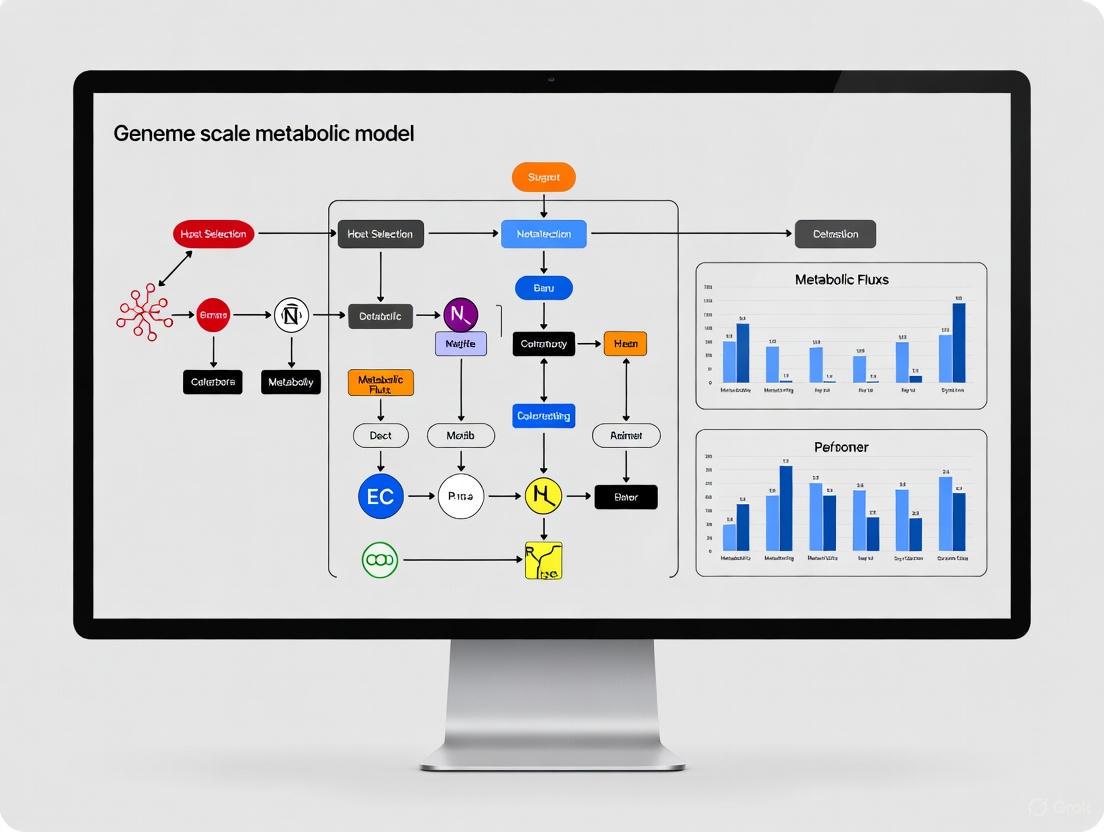
Genome-scale metabolic models (GEMs) provide a powerful computational framework for predicting host-microbe metabolic interactions, offering transformative potential for therapeutic development.
Genome-Scale Metabolic Modeling for Host Selection: A Systems Biology Framework for Therapeutic Development
Abstract
Genome-scale metabolic models (GEMs) provide a powerful computational framework for predicting host-microbe metabolic interactions, offering transformative potential for therapeutic development. This article explores how GEMs enable systematic selection of microbial hosts and consortia based on their metabolic capabilities and compatibility with human physiology. We cover foundational principles of constraint-based reconstruction and analysis (COBRA), methodological approaches for modeling host-microbe interactions, strategies for optimizing model accuracy and performance, and validation techniques for ensuring biological relevance. For researchers and drug development professionals, this synthesis of current methodologies and applications demonstrates how GEMs facilitate rational design of live biotherapeutic products, identification of drug targets, and personalized medicine approaches through in silico host selection.
Understanding Genome-Scale Metabolic Models: Core Principles and Biological Significance in Host-Microbe Interactions
What Are Genome-Scale Metabolic Models? Mathematical Foundations and Stoichiometric Principles
Genome-scale metabolic models (GEMs) are computational representations of the entire metabolic network of an organism, based on its genomic annotation [1] [2]. These models formally describe the biochemical conversions that an organism can perform, connecting an organism's genotype to its metabolic phenotype [1]. By contextualizing different types of 'Big Data' such as genomics, metabolomics, and transcriptomics, GEMs provide a mathematical framework for simulating metabolism in archaea, bacteria, and eukaryotic organisms [1]. The first GEM was reconstructed for Haemophilus influenzae in 1999, and since then, the field has expanded dramatically with thousands of models now available across the tree of life [2].
GEMs have become indispensable tools in systems biology and metabolic engineering with applications ranging from predicting metabolic phenotypes and elucidating metabolic pathways to identifying drug targets and understanding host-associated diseases [1]. In the specific context of host selection research, particularly for the development of live biotherapeutic products (LBPs), GEMs provide a systems-level approach for characterizing candidate strains and their metabolic interactions with host cells and adjacent microbiome members [3]. This enables researchers to evaluate strain functionality, host interactions, and microbiome compatibility in silico before proceeding to costly experimental validation [3].
Mathematical Foundations of Stoichiometric Modeling
Core Stoichiometric Principles
At the heart of every GEM lies the stoichiometric matrix, denoted as S [4] [5]. This mathematical structure captures the underlying biochemistry of the metabolic network. The stoichiometric matrix is an m×r matrix where m represents the number of metabolites and r represents the number of reactions in the network [4]. Each element sᵢⱼ of the matrix represents the stoichiometric coefficient of metabolite i in reaction j [4].
The fundamental equation governing metabolic networks at steady state is:
where v is the vector of reaction fluxes (reaction rates) [4]. This equation formalizes the mass-balance assumption that for each internal metabolite in the system, the rate of production equals the rate of consumption [4] [5]. The steady-state assumption transforms the potentially complex enzyme kinetics into a linear problem that can be analyzed using linear programming techniques [5].
Chemical Moisty Conservation
An important concept in stoichiometric modeling is chemical moiety conservation, which arises when metabolites are recycled in metabolic networks [4]. Examples include adenosine phosphate compounds (ATP, ADP, AMP) and redox cofactors (NADH, NADPH) [4]. These conservation relationships impose linear dependencies between the rows of the stoichiometric matrix and constrain the possible concentration changes of metabolites [4]. The moiety conservation relationships can be derived from the left null-space of the stoichiometric matrix and used to decompose the matrix into independent and dependent blocks [4].
Table 1: Key Mathematical Components of Constraint-Based Metabolic Modeling
| Component | Mathematical Representation | Biological Interpretation | Role in Modeling |
|---|---|---|---|
| Stoichiometric Matrix (S) | m × r matrix with elements sᵢⱼ | Network structure: stoichiometry of metabolite i in reaction j | Defines mass balance constraints: S·v = 0 |
| Flux Vector (v) | r × 1 vector of reaction rates | Metabolic activity: flux through each reaction | Variables to be optimized; represent metabolic phenotype |
| Objective Function | cáµ€v (linear combination) | Cellular goal (e.g., biomass production) | Drives flux distribution toward biological objective |
| Constraints | lb ≤ v ≤ ub | Physiological limitations (enzyme capacity, substrate uptake) | Defines feasible solution space |
| Moiety Conservation | L·x = constant | Conservation of chemical moieties (e.g., ATP-ADP-AMP) | Reduces system dimensionality; adds thermodynamic constraints |
Methodological Framework for GEM Reconstruction and Analysis
GEM Reconstruction Workflow
The reconstruction of high-quality GEMs follows a systematic process that integrates genomic, biochemical, and physiological information [6]. The workflow can be conceptually divided into several key stages, as illustrated below:
The process begins with genome annotation, where genes are mapped to metabolic functions using databases such as BiGG, KEGG, and ModelSEED [6]. This step establishes the initial set of metabolic reactions that can be supported by the organism's genome [1] [6]. The draft reconstruction is then refined through network gap-filling, where missing reactions are added to ensure network connectivity and functionality based on physiological evidence [6]. A critical step is the definition of biomass composition, which represents the metabolic requirements for cellular growth and maintenance [4] [6]. The model is subsequently validated using experimental data such as growth phenotypes, gene essentiality, and substrate utilization patterns [6] [2].
For host selection research, the final step involves contextualizing the model using host and microbiome data to enable simulation of host-microbe interactions [3] [5].
Constraint-Based Reconstruction and Analysis (COBRA)
The primary mathematical framework for simulating GEMs is Constraint-Based Reconstruction and Analysis (COBRA) [5]. This approach uses the stoichiometric matrix along with additional physiological constraints to define the feasible solution space of metabolic fluxes [4] [5]. The core methods within the COBRA framework include:
Flux Balance Analysis (FBA): FBA is an optimization method that predicts metabolic flux distributions by assuming the cell maximizes or minimizes a specific biological objective function, typically biomass production [1] [5]. The mathematical formulation of FBA is:
Maximize cáµ€v
Subject to: S·v = 0
and lb ≤ v ≤ ub
where c is a vector indicating the objective function, and lb and ub are lower and upper bounds on fluxes, respectively [4] [5].
Flux Variability Analysis (FVA): FVA determines the range of possible fluxes for each reaction while maintaining optimal or near-optimal objective values [4]. This helps identify alternative optimal flux distributions and assess network flexibility [4].
Dynamic FBA: This extension incorporates dynamic changes in metabolite concentrations and environmental conditions over time, allowing for simulation of batch cultures or changing environments [1] [7].
Experimental Protocols for GEM Validation and Application
Protocol for In Silico Growth Phenotype Prediction
Purpose: To validate GEM predictions against experimental growth data under different nutrient conditions [6] [2].
Methodology:
- Constraint Definition: Define the nutrient availability in the simulation environment by setting bounds on exchange reactions corresponding to the medium composition [6].
- Objective Specification: Set biomass production as the objective function to maximize [5].
- FBA Simulation: Perform flux balance analysis to predict growth rates [5].
- Experimental Comparison: Compare predicted growth capabilities (growth/no-growth) and relative growth rates with experimentally measured values [2].
Interpretation: Models with >80% accuracy in predicting gene essentiality and growth capabilities are generally considered high-quality [2]. For example, the E. coli GEM iML1515 shows 93.4% accuracy for gene essentiality simulation under minimal media with different carbon sources [2].
Protocol for Host-Microbe Interaction Analysis
Purpose: To predict metabolic interactions between microbial strains and host organisms for therapeutic selection [3] [5].
Methodology:
- Model Integration: Combine host and microbial GEMs into a unified modeling framework, creating a compartmentalized system [5].
- Metabolite Exchange Definition: Define the metabolite exchange between host and microbial compartments based on physiological knowledge [3] [5].
- Cross-Feeding Simulation: Implement simulation techniques such as SteadyCom or COMMET to predict stable co-existence and metabolic cross-feeding [3].
- Therapeutic Potential Assessment: Evaluate microbial strains based on production of beneficial metabolites (e.g., short-chain fatty acids), consumption of detrimental metabolites, and compatibility with host metabolism [3].
Interpretation: Strains that produce higher levels of therapeutic metabolites, show minimal antagonistic interactions with beneficial resident microbes, and support host metabolic objectives are prioritized for further development [3].
Table 2: Key Reagents and Computational Tools for GEM Reconstruction and Analysis
| Resource Type | Examples | Primary Function | Application in Host Selection |
|---|---|---|---|
| Model Databases | BiGG [6], AGORA2 [3] | Curated repository of metabolic models | Access to pre-built models of host-associated microbes |
| Reconstruction Tools | ModelSEED [5], CarveMe [6] [5], RAVEN [5] | Automated generation of draft GEMs from genomic data | Rapid assessment of candidate strain metabolism |
| Simulation Platforms | COBRA Toolbox [8], COBRApy [8] | MATLAB/Python implementations of constraint-based methods | Prediction of strain behavior in host-relevant conditions |
| Community Modeling Resources | metaGEM [9], Microbiome Modeling Toolbox [9] | Tools for multi-species and host-microbe simulations | Evaluation of strain integration into existing communities |
| Standardization Resources | MetaNetX [5] | Namespace reconciliation between models | Enable integration of host and microbial models |
Application in Host Selection Research
Framework for Live Biotherapeutic Product Development
GEMs provide a systematic framework for the selection and design of live biotherapeutic products (LBPs) through a multi-step evaluation process [3]:
- In Silico Screening: Candidate strains are shortlisted from microbial collections (e.g., AGORA2 database containing 7,302 gut microbes) based on qualitative assessment of metabolic capabilities [3].
- Quality Evaluation: Strain-specific traits including metabolic activity, growth potential, and adaptation to gastrointestinal conditions (pH fluctuations, bile salts) are simulated [3].
- Safety Assessment: Potential risks including antibiotic resistance, drug interactions, and production of detrimental metabolites are evaluated [3].
- Efficacy Prediction: Therapeutic potential is assessed through production of beneficial metabolites (e.g., short-chain fatty acids for inflammatory bowel disease) and positive modulation of host metabolism [3].
Table 3: GEM-Based Assessment Criteria for Therapeutic Strain Selection
| Assessment Category | Specific Metrics | Simulation Approach | Therapeutic Relevance |
|---|---|---|---|
| Strain Quality | Growth rate in host-relevant conditions, Nutrient utilization profile | FBA with physiological constraints | Predicts survival and persistence in host environment |
| Metabolic Function | Production potential of therapeutic metabolites (SCFAs, vitamins) | FVA with product secretion maximization | Indicates direct therapeutic mechanism |
| Host Compatibility | Complementarity with host metabolic objectives, Minimal resource competition | Integrated host-microbe FBA | Ensures symbiotic rather than parasitic relationship |
| Microbiome Integration | Positive interactions with resident microbes, Minimal disruption to community | Multi-species community modeling | Predicts successful engraftment and stability |
| Safety Profile | Absence of pathogenicity factors, Detrimental metabolite production | Pathway analysis and secretion profiling | Mitigates potential adverse effects |
Addressing Uncertainty in Model Predictions
A critical consideration in using GEMs for host selection is acknowledging and addressing the multiple sources of uncertainty in model predictions [6]. These include:
- Annotation Uncertainty: Incorrect or incomplete mapping of genes to metabolic functions [6].
- Environment Specification: Imperfect knowledge of the host microenvironment and nutrient availability [6].
- Biomass Formulation: Species-specific variations in biomass composition that affect growth predictions [6].
- Network Gaps: Missing reactions or pathways in the metabolic reconstruction [6].
- Flux Simulation Degeneracy: Multiple flux distributions can achieve the same biological objective [6].
Probabilistic annotation methods and ensemble modeling approaches are emerging as strategies to quantify and manage these uncertainties [6]. For host selection applications, it is recommended to use consensus predictions from multiple model versions and to integrate experimental validation at key decision points [6] [3].
Genome-scale metabolic models provide a powerful mathematical framework for understanding and predicting metabolic behavior across all domains of life. Founded on stoichiometric principles and constraint-based optimization, GEMs enable researchers to move from genomic information to predictive models of metabolic function. The mathematical rigor of these models, combined with their ability to integrate diverse omics data, makes them particularly valuable for host selection research in therapeutic development.
As the field advances, emerging methods in machine learning, improved uncertainty quantification, and enhanced community modeling capabilities promise to further strengthen the application of GEMs in host selection and personalized medicine [1] [6] [3]. For researchers focused on developing live biotherapeutic products, GEMs offer a systematic approach to evaluate strain functionality, safety, and efficacy in silico, potentially accelerating the translation of microbiome research into clinical applications.
Genome-scale metabolic models (GEMs) are powerful computational frameworks that enable the mathematical simulation of metabolism for archaea, bacteria, and eukaryotic organisms [1]. These models quantitatively define the relationship between genotype and phenotype by integrating various types of Big Data, including genomics, metabolomics, and transcriptomics [1]. GEMs represent a comprehensive collection of all known metabolic information of a biological system, structured around several core components: genes, enzymes, reactions, associated gene-protein-reaction (GPR) rules, and metabolites [1]. This architecture provides a network-based tool that can predict cellular phenotypes from genotypic information, making GEMs invaluable for both basic research and applied biotechnology.
The development and refinement of GEMs have been accelerated by major technological advances that have enabled the generation of biological Big Data in a cost-efficient and high-throughput manner [1]. As our understanding of cellular metabolism has deepened, GEMs have evolved from modeling individual organisms to capturing the complex metabolic interactions in microbial communities and host-microbe systems [10]. This expansion in scope is particularly relevant for host selection research, where understanding the metabolic interdependencies between hosts and their associated microbiomes can inform therapeutic strategies and drug development programs.
Core Architectural Components of GEMs
Fundamental Building Blocks
The architecture of GEMs is built upon several interconnected components that collectively represent the metabolic potential of an organism. Each component plays a distinct role in forming a comprehensive mathematical representation of metabolism.
Table 1: Core Components of Genome-Scale Metabolic Models
| Component | Description | Functional Role |
|---|---|---|
| Genes | DNA sequences encoding metabolic enzymes | Provide genetic basis for metabolic capabilities |
| Proteins/Enzymes | Gene products that catalyze biochemical reactions | Execute catalytic functions in metabolic pathways |
| Reactions | Biochemical transformations between metabolites | Form the edges of the metabolic network |
| Metabolites | Chemical compounds participating in reactions | Serve as substrates and products; nodes in the network |
| GPR Rules | Boolean relationships connecting genes to reactions | Link genomic annotation to metabolic functionality |
Mathematical Representation
At its core, a GEM is represented mathematically as a stoichiometric matrix S, where rows correspond to metabolites and columns represent biochemical reactions [5]. The elements Sij of this matrix denote the stoichiometric coefficients of metabolite i in reaction j. This matrix forms the foundation for constraint-based reconstruction and analysis (COBRA) methods, enabling the simulation of metabolic behavior under various physiological conditions [5].
The metabolic network is subject to mass-balance constraints, requiring that for each internal metabolite, the total production equals total consumption. This is expressed mathematically as S·v = 0, where v is the flux vector representing reaction rates in the network [5]. Additional constraints are applied to define the system's boundaries, including nutrient availability, thermodynamic feasibility, and enzyme capacity constraints.
GEM Reconstruction Workflow
The process of reconstructing a high-quality GEM involves multiple meticulously executed steps that transform genomic information into a predictive metabolic model.
Automated Draft Reconstruction
The reconstruction process begins with an annotated genome, which serves as the foundational blueprint for the metabolic model. Automated reconstruction tools such as ModelSEED [11] [5], CarveMe [11] [5], gapseq [5], and RAVEN [5] generate draft models by mapping annotated genes to known biochemical reactions using template-based approaches. These tools leverage curated databases of metabolic reactions to assign functional capabilities based on genomic evidence, creating an initial metabolic network that represents the organism's potential metabolic functions.
The quality of draft reconstructions varies significantly depending on the completeness of genome annotation and the suitability of the template database. For well-characterized model organisms, automated pipelines can produce reasonably comprehensive drafts, while for non-model organisms with limited annotation, the resulting drafts often contain substantial knowledge gaps that require extensive manual curation.
Manual Curation and Knowledge Integration
Manual curation is the most critical phase in transforming an automated draft into a high-quality, predictive metabolic model. This process involves:
- Literature mining: Systematic review of experimental studies to validate and refine reaction annotations
- Database integration: Incorporation of data from specialized metabolic databases such as BiGG [11] [5] and MetaNetX [5]
- Pathway validation: Ensuring completeness and connectivity of metabolic pathways through gap analysis
- GPR rule refinement: Precisely defining the Boolean relationships between genes and reactions
For host metabolic models, particularly eukaryotic systems, additional complexities arise from compartmentalization of metabolic processes in organelles such as mitochondria, peroxisomes, and endoplasmic reticulum [5]. Multicellular hosts present further challenges due to tissue-specific metabolic specialization, requiring careful consideration of which metabolic functions to include in the model.
Gap-Filling and Network Refinement
A significant challenge in GEM reconstruction is addressing knowledge gaps resulting from incomplete genomic annotation or limited biochemical characterization. Gap-filling methods identify and rectify these deficiencies to create a functional metabolic network.
Table 2: Computational Methods for GEM Refinement and Gap-Filling
| Method | Approach | Application Context |
|---|---|---|
| CHESHIRE [11] | Deep learning using hypergraph topology | Predicts missing reactions purely from network structure |
| FastGapFill [11] | Flux consistency optimization | Restores network connectivity based on metabolic functionality |
| NHP (Neural Hyperlink Predictor) [11] | Graph neural networks | Predicts hyperlinks in metabolic networks |
| C3MM [11] | Clique closure-based matrix minimization | Identifies missing reactions through matrix completion |
The CHESHIRE (CHEbyshev Spectral HyperlInk pREdictor) method represents a recent advancement in gap-filling technology. This deep learning approach predicts missing reactions in GEMs using only metabolic network topology, without requiring experimental phenotypic data as input [11]. CHESHIRE employs a Chebyshev spectral graph convolutional network (CSGCN) to capture metabolite-metabolite interactions and generates probabilistic scores indicating the confidence of reaction existence [11]. This method has demonstrated superior performance in recovering artificially removed reactions across 926 high- and intermediate-quality GEMs compared to other topology-based methods [11].
Simulation Methods and Analytical Approaches
Flux Balance Analysis (FBA)
Flux Balance Analysis is the primary computational method for simulating metabolic behavior using GEMs. FBA calculates the flow of metabolites through the metabolic network under steady-state assumptions, optimizing for a biological objective such as biomass production or ATP synthesis [1] [5].
The mathematical formulation of FBA is: Maximize cᵀv Subject to: S·v = 0 vlb ≤ v ≤ vub
Where c is a vector representing the biological objective function, v is the flux vector, S is the stoichiometric matrix, and vlb and vub are lower and upper bounds on reaction fluxes, respectively [5].
FBA predictions have been successfully validated against experimental data for various phenotypes, including growth rates, nutrient uptake, and byproduct secretion [1]. This method enables researchers to predict metabolic behavior under different environmental conditions or genetic modifications, making it particularly valuable for host selection research in therapeutic development.
Advanced Simulation Techniques
Beyond basic FBA, several advanced simulation methods enhance the predictive capabilities of GEMs:
- Dynamic FBA (dFBA): Extends FBA to simulate time-dependent changes in metabolite concentrations and population dynamics [1]
- 13C Metabolic Flux Analysis (13C MFA): Uses isotopic tracer experiments to measure intracellular metabolic fluxes [1]
- Flux Variability Analysis (FVA): Determines the range of possible fluxes for each reaction while maintaining optimal objective function value
- ME-models: Incorporate macromolecular expression constraints, including protein synthesis and allocation [1]
These advanced methods provide increasingly sophisticated insights into metabolic function, enabling more accurate predictions of host-microbe interactions and their implications for therapeutic development.
GEM Applications in Host Selection Research
Live Biotherapeutic Products (LBPs) Development
GEMs play an increasingly important role in the systematic development of Live Biotherapeutic Products (LBPs), which are promising microbiome-based therapeutics [3]. The GEM-guided framework enables rigorous evaluation of LBP candidate strains based on quality, safety, and efficacy criteria [3].
Table 3: GEM-Based Assessment Criteria for LBP Candidate Strains
| Assessment Category | Evaluation Metrics | GEM Application |
|---|---|---|
| Quality | Metabolic activity, Growth potential, pH tolerance | FBA predicts growth under gastrointestinal conditions [3] |
| Safety | Antibiotic resistance, Drug interactions, Pathogenic potential | Identify risks of toxic metabolite production [3] |
| Efficacy | Therapeutic metabolite production, Host-microbe interactions | Predict SCFA production and immune modulation [3] |
For LBP development, GEMs facilitate both top-down and bottom-up selection approaches. In top-down strategies, microbes are isolated from healthy donor microbiomes, and their GEMs are retrieved from resources like AGORA2 (Assembly of Gut Organisms through Reconstruction and Analysis, version 2), which contains curated strain-level GEMs for 7,302 gut microbes [3]. For bottom-up approaches, GEMs help identify strains with predefined therapeutic functions, such as restoring short-chain fatty acid (SCFA) production in inflammatory bowel disease [3].
Host-Microbe Metabolic Interactions
GEMs provide a powerful framework for investigating host-microbe interactions at a systems level, enabling the exploration of metabolic interdependencies and emergent community functions [10] [5]. By simulating metabolic fluxes and cross-feeding relationships, GEMs reveal how hosts and microbes reciprocally influence each other's metabolism.
The integration of host and microbial models presents several technical challenges, particularly in standardizing metabolite and reaction nomenclature across different model sources [5]. Tools such as MetaNetX help bridge these discrepancies by providing a unified namespace for metabolic model components [5]. Despite these challenges, integrated host-microbe models have generated valuable insights into the metabolic basis of various diseases and potential therapeutic interventions.
Drug Target Identification
GEMs contribute significantly to drug discovery by identifying potential therapeutic targets through comprehensive metabolic network analysis. For example, Rajput et al. (2021) reported the potential of bacterial two-component systems as drug targets by performing pan-genome analysis of ESKAPPE pathogens [1]. This approach leverages multi-strain GEM reconstructions to identify conserved essential functions across pathogenic strains, highlighting promising targets for antimicrobial development.
GEMs also enable the prediction of drug-microbiome interactions, identifying how pharmaceutical compounds might be metabolized by commensal microbes or how microbial metabolism might influence drug efficacy [3]. These insights are particularly valuable for personalized medicine approaches, where patient-specific microbial communities can be modeled to predict individual treatment responses.
Computational Tools and Databases
The development and application of GEMs rely on a sophisticated ecosystem of computational tools, databases, and analytical resources that collectively support the entire modeling pipeline.
Table 4: Essential Research Resources for GEM Construction and Analysis
| Resource | Type | Function | Relevance to Host Research |
|---|---|---|---|
| AGORA2 [3] | Model Repository | 7,302 curated gut microbial GEMs | Reference models for host-microbiome studies |
| BiGG Models [11] [5] | Knowledgebase | Curated metabolic reconstructions | Standardized biochemical data for model construction |
| CarveMe [11] [5] | Reconstruction Tool | Automated draft GEM generation | Rapid model building for host-associated microbes |
| MetaNetX [5] | Integration Platform | Unified namespace for metabolites | Enables host-microbe model integration |
| CHESHIRE [11] | Gap-Filling Algorithm | Deep learning for reaction prediction | Improves model completeness without experimental data |
| COBRA Toolbox [5] | Analysis Suite | MATLAB toolbox for constraint-based modeling | Standard platform for FBA and related analyses |
Experimental Validation Protocols
While GEMs are computational tools, their development and refinement depend critically on experimental validation. Key experimental methods for validating GEM predictions include:
- Growth Phenotyping: Measuring microbial growth rates under defined nutritional conditions to validate FBA predictions [1]
- Metabolite Profiling: Quantifying extracellular metabolite concentrations using mass spectrometry or NMR to verify metabolic secretion/uptake predictions [1]
- 13C Tracer Experiments: Using isotopically labeled substrates to validate intracellular flux predictions [1]
- Gene Essentiality Studies: Comparing model-predicted essential genes with experimental gene knockout data [1]
For host-focused applications, additional validation approaches include:
- Gnotobiotic Mouse Models: Using germ-free animals colonized with defined microbial communities to validate host-microbe interaction predictions [3]
- Organoid Co-culture Systems: Testing predicted metabolic interactions in simplified host-microbe experimental systems [5]
- Metatranscriptomics: Comparing predicted metabolic fluxes with gene expression patterns in complex communities [3]
These experimental methods provide critical validation of GEM predictions and contribute to iterative model refinement, enhancing the predictive power and biological relevance of the models for host selection research.
Future Perspectives in GEM Development
The field of genome-scale metabolic modeling continues to evolve rapidly, with several emerging trends particularly relevant to host selection research. The integration of machine learning approaches with traditional constraint-based methods represents a promising direction, potentially enabling more accurate predictions of complex host-microbe metabolic interactions [1]. Methods like CHESHIRE demonstrate how deep learning can enhance GEM quality without requiring extensive experimental data [11].
Another significant trend is the development of multi-scale models that incorporate metabolic, regulatory, and signaling networks to provide more comprehensive representations of cellular physiology [1]. For host selection research, these advanced models could capture the complex interplay between metabolic pathways and immune responses, potentially identifying novel mechanisms for therapeutic intervention.
As the field progresses, standardization of model reconstruction, annotation, and validation protocols will be crucial for enhancing reproducibility and interoperability across studies [5]. Community-driven initiatives such as the AGORA resource [3] represent important steps toward this goal, providing consistently curated models that facilitate comparative analyses and meta-studies relevant to host selection and therapeutic development.
Constraint-Based Reconstruction and Analysis (COBRA) Framework Explained
Constraint-Based Reconstruction and Analysis (COBRA) is a computational systems biology framework that enables the generation of mechanistic, genome-scale models of metabolic networks. This approach provides a mathematical representation of an organism's metabolism, integrating genomic, biochemical, and physiological information to simulate metabolic capabilities under various conditions [12] [13]. The core principle of COBRA methods is the application of physicochemical and biological constraints to define the set of possible metabolic behaviors for a biological system, typically without requiring comprehensive kinetic parameters [14]. These constraints include mass conservation, thermodynamic directionality, and reaction capacity limitations, which collectively narrow the range of possible metabolic flux distributions to those that are physiologically feasible.
The COBRA framework has evolved substantially since its inception, with ongoing development of sophisticated software tools that implement its methodologies. The most prominent implementations include the COBRA Toolbox for MATLAB and COBRApy for Python [14] [12]. These tools provide researchers with accessible platforms for constructing, simulating, and analyzing genome-scale metabolic models (GEMs), enabling diverse applications from basic metabolic research to biotechnology and biomedical investigations. The framework's flexibility allows it to be adapted for modeling increasingly complex biological processes, including multi-species interactions and integration of multi-omics data types [14] [13].
In the context of host selection research, COBRA methods offer a powerful approach for investigating metabolic interactions between hosts and microorganisms. By reconstructing GEMs for both host and microbial species, researchers can simulate their metabolic cross-talk, identify potential metabolic dependencies, and predict how these interactions influence host health and disease states [15]. This capability is particularly valuable for understanding the mechanistic basis of host-microbe relationships and for identifying potential therapeutic targets that could modulate these interactions for clinical benefit.
Core Principles and Mathematical Foundations
Stoichiometric Matrix and Mass Balance Constraints
The fundamental mathematical structure underlying COBRA models is the stoichiometric matrix S, where each element Sₙₘ represents the stoichiometric coefficient of metabolite n in reaction m. This matrix encodes the network topology of the metabolic system and enables the application of mass balance constraints via the equation:
S · v = 0
where v is the vector of metabolic reaction fluxes [16] [13]. This equation enforces the pseudo-steady state assumption, implying that metabolite concentrations remain constant over time despite ongoing metabolic activity. The mass balance constraint ensures that for each internal metabolite, the rate of production equals the rate of consumption, reflecting metabolic homeostasis.
Flux Capacity Constraints and Objective Functions
In addition to mass balance, COBRA models incorporate flux capacity constraints that define the minimum and maximum possible rates for each reaction:
vₘᵢₙ ≤ v ≤ vₘâ‚â‚“
These bounds encode biochemical and physiological limitations, such as enzyme capacity, substrate availability, and thermodynamic feasibility [14] [13]. Irreversible reactions are constrained to carry only non-negative fluxes (v ≥ 0), while reversible reactions can carry either positive or negative fluxes. The flux bounds can be further refined based on experimental measurements, omics data integration, or condition-specific constraints.
To simulate metabolic behavior, COBRA methods employ optimization approaches, typically linear programming, to identify flux distributions that maximize or minimize a biologically relevant objective function. The most common objective function is biomass production, which represents cellular growth and is formulated as a reaction that drains biomass constituents in their experimentally determined proportions [16]. Other objective functions may include ATP production, synthesis of specific metabolites, or minimization of metabolic adjustment.
Figure 1: Mathematical foundation of COBRA methods showing how biological data and constraints are integrated to predict metabolic flux distributions.
COBRA Workflow: From Reconstruction to Simulation
The application of the COBRA framework follows a systematic workflow that transforms genomic information into predictive metabolic models. The key steps in this process include:
Genome Annotation: Identification of metabolic genes and their functions through sequence analysis and comparison with databases [16].
Reaction Network Assembly: Compilation of biochemical reactions associated with the annotated genes, including metabolite stoichiometry, reaction directionality, and compartmentalization [12].
Biomass Composition Definition: Formulation of a biomass objective function that represents the drain of cellular constituents required for growth, based on experimental measurements of macromolecular composition [16].
Model Validation and Refinement: Iterative testing of model predictions against experimental data, followed by gap-filling and curation to improve accuracy [12] [16].
Constraint Integration: Application of condition-specific constraints, such as nutrient availability or gene expression data, to define the metabolic state space [13].
Simulation and Analysis: Use of optimization techniques to predict metabolic phenotypes and interpret the results in a biological context [12].
Table 1: Key Computational Tools for COBRA Implementation
| Tool Name | Platform | Primary Function | Key Features |
|---|---|---|---|
| COBRA Toolbox [12] | MATLAB | Comprehensive metabolic modeling | Extensive method library, community support, multi-omics integration |
| COBRApy [14] | Python | Object-oriented constraint-based modeling | Open-source, parallel processing, ME-model support |
| MicroMap [17] | Web-based | Metabolic network visualization | Interactive exploration, modeling result display, educational utility |
| ModelSEED [16] | Web-based | Automated model reconstruction | Rapid draft model generation, gap-filling, standard biochemistry |
For host selection research, this workflow can be extended to construct integrated host-microbiome models. This involves developing separate GEMs for host and microbial species, then connecting them through a shared extracellular environment that enables metabolite exchange [15]. The resulting community models can simulate metabolic interactions, identify cross-feeding relationships, and predict how microbial colonization influences host metabolic states.
Figure 2: Systematic workflow for developing and applying genome-scale metabolic models using the COBRA framework.
COBRA Applications in Host-Microbe Metabolic Modeling
The COBRA framework provides powerful capabilities for investigating host-microbe interactions at a systems level. By simulating metabolic fluxes and cross-feeding relationships, COBRA models enable researchers to explore metabolic interdependencies and emergent community functions that arise from these complex biological relationships [15]. Specific applications in host selection research include:
Identification of Metabolic Cross-Feeding
COBRA methods can predict metabolite exchange between hosts and microbes, revealing how each organism's metabolic capabilities complement the other. For example, models can simulate how gut microbes metabolize dietary components that the host cannot digest, producing short-chain fatty acids and other metabolites that the host then utilizes [15] [17]. These simulations help explain the metabolic basis of microbial colonization and persistence in specific host environments.
Prediction of Community Metabolic States
Integrated host-microbiome models can predict how changes in diet, environmental conditions, or genetic variations affect the metabolic output of the entire system. For instance, researchers have used COBRA approaches to model how different microbial communities influence host energy harvest, vitamin production, and immune modulation [15]. These predictions provide testable hypotheses about how microbial metabolic activities impact host physiology and health outcomes.
Analysis of Pathogen Metabolism
COBRA models of pathogenic microorganisms, such as Streptococcus suis, have been used to identify metabolic vulnerabilities that could be exploited for antimicrobial development [16]. By simulating pathogen metabolism in host-like conditions, researchers can pinpoint essential metabolic functions that are required for virulence or survival in the host environment. These model-driven predictions can guide experimental validation and drug target prioritization.
Table 2: Examples of Metabolic Models in Host-Microbe Research
| Organism/System | Model Characteristics | Application in Host Selection Research |
|---|---|---|
| Streptococcus suis [16] | 525 genes, 708 metabolites, 818 reactions | Identification of virulence-linked metabolic genes and drug targets |
| Human Gut Microbiome [17] | 257,429 microbial reconstructions, 5,064 reactions | Mapping community metabolic capabilities and metabolite exchange |
| Host-Microbe Interactions [15] | Multi-species community modeling | Prediction of metabolic dependencies and cross-feeding relationships |
The MicroMap resource represents a significant advancement for visualizing microbiome metabolism, capturing the metabolic content of over a quarter million microbial GEMs [17]. This visualization tool enables researchers to intuitively explore microbiome metabolic networks, compare capabilities across different microbial taxa, and display computational modeling results in a biochemical context. For host selection research, such resources facilitate the interpretation of how specific microbial metabolic capabilities might complement or disrupt host metabolic functions.
Experimental Protocols and Methodologies
Protocol for Metabolic Model Reconstruction
The reconstruction of genome-scale metabolic models follows a standardized protocol implemented in tools like the COBRA Toolbox and COBRApy [12] [16]:
Genome Annotation and Draft Reconstruction
- Annotate the target genome using RAST or similar annotation pipelines
- Generate a draft model using automated tools like ModelSEED
- Identify homologous genes in reference organisms using BLAST (identity ≥40%, match lengths ≥70%)
- Compile gene-protein-reaction (GPR) associations from reference models
Manual Curation and Gap-Filling
- Identify metabolic gaps using gapAnalysis algorithms in the COBRA Toolbox
- Manually add missing reactions based on literature evidence and biochemical databases
- Balance reactions for mass and charge by adding H₂O or H⺠as needed
- Validate reaction directionality using thermodynamic calculations
Biomass Objective Function Formulation
- Determine macromolecular composition (proteins, DNA, RNA, lipids, etc.) from experimental data or related organisms
- Calculate biomass precursors based on organism-specific composition
- Incorporate energy requirements (ATP maintenance) for growth-associated maintenance
Model Validation and Testing
- Test model predictions against experimental growth phenotypes under different nutrient conditions
- Compare gene essentiality predictions with mutant library screens
- Validate model predictions using leave-one-out experiments in defined media
Flux Balance Analysis Methodology
Flux Balance Analysis (FBA) is the primary simulation technique used in COBRA methods [16] [13]:
Problem Formulation
- Define the stoichiometric matrix S based on the metabolic network
- Set flux bounds vₘᵢₙ and vₘâ‚â‚“ for each reaction based on condition-specific constraints
- Define the objective function Z = cᵀ·v, typically biomass production
Optimization Setup
- Formulate the linear programming problem: Maximize Z = cᵀ·v Subject to: S·v = 0 and vₘᵢₙ ≤ v ≤ vₘâ‚â‚“
- Select an appropriate solver (e.g., GUROBI) for numerical optimization
Simulation and Analysis
- Solve the optimization problem to obtain a flux distribution
- Perform flux variability analysis to identify alternative optimal solutions
- Conduct gene deletion studies by constraining associated reaction fluxes to zero
- Calculate growth rates or metabolite production capabilities
For host-microbiome modeling, additional steps are required to integrate individual models and simulate their interactions [15]:
Community Model Construction
- Create a compartmentalized extracellular space shared between host and microbial models
- Define metabolite exchange reactions that connect the individual metabolic networks
- Implement appropriate constraints on exchange fluxes based on environmental conditions
Community Simulation
- Define joint objective functions that represent community fitness or specific metabolic outputs
- Apply constraints that reflect the physiological context of the host environment
- Simulate metabolic interactions and identify cross-feeding relationships
Table 3: Key Research Reagents and Computational Tools for COBRA Modeling
| Resource Category | Specific Tools/Reagents | Function in COBRA Research |
|---|---|---|
| Software Platforms | COBRA Toolbox v.3.0 [12] | Comprehensive protocol implementation for constraint-based modeling |
| COBRApy [14] | Python-based, open-source modeling with support for complex datasets | |
| Database Resources | Virtual Metabolic Human (VMH) [17] | Curated biochemical database for human and microbiome metabolism |
| AGORA2 & APOLLO [17] | Resource of 7302 microbial strain-level metabolic reconstructions | |
| Visualization Tools | MicroMap [17] | Network visualization of microbiome metabolism with 5064 reactions |
| ReconMap [17] | Metabolic map for human metabolism, compatible with COBRA Toolbox | |
| Analysis Functions | Flux Balance Analysis [16] | Prediction of optimal metabolic flux distributions |
| Flux Variability Analysis [14] | Identification of range of possible fluxes for each reaction | |
| Gene Deletion Analysis [16] | Prediction of essential genes and synthetic lethal interactions |
The COBRA framework continues to evolve, with ongoing developments focused on addressing several key challenges in metabolic modeling. Future directions include the integration of multi-omics data types to create more context-specific models, the development of methods for modeling microbial communities of increasing complexity, and the incorporation of additional cellular processes beyond metabolism [15] [13]. For host selection research, these advancements will enable more accurate predictions of how microbial metabolic activities influence host physiology and how these relationships might be targeted for therapeutic intervention.
The creation of resources like MicroMap, which provides visualization capabilities for microbiome metabolism, represents an important step toward making COBRA methods more accessible to researchers without extensive computational backgrounds [17]. Such tools help diversify the computational modeling community and facilitate collaboration between wet-lab and dry-lab researchers. As these resources continue to expand and improve, they will further enhance the utility of COBRA methods for investigating the complex metabolic interactions between hosts and their associated microorganisms.
In conclusion, the COBRA framework provides a powerful systems biology approach for reconstructing and analyzing genome-scale metabolic networks. Its application to host selection research offers unprecedented opportunities to understand the metabolic basis of host-microbe interactions, identify key vulnerabilities in pathogenic organisms, and develop novel therapeutic strategies that target metabolic dependencies. As the field continues to advance, COBRA methods will play an increasingly important role in deciphering the complex metabolic relationships that influence health and disease.
Flux Balance Analysis (FBA) is a mathematical approach for simulating the flow of metabolites through a metabolic network, enabling researchers to predict organism behavior under specific constraints without requiring difficult-to-measure kinetic parameters [18] [19]. As a constraint-based modeling technique, FBA has become indispensable for analyzing genome-scale metabolic models (GEMs)—computational representations of all known metabolic reactions in an organism based on its genomic information [20]. In the context of host selection research, particularly for understanding host-pathogen interactions and human microbiome metabolism, FBA provides a mechanistic framework to investigate how metabolic reprogramming influences disease progression and therapeutic outcomes [21] [22].
The fundamental principle underlying FBA is that metabolic networks operate under steady-state conditions, where metabolite concentrations remain constant because production and consumption rates are balanced [18] [20]. This steady-state assumption, combined with the application of constraints derived from stoichiometry, reaction thermodynamics, and environmental conditions, defines a solution space of possible metabolic behaviors [19]. FBA then identifies an optimal flux distribution within this space by maximizing or minimizing a biologically relevant objective function, such as biomass production (simulating growth) or ATP synthesis [20] [19]. The ability to predict system-level metabolic adaptations makes FBA particularly valuable for studying complex biological systems where host and microbial metabolisms interact.
Mathematical Foundation and Core Principles
Stoichiometric Modeling and Constraint Formulation
The mathematical foundation of FBA begins with representing the metabolic network as a stoichiometric matrix S of size m×n, where m represents the number of metabolites and n represents the number of metabolic reactions [20] [19]. Each element Sᵢⱼ in this matrix contains the stoichiometric coefficient of metabolite i in reaction j, with negative values indicating consumption and positive values indicating production [19]. The metabolic fluxes through all reactions are contained in the vector v of length n. The steady-state assumption that metabolite concentrations do not change over time leads to the fundamental mass balance equation:
S â‹… v = 0
This equation states that for every metabolite in the system, the weighted sum of fluxes producing that metabolite must equal the weighted sum of fluxes consuming it [20]. For large-scale metabolic models, this system of equations is typically underdetermined (more reactions than metabolites), meaning multiple flux distributions can satisfy the mass balance constraints [19].
Applying Constraints and Objective Functions
To identify a biologically relevant flux distribution from the possible solutions, FBA incorporates two additional types of constraints:
Flux constraints: Each reaction flux vᵢ is constrained by lower and upper bounds (αᵢ ≤ vᵢ ≤ βᵢ) that define its minimum and maximum allowable rates [20]. These bounds can represent thermodynamic constraints (irreversible reactions have a lower bound of 0), enzyme capacity limitations, or environmental conditions (e.g., nutrient availability) [18] [19].
Objective function: An objective function Z = cáµ€v is defined, representing a biological goal that the organism is presumed to optimize, such as maximizing biomass production or ATP yield [20] [19]. The vector c contains weights indicating how much each reaction contributes to the objective.
The complete FBA problem can be formulated as a linear programming optimization:
maximize cᵀv subject to S ⋅ v = 0 and αᵢ ≤ vᵢ ≤ βᵢ for all i
The output is a specific flux distribution v that maximizes the objective function while satisfying all constraints [20] [19].
Computational Framework and Workflow
The practical implementation of FBA follows a systematic workflow that transforms biological knowledge into predictive computational models. The following diagram illustrates the core FBA workflow:
Genome-Scale Metabolic Model Reconstruction
The foundation of any FBA simulation is a high-quality, genome-scale metabolic reconstruction that contains all known metabolic reactions for a target organism [20]. The iML1515 model of E. coli K-12 MG1655 exemplifies such a reconstruction, containing 1,515 genes, 2,719 metabolic reactions, and 1,192 metabolites [18]. For host-microbiome research, resources like AGORA2 provide curated metabolic reconstructions for 7,302 human microorganisms, enabling strain-resolved modeling of personalized microbiome metabolism [22]. The reconstruction process involves:
- Genome annotation to identify metabolic genes
- Reaction assembly based on biochemical literature and databases
- Compartmentalization of reactions into appropriate cellular locations
- Biomass composition definition based on experimental measurements
- Gap analysis to identify and fill missing metabolic functions
Environmental and Enzymatic Constraints
To simulate specific experimental or physiological conditions, appropriate constraints must be applied to the metabolic model:
- Media constraints: Upper bounds on exchange reactions define available nutrients [18]. For example, glucose uptake might be limited to 18.5 mmol/gDW/h to simulate a specific growth condition [19].
- Gene knockouts: Simulating gene deletions by constraining associated reaction fluxes to zero [20]. The effects are evaluated using Gene-Protein-Reaction (GPR) rules that describe Boolean relationships between genes and reactions [20].
- Enzyme constraints: Incorporating enzyme capacity limitations using kinetic parameters (kcat values) and enzyme abundances to avoid unrealistic flux predictions [18]. Tools like ECMpy facilitate adding these constraints without altering the core stoichiometric matrix [18].
Advanced FBA Techniques for Host-Pathogen Research
Basic FBA has been extended with numerous advanced algorithms to address specific research questions in host selection and pathogen metabolism:
- Dynamic FBA: Extends FBA to multiple timepoints to simulate time-dependent changes in metabolite concentrations and biomass [23].
- Flux Variability Analysis: Identifies the range of possible fluxes for each reaction while maintaining optimal objective function value [19], revealing alternative optimal solutions.
- Regulatory FBA: Incorporates gene regulatory constraints alongside metabolic constraints using Boolean logic rules [23].
- TIObjFind: A recently developed framework that integrates Metabolic Pathway Analysis with FBA to identify context-specific objective functions from experimental data [23]. This approach calculates Coefficients of Importance (CoIs) that quantify each reaction's contribution to the objective function, particularly valuable for understanding metabolic adaptations in host environments [23].
Experimental Design and Protocol Implementation
Protocol for Constraint-Based Modeling of Host-Pathogen Systems
Implementing FBA for host selection research requires careful experimental design and protocol implementation. The following workflow illustrates the key steps for applying FBA to study host-pathogen metabolic interactions:
Step 1: Model Selection and Customization
Select appropriate genome-scale metabolic models for both host and microbial components. For human host modeling, Recon3D provides a comprehensive reconstruction of human metabolism [17], while for microbiome components, AGORA2 offers 7,302 microbial strain reconstructions [22]. Context-specific models can be created using transcriptomic data to constrain the model to only include reactions active in particular conditions [21]. For example, in studying HIV infection, PBMC-specific models were created using RNA sequencing data from people living with HIV (PLWH) to investigate metabolic reprogramming in immune cells [21].
Step 2: Incorporation of Enzyme Constraints
To improve prediction accuracy, incorporate enzyme constraints using the ECMpy workflow [18]. This process involves:
- Splitting reversible reactions into forward and reverse directions to assign distinct kcat values
- Separating reactions catalyzed by multiple isoenzymes into independent reactions
- Obtaining kcat values from BRENDA database and enzyme abundance data from PAXdb
- Setting the total protein fraction constraint (typically 0.56 for E. coli) [18]
- Modifying kcat values and gene abundances to reflect genetic engineering interventions
Step 3: Medium Composition Definition
Define extracellular environment by constraining uptake reactions for specific medium components. For example, in modeling L-cysteine overproduction in E. coli, the SM1 + LB medium was represented by setting upper bounds on glucose (55.51 mmol/gDW/h), citrate (5.29 mmol/gDW/h), ammonium ion (554.32 mmol/gDW/h), and other components [18]. Critical nutrients like thiosulfate were included with an upper bound of 44.60 mmol/gDW/h to reflect its importance in L-cysteine production pathways [18].
Step 4: Implementation of Lexicographic Optimization
When optimizing for metabolite production rather than growth, implement lexicographic optimization to ensure biologically realistic solutions [18]. This two-step process involves:
- First optimizing for biomass production to determine maximum growth rate
- Then constraining growth to a percentage of maximum (e.g., 30%) while optimizing for the target product (e.g., L-cysteine export) [18]
This approach prevents solutions where product formation is maximized at the expense of cell growth, which may not be sustainable in real biological systems.
Protocol for Drug Metabolism Analysis in Personalized Microbiome Models
For drug development applications, FBA can predict microbial drug metabolism using the following protocol:
- Strain-resolved microbiome modeling: Construct personalized microbiome models using AGORA2, which includes drug degradation and biotransformation capabilities for 98 commonly prescribed drugs [22].
- Drug transformation mapping: Identify which microbial strains in an individual's microbiome contain reactions for specific drug transformations using the MicroMap visualization resource [17].
- Flux prediction: Simulate drug metabolism fluxes under personalized nutritional and pharmacological constraints [22].
- Interindividual variability assessment: Compare drug conversion potential across individuals and correlate with factors like age, sex, BMI, and disease status [22].
Data Presentation and Quantitative Analysis
Metabolic Modeling of HIV Infection Reveals Altered Energy Metabolism
Application of FBA to study metabolic adaptations in HIV infection revealed significant alterations in energy metabolism. Using context-specific PBMC models built from RNA sequencing data, researchers compared people living with HIV on antiretroviral therapy (PLWHART) with HIV-negative controls (HC) and elite controllers (PLWHEC) who naturally control viral replication [21]. Flux balance analysis identified altered flux in several intermediates of glycolysis including pyruvate, α-ketoglutarate, and glutamate in PLWHART [21]. Furthermore, transcriptomic analysis identified up-regulation of oxidative phosphorylation as a characteristic of PLWHART, differentiating them from PLWHEC with dysregulated complexes I, III, and IV [21].
Table 1: Key Findings from FBA Study of HIV Metabolic Adaptation
| Comparison Group | Key Metabolic Findings | Transcriptomic Signatures | Therapeutic Implications |
|---|---|---|---|
| PLWHART (n=19) | Altered flux in glycolytic intermediates; Up-regulated OXPHOS | 1,037 specifically dysregulated genes; OXPHOS pathway enrichment | Pharmacological inhibition of complexes I/III/IV induced apoptosis |
| PLWHEC (n=19) | Distinct metabolic uptake and flux profile | No genes dysregulated vs HC; Unique metabolic signature | Natural control associated with metabolic profile |
| HC (n=19) | Baseline metabolic flux distribution | Reference expression profile | - |
Medium Optimization for Metabolic Engineering
FBA enables precise optimization of growth media components to enhance product yields in metabolic engineering applications. The following table illustrates example upper bounds for uptake reactions in SM1 medium for L-cysteine overproduction in E. coli:
Table 2: Upper Bounds for Uptake Reactions in SM1 Medium for L-Cysteine Overproduction [18]
| Medium Component | Associated Uptake Reaction | Upper Bound (mmol/gDW/h) |
|---|---|---|
| Glucose | EXglcDe_reverse | 55.51 |
| Citrate | EXcite_reverse | 5.29 |
| Ammonium Ion | EXnh4e_reverse | 554.32 |
| Phosphate | EXpie_reverse | 157.94 |
| Magnesium | EXmg2e_reverse | 12.34 |
| Sulfate | EXso4e_reverse | 5.75 |
| Thiosulfate | EXtsule_reverse | 44.60 |
Successful implementation of FBA requires specialized computational tools and databases. The following essential resources represent the current state-of-the-art in constraint-based modeling:
Table 3: Essential Research Resources for Flux Balance Analysis
| Resource Name | Type | Function | Application in Host Research |
|---|---|---|---|
| COBRA Toolbox [19] | MATLAB Toolbox | Primary computational platform for FBA simulations | Simulation of host and microbial metabolism |
| AGORA2 [22] | Metabolic Reconstruction Resource | 7,302 manually curated microbial metabolic models | Personalized modeling of gut microbiome metabolism |
| Virtual Metabolic Human (VMH) [17] [22] | Database | Integrated knowledgebase of human metabolism | Host-microbiome cometabolism studies |
| DEMETER [22] | Reconstruction Pipeline | Data-driven metabolic network refinement | Generation of high-quality context-specific models |
| ECMpy [18] | Python Package | Addition of enzyme constraints to metabolic models | Improved flux prediction accuracy |
| MicroMap [17] | Visualization Resource | Network visualization of microbiome metabolism | Exploration of metabolic capabilities across microbes |
| BRENDA [18] | Enzyme Database | Comprehensive collection of enzyme kinetic data | Parameterization of enzyme constraints |
| PAXdb [18] | Protein Abundance Database | Global protein abundance measurements | Constraining enzyme capacity limits |
Flux Balance Analysis provides a powerful computational framework for simulating metabolic phenotypes under constraints, with significant applications in host selection research and drug development. By integrating genome-scale metabolic models with context-specific constraints, FBA enables researchers to predict how metabolic reprogramming influences host-pathogen interactions, therapeutic efficacy, and disease progression. The continued development of resources like AGORA2 for microbiome research and advanced algorithms like TIObjFind for identifying context-specific objective functions will further enhance our ability to model complex biological systems. As these methods become more sophisticated and accessible, FBA will play an increasingly important role in personalized medicine approaches that account for individual metabolic variations in both human hosts and their associated microbial communities.
Genome-scale metabolic models (GEMs) have emerged as powerful computational frameworks for deciphering the complex metabolic interactions between hosts and their associated microbial communities. By providing a mathematical representation of metabolic networks based on genomic annotations, GEMs enable researchers to simulate metabolic fluxes and cross-feeding relationships that underlie host-microbe symbiosis and dysbiosis. This technical review examines how constraint-based reconstruction and analysis (COBRA) approaches are revolutionizing therapeutic development, particularly for live biotherapeutic products (LBPs), by offering systems-level insights into metabolic interdependencies. We detail the methodological pipeline for constructing and validating host-microbe metabolic models, present quantitative analyses of their applications in disease-specific contexts, and provide standardized protocols for implementing these approaches in therapeutic discovery pipelines. The integration of GEMs with multi-omic data represents a paradigm shift in identifying precise microbial therapeutic targets and designing personalized microbiome-based interventions.
All eukaryotic host organisms exist in intimate association with diverse microbial communities, forming functional metaorganisms or holobionts where host and microbial genomes co-evolve and reciprocally adapt [5]. These complex relationships result in intricate metabolic interactions that profoundly influence host physiology, ranging from immune regulation and nutrient processing to neurological function [5] [3]. The collective metabolic function of these communities emerges from complex interactions among microbes themselves and with their host environments, creating cross-feeding relationships and metabolic interdependencies that stabilize the ecosystem [5].
Disruption of these finely tuned metabolic relationships, known as dysbiosis, has been implicated in a wide range of diseases including inflammatory bowel disease (IBD), neurodegenerative disorders, and cancer [3]. Traditional reductionistic approaches have proven limited in capturing the complexity of these natural ecosystems, creating an urgent need for computational frameworks that can integrate host and microbial metabolic capabilities [5]. Genome-scale metabolic modeling has emerged as a powerful solution to this challenge, enabling researchers to investigate host-microbe interactions at a systems level and accelerating the development of novel therapeutics targeting these metabolic relationships [5] [3].
Technical Foundations of Genome-Scale Metabolic Modeling
Constraint-Based Reconstruction and Analysis (COBRA)
Constraint-based modeling approaches, particularly flux balance analysis (FBA), form the cornerstone of genome-scale metabolic modeling. This mathematical framework represents metabolic networks as a stoichiometric matrix (S) where rows correspond to metabolites and columns represent biochemical reactions [5] [24]. The fundamental equation describing metabolic flux distributions is:
Sv = dx/dt
where v represents the flux vector of all reactions and dx/dt denotes changes in metabolite concentrations over time [24]. Assuming steady-state conditions, where internal metabolite concentrations remain constant, this equation simplifies to:
Sv = 0
This formulation ensures mass-balance where the total flux of metabolites into any reaction equals outflux, preventing thermodynamically infeasible metabolite accumulation or depletion [5] [24]. To solve the underdetermined system resulting from more reactions than metabolites, constraint-based modeling applies additional constraints in the form of reaction flux boundaries and optimizes an objective function—typically biomass production for microbial growth or ATP production for host cellular functions [5] [24].
Model Reconstruction and Integration Pipeline
Developing integrated host-microbe metabolic models involves a multi-step process with distinct technical considerations for host and microbial components:
Table 1: Key Steps in Host-Microbe GEM Development
| Step | Host Model Considerations | Microbial Model Considerations | Tools & Resources |
|---|---|---|---|
| 1. Input Data Generation | Tissue-specific transcriptomics, physiological data | Genome sequences, metagenome-assembled genomes (MAGs) | Sequencing platforms, metabolic phenotyping |
| 2. Model Reconstruction | Complex due to compartmentalization, incomplete annotations; manual curation essential | Relatively straightforward with automated pipelines | AGORA, BiGG, ModelSEED, CarveMe, gapseq [5] |
| 3. Model Integration | Standardization of metabolite/reaction nomenclature across models | Detection/removal of thermodynamically infeasible loops | MetaNetX, COBRA Toolbox [5] |
| 4. Contextualization | Integration of tissue-specific omics data | Incorporation of community metabolic profiling | mCADRE, INIT, FASTCORE [5] |
Reconstructing host metabolic models, particularly for multicellular eukaryotes, presents unique challenges including incomplete genome annotations, precise definition of biomass composition, and metabolic compartmentalization within organelles [5]. In contrast, microbial metabolic models benefit from well-curated repositories like AGORA2, which contains strain-level GEMs for 7,302 gut microbes, and automated reconstruction tools such as ModelSEED and CarveMe [5] [3]. The integration phase must overcome nomenclature discrepancies between models and eliminate thermodynamically infeasible reaction cycles that create free energy metabolites [5].
GEMs in Therapeutic Development: Applications and Quantitative Insights
Live Biotherapeutic Products (LBPs) Development
GEMs provide a systematic framework for screening, evaluating, and designing live biotherapeutic products by predicting metabolic interactions between candidate strains, resident microbes, and host cells [3]. The AGORA2 resource, containing 7,302 curated strain-level GEMs of gut microbes, enables both top-down screening (isolating strains from healthy donor microbiomes) and bottom-up approaches (selecting strains based on predefined therapeutic objectives) [3]. For example, pairwise growth simulations have identified 803 GEMs with antagonistic activity against pathogenic Escherichia coli, leading to the selection of Bifidobacterium breve and Bifidobacterium animalis as promising candidates for colitis alleviation [3].
GEMs further support LBP development by optimizing growth conditions for fastidious microorganisms, characterizing strain-specific therapeutic functions, predicting postbiotic production, and identifying gene modification targets for engineered LBPs [3]. This approach has been successfully applied to optimize chemically defined media for Bifidobacterium animalis and Bifidobacterium longum, and to identify gene-editing targets for overproduction of the immune-modulating metabolite butyrate [3].
Insights from Host-Microbe Metabolic Studies
Recent applications of integrated host-microbe metabolic models have revealed crucial aspects of metabolic interdependencies with direct therapeutic relevance:
Table 2: Key Findings from Host-Microbe Metabolic Modeling Studies
| Study System | Key Metabolic Findings | Therapeutic Implications |
|---|---|---|
| Aging Mouse Model [25] | Age-related reduction in microbiome metabolic activity; decreased beneficial interactions; specific declines in nucleotide metabolism | Identifies targets for microbiome-based anti-aging therapies; explains inflammaging through metabolic decline |
| Thermophilic Communities [26] | Metabolic complementarity increases with temperature stress; amino acids, coenzyme A derivatives, and carbohydrates are key exchange metabolites | Informs design of microbial consortia for industrial applications; reveals environmental stress as driver of metabolic cooperation |
| Inflammatory Bowel Disease [3] | Purine metabolism correlations between host and microbiome; microbial galactose/arabinose degradation negatively correlates with host immune processes | Suggests microbial metabolites as biomarkers; identifies strain-specific therapeutic targets |
In aging research, integrated metabolic models of host and 181 mouse gut microorganisms revealed a pronounced reduction in metabolic activity within the aging microbiome, accompanied by reduced beneficial interactions between bacterial species [25]. These changes coincided with increased systemic inflammation and the downregulation of essential host pathways, particularly in nucleotide metabolism, predicted to rely on the microbiota and critical for preserving intestinal barrier function, cellular replication, and homeostasis [25].
Experimental Protocols and Methodologies
Integrated Host-Microbiome Metabolic Modeling Workflow
GEM-Guided LBP Screening and Validation Protocol
The following detailed protocol outlines the systematic approach for applying GEMs in live biotherapeutic product development:
Candidate Strain Shortlisting
- Perform top-down screening using AGORA2 database or bottom-up approach based on predefined therapeutic objectives
- Conduct qualitative assessment of metabolite exchange reactions across GEMs
- Execute pairwise growth simulations to screen interspecies interactions
- Apply random matrix theory (RMT) to identify significant metabolic interactions
Quality and Safety Evaluation
- Predict growth rates across diverse nutritional conditions using flux balance analysis
- Assess pH tolerance through simulation of gastrointestinal stressors
- Evaluate antibiotic resistance potential by predicting auxotrophic dependencies
- Identify drug interaction risks through curated degradation and biotransformation reactions
Therapeutic Efficacy Assessment
- Simulate production potential of therapeutic metabolites (e.g., SCFAs) under disease-relevant conditions
- Predict interactions between exogenous LBPs and resident microbes
- Identify gene modification targets for engineered LBPs using bi-level optimization
- Validate predictions through in vitro and animal model experiments
Multi-Strain Formulation Optimization
- Quantitatively rank individual strains or combinations based on predictive metrics
- Design personalized formulations accounting for interindividual microbiome variability
- Evaluate strain compatibility and community stability through dynamic flux balance analysis
Table 3: Essential Research Reagents and Computational Tools for Host-Microbe Metabolic Modeling
| Resource Category | Specific Tools/Databases | Key Functionality | Therapeutic Application |
|---|---|---|---|
| Model Reconstruction | ModelSEED, CarveMe, gapseq, RAVEN, AuReMe | Automated draft model generation from genomic data | Rapid development of strain-specific models for LBP candidates |
| Curated Model Repositories | AGORA2 (7,302 gut microbes), BiGG, APOLLO | Access to pre-curated, validated metabolic models | Screening of therapeutic strains from comprehensive databases |
| Simulation & Analysis | COBRA Toolbox, SBMLsimulator, Gurobi/CPLEX | Flux balance analysis and constraint-based modeling | Prediction of metabolic behavior under therapeutic conditions |
| Data Integration & Standardization | MetaNetX, Escher | Namespace reconciliation and visualization | Integration of host and microbial models; data contextualization |
| Experimental Validation | ¹³C metabolic flux analysis, LC-MS/MS, NMR | Measurement of intracellular fluxes and metabolite levels | Validation of model predictions in laboratory settings |
Future Directions and Implementation Challenges
Despite significant advances, several technical challenges remain in fully realizing the potential of metabolic modeling for therapeutic development. The lack of standardized formats and model integration pipelines continues to hinder the seamless construction of host-microbe models [5]. Additionally, the compartmentalization of eukaryotic metabolism and incomplete annotation of host genomes complicates the reconstruction of accurate host metabolic models [5]. There is also a critical need for improved methods to incorporate dynamic regulation and spatial organization of metabolic processes within host tissues [5] [24].
Future developments will likely focus on enhancing model precision through integration of multi-omic datasets (metatranscriptomics, metaproteomics), incorporating microbial gene regulatory networks, and accounting for interindividual variability in host and microbiome composition [3] [25]. The emerging application of GEMs in personalized medicine approaches will require streamlined workflows for rapid model construction and validation from patient-specific data [3]. Furthermore, integrating metabolic models with immune signaling pathways and host regulatory networks will provide a more comprehensive understanding of how microbial metabolism influences therapeutic outcomes across different disease contexts [25].
Genome-scale metabolic modeling represents a transformative approach for deciphering host-microbe metabolic interdependencies and accelerating therapeutic development. By providing a systems-level framework to simulate metabolic interactions, GEMs enable researchers to move beyond correlative observations to mechanistic, predictive understanding of how microbial communities influence host health and disease. The continued refinement of these computational approaches, coupled with strategic experimental validation, promises to unlock novel microbiome-based therapeutics precisely targeted to restore beneficial host-microbe metabolic relationships disrupted in disease states. As the field advances, GEMs will play an increasingly central role in bridging the gap between microbial ecology and therapeutic innovation, ultimately enabling more effective and personalized interventions for a wide range of diseases linked to host-microbe interactions.
Genome-Scale Metabolic Models (GEMs) are mathematically structured knowledge bases that compile all known metabolic information of a biological system, including genes, enzymes, reactions, gene-protein-reaction (GPR) rules, and metabolites [1]. For host selection research, particularly in studying host-microbiome interactions and selecting optimal microbial consortia for therapeutic applications, GEMs provide an indispensable framework for predicting metabolic behavior and interactions [3]. The reconstruction of high-quality GEMs relies on specialized biological databases that provide standardized, curated biochemical data and model repositories. This technical guide provides an in-depth analysis of three core resources—AGORA2, BiGG, and ModelSEED—that enable rigorous GEM reconstruction and analysis for host selection research.
Table 1: Core Features of Major GEM Databases and Resources
| Database | Primary Function | Key Content | Strain Coverage | Curated Drug Metabolism | Integration with Host Models |
|---|---|---|---|---|---|
| AGORA2 | Personalized microbiome modeling | 7,302 microbial strain reconstructions [22] | 1,738 species, 25 phyla [22] | 98 drugs, 15 enzymes [22] | Fully compatible with whole-body human metabolic reconstructions [22] |
| BiGG Models | Knowledgebase of curated GEMs | >75 manually curated genome-scale metabolic models [27] | Focus on model organisms and pathogens | Not explicitly mentioned | Limited to individual organism models |
| ModelSEED | Biochemistry database & model reconstruction | 33,978 compounds, 36,645 reactions [28] | Plants, fungi, and microbes via automated reconstruction | Not a primary focus | Functions as biochemical "Rosetta Stone" for integration [28] |
Table 2: Technical Implementation and Accessibility
| Database | Reconstruction Methodology | Standardized Namespace | Export Formats | Programming Access |
|---|---|---|---|---|
| AGORA2 | DEMETER pipeline (data-driven refinement) [22] | Virtual Metabolic Human (VMH) [22] | SBML, MAT, JSON | COBRA Toolbox compatibility [22] |
| BiGG Models | Manual curation from literature [27] | BiGG Identifiers [27] | SBML Level 3, MAT, JSON | Comprehensive REST API [27] |
| ModelSEED | Automated reconstruction from annotated genomes [28] | ModelSEED biochemistry namespace [28] | SBML, JSON | KBase platform integration [28] |
AGORA2: Assembly of Gut Organisms through Reconstruction and Analysis
AGORA2 represents a significant advancement in personalized microbiome modeling, specifically designed for investigating host-microbiome interactions in the context of human health and disease [22]. This resource has expanded from its predecessor to include 7,302 microbial strain reconstructions, encompassing 1,738 species across 25 phyla derived from human gastrointestinal microbiota [22].
The reconstruction process employs the DEMETER (Data-drivEn METabolic nEtwork Refinement) pipeline, which integrates data collection, draft reconstruction generation, and simultaneous iterative refinement, gap-filling, and debugging [22]. A critical feature of AGORA2 is the extensive manual curation applied to 74% of genomes, validating and improving annotations of 446 gene functions across 35 metabolic subsystems [22]. Furthermore, manual literature review spanning 732 peer-reviewed papers and two microbial reference textbooks provided experimental validation for 95% of strains [22].
AGORA2's distinctive capability lies in its molecule- and strain-resolved drug biotransformation and degradation reactions, covering over 5,000 strains, 98 drugs, and 15 enzymes [22]. This enables prediction of personalized drug metabolism potential of individual gut microbiomes, which has been demonstrated in cohort studies of patients with colorectal cancer [22] [29]. When validated against three independent experimental datasets, AGORA2 achieved an accuracy of 0.72-0.84 for predicting metabolic capabilities and 0.81 for predicting known microbial drug transformations [22].
BiGG Models: A Platform for Integrating, Standardizing and Sharing Genome-Scale Models
BiGG Models is a knowledgebase of high-quality, manually curated genome-scale metabolic reconstructions that serves as a gold standard for metabolic modeling research [27]. Unlike automated reconstruction resources, BiGG focuses on integrating more than 75 published genome-scale metabolic networks into a single database with standardized identifiers called BiGG IDs [27].
The database structure integrates models, genome annotations, pathway maps, and external database links into a unified framework [27]. Each model in BiGG includes comprehensive annotations with genes mapped to NCBI genome annotations and metabolites linked to external databases including KEGG, PubChem, MetaCyc, Reactome, and HMDB [27]. This extensive cross-referencing enables researchers to align diverse omics data types within a consistent biological context.
BiGG Models implements rigorous standards for model inclusion, requiring peer-reviewed publication, COBRApy-compatible files in SBML, MAT, or JSON formats, NCBI RefSeq genome annotation accessions, and consistent use of the BiGG namespace for reactions, metabolites, and compartments [30]. The platform also provides advanced visualization capabilities through integration with the Escher pathway visualization library, enabling interactive exploration of metabolic networks [27].
For practical implementation, BiGG Models offers multiple access methods, including a user-friendly website for browsing and searching model content, and a comprehensive Application Programming Interface (API) for programmatic access and integration with analysis tools [27]. This makes it particularly valuable for host selection research requiring reproducible, standardized model analysis.
ModelSEED: Biochemistry Database for Reconstruction and Analysis
The ModelSEED biochemistry database provides the foundational biochemical data underlying the ModelSEED and KBase platforms for high-throughput generation of draft genome-scale metabolic models [28]. Designed as a biochemical "Rosetta Stone," it facilitates comparison and integration of metabolic annotations from diverse tools and databases [28].
The database incorporates several distinctive features: compartmentalization, transport reactions, charged molecules, proton balancing on reactions, and extensibility through community contributions via GitHub [28]. The biochemistry was constructed by combining chemical data from multiple resources, applying standard transformations, identifying redundancies, and computing thermodynamic properties [28].
A key innovation in ModelSEED is the continuous validation of biochemical networks using flux balance analysis to ensure modeling-ready capability for simulating diverse phenotypes [28]. The resource includes 33,978 compounds and 36,645 reactions, providing comprehensive coverage of metabolic functions across plants, fungi, and microbes [28].
For host selection research, ModelSEED enables rapid reconstruction of draft models from genomic annotations, which can subsequently be refined and integrated with host metabolic networks. The database's structured ontology facilitates comparison and reconciliation of metabolic reconstructions that represent metabolic pathways differently, making it particularly valuable for cross-species analyses in host-microbiome studies.
Experimental Protocols for GEM Reconstruction and Validation
AGORA2 Reconstruction Workflow Protocol
The DEMETER pipeline for AGORA2 reconstruction follows a systematic protocol for generating high-quality metabolic models [22]:
Data Collection and Integration: Collect genome sequences and biochemical data for target strains. For AGORA2, this involved 7,302 gut microbial strains with taxonomic representation across human gastrointestinal microbiota.
Draft Reconstruction Generation: Generate initial draft reconstructions using the KBase platform [22]. The automated drafts provide a starting point for subsequent refinement.
Namespace Standardization: Translate all reactions and metabolites into the Virtual Metabolic Human (VMH) namespace to ensure consistency across models [22].
Iterative Refinement and Gap-Filling: Implement simultaneous refinement, gap-filling, and debugging through an iterative process that incorporates manual curation of gene annotations based on comparative genomics and literature evidence [22].
Biomass Reaction Curation: Manually curate biomass reactions to accurately represent species-specific biomass composition and energy requirements.
Compartmentalization: Place reactions in appropriate cellular compartments (e.g., periplasm) where biochemical evidence supports localization [22].
Validation Suite Implementation: Apply comprehensive test suites to verify model functionality and predictive capability [22].
Community Modeling Protocol for Host-Microbiome Interactions
AGORA2 enables construction of personalized community models for predicting host-microbiome metabolic interactions [22] [29]:
Metagenomic Data Mapping: Map metagenomic sequencing data from host samples to AGORA2 reconstructions. In practice, 97% of species in a human cohort successfully mapped to AGORA2 models [29].
Community Model Construction: Build personalized community models representing the individual's gut microbiome composition.
Constraint Definition: Apply diet-specific constraints to simulate nutritional environment. For host selection research, this may include defined media or host-relevant nutritional inputs.
Metabolite Exchange Modeling: Implement metabolite exchange reactions to capture cross-feeding and competitive interactions between community members.
Flux Balance Analysis: Perform FBA to predict community metabolic activity, including nutrient consumption, metabolite secretion, and biomass production.
Drug Metabolism Prediction: Simulate drug biotransformation potential by evaluating capability to perform known microbial drug transformations [22].
Validation Against Metabolomics: Compare predicted metabolite secretion and consumption with experimental metabolomics data from host samples [29].
GEM Reconstruction and Host Integration Workflow
ModelSEED Reconstruction Protocol
The ModelSEED pipeline provides an automated approach for high-throughput model generation [28]:
Genome Annotation: Annotate target genome using RAST or similar annotation service to identify metabolic genes.
Biochemistry Mapping: Map annotated genes to ModelSEED biochemistry database using sequence homology and enzyme commission numbers.
Draft Model Generation: Automatically generate draft model containing reactions associated with identified metabolic genes.
Gap Filling: Implement computational gap filling to ensure model can produce biomass precursors and energy under defined conditions.
Thermodynamic Validation: Test model thermodynamics to identify and correct infeasible flux loops.
Phenotype Prediction: Validate model against experimental growth phenotyping data where available.
Table 3: Essential Computational Tools and Resources for GEM Reconstruction
| Tool/Resource | Function | Application in Host Selection | Access Method |
|---|---|---|---|
| COBRA Toolbox | Constraint-based reconstruction and analysis [22] | Simulation of metabolic fluxes in host-microbiome systems | MATLAB package |
| CarveMe | Automated metabolic model reconstruction [22] | Rapid generation of draft models for candidate organisms | Python package |
| Escher | Pathway visualization [27] | Visualization of metabolic pathways and flux distributions | Web-based tool |
| gapseq | Metabolic pathway prediction and reconstruction [22] | Annotation and analysis of metabolic pathways | R package |
| DEMETER Pipeline | Data-driven network refinement [22] | Curated reconstruction of microbial metabolic models | Custom workflow |
Table 4: Experimental Data Resources for Model Validation
| Data Type | Resource | Application in GEM Reconstruction | Reference |
|---|---|---|---|
| Genome Annotations | NCBI RefSeq [27] | Gene-protein-reaction association | [27] |
| Metabolite Uptake/Secretion | NJC19, BacDive [22] | Validation of model predictions | [22] |
| Drug Metabolism Data | Literature compilation [22] | Curation of drug transformation reactions | [22] |
| Enzyme Activity | BRENDA, experimental literature [22] | Validation of enzymatic capabilities | [22] |
| Metabolomics | Host-derived samples [29] | Validation of community model predictions | [29] |
Application in Live Biotherapeutic Product Development
GEM databases play a crucial role in the systematic development of Live Biotherapeutic Products (LBPs), particularly for candidate screening and selection [3]. The AGORA2 resource specifically enables a model-guided framework for characterizing LBP candidate strains and their metabolic interactions with resident microbiome and host cells [3].
GEM-Guided LBP Screening Protocol
Top-Down Screening: Isolate microbes from healthy donor microbiomes and retrieve corresponding GEMs from AGORA2 [3]. Conduct in silico analysis to identify therapeutic targets including growth modulation of specific microbial species, manipulation of disease-relevant enzyme activity, and production of beneficial metabolites.
Bottom-Up Screening: Define therapeutic objectives based on multi-omics analysis (e.g., restoring short-chain fatty acid production in inflammatory bowel disease) [3]. Screen AGORA2 GEMs for strains with desired metabolic outputs that align with therapeutic mechanisms.
Interaction Analysis: Perform pairwise growth simulations to identify interspecies interactions. This approach has been applied to identify strains antagonistic to pathogenic Escherichia coli, selecting Bifidobacterium breve and Bifidobacterium animalis as promising candidates for colitis alleviation [3].
Safety and Efficacy Assessment Protocol
Drug Interaction Screening: Evaluate potential LBP-drug interactions using curated drug metabolism reactions in AGORA2 [3]. Identify strains capable of drug degradation or biotransformation that may impact drug efficacy.
Pathogenic Potential Assessment: Screen for production of detrimental metabolites under various dietary conditions by maximizing secretion rates of harmful compounds while constraining biomass production.
Genetic Stability Evaluation: Identify essential metabolic genes that represent potential auxotrophic dependencies, which may impact strain stability and performance [3].
GEM-Guided LBP Screening and Selection Workflow
AGORA2, BiGG, and ModelSEED provide complementary resources for GEM reconstruction that serve distinct but overlapping needs in host selection research. AGORA2 offers unprecedented coverage of human gut microorganisms with specialized capabilities in personalized drug metabolism prediction. BiGG Models provides gold-standard, manually curated models for foundational metabolic research. ModelSEED enables high-throughput reconstruction across diverse organisms through its comprehensive biochemistry database. Together, these resources enable robust in silico investigation of host-microbiome metabolic interactions, accelerating the discovery and development of microbial therapeutics for human health. For host selection research, the integration of these resources provides a powerful framework for predicting strain functionality, host compatibility, and therapeutic potential in personalized microbiome-based interventions.
Streptococcus suis is a Gram-positive bacterial pathogen that poses a significant threat to the global swine industry and serves as an emerging zoonotic agent in humans, capable of causing severe conditions such as meningitis, septicemia, and arthritis [31]. The complex interplay between the metabolic network of S. suis and its virulence expression remains a critical area of investigation for understanding pathogenesis and developing effective control strategies [32]. This case study explores the reconstruction and application of genome-scale metabolic models (GSMMs) for S. suis, focusing on how these computational frameworks elucidate the connection between bacterial metabolism and virulence within the context of host selection research.
The integration of GSMMs with multi-omics data and virulence factor analysis provides a powerful systems biology approach to identify potential therapeutic targets and understand the metabolic adaptations that enable S. suis to thrive in diverse host environments [16] [33]. By systematically mapping the relationship between metabolic genes and virulence-associated pathways, researchers can identify critical nodes where metabolism and pathogenicity intersect, offering new avenues for antibacterial development [32].
Genome-Scale Metabolic Modeling ofS. suis
Reconstruction and Validation of the iNX525 Model
The genome-scale metabolic model iNX525 for S. suis represents a manually curated computational platform that integrates genomic, biochemical, and physiological data into a unified framework. This model encompasses 525 genes, 708 metabolites, and 818 metabolic reactions, providing a comprehensive representation of the organism's metabolic network [32] [16]. The reconstruction process achieved a 74% overall MEMOTE score, indicating good quality and compatibility with community standards for metabolic models [16].
Table 1: Composition of the iNX525 Genome-Scale Metabolic Model for S. suis
| Component | Count | Description |
|---|---|---|
| Genes | 525 | Protein-coding genes associated with metabolic functions |
| Metabolites | 708 | Biochemical compounds participating in metabolic reactions |
| Reactions | 818 | Biochemical transformations including transport exchanges |
| Biomass Composition | - | Proteins (46%), DNA (2.3%), RNA (10.7%), Lipids (3.4%), Lipoteichoic acids (8%), Peptidoglycan (11.8%), Capsular polysaccharides (12%), Cofactors (5.8%) |
The model reconstruction methodology employed a dual approach, combining automated annotation pipelines with manual curation based on phylogenetic comparison:
Automated Draft Construction: The initial draft model was generated using the ModelSEED pipeline following genome annotation via RAST (Rapid Annotation using Subsystem Technology) [16].
Homology-Based Manual Curation: Template models from related species including Bacillus subtilis, Staphylococcus aureus, and Streptococcus pyogenes were used for transferring gene-protein-reaction associations based on sequence similarity (BLAST identity ≥40% and match lengths ≥70%) [16].
Gap Filling and Network Refinement: Metabolic gaps preventing synthesis of essential biomass components were identified using the gapAnalysis program in the COBRA Toolbox and manually filled by adding relevant reactions based on biochemical literature and database mining [16].
Stoichiometric and Charge Balancing: The model was refined by adding H₂O or H⺠as reactants or products to unbalanced reactions and validated using the checkMassChargeBalance program [16].
The flux balance analysis (FBA) simulations performed with the iNX525 model demonstrated strong agreement with experimental growth phenotypes under various nutrient conditions and genetic perturbations. The model accurately predicted gene essentiality with 71.6%, 76.3%, and 79.6% alignment to three separate mutant screens, validating its predictive capability for identifying critical metabolic functions [32].
Computational and Experimental Validation
The iNX525 model was validated through both computational analysis and experimental growth assays to ensure biological relevance:
Diagram 1: Model reconstruction and validation workflow for the iNX525 metabolic model.
Growth Assay Protocol:
- Bacterial strains were inoculated from TSB agar into liquid TSB medium and cultured at 37°C until reaching logarithmic growth phase (OD₆₀₀ ≈ 1.0) [16].
- Cells were harvested, washed with sterile phosphate-buffered saline, and resuspended to OD₆₀₀ = 0.8 [16].
- Bacterial suspension was inoculated (1% v/v) into chemically defined medium (CDM) with systematic nutrient omissions for leave-one-out experiments [16].
- Growth was monitored by measuring optical density at 600 nm over 15 hours, with growth rates normalized to complete CDM conditions [16].
Linking Metabolism and Virulence inS. suis
Metabolic Foundations of Virulence Factor Production
The iNX525 model enabled systematic identification of metabolic genes associated with virulence factor synthesis in S. suis. Through comparative analysis with virulence factor databases, researchers identified 131 virulence-linked genes in the S. suis genome, 79 of which were associated with 167 metabolic reactions in the iNX525 model [32] [16]. Furthermore, 101 metabolic genes were predicted to influence the formation of nine virulence-linked small molecules, establishing a direct connection between core metabolism and pathogenicity [32].
Table 2: Key Virulence-Associated Metabolic Pathways in S. suis
| Pathway | Virulence Factors Produced | Key Metabolic Genes | Biological Function in Pathogenesis |
|---|---|---|---|
| Capsular Polysaccharide Biosynthesis | Capsular polysaccharides (CPS) | cpsE, cps2F, cps2G, cps2H, cps2J, cps2L | Immune evasion, adherence specificity [34] |
| Peptidoglycan Synthesis | Cell wall components | mur genes, pbp genes | Structural integrity, immune modulation |
| Sialic Acid Metabolism | Sialylated capsular structures | neuB | Molecular mimicry, resistance to phagocytosis [34] |
| Galactose Metabolism | Galabiose-containing adhesins | gal genes | Host cell adhesion through SadP [35] |
| Amino Acid Biosynthesis | Aromatic amino acid-derived compounds | aro genes | Stress resistance, in vivo survival [33] |
Critical analysis revealed 26 genes that are essential for both cellular growth and virulence factor production, representing dual-purpose metabolic nodes that could serve as promising antibacterial targets [32] [16]. Among these, eight enzymes and associated metabolites involved in capsular polysaccharide and peptidoglycan biosynthesis were identified as particularly promising for therapeutic intervention [32].
Host-Adaptive Metabolic Strategies
S. suis demonstrates remarkable metabolic flexibility that enables it to adapt to diverse host niches during infection. The pathogen's auxotrophies for several amino acids (arginine, glutamine/glutamic acid, histidine, leucine, and tryptophan) likely represent an evolutionary adaptation to host environments rich in these nutrients, particularly blood [33]. This metabolic streamlining reduces the energetic costs of biosynthesis during infection while creating dependencies on host-derived nutrients.
Diagram 2: Host-pathogen interaction model showing metabolic adaptation driving virulence.
The transcriptomic response of S. suis to different host environments reveals sophisticated regulation of metabolic gene expression that supports colonization and invasion [33]. In blood, where glucose and free amino acids are abundant, S. suis upregulates glycolytic pathways and nutrient import systems while repressing biosynthetic pathways for nutrients readily available in the environment. Conversely, during colonization of nutrient-limited sites, the pathogen activates alternative carbon utilization pathways and stress response systems [33].
Advanced Multi-Omics Approaches for Investigating Biofilm Formation
Integrated Transcriptomic and Metabolomic Analysis
Recent multi-omics approaches have provided unprecedented insights into the metabolic adaptations of S. suis during biofilm formation, a key factor in persistent infections and antibiotic resistance. Integrated transcriptomic and metabolomic analysis comparing biofilm and planktonic states identified 789 differentially expressed genes and 365 differential metabolites, revealing extensive metabolic remodeling during biofilm development [36].
Table 3: Key Metabolic Pathways Altered During S. suis Biofilm Formation
| Metabolic Pathway | Regulation in Biofilm | Key Changed Components | Functional Significance |
|---|---|---|---|
| Amino Acid Metabolism | Upregulated | Multiple amino acid biosynthetic pathways | Stress resistance, matrix composition |
| Nucleotide Metabolism | Upregulated | Purine and pyrimidine biosynthesis | Enhanced replication capacity |
| Carbon Metabolism | Rewired | Glycolysis, pentose phosphate pathway | Energy production, precursor supply |
| Vitamin and Cofactor Metabolism | Varied | B vitamin pathways | Enzyme cofactor requirements |
| Aminoacyl-tRNA Biosynthesis | Upregulated | Multiple tRNA ligases | Enhanced protein synthesis capacity |
The experimental workflow for multi-omics analysis of S. suis biofilm formation involved:
Biofilm Culture Protocol:
- S. suis serotype 2 strain ZY05719 was grown in tryptic soy broth (TSB) in cell culture plates at 37°C for 48 hours to allow biofilm development [36].
- Planktonic cells were carefully collected without disturbing adherent biofilm populations [36].
- Biofilm-associated cells were harvested by washing with PBS followed by mechanical detachment using cell scrapers [36].
- Separate samples were processed for transcriptomic (RNA extraction) and metabolomic (metabolite extraction) analyses [36].
RNA Sequencing and Metabolite Profiling:
- Total RNA was extracted using TRIzol Plus RNA purification kit and sequenced on the Illumina HiSeq platform with alignment to the S. suis 05ZYH33 genome [36].
- Metabolites were extracted using cold methanol:acetonitrile:water (2:2:1) solution followed by ultrasonic disruption and centrifugation [36].
- Metabolite profiling was performed using UPLC system coupled with LTQ XL mass spectrometer with both positive and negative ion modes [36].
- Data integration identified five major metabolic pathways significantly altered in biofilms: amino acid metabolism, nucleotide metabolism, carbon metabolism, vitamin and cofactor metabolism, and aminoacyl-tRNA biosynthesis [36].
Research Reagent Solutions forS. suisMetabolic Studies
Table 4: Essential Research Reagents for S. suis Metabolic and Virulence Studies
| Reagent / Material | Application | Function / Purpose | Example Sources |
|---|---|---|---|
| Chemically Defined Medium (CDM) | Growth assays under controlled nutrient conditions | Systematically investigate nutrient requirements and auxotrophies | Custom formulation [16] |
| Tryptic Soy Broth (TSB) | Routine culture and biofilm studies | Nutrient-rich medium for general cultivation | Sigma-Aldrich [36] |
| Transposon Mutagenesis Systems (ISS1, mariner) | Gene essentiality studies | Genome-wide identification of essential genes | Custom construction [37] |
| Polarized Intestinal Epithelial Cells (IPEC-J2, Caco-2) | Host-pathogen interaction studies | Model host barriers for adhesion and translocation assays | Commercial cell lines [34] |
| TRIzol RNA Purification Reagents | Transcriptomic studies | High-quality RNA isolation for gene expression analysis | Thermo Fisher Scientific [36] |
| LC-MS/MS Systems | Metabolomic profiling | Comprehensive detection and quantification of metabolites | Various manufacturers [36] |
Key Experimental Protocols
Gene Essentiality Screening Using Transposon Mutagenesis:
- Transposon mutagenesis combined with Transposon-Directed Insertion Site Sequencing (TraDIS) enables genome-wide identification of essential genes under specific conditions [37].
- For S. suis, mariner-based transposon systems have been successfully employed to create mutant libraries with high genome saturation (≥98%) [37].
- Essential genes are identified based on statistical analysis of insertion frequencies, with absence of insertions in essential genes under permissive conditions [37].
- This approach has identified 348 essential genes (19.1% of the genome) in related streptococcal species, primarily involved in translation, transcription, and cell wall biosynthesis [37].
Host-Pathogen Interaction Studies Using Polarized Epithelial Cells:
- Porcine (IPEC-J2) and human (Caco-2) intestinal epithelial cells are cultured to form polarized monolayers mimicking the intestinal barrier [34].
- S. suis strains are added to the apical compartment and adhesion, invasion, and translocation are measured over time [34].
- Serotype and genotype-dependent differences in adhesion and translocation capabilities have been observed, with zoonotic SS2/CC1 isolates showing superior translocation across both human and porcine models [34].
- The role of specific virulence factors (e.g., SadP, ApuA, pilus components) in host-specific interactions can be dissected using isogenic mutants [34].
The integration of genome-scale metabolic modeling with multi-omics data and traditional virulence studies has transformed our understanding of S. suis pathogenesis. The iNX525 model provides a comprehensive platform for simulating metabolic behavior under various conditions and identifying critical nodes linking central metabolism to virulence expression. The identification of 26 genes essential for both growth and virulence factor production highlights the potential for dual-target antibacterial strategies that simultaneously disrupt metabolism and pathogenicity.
Future research directions should focus on integrating host-pathogen interaction data into constraint-based metabolic models, enabling prediction of tissue-specific metabolic adaptations during infection. Additionally, high-throughput experimental validation of predicted essential genes and drug targets will be crucial for translating these computational insights into practical therapeutic strategies. The continued refinement of genome-scale models with strain-specific variations will further enhance our ability to predict virulence potential and develop targeted interventions against this significant zoonotic pathogen.
The systematic approach outlined in this case study demonstrates how metabolic modeling serves as a powerful framework for understanding the complex relationship between bacterial metabolism and virulence, ultimately contributing to improved strategies for disease control and prevention in both agricultural and human health contexts.
Methodological Approaches and Therapeutic Applications: From Model Reconstruction to Host Selection
Genome-scale metabolic models (GEMs) provide a computational representation of cellular metabolism by linking an organism's genotype to its metabolic phenotype. These models have become instrumental in fundamental research and applied biotechnology, enabling the prediction of cellular behavior under different genetic and environmental conditions [38]. The traditional process of manually reconstructing GEMs is laborious and time-consuming, creating a significant bottleneck, especially when studying microbial communities comprising hundreds of species [39]. This challenge has spurred the development of automated reconstruction tools that can rapidly generate metabolic models from annotated genome sequences.
Three prominent automated tools—CarveMe, gapseq, and KBase (utilizing the ModelSEED pipeline)—have emerged as key solutions for high-throughput GEM reconstruction. Each employs distinct philosophical approaches and technical implementations, leading to models with different structural and functional properties [38] [40]. More recently, consensus approaches that integrate models from multiple reconstruction tools have shown promise in reducing individual tool-specific biases and improving predictive accuracy [38] [41]. For researchers engaged in host selection studies, understanding the nuances of these tools is critical for selecting appropriate methodologies that align with their specific research objectives, whether investigating single organisms or complex microbial communities.
Tool Architectures and Fundamental Approaches
Philosophical and Technical Distinctions
The three major automated reconstruction tools differ fundamentally in their approaches to building metabolic models, primarily distinguished by their top-down versus bottom-up methodologies and the biochemical databases they utilize.
CarveMe employs a top-down "carving" approach, beginning with a manually curated universal metabolic model containing reactions and metabolites from the BiGG database [39]. This universal model is simulation-ready, incorporating import/export reactions, a universal biomass equation, and lacking blocked or unbalanced reactions. For a given organism, CarveMe converts the universal model into an organism-specific model by removing reactions and metabolites not supported by genetic evidence, while preserving the curated structural properties of the original model [39]. This approach allows CarveMe to infer uptake and secretion capabilities from genetic evidence alone, making it particularly suitable for organisms that cannot be cultivated under defined media conditions.
gapseq and KBase both utilize bottom-up approaches, though they differ in implementation. These methods start with genome annotations and assemble metabolic networks by adding reactions associated with annotated genes [38] [40]. gapseq incorporates a comprehensive, manually curated reaction database derived from ModelSEED and employs a novel gap-filling algorithm that uses both network topology and sequence homology to reference proteins to inform the resolution of network gaps [40]. KBase relies heavily on RAST (Rapid Annotation using Subsystem Technology) annotations and the ModelSEED biochemistry database, constructing draft models by mapping RAST functional roles to biochemical reactions [42].
Table 1: Core Architectural Differences Between Reconstruction Tools
| Feature | CarveMe | gapseq | KBase/ModelSEED |
|---|---|---|---|
| Reconstruction Approach | Top-down | Bottom-up | Bottom-up |
| Primary Database | BiGG | Curated ModelSEED-derived | ModelSEED |
| Gap-filling Strategy | Not required for simulation-ready models; optional for specific media | LP-based algorithm informed by homology and network topology | LP minimizing flux through gapfilled reactions |
| Gene-Protein-Reaction Mapping | Based on homology to BiGG genes | Based on custom reference database | Based on RAST functional roles |
| Biomass Formulation | Universal template with Gram-positive/Gram-negative variants | Organism-specific based on genomic evidence | Template-based using SEED subsystems |
Consensus Approaches: Harnessing Collective Strengths
Consensus reconstruction methods have emerged to address the uncertainties and biases inherent in individual reconstruction tools. These approaches combine models reconstructed from different tools to create integrated metabolic networks that capture a broader representation of an organism's metabolic capabilities [38] [41]. The underlying premise is that different reconstruction tools, drawing from distinct biochemical databases and employing different algorithms, may capture complementary aspects of an organism's metabolism.
Recent implementations of consensus modeling, such as that described by Matveishina et al., involve comparing cross-tool GEMs, tracking the origin of model features, and building consensus models containing any subset of the input models [41]. These integrated models have demonstrated superior performance in predicting auxotrophy and gene essentiality compared to individual automated reconstructions, sometimes even outperforming manually curated gold-standard models [41]. The consensus approach is particularly valuable for host selection research, where accurate prediction of metabolic capabilities is essential for identifying suitable production hosts for industrial applications.
Structural and Functional Comparison of Reconstructed Models
Quantitative Structural Analysis
Comparative analyses of GEMs reconstructed from the same set of metagenome-assembled genomes (MAGs) reveal significant structural differences depending on the reconstruction tool used. These differences manifest in the number of genes, reactions, metabolites, and dead-end metabolites incorporated into the final models [38].
gapseq models typically encompass the highest number of reactions and metabolites, suggesting comprehensive network coverage, though this comes with a larger number of dead-end metabolites, which may affect functional capabilities [38]. CarveMe models contain the highest number of genes, followed by KBase and gapseq, indicating differences in gene-reaction mapping strategies [38]. The presence of dead-end metabolites—metabolites that cannot be produced or consumed in the network—is attributed to gaps in metabolic knowledge and varies significantly between tools, with gapseq models exhibiting the highest counts [38].
Table 2: Structural Characteristics of Models Reconstructed from Marine Bacterial MAGs
| Structural Feature | CarveMe | gapseq | KBase | Consensus |
|---|---|---|---|---|
| Number of Genes | Highest | Lowest | Intermediate | High (majority from CarveMe) |
| Number of Reactions | Intermediate | Highest | Lowest | Highest (combining all sources) |
| Number of Metabolites | Intermediate | Highest | Lowest | Highest (combining all sources) |
| Dead-end Metabolites | Low | Highest | Intermediate | Reduced compared to individual tools |
| Jaccard Similarity (Reactions) | Low vs. others (0.23-0.24) | Higher with KBase (0.23-0.24) | Higher with gapseq (0.23-0.24) | Highest with CarveMe (0.75-0.77) |
Predictive Performance and Phenotypic Accuracy
Beyond structural metrics, the utility of metabolic models depends on their ability to accurately predict experimentally observed phenotypes. Large-scale validation studies using enzymatic data, carbon source utilization patterns, and fermentation products have demonstrated varying predictive capabilities across reconstruction tools.
In evaluations using 10,538 enzyme activity tests from the Bacterial Diversity Metadatabase (BacDive), gapseq demonstrated superior performance with a false negative rate of only 6%, compared to 32% for CarveMe and 28% for ModelSEED (KBase's underlying engine) [40]. Similarly, gapseq showed a true positive rate of 53%, substantially higher than CarveMe (27%) and ModelSEED (30%) [40]. This enhanced performance may be attributed to gapseq's comprehensive biochemical database and its gap-filling algorithm that incorporates evidence from sequence homology.
For microbial community modeling, the accurate prediction of metabolic interactions—particularly cross-feeding of metabolites between species—is crucial. Comparative analyses have revealed that the set of exchanged metabolites predicted by community models is more influenced by the reconstruction approach than by the specific bacterial community being studied, suggesting a potential bias in predicting metabolite interactions using community GEMs [38]. This finding has significant implications for host selection research, where predicting synergistic or competitive interactions between species is essential for designing optimal microbial consortia.
Practical Implementation and Experimental Protocols
Workflow Specifications and Commands
Each reconstruction tool provides distinct workflows and command-line interfaces for model building. Below are the core implementation protocols for each tool:
CarveMe Implementation: The basic CarveMe command for building a model from a protein FASTA file is:
For gap-filling on specific media (e.g., M9 and LB):
To build community models from individual organism models:
CarveMe also supports recursive mode for building multiple models in parallel, significantly reducing computation time for large datasets [43].
gapseq Implementation: gapseq provides metabolic pathway prediction and model reconstruction from genome sequences in FASTA format, without requiring separate annotation files. The tool uses a curated reaction database and a novel Linear Programming (LP)-based gap-filling algorithm that identifies and resolves gaps to enable biomass formation on a given medium while also incorporating reactions supported by sequence homology [40]. This approach reduces medium-specific biases in the resulting network structures.
KBase/ModelSEED Implementation: In KBase, model reconstruction begins with RAST annotation of microbial genomes, as the SEED functional annotations are directly linked to biochemical reactions in the ModelSEED biochemistry database. The Build Metabolic Model app (now replaced by the MS2 - Build Prokaryotic Metabolic Models app) generates draft models comprising reaction networks with gene-protein-reaction associations, predicted Gibbs free energy values, and organism-specific biomass reactions [42]. Gapfilling is recommended by default, using a linear programming approach that minimizes the sum of flux through gapfilled reactions to enable biomass production in specified media [44].
Consensus Model Reconstruction Protocol
The methodology for building consensus models involves multiple stages:
- Draft Model Generation: Reconstruct individual metabolic models for the same organism using multiple automated tools (CarveMe, gapseq, KBase).
- Model Merging: Combine draft models from different tools into a draft consensus model using specialized pipelines, such as the one described by Machado et al. [38].
- Gap-filling with COMMIT: Perform gap-filling of the draft community model using the COMMIT algorithm, which employs an iterative approach based on MAG abundance to specify the order of inclusion in the gap-filling process [38].
- Validation: Assess the consensus model for improved functional capability and reduced dead-end metabolites compared to individual tool-generated models.
Experimental analyses have demonstrated that the iterative order during gap-filling does not significantly influence the number of added reactions in communities reconstructed using different approaches, suggesting robustness in the consensus building process [38].
Figure 1: Workflow for Building Consensus Metabolic Models from Multiple Automated Tools
Advanced Applications in Host Selection and Community Modeling
Enhanced Prediction through Enzyme Constraints
Recent advancements in metabolic modeling have incorporated enzymatic constraints to enhance phenotype prediction accuracy. The GECKO (Enhanced GEMs with Enzymatic Constraints using Kinetic and Omics data) toolbox upgrades GEMs by incorporating enzyme usage constraints based on kinetic parameters from the BRENDA database [45]. This approach extends classical FBA by accounting for enzyme demands of metabolic reactions, including isoenzymes, promiscuous enzymes, and enzymatic complexes.
For host selection research, enzyme-constrained models (ecModels) provide more realistic predictions of metabolic fluxes under different growth conditions, enabling better assessment of an organism's potential as a production host. The GECKO 2.0 toolbox facilitates the creation of ecModels for a wide range of organisms, with automated pipelines for updating models as new genomic and kinetic data become available [45].
Microbial Community Simulation
All three tools support the construction and simulation of microbial community models, though through different implementations. CarveMe provides the merge_community command to combine single-species models into a community model where each organism occupies its own compartment while sharing a common extracellular space [43]. gapseq has been specifically validated for predicting metabolic interactions within microbial communities, demonstrating superior performance in predicting cross-feeding relationships [40]. KBase enables community modeling through its flux balance analysis tools, allowing researchers to simulate nutrient competition and metabolic interactions between species.
For host selection in synthetic ecology applications, community modeling capabilities are essential for predicting the stability and productivity of designed microbial consortia. The accuracy of these community simulations depends heavily on the quality of individual species models, making tool selection a critical consideration.
Table 3: Key Resources for Metabolic Reconstruction and Analysis
| Resource Name | Type | Primary Function | Relevance to Reconstruction |
|---|---|---|---|
| BiGG Database | Biochemical Database | Curated metabolic reactions and metabolites | Reference database for CarveMe reconstructions |
| ModelSEED Biochemistry | Biochemical Database | Comprehensive biochemical reactions and compounds | Foundation for KBase and gapseq reconstructions |
| BRENDA Database | Enzyme Kinetic Database | Enzyme kinetic parameters, including kcat values | Essential for building enzyme-constrained models |
| RAST Annotation Service | Genome Annotation | Functional annotation of microbial genomes | Required precursor to KBase model reconstruction |
| SBML (Systems Biology Markup Language) | Model Format | Standardized format for model exchange | Compatible output format for all major tools |
| UniProt/TCDB | Protein/Transporter Database | Reference protein sequences and transporter classification | Used by gapseq for pathway and transporter prediction |
| BacDive | Phenotypic Data Repository | Experimental data on bacterial phenotypes | Validation resource for model predictions |
The comparative analysis of CarveMe, gapseq, and KBase reveals distinct strengths and limitations for each automated reconstruction tool. CarveMe offers speed and efficiency through its top-down approach, making it suitable for large-scale reconstructions from metagenomic data. gapseq provides enhanced accuracy in predicting enzymatic capabilities and metabolic interactions, validated through extensive experimental data. KBase/ModelSEED offers an integrated platform for annotation, reconstruction, and simulation, particularly user-friendly for those less familiar with command-line tools.
Consensus approaches represent a promising direction for addressing the limitations of individual tools, combining their strengths to produce more comprehensive and accurate metabolic models. For host selection research, where accurate prediction of metabolic capabilities is paramount, consensus models may provide the robustness needed for confident decision-making.
Future developments in automated reconstruction will likely focus on improved integration of enzymatic constraints, expanded biochemical databases covering more specialized metabolisms, and enhanced algorithms for predicting community interactions. As these tools continue to mature, their utility in host selection for metabolic engineering and synthetic biology applications will undoubtedly expand, enabling more precise design of microbial production systems.
Genome-scale metabolic models (GEMs) provide a powerful computational framework for investigating host-microbe interactions at a systems level, offering particular value for host selection research in therapeutic development [10] [15]. These models simulate metabolic fluxes and cross-feeding relationships, enabling researchers to explore metabolic interdependencies and emergent community functions without extensive wet-lab experimentation [10]. For drug development professionals, GEMs offer a rational approach to evaluating strain functionality, host interactions, and microbiome compatibility—critical factors in developing Live Biotherapeutic Products (LBPs) [3]. The constrained-based reconstruction and analysis (COBRA) approach enables phenotype simulation under various environmental and genetic conditions by adjusting imposed constraints on the metabolic network [10] [3]. This technical guide examines current methodologies, compartmentalization strategies, and practical implementation considerations for building host-microbe integrated models within the context of host selection research.
Core Technical Considerations for Model Reconstruction
Multi-Species Metabolic Modeling Framework
Developing integrated host-microbe models requires synthesizing individual metabolic networks into a unified framework that captures reciprocal metabolic influences [15]. The Assembly of Gut Organisms through Reconstruction and Analysis, version 2 (AGORA2) provides a foundational resource, containing curated strain-level GEMs for 7,302 gut microbes, which can serve as building blocks for host-microbiome models [3]. The reconstruction process typically involves:
- Individual Model Curation: Obtain or reconstruct GEMs for host and microbial components using genomic annotations and biochemical databases [10].
- Compartmentalization: Define distinct metabolic compartments for host cells (e.g., different tissue types) and microbial entities [46].
- Metabolic Interface Design: Establish exchange reactions representing metabolite transfer between compartments [10] [3].
- Constraint Definition: Apply physiological and environmental constraints based on the specific host-microbe system being modeled [3].
Computational and Experimental Protocols
Table 1: Methodologies for Key Experimental and Computational Analyses in Host-Microbe Modeling
| Analysis Type | Protocol Description | Key Applications | References |
|---|---|---|---|
| Flux Balance Analysis (FBA) | Constraint-based optimization of metabolic flux distribution; requires defining objective function (e.g., biomass production) and system constraints | Predicting growth rates, nutrient utilization, and metabolite secretion under defined conditions | [3] |
| Interaction Screening | Pairwise growth simulations with/without candidate-derived metabolites; compare growth rates to infer interactions | Identifying antagonistic/synergistic relationships between LBP candidates and resident microbes | [3] |
| Gene Deletion Analysis | In silico knockout of metabolic reactions; assess impact on objective function (e.g., growth, metabolite production) | Identifying essential metabolic functions and engineering targets for enhanced therapeutic effects | [3] |
| Host-Microbe Protein-Protein Interaction Prediction | Using MicrobioLink pipeline with domain-motif interaction data from human transcriptomic and bacterial proteomic data | Mapping downstream effects on host signaling pathways and identifying key regulatory pathways | [47] |
| Microphysiological System Validation | Co-culture of host organoids/tissues with microbial communities in engineered systems replicating physiological interfaces | Experimental validation of predicted interactions; studying epithelial-microbiota crosstalk and immune modulation | [46] |
Compartmentalization Strategies for Physiological Relevance
Spatial Organization in Host-Microbe Systems
Effective compartmentalization requires capturing the anatomical and physiological barriers that structure host-microbe interactions in vivo. Different body sites present unique microenvironments that shape microbial community structure and function [46]:
- Gastrointestinal Tract: Characterized by oxygen and pH gradients from stomach to colon; mucosal layers with distinct cell populations (enterocytes, goblet cells, Paneth cells); specialized structures (villi, crypts) that create diverse microhabitats [46].
- Skin: Features sebaceous (oily), moist, and dry regions with distinct microbial communities adapted to each niche's moisture, temperature, sebum production, and pH conditions [46].
- Oral Cavity: Contains multiple microhabitats with variations in oxygen levels, pH gradients, and nutrient availability that support specialized microbial subtypes [46].
These site-specific characteristics must inform model compartmentalization to generate biologically meaningful predictions.
Engineering Physiologically Relevant Interfaces
Advanced microphysiological systems provide engineering strategies for replicating host-microbe interfaces, offering insights for in silico model design [46]. Key considerations include:
- Mucosal Barriers: Representing mucus composition, thickness, and turnover rates that regulate microbial access to epithelial surfaces [46].
- Biochemical Gradients: Incorporating oxygen, pH, and nutrient gradients that create distinct ecological niches [46].
- Host Cell Diversity: Including multiple host cell types (epithelial, immune, stromal) that contribute to the metabolic environment [46].
- Mechanical Stimuli: Accounting for peristalsis (GI tract), fluid flow (oral cavity), and other physical forces that influence microbial physiology [46].
The diagram below illustrates the workflow for developing and applying integrated host-microbe models:
Table 2: Key Research Reagent Solutions for Host-Microbe Integrated Modeling
| Resource Category | Specific Tools/Reagents | Function/Application | Availability |
|---|---|---|---|
| Curated Metabolic Models | AGORA2 (7302 gut microbial GEMs), Human1 (human metabolic model) | Pre-constructed, validated metabolic models for host and microbial components | Publicly available [3] |
| Software & Platforms | MicrobioLink, COBRA Toolbox, PATRIC Disease View | Prediction of protein-protein interactions; flux balance analysis; data integration and visualization | Open source/Publicly available [47] [48] |
| Experimental Validation Systems | Organ-on-chip platforms, 3D organoid cultures, Advanced bioreactors | Physiological validation of predicted host-microbe interactions in controlled microenvironments | Commercial & custom systems [46] |
| Strain Libraries | LBP candidate strains (e.g., Bifidobacterium, Lactobacillus, Akkermansia muciniphila) | Well-characterized microbial strains with therapeutic potential for experimental testing | Culture collections, commercial suppliers [3] |
| Data Integration Resources | DiseaseDB, HealthMap, PubMed APIs | Integration of disease-pathogen mappings, outbreak data, and literature evidence | Publicly available [48] |
Implementation Guide: From Model Construction to Therapeutic Application
A Framework for Live Biotherapeutic Product Development
For drug development professionals, GEMs provide a systematic approach to LBP candidate selection and evaluation [3]. The framework encompasses:
- Top-Down Screening: Isolating microbes from healthy donor microbiomes and using GEMs to characterize therapeutic functions through in silico analysis of metabolic capabilities [3].
- Bottom-Up Approach: Starting with predefined therapeutic objectives (e.g., restoring short-chain fatty acid production in inflammatory bowel disease) and screening AGORA2 GEMs for strains with desired metabolic outputs [3].
- Strain-Specific Quality Evaluation: Assessing metabolic activity, growth potential, and adaptation to gastrointestinal conditions using FBA with environmental constraints [3].
- Safety Evaluation: Identifying potential LBP-drug interactions, resistance mechanisms, and toxic metabolite production through metabolic network analysis [3].
Addressing Technical Challenges in Model Integration
Several technical challenges persist in host-microbe integrated modeling [10]:
- Multi-omic Data Integration: Effectively incorporating transcriptomic, proteomic, and metabolomic data to constrain and validate models.
- Dynamic Simulation: Capturing the temporal dynamics of host-microbe interactions, particularly during disease progression or therapeutic intervention.
- Strain-Level Resolution: Accounting for functional differences between strains of the same species, which is particularly important for probiotic effects [3].
- Host-Specific Variability: Addressing interindividual differences in microbiome composition, dietary habits, and immune responses that lead to inconsistent therapeutic outcomes [3].
The following diagram illustrates the specialized microenvironments that must be considered when compartmentalizing models for different body sites:
Host-microbe integrated modeling represents a paradigm shift in host selection research, moving from empirical approaches to rational, systems-level design of microbiome-based therapeutics. By implementing appropriate compartmentalization strategies that reflect physiological realities and leveraging growing resources of curated metabolic models, researchers can generate testable hypotheses about host-microbe metabolic interactions. As these models continue to evolve in scale and sophistication, they will play an increasingly important role in accelerating the translation of microbiome science into targeted clinical interventions, ultimately supporting the development of personalized multi-strain LBP formulations with optimized efficacy and safety profiles.
Live Biotherapeutic Products (LBPs) represent a pioneering class of medicinal products containing live microorganisms for preventing, treating, or curing human diseases [49]. Unlike conventional pharmaceuticals, LBPs exert their therapeutic effects through complex, multifactorial interactions with the native microbiota and host systems, typically without reaching systemic circulation [49]. This unique mode of action presents significant challenges for traditional drug development approaches, necessitating innovative strategies for candidate screening and selection.
The regulatory landscape for LBPs is evolving, with the European Pharmacopoeia defining them as "medicinal products containing live micro-organisms (bacteria or yeasts) for human use" [49]. The U.S. Food and Drug Administration (FDA) has approved several LBPs, including Rebyota and Vowst for recurrent Clostridioides difficile infection, with others like SER-155 and ENS-002 in development for bloodstream infection prevention and atopic dermatitis, respectively [50]. However, LBP development remains largely reliant on empirical, labor-intensive approaches requiring extensive in vitro culturing, animal models, and trial-and-error-based strain selection [50].
Genome-scale metabolic models (GEMs) offer a powerful computational framework to address these challenges by enabling systems-level analysis of metabolic capabilities, host-microbe interactions, and therapeutic potential of candidate strains [50]. This technical guide provides a comprehensive overview of GEM-guided methodologies for screening and selecting LBP candidates, focusing on practical implementation within a host selection research context.
Foundations of Genome-Scale Metabolic Modeling for LBPs
Core Principles and Definitions
A genome-scale metabolic model (GEM) is a mathematical representation of an organism's metabolic network based on its genome annotation [5]. It comprises a comprehensive set of biochemical reactions, metabolites, and enzymes that define the organism's metabolic capabilities. GEMs are typically constructed and analyzed using the Constrained-Based Reconstruction and Analysis (COBRA) framework [5].
The fundamental components of GEMs include:
- Stoichiometric matrix (S): A mathematical representation of the metabolic network where rows correspond to metabolites and columns represent reactions, with matrix elements indicating stoichiometric coefficients [5].
- Flux balance analysis (FBA): A computational method that estimates flux through reactions in the metabolic network by optimizing an objective function (typically biomass production) while satisfying mass-balance constraints (S·v = 0, where v is the flux vector) [5].
- Model constraints: Boundaries on reaction fluxes derived from experimental data, nutritional environment (medium composition), and thermodynamic considerations [5].
For host-microbe interaction modeling, GEMs of individual species are integrated into a unified computational framework that simulates metabolite exchange and cross-feeding relationships [5]. This integration enables researchers to explore metabolic interdependencies and emergent community functions within the holobiont concept, which considers the host and its associated microbes as a unit of selection during evolution [49] [5].
Reconstructing high-quality GEMs is a critical first step in model-guided LBP development. The process varies significantly between microbial and host systems due to differences in biological complexity and available resources.
Microbial GEM Reconstruction: Microbial metabolic models benefit from well-established resources and automated pipelines:
- Curated Model Repositories: AGORA (Assembly of Gut Organisms through Reconstruction and Analysis) provides curated strain-level GEMs for 7,302 gut microbes [50], while BiGG and APOLLO offer additional validated models [5].
- Automated Reconstruction Tools: CarveMe, ModelSEED, gapseq, and RAVEN enable rapid generation of microbial models directly from genomic data [5].
Host GEM Reconstruction: Eukaryotic host metabolic model reconstruction presents greater challenges due to:
- Compartmentalization of metabolic processes (mitochondria, peroxisomes, etc.)
- Incomplete genome annotations
- Complex biomass composition definitions
- Cell-type specific metabolic specialization [5]
Tools like ModelSEED (with PlantSEED for plants), RAVEN, merlin, and AlphaGEM can generate draft host models, though these typically require extensive manual curation [5]. High-quality reference models include Recon3D for humans, as well as published GEMs for Saccharomyces cerevisiae, Arabidopsis thaliana, and Mus musculus [5].
Standardization resources like MetaNetX provide unified namespaces for metabolic model components, helping bridge nomenclature discrepancies between different model sources during integration [5].
Systematic Framework for GEM-Guided LBP Screening and Selection
The development of effective LBPs requires a structured approach that aligns candidate selection with therapeutic objectives while ensuring safety, efficacy, and manufacturability. The following systematic framework integrates GEM-based methodologies throughout the LBP development pipeline.
Figure 1: Systematic GEM-guided framework for LBP screening and selection
Screening Approaches: Top-Down vs. Bottom-Up Strategies
LBP candidate screening follows one of two fundamental approaches, each with distinct advantages and implementation methodologies.
Top-Down Screening Approach: This strategy begins with isolating microbes from healthy donor microbiomes, followed by functional characterization:
- Strain Isolation: Microbial collection from healthy donor samples
- GEM Retrieval: Obtain strain-level GEMs from AGORA2 or other repositories
- Therapeutic Target Identification: In silico analysis to identify strains with relevant therapeutic functions, including:
- Pathogen inhibition capabilities
- Beneficial metabolite production (e.g., SCFA, vitamins)
- Enzyme activity modulation
- Immune-modulating potential [50]
Bottom-Up Screening Approach: This method initiates with predefined therapeutic objectives derived from omics analyses and experimental validation:
- Target Definition: Establish specific therapeutic mechanisms based on disease pathophysiology
- Database Mining: Screen AGORA2 GEMs and published therapeutic strain models for desired metabolic capabilities
- Interaction Analysis: Perform pairwise growth simulations to identify strains with desired ecological interactions, such as antagonism against pathogens [50]
A GEM-based study demonstrated the bottom-up approach by screening 803 microbial GEMs for antagonists against pathogenic Escherichia coli, identifying Bifidobacterium breve and Bifidobacterium animalis as promising candidates for colitis alleviation [50].
Comprehensive Evaluation Metrics
Following initial screening, candidate strains undergo rigorous quantitative assessment across three critical domains: quality, safety, and efficacy.
Table 1: GEM-Based Evaluation Metrics for LBP Candidates
| Evaluation Domain | Key Metrics | GEM Implementation | Target Values |
|---|---|---|---|
| Quality | Growth rate in target environment | FBA with physiological constraints | Species-specific optimal ranges |
| pH tolerance | Incorporation of pH-dependent reactions | Maintenance of >50% growth at pH 3-4 | |
| Metabolic stability | Variability analysis under different nutritional conditions | Consistent growth across conditions | |
| Safety | Antibiotic resistance potential | Detection of auxotrophic dependencies for resistance genes | Absence of transferable resistance |
| Virulence factors | Genomic screening integrated with metabolic potential | No known virulence determinants | |
| Toxic metabolite production | Flux variability analysis for detrimental compounds | Minimal or zero production | |
| Efficacy | Therapeutic metabolite production | Maximize secretion with constrained biomass | Strain-specific optimal yields |
| Host interaction potential | Simulation of cross-feeding with host models | Positive metabolic interactions | |
| Microbiome integration | Community modeling with resident microbes | Stable coexistence and function |
Quality Evaluation: Metabolic Activity and Environmental Adaptation
Quality assessment focuses on strain robustness, metabolic stability, and adaptation to gastrointestinal conditions:
- Growth Potential: FBA with integration of enzymatic kinetics predicts growth rates across diverse nutritional conditions [50]. For instance, metabolic network comparison between two Lacticaseibacillus casei strains revealed strain-specific differences in growth dynamics and enzymatic activities [50].
- pH Tolerance: GEMs incorporating pH-specific reactions (proton leakage, phosphate transport) enable in silico analysis of pH-dependent growth. Enterococcus faecalis GEMs have successfully predicted growth rates and ATPase activity under varying pH conditions [50].
- Metabolite Production: Strain-specific GEMs of Bifidobacteria have been applied to assess short-chain fatty acid (SCFA) production potential and metabolic pathway variations [50].
Safety Evaluation: Risk Mitigation and Biocompatibility
Safety assessment addresses critical concerns including antibiotic resistance, pathogenic potential, and toxic metabolite production:
- Antibiotic Resistance: GEMs can predict auxotrophic dependencies of antimicrobial resistance genes, identifying requirements for amino acids, vitamins, nucleobases, and peptidoglycan precursors [50].
- Drug Interactions: Curated strain-specific reactions for the degradation and biotransformation of 98 drugs enable prediction of LBP-drug interactions [50].
- Toxic Metabolites: Flux variability analysis identifies potential production of detrimental metabolites (e.g., biogenic amines, D-lactate) under various dietary conditions [49] [50].
Efficacy Evaluation: Therapeutic Potential and Host Interactions
Efficacy assessment focuses on strain functionality, host interactions, and therapeutic mechanism validation:
- Therapeutic Metabolite Production: Secretion rates of beneficial metabolites (e.g., SCFAs, neurotransmitters, immune modulators) are maximized with constrained biomass production to determine production potentials [50].
- Host-Microbe Interactions: Integrated host-microbe GEMs simulate metabolic cross-feeding and identify potential benefits, such as vitamin production, toxin degradation, or immune modulation [5] [50].
- Microbiome Integration: Adding fermentative by-products of candidate LBPs as nutritional inputs for growth simulation of resident microbes predicts ecological integration and stability [50].
Multi-Strain Formulation Design
Rational design of multi-strain LBPs represents a significant advancement over single-strain formulations, enabling synergistic therapeutic effects through division of labor. GEMs facilitate this process through:
Metabolic Complementarity Analysis:
- Nutrient Niche Partitioning: Identify strains with complementary nutrient utilization profiles to reduce competition
- Cross-Feeding Potential: Detect metabolite exchange relationships that enhance community stability and function
- Collective Metabolic Pathways: Reconstitute complete beneficial pathways distributed across multiple strains [50]
Community Stability Assessment:
- Pairwise Interaction Scoring: Quantitative evaluation of strain-strain interactions (positive, negative, neutral)
- Environmental Robustness: Simulation of consortium stability under different dietary conditions and microbiome backgrounds
- Invasion Resistance: Predict ability of the formulated consortium to resist pathogen invasion [50]
The output of this analysis is a quantitatively ranked list of strain combinations, prioritized based on aggregated scores across quality, safety, and efficacy metrics, enabling focused experimental validation on the most promising candidates [50].
Experimental Protocols and Methodologies
Flux Balance Analysis for LBP Characterization
Flux Balance Analysis represents the core computational methodology for GEM-based LBP evaluation. The following protocol outlines a standardized approach for implementation:
Protocol 1: Flux Balance Analysis for LBP Candidate Evaluation
Model Reconstruction/Retrieval
- Obtain strain genome sequence and annotation
- Retrieve pre-existing GEM from AGORA2 or reconstruct using CarveMe/ModelSEED
- Validate model completeness using checklist of essential reactions
Constraint Definition
- Define medium composition reflecting target environment (e.g., intestinal lumen)
- Set reaction bounds based on thermodynamic constraints and experimental data
- Incorporate host-derived nutritional inputs for host-microbe interaction models
Objective Function Specification
- Standard: Biomass production for growth prediction
- Therapeutic: Production of target metabolite (e.g., butyrate, GABA)
- Ecological: Growth inhibition of pathogen targets
Simulation and Analysis
- Perform parsimonious FBA to obtain flux distributions
- Conduct flux variability analysis to identify alternative flux states
- Implement double optimization (OptKnock) for gene knockout strategies [50]
Validation
Host-Microbe Interaction Modeling
Understanding metabolic interactions between LBP candidates and host systems is critical for predicting therapeutic effects:
Protocol 2: Host-Microbe Metabolic Interaction Analysis
Model Integration
- Retrieve host GEM (e.g., Recon3D for human) and microbial GEMs
- Standardize metabolite and reaction nomenclature using MetaNetX
- Create compartmentalized integrated model with shared extracellular space
Nutritional Environment Specification
- Define diet-derived nutrient availability
- Incorporate host-derived metabolites (mucins, bile acids, hormones)
- Include microbial metabolite uptake by host
Simulation Design
- Implement SteadyCom approach for community modeling
- Set host maintenance requirements as constraints
- Simulate different physiological states (fasting, fed, disease)
Interaction Analysis
- Identify cross-feeding metabolites and vitamin exchanges
- Detect potential for harmful metabolite production
- Quantize mutualistic versus parasitic relationships [5]
Successful implementation of GEM-guided LBP development requires specialized computational tools and databases. The following table summarizes essential resources for researchers in this field.
Table 2: Essential Research Resources for GEM-Guided LBP Development
| Resource Category | Specific Tools/Databases | Primary Function | Application in LBP Development |
|---|---|---|---|
| GEM Reconstruction | CarveMe, ModelSEED, RAVEN, gapseq | Automated model generation from genome sequences | Rapid construction of strain-specific metabolic models |
| Curated Model Repositories | AGORA2 (7,302 gut microbes), BiGG, APOLLO | Pre-curated metabolic models | Access to validated models without reconstruction |
| Model Integration & Simulation | COBRA Toolbox, COBRApy, MICOM | Constraint-based modeling and analysis | FBA, community modeling, host-microbe simulation |
| Standardization Resources | MetaNetX, SBO | Metabolic namespace standardization | Model integration across different sources |
| Experimental Validation | ¹³C Metabolic Flux Analysis, RNA-seq | Validation of model predictions | Confirmation of predicted metabolic fluxes |
| Pathway Analysis | KEGG, MetaCyc, Biocyc | Pathway database reference | Identification of therapeutic metabolic pathways |
Genome-scale metabolic modeling represents a transformative approach for rational development of Live Biotherapeutic Products. By enabling systems-level analysis of metabolic capabilities, host-microbe interactions, and therapeutic potential, GEMs address critical challenges in LBP screening and selection. The framework outlined in this guide provides researchers with a systematic methodology for candidate evaluation across quality, safety, and efficacy domains, facilitating data-driven decisions in LBP development.
As the field advances, several emerging trends promise to enhance the predictive power and clinical relevance of GEM-guided approaches. These include the integration of multi-omics data for context-specific modeling, incorporation of microbial ecology principles for consortia design, and development of personalized LBP formulations based on individual microbiome composition. Furthermore, regulatory acceptance of in silico methodologies continues to grow, potentially accelerating the translation of promising LBP candidates from bench to bedside.
By adopting the GEM-guided framework presented in this technical guide, researchers and drug development professionals can navigate the complexity of LBP development with greater precision and efficiency, ultimately contributing to the advancement of this promising therapeutic modality.
Predicting Host-Microbe Metabolic Cross-Feeding and Nutrient Competition
In the study of host-microbe interactions, understanding the metabolic dialogue between the host and its microbial communities is paramount. These interactions, primarily mediated through cross-feeding and nutrient competition, are fundamental to host health, influencing processes from metabolism to immune regulation [5]. Genome-scale metabolic models (GEMs) offer a powerful, systems-level framework to investigate these complex relationships computationally [10]. By simulating metabolic fluxes within and between organisms, GEMs enable researchers to predict how microbes and hosts exchange metabolites and compete for nutrients, providing critical insights for the rational selection of microbial consortia aimed at enhancing host fitness [51]. This technical guide details the core concepts, methodologies, and tools for modeling these interactions, framed within the context of host selection research.
Conceptual Foundations of Metabolic Interactions
Metabolic interactions between hosts and microbes are a cornerstone of symbiosis, shaping the composition and function of the microbial community and, consequently, the health of the host.
Nutrient Competition: A key principle in microbiome ecology is that the available nutrients in a host environment interact with microbial metabolism to define which species can persist [51]. This nutrient competition is a primary filter that determines microbiome composition and influences outcomes like colonization resistance against pathogens. When multiple microbes require the same scarce nutrient, their metabolic capabilities and efficiencies will determine the competitive outcome.
Metabolic Cross-Feeding: Cross-feeding represents a direct form of metabolic cooperation where the metabolic byproduct of one microorganism serves as a nutrient source for another [52] [51]. This interaction can occur between different microbial species or between microbes and the host. For instance, in the rhizosphere, cross-feeding among Plant Growth-Promoting Rhizobacteria (PGPR) can lead to increased production of beneficial secondary metabolites like surfactins and salicylic acid, which enhance plant growth and defence [52]. In the gut, microbial cross-feeding of short-chain fatty acids provides essential energy sources for the host.
These reciprocal interactions create a complex web of metabolic interdependencies. The host shapes the microbial environment by controlling nutrient availability through diet and immune responses, while the microbiota, in turn, influences host metabolic processes [5]. GEMs are uniquely suited to untangle this complexity by providing a mathematical representation of these metabolic networks.
Computational Methodologies with Genome-Scale Metabolic Models
Genome-scale metabolic models are computational representations of an organism's metabolism that encompass all known metabolic reactions, their associated genes, and metabolites [1]. The application of GEMs to host-microbe systems involves several key steps and methodologies.
Model Reconstruction and Integration
The development of an integrated host-microbe GEM typically follows a structured pipeline:
- Data Collection: Gathering input data for the host and microbial species, including genome sequences, metagenome-assembled genomes, and physiological data [5].
- Individual Model Reconstruction: Building metabolic models for the host and each microbe. This can be done using:
- Model Integration: Combining the individual models into a unified framework. This step is challenging due to differences in nomenclature and the need to remove thermodynamically infeasible reactions. Standardization resources like MetaNetX help bridge nomenclature gaps [5].
The following diagram illustrates the core workflow for reconstructing and simulating integrated host-microbe GEMs.
Simulation Techniques and Analysis
Once an integrated model is built, several simulation techniques can be applied to predict metabolic behavior:
- Flux Balance Analysis (FBA): This is the most common technique, which calculates the flow of metabolites through the metabolic network under the assumption of steady-state [1] [5]. FBA optimizes for an objective function, typically maximum biomass production, to predict growth rates and flux distributions.
- Dynamic FBA (dFBA): This method extends FBA to simulate time-dependent changes in the environment, such as nutrient depletion and metabolite accumulation, providing a more realistic view of community dynamics during a fermentation or colonization process [1].
- Integration of Kinetic Models: A recent advanced method blends kinetic models of heterologous pathways with genome-scale models. This allows for the simulation of local nonlinear dynamics while being informed by the global metabolic state predicted by FBA. To address the high computational cost, surrogate machine learning models can replace FBA calculations, achieving speed-ups of over 100 times [53].
Table 1: Key Simulation Techniques for Host-Microbe GEMs
| Technique | Core Principle | Primary Application | Key Advantage |
|---|---|---|---|
| Flux Balance Analysis (FBA) [1] [5] | Linear programming to optimize an objective function (e.g., biomass) under steady-state. | Predicting growth rates, essential genes, and nutrient uptake. | Computationally efficient; good for large networks. |
| Dynamic FBA (dFBA) [1] | Extends FBA by incorporating time-dependent changes in extracellular metabolites. | Simulating batch fermentations, community succession, and temporal dynamics. | Captures transient metabolic states. |
| Machine Learning-Accelerated Simulations [53] | Uses ML surrogates to approximate complex FBA calculations. | High-throughput screening of genetic perturbations and dynamic control circuits. | Dramatically increases simulation speed (≥100x). |
Experimental Validation of Computational Predictions
Computational predictions from GEMs require experimental validation to ensure biological relevance. Metabolomics, combined with carefully designed culture experiments, serves as a powerful validation tool.
Protocol for Investigating Cross-Feeding
The following methodology, adapted from a PGPR study, provides a robust experimental framework for validating cross-feeding interactions [52]:
Strain Selection and Culture Conditions:
- Select microbial strains of interest (e.g., P. megaterium PM and P. fluorescens NO4).
- Grow pure cultures in a defined minimal medium (e.g., M9 medium with glucose and malic acid) to a standard optical density (e.g., OD600 = 1.0) in a shaking incubator (e.g., 160 rpm at 30°C).
Preparation of Donor-Conditioned Media:
- Centrifuge the donor culture at 4,700 rpm for 15 minutes.
- Filter-sterilize the supernatant using a 0.22 µm membrane filter. This supernatant, or "conditioned media," contains metabolites secreted by the donor.
Cross-Feeding Assay:
- Dilute the receiver culture to a low OD (e.g., 0.1 at 600 nm).
- Inoculate the receiver into the donor-conditioned media.
- Include controls where the receiver is grown in fresh, non-conditioned media.
Growth and Metabolite Monitoring:
- Monitor growth (OD600) at regular intervals (e.g., every 6 hours for 36 hours).
- Harvest cultures at multiple time points for metabolite extraction.
- Use LC-MS-based metabolomics combined with multivariate statistical analysis to identify and quantify changes in the metabolite profile of the cross-fed organisms compared to controls.
This workflow is summarized in the diagram below.
Successfully modeling and validating host-microbe metabolic interactions relies on a suite of computational and experimental resources.
Table 2: Key Research Reagent Solutions for Host-Microbe Metabolic Studies
| Category | Item / Resource | Function and Application |
|---|---|---|
| Computational Tools | CarveMe [5] | Automated reconstruction of genome-scale metabolic models from genomic data. |
| ModelSEED [1] [5] | Web-based resource for automated generation and analysis of GEMs. | |
| RAVEN [5] | A software suite for reconstruction, analysis, and visualization of metabolic networks. | |
| MetaNetX [5] | A platform for integrating and analyzing metabolic networks, providing namespace standardization. | |
| Databases & Repositories | AGORA [5] | A curated resource of genome-scale metabolic models for human gut microbes. |
| BiGG Models [5] | A knowledgebase of curated, standardized metabolic models. | |
| BioCyc [54] | A collection of Pathway/Genome Databases for visualizing and analyzing metabolic and regulatory networks. | |
| Experimental Materials | Defined Minimal Media (e.g., M9) [52] | Provides a controlled environment for studying microbial interactions without interference from complex nutrients. |
| LC-MS/MS Instrumentation [52] | Enables comprehensive, quantitative metabolomic profiling of culture supernatants and extracts. | |
| 0.22 µm Sterile Filters [52] | Used for sterilizing conditioned media to prepare it for cross-feeding experiments. |
Applications in Host Selection and Therapeutic Development
The ability to predict host-microbe metabolic interactions using GEMs has profound implications for research and industry, particularly in the context of selecting beneficial microbial communities for a given host.
Predicting Strain-Level Effects: Multi-strain GEMs can be created to understand metabolic diversity within a species. For example, models of 55 E. coli strains or 410 Salmonella strains can predict growth capabilities and metabolic outputs across hundreds of different environments [1]. This is crucial for selecting the most effective probiotic strains for a specific host condition.
Identifying Therapeutic Targets: GEMs can identify essential metabolic pathways in pathogens or keystone species in dysbiotic communities. For instance, pan-genome analysis combined with GEMs of ESKAPEE pathogens has identified potential drug targets [1]. By simulating the effect of knocking out these pathways, researchers can prioritize targets that disrupt pathogen growth without harming the host or beneficial microbes.
Engineering Microbial Communities: A goal of host selection research is to design synthetic microbial communities that provide desired functions. GEMs enable in silico design by simulating the addition or removal of species and predicting the community's emergent metabolic properties, such as the production of a specific health-promoting metabolite [51]. This computational approach guides the rational selection of community members for optimal host benefit.
The integration of genome-scale metabolic modeling into host-microbe research provides a powerful, predictive framework for understanding the complex metabolic interactions that govern these relationships. By combining computational simulations of cross-feeding and nutrient competition with robust experimental validation, scientists can move from descriptive studies to predictive, mechanistic insights. This approach is fundamental to advancing host selection research, enabling the rational design of microbial consortia for improving human health, agricultural productivity, and environmental sustainability. As modeling techniques continue to evolve, particularly with the integration of machine learning and dynamic multi-omics data, our ability to predict and manipulate host-microbe interactions for therapeutic benefit will become increasingly precise and powerful.
Identifying Essential Genes and Reactions for Targeted Therapeutic Interventions
The identification of essential genes—those critical for cellular survival and fitness—represents a pivotal frontier in modern drug discovery. These genes encode functions that regulate core biological processes, and their targeted inhibition can effectively compromise pathogen viability or disrupt disease mechanisms [55]. In the context of genome-scale metabolic models (GEMs), essential genes and reactions take on additional significance, as they pinpoint metabolic choke points whose disruption halts growth or metabolic function. The integration of GEMs into this paradigm provides a systems-level framework for simulating how genetic perturbations propagate through metabolic networks, enabling the prediction of essential metabolic functions under specific environmental or disease conditions [56] [57] [58]. This approach moves beyond the traditional "one drug, one target" model, offering a holistic understanding of network vulnerability and therapeutic potential [57].
For drug development professionals, targeting essential genes offers a strategic path to identifying high-value therapeutic targets. Notably, although essential genes constitute only 5-10% of the genetic complement in most organisms, they represent the majority of antibiotic targets [55]. Furthermore, in humans, approximately one-third of genes are pivotal for fundamental life processes, and disease-related genes frequently exhibit a high prevalence of essentiality [55]. The application of GEMs allows for the in silico simulation of gene knockouts, providing a rapid and systematic method to identify these crucial targets within a realistic metabolic context, thereby accelerating the initial phases of target validation and host selection for therapeutic development.
Methodological Framework for Identifying Essential Genes
A combination of experimental and computational methods is employed to identify essential genes with high confidence. The chosen methodology often depends on the organism, the available genetic tools, and the specific research question.
Experimental Approaches
Experimental methods determine gene essentiality by assessing the lethal phenotypes resulting from targeted gene inactivation.
Table 1: Key Experimental Methods for Identifying Essential Genes
| Method | Core Principle | Key Output | Considerations |
|---|---|---|---|
| CRISPR-Cas9 Screening [59] [55] | Uses a library of guide RNAs (sgRNAs) to create targeted knockouts. Essential genes show significant sgRNA depletion. | A list of genes essential for fitness/cell survival. | Genome-wide coverage; high specificity; can identify paralog synthetic lethality [59]. |
| Transposon Mutagenesis (Tn-seq) [55] | Random transposon insertion disrupts genes. Essential genes have no or few insertions. | A statistical map of non-essential genomic regions. | Suitable for prokaryotes; provides information on conditional essentiality. |
| RNA Interference (RNAi) [55] | Double-stranded RNA mediates transcriptional silencing of target genes. | Phenotypic assessment after gene knockdown. | Higher false-positive rate than CRISPR; potential off-target effects. |
| Targeted Gene Knockouts [55] | Construction of precise, single-gene deletion mutants. | Direct observation of lethal or impaired growth phenotype. | Low-throughput; labor-intensive for genome-wide studies. |
Computational and Model-Based Approaches
Computational methods, particularly those leveraging GEMs, offer a powerful complementary approach by predicting essential genes in silico.
- Flux Balance Analysis (FBA) with GEMs: This is the cornerstone computational method. It involves mathematically simulating the deletion of a metabolic gene or reaction within a GEM and calculating the resulting effect on biomass production or a key metabolic objective function. A gene is predicted as essential if its deletion leads to a significant drop (or complete abolition) in the growth rate simulation [57] [60] [58].
- Machine Learning (ML): ML models are trained on known essential and non-essential genes using features like genomic sequence context, evolutionary conservation, and network properties to predict essentiality in less-characterized organisms [55].
- Orthology-Based Mapping: This approach transfers annotations of essential genes from well-studied model organisms (e.g., E. coli, yeast) to orthologous genes in a target organism based on sequence similarity, a method that has been used in the construction of GEMs for microalgae [56].
The following diagram illustrates a typical integrated workflow that combines these experimental and computational methods to identify and validate essential genes.
A Genome-Scale Metabolic Model (GEM) Workflow for Host Selection and Target Identification
GEMs provide a formalized, systems-level platform for identifying essential metabolic functions that can be exploited for therapeutic interventions. The following workflow details the process from model construction to target identification, specifically framed within host selection research.
Step 1: Model Reconstruction and Curation The process begins with the reconstruction of a high-quality, organism-specific GEM. This involves integrating genomic, biochemical, and physiological data to assemble a network of metabolic reactions [56] [60]. For host selection, this step is critical—comparing GEMs of different potential host organisms (e.g., various microbial production strains) can reveal fundamental metabolic capabilities and limitations. Rigorous quality control, including checks for mass and charge balance and the elimination of network gaps that allow infinite energy generation, is essential, as implemented in tools like MEMOTE and custom workflows [60].
Step 2: Constraint-Based Simulation and In Silico Gene Knockout The curated GEM is used to simulate phenotypes using Constraint-Based Reconstruction and Analysis (COBRA) methods. The most common technique is Flux Balance Analysis (FBA), which computes reaction fluxes that maximize a biological objective (e.g., biomass growth) under steady-state and resource constraints [57] [58]. To identify essential genes, researchers perform in silico single-gene knockout simulations. For each gene, the model is constrained to set fluxes through all reactions dependent on that gene to zero. The simulated growth rate is then compared to the wild-type growth rate.
Step 3: Analysis of Host-Specific Essentiality and Choke Points A gene is classified as essential if its knockout leads to a simulated growth rate below a defined threshold (often near zero). In the context of host selection, this analysis is performed across multiple GEMs of candidate host organisms. A reaction that is essential in a pathogen but non-essential in the human host represents a prime candidate for an antimicrobial drug target with a high therapeutic index [57] [55]. Conversely, for industrial biotechnology, a gene essential in one production host but not another may inform the choice of a more robust chassis [56] [60].
Step 4: Identification of Synthetic Lethal Pairs Beyond single-gene essentiality, GEMs can predict synthetic lethality—a genetic interaction where the simultaneous deletion of two non-essential genes is lethal. This provides a strategy for targeting non-essential genes in complex diseases like cancer and offers a pathway to overcome redundancy in metabolic networks [59].
Table 2: Essential Research Reagents and Resources for Identifying Essential Genes and Reactions
| Reagent/Resource | Function/Application |
|---|---|
| CRISPR Library (e.g., GeCKO, Brunello) [59] [55] | A pooled collection of lentiviral vectors expressing guide RNAs (sgRNAs) for targeted knockout of every gene in the genome. |
| Transposon Mutagenesis Library [55] | A collection of mutants with random genomic insertions of a transposon, used to identify regions tolerant to disruption. |
| Genome-Scale Metabolic Model (GEM) [56] [57] [60] | A computational representation of an organism's metabolism, used for in silico simulation of gene essentiality and metabolic capabilities. |
| Curated Metabolic Databases (e.g., BiGG, KEGG, MetaCyc) [56] [60] | Databases providing standardized biochemical information essential for the reconstruction, curation, and annotation of GEMs. |
| Flux Balance Analysis (FBA) Software (e.g., COBRApy) [57] [60] | Software toolboxes used to constrain metabolic models and simulate phenotypes, including growth outcomes of gene knockouts. |
Case Studies and Translational Applications
The practical application of essential gene identification is demonstrated through several compelling case studies.
- Case Study 1: Targeting Pseudomonas aeruginosa. The pathogen P. aeruginosa is a critical priority for new antibiotics due to its extensive drug resistance. A transposon-based (Tn-seq) essentiality screen was used to develop a statistical model identifying essential genes in this bacterium. This approach successfully prioritized the genes pyrC, tpiA, and purH—involved in pyrimidine, glycolysis, and purine biosynthesis, respectively—as promising, novel antibiotic targets [55].
- Case Study 2: Gastric Cancer Vulnerability. A comprehensive CRISPR-Cas9 screen in human cells revealed 41 essential genes fundamental to the development of Gastric Cancer (GC). These genes represent potential drug targets for precision oncology, where the goal is to selectively inhibit cancer cell proliferation by targeting genes upon which they are "addicted" [55].
- Case Study 3: Metabolic Modeling for Lipid Production. In a non-therapeutic but methodologically relevant application, a GEM for the oleaginous microalga Nannochloropsis oceanica (iSO1949) was used to simulate metabolic fluxes under varying light conditions. The model, extensively curated on core and lipid metabolism, identifies essential reactions and pathways for lipid biosynthesis, guiding metabolic engineering strategies to enhance lipid productivity in a selected host [56].
The following diagram maps the logical decision process from initial gene identification to the final assessment of a target's therapeutic potential, highlighting the role of GEMs in characterizing metabolic targets.
Challenges and Future Perspectives
Despite significant advances, the field of essential gene identification faces several challenges. The conditional nature of essentiality means a gene may be essential only in specific environments, metabolic states, or genetic backgrounds, which necessitates context-specific analysis [55]. Furthermore, distinguishing between pan-essential genes (required across many cell types) and context-specific essential genes is critical for drug development, as targeting the former often leads to a low therapeutic index (TI) and toxicity, akin to traditional chemotherapy [59].
Future progress will be driven by the deeper integration of GEMs with multi-omics data (transcriptomics, proteomics) and machine learning algorithms to create more context-specific models [57] [58]. Additionally, the expansion of GEM resources, such as the AGORA2 library of 7,302 gut microbes, enables the systematic in silico screening of therapeutic targets and host-microbe interactions for applications like live biotherapeutic products [58]. As these models and methods become more sophisticated and reflective of biological reality, they will undoubtedly play an increasingly central role in guiding the systematic identification of essential genes and reactions for targeted therapeutic interventions.
Colorectal cancer (CRC) represents a complex interplay between host genetics and the gut microbial ecosystem, with over 1.9 million new cases and 900,000 deaths reported globally in 2022 [61]. The gut microbiota has emerged as a critical modulator of CRC pathogenesis, influencing therapeutic responses and patient outcomes across disease stages. Microbial dysbiosis—characterized by enrichment of pro-carcinogenic species such as pks⺠Escherichia coli, Fusobacterium nucleatum, and enterotoxigenic Bacteroides fragilis (ETBF) alongside depletion of beneficial commensals like Faecalibacterium prausnitzii and Roseburia intestinalis—creates a permissive environment for tumor initiation and progression [61] [62]. These microorganisms exert their pathogenicity through direct genotoxic effects, inflammatory modulation, and metabolic signaling, establishing a dynamic crosstalk with the host that shapes the tumor microenvironment (TME) [63].
Genome-scale metabolic models (GEMs) provide a powerful computational framework to investigate these host-microbe interactions at a systems level. By simulating metabolic fluxes and cross-feeding relationships, GEMs enable researchers to explore metabolic interdependencies and emergent community functions within the gut ecosystem [10] [5]. This case study examines how GEM-guided approaches are advancing CRC research and therapy development, with particular focus on their application in strain selection, therapeutic optimization, and personalized treatment strategies.
Molecular Mechanisms of Microbe-Driven Carcinogenesis
Key Bacterial Pathogens and Their Virulence Mechanisms
CRC-associated pathogens employ diverse molecular strategies to promote tumorigenesis. pks⺠E. coli strains encode the colibactin biosynthetic machinery, which inflicts DNA double-strand breaks and engenders mutagenic lesions that drive genomic instability [61]. These strains utilize two lectin-like adhesins—FimH on type I pili and FmlH on F9 pili—to bind distinct glycan ligands (terminal D-mannose and T/Tn antigens, respectively), orchestrating spatially resolved colonization of the tumor epithelium [61]. Fusobacterium nucleatum promotes an immunosuppressive TME by upregulating PD-L1 expression, thereby diminishing CD3⺠and CD8⺠tumor-infiltrating lymphocytes and impairing responses to anti-PD-1 therapy [61] [62]. Bacteroides fragilis drives pro-inflammatory cytokine production and epithelial barrier disruption through its enterotoxin B. fragilis toxin (BFT) [62]. These pathogens often cooperate in carcinogenesis; for instance, a European cohort study linked seropositivity to both pks⺠E. coli and ETBF with significantly heightened CRC incidence [61].
Metabolic Reprogramming of the Tumor Microenvironment
Microbial metabolites play pivotal roles in shaping the TME and modulating anti-tumor immunity. Short-chain fatty acids (SCFAs), particularly butyrate produced by commensal Firmicutes, demonstrate context-dependent effects: while serving as the preferred energy source for normal colonocytes and inducing apoptosis in cancerous cells through histone deacetylase inhibition, accumulated butyrate can also contribute to immunosuppression under certain conditions [64]. Butyrate contributes to the dephosphorylation and tetramerization of pyruvate kinase M2 (PKM2), suppressing the Warburg effect and redirecting anabolic metabolism toward energy metabolism, thereby inhibiting tumorigenesis [64]. Conversely, microbial processing of high-fat, high-protein diets generates harmful metabolites including secondary bile acids and hydrogen sulfide, which are linked to chronic inflammation, DNA damage, and conditions favorable for tumorigenesis [62].
Table 1: Key Microbial Pathogens in Colorectal Cancer and Their Mechanisms of Action
| Microorganism | Genotoxic Factors | Inflammatory Mediators | Immunomodulatory Effects | Metabolic Impacts |
|---|---|---|---|---|
| pks⺠Escherichia coli | Colibactin (DNA cross-linking, double-strand breaks) | - | Reduces CD3âº/CD8⺠TILs; impairs anti-PD-1 response | - |
| Fusobacterium nucleatum | - | TLR4/NF-κB activation; IL-6 production | PD-L1 upregulation; T-cell suppression; biases toward Th17 response | - |
| Enterotoxigenic Bacteroides fragilis | - | B. fragilis toxin (BFT); pro-inflammatory cytokines | Epithelial barrier disruption | - |
| Faecalibacterium prausnitzii (protective) | - | Anti-inflammatory properties | Enhances T-regulatory function; maintains epithelial integrity | Butyrate production |
Genome-Scale Metabolic Modeling: Technical Framework
Model Reconstruction and Integration
The development of host-microbe GEMs involves a multi-step process that integrates genomic, biochemical, and physiological data from both microbial and host systems. The reconstruction pipeline begins with (i) collection/generation of input data (genome sequences, metagenome-assembled genomes, physiological data), proceeds to (ii) reconstruction/retrieval of individual metabolic models using curated databases or automated pipelines, and culminates in (iii) integration of these models into a unified computational framework [5]. For microbial models, resources like AGORA2 (containing curated strain-level GEMs for 7,302 gut microbes) and APOLLO (featuring 247,092 microbial genome-scale metabolic reconstructions from diverse human microbiomes) provide extensive starting points [3] [65]. Eukaryotic host model reconstruction presents additional complexities due to compartmentalization of metabolic processes and specialized cellular functions, often requiring semi-manual or manual curation approaches based on established models like Recon3D for human metabolism [5].
Constrained-based reconstruction and analysis (COBRA) provides the mathematical foundation for GEM simulation, with flux balance analysis (FBA) serving as the primary computational tool. FBA estimates flux through reactions in the metabolic network by solving a linear programming problem that optimizes an objective function (typically biomass production) while respecting mass-balance constraints and reaction boundaries [5]. This approach transforms the system into a stoichiometric matrix (S) where the relationship between metabolites (rows) and reactions (columns) is defined, with the fundamental equation S·v = 0, where v represents the flux vector [5].
GEM Applications in Live Biotherapeutic Product Development
GEMs provide a systematic framework for screening, evaluating, and designing live biotherapeutic products (LBPs) for CRC therapy. The AGORA2 resource, containing 7,302 curated strain-level GEMs, enables in silico screening of microbial candidates based on therapeutic objectives [3]. For instance, pairwise growth simulations can identify strains with antagonistic activity against CRC-associated pathogens like Escherichia coli, leading to the selection of Bifidobacterium breve and Bifidobacterium animalis as promising candidates for colitis alleviation [3]. GEMs further facilitate quality assessment by predicting growth rates under diverse nutritional conditions and gastrointestinal stressors (e.g., pH fluctuations), while safety evaluation involves screening for potential LBP-drug interactions and toxic metabolite production [3].
Table 2: GEM-Based Analysis of Select Microbes with Therapeutic Potential in CRC
| Microbial Strain | Therapeutic Function | GEM Application | Key Metabolites | Target Diseases |
|---|---|---|---|---|
| Faecalibacterium prausnitzii | Anti-inflammatory; gut barrier enhancement | Growth simulation; SCFA production potential | Butyrate | IBD; CRC |
| Akkermansia muciniphila | Mucin degradation; immune modulation | Nutrient utilization analysis | Acetate; propionate | CRC; metabolic syndrome |
| Bifidobacterium animalis | Pathogen inhibition; immune support | Interspecies interaction screening | Acetate; lactate | Colitis; CRC |
| Lacticaseibacillus casei | Competitive exclusion; enzyme activity | Strain-specific metabolic network comparison | Lactate | CRC; gastrointestinal disorders |
| Limosilactobacillus reuteri | Histamine production; immune regulation | Biosynthesis pathway analysis | Histamine; 1,3-propanediol | Colitis |
Experimental Workflows for Model Validation
Model Reconstruction and Essentiality Analysis
The genome-scale metabolic model reconstruction process for Streptococcus suis (iNX525) demonstrates a validated workflow applicable to CRC-associated microorganisms. The iNX525 model was manually constructed using a combination of automated annotation (RAST, ModelSEED) and homology-based approaches (BLAST with identity ≥40% and match lengths ≥70% against template strains) [16]. The resulting model included 525 genes, 708 metabolites, and 818 reactions, achieving a 74% overall MEMOTE score indicating high quality [16]. Biomass composition was adapted from phylogenetically related organisms (Lactococcus lactis) and included detailed macromolecular components: proteins (46%), DNA (2.3%), RNA (10.7%), lipids (3.4%), lipoteichoic acids (8%), peptidoglycan (11.8%), capsular polysaccharides (12%), and cofactors (5.8%) [16].
Model validation involved comprehensive growth assays in chemically defined medium (CDM) with systematic nutrient omission to test auxotrophies. The iNX525 predictions demonstrated strong agreement with experimental growth phenotypes, showing 71.6-79.6% concordance with gene essentiality data from three mutant screens [16]. This workflow identified 131 virulence-linked genes, with 79 participating in 167 metabolic reactions within the model, and 101 metabolic genes affecting the formation of nine virulence-linked small molecules [16]. Twenty-six genes were found to be essential for both cell growth and virulence factor production, highlighting potential dual-purpose therapeutic targets [16].
Tumor-on-a-Chip Experimental Validation Systems
Microfluidic tumor-on-a-chip platforms provide sophisticated experimental systems for validating GEM predictions regarding host-microbe interactions in CRC. These devices incorporate critical TME hallmarks including 3D extracellular matrices, vasculature networks, controllable fluid flow, hypoxic gradients, and multi-cellular communication between stromal, immune, and cancer cells with microorganisms [66]. Gut-on-a-chip models have demonstrated particular utility in studying microbial contributions to epithelial barrier dysfunction and early carcinogenic events. For instance, PDMS chips featuring multiple rows of microgut culture chambers with Caco-2 cell layers in collagen gels have enabled investigation of probiotic interventions, showing that Lactobacillus rhamnosus (LLG) and complex mixture VSL#3 can reduce inflammatory and carcinogenic signaling pathways (p65, pSTAT3, MYD88) [66]. These platforms overcome limitations of static co-culture systems by preventing microbial overgrowth and enabling real-time monitoring of host-microbe dynamics under physiologically relevant conditions.
The Scientist's Toolkit: Essential Research Reagents and Platforms
Table 3: Essential Research Resources for Host-Microbe Modeling in CRC
| Resource Category | Specific Tool/Platform | Function/Application | Key Features |
|---|---|---|---|
| GEM Databases | AGORA2 [3] | Strain-level metabolic models | 7,302 curated gut microbe GEMs |
| APOLLO [65] | Large-scale microbial reconstructions | 247,092 models spanning phyla, ages, body sites | |
| BiGG [5] | Biochemical, genetic, and genomic knowledgebase | Curated metabolic reconstruction repository | |
| Reconstruction Tools | ModelSEED [16] [5] | Automated model reconstruction | Genome annotation to draft GEM pipeline |
| CarveMe [5] | Model reconstruction | Template-based model building | |
| RAVEN Toolbox [5] | Metabolic model reconstruction & simulation | Eukaryotic model capability | |
| Simulation & Analysis | COBRA Toolbox [16] [5] | Constraint-based modeling | MATLAB-based FBA simulation |
| GUROBI Optimizer [16] | Mathematical programming solver | Linear programming for FBA | |
| MetaNetX [5] | Metabolic model integration | Namespace standardization across models | |
| Experimental Validation | Tumor-on-a-chip [66] | Host-microbe interaction validation | Microfluidic TME mimicking |
| Chemically Defined Media [16] | Bacterial growth assays | Controlled nutrient condition testing | |
| Gnotobiotic Mouse Models [5] | In vivo host-microbe studies | Controlled microbial colonization | |
| Gemifloxacin | Gemifloxacin, CAS:175463-14-6; 210353-53-0; 210353-55-2; 210353-56-3, MF:C18H20FN5O4, MW:389.4 g/mol | Chemical Reagent | Bench Chemicals |
| Cyp51-IN-18 | Cyp51-IN-18, MF:C25H18Br2FN3O2, MW:571.2 g/mol | Chemical Reagent | Bench Chemicals |
Signaling Pathways in Microbe-Driven CRC Pathogenesis
The molecular mechanisms through which gut microbiota influence colorectal carcinogenesis involve complex signaling networks that interconnect microbial virulence factors, host immune responses, and metabolic pathways. Fusobacterium nucleatum activates TLR4 signaling, resulting in NF-κB activation and subsequent IL-6 production, while simultaneously biasing T-cell differentiation toward a pro-tumorigenic Th17 phenotype [62]. Crucially, F. nucleatum upregulates PD-L1 expression on tumor and immune cells, engaging PD-1 on cytotoxic T-cells to inhibit their anti-tumor activity and facilitate immune evasion [62]. Butyrate, a microbial metabolite with context-dependent effects, influences multiple signaling axes: it inhibits Wnt/β-catenin signaling to control epithelial proliferation while promoting TLR4-mediated NF-κB activation to enhance innate immunity [64]. Additionally, butyrate modulates PKM2 configuration, suppressing the Warburg effect and influencing STAT3 phosphorylation and IL-17 expression in CD4⺠T-cells [64].
The integration of genome-scale metabolic modeling with experimental validation platforms represents a transformative approach for advancing CRC research and therapy development. GEMs provide a systems-level framework to decipher the complex metabolic interactions between host cells and microbial communities, enabling predictive simulation of therapeutic interventions and their effects on the tumor microenvironment. The expanding resources of curated microbial models, such as the APOLLO database with 247,092 reconstructions spanning diverse human populations, offer unprecedented opportunities for personalized modeling of host-microbiome co-metabolism in CRC [65]. Future directions will focus on enhancing model precision through integration of multi-omics data, spatial microbiome mapping, and artificial intelligence analytics, ultimately enabling the rational design of microbiota-based interventions for precision oncology in colorectal cancer management [61]. These advances promise to unlock novel therapeutic strategies that selectively target oncogenic microorganisms while preserving protective commensals, potentially revolutionizing CRC prevention and treatment paradigms.
The integration of metagenomics and patient-specific data into genome-scale metabolic models (GEMs) represents a transformative approach in personalized medicine. This technical guide explores the methodology and applications of combining multi-omics data with computational modeling to advance drug development, therapeutic targeting, and precision health interventions. By framing this integration within host-microbe metabolic interactions, we demonstrate how mechanistic models can translate complex patient data into clinically actionable insights, ultimately enabling prediction of individual-specific metabolic responses to treatment, identification of novel drug targets, and development of microbiome-based therapeutic strategies.
Genome-scale metabolic models are computational representations of the metabolic network of an organism, encompassing gene-protein-reaction associations that enable prediction of metabolic fluxes for systems-level studies [2]. The reconstruction of GEMs has expanded dramatically, with models now available for 6,239 organisms including bacteria, archaea, and eukaryotes as of 2019 [2]. These models serve as a platform for integrating various types of omics data, including metagenomic sequencing results, to contextualize patient-specific metabolic capabilities.
The fundamental power of GEMs in personalized medicine lies in their ability to simulate metabolic fluxes using constraint-based reconstruction and analysis (COBRA) methods, particularly flux balance analysis (FBA) [1] [2]. This approach allows researchers to predict how an individual's metabolic system will respond to perturbations, nutrient availability, or pharmaceutical interventions. When combined with metagenomic data characterizing a patient's microbiome, GEMs can model the complex metabolic interactions between host and microbial systems, providing unprecedented insights into personalized disease mechanisms and treatment opportunities.
Metagenomic next-generation sequencing (mNGS) has emerged as a crucial clinical tool for unbiased pathogen detection and microbiome characterization [67] [68]. By detecting all nucleic acids in a sample, mNGS can identify bacteria, viruses, fungi, and parasites without prior knowledge of the causative organism, making it particularly valuable for diagnosing complex infections and characterizing microbial communities relevant to individual patients [67]. The integration of this metagenomic data with GEMs creates a powerful framework for personalized medicine that accounts for both human metabolic individuality and the influence of their unique microbiome composition.
Methodological Framework: Integrating Metagenomics with GEMs
Multi-Omics Data Acquisition and Preprocessing
The integration of metagenomics with GEMs begins with comprehensive data acquisition from patient samples. The foundational methodology involves collecting multiple types of omics data to build context-specific metabolic models:
Metagenomic Sequencing: Clinical mNGS utilizes either shotgun sequencing (unbiased detection of all nucleic acids) or targeted sequencing (focusing on conserved regions like 16S rRNA) [67]. Shotgun metagenomics provides greater resolution for species-level identification and functional assessment, making it more suitable for metabolic modeling applications. Sample types typically include bronchoalveolar lavage fluid, cerebrospinal fluid, blood, and stool specimens, with careful attention to minimizing host DNA contamination [68] [69].
Host Genomic and Transcriptomic Data: Patient-specific genomic data identifies inherited metabolic variations, while transcriptomic profiling reveals differentially expressed metabolic genes across tissues or conditions [25]. These data are essential for constructing individualized host metabolic models.
Metabolomic Profiling: Mass spectrometry (MS) and nuclear magnetic resonance (NMR) spectroscopy platforms characterize metabolite composition in patient samples, providing validation data for model predictions [70]. LC-MS is particularly valuable for detecting moderately polar compounds like fatty acids, lipids, and nucleotides, while GC-MS excels at detecting volatile compounds including organic acids and sugars.
The critical preprocessing steps include quality control, normalization, and compound identification using databases such as the Human Metabolome Database, with metabolites classified according to the Metabolomics Standards Initiative levels [70].
Genome-Scale Metabolic Model Reconstruction
GEM reconstruction involves creating a biochemical, genetic, and genomic knowledgebase for target organisms. The process has been increasingly automated but requires manual curation to ensure biological fidelity:
Table 1: Key Resources for GEM Reconstruction and Analysis
| Resource Type | Examples | Application in Personalized Medicine |
|---|---|---|
| Reconstruction Tools | Model Seed, gapseq [25] | Automated draft model generation from genome annotations |
| Curated Models | Recon (human), iML1515 (E. coli), iAH991 (B. thetaiotaomicron) [2] [71] | High-quality reference models for host and microbial metabolism |
| Simulation Methods | Flux Balance Analysis (FBA), dynamic FBA, 13C MFA [1] | Prediction of metabolic fluxes in different physiological states |
| Integration Platforms | COBRA Toolbox, VMH [2] | Software for constraint-based modeling and analysis |
The reconstruction process captures all known metabolic reactions, associated genes, and stoichiometric relationships, resulting in a matrix representation that enables computational simulation of metabolic capabilities [2]. For personalized medicine applications, generic models are constrained using patient-specific omics data to create individualized metabolic models.
Host-Microbe Metabolic Integration
The integration of host and microbial metabolic models represents a particularly powerful approach for personalized medicine. This methodology involves:
- Reconstructing individual microbial models from metagenomic data using tools like gapseq to generate metabolic networks for each microbial species [25].
- Creating a community model that combines individual microbial models with a host metabolic reconstruction (such as Recon for humans) [25] [71].
- Linking models through shared compartments (e.g., gut lumen, bloodstream) that allow metabolite exchange between host and microbes [71].
- Applying constraints based on patient-specific metagenomic abundance data, transcriptomic profiles, and nutrient availability.
This integrated approach enables simulation of complex metabolic interactions, including cross-feeding relationships between microbial species and host-microbe co-metabolism [25] [71]. The resulting models can predict how an individual's unique microbiome composition influences their metabolic phenotype, drug metabolism, and disease susceptibility.
Diagram 1: Multi-omics data integration workflow for personalized GEM construction. Patient-derived data constrains both host and microbial metabolic models, which are integrated to generate personalized predictions.
Experimental Protocols and Technical Implementation
Protocol for Building Patient-Specific Host-Microbe Metabolic Models
Sample Collection and Processing:
- Collect patient samples appropriate for the clinical question: stool for gut microbiome, BALF for respiratory infections, CSF for neurological infections [69].
- For mNGS analysis, process 500μL of sample with dithiothreitol homogenization and mechanical disruption using zirconia beads [69].
- Extract nucleic acids using commercial kits (e.g., TIANamp Micro DNA Kit) and prepare libraries with kits such as KAPA HyperPlus [69].
- Sequence using Illumina (NextSeq 550) or Nanopore (MinION) platforms, with ≥20 million reads per sample for adequate coverage [67] [69].
- Process sequencing data through quality control, adapter trimming, and alignment to reference databases.
Bioinformatic Analysis:
- Microbiome profiling: Classify sequencing reads taxonomically using databases (GTDB-Tk) and determine relative abundances [25].
- Metagenome assembly: Reconstruct metagenome-assembled genomes (MAGs) from sequencing reads, with quality thresholds of ≥80% completeness and ≤10% contamination [25].
- Metabolic reconstruction: Use automated tools (gapseq) to generate draft metabolic models from MAGs, followed by manual curation [25].
- Host model customization: Constrain the generic human metabolic reconstruction (Recon) using patient transcriptomic and genomic data to create an individualized host model.
Model Integration and Simulation:
- Combine host and microbial models through a shared lumen compartment allowing metabolite exchange [71].
- Apply constraints based on patient data: diet composition, metabolite measurements, and microbial abundances.
- Simulate metabolic interactions using flux balance analysis, optimizing for simultaneous growth of host and microbes [71].
- Validate predictions against experimental metabolomic data from patient samples.
Protocol for Clinical mNGS Implementation
Sample Preparation and Sequencing:
- Collect clinical samples (BALF, CSF, blood, tissue) under sterile conditions.
- Implement host DNA depletion protocols to enhance microbial detection sensitivity, particularly for low-biomass samples [68].
- Perform simultaneous DNA and RNA extraction to comprehensively detect all pathogen types.
- Prepare sequencing libraries incorporating unique molecular identifiers to track individual molecules and control for contamination.
- Sequence using appropriate platforms: Illumina for high-throughput applications, Oxford Nanopore for rapid point-of-care testing [67] [68].
Bioinformatic Analysis and Interpretation:
- Process raw sequencing data through quality filtering and adapter removal.
- Align reads to reference databases containing human, microbial, and viral sequences.
- Identify pathogens using threshold criteria: reads per million (RPM) ≥10× no-template control, with stringent criteria for specific pathogens (e.g., ≥1 read for M. tuberculosis) [69].
- Interpret results in clinical context, distinguishing pathogens from colonizers based on abundance, clinical presentation, and supporting laboratory findings [69].
Table 2: Research Reagent Solutions for Host-Microbe Metabolic Studies
| Reagent/Category | Specific Examples | Function in Experimental Workflow |
|---|---|---|
| Sample Collection | BALF collection kits, sterile stool containers | Standardized biological specimen acquisition |
| Nucleic Acid Extraction | TIANamp Micro DNA Kit, DNeasy PowerSoil | High-quality DNA/RNA isolation from complex samples |
| Library Preparation | KAPA HyperPlus Kit, Nextera XT | Sequencing library construction with minimal bias |
| Host Depletion | NEBNext Microbiome DNA Enrichment Kit | Selective removal of host DNA to improve microbial detection |
| Sequencing Platforms | Illumina NextSeq 550, Oxford Nanopore MinION | High-throughput or rapid nucleic acid sequencing |
| Metabolomic Analysis | LC-MS/MS systems, NMR spectroscopy | Comprehensive metabolite profiling and quantification |
Applications in Drug Development and Personalized Therapeutics
Drug Target Identification and Validation
GEMs integrated with metagenomic data enable systematic identification of novel drug targets in pathogens and host metabolic pathways. This approach has been particularly valuable for:
Essential Gene Prediction: Genome-wide in silico gene deletion studies identify metabolic genes essential for pathogen growth under specific conditions [71]. For Mycobacterium tuberculosis, GEMs have been used to evaluate pathogen metabolic responses to antibiotic pressures and identify conditionally essential metabolic functions [2].
Strain-Specific Targeting: Multi-strain GEMs of pathogens like Klebsiella pneumoniae and Salmonella enable prediction of growth under hundreds of different conditions, revealing strain-specific vulnerabilities [1]. This allows development of narrow-spectrum antibiotics targeting specific pathogenic strains while preserving beneficial microbiota.
Host-Directed Therapy: Integrated host-microbe models can identify host metabolic functions that rely on microbial partners. Age-related decline in microbial metabolic activity has been linked to downregulation of essential host pathways in nucleotide metabolism, suggesting potential intervention points [25].
Microbiome-Based Therapeutic Strategies
The integration of metagenomics with metabolic modeling enables development of personalized microbiome-modulating therapies:
Probiotic Selection: GEMs can predict the metabolic impact of probiotic strains on an individual's gut environment, enabling rational selection of strains that fill specific metabolic niches or produce needed metabolites [25] [71].
Precision Prebiotics: Models can simulate how different dietary components will affect a patient's unique microbiome composition and metabolic output, enabling design of personalized nutritional interventions [71].
Microbial Ecosystem Engineering: For conditions like inflammatory bowel disease, metabolic models can predict optimal microbial community structures and guide fecal microbiota transplantation or defined consortia therapies [25].
Predicting Individualized Drug Responses
Patient-specific GEMs can predict variations in drug metabolism and efficacy:
Drug Metabolism Prediction: Integrated host-microbe models simulate metabolism of pharmaceuticals by both human metabolic enzymes and microbial biotransformation pathways, accounting for individual variations [71].
Nutraceutical Efficacy: Models can predict how an individual's microbiome composition affects the bioavailability and efficacy of nutraceuticals and plant-derived compounds [70].
Adverse Event Prediction: By simulating the complete metabolic network, models can identify individuals at risk for drug-induced metabolic disturbances or toxicity based on their metabolic capabilities [2].
Diagram 2: Drug development pipeline enhanced by integrated GEMs, showing how patient data informs multiple aspects of therapeutic development.
Validation and Clinical Translation
Technical Validation of Integrated Models
Robust validation is essential for clinical translation of integrated metagenomic-GEM approaches:
Metabolomic Validation: Predictions from integrated models should be validated against quantitative metabolomic measurements from patient samples. In mouse studies, in silico metabolite exchange and secretion profiles have been successfully compared with in vivo metabolomics data [71].
Phenotypic Prediction Accuracy: Model predictions of microbial growth requirements and metabolic capabilities should be tested against experimental phenotyping data. The B. thetaiotaomicron model iAH991 was validated by comparing predicted and experimental growth rates on different carbon sources [71].
Clinical Outcome Correlation: Model predictions should be correlated with patient outcomes. In pulmonary infection studies, mNGS findings combined with clinical interpretation led to antibiotic adjustments in 77.4% of patients with positive results, with clinical improvement observed in 93.5% [69].
Clinical Implementation Frameworks
Successful clinical implementation requires addressing several practical considerations:
Turnaround Time Optimization: While mNGS traditionally required 24-72 hours, emerging technologies like Oxford Nanopore sequencing enable real-time analysis with results in hours, making them suitable for critical care settings [67] [68].
Analytical Standardization: Implementation of standardized bioinformatic pipelines and reporting criteria is essential. Contamination controls, threshold values for pathogen detection, and standardized reporting formats must be established [68] [69].
Interpretation Frameworks: Clinical decision support systems must be developed to help clinicians interpret complex mNGS and metabolic modeling results. This includes distinguishing pathogens from colonizers and commensals, particularly in samples from non-sterile sites [69].
Future Directions and Concluding Perspectives
The integration of metagenomics and patient-specific data with GEMs represents a paradigm shift in personalized medicine, enabling a systems-level understanding of individual metabolic phenotypes. Future developments will likely focus on:
Single-Cell Metabolic Modeling: Incorporating single-cell transcriptomic and proteomic data to build tissue- and cell-type-specific metabolic models that capture human metabolic heterogeneity [68].
Dynamic Model Integration: Developing dynamic flux balance analysis approaches that can simulate temporal changes in metabolism during disease progression or therapeutic intervention [1].
Machine Learning Enhancement: Applying artificial intelligence and machine learning to refine model predictions, identify patterns in complex multi-omics data, and accelerate model reconstruction [68].
Point-of-Care Applications: Leveraging portable sequencing technologies like MinION for rapid mNGS combined with streamlined metabolic modeling at the point of care [68].
The continued refinement of these integrated approaches will increasingly enable truly personalized therapeutic strategies that account for an individual's unique genomic makeup, metabolic state, and microbiome composition, ultimately advancing precision medicine across a wide spectrum of diseases.
Drug Target Discovery Through Metabolic Network Analysis and Vulnerability Identification
The pursuit of novel therapeutic interventions requires a deep understanding of pathogen metabolism and its vulnerabilities. Genome-scale metabolic models (GEMs) have emerged as powerful computational frameworks that enable researchers to simulate metabolic networks of pathogens and identify critical choke points for antimicrobial development [72] [1]. These models mathematically represent all known metabolic reactions within an organism, connecting genomic information with metabolic phenotype [1]. By applying constraint-based reconstruction and analysis (COBRA) methods, researchers can systematically predict essential metabolic functions under specific host-relevant conditions, providing a rational approach to target identification that accounts for the complex metabolic environment pathogens encounter during infection [72] [3].
The integration of GEMs into drug discovery pipelines represents a paradigm shift from traditional single-target approaches to systems-level strategies. This approach is particularly valuable for understanding host-pathogen metabolic interactions and identifying targets that are essential for pathogen survival within the host environment [72]. For infectious diseases, where resistance to current drugs continues to emerge, metabolic network analysis offers a promising avenue for identifying high-value targets that minimize the likelihood of resistance development while maximizing selective toxicity against the pathogen [72]. The application of these methods has expanded beyond antibacterial discovery to include antifungal, antiparasitic, and even anticancer therapeutic development, demonstrating the versatility of metabolic modeling in drug target identification [1].
Theoretical Foundations of Metabolic Network Modeling
Genome-Scale Metabolic Model Reconstruction
The construction of a genome-scale metabolic model begins with the comprehensive annotation of an organism's genome to identify genes encoding metabolic enzymes [72]. This process establishes gene-protein-reaction (GPR) associations using Boolean logic statements that define which genes are necessary for each enzymatic function and which enzymes are necessary for each metabolic reaction [72]. The resulting metabolic network is formally represented as a stoichiometric matrix (S matrix), where rows correspond to metabolites and columns represent biochemical reactions [72]. This matrix formalism enables strict biochemical accounting and provides the mathematical foundation for subsequent computational analyses.
The S matrix allows for quantitative description of the complex interactions between metabolites that drive cellular phenotypes. For a metabolic network with m metabolites and n reactions, the mass balance equation can be represented as:
dC/dt = S · v
where C is a vector of metabolite concentrations, t is time, S is the stoichiometric matrix, and v is a vector of reaction fluxes [72]. Under the steady-state assumption, which asserts that metabolite concentrations remain constant over time (dC/dt = 0), this equation simplifies to:
S · v = 0
This fundamental constraint, combined with additional thermodynamic and capacity constraints (vmin ≤ vi ≤ vmax), defines the space of possible metabolic flux distributions available to the organism [72].
Flux Balance Analysis and Objective Functions
Flux balance analysis (FBA) is the primary computational method used to predict metabolic behavior in genome-scale models. FBA identifies optimal flux distributions through the metabolic network by solving a linear programming problem that maximizes or minimizes a specified biological objective function subject to the physicochemical constraints [72]. For antimicrobial drug target identification, the most commonly used objective is biomass production, which represents the drain of metabolic precursors required for cellular growth and replication [72].
The formal optimization problem in FBA can be summarized as:
Maximize: Z = cᵀ · v Subject to: S · v = 0 and: vmin ≤ vi ≤ vmax
where Z represents the objective function (typically biomass), and c is a vector of weights indicating how much each reaction contributes to the objective [72]. The solution to this optimization problem provides a specific flux distribution that maximizes the objective function, representing the metabolic state under the given conditions.
The choice of objective function is critical for generating biologically relevant predictions. While biomass maximization is appropriate for many fast-growing pathogens, alternative objectives may be needed for specific physiological states, such as maximizing ATP production or minimizing nutrient uptake under starvation conditions [72]. For pathogens, the objective function may also be tailored to reflect virulence-associated metabolism or stage-specific metabolic requirements during infection [72].
Table 1: Common Objective Functions in Metabolic Network Analysis for Drug Discovery
| Objective Function | Application Context | Utility in Target Identification |
|---|---|---|
| Biomass Production | Standard growth conditions | Identifies targets that prevent replication |
| ATP Maximization | Energy metabolism studies | Reveals energy generation vulnerabilities |
| By-product Secretion | Virulence factor production | Targets pathogenicity rather than growth |
| Substrate Utilization | Nutrient-limited environments | Finds niche-specific essential reactions |
Methodological Framework for Vulnerability Identification
Essential Gene and Reaction Analysis
The core application of GEMs in drug target discovery is the systematic identification of metabolically essential genes and reactions through in silico gene knockout simulations. By computationally removing each gene or reaction from the model and reassessing the ability to achieve the objective function (typically biomass production), researchers can identify which metabolic functions are non-redundant and therefore potential drug targets [72]. A gene is predicted as essential if its deletion results in a theoretically zero growth rate or significant reduction in biomass production under the simulated conditions [72].
This approach was successfully applied to Porphyromonas gingivalis, where systematic reaction deletions identified critical groups of reactions responsible for lipopolysaccharide production, coenzyme A synthesis, glycolysis, and purine/pyrimidine biosynthesis [72]. The corresponding enzymes represent promising targets for antimicrobial development against this oral pathogen. Similarly, a study of Leishmania major metabolism revealed that the absence of cysteine and oxygen in minimal media drastically impacted the synthesis of biomass constituents, highlighting the context-dependence of metabolic essentiality [72].
Metabolic Network Contextualization
A significant advancement in metabolic modeling for drug discovery is the contextualization of GEMs to specific host environments. Rather than identifying targets that are essential under standard laboratory conditions, this approach simulates the actual metabolic environment encountered by pathogens during infection [3]. By constraining nutrient uptake rates to reflect host physiological concentrations, researchers can identify targets that are specifically essential in vivo [72] [3].
The environment-specificity of drug targets is crucial for developing selectively toxic antimicrobials. For example, targets in bacterial folate biosynthesis are clinically validated because humans acquire folates from their diet rather than synthesizing them de novo [73]. Metabolic network analysis can systematically identify such differences between host and pathogen metabolism, revealing targets with inherent selective toxicity [72]. This approach has been extended to synthetic lethal pairs, where inhibition of two non-essential genes simultaneously is lethal, providing strategies for combination therapies that may reduce resistance emergence [72].
Figure 1: Computational workflow for identifying essential metabolic genes through in silico deletion studies.
Machine Learning-Enhanced Metabolomics Integration
Recent advances combine traditional constraint-based modeling with machine learning analysis of metabolomic data to improve target identification. As demonstrated in the study of antibiotic CD15-3, machine learning can decipher mechanism-specific metabolic signatures from untargeted global metabolomics data [73]. In this approach, multi-class logistic regression models were trained on metabolomic response patterns from antibiotics with known mechanisms of action, creating a classifier that could then interpret the metabolomic perturbations caused by novel compounds [73].
This integration of empirical metabolomic data with mechanistic metabolic models creates a powerful framework for target elucidation. The machine learning component identifies key perturbed metabolites and pathways from high-dimensional data, while the metabolic modeling places these perturbations in the context of the complete metabolic network to identify the most likely enzymatic targets [73]. Furthermore, protein structural similarity analysis to known targets can prioritize candidates based on the likelihood of compound binding, creating a multi-evidence target prioritization pipeline [73].
Table 2: Computational Methods for Vulnerability Identification in Metabolic Networks
| Method | Key Features | Data Requirements | Applications |
|---|---|---|---|
| Flux Balance Analysis (FBA) | Linear programming optimization of objective function | Stoichiometric model, exchange constraints | Prediction of essential genes, auxotrophies |
| Machine Learning Metabolomics | Pattern recognition in high-dimensional data | LC-MS/GC-MS metabolomics data | MoA elucidation for compounds with unknown targets |
| Regulatory Strength Analysis | Quantifies metabolite-enzyme regulatory interactions | Kinetic parameters, metabolite concentrations | Identification of key metabolic control points |
| Minimization of Metabolic Adjustment (MOMA) | Predicts suboptimal flux distributions in mutants | Wild-type flux distribution | Identification of synthetic lethal pairs |
Experimental Validation of Predicted Targets
Growth Rescue and Metabolite Supplementation
A critical step in validating computationally predicted drug targets is experimental confirmation through growth rescue experiments. This approach tests whether exogenous supplementation of metabolites downstream of a putative target can restore growth inhibition caused by a compound, providing evidence that the targeted enzyme is functionally inhibited [73]. In the study of antibiotic CD15-3, metabolic modeling of growth rescue patterns helped identify pathways whose inhibition was consistent with the observed rescue profiles [73].
The experimental protocol involves growing the target organism in the presence of the inhibitory compound while supplementing with potential rescue metabolites individually or in combination. Growth measurements compared to unsupplemented controls identify which metabolites reverse the compound's inhibitory effect [73]. For example, if inhibition of a specific enzyme in a biosynthesis pathway is responsible for growth inhibition, providing the metabolic product of that enzyme should partially or completely restore growth. The magnitude and specificity of growth rescue provide evidence for the involvement of particular pathways and enzymes in the compound's mechanism of action.
Gene Overexpression and Enzyme Activity Assays
Gene overexpression studies provide complementary evidence for target identification by testing whether increased production of a putative target enzyme confers resistance to the inhibitory compound. The experimental protocol involves cloning the candidate gene into an expression plasmid, transforming the target organism, and comparing the inhibitory concentration of the compound between overexpression and control strains [73]. Significantly increased resistance in the overexpression strain suggests the encoded enzyme is a relevant target of the compound.
Direct evidence of target engagement comes from in vitro enzyme activity assays with purified candidate enzymes. These assays measure the inhibitory effect of the compound on the enzymatic activity of putative targets [73]. The protocol involves expressing and purifying the candidate enzyme, establishing a quantitative activity assay, and determining the compound's IC50 value – the concentration at which 50% of enzymatic activity is inhibited. A low IC50 value provides strong evidence that the enzyme is a direct target of the compound. In the CD15-3 study, this approach confirmed HPPK (folK) as an off-target of the antibiotic, demonstrating how computational predictions can be validated experimentally [73].
Figure 2: Multi-method experimental workflow for validating computationally predicted drug targets.
Applications in Antimicrobial Development
Target Identification in ESKAPEE Pathogens
Metabolic network analysis has been particularly valuable for identifying targets in multidrug-resistant ESKAPEE pathogens (Enterococcus faecium, Staphylococcus aureus, Klebsiella pneumoniae, Acinetobacter baumannii, Pseudomonas aeruginosa, Enterobacter spp., and Escherichia coli) [1]. Pan-genome analysis of these pathogens has enabled the reconstruction of multi-strain metabolic models that capture the metabolic diversity within each species and identify conserved essential reactions that represent promising broad-spectrum targets [1].
For example, multi-strain GEMs of 55 E. coli isolates identified a core set of metabolic functions essential across all strains [1]. Similarly, models of 410 Salmonella strains predicted growth capabilities across 530 different environments, revealing environment-dependent essential genes [1]. These multi-strain approaches are particularly valuable for distinguishing between core essential genes (conserved across all strains) and strain-specific essential genes, guiding the development of both broad-spectrum and narrow-spectrum antimicrobials depending on the clinical context.
Host-Pathogen Interaction Modeling
A frontier in metabolic modeling for drug discovery is the integration of host and pathogen metabolic networks to simulate host-pathogen metabolic interactions during infection [72] [3]. These integrated models can identify targets that disrupt the pathogen's ability to utilize host-derived nutrients or that exploit metabolic differences between host and pathogen [72]. For intracellular pathogens, these models can simulate the metabolic environment within host cells and identify pathogen vulnerabilities under these specific conditions.
The application of these approaches extends to the development of live biotherapeutic products (LBPs), where GEMs are used to model metabolic interactions between probiotic strains, host cells, and resident microbiota [3]. For example, the AGORA2 resource contains curated strain-level GEMs for 7,302 gut microbes, enabling systematic prediction of microbial interactions and identification of strains with therapeutic potential [3]. Pairwise growth simulations using these models can identify strains that antagonize pathogens like Escherichia coli, leading to the selection of Bifidobacterium breve and Bifidobacterium animalis as promising candidates for colitis alleviation [3].
Research Reagent Solutions
Table 3: Essential Research Reagents and Computational Tools for Metabolic Network-Based Drug Target Discovery
| Reagent/Tool | Type | Function in Research | Application Context |
|---|---|---|---|
| Genome-Scale Metabolic Model (GEM) | Computational | Mathematical representation of metabolism | In silico prediction of essential genes |
| Flux Balance Analysis (FBA) | Algorithm | Optimization of metabolic objectives | Prediction of growth capabilities and vulnerabilities |
| Stoichiometric Matrix (S) | Mathematical Framework | Biochemical reaction network representation | Mass balance constraints in metabolic models |
| Gene-Protein-Reaction (GPR) Rules | Logical Associations | Connection between genes and metabolic functions | Integration of genomic data into metabolic models |
| Biomass Objective Function | Model Component | Representation of growth requirements | Simulation of cellular replication capability |
| Minimization of Metabolic Adjustment (MOMA) | Algorithm | Prediction of mutant metabolic states | Identification of synthetic lethal gene pairs |
| AGORA2 Resource | Database | Curated GEMs for gut microorganisms | Host-microbiome interaction studies |
| Multi-class Logistic Regression | Machine Learning | Classification of metabolomic patterns | Mechanism of action elucidation |
Metabolic network analysis represents a paradigm shift in drug target discovery, moving beyond single-enzyme approaches to systems-level vulnerability identification. The integration of genome-scale metabolic modeling with machine learning analysis of omics data creates a powerful framework for identifying high-value targets with increased likelihood of clinical success [73] [1]. As these methods continue to evolve, particularly through enhanced incorporation of metabolic regulation, host-environment contextualization, and multi-strain variability, they promise to accelerate the development of novel therapeutics against increasingly resistant pathogens [72] [3]. The future of metabolic network analysis in drug discovery lies in its tighter integration with experimental validation across multiple scales, from in vitro enzyme assays to in vivo infection models, creating a closed loop of computational prediction and experimental verification that systematically identifies and prioritizes the most promising therapeutic targets.
Optimization Strategies and Technical Challenges: Enhancing Model Accuracy and Performance
The development of live biotherapeutic products (LBPs) represents a paradigm shift in microbiome-based therapeutics, aiming to restore microbial homeostasis and modulate host-microbe interactions for improved clinical outcomes [3]. Central to this endeavor is the use of genome-scale metabolic models (GEMs), which provide a mathematical framework for simulating the metabolism of archaea, bacteria, and eukaryotic organisms by contextualizing different types of Big Data, including genomics, metabolomics, and transcriptomics [1]. GEMs contain all known metabolic reactions and their associated genes of a target organism, enabling researchers to predict metabolic fluxes and phenotypes through methods such as Flux Balance Analysis (FBA) [1]. These models have become indispensable for understanding molecular mechanisms in an organism and identifying new processes that might be counter-intuitive to known biological phenomena, particularly in the context of host selection research for therapeutic development.
However, a significant challenge in GEM reconstruction lies in the substantial uncertainties introduced by different automated reconstruction tools, each relying on different biochemical databases that directly affect the conclusions drawn from in silico analysis [74]. This uncertainty manifests in varying model structures, functional capabilities, and predicted metabolic interactions, ultimately complicating the reliable selection of microbial consortia for therapeutic applications. The problem is particularly acute in host selection research, where precise understanding of host-microbe interactions is critical [10]. This technical guide addresses these challenges by exploring consensus reconstruction approaches that combine outcomes from multiple reconstruction tools to reduce bias and improve predictive accuracy in genome-scale metabolic modeling for host selection research.
The Reconstruction Uncertainty Problem
Uncertainty in GEM reconstruction arises from multiple sources throughout the modeling process. According to foundational uncertainty principles in computational biology, these uncertainties can be classified as either aleatoric (stemming from noise and randomness in the data) or epistemic (resulting from a lack of knowledge about perfect model parameters or sparsity of observations) [75]. In the specific context of GEM reconstruction, several technical factors contribute to these uncertainties:
- Database Dependencies: Different reconstruction tools utilize distinct biochemical databases (e.g., ModelSEED, BioCyc, KEGG) with varying reaction annotations and metabolite namespaces, leading to fundamentally different network structures even when analyzing the same genomic data [74].
- Gene-Reaction Mapping Variations: The assignment of reactions to annotated genes follows different rules and confidence thresholds across tools, resulting in different metabolic capabilities being attributed to the same organism [74].
- Gap-Filling Implementations: The algorithms used to complete metabolic networks by adding missing reactions employ different optimization objectives and biochemical priors, introducing tool-specific biases [74].
- Environmental Specifications: The simulated metabolic environments and nutrient availability constraints vary between reconstruction approaches, affecting the resulting metabolic interactions predicted [3].
Quantitative Evidence of Reconstruction Variability
A comprehensive comparative analysis of community models reconstructed from three automated tools (CarveMe, gapseq, and KBase) alongside a consensus approach revealed substantial structural and functional differences, despite using identical metagenomics data from marine bacterial communities [74]. The study demonstrated that these reconstruction approaches, while based on the same genomes, resulted in GEMs with varying numbers of genes, reactions, and metabolic functionalities directly attributed to the different databases employed [74].
Table 1: Structural Differences in GEMs Reconstructed from Identical Bacterial Genomes Using Different Tools
| Reconstruction Approach | Number of Genes | Number of Reactions | Number of Metabolites | Dead-End Metabolites |
|---|---|---|---|---|
| CarveMe | Highest | Medium | Medium | Low |
| gapseq | Low | Highest | Highest | Highest |
| KBase | Medium | Low | Low | Medium |
| Consensus | High | High | High | Lowest |
Furthermore, the analysis revealed remarkably low similarity between models reconstructed from the same metagenome-assembled genomes (MAGs) using different tools. The Jaccard similarity for reactions between gapseq and KBase models was only 0.23-0.24, while similarity for metabolites was 0.37, indicating that less than a quarter of reactions were consistently identified across approaches [74]. This variability directly impacts the prediction of metabolic interactions, as the set of exchanged metabolites was more influenced by the reconstruction approach rather than the specific bacterial community investigated, suggesting a potential bias in predicting metabolite interactions using community GEMs [74].
Consensus Modeling: A Methodological Framework
Conceptual Foundation of Consensus Reconstruction
Consensus modeling in GEM reconstruction operates on the principle that combining predictions from multiple independent reconstruction tools can mitigate individual tool biases and provide a more comprehensive representation of an organism's metabolic potential. This approach is analogous to ensemble methods in machine learning, where multiple models are combined to improve overall predictive performance and robustness. The fundamental hypothesis is that reactions supported by multiple reconstruction approaches have higher confidence, while tool-specific additions represent either unique insights or false positives that require further validation.
The consensus approach is particularly valuable for modeling microbial communities and host-microbe interactions, where metabolic complementarity and cross-feeding relationships determine community stability and function [10]. By providing a more complete and unbiased representation of metabolic capabilities, consensus models enable more reliable prediction of metabolic interactions that form the basis for selecting microbial consortia with desired therapeutic functions [3] [10].
Technical Implementation Workflow
The consensus reconstruction workflow involves multiple stages of model integration, validation, and refinement. The following diagram illustrates the complete experimental protocol for developing and applying consensus models in host selection research:
Diagram 1: Consensus Model Development Workflow (87 characters)
The technical implementation involves several critical steps, each with specific methodological considerations:
Multi-Tool Reconstruction: Independently reconstruct draft models using CarveMe, gapseq, and KBase from the same genomic input. CarveMe employs a top-down approach using a universal template model, while gapseq and KBase utilize bottom-up approaches based on annotated genomic sequences [74].
Model Merging: Combine the draft models into a unified draft consensus model using dedicated pipelines that reconcile metabolite and reaction namespaces across different databases. This step involves:
- Identifying common reactions across tools
- Resolving namespace conflicts through metabolite mapping
- Retaining unique reactions from individual tools for subsequent evaluation
Gap-Filling with COMMIT: Implement the community-scale gap-filling algorithm COMMIT, which uses an iterative approach based on MAG abundance to specify the order of model integration [74]. The process:
- Begins with a minimal medium definition
- Performs gap-filling on individual models in the specified order
- Predicts permeable metabolites after each gap-filling step
- Augments the medium with these metabolites for subsequent reconstructions
- Introduces additional uptake reactions in the gap-filling database
A critical finding from methodological studies is that the iterative order during gap-filling does not significantly influence the number of added reactions, with correlation coefficients between added reactions and MAG abundance ranging from 0 to 0.3 [74]. This suggests that consensus modeling provides robust reconstruction regardless of processing sequence.
Comparative Analysis of Reconstruction Approaches
Structural and Functional Comparisons
The structural differences between individual reconstruction tools and consensus approaches have direct implications for their functional predictions and utility in host selection research. A systematic comparison reveals distinct advantages and limitations for each approach:
Table 2: Functional Characteristics of Different Reconstruction Approaches
| Characteristic | CarveMe | gapseq | KBase | Consensus |
|---|---|---|---|---|
| Reconstruction Philosophy | Top-down | Bottom-up | Bottom-up | Hybrid |
| Primary Database | Custom Universal Model | Multiple Sources | ModelSEED | Multiple Integrated |
| Gene Coverage | Highest | Lower | Medium | High |
| Reaction Coverage | Medium | Highest | Lower | High |
| Dead-End Metabolites | Low | Highest | Medium | Lowest |
| Computational Speed | Fastest | Medium | Medium | Slowest |
| Interaction Prediction Bias | Medium | High | High | Lowest |
The consensus approach demonstrates particular advantages in reducing dead-end metabolites, which represent gaps in metabolic network connectivity that can limit the accuracy of metabolic interaction predictions [74]. By integrating multiple databases and reconstruction strategies, consensus models achieve more complete network connectivity, enhancing their utility for predicting host-microbe and microbe-microbe interactions relevant to therapeutic development.
Quantitative Performance Metrics
Experimental comparisons using marine bacterial communities as benchmark datasets provide quantitative evidence for the performance advantages of consensus modeling. When evaluating models reconstructed from 105 high-quality MAGs derived from coral-associated and seawater bacterial communities, consensus models demonstrated superior functional capability and comprehensiveness [74].
Specifically, consensus models retained the majority of unique reactions and metabolites from the original individual models while significantly reducing the presence of dead-end metabolites. This comprehensive integration resulted in enhanced functional capabilities, as measured by the ability to simulate growth on a wider range of carbon and energy sources and more accurate prediction of metabolic dependencies within microbial communities [74].
Additionally, consensus models incorporated a greater number of genes with stronger genomic evidence support for the associated reactions, addressing a key limitation of individual tools that may exclude metabolically important reactions due to overly conservative annotation thresholds or database limitations [74].
Applications in Host Selection Research
Framework for Live Biotherapeutic Development
The application of consensus GEMs in host selection research provides a systematic framework for identifying and optimizing microbial consortia for therapeutic applications. This approach is particularly valuable for the development of live biotherapeutic products (LBPs), where rigorous evaluation of quality, safety, and efficacy is required [3]. The following diagram illustrates how consensus modeling integrates into the LBP development pipeline:
Diagram 2: LBP Development Pipeline (76 characters)
Within this framework, consensus GEMs enable two complementary screening approaches for candidate selection:
Top-Down Screening: Microbial strains are isolated from healthy donor microbiomes, and their GEMs are retrieved from curated resources like AGORA2, which contains strain-level GEMs for 7,302 gut microbes [3]. In silico analysis then identifies therapeutic targets at multiple levels, including promoting/inhibiting growth of specific microbial species, enhancing/suppressing disease-relevant enzyme activity, and inducing/preventing production of beneficial/detrimental metabolites [3].
Bottom-Up Screening: This approach begins with predefined therapeutic objectives based on omics-driven analysis and experimental validation [3]. Consensus GEMs are then used to identify strains whose metabolic capabilities align with the intended therapeutic mechanism, such as restoring short-chain fatty acid production in inflammatory bowel disease or reducing inflammation in metabolic disorders [3].
Quality, Safety, and Efficacy Assessment
Consensus GEMs provide critical insights for evaluating candidate strains across the essential dimensions of quality, safety, and efficacy required for therapeutic development:
Quality Assessment:
- Metabolic Activity Prediction: By integrating enzymatic kinetics, FBA can accurately predict growth rates across diverse nutritional conditions, enabling assessment of metabolic variability and media limitations [3].
- Environmental Adaptation: Simulation of gastrointestinal stressors, particularly pH fluctuations, using models incorporating pH-specific reactions such as proton leakage across membranes and phosphate transport [3].
- Strain-Specific Functionality: Comparison of metabolic networks between strains reveals differences in growth dynamics, enzymatic activities, and production potential of therapeutic metabolites [3].
Safety Profiling:
- Antibiotic Resistance Assessment: Identification of auxotrophic dependencies of antimicrobial resistance genes, highlighting their reliance on amino acids, vitamins, nucleobases, and peptidoglycan precursors [3].
- Drug Interaction Prediction: Curated strain-specific reactions for the degradation and biotransformation of drugs enable identification of potential LBP-drug interactions [3].
- Pathogenic Potential Evaluation: Analysis of toxic metabolite production and metabolic pathways associated with virulence factors [3].
Efficacy Prediction:
- Therapeutic Metabolite Production: Simulation of secretion rates of beneficial metabolites (postbiotics) by constraining biomass production to determine production potentials [3].
- Host-Microbe Interaction Modeling: Prediction of interactions between exogenous LBPs and resident microbes by adding fermentative by-products of candidate LBP strains as nutritional inputs for growth simulation of resident microbes [3].
- Mechanism of Action Elucidation: Analysis of direct and indirect interactions with gut microbiota, immune system, and host metabolism that underlie therapeutic effects [3].
Research Reagent Solutions
The implementation of consensus modeling approaches requires specialized computational tools and resources. The following table details essential research reagents and their functions in the consensus modeling workflow:
Table 3: Essential Research Reagents and Computational Tools for Consensus Modeling
| Tool/Resource | Type | Primary Function | Application in Consensus Modeling |
|---|---|---|---|
| CarveMe | Automated Reconstruction Tool | Top-down GEM reconstruction from genome annotations | Generates one of the input models for consensus generation using universal template model |
| gapseq | Automated Reconstruction Tool | Bottom-up GEM reconstruction with comprehensive biochemical data | Provides metabolic network with extensive reaction coverage from multiple databases |
| KBase | Automated Reconstruction Tool | Bottom-up GEM reconstruction using ModelSEED database | Delivers ModelSEED-based reconstruction with consistent namespace |
| AGORA2 | Curated Model Resource | Repository of 7,302 manually curated gut microbial GEMs | Reference for top-down screening and model validation in host selection |
| COMMIT | Gap-Filling Algorithm | Community-scale metabolic model gap-filling | Completes consensus models using iterative approach with minimal medium |
| ModelSEED | Biochemical Database | Comprehensive reaction database with standardized namespace | Provides consistent metabolic reaction definitions across tools |
| MEMOTE | Quality Assessment Tool | Automated testing and quality checking of GEMs | Evaluates and compares quality metrics across individual and consensus models |
Consensus modeling represents a significant advancement in addressing reconstruction uncertainties in genome-scale metabolic modeling, particularly in the context of host selection research for therapeutic development. By integrating multiple reconstruction tools and databases, this approach mitigates individual tool biases, reduces dead-end metabolites, and provides more comprehensive metabolic network coverage. The methodological framework outlined in this guide enables more reliable prediction of metabolic interactions that form the basis for selecting microbial consortia with desired therapeutic functions.
For researchers and drug development professionals, adopting consensus modeling approaches can enhance the reliability of in silico predictions, reduce experimental validation costs, and accelerate the development of live biotherapeutic products. As the field progresses, further standardization of reconstruction protocols, expanded biochemical databases, and more sophisticated integration algorithms will continue to enhance the predictive power of consensus models in host selection research.
The reconstruction of genome-scale metabolic models (GEMs) is a fundamental process in systems biology, providing mathematical representations of the metabolic capabilities of an organism inferred from its genome annotations [76]. These models have demonstrated significant utility in predicting biological capabilities, metabolic engineering, and systems medicine [76]. However, draft metabolic networks consistently contain knowledge gaps due to incomplete genomic and functional annotations, missing reactions, unknown pathways, unannotated and misannotated genes, promiscuous enzymes, and underground metabolic pathways [76] [11]. These gaps manifest computationally as dead-end metabolites—metabolites that cannot be produced or consumed in the network—and create inconsistencies between model predictions and experimental data [76]. For researchers engaged in host selection research, particularly in drug development and metabolic engineering, these gaps pose significant challenges as they compromise the predictive accuracy of in silico models used to select optimal microbial or cellular hosts for biochemical production [77] [78].
Gap-filling has evolved from a simple network curation step to a sophisticated discovery process that can lead to the identification of missing reactions, unknown pathways, and novel metabolic functions [76]. The precision of gap-filling directly impacts the reliability of host metabolic models used to predict metabolic phenotypes, assess production capabilities, and identify suitable production hosts for target compounds [11]. This technical guide provides a comprehensive overview of contemporary gap-filling methodologies, with particular emphasis on their application in host selection research, where accurate metabolic models are paramount for predicting host-pathway interactions and production potential.
Fundamental Concepts: Understanding Metabolic Gaps
Metabolic gaps arise from multiple sources in the model reconstruction process. Annotation incompleteness represents a primary source, where genes encoding metabolic functions remain unannotated or misannotated in genomic sequences [76]. Knowledge gaps occur when biochemical transformations remain uncharacterized in reference databases, particularly for secondary metabolism or novel synthetic pathways [79]. Organism-specific specializations may also contribute, where unique metabolic adaptations in non-model organisms lack representation in standard databases [76].
The most computationally evident manifestation of metabolic gaps are dead-end metabolites—metabolites that can be produced but not consumed, or vice versa, within the network [76]. These dead-ends disrupt flux balance analysis by creating thermodynamic infeasibilities and preventing steady-state solutions. A second manifestation appears as network disconnected components, where sections of the metabolic network become isolated from core metabolism, rendering them inaccessible for simulation [76]. A third critical manifestation emerges as model-data inconsistencies, where in silico predictions contradict experimental observations, such as growth phenotypes or metabolic secretion profiles [76] [11].
Impact on Host Selection Research
In host selection research, the presence of unresolved gaps severely compromises model utility. Gaps can lead to false-negative predictions, where a metabolically capable host is incorrectly predicted as unable to produce a target compound [11]. Conversely, false-positive predictions may occur when gaps create metabolic shortcuts that bypass regulatory constraints [76]. Both scenarios misinform host selection decisions, potentially directing research toward suboptimal production hosts and necessitating costly experimental rectification.
The context-specific nature of metabolic gaps further complicates host selection. A gap present in one microbial host may not exist in another, creating artificial competitive advantages or disadvantages during computational host screening [5]. This underscores the critical importance of comprehensive, organism-specific gap-filling to ensure equitable comparison between potential production hosts.
Methodological Approaches to Gap-Filling
Core Gap-Filling Algorithm Framework
Most gap-filling algorithms follow a three-step iterative process despite differences in implementation details [76]. The initial gap detection phase identifies network deficiencies through topological analysis (finding dead-end metabolites) or by comparing model predictions with experimental data [76]. The subsequent reconciliation phase proposes network modifications to resolve these deficiencies, typically by adding reactions from biochemical databases [76]. The final gene assignment phase identifies candidate genes that could catalyze the proposed reactions, creating testable biological hypotheses [76].
Table 1: Classification of Gap-Filling Approaches
| Approach Type | Primary Input | Key Algorithms | Strengths | Limitations |
|---|---|---|---|---|
| Phenotype-Driven | Growth data, metabolite secretion profiles | FASTGAPFILL [76], GLOBALFIT [76] | High biological relevance; directly addresses experimental observations | Requires extensive experimental data; limited to characterized phenotypes |
| Topology-Driven | Network connectivity | Meneco [76], DEF [76] | No experimental data required; preserves network functionality | May add biologically irrelevant reactions |
| Machine Learning | Network topology, reaction databases | CHESHIRE [11], NHP [11] | Discovers non-obvious connections; improves with more data | Complex implementation; requires substantial training data |
| Integrated | Multiple data types | BoostGAPFILL [76] | Comprehensive approach; higher confidence predictions | Computationally intensive; complex parameterization |
The following diagram illustrates the generalized workflow for computational gap-filling of metabolic networks:
Advanced Machine Learning Approaches
Recent advances in machine learning have introduced powerful hyperlink prediction algorithms that frame reaction addition as a hypergraph completion problem [11]. The CHESHIRE (CHEbyshev Spectral HyperlInk pREdictor) method represents the state-of-the-art in this domain, using deep learning architectures to predict missing reactions purely from metabolic network topology without requiring experimental data [11].
CHESHIRE employs a sophisticated four-step learning architecture: (1) Feature initialization using an encoder-based neural network to generate initial metabolite feature vectors from the reaction incidence matrix; (2) Feature refinement using Chebyshev spectral graph convolutional networks (CSGCN) to capture metabolite-metabolite interactions; (3) Pooling operations that integrate metabolite-level features into reaction-level representations; and (4) Scoring through a neural network that produces probabilistic confidence scores for candidate reactions [11].
In systematic validation tests across 926 metabolic models, CHESHIRE outperformed existing topology-based methods (NHP and C3MM) in recovering artificially removed reactions, demonstrating particularly strong performance with AUROC scores of 0.95 on BiGG models and 0.89 on AGORA models [11]. Furthermore, CHESHIRE improved phenotypic predictions for 49 draft GEMs, enhancing accuracy for fermentation product secretion and amino acid auxotrophy [11].
The following diagram illustrates CHESHIRE's neural network architecture for hyperlink prediction:
Experimental Protocols and Validation Frameworks
Protocol for Computational Gap-Filling
Objective: Identify and resolve metabolic gaps in a draft genome-scale metabolic model to improve phenotypic prediction accuracy for host selection applications.
Materials and Input Data:
- Draft metabolic model in SBML format
- Biochemical reaction database (e.g., MetaCyc, KEGG, Rhea)
- Genomic sequence and annotation file of target organism
- Optional: Experimental phenotyping data (growth profiles, metabolite secretion)
Procedure:
Gap Detection
- Perform topological analysis to identify dead-end metabolites using tools like GapFind [76]
- Test network connectivity for target biomass precursors and products
- Compare model predictions with experimental phenotyping data (if available) to identify discrepancies
Reaction Suggestion
- Query biochemical databases for reactions that consume/produce dead-end metabolites
- Apply gap-filling algorithm (e.g., CHESHIRE, FASTGAPFILL) to suggest reaction additions
- Filter suggested reactions based on taxonomic proximity and enzymatic evidence
Network Integration
- Add candidate reactions to draft metabolic model
- Ensure mass and charge balance for added reactions
- Verify thermodynamic feasibility of reaction directions
Gene Assignment
- Perform sequence similarity search (BLAST) against reference enzyme databases
- Consider genomic context (operon structure, co-expression) for functional association
- Annotate candidate genes with confidence metrics
Model Validation
- Test improved model against training experimental data
- Validate predictions with additional experimental phenotypes not used in gap-filling
- Compare flux predictions with ¹³C metabolic flux analysis data (if available)
Protocol for Experimental Validation of Gap-Filling Predictions
Objective: Experimentally validate computational gap-filling predictions to confirm metabolic functionality and refine model accuracy.
Materials:
- Wild-type and engineered microbial strains
- Defined growth media components
- Analytical equipment (LC-MS, GC-MS) for metabolite quantification
- Molecular biology reagents for genetic manipulation
Procedure:
Genetic Implementation
- Clone candidate genes identified during gap-filling into appropriate expression vectors
- Transform constructs into corresponding knockout strains
- Verify gene expression and protein production via RT-PCR and western blot
Phenotypic Characterization
- Cultivate strains in defined media with relevant carbon sources
- Monitor growth curves and substrate consumption rates
- Quantify metabolic secretions and intracellular metabolites
Metabolic Flux Analysis
- Employ ¹³C-labeled substrates for isotopic tracing
- Measure isotopic enrichment in downstream metabolites using mass spectrometry
- Calculate metabolic flux distributions using computational modeling tools
Functional Confirmation
- Perform enzyme assays to verify predicted catalytic activity
- Determine kinetic parameters (Km, Vmax) for novel reactions
- Test substrate specificity to confirm metabolic role
Table 2: Key Research Reagents for Gap-Filling Validation
| Reagent Category | Specific Examples | Research Application | Technical Considerations |
|---|---|---|---|
| Analytical Instruments | LC-MS, GC-MS, NMR | Metabolite identification and quantification | LC-MS preferred for polar metabolites; GC-MS for volatile compounds; NMR provides structural information [78] |
| Isotopic Tracers | [1-¹³C]-glucose, [U-¹³C]-glutamine | Metabolic flux analysis | Labeling pattern informs specific pathway activities; requires specialized mass spectrometry [78] |
| Culture Systems | Bioreactors, multi-well plates, gnotobiotic setups | Controlled phenotyping | Bioreactors for steady-state experiments; multi-well for high-throughput; gnotobiotic for host-microbe studies [5] |
| Genetic Tools | CRISPR systems, expression vectors, reporter constructs | Genetic manipulation | Varies by organism; CRISPR enables precise genome editing; expression vectors for heterologous expression [76] |
| Reference Databases | MetaCyc, KEGG, BRENDA, Rhea | Reaction and enzyme information | MetaCyc provides curated metabolic pathways; KEGG offers organism-specific networks; BRENDA contains enzyme functional data [79] [80] |
Integration with Host-Microbe Modeling
Special Considerations for Host-Pathway Dynamics
Gap-filling in the context of host selection research requires particular attention to host-pathway dynamics and metabolic interactions. Recent methodologies have emerged that blend kinetic models of heterologous pathways with genome-scale models of production hosts, enabling simulation of local nonlinear dynamics while accounting for the global metabolic state [53]. These integrated approaches make extensive use of surrogate machine learning models to replace flux balance analysis calculations, achieving simulation speed-ups of at least two orders of magnitude [53].
For host-microbe systems, gap-filling must address cross-species metabolic complementation, where gaps in one organism's metabolism may be filled by another's in a co-culture or symbiotic system [5]. This requires specialized multi-species gap-filling approaches that consider the combined metabolic network of interacting organisms rather than treating them in isolation.
Application in Therapeutic Development
Metabolic pathway analysis plays an increasingly significant role in drug development, particularly in identifying therapeutic targets and predicting mechanism of action [77] [78]. The successful development of Ivosidenib for IDH1-mutant acute myeloid leukemia exemplifies this approach, where metabolic analysis identified mutant IDH1 as a critical target and revealed the accumulation of the oncometabolite 2-hydroxyglutarate [77]. This metabolomics-guided approach facilitated a 40% reduction in the drug development timeline [77].
In host selection for therapeutic compound production, gap-filling ensures metabolic models accurately predict a host's capacity to produce complex natural products and drug precursors, informing strategic decisions in metabolic engineering and synthetic biology [77] [78].
Gap-filling metabolic networks represents a critical step in refining genome-scale models for reliable host selection in biotechnology and pharmaceutical applications. While traditional gap-filling methods rely heavily on experimental data for validation, emerging machine learning approaches like CHESHIRE demonstrate the feasibility of topology-based gap-filling with comparable or superior performance [11]. The integration of multi-omics data and kinetic modeling further enhances gap-filling precision, enabling more accurate prediction of host-pathway interactions [53].
Future directions in gap-filling methodology will likely focus on knowledge graph integration, incorporating diverse biological data types to improve reaction prediction, and automated model curation, reducing manual effort in metabolic network refinement. For host selection research, these advances will enable more reliable in silico screening of production hosts, accelerating the development of microbial cell factories for therapeutic compounds and valuable chemicals.
As the field progresses, standardized benchmarking of gap-filling algorithms and open-source implementations will be crucial for establishing best practices and ensuring reproducible metabolic model reconstruction across diverse organisms and applications.
Genome-scale metabolic models (GEMs) have become established tools for systematic analysis of metabolism across diverse organisms, enabling the exploration of genotype-phenotype relationships [45]. However, conventional stoichiometric models, analyzed through methods like Flux Balance Analysis (FBA), possess inherent limitations as they do not explicitly account for protein costs, enzyme kinetics, and physical proteome limitations [81]. This omission can lead to overly optimistic phenotype predictions and limits their utility in metabolic engineering and therapeutic development. The integration of proteomic constraints addresses these limitations by incorporating mechanistic details of enzyme catalysis, saturation, and allocation, thereby generating more biologically realistic simulations [82] [81]. For host selection research, particularly in developing live biotherapeutic products (LBPs), these enhanced models provide critical insights into strain functionality, host-microbe interactions, and microbiome compatibility [3]. This technical guide explores the frameworks, methodologies, and applications of resource allocation models that incorporate proteomic constraints, with emphasis on their relevance for therapeutic host selection.
Conceptual Foundations: From Stoichiometric Models to Resource Allocation
Evolution of Constraint-Based Modeling Approaches
Metabolic modeling has evolved from basic stoichiometric models toward increasingly sophisticated frameworks that incorporate cellular resource limitations. Stoichiometric Metabolic Models (SMMs) form the foundational layer, representing metabolic networks as a stoichiometric matrix S where rows correspond to metabolites and columns to reactions [81]. The core constraint is the steady-state assumption, mathematically represented as:
$$\sum{j\in J}S{ij}v_j = 0 \quad \forall j \in J$$
where $v_j$ represents the flux through reaction $j$ [81]. While SMMs have proven valuable for many applications, they lack explicit accounting for enzyme costs and kinetics.
Resource Allocation Models (RAMs) emerge as the next evolutionary stage, incorporating proteomic constraints to model the metabolic costs of protein synthesis and enzyme availability [81]. These models recognize that cellular metabolism is constrained not only by stoichiometry but also by limited resources for enzyme production and the kinetic properties of those enzymes. RAMs can be broadly categorized as coarse-grained models, which incorporate protein constraints at the pathway or sector level, and fine-grained models, which include detailed molecular mechanisms of gene expression and protein synthesis [81].
Mathematical Formulations of Proteomic Constraints
The incorporation of proteomic constraints introduces additional mathematical complexity to metabolic models. A fundamental relationship in enzyme-constrained models links metabolic fluxes to enzyme levels through kinetic constants:
$$vj \leq k{cat}^j \cdot [E_j]$$
where $vj$ is the flux through reaction $j$, $k{cat}^j$ is the turnover number, and $[E_j]$ is the enzyme concentration [82]. This formulation captures the dependency of metabolic capacity on both enzyme abundance and catalytic efficiency.
For models incorporating proteome allocation, a central constraint is the total proteome budget:
$$\sum{i=1}^n [Ei] \cdot MWi \leq P{total}$$
where $[Ei]$ is the concentration of enzyme $i$, $MWi$ is its molecular weight, and $P_{total}$ represents the total protein mass available for metabolic functions [81] [45]. This constraint ensures that the cumulative demand for enzyme synthesis does not exceed the cell's capacity for protein production.
Table 1: Comparison of Metabolic Modeling Frameworks
| Feature | Stoichiometric Models (SMMs) | Enzyme-Constrained Models (ecGEMs) | ME-Models | RBA Models |
|---|---|---|---|---|
| Core Representation | Stoichiometric matrix | SMM + enzyme kinetics | Metabolism + macromolecular expression | Resource allocation optimization |
| Proteomic Constraints | Implicit in biomass composition | Explicit enzyme costs | Detailed protein synthesis | Proteome sectors allocation |
| Mathematical Form | Linear Programming (LP) | LP or Nonlinear Programming (NLP) | Mixed Integer Linear Programming (MILP) | Nonlinear optimization |
| Data Requirements | Genome annotation, stoichiometry | SMM + kcat values, proteomics | SMM + kinetic & expression parameters | SMM + resource capacity limits |
| Computational Complexity | Low | Moderate | High | Moderate to High |
| Applications in Host Selection | Basic growth phenotype prediction | Prediction of enzyme saturation effects [82] | Proteome allocation under stress | Growth optimization under resource limitations |
Methodological Implementation: Frameworks and Tools
The GECKO Framework for Enzyme-Constrained Modeling
The GECKO (Enhancement of GEMs with Enzymatic Constraints using Kinetic and Omics data) toolbox represents a leading methodology for constructing enzyme-constrained models [45]. GECKO extends conventional GEMs by incorporating a detailed description of enzyme demands for metabolic reactions, accounting for isoenzymes, promiscuous enzymes, and enzymatic complexes. The toolbox implements a hierarchical procedure for retrieving kinetic parameters from the BRENDA database, enabling constraint incorporation even for less-studied organisms [45].
The key enhancement in GECKO is the addition of enzyme usage pseudo-reactions that directly link metabolic fluxes to enzyme demands:
$$v{enzyme}^j = \frac{vj}{k_{cat}^j}$$
where $v_{enzyme}^j$ represents the flux through the enzyme usage reaction for enzyme $j$ [45]. This formulation allows the model to explicitly account for the protein investment required to achieve specific metabolic fluxes, creating a direct connection between metabolic activity and proteomic constraints.
Table 2: Key Research Reagents and Computational Tools for RAM Development
| Tool/Resource | Type | Function | Relevance to Proteomic Constraints |
|---|---|---|---|
| GECKO Toolbox [45] | Software toolbox | Enhances GEMs with enzymatic constraints | Automates incorporation of kcat values and enzyme mass balances |
| COBRA Toolbox [83] | Software platform | Constraint-Based Reconstruction and Analysis | Provides core algorithms for simulation and analysis of metabolic models |
| BRENDA Database [45] | Kinetic parameter repository | Source of enzyme kinetic data | Provides kcat values for enzyme constraint parameterization |
| AGORA2 [3] | Model repository | Curated GEMs for gut microbes | Source of high-quality starting models for host selection research |
| Proteomics Data (e.g., mass spectrometry) | Experimental data | Quantification of protein abundances | Constrains individual enzyme usage fluxes in models |
Workflow for Constructing Enzyme-Constrained Models
The process of developing resource allocation models with proteomic constraints follows a systematic workflow:
Base Model Selection: Begin with a high-quality stoichiometric GEM, either from repositories like AGORA2 for gut microbes or through manual reconstruction for less-characterized organisms [3] [45].
Kinetic Parameter Acquisition: Retrieve enzyme kinetic parameters, primarily $k_{cat}$ values, from databases like BRENDA. GECKO 2.0 implements hierarchical matching criteria to maximize parameter coverage, including organism-specific values, values from related organisms, and enzyme-class averages [45].
Proteomic Data Integration: Incorporate quantitative proteomics data when available to constrain individual enzyme usage reactions. For unmeasured enzymes, the model employs a pool constraint representing the remaining protein mass budget [45].
Model Simulation and Validation: Utilize constraint-based analysis methods such as parsimonious enzyme usage FBA to predict metabolic phenotypes under proteomic constraints, comparing predictions with experimental growth and metabolite secretion data [83] [45].
The following diagram illustrates the GECKO model construction workflow:
Figure 1: GECKO Model Construction Workflow
Experimental Protocols and Data Integration
Proteomic Data Integration Methodology
The integration of quantitative proteomic data follows a structured protocol to ensure biologically meaningful constraints:
Protein Quantification: Perform quantitative proteomics (e.g., LC-MS/MS) to determine absolute or relative protein abundances across cellular conditions. Convert measurements to mmol/gDW units compatible with flux balance analysis.
Data Normalization: Normalize proteomic data to account for technical variations and ensure consistency with model requirements. This may involve scaling to total protein content or reference protein standards.
Constraint Implementation: For enzymes with measured abundances ($[Ej]{measured}$), constrain the corresponding enzyme usage reaction: $$v{enzyme}^j \leq [Ej]_{measured}$$ This ensures the model does not allocate more flux through an enzyme than available protein capacity allows [45].
Remaining Proteome Pool: Calculate the unallocated proteome budget and apply it as a global constraint for enzymes without specific measurements: $$\sum{unmeasured} v{enzyme}^i \cdot MWi \leq P{total} - \sum{measured} [Ei]{measured} \cdot MWi$$ This formulation ensures the total protein budget is respected while accommodating both measured and unmeasured enzymes [45].
Model Reduction for Targeted Kinetic Modeling
For specific applications in metabolic engineering, full-scale RAMs may be reduced to targeted kinetic models capturing essential dynamics:
Reaction Importance Ranking: Identify critical reactions controlling flux to target metabolites using methods like Flux Variance Analysis or Elementary Mode Analysis.
Network Reduction: Eliminate metabolically redundant pathways and pool metabolically equivalent metabolites to reduce model complexity while preserving predictive capability [84].
Dynamic Model Formulation: Convert the reduced stoichiometric model to ordinary differential equations incorporating enzyme kinetics: $$\frac{dX}{dt} = S \cdot v(E{total}, k{cat}, K_M, X)$$ where $X$ represents metabolite concentrations and $v$ is the kinetic rate law [84].
This model reduction approach bridges high-level constraint-based models with detailed kinetic models, enabling exploration of dynamic metabolic responses while maintaining physiological relevance [84].
Applications in Host Selection and Therapeutic Development
Live Biotherapeutic Product Development
Resource allocation models play a particularly valuable role in the development of live biotherapeutic products (LBPs), where rigorous evaluation of quality, safety, and efficacy is essential [3]. GEMs with proteomic constraints guide LBP development through:
Strain Selection: Identifying microbial strains with optimal metabolic capabilities for intended therapeutic functions, such as short-chain fatty acid production for inflammatory bowel disease [3].
Growth Condition Optimization: Predicting nutritional requirements and environmental conditions that maximize therapeutic metabolite production while maintaining strain viability [3].
Interaction Prediction: Modeling metabolic interactions between candidate LBP strains and resident gut microbes to anticipate community dynamics and functional outcomes [3] [10].
The following diagram illustrates the integration of RAMs in the LBP development pipeline:
Figure 2: RAMs in Live Biotherapeutic Product Development
Host-Microbe Interaction Modeling
RAMs significantly advance the study of host-microbe interactions by enabling quantitative simulation of metabolic cross-feeding and competition [10] [5]. The construction of integrated host-microbe models involves:
Individual Model Reconstruction: Develop separate, high-quality GEMs for host cells (e.g., human enterocytes) and microbial species using standardized naming conventions [5].
Model Integration: Combine host and microbial models through a shared extracellular compartment, allowing metabolite exchange while maintaining separate intracellular environments [5].
Proteomic Constraint Application: Implement proteomic constraints for both host and microbial components to capture the protein allocation tradeoffs that govern metabolic interactions [5].
This integrated approach reveals how microbial colonization influences host metabolic functions and how host conditions shape microbial community composition, providing insights critical for selecting optimal microbial hosts for therapeutic applications.
Technical Challenges and Future Directions
Despite significant advances, several challenges remain in the widespread implementation of RAMs with proteomic constraints:
Kinetic Parameter Gaps: While databases like BRENDA contain extensive kinetic information, coverage remains uneven across organisms and metabolic pathways. The hierarchical matching approach in GECKO 2.0 mitigates but does not eliminate this limitation [45].
Condition-Specific Parameterization: Enzyme kinetic parameters, particularly $k_{cat}$ values, can vary significantly with environmental conditions such as pH and temperature. Current models often lack this dynamic parameterization [3].
Computational Complexity: The incorporation of proteomic constraints increases computational demands, particularly for large-scale microbial community models or whole-body metabolic simulations [81].
Future developments will likely focus on improving parameter estimation through machine learning approaches, enhancing model scalability through efficient numerical methods, and expanding applications to complex microbial communities relevant to human health and disease.
For researchers engaged in host selection research, RAMs with proteomic constraints offer a powerful framework for predicting strain behavior under physiological conditions, optimizing therapeutic candidates, and ultimately accelerating the development of effective microbiome-based therapeutics.
Integrating transcriptomics, proteomics, and metabolomics data has become essential for achieving a comprehensive understanding of complex biological systems. These technologies provide unique insights into different layers of biological organization: transcriptomics measures RNA expression levels as an indirect measure of DNA activity, proteomics identifies and quantifies the functional products of genes, and metabolomics comprehensively analyzes small molecules that are the ultimate mediators of metabolic processes [85]. While each omics layer provides valuable individual insights, analyzing them separately fails to capture the complex interactions and regulatory relationships between these molecular levels [85] [86].
The integration of these multi-omics data types is particularly crucial in the context of genome-scale metabolic models (GEMs), which provide mathematical frameworks for simulating the metabolism of organisms and contextualizing different types of Big Data including genomics, transcriptomics, and metabolomics [1]. GEMs quantitatively define relationships between genotype and phenotype by containing all known metabolic reactions and their associated genes, enabling prediction of metabolic fluxes through methods such as Flux Balance Analysis (FBA) [1] [87]. For host selection research, integrated multi-omics approaches facilitate the identification of key regulatory pathways, biomarkers, and therapeutic targets by revealing how different biological layers interact within complex systems [85] [88].
Computational Frameworks for Multi-Omics Integration
Multi-omics integration strategies can be broadly categorized into three main approaches: combined omics integration, correlation-based strategies, and machine learning integrative approaches [85]. The selection of an appropriate integration method depends on the research objectives, which typically include detecting disease-associated molecular patterns, subtype identification, diagnosis/prognosis, drug response prediction, and understanding regulatory processes [88].
Table 1: Multi-Omics Integration Approaches and Their Applications
| Integration Approach | Key Methods | Omics Data Types | Primary Applications |
|---|---|---|---|
| Combined Omics Integration | Independent dataset analysis | Transcriptomics, Proteomics, Metabolomics | Pathway enrichment analysis, Interactome analysis |
| Correlation-Based Strategies | Co-expression analysis, Gene-metabolite networks | Transcriptomics & Metabolomics, Proteomics & Metabolomics | Identification of co-regulated modules, Network construction |
| Machine Learning Approaches | Classification, Regression, Feature selection | All omics layers simultaneously | Patient stratification, Biomarker discovery, Predictive modeling |
| Knowledge-Based Integration | Genome-scale metabolic modeling | All omics layers with biochemical constraints | Prediction of metabolic fluxes, Host-microbiome interactions |
Correlation-Based Integration Methods
Correlation-based strategies apply statistical correlations between different types of omics data to uncover and quantify relationships between various molecular components, creating network structures to represent these relationships [85].
Gene Co-expression Analysis with Metabolomics Data involves performing co-expression analysis on transcriptomics data to identify gene modules that are co-expressed, then linking these modules to metabolites identified from metabolomics data to identify metabolic pathways that are co-regulated with the identified gene modules [85]. The correlation between metabolite intensity patterns and the eigengenes of each co-expression module can be calculated to identify which metabolites are most strongly associated with each co-expression module [85].
Gene-Metabolite Network construction begins with collecting gene expression and metabolite abundance data from the same biological samples, then integrates these data using Pearson correlation coefficient analysis or other statistical methods to identify genes and metabolites that are co-regulated or co-expressed [85]. These networks are constructed using visualization software such as Cytoscape, with genes and metabolites represented as nodes and connections represented as edges that indicate the strength and direction of relationships [85].
Similarity Network Fusion builds a similarity network for each omics data type separately, then merges all networks while highlighting edges with high associations in each omics network, enabling integration of transcriptomics, proteomics, and metabolomics data [85].
Diagram 1: Similarity Network Fusion workflow for multi-omics data integration
Integration Through Genome-Scale Metabolic Models
GEMs serve as powerful platforms for multi-omics data integration by providing a biochemical context for interpreting omics data. These models contain all known metabolic information of a biological system, including genes, enzymes, reactions, associated gene-protein-reaction rules, and metabolites [1]. The metabolic networks in GEMs provide quantitative predictions related to growth or cellular fitness based on GPR relationships [1].
Constraint-Based Reconstruction and Analysis (COBRA) methods use GEMs to simulate metabolic behavior under various conditions. The most widely used approach is Flux Balance Analysis, which simulates metabolic flux states of the reconstructed network while incorporating multiple constraints to ensure physiologically relevant solutions [87]. FBA uses measurements of consumption rates as constraints to predict fluxes throughout the entire network [1].
Multi-Strain GEMs enable the study of metabolic diversity across different strains of the same species. For example, Monk et al. created a multi-strain GEM from 55 individual E. coli models, consisting of a "core" model (intersection of all genes, reactions, and metabolites) and a "pan" model (union of these components) [1]. Similar approaches have been applied to Salmonella, S. aureus, and Klebsiella pneumoniae strains to simulate growth under hundreds of different conditions [1].
Experimental Design and Data Collection Protocols
Multi-Omics Study Design Considerations
Effective multi-omics integration requires careful experimental design with special consideration given to sample preparation, data generation, and analysis workflows. Three primary data scenarios exist for multi-omics studies [86]:
Complete Overlap: All omics datasets are available for the same samples/individuals, enabling application of any integration strategy including simultaneous data integration.
Partial Overlap: Datasets are available for only partially overlapping sets of samples, requiring specialized integration approaches.
Disjoint Sets: Omics data is distributed across mostly disjoint sets of samples, necessitating step-wise integration strategies that combine results rather than raw data.
The optimal scenario involves collecting all omics data from the same biological samples, which enables simultaneous integration approaches that leverage correlations between omics layers [86]. However, practical constraints often make this challenging due to funding limitations, sample compatibility issues, or sample depletion [86].
Sample Preparation and Quality Control
Transcriptomics Profiling:
- RNA sequencing quality control should include assessment of RNA quality (RIN > 7), library preparation quality, and sequencing depth.
- For murine studies, align raw reads to appropriate reference genomes (e.g., GRCm38 for mice) and normalize gene counts [89].
- Principal Component Analysis should demonstrate clear separation between experimental groups when biological effects are substantial [89].
Proteomics Analysis:
- Protein extraction and digestion protocols must be optimized for specific sample types.
- Liquid chromatography-mass spectrometry (LC-MS) methods should include appropriate quality controls and internal standards.
- Protein identification and quantification should use standardized database search algorithms and normalization procedures.
Metabolomics and Lipidomics:
- Employ both NMR spectroscopy and LC-MS platforms for comprehensive metabolite coverage [89].
- Implement quality control samples including pooled quality controls, blanks, and reference standards.
- Use established databases (HMDB, LipidMaps) for metabolite identification and annotation.
Table 2: Multi-Omics Data Resources and Repositories
| Resource Name | Omics Content | Species | Access Link |
|---|---|---|---|
| The Cancer Genome Atlas (TCGA) | Genomics, epigenomics, transcriptomics, proteomics | Human | portal.gdc.cancer.gov |
| Answer ALS | Whole-genome sequencing, RNA transcriptomics, ATAC-sequencing, proteomics | Human | dataportal.answerals.org |
| jMorp | Genomics, methylomics, transcriptomics, metabolomics | Human | jmorp.megabank.tohoku.ac.jp |
| Fibromine | Transcriptomics, proteomics | Human/Mouse | fibromine.com/Fibromine |
| DevOmics | Gene expression, DNA methylation, histone modifications | Human/Mouse | devomics.cn |
Methodological Protocols for Multi-Omics Integration
Integrated Transcriptomics and Metabolomics Analysis
A comprehensive protocol for integrating transcriptomics and metabolomics data involves the following steps, adapted from radiation research studies [89]:
Sample Collection and Preparation: Collect blood or tissue samples at designated time points post-exposure or treatment. For transcriptomics, preserve samples in RNA stabilization reagents. For metabolomics, use appropriate quenching methods to halt metabolic activity.
Transcriptomic Profiling:
- Extract total RNA using column-based purification kits with DNase treatment.
- Assess RNA quality using Bioanalyzer or TapeStation (RIN > 7 required).
- Prepare sequencing libraries using standardized kits (e.g., Illumina TruSeq).
- Sequence on appropriate platform (Illumina NovaSeq recommended for >30M reads/sample).
- Map raw reads to reference genome (e.g., GRCm38 for mice) using STAR aligner.
- Perform differential gene expression analysis using DESeq2 or edgeR.
Metabolomic and Lipidomic Profiling:
- Extract metabolites using methanol:acetonitrile:water solvent systems.
- Analyze using LC-MS systems with reverse-phase chromatography for lipids and HILIC for polar metabolites.
- Use both positive and negative ionization modes for comprehensive coverage.
- Identify metabolites by matching to authentic standards or database entries.
Integrated Data Analysis:
- Perform multivariate analysis (PCA, PLS-DA) to assess group separation.
- Conduct Joint-Pathway Analysis to identify pathways enriched in both datasets.
- Construct interaction networks using STITCH or similar tools.
- Predict regulatory relationships using tools like BioPAN for pathway analysis.
Host-Microbiome Metabolic Modeling Protocol
For host selection research, particularly in studying host-microbiome interactions, the following protocol enables integration of metagenomics, transcriptomics, and metabolomics with GEMs [25]:
Sample Collection and Omics Data Generation:
- Collect fecal samples for metagenomic sequencing and metabolite measurement.
- Collect host tissue samples (colon, liver, brain) for transcriptomic analysis.
- Process samples for DNA, RNA, and metabolite extraction using standardized protocols.
Metagenomic Assembly and Metabolic Reconstruction:
- Perform shotgun sequencing on fecal samples.
- Reconstruct metagenome-assembled genomes (MAGs) using assembly and binning tools.
- Classify MAGs taxonomically using GTDB-Tk.
- Reconstruct genome-scale metabolic models for each MAG using gapseq or similar tools.
Host Transcriptomic Analysis:
- Sequence RNA from host tissues.
- Perform differential expression analysis to identify aging- or treatment-regulated genes.
- Conduct gene ontology enrichment analysis to identify affected biological processes.
Integrated Metabolic Modeling:
- Build an integrated metabolic metamodel of host and microbiome.
- Represent host tissues with tissue-specific metabolic reconstructions (e.g., Recon 2.2 for human).
- Connect host tissues through bloodstream and with microbiome through gut lumen.
- Simulate metabolic interactions using constraint-based modeling approaches.
Interaction Analysis:
- Calculate ecosystem interaction scores using multi-objective optimization.
- Identify cross-feeding relationships and metabolic dependencies.
- Analyze how dietary conditions affect host-microbiome interactions.
Diagram 2: Host-microbiome multi-omics integration workflow for metabolic modeling
Table 3: Essential Research Reagents and Computational Tools for Multi-Omics Integration
| Category | Item/Resource | Function/Application | Examples/Sources |
|---|---|---|---|
| Sample Collection & Preservation | RNA stabilization reagents | Preserve RNA integrity for transcriptomics | RNAlater, PAXgene |
| Metabolic quenching solutions | Halt metabolic activity for metabolomics | Cold methanol, acetonitrile | |
| Sequencing & Analysis | Library preparation kits | Prepare sequencing libraries | Illumina TruSeq, NEBNext |
| Alignment tools | Map sequences to reference genomes | STAR, HISAT2, Bowtie2 | |
| Differential expression analysis | Identify significantly changed genes | DESeq2, edgeR, limma | |
| Metabolomics Platforms | LC-MS systems | Separate and detect metabolites | Thermo Q-Exactive, Sciex TripleTOF |
| NMR spectrometers | Structural identification and quantification | Bruker, Agilent systems | |
| Metabolic databases | Annotate and identify metabolites | HMDB, LipidMaps, KEGG | |
| Integration & Modeling Tools | Genome-scale modeling | Reconstruct and simulate metabolic networks | COBRA Toolbox, COBRApy |
| Network visualization | Visualize molecular interactions | Cytoscape, igraph | |
| Multi-omics integration platforms | Integrated analysis of multiple omics layers | MixOmics, OmicsPLS |
Applications in Host Selection Research
The integration of multi-omics data with genome-scale metabolic models has particular significance for host selection research, especially in understanding host-microbiome interactions and their implications for health and disease [25]. By combining metagenomics, transcriptomics, and metabolomics data from aging mice with metabolic modeling, researchers have demonstrated a complex dependency of host metabolism on microbial interactions [25].
This approach revealed a pronounced reduction in metabolic activity within the aging microbiome accompanied by reduced beneficial interactions between bacterial species. These changes coincided with increased systemic inflammation and the downregulation of essential host pathways, particularly in nucleotide metabolism, predicted to rely on the microbiota and critical for preserving intestinal barrier function, cellular replication, and homeostasis [25].
For drug development professionals, these integrated approaches offer powerful methods for identifying potential therapeutic targets. The multi-omics integration enables identification of key metabolic pathways that influence host health and provides a systems-level understanding of how interventions might modulate these pathways to achieve therapeutic effects [25] [90].
The application of multi-objective optimization in metabolic modeling of host-microbiome ecosystems has led to the development of interaction scores that predict the type and level of interaction between organisms [90]. This framework has uncovered potential cross-feeding relationships, such as choline exchange between Lactobacillus rhamnosus GG and intestinal epithelial cells, explaining predicted mutualism [90]. Furthermore, analysis of multi-organism ecosystems has revealed that minimal microbiota compositions can favor enterocyte maintenance, providing insights for designing targeted microbial interventions [90].
Future Perspectives and Challenges
As multi-omics technologies continue to evolve, several challenges remain in data integration. These include managing high-dimensionality and heterogeneity of data, addressing batch effects across different analytical platforms, developing standardized protocols for data normalization and processing, and creating more sophisticated computational methods that can effectively integrate temporal and spatial dynamics of molecular processes [88] [86].
Emerging areas in multi-omics integration include the incorporation of single-cell omics data, spatial transcriptomics and metabolomics, and the development of more sophisticated machine learning approaches that can leverage multi-omics data for predictive modeling in personalized medicine applications [85] [1]. For host selection research specifically, future directions include the development of more comprehensive host-microbiome models that incorporate immune system interactions, the integration of pharmacokinetic and pharmacodynamic data for drug development applications, and the creation of personalized metabolic models that can predict individual responses to dietary interventions or therapeutics [25] [90].
The continued refinement of genome-scale metabolic models through integration of multi-omics data will enhance their predictive capabilities and enable more accurate simulation of complex biological systems. As these approaches mature, they will increasingly inform clinical decision-making and therapeutic development, ultimately advancing the goal of personalized precision medicine [1] [88] [25].
Genome-scale metabolic models (GEMs) have become indispensable tools for studying host-microbe interactions at a systems level [10] [5]. These mathematical representations of metabolic networks integrate gene-protein-reaction associations to simulate an organism's complete metabolic capabilities [2]. The computational foundation for simulating these models relies heavily on linear programming (LP) and optimization solvers, which enable researchers to predict metabolic fluxes under various genetic and environmental conditions [2] [5]. As GEMs increase in complexity—particularly when modeling multiple microbial species interacting with a host—the computational demands grow exponentially, making solver performance a critical bottleneck in host selection research for therapeutic development [3].
This technical guide examines the core algorithms, performance considerations, and implementation strategies for leveraging optimization solvers in GEM-based research. By understanding these computational foundations, researchers can significantly enhance their capability to study complex host-microbe interactions, identify potential drug targets, and design live biotherapeutic products (LBPs) with greater efficiency and accuracy [3].
Core Linear Programming Algorithms for Metabolic Modeling
Fundamental Concepts and Historical Context
Linear programming is a mathematical method for optimizing a linear objective function subject to linear equality and inequality constraints [91]. In the context of GEMs, LP provides the computational backbone for Flux Balance Analysis (FBA), which predicts metabolic flux distributions in biological systems [5]. The standard form of an LP problem can be expressed as:
Find a vector x that maximizes cᵀx subject to Ax ≤ b and x ≥ 0 [91]
Where c represents the objective coefficients (e.g., biomass production in metabolic models), A is the stoichiometric matrix, x is the flux vector, and b represents constraints on metabolite accumulation [5].
The development of LP algorithms spans nearly a century, with seminal contributions from Leonid Kantorovich in 1939 on manufacturing schedules and T. C. Koopmans on classical economic problems [91]. The simplex method, developed by George Dantzig in 1947, represented a breakthrough that efficiently solved most LP problems by traversing the edges of the feasible region [91] [92]. For metabolic modeling, this was transformative, enabling the simulation of complex biochemical networks that would be computationally infeasible to solve through enumeration.
Algorithmic Approaches and Their Applications in GEM Analysis
Table 1: Core Linear Programming Algorithms in Metabolic Modeling
| Algorithm | Mathematical Principle | Strengths | Limitations | Typical GEM Applications |
|---|---|---|---|---|
| Simplex Method [91] [92] | Follows edges of feasible polytope to find optimum | High accuracy; well-established | Limited parallelization; exponential worst-case | General FBA; gene essentiality studies [16] |
| Interior Point Method (IPM) [91] [92] | Moves through interior of feasible region | Polynomial time; efficient for large problems | Memory intensive; less effective on GPUs | Large-scale metabolic models; community modeling |
| Primal-Dual Hybrid Gradient (PDHP) [92] | First-order method using derivative information | Highly parallelizable; GPU-friendly | Convergence issues on some problems; lower accuracy | Massive GEMs (millions of variables) [92] |
The application of these algorithms to GEMs enables critical analyses in host-microbe research. Flux Balance Analysis relies on LP to predict metabolic fluxes by optimizing an objective function (typically biomass production) while respecting stoichiometric constraints [5]. This approach has been used to study host-pathogen interactions, identify drug targets in pathogens like Mycobacterium tuberculosis, and model the metabolic interactions between gut microbes and their hosts [3] [2]. For host selection research, LP enables in silico screening of microbial candidates based on their metabolic capabilities, such as short-chain fatty acid production or consumption of host-derived nutrients [3].
Computational Frameworks and Performance Optimization
Solver Implementations and Performance Benchmarks
The computational demands of GEM simulation have driven significant innovation in optimization solver technology. Recent advances in GPU-accelerated solvers demonstrate remarkable performance improvements, with NVIDIA's cuOpt LP solver achieving over 5,000× faster performance compared to CPU-based solvers on large-scale problems [92]. This performance advantage stems from the massively parallel architecture of modern GPUs, which excel at the memory-intensive computational patterns (Map operations and sparse matrix-vector multiplications) inherent to LP problems [92].
Table 2: Optimization Solver Performance Characteristics
| Solver Type | Hardware Platform | Typical Precision | Optimal Problem Size | Key Performance Metrics |
|---|---|---|---|---|
| Traditional CPU Solvers (e.g., Gurobi, CPLEX) [16] [5] | CPU servers (e.g., AMD EPYC) | Double (float64) | Small to medium LPs (thousands of variables) | 10â»â¸ optimality gap; robust convergence |
| GPU-Accelerated PDLP (cuOpt) [92] | NVIDIA H100/B100 GPUs | Double (float64) | Large-scale LPs (millions of variables) | 10â»â´ optimality gap; 5000× speedup on suitable problems |
| CPU PDLP Implementations [92] | High-core-count CPUs | Double (float64) | Medium to large LPs | Slower than GPU variants (10×-3000×) |
Performance benchmarks using Mittelmann's standardized LP problems reveal that GPU-accelerated solvers particularly excel on large-scale problems such as multi-commodity flow optimization, which shares mathematical similarities with metabolic network modeling [92]. However, traditional CPU-based solvers maintain advantages for problems requiring very high accuracy (optimality gap below 10â»â¸) or when solving many small, independent LP problems [92].
Workflow for GEM Simulation and Analysis
The following diagram illustrates the integrated workflow for constraint-based metabolic modeling using linear programming solvers:
This workflow begins with genome annotation and model reconstruction using tools like ModelSEED, RAVEN Toolbox, or CarveMe [93] [5]. The resulting stoichiometric matrix (S) forms the core constraint matrix for the subsequent linear programming problem. Application of environmental and genetic constraints produces a ready-to-solve LP formulation, which is processed by an optimization solver to predict flux distributions. The final stages involve analyzing these predictions and validating them experimentally.
Experimental Protocols for GEM-Based Host Selection
Protocol 1: In Silico Screening of Therapeutic Microbial Strains
Purpose: Systematically identify and evaluate microbial strains with potential as live biotherapeutic products (LBPs) through metabolic modeling [3].
Methodology:
- Model Acquisition: Retrieve strain-specific GEMs from curated databases such as AGORA2 (containing 7,302 gut microbial models) or reconstruct models from genomic data using automated pipelines [3].
- Top-Down Screening: For microbes isolated from healthy donor microbiomes, simulate metabolic capabilities to identify therapeutic functions, including:
- Production of beneficial metabolites (e.g., short-chain fatty acids)
- Consumption of detrimental host metabolites
- Growth support of beneficial commensals
- Inhibition of pathogenic species [3]
- Bottom-Up Screening: For predefined therapeutic objectives (e.g., butyrate production for IBD), identify strains with compatible metabolic capabilities by analyzing metabolite exchange reactions across GEM libraries [3].
- Interaction Profiling: Perform pairwise growth simulations to assess potential synergies or antagonisms between candidate strains and resident microbial species [3].
Computational Requirements: This protocol typically requires solving thousands of medium-scale LP problems, making it suitable for batch processing on CPU clusters or using GPU solvers in batch mode [92].
Protocol 2: Host-Microbe Interaction Analysis
Purpose: Quantify metabolic interactions between host cells and microbial strains or communities [5].
Methodology:
- Integrated Model Construction: Combine host GEM (e.g., human metabolic models like Recon3D) with microbial GEMs into a unified modeling framework [5].
- Namespace Standardization: Harmonize metabolite and reaction identifiers across models using resources like MetaNetX to ensure proper metabolic integration [5].
- Cross-Feeding Simulation: Implement metabolite exchange constraints to model nutrient sharing and metabolic byproduct utilization between host and microbial compartments [5].
- Objective Function Definition: Implement separate objective functions for host and microbial components, or define a combined objective representing system-level fitness [5].
- Condition-Specific Simulation: Apply constraints representing disease states, dietary interventions, or pharmacological treatments to predict system-level metabolic responses [3].
Computational Requirements: Integrated host-microbe models can become exceptionally large, potentially benefiting from GPU-accelerated solvers for problems approaching millions of variables [92].
Essential Research Reagents and Computational Tools
Table 3: Essential Computational Tools for GEM Reconstruction and Analysis
| Tool/Resource | Type | Primary Function | Application in Host Selection Research |
|---|---|---|---|
| AGORA2 [3] | Model Database | Curated GEMs for 7,302 gut microbes | Reference models for consistent simulation of microbial communities |
| ModelSEED [93] [5] | Reconstruction Tool | Automated draft model generation from genomes | Rapid generation of strain-specific models for candidate screening |
| CarveMe [93] [5] | Reconstruction Tool | Top-down model reconstruction for specific conditions | Creating models optimized for particular host environments |
| RAVEN Toolbox [93] [5] | Reconstruction & Analysis | MATLAB-based model reconstruction and simulation | Custom model curation and advanced simulation scenarios |
| COBRA Toolbox [16] [5] | Analysis Suite | MATLAB toolbox for constraint-based modeling | Standardized FBA and model gap-filling procedures |
| BiGG Models [93] [5] | Model Database | Curated metabolic models with standardized nomenclature | Reference for reaction and metabolite standardization |
| cuOpt LP Solver [92] | Optimization Solver | GPU-accelerated linear programming | High-performance simulation of large GEMs and communities |
| Gurobi Optimizer [16] [5] | Optimization Solver | Commercial mathematical programming solver | Robust solution of medium to large-scale metabolic models |
Implementation Considerations for Large-Scale Studies
Performance Optimization Strategies
Effective implementation of LP solvers for host selection research requires careful consideration of several performance factors:
Problem Scaling: The computational complexity of GEM simulation scales with the number of reactions, metabolites, and particularly with the complexity of the gene-protein-reaction associations [2]. Models for individual microbes typically contain hundreds to thousands of reactions, while integrated host-microbe models can expand to tens of thousands of reactions [5].
Solver Selection Criteria: Choose solvers based on problem characteristics:
- For models with <10,000 reactions: Traditional CPU solvers (Gurobi, CPLEX) provide robust performance [16]
- For large community models or integrated host-microbe systems: GPU-accelerated solvers offer significant advantages [92]
- For high-throughput screening of multiple strains: Batch processing capabilities become critical [3]
Numerical Precision Requirements: Most metabolic modeling applications require double-precision (float64) arithmetic to maintain numerical stability, particularly when dealing with thermodynamic constraints [92].
Integration with Experimental Validation
The following diagram illustrates how computational predictions inform experimental design in host selection research:
This iterative cycle of prediction and validation ensures that computational models remain grounded in experimental reality. For example, the Streptococcus suis GEM (iNX525) was validated by comparing its predictions with experimental growth phenotypes under different nutrient conditions, achieving 71.6-79.6% agreement with gene essentiality data from mutant screens [16]. Similarly, GEMs of Bifidobacterium and Lactobacillus strains have guided the optimization of growth media and identification of therapeutic metabolites [3].
Linear programming and optimization solvers form the computational backbone of genome-scale metabolic modeling, enabling sophisticated prediction of metabolic behavior in host-microbe systems. As the field advances toward more complex multi-species models and integrated host-microbe simulations, the performance of these solvers becomes increasingly critical. Recent developments in GPU-accelerated optimization, particularly the PDLP algorithm implemented in NVIDIA cuOpt, offer promising directions for handling the substantial computational challenges posed by these biological systems. By strategically selecting and implementing appropriate optimization technologies, researchers can dramatically accelerate the screening and evaluation of microbial candidates for therapeutic applications, ultimately advancing the development of targeted microbial therapeutics.
The construction and simulation of Genome-Scale Metabolic Models (GEMs) has emerged as a cornerstone of systems biology, enabling researchers to mathematically simulate the metabolism of archaea, bacteria, and eukaryotic organisms [1]. These models quantitatively define the relationship between genotype and phenotype by contextualizing diverse types of Big Data, including genomics, metabolomics, and transcriptomics [1]. The application of GEMs spans from metabolic engineering and prediction of cellular growth to identifying essential genes and modeling phenotypes by manipulating metabolic pathways [94]. Furthermore, GEMs have become invaluable in host selection research, particularly in studying the intricate metabolic interactions between hosts and their associated microbiomes, which is fundamental for understanding human health and disease [94] [3].
A critical challenge in this field is the pervasive issue of namespace disparity across biological databases. Different metabolic databases employ distinct nomenclatures and identifiers for compounds, reactions, and genes, creating significant barriers to data integration [95]. This lack of a uniform identity, especially for atom identifiers, presents a major obstacle in integrating publicly available metabolic resources [95]. The consequences of this fragmentation are particularly acute in host selection research, where integrating multi-omics data from various sources is essential for developing accurate, condition-specific models that can predict host-pathogen interactions or select optimal microbial hosts for bioproduction [94] [96]. Without effective namespace harmonization, researchers face difficulties in consolidating redundant or overlapping information, leading to inefficiencies in data analysis and impaired predictive capabilities of GEMs [97].
Core Challenges in Namespace Harmonization
Diversity of Identifier Types and Standards
The namespace harmonization problem originates from the coexistence of multiple identifier systems with different characteristics and limitations. These can be broadly categorized into systematic and non-systematic identifiers.
Systematic identifiers follow internationally recognized rules to provide unique and unambiguous representations of chemical structures. The International Chemical Identifier (InChI) and its hashed version, InChIKey, encode molecular structure into a unique character sequence, offering a standardized representation [98]. However, InChI has recognized limitations, including constrained representation of stereochemistry, difficulties handling complex scenarios like mixtures and polymers, limited ability to represent multiple structures, and challenges in representing proton moieties [98].
Non-systematic identifiers, including common names, trivial names, and database-specific codes, represent the majority of identifiers found in metabolic databases. Examples include PubChem Compound IDs, HMDB IDs, and KEGG IDs [98]. While essential for daily use, these identifiers suffer from inherent ambiguity. One study investigated the ambiguity of non-systematic chemical identifiers across eight widely used chemical databases and found that while ambiguity within individual datasets is generally low, identifiers shared among databases exhibit higher ambiguity levels, leading to potential inconsistencies in associated compound structures [98].
Table 1: Types of Chemical Identifiers and Their Characteristics
| Identifier Type | Examples | Key Characteristics | Limitations |
|---|---|---|---|
| Systematic | InChI, InChIKey, IUPAC names | Rule-based, structurally descriptive, unique | Complex for human use, limited stereochemistry representation |
| Non-Systematic | PubChem CID, HMDB ID, KEGG ID | Practical, database-specific, commonly used | Ambiguous across databases, inconsistent mapping |
Database and Platform Heterogeneity
The landscape of metabolic databases is fragmented, with each resource maintaining its own curation standards, data models, and update cycles. Major databases including KEGG (Kyoto Encyclopedia of Genes and Genomes), MetaCyc, HMDB (Human Metabolome Database), and BiGG each employ distinct naming conventions and structural representation formats [94] [95]. This heterogeneity creates substantial obstacles for researchers attempting to perform cross-database queries or integrate multiple data sources for comprehensive analysis.
This challenge is exemplified in industrial and research settings where identical physical assets or biological entities may be referenced differently across systems. For instance, in biological contexts, the same metabolite might be listed under various synonyms or different database-specific identifiers, preventing the creation of a unified view of metabolic networks [97]. This siloed data impedes the ability of computational models, including GEMs, to provide accurate predictions or insights, ultimately hampering research progress in host selection and metabolic engineering.
Impact on Model Reconstruction and Integration
Namespace inconsistencies directly affect the quality and reproducibility of GEM reconstruction and the integration of omics data. When building GEMs, researchers often need to draw information from multiple databases to compile comprehensive gene-protein-reaction (GPR) associations. Namespace disparities can lead to erroneous mappings, missing components, and incorrect network connectivity, ultimately compromising model accuracy [95].
The integration of omics data (transcriptomics, proteomics, metabolomics) into GEMs to create context-specific models is particularly vulnerable to namespace issues. Effective integration requires precise mapping between measured analytes (e.g., metabolites or genes) and their corresponding database identifiers in the model. Inconsistent naming conventions can lead to mismatched mapping, where experimentally detected metabolites fail to link correctly to their model counterparts, creating gaps and inaccuracies in the resulting context-specific model [96]. This problem is compounded by the fact that omics data may not capture the entire metabolic network, and missing or unmeasured components can further limit model accuracy, especially when these components play critical roles [94].
Solutions and Methodologies for Effective Harmonization
Computational Tools and Frameworks
Several computational approaches have been developed specifically to address the namespace harmonization challenge in metabolic modeling. These tools implement sophisticated algorithms to create cross-database mappings and resolve identifier conflicts.
The mdharmonize Python package represents a significant advancement in this field. This open-source tool utilizes a neighborhood-specific graph coloring method to generate unique identifiers for each compound based on its chemical structure [95]. The package performs atom-level harmonization of compounds and metabolic reactions across various metabolic databases, enabling the construction of atom-resolved metabolic networks essential for metabolic flux analysis [95]. The mdharmonize package incorporates several optimized algorithms:
- Maximum Common Substructure (MCS): Used to detect aromatic substructures and harmonize compound pairs containing undefined generic groups. Since MCS is an NP-complete problem, the package implements optimizations that decrease the search space by incorporating atom colors generated by neighborhood-specific graph coloring and the shortest distance between any two atoms [95].
- Backtracking Algorithm: Generates one-to-one atom mapping between two compound structures by systematically testing possible pairings and validating connections [95].
- Floyd-Warshall and Customized Dijkstra's Algorithms: Calculate the shortest distance between atoms and from atoms to R groups in a compound structure, facilitating efficient substructure matching [95].
Another approach is the Metabolites Merging Strategy (MMS), which provides a systematic framework for harmonizing multiple metabolite datasets to enhance inter-study comparability [98]. The MMS workflow consists of three key steps:
- Translation and Merging: Employing InChIKeys for data integration, including translation of metabolite names when necessary.
- Attribute Retrieval: Gathering comprehensive descriptors (systematic names, chemical properties) and non-systematic identifiers from various databases.
- Manual Curation: Correcting disparities for conjugated base/acid compounds, addressing missing attributes, and checking for duplicated information [98].
Table 2: Computational Tools for Namespace Harmonization in Metabolic Modeling
| Tool/Strategy | Primary Function | Key Algorithms | Output |
|---|---|---|---|
| md_harmonize | Atom-level harmonization of compounds and reactions | Neighborhood-specific graph coloring, MCS, Backtracking | Harmonized compound-reaction network for atom-resolved models |
| Metabolites Merging Strategy (MMS) | Cross-platform metabolite dataset integration | InChIKey-based mapping, attribute retrieval, curation | Unified metabolite dataset with multiple identifiers |
| Unified Namespace (UNS) with Entity Resolution | Enterprise-level data consolidation across sources | AI-based entity resolution, semantic matching | Unified entity profiles for reliable AI model training |
Workflow Integration and Implementation
Successful namespace harmonization requires careful integration into the standard GEM development and analysis pipeline. The following diagram illustrates a comprehensive harmonization workflow that can be incorporated into host selection research:
This workflow begins with the extraction of data from disparate sources, followed by systematic identifier normalization. The core harmonization process involves structural matching at the atom level, comprehensive attribute enrichment from multiple databases, and rigorous cross-reference validation. Implementation requires leveraging application programming interfaces (APIs) or representational state transfer (REST) services for programmatic access to database resources [98]. For example, the PubChem Identifier Exchange Service can translate compound names to InChIKeys, while the Chemical Translator Service (CTS) can convert between different identifier types and retrieve molecular properties [98].
Unified Namespace Architecture in Biological Context
Adapting the Unified Namespace (UNS) concept from information technology provides a structured framework for real-time data organization within biological research contexts [99]. While traditionally applied to industrial data systems, the UNS principle can be effectively mapped to biological database integration:
- Informative/UI Namespace: Data shaped for user interfaces and applications, such as metabolite names formatted for researcher consumption.
- Raw/Edge Namespace: Direct data from source databases (KEGG, MetaCyc, HMDB) before transformation.
- Functional Namespace: Combined data from multiple sources with computational expressions for creating actionable biological insights.
- Descriptive Namespace: Stable reference information about metabolites, genes, or reactions, such as structural properties and conserved domains.
This architectural approach enables the implementation of a single source of truth for biological entities, allowing various analysis tools and researchers to access and share information seamlessly using a common data language [99].
Experimental Protocols and Validation
Protocol for Cross-Database Metabolite Harmonization
This protocol provides a step-by-step methodology for harmonizing metabolite identifiers across multiple databases, essential for integrating experimental metabolomics data with GEMs in host selection studies.
Materials and Reagents:
- Source Datasets: Metabolic data from public databases (KEGG, MetaCyc, HMDB) or experimental platforms.
- Software Tools: Python environment with md_harmonize package or equivalent harmonization tools.
- Reference Databases: PubChem, Metabolomics Workbench, Chemical Translation Service.
Procedure:
- Data Collection and Identifier Extraction
- Compile metabolite lists from all relevant sources (e.g., experimental metabolomics data, model metabolites).
- Extract all available identifiers (names, database IDs, structures) for each metabolite.
Initial Translation to Systematic Identifiers
- Convert all metabolite identifiers to InChIKeys using the PubChem Identifier Exchange Service or Chemical Translation Service.
- For programmatic implementation, use REST API calls:
Structural Harmonization and Validation
- Utilize md_harmonize to perform atom-level mapping between structures claiming to represent the same metabolite.
- Apply the maximum common substructure (MCS) algorithm to verify structural consistency.
- Resolve discrepancies through manual curation, particularly for tautomers, stereoisomers, and charged species.
Attribute Enrichment and Metadata Assignment
- For each unique InChIKey, retrieve comprehensive attributes:
- Descriptors: Systematic name (PubChem "title"), RefMet accepted name, molecular weight, molecular formula.
- Structural representations: InChI, SMILES.
- Non-systematic identifiers: PubChem CID, HMDB ID, KEGG ID, LipidMaps ID, ChEBI ID, CAS number.
- Ontology classifications: Metabolic pathway assignments, chemical taxonomy.
- For each unique InChIKey, retrieve comprehensive attributes:
Curation and Conflict Resolution
- Address conjugated base/acid pairs that may represent the same metabolic entity under physiological conditions.
- Identify and resolve missing attributes through targeted database queries.
- Detect and merge duplicated entries resulting from synonym matching.
Generation of Harmonized Dataset
- Compile final harmonized dataset with cross-referenced identifiers.
- Document the mapping relationships for future reference and reproducibility.
Validation Methods for Harmonization Quality
Assessing the success of namespace harmonization requires multiple validation approaches to ensure data integrity and biological relevance.
Technical Validation:
- Completeness Metric: Percentage of metabolites with successful mappings to standard identifiers (e.g., InChIKeys).
- Consistency Check: Verification that identical structures receive identical identifiers across datasets.
- Round-trip Validation: Conversion of identifiers to standard form and back to original namespace to detect information loss.
Biological Validation:
- Pathway Enrichment Analysis: Comparison of biological pathway discoveries before and after harmonization. In one case study, applying the Metabolites Merging Strategy enabled the identification of two statistically significant pathways (FDR < 0.05) in urinary asthma metabolites that were not detected when using non-harmonized data [98].
- Model Performance Assessment: Evaluation of GEM predictive accuracy using harmonized versus non-harmonized data inputs. This can include growth prediction accuracy under different nutrient conditions or essential gene prediction concordance with experimental mutant screens [96] [16].
The following diagram illustrates the experimental validation workflow for assessing harmonization quality in the context of host selection research:
Table 3: Essential Resources for Namespace Harmonization in Metabolic Modeling
| Resource Category | Specific Tools/Databases | Primary Function | Application in Host Selection Research |
|---|---|---|---|
| Python Packages | md_harmonize | Atom-level harmonization of compounds and reactions across databases | Creating consistent metabolic networks for host-pathogen interaction studies |
| Chemical Translation Services | PubChem Identifier Exchange, Chemical Translator Service (CTS) | Converting between different chemical identifier types | Mapping experimental metabolomics data to model metabolites |
| Metabolic Databases | KEGG, MetaCyc, HMDB, BiGG | Source of metabolic reactions, pathways, and compound information | Reference data for model reconstruction and gap filling |
| Reference Nomenclature | RefMet, IUPAC | Standardized naming conventions for metabolites | Ensuring consistent communication of findings across research teams |
| Structured Vocabularies | ChEBI, LipidMaps | Chemical ontology and classification | Accurate annotation of metabolite classes in host and microbiome models |
| Modeling Platforms | COBRA Toolbox, RAVEN, ModelSEED | Metabolic model reconstruction and simulation | Building and analyzing GEMs for host selection candidates |
| API Access Tools | RESTful services, Python requests library | Programmatic access to database resources | Automated data retrieval for large-scale integration projects |
Namespace harmonization represents a critical foundational element in the construction and application of genome-scale metabolic models for host selection research. The challenges of disparate naming conventions, identifier conflicts, and database heterogeneity can significantly impede research progress and compromise the predictive accuracy of metabolic models. However, as outlined in this technical guide, computational frameworks such as the md_harmonize package, Metabolites Merging Strategy, and adapted Unified Namespace architectures provide powerful solutions to these challenges.
Looking forward, the field of namespace harmonization will likely evolve in several key directions. Machine learning approaches are showing promise in enhancing entity resolution, with surrogate models already being used to boost computational efficiency in integrated metabolic modeling by achieving simulation speed-ups of at least two orders of magnitude [53]. The continued development of community standards and the adoption of systematic identifiers like InChIKey will further improve interoperability. Additionally, the growing emphasis on reproducible research will drive the development of more sophisticated harmonization tools that automatically document provenance and mapping relationships.
For researchers engaged in host selection studies, implementing robust namespace harmonization practices is not merely a technical formality but a essential component of building reliable, predictive metabolic models. By addressing the standardization challenges outlined in this guide, the scientific community can accelerate progress in understanding host-pathogen interactions, designing live biotherapeutic products, and advancing personalized medicine approaches based on individual metabolic variations.
Genome-scale metabolic models (GEMs) are computational repositories that mathematically represent an organism's metabolism, encompassing genes, enzymes, reactions, and metabolites [1]. The reconstruction of high-quality GEMs is fundamental to host selection research, enabling the prediction of metabolic capabilities under different conditions and the identification of critical biological interactions. However, the predictive power of these models is entirely dependent on their biochemical accuracy and structural consistency. Incompatible description formats, missing annotations, and stoichiometric imbalances can severely limit model reusability and lead to untrustworthy predictions [100] [101]. Quality control through standardized testing frameworks like MEMOTE and rigorous biochemical consistency checks has therefore become an indispensable component of metabolic modeling workflows, ensuring that GEMs generate reliable, biologically plausible hypotheses for drug development and host-pathogen interaction studies.
MEMOTE: A Standardized Test Suite for Metabolic Models
MEMOTE (metabolic model tests) represents a community-driven effort to establish standardized quality control for GEMs. This open-source Python software provides a unified approach to validate model structure and function, promoting reproducibility and reuse across the research community [101]. MEMOTE operates as a test suite that benchmarks metabolic models against consensus criteria across four primary areas: annotation, basic components, biomass composition, and stoichiometric consistency [101].
Core Testing Modules
The MEMOTE framework implements a comprehensive battery of tests that examine fundamental model properties:
Annotation Tests: Verify that model components are annotated according to community standards with MIRIAM-compliant cross-references, ensuring identifiers belong to a consistent namespace rather than being fractured across multiple databases [101]. Proper annotation is critical for model interoperability and extension.
Basic Tests: Assess formal correctness by verifying the presence of essential components (metabolites, compartments, reactions, genes) and checking for metabolite formula and charge information, gene-protein-reaction (GPR) rules, and general quality metrics such as metabolic coverage (the ratio of reactions to genes) [101] [102].
Biomass Tests: Evaluate the biomass reaction for consistency, precursor production capability under different conditions, and non-zero growth rate prediction [101]. As the biomass reaction represents the organism's ability to produce necessary precursors for growth and maintenance, its proper formulation is crucial for accurate phenotypic predictions.
Stoichiometric Tests: Identify stoichiometric inconsistencies, energy-generating cycles, and permanently blocked reactions that compromise model functionality [101] [102]. Errors in stoichiometries may result in thermodynamically infeasible metabolite production and render flux-based analysis unreliable.
Table 1: Key MEMOTE Test Categories and Their Functions
| Test Category | Primary Function | Critical Metrics Assessed |
|---|---|---|
| Annotation | Ensure model interoperability & reproducibility | MIRIAM-compliance, consistent namespaces, SBO terms |
| Basic Structure | Verify formal correctness & completeness | Metabolite/reaction/gene presence, formula/charge data, GPR rules |
| Biomass | Validate growth capability & composition | Precursor production, nonzero growth, reaction consistency |
| Stoichiometry | Identify thermodynamic & structural flaws | Mass/charge balance, energy cycles, blocked reactions |
Implementation and Workflow
MEMOTE supports two primary workflows tailored to different stages of model development. For peer review, MEMOTE can generate either a 'snapshot report' for a single model or a 'diff report' for comparing multiple models. For model reconstruction, it facilitates version-controlled repository creation with continuous integration, building a 'history report' that tracks results from each model edit [101]. This capability is particularly valuable for host selection research, where iterative model refinement is common. The tool is tightly integrated with GitHub and can be incorporated into existing reconstruction pipelines through its Python API or web service interface [101] [103].
Biochemical Consistency Checks
Beyond the MEMOTE framework, several essential biochemical consistency checks address critical model validity aspects. These checks identify specific structural problems that undermine metabolic simulations.
Stoichiometric Consistency and Mass Balance
Stoichiometric consistency requires that all reactions obey the laws of conservation of mass and charge. Each metabolite must have a positive molecular mass, and the net mass and charge of reactants and products must be equal for every reaction [102]. Violations of these principles create thermodynamically infeasible scenarios that compromise flux balance analysis. MEMOTE tests for both reaction charge balance and reaction mass balance, ensuring that for each metabolite, the sum of influx equals the sum of outflux under steady-state conditions [102].
Network Gap Analysis
Gaps in metabolic networks manifest as blocked reactions and dead-end metabolites, representing structural inconsistencies that prevent flux flow. MEMOTE implements several tests to identify these issues:
Blocked Reactions: Reactions that cannot carry any flux during Flux Variability Analysis when all model boundaries are open, typically caused by network gaps [102]. Studies have found that approximately 22% of reactions are blocked in all models where they appear, indicating pervasive structural issues [104].
Dead-End Metabolites: Metabolites that can only be produced but not consumed (or vice versa) by reactions in the model [102]. These metabolites accumulate or deplete indefinitely, violating steady-state assumptions.
Orphan Metabolites: Metabolites that are only consumed but not produced, indicating incomplete pathways [102].
Disconnected Metabolites: Metabolites not part of any reaction, likely leftovers from reconstruction processes [102].
Table 2: Common Network Inconsistencies and Their Implications
| Inconsistency Type | Definition | Impact on Model |
|---|---|---|
| Blocked Reactions | Reactions unable to carry flux under any condition | Reduces network functionality; indicates missing pathways |
| Dead-End Metabolites | Metabolites produced but not consumed (or vice versa) | Violates steady-state assumption; indicates network gaps |
| Orphan Metabolites | Metabolites only consumed but not produced | Suggests missing biosynthesis pathways |
| Energy Generating Cycles | Cycles that produce energy without substrate input | Thermodynamically infeasible; inflates growth predictions |
| Stoichiometrically Balanced Cycles | Cycles that carry flux with all boundaries closed | Artifacts of insufficient constraints; invalidates predictions |
Namespace and Identifier Consistency
A fundamental challenge in metabolic modeling is identifier inconsistency across biochemical databases. Different databases (KEGG, MetaCyc, BiGG, SEED) employ distinct naming conventions, creating significant obstacles when combining models or comparing predictions [105]. This inconsistency can be as high as 83.1% between some database pairs, severely hampering model reusability [105]. The problems include:
Identifier Multiplicity: Single identifiers linked to multiple names, creating ambiguity [105].
Name Ambiguity: The same name linking to different identifiers in the same database [105].
Cross-Database Inconsistency: The same abbreviation referring to different compounds across databases [105].
MEMOTE addresses this by checking that primary identifiers belong to the same namespace and encouraging the use of cross-referencing systems like MetaNetX, which consolidates biochemical namespaces through unique identifiers [105] [101].
Experimental Protocols and Methodologies
MEMOTE Execution Protocol
To implement MEMOTE testing for a metabolic model:
Installation: Install MEMOTE via pip (
pip install memote) or from the GitHub repository [103].Snapshot Report Generation: Run
memote report snapshot --filename report.html model.xmlto generate a comprehensive HTML report for a single model [101].Diff Report Generation: Use
memote report diff --filename diff_report.html model1.xml model2.xmlto compare two models and highlight differences [101].History Tracking: Initialize a Git repository for the model and use
memote report historyto track quality metrics across development versions [103].Continuous Integration: Configure GitHub repository with Travis CI to automatically run MEMOTE tests on each commit, with results visible via GitHub Pages [103].
Consistency Checking Methodology
The MC3 (Model and Constraint Consistency Checker) tool provides a complementary approach to identifying stoichiometric inconsistencies [106]. The methodology includes:
Null Space Analysis: Computing the basis for the null space of Sv = 0 to identify structural inconsistencies [106].
Connectivity Analysis: Examining metabolite connectivity to identify dead-end metabolites and network gaps [106].
Flux Variability Analysis (FVA): Determining the minimum and maximum possible flux for each reaction under steady-state conditions to identify blocked reactions [106].
Energy-Generating Cycle Detection: Implementing algorithms to identify thermodynamically infeasible cycles that produce energy without substrate input [102].
MEMOTE Test Execution Workflow
Gap-Filling Protocol
When inconsistencies are identified, gap-filling procedures restore metabolic functionality:
Reference Network Selection: Choose a consistent metamodel or metabolic database as reference [104].
Gap Identification: Use connectivity analysis to pinpoint dead-end metabolites and blocked reactions [102].
Candidate Reaction Identification: Search reference network for reactions that connect gap metabolites to the main network [104].
Model Integration: Add candidate reactions to the model, ensuring correct stoichiometry and directionality [104].
Functional Validation: Verify that added reactions resolve gaps without introducing new inconsistencies [104].
The Scientist's Toolkit: Essential Research Reagents
Table 3: Essential Tools for Metabolic Model Quality Control
| Tool/Resource | Function | Application in Quality Control |
|---|---|---|
| MEMOTE Suite | Standardized test suite for GEMs | Comprehensive quality assessment and tracking |
| COBRA Toolbox | Constraint-based modeling analysis | Flux balance analysis, variability analysis |
| MetaNetX | Namespace reconciliation database | Identifier mapping across databases |
| SBML Validator | Format verification | Checks SBML compliance and syntax |
| MC3 Checker | Consistency validation | Identifies stoichiometric inconsistencies |
| BiGG Models | Curated metabolic reconstructions | Reference for high-quality model components |
| SBO Terms | Systems Biology Ontology | Standardized annotation of model components |
| Miconazole | Miconazole, CAS:22832-87-7; 22916-47-8, MF:C18H14Cl4N2O, MW:416.1 g/mol | Chemical Reagent |
| TPh A | TPh A, MF:C21H21NO3S2, MW:399.5 g/mol | Chemical Reagent |
Application to Host Selection Research
In host selection research, particularly in pharmaceutical development, quality control of metabolic models directly impacts the reliability of predictions about host-pathogen interactions and drug target identification. The MEMOTE framework and biochemical consistency checks provide critical validation for several applications:
Host-Pathogen Interaction Modeling: Quality-controlled models ensure accurate simulation of metabolic interactions between hosts and pathogens, identifying dependencies that can be exploited therapeutically [1]. Consistent namespace usage enables integration of host and pathogen models.
Strain Selection for Biotechnology: For industrial applications, multi-strain GEMs constructed from quality-verified individual models facilitate the selection of optimal microbial strains for chemical production [1]. MEMOTE's diff reporting enables comparative analysis of candidate strains.
Drug Target Identification: Identification of essential reactions through gene knockout simulations depends on stoichiometrically consistent models free of energy-generating cycles [1]. MEMOTE's tests for energy-generating cycles prevent false positives in essentiality analysis.
Community Modeling: In microbiome research, integrated models of microbial communities require consistent namespaces and stoichiometry to accurately simulate cross-feeding and competition [105] [1]. MEMOTE's annotation checks facilitate model integration.
Impact of Quality Control on Host Selection Research
Quality control through MEMOTE testing and biochemical consistency checks provides an essential foundation for reliable metabolic modeling in host selection research. The standardized assessment of annotation quality, stoichiometric consistency, and biochemical validity ensures that GEMs generate trustworthy predictions for drug development applications. As the field progresses toward more complex multi-strain and community modeling, these quality control measures will become increasingly critical for integrating models across databases and organisms. The research community's adoption of these practices, supported by the ongoing development of tools like MEMOTE, represents a crucial step toward reproducible, predictive metabolic modeling that can accelerate therapeutic discovery and optimize host selection strategies.
Validation Frameworks and Comparative Analysis: Ensuring Biological Relevance and Predictive Power
Within the framework of genome-scale metabolic model (GEM) research for host selection, particularly in the development of live biotherapeutic products (LBPs) and novel antimicrobials, the experimental validation of model predictions stands as a critical pillar. GEMs provide systems-level hypotheses about metabolic capabilities, but their translational potential relies on rigorous experimental confirmation. This guide details the core techniques for validating two fundamental model outputs: microbial growth phenotypes and gene essentiality. The convergence of in silico modeling with these experimental validation frameworks enables the rational selection of microbial hosts and targets, accelerating therapeutic development [3].
Growth Phenotype Validation
Core Principles and Applications
Growth phenotype validation directly tests a GEM's predictive accuracy regarding an organism's metabolic capacity under specific environmental conditions. This involves comparing in silico growth predictions with empirical data on biomass accumulation or growth rates in defined media. The applications are multifaceted, including testing a model's ability to simulate growth on specific nutrient sources, identifying metabolic gaps in model reconstructions, and validating hypotheses about host metabolic functionality in synthetic communities [107]. For host selection research, this confirms whether a candidate strain possesses the metabolic network required to thrive in a target environment, such as the human gut.
Quantitative Validation Metrics
A systematically conducted growth assay provides quantitative data to benchmark model performance. The table below summarizes common metrics used to quantify the agreement between experimental observations and GEM predictions.
Table 1: Key Metrics for Validating Growth Phenotype Predictions
| Metric | Description | Interpretation | Application Example |
|---|---|---|---|
| Overall Accuracy | Percentage of conditions where prediction (growth/no growth) matches experimental outcome. | Measures binary classification performance; high accuracy indicates a robust model. | Validating a GEM against Biolog array data for various carbon sources [107]. |
| Growth Rate Correlation | Statistical correlation (e.g., Pearson's r) between predicted and measured growth rates. | Assesses quantitative prediction capability; ideal for comparing relative growth across conditions. | Comparing simulated vs. experimental growth in chemically defined media with different nutrient exclusions [16]. |
| Normalized Growth | Experimental growth rate in a test condition relative to a control condition (e.g., complete media). | Facilitates direct comparison with in silico growth simulations under the same constraints. | Evaluating auxotrophies by measuring growth in leave-one-out media [16]. |
Experimental Protocol: Growth Assays in Chemically Defined Media
The following protocol, adapted from Streptococcus suis research, provides a detailed methodology for generating high-quality phenotypic data [16].
Pre-culture and Harvesting:
- Inoculate a single bacterial colony into a rich liquid medium (e.g., Tryptic Soy Broth) and incubate until the culture reaches the mid-logarithmic growth phase (e.g., OD600 ≈ 1.0).
- Harvest the cells by centrifugation and wash the pellet three times with a sterile buffer, such as phosphate-buffered saline (PBS), to remove residual nutrients.
Inoculation and Monitoring:
- Inoculate the washed bacterial suspension (e.g., 1% v/v) into test tubes containing the chemically defined medium (CDM). The CDM should contain all known essential nutrients, including a carbon source, amino acids, vitamins, and ions.
- Incubate the cultures under appropriate conditions (e.g., 37°C). Measure the optical density at 600 nm (OD600) at regular intervals until growth plateau is reached (e.g., over 15 hours).
Leave-One-Out Experiments:
- To validate specific metabolic capabilities, prepare variants of the complete CDM, each excluding a single specific nutrient (e.g., an amino acid, vitamin, or nitrogen source).
- Repeat the inoculation and monitoring steps for each deficient medium. The growth rate in each condition is then normalized to the growth rate in the complete CDM.
The resulting data provides a quantitative profile of the organism's metabolic requirements, which can be directly compared to GEM simulations of the same nutrient constraints [16].
Gene Essentiality Validation
Defining Gene Essentiality in a Contextual Framework
Gene essentiality is not an absolute property but is highly dependent on the genetic and environmental context [108] [109]. A gene is typically considered essential if its inactivation results in a lethal phenotype, significantly impairing viability, proliferation, or fitness under the tested conditions [108] [110]. GEMs simulate gene essentiality by setting the flux through reactions catalyzed by a specific gene to zero and assessing the impact on a defined objective function, such as biomass production [16]. Discrepancies between computational and experimental essentiality calls often reveal alternative pathways, compensatory mechanisms, or context-specific functions not yet captured by the model.
High-Throughput Screening Technologies
Two primary technologies are employed for genome-wide experimental assessment of gene essentiality, each with distinct mechanisms and performance characteristics.
Table 2: Comparison of High-Throughput Gene Essentiality Screening Platforms
| Feature | CRISPR-Cas9 Knockout | shRNA Knockdown |
|---|---|---|
| Mechanism of Action | Creates double-strand breaks in DNA, leading to frameshift mutations and gene knockout. | Degrades mRNA or inhibits translation via RNA interference, resulting in gene knockdown. |
| Essentiality Metric | Depletion of guide RNAs targeting essential genes in a population over time. | Depletion of shRNAs targeting essential genes in a population over time. |
| Key Performance Insights | - Superior for identifying highly expressed essential genes [110].- Lower noise and fewer off-target effects compared to some shRNA libraries [110]. | - Can outperform CRISPR in identifying lowly expressed essential genes [110].- Performance is highly dependent on shRNA library design efficacy [110]. |
| Recommendation | Often the preferred platform for genome-wide knockout screens. | A complementary approach, especially for genes where complete knockout is inviable or for studying hypomorphic phenotypes. |
Experimental Protocol: Essential Gene Deletion and Evolution
For targeted validation, especially in non-model organisms, a classic genetic approach coupled with experimental evolution can be employed, as demonstrated in Streptococcus sanguinis [109].
Gene Deletion via Homologous Recombination:
- Construct Design: Create a linear DNA construct containing a selectable marker (e.g., a kanamycin resistance gene) flanked by sequences homologous to the regions upstream and downstream of the target gene's open reading frame (ORF).
- Transformation: Introduce the construct into the wild-type strain. To isolate mutants for genes with severe growth defects, minimize physiological stress by using anaerobic transformation with extended incubation (e.g., up to 24 hours).
- Selection and Genotyping: Plate transformants under anaerobic selection for 4-6 days. Genotype resulting colonies (both large and small) via PCR to confirm precise gene replacement. Slow-growing "small colonies" often represent the true deletion mutants.
Experimental Evolution of Suppressor Mutations:
- Passaging: Use multiple independent, slow-growing deletion mutant populations as founding populations. Serially passage these populations in liquid culture, regularly diluting into fresh medium to maintain exponential growth.
- Whole-Genome Sequencing: After a defined number of generations, isolate genomic DNA from evolved populations. Sequence and compare to the original mutant genome to identify suppressor mutations that have fixed.
- Analysis: Suppressor mutations (e.g., substitutions, insertions, deletions) map to genes that interact genetically with the deleted essential gene, revealing alternative pathways or bypass mechanisms [109].
Gene Essentiality Validation Workflow
The Scientist's Toolkit: Research Reagent Solutions
Successful execution of these validation experiments relies on key reagents and tools. The following table details essential components and their functions.
Table 3: Essential Research Reagents and Materials for Validation Experiments
| Reagent/Material | Function/Application | Examples & Notes |
|---|---|---|
| Chemically Defined Media (CDM) | Provides a controlled nutritional environment for growth phenotyping; essential for leave-one-out experiments. | Formulations are often organism-specific. Components include glucose, amino acids, vitamins, salts, and nucleobases [16]. |
| CRISPR Knockout Library | Genome-wide collection of plasmids encoding Cas9 and guide RNAs for high-throughput gene essentiality screening. | Available from repositories like AddGene; library design is critical for on-target efficacy and minimizing off-target effects [110]. |
| shRNA Knockdown Library | Genome-wide collection of vectors expressing short hairpin RNAs for transcript-specific silencing. | Performance varies with library design; newer designs offer improved efficacy [110]. |
| Gene Deletion Constructs | Linear DNA fragments for targeted gene knockout via homologous recombination. | Typically consist of an antibiotic resistance marker flanked by homology arms (500-1000 bp) specific to the target locus [109]. |
| Flux Balance Analysis (FBA) Tools | Software platforms for simulating growth and gene essentiality using GEMs. | COBRA Toolbox [16], KBase "Simulate Growth on Phenotype Data" App [107], pyTARG [111]. |
| Phenotype Data Analysis Pipeline | Computational workflow for comparing experimental results with model predictions. | Used to calculate accuracy metrics and generate growth/no-growth comparison plots [107]. |
| Sesamin-d8 | Sesamin-d8, MF:C20H18O6, MW:362.4 g/mol | Chemical Reagent |
| Miyakamide B2 | Miyakamide B2, MF:C31H32N4O4, MW:524.6 g/mol | Chemical Reagent |
Integrated Workflow for Host Selection Research
The ultimate goal in host selection is to identify microbial strains that not only fulfill the desired therapeutic function but also are compatible with the host environment. Integrating GEM predictions with the validation techniques described creates a powerful, iterative cycle for rational design.
- In Silico Down-Selection: Use a resource like the AGORA2 database, which contains curated GEMs for thousands of human gut microbes, to shortlist candidate strains based on desired metabolic outputs, such as production of a specific short-chain fatty acid or consumption of a detrimental metabolite [3].
- Predictive Quality and Safety Screening: Simulate the growth potential and metabolic activity of candidate strains under disease-relevant conditions (e.g., pH tolerance). Evaluate safety by predicting the production of detrimental metabolites or potential drug interactions using the GEMs [3].
- Experimental Validation: Subject the top in silico candidates to the experimental protocols for growth phenotyping and gene essentiality. This confirms the model predictions and provides ground-truth data.
- Model Refinement and Re-iteration: Use discrepancies between predictions and experiments to refine and improve the GEMs, enhancing their predictive power for future cycles. This integrated approach moves beyond empirical, trial-and-error methods, enabling the systematic and efficient development of effective live biotherapeutic products [3].
Integrated GEM Validation for LBP Development
Benchmarking Model Predictions Against Experimental Data and Mutant Screens
Within host selection research, particularly for the development of Live Biotherapeutic Products (LBPs), genome-scale metabolic models (GEMs) serve as powerful in silico tools for predicting the metabolic capabilities of candidate microbial strains. The predictive power and reliability of these models, however, are entirely contingent upon rigorous benchmarking against empirical data [3]. This process validates the model and establishes confidence in its use for predicting strain behavior in complex host environments, such as the human gut. Benchmarking involves systematically comparing model predictions against a suite of experimental data, including phenotypic growth characteristics, outcomes of gene essentiality screens, and multi-omic measurements [40] [112]. This guide provides a detailed technical framework for conducting such benchmarks, ensuring that GEMs deployed in host selection research are both accurate and reliable.
Core Principles of GEM Benchmarking
Benchmarking a GEM is an iterative process of hypothesis testing, where computational predictions are confronted with experimental reality. A well-benchmarked model should not only recapitulate known phenotypes but also provide accurate, novel insights.
- Objective-Driven Validation: The benchmarking process should be tailored to the ultimate application of the model. For host selection, this means placing a strong emphasis on predicting the consumption of host- and diet-derived nutrients, the production of beneficial or detrimental metabolites (e.g., short-chain fatty acids or toxins), and the capacity for metabolic interactions with the host or resident microbiota [3].
- Multi-Dimensional Assessment: A robust benchmark leverages diverse data types. High-quality genomic annotation forms the foundation of the model, but its predictive power must be tested against phenotypic data (e.g., substrate utilization and fermentation products), genetic screens (e.g., gene knock-out viability), and, where available, context-specific omic data (e.g., transcriptomics or proteomics) [113] [40].
- Quantitative and Qualitative Metrics: Success should be measured using both quantitative and qualitative metrics. This includes statistical measures like accuracy, precision, recall, and the False Positive/False Negative rates in predicting enzyme activities or gene essentiality [40], as well as qualitative assessments, such as the model's ability to produce a biologically plausible and gap-free network.
The following diagram illustrates the typical workflow for the iterative benchmarking and refinement of a GEM.
Benchmarking Against Phenotypic Data
A primary function of GEMs is to predict an organism's phenotype from its genotype in a given environment. Benchmarking against growth phenotypes is therefore a critical first step.
Experimental Protocols for Phenotype Assays
- Carbon Source Utilization Assays: Techniques such as Biolog phenotype microarrays or growth curves in minimal media supplemented with a single carbon source are standard. The model is provided with the same carbon source as the sole input, and its predicted growth rate (often the biomass reaction flux) is compared to the experimentally measured optical density or growth rate [40].
- Fermentation Product and Secretion Profiling: Chromatography methods (GC-MS, LC-MS) are used to quantify metabolites in the culture supernatant. In silico, the model's secretion fluxes for these metabolites are computed, typically by setting the objective to biomass production and examining the exchange fluxes of the by-products [40] [3].
Data Integration and Analysis
The gapseq pipeline exemplifies a modern approach to this benchmark. It was evaluated on a massive dataset of 14,931 bacterial phenotypes, demonstrating its superior performance in predicting enzyme activity, carbon source utilization, and fermentation products compared to other automated tools like CarveMe and ModelSEED [40]. The table below summarizes key quantitative metrics from such an analysis.
Table 1: Example Benchmarking Metrics for Phenotype Prediction (based on gapseq validation)
| Phenotype Category | Metric | gapseq Performance | CarveMe Performance | ModelSEED Performance |
|---|---|---|---|---|
| Enzyme Activity | True Positive Rate | 53% | 27% | 30% |
| (10,538 tests across 30 enzymes) | False Negative Rate | 6% | 32% | 28% |
| Carbon Source Utilization | Prediction Accuracy | Detailed results in [40] | Detailed results in [40] | Detailed results in [40] |
| Fermentation Products | Prediction Accuracy | Detailed results in [40] | Detailed results in [40] | Detailed results in [40] |
Benchmarking Against Genetic Perturbation Screens
Assessing a model's ability to predict the phenotypic consequences of genetic changes is a powerful test of its mechanistic accuracy. This is directly relevant to host selection, where the essentiality of certain metabolic pathways can be a key criterion.
Gene Essentiality Screens
- Experimental Protocols: Genome-wide knock-out libraries, such as those created via transposon mutagenesis sequencing (Tn-Seq), are used to identify genes essential for growth under specific conditions. Genes whose disruption leads to a lethal or severely impaired phenotype are classified as essential [40].
- In Silico Simulation of Gene Knock-outs: In the GEM, a gene knock-out is simulated by constraining the fluxes of all reactions associated with that gene to zero. Flux Balance Analysis (FBA) is then performed to determine if the model can still achieve a non-zero growth rate. A predicted growth rate below a defined threshold indicates an essential gene [114] [112].
Context-Specific Model Benchmarking
When constructing cell-type or condition-specific models (e.g., an astrocyte model or a cancer cell line model), it is crucial to benchmark their genetic predictions against relevant experimental data. A systematic study found that the algorithm used to extract these context-specific models from a generic GEM had the strongest impact on the accuracy of gene essentiality predictions [112]. This highlights the need to evaluate not just the model, but also the model-building methodology.
Advanced Benchmarking with Multi-Omic Data
For models intended to predict behavior in a specific host context, such as the human gut, integration and benchmarking with multi-omic data represent the gold standard.
Integration of Transcriptomic and Proteomic Data
Independent integration of transcriptome or proteome data can introduce inaccuracies. A novel approach to overcome this is the use of Principal Component Analysis (PCA) to combine transcriptomic and proteomic data into a single vector representation. This combined vector is then used to constrain the model, creating a context-specific astrocyte GEM with improved predictive capabilities [113]. This method ensures the model reflects the biological state captured by both data types simultaneously.
Comparing Metabolic States
The ComMet (Comparison of Metabolic states) methodology provides a framework for comparing metabolic states between different conditions (e.g., healthy vs. diseased, or with/without a specific nutrient) without relying on a pre-defined biological objective function [115]. It uses flux space sampling and network analysis to identify distinguishing metabolic features. For instance, ComMet was used to identify changes in the TCA cycle and fatty acid metabolism in adipocytes when the uptake of branched-chain amino acids was blocked [115]. This approach is particularly useful for benchmarking model-predicted metabolic shifts in response to host-environment changes.
Table 2: Essential Research Reagents and Tools for GEM Benchmarking
| Category | Item / Database / Tool | Primary Function in Benchmarking |
|---|---|---|
| Data Resources | BacDive (Bacterial Diversity Metadatabase) [40] | Source of experimental phenotypic data (enzyme activity, carbon sources) for validation. |
| AGORA2 [3] | Resource of curated, strain-level GEMs of human gut microbes for interaction prediction. | |
| Gene Expression Omnibus (GEO) [113] | Public repository for transcriptomic and other functional genomics datasets. | |
| Software & Algorithms | gapseq [40] |
Software for predicting metabolic pathways and reconstructing models; includes validation protocols. |
| COBRA Toolbox [116] | A MATLAB suite for constraint-based modeling, simulation, and analysis. | |
| ComMet [115] | A method for comparing metabolic states in large models using sampling and PCA. | |
| Modeling Techniques | Flux Balance Analysis (FBA) [114] [116] | Core algorithm for predicting metabolic fluxes and growth phenotypes. |
| Flux Space Sampling [115] | Technique for characterizing all possible metabolic states without an objective function. | |
| PCA-based Multi-Omic Integration [113] | Method for combining transcriptomic and proteomic data to create context-specific models. |
A Hybrid Neural-Mechanistic Benchmarking Approach
A significant limitation of traditional FBA is its suboptimal quantitative accuracy. A cutting-edge solution is the integration of machine learning with mechanistic modeling. Hybrid Neural-Mechanistic Models, or Artificial Metabolic Networks (AMNs), embed the FBA problem within a trainable neural network architecture [114].
- Model Architecture: A neural network layer learns to predict uptake flux constraints from extracellular medium compositions or other omic data. This layer's output is then fed into a mechanistic solver that computes the steady-state metabolic phenotype. The entire system is trained end-to-end on a set of experimental flux distributions or growth data [114].
- Benchmarking Advantages: This approach has been shown to systematically outperform traditional constraint-based models. A key benefit for benchmarking is that AMNs require training set sizes "orders of magnitude smaller than classical machine learning methods," making rigorous model validation more feasible with limited experimental data [114]. The following diagram illustrates this architecture.
Genome-scale metabolic models (GEMs) provide a mathematical framework to simulate metabolism, contextualize multi-omics data, and predict phenotypic behaviors from genomic information. The reconstruction of high-quality GEMs is fundamental to host selection research, enabling the systematic investigation of host-pathogen interactions and identification of novel therapeutic targets. This technical guide presents a comprehensive comparative analysis of predominant automated reconstruction platforms—CarveMe, gapseq, and KBase—alongside emerging consensus approaches. We evaluate structural and functional differences in resulting models, detail experimental methodologies for model validation, and provide a structured resource for researchers selecting tools for metabolic modeling in drug development contexts.
Genome-scale metabolic models are network-based tools that compile all known metabolic information of a biological system, including genes, enzymes, reactions, associated gene-protein-reaction (GPR) rules, and metabolites [1]. These models quantitatively define the relationship between genotype and phenotype by integrating diverse biological data types, enabling mathematical simulation of metabolic processes across archaea, bacteria, and eukaryotic organisms [1]. In host selection research, GEMs serve as invaluable platforms for understanding host-pathogen interactions, predicting essential metabolic functions, and identifying potential drug targets by simulating metabolic capabilities under different biological conditions [16] [117].
The reconstruction of GEMs has evolved from labor-intensive manual curation processes to increasingly automated pipelines that accelerate model generation. However, different reconstruction tools rely on distinct biochemical databases and algorithms, introducing variability in model structure and predictive performance [74]. This technical analysis addresses the critical need for a systematic assessment of reconstruction tools, providing a framework for selecting appropriate methodologies based on research objectives in pharmaceutical and biomedical contexts.
Reconstruction Tool Architectures and Database Dependencies
Automated reconstruction tools employ distinct architectural paradigms that fundamentally influence their output. Top-down approaches like CarveMe begin with a universal, manually curated metabolic template and "carve out" species-specific models by removing reactions without genetic evidence [118]. Conversely, bottom-up approaches including gapseq and KBase construct models by mapping annotated genomic sequences to metabolic reactions, building networks from individual components [74]. These fundamental differences in reconstruction philosophy, combined with varied database dependencies, yield models with distinct structural and functional characteristics.
Table 1: Core Architectural Features of Major Reconstruction Tools
| Tool | Reconstruction Approach | Primary Database Dependencies | Interface | Key Distinguishing Feature |
|---|---|---|---|---|
| CarveMe | Top-down | BIGG | Command-line (Python) | Rapid generation of functional models ready for FBA |
| gapseq | Bottom-up | ModelSEED, MetaCyc | Command-line | Comprehensive biochemical information from multiple sources |
| KBase | Bottom-up | ModelSEED | Web-based platform | Integrated annotation, reconstruction, and modeling environment |
| RAVEN | Hybrid | KEGG, MetaCyc | MATLAB | De novo reconstruction and template-based approaches |
| ModelSEED | Bottom-up | RAST annotation, ModelSEED | Web-based | High-throughput automated reconstruction pipeline |
The dependency on different biochemical databases substantially influences model composition. gapseq and KBase share higher similarity in reaction and metabolite sets due to their common utilization of the ModelSEED database, whereas CarveMe's reliance on the BIGG database produces more divergent models [74]. These database-specific annotations, namespace variations, and reaction representations introduce fundamental uncertainties in metabolic network predictions [74].
Diagram 1: Workflow of genome-scale metabolic reconstruction approaches, highlighting the divergent paths of top-down and bottom-up methodologies.
Structural and Functional Comparison of Reconstructed Models
Quantitative Assessment of Model Properties
Comparative analyses reveal significant structural differences in GEMs reconstructed from the same genomic input using different tools. Studies utilizing metagenome-assembled genomes (MAGs) from marine bacterial communities demonstrate that gapseq typically produces models with more reactions and metabolites, while CarveMe models contain the highest number of genes [74]. These disparities originate from fundamental differences in database coverage, gene-reaction association rules, and network compartmentalization strategies.
Table 2: Structural Characteristics of Models from Different Reconstruction Approaches
| Reconstruction Approach | Average Number of Genes | Average Number of Reactions | Average Number of Metabolites | Dead-End Metabolites | Flux Consistency |
|---|---|---|---|---|---|
| CarveMe | Highest | Intermediate | Intermediate | Low | Highest |
| gapseq | Lowest | Highest | Highest | High | Intermediate |
| KBase | Intermediate | Intermediate | Intermediate | Intermediate | Lower |
| Consensus | High | High | High | Lowest | High |
The functional performance of reconstructed models exhibits considerable variation when validated against experimental data. The AGORA2 resource, which employs a semi-automated curation pipeline (DEMETER) guided by manual comparative genomics and literature mining, demonstrates superior predictive accuracy (72-84%) compared to purely automated approaches [22]. In systematic assessments against manually curated models of Lactobacillus plantarum and Bordetella pertussis, no single tool consistently outperformed others across all evaluation metrics, highlighting the context-dependent nature of tool performance [118].
Consensus Modeling: A Path to Reduced Uncertainty
Consensus approaches that integrate models from multiple reconstruction tools demonstrate significant advantages in metabolic network coverage and functionality. By merging draft models from CarveMe, gapseq, and KBase, consensus reconstructions encompass a larger number of reactions and metabolites while substantially reducing dead-end metabolites [74]. This synthesis of evidence from multiple databases and algorithms produces more comprehensive metabolic networks with enhanced genomic support for included reactions.
The computational methodology for consensus model generation involves:
- Draft Model Reconstruction: Generating individual GEMs from the same genome using multiple automated tools
- Namespace Harmonization: Converting metabolites and reactions to a common namespace using biochemical identity mapping
- Network Integration: Merging reaction sets while preserving gene-reaction associations from all source models
- Gap-Filling: Implementing compartmentalized model reconciliation using platforms like COMMIT to ensure metabolic functionality [74]
This approach mitigates tool-specific biases and provides more robust predictions of metabolic capabilities, particularly for microbial communities where metabolite exchange predictions are especially sensitive to reconstruction methodologies [74].
Experimental Methodologies for Model Validation
Protocols for Assessing Predictive Performance
Rigorous validation of metabolic models requires multiple experimental frameworks to evaluate predictive accuracy across different physiological aspects. The following methodologies represent standardized approaches for benchmarking reconstruction tools:
Growth Phenotype Assays under Different Nutrient Conditions
- Purpose: Validate model predictions of biomass production capability across varied nutritional environments
- Protocol:
- Cultivate microorganisms in chemically defined media with systematic omission of specific nutrients
- Measure optical density at 600nm at regular intervals to determine growth rates
- Compare experimental growth capabilities with in silico predictions using flux balance analysis
- Calculate accuracy metrics including positive predictive value and sensitivity [16]
- Application: In Streptococcus suis modeling, this approach demonstrated 71.6-79.6% agreement between predicted and experimental essentiality data [16]
Gene Essentiality Prediction Validation
- Purpose: Assess model accuracy in predicting lethal gene knockouts
- Protocol:
- Create mutant strains with single-gene deletions using knockout techniques
- Measure growth phenotypes of mutant strains compared to wild-type
- Simulate gene deletions in silico by constraining corresponding reaction fluxes to zero
- Classify genes as essential if deletion reduces growth rate below threshold (typically <1% of wild-type)
- Compute confusion matrix statistics to quantify prediction accuracy [16]
Metabolite Utilization Profiling
- Purpose: Evaluate model capability to predict substrate uptake and secretion patterns
- Protocol:
- Collect species-level metabolite utilization data from resources like NJC19 or Madin datasets
- Test in silico growth on individual carbon, nitrogen, phosphorus, and sulfur sources
- Compare predicted growth capabilities with experimental phenotypic data
- Quantify accuracy, precision, and recall across hundreds of nutrient conditions [22]
Advanced Analytical Frameworks for Metabolic State Comparison
The ComMet (Comparison of Metabolic states) methodology enables systematic comparison of metabolic states without presupposing objective functions:
- Flux Space Characterization: Apply analytical approximation algorithms to determine probability distributions of reaction fluxes
- Principal Component Analysis: Decompose flux spaces into biochemical interpretable reaction sets (modules)
- Differential Flux Analysis: Identify reactions with statistically significant flux differences between conditions
- Network Visualization: Map differential fluxes onto metabolic pathways to highlight perturbed subsystems [115]
This approach is particularly valuable in host-pathogen systems where objective functions are not well-defined, enabling identification of stage-specific metabolic vulnerabilities in pathogens like Trypanosoma cruzi [117].
Diagram 2: Experimental workflow for validation of genome-scale metabolic models, integrating wet-lab data with in silico predictions.
Applications in Host Selection Research and Drug Development
Identifying Therapeutic Targets in Pathogenic Systems
GEMs facilitate systematic identification of essential metabolic functions that serve as potential drug targets. In Streptococcus suis, metabolic modeling identified 79 virulence-linked genes participating in 167 metabolic reactions, with 26 genes essential for both growth and virulence factor production [16]. Similarly, stage-specific models of Trypanosoma cruzi revealed differential flux distributions in core metabolic pathways across the parasite's life cycle, highlighting enzymes like glutamate dehydrogenase, glucokinase, and hexokinase as potential therapeutic targets [117].
The strategic application of reconstruction tools in pathogenic systems involves:
- Strain-Resolved Modeling: Constructing GEMs for multiple clinical isolates to identify conserved essential functions
- Host-Pathogen Integration: Combining microbial and host metabolic models to predict system-level metabolic interactions
- Vulnerability Analysis: Simulating gene knockouts and reaction inhibitions to identify lethal perturbations
- Drug Transformation Prediction: Mapping drug biotransformation pathways onto microbial metabolic networks [22]
Analyzing Host-Microbiome Metabolic Interactions
The AGORA2 resource, encompassing 7,302 strain-resolved models of human gut microorganisms, enables personalized prediction of drug metabolism potential based on individual microbiome composition [22]. This approach demonstrated substantial interindividual variation in drug conversion potential correlated with age, sex, body mass index, and disease stage, highlighting the value of metabolic modeling in precision medicine applications.
Table 3: Research Reagent Solutions for Metabolic Modeling
| Reagent/Resource | Function | Application Context |
|---|---|---|
| AGORA2 Resource | 7,302 strain-resolved microbial models | Predicting personalized drug metabolism |
| COMMIT | Community model gap-filling and reconciliation | Metabolic modeling of microbial communities |
| DEMETER Pipeline | Data-driven metabolic network refinement | Semi-automated curation of draft reconstructions |
| COBRA Toolbox | Constraint-based reconstruction and analysis | Model simulation and validation |
| ModelSEED | High-throughput automated reconstruction | Rapid generation of draft metabolic models |
| RAVEN Toolbox | Metabolic reconstruction and curation | MATLAB-based model development and analysis |
| ComMet | Comparison of metabolic states | Identifying differential fluxes across conditions |
The comparative analysis of genome-scale metabolic reconstruction tools reveals a complex landscape where no single approach dominates across all evaluation metrics. Tool selection must be guided by research objectives: CarveMe offers speed and flux consistency, gapseq provides comprehensive reaction coverage, and KBase delivers an integrated modeling environment. Consensus approaches emerge as particularly promising, mitigating individual tool biases and producing more robust metabolic networks.
For host selection research and drug development, the strategic application of these tools enables systematic identification of essential metabolic functions, prediction of host-microbiome interactions, and discovery of novel therapeutic targets. Future methodology development should focus on standardized validation frameworks, improved integration of multi-omics data, and enhanced algorithms for simulating microbial community interactions. As metabolic modeling continues to evolve, these reconstruction platforms will play increasingly vital roles in translating genomic information into mechanistic understanding of host-pathogen systems and guiding therapeutic development.
In the realm of genome-scale metabolic model (GEM) research, statistical validation provides the critical link between computational predictions and biological reality. For research aimed at host selection—identifying optimal microbial chassis for chemical production or therapeutic applications—robust statistical methods are indispensable for evaluating model quality and reliability. Goodness-of-fit (GOF) tests serve as fundamental tools for this purpose, determining whether simulated metabolic fluxes or predicted phenotypic outcomes align with experimental observations [1]. This technical guide details the application of GOF tests, particularly the Chi-square test, within GEM host selection workflows, providing researchers with validated methodologies for strengthening computational conclusions.
Statistical Foundations of Goodness-of-Fit Testing
The Chi-Square Goodness-of-Fit Test
The Chi-square goodness of fit test is a statistical hypothesis test used to determine whether a variable is likely to come from a specified distribution or not [119]. In the context of GEMs, this "variable" often represents metabolic flux distributions, gene essentiality predictions, or growth rate estimates derived from computational models. The test compares observed experimental data against values expected under a theoretical distribution, quantifying whether discrepancies between them are statistically significant or likely due to random variation alone.
The mathematical foundation of the test statistic calculation proceeds as follows:
- Calculate differences: For each category i, compute the difference between observed (O_i) and expected (E_i) values: (O_i - E_i)
- Square the differences: Square each difference to eliminate negative values: (O_i - E_i)²
- Normalize by expected values: Divide each squared difference by its corresponding expected value: (O_i - E_i)² / E_i
- Sum components: Sum all normalized values to obtain the test statistic: X² = Σ[(O_i - E_i)² / E_i]
This test statistic follows a Chi-square distribution with degrees of freedom equal to the number of categories minus one [119].
Hypothesis Formulation for GEM Validation
The table below outlines the core hypotheses evaluated in Chi-square goodness-of-fit testing for metabolic model validation.
Table 1: Statistical hypotheses for goodness-of-fit testing in metabolic model validation
| Hypothesis Type | Mathematical Formulation | Interpretation in GEM Context |
|---|---|---|
| Null Hypothesis (Hâ‚€) | The data follow the specified distribution | The computational model's predictions adequately fit the experimental data |
| Alternative Hypothesis (Hâ‚) | The data do not follow the specified distribution | The computational model's predictions significantly deviate from experimental data |
The conclusion depends on comparing the test statistic to a critical value from the Chi-square distribution, determined by the chosen significance level (α, typically 0.05) and the degrees of freedom. If the test statistic exceeds the critical value, the null hypothesis is rejected, indicating a statistically significant lack of fit between model and data [119].
Application to Genome-Scale Metabolic Models
Workflow for Host Selection Validation
The following diagram illustrates the integrated workflow for statistically validating genome-scale metabolic models in host selection research:
Figure 1: Statistical validation workflow for GEM-based host selection.
Case Study: Validating Growth Predictions Across Microbial Hosts
Consider a host selection study comparing growth capabilities of three microbial candidates (E. coli, S. cerevisiae, B. subtilis) on five different carbon sources. The GEM for each host predicts growth rates, which are validated against experimentally measured optical density values.
Table 2: Example observed and expected growth values for E. coli GEM validation
| Carbon Source | Observed Growth (OD₆₀₀) | Expected Growth (OD₆₀₀) | Observed - Expected | Squared Difference | Squared Difference / Expected |
|---|---|---|---|---|---|
| Glucose | 1.85 | 1.80 | 0.05 | 0.0025 | 0.0014 |
| Glycerol | 1.45 | 1.50 | -0.05 | 0.0025 | 0.0017 |
| Xylose | 1.20 | 1.65 | -0.45 | 0.2025 | 0.1227 |
| Acetate | 0.95 | 0.90 | 0.05 | 0.0025 | 0.0028 |
| Succinate | 1.10 | 1.05 | 0.05 | 0.0025 | 0.0024 |
| Total | Σ = 0.1310 |
In this example, the Chi-square test statistic (0.1310) would be compared against the critical value from the Chi-square distribution with 4 degrees of freedom (9.488 at α=0.05) [119]. Since 0.1310 < 9.488, the null hypothesis is not rejected, indicating the E. coli GEM provides adequate fit to the experimental growth data.
Experimental Protocols for Model Validation
Protocol 1: Growth Curve Data Collection for GOF Testing
Purpose: Generate experimental growth data to validate GEM-predicted growth phenotypes.
Materials:
- Microbial strains (host candidates)
- Carbon sources (minimal media components)
- Spectrophotometer (OD₆₀₀ measurement)
- Microplate reader or culture tubes
- Sterile culture conditions
Procedure:
- Inoculate 5 mL of minimal media containing specific carbon sources (e.g., 0.4% w/v) with a single colony of each microbial host candidate.
- Incubate cultures at optimal growth temperature with shaking (220 rpm) for 24 hours.
- Measure optical density at 600 nm (OD₆₀₀) hourly for the first 8 hours, then at 24 hours.
- Record maximum OD₆₀₀ values reached during the growth period for each host-carbon source combination.
- Perform three biological replicates for each condition to estimate experimental variance.
- Calculate mean observed growth values for comparison against GEM predictions.
Protocol 2: Computational Simulation for Expected Values
Purpose: Generate expected phenotypic values from genome-scale metabolic models.
Materials:
- Constraint-based reconstruction and analysis (COBRA) toolbox
- Genome-scale metabolic models for host organisms
- Simulation environment (MATLAB, Python)
Procedure:
- Load the validated GEM for each host organism into the simulation environment.
- Constrain the model to reflect experimental conditions (carbon source availability, oxygen levels).
- Set simulation objective to biomass production for growth predictions.
- Perform flux balance analysis (FBA) to predict growth rates under each condition.
- Convert predicted growth rates to OD₆₀₀ equivalents using established conversion factors for each organism.
- Export expected values for statistical comparison with experimental observations.
Advanced Applications in Host-Pathway Dynamics
Recent methodological advances have integrated kinetic models of heterologous pathways with genome-scale models of production hosts [53]. This approach enables more sophisticated validation scenarios where GOF tests can assess both static and dynamic predictions. For host selection in pathway engineering, this means evaluating not just whether a host can produce a target compound, but how production dynamics align with model predictions across the fermentation timeline.
Machine learning surrogates for flux balance analysis have accelerated these validation procedures by reducing computational costs while maintaining accuracy [53]. The integration of these technologies creates a powerful framework for screening multiple host candidates under various genetic perturbations before experimental validation.
The Researcher's Toolkit
Table 3: Essential research reagents and computational tools for GEM validation
| Category | Item/Solution | Function in Validation Pipeline |
|---|---|---|
| Wet-Lab Reagents | Minimal Media Components | Provide defined growth environment for consistent phenotypic data |
| Carbon Source Library | Enable testing of metabolic capabilities across substrates | |
| Spectrophotometric Standards | Ensure accurate and reproducible OD measurements | |
| Computational Tools | COBRA Toolbox | Perform flux balance analysis and constraint-based modeling |
| Chi-square Test Software | Calculate test statistics and p-values (R, Python, MATLAB) | |
| Data Visualization Packages | Create publication-quality tables and figures for results | |
| Statistical Guidelines | Table Design Principles | Right-align numbers, use tabular fonts for easy comparison [120] |
| Significance Thresholds | Apply appropriate alpha levels (α=0.05) with multiple testing corrections |
Goodness-of-fit tests, particularly the Chi-square test, provide essential statistical rigor for validating genome-scale metabolic models in host selection research. By systematically comparing computational predictions with experimental observations, researchers can objectively assess model quality and make data-driven decisions about host suitability for industrial and therapeutic applications. The integrated workflow presented here—combining robust statistical methods with standardized experimental protocols—establishes a reproducible framework for advancing metabolic engineering through statistically validated host selection.
Assessing Predictive Accuracy for Nutrient Utilization and Metabolic Capabilities
In the field of host selection research, particularly for the development of Live Biotherapeutic Products (LBPs), Genome-Scale Metabolic Models (GEMs) have emerged as indispensable in silico tools for predicting the metabolic potential of candidate strains [3]. GEMs are mathematical representations of the metabolic network of an organism, based on its genome annotation, and they contain a comprehensive set of biochemical reactions, metabolites, and enzymes [5]. The predictive accuracy of these models for nutrient utilization and metabolic capabilities is paramount, as it directly impacts the reliability of selecting microbial strains that can successfully colonize a host, interact beneficially with the resident microbiome, and exert the desired therapeutic effect [1] [3]. This guide provides an in-depth examination of the methodologies and metrics used to assess and validate these critical model predictions, framing them within the essential workflow of model-driven host selection.
Core Validation Methodologies for Metabolic Predictions
The predictive accuracy of GEMs is evaluated using a suite of validation techniques, which can be broadly categorized into those used for Flux Balance Analysis (FBA) and those for 13C-Metabolic Flux Analysis (13C-MFA). The choice of method depends on the modeling approach and the type of predictions being validated [121].
Flux Balance Analysis (FBA) is a constraint-based method within the COBRA framework that uses linear optimization to predict flux maps by maximizing or minimizing an objective function, often biomass production [5] [121]. FBA predictions are typically validated through qualitative and quantitative growth comparisons.
- Qualitative Growth/No-Growth Validation: This method tests the model's ability to correctly predict the viability of an organism on specific substrates. It validates the presence or absence of metabolic routes necessary for substrate utilization and biomass synthesis [121]. While useful for assessing metabolic network completeness, it does not test the accuracy of predicted internal flux values.
- Quantitative Growth Rate Comparison: This is a more rigorous validation that assesses the consistency of the metabolic network, biomass composition, and maintenance costs with the observed efficiency of substrate conversion to biomass [121]. It provides quantitative information on overall growth efficiency but may not be informative about the accuracy of internal flux predictions.
13C-Metabolic Flux Analysis (13C-MFA) is considered the gold standard for estimating intracellular metabolic fluxes. It uses isotopic labeling data from 13C-labeled substrates, in conjunction with measurements of external fluxes, to identify a particular flux solution within the possible solution space [121]. The primary method for validating 13C-MFA models is the χ²-test of goodness-of-fit, which quantitatively evaluates the residuals between the measured and model-estimated Mass Isotopomer Distribution (MID) values [121].
Table 1: Summary of Core Validation Methods for Metabolic Predictions
| Validation Method | Applicable Modeling Approach | What it Validates | Key Strengths | Key Limitations |
|---|---|---|---|---|
| Growth/No-Growth on Substrates | FBA | Presence of functional metabolic pathways for substrate utilization [121]. | Simple, high-throughput in silico screen. | Qualitative; does not validate flux values or growth rates [121]. |
| Quantitative Growth Rate Comparison | FBA | Overall efficiency of substrate conversion to biomass [121]. | Provides a quantitative metric for model performance. | Does not validate internal flux distributions [121]. |
| χ²-test of Goodness-of-Fit | 13C-MFA | Agreement between model-predicted and experimentally measured isotopic label distributions [121]. | Statistical rigor; provides confidence in internal flux estimates [121]. | Requires extensive experimental data (labeling, flux measurements). |
Beyond these core methods, experimental model validation is critical. This involves comparing model predictions with empirical data. A powerful approach is in vitro pathway reconstitution, where a metabolic segment is reconstituted with recombinant enzymes under near-physiological conditions to experimentally determine flux control, which is then compared to modeling predictions [122]. Discrepancies often reveal missing regulatory interactions in the model, such as unaccounted metabolite inhibitions or activations, which must be incorporated to improve model fidelity [122].
For host-microbe models, an additional layer of validation involves testing predictions of metabolic interactions, such as cross-feeding. This can be done by adding fermentative by-products of one strain as nutritional inputs to another strain's model and comparing the predicted growth rates with and without these metabolites to experimental co-culture outcomes [3].
Quantitative Assessment of Predictive Performance
A robust assessment of a GEM's predictive accuracy relies on quantitative metrics that allow for direct comparison between in silico forecasts and empirical observations. These metrics evaluate the model's performance across different physiological aspects.
Growth Predictions are fundamental. The correlation coefficient (R²) between predicted and measured growth rates across a range of conditions provides a measure of overall model accuracy [121]. The Mean Absolute Error (MAE) of growth rate predictions quantifies the average magnitude of errors, giving a clear sense of prediction deviation in meaningful units [121].
Nutrient Utilization accuracy is often evaluated by the model's ability to predict substrate consumption and product secretion rates. This can be assessed by comparing the predicted vs. measured uptake and secretion rates for key nutrients and metabolites (e.g., glucose, ammonia, lactate, short-chain fatty acids) using statistical measures like R² and MAE [3].
Gene Essentiality predictions are validated by comparing the model's forecast of whether a gene knockout will be lethal or not with experimental gene essentiality data. The standard metrics here are precision, recall, and the F1-score, which together provide a comprehensive view of the model's ability to correctly identify essential and non-essential genes [1].
Table 2: Key Metrics for Quantitative Assessment of GEM Predictions
| Prediction Category | Validation Metric | Interpretation | Target Value |
|---|---|---|---|
| Growth Rate | Correlation Coefficient (R²) | Strength of linear relationship between predicted and measured rates [121]. | Closer to 1.0 indicates better performance. |
| Growth Rate | Mean Absolute Error (MAE) | Average magnitude of prediction errors [121]. | Closer to 0 indicates better performance. |
| Nutrient Uptake/Secretion | R² and MAE of Flux Rates | Accuracy of predicting metabolic exchange fluxes [3]. | R² closer to 1.0, MAE closer to 0. |
| Gene Essentiality | Precision & Recall (F1-Score) | Accuracy of predicting lethal gene knockouts [1]. | Closer to 1.0 indicates better performance. |
It is important to note that accuracy can vary significantly across different types of microbes. For instance, the accuracy of growth predictions is typically higher for well-studied model organisms like Escherichia coli and Saccharomyces cerevisiae compared to non-model organisms or those with unique metabolic features, such as archaea, due to poorer genome annotation and less comprehensive manual curation [1].
A Protocol for Validating Nutrient Utilization Predictions
This section provides a detailed, actionable protocol for experimentally validating a GEM's predictions about a candidate LBP strain's ability to utilize a specific nutrient.
Objective: To experimentally test and validate the GEM-predicted growth and metabolic output of a bacterial strain on a target nutrient.
Background: The in silico simulation using FBA predicts that the strain can utilize fructooligosaccharides (FOS) as a sole carbon source, leading to growth and the secretion of acetate and lactate.
Materials and Equipment
Table 3: Research Reagent Solutions and Essential Materials
| Item | Function / Description |
|---|---|
| Chemically Defined Media | A basal media lacking a carbon source, to which FOS can be added as the sole carbon source [3]. |
| Fructooligosaccharides (FOS) | The target nutrient whose utilization is being validated. |
| Anaerobic Chamber | Provides an oxygen-free atmosphere (e.g., 85% Nâ‚‚, 10% COâ‚‚, 5% Hâ‚‚) for cultivating gut microbes [3]. |
| Spectrophotometer | For measuring optical density (OD) at 600 nm to quantify microbial growth over time. |
| HPLC System | For quantifying metabolite concentrations (e.g., acetate, lactate) in the culture supernatant. |
| Microplate Reader | Enables high-throughput growth curves in 96-well plates. |
Experimental Procedure
Inoculum Preparation:
- Revive the bacterial strain from a frozen stock by growing it in a rich medium overnight.
- Harvest cells by centrifugation and wash them twice with a carbon-free, sterile phosphate-buffered saline (PBS) to remove residual carbon.
Culture Setup:
- Prepare the chemically defined medium with FOS as the sole carbon source. Include a control condition with a known, utilized carbon source (e.g., glucose) as a positive control, and a negative control with no carbon source.
- Inoculate the experimental and control media in triplicate with the washed cells at a low starting OD (e.g., 0.05).
- Incubate the cultures under optimal conditions (e.g., 37°C, anaerobically) for a predetermined period.
Data Collection:
- Growth Kinetics: Measure the OD600 of the cultures at regular intervals (e.g., every hour for 24-48 hours) to construct growth curves. From these curves, determine the maximum growth rate (μmax) and maximum biomass yield.
- Metabolite Analysis: At the end of the exponential growth phase and in the stationary phase, take culture samples. Centrifuge to pellet cells and collect the supernatant. Analyze the supernatant using HPLC to quantify the concentrations of FOS (substrate depletion) and metabolites like acetate and lactate (product formation).
Data Analysis and Model Validation
Calculate Experimental Metrics:
- Calculate the average and standard deviation of the μmax and final biomass yield from the triplicates.
- Calculate the consumption rate of FOS and the production rates of acetate and lactate based on the metabolite concentration data and the growth data.
Perform In Silico Simulation:
- Constrain the GEM of the bacterial strain to simulate the experimental condition: set the FOS uptake rate to the experimentally measured value (or allow unlimited uptake if validating growth capability).
- Run FBA with the objective of maximizing biomass growth.
Compare and Validate:
- Compare the model-predicted growth rate and biomass yield with the experimentally determined values.
- Compare the model-predicted secretion rates of acetate and lactate with the HPLC-measured rates.
- A prediction is considered accurate if the simulated growth/no-growth phenotype matches the experiment, and if the quantitative values for growth and secretion rates fall within the experimental standard deviation or an acceptable pre-defined error margin (e.g., <20% deviation).
The Scientist's Toolkit: Essential Reagents and Databases
Successful GEM reconstruction and validation rely on a curated set of computational tools and biological resources. The following table details key reagents and databases critical for this field.
Table 4: Essential Research Reagents and Computational Resources
| Item / Resource | Type | Function / Application |
|---|---|---|
| AGORA2 | Database | A repository of 7,302 curated, strain-level GEMs of human gut microbes; essential for retrieving or comparing models in host-microbiome research [3]. |
| BiGG Models | Database | A knowledgebase of curated, genome-scale metabolic models, serving as a reference for biochemical reactions and metabolites [5]. |
| CarveMe | Software Tool | An automated pipeline for reconstructing genome-scale metabolic models from genome annotations [5]. |
| COBRA Toolbox | Software Tool | A MATLAB-based suite for performing constraint-based reconstruction and analysis (COBRA), including FBA and variant analysis [121]. |
| 13C-Labeled Substrates | Research Reagent | Essential tracers (e.g., [U-13C]glucose) for 13C-MFA experiments to measure intracellular metabolic fluxes [121]. |
| MEMOTE | Software Tool | A test suite for checking and ensuring the quality and basic functionality of genome-scale metabolic models [121]. |
| Chemically Defined Media | Research Reagent | Media with precisely known chemical composition; critical for constraining in silico models and designing validation experiments [3]. |
The rigorous assessment of predictive accuracy is not merely a final step but an iterative and integral part of the GEM-driven host selection pipeline. By employing a combination of validation methodologies—from qualitative growth/no-growth tests and quantitative statistical comparisons to advanced 13C-MFA and experimental reconstitution of pathways—researchers can quantify model uncertainty, identify gaps in metabolic knowledge, and progressively refine their models [121] [122]. This rigorous practice transforms GEMs from static repositories of metabolic information into dynamic, predictive tools. Ultimately, this enhances the confidence and success rate in selecting optimal microbial strains for therapeutic applications, ensuring that predictions of nutrient utilization and metabolic function within a host environment are both biologically accurate and therapeutically relevant [1] [3].
This case study details the systems-level validation of a critical prediction generated by a Genome-Scale Metabolic Model (GEM) of Enterococcus durans, a representative gut microbe: that exposure to reactive oxygen species (ROS) directly modulates its folate metabolism. The onset of colorectal cancer (CRC) is often linked to gut bacterial dysbiosis, making the gut microbiota highly relevant for devising treatment strategies [123]. Certain gut microbes like Enterococcus spp. exhibit anti-neoplastic properties, which can be harnessed for ROS-based CRC therapy. However, the effects of such therapies on microbial metabolic pathways were not fully understood. This research employed constraint-based metabolic modeling to predict an association between ROS and folate metabolism in E. durans, which was subsequently confirmed through targeted experimental studies [123]. The validated model was further extended to simulate E. durans interactions with CRC and healthy colon metabolism, providing a framework for developing robust cancer therapies [123]. This work underscores the power of GEMs in host-microbe interaction research for identifying and validating targetable metabolic pathways.
Genome-Scale Metabolic Models are mathematical representations of an organism's metabolism, encapsulating gene-protein-reaction associations for all metabolic genes [2]. They serve as a platform for simulating metabolic fluxes using optimization techniques like Flux Balance Analysis (FBA), enabling systems-level metabolic studies [2]. A key application of GEMs is modeling interactions among multiple cells or organisms [2]. In the context of host-microbe interactions, GEMs offer a powerful framework to investigate reciprocal metabolic influences at a systems level [10] [5]. By simulating metabolic fluxes and cross-feeding relationships, integrated host-microbe GEMs enable the exploration of metabolic interdependencies and emergent community functions, providing insights that are difficult to capture with reductionist approaches alone [5].
The gut microbiome plays a crucial role in host health, and its composition is vital for preventing and treating colorectal cancers [124]. A key metabolic function of gut bacteria like E. durans is the synthesis and supply of folate to the host; deficiency of this vitamin is associated with the development of colorectal cancers [124]. However, many cancer therapies, including those employing silver nanoparticles (AgNPs) to induce ROS, subject the gut microbiota to oxidative stress [123] [124]. This stress can disturb the cellular redox status, potentially impacting beneficial metabolic functions like folate synthesis. Therefore, understanding the impact of ROS on the metabolic network of probiotic bacteria is critical for designing effective and precise cancer treatment strategies that minimize collateral damage to the commensal microbiome.
Computational Prediction via Metabolic Modeling
Model Reconstruction and Simulation
The core of this study was the reconstruction of a genome-scale metabolic model for Enterococcus durans. The process involved several key steps [5]:
- Data Collection: Gathering genomic annotation data and existing biochemical knowledge for E. durans.
- Network Reconstruction: Formulating stoichiometry-based, mass-balanced metabolic reactions and establishing Gene-Protein-Reaction (GPR) associations.
- Model Simulation: Using Constraint-Based Reconstruction and Analysis (COBRA) methods, particularly Flux Balance Analysis (FBA), to predict steady-state metabolic fluxes. FBA computes the flux vector through the GEM to maximize a defined objective function, typically biomass production, under the constraint (S \cdot v = 0), where (S) is the stoichiometric matrix and (v) is the flux vector [5].
The model was used to simulate the metabolic state of E. durans under oxidative stress conditions. Computational studies identified various metabolic pathways involving amino acids, energy metabolites, nucleotides, and short-chain fatty acids (SCFAs) as key players related to changes in folate levels upon ROS exposure [123]. Most significantly, the model established a critical association between ROS and folate metabolism, predicting that ROS exposure would lead to specific, quantifiable changes in folate output [123].
Key Model Predictions
The E. durans GEM generated two primary, testable hypotheses:
- Exposure to low concentrations of ROS-inducing agents (e.g., AgNPs) would lead to a significant increase in extracellular folate concentration during microbial growth.
- The metabolic byproducts of this perturbed state would exhibit anti-cancer potential, implicating microbial metabolites, primarily folate, in causing cell death.
These predictions formed the basis for the subsequent experimental validation workflow.
Experimental Validation of Predictions
Protocol for Validating ROS-Folate Link
To test the model's core prediction, a series of experiments were conducted to measure the metabolic response of E. durans to ROS induced by silver nanoparticles (AgNPs) [123].
1. Microbial Culture and Treatment:
- Organism: Enterococcus durans cultures were grown under standard conditions.
- ROS Induction: Experimental cultures were treated with a low, sub-lethal concentration of AgNPs. Control cultures were left untreated.
- Sampling: Culture supernatants and pellets were harvested at multiple time points during the growth cycle (e.g., at the 9th hour, a point of high folate accumulation) for analysis.
2. Folate Quantification:
- Method: Extracellular folate concentrations in the culture supernatants were measured using appropriate biochemical assays (e.g., microbiological assay or LC-MS/MS).
- Comparison: Folate levels from AgNP-treated cultures were compared to those from untreated control cultures to determine the fold-change.
3. Anti-Cancer Activity Assay:
- Cell Line: HCT 116 human colorectal cancer cells were used.
- Treatment: HCT 116 cells were treated with supernatant from AgNP-exposed E. durans cultures, supernatant from control cultures, or standard media.
- Viability Measurement: After incubation, cell viability was assessed using the MTT assay, which measures mitochondrial activity in living cells. A decrease in absorbance relative to controls indicates reduced cell viability.
Key Experimental Results
The experimental results provided strong, quantitative confirmation of the GEM's predictions.
Table 1: Summary of Key Experimental Validation Data
| Investigation | Experimental Condition | Key Measurement | Result | Significance |
|---|---|---|---|---|
| Folate Level Change [123] | AgNP treatment at 9th h of growth | Extracellular folate concentration | Increased by 52% | Confirms model prediction that ROS stress alters folate metabolism. |
| Anti-cancer Potential [123] | HCT 116 cells treated with supernatant from AgNP-exposed E. durans | Cell viability (via MTT assay) | Decreased by 19% | Implicates microbial metabolites (folate) in causing cancer cell death. |
A related study on E. durans under different oxidative stress inducers (menadione and Hâ‚‚Oâ‚‚) provided further mechanistic insight, showing that oxidative stress considerably decreases the intracellular redox ratio (NADPH/NADP) by up to 55% and simultaneously reduces intracellular folate content by up to 77% [124]. This demonstrates a direct correlation between the cellular redox status and the bacterium's capacity for folate synthesis.
The Scientist's Toolkit: Research Reagent Solutions
Table 2: Essential Reagents and Materials for ROS-Microbe Metabolic Studies
| Reagent / Material | Function in the Experiment | Specific Example / Note |
|---|---|---|
| Genome-Scale Model (GEM) | Computational framework to predict metabolic fluxes and generate hypotheses. | Manually curated or tool-generated (e.g., CarveMe, ModelSEED) model of Enterococcus durans [5]. |
| ROS-Inducing Agent | To subject the microbial model to controlled oxidative stress. | Silver Nanoparticles (AgNPs) [123] or chemical inducers like Menadione/Hâ‚‚Oâ‚‚ [124]. |
| Folate Quantification Assay | To accurately measure changes in folate concentration in culture media. | Microbiological assay or High-Performance Liquid Chromatography (HPLC) with mass spectrometry (LC-MS/MS). |
| Cell Culture & Viability Kit | To assess the anti-proliferative effect of microbial supernatants on cancer cells. | HCT 116 colorectal cancer cell line and MTT assay kit [123]. |
| Metabolomic Analysis Platform | For untargeted or targeted profiling of microbial metabolites beyond folate. | High-resolution mass spectrometry (e.g., LC-ESI-HRAM) [125] [126]. |
Integration with Host Selection Research
The validated E. durans model and its findings were integrated into a broader host-selection context. The genome-scale modeling approach was extended to construct tissue-specific metabolic models of both colorectal cancer (CRC) and healthy colon tissue [123]. These integrated models simulate the metabolic interactions between the host (CRC vs. healthy) and the microbe (E. durans), providing a computational platform to study host-microbe interactions in the context of CRC treatment [123].
This integrated in silico approach allows for:
- Predicting Therapeutic Efficacy: Simulating how the metabolic byproducts of ROS-exposed E. durans specifically impact cancer versus healthy host cell metabolism.
- Identifying Synthetic Beneficial Microbes: The GEM provides a blueprint for engineering probiotic strains with enhanced therapeutic potential, guided by an understanding of the host environment.
- Understanding Shared Metabolic Signatures: The folate cycle is emerging as a shared metabolic signature in longevity [125] and a targetable vulnerability in metastatic colorectal cancer [127]. This convergence highlights the power of GEMs to identify critical pathways at the host-microbe interface that can be leveraged for therapeutic benefit.
This case study successfully demonstrates a full cycle of systems biology inquiry. It begins with a computational prediction from a genome-scale metabolic model—the ROS-induced modulation of folate metabolism in Enterococcus durans—and proceeds through rigorous experimental validation, confirming a significant increase in extracellular folate and demonstrating subsequent anti-cancer activity. The methodology underscores the predictive power of GEMs for uncovering complex metabolic interactions between hosts and microbes. The final integration of the validated microbial model with models of host tissue metabolism provides a powerful, scalable framework for future research in rational host-mediated microbiome selection and the development of targeted metabolic therapies for complex diseases like colorectal cancer.
Community Standards and Best Practices for Model Validation and Selection
In the field of genome-scale metabolic model (GEM) research, particularly for host selection in therapeutic development, the reliability of a model is paramount. GEMs provide a powerful, systems-level framework to investigate host-microbe interactions by simulating metabolic fluxes and cross-feeding relationships [10] [15]. Their application is crucial in pioneering areas such as the development of Live Biotherapeutic Products (LBPs), where they guide the systematic screening, assessment, and design of personalized multi-strain formulations [3]. The process of model validation and selection transforms a computational reconstruction from a theoretical construct into a trusted tool for generating biological insights and predicting therapeutic outcomes. This guide outlines the community standards and best practices for these critical processes, providing a framework for researchers, scientists, and drug development professionals to ensure their models are accurate, reliable, and fit-for-purpose.
Conceptual Foundations of Validation in Metabolic Modeling
Model validation in GEM research is not a single event but an ongoing process that assesses the model's ability to accurately represent the biological system under investigation. For host-microbe interaction studies, the complexity increases as the model must capture metabolic interdependencies and cross-talk between the host and microbiome [128]. The validation lifecycle begins with conceptual soundness checks and extends through ongoing performance monitoring after the model has been deployed for generating hypotheses.
A valid model must be both accurate (its predictions match experimental observations) and reliable (it produces consistent results under defined conditions). Key concepts include:
- Conceptual Soundness: The model's underlying mathematical and biochemical principles are valid, and the model structure and assumptions are appropriate for its intended use in, for example, predicting host or microbial metabolic shifts.
- Predictive Performance: The model's outputs correlate with and anticipate experimental outcomes, such as microbial growth, metabolite secretion, or the impact of a nutritional intervention [3] [128].
- Operational Stability: The model performs robustly under a range of simulated conditions relevant to its intended application, such as different dietary inputs or host physiological states.
Model Validation Protocols and Methodologies
A rigorous, multi-stage validation protocol is essential for establishing confidence in a GEM. The following methodologies form the cornerstone of a robust validation framework.
Pre-Validation: Data Lineage and Quality Assurance
Before formal evaluation, the inputs to the model must be secured.
- Data Lineage and Splits: Document the origin, justification, and inclusion criteria for all data used in model construction, training (e.g., for integrated machine learning approaches), and validation. Clearly define how data is split into training, validation, and testing sets to prevent data leakage and ensure unbiased performance estimation [129].
- Quality Controls: Implement checks for genomic annotation quality, metabolic network stoichiometric consistency, and the presence of blocked reactions during the GEM reconstruction phase.
Core Validation Techniques
Table 1: Core GEM Validation Experiments and Metrics
| Validation Experiment | Protocol Description | Key Performance Indicators (KPIs) | Interpretation |
|---|---|---|---|
| Growth Prediction Assay | Simulate growth under defined in silico media conditions and compare with experimentally measured growth rates from literature or new experiments [3]. | - Pearson/Spearman correlation coefficient- Root Mean Square Error (RMSE)- Growth/No-growth prediction accuracy | A high correlation (e.g., >0.8) and low RMSE indicate the model accurately captures biomass production and nutrient utilization. |
| Metabolite Production/Consumption | Constrain the model with known uptake rates and predict secretion rates for key metabolites (e.g., SCFAs, amino acids). Validate against metabolomics data [128]. | - Correlation between predicted vs. measured secretion rates- Absolute error for critical therapeutic metabolites (e.g., butyrate) | Accurate prediction of cross-fed metabolites builds confidence for modeling host-microbiome interactions [128]. |
| Gene Essentiality Analysis | Perform in silico single-gene knockouts and predict essential genes for growth in a specific condition. Compare with experimental gene essentiality data (e.g., from mutant libraries). | - Precision, Recall, F1-Score- Matthews Correlation Coefficient (MCC) | High precision/recall confirms the model's genetic reconstruction is accurate. |
| Qualitative Phenotype Matching | Assess the model's ability to reproduce known auxotrophies or substrate utilization capabilities. | - Percentage of known phenotypes correctly recapitulated | This is a fundamental check of the model's core metabolic capabilities. |
Advanced and Context-Specific Validation
For GEMs applied to host-microbe systems, standard validation must be augmented with more complex checks.
- Host-Microbiome Metabolic Interaction Validation: Use paired multi-omics data (metagenomics, metabolomics) from cohort studies. Contextualize the GEM with condition-specific data (e.g., from inflamed vs. healthy tissues) and test if the model predicts known disease-associated metabolic shifts, such as reduced SCFA production or altered tryptophan catabolism observed in Inflammatory Bowel Disease (IBD) [128].
- Therapeutic Outcome Prediction: In LBP development, validate the model's prediction of strain-strain or strain-host interactions against in vitro co-culture experiments or in vivo efficacy outcomes [3]. For example, a model predicting that a LBP candidate will consume a detrimental metabolite should be validated by measuring the actual depletion of that metabolite in a laboratory assay.
Model Selection Criteria and Framework
Selecting the most appropriate model from several candidates requires a structured framework that weighs performance against operational and biological constraints.
Quantitative and Qualitative Selection Criteria
Table 2: Model Selection Criteria Matrix for Host-Microbe GEMs
| Criterion | Description | Application in Host-Selection Research |
|---|---|---|
| Predictive Accuracy | The model's performance on the KPIs defined in Table 1. | Prioritize models that accurately predict host-relevant metabolic exchanges (e.g., vitamin B12, tryptophan derivatives) [128]. |
| Functional Completeness | The scope of metabolic pathways included, especially those therapeutically relevant (e.g., SCFA synthesis, bile acid metabolism). | Select models with comprehensive coverage of pathways implicated in the host condition of interest (e.g., NAD biosynthesis in IBD) [3] [128]. |
| Computational Tractability | The model's size (number of reactions/metabolites) and simulation time. | For large-scale community modeling, a balance must be struck between completeness and the ability to run complex simulations in a reasonable time. |
| Documentation & Curation | The quality of annotation, presence of literature references, and accessibility of the model. | Well-documented models (e.g., from AGORA2) reduce validation overhead and increase reliability [3]. |
| Therapeutic Relevance | The model's ability to simulate interventions like dietary changes or probiotic introductions. | Essential for LBP development; the model should be able to predict the outcome of adding a candidate strain to a community [3]. |
The Model Selection Workflow
The following diagram illustrates the logical workflow for selecting a GEM for a host-microbiome research application.
Table 3: Key Research Reagent Solutions for GEM Validation
| Reagent / Resource | Function in Validation & Selection |
|---|---|
| AGORA2 Model Resource | A library of 7,302 curated, strain-level GEMs of human gut microbes. Serves as the primary source for constructing and validating microbiome models [3]. |
| Constraint-Based Reconstruction and Analysis (COBRA) Toolbox | A MATLAB/SysBioPY suite providing essential algorithms for simulation (FBA, FVA), model validation, and analysis [10]. |
| Context-Specific Model Reconstruction Tools | Software (e.g., FASTCORE, INIT) used to build condition-specific models from omics data (transcriptomics, proteomics), enabling validation against experimental data from host tissues [128]. |
| Experimental Growth/ Metabolomics Data | Curated datasets from literature or internal experiments. The gold standard for validating in silico predictions of growth rates, nutrient uptake, and metabolite secretion [3] [128]. |
| Paired Host-Microbiome Multi-Omics Datasets | Longitudinal cohort data integrating microbiome, host transcriptome, and metabolome profiles. Critical for advanced validation of host-microbiome metabolic cross-talk predictions [128]. |
Experimental Protocols for Key Validations
Protocol: Validating Growth Predictions
Objective: To quantitatively assess a GEM's accuracy in predicting microbial growth under defined nutritional conditions.
- In Silico Simulation: For a given strain and its corresponding GEM, set the nutrient uptake bounds in the model to reflect a specific laboratory growth medium. Perform Flux Balance Analysis (FBA) to compute the predicted growth rate.
- Experimental Benchmarking: In a bioreactor or microplate, cultivate the strain in the same defined medium. Measure the exponential growth rate (μ) via optical density (OD600) or cell counting.
- Statistical Comparison: Repeat steps 1 and 2 for multiple strains and/or media conditions. Calculate the correlation coefficient (e.g., Pearson's r) and RMSE between the predicted and measured growth rates. A well-validated model should achieve an r > 0.9 [3].
Protocol: Validating Host-Microbiome Metabolic Exchanges
Objective: To verify a GEM's prediction of metabolite cross-feeding between a microbial community and the host.
- Model Contextualization: Reconstruct a context-specific metabolic model of a host tissue (e.g., intestinal epithelium) using transcriptomic data from biopsies [128]. Pair it with a GEM of the gut microbiome.
- Simulation of Interaction: Use a compartmentalized modeling approach to simulate the metabolic interaction between the host and microbiome models, allowing for the exchange of metabolites (e.g., butyrate, oxygen, amino acids).
- Omics Data Integration: Compare the predicted exchange fluxes (e.g., microbial production of a metabolite like nicotinic acid) with measured concentrations from paired metabolomics data in host serum or tissue [128]. Validation is achieved when the model correctly predicts the direction and magnitude of change in metabolite levels between health and disease states.
The rigorous application of community standards for model validation and selection is the bedrock of credible and impactful research using genome-scale metabolic models. By adhering to a structured lifecycle of data management, core and advanced validation techniques, and a multi-criteria selection framework, researchers can confidently deploy GEMs to unravel the complex metabolic dialogues between host and microbe. This disciplined approach is not merely a technical exercise but a fundamental requirement for the successful translation of in silico predictions into novel therapeutic strategies, such as effective Live Biotherapeutic Products, ultimately ensuring their quality, safety, and efficacy.
Conclusion
Genome-scale metabolic modeling represents a paradigm shift in host selection for therapeutic development, providing a systems-level framework to rationally evaluate microbial candidates based on their metabolic capabilities and host compatibility. The integration of GEMs into the drug development pipeline enables more precise identification of therapeutic targets, optimization of live biotherapeutic products, and personalization of treatment strategies. Future directions should focus on enhancing model accuracy through improved resource allocation constraints, expanding multi-omics integration, developing standardized validation protocols, and creating more comprehensive host models that capture tissue specificity and immune interactions. As computational power increases and biological databases expand, GEMs will increasingly bridge the gap between genomic potential and clinical application, ultimately accelerating the development of novel microbiome-based therapeutics and personalized medicine approaches for complex diseases.
References
- 1. Genome-Scale Metabolic Modeling Enables In-Depth ... [https://pmc.ncbi.nlm.nih.gov/articles/PMC8778254/]
- 2. Current status and applications of genome-scale metabolic ... [https://genomebiology.biomedcentral.com/articles/10.1186/s13059-019-1730-3]
- 3. Genome-scale metabolic model-guided systematic ... [https://www.nature.com/articles/s41540-025-00555-5]
- 4. Basic concepts and principles of stoichiometric modeling ... [https://pmc.ncbi.nlm.nih.gov/articles/PMC4671265/]
- 5. Metabolic modeling of host-microbe interactions - PMC [https://pmc.ncbi.nlm.nih.gov/articles/PMC12538087/]
- 6. Addressing uncertainty in genome-scale metabolic model ... [https://genomebiology.biomedcentral.com/articles/10.1186/s13059-021-02289-z]
- 7. Modeling the metabolic dynamics at the genome-scale by ... [https://www.sciencedirect.com/science/article/pii/S1096717622001501]
- 8. Mathematical Framework Behind the Reconstruction and ... [https://link.springer.com/article/10.1007/s11831-018-9290-3]
- 9. Emerging methods for genome-scale metabolic modeling ... [https://www.sciencedirect.com/science/article/pii/S1043276024000626]
- 10. Metabolic modeling of host-microbe interactions [https://www.sciencedirect.com/science/article/pii/S2001037025004076]
- 11. Teasing out missing reactions in genome-scale metabolic ... [https://www.nature.com/articles/s41467-023-38110-7]
- 12. Creation and analysis of biochemical constraint-based ... [https://systemsbiology.ucsd.edu/publications/2019/creation-and-analysis-biochemical-constraint-based-models-using-cobra-toolbox-v30]
- 13. Open-Source Python Tools and Applications to Cancer [https://pubmed.ncbi.nlm.nih.gov/35875150/]
- 14. COBRApy: COnstraints-Based Reconstruction and Analysis ... [https://bmcsystbiol.biomedcentral.com/articles/10.1186/1752-0509-7-74]
- 15. Metabolic modeling of host-microbe interactions [https://pubmed.ncbi.nlm.nih.gov/41127816/]
- 16. Reconstruction and application of a genome-scale metabolic ... [https://bmcgenomics.biomedcentral.com/articles/10.1186/s12864-025-12195-4]
- 17. MicroMap: a network visualisation resource for human ... [https://www.nature.com/articles/s41522-025-00853-0]
- 18. Flux Balance Analysis | Virginia - iGEM 2025 [https://2025.igem.wiki/virginia/fba]
- 19. What is flux balance analysis? - PMC [https://pmc.ncbi.nlm.nih.gov/articles/PMC3108565/]
- 20. Flux balance analysis [https://en.wikipedia.org/wiki/Flux_balance_analysis]
- 21. Genome-scale metabolic models for natural and long-term ... [https://pmc.ncbi.nlm.nih.gov/articles/PMC9095731/]
- 22. Genome-scale metabolic reconstruction of 7302 human ... [https://www.nature.com/articles/s41587-022-01628-0]
- 23. Optimization-based framework with flux balance analysis (FBA ... [https://journals.plos.org/ploscompbiol/article?id=10.1371/journal.pcbi.1013635]
- 24. Metabolic Modelling as a Framework for Metabolomics Data ... [https://pmc.ncbi.nlm.nih.gov/articles/PMC7465778/]
- 25. Metabolic modelling reveals the aging-associated decline ... [https://www.nature.com/articles/s41564-025-01959-z]
- 26. Metabolic interdependencies in thermophilic communities ... [https://www.nature.com/articles/s41467-024-52532-x]
- 27. BiGG Models: A platform for integrating, standardizing and ... [https://pmc.ncbi.nlm.nih.gov/articles/PMC4702785/]
- 28. The ModelSEED Biochemistry Database for the integration of... [https://pubmed.ncbi.nlm.nih.gov/32986834/]
- 29. AGORA2: The Key to Personalized Medicine through ... [https://cbirt.net/agora2-the-key-to-personalized-medicine-through-genome-wide-metabolic-reconstruction-of-human-microbes/]
- 30. BiGG Models [http://bigg.ucsd.edu/]
- 31. Streptococcus suis infection - PubMed Central - NIH [https://pmc.ncbi.nlm.nih.gov/articles/PMC4063810/]
- 32. Reconstruction and application of a genome-scale ... [https://pubmed.ncbi.nlm.nih.gov/41194004/]
- 33. Role of Metabolic Adaptation of Streptococcus suis to Host ... [https://www.mdpi.com/2076-0817/12/4/541]
- 34. A hypothetical model of host-pathogen interaction ... [https://pmc.ncbi.nlm.nih.gov/articles/PMC4856463/]
- 35. The binding mechanism of the virulence factor ... [https://www.sciencedirect.com/science/article/pii/S0021925817497754]
- 36. Multi-omics analysis reveals genes and metabolites involved ... [https://pmc.ncbi.nlm.nih.gov/articles/PMC11316374/]
- 37. Genome-wide identification of essential genes in the ... [https://www.nature.com/articles/s41598-025-18002-0]
- 38. Comparative analysis of metabolic models of microbial ... [https://pmc.ncbi.nlm.nih.gov/articles/PMC11116368/]
- 39. Fast automated reconstruction of genome-scale metabolic ... [https://pmc.ncbi.nlm.nih.gov/articles/PMC6125623/]
- 40. gapseq: informed prediction of bacterial metabolic pathways ... [https://genomebiology.biomedcentral.com/articles/10.1186/s13059-021-02295-1]
- 41. GEMsembler: consensus model assembly and structural ... [https://pubmed.ncbi.nlm.nih.gov/40919938/]
- 42. Build Metabolic Model | KBase App [https://kbase.us/applist/apps/fba_tools/build_metabolic_model/release]
- 43. Usage — CarveMe 1.6.0 documentation [https://carveme.readthedocs.io/en/latest/usage.html]
- 44. FAQ: Metabolic Modeling [https://docs.kbase.us/workflows/metabolic-models/faq-metabolic-modeling]
- 45. Reconstruction of a catalogue of genome-scale metabolic ... [https://www.nature.com/articles/s41467-022-31421-1]
- 46. Innovative engineering approaches to model host-microbiome ... [https://pmc.ncbi.nlm.nih.gov/articles/PMC12646538/]
- 47. Protocol for predicting host-microbe interactions and their ... [https://www.sciencedirect.com/science/article/pii/S2666166724007354]
- 48. Integration and visualization of host–pathogen data related to ... [https://pmc.ncbi.nlm.nih.gov/articles/PMC3150046/]
- 49. Live Biotherapeutic Products, A Road Map for Safety Assessment - PMC [https://pmc.ncbi.nlm.nih.gov/articles/PMC7319051/]
- 50. Genome-scale metabolic model-guided systematic framework for designing customized live biotherapeutic products - PMC [https://pmc.ncbi.nlm.nih.gov/articles/PMC12234829/]
- 51. Metabolic ecology of microbiomes: Nutrient competition ... [https://www.sciencedirect.com/science/article/pii/S1931312825001969]
- 52. Metabolomic Insights into Cross-Feeding Interactions ... [https://pmc.ncbi.nlm.nih.gov/articles/PMC12270958/]
- 53. Modeling host–pathway dynamics at the genome scale ... [https://www.sciencedirect.com/science/article/pii/S1096717625000849]
- 54. Browsing Metabolic and Regulatory Networks with BioCyc [https://pmc.ncbi.nlm.nih.gov/articles/PMC3549617/]
- 55. The identification of essential cellular genes is critical for ... [https://www.sciencedirect.com/science/article/abs/pii/S1359644624003404]
- 56. vanOossanen 2025 - Genome - scale ... metabolic model [https://www.ebi.ac.uk/biomodels/MODEL2503190001]
- 57. - Genome in antimicrobial pharmacology... scale metabolic modelling [https://pubmed.ncbi.nlm.nih.gov/40816653/]
- 58. - Genome -guided systematic framework for... scale metabolic model [https://www.nature.com/articles/s41540-025-00555-5?error=cookies_not_supported&code=2c237d45-381d-4516-bb1d-a53ff7bd9ece]
- 59. Targeting pan-essential genes in cancer [https://pmc.ncbi.nlm.nih.gov/articles/PMC8157671/]
- 60. Unveiling Metabolic Engineering Strategies by Quantitative ... [https://pmc.ncbi.nlm.nih.gov/articles/PMC11615770/]
- 61. Harnessing gut microbiota for colorectal cancer therapy [https://www.nature.com/articles/s41522-025-00818-3]
- 62. Innovative insights into gut microbiota modulation in ... [https://pmc.ncbi.nlm.nih.gov/articles/PMC12635697/]
- 63. The Gut Microbiota and Colorectal Cancer [https://www.sciencedirect.com/science/article/pii/S2773160X25000364]
- 64. Combination strategies of gut microbiota in cancer therapy ... [https://biosignaling.biomedcentral.com/articles/10.1186/s12964-025-02275-z]
- 65. A genome-scale metabolic reconstruction resource of ... [https://www.sciencedirect.com/science/article/pii/S2405471225000298]
- 66. Host-microbe-cancer interactions on-a-chip [https://www.frontiersin.org/journals/bioengineering-and-biotechnology/articles/10.3389/fbioe.2025.1505963/full]
- 67. Clinical applications of metagenomics next-generation ... [https://pmc.ncbi.nlm.nih.gov/articles/PMC11199093/]
- 68. Metagenomic Next-Generation Sequencing in Infectious ... [https://pmc.ncbi.nlm.nih.gov/articles/PMC12384723/]
- 69. Experience of implementing metagenomic next-generation ... [https://www.nature.com/articles/s41598-025-94840-2]
- 70. Guide to Metabolomics Analysis: A Bioinformatics Workflow [https://pmc.ncbi.nlm.nih.gov/articles/PMC9032224/]
- 71. Systems-level characterization of a host-microbe metabolic ... [https://pmc.ncbi.nlm.nih.gov/articles/PMC3555882/]
- 72. A metabolic network approach for the identification and prioritization of antimicrobial drug targets - PMC [https://pmc.ncbi.nlm.nih.gov/articles/PMC3299924/]
- 73. Empowering drug off-target discovery with metabolic and structural analysis - PMC [https://pmc.ncbi.nlm.nih.gov/articles/PMC10256842/]
- 74. Comparative analysis of metabolic models of microbial ... [https://www.nature.com/articles/s41540-024-00384-y]
- 75. Uncertainties in outcome modelling in radiation oncology - PMC [https://pmc.ncbi.nlm.nih.gov/articles/PMC12145719/]
- 76. Advances in gap-filling genome-scale metabolic models ... [https://www.sciencedirect.com/science/article/abs/pii/S0958166917302045]
- 77. Metabolic Pathway Analysis for Drug Development ... [https://www.creative-proteomics.com/resource/metabolic-pathway-analysis-drug-development.htm]
- 78. Metabolomics in drug research and development: The recent ... [https://pmc.ncbi.nlm.nih.gov/articles/PMC10465962/]
- 79. Metabolic pathway reconstruction strategies for central ... [https://pmc.ncbi.nlm.nih.gov/articles/PMC5042172/]
- 80. Review of Machine Learning Methods for the Prediction ... [https://www.frontiersin.org/journals/molecular-biosciences/articles/10.3389/fmolb.2021.634141/full]
- 81. Current State, Challenges, and Opportunities in Genome-Scale Resource Allocation Models: A Mathematical Perspective - PMC [https://pmc.ncbi.nlm.nih.gov/articles/PMC11278519/]
- 82. Towards kinetic modeling of genome-scale metabolic ... [https://pubmed.ncbi.nlm.nih.gov/23868566/]
- 83. Tutorials — The COBRA Toolbox - openCOBRA [https://opencobra.github.io/cobratoolbox/stable/tutorials/]
- 84. Model reduction of genome-scale metabolic models as a ... [https://www.sciencedirect.com/science/article/pii/S1096717621000161]
- 85. Strategies for Comprehensive Multi-Omics Integrative Data ... [https://pmc.ncbi.nlm.nih.gov/articles/PMC11592251/]
- 86. Multi-omics integration in biomedical research - PubMed Central [https://pmc.ncbi.nlm.nih.gov/articles/PMC7701361/]
- 87. Genome-scale Metabolic Models [https://systemsbiology.ucsd.edu/genome-scale-metabolic-models]
- 88. A guide to multi-omics data collection and integration for ... [https://pmc.ncbi.nlm.nih.gov/articles/PMC9747357/]
- 89. Metabolomics and transcriptomics based multi-omics ... [https://www.nature.com/articles/s41540-023-00305-5]
- 90. Community metabolic modeling of host-microbiota interactions ... [https://pmc.ncbi.nlm.nih.gov/articles/PMC11215293/]
- 91. Linear programming [https://en.wikipedia.org/wiki/Linear_programming]
- 92. Accelerate Large Linear Programming Problems with ... [https://developer.nvidia.com/blog/accelerate-large-linear-programming-problems-with-nvidia-cuopt/]
- 93. Applications of genome-scale metabolic models to ... [https://pmc.ncbi.nlm.nih.gov/articles/PMC10694557/]
- 94. Integrating Omics Data in Genome-Scale Metabolic Modeling [https://pmc.ncbi.nlm.nih.gov/articles/PMC10383060/]
- 95. A Python Package for Atom-Level Harmonization of Public ... [https://pmc.ncbi.nlm.nih.gov/articles/PMC10744849/]
- 96. Metabolic function-based normalization improves ... [https://www.nature.com/articles/s41540-023-00281-w]
- 97. Addressing the Unified Namespace and Entity Resolution ... [https://www.linkedin.com/pulse/addressing-unified-namespace-entity-resolution-ensuring-kathpal-kqeac]
- 98. A Metabolites Merging Strategy (MMS): Harmonization to ... [https://pmc.ncbi.nlm.nih.gov/articles/PMC10744506/]
- 99. Understanding Unified Namespaces for Digital ... [https://www.vertech.com/blog/understanding-unified-namespaces-for-digital-transformation]
- 100. for standardized MEMOTE - genome scale metabolic model testing [https://www.nature.com/articles/s41587-020-0446-y?error=cookies_not_supported&code=72f4a4da-c66e-4a31-b8fc-f00445c7c627]
- 101. MEMOTE for standardized genome-scale metabolic model ... [https://pmc.ncbi.nlm.nih.gov/articles/PMC7082222/]
- 102. Core Tests — memote - Read the Docs [https://memote.readthedocs.io/en/0.5.0/core.html]
- 103. opencobra/ memote : memote – the genome - scale ... metabolic model [https://github.com/opencobra/memote]
- 104. Consistency Analysis of Genome-Scale Models of Bacterial ... [https://journals.plos.org/plosone/article?id=10.1371/journal.pone.0143626]
- 105. Consistency, Inconsistency, and Ambiguity of Metabolite ... [https://pmc.ncbi.nlm.nih.gov/articles/PMC6409771/]
- 106. MC3: a steady-state model and constraint consistency checker ... [https://bmcsystbiol.biomedcentral.com/articles/10.1186/1752-0509-7-129]
- 107. Simulate Growth on Phenotype Data | KBase App [https://kbase.us/applist/apps/fba_tools/simulate_growth_on_phenotype_data/release]
- 108. Untangling the Context-Specificity of Essential Genes by ... [https://pmc.ncbi.nlm.nih.gov/articles/PMC10813179/]
- 109. Experimental evolution of gene essentiality in bacteria - PMC [https://pmc.ncbi.nlm.nih.gov/articles/PMC11275930/]
- 110. Systematic Comparison of CRISPR and shRNA Screens to ... [https://www.mdpi.com/2073-4409/13/19/1653]
- 111. Genome scale metabolic models as tools for drug design ... [https://pmc.ncbi.nlm.nih.gov/articles/PMC5755790/]
- 112. A Systematic Evaluation of Methods for Tailoring Genome- ... [https://www.sciencedirect.com/science/article/pii/S2405471217300108]
- 113. Frontiers | Improvement in the prediction power of an astrocyte... [https://www.frontiersin.org/journals/systems-biology/articles/10.3389/fsysb.2024.1500710/full]
- 114. A neural-mechanistic hybrid approach improving the predictive power... [https://www.nature.com/articles/s41467-023-40380-0?error=cookies_not_supported&code=3e32cba8-db4f-4f46-be32-993fa9560ce5]
- 115. Comparison of metabolic states using genome-scale ... [https://journals.plos.org/ploscompbiol/article?id=10.1371/journal.pcbi.1009522]
- 116. A protocol for generating a high-quality genome-scale ... [https://pmc.ncbi.nlm.nih.gov/articles/PMC3125167/]
- 117. Genome-scale metabolic models highlight stage-specific ... [https://journals.plos.org/plosntds/article?id=10.1371/journal.pntd.0008728]
- 118. A systematic assessment of current genome-scale metabolic ... [https://genomebiology.biomedcentral.com/articles/10.1186/s13059-019-1769-1]
- 119. Chi-Square Goodness of Fit Test Introduction to Statistics [https://www.jmp.com/en/statistics-knowledge-portal/chi-square-test/chi-square-goodness-of-fit-test]
- 120. Design of tables for the presentation and ... [https://pmc.ncbi.nlm.nih.gov/articles/PMC10346464/]
- 121. Model Validation and Selection in Metabolic Flux Analysis and ... [https://pmc.ncbi.nlm.nih.gov/articles/PMC10055486/]
- 122. Experimental validation of metabolic pathway modeling [https://pubmed.ncbi.nlm.nih.gov/18510554/]
- 123. Metabolic modeling of host-microbe interactions for ... [https://pubmed.ncbi.nlm.nih.gov/35046399/]
- 124. Oxidative stress decreases the redox ratio and folate ... [https://www.nature.com/articles/s41598-018-30691-4]
- 125. Regulation of the one carbon folate cycle as a shared ... [https://www.nature.com/articles/s41467-021-23856-9]
- 126. Empowering drug off-target discovery with metabolic and ... [https://www.nature.com/articles/s41467-023-38859-x]
- 127. Cysteine and Folate Metabolism Are Targetable ... [https://www.mdpi.com/2072-6694/13/3/425]
- 128. Metabolic modeling reveals a multi-level deregulation of ... [https://www.nature.com/articles/s41467-025-60233-2]
- 129. FDA Expectations for AI/ML Model Training in SaMD (2025 ... [https://rookqs.com/blog-rqs/fda-expectations-for-ai/ml-model-training-in-samd-2025-guide]