Tiny Clean-Up Crews: How Soil Bacteria are Taught to Eat Toxic Waste
Discover how scientists train soil bacteria to degrade toxic chlorophenols through bioremediation, turning microscopic organisms into environmental cleanup crews.
Nature's Solution to Human-Made Pollution
Imagine a world where toxic chemical spills could be cleaned up not by fleets of trucks and drums of chemicals, but by an army of microscopic workers already present in the soil. This isn't science fiction; it's the promise of bioremediation. In the late 20th century, scientists began recruiting nature's own decomposers—bacteria—for this very task. One of the first successful training missions involved a common and dangerous pollutant: chlorophenols.
The Problem
Chlorophenols are toxic, persistent chemicals once widely used as pesticides, disinfectants, and wood preservatives that contaminated soil and groundwater.
The Solution
Bioremediation harnesses natural bacteria that can break down these toxic compounds into harmless substances like carbon dioxide and water.
The Science of a Bacterial Appetite
At its core, bioremediation is about harnessing the power of living organisms to degrade pollutants. The key players are aerobic bacteria—microbes that, like us, require oxygen to live. These bacteria don't see chlorophenols as poison; they see them as a potential food source.
The Metabolic Key: Enzymes
Think of a bacterium as a tiny factory. To "eat" a complex molecule like a chlorophenol, it uses specialized tools called enzymes. Enzymes are biological catalysts—protein machines that speed up chemical reactions without being used up themselves.
Step 1: The First Bite
The process starts with an enzyme that acts like a pair of molecular scissors, snipping off the chlorine atom from the phenol ring. This initial step, called dechlorination, is crucial. The chlorine is what makes the molecule so persistent and toxic .
Step 2: Breaking it Down
Once the chlorine is removed, the molecule becomes a less toxic compound that can enter the bacterium's central metabolic pathways. It's like breaking a large, complex log into smaller kindling that can be easily burned for energy.
Step 3: The Payoff
The bacterium uses this energy to grow, reproduce, and form more of its tiny cleaning crew. In ideal conditions, the final products of this feast are harmless, natural substances: carbon dioxide, water, and mineral salts .
A Groundbreaking Experiment: Training Bacteria to Dine on 2,4-Dichlorophenol
In 1991, scientist Gongming Wang conducted a pivotal experiment to see if this theoretical process could work in a controlled, real-world scenario . The goal was to take bacteria from ordinary soil and "acclimate" them to degrade a specific toxic target: 2,4-Dichlorophenol (2,4-DCP).
Methodology: Building a Microbial Gym
The experiment was elegant in its simplicity, designed to push the bacteria to their limits and force them to adapt.
The Seed
A mixed culture of bacteria was collected from uncontaminated soil.
The Gym
Bacteria were placed in a bioreactor with nutrient-rich broth and the pollutant.
Training Regime
Bacteria were fed 2,4-DCP in gradually increasing concentrations.
Repeat
This cycle was repeated over weeks, selecting the most efficient bacteria.
"This acclimation process naturally selected for the strongest, most efficient pollutant-degrading bacteria, creating a specialized cleanup crew."
Results and Analysis: From Struggle to Success
The results were clear and dramatic. At first, when a dose of 2,4-DCP was added, nothing happened for a long time. The bacterial community was struggling. But after multiple cycles of acclimation, a remarkable shift occurred.
The Acclimation Effect on Degradation Speed
This data shows how the time it took for the bacteria to completely degrade a standard dose of 2,4-DCP changed over the course of the experiment.
| Acclimation Period | Dose of 2,4-DCP | Time to Complete Degradation |
|---|---|---|
| Week 1 | 25 mg/L | Over 200 hours |
| Week 3 | 25 mg/L | 48 hours |
| Week 6 | 25 mg/L | Less than 8 hours |
What this means: The data shows a powerful evolutionary process at work. The bacterial community became highly specialized and efficient. What initially took over a week was now accomplished in a single workday. This proved that it was possible to train a robust, pollutant-degrading microbial community from scratch .
Pushing the Limits - High-Dose Degradation
Once acclimated, the researchers tested the crew's limits by giving them a single, massive dose of the pollutant.
| Pollutant Concentration | Result |
|---|---|
| 100 mg/L | Rapid degradation, completed within 24 hours. |
| 200 mg/L | Degradation occurred, but at a slower rate, showing signs of stress. |
| 300 mg/L | Significant inhibition; the bacterial community was overwhelmed. |
What this means: This table demonstrates both the power and the limits of the method. The acclimated bacteria could handle surprisingly high concentrations, but there is a threshold beyond which the toxicity overwhelms even the trained microbes.
The Specialized Menu of an Acclimated Culture
To test the specificity of their training, the acclimated bacteria (trained on 2,4-DCP) were exposed to different, but related, pollutants.
| Pollutant Tested | Degradation Efficiency | Explanation |
|---|---|---|
| 2,4-Dichlorophenol | Excellent | This was their "training food"; they were experts. |
| 2-Chlorophenol | Good | Similar structure, easy for them to adapt to. |
| 4-Chlorophenol | Good | Similar structure, easy for them to adapt to. |
| Phenol (no chlorine) | Excellent | A simpler, non-toxic food source they could easily consume. |
| 2,4,6-Trichlorophenol | Poor | A more complex molecule; their enzymes weren't a perfect fit. |
What this means: The bacteria became specialists, not generalists. They were highly efficient at degrading the specific pollutant they were trained on and its close cousins, but struggled with more complex variations. This highlights the need to tailor the bacterial culture to the specific contaminant at a waste site .
The Scientist's Toolkit: Essentials for a Microbial Cleanup
What does it take to run such an experiment? Here's a look at the key "ingredients" in a bioremediation researcher's toolkit.
| Research Reagent / Tool | Function in the Experiment |
|---|---|
| Mineral Salts Broth | A simple, defined liquid that provides essential nutrients (Nitrogen, Phosphorus, Potassium) for bacterial growth, without extra food that would distract them from the pollutant. |
| Target Pollutant (e.g., 2,4-DCP) | The "problem" molecule and the primary food source for the acclimating bacteria. Its disappearance is measured to track success. |
| Activated Sludge / Soil Inoculum | The starting microbial community. This is the diverse, untrained population from which the specialist degraders are selected. |
| Aerobic Bioreactor | A sealed vessel that constantly mixes the culture and pumps in sterile air. This ensures the aerobic bacteria have the oxygen they need to breathe and break down the toxin. |
| Analytical HPLC | High-Performance Liquid Chromatography. This machine is the eyes of the scientist. It precisely measures the concentration of the pollutant in the broth, showing exactly how fast it is being consumed. |
Laboratory Setup
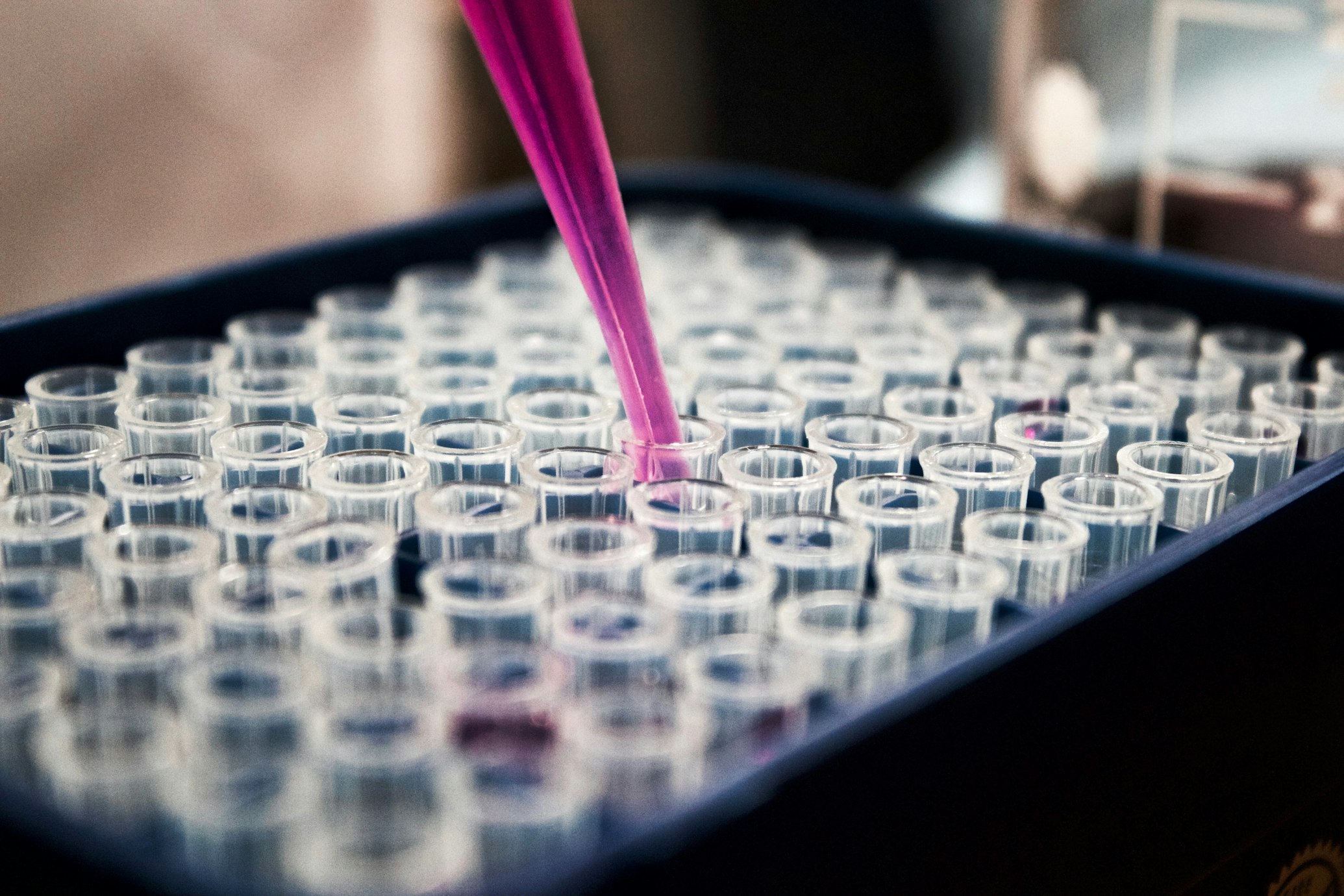
The experiment required controlled conditions in a laboratory setting with specialized equipment to monitor bacterial growth and pollutant degradation.
Data Analysis
Precise measurements and statistical analysis were crucial to determine the effectiveness of the bacterial degradation process under different conditions.
A Legacy of Cleaner Earth
Gongming Wang's work, and studies like it, provided a crucial proof-of-concept . It demonstrated that we could actively guide nature's own processes to tackle human-made problems. The principles established in that 1991 thesis are now applied in bioremediation projects worldwide.
Biostimulation
Today, at contaminated sites, engineers often use this technique—adding nutrients and oxygen to the native soil to encourage the growth of indigenous pollutant-degrading bacteria.
Bioaugmentation
In some cases, they even use this approach—adding a specially developed, pre-acclimated culture like the one from this experiment—to jump-start the cleanup process.
"The tiny clean-up crews are on the job, thanks to the foundational science that taught us how to put them to work."
