Advanced Biosensor Strategies for High-Yield L-Threonine Production: A Comprehensive Guide for Researchers
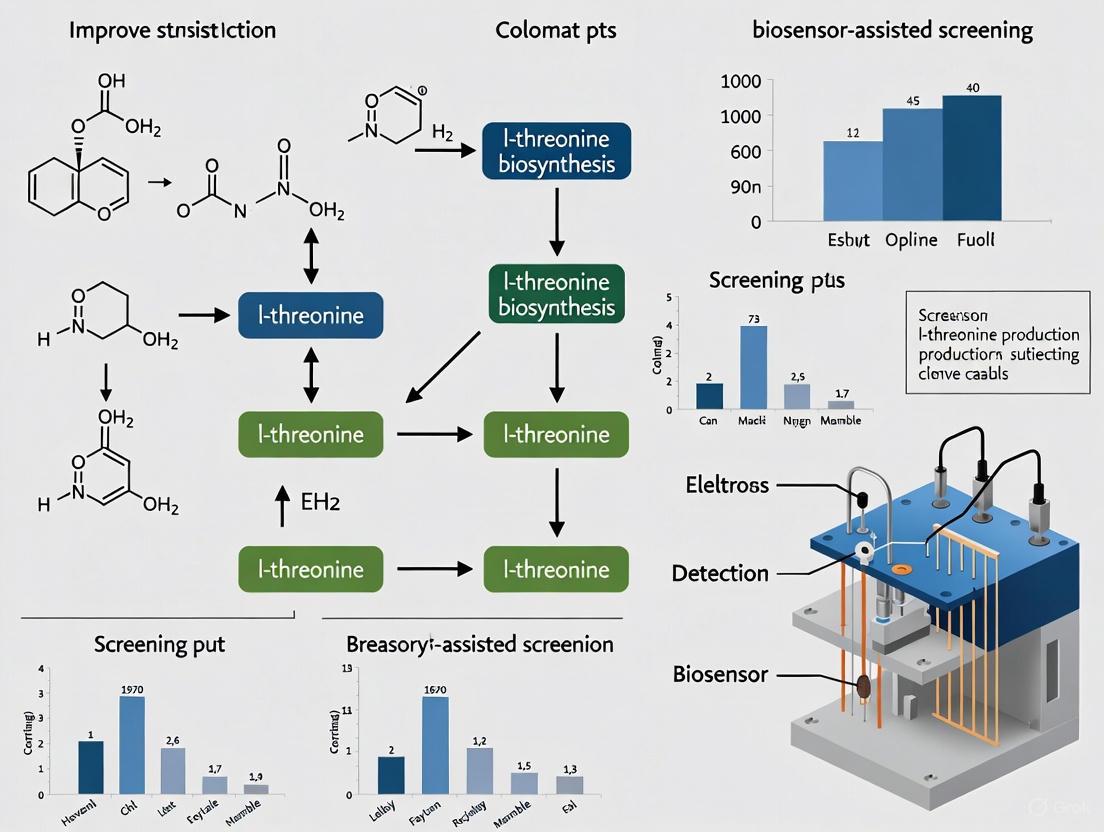
This article provides a comprehensive analysis of cutting-edge biosensor technologies for enhancing L-threonine production in microbial systems.
Advanced Biosensor Strategies for High-Yield L-Threonine Production: A Comprehensive Guide for Researchers
Abstract
This article provides a comprehensive analysis of cutting-edge biosensor technologies for enhancing L-threonine production in microbial systems. It explores the foundational principles of L-threonine biosensor design, including transcriptional regulators and riboswitches, and details methodological applications for high-throughput screening of overproducing strains and key enzymes. The content addresses common troubleshooting challenges and optimization strategies for biosensor sensitivity and specificity, while validating approaches through multi-omics integration, fermentation performance metrics, and comparative analysis with traditional methods. Tailored for researchers, scientists, and biotechnology professionals, this review synthesizes recent advances in biosensor-assisted strain development and metabolic engineering for industrial L-threonine biomanufacturing.
Understanding L-Threonine Biosensor Fundamentals: Components, Mechanisms, and Design Principles
The Critical Need for L-Threonine Biosensors in Modern Biomanufacturing
L-Threonine, an essential amino acid that cannot be synthesized by humans and animals, holds significant economic importance in the global bio-based products market. With the worldwide amino acid market reaching 10.3 million tons and gross sales of $28 billion in 2021, and projected to expand at a compound annual growth rate of 6.76% over the next decade, efficient production methods have become increasingly critical [1] [2]. L-Threonine represents the third largest market size as a feed additive, creating substantial pressure to develop more efficient biomanufacturing approaches [3] [1].
Microbial fermentation is considered an economical, efficient, and environmentally friendly method for amino acid production, contributing to approximately 80% of the global amino acids yield [1] [2]. However, the development of efficient high-throughput screening technologies utilizing biosensors has been hampered by the pressing need for biosensors that specifically target critical amino acids like L-threonine [3] [1]. This whitepaper examines recent breakthroughs in L-threonine biosensor technology and their transformative potential for modern biomanufacturing.
The Screening Bottleneck in Strain Development
Historical Limitations in High-Throughput Screening
Traditional screening methods for amino acid producers have relied on chromatographic or mass spectrometry techniques, which present inherent throughput limitations, time-consuming processes, and high costs that restrict strain development efficiency [4]. Without genetically encoded biosensors, the rapid identification of high-performance microbial producers from vast mutant libraries has represented a significant bottleneck in metabolic engineering pipelines [5].
The development of microbial cell factories for L-threonine production has advanced through random mutation, metabolic engineering, and high-throughput screening approaches [1] [2]. However, until recently, biosensors for several amino acids with important applications and large market demands—including L-threonine, L-proline, L-glutamate, and L-aspartate—remained unavailable [1] [2], creating a critical technological gap in biomanufacturing optimization.
Biosensor Landscape for Amino Acids
Table 1: Available Biosensors for Amino Acid Detection
| Amino Acid Type | Biosensor Availability | Transcriptional Regulator/Mechanism |
|---|---|---|
| Alkaline amino acids (L-lysine, L-arginine, L-histidine) | Available | LysG regulating LysE [1] |
| Branch-chain amino acids (L-valine, L-leucine, L-isoleucine) and L-methionine | Available | Lrp regulating BrnFE [1] |
| Aromatic amino acids (L-tryptophan, L-tyrosine, L-phenylalanine) | Available | Transcriptional regulator-based [1] |
| L-Serine | Available | SerR regulating SerE [1] |
| L-Threonine and L-Proline | Recently developed | Engineered SerR mutant (SerRF104I) [3] |
| L-Glutamate and L-Aspartate | Still unavailable | Not identified [1] |
Recent Breakthroughs in L-Threonine Biosensor Technology
Transcriptional Regulator Engineering Approach
A groundbreaking study published in 2025 successfully developed a novel transcriptional regulator-based biosensor for L-threonine through directed evolution of the transcriptional regulator SerR [3] [1] [2]. This research was inspired by the novel finding that the exporter SerE can transport L-proline in addition to its previously known substrates L-threonine and L-serine [1] [2].
The research hypothesis stemmed from the observation that most reported amino acid biosensors were constructed based on the regulatory machinery of amino acid transport. The findings suggested that if certain compounds are accepted by a transporter, they are very probably also accepted by the corresponding transcriptional regulator [1] [2]. Since SerE shares an overlapping substrate spectrum with ThrE, researchers speculated that SerR might have the potential to recognize L-threonine and L-proline besides L-serine as its effectors [1].
Through directed evolution of SerR, the mutant SerRF104I was identified, which can recognize both L-threonine and L-proline as effectors and effectively distinguish strains with varying production levels [3]. The researchers then employed this SerRF104I-based biosensor for high-throughput screening of superior enzyme mutants of L-homoserine dehydrogenase (Hom), a critical enzyme in the biosynthesis of L-threonine [3] [1].
Dual-Responding Genetic Circuit Strategy
Another innovative approach published in 2024 designed a dual-responding genetic circuit that capitalizes on the L-threonine inducer-like effect, the L-threonine riboswitch, and a signal amplification system for screening L-threonine overproducers [5]. This research marked the first demonstration of the inducer-like effect of L-threonine [5].
The biosensor was designed to respond to varying concentrations of L-threonine by incorporating the L-threonine riboswitch and a signal amplification system, extending the dose-response spectrum of signals by incorporating the lacI-Ptrc amplification system [5]. This platform effectively enhanced the performance of the enzyme and facilitated the identification of high L-threonine-producing strains from a random mutant library, resulting in 7-fold increased L-threonine production through directed evolution of the key enzyme [5].
CysB-Based Biosensor with Directed Evolution
A 2025 study developed a biosensor using the PcysK promoter and CysB protein to construct a primary L-threonine biosensor [6]. Through directed evolution of CysB, the researchers obtained the CysBT102A mutant, resulting in a 5.6-fold increase in the fluorescence responsiveness of the biosensor over the 0-4 g/L L-threonine concentration range [6].
This biosensor was utilized for iterative strain development, ultimately producing the THRM13 strain that achieved 163.2 g/L L-threonine production, with a yield of 0.603 g/g glucose in a 5 L bioreactor [6]. This represents one of the highest titers reported for L-threonine production and demonstrates the power of biosensor-assisted screening for developing industrial production strains.
Experimental Protocols for Biosensor Implementation
Directed Evolution of SerR for L-Threonine Recognition
Objective: To evolve SerR to respond to L-threonine instead of its native effector L-serine [1] [2].
Methodology:
- Library Construction: Generate mutant libraries of SerR using random mutagenesis or site-saturation mutagenesis techniques
- Screening System: Clone mutant SerR libraries into a reporter system with the ser promoter controlling expression of a fluorescent protein (eYFP)
- High-Throughput Screening: Use flow cytometry to screen for mutants that produce fluorescence in response to L-threonine but not L-serine
- Characterization: Isolate positive clones and characterize dose-response relationships to L-threonine and L-proline
- Validation: Apply the evolved biosensor to screen mutant libraries of L-homoserine dehydrogenase (Hom) for enhanced L-threonine production [3] [1]
Key Results: The identified SerRF104I mutant was able to recognize both L-threonine and L-proline as effectors, enabling the identification of 25 novel Hom mutants that increased L-threonine titers by over 10% [3].
Dual-Responding Genetic Circuit Implementation
Objective: Develop a genetic circuit that responds to intracellular L-threonine concentrations for high-throughput screening [5].
Methodology:
- Circuit Design: Construct a genetic circuit containing:
- L-threonine riboswitch for primary detection
- Signal amplification system using lacI-Ptrc
- Reporter gene (eGFP) for quantification
- Validation: Test circuit responsiveness to exogenous L-threonine supplementation
- Library Screening: Apply the biosensor to screen RBS libraries and random mutant libraries
- Fermentation Validation: Verify enhanced production in selected strains using bioreactor fermentation [5]
Key Results: The platform enabled pathway optimization and directed evolution of the key enzyme thrA, enhancing L-threonine production by 4 and 7-fold, respectively [5].
CysB-Based Biosensor Refinement
Objective: Develop a sensitive L-threonine biosensor by engineering the CysB transcriptional regulator [6].
Methodology:
- Promoter Screening: Use transcriptomic analysis to identify promoters responsive to L-threonine addition
- Biosensor Construction: Combine the PcysK promoter with CysB regulator and eGFP reporter
- Directed Evolution: Create CysB mutant libraries and screen for enhanced responsiveness
- Biosensor-Assisted Screening: Use evolved biosensor for high-throughput screening of mutant libraries
- Strain Validation: Combine with multi-omics analysis and metabolic engineering to maximize production [6]
Key Results: Identification of CysBT102A mutant with significantly enhanced responsiveness, leading to development of strains producing 163.2 g/L L-threonine [6].
Data Presentation: Quantitative Comparison of L-Threonine Biosensors
Table 2: Performance Comparison of Recent L-Threonine Biosensors
| Biosensor Type | Key Mutant/Component | Responsiveness Range | Production Improvement | Key Applications |
|---|---|---|---|---|
| Transcriptional Regulator-Based [3] [1] | SerRF104I | Responds to both L-threonine and L-proline | >10% titer increase for 25 Hom mutants | High-throughput screening of L-homoserine dehydrogenase mutants |
| Dual-Responding Genetic Circuit [5] | L-threonine riboswitch + lacI-Ptrc amplification | Not specified | 7-fold increase through thrA evolution | Pathway optimization and directed evolution of key enzymes |
| CysB-Based Biosensor [6] | CysBT102A | 0-4 g/L (5.6-fold increase in fluorescence response) | 163.2 g/L titer (0.603 g/g glucose yield) | Multi-omics guided metabolic network optimization |
The Scientist's Toolkit: Essential Research Reagents
Table 3: Key Research Reagents for L-Threonine Biosensor Development
| Reagent/Component | Function/Application | Examples/Sources |
|---|---|---|
| Transcriptional Regulators | Sensory components for biosensors | SerR, CysB, LysG [3] [1] [6] |
| Fluorescent Reporters | Quantitative output signal | eYFP, eGFP [3] [5] [6] |
| Riboswitches | RNA-based sensing elements | L-threonine riboswitch [5] |
| Directed Evolution Systems | Generating mutant libraries | Random mutagenesis, site-saturation mutagenesis [3] [6] |
| Flow Cytometry | High-throughput screening | Fluorescence-activated cell sorting (FACS) [4] |
| Multi-Enzyme Complexes | Metabolic pathway optimization | Cellulosome-based assemblies [4] |
Visualizing Biosensor Engineering Workflows
Diagram 1: L-Threonine Biosensor Development Workflow. This diagram illustrates the comprehensive approach from target identification to industrial application, highlighting three primary engineering strategies and their implementation pathways.
Molecular Mechanisms of Transcriptional Regulator-Based Biosensors
Diagram 2: Molecular Mechanism of Engineered L-Threonine Biosensor. This diagram compares the native SerR system specific to L-serine with the engineered SerRF104I mutant that responds to L-threonine, enabling high-throughput screening applications.
Future Perspectives and Industrial Applications
The development of robust L-threonine biosensors represents a transformative advancement for industrial biomanufacturing. These tools enable rapid identification of high-performance producers from extensive mutant libraries, significantly accelerating the strain development pipeline [3] [5] [6]. The integration of biosensors with multi-omics analysis and metabolic network optimization creates a powerful systems biology approach to maximizing L-threonine production [6].
Future directions will likely focus on expanding biosensor applications beyond screening to include dynamic regulation of metabolic pathways, enabling real-time optimization of L-threonine biosynthesis during fermentation [1]. Additionally, the combination of different biosensor architectures—transcriptional regulator-based, riboswitch-based, and translation-based systems—may create orthogonal sensing systems with enhanced specificity and dynamic range [5] [6].
As the global biosensors market continues to expand, projected to grow significantly between 2025 and 2030 [7], the integration of these technologies with artificial intelligence and machine learning will further enhance their predictive capabilities and industrial utility. The convergence of biosensor technology, multi-enzyme complex engineering, and advanced fermentation optimization promises to redefine the economic landscape of L-threonine manufacturing, creating more sustainable and cost-effective production platforms to meet growing global demand [4] [6].
Transcription factor-based biosensors are powerful tools in synthetic biology and metabolic engineering, serving as critical components for dynamic control of metabolic pathways, real-time monitoring of intracellular metabolites, and high-throughput screening (HTS) of industrial microbial strains [8] [9]. These biosensors function by utilizing transcription factors (TFs) to detect specific analytes and regulate gene expression, thereby linking biological signals to measurable outputs such as fluorescence, luminescence, or colorimetric changes [9]. Their mechanism involves three main steps: analyte recognition, signal transduction, and output generation [9].
Within the context of improving L-threonine production, the development of efficient biosensors has become particularly valuable. L-threonine, an essential amino acid with significant applications in animal feed, food products, and pharmaceuticals, represents a multi-billion-dollar market [10] [1]. Despite its economic importance, the development of high-performance microbial producers has been hampered by the lack of specific, sensitive biosensors for this amino acid [1] [5]. This technical guide focuses on two central transcriptional regulators—CysB and SerR—that have been successfully engineered to address this limitation, detailing their native recognition mechanisms, engineering strategies, and applications in biosensor-assisted screening for L-threonine overproduction.
The CysB Transcriptional Regulator
Native Structure and Function
CysB is a member of the large bacterial LysR-type transcriptional regulator (LTTR) family, which represents one of the most prevalent TF families in prokaryotes [11] [12]. Like most LTTRs, CysB functions as a homotetramer where each subunit contains an N-terminal winged-helix-turn-helix (wHTH) DNA-binding domain connected to a C-terminal effector-binding domain by a helical hinge region [11]. CysB is best known as the master regulator of sulfate metabolism and cysteine biosynthesis in Gram-negative bacteria such as Escherichia coli and Salmonella enterica [13] [11].
The activation of CysB target genes generally requires the effector molecule N-acetyl-L-serine (NAS), which derives from an intermediate in the cysteine biosynthetic pathway [11]. Structural studies have revealed that CysB possesses two distinct allosteric ligand binding sites: a sulfate and NAS-specific site-1, and a second NAS and O-acetylserine (OAS)-specific site-2 [13]. These ligands bind through an induced-fit mechanism, with OAS binding to site-2 remarkably remodeling site-1, indicating allosteric coupling between the two sites [13]. This allosteric coupling between the two ligand binding sites and the DNA-binding domain underlies the key feature of CysB activation [13].
Engineering CysB for L-Threonine Biosensing
Despite its natural specificity for sulfur metabolism intermediates, CysB has been successfully engineered to respond to L-threonine through directed evolution. In one groundbreaking study, researchers developed a biosensor for L-threonine by utilizing the PcysK promoter and CysB protein to construct a primary detection system [10]. Through directed evolution of CysB, they obtained a mutant (CysB-T102A) with significantly enhanced responsiveness to L-threonine [10].
The engineering process involved constructing an initial fluorescent reporter system using the PcysK promoter linked to eGFP. The biosensor was further refined by tandemly linking the CysB protein to create a pSensor construct. Critical enhancement came from directed evolution, where the CysB-T102A mutant was identified, exhibiting a 5.6-fold increase in fluorescence responsiveness across the 0–4 g/L L-threonine concentration range compared to the original biosensor [10]. This engineered biosensor was then deployed for high-throughput screening of mutant libraries, ultimately contributing to the development of a production strain (THRM13) that achieved 163.2 g/L L-threonine with a yield of 0.603 g/g glucose in a 5 L bioreactor [10].
Table 1: Performance Comparison of Native and Engineered CysB Biosensors
| Parameter | Native CysB Function | Engineered CysB (T102A) for L-Threonine |
|---|---|---|
| Primary Effectors | O-acetylserine (OAS), N-acetylserine (NAS) | L-threonine |
| Response Range | Sulfur metabolites | 0–4 g/L L-threonine |
| Fluorescence Responsiveness | Not applicable to threonine | 5.6-fold improvement |
| Application | Sulfur assimilation regulation | High-throughput screening of L-threonine producers |
| Production Outcome | Cysteine biosynthesis | 163.2 g/L L-threonine in bioreactor |
The following diagram illustrates the mechanistic differences between native CysB and the engineered CysB-T102A variant in their response to respective effectors:
The SerR Transcriptional Regulator
Native Structure and Function
SerR is another LysR-type transcriptional regulator (LTTR) found in Corynebacterium glutamicum, where it naturally controls the expression of the SerE exporter gene [1]. SerE was originally characterized as an exporter for L-serine and L-threonine, with SerR acting as its transcriptional activator in response to intracellular L-serine concentrations [1]. Like CysB, SerR contains the characteristic N-terminal DNA-binding domain and C-terminal effector-binding domain typical of LTTR family proteins.
The natural function of SerR involves sensing intracellular L-serine levels and activating the expression of SerE for serine excretion, representing a classic feedback regulation mechanism for amino acid homeostasis [1]. This regulatory system shares overlapping substrate specificity with ThrE, another exporter capable of transporting L-serine, L-threonine, and L-proline, suggesting potential evolutionary relationships between these transport systems and their regulatory components [1].
Engineering SerR for Dual L-Threonine and L-Proline Biosensing
The engineering of SerR for L-threonine biosensing followed a different approach than CysB, capitalizing on the observed overlap between the substrate spectra of SerE and ThrE exporters. Researchers hypothesized that SerR might have the inherent potential to recognize L-threonine and L-proline in addition to its native effector, L-serine [1]. However, while wild-type SerR responded specifically to L-serine, it showed no significant response to L-threonine or L-proline [1].
Through directed evolution of SerR, researchers identified a key mutant (SerR-F104I) that gained the ability to recognize both L-threonine and L-proline as effectors while effectively distinguishing strains with varying production levels [1]. This single amino acid substitution fundamentally altered the effector specificity of the transcription factor, enabling its application in biosensor development.
The resulting SerR-F104I-based biosensor was successfully employed for high-throughput screening of superior enzyme mutants in L-threonine and L-proline biosynthesis pathways [1]. Specifically, the biosensor identified 25 novel mutants of L-homoserine dehydrogenase (Hom) that increased L-threonine titers by over 10%, with six mutants showing performance similar to the most effective variants reported in the literature [1].
Table 2: Performance Metrics of SerR-Based Biosensor System
| Parameter | Wild-type SerR | SerR-F104I Mutant |
|---|---|---|
| Native Effector | L-serine | L-serine |
| Engineered Effectors | None | L-threonine, L-proline |
| Screening Output | Not applicable to threonine | 25 beneficial Hom mutants identified |
| Production Improvement | Not applicable | >10% increase in L-threonine titer |
| Key Mutation | N/A | F104I substitution |
The engineering workflow and application of the SerR-F104I biosensor are visualized in the following diagram:
Comparative Analysis of Recognition Mechanisms
Structural Basis for Effector Specificity
The structural characterization of these transcriptional regulators provides insights into their recognition mechanisms. CysB employs a sophisticated dual-site allosteric control system where site-1 is specific for sulfate and NAS, while site-2 accommodates both NAS and OAS [13]. The induced-fit binding mechanism and allosteric coupling between these sites enable precise metabolic sensing. The CysB-T102A mutation likely alters this allosteric network, modifying the effector binding pocket to accommodate L-threonine while maintaining the ability to activate transcription.
For SerR, the F104I mutation represents a more subtle modification that nonetheless significantly expands effector specificity. The phenylalanine to isoleucine substitution likely reduces steric hindrance in the binding pocket, allowing the bulkier L-threonine and L-proline molecules to be accommodated while maintaining recognition of the native L-serine effector. This demonstrates how single amino acid changes can dramatically alter effector specificity in LTTR family proteins.
Performance Characteristics for L-Threonine Detection
When deployed in biosensing applications, both engineered systems show distinct performance characteristics. The CysB-based biosensor demonstrated a linear response across the 0–4 g/L L-threonine concentration range, with the T102A mutation providing a 5.6-fold enhancement in fluorescence responsiveness [10]. This sensitivity range is particularly suitable for industrial strain development, where high metabolite concentrations are typically encountered.
The SerR-F104I-based biosensor enabled identification of enzyme variants that improved L-threonine production by over 10%, demonstrating its practical utility in metabolic engineering pipelines [1]. The dual specificity for L-threonine and L-proline may be advantageous in certain screening contexts but could require additional controls when absolute specificity is required.
Table 3: Comparison of Engineered Biosensor Systems for L-Threonine
| Characteristic | CysB-T102A System | SerR-F104I System |
|---|---|---|
| Base Transcription Factor | CysB (E. coli) | SerR (C. glutamicum) |
| Engineering Approach | Directed evolution of binding domain | Single point mutation (F104I) |
| Key Mutation | T102A | F104I |
| Dynamic Range | 0–4 g/L L-threonine | Not specified |
| Responsiveness Improvement | 5.6-fold increase | Enabled threonine response |
| Additional Specificities | Sulfur metabolites | L-proline, L-serine |
| Screening Outcome | 163.2 g/L production | >10% titer improvement |
| Best Application | Industrial high-throughput screening | Enzyme evolution studies |
Experimental Protocols for Biosensor Implementation
Protocol for CysB-Based Biosensor Construction and Screening
The development of CysB-based L-threonine biosensors follows a multi-stage process involving initial biosensor construction, directed evolution, and validation [10]:
Primary Biosensor Construction:
- Amplify the complete non-coding regions of candidate genes (e.g., PcysK) from E. coli genome using PCR
- Ligate the non-coding region sequences, linearized pTrc99A vector, and eGFP reporter using a seamless cloning kit
- Transform reaction products into E. coli DH5α and culture on LB agar plates for 12 hours at 37°C
- Include appropriate controls (e.g., promoterless eGFP and constitutive promoter J23119-driven eGFP)
Biosensor Validation:
- Select positive transformants and inoculate into 24-well plates containing LB medium with varying L-threonine concentrations (0, 10, 20, 30 g/L)
- Incubate cultures for 8 hours at 37°C with shaking at 220 rpm
- Measure eGFP fluorescence of transformants across different L-threonine concentrations
- Screen for plasmids with linear positive response to L-threonine
Directed Evolution of CysB:
- Use error-prone PCR or site-saturation mutagenesis to create CysB mutant libraries
- Screen for enhanced fluorescence responsiveness across the 0–4 g/L L-threonine range
- Identify and characterize beneficial mutations (e.g., T102A)
High-Throughput Screening Application:
- Employ the optimized biosensor in combination with random mutagenesis or targeted library creation
- Use fluorescence-activated cell sorting (FACS) or microtiter plate screening to identify high producers
- Validate selected strains in controlled bioreactor conditions
Protocol for SerR-Based Biosensor Implementation
The implementation of SerR-based biosensors for L-threonine screening involves the following key steps [1]:
Biosensor Assembly:
- Clone the SerR-F104I mutant gene under a constitutive promoter
- Clone the serE promoter (or other SerR-regulated promoter) upstream of a fluorescent reporter (eYFP)
- Assemble both components in a suitable plasmid vector
Biosensor Characterization:
- Transform the biosensor into the screening host strain
- Cultivate transformants in media with varying L-threonine concentrations
- Measure fluorescence output and determine dose-response characteristics
- Establish the dynamic range and detection limit for L-threonine
Library Screening:
- Introduce the target library (e.g., homoserine dehydrogenase variants) into the biosensor-equipped strain
- Culture the library under appropriate induction conditions
- Use fluorescence-based sorting or screening to isolate high-performing variants
- Validate hits in production assays
Strain Development:
- Combine beneficial mutations from screening with other metabolic engineering strategies
- Employ iterative cycles of mutagenesis and screening for continuous improvement
The Scientist's Toolkit: Essential Research Reagents and Materials
Table 4: Key Research Reagents for Transcriptional Regulator Engineering
| Reagent/Material | Function/Application | Examples/Specifications |
|---|---|---|
| Expression Vectors | Biosensor assembly and reporter expression | pTrc99A, pET-30a-trc [10] [5] |
| Fluorescent Reporters | Quantitative output measurement | eGFP, eYFP [10] [1] |
| Seamless Cloning Kits | Assembly of genetic circuits | MultiF Seamless Assembly Mix [10] |
| DNA Polymerases | PCR amplification for cloning and mutagenesis | Phanta Flash Master DNA Polymerase, Green Taq Mix [5] |
| Restriction Enzymes | DNA digestion for cloning | DpnI for library construction [10] |
| Strain Backgrounds | Host for biosensor implementation | E. coli DH5α (cloning), production strains [10] |
| Culture Media | Cell growth and induction | LB medium, high-salt LB, fermentation medium [10] |
| Microtiter Plates | High-throughput cultivation and screening | 24-well plates for initial validation [10] |
| Directed Evolution Tools | Creating genetic diversity | Error-prone PCR, site-saturation mutagenesis [10] [1] |
The engineering of transcriptional regulators CysB and SerR for L-threonine biosensing represents a significant advancement in metabolic engineering and synthetic biology. By modifying native regulatory proteins through directed evolution and rational design, researchers have developed powerful tools that enable high-throughput screening of L-threonine overproducers. The CysB-T102A variant offers high sensitivity within industrially relevant concentration ranges, while the SerR-F104I mutant provides dual specificity that may be advantageous in certain screening contexts.
The recognition mechanisms of these engineered transcription factors demonstrate how relatively minor modifications to native allosteric control systems can redirect effector specificity toward industrially relevant metabolites. The continued development of such biosensors, coupled with advanced screening technologies and computational design tools, promises to accelerate the creation of microbial cell factories for L-threonine and other valuable biochemicals. As our understanding of transcription factor structure and function deepens, the precision and efficiency of these engineering efforts will undoubtedly improve, further enhancing their impact on industrial biotechnology.
Within the framework of a broader thesis focused on enhancing L-threonine production in microbial cell factories, the development of high-throughput screening tools is paramount. While classical riboswitches—structured mRNA elements that regulate gene expression in response to ligand binding—have been engineered for amino acids like lysine, a natural, well-characterized L-threonine riboswitch has not been explicitly identified in the literature [14]. Consequently, recent research has pivoted towards engineering synthetic biology components that functionally mimic riboswitches, creating highly sensitive biosensors for detecting L-threonine and enabling the rapid selection of hyper-producing strains [10] [2]. This technical guide details the design, engineering, and application of these modern L-threonine detection systems, which are critical for advancing biosensor-assisted screening research.
Currently Developed L-Threonine Biosensing Systems
Although natural riboswitches for L-threonine are not available, significant progress has been made in developing alternative biosensor architectures. The table below summarizes the key engineered systems for L-threonine detection and their performance characteristics.
Table 1: Engineered Biosensors for L-Threonine Detection and Application
| Sensor Type / Name | Sensory Component | Reporting System | Key Performance Metrics | Primary Application Documented |
|---|---|---|---|---|
| Evolved Transcriptional Regulator [1] [2] | SerRF104I mutant (from C. glutamicum) | Enhanced Yellow Fluorescent Protein (eYFP) | Effectively distinguished strains with varying L-threonine production levels. | High-throughput screening of superior l-homoserine dehydrogenase (Hom) mutants. |
| Engineered Transcriptional Machinery [10] | CysB-T102A mutant + PcysK promoter | Enhanced Green Fluorescent Protein (eGFP) | 5.6-fold increase in fluorescence responsiveness over 0–4 g/L L-threonine range. | Screening L-threonine overproducing E. coli strains; achieved 163.2 g/L titer in a bioreactor. |
| Rare Codon-Based Fluorescent Reporter [4] | GFP mRNA with L-threonine rare codons (ATC) | Green Fluorescent Protein (GFP) | Enabled high-throughput screening via flow cytometry (FACS). | Rapid screening of mutant libraries for L-threonine high-producers. |
Experimental Protocols for Key L-Threonine Biosensors
Protocol: Employing the Evolved SerRF104I-Based Biosensor for Enzyme Screening
This protocol describes the use of the engineered transcriptional regulator SerRF104I for high-throughput screening of key enzymes in the L-threonine biosynthesis pathway [1] [2].
Biosensor Construction:
- Clone the gene encoding the evolved SerRF104I mutant regulator into an appropriate plasmid vector under a constitutive promoter.
- Place the enhanced Yellow Fluorescent Protein (eYFP) gene under the control of the native promoter sequence that is recognized and activated by the SerR protein.
- This construct forms the core whole-cell biosensor, pSerRF104I.
Library Creation and Transformation:
- Introduce targeted mutations into the gene of the enzyme to be engineered (e.g., l-homoserine dehydrogenase, Hom, for L-threonine production) using error-prone PCR or other mutagenesis techniques.
- Co-transform the mutant enzyme library and the pSerRF104I biosensor plasmid into the host microbial strain (e.g., Corynebacterium glutamicum).
Cultivation and Screening:
- Plate the transformed cells and incubate to form individual colonies.
- Pick colonies into 96-well or 384-well deep-well plates containing liquid culture medium.
- Incubate the plates with shaking to allow for cell growth and L-threonine production.
Fluorescence-Activated Cell Sorting (FACS):
- Measure the fluorescence intensity of eYFP in each well, which correlates with intracellular L-threonine concentration.
- Set a fluorescence threshold to identify and sort the top-performing clones (e.g., those with fluorescence intensity >10% above the control strain).
Validation:
- Ferment the sorted clones in shake flasks or bioreactors.
- Quantify the final L-threonine titer using analytical methods like HPLC to confirm the increased production.
Protocol: Constructing and Using a CysB-Based Fluorescent Biosensor
This methodology outlines the development and application of a highly responsive biosensor based on the CysB transcriptional regulator and its subsequent use in strain evolution [10].
Initial Promoter Screening via Transcriptomics:
- Culture wild-type E. coli (e.g., MG1655) in the presence of varying concentrations of exogenous L-threonine (e.g., 0 g/L, 30 g/L, 60 g/L).
- Harvest cells and perform RNA-seq transcriptomic analysis.
- Identify promoters that are naturally upregulated in response to L-threonine (e.g., PcysK, PcysJ, PcysD).
Biosensor Assembly and Optimization:
- Clone the selected promoter (e.g., PcysK) upstream of a reporter gene (eGFP) to create a primary reporter system.
- Co-express the native transcriptional regulator CysB in the same system to create a functional biosensor.
- Perform directed evolution on the cysB gene to enhance sensor performance. Screen for mutants (e.g., CysB-T102A) that yield a higher dynamic range in fluorescence response to L-threonine.
Strain Screening and Multi-omics Analysis:
- Apply the optimized biosensor (e.g., pSensorThr with CysB-T102A) to screen a library of randomly mutated E. coli strains via FACS.
- Isolate high-fluorescence populations and validate L-threonine production in microtiter plates or shake flasks.
- Perform genomic sequencing and transcriptomic analysis on the best-performing mutants (e.g., THRM1, THR36-L19) to identify beneficial mutations and understand altered metabolic fluxes.
Systems Metabolic Engineering:
- Use the multi-omics data to inform in silico simulations of the genome-scale metabolic network (GSMN).
- Identify and test new genetic targets (e.g., gene knock-outs or knock-ins) to further optimize the metabolic network for L-threonine production.
- Iteratively combine the biosensor-assisted screening of random mutations with rational metabolic engineering to achieve industrial-level titers.
Workflow for Biosensor-Assisted Strain Improvement
The following diagram illustrates the integrated, iterative cycle of developing a biosensor and using it to drive strain improvement, ultimately leading to high-level L-threonine production.
Core Regulatory Mechanism of an Engineered Transcriptional Biosensor
The diagram below details the operational mechanism of a transcriptional regulator-based biosensor, such as the engineered SerR or CysB system, at the molecular level.
The Scientist's Toolkit: Essential Research Reagents
The table below lists key reagents, components, and tools essential for constructing and implementing L-threonine biosensors as described in the experimental protocols.
Table 2: Key Research Reagents and Materials for L-Threonine Biosensor Development
| Reagent / Material | Function / Role | Specific Examples / Notes |
|---|---|---|
| Sensory Components | Core detection element; binds L-threonine or senses its presence. | Evolved transcriptional regulators (SerRF104I [2], CysB-T102A [10]), threonine-activating promoters (PcysK, PcysJ, PcysD [10] [15]). |
| Reporter Proteins | Generates quantifiable signal correlated with L-threonine concentration. | Enhanced Green Fluorescent Protein (eGFP [10]), Enhanced Yellow Fluorescent Protein (eYFP [1] [2]). |
| Host Strains | Chassis for biosensor operation and L-threonine production. | Escherichia coli (e.g., MG1655, production derivate TWF001 [15]), Corynebacterium glutamicum (e.g., ATCC 13032 [1] [2]). |
| Molecular Biology Kits | Essential for DNA manipulation and construct assembly. | Plasmid isolation kits, DNA polymerases for PCR (e.g., PrimerSTAR HS), seamless assembly mixes [10] [15]. |
| Screening Equipment | Enables high-throughput measurement and sorting of cells. | Flow Cytometer / Fluorescence-Activated Cell Sorter (FACS [4]), microplate reader for fluorescence detection. |
| Analytical Equipment | Validates L-threonine titers from screened strains. | HPLC for precise quantification of amino acids in fermentation broth [10]. |
| Fermentation Systems | Provides controlled environment for production validation. | Shake flasks, 5 L bioreactors for fed-batch fermentation with controlled dissolved oxygen and pH [10] [15]. |
Directed evolution has emerged as a powerful methodology for optimizing biosensor performance, enabling rapid screening of microbial cell factories for industrial biotechnology. This technical guide examines the directed evolution of the CysBT102A mutant biosensor, which demonstrated a 5.6-fold increase in fluorescence responsiveness across the 0-4 g/L L-threonine concentration range. The engineered biosensor enabled the development of the THRM13 strain capable of producing 163.2 g/L L-threonine with a yield of 0.603 g/g glucose in a 5L bioreactor. This case study provides researchers with comprehensive experimental protocols, quantitative performance data, and implementation frameworks for applying directed evolution to transcriptional regulator-based biosensors, with particular relevance to amino acid production optimization.
Genetically encoded biosensors constitute essential tools in metabolic engineering, serving as critical components for high-throughput screening and dynamic regulation of metabolic pathways. These biosensors typically consist of a sensing element (such as a transcription factor) that binds specific metabolites and an output module (such as fluorescent proteins) that generates a detectable signal. In industrial biotechnology, biosensors enable the rapid identification of high-performance microbial strains from vast mutant libraries, significantly accelerating the development of microbial cell factories.
Directed evolution mimics natural selection in laboratory settings, employing iterative cycles of genetic diversification and screening to enhance biomolecule functions without requiring comprehensive structural knowledge. This approach has proven particularly valuable for optimizing biosensors, where rational design is often limited by incomplete understanding of sequence-structure-function relationships. The general directed evolution workflow encompasses two fundamental phases: (1) library generation through random mutagenesis or semi-rational design to create genetic diversity, and (2) variant screening to identify individuals with improved properties, such as enhanced dynamic range, sensitivity, or specificity.
Case Study: Directed Evolution of the CysB Biosensor for L-Threonine Detection
Background and Strategic Approach
The development of L-threonine biosensors presents significant economic implications, as L-threonine represents an essential amino acid with extensive applications in animal feed, food fortification, and pharmaceutical industries. Despite previous engineering efforts, L-threonine production levels have historically lagged behind other amino acids like L-lysine and L-glutamate, creating a compelling need for improved screening technologies.
Researchers addressed this challenge by developing a transcription factor-based biosensor using the CysB protein and PcysK promoter from E. coli. The initial biosensor exhibited limited performance, necessitating optimization through directed evolution. The strategic approach encompassed multiple engineering stages: (1) initial biosensor construction using native regulatory elements, (2) directed evolution of the CysB transcriptional regulator, (3) biosensor validation and characterization, and (4) implementation in high-throughput screening for strain development [6] [10].
Table 1: Key Performance Metrics of CysB Biosensor Evolution
| Biosensor Variant | Fluorescence Responsiveness | Dynamic Range | L-Threonine Detection Range | Application Outcome |
|---|---|---|---|---|
| Primary CysB Biosensor | Baseline | Not reported | 0–4 g/L | Initial screening capability |
| CysBT102A Mutant | 5.6-fold increase vs. baseline | Significantly improved | 0–4 g/L | High-yield strain selection |
| Optimized System | Maximum response | Further optimized | Not specified | THRM13 strain: 163.2 g/L L-threonine |
Molecular Mechanisms and Engineering Rationale
The CysB protein functions as a transcriptional regulator in cysteine metabolism, but exhibits cross-reactivity with L-threonine. Structural analysis revealed that the Thr102 residue plays a crucial role in effector binding and allosteric regulation. Through directed evolution, the T102A mutation was identified as a key substitution that enhanced L-threonine binding affinity and improved signal transduction efficiency. This single amino acid alteration substantially modified the protein's conformational dynamics upon ligand binding, resulting in enhanced transcriptional activation of the downstream reporter gene (eGFP) under the control of the PcysK promoter [6].
The molecular mechanism involves L-threonine binding to the CysBT102A mutant, which induces conformational changes that facilitate increased binding to the PcysK promoter region, ultimately driving enhanced eGFP expression. The improved fluorescence response directly correlates with intracellular L-threonine concentrations, enabling quantitative screening of producer strains.
Figure 1: Biosensor Mechanism: CysBT102A mutant activates eGFP expression via PcysK promoter in response to L-threonine
Experimental Protocols and Methodologies
Library Generation Through Directed Evolution
The directed evolution process for CysB optimization employed systematic mutagenesis and screening protocols:
Primary Library Construction:
- Template Preparation: Amplified the native cysB gene from E. coli MG1655 genomic DNA using high-fidelity PCR
- Mutagenesis Method: Employed error-prone PCR conditions with adjusted MgCl₂ and MnCl₂ concentrations to achieve mutation rates of 1-5 amino acid substitutions per gene
- Library Assembly: Cloned mutated cysB variants into plasmid vectors containing the PcysK promoter upstream of the eGFP reporter gene
- Transformation: Transformed library into E. coli DH5α host strain, achieving library sizes >10⁵ individual clones to ensure sufficient diversity coverage [6]
Screening Methodology:
- Primary Screening: Cultured transformants in 24-well plates containing LB medium supplemented with varying L-threonine concentrations (0, 2, 4 g/L)
- Incubation Conditions: 8 hours at 37°C with shaking at 220 rpm
- Fluorescence Measurement: Quantified eGFP fluorescence using plate readers with excitation/emission at 488/509 nm
- Response Calculation: Normalized fluorescence values to cell density and calculated fold-change relative to non-induced controls
- Hit Identification: Selected variants showing significantly enhanced fluorescence responsiveness across the L-threonine concentration gradient [6] [10]
Biosensor Characterization and Validation
Comprehensive characterization of the CysBT102A mutant established its performance metrics:
Dose-Response Profiling:
- Cultured biosensor strains with L-threonine concentrations ranging from 0-10 g/L
- Measured fluorescence intensity at 2-hour intervals over 12-hour period
- Calculated response factors, dynamic range, and EC₅₀ values
- Determined specificity against other amino acids (L-serine, L-cysteine, L-methionine)
Specificity Assessment:
- Exposed biosensor to structurally similar amino acids at 4 g/L concentration
- Verified minimal cross-reactivity with non-target metabolites
- Confirmed maintained functionality in high-throughput screening conditions [6]
Table 2: Quantitative Analysis of Directed Evolution Techniques for Biosensor Engineering
| Methodology | Key Advantages | Limitations | Success Metrics |
|---|---|---|---|
| Error-prone PCR | • Easy to perform• No prior structural knowledge needed• Broad mutagenesis coverage | • Mutational bias• Limited sequence space sampling• Potential for neutral mutations | • 5.6-fold improvement in fluorescence response• Identification of key T102A mutation |
| Site-saturation Mutagenesis | • Focused exploration of specific residues• Comprehensive coverage of targeted positions• Enables exploration of structure-function relationships | • Limited to predefined positions• Library size expands rapidly with multiple targets | • Targeted optimization of effector binding pocket• Reduced screening burden compared to random approaches |
| Fluorescence-activated Cell Sorting (FACS) | • Ultra-high throughput (>10⁸ cells/hour)• Single-cell resolution• Quantitative multiparameter analysis | • Requires precise gating strategies• Equipment intensive• Signal-to-noise optimization critical | • Enabled screening of comprehensive mutant libraries• Efficient enrichment of high-performing variants |
Implementation in Metabolic Engineering and High-Throughput Screening
Integration with Strain Development Pipeline
The optimized CysBT102A biosensor was implemented in a comprehensive metabolic engineering workflow for L-threonine overproduction:
Mutant Library Generation:
- Applied random mutagenesis to L-threonine producer strains using UV mutagenesis and chemical mutagens
- Generated diverse mutant libraries with comprehensive genomic diversity
High-Throughput Screening:
- Employed fluorescence-activated cell sorting (FACS) for rapid screening of mutant libraries
- Established gating parameters based on fluorescence intensity corresponding to high L-threonine production
- Sorted top 0.1-1% of population for further characterization and fermentation validation
Strain Validation:
- Validated sorted clones in shake-flask fermentation with controlled conditions
- Quantified L-threonine production using HPLC and biosensor correlation analysis
- Identified THRM13 as lead strain with superior production characteristics [6]
Systems Metabolic Engineering Integration
The biosensor-driven screening was complemented with multi-omics analysis and computational modeling:
Multi-omics Analysis:
- Conducted transcriptomic profiling of producer strains to identify differential gene expression
- Performed metabolic flux analysis to quantify pathway activities
- Integrated multi-omics data to identify non-intuitive metabolic bottlenecks
In Silico Modeling:
- Utilized genome-scale metabolic models (GSMN) to simulate metabolic fluxes
- Predicted gene knockout and overexpression targets for enhanced production
- Optimized carbon allocation toward L-threonine biosynthesis
Combined Engineering Approach:
- The integrated strategy coupling biosensor-driven high-throughput screening with systems metabolic engineering enabled the development of the THRM13 strain, achieving unprecedented L-threonine titers of 163.2 g/L with a yield of 0.603 g/g glucose [6] [16].
Figure 2: High-Throughput Screening Workflow: Integrating biosensor screening with systems metabolic engineering
Research Reagent Solutions and Technical Materials
Table 3: Essential Research Reagents for Biosensor Directed Evolution
| Reagent/Category | Specific Examples | Function/Application | Implementation in CysB Study |
|---|---|---|---|
| Host Strains | E. coli DH5α, MG1655, CGMCC 1.366-Thr | Biosensor host, production host, mutagenesis platform | DH5α for biosensor characterization; MG1655 for genomic template [6] [4] |
| Vector Systems | pTrc99A, pET22b(+) | Expression vector with inducible promoters | pTrc99A for biosensor construction with PcysK promoter [6] |
| Polymerases & Cloning | Phanta HS Super-Fidelity DNA Polymerase, Seamless Assembly Mix | Error-prone PCR, library construction, pathway assembly | High-fidelity PCR for gene amplification; seamless cloning for vector construction [6] [17] |
| Reporter Proteins | eGFP, eYFP, StayGold variants | Fluorescent output for biosensor signal quantification | eGFP as primary reporter for CysB biosensor [6] [18] |
| Selection Markers | Chloramphenicol, Spectinomycin resistance | Plasmid maintenance, mutant selection | Antibiotic selection for library maintenance [17] |
| Analytical Instruments | Flow cytometers, HPLC systems, Plate readers | High-throughput screening, metabolite quantification | FACS for library screening; HPLC for L-threonine validation [6] [4] |
Discussion and Future Perspectives
The successful directed evolution of the CysBT102A biosensor demonstrates the power of combining molecular engineering with systems metabolic approaches. Several key insights emerge from this case study:
Critical Success Factors:
- Library Quality: The balance between mutation rate and functional protein yield was essential for identifying productive mutations
- Screening Throughput: Implementation of FACS enabled comprehensive library coverage with quantitative selection parameters
- Multi-level Optimization: Integration of promoter engineering, RBS optimization, and protein evolution created synergistic performance improvements
Technical Limitations and Considerations:
- Dynamic Range Constraints: Even optimized biosensors may have limited linear ranges requiring careful calibration
- Host Dependency: Biosensor performance can vary across genetic backgrounds necessitating host-specific validation
- Metabolic Burden: High-copy biosensor plasmids can impact host metabolism, potentially confounding screening results
Emerging Methodologies: Future biosensor engineering will likely incorporate computational design approaches utilizing molecular dynamics simulations to predict functional insertion sites and conformational changes. Recent advances in machine learning algorithms for predicting mutation effects promise to reduce library sizes and increase success rates. Additionally, CRISPR-enabled genome editing facilitates rapid implementation of metabolic engineering strategies identified through biosensor-based screening [19] [20].
The CysBT102A case study provides a robust framework for biosensor engineering applicable to diverse metabolite targets. The continued refinement of directed evolution methodologies will further accelerate the development of microbial cell factories for sustainable biochemical production.
In the pursuit of superior microbial cell factories for L-threonine production, biosensor-assisted high-throughput screening (HTS) has emerged as a transformative technology. Central to these biosensors are native promoter systems that sense intracellular L-threonine concentrations and transduce this information into detectable fluorescence signals. This technical guide examines the principles and applications of key native Escherichia coli promoters, with particular focus on the PcysK promoter and related cysteine biosynthesis promoters, providing researchers with a comprehensive framework for their implementation in strain improvement programs.
Core Promoter Systems for L-Threonine Biosensing
The Cysteine Regulon Promoter Family
Multiple promoters from the cysteine biosynthesis pathway have been harnessed for L-threonine biosensing due to their natural responsiveness to threonine-mediated regulatory effects. These promoters offer varying strengths and dynamic ranges suitable for different screening applications.
Table 1: Native Promoter Systems for L-Threonine Biosensing
| Promoter | Regulatory Components | Response Mechanism | Dynamic Range | Key Applications |
|---|---|---|---|---|
| PcysK | CysB binding site | CysB-threonine complex activates transcription | 5.6-fold improvement after CysB evolution [10] | High-throughput screening of mutant libraries |
| PcysJ | CysB binding site | Activated by CysB-effector complex | Linear response over 0-50 g/L [21] | FACS-based screening, dynamic regulation |
| PcysH | CysB binding site | Activated by CysB-effector complex | Linear response over 0-50 g/L [21] | FACS-based screening, dynamic regulation |
| Fusion cysJHp | Combined cysJ and cysH elements | Enhanced sensitivity to threonine | ~2x higher in producers vs non-producers [21] | Industrial strain screening |
| PcysD | CysB binding site | Activated by CysB-effector complex | Gradual response curve [22] | Transporter expression regulation |
Engineering PcysK for Enhanced Performance
The PcysK promoter represents one of the most advanced platforms for L-threonine biosensing. Native PcysK regulation involves the transcriptional activator CysB, which binds L-threonine as an effector molecule, leading to transcription activation of downstream genes. Engineering efforts have significantly enhanced this system through two primary approaches:
Directed Evolution of CysB: Through systematic mutagenesis of the CysB transcriptional regulator, researchers obtained a CysB(T102A) mutant that exhibited a 5.6-fold increase in fluorescence responsiveness across the 0-4 g/L L-threonine concentration range compared to the wild-type system [10]. This dramatic improvement enables more sensitive discrimination between high- and low-producing strains during screening.
Promoter Truncation and Optimization: Strategic removal of non-essential regulatory elements from native PcysK has yielded minimal promoters with reduced background noise and improved signal-to-noise ratios. These truncated versions maintain strong threonine responsiveness while eliminating potential interference from native regulatory networks [10].
Experimental Methodology for Promoter Characterization
Protocol: Promoter Response Profiling
Materials:
- E. coli DH5α or MG1655 strains
- High-salt LB medium (10 g/L tryptone, 5 g/L yeast extract, 10 g/L NaCl)
- L-threonine standards (0-50 g/L)
- Reporter plasmid with promoter-eGFP construct
- 24-well deep well plates
- Fluorescence microplate reader or flow cytometer
Procedure:
- Clone candidate promoter sequences upstream of eGFP reporter gene in a suitable vector backbone
- Transform constructs into appropriate E. coli host strains
- Inoculate single colonies into 24-well plates containing LB medium with varying L-threonine concentrations (0, 10, 20, 30 g/L)
- Incubate for 8-12 hours at 37°C with shaking at 220 rpm
- Measure culture OD600 and eGFP fluorescence (excitation: 488 nm, emission: 509 nm)
- Calculate normalized fluorescence units (fluorescence/OD600)
- Plot dose-response curves to determine linear range and sensitivity [10] [21]
Validation Controls:
- Include promoterless eGFP construct as negative control
- Use constitutive promoter (e.g., J23119) as positive control
- Test osmotic pressure control (e.g., 30 g/L NaCl) to exclude non-specific effects [21]
Protocol: Biosensor-Assisted High-Throughput Screening
Materials:
- Mutant library (≥10^7 variants)
- FACS-compatible biosensor strain
- FACS instrument with 488 nm laser
- 96-well or 384-well microtiter plates
- Fermentation medium
Procedure:
- Transform biosensor construct into mutant library or express in biosensor strain
- Grow library to mid-log phase in appropriate medium
- Dilute and analyze using FACS, gating for highest 0.1-1% fluorescent population
- Sort positive clones into recovery medium in microtiter plates
- Incubate sorted clones for outgrowth (24-48 hours at 37°C)
- Transfer to fermentation medium for small-scale production validation
- Analyze L-threonine production using HPLC or LC-MS
- Select top performers for scale-up studies [21] [4]
Table 2: Performance Metrics of Promoter-Based Screening Systems
| System | Library Size | Screening Throughput | Validation Hit Rate | Maximum Titer Achieved |
|---|---|---|---|---|
| PcysJH-eGFP | 20 million mutants | 400+ strains/week | 34/400 (8.5%) superior producers | 17.95% improvement over parent [21] |
| PcysK-CysB(T102A) | Not specified | High-throughput FACS | Significant enrichment of high-producers | 163.2 g/L in 5L bioreactor [10] |
| SerRF104I-based | Hom and ProB mutants | 25 and 13 novel mutants identified | >10% titer improvement | Multiple enzyme variants improved [3] [2] |
Advanced Engineering Strategies
Hybrid Systems for Dynamic Metabolic Regulation
Beyond conventional screening applications, L-threonine-responsive promoters enable dynamic metabolic regulation through feedback-controlled expression systems:
Transporter Expression Tuning: By replacing constitutive promoters with PcysJ, PcysD, or PcysJH upstream of L-threonine exporters (rhtA, rhtB, rhtC), researchers achieved autonomous regulation of transporter expression in response to intracellular threonine levels. This dynamic approach increased L-threonine production to 26.78 g/L (a 161% improvement) compared to constitutive expression systems, while reducing the metabolic burden associated with transporter overexpression [22].
Multi-Enzyme Complex Assembly: Recent work has demonstrated the integration of biosensor systems with synthetic enzyme complexes. By co-localizing ThrC-DocA and ThrB-CohA enzymes using cellulosome-inspired assembly systems, researchers achieved a 31.7% increase in L-threonine production through enhanced substrate channeling. This approach addresses metabolic imbalance issues common in conventional overexpression strategies [4].
Novel Biosensor Development through Transcription Factor Engineering
An alternative approach to cysteine regulon promoters involves engineering non-native transcription factors for L-threonine responsiveness:
SerR Engineering: Through directed evolution of the transcriptional regulator SerR from Corynebacterium glutamicum, researchers developed a SerR(F104I) mutant capable of responding to both L-threonine and L-proline. This novel biosensor successfully identified 25 and 13 novel mutants of homoserine dehydrogenase (Hom) and γ-glutamyl kinase (ProB), respectively, that increased target amino acid titers by over 10% [3] [2].
The Scientist's Toolkit: Essential Research Reagents
Table 3: Key Reagent Solutions for Promoter Engineering Studies
| Reagent/Category | Specific Examples | Function/Application |
|---|---|---|
| Host Strains | E. coli MG1655, DH5α, CGMCC 1.366-Thr | Host for biosensor construction and validation |
| Vector Backbones | pCL1920 (low copy), pTrc99A, pET22b(+) | Reporter plasmid construction |
| Reporter Genes | eGFP, eYFP, lacZ, RFP | Fluorescent and colorimetric output signals |
| Selection Markers | Spectinomycin, Ampicillin | Plasmid maintenance and selection |
| Assembly Systems | Gibson Assembly, Seamless Cloning Kit | Modular promoter-reporter construction |
| Mutagenesis Tools | Error-prone PCR, DNA shuffling | Directed evolution of regulatory components |
| Analytical Instruments | FACS, HPLC, LC-MS | High-throughput screening and validation |
Visualizing Biosensor Construction and Workflows
Biosensor Development and Implementation Workflow
L-Threonine Biosensing Mechanism with CysB/PcysK System
The strategic selection and engineering of native promoter systems, particularly PcysK and related cysteine regulon promoters, provides a powerful foundation for biosensor-assisted improvement of L-threonine production strains. Through directed evolution of regulatory components, promoter optimization, and integration with advanced screening technologies, these systems enable rapid identification of high-performing variants from complex mutant libraries. The continued refinement of these biosensing platforms promises to accelerate the development of next-generation microbial cell factories for L-threonine and other valuable bioproducts.
The development of high-performance biosensors is a cornerstone of advanced metabolic engineering, enabling the dynamic monitoring of metabolic fluxes and high-throughput screening of industrial microbial strains. Within the specific context of microbial production of L-threonine, an essential amino acid with extensive applications in animal feed, food, and pharmaceuticals, the critical performance parameters of biosensors—dynamic range, sensitivity, and specificity—directly determine the efficiency of strain optimization cycles [10] [22] [23]. These parameters dictate a biosensor's ability to accurately distinguish between high- and low-producing cells within massive mutant libraries, a capability essential for breaking through production bottlenecks in modern biomanufacturing. This guide provides an in-depth technical examination of these core performance characteristics, framed within the applied research of improving L-threonine production, and is supplemented with structured experimental data, detailed protocols, and visualization tools to equip researchers with practical methodologies for biosensor characterization and implementation.
Core Performance Parameters of Biosensors
Quantitative Analysis of Biosensor Performance
The performance of biosensors used in L-threonine research can be quantitatively assessed and compared through several key metrics. The table below summarizes performance data from selected studies to illustrate the typical ranges and achievements in the field.
Table 1: Performance Metrics of Representative L-Threonine Biosensors
| Sensory Element | Dynamic Range (Fold-Change) | Sensitivity / Detection Range | Key Engineering Strategy | Reference |
|---|---|---|---|---|
| CysB(T102A) TF | 5.6-fold increase | 0 - 4 g/L | Directed evolution of transcription factor | [10] |
| Fusion Promoter cysJHp | Near-linear response | 0 - 50 g/L | Proteomics-driven promoter discovery | [23] |
| Dual-Responding Circuit | Not specified | Effective HTS from large libraries | Combines riboswitch & inducer-like effect | [5] |
| SerR(F104I) TF | Effectively distinguished high/low producers | Applied to HTS of Hom and ProB enzymes | Directed evolution to shift effector specificity | [1] |
Defining Key Performance Parameters
Dynamic Range: This parameter defines the ratio of the biosensor's maximum output signal (e.g., fluorescence at saturating target concentration) to its minimum output signal (e.g., basal fluorescence without the target). A broader dynamic range allows for clearer distinction between microbial variants with varying production capacities. For example, directed evolution of the CysB transcription factor created a mutant (CysB(T102A)) with a 5.6-fold increase in fluorescence responsiveness over a critical L-threonine concentration range, a significant enhancement over the wild-type sensor [10]. Engineering strategies to extend the dynamic range beyond the theoretical 81-fold span of single-site binding include combining multiple receptor variants with differing affinities, which has been demonstrated to achieve a log-linear dynamic range spanning up to 900,000-fold for other biomolecules [24].
Sensitivity: Sensitivity refers to the lowest concentration of a target molecule that a biosensor can reliably detect and the steepness of its response curve within a given concentration range. It determines the biosensor's ability to identify subtle yet meaningful differences in intracellular metabolite levels among cell variants. In practice, a biosensor with a near-linear response over the expected physiological range, such as the fusion promoter cysJHp characterized between 0 and 50 g/L of extracellular L-threonine, is highly valuable for quantifying production capacity [23].
Specificity: Specificity is the biosensor's ability to respond exclusively to the target metabolite (L-threonine) without significant cross-reaction with structurally or metabolically similar molecules. This ensures that the screening process selectively enriches for mutants with enhanced L-threonine synthesis and not other amino acids. Specificity is often engineered at the ligand-binding pocket of the sensory element, as demonstrated by the development of the SerR(F104I) transcription factor, which was evolved to respond to L-threonine and L-proline while gaining this new functionality [1].
Experimental Protocols for Characterization
Protocol 1: Characterizing Dose-Response and Dynamic Range
This protocol outlines the steps for establishing a biosensor's dose-response curve, which is fundamental for determining its dynamic range and sensitivity.
- Strain Transformation and Culture: Transform the biosensor plasmid (e.g., pSensor containing PcysK-egfp and CysB(T102A)) into an appropriate host strain (e.g., E. coli DH5α) [10]. Plate on selective medium and incubate overnight.
- Preparation of Test Conditions: Inoculate single colonies into deep-well plates or culture tubes containing liquid LB medium supplemented with a gradient of L-threonine concentrations (e.g., 0, 0.5, 1, 2, 4, 8, 16, 32 g/L). Ensure inclusion of a negative control (no promoter) and a positive control (a strong constitutive promoter like J23119) [10].
- Cultivation and Harvest: Incubate the cultures with shaking (e.g., 200-220 rpm) at 37°C until the mid-exponential growth phase (OD600 ~0.6-0.8).
- Signal Measurement: Harvest 150-200 µL of culture into a 96-well microplate. Measure the fluorescence intensity (e.g., Ex/Em: 488/509 nm for eGFP) and optical density (OD600) of each sample using a plate reader.
- Data Analysis: Normalize the fluorescence of each sample to its OD600 to calculate the specific fluorescence. Plot the normalized fluorescence against the L-threonine concentration. Fit a curve (e.g., sigmoidal dose-response) to the data. The dynamic range is calculated as the ratio of the maximum normalized fluorescence to the minimum normalized fluorescence.
Protocol 2: High-Throughput Screening Validation
This protocol validates biosensor performance by screening a mutant library and confirming the correlation between biosensor signal and production titer.
- Library Generation: Create a diverse mutant library of your L-threonine production strain using methods like UV mutagenesis, atmospheric and room temperature plasma (ARTP), or error-prone PCR of key genes (e.g., thrA) [5] [23].
- Biosensor Integration: Introduce the biosensor construct (e.g., pTZL2 with PcysJHp-egfp) into the mutant library via transformation or chromosomal integration [23].
- Fluorescence-Activated Cell Sorting (FACS): Dilute the transformed library to an appropriate concentration. Use a flow cytometer or FACS sorter to analyze and sort the cell population based on fluorescence intensity. Gate and collect the top 0.1-1% of highly fluorescent cells [4].
- Validation of Sorted Clones: Plate the sorted cells to obtain single colonies. Inoculate these clones into deep-well plates containing fermentation medium. After fermentation, measure the actual L-threonine titer in the culture supernatants of individual clones using High-Performance Liquid Chromatography (HPLC).
- Correlation Analysis: Plot the biosensor's fluorescence intensity (measured during growth or via flow cytometry) against the HPLC-measured L-threonine titer for each validated clone. A strong positive correlation confirms the biosensor's efficacy for HTS.
Visualizing Biosensor Engineering and Application Workflows
Biosensor-Assisted HTS for L-Threonine
Dynamic Regulation of Metabolic Pathways
The Scientist's Toolkit: Research Reagent Solutions
Table 2: Essential Reagents and Tools for Biosensor Development and HTS
| Reagent / Tool Category | Specific Examples | Function / Application | Reference |
|---|---|---|---|
| Sensory Elements | CysB(T102A) transcription factor; PcysJ, PcysD, PcysJH promoters; L-threonine riboswitch | Core sensing component that binds L-threonine and initiates signal transduction | [10] [22] [5] |
| Reporter Proteins | Enhanced Green Fluorescent Protein (eGFP); Enhanced Yellow Fluorescent Protein (eYFP); LacZ | Generates quantifiable output (fluorescence, color) for detection and sorting | [10] [1] [23] |
| Directed Evolution Kits | Seamless assembly kits (e.g., from ABclonal, Vazyme); Mutagenic strains | For engineering sensory elements (e.g., SerR, CysB) to improve properties like dynamic range and specificity | [10] [1] |
| HTS & Sorting Platform | Fluorescence-Activated Cell Sorter (FACS); Flow Cytometer | Enables high-throughput screening of mutant libraries at single-cell resolution based on biosensor signal | [4] [23] |
| Validation Analytics | High-Performance Liquid Chromatography (HPLC) | Gold-standard method for validating L-threonine titers in culture supernatants from screened clones | [22] [25] |
The precise characterization of dynamic range, sensitivity, and specificity is not merely an academic exercise but a critical prerequisite for deploying biosensors in demanding metabolic engineering campaigns. The frameworks, protocols, and tools detailed in this guide provide a roadmap for researchers to rigorously evaluate and iteratively improve biosensor performance. As demonstrated in the context of L-threonine production, well-characterized biosensors are powerful engines for discovery, enabling the rapid isolation of superior microbial strains and the dynamic optimization of metabolic pathways. The continued refinement of these biological tools, guided by a deep understanding of their performance parameters, will undoubtedly accelerate the development of efficient microbial cell factories for L-threonine and a wide array of other valuable biochemicals.
Implementation Strategies: Biosensor-Assisted High-Throughput Screening and Strain Development
Constructing Fluorescent Reporter Systems for High-Throughput Screening
Fluorescent reporter systems have become indispensable tools in metabolic engineering, enabling the rapid identification of high-performance microbial strains. Within the context of improving L-threonine production, these biosensors convert intracellular metabolite concentrations into quantifiable fluorescence signals, allowing researchers to screen vast mutant libraries with single-cell resolution. The development of robust high-throughput screening (HTS) platforms has emerged as a transformative approach to overcome traditional bottlenecks in strain development, which often rely on time-consuming chromatographic analyses [10]. This technical guide examines the design principles, molecular components, and implementation strategies for constructing fluorescent reporter systems specifically applied to L-threonine overproduction in Escherichia coli, providing researchers with a comprehensive framework for biosensor-assisted strain improvement.
Fundamental Biosensor Architectures for L-Threonine Detection
Rare Codon-Based Fluorescent Systems
A novel approach for monitoring intracellular L-threonine levels utilizes the principle of codon usage bias. This system employs fluorescent proteins containing a high proportion of L-threonine rare codons (ATC) in their sequences. In high-yield L-threonine strains, the abundant amino acid pool enables efficient translation of these rare codons, leading to strong fluorescence signals. Conversely, in low-producing strains, rare codon translation is inefficient, resulting in diminished fluorescence [4].
Implementation Protocol:
- Gene Selection: Identify genes with high threonine content in their amino acid sequence from microbial genomes (e.g., E. coli or Corynebacterium glutamicum)
- Codon Replacement: Replace all threonine codons in selected protein sequences with L-threonine rare codons (ATC)
- Fluorescent Protein Fusion: Link these codon-optimized sequences to fluorescent proteins (e.g., staygold variants) with identical codon replacements
- Vector Construction: Clone the constructed rare codon-fluorescent protein fusions into appropriate expression vectors (e.g., pET-22b+)
- Validation: Measure fluorescence intensity across strains with known L-threonine production levels to establish correlation [4]
This system enables high-throughput screening of mutant libraries through fluorescence-activated cell sorting (FACS), with studies demonstrating the selection of metabolically active enhanced strains by setting fluorescence intensity thresholds at 0.01% for phenotypic enrichment [4].
Transcription Factor-Based Biosensors
Transcriptional regulators native to microbial systems provide the foundation for highly specific biosensor designs. For L-threonine sensing, researchers have successfully engineered the SerR transcriptional regulator from Corynebacterium glutamicum through directed evolution. Although wild-type SerR responds specifically to L-serine, a single amino acid substitution (F104I) generated a mutant (SerRF104I) capable of recognizing both L-threonine and L-proline as effectors [2].
Implementation Protocol:
- Regulator Selection: Identify transcriptional regulators associated with amino acid metabolism (e.g., LysR-type regulators)
- Directed Evolution: Create mutant libraries of the transcriptional regulator through error-prone PCR or site-saturation mutagenesis
- Reporter Construction: Fuse regulator binding sites (promoters) to fluorescent reporter genes (e.g., eYFP, eGFP)
- Screening: Screen mutant libraries for fluorescence response to target metabolite (L-threonine) using flow cytometry or microplate readers
- Characterization: Determine dynamic range, sensitivity, and specificity of responsive clones [2]
This approach yielded the SerRF104I mutant, which effectively distinguishes strains with varying L-threonine production levels and has been successfully deployed for high-throughput screening of Hom (L-homoserine dehydrogenase) enzyme variants, identifying 25 novel mutants that increased L-threonine titers by over 10% [2].
Genetic Circuit Biosensors
Advanced biosensor designs incorporate synthetic genetic circuits that amplify native biological responses to L-threonine. One innovative design leverages two distinct L-threonine responsiveness mechanisms: the natural L-threonine riboswitch and the inducer-like effect of L-threonine, combined with a LacI-Ptrc signal amplification system [5].
Table 1: Comparison of L-Threonine Biosensor Architectures
| Biosensor Type | Molecular Components | Detection Mechanism | Dynamic Range | Key Advantages |
|---|---|---|---|---|
| Rare Codon-Based | Fluorescent proteins with threonine rare codons | Translation efficiency | Not specified | Links directly to cellular translation machinery |
| Transcription Factor-Based | Evolved SerRF104I regulator + eYFP | Transcriptional activation | Not specified | High specificity after directed evolution |
| Genetic Circuit | Thr riboswitch + LacI-Ptrc amplification | Transcriptional/Translational | 7-fold increase | Signal amplification enhances sensitivity |
| CysB-Based | PcysK promoter + CysBT102A mutant + eGFP | Transcriptional activation | 5.6-fold increase over 0-4 g/L | High sensitivity in low concentration range |
Implementation Protocol:
- Component Identification: Select native biological elements responsive to L-threonine (e.g., riboswitches, promoter elements)
- Circuit Design: Design genetic circuits that combine multiple response elements with signal amplification systems
- Response Validation: Test inducer-like effects by co-expressing with competitive pathways (e.g., lycopene biosynthesis)
- Specificity Engineering: Incorporate riboswitch elements to enhance specificity
- Amplification Integration: Implement amplification systems (e.g., LacI-Ptrc) to expand dynamic range [5]
This dual-responding genetic circuit capitalizes on the competition for oxaloacetate (OAA) between L-threonine and lycopene biosynthesis pathways, where L-threonine demonstrates an inducer-like effect that represses lycopene production. The platform successfully enhanced L-threonine production by 7-fold through directed evolution of the key enzyme ThrA [5].
Experimental Workflows for Biosensor Implementation
Biosensor Construction and Validation
The development of functional biosensors requires systematic construction and validation phases. The following workflow outlines the general process for creating transcription factor-based biosensors, adaptable for L-threonine sensing applications.
Figure 1. Biosensor Construction and Validation Workflow. The process begins with identification of native biological components responsive to the target metabolite and progresses through systematic validation stages to ensure robust performance during high-throughput screening applications.
Detailed Methodology:
Regulatory Element Identification: Screen microbial genomes for transcriptional regulators and promoters associated with L-threonine metabolism or transport. For example, the PcysK promoter from E. coli has been utilized for L-threonine biosensor construction [10].
Vector Construction:
- Amplify promoter regions and transcriptional regulator genes from genomic DNA
- Clone fluorescent reporter genes (e.g., eGFP, eYFP) into appropriate expression vectors
- Assemble transcriptional fusions between promoters and reporter genes using seamless cloning techniques
- Co-express transcriptional regulators in trans or cis configurations
Initial Characterization:
- Transform constructed biosensors into host strains (e.g., E. coli DH5α for initial testing)
- Cultivate transformants in multi-well plates with varying L-threonine concentrations (0-30 g/L)
- Measure fluorescence intensity using plate readers after 8-10 hours of cultivation
- Screen for constructs showing linear fluorescence response to L-threonine concentration [10]
Biosensor Refinement:
- Employ directed evolution of transcriptional regulators (e.g., error-prone PCR of CysB)
- Generate mutant libraries through primers containing degenerate bases
- Screen for enhanced responsiveness (e.g., CysBT102A mutation showed 5.6-fold increase in fluorescence responsiveness) [10]
High-Throughput Screening Workflow
Implementing constructed biosensors in actual strain development programs requires integrated screening workflows that combine mutagenesis, biosensor-based selection, and validation steps.
Figure 2. High-Throughput Screening Workflow for L-Threonine Overproducers. The process integrates random mutagenesis with fluorescence-activated cell sorting (FACS) to identify high-producing mutants, progressing from microcultures to fermentation-scale validation.
Detailed Methodology:
Library Generation:
- Apply UV mutagenesis to induce random mutations in bacterial populations (e.g., E. coli CGMCC 1.366-Thr)
- Use chemical mutagens or CRISPR-based mutagenesis systems for alternative approaches
- Determine mutation rates through survival counting and phenotypic analysis
FACS Screening:
- Cultivate mutant libraries in appropriate medium (e.g., L-threonine fermentation medium)
- Harvest cells during mid-logarithmic growth phase
- Resuspend in buffer for flow cytometry analysis
- Set fluorescence intensity thresholds based on control strains (typically 0.01% for top producers)
- Sort high-fluorescence populations into recovery media [4]
Strain Validation:
- Inoculate sorted cells into 96-well plates with 200 μL growth medium per well
- Transfer promising clones to shake flasks for secondary screening
- Analyze L-threonine production using HPLC or GC-MS
- Ferment top performers in bioreactors (5 L scale) for production assessment
- Conduct transcriptomic and metabolomic analyses on superior mutants to elucidate mechanisms [4] [10]
Research Reagent Solutions
Table 2: Essential Research Reagents for Biosensor Construction and Implementation
| Reagent Category | Specific Examples | Function/Application | Source/Reference |
|---|---|---|---|
| Host Strains | E. coli CGMCC 1.366-Thr, E. coli MG1655, C. glutamicum ATCC 13032 | Production hosts for L-threonine and biosensor implementation | [4] [10] [2] |
| Expression Vectors | pET-22b(+), pTrc99A, pET-30a-trc | Cloning and expression of biosensor components | [4] [10] [5] |
| Fluorescent Reporters | eGFP, eYFP, staygold variants | Signal generation for detection and sorting | [4] [10] [2] |
| Enzymes for Cloning | MultiF Seamless Assembly Mix, Phanta Flash Master DNA Polymerase | Vector construction and assembly | [10] [5] |
| Sorting Equipment | Fluorescence-Activated Cell Sorter (FACS) | High-throughput screening of mutant libraries | [4] [26] |
| Analytical Instruments | HPLC systems with specific columns (e.g., ZORBAX Eclipse Plus C18) | Quantification of L-threonine production | [4] |
Advanced Engineering Strategies
Multi-Enzyme Complex Engineering
Beyond biosensor development, metabolic engineering strategies can enhance L-threonine production by addressing metabolic imbalances. Artificial multi-enzyme complexes inspired by natural cellulosomes create substrate channels that improve metabolic flux. These systems utilize dockerin (DocA) and cohesin (CohA) interactions to co-localize sequential enzymes in the L-threonine pathway [4].
Implementation Protocol:
- Enzyme Selection: Identify sequential enzymes in L-threonine biosynthesis (ThrA, ThrB, ThrC)
- Fusion Construction: Create fusion proteins linking ThrC-DocA and ThrB-CohA
- Complex Assembly: Utilize DocA-CohA interactions for self-assembly
- Genomic Integration: Employ MUCICAT (multi-copy chromosomal integration technology via CRISPR-associated transposase) for stable gene cluster integration
- Performance Validation: Measure L-threonine production in shake flask and bioreactor cultivations [4]
This approach achieved a 31.7% increase in L-threonine production by shortening the substrate transfer path between enzymes and eliminating plasmid-dependent metabolic burden [4].
Auxotrophic Metabolic Sensors
Computation-aided designs enable the development of auxotrophic metabolic sensors (AMS) where microbial growth couples to the availability of specific metabolites. For glyoxylate (a key L-threonine pathway intermediate), researchers have employed medium-scale metabolic models (e.g., iCH360) to identify knockout combinations that force E. coli to depend on glyoxylate for growth [27].
Implementation Protocol:
- Model Selection: Utilize medium-scale metabolic models covering core metabolism and essential pathways
- In Silico Screening: Iteratively screen knockout combinations using flux balance analysis
- Strain Construction: Implement predicted gene deletions in host strains
- Growth Coupling Validation: Measure growth dependence on target metabolite supplementation
- Application: Utilize growth as a direct indicator of metabolite availability [27]
This computational approach identified six distinct AMS designs with sensitivity ranges spanning three orders of magnitude in detected glyoxylate concentration [27].
Fluorescent reporter systems represent powerful tools for advancing microbial strain engineering, particularly in the context of L-threonine overproduction. The diverse biosensor architectures presented—ranging from rare codon-based systems to transcription factor-based designs and synthetic genetic circuits—provide researchers with multiple options for implementation based on specific project needs and available resources. When combined with advanced metabolic engineering strategies such as multi-enzyme complex assembly and model-guided auxotrophic sensor design, these biosensor systems enable comprehensive strain improvement programs. The continued refinement of these technologies promises to accelerate the development of microbial cell factories not only for L-threonine but for a wide range of valuable biochemicals.
Flow cytometry is a powerful analytical technology that enables the multiparameter analysis of physical and chemical characteristics of single cells or particles as they flow in a fluid stream through a laser beam [28]. The core principle involves hydrodynamic focusing, which aligns cells into a single file, allowing them to be interrogated individually by one or multiple lasers [28]. As each cell passes through the laser, it scatters light and may emit fluorescence from naturally occurring molecules or introduced labels. These light signals are converted by photomultiplier tubes (PMTs) into voltage pulses, which are digitized and analyzed to provide quantitative data at a single-cell resolution [29]. This technology provides a robust platform for rapid analysis of thousands to millions of cells in a single sample, making it indispensable for studying cellular heterogeneity in diverse fields including immunology, microbiology, and metabolic engineering [28].
Fluorescence-Activated Cell Sorting (FACS) is an advanced application of flow cytometry that adds cell separation capabilities to the analytical process. In FACS, the instrument detects target cells based on predefined optical parameters and uses electrical or mechanical mechanisms to deflect them into collection tubes, thereby enabling the physical isolation of specific cell populations from a heterogeneous mixture. The combination of high-throughput analysis and sorting has positioned flow cytometry and FACS as transformative technologies in metabolic engineering and strain development, particularly for identifying rare, high-performing mutants from large, diverse libraries. This technical guide explores the fundamental principles, practical applications, and specialized protocols for leveraging these powerful tools in the context of optimizing microbial factories for L-threonine production.
Fundamental Principles and Technological Advancements
Signal Detection and Data Analysis in Flow Cytometry
The analytical power of flow cytometry stems from its ability to simultaneously measure multiple parameters for each individual cell. The primary measurements include:
- Light Scatter: Forward scatter (FSC) correlates with cell size, while side scatter (SSC) provides information about cellular granularity and internal complexity [29] [30]. These parameters allow for basic discrimination of cell types and identification of debris.
- Fluorescence Intensity: Fluorescent markers, either intrinsic or introduced through staining with fluorescent antibodies or biosensors, emit light at specific wavelengths when excited by lasers [29]. The intensity of this emission correlates with the concentration of the target molecule within or on the cell.
The photomultiplier tubes (PMTs) detect these light signals and convert them into voltage pulses, with the pulse area directly correlating to the fluorescence intensity of the event [29]. The analog signals are digitized, and each event is assigned a channel number based on its intensity. Data is typically visualized using histograms for single-parameter analysis or scatter plots for multiparameter analysis [30]. Histograms display the distribution of signal intensity for one measured characteristic, with the x-axis representing fluorescence intensity and the y-axis showing the number of events [29]. Scatter plots, including dot plots, density plots, and contour plots, enable the visualization of two parameters simultaneously, allowing researchers to identify and characterize distinct cell subpopulations [30].
Table 1: Key Parameters Measured in Flow Cytometry
| Parameter | Abbreviation | Information Provided | Primary Application |
|---|---|---|---|
| Forward Scatter | FSC | Cell size and volume | Distinguishing cells from debris and basic population identification |
| Side Scatter | SSC | Cellular granularity and internal complexity | Differentiating cell types based on internal structure |
| Fluorescence Intensity | FL-1, FL-2, etc. | Abundance of specific molecules or markers | Quantifying target analyte concentration, gene expression, or surface markers |
Gating Strategies for Population Identification
A critical aspect of flow cytometry data analysis is "gating," a process of selecting specific cell populations of interest for further analysis [29]. Gating strategies are typically interest-based, focusing on particular cell populations or characteristics within a heterogeneous sample [29]. Sequential gates are applied to narrow down the population of interest:
- Debris Exclusion: A gate on the FSC vs. SSC plot is used to exclude dead cells, cellular debris, and doublets, focusing the analysis on viable, single cells [29].
- Population Identification: Subsequent gates are drawn based on fluorescence parameters to identify cells expressing specific markers or exhibiting desired phenotypic traits [30].
For example, a researcher might first gate on lymphocytes based on their distinct FSC/SSC profile, then further gate to identify and quantify CD3+CD4+ T-cells from this population [30]. The percentages of gated populations are calculated relative to the parent population, allowing for precise quantification of cellular subtypes [29].
Spectral Flow Cytometry: Enhancing Multiplexing Capabilities
A significant advancement in the field is spectral flow cytometry, which differs from conventional flow cytometry in its optical collection and analytical capabilities [28]. While conventional cytometry uses optical filters to measure fluorescence emission near its maxima for each detector, spectral cytometry employs arrays of detectors to capture the full emission spectrum of every fluorophore across a defined wavelength range for every cell [28].
This full-spectrum capture creates a unique "spectral signature" for each fluorophore [28]. During analysis, a mathematical algorithm called "unmixing" distinguishes the contributions of multiple fluorophores within a single sample based on their reference spectra [28]. This approach provides several key advantages:
- Increased Parameter Capacity: Enables resolution of more individual fluorophores, supporting high-parameter panels exceeding 40 colors [28].
- Improved Fluorophore Discrimination: Fluorophores with similar peak emissions but different off-peak spectral properties can be differentiated, offering greater flexibility in panel design [28].
- Autofluorescence Extraction: Cellular autofluorescence can be measured and computationally separated from specific fluorescent signals, improving resolution and sensitivity [28].
Table 2: Comparison of Conventional and Spectral Flow Cytometry
| Feature | Conventional Flow Cytometry | Spectral Flow Cytometry |
|---|---|---|
| Detection Method | Bandpass filters collect light near emission maxima | Full spectrum capture across a broad wavelength range (~350–900 nm) |
| Spillover Correction | Compensation | Spectral unmixing |
| Fluorophore Selection Limitation | Instrument's optical configuration | Uniqueness of the fluorophore's spectral signature |
| Autofluorescence Handling | Contributes to background signal | Can be extracted as a separate parameter |
| Typical Maximum Parameters | ~20-30 | 40+ |
Application in L-Threonine Production: Biosensor-Assisted Screening
The Need for High-Throughput Screening in Metabolic Engineering
Microbial fermentation has emerged as the predominant method for L-threonine production due to its sustainability, cost-effectiveness, and capacity for strain improvement through genetic modification [4]. However, traditional methods for identifying high-yield mutants rely on chromatographic or mass spectrometry techniques, which are inherently low-throughput, time-consuming, and expensive, creating a significant bottleneck in the strain development pipeline [4]. The integration of biosensors with flow cytometry and FACS has revolutionized this process by enabling the rapid screening of vast mutant libraries at the single-cell level.
Biosensor Design for L-Threonine Detection
Biosensors are genetically encoded devices that convert the concentration of an intracellular metabolite into a quantifiable signal, most commonly fluorescence [10] [1]. Several innovative biosensor designs for L-threonine have been recently developed:
- Rare Codon-Based Biosensors: One study constructed fluorescent screening markers rich in L-threonine rare codons (ATC). The principle is that under low intracellular L-threonine conditions, the translation efficiency of rare tRNAs is near zero. By replacing common threonine codons in a fluorescent protein gene with synonymous rare codons, fluorescence intensity becomes directly correlated with the intracellular L-threonine concentration. This system successfully enabled high-throughput screening of mutant libraries via FACS [4].
- Transcription Factor-Based Biosensors: Another approach utilized the native E. coli regulatory machinery. The PcysK promoter and its transcriptional regulator CysB were used to construct a primary L-threonine biosensor. Through directed evolution of CysB, a mutant (CysBT102A) was obtained that exhibited a 5.6-fold increase in fluorescence responsiveness across the 0–4 g/L L-threonine concentration range [10].
- Dual-Function Biosensors: A novel biosensor was developed based on the transcriptional regulator SerR. Wild-type SerR responds specifically to L-serine, but directed evolution generated a mutant (SerRF104I) capable of recognizing both L-threonine and L-proline as effectors. This biosensor was successfully used to screen mutant libraries of key biosynthetic enzymes (Hom and ProB), identifying variants that increased titers of L-threonine and L-proline by over 10% [1].
Screening Workflows and Validation
The general workflow for biosensor-assisted high-throughput screening involves several key steps:
- Mutant Library Generation: Random mutagenesis is induced in the host strain (e.g., E. coli) using chemical or physical methods (e.g., UV mutagenesis) to create genetic diversity [4].
- Biosensor Integration: The host strain is engineered to express the L-threonine biosensor, linking intracellular L-threonine concentration to fluorescence output.
- FACS Enrichment: The mutant library is analyzed via flow cytometry, and cells exhibiting the highest fluorescence intensity (top 0.01% or similar) are isolated using FACS [4].
- Validation and Analysis: Sorted populations are cultured, and their L-threonine production is validated using traditional methods like HPLC. Multi-omics analyses (transcriptomics, metabolomics) are often performed to identify the underlying beneficial mutations [4] [10].
This approach has demonstrated remarkable success. One study reported a 31.7% increase in L-threonine production after screening and engineering [4]. Another achieved a final titer of 163.2 g/L with a yield of 0.603 g/g glucose in a 5 L bioreactor by combining biosensor-driven screening with subsequent metabolic network optimization informed by multi-omics analysis and in silico simulation [10].
Diagram 1: High-Throughput Screening Workflow for L-Threonine Overproducers
Detailed Experimental Protocols
Protocol 1: FACS Screening of an L-Threonine Producer Library Using a Rare Codon Biosensor
This protocol is adapted from a study that achieved a 31.7% increase in L-threonine production [4].
Materials and Strains:
- E. coli CGMCC 1.366-Thr (or other L-threonine production host)
- Fluorescence expression vector containing rare L-threonine codons (e.g., DCT/GBT series with StayGold fluorescent protein)
- L-Threonine fermentation medium: Glucose 3.0%, yeast powder 0.2%, peptone 0.4%, sodium citrate 0.1%, KH₂PO₄ 0.2%, MgSO₄·7H₂O 0.07%, FeSO₄·7H₂O 100 mg/L, MnSO₄·H₂O 100 mg/L, VB₁ 0.8 mg/L, VH 0.2 mg/L, pH 7.2 [4]
Procedure:
- Library Construction: Subject the production strain to UV mutagenesis to introduce random mutations. Electroporate the rare-codon fluorescent reporter plasmid into the mutant library.
- Culture Conditions: Inoculate single colonies into 5 mL of seed medium (peptone 1.4%, yeast powder 0.8%, NaCl 0.5%, pH 7.2) and incubate at 37°C for 12 hours with shaking at 220 rpm.
- Induction and Expression: Transfer 2 mL of seed culture to 100 mL of fermentation medium. Induce biosensor expression at the mid-exponential phase (OD₆₀₀ ≈ 0.6-0.8) with an appropriate inducer (e.g., IPTG).
- Sample Preparation for FACS: Harvest cells during the late exponential or early stationary phase (typically 14-16 hours post-inoculation). Centrifuge at 4,000 × g for 10 minutes and resuspend in ice-cold phosphate-buffered saline (PBS) to a density of ~10⁶ cells/mL. Keep samples on ice until sorting.
- FACS Configuration and Sorting:
- Use a flow cytometer equipped with a 488 nm laser for excitation of GFP-based biosensors.
- Set a conservative gate on the FSC vs. SSC plot to exclude debris and aggregates.
- Create a histogram of fluorescence emission (e.g., 530/30 nm filter for GFP).
- Set a sort gate to collect the top 0.01% of cells with the highest fluorescence intensity.
- Sort at least 10⁶ events to ensure adequate library coverage into a tube containing sterile recovery medium.
- Post-Sort Recovery and Validation:
- Incubate sorted cells in rich medium (e.g., LB) at 37°C for 12 hours to allow recovery.
- Plate recovered cells on selective agar plates to obtain single colonies.
- Inoculate individual colonies into 24-well deep plates containing fermentation medium and culture for 24-48 hours.
- Quantify L-threonine production in the culture supernatants using HPLC or other analytical methods to validate the screening outcome.
Protocol 2: Screening with an Evoled CysB-Based Transcription Factor Biosensor
This protocol utilizes a biosensor with enhanced sensitivity developed through directed evolution [10].
Materials and Strains:
- E. coli MG1655 or derivative L-threonine production strains
- pSensor plasmid containing the evolved CysBT102A mutant and PcysK promoter driving eGFP expression [10]
- High-salt Luria-Bertani (LB) medium: Tryptone 10 g/L, yeast extract 5 g/L, NaCl 10 g/L
Procedure:
- Strain Transformation: Introduce the pSensor plasmid into the mutant library or target strain via heat shock or electroporation.
- Calibration and Threshold Setting: Culture the biosensor strain in the presence of known concentrations of L-threonine (0-4 g/L). Measure the fluorescence intensity using a flow cytometer to establish a standard curve correlating fluorescence to L-threonine concentration.
- Library Screening: Prepare the mutant library as described in Protocol 1, steps 2-4.
- Flow Cytometry Analysis and Gating:
- Use the pre-established calibration to set a fluorescence threshold that corresponds to the desired high-production phenotype.
- Create a density plot of FSC vs. SSC and gate the single-cell population.
- Create a dot plot of fluorescence (e.g., FITC channel) vs. SSC. Apply a rectangular gate to isolate the highly fluorescent population.
- Sort the gated population.
- Iterative Sorting and Analysis: For enrichment of rare high producers, perform 2-3 rounds of sorting. After the final sort, plate cells, pick individual clones, and validate L-threonine production in a bioreactor under controlled conditions (dissolved oxygen maintained at 30%, pH at 7.0) [10].
Diagram 2: Biosensor Mechanism for L-Threonine Detection
Essential Research Reagents and Tools
Successful implementation of FACS-based screening for L-threonine overproducers requires a suite of specialized reagents and tools. The following table summarizes key components used in the featured studies.
Table 3: Research Reagent Solutions for Biosensor-Assisted FACS Screening
| Reagent/Tool Category | Specific Examples | Function and Application Notes |
|---|---|---|
| Host Strains | E. coli CGMCC 1.366-Thr, E. coli MG1655 derivatives [4] [10] | Chassis organisms for L-threonine production. Often pre-engineered with base metabolic enhancements. |
| Biosensor Plasmids | Rare-codon GFP reporters (DCT1/2/3, GBT1/2/3) [4], pSensor (PcysK-eGFP-CysBT102A) [10], pSerRF104I-eYFP [1] | Genetic constructs that convert intracellular L-threonine concentration into a quantifiable fluorescent signal. |
| Culture Media | L-Threonine Fermentation Medium [4], High-Salt LB Medium [10] | Optimized growth media supporting high-cell-density cultivation and L-threonine synthesis. |
| Molecular Biology Kits | Seamless Assembly Mix (e.g., from ABclonal), Vazyme DNA polymerases and extraction kits [10] | For cloning, plasmid construction, and site-directed mutagenesis of biosensors and metabolic genes. |
| Flow Cytometry Instrumentation | Acoustic-assisted focusing cytometers (e.g., Attune NxT), Spectral Analyzers (e.g., Cytek Aurora) [28] | Instruments for high-throughput, single-cell analysis and sorting. Key features include sensitivity, speed, and stability. |
| Validation Analytics | HPLC, GC-MS, Transcriptomics/Metabolomics services [4] [10] | Downstream analytical methods to confirm L-threonine titers, yields, and productivity of sorted clones. |
Flow cytometry and FACS have undeniably transformed the landscape of microbial strain development for industrial biotechnology. By enabling rapid, high-resolution screening of cellular heterogeneity within vast mutant libraries, these technologies effectively bridge the gap between random mutagenesis and the identification of elite producers. The integration of genetically encoded biosensors for L-threonine has been particularly impactful, creating a direct functional link between production phenotype and sortable genotype.
Future advancements will likely focus on several key areas. The continued development of more sensitive, specific, and dynamic biosensors will improve the accuracy of phenotype detection. The adoption of spectral flow cytometry will allow researchers to monitor multiple metabolic parameters simultaneously, enabling more sophisticated multiplexed screening strategies. Furthermore, the coupling of intracellular biosensor readings with downstream -omics analyses provides a powerful systems biology framework for understanding the complex metabolic rewiring that leads to improved production. As these tools and methodologies continue to mature, flow cytometry and FACS will remain indispensable components of the metabolic engineer's toolkit, accelerating the development of efficient microbial cell factories for L-threonine and other high-value biochemicals.
The development of high-performing microbial strains for industrial production, such as L-threonine, relies on the ability to efficiently screen vast genetic libraries for rare, high-producing variants. Traditional methods involving random mutagenesis and low-throughput analytical techniques have largely been superseded by integrated approaches combining directed evolution and biosensor-assisted screening. These modern methodologies enable researchers to rapidly interrogate libraries of millions of mutants, identifying individuals with enhanced productivity traits that would be impossible to detect with conventional methods. Within the specific context of L-threonine production, these advanced screening techniques have enabled significant strides in achieving industrial-scale production levels exceeding 160 g/L [6].
The fundamental challenge in strain improvement lies in establishing a reliable linkage between genotype and phenotype, allowing for the rapid identification of clones carrying beneficial mutations. This article provides a comprehensive technical guide to contemporary library screening methodologies, with particular emphasis on their application in improving L-threonine production through the engineering of key biosynthetic enzymes. We will detail experimental protocols, present quantitative performance data, and visualize critical workflows and signaling pathways to equip researchers with practical knowledge for implementing these advanced screening platforms in their own metabolic engineering projects.
Comparison of Screening Methodologies
The evolution of screening methodologies has progressively increased throughput and efficiency in identifying superior production strains. The following table summarizes the key approaches, their underlying principles, and applications in L-threonine strain development.
Table 1: Comparison of Screening Methodologies for L-Threonine Producer Development
| Methodology | Key Features | Throughput | Applications in L-Threonine Development |
|---|---|---|---|
| Classical Random Mutagenesis | - Random mutations across genome- Selection based on growth or resistance- No prior genetic knowledge required | Low (hundreds to thousands of clones) | Initial development of production strains via chemical/physical mutagens [31] |
| Biosensor-Assisted FACS | - Genetically-encoded biosensor links metabolite concentration to fluorescence- Fluorescence-Activated Cell Sorting (FACS) enables ultra-high-throughput screening | Very High (millions of clones in days) | Screening of mutant libraries for intracellular L-threonine levels using CysJHp or engineered SerR-based biosensors [1] [32] [31] |
| Directed Evolution of Key Enzymes | - Targeted random mutagenesis of specific genes- Screening for enhanced enzyme function | High (tens of thousands to millions of clones) | Engineering of L-homoserine dehydrogenase (Hom) and other pathway enzymes for reduced feedback inhibition and increased flux [1] |
Experimental Protocols for Key Screening Approaches
Protocol 1: Construction of a Mutant Library for Directed Evolution
This protocol outlines the creation of a diverse mutant library for a target gene, such as hom (L-homoserine dehydrogenase), a key enzyme in the L-threonine pathway, using overlap extension PCR with degenerate primers [33].
- Library Design and Primer Design: Identify target residues for randomization. For allosteric enzymes like Hom, focus on residues in feedback inhibition domains. Design forward and reverse primers containing degenerate codons (NNK, where N=A/T/G/C and K=G/T) for the targeted positions.
- Primary PCR - Fragment Generation: Perform separate PCR reactions to generate overlapping DNA fragments of the target gene. Use external primers and the internal degenerate primers in combination with a high-fidelity polymerase to minimize unwanted secondary mutations.
- Secondary PCR - Fragment Assembly: Purify the PCR products from step 2. Use them as templates in an overlap extension PCR, with only the external primers, to assemble the full-length, mutated gene.
- Cloning and Library Validation: Ligate the assembled product into an appropriate expression vector and transform into a competent host (e.g., E. coli). Assess library diversity by sequencing 20-50 random clones to ensure the desired mutation rate and coverage. A typical library size for a single gene can range from 10^4 to 10^7 variants [33].
Protocol 2: High-Throughput Screening Using a Biosensor and FACS
This protocol describes the use of a genetically encoded biosensor to screen a mutant library for increased L-threonine production [6] [31].
- Biosensor Implementation: Transform the mutant library (e.g., from Protocol 1) with a biosensor plasmid. For L-threonine, this could be a system based on the evolved transcriptional regulator CysBT102A controlling a fluorescent reporter gene like eGFP or eYFP [6] [1].
- Cultivation and Expression: Grow the transformed library in a medium conducive to L-threonine production, typically in microtiter plates or liquid culture. Induce expression of both the target genes and the biosensor.
- FACS Sorting:
- Harvesting: Collect cells during the production phase.
- Gating: Use a non-fluorescent control strain to set a baseline fluorescence gate.
- Sorting: Sort the population based on fluorescence intensity, collecting the most fluorescent 0.1%-1% of cells. This population is enriched for high L-threonine producers.
- Validation and Iteration:
- Plate the sorted cells to form single colonies.
- Screen individual clones in small-scale fermentation (e.g., in 96-deep well plates) and validate L-threonine titers using HPLC or other analytical methods.
- Use the best-confirmed producers as the starting point for the next round of mutagenesis and screening (iterative directed evolution).
Engineering and Utilizing Biosensors for L-Threonine Screening
Development of L-Threonine Biosensors
A critical component of modern high-throughput screening is the biosensor, which acts as an intracellular reporter of metabolite concentration. For L-threonine, two primary biosensor architectures have been recently advanced:
CysB-Based Biosensor (E. coli): This sensor utilizes the native sulfate metabolism regulon. Transcriptomic analysis revealed that promoters like
PcysKandPcysJare upregulated in response to extracellular L-threonine [6] [31]. The core component is the transcriptional regulator CysB. Through directed evolution of thecysBgene, a mutant, CysBT102A, was isolated that conferred a 5.6-fold increase in fluorescence responsiveness across the 0–4 g/L L-threonine range compared to the wild-type system [6]. This engineered biosensor was pivotal in developing a strain, THRM13, capable of producing 163.2 g/L L-threonine in a bioreactor [6].SerR-Based Biosensor (C. glutamicum): This sensor exploits the SerR transcriptional regulator, which natively controls the serine/threonine exporter SerE. While wild-type SerR responds to L-serine, directed evolution was used to alter its effector specificity. The single point mutant SerRF104I was found to respond effectively to both L-threonine and L-proline, enabling its use as a dual-purpose biosensor [1]. This engineered sensor was successfully deployed to screen mutant libraries of L-homoserine dehydrogenase (
hom), identifying 25 novel mutants that increased L-threonine titer by over 10% [1].
The following diagram illustrates the logical workflow and mechanism of a transcriptional regulator-based biosensor for high-throughput screening.
The Scientist's Toolkit: Essential Research Reagents
The following table catalogues key reagents and their functions essential for executing the directed evolution and screening workflows described in this guide.
Table 2: Key Research Reagents for Biosensor-Assisted Directed Evolution
| Reagent / Tool | Function / Principle | Application Example |
|---|---|---|
| Degenerate Primers | Oligonucleotides containing NNK or other degenerate codes to introduce random mutations at specific sites during PCR. | Saturation mutagenesis of the allosteric domain of the hom gene (L-homoserine dehydrogenase) [33]. |
| Error-Prone PCR Kits | PCR kits with biased nucleotide concentrations and/or mutagenic polymerases to introduce random mutations across an entire gene. | Creating a diverse initial library of a target enzyme gene without structural information [34] [35]. |
| Fluorescent Reporter Proteins (eGFP, eYFP) | Genes encoding bright, stable fluorescent proteins. Used as the output signal of the biosensor. | The eYFP gene was used as the reporter in the pSerRF104I biosensor construct for screening Hom mutants [1]. |
| Evolved Transcription Factors (CysBT102A, SerRF104I) | Engineered sensory proteins with altered effector specificity and/or improved dynamic range. The core recognition element of the biosensor. | CysBT102A is used in E. coli for high-sensitivity L-threonine detection. SerRF104I is used in C. glutamicum for L-threonine/L-proline detection [6] [1]. |
| FACS Instrument | Fluorescence-Activated Cell Sorter. Instrument that measures fluorescence of individual cells and sorts them at high speed (10,000+ cells/sec). | Enriching high L-threonine producers from a library of >20 million mutants in less than a week [32] [31]. |
The integration of directed evolution with biosensor-assisted high-throughput screening represents a paradigm shift in metabolic engineering. By moving beyond traditional random mutagenesis, researchers can now focus genetic diversity on key enzymatic bottlenecks and efficiently sift through immense combinatorial libraries to identify optimal variants. The successful application of these strategies in L-threonine production, culminating in strains achieving titers over 160 g/L, underscores their transformative potential [6]. As the toolbox of engineered biosensors continues to expand and screening methodologies become even more sophisticated, this iterative cycle of diversification and selection will undoubtedly accelerate the development of microbial cell factories for a wider array of valuable biochemicals.
Dynamic Regulation of Metabolic Pathways Using Biosensor Feedback Circuits
Dynamic regulation of metabolic pathways using biosensor feedback circuits represents a transformative approach in metabolic engineering, enabling microbial cell factories to autonomously control metabolic fluxes for optimized chemical production. This in-depth technical guide explores the core principles, design frameworks, and implementation strategies for biosensor-driven dynamic control systems, with specific application to enhancing L-threonine production in Escherichia coli. By moving beyond traditional constitutive expression methods, these intelligent circuits respond to intracellular metabolite concentrations to precisely regulate gene expression, balancing cell growth and production demands. This whitepaper examines recent breakthroughs in biosensor-enabled pathway optimization, presents quantitative performance data from foundational studies, and provides detailed experimental protocols for implementing these systems. The integration of biosensor technology with metabolic network optimization offers a powerful toolkit for addressing the persistent challenges in industrial-scale biomanufacturing, particularly for high-value amino acids like L-threonine.
Static metabolic engineering approaches, which rely on constitutive gene expression, often create metabolic imbalances that limit production titers, yields, and productivity. These limitations arise because microbial cellular machinery is naturally optimized for growth and survival rather than maximal metabolite yield [36]. Dynamic regulation using genetically encoded biosensors addresses this fundamental challenge by providing real-time control over metabolic pathways in response to changing intracellular conditions.
Biosensors are genetic devices that detect specific intracellular metabolites or environmental changes and convert these signals into measurable or actionable outputs [36]. The most common architectures include transcription factor-based biosensors, nucleic acid-based biosensors (such as riboswitches), and hybrid systems combining multiple regulatory elements. These systems typically consist of a sensing element that binds the target metabolite and a regulatory element that controls downstream gene expression in response to this binding event.
For L-threonine biosynthesis, dynamic regulation offers particular advantages because the pathway involves multiple competing branches and potential metabolic bottlenecks. The cytotoxicity of overexpressed transporters further complicates production optimization, as membrane protein overexpression can disrupt respiratory chain complexes and hinder physiological metabolism [22]. Biosensor feedback circuits elegantly address these challenges by automatically adjusting the expression of key pathway enzymes and transporters in response to intracellular L-threonine levels.
Biosensor Architectures for Metabolic Engineering
Transcription Factor-Based Biosensors
Transcription factor (TF)-based biosensors represent the most widely utilized architecture for dynamic pathway regulation. These systems employ allosteric transcription factors that undergo conformational changes upon binding specific ligand molecules (metabolites), subsequently activating or repressing transcription from their cognate promoters [36]. A classic example relevant to L-threonine production is the CysB-based biosensor system, which exploits native E. coli regulatory elements that respond to sulfur metabolism but can be engineered for threonine sensing.
TF biosensors can be configured as either activation or repression systems. In activation systems, the transcription factor binds the target metabolite and activates transcription of downstream genes. In repression systems, metabolite binding releases the transcription factor from its operator site, derepressing downstream gene expression. The choice between these configurations depends on the specific regulatory requirements of the metabolic pathway being controlled.
Recent advances in TF biosensor engineering have focused on expanding the repertoire of detectable metabolites, improving dynamic range, and enhancing specificity through directed evolution. For instance, the RamR transcription factor from Salmonella typhimurium has been successfully engineered through multiple rounds of directed evolution to develop highly specific biosensors for various alkaloids [37]. Similar approaches can be applied to develop sensors for L-threonine pathway intermediates.
Nucleic Acid-Based Biosensors
Nucleic acid-based biosensors, including riboswitches and aptamers, provide an alternative to protein-based sensing mechanisms. These RNA-based regulatory elements undergo structural rearrangements upon metabolite binding, modulating transcription termination, translation initiation, or mRNA stability [36]. The glmS ribozyme represents a well-characterized example that cleaves itself in response to glucosamine-6-phosphate (GlcN6P) accumulation, enabling dynamic regulation of N-acetylglucosamine (GlcNAc) production [36].
RNA-based biosensors offer several advantages, including smaller genetic footprint, faster response times, and easier engineering compared to protein-based systems. However, they may have limited ligand specificity and generally smaller dynamic ranges than their protein-based counterparts. Recent advances in computational RNA design and high-throughput screening are rapidly addressing these limitations.
Hybrid and Multi-Layer Circuits
Advanced metabolic engineering applications increasingly employ hybrid circuits that combine multiple regulatory layers for enhanced control precision. These systems may integrate metabolite-responsive biosensors with quorum sensing modules or other population-level regulation [36]. For example, a layered dynamic regulation circuit combining a QS system to downregulate glycolysis and a myo-inositol-responsive TF biosensor to induce pathway genes significantly improved glucaric acid production to nearly 2 g/L [36].
Bifunctional circuits represent another sophisticated architecture where a single biosensor simultaneously activates product synthesis genes and represses competing pathways. In one implementation, a muconic acid-responsive biosensor was used to both activate genes in the synthesis pathway and guide an RNAi system to inhibit central metabolism [36]. Similarly, a dual-control circuit in Bacillus subtilis employing the GamR biosensor regulated both GlcN6P N-acetyltransferase and a CRISPRi system inhibiting growth and byproduct genes, dramatically improving GlcNAc production to 131.6 g/L [36].
Application to L-Threonine Biosynthesis
L-Threonine Biosynthetic Pathway
The L-threonine biosynthetic pathway belongs to the aspartate family of amino acids in E. coli and involves a series of enzymatic conversions from oxaloacetate [22]. The pathway employs six key enzymes: aspC-encoded aspartate aminotransferase, thrA (metL or lysC)-encoded aspartate kinase and homoserine dehydrogenase, asd-encoded aspartyl semialdehyde dehydrogenase, thrB-encoded homoserine kinase, and thrC-encoded threonine synthase [22]. Traditional metabolic engineering strategies for enhancing L-threonine production have included cofactor engineering, energy adjustment, overexpression of rate-limiting steps, removal of feedback inhibition, and elimination of competitive pathways [22].
Despite these efforts, transporter cytotoxicity has emerged as a significant bottleneck in L-threonine production. The overexpression of membrane proteins like transporters can seriously hinder protein homeostasis in the cytoplasm and reduce levels of respiratory chain complexes in E. coli [22]. This limitation has motivated the development of dynamic regulation strategies that precisely control transporter expression only when needed.
Dynamic Regulation of Transporter Expression
Constitutive overexpression of L-threonine exporters (rhtA, rhtB, and rhtC) has been a common strategy to increase product efflux and reduce feedback inhibition. However, this approach imposes substantial metabolic burden and can disrupt membrane integrity. To address this challenge, researchers have developed feedback circuits that use L-threonine biosensors to dynamically regulate transporter expression [22].
In a landmark study, three native L-threonine-sensing promoters (PcysJ, PcysD, and PcysJH) were characterized with gradually decreasing strength and used to control rhtA expression [22]. The dynamic expression of rhtA using these threonine-activated promoters substantially increased L-threonine production to 21.19 g/L compared to just 8.55 g/L achievable with constitutive rhtA expression [22]. This represented an approximately 147% improvement, demonstrating the profound advantage of dynamic control.
Table 1: Performance Comparison of Constitutive vs. Dynamic Transporter Regulation for L-Threonine Production
| Regulation Strategy | Transporter | L-Threonine Titer (g/L) | Increase Over Constitutive |
|---|---|---|---|
| Constitutive expression | rhtA | 8.55 | - |
| Dynamic (PcysJ) | rhtA | 21.19 | 147% |
| Dynamic (PcysD) | rhtA | Data not available | Data not available |
| Dynamic (PcysJH) | rhtA | Data not available | Data not available |
| Dynamic extension | rhtB | 26.78 | 161% (vs. control) |
| Dynamic extension | rhtC | 26.78 | 161% (vs. control) |
Further extension of this autoregulation approach to rhtB and rhtC transporters enabled even higher L-threonine production, achieving a titer of 26.78 g/L with a yield of 0.627 g/g glucose and productivity of 0.743 g/L/h in shake-flask fermentation [22]. This represented a 161.01% increase over controls, highlighting how dynamic regulation of multiple transporters can synergistically enhance production.
Biosensor-Assisted High-Throughput Screening
Beyond dynamic regulation, biosensors provide powerful tools for high-throughput screening of optimized production strains. A recent study developed an enhanced L-threonine biosensor by combining the PcysK promoter with a directed-evolved CysB mutant (CysB-T102A), which showed a 5.6-fold increase in fluorescence responsiveness across the 0-4 g/L L-threonine concentration range [6]. This improved biosensor enabled efficient screening of mutant libraries for higher producers.
When combined with metabolic network optimization through multi-omics analysis and in silico simulation, this biosensor-assisted screening approach yielded the THRM13 strain capable of producing 163.2 g/L L-threonine with a yield of 0.603 g/g glucose in a 5 L bioreactor [6]. This represents one of the highest reported titers for L-threonine and demonstrates the power of integrating biosensor technology with systems metabolic engineering.
Table 2: Advanced L-Threonine Production Strains Developed via Biosensor-Assisted Engineering
| Strain | Key Engineering Features | L-Threonine Titer | Yield (g/g glucose) | Scale |
|---|---|---|---|---|
| THRM13 | Biosensor-assisted screening + multi-omics optimization | 163.2 g/L | 0.603 | 5 L bioreactor |
| Dynamic regulation strain | PcysJ-controlled rhtA, rhtB, rhtC | 26.78 g/L | 0.627 | Shake flask |
| Constitutive control | Constitutive rhtA expression | 8.55 g/L | Data not available | Shake flask |
Experimental Protocols and Methodologies
Protocol 1: Construction of Dynamic Transporter Regulation System
This protocol describes the implementation of a feedback circuit for dynamic regulation of L-threonine transporters using metabolite-responsive promoters [22].
Materials:
- E. coli production strain (e.g., Tm strain derived from K-12 MG1655)
- Low copy number plasmid pCL1920 with pSC101 replicon
- L-threonine sensing promoters (PcysJ, PcysD, PcysJH) amplified from E. coli K-12 MG1655 genome
- Transporter genes (rhtA, rhtB, rhtC) amplified from E. coli K-12 MG1655 genome
- Phanta HS Super-Fidelity DNA Polymerase (Vazyme Biotech)
- Seamless Assembly Mix (ABclonal Technology)
- Primers for Gibson assembly (see reference for sequences)
Method:
- Amplify plasmid backbone from pCL1920 using primers cl-F1 and cl-R1.
- Amplify transporter genes (rhtA, rhtB, or rhtC) from E. coli genome using gene-specific primers.
- Assemble the dynamically regulated transporter plasmids using Gibson assembly method with the framework: PcysJ/cysD/cysJH-B0034-transporter gene-terminator BBa_B1006.
- Transform assembled plasmids into production strain using calcium chloride or electroporation methods.
- Verify correct assembly by colony PCR and sequencing.
- Evaluate dynamic regulation in shake-flask fermentation using defined medium with glucose carbon source.
Validation: Measure L-threonine production, yield, and productivity after 24-48 hours fermentation. Compare with constitutive expression controls to quantify improvement.
Protocol 2: Development of L-Threonine Biosensor Using Directed Evolution
This protocol describes the creation of a highly sensitive L-threonine biosensor through directed evolution of the CysB regulatory system [6].
Materials:
- Transcriptomic data from E. coli MG1655 exposed to 0, 30, and 60 g/L L-threonine
- Plasmid pTrc99A vector system
- eGFP reporter gene
- CysB protein expression system
- Site-directed mutagenesis kit
- Flow cytometer or microplate reader for fluorescence detection
Method:
- Identify candidate promoters responsive to L-threonine through transcriptomic analysis of cells exposed to varying L-threonine concentrations.
- Clone complete non-coding regions of responsive genes (e.g., cys genes) upstream of eGFP reporter in pTrc99A vector.
- Transform reporter constructs into E. coli DH5α and culture in 24-well plates with 0, 10, 20, and 30 g/L L-threonine.
- Measure eGFP fluorescence after 8 hours incubation to identify constructs with linear response to L-threonine.
- Construct full biosensor by linking best-performing promoter (e.g., PcysK) with eGFP and CysB transcriptional regulator.
- Improve biosensor sensitivity through directed evolution of CysB DNA-binding domain using site-saturation mutagenesis.
- Screen mutant library using fluorescence-activated cell sorting (FACS) to identify variants with enhanced dynamic range.
- Characterize top biosensor variants across a range of L-threonine concentrations to determine EC50 and dynamic range.
Validation: The evolved biosensor should show a 5.6-fold increase in fluorescence responsiveness across the 0-4 g/L L-threonine concentration range compared to the wild-type system [6].
Pathway Visualization and Regulatory Logic
The following diagrams illustrate the core metabolic pathway and regulatory circuits for L-threonine biosynthesis with biosensor-mediated dynamic regulation.
L-Threonine Biosynthesis and Regulation Pathway
This diagram illustrates the complete L-threonine biosynthetic pathway from oxaloacetate, highlighting the key enzymes (green ovals) and the dynamic regulation system where intracellular L-threonine activates biosensors that control transporter expression (red hexagons).
Biosensor Engineering and Implementation Workflow
This workflow diagram outlines the process for developing and implementing metabolite biosensors, from initial native systems through directed evolution to final applications in dynamic pathway regulation and high-throughput screening.
Research Reagent Solutions
Table 3: Essential Research Reagents for Biosensor Engineering and Dynamic Metabolic Regulation
| Reagent/Category | Specific Examples | Function/Application | Key Features |
|---|---|---|---|
| Plasmid Vectors | pCL1920 (pSC101 replicon) | Low-copy number cloning vector for pathway expression | Stable maintenance, moderate copy number [22] |
| pTrc99A | Expression vector for biosensor components | IPTG-inducible promoter, versatile cloning site [6] | |
| Biosensor Components | Native E. coli promoters (PcysJ, PcysD, PcysJH, PcysK) | Metabolite-responsive regulatory elements | Naturally responsive to cellular metabolic state [22] [6] |
| CysB transcriptional regulator | Sulfur metabolism regulator engineered for L-threonine sensing | Malleable DNA-binding specificity, can be evolved for new ligands [6] | |
| RamR transcription factor | Generalist TetR-family repressor for biosensor engineering | Highly evolvable ligand-binding pocket [37] | |
| Reporting Systems | eGFP/sfGFP | Fluorescent reporter for biosensor characterization | High sensitivity, compatible with FACS screening [6] [37] |
| RFP (red fluorescent protein) | Alternative reporter for multi-parameter sensing | Enables multiplexed biosensor systems [22] | |
| Enzymes & Cloning | Phanta HS Super-Fidelity DNA Polymerase | High-fidelity PCR for pathway assembly | Superior accuracy for metabolic pathway construction [22] |
| Seamless Assembly Mix | Gibson assembly for vector construction | Enables simultaneous assembly of multiple fragments [22] [6] | |
| Analytical Tools | HPLC with fluorescence detection | L-Threonine quantification | High sensitivity and specificity [22] |
| Flow cytometer | High-throughput biosensor screening | Enables single-cell analysis and sorting [37] |
The integration of biosensor technology with machine learning represents the cutting edge of dynamic metabolic engineering. Recent advances demonstrate how structure-based residual neural networks (3DResNet) like MutComputeX can generate activity-enriched enzyme variants that are rapidly screened with specialized biosensors [37]. This technology stack enabled identification of methyltransferase variants with 60% improved product titer, 2-fold higher catalytic activity, and 3-fold lower off-product formation [37].
For L-threonine biosynthesis specifically, future directions include the development of more sensitive and specific biosensors through continuous directed evolution, the implementation of multi-input biosensor systems that respond to multiple metabolic states simultaneously, and the integration of real-time control algorithms that optimize pathway regulation based on predictive models. The combination of biosensor-guided dynamic regulation with CRISPR-based genome editing and systems-wide metabolic models will further accelerate the development of industrial-production strains.
In conclusion, dynamic regulation of metabolic pathways using biosensor feedback circuits has transformed the landscape of metabolic engineering, moving beyond static optimization to create intelligent microbial cell factories capable of autonomous self-regulation. For L-threonine production, this approach has demonstrated remarkable improvements over traditional methods, with documented production increases exceeding 160% in shake-flask fermentations [22] and achieving titers exceeding 160 g/L in bioreactor systems [6]. As biosensor technology continues to advance through protein engineering, computational design, and high-throughput screening methodologies, these dynamic control strategies will become increasingly sophisticated, enabling the next generation of efficient, sustainable, and economically viable biomanufacturing processes.
The optimization of microbial cell factories for L-threonine production represents a significant frontier in industrial biotechnology. While traditional metabolic engineering has focused on pathway optimization and feedback inhibition release, transporter engineering has emerged as a crucial strategy for enhancing product titers by facilitating efficient extracellular export. However, the constitutive overexpression of transporters often imposes substantial cytotoxic effects, thereby limiting overall production capacity. This technical guide explores the paradigm of biosensor-mediated dynamic regulation of three key L-threonine exporters in E. coli—RhtA, RhtB, and RhtC—as a sophisticated solution to this fundamental challenge. Framed within broader thesis research on biosensor-assisted screening, this approach represents a significant advancement over static metabolic engineering strategies.
The cytotoxicity of overexpressed membrane proteins poses a critical barrier in biochemical production, as it disrupts cytoplasmic protein homeostasis and reduces levels of essential respiratory chain complexes [22]. This technical limitation necessitates the development of more nuanced regulatory approaches that can dynamically adjust transporter expression in response to cellular needs. The integration of L-threonine biosensors with exporter genes creates a feedback circuit that automatically regulates transporter levels, alleviating metabolic burden while ensuring timely metabolite export [22] [38].
Biosensor-Mediated Dynamic Regulation: Core Principles
The Cytotoxicity Challenge of Constitutive Transporter Expression
Traditional approaches to transporter engineering involve strong, constitutive promoters that drive continuous high-level expression of exporter genes. While this strategy increases product efflux, it creates significant cellular stress:
- Membrane protein overload: Excessive transporter expression disrupts membrane integrity and function
- Resource competition: Cellular resources are diverted from anabolic processes to membrane protein synthesis and maintenance
- Reduced viability: Impaired cell growth and metabolism ultimately decrease production efficiency [22]
Research demonstrates that constitutive overexpression of rhtA resulted in only 8.55 g/L of L-threonine, significantly below the cell's theoretical production capacity [22] [38].
Biosensor-Based Feedback Control Systems
Dynamic regulation employs product-specific biosensors to automatically control transporter expression without external intervention. This approach offers several advantages:
- Metabolic burden reduction: Transporter expression is minimized during early growth phases
- Demand-based expression: Transporter levels increase precisely when intracellular L-threonine accumulates
- Cellular resource optimization: Resources are allocated efficiently between growth and production phases [22]
The fundamental components of this system include:
- Sensing element: Native L-threonine-responsive promoters (PcysJ, PcysD, PcysJH)
- Regulatory circuit: Genetic elements that translate sensor input into transporter expression
- Output module: The transporter genes (rhtA, rhtB, rhtC) under biosensor control [22]
Table 1: Comparison of Constitutive vs. Dynamic Regulation of Threonine Exporters
| Regulatory Approach | L-Threonine Titer (g/L) | Yield (g/g glucose) | Productivity (g/L/h) | Cellular Impact |
|---|---|---|---|---|
| Constitutive rhtA expression | 8.55 | N/A | N/A | High metabolic burden, reduced growth |
| IPTG-induced rhtA regulation | Significantly higher than constitutive | N/A | N/A | Reduced burden vs. constitutive |
| Dynamic PcysJ-rhtA system | 21.19 | N/A | N/A | Balanced growth and production |
| Dynamic PcysJ-rhtB/C system | 26.78 | 0.627 | 0.743 | Minimal metabolic burden |
Implementation of Threonine Biosensor-Transporter Systems
Native Threonine-Sensing Promoters
Three native E. coli promoters with responsiveness to L-threonine have been characterized for biosensor applications:
- PcysJ: Strongest promoter among the three tested
- PcysD: Intermediate strength promoter
- PcysJH: Weakest promoter with gradually decreasing strength [22]
These promoters are derived from the cysteine biosynthesis pathway but demonstrate activation in response to L-threonine accumulation, making them suitable for transporter regulation. The varying strengths allow for fine-tuning expression levels based on specific strain requirements and production phases [22].
Directed Evolution of Novel Threonine Biosensors
Recent advances have expanded the biosensor toolbox through protein engineering. A novel transcriptional regulator-based biosensor for L-threonine was developed through directed evolution of SerR, a transcriptional regulator from Corynebacterium glutamicum [1] [2].
The engineering process involved:
- Initial characterization: Wild-type SerR responded specifically to L-serine but not L-threonine
- Directed evolution: Library creation and screening for L-threonine responsiveness
- Mutant identification: SerRF104I mutant acquired the ability to recognize both L-threonine and L-proline as effectors
- Biosensor validation: The evolved biosensor effectively distinguished strains with varying production levels [1] [2]
This engineered biosensor was successfully applied for high-throughput screening of superior enzyme mutants of L-homoserine dehydrogenase (Hom), a critical enzyme in L-threonine biosynthesis [1] [2].
Genetic Circuit Construction
The feedback circuit for auto-regulation of threonine exporters follows a standardized assembly process:
- Promoter selection: Choice of appropriate sensing promoter based on desired expression strength
- Vector assembly: Integration of promoter-transporter cassettes into appropriate plasmid vectors
- Host transformation: Introduction of constructed plasmids into production strains
- Circuit validation: Characterization of dynamic response and production performance [22]
The dynamic expression of rhtA with a threonine-activated promoter considerably increased L-threonine production (21.19 g/L) beyond that attainable by constitutive expression of rhtA (8.55 g/L) [22] [38].
Experimental Protocols and Workflows
Biosensor-Transporter Circuit Assembly
Materials Required:
- Low copy number plasmid pCL1920 with pSC101 replicon
- E. coli DH5α for plasmid reconstruction
- E. coli K-12 MG1655 for sensor characterization
- L-threonine producing Tm strain (from Fufeng Group)
- Phanta HS Super-Fidelity DNA Polymerase
- Gibson assembly reagents [22]
Protocol:
- Amplify plasmid backbone from pCL1920 with primers cl-F1 and cl-R1
- Amplify rhtA gene from E. coli K-12 MG1655 genome with primers cl-rhtA-F and cl-rhtA-R
- Assemble using Gibson assembly method with 2X MultiF Seamless Assembly Mix
- Transform into DH5α for plasmid propagation
- Verify sequence accuracy through sequencing
- Transform validated plasmid into production strain Tm [22]
For dynamic regulation circuits, replace constitutive promoters with PcysJ, PcysD, or PcysJH using similar assembly methods.
Strain Evaluation and Fermentation Analysis
Culture Conditions:
- Medium: 15 g/L (NH₄)₂SO₄, 2 g/L KH₂PO₄, 1 g/L MgSO₄·7H₂O, 2 g/L yeast extract, 0.02 g/L FeSO₄
- Carbon source: 40 g/L glucose initial concentration
- pH control: 20 g/L CaCO₃ for shake flask fermentation
- Temperature: 37°C [39]
Analytical Methods:
- L-threonine quantification:
- Method: High-performance liquid chromatography
- Column: Appropriate amino acid analysis column
- Detection: UV or fluorescence detection after derivatization
- Standard: L-threonine standard from Sigma-Aldrich for calibration [22]
Growth monitoring:
- Optical density measurements at 600 nm
- Correlation with biomass accumulation
Metabolite analysis:
- Quantification of byproducts (glycine, L-lysine, L-isoleucine)
- Glucose consumption tracking [40]
Figure 1: Experimental workflow for evaluating biosensor-mediated transporter regulation in L-threonine production.
High-Throughput Screening with Biosensors
For directed evolution of biosensors or transporter components:
Mutant library creation:
- Error-prone PCR or site-saturation mutagenesis of target genes
- Library transformation into appropriate host strain
Biosensor-enabled screening:
Validation:
- Shake flask fermentation of selected hits
- L-threonine quantification and comparison to parent strain
Performance Data and Comparative Analysis
Individual and Combinatorial Effects of Exporters
The dynamic regulation approach was systematically applied to all three known L-threonine exporters in E. coli:
Table 2: Performance of Individually and Combinatorially Regulated Threonine Exporters
| Export System | Regulatory Approach | L-Threonine Titer (g/L) | Increase vs. Control | Key Characteristics |
|---|---|---|---|---|
| rhtA | Constitutive expression | 8.55 | Baseline | Significant metabolic burden |
| rhtA | Dynamic (PcysJ-rhtA) | 21.19 | 147.8% | Optimal for single exporter |
| rhtB | Dynamic (PcysJ-rhtB) | Data not specified | Positive improvement | Effective alternative to rhtA |
| rhtC | Dynamic (PcysJ-rhtC) | Data not specified | Positive improvement | Effective alternative to rhtA |
| rhtB + rhtC | Combinatorial dynamic regulation | 26.78 | 161.01% | Highest performance achieved |
The autoregulation method applied to rhtB and rhtC collectively improved L-threonine production to achieve a high titer of 26.78 g/L (a 161.01% increase compared to control), with a yield of 0.627 g/g glucose and productivity of 0.743 g/L/h in shake-flask fermentation [22] [38].
Integration with Other Metabolic Engineering Strategies
The biosensor-transporter systems can be effectively combined with other optimization strategies:
- Byproduct reduction: Strengthening feedback regulation of competitive pathways reduces L-lysine and L-isoleucine accumulation [40]
- Precursor balancing: Dynamic regulation of thrABC operon expression with optimal ratio (3:5 for thrAB:thrC) [39]
- Transport engineering: Elimination of competing transporters (ProP and ProVWX) further enhances L-threonine production [41]
Table 3: Complementary Metabolic Engineering Strategies for Enhanced L-Threonine Production
| Strategy Category | Specific Modification | Effect on L-Threonine Production | Compatibility with Biosensor-Exporters |
|---|---|---|---|
| Pathway regulation | Removal of feedback inhibition (LysC, Hom) | Increased metabolic flux to threonine | High - synergistic effect |
| Byproduct reduction | Strengthened feedback of DapA, IlvA | Reduced competitive amino acid accumulation | High - improves yield |
| Carbon efficiency | PTS system deletion (ptsG) | Reduced acetate formation, better carbon utilization | High - 96.85% increase reported |
| Operon balancing | Optimal thrAB:thrC ratio (3:5) | Enhanced pathway efficiency | High - can be dynamically regulated |
| Osmotic regulation | Deletion of betaine transporters (proP, proVWX) | 116% production increase | Moderate - may affect sensor function |
The Scientist's Toolkit: Essential Research Reagents
Table 4: Key Research Reagents for Biosensor-Transporter Engineering
| Reagent / Material | Specification / Source | Primary Function | Application Notes |
|---|---|---|---|
| Plasmid vector | pCL1920 with pSC101 replicon | Low-copy number cloning | Maintains stability of large constructs |
| E. coli production strain | Tm strain (Fufeng Group) | L-threonine production host | Derived from MG1655 with enhanced native pathway |
| Sensing promoters | PcysJ, PcysD, PcysJH | L-threonine responsive elements | Varying strengths for tuning |
| Reporter gene | rfp (red fluorescent protein) | Biosensor characterization | Enables real-time monitoring |
| DNA assembly system | Gibson assembly method | Seamless plasmid construction | Alternative: PS-Brick method [42] |
| Polymerase | Phanta HS Super-Fidelity DNA Polymerase | High-fidelity PCR | Critical for accurate circuit construction |
| Analytical standard | L-threonine (Sigma-Aldrich) | HPLC quantification | Essential for accurate product measurement |
Biosensor-mediated regulation of RhtA, RhtB, and RhtC exporters represents a sophisticated approach to transporter engineering that addresses the fundamental limitation of constitutive overexpression. The dynamic regulation strategy enables auto-regulation of exporter expression in response to intracellular L-threonine accumulation, effectively balancing metabolic burden with production demands. Implementation of this approach has demonstrated significant improvements in L-threonine titers, reaching 26.78 g/L in shake-flask fermentation, with enhanced yield and productivity metrics [22] [38].
Future developments in this field will likely focus on several key areas:
- Integration with omics technologies: Comprehensive understanding of transporter expression impacts
- Biosensor engineering: Expansion of the biosensor toolbox through directed evolution and computational design
- Multi-level dynamic control: Coordination of exporter regulation with pathway enzymes and precursor supply
- Scale-up validation: Demonstration of performance in industrial-scale fermentation systems
This biosensor-mediated transporter engineering approach provides a robust framework for optimizing microbial production of L-threonine and can potentially be extended to other valuable biochemicals where product export represents a critical bottleneck in the production pipeline.
The economic production of L-threonine is a significant goal in industrial biotechnology, particularly for its applications in animal feed, food products, and pharmaceuticals [10] [6]. While microbial fermentation using engineered Escherichia coli has emerged as the predominant production method, achieving industrial specifications requires strains that deliver both high titers and favorable yields to meet cost-effectiveness benchmarks [10] [6]. Traditional metabolic engineering approaches often face challenges in rapidly identifying effective genetic modifications within complex metabolic networks. This case study examines the iterative strain evolution program that culminated in the development of the THRM13 strain, capable of producing 163.2 g/L L-threonine with a yield of 0.603 g/g glucose [10] [43] [6]. The program integrated biosensor-assisted high-throughput screening with multi-omics analysis and computational modeling, demonstrating a powerful framework for constructing microbial cell factories.
Core Engineering Strategies
The development of the THRM13 strain employed a multi-faceted engineering approach that combined dynamic regulation with systematic strain optimization.
Table 1: Core Engineering Strategies for THRM13 Development
| Engineering Phase | Key Approach | Outcome |
|---|---|---|
| Biosensor Development | Directed evolution of CysB-based transcription factor | Created CysBT102A mutant with 5.6-fold improved fluorescence responsiveness [10] |
| High-Throughput Screening | Biosensor-assisted fluorescence-activated sorting | Enabled efficient screening of mutant libraries for enhanced L-threonine producers [10] [6] |
| Systems-Level Analysis | Multi-omics analysis (transcriptomics) & in silico simulation | Identified beneficial metabolic targets and optimized carbon flux allocation [10] [6] |
| Pathway Optimization | Metabolic network optimization guided by omics data | Addressed metabolic imbalances and enhanced precursor flux [10] |
Biosensor-Assisted Screening Platform
A critical innovation in this strain evolution program was the development of a genetically encoded biosensor for L-threonine, which enabled high-throughput screening of mutant libraries.
Biosensor Design and Optimization
The initial biosensor construction began with transcriptomic analysis of wild-type E. coli MG1655 in response to exogenous L-threonine, which identified native promoters responsive to L-threonine concentration [10] [6]. Among these, the PcysK promoter was selected as the foundation for the biosensor system. The biosensor was constructed by combining the PcysK promoter with the CysB regulatory protein and linking this system to an enhanced green fluorescent protein (eGFP) reporter gene [10] [6].
To enhance biosensor performance, directed evolution was employed to improve the CysB transcription factor. This effort yielded the CysBT102A mutant, which demonstrated a 5.6-fold increase in fluorescence responsiveness across the critical L-threonine concentration range of 0-4 g/L compared to the native CysB protein [10] [43] [6]. This improved sensitivity was crucial for effectively distinguishing high-producing mutants during screening.
Figure 1: L-Threonine Biosensor Mechanism. The optimized CysB(T102A) transcription factor activates the PcysK promoter upon L-threonine binding, driving eGFP expression proportional to metabolite concentration.
Alternative biosensor architectures have also demonstrated utility for L-threonine screening. One approach utilized a dual-responding genetic circuit that capitalized on both the inducer-like effect of L-threonine and an L-threonine riboswitch, combined with a lacI-Ptrc signal amplification system [5]. This configuration extended the dose-response spectrum, enabling high-specificity identification of overproducing strains from large random mutant libraries.
High-Throughput Screening Workflow
The implemented screening protocol leveraged the biosensor to efficiently interrogate mutant libraries. Following mutagenesis, transformed cells were cultured in 24-well plates containing LB medium with varying L-threonine concentrations (0, 10, 20, and 30 g/L) and incubated for 8 hours at 37°C with shaking at 220 rpm [10] [6]. Fluorescence measurements were then performed to identify clones with desirable L-threonine production characteristics.
For libraries requiring single-cell resolution, fluorescence-activated cell sorting (FACS) was employed. This approach enabled the screening of millions of variants, with fluorescence intensity thresholds set as low as 0.01% for phenotypic enrichment of high-producing strains [4].
Figure 2: High-Throughput Screening Workflow. The iterative process of mutagenesis, biosensor screening, and validation enables continuous strain improvement.
Multi-Omics Analysis and Metabolic Network Optimization
Beyond random mutagenesis and screening, targeted strain improvement was guided by comprehensive multi-omics analysis and computational modeling.
Transcriptomic analysis compared the THRM1 intermediate strain with the THR36-L19 strain, revealing differential expression patterns in central metabolic pathways [10] [6]. Cultures were grown in a 5 L bioreactor with dissolved oxygen maintained at 30% and pH at 7.0, with samples harvested after 14 hours for RNA sequencing. This analysis identified potential bottlenecks and overexpression targets in the L-threonine biosynthetic pathway.
Table 2: Key Metabolic Engineering Targets for L-Threonine Overproduction
| Target Category | Specific Elements | Engineering Approach | Impact |
|---|---|---|---|
| Biosynthetic Enzymes | thrA, thrB, thrC, asd, aspC | Overexpression, enzyme complex assembly | Increased carbon flux toward L-threonine [22] |
| Transporters | rhtA, rhtB, rhtC | Dynamic regulation using L-threonine biosensor | Improved efflux, reduced toxicity [22] |
| Competitive Pathways | Lysine, methionine, isoleucine branches | Attenuation of competing routes | Redirected carbon flux [10] |
| Central Metabolism | TCA cycle, glycolytic pathways | Flux balance analysis & optimization | Enhanced precursor supply [10] |
Genome-scale metabolic network (GSMN) modeling provided a computational framework for predicting optimal flux distributions. The model was constrained by incorporating experimental data from multi-omics analyses and by removing specific catalytic reactions or adding new constraint equations to improve simulation accuracy [10] [6]. This in silico simulation identified gene knockout and overexpression targets that would theoretically maximize L-threonine production while maintaining cellular viability.
Experimental Protocols
Biosensor Construction and Validation
Materials:
- E. coli DH5α (host for biosensor construction)
- pTrc99A vector (biosensor backbone)
- Seamless Cloning Kit (e.g., from ABclonal)
- eGFP reporter gene
- L-threonine (for calibration)
Method:
- Amplify the non-coding regions of candidate promoters (e.g., PcysK) from E. coli genomic DNA using PCR.
- Assemble the promoter sequence, linearized pTrc99A vector, and eGFP reporter using seamless cloning.
- Transform the assembled construct into E. coli DH5α and plate on LB agar with appropriate antibiotics.
- For directed evolution of CysB, create mutant libraries through error-prone PCR or site-saturation mutagenesis.
- Validate biosensor response by inoculating positive transformants into 24-well plates containing LB medium with L-threonine concentrations ranging from 0-4 g/L.
- Incubate plates for 8 hours at 37°C with shaking at 220 rpm.
- Measure eGFP fluorescence using a plate reader, normalizing to cell density.
- Select constructs with linear positive response to L-threonine for screening applications [10] [6].
Fermentation and Analytical Methods
Bioreactor Fermentation Protocol:
- Inoculate single colonies of engineered strains in 10 mL LB medium and incubate for 12 hours at 37°C with shaking at 220 rpm.
- Transfer 2 mL of seed culture to 100 mL LB medium in shake flasks for 10 hours.
- Inoculate the prepared culture into a 5 L bioreactor containing 2 L fermentation medium.
- Maintain dissolved oxygen at 30% through stirrer speed control.
- Maintain pH at 7.0 using automatic ammonia addition.
- Culture for approximately 48 hours, sampling regularly for analysis.
- Monitor glucose concentration and supplement as needed to maintain fermentation [10] [6].
L-Threonine Quantification:
- Analytical methods such as High-Performance Liquid Chromatography (HPLC) are employed for precise quantification of L-threonine concentration in fermentation broth [22].
- Samples are typically derivatized with reagents like phenyl isothiocyanate before analysis to enable UV detection.
The Scientist's Toolkit: Research Reagent Solutions
Table 3: Essential Research Reagents for L-Threonine Strain Engineering
| Reagent / Tool | Function | Example Sources |
|---|---|---|
| CysB Transcription Factor | Native biosensor component for L-threonine response | E. coli genome [10] |
| PcysK Promoter | L-threonine responsive promoter element | E. coli genome [10] |
| Seamless Assembly Mix | DNA assembly without restriction enzymes | ABclonal, Vazyme [10] [5] |
| eGFP Reporter | Fluorescent output for biosensor | Commercial sources [10] |
| Multi-Enzyme Complex System | Spatial organization of L-threonine pathway enzymes | Cellulosome-inspired CohA/DocA system [4] |
| RBS Library Tools | Optimization of translation efficiency | Degenerate primers for RBS mutagenesis [10] |
| Genome Editing System | Chromosomal integration of pathway genes | MUCICAT (CRISPR-associated transposase) [4] |
The THRM13 strain represents a milestone in microbial L-threonine production, achieving 163.2 g/L titer and 0.603 g/g glucose yield through the strategic integration of biosensor-assisted high-throughput screening with systems metabolic engineering [10] [43] [6]. The iterative evolution approach demonstrates how synthetic biology tools can accelerate the development of industrial microbial cell factories. The engineered biosensor with the CysBT102A mutant provides a generally applicable platform for continuous strain improvement, while the multi-omics and computational modeling approaches offer a blueprint for targeted metabolic engineering. These strategies collectively provide a powerful framework for developing overproducing strains not only for L-threonine but for a wide range of valuable biochemicals.
Optimizing Biosensor Performance and Overcoming Implementation Challenges
Addressing Cytotoxicity from Transporter Overexpression Through Dynamic Regulation
In the development of microbial cell factories for industrial bioproduction, a critical challenge arises from the cytotoxic effects associated with the overexpression of membrane transporter proteins. While these transporters are essential for efficient export of valuable products like L-threonine, their constitutive overexpression disrupts cellular homeostasis, impairing host physiology and ultimately limiting production yields. This technical guide examines the implementation of dynamic regulation strategies as a sophisticated solution to this fundamental problem, with specific application within the context of biosensor-assisted screening research for improving L-threonine production. By moving beyond traditional constitutive expression systems, metabolic engineers can achieve precise temporal control over transporter expression, balancing the competing demands of product export and cellular viability to maximize overall production efficiency.
The Problem: Cytotoxicity of Transporter Overexpression
The overexpression of membrane transporter proteins, while beneficial for product export, imposes significant physiological burdens on microbial hosts. Research has demonstrated that excessive transporter expression seriously hinders the homeostasis of proteins in the cytoplasm and disrupts normal cellular function [22]. In Escherichia coli, a common platform for L-threonine production, overexpressing membrane proteins has been shown to reduce levels of respiratory chain complexes including succinate dehydrogenase and cytochrome bd and bo3 oxidases [22]. This degradation of vital physiological functions ultimately constrains the very production capabilities engineers seek to enhance.
The problem is particularly pronounced in amino acid production, where efficient transport of products out of the cell is essential for mitigating intracellular accumulation, cytotoxicity, and feedback inhibition on biosynthetic pathways [44]. Without careful regulation of transporter expression, the metabolic engineering investments in pathway optimization and precursor supply become compromised by self-imposed cellular stress, creating a fundamental bottleneck in strain development for compounds like L-threonine.
Dynamic Regulation as a Solution
Conceptual Framework
Dynamic regulation represents a paradigm shift in transporter engineering, moving from static, constitutive expression to responsive, automated control systems. This approach utilizes biosensors that monitor intracellular metabolite concentrations and accordingly regulate transporter expression levels, creating a feedback circuit that maintains optimal balance between export capability and cellular health [22].
The fundamental advantage of dynamic regulation lies in its ability to automatically control transporter levels according to cellular needs, alleviating the adverse effects of constitutive overexpression while ensuring timely discharge of intracellular metabolites [22]. Unlike general biosensors that respond to broad physiological states, product-specific biosensors enable precise regulation of transporter expression without being affected by variations in culture conditions or changes in cell physiology [22].
Implementation Strategies for L-Threonine Production
For L-threonine production in E. coli, researchers have successfully implemented dynamic regulation of key transporters through native L-threonine-sensing promoters. Specifically, the promoters PcysJ, PcysD, and PcysJH have been characterized with gradually decreasing strength and utilized to auto-regulate transporter expression [22]. These promoters respond to the transcriptional regulator CysB, which can be engineered through directed evolution to enhance sensitivity to L-threonine [10].
In one implementation, dynamic expression of the L-threonine exporter rhtA using a threonine-activated promoter considerably increased L-threonine production (21.19 g/L) beyond that attainable by constitutive expression of rhtA (8.55 g/L) [22]. This strategy was extended to other native transporters, including rhtB and rhtC, achieving a high titer of 26.78 g/L (a 161.01% increase compared to controls), a yield of 0.627 g/g glucose, and a productivity of 0.743 g/L/h in shake-flask fermentation [22].
Table 1: Performance Comparison of Constitutive vs. Dynamic Regulation of Transporters in E. coli
| Regulation Strategy | Transporter | L-Threonine Titer (g/L) | Yield (g/g glucose) | Productivity (g/L/h) |
|---|---|---|---|---|
| Constitutive expression | rhtA | 8.55 | Not reported | Not reported |
| Dynamic regulation | rhtA | 21.19 | Not reported | Not reported |
| Dynamic regulation | rhtA, rhtB, rhtC | 26.78 | 0.627 | 0.743 |
Experimental Protocols for Implementation
Protocol 1: Construction of Dynamic Regulation Systems
Materials and Strains
- E. coli production strain (e.g., Tm strain from Fufeng Group)
- Low copy number plasmid pCL1920 with pSC101 replicon
- L-threonine sensing promoters (PcysJ, PcysD, PcysJH)
- Target transporter genes (rhtA, rhtB, rhtC)
Methodology
- Amplify regulatory components: Amplify the chosen L-threonine sensing promoters (PcysJ, PcysD, or PcysJH) from the E. coli K-12 MG1655 genome using Phanta HS Super-Fidelity DNA Polymerase [22].
- Assemble dynamic regulation circuits: Construct plasmids containing the framework PcysJ/cysD/cysJH-B0034-rhtA/B/C-terminator BBa_B1006 using Gibson assembly method [22]. For the Gibson assembly:
- Amplify the plasmid backbone from pCL1920 with primers cl-F1 and cl-R1
- Amplify the transporter gene (rhtA, rhtB, or rhtC) from the E. coli K-12 MG1655 genome
- Fuse the amplified fragments with 2X MultiF Seamless Assembly Mix
- Transform production strain: Introduce the constructed plasmids into the L-threonine production strain using calcium chloride (CaCl₂) or electroporation transformation methods [22].
- Validate functionality: Confirm biosensor responsiveness by measuring fluorescence in reporter strains grown in media with varying L-threonine concentrations (0-4 g/L) [10].
Protocol 2: Biosensor-Assisted High-Throughput Screening
Materials
- Fluorescent reporter proteins (eGFP, eYFP, or RFP)
- Flow cytometer with sorting capability
- Mutant library of production strains
Methodology
- Develop biosensor-reporter system: Employ the dynamic regulation system to control expression of a fluorescent reporter protein instead of a transporter for screening applications [10].
- Generate mutant library: Create genetic diversity through random mutagenesis or targeted approaches. For L-threonine overproduction, this could include mutation of key enzymes like homoserine dehydrogenase (Hom) or γ-glutamyl kinase (ProB) [2].
- Sort high-producers: Use fluorescence-activated cell sorting (FACS) to isolate cells with the highest fluorescence signals, indicating superior L-threonine production capability [4].
- Validate sorted clones: Ferment sorted strains and quantify L-threonine production using HPLC with appropriate standards [22].
Visualization of System Architecture and Workflow
Figure 1: Architecture of Dynamic Regulation System for L-Threonine Export. The diagram illustrates the feedback circuit where intracellular L-threonine activates biosensors that regulate transporter expression, enhancing export and reducing feedback inhibition.
Research Reagent Solutions Toolkit
Table 2: Essential Research Reagents for Implementing Dynamic Regulation Systems
| Reagent/Category | Specific Examples | Function/Application | Source/Reference |
|---|---|---|---|
| Biosensor Components | PcysJ, PcysD, PcysJH promoters | L-threonine-responsive genetic elements | [22] |
| CysB transcriptional regulator | Native regulator for cysteine promoters, evolvable for L-threonine | [10] | |
| SerR transcriptional regulator | Regulator for serine/threonine export, engineerable for biosensors | [2] | |
| Transporter Targets | rhtA, rhtB, rhtC | L-threonine export transporters in E. coli | [22] [44] |
| ThrE, SerE | L-threonine and L-serine exporters in C. glutamicum | [2] | |
| Assembly Systems | Gibson assembly | Seamless plasmid construction for pathway engineering | [22] |
| pCL1920 vector | Low-copy number plasmid with pSC101 replicon | [22] | |
| Screening Tools | eGFP, eYFP, RFP | Fluorescent reporters for biosensor output | [10] [2] |
| Flow cytometer | High-throughput screening of producer strains | [4] | |
| Analytical Methods | HPLC with derivatization | Quantification of L-threonine concentrations | [22] |
| MicroScale Thermophoresis (MST) | Validation of biosensor-effector binding affinity | [45] |
Advanced Engineering Strategies
Biosensor Optimization through Directed Evolution
The performance of native biosensor systems can be substantially enhanced through protein engineering approaches. Researchers have successfully applied directed evolution to transcription factors to improve their sensitivity and specificity for target metabolites. For instance, evolution of the CysB transcription factor produced a CysB(T102A) mutant with 5.6-fold increased fluorescence responsiveness across the 0-4 g/L L-threonine concentration range [10]. Similarly, engineering of SerR yielded a SerR(F104I) mutant capable of recognizing both L-threonine and L-proline as effectors, enabling development of biosensors for these valuable amino acids [2].
Multi-Enzyme Complex Engineering for Enhanced Flux
Beyond transporter regulation, metabolic engineers have employed protein scaffolding strategies to further improve L-threonine production. Artificial multi-enzyme complexes inspired by cellulosomes have been constructed to co-localize sequential enzymes in the L-threonine pathway. By fusing ThrC with DocA and ThrB with CohA, researchers created substrate channels that shortened metabolic transfer paths, achieving a 31.7% increase in L-threonine production [4]. When combined with chromosomal integration via CRISPR-associated transposase (MUCICAT) technology, this approach enhanced genetic stability while eliminating plasmid-dependent metabolic burden [4].
Machine Learning-Guided Biosensor Design
Emerging computational approaches are accelerating the development of specialized biosensors for metabolic engineering applications. Machine learning algorithms can analyze transcription factor-effector interactions to identify critical residue regions for engineering. One study utilized a Random Forest Algorithm-based model named BT to narrow the mutagenesis region of a transcription factor from 669 to 36 residues, enabling more efficient engineering of effector specificity [45]. Such approaches significantly reduce the experimental burden of creating highly specific biosensors for dynamic regulation systems.
Dynamic regulation of transporter expression represents a sophisticated solution to the persistent challenge of cytotoxicity in microbial production systems. By implementing the protocols and strategies outlined in this technical guide, researchers can develop robust production strains that automatically balance export capability with cellular health, leading to significant improvements in product titers, yields, and overall process efficiency. The integration of these approaches with advanced biosensor engineering, multi-enzyme complex assembly, and machine learning-guided design provides a powerful framework for addressing cytotoxicity challenges not only in L-threonine production but across the broader field of industrial biotechnology.
Enhancing Biosensor Sensitivity and Dynamic Range Through Protein Engineering
The development of high-performing microbial cell factories for industrial bioproduction increasingly relies on biosensors for high-throughput screening and dynamic metabolic regulation. However, the inherent limitations of natural biosensors—particularly their restricted dynamic range and sensitivity—often hinder their practical utility. This technical guide explores protein engineering strategies to overcome these constraints, with a specific focus on enhancing L-threonine biosensors to support the development of high-yield production strains. We detail experimental protocols for directed evolution, rational design, and multi-component optimization, supported by quantitative performance data and visualization of critical workflows. The methodologies presented provide a framework for optimizing biosensor performance that can be extrapolated to diverse metabolic engineering applications.
Transcription factor-based biosensors naturally exhibit a fundamental constraint: the useful dynamic range for single-site binding spans only an 81-fold change in target concentration [24]. This fixed dynamic range proves insufficient for many industrial applications, whether monitoring metabolites across orders of magnitude concentration differences or detecting subtle fluctuations in pathway intermediates. Furthermore, natural biosensors often lack the specificity or sensitivity required for precise metabolic engineering applications.
Protein engineering approaches have emerged as powerful tools to overcome these limitations. By strategically modifying biosensor components, researchers can edit the dynamic range, enhance sensitivity, and alter ligand specificity to create tailored sensing systems. These engineered biosensors serve as critical components in high-throughput screening (HTS) platforms, enabling rapid identification of superior microbial producers from vast mutant libraries [10] [5]. In the context of L-threonine production, where traditional screening methods are laborious and low-throughput, advanced biosensors provide a technological foundation for continuous strain improvement.
Protein Engineering Approaches and Quantitative Outcomes
Researchers have employed multiple protein engineering strategies to enhance biosensor performance, with significant demonstrated success in L-threonine biosensor development. The table below summarizes key approaches and their quantitative outcomes.
Table 1: Protein Engineering Strategies for Enhancing L-Threonine Biosensors
| Engineering Strategy | Specific Approach | Biosensor Component | Key Outcome | Reference |
|---|---|---|---|---|
| Directed Evolution | Random mutagenesis & screening of CysB | Transcriptional regulator (CysB) | 5.6-fold increase in fluorescence responsiveness (0-4 g/L Thr range) | [10] |
| Rational Design | Point mutation T102A in CysB | Transcriptional regulator (CysB) | Enhanced response profile for L-threonine detection | [10] [43] |
| Regulator Evolution | Saturation mutagenesis at position F104 | Transcriptional regulator (SerR) | Created SerRF104I mutant responsive to L-threonine and L-proline | [2] |
| Dynamic Range Extension | Combination of affinity variants | Multiple receptor variants | Extended log-linear dynamic range to ~900,000-fold | [24] |
| Ligand Specificity Engineering | Valine-58 substitutions in TrpR | Transcriptional regulator (TrpR) | Generated variants with altered preference for Trp (V58E) or 5-HTP (V58K) | [46] |
Beyond these specific examples, generalizable methodologies have been developed for systematically tuning biosensor response characteristics. For instance, researchers have successfully extended the pseudo-log-linear dynamic range of biosensors to six orders of magnitude by rationally combining receptor variants displaying similar specificity but spanning a wide range of target affinities [24]. This approach mimics strategies employed by nature to modulate the input-output response of biorecognition systems.
Experimental Protocols for Biosensor Engineering
Protocol 1: Directed Evolution of Transcriptional Regulators
This protocol outlines the key steps for performing directed evolution on transcriptional regulator-based biosensors, based on methodologies used to develop enhanced L-threonine biosensors [10] [2].
Step 1: Library Generation
- Random Mutagenesis: Use error-prone PCR targeting the transcriptional regulator gene (e.g., cysB, serR) to create a diverse mutant library. Adjust Mn2+ concentration and nucleotide ratios to control mutation frequency.
- Site-Saturation Mutagenesis: For targeted regions, design primers containing degenerate codons (NNK or NNN) to explore all possible amino acid substitutions at specific residues (e.g., F104 in SerR).
Step 2: High-Throughput Screening
- Biosensor Assembly: Clone the mutant regulator library into a plasmid system where it regulates the expression of a reporter gene (e.g., eGFP, eYFP) under a promoter containing its cognate operator sequence.
- Fluorescence-Activated Cell Sorting (FACS): Transform the library into an appropriate host strain. Grow cells in the presence of a range of target metabolite concentrations (e.g., 0-4 g/L L-threonine). Use FACS to isolate cell populations displaying either:
- Enhanced Response: Higher fluorescence intensity at high metabolite concentrations.
- Reduced Background: Lower fluorescence in the absence of the metabolite.
- Altered Dynamic Range: Fluorescence profile matching a wider or shifted concentration window.
Step 3: Validation and Characterization
- Isolate plasmids from sorted cells and re-transform into a fresh host to confirm phenotype.
- Characterize validated hits in microtiter plates by measuring fluorescence intensity across a comprehensive concentration gradient of the target metabolite.
- Determine key performance parameters: dynamic range, sensitivity (EC50), background expression, and specificity against analogous metabolites.
Protocol 2: Rational Design and Affinity Tuning
This protocol describes a structure-guided approach to engineer biosensor properties, particularly for altering ligand specificity and tuning affinity [47] [46].
Step 1: Structural Analysis and Target Identification
- Obtain a 3D structural model of the transcriptional regulator, preferably in complex with its ligand and DNA, from sources like the Protein Data Bank (PDB).
- Identify key residues in the:
- Ligand-Binding Pocket: Residues involved in direct contact with the effector molecule.
- DNA-Binding Interface: Residues critical for operator recognition and binding.
- Use computational tools (e.g., molecular docking, alanine scanning simulations) to predict residues that, if mutated, would modulate ligand affinity, specificity, or DNA-binding strength.
Step 2: Targeted Mutagenesis
- Based on the analysis, design specific point mutations. Examples include:
- Introduce mutations via site-directed mutagenesis or gene synthesis.
Step 3: Functional Characterization
- Clone the rationally designed variants and characterize them as described in Protocol 1, Step 3.
- For variants with tuned operator binding, perform electrophoretic mobility shift assays (EMSAs) to quantitatively measure changes in binding affinity.
- Analyze the dose-response curves to quantify shifts in operational range (EC50) and changes in maximal output (dynamic range).
Integrated Workflow for Biosensor-Assisted Strain Improvement
The ultimate application of engineered biosensors lies in the development of superior microbial cell factories. The following diagram and description outline this integrated workflow.
- Engineer Base Biosensor: The process begins with the development of a high-performance biosensor using the engineering strategies previously described (e.g., CysB-T102A for L-threonine) [10].
- Create Mutant Library: A diverse library of strain variants is generated. This can include random genomic mutations induced by UV light or ARTP [23], or focused libraries of key pathway enzymes (e.g., Hom, ThrA) created via directed evolution [2].
- Biosensor-Based HTS: The mutant library is subjected to screening using the engineered biosensor. Fluorescence-activated cell sorting (FACS) enables the isolation of the top <0.1% of high-fluorescence variants, representing potential high producers, from a library of millions in a matter of days [4] [23].
- Validation and Scale-Up: The performance of sorted hits is validated analytically (e.g., via HPLC) in microplates or shake flasks, followed by evaluation in controlled bioreactors (e.g., 5 L scale) to assess titer, yield, and productivity under industrial-like conditions [10] [48].
- Multi-omics Analysis and Model-Guided Optimization: The best-performing strains are analyzed using transcriptomics and metabolomics to identify non-intuitive beneficial mutations and metabolic bottlenecks [10]. Insights are integrated with in silico simulations, such as Genome-Scale Metabolic Models (GSEMM), to predict new gene knockout, knockdown, or overexpression targets that maximize carbon flux toward the product [10].
- Iterative Strain Optimization: The identified targets are implemented in the best strain background, and the cycle (from HTS to validation and analysis) is repeated, leveraging the same biosensor for continuous, iterative strain improvement.
Essential Research Reagent Solutions
The following table catalogues critical reagents and tools required for the execution of the protocols and workflows described in this guide.
Table 2: Key Research Reagents and Materials for Biosensor Engineering
| Reagent/Material | Specification/Example | Function in Workflow |
|---|---|---|
| Transcriptional Regulators | CysB, SerR, TrpR | Sensory component of the biosensor; the primary target for protein engineering. |
| Reporter Genes | eGFP, eYFP, lacZ | Generates quantifiable output (fluorescence/color) linked to metabolite concentration. |
| Promoter/Operator Parts | PcysK, PtrpO1, PesaS | Regulatory DNA elements that control reporter expression in response to regulator binding. |
| Cloning & Assembly Kits | Seamless Assembly Mix (e.g., ABclonal) | For rapid and efficient construction of biosensor plasmids and mutant libraries. |
| Mutagenesis Kits | Error-prone PCR kits, Site-directed mutagenesis kits | Introduction of genetic diversity for directed evolution and rational design. |
| Sorting Instrument | Fluorescence-Activated Cell Sorter (FACS) | High-throughput isolation of desired variants from large libraries based on fluorescence. |
| Fermentation System | 5 L Bioreactor with DO/pH control | Scale-up validation of engineered strains under controlled, industrially relevant conditions. |
| Analytical Equipment | HPLC, LC-MS/MS | Gold-standard validation of metabolite titers and yield from engineered strains. |
Protein engineering has transformed biosensors from simple natural regulatory elements into sophisticated, tunable devices capable of meeting the rigorous demands of modern metabolic engineering. Through directed evolution, rational design, and multi-component optimization, the dynamic range, sensitivity, and specificity of biosensors can be systematically enhanced. As demonstrated in the context of L-threonine production, these advanced biosensors are pivotal components in integrated workflows that combine high-throughput screening, multi-omics analysis, and computational modeling. The strategies and protocols outlined herein provide a actionable roadmap for researchers to develop and deploy engineered biosensors, thereby accelerating the creation of efficient microbial cell factories for a wide array of target chemicals.
In the pursuit of superior microbial cell factories for L-threonine production, balancing metabolic burden represents a critical engineering challenge. Plasmid-based expression systems offer rapid, high-copy number gene expression but impose significant resource drain on host cells, ultimately limiting production scalability and long-term stability. Chromosomal integration strategies, while more complex to implement, provide stable, low-burden production platforms essential for industrial-scale fermentation. This technical guide examines the core principles, comparative performance metrics, and implementation protocols for both strategies within the context of modern L-threonine production, providing researchers with a framework for selecting optimal strain engineering approaches based on project objectives and production scale requirements.
Metabolic burden refers to the fitness cost and physiological stress imposed on host cells by the overexpression of heterologous pathways or recombinant genes. This burden manifests through multiple mechanisms: competition for the host's transcriptional and translational machinery, depletion of essential cofactors and energy currencies (ATP, NADPH), and disruption of native metabolic fluxes. In L-threonine biosynthesis, which requires substantial reducing power in the form of NADPH, inefficient resource allocation directly limits maximum theoretical yields [25]. The industry-standard "push-pull-block" metabolic engineering paradigm often exacerbates this burden through consecutive rounds of gene overexpression, competition pathway knockout, and transporter manipulation without regard for cellular resource constraints [25].
The implications of metabolic burden are particularly pronounced in industrial bioprocesses, where high-cell-density fermentations magnify even minor physiological inefficiencies. Uncontrolled burden leads to genetic instability, where production strains rapidly lose productivity through plasmid segregation or compensatory mutations that inactivate recombinant pathways. Understanding and managing this burden through strategic pathway integration is therefore not merely an optimization concern but a fundamental requirement for economically viable bioproduction.
Core Principles: Plasmid vs. Chromosomal Integration
Plasmid-Based Expression Systems
Plasmid systems utilize extrachromosomal DNA elements that replicate independently of the host genome. These vectors typically contain multiple copies per cell (10-500 copies depending on origin of replication), enabling high-level gene expression without modifying the host chromosome. The primary advantage of this approach is rapid prototyping and straightforward genetic manipulation, as plasmid construction and transformation represent well-established molecular biology techniques. Additionally, inducible promoters allow temporal separation of growth and production phases, potentially mitigating burden during critical growth periods [49].
However, plasmid systems impose significant metabolic burdens through multiple mechanisms. The replication of high-copy number DNA consumes cellular resources including nucleotides and the energy required for DNA synthesis. High-level expression of recombinant genes diverts ribosomes and tRNA pools away from essential cellular functions, potentially impairing growth and viability. Perhaps most problematic for industrial applications is plasmid instability, where plasmid-free daughter cells arising from segregation or replication errors can rapidly outcompete producers in the absence of selective pressure, a particular concern in large-scale fermentation where maintaining antibiotic selection is often impractical [50].
Chromosomal Integration Systems
Chromosomal integration involves stable incorporation of genetic elements directly into the host genome, typically at specific loci. This approach eliminates plasmid-specific burdens including replication and segregation, resulting in significantly enhanced genetic stability without antibiotic selection. Modern techniques such as Multi-Copy Chromosomal Integration Technology via CRISPR-Associated Transposase (MUCICAT) enable programmed integration of multiple gene copies at specific chromosomal sites, bridging the expression level gap between single-copy chromosomal integrations and high-copy plasmids [4].
While historically limited by low gene dosage and more complex engineering requirements, advanced genome editing tools have largely addressed these limitations. The key advantage of chromosomal integration lies in its stability and reduced burden, which becomes increasingly important as production pathways grow in complexity. For L-threonine production, which may require 7-10 gene modifications to optimize flux [51], distributed chromosomal integrations prevent the massive burden associated with maintaining large, multi-gene plasmids throughout fermentation cycles.
Table 1: Fundamental Characteristics of Integration Strategies
| Characteristic | Plasmid-Based Systems | Chromosomal Integration |
|---|---|---|
| Copy Number | High (10-500) | Typically single-copy (unless using multi-copy integration technologies) |
| Genetic Stability | Low (requires selection pressure) | High (inherited with chromosome) |
| Metabolic Burden | High (replication, segregation, expression) | Low (no replication, stable inheritance) |
| Engineering Complexity | Low (standard cloning) | Moderate to High (requires specialized tools) |
| Expression Level | High (but often burdensome) | Moderate (tunable via promoters and integration sites) |
| Ideal Application | Pathway prototyping, small-scale production | Industrial fermentation, complex pathway expression |
Quantitative Comparison of Integration Strategies in L-Threonine Production
Direct comparison of integration strategies in published L-threonine production studies reveals a clear performance trade-off between initial productivity and long-term stability. Plasmid-based systems often achieve rapid pathway optimization but frequently fail to maintain productivity through scale-up, while chromosomally-integrated pathways demonstrate superior performance in industrial-relevant conditions.
Recent breakthroughs in multi-copy chromosomal integration have substantially narrowed the productivity gap. In one notable example, implementation of MUCICAT technology to integrate the thrC-docA-thrB-cohA gene cluster into the E. coli genome eliminated plasmid-dependent metabolic burden while significantly enhancing genetic stability without compromising production capacity [4]. This approach represents a hybrid strategy that captures benefits of both systems—moderate copy number without replicative burden.
Table 2: Performance Metrics of Integration Strategies in L-Threonine Production
| Strain Engineering Strategy | L-Threonine Titer (g/L) | Yield (g/g glucose) | Genetic Stability | Reference |
|---|---|---|---|---|
| Plasmid-based system (initial construction) | 82.4 | 0.393 | Requires antibiotic selection | [52] |
| Chromosomal integration (conventional single-copy) | ~100 | ~0.5 | High (stable over generations) | [52] |
| Multi-copy chromosomal integration (MUCICAT) | Significant increase reported* | Not specified | Significantly enhanced | [4] |
| Redox-balanced chromosomal strain | 117.65 | 0.65 | High (industrial fermentation) | [25] |
| Biosensor-optimized chromosomal strain | 163.2 | 0.603 | High (5L bioreactor) | [10] |
*Exact titer not specified in the available excerpt, but described as "significantly enhanced"
The highest performing L-threonine production strains reported in recent literature universally employ chromosomal integration strategies. A biosensor-assisted evolved strain achieved remarkable titers of 163.2 g/L with a yield of 0.603 g/g glucose in a 5L bioreactor [10], while a redox-imbalance driven strain produced 117.65 g/L with an exceptional yield of 0.65 g/g glucose [25]. These metrics exceed typical plasmid-based systems and demonstrate the scalability of properly integrated pathways.
Advanced Engineering Strategies for Burden Mitigation
Multi-Copy Chromosomal Integration via MUCICAT
The MUCICAT platform represents a significant advancement in chromosomal integration technology, employing a CRISPR-associated transposase system to programmatically integrate multiple copies of expression cassettes at specific genomic loci [4]. The methodology involves: (1) Design of donor DNA containing the gene(s) of interest flanked by appropriate transposon ends; (2) Assembly of the guide RNA expression plasmid targeting a specific genomic site; (3) Co-transformation of the donor DNA, guide RNA plasmid, and transposase expression vector; (4) Selection and screening for successful integration events; (5) Curing of the helper plasmids to generate stable production strains. This approach enables metabolic engineers to fine-tune gene dosage without the instability associated with plasmid systems, effectively balancing expression level and metabolic burden.
Metabolic Pathway Balancing via Redox Imbalance Forces Drive (RIFD)
The RIFD strategy represents a novel approach to burden mitigation by harnessing cofactor imbalance as a driving force for production [25]. In this paradigm, engineers intentionally create NADPH overflow through "open source" (enhancing NADPH regeneration) and "reduce expenditure" (knocking out non-essential NADPH consumption) strategies. The resulting redox imbalance creates selective pressure for mutations that channel carbon flux toward NADPH-consuming pathways including L-threonine biosynthesis. Implementation involves: (1) Modifying central metabolism to enhance NADPH supply via pentose phosphate pathway upregulation or transhydrogenase expression; (2) Eliminating competing NADPH sinks; (3) Employing multiplex automated genome engineering (MAGE) to evolve redox-imbalanced strains; (4) Screening hyperproducers using NADPH and L-threonine dual-sensing biosensors. This approach transforms metabolic burden from a liability into a driving force for strain improvement.
Dynamic Regulation Using Thermal Switch Systems
Temperature-responsive genetic circuits represent another burden mitigation strategy that temporally separates growth and production phases [49]. These systems typically employ temperature-sensitive repressors that de-repress pathway expression at specific fermentation temperatures. In L-threonine production, a thermal switch system was designed to redirect carbon distribution between pyruvate and oxaloacetate at different process stages, resulting in production yields exceeding the theoretical maximum (124.03% molar yield) [49]. The implementation protocol involves: (1) Identification of key metabolic nodes connecting growth and production; (2) Selection of appropriate temperature-sensitive regulatory elements; (3) Integration of these elements to control pathway expression; (4) Optimization of temperature shift timing in bioreactor processes. This inducer-free approach eliminates the cost and burden associated with chemical inducers while providing precise metabolic control.
Experimental Protocols for Strategy Implementation
Protocol: Multi-Copy Chromosomal Integration via MUCICAT
The MUCICAT system enables precise, multi-copy integration of biosynthetic pathways into specific genomic loci. The following protocol has been successfully applied for L-threonine pathway integration [4]:
Donor Construction: Synthesize the donor DNA fragment containing your gene of interest (e.g.,
thrC-docA-thrB-cohAcluster for threonine production) flanked by Tn7 transposon ends. The fragment should include an appropriate selection marker (e.g., antibiotic resistance).Guide RNA Design: Design and clone guide RNA sequences targeting the attTn7 attachment site or other specific genomic loci into a guide RNA expression plasmid.
Transformation: Co-transform the donor DNA fragment, guide RNA plasmid, and helper plasmid expressing the Cas6-Cas7-Cas8 transposase complex into your production E. coli strain using electroporation.
Selection and Screening: Plate transformed cells on selective media containing appropriate antibiotics. Incubate at 37°C for 24-48 hours. Screen colonies for successful integration via colony PCR using junction-specific primers.
Plasmid Curing: Remove the helper plasmids by successive passage in non-selective media at elevated temperature (42°C) or using counterselection markers.
Validation: Verify the copy number of integrated cassettes using quantitative PCR and assess genetic stability by serial passage in non-selective media for 50+ generations.
Protocol: Biosensor-Assisted High-Throughput Screening
Biosensor-enabled screening allows rapid identification of high-producing strains from engineered libraries. This protocol adapts methodologies from recent L-threonine studies [10] [5]:
Biosensor Selection: Choose an appropriate biosensor system based on project requirements. For L-threonine, options include:
Library Creation: Generate diversity through:
Culture Conditions: Grow mutant libraries in 96-well deep plates with appropriate medium. For L-threonine screening, use defined medium with controlled glucose concentration (e.g., 3.0% initial) and monitor growth to mid-log phase (OD600 ≈ 0.6-0.8).
FACS Sorting:
- Dilute cells to approximately 10^6 cells/mL in PBS or appropriate buffer
- Set sorting gates based on fluorescence intensity of control strains (low, medium, and high producers)
- Sort top 0.1-1% fluorescent population using a 100μm nozzle at appropriate pressure (typically 20-25 psi)
- Collect sorted cells in recovery medium supplemented with nutrients
Validation and Scale-Up:
- Plate sorted cells for single colony isolation
- Screen individual clones in small-scale fermentation (e.g., 24-well plates)
- Validate top performers in bioreactor systems (1-5L scale) with controlled dissolved oxygen (30%) and pH (7.0) [10]
Diagram 1: Integrated workflow for strain development combining plasmid and chromosomal strategies with biosensor screening
The Scientist's Toolkit: Essential Research Reagents and Solutions
Table 3: Key Research Reagent Solutions for Metabolic Burden Studies
| Reagent/Category | Specific Examples | Function/Application | Reference |
|---|---|---|---|
| Biosensor Systems | CysB/T102A mutant with PcysK promoter; L-threonine riboswitches | Metabolite detection and high-throughput screening | [10] [5] |
| Genome Editing Tools | MUCICAT (CRISPR-associated transposase); CRISPR-Cas systems | Multi-copy chromosomal integration; precise genome editing | [4] |
| Mutagenesis Methods | UV mutagenesis; ARTP (Atmospheric Room Temperature Plasma) | Library generation for directed evolution | [4] [53] |
| Fluorescent Reporters | eGFP; StayGold variants with rare L-threonine codons | Pathway activity monitoring; FACS screening | [10] [4] |
| Assembly Systems | MultiF Seamless Assembly Mix; Gibson Assembly | Vector construction and pathway assembly | [10] [5] |
| Analytical Tools | HPLC with specific columns (e.g., Zorbax SB-C18); LC-MS | Metabolite quantification and pathway analysis | [25] [50] |
Diagram 2: Integrated toolkit for metabolic burden research and strain development
The strategic balance between plasmid and chromosomal integration approaches represents a fundamental consideration in metabolic engineering for L-threonine production. While plasmid-based systems offer unparalleled convenience for pathway prototyping and initial validation, chromosomal integration—particularly through advanced multi-copy technologies like MUCICAT—provides the stability and reduced metabolic burden essential for industrial-scale production. The highest-performing L-threonine strains reported in recent literature, achieving titers exceeding 160 g/L with yields approaching theoretical maxima, universally employ chromosomally-integrated pathways refined through biosensor-assisted screening.
Future advancements in this field will likely focus on dynamic auto-regulation systems that automatically balance metabolic flux without external intervention, alongside continued development of more sophisticated biosensors for real-time monitoring of pathway performance and burden. The integration of machine learning with high-throughput screening data, as demonstrated in combinatorial cloning approaches [51], promises to accelerate the design-build-test-learn cycle beyond empirical optimization. As synthetic biology tools continue to mature, the distinction between plasmid and chromosomal strategies may blur entirely, with next-generation systems employing stable, self-regulating episomal elements that combine the versatility of plasmids with the stability of integrated systems. For researchers embarking on L-threonine production strain development, a hybrid approach—utilizing plasmids for rapid pathway prototyping followed by systematic chromosomal integration for production strain development—represents the most efficient path to industrial-scale implementation.
The pursuit of microbial cell factories for efficient biochemical production represents a cornerstone of industrial biotechnology. For high-value compounds such as L-threonine—an essential amino acid with extensive applications in animal feed, pharmaceuticals, and food additives—achieving maximal production efficiency requires innovative approaches to metabolic pathway optimization [10] [5]. Traditional metabolic engineering strategies often focus on enhancing the expression of individual rate-limiting enzymes or deleting competing pathways. However, these approaches frequently encounter fundamental limitations due to metabolic imbalance, substrate diffusion losses, and inefficient cofactor recycling [4] [54].
In natural metabolic systems, organisms have evolved multi-enzyme complexes that spatially organize sequential enzymes to facilitate catalytic efficiency. These complexes create substrate channels that direct intermediates between active sites, minimizing diffusion losses, protecting labile intermediates, and enhancing overall pathway flux [55]. Inspired by these natural paradigms, synthetic biologists have developed engineering strategies to reconstruct similar organizational principles in industrial microbial hosts.
The cellulosome, a sophisticated multi-enzyme complex produced by anaerobic bacteria for cellulose degradation, represents one of nature's most efficient biocatalytic systems [56]. Its modular architecture, based on precise cohesin-dockerin interactions, enables the assembly of various enzymatic activities into tailored complexes with defined composition and spatial arrangement [56] [55]. This review explores the application of cellulosome-inspired multi-enzyme complex engineering to enhance L-threonine biosynthesis in Escherichia coli, with particular emphasis on integration with biosensor-assisted high-throughput screening platforms.
Cellulosome Architecture: A Blueprint for Synthetic Enzyme Complexes
Natural Cellulosome Structure and Function
Native cellulosomes are extracellular multi-enzyme complexes produced by anaerobic bacteria such as Clostridium thermocellum and Clostridium alkalicellulosi [56]. These complexes exhibit a modular architecture consisting of:
- Scaffoldin proteins: Non-catalytic scaffolding subunits containing multiple cohesin modules and a carbohydrate-binding module (CBM)
- Catalytic enzymes: Dockerin-containing glycoside hydrolases and other carbohydrate-active enzymes
- Cohesin-dockerin interactions: High-affinity protein-protein interactions that mediate assembly
The scaffoldin subunit serves as a structural backbone that organizes various enzymatic subunits into a cohesive complex [56] [55]. The carbohydrate-binding module directs the entire complex to cellulose substrates, while the coordinated action of colocalized enzymes synergistically degrades recalcitrant plant cell walls with remarkable efficiency.
Engineering Principles for Synthetic Complexes
The engineering of synthetic multi-enzyme complexes based on cellulosome principles involves several key design considerations:
- Selection of interacting pairs: Cohesin and dockerin pairs with appropriate specificity and affinity
- Spatial organization: Optimal arrangement of enzymatic activities to facilitate substrate channeling
- Stoichiometric control: Balancing the ratio of different enzymatic activities within the complex
- Linker optimization: Using flexible peptide linkers that allow proper folding and interaction
Research has demonstrated that these engineered complexes can significantly enhance catalytic efficiency compared to free enzyme systems. For example, Lu et al. demonstrated that assembling aspartate aminotransferase (aspC) and L-aspartate-α-decarboxylase (panD) using cellulosome elements increased β-alanine synthesis efficiency by reducing substrate transfer time by 78% [4]. Similarly, Murashima et al. achieved a 1.5 to 3-fold increase in cellulose degradation efficiency through a dual-enzyme co-localization strategy [4].
Table 1: Key Structural Components of Natural and Synthetic Cellulosomes
| Component | Natural Cellulosome | Synthetic Application | Function |
|---|---|---|---|
| Scaffoldin | Contains multiple cohesin modules | Synthetic scaffold with defined cohesins | Structural backbone for complex assembly |
| Cohesin | Type I-III with specific binding | Engineered cohesin domains | Protein-recognition module |
| Dockerin | Calcium-binding domains | Fused to metabolic enzymes | Anchors enzymes to scaffold |
| CBM | Carbohydrate-binding module | May be omitted or repurposed | Substrate targeting |
| Linkers | Proline/Threonine-rich sequences | (GGGGS)₃ or similar flexible linkers | Spatial separation and flexibility |
Application to L-Threonine Biosynthesis: Pathway Optimization Through Enzyme Assembly
L-Threonine Biosynthetic Pathway in E. coli
The L-threonine biosynthetic pathway in E. coli originates from the glycolytic intermediate phosphoenolpyruvate and involves several critical enzymatic steps [54]. Key enzymes in this pathway include:
- Aspartokinase I/homoserine dehydrogenase I (ThrA): Catalyzes the initial commitment step and a later reduction reaction
- Aspartate semialdehyde dehydrogenase (Asd): Converts aspartyl-phosphate to aspartate semialdehyde
- Homoserine dehydrogenase (Hom): Reduces aspartate semialdehyde to homoserine
- Homoserine kinase (ThrB): Phosphorylates homoserine to homoserine phosphate
- Threonine synthase (ThrC): Catalyzes the final step to L-threonine
A critical challenge in L-threonine overproduction is the competition for precursors between threonine biosynthesis and other metabolic pathways, particularly the tricarboxylic acid (TCA) cycle and other amino acid branches [54]. Additionally, intermediate metabolites may diffuse away from biosynthetic enzymes or be diverted to competing reactions.
Implementation of Cellulosome-Inspired Assembly
Recent work by Guo et al. demonstrates the successful application of cellulosome-inspired assembly to enhance L-threonine production [4]. Their approach involved:
- Identifying enzyme pairs: Selecting ThrB (homoserine kinase) and ThrC (threonine synthase) for co-localization, as these catalyze sequential steps in the final stages of L-threonine biosynthesis
- Designing fusion constructs: Creating ThrC-DocA and ThrB-CohA fusion proteins to enable self-assembly
- Complex formation: Allowing the DocA and CohA domains to interact, forming a stable multi-enzyme complex
- Genomic integration: Using CRISPR-associated transposase (MUCICAT) technology to integrate the gene cluster into the E. coli genome, eliminating plasmid-dependent metabolic burden
This engineered complex achieved a 31.7% increase in L-threonine production compared to the non-assembled enzyme system, demonstrating the profound impact of spatial organization on metabolic flux [4].
The following diagram illustrates the assembly of the synthetic multi-enzyme complex and its functional advantages:
Biosensor-Assisted High-Throughput Screening: Enabling Rapid Strain Improvement
Biosensor Design Principles for L-Threonine Detection
The development of efficient multi-enzyme complexes requires screening of numerous genetic variants, necessitating robust high-throughput screening methods. Recent advances have produced several biosensor designs for L-threonine:
- Rare codon-based fluorescent reporters: Utilizing genes with high threonine codon content linked to fluorescent proteins; fluorescence intensity correlates with intracellular threonine levels [4]
- Transcription factor-based biosensors: Employing engineered transcription factors (e.g., CysB, SerR) that activate reporter gene expression in response to threonine [10] [2]
- Riboswitch-based circuits: Incorporating natural threonine-responsive riboswitches to control expression of reporter genes [5]
- Dual-responding genetic circuits: Combining multiple sensing mechanisms (e.g., inducer-like effects and riboswitches) for enhanced specificity and dynamic range [5]
A notable example is the development of a CysB(T102A) mutant transcription factor through directed evolution, which resulted in a 5.6-fold increase in fluorescence responsiveness across the 0-4 g/L L-threonine concentration range [10]. Similarly, engineering of SerR transcription factor produced a SerR(F104I) mutant capable of responding to both L-threonine and L-proline, enabling screening of producers of both amino acids [2].
Integrated Screening Workflows
The combination of biosensors with fluorescence-activated cell sorting (FACS) enables ultra-high-throughput screening of mutant libraries. A typical workflow involves:
- Library generation: Creating genetic diversity through random mutagenesis (UV, chemical) or targeted approaches
- Biosensor integration: Introducing the biosensor construct into the library population
- Cultivation: Growing mutants under conditions that induce pathway expression
- FACS analysis: Sorting cells based on fluorescence intensity as a proxy for threonine production
- Validation: Fermentation testing of sorted clones to confirm production improvements
This approach can screen millions of variants in a single experiment, dramatically accelerating the strain development cycle. Liu et al. successfully used this method to screen over 400 strains from a library of 20 million mutants within one week, identifying 34 mutants with higher productivities than the starting industrial producer [23].
The following diagram illustrates the integrated workflow combining multi-enzyme complex engineering with biosensor-assisted screening:
Experimental Protocols: Key Methodologies for Implementation
Construction of Multi-Enzyme Complexes
Protocol 1: Assembly of ThrC-DocA and ThrB-CohA Fusion System
Gene Synthesis and Codon Optimization
- Synthesize thrC and thrB genes with E. coli codon optimization
- Incorporate docA and cohA domains with flexible peptide linkers (e.g., (GGGGS)₃)
- Clone into expression vector (e.g., pET-22b+) with appropriate antibiotic resistance
Strain Transformation and Expression
- Transform constructs into E. coli production host (e.g., CGMCC 1.366-Thr)
- Culture in Luria-Bertani medium with appropriate antibiotics at 37°C
- Induce expression with IPTG (0.1-1.0 mM) during mid-log phase
Complex Assembly Verification
Protocol 2: Genomic Integration via MUCICAT Technology
Design Integration Construct
- Assemble thrC-docA-thrB-cohA gene cluster with appropriate promoters
- Flank with transposon ends and CRISPR RNA targeting specific genomic sites
Delivery and Integration
- Co-transform with CAST (CRISPR-associated transposase) system
- Select for antibiotic resistance markers on integration cassette
- Verify integration via colony PCR and sequencing
Stability Assessment
- Passage integrated strains for 50+ generations without selection
- Measure plasmid retention and production stability [4]
Biosensor Implementation and Screening
Protocol 3: Biosensor-Assisted High-Throughput Screening
Biosensor Construction
- For transcription factor-based sensors: Clone promoter element (e.g., PcysK) upstream of eGFP reporter gene
- Co-express evolved transcription factor variant (e.g., CysB(T102A))
- For rare codon-based sensors: Synthesize fluorescent protein genes with threonine rare codons (ATC)
Library Screening via FACS
Hit Validation
- Inoculate sorted clones into deep-well plates with fermentation medium
- Culture for 24-48 hours with appropriate aeration
- Quantify L-threonine production via HPLC or LC-MS
- Validate best performers in bioreactor scale (1-5L)
Table 2: Quantitative Performance of Engineered L-Threonine Production Systems
| Engineering Strategy | Host Strain | L-Threonine Titer (g/L) | Yield (g/g glucose) | Productivity (g/L/h) | Reference |
|---|---|---|---|---|---|
| Multi-enzyme complex + MUCICAT | E. coli CGMCC 1.366-Thr | Not specified | Not specified | Not specified | [4] |
| Biosensor screening + metabolic optimization | E. coli THRM13 | 163.2 | 0.603 | Not specified | [10] |
| Multidimensional optimization | E. coli THRH16 | 170.3 | Not specified | 3.78 | [57] |
| Dual-responding genetic circuit screening | E. coli | 4-fold increase over control | Not specified | Not specified | [5] |
| Artificial promoter screening | Industrial E. coli | 17.95% improvement | Not specified | Not specified | [23] |
The Scientist's Toolkit: Essential Research Reagents and Solutions
Table 3: Key Research Reagents for Cellulosome-Inspired Metabolic Engineering
| Reagent Category | Specific Examples | Function/Application | Technical Notes |
|---|---|---|---|
| Assembly Modules | Cohesin domains (CohA), Dockerin domains (DocA) | Enzyme scaffolding and complex assembly | Specificity varies by source organism; engineer for orthogonal pairs |
| Linker Sequences | (GGGGS)₃, (EAAAK)₃, native PT linkers | Spatial separation between protein domains | Flexibility and length affect complex formation and activity |
| Expression Vectors | pET-22b(+), pTrc99A, pACYCDuet | Recombinant protein expression | Different copy numbers and induction systems available |
| Genome Editing Tools | MUCICAT system, CRISPR-Cas9 | Chromosomal integration of pathway genes | Reduces metabolic burden from plasmid maintenance |
| Biosensor Components | PcysK promoter, CysB(T102A), eGFP | Intracellular metabolite sensing | Directed evolution enhances dynamic range and specificity |
| Screening Tools | FACS systems, fluorescence plate readers | High-throughput mutant identification | Enable sorting of millions of variants based on fluorescence |
| Analytical Methods | HPLC, LC-MS, enzyme activity assays | Product quantification and system validation | Essential for verifying production improvements |
The integration of cellulosome-inspired multi-enzyme complexes with biosensor-assisted high-throughput screening represents a powerful paradigm for metabolic engineering. By emulating nature's organizational principles, this approach addresses fundamental limitations in metabolic pathway efficiency while enabling rapid strain improvement through sophisticated screening technologies.
The reported achievements in L-threonine production—with titers reaching 170 g/L in optimized systems [57]—demonstrate the tremendous potential of these integrated approaches. Future developments will likely focus on enhancing the orthogonality of cohesin-dockerin pairs for more precise complex assembly, expanding the biosensor toolbox to cover broader metabolite ranges, and implementing machine learning algorithms to predict optimal enzyme arrangements and screening parameters.
As synthetic biology continues to advance, the marriage of biomimetic complex assembly with intelligent screening methodologies will undoubtedly accelerate the development of microbial cell factories for diverse biotechnological applications beyond amino acid production.
The development of robust biosensors for L-threonine represents a critical component in metabolic engineering efforts aimed at maximizing microbial production of this essential amino acid. A central challenge in this endeavor lies in achieving high specificity for L-threonine over structurally similar metabolites that coexist in the cellular environment. Cross-reactivity with analogous amino acids such as L-serine, L-proline, and others can generate false-positive signals during high-throughput screening, ultimately leading to the selection of suboptimal industrial strains. This technical guide examines the molecular basis of cross-reactivity in L-threonine biosensing and presents engineered solutions that leverage directed evolution, strategic pathway engineering, and multi-level validation to overcome these challenges. Within the broader context of improving L-threonine production, ensuring biosensor specificity is paramount for accurately identifying hyper-producing strains from vast mutant libraries, thereby accelerating the development of efficient microbial cell factories.
Molecular Foundations of Cross-Reactivity
Structural Similarities and Shared Transport Machinery
The molecular recognition of L-threonine by biological systems is inherently challenged by the presence of structurally similar amino acids within the cell. Research has revealed that certain natural transporters and transcriptional regulators exhibit broad substrate promiscuity, contributing significantly to cross-reactivity issues in first-generation biosensors.
Shared Transport Systems: The SerE exporter in Corynebacterium glutamicum has been demonstrated to transport not only L-serine and L-threonine but also L-proline, indicating overlapping substrate specificity in native biological systems [1]. Similarly, ThrE, another bacterial exporter, shows capability for transporting L-serine, L-threonine, and L-proline, further highlighting the challenge of achieving narrow specificity with native biological components [1].
Competitive Uptake Studies: Investigation of amino acid transport kinetics in biological systems has revealed that L-serine, L-threonine, and glycine compete with each other for uptake through a shared transport system [58]. Experimental data showed that L-serine uptake was inhibited by 50% by L-threonine and 45% by glycine, while L-threonine transport was reduced by 82% by L-serine and 42% by glycine [58]. These findings demonstrate the fundamental recognition challenges at the transport level.
Table 1: Cross-Reactivity Profile of Native Biological Components with L-Threonine and Analogous Metabolites
| Biological Component | L-Threonine Response | Primary Cross-Reactive Metabolites | Inhibition/Competition Level |
|---|---|---|---|
| SerE Transporter | Yes | L-serine, L-proline | Comparable transport efficiency |
| ThrE Transporter | Yes | L-serine, L-proline | Comparable transport efficiency |
| Shared Transport System | Yes | L-serine, glycine | 50-82% uptake inhibition |
| Wild-Type SerR | No | L-serine | Primary effector |
Transcriptional Regulator Promiscuity
The development of transcription factor-based biosensors for L-threonine has been particularly challenged by the inherent specificity of native regulators. The wild-type SerR protein, an LysR-type transcriptional regulator (LTTR) that naturally controls SerE expression, responds specifically to L-serine but shows no activation by L-threonine or L-proline despite the transporter's broader substrate range [1]. This disconnect between transporter promiscuity and regulator specificity presents a fundamental engineering challenge for biosensor development.
Engineering Strategies for Enhanced Specificity
Directed Evolution of Sensory Proteins
Directed evolution has emerged as a powerful approach for reshaping the binding pockets of sensory proteins to enhance specificity for L-threonine. This process involves creating mutant libraries of native regulatory proteins and implementing high-throughput screening strategies to isolate variants with improved specificity profiles.
CysB Transcription Factor Engineering: Through systematic directed evolution of the CysB transcription factor, researchers identified the CysB-T102A mutation, which resulted in a 5.6-fold increase in fluorescence responsiveness across the 0-4 g/L L-threonine concentration range while maintaining specificity [43] [6]. This single amino acid change significantly altered the effector binding site to preferentially accommodate L-threonine over competing metabolites.
SerR Specificity Switching: The application of directed evolution to SerR led to the identification of the SerR-F104I mutant, which gained the ability to respond to both L-threonine and L-proline as effectors while diminishing its response to L-serine [1]. This demonstrates how targeted mutagenesis can fundamentally alter effector specificity in transcriptional regulators.
Table 2: Performance Metrics of Engineered Biosensors for L-Threonine Detection
| Biosensor System | Dynamic Range | Key Mutations | Specificity Profile | Applications Demonstrated |
|---|---|---|---|---|
| CysB-T102A based sensor | 0-4 g/L | T102A | High for L-threonine | Screening of mutant libraries |
| SerR-F104I based sensor | Not specified | F104I | L-threonine and L-proline | Enzyme evolution (Hom, ProB) |
| Dual-responding circuit | Not specified | Riboswitch + amplifier | High for L-threonine | RBS library screening, thrA evolution |
Multi-Component Biosensor Architectures
Sophisticrated biosensor designs that incorporate multiple specificity layers have demonstrated improved discrimination against interfering metabolites.
Dual-Responding Genetic Circuits: Researchers have developed a dual-responding genetic circuit that capitalizes on both the inducer-like effect of L-threonine and L-threonine riboswitches, incorporating a signal amplification system to enhance specificity and dynamic range [5]. This multi-component approach leverages two distinct recognition mechanisms that must both be activated to generate a signal, reducing false positives from single-mechanism interference.
Positive Feedback Amplification: The incorporation of positive feedback amplifiers in whole-cell biosensors has been shown to expand linear response ranges while maintaining high specificity [59]. In cadmium biosensing, this approach increased output signal intensity 1.11-2.64 times under identical culture conditions while preserving specificity, a strategy that can be adapted for L-threonine detection.
Experimental Protocols for Specificity Validation
Cross-Reactivity Profiling Assay
A critical step in biosensor validation involves comprehensive testing against structurally similar metabolites to quantify specificity.
Protocol:
- Culture Preparation: Grow biosensor strains in appropriate medium to mid-log phase.
- Metabolite Exposure: Divide culture into aliquots and expose to L-threonine and potential interfering metabolites (L-serine, L-proline, glycine, L-homoserine, L-aspartate) across physiological concentration ranges (0-10 g/L).
- Signal Measurement: Quantify fluorescence output after predetermined incubation period using flow cytometry or plate readers.
- Dose-Response Analysis: Generate dose-response curves for each metabolite and calculate response ratios.
- Specificity Quantification: Determine the half-maximal effective concentration (EC50) for each metabolite and calculate specificity ratios relative to L-threonine.
Validation Metrics: A high-specificity biosensor should demonstrate EC50 values for non-target metabolites that are at least 5-10 times higher than for L-threonine, with maximal response levels for interferents not exceeding 20% of the L-threonine maximum response [1] [5].
In Vivo Functionality Validation
Beyond in vitro characterization, biosensors must be validated under actual screening conditions to confirm specificity.
Protocol:
- Strain Library Preparation: Create mixed populations of strains with known variations in L-threonine production capacity.
- Biosensor Screening: Apply the biosensor system to sort the library using FACS or other high-throughput methods.
- Post-Screening Validation: Quantify L-threonine production in sorted populations using reference methods (HPLC, LC-MS).
- Correlation Analysis: Assess correlation between biosensor signal and actual L-threonine production.
- Interference Testing: Spike cultures with potential interfering metabolites and reassess biosensor accuracy.
Implementation Workflow for Specific L-Threonine Biosensing
The following diagram illustrates the integrated engineering and validation workflow for developing specific L-threonine biosensors:
The Scientist's Toolkit: Essential Research Reagents
Table 3: Key Research Reagents for L-Threonine Biosensor Development and Specificity Testing
| Reagent/Category | Specific Examples | Function in Specificity Assurance | Implementation Notes |
|---|---|---|---|
| Transcription Factors | CysB, SerR, CysB-T102A, SerR-F104I | Sensory component for L-threonine detection | Directed evolution libraries enhance specificity |
| Promoter Elements | PcysK, PcysJ, PcysP, PcysD | Regulate reporter gene expression | Truncation mutants remove non-specific binding sites |
| Reporters | eGFP, eYFP | Quantitative signal output | Enable high-throughput flow cytometry screening |
| Interfering Metabolites | L-serine, L-proline, glycine | Specificity testing and validation | Use in cross-reactivity profiling assays |
| Directed Evolution Systems | Error-prone PCR, Site-saturation | Generate specificity-enhanced mutants | Focus on binding pocket residues |
| Analytical Validation | HPLC, LC-MS | Reference method for L-threonine quantification | Essential for biosensor performance verification |
The strategic engineering of biosensor specificity for L-threonine over structurally similar metabolites represents a critical enabling technology for advancing metabolic engineering efforts. Through the integrated application of directed evolution, multi-component circuit design, and rigorous validation protocols, researchers can develop highly specific detection systems capable of accurately identifying L-threonine hyper-producing strains. The continued refinement of these approaches will undoubtedly accelerate the development of industrial microbial strains with enhanced L-threonine production capabilities, contributing significantly to the economic viability of microbial fermentation processes for amino acid production.
Integration with Multi-Omics Analysis for Identifying Additional Engineering Targets
The development of high-performance microbial cell factories for L-threonine production requires overcoming significant metabolic engineering challenges. While biosensor-assisted screening has revolutionized high-throughput selection of overproducing strains, identifying optimal genetic modifications remains complex. This technical guide details how the integration of multi-omics analysis—including transcriptomics, genomics, and metabolomics—with computational modeling provides a systematic framework for uncovering non-intuitive engineering targets. By bridging high-throughput screening with systems-level biological data, researchers can elucidate complex regulatory mechanisms and metabolic bottlenecks, enabling the rational design of superior L-threonine producers with industrial-scale production capabilities exceeding 160 g/L.
The construction of efficient microbial cell factories for L-threonine production represents a cornerstone of industrial biotechnology, driven by growing market demands projected to reach $2.8 billion by 2032 [60]. Traditional metabolic engineering approaches have achieved substantial production improvements through targeted gene manipulations in the L-threonine biosynthetic pathway. However, these strategies often encounter diminishing returns due to complex cellular regulatory networks and unrecognized metabolic bottlenecks. The integration of multi-omics analyses addresses these limitations by providing comprehensive, system-wide insights into cellular physiology.
Multi-omics technologies enable researchers to move beyond single-layer analysis to understand the complex interactions between genes, transcripts, proteins, and metabolites. When applied to L-threonine production, these methodologies reveal how engineered modifications ripple through cellular networks, identifying compensatory mechanisms and unintended consequences that limit production. This guide details experimental frameworks and analytical protocols for implementing multi-omics approaches to identify effective engineering targets that complement biosensor-based screening platforms.
Multi-Omics Methodologies for Target Identification
Transcriptomic Analysis Protocols
Transcriptomic profiling enables genome-wide analysis of differential gene expression in response to genetic modifications or fermentation conditions, revealing global regulatory changes that impact L-threonine production.
Experimental Protocol:
- Strain Cultivation: Cultivate control (e.g., E. coli MG1655) and high-producing L-threonine strains (e.g., THRM1 or THR36-L19) in biological triplicates under standardized fermentation conditions [10] [6]. Use chemically defined media in bioreactors with controlled parameters (pH 7.0, 30% dissolved oxygen).
- Sample Harvesting: Collect cell samples at mid-logarithmic growth phase (approximately 14 hours) corresponding to active L-threonine production. Centrifuge cultures at 8000×g for 10 minutes at 4°C [6].
- RNA Preservation: Immediately flash-freeze cell pellets in dry ice or liquid nitrogen to prevent RNA degradation [10].
- RNA Sequencing: Extract total RNA using commercial kits (e.g., Vazyme). Prepare sequencing libraries with poly-A selection for mRNA enrichment. Perform paired-end sequencing (150 bp) on platforms such as Illumina NovaSeq [10].
- Data Analysis: Process raw sequencing data through quality control (FastQC), alignment to reference genome (e.g., E. coli MG1655), and differential expression analysis (DESeq2). Identify significantly differentially expressed genes (adjusted p-value < 0.05, |log2 fold change| > 1).
Table 1: Key Transcriptomic Changes in High-Yield L-Threonine Strains
| Gene Identifier | Encoded Enzyme | Expression Change | Functional Category |
|---|---|---|---|
| cysK | Cysteine synthase A | Upregulated | Cysteine biosynthesis |
| cysJ | Sulfite reductase | Upregulated | Sulfate assimilation |
| gdhA | Glutamate dehydrogenase | Upregulated | Nitrogen metabolism |
| aspC | Aspartate aminotransferase | Upregulated | Aspartate family pathway |
| tdh | L-threonine dehydrogenase | Downregulated | Threonine degradation |
Genomic Analysis for Mutation Mapping
Comparative genomic analysis identifies acquired mutations in engineered production strains, distinguishing beneficial modifications that contribute to enhanced production phenotypes.
Experimental Protocol:
- DNA Extraction: Prepare high-quality genomic DNA from producer strains using commercial extraction kits (e.g., Vazyme) [10].
- Whole-Genome Sequencing: Construct sequencing libraries with 350 bp insert size. Sequence to sufficient coverage (>50×) using Illumina platforms. For complex genomic regions, supplement with long-read sequencing (PacBio) [10].
- Variant Identification: Process raw sequencing data through quality filtering and alignment to reference genome. Identify single nucleotide polymorphisms (SNPs), insertions/deletions (Indels), and structural variations using variant callers (GATK).
- Mutation Validation: Confirm high-priority mutations using Sanger sequencing before functional characterization.
Metabolic Flux Analysis
Constraint-based modeling of genome-scale metabolic networks (GSMN) predicts intracellular flux distributions, identifying thermodynamic and stoichiometric constraints limiting L-threonine yield.
Computational Protocol:
- Model Construction: Utilize established genome-scale metabolic models (e.g., iML1515 for E. coli) [10].
- Constraint Definition: Incorporate experimental data (substrate uptake rates, growth rates, byproduct secretion) as model constraints.
- Flux Simulation: Perform flux balance analysis (FBA) with L-threonine production as the objective function.
- Pathway Analysis: Compare flux distributions between wild-type and production strains, identifying reactions with significantly altered fluxes.
- Intervention Prediction: Implement optimization algorithms (OptKnock) to predict gene knockout targets that couple growth with L-threonine production.
Table 2: Key Metabolic Engineering Targets Identified Through Multi-Omics Analysis
| Target Gene | Encoded Enzyme | Proposed Modification | Rationale | Experimental Validation |
|---|---|---|---|---|
| tdh | L-threonine dehydrogenase | Knockout | Prevent threonine degradation | Increased yield by 18% [61] |
| metL | Homoserine dehydrogenase II | Attenuation | Reduce competitive methionine flux | Improved carbon efficiency [61] |
| pntAB | Transhydrogenase | Overexpression | Enhance NADPH supply | Supported redox balance [61] |
| ppc | Phosphoenolpyruvate carboxylase | Overexpression | Increase oxaloacetate supply | Enhanced precursor availability [61] |
| icd | Isocitrate dehydrogenase | Dynamic knockdown | Redirect flux to glyoxylate shunt | Increased yield to 0.425 g/g glucose [48] |
| rhtA | Threonine exporter | Overexpression | Improve product secretion | Enhanced extracellular titer [48] |
Experimental Design and Workflow Integration
A systematic workflow integrating multi-omics analyses with biosensor screening enables iterative strain improvement through data-driven target identification.
Figure 1: Integrated workflow combining biosensor screening with multi-omics analysis for iterative strain improvement.
Integrated Experimental Workflow:
- Generate Diversity: Create genetic diversity in starting production strains using random mutagenesis (UV, chemical) or targeted approaches (CRISPR-enabled multiplex editing).
- High-Throughput Screening: Employ biosensor-based fluorescence-activated cell sorting (FACS) to isolate high-producing variants from mutant libraries [4].
- Multi-Omics Profiling: Subject selected strains to transcriptomic, genomic, and metabolomic analyses to characterize molecular differences.
- Data Integration: Correlate multi-omics data with production phenotypes to identify consistent metabolic patterns and regulatory adaptations.
- Target Prediction: Use computational modeling to prioritize engineering targets based on potential impact and genetic modification feasibility.
- Strain Reconstruction: Implement prioritized modifications in parental strains and evaluate production improvements.
- Iterative Cycling: Repeat the workflow with improved producers to identify next-generation targets.
Case Studies: Successful Multi-Omics Integration
Multi-Module Engineering for Enhanced Production
Zhao et al. implemented a comprehensive modular engineering strategy in E. coli, dividing L-threonine biosynthesis into five functional modules: (1) key flux of L-threonine synthesis, (2) precursor supply, (3) L-threonine transport system, (4) cofactor supply, and (5) glucose uptake and utilization [48]. Multi-omics analysis guided the optimization of gene copy numbers within each module, identifying the need to enhance CO₂ capture and fixation. The introduction of carbonic anhydrase increased CO₂ hydration rates, while dynamic regulation of isocitrate dehydrogenase activity through a quorum-sensing system redirected carbon flux toward the glyoxylate pathway. This systematic approach yielded strain THR36-L19, producing 120.1 g/L L-threonine with a yield of 0.425 g/g glucose without antibiotics or inducers [48].
Biosensor-Driven Evolution with Multi-Omics Validation
In a landmark study, researchers developed an L-threonine biosensor using the PcysK promoter and a directed-evolved CysB(T102A) mutant, achieving a 5.6-fold increase in fluorescence responsiveness [10] [6]. This biosensor enabled high-throughput screening of mutant libraries, isolating superior producers. Multi-omics analysis of these strains revealed unexpected perturbations in sulfur metabolism and redox cofactor balance. Genome-scale metabolic modeling identified targets for optimizing intracellular carbon allocation, leading to the construction of strain THRM13 that achieved 163.2 g/L L-threonine with a yield of 0.603 g/g glucose in a 5L bioreactor [10] [6].
Machine Learning-Guided Gene Combination Optimization
Hanke et al. employed a hybrid machine learning approach to predict optimal gene combinations for L-threonine overproduction [61]. After constructing 385 strains with combinatorial gene modifications, L-threonine titers were used as training data for regression/classification deep learning models. The models identified non-intuitive gene interactions, recommending combinations including deletions of tdh, metL, dapA, and dhaM with overexpression of pntAB, ppc, and aspC. This approach increased production from 2.7 g/L to 8.4 g/L, surpassing control strains producing 4-5 g/L [61].
Research Reagent Solutions Toolkit
Table 3: Essential Research Reagents and Platforms for Multi-Omics Guided Engineering
| Category | Specific Product/Platform | Application in Workflow |
|---|---|---|
| Strains | E. coli MG1655 [10], CGMCC 1.366-Thr [4] | Model production hosts |
| Biosensor Components | PcysK promoter [10], CysB(T102A) [6], SerR(F104I) [1] | Fluorescent reporter systems for HTS |
| Cloning Systems | MultiF Seamless Assembly Mix [10], Vazyme kits [4] | Plasmid and strain construction |
| Sequencing Services | Azenta [10] | Transcriptomic and genomic analysis |
| Analytical Software | DESeq2, GATK, COBRA Toolbox | Multi-omics data analysis and modeling |
| Fermentation Systems | 5L bioreactors with DO/pH control [48] | Strain validation under industrial conditions |
Metabolic Pathways and Engineering Strategies
Key metabolic nodes in L-threonine biosynthesis have been successfully targeted using insights from multi-omics analyses, demonstrating how system-wide data informs engineering strategies.
Figure 2: Key metabolic pathways and multi-omics-informed engineering targets for enhanced L-threonine production. Arrows indicate flux enhancements () or reductions ().
Critical Pathway Engineering Strategies:
- Precursor Supply Module: Overexpression of ppc enhances oxaloacetate supply from phosphoenolpyruvate, while modular optimization of glucose uptake improves carbon entry [48].
- Aspartate Family Module: Multi-omics reveals aspC (aspartate aminotransferase) as critical for connecting central metabolism to L-threonine biosynthesis [61].
- Threonine Synthesis Module: Attenuation of competitive branches (metL) and enhancement of committed steps (thrA, thrC) redirect flux toward L-threonine [61].
- Cofactor Balancing Module: Overexpression of pntAB (transhydrogenase) addresses NADPH limitations identified through flux analysis [61].
- Transport Module: Enhancement of rhtA exporter activity improves product secretion and reduces feedback inhibition [48].
The integration of multi-omics analyses with biosensor-assisted screening represents a paradigm shift in metabolic engineering for L-threonine production. This powerful combination enables researchers to move beyond single-gene approaches to implement system-wide optimization strategies that account for complex cellular regulation and metabolism. The documented success of these integrated approaches—achieving production titers exceeding 160 g/L—demonstrates their transformative potential for industrial biotechnology.
Future advancements will likely focus on real-time multi-omics monitoring during fermentation processes, single-cell omics technologies to address population heterogeneity, and more sophisticated machine learning algorithms capable of predicting optimal genetic configurations from multi-omics datasets. These developments will further accelerate the design-build-test-learn cycle, enabling more efficient development of microbial cell factories not only for L-threonine but for a wide range of valuable bioproducts.
Validation Metrics and Comparative Analysis of Biosensor-Driven Production Strains
The industrial production of L-threonine through microbial fermentation represents a critical process in biotechnology, supplying essential amino acids for animal feed, pharmaceuticals, and food products. As global demand continues to grow, with the market projected to reach USD 1612.3 million by 2025, optimizing fermentation performance has become increasingly imperative for economic viability [62]. The core metrics of fermentation performance—titer (g/L), yield (g product/g substrate), and productivity (g/L/h)—serve as crucial benchmarks for evaluating and comparing production strains and processes. Recent advances in metabolic engineering, particularly the integration of biosensor-assisted screening platforms, have driven remarkable improvements in these performance parameters, enabling the development of microbial cell factories that push the boundaries of production efficiency. This technical guide provides a comprehensive analysis of current benchmarks, detailed methodologies, and emerging strategies in L-threonine fermentation, with a specific focus on how biosensor technologies are revolutionizing high-throughput strain development.
Current Benchmarks in L-Threonine Fermentation
Performance Metrics of Engineered E. coli Strains
Extensive metabolic engineering of Escherichia coli has yielded strains with significantly enhanced L-threonine production capabilities. The table below summarizes the reported performance metrics of various engineered E. coli strains, demonstrating the current state-of-the-art in fermentation performance.
Table 1: Performance benchmarks of engineered E. coli strains for L-threonine production
| Strain/Study | Carbon Source | Titer (g/L) | Yield (g/g) | Productivity (g/L/h) | Key Engineering Strategy |
|---|---|---|---|---|---|
| THR-48 [17] | Glucose | 154.20 | 0.76 | 2.14 | Global transcription factor engineering (Fur) & multidimensional regulation |
| THRM13 [6] [43] | Glucose | 163.20 | 0.603 | - | Biosensor-assisted screening & multi-omics optimization |
| THR-50 [17] | Cane molasses | 92.46 | - | - | Sucrose utilization cluster integration |
| Engineered E. coli [50] | Glucose | ~120* | - | - | High-throughput screening & multi-enzyme complex engineering |
| W1688-fimH* [63] | Glucose | 17.50 | - | - | Biofilm-based immobilized fermentation |
*Value approximated from context
The data reveal that strains utilizing glucose as a carbon source consistently achieve the highest titers, exceeding 150 g/L in optimized processes. The superior performance of THR-48 and THRM13 highlights the effectiveness of combinatorial metabolic engineering approaches that integrate multiple optimization strategies. Notably, the yield of 0.76 g/g glucose achieved by THR-48 approaches the theoretical maximum, demonstrating exceptional carbon conversion efficiency. For cost-sensitive industrial applications, the use of alternative carbon sources like cane molasses remains promising, with THR-50 achieving substantial titers while reducing production costs by 48% [17].
Comparative Analysis of Productivity Enhancements
The progression of L-threonine production metrics over time illustrates the significant impact of advanced metabolic engineering tools. Early engineering efforts primarily focused on modifying the direct biosynthetic pathway through gene overexpression and deletion of competitive pathways. While these approaches successfully increased baseline production, they often encountered bottlenecks in regulatory control and cofactor balance.
The introduction of global transcription machinery engineering (gTME) and biosensor-enabled high-throughput screening has facilitated more comprehensive reprogramming of cellular metabolism. For instance, the discovery that the Fur transcription factor promotes L-threonine biosynthesis enabled broader transcriptional remodeling beyond the immediate pathway [17]. Similarly, the development of customized L-threonine biosensors has dramatically accelerated the strain optimization cycle, allowing researchers to screen libraries of thousands of mutants to identify rare high-producers [6] [5].
Biosensor-Assisted Screening Platforms
Biosensor Design and Implementation
Genetically encoded biosensors have emerged as powerful tools for high-throughput screening of L-threonine overproducers. These systems typically consist of a sensing element that responds to intracellular L-threonine concentrations and a reporting element that generates a measurable output.
Table 2: Biosensor architectures for L-threonine screening
| Component | Options | Implementation Example | Performance |
|---|---|---|---|
| Sensing Element | Transcription factors (CysB), riboswitches, enzyme-based sensors | CysB T102A mutant [6] | 5.6-fold increase in fluorescence responsiveness |
| Reporting Element | Fluorescent proteins (eGFP, staygold), antibiotic resistance | eGFP [6] | Enable FACS sorting |
| Amplification System | LacI-Ptrc, other regulatory circuits | LacI-Ptrc [5] | Extended dynamic range |
| Genetic Circuit | Single-component, dual-responding | Dual-responding circuit [5] | Enhanced specificity |
The CysB-based biosensor system exemplifies a sophisticated approach to biosensor design. Researchers utilized the PcysK promoter and CysB protein to construct a primary L-threonine biosensor, then employed directed evolution to generate a CysB T102A mutant with significantly improved performance [6]. This engineered biosensor demonstrated a 5.6-fold increase in fluorescence responsiveness across the critical 0-4 g/L L-threonine concentration range, creating a robust tool for identifying high-producing strains.
Experimental Protocol for Biosensor-Mediated Strain Improvement
The following workflow outlines a typical biosensor-assisted screening process for enhancing L-threonine production:
Phase 1: Biosensor Validation
- Clone the biosensor construct into the target production strain
- Characterize the dose-response curve using exogenous L-threonine addition
- Establish correlation between fluorescence signal and L-threonine titer
- Set appropriate fluorescence thresholds for high-throughput sorting
Phase 2: Library Generation
- Implement random mutagenesis via UV treatment or chemical mutagens
- Alternatively, create targeted libraries of key pathway enzymes (e.g., thrA)
- For RBS libraries, use primers containing 10 degenerate bases "N" to generate sequence diversity [6]
- Employ CRISPR-associated transposase systems for multi-copy chromosomal integration [50]
Phase 3: High-Throughput Screening
- Dispense mutant libraries into multi-well plates for cultivation
- Measure fluorescence output using plate readers or flow cytometry
- For FACS sorting, set stringent gating parameters to isolate top performers
- Use multiple rounds of sorting with increasing stringency for progressive enrichment
Phase 4: Validation and Characterization
- Isolate individual clones and cultivate in deep-well plates
- Quantify L-threonine production using HPLC or LC-MS
- Scale promising candidates to bioreactor systems for full fermentation analysis
- Perform genomic and transcriptomic analysis to identify causative mutations [6]
Figure 1: Experimental workflow for biosensor-assisted screening of L-threonine overproducers
Metabolic Engineering Strategies for Enhanced Production
Pathway Optimization and Cofactor Balancing
Successful hyperproduction of L-threonine requires coordinated optimization of the biosynthetic pathway, precursor supply, and cofactor regeneration. The L-threonine pathway branches from the aspartate family of amino acids, with oxaloacetate serving as the primary carbon entry point.
Key metabolic engineering targets include:
- Enhancing precursor supply: Overexpression of phosphoenolpyruvate carboxylase (ppc) to increase oxaloacetate availability [17]
- Amplifying biosynthetic enzymes: Modular optimization of thrA, thrB, and thrC genes encoding the threonine operon [17]
- Reducing metabolic diversions: Downregulation of competitive pathways including ldha (lactate dehydrogenase) and pfl (pyruvate formate lyase) [17]
- Cofactor regeneration: Engineering NADPH supply through modulation of pgi (phosphoglucose isomerase) and other pentose phosphate pathway enzymes [64]
Figure 2: L-threonine biosynthetic pathway and key engineering targets. Red arrows indicate enhanced fluxes, green arrows indicate competitive pathways that are typically downregulated, and yellow elements highlight cofactor engineering strategies
Advanced Fermentation Strategies
Beyond genetic modifications of production strains, innovative fermentation strategies have contributed significantly to improved productivity metrics:
Biofilm-based immobilized fermentation: Engineering E. coli to overexpress the fimH gene enhances biofilm formation on polymer carriers, enabling continuous (repeated-batch) fermentation [63]. This approach increases L-threonine production from 10.5 g/L in conventional batch fermentation to 17.5 g/L in immobilized continuous systems, while improving cellular viability and reducing fermentation time.
Two-stage carbon distribution: Implementing temporal control over carbon flux allocation separates growth phase from production phase, minimizing byproduct formation and optimizing resource allocation toward L-threonine synthesis [64].
Alternative substrate utilization: Integration of sucrose utilization clusters enables efficient conversion of low-cost cane molasses to L-threonine, significantly reducing substrate costs while maintaining substantial titers (92.46 g/L) [17].
The Scientist's Toolkit: Essential Research Reagents
Table 3: Key reagents and materials for L-threonine strain engineering and fermentation
| Category | Specific Items | Function/Application | Examples from Literature |
|---|---|---|---|
| Molecular Biology Tools | Phanta HS Super-Fidelity DNA Polymerase | High-fidelity PCR for pathway assembly | [17] |
| MultiF Seamless Assembly Mix | Cloning and plasmid construction | [6] [5] | |
| CRISPR-associated transposase systems | Multi-copy chromosomal integration | [50] | |
| Biosensor Components | CysB protein and mutants (CysB T102A) | L-threonine sensing element | [6] |
| PcysK promoter | Biosensor responsive element | [6] | |
| eGFP, staygold variants | Fluorescent reporting systems | [50] [5] | |
| Fermentation Substrates | Glucose | Standard carbon source for high-titer production | [17] [6] |
| Cane molasses | Cost-effective alternative substrate | [17] | |
| Analytical Equipment | HPLC systems with UV detection | L-threonine quantification | [17] [63] |
| Flow cytometers | FACS screening of biosensor libraries | [6] [50] | |
| Strain Engineering Elements | Constitutive promoters (J23119) | Expression standardization | [6] |
| RBS libraries | Translation optimization | [6] [5] | |
| Global transcription factors (Fur) | System-wide metabolic remodeling | [17] |
The integration of biosensor-assisted screening with systems metabolic engineering has dramatically advanced the field of L-threonine production, enabling the development of E. coli strains achieving titers exceeding 160 g/L with yields approaching theoretical maxima. These improvements stem from multidimensional optimization strategies that target not only the biosynthetic pathway but also global regulatory networks, cofactor balance, and substrate utilization efficiency. The benchmarks and methodologies outlined in this technical guide provide a framework for researchers seeking to further enhance microbial L-threonine production. As biosensor technology continues to evolve, offering greater sensitivity and dynamic range, and as novel genome engineering tools enable more precise metabolic control, the efficiency of L-threonine fermentation processes is poised for continued improvement. Future advances will likely focus on dynamic pathway regulation, co-culture systems, and expansion to novel renewable substrates, further strengthening the economic and environmental sustainability of industrial L-threonine production.
Within the framework of a broader thesis focused on advancing L-threonine production through biosensor-assisted screening, this technical guide details the critical role of multi-omics validation. The integration of transcriptomic and metabolomic data provides a systems-level understanding of microbial cell factories, moving beyond traditional, often empirical, strain improvement strategies. By correlating gene expression profiles with metabolite abundances, researchers can decipher the complex molecular mechanisms that underlie high-yield production, identify non-obvious engineering targets, and validate the functional outcomes of biosensor-driven screening campaigns [10] [5]. This guide outlines the core principles, methodologies, and applications of transcriptomic and metabolomic correlation analysis, providing a comprehensive resource for developing robust microbial platforms for L-threonine and other valuable bioproducts.
The power of multi-omics analysis lies in the vertical integration of data across different biological layers. This process creates a causal chain of evidence, from genetic instruction to metabolic function, which is essential for rational strain engineering. The typical workflow begins with the generation of isogenic strain variants with divergent production phenotypes, often created via biosensor-assisted high-throughput screening or targeted genetic modifications. These strains are then cultivated under controlled conditions, with samples harvested for subsequent omics analysis. Transcriptomics captures the global gene expression landscape, revealing how the cell's transcriptional machinery responds to or supports high-level production of the target compound. In parallel, metabolomics provides a quantitative snapshot of the intracellular and extracellular metabolites, capturing the final functional output of the cellular network and the metabolic state of the cell. The subsequent integration and correlation of these datasets—often focusing on Differentially Expressed Genes (DEGs) and Differentially Abundant Metabolites (DAMs)—allow for the identification of key pathways and regulatory bottlenecks. These insights feed directly back into the engineering cycle, informing subsequent rounds of rational design and screening to create superior production strains [10] [65].
The following diagram illustrates this iterative, multi-omics informed workflow for strain development.
Key Analytical Methodologies for Multi-Omics Validation
Transcriptomic Profiling
Transcriptomics quantifies the complete set of RNA transcripts in a biological sample under specific conditions, providing insights into the cellular regulatory state.
- RNA Extraction and Quality Control: Cells are harvested, typically during the mid-logarithmic or production phase, and total RNA is extracted using reagents like TRIzol. RNA quality and integrity are assessed using agarose gel electrophoresis and instruments such as the Agilent 2100 Bioanalyzer. Purity and concentration are measured with a NanoDrop system, ensuring an A260/A280 ratio near 2.0 [65].
- Library Preparation and Sequencing: Following mRNA enrichment from total RNA using oligo(dT) magnetic beads, the mRNA is fragmented. The resulting fragments are reverse-transcribed into double-stranded cDNA. After end-repair, adapter ligation, and size selection, the cDNA libraries are amplified via PCR. Sequencing is performed on platforms such as the Illumina NovaSeq 6000 using a PE150 strategy [65].
- Bioinformatic Analysis: Raw sequencing reads are quality-controlled using tools like Fastp. High-quality clean reads are then aligned to a reference genome (e.g., E. coli MG1655) using HISAT2. Expression abundance for each gene is quantified (e.g., in FPKM - Fragments Per Kilobase of transcript per Million mapped fragments), and statistical analysis identifies DEGs between high- and low-producing strains [65].
Metabolomic Profiling
Metabolomics focuses on the comprehensive analysis of small molecule metabolites, offering a direct readout of cellular physiological status.
- Metabolite Extraction and Analysis: Metabolites are extracted from quenched cell cultures using appropriate solvent systems (e.g., methanol/acetonitrile/water). The extracts are then analyzed by UPLC-MS/MS (Ultra-Performance Liquid Chromatography tandem Mass Spectrometry) to achieve high-resolution separation and quantification of a wide array of metabolites [66].
- Data Processing and Metabolite Identification: Raw MS data are processed to peak picking, alignment, and normalization. Metabolites are identified by matching their mass-to-charge ratios and fragmentation spectra against standard compound libraries. Statistical analysis is then applied to pinpoint DAMs between comparative sample groups [66].
Data Integration and Correlation Analysis
The core of multi-omics validation lies in integrating the transcriptomic and metabolomic datasets to uncover functional relationships.
- Pathway Enrichment Analysis: DEGs and DAMs are jointly mapped onto biological pathway maps, such as those in the KEGG database. This co-enrichment analysis reveals pathways that are significantly perturbed at both the gene expression and metabolic flux levels. For instance, in L-threonine producers, pathways like glycolysis, the TCA cycle, and amino acid biosynthesis are commonly highlighted [10] [66] [65].
- Advanced Integration Methods: Network-based approaches can be employed to model complex interactions between genes and metabolites. Tools like iCluster or Muon can be used for horizontal (within the same omics layer) or vertical (across different biological layers) integration, helping to construct a more holistic view of the metabolic regulatory network [67] [68].
Case Study: Multi-Omics Driven Enhancement of L-Threonine Production inE. coli
A 2025 study exemplifies the successful application of multi-omics validation within a biosensor-guided engineering framework [10]. Researchers first developed a highly sensitive L-threonine biosensor for high-throughput screening. A base production strain was subjected to random mutagenesis and iterative screening using the biosensor, leading to the isolation of a superior mutant, THR36-L19.
To understand the physiological basis of the high-production phenotype and identify further engineering targets, a comparative multi-omics analysis was conducted between THR36-L19 and the base strain, THRM1.
- Transcriptomic Insights: RNA-seq analysis revealed significant transcriptional reprogramming in the mutant. Key observations included the upregulation of the native thrABC operon and genes in the glyoxylate shunt (aceBA), suggesting a redirected carbon flux toward L-threonine precursors. Conversely, the study likely identified the downregulation of genes involved in competing pathways, such as those for L-lysine and L-methionine biosynthesis [69] [10].
- Metabolomic Correlations: LC-MS/MS-based metabolomics quantified changes in the metabolite pool. This analysis confirmed an increased abundance of L-threonine and its direct precursors (e.g., aspartate, homoserine) in the mutant. Furthermore, it provided evidence of reduced levels of by-products, validating the successful channeling of carbon through the engineered pathway [10].
- In Silico Simulation for Flux Optimization: The transcriptomic and metabolomic data were integrated with a Genome-Scale Metabolic Network (GSMN) model. This in silico flux response analysis simulated metabolic fluxes and predicted optimal gene knockout or overexpression targets to further maximize L-threonine yield without compromising cell growth [10].
This multi-omics guided approach culminated in the creation of the final engineered strain, THRM13, which achieved a remarkable production of 163.2 g/L L-threonine with a yield of 0.603 g/g glucose in a 5 L bioreactor [10]. The core experimental workflow and key findings from this successful application are summarized below.
Quantitative Production Data from Multi-Omics Validated Studies
The table below summarizes key performance metrics from foundational and contemporary studies that employed multi-omics or advanced biosensor strategies for L-threonine production in E. coli.
Table 1: L-Threonine Production Performance in Engineered E. coli Strains
| Strain / Study | Key Engineering Strategies | Titer (g/L) | Yield (g/g Glucose) | Reference |
|---|---|---|---|---|
| TH07 (pBRThrABC) | Removal of feedback inhibition (thrA, lysC), deletion of degradation pathways (tdh, ilvA), plasmid-based overexpression of thrABC | 82.4 | 0.393 | [69] |
| THRM13 | Biosensor-assisted screening, multi-omics analysis (transcriptomics & metabolomics), in silico metabolic network optimization | 163.2 | 0.603 | [10] [43] |
| N/A (Directed Evolution) | Dual-responding genetic circuit biosensor for HTS, directed evolution of key enzyme ThrA | 7-fold increase reported | Not specified | [5] |
| N/A (Multi-Enzyme Complex) | High-throughput screening via rare codon-based reporter, construction of ThrB-ThrC multi-enzyme complex | 31.7% increase reported | Not specified | [4] |
The Scientist's Toolkit: Essential Reagents and Solutions
Successful multi-omics validation relies on a suite of specialized reagents, kits, and computational tools. The following table details essential items for implementing the described methodologies.
Table 2: Key Research Reagent Solutions for Multi-Omics Validation
| Item Name | Function / Application | Specific Example / Vendor |
|---|---|---|
| TRIzol Reagent | Total RNA extraction from bacterial cells, maintaining RNA integrity. | Thermo Fisher Scientific [65] |
| MultiF Seamless Assembly Mix | Cloning kit for seamless and efficient plasmid construction for genetic engineering and biosensor development. | ABclonal Technology Co.,Ltd. [10] [5] |
| Illumina NovaSeq 6000 | Platform for high-throughput RNA sequencing (RNA-Seq). | Illumina [10] [65] |
| UPLC-MS/MS System | High-resolution separation and quantification of metabolites in metabolomic studies. | Waters/Thermo Fisher Scientific [66] |
| Genome-Scale Metabolic Model (GSMN) | In silico simulation of metabolic fluxes to predict engineering targets; e.g., E. coli's metabolic network. | Systems biology tool (e.g., COBRA Toolbox) [10] |
| Fluorescence-Activated Cell Sorter (FACS) | High-throughput screening and isolation of high-producing cells based on biosensor fluorescence. | BD Biosciences/Beckman Coulter [4] |
The integration of transcriptomic and metabolomic analyses has emerged as a cornerstone of modern microbial metabolic engineering. By moving beyond single-layer observations, multi-omics validation provides a powerful, systems-wide lens to decipher the complex molecular interplay that defines a high-performing production strain. As demonstrated in the case of L-threonine production, correlating biosensor-driven phenotypic screening with deep molecular profiling from multi-omics data creates a virtuous cycle of strain improvement. This approach enables the identification of critical pathway bottlenecks, regulatory mechanisms, and non-intuitive engineering targets that are inaccessible through traditional methods. As the tools for omics data generation and integration continue to advance, their application will undoubtedly accelerate the development of more efficient and robust microbial cell factories for a wide array of industrially relevant biochemicals.
In Silico Simulation and Metabolic Flux Analysis for Pathway Verification
In the pursuit of engineering superior microbial cell factories for L-threonine production, the integration of biosensor-assisted high-throughput screening and computational modeling has emerged as a transformative strategy. While biosensors enable the rapid identification of high-producing mutants from vast libraries, the verification and optimization of the underlying metabolic pathways necessitate a rigorous, systems-level approach. In silico simulation and Metabolic Flux Analysis (MFA) serve as critical pillars for this verification process, providing a quantitative framework to understand and engineer intracellular carbon flux. This guide details the core principles, methodologies, and practical applications of these computational techniques within the context of a broader research thesis aimed at improving L-threonine production in Escherichia coli.
Foundational Principles
The Role of In Silico Analysis in the DBTL Cycle
In silico modeling is not an isolated activity but a core component of the Design-Build-Test-Learn (DBTL) cycle in synthetic biology and metabolic engineering [70]. It occupies the "Learn" phase and informs the subsequent "Design" phase, creating an iterative, knowledge-driven feedback loop for strain improvement.
- Design: Initial genetic modifications are proposed based on literature and prior knowledge.
- Build: Engineered strains are constructed using molecular biology techniques.
- Test: Constructed strains are phenotypically characterized, often using biosensors for high-throughput screening of
L-threonine production [10] [5] [2]. - Learn: Data from the "Test" phase is integrated into computational models. In silico simulations, including MFA, are used to interpret the data, identify unforeseen metabolic bottlenecks, and generate new hypotheses.
This cycle allows researchers to move beyond random mutagenesis and trial-and-error, instead using computational insights to rationally design the next generation of high-producing strains.
Genome-Scale Metabolic Models (GEMs)
The cornerstone of quantitative in silico analysis is the Genome-Scale Metabolic Model (GEM). A GEM is a mathematical representation of an organism's entire metabolic network, encompassing all known biochemical reactions, their stoichiometry, gene-protein-reaction associations, and compartmentalization.
- Reconstruction: GEMs are built from annotated genome sequences and biochemical databases [71] [70]. The process involves compiling a network of reactions and linking them to specific genes.
- Simulation with Constraint-Based Reconstruction and Analysis (COBRA): GEMs are typically too complex for kinetic modeling. The COBRA approach simplifies this by using physicochemical constraints (e.g., mass balance, reaction directionality, and enzyme capacity) to define a solution space of possible metabolic behaviors [71]. The most common simulation method is Flux Balance Analysis (FBA), which identifies a single flux distribution that optimizes a biological objective, such as maximizing biomass or the production rate of a target compound like
L-threonine [10].
Methodologies and Protocols
This section provides a detailed guide to the key protocols for performing in silico simulation and flux analysis.
Protocol for Genome-Scale Model Reconstruction and Curation
The accuracy of any in silico prediction is contingent on the quality of the metabolic model. Adherence to community standards is paramount.
1. Draft Reconstruction
- Input: Obtain an annotated genome sequence for your production host (e.g., E. coli MG1655 or a derived production strain).
- Automated Tools: Use tools like ModelSeed or RAVEN Toolbox to generate a draft model from genome annotations and reaction databases [70].
- Output: A preliminary SBML (Systems Biology Markup Language) file containing reactions, metabolites, and preliminary gene associations.
2. Manual Curation and Gap Filling
- Objective: Ensure network biochemical consistency and fill gaps in metabolic pathways, particularly around the
L-threonine biosynthesis pathway (e.g., from aspartate toL-threonine). - Procedure: Manually inspect the network for dead-end metabolites and missing reactions. Use biochemical literature and databases like BioModels or BiGG to add and correct reactions [71]. This step is often the most time-intensive and requires deep biological expertise.
3. Standardization and Annotation
- MIRIAM Compliance: Annotate all model components (metabolites, reactions, genes) using identifiers from standard databases (e.g., ChEBI for metabolites, UniProt for genes) as per the Minimum Information Required In the Annotation of Models (MIRIAM) guidelines [71].
- SBO Terms: Use Systems Biology Ontology (SBO) terms to classify the nature of model components (e.g.,
SBO:0000290for a biochemical reaction).
4. Model Testing with MEMOTE
- Objective: Evaluate the quality and functionality of the reconstruction.
- Procedure: Use the MEtabolic MOdel TEsts (MEMOTE) suite to generate a report on the model's quality [71]. This report evaluates:
- Namespace: Coverage and consistency of annotations.
- Biochemical Consistency: Mass and charge balance of reactions.
- Network Topology: Connectedness and ability to produce key biomass precursors.
- Basic Functionality: Ability to simulate growth under defined conditions.
Protocol for Metabolic Flux Analysis (MFA) and Pathway Verification
This protocol outlines the steps for using a curated GEM to verify and analyze the L-threonine biosynthetic pathway.
1. Model Contextualization
- Objective: Constrain the generic GEM to reflect the specific experimental conditions of your engineered strain (THRM13) and screening data.
- Procedure:
- Integrate Transcriptomic Data: Map RNA-seq data from your production strain (e.g., THRM1 and THR36-L19 [10]) onto the model. Reactions associated with down-regulated genes can have their upper flux bounds reduced.
- Define Constraints: Set constraints on substrate uptake rates (e.g., glucose uptake rate from fermentation data) and byproduct secretion rates (e.g., acetate). Apply known thermodynamic and enzyme capacity constraints.
2. In Silico Simulation for Flux Prediction
- Objective: Calculate the intracellular flux distribution.
- Procedure:
- Flux Balance Analysis (FBA): Perform FBA with the objective of maximizing
L-threonine production. This provides a prediction of the theoretical maximum yield and the corresponding flux distribution. - Flux Variability Analysis (FVA): Perform FVA to determine the range of possible fluxes for each reaction while still achieving a near-optimal production objective. This identifies rigid and flexible nodes in the network.
- Gene Deletion Analysis: Simulate the effect of single or double gene knockouts (e.g.,
pykAorpykF[72]) onL-threonine yield to identify new engineering targets.
- Flux Balance Analysis (FBA): Perform FBA with the objective of maximizing
3. Verification and Validation
- Objective: Compare model predictions with experimental data to verify the model's predictive power and the proposed pathway efficiency.
- Procedure:
- Compare Flux Distributions: Use
^13C-labeled glucose feeding experiments to measure in vivo metabolic fluxes. Compare these experimental fluxes with the FBA-predicted fluxes [10]. - Validate Predictions: Test model-predicted gene knockout targets in vivo. For example, if the model predicts that deleting the
pckAgene increases flux towardL-threonine, construct this mutant and measure the actual production titer using HPLC or biosensor-assisted screening [10] [5].
- Compare Flux Distributions: Use
The following diagram illustrates this integrated workflow, showing how computational modeling and experimental data inform each other within the DBTL cycle.
Research Reagent and Computational Toolkit
The following table summarizes key reagents, software, and databases essential for performing in silico simulation and MFA.
Table 1: Essential Research Reagent Solutions and Computational Tools for Metabolic Modeling
| Item Name | Category | Function / Application | Example Sources / References |
|---|---|---|---|
| Genome Annotation | Data Source | Provides gene-protein-reaction associations for draft model reconstruction. | NCBI, UniProt |
| Biochemical Databases | Data Source | Provide stoichiometric and thermodynamic data for metabolic reactions. | MetaNetX, BiGG Models [71] |
| SBML (Systems Biology Markup Language) | Format | Machine-readable standard format for encoding and exchanging metabolic models. | sbml.org [71] |
| COBRA Toolbox | Software | MATLAB-based suite for constraint-based modeling and simulation (FBA, FVA). | [71] |
| COBRApy | Software | Python-based version of the COBRA toolbox for programmatic access to modeling. | [71] |
| MEMOTE | Software | Test suite for assessing the quality and standards-compliance of metabolic models. | memote.io [71] |
^13C-Labeled Glucose |
Laboratory Reagent | Tracer substrate for experimental determination of in vivo metabolic fluxes. | Sigma-Aldrich, Cambridge Isotopes |
| Transcriptomics Data | Data Type | RNA-seq data used to context-specific constraints on the GEM. | Azenta, Illumina [10] |
Application in L-Threonine Production
The integration of in silico simulation with biosensor-driven screening creates a powerful, iterative engineering pipeline for L-threonine overproduction.
- Identifying Bottlenecks: Multi-omics analysis of
L-threonine production strains (e.g., THRM1) can reveal unexpected regulatory or metabolic bottlenecks. In silico simulations can quantify the impact of these changes and predict which modifications (e.g., up-regulation ofaspCor down-regulation oflysA) would most effectively redirect flux towardL-threonine [10]. - Validating Biosensor Screens: Strains identified as high-producers by a biosensor [10] [5] [2] can be modeled in silico to verify that the observed increase in production is supported by a thermodynamically feasible and optimal flux distribution. This adds a layer of validation before committing to large-scale fermentation.
- Case Study: THRM13 Strain: The development of the THRM13 strain, which produced 163.2 g/L of
L-threonine, exemplifies this synergy. The researchers combined biosensor-assisted high-throughput screening to capture beneficial mutants with multi-omics analysis and in silico simulation to further optimize the metabolic network. The model-guided optimization likely involved fine-tuning the central carbon metabolism to ensure a sufficient supply of precursors (oxaloacetate and aspartate) and energy (ATP) for the high flux demanded by theL-threonine pathway [10].
The following table provides a quantitative summary of key reactions in the L-threonine pathway and how their fluxes can be manipulated for overproduction.
Table 2: Key Metabolic Reactions and Engineering Strategies for L-Threonine Overproduction in E. coli
| Gene | Enzyme | Reaction | Engineering Strategy | Simulation Objective |
|---|---|---|---|---|
| pykA/pykF | Pyruvate kinase | Phosphoenolpyruvate + ADP → Pyruvate + ATP | Deletion to reduce carbon loss to pyruvate [72] | Increase PEP availability for OAA precursor |
| ppc | Phosphoenolpyruvate carboxylase | PEP + CO₂ → Oxaloacetate (OAA) + Pi | Overexpression to enhance OAA supply | Maximize flux into TCA & aspartate family |
| aspA | Aspartate aminotransferase | OAA + Glutamate Aspartate + α-KG | Overexpression to pull carbon into pathway | Maximize flux to aspartate |
| lysC | Aspartokinase III | Aspartate + ATP → Aspartyl-phosphate + ADP | Remove feedback inhibition by L-threonine/L-lysine | Deregulate and maximize pathway entry |
| thrA | Bifunctional aspartokinase I/homoserine dehydrogenase I | Multiple steps in pathway | Remove feedback inhibition; directed evolution [5] | Maximize flux to homoserine and L-threonine |
| thrB | Homoserine kinase | Homoserine + ATP → O-phospho-homoserine + ADP | Co-localize with ThrC in multi-enzyme complex [4] | Minimize intermediate diffusion, increase efficiency |
| thrC | Threonine synthase | O-phospho-homoserine → L-threonine + Pi | Co-localize with ThrB in multi-enzyme complex [4] | Minimize intermediate diffusion, increase efficiency |
| ilvA | Threonine deaminase | L-threonine → α-ketobutyrate (for L-Ile) | Down-regulation or inhibition to reduce L-threonine degradation | Minimize flux away from target product [73] |
In silico simulation and Metabolic Flux Analysis are indispensable for the rational verification and optimization of metabolic pathways in engineered microbes. When tightly coupled with biosensor-assisted screening within the DBTL cycle, these computational methods transform the strain engineering process from a largely empirical endeavor into a predictable, knowledge-driven discipline. The remarkable production levels achieved in contemporary L-threonine research, such as the THRM13 strain, stand as a testament to the power of this integrated approach. As GEMs continue to improve in accuracy and scope through the integration of multi-omics data and enzymatic constraints, their role in guiding the design of ever-more efficient microbial cell factories for L-threonine and other high-value chemicals will only become more profound.
The development of microbial cell factories for the efficient production of amino acids like L-threonine is a cornerstone of industrial biotechnology. For decades, strain improvement relied on traditional screening methods. However, the advent of synthetic biology has introduced genetically encoded biosensors, revolutionizing high-throughput screening (HTS) by directly linking intracellular metabolite concentrations to easily measurable signals. Framed within the broader thesis of improving L-threonine production, this analysis provides a comparative examination of these two paradigms. It details how biosensor-assisted screening addresses the critical bottlenecks of traditional methods, summarizes quantitative performance data, outlines experimental protocols for key biosensor architectures, and visualizes the underlying operational logic, thereby offering a technical guide for researchers and scientists in the field.
◐ Fundamental Principles and Mechanisms
Traditional Screening Methods typically rely on indirect, growth-based selection or chromatographic analysis. Growth-based methods exploit the competitive relationship between L-threonine biosynthesis and other pathways; for instance, a reverse screening method was developed using the competition for the oxaloacetate precursor between L-threonine and lycopene biosynthesis [5]. The primary limitations are low throughput, an inherent inability to detect intracellular metabolite levels directly, and the time-consuming, costly nature of analytical techniques like High-Performance Liquid Chromatography (HPLC), which restricts screening to a few hundred strains per day [4].
In contrast, Biosensor-Assisted Screening employs synthetic biology devices that convert the intracellular concentration of a target metabolite (e.g., L-threonine) into a quantifiable output, most commonly fluorescence. The core components are a sensory element that specifically binds the ligand and a reporting element that generates a signal. The following diagram illustrates the generalized operational logic of a transcription factor-based biosensor, a common architecture in metabolic engineering.
The principal types of biosensors developed for L-threonine include:
- Transcription Factor (TF)-Based Biosensors: These utilize natural cellular regulators. Examples include the CysB protein in E. coli, where directed evolution created a CysB(T102A) mutant with a 5.6-fold increase in fluorescence responsiveness [6], and the SerR transcriptional regulator from Corynebacterium glutamicum, which was engineered into a SerR(F104I) mutant capable of responding to L-threonine [1].
- Riboswitch-Based Biosensors: These employ RNA elements that change conformation upon metabolite binding to regulate gene expression. A dual-responding genetic circuit combined the L-threonine riboswitch with a signal amplification system for effective screening [5].
- Rare Codon-Based Reporters: This innovative strategy involves replacing all threonine codons in a fluorescent protein gene with L-threonine rare codons. In high-producing strains, the rare tRNAs are abundant, allowing for efficient translation and high fluorescence, enabling sorting via Flow Cytometry [4].
Performance Comparison: Quantitative Data
The impact of transitioning to biosensor-assisted HTS is unequivocally demonstrated by the quantitative data summarized in the table below.
Table 1: Comparative Performance of Screening Methods for L-Threonine Strain Development
| Screening Method | Key Features | Reported L-Threonine Titer | Throughput | Key Advantages | Major Limitations |
|---|---|---|---|---|---|
| Traditional Methods (Chromatography, Growth-Based Selection) | Relies on extracellular product measurement or indirect growth coupling [5]. | ~120 g/L (in E. coli, pre-2025) [6] | Low (10² - 10³ variants) [4] | Direct product quantification; no genetic construct needed. | Low throughput; time-consuming; costly analytics; cannot screen for intracellular levels. |
| Biosensor-Assisted HTS | Links intracellular metabolite concentration to a fluorescent output [74]. | Up to 163.2 g/L [6] | Very High (10⁷ - 10⁸ variants with FACS) [4] | Single-cell resolution; real-time monitoring; can screen vast genetic libraries. | Requires design/engineering of biosensor; potential for false positives/negatives [75]. |
| Specific Biosensor Examples | |||||
| › CysB(T102A)-Based Biosensor [6] | Evolved transcription factor in E. coli. | 163.2 g/L | High | High sensitivity and dynamic range (0-4 g/L). | Specific to host organism and genetic background. |
| › Dual-Responding Genetic Circuit [5] | Combines riboswitch and inducer-like effect in E. coli. | 7-fold increase from baseline | High | High specificity and cost-effectiveness. | Complex circuit design. |
| › Rare Codon Fluorescent Reporter [4] | Fluorescent protein with L-threonine rare codons. | 31.7% increase from baseline | Very High (10⁶ library sorted in hours) | Does not require a native sensory element; directly linked to cellular translation capacity. | Relies on efficient translation machinery. |
▣ Experimental Protocols for Key Biosensor Implementations
To facilitate the adoption of these technologies, detailed protocols for two primary biosensor-assisted screening workflows are provided.
Protocol 1: HTS using a Transcription Factor-Based Biosensor
This protocol is adapted from the application of the evolved SerR(F104I) and CysB(T102A) biosensors [1] [6].
Biosensor Construction:
- Sensory Module: Clone the gene encoding the engineered transcription factor (e.g.,
SerR_F104IorCysB_T102A) under a constitutive promoter into a plasmid. - Reporting Module: On the same or a compatible plasmid, place a reporter gene (e.g.,
eYFPoreGFP) under the control of the cognate promoter for the transcription factor (e.g.,PserEfor SerR orPcysKfor CysB).
- Sensory Module: Clone the gene encoding the engineered transcription factor (e.g.,
Library Transformation and Cultivation:
- Introduce the biosensor plasmid system into the mutant library of your production host (e.g., C. glutamicum or E. coli). This library can be generated via random mutagenesis or targeted engineering of key enzymes like homoserine dehydrogenase (
Hom) [1]. - Plate the transformed cells and pick individual colonies into 96- or 384-well deep-well plates containing production medium. Culture with shaking for a specified period to allow for L-threonine accumulation.
- Introduce the biosensor plasmid system into the mutant library of your production host (e.g., C. glutamicum or E. coli). This library can be generated via random mutagenesis or targeted engineering of key enzymes like homoserine dehydrogenase (
High-Throughput Screening and Sorting:
- Dilute a sample of the culture from each well and analyze it using a Flow Cytometer or a high-throughput microplate reader to measure fluorescence intensity.
- Set a fluorescence threshold to identify the top 0.1%-1% of cells with the highest signal, indicating high intracellular L-threonine.
- Use Fluorescence-Activated Cell Sorting (FACS) to physically isolate these high-performing cells into a recovery medium.
Validation and Fermentation:
- Culture the sorted cells and validate their production capability using established analytical methods like HPLC.
- Scale up the fermentation of the best-confirmed isolates in bioreactors (e.g., 5 L) for final performance assessment [6].
Protocol 2: HTS using a Rare Codon-Based Fluorescent Reporter
This protocol is based on the strategy of using rare codons as a proxy for intracellular amino acid abundance [4].
Reporter Design and Construction:
- Identify a gene encoding a fluorescent protein (e.g.,
staygoldr). - Use gene synthesis to replace all codons for L-threonine in this gene with its rare codon (e.g., ATC). This creates the reporter gene
DCT1/GBT1, etc. - Clone this engineered reporter gene into an expression vector under a constitutive promoter.
- Identify a gene encoding a fluorescent protein (e.g.,
Library Creation and Sorting:
- Transform the reporter plasmid into a mutagenized library of the L-threonine production host.
- Grow the library in a production medium and then subject it directly to FACS.
- Isolate cells exhibiting fluorescence intensity above a stringent threshold (e.g., the top 0.01%), as high fluorescence indicates successful translation of the rare-codon-rich reporter, which only occurs in high L-threonine producers.
Strain Confirmation and Pathway Optimization:
- The sorted high-producers are regrown, and their production tier is confirmed via HPLC.
- To further enhance production, key enzymes in the L-threonine pathway (e.g., ThrA, ThrB, ThrC) can be assembled into multi-enzyme complexes using cellulosome elements (CohA/DocA interaction) to improve metabolic flux [4]. The genes (
thrC-docAandthrB-cohA) can then be integrated into the genome using technologies like MUCICAT to ensure stability [4].
The workflow for this method, including the subsequent metabolic engineering, is visualized below.
◑ The Scientist's Toolkit: Essential Research Reagents
The following table catalogs key reagents and tools essential for implementing biosensor-assisted screening for L-threonine production, as derived from the cited research.
Table 2: Key Research Reagent Solutions for Biosensor-Assisted L-Threonine Screening
| Reagent / Tool | Function / Application | Specific Examples |
|---|---|---|
| Sensory Proteins | Core component of TF-based biosensors; binds L-threonine to activate transcription. | Engineered CysB(T102A) [6]; Engineered SerR(F104I) [1]. |
| Reporter Proteins | Generates quantifiable signal (fluorescence) correlated with metabolite concentration. | Enhanced Green Fluorescent Protein (eGFP) [6] [5]; Enhanced Yellow Fluorescent Protein (eYFP) [1]. |
| Rare Codon Reporters | Fluorescent reporter genes where all threonine codons are replaced with rare codons (e.g., ATC). | DCT1, DCT2, DCT3, GBT1, GBT2, GBT3 [4]. |
| Key Enzymes for Evolution | Targets for directed evolution to overcome pathway bottlenecks. | l-homoserine dehydrogenase (Hom) [1]; Aspartokinase I/homoserine dehydrogenase I (ThrA) [5]. |
| Assembly Systems | Facilitates spatial organization of enzymes to enhance metabolic flux (substrate channeling). | Cellulosome elements (CohA, DocA) for assembling ThrB and ThrC [4]; DNA scaffold system [76]. |
| Genomic Integration Tools | Enables stable, multi-copy integration of pathways into the host chromosome. | MUCICAT (Multi-Copy Chromosomal Integration via CRISPR-associated transposase) [4]. |
The comparative analysis unequivocally demonstrates the superior efficacy of biosensor-assisted screening over traditional methods for developing high-yield L-threonine producers. The transition from low-throughput, indirect assays to high-throughput, single-cell resolution screening using transcription factors, riboswitches, or rare-codon reporters has enabled a paradigm shift. This is evidenced by the record-breaking L-threonine titers exceeding 160 g/L achieved in recent studies [6]. The ability to rapidly screen libraries of millions of variants for intracellular metabolite levels allows researchers to identify optimal genotypes with unprecedented speed and precision. When these advanced screening methodologies are combined with sophisticated metabolic engineering strategies—such as multi-enzyme complex assembly [4], redox imbalance driving forces [25], and artificial quorum-sensing systems [77]—they provide a powerful, integrated framework for constructing robust microbial cell factories. This holistic approach, central to the thesis of advancing L-threonine production, marks the new frontier in industrial metabolic engineering.
Within metabolic engineering, the development of robust microbial cell factories for L-threonine production represents a significant industrial challenge. A critical yet often overlooked aspect of this challenge is ensuring the sustained genetic and production stability of engineered strains across generations. Without such stability, initially high-producing strains deteriorate in performance during scaled-up fermentation, leading to substantial economic losses. This technical guide examines stability assessment methodologies within the context of biosensor-assisted screening research, providing researchers and scientists with frameworks for evaluating and ensuring the long-term industrial viability of L-threonine production strains.
The fundamental importance of stability assessment stems from the industrial fermentation environment, where microbial populations undergo numerous replication cycles under conditions of physiological stress. Genetic drift, plasmid instability, and metabolic burden can collectively contribute to a progressive decline in product yield. Implementing rigorous stability assessment protocols enables the early identification of unstable constructs before scale-up, thereby de-risking the bioprocess development pipeline.
The Critical Role of Biosensors in Stability Assessment
Genetically encoded biosensors have emerged as powerful tools for both developing and stabilizing high-performance strains. These biological devices dynamically respond to intracellular metabolite levels, enabling real-time monitoring of microbial production capabilities—a fundamental requirement for meaningful stability assessment.
Advanced Biosensor Architectures for L-Threonine Monitoring
Recent research has yielded several novel biosensor designs specifically targeting L-threonine, each offering distinct mechanisms and applications for stability monitoring:
- Dual-Responding Genetic Circuit: This sophisticated design capitalizes on the newly discovered inducer-like effect of L-threonine, incorporates the native L-threonine riboswitch, and integrates a LacI-Ptrc signal amplification system. This combination creates a highly sensitive sensor that can identify L-threonine overproducers from large mutant libraries with high specificity, providing a tool for screening strains with inherently stable production phenotypes [5].
- Engineered Transcriptional Regulator (SerRF104I): Through directed evolution of the transcriptional regulator SerR, researchers created a mutant (SerRF104I) capable of responding to both L-threonine and L-proline. This novel biosensor has been successfully employed for high-throughput screening of key enzyme mutants in the biosynthesis pathways, identifying dozens of novel enzyme variants that increased titers by over 10%—a key indicator of robust performance [2] [1] [3].
- Rare Codon-Based Fluorescent Biosensor: A innovative approach constructed screening markers rich in L-threonine rare codons. By replacing threonine codons in fluorescent proteins with rare synonymous codons, this system directly links fluorescence intensity to the intracellular concentration of charged tRNA-threonine, thereby serving as a proxy for L-threonine abundance and enabling high-throughput screening of stable producer strains [4].
Table 1: Comparison of L-Threonine Biosensor Technologies
| Biosensor Type | Core Mechanism | Key Features | Applications in Stability Assessment |
|---|---|---|---|
| Dual-Responding Circuit [5] | Riboswitch + signal amplification | High specificity; extended dose–response spectrum | Identification of mutants from large-scale RBS libraries; directed evolution of key enzymes |
| Engineered SerRF104I [2] [1] | Evolved transcriptional regulator | Dual responsiveness to L-threonine and L-proline | High-throughput screening of superior enzyme mutants (Hom, ProB) |
| Rare Codon Fluorescent System [4] | Codon usage bias in reporter genes | Links fluorescence to amino acid availability | Flow cytometry-based sorting of high-producing strains from mutant libraries |
Quantitative Methodologies for Stability Assessment
A comprehensive stability assessment requires a multi-faceted experimental approach, generating quantitative data across successive generations. The following protocols and metrics form the cornerstone of a rigorous stability evaluation.
Essential Experimental Protocols
Protocol 1: Serial Passage Experiment for Long-Term Stability Assessment
- Objective: To simulate long-term cultivation and evaluate genetic drift and production consistency over multiple generations.
- Methodology:
- Inoculation: Start with a single colony of the engineered strain in a high-stress production medium (e.g., minimal medium with selective pressure if applicable).
- Passaging: Daily, transfer a small, standardized inoculum (typically 1% v/v) into fresh medium. This maintains cells in exponential phase, simulating many generations.
- Sampling: At defined intervals (e.g., every 10 generations), sample the population for analysis.
- Analysis Points:
- Plasmid Retention: Plate samples on selective and non-selective media. Calculate the plasmid retention rate as (CFU on selective / CFU on non-selective) × 100% [77].
- Product Titer: Use HPLC or GC-MS to quantify L-threonine concentration in the fermentation broth from batch cultures [78] [77].
- Phenotypic Stability: Use flow cytometry with a biosensor (e.g., the rare codon fluorescent system) to monitor the distribution of production capability within the population at a single-cell level [4].
- Duration: Continue for at least 50-70 generations to detect subtle instability trends [77].
Protocol 2: Biosensor-Assisted High-Throughput Screening for Stable Phenotypes
- Objective: To rapidly isolate genetically stable, high-producing variants from a diverse mutant library.
- Methodology:
- Library Creation: Generate diversity via random mutagenesis (e.g., UV, chemical) or targeted methods like MUCICAT (Multi-Copy Chromosomal Integration via CRISPR-Associated Transposase) [4].
- Biosensor Integration: Employ a strain equipped with an L-threonine-responsive biosensor (e.g., SerRF104I-based eYFP reporter) [1].
- Sorting: Use Fluorescence-Activated Cell Sorting (FACS) to isolate the top 0.1-1% of brightest cells, indicating high L-threonine producers.
- Validation and Stability Check:
- Ferment sorted clones and validate L-threonine titer.
- Subject high-performing candidates to Protocol 1 (Serial Passage) to confirm stability is linked to a durable genetic change rather than a transient physiological state [4].
Key Stability Metrics and Data Interpretation
The data generated from the above protocols must be distilled into key metrics for objective comparison.
Table 2: Key Quantitative Metrics for Stability Assessment
| Metric | Calculation Method | Interpretation & Industrial Standard |
|---|---|---|
| Product Titer Stability [77] | Final L-threonine concentration (g/L) measured at intervals over generations. | A stable strain shows <10% decline in titer over 50 generations. Strains like the quorum-sensing regulated E. coli can maintain ~118 g/L [77]. |
| Plasmid Retention Rate [77] | (CFU on selective media / CFU on non-selective media) * 100% |
A rate >90% over 50+ generations indicates good plasmid stability, crucial for plasmid-dependent pathways. |
| Genetic Stability [4] | PCR verification of integrated genes or sequencing of key mutations after long-term passage. | The absence of deletions or reversions in key integrated gene clusters (e.g., thrC-docA-thrB-cohA) confirms genetic integrity [4]. |
| Coefficient of Variation (CV) for Productivity | (Standard Deviation of Titer / Mean Titer) * 100% across replicate fermentations or time points. |
A low CV (<5%) indicates high phenotypic homogeneity and process robustness. |
Engineering for Enhanced Stability
Beyond assessment, several engineering strategies proactively address the root causes of instability.
Chromosomal Integration and Pathway Optimization
A primary source of instability is the use of plasmid-based expression systems, which impose a metabolic burden and can be lost. Multi-copy chromosomal integration via CRISPR-associated transposase (MUCICAT) technology allows for the stable, programmable insertion of expression cassettes directly into the chromosome. This eliminates plasmid-related metabolic load and significantly enhances long-term genetic stability without antibiotic selection [4].
Self-Regulated Systems and Immobilization
Artificial Quorum Sensing (QS) Systems represent a paradigm shift in metabolic regulation. These systems can be designed to tie the expression of critical, burdensome pathway genes (e.g., pyruvate carboxylase, pyc, and transporter rhtC) to cell density. This creates a two-stage fermentation: a biomass accumulation phase followed by an auto-induced production phase. This dynamic regulation minimizes the metabolic burden during rapid growth, preventing the negative selection of high-producing cells and thereby enhancing overall culture stability and yield, with demonstrated production up to 118.2 g/L [77].
Biofilm-Based Immobilized Fermentation offers a process-based solution. Engineering E. coli to overexpress fimH enhances biofilm formation on carriers. This immobilization protects cells from shear stress, allows for repeated-batch fermentation with high cell viability, and can increase L-threonine production by up to 67% in continuous processes compared to free-cell fermentations. The protected, high-density environment of the biofilm contributes to more stable and sustained production [79].
The Scientist's Toolkit: Research Reagent Solutions
Table 3: Essential Reagents and Tools for Stability Research
| Research Reagent / Tool | Function in Stability Assessment | Specific Examples / Notes |
|---|---|---|
| Genetically Encoded Biosensor | Converts intracellular metabolite levels into quantifiable signals (e.g., fluorescence) for real-time monitoring and high-throughput screening. | SerRF104I-based eYFP sensor [1]; Dual-responding circuit with eGFP [5]; Rare-codon optimized fluorescent protein [4]. |
| Fluorescence-Activated Cell Sorter (FACS) | Enables high-throughput screening and isolation of high-producing, stable single cells from large, diverse libraries based on biosensor signal. | Critical for screening libraries of millions of variants. Setting a tight fluorescence gate (e.g., top 0.01%) enriches for elite producers [4]. |
| Chromosomal Integration System | Stabilizes genetic constructs by moving them from plasmids to the host chromosome, eliminating plasmid loss and reducing metabolic burden. | MUCICAT technology for multi-copy integration [4]; Red homologous recombination for gene knock-ins [79]. |
| Fermentation Process Analytical Technology (PAT) | Monitors key process parameters (e.g., biomass, dissolved O2, residual glucose) in real-time during long-term or repeated-batch cultivations. | HPLC/GC-MS for L-threonine quantification [78] [77]; Sensors for online monitoring in biofilm reactors [79]. |
Visualizing Workflows and Mechanisms
The following diagrams illustrate the core experimental workflow for stability assessment and the mechanism of a key stabilizing technology.
Stability Assessment Workflow - This diagram outlines the core experimental pipeline for evaluating strain stability, from library generation through multi-parameter assessment.
Quorum Sensing Stabilization Mechanism - This diagram shows how an artificial quorum sensing system decouples growth and production phases to enhance stability.
A rigorous, multi-faceted approach to stability assessment is indispensable for translating high-performing laboratory strains into reliable industrial workhorses. The integration of advanced biosensors for high-throughput screening, combined with serial passage experiments and precise quantitative metrics, provides a comprehensive framework for evaluating genetic and production stability. Furthermore, adopting proactive stabilization strategies—such as chromosomal integration, self-regulated induction, and advanced fermentation techniques—addresses the root causes of instability. By embedding these assessment and engineering principles into the strain development pipeline, researchers can significantly de-risk the scale-up process for L-threonine production, ensuring that high yields demonstrated at the bench are consistently maintained in the industrial bioreactor.
The integration of biosensors into industrial bioprocesses represents a paradigm shift in metabolic engineering and biomanufacturing. This technical guide provides a comprehensive cost-benefit analysis of implementing biosensor-based high-throughput screening (HTS) systems, with specific application to L-threonine production in Escherichia coli. By quantifying both technical advantages and economic metrics—including significant reductions in analytical costs, impressive production yield increases of 31.7% to 7-fold, and internal rates of return exceeding 700%—we demonstrate the compelling value proposition of biosensor technologies for industrial biotechnology. The analysis synthesizes recent advances in genetic circuit design, multi-enzyme complex engineering, and economic modeling to provide researchers and drug development professionals with a framework for evaluating and implementing biosensor-assisted screening strategies.
Industrial biomanufacturing faces persistent challenges in monitoring and optimizing production processes, particularly for high-value amino acids like L-threonine. Traditional analytical methods, including High-Performance Liquid Chromatography (HPLC) and Enzyme-Linked Immunosorbent Assay (ELISA), provide precise measurements but are ill-suited for real-time process control and high-throughput strain development due to their time-consuming, costly, and offline nature [80]. Within this context, genetically encoded biosensors have emerged as powerful tools for dynamic metabolic monitoring and rapid screening of microbial cell factories.
The economic justification for biosensor implementation extends beyond simple equipment cost comparisons to encompass significant gains in productivity, yield, and research efficiency. For L-threonine production specifically—an essential amino acid with a multi-billion dollar market primarily driven by animal feed additives—even incremental improvements in titer and yield translate to substantial economic returns [6] [1]. This whitepaper provides a technical and economic framework for evaluating biosensor implementation, with specific methodologies and quantitative data relevant to researchers and drug development professionals working within the context of L-threonine production optimization.
Technical Foundations of Biosensors for L-Threonine Monitoring
Biosensor Architectures and Operating Principles
Biosensors are analytical devices that combine a biological recognition element with a physicochemical transducer to produce a quantifiable signal proportional to the concentration of a target analyte [81]. For L-threonine monitoring in industrial settings, several biosensor architectures have been successfully implemented:
Transcription Factor-Based Biosensors: These utilize natural cellular regulatory machinery to detect intracellular metabolite concentrations. For L-threonine, recent work has focused on engineering the SerR transcriptional regulator from Corynebacterium glutamicum. Through directed evolution, the mutant SerRF104I was generated, which recognizes both L-threonine and L-proline as effectors and activates transcription of reporter genes [1]. This biosensor demonstrates a 5.6-fold increase in fluorescence responsiveness across the 0-4 g/L L-threonine concentration range, enabling effective distinction between strains with varying production capabilities.
Riboswitch-Based Genetic Circuits: Dual-responding genetic circuits that capitalize on both the L-threonine inducer-like effect and native L-threonine riboswitches provide an alternative biosensor architecture. These systems incorporate signal amplification components such as the lacI-Ptrc system to extend the dynamic range of detection, enabling high-throughput identification of L-threonine-overproducing E. coli from large random mutant libraries [5].
Rare Codon-Based Fluorescent Reporters: Innovative systems utilize genes with a high proportion of L-threonine rare codons (ATC) linked to fluorescent proteins. Under conditions of low intracellular L-threonine, translation efficiency decreases dramatically, providing a growth-coupled screening platform. This approach enables high-throughput screening via flow cytometry and fluorescent-activated cell sorting (FACS) [4].
Integration with Advanced Analytics and AI
The implementation of artificial intelligence (AI) and machine learning (ML) algorithms significantly enhances biosensor capabilities through advanced pattern recognition and predictive modeling. AI-driven biosensors can process complex, high-dimensional biological datasets to attenuate signal noise, optimize signal quality, and extract statistically significant patterns [82]. Support Vector Machines (SVM) and Random Forests (RF) are particularly valuable for classification tasks such as distinguishing high-producing strains, while regression algorithms enable quantitative prediction of metabolite concentrations from sensor data.
The convergence of biosensor technology with AI facilitates adaptive monitoring platforms capable of real-time decision-making in dynamically changing bioreactor conditions, moving beyond simple monitoring to predictive control of fermentation processes [82].
Economic Analysis Framework
Methodology for Cost-Benefit Assessment
Economic viability of biosensor implementation can be assessed through several quantitative frameworks. The Net Cost Approach calculates the difference between total costs and total benefits (Net Cost = Total Cost - Total Benefit), with lower net cost indicating superior economic viability [83]. The Benefit-Cost Ratio (R = Benefit/Cost) determines economic viability when R > 1, while the Internal Rate of Return (IRR) represents the interest rate at which net present value equals zero, with higher IRR indicating better returns on investment [80] [83].
For comparative analysis between traditional analytical methods and biosensor approaches, both direct costs (equipment, reagents, personnel) and indirect benefits (increased productivity, reduced downtime, higher yields) must be quantified. Sensitivity analysis incorporating discount rates accounts for the time value of money in long-term projects [83].
Quantitative Cost-Benefit Comparison: Biosensors vs. Traditional Methods
Table 1: Comparative Cost Analysis for Monitoring Systems in Bioprocessing
| Cost Component | HPLC System | Third-Party HPLC Services | Biosensor System |
|---|---|---|---|
| Initial Equipment/Setup Cost | $150,700 BRL ($27,500 USD) (refurbished) + $1,096 BRL/hour installation | Not applicable | $29,013.11 BRL ($5,294.35 USD) for optical components + $56,430 BRL ($10,297.45 USD) qualified personnel (6 months) |
| Annual Operating Cost (Recurring) | Reagents, column maintenance: ~$1096 BRL/hour | $960,000 BRL/year ($175,182 USD/year) (based on 200 days/year, 2 analyses/day) | Minimal maintenance; significantly lower than HPLC |
| Personnel Costs | Highly specialized technicians required | Included in service cost | Initial setup requires specialized knowledge; minimal ongoing supervision |
| Analysis Time per Sample | 24 hours for analysis runtime | 24 hours for analysis runtime | Real-time continuous monitoring |
| Return on Investment Metrics | Not applicable | Not applicable | 50-day payback period; 742%/year 5-year IRR [80] |
Table 2: Production Improvements from Biosensor Implementation in L-Threonine Fermentation
| Parameter | Traditional Methods | Biosensor-Assisted Screening | Improvement |
|---|---|---|---|
| Screening Throughput | 10-100 strains per day | 10,000-1,000,000 strains via FACS [4] | 100-10,000x increase |
| L-Threonine Titer | Baseline (e.g., ~120 g/L in E. coli [6]) | 163.2 g/L in optimized strains [6] | 31.7% increase [6] [4] |
| Yield (g/g glucose) | Not specified | 0.603 g/g glucose [6] | Significant enhancement |
| Strain Development Timeline | Months to years | Weeks to months | 4-10x acceleration |
| Process Control Capabilities | Offline analysis with 4-24 hour delay | Real-time monitoring and control | Prevention of 11.6-13.5% production losses from disturbances [80] |
Comprehensive Benefit Analysis
The economic advantages of biosensor implementation extend beyond direct cost savings to encompass multiple dimensions of value:
Productivity Gains: Real-time monitoring enables immediate corrective action in bioreactor operations. Simulation studies demonstrate that detecting and correcting feed failures within 20 minutes, as opposed to offline HPLC analysis, prevents 11.6% reduction in cell concentration and 13.5% reduction in ethanol production in fed-batch fermentations [80]. While this specific data point references ethanol production, similar magnitude benefits apply to L-threonine processes.
Screening Efficiency: Biosensor-driven FACS enables evaluation of millions of variants in a single experiment, dramatically accelerating the design-build-test-learn cycle in metabolic engineering. For L-threonine production, this has enabled identification of mutant strains with 7-fold increased production through directed evolution of key enzymes [5].
Yield Improvements: Integration of biosensors with systems metabolic engineering has demonstrated remarkable improvements in final product titer. Combined with multi-enzyme complex engineering, biosensor-identified strains achieved 163.2 g/L L-threonine with a yield of 0.603 g/g glucose [6].
Experimental Protocols for Biosensor Implementation
Protocol 1: Developing a Transcription Factor-Based L-Threonine Biosensor
Principle: Engineering the SerR transcriptional regulator and its corresponding promoter (PcysK) to create a fluorescence-based biosensor responsive to intracellular L-threonine concentrations [6] [1].
Materials and Reagents:
- E. coli DH5α or MG1655 strains
- pTrc99A expression vector or similar
- Enhanced Green Fluorescent Protein (eGFP) or enhanced Yellow Fluorescent Protein (eYFP) reporter genes
- Seamless Cloning Kit
- L-threonine standards (0-30 g/L) for calibration
- 24-well or 96-well plates for cultivation
- Fluorescence plate reader
Methodology:
- Promoter Selection: Identify native promoters responsive to L-threonine through transcriptomic analysis of cells exposed to varying L-threonine concentrations (0, 30, 60 g/L) [6].
- Genetic Construct Assembly: Clone selected promoter (e.g., PcysK) upstream of eGFP/eYFP in an appropriate expression vector.
- Directed Evolution of SerR: Generate mutant libraries of the serR gene through error-prone PCR or site-saturation mutagenesis. Focus on key residues (e.g., F104) based on structural analysis.
- Library Screening: Transform biosensor library into appropriate host strain. Screen clones in microtiter plates with varying L-threonine concentrations. Identify mutants with enhanced responsiveness (e.g., SerRF104I).
- Biosensor Validation: Characterize dose-response curve of selected biosensor across physiological L-threonine range (0-4 g/L). Determine dynamic range, sensitivity, and specificity against other amino acids.
- Implementation for Screening: Transform validated biosensor into production host background. Use fluorescence-activated cell sorting to isolate high-producing clones from mutant libraries.
Protocol 2: Multi-Enzyme Complex Engineering with Biosensor Validation
Principle: Spatial organization of L-threonine biosynthetic enzymes using cellulosome-inspired scaffolding to enhance metabolic flux, with biosensor-mediated screening of optimized strains [4].
Materials and Reagents:
- DocA and CohA protein pairs for enzyme scaffolding
- Plasmid systems for expression of ThrB-CohA and ThrC-DocA fusion proteins
- CRISPR-associated transposase (MUCICAT) system for multi-copy chromosomal integration
- Flexible peptide linkers (GGGGS)3
- Fermentation medium components: glucose, yeast extract, peptone, salts, vitamins
Methodology:
- Enzyme Fusion Construction: Genetically fuse ThrB with CohA and ThrC with DocA using flexible peptide linkers to maintain enzyme activity.
- Strain Engineering: Introduce fusion constructs into high-producing L-threonine strain using MUCICAT system for stable chromosomal integration.
- Biosensor Screening: Employ previously developed L-threonine biosensor to identify strains with optimal metabolic flux following multi-enzyme complex assembly.
- Fermentation Validation: Evaluate selected strains in 5L bioreactors with controlled dissolved oxygen (30%) and pH (7.0). Monitor L-threonine production, yield, and byproducts over 14-48 hour fermentations.
- Multi-Omics Validation: Perform transcriptomic and metabolomic analysis of engineered strains to verify redirection of metabolic fluxes and identify potential bottlenecks.
Implementation Workflow and Technical Diagrams
Diagram 1: Biosensor implementation workflow for strain development, showing the iterative cycle of design, screening, and optimization with economic evaluation as a critical final step.
The Scientist's Toolkit: Essential Research Reagents and Materials
Table 3: Essential Research Reagents for Biosensor Development and Implementation
| Reagent/Material | Function | Example Specifications |
|---|---|---|
| Expression Vectors | Biosensor construct assembly | pTrc99A, pET-22b(+), or similar with inducible promoters |
| Fluorescent Reporters | Visual output for detection | eGFP, eYFP, staygold variants with optimized codons |
| Seamless Cloning Kits | Assembly of genetic constructs | MultiF Seamless Assembly Mix, Gibson Assembly kits |
| Flow Cytometry Equipment | High-throughput screening | FACS instruments capable of 10,000+ events/second |
| Microtiter Plates | Cultivation and screening | 24-well, 96-well, or 384-well plates for parallel cultivation |
| Directed Evolution Tools | Biosensor and enzyme optimization | Error-prone PCR kits, site-saturation mutagenesis primers |
| Analytical Validation Instruments | Gold-standard metabolite quantification | HPLC systems with UV/RI detection for L-threonine quantification |
| Cellulosome Components | Metabolic pathway spatial organization | DocA-CohA protein pairs for multi-enzyme complex assembly |
| Genome Integration Systems | Stable genetic modification | CRISPR-associated transposase (MUCICAT) systems |
The economic viability of biosensor implementation in industrial settings, particularly for L-threonine production, is demonstrated through both quantitative financial metrics and substantial technical improvements. The compelling economic case—characterized by rapid return on investment (50-day payback period), impressive internal rates of return (742%/year), and significant reductions in analytical costs—establishes biosensor technology as a transformative investment for industrial biotechnology.
When integrated with systems metabolic engineering approaches, including multi-enzyme complex organization and multi-omics analysis, biosensors enable unprecedented improvements in product titer (163.2 g/L L-threonine) and yield (0.603 g/g glucose). The implementation framework provided in this technical guide equips researchers and drug development professionals with the methodologies and economic analysis tools necessary to justify and execute biosensor integration within their own industrial bioprocessing contexts.
As biosensor technology continues to advance through AI integration, improved materials, and enhanced genetic circuitry, the economic advantage is positioned to expand further, solidifying the role of biosensor-assisted screening as an indispensable component of modern industrial biotechnology.
Conclusion
Biosensor-assisted screening represents a paradigm shift in L-threonine production, enabling unprecedented efficiency in strain development through high-throughput capabilities and dynamic regulation. The integration of directed evolution, multi-enzyme complexes, and multi-omics validation has demonstrated remarkable success, with engineered strains achieving titers exceeding 160 g/L. Future directions should focus on expanding biosensor portfolios for broader metabolite detection, incorporating machine learning for predictive biosensor design, and developing more sophisticated dynamic control circuits that respond to multiple metabolic signals simultaneously. These advances will not only transform L-threonine production but also establish frameworks applicable to a wide range of valuable biochemicals, accelerating the development of efficient microbial cell factories for biomedical and industrial applications.
References
- 1. Engineering of l-threonine and l-proline biosensors by ... [https://pmc.ncbi.nlm.nih.gov/articles/PMC11743413/]
- 2. Engineering of l-threonine and l-proline biosensors by ... [https://bioresourcesbioprocessing.springeropen.com/articles/10.1186/s40643-024-00837-6]
- 3. Engineering of L-threonine and L-proline biosensors by ... [https://pubmed.ncbi.nlm.nih.gov/39827424/]
- 4. Efficient Production of L-Threonine by E. coli Using High- ... [https://www.mdpi.com/2311-5637/11/11/642]
- 5. Design of a dual-responding genetic circuit for high- ... [https://www.sciencedirect.com/science/article/abs/pii/S096085242400110X]
- 6. Combining biosensor and metabolic network optimization ... [https://biotechnologyforbiofuels.biomedcentral.com/articles/10.1186/s13068-025-02640-7]
- 7. Future of Biosensors Market 2025 to 2030: Innovation ... [https://www.marketsandmarketsblog.com/future-of-biosensors-market-2025-to-2030-innovation-integration-and-intelligence.html]
- 8. Transcription factor-based biosensors for screening and ... [https://pmc.ncbi.nlm.nih.gov/articles/PMC9939652/]
- 9. Innovations from Design to Applications in Synthetic Biology [https://www.mdpi.com/2079-6374/15/4/221]
- 10. Combining biosensor and metabolic network optimization ... [https://pmc.ncbi.nlm.nih.gov/articles/PMC11938683/]
- 11. CysB in the Multiverse of Functions: Regulatory Roles ... [https://pubmed.ncbi.nlm.nih.gov/40917047/]
- 12. A systems approach discovers the role and characteristics ... [https://www.nature.com/articles/s41598-022-11134-7]
- 13. Structural and biochemical characterization of ligand ... [https://pubmed.ncbi.nlm.nih.gov/28838607/]
- 14. Engineering a Lactobacillus Lysine Riboswitch to Dynamically ... [https://pmc.ncbi.nlm.nih.gov/articles/PMC10974012/]
- 15. Expression regulation of multiple key genes to improve l- ... [https://pmc.ncbi.nlm.nih.gov/articles/PMC7041290/]
- 16. Combined metabolic analyses for the biosynthesis pathway of ... [https://pmc.ncbi.nlm.nih.gov/articles/PMC9500239/]
- 17. Combinatorial metabolic engineering of Escherichia coli to ... [https://www.sciencedirect.com/science/article/abs/pii/S0960852425000240]
- 18. Engineering of l-threonine and l-proline biosensors by directed evolution of transcriptional regulator SerR and application for high-throughput screening | Bioresources and Bioprocessing [https://link.springer.com/article/10.1186/s40643-024-00837-6]
- 19. Computational design of Periplasmic binding protein ... [https://journals.plos.org/ploscompbiol/article?id=10.1371/journal.pcbi.1012212]
- 20. Genetically Encoded Biosensor Engineering for Application in Directed Evolution - PubMed [https://pubmed.ncbi.nlm.nih.gov/37449325/]
- 21. Developing a high-throughput screening method for ... [https://pmc.ncbi.nlm.nih.gov/articles/PMC4546291/]
- 22. Dynamic Regulation of Transporter Expression to Increase ... [https://www.mdpi.com/2311-5637/8/6/250]
- 23. Developing a high-throughput screening method for threonine ... [https://microbialcellfactories.biomedcentral.com/articles/10.1186/s12934-015-0311-8]
- 24. Engineering biosensors with extended, narrowed, or ... [https://pmc.ncbi.nlm.nih.gov/articles/PMC3522460/]
- 25. Developing a Redox Imbalance Forces Drive (RIFD) ... [https://www.sciencedirect.com/science/article/abs/pii/S1096717625001181]
- 26. A concise guide to fluorescent cell cycle reporters for live- ... [https://www.frontiersin.org/journals/cell-and-developmental-biology/articles/10.3389/fcell.2025.1702230/full]
- 27. Computation-aided designs enable developing ... [https://www.nature.com/articles/s41467-025-57407-3]
- 28. Spectral Flow Cytometry Fundamentals [https://www.thermofisher.com/us/en/home/life-science/cell-analysis/flow-cytometry/flow-cytometry-learning-center/flow-cytometry-resource-library/flow-cytometry-methods/spectral-flow-cytometry-fundamentals.html]
- 29. Data analysis in flow cytometry [https://www.abcam.com/en-us/technical-resources/guides/flow-cytometry-guide/data-analysis-in-flow-cytometry]
- 30. How to Interpret Flow Cytometry Data [https://www.fortislife.com/resources/antibody-resources/how-to-interpret-flow-cytometry-data]
- 31. Developing a high-throughput screening method for threonine overproduction based on an artificial promoter - PMC [https://www.ncbi.nlm.nih.gov/pmc/articles/PMC4546291/]
- 32. Developing a high-throughput screening method for threonine overproduction based on an artificial promoter - PubMed [https://pubmed.ncbi.nlm.nih.gov/26296345/]
- 33. Targeted mutagenesis and high-throughput screening of ... [https://pmc.ncbi.nlm.nih.gov/articles/PMC10400447/]
- 34. A primer to directed evolution: current methodologies and ... [https://pmc.ncbi.nlm.nih.gov/articles/PMC10074555/]
- 35. Directed Evolution [https://www.sigmaaldrich.com/US/en/technical-documents/technical-article/protein-biology/protein-expression/directed-evolution?srsltid=AfmBOooiLG13UdE1I6QY5aPfcl-6V9UucjhxpJ0A2x5FiDHx0fJIbGnz]
- 36. Biosensor-enabled Pathway Optimization in Metabolic ... [https://pmc.ncbi.nlm.nih.gov/articles/PMC9177593/]
- 37. Biosensor and machine learning-aided engineering of an ... [https://www.nature.com/articles/s41467-024-46356-y]
- 38. Dynamic Regulation of Transporter Expression to Increase L ... [https://agris.fao.org/search/en/providers/122413/records/687a8401464818917f322602]
- 39. Dynamic and balanced regulation of the thrABC operon ... [https://www.frontiersin.org/journals/bioengineering-and-biotechnology/articles/10.3389/fbioe.2023.1118948/full]
- 40. Reconstruction the feedback regulation of amino acid ... [https://pmc.ncbi.nlm.nih.gov/articles/PMC11045695/]
- 41. Improving l-threonine production in Escherichia coli by ... [https://microbialcellfactories.biomedcentral.com/articles/10.1186/s12934-021-01546-x]
- 42. A seamless and iterative DNA assembly method named PS ... [https://biotechnologyforbiofuels.biomedcentral.com/articles/10.1186/s13068-019-1520-x]
- 43. Combining biosensor and metabolic network optimization ... [https://pubmed.ncbi.nlm.nih.gov/40134016]
- 44. Harnessing prokaryotic amino acid transporters for metabolic ... [https://pmc.ncbi.nlm.nih.gov/articles/PMC12621469/]
- 45. Design of strictly orthogonal biosensors for maximizing ... [https://www.sciencedirect.com/science/article/pii/S2090123225006988]
- 46. Engineering of a TrpR-based Biosensor for Altered ... [https://pmc.ncbi.nlm.nih.gov/articles/PMC10947557/]
- 47. Extending dynamic and operational range of the biosensor ... [https://www.sciencedirect.com/science/article/pii/S2405805X25000596]
- 48. Multi-module engineering to guide the development of an ... [https://www.sciencedirect.com/science/article/abs/pii/S0960852424015062]
- 49. Rebalancing microbial carbon distribution for L-threonine ... [https://www.sciencedirect.com/science/article/pii/S109671762030080X]
- 50. Efficient Production of L-Threonine by E. coli Using High- ... [https://www.mdpi.com/2311-5637/11/11/642/review_report]
- 51. Engineering of increased L-Threonine production in bacteria ... [https://pmc.ncbi.nlm.nih.gov/articles/PMC10331477/]
- 52. Threonine Production - an overview [https://www.sciencedirect.com/topics/engineering/threonine-production]
- 53. Biosensor-assisted evolution for high-level production of 4 ... [https://www.sciencedirect.com/science/article/abs/pii/S1096717621001944]
- 54. Combined metabolic analyses for the biosynthesis ... [https://www.frontiersin.org/journals/bioengineering-and-biotechnology/articles/10.3389/fbioe.2022.1010931/full]
- 55. Research progress of multi-enzyme complexes based on the ... [https://bioresourcesbioprocessing.springeropen.com/articles/10.1186/s40643-023-00695-8]
- 56. The Cellulosome Paradigm in An Extreme Alkaline ... [https://pmc.ncbi.nlm.nih.gov/articles/PMC6780208/]
- 57. Engineering Escherichia coli for l-Threonine ... [https://pubmed.ncbi.nlm.nih.gov/39356799/]
- 58. The role of l-serine and l-threonine in the energy ... [https://pmc.ncbi.nlm.nih.gov/articles/PMC11934319/]
- 59. Improvement of a highly sensitive and specific whole-cell ... [https://www.sciencedirect.com/science/article/pii/S2405805X2300025X]
- 60. LThreonine Market Outlook 2025-2032 [https://www.intelmarketresearch.com/l-threonine-market-market-16592]
- 61. Engineering of increased L-Threonine production in ... [https://www.sciencedirect.com/science/article/pii/S2214030123000081]
- 62. L-Threonine Consumer Behavior Dynamics: Key Trends ... [https://www.datainsightsmarket.com/reports/l-threonine-1090855]
- 63. Efficient Biofilm-Based Fermentation Strategies for L- ... [https://www.frontiersin.org/journals/microbiology/articles/10.3389/fmicb.2019.01773/full]
- 64. [PDF] Combining biosensor and metabolic network optimization ... [https://www.semanticscholar.org/paper/Combining-biosensor-and-metabolic-network-for-in-Zhao-Zhu/3be0f5bec96bf59f78cea42633c3ee7a7eedde93]
- 65. Transcriptomic and metabolomic correlation analysis [https://pmc.ncbi.nlm.nih.gov/articles/PMC11128613/]
- 66. Combining metabolomics and transcriptomics to study ... [https://www.sciencedirect.com/science/article/pii/S2666566225000255]
- 67. Harnessing multi-omics approaches to decipher tumor ... [https://biomarkerres.biomedcentral.com/articles/10.1186/s40364-025-00859-y]
- 68. Integrating Multi-Omics Data: Methods and Applications in ... [https://www.sciencedirect.com/science/article/pii/S2215017X25000657]
- 69. Systems metabolic engineering of Escherichia coli for L ... [https://pmc.ncbi.nlm.nih.gov/articles/PMC2174629/]
- 70. Computational Biology for Metabolic Modelling and ... [https://www.mdpi.com/journal/biomolecules/special_issues/Metabolic_Modelling]
- 71. Community standards to facilitate development and ... [https://pmc.ncbi.nlm.nih.gov/articles/PMC8411906/]
- 72. (PDF) In strategy to rationally engineer metabolite silico ... production [https://www.academia.edu/8158240/In_silico_strategy_to_rationally_engineer_metabolite_production_A_case_study_for_threonine_in_Escherichia_coli]
- 73. Precise L-threonine-to-L-isoleucine pathway regulation for ... [https://www.sciencedirect.com/science/article/pii/S2405805X25001711]
- 74. Blueprints for Biosensors: Design, Limitations, and ... [https://pmc.ncbi.nlm.nih.gov/articles/PMC6115959/]
- 75. Biosensors, Artificial Intelligence Biosensors, False Results ... [https://www.mdpi.com/2075-4418/15/8/1037]
- 76. Improved Production of l-Threonine in Escherichia coli by ... [https://pmc.ncbi.nlm.nih.gov/articles/PMC3568567/]
- 77. Self-regulated efficient production of L-threonine via an ... [https://www.sciencedirect.com/science/article/pii/S0944501324001216]
- 78. Safety and efficacy of l‐threonine produced by fermentation ... [https://pmc.ncbi.nlm.nih.gov/articles/PMC7009637/]
- 79. Efficient Biofilm-Based Fermentation Strategies for L ... [https://pmc.ncbi.nlm.nih.gov/articles/PMC6688125/]
- 80. Technical and Economic Viability Analysis of Optical Fiber ... [https://www.mdpi.com/2673-4591/2/1/57]
- 81. Biosensors for Public Health and Environmental Monitoring [https://pmc.ncbi.nlm.nih.gov/articles/PMC11253101/]
- 82. The Role of Artificial Intelligence in Advancing Biosensor ... [https://pmc.ncbi.nlm.nih.gov/articles/PMC12392873/]
- 83. Quantitative Cost-Benefit Analysis of Direct Disposal and ... [https://www.mdpi.com/2071-1050/13/14/7789]