Benchmarking FBA Algorithms for E. coli Genome-Scale Models: A Comprehensive Guide for Predictive Metabolism and Strain Design
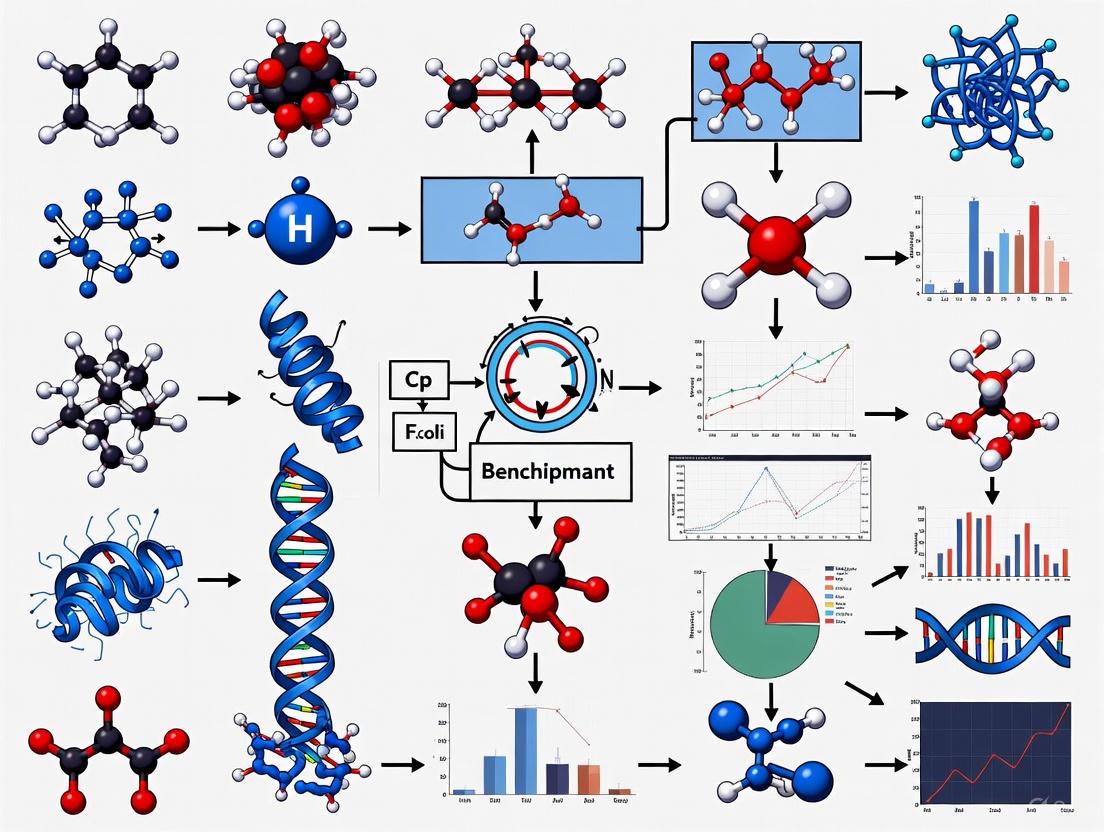
Flux Balance Analysis (FBA) is a cornerstone constraint-based method for predicting metabolic phenotypes in Escherichia coli, with critical applications in metabolic engineering and biomedical research.
Benchmarking FBA Algorithms for E. coli Genome-Scale Models: A Comprehensive Guide for Predictive Metabolism and Strain Design
Abstract
Flux Balance Analysis (FBA) is a cornerstone constraint-based method for predicting metabolic phenotypes in Escherichia coli, with critical applications in metabolic engineering and biomedical research. However, the accuracy and computational efficiency of FBA predictions are highly dependent on the choice of algorithm, model quality, and optimization solver. This article provides a systematic benchmark of FBA methodologies, from foundational principles and core model architectures to advanced hybrid machine-learning approaches and solver performance. We compare optimization techniques like MOMA and ROOM, evaluate commercial and open-source solvers for linear and mixed-integer problems, and explore the integration of graph neural networks for enhanced gene essentiality prediction. Aimed at researchers and scientists, this review synthesizes current best practices for model selection, troubleshooting, and validation to empower reliable, high-throughput metabolic simulations in E. coli and related organisms.
Foundations of E. coli Metabolic Modeling: From Genome-Scale Reconstructions to Core Models
Genome-scale metabolic models (GEMs) are structured computational knowledge bases that represent an organism's complete metabolic network [1]. These models mathematically describe the biochemical, genetic, and genomic (BiGG) information for an organism, enabling systems-level analysis of metabolic capabilities [2]. GEMs computationally describe gene-protein-reaction (GPR) associations for entire metabolic genes in an organism and can be simulated using constraint-based approaches like Flux Balance Analysis (FBA) to predict metabolic fluxes [1]. The first GEM was reconstructed for Haemophilus influenzae in 1999, marking the beginning of a rapidly expanding field that has produced models for thousands of organisms across bacteria, archaea, and eukarya [1].
Escherichia coli K-12 MG1655, as a model organism for bacterial genetics, has been the subject of extensive GEM development for nearly two decades [1]. This article traces the evolutionary trajectory of E. coli GEMs from the initial iJE660 model to the sophisticated iML1515 reconstruction, with particular emphasis on their expanding capabilities and performance in predicting metabolic phenotypes.
The Evolutionary Trajectory of E. coli GEMs
Historical Development and Key Milestones
The reconstruction of GEMs for E. coli represents a sustained effort to encapsulate growing understanding of its metabolism into computational frameworks. Being a model organism for bacterial genetics, the Gram-negative bacterium Escherichia coli has been subjected to genome-scale metabolic reconstruction campaigns for almost two decades [1]. The first E. coli GEM, iJE660, was reported in 2000 soon after the first release of the genome sequence of E. coli K-12 MG1655 [1]. This pioneering model established the foundation for subsequent iterations that progressively incorporated new genetic and biochemical discoveries.
The iJE660 model has subsequently been updated in terms of the coverage of GPR associations and prediction capacities, officially at least four times [1]. With each iteration, the models expanded in scope and accuracy, incorporating newly discovered metabolic functions, improved gene-protein-reaction associations, and updated biochemical knowledge. The most recent version, iML1515, contains information on 1,515 open reading frames, twice the number of open reading frames incorporated in the original iJE660 model [1]. This expansion reflects the substantial growth in knowledge about E. coli metabolism over nearly two decades of research.
Comparative Analysis of Model Features and Capabilities
Table 1: Evolution of Key Features in E. coli Genome-Scale Metabolic Models
| Model Feature | iJE660 (2000) | iJO1366 (2011) | iML1515 (2017) |
|---|---|---|---|
| Open Reading Frames | 660 | 1,366 | 1,515 |
| Metabolic Reactions | 739 | 2,583 | 2,719 |
| Unique Metabolites | Not specified | Not specified | 1,192 |
| Gene Essentiality Prediction Accuracy | Not specified | 89.8% | 93.4% |
| Notable Features | First comprehensive reconstruction | Expanded gene & reaction coverage | Protein structures, ROS metabolism, metabolite repair |
The quantitative expansion from iJE660 to iML1515 represents not only increased coverage but also enhanced model quality and functionality. The iML1515 knowledgebase is linked to 1,515 protein structures to provide an integrated modeling framework bridging systems and structural biology [2]. This structural integration enables analysis of sequence-structure-function relationships that was not possible in earlier models. Additionally, iML1515 incorporates metabolism of reactive oxygen species (ROS), metabolite repair pathways, and updated growth maintenance coefficients, reflecting advances in understanding of cellular physiology [2].
In-Depth Analysis of the iML1515 Model
Comprehensive Model Components and Structure
The iML1515 model represents the most complete genome-scale reconstruction of the metabolic network in E. coli K-12 MG1655 to date [2]. Enabling analysis of several data types, including transcriptomes, proteomes, and metabolomes, iML1515 accounts for 1,515 open reading frames and 2,719 metabolic reactions involving 1,192 unique metabolites [2]. The model includes 184 new genes and 196 new reactions compared to its immediate predecessor iJO1366, which contained 2,583 reactions [2].
A key innovation in iML1515 is the enhancement of classic gene-protein-reaction (GPR) relationships to catalytic domain resolution, creating domain-gene-protein-reaction (dGPR) relationships [2]. This approach links genes to specific protein domains rather than just entire proteins, enabling more precise mapping of genetic variations to structural and functional consequences. The model identifies 1,888 unique domains in the structural proteome of iML1515, with most proteins containing more than one domain [2]. This domain-level resolution provides insights into enzyme promiscuity and underground metabolism that were not accessible with previous modeling frameworks.
Advanced Features and Applications
iML1515 incorporates several advanced features that distinguish it from earlier reconstructions. The model includes updated reactive oxygen species (ROS)-generating reactions, increasing their number from 16 to 166 to produce iML1515-ROS [2]. It also includes reported links between genes and transcriptional regulators using a promoter 'barcode' for each gene, indicating whether a metabolic gene is regulated by a given transcription factor and the type of regulation [2].
The applications of iML1515 extend beyond traditional metabolic modeling. The knowledgebase has been used to build metabolic models of E. coli human gut microbiome strains from metagenomic sequencing data and to construct metabolic models for E. coli clinical isolates to predict their metabolic capabilities [2]. Additionally, researchers have utilized iML1515 to perform a comparative structural proteome analysis of 1,122 E. coli strains and identify multi-strain sequence variations [2]. These applications demonstrate how iML1515 serves as a platform for integrating and interpreting diverse data types beyond what was possible with earlier models.
Benchmarking FBA Performance Across E. coli GEMs
Gene Essentiality Prediction as a Benchmark Standard
Gene essentiality prediction represents a fundamental benchmark for evaluating the predictive capability of GEMs and FBA algorithms. This assessment involves simulating gene deletion mutants and determining whether the model predicts growth (non-essential) or no growth (essential) under specific conditions, with results compared to experimental gene essentiality data [2].
The iML1515 model demonstrates superior performance in this critical benchmark. The iML1515 knowledgebase predicted gene essentiality in 16 conditions with an accuracy of 93.4% compared with an accuracy of 89.8% using iJO1366, thus representing a 3.7% increase in predictive accuracy [2]. This improvement reflects both the expanded coverage of metabolic functions and the refined GPR associations in the newer model.
Table 2: Performance Comparison of E. coli GEMs for Gene Essentiality Prediction
| Performance Metric | iJO1366 | iML1515 | Improvement |
|---|---|---|---|
| Overall Accuracy | 89.8% | 93.4% | +3.7% |
| Carbon Sources Tested | Not specified | 16 | - |
| Essential Genes Identified | Not specified | 345 genes (188 in all conditions, 157 condition-specific) | - |
| False Positive Reduction | Baseline | 12.7% decrease with condition-specific models | Significant improvement |
Experimental validation of iML1515 involved genome-wide gene-knockout screens for the entire KEIO collection (3,892 gene knockouts) grown on 16 different carbon sources that represent different substrate entry points into central carbon metabolism [2]. These comprehensive experimental benchmarks provide a robust foundation for assessing model performance across diverse metabolic conditions.
Methodological Advances in FBA Benchmarking
Recent methodological innovations have further enhanced FBA benchmarking capabilities. Flux Balance Analysis (FBA), as the gold standard method, predicts metabolic phenotypes by combining genome-scale metabolic models (GEMs) with an optimality principle [3]. This technique can model many metabolic tasks, such as growth capabilities in various substrates, cell-specific auxotrophies, or responses to drug interventions [3].
A novel approach called Flux Cone Learning (FCL) has demonstrated potential to surpass traditional FBA in predictive accuracy. Using Monte Carlo sampling and supervised learning, FCL identifies correlations between the geometry of the metabolic space and experimental fitness scores from deletion screens [3]. When tested on E. coli, FCL delivered best-in-class accuracy for prediction of metabolic gene essentiality, outperforming the gold standard predictions of Flux Balance Analysis [3]. This machine learning framework represents a significant advancement in computational methods for leveraging the biological knowledge encoded in GEMs like iML1515.
Figure 1: FBA Algorithm Benchmarking Workflow for E. coli GEMs
Experimental Protocols for GEM Validation
Standard Gene Essentiality Screening Protocol
The experimental validation of GEM predictions follows standardized protocols to ensure reproducibility and comparability. For iML1515 validation, researchers conducted experimental genome-wide gene-knockout screens for the entire KEIO collection (3,892 gene knockouts) grown on 16 different carbon sources representing different substrate entry points into central carbon metabolism [2]. The detailed methodology includes:
Strain Preparation: Utilizing the KEIO collection of single-gene knockout mutants in E. coli K-12 BW25113 background.
Growth Conditions: Culturing strains in minimal media with 16 different carbon sources including glucose, xylose, acetic acid, and others that represent different metabolic entry points.
Growth Phenotyping: Measuring growth profiles, including lag-time, maximum growth rate, and growth saturation point (OD) using high-throughput cultivation systems.
Essentiality Classification: Identifying genes essential for growth based on significantly impaired or absent growth compared to wild-type controls.
Model Comparison: Comparing experimental essentiality data with computational predictions across multiple conditions to calculate accuracy metrics.
This comprehensive experimental approach generated 345 genes that were essential in at least 1 of 16 conditions, with 188 genes essential in all conditions, and 157 essential in specific conditions [2].
Condition-Specific Model Contextualization Protocol
To enhance prediction accuracy, iML1515 can be contextualized to specific growth conditions using omics data. The protocol involves:
Data Collection: Acquiring proteomics data for E. coli K-12 MG1655 grown on seven carbon sources.
Reaction Removal: Eliminating reactions catalyzed by gene products not expressed in specific conditions.
GPR Adjustment: Modifying gene-protein-reaction associations based on expression patterns.
Model Simulation: Running FBA simulations with condition-specific constraints.
Validation: Comparing predictions with experimental growth data.
This condition-specific modeling approach resulted in an average 12.7% decrease in false-positive predictions and a 2.1% increase in essentiality predictions (MCC score) compared to the generic model [2].
Table 3: Essential Research Reagents for E. coli GEM Development and Validation
| Reagent/Resource | Function/Application | Example/Source |
|---|---|---|
| KEIO Collection | Genome-wide single-gene knockout mutants for experimental validation | E. coli K-12 BW25113 background |
| Biolog Phenotype Microarray | High-throughput growth profiling under different nutrient conditions | Biolog, Inc. |
| Protein Structure Databases | Linking metabolic genes to protein structures and domains | Protein Data Bank (PDB) |
| Metabolic Databases | Reference biochemical pathways and reaction information | KEGG, CHEBI |
| Transcriptomics Datasets | Condition-specific gene expression data for model contextualization | 333 normalized experiments in iML1515 |
| Monte Carlo Samplers | Generating flux distributions for machine learning approaches | Flux Cone Learning |
The KEIO collection deserves particular emphasis as it provides comprehensive genome-wide coverage of single-gene deletions, enabling systematic experimental validation of model predictions [2]. The integration of protein structure databases allows for the domain-gene-protein-reaction (dGPR) relationships that distinguish iML1515 from earlier models [2]. For advanced machine learning approaches like Flux Cone Learning, Monte Carlo samplers are essential for generating training data that captures the shape of the metabolic space [3].
Emerging Applications and Future Directions
Expanded Applications of Advanced GEMs
The evolution of E. coli GEMs has enabled diverse applications across biotechnology and biomedical research. iML1515 has been applied to build metabolic models of E. coli human gut microbiome strains from metagenomic sequencing data and to construct metabolic models for E. coli clinical isolates to predict their metabolic capabilities [2]. These applications demonstrate the utility of GEMs in understanding the metabolic basis of strain diversity and adaptation.
In metabolic engineering and synthetic biology, GEMs play crucial roles in strain development for chemicals and materials production [1]. The iML1515 model serves as a knowledgebase for designing engineered strains with enhanced production capabilities for valuable compounds. Additionally, compact models derived from iML1515, such as iCH360, provide focused resources for specific applications like enzyme-constrained flux balance analysis, elementary flux mode analysis, and thermodynamic analysis [4].
Innovative Computational Frameworks
The field is witnessing the development of novel computational frameworks that leverage the rich information in GEMs. Flux Cone Learning (FCL) represents a promising approach that uses Monte Carlo sampling and supervised learning to predict deletion phenotypes from the shape of the metabolic space [3]. This method has demonstrated best-in-class accuracy for predicting metabolic gene essentiality in organisms of varied complexity, outperforming standard FBA predictions [3].
Another innovative direction involves the creation of machine learning surrogates for whole-cell models. These surrogates can achieve a 95% reduction in computational time compared with the original whole-cell model while maintaining high accuracy in predicting cell viability [5]. Such approaches illustrate how the holistic understanding gained from comprehensive models can be leveraged for synthetic biology tasks while overcoming computational limitations.
Figure 2: Evolution and Diversification of E. coli Metabolic Models
The evolution of E. coli genome-scale models from iJE660 to iML1515 represents a remarkable trajectory of increasing comprehensiveness, accuracy, and application scope. This progression has seen a doubling of gene coverage from 660 to 1,515 open reading frames and a significant improvement in gene essentiality prediction accuracy from 89.8% with iJO1366 to 93.4% with iML1515 [1] [2]. The incorporation of protein structures, domain-level resolution of GPR relationships, and condition-specific modeling capabilities has transformed these models from simple metabolic networks into sophisticated knowledgebases that bridge systems and structural biology.
The benchmarking of FBA algorithms across these model generations demonstrates continuous improvement in predictive performance while also highlighting emerging approaches like Flux Cone Learning that may define the next evolutionary stage [3]. As these models continue to evolve, they will undoubtedly remain indispensable tools for researchers, scientists, and drug development professionals seeking to understand, predict, and engineer microbial metabolism for diverse applications in biotechnology, medicine, and basic science.
Genome-scale metabolic models (GEMs) and core metabolic models (CMMs) serve as fundamental tools in systems biology for investigating cellular metabolism. The choice between a comprehensive GEM and a focused CMM presents a critical trade-off between network coverage and model interpretability, a balance that is paramount when benchmarking Flux Balance Analysis (FBA) algorithms for E. coli research. This guide provides an objective comparison of these model classes to inform their application in metabolic engineering and drug development.
Genome-Scale Models (GEMs) are comprehensive knowledge bases that computationally describe gene-protein-reaction associations for an organism's entire metabolic genes [6]. They aim to represent the complete metabolic network of a cell.
Core Metabolic Models (CMMs) are streamlined, manually curated sub-networks of GEMs that focus on central metabolic pathways essential for producing energy carriers and biosynthetic precursors [4].
The table below summarizes the defining characteristics of each model class.
Table 1: Fundamental Characteristics of GEMs and CMMs
| Characteristic | Genome-Scale Model (GEM) | Core Metabolic Model (CMM) |
|---|---|---|
| Scope & Coverage | Organism-wide metabolism; all known metabolic reactions [7] [6] | Central metabolism; pathways for energy and key biosynthetic precursors [4] |
| Primary Application | Systems-level studies, pan-reactome analysis, strain development, drug target identification [6] | Educational tool, benchmark for novel algorithms, metabolic engineering design, detailed pathway analysis [4] |
| Typical Size (E. coli) | ~1,500 genes, ~2,700 reactions (e.g., iML1515) [4] [6] | ~100 reactions (e.g., ecolicore) [8] |
| Interpretability | Challenging due to size; predictions can be hard to interpret and sometimes biologically unrealistic [4] | High; easy to visualize and interpret flux distributions due to compact size [4] |
| Computational Demand | High for complex methods (e.g., sampling, EFM analysis) [4] [9] | Low; suitable for computationally intensive methods like kinetic modeling and EFM analysis [4] |
Quantitative Performance Comparison in E. coli Case Studies
The performance of GEMs and CMMs can be quantitatively evaluated based on their predictive accuracy for growth, gene essentiality, and metabolite production in E. coli. The following table consolidates key experimental findings.
Table 2: Experimental Performance Metrics for E. coli Models
| Model Name | Type | Key Performance Metric | Result | Experimental Context |
|---|---|---|---|---|
| iML1515 [4] [6] | GEM | Gene Essentiality Prediction | 93.4% Accuracy | Minimal media with 16 different carbon sources |
| GEMsembler Consensus Model [10] | Enhanced GEM | Auxotrophy & Gene Essentiality | Outperformed gold-standard models | Lactiplantibacillus plantarum and Escherichia coli |
| ecolicore [8] | CMM | Gene Essentiality Prediction (FBA) | F1-Score: 0.000 | Comparison against experimental ground truth |
| Topology-Based ML on ecolicore [8] | CMM-derived | Gene Essentiality Prediction | F1-Score: 0.400 | Machine learning model using graph-theoretic features |
| iCH360 [4] | CMM | Biological Realism | Avoids unphysiological bypasses | Manually curated model of energy and biosynthesis metabolism |
Experimental Protocols for Benchmarking
To ensure reproducible and objective comparisons between models and algorithms, standardized experimental protocols are essential. Below are detailed methodologies for two key benchmarking tests.
Protocol 1: Single-Gene Deletion for Gene Essentiality Prediction
This protocol tests a model's ability to predict which gene knockouts will prevent growth.
- Model Setup: Load the model (GEM or CMM) using a toolbox like COBRApy [8]. Set the constraints to simulate the desired growth condition (e.g., minimal glucose medium with appropriate uptake rates).
- Wild-Type Simulation: Perform an FBA simulation with biomass maximization as the objective function to determine the wild-type growth rate (μ_wt) [8].
- Gene Knockout Simulation: For each gene in the model:
- Constrain the flux of all reactions associated with the target gene to zero.
- Re-solve the FBA problem to compute the mutant growth rate (μ_mut).
- Essentiality Classification: A gene is classified as essential if the predicted mutant growth rate (μmut) is a small fraction (e.g., <5%) of the wild-type growth rate (μwt) [8].
- Validation: Compare predictions against a curated ground-truth dataset of experimentally verified essential genes (e.g., from the PEC database for E. coli) [8]. Calculate performance metrics like precision, recall, and F1-score.
Protocol 2: Consensus Model Assembly with GEMsembler
This protocol, based on the GEMsembler package, creates an improved model by combining multiple input GEMs [10].
- Input Preparation: Collect multiple GEMs for the same organism (e.g., E. coli) reconstructed by different tools (e.g., CarveMe, gapseq, modelSEED).
- Nomenclature Conversion: Convert metabolite and reaction IDs from all input models to a consistent namespace (e.g., BiGG IDs) to enable cross-model comparisons [10].
- Supermodel Assembly: Assemble all converted models into a single "supermodel" object that tracks the origin of every metabolic feature (metabolite, reaction, gene) [10].
- Consensus Generation: Generate consensus models based on feature confidence levels. For example, a "core3" model would contain only the metabolic features present in at least 3 of the 4 input models [10].
- Performance Evaluation: Test the predictive capacity (e.g., growth, auxotrophy, gene essentiality) of the resulting consensus models against a manually curated gold-standard model and experimental data [10].
GEMsembler Workflow for Building Consensus Models
Model Selection Guide and Research Applications
When to Use Each Model Class
- Choose a Genome-Scale Model (GEM) when: Your research requires a comprehensive, systems-wide view of metabolism. This is critical for tasks such as predicting organism-wide effects of genetic perturbations, identifying non-obvious drug targets in pathogens, studying host-pathogen interactions, or performing pan-metabolic analyses across multiple strains [6]. GEMs like iML1515 for E. coli are indispensable for simulating growth on diverse carbon sources and for genome-scale strain design [6].
- Choose a Core Metabolic Model (CMM) when: Your focus is on central metabolism, and your priority is high interpretability and computational efficiency. CMMs are ideal for developing and benchmarking new algorithms (e.g., FBA variants, machine learning models) [8], for educational purposes, and for applications where detailed analysis of flux distributions in central pathways is required, such as in certain metabolic engineering projects [4].
Advanced Applications and Workflows
The distinction between GEMs and CMMs is sometimes bridged by innovative workflows that leverage the strengths of both.
- Topology-Based Machine Learning: A CMM (ecolicore) can be used to generate a reaction-reaction graph. Graph-theoretic features (e.g., betweenness centrality) are then computed for each gene, serving as input for a machine learning classifier (e.g., Random Forest) to predict gene essentiality, a method that decisively outperformed traditional FBA in one study [8].
- Building "Goldilocks" Models: Tools like GEMsembler use GEMs as inputs to create refined consensus models [10]. Furthermore, medium-scale models like iCH360 are manually curated from GEMs to strike a balance, including all central metabolic pathways while remaining small enough for thorough curation and complex analyses like Elementary Flux Mode (EFM) analysis [4].
Primary Applications of GEMs and CMMs
Table 3: Key Computational Tools and Resources for Metabolic Modeling
| Tool/Resource Name | Type | Function in Research | Relevance to Model Type |
|---|---|---|---|
| COBRApy [8] | Software Toolbox | A Python package for constraint-based reconstruction and analysis of metabolic models; used for running FBA and other simulations. | Essential for both GEMs and CMMs |
| GEMsembler [10] | Software Package | Compares, combines, and analyzes GEMs built with different tools to build higher-performance consensus models. | Primarily for GEMs |
| BiGG Database [10] | Knowledgebase | A curated database of metabolic reactions and metabolites; used as a standard namespace for model reconciliation. | Primarily for GEMs |
| MetaNetX [10] | Platform | Connects metabolite and reaction namespaces from different databases, facilitating model comparison. | Primarily for GEMs |
| ecolicore Model [8] | Core Model | A well-established model of E. coli central metabolism; used as a benchmark and test network. | CMM |
| iML1515 Model [4] [6] | Genome-Scale Model | The most recent comprehensive GEM for E. coli K-12 MG1655; represents the state-of-the-art in coverage. | GEM |
| opt-yield-FBA [11] | Algorithm | An FBA-based method for calculating optimal yields, enabling dynamic modeling of genome-scale networks without EFM calculation. | Primarily for GEMs |
| ComMet [9] | Method | A framework for comparing metabolic states in large GEMs using flux space sampling, without relying on assumed objective functions. | Primarily for GEMs |
Benchmarking Flux Balance Analysis (FBA) algorithms requires well-defined, standardized metabolic networks that capture essential biological functions while remaining computationally tractable. For Escherichia coli research, the most valuable models for benchmarking balance comprehensive pathway coverage with manual curation to eliminate biologically implausible predictions. Genome-scale models (GEMs) provide extensive coverage but often generate unrealistic metabolic bypasses that complicate algorithm validation [4]. Conversely, overly simplified models miss critical biosynthetic pathways essential for assessing prediction accuracy in metabolic engineering contexts. The ideal benchmarking framework incorporates central carbon metabolism alongside biosynthetic networks for amino acids, nucleotides, and lipids, creating a metabolic "sweet spot" that enables rigorous testing of FBA algorithms against experimentally validated phenotypes [4] [12].
The selection of appropriate metabolic pathways for benchmarking directly impacts the assessment of FBA algorithm performance. Models must include sufficient complexity to reveal differences between methods while maintaining biological accuracy. Recent evaluations of E. coli GEMs have demonstrated that inaccurate gene essentiality predictions often stem from incomplete representation of cofactor dependencies and pathway redundancies [12]. By focusing on conserved, high-flux metabolic pathways that are essential for growth and biomass production, researchers can create standardized testing environments that generate comparable results across studies and algorithms.
Essential Metabolic Pathways for Benchmarking
Central Carbon Metabolic Network
The central carbon metabolism represents the core energy conversion system in E. coli and serves as the foundational element for any benchmarking framework. This network includes glycolysis, gluconeogenesis, the pentose phosphate pathway, and the tricarboxylic acid (TCA) cycle, which collectively generate energy, reducing equivalents, and precursor metabolites for biosynthetic processes. The compact iCH360 model, derived from the iML1515 genome-scale reconstruction, provides a manually curated representation of these pathways with comprehensive database annotations and visualization resources [4] [13]. These pathways carry high metabolic flux, are essential for growth under most conditions, and provide critical testing grounds for FBA algorithm performance in predicting carbon utilization efficiencies and metabolic flux distributions.
Central carbon metabolism offers particular value for benchmarking because it contains numerous regulatory checkpoints, branching points, and thermodynamic constraints that challenge simulation algorithms. The iCH360 model enriches stoichiometric representations with thermodynamic and kinetic constants, enabling more sophisticated benchmarking scenarios that assess how well algorithms incorporate these additional constraints [4]. When evaluating FBA methods, the central carbon network reveals differences in how algorithms handle energy balancing, redox cofactor regeneration, and precursor distribution – all critical factors for predicting realistic metabolic phenotypes.
Biosynthetic Pathway Networks
Biosynthetic pathways for amino acids, nucleotides, and lipids transform central metabolic precursors into essential biomass components, creating an extended testing framework for FBA algorithms. The iCH360 model includes curated versions of these biosynthetic networks while representing the conversion of precursors into complex biomass components through a consolidated biomass reaction [4]. This approach maintains pathway completeness for benchmarking while controlling model size. Amino acid biosynthesis pathways are particularly valuable for testing gene essentiality predictions, as they often involve complex regulation and cofactor dependencies that challenge simulation methods.
Nucleotide biosynthesis pathways provide excellent test cases for assessing FBA algorithm performance in predicting auxotrophies and nutrient requirements. These pathways frequently involve salvage pathways and interconversions that create redundant routes, testing how well algorithms handle metabolic redundancy. Lipid biosynthesis pathways, including both saturated and unsaturated fatty acid synthesis, offer opportunities to evaluate FBA predictions under varying environmental conditions, as membrane composition adapts to external factors [4]. Including these complete biosynthetic networks in benchmarking frameworks ensures that FBA algorithms are tested against the full metabolic capabilities required to support growth and replication.
Cofactor Metabolism and Essential Cofactor Pathways
Cofactor metabolism represents a critical, often overlooked component of metabolic networks that significantly impacts FBA benchmarking results. Evaluation of iML1515 predictions against experimental mutant fitness data revealed that inaccurate essentiality predictions frequently involve vitamin and cofactor biosynthesis pathways, including biotin, R-pantothenate, thiamin, tetrahydrofolate, and NAD+ metabolism [12]. These errors likely result from unaccounted cofactor availability in experimental conditions due to cross-feeding between mutants or metabolite carryover, highlighting the importance of carefully defining medium composition in benchmarking studies.
Including cofactor metabolism in benchmarking frameworks tests how well FBA algorithms handle the complex interconnections between cofactor biosynthesis and central metabolism. For example, accurate prediction of NAD+ auxotrophy requires proper representation of NAD+ utilization in central metabolic pathways and its regeneration through biosynthesis. The iCH360 model incorporates extensive biological information on cofactor dependencies, enabling more realistic benchmarking scenarios [4]. Cofactor pathways also provide excellent test cases for assessing thermodynamic constraints, as many cofactor-dependent reactions operate near thermodynamic equilibrium, creating potential bottlenecks that affect flux distributions.
Comparative Performance of Metabolic Models
Table 1: Comparison of E. coli Metabolic Models for Algorithm Benchmarking
| Model | Reactions | Genes | Pathways Included | Primary Benchmarking Applications |
|---|---|---|---|---|
| iCH360 | ~360 | ~360 | Central carbon, amino acid biosynthesis, nucleotide biosynthesis, fatty acid synthesis | Enzyme-constrained FBA, elementary flux mode analysis, thermodynamic analysis |
| iML1515 | 2,712 | 1,515 | Full metabolic network including degradation, cofactor biosynthesis, transport | Genome-scale phenotype prediction, gene essentiality assessment |
| E. coli Core (ECC) | 95 | 137 | Glycolysis, TCA, PPP, limited biosynthesis | Educational purposes, basic FBA implementation |
| ECC2 | ~350 | ~350 | Central metabolism + extended biosynthesis | Stoichiometric modeling, pathway analysis |
The performance characteristics of metabolic models vary significantly based on their scope and curation level, directly impacting their utility for FBA algorithm benchmarking. The iCH360 model represents an intermediate "Goldilocks" option that balances comprehensive coverage of energy metabolism and biosynthesis with manual curation to eliminate unrealistic predictions [4]. This model specifically includes pathways essential for producing energy carriers and biosynthetic precursors while omitting degradation pathways and de novo cofactor biosynthesis that can introduce computational artifacts in benchmarking. The manual curation process applied to iCH360 corrected problematic network structures from the parent iML1515 model, enhancing biological realism for algorithm testing.
Benchmarking studies using mutant fitness data across 25 carbon sources have revealed systematic limitations in genome-scale models like iML1515, particularly in handling isoenzyme gene-protein-reaction mappings and cofactor dependencies [12]. These limitations manifest as false essentiality predictions for genes involved in vitamin and cofactor biosynthesis. Compact models like iCH360 can mitigate these issues through careful manual curation while maintaining sufficient complexity for meaningful algorithm evaluation. For benchmarking studies focused on central metabolic functions, medium-scale models provide computational advantages, enabling more sophisticated analyses like elementary flux mode enumeration and thermodynamic profiling that are infeasible with genome-scale models [4].
Experimental Protocols for Benchmarking Studies
Gene Essentiality Prediction Protocol
Gene essentiality prediction represents a fundamental benchmarking test for FBA algorithms, with standardized protocols enabling direct comparison between methods. The following protocol, adapted from evaluations of E. coli GEMs, provides a robust framework for assessing essentiality prediction accuracy:
Reference Data Curation: Obtain experimentally validated essential gene sets from dedicated databases such as the PEC (Profiling of E. coli Chromosome) database. For E. coli K-12 MG1655 grown on glucose minimal medium, this typically yields approximately 20 essential metabolic genes [8].
Simulation Environment Specification: Define the simulated growth medium composition, typically M9 minimal medium with a single carbon source (e.g., glucose at 10 mM), ammonium as nitrogen source, and standard ion compositions. Critical vitamins and cofactors (biotin, thiamin, etc.) should be explicitly included or excluded based on the benchmarking objectives [12].
Gene Deletion Implementation: For each gene in the model, constrain the flux through all associated enzymatic reactions to zero using the model's gene-protein-reaction rules. For multi-subunit complexes, apply appropriate Boolean logic to simulate complete functional knockout [8].
Growth Prediction: Solve the FBA problem with biomass maximization as the objective function. A growth rate threshold (typically <1-5% of wild-type growth) classifies genes as essential or non-essential [8].
Performance Quantification: Calculate precision, recall, and F1-score by comparing predictions against experimental data. For imbalanced datasets (few essential genes among many non-essential), the area under the precision-recall curve (AUC) provides a more robust accuracy metric than overall accuracy [12].
This protocol specifically addresses common pitfalls in essentiality benchmarking, including the proper handling of vitamin and cofactor availability in simulation media, which significantly impacts prediction accuracy for biosynthesis pathways [12].
Metabolic Flux Distribution Protocol
Comparing predicted versus measured intracellular flux distributions provides a rigorous quantitative benchmark for FBA algorithms, particularly for central carbon metabolism:
Isotopic Tracer Experimentation: Conduct ¹³C-labeling experiments with specifically labeled glucose (e.g., [1-¹³C] or [U-¹³C] glucose) and measure isotopic labeling patterns in proteinogenic amino acids using GC-MS or LC-MS.
Flux Determination: Use metabolic flux analysis (MFA) software to compute intracellular flux distributions that best fit the experimental labeling data and extracellular flux measurements.
Flux Prediction: Apply FBA algorithms to predict flux distributions for the same growth conditions, using measured uptake and secretion rates as constraints.
Statistical Comparison: Quantify agreement between predicted and measured fluxes using statistical measures such as weighted sum of squared residuals (WRSS) or Pearson correlation coefficients across all comparable fluxes.
This approach specifically tests how well FBA algorithms predict metabolic pathway usage and flux partitioning at key branch points (e.g., glycolysis vs. pentose phosphate pathway), revealing differences in how algorithms handle network redundancy and regulation.
Table 2: Benchmarking Metrics for FBA Algorithm Evaluation
| Performance Category | Specific Metrics | Calculation Method | Interpretation |
|---|---|---|---|
| Gene Essentiality | Precision | TP / (TP + FP) | Proportion of correct essentiality predictions |
| Recall | TP / (TP + FN) | Proportion of essential genes correctly identified | |
| F1-Score | 2 × (Precision × Recall) / (Precision + Recall) | Balanced measure of precision and recall | |
| Precision-Recall AUC | Area under precision-recall curve | Overall performance accounting for class imbalance | |
| Flux Prediction | Mean Absolute Error | Σ|vpred - vmeas| / n | Average flux prediction error |
| Pearson Correlation | Cov(vpred, vmeas) / (σpred × σmeas) | Linear relationship between predicted and measured fluxes | |
| WRSS | Σ[(vpred - vmeas)² / σ²] | Goodness-of-fit weighted by measurement uncertainty | |
| Computational Efficiency | Solution Time | Time to solve optimization problem | Algorithm speed for practical applications |
| Memory Usage | Peak memory during computation | Resource requirements for large-scale studies |
Visualization of Benchmarking Pathways and Workflows
Central Carbon and Biosynthetic Metabolism
Diagram 1: Central carbon metabolism and biosynthetic network connections. This pathway visualization shows the integration between central carbon metabolism (yellow), energy production (red), and biosynthetic product formation (green), highlighting key metabolites used in FBA benchmarking.
FBA Benchmarking Workflow
Diagram 2: FBA algorithm benchmarking workflow. The standardized process for evaluating FBA algorithms includes model selection, experimental data integration, simulation setup, algorithm testing, and quantitative performance assessment using defined metrics.
Advanced Benchmarking Approaches
Machine Learning and Topological Analysis
Recent advances in metabolic network analysis have demonstrated that machine learning approaches based on network topology can outperform traditional FBA methods for specific prediction tasks like gene essentiality. A topology-based machine learning model using graph-theoretic features (betweenness centrality, PageRank, closeness centrality) achieved an F1-score of 0.400 for predicting gene essentiality in the E. coli core model, substantially outperforming standard FBA which failed to identify any known essential genes (F1-score: 0.000) [8]. This approach constructs a reaction-reaction graph from metabolic models, excluding highly connected currency metabolites, then computes topological metrics that capture a gene's structural importance within the network architecture.
The superior performance of topological methods for certain prediction tasks highlights the importance of including diverse benchmarking approaches beyond traditional FBA. Topological analysis captures the "keystone" role of certain reactions that occupy critical positions as metabolic bottlenecks or connectors between functional modules, independent of transient flux states [8]. Incorporating these structural benchmarks provides a more comprehensive assessment of metabolic network analysis algorithms, particularly for applications in drug discovery where identifying essential genes is paramount. Benchmarking frameworks should therefore include both functional simulations (FBA) and structural analyses to fully characterize algorithm performance.
Thermodynamic and Kinetic Constraints
Incorporating thermodynamic and kinetic constraints represents an advanced benchmarking dimension that tests how well algorithms handle biophysical realism. The iCH360 model includes curated thermodynamic and kinetic constants, enabling benchmarking scenarios that assess flux predictions under thermodynamic constraints [4]. Methods that properly account for reaction directionality, energy balancing, and metabolite dilution effects demonstrate improved prediction accuracy for growth rates and gene essentiality across diverse conditions.
Metabolite Dilution Flux Balance Analysis (MD-FBA) addresses a critical limitation in traditional FBA by accounting for the dilution of all intermediate metabolites during growth, not just those included in the biomass equation [14]. This approach is particularly important for metabolites participating in catalytic cycles, many of which are metabolic cofactors. Benchmarking studies have shown that MD-FBA improves predictions of gene essentiality and growth rates compared to standard FBA, especially for cofactor biosynthesis genes [14]. Including MD-FBA as a reference method in benchmarking frameworks helps evaluate how well new algorithms handle the complex interplay between metabolic flux and biomass composition.
Table 3: Essential Research Reagents and Computational Tools for Metabolic Benchmarking
| Resource | Type | Primary Function | Application in Benchmarking |
|---|---|---|---|
| iCH360 Model | Metabolic Model | Manually curated medium-scale model of E. coli metabolism | Reference network for algorithm testing and validation |
| iML1515 Model | Metabolic Model | Comprehensive genome-scale reconstruction of E. coli metabolism | Large-scale testing and comparative performance assessment |
| COBRA Toolbox | Software Package | MATLAB suite for constraint-based modeling | Standardized implementation of FBA and variant algorithms |
| COBRApy | Software Package | Python implementation of COBRA methods | Flexible, scriptable environment for algorithm development |
| PEC Database | Reference Data | Curated essential gene information for E. coli | Ground truth data for essentiality prediction benchmarks |
| RB-TnSeq Data | Experimental Data | High-throughput mutant fitness measurements | Validation dataset for phenotype prediction accuracy |
| KEGG Database | Pathway Resource | Biochemical pathway maps and functional annotations | Pathway analysis and network visualization |
| PANEV R Package | Visualization Tool | Pathway-based network visualization | Interactive exploration of metabolic networks and gene mappings |
Benchmarking FBA algorithms requires carefully selected metabolic pathways that capture essential biological functions while minimizing computational complexity. Central carbon metabolism combined with biosynthetic networks for amino acids, nucleotides, and lipids provides an optimal testing ground that balances these competing demands. The iCH360 model represents a particularly valuable resource for this purpose, offering manual curation, comprehensive annotations, and thermodynamic data that enable sophisticated benchmarking scenarios.
Future advancements in metabolic benchmarking will likely incorporate more sophisticated constraint formulations, including regulatory constraints and proteomic limitations, to better reflect biological reality. Additionally, standardized benchmarking protocols across multiple growth conditions and genetic backgrounds will provide more comprehensive algorithm assessments. As machine learning approaches continue to mature, benchmarking frameworks must evolve to include diverse methodological paradigms beyond traditional optimization-based approaches. Through continued refinement of these benchmarking resources and methods, the metabolic modeling community can develop more accurate, reliable algorithms with enhanced predictive capabilities for basic research and biotechnology applications.
Genome-scale metabolic models (GEMs) provide a computable representation of the complete set of biochemical reactions within a cell, enabling in silico simulation of metabolic capabilities. The critical framework connecting an organism's genetic blueprint to these metabolic functions is the Gene-Protein-Reaction (GPR) association. GPR rules are logical statements, typically using Boolean logic, that describe how gene products (proteins, enzyme subunits, isoforms) collaborate to catalyze specific metabolic reactions [15]. These associations create an essential bridge between genomic information and metabolic phenotype, allowing researchers to simulate how genetic perturbations affect cellular metabolism. In essence, GPRs form the genetic basis for in silico predictions, transforming static reaction networks into genetically-encoded models that can be contextually tailored using omics data.
The reconstruction of accurate GPR rules remains a cornerstone for reliable model predictions, particularly in constraint-based modeling approaches like Flux Balance Analysis (FBA). The integration of GPRs into models such as the expanded E. coli K-12 model (iJR904 GSM/GPR) represented a significant advancement, enabling direct analysis of gene-protein-reaction relationships and facilitating the integration of diverse datasets including genomic, transcriptomic, proteomic, and fluxomic data [16]. Without proper GPR associations, understanding the mechanistic link between genotype and phenotype remains hampered, as models can only describe metabolic phenomena at the reaction level without genetic resolution [17].
GPR Logic and Structure: The Computational Framework
Boolean Representation of Catalytic Mechanisms
GPR rules employ Boolean logic (AND, OR) to represent the complex relationships between genes and the reactions they enable. This logical structure accurately captures the biochemical reality of enzymatic catalysis:
- AND operator: Joins genes encoding different subunits of the same enzyme complex, indicating all specified subunits are required for catalytic activity
- OR operator: Joins genes encoding distinct protein isoforms of the same enzyme or subunit, indicating functional redundancy or alternative catalytic units
This Boolean representation allows complex scenarios to be described, such as multiple oligomeric enzymes behaving as isoforms due to sharing common subunits while possessing distinctive features [15]. The logical framework enables computational interpretation of genetic capabilities and facilitates the integration of gene expression data to create context-specific metabolic models.
Stoichiometric Representation of GPR Associations
Recent advancements have introduced stoichiometric representations of GPR associations that can be directly integrated into the stoichiometric matrix of constraint-based models. This transformation changes the Boolean representation of gene states (on/off) to a real-valued representation, effectively treating enzymes or enzyme subunits as species within the model [17]. This approach explicitly accounts for the individual flux carried by each enzyme or subunit encoded by specific genes, enabling:
- Gene-level phenotype predictions using standard constraint-based methods
- Formulation of objectives and constraints at the gene/protein level
- More accurate prediction of enzyme allocation and flux distributions
Statistical analysis of GPR structures in the iAF1260 E. coli model reveals the complexity of these associations, with over 16% of enzymes formed by protein complexes (up to 13 subunits), approximately 31% of reactions catalyzed by multiple isozymes (up to 7), and more than two-thirds (72%) catalyzed by at least one promiscuous enzyme [17].
Benchmarking FBA Algorithms: The Critical Role of GPRs
Validation Methodologies for Algorithm Performance
The quality of context-specific models generated through FBA approaches depends significantly on the algorithm choice and its handling of GPR associations. Benchmarking procedures typically employ two major validation categories [18]:
Table 1: Validation Methods for Context-Specific Reconstruction Algorithms
| Validation Type | Specific Methods | Algorithms Utilizing Method |
|---|---|---|
| Consistency Testing | Cross-validation | PRIME, FASTCORE, MBA, FASTCORMICS, iMAT |
| Diversity of generated models | GIMME, mCADRE, tINIT, FASTCORMICS | |
| Comparison-Based Testing | Comparison with manually curated networks | INIT, MBA |
| Comparison with additional databases | mCADRE, RegrEx, iMAT | |
| Comparison with shRNA knockdown screens | MBA, FASTCORMICS | |
| Comparison with metabolic exchange rates | PRIME |
Consistency testing evaluates robustness against noise and the ability to distinguish different biological contexts. This includes cross-validation to identify reactions consistently included/excluded despite input variations, and diversity assessment to ensure distinct cell types yield appropriately distinct models [18].
Comparison-based testing validates reconstructed models against external references, including manually curated networks, additional databases (e.g., BRENDA, HPA), functional genetic screens (shRNA), literature mining, and experimental metabolic exchange rates [18]. Each approach offers distinct insights into algorithm performance, with comprehensive benchmarking requiring multiple validation strategies.
Algorithm Performance in Predictive Modeling
Different algorithm classes exhibit varying performance characteristics in E. coli and other models:
Table 2: Performance Comparison of Model Extraction Methods
| Method | Class | E. coli Performance | Mammalian Performance | Key Characteristics |
|---|---|---|---|---|
| GIMME | Optimization-based | Best-performing [19] | Moderate | Minimizes removal of highly expressed genes |
| iMAT | Optimization-based | Good | Variable | Maximizes consistency with highly expressed genes |
| MBA | Pruning-based | Variable | Most alternate solutions [19] | Evidence-based reaction retention |
| mCADRE | Pruning-based | Good | Best-performing [19] | Most reproducible models |
| gMCS-based | Genetic Minimal Cut Sets | Superior sensitivity [20] | Superior sensitivity [20] | Identifies synthetic lethality |
The gMCS (genetic Minimal Cut Sets) approach represents a paradigm shift by operating directly on the reference metabolic network without prior contextualization, identifying minimal subsets of genes whose simultaneous removal blocks metabolic objectives like biomass production. This method demonstrated significantly superior sensitivity (OR = 3.62, p = 3.78×10⁻¹⁶) compared to reconstruction-based methods like GIMME (OR = 2.13, p = 0.003) and iMAT (OR = 1.22, p = 0.44) when validated against genome-scale loss-of-function screens [20].
Impact of GPR Accuracy on Prediction Outcomes
The critical importance of accurate GPR rules becomes evident in strain design and essentiality predictions. Traditional reaction-level intervention strategies identified by optimization procedures often prove infeasible when translated to gene-level modifications due to GPR complexities, particularly when target reactions involve promiscuous enzymes [17]. A stoichiometric representation of GPR associations enables feasible gene-based strain designs and improves phenotype prediction accuracy.
Experimental comparisons with ¹³C-flux data demonstrate that simple reformulations of simulation methods with gene-wise objective functions result in improved prediction accuracy [17]. The explicit representation of GPR rules allows more biologically realistic allocation of enzyme resources, moving beyond reaction-level abstractions to genetically-grounded metabolic simulations.
Experimental Protocols and Methodologies
GPR Reconstruction and Validation Protocol
Purpose: To reconstruct and validate accurate Gene-Protein-Reaction associations for genome-scale metabolic models.
Materials:
- Genome annotation of target organism
- Reference metabolic models (e.g., Recon, HMR for human; iJO1366 for E. coli)
- Biological databases: KEGG, UniProt, STRING, MetaCyc, Complex Portal
- Computational tools: GPRuler, RAVEN Toolbox, merlin
Procedure:
- Data Acquisition: Mine text and data from biological databases to identify gene-enzyme-reaction relationships [15]
- Boolean Rule Formulation: Construct GPR rules using AND/OR logic based on:
- Enzyme complex subunits (AND relationships)
- Isozyme alternatives (OR relationships)
- Promiscuous enzyme activities (multiple reactions)
- Stoichiometric Transformation: Convert Boolean GPR rules into stoichiometric representations by:
- Introducing enzyme usage variables
- Decomposing reversible reactions
- Handling isozyme-catalyzed reactions [17]
- Model Integration: Incorporate GPR rules into the stoichiometric matrix
- Validation: Assess GPR accuracy through:
- Comparison with manually curated rules
- Gene essentiality predictions versus experimental data
- Flux prediction accuracy with ¹³C-flux data [17]
Technical Notes: GPRuler provides an open-source Python-based framework for automated GPR reconstruction, mining information from nine different biological databases and demonstrating high accuracy in reproducing manually curated GPR rules [15].
Algorithm Benchmarking Protocol for FBA Methods
Purpose: To objectively compare the performance of different FBA algorithms in predicting metabolic phenotypes.
Materials:
- Reference genome-scale model (e.g., iJO1366 for E. coli)
- Gene expression datasets (microarray, RNA-seq)
- Experimental validation data (gene essentiality, flux measurements)
- Computational environments: COBRA Toolbox, MATLAB, Python
Procedure:
- Model Extraction: Generate context-specific models using different algorithms (GIMME, iMAT, MBA, mCADRE) with identical input data [19]
- Phenotype Protection: Explicitly and quantitatively protect flux through required metabolic functions (e.g., biomass production) [19]
- Ensemble Generation: Create multiple models for each algorithm to account for alternate optimal solutions
- Performance Assessment:
- Statistical Analysis: Use ROC plots and Euclidean distance metrics to identify best-performing models [19]
Technical Notes: The scope of alternate optimal solutions varies significantly by algorithm, with mCADRE generating the most reproducible models and MBA producing the most variable solutions [19]. Quantitative protection of metabolic functions is essential, as qualitative protection alone fails to accurately predict experimentally measured growth rates.
Pathway Visualization and Logical Relationships
GPR Logical Relationships: This diagram illustrates the Boolean logic underlying GPR associations, showing AND relationships (enzyme complexes requiring multiple subunits) and OR relationships (isozymes providing alternative catalytic routes).
Table 3: Essential Research Reagents and Computational Tools for GPR Research
| Resource Type | Specific Tools/Databases | Application in GPR Research |
|---|---|---|
| Biological Databases | KEGG, UniProt, STRING, MetaCyc, Complex Portal | Source of gene-protein-reaction relationship data [15] |
| Reference Metabolic Models | Recon (human), iJO1366 (E. coli), iJR904 (E. coli) | Benchmarking and validation frameworks [16] [19] |
| GPR Reconstruction Tools | GPRuler, RAVEN Toolbox, merlin, SimPheny | Automated reconstruction of GPR rules [15] |
| Model Extraction Algorithms | GIMME, iMAT, MBA, mCADRE, FASTCORE | Generation of context-specific models [18] [19] |
| Constraint-Based Modeling Tools | COBRA Toolbox, ΔFBA, TIObjFind | Simulation and analysis of metabolic networks [21] [22] |
| Validation Datasets | Gene knockout screens (Achilles), ¹³C-flux data, shRNA screens | Experimental validation of predictions [18] [20] |
Accurate Gene-Protein-Reaction associations form the genetic foundation of reliable in silico predictions in metabolic modeling. The benchmarking of FBA algorithms reveals significant differences in performance, with method selection dependent on the biological context—GIMME excels in prokaryotic systems like E. coli, while mCADRE demonstrates superior performance in complex mammalian models [19]. Emerging approaches that operate directly on genetic minimal cut sets (gMCSs) show promising sensitivity in identifying synthetic lethal interactions without requiring prior network contextualization [20].
The field continues to evolve with automated GPR reconstruction tools like GPRuler improving accuracy and reproducibility, while stoichiometric representations of GPR associations enable gene-level constraint-based analysis [15] [17]. As these methodologies mature, the integration of accurate GPR rules with sophisticated algorithm benchmarking promises to enhance the predictive capabilities of metabolic models, advancing their application in basic research, drug development, and metabolic engineering.
Genome-scale metabolic models (GEMs) provide a structured, mathematical representation of an organism's metabolism, enabling the simulation of physiological states and prediction of metabolic phenotypes. For the well-studied bacterium Escherichia coli, the most recent genome-scale reconstruction, iML1515, accounts for 1,877 metabolites and 2,712 reactions mapped to 1,515 genes [4]. However, the predictive power and biological relevance of these models heavily depend on the quality of their underlying data, annotations, and curation protocols. Standardizing these elements is paramount for ensuring model reproducibility, comparability, and reliability in research and drug development applications.
Flux Balance Analysis (FBA) serves as a cornerstone computational technique for analyzing these metabolic networks, predicting metabolic flux distributions by optimizing a defined cellular objective, such as biomass maximization [22]. Yet, FBA predictions can face challenges in capturing flux variations under different conditions, and their accuracy fundamentally relies on the quality and standardization of the model itself [22]. This guide objectively compares current standards, databases, and curation protocols that underpin model quality for E. coli GEM research, providing researchers with a framework for evaluating and implementing best practices in metabolic modeling.
Database Standards and Metabolic Model Repositories
The foundation of any high-quality metabolic model lies in its comprehensive and accurate database annotations. Standardized databases ensure that model components—reactions, metabolites, and genes—are consistently annotated and easily comparable across different models and studies.
Table 1: Core Databases for Metabolic Model Curation and Annotation
| Database Name | Primary Focus | Key Features | Relevance to E. coli Modeling |
|---|---|---|---|
| KEGG | Pathway and functional annotation | Extensive collection of biological pathways; links genes to functions | Foundational database for reaction stoichiometry and pathway mapping [22] |
| EcoCyc | E. coli specific biology | Encyclopedic resource for E. coli K-12 MG1655; curated from literature | Essential for strain-specific model refinement and validation [22] |
| BiGG Models | Curated metabolic reconstructions | Knowledgebase of standardized genome-scale metabolic models | Repository for iML1515 and other E. coli models; enables cross-model comparison [3] |
| MetaNetX | Model reconciliation and analysis | Platform for integrating and analyzing metabolic networks | Automates annotation checks and supports model standardization [23] |
Effective model standardization extends beyond initial database annotations. The iCH360 model, a manually curated medium-scale model derived from iML1515, demonstrates the value of enhanced annotations. This model extends coverage of annotations pointing to external databases and includes additional layers of biological information on catalytic function, protein complex composition, and small molecule regulation [4]. Such enrichment expands the model's applicability for advanced analyses like enzyme-constrained FBA and thermodynamic profiling.
Model Curation Protocols and Quality Assessment
Manual curation remains an irreplaceable step in developing high-quality metabolic models, despite the availability of automated reconstruction tools. Curation protocols ensure biological accuracy and prevent the propagation of errors from databases to functional models.
Curation Workflow and Quality Assurance
The following diagram illustrates a standardized model curation workflow that integrates automated checks with manual review processes:
Standardized quality assessment employs specific metrics to evaluate annotation consistency and model functionality. For data annotation quality, Inter-Annotator Agreement (IAA) metrics such as Cohen's Kappa, Fleiss' Kappa, and Krippendorff's Alpha provide statistical measures of agreement between different curators or annotation sources [24] [25] [26]. These metrics help quantify consistency in manual curation efforts and identify areas requiring clearer guidelines. Additional quality assurance techniques include implementing gold standard testing against validated datasets, conducting random sampling audits of annotations, and establishing consensus pipelines for resolving discrepancies in curation decisions [25] [26].
Protocol Implementation for E. coli Models
For E. coli specific models, implementation of these protocols has demonstrated significant benefits. The iCH360 model was created through manual curation that applied corrections to the original iML1515 reactions based on literature evidence [4]. This process eliminated biologically unrealistic predictions and unphysiological metabolic bypasses that often plague genome-scale models. The curation included enrichment with quantitative data such as thermodynamic and kinetic constants, substantially enhancing the model's utility for advanced analysis methods [4].
Benchmarking FBA Algorithms: Performance Comparison
Standardized models enable rigorous benchmarking of FBA algorithms. Recent methodological advances have introduced frameworks that move beyond traditional biomass maximization objectives to improve prediction accuracy.
Table 2: Performance Comparison of FBA Algorithms for E. coli Metabolic Models
| Algorithm/Method | Core Approach | Experimental Validation | Reported Advantages |
|---|---|---|---|
| Traditional FBA | Biomass maximization single objective | 93.5% accuracy predicting gene essentiality in E. coli on glucose [3] | Established benchmark; computationally efficient |
| TIObjFind | Integrates MPA with FBA; infers context-specific objectives | Better alignment with experimental flux data across conditions [22] | Captures metabolic flexibility; reduces need for pre-defined objectives |
| Flux Cone Learning (FCL) | Machine learning on metabolic space geometry | 95% accuracy predicting gene essentiality; outperforms FBA [3] | No optimality assumption needed; applicable to diverse phenotypes |
| ObjFind | Determines Coefficients of Importance (CoIs) for reactions | Improved prediction of flux distributions [22] | Data-driven objective function identification |
The experimental protocol for benchmarking these algorithms typically involves:
- Model Preparation: Utilizing a standardized model like iML1515 or iCH360 to ensure consistency [4] [3].
- Data Integration: Incorporating experimental flux data or gene essentiality data for validation [22] [3].
- Algorithm Implementation: Applying each algorithm with appropriate parameters (e.g., for TIObjFind, defining start and target reactions for pathway analysis) [22].
- Performance Quantification: Comparing predictions against experimental outcomes using metrics like accuracy, precision, recall, and flux prediction error [3].
Flux Cone Learning represents a particularly significant advancement, as it uses Monte Carlo sampling of the metabolic flux space and supervised learning to correlate flux cone geometry with experimental fitness data, achieving best-in-class accuracy for predicting metabolic gene essentiality in E. coli without requiring an explicit optimality assumption [3].
Context-Specific Model Extraction: Methodologies and Standards
Constructing condition-specific models from global reconstructions using omics data requires standardized extraction protocols to ensure biological relevance. These methodologies integrate transcriptomic data to create models reflective of specific physiological states.
Extraction Method Comparison
The following diagram outlines the standardized workflow for generating context-specific models, highlighting key decision points that affect model quality:
Benchmark studies have quantified the impact of methodological choices on model quality. For RNA-seq data normalization, between-sample methods (RLE, TMM, GeTMM) produce context-specific models with considerably lower variability in the number of active reactions compared to within-sample methods (FPKM, TPM) [27]. These methods also more accurately capture disease-associated genes, with average accuracy of approximately 0.80 for Alzheimer's disease models [27]. For extraction algorithms, mCADRE generates the most reproducible context-specific models, while models generated using MBA exhibit the most alternate solutions [23]. The performance of these algorithms also depends on model complexity; GIMME generates the best-performing models for E. coli, while mCADRE is better suited for complex mammalian models [23].
Standardized Extraction Protocol
A standardized protocol for generating context-specific models includes:
- Data Preprocessing: Normalize RNA-seq data using between-sample methods (RLE, TMM, or GeTMM) to minimize technical variability [27].
- Covariate Adjustment: Account for covariates such as age, gender, or post-mortem interval that can affect gene expression patterns [27].
- Algorithm Selection: Choose extraction algorithms based on organism complexity—GIMME for E. coli and mCADRE for mammalian systems [23].
- Phenotype Protection: Explicitly and quantitatively protect metabolic tasks defining essential cellular functions to maintain biological relevance [23].
- Ensemble Evaluation: Screen ensembles of alternate models using receiver operating characteristic plots to identify best-performing models [23].
Table 3: Essential Research Reagents and Computational Tools for Standardized Metabolic Modeling
| Resource Category | Specific Tools/Reagents | Function in Workflow | Implementation Notes |
|---|---|---|---|
| Computational Frameworks | COBRApy, TIObjFind, Flux Cone Learning | FBA simulation, objective function identification, phenotype prediction | FCL uses random forest classifiers on flux samples [3]; TIObjFind integrates MPA with FBA [22] |
| Data Integration Tools | iMAT, INIT, mCADRE | Context-specific model extraction from transcriptomic data | iMAT and INIT don't require biological objective definition [27] |
| Quality Assurance Metrics | Cohen's Kappa, Krippendorff's Alpha, Gold Standard Testing | Quantify annotation consistency and model quality | Gold standards should be expert-curated dataset subsets [25] |
| Model Samplers | Monte Carlo Samplers (for FCL) | Characterize flux space geometry for machine learning | Generate 100+ samples/deletion cone for training [3] |
| Reference Datasets | Keio Collection (E. coli knockouts), RNA-seq datasets | Experimental validation of model predictions | Essential for benchmarking algorithm performance [23] |
Standardizing database annotations, curation protocols, and benchmarking methodologies is essential for advancing E. coli metabolic modeling research and applications. The field has progressed significantly from relying solely on comprehensive but sometimes unwieldy genome-scale models to developing purpose-specific, carefully curated models like iCH360 that balance coverage with analytical tractability [4]. Concurrently, FBA algorithms have evolved from single-objective optimization to sophisticated frameworks like TIObjFind and Flux Cone Learning that better capture cellular metabolic objectives and improve predictive accuracy [22] [3].
For researchers and drug development professionals, adopting these standardized approaches ensures that metabolic models generate reliable, reproducible predictions that can effectively guide experimental design and hypothesis generation. As the field moves forward, continued development and adoption of community-wide standards for model quality, annotation, and benchmarking will be crucial for realizing the full potential of metabolic modeling in basic research and biotechnology applications.
FBA Algorithms and Applications: From Standard Optimization to Advanced Strain Design
Flux Balance Analysis (FBA) is a mathematical approach for simulating the metabolism of cells using genome-scale metabolic reconstructions (GEMs) [28]. As a constraint-based modeling technique, FBA enables researchers to predict metabolic flux distributions—the flow of metabolites through a biochemical network—by focusing on the stoichiometry of metabolic reactions and applying an optimization principle [29] [3]. This method has become a cornerstone in systems biology and metabolic engineering due to its ability to analyze large-scale metabolic networks without requiring extensive kinetic parameter data [28].
FBA finds applications across multiple domains, including bioprocess engineering for improving chemical production yields, identification of putative drug targets in pathogens and cancer, rational design of culture media, and studying host-pathogen interactions [28]. The method is particularly valuable for simulating the effect of genetic perturbations, such as gene knockouts, and for predicting optimal genetic modifications to enhance the production of industrially valuable compounds [29].
Core Principles and Mathematical Foundation
The mathematical foundation of FBA rests on representing metabolism as a stoichiometrically balanced system of equations. Genome-scale metabolic models form the basis of this representation, containing all known metabolic reactions for an organism [29]. For E. coli, the iML1515 model serves as a well-curated GEM, representing strain K-12 MG1655 with 1,515 open reading frames, 2,719 metabolic reactions, and 1,192 metabolites [29].
The steady-state assumption is formalized through the equation: S · v = 0 where S is an m × n stoichiometric matrix (m metabolites and n reactions), and v is an n-dimensional vector of metabolic fluxes [28]. This equation represents the system at steady state, where metabolite concentrations remain constant as production and consumption fluxes balance each other.
Additional constraints are incorporated as inequality constraints: lower bound ≤ v ≤ upper bound which define the minimum and maximum allowable fluxes for each reaction based on thermodynamic, enzyme capacity, or substrate uptake limitations [28].
Since the system of equations is typically underdetermined (more reactions than metabolites), FBA identifies a single flux distribution by optimizing a cellular objective function using linear programming [28]. The canonical FBA problem formulation is:
- maximize c^Tv
- subject to S · v = 0
- and lower bound ≤ v ≤ upper bound
where c is a vector of coefficients defining the objective function, typically set to maximize biomass production, ATP yield, or synthesis of a target metabolite [28].
The following diagram illustrates the workflow of a classic FBA simulation:
Key Assumptions of Classic FBA
Steady-State Metabolism
FBA assumes that the metabolic network operates at steady state, meaning metabolite concentrations remain constant over time as the rates of production and consumption balance each other [28]. This assumption transforms the problem from a system of differential equations to a system of linear equations, significantly reducing computational complexity [29]. However, this simplification comes at the cost of unable to capture transient metabolic dynamics or metabolite accumulation, which can be critical in engineered systems where metabolite levels trigger regulatory responses [29].
Optimality Principle
Classic FBA operates on the evolutionary assumption that cellular metabolism has been optimized for specific biological objectives, most commonly biomass maximization for microbial growth [28]. The method identifies a single optimal flux distribution from the possible solution space that maximizes or minimizes the defined objective function [30]. While this assumption works well for microorganisms under selective pressure for rapid growth, it may not hold for all biological systems, particularly multicellular organisms or engineered strains where multiple competing objectives may coexist [3] [30].
System Boundary Constraints
FBA requires pre-defined boundaries for metabolic exchanges between the cell and its environment, typically implemented as flux constraints on transport reactions [29]. These constraints are often derived from experimental measurements of substrate uptake rates or known physiological limitations. However, accurate quantification of all exchange fluxes can be challenging, and incorrect boundary constraints can lead to unrealistic flux predictions [29].
Methodological Limitations and Challenges
Prediction Inaccuracies in Genetic Engineering
While FBA successfully predicts metabolic gene essentiality in E. coli with approximately 93.5% accuracy under standard conditions, its predictive power diminishes when analyzing genetically engineered strains [3]. This limitation stems primarily from incomplete annotations of gene interactions in GEMs and the method's inability to account for complex regulatory mechanisms beyond stoichiometric constraints [31]. Recent studies demonstrate that FBA often fails to accurately predict the behavior of cells with engineered pathways due to unmodeled metabolic adaptations and regulatory responses [31].
Ommission of Cellular Regulation
Classic FBA does not incorporate transcriptional, translational, or post-translational regulatory mechanisms that modulate enzyme activity in response to metabolic needs [29] [32]. This represents a significant limitation, as cellular metabolism is subject to multi-layered regulation that dynamically adjusts flux distributions. The method's static nature prevents capturing metabolic adaptations to changing environmental conditions or engineered perturbations [32].
Unrealistically High Flux Predictions
A well-documented limitation of FBA is its tendency to predict unrealistically high fluxes through certain pathways [29]. This occurs because the method relies solely on stoichiometric coefficients without considering enzyme kinetics or capacity limitations. The resulting large metabolic solution space allows for thermodynamically infeasible flux distributions that would require impossible enzyme concentrations or catalytic rates [29].
Benchmarking FBA Against Contemporary Alternatives
Quantitative Performance Comparison
Table 1: Predictive Accuracy for E. coli Metabolic Gene Essentiality
| Method | Accuracy | Precision | Recall | Key Innovation |
|---|---|---|---|---|
| Classic FBA [3] | 93.5% | 91.2% | 89.8% | Biomass maximization objective |
| Flux Cone Learning (FCL) [3] | 95.0% | 94.1% | 95.3% | Machine learning on flux cone geometry |
| Boolean Matrix Logic Programming (BMLP) [31] | Not specified | Not specified | Not specified | Active learning with logic programming |
Table 2: Methodological Scope and Data Requirements
| Method | Regulatory Integration | Dynamic Capabilities | Kinetic Parameters Required | Computational Demand |
|---|---|---|---|---|
| Classic FBA [28] | No | No (steady-state only) | No | Low |
| TIObjFind [30] | No (but incorporates MPA) | No | No | Moderate |
| Host-Pathway ML [32] | Partial (via ML surrogates) | Yes | Yes | High (training), Low (deployment) |
| BMLP [31] | Yes (Boolean logic) | No | No | Moderate |
Case Study: Enzyme-Constrained Modeling
The ECMpy workflow addresses FBA's limitation of predicting unrealistically high fluxes by incorporating enzyme capacity constraints based on catalytic efficiency (kcat) and enzyme abundance [29]. This approach caps flux through pathways according to enzyme availability, creating more biologically realistic predictions. In L-cysteine overproduction simulations, enzyme constraints significantly altered flux distributions compared to classic FBA, better aligning with experimental measurements [29]. However, this method remains limited by incomplete enzyme kinetic data, particularly for transport reactions, which are often excluded from constraint considerations [29].
The following diagram illustrates the key methodological relationships and evolution beyond classic FBA:
Experimental Protocols for FBA Benchmarking
Standard FBA Implementation for E. coli
Model Preparation
- Obtain the iML1515 genome-scale model for E. coli K-12 MG1655 [29]
- Define medium composition by setting bounds on exchange reactions (e.g., glucose uptake at 55.51 mmol/gDW/h) [29]
- Block uptake of target products (e.g., L-serine, L-cysteine) to ensure flux through production pathways [29]
Simulation Protocol
- Implement the stoichiometric matrix S and constraint inequalities
- Set the objective function Z = c^Tv, typically maximizing biomass reaction
- Solve the linear programming problem using optimization packages like COBRApy [29]
- Validate predictions against experimental growth rates or gene essentiality data
Gene Deletion Studies
- For single gene deletion: Constrain associated reaction fluxes to zero based on Gene-Protein-Reaction (GPR) relationships [28]
- For double gene deletions: Iteratively constrain pairs of reactions and simulate growth phenotype [28]
- Classify genes as essential if predicted growth rate drops below a threshold (typically <1% of wild-type) [28]
Advanced Benchmarking with Flux Cone Learning
Training Data Generation
- Generate 100 Monte Carlo samples per gene deletion cone using the iML1515 model [3]
- Create feature matrix with N = 120,285 samples (1,202 deletions × 100 samples) and n = 2,712 reactions [3]
- Assign fitness labels from experimental gene essentiality screens [3]
Model Training and Validation
- Train random forest classifier on flux samples with experimental fitness labels [3]
- Hold out 20% of genes (N=300) for validation [3]
- Compare predictive accuracy, precision, and recall against FBA predictions [3]
Essential Research Reagents and Computational Tools
Table 3: Key Resources for FBA Research with E. coli
| Resource | Type | Function | Source/Reference |
|---|---|---|---|
| iML1515 | Genome-scale model | Comprehensive metabolic network for E. coli K-12 | [29] |
| COBRApy | Software package | Python toolbox for FBA simulation | [29] |
| ECMpy | Software package | Adds enzyme constraints to FBA | [29] |
| EcoCyc | Database | Biochemical pathways and genome information | [29] |
| BRENDA | Database | Enzyme kinetic parameters (kcat values) | [29] |
| PAXdb | Database | Protein abundance data | [29] |
Classic Flux Balance Analysis remains a foundational methodology for modeling metabolism in E. coli and other organisms, offering computational efficiency and valuable insights into metabolic network functionality. Its core assumptions of steady-state metabolism and optimal cellular behavior provide a mathematically tractable framework for predicting flux distributions and identifying essential genes. However, significant limitations persist, including inaccurate predictions for engineered strains, inability to capture regulatory dynamics, and tendency to predict unrealistic fluxes.
Contemporary alternatives demonstrate substantial improvements in predictive accuracy and biological realism. Flux Cone Learning achieves 95% accuracy in gene essentiality prediction by replacing optimality assumptions with machine learning on flux cone geometry [3]. Enzyme-constrained approaches like ECMpy address unrealistic flux predictions by incorporating kinetic and proteomic limitations [29]. Methods integrating machine learning surrogates enable dynamic simulations while maintaining computational efficiency [32]. These advances represent a paradigm shift from purely optimization-based modeling toward hybrid approaches that leverage both mechanistic constraints and data-driven learning.
For researchers benchmarking FBA algorithms, the choice of method should align with specific research objectives. Classic FBA remains suitable for initial network analysis and growth prediction under standard conditions. For metabolic engineering applications, enzyme-constrained variants provide more reliable guidance for strain design. When predicting genetic interaction phenotypes or analyzing complex perturbations, modern machine learning approaches like FCL offer superior accuracy despite increased computational requirements during training.
Flux Balance Analysis (FBA) serves as the foundational constraint-based method for predicting metabolic flux distributions in genome-scale models by combining stoichiometric constraints with an assumed biological objective, typically biomass maximization in microorganisms [33] [34]. While FBA provides accurate steady-state predictions for wild-type microbes under standard conditions, its performance diminishes when predicting metabolic states following genetic perturbations or in organisms where optimality principles are less defined [3] [34]. This limitation prompted the development of advanced algorithms that incorporate more realistic post-perturbation cellular behaviors.
Two significant extensions addressing this gap are Minimization of Metabolic Adjustment (MOMA) and Regulatory On/Off Minimization (ROOM). These algorithms employ different optimization strategies to predict mutant metabolic states: MOMA identifies a flux distribution closest to the wild-type using Euclidean distance, while ROOM minimizes the number of significant flux changes from the reference state [34]. The core distinction lies in their fundamental hypotheses: MOMA assumes the mutant reaches a steady-state with minimal overall flux redistribution, whereas ROOM posits that cells minimize the number of reactions that undergo substantial flux changes [34] [35]. Understanding their relative performance and implementation requirements is crucial for researchers selecting appropriate tools for metabolic engineering and functional genomics.
Algorithmic Frameworks and Theoretical Foundations
Minimization of Metabolic Adjustment (MOMA)
The MOMA algorithm operates on the principle that metabolic networks altered by gene knockouts undergo minimal redistribution from the wild-type flux state rather than immediately optimizing for biomass production [34]. Mathematically, this translates to a quadratic programming problem that minimizes the Euclidean distance between the wild-type flux vector (vwt) and the mutant flux vector (vmt):
Objective Function: min ‖vwt - vmt‖²
Constraints: S · v = 0, vmin ≤ v ≤ vmax
where S represents the stoichiometric matrix, and vmin/vmax define flux boundaries [34]. This formulation prevents large modifications in single fluxes, which may be necessary for rerouting metabolic flux through alternative pathways—a limitation observed in experimental studies [34]. MOMA is particularly suitable for predicting suboptimal flux distributions in mutant organisms shortly after perturbation, before evolutionary adaptations occur [33].
Regulatory ON/OFF Minimization (ROOM)
ROOM employs an alternative hypothesis that cells minimize the number of significant flux changes following genetic perturbations [34]. This approach utilizes mixed-integer linear programming (MILP) to minimize the number of reactions that experience substantial flux deviations from the wild-type state:
Objective Function: min ∑ y_i
Constraints: S · v = 0, vmin ≤ v ≤ vmax vi - yi(vmax,i - wi) ≤ wi vi - yi(vmin,i - wi) ≥ wi y_i ∈ {0,1}
where wi represents the wild-type flux for reaction i, and yi is a binary variable indicating whether reaction i exhibits significant flux change [34]. ROOM outperforms MOMA in predicting final metabolic steady states in certain cases, such as pyruvate kinase knockout in E. coli, where large single flux modifications are necessary for pathway rerouting [34].
Table 1: Core Algorithmic Specifications
| Feature | MOMA | ROOM |
|---|---|---|
| Mathematical Foundation | Quadratic Programming | Mixed-Integer Linear Programming |
| Objective Function | Minimize Euclidean distance from wild-type | Minimize number of significant flux changes |
| Computational Complexity | Moderate | High (due to binary variables) |
| Theoretical Basis | Minimal overall flux redistribution | Minimal regulatory changes |
| Solution Type | Continuous flux values | Discrete (on/off) significant changes |
Dynamic Extensions and Hybrid Approaches
Dynamic FBA (DFBA) extends these approaches to simulate time-resolved metabolic profiles. Two notable integrations are M-DFBA (combining MOMA with DFBA) and R-DFBA (coupling ROOM with DFBA) [34]. These approaches implement the principle of minimal fluctuation in metabolic profiles over time, with R-DFBA specifically minimizing the total number of significant changes in metabolite concentrations dynamically [34]. Comparative analyses with kinetic models of the Calvin-Benson cycle and plant carbohydrate metabolism demonstrate that R-DFBA extensions outperform existing DFBA-based approaches in predicting metabolic dynamics [34].
Additional hybrid frameworks include GRAM (Greedy Resilencing in the Adjustment of Metabolism), which implements a recursive greedy resilencing procedure based on short-term growth rate recovery rather than global optimality [35]. This approach successfully explains both complete and partial growth recovery phenotypes observed in various E. coli knockout experiments [35].
Figure 1: Algorithm Evolution from FBA to Advanced Implementations
Experimental Performance Benchmarking
Predictive Accuracy for Gene Essentiality
Comprehensive evaluations demonstrate that MOMA and ROOM provide distinct advantages in different biological contexts. For predicting metabolic gene essentiality in E. coli, a recent breakthrough method called Flux Cone Learning (FCL)—which utilizes Monte Carlo sampling and supervised learning—achieved 95% accuracy, outperforming traditional FBA predictions [3]. This superior performance highlights how machine learning approaches leveraging mechanistic constraints can exceed optimization-based methods. However, for direct comparison between MOMA and ROOM, studies indicate ROOM outperforms MOMA and FBA in flux prediction of the final metabolic steady state, particularly for pyruvate kinase knockout in E. coli [34].
Table 2: Performance Comparison Across Organisms and Conditions
| Organism/Condition | FBA Performance | MOMA Performance | ROOM Performance | Optimal Use Case |
|---|---|---|---|---|
| E. coli (standard conditions) | 93.5% accuracy [3] | Improved suboptimal state prediction [33] | Superior final steady state [34] | Gene essentiality (FBA), short-term adaptation (MOMA), long-term adaptation (ROOM) |
| Eukaryotic cells | Reduced accuracy [3] | More realistic than FBA [34] | More realistic than FBA [34] | All methods challenged by unknown objectives |
| Chinese Hamster Ovary cells | Not reported | Not reported | Not reported | FCL shows promise [3] |
| Plant metabolic networks | Limited (maintenance objectives) [34] | Applied via M-DFBA [34] | Applied via R-DFBA [34] | Dynamic simulations |
Growth Rate Prediction and Metabolic Adjustment
Experimental validation using 13C-determined fluxes demonstrates that algorithms incorporating regulatory principles more accurately capture post-perturbation metabolic states. In one comprehensive study analyzing E. coli responses to gene knockouts across different carbon sources, the greedy hypothesis implemented in GRAM successfully predicted both growth rate recovery dynamics and flux redistribution [35]. The algorithm accurately explained why certain knockouts (like Δtpi and Δppc in glucose) show only partial growth recovery rather than reaching theoretically optimal levels [35].
Notably, ROOM's performance advantage stems from its better alignment with biological regulatory mechanisms observed experimentally. Studies have confirmed that microorganisms often employ regulatory strategies that minimize significant flux changes rather than minimizing overall flux redistribution [34]. This principle extends to dynamic conditions, where R-DFBA more accurately predicts temporal metabolic profiles in photosynthetic metabolism under varying CO₂ and water conditions compared to M-DFBA [34].
Implementation Protocols and Experimental Design
Standard MOMA Implementation Workflow
Protocol Requirements:
- Wild-type Reference: Obtain wild-type flux distribution using FBA with biomass maximization
- Stoichiometric Matrix: Curated genome-scale metabolic model (e.g., iML1515 for E. coli)
- Constraint Definition: Apply gene-protein-reaction rules to constrain reaction bounds for knockout mutants
- Quadratic Optimization: Solve minimization problem using quadratic programming solver
Experimental Validation: Compare predictions against 13C metabolic flux analysis or growth rate measurements for knockout strains [34] [35].
Figure 2: MOMA Implementation Workflow
ROOM Experimental Protocol
Implementation Requirements:
- Wild-type Flux Data: Experimentally determined or FBA-calculated reference fluxes
- Significance Threshold: Define parameters for significant flux changes (typically 5-10% of wild-type flux)
- MILP Formulation: Implement mixed-integer linear programming with binary variables
- Computational Resources: Adequate processing power for MILP optimization
Validation Framework: Quantitative comparison with gene expression data or flux measurements for engineered strains, with particular attention to predictions of alternative pathway activation [34].
Integrated Multi-Omics Validation
Contemporary implementations increasingly combine MOMA/ROOM with multi-omics data for enhanced prediction accuracy. The MOMA platform (Multi-Omics Model and Analytics) integrates expression data across 649 different E. coli conditions to predict genome-wide molecular concentrations and metabolic fluxes [36]. This approach demonstrates how incorporating transcriptomic, proteomic, and metabolomic layers incrementally improves prediction performance, particularly when combined with known gene regulatory and protein-protein interaction networks [36].
Research Reagents and Computational Tools
Table 3: Essential Research Resources for Algorithm Implementation
| Resource Type | Specific Examples | Function/Purpose | Source/Reference |
|---|---|---|---|
| Genome-Scale Models | iML1515 (E. coli), iMM904 (S. cerevisiae) | Provides stoichiometric matrix and GPR rules | [3] |
| Constraint-Based Modeling Suites | COBRA Toolbox, CellNetAnalyzer | Implementation of MOMA/ROOM algorithms | [33] |
| Optimization Solvers | CPLEX, Gurobi, GLPK | Quadratic and MILP optimization engines | [34] |
| Omics Data Repositories | Ecomics, COLOMBOS, MOPED | Multi-omics data for validation | [36] |
| Flux Analysis Datasets | 13C-MFA reference fluxes | Experimental validation of predictions | [35] |
Empirical evidence establishes that ROOM generally outperforms MOMA for predicting final metabolic steady states after genetic perturbations, particularly when large flux rerouting is necessary [34]. However, MOMA retains value for simulating short-term metabolic responses before regulatory reprogramming occurs. The emerging paradigm integrates both approaches within dynamic frameworks (M-DFBA and R-DFBA) and combines them with machine learning techniques like Flux Cone Learning, which has demonstrated best-in-class accuracy for metabolic gene essentiality prediction across multiple organisms [3].
Future methodology development should focus on several key challenges: (1) improving predictions for eukaryotic systems where optimality principles are less defined, (2) integrating multi-omics data more comprehensively through platforms like MOMA [36], and (3) developing more efficient computational implementations to handle genome-scale models with increased complexity. The greedy resilencing principle implemented in GRAM provides a promising alternative perspective, successfully explaining both complete and partial growth recovery phenotypes across diverse E. coli knockouts [35]. As the field advances, combining the mechanistic insights from constraint-based modeling with the predictive power of machine learning will likely yield the next generation of metabolic modeling tools capable of accurate cross-organism and cross-condition predictions.
Comparative Analysis of Particle Swarm Optimization, Artificial Bee Colony, and Cuckoo Search for Genome-Scale Metabolic Modeling of E. coli
Genome-scale metabolic models (GEMs) provide a mathematical representation of cellular metabolism, enabling the prediction of phenotypic states and the consequences of genetic perturbations. For organisms like Escherichia coli, GEMs have become indispensable tools in metabolic engineering and drug development [37]. Flux Balance Analysis (FBA) serves as the primary computational method for analyzing these models, simulating metabolic flux states under steady-state assumptions and physicochemical constraints [37]. However, identifying optimal genetic interventions—such as gene knockouts to maximize the production of target metabolites—presents a complex optimization challenge that often requires advanced computational approaches.
Metaheuristic optimization algorithms have emerged as powerful tools for navigating the high-dimensional solution spaces of genome-scale metabolic networks. This guide provides an objective comparison of three prominent metaheuristics—Particle Swarm Optimization (PSO), Artificial Bee Colony (ABC), and Cuckoo Search (CS)—within the specific context of benchmarking FBA algorithms for E. coli research. We evaluate their performance based on experimental data from peer-reviewed studies, detailing methodologies, computational efficiency, and implementation considerations to assist researchers in selecting appropriate optimization strategies for their metabolic engineering projects.
The table below summarizes the comparative performance of PSO, ABC, and CS algorithms based on experimental studies conducted with E. coli metabolic models.
Table 1: Performance Comparison of Metaheuristic Algorithms for E. coli Metabolic Engineering
| Algorithm | Reported Performance Advantages | Computational Efficiency | Implementation Considerations |
|---|---|---|---|
| Particle Swarm Optimization (PSO) | 25.3% lower annual system cost in microgrid optimization compared to worst-performing algorithm [38]; Superior performance in identifying competitive knockout strategies [39] | Less sensitive to initialization; benefits more from increased iterations than population size [40] | Easily suffers from partial optimism; simple implementation with no overlapping mutation calculations [33] |
| Artificial Bee Colony (ABC) | Successfully identifies gene knockout strategies for lactate overproduction in E. coli [41] | Premature convergence in later search periods; fast convergence initially [33] | Strong robustness and high flexibility; optimal value accuracy may not meet requirements [33] |
| Cuckoo Search (CS) | Effective in hybrid approaches for parameter identification [42] | Sensitive to initialization; requires only small population size [40] | Easily trapped in local optima; Levy flight affects convergence rate [33] |
Experimental Protocols and Methodologies
Common Workflow for Metabolic Engineering
The general experimental workflow for applying metaheuristic algorithms to metabolic engineering problems follows a structured pattern, beginning with model preparation and concluding with validation.
Algorithm-Specific Implementation Details
Particle Swarm Optimization (PSO) employs a population of particles (candidate solutions) that navigate the search space. Each particle adjusts its position based on its own experience and the experience of neighboring particles. In the context of identifying gene knockouts for metabolic engineering, the position vector typically represents a set of reaction deletions, and velocity determines how these deletions are modified between iterations [39]. The fitness of each particle is evaluated using FBA to simulate metabolic fluxes after implementing the proposed knockouts, with the objective of maximizing target metabolite production while maintaining cellular viability [39].
Artificial Bee Colony (ABC) mimics the foraging behavior of honeybees with three distinct groups: employed bees, onlookers, and scouts. In metabolic engineering applications, each food source represents a potential knockout strategy. Employed bees explore specific knockout sets; onlookers select promising sets based on nectar amount (fitness); and scouts randomly explore new regions to avoid local optima [33] [41]. Fitness is typically evaluated using FBA, with the algorithm seeking to maximize product yield while considering growth rates.
Cuckoo Search (CS) is inspired by the brood parasitism of cuckoo species, incorporating Lévy flight motion for exploration. In gene knockout identification, each egg in a host nest represents a solution, and cuckoos replace less fit solutions with new potentially better ones [33] [42]. The algorithm uses random walks via Lévy flights for global exploration, enhancing the search process's efficiency in navigating the complex space of possible gene knockout combinations in E. coli metabolic models.
Algorithm Integration with FBA
The integration of metaheuristic algorithms with Flux Balance Analysis creates a powerful framework for identifying optimal genetic interventions. The relationship between these components and their operation within the metabolic network context is visualized below.
Successful implementation of metaheuristic algorithms for E. coli metabolic engineering requires both computational tools and biological resources. The table below outlines key components essential for conducting this research.
Table 2: Essential Research Reagents and Computational Resources for Metabolic Engineering
| Resource Category | Specific Examples | Function/Purpose |
|---|---|---|
| Genome-Scale Models | E. coli K-12 MG1655 model [43] | Provides stoichiometric matrix reconstruction of metabolic network for FBA simulations |
| Software Tools | COBRA Toolbox (MATLAB) [39], COBRApy (Python) [37] | Provides constraint-based reconstruction and analysis capabilities for metabolic models |
| Optimization Frameworks | Custom implementations of PSO, ABC, CS [33] [39] | Enables identification of optimal gene knockout strategies through metaheuristic search |
| Biological Validation Strains | Wild-type and mutant E. coli strains [43] | Allows experimental validation of computationally predicted knockout strategies |
Comparative Analysis and Research Recommendations
Based on the evaluated studies, PSO demonstrates particular strength for metabolic engineering applications requiring reliable convergence to high-quality solutions. The PSOMCS approach, which combines PSO with constrained Minimal Cut Sets (cMCS), has shown superiority in identifying knockout strategies for E. coli, finding competitive solutions significantly faster than some alternative methods [39]. This efficiency advantage becomes increasingly important when working with genome-scale models containing thousands of reactions.
ABC algorithm has proven effective in identifying gene knockout strategies for biochemical production in E. coli, such as lactate overproduction [41]. However, researchers should be aware of its tendency toward premature convergence in later search stages, which may limit solution refinement during extended optimization runs [33].
CS performs well in certain hybrid implementations and has demonstrated effectiveness in parameter identification problems [42]. Its Lévy flight mechanism provides efficient exploration of search spaces, though the algorithm shows sensitivity to initialization parameters [40]. CS typically requires only small population sizes to achieve satisfactory performance, potentially reducing computational overhead [40].
For researchers designing benchmarking studies, algorithm initialization emerges as a critical consideration. Studies indicate that 73.68% of functions tested with both PSO and CS show significant performance differences based on initialization method, while DE is less sensitive to this factor [40]. The population size to iteration ratio also requires careful consideration—PSO generally benefits from larger populations, while CS achieves better results with smaller populations and more iterations [40].
Hybrid approaches represent a promising research direction, as demonstrated by the MpGA-CS algorithm which achieved model accuracy improvements of up to 14.6% while using 8-10 times fewer computational resources compared to standard implementations [42]. Such hybrid strategies leverage the complementary strengths of different algorithms, potentially offering superior performance for complex metabolic engineering applications.
Flux Balance Analysis (FBA) has emerged as a cornerstone computational method in systems biology for modeling cellular metabolism at the genome scale. This constraint-based approach utilizes a stoichiometric matrix (S) that represents all known metabolic reactions in an organism, enabling prediction of metabolic flux distributions under specified conditions [44]. The fundamental FBA formulation involves maximizing an objective function (typically biomass production) subject to stoichiometric constraints and reaction bounds: Maximize wv subject to Sv = 0 and vmin ≤ v ≤ vmax [44]. FBA's principal advantage lies in its ability to simulate metabolism without requiring extensive kinetic parameters, making it particularly valuable for predicting outcomes of genetic manipulations like gene knockouts in metabolic engineering campaigns [44] [6].
The integration of FBA with Genome-Scale Metabolic Models (GEMs) has created a powerful platform for linking genotype to metabolic phenotype. GEMs computationally describe gene-protein-reaction associations for all metabolic genes in an organism, providing a comprehensive representation of metabolic capabilities [6]. For model organisms like Escherichia coli, GEMs have undergone iterative refinement for over two decades, with the most recent versions (e.g., iML1515) encompassing 1,515 genes and demonstrating up to 95.2% accuracy in predicting gene essentiality [45] [6]. These models serve as invaluable frameworks for in silico strain design, allowing researchers to systematically identify gene knockout targets that redirect metabolic flux toward desired products like succinate and biofuels [46] [6].
Methodological Advances in FBA for Strain Design
Comparative Flux Sampling Analysis
Recent methodological innovations have enhanced FBA's capability to predict effective genetic interventions. Comparative Flux Sampling Analysis (CFSA) represents a significant advancement by systematically comparing complete metabolic spaces corresponding to maximal growth and production phenotypes [46]. This approach employs statistical analysis to identify reactions with significantly altered fluxes, suggesting targets for knockouts, downregulations, or overexpressions. CFSA has demonstrated particular utility in developing growth-uncoupled production strategies, where production continues after growth cessation—a valuable characteristic for industrial bioprocesses [46]. The method has been successfully applied to improve lipid production in Cutaneotrichosporon oleaginosus and naringenin production in Saccharomyces cerevisiae, identifying engineering targets consistent with experimental validation [46].
Integration of Machine Learning and Kinetic Models
The integration of machine learning with traditional constraint-based models has addressed critical limitations in computational efficiency and predictive accuracy. A novel approach described in recent literature blends kinetic models of heterologous pathways with genome-scale models, using surrogate machine learning models to replace FBA calculations [32]. This integration achieves simulation speed-ups of at least two orders of magnitude while maintaining accuracy, enabling previously infeasible large-scale parameter sampling and optimization of dynamic control circuits [32]. This methodology allows researchers to simulate local nonlinear dynamics of pathway enzymes and metabolites while incorporating the global metabolic state of the host organism, thus providing a more comprehensive framework for computational strain design [32] [47].
Consensus Model Assembly
Model uncertainty remains a significant challenge in metabolic engineering. GEMsembler addresses this issue by providing a systematic approach for comparing, combining, and analyzing GEMs built with different reconstruction tools [10]. This Python package generates consensus models that incorporate metabolic features from multiple input models, tracking the origin of each feature and enabling confidence assessment at the level of metabolites, reactions, and genes [10]. The consensus approach has demonstrated superior performance in auxotrophy and gene essentiality predictions compared to individual models, even outperforming manually curated gold-standard models in some cases [10]. This methodology is particularly valuable for identifying areas of metabolic network uncertainty and prioritizing experimental validation efforts.
Experimental Protocols for FBA Validation
Gene Essentiality Prediction Protocol
Objective: To validate GEM predictions of gene essentiality against experimental data. Methodology:
- Model Preparation: Start with a genome-scale metabolic model (e.g., iML1515 for E. coli) and set simulation conditions (minimal medium with specific carbon source) [12].
- Gene Knockout Simulation: For each gene in the model, simulate a knockout by constraining the associated reaction flux(es) to zero [12] [45].
- Growth Prediction: Perform FBA to predict growth rate for each knockout strain [45].
- Essentiality Classification: Classify genes as essential if predicted growth rate falls below a threshold (typically <5% of wild-type growth) [12].
- Experimental Comparison: Compare predictions with experimental essentiality data from RB-TnSeq or individual knockout collections [12].
- Accuracy Calculation: Compute accuracy metrics including area under precision-recall curve, which is particularly informative for imbalanced datasets where essential genes are rare [12].
Nutrient Utilization Assessment Protocol
Objective: To evaluate model accuracy in predicting growth capabilities across different nutrient conditions. Methodology:
- Condition Definition: Define a set of nutrient conditions (e.g., 25 different carbon sources) with appropriate exchange reaction bounds [12] [45].
- Growth Simulation: Perform FBA for each condition to predict growth capability [45].
- Experimental Comparison: Compare predictions with experimental growth data from high-throughput phenotyping assays [12] [45].
- Error Analysis: Investigate discrepancies to identify potential gaps in metabolic network knowledge or errors in gene-protein-reaction associations [45].
Production Strain Design Protocol
Objective: To identify gene knockout targets for enhanced product formation. Methodology:
- Objective Definition: Define production objective (e.g., succinate production) and modify FBA objective function accordingly [48] [46].
- Constraint Application: Apply physiological constraints (uptake rates, byproduct secretion) based on experimental data [48].
- Intervention Identification: Use strain design algorithms (e.g., CFSA, OptKnock) to identify gene knockout candidates that couple product formation with growth [46].
- Validation: Implement top candidate knockouts experimentally and measure product yields [48].
Case Study: Predicting Gene Knockouts for Succinate Production in E. coli
Metabolic Engineering Strategies
Succinate has emerged as an important platform chemical with applications in biodegradable polymers, industrial solvents, and specialty chemicals [48]. Engineering E. coli for succinate production requires redirecting carbon flux toward the tricarboxylic acid (TCA) cycle and minimizing byproduct formation. Key metabolic engineering strategies include: (1) inactivation of competing pathways such as lactate production (ldhA knockout) and acetate production (poxB, pta, or ackA knockouts); (2) activation of anaerobic pathways leading to succinate formation; and (3) optimization of reducing equivalent balance to ensure adequate NADH availability for succinate production [48].
Computational approaches have played a crucial role in identifying optimal knockout strategies. Early efforts focused on single gene knockouts, while more recent approaches employ double or triple knockout strategies that synergistically enhance succinate yield. For instance, knockout combinations targeting lactate, acetate, and ethanol formation pathways have demonstrated significant improvements in succinate production [48]. These predictions align with experimental validation, where engineered strains with specific knockout combinations achieved succinate titers exceeding 50 g/L under optimized fermentation conditions [48].
Quantitative Comparison of Engineering Strategies
Table 1: Predicted vs. Experimental Performance of E. coli Knockout Strains for Succinate Production
| Knockout Targets | Predicted Yield (mol/mol glucose) | Experimental Yield (mol/mol glucose) | Key Pathway Effects |
|---|---|---|---|
| ΔldhA, ΔpflB, Δpta | 1.21 | 1.12–1.18 | Reduces lactate and acetate formation, activates succinate pathway |
| ΔldhA, ΔackA | 1.10 | 0.95–1.05 | Eliminates major anaerobic byproducts |
| ΔpflB, ΔadhE | 1.12 | 1.02–1.10 | Reduces formate and ethanol competition |
| ΔldhA, ΔpflB, ΔadhE | 1.25 | 1.15–1.22 | Maximizes carbon channeling to succinate |
Table 2: Performance Metrics of E. coli GEMs for Gene Essentiality Prediction
| Model Version | Number of Genes | Accuracy (Precision-Recall AUC) | Carbon Sources Tested | Key Improvements |
|---|---|---|---|---|
| iJE660 | 660 | 0.81 | 5 | First comprehensive E. coli GEM |
| iAF1260 | 1,260 | 0.84 | 8 | Expanded coverage of E. coli metabolism |
| iJO1366 | 1,366 | 0.89 | 12 | Improved prediction of gene essentiality |
| iML1515 | 1,515 | 0.95 | 16 | Incorporation of new genetic data |
Model-Driven Discovery
The application of advanced FBA methodologies to succinate production has revealed several non-intuitive knockout targets. For example, glycerol utilization pathway knockouts have been predicted to enhance succinate yield from glucose by altering redox balance, a finding that has been experimentally validated [48]. Similarly, knockout of phosphotransferase system components has been shown to increase succinate production by altering carbon allocation between glycolysis and pentose phosphate pathways [48]. These discoveries highlight the value of FBA approaches in identifying non-obvious engineering targets that would be difficult to identify through traditional methods alone.
Visualization of Key Workflows and Metabolic Pathways
FBA-Based Strain Design Workflow
Figure 1: FBA strain design workflow for predicting gene knockouts.
Central Metabolism Engineering for Succinate Production
Figure 2: Key metabolic pathways and knockout targets for succinate production.
Table 3: Key Research Reagent Solutions for FBA Studies
| Resource Category | Specific Tools | Function | Application Examples |
|---|---|---|---|
| Genome-Scale Models | iML1515 (E. coli), Yeast 8 (S. cerevisiae) | Provide organism-specific metabolic networks for simulation | Gene essentiality prediction, nutrient utilization testing [12] [6] |
| Analysis Toolboxes | COBRA Toolbox, GEMsembler, CFSA | Enable FBA simulation and strain design algorithm implementation | Consensus model building, flux sampling analysis [10] [46] |
| Reconstruction Tools | ModelSEED, CarveMe, RAVEN, gapseq | Generate draft metabolic models from genome annotations | Automated model reconstruction for non-model organisms [44] [10] |
| Database Resources | EcoCyc, BiGG, KEGG, MetaCyc | Provide biochemical reaction data and metabolic pathways | Model curation, gap-filling, validation [44] [45] |
| Experimental Validation | RB-TnSeq, Keio Collection (E. coli) | Generate high-throughput gene essentiality data | Model validation and refinement [12] |
Flux Balance Analysis integrated with genome-scale metabolic models has transformed metabolic engineering by enabling systematic prediction of gene knockouts for strain optimization. The benchmarking of various FBA algorithms and methodologies reveals a consistent evolution toward greater predictive accuracy and biological relevance. The progressive refinement of E. coli GEMs, achieving up to 95.2% accuracy in gene essentiality prediction, demonstrates the power of iterative model curation informed by experimental validation [45].
Future developments in FBA methodologies will likely focus on multi-scale integration, incorporating regulatory networks, kinetic parameters, and dynamic responses [32] [47]. The emerging integration of machine learning approaches with traditional constraint-based models promises to address current limitations in computational efficiency while enhancing predictive accuracy [32]. Furthermore, consensus-based approaches like GEMsembler offer pathways to robust models that leverage the strengths of multiple reconstruction methodologies [10]. As these computational frameworks continue to evolve, their application to succinate and biofuel production will undoubtedly yield increasingly sophisticated engineering strategies with enhanced experimental success rates.
The pursuit of predictive biology in fermentation science has led to the development of sophisticated computational frameworks that simulate cellular metabolism. Among these, Flux Balance Analysis (FBA) stands as a cornerstone technique for modeling genome-scale metabolic networks at steady-state conditions [49]. However, traditional FBA lacks temporal resolution, making it unsuitable for predicting dynamic metabolic shifts during fermentation processes. This limitation has spurred the development of Dynamic FBA approaches that integrate kinetic models with genome-scale simulations, creating a more powerful predictive framework for industrial fermentation forecasting.
The fundamental challenge in metabolic modeling lies in bridging the gap between genome-scale coverage and dynamic resolution. While kinetic models excel at capturing metabolite dynamics and enzyme regulations, they are severely limited by the lack of kinetic information and parameter uncertainty, restricting their application to small subnetworks of metabolism [50]. Conversely, constraint-based methods like FBA provide genome-scale coverage but only at metabolic steady states. The integration of these approaches represents a paradigm shift in fermentation forecasting, enabling researchers to predict metabolic behavior across the entire genome while capturing the temporal dynamics crucial for bioprocess optimization.
For E. coli genome-scale models research, this integration is particularly valuable. E. coli serves as a fundamental model organism and industrial workhorse for pharmaceutical production, making the accurate forecasting of its metabolic behavior during fermentation essential for optimizing yield, titer, and productivity [51]. The benchmarking of these integrated algorithms provides critical insights for researchers and drug development professionals seeking to implement model-guided fermentation strategies.
Comparative Analysis of FBA Methodologies
Algorithm Classification and Performance Metrics
Table 1: Comparative Analysis of FBA Methodologies for E. coli Metabolic Models
| Methodology | Temporal Resolution | Kinetic Parameters Required | Computational Demand | Application Scale | Prediction Accuracy |
|---|---|---|---|---|---|
| Standard FBA | None (Steady-state only) | None | Low | Genome-scale | Limited to static conditions |
| Dynamic FBA | Discrete time steps | None for fluxes, but needed for extracellular dynamics | Medium | Genome-scale | Good for extracellular dynamics |
| Kinetic FBA Integration | Continuous | Extensive parameters for core metabolism | High | Multi-scale (GSMM + kinetic core) | High for core metabolites |
| Regulatory FBA | Pseudo-steady-state | Boolean regulatory rules | Medium | Genome-scale | Good for genetic perturbations |
| Metabolic Adjustment | Steady-state shifts | None | Low-Medium | Genome-scale | Moderate for environmental shifts |
The performance characteristics of each methodology reveal distinct trade-offs between biological realism and computational tractability. Standard FBA operates exclusively at metabolic steady states and requires no kinetic parameters, making it computationally efficient for genome-scale simulations but limited to predicting static flux distributions [49]. Dynamic FBA extends this approach by incorporating discrete time steps, allowing simulation of extracellular metabolite dynamics while maintaining the computational advantages of constraint-based optimization, though it still lacks detailed intrametabolite dynamics [51].
The Kinetic FBA Integration approach represents the most sophisticated framework, embedding detailed kinetic models of central metabolism within the larger genome-scale model. This multi-scale architecture achieves high prediction accuracy for core metabolites but demands extensive kinetic parameters and substantially higher computational resources [50]. For E. coli research, this approach has demonstrated remarkable potential, with one study creating a kinetic model of 37 reactions and 30 metabolites from central carbon metabolism, successfully revealing bistability and heterogeneous metabolic phenotypes [50].
Quantitative Benchmarking of Forecasting Accuracy
Table 2: Forecasting Performance Metrics for E. coli Fermentation Models
| Model Type | Glycolytic Flux Prediction Error (%) | TCA Cycle Flux Prediction Error (%) | Growth Rate Prediction Error (%) | Product Formation Error (%) |
|---|---|---|---|---|
| Standard FBA | 25-40 | 30-50 | 15-25 | 20-45 |
| Dynamic FBA | 15-30 | 20-35 | 10-20 | 15-30 |
| Kinetic Integration | 5-15 | 8-18 | 3-8 | 5-15 |
| Experimental Validation | Reference | Reference | Reference | Reference |
The quantitative benchmarking reveals consistent advantages for kinetic-integrated approaches across all metabolic domains. The significantly reduced error rates in Kinetic Integration models stem from their ability to capture metabolite regulations and enzyme kinetics that constraint-based methods overlook. For pharmaceutical fermentation processes where predicting product formation accurately is economically critical, the 5-15% error rate represents a substantial improvement over traditional FBA approaches [51].
Notably, these performance metrics are highly dependent on the quality of the kinetic parameters and the specific growth conditions simulated. Under rapidly changing environmental conditions typical of fed-batch fermentations, the advantage of kinetic-integrated approaches becomes even more pronounced, with error rates for Dynamic FBA without kinetic elements increasing by 10-15% compared to steady-state conditions [50].
Experimental Protocols for Algorithm Validation
Core Protocol: Dynamic Growth Simulation in E. coli
Objective: To validate Dynamic FBA with kinetic integration for predicting metabolic shifts during E. coli fermentation with changing carbon sources.
Strain and Growth Conditions:
- Microorganism: E. coli K-12 MG1655
- Base Medium: M9 minimal medium with 2 g/L glucose and 3 g/L acetate as dual carbon sources
- Bioreactor Conditions: 37°C, pH 7.0, dissolved oxygen maintained at 30% saturation
- Cultivation Mode: Fed-batch with exponential glucose feeding rate of 0.2 h⁻¹ after initial batch phase
Computational Methods:
- Genome-Scale Model: iJO1366 E. coli metabolic reconstruction
- Kinetic Module: Central carbon metabolism including glycolysis, PPP, TCA cycle, and glyoxylate shunt (37 reactions, 30 metabolites)
- Integration Framework: Dynamic optimization approach predicting metabolite concentrations and flux distributions at 30-second intervals
- Parameter Estimation: Maximum likelihood estimation using multi-omics data (fluxome, metabolome, proteome)
Validation Measurements:
- Extracellular Metabolites: HPLC quantification of glucose, acetate, formate, ethanol, and lactate at 10-minute intervals
- Intracellular Metabolites: LC-MS quantification of key central metabolites (G6P, FBP, PEP, PYR, AKG, ICT) at 30-minute intervals
- Metabolic Fluxes: 13C-based metabolic flux analysis at 2-hour intervals during metabolic shift phase
- Growth Metrics: OD600, dry cell weight, and maximum growth rate calculations
This protocol specifically tests the algorithm's ability to predict the diauxic shift from glucose to acetate consumption, a critical dynamic phenomenon in E. coli fermentation [50]. The integration of kinetic information for central metabolism enables more accurate prediction of the transition timing and subsequent metabolic state.
Secondary Protocol: Genetic Perturbation Response
Objective: To evaluate algorithm performance in predicting flux rerouting in E. coli knockout mutants under fermentation conditions.
Methodology: Comparative analysis of Δpgi (phosphoglucose isomerase) and wild-type strains under identical fermentation conditions, measuring actual vs. predicted flux rerouting through pentose phosphate pathway and Entner-Doudoroff pathway [49].
Visualization of Methodologies and Workflows
Dynamic FBA with Kinetic Integration Workflow
Diagram 1: Dynamic FBA with Kinetic Integration Workflow illustrating the iterative process of model integration, prediction, and experimental validation.
Metabolic Network Analysis Framework
Diagram 2: Metabolic Network Analysis Framework showing how kinetic elements enhance traditional constraint-based modeling.
Essential Research Reagents and Computational Tools
Table 3: Essential Research Reagents and Computational Tools for Dynamic FBA
| Category | Specific Tool/Reagent | Function in Dynamic FBA Research | Application Context |
|---|---|---|---|
| Strain Engineering | E. coli K-12 MG1655 | Reference wild-type strain for model development and validation | Baseline for all mutant comparisons |
| Strain Engineering | Single-gene knockout mutants (Δpgi, Δzwf, ΔaceA) | Testing algorithm prediction accuracy for metabolic rewiring | Genetic perturbation studies |
| Analytical Techniques | LC-MS/MS quantification | Absolute measurement of intracellular metabolite concentrations | Kinetic parameter estimation |
| Analytical Techniques | 13C metabolic flux analysis | Experimental determination of in vivo metabolic fluxes | Model validation |
| Analytical Techniques | RNA-seq transcriptomics | Measurement of gene expression changes during fermentation | Regulatory constraint implementation |
| Computational Tools | COBRA Toolbox | MATLAB-based suite for constraint-based modeling | Standard FBA and Dynamic FBA |
| Computational Tools | memote | Quality assessment of genome-scale metabolic models | Model standardization and benchmarking |
| Computational Tools | Tellurium | Python-based environment for kinetic modeling | Dynamic biochemical network simulation |
| Data Resources | BRENDA Database | Comprehensive enzyme kinetic parameter repository | Kinetic model parameterization |
| Data Resources | ModelSEED | Automated reconstruction of genome-scale models | Initial model construction |
The selection of appropriate research reagents and computational tools is critical for successful implementation of Dynamic FBA with kinetic integration. The COBRA Toolbox represents the gold standard for constraint-based modeling, providing algorithms for both standard FBA and its dynamic extensions [49]. For kinetic modeling, Tellurium offers a robust platform for simulating complex biochemical networks with dynamic ordinary differential equations [50].
Experimental validation relies heavily on analytical techniques like 13C metabolic flux analysis, which provides ground-truth data for intracellular flux distributions, and LC-MS/MS quantification for metabolite concentrations essential for kinetic parameterization [51]. The integration of multi-omics data has become increasingly important, with transcriptomic data from RNA-seq informing the implementation of regulatory constraints that improve prediction accuracy [50].
The benchmarking of Dynamic FBA algorithms integrating kinetic models with genome-scale simulations demonstrates a clear trajectory toward more accurate fermentation forecasting. For E. coli research and pharmaceutical bioprocessing, these integrated approaches offer substantial improvements in predicting dynamic metabolic behavior, particularly during nutrient shifts and genetic perturbations.
The comparative analysis reveals that while kinetic-integrated Dynamic FBA demands more extensive parameterization and computational resources, it delivers superior forecasting accuracy essential for industrial applications. Future research directions should focus on improving parameter estimation algorithms, expanding kinetic models to encompass more metabolic pathways, and developing more efficient multi-scale optimization techniques. As these methodologies mature, they will increasingly inform rational strain design and bioprocess optimization, ultimately accelerating the development of more efficient microbial cell factories for pharmaceutical production.
Optimization Solvers and Performance Tuning: A Practical Benchmarking Guide
This guide provides an objective performance comparison of leading commercial and open-source optimization solvers within the specific context of Flux Balance Analysis (FBA) for E. coli genome-scale metabolic models (GEMs). For researchers in systems biology and drug development, the choice of solver can significantly impact the speed and feasibility of large-scale simulations. Based on available benchmarks and community reports, commercial solvers like Gurobi and CPLEX consistently demonstrate superior performance, often by an order of magnitude, particularly on complex Mixed-Integer Programming (MIP) problems. However, open-source alternatives like HiGHS and SCIP are capable and rapidly improving, offering a powerful, cost-free solution for many research applications. The optimal choice depends on a trade-off between computational speed, budget, and problem complexity [52] [53] [54].
Performance Benchmark Data
The following tables summarize performance data aggregated from public benchmarks and user reports. Note that performance is highly dependent on problem structure; these figures should be used as a general guide.
Table 1: General Performance Profile of Solvers
| Solver | Type | Typical Relative Performance (MILP) | Key Strengths |
|---|---|---|---|
| Gurobi | Commercial | 1x (Fastest) | Overall speed, robust performance, extensive features [54] [55] |
| CPLEX | Commercial | ~1-1.2x (Very Fast) | High performance, well-established [54] [55] |
| HiGHS | Open-Source | ~10-20x (Medium) | Best-in-class open-source for LP/MIP, rapid development [52] [53] |
| SCIP | Open-Source | ~10-20x (Medium) | Strong performance for MI(N)LP, academic use [52] [54] |
Table 2: Benchmark Results from a Conservation Planning Study (Sample Data) This table illustrates the type of data found in domain-specific benchmarks. Runtimes are highly dependent on the specific problem instance (e.g., number of planning units, constraints).
| Solver | Problem: 1,478 planning units (Seconds) | Problem: 12,902 planning units (Minutes) | Problem: 102,242 planning units (Hours) |
|---|---|---|---|
| Gurobi | < 1 | ~1 | ~1 |
| CPLEX | < 1 | ~1 | ~1-2 |
| HiGHS | 1-5 | ~5-10 | ~5-10 |
| SCIP | 1-5 | ~5-10 | ~5-10 |
Data adapted from prioritizr benchmark vignette [53]
The Role of Optimization Solvers in FBA
Flux Balance Analysis (FBA) is a cornerstone mathematical technique for simulating metabolism in genome-scale models. It predicts the flow of metabolites through a metabolic network by stating the problem as a Linear Programming (LP) problem. The goal is to maximize or minimize an objective function (e.g., biomass growth) subject to constraints derived from stoichiometry and reaction capacities [45] [56].
The core computational kernel of FBA is an optimization solver. The solver's efficiency directly determines how quickly researchers can perform simulations, conduct extensive studies like gene essentiality analysis, or solve more complex problem types like Mixed-Integer Linear Programming (MILP) problems, which arise in strain design tasks.
- Gurobi: A leading commercial solver known for its raw speed and robust performance across a wide range of problem types, including LP and MILP [54] [55].
- CPLEX (IBM ILOG CPLEX): A well-established commercial solver with a long history of high performance and reliability in academic and industrial applications [53] [54].
- HiGHS: A high-performance open-source solver for large-scale sparse LP and MILP problems. It is actively developed and has become a strong contender in the open-source landscape [52] [53].
- SCIP: A prominent open-source solver for mixed-integer nonlinear programming (MINLP) and constraint integer programming. It is particularly powerful for complex integer programming problems and is free for academic research [54].
Experimental Protocols for Solver Benchmarking
To ensure fair and reproducible comparisons of solvers for FBA, a standardized experimental protocol is essential. The following methodology, adapted from established benchmarking practices, provides a rigorous framework [53].
Problem Instance Generation
- Model Selection: Use a standard, publicly available E. coli GEM, such as iML1515 [12] [56].
- Problem Formulation:
- Base LP: Standard FBA for biomass maximization across multiple carbon sources (e.g., glucose, glycerol, acetate).
- MILP Formulations:
- Gene Knockout Simulation: Formulate a MILP problem to predict essential genes by using integer variables to represent gene knockouts.
- Nutrient Utilization Prediction: Create MILP problems to predict growth capabilities on different nutrient sources.
Solver Configuration and Execution
- Environment: All benchmarks must be run on identical hardware (high-performance compute cluster node) and operating systems to eliminate system-specific variability.
- Software Interface: Implement the FBA problems using a high-level modeling language like Python with Cobrapy to ensure a consistent problem representation passed to each solver [56].
- Solver Settings: Use solver default settings for a "out-of-the-box" performance comparison. For advanced studies, solvers can be tuned for specific problem types.
- Performance Metrics: For each solver and problem instance, record:
- Run Time: Total time to find an optimal solution.
- Optimality Gap: The relative difference between the best-found solution and the best-known bound, particularly for MILP problems.
- Solution Status: Whether the solver found an optimal solution, hit a time limit, or failed.
The workflow for this benchmarking process is outlined below.
The Scientist's Toolkit: Essential Research Reagents & Software
Table 3: Key Resources for FBA and Solver Benchmarking
| Item | Function in Research | Example / Note |
|---|---|---|
| E. coli GEM | The metabolic network model used for FBA simulations. | iML1515 (latest curated model) [12] |
| Cobrapy (Python) | A widely used package for constraint-based modeling of metabolic networks. | Used to create and manage FBA problems [56] |
| JuMP (Julia) | An alternative modeling language for mathematical optimization. | Allows easy swapping of solvers with one line of code [54] |
| GUROBI/CPLEX License | Legal permission to use commercial solver software. | Academic licenses are often available at no cost [53] |
| High-Performance Compute Node | Standardized hardware for running benchmarks. | Eliminates hardware-induced performance variance [53] |
| Benchmark Dataset | Experimental data for validating model predictions. | RB-TnSeq mutant fitness data [12] |
Analysis of Performance Results
The performance gap between commercial and open-source solvers can be attributed to several key factors:
- Decades of Development Investment: Commercial solvers like Gurobi and CPLEX are the products of extensive, long-term investment, funded by commercial license fees. This has allowed for the implementation of highly sophisticated algorithms, heuristics, and preprocessing techniques [52].
- Advanced Algorithms for MIP: Commercial solvers incorporate a wider array of cutting-edge techniques for mixed-integer programming, including sophisticated branching rules, cutting plane generation, and parallelization of the tree search across multiple CPU cores [52].
- Problem-Specific Tuning: These solvers often include automated routines to detect problem structure and apply tailored strategies, which can dramatically improve performance on specific types of models encountered in FBA [55].
It is crucial to note that for pure Linear Programming (LP) problems, the performance gap between all solvers is generally much smaller. The most significant differences emerge when solving Mixed-Integer Programming (MILP) problems, which are common in advanced metabolic engineering tasks [52].
The choice of an optimization solver for FBA research involves balancing performance, cost, and specific project needs.
- For Maximum Performance in Large-Scale or MILP-Heavy Projects: Commercial solvers Gurobi and CPLEX are the unequivocal leaders. Their speed and reliability can drastically reduce computation time, accelerating research cycles. Researchers should investigate the free academic licenses offered by both [53] [54].
- For Open-Source Purposes and General LP/FBA Work: HiGHS represents the current state-of-the-art in open-source solvers for LP and MILP. Its performance is robust and sufficient for a wide range of FBA applications, making it an excellent default choice for open-source projects [52] [53].
- For Complex Mixed-Integer Nonlinear Problems: SCIP is a powerful open-source alternative, especially suited for problems that go beyond linearity. It remains a top choice for complex computational biology problems in academic settings [54].
Given the rapid pace of development in open-source solvers like HiGHS, the performance gap is expected to narrow. Researchers are encouraged to validate these general findings against their own specific E. coli GEM models and problem sets to make the most informed decision.
Computational Efficiency for Linear (LP) and Mixed-Integer Linear Problems (MILP)
In the field of computational systems biology, particularly when employing Flux Balance Analysis (FBA) to study E. coli genome-scale metabolic models, the choice of optimization algorithms is paramount. FBA and its extension, Flux Variability Analysis (FVA), fundamentally rely on solving Linear Programming (LP) and Mixed-Integer Linear Programming (MILP) problems to predict metabolic fluxes [57] [47]. The computational efficiency and scalability of these solvers directly impact the scope and speed of research, from identifying metabolic bottlenecks to designing engineered microbial strains for bioproduction [58].
This guide provides an objective comparison of contemporary LP and MILP solvers, focusing on their application in benchmarking FBA algorithms. We present performance data, detail underlying algorithmic methodologies, and outline essential computational tools for researchers in metabolic engineering and drug development.
Algorithmic Foundations and Performance Comparison
The landscape of LP and MILP solvers is diverse, with different algorithms excelling in specific problem classes. Understanding their core principles is key to selecting the right tool.
Key Algorithms for Linear Programming (LP)
| Algorithm | Core Principle | Key Characteristics | Ideal Use Case in FBA |
|---|---|---|---|
| Simplex Method [59] [60] | Follows the edges of the feasible region polytope to find the optimum. | Proven reliability Highly accurate Efficient for many practical problems✘ Theoretically exponential worst-case complexity | Smaller, complex FBA problems requiring high-precision solutions. |
| Interior Point Methods (IPM) [61] [59] | Moves through the interior of the feasible region towards the optimum. | Polynomial-time complexity Excellent for large-scale problems✘ Can be less precise than Simplex without "crossover" | Large-scale metabolic models where scalability is critical. |
| First-Order Methods (e.g., PDLP) [59] [60] | Uses iterative gradient-based approaches to optimize the objective and minimize constraint violation. | Extremely parallelizable Unmatched speed on suited large-scale problems✘ Lower accuracy (e.g., 10⁻⁴)✘ Convergence issues on some problems | Initial, fast analysis of very large models or for generating quick heuristic solutions. |
Performance Data: LP Solvers
The following table summarizes benchmark results for large-scale LP problems, highlighting the performance gains possible with GPU acceleration.
| Solver & Hardware | Algorithm | Relative Speed-Up | Precision | Key Application Context |
|---|---|---|---|---|
| NVIDIA cuOpt (H100 GPU) [59] | PDLP | >5,000x vs. CPU solver; 10-300x vs. CPU PDLP | ~10⁻⁴ | Solving root LP relaxations in MILP; massive multi-commodity flow problems. |
| SimpleRose Rose (GH200/GB200) [60] | Enhanced Parallel Simplex | Up to 50.2x faster root LP solution when seeded with cuOpt | High | Providing highly accurate solutions for MILP branching. |
| State-of-the-Art CPU Solver [59] | IPM/Simplex | Baseline | ~10⁻⁸ | General-purpose LP solving on conventional hardware. |
Performance Data: MILP Solvers and Techniques
MILP problems, which arise in network identification and strain design, are computationally challenging (NP-hard). Performance is highly dependent on the specific problem structure [62] [60] [63].
| Solver / Framework | Key Technology | Reported Performance Gain | Application in Metabolic Research |
|---|---|---|---|
| SimpleRose Rose + cuOpt [60] | GPU-accelerated PDLP for root LP & heuristics; parallel Simplex. | Up to 8.6x faster MILP solve; 61.7x speedup on some MIPLIB problems. | Accelerating complex metabolic network optimizations. |
| topotherm (MILP Framework) [62] | Specialized MILP formulations for network topology. | Best performance for single time-step problems on real-world districts. | Optimizing network structures (e.g., transport, pipeline networks). |
| OMNI Algorithm [58] | Bilevel MILP to identify active reactions in metabolic networks. | Identifies flux bottlenecks from experimental data (e.g., in E. coli). | Metabolic network reconstruction and validation. |
A critical finding for MILP formulations is that a smaller number of integer variables does not automatically lead to faster solving times, and the introduction of redundant variables that create symmetry can significantly increase computational time [62].
Experimental Protocols and Benchmarking
To ensure fair and reproducible comparisons between solvers, a standardized benchmarking methodology is essential.
Benchmarking Workflow for FBA Algorithms
The diagram below illustrates a generalized workflow for benchmarking computational solvers in the context of FBA research.
Detailed Methodologies from Cited Studies
Mittelmann's Benchmark Protocol for LP [59]: This is an industry-standard benchmark. The objective is to find the optimal LP value while respecting all constraints as quickly as possible. Solvers are compared on their total solve time (excluding I/O) on a set of public instances with varying scales. A common optimality/feasibility tolerance (e.g., 10⁻⁴ or 10⁻⁸) is set, and only instances solved correctly by all solvers are considered. Hardware specifications (e.g., NVIDIA H100 GPU vs. AMD EPYC 7313P CPU) must be clearly reported.
MILP Benchmarking for Network Design [62]: This involves testing different MILP frameworks (e.g., Résimont, DHNx, topotherm) on synthetic and real-world network topology problems of increasing size (up to ~10,000 potential edges). The key is to analyze the scaling properties—how solving time and memory usage grow with problem size. A time limit (e.g., one hour) is often set, and the ability to find a feasible solution and prove optimality within this limit is measured.
OMNI for Metabolic Network Identification [58]: This protocol starts with a base genome-scale metabolic model (e.g., E. coli iJR904) and experimental data (growth rates, uptake/secretion rates, intracellular fluxes). A bilevel MILP problem is solved to find the minimal set of reactions whose removal (or addition) minimizes the discrepancy between model predictions and experimental data. The number of allowed reaction changes is incrementally increased, and the improvement in the objective function (error) is tracked.
The Scientist's Toolkit: Essential Research Reagents
For researchers embarking on computational benchmarking for FBA, the following "reagents" and tools are essential.
Table: Key Computational Tools for Benchmarking FBA Algorithms
| Tool / Resource | Type | Function in Research | Relevance to E. coli FBA |
|---|---|---|---|
| COBRApy [57] | Software Toolbox | A standard toolkit for performing constraint-based reconstruction and analysis (COBRA), including FBA and FVA. | The primary simulation environment for building and testing E. coli metabolic models. |
| Mittelmann's Benchmark Suite [59] | Dataset / Protocol | A collection of difficult LP and MILP problems used to impartially evaluate solver performance. | Provides a standard set of complex problems to stress-test solvers before applying them to large metabolic models. |
| NVIDIA cuOpt [59] [60] | GPU-Accelerated Solver | Provides a massively parallel LP (PDLP) solver and MILP heuristics, leading to significant speedups. | Dramatically reduces solution time for large-scale FBA and FVA problems, enabling high-throughput analysis. |
| Gurobi / CPLEX [64] | Commercial Solver | State-of-the-art CPU-based solvers for LP, MILP, and related problems; often used as a performance baseline. | The workhorse solvers in many research labs for daily, high-precision optimization tasks. |
| topotherm [62] | Specialized Framework | An open-source MILP framework optimized for network topology problems. | Useful for benchmarking and developing efficient formulations for specific problem structures in computational biology. |
The quest for computational efficiency in LP and MILP is a cornerstone of advanced FBA research on E. coli and other organisms. While traditional CPU-based algorithms like Simplex and IPM remain robust and accurate, the emergence of GPU-accelerated first-order methods (PDLP) offers a paradigm shift for large-scale problems where ultimate precision is not required.
Benchmarking reveals there is no single "best" solver. The optimal choice is context-dependent: PDLP-based solvers like cuOpt provide unparalleled speed for massive LPs and initial heuristics; highly tuned parallel Simplex implementations like Rose ensure high accuracy for critical steps; and specialized MILP formulations can outperform general-purpose ones for specific problem types like network design. For researchers, this means that a hybrid, multi-solver approach, guided by rigorous benchmarking protocols, is the most effective strategy to accelerate discovery in metabolic engineering and drug development.
In the simulation of genome-scale metabolic models, Flux Balance Analysis (FBA) is a cornerstone technique for predicting metabolic phenotypes [12] [37]. FBA formulates metabolism as a linear programming (LP) problem, where the goal is to optimize a cellular objective, such as biomass production, subject to stoichiometric and capacity constraints [65] [11]. The solution to this LP problem is highly dependent on the algorithm used. For researchers working with established models like the E. coli iML1515 GEM, the choice between Primal Simplex, Dual Simplex, and Barrier (Interior Point) methods can significantly impact computational performance, solution characteristics, and the biological interpretation of results [12] [65] [66]. This guide provides an objective comparison of these three fundamental algorithms to inform benchmarking protocols and daily computational research.
Core Algorithm Mechanisms and Comparative Profiles
The three algorithms employ distinct strategies to navigate the feasible solution space defined by the metabolic model's constraints.
- Primal Simplex: This algorithm operates by moving along the vertices of the feasible solution polyhedron. It starts at a feasible vertex and iteratively moves to adjacent vertices, improving the objective function at each step until the optimum is reached [66]. Its solutions are basic feasible solutions, meaning many reaction fluxes are at their upper or lower bounds, a property that can be biologically interpretable as "on/off" metabolic states [65].
- Dual Simplex: This method works on the dual formulation of the LP problem. It is particularly effective when an initial solution is primal-infeasible but dual-feasible. Like the primal simplex, it traverses vertices, but it does so by focusing on feasibility in the dual space, making it highly efficient for solving problems after a constraint has been added or changed, such as in mixed-integer programming (MIP) branches [67].
- Barrier (Interior Point) Method: In contrast to the simplex methods, the barrier algorithm moves through the interior of the feasible region. It uses a barrier function to avoid the boundaries and converges towards the optimal solution asymptotically [66] [67]. It does not naturally produce a vertex solution but a solution in the interior, which may require an additional "crossover" procedure to obtain a basic solution compatible with subsequent analyses like Flux Variability Analysis (FVA) [65] [67].
Table 1: High-Level Comparison of Algorithm Characteristics
| Feature | Primal Simplex | Dual Simplex | Barrier Method |
|---|---|---|---|
| Solution Path | Vertices of the feasible polyhedron | Vertices of the feasible polyhedron | Interior of the feasible region |
| Typical Solution | Basic (many fluxes at bounds) | Basic (many fluxes at bounds) | Interior (fewer fluxes at bounds) |
| Warm-Start Capability | Excellent | Excellent | Limited |
| Handling of Degeneracy | Can be slow on degenerate problems | Often robust | Less affected by degeneracy |
| Memory Usage | Lower for sparse problems | Lower for sparse problems | Higher (due to dense linear algebra) |
Performance Benchmarking and Quantitative Data
Algorithm performance is highly problem-dependent, but general trends are evident from computational studies and user experiences.
Problem Size and Structure: For small-scale problems or models with favorable structure, simplex methods often converge very quickly, sometimes in just (O(n)) operations, where (n) is the number of reactions [66]. However, both simplex methods have worst-case combinatorial complexity of (O(2^n)), which can be triggered by pathological cases like the Klee-Minty cube [66]. The Barrier method, with its polynomial-time complexity ((O(n^{3.5}L^2))), is more reliable for very large, sparse problems commonly encountered in genome-scale models [66].
Performance in MIP Context: A critical differentiator is performance within Mixed-Integer Programming (MIP) solvers, which are used for tasks like identifying gene knockout strategies. In the root node of a MIP problem, the Barrier method can be significantly faster than Simplex, as shown in one benchmark where Barrier solved the root relaxation in 40 seconds compared to 2464 seconds for Dual Simplex [67]. However, Simplex methods excel in the branch-and-bound tree because they can effectively use warm starts from solved parent nodes. The Barrier method, with its limited warm-start capability, can become sluggish during this phase, sometimes leading to nodes that take an "excessive long time" to process [67].
Table 2: Comparative Performance on Different Problem Types in Metabolic Modeling
| Problem Context | Primal Simplex | Dual Simplex | Barrier Method |
|---|---|---|---|
| Small/Medium FBA | Fast | Fast | Competitive |
| Large-Scale FBA | Can be slow | Can be slow | Often Faster |
| Root Node (MIP) | Slow | Slow | Much Faster |
| Branch-and-Bound Nodes | Fast (with warm-start) | Fast (with warm-start) | Slower |
| Flux Variability Analysis | Efficient with warm-starting [65] | Efficient with warm-starting | May require crossover |
The following diagram illustrates the typical workflow for algorithm selection when benchmarking an E. coli GEM, incorporating the decision points highlighted by the performance data.
Experimental Protocols for Benchmarking FBA Algorithms
To objectively compare these algorithms for a specific research goal, such as curating an E. coli GEM, a structured benchmarking protocol is essential. The following methodology, inspired by published validation studies, provides a template for rigorous testing [12] [3].
1. Define the Validation Dataset and Objective
- Dataset: Acquire a high-throughput mutant fitness dataset, such as RB-TnSeq data, which measures the fitness of E. coli gene knockout mutants across multiple carbon sources [12].
- GEM: Use a well-curated model like iML1515 [12].
- Objective Function: Typically, maximize biomass reaction.
- Test Scenarios: Generate a set of FBA problems by simulating different gene knockouts (e.g., 1500 deletions) and/or variations in environmental conditions (e.g., 25 carbon sources) [12].
2. Configure the Computational Environment
- Software: Utilize a standard FBA solver like the COBRA Toolbox (MATLAB) or COBRApy (Python) [37], ensuring it is linked to a high-performance LP solver (e.g., Gurobi, CPLEX).
- Hardware: Perform all benchmarks on identical hardware to ensure consistency.
- Algorithm Settings: For each algorithm (Primal Simplex, Dual Simplex, Barrier), use their default parameters initially. For Barrier, note whether "crossover" to a vertex solution is enabled or disabled.
3. Execute the Benchmark and Collect Metrics Run each algorithm on the entire set of test scenarios and record:
- Computational Time: Total time to solve all FBA problems, and the time distribution per problem.
- Accuracy: Compare the predicted growth/no-growth phenotypes to the experimental fitness data. Quantify using the area under the precision-recall curve (AUC), a robust metric for imbalanced datasets common in biology [12].
- Solution Status: Record the number of problems solved successfully, those that are infeasible, and those that hit iteration or time limits.
4. Analyze and Interpret Results
- Performance Profile: Analyze which algorithm delivered the best speed versus accuracy trade-off for your specific problem set.
- Biological Validation: Identify if inaccurate predictions (e.g., false negatives in vitamin/cofactor biosynthesis pathways) are consistent across algorithms or linked to a specific method's solution properties [12].
Table 3: Key Resources for FBA Algorithm Benchmarking
| Resource Name | Type | Function in Research |
|---|---|---|
| COBRApy / COBRA Toolbox [37] | Software Package | Provides a standardized environment for implementing FBA, FVA, and other constraint-based analyses, ensuring reproducibility. |
| Gurobi / CPLEX Optimizer | Solver Software | High-performance commercial solvers that implement the Primal Simplex, Dual Simplex, and Barrier algorithms with advanced heuristics. |
| E. coli GEM (e.g., iML1515) [12] | Metabolic Model | A community-vetted, genome-scale model serving as a testbed for algorithm benchmarking and method development. |
| RB-TnSeq Mutant Fitness Data [12] | Experimental Dataset | A gold-standard dataset for validating the phenotypic predictions of FBA algorithms under various genetic and environmental perturbations. |
| Flux Variability Analysis (FVA) [65] | Computational Algorithm | Used to determine the range of possible fluxes for each reaction in a network, benefiting from warm-started simplex methods. |
Constraint-Based Reconstruction and Analysis (COBRA) has become a cornerstone methodology for simulating steady-state flux distributions in genome-scale metabolic models. Techniques such as Flux Balance Analysis (FBA) predict metabolic phenotypes by optimizing an objective function, typically biomass production, under stoichiometric and capacity constraints. However, a significant shortcoming of conventional FBA is its potential to predict flux solutions that violate fundamental thermodynamic principles. The loop law, analogous to Kirchhoff's second law for electrical circuits, states that at steady state, no net flux can occur around a closed metabolic cycle without an energy input. Violations manifest as thermodynamically infeasible loops (Type III pathways or internal cycles) that clutter flux solutions and reduce predictive accuracy. Furthermore, poorly constrained models can permit unphysiological bypasses—metabolic routes that circumvent gene knockouts in biologically unrealistic ways. This guide compares computational strategies to eliminate these artifacts, benchmarking their performance against experimental data for Escherichia coli K-12 models, a gold-standard organism in systems biology.
Defining the Pitfalls: Conceptual Frameworks and Impacts
Thermodynamically Infeasible Loops (Type III Pathways)
Thermodynamically Infeasible Loops (TILs), or Type III pathways, are sets of internal reactions that form a cycle capable of carrying a net flux at steady state without any net input or output of metabolites. These cycles are physically impossible as they violate the first law of thermodynamics, effectively representing a biochemical perpetual motion machine. For example, simultaneous operation of opposing reversible reactions in a loop can create a net flux that requires no thermodynamic driving force. The presence of TILs can artificially inflate growth yield predictions and confound essentiality analysis. The loopless COBRA (ll-COBRA) method was specifically developed to eliminate these loops by ensuring that for any steady-state flux distribution, a vector of thermodynamic driving forces (G) exists that is compatible with the reaction directions, mathematically expressed as Nint × G = 0, where Nint is the null space of the internal stoichiometric matrix [68].
Energy Generating Cycles (EGCs) and Unphysiological Bypasses
A more subtle but critical pitfall is the Energy Generating Cycle (EGC), a special class of Type II (futile) pathways. Unlike TILs, EGCs are coupled to energy currency reactions (e.g., ATP hydrolysis) and do not form a closed chemical cycle. However, they are thermodynamically infeasible under physiological conditions because they effectively generate ATP from ADP and inorganic phosphate without any metabolic cost, violating the second law of thermodynamics [69]. EGCs are particularly problematic as they can falsely increase the predicted maximum biomass yield by providing "free" energy.
Unphysiological bypasses often refer to network gaps or errors that allow models to sustain growth in silico after a gene knockout that is lethal in vivo. These bypasses may be thermodynamically feasible but are biologically unrealistic due to missing regulatory constraints, incorrect gene-protein-reaction (GPR) associations, or the absence of kinetic barriers. For instance, a recent evaluation of the E. coli iML1515 model identified that isoenzyme GPR mapping is a key source of inaccurate predictions, as the model may assume full functional redundancy between isoenzymes that does not exist in the cell [12].
Comparative Analysis of Solution Methods
Multiple computational frameworks have been proposed to incorporate thermodynamic constraints. The table below compares three primary approaches: Loopless FBA, Thermodynamic FBA, and Semi-Thermodynamic FBA.
Table 1: Comparison of Thermodynamic Constraint Methods for FBA
| Method | Key Principle | Data Requirements | Computational Complexity | Cycles Eliminated | Key Advantages | Key Limitations |
|---|---|---|---|---|---|---|
| Loopless FBA (ll-FBA) [68] | Adds mixed-integer constraints to enforce sign consistency between fluxes (v) and reaction energies (G). | None (only network topology). | Mixed Integer Linear Programming (MILP), computationally intensive. | Type III (TILs). | No need for hard-to-find thermodynamic data. | Does not eliminate Energy Generating Cycles (EGCs). |
| Thermodynamic FBA (TFBA) [70] [69] | Uses estimated ΔG°' values to constrain reaction directionality and metabolite concentrations. | Standard Gibbs free energy of formation (ΔG°') for metabolites. | Mixed Integer Non-Linear Programming (MINLP), very computationally intensive. | Type III and some Type II (EGCs). | Provides thermodynamically feasible flux and concentration ranges. | Requires many parameters that are often inaccurate or unavailable. |
| Semi-Thermodynamic FBA (st-FBA) [69] | A compromise enforcing known directionalities of key energy-coupling reactions (e.g., ATP hydrolysis). | Minimal (known irreversibility of core energy reactions). | Simpler than full TFBA. | Type III and specific, predefined EGCs. | Simple, effective at removing major EGCs without over-constraining the network. | Does not provide a full thermodynamic description; manual curation needed. |
The following diagram illustrates the decision-making workflow for selecting an appropriate method to address thermodynamic pitfalls based on model requirements and data availability.
Benchmarking Performance Against Experimental Data
Quantitative validation is essential for assessing the impact of thermodynamic constraints. The table below summarizes key performance metrics from studies that applied these methods to E. coli models, comparing predictions against experimental gene essentiality and growth data.
Table 2: Benchmarking Constraint Methods on E. coli Models
| Model / Method | Validation Experiment | Key Performance Metric | Result with Standard FBA | Result with Thermodynamic Constraints | Reference |
|---|---|---|---|---|---|
| iML1515 (ll-FBA) | Gene essentiality prediction on glucose. | Accuracy in predicting knockout phenotypes. | Baseline accuracy. | Improved consistency with experimental data. | [68] |
| EcoCyc–18.0–GEM | Gene essentiality for 1445 genes; nutrient utilization in 431 conditions. | Essentiality prediction accuracy; Nutrient utilization accuracy. | Not specified. | 95.2% essentiality accuracy; 80.7% nutrient utilization accuracy. | [45] |
| iML1515 Evaluation | Comparison to mutant fitness data across 25 carbon sources. | Area Under Precision-Recall Curve (AUC). | Steady decrease in AUC with subsequent model versions (iJR904 to iML1515). | Trend reversed after correcting for vitamin/cofactor availability. | [12] |
| st-FBA | Theoretical yield prediction. | Elimination of ATP-generating cycles. | Presence of EGCs inflating yield. | Successful elimination of major EGCs without extensive parameters. | [69] |
The data shows that while imposing thermodynamic constraints like ll-FBA improves prediction quality, the accuracy of the underlying model curation is equally critical. For example, the initial analysis of E. coli GEMs from iJR904 to iML1515 showed a steady decrease in accuracy, a trend that was only reversed after investigators corrected for false negative predictions related to vitamin and cofactor availability in the experimental conditions [12]. This highlights that errors in representing the experimental environment (e.g., unrecognized cross-feeding or metabolite carry-over) can be a major source of inaccuracy, sometimes overshadowing the benefits of thermodynamic refinement.
Detailed Experimental Protocols
To ensure reproducibility and facilitate the adoption of these methods, we provide two detailed protocols for key analyses.
Protocol: Implementing Loopless FBA (ll-FBA)
This protocol describes how to convert a standard FBA problem into a Loopless FBA (ll-FBA) formulation to eliminate thermodynamically infeasible loops [68].
- Problem Formulation: Begin with a standard FBA problem:
max cᵀv, subject toS·v = 0andlb ≤ v ≤ ub. - Identify Internal Reactions: Define the set of internal reactions for which the looplaw should be enforced. Create the sub-stoichiometric matrix
S_intfor these reactions. - Calculate Null Space: Compute the null space of
S_int, denotedN_int = null(S_int). This matrix defines all possible cycles within the internal network. - Introduce MILP Constraints: Add the following mixed-integer linear programming (MILP) constraints for each internal reaction
i:- Add a binary variable
a_ifor each internal reaction. - Add constraints linking the flux
v_iand the binary variable:-1000(1 - a_i) ≤ v_i ≤ 1000 a_i. - Add a continuous variable
G_ifor the thermodynamic potential of the reaction. - Add constraints linking
G_ianda_i:-1000 a_i + 1(1 - a_i) ≤ G_i ≤ -1 a_i + 1000(1 - a_i). - This ensures that if
v_i > 0(and thusa_i=1), thenG_i < 0, and ifv_i < 0(and thusa_i=0), thenG_i > 0.
- Add a binary variable
- Enforce Loop Law: Add the constraint
N_intᵀ · G = 0. This ensures that the potential differences around every cycle sum to zero. - Solve: Solve the resulting MILP problem with an appropriate solver. The solution is a steady-state flux distribution guaranteed to be free of internal cycles.
Protocol: ¹³C-Metabolic Flux Analysis (¹³C-MFA) for Validation
¹³C-MFA is the gold-standard experimental method for measuring intracellular metabolic fluxes and is critical for validating model predictions [71].
- Strain Cultivation: Grow the E. coli strain of interest in a defined medium where the primary carbon source (e.g., glucose) is labeled with ¹³C at specific positions (e.g., [1-¹³C]-glucose or [U-¹³C]-glucose).
- Metabolite Quenching and Extraction: During mid-exponential growth, rapidly quench the culture (e.g., using cold methanol) to instantly halt metabolic activity. Extract intracellular metabolites.
- Mass Spectrometry Analysis: Analyze the extracted metabolites using Gas Chromatography-Mass Spectrometry (GC-MS). The mass isotopomer distributions (MIDs) of proteinogenic amino acids or central metabolic intermediates are measured.
- Computational Flux Estimation:
- Use a stoichiometric model of the central metabolism.
- Simulate the MIDs based on a assumed flux vector.
- Employ an iterative optimization algorithm to find the flux distribution that minimizes the difference between the simulated and measured MIDs.
- Statistical Analysis: Perform a chi-square statistical test to evaluate the goodness of fit and calculate confidence intervals for the estimated fluxes.
The workflow for this validation process is summarized in the following diagram.
Successful implementation and validation of thermodynamically constrained models rely on key resources. The table below details essential computational and experimental tools.
Table 3: Key Research Reagents and Resources for FBA Benchmarking
| Item Name | Function/Description | Relevance to FBA Pitfalls | Example Source/Model |
|---|---|---|---|
| Gold-Standard GEM | A well-curated genome-scale model used as a reference and testing platform. | Provides a realistic network to test for unphysiological bypasses and EGCs. | E. coli iML1515 [12], iCH360 [4] |
| Keio Collection | A library of single-gene knockout mutants of E. coli K-12 BW25113. | Essential for experimental validation of gene essentiality and growth phenotype predictions [71]. | Keio Collection [71] |
| BiGG Database | A knowledgebase of biochemically, genetically, and genomically structured metabolic models. | Standardizes reaction and metabolite identifiers, crucial for avoiding network gaps and errors. | BiGG Models [68] |
| COBRA Toolbox | A MATLAB-based software suite for constraint-based modeling. | Implements algorithms like ll-FBA and FVA to analyze and constrain flux solutions. | COBRA Toolbox [68] |
| ¹³C-Labeled Substrates | Chemically defined carbon sources with specific ¹³C atomic labeling. | Enables experimental flux measurement via ¹³C-MFA to ground-truth model predictions [71]. | e.g., [1-¹³C]-Glucose |
| Group Contribution Method | A computational approach to estimate standard Gibbs free energy (ΔG°') of reactions. | Provides essential thermodynamic parameters for methods like TFBA when experimental data is missing. | e.g., Component Contribution [70] |
Addressing thermodynamic infeasibility and unphysiological bypasses is not an optional refinement but a necessary step for generating biologically realistic model predictions. As benchmarking against high-quality mutant fitness data shows, methods like ll-FBA and st-FBA significantly improve the consistency of in silico predictions with in vivo behavior by eliminating physically impossible flux loops and energy-generating cycles. The choice of method involves a trade-off between computational burden, data requirements, and the level of thermodynamic rigor needed. Future advancements will likely involve the wider adoption of hybrid neural-mechanistic models that learn to respect thermodynamic constraints from data [56], and the development of better-curated, medium-scale models like iCH360 that are more amenable to complex analyses like thermodynamics-based flux sampling [4]. Ultimately, continuous cycles of model prediction and experimental validation, particularly using ¹³C-flux data, remain the cornerstone of building predictive and reliable models of E. coli metabolism.
Model Reduction and Gap-Filling Strategies to Improve Prediction Accuracy
Constraint-based metabolic modeling, and Flux Balance Analysis (FBA) in particular, serves as a cornerstone technique in systems biology for predicting cellular phenotypes from genomic information. For Escherichia coli, whose genome-scale metabolic model (GEM) has been iteratively refined for over two decades, these models represent compendia of knowledge mapping genotype to metabolic phenotype [12]. However, persistent challenges in prediction accuracy stem from two primary sources: inherent network complexity requiring model reduction and knowledge gaps necessitating gap-filling algorithms. This guide objectively compares contemporary strategies addressing these challenges, evaluating their performance in improving predictive accuracy for E. coli metabolic models. The analysis is framed within a broader benchmarking initiative for FBA algorithms, providing researchers with experimental data and protocols for method selection and implementation.
Comprehensive Comparison of Strategy Performance
The table below summarizes the quantitative performance of various model improvement strategies when applied to E. coli metabolic models.
Table 1: Performance comparison of model improvement strategies for E. coli metabolic models
| Strategy | Core Methodology | Reported Accuracy | Key Advantages | Key Limitations |
|---|---|---|---|---|
| Flux Cone Learning (FCL) [3] | Monte Carlo sampling + supervised learning | 95% accuracy for gene essentiality prediction | Outperforms FBA; no optimality assumption required | Computationally intensive for large-scale sampling |
| Neural-Mechanistic Hybrid (AMN) [56] | FBA embedded within artificial neural networks | Smaller prediction errors vs traditional FBA | Requires smaller training sets; learns from flux distributions | Complex implementation; training data dependency |
| Community Gap-Filling [72] | Resolves gaps using metabolic interactions in communities | Restores growth in synthetic E. coli communities | Captures non-intuitive metabolic interdependencies | Community context required |
| Precision-Recall AUC Assessment [12] | Systematic error analysis using mutant fitness data | Identifies 21 vitamin/cofactor biosynthesis genes as error sources | Pinpoints specific model gaps for targeted improvement | Dependent on high-quality mutant fitness data |
| omics-integrated ML [73] | Supervised ML with transcriptomics/proteomics data | Smaller prediction errors for fluxes vs pFBA | Directly incorporates experimental omics data | Requires extensive omics datasets |
Detailed Experimental Protocols for Strategy Implementation
Flux Cone Learning for Gene Essentiality Prediction
Flux Cone Learning (FCL) represents a machine learning framework that correlates the geometry of metabolic space with experimental fitness data [3].
Experimental Protocol:
- Model Preparation: Obtain the E. coli GEM (e.g., iML1515) and define flux constraints according to standard conditions
- Gene Deletion Simulation: For each gene knockout, modify flux bounds through the gene-protein-reaction (GPR) mapping
- Monte Carlo Sampling: Generate multiple random flux samples (typically 100-5000) from the metabolic space of each deletion mutant using appropriate sampling algorithms
- Feature-Label Association: Assign experimental fitness scores (e.g., from RB-TnSeq data) as labels to all flux samples from the corresponding deletion cone
- Model Training: Train a supervised learning model (random forest recommended) on the feature matrix with reactions as features and fitness scores as labels
- Prediction Aggregation: Apply majority voting on sample-wise predictions to generate deletion-wise essentiality calls
- Validation: Compare predictions against held-out test genes or experimental data
Key Technical Considerations: The biomass reaction should be removed during training to prevent the model from learning the correlation between biomass and essentiality that underpins FBA predictions [3]. For E. coli iML1515 with 2,712 reactions and 1,502 gene deletions, generating 100 samples per cone creates a dataset exceeding 3GB in single-precision floating-point format.
Neural-Mechanistic Hybrid Model Implementation
Artificial Metabolic Networks (AMNs) embed FBA within trainable neural networks to improve quantitative phenotype predictions [56].
Experimental Protocol:
- Reference Flux Collection: Compile training set of flux distributions from either FBA simulations or experimental measurements
- Network Architecture Design:
- Implement a neural preprocessing layer to compute initial flux values (V₀) from medium uptake flux bounds (Vin) or medium compositions (Cmed)
- Connect to a mechanistic layer implementing FBA constraints through alternative solvers (Wt-solver, LP-solver, or QP-solver)
- Custom Loss Definition: Formulate loss function combining prediction error and constraint adherence
- Model Training: Optimize neural layer parameters through backpropagation while respecting mechanistic constraints
- Phenotype Prediction: Deploy trained AMN to predict metabolic fluxes under new conditions
Key Technical Considerations: AMNs replace the traditional Simplex solver with gradient-friendly alternatives to enable backpropagation. The neural layer effectively captures transporter kinetics and resource allocation effects, converting extracellular concentrations to appropriate uptake flux bounds [56].
Community-Driven Gap-Filling Algorithm
This approach resolves metabolic gaps in individual models by leveraging metabolic interactions within microbial communities [72].
Experimental Protocol:
- Community Model Construction: Combine incomplete metabolic reconstructions of interacting organisms into a compartmentalized community model
- Gap Identification: Identify metabolic gaps in individual models that prevent growth or essential metabolic functions
- Reaction Database Curation: Compile a reference database of biochemical reactions (e.g., ModelSEED, MetaCyc, BiGG)
- Interaction-Enabled Gap Resolution: Implement optimization algorithm that adds the minimum number of reactions from the database to restore community growth while allowing metabolic cross-feeding
- Interaction Analysis: Identify emergent cooperative and competitive metabolic interactions predicted by the gap-filled model
- Validation: Compare predicted interactions with experimental coculture data where available
Key Technical Considerations: The algorithm was validated using a synthetic community of two auxotrophic E. coli strains (glucose consumer and acetate consumer), successfully predicting the known acetate cross-feeding phenomenon [72].
Pathway Diagrams and Workflow Visualizations
Flux Cone Learning Workflow
Figure 1: Flux Cone Learning combines Monte Carlo sampling with supervised machine learning to predict gene deletion phenotypes.
Neural-Mechanistic Hybrid Architecture
Figure 2: Neural-mechanistic hybrid models embed FBA within trainable neural networks to improve prediction accuracy.
Table 2: Key research reagents and computational tools for implementing model improvement strategies
| Resource Category | Specific Tools/Reagents | Function/Purpose | Application Context |
|---|---|---|---|
| Genome-Scale Models | iML1515, iJO1366, iAF1260, iJR904 | Reference metabolic networks for E. coli | All strategies; model progression analysis [12] |
| Experimental Fitness Data | RB-TnSeq mutant fitness data [12] | Gold-standard dataset for model validation | FCL training; precision-recall assessment |
| Reaction Databases | ModelSEED, MetaCyc, BiGG, KEGG | Sources for gap-filling candidate reactions | Community and traditional gap-filling [72] |
| Sampling Algorithms | Monte Carlo sampling tools | Characterize metabolic space geometry | Flux Cone Learning [3] |
| Machine Learning Frameworks | Random forest, neural networks | Implement supervised learning components | FCL and AMN hybrid models [56] [3] |
| Constraint-Based Modeling Tools | Cobrapy, COBRA Toolbox | Perform FBA and pathway analysis | Baseline predictions; mechanistic layers [56] |
Discussion and Comparative Analysis
The comparative analysis reveals distinctive strengths and application domains for each strategy. Flux Cone Learning currently demonstrates the highest reported accuracy for gene essentiality prediction in E. coli (95%), outperforming traditional FBA, particularly for nonessential gene classification [3]. Its principal advantage lies in eliminating dependency on optimality assumptions, making it suitable for organisms where cellular objectives are poorly characterized.
Neural-mechanistic hybrid models excel in quantitative phenotype prediction, effectively addressing FBA's limitation in converting extracellular concentrations to appropriate uptake flux bounds [56]. By learning this relationship across conditions, AMNs achieve smaller prediction errors while requiring training sets orders of magnitude smaller than conventional machine learning approaches.
Community gap-filling offers a biologically-informed approach to resolving metabolic gaps, particularly relevant for organisms that naturally exist in complex ecosystems [72]. This strategy leverages metabolic interactions to identify non-intuitive solutions that may be missed by single-organism gap-filling, though it requires community context for implementation.
The systematic precision-recall assessment of E. coli GEMs identified specific vitamin/cofactor biosynthesis pathways (biotin, R-pantothenate, thiamin, tetrahydrofolate, NAD+) as major sources of prediction errors [12]. This finding highlights the importance of accurately representing experimental conditions in simulations, as cross-feeding and metabolite carry-over can significantly impact mutant fitness measurements.
Model reduction and gap-filling strategies have substantially advanced the predictive accuracy of E. coli metabolic models. Flux Cone Learning and neural-mechanistic hybrids represent promising directions that integrate machine learning with mechanistic constraints. For researchers selecting strategies, the optimal approach depends on the specific prediction task: FCL for gene essentiality prediction, AMNs for quantitative flux predictions under varying conditions, and community gap-filling for organisms in ecological contexts. Future developments will likely focus on integrating these approaches, creating hybrid frameworks that leverage their complementary strengths while addressing the ongoing challenges of model uncertainty and environmental specification.
Validation and Comparative Analysis: Assessing Predictive Power for Phenotypic Outcomes
Benchmarking Gene Essentiality Predictions Against Experimental Knockout Data
Accurately predicting gene essentiality—whether a gene is indispensable for cell survival—is crucial for understanding core biological processes, identifying drug targets, and advancing metabolic engineering. For model organisms like Escherichia coli, genome-scale metabolic models (GEMs) and Flux Balance Analysis (FBA) have become established methods for simulating metabolism and predicting gene essentiality in silico [12] [74]. However, the predictive performance of these computational methods must be rigorously validated against high-throughput experimental knockout data to pinpoint uncertainties and guide model refinement [12]. This guide provides a comparative evaluation of current prediction methodologies, benchmarking their performance against experimental fitness data and detailing the protocols that underpin these assessments.
Methodologies for Prediction and Benchmarking
Experimental Data for Validation
High-throughput mutant phenotyping provides the essential ground-truth data for benchmarking predictions. A key method is Random Barcode Transposon-Site Sequencing (RB-TnSeq), which enables large-scale, parallel fitness assays of gene knockout mutants across thousands of genes and diverse environmental conditions, such as 25 different carbon sources [12]. The resulting mutant fitness data serves as the benchmark for evaluating the accuracy of computational predictions.
Computational Prediction Approaches
Computational methods for predicting gene essentiality generally fall into two categories: constraint-based modeling and machine learning approaches.
Flux Balance Analysis (FBA): FBA is an optimization-based method that simulates metabolism within a GEM. It predicts a flux distribution that maximizes a cellular objective, typically the growth rate. Gene essentiality is predicted by simulating gene knockouts and determining if the model predicts no growth under the specified condition [12] [74]. A core, and potentially limiting, assumption of traditional FBA is that both wild-type and knockout strains optimize the same biological objective [74].
Hybrid FBA-Machine Learning Methods: Newer approaches integrate mechanistic models with data-driven learning. For example, FlowGAT uses FBA solutions from the wild-type metabolic network to construct a Mass Flow Graph (MFG), where nodes represent reactions and edges represent metabolite flow between them. A Graph Neural Network (GNN) is then trained on this graph structure and flow-based features to predict gene essentiality, avoiding the assumption that knockout strains remain optimal [74] [75].
Deep Learning on Biological Networks: Other methods bypass metabolic models entirely and predict essentiality directly from biological data. DeepHE, for instance, integrates features learned from protein-protein interaction (PPI) networks using network embedding (node2vec) with sequence-derived features (e.g., codon frequency, gene length) to train a deep neural network classifier [76].
Benchmarking Protocol and Metrics
To ensure a fair and meaningful comparison, benchmarking follows a standardized protocol.
Experimental Workflow:
Diagram 1: Benchmarking workflow for gene essentiality predictions.
Key Metrics: Given that essential genes are typically less common than non-essential ones, datasets are often imbalanced. Therefore, the Area Under the Precision-Recall Curve (AUPRC) is a more robust and biologically meaningful metric than overall accuracy or the Area Under the Receiver Operating Characteristic Curve (AUROC) [12]. Precision-recall curves focus on the model's performance in correctly identifying the positive class—essential genes—which is critical for applications like drug target identification.
Comparative Performance Analysis
Quantitative Benchmarking of Prediction Methods
The table below summarizes the performance of various methods as reported in the literature.
Table 1: Performance comparison of gene essentiality prediction methods
| Prediction Method | Core Approach | Key Features | Reported Performance | Key Findings/Limitations |
|---|---|---|---|---|
| FBA (iML1515 model) [12] | Constraint-based optimization on a GEM | Mechanistic simulation of metabolism | Steady model accuracy (Precision-Recall AUC) across model iterations [12] | Accuracy improves when accounting for vitamin/cofactor availability in the simulation environment [12] |
| FlowGAT [74] | Hybrid FBA + Graph Neural Network | Mass Flow Graph from wild-type FBA; does not assume knockout optimality | Prediction accuracy close to FBA gold standard across multiple growth conditions [74] | Demonstrates gene essentiality can be predicted from wild-type flux network structure [74] |
| DeepHE [76] | Deep Learning on PPI & Sequence | Node2vec network embedding; sequence features; cost-sensitive learning | Avg. AUROC >94%, AUPRC >90%, Accuracy >90% (Human genes) [76] | Shows PPI and sequence data contain strong signals for essentiality; not specific to E. coli |
Analysis of Common Prediction Errors
Benchmarking against experimental data is essential for identifying systematic errors in models. An analysis of the E. coli iML1515 GEM revealed several key sources of inaccuracy:
- Vitamin/Cofactor Availability: Many false-positive predictions (where a gene is predicted as essential but the knockout mutant shows high fitness in experiments) involved biosynthetic pathways for biotin, R-pantothenate, thiamin, tetrahydrofolate, and NAD+ [12]. This inaccuracy likely stems from an incorrect representation of the experimental environment in the model. In reality, these metabolites may be available to mutants through cross-feeding between cells in the library or carry-over from previous generations, meaning the simulated medium lacked compounds actually present in the experiment [12].
- Isoenzyme Mapping: Inaccurate Gene-Protein-Reaction (GPR) mappings, particularly for isoenzymes, were identified as a source of incorrect predictions. If a model does not correctly capture functional redundancy in metabolism, it may falsely predict a gene is essential [12].
- Metabolic Flux Patterns: A machine learning analysis identified that fluxes through specific central metabolic branch points and hydrogen ion exchange reactions are important determinants of prediction accuracy, highlighting these areas as targets for future model refinement [12].
The Scientist's Toolkit
Table 2: Key research reagents and resources for benchmarking
| Item | Function in Benchmarking |
|---|---|
| Genome-Scale Metabolic Models (GEMs) | A computational representation of an organism's metabolism (e.g., iML1515 for E. coli) used for FBA simulations [12]. |
| RB-TnSeq Mutant Fitness Data | High-throughput experimental data on knockout mutant growth across conditions; serves as the gold standard for validation [12]. |
| Flux Balance Analysis (FBA) | An optimization algorithm used with GEMs to predict growth phenotypes and gene essentiality [12] [74]. |
| Precision-Recall Curve (PRC) | A critical evaluation metric for model performance on imbalanced datasets where the positive class (essential genes) is of primary interest [12]. |
| Mass Flow Graph (MFG) | A graph representation of metabolism with reactions as nodes and weighted edges showing metabolite flow, used for feature generation in hybrid models [74]. |
Rigorous benchmarking against high-quality experimental data is the cornerstone of developing reliable computational predictions for gene essentiality. While traditional FBA with curated GEMs remains a powerful and accurate method, newer hybrid approaches like FlowGAT show promise by leveraging deep learning on metabolic network structures. The choice of evaluation metrics, particularly the use of precision-recall curves, is vital for a biologically relevant assessment. Future improvements in prediction accuracy will depend on better representations of the experimental environment in models, refined gene-protein-reaction rules, and the continued integration of mechanistic modeling with machine learning.
Flux Balance Analysis (FBA) stands as a cornerstone computational method in systems biology, employing constraint-based optimization and genome-scale metabolic models (GSMMs) to predict metabolic flux distributions. Conventional FBA operates on the assumption that both wild-type and gene deletion strains optimize the same cellular objective function, typically biomass maximization. However, this foundational assumption represents a significant limitation, as knockout mutants may not be subject to the same evolutionary pressures and might steer their metabolism toward alternative survival objectives rather than optimal growth [77] [74]. This fundamental constraint has motivated the integration of FBA with advanced machine learning techniques, particularly Graph Neural Networks (GNNs), which preserve the mechanistic insights of GSMMs while leveraging the pattern recognition capabilities of deep learning.
The emergence of hybrid FBA-ML models represents a paradigm shift in metabolic modeling, addressing critical gaps in traditional approaches. These integrated frameworks effectively combine the predictive power of mechanistic models with the flexibility of data-driven approaches, enabling more accurate phenotypic predictions without relying on potentially flawed biological assumptions [78] [79]. For researchers and drug development professionals working with E. coli models, these advancements offer new avenues for identifying essential genes, which represent crucial targets for antimicrobial therapies and metabolic engineering [77]. This review systematically compares the current landscape of hybrid FBA-GNN models, with particular emphasis on their architectural frameworks, performance metrics, and implementation requirements within the specific context of benchmarking FBA algorithms for E. coli genome-scale research.
Comparative Analysis of Hybrid FBA-GNN Architectures
FlowGAT: Integrating FBA with Graph Attention Networks
FlowGAT represents a pioneering hybrid methodology that directly predicts gene essentiality from wild-type metabolic phenotypes using a graph-structured representation of metabolic fluxes [77] [74]. The model constructs a Mass Flow Graph (MFG) where nodes correspond to enzymatic reactions and directed edges quantify the propagation of metabolite mass flow between reactions and their neighbors [74]. This graph structure is processed by a Graph Attention Network (GAT) employing an attention mechanism that allows nodes to learn to focus on the most informative messages from their neighborhood during the message-passing phase [74].
A key innovation of FlowGAT lies in its elimination of the optimality assumption for deletion strains. Whereas traditional FBA must simulate each gene knockout individually under the assumption that the mutant strain optimizes the same objective as the wild type, FlowGAT trains directly on knock-out fitness assay data, learning the complex relationships between wild-type flux distributions and resulting gene essentiality patterns [77]. This approach demonstrates that essentiality of enzymatic genes can be predicted by exploiting the inherent network structure of metabolism, achieving performance close to traditional FBA for several growth conditions in E. coli while requiring fewer computational resources than iterative FBA simulations [74].
FluxGAT: Overcoming Observer Bias through Flux Sampling
FluxGAT addresses a fundamental limitation of both traditional FBA and FlowGAT: the requirement for a predefined cellular objective function [80]. This requirement introduces observer bias, as the chosen objective may not fully encapsulate the actual biological goals of an organism, particularly in non-model organisms or those with dynamic metabolic states. FluxGAT replaces FBA with flux sampling, which explores the space of possible flux states without requiring an objective function, generating a probability distribution of steady-state reaction fluxes [80].
The architectural approach of FluxGAT involves deriving average flux values from probability distributions and constructing a graphical representation of chemical mass flow where nodes represent enzymatic reactions [80]. This objective-free methodology is particularly valuable for mammalian and non-model organisms where cellular objectives are less understood and more dynamic. When evaluated on Chinese hamster ovary (CHO) cells, FluxGAT demonstrated almost double the sensitivity of FBA in predicting experimentally determined gene essentiality, highlighting the significant potential of objective-free methods for predicting cellular phenotypes in biologically complex systems [80].
Comparative Performance Benchmarking
Table 1: Performance Comparison of Hybrid FBA-GNN Models for Gene Essentiality Prediction
| Model | Core Methodology | Essential Gene Sensitivity | Non-Essential Gene Specificity | Key Advantage | E. coli Performance |
|---|---|---|---|---|---|
| Traditional FBA | Linear programming with biomass maximization objective | Variable across conditions | Significantly superior | Established gold standard, high specificity | Reference benchmark |
| FlowGAT | FBA + Graph Attention Networks | Close to FBA performance | Lower than FBA | No optimality assumption for deletion strains | Accurate across multiple growth conditions |
| FluxGAT | Flux sampling + GNN | Almost double FBA sensitivity | Not reported | Eliminates observer bias from objective function | Not specifically reported |
| MINN | Metabolic-Informed Neural Network + multi-omics integration | Not specifically reported | Not specifically reported | Direct integration of transcriptomics and other omics data | Outperforms pFBA and Random Forest |
Table 2: Methodological Comparison of Hybrid FBA Models
| Model | Data Input | Graph Construction | Biological Assumptions | Computational Requirements |
|---|---|---|---|---|
| FlowGAT | Wild-type FBA solutions | Mass Flow Graph (MFG) from stoichiometry | Wild-type optimality only | Moderate (single FBA solution + GNN training) |
| FluxGAT | Flux sampling distributions | MFG from sampled fluxes | No objective function required | High (flux sampling + GNN training) |
| MINN | Multi-omics data + GEM constraints | Not graph-based | Steady-state metabolism | Moderate (neural network with constraint layer) |
The performance data reveals a trade-off between sensitivity and specificity across methodologies. While FlowGAT achieves comparable essential gene identification to FBA, traditional FBA maintains significantly superior performance in identifying non-essential genes [74] [80]. This suggests that the optimality assumption in FBA may indeed provide valuable constraints for determining non-essentiality, while potentially limiting sensitivity for certain essential genes. FluxGAT's reported doubling of sensitivity over FBA, albeit in CHO cells rather than E. coli, indicates substantial potential for objective-free approaches, particularly in biological contexts where cellular objectives are poorly defined [80].
Experimental Protocols and Methodologies
FlowGAT Implementation Workflow
The experimental protocol for implementing FlowGAT follows a structured multi-stage process, beginning with metabolic network reconstruction and culminating in model training and validation [74]:
1. Network Reconstruction and FBA Solution:
- Obtain a genome-scale metabolic model for the target organism (E. coli models such as iJO1366 are commonly used)
- Perform flux balance analysis on the wild-type model to obtain an optimal flux distribution (v⋆) using a biologically relevant objective function (typically biomass maximization)
- Apply parsimonious FBA (pFBA) if unique flux distributions are required
2. Mass Flow Graph Construction:
- Convert the stoichiometric matrix (S) into a Mass Flow Graph (MFG) where nodes represent enzymatic reactions
- Create directed edges between nodes when the source reaction produces a metabolite consumed by the target reaction
- Calculate edge weights (wi,j) using mass flow distribution based on the equation:
3. Node Featurization and Labeling:
- Extract feature vectors for each node (reaction) incorporating flow-based characteristics from the FBA solution
- Assign binary essentiality labels to each node based on experimental knock-out fitness data
- Partition nodes into training, validation, and test sets while maintaining graph connectivity
4. GNN Model Architecture and Training:
- Implement a Graph Attention Network with multiple attention heads to capture diverse neighborhood relationships
- Configure message-passing layers (typically 2-3) to aggregate information from k-hop neighborhoods
- Train the model using binary cross-entropy loss with regularization to prevent overfitting
- Validate predictions against experimental essentiality data across different growth conditions
FlowGAT Experimental Workflow: From metabolic network to essentiality prediction.
Flux Sampling Methodology for FluxGAT
The FluxGAT approach replaces traditional FBA with flux sampling, employing a distinct protocol [80]:
1. Flux Sampling Implementation:
- Define the solution space using the same stoichiometric constraints as FBA (Sv = 0)
- Apply additional constraints based on nutrient availability and physiological bounds
- Employ Markov Chain Monte Carlo (MCMC) methods, such as Artificial Centering Hit-and-Run (ACHR), to sample the steady-state flux space
- Generate a probability distribution for each reaction flux rather than a single optimal value
- Ensure sampling convergence through diagnostic tests
2. Graph Construction from Sampled Fluxes:
- Compute average flux values from the sampling distributions
- Construct the graph using similar MFG principles as FlowGAT, but with fluxes derived from sampling rather than optimization
- Preserve directionality and weighting based on metabolite mass flow
3. Semi-Supervised Node Classification:
- Frame the problem as binary node classification on a single graph
- Leverage the entire network connectivity during training, masking test node labels
- Train the GNN to predict essentiality using topological features and flux-informed node characteristics
Table 3: Essential Research Reagents and Computational Tools for Hybrid FBA-GNN Implementation
| Category | Specific Tool/Resource | Function/Purpose | Implementation Notes |
|---|---|---|---|
| Metabolic Models | E. coli GSMM (iJO1366, iML1515) | Mechanistic foundation for FBA and graph construction | Curated, community-vetted models ensure biological relevance |
| FBA Solvers | COBRA Toolbox, COBRApy | Perform flux balance analysis and constraint-based modeling | COBRA Toolbox (MATLAB) and COBRApy (Python) offer comprehensive FBA capabilities |
| Flux Sampling | COBRA Toolbox Sampling, CHRR | Generate flux distributions without objective functions | Essential for FluxGAT implementation; requires significant computational resources |
| Graph Neural Networks | PyTorch Geometric, DGL | Build and train GNN architectures | Provide pre-implemented GAT layers and message-passing frameworks |
| Graph Visualization | Graphviz, Cytoscape | Visualize mass flow graphs and network architectures | Critical for debugging and interpreting model behavior |
| Experimental Validation | CRISPR knock-out libraries, Fitness assays | Generate essentiality labels for training and validation | Required for ground truth data; resource-intensive to produce |
The implementation of hybrid FBA-GNN models requires both biological and computational expertise. The computational resources vary significantly between approaches, with FluxGAT generally requiring more intensive computation due to the flux sampling step, while FlowGAT builds upon a single FBA solution [74] [80]. For researchers working specifically with E. coli, well-curated metabolic models and essentiality datasets are publicly available, facilitating benchmarking and comparative studies.
FlowGAT Model Architecture: From input features to essentiality predictions.
The integration of Graph Neural Networks with genome-scale metabolic models represents a significant advancement in computational biology, successfully addressing fundamental limitations of traditional FBA while preserving its mechanistic foundations. FlowGAT and FluxGAT exemplify complementary approaches: FlowGAT maintains the interpretability of FBA while eliminating the optimality assumption for deletion strains, whereas FluxGAT circumvents observer bias entirely through flux sampling, demonstrating particularly promising results in systems where cellular objectives are poorly defined [74] [80].
For researchers benchmarking FBA algorithms in E. coli, hybrid FBA-GNN models offer distinct advantages, including improved generalizability across growth conditions and reduced computational costs compared to iterative FBA simulations of multiple gene knockouts. The performance characteristics of these models suggest context-dependent applicability: FlowGAT provides robust performance for well-characterized systems like E. coli, while FluxGAT's objective-free approach shows particular promise for mammalian systems and non-model organisms where cellular objectives are less defined.
Future developments in this field will likely focus on several key areas: the integration of multi-omics data directly into the graph structure [81], the development of transfer learning approaches to leverage knowledge from well-characterized organisms like E. coli for less-studied systems, and the creation of more sophisticated attention mechanisms that can provide biological insights beyond prediction accuracy. As these hybrid methodologies mature, they will increasingly serve as powerful tools in the drug development pipeline, enabling more efficient identification of essential genes as antimicrobial targets and supporting rational metabolic engineering strategies in industrial biotechnology.
Genome-scale metabolic models (GEMs) represent structured knowledge bases that map the biochemical reaction networks of organisms, enabling computational simulation of metabolic capabilities through methods like Flux Balance Analysis (FBA). For Escherichia coli K-12 MG1655, iterative development has produced several landmark models over two decades, with iJO1366 and iML1515 representing comprehensive genome-scale reconstructions, while newer compact models like iCH360 offer a curated, intermediate-scale alternative [82] [2]. The critical evaluation of these models' predictive performance through cross-model validation provides essential insights for researchers relying on computational predictions to guide metabolic engineering, drug development, and fundamental biological discovery. This guide presents a structured comparison of these models' architectures, prediction accuracies, and appropriate applications within a framework for benchmarking FBA algorithms.
Model Architectures and Coverage
Structural Composition and Gene Coverage
The structural differences between E. coli metabolic models directly impact their computational tractability, biological coverage, and prediction realism. The table below summarizes the core architectural components of each model.
Table 1: Structural Composition of E. coli Metabolic Models
| Model | Genes | Reactions | Metabolites | Scale Category | Primary Reference |
|---|---|---|---|---|---|
| iJO1366 | 1,366 | 2,583 | 1,805 | Genome-Scale | Orth et al., 2011 |
| iML1515 | 1,515 | 2,719 | 1,877 | Genome-Scale | Monk et al., 2017 |
| iCH360 | 360 | 323 | 304 | Medium-Scale/Compact | Corrao et al., 2025 |
iML1515, as the most recent comprehensive genome-scale reconstruction, includes 184 new genes and 196 new reactions compared to iJO1366, incorporating recently reported metabolic functions such as sulfoglycolysis, phosphonate metabolism, and enhanced reactive oxygen species metabolism [2]. The model benefits from extensive manual curation and integrates with 1,515 protein structures, providing connections at catalytic domain resolution through domain-Gene-Protein-Reaction (dGPR) relationships [2].
In contrast, iCH360 represents a deliberately curated "Goldilocks-sized" model focusing specifically on energy and biosynthesis metabolism [82] [4]. It includes all pathways required for energy production and biosynthesis of main biomass building blocks—amino acids, nucleotides, and fatty acids—while excluding peripheral pathways such as complex biomass component assembly, most degradation pathways, and de novo cofactor biosynthesis [82]. This selective coverage aims to balance comprehensive central metabolism representation with enhanced curation and computational accessibility.
Metabolic Pathway Coverage
The compartmentalization of metabolic coverage differs substantially between comprehensive and compact models:
- iML1515 and iJO1366: Comprehensive coverage spanning central carbon metabolism, biosynthesis of all biomass components, cofactor synthesis, transport mechanisms, and peripheral metabolic pathways [2]
- iCH360: Focused coverage on core metabolic subsystems including:
- Carbon uptake and transport for 13 carbon sources
- Central carbon metabolism (glycolysis, PPP, TCA cycle, oxidative phosphorylation)
- Amino acid biosynthesis (all 20 proteinogenic amino acids)
- Nucleotide biosynthesis (purine and pyrimidine bases)
- Fatty acid biosynthesis (saturated and unsaturated)
- One-carbon metabolism [82]
Quantitative Comparison of Predictive Performance
Gene Essentiality Predictions
Gene essentiality prediction represents a fundamental validation metric for metabolic models. The following table summarizes the performance of major E. coli models across multiple carbon sources.
Table 2: Gene Essentiality Prediction Accuracy Across Model Generations
| Model | Prediction Accuracy | Experimental Basis | Notable Strengths | Common Error Sources |
|---|---|---|---|---|
| iJO1366 | 89.8% | KEIO collection (16 carbon sources) | Comprehensive coverage | False positives from unconstrained reactions |
| iML1515 | 93.4% | KEIO collection (16 carbon sources) | Improved GPR mappings, updated content | Vitamin/cofactor availability assumptions [12] [83] |
| iCH360 | Similar to iML1515 with improved precision | Comparisons against iML1515 benchmarks | Avoids unrealistic flux solutions [84] | Limited scope for peripheral metabolism |
The iML1515 model demonstrates a 3.7% increase in gene essentiality prediction accuracy compared to iJO1366 when validated against experimental genome-wide knockout screens across 16 different carbon sources [2]. This improvement stems from comprehensive updates to gene-protein-reaction associations, inclusion of recently characterized metabolic functions, and refined maintenance energy requirements.
Recent evaluations of iML1515 accuracy using high-throughput mutant fitness data across 25 carbon sources have identified key sources of prediction errors, including:
- Vitamin/cofactor availability: False essentiality predictions for genes in biotin, R-pantothenate, thiamin, tetrahydrofolate, and NAD+ biosynthesis pathways suggest cross-feeding or metabolite carry-over in experimental setups [12] [83]
- Isoenzyme GPR mapping: Incorrect essentiality predictions arising from incomplete or inaccurate isoenzyme representations [12]
- Transport reaction specificity: Particularly hydrogen ion exchange and branch points in central metabolism [12]
The iCH360 model demonstrates similar metabolic capabilities to iML1515 but with more realistic flux predictions in certain scenarios. For example, iCH360 avoids the unrealistically high acetate production fluxes predicted by iML1515 while maintaining accurate predictions for ethanol, lactate, and succinate production [84].
Computational and Analytical Tractability
Model size directly impacts the feasibility of advanced analytical approaches:
- Genome-scale models (iML1515, iJO1366): Suitable for FBA and basic constraint-based modeling but often limited for more complex analytical frameworks [82]
- Compact model (iCH360): Enables application of sophisticated analysis methods including:
- Elementary Flux Mode (EFM) analysis
- Thermodynamics-based metabolic flux analysis
- Kinetic modeling
- Comprehensive sampling of flux distributions [82]
The manual curation of iCH360 specifically addresses the issue of unphysiological metabolic bypasses that frequently occur in genome-scale models when predicting gene knockout strategies [82]. These unrealistic pathways must typically be manually identified and filtered out from iML1515 and iJO1366 predictions.
Experimental Protocols for Model Validation
Mutant Fitness Validation Protocol
Figure 1: Workflow for model validation using mutant fitness data
The validation of metabolic model predictions against experimental mutant fitness data follows a standardized protocol:
Data Acquisition: Obtain mutant fitness data from systematic knockout collections (KEIO collection for arrayed mutants or RB-TnSeq for pooled fitness assays) across multiple growth conditions [12] [83]
Condition Specification: Define simulation environment to match experimental conditions, including:
- Carbon source availability (e.g., glucose minimal medium)
- Oxygen availability (aerobic/anaerobic)
- Supplement addition based on carry-over/cross-feeding considerations [12]
In Silico Gene Deletion: Implement gene knockouts in model through GPR rules, constraining associated reaction fluxes to zero [12]
Phenotype Prediction: Simulate growth phenotypes using FBA with biomass maximization as objective function [12]
Quantitative Accuracy Assessment: Calculate precision-recall statistics focusing on essential gene predictions, using area under precision-recall curve (AUC) as robust metric for imbalanced datasets [12] [83]
Production Envelope Analysis Protocol
Figure 2: Workflow for production envelope analysis
Production envelope analysis evaluates model predictions for metabolite overproduction:
Substrate Constraint: Set maximum substrate uptake rate (e.g., glucose at 10 mmol/gDW/h) [84]
Biomass-Product Tradeoff:
- First, maximize biomass formation without product secretion constraint
- Then, progressively constrain biomass formation while maximizing product secretion rate
Flux Variability Analysis: Determine range of achievable production rates at each growth rate using flux variability analysis (FVA)
Envelope Construction: Plot maximum production rate against growth rate to define production envelope boundaries
Cross-Model Comparison: Compare envelope shapes between models to identify unrealistic production capabilities [84]
Table 3: Key Research Reagents and Computational Tools for Model Validation
| Resource | Type | Function | Application Context |
|---|---|---|---|
| KEIO Collection | Experimental | Arrayed single-gene knockout strains | Gene essentiality validation [2] |
| RB-TnSeq Library | Experimental | Pooled barcoded transposon mutants | High-throughput fitness profiling [12] [83] |
| COBRA Toolbox | Computational | Constraint-based modeling in MATLAB | FBA simulation and analysis [82] |
| COBRApy | Computational | Constraint-based modeling in Python | FBA simulation with iCH360 compatibility [82] [4] |
| SBML Format | Data Standard | Model structure representation | Interoperability between modeling tools [82] |
| EcoCyc Database | Knowledge Base | E. coli biochemical pathways | Reaction annotation and validation [85] |
Cross-model validation reveals distinctive advantages for each model class. iML1515 represents the most comprehensive knowledgebase with the highest gene essentiality prediction accuracy and is recommended for studies requiring full genomic coverage. iJO1366 provides a robust alternative with slightly reduced but still substantial predictive capability. The iCH360 compact model offers superior performance for applications requiring higher computational tractability, avoidance of unphysiological bypasses, and implementation of advanced analytical methods beyond basic FBA.
For researchers benchmarking FBA algorithms, we recommend:
- Utilizing iML1515 for comprehensive gene essentiality predictions and genome-scale analyses
- Employing iCH360 for detailed metabolic engineering designs requiring thermodynamic feasibility and enzyme allocation constraints
- Implementing the precision-recall AUC metric for robust accuracy assessment
- Accounting for vitamin/cofactor availability artifacts in experimental validation data
The ongoing development of both comprehensive and compact models continues to enhance our ability to predict E. coli metabolic behavior, each serving complementary roles in the computational biologist's toolkit.
Growth Rate and Metabolite Production Predictions Under Multiple Environmental Conditions
Predicting microbial growth and metabolite production across diverse conditions is a central challenge in systems biology and metabolic engineering. For the model organism Escherichia coli, constraint-based metabolic modeling, particularly Flux Balance Analysis (FBA), has become a cornerstone technique for these predictions. FBA uses a genome-scale metabolic model (GEM) to predict metabolic fluxes by assuming the organism maximizes a biological objective, typically growth rate or biomass production [86] [87]. However, standard FBA has recognized limitations in predictive accuracy, as it relies solely on reaction stoichiometry and directionality without accounting for enzyme kinetics and regulation [88]. This comparison guide objectively evaluates the performance of current FBA-based algorithms and emerging hybrids, providing researchers with a benchmark for selecting tools for E. coli research.
Comparison of Modeling Approaches and Performance
The table below compares the core methodologies, their performance in predicting E. coli growth rates, and their key advantages and limitations.
| Modeling Approach | Core Methodology | Reported Performance on E. coli | Key Advantages | Major Limitations |
|---|---|---|---|---|
| Standard FBA [86] [87] | Linear programming to maximize biomass yield given stoichiometric constraints. | Predicts optimal yield well in carbon-limited conditions; fails under stress or for non-growth-related metabolites [89]. | Computationally efficient; simple to implement; good for growth/no-growth and gene essentiality predictions [87]. | Poor quantitative growth rate prediction under stress; assumes optimal metabolic efficiency [88] [89]. |
| MOMENT [88] | Integrates enzyme turnover numbers and molecular weights into FBA to account for protein investment. | Growth rate predictions across 24 media significantly correlated with experiments (marked improvement over FBA) [88]. | Does not require measured nutrient uptake rates; more accurate intracellular flux and gene expression predictions [88]. | Requires extensive kinetic parameter data (e.g., from BRENDA); performance depends on parameter quality [88]. |
| FBA with Molecular Crowding (FBAwMC) [88] | Extends FBA with a constraint on total cellular volume occupied by metabolic enzymes. | Enabled prediction of growth rates and overflow metabolism in E. coli across a small set of media [88]. | Accounts for physical limitation of enzyme capacity; improves prediction of inefficient metabolism [88]. | Outperformed by more detailed kinetic approaches like MOMENT [88]. |
| Neural-Mechanistic Hybrid (AMN) [56] | Embeds a metabolic model within a trainable neural network to learn uptake fluxes from extracellular data. | Systematically outperformed FBA; achieved accurate predictions with small training sets (e.g., ~10 conditions) [56]. | High quantitative accuracy without labor-intensive uptake measurements; can learn from experimental data [56]. | Requires training data; "black-box" nature of neural network layer can reduce interpretability [56]. |
| FBA with Ensemble Biomass (FBAwEB) [90] | Uses multiple biomass equations to account for natural variations in macromolecular composition. | Improved prediction of fluxes through anabolic reactions by mitigating inaccuracies from a single, fixed biomass equation [90]. | Accounts for condition-dependent changes in biomass composition (e.g., protein, RNA, lipid levels) [90]. | Does not address limitations from the lack of kinetic constraints [90]. |
Key Insights from Comparative Performance
- Beyond Stoichiometry: Methods incorporating additional physiological constraints (e.g., MOMENT, FBAwMC) consistently outperform standard FBA, demonstrating that enzyme capacity and cellular space are critical determinants of growth rate [88].
- Data-Driven Enhancement: Hybrid models like AMN show that machine learning can overcome a major FBA bottleneck—the unknown relationship between extracellular conditions and intracellular uptake fluxes [56].
- Context Matters: The "best" model depends on the context. FBAwEB addresses compositional changes, while MOMENT is superior for integrating kinetic data, and Hybrid AMN excels when quantitative experimental data is available for training [88] [90] [56].
Experimental Protocols for Benchmarking FBA Algorithms
To ensure fair and reproducible comparisons between different algorithms, researchers should follow structured experimental and simulation protocols.
In Silico Benchmarking Workflow
The following diagram outlines a standard workflow for benchmarking the predictive power of different FBA-based algorithms.
Detailed Methodologies for Key Experiments
Protocol 1: Growth Rate Prediction Under Osmotic Stress
- Objective: To evaluate model accuracy in predicting growth rate reduction under NaCl-induced osmotic stress, with and without osmoprotectants like glycine betaine [89].
- In Silico Setup:
- GEM: Use a consensus model like iML1515 or a compact, curated model like iCH360 [4] [89].
- Constraints: Constrain the glucose uptake rate to an experimentally realistic value (e.g., 10 mmol/gDW/h). For MOMENT, incorporate enzyme kinetic constraints [88].
- Simulations: Run each algorithm across a gradient of NaCl concentrations (e.g., 0.1 M to 0.8 M). Simulate both minimal media and media supplemented with glycine betaine.
- Validation: Compare predicted growth rates against experimental data from batch cultures. A successful model should capture the characteristic growth rate decline and the restorative effect of glycine betaine [89].
Protocol 2: Prediction of Secondary Metabolite Production
- Objective: To test the ability of models to predict the synthesis of secondary metabolites, which are often poorly predicted by standard FBA [91] [92].
- In Silico Setup:
- Model Reconstruction: First, ensure the GEM includes the relevant secondary metabolic pathways. This may require manual curation or tools like BiGMeC for pathway reconstruction [91].
- Objective Function: Instead of maximizing biomass, configure the model to maximize the flux through the reaction producing the target secondary metabolite (e.g., an antibiotic or pigment).
- Constraints: Impose measured nutrient uptake rates. For Hybrid-AMN, train the neural layer on data from cultures producing the metabolite [56].
- Validation: Compare predicted production fluxes against measured titers from fermentation experiments [91].
Visualization of a Novel Hybrid Modeling Approach
The neural-mechanistic hybrid (AMN) represents a significant architectural shift. The following diagram illustrates its workflow and how it differs from the standard FBA paradigm.
Successful implementation and benchmarking of these models require a suite of computational and experimental resources.
| Category | Item | Function in FBA Benchmarking |
|---|---|---|
| Genome-Scale Models (GEMs) | iML1515 [4] | The most recent comprehensive reconstruction for E. coli K-12 MG1655; contains 1,515 genes, 2,712 reactions. Serves as a gold-standard base model. |
| iCH360 [4] | A manually curated, compact model of core and biosynthetic metabolism. Offers high interpretability and is ideal for complex analysis methods. | |
| Software & Tools | COBRA Toolbox / cobrapy [87] | Standard software suites for performing constraint-based reconstruction and analysis (COBRA), including FBA and variants. |
| COMETS [86] | A tool that performs dynamic FBA simulations in time and space, used for modeling microbial communities and long-term batch cultures. | |
| MICOM [86] | A tool for modeling microbial communities, using relative abundances and a cooperative trade-off approach to predict growth in co-culture. | |
| Databases | BRENDA / SABIO-RK [88] | Curated databases of enzyme kinetic parameters (e.g., turnover numbers), essential for kinetic methods like MOMENT. |
| AGORA [86] | A database of semi-curated, genome-scale metabolic reconstructions for hundreds of human gut microbes, useful for interaction studies. | |
| Experimental Validation | Chemostat Cultivation [88] | Provides steady-state growth and metabolite data at different dilution rates, the ideal validation dataset for FBA. |
| 13C-Metabolic Flux Analysis (13C-MFA) [87] | An experimental technique considered the "gold standard" for measuring intracellular metabolic fluxes in vivo, used for high-confidence validation. |
The benchmarking of FBA algorithms reveals a clear evolution from purely stoichiometric models toward multi-constraint and hybrid frameworks. For E. coli researchers, the choice of model depends heavily on the specific application and available data. Standard FBA remains a valuable tool for initial screening. In contrast, MOMENT should be the go-to choice when enzyme kinetic data is available and quantitative accuracy of growth rate is paramount. For the most challenging prediction tasks, such as those in complex, dynamically changing environments, neural-mechanistic hybrids represent the cutting edge, offering superior accuracy by directly learning from high-quality experimental datasets.
Future development will likely focus on further integrating multi-omic data into these frameworks and improving the prediction of secondary metabolism, a current frontier in the field [91] [92]. As these tools become more sophisticated and user-friendly, their value in driving discoveries in fundamental research and accelerating metabolic engineering will only increase.
Pan-reactome Analysis and Comparative Genomics for Model Generalization
The accurate prediction of microbial phenotypes using genome-scale metabolic models (GEMS) remains a significant challenge in systems biology and metabolic engineering. This guide objectively compares two foundational approaches for enhancing model generalizability: pan-reactome analysis, which maps the full metabolic potential across strains, and comparative genomics, which identifies conserved and variable metabolic functions across isolates. Framed within a broader thesis on benchmarking flux balance analysis (FBA) algorithms for Escherichia coli research, we evaluate these methodologies based on their applications in predicting metabolic capabilities, identifying therapeutic targets, and guiding strain engineering. We present quantitative performance comparisons, detailed experimental protocols, and essential research tools to empower researchers in selecting optimal strategies for their specific research goals.
Flux Balance Analysis (FBA) has emerged as a cornerstone mathematical approach for simulating metabolism in microorganisms like E. coli using genome-scale metabolic reconstructions [93] [28]. FBA calculates the flow of metabolites through metabolic networks at steady state, enabling prediction of growth rates or biochemical production without requiring extensive kinetic parameters [93]. The establishment of comprehensive E. coli GEMs, such as the iJO1366 model containing 1366 genes, 2251 metabolic reactions, and 1136 unique metabolites, has provided a foundation for these computational approaches [94].
However, single-model FBA faces limitations in predictive accuracy, particularly when applied across diverse strains and conditions [56]. Two complementary approaches have emerged to address this constraint: pan-reactome analysis, which constructs metabolic networks encompassing all reactions across multiple strains of a species, and comparative genomics, which examines genetic differences between pathogenic and commensal isolates to identify virulence determinants [95] [96]. This guide provides a systematic comparison of these methodologies, evaluating their performance in enhancing model generalizability for E. coli research, with particular emphasis on applications in drug development and metabolic engineering.
Methodological Comparison: Pan-reactome Analysis vs. Comparative Genomics
Core Principles and Applications
Table 1: Fundamental Characteristics of Pan-reactome Analysis and Comparative Genomics
| Characteristic | Pan-reactome Analysis | Comparative Genomics |
|---|---|---|
| Primary Focus | Metabolic reaction repertoire across strains | Genetic content differences between isolates |
| Core Data Input | Genome-scale metabolic reconstructions | Whole genome sequences and annotations |
| Key Output | Catalog of core, accessory, and strain-specific reactions | Identification of virulence factors, phylogenetic relationships, and pathovar-specific genes |
| Primary Applications | Prediction of catabolic capabilities, niche specialization, biosynthetic pathway analysis [95] | Vaccine target identification, pathovar classification, understanding pathogenesis mechanisms [96] [97] |
| E. coli Example | Analysis of 410 Salmonella strains spanning 64 serovars [95] | Virulome analysis of 107 well-characterized pathogenic and non-pathogenic E. coli strains [96] |
Quantitative Performance Metrics
Table 2: Performance Comparison for E. coli Applications
| Performance Metric | Pan-reactome Analysis | Comparative Genomics |
|---|---|---|
| Strain Coverage | 410 Salmonella strains [95] | 107 E. coli strains (expanded to 1,348 chromosomes) [96] |
| Genetic Resolution | Reaction/gene-level (metabolic network) | Nucleotide-level (SNPs, indels, presence/absence) |
| Pathway Insights | Different catabolic capabilities under various nutrient conditions [95] | Phylogroup distribution of virulence factors (ExPEC-associated VFs in B2/D/F/G clades) [96] |
| Therapeutic Target Output | Identification of metabolic chokepoints | Polyvalent vaccine targets (group 2 capsule, iron acquisition systems, toxins) [96] |
| Computational Intensity | High (multiple FBA simulations) | Moderate (genome comparisons, phylogenetics) |
Experimental Protocols
Pan-reactome Analysis Workflow
Figure 1: Workflow for pan-reactome analysis of bacterial strains
Protocol Title: Pan-reactome Construction and Phenotypic Prediction
Objective: To build a comprehensive metabolic network spanning multiple strains and predict their metabolic capabilities under different environmental conditions.
Materials:
- Genomic sequences for all target strains
- Metabolic reconstruction software (e.g., Model SEED, RAVEN)
- Constraint-based reconstruction and analysis (COBRA) toolbox
- Flux balance analysis solver (e.g., GLPK, CPLEX)
Procedure:
- Genome Collection and Curation: Assemble complete or draft genomes for all strains in the analysis. For the Salmonella study, 410 strains spanning 64 serovars were utilized [95].
- Individual Metabolic Reconstruction: Convert each annotated genome into a genome-scale metabolic model using template-based reconstruction methods. Map reactions to databases such as KEGG or MetaCyc.
- Pan-reactome Construction: Combine all metabolic reactions from individual reconstructions to create a unified pan-reactome. Categorize reactions as:
- Core reactome: Reactions present in all strains
- Accessory reactome: Reactions present in subsets of strains
- Strain-specific reactome: Reactions unique to individual strains
- Condition-Specific FBA: Simulate growth under various nutrient conditions by setting appropriate uptake constraints for carbon, nitrogen, phosphorus, and other essential nutrients [95].
- Capability Analysis: Compare predicted growth phenotypes across strains to identify niche-specific metabolic capabilities and growth requirements.
Expected Outcomes: Identification of differential catabolic capabilities between strains, prediction of preferred growth environments, and revelation of biosynthetic pathway variations that differentiate metabolic clades [95].
Comparative Genomics Protocol
Figure 2: Comparative genomics workflow for virulence analysis
Protocol Title: Virulome Analysis for Therapeutic Target Identification
Objective: To identify conserved virulence factors across pathogenic strains that can serve as targets for polyvalent vaccine development.
Materials:
- Representative strain collection (pathogenic and non-pathogenic isolates)
- Whole-genome sequencing platform
- Virulence factor databases (e.g., VFDB)
- Phylogenetic analysis software (e.g., RAxML, FastTree)
- Multi-locus sequence typing (MLST) schemes
Procedure:
- Strain Selection and Sequencing: Curate a diverse collection of well-characterized strains. The E. coli pathotype study utilized 107 completely sequenced strains representing different pathotypes and phylogroups [96].
- Virulence Factor Annotation: Systematically annotate major virulence factors in each genome using a standardized schema. Key factors for E. coli include toxins, adhesins, iron acquisition systems, and immune evasion factors [96].
- Phylogenomic Analysis: Construct whole-genome phylogenies to understand the evolutionary relationships between strains. Cross-reference virulence factor distribution against phylogroup and sequence type.
- Distribution Pattern Analysis: Identify virulence factors with distributions that correlate with pathogenicity rather than phylogenetic lineage. Verify patterns against larger datasets (e.g., 1,348 complete E. coli chromosomes in RefSeq) [96].
- Target Prioritization: Select candidate targets based on:
- Presence in pathogenic strains
- Absence or low prevalence in commensals
- Conservation across target pathotypes
- Role in critical virulence mechanisms (immune evasion, iron acquisition, adherence, toxicity)
Expected Outcomes: Identification of polyvalent vaccine targets with specificity toward pathogenic strains. For E. coli, this approach identified targets including group 2 capsule (immune evasion), FyuA/lutA/Sit (iron acquisition), and various adhesins and toxins [96].
Benchmarking in FBA Algorithm Development
FBA Fundamentals and Limitations
Flux Balance Analysis operates on the principle of constraint-based modeling, using the stoichiometric matrix (S) of metabolic reactions to define the solution space of possible metabolic fluxes at steady state [93] [28]. The core equation, Sv = 0, represents the mass balance constraint where S is the stoichiometric matrix and v is the flux vector. FBA identifies optimal flux distributions by maximizing or minimizing an objective function (e.g., biomass production) using linear programming [93].
Key limitations of traditional FBA include:
- Degeneracy: Multiple flux distributions can achieve the same optimal objective value [57]
- Quantitative inaccuracy: Predictions often mismatch experimental measurements without labor-intensive flux measurements [56]
- Regulatory oversight: Does not account for enzyme kinetics, gene regulation, or cellular compartmentalization [93]
Advanced Algorithms Addressing Limitations
Table 3: FBA Algorithms and Their Applications in E. coli Research
| Algorithm | Key Innovation | Application in E. coli Research | Performance Advantage |
|---|---|---|---|
| Flux Variability Analysis (FVA) | Determines range of possible reaction fluxes satisfying optimality [57] | Identify metabolic reactions with high flexibility or essentiality | Quantifies solution space degeneracy; reduced computation with improved algorithms (solving <2n+1 LPs) [57] |
| Neural-Mechanistic Hybrid | Embeds FBA within trainable neural networks [56] | Growth prediction across media and gene knockouts | Outperforms constraint-based models; requires smaller training sets than pure ML [56] |
| OptKnock | Identifies gene knockouts for enhanced product formation [93] | Metabolic engineering for chemical production | Enabled prediction of gene manipulation targets for D-phenyllactic acid production [95] |
Table 4: Key Research Reagents and Computational Tools
| Resource | Type | Function | Example Use Case |
|---|---|---|---|
| COBRA Toolbox | Software Package | MATLAB-based suite for constraint-based modeling [93] | Performing FBA, FVA, and gene deletion studies [93] |
| COBRApy | Software Package | Python implementation of COBRA methods [37] | Scriptable, high-throughput metabolic simulations [37] |
| iJO1366 Model | Metabolic Reconstruction | E. coli K-12 GEM with 1366 genes, 2251 reactions [94] | Base model for simulations and comparative studies [95] [94] |
| Model SEED | Web Resource | Automated metabolic reconstruction service [95] | Rapid generation of draft models from genome sequences [95] |
| Kyoto Encyclopedia of Genes and Genomes (KEGG) | Database | Curated biochemical pathway information [37] | Reaction and pathway annotation during reconstruction [94] |
| EcoCyc | Database | E. coli-specific metabolic and genomic data [94] | Curated information for E. coli model refinement [94] |
Pan-reactome analysis and comparative genomics offer complementary approaches for enhancing the generalizability of metabolic models beyond single strains. Pan-reactome analysis excels in predicting metabolic capabilities and niche specialization across diverse isolates, while comparative genomics provides powerful tools for identifying therapeutic targets through virulome analysis. For E. coli researchers, the selection between these approaches depends fundamentally on research objectives: pan-reactome methods are optimal for predicting metabolic phenotypes across strains, while comparative genomics proves superior for identifying virulence determinants and vaccine targets. Future directions point toward hybrid neural-mechanistic models that embed FBA within machine learning frameworks, potentially overcoming the quantitative limitations of traditional constraint-based modeling while leveraging the comparative power of both approaches.
Conclusion
The systematic benchmarking of FBA algorithms for E. coli reveals that no single approach is universally superior; rather, the optimal methodology depends on the specific research objective, balancing predictive accuracy, computational cost, and biological interpretability. High-quality, manually curated models like iML1515 and purpose-built core models provide robust foundations, while hybrid frameworks that combine mechanistic FBA with machine learning, such as FlowGAT, show great promise in surpassing the limitations of traditional optimality assumptions. The performance of optimization solvers is critical, with open-source options like HiGHS now offering competitive alternatives to commercial suites. For the future, the integration of multi-omics data, dynamic constraints, and community-standardized benchmarking protocols will be essential to advance the predictive power of metabolic models, directly impacting the development of novel antimicrobials and the design of high-yield microbial cell factories.
References
- 1. Current status and applications of genome-scale metabolic ... [https://pmc.ncbi.nlm.nih.gov/articles/PMC6567666/]
- 2. iML1515, a knowledgebase that computes Escherichia coli traits - PMC [https://pmc.ncbi.nlm.nih.gov/articles/PMC6521705/]
- 3. Accurate prediction of gene deletion phenotypes with Flux ... [https://www.nature.com/articles/s41467-025-63436-9]
- 4. A compact model of Escherichia coli core and biosynthetic ... [https://journals.plos.org/ploscompbiol/article?id=10.1371/journal.pcbi.1013564]
- 5. Accelerated design of Escherichia coli reduced genomes ... [https://www.sciencedirect.com/science/article/pii/S240547122500225X]
- 6. Current status and applications of genome-scale metabolic ... [https://genomebiology.biomedcentral.com/articles/10.1186/s13059-019-1730-3]
- 7. Genome-Scale Metabolic Modeling Enables In-Depth ... [https://pmc.ncbi.nlm.nih.gov/articles/PMC8778254/]
- 8. A Topology-Based Machine Learning Model Decisively ... [https://arxiv.org/html/2507.20406v1]
- 9. Comparison of metabolic states using genome-scale ... [https://journals.plos.org/ploscompbiol/article?id=10.1371/journal.pcbi.1009522]
- 10. GEMsembler: consensus model assembly and structural ... [https://pmc.ncbi.nlm.nih.gov/articles/PMC12542698/]
- 11. Modeling the metabolic dynamics at the genome-scale by ... [https://www.sciencedirect.com/science/article/pii/S1096717622001501]
- 12. Evaluating E. coli genome‐scale metabolic model accuracy ... [https://pmc.ncbi.nlm.nih.gov/articles/PMC10698504/]
- 13. A compact model of Escherichia coli core and biosynthetic ... [https://pubmed.ncbi.nlm.nih.gov/41082574/]
- 14. Flux balance analysis accounting for metabolite dilution - PMC [https://pmc.ncbi.nlm.nih.gov/articles/PMC2884546/]
- 15. GPRuler: Metabolic gene-protein-reaction rules automatic ... [https://pmc.ncbi.nlm.nih.gov/articles/PMC8601613/]
- 16. An expanded genome-scale model of Escherichia coli K-12 ... [https://pubmed.ncbi.nlm.nih.gov/12952533/]
- 17. Stoichiometric Representation of Gene–Protein–Reaction ... [https://pmc.ncbi.nlm.nih.gov/articles/PMC5053500/]
- 18. Benchmarking Procedures for High-Throughput Context ... [https://pmc.ncbi.nlm.nih.gov/articles/PMC4722106/]
- 19. Guidelines for extracting biologically relevant context ... [https://www.sciencedirect.com/science/article/abs/pii/S1096717622001525]
- 20. An in-silico approach to predict and exploit synthetic ... [https://www.nature.com/articles/s41467-017-00555-y]
- 21. ΔFBA—Predicting metabolic flux alterations using genome ... [https://pmc.ncbi.nlm.nih.gov/articles/PMC8608322/]
- 22. Optimization-based framework with flux balance analysis (FBA ... [https://journals.plos.org/ploscompbiol/article?id=10.1371/journal.pcbi.1013635]
- 23. Guidelines for extracting biologically relevant context-specific ... [https://pubmed.ncbi.nlm.nih.gov/36566974/]
- 24. Ensuring Quality in Data Annotation [https://keymakr.com/blog/ensuring-quality-in-data-annotation/]
- 25. Maintaining and Assuring High-Quality Data Annotation [https://mindkosh.com/blog/maintaining-and-assuring-high-quality-data-annotation/]
- 26. How to Maintain High Quality of Labeled Datasets [https://labelyourdata.com/articles/data-labeling-quality-and-how-to-measure-it]
- 27. A benchmark of RNA-seq data normalization methods for ... [https://www.nature.com/articles/s41540-024-00448-z]
- 28. Flux balance analysis [https://en.wikipedia.org/wiki/Flux_balance_analysis]
- 29. Flux Balance Analysis | Virginia - iGEM 2025 [https://2025.igem.wiki/virginia/fba]
- 30. Optimization-based framework with flux balance analysis (FBA ... [https://pmc.ncbi.nlm.nih.gov/articles/PMC12578352/]
- 31. Boolean matrix logic programming for active learning of gene ... [https://pmc.ncbi.nlm.nih.gov/articles/PMC12535945/]
- 32. Modeling host–pathway dynamics at the genome scale ... [https://www.sciencedirect.com/science/article/pii/S1096717625000849]
- 33. Comparison of Optimization-Modelling Methods for ... [https://pmc.ncbi.nlm.nih.gov/articles/PMC7734505/]
- 34. Dynamic regulatory on/off minimization for biological systems ... [https://bmcsystbiol.biomedcentral.com/articles/10.1186/1752-0509-6-16]
- 35. A simple strategy guides the complex metabolic regulation ... [https://www.nature.com/articles/srep27660]
- 36. Multi-omics integration accurately predicts cellular state in ... [https://www.nature.com/articles/ncomms13090]
- 37. Genome-scale Metabolic Models [https://systemsbiology.ucsd.edu/genome-scale-metabolic-models]
- 38. A comparison of different metaheuristic optimization ... [https://www.sciencedirect.com/science/article/pii/S2352484723009010]
- 39. Optimal knockout strategies in genome-scale metabolic ... [https://bmcbioinformatics.biomedcentral.com/articles/10.1186/s12859-017-1483-5]
- 40. [2003.03789] Influence of Initialization on the Performance ... [https://arxiv.org/abs/2003.03789]
- 41. A hybrid of artificial bee colony and flux balance analysis ... [https://research.uaeu.ac.ae/en/publications/a-hybrid-of-artificial-bee-colony-and-flux-balance-analysis-for-i/]
- 42. Multi-Population Genetic Algorithm and Cuckoo Search ... [https://www.mdpi.com/2227-9717/11/2/427]
- 43. Gene knockout identification for metabolite production ... [https://link.springer.com/article/10.1007/s12257-015-0276-9]
- 44. Genome-scale modeling for metabolic engineering - PMC [https://pmc.ncbi.nlm.nih.gov/articles/PMC4455951/]
- 45. A genome-scale metabolic flux model of Escherichia coli K–12 ... [https://bmcsystbiol.biomedcentral.com/articles/10.1186/1752-0509-8-79]
- 46. CFSA: Comparative flux sampling analysis as a guide for ... [https://www.sciencedirect.com/science/article/pii/S2214030124000130]
- 47. Advances in flux balance analysis by integrating machine ... [https://www.sciencedirect.com/science/article/pii/S2001037021003354]
- 48. Succinate production in Escherichia coli - PubMed Central - NIH [https://pmc.ncbi.nlm.nih.gov/articles/PMC3517001/]
- 49. Flux-dependent graphs for metabolic networks - PMC [https://pmc.ncbi.nlm.nih.gov/articles/PMC6092364/]
- 50. Integrating Kinetic Model of E. coli with Genome Scale Metabolic Fluxes Overcomes Its Open System Problem and Reveals Bistability in Central Metabolism - PMC [https://www.ncbi.nlm.nih.gov/pmc/articles/PMC4607504/]
- 51. Optimization and Scale-Up of Fermentation Processes Driven by Models - PMC [https://pmc.ncbi.nlm.nih.gov/articles/PMC9495923/]
- 52. Do we know why open source MIP solvers are significantly ... [https://github.com/ERGO-Code/HiGHS/discussions/1683]
- 53. Solver benchmarks [https://prioritizr.net/articles/solver_benchmarks.html]
- 54. What's the fastest software(open source) to solve mixed ... [https://scicomp.stackexchange.com/questions/8925/whats-the-fastest-softwareopen-source-to-solve-mixed-integer-programming-prob]
- 55. Comparison between CPLEX and Gurobi [https://stackoverflow.com/questions/64543863/comparison-between-cplex-and-gurobi]
- 56. A neural-mechanistic hybrid approach improving the ... [https://www.nature.com/articles/s41467-023-40380-0]
- 57. An improved algorithm for flux variability analysis [https://bmcbioinformatics.biomedcentral.com/articles/10.1186/s12859-022-05089-9]
- 58. Identification of Genome-Scale Metabolic Network Models ... [https://pmc.ncbi.nlm.nih.gov/articles/PMC1487183/]
- 59. Accelerate Large Linear Programming Problems with ... [https://developer.nvidia.com/blog/accelerate-large-linear-programming-problems-with-nvidia-cuopt/]
- 60. How SimpleRose and NVIDIA cuOpt Solve Linear and ... [https://simplerose.com/blog/how-simplerose-and-nvidia-cuopt-solve-lp-and-milp-problems-faster/]
- 61. Interior point methods in the year 2025 [https://www.sciencedirect.com/science/article/pii/S2192440625000024]
- 62. Benchmark of mixed-integer linear programming ... [https://www.sciencedirect.com/science/article/pii/S0360544224026598]
- 63. A Mixed-Integer Linear Programming Model for Addressing ... [https://www.mdpi.com/2076-3417/15/6/3133]
- 64. Mixed Integer Programming Workshop 2025 [https://www.mixedinteger.org/2025/]
- 65. An improved algorithm for flux variability analysis - PMC [https://pmc.ncbi.nlm.nih.gov/articles/PMC9761963/]
- 66. What are the advantages/disadvantages of interior point ... [https://scicomp.stackexchange.com/questions/772/what-are-the-advantages-disadvantages-of-interior-point-methods-over-simplex-met]
- 67. MIP Performance based on simplex and barrier [https://support.gurobi.com/hc/en-us/community/posts/18590753089809-MIP-Performance-based-on-simplex-and-barrier]
- 68. Elimination of Thermodynamically Infeasible Loops in ... [https://pmc.ncbi.nlm.nih.gov/articles/PMC3030201/]
- 69. [1803.04999] Removing both Internal and Unrealistic Energy ... [https://ar5iv.labs.arxiv.org/html/1803.04999]
- 70. Thermodynamically constrained Flux and Control Analysis ... [https://www.sciencedirect.com/science/article/abs/pii/B9780444595201501342]
- 71. Metabolic flux analysis of E. coli knockouts - PubMed Central [https://pmc.ncbi.nlm.nih.gov/articles/PMC5842030/]
- 72. A gap-filling algorithm for prediction of metabolic interactions ... [https://pmc.ncbi.nlm.nih.gov/articles/PMC8584699/]
- 73. Predicting metabolic fluxes from omics data via machine ... [https://www.sciencedirect.com/science/article/pii/S2001037023003586]
- 74. Integration of graph neural networks and genome-scale ... [https://www.nature.com/articles/s41540-024-00348-2]
- 75. Prediction of gene essentiality using machine learning and ... [https://www.sciencedirect.com/science/article/abs/pii/S240589632300006X]
- 76. DeepHE: Accurately predicting human essential genes based ... [https://pmc.ncbi.nlm.nih.gov/articles/PMC7521708/]
- 77. Integration of graph neural networks and genome-scale ... [https://pubmed.ncbi.nlm.nih.gov/38448436/]
- 78. Cell factory design with advanced metabolic modelling ... [https://www.sciencedirect.com/science/article/pii/S1096717624000879]
- 79. Advances in flux balance analysis by integrating machine ... [https://pmc.ncbi.nlm.nih.gov/articles/PMC8382995/]
- 80. Integrating Flux Sampling with Graph Neural Networks for ... [https://arxiv.org/html/2403.18666v1]
- 81. MINN: A metabolic-informed neural network for integrating ... [https://www.sciencedirect.com/science/article/pii/S2001037025003265]
- 82. A compact model of Escherichia coli core and biosynthetic ... [https://pmc.ncbi.nlm.nih.gov/articles/PMC12533975/]
- 83. Evaluating E. coli genome‐scale metabolic model ... [https://link.springer.com/article/10.15252/msb.202311566]
- 84. The iCH360 model shows similar, but more precise metabolic ... [https://plos.figshare.com/articles/figure/The_iCH360_model_shows_similar_but_more_precise_metabolic_capabilities_than_iML1515_/30349519]
- 85. 'Goldilocks'-size extensively annotated model for Escherichia ... [https://mcb.peercommunityin.org/PCIMCB/articles/rec?id=403]
- 86. Predicting microbial interactions with approaches based on ... [https://bmcbioinformatics.biomedcentral.com/articles/10.1186/s12859-024-05651-7]
- 87. Model Validation and Selection in Metabolic Flux Analysis and ... [https://pmc.ncbi.nlm.nih.gov/articles/PMC10055486/]
- 88. Prediction of Microbial Growth Rate versus Biomass Yield by a ... [https://pmc.ncbi.nlm.nih.gov/articles/PMC3390398/]
- 89. Modelling osmotic stress by Flux Balance Analysis at the ... [https://www.sciencedirect.com/science/article/abs/pii/S0168160511003680]
- 90. Mitigating biomass composition uncertainties in flux ... [https://www.sciencedirect.com/science/article/pii/S2001037023002532]
- 91. Flux balance analysis-based metabolic modeling of microbial ... [https://pmc.ncbi.nlm.nih.gov/articles/PMC10449171/]
- 92. Flux balance analysis-based metabolic modeling of microbial ... [https://journals.plos.org/ploscompbiol/article?id=10.1371/journal.pcbi.1011391]
- 93. What is flux balance analysis? - PMC [https://pmc.ncbi.nlm.nih.gov/articles/PMC3108565/]
- 94. A comprehensive genome-scale reconstruction of Escherichia ... [https://pmc.ncbi.nlm.nih.gov/articles/PMC3261703/]
- 95. Current status and applications of genome-scale metabolic models | Genome Biology | Full Text [https://genomebiology.biomedcentral.com/articles/10.1186/s13059-019-1730-3/figures/2]
- 96. Comparative Pathogenomics of Escherichia coli - PubMed - NIH [https://pubmed.ncbi.nlm.nih.gov/33941580/]
- 97. Comparative genomics and transcriptomics of Escherichia ... [https://www.nature.com/articles/s41598-017-03489-z]