Biosensor-Assisted Screening vs. Random Mutagenesis: A Comparative Analysis for Accelerating Strain Development and Drug Discovery
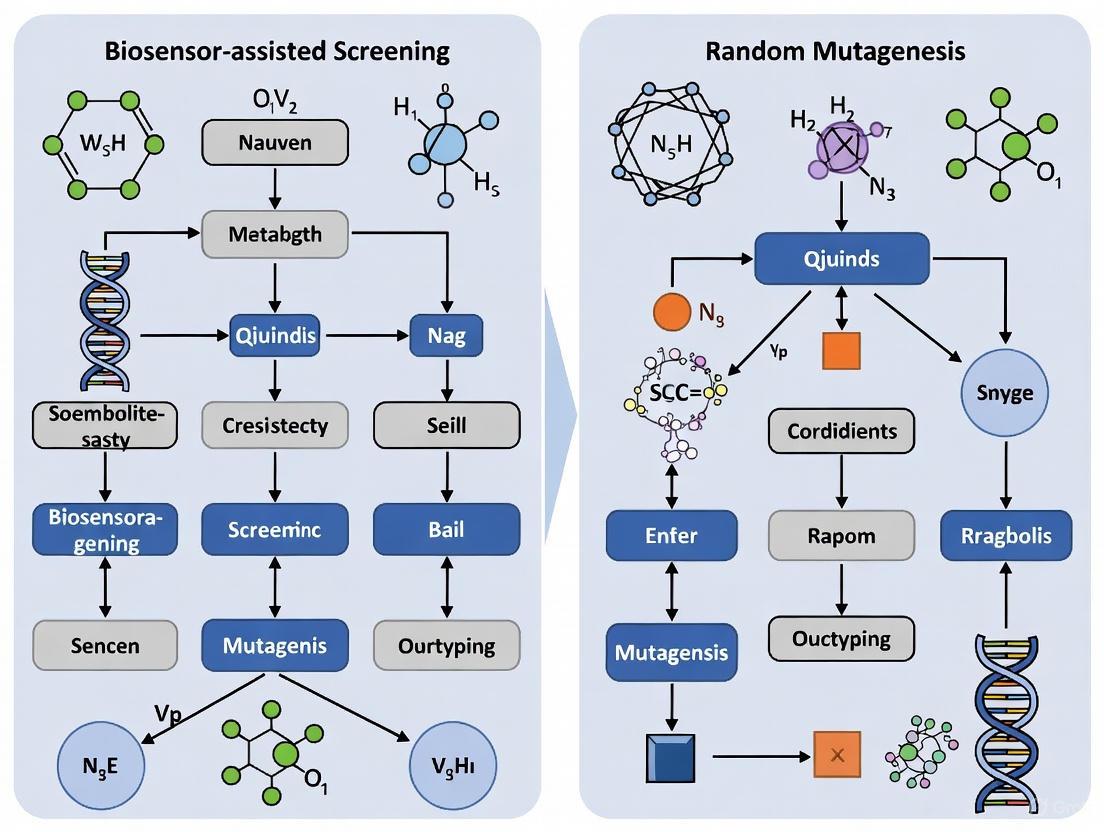
This article provides a comprehensive comparative analysis of biosensor-assisted high-throughput screening and random mutagenesis for researchers, scientists, and drug development professionals.
Biosensor-Assisted Screening vs. Random Mutagenesis: A Comparative Analysis for Accelerating Strain Development and Drug Discovery
Abstract
This article provides a comprehensive comparative analysis of biosensor-assisted high-throughput screening and random mutagenesis for researchers, scientists, and drug development professionals. It explores the foundational principles of both methodologies, detailing their specific applications in metabolic engineering and natural product discovery. The content addresses key challenges and optimization strategies for integrating these techniques, supported by validation data and case studies demonstrating their synergistic potential to enhance titers, yields, and productivity in microbial cell factories. Finally, it examines future directions, including the integration of artificial intelligence and microfluidics, for advancing biomedical and clinical research.
Core Principles: Understanding Random Mutagenesis and Biosensor Fundamentals
Random mutagenesis serves as a fundamental methodology in protein engineering, strain improvement, and basic research for unraveling gene function. These techniques enable researchers to create diverse libraries of genetic variants, facilitating the discovery of proteins with enhanced stability, novel catalytic activity, or improved microbial strains for industrial applications. The landscape of random mutagenesis spans biochemical, biological, and physical methods, each with distinct mechanisms for introducing genetic diversity. As the field progresses, understanding the operational parameters, mutation spectra, and comparative performance of these techniques becomes crucial for selecting the appropriate strategy for a given research goal. This guide provides a comparative analysis of traditional random mutagenesis methods, focusing on their underlying mechanisms, experimental protocols, and performance metrics, thereby offering researchers a framework for informed methodological selection.
Established Random Mutagenesis Methods
Error-Prone PCR (epPCR)
Principle: Error-prone PCR (epPCR) is a widely adopted biochemical method that exploits the reduced fidelity of DNA polymerase under non-standard PCR conditions to introduce random point mutations during gene amplification [1] [2]. Fidelity is typically compromised by incorporating manganese ions ((Mn^{2+})), biasing nucleotide pools, or using error-prone polymerase variants [3] [4].
Experimental Protocol: A standard epPCR protocol involves several key modifications to a conventional PCR reaction mixture and cycling conditions [2] [3]:
- Reaction Setup: A 50 µL reaction typically contains:
- 1× PCR buffer
- Template DNA (e.g., 1 ng to 100 ng)
- 0.2–0.5 mM MnCl₂ or 5–7 mM MgCl₂
- Unequal dNTP concentrations (e.g., 0.2 mM dGTP, 0.2 mM dATP, 1.0 mM dCTP, 1.0 mM dTTP)
- 0.1–1.0 µM each of forward and reverse primers
- 1–2.5 U of Taq DNA polymerase
- Thermal Cycling: Standard cycling parameters are used (e.g., initial denaturation at 95°C for 2–3 minutes; 25–30 cycles of 95°C for 30 seconds, 50–65°C for 30 seconds, and 72°C for 1 minute/kb; final extension at 72°C for 5–10 minutes).
- Post-Amplification: The mutated PCR product is then cloned into a suitable expression vector using traditional restriction enzyme-based ligation or, more efficiently, methods like Circular Polymerase Extension Cloning (CPEC) to maximize library diversity [4]. The ligated DNA is transformed into a host strain (e.g., E. coli TOP10) for screening and selection.
Mutator Strains
Principle: This biological approach utilizes engineered E. coli strains deficient in multiple DNA repair pathways (e.g., mutS, mutD, mutT), leading to the accumulation of random errors during chromosomal and plasmid DNA replication [2] [3]. A commercially available example is the XL1-Red strain.
Experimental Protocol: The workflow for using mutator strains is straightforward [2]:
- Transformation: The plasmid containing the gene of interest is transformed into the mutator strain (e.g., XL1-Red).
- Growth and Mutagenesis: Transformed cells are grown in liquid culture for 24–48 hours to allow for multiple rounds of cell division and plasmid replication, during which mutations accumulate. For higher mutation frequencies, several sequential cycles of plasmid isolation and re-transformation into fresh mutator cells may be necessary.
- Library Harvesting: After adequate growth, plasmid DNA is isolated from the entire culture, creating a mutant library. This library is then transformed into a standard laboratory strain for functional screening to avoid the background of accumulating genomic mutations in the mutator strain.
Chemical Mutagenesis
Principle: Chemical mutagens directly alter DNA structure, leading to mispairing during subsequent replication. Two common agents are Ethyl methanesulfonate (EMS) and Nitrous Acid [5] [2].
- EMS: An alkylating agent that primarily modifies guanine residues, leading to GC-to-AT transition mutations during replication [5] [2].
- Nitrous Acid: Acts through the oxidative deamination of adenine and cytosine bases, resulting in AT-to-GC and GC-to-AT transition mutations, respectively [2].
Experimental Protocol (In Vitro EMS Mutagenesis):
- DNA Treatment: Purified DNA (e.g., 1–10 µg) is incubated with EMS (e.g., 0.1–0.3 M) in a suitable buffer (e.g., sodium phosphate buffer, pH ~7.0) for 1–2 hours at 37°C [2].
- Reaction Termination: The reaction is stopped by adding sodium thiosulfate to neutralize the EMS.
- DNA Recovery: The mutagenized DNA is purified via ethanol precipitation or using a commercial DNA cleanup kit.
- Ligation and Transformation: The treated DNA is then ligated into a vector and transformed into a host organism for screening. Safety Note: EMS is a potent volatile mutagen and must be handled with extreme care in a fume hood, using appropriate personal protective equipment (PPE) and following institutional safety guidelines [2].
Atmospheric Room Temperature Plasma (ARTP)
Principle: ARTP is a physical mutagenesis method where a radio-frequency electric field ionizes helium gas to generate a low-temperature plasma jet at atmospheric pressure [6]. This plasma produces reactive oxygen and nitrogen species (RONS) that cause DNA damage, including strand breaks and base oxidation. The cell's subsequent error-prone SOS repair pathway introduces random mutations across the genome [6].
Experimental Protocol: The standard ARTP workflow is as follows [6]:
- Sample Preparation: Microbial cells are cultured to mid-logarithmic phase (OD₆₀₀ ~0.6–0.8), harvested, and washed. They are then resuspended in a physiological solution or a protective agent like 10% glycerol.
- Parameter Optimization: Critical parameters are optimized for the specific organism. Typical settings are:
- Power: 100–120 W
- Helium Flow Rate: 10–15 standard liters per minute (SLM)
- Sample Distance: ~2 mm from the plasma nozzle
- Exposure Time: Prokaryotes: 15–120 s; Yeasts: 30–240 s; Fungi/Microalgae: 60–360 s. A lethality rate of around 90% is often targeted for optimal mutation diversity.
- Plasma Treatment: A small volume (e.g., 5–10 µL) of the cell suspension is exposed to the plasma jet under the optimized conditions.
- Recovery and Screening: Treated cells are recovered in liquid medium, serially diluted, and plated to obtain isolated colonies. Survivors are then screened for desired phenotypes.
The following diagram illustrates the logical workflow and core mechanism of the ARTP mutagenesis system.
Comparative Performance Analysis
The choice of mutagenesis method significantly impacts the outcome of an experiment. The table below provides a quantitative and qualitative comparison of the discussed techniques, summarizing key performance metrics to guide selection.
Table 1: Comparative Analysis of Random Mutagenesis Techniques
| Method | Principle | Mutation Frequency & Types | Key Advantages | Key Limitations |
|---|---|---|---|---|
| Error-Prone PCR (epPCR) [1] [3] [7] | Low-fidelity PCR amplification | Frequency: Adjustable, can be very high.Types: Primarily point mutations (transitions/transversions), some indels. | High mutational density achievable; in vitro method, no organism-specific constraints. | Mutation spectrum can be biased (e.g., AT→GC rich); limited to the amplified gene. |
| Mutator Strains [2] [3] | Deficient DNA repair in vivo | Frequency: Low to moderate.Types: Broad spectrum of substitutions, deletions, frameshifts. | Simple protocol; no specialized equipment; broad mutation types. | Progressively sickens host; low mutation efficiency requires multiple rounds. |
| Chemical (e.g., EMS) [5] [2] [3] | Direct DNA alkylation/deamination | Frequency: Low to moderate.Types: Primarily specific transitions (e.g., EMS: GC→AT). | Simple and inexpensive; effective for whole-cell mutagenesis. | Strong mutational bias; safety hazards; requires careful waste disposal. |
| ARTP [6] | Reactive plasma species cause DNA damage | Frequency: High.Types: Genome-wide substitutions, insertions, deletions. | High mutation rate & diversity; operates at room temperature; applicable to all microbes. | Requires specialized instrument; optimization of exposure time is critical. |
The performance of these methods has been quantitatively evaluated in direct comparisons. A study found that epPCR methods yielded the highest mutation rates and widest operational ranges, while chemical and biological methods generated lower mutation levels with a narrower operational range [3]. A novel method termed Deaminase-driven Random Mutation (DRM), which uses engineered cytidine (A3A-RL) and adenosine (ABE8e) deaminases, was shown to exhibit a 14.6-fold higher DNA mutation frequency and produce a 27.7-fold greater diversity of mutation types compared to a standard epPCR [1].
Furthermore, the mutation rate in epPCR libraries is a critical parameter for success. Contrary to a simple Poisson distribution, the actual distribution at high error rates leads to libraries enriched with unique, functional clones. There exists an optimal mutation rate that balances the uniqueness of sequences with the retention of protein function, explaining why high-error-rate libraries can be disproportionately enriched in improved proteins [7].
Research Reagent Solutions
Successful implementation of random mutagenesis relies on specific reagents and kits. The following table lists key solutions for setting up these experiments.
Table 2: Essential Research Reagents for Random Mutagenesis
| Reagent / Kit | Function / Application | Examples / Notes |
|---|---|---|
| Error-Prone PCR Kits | Provides optimized buffers, nucleotides, and low-fidelity polymerases for efficient mutagenesis. | GeneMorph II Random Mutagenesis Kit (Agilent) [4]; commercial kits from Stratagene and Clontech [2]. |
| Mutator Strains | E. coli strains with defective DNA repair for in vivo mutagenesis of plasmid DNA. | XL1-Red (Agilent) [2]. |
| Chemical Mutagens | Directly modifies DNA bases to induce mutations during replication. | Ethyl methanesulfonate (EMS), Nitrous Acid [5] [2]. Handle with extreme care. |
| High-Fidelity DNA Polymerase | Used for control amplifications and for cloning steps (e.g., CPEC) that require high fidelity. | Q5 High-Fidelity (NEB) [1]; Vent DNA Polymerase (NEB) [3]. |
| Cloning Kits (CPEC) | Enables efficient, ligation-independent cloning of mutant libraries, maximizing diversity. | Circular Polymerase Extension Cloning (CPEC) method [4]. |
| ARTP Instrument | Integrated system for performing physical mutagenesis via atmospheric room-temperature plasma. | Commercial ARTP models (e.g., ARTP-M, ARTP-IIS) [6]. |
Traditional random mutagenesis techniques, from the widely accessible error-prone PCR and chemical mutagens to the modern ARTP technology, provide a powerful toolkit for probing gene function and engineering biomolecules. Each method presents a unique profile in terms of mutation spectrum, frequency, and operational complexity. The selection of an appropriate technique should be guided by the specific research objectives, desired mutation density, available resources, and safety considerations. The integration of these mutagenesis methods with advanced cloning techniques and high-throughput screening platforms, such as biosensor-assisted selection, continues to enhance our ability to efficiently navigate vast sequence spaces and isolate variants with novel and improved functions, thereby accelerating progress in protein engineering and metabolic engineering.
In metabolic engineering and drug development, screening for high-performance microbial strains or specific biomarkers has traditionally relied on methods like random mutagenesis, which are often time-consuming and labor-intensive. Biosensors represent a paradigm shift, offering a targeted approach by converting the presence of a specific target metabolite into a measurable signal [8]. This guide provides a comparative analysis of two primary classes of biological recognition elements—Transcription Factors (TFs) and Aptamers—framed within the broader thesis that biosensor-assisted screening provides a more direct, efficient, and intelligent pathway for strain and biomarker development compared to traditional random methods.
The core function of any biosensor is to couple a sensing component with a reporter component. The sensing element specifically interacts with the target analyte (ligand), and this interaction is transduced into an observable output signal, such as fluorescence, colorimetric change, or electrochemical current [9]. This process enables researchers to rapidly identify and characterize successful production strains or detect hazards without the need for extensive and costly separation techniques.
Comparative Analysis: Transcription Factor vs. Aptamer Biosensors
The choice of recognition element is fundamental to a biosensor's performance. The following table compares the core characteristics of Transcription Factor-based and Aptamer-based biosensors, which are two of the most prominent tools in modern biosensing.
Table 1: Core Characteristics of TF-based and Aptamer-based Biosensors
| Feature | Transcription Factor (TF)-Based Biosensors | Aptamer-Based Biosensors (Aptasensors) |
|---|---|---|
| Sensing Element | Allosteric Transcription Factor (aTF) protein [9] | Short, single-stranded DNA or RNA oligonucleotide [10] |
| Mechanism | Ligand binding causes conformational change, enabling/blocking transcription of a reporter gene [9] | Ligand binding induces a conformational change in the oligonucleotide structure [10] |
| Typical Output Signals | Fluorescence, enzyme-based colorimetric assays [9] | Electrochemical, fluorescence, colorimetric, SERS [10] |
| Development & Production | Relies on functional protein expression; can be challenging [9] | Chemical synthesis; rapid, reproducible, and low-cost [10] |
| Stability | Moderate; susceptible to denaturation and proteolytic degradation [9] | High; tolerant to a wide range of temperatures and pH [10] |
| Key Advantage | Seamless integration into live cells for in vivo screening [9] | Superior stability and versatility for in vitro diagnostic applications [10] |
The performance of these biosensors is quantified using specific metrics. The table below summarizes experimental data from recent studies, highlighting the sensitivity and detection capabilities of different biosensor designs.
Table 2: Performance Comparison of Representative Biosensors
| Biosensor Type | Target Analyte | Detection Mechanism | Limit of Detection (LOD) / Linear Range | Key Performance Insight |
|---|---|---|---|---|
| Aptasensor [10] | α-Fetoprotein (AFP) | SERS (Surface-Enhanced Raman Scattering) | LOD: 16.73 ng/mLLinear Range: 0 - 500 ng/mL | Uses Au-Ag nanostars for intense signal enhancement; detects intrinsic AFP vibrations. |
| TF-Based (Theoretical) | Various Metabolites | Fluorescence Reporting | Varies by specific TF; requires engineering for performance [9] | Performance is highly dependent on the specificity and affinity of the engineered aTF. |
| Color SPR Biosensor [11] | Streptavidin (100 nM) | Color Surface Plasmon Resonance | Linear Range: 0.0254 RIU | Ag/Au bi-metallic film enables naked-eye detection with high color contrast. |
| Electrochemical Biosensor [12] | Adenine & Guanine | Electrochemical (Manganese(II) complex) | Determined from clinical DNA samples | Enables simultaneous determination from complex biological samples. |
Experimental Protocols and Workflows
Workflow for Developing a Transcription Factor-Based Biosensor
The development of a functional TF-based biosensor is a multi-stage process that bridges bioinformatics and experimental validation [9].
Key Experimental Steps
- Determining the Design Space: The process begins with gathering known information on ligand-activated TFs from specialized databases such as RegulonDB (for E. coli), PRODORIC, and JASPAR [9]. This helps establish the "known detectable input space." If a TF for the desired ligand is unknown, homology-based prediction is used to identify potential TFs in other species by analyzing protein sequence families (e.g., TetR, AraC) [9].
- Genetic Circuit Construction: Once a candidate TF is selected, it is assembled into a genetic circuit. The gene for the aTF is combined with a promoter it regulates, followed by a suitable reporter gene (e.g., GFP for fluorescence). The construct is then inserted into a plasmid vector and transformed into a host cell [9].
- Validation and Screening: The performance of the biosensor is validated by exposing the cells to a range of ligand concentrations and measuring the output signal. This is typically done in a high-throughput manner using microtiter plates or flow cytometry [9]. Successful biosensors show a strong, dose-dependent correlation between the ligand concentration and the output signal.
Protocol for an Aptamer-Based SERS Biosensor
A recent study for detecting the cancer biomarker α-fetoprotein (AFP) illustrates a typical aptasensor development protocol [10]:
- Substrate Preparation: Spiky Au-Ag nanostars are synthesized and concentrated via centrifugation (10-60 min). Their sharp tips provide intense plasmonic enhancement for the SERS signal.
- Functionalization: The nanostars are functionalized with Mercaptopropionic Acid (MPA), creating a self-assembled monolayer. The carboxyl groups of MPA are then activated by EDC and NHS chemistry.
- Aptamer Immobilization: Monoclonal anti-α-fetoprotein antibodies (AFP-Ab) are covalently attached to the activated carboxyl groups on the nanostar surface.
- Detection and Readout: The sample containing the AFP antigen is introduced. Binding to the antibody alters the SERS signal at the nanostar surface. The sensor detects the intrinsic vibrational modes of the target biomolecule itself, achieving a limit of detection (LOD) of 16.73 ng/mL [10].
The Scientist's Toolkit: Essential Research Reagents
The following table details key reagents and materials essential for developing and working with biosensors, as featured in the cited research.
Table 3: Key Research Reagent Solutions for Biosensor Development
| Reagent / Material | Function in Biosensor Development |
|---|---|
| Allosteric Transcription Factors (aTFs) | The core sensing protein; binds to a specific ligand and undergoes a conformational change that modulates transcription [9]. |
| Aptamers | Synthetic DNA or RNA oligonucleotides that serve as recognition elements; selected for high affinity and specificity to a target molecule [10]. |
| Reporter Genes (e.g., GFP) | Encoded proteins that generate a measurable output (e.g., fluorescence) in response to the sensing event [9]. |
| Plasmid Vectors | Circular DNA molecules used to clone and introduce the genetic circuit (promoter, TF, reporter) into the host organism [9]. |
| Au-Ag Nanostars | A nanostructured substrate used in optical biosensors (e.g., SERS); their sharp tips greatly enhance the electromagnetic field for sensitive detection [10]. |
| EDC/NHS Chemistry | A common crosslinking chemistry used to covalently immobilize biomolecules (like antibodies or aptamers) onto sensor surfaces [10]. |
Biosensor Output Signals and Detection Modalities
The output signal is the final, measurable readout of a biosensor. Different detection modalities offer varying advantages in sensitivity, cost, and suitability for field use.
- Optical Signals: These are among the most common outputs. They include fluorescence (e.g., from GFP) and colorimetric changes that can be seen with the naked eye or a simple spectrometer. Advanced optical techniques like Surface-Enhanced Raman Scattering (SERS) use nanostructured metals (e.g., Au-Ag nanostars) to dramatically amplify the signal from molecules on the sensor surface, enabling extremely sensitive detection of targets like cancer biomarkers [10]. Another advanced method, Surface Plasmon Resonance (SPR), can be configured to produce significant color changes visible to the naked eye upon target binding, as demonstrated in Ag/Au bi-metallic film sensors [11].
- Electrochemical Signals: This modality measures electrical changes—such as current or impedance—resulting from a biosensing event. Electrochemical biosensors are known for their high sensitivity, portability, and ability to function in complex fluids like blood or serum. An example is a sensor using a Manganese(II) complex for the simultaneous electrochemical determination of adenine and guanine in clinical samples [12].
Application in Screening vs. Random Mutagenesis
The primary advantage of biosensor-assisted screening becomes clear when contrasted with the traditional random mutagenesis approach. Random mutagenesis relies on creating random genetic diversity and then employing brute-force screening to find rare, improved variants, a process that is slow and often lacks a direct link between the screening method and the desired metabolic trait.
Biosensors address this core inefficiency. In metabolic engineering, TF-based biosensors can be designed to directly sense the product of a biosynthetic pathway. This allows for high-throughput screening of mutant libraries, where only cells that produce high levels of the desired metabolite exhibit a strong output signal (e.g., high fluorescence) [9]. Furthermore, these biosensors can be integrated into circuits for dynamic metabolic control, where the biosensor automatically downregulates a pathway that is producing toxic intermediates, optimizing the overall production process [9]. Similarly, in diagnostics, aptasensors allow for the rapid and specific detection of pathogens or biomarkers in food and clinical samples, moving away from slower, culture-based methods [10]. This targeted, intelligent approach provided by biosensors significantly accelerates research and development cycles in both biotechnology and medicine.
The Paradigm Shift in Strain Development
In the pursuit of optimizing microbial cell factories for bioproduction, a fundamental challenge has been the laborious process of identifying elite mutants from vast libraries generated through random mutagenesis. Traditional analytical methods, such as chromatography and mass spectrometry, are accurate but low-throughput, creating a critical bottleneck in metabolic engineering and drug development pipelines [13]. This comparative analysis examines how biosensor-assisted screening is bridging this gap, offering a sophisticated, phenotype-driven approach that is progressively supplanting the blind, albeit useful, methods of classical random mutagenesis and screening. By translating intracellular metabolite concentrations into machine-readable signals, biosensors provide a direct evolutionary bridge from genetic diversity to desired phenotypic function, enabling researchers to navigate the complex fitness landscape with unprecedented precision [14] [15].
Comparative Performance: Biosensor-Assisted vs. Classical Random Mutagenesis
The integration of biosensors into high-throughput screening (HTS) campaigns has yielded quantifiable improvements in both the efficiency of identifying improved strains and the magnitude of production gains. The table below summarizes experimental data from various studies, directly comparing outcomes from biosensor-assisted methods and traditional random mutagenesis with non-biosensor screening.
Table 1: Quantitative Comparison of Screening Campaign Outcomes
| Target Molecule / Organism | Screening Method | Library Size Screened | Key Improvement | Reference |
|---|---|---|---|---|
| L-Histidine / Corynebacterium glutamicum | Biosensor-FACS | >50,000 variants characterized | 100 independent improved variants isolated; final strain: 100% increased titer (29 mM) & yield [14] | (2023) |
| L-Histidine / C. glutamicum (Rational Design) | Rational Engineering (No screening) | N/A | Base strain: 11 mM titer [14] | (Pre-evolution) |
| Erythromycin / Saccharopolyspora erythraea | Dual-Color Biosensor-Droplet Microfluidics | N/A | Identified producers with up to 19.6% improved production [16] | (2025) |
| cis,cis-Muconic Acid / Saccharomyces cerevisiae | Biosensor-FACS | N/A | 49.7% increased production vs. control [13] | |
| L-Lysine / C. glutamicum | Biosensor-FACS | N/A | Up to 19% increased titer [13] | |
| Various (Proteins) | Error-Prone PCR (epPCR) & Screening | Libraries up to 10^9 variants [13] | Often requires multiple, time-consuming rounds of mutagenesis [17] | (Traditional) |
The data demonstrates that biosensor-assisted methods consistently identify variants with significant production enhancements, often in a single, highly efficient screening campaign. A landmark study on L-histidine production exemplifies this power: starting from a strain that was already extensively optimized via rational engineering (producing 11 mM L-histidine), a biosensor-guided directed evolution campaign successfully isolated 100 independently evolved variants, with the best combinational mutant doubling the product titer and yield [14]. This showcases the ability of biosensors to push strains beyond the limits of rational design by uncovering novel, non-intuitive beneficial mutations.
Table 2: Throughput and Technical Comparison of Screening Modalities
| Screening Method | Estimated Throughput | Key Advantage | Key Limitation |
|---|---|---|---|
| Biosensor-FACS | 10^7–10^9 cells/hour [13] [14] | Ultra-high-throughput at single-cell level; quantitative | Requires specific, high-performance biosensor |
| Biosensor-Droplet Microfluidics | 10^7–10^8 droplets/hour [16] | Ultra-high-throughput; compartmentalized analysis | Complex setup; risk of false positives from heterogeneity |
| Biosensor Agar Plates | 10^3–10^4 colonies/plate [13] | Low-cost; simple; visual readout (e.g., fluorescence) | Low throughput; semi-quantitative |
| Well Plate Biosensor Assays | 10^2–10^3 variants/run [13] | Quantitative; amenable to automation | Medium throughput; costly reagents |
| Classical Random Mutagenesis + Chromatography | 10^1–10^2 variants/run [13] | Gold-standard accuracy | Very low throughput; major bottleneck |
Experimental Protocols: From Mutagenesis to Validation
Detailed Methodology: Biosensor-Guided FACS for L-Histidine Producer Evolution
The following protocol, derived from the 2023 BMC Biology study, provides a blueprint for a successful biosensor-based directed evolution campaign [14].
Strain and Biosensor Preparation:
- Base Strain: A rationally engineered Corynebacterium glutamicum producer (CgHis1) was used as the starting point.
- Genetic Modifications: The native lysG and lysE genes were deleted from the chromosome to prevent interference and false positives from L-lysine accumulation.
- Biosensor Integration: A genetically encoded biosensor (pSenHis), based on an engineered L-lysine-insensitive variant of the transcription factor LysG, was integrated into a plasmid also carrying the hisEG genes for pathway overexpression. The resulting strain, CgHis2, produces fluorescence (EYFP) in response to intracellular L-histidine.
Library Generation via Random Mutagenesis:
- Method: Over 600 independent cultures of the CgHis2 strain were subjected to chemical mutagenesis. This approach ensured the generation of a vast array of genetic diversity across many independently evolved lineages.
Biosensor-Based FACS Screening:
- Process: Mutagenized cells from each culture were analyzed by Fluorescence-Activated Cell Sorting (FACS).
- Gating Strategy: Cells exhibiting fluorescence intensities higher than the parent CgHis2 strain were isolated as "hits". This step screened over 50,000 fluorescent variants.
- Throughput: FACS enables the ultra-high-throughput processing of millions of cells in a short time, efficiently enriching the library for improved producers.
Validation and Characterization:
- Primary Screening: >4,500 FACS-sorted variants were cultivated in microtiter plates, and their production performance was quantified using analytical methods like HPLC, confirming improved L-histidine accumulation.
- Genome Sequencing: The genomes of 100 confirmed improved variants were sequenced. Comparative genome analysis identified several novel beneficial mutations (e.g., in serC, thrB, glyA, cysJ, metY) that were not intuitively linked to L-histidine biosynthesis.
Combinatorial Engineering:
- Selected beneficial mutations were rationally reintroduced and combined into the base strain, culminating in a final engineered producer with a doubled L-histidine titer compared to the starting strain [14].
Figure 1: Workflow for biosensor-guided directed evolution of microbial production strains.
Advanced Protocol: Dual-Color Biosensor Screening for Enhanced Accuracy
A common challenge in biosensor-based screening, especially in micro-environments like droplets, is heterogeneity in cell growth and gene expression, which can lead to false positives. A 2025 study addressed this with an advanced dual-color system for screening erythromycin producers [16].
Biosensor Engineering:
- A genetically encoded biosensor in E. coli was designed to produce Green Fluorescent Protein (GFP) in response to extracellular erythromycin.
- To normalize for variations, a second, constitutive mCherry red fluorescent protein gene was integrated into the biosensor strain's genome.
Droplet Microfluidic Co-cultivation:
- The dual-color biosensor strain was co-encapsulated with individual Saccharopolyspora erythraea library variants in microfluidic droplets, creating isolated bioreactors.
Dual-Color Detection and Sorting:
- Droplets were analyzed based on the ratio of GFP to mCherry fluorescence. This normalized output directly correlates with erythromycin concentration, independent of variations in biosensor cell density or gene expression within individual droplets.
- Droplets with a high GFP/mCherry ratio were sorted for further validation.
Result: This method demonstrated a 24.2% higher positive rate for a wild-type library and an 11.9% higher positive rate for an industrial mutagenesis library compared to single-color screening, significantly reducing false positives and improving screening accuracy [16].
Figure 2: Dual-color biosensor screening for normalized product detection in droplets.
The Scientist's Toolkit: Essential Reagents and Solutions
The successful implementation of a biosensor-assisted screening campaign relies on a suite of specialized research reagents and tools.
Table 3: Key Research Reagent Solutions for Biosensor-Assisted Screening
| Reagent / Tool | Function / Description | Example Application |
|---|---|---|
| Genetically Encoded Biosensor | Genetic circuit with sensing (TF/RNA) and reporting (fluorescent protein) modules. The core reagent for detection. | pSenHis for L-histidine [14]; MphR-based sensor for erythromycin [16]. |
| Metagenomic / Mutant Libraries | Source of genetic diversity. Can target enzymes, pathways, or whole genomes. | epPCR libraries; chemical mutagenesis (e.g., NTG, EMS); ARTP whole-cell libraries [13]. |
| Fluorescence-Activated Cell Sorter (FACS) | Instrument for high-speed sorting of individual cells based on biosensor fluorescence. | Enriching high-producing C. glutamicum or S. cerevisiae variants from millions of cells [13] [14]. |
| Droplet Microfluidic System | Platform for generating, incubating, and analyzing picoliter-sized water-in-oil droplets. | Co-culturing producers and biosensors in micro-reactors for high-throughput screening (e.g., WELCOME platform) [16]. |
| Directed Evolution Mutagenesis Kits | Commercial kits for efficient library generation. | Novel methods like Deaminase-driven Random Mutation (DRM) offer higher mutation frequency and diversity than traditional epPCR [17]. |
| Transcription Factor (TF) Engineering Kits | Tools to modify the specificity and sensitivity of native TFs. | Directed evolution of TFs like CaiF to extend dynamic range and ligand specificity [18] [19]. |
The Future of Biosensor-Assisted Evolution
The trajectory of biosensor technology points toward even more intelligent and automated screening systems. Future developments are focused on:
- Expanding the Detectable Metabolite Space: Computational and AI-based tools like DeepTFactor and AlphaFold are being used to discover and characterize novel transcription factors, thereby creating biosensors for a wider array of molecules [19].
- Biosensor Optimization via Directed Evolution: Biosensors themselves are being evolved to possess improved characteristics, such as a wider dynamic range, higher sensitivity, and altered ligand specificity. For instance, directed evolution of the CaiF-based biosensor expanded its detection range for L-carnitine by 1000-fold [18].
- Integration with AI and Automation: The combination of high-throughput biosensor data with machine learning models will enable predictive strain engineering, closing the loop between design, build, test, and learn cycles.
In conclusion, the comparative evidence firmly establishes biosensor-assisted screening as a transformative evolutionary bridge. It retains the power of random mutagenesis to explore a vast genetic landscape while adding the guidance of a phenotypic compass. This enables a more efficient and profound navigation toward microbial cell factories operating at their theoretical maximum, thereby accelerating advancements in biomanufacturing, drug development, and synthetic biology.
The development of high-performing microbial strains is crucial for industrial biotechnology, from pharmaceutical production to sustainable biomaterials. For decades, random mutagenesis and screening represented the primary method for strain improvement, relying on introducing random genetic changes and laborious phenotypic screening. The advent of biosensor-assisted screening has revolutionized this field by enabling high-throughput, quantitative selection of improved variants based on intracellular metabolite concentrations. This comparative analysis examines the fundamental metrics that define the effectiveness of both approaches: mutation frequency and diversity for strain generation and biosensor dynamic range for screening efficiency. Understanding these metrics and their interplay is essential for designing optimal strain development pipelines that maximize the probability of isolating high-performing production hosts.
The critical limitation of traditional methods lies in their low throughput and inability to quantitatively link genotype to production phenotype. In contrast, biosensor-based approaches use transcription factors that translate intracellular metabolite concentrations into machine-detectable signals, such as fluorescence, enabling the rapid screening of millions of variants via fluorescence-activated cell sorting (FACS) [14]. The performance of these biosensors is largely governed by their dynamic range—the ratio between the signal in the presence of saturating target concentrations versus the signal in its absence. A broader dynamic range allows for clearer distinction between high- and low-producing cells, directly impacting screening efficiency and success rates [20] [21].
Core Metric 1: Mutation Frequency and Diversity
Mutation frequency refers to the rate at which genetic changes occur within a population, while mutation diversity describes the variety of genomic locations and types of these changes. In random mutagenesis, the goal is to generate a vast array of genetic variants, each potentially contributing to an improved phenotype through complex, often unpredictable, regulatory mechanisms.
Experimental Protocols for Random Mutagenesis
Chemical Mutagenesis: A standard protocol involves treating microbial cells with chemical mutagens like ethyl methanesulfonate (EMS) or N-methyl-N'-nitro-N-nitrosoguanidine (NTG). For Corynebacterium glutamicum, cells are harvested, washed, and resuspended in appropriate buffer. NTG is added to a final concentration of 100 µg/mL, and the suspension is incubated for 30-60 minutes at 30°C with gentle shaking to ensure uniform exposure. The reaction is terminated by centrifugation and repeated washing to remove the mutagen. The mutation frequency is optimized to achieve a survival rate of 10-50%, balancing the introduction of sufficient mutations with population viability [14].
Determining Mutation Frequency and Diversity: Mutation frequency is typically quantified by measuring the rate of resistance to antibiotics like rifampicin or streptomycin. The diversity of mutations is assessed through whole-genome sequencing of multiple isolated variants. In a recent large-scale study, researchers performed >600 independent chemical mutagenesis experiments on C. glutamicum, subsequently sequencing 100 improved strain variants to catalog the spectrum of mutations achieved. This analysis revealed that beneficial mutations were distributed across various functional categories, including central carbon metabolism, transcriptional regulation, and amino acid biosynthesis, demonstrating the broad diversity attainable through random mutagenesis [14].
Core Metric 2: Biosensor Dynamic Range
The dynamic range of a biosensor is a fundamental performance parameter that defines its ability to distinguish between different analyte concentrations. For biosensors used in screening applications, it is typically calculated as the ratio of the output signal (e.g., fluorescence intensity) at saturating target concentration to the output signal in the absence of the target [20]. Mathematically, this is expressed as DR = Smax / Smin, where Smax is the maximum signal and Smin is the minimum signal.
Engineering Strategies for Enhanced Dynamic Range
Conventional biosensors based on single-site binding exhibit a limited inherent dynamic range of approximately 81-fold, which is often insufficient for applications requiring high sensitivity or the quantification of targets across wide concentration ranges [20]. Several engineering strategies have been developed to overcome this limitation:
- Structure-Switching Mechanisms: By engineering a conformational change into the receptor that is coupled to target binding, researchers can generate sets of receptor variants with affinities spanning multiple orders of magnitude while maintaining target specificity. These variants can be combined to create biosensors with tailored dynamic ranges [20].
- Chemogenetic FRET Pairs: A recent breakthrough involves engineering a reversible interaction between a fluorescent protein and a fluorescently labeled HaloTag. This "ChemoG" design positions the fluorophores in close proximity, achieving near-quantitative FRET efficiencies (≥95%) and enabling the creation of biosensors for metabolites like ATP and NAD+ with unprecedented dynamic ranges. The system is highly tunable by simply changing the synthetic fluorophore used to label the HaloTag [21].
- Affinity Variant Mixing: By rationally mixing receptor variants of different affinities, the useful log-linear dynamic range of a biosensor can be dramatically extended. One study demonstrated that combining two DNA-based receptors differing in affinity by 100-fold could extend the dynamic range to 8,100-fold. Using four variants with affinities spanning over 10,000-fold resulted in a biosensor with a ~900,000-fold dynamic range, a >10,000-fold improvement over a single receptor [20].
Comparative Analysis: Biosensor-Assisted Screening vs. Random Mutagenesis
The table below provides a direct, data-driven comparison of the two methodologies based on the defined key metrics and their associated experimental outcomes.
Table 1: Performance Comparison of Strain Development Methods
| Metric | Random Mutagenesis with Manual Screening | Biosensor-Assisted FACS Screening |
|---|---|---|
| Mutation Frequency & Diversity | High frequency; Broad genomic diversity achieved through >600 independent mutagenesis experiments [14]. | Targeted diversity; Can be applied to pre-mutated libraries (e.g., from random mutagenesis) [14]. |
| Screening Throughput | Low (10^1-10^3 variants) [14]. | Ultra-high (10^6-10^8 variants per screening round) [14]. |
| Biosensor Dynamic Range | Not applicable. | Tunable from 81-fold (single-site) to >900,000-fold (engineered) [20]. |
| Key Experimental Data | Isolation of 100 independent variants with 10-80% increased product titer [14]. | Identification of variants with doubled final product titer (29 mM) and yield (0.13 C-mol C-mol⁻¹) [14]. |
| Primary Limitation | Low probability of identifying optimal mutants due to screening bottleneck. | Limited by biosensor performance (specificity, dynamic range) and potential crosstalk [14]. |
Synergistic Workflow for Strain Development
The most powerful modern approaches leverage the strengths of both methods in a sequential pipeline. The following diagram illustrates this synergistic workflow, which begins with the creation of genetic diversity and ends with the isolation of high-performing production strains.
Diagram 1: Integrated strain development workflow. The process combines random mutagenesis (red) to generate diversity with biosensor-assisted screening (blue) to efficiently identify improved variants, culminating in validation and genomic analysis (green).
The Scientist's Toolkit: Essential Research Reagents and Materials
The successful implementation of a biosensor-assisted screening campaign requires a specific set of biological and chemical reagents. The following table details the key components and their functions based on the protocols cited.
Table 2: Essential Reagents for Biosensor-Assisted Strain Development
| Research Reagent | Function/Description | Example from Literature |
|---|---|---|
| Chemical Mutagen | Induces random point mutations and small indels across the genome to create genetic diversity. | N-methyl-N'-nitro-N-nitrosoguanidine (NTG) used in >600 mutagenesis experiments [14]. |
| Metabolite Biosensor Plasmid | Genetically encoded system that translates intracellular metabolite concentration into a quantifiable signal (e.g., fluorescence). | pSenHis for L-histidine: uses a mutated LysG transcription factor to drive eYFP expression [14]. |
| Fluorophore-Labeled HaloTag Ligand | For chemogenetic FRET biosensors, this synthetic molecule binds covalently to the HaloTag protein, serving as a tunable FRET acceptor. | Silicon Rhodamine (SiR) and other Janelia Fluor (JF) dyes used to achieve near-quantitative FRET efficiency [21]. |
| FRET Donor/Acceptor Pairs | Paired fluorescent molecules for FRET-based biosensors. Energy transfer between them changes upon analyte binding. | ChemoG5 FRET pair: eGFP donor + HaloTag-labeled SiR acceptor [21]. Engineered FP pairs for extended dynamic range [20]. |
| FACS Buffer | Physiologically compatible buffer to maintain cell viability and biosensor function during high-throughput sorting. | Typically, PBS or saline buffer, sometimes with added glucose or other nutrients to sustain cells during the sorting process. |
The comparative analysis clearly demonstrates that biosensor-assisted screening significantly outperforms traditional random mutagenesis in throughput and efficiency for strain improvement. The critical role of biosensor dynamic range is evident: engineered biosensors with expanded dynamic ranges of over 900,000-fold enable the precise discrimination of high-performing variants that would be indistinguishable using conventional sensors [20]. The reported success in doubling product titer and yield in a microbial host through this methodology underscores its transformative potential [14].
Future developments in this field will likely focus on the integration of machine learning with the large genomic and phenotypic datasets generated from biosensor screens to predict new beneficial mutations. Furthermore, the continued development of highly specific, broad-dynamic-range biosensors for a wider array of metabolites, aided by strategies like chemogenetic FRET pairs [21], will expand the scope of this technology. As these tools become more accessible and robust, the synergistic combination of massive diversity generation and ultra-high-throughput screening will become the standard for pushing industrial production strains toward their theoretical maximum performance.
Integrated Workflows and Real-World Applications in Strain Engineering
The development of robust microbial cell factories is paramount for the sustainable production of chemicals, yet achieving industrially viable titers, rates, and yields (TRY) remains a persistent challenge. A primary bottleneck lies in the limited tolerance of microbial hosts to the very compounds they are engineered to produce, which restricts overall productivity [22]. For decades, random mutagenesis has been a cornerstone of strain improvement, relying on physical or chemical agents to induce genetic diversity followed by screening for desired phenotypes. However, this process is often time-consuming, labor-intensive, and suffers from low throughput [6].
In contrast, biosensor-assisted screening represents a paradigm shift, employing genetically encoded circuits to detect target metabolites and link their concentration to a measurable output, such as fluorescence. This allows for the direct and high-throughput interrogation of microbial performance at a single-cell level [13]. The core of this comparative analysis is the integration of these approaches into a cohesive platform. This guide objectively examines the performance of a modern screening platform that synergistically couples advanced mutagenesis with Fluorescence-Activated Cell Sorting (FACS) and microdroplet cultivation, contrasting it with traditional random mutagenesis alone. We present supporting experimental data and detailed protocols to underscore the transformative potential of this integrated system for researchers and drug development professionals.
Comparative Analysis of Screening Platforms
The following table summarizes the key performance metrics of traditional random mutagenesis versus the integrated biosensor-driven platform, highlighting the stark differences in efficiency and output.
Table 1: Performance Comparison: Traditional Random Mutagenesis vs. Integrated Biosensor-Driven Platform
| Feature | Traditional Random Mutagenesis | Integrated Biosensor/FACS/Microdroplet Platform |
|---|---|---|
| Mutagenesis Method | UV, chemicals (e.g., EMS) [6] | Atmospheric Room Temperature Plasma (ARTP) [22] [6] |
| Mutation Rate | Lower, can lead to evolutionary failure [22] | Higher; ARTP generates widespread genomic mutations efficiently [6] |
| Screening Throughput | Low (microtiter plates: (10^2)-(10^3) clones) [23] | Ultra-high (FACS/Microdroplets: (10^7)-(10^{10}) variants) [13] [23] |
| Screening Logic | Based on growth or end-point assays | Biosensor-driven, links product titer to fluorescence for direct phenotype selection [22] [13] |
| Compartmentalization | Not inherent; competition in bulk culture | Single-cell compartmentalization in microdroplets [23] [24] |
| Key Outcome | Improved tolerance often trades off with production [22] | Identifies "win-win" phenotypes with simultaneous improvements in tolerance and biosynthetic capacity [22] |
| Typical Timeline | Months to years | Highly accelerated; e.g., evolved 720 mM 3-HP tolerance in E. coli within 12 days [22] |
Experimental Protocols and Workflows
Mutagenesis: Generating Diversity with ARTP
Principle: Atmospheric Room Temperature Plasma (ARTP) mutagenesis uses a helium plasma jet to generate reactive oxygen and nitrogen species (RONS). These reactive species cause widespread DNA damage, which, upon repair via error-prone cellular pathways, introduces random mutations across the genome [6].
Detailed Protocol:
- Culture Preparation: Grow the microbial chassis (e.g., E. coli) to the mid-logarithmic phase (OD600 ≈ 0.6-0.8). Harvest cells by centrifugation.
- Sample Pretreatment: Wash and resuspend the cell pellet in a sterile solution, such as 10% glycerol, to a defined concentration (e.g., (10^8)-(10^9) cells/mL). This ensures optimal dispersion for plasma exposure [6].
- ARTP Treatment: Place 5-10 µL of the cell suspension on a sterile carrier slide. Expose the sample to the ARTP jet under optimized parameters. A typical setup for bacteria uses:
- Power: 100-120 W
- Helium flow rate: 10-15 SLM (standard liters per minute)
- Distance: 2 mm
- Exposure time: 15-120 seconds (must be optimized for each strain to achieve ~90% lethality) [6].
- Recovery and Library Creation: After treatment, elute the cells into a recovery medium. Serially dilute and plate to determine the lethality rate. Use the recovered cells to create a mutant library, which serves as the starting population for subsequent screening [22] [6].
Cultivation & Screening: Microdroplets and FACS
Principle: Microbial cells from the mutagenized library are encapsulated in picoliter- to nanoliter-sized water-in-oil droplets. Each droplet acts as a single bioreactor, physically linking a cell to its extracellular products and enabling high-throughput cultivation without cross-contamination [23] [24]. A key advancement is the use of biosensors to detect product formation within these microdroplets.
Detailed Protocol:
- Microdroplet Generation: Use a microfluidic flow-focusing device to encapsulate cells from the mutant library into droplets. The aqueous phase contains growth medium and a biosensor or a growth-responsive probe (e.g., the FNAP probe for general growth detection) [22] [24].
- Incubation: Incubate the emulsion statically for a defined period to allow for cell growth and product synthesis. Different incubation cycles can be used to capture microbes with varying growth rates [24].
- Biosensor Activation & Sorting:
- For metabolite-specific biosensors: A transcription factor-based biosensor specific to the target metabolite (e.g., 3-hydroxypropionic acid) is employed. Upon intracellular metabolite accumulation, the biosensor activates the expression of a fluorescent protein (e.g., GFP) [22] [13].
- For general growth detection (FNAP-sort): An RNA probe labeled with FRET donor and acceptor fluorophores is incorporated. RNases released by growing cells cleave the probe, separating the fluorophores and resulting in a measurable fluorescence increase [24].
- FACS-based Isolation: The incubated emulsion is reinjected into a FACS instrument. Droplets are analyzed in a microfluidic channel, and those exhibiting fluorescence above a set threshold (indicating either high product titer via the biosensor or robust growth via FNAP) are electrically charged and deflected into a collection tube [13] [24].
- Strain Validation: The sorted cells are plated on solid medium to obtain pure clones. These isolated mutants are then characterized in shake-flask or bioreactor cultures to quantitatively validate improvements in product titer, yield, and productivity using analytical methods like HPLC or GC-MS [22].
Integrated Screening Platform Workflow
The Scientist's Toolkit: Essential Research Reagents and Materials
Building and operating this integrated platform requires a suite of specialized reagents and equipment. The following table details the key components.
Table 2: Essential Research Reagent Solutions for the Integrated Screening Platform
| Item | Function/Description | Key Characteristics |
|---|---|---|
| ARTP Instrument | Generates a low-temperature, atmospheric-pressure plasma jet for efficient random mutagenesis. | Uses high-purity helium; tunable power, exposure time, and distance; high mutation rate [6]. |
| Microfluidic Droplet Generator | Creates monodisperse water-in-oil emulsions for high-throughput cell cultivation. | Flow-focusing or T-junction design; enables generation of billions of compartments [22] [24]. |
| Transcription Factor (TF) Biosensor | Genetically encoded circuit that detects a target metabolite and activates reporter gene expression. | Comprises a TF and its promoter regulating a fluorescent protein; must be specific and sensitive to the product of interest [22] [13]. |
| Fluorescent Nucleic Acid Probe (FNAP) | A FRET-based RNA probe used for general growth detection in droplets (FNAP-sort). | Cleaved by RNases from growing cells, leading to fluorescence recovery; enables sorting based on growth [24]. |
| Fluorescence-Activated Cell Sorter (FACS) | Automatically detects and sorts fluorescent microdroplets or single cells. | High-speed (up to 10,000 events/sec); capable of quantifying fluorescence and applying complex gating strategies [13] [24]. |
| Fluorinated Oil | The continuous oil phase for microdroplet emulsions. | Biocompatible, high oxygen solubility for aerobic growth, and prevents droplet coalescence [24]. |
The data and protocols presented in this guide demonstrate a clear and objective advantage of the integrated biosensor-driven platform over traditional random mutagenesis. The synergy between high-efficiency mutagenesis (ARTP), ultra-high-throughput screening (FACS), and compartmentalized cultivation (microdroplets) creates a powerful engine for strain development. This platform directly addresses the critical trade-off between tolerance and production, enabling the rapid discovery of "win-win" microbial chassis. For researchers in metabolic engineering and drug development, adopting this platform can significantly accelerate the design-build-test-learn cycle, reducing the timeline for developing robust microbial cell factories from years to mere weeks and paving the way for more efficient and sustainable biomanufacturing.
L-Arginine is a semi-essential amino acid with substantial commercial value in the pharmaceutical, nutraceutical, and cosmetic industries [25] [26]. Its physiological roles include stimulating growth hormone secretion, promoting wound healing, and serving as a precursor for nitric oxide synthesis, which supports cardiovascular health [25] [27]. The global L-arginine market is projected to grow significantly, reaching approximately USD 367.8 million by 2029, driven largely by increasing demand from the nutrition and supplements sector, which was valued at USD 336.40 million in 2023 [26].
Traditional production methods, including natural extraction and chemical synthesis, face limitations in efficiency and sustainability. Consequently, microbial fermentation using engineered strains has emerged as an economically viable and environmentally friendly alternative [25]. Escherichia coli represents a particularly promising chassis for L-arginine production due to its well-characterized genetics and metabolism. However, achieving high-level production remains challenging due to L-arginine's sophisticated regulatory network, which includes feedback inhibition and complex interactions with central carbon metabolism [25] [27]. This case study objectively compares two primary strain engineering approaches: rational metabolic reprogramming and biosensor-assisted mutagenesis screening, focusing on their methodologies, performance outcomes, and practical applications.
Comparative Performance Analysis of Engineering Strategies
The table below summarizes the key performance metrics achieved by different metabolic engineering strategies for L-arginine production in E. coli.
Table 1: Performance Comparison of Engineering Approaches for L-Arginine Production in E. coli
| Engineering Approach | Strain | Titer (g/L) | Yield (g/g Glucose) | Productivity (g/(L·h)) | Key Genetic Modifications |
|---|---|---|---|---|---|
| Multilevel Metabolic Engineering & Biosensor Screening [25] | ARG28 | 132 | 0.51 | 2.75 | Deletion of speA, adiA, astA; overexpression of argB, argC, argD, argE, argG, argH, argI; dynamic control of sucA; Frc, PqiB, RpoB mutations |
| Precursor Feeding Strategy [27] | N11 | ~4 (in shake flask) | 0.99 mol Arg/mol NAG | Not reported | Deletion of argA, astA, speF, speB, argR; overexpression of argDGI, argCBH operons |
| Co-production with Pyruvate [27] | N12 | ~4 (Arg) + 11.3 (pyruvate) | Not reported | Not reported | Deletion of argA, astA, speF, speB, argR, adhE, ldhA, poxB, pflB, aceE; overexpression of argDGI, argCBH |
Experimental Protocols and Methodologies
Integrated Metabolic Engineering and Screening Workflow
The most successful protocol, which achieved the highest reported production metrics, combined rational metabolic reprogramming with biosensor-assisted high-throughput screening [25]. The experimental workflow encompasses several coordinated phases as illustrated below:
Phase 1: Base Strain Construction (Rational Engineering)
- Degradation Pathway Blocking: Genes encoding L-arginine degradation enzymes (speA, adiA, and astA) were sequentially deleted using CRISPR/Cas9 to prevent product loss [25].
- Biosynthetic Pathway Amplification: The entire L-arginine operon (argB, argC, argD, argE, argG, argH, argI) was overexpressed using strong, constitutive promoters to increase metabolic flux toward L-arginine [25].
- TCA Cycle Reprogramming: A toggle switch was implemented to dynamically control sucA expression, redirecting carbon flux from the TCA cycle toward L-arginine biosynthesis while maintaining sufficient energy generation for cell growth [25].
- Export Enhancement: The L-arginine exporter (argO) was overexpressed to mitigate potential feedback inhibition and cellular toxicity [25].
Phase 2: Mutagenesis and Screening
- Mutagenesis: Atmospheric and Room Temperature Plasma (ARTP) mutagenesis was applied to the base strain to generate diverse genetic variants [25].
- Biosensor-Assisted Screening: An L-arginine-responsive biosensor, comprising the transcription factor ArgR and a fluorescent reporter gene, was employed for high-throughput screening via fluorescence-activated cell sorting (FACS) [25]. This enabled rapid isolation of high-producing variants from large mutant libraries (≥10^8 cells) [25].
Phase 3: Reverse Engineering
- Beneficial Mutation Identification: Whole genome sequencing of superior mutants identified beneficial mutations in Frc (frameshift), PqiB (A78P), and RpoB (P564T), which were subsequently validated via reverse engineering [25].
Alternative Strategy: Precursor Feeding Approach
An alternative protocol bypassed native regulation by feeding the chemically synthesized precursor N-acetylglutamate (NAG) [27]:
- Precursor Pathway Inactivation: The gene argA, encoding feedback-inhibited N-acetylglutamate synthase, was deleted, creating an L-arginine auxotroph [27].
- Degradation Pathway Disruption: Genes astA, speF, and speB, involved in L-arginine and intermediate degradation, were deleted [27].
- Regulatory Elimination: The transcriptional repressor argR was inactivated to derepress the biosynthetic operon [27].
- Precursor Feeding: Exogenous NAG was supplied to the fermentation medium, effectively bypassing the rate-limiting, feedback-inhibited first step of the native pathway [27].
The Scientist's Toolkit: Essential Research Reagents
Table 2: Key Research Reagents and Their Applications in L-Arginine Strain Engineering
| Reagent / Tool | Type | Function in Engineering | Specific Example |
|---|---|---|---|
| CRISPR/Cas9 System [25] | Genome Editing Tool | Enables precise gene knockouts, insertions, and replacements | pREDCas9 and pGRB plasmids for gene deletion (speA, adiA, astA) [25] |
| ARTP Mutagenesis [25] | Physical Mutagen | Generates random genomic mutations to create diverse mutant libraries | Creation of genetic diversity in base strain prior to biosensor screening [25] |
| ArgR-based Biosensor [25] | Genetic Circuit | Links intracellular L-arginine concentration to detectable output (e.g., fluorescence) | High-throughput screening of hyperproducers via FACS [25] |
| N-Acetylglutamate (NAG) [27] | Chemical Precursor | Bypasses feedback inhibition in native pathway by feeding intermediate | External supplementation to argA-deficient strains [27] |
| Dynamic Toggle Switch [25] | Genetic Control System | Dynamically regulates gene expression in response to cellular physiology | Control of sucA expression to balance TCA cycle and L-arginine production [25] |
Comparative Analysis of Engineering Approaches
Performance and Efficiency
The integrated approach combining metabolic reprogramming with biosensor-assisted screening demonstrated superior performance across all metrics, achieving a remarkable titer of 132 g/L, a yield of 0.51 g/g glucose, and productivity of 2.75 g/(L·h) in a 5-L bioreactor [25]. These values represent the highest reported performance for microbial L-arginine production. The yield of 0.51 g/g glucose, while impressive, still falls significantly short of the theoretical maximum carbon yield of 96.7% (approximately 0.97 g/g glucose), indicating potential for further optimization [27].
The precursor feeding strategy achieved an almost theoretical molar yield of 0.99 mol L-arginine/mol NAG, demonstrating excellent conversion efficiency from the supplied precursor [27]. However, this approach resulted in substantially lower titers (~4 g/L in shake flasks) and requires optimization for scale-up. The economic viability of this method depends heavily on the cost of NAG synthesis and its efficient uptake by production strains.
Technological Advantages and Limitations
Biosensor-Assisted Screening [25]
- Advantages: Enables rapid screening of >10^8 variants; directly links phenotype to detectable signal; can be integrated with FACS for ultra-high-throughput; identifies non-intuitive beneficial mutations.
- Limitations: Requires development and optimization of specific biosensor components; potential for false positives/negatives; biosensor dynamic range may limit screening window.
Precursor Feeding Approach [27]
- Advantages: Bypasses key regulatory bottlenecks; achieves near-theoretical yields from precursor; simplifies metabolic engineering requirements.
- Limitations: Lower overall titers; additional raw material costs; potential precursor toxicity or uptake limitations.
Implementation Considerations for Research Teams
The pathway engineering and regulatory relationships involved in these engineering strategies are complex. The diagram below illustrates the key metabolic nodes and their engineering targets:
Resource Requirements:
- Biosensor Approach: Significant upfront investment in biosensor development and validation; access to FACS instrumentation; bioinformatics capability for whole genome sequencing and analysis [25].
- Precursor Feeding: Lower technical barriers for implementation; requires chemical synthesis or sourcing of NAG; may need optimization of feeding strategies [27].
Timeline Considerations:
- The integrated biosensor approach typically requires 3-6 months for biosensor development and validation, followed by iterative cycles of mutagenesis and screening.
- The precursor feeding strategy can be implemented more rapidly (1-2 months for strain construction) but requires ongoing optimization of fermentation conditions.
This comparative analysis demonstrates that the integrated approach of multilevel metabolic engineering combined with biosensor-assisted mutagenesis screening currently represents the most effective strategy for high-level L-arginine production in E. coli, achieving record-breaking performance metrics [25]. The precursor feeding approach offers an alternative for specific applications where yield from precursor is prioritized over absolute titer, particularly in co-production scenarios [27].
Future research directions will likely focus on further optimizing the dynamic control of central metabolism, enhancing cofactor regeneration, and developing next-generation biosensors with improved sensitivity and dynamic range. The continued integration of synthetic biology tools with traditional metabolic engineering will be crucial for overcoming the current limitations and achieving nearer-theoretical production efficiencies for L-arginine and other valuable biochemicals.
The development of high-performance microbial production strains is a cornerstone of industrial biotechnology. For decades, this pursuit has been divided between two fundamental approaches: rational metabolic engineering, based on comprehensive understanding of microbial metabolism, and classical random mutagenesis, relying on iterative cycles of mutation and phenotypic screening [28]. In recent years, a powerful hybrid methodology has emerged that combines the scalability of random mutagenesis with the precision of modern synthetic biology—biosensor-assisted screening [29].
This case study provides a detailed comparative analysis of these approaches through the lens of a landmark experiment: the isolation and characterization of 100 independently evolved L-histidine producer variants of Corynebacterium glutamicum. We examine the experimental workflows, quantitative outcomes, and strategic implications of employing transcription factor-based biosensors to push an already engineered production strain toward its maximum performance limits [28].
Experimental Background and Strain Engineering
The Starting Point: A Rationally Engineered L-Histidine Producer
The foundation for this case study was C. glutamicum CgHis1, a strain previously engineered for L-histidine production through rational approaches [28]. The key modifications in this starting strain included:
- Promoter replacements in all four histidine operons to enhance expression of all ten histidine biosynthesis genes
- Introduction of hisG(S143F/ΔC), encoding a feedback-resistant ATP phosphoribosyltransferase variant to overcome allosteric regulation by L-histidine [28] [30]
- Episomal overexpression of hisEG genes to address known flux limitations [28]
- Promoter replacement of fructose bisphosphatase (fbp) to increase flux through the pentose phosphate pathway, thereby enhancing precursor supply [28]
- Deletion of IolR to derepress sugar permease IolT1 and increase glucose uptake [28]
Despite these extensive rational modifications, CgHis1 accumulated only 11 mM L-histidine in defined medium, operating far below the theoretical maximum yield [28]. This performance gap motivated the subsequent biosensor-guided evolution campaign.
Biosensor Engineering and Validation
To enable high-throughput screening, the researchers constructed a dedicated screening strain, CgHis2, by implementing two key modifications to CgHis1:
- Deletion of chromosomal lysEG to prevent isolation of false-positive, L-lysine-accumulating variants [28]
- Integration of the L-histidine biosensor into the plasmid for hisEG overexpression, creating pSenHis[hisEG] [28]
The biosensor pSenHis employed an engineered, L-lysine-insensitive variant of the transcriptional regulator LysG from C. glutamicum. In the presence of intracellular L-histidine, LysG activates expression of an enhanced yellow fluorescent protein (eYFP) reporter gene, creating a measurable fluorescence signal proportional to L-histidine concentration [28].
Table 1: Key Research Reagents and Their Functions in L-Histidine Production Strain Development
| Research Reagent | Type/Function | Application in Case Study |
|---|---|---|
| pSenHis Biosensor | Transcription factor-based biosensor using LysG variant and eYFP reporter [28] | Detection of intracellular L-histidine via fluorescence signal |
| Chemical Mutagens | DNA-modifying agents (specific agents not detailed in search results) | Random introduction of mutations across the genome |
| FACS (Fluorescence-Activated Cell Sorting) | High-throughput single-cell sorting technology | Isolation of high-fluorescence variants from large mutant libraries |
| ATP-phosphoribosyltransferase (HisG) | First and rate-limiting enzyme in L-histidine biosynthesis [30] | Primary engineering target for feedback resistance (S143F/ΔC mutation) |
| Phosphoribosyl-ATP pyrophosphatase (HisE) | Second enzyme in L-histidine biosynthesis [28] | Overexpressed to alleviate pathway bottleneck |
| ISCg1-based Transposon System | Mobile genetic element for random mutagenesis [31] | Alternative method for generating random mutant libraries |
Validation experiments confirmed the biosensor's functionality. Supplementation with L-His-L-Ala dipeptides (readily hydrolyzed to intracellular L-histidine) resulted in concentration-dependent increases in fluorescence, demonstrating the biosensor's ability to distinguish producers with elevated intracellular L-histidine levels [28].
Experimental Protocols: A Tale of Two Methodologies
Protocol 1: Biosensor-Guided High-Throughput Screening
The biosensor-assisted approach followed an intensive workflow designed to isolate independently evolved improved variants:
- Random Mutagenesis: More than 600 independent chemical mutagenesis experiments were performed on CgHis2 populations [28].
- FACS Screening: Over 200 biosensor-based FACS screenings were conducted, processing >50,000 variants with increased fluorescence [28].
- Phenotypic Characterization: More than 4,500 fluorescent variants were characterized for biomass formation and L-histidine production [28].
- Strain Selection: 100 improved variants, each arising independently and accumulating 10-80% more L-histidine than CgHis2, were selected for genomic analysis [28].
- Comparative Genomics: Genome sequencing and comparative analysis identified several novel beneficial mutations not intuitively linked to L-histidine biosynthesis [28].
- Combinatorial Engineering: Selected beneficial mutations were reintroduced and combined to construct superior production strains [28].
Figure 1: Experimental workflow for biosensor-guided isolation of improved L-histidine producers, illustrating the multi-stage process from mutagenesis to final strain construction.
Protocol 2: Classical Random Mutagenesis Methods
For comparative context, traditional random mutagenesis approaches in C. glutamicum have typically employed:
- Transposon Mutagenesis: Systems such as IS6100-based transposons have been used to create comprehensive mutant libraries. One documented library contained 10,080 independent clones, providing >3-fold coverage of the 3,002 coding regions in C. glutamicum ATCC 13032 [32].
- Analog Resistance Screening: Isolation of spontaneous mutants resistant to toxic histidine analogs like β-(2-thiazolyl)-dl-alanine (2-TA) has been a particularly successful approach. One study screened 500 spontaneously occurring 2-TA resistant clones, identifying numerous mutations in hisG leading to feedback deregulation [30].
- Selection-Based Screening: This method relies on growth-based selection without the fluorescence detection capabilities, typically requiring individual cultivation and chemical analysis of thousands of clones [28].
Comparative Performance Analysis
Quantitative Outcomes of Biosensor-Guided Evolution
The biosensor-guided approach yielded substantial improvements in production performance:
- Doubled product titer: The combination of beneficial mutations identified through the campaign resulted in a final strain variant producing 29 mM L-histidine, compared to the starting variant's ~11-14.5 mM [28].
- Enhanced product yield: The product yield increased to 0.13 C-mol C-mol⁻¹, representing a 100% improvement over the starting strain [28].
- Identification of novel targets: The approach revealed several previously unexplored genes and genes with unknown contribution to L-histidine production [28].
Table 2: Performance Comparison of Strain Development Methodologies for L-Histidine Production in C. glutamicum
| Methodology | Screening Throughput | Key Genetic Targets Identified | Reported L-Histidine Titer | Major Advantages | Major Limitations |
|---|---|---|---|---|---|
| Biosensor-Guided FACS Screening [28] | >50,000 variants screened; 100 improved isolates characterized | Novel mutations not intuitively linked to L-histidine biosynthesis | 29 mM (final optimized strain) | Identifies novel non-obvious targets; extremely high throughput | Requires biosensor development; potential for false positives |
| Classical Random Mutagenesis & Analog Resistance [30] | 500 2-TA resistant clones screened | Primarily hisG mutations (S143F, domain deletions) | ~0.5 g/L (∼3.2 mM) with hisG mutations alone | No prior knowledge needed; simple implementation | Labor-intensive screening; limited to known selection mechanisms |
| Rational Metabolic Engineering [33] | N/A (targeted approach) | hisG feedback resistance, hisEG overexpression, PPP flux optimization | 11-14.5 mM (starting point for evolution) | Precise; based on mechanistic understanding | Limited by current knowledge; may miss non-obvious targets |
Technological Advantages of Biosensor-Based Screening
Biosensor-FACS platforms provide several distinct advantages over conventional methods:
- Ultra-high throughput: Enables screening of millions of variants at the single-cell level without individual cultivation [28] [29].
- Quantitative resolution: Fluorescence signals provide semi-quantitative assessment of intracellular metabolite concentrations [29].
- Functional screening: Identifies beneficial mutations based on actual production phenotype rather than proxy selection methods [28].
- Non-intuitive discoveries: Capable of revealing mutations in previously unexplored genes with unanticipated contributions to production phenotypes [28].
Discussion: Implications for Modern Strain Development
The Hybrid Approach to Maximum Performance
This case study demonstrates that biosensor-assisted screening complements rather than replaces rational metabolic engineering. The most successful outcome—a strain with doubled L-histidine titer—was achieved by combining rationally introduced modifications with novel mutations identified through directed evolution [28]. This suggests a synergistic relationship between the approaches: rational engineering provides a solid production base, while biosensor-guided evolution pushes the strain toward its theoretical maximum.
The identified beneficial mutations likely addressed previously unrecognized limitations in cofactor balancing, energy metabolism, or regulatory networks. This is particularly relevant for compounds like L-histidine, whose biosynthesis is deeply intertwined with purine metabolism and C1 metabolism [33]. Traditional approaches might overlook these systemic bottlenecks in favor of more obvious pathway-specific targets.
Broader Applications and Future Directions
The methodology showcased in this case study extends beyond L-histidine production. Similar transcriptional regulator-based biosensors have been developed for other amino acids including L-threonine, L-proline, and L-lysine [34] [29]. The core approach of biosensor-guided isolation of independently evolved variants, followed by comparative genome analysis, serves as a blueprint for improving microbial producers for diverse valuable compounds [28].
Future developments will likely focus on:
- Biosensor engineering to improve dynamic range, sensitivity, and specificity [29]
- Growth-coupled biosensor systems that directly link production to fitness advantages [35]
- Multi-analyte biosensors for balancing co-factor metabolism and pathway coordination
- Automated adaptive laboratory evolution platforms integrating biosensors with continuous culture systems [35]
The isolation of 100 L-histidine producer variants in C. glutamicum represents a paradigm shift in industrial strain development. By moving "beyond rational" design, this approach leverages the power of evolution while maintaining the precision of modern analytical methods. The comparative analysis clearly demonstrates that biosensor-assisted screening outperforms both purely rational approaches and classical random mutagenesis in identifying non-intuitive beneficial mutations and pushing strains toward their maximum theoretical performance.
For researchers and drug development professionals, this case study highlights the transformative potential of biosensor technologies in accelerating the development of microbial cell factories. The experimental protocols, reagent toolkit, and analytical frameworks presented here provide a transferrable model for improving production strains across the biotechnology sector, from pharmaceutical development to sustainable chemical manufacturing.
In the fields of directed evolution, functional genomics, and microbial breeding, the ability to efficiently generate diverse genetic variants is paramount. For decades, researchers have relied on techniques ranging from classical whole-genome random mutagenesis to more precise targeted approaches. However, these methods often face limitations in efficiency, specificity, and target window size. The recent development of novel systems like OMEGA-R (Obligate Mobile Element Guided Activity-R) represents a significant leap forward, offering enhanced performance metrics and broader application potential. Concurrently, the integration of these advanced mutagenesis systems with biosensor-assisted screening platforms has created powerful workflows for identifying optimal mutants from large libraries. This comparative analysis examines the performance characteristics of these emerging mutagenesis technologies against established alternatives, providing researchers with experimental data and methodological insights to inform their experimental designs.
Technology Comparison: OMEGA-R Versus Established Systems
Performance Metrics and Quantitative Data
The OMEGA-R system demonstrates notable advantages across multiple performance metrics when compared to existing targeted random mutagenesis technologies, particularly the previously established EvolvR system [36] [37].
Table 1: Comparative Performance of Targeted Random Mutagenesis Systems
| Performance Metric | OMEGA-R System | EvolvR System | Significance/Improvement |
|---|---|---|---|
| Mutagenesis Rate | 1.4 × 10⁻⁵ base pairs per generation (bpg) [36] [37] | Information missing | Dramatic enhancement of on-target mutagenesis [36] |
| Protein Size | ∼60 kDa (enIscB) [37] | ∼270 kDa (enCas9-PolI3M-TBD fusion) [37] | ~78% reduction in size; improved expression and activity [37] |
| Window Length | Extended window length [37] | Information missing | Crucial for continuous evolution processes [37] |
| Off-Target Effects | Minimal in E. coli and B. subtilis [36] | Information missing | High specificity for target sites [36] |
| Key Innovation | SpyCatcher-enIscB + PolI3M-TBD-SpyTag [36] | enCas9-PolI3M-TBD fusion [37] | Modular system overcoming rigidity constraints [37] |
Molecular Architecture and Mechanism
The engineering of OMEGA-R addressed a fundamental limitation of earlier systems: the large size and rigid connectivity of fusion proteins. While EvolvR utilizes an enCas9-PolI3M-TBD fusion protein totaling approximately 270 kDa, OMEGA-R replaces enCas9 with the more compact engineered nickase enIscB from the OMEGA system. Furthermore, OMEGA-R employs the SpyCatcher/SpyTag system to separate the fusion protein components, resulting in enhanced efficiency and an extended editing window [37]. This structural innovation directly contributes to OMEGA-R's improved performance by facilitating better expression levels and enzymatic activity.
Molecular Architecture and Performance Relationship of OMEGA-R vs. EvolvR
Experimental Protocols and Methodologies
OMEGA-R System Implementation
The development and validation of OMEGA-R followed a rigorous experimental pathway [37]:
System Engineering: Researchers replaced the enCas9 component in EvolvR with the compact enIscB nickase from the OMEGA system. The fusion protein was separated using the SpyCatcher/SpyTag system, creating a modular complex consisting of SpyCatcher-enIscB and PolI3M-TBD-SpyTag.
Validation Framework: The system was tested in well-characterized bacterial strains (Escherichia coli and Bacillus subtilis) using multiple target sequences:
- T7 promoter (pT7)
- Ribosome-binding site (RBS)
- Superfolder GFP (sfGFP)
- Autocyclizing ribozyme (AR)
Efficiency Quantification: Mutation rates were calculated using high-throughput sequencing methods, achieving the documented rate of 1.4 × 10⁻⁵ bpg with minimal off-target effects.
Compatibility Testing: The system was integrated with high-throughput screening technologies, including fluorescence-activated droplet sorting (FADS) and phage-assisted continuous evolution (PACE), demonstrating exceptional adaptability.
Biosensor-Assisted Screening Workflow
The integration of mutagenesis systems with biosensor-assisted screening creates a powerful pipeline for mutant identification [15] [38]:
Table 2: Biosensor Types and Applications in Mutant Screening
| Biosensor Type | Detection Mechanism | Spatial Detection | Applications in Directed Evolution |
|---|---|---|---|
| Two-Component Biosensors (TCBs) | Histidine kinase/response regulator phosphorylation cascade [15] | Extracellular metabolites [15] | Screening for export efficiency; environmental sensing [15] |
| Transcription-Factor-Based Biosensors (TFBs) | Transcription factor-metabolite binding regulates reporter expression [15] | Intracellular metabolites [15] | Pathway optimization; enzyme engineering [15] |
| RNA-Based Biosensors (RNABs) | Metabolite-binding riboswitches control reporter expression [15] | Intracellular metabolites [15] | Real-time monitoring of metabolic fluxes [15] |
Integrated Mutagenesis and Biosensor Screening Workflow
Research Reagent Solutions
Successful implementation of these advanced mutagenesis systems requires specific reagent solutions and methodological components [37]:
Table 3: Essential Research Reagents for Mutagenesis and Screening
| Reagent/Category | Specific Examples | Function/Application |
|---|---|---|
| Cloning & Mutagenesis Kits | Site-directed mutagenesis kits, Random mutagenesis kits [39] | Introducing specific or random mutations into target DNA sequences [39] |
| Enzyme Systems | High-Fidelity DNA Polymerase [37] | PCR amplification for library construction and analysis [37] |
| Vector Systems | Plasmid cloning kits [39] | Hosting and replicating DNA constructs for mutagenesis systems [39] |
| Bacterial Strains | E. coli JM109, S1030, BL21(DE3), DH5α [37] | Host organisms for system validation and library propagation [37] |
| Assembly Systems | One Step Cloning Kit [37] | Rapid construction of DNA assemblies for mutagenesis system components [37] |
| Screening Assays | Dual Luciferase Reporter Assay Kit [37] | Quantifying functional outputs of mutagenesis in high-throughput formats [37] |
Comparative Analysis Framework
Application Potential Across Fields
The advancements represented by OMEGA-R and similar systems must be evaluated within the broader context of biosensor-assisted screening versus random mutagenesis research:
Throughput and Efficiency: Traditional random mutagenesis approaches (e.g., chemical, UV, or error-prone PCR) generate mutations across entire genomes but suffer from high background noise and inefficient screening. OMEGA-R's targeted approach combined with biosensor screening enables focused diversity generation with significantly reduced screening burden [36] [15].
Precision and Control: While classical random mutagenesis requires no prior knowledge of genetic sequences, it offers no control over mutation locations. OMEGA-R provides tunable window specificity, allowing researchers to direct diversity to regions of interest while maintaining randomness within those targeted windows [36] [37].
Integration Compatibility: The compact size of OMEGA-R (∼60 kDa for enIscB) facilitates broader application across diverse organisms where larger protein systems face delivery or expression challenges. This compact nature also enhances compatibility with viral vectors and other delivery modalities [37].
Current Limitations and Development Trajectory
Despite its promising advantages, OMEGA-R currently faces several limitations that reflect its Technology Readiness Level (TRL) of 4, indicating successful laboratory validation but remaining challenges before widespread implementation [37]:
- TAM Dependency: Reducing target adjacent motif (TAM) dependency would broaden targeting scope
- Delivery Optimization: Improved delivery methods (e.g., lipid nanoparticles, viral vectors) are needed for in vivo applications
- Efficiency Enhancement: While improved over previous systems, further increases in mutagenesis efficiency would expand utility
- Comprehensive Testing: Broader application testing across more organism types and target genes
The global cloning and mutagenesis market, projected to grow from $2.98 billion in 2024 to $7.13 billion by 2029 at a 19.2% CAGR, reflects the accelerating innovation and adoption of these technologies across research and industrial applications [39].
The comparative analysis of novel mutagenesis systems like OMEGA-R against established alternatives reveals a clear trajectory toward higher precision, efficiency, and integration capability. OMEGA-R's architectural innovations—particularly its compact size and modular SpyCatcher/SpyTag system—address fundamental limitations of previous technologies like EvolvR, resulting in measurable improvements in mutagenesis rates, specificity, and operational window length. When integrated with biosensor-assisted screening platforms, these advanced mutagenesis systems create powerful workflows for directed evolution projects ranging from industrial enzyme engineering to therapeutic development. As the field progresses toward increasingly sophisticated gene-editing tools, the combination of targeted random mutagenesis systems with high-throughput screening methodologies will continue to expand researchers'工具箱 for overcoming the persistent challenge of identifying optimal genetic variants from vast sequence spaces.
In the pursuit of developing robust microbial cell factories, a central challenge lies in overcoming the inherent toxicity of valuable target compounds, which often inhibits both microbial growth and production efficiency. This comparative analysis examines two pioneering screening methodologies that address this challenge: biosensor-assisted high-throughput screening and advanced random mutagenesis techniques. By focusing on their application in enhancing microbial production of aromatic compounds and tolerance to 3-hydroxypropionic acid (3-HP), this guide provides an objective performance comparison of these divergent approaches, supported by experimental data and detailed protocols for research implementation.
Biosensor-Assisted Screening: A Rational Approach
Biosensor-assisted screening represents a rational, targeted strategy for strain improvement. This approach employs biological components that convert chemical concentrations into measurable signals, enabling dynamic metabolic control and high-throughput identification of superior producers.
Core Principles and Mechanism
Biosensors function by coupling a sensing element (typically a transcription factor or riboswitch) with an output signal (such as fluorescence or antibiotic resistance) that correlates with intracellular metabolite concentration. This allows researchers to screen vast microbial libraries for individuals with enhanced production capabilities or tolerance traits. For aromatic compounds like L-tryptophan, biosensors have been engineered with high specificity and sensitivity, utilizing elements such as TnaC-based systems, aptamers, and transcription factors (TrpR/PtrpO) [40]. Similarly, for compounds like vanillin and p-coumaric acid, specific biosensors (HucR-V7/PhucR and PadR/PpadC) have been developed with increased dynamic ranges and superior sensitivity [40].
Experimental Protocol for Biosensor-Assisted Screening
The general workflow for implementing biosensor-assisted screening involves several key stages:
- Biosensor Design and Construction: Identify or engineer a sensing element (transcription factor or riboswitch) responsive to the target compound. Fuse this element with a promoter controlling a reporter gene (e.g., GFP, RFP, or an antibiotic resistance marker) [40].
- Library Transformation: Introduce the biosensor construct into the host microbial strain. This host can be either a wild-type strain or a pre-engineered library showing phenotypic diversity.
- Cultivation and Expression: Grow the transformed library under conditions that induce biosensor expression and activity.
- High-Throughput Screening: Use fluorescence-activated cell sorting (FACS) for fluorescent reporters or antibiotic selection for resistance markers to isolate cells with the desired signal intensity, indicating high target compound production or tolerance [22] [41].
- Validation and Characterization: Cultivate sorted clones and validate production yields or tolerance levels using analytical methods like HPLC or GC-MS.
Table 1: Performance Metrics of Biosensors for Various Aromatic Compounds
| Target Compound | Biosensor Type | Output Signal | Key Features | Reference |
|---|---|---|---|---|
| L-Tryptophan | TnaC-based | eGFP | High specificity, wide application range | [40] |
| L-Tryptophan | Aptamer-based | GFP, YFP, TetA | Fast response, high specificity & sensitivity | [40] |
| L-Tryptophan | TF-based (TrpR) | eGFP, yeGFP | High dynamic range | [40] |
| Vanillin | HucR-V7/PhucR | RFP | Incorporates feedback activation & cascade control | [40] |
| p-Coumaric Acid | PadR/PpadC | eGFP | Increased dynamic range, superior sensitivity | [40] |
| (2S)-Naringenin | TtgR-based | mCherry | Wide detection range | [40] |
Case Study: Isopentanol Overproduction Using an Engineered Biosensor
A machine-learning-guided approach was used to engineer the transcription factor BmoR for strict orthogonality to specific signal molecules. The refined biosensor successfully screened an E. coli library and identified a high-performing strain that achieved an isopentanol titer of 12.6 g/L in fed-batch fermentation, showcasing the power of biosensors in isolating elite microbial producers for renewable biofuels [42].
Advanced Random Mutagenesis: A Broad-Spectrum Approach
Random mutagenesis employs physical, chemical, or biological agents to introduce genetic variations across the microbial genome, creating diverse libraries for phenotypic selection.
Core Principles and Mechanism
Unlike targeted approaches, random mutagenesis does not require prior knowledge of metabolic pathways or regulatory networks. It generates widespread genomic mutations through DNA damage and error-prone repair mechanisms, allowing for the discovery of novel and unexpected beneficial genotypes. Modern techniques like Atmospheric Room Temperature Plasma (ARTP) and Helicase-CDA systems offer significant improvements over traditional methods (e.g., UV, EMS) by achieving higher mutation rates with better controllability and safety [6] [41].
Experimental Protocol for Advanced Random Mutagenesis
The general workflow for ARTP mutagenesis, as a representative advanced method, is as follows:
- Sample Preparation: Harvest microbial cells in their mid-logarithmic growth phase (OD600 ~0.6-0.8). Wash and resuspend them in a suitable solution like 10% glycerol to ensure dispersion [6].
- ARTP Treatment: Expose the cell suspension to the helium plasma jet. Key parameters to optimize include:
- Recovery and Plating: Serially dilute the treated cells and plate them onto solid medium to obtain well-isolated single colonies.
- High-Throughput Screening: Subject the mutant libraries to selective pressures (e.g., high concentrations of the target inhibitory compound) or use FACS to screen for desired phenotypes, such as enhanced pigment production [41].
- Validation and Scale-Up: Characterize the performance of selected mutants in shake-flask or bioreactor fermentations.
Table 2: Comparison of Advanced Random Mutagenesis Techniques
| Technique | Mutagenesis Principle | Mutation Type | Key Features | Reference |
|---|---|---|---|---|
| ARTP | Helium plasma generates ROS/RNS causing DNA damage | Base substitutions, Insertions, Deletions | High mutation rate (>1%), Operates at room temperature | [6] |
| Helicase-CDA | Fusion protein enables continuous C-to-T editing | C-to-T transitions (specific base changes) | Targeted yet random genome-wide, Continuous evolution | [41] |
| Error-Prone PCR | Low-fidelity polymerase introduces random errors during amplification | Primarily point mutations | Simple, but limited mutation spectrum and diversity | [43] |
Case Study: Enhanced 3-HP Tolerance via Refined ALE
A refined Adaptive Laboratory Evolution (ALE) strategy combined initial mutagenesis with automated microdroplet cultivation. This approach rapidly evolved E. coli strains capable of tolerating 720 mM 3-HP within just 12 days. When integrated with a 3-HP-responsive biosensor for final screening, the top-performing strain achieved a remarkable production of 86.3 g/L 3-HP from glycerol, with a yield of 0.82 mol/mol. This case highlights a powerful hybrid model where random mutagenesis and ALE generate diversity, and biosensors enable precise isolation of "win-win" phenotypes [22].
Comparative Performance Analysis
The following table provides a direct, objective comparison of the two approaches based on the cited experimental data and methodologies.
Table 3: Direct Comparison of Screening Approaches Based on Case Studies
| Feature | Biosensor-Assisted Screening | Advanced Random Mutagenesis (ARTP/Helicase-CDA) |
|---|---|---|
| Core Principle | Target-specific, rational design based on molecular recognition | Genome-wide, non-rational introduction of random mutations |
| Throughput | Extremely high (e.g., via FACS) | High (dependent on library size and screening method) |
| Key Strength | Precise, dynamic control; identifies "win-win" phenotypes directly | Discovers novel mutations; requires no prior pathway knowledge |
| Primary Limitation | Requires development of a specific, sensitive biosensor | Can generate deleterious mutations; high screening burden |
| Time Efficiency | Rapid screening once biosensor is established | Relatively fast evolution (e.g., 12 days for 3-HP tolerance) [22] |
| Typical Outcome | Isopentanol: 12.6 g/L [42] | β-carotene in Y. lipolytica: 448.1 mg/L (flask), 6.15 g/L (bioreactor) [41] |
| Best Application Context | Optimizing known pathways; dynamic metabolic control | Enhancing complex traits (tolerance); engineering non-model hosts |
The Scientist's Toolkit: Essential Research Reagents and Solutions
This section details key materials and their functions essential for implementing the discussed screening methodologies.
Table 4: Essential Reagents and Materials for Screening Experiments
| Item | Function/Description | Example Application |
|---|---|---|
| ARTP Instrument | Generates atmospheric pressure plasma for efficient random mutagenesis. | Inducing genomic diversity in bacteria, yeast, and fungi [6]. |
| Helicase-CDA Plasmid | Plasmid expressing the fusion protein for continuous, genome-wide C-to-T mutations. | Creating targeted yet random mutant libraries in Y. lipolytica [41]. |
| Fluorescence-Activated Cell Sorter (FACS) | Instrument for high-throughput analysis and sorting of individual cells based on fluorescence. | Screening biosensor-reported high producers or naturally fluorescent compounds like β-carotene [22] [41]. |
| Specialized Biosensor Plasmids | Vectors housing genetic circuits for metabolite detection (e.g., TF-based, aptamer-based). | Constructing producer strains capable of reporting their own metabolite levels [40] [42]. |
| Chip-Synthesized Oligo Pools | Complex libraries of oligonucleotides synthesized in parallel for mutagenesis. | Building high-quality, defined mutant libraries for saturation mutagenesis [43]. |
| Microdroplet Cultivation System | Automated platform for cultivating and monitoring millions of microbes in picoliter droplets. | Performing high-throughput adaptive laboratory evolution under selective pressure [22]. |
This comparative guide elucidates the distinct strengths and operational frameworks of biosensor-assisted screening and advanced random mutagenesis. The data reveals that biosensor-assisted screening excels in precision and the ability to dynamically fine-tune metabolism for compounds like isopentanol and aromatic amino acids. In contrast, advanced random mutagenesis techniques like ARTP and Helicase-CDA are powerful for rapidly conferring complex traits such as solvent tolerance or for applications in genetically less-characterized hosts.
The emerging paradigm, powerfully demonstrated in the 3-HP case study, is a hybrid approach. This strategy leverages broad-spectrum mutagenesis to generate genetic diversity and then employs highly specific biosensors as a high-throughput filter to isolate the most efficient producers. This synergistic methodology effectively bridges the gap between random exploration and rational design, offering a robust and efficient path for developing superior microbial cell factories for the production of valuable biochemicals.
Overcoming Technical Challenges and Enhancing Screening Efficiency
In the pursuit of efficient microbial cell factories, metabolic engineers face a fundamental challenge: enhancing a microorganism's tolerance to toxic products often comes at the cost of its biosynthetic efficiency. This trade-off arises because microbes under stress may reallocate energy and resources towards survival mechanisms, such as membrane repair and anti-stress proteins, and away from the engineered production pathways [22]. Overcoming this dilemma is critical for achieving industrially relevant titers, rates, and yields (TRY). This guide provides a comparative analysis of two dominant strategies—biosensor-assisted screening and random mutagenesis—for developing robust microbial chassis that successfully balance both traits.
Comparative Analysis of Strategic Approaches
The table below objectively compares the core methodologies based on recent research.
Table 1: Strategic Comparison of Biosensor-Assisted Screening and Random Mutagenesis
| Feature | Biosensor-Assisted Screening | Classical Random Mutagenesis | Advanced Random Mutagenesis (ARTP) | Advanced Random Mutagenesis (DRM) |
|---|---|---|---|---|
| Core Principle | Uses genetically encoded sensors to link metabolite concentration to a measurable output (e.g., fluorescence) for high-throughput selection [44] [8]. | Exposes cells to physical/chemical mutagens (e.g., UV, EMS) to induce random genomic mutations, followed by screening [6]. | Uses atmospheric room-temperature plasma (He jet) generating reactive species to cause widespread DNA damage and error-prone repair [6]. | Uses engineered cytidine (A3A-RL) and adenosine (ABE8e) deaminases to introduce targeted random mutations (C-to-T, A-to-G, etc.) in DNA [1]. |
| Key Performance Data | Isolated E. coli strain producing 86.3 g L⁻¹ 3-HP with a yield of 0.82 mol mol⁻¹ glycerol [22]. | N/A (Baseline method) | Higher mutation rate than traditional physical/chemical methods; successful application in bacteria, yeast, and fungi [6]. | 14.6x higher mutation frequency and 27.7x greater diversity of mutation types than error-prone PCR [1]. |
| Primary Advantage | Directly selects for "win-win" phenotypes with high production AND tolerance; enables dynamic regulation [22] [44]. | Well-established, simple, and does not require prior genetic knowledge [6]. | Safer than chemical mutagens; high mutation rate and operational simplicity (atmospheric pressure, room temperature) [6]. | Extremely high mutagenic capability in a single round; generates a comprehensive spectrum of mutations [1]. |
| Main Limitation | Requires development and validation of a specific, high-performance biosensor for each target analyte [44]. | Low mutation efficiency, high health risks (chemicals), and can be time-consuming and labor-intensive [1] [6]. | Requires optimization of parameters (power, exposure time) to balance lethality and mutation rate [6]. | Relatively novel technique; requires expertise in protein engineering and handling of deaminase enzymes [1]. |
Detailed Experimental Protocols
Protocol for Biosensor-Assisted Adaptive Laboratory Evolution
This refined Adaptive Laboratory Evolution (ALE) strategy rapidly engineers strains with balanced phenotypes [22].
- Strain Engineering: Start with a metabolically engineered host. For 3-HP production in E. coli, delete genes for major by-products (e.g., adhE, pflB, ldhA) to channel flux toward the target product.
- Pathway Integration: Introduce the heterologous biosynthetic pathway. For 3-HP, express glycerol dehydratase (GDHt), its activator (GDR), and aldehyde dehydrogenase (ALDH) from Klebsiella pneumoniae.
- Generate Diversity: Create a mutagenized library of the engineered host, for example, using In Vivo Mutagenesis (IVM), to provide a diverse genetic starting pool.
- Automated Evolution:
- Cultivate the mutant library in an automated microdroplet cultivation (MMC) system.
- Apply a gradual increase in the concentration of the toxic product (e.g., 3-HP) as the selective pressure.
- The system automatically performs serial passaging and monitors cell density.
- Biosensor Screening:
- Use a validated, analyte-responsive biosensor (e.g., a 3-HP-responsive transcription factor linked to a fluorescent reporter).
- After evolution, employ this biosensor in a high-throughput screening platform (e.g., fluorescence-activated cell sorting) to isolate cells that show a high fluorescent signal, indicating high intracellular product concentration.
- Validation: Ferment the isolated strains and use analytical methods like HPLC to quantify final product titer, yield, and productivity to confirm the "win-win" phenotype.
Protocol for Advanced Mutagenesis via ARTP
Atmospheric Room Temperature Plasma (ARTP) is a modern physical mutagenesis method [6].
- Sample Preparation: Harvest microbial cells at their logarithmic growth phase (e.g., OD600 ~0.6-0.8). Wash and resuspend them in a sterile solution, such as a 10% glycerol solution, to a concentration suitable for treatment (typically 10⁶–10⁸ cells/mL).
- Parameter Optimization: Determine the optimal treatment conditions in a pilot study. Key parameters are:
- He gas flow rate: Typically 8-15 SLM (standard liters per minute).
- Radio-frequency power: Commonly 100-120 W.
- Exposure time: Varies by organism (e.g., bacteria: 15-120 s; yeast: 30-240 s; fungi: 60-360 s). Aim for a lethality rate of approximately 70-90% to ensure a high mutation rate with sufficient cell survival.
- Plasma Treatment: Place a 5-10 µL droplet of the cell suspension on a sterile carrier plate. Expose the sample to the helium plasma jet at the optimized distance (e.g., 2 mm) and for the determined duration.
- Recovery and Screening:
- After treatment, serially dilute the cells and plate them on solid medium to obtain well-separated single colonies.
- Screen these colonies for desired traits (e.g., improved growth on high product concentrations or higher production in microtiter plates).
Protocol for Advanced Mutagenesis via DRM
Deaminase-driven Random Mutation (DRM) is a powerful biological mutagenesis technique for protein-coding DNA [1].
- Template Preparation: Prepare a double-stranded DNA template containing the gene of interest.
- Deaminase Treatment: Incubate the DNA template simultaneously with two engineered deaminase enzymes:
- Engineered cytidine deaminase (A3A-RL): Catalyzes C-to-U deamination, leading to C-to-T (and G-to-A) mutations.
- Engineered adenosine deaminase (ABE8e): Catalyzes A-to-I deamination, leading to A-to-G (and T-to-C) mutations.
- Amplification and Library Construction: Use the deaminase-treated DNA as a template for PCR amplification. The mutated bases are fixed during this amplification, creating a vast and diverse mutant library.
- Screening/Selection: Clone the library into an expression host and screen or select for mutants with improved properties (e.g., enhanced enzyme activity under stress conditions).
Workflow and Pathway Visualizations
The following diagrams illustrate the logical workflows for the two main strategies.
Biosensor-Assisted ALE Workflow
Advanced Mutagenesis and Screening Workflow
The Scientist's Toolkit: Key Research Reagent Solutions
The table below lists essential materials and tools for implementing these strategies.
Table 2: Essential Research Reagents and Materials
| Item Name | Function/Description | Relevant Methodology |
|---|---|---|
| Microdroplet Cultivation (MMC) System | Enables high-throughput, automated cultivation and evolution of microbes in picoliter-to-nanoliter droplets, minimizing resources and manual labor [22]. | Biosensor-Assisted ALE |
| Analyte-Responsive Biosensor | A genetic circuit (e.g., TF-based or RNA-based) that detects an intracellular metabolite and outputs a measurable signal (e.g., GFP) for screening [22] [44]. | Biosensor-Assisted ALE |
| ARTP Instrument | A commercial instrument (e.g., ARTP-IIS) that generates a helium plasma jet at room temperature for efficient and safe physical mutagenesis [6]. | Advanced Mutagenesis |
| Engineered Deaminases (A3A-RL, ABE8e) | Recombinant enzymes that efficiently introduce C-to-T and A-to-G mutations, respectively, into double-stranded DNA in a single reaction [1]. | Advanced Mutagenesis (DRM) |
| Error-Prone PCR (epPCR) Kit | A commercial kit containing low-fidelity DNA polymerase and biased nucleotide pools to introduce random mutations during PCR amplification [1] [45]. | Classical Mutagenesis |
This comparison guide illustrates that both biosensor-assisted screening and advanced random mutagenesis offer powerful, yet distinct, paths to overcoming the tolerance-production trade-off. The choice of strategy depends on the project's specific goals and constraints. Biosensor-assisted ALE is a highly targeted approach for efficiently discovering "win-win" chassis with balanced traits, but it requires significant upfront sensor development. In contrast, advanced mutagenesis techniques like ARTP and DRM provide powerful, generic tools for rapidly generating diversity, with their efficacy heavily dependent on the throughput and intelligence of the subsequent screening processes.
Biosensor-assisted screening and random mutagenesis represent two powerful paradigms for microbial strain improvement in biomanufacturing and therapeutic development. This guide provides a comparative analysis of their performance, supported by experimental data and detailed protocols, to inform strategic decisions in research and drug development.
Performance Comparison: Biosensor-Assisted Screening vs. Random Mutagenesis
The choice between random mutagenesis and biosensor-assisted screening involves significant trade-offs in efficiency, control, and applicability. The table below summarizes their core performance characteristics.
Table 1: Comparative Performance of Random Mutagenesis and Biosensor-Assisted Screening
| Performance Feature | Random Mutagenesis (e.g., ARTP) | Biosensor-Assisted Screening |
|---|---|---|
| Specificity | Low; genome-wide, untargeted mutations [6] | High; targets specific metabolic pathways or analytes [46] [44] |
| Throughput & Efficiency | High in mutation generation; low in screening (requires phenotyping) [6] | Very high in screening; enables direct, real-time selection of high-producers [44] |
| Dynamic Range | N/A (method does not directly have a dynamic range) | Tunable; can be engineered for specific operational and dynamic ranges [18] [44] |
| Key Applications | Broadly enhancing tolerance, enzyme activity, and metabolite yields [6] | Dynamic regulation of metabolic pathways, high-throughput diagnostics [44] |
| Primary Limitation | Labor-intensive screening; unknown mutation sites [6] | Requires development of specific, high-performance biosensors [44] |
Experimental Data and Protocols
To move from a theoretical to a practical understanding, the following sections detail specific experimental data and standard protocols for each approach.
Case Study: Directed Evolution of an l-carnitine Biosensor
Researchers systematically engineered a transcription factor (CaiF)-based biosensor to overcome its limited detection range for l-carnitine, a compound used in healthcare and food additives [18].
Experimental Protocol:
- Computer-Aided Design: The structural configuration of CaiF and its DNA binding site were formulated and simulated in silico.
- Site Identification: Key functional residues were identified and verified via alanine scanning.
- Directed Evolution: A "Functional Diversity-Oriented Volume-Conservative Substitution Strategy" was applied to the key sites.
- High-Throughput Screening: Mutant libraries were screened to identify variants with improved performance.
Performance Outcome: The optimized biosensor based on the CaiFY47W/R89A variant exhibited a dramatically wider linear concentration response range, from 10⁻⁴ mM to 10 mM. This represents a 1000-fold expansion of the dynamic range and a 3.3-fold increase in output signal intensity compared to the wild-type biosensor [18].
Case Study: Random Mutagenesis via ARTP
Atmospheric and Room Temperature Plasma (ARTP) is a advanced physical mutagenesis method that uses a helium plasma jet to generate reactive species, causing widespread DNA damage and error-prone repair in microbial cells [6].
Experimental Protocol:
- Sample Pretreatment: Cells in the logarithmic growth phase (OD₆₀₀ ~0.6-0.8) are harvested, washed, and resuspended in a 10% glycerol solution.
- Parameter Optimization: Key parameters are set, typically including:
- Plasma Power: 100-120 W
- Helium Flow Rate: ~10-15 SLM (Standard Liters per Minute)
- Sample Distance: 2 mm from the plasma nozzle
- Exposure Time: Optimized for a ~90% lethality rate (e.g., 15-120 s for bacteria, 30-240 s for yeast) [6].
- Mutation & Screening: Treated cells are plated, and survivors are screened under selective pressure for desired phenotypes (e.g., higher product yield or stress tolerance).
Performance Outcome: ARTP is highly effective for non-specific strain improvement, successfully enhancing the production of enzymes, amino acids, lipids, and secondary metabolites, as well as improving stress tolerance in various bacteria, fungi, and yeasts [6].
Workflow and Pathway Diagrams
The following diagrams illustrate the core workflows for ARTP mutagenesis and the functional mechanism of a transcription factor-based biosensor.
ARTP Mutagenesis and Screening Workflow
Diagram 1: ARTP Mutagenesis and Screening Workflow. This physical method relies on non-targeted DNA damage and subsequent labor-intensive phenotypic screening [6].
Biosensor-Mediated Screening Pathway
Diagram 2: Biosensor-Mediated Screening Pathway. This method uses a specific biorecognition element (e.g., a transcription factor) where analyte binding directly modulates gene expression, enabling real-time, high-throughput screening [46] [44].
The Scientist's Toolkit: Essential Research Reagents
Successful implementation of these technologies requires specific reagents and materials. The following table details a core toolkit for biosensor engineering and random mutagenesis.
Table 2: Essential Research Reagent Solutions for Strain Improvement
| Research Reagent / Material | Function and Application |
|---|---|
| Allosteric Transcription Factors (aTFs) | Serves as the biorecognition element in protein-based biosensors; can be sourced from microbes for novel analytes [46]. |
| Quantum Dots (QDs) & Fluorophores | Used in FRET-based optical biosensors (e.g., QD-TF-FRET) for real-time, quantitative measurement of analyte binding [46]. |
| ARTP Instrument System | Generates a helium plasma jet for efficient, random mutagenesis under atmospheric pressure and room temperature [6]. |
| High-Purity Helium Gas | The plasma source for ARTP mutagenesis; requires a purity of ≥99.99% for consistent reactive species generation [6]. |
| Bio-Layer Interferometry (BLI) | A label-free biosensor technology for characterizing kinetics and affinity of molecular interactions (e.g., TF-DNA-analyte binding) [47]. |
| Nanomaterials (Graphene, CNTs) | Enhance electrochemical biosensor performance by providing a large surface area and faster electron transfer rates [48]. |
In the pursuit of engineering superior microbial cell factories, scientists face a fundamental challenge: how to introduce beneficial mutations that enhance desired traits while minimizing the accumulation of deleterious genomic changes that impair cellular fitness and productivity. This balancing act is crucial for developing efficient biomanufacturing platforms for pharmaceuticals, biofuels, and biochemicals. The concept of "mutational load" refers to the reduction in population fitness due to the accumulation of deleterious mutations, which can disrupt essential cellular functions, reduce growth rates, and ultimately diminish production yields [49]. While traditional random mutagenesis approaches often generate numerous harmful mutations alongside potentially beneficial ones, emerging biosensor-assisted screening strategies offer a more targeted pathway to identify superior producers without excessive genomic damage.
This comparative analysis examines two dominant paradigms in microbial strain improvement: conventional random mutagenesis and biosensor-assisted high-throughput screening. We evaluate these approaches through multiple dimensions, including their methodological frameworks, ability to manage deleterious mutations, screening efficiency, and ultimate performance in generating industrial-scale production strains. By objectively comparing experimental data and protocols, this guide provides researchers with evidence-based insights for selecting appropriate strain engineering strategies for their specific applications.
Methodological Framework: A Comparative Analysis of Experimental Approaches
Conventional Random Mutagenesis Approaches
Random mutagenesis employs physical or chemical agents to induce genome-wide mutations, creating diverse mutant libraries for phenotypic screening.
ARTP Mutagenesis Protocol: Atmospheric Room Temperature Plasma (ARTP) has emerged as a potent physical mutagenesis technique. The standard workflow involves multiple optimized steps [6]:
- Sample Preparation: Microbial cells are cultured to mid-logarithmic phase (OD₆₀₀ ≈ 0.6-0.8), harvested, and washed to remove media residues. Cells are often resuspended in a protective solution like 10% glycerol.
- Parameter Optimization: Critical parameters are tuned for specific organisms. For bacteria, typical settings include helium flow rate of 10-15 SLM, irradiation power of 100-120 W, and exposure time of 15-120 seconds. A lethality rate of approximately 90% is generally targeted to balance mutation introduction and cell viability.
- Plasma Treatment: The cell suspension is exposed to the ARTP jet, which generates reactive oxygen and nitrogen species (RONS) that cause DNA damage including base substitutions, deletions, and insertions.
- Mutant Screening: Treated cells are plated on solid media for colony formation, followed by labor-intensive screening under selective pressure to identify improved phenotypes.
Biosensor-Assisted High-Throughput Screening Strategies
Biosensor-assisted approaches couple mutagenesis with genetically encoded sensors that detect intracellular metabolite concentrations, enabling rapid identification of high-producing variants.
Integrated ALE-Biosensor Screening Protocol: A refined adaptive laboratory evolution (ALE) strategy combines initial mutagenesis with biosensor-assisted selection [22]:
- Library Generation: A mutagenized microbial library is created through in vivo mutagenesis (IVM) to enhance genetic diversity beyond spontaneous mutation rates.
- Automated Evolution: The library undergoes evolution in an automated microdroplet cultivation (MMC) system with gradually increasing stressor concentrations (e.g., toxic target chemicals).
- Biosensor Screening: Evolved populations are screened using metabolite-responsive biosensors that link product concentration to fluorescent outputs.
- Strain Validation: Isolated clones are characterized for both production titers and growth characteristics to identify "win-win" phenotypes maintaining robust fitness.
Dual-Color Biosensor Screening Protocol: An advanced method addresses cellular heterogeneity by normalizing biosensor responses to cell density [16]:
- Biosensor Engineering: Dual-color whole-cell biosensors are constructed with separate reporting systems for the target metabolite (e.g., GFP) and cell status (e.g., mCherry).
- Droplet Encapsulation: Mutant libraries are co-encapsulated with biosensors in microdroplets for cultivation.
- Signal Normalization: Fluorescence-activated droplet sorting (FADS) identifies variants based on normalized GFP/mCherry ratios, minimizing false positives from cell density variations.
- Hit Validation: Sorted populations undergo secondary screening to confirm improved production.
Table 1: Comparative Analysis of Mutagenesis and Screening Methodologies
| Feature | ARTP Random Mutagenesis | Biosensor-Assisted ALE | Dual-Color Biosensor Screening |
|---|---|---|---|
| Mutation Origin | Genome-wide random mutations | Directed evolution with enhanced diversity | Compatible with various mutagenesis methods |
| Screening Basis | Phenotypic growth or product assays | Biosensor detection of intracellular metabolites | Normalized biosensor response to cell density |
| Throughput | Medium (colony-based assays) | High (microdroplet cultivation) | Very high (droplet microfluidics) |
| Automation Level | Low to medium | High (automated cultivation & passaging) | High (automated droplet sorting) |
| False Positive Rate | High (limited screening capacity) | Medium | Low (density correction reduces false positives) |
| Deleterious Mutation Load | Potentially high (unselected mutations) | Selected for balanced "win-win" phenotypes | Secondary screening eliminates unfit variants |
Performance Comparison: Experimental Data and Industrial Validation
Efficiency Metrics in Strain Improvement
Quantitative data from recent studies demonstrate significant performance differences between conventional and biosensor-assisted approaches across multiple efficiency metrics.
Table 2: Performance Metrics of Strain Engineering Strategies
| Performance Metric | ARTP Mutagenesis | Biosensor-Assisted Screening | Experimental Context |
|---|---|---|---|
| Screening Throughput | 10³-10⁴ variants per experiment [6] | 10⁶-10⁸ variants with microfluidics [16] | Library processing capacity |
| Time Requirement | Weeks to months [6] | 12 days for evolved tolerance [22] | Days to achieve target phenotype |
| Positive Hit Rate | ~0.1-1% typical [6] | 11.9-24.2% with dual-color biosensors [16] | Percentage of improved variants identified |
| False Positive Rate | Not quantified | 74% (wild-type) vs 5% (optimized host) [50] | Incorrect identification of non-producers |
| Genetic Stability | High after serial passaging [6] | Maintained in "win-win" phenotypes [22] | Phenotype retention after generations |
Industrial-Scale Production Outcomes
The ultimate validation of strain engineering approaches comes from demonstrated performance in industrial-scale bioreactors, where the impact of deleterious mutations on metabolic efficiency becomes most apparent.
Amino Acid Production: In L-arginine production, combining metabolic reprogramming with biosensor-assisted ARTP mutagenesis screening enabled the identification of non-intuitive beneficial mutations (Frc frameshift, PqiB A78P, RpoB P564T) that enhanced production without debilitating cellular fitness. The resulting ARG28 strain achieved 132 g/L L-arginine with a yield of 0.51 g/g glucose and productivity of 2.75 g/(L·h) in a 5-L bioreactor, representing the highest reported performance metrics for microbial L-arginine production [25].
Organic Acid Biosynthesis: For 3-hydroxypropionic acid (3-HP) production, a refined ALE strategy with biosensor-assisted screening generated strains tolerating 720 mM 3-HP within 12 days—significantly faster than conventional ALE approaches. The top-performing strain produced 86.3 g/L 3-HP with a yield of 0.82 mol/mol glycerol, demonstrating that biosensor-assisted evolution can simultaneously improve both tolerance and biosynthetic capacity [22].
Biofuel Production: Machine learning-guided transcription factor engineering created biosensors with strict signal molecule orthogonality, enabling precise screening of isopentanol overproducers. This approach identified strains achieving 12.6 g/L isopentanol, showcasing how tailored biosensors can efficiently isolate non-deleterious high-producers from mutagenized libraries [42].
Technical Implementation: Pathways and Workflows
The following diagrams illustrate key signaling pathways and experimental workflows for implementing these strain engineering strategies.
Biosensor-Mediated Metabolite Sensing Pathway
Biosensor Sensing Pathway - Metabolite binding activates transcription factor, inducing reporter gene expression for fluorescence detection.
ARTP Mutagenesis and Screening Workflow
ARTP Workflow - Cells in logarithmic phase undergo plasma treatment to generate mutant library for colony screening.
Biosensor-Assisted Screening Workflow
Biosensor Screening Workflow - Mutant library co-cultured with biosensors, encapsulated in droplets, and sorted via fluorescence.
Research Reagent Solutions: Essential Materials for Implementation
Table 3: Key Research Reagents and Their Applications in Strain Engineering
| Reagent/System | Function | Experimental Application |
|---|---|---|
| ARTP Instrumentation | Generates helium plasma jet for DNA damage induction | Physical mutagenesis of bacteria, yeast, fungi [6] |
| DmpR-Based Biosensor | Phenol-responsive transcription factor for metabolite detection | Detection of enzymatic products in GESS platform [50] |
| Dual-Color Biosensor (GFP/mCherry) | Normalizes product signal to cell density fluorescence | Reduces false positives in droplet screening [16] |
| Microdroplet Microfluidics | Encapsulates single cells for miniature cultivation | High-throughput screening with FADS systems [22] [16] |
| MdtA Efflux Pump Knockout | Reduces export of target molecules from cells | Increases intracellular ligand concentration for biosensing [50] |
| ARG-Select Biosensor | L-arginine responsive system with ArgR transcription factor | Screens L-arginine hyperproducing mutants [25] |
| 3-HP Responsive Biosensor | Detects intracellular 3-hydroxypropionic acid levels | Identifies 3-HP tolerant overproducers [22] |
The comparative data presented in this analysis demonstrate that biosensor-assisted screening methodologies offer significant advantages over conventional random mutagenesis for managing deleterious mutational load while identifying high-performing production strains. The integration of biosensors with high-throughput cultivation and sorting technologies enables researchers to rapidly identify rare "win-win" variants that combine improved production characteristics with maintained cellular fitness—a critical consideration for industrial bioprocesses where robustness and stability determine economic viability.
For research programs prioritizing rapid strain improvement with minimal deleterious mutation accumulation, biosensor-assisted screening platforms provide superior efficiency, reduced false positive rates, and greater preservation of cellular function. While random mutagenesis remains valuable for initial diversity generation, coupling these approaches with advanced biosensor screening represents the most promising pathway for developing next-generation microbial cell factories that maximize production potential without compromising cellular integrity.
In the competitive landscape of microbial strain engineering and drug discovery, throughput—the number of variants that can be created and evaluated—has become a critical bottleneck. Traditional methods, which often rely on manual procedures and static culture conditions, struggle to efficiently navigate the vast combinatorial space of genetic modifications and environmental conditions necessary to develop superior microbial cell factories or therapeutic agents. Two competing paradigms have emerged to address this challenge: the targeted approach of biosensor-assisted screening and the broader exploration of random mutagenesis. While both aim to isolate high-performing variants, their methodologies, resource requirements, and outcomes differ substantially. This comparison guide objectively analyzes these approaches within the context of modern automated systems and microfluidic technologies, which are revolutionizing screening capabilities by enabling unprecedented experimental scale and control. The integration of these tools is reshaping microbial engineering, facilitating the development of strains with enhanced tolerance and production capabilities that were previously inaccessible through conventional methods [22] [51].
Technological Foundations: Core Platforms Enabling High-Throughput Screening
Automated Microfluidic Systems
Microfluidic technology has created a paradigm shift in high-throughput screening by enabling precise manipulation of fluids at microscopic scales. These systems provide several distinct advantages over conventional methods, including dramatically reduced reagent consumption (handling volumes from 10⁻⁶ to 10⁻¹⁵ mL), enhanced environmental control, and increased parallelization capabilities [52]. The technology has evolved from simple continuous-flow chips to more advanced platforms featuring droplet-based microfluidics, where individual droplets act as independent microreactors, allowing for extreme parallelization and single-cell analysis [53]. Recent innovations include digital microfluidics that control picoliter to microliter droplets electronically using electrowetting principles, eliminating the need for external pumps and enabling programmable fluidic operations [53].
Automation interfaces have further enhanced the capabilities of microfluidic systems. For instance, robotic platforms can now automatically transfer inlet tubing between wells of standard multiwell plates, sequentially delivering different chemicals to microfluidic devices without introducing air bubbles. This approach effectively bridges the high-throughput compound storage format of multiwell plates with the dynamic fluid control of microfluidics, enabling complex automated protocols ranging from neural dose-response measurements to multi-step cell staining procedures [54]. Such systems achieve remarkable reliability, with demonstrated well-to-well carryover of only 0.32% ± 0.047% without washing steps, and less than 0.02% with additional wash steps [54].
Biosensor-Assisted Screening Platforms
Biosensor-assisted screening represents a targeted approach to high-throughput strain improvement that relies on genetically encoded components that transmit intracellular metabolite concentrations into detectable outputs such as fluorescence or growth advantage [25]. These systems typically employ transcription factors that respond to specific metabolites, coupled to reporter genes that enable rapid screening of vast mutant libraries. The fundamental advantage of this approach lies in its ability to directly link desired phenotypic traits (e.g., high metabolite production) to easily measurable signals, creating a powerful selection mechanism that can screen thousands to millions of variants in a single experiment [22] [25].
The implementation of biosensor screening has been successfully demonstrated in various microbial hosts. For example, in E. coli, an ARG-select biosensor containing the transcription factor ArgR and the sacB reporter gene was employed to screen for L-arginine hyperproducing mutants by monitoring intracellular L-arginine concentration-dependent cell growth [25]. Similarly, a 3-HP-responsive biosensor was utilized to identify E. coli strains with improved 3-hydroxypropionic acid tolerance and production [22]. These platforms are particularly valuable for their ability to identify non-intuitive beneficial mutations that would be difficult to discover through rational design approaches alone, thereby uncovering novel regulatory mechanisms and genetic targets for strain improvement [25].
Random Mutagenesis and Selection Systems
Random mutagenesis represents a more traditional approach to strain improvement that does not require prior knowledge of specific genetic targets. This method involves creating diverse mutant libraries through chemical, physical, or biological mutagens, followed by screening under selective pressure to identify improved variants [55]. Recent advances have enhanced this approach through integration with automated cultivation systems. For example, the Mutagenesis coupled with Microdroplet Cultivation (MMC) system combines initial mutagenesis with high-throughput cultivation within microliter-scale droplets, significantly accelerating the evolution process [22].
The MMC system integrates multiple automated functions including serial passaging, real-time optical density monitoring, gradient-based addition of chemical stressors, and programmable droplet sorting for isolation of target subpopulations [22]. This miniaturized, closed-loop platform reduces reagent usage, manual workload, and contamination risk while enabling precise, long-term adaptive evolution. When applied to 3-HP tolerance in E. coli, this approach evolved strains capable of tolerating 720 mM 3-HP within just 12 days—a significantly accelerated timeline compared to traditional adaptive laboratory evolution (ALE) methods [22].
Table 1: Comparison of High-Throughput Screening Platforms
| Platform Feature | Biosensor-Assisted Screening | Random Mutagenesis with Automated Selection |
|---|---|---|
| Mutation Approach | Targeted or semi-targeted based on biosensor detection | Genome-wide random mutations |
| Throughput Capacity | Very high (10³-10⁶ variants) [25] | High (10³-10⁵ variants) [22] |
| Screening Principle | Detection of intracellular metabolite concentrations [25] | Selection based on growth advantage under stress [22] |
| Key Equipment | Flow cytometers, microfluidic sorters [56] | Automated microdroplet systems, robotic cultivators [22] |
| Typical Timeline | Days to weeks [25] | Days to weeks (e.g., 12 days for 3-HP tolerance) [22] |
| Resource Consumption | Low to moderate | Low (miniaturized cultivation) [22] |
| Information Output | Specific on metabolite levels | Broad on tolerance mechanisms |
Comparative Experimental Analysis: Biosensor-Assisted Screening vs. Random Mutagenesis
Case Study: L-Arginine Production in E. coli
A comprehensive study comparing metabolic engineering with biosensor-assisted screening demonstrated the power of integrated approaches for L-arginine production in E. coli. Initial rational engineering involved systematic reprogramming of the L-arginine biosynthesis pathway, TCA cycle, and export systems, resulting in a base strain producing 54.2 g/L L-arginine [25]. Subsequently, researchers implemented a biosensor-assisted high-throughput screening (BHTS) platform to further improve production. This platform utilized atmospheric and room temperature plasma (ARTP) mutagenesis to create diverse mutant libraries, which were then screened using an ArgR-based biosensor that detected intracellular L-arginine levels [25].
The BHTS approach identified several beneficial mutations that would have been difficult to predict through rational design alone, including Frc frameshift mutant, PqiB A78P mutant, and RpoB P564T mutant. These mutations collectively contributed to significant improvements in L-arginine production. The best-performing engineered strain (ARG28) achieved remarkable production metrics: 132 g/L L-arginine with a yield of 0.51 g/g glucose and productivity of 2.75 g/(L·h) in a 5-L bioreactor—the highest values reported for microbial L-arginine production at the time of publication [25]. This case demonstrates how biosensor-assisted screening can efficiently mine beneficial mutations from random mutagenesis libraries, combining the breadth of random mutation with the specificity of biosensor detection.
Case Study: 3-Hydroxypropionic Acid Tolerance and Production
A refined adaptive laboratory evolution (ALE) strategy provided a direct comparison between traditional random mutagenesis and an enhanced approach combining mutagenesis with microfluidic cultivation. Conventional ALE begins with pure culture of a wild-type microbial host and relies on spontaneous mutations, often resulting in extended timelines and frequent evolutionary failure due to low mutation rates [22]. In contrast, the refined strategy employed in vivo mutagenesis (IVM) to generate a diverse genetic library of E. coli W3110, which served as the starting point for ALE in an automated microbial microdroplet culture (MMC) system [22].
This integrated approach rapidly evolved strains capable of tolerating 720 mM 3-HP within 12 days—a significantly accelerated timeline compared to traditional ALE. Furthermore, when combined with a newly developed 3-HP-responsive biosensor for high-throughput screening, researchers isolated strains exhibiting advantageous "win-win" phenotypes characterized by simultaneous improvements in both tolerance and biosynthetic capacity [22]. The top-performing strain produced 86.3 g/L 3-HP with a yield of 0.82 mol/mol glycerol, demonstrating the powerful synergy between random mutagenesis and targeted screening approaches. Transcriptomic analysis of the superior strains provided insights into the mechanisms underlying the "win-win" phenotype, revealing coordinated changes in multiple cellular processes that contributed to both enhanced tolerance and production [22].
Table 2: Performance Outcomes of Different Screening Strategies
| Performance Metric | Biosensor-Assisted Screening (L-Arg Production) | Random Mutagenesis with Automated Selection (3-HP Production) | Integrated Approach (3-HP Production) |
|---|---|---|---|
| Final Titer | 132 g/L [25] | Not specified | 86.3 g/L [22] |
| Product Yield | 0.51 g/g glucose [25] | Not specified | 0.82 mol/mol glycerol [22] |
| Productivity | 2.75 g/(L·h) [25] | Not specified | Not specified |
| Timeline | Not specified | 12 days to 720 mM tolerance [22] | 12 days to 720 mM tolerance [22] |
| Key Beneficial Mutations Identified | Frc frameshift, PqiB A78P, RpoB P564T [25] | Not specified | Multiple through transcriptomics [22] |
Experimental Protocols for High-Throughput Screening
Biosensor-Assisted High-Throughput Screening Protocol
The following protocol outlines the key steps for implementing biosensor-assisted screening, as demonstrated for L-arginine overproduction in E. coli [25]:
Strain Construction: Start with a base strain previously engineered through rational approaches (e.g., deletion of degradation pathways speA, adiA, and astA; enhancement of biosynthesis genes; optimization of TCA cycle flux).
Mutagenesis: Create diverse mutant libraries using atmospheric and room temperature plasma (ARTP) mutagenesis or error-prone PCR. For ARTP mutagenesis, expose cell suspensions to the plasma source for specified durations to achieve optimal mutation rates (typically 10-30% survival rate).
Biosensor Screening: Transform the mutant library with the biosensor construct (e.g., ArgR-based biosensor with reporter gene). Incubate on selective media and screen for colonies exhibiting strong biosensor signals (e.g., fluorescence intensity or growth advantage under selective conditions).
Validation and Sequencing: Isolate promising clones and validate production capabilities in shake-flask cultures. Analyze performance metrics (titer, yield, productivity) and sequence genomes of superior performers to identify beneficial mutations.
Reverse Engineering: Introduce identified mutations into the parent strain individually and in combination to verify their contributions to improved phenotype.
Bioreactor Validation: Scale up production of the best-performing engineered strains in controlled bioreactor systems to confirm performance under industrial conditions.
Automated Microdroplet Cultivation Protocol
The following protocol describes the automated microdroplet cultivation system for high-throughput evolution, as applied to 3-HP tolerance in E. coli [22]:
Library Preparation: Generate a diversified mutant library through in vivo mutagenesis (IVM) of the starting strain.
Droplet Encapsulation: Use microfluidic devices to encapsulate individual cells in monodisperse water-in-oil droplets (typical volume: 1-100 nL) containing growth medium.
Cultivation and Monitoring: Incubate droplets in temperature-controlled chambers while monitoring growth through automated optical density measurements.
Selective Pressure Application: Introduce chemical stressors (e.g., 3-HP) in gradually increasing concentrations using gradient-based feeding systems integrated into the microfluidic platform.
Droplet Sorting and Recovery: Use programmable droplet sorting based on real-time growth data to isolate droplets containing robust clones. Break recovered droplets to release cells for further analysis or continued evolution.
Biosensor Screening: Apply biosensor-assisted high-throughput screening to identify isolates with superior production capabilities from the evolved populations.
Systems Biology Analysis: Perform transcriptomic, proteomic, or metabolomic analyses on superior strains to elucidate mechanisms underlying improved performance.
The Scientist's Toolkit: Essential Research Reagent Solutions
Table 3: Key Research Reagents and Platforms for High-Throughput Screening
| Reagent/Platform | Function | Application Examples |
|---|---|---|
| ARG-select Biosensor | Transcription factor (ArgR) based system for detecting intracellular L-arginine levels [25] | Screening L-arginine hyperproducing E. coli mutants [25] |
| 3-HP-responsive Biosensor | Genetically encoded sensor for detecting 3-hydroxypropionic acid [22] | Identifying E.coli strains with improved 3-HP tolerance and production [22] |
| Automated Microbial Microdroplet Culture (MMC) System | High-throughput cultivation in microliter-scale droplets [22] | Adaptive laboratory evolution under chemical stress [22] |
| Polydimethylsiloxane (PDMS) Microfluidic Chips | Flexible, biocompatible polymer chips for fluid handling [52] [53] | Cell culture, chemical stimulation, and analysis [57] |
| Paper-based Microfluidic Devices | Low-cost substrates with hydrophilic channels defined by hydrophobic barriers [52] | Point-of-care testing, environmental sensing [52] |
| Robotic Fluid Delivery Systems | Automated transfer of liquids between multiwell plates and microfluidic devices [54] | Neural dose-response assays, cell staining protocols [54] |
| CRISPR/Cas9 Genome Editing Tools | Precise genetic modifications for library generation [55] | Targeted gene knockouts, transcriptional control [55] |
Workflow and Pathway Visualizations
Integrated High-Throughput Engineering Workflow
Integrated High-Throughput Engineering Workflow
Biosensor-Mediated Screening Mechanism
Biosensor-Mediated Screening Mechanism
The comparative analysis of biosensor-assisted screening and random mutagenesis reveals complementary strengths that can be strategically leveraged for different stages of the strain development pipeline. Biosensor-assisted approaches provide targeted screening capabilities that efficiently identify variants with enhanced production traits, making them ideal for pathway-specific optimization and rapid isolation of high-producers from diverse libraries [25]. In contrast, random mutagenesis coupled with automated selection excels at improving complex phenotypic traits like stress tolerance that involve multiple genetic determinants [22].
For researchers and drug development professionals, the choice between these approaches should be guided by specific project goals, timeline constraints, and resource availability. Biosensor-assisted screening requires prior development of specific biosensor tools but offers more direct selection for production phenotypes. Random mutagenesis with automated cultivation provides a broader exploration of genetic space but may require subsequent engineering to translate tolerance improvements into production enhancements. The most successful microbial engineering campaigns increasingly integrate both approaches, using automation and microfluidics to accelerate iterative design-build-test-learn cycles that systematically address the multi-faceted challenges of industrial biomanufacturing [22] [25] [51].
In the pursuit of developing superior microbial cell factories for bioproduction, two powerful strategies have emerged: random mutagenesis and biosensor-assisted screening. The effectiveness of both approaches hinges on the ability to handle and interpret the vast amounts of genomic and phenotypic data they generate. This guide provides a comparative analysis of the data handling methodologies that underpin these strategies, offering insights into their protocols, performance, and practical applications.
Experimental Protocols: A Side-by-Side Comparison
The core distinction between traditional random mutagenesis and modern biosensor-assisted approaches lies in their workflow and subsequent data analysis demands. The table below outlines the key steps for each.
| Step | Random Mutagenesis Workflow | Biosensor-Assisted Screening Workflow |
|---|---|---|
| 1 | Treat parent strain with chemical/physical mutagens (e.g., ARTP, EMS) to generate a diverse library of variants [14] [25]. | Engineer a producer strain by integrating a metabolite-responsive biosensor (e.g., transcription factor-based pSenHis) [14]. |
| 2 | Perform large-scale, low-throughput screening (e.g., on agar plates or in microtiter plates) to isolate improved phenotypes, often a major bottleneck [25]. | Subject the engineered strain to random mutagenesis (e.g., chemical mutagenesis) to create a genetic library [22] [14]. |
| 3 | Manually select promising strains based on phenotypic traits like growth or production yield [2]. | Use High-Throughput Screening (HTS) like FACS to automatically sort millions of cells based on biosensor fluorescence intensity [14]. |
| 4 | Sequence genomes of top performers to identify potential causal mutations, a process often hampered by high background noise [14] [58]. | Isolate top-performing variants from the sorted population for further cultivation and product quantification [22] [25]. |
| 5 | Validate identified mutations by reverse engineering them back into the parent strain [14]. | Sequence genomes of improved variants and use comparative genomics to identify recurrent mutations and novel genetic hotspots [22] [14]. |
The following workflow diagram visualizes the key steps and decision points in the biosensor-assisted screening method.
Quantitative Performance Comparison
The integration of biosensors and automated screening fundamentally changes the scale and success rate of strain improvement campaigns. The data below compares the outcomes of the two strategies.
| Metric | Biosensor-Assisted Screening | Random Mutagenesis with Low-Throughput Screening |
|---|---|---|
| Screening Throughput | Ultra-high-throughput; up to >50,000 variants initially isolated, with >4,500 characterized in one study [14]. | Low- to medium-throughput; limited by manual picking and cultivation (e.g., dozens to hundreds) [25]. |
| Time to Isolate Improved Strains | Highly accelerated; evolved strains tolerating 720 mM 3-HP isolated in 12 days [22]. | Time-consuming; requires extensive manual effort and multiple rounds of screening [22]. |
| Final Product Titer | Record-level production achieved; e.g., 132 g/L L-arginine [25] and 86.3 g/L 3-HP [22]. | Generally lower; limited by the inability to efficiently screen large, diverse libraries for complex traits. |
| Identification of Novel Targets | Powerful; one study isolated 100 independent variants and identified several novel beneficial mutations via comparative genomics [14]. | Challenging; high background noise and small sample size make it difficult to distinguish causal mutations [58]. |
Data Handling and Analysis Strategies
The "big data" generated by biosensor-assisted screening requires robust computational strategies for meaningful interpretation.
Comparative Genomics: This is the cornerstone of data analysis. By sequencing a large number of independently evolved, improved strains (e.g., 100 strains), bioinformatic comparisons can identify recurrent mutations or "hotspots" in the genome. These recurrent signals point to genes with a significant role in the production phenotype [14] [58].
Data Fusion Frameworks: For complex traits, integrating different types of data significantly improves analysis. The GPS (Genomic and Phenotypic Selection) framework integrates genomic and phenotypic data through data, feature, or result fusion. One study showed that the data fusion strategy (Lasso_D) improved selection accuracy by 53.4% compared to the best genomic selection model and by 18.7% compared to the best phenotypic selection model [59].
Machine Learning (ML) Integration: ML models are crucial for handling the high dimensionality and complexity of multi-omics data. Models like Lasso, Random Forest (RF), and LightGBM can identify key genetic markers and model non-linear relationships. For instance, Lasso excels in feature selection by shrinking coefficients to reduce noise and improve model stability [59].
The diagram below illustrates how these data streams are merged and analyzed to predict complex traits and guide selection.
The Scientist's Toolkit: Essential Research Reagents and Solutions
Successful implementation of these strategies relies on a suite of specialized reagents and tools.
| Tool Category | Specific Examples | Function in Research |
|---|---|---|
| Mutagenesis Systems | Chemical mutagens (EMS), ARTP, OMEGA-R system [37] [17] [25]. | Introduce random genetic diversity into the microbial population to create libraries for screening and evolution. |
| Genetic Biosensors | Transcription factor-based (e.g., pSenHis for L-His, LysG variant for 3-HP), RNA-based (riboswitches) [22] [44] [14]. | Translate intracellular metabolite concentration into a measurable signal (e.g., fluorescence), enabling high-throughput screening. |
| Screening & Sorting | Fluorescence-Activated Cell Sorting (FACS), Microdroplet Cultivation (MMC) systems [22] [14]. | Automate the isolation of high-performing single cells from populations of millions based on a biosensor signal or growth. |
| Analysis Software & Models | Comparative genomics platforms (e.g., BLAST, variant callers), Machine Learning models (Lasso, RF, DNNGP) [59] [58]. | Process and interpret large-scale genomic and phenotypic data to identify meaningful patterns and causal mutations. |
The evolution from random mutagenesis to biosensor-assisted screening represents a paradigm shift in microbial strain development. This transition is underpinned by more sophisticated data handling strategies that leverage high-throughput automation, comparative genomics, and machine learning. While traditional methods are often limited by screening bottlenecks and noisy data, the integrated biosensor approach generates rich, actionable datasets. This enables researchers to not only achieve superior production metrics but also to deconvolute complex cellular networks and identify novel non-intuitive engineering targets, thereby accelerating the development of efficient microbial cell factories.
Quantifying Success: Performance Metrics, Genomics, and Economic Impact
In the pursuit of developing superior microbial cell factories for industrial biomanufacturing, strain improvement is a critical and ongoing process. Two predominant strategies for enhancing microbial performance are biosensor-assisted screening—a targeted approach often coupled with rational genetic engineering—and random mutagenesis—a classical, non-targeted method. The former leverages biological sensors to detect and screen for high-producing variants, while the latter relies on introducing random genetic changes and screening for improved phenotypes. This guide provides an objective, data-driven comparison of these two approaches, focusing on the key performance indicators (KPIs) of titer (g/L), yield (g/g substrate), and productivity (g/L/h). The analysis is framed within the broader thesis that while both methods are effective, biosensor-assisted screening often enables more efficient and precise strain optimization, leading to superior production metrics in complex metabolic engineering tasks. The data presented herein are synthesized from recent, high-quality scientific literature to serve researchers, scientists, and drug development professionals.
Performance Metrics at a Glance
The following table summarizes the quantitative performance outcomes of recent studies utilizing biosensor-assisted screening and random mutagenesis for strain improvement.
Table 1: Comparative Performance of Biosensor-Assisted Screening and Random Mutagenesis
| Product | Method | Host Organism | Titer (g/L) | Yield (g/g) | Productivity (g/L/h) | Improvement Over Baseline/Control | Citation |
|---|---|---|---|---|---|---|---|
| L-Arginine | Biosensor-Assisted Mutagenesis Screening | Escherichia coli | 132 | 0.51 (g/g glucose) | 2.75 | Record-high production metrics reported. | [25] |
| 3-HP | Biosensor-Assisted ALE | Escherichia coli | 86.3 | 0.82 (mol/mol glycerol) | Not Specified | Evolved strain with "win-win" phenotype. | [22] |
| d-Lactate | Biosensor-Assisted CRISPRi | Zymomonas mobilis | Not Specified | Not Specified | Not Specified | 15% and 21% increase from knockout strains. | [60] |
| 4'-O-Methylnorbelladine | Biosensor & Machine Learning | Escherichia coli | Not Specified | Not Specified | Not Specified | 60% improvement in product titer. | [61] |
| Riboflavin (Vitamin B2) | Random Mutagenesis (UV/EMS) | Lactiplantibacillus pentosus | 0.0055 | Not Specified | Not Specified | 1.96-fold (96%) increase over wild strain. | [62] |
Detailed Experimental Protocols and Workflows
Biosensor-Assisted Screening Methodologies
Biosensor-assisted screening is a powerful high-throughput method that links intracellular metabolite concentrations to a detectable signal, such as fluorescence, enabling the rapid sorting of high-producing cells from large mutant libraries [8] [63].
1. Biosensor-Assisted CRISPRi Screening for d-Lactate [60] This protocol couples a genome-wide CRISPR interference (CRISPRi) library with a lactate-responsive biosensor for targeted strain improvement.
- Step 1: Biosensor Construction. A heterologous LldR-based d-lactate biosensor is constructed and introduced into Zymomonas mobilis. This biosensor translates intracellular d-lactate concentration into GFP fluorescence intensity.
- Step 2: Mutant Library Generation. A genome-wide CRISPRi library is transformed into the biosensor-equipped strain. This library contains thousands of guide RNAs (gRNAs) targeting genes across the entire genome for repression.
- Step 3: High-Throughput Sorting. The population of mutants is analyzed using Fluorescence-Activated Cell Sorting (FACS). Mutant cells exhibiting strong GFP fluorescence, indicating high d-lactate production, are isolated.
- Step 4: Target Validation. Genetic targets identified from the sorted libraries (e.g., ZMO1323 and ZMO1530) are confirmed by constructing knockout strains and analytically verifying the increase in d-lactate production.
2. Biosensor-Assisted Mutagenesis Screening for L-Arginine [25] This method combines random mutagenesis with a biosensor to screen for beneficial mutations across the entire genome.
- Step 1: Rational Host Engineering. The base E. coli strain is first engineered using rational metabolic engineering. This includes deleting degradation pathways (speA, adiA, astA), amplifying the biosynthesis operon, and implementing a dynamic toggle switch to control the TCA cycle.
- Step 2: Random Mutagenesis. The engineered host is subjected to Atmospheric and Room Temperature Plasma (ARTP) mutagenesis, which introduces random genomic mutations to create a diverse library of genetic variants.
- Step 3: Biosensor Screening. A biosensor is used to screen the mutant library. The biosensor responds to intracellular L-arginine levels, allowing for the high-throughput selection of top-producing mutants.
- Step 4: Systems Analysis. Beneficial mutations in the best-performing strain (e.g., in Frc, PqiB, RpoB) are identified through whole-genome sequencing and reverse engineering to elucidate the mechanisms behind improved production.
The logical workflow for this integrated approach is illustrated below.
Random Mutagenesis Workflow
Random mutagenesis is a classical strain improvement technique that relies on physical or chemical agents to induce genetic diversity without prior knowledge of the genome.
Protocol: Random Mutagenesis for Riboflavin Production [62]
- Step 1: Strain Isolation and Cultivation. A potent wild-type strain (e.g., Lactiplantibacillus pentosus SV13) is isolated from a natural source and cultivated.
- Step 2: Mutagen Treatment. Cells are exposed to physical and/or chemical mutagens.
- Physical Mutagen: Cell suspension is exposed to UV light for varying durations (e.g., 15, 30, 45 minutes).
- Chemical Mutagen: Cells are treated with a range of concentrations of Ethyl Methanesulfonate (EMS), an alkylating agent.
- Step 3: Mutant Selection. Treated cells are plated onto solid growth media and incubated. Surviving colonies are picked randomly or based on slightly different morphologies.
- Step 4: Low-Throughput Screening. Each isolated colony is cultivated in a shake flask, and riboflavin production is quantified using UV-Vis spectrophotometry or HPLC. This step is typically low-throughput and labor-intensive.
- Step 5: Process Optimization. The best-performing mutant strain is further improved by optimizing the fermentation medium (carbon/nitrogen sources, pH, etc.) using statistical methods like Response Surface Methodology (RSM).
The generalized workflow for this traditional method is shown in the following diagram.
The Scientist's Toolkit: Essential Research Reagents and Materials
The following table catalogues key reagents, tools, and equipment essential for implementing the discussed methodologies.
Table 2: Key Research Reagent Solutions for Strain Improvement
| Category | Item | Function/Description | Relevant Method |
|---|---|---|---|
| Mutagenesis Tools | ARTP (Atmospheric Room Temperature Plasma) | Physical mutagen generating reactive species for high mutation rates across various organisms [6]. | Biosensor-Assisted Screening [25] |
| UV Light / EMS (Ethyl Methanesulfonate) | Classical physical and chemical mutagens for inducing random genomic mutations [62]. | Random Mutagenesis [62] | |
| Screening & Selection | Transcription Factor (TF)-based Biosensor | Genetic circuit that detects metabolite levels and outputs a fluorescent signal for HTP sorting [60] [63]. | Biosensor-Assisted Screening |
| FACS (Fluorescence-Activated Cell Sorting) | Instrument that automatically sorts single cells based on biosensor fluorescence intensity [60]. | Biosensor-Assisted Screening | |
| Genetic Parts | CRISPRi Library | Collection of guide RNAs for targeted repression of genes across the genome [60]. | Biosensor-Assisted CRISPRi [60] |
| Constitutive Promoters (e.g., tac, trc) | Genetic parts to drive constant expression of pathway genes in metabolic engineering [25]. | Metabolic Reprogramming | |
| Analytical Validation | HPLC (High-Performance Liquid Chromatography) | Gold-standard analytical method for precise quantification of product concentration and purity [62]. | All Methods |
| UV-Vis Spectrophotometry | Analytical method for quantifying compounds like riboflavin based on light absorption [62]. | Random Mutagenesis |
The comparative data and protocols presented reveal a clear distinction in the application and performance of the two methods. Biosensor-assisted screening strategies demonstrate the ability to achieve extremely high production metrics, as evidenced by the record-breaking 132 g/L titer for L-arginine [25]. This approach is highly efficient because it directly links the desired phenotype (high metabolite concentration) to a selectable output, enabling the screening of vast libraries in a short time. The integration of biosensors with other advanced tools like CRISPRi [60] or machine learning [61] allows for both targeted and global exploration of the genetic landscape for improvement.
In contrast, random mutagenesis remains a valuable, low-tech option, particularly for non-model organisms or when genetic tools are limited. It successfully generates improved strains, as seen with the near-doubling of riboflavin production [62]. However, its primary limitation is the lack of direct selection for the production trait. This reliance on low-throughput, analytical validation of randomly picked colonies makes it a slower and more labor-intensive process, often requiring subsequent rounds of mutagenesis and screening.
In conclusion, the choice between biosensor-assisted screening and random mutagenesis hinges on the project's goals, resources, and genetic tractability of the host organism. For ambitious projects aiming for maximum productivity in a well-characterized chassis, biosensor-assisted methods offer a superior, high-efficiency path. For simpler goals or in genetically intractable hosts, random mutagenesis provides a straightforward and effective alternative. The emerging trend of combining elements of both—such as using random mutagenesis to create diversity and biosensors to screen it—represents a powerful hybrid strategy for future strain improvement [25] [22].
In the fields of metabolic engineering and industrial biotechnology, a central challenge is the rapid development of robust microbial strains for efficient biochemical production. Two primary strategies have emerged for this purpose: traditional random mutagenesis and biosensor-assisted screening. The latter is often coupled with advanced adaptive laboratory evolution (ALE) techniques. The effectiveness of any engineering strategy, however, is ultimately determined by the ability to precisely identify the genetic changes responsible for improved performance. This is where whole-genome sequencing (WGS) becomes an indispensable tool for genomic validation. WGS provides a comprehensive, single-nucleotide resolution view of the entire genome, enabling researchers to pinpoint beneficial mutations acquired during strain engineering [64] [65]. This guide provides a comparative analysis of these two approaches, focusing on their practical implementation and the critical role of WGS in elucidating the underlying genetic mechanisms that lead to superior industrial phenotypes.
Methodological Comparison: Core Technologies and Workflows
Random Mutagenesis and WGS Validation
Classical random mutagenesis relies on exposing a microbial population to chemical or physical mutagens, such as atmospheric and room temperature plasma (ARTP), to generate random genetic diversity without targeting specific genes [25]. The subsequent selection process involves screening thousands of colonies for a desired phenotype, such as increased product tolerance or yield. While this method is conceptually simple and requires no prior knowledge of the underlying genetics, it is often a laborious and time-consuming "black box" approach.
- Typical Workflow: A population of microbes (e.g., E. coli) is treated with a mutagen. The surviving cells are plated and screened for improved growth under selective pressure (e.g., high concentrations of a toxic target chemical). The best-performing mutants are selected for further characterization.
- Role of WGS: Once high-performing mutants are isolated, WGS is employed as a diagnostic tool. The genomes of the parental strain and the improved mutant are sequenced and compared. This comparison reveals the full spectrum of mutations—single-nucleotide variants (SNVs), insertions/deletions (indels), and copy number variations (CNVs)—that occurred during the mutagenesis process [65]. The identified mutations are then studied to determine which ones are causally linked to the improved phenotype. Reverse engineering, by reintroducing specific mutations into a naive background, is often required to confirm the function of candidate mutations [25].
Biosensor-Assisted Screening and WGS Validation
Biosensor-assisted screening represents a more sophisticated and targeted strategy. It employs genetically encoded biosensors that translate the intracellular concentration of a target metabolite into a measurable signal, such as fluorescence or cell survival [22] [66] [25]. This allows for high-throughput, real-time monitoring of metabolic production at the single-cell level, directly linking genotype to production phenotype.
- Refined ALE Workflow: This approach often integrates initial random mutagenesis to create diversity, but couples it with an automated culture system (like microdroplet cultivation) and biosensor-driven selection [22]. The biosensor enables the efficient isolation of mutants that not only tolerate high product levels but also maintain or enhance high biosynthetic capacity—a "win-win" phenotype that is difficult to achieve through random screening alone.
- Role of WGS: In this context, WGS is used to validate and understand the "win-win" phenotype. By sequencing the genomes of evolved strains, researchers can identify mutations that contribute to both enhanced tolerance and productivity. Furthermore, WGS data can be integrated with transcriptomic analyses to build a comprehensive picture of the global metabolic and regulatory rewiring that occurred during evolution, providing deeper insights into the mechanisms of high performance [22].
Table 1: Comparative Analysis of Random Mutagenesis vs. Biosensor-Assisted Screening
| Feature | Random Mutagenesis | Biosensor-Assisted Screening |
|---|---|---|
| Core Principle | Generation of random genomic variants via mutagens [25] | Linkage of metabolite concentration to a selectable output [66] |
| Throughput | Low to medium; limited by assay methods [25] | Very high; enabled by fluorescence-activated cell sorting (FACS) or microdroplet systems [22] |
| Phenotype-Genotype Link | Established post-screening via WGS [65] | Direct and real-time via the biosensor [66] |
| Primary Advantage | Simple, requires no prior genetic knowledge | Highly efficient, selects for balanced "win-win" phenotypes [22] |
| Key Limitation | Labor-intensive, high false-positive rate, can be slow | Requires development and validation of a specific biosensor [66] |
| Role of WGS | Identify causative mutations from a background of random noise [25] | Validate selected strains and uncover complex adaptive mechanisms [22] |
Experimental Data and Performance Comparison
Quantitative data from recent studies highlight the significant advantages of biosensor-assisted approaches in developing high-performance microbial strains.
Table 2: Experimental Performance Data from Recent Studies
| Organism | Target Product | Method | Key Performance Metrics | Identified Beneficial Mutations via WGS |
|---|---|---|---|---|
| E. coli [22] | 3-Hydroxypropionic Acid (3-HP) | Refined ALE + Biosensor | 86.3 g/L titer, 0.82 mol/mol yield in 12 days | Not specified in detail; transcriptomic analysis revealed mechanisms for balanced phenotype. |
| E. coli [25] | L-Arginine | ARTP Mutagenesis + Biosensor | 132 g/L titer, 0.51 g/g yield, 2.75 g/(L·h) productivity | Frc frameshift, PqiB A78P, RpoB P564T |
| E. coli [22] | 3-HP | Traditional ALE (Implied) | Required significantly more time and labor | N/A (Used as a comparative baseline) |
The data demonstrates that biosensor-assisted screening can achieve record-breaking production metrics, as seen with L-arginine [25]. Furthermore, the integration with automated evolution strategies drastically reduces the time required to develop robust strains, from what might be months to just 12 days, as demonstrated for 3-HP [22]. The mutations identified through WGS in the L-arginine study, such as those in the fructose-specific PTS component HPr (Frc) and the RNA polymerase subunit RpoB, are often global regulators or affect transport systems—targets that are non-intuitive and difficult to discover through rational design alone [25].
Detailed Experimental Protocols
This protocol outlines the key steps for strain engineering using a biosensor for high-throughput screening.
- Strain Construction: Begin with a genetically engineered host. For E. coli MG1655, this involves deleting degradation pathway genes (speA, adiA, astA) and overexpressing biosynthetic operons.
- Dynamic Pathway Optimization: Implement a toggle switch to dynamically control the TCA cycle (e.g., sucA expression), pulling carbon flux from growth towards product synthesis.
- Mutagenesis Library Generation: Treat the base strain with ARTP to create a diverse library of genetic variants.
- Biosensor Screening: Use a biosensor (e.g., an L-arginine-responsive transcription factor like ArgR controlling a reporter gene) to screen the mutant library via FACS. Cells with high intracellular L-arginine will exhibit high fluorescence or gain a survival advantage.
- Fermentation Validation: Cultivate selected hits in shake flasks and bioreactors to quantify production titer, yield, and productivity.
- Genomic Validation with WGS: Sequence the genomes of top-performing strains and the parent using a clinical-grade WGS platform (e.g., Illumina NovaSeq 6000, 30x coverage). Analyze data using pipelines like GATK or DRAGEN to call SNVs, indels, and CNVs [64] [65] [67].
- Reverse Engineering: Introduce candidate mutations (e.g., frc, pqiB, rpoB) back into the original strain via CRISPR-Cas9 to confirm their individual and synergistic effects on L-arginine production [25].
For WGS to be a reliable validation tool, the sequencing assay itself must be rigorously validated.
- Test Definition: Define the scope of the WGS test, including the variant types to be detected (e.g., SNVs, indels, CNVs) and the reportable genomic regions [65].
- Sample Collection & DNA Extraction: Collect biological samples (blood, saliva) and extract high-quality genomic DNA using standardized kits (e.g., Qiagen QIAsymphony) [64].
- Library Preparation & Sequencing: Prepare PCR-free sequencing libraries (e.g., Illumina DNA PCR-Free Prep, Tagmentation kit) to avoid coverage bias. Sequence on a platform like the Illumina NovaSeq 6000 to a mean coverage of 30x for germline analysis [64] [65].
- Bioinformatic Processing:
- Performance Validation: Validate the entire WGS workflow against orthogonal methods and reference materials. Key performance metrics must meet clinical standards [65]:
- SNV/Indel Sensitivity: >99%
- Specificity: >99.9%
- CNV Sensitivity: >92% for exonic deletions >10kb
Diagram 1: Biosensor-Assisted Screening Workflow
The Scientist's Toolkit: Essential Research Reagents and Solutions
Successful implementation of these advanced genomic validation strategies requires a suite of reliable tools and reagents.
Table 3: Essential Research Reagents and Solutions for Genomic Validation
| Category | Item | Function in Research |
|---|---|---|
| Sequencing & Library Prep | Illumina DNA PCR-Free Prep, Tagmentation Kit [64] | Prepares genomic DNA for sequencing without PCR amplification bias, crucial for accurate CNV and RE detection. |
| Sequencing Platform | Illumina NovaSeq 6000 [64] | High-throughput sequencer for generating 30x coverage WGS data within a clinically relevant timeframe. |
| Bioinformatics Tools | GATK, DRAGEN, Sentieon [65] [67] | Industry-standard pipelines for accurate read alignment, variant calling, and quality control. |
| Reference Materials | Genome in a Bottle (GIAB) samples [65] | Provides a benchmark set of known variants for validating the accuracy and sensitivity of WGS workflows. |
| Mutagenesis | Atmospheric and Room Temperature Plasma (ARTP) [25] | A physical mutagenesis system for efficiently generating diverse genomic mutations in microbial libraries. |
| Biosensor Components | Transcription Factors (e.g., ArgR), Reporter Genes (e.g., GFP, sacB) [66] [25] | The core biological parts that form the ligand-sensing and signal-output modules of genetic biosensors. |
Visualizing the WGS Validation Pathway for Mutated Strains
The following diagram illustrates the critical pathway from sequencing to validated mutation, highlighting the central role of WGS.
Diagram 2: WGS Validation Pathway
The comparative analysis clearly demonstrates that biosensor-assisted screening, validated by rigorous whole-genome sequencing, offers a superior pathway for identifying beneficial mutations and engineering high-performance microbial cell factories. While random mutagenesis remains a useful tool, its inefficiency and the challenge of linking phenotype to genotype are significant limitations. Biosensor-based methods enable direct selection for complex, industrially relevant "win-win" phenotypes with unprecedented speed and efficiency [22] [25]. The integration of automated evolution, high-throughput screening, and comprehensive WGS validation creates a powerful, closed-loop engineering framework. This paradigm not only accelerates strain development but also generates fundamental insights into microbial physiology and regulation, paving the way for more rational and predictive metabolic engineering in the future.
The construction of robust microbial cell factories is pivotal for the sustainable bioproduction of chemicals and pharmaceuticals, yet achieving industrially relevant titers, rates, and yields remains challenging due to the complex and often conflicting cellular demands of growth, production, and stress tolerance [22]. Traditional strain development, reliant on random mutagenesis and low-throughput screening, is often a protracted, labor-intensive, and costly process [22] [68]. In recent years, two paradigmatic approaches have emerged to streamline this bottleneck: classical random mutagenesis and modern biosensor-assisted screening. This guide provides a comparative analysis of these methodologies, evaluating their experimental protocols, key performance metrics, and overall impact on research efficiency and development costs. The objective is to furnish researchers, scientists, and drug development professionals with a data-driven framework for selecting and implementing these strategies in their strain engineering programs.
Random Mutagenesis
Random mutagenesis is a well-established technique that artificially creates genetic diversity by introducing random mutations into an organism's DNA without prior knowledge of the genetic loci involved [68]. The resulting mutant libraries are then subjected to selection pressures to identify variants with improved phenotypes. This approach simulates natural selection at the laboratory scale and is particularly valuable for optimizing complex traits governed by multiple genes or for which insufficient metabolic knowledge exists for rational design [68].
Key Experimental Protocols: The methodology can be broadly categorized by the type of mutagen used:
- Physical Mutagens: Techniques include UV radiation, X-rays, and Atmospheric and Room Temperature Plasma (ARTP). ARTP, a relatively recent advancement, subjects cells to a plasma jet generated under helium or argon, causing DNA damage through the combined effects of reactive species, charged particles, and UV photons [25] [68]. Protocols involve treating a cell suspension with ARTP for seconds to minutes, followed by recovery and screening.
- Chemical Mutagens: Agents such as Ethyl Methanesulfonate (EMS) and N-methyl-N'-nitro-N-nitrosoguanidine (NTG) are commonly used. EMS alkylates guanine bases, leading to mispairing during DNA replication, while NTG also acts as an alkylating agent [2] [68]. Standard protocols require exposing cells to a determined concentration of the chemical mutagen for a specific duration, after which the mutagen is inactivated or removed, and cells are washed and plated for screening.
- Genetic Mutagens: This includes Error-Prone PCR (epPCR) and the use of mutator strains. epPCR utilizes conditions that reduce the fidelity of DNA polymerase—such as adding manganese ions or unequal nucleotide concentrations—to introduce base substitutions during gene amplification [2] [69]. The Diversify PCR Random Mutagenesis Kit is a commercial solution that allows control over mutation rates from 2 to 8 mutations per 1,000 base pairs by modulating Mn²⁺ and dGTP concentrations [69]. Mutator strains, like E. coli XL1-Red, are deficient in DNA repair pathways (e.g., mutS, mutD, mutT), leading to accelerated accumulation of random mutations in the host genome during cultivation [2].
Biosensor-Assisted High-Throughput Screening
Biosensor-assisted screening represents a technological leap in metabolic engineering by coupling genetic diversity with intelligent, high-throughput selection. A biosensor is an integrated device that uses a biological recognition element (e.g., transcription factor, riboswitch) to detect a specific intracellular metabolite (analyte) and converts this recognition into a measurable output signal, typically fluorescence [44] [70]. This allows for the rapid screening of vast mutant libraries to isolate individuals with superior production capabilities directly.
Key Experimental Protocols: The workflow typically involves two major phases:
- Biosensor Engineering and Validation: A genetically encoded biosensor is constructed by linking a metabolite-responsive promoter (e.g., one regulated by a transcription factor that binds the target chemical) to a reporter gene, such as green fluorescent protein (GFP) [22] [44]. The biosensor's performance is characterized by its dynamic range (the difference between maximal and minimal output), operating range (the concentration window of optimal performance), and response time [44]. Engineering efforts often focus on tuning these parameters by modifying promoter strength, ribosome binding sites, or using directed evolution [44] [71].
- Library Screening via FACS: A mutant library generated by random or targeted mutagenesis is introduced into the biosensor-equipped host strain. Cells are then analyzed using Fluorescence-Activated Cell Sorting (FACS). The biosensor's fluorescent output is directly proportional to the intracellular concentration of the target metabolite. FACS machines can measure and sort hundreds of thousands of cells per second based on their fluorescence, efficiently enriching the population for high-producing mutants [71] [25]. This process can be repeated over several rounds to further concentrate the best performers before individual characterization.
Table 1: Key Research Reagent Solutions
| Reagent / Kit | Type | Primary Function | Key Features |
|---|---|---|---|
| Diversify PCR Random Mutagenesis Kit [69] | Mutagenesis Kit | Introduces random mutations during PCR amplification. | Controlled mutation rate (2-8/kb); no mutational hotspots; suitable for DNA up to 4.0 kb. |
| ARTP Instrument [25] [68] | Physical Mutagenesis | Induces mutations via plasma exposure. | High mutation efficiency; applicable to a wide range of microbes; no chemical waste. |
| Ethyl Methanesulfonate (EMS) [2] [68] | Chemical Mutagen | Alkylates DNA bases to cause point mutations. | High efficiency; requires careful handling and disposal due to high toxicity. |
| Fluorescence-Activated Cell Sorter (FACS) [71] | Screening Instrument | High-throughput sorting of cells based on biosensor fluorescence. | Can sort >10⁸ cells per day; enables isolation of rare, high-producing variants. |
| Transcription Factor-based Biosensor [44] [25] | Genetic Construct | Detects specific metabolites and outputs a fluorescent signal. | Can be engineered for sensitivity and dynamic range; enables real-time monitoring of production. |
Comparative Performance Analysis
The strategic choice between random mutagenesis alone and a combined approach with biosensor-assisted screening has profound implications for project timelines, resource allocation, and ultimate success. The following comparative analysis is based on data from recent, high-impact studies.
Table 2: Economic and Temporal Performance Comparison
| Metric | Random Mutagenesis (Traditional Screening) | Biosensor-Assisted Screening | Supporting Experimental Data |
|---|---|---|---|
| Development Timeline | Months to years | Several weeks | 3-HP strain development: 12 days from mutagenesis to isolated strain [22]. |
| Screening Throughput | 10² - 10⁴ colonies per day (manual) | 10⁷ - 10⁸ cells per day (FACS) | FACS enables screening of "hundreds of thousands of variants" rapidly [71]. |
| Titer Achievement | Moderate, incremental improvements | High, record-level production | L-arginine: 132 g/L [25]; 3-HP: 86.3 g/L [22]. |
| Labor Intensity | High (manual picking & cultivation) | Low (automated sorting & microcultivation) | Use of automated microdroplet culture (MMC) systems drastically reduces manual workload [22]. |
| Key Limitations | Low probability of finding "win-win" phenotypes; trade-off between tolerance and production [22]. | Requires development and validation of a specific, high-performance biosensor [44]. | Biosensor performance (noise, response time) can impact screening accuracy [44]. |
Workflow and Efficiency Analysis
The divergent efficiencies of the two approaches are best understood by examining their experimental workflows. The diagrams below illustrate the critical path and feedback loops that define their respective timelines.
Mechanistic Insight and Strategic Outcomes
Beyond efficiency, the two approaches differ in their capacity to resolve fundamental metabolic trade-offs and provide insights for future engineering cycles.
Discussion and Future Perspectives
The comparative data unequivocally demonstrates that biosensor-assisted screening offers a dramatic reduction in development timelines and a significant increase in the probability of isolating high-performance strains compared to traditional random mutagenesis. The ability to screen millions of cells in a day versus thousands of colonies over months directly translates to lower labor costs and faster time-to-production [22] [25]. Furthermore, the integrated approach directly addresses the critical metabolic engineering challenge of the tolerance-production trade-off, enabling the selection of rare "win-win" mutants that would be nearly impossible to find with low-throughput methods [22].
The primary barrier to adopting biosensor-assisted screening is the initial investment required to develop and validate a robust biosensor for the target metabolite [44]. This process itself can be time-consuming and requires expertise in synthetic biology and molecular biology. However, as the library of well-characterized genetic parts and biosensor designs expands, this barrier is expected to diminish [44] [72].
Future advancements are poised to further enhance these methodologies. The integration of machine learning with high-throughput screening data can help predict beneficial mutations and guide library design [44]. The development of cell-free biosensing systems and vesicle-based sensors may offer alternative screening platforms [72]. Finally, the continued evolution of nanomaterials and microfluidic devices will improve the sensitivity, speed, and miniaturization of screening processes, driving down costs and increasing accessibility [70] [72]. For research teams, the strategic recommendation is clear: while random mutagenesis remains a valuable tool, coupling it with biosensor-assisted high-throughput screening is the most effective path to rapidly developing superior microbial cell factories for industrial applications.
In the relentless pursuit of constructing superior microbial cell factories, metabolic engineers and synthetic biologists are perpetually equipped with a powerful but often isolated set of tools. Two methodologies stand out for their widespread application and success: random mutagenesis, a classic technique that introduces untargeted genetic variations to create diverse mutant libraries, and biosensor-assisted screening, a modern approach that employs biological components to rapidly identify high-performing strains. Historically, these strategies have been pursued in parallel, each with its distinct advantages and limitations. Random mutagenesis benefits from its simplicity and ability to uncover non-intuitive, beneficial mutations across the entire genome without requiring prior mechanistic knowledge. However, its utility is severely bottlenecked by the lack of high-throughput methods to screen vast libraries for the desired phenotype. Conversely, biosensor-assisted screening elegantly solves this throughput problem by linking the production of a target metabolite to a easily detectable signal, such as fluorescence or cell survival. Nevertheless, the effectiveness of a biosensor is constrained by the pre-existing genetic diversity of the population it screens.
Independently, each method delivers incremental improvements. The central thesis of this comparative analysis is that their integration creates a synergistic feedback loop, wherein the strengths of one method directly compensate for the weaknesses of the other. This guide will objectively compare the performance of random mutagenesis, biosensor-assisted screening, and their integrated application through experimental data and detailed protocols, demonstrating that their combination is not merely additive but multiplicative, leading to breakthroughs unattainable by either method in isolation.
Methodological Breakdown and Comparative Analysis
Random Mutagenesis: A Broad-Spectrum Approach
Core Principle: Random mutagenesis is a strain improvement technique that utilizes physical or chemical agents to induce random mutations in an organism's genome, creating a library of genetic variants. This process simulates natural evolution at an accelerated pace, bypassing the need for detailed prior knowledge of the underlying metabolic or regulatory networks.
Key Experimental Protocols: The methodology can be broken down into a few critical steps, with several options available for the mutagenesis itself:
- Mutagen Treatment: The target microorganism or genetic material is subjected to a mutagenic agent.
- Chemical Mutagens: Agents like Ethyl Methanesulfonate (EMS) alkylate guanine bases, causing mispairing during replication, while N-methyl-N'-nitro-N-nitrosoguanidine (NTG) is a potent alkylating agent that primarily leads to point mutations [68].
- Physical Mutagens: UV radiation induces thymine dimers and other DNA lesions. Atmospheric and Room Temperature Plasma (ARTP) is a newer, effective physical mutagen that combines the effects of reactive species, charged particles, and UV radiation to cause diverse DNA damage [68] [25].
- Library Generation: The treated cells are allowed to recover and are then cultured to generate a large library of mutant strains, each harboring a unique set of random mutations.
- Phenotypic Screening: The library is subjected to a selective pressure (e.g., tolerance to a toxic compound) or screened using assays (e.g., plate-based colorimetric assays) to identify mutants with improved phenotypes. This step is traditionally low-throughput and represents the major bottleneck.
Inherent Limitations: The power of random mutagenesis is its ability to mine beneficial mutations from the entire genome. However, its success is fundamentally limited by screening capacity. Manually screening thousands of colonies for a complex phenotype like production titer is impractical, often leading to the selection of only the most obvious hits and leaving the vast potential of the mutant library unexplored [25].
Biosensor-Assisted Screening: A High-Throughput Enabler
Core Principle: A biosensor is an analytical device that combines a biological recognition element (e.g., a transcription factor) with a signal transducer. In strain engineering, whole-cell biosensors are designed to detect the intracellular concentration of a target metabolite and convert it into a measurable output, such as fluorescence or antibiotic resistance [73]. This allows for the rapid evaluation of metabolite production in individual cells within a large population.
Key Experimental Protocols: The development and application of a biosensor for screening follow a structured path:
- Biosensor Design: A transcription factor (TF) native to the host or heterologously expressed is selected for its ability to bind the target molecule. The promoter sequence controlled by this TF is fused to a reporter gene, such as green fluorescent protein (GFP) for fluorescence detection or an antibiotic resistance gene for selection [74] [73].
- Biosensor Validation: The constructed biosensor is calibrated to ensure its output (e.g., fluorescence intensity) reliably correlates with the intracellular concentration of the target metabolite. This is often confirmed using analytical methods like LC-MS [74].
- High-Throughput Screening: A library of cells (which could be a random mutant library) is analyzed and sorted based on the biosensor's signal. Fluorescence-Activated Cell Sorting (FACS) is the most common method, enabling the screening of millions of individual cells and the isolation of the top performers in a matter of hours [75].
Inherent Limitations: While biosensors provide an unparalleled screening throughput, their effectiveness is contingent on the genetic diversity of the input library. Screening a homogenous or poorly diversified population with a biosensor will yield few, if any, improved clones. The biosensor itself is a tool for interrogation, not a source of diversity.
Quantitative Performance Comparison
The table below summarizes the core characteristics of each method, highlighting their complementary nature.
Table 1: Objective Comparison of Strain Development Methods
| Feature | Random Mutagenesis | Biosensor-Assisted Screening | Integrated Approach (RM + Biosensor) |
|---|---|---|---|
| Genetic Diversity | High (genome-wide, untargeted) | Low (dependent on input library) | High (genome-wide, untargeted) |
| Screening Throughput | Low (often < 10^4 clones) | Very High (10^7 - 10^9 cells via FACS) | Very High (10^7 - 10^9 cells via FACS) |
| Primary Limitation | Screening bottleneck | Limited by library diversity | Complexity of implementation |
| Key Tools/Reagents | Chemical/Physical mutagens (EMS, ARTP) | Transcription factors, Reporter genes (GFP), FACS | Mutagens, Biosensor plasmids, FACS |
| Development Time | Long (due to slow screening) | Short (once biosensor is built) | Moderate (requires integration) |
| Typical Outcome | Incremental improvements | Identification of high-producers from a pool | Rapid, significant leaps in performance |
The Synergistic Workflow: A Practical Illustration
The true power of integration is realized when the methods are combined into a sequential, closed-loop workflow. The random mutagenesis step acts as a "diversity generator," while the biosensor-assisted screen acts as a "high-performance filter." This synergy is best understood through a visual workflow and concrete experimental data.
The Integrated Strain Development Workflow
The following diagram illustrates the synergistic feedback loop created by integrating both methods.
Integrated Strain Development Workflow
Experimental Evidence of Synergy
Recent studies provide quantitative data demonstrating the superior outcomes of the integrated approach. A landmark study on producing 3-Hydroxypropionic Acid (3-HP) in E. coli used in vivo mutagenesis coupled with a microdroplet cultivation system and a 3-HP-responsive biosensor. This integrated strategy evolved strains capable of tolerating 720 mM 3-HP in just 12 days, a feat that would be prohibitively time-consuming with traditional ALE. The top-performing strain produced 86.3 g L⁻¹ of 3-HP, a titer attributed to the selection of "win-win" phenotypes that balanced both tolerance and high biosynthetic capacity [22].
Similarly, in the production of L-arginine, researchers combined multilevel metabolic engineering with a biosensor-assisted high-throughput screening platform for ARTP-generated mutants. The best-engineered strain, ARG28, achieved a landmark production of 132 g/L L-arginine in a bioreactor, with a yield of 0.51 g/g glucose and a productivity of 2.75 g/(L·h). The authors credited this record-breaking performance to the power of the integrated approach to "unleash the cellular potential" and mine for non-intuitive beneficial mutations that would be impossible to find through rational design alone [25].
Table 2: Experimental Outcomes from Integrated Approaches
| Target Product | Host Organism | Key Integrated Strategy | Experimental Outcome | Citation |
|---|---|---|---|---|
| 3-Hydroxypropionic Acid | E. coli | IVM + Microdroplet ALE + Biosensor | 86.3 g/L titer; 0.82 mol/mol yield; 720 mM tolerance | [22] |
| L-Arginine | E. coli | ARTP Mutagenesis + BHTS Platform | 132 g/L titer; 0.51 g/g yield; 2.75 g/(L·h) productivity | [25] |
| d-Lactate | Zymomonas mobilis | CRISPRi Library + LldR Biosensor + FACS | Identified gene knockouts (ZMO1323, ZMO1530) increasing production by 15-21% | [75] |
The Scientist's Toolkit: Essential Research Reagents
Implementing an integrated strain engineering pipeline requires a suite of specialized reagents and tools. The following table details key solutions used in the featured experiments.
Table 3: Essential Reagents for Integrated Strain Engineering
| Research Reagent / Solution | Function / Description | Application Context |
|---|---|---|
| ARTP Mutagenesis System | A physical mutagen that uses atmospheric and room temperature plasma to induce a wide spectrum of mutations with high efficiency. | Used for generating diverse mutant libraries in E. coli for L-arginine production [68] [25]. |
| Chemical Mutagens (EMS, NTG) | Alkylating agents that cause point mutations by mispairing during DNA replication. | Classic method for in vitro or in vivo random mutagenesis; used in microbial breeding for biofuels [68]. |
| Transcription Factor (TF)-based Biosensor | A genetic circuit where a TF binds a target metabolite, regulating a promoter controlling a reporter gene (e.g., GFP). | Core of high-throughput screening; used for malonyl-CoA, L-arginine, and d-lactate detection [74] [25] [75]. |
| Fluorescence-Activated Cell Sorter (FACS) | An instrument that measures fluorescence of individual cells and sorts them into populations based on predefined gates. | Essential for screening millions of cells from a biosensor-equipped library to isolate top producers [75]. |
| Error-Prone PCR Kits | Commercial kits that use optimized buffer conditions and polymerases to introduce errors during DNA amplification. | A molecular biology method for creating focused mutant libraries of specific genes or pathways [2]. |
| Mutator Strains (e.g., XL1-Red) | E. coli strains deficient in DNA repair pathways, leading to increased mutation rates during plasmid replication. | An in vivo method for introducing random mutations into a cloned gene of interest over multiple generations [2]. |
The direct, data-driven comparison leaves little room for doubt: while both random mutagenesis and biosensor-assisted screening are powerful standalone techniques, their integration is fundamentally superior for tackling complex strain engineering challenges. Random mutagenesis provides the raw genetic diversity, the "needles" for which to search. The biosensor provides the "magnet" that can find those needles in a haystack of millions with unparalleled speed and precision.
The experimental evidence is clear. Whether the goal is to achieve extreme product tolerance, break yield records, or uncover novel non-intuitive genetic targets, the integrated approach delivers results that are not just better, but often unattainable by other means. The "synergy effect" is real and potent. For researchers and drug development professionals aiming to push the boundaries of microbial production, moving beyond the either-or paradigm and embracing the combined power of random mutagenesis and biosensor-assisted screening is no longer an option—it is a necessity for success.
The development of high-performance microbial cell factories is paramount for sustainable pharmaceutical development and industrial biomanufacturing. Traditional rational metabolic engineering often reaches limitations due to the complexity of cellular networks and insufficient knowledge of global metabolic regulation [22] [25]. To overcome these challenges, two powerful strategies have emerged: biosensor-assisted high-throughput screening and random mutagenesis. While random mutagenesis generates genetic diversity, biosensor-based screening enables efficient identification of superior phenotypes from vast mutant libraries [22] [14]. This guide provides a comparative analysis of these methodologies, offering experimental protocols, performance data, and practical resources for researchers aiming to accelerate strain development for pharmaceutical and biochemical production.
Comparative Analysis of Strategic Approaches
Core Principles and Workflows
Random Mutagenesis encompasses techniques that introduce random genomic mutations to create diverse genetic variant libraries. These methods simulate natural selection at the laboratory scale, enabling the discovery of non-intuitive beneficial mutations without requiring prior knowledge of protein structures or metabolic pathways [68]. Approaches include error-prone PCR, mutagenesis using chemicals like ethyl methanesulfonate (EMS), physical methods like atmospheric and room temperature plasma (ARTP), and biological methods such as mutator strains [2] [68] [6].
Biosensor-Assisted Screening employs genetically encoded devices that translate intracellular metabolite concentrations into detectable signals, such as fluorescence [76] [14]. These biosensors typically consist of transcription factors that bind specific metabolites and activate reporter gene expression (e.g., fluorescent proteins), allowing researchers to monitor product formation or stress responses in living cells [22] [14]. When coupled with fluorescence-activated cell sorting (FACS), biosensors enable ultra-high-throughput screening of millions of variants at the single-cell level [14].
Integrated Workflow for Strain Improvement
The most powerful applications combine both approaches, using random mutagenesis to generate diversity and biosensor-assisted screening to identify improved variants. The following diagram illustrates this integrated experimental workflow:
Figure 1: Integrated strain improvement workflow combining random mutagenesis with biosensor-assisted screening.
Performance Comparison and Experimental Outcomes
The table below summarizes quantitative performance data from published studies employing these methodologies:
Table 1: Comparative performance of random mutagenesis and biosensor-assisted screening in strain improvement
| Organism | Target Product | Methodology | Key Outcome | Timeframe | Reference |
|---|---|---|---|---|---|
| E. coli | 3-Hydroxypropionic acid (3-HP) | IVM+ALE with microdroplet culture & biosensor screening | 86.3 g/L titer; 0.82 mol/mol yield; 720 mM tolerance | 12 days | [22] |
| E. coli | L-Arginine | Metabolic reprogramming + biosensor-assisted ARTP screening | 132 g/L titer; 0.51 g/g yield; 2.75 g/(L·h) productivity | Not specified | [25] |
| Corynebacterium glutamicum | L-Histidine | Chemical mutagenesis + biosensor-FACS screening | 100 independent variants isolated; 10-80% production increase | Not specified | [14] |
| E. coli | Various enzymes | Error-prone rolling circle amplification | 3-4 mutations/kb; simplified single-step protocol | 1 day | [77] |
The table below compares the technical characteristics of different random mutagenesis methods:
Table 2: Technical comparison of random mutagenesis methods
| Method | Mutation Rate | Key Advantages | Limitations | Applications |
|---|---|---|---|---|
| Error-Prone PCR | Variable (up to 2% with optimization) | Well-established; controlled mutation rate | Requires ligation; library size limited by cloning efficiency | Enzyme evolution; pathway optimization [2] |
| Mutator Strains (e.g., XL1-Red) | ~0.5 mutations/kb (standard conditions) | Simple protocol; no special equipment | Progressive host genome mutations; extended cultivation needed | Whole-cell evolution; phenotypic screening [2] [77] |
| ARTP | High (adjustable via exposure parameters) | High efficiency; safe operation; broad organism applicability | Parameter optimization required for each species | Microbial breeding; stress tolerance enhancement [68] [6] |
| Chemical Mutagenesis (EMS) | Variable | Effective for whole-cell mutagenesis | Safety concerns; specialized handling required | Phenotypic screening; trait improvement [2] [68] |
| Error-Prone RCA | 3-4 mutations/kb | Single-step protocol; no ligation required; rapid | Limited to plasmid-based mutagenesis | Directed enzyme evolution; protein engineering [77] |
Experimental Protocols and Methodologies
Random Mutagenesis Using ARTP
Principle: ARTP generates a non-thermal plasma jet under atmospheric pressure using high-purity helium gas. The plasma produces reactive oxygen and nitrogen species (RONS) that cause DNA damage, activating error-prone SOS repair pathways and introducing random mutations across the genome [6].
Protocol:
- Sample Preparation: Harvest microbial cells at mid-logarithmic growth phase (OD₆₀₀ ≈ 0.6-0.8). Wash cells to remove metabolic residues and resuspend in fresh medium or sterilized water with 10% glycerol for better dispersion [6].
- Parameter Optimization: Determine optimal exposure time through lethality curve analysis. Target approximately 90% lethality for optimal mutation diversity while maintaining viable cells. Typical exposure parameters:
- Prokaryotes: 15-120 seconds
- Actinomycetes: 30-180 seconds
- Yeasts: 30-240 seconds
- Fungi: 60-360 seconds
- Microalgae: 5-150 seconds [6]
- ARTP Treatment: Place 5-10 μL cell suspension on sterile carrier slides. Expose to plasma jet at 100-120 W power with helium flow rate of 10-15 SLM, maintaining 2 mm distance between sample and plasma nozzle [6].
- Post-Treatment Recovery: Transfer treated cells to recovery medium. Incubate with mild shaking to allow expression of mutated phenotypes.
- Mutant Library Construction: Serially dilute and plate cells to achieve isolated colonies. Typically yields libraries of 10³-10⁵ variants depending on organism and screening capacity [6].
Biosensor-Assisted High-Throughput Screening
Principle: Genetically encoded biosensors utilize metabolite-responsive transcription factors that activate reporter gene expression (e.g., fluorescent proteins) in response to intracellular metabolite concentrations, enabling fluorescence-based screening [22] [14].
Protocol for L-Histidine Biosensor Screening [14]:
- Biosensor Construction: Engineer plasmid containing:
- LysG transcription factor variant (L-lysine-insensitive, L-histidine-responsive)
- lysE promoter region
- eyfp reporter gene (enhanced yellow fluorescent protein)
- Optional: Overexpression cassettes for pathway genes (e.g., hisEG for L-histidine production)
- Strain Transformation: Introduce biosensor plasmid into mutagenized library. For FACS screening, ensure biosensor compatibility with host (e.g., delete native lysG and lysE genes to prevent interference) [14].
- Cultivation: Grow transformed library in appropriate medium with selection pressure. For L-histidine producers, use defined medium with 2% glucose [14].
- FACS Screening:
- Analyze fluorescence distribution using flow cytometer
- Gate population showing fluorescence intensity above parental strain threshold
- Sort top 0.1-1% fluorescent population
- Collect 50,000-100,000 variants for secondary screening [14]
- Validation: Cultivate sorted variants individually in microtiter plates. Quantify product formation (e.g., via HPLC), biomass yield, and growth characteristics. Select best performers for scale-up and genomic analysis [14].
Biosensor Mechanism for Metabolite Detection
The following diagram illustrates the molecular mechanism of transcription factor-based biosensors used in high-throughput screening:
Figure 2: Biosensor mechanism for metabolite detection and signal generation.
Research Reagent Solutions and Essential Materials
The table below outlines key reagents and materials required for implementing these methodologies:
Table 3: Essential research reagents and materials for mutagenesis and biosensor screening
| Category | Specific Reagents/Materials | Function/Application | Examples/Suppliers |
|---|---|---|---|
| Mutagenesis Tools | ARTP Instrument | Physical mutagenesis using helium plasma | ARTP-M, ARTP-IIS models [6] |
| Error-Prone PCR Kits | Introduce random mutations during PCR | Diversify PCR Random Mutagenesis Kit (Takara Bio) [78] | |
| Chemical Mutagens | DNA alkylation and base modification | Ethyl methanesulfonate (EMS), N-methyl-N'-nitro-N-nitrosoguanidine (NTG) [68] | |
| Mutator Strains | In vivo mutagenesis with defective DNA repair | E. coli XL1-Red (Stratagene) [2] [77] | |
| Biosensor Components | Transcription Factors | Metabolite recognition and binding | LysG variants (L-histidine), ArgR (L-arginine) [25] [14] |
| Reporter Genes | Generate detectable signals | eyfp, gfp, antibiotic resistance genes [22] [14] | |
| Expression Vectors | Biosensor plasmid construction | pSenHis, pGRB, pUC-derived vectors [25] [14] | |
| Screening Equipment | Flow Cytometer | High-throughput cell sorting based on fluorescence | FACS instruments with 488nm laser (for YFP/GFP) [14] |
| Microfluidic Systems | Automated cultivation and screening | Microdroplet cultivation systems [22] | |
| Microplate Readers | Quantification of fluorescence and growth | Multi-mode readers with incubation [22] |
The integration of random mutagenesis with biosensor-assisted screening represents a transformative approach for developing microbial cell factories in pharmaceutical development and biomanufacturing. While random mutagenesis efficiently generates genetic diversity, biosensor-enabled high-throughput screening dramatically accelerates the identification of improved variants from large libraries. The experimental protocols and performance data presented in this guide demonstrate the significant translational potential of these methodologies, enabling researchers to achieve record-level production metrics for valuable biochemicals. As biosensor technology continues to advance and mutagenesis methods become more sophisticated, this combined approach will play an increasingly vital role in accelerating the development of sustainable biomanufacturing processes for pharmaceutical applications.
Conclusion
The comparative analysis confirms that biosensor-assisted screening and random mutagenesis are not competing but profoundly synergistic strategies. While random mutagenesis generates essential genetic diversity, biosensors provide the high-throughput, intelligent filtering required to identify rare, high-performing variants efficiently. This powerful combination has repeatedly proven its ability to push microbial cell factories beyond the limits of rational design alone, achieving record-breaking production metrics for compounds like L-arginine and L-histidine. Future advancements will be driven by the integration of AI for predictive biosensor design and mutation analysis, refined microfluidic platforms for ultra-high-throughput screening, and the application of these integrated workflows to unlock the production of more complex therapeutic compounds. This evolution promises to significantly accelerate drug discovery and the development of robust, industrially viable bioprocesses.
References
- 1. Deaminase-driven random mutation enables efficient DNA ... [https://pubs.rsc.org/en/content/articlehtml/2025/sc/d5sc00861a]
- 2. Random Mutagenesis: 8 Approaches for Success [https://bitesizebio.com/252/8-approaches-to-random-mutagenesis/]
- 3. Critical evaluation of random mutagenesis by error-prone ... [https://www.sciencedirect.com/science/article/abs/pii/S0003269709000955]
- 4. Combination of error-prone PCR (epPCR) and Circular ... [https://www.nature.com/articles/s41598-024-66584-y]
- 5. Mutagenomics: A Rapid, High-Throughput Method to Identify ... [https://pmc.ncbi.nlm.nih.gov/articles/PMC7723078/]
- 6. Current breakthroughs and advances in atmospheric room ... [https://bioresourcesbioprocessing.springeropen.com/articles/10.1186/s40643-025-00907-3]
- 7. Why High-error-rate Random Mutagenesis Libraries are ... [https://www.sciencedirect.com/science/article/abs/pii/S0022283605005541]
- 8. Whole-cell and cell-free biosensor-driven metabolic ... [https://www.sciencedirect.com/science/article/pii/S0958166925001296]
- 9. Transcription factor-based biosensors for screening ... - PMC [https://pmc.ncbi.nlm.nih.gov/articles/PMC9939652/]
- 10. Biosensors, Volume 15, Issue 9 (September 2025) [https://www.mdpi.com/2079-6374/15/9]
- 11. Ag/Au bi-metallic film based color surface plasmon resonance... [https://pubmed.ncbi.nlm.nih.gov/22560104/]
- 12. Biosensors and Bioelectronics: X | Vol 24, August 2025 [https://www.sciencedirect.com/journal/biosensors-and-bioelectronics-x/vol/24/suppl/C]
- 13. Effective use of biosensors for high-throughput library ... [https://pmc.ncbi.nlm.nih.gov/articles/PMC8788864/]
- 14. Beyond rational—biosensor-guided isolation of 100 ... [https://bmcbiol.biomedcentral.com/articles/10.1186/s12915-023-01688-x]
- 15. Genetically Encoded Biosensor Engineering for ... [https://pmc.ncbi.nlm.nih.gov/articles/PMC10619561/]
- 16. Biosensor-based dual-color droplet microfluidic platform for ... [https://www.sciencedirect.com/science/article/abs/pii/S0956566325002507]
- 17. Deaminase-driven random mutation enables efficient DNA ... [https://pubs.rsc.org/en/content/articlelanding/2025/sc/d5sc00861a]
- 18. Extending dynamic and operational range of the biosensor ... [https://www.sciencedirect.com/science/article/pii/S2405805X25000596]
- 19. Transcription factor-based biosensors for screening and ... [https://www.frontiersin.org/journals/bioengineering-and-biotechnology/articles/10.3389/fbioe.2023.1118702/full]
- 20. Engineering biosensors with extended, narrowed, or ... [https://pmc.ncbi.nlm.nih.gov/articles/PMC3522460/]
- 21. A general method for the development of multicolor ... [https://www.nature.com/articles/s41589-023-01350-1]
- 22. A Refined Adaptive Laboratory Evolution Strategy With ... [https://pmc.ncbi.nlm.nih.gov/articles/PMC12591173/]
- 23. Microdroplet screening and selection for improved ... [https://www.sciencedirect.com/science/article/pii/S0958166919301065]
- 24. Microdroplet-based system for culturing of environmental ... [https://www.nature.com/articles/s41598-021-88974-2]
- 25. Metabolic reprogramming and biosensor-assisted ... [https://www.sciencedirect.com/science/article/abs/pii/S109671762300023X]
- 26. L-Arginine Market Analysis, Size, and Forecast 2025-2029 [https://www.technavio.com/report/l-arginine-market-industry-analysis]
- 27. A novel strategy for l-arginine production in engineered ... [https://microbialcellfactories.biomedcentral.com/articles/10.1186/s12934-023-02145-8]
- 28. Beyond rational—biosensor-guided isolation of 100 ... [https://pmc.ncbi.nlm.nih.gov/articles/PMC10478468/]
- 29. Transcriptional regulator-based biosensors for ... [https://www.sciencedirect.com/science/article/abs/pii/S0944501325001259]
- 30. Corynebacterium glutamicum ATP-phosphoribosyl ... [https://www.sciencedirect.com/science/article/abs/pii/S0168165615001662]
- 31. Construction of an IS-Free Corynebacterium glutamicum ... [https://www.frontiersin.org/journals/bioengineering-and-biotechnology/articles/10.3389/fbioe.2021.751334/full]
- 32. Random mutagenesis in Corynebacterium glutamicum ATCC ... [https://pmc.ncbi.nlm.nih.gov/articles/PMC1590026]
- 33. Modular systems metabolic engineering enables balancing of ... [https://biotechnologyforbiofuels.biomedcentral.com/articles/10.1186/s13068-019-1410-2]
- 34. Engineering of l-threonine and l-proline biosensors by ... [https://pmc.ncbi.nlm.nih.gov/articles/PMC11743413/]
- 35. Biosensor-based growth-coupling as an evolutionary strategy ... [https://microbialcellfactories.biomedcentral.com/articles/10.1186/s12934-024-02556-1]
- 36. OMEGA-guided DNA polymerases enable random ... [https://pubmed.ncbi.nlm.nih.gov/40074636/]
- 37. OMEGA-guided DNA polymerases enable random ... [https://www.sciencedirect.com/science/article/abs/pii/S0167779925000484]
- 38. Metabolic reprogramming and biosensor-assisted ... [https://pubmed.ncbi.nlm.nih.gov/36758663/]
- 39. Cloning And Mutagenesis Market Report 2025, Size, Trends [https://www.thebusinessresearchcompany.com/report/cloning-and-mutagenesis-global-market-report]
- 40. Engineering and Application of Biosensors for Aromatic ... [https://pmc.ncbi.nlm.nih.gov/articles/PMC12566513/]
- 41. Identifying new targets for improving terpenoid biosynthesis in ... [https://pmc.ncbi.nlm.nih.gov/articles/PMC12366007/]
- 42. Design of strictly orthogonal biosensors for maximizing ... [https://www.sciencedirect.com/science/article/pii/S2090123225006988]
- 43. A Rapid, High-Throughput Method for the Construction of ... [https://pmc.ncbi.nlm.nih.gov/articles/PMC12649946/]
- 44. Challenges and Opportunities in Smart Biosensing for ... [https://pmc.ncbi.nlm.nih.gov/articles/PMC12455640/]
- 45. Directed Evolution for the Discovery of Engineered ... [https://pubmed.ncbi.nlm.nih.gov/40660468/]
- 46. A progesterone biosensor derived from microbial screening [https://pmc.ncbi.nlm.nih.gov/articles/PMC7062782/]
- 47. Strategies Using Bio-Layer Interferometry Biosensor ... [https://pmc.ncbi.nlm.nih.gov/articles/PMC5746772/]
- 48. Advancing protein biosensors: redefining detection through ... [https://pubs.rsc.org/en/content/articlehtml/2025/ra/d4ra06791f]
- 49. Predicted deleterious mutations reveal the genetic ... [https://www.nature.com/articles/s41559-025-02802-8]
- 50. Efflux pump knockout minimizes crosstalk and boosts ... [https://pmc.ncbi.nlm.nih.gov/articles/PMC12613691/]
- 51. high-throughput technologies and automated workflows to ... [https://www.sciencedirect.com/science/article/pii/S0958166925000643]
- 52. a promising analytical tool for on-site detection of mycotoxins [https://www.nature.com/articles/s41538-025-00444-5]
- 53. Emerging Trends in Microfluidics [https://elveflow.com/microfluidic-reviews/emerging-trends-in-microfluidics/]
- 54. Automated fluid delivery from multiwell plates to ... [https://www.nature.com/articles/s41598-018-24504-x]
- 55. High throughput mutagenesis and screening for yeast ... [https://jbioleng.biomedcentral.com/articles/10.1186/s13036-022-00315-7]
- 56. An automated screening platform for improving the ... [https://pubs.rsc.org/en/content/articlehtml/2024/sd/d4sd00138a]
- 57. An Automated Microfluidic Platform for In Vitro Raman ... [https://pmc.ncbi.nlm.nih.gov/articles/PMC12293637/]
- 58. Linking phenotype to genotype using comprehensive ... [https://www.sciencedirect.com/science/article/pii/S0959437X25000760]
- 59. GPS: Harnessing data fusion strategies to improve the ... [https://pmc.ncbi.nlm.nih.gov/articles/PMC12365829/]
- 60. Biosensor-assisted CRISPRi high-throughput screening to ... [https://pmc.ncbi.nlm.nih.gov/articles/PMC10883783/]
- 61. Biosensor and machine learning-aided engineering of an ... [https://www.nature.com/articles/s41467-024-46356-y]
- 62. Statistical optimization and random mutagenesis for ... [https://link.springer.com/article/10.1007/s42452-025-07479-z]
- 63. A molecular-guided approach for advanced biofuel synthesis [https://www.sciencedirect.com/science/article/abs/pii/S0734975024000338]
- 64. Design and validation of a clinical whole genome ... [https://pmc.ncbi.nlm.nih.gov/articles/PMC12554564/]
- 65. Best practices for the analytical validation of clinical whole ... [https://www.nature.com/articles/s41525-020-00154-9]
- 66. Blueprints for Biosensors: Design, Limitations, and ... [https://pmc.ncbi.nlm.nih.gov/articles/PMC6115959/]
- 67. Whole genome sequencing in clinical practice [https://bmcmedgenomics.biomedcentral.com/articles/10.1186/s12920-024-01795-w]
- 68. Random Mutagenesis - an overview [https://www.sciencedirect.com/topics/engineering/random-mutagenesis]
- 69. Diversify PCR Random Mutagenesis Kit for sequence ... [https://www.takarabio.com/products/cloning/mutagenesis-kits/random-mutagenesis-kit?srsltid=AfmBOorJvyf0ICqL4DxlzYSywuMBZ5taHm165hPZmW9qOrGel1rbUAmP]
- 70. A Review on Biosensors and Recent Development of ... [https://pmc.ncbi.nlm.nih.gov/articles/PMC7915135/]
- 71. Targeted mutagenesis and high-throughput screening of ... [https://pmc.ncbi.nlm.nih.gov/articles/PMC10400447/]
- 72. Future advances of artificial biosensor technology in ... [https://www.sciencedirect.com/science/article/pii/S2666831924000158]
- 73. Blueprints for Biosensors: Design, Limitations, and ... [https://www.mdpi.com/2073-4425/9/8/375]
- 74. Biosensor-aided high-throughput screening of hyper ... [https://pmc.ncbi.nlm.nih.gov/articles/PMC5669015/]
- 75. Biosensor-assisted CRISPRi high-throughput screening to ... [https://www.sciencedirect.com/science/article/pii/S2405805X24000176]
- 76. Biosensors and their applications – A review - PMC [https://pmc.ncbi.nlm.nih.gov/articles/PMC4862100/]
- 77. One-step random mutagenesis by error-prone rolling circle ... [https://pmc.ncbi.nlm.nih.gov/articles/PMC528823/]
- 78. Random mutagenesis-based screening of the interface of ... [https://www.frontiersin.org/journals/plant-science/articles/10.3389/fpls.2023.1058059/full]