Directed Evolution of Transcription Factor Biosensors: Enhancing Sensitivity and Specificity for Biomedical Applications
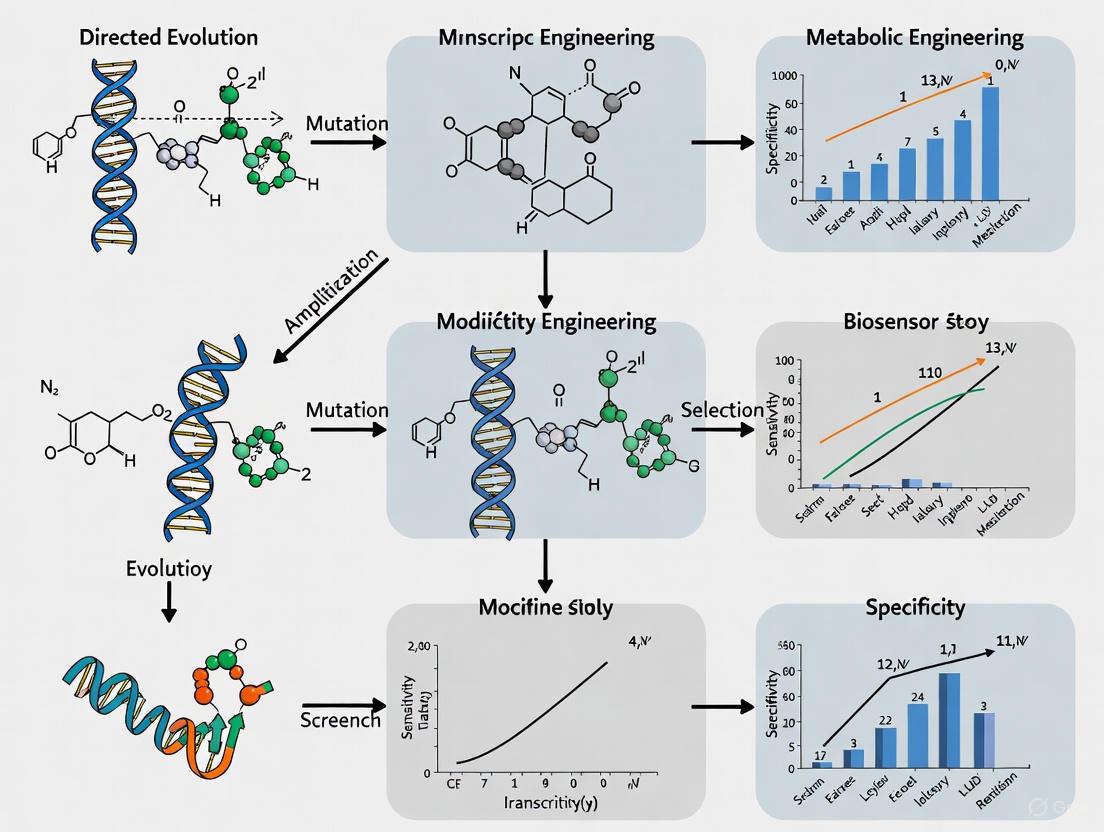
This article comprehensively explores the directed evolution of transcription factor (TF)-based biosensors, a powerful protein engineering approach for enhancing biosensor performance.
Directed Evolution of Transcription Factor Biosensors: Enhancing Sensitivity and Specificity for Biomedical Applications
Abstract
This article comprehensively explores the directed evolution of transcription factor (TF)-based biosensors, a powerful protein engineering approach for enhancing biosensor performance. We cover foundational principles of TF biosensor mechanisms and the pressing need for optimization. The review details high-throughput methodological frameworks like fluorescence-activated cell sorting (FACS) and growth coupling for screening mutant libraries, supported by case studies targeting metabolites and environmental toxins. We systematically analyze troubleshooting strategies to overcome challenges in specificity, dynamic range, and stability. Finally, we examine the rigorous validation of evolved biosensors in complex real-world samples, such as environmental water and tea infusions, and discuss their transformative potential in high-throughput screening for drug development and metabolic engineering.
The Foundation of Transcription Factor Biosensors and the Imperative for Engineering
Core Components and Mechanisms of TF-Based Biosensors
Transcription factor-based biosensors (TFBs) are genetically encoded devices that utilize natural cellular components to detect specific molecules and produce a measurable output. In the context of directed evolution and metabolic engineering, these biosensors are indispensable tools for screening mutant libraries, regulating metabolic pathways, and optimizing microbial cell factories. They function by linking the intracellular concentration of a target ligand (such as a metabolic intermediate or a final product) to the expression of a reporter gene, thereby creating a direct link between metabolic flux and a quantifiable signal [1] [2].
The core mechanism relies on allosteric transcription factors (aTFs), proteins that change their DNA-binding affinity upon binding a specific effector molecule. This ligand-induced conformational change ultimately leads to the activation or repression of a reporter gene, such as one encoding a fluorescent protein, which enables high-throughput screening and selection [1] [3].
Core Components and Mechanism of Action
Fundamental Components
A functional TFB consists of several key genetic components assembled into a synthetic circuit.
- Sensing Element (The Transcription Factor): This is typically an allosteric transcription factor (aTF). The aTF has two critical domains:
- Genetic Backbone:
- Promoter with Operator Site: A promoter sequence that contains the specific operator sequence (TFO) recognized by the aTF's DBD.
- Reporter Gene: A gene that produces a measurable output, such as Green Fluorescent Protein (GFP) for fluorescence, an enzyme for colorimetric change, or an antibiotic resistance gene for selection [5] [2] [4].
- Host Chassis: The microbial host (e.g., E. coli, yeast) that houses the biosensor circuit and provides the necessary cellular machinery for transcription and translation.
Mechanism of Action
The mechanism can be broken down into a logical sequence of steps, which is also visualized in the diagram below.
The specific mode of action depends on whether the aTF functions as a repressor or an activator:
- Repressor-based Biosensors: In the absence of the ligand, the repressor aTF is bound to the operator, physically blocking RNA polymerase and preventing transcription of the reporter gene ("OFF" state). When the ligand is present, it binds to the aTF's LBD, causing a conformational change that releases the aTF from the operator. This allows transcription to proceed, turning the biosensor "ON" [4].
- Activator-based Biosensors: In this case, the aTF must bind to the operator to recruit or facilitate RNA polymerase activity. Often, the aTF only adopts its active DNA-binding conformation upon ligand binding. Thus, the presence of the ligand leads to the activation of reporter gene transcription [4].
Key Performance Parameters for Optimization
When developing or optimizing a TFB for directed evolution, several quantitative parameters must be characterized and tuned. The table below summarizes these critical performance metrics.
Table 1: Key Performance Parameters for TF-Based Biosensors
| Parameter | Definition | Importance in Directed Evolution |
|---|---|---|
| Specificity | The ability to distinguish the target ligand from structurally similar molecules [6]. | Prevents false positives by ensuring the signal is generated only by the desired product and not by pathway intermediates or media components. |
| Dynamic Range | The fold-change between the output signal in the fully induced ("ON") state and the non-induced ("OFF") state [6]. | A large dynamic range improves the resolution between high-producing and low-producing variants, making screening more efficient. |
| Sensitivity (K₁/₂) | The ligand concentration required to generate a half-maximal output signal [1] [6]. | Must be matched to the intracellular concentrations expected from your library; low K₁/₂ is needed for detecting low-producing variants. |
| Detection/Operating Range | The span of ligand concentrations over which the biosensor responds [6]. | A broad range allows for screening of libraries with wide variation in production titers without signal saturation. |
| Response Time | The time required for the output signal to reach its half-maximal level after induction [6]. | A faster response time speeds up the screening cycle, enabling higher throughput. |
| Cooperativity | The steepness of the dose-response curve, describing how multiple ligand binding events influence aTF activity [1] [6]. | High cooperativity creates a sharper, more switch-like response, which can be useful for digital ON/OFF screening. |
Troubleshooting Common Experimental Issues
FAQ 1: My biosensor shows a low dynamic range, making it hard to distinguish between high and low producers. How can I improve this?
A low dynamic range is a common issue where the difference between the "ON" and "OFF" states is insufficient.
- Potential Causes:
- High basal (leaky) expression in the absence of the ligand.
- Suboptimal intracellular concentration of the aTF.
- Weak affinity between the aTF and its operator or the ligand.
- Solutions:
- Tune aTF Expression: Modulate the transcription and translation of the aTF itself. Use promoter or RBS engineering to find the optimal expression level. Too much aTF can cause permanent repression (for repressors), while too little can lead to poor response [1] [6].
- Engineer the Promoter/Operator: Mutate the operator sequence to fine-tune the binding affinity of the aTF. Stronger binding can reduce leaky expression but may raise the detection threshold. Weaker binding can increase sensitivity but may also increase background noise [6].
- Directed Evolution of the aTF: Use random mutagenesis or site-saturation mutagenesis on the aTF's LBD to select for variants with improved ligand-induced conformational changes or reduced ligand-free activity [7] [8].
FAQ 2: The biosensor is not specific; it is activated by compounds similar to my target ligand. What can I do?
Lack of specificity can lead to the selection of false positive clones.
- Potential Causes:
- The native aTF has a naturally broad substrate promiscuity.
- The ligand-binding pocket of the aTF accommodates multiple, structurally similar effectors.
- Solutions:
- Directed Evolution for Specificity: Employ a high-throughput screening strategy that applies positive selection for the desired ligand and negative selection against the unwanted compound. This will select for aTF mutants with a refined binding pocket [1] [9].
- Semi-Rational Design: If structural data or homology models are available, identify residues in the ligand-binding pocket and perform site-saturation mutagenesis to sterically hinder binding of the unwanted ligand while retaining affinity for the target [3] [9].
- Computational Redesign: Use protein design software to model the LBD and predict mutations that would alter the electrostatic or steric properties to favor the target ligand [1] [3].
FAQ 3: My biosensor works in one host but fails when transferred to a new production host. How can I make it portable?
This is a problem of host dependency and lack of orthogonality.
- Potential Causes:
- Cross-talk with the host's native regulatory networks.
- Differences in cellular background metabolism (e.g., cofactor levels, energy charge).
- Differences in genetic machinery (e.g., RNA polymerase compatibility).
- Solutions:
- Ensure Orthogonality: Select aTF-promoter pairs from a phylogenetically distant organism to minimize interaction with the host's genome [6].
- Re-tune the Circuit: The optimal expression level of the aTF may differ between hosts. Systematically vary the promoter strength and RBS controlling the aTF in the new host to re-establish the desired response profile [3] [6].
- Use Hybrid/Chimeric Systems: In eukaryotic hosts, consider constructing hybrid biosensors by fusing the LBD of a prokaryotic aTF to the DBD of a eukaryotic TF (e.g., Gal4) to leverage prokaryotic ligand specificity within eukaryotic transcriptional machinery [3].
FAQ 4: The dose-response curve of my biosensor does not match the requirements for my screening campaign. Can I tune it?
Yes, the input-output response of a biosensor is highly tunable.
- Potential Causes:
- The inherent biophysical properties (affinities) of the native aTF are not suited for the target concentration range.
- Solutions:
- Vary the Operator Sequence: Creating a library of promoters with mutated operator sequences can generate a set of biosensors with a range of detection thresholds and dynamic ranges [6].
- Leverage Mathematical Modeling: Use a phenomenological model of the biosensor's mechanism to guide which parameters (e.g., aTF expression, operator affinity) to change to achieve a specific dose-response curve [6].
- "Effector Walking" for Altered Sensitivity: A directed evolution strategy where sequential rounds of mutagenesis and selection are performed with gradually changing ligand concentrations (e.g., from high to low) to push the biosensor's sensitivity in a desired direction [7].
Experimental Protocol: Directed Evolution of aTF Specificity via FACS
This protocol outlines a general method for evolving an aTF to recognize a new ligand using Fluorescence-Activated Cell Sorting (FACS).
Objective: To generate an aTF mutant with high specificity and responsiveness to a target natural product "X".
Materials:
- Plasmid Library: A plasmid expressing a mutant library of the aTF (e.g., generated by error-prone PCR) and a reporter gene (e.g., GFP) under the control of the aTF's cognate promoter.
- Host Strain: A suitable microbial host (e.g., E. coli) with efflux pumps deleted if necessary to improve intracellular ligand accumulation [7].
- Inducers: Pure target ligand "X" and a set of structurally similar analogs to be used for counter-selection.
- Equipment: FACS machine, equipment for molecular biology and microbiology.
Procedure:
- Library Transformation: Transform the mutant aTF plasmid library into the host strain.
- Positive Selection (Round 1):
- Grow the library and induce with a high concentration of the target ligand "X".
- Use FACS to collect the top 0.5-1% of the most fluorescent cells (highest GFP expression).
- Expand the sorted population.
- Negative Selection (Counter-Selection):
- Take the enriched population from Step 2 and grow it in the presence of the closest competing analog (a compound you do not want the biosensor to respond to).
- Use FACS to collect the cells with the lowest GFP signal (non-responders to the analog). This negatively selects against mutants that are promiscuous.
- Iterative Rounds of Selection:
- Repeat positive and negative selection rounds, progressively lowering the concentration of the target ligand "X" in the positive selection steps to drive higher sensitivity [7].
- Characterization of Hits:
- Isolate single clones from the final sorted population.
- Characterize the dose-response curves of the purified mutants against the target ligand "X" and the competing analogs to quantify improvements in specificity and sensitivity.
- Validation in a Screening Workflow:
- Implement the evolved biosensor in a mock or real screening campaign to validate its performance in identifying high-producing strains.
The following diagram illustrates this high-throughput workflow.
The Scientist's Toolkit: Essential Research Reagents
Table 2: Key Research Reagents for TFB Development and Directed Evolution
| Reagent / Tool | Function / Description | Example(s) / Notes |
|---|---|---|
| Model aTFs | Well-characterized starting points for engineering. | TetR (antibiotics), AraC (sugar analogs), LacI (IPTG/lactose), MphR (macrolides) [1] [2]. |
| Reporter Genes | Generates a measurable output for screening and selection. | GFP/YFP (fluorescence), Lux (luminescence), LacZ (colorimetry), Antibiotic Resistance (selection) [5] [4]. |
| Database Resources | Curated repositories of known TFs, their ligands, and binding sites. | RegulonDB (E. coli), PRODORIC (prokaryotes), JASPAR (TF binding profiles) [10]. |
| Computational Tools | Software for in silico design and prediction. | Cello (genetic circuit design), Rosetta (protein comparative modeling), DeepTFactor (TF prediction) [10] [5] [3]. |
| High-Throughput Screening Methods | Technologies for sorting and testing large libraries. | FACS (Fluorescence-Activated Cell Sorting), Microfluidics, Cell-free protein synthesis systems for rapid prototyping [1] [3]. |
FAQs: Troubleshooting Biosensor Performance
FAQ 1: My biosensor has a high background signal (low signal-to-noise ratio). How can I reduce this leaky expression?
- Answer: High background signal often stems from insufficient repression by the transcription factor (TF) in the uninduced state. Consider these approaches:
- Engineer the TF-DNA interaction: Increase the binding affinity between the TF and its operator DNA site. This can be achieved by introducing point mutations in the TF's DNA-binding domain or by optimizing the operator sequence itself to better match the TF's binding motif [11].
- Tune TF expression levels: The expression level of the TF is critical. If TF concentration is too low, it may not fully occupy the operator sites, leading to leaky expression. Use a stronger constitutive promoter or optimize the Ribosome Binding Site (RBS) to increase TF expression [11]. Conversely, excessively high TF levels can cause non-specific binding and should be avoided.
- Modify the promoter: Weaken the core promoter elements (the -35 and -10 regions) to reduce the intrinsic strength of the promoter when it is in a derepressed state [11].
FAQ 2: The biosensor's response is not specific; it is activated by non-target molecules. How can I improve ligand specificity?
- Answer: Cross-talk with similar molecules is a common issue. The most effective strategy is to re-engineer the ligand-binding pocket of the transcription factor.
- Directed Evolution: Employ directed evolution with a dual selection system. Use positive selection (e.g., survival with ampicillin) in the presence of your target ligand to enrich for functional TFs. Couple this with negative selection (e.g., cell death with sucrose via the sacB gene) in the presence of the interfering non-target ligand to eliminate TFs that respond to it [12]. This approach was successfully used to evolve a lead-specific TF and reduce its response to zinc ions [12].
- Computational Re-design: Use molecular docking and structural models to identify residues in the ligand-binding pocket that contact the ligand. Targeted mutagenesis of these "hotspot" residues can alter specificity. This method was used to re-engineer the BenM TF to respond to adipic acid instead of its native ligand, cis,cis-muconic acid [13].
FAQ 3: The dynamic range of my biosensor is too narrow. What strategies can I use to expand it?
- Answer: A narrow dynamic range (small difference between minimal and maximal output) limits the biosensor's usefulness. Tuning multiple components can help:
- Promoter Engineering: Alter the number, sequence, or location of TF operator sites within the promoter. Increasing the number of operators can enhance cooperativity and sharpen the response curve [11] [14].
- Directed Evolution of the TF: Subject the TF to directed evolution and screen for mutants with an improved ON/OFF ratio. For example, directed evolution of the CaiF TF yielded a mutant (CaiF_Y47W/R89A) that increased the output signal intensity by 3.3-fold and expanded the concentration response range by 1000-fold [8].
- Optimize Genetic Components: Adjust the strength of the RBS controlling the reporter gene and/or the TF gene. Using a library of RBSs with varying strengths can help find an optimal balance that maximizes the fold-change between induced and uninduced states [11] [14].
FAQ 4: The biosensor's response time is too slow for my application. How can I make it faster?
- Answer: Response time is influenced by the time required for ligand binding, transcription, translation, and maturation of the reporter protein.
- Reporter Protein Choice: Switch to a reporter protein with faster maturation kinetics. For fluorescent outputs, super-folder GFP or FAST fluorescent proteins mature much more quickly than traditional GFP [11].
- Circuit Optimization: Ensure that all genetic components (promoter, RBS, coding sequences) are optimized for rapid expression in your host organism. Codon optimization can increase the speed of protein synthesis.
- TF-Ligand Kinetics: The kinetics of the TF-ligand interaction itself can be a bottleneck. While more challenging, directed evolution can be applied to select for TFs with faster ligand on/off rates [11].
Performance Metrics Defined and Quantified
The performance of a transcription factor-based biosensor is quantitatively evaluated using several key metrics, which can be derived from its dose-response curve [11] [14].
Table 1: Key Performance Metrics for TF-Based Biosensors
| Metric | Definition | Quantitative Description | Ideal Value |
|---|---|---|---|
| Specificity | The ability to distinguish the target ligand from other similar molecules [11]. | Difference in output signal intensity between the target ligand and alternative ligands [11]. | High output for target; minimal to no output for analogues. |
| Sensitivity | The minimal amount of ligand required to produce a detectable signal change [11]. | Often reported as the EC₅₀ or Kₐ, the ligand concentration that produces half of the maximum output signal [11] [14]. | A low EC₅₀ indicates high sensitivity. |
| Dynamic Range | The difference between the maximum and minimum output signals [11] [14]. | Fold-change: Maximum output signal (at ligand saturation) divided by the basal output signal (without ligand) [11] [14]. | A large fold-change (e.g., 100-fold) is desirable. |
| Operating Range | The span of ligand concentrations over which the biosensor responds [14]. | The range between the lower and upper detection limits, often visualized as the linear part of the sigmoidal curve [11] [14]. | Should cover the expected concentrations in the application. |
| Response Time | The speed at which the biosensor produces an output after ligand induction [11]. | Time taken for the output signal to reach its half-maximal value after induction [11]. | A faster response time is critical for real-time monitoring. |
Experimental Protocols for Metric Characterization
Protocol 1: Generating a Dose-Response Curve
This protocol is fundamental for determining sensitivity, dynamic range, and operating range.
- Preparation: Transform the biosensor construct into your appropriate host strain (e.g., E. coli BL21 or DH5α).
- Culture Growth: Inoculate primary cultures in a suitable medium with necessary antibiotics and grow overnight.
- Induction Assay:
- Dilute the overnight culture to a standard optical density (e.g., OD600 ~0.05) in fresh medium.
- Aliquot the diluted culture into deep-well plates or culture tubes.
- Add a range of ligand concentrations to the aliquots. Always include a negative control (no ligand) and a positive control (saturating ligand concentration). Use appropriate solvent controls if the ligand is dissolved in DMSO or another solvent.
- Incubation and Measurement:
- Incubate the cultures with shaking at the optimal temperature until they reach the mid-log phase (OD600 ~0.6) or for a fixed period (e.g., 3-6 hours).
- Measure the output signal (e.g., fluorescence, OD600 for colorimetric assays) and the cell density (OD600) for each sample.
- Data Analysis:
- Normalize the output signal to cell density (e.g., Fluorescence/OD600).
- Plot the normalized output against the ligand concentration (usually on a log scale).
- Fit the data to a Hill function:
Y = Bottom + (Top - Bottom) / (1 + (EC₅₀ / [L])^nH ), where Y is the output, [L] is the ligand concentration, and nH is the Hill coefficient [15]. This fit will directly provide the EC₅₀ (sensitivity) and the Top/Bottom ratio (dynamic range).
Protocol 2: Dual Selection for Specificity Engineering
This protocol uses a dual-selection system to evolve TFs with enhanced specificity [12].
- Construct a Selection Plasmid: Clone your TF and its cognate promoter, controlling the expression of two reporter genes: a positive selection marker (e.g., ampicillin resistance gene, amp) and a negative selection marker (e.g., the levansucrase gene, sacB, which confers sucrose sensitivity).
- Create a Mutant Library: Generate a diverse library of TF variants using error-prone PCR or other mutagenesis methods.
- ON Selection (Positive Selection):
- Transform the mutant library into the host cells and plate on medium containing the target ligand and ampicillin.
- Outcome: Only cells with functional TF variants that activate expression in response to the target ligand will survive.
- OFF Selection (Negative Selection):
- Pool the survivors from the ON selection and plate them on medium containing the non-target, interfering ligand and sucrose.
- Outcome: Cells with TF variants that also respond to the non-target ligand will express sacB and die. Only TFs that are unresponsive to the non-target ligand will survive.
- Iteration: Repeat the ON and OFF selection cycles 3-4 times to stringently enrich for TFs that are specifically activated only by the target ligand.
- Screening: Isolate individual clones from the final population and characterize their dose-response to both target and non-target ligands to confirm improved specificity.
Dual Selection Workflow for Specificity Engineering
The Scientist's Toolkit: Research Reagent Solutions
Table 2: Essential Reagents for Directed Evolution of TF Biosensors
| Reagent / Tool | Function / Application | Example Use |
|---|---|---|
| Error-Prone PCR Kits | Introduces random mutations throughout the transcription factor gene to create genetic diversity. | Generating a initial library of PcaV TF variants for directed evolution [15]. |
| Dual Selection System (amp/sacB) | Enables simultaneous positive and negative selection to evolve ligand specificity. | Selecting PbrR mutants that respond to lead but not to zinc ions [12]. |
| Fluorescent Reporters (e.g., eGFP, sfGFP) | Provides a measurable output for biosensor activity. Enables high-throughput screening via FACS or plate readers. | Quantifying the induction of a PCA biosensor by measuring eGFP fluorescence [15]. |
| Cell-Free Protein Synthesis Systems | Allows for rapid prototyping and characterization of biosensors without the complexity of living cells. | Testing an engineered adipic acid biosensor with higher sensitivity [13]. |
| Homology Modeling Software (e.g., AlphaFold) | Predicts the 3D structure of TFs to identify key residues in the ligand-binding pocket for targeted engineering. | Guiding the engineering of the BenM binding pocket for new ligand specificity [13]. |
| Molecular Dynamics Simulation Software | Models the physical movements of atoms in a protein over time to analyze the impact of mutations on TF structure and dynamics. | Elucidating how a single amino acid substitution alters the mechanism of BenM ligand binding [13]. |
Limitations of Native Transcription Factors in Complex Applications
FAQ: Understanding Core Limitations
Q1: What are the primary limitations of native transcription factors (TFs) that hinder their use in sophisticated biosensors?
Native TFs, while foundational, present several key limitations for advanced applications. The table below summarizes these core challenges.
Table 1: Core Limitations of Native Transcription Factor-Based Biosensors
| Limitation | Description | Impact on Complex Applications |
|---|---|---|
| Limited Specificity & Selectivity | TFs often exhibit broad selectivity, meaning they can be activated by non-target molecules structurally similar to the intended ligand [16]. | Leads to false positives in detection and unreliable performance in environments with complex chemical backgrounds [16]. |
| Constrained Dynamic Range | The fold-change in gene expression between the presence and absence of the inducer is often narrow in native systems [16]. | Results in a weak output signal, making it difficult to distinguish between different concentrations of the target ligand and reducing screening efficiency [16]. |
| Limited Detectable Ligand Space | The number of known metabolite-activated TFs is small compared to the vast number of compounds of biotechnological interest [17] [18]. | Restricts the development of biosensors for novel synthetic pathways or emerging contaminants [18]. |
| Context-Dependent Performance | TF activity can be influenced by host cell physiology, leading to unpredictable behavior when used in a non-native host [19]. | Causes inconsistent biosensor performance across different experimental or industrial conditions, complicating scale-up [19]. |
| Unpredictable Dynamic Behavior | Some TFs exhibit complex temporal activity patterns (e.g., oscillations), and their binding sites can switch dynamically in ways not directly correlated with their own expression levels [20] [21]. | Makes it challenging to model and predict biosensor output, especially for dynamic regulation circuits [20]. |
Q2: How does limited dynamic range affect my high-throughput screening (HTS) experiments?
A constrained dynamic range directly impacts the success rate of HTS. A biosensor with a low signal-to-noise ratio makes it difficult to separate high-producing cells from low-producing or non-producing cells during fluorescence-activated cell sorting (FACS) or other screening methods. This results in a high false-positive rate, requiring additional rounds of screening and validation, which is both time-consuming and costly [16].
Q3: Why does my biosensor perform well in one microbial host but fail in another?
This is a classic symptom of context-dependent performance. The new host may have different internal metabolite backgrounds, varying expression levels of ribosomal machinery, or divergent regulatory networks that interact with the heterologously expressed biosensor. These factors can cause leaky expression (output in the absence of the ligand), reduced output strength, or altered ligand sensitivity [19].
Troubleshooting Guides
Guide 1: Diagnosing and Remedying Poor Biosensor Specificity
Problem: The biosensor is activated by non-target molecules, leading to inaccurate readings.
Investigation & Resolution Workflow: The following diagram outlines a systematic approach to diagnose and address specificity issues.
Detailed Protocols:
Cross-Reactivity Assay:
- Culture multiple batches of cells harboring the biosensor.
- Induce separate batches with the target ligand and a range of suspected non-target compounds at physiologically relevant concentrations.
- Measure the output signal (e.g., fluorescence) for each condition after a fixed incubation period.
- Calculate the fold-change for each compound relative to the non-induced control. A significant response to a non-target compound indicates cross-reactivity.
Directed Evolution for Specificity:
- Create a Mutant Library: Introduce random mutations into the gene encoding the transcription factor, focusing on the ligand-binding domain.
- Apply Selective Pressure: Use FACS to sort the mutant population. The gating strategy should select for cells that show a strong signal in the presence of the target ligand but a weak signal in the presence of the primary non-target interferent.
- Iterate: Repeat the sorting process for several rounds to enrich for mutants with enhanced specificity.
- Screen Individual Clones: Isolate single clones from the enriched population and re-test their specificity using the cross-reactivity assay.
Guide 2: Expanding a Biosensor's Dynamic Range
Problem: The biosensor's output shows minimal difference between the "ON" (high ligand) and "OFF" (low/no ligand) states.
Investigation & Resolution Workflow: A multi-faceted engineering approach is required to improve dynamic range, as shown below.
Detailed Protocols:
Promoter and Operator Engineering:
- Design a Library: Instead of using the native promoter, create a library of synthetic promoters. This can be done by generating variants with mutations in the -10 and -35 regions and by using different combinations of operator sequences (TF binding sites) and their copy numbers [16].
- Clone and Transform: Clone this promoter library upstream of your reporter gene (e.g., GFP) and transform into your host strain.
- High-Throughput Screening: Grow the library in the presence ("ON" state) and absence ("OFF" state) of a saturating ligand concentration. Use a microplate reader or FACS to measure the output. Calculate the fold-change (ON/OFF) for each variant.
- Isolate Top Performers: Select clones with the highest fold-change for further validation and characterization.
Leveraging Computational Tools: Tools like Cello can be used to model and predict the performance of genetic circuits, including biosensors, before physical assembly [5]. By inputting the DNA sequences of your components (promoter, RBS, TF, terminator), Cello can help simulate the expected input-output transfer function and guide the selection of parts that maximize dynamic range.
The Scientist's Toolkit: Research Reagent Solutions
Table 2: Essential Reagents and Tools for TFB Development and Troubleshooting
| Research Reagent / Tool | Function & Application | Relevant Use-Case |
|---|---|---|
| Fluorescent Reporters (e.g., GFP, mCherry) | Quantifiable output for measuring biosensor activity in real-time within single cells [20]. | Essential for high-throughput screening via FACS and for characterizing dynamic range and response time. |
| Protein Binding Microarrays (PBMs) | High-throughput in vitro method to determine the DNA-binding specificity of a TF across thousands of sequences [22]. | Identifying the optimal operator sequence or characterizing the DNA-binding landscape of an engineered TF. |
| SELEX-seq / HT-SELEX | In vitro selection method coupled with sequencing to identify high-affinity DNA binding sites for a TF [22]. | Discovering or validating the consensus binding motif for a newly mined or engineered TF. |
| Microfluidic Devices (e.g., MITOMI) | Allows highly quantitative measurement of binding kinetics (e.g., absolute KD, kon, koff) between TFs and DNA or ligands [22]. | Precisely characterizing the biophysical parameters of novel TF-ligand interactions. |
| Computational Tools (e.g., DeepTFactor, AlphaFold) | Predicts whether a protein is a TF from its sequence (DeepTFactor) or predicts 3D protein structure from amino acid sequence (AlphaFold) [18]. | Mining new TFs from genomic data and generating structural models for rational design of ligand-binding domains. |
| Directed Evolution Kits | Commercial kits for error-prone PCR or other mutagenesis methods to create diverse mutant libraries of your TF gene. | Generating genetic diversity for improving TF specificity, sensitivity, or dynamic range under selective pressure. |
The Role of Directed Evolution as a Rational Protein Engineering Strategy
FAQs on Directed Evolution for Biosensor Engineering
Q1: What is the core principle of directed evolution in protein engineering?
Directed evolution is a laboratory method that mimics natural selection to engineer proteins with improved or novel functions. It functions as an iterative, two-part engine: generating genetic diversity to create a library of protein variants, followed by the application of a high-throughput screen or selection to identify rare, improved variants. The genes from these improved variants are then used as the template for the next round of evolution, allowing beneficial mutations to accumulate over successive generations [23]. A critical distinction from natural evolution is that the selection pressure is decoupled from organismal fitness and is focused solely on optimizing a specific protein property defined by the researcher [23].
Q2: How can directed evolution specifically improve transcription factor-based biosensors (TFBs)?
Directed evolution can be used to reprogram key properties of transcription factors (TFs), which are the sensing elements of biosensors. These properties include:
- Substrate Specificity: Altering the TF to respond to a new target molecule or to reduce cross-reactivity. For example, directed evolution of the bile acid biosensor BreR yielded a mutant (I125P) with significantly enhanced specificity for deoxycholic acid [24].
- Dynamic Range: Increasing the fold-change in gene expression between the induced and uninduced states of the biosensor. A study on the CaiF biosensor for L-carnitine used a "Functional Diversity-Oriented" strategy to create a variant (Y47W/R89A) with a 3.3-fold higher output signal and a 1000-fold wider concentration response range [8].
- Sensitivity and Operational Range: Improving the detection limit and the range of analyte concentrations over which the biosensor functions reliably [5] [8].
Q3: What are the common methods for creating diversity in a directed evolution campaign?
The choice of diversification strategy is a critical decision that shapes the evolutionary search. Common methods include [23]:
- Random Mutagenesis: Techniques like Error-Prone PCR (epPCR) introduce random mutations across the entire gene. This is straightforward but has an inherent bias, accessing only about 5-6 of the 19 possible alternative amino acids at any given position.
- Recombination-Based Methods (Gene Shuffling): Methods like DNA shuffling fragment and reassemble parent genes, combining beneficial mutations from multiple templates into a single, improved offspring. This is highly effective but requires significant sequence homology (typically >70-75%) between parent genes.
- Focused/Semi-Rational Mutagenesis: When some structural or functional information is available, techniques like Site-Saturation Mutagenesis (SSM) can be used. SSM comprehensively explores all 20 amino acids at one or a few targeted positions, allowing for a deep, unbiased interrogation of a residue's role [25] [23].
Q4: What is the typical cost and turnaround time for a directed evolution project?
Costs are highly project-dependent but can be broadly estimated based on the method. For a 300 amino acid protein, saturating all positions with pooled single-substitution variants costs approximately $30,000, while delivery as single constructs can be 8-10 times higher [25]. Per-site costs for site-saturation mutagenesis range from $100-$150 for pooled delivery to $800-$1,200 for single constructs on plates [25]. Typical turnaround times are 4-6 weeks for non-cloned libraries and up to 8 weeks for cloned libraries [25].
Q5: Why might my directed evolution campaign stall, failing to produce improved variants?
A stalled campaign can result from several bottlenecks:
- Inadequate Library Diversity: The initial library may not contain beneficial mutations due to methodological biases (e.g., epPCR's limited amino acid access) or an insufficient number of variants screened [23].
- Ineffective Screening Assay: The screening method is the primary bottleneck. The axiom "you get what you screen for" holds true; if the assay does not accurately, sensitively, and robustly report on the desired property, improved variants will be missed [23] [26]. The throughput of the screen must also match the size of the library [23].
- Synergistic Mutations: It is possible to miss the synergistic effect of neutral mutations. A neutral mutation, which shows no individual benefit, will not be included in combinatorial libraries for the next round, even if it could be highly beneficial when combined with another mutation [25].
Troubleshooting Guides for Directed Evolution Experiments
Problem: Low Library Quality or Diversity
| Observation | Possible Cause | Solution |
|---|---|---|
| Low transformation efficiency | Toxic gene variants to the host (e.g., E. coli); Inefficient cloning | Avoid liquid culture growth; use only plates for biomass production to minimize competitive growth. Use high-throughput cloning suitable vectors [25]. |
| High proportion of non-functional variants | Deleterious mutations; Frame-shift mutations from primer synthesis errors | Use trinucleotide mutagenesis (TRIM) instead of single-base methods. TRIM incorporates whole codons, so synthesis errors lead to in-frame codon deletions rather than frame-shifts [25]. |
| Biased amino acid representation | Inherent bias of epPCR favoring transition mutations | Employ a combination of methods. Follow an initial epPCR round with gene shuffling or site-saturation mutagenesis at identified hotspots to access a wider sequence space [23]. |
Problem: Inefficient or Unreliable Screening
| Observation | Possible Cause | Solution |
|---|---|---|
| High false positive/negative rate | The screening assay is not optimally coupled to the desired protein function. | Re-design the assay to more directly report on the trait of interest. For biosensor TFs, ensure the reporter gene output (e.g., fluorescence) accurately reflects the ligand-binding event [5]. |
| Low signal-to-noise ratio | Weak expression, poor protein folding, or insensitive reporter molecules. | Engineer the host system for better expression. Use brighter fluorescent proteins or more sensitive enzymatic reporters. For biosensors, fine-tune promoter strength and ribosome-binding sites [5]. |
| Screening throughput is too low | Manual or low-density assay formats (e.g., 96-well plates). | Implement automation and miniaturization. Use 384-well plates, flow cytometry, or microfluidics-based sorting to increase throughput to 10^4–10^6 variants [23]. |
Problem: Failure to Isolate Improved Variants
| Observation | Possible Cause | Solution |
|---|---|---|
| No improved variants found after multiple rounds | Evolutionary dead end; screening for too many traits at once; Insufficient selection pressure. | Apply a more stringent selection pressure gradually. For example, to improve thermostability, screen libraries at progressively higher temperatures [23]. |
| Variants show improvement in screening but not in final application | The screening context does not replicate the final application's environment. | Validate top hits in the intended application context as early as possible. Use the final microbial factory strain or physiologically relevant conditions for secondary screening [26]. |
| Synergistic mutations are missed | Neutral mutations are not carried forward into combinatorial libraries. | Use machine learning (ML) approaches. Sequence entire libraries (e.g., with every variant sequencing) to build sequence-function models that can predict the effect of neutral mutations in combination [27]. |
Data Tables for Experimental Planning
Table 1: Comparison of Diversity Generation Methods
| Method | Key Principle | Advantages | Limitations | Ideal Use Case |
|---|---|---|---|---|
| Error-Prone PCR (epPCR) [23] | Random point mutations via low-fidelity PCR. | Simple, requires no structural information; good for initial exploration. | Amino acid bias; limited sequence space explored. | First rounds of evolution to find initial beneficial mutations. |
| DNA Shuffling [23] | In vitro recombination of fragmented parent genes. | Combines beneficial mutations; mimics natural recombination. | Requires high sequence homology (>70-75%). | Recombining hits from a first round of epPCR. |
| Site-Saturation Mutagenesis (SSM) [25] [23] | Targeted randomization of specific codons to all 20 amino acids. | Comprehensive exploration of key positions; creates high-quality, focused libraries. | Requires prior knowledge of target sites. | Optimizing "hotspot" residues identified from initial screens. |
| TRIM Technology [25] | Uses premixed trinucleotide phosphoramidites in gene synthesis. | Avoids frame-shifts; allows precise control over codon usage. | Technical limitations with >15-20 adjacent randomized codons. | Creating high-quality combinatorial libraries with defined amino acid distributions. |
Table 2: Essential Research Reagents and Solutions
| Reagent/Solution | Function in Directed Evolution | Example & Notes |
|---|---|---|
| Mutagenesis Kit (epPCR) | Introduces random mutations into the target gene [23]. | Kits often use Mn2+ and unbalanced dNTPs to reduce polymerase fidelity. |
| Cloning Vector | Carries the variant gene library for expression in a host organism [25]. | Must be suitable for high-throughput cloning. Can be customer-supplied vectors. |
| Expression Host | Cellular chassis for expressing the protein variant library [25]. | E. coli is common (high transformation efficiency ~10^9). Bacillus or other hosts are possible for specific applications. |
| Selection Agent | Applies selective pressure to isolate functional variants. | Antibiotics for plasmid maintenance; specific ligands for biosensor induction [5]. |
| Reporter System | Provides a measurable signal (phenotype) linked to protein function [5]. | Fluorescent proteins (GFP), enzymes (Luciferase), or growth-coupled metabolic markers. |
| High-Throughput Screening Platform | Enables rapid sorting or assaying of large variant libraries [23]. | Flow cytometer (FACS), microfluidic droplet sorter, or automated plate reader. |
Experimental Workflow and Pathway Diagrams
Directed Evolution Cycle
Transcription Factor Biosensor Mechanism
Error-Prone PCR vs DNA Shuffling
High-Throughput Methodologies and Groundbreaking Applications in Biomedicine
This technical support center provides essential guidance for constructing mutant libraries, a foundational step in the directed evolution of transcription factors (TFs) for biosensor improvement. The strategies and troubleshooting advice herein are designed to help researchers efficiently create diverse genetic variants, identify common experimental pitfalls, and implement solutions to accelerate the development of high-performance biosensors with enhanced sensitivity, specificity, and dynamic range.
FAQs: Core Strategies and Concepts
1. What are the primary methods for constructing a mutant library for transcription factor evolution?
Several well-established methods can introduce genetic diversity into transcription factors. The choice of strategy depends on your specific goals, such as whether you need random mutations throughout the gene or targeted changes at specific residues.
- Error-Prone PCR (epPCR): This method introduces random point mutations throughout the DNA sequence by using PCR under sub-optimal conditions, such as including
Mn2+and biaseddNTPconcentrations, which reduce the fidelity of the DNA polymerase [28]. It is a rapid and cost-effective way to generate a large number of variants without requiring prior knowledge of the protein's structure [29]. - Degenerate Codons: This approach uses synthesized oligonucleotides containing degenerate codons (e.g., NNK, where N=A/C/G/T and K=G/T) to target specific amino acid positions for randomization. An NNK library encodes all 20 amino acids and one stop codon, providing a controlled way to explore the functional impact of specific residues [29].
- Chip-Based Oligo Synthesis: Ideal for generating pre-designed sequence variants, this method can create saturation mutagenesis libraries at given sites or even deep mutational scanning libraries for entire protein domains. It offers high coverage and uniformity [29].
- DNA Shuffling: This is a recombination technique that fragments several parental genes and then reassembles them to create chimeric sequences. This allows you to mix beneficial mutations from different variants and is particularly useful in later stages of directed evolution [28] [29].
2. How can I improve the sensitivity and specificity of a transcription factor-based biosensor?
Directed evolution is a powerful approach to enhance biosensor performance. This process involves iteratively generating mutant libraries of the transcription factor and screening for desired characteristics. A notable example is the evolution of the PbrR-based lead biosensor, where three rounds of directed evolution coupled with fluorescence-activated cell sorting (FACS) yielded a mutant (PbrR-E3) with an 11-fold increase in fluorescence output and an 88-fold lower detection limit compared to the wild-type sensor [30]. Similarly, directed evolution of the BreR transcription factor significantly improved its specificity for deoxycholic acid and ursodeoxycholic acid [24].
3. What are common reasons for getting few or no transformants after library construction, and how can I address this?
Low transformation efficiency is a common hurdle that can stem from multiple factors in your experimental workflow [31] [32].
- Competent Cell Quality: The competence of your cells is paramount. Avoid repeated freeze-thaw cycles, always thaw cells on ice, and do not vortex them. Ensure the genotype of the host strain is appropriate for your vector (e.g.,
recAstrains for stable propagation) [32]. - DNA Quality and Quantity: The transforming DNA must be free of contaminants like phenol, ethanol, or detergents. For ligation reactions used in heat shock transformation, do not use more than 5 µL of the mixture per 50 µL of competent cells. Using an excessive amount of DNA can also reduce efficiency [32].
- Toxicity: If the cloned TF or reporter gene is toxic to the host cells, it can prevent colony growth. To mitigate this, use a tightly regulated inducible promoter, a low-copy-number plasmid, or grow the cells at a lower temperature (e.g., 30°C) [32].
- Transformation and Plating: Strictly follow the transformation protocol recommended for your competent cells. After transformation, allow adequate recovery time (about 1 hour) in SOC medium. Ensure your selective plates contain the correct antibiotic at the proper concentration [32].
4. When my colonies contain incorrect or truncated DNA inserts, what should I investigate?
This issue often points to problems with the stability of the DNA construct or errors in the cloning process [32].
- DNA Instability: Sequences with direct or inverted repeats can be unstable in standard
E. colistrains. Use genetically stabilized strains such asStbl2orStbl4for such sequences [32]. - Upstream Cloning Errors: If using restriction enzymes, verify that there are no unintended internal restriction sites within your insert. For methods like Gibson Assembly, ensure your primer-designed overhangs are long enough and correctly designed. Using a high-fidelity DNA polymerase during PCR can also prevent spurious mutations that might cause truncation [32].
Troubleshooting Guides
Issue 1: Poor or No Colony Growth After Transformation
| Possible Cause | Recommendations & Solutions |
|---|---|
| Suboptimal competent cells | - Avoid freeze-thaw cycles; store at -70°C [32].- Thaw on ice and do not vortex [32].- Use a positive control to verify transformation efficiency [32]. |
| Low-quality or toxic DNA | - Ensure DNA is free of phenol, ethanol, and detergent [32].- For toxic genes, use a low-copy vector, a tightly regulated promoter, or lower growth temperatures [32]. |
| Incorrect antibiotic selection | - Verify the antibiotic corresponds to the vector's resistance marker [32].- Use carbenicillin instead of ampicillin for more stable selection [32]. |
| Inefficient experimental method | - Purify PCR fragments before assembly [31].- Consider electroporation for higher efficiency, especially with low DNA amounts [32]. |
Issue 2: Unintended Mutations or Off-Target Effects
| Possible Cause | Recommendations & Solutions |
|---|---|
| Bias in error-prone PCR | - Be aware that epPCR has inherent "error bias" (some mutations are more common) and "codon bias" (not all amino acid changes are equally accessible) [28].- Use a combination of different mutagenesis methods (e.g., Taq-based and GeneMorph kit) to create a less biased library [28]. |
| Poor primer design | - For site-directed mutagenesis, design primers ~30 bp long with the mutation in the center [31].- Keep GC content around 40-60% and ensure a GC clamp at the 3' end [31].- Use software tools to automate and optimize primer design for complex libraries [31]. |
| Unpredictable epistatic effects | - When combining multiple mutations, effects can be non-additive [31].- Use computational tools and AI-based models (e.g., AlphaMissense, DeepChain) to predict the functional outcomes of mutations and prioritize combinations [31]. |
Methodologies and Protocols
Protocol 1: Directed Evolution Workflow for Biosensor Improvement
This workflow outlines the key steps for improving a transcription factor-based biosensor through directed evolution, as demonstrated for PbrR [30] and BreR [24].
Key Steps:
- Construct Mutant Library: Generate genetic diversity targeting your transcription factor gene. For random mutagenesis, use error-prone PCR. For targeted saturation of key residues, use degenerate codon synthesis [29] [28].
- Assemble Biosensor Circuit: Clone the mutant TF library into your biosensor genetic circuit, which typically includes a promoter and a reporter gene (e.g., GFP) [10] [30].
- High-Throughput Screening: Apply a high-throughput method to sort through the library. Fluorescence-Activated Cell Sorting (FACS) is highly effective for screening large libraries (>10⁷ clones) based on fluorescence intensity output [30]. Growth coupling, where biosensor activation confers a survival advantage, is another powerful screening strategy [24].
- Identify and Characterize Hits: Isolate the top-performing clones identified in the screen. Sequence them to identify the underlying mutations and characterize the new biosensor's performance parameters (sensitivity, specificity, dynamic range) in detail [24] [30].
- Iterate the Process: Use the best-performing mutant from one round as the template for the next round of mutagenesis and screening to accumulate beneficial mutations [30].
Protocol 2: High-Throughput Screening Using Indexed Amplicon Sequencing
This method, adapted from mutant library screening in plants, provides a highly efficient way to identify mutants in a pooled population without individual HRM analysis [33].
Procedure:
- DNA Pooling: Systematically pool genomic DNA from your entire mutant library (e.g., from 1536 lines).
- Targeted Amplification: Perform PCR to amplify your gene of interest from the pooled DNA.
- Indexed Library Prep: Attach unique index sequences (barcodes) to the amplicons from each pool during library construction for next-generation sequencing (NGS). The Nextera method, which uses transposase for fragmentation and tagging, can simplify this step [33].
- NGS and Data Analysis: Sequence the prepared library on an NGS platform (e.g., Illumina MiSeq). The index sequences allow you to trace the sequence reads back to the original pool and ultimately to the individual mutant line containing the mutation [33].
Key Research Reagent Solutions
The following table lists essential materials and tools used in the construction and screening of mutant libraries for biosensor development.
| Item | Function & Application | Notes |
|---|---|---|
| EMS (Ethyl Methanesulfonate) | A chemical mutagen used to create high-density point mutation libraries in vivo, particularly in whole organisms or plants [33]. | Repeated EMS treatment can achieve very high mutation densities (e.g., 1 mutation/74 kb) [33]. |
| Error-Prone PCR Kits | Commercial kits (e.g., from Stratagene or Clontech) provide optimized reagents for introducing random mutations during PCR [28]. | Easier for non-experts than "home-made" epPCR condition optimization. |
| NNK Degenerate Primers | Oligonucleotides for creating saturation mutagenesis libraries that cover all 20 amino acids and one stop codon at targeted positions [29]. | "N" is A/C/G/T; "K" is G/T. This combination gives 32 possible codons [29]. |
| Stbl2 / Stbl4 Bacterial Strains | Genetically engineered E. coli strains designed for the stable propagation of unstable DNA, such as sequences with direct repeats [32]. |
Essential for cloning genes that may be toxic or prone to recombination in standard strains. |
| Fluorescence-Activated Cell Sorter (FACS) | A high-throughput platform for rapidly screening and isolating mutant cells based on the fluorescence output of the biosensor reporter (e.g., GFP) [30]. | Critical for efficiently screening libraries with complexities over 10⁷ [30]. |
Frequently Asked Questions (FAQs)
FAQs on FACS
Q1: What are the key advantages of using FACS for single B cell screening in antibody discovery? FACS allows for the rapid isolation of a large number of B cells with high accuracy by using multicolor fluorescence to identify antigen-specific cells. It preserves the natural pairing of antibody heavy and light chains, which is crucial for maintaining antigen specificity and developing therapeutic antibodies with reduced immunogenicity [34].
Q2: How can I improve a weak fluorescence signal in my FACS experiment? A weak signal can stem from several issues. First, ensure your target is adequately induced. Use the brightest fluorochrome (e.g., PE) for low-density targets and titrate your antibodies to find the optimal concentration. Verify that your laser and detector settings on the cytometer are compatible with the fluorochromes used. Finally, include appropriate controls, such as an unstimulated sample and an isotype control, to set your gates correctly [35].
Q3: What is the importance of a "singlets gate" in data analysis? Gating for singlets is critical to eliminate doublets or cell clumps from your analysis. These doublets can cause artificially high fluorescence readings and skew your results. A singlets gate ensures that the data you analyze comes from single cells, leading to more accurate and reliable quantification [36].
Q4: My cell viability after sorting is low. What could be the cause? The electromagnetic field and physical pressure within the FACS instrument can cause cellular stress and damage [34]. To mitigate this, ensure your instrument is properly aligned and calibrated. Using a larger nozzle size can reduce shear stress. It is also essential to use a cell-friendly collection buffer and maintain sterile, cold conditions throughout the sorting process.
FAQs on Growth-Coupling
Q1: What is the fundamental principle behind growth-coupled selection for directed evolution? Growth-coupled selection strategically rewires cellular metabolism so that the activity of a desired enzyme or pathway becomes essential for the cell's growth. This is typically achieved by introducing gene deletions that create an auxotrophy for a specific metabolite or cofactor, which can only be rescued by the activity of the evolved enzyme. Consequently, cell growth becomes a direct proxy for enzyme performance [37].
Q2: Can growth-coupling be applied to products not directly linked to biomass? Yes, a common strategy involves coupling the production of a target compound to redox cofactor regeneration. By engineering a strain that is auxotrophic for a specific redox cofactor state (e.g., NADPH), the cell must perform the desired reaction that regenerates the cofactor to grow. This links the product synthesis to essential metabolism, even if the product itself is not a biomass precursor [38].
Q3: What are the different strengths of growth-coupling? Growth-coupling can be categorized by its strength, visualized through a metabolic production envelope plot:
- Weak Growth-Coupling (wGC): Production occurs only at elevated growth rates.
- Holistic Growth-Coupling (hGC): A production rate greater than zero is required for all growth rates greater than zero.
- Strong Growth-Coupling (sGC): Production is mandatory for all metabolic states, including zero growth, making the product a necessary byproduct of carbon metabolism [39].
Q4: How can I increase the stringency of my growth-coupled selection platform? The stringency of selection can be increased by introducing additional gene deletions to further constrain the metabolic network. Alternatively, you can manipulate the cultivation conditions, such as changing or removing carbon sources that feed different metabolic nodes. This increases the flux demand on the module you are trying to evolve, selecting for variants with higher activity [37].
Troubleshooting Guides
Troubleshooting FACS Experiments
This guide addresses common problems encountered during Fluorescence-Activated Cell Sorting.
| Problem | Possible Causes | Recommendations |
|---|---|---|
| Weak/No Fluorescence Signal | Low target expression; dim fluorochrome; incorrect cytometer settings [35]. | Optimize induction; use bright fluorochromes (e.g., PE) for low-abundance targets; verify laser/PMT settings match fluorochrome specs [35]. |
| High Background/Noise | Too much antibody; non-specific binding; dead cells; autofluorescence [35]. | Titrate antibodies; include Fc receptor blocking step; use a viability dye; choose red-shifted fluorochromes (e.g., APC) to minimize autofluorescence [35]. |
| Poor Cell Viability Post-Sort | Instrument-induced stress; pressure too high; unsuitable collection buffer [34]. | Use a larger nozzle size; ensure proper instrument alignment; collect cells in a rich, cold buffer. |
| Unresolved Cell Cycle Phases | High flow rate; insufficient DNA staining [35]. | Use the lowest flow rate setting; ensure adequate incubation with DNA dye (e.g., PI/RNase) [35]. |
| Clogged Flow Cell | Debris in sample; large cell aggregates [35]. | Filter sample through a cell strainer; run bleach and dH₂O to unclog as per manufacturer's instructions [35]. |
Troubleshooting Growth-Coupled Selection Experiments
This guide helps diagnose issues when setting up and running growth-coupled selection experiments.
| Problem | Possible Causes | Recommendations |
|---|---|---|
| No Growth in Selection Strain | Overly stringent design; essential gene disrupted; module non-functional. | Verify module functionality under permissive conditions; ensure metabolite auxotrophy is correct; check for unintended toxic intermediate accumulation. |
| Weak Coupling / High Background Growth | Incomplete metabolic blockage; unknown bypass routes; weak selective pressure. | Use computational design (e.g., gcOpt [39]) to find optimal knockouts; apply ALE to strengthen coupling; increase stringency by removing supplemental nutrients [37]. |
| Desired Activity Not Enriched | Selection not tight enough; library quality issue; product toxicity. | Increase selection stringency; sequence library to confirm diversity; test if the product or pathway intermediates inhibit growth. |
| Unstable Phenotype | Genetic reversion; plasmid loss; compensatory mutations. | Use genomic integration for pathway genes; conduct serial passages under selection to ensure stability; sequence evolved strains to identify compensatory mutations. |
Research Reagent Solutions
Essential materials and reagents for implementing FACS and growth-coupling platforms.
| Item | Function / Application |
|---|---|
| Fluorochrome-Labeled Antibodies | Used in FACS to tag specific cell surface or intracellular markers (e.g., on B cells) for identification and sorting [34]. |
| Viability Dyes (PI, DAPI, 7-AAD) | Distinguish live from dead cells in a sample, allowing their exclusion during FACS analysis to improve data quality [40] [35]. |
| Fc Receptor Blocking Reagent | Reduces non-specific antibody binding to Fc receptors on immune cells, lowering background noise in FACS [35]. |
| Calibration Beads | Microspheres used to calibrate and standardize the flow cytometer, ensuring day-to-day reproducibility and instrument performance [36]. |
| Error-Prone PCR Kit | Used to introduce random mutations into a target gene, creating a diverse library of variants for directed evolution campaigns [41]. |
| Specialized Selection Strains | Engineered microbial hosts (e.g., redox cofactor auxotrophs) designed to couple growth to the activity of a desired enzyme or pathway [38] [37]. |
Experimental Workflows
Workflow for FACS-Based Screening
FACS Screening Workflow for Single Cell Isolation
Workflow for Growth-Coupled Directed Evolution
Growth-Coupled Directed Evolution Workflow
This case study details the directed evolution of the transcriptional factor BreR to create specific biosensors for two key bile acids: Deoxycholic Acid (DCA) and Ursodeoxycholic Acid (UDCA) [24].
DCA is a recognized biomarker for liver and gallbladder disorders, while UDCA is a therapeutic agent used to treat gallstones and various biliary conditions [24]. The wild-type BreR's natural ligand specificity was reprogrammed to improve its utility for these specific diagnostic and therapeutic applications.
Key Performance Data of Evolved BreR Mutants
| Biosensor Target | BreR Mutant | Key Performance Outcome | Significance |
|---|---|---|---|
| Deoxycholic Acid (DCA) | I125P | Significantly enhanced specificity of the DCA response [24]. | Provides a more reliable sensor for a liver disease biomarker. |
| Ursodeoxycholic Acid (UDCA) | Not Specified | 235.7% increase in fluorescence intensity upon introduction of 50 µM UDCA [24]. | Offers a novel, rapid technique for expedited UDCA detection. |
Troubleshooting Guide & FAQs
Library Construction and Screening
Q: The mutant library diversity is low after transformation. What could be the cause?
- A: This is often due to inefficient transformation. The methodology from a related study suggests using an improved transformation protocol for combined libraries [42]. Ensure electrocompetent cells have high efficiency, and use sufficient DNA quantity during transformation to capture the full library complexity.
Q: How can I ensure my screening method effectively selects for specificity?
- A: Employ a dual selection strategy. A study on evolving the PbrR transcription factor used a system with an ampicillin resistance gene (
amp) for ON-selection (survival in presence of the target ligand) and the levansucrase gene (sacB) for OFF-selection (death in presence of competing inducers) [12]. This powerfully enriches for mutants with the desired specificity.
Biosensor Performance and Characterization
Q: The biosensor shows a high background fluorescence signal in the absence of the effector.
- A: High background often indicates poor repression by the transcription factor. You can:
- Verify Operator-Promoter Strength: The DNA binding affinity of the evolved TF might be altered. Consider testing different operator sequences or promoter strengths to restore tight repression [15].
- Check for Contamination: Ensure the growth medium and all reagents are free from molecules that could non-specifically induce the biosensor.
- Use Counterselection: Apply fluorescence-activated cell sorting (FACS) counterselection to remove cells with high background from your population [42].
Q: The biosensor response is weak even with high effector concentrations.
- A: A weak signal can result from several factors:
- Inefficient Allosteric Change: The mutation may not effectively trigger the conformational change needed for transcription. A larger, more diverse library may be needed to find better mutants.
- Cellular Efflux/Influx: The host cell membrane may not transport the bile acid efficiently. Consider using different E. coli strains or engineering transport systems.
- Protein Expression: Verify that the mutant BreR is being expressed at sufficient levels. Check the plasmid copy number and strength of the constitutive promoter driving BreR expression [15].
Q: The evolved biosensor loses selectivity and is activated by non-target bile acids.
- A: This is a common challenge. The solution is to re-impose selective pressure for specificity.
- Dual Selection System: As mentioned previously, implement an ON-OFF selection cycle [12]. Grow mutants with the target ligand (DCA/UDCA) and ampicillin (ON-selection), then counter-screen with non-target bile acids and sucrose (OFF-selection). This efficiently eliminates cross-reactive mutants.
Core Experimental Protocol: Directed Evolution of BreR
The following workflow outlines the general methodology for the directed evolution of an allosteric transcription factor like BreR, synthesized from the provided research [24] [42].
Detailed Methodologies
1. Library Design & Construction
- Objective: Introduce genetic diversity into the
breRgene, particularly targeting the effector-binding domain (EBD). - Method 1: Error-Prone PCR: A standard technique using PCR conditions that reduce fidelity, creating random mutations across the gene [12] [43].
- Method 2: Site-Saturation Mutagenesis: Focuses on specific amino acid residues (e.g., those in the substrate-binding site like position 125 in BreR) to generate all possible amino acid substitutions at that site [15].
- Cloning: The mutated
breRgenes are cloned into a plasmid containing a reporter gene (e.g., GFP) under the control of the BreR-regulated promoter. This plasmid library is then transformed into a host like E. coli.
2. High-Throughput Screening (HTS)
- Objective: Identify rare clones from the library with improved specificity and response toward DCA or UDCA.
- Apparatus: A high-throughput screening apparatus utilizing growth coupling and fluorescence sorting was developed for BreR evolution [24].
- Growth Coupling (ON/OFF Selection): A powerful method where cell survival is linked to the desired function.
- ON Selection: In the presence of the target effector (e.g., UDCA), cells expressing functional BreR mutants activate a reporter like an antibiotic resistance gene (e.g.,
amp), allowing them to survive [12]. - OFF Selection: In the presence of non-target, competing effectors, cells expressing cross-reactive mutants activate a negative selection marker (e.g., the
sacBgene, which is lethal in the presence of sucrose), killing them off [12].
- ON Selection: In the presence of the target effector (e.g., UDCA), cells expressing functional BreR mutants activate a reporter like an antibiotic resistance gene (e.g.,
- Fluorescence-Activated Cell Sorting (FACS): Mutant libraries are incubated with the target bile acid. Cells where the BreR mutant activates GFP expression fluoresce and are isolated by FACS for further analysis [24] [42].
3. Hit Characterization
- Objective: Validate and quantitatively assess the performance of isolated mutant hits.
- Dose-Response Assays: Transformed cells are grown in microtiter plates and induced with a range of effector concentrations (e.g., 0-50 µM UDCA) [24] [15]. After several hours, fluorescence (RFU) and cell density (OD600) are measured. The dose-response is fitted with a Hill function to determine key parameters like dynamic range and sensitivity [15].
- Specificity Testing: The best performers are tested against a panel of structurally similar molecules (e.g., other bile acids) to confirm enhanced specificity.
The Scientist's Toolkit: Research Reagent Solutions
| Research Reagent / Material | Function in Directed Evolution |
|---|---|
| Error-Prone PCR Kit | Introduces random mutations into the target transcription factor gene (e.g., breR) to create genetic diversity [12]. |
| Fluorescent Reporter Plasmid | Plasmid carrying a promoter regulated by the TF and a reporter gene (e.g., GFP). Serves as the readout for biosensor activity [24] [15]. |
| ON/OFF Selection Markers | Genetic elements like ampicillin resistance (ampR) for positive selection and the levansucrase gene (sacB) for negative selection. Crucial for enriching specific mutants [12]. |
| Fluorescence-Activated Cell Sorter (FACS) | Instrument for high-throughput screening. Identifies and isolates individual cells from a library based on their fluorescence signal, dramatically speeding up the screening process [24] [42]. |
| Ligand (Effector) Stocks | High-purity preparations of the target molecules (DCA, UDCA) and related analogs for induction, specificity testing, and characterization assays [24] [15]. |
Logical Workflow of the Screening Apparatus
The high-throughput screening apparatus used for BreR evolution combines growth-based and fluorescence-based selection in a logical sequence to efficiently isolate improved mutants [24].
Troubleshooting Guides
Poor Lead Selectivity and Zinc Interference
Problem: The biosensor shows high response to zinc ions and other divalent metals, reducing its specificity for lead detection in complex food matrices.
Solutions:
- Implement a Dual Selection System: Use a directed evolution approach with dual ON/OFF selection. The ON selection uses ampicillin resistance with lead ions, while the OFF selection uses the lethal gene sacB with zinc ions [12].
- Key Parameters:
- Cycle this process for multiple rounds to enrich mutants with enhanced lead specificity [12].
Low Sensitivity Below Regulatory Limits
Problem: The biosensor cannot detect lead at the U.S. EPA action level (15 ppb) required for food and water safety.
Solutions:
- Employ Machine Learning-Guided Optimization: Use active learning to tune PbrR sensitivity. Generate a large sequence-to-function dataset and train an ML model to predict mutations that enhance lead binding affinity [44].
- Utilize Cell-Free Systems: Express engineered PbrR mutants in cell-free gene expression systems. This eliminates cellular barriers, often increasing sensitivity and allowing detection down to ~5.7 ppb [44].
- Critical Step: After in silico prediction, experimentally validate top candidates in freeze-dried cell-free reactions spiked with known lead concentrations [44].
Weak or Unstable Output Signal
Problem: The biosensor produces a low signal-to-noise ratio, making results difficult to interpret.
Solutions:
- Check Reporter Gene Expression: Ensure the reporter gene (e.g., GFP for fluorescence, lacZ for colorimetry) is correctly positioned downstream of the PbrR-regulated promoter. Sequence the plasmid construct to confirm [12].
- Optimize Induction Conditions: Titrate the lead concentration (e.g., 1-50 µM) and measure the response curve. Excess metal can be toxic, while too little may not fully induce the system [12].
- Use Signal Amplification: Incorporate enzymatic reporters like alkaline phosphatase that can generate a colored product for visual or spectrophotometric detection, enhancing the signal [45].
Frequently Asked Questions (FAQs)
Q1: What is the principle behind using directed evolution to improve PbrR?
A1: Directed evolution mimics natural selection in the laboratory. You create a diverse library of random PbrR mutants and apply selective pressure to isolate variants with desired traits, such as higher lead specificity or sensitivity. The dual ON/OFF selection is a powerful method for this purpose [12].
Q2: Why is zinc interference a significant problem for PbrR-based biosensors?
A2: PbrR belongs to the MerR family of transcription factors, which often have conserved metal-binding domains. The physicochemical similarity between Pb²⁺ and Zn²⁺ ions means PbrR can naturally bind both, leading to false positives in samples containing zinc, which is common in the environment and food [12].
Q3: My biosensor works in buffer but fails in a real food sample. What could be wrong?
A3: Complex food matrices can cause several issues:
- Matrix Effect: Proteins or fats may non-specifically bind the sensor or the metal ions.
- Solution: Dilute the sample or use sample pre-treatment (e.g., filtration, acid digestion) to release bound lead ions.
- Non-Target Interference: Other components may inhibit bacterial growth or gene expression.
- Solution: Use a robust host strain and consider a cell-free biosensing system, which is less susceptible to biological inhibition [44].
Q4: Can I use machine learning without a large initial dataset?
A4: Yes. Start by building a focused mutant library around the metal-binding domain of PbrR. Even a few hundred data points linking PbrR sequences to biosensor output (e.g., fluorescence intensity) can train an initial model. Active learning can then guide which mutants to test next to maximize information gain [44] [46].
Q5: What are the key residues in PbrR to target for mutagenesis?
A5: Based on structural studies, focus on:
- The metal-binding loop at the C-terminal: Residues like C134 are critical for coordinating metal ions [12].
- The α-helix α4 near the metal-binding site: Mutations such as D64A and L68S can reduce zinc interference by altering the spatial geometry of the binding pocket [12].
Key Experimental Data
Table 1: Performance Comparison of Wild-Type and Evolved PbrR Mutants
| PbrR Variant | Key Mutations | Lead Sensitivity (Fold Change) | Zinc Interference | Reference |
|---|---|---|---|---|
| Wild-Type | - | 1.0x | High | [12] |
| Mutant M1 | C134R | 1.8x | Weakened | [12] |
| Mutant M2 | D64A, L68S | 2.0x | Weakened | [12] |
| ML-Optimized | Not Specified | Tuned to EPA level (~5.7 ppb) | Reduced | [44] |
Table 2: Core Reagents and Materials for PbrR Directed Evolution
| Reagent/Material | Function | Example/Specification |
|---|---|---|
| Selection Plasmid | Carries PbrR mutant library, ON/OFF selection markers | pZE21-PBS backbone, Kanamycin resistance [12] |
| ON Selection Marker | Confers survival in presence of target lead | Ampicillin resistance gene (amp) [12] |
| OFF Selection Marker | Induces death in presence of non-target zinc | Levansucrase gene (sacB) with sucrose [12] |
| Host Strain | Library expression and selection | E. coli DH5α [12] |
| Error-Prone PCR Kit | Generates random mutations in the pbrR gene | Commercial kits from various suppliers [12] |
Experimental Workflow Diagrams
Directed Evolution of PbrR
ML-Guided Biosensor Optimization
Overcoming Hurdles: Advanced Tuning and Optimization Strategies for Robust Performance
Troubleshooting Guides & FAQs
Frequently Asked Questions
Q1: What are the primary challenges when attempting to alter the ligand specificity of an allosteric transcription factor (aTF)?
The main challenge is the tight interconnection between residues involved in ligand binding and those crucial for allosteric actuation. Mutations designed to alter ligand specificity often disrupt the allosteric mechanism, resulting in aTFs that are constitutively "on" (always repressing) or "off" (never repressing), and thus unable to function as a switch [47] [15]. Successful engineering requires a method that can identify the rare variants that maintain this delicate balance while gaining new function.
Q2: My engineered aTF has a high background signal (leaky expression) even in the absence of the ligand. How can I reduce this?
Leaky expression can be addressed through several strategies:
- Cis-regulatory engineering: Fine-tune the biosensor's dynamic range by engineering the promoter or ribosome binding site (RBS) controlling the aTF's expression to reduce basal transcription and translation [1] [18].
- Operator sequence modification: The sensitivity and background of an aTF biosensor can be modulated by altering the location or sequence of its operator DNA sequence within the promoter region [1].
- Further directed evolution: Continue evolutionary cycles to select for mutants with lower basal expression. For example, during the evolution of the PcaV biosensor into Van2, a specific mutation (I110V) was identified that played an important role in reducing basal expression and improving stability [15].
Q3: I am not getting functional hits from my directed evolution library. What could be wrong with my library design?
A lack of functional hits can stem from:
- Insufficient library diversity: Your library may not be large enough to capture the rare, functional variants. Consider using high-diversity generation methods like TRIM synthesis or SpeedyGenes [25] [15].
- Non-optimal randomization strategy: Saturating too many positions simultaneously can lead to a high proportion of non-functional proteins. Focus on phylogenetically variable residues or positions lining the binding pocket [47].
- Starting scaffold choice: Not all aTFs are equally engineerable. Choosing a promiscuous aTF with a large, malleable binding pocket, like TtgR, can significantly increase your chances of success [47].
Q4: Are computational protein design tools like LigandMPNN reliable for designing aTF ligand-binding pockets?
Current evidence suggests caution. A 2025 preprint directly compared LigandMPNN with directed evolution for altering the effector specificity of the RamR aTF. The study found little overlap between the computationally designed variants and those obtained through directed evolution. Notably, all nine computationally designed variants tested experimentally were non-functional in E. coli, indicating that different protein design methods may be needed for allosteric proteins [48]. While promising, computational design is not yet a standalone solution for this problem.
Troubleshooting Common Experimental Issues
Problem: Low Dynamic Range in Biosensor Response
- Potential Cause: The aTF does not fully release from or bind to the DNA operator upon ligand binding.
- Solutions:
- Engineer the promoter sequence controlling the reporter gene to minimize leaky expression [1] [18].
- Use a statistical approach like "design of experiments" to systematically map and optimize gene expression levels and tailor the biosensor's Hill parameters (sensitivity, cooperativity) [1].
- Employ a high-throughput platform like Sensor-seq to screen for variants with improved F-scores (fold-change in reporter expression), which directly correlates with dynamic range [47].
Problem: Poor Ligand Specificity or Cross-Reactivity
- Potential Cause: The engineered binding pocket is too permissive and accommodates structurally similar molecules.
- Solutions:
- Implement a counter-selection strategy during screening. Use FACS to remove cells that activate in response to non-target ligands before selecting for activation with the desired ligand [42].
- During library design, focus mutations on residues that confer specificity. In the TtgR engineering study, specific "linchpin" positions and mutations were identified that drove specificity for each target ligand [47].
Problem: Low Signal in Cell-Free Biosensing Applications
- Potential Cause: The cell-free transcription-translation system may lack sufficient energy, reagents, or have suboptimal buffer conditions.
- Solutions:
- Ensure you are working RNase-free and include an RNase inhibitor in the reaction mixture to protect reporter mRNA [49].
- Aliquot and properly store the RNA polymerase to prevent denaturation from repeated freeze-thaw cycles [49].
- Monitor the reaction for turbidity/viscosity, a visual indicator of successful RNA transcription [49].
Experimental Protocols for Key Methodologies
Protocol 1: Sensor-seq for High-Throughput aTF Screening
Purpose: To quantitatively screen thousands of aTF variants for response to target and non-target ligands in a single, highly multiplexed experiment [47].
Workflow Diagram:
Detailed Methodology:
- Library Construction: Generate a library of aTF variants (e.g., via site-saturation mutagenesis) targeting the ligand-binding pocket. Clone them into a screening plasmid under a constitutive promoter.
- Barcode Integration: Each aTF variant is placed in cis with a randomized 16-nucleotide barcode, separated by a constant DNA region that includes the aTF's native promoter controlling the reporter transcript.
- Ligand Exposure: Grow the pooled E. coli library in log phase and dose with either the target ligand or a vehicle control (e.g., DMSO).
- Nucleic Acid Extraction: Harvest cells and extract both total RNA (for transcript quantification) and plasmid DNA (for normalization and mapping).
- cDNA Preparation: Convert the extracted RNA into cDNA for sequencing.
- Genotype-Phenotype Linking: Perform a PCR amplification to bring the aTF variant sequence and its associated reporter barcode into close proximity, followed by a Golden Gate Assembly to create a single sequencing-ready fragment. This step is crucial for mapping each variant to its function.
- Deep Sequencing: Sequence both the cDNA (to measure transcript abundance) and the mapped variant-barcode library (to identify each variant).
- Data Analysis (F-score Calculation): For each variant, the F-score is calculated as the normalized ratio of its reporter transcript counts in the presence of the ligand to counts in the control, after normalizing to plasmid DNA abundance. An F-score > 1 indicates ligand-induced activation.
Protocol 2: Directed Evolution of an aTF Using FACS
Purpose: To alter the effector specificity of an aTF through iterative rounds of mutagenesis and fluorescence-activated cell sorting (FACS) [42] [15].
Workflow Diagram:
Detailed Methodology:
- Library Generation: Create genetic diversity using methods like error-prone PCR (for random mutations) or site-saturation mutagenesis (for focused mutations on binding pocket residues).
- Transformation: Transform the mutant library into a microbial host (e.g., E. coli) containing the biosensor construct, where the aTF variant regulates a fluorescent reporter gene (e.g., GFP).
- Positive Selection (FACS): Induce the cell culture with the desired target ligand. Use FACS to isolate the top fraction of cells exhibiting the highest fluorescence, indicating successful activation of the biosensor.
- Counterselection (FACS): Grow the enriched population without the ligand or in the presence of non-target (off-target) ligands. Use FACS to discard cells that are fluorescent under these conditions, ensuring selection against leaky expression and for specificity.
- Plasmid Recovery and Iteration: Recover the aTF-encoding plasmids from the sorted population and use them as the template for the next round of diversification and screening. Typically, 3-4 rounds are performed to achieve desired specificity and sensitivity.
- Clonal Characterization: After the final sort, plate cells, and pick individual clones. Characterize their dose-response to the target and related ligands to determine key performance parameters (dynamic range, sensitivity, selectivity).
Table 1: Key Performance Metrics from Engineered aTF Biosensors
| Engineered aTF | Native Ligand | New Ligand | Dynamic Range (Fold-Change) | Key Mutations | Screening Method | Citation |
|---|---|---|---|---|---|---|
| Van2 | Protocatechuic acid (PCA) | Vanillin | 7.7-fold | M113S, N114A, I110V | FACS & Microplate Assay | [15] |
| TtgR Variants | Naringenin/Phloretin | Naltrexone | High (F-score >>1)* | Linchpin residues identified | Sensor-seq (RNA-seq) | [47] |
| TtgR Variants | Naringenin/Phloretin | Quinine | High (F-score >>1)* | Linchpin residues identified | Sensor-seq (RNA-seq) | [47] |
| MphR | Macrolide Antibiotics | Non-natural macrolides | 10-fold improvement | RBS engineering & binding pocket mutations | FACS | [1] |
| Chimeric LysR | N/A | Luteolin | First reported in E. coli | Chimeric detector-effector pairs | FACS/Microplate | [1] |
*Sensor-seq reports an F-score, a normalized ratio of transcript levels. An F-score >> 1 indicates a high dynamic range, though a direct fold-change of fluorescence is not provided in the summary.
Table 2: Comparison of Library Generation and Screening Methods
| Method | Throughput | Key Advantage | Key Limitation | Typical Cost Estimate |
|---|---|---|---|---|
| Sensor-seq | Very High (10,000s of variants) | Quantifies transcriptional output directly; identifies rare, low-activity variants | Specialized data analysis required | Project-dependent |
| FACS-based Screening | High (10^7-10^9 cells/hour) | Extremely high throughput; can be coupled with counterselection | Requires fluorescence; can miss subtle expression changes | ~$10,000 for a GFP project [25] |
| Site-Saturation Mutagenesis (Pooled) | Medium (All single mutants) | Comprehensively explores all amino acid substitutions at a site | Does not test synergistic effects; delivered as a pool | $100-$150 per site [25] |
| Site-Saturation Mutagenesis (Arrayed) | Low (96-well plates) | Provides data for each individual variant | Low throughput; labor-intensive | $800-$1,200 per site [25] |
Research Reagent Solutions
Table 3: Essential Research Reagents and Materials
| Reagent / Material | Function / Application | Key Considerations |
|---|---|---|
| Fluorescent Reporters (eGFP, etc.) | Provides a measurable output for biosensor activity in vivo and in FACS. | Brightness, maturation time, and photostability are critical for sensitive detection [15]. |
| Constitutive Promoters (PLacI, etc.) | Drives consistent, unregulated expression of the aTF variant. | Strength should be matched to the aTF to avoid toxicity and minimize leakiness [1] [15]. |
| Error-Prone PCR or TRIM Kits | Generates random mutagenesis libraries for directed evolution. | TRIM technology uses trinucleotide phosphoramidites to reduce amino acid bias and avoid stop codons compared to NNK degeneracy [25]. |
| Gene Synthesis Services | For de novo construction of mutant libraries (e.g., via SpeedyGenes method). | Essential for creating complex, designed libraries with combinations of mutations [15]. |
| RNase Inhibitors | Protects RNA during in vitro transcription for cell-free biosensing applications. | Crucial for maintaining integrity of transcribed RNA reporters in cell-free systems [49]. |
| Sensor-seq Barcoding System | Enables genotype-phenotype linkage in highly multiplexed screens. | Requires a specialized plasmid construct and a multi-step sequencing preparation workflow [47]. |
Promoter and Operator Engineering to Fine-Tune Genetic Circuit Response
Troubleshooting Guide: Common Issues in Genetic Circuit Engineering
This guide addresses specific, common problems encountered when engineering promoters and operators to fine-tune genetic circuits for biosensor applications.
1. Issue: High Leakiness in Inducible System
- Observation: Significant background expression of the target gene in the absence of the inducer molecule.
- Potential Cause: Inefficient repression by the transcription factor or insufficient specificity of the engineered operator sequence.
- Options to Resolve:
- Circuit-Level Solution: Implement a synthetic gene circuit topology, such as a Mutual Inhibition (MI) or Coherent Inhibitory Loop (CIL), to actively suppress leakiness. For example, combining the Tet-On3G system with the CasRx endoribonuclease to degrade leaky transcript mRNA can reduce background by over 1-log (100-fold) [50].
- Promoter/Operator Engineering: Use directed evolution or computational design to mutate the core promoter or operator sequences to minimize uninduced transcription factor binding or RNA polymerase recruitment.
- Tuning Translation: Incorporate translational repression elements or adjust the Ribosome Binding Site (RBS) strength to lower the baseline protein production.
2. Issue: Low Dynamic Range of Biosensor
- Observation: The biosensor shows a small difference between its fully "off" and fully "on" states, providing a weak output signal.
- Potential Cause: Suboptimal interaction between the directed-evolved transcription factor and its cognate operator, or poor expression level matching between circuit components.
- Options to Resolve:
- Transcription Factor Engineering: Apply strategies like "Effector Walking" to gradually shift the effector specificity of transcription factors (e.g., MphR) toward new target molecules, thereby broadening the responsive range [7].
- Functional Diversity-Oriented Substitution: For transcription factors like CaiF, use computer-aided design and site-saturation mutagenesis at key DNA-binding or effector-binding residues. This approach has successfully expanded the dynamic range of an l-carnitine biosensor by 1000-fold and increased signal output 3.3-fold [8].
- Operator Tuning: Create a library of operator sequences with varying affinities for the transcription factor and screen for variants that maximize the difference between repressed and activated states.
3. Issue: Undesired Crosstalk and Lack of Orthogonality
- Observation: A regulator in the circuit unintentionally affects non-target promoters or is influenced by host cell physiology.
- Potential Cause: The DNA-binding proteins (e.g., repressors, activators) used in the circuit are not fully orthogonal and may share operator specificities or be affected by endogenous cellular signals.
- Options to Resolve:
- Expand Regulator Toolkit: Utilize newly characterized orthogonal DNA-binding protein families, such as TALEs or CRISPR-dCas9, which offer highly designable target sequences [51].
- Host Engineering: Delete endogenous efflux pumps that may remove inducers from the cell, as this has been shown to improve biosensor performance by maintaining higher intracellular inducer concentrations [7].
- Context Insulation: Incorporate insulator sequences around the genetic circuit to minimize the impact of surrounding genomic context on its performance [51].
4. Issue: Slow or Unstable Circuit Response
- Observation: The circuit takes too long to switch states or the output signal degrades over time during continuous culture.
- Potential Cause: Slow transcription factor kinetics, protein maturation times, or the lack of a memory mechanism for transient signals.
- Options to Resolve:
- Use of Invertases: For creating permanent memory of a transient signal, employ serine integrases. These enzymes can flip DNA segments, irreversibly turning an output from "off" to "on" [51].
- Component Optimization: Choose fast-folding and fast-degrading fluorescent proteins as reporters to better capture rapid dynamics. Optimize transcription factor expression levels to avoid saturation delays.
Frequently Asked Questions (FAQs)
Q1: What are the key performance metrics for a high-performance genetic circuit? Three primary metrics are used to quantify circuit performance, especially for inducible systems [50]:
- Leakiness: The basal level of gene expression in the absence of an inducer.
- Maximum Expression: The level of gene expression at a saturating concentration of the inducer.
- Fold Induction: The ratio of Maximum Expression to Leakiness. A high-performance circuit minimizes leakiness while maximizing maximum expression.
Q2: Besides promoter strength, what other methods can I use to "tune" circuit dynamics? Expression "tuning knobs" extend beyond promoter selection [51]:
- RBS Engineering: Varying the strength of the Ribosome Binding Site to control translation initiation rates.
- Protein Degradation Tags: Fusing degradation tags (e.g., ssrA) to proteins to adjust their half-lives.
- Transcript Stability: Incorporating stem-loops or specific endonuclease target sites in the 5' or 3' UTRs to modulate mRNA lifetime.
Q3: My biosensor works well in a model strain but fails in a production host. What could be wrong? This is a common challenge due to context-dependency [51]. Potential causes include:
- Differences in RNA Polymerase composition and abundance.
- Varying pools of nucleotides and amino acids.
- Different stress responses and metabolic burdens.
- The presence of native regulators that interfere with your synthetic circuit. Mitigation strategies include using host-orthogonal regulatory parts and re-tuning component expression levels in the final production chassis.
Q4: How can I engineer a transcription factor to respond to a new effector molecule? Directed evolution is a powerful strategy. This involves [7]:
- Creating a mutant library of the transcription factor gene.
- Using a biosensor setup where the transcription factor controls a reporter gene (e.g., GFP) in response to the new effector.
- Applying high-throughput screening (e.g., FACS) to select variants that show the desired activation in the presence of the target effector and low background in its absence.
- Iterating this process through rounds of mutagenesis and selection ("effector walking") to gradually shift specificity.
Performance Metrics of Engineered Circuits
The table below summarizes key quantitative data from recent studies on circuit and biosensor engineering.
Table 1: Performance Metrics of Engineered Genetic Circuits and Biosensors
| Circuit / Biosensor Type | Key Intervention | Performance Improvement | Reference |
|---|---|---|---|
| CASwitch (Inducible Mammalian System) | Combined Tet-On3G with CasRx endoribonuclease in a Mutual Inhibition topology. | >100-fold reduction in leakiness; maintained high maximum expression. [50] | |
| Engineered MphR Biosensor | Directed evolution via "Effector Walking" and efflux pump deletion. | Broadened effector profile to include macrolactone aglycones. [7] | |
| Engineered CaiF Biosensor (l-carnitine) | Computer-aided design and mutagenesis of key residues (Y47W/R89A). | 1000-fold wider response range (10⁻⁴ mM – 10 mM); 3.3-fold higher output signal. [8] |
Experimental Protocol: Directed Evolution of a Transcription Factor-Based Biosensor
This protocol outlines the core methodology for evolving a transcription factor to improve its dynamic range or alter its effector specificity [7] [8].
1. Library Construction
- Target Selection: Based on structural data or homology modeling, identify amino acid residues in the transcription factor involved in DNA binding or effector binding.
- Mutagenesis: Create a mutant library using error-prone PCR or site-saturation mutagenesis at the targeted residues.
2. High-Throughput Screening Setup
- Biosensor Assembly: Clone the mutant transcription factor library into a biosensor construct where the TF regulates the expression of a reporter gene (e.g., GFP, luciferase).
- Transformation: Introduce the biosensor library into the host microbial strain (e.g., E. coli).
3. Selection and Iteration
- Screening: Grow the library in the presence of your target effector. Use Fluorescence-Activated Cell Sorting (FACS) to isolate cells showing high reporter signal (successful activation).
- Counter-Screening: To reduce leakiness, also screen the enriched population in the absence of the effector and isolate cells with low background signal.
- "Effector Walking": For radically new effectors, start selection with a molecule structurally similar to the native effector, then gradually shift to the desired molecule over multiple evolution rounds.
4. Validation and Characterization
- Sequence Analysis: Identify the mutations in the best-performing clones.
- Characterization: Measure the dose-response curve of the evolved biosensor to quantify its new dynamic range, sensitivity, and specificity.
Research Reagent Solutions
Essential materials and reagents for promoter/operator engineering and biosensor development.
Table 2: Key Research Reagents for Genetic Circuit Engineering
| Reagent / Tool | Function in Experiment | Example Use Case |
|---|---|---|
| Orthogonal DNA-binding Proteins (TALEs, dCas9) | Provide programmable, specific regulation of target promoters. [51] | Creating large, orthogonal logic gates without crosstalk. |
| Site-Specific Recombinases (Serine Integrases) | Enable irreversible, permanent genetic memory. [51] | Building counters or latching circuits that remember past events. |
| CRISPR-Cas Endoribonucleases (e.g., CasRx) | Act as post-transcriptional regulators to degrade specific mRNAs. [50] | Implementing advanced circuit topologies like mutual inhibition to reduce leakiness. |
| Error-Prone PCR Kits | Generate random mutant libraries for directed evolution. [7] | Creating diversity in transcription factor genes to evolve new functions. |
| Fluorescent Reporter Proteins (GFP, mCherry, gLuc) | Serve as quantitative outputs for measuring circuit activity. [50] | High-throughput screening of circuit performance and biosensor response. |
Genetic Circuit Topologies for Leak Suppression
The diagram below illustrates the Coherent Inhibitory Loop (CIL), a synthetic gene circuit topology that combines feedforward and mutual inhibition logic to minimize leakiness in inducible systems.
Directed Evolution Workflow for Biosensor Improvement
This workflow outlines the iterative process of using directed evolution to engineer transcription factors for enhanced biosensor performance.
RBS and Translational Control for Maximizing Dynamic Range and Output Signal
Troubleshooting Common RBS and Biosensor Experiments
FAQ: How can I predictably tune the dynamic range of my transcription factor-based biosensor?
The dynamic range (the fold change in gene expression between the presence and absence of an inducer) of a biosensor is often unpredictable and requires fine-tuning. A primary method for achieving predictable tuning is through the engineering of ribosome-binding sites (RBSs) that control the translation levels of the transcription factor and the reporter protein.
- Root Cause: The dynamic range of a biosensor is heavily influenced by the translation efficiency of its components (transcription factor and reporter). An imbalance in protein expression can lead to suboptimal performance.
- Solution: Utilize a cross-RBS (cRBS) library and computational modeling. By constructing a library combining different RBSs for the transcription factor and the reporter gene, you can experimentally sample a wide range of expression combinations. Subsequent analysis using a Convolutional Neural Network (CNN) model, such as the CLM-RDR (Classification Model for Biosensors Dynamic Range), can establish a predictive relationship between RBS sequence pairs and the resulting dynamic range [52].
- Protocol:
- Library Construction: Use DNA microarray synthesis to create a plasmid library containing thousands of cross-RBS (cRBS) variants, combining different RBS sequences for your transcription factor (e.g., cdaR) and your reporter gene (e.g., sfgfp) [52].
- Sorting & Binning: Transform the library into your microbial host (e.g., E. coli) and use Fluorescence-Activated Cell Sorting (FACS) to sort the cell population based on the output signal (e.g., fluorescence). Divide the population into several sub-libraries (e.g., five bins) representing different dynamic range levels [52].
- Model Training & Prediction: Sequence the sorted populations and train a deep learning-based CNN model on the cRBS sequences and their corresponding bin assignments. Use the trained model to predict optimal RBS pairs for a desired dynamic range [52].
FAQ: My biosensor has a low signal-to-noise ratio. What are the key parameters to check and how can I improve them?
A low signal-to-noise ratio makes it difficult to distinguish a true positive signal from background activity. This is a critical performance metric for biosensors used in high-throughput screening [53].
- Root Cause: High background noise or a weak output signal can be caused by leaky expression, non-specific binding, inappropriate sensor sensitivity, or slow response kinetics.
- Solution: Systematically characterize and optimize key biosensor performance parameters.
- Protocol:
- Characterize the Dose-Response Curve: Measure the output signal (e.g., fluorescence) across a range of inducer concentrations. This will define the operating range (concentration window of optimal performance) and dynamic range (difference between max and min output) [53].
- Quantify Response Time: Measure the time it takes for the biosensor to reach its maximum output signal after inducer addition. Slow response times can hinder real-time monitoring and controllability [53].
- Measure Signal-to-Noise Ratio: Quantify the variability of the output signal under constant conditions (noise) and compare it to the strength of the induced signal. High noise can obscure detection of true positives [53].
- Engineering Steps: To improve these parameters, you can:
- Tune Expression Levels: Use promoter engineering or RBS tuning to adjust the expression levels of the biosensor components, reducing basal (leaky) expression and optimizing the expression balance [54] [55].
- Apply Directed Evolution: Use directed evolution on the transcription factor itself to evolve variants with improved induction profiles, higher specificity, and reduced background activity [56] [55].
FAQ: What high-throughput strategies can I use to screen for biosensors with improved characteristics?
Directed evolution is a powerful tool for optimizing biosensors without requiring detailed mechanistic knowledge [54] [55].
- Root Cause: Manually screening large libraries of biosensor variants is time-consuming and labor-intensive.
- Solution: Implement a directed evolution workflow coupled with a high-throughput screening method, such as FACS.
- Protocol:
- Library Generation: Create diversity in your biosensor. This can be done through error-prone PCR of the transcription factor gene, random mutagenesis, or by constructing a library of regulatory elements (e.g., RBS libraries) [55].
- Couple to a Reportable Phenotype: The biosensor must be genetically linked to a easily screenable output, most commonly a fluorescent protein like GFP [52] [55].
- High-Throughput Sorting: Use FACS to screen millions of cells from your mutant library. You can sort for cells exhibiting desired properties, such as high fluorescence in the presence of the inducer and low fluorescence in its absence, to enrich for variants with a high dynamic range [52] [55].
- Iterative Rounds: Isolate the sorted cells, recover the plasmids, and use them to generate a new, enriched library for subsequent rounds of evolution until the desired biosensor performance is achieved [55].
Key Performance Data and Reagents
Quantitative Biosensor Performance Metrics
The following parameters are essential for characterizing and troubleshooting your biosensor [53].
Table 1: Key Biosensor Performance Metrics
| Parameter | Description | Ideal Characteristic for Screening |
|---|---|---|
| Dynamic Range | The ratio or difference between the maximum output signal (saturated inducer) and the minimum output signal (no inducer). | High fold-change (e.g., >50x) [52]. |
| Operating Range | The concentration window of the target molecule (inducer) where the biosensor performs optimally. | Matches the expected intracellular metabolite concentrations. |
| Response Time | The speed at which the biosensor reaches its maximum output after encountering the inducer. | Fast, for real-time monitoring and control. |
| Signal-to-Noise Ratio | The ratio of the power of a meaningful output signal to the power of the background noise. | High, to easily distinguish true positives. |
The Scientist's Toolkit: Research Reagent Solutions
Table 2: Essential Reagents for RBS and Biosensor Engineering
| Reagent / Tool | Function in Experiment | Example & Source |
|---|---|---|
| Cross-RBS (cRBS) Library | To systematically sample combinations of translation rates for the TF and reporter to find pairs that maximize dynamic range. | Designed using DNA microarray synthesis [52]. |
| Fluorescent Reporter Protein | Provides a quantifiable, high-throughput-compatible output signal for the biosensor. | 'superfolder' GFP (sfgfp) [52]. |
| Deep Learning Model (CNN) | To predict biosensor dynamic range from RBS sequences, moving from a build-test-learn to a predict-build-test cycle. | CLM-RDR model [52]. |
| Directed Evolution Platform | A method to rapidly evolve and improve biosensor components like transcription factors for better sensitivity or dynamic range. | Phage-Assisted Continuous Evolution (PACE) [54] or in vivo mutagenesis in E. coli or yeast [56]. |
Experimental Workflow Visualization
RBS Engineering for Biosensor Tuning
Directed Evolution of Biosensors
Improving Biosensor Stability and Robustness for Point-of-Care Applications
Core Concepts: Biosensors and Directed Evolution
What is a Biosensor?
A biosensor is an analytical device that integrates a biological recognition element with a physicochemical transducer to convert a biochemical event into a measurable signal [57]. The core components include:
- Analyte: The molecule of interest targeted for detection [58]
- Biorecognition Element: Biological molecule (enzyme, antibody, nucleic acid, etc.) that specifically interacts with the analyte [58]
- Transducer: Converts the biological interaction into a measurable electrical or optical signal [58]
- Signal Processor: Interprets the signal into readable data [59]
The Role of Directed Evolution in Biosensor Improvement
Directed evolution serves as a powerful protein engineering strategy to enhance biosensor performance, particularly for allosteric transcription factors (aTFs) used in sensing applications. This approach involves:
- Creating genetic diversity through random mutagenesis or targeted library design [42]
- Implementing high-throughput screening to identify variants with improved properties [47]
- Iteratively improving biosensor characteristics such as ligand specificity, dynamic range, and operational stability [15]
Table 1: Biosensor Classification by Component Type
| Classification Basis | Types | Key Characteristics | Common Applications |
|---|---|---|---|
| Biorecognition Element | Enzyme-based | High catalytic activity, substrate specificity | Glucose monitoring, metabolic markers [58] [57] |
| Immunosensors | Antibody-antigen recognition, high specificity | Pathogen detection, clinical diagnostics [58] [57] | |
| Nucleic acid-based | DNA/RNA hybridization, aptamer binding | Genetic markers, miRNA detection [58] | |
| Whole-cell/tissue | Complex responses, metabolic profiling | Toxin detection, drug screening [57] | |
| Transducer Mechanism | Electrochemical | Current, potential, or impedance changes | Portable POC devices, continuous monitoring [59] [58] |
| Optical | Absorbance, fluorescence, refractive index | High-sensitivity detection, multiplexing [59] [58] | |
| Piezoelectric | Mass changes, mechanical resonance | Label-free detection [59] | |
| Thermal | Heat exchange from reactions | Enzyme activity studies [58] |
Troubleshooting Guide: Frequently Encountered Challenges
Biosensor Performance Issues
FAQ: Why has my biosensor's signal output decreased over time? Signal degradation often results from biorecognition element instability. This can be addressed through:
- Directed Evolution Approach: Implement iterative mutagenesis and screening to select for stabilized protein variants [15] [60]
- Immobilization Optimization: Explore covalent attachment methods such as gold-thiol self-assembled monolayers (SAMs) to enhance bioreceptor stability [59]
- Environmental Control: Incorporate stabilizing additives in storage buffers and implement temperature regulation during operation [57]
FAQ: How can I reduce non-specific binding in complex samples? Matrix interference is a common challenge in point-of-care applications. Solutions include:
- Surface Engineering: Apply blocking agents (BSA, casein) and anti-fouling coatings (PEG, zwitterionic polymers) [61] [57]
- Specificity Engineering: Use directed evolution to enhance biorecognition element specificity, reducing cross-reactivity [47]
- Sample Preparation: Incorporate filtration or dilution steps to reduce interferent concentration [57]
FAQ: What causes high background signal in my biosensor readings? Elevated background noise can stem from multiple sources:
- Non-optimal Washing: Inadequate removal of unbound reagents [61]
- Transducer Fouling: Accumulation of non-specifically bound materials on the sensor surface [57]
- Reagent Degradation: Breakdown of detection components over time [61]
Directed Evolution Process Challenges
FAQ: How can I identify aTFs with altered ligand specificity?
- Sensor-seq Platform: Implement high-throughput screening methods that link aTF variant genotype to transcriptional output through RNA barcoding and deep sequencing [47]
- Fluorescence-Activated Cell Sorting (FACS): Use counterselection strategies to eliminate non-functional variants and enrich for desired specificity [42]
- Dose-Response Characterization: Perform induction assays with potential ligands to measure dynamic range and sensitivity [15]
FAQ: Why do many engineered aTF variants lose allosteric regulation? The interconnection between ligand-binding and DNA-binding domains means mutations affecting one often disrupt the other [47]. Strategies to address this include:
- Linchpin Residue Identification: Focus mutagenesis on positions that influence specificity without disrupting allosteric communication [47]
- Computational Design: Use structural information and docking analyses to guide library design [60]
- Comprehensive Screening: Employ both positive and negative selection to maintain regulatory function [42]
Table 2: Troubleshooting Common Biosensor Issues in Point-of-Care Applications
| Problem | Potential Causes | Directed Evolution Solutions | Practical Workarounds |
|---|---|---|---|
| Poor Signal Stability | Bioreceptor denaturation, transducer fouling | Evolve thermostable variants [15]; engineer enhanced structural stability | Optimize immobilization chemistry; add stabilizing excipients [61] |
| Limited Dynamic Range | Weak ligand binding, inefficient allosteric transmission | Screen for mutants with improved activation ratios [47] | Modulate promoter strength; optimize operator sequences [15] |
| Insufficient Sensitivity | Low affinity binding, suboptimal signal transduction | Evolve higher affinity binding pockets [47] | Incorporate signal amplification strategies; use nanomaterials [62] |
| Narrow Specificity | Cross-reactivity with similar molecules | Implement counterselection with analog compounds [42] [47] | Add sample pre-treatment steps; use multi-parameter detection [61] |
| Short Operational Lifetime | Component degradation, surface fouling | Directly evolve stability under operational conditions [15] | Implement cleaning protocols; use protective membranes [61] |
Experimental Protocols for Biosensor Improvement
Directed Evolution Workflow for aTF Engineering
The following diagram illustrates the comprehensive directed evolution workflow for enhancing transcription factor-based biosensors:
Protocol: Sensor-seq for High-Throughput aTF Screening [47]
Objective: Identify aTF variants with desired ligand specificity from large libraries.
Materials:
- Plasmid library of aTF variants
- RNA sequencing reagents
- Ligands of interest
- E. coli expression strain
Procedure:
- Library Design: Create variant libraries focusing on ligand-binding domain residues. For TtgR, libraries of >17,000 variants have been successfully screened [47].
- Barcoding: Incorporate randomized barcodes adjacent to each aTF variant for genotype-phenotype linkage.
- Transformation: Introduce library into screening strain containing reporter construct.
- Induction: Culture cells with and without target ligand, harvest during log phase.
- RNA Sequencing: Extract total RNA, prepare cDNA libraries for sequencing.
- F-score Calculation: Quantify variant activity using normalized ratio of reporter transcripts with/without ligand.
- Hit Validation: Confirm performance of selected variants through clonal characterization.
Dose-Response Characterization for Biosensor Validation
Protocol: Induction Assay for Biosensor Dynamic Range [15]
Objective: Measure biosensor response across ligand concentration gradient.
Materials:
- Biosensor strain (E. coli BL21 or similar)
- Target ligands in DMSO stock solutions
- Deep well plates
- Plate reader with fluorescence capability
Procedure:
- Grow biosensor cultures to mid-log phase (OD600 ≈ 0.6).
- Add test ligands across concentration range (typically 0.1 μM - 10 mM).
- Incubate 3 hours at 37°C with shaking.
- Wash cells, resuspend in PBS buffer.
- Measure fluorescence normalized to cell density (RFU/OD600).
- Fit dose-response data with Hill function to determine EC50 and dynamic range.
Research Reagent Solutions
Table 3: Essential Research Reagents for Biosensor Development and Directed Evolution
| Reagent Category | Specific Examples | Function/Purpose | Technical Considerations |
|---|---|---|---|
| Expression Systems | E. coli BL21, BW25113, RARE strains [15] | Host for biosensor expression and screening | RARE strain useful for avoiding tRNA issues with heterologous expression |
| Reporter Systems | eGFP, other fluorescent proteins [15] | Visual readout of biosensor activation | Enable FACS screening and quantitative measurement |
| Library Construction | Q5 Hot-Start High-Fidelity DNA Polymerase [15] | Error-free amplification for library construction | Maintains sequence fidelity during library synthesis |
| Screening Materials | FACS instrumentation [42], RNA-seq reagents [47] | High-throughput variant identification | Sensor-seq enables screening of thousands of variants |
| Ligand Solutions | Protocatechuic acid, vanillin, naringenin [15] [47] | Effector molecules for biosensor characterization | Prepare in DMSO stocks (e.g., 100 mM) for aqueous dilution |
| Immobilization Chemistry | Thiol-gold SAMs, covalent attachment chemistries [59] | Stabilize biorecognition elements on transducers | Critical for operational stability in point-of-care devices |
Biosensor Architecture and Performance Relationships
The relationship between biosensor components and overall performance characteristics can be visualized as follows:
Advanced Enhancement Strategies
Sensitivity Enhancement Approaches
- Nanomaterial Integration: Utilize gold nanostructures, graphene, carbon nanotubes, and metal oxide-ZnO nanostructures to increase active surface area and enhance signal transduction [59] [62]
- Signal Amplification: Implement enzymatic amplification, catalytic nanolabels, or redox cycling to lower detection limits [62]
- Microfluidics Optimization: Design paper-based microfluidics and lateral flow systems to improve reagent transport and reaction kinetics [61] [62]
Stability Improvement Methods
- Protein Engineering: Employ site-directed mutagenesis and directed evolution to enhance thermal stability and operational half-life [15]
- Artificial Recognition Elements: Develop molecularly imprinted polymers (MIPs) as robust alternatives to biological receptors [59]
- Environmental Hardening: Implement formulation strategies with stabilizers and optimized storage conditions [61]
From Bench to Bedside: Validating Evolved Biosensors and Comparative Analysis
Transcription factor (TF)-based biosensors are powerful tools for detecting metabolites and regulating cellular pathways. However, their performance can be significantly impeded when deployed in complex sample matrices such as environmental or clinical samples. Matrix effects can mask, suppress, augment, or make imprecise sample signal measurements, presenting formidable challenges to analytical accuracy [63] [64]. For researchers engaged in directed evolution of transcription factors for biosensor improvement, understanding and mitigating these matrix effects is crucial for developing robust diagnostic and environmental monitoring tools.
This technical support center provides troubleshooting guidance for scientists encountering performance issues when assaying biosensors in complex matrices, with specific focus on environmental and clinical applications.
Frequently Asked Questions (FAQs)
Q1: What are matrix effects and how do they impact TF-based biosensor performance? Matrix effects refer to interferences from components within a sample that can adversely affect analytical accuracy, sensitivity, and reliability. In TF-based biosensors, these effects can cause ion suppression/enhancement during mass spectrometry, impact analyte signal at various analytical workflow stages, and lead to false positives or negatives in detection outputs [63] [64]. Matrix effects are particularly challenging in environmental and clinical samples which contain diverse interfering compounds.
Q2: How can I assess whether matrix effects are affecting my biosensor's performance? Matrix effects can be assessed by comparing biosensor response in a clean standard solution versus response in the complex matrix. A significant difference in sensitivity, dynamic range, or dose-response curve indicates matrix interference. For quantitative assessment, you can spike the matrix with known analyte concentrations and measure recovery rates [64]. Deviations from expected values signal matrix effects requiring mitigation.
Q3: What strategies are most effective for improving biosensor specificity in complex samples? Engineering the transcription factor's ligand-binding domain through directed evolution can significantly enhance specificity. Additionally, incorporating orthogonal sensing mechanisms, implementing sample clean-up procedures, and optimizing chromatography conditions can reduce cross-reactivity with interfering compounds present in complex matrices [11] [15].
Q4: How does directed evolution help address biosensor performance issues in complex matrices? Directed evolution allows for the development of TFs with altered ligand specificity and enhanced binding characteristics that perform better in challenging environments. For example, the PcaV repressor was successfully evolved into the Van2 biosensor with specificity for aromatic aldehydes through systematic mutagenesis and selection, demonstrating the plasticity of TF-based sensors [15].
Troubleshooting Guides
Common Performance Issues and Solutions
Table 1: Troubleshooting Biosensor Performance in Complex Matrices
| Problem | Potential Causes | Solutions |
|---|---|---|
| Reduced Sensitivity | Matrix components suppressing signal, TF expression too low | Implement solid-phase extraction for clean-up, optimize TF expression levels, use serial or parallel circuits to improve sensitivity [11] [64] |
| Poor Specificity | Cross-reactivity with similar compounds in matrix, insufficient TF specificity | Engineer TF ligand-binding domain through directed evolution, incorporate additional purification steps, use more specific reporter systems [11] [15] |
| Small Dynamic Range | TF expression at suboptimal levels, interference with reporter signal | Tune TF expression through promoter/RBS engineering, implement background subtraction methods, use internal standards [11] [64] |
| Inconsistent Results | Variable matrix composition, unstable TF performance | Normalize with isotopically labeled internal standards, implement rigorous sample preparation protocols, ensure consistent growth conditions [64] |
| High Background Signal | Endogenous compounds interfering with detection, leaky expression | Improve sample clean-up, engineer promoters with lower basal expression, use repression architectures with higher binding affinity [11] [10] |
Quantitative Performance Criteria for Biosensor Optimization
Table 2: Key Biosensor Performance Parameters and Target Values for Complex Matrices
| Parameter | Definition | Impact of Matrix Effects | Target Values | Tuning Strategies |
|---|---|---|---|---|
| Specificity | Difference in output signal upon binding of target vs alternative ligands | False positives from structurally similar compounds | >90% recovery in spike-recovery tests | TF engineering, sample clean-up, chromatography optimization [11] [64] |
| Sensitivity | Change in biosensor output per unit change in metabolite concentration | Signal suppression by matrix components | Limit of detection: 3×signal/noise in target matrix | Signal amplification, TF expression optimization, extraction methods [11] [63] |
| Detection Range | Range between upper and lower concentration limits measurable | Narrowing due to interference at concentration extremes | 3-4 orders of magnitude in target matrix | Promoter engineering, RBS tuning, TF-DNA binding affinity [11] |
| Dynamic Range | Fold-change between highest and lowest output levels | Compression from background interference or signal saturation | >100-fold in complex samples | Operator site modification, multi-layer genetic circuits [11] [10] |
| Response Time | Time to reach half-maximal output after induction | Slowing due to matrix barriers to analyte access | <30 minutes for rapid screening | Reporter protein stability optimization, permeability enhancement [11] |
Experimental Protocols
Protocol for Assessing Matrix Effects in Biosensor Performance
Materials:
- TF-based biosensor strain (e.g., Escherichia coli BL21 with plasmid-based biosensor)
- Target analyte in pure form
- Complex matrices (environmental: water/soil extracts; clinical: serum/urine)
- Solid-phase extraction (SPE) cartridges (C18, mixed-mode)
- Isotopically labeled internal standards
- Fluorescence plate reader or flow cytometer
Methodology:
- Sample Preparation:
- Prepare extracts from environmental or clinical matrices using appropriate solvents
- Divide each sample into two aliquots: one with minimal clean-up, one with SPE clean-up
- Spike both aliquots with identical concentrations of target analyte and internal standard
Biosensor Assay:
- Grow biosensor strain to mid-log phase (OD600 ≈ 0.6) in appropriate medium
- Add prepared samples to biosensor cultures in deep-well plates
- Incubate with shaking for 3 hours at 37°C (or optimal temperature for your system)
- Measure fluorescence output normalized to cell density (RFU/OD600)
Data Analysis:
- Compare dose-response curves in clean buffer vs. complex matrices
- Calculate matrix effect as: ME (%) = (Signalinmatrix/Signalinstandard - 1) × 100
- Determine recovery efficiency using internal standards
Protocol for Directed Evolution to Improve Matrix Tolerance
Based on the successful directed evolution of PcaV to Van2 for altered ligand specificity [15]:
Materials:
- Parent biosensor system (TF and reporter construct)
- Mutagenesis reagents (error-prone PCR kit or oligonucleotides for site-saturation)
- Selection pressure (target analyte in complex matrix)
- High-throughput screening capability (FACS or microplate reader)
Methodology:
- Library Construction:
- Identify key residues in TF ligand-binding domain through structural analysis or homology modeling
- Generate mutant libraries using error-prone PCR or site-saturation mutagenesis targeting selected residues
- For the PcaV system, libraries were constructed randomizing 3 amino acids simultaneously using the SpeedyGenes synthesis method [15]
Selection in Complex Matrix:
- Transform library into host strain and plate on medium containing complex matrix as background
- For fluorescence-based screening, use FACS to isolate variants with maintained performance in matrix
- Alternatively, use toxic selection reporters (e.g., antibiotic resistance) coupled to biosensor activation
Characterization of Improved Variants:
- Isolate individual clones and test dose-response in both clean buffer and complex matrix
- Sequence improved variants to identify beneficial mutations
- Perform biochemical characterization to confirm altered specificity and maintained function
Essential Diagrams
Biosensor Architecture and Matrix Interference
Biosensor Matrix Interference - This diagram illustrates how components in complex matrices can interfere at multiple points in TF-based biosensor function, both through legitimate analyte binding and through interference mechanisms that disrupt normal biosensor operation.
Directed Evolution Workflow
Directed Evolution Workflow - This workflow diagram outlines the iterative process for improving biosensor performance in complex matrices through directed evolution, highlighting the key stages from library creation to validation of improved variants.
The Scientist's Toolkit: Research Reagent Solutions
Table 3: Essential Materials for Biosensor Development and Matrix Effect Mitigation
| Reagent/Category | Function/Purpose | Examples/Specific Types |
|---|---|---|
| Sample Preparation | Remove interfering compounds, concentrate analytes | Solid-phase extraction (SPE) cartridges, liquid-liquid extraction solvents, precipitation reagents, filtration devices [64] |
| Internal Standards | Correct for matrix effects, normalize recovery | Stable isotopically labeled analogs (13C, 15N preferred over deuterated to avoid retention time shifts) [64] |
| TF Engineering Tools | Create genetic diversity for directed evolution | Error-prone PCR kits, site-saturation mutagenesis oligonucleotides, Gibson assembly reagents [15] |
| Reporter Systems | Provide measurable output signal | Fluorescent proteins (eGFP, mCherry), enzymatic reporters (Luciferase, β-galactosidase), antibiotic resistance genes [11] [10] |
| Chromatography Media | Separate analytes from matrix pre-analysis | C18, mixed-mode, ion-exchange, HILIC stationary phases for LC-MS analysis [63] [64] |
| Database Resources | Identify TF-ligand relationships, structural data | RegulonDB, PRODORIC, SM-TF database, P2TF for prokaryotic TFs [10] |
Advanced Mitigation Strategies
Computational Approaches for Biosensor Optimization
Several databases and computational tools can support biosensor optimization for complex matrices:
- Database Mining: Utilize resources like RegulonDB (E. coli regulation), PRODORIC (prokaryotic gene regulation), and SM-TF (structures of small molecule-TF complexes) to identify potential interference candidates [10].
- Homology Modeling: Predict TF structures for poorly characterized systems to identify potential interaction sites with matrix components.
- Natural Language Processing: Mine literature for undocumented TF-ligand interactions that might suggest cross-reactivity issues in complex matrices [10].
Multi-Layered Control Strategies
Implementing combined transcriptional and translational control can enhance robustness in complex matrices:
- Promoter Engineering: Modify operator sites, -35 and -10 regions to fine-tune sensitivity and dynamic range [11].
- RBS Engineering: Control translation rates of both TF and reporter proteins to optimize signal-to-noise ratios [11].
- Orthogonal Systems: Implement synthetic TF-promoter pairs to avoid cross-talk with host regulatory networks [11] [10].
By systematically addressing matrix effects through these troubleshooting approaches, experimental protocols, and optimization strategies, researchers can significantly enhance the performance and reliability of TF-based biosensors in challenging environmental and clinical applications.
Frequently Asked Questions (FAQs)
Q1: What are the core performance metrics used to evaluate biosensor improvements through directed evolution? Performance is primarily evaluated through several quantitative metrics. Sensitivity refers to the biosensor's limit of detection (LOD), or the lowest analyte concentration it can reliably identify. Specificity is its ability to respond to the target analyte over other similar molecules. The dynamic range is the span of analyte concentrations over which a response is observed, and the output signal strength (e.g., fluorescence intensity) indicates the robustness of the signal generated upon analyte binding [5] [30].
Q2: Why is directed evolution particularly effective for improving transcription factor-based biosensors? Directed evolution is a powerful protein engineering technique that introduces random mutations into the transcription factor's gene, creating vast libraries of variants. This approach does not require prior knowledge of the protein's structure. By applying high-throughput screening methods, researchers can isolate mutants with beneficial traits—such as enhanced sensitivity or specificity—that would be difficult to design rationally [30].
Q3: My evolved biosensor shows high background noise in the absence of the target analyte. What could be the cause? High background noise often indicates a loss of allosteric control in the evolved transcription factor. Mutations may have caused the protein to adopt a partially "on" conformation even without the inducer. To address this, refine your screening strategy in subsequent evolution rounds to explicitly select for mutants with low signal in the "off" state and a high signal-to-noise ratio [5].
Q4: How can I validate the performance of an evolved biosensor for use in real-world samples? Validation should test the biosensor in the complex matrices it was designed for, such as environmental water or biological fluids. Key steps include performing spike-and-recovery experiments to calculate accuracy, testing against potential interferents to confirm specificity and comparing results with established analytical methods like ICP-MS or GFAAS to verify quantitative accuracy [30].
Troubleshooting Guides
Problem: Evolved biosensor has a narrowed dynamic range.
- Potential Cause: The screening pressure during directed evolution might have focused exclusively on maximizing the output signal at a single, high analyte concentration, inadvertently selecting for mutants that are perpetually saturated.
- Solution: Implement a multi-tiered screening protocol using Fluorescence-Activated Cell Sorting (FACS). Screen for cells that show low fluorescence in the absence of the analyte and high fluorescence across a gradient of analyte concentrations to select for variants with a broad, functional dynamic range [30].
Problem: Biosensor performance is unstable in real sample matrices.
- Potential Cause: Complex components in the sample (e.g., proteins, organic matter, or other ions) can interfere with the transcription factor-analyte interaction, foul the cellular machinery, or reduce signal output.
- Solution:
- Chassis Optimization: Host the biosensor genetic circuit in a different microbial chassis better suited to the sample environment.
- Sample Pre-treatment: Dilute the sample or introduce simple purification steps, such as filtration, to remove particulates or interfering substances.
- Further Evolution: Subject the biosensor to additional rounds of directed evolution within the actual sample matrix or a simulated complex medium to directly select for stability under these conditions [30].
Problem: Inconsistent performance between biological replicates.
- Potential Cause: Inherent cellular heterogeneity (noise) in gene expression can lead to variable biosensor responses within a population of cells.
- Solution: Re-engineer the genetic circuit to minimize noise. This can be achieved by optimizing the promoter strength, adjusting the copy number of the biosensor plasmid, or fine-tuning the expression level of the transcription factor itself to a more optimal level [5].
Performance Metrics Data
Table 1: Quantitative Comparison of Wild-Type vs. Evolved PbrR-based Lead Biosensor [30]
| Performance Metric | Wild-Type (PbrR-WT) | Evolved Mutant (PbrR-E3) | Improvement Factor |
|---|---|---|---|
| Maximum Fluorescence Output | Baseline | 11-fold increase | 11x |
| Limit of Detection (LOD) | ~3.96 μg/L | 0.045 μg/L | 88x more sensitive |
| Specificity for Pb(II) | Baseline | Enhanced relative specificity | Significantly Improved |
| Stability in Real Samples | Moderate | Good stability in spiked water and tea infusion | Improved |
Table 2: Essential Research Reagent Solutions for Directed Evolution of Biosensors [5] [30]
| Reagent / Material | Function in Experiment |
|---|---|
| Fluorescent Reporter (e.g., GFP) | The output module; generates a measurable fluorescent signal proportional to analyte concentration. |
| Mutation Generation System (e.g., error-prone PCR) | Creates random mutations in the transcription factor gene to generate a diverse library of variants. |
| Fluorescence-Activated Cell Sorter (FACS) | Enables high-throughput screening of mutant libraries by isolating cells with desired fluorescence properties. |
| MOPS/Minimal Medium | Defined growth medium used during biosensor assays to prevent unintended interactions with complex media components. |
| Target Analyte Standard (e.g., Pb(II) salt) | A pure preparation of the target molecule used for calibration and to apply selective pressure during screening. |
Experimental Protocols
Protocol 1: Directed Evolution of a Transcription Factor-Based Biosensor using FACS
This protocol outlines the key methodology for improving biosensor performance, as demonstrated for a PbrR-based lead sensor [30].
- Library Construction: Use error-prone PCR or other mutagenesis techniques to introduce random mutations into the gene encoding the wild-type transcription factor (e.g., PbrR). The mutant genes are then cloned into an appropriate plasmid vector upstream of a reporter gene like GFP.
- Transformation and Expression: Transform the plasmid library into the chosen bacterial chassis (e.g., E. coli) and culture cells under selective pressure.
- High-Throughput Screening with FACS:
- Round 1 (Responsivity): Incubate the cell library with a low concentration of the target analyte (e.g., Pb(II)). Use FACS to collect the top ~0.1-1% of cells exhibiting the strongest fluorescence response. This enriches for mutants with high sensitivity.
- Round 2 (Specificity): Take the enriched population from Round 1. Split the cells and incubate them with either the target analyte or a structurally similar interferent. Use FACS to collect cells that fluoresce strongly in the presence of the target but show minimal response to the interferent.
- Round 3 (Dynamic Range): Screen the population across a gradient of analyte concentrations to isolate mutants that maintain a low baseline (no analyte) and a high, linear response across a broad concentration range.
- Characterization: Isolate single clones from the final sorted population and characterize their performance in detail to quantify improvements in LOD, dynamic range, and specificity.
Protocol 2: Quantifying Biosensor Limit of Detection (LOD) and Dynamic Range
- Sample Preparation: Grow biosensor cells to the mid-logarithmic phase. Aliquot them into separate cultures and expose them to a series of known analyte concentrations, including a zero-analyte control.
- Signal Measurement: After a defined incubation period, measure the output signal (e.g., fluorescence intensity) for each culture using a plate reader or flow cytometer.
- Data Analysis:
- Plot the dose-response curve (signal vs. analyte concentration).
- The dynamic range is the concentration range between the lower and upper asymptotes of the sigmoidal curve.
- Calculate the LOD using the formula: LOD = Mean(Blank) + 3 × Standard Deviation(Blank), where the "blank" is the signal from the zero-analyte control cultures. The corresponding concentration is then derived from the calibration curve.
Performance Comparison Workflow
Biosensor Engineering & Screening Pathway
Integration with Cell-Free Systems and Portable Detection Platforms
Troubleshooting Guides and FAQs
Frequently Asked Questions (FAQs)
Q1: Why is the colorimetric signal in my paper-based cell-free biosensor weak or absent? A weak or absent signal can result from several factors. First, verify that your freeze-dried cell-free reaction has been properly rehydrated and that you are using the correct volume of water or sample. Second, check the age and storage conditions of your paper-based sensors; they should be kept dry and at stable, cool temperatures. Third, ensure the concentration of your target analyte (e.g., arsenic, lead) is within the detectable range of your biosensor. High concentrations of some heavy metals can be toxic to the cell-free system and inhibit the reporter enzyme, leading to a signal decrease [65]. Finally, confirm the activity of your substrates (e.g., chlorophenol red-β-D-galactopyranoside for LacZ, pyrocatechol for XylE) by testing them with a positive control.
Q2: My biosensor shows high background signal without the target inducer. How can I reduce this noise? High background noise is often due to leaky expression from the genetic circuit. To mitigate this, ensure your repressor protein (e.g., ArsR, PbrR) is constitutively expressed at an optimal level. Using cell-free extracts from a strain like DH5α, which may have lower endogenous enzymatic background, can be beneficial compared to high-yield strains like Rosetta or BL21 [65]. Furthermore, you can optimize the ribosome binding site (RBS) strength preceding your reporter gene to find a balance between high induced expression and low basal levels [65].
Q3: How can I improve the specificity of my transcription factor-based biosensor for my target molecule over similar interferents? Directed evolution is a powerful strategy to alter the effector specificity of allosteric transcription factors (aTFs). A dual selection system can be highly effective. This involves:
- ON Selection: Using a survival marker (e.g., ampicillin resistance gene) that is only expressed when the aTF activates transcription in the presence of the desired target ligand.
- OFF Selection: Using a negative marker (e.g., the sacB gene, which confers sucrose sensitivity) that is expressed when the aTF activates transcription in the presence of an undesired interferent (e.g., zinc ions) [12]. By iterating between these two selection pressures, you can evolve aTF mutants with dramatically improved specificity for your target analyte.
Q4: What are the key considerations when transitioning a cell-free biosensor from a solution phase to a portable paper-based platform? The key considerations are stability, activation, and reaction consistency. The cell-free system must be successfully lyophilized (freeze-dried) onto the paper matrix to ensure long-term stability at room temperature [65] [66]. The platform must be designed for easy end-user activation, typically by simply adding water or the sample liquid to rehydrate the system [65]. The paper's properties must allow for consistent and uniform rehydration to ensure the reaction components mix properly for reproducible results.
Q5: How can I interface my portable biosensor with electronic readers for quantitative results? Many portable platforms are designed for simple colorimetric readout by eye or smartphone. For more precise amperometric or potentiometric biosensors, integrating with a portable potentiostat is common. If you encounter issues with sensor reader electronics (e.g., the LMP91000), ensure proper communication with the chip by testing its internal functions, such as reading its temperature sensor. It is also advisable to test the electronics independently of the biosensor by using simple resistor circuits to simulate the sensor and verify the expected signal output [67].
Troubleshooting Guide: Common Experimental Issues
| Problem | Possible Cause | Suggested Solution |
|---|---|---|
| No signal upon induction | Inactive cell-free extract, degraded genetic template, incorrect substrate. | Test cell-free system with a constitutive reporter (e.g., GFP). Run a gel to check plasmid integrity. Verify substrate with a positive control enzyme. |
| High background signal | Leaky promoter, non-specific effector binding, endogenous enzyme activity in extract. | Optimize repressor/activator concentration. Use a different aTF or an evolved, more specific variant [12]. Use a cell-free extract with lower background (e.g., DH5α-based) [65]. |
| Low sensitivity | Poor aTF-effector binding affinity, weak RBS for reporter gene. | Employ directed evolution to improve aTF sensitivity [42] [15]. Screen a library of RBSs with varying strengths to optimize reporter output [65]. |
| Slow response time | Slow transcription/translation kinetics, inefficient cell-wall transport (in whole-cell systems). | Use a cell-free system, which typically has faster response times (often under 60 minutes) [65]. In cell-free systems, optimize reaction temperature and energy mix composition. |
| Signal instability in paper-based format | Improper lyophilization, moisture ingress during storage. | Optimize lyophilization protocol with cryoprotectants. Ensure airtight, desiccated storage for paper-based sensors [66]. |
Quantitative Data and Experimental Protocols
Performance of Cell-Free Biosensors for Environmental Monitoring
The table below summarizes the detection capabilities of selected cell-free biosensors for various environmental contaminants, as reported in the literature.
| Target Analyte | Biosensing System | Limit of Detection | Key Features / Sample Matrix |
|---|---|---|---|
| Arsenic Ions | ArsR-regulated LacZ/XylE in cell-free system [65] | ~1 μM (visible change) | Paper-based, portable, response within 40-60 minutes. |
| Lead Ions (Pb²⁺) | Engineered PbrR mutants in cell-free system [66] | 50 nM | Directed evolution improved sensitivity from 10 μM. |
| Lead Ions (Pb²⁺) | Allosteric Transcription Factors (aTFs) on paper [66] | 0.1 nM | Validated in real water samples (91-123% recovery). |
| Mercury Ions (Hg²⁺) | Allosteric Transcription Factors (aTFs) on paper [66] | 0.5 nM | High selectivity; validated with real water samples. |
| Mercury Ions (Hg²⁺) | merR gene with luciferase/GFP [66] | 1 ppb (∼5 nM) | Plasmid-based; works at toxic concentrations. |
| 3OC12HSL (AHL) | LuxR-regulated LacZ/XylE in cell-free system [65] | ~0.1 μM | Detects bacterial quorum-sensing signal; response within 20-40 minutes. |
| Tetracyclines | Riboswitch-based, RNA aptamers [66] | 0.4 - 0.47 μM | Broad-spectrum detection in milk samples. |
Experimental Protocol: Directed Evolution of a Transcription Factor using a Dual Selection System
This protocol outlines the methodology for evolving a transcription factor, such as PbrR, for enhanced lead selectivity and reduced zinc interference, as detailed in [12].
1. Library Construction:
- Create a mutant library of your target transcription factor gene (e.g., pbrR) using error-prone PCR or saturation mutagenesis focused on the effector-binding domain.
- Clone the mutant library into an appropriate selection plasmid.
2. Selection Plasmid Design:
- The plasmid must contain the following key elements:
- The mutant aTF gene under a constitutive promoter.
- The aTF-specific promoter/operator controlling a positive selection marker (e.g., ampicillin resistance gene, amp) and a negative selection marker (e.g., levansucrase gene, sacB).
3. ON Selection (For Target Effector Response):
- Transform the mutant library into the host strain (e.g., E. coli DH5α).
- Plate the transformed cells on media containing a sub-lethal concentration of the target inducer (e.g., 50 µM Pb²⁺) and the positive selection agent (e.g., 100 µg/mL ampicillin).
- Rationale: Only mutants that bind the target effector and activate transcription of the amp gene will survive.
4. OFF Selection (Against Interferent Response):
- Collect the surviving colonies from the ON selection.
- Grow these cells in media containing the competing interferent (e.g., 50 µM Zn²⁺) and the negative selection agent (e.g., sucrose, which is lethal when the sacB gene is expressed).
- Rationale: Mutants that respond to the undesired interferent by expressing sacB will be killed. Only mutants that do not (or minimally) respond to the interferent will survive.
5. Iteration and Screening:
- Repeat the ON and OFF selection cycles 2-3 times to stringently enrich for desired mutants.
- Isolate individual clones from the final population and characterize their dose-response profiles to both the target and non-target effectors to identify mutants with improved specificity and sensitivity.
Workflow and Signaling Pathway Visualizations
Diagram: Directed Evolution Workflow for aTF Specificity
Diagram: Cell-Free Paper Biosensor Signaling Pathway
The Scientist's Toolkit: Research Reagent Solutions
| Reagent / Material | Function in Biosensor Development |
|---|---|
| Allosteric Transcription Factor (aTF) | The core sensing element (e.g., ArsR, LuxR, PbrR). Binds to a specific effector molecule and undergoes a conformational change to regulate transcription [65] [15]. |
| Cell-Free Protein Synthesis (CFPS) System | A lysate containing the necessary transcriptional and translational machinery without intact cells. Provides a flexible, safe, and controllable environment for biosensor reactions [65] [66]. |
| Reporter Genes/Enzymes (e.g., lacZ, xylE, GFP) | Produces a measurable output signal (colorimetric, fluorescent) upon activation of the genetic circuit by the target analyte [65]. |
| Paper Matrix (e.g., Filter Paper) | Serves as a solid support for lyophilizing and storing the cell-free biosensing system, enabling portable, low-cost, and field-deployable detection platforms [65] [66]. |
| Dual Selection Plasmid (ON/OFF) | A genetic construct used in directed evolution containing both a positive (e.g., amp) and negative (e.g., sacB) selection marker to simultaneously select for desired effector response and against interferent response [12]. |
| Colorimetric Substrates (e.g., CRDG, Pyrocatechol) | Compounds that are converted by the reporter enzyme (e.g., LacZ, XylE) from a colorless form into a colored product, providing a visible readout for the biosensor [65]. |
Validation Against Gold-Standard Analytical Techniques like ICP-MS and GFAAS
Essential guidance for biosensor researchers on confirming analytical accuracy with established elemental analysis techniques.
In the field of directed evolution for biosensor improvement, validating the performance of your newly engineered biological tool is a critical final step. This process ensures that the biosensor's output reliably corresponds to the true concentration of the target analyte.
Gold-standard analytical techniques like Inductively Coupled Plasma Mass Spectrometry (ICP-MS) and Graphite Furnace Atomic Absorption Spectrometry (GFAAS) provide the reference point for this validation. This guide addresses common challenges and provides proven methodologies to cross-verify your transcription factor-based biosensors against these robust elemental analysis techniques.
Frequently Asked Questions (FAQs)
Q1: Why is validation against ICP-MS or GFAAS necessary for my engineered biosensor? These techniques offer highly sensitive and specific quantification of elemental composition, serving as an irrefutable benchmark. For instance, if your transcription factor biosensor is designed to detect a metal ion or an analyte tagged with a metal, ICP-MS can precisely measure the metal concentration independent of the biological system, providing a ground truth to calibrate your biosensor's response [68] [69].
Q2: My biosensor signal doesn't match ICP-MS results. What are the primary suspects? The most common causes are matrix effects and sample preparation inconsistencies.
- Matrix Effects: Your biosensor operates within a complex biological milieu (cell lysate, growth media) that can interfere with transcription factor folding or binding. ICP-MS, however, typically analyzes acid-digested samples where the matrix is destroyed. This fundamental difference can cause discrepancies [70].
- Sample Preparation: Ensure the sample aliquot used for ICP-MS is perfectly representative of the aliquot to which the biosensor is exposed. Inhomogeneous samples or differing centrifugation/filtration steps are frequent sources of error.
Q3: How can I optimize sample preparation for cross-validation with GFAAS? For solid or complex samples like tissues, slurry sampling is a reliable and straightforward preparation method. Creating a homogeneous and stable slurry ensures that the analyte is equally accessible to both your biosensor and the instrumental technique.
- Use of Surfactants: Employing a surfactant like Triton X-100 for slurry formation has been shown to yield excellent results for size and species content analysis without modifying the nanoparticles in the sample, making it ideal for comparing with biosensor response [71].
- Critical Parameters: Pay close attention to particle size, the choice of diluent, the sample-to-liquid mass ratio, and maintaining slurry homogeneity, as these factors are critical for accuracy [68].
Q4: What are the best practices for running a stable ICP-MS calibration for validation?
- Work Within Linear Range: Ensure your standards are within the instrument's linear dynamic range for the target element/wavelength [70].
- Clean Blank: Use a blank that is free from analyte contaminants to avoid low-biased calibration [70].
- Inspect Spectra: Always check that spectral peaks are centered correctly and background corrections are properly set [70].
- Gravimetric Preparation: Prepare all standards and samples by weight (gravimetrically) rather than by volume for superior accuracy and precision [70].
Troubleshooting Common Problems
The following table outlines specific issues, their potential causes, and solutions when validating against ICP-MS or GFAAS.
| Problem | Possible Cause | Solution |
|---|---|---|
| Low precision in ICP-MS | Nebulizer clogging, especially with saline or complex matrices [70]. | Use an argon humidifier for the nebulizer gas to prevent salt deposition. Filter samples pre-introduction and consider a nebulizer designed to resist clogging [70]. |
| High/Erratic Background in GFAAS | Spectral interference from complex sample matrix in direct solid analysis [72]. | Optimize pyrolysis temperature to remove matrix. For line-source AAS, verify with a high-resolution instrument if possible. Using a laboratory-made solid sampling device can also be effective [72]. |
| ICP-MS Torch Melting | Incorrect torch position or running plasma without aspirating solution [70]. | Adjust torch so the inner tube is ~2-3 mm behind the load coil. Ensure the autosampler always aspirates a solution when plasma is on and returns to a rinse station after analysis [70]. |
| Discrepancy for Mn, Fe, P in soil extracts | Inaccuracy may stem from the extraction procedure itself, not the ICP analysis [70]. | Use a matrix-matched custom standard (e.g., in Mehlich-3 solution) to isolate whether the problem is from the extraction or the instrumental analysis [70]. |
| Low concentration instability for light masses (e.g., Be) | Inherent challenge for low-mass elements in ICP-MS [70]. | Try a different internal standard (e.g., Li-7). Optimize ICP-MS parameters to favor the low mass range by increasing nebulizer gas flow [70]. |
Experimental Protocols for Cross-Validation
Protocol 1: Slurry Sampling for GFAAS Analysis of Powdered Biological Samples
This protocol, adapted from a method for direct copper determination in fish tissue, is ideal for validating biosensors against solid samples [72].
1. Key Research Reagent Solutions
| Item | Function |
|---|---|
| Triton X-100 Surfactant | Creates homogeneous and stable slurries, preventing particle agglomeration [71]. |
| Glass Capillary Tubes | For precise measurement and transfer of micro-samples to the graphite furnace [72]. |
| Certified Reference Material (CRM) | Essential for method validation and accuracy assessment (e.g., DORM-5 fish protein) [72]. |
| Argon Humidifier | Prevents salting and clogging in the sample introduction system when running high-TDS samples [70]. |
2. Methodology
- Sample Preparation: Dry raw biological samples at 95°C for 72 hours. Pulverize the dried material with an electric grinder and sieve to a 200-mesh size [72].
- Slurry Formation: Weigh 0.1 to 1.1 mg of the powdered sample into a glass capillary tube. For a more robust slurry, use a diluent containing a low concentration of Triton X-100 [71] [72].
- GFAAS Analysis: Manually introduce the capillary tube into the graphite furnace. Use the optimized temperature program below [72]:
Table: GFAAS Heating Program for Direct Solid Analysis
| Step | Temperature (°C) | Ramp (s) | Hold (s) | Argon Flow (L min⁻¹) |
|---|---|---|---|---|
| Drying 1 | 80 | 1 | 5 | 0.250 |
| Drying 2 | 120 | 1 | 10 | 0.250 |
| Pyrolysis | 1100 | 1 | 5 | 0.250 |
| Atomization | 2400 | 0 | 5 | 0 |
| Cleaning | 2600 | 1 | 5 | 0.250 |
- Calibration: External calibration against aqueous standard solutions has been demonstrated as a reliable quantification method [72].
Protocol 2: Method for Single Particle ICP-MS (sp-ICP-MS) for Nanomaterial Detection
This is crucial for validating biosensors designed to detect or utilize nanoparticles, such as elemental-tagged antibodies or nanomaterials.
1. Workflow: Biosensor Validation via sp-ICP-MS
2. Key Methodology Points
- High Transport Efficiency: To improve the size detection limit, consider a 3D-printed polymer introduction system or a miniaturized ultrasonic nebulizer, which can significantly increase transport efficiency compared to standard pneumatic nebulizers [69].
- Critical Parameter: The accurate determination of transport efficiency (TE) is fundamental for reliable particle number concentration and size results in sp-ICP-MS [69].
Advanced Tips for Robust Validation
- Leverage Elemental Tagging: For biosensors detecting biomolecules (e.g., proteins, miRNAs), use elemental tagging with metal nanoparticles (AuNPs, AgNPs) for signal amplification. The tagged molecules can be quantified with extreme sensitivity using ICP-MS, providing an excellent benchmark for your biosensor's detection limit [69].
- Address Spectral Overlap in GFAAS: When using line-source GFAAS for direct solid sample analysis, a major challenge is correcting for spectral interferences. If available, use high-resolution continuum source GFAAS (HR-CS GFAAS) to obtain resolved spectra and accurately correct for background interference [72].
- Automate for Throughput: When performing high-throughput directed evolution cycles, consider automated sample preparation and labeling strategies, such as using microfluidic chips or well-plate systems, to streamline the cross-validation process against ICP-MS [69].
Conclusion
Directed evolution has proven to be a transformative strategy for overcoming the inherent limitations of native transcription factors, enabling the creation of biosensors with dramatically improved sensitivity, specificity, and stability. By methodically addressing each stage—from foundational design and high-throughput screening to troubleshooting and real-world validation—researchers can engineer powerful molecular tools tailored for biomedical and clinical research. Future directions point toward the integration of AI and machine learning for predictive biosensor design, the expansion of biosensor libraries to cover a wider range of clinically relevant biomarkers, and their seamless incorporation into cell-free diagnostic platforms and wearable devices. These advancements will undoubtedly accelerate high-throughput drug screening, personalized medicine, and real-time health monitoring, solidifying the role of engineered biosensors as indispensable tools in modern biotechnology and medicine.
References
- 1. Transcription factor-based biosensors: A molecular-guided ... [https://pmc.ncbi.nlm.nih.gov/articles/PMC8238798/]
- 2. Transcription factor-based biosensors in biotechnology [https://pmc.ncbi.nlm.nih.gov/articles/PMC4700088/]
- 3. Advances in engineering and optimization of transcription ... [https://www.sciencedirect.com/science/article/abs/pii/S0958166922000878]
- 4. Transcription factor-based biosensors enlightened by the ... [https://www.frontiersin.org/journals/microbiology/articles/10.3389/fmicb.2015.00648/full]
- 5. Innovations from Design to Applications in Synthetic Biology [https://www.mdpi.com/2079-6374/15/4/221]
- 6. Applications and Tuning Strategies for Transcription Factor ... [https://www.mdpi.com/2079-6374/13/4/428]
- 7. Directed Evolution of a Macrolide-Sensing Transcription ... [https://pubmed.ncbi.nlm.nih.gov/40101260/]
- 8. Extending dynamic and operational range of the biosensor ... [https://www.sciencedirect.com/science/article/pii/S2405805X25000596]
- 9. Transcription factor-based biosensors: a molecular-guided ... [https://www.sciencedirect.com/science/article/abs/pii/S0958166921000136]
- 10. Transcription factor-based biosensors for screening and ... [https://pmc.ncbi.nlm.nih.gov/articles/PMC9939652/]
- 11. Applications and Tuning Strategies for Transcription Factor ... [https://pmc.ncbi.nlm.nih.gov/articles/PMC10136082/]
- 12. Directed evolution of a transcription factor PbrR to improve ... [https://amb-express.springeropen.com/articles/10.1186/s13568-020-01004-8]
- 13. Computation-guided transcription factor biosensor ... [https://www.sciencedirect.com/science/article/pii/S200103702400148X]
- 14. A molecular-guided approach for advanced biofuel synthesis [https://www.sciencedirect.com/science/article/abs/pii/S0734975024000338]
- 15. Directed evolution of the PcaV allosteric transcription factor to ... [https://jbioleng.biomedcentral.com/articles/10.1186/s13036-019-0214-z]
- 16. Microbial Transcription Factor-Based Biosensors: Innovations ... [https://pmc.ncbi.nlm.nih.gov/articles/PMC12024804/]
- 17. Emerging strategies to develop novel genetically encoded ... [https://www.sciencedirect.com/science/article/abs/pii/S0167779925001593]
- 18. Transcription factor-based biosensors for screening and ... [https://www.frontiersin.org/journals/bioengineering-and-biotechnology/articles/10.3389/fbioe.2023.1118702/full]
- 19. Blueprints for Biosensors: Design, Limitations, and ... [https://pmc.ncbi.nlm.nih.gov/articles/PMC6115959/]
- 20. Challenges of Decoding Transcription Factor Dynamics in ... [https://pmc.ncbi.nlm.nih.gov/articles/PMC6162420/]
- 21. Surprising Behavior of Transcription Factors Challenges ... [https://www.bbe.caltech.edu/news/surprising-behavior-of-transcription-factors-challenges-theories-of-gene-regulation]
- 22. Experimental strategies for studying transcription factor–DNA ... [https://pmc.ncbi.nlm.nih.gov/articles/PMC3080775/]
- 23. A Technical Guide to Directed Evolution for Enhancing ... [https://www.ranomics.com/a-technical-guide-to-directed-evolution-for-enhancing-protein-stability-and-function]
- 24. Directed Evolution of Transcriptional Factor BreR for ... [https://pubmed.ncbi.nlm.nih.gov/40490982/]
- 25. Directed Evolution Webinar Q&A [https://www.thermofisher.com/us/en/home/life-science/cloning/synthetic-biology/synthetic-biology-webinars/directed-evolution-questions.html]
- 26. Directed evolution of hydrocarbon-producing enzymes [https://biotechnologyforbiofuels.biomedcentral.com/articles/10.1186/s13068-025-02689-4]
- 27. Methods in Protein Engineering - Arnold Group [http://fhalab.caltech.edu/?page_id=171]
- 28. library construction methods for directed evolution [https://pmc.ncbi.nlm.nih.gov/articles/PMC390300/]
- 29. Mutation Library Construction [https://en.vectorbuilder.com/products-services/service/library-construction/mut-lib-service.html]
- 30. Development of a highly sensitive PbrR-based biosensor ... [https://www.sciencedirect.com/science/article/abs/pii/S0304389425004017]
- 31. 5 Common Challenges in Site-Directed Mutagenesis and ... [https://teselagen.com/blog/challenges-site-directed-mutagenesis/]
- 32. Bacterial Transformation Troubleshooting Guide [https://www.thermofisher.com/us/en/home/life-science/cloning/cloning-learning-center/invitrogen-school-of-molecular-biology/molecular-cloning/transformation/bacterial-transformation-troubleshooting-guide.html]
- 33. Construction of a high-density mutant library in soybean and ... [https://bmcgenomics.biomedcentral.com/articles/10.1186/s12864-015-2079-y]
- 34. Introduction to FACS Technology for Single Cell Isolation [https://www.creative-biolabs.com/introduction-to-facs-technology-for-single-cell-isolation.html]
- 35. Flow Cytometry Troubleshooting Guide [https://www.cellsignal.com/learn-and-support/troubleshooting/flow-cytometry-troubleshooting-guide?srsltid=AfmBOop0twwFqQRnpfRU_cFncdNx1P6mYxb5R9I817n7O3wUbBj-zOu4]
- 36. The Basics of High-Throughput Screening (HTS), through ... [https://www.sartorius.com/en/products/high-throughput-cytometry/high-throughput-cytometry-resources/the-basics-of-high-throughput-screening-through-flow-cytometry]
- 37. Growth-coupled selection of synthetic modules to ... [https://www.nature.com/articles/s41467-021-25665-6]
- 38. Growth-coupled enzyme engineering through manipulation ... [https://www.sciencedirect.com/science/article/pii/S0734975023000095]
- 39. Determination of growth-coupling strategies and their ... [https://bmcbioinformatics.biomedcentral.com/articles/10.1186/s12859-019-2946-7]
- 40. All About FACS [https://fluorofinder.com/all-about-facs/]
- 41. Development of a growth-coupled selection platform for ... [https://pmc.ncbi.nlm.nih.gov/articles/PMC10465345/]
- 42. of Directed -Based Evolution for... Transcription Factor Biosensors [https://pubmed.ncbi.nlm.nih.gov/35727451/]
- 43. of the PobR allosteric Directed to... evolution transcription factor [https://link.springer.com/article/10.1007/s11274-022-03286-5]
- 44. Active learning-guided optimization of cell-free biosensors ... [https://pubmed.ncbi.nlm.nih.gov/40894645/]
- 45. Advancements in Optical Biosensor Technology for Food ... [https://www.mdpi.com/2673-4591/106/1/6]
- 46. Machine learning-based prediction and interpretation of ... [https://www.sciencedirect.com/science/article/abs/pii/S0026265X25030048]
- 47. Highly multiplexed design of an allosteric transcription ... [https://www.nature.com/articles/s41467-024-54260-8]
- 48. Comparing LigandMPNN and Directed Evolution for Altering ... [https://pubmed.ncbi.nlm.nih.gov/40672287/]
- 49. Top Tips for Troubleshooting In Vitro Transcription [https://bitesizebio.com/44813/top-tips-for-troubleshooting-in-vitro-transcription/]
- 50. Engineering a synthetic gene circuit for high-performance ... [https://www.nature.com/articles/s41467-024-47592-y]
- 51. Principles of Genetic Circuit Design - PMC [https://pmc.ncbi.nlm.nih.gov/articles/PMC4230274/]
- 52. Programmable cross-ribosome-binding sites to fine-tune ... [https://pmc.ncbi.nlm.nih.gov/articles/PMC7544201/]
- 53. Challenges and Opportunities in Smart Biosensing for ... [https://pmc.ncbi.nlm.nih.gov/articles/PMC12455640/]
- 54. An Evolving and Enabling Synthetic Biology Tool [https://pmc.ncbi.nlm.nih.gov/articles/PMC3424333/]
- 55. Directed Evolution as a Powerful Synthetic Biology Tool [https://pmc.ncbi.nlm.nih.gov/articles/PMC3399045/]
- 56. Directed evolution of biofuel-responsive biosensors for ... [https://www.sciencedirect.com/science/article/pii/S1096717621001713]
- 57. A Closer Look at Biosensors: A Practical Tutorial for ... [https://www.spectroscopyonline.com/view/a-closer-look-at-biosensors-a-practical-tutorial-for-spectroscopists]
- 58. Artificial Intelligence in Point-of-Care Biosensing: Challenges ... [https://pmc.ncbi.nlm.nih.gov/articles/PMC11172335/]
- 59. Point-of-care biosensors for infectious disease diagnosis [https://pmc.ncbi.nlm.nih.gov/articles/PMC12377050/]
- 60. Directed evolution of VanR biosensor specificity in yeast [https://www.sciencedirect.com/science/article/pii/S2665906920300027]
- 61. Review Biosensors and lateral flow immunoassays [https://www.sciencedirect.com/science/article/abs/pii/S0009898125001512]
- 62. Strategies for sensitivity enhancement of point-of-care ... [https://www.sciencedirect.com/science/article/pii/S2590137021000340]
- 63. Matrix effects demystified: Strategies for resolving ... [https://pubmed.ncbi.nlm.nih.gov/37897324/]
- 64. Overview of Methods and Considerations for Handling ... [https://www.chromatographyonline.com/view/overview-methods-and-considerations-handling-complex-samples]
- 65. Portable environment-signal detection biosensors with cell ... [https://pubs.rsc.org/en/content/articlehtml/2020/ra/d0ra05293k]
- 66. Recent Advances in Developing Cell-Free Protein ... [https://pmc.ncbi.nlm.nih.gov/articles/PMC12385134/]
- 67. LMP 91000 trouble shooting for biosensor readers [https://www.zimmerpeacocktech.com/knowledge-base/faq/lmp91000-trouble-shooting/]
- 68. review of advances in the analysis of clinical and biological ... [https://pubs.rsc.org/se/content/articlehtml/2025/ja/d5ja90008e]
- 69. review of advances in atomic spectrometry and related ... [https://pubs.rsc.org/en/content/articlehtml/2025/ja/d5ja90013a]
- 70. Q & A: A Practical Guide to Troubleshooting The Most ... [https://blog.txscientific.com/education/a-practical-guide-to-troubleshooting-the-most-common-icp-oes-icp-ms-problems/]
- 71. sp-ICP-MS and HR–CS–GFAAS as useful available ... [https://www.sciencedirect.com/science/article/pii/S0039914023011116]
- 72. A Straightforward Method for Copper Determination in Fish ... [https://pmc.ncbi.nlm.nih.gov/articles/PMC11923665/]