Dynamic Control of Metabolism: Engineering Genetic Circuits for Precision Microbial Factories and Therapeutics
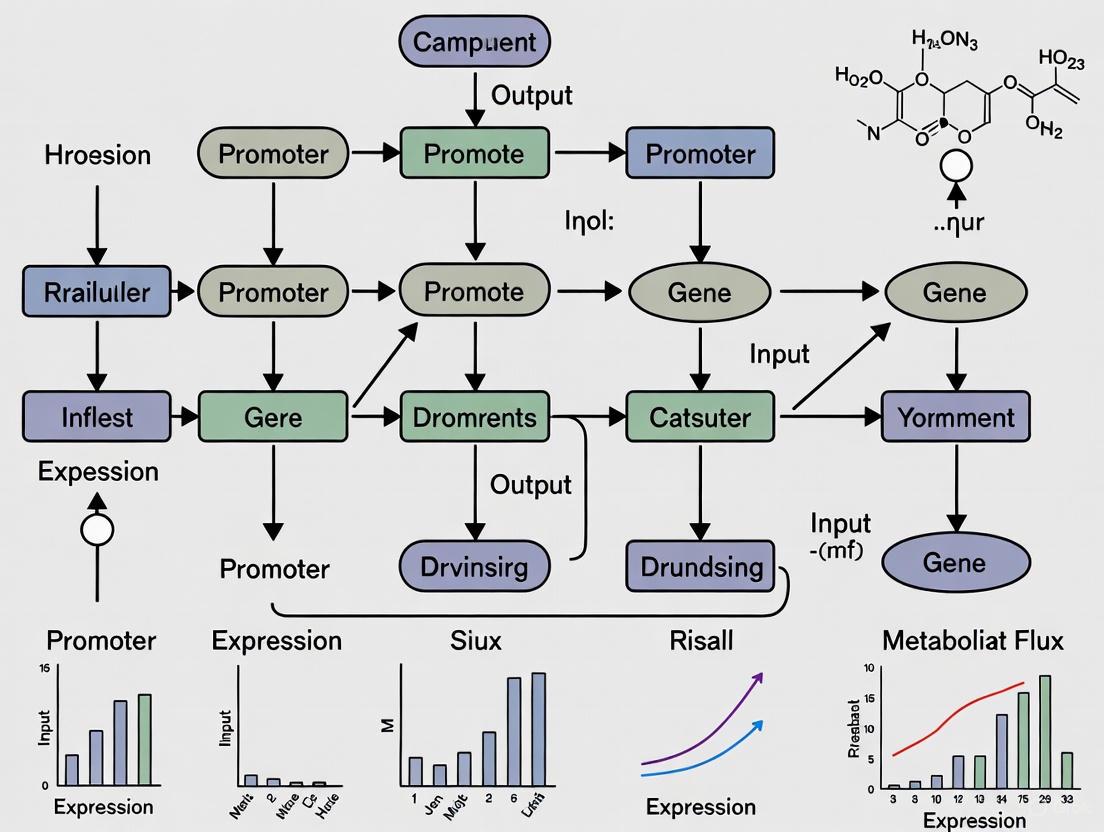
This article explores the implementation of genetic circuits for dynamic metabolic control, a cutting-edge approach in synthetic biology that moves beyond static engineering.
Dynamic Control of Metabolism: Engineering Genetic Circuits for Precision Microbial Factories and Therapeutics
Abstract
This article explores the implementation of genetic circuits for dynamic metabolic control, a cutting-edge approach in synthetic biology that moves beyond static engineering. Tailored for researchers, scientists, and drug development professionals, it provides a comprehensive framework from foundational principles to advanced applications. We cover the expanding toolbox of regulatory devices, from biosensors to CRISPR-based systems, and detail methodologies for constructing circuits that autonomously balance cell growth and product synthesis. The article addresses critical challenges like circuit stability and predictability, highlighting innovative solutions such as phase-separated condensates. Finally, we present validation strategies and comparative analyses of real-world successes in bioproduction and gene therapy, offering a roadmap for the next generation of metabolic engineering and therapeutic interventions.
The Building Blocks of Control: Core Principles and Devices for Genetic Circuits
Genetic circuits are synthetic biological systems constructed from engineered networks of regulatory elements that program cells to perform predefined logical functions. Drawing inspiration from electronic circuit design, these circuits process molecular information through controlled gene expression, enabling cells to sense, compute, and respond to internal and external signals [1]. The implementation of these circuits is fundamental to advancing metabolic control research, providing the tools to dynamically rewire cellular metabolism for enhanced production of valuable chemicals, biofuels, and pharmaceuticals [2]. By moving beyond static metabolic engineering approaches, genetic circuits introduce temporal regulation, decision-making capabilities, and adaptive behaviors into microbial cell factories, thereby overcoming limitations posed by metabolic burden and evolutionary instability [3] [2].
Core Components and Regulatory Devices
Genetic circuits are built from modular regulatory devices that operate at different levels of the central dogma. These devices function as the fundamental building blocks for constructing complex circuitry [1].
- Devices Acting on DNA Sequence: Recombinase-based systems (e.g., Cre, Flp, FimB/FimE, serine integrases like Bxb1) implement permanent, inheritable changes by inverting or excising DNA segments. These are ideal for creating stable memory devices and bistable switches. CRISPR-Cas-derived devices, including base editors and prime editors, enable programmable DNA sequence modifications guided by RNA [1].
- Transcriptional Control Devices: These utilize transcription factors (both native and synthetic) and programmable DNA-binding domains (e.g., dCas9 fused to activator/repressor domains) to regulate transcription initiation. Orthogonal RNA polymerases and sigma factors can also be employed to create independent transcription channels [1].
- Post-Transcriptional and Translational Control Devices: This class includes riboswitches, toehold switches, and RNA interference (RNAi) mechanisms that control mRNA stability and accessibility to the ribosome. Small RNAs (sRNAs) can be used for efficient and low-burden post-transcriptional silencing, which has been shown to enhance the evolutionary longevity of circuits [3] [1].
- Post-Translational Control Devices: These regulate protein function through conditional degradation (e.g., degrons), controlled protein localization, or allosteric regulation of protein activity [1].
Table 1: Hierarchy of Regulatory Devices in Synthetic Biology
| Control Level | Regulatory Device Examples | Key Features and Mechanisms |
|---|---|---|
| DNA Sequence | Site-specific recombinases (Cre, Flp), Serine integrases (Bxb1), CRISPR-Cas base/prime editors | Permanent, inheritable changes; DNA inversion/excision; targeted nucleotide editing [1]. |
| Transcriptional | Synthetic transcription factors, dCas9-activators/repressors, Orthogonal RNA polymerases | Programmable DNA-binding; activation/repression of transcription; orthogonal gene expression [1]. |
| Post-Transcriptional | Riboswitches, Toehold switches, Small RNAs (sRNAs) | Ligand-dependent RNA structural changes; sequence-specific RNA-RNA interaction; low metabolic burden [3] [1]. |
| Post-Translational | Conditional protein degradation, Protein localization signals, Allosteric protein switches | Controlled protein stability; spatial control of protein activity; ligand-induced conformational changes [1]. |
Figure 1: Information flow through different levels of regulatory control in a genetic circuit.
Quantitative Framework for Circuit Performance and Evolutionary Longevity
A critical challenge in genetic circuit implementation is maintaining function over time due to mutational burden and natural selection. Circuit-induced metabolic burden reduces host cell growth rates, creating a selective advantage for non-functional mutants, which eventually dominate the population [3]. A multi-scale "host-aware" computational framework that models host-circuit interactions, mutation, and population dynamics is essential for evaluating evolutionary stability [3].
Table 2: Key Metrics for Quantifying Evolutionary Longevity
| Metric | Definition | Interpretation in Metabolic Control |
|---|---|---|
| Initial Output (P0) | The total protein/output from the ancestral population before mutation. | Represents the maximum theoretical yield or metabolic flux at the start of a bioproduction process [3]. |
| Functional Stability (τ±10) | The time for the population-level output to fall outside the P0 ± 10% range. | Indicates the short-term reliability of a metabolic pathway for maintaining production within a narrow, optimal window [3]. |
| Functional Half-Life (τ50) | The time for the population-level output to fall below 50% of P0. | Measures the long-term "persistence" of a metabolic function, which may be sufficient for extended fermentation or biosensing applications [3]. |
Table 3: Performance Comparison of Genetic Controller Architectures
| Controller Architecture | Input Sensed | Actuation Method | Impact on Short-Term Stability (τ±10) | Impact on Long-Term Half-Life (τ50) | Key Findings |
|---|---|---|---|---|---|
| Open-Loop | N/A | N/A | Baseline | Baseline | High initial output (P0) but rapid functional decline due to burden [3]. |
| Intra-Circuit Feedback | Circuit output per cell | Transcriptional | Prolongs performance | Moderate improvement | Negative autoregulation reduces burden but often lowers initial output [3]. |
| Growth-Based Feedback | Cellular growth rate | Post-transcriptional (sRNA) | Moderate improvement | Significantly extends half-life | Aligns circuit function with host fitness, outperforming intra-circuit feedback in the long term [3]. |
| Multi-Input Controllers | Combined inputs (e.g., output + growth rate) | Mixed (e.g., transcriptional + sRNA) | High improvement | High improvement (over 3x increase) | Biologically feasible designs that optimize both short- and long-term goals without coupling to essential genes [3]. |
Figure 2: The evolutionary degradation loop of synthetic gene circuits. Mutations that reduce circuit function and metabolic burden are selected for, leading to a loss of production over time.
Experimental Protocol: Implementing a Basic Genetic Circuit
This protocol outlines the key steps for constructing and testing a simple genetic circuit in E. coli, such as a toggle switch or an inducible expression system, within the context of metabolic engineering.
Circuit Design and In Silico Simulation
- Objective Definition: Clearly define the circuit's input-output relationship (e.g., "In the presence of inducer A, express gene B to divert metabolic flux").
- Part Selection: Choose well-characterized biological parts (promoters, RBS, coding sequences, terminators) from registries (e.g., iGEM parts registry). For metabolic control, consider promoters inducible by metabolic intermediates or stress responses.
- Host-Aware Modeling: Before synthesis, use a host-aware computational model [3] to simulate circuit behavior, predict metabolic burden, and estimate evolutionary longevity (P0, τ±10, τ50). This model should account for resource competition (ribosomes, nucleotides) between the host and the synthetic circuit.
DNA Construction and Assembly
- Vector Assembly: Assemble the genetic circuit into a suitable plasmid vector using standardized methods (e.g., Golden Gate Assembly, Gibson Assembly). Ensure the origin of replication and antibiotic resistance marker are compatible with the host strain.
- Component Integration: For metabolic pathway control, integrate the genetic circuit with the target metabolic genes on the plasmid or the host chromosome.
- Sequence Verification: Verify the final construct by Sanger sequencing or whole-plasmid sequencing to ensure the absence of mutations.
Cell Transformation and Culturing
- Transformation: Introduce the constructed plasmid into an appropriate E. coli strain (e.g., DH10B for cloning, MG1655 for production) via chemical transformation or electroporation.
- Selection and Colony PCR: Plate transformed cells on LB agar with the appropriate antibiotic. Incubate overnight at 37°C. Pick several colonies and use colony PCR to confirm the presence of the correct insert.
- Liquid Culture Inoculation: Inoculate liquid LB medium with a positive colony and grow overnight.
Circuit Functionality Assay
- Induction and Sampling: Dilute the overnight culture in fresh, defined minimal medium (e.g., M9 with glucose). At the target optical density (OD600), add the inducer molecule. Take samples at regular intervals post-induction.
- Output Measurement:
- For Fluorescent Reporters: Measure fluorescence (e.g., GFP) and OD600 using a plate reader. Normalize fluorescence to OD600 to account for cell density.
- For Metabolic Outputs: Use HPLC or GC-MS to quantify the concentration of the target metabolite or product in the culture supernatant.
- Growth Kinetics: Continuously monitor OD600 to calculate growth rates and assess the metabolic burden imposed by the circuit.
Evolutionary Longevity Assay
- Serial Passaging: This assay directly measures the metrics in Table 2 [3].
- Day 1: Inoculate the engineered strain in fresh medium and grow for 24 hours under selective pressure (antibiotic) and, if applicable, inducing conditions.
- Daily Transfer: Every 24 hours, dilute the culture into fresh medium. Maintain this for tens of generations.
- Sampling and Storage: Sample and freeze cell stocks daily for later analysis.
- Population Output Tracking: At designated time points, use flow cytometry to measure the distribution of circuit output (e.g., fluorescence) across the population. For metabolic outputs, assay product titer from thawed samples.
- Data Analysis: Plot the population-level output over time to determine the functional stability (τ±10) and functional half-life (τ50) of the circuit [3].
The Scientist's Toolkit: Essential Research Reagents
Table 4: Key Research Reagent Solutions for Genetic Circuit Implementation
| Reagent / Material | Function/Description | Example Use Case |
|---|---|---|
| Site-Specific Recombinases | Engineered enzymes (e.g., Cre, Flp, Bxb1) that catalyze precise DNA recombination events. | Creating irreversible genetic switches or memory elements by inverting/excising DNA segments [1]. |
| Programmable CRISPR-effectors | dCas9 fused to transcriptional activator/repressor domains or base-editing enzymes. | Implementing complex logic or dynamic regulation of multiple metabolic genes simultaneously [1]. |
| Orthogonal RNA Polymerases | Bacteriophage-derived RNAPs (e.g., T7 RNAP) that transcribe only specific promoter sequences. | Creating independent transcription channels to minimize interference with host regulation [1]. |
| Small RNAs (sRNAs) | Engineered non-coding RNAs that silence target mRNAs through antisense binding. | Post-transcriptional regulation for low-burden, high-performance control to enhance evolutionary longevity [3]. |
| Inducer Molecules | Small molecules (e.g., IPTG, AHL, Anhydrotetracycline) that control inducible promoters. | Providing external, tunable control over the timing and level of circuit activation [1]. |
| Host-Aware Model Framework | A multi-scale computational model integrating host physiology, circuit function, and evolution. | In silico prediction of circuit burden, performance, and evolutionary longevity before experimental implementation [3]. |
The precise control of cellular metabolism is a fundamental goal in synthetic biology and metabolic engineering. Engineered genetic circuits function as the central processing units of the cell, enabling dynamic regulation of biosynthetic pathways for optimized production of valuable compounds. The efficacy of these circuits hinges on a sophisticated regulatory toolkit that operates across three hierarchical levels: transcriptional, translational, and post-translational control. Each level offers distinct advantages in response time, dynamic range, and regulatory precision, making them suitable for different metabolic engineering applications. This article provides application notes and detailed protocols for implementing these control devices, with particular emphasis on their integration into genetic circuits for advanced metabolic control research. The frameworks discussed here empower researchers to construct sophisticated genetic systems that can dynamically sense metabolic states and autonomously adjust flux distributions, thereby addressing fundamental challenges in metabolic engineering including metabolic imbalances, intermediate toxicity, and suboptimal yields.
Regulatory Device Classifications and Performance Characteristics
Table 1: Comparative Analysis of Genetic Regulation Devices
| Control Level | Key Components | Response Time | Dynamic Range | Primary Applications | Advantages | Limitations |
|---|---|---|---|---|---|---|
| Transcriptional | Transcription factors, promoters, synthetic transcription factors [4] [1] | Slow (hours) | Wide [4] | Pathway regulation, logic gates [5] [1] | High signal amplification, well-characterized parts [4] | Slow response, potential for host interference |
| Translational | Riboswitches, toehold switches, sRNAs [6] [1] | Moderate (minutes-hours) | Moderate to wide [6] | Fine-tuning expression, dynamic control [6] | Faster than transcriptional, avoid genomic integration [4] | Can require specialized RNA design |
| Post-Translational | PTM enzymes, proteolytic systems, allosteric regulators [7] [1] | Fast (seconds-minutes) | Variable | Protein activity modulation, metabolic engineering [7] | Rapid response, direct activity control [4] | Complex engineering, host machinery dependence |
Transcriptional Control Devices
Principles and Applications
Transcriptional control devices represent the most extensively utilized regulatory mechanism in synthetic biology, operating through the modulation of RNA polymerase recruitment to specific promoter sequences. These systems typically employ transcription factors (TFs) that bind small molecules, leading to conformational changes that either promote or inhibit transcription initiation. Natural transmembrane protein sensors can orchestrate transcription regulation by triggering intracellular signaling cascades that ultimately activate synthetic promoters. For instance, G-protein-coupled receptors (GPCRs) have been engineered to sense histamine levels or elevated bile acid levels, coupling detection to transcriptional responses through second messenger systems [4]. Similarly, light-sensitive GPCRs like human melanopsin have been rewired to activate nuclear factor of activated T-cells (NFAT)-responsive promoters, enabling precise spatiotemporal control over transgene expression [4].
Designer transmembrane receptors offer enhanced orthogonality and programmability. The Tango system represents an advanced platform that combines natural or evolved sensing modules with synthetic protease-based signal transduction [4]. This system features a membrane receptor linked to a transcription factor through a tobacco etch virus protease (TEVp) cleavage site. Upon ligand binding, TEVp is recruited to the receptor, cleaving and releasing the transcription factor to migrate to the nucleus and activate target gene expression. The Modular Extracellular Sensor Architecture (MESA) platform further extends this concept through ligand-induced receptor dimerization, with one chain containing the transcription factor and the other the protease, enabling high fold-induction with minimal background [4].
Protocol: Implementing a Pyruvate-Responsive Transcriptional Biosensor
Background: This protocol describes the implementation of a pyruvate-responsive biosensor for dynamic control of central metabolism in E. coli, based on the PdhR transcription factor [5]. Pyruvate serves as a critical metabolic node connecting glycolysis to the TCA cycle, making it an ideal sentinel metabolite for regulating carbon distribution.
Materials:
- E. coli strain BW25113 containing F' from XL1-Blue [5]
- PdhR transcription factor from E. coli [5]
- EcPdhR-responsive promoter (EcPpdhR) [5]
- Luria-Bertani (LB) medium with appropriate antibiotics [5]
- Pyruvate standards for calibration
Procedure:
Circuit Assembly:
- Clone the pdhR gene under a constitutive promoter suitable for your application.
- Place your target metabolic genes downstream of the EcPdhR-responsive promoter (EcPpdhR).
- Transform the constructed plasmid into your production E. coli strain.
Biosensor Characterization:
- Inoculate transformed strains in LB medium with appropriate antibiotics and grow overnight.
- Dilute cultures to OD600 = 0.1 in fresh medium containing varying pyruvate concentrations (0-10 mM).
- Measure fluorescence output (if using reporter genes) or sample for transcript/protein analysis at regular intervals over 8-12 hours.
- Generate a calibration curve relating pyruvate concentration to output signal.
Metabolic Control Application:
- Cultivate engineered strains in production medium under appropriate conditions.
- Monitor pyruvate accumulation throughout the fermentation process.
- The biosensor will autonomously activate downstream metabolic pathways when pyruvate exceeds the threshold level, rebalancing carbon flux.
Troubleshooting Tips:
- If background leakage is high, consider engineering PdhR for enhanced repression through directed evolution [5].
- If dynamic range is insufficient, optimize ribosomal binding sites or promoter variants.
- For in vivo applications, validate sensor performance under actual production conditions.
Translational Control Devices
Principles and Applications
Translational control devices regulate gene expression at the level of protein synthesis, offering faster response times than transcriptional control and the advantage of implementation without genomic integration [4]. These systems primarily operate by modulating the accessibility of ribosome binding sites (RBS) or through the action of regulatory RNAs. A key advantage of translational control is the ability to fine-tune gene expression levels without altering transcription rates, enabling precise optimization of metabolic fluxes.
Toehold switches represent particularly powerful translational control devices that operate through RNA-RNA interactions [6]. These synthetic RNA elements contain a ribosome binding site sequestered in a hairpin secondary structure, preventing translation initiation. Upon binding to a trigger RNA strand through complementary base pairing, the hairpin unfolds, exposing the RBS and enabling translation initiation. Toehold switches can achieve remarkable dynamic ranges of up to 400-fold and have been integrated into tunable expression systems that simultaneously control transcription and translation [6]. In such systems, the main transcriptional input controls toehold switch expression while a tuner sRNA input regulates its translational activity, enabling post-assembly fine-tuning of genetic devices [6].
Global translational control mechanisms also play crucial roles in metabolic engineering, particularly through the regulation of initiation factor availability and activity. Eukaryotic initiation factor 4E (eIF4E) represents a key control point, whose activity is modulated by 4E-binding proteins (4E-BPs) [8]. Under nutrient-rich conditions, signaling pathways such as mTOR phosphorylate 4E-BPs, preventing their interaction with eIF4E and promoting cap-dependent translation initiation. During nutrient stress, dephosphorylated 4E-BPs bind eIF4E and inhibit translation initiation, thereby conserving cellular energy and resources [8].
Protocol: Implementing a Tunable Expression System Using Toehold Switches
Background: This protocol describes the implementation of a tunable expression system (TES) that simultaneously controls transcription and translation using toehold switch technology [6]. This system enables dynamic adjustment of gene expression after circuit assembly, allowing researchers to correct for unexpected behavior or optimize performance without physical reconstruction.
Materials:
- Toehold switch (THS) variant 20 (or other selected variant) [6]
- Tuner sRNA complementary to the selected THS
- Ptet and Ptac promoters for input and tuner control, respectively [6]
- Yellow fluorescent protein (YFP) or your gene of interest
- Anhydrotetracycline (aTc) and isopropyl β-D-1-thiogalactopyranoside (IPTG) for induction
- Flow cytometry equipment for characterization
Procedure:
Circuit Construction:
- Clone your gene of interest downstream of the toehold switch sequence.
- Express the toehold switch from your selected input promoter (e.g., Ptet).
- Express the tuner sRNA from a separate tuner promoter (e.g., Ptac).
- Transform the constructed system into your host strain.
System Characterization:
- Grow transformed strains in medium with varying concentrations of aTc (0-100 ng/mL) and IPTG (0-1 mM).
- After 6-8 hours of induction, measure output using flow cytometry or other appropriate assays.
- For each tuner condition (IPTG concentration), plot the output against input promoter activity.
Performance Optimization:
- Identify the tuner setting that provides your desired dynamic range and absolute expression level.
- Evaluate the fold-change and distribution overlap between "on" and "off" states.
- If necessary, iterate on toehold switch design or RBS optimization to improve performance.
Troubleshooting Tips:
- If background expression is too high, consider THS designs with more stable secondary structures.
- If induction fold-change is low, verify sRNA-THS complementarity and optimize sRNA expression levels.
- Be aware that high expression of both THS and sRNA may cause significant cellular burden.
Post-Translational Control Devices
Principles and Applications
Post-translational control devices directly modulate protein activity, stability, or localization, providing the fastest response times among regulatory mechanisms [4]. These systems are particularly valuable for implementing rapid feedback control in metabolic pathways, where immediate adjustment of enzyme activity is required to maintain metabolic homeostasis or prevent intermediate accumulation.
Protein degradation tags represent powerful post-translational control devices that enable precise regulation of protein half-life. These systems typically involve fusion of degradation tags (such as ssrA or other degrons) to target proteins, rendering them substrates for native or engineered cellular proteases like ClpXP or the proteasome [4]. The activity of these degradation systems can be further controlled using small molecule inducers that either stabilize the target protein or activate the protease machinery. For example, the SspB adaptor protein can be used to enhance ClpXP-mediated degradation of ssrA-tagged proteins, and its expression can be placed under inducible control for dynamic regulation [4].
Post-translational modifications (PTMs) including phosphorylation, acetylation, and glycosylation provide another rich landscape for engineering control devices. Recent advances in high-throughput screening methods have accelerated the engineering of PTM-installing enzymes. A notable example is the development of a cell-free gene expression (CFE) system coupled with AlphaLISA detection for characterizing and engineering oligosaccharyltransferases (OSTs) involved in protein glycan coupling [7]. This platform enables rapid screening of hundreds of enzyme variants and substrate combinations, identifying mutants with significantly improved glycosylation efficiency for therapeutic protein production [7].
Protocol: High-Throughput Screening of Post-Translational Modifications Using Cell-Free Expression and AlphaLISA
Background: This protocol describes a generalizable workflow for high-throughput characterization and engineering of post-translational modifications using cell-free gene expression (CFE) coupled with AlphaLISA detection [7]. This method is particularly useful for studying enzyme-substrate interactions in RiPPs (ribosomally synthesized and post-translationally modified peptides) and glycoprotein engineering.
Materials:
- PUREfrex cell-free expression system [7]
- AlphaLISA detection beads (anti-FLAG donor beads and affinity-matched acceptor beads) [7]
- DNA templates encoding PTM enzymes and substrates
- FluoroTect GreenLys for labeling expressed proteins [7]
- 384- or 1,536-well microplates
- Acoustic liquid handling robot (optional but recommended)
Procedure:
Cell-Free Expression:
- Set up individual PUREfrex reactions expressing your PTM enzyme and substrate separately.
- For initial validation, include fluorescently labeled lysine to confirm protein expression.
- Incubate reactions at 32°C for 2-4 hours to allow protein synthesis.
AlphaLISA Detection:
- Combine enzyme- and substrate-expressing CFE reactions in detection plates.
- Add Anti-FLAG donor beads and anti-tag acceptor beads (e.g., anti-MBP if enzymes are MBP-tagged).
- Incubate for 1 hour at room temperature in the dark.
- Measure AlphaLISA signal using an appropriate plate reader.
Data Analysis:
- Normalize signals to appropriate controls (e.g., beads only, non-interacting protein pairs).
- Calculate binding affinities or enzymatic efficiencies from dose-response curves.
- For enzyme engineering, rank variants based on normalized activity signals.
Troubleshooting Tips:
- If background signal is high, optimize bead concentrations and washing steps.
- If expression yields are low, supplement CFE reactions with additional energy sources or optimize DNA template concentrations.
- For quantitative measurements, include standard curves with purified components when possible.
Research Reagent Solutions
Table 2: Essential Research Reagents for Genetic Control Devices
| Reagent Category | Specific Examples | Function/Application | Key Features |
|---|---|---|---|
| Cell-Free Expression Systems | PUREfrex [7] | High-throughput protein expression | Reconstituted translation machinery, low background |
| Detection Reagents | AlphaLISA beads [7] | Sensitive detection of molecular interactions | Bead-based proximity assay, 384- and 1,536-well format compatibility |
| Transcriptional Regulators | PdhR [5], TetR [6] | Metabolic sensing, inducible systems | Pyruvate-responsive, well-characterized dynamics |
| Translational Controllers | Toehold switches [6] | RNA-based regulation, tunable expression | High dynamic range (up to 400-fold), programmability |
| Post-Translational Tools | Oligosaccharyltransferases (OSTs) [7] | Protein glycosylation studies | Glycan diversity, therapeutic protein engineering |
| Genetic Circuit Hosts | E. coli BW25113 [5] | Metabolic engineering chassis | Well-characterized metabolism, extensive toolkit available |
| Inducing Molecules | aTc, IPTG [6] | Chemical induction of genetic circuits | Non-metabolizable, high membrane permeability |
Regulatory Pathway Integration and Circuit Design
The true power of genetic control devices emerges from their integration into coordinated regulatory circuits. Multi-level control strategies that combine transcriptional, translational, and post-translational regulation can achieve sophisticated dynamic behaviors that are impossible with single-level control. For instance, a circuit might employ transcriptional control for coarse pathway regulation, translational control for fine-tuning enzyme expression levels, and post-translational control for rapid metabolic feedback.
Multi-Level Regulatory Circuit for Metabolic Control
Advanced circuit architectures incorporate feedback controllers to enhance evolutionary longevity and functional stability. Recent computational studies have identified design principles for genetic controllers that maintain synthetic gene expression despite mutational pressure and selection [3]. Post-transcriptional controllers using small RNAs generally outperform transcriptional controllers, and growth-based feedback extends functional half-life more effectively than output-based feedback alone [3]. The most robust designs incorporate multiple input signals and actuation mechanisms to create circuits that maintain function over extended periods.
High-Throughput Device Characterization Workflow
The synthetic biology toolkit for transcriptional, translational, and post-translational control has matured significantly, providing researchers with an extensive arsenal of regulatory devices for metabolic engineering. The protocols and application notes presented here offer practical guidance for implementing these systems, with emphasis on quantitative characterization and integration into functional genetic circuits. As the field advances, the development of increasingly sophisticated multi-level control systems and high-throughput engineering methodologies will further expand our ability to reprogram cellular metabolism for biomedical and industrial applications. Researchers are encouraged to consider the unique advantages and limitations of each regulatory level when designing genetic circuits for specific metabolic control objectives, and to leverage the growing repository of standardized genetic parts and design principles to accelerate their engineering cycles.
Metabolic regulation is a dynamic process integral to cellular function, and its dysregulation is a hallmark of numerous diseases, including neurodegenerative conditions and cancer [9] [10]. Traditional metabolic analysis techniques, such as mass spectrometry or immunostaining, often provide only static, endpoint data and fail to capture the rapid, subcellular fluctuations of metabolites that drive cellular decisions [9]. The implementation of genetically encoded biosensors addresses this critical gap, offering researchers the ability to monitor metabolic fluxes in living cells with high spatial and temporal resolution [9] [11]. This Application Note details the use of these biosensors as foundational tools within genetic circuits for metabolic control research, providing standardized protocols for studying key metabolites like pyruvate, ATP/ADP, and NAD(H), and visualizing their dynamics in real-time.
Quantitative Landscape of Genetically Encoded Metabolic Biosensors
The following table summarizes the key performance characteristics of widely used biosensors for central metabolites, enabling informed selection for experimental design.
Table 1: Key Genetically Encoded Biosensors for Metabolic Monitoring
| Target Analyte | Biosensor Name | Sensing Mechanism | Dynamic Range / Kd / EC₅₀ | Key Applications & Features |
|---|---|---|---|---|
| ATP | ATeam (e.g., 1.03YEMK) | FRET | Kd ~7.4 µM to 3.3 mM; ~150% dynamic range [9] | Measures resting ATP levels; used in Drosophila neurodegeneration models and diabetic neuropathy studies [9]. |
| iATPSnFR | Single-wavelength intensity | EC₅₀ ~50-120 µM; ~2-fold dynamic range [9] | Detects ATP at cell surfaces; reveals metabolic heterogeneity at single-synapse resolution [9]. | |
| MaLion (G/R/B) | Single-wavelength intensity (multicolor) | Kd: MaLionR 0.34 mM, MaLionG 1.1 mM, MaLionB 0.46 mM [9] | Simultaneous multi-compartment imaging; used to study postsynaptic ATP levels regulated by mitochondrial CREB signaling [9]. | |
| ATP/ADP Ratio | PercevalHR | Single-wavelength intensity | KR ~3.5; 5-fold greater dynamic range than Perceval [9] | Matches physiological ratios; applied in axon regeneration and neuroinflammatory disease models (e.g., multiple sclerosis) [9]. |
| Pyruvate | PyronicSF | Single-wavelength (cpGFP) | N/A | Real-time subcellular quantitation of pyruvate in neurons and developing embryos (e.g., sea urchin) [10]. |
| PdhR-based Biosensor | Transcriptional / FRET | N/A | Engineered for dynamic regulation in E. coli; used in genetic circuits for central metabolism control [5] [12]. | |
| NAD(H) | iNAP | Single-wavelength intensity | Various affinities available [12] | Measures NADPH in cytosol/mitochondria; revealed NADPH metabolism regulation by glucose in cancer cells [12]. |
| Redox Potential | Grx1-roGFP2 | Ratiometric (Excitation) | N/A | Reflects glutathione redox potential, reporting on TCA cycle and OxPhos activity [10]. |
Experimental Protocols for Metabolic Biosensor Implementation
Protocol 1: Monitoring Pyruvate Dynamics with PyronicSF in a Developing Embryo Model
This protocol outlines the procedure for visualizing spatiotemporal pyruvate dynamics during sea urchin embryogenesis, a model for studying metabolic regulation in development [10].
Research Reagent Solutions:
- Animals: Adult sea urchins (Strongylocentrotus purpuratus).
- Constructs: pCS2+ vector containing the PyronicSF ORF.
- Key Reagents: Filtered seawater (0.22 µm), 3-amino triazole, FLAG-tag mRNA for lineage tracing.
- Equipment: Microinjection system, fluorescence microscope with time-lapse capability, temperature-controlled stage (16°C).
Methodology:
- Gamete Collection & Fertilization: Induce spawning in adult sea urchins via intracoelomic injection of 0.5 M KCl. Collect eggs and sperm. Fertilize eggs in seawater containing 1 mM 3-amino triazole to prevent hardening of the fertilization envelope [10].
- Microinjection: Dechorionate fertilized eggs and microinject with an injection mixture containing:
- ~500 ng/µL of the PyronicSF-pCS2+ plasmid.
- Tracer mRNA (e.g., FLAG-tag) at 50-100 ng/µL to identify successfully injected cells [10].
- Embryo Culture & Imaging: Culture injected embryos at 16°C in filtered seawater. Mount embryos at the desired developmental stage for live imaging. Perform time-lapse fluorescence imaging using standard GFP filter sets.
- Data Analysis: Quantify fluorescence intensity over time and across different cell lineages. Normalize signals to baseline levels. The asymmetric signal enrichment at the 16-cell stage and in the apical plate during gastrulation indicates spatially dynamic pyruvate metabolism [10].
Protocol 2: Implementing a Pyruvate-Responsive Genetic Circuit in E. coli
This protocol describes the application of an engineered PdhR-based biosensor for dynamic control of central metabolism in E. coli, a cornerstone strategy for metabolic engineering [5].
Research Reagent Solutions:
- Bacterial Strain: E. coli BW25113.
- Genetic Circuit: Plasmid(s) containing the engineered PdhR transcription factor and its cognate promoter (EcPpdhR) controlling a reporter gene (e.g., GFP) and/or a pathway enzyme [5].
- Growth Media: Luria-Bertani (LB) medium or defined M9 minimal medium with appropriate antibiotics (e.g., ampicillin at 100 µg/mL).
- Inducer: Pyruvate (sodium salt), prepared as a sterile stock solution.
Methodology:
- Circuit Characterization: Transform the PdhR-biosensor plasmid into E. coli. Grow cultures in the presence of varying pyruvate concentrations (e.g., 0 - 10 mM).
- Flow Cytometry & Analytics: Measure the fluorescence output (GFP) via flow cytometry to assess the biosensor's dynamic range and sensitivity. Quantify metabolic intermediates and products using HPLC or GC-MS to correlate sensor output with pathway flux [5].
- Application in Dynamic Regulation: For production strains (e.g., for trehalose or 4-hydroxycoumarin), the PdhR-responsive promoter can be used to dynamically control the expression of key pathway enzymes. In this "closed-loop" control, accumulating pyruvate automatically upregulates or downregulates pathway expression to optimize flux and minimize metabolic burden [5].
- Validation: Compare product titers, yields, and overall culture stability between strains with static (constitutive) and dynamic (biosensor-controlled) regulation.
Visualizing Biosensor Workflows and Metabolic Pathways
The following diagrams illustrate the core logical relationships and experimental workflows for implementing metabolic biosensors.
Biosensor-Enabled Metabolic Engineering Workflow
Diagram Title: Biosensor-Driven DBTL Cycle in Metabolic Engineering
Pyruvate Metabolic Node and Biosensor Sensing
Diagram Title: Pyruvate as a Central Node for Biosensor Interrogation
The Scientist's Toolkit: Essential Research Reagents
Table 2: Key Research Reagent Solutions for Metabolic Biosensor Studies
| Reagent / Material | Function / Application | Example Use Case |
|---|---|---|
| ATeam1.03YEMK | FRET-based biosensor for quantifying intracellular ATP levels. | Monitoring ATP deficits in retinal ganglion cells in glaucoma models [9]. |
| PercevalHR | Ratiometric biosensor for monitoring ATP/ADP ratio. | Assessing energy status in dystrophic axons in neuroinflammatory disease [9]. |
| PyronicSF | cpGFP-based biosensor for real-time pyruvate imaging. | Visualizing glycolytic activity gradients during sea urchin embryogenesis [10]. |
| Engineered PdhR System | Transcription factor-based biosensor for pyruvate. | Dynamic control of central carbon metabolism in bacterial cell factories [5]. |
| Grx1-roGFP2 | Ratiometric biosensor for glutathione redox potential. | Reporting on OxPhos activity in developing embryos and other models [10]. |
| MaLion Series (R/G/B) | Spectrally diverse, single-wavelength ATP biosensors. | Simultaneous monitoring of ATP in different cellular compartments [9]. |
The implementation of sophisticated genetic circuits for metabolic control hinges on three fundamental functional classes: logic gates, bistable switches, and feedback loops. These components enable engineered cells to perform complex computations, maintain stable phenotypic states, and dynamically regulate metabolic flux in response to changing intracellular and extracellular conditions. Logic gates provide the foundational Boolean operations (AND, OR, NOT, etc.) that allow circuits to process multiple input signals and make discrete decisions. Bistable switches introduce memory and hysteresis, enabling cells to latch into persistent metabolic states—such as growth versus production phases—based on transient stimuli. Feedback loops, both negative and positive, provide essential dynamic control capabilities that enhance circuit robustness, maintain homeostasis, and improve evolutionary longevity by automatically adjusting gene expression in response to metabolic burden or pathway intermediates. Together, these circuit functions form the core framework for building programmable metabolic control systems that can optimize titer, rate, and yield (TRY) metrics in industrial biotechnology and therapeutic applications.
Table 1: Core Circuit Functions and Their Roles in Metabolic Control
| Circuit Function | Key Operational Principle | Primary Role in Metabolic Control | Representative Applications |
|---|---|---|---|
| Logic Gates | Perform Boolean operations on input signals | Enable conditional, multi-input regulation of metabolic pathways | Resource-triggered production; pathogen-specific drug activation |
| Bistable Switches | Maintain two stable steady states with hysteresis | Decouple growth and production phases; implement metabolic memory | Two-stage fermentations; bet-hedging population strategies |
| Feedback Loops | Adjust output based on measured system state | Maintain homeostasis; reduce metabolic burden; extend functional longevity | Burden compensation; product toxicity mitigation; flux balancing |
Logic Gates: Programmable Decision-Making
Genetic logic gates are molecular devices that process one or more input signals to produce a specific output according to Boolean logic principles. These gates form the computational foundation of genetic circuits, allowing engineers to program precise conditionality into metabolic control systems. In practice, logic gates can be constructed using various molecular mechanisms, including transcriptional regulators, site-specific recombinases, and CRISPR-based systems.
Design and Implementation Platforms
The implementation of logic gates has been demonstrated across multiple technological platforms. Recombinase-based systems utilize enzymes such as Flp, Bxb1, and PhiC31 integrases to perform permanent DNA rearrangements that implement logic functions. For example, the BLADE (Boolean Logic and Arithmetic through DNA Excision) platform has successfully implemented 16 different Boolean logic gates in human cells by strategically positioning recombinase sites and their recognition sequences [13]. DNA-binding protein systems employ synthetic transcription factors based on designable DNA-binding domains (e.g., TALEs, zinc fingers) fused to transcriptional activation or repression domains. These systems can be configured to create logic gates by placing appropriate binding sites in promoter regions. CRISPR-based systems offer particularly versatile logic gate implementation by using guide RNAs (sgRNAs) as programmable inputs that direct catalytically inactive Cas9 (dCas9) fused to effector domains to target promoters. A simple NOR gate, for instance, can be constructed using two distinct sgRNAs as inputs that repress output gene expression when either or both are present [1] [13].
Application in Metabolic Control
Logic gates enable sophisticated metabolic control strategies that respond to multiple intracellular conditions. An AND gate might require both low nutrient availability and high cell density before activating a biosynthetic pathway, preventing premature production that could hinder growth. An A NIMPLY B gate could trigger stress response pathways only when nutrient limitation is present without concomitant oxygen saturation. These multi-input decision-making capabilities allow metabolic engineers to create circuits that activate production pathways only under optimal conditions, significantly improving production metrics and reducing metabolic burden during growth phases.
Figure 1: Fundamental Boolean Logic Gates. Genetic circuits implement Boolean operations where biological inputs (e.g., metabolites, transcription factors) are processed to produce specific outputs according to logical rules.
Bistable Switches: Metabolic Memory and State Control
Bistable switches are genetic circuits that can exist in two alternative stable states, enabling long-term cellular memory and abrupt transitions between distinct metabolic phenotypes. This bistability arises from positive feedback loops within genetic regulatory networks that create a hysteresis effect, where the system maintains its current state even after the initial inducing signal is removed. The ability to lock cells into specific metabolic states makes bistable switches particularly valuable for implementing two-stage bioprocesses where growth and production phases are temporally separated.
Architectural Requirements for Bistability
Successful engineering of bistable switches requires specific network architectures that generate sufficient nonlinearity to create two distinct steady states. Natural bistable systems often employ mutual repression (toggle switch) or auto-activation architectures. The classic genetic toggle switch consists of two repressors that mutually inhibit each other's expression. However, when using monomeric DNA-binding domains like TALEs or CRISPR-based systems, additional design elements must be incorporated to introduce the necessary nonlinearity. One effective approach combines positive feedback loops with competition between activators and repressors for the same DNA binding sites. This architecture was successfully implemented using TALE-based transcription factors, where competition between TALE activators and TALE repressors for the same operator sites created the required nonlinear response for robust bistability [14].
Uptake Switches for Metabolic Control
A particularly valuable application of bistable switches in metabolic engineering is the control of metabolite uptake. Bistable uptake switches enable cells to toggle between slow and fast uptake states in response to extracellular metabolite concentrations. Through mathematical modeling, the activation-repression (AR) circuit architecture has been identified as particularly robust for this function. In this design, an intracellular metabolite activates expression of a transport enzyme while repressing expression of a utilization enzyme, or vice versa. This architecture generates bistability across a large range of promoter dynamic ranges and requires minimal parameter fine-tuning [15]. Such uptake switches can coordinate metabolic tasks in microbial consortia, allocate metabolic functions between different strains, and implement bet-hedging strategies where subpopulations specialize in different nutritional niches.
Table 2: Bistable Switch Architectures and Their Properties
| Architecture | Network Topology | Nonlinearity Source | Implementation Challenges | Metabolic Applications |
|---|---|---|---|---|
| Toggle Switch | Mutual repression between two transcription factors | Cooperative DNA binding (dimers/oligomers) | Requires cooperative binding; limited orthogonal parts | Two-stage fermentations; phenotype differentiation |
| Positive Feedback Loop | Self-activation of transcription factor | Concentration-dependent autoactivation | Potential leakiness; difficult to reset | Metabolic state locking; bet-hedging strategies |
| Activator-Repressor Competition | Competing activator and repressor share binding sites | Competition for operator site occupancy | Balancing expression levels of competing elements | Uptake control; nutrient specialization |
| Natural System-inspired | Coupled genetic-metabolic feedback | Ultrasensitive enzyme kinetics | Interface between genetic and metabolic networks | Carbon source switching; pathway activation |
Figure 2: Bistable Switch Operation. Bistable switches maintain one of two stable states through mutual repression and positive feedback, enabling persistent metabolic states even after the initial signal disappears.
Feedback Loops: Dynamic Regulation and Robustness
Feedback loops are fundamental control elements that enable genetic circuits to dynamically regulate their behavior in response to changes in the intracellular environment. In metabolic engineering, feedback control is particularly valuable for maintaining homeostasis, reducing metabolic burden, and extending the functional longevity of engineered circuits. Feedback systems operate by monitoring specific cellular parameters (e.g., metabolite concentrations, growth rate, resource availability) and adjusting metabolic pathway expression accordingly.
Negative Feedback for Burden Control and Longevity
Negative feedback loops improve circuit robustness and longevity by counteracting deviations from desired operating points. In metabolic engineering, negative feedback can be employed to reduce the fitness burden imposed by heterologous pathway expression, thereby slowing the emergence of non-productive mutant strains that outcompete engineered cells. Implementation strategies include:
- Growth rate-coupled feedback: Controller circuits that downregulate metabolic pathway expression when growth rate decreases due to metabolic burden.
- Resource-based feedback: Systems that monitor the availability of key cellular resources (e.g., ribosomes, ATP, amino acids) and adjust heterologous gene expression to maintain resource homeostasis.
- Product-sensing feedback: Circuits that use biosensors to detect metabolite accumulation and regulate pathway flux to prevent toxic buildup.
Computational models comparing controller architectures have demonstrated that post-transcriptional control using small RNAs (sRNAs) generally outperforms transcriptional control for burden mitigation. The amplification inherent in sRNA-mediated regulation enables strong control with reduced controller burden. Furthermore, growth-based feedback significantly extends long-term circuit performance, while intra-circuit feedback improves short-term stability [3].
Positive Feedback for Signal Amplification and Commitment
Positive feedback loops amplify signals and drive commitment to cellular decisions by reinforcing specific metabolic states. In naturally occurring systems, positive feedback often works in conjunction with negative feedback to create sophisticated control systems. For example, in the Xenopus oocyte maturation pathway, a positive-feedback-based bistable module consisting of p42 MAPK and Cdc2 enables the system to maintain irreversibility of maturation following transient inductive stimulus [16]. In synthetic metabolic engineering, positive feedback can be employed to lock pathways into high-expression states once specific metabolite thresholds are reached, creating digital-like responses to analog metabolic signals.
Experimental Protocols
Protocol: Implementation and Characterization of a Bistable Uptake Switch
This protocol describes the implementation of an activation-repression (AR) circuit architecture for controlling metabolite uptake rates in Escherichia coli, based on mathematical design principles that maximize robustness to parameter variation [15].
Materials and Reagents
- E. coli strain with deleted native uptake systems for target metabolite
- Plasmid system with inducible promoters responsive to intracellular metabolite
- Fluorescent reporters for monitoring expression dynamics (e.g., GFP, mCherry)
- Metabolite analogs for controlled induction (e.g., TMG for lac operon studies)
- Microfluidic cultivation device for single-cell microscopy
- Flow cytometer for population-level analysis
Procedure
Circuit Construction
- Clone transport enzyme (e.g., lactose permease) under control of metabolite-activated promoter
- Clone utilization enzyme (e.g., β-galactosidase) under control of metabolite-repressed promoter
- Incorporate fluorescent protein genes fused to each enzyme via cleavable peptide linkers (e.g., t2A) for expression monitoring
- Transform construct into appropriate E. coli host strain
Characterization in Batch Culture
- Grow engineered cells in minimal medium with alternating carbon sources (glucose vs. target metabolite)
- Measure population-level metabolite uptake rates using extracellular metabolite sensors
- Sample at regular intervals for flow cytometry to assess population heterogeneity
- Determine steady-state enzyme expression levels via Western blotting
Single-Cell Dynamics Analysis
- Load cells into microfluidic cultivation device with controlled metabolite switching
- Image cells every 10-15 minutes for 12-24 hours using time-lapse microscopy
- Quantify fluorescence intensities for each reporter over time
- Analyze correlation between metabolite pulses and expression switching
Hysteresis Quantification
- Expose cells to gradually increasing metabolite concentrations (0 → 10 mM)
- After saturation, gradually decrease metabolite concentrations (10 → 0 mM)
- Measure uptake rates and reporter expression at each concentration
- Plot dose-response curves for both increasing and decreasing directions
- Calculate hysteresis area as the difference between switching thresholds
Model Fitting and Validation
- Parameterize mathematical model using single-cell expression data
- Validate model predictions by testing under novel input conditions
- Iteratively refine promoter strengths to optimize switching characteristics
Data Analysis
- Bistability confirmation: Hysteresis in dose-response curves and bimodal expression distributions
- Switching kinetics: Time delay between metabolite pulse and complete state transition
- Stability assessment: Duration of state maintenance after signal removal
Protocol: Implementing CRISPRi-Based NOR Gate Logic in Plant Systems
This protocol adapts CRISPR interference (CRISPRi) technology for implementing Boolean NOR logic in plant systems, enabling sophisticated transcriptional control with minimal metabolic burden [13].
Materials and Reagents
- Plant expression vectors with cell type-specific and inducible promoters
- dCas9-KRAB repression domain fusion construct
- sgRNA expression cassettes with Pol III promoters
- Reporter construct with target sgRNA binding sites in promoter region
- Agrobacterium tumefaciens strains for plant transformation
- Chemical inducers for input signal control (e.g., dexamethasone, estradiol)
Procedure
Circuit Design and Assembly
- Design two sgRNA target sequences complementary to promoter regions of output gene
- Clone dCas9-KRAB repressor under constitutive promoter
- Assemble sgRNA expression cassettes under control of input-responsive promoters
- Construct output reporter (e.g., YFP) with promoter containing both sgRNA target sites
- Verify component orthogonality and absence of cross-talk
Plant Transformation and Selection
- Introduce constructs into Arabidopsis thaliana via floral dip transformation
- Select transformants on antibiotic-containing media
- Verify transgene integration via PCR and Southern blotting
- Isolate homozygous T3 lines for characterization
Logic Function Validation
- Apply input inducer chemicals in all four possible combinations (+/+, +/-, -/+, -/-)
- Measure output reporter expression after 24-48 hours using fluorescence microscopy
- Quantify expression levels via qRT-PCR for transcript quantification
- Confirm NOR function (expression only in absence of both inputs)
Performance Characterization
- Measure response time by monitoring output after input application/removal
- Determine dynamic range by comparing ON and OFF state expression levels
- Assess leakiness in all input conditions
- Test logic function in different cell types and developmental stages
Application to Metabolic Pathway Control
- Replace reporter gene with metabolic enzyme or transcription factor
- Measure metabolic flux changes under different input conditions
- Assess impact on target metabolite production
Data Analysis
- Logic fidelity: Quantitative assessment of truth table compliance
- Dynamic range: Ratio of ON-state to OFF-state expression
- Temporal response: Kinetics of state transitions after input changes
Research Reagent Solutions
Table 3: Essential Research Reagents for Genetic Circuit Construction
| Reagent Category | Specific Examples | Function in Circuit Implementation | Key Characteristics |
|---|---|---|---|
| Programmable DNA-Binding Domains | TALE proteins, dCas9, Zinc Fingers | Provide target specificity for transcriptional regulators | Modular design; orthogonal target sequences; tunable affinity |
| Transcriptional Effector Domains | VP16 (activation), KRAB (repression), SRDX (plant repression) | Determine regulatory function at target promoters | Strong activation/repression; minimal collateral effects |
| Site-Specific Recombinases | Cre, Flp, Bxb1, PhiC31 | Enable permanent DNA rearrangements for memory circuits | High efficiency; unidirectional or bidirectional; orthogonal recognition sites |
| Small Molecule Sensors | TetR, LuxR, AraC, steroid receptors | Provide input detection for chemical signals | High sensitivity; low basal activity; tunable dynamic range |
| Fluorescent Reporters | GFP, YFP, RFP, BFP, luciferase | Enable quantitative circuit characterization | Brightness; photostability; spectral orthogonality; minimal metabolic burden |
| Ribosome Binding Site Libraries | Varying strength RBS sequences | Fine-tune translation efficiency for expression balancing | Predictable translation initiation rates; minimal secondary structure |
| Promoter Libraries | Constitutive, inducible, tissue-specific | Provide transcriptional control elements with varying strengths | Defined dynamic range; low noise; minimal cross-talk |
Integrated Circuit Design for Metabolic Control
The most effective metabolic control systems integrate multiple circuit functions to achieve sophisticated regulatory capabilities. For example, a two-stage bioprocess for high-value metabolite production might combine:
- Logic gates to sense multiple environmental conditions (nutrient status, cell density, dissolved oxygen)
- A bistable switch to irreversibly transition from growth phase to production phase
- Negative feedback loops to maintain optimal precursor metabolite pools during production
- Positive feedback to lock in the production state once initiated
Such integrated designs leverage the strengths of each circuit type while mitigating their individual limitations. The hysteresis of bistable switches prevents unwanted toggling between states due to minor environmental fluctuations, while feedback loops ensure homeostatic maintenance of metabolic intermediates at optimal levels. Logic gates provide the conditional decision-making that ensures state transitions occur only under appropriate environmental conditions.
Future advances in genetic circuit design for metabolic control will focus on improving orthogonality to reduce context-dependence, developing more precise mathematical models to predict circuit behavior, and creating adaptive circuits that can adjust their parameters based on long-term performance metrics. As these technologies mature, they will enable increasingly sophisticated metabolic engineering strategies that dynamically optimize pathway flux in response to real-time metabolic demands.
A fundamental challenge in constructing efficient microbial cell factories is the inherent trade-off between cell growth and product synthesis. Conventional static metabolic engineering methods, such as gene knockouts and constitutive overexpression, often lead to metabolic imbalances, accumulation of toxic intermediates, and reduced cellular viability [5]. These limitations arise because essential cellular processes and the engineered biosynthetic pathways compete for the same carbon and energy resources, creating a tension that limits overall production efficiency.
Dynamic regulation strategies offer a sophisticated solution to this problem by utilizing biosensor-based genetic circuits that respond to intracellular metabolite levels, enabling autonomous and real-time adjustment of metabolic pathways [5]. Unlike static methods, these systems can sense metabolic states and dynamically re-route fluxes, thereby minimizing burdens on host cells while maximizing product yield. This approach is particularly valuable in central metabolism, where multiple competing pathways—such as glycolysis, the pentose phosphate pathway, and shikimate pathway—divert key intermediates away from target compound production [5].
Genetic Circuit Architectures for Dynamic Control
Circuit Design Principles and Regulatory Mechanisms
Genetic circuits for dynamic metabolic control function as feedback systems that monitor intracellular conditions and adjust gene expression accordingly. These systems typically incorporate sensing elements, signal processing modules, and output components to create closed-loop control networks. The most effective controllers utilize negative feedback to maintain system performance despite perturbations and evolutionary pressures [3].
Controllers can be categorized by their input sensing strategies and actuation mechanisms:
- Intra-circuit feedback monitors the output of the synthetic pathway itself
- Growth-based feedback responds to changes in cellular growth rates
- Population-based feedback utilizes quorum-sensing mechanisms
In terms of actuation, post-transcriptional control using small RNAs (sRNAs) generally outperforms transcriptional control via transcription factors, as sRNA mechanisms provide signal amplification with reduced cellular burden [3].
Table 1: Genetic Circuit Architectures for Dynamic Regulation
| Controller Type | Sensing Input | Actuation Mechanism | Key Advantages | Limitations |
|---|---|---|---|---|
| Transcription Factor-Based | Specific metabolites | Transcriptional regulation | High specificity, modular design | Limited dynamic range, resource intensive |
| sRNA-Based | Intracellular metabolites | Post-transcriptional silencing | Fast response, low burden | Requires careful tuning |
| Quorum Sensing-Based | Cell density | Cell-to-cell communication | Population-level control | Not metabolite-specific |
| Growth-Based | Cellular growth rate | Regulation of essential processes | Extends functional half-life | Indirect coupling to production |
Enhancing Evolutionary Longevity
A critical limitation of engineered gene circuits is their tendency to degrade due to mutation and selection pressure. Circuits that impose significant * metabolic burden* create selective advantages for mutant cells with impaired function, leading to population-wide loss of production capability over time [3]. The evolutionary longevity of a circuit can be quantified by measuring the time taken for population-level output to fall by 50% (τ50) or outside a 10% performance window (τ±10) [3].
Advanced controller designs address this challenge through several strategies:
- Negative autoregulation prolongs short-term performance by reducing expression noise and burden
- Growth-based feedback extends functional half-life by linking circuit function to fitness
- Multi-input controllers combine sensing strategies to improve robustness
Computational modeling reveals that post-transcriptional controllers generally outperform transcriptional ones, and systems with separate circuit and controller genes show enhanced performance due to evolutionary trajectories where controller loss temporarily increases production [3].
Application Note: A Pyruvate-Responsive Biosensor for Central Metabolism
System Development and Characterization
The transcription factor PdhR from Escherichia coli (EcPdhR) provides an effective foundation for constructing dynamic controllers for central metabolism. EcPdhR naturally functions as a * transcriptional repressor* that binds to the -10 region of the EcPpdhR promoter, preventing RNA polymerase recruitment in the absence of its ligand, pyruvate [5]. When pyruvate accumulates, it binds to PdhR, causing a conformational change that releases the repressor from the promoter and enables transcription initiation.
Through protein sequence BLAST analysis and enzyme engineering, researchers significantly improved the dynamic properties of the native PdhR system, enhancing its sensitivity, leakage control, and dynamic range [5]. The engineered system creates a bifunctional genetic circuit capable of dynamic and autonomous control of central metabolism by responding to pyruvate fluctuations, a key metabolic node connecting glycolysis to the TCA cycle [5].
Figure 1: Pyruvate-Responsive Genetic Circuit Mechanism. The transcription factor PdhR regulates gene expression in response to pyruvate levels, creating a feedback loop for metabolic control.
Implementation for Metabolic Pathway Optimization
The engineered PdhR biosensor system has been successfully applied to optimize biosynthesis of compounds derived from central metabolism, including:
- UDP-sugar-derived compounds such as trehalose
- Shikimate pathway-derived compounds such as 4-hydroxycoumarin [5]
In both applications, the dynamic regulation system demonstrated its broad applicability by fine-tuning metabolic fluxes to minimize toxic intermediate accumulation, enhance metabolic balance, and improve overall product yield. This approach showcases the potential for extending similar strategies to other central metabolism-derived compounds.
Table 2: Performance Metrics for Dynamic Regulation Systems
| Application | Host Organism | Regulated Metabolite | Product Titer Improvement | Key Circuit Features |
|---|---|---|---|---|
| Trehalose production | E. coli | Pyruvate | Not specified | PdhR-based biosensor |
| 4-Hydroxycoumarin production | E. coli | Pyruvate | Not specified | PdhR-based biosensor |
| Biofuel production | E. coli | Various intermediates | Significant yield enhancement | CRISPRi-enabled dynamic control |
| n-Butanol production | E. coli | NADPH/Redox balance | Enhanced yield | Redox-sensitive biosensors |
Experimental Protocol: Implementing a Dynamic Metabolic Controller
Strain Construction and Plasmid Design
Materials:
- Bacterial Strains: E. coli XL1-Blue for cloning; BW25113 containing F' from XL1-Blue for metabolic engineering [5]
- Growth Media: Luria-Bertani (LB) medium supplemented with appropriate antibiotics (ampicillin 100 μg/mL, kanamycin 50 μg/mL, chloramphenicol 30 μg/mL) [5]
- Genetic Parts: PdhR transcription factor gene, PpdhR promoter, target metabolic genes
Procedure:
- Circuit Assembly:
- Amplify the engineered PdhR gene and PpdhR promoter sequence using PCR
- Clone the PdhR expression cassette into a medium-copy plasmid under a constitutive promoter
- Clone the PpdhR promoter upstream of your target metabolic genes in a compatible plasmid
- Include appropriate antibiotic resistance markers for plasmid maintenance
- Strain Transformation:
- Introduce the assembled plasmids into your production host via electroporation or chemical transformation
- Plate transformed cells on selective media and incubate overnight at 37°C
- Verify correct assembly by colony PCR and sequencing
Figure 2: Genetic Circuit Implementation Workflow. Step-by-step procedure for constructing and validating a dynamic metabolic controller.
Bioreactor Cultivation and Dynamic Performance Assessment
Materials:
- Bioreactor System: 1L benchtop bioreactor with temperature, pH, and dissolved oxygen control
- Analytical Instruments: HPLC for metabolite analysis, spectrophotometer for optical density measurements
- Culture Media: Defined minimal media with carbon source appropriate for your pathway
Procedure:
- Inoculum Preparation:
- Inoculate a single colony into 5 mL LB with antibiotics, incubate overnight at 37°C with shaking
- Dilute 1:100 into fresh medium and grow to mid-exponential phase (OD600 ≈ 0.6)
Bioreactor Operation:
- Transfer inoculum to bioreactor containing production medium
- Maintain optimal growth conditions (37°C, pH 7.0, adequate aeration)
- Monitor culture density, carbon source consumption, and potential byproducts
Performance Analysis:
- Sample culture periodically for OD600 measurement and metabolite analysis
- Quantify intracellular pyruvate levels using enzymatic assays or LC-MS
- Measure target product concentration using appropriate analytical methods
- Compare growth characteristics and product titers between controlled and non-controlled strains
The Scientist's Toolkit: Essential Research Reagents
Table 3: Key Reagents for Dynamic Metabolic Engineering
| Reagent/Category | Function | Example Applications |
|---|---|---|
| PdhR/PpdhR System | Pyruvate-responsive genetic controller | Dynamic regulation of central metabolism |
| Transcription Factor Biosensors | Metabolite sensing and response | Nutrient-responsive pathway regulation |
| CRISPR/Cas9 Systems | Precise genome editing | Gene knockouts, regulatory element insertion |
| sRNA Libraries | Post-transcriptional regulation | Fine-tuning gene expression with low burden |
| Fluorescent Reporters | Circuit characterization | Quantifying promoter activity and dynamics |
| Metabolite Assay Kits | Metabolic flux analysis | Quantifying key intermediates (e.g., pyruvate, NADH) |
Discussion and Future Perspectives
The implementation of dynamic regulation represents a paradigm shift in metabolic engineering, moving from static optimization to responsive systems that maintain cellular fitness while maximizing production. The pyruvate-responsive system exemplifies how central metabolite sensing can create robust controllers for diverse applications [5]. However, several challenges remain in the widespread adoption of these approaches.
Future developments in this field will likely focus on:
- Multi-input controllers that respond to multiple metabolic signals simultaneously
- Orthogonal circuit components that minimize interference with host physiology
- Machine learning approaches for predictive circuit design and optimization
- Expanded biosensor libraries for a broader range of metabolic intermediates
As the field advances, integrating dynamic regulation with emerging technologies in computational modeling and high-throughput screening will enable more sophisticated control strategies that further enhance the balance between growth and production in engineered microbial systems.
From Blueprint to Bioreactor: Designing and Applying Metabolic Control Circuits
The engineering of genetic circuits for precise metabolic control represents a cornerstone of modern synthetic biology, with transformative potential for biotechnology and therapeutic development. However, the transition from a conceptual design to a functional biological system in a living cell is fraught with uncertainty. Circuit behavior is influenced by a complex interplay of factors including context-dependent gene expression, cellular resource allocation, and evolutionary pressures that can lead to performance degradation over time [17] [3]. Computational-assisted design addresses these challenges by providing a framework to predict circuit dynamics before experimental implementation, enabling researchers to explore design space efficiently and avoid costly iterative cycles of trial and error.
Mathematical models serve as logical machines that articulate the expectations of specific biological hypotheses and allow researchers to derive their non-obvious implications [18]. In the context of genetic circuit implementation for metabolic control, this approach enables the systematic evaluation of how circuit components interact with host physiology. By simulating circuit behavior under various conditions and potential mutations, computational models provide invaluable insights that guide the design of more robust and predictable systems, ultimately accelerating the development of reliable genetic tools for metabolic engineering.
Foundational Modeling Concepts for Genetic Circuits
Conceptual Framework for Model Development
Building an effective model of a genetic circuit requires careful consideration of the system's essential components and their interactions. The process begins with defining the circuit boundaries, identifying which elements belong to "the system" and which constitute the external environment [18]. This abstraction step is crucial for creating a manageable representation of the biological reality. Subsequently, each node in the circuit should represent a distinct biological entity (e.g., transcription factor, metabolite), while edges represent their interactions (e.g., transcriptional activation, metabolic conversion) [18].
A critical principle in model development is aligning the model complexity with the specific research question. For instance, a model investigating general circuit logic may employ simple differential equations, while a model predicting quantitative metabolic flux dynamics might require detailed enzymatic parameters [18]. Importantly, all model assumptions must be explicitly stated, as they form the foundation for interpreting simulation results and understanding the model's limitations. These assumptions might include neglecting certain metabolic cross-talk or assuming constant host resource availability, both of which can significantly impact model predictions [18].
Mathematical Representations of Circuit Dynamics
The dynamic behavior of genetic circuits is most commonly captured through ordinary differential equations (ODEs) that describe the rates of change for each molecular species in the system. For a simple protein expression circuit, the core equations typically include:
- Transcription Rate: ( \frac{d[mRNA]}{dt} = \alpha \cdot f(regulators) - \delta_{mRNA} \cdot [mRNA] )
- Translation Rate: ( \frac{d[Protein]}{dt} = \beta \cdot [mRNA] - \delta_{protein} \cdot [Protein] )
Where ( \alpha ) represents the maximal transcription rate, ( \beta ) the translation rate, and ( \delta ) the degradation rates for mRNA and protein, respectively [3]. The function ( f(regulators) ) captures the regulatory logic governing transcription, which might include activation, repression, or more complex combinatorial control.
For metabolic applications where circuits interface with central metabolism, these equations must expand to incorporate metabolite pools and enzymatic conversions. The "host-aware" modeling framework explicitly accounts for the coupling between circuit expression and host physiology by modeling resource competition for ribosomes, RNA polymerases, and metabolic precursors [3]. This approach captures the phenomenon of "burden," where circuit expression reduces host growth rate, creating selective pressures that can lead to mutant accumulation and performance degradation over time [3].
Protocols for Model Construction and Experimental Validation
Computational Implementation Workflow
Table 1: Key Software Tools for Genetic Circuit Design and Analysis
| Tool Name | Primary Function | Key Features | Application Context |
|---|---|---|---|
| TinkerCell | Visual construction and analysis of biological networks | Component-based modeling, flexible equation assignment, extensible via plugins | Synthetic biology circuit design with biological parts [19] |
| iBioSim | Dynamic simulation of genetic circuits | ODE model generation and analysis, Runge-Kutta-Fehlberg method implementation | Circuit behavior prediction under optimal lab conditions [17] |
| Model SEED | Genome-scale metabolic network reconstruction | Integrates genome annotations, gene-protein-reaction associations, thermodynamic analysis | Metabolic engineering context for circuit implementation [20] |
| optStoic/novoStoic | De novo metabolic pathway design | Balances stoichiometry of co-metabolites and cofactors, incorporates novel transformations | Designing pathways for metabolic control strategies [21] |
The protocol for constructing a predictive model begins with circuit definition using biological parts with known characteristics. In TinkerCell, users select components from a catalog containing proteins, small molecules, promoters, and coding regions, then connect them to form a complete network [19]. The software automatically assigns default rate equations based on the biological context of the connections, though these can be modified by the user. For example, connecting a promoter, ribosomal binding site, and protein coding region triggers automatic assignment of transcription and translation reactions [19].
Following circuit assembly, the model parameters must be specified, including transcription/translation rates, degradation rates, and binding constants. These parameters can be obtained from literature, databases like the Registry of Biological Parts, or through dedicated characterization experiments. The model is then implemented in a simulation environment such as iBioSim, which generates and analyzes ODE models using methods like Runge-Kutta-Fehlberg [17]. Simulations are run to predict circuit dynamics under defined conditions, with outputs including protein concentration time courses and metabolic flux distributions.
Experimental Validation Under Diverse Conditions
Table 2: Environmental Factors Affecting Circuit Performance and Testing Recommendations
| Factor | Impact on Circuit Function | Recommended Test Range | Measurement Effects |
|---|---|---|---|
| Temperature | Alters growth rate, protein synthesis, and stability | 4°C to 45°C for E. coli systems | Signal detection time and intensity [17] |
| Inducer Concentration | Directly modulates circuit activation dynamics | Serial dilutions from 10:1 to 1:100 of standard concentration | Output intensity, activation threshold [17] |
| Bacterial Growth Phase | Varies cellular resources and gene expression capacity | Measure across lag, exponential, and stationary phases | Part production rates, output timing [17] |
| Non-sterile Environmental Exposure | Introduces competing organisms and stressors | Test in soil, water, or other application-relevant matrices | Signal detection time, circuit stability [17] |
To ensure model predictions hold under real-world conditions, comprehensive experimental validation is essential. The DBTL (Design-Build-Test-Learn) cycle should be expanded to include testing under diverse environmental conditions that the circuit might encounter in its intended application [17]. This involves measuring circuit performance—including output intensity and timing—across variations in temperature, inducer concentrations, growth phases, and medium composition [17].
For the delay-signal circuit described in the search results, control experiments established baseline performance under Optimal Lab Conditions (OLC): M9 glucose media at 37°C with both inducers (arabinose and HSL) present from T=0 [17]. The circuit was then tested under non-OLC conditions, with fluorescence normalized by subtracting blank values and dividing by OD600 to account for cell density [17]. This comprehensive testing revealed that circuit behavior diverged significantly from OLC predictions, with signal detection times and intensities varying dramatically across conditions [17].
The learning phase involves using experimental data to refine model parameters and structure. When discrepancies between predictions and measurements are identified, the model must be updated to better capture the underlying biology. This might include adding new interactions, adjusting parameters, or incorporating additional regulatory elements that account for context effects. This refined model then informs the next design iteration, creating a virtuous cycle of improvement [17].
Advanced Modeling: Accounting for Evolutionary Dynamics and Host Interactions
Modeling Evolutionary Longevity
Even successfully implemented genetic circuits face the challenge of evolutionary degradation, where mutations impair function and faster-growing mutants overtake the population [3]. To address this, multi-scale "host-aware" modeling frameworks capture population dynamics by simulating competing strains with different circuit parameterizations sharing a nutrient source [3]. Mutation is implemented as transitions between strains, with selection emerging dynamically through growth rate differences calculated from resource allocation.
This approach allows researchers to quantify evolutionary longevity using three key metrics:
- P₀: Initial output from the ancestral population before mutation
- τ±10: Time until output falls outside P₀ ± 10%
- τ50: Time until output falls below P₀/2 (functional half-life) [3]
Simulations using this framework reveal that circuits with higher expression initially produce more output (higher P₀) but impose greater burden, reducing both τ±10 and τ50 [3]. This highlights the fundamental trade-off between circuit performance and evolutionary stability.
Controller Designs for Enhanced Circuit Stability
Table 3: Genetic Controller Architectures for Evolutionary Stability
| Controller Type | Input Sensed | Actuation Mechanism | Performance Characteristics |
|---|---|---|---|
| Transcriptional Negative Feedback | Circuit output protein | Transcriptional repression of circuit genes | Prolongs short-term performance, moderate burden reduction [3] |
| Post-Transcriptional Control | Circuit output or host state | Small RNAs (sRNAs) silence circuit RNA | Strong control with reduced burden, outperforms transcriptional control [3] |
| Growth-Based Feedback | Host growth rate | Adjusts circuit expression based on growth | Extends functional half-life, improves long-term performance [3] |
| Multi-Input Controllers | Multiple inputs (e.g., output and growth) | Combined transcriptional/post-transcriptional | Optimizes both short-term and long-term stability [3] |
Advanced controller designs can significantly enhance circuit longevity. Modeling reveals that post-transcriptional control using small RNAs generally outperforms transcriptional control because it provides an amplification step enabling strong regulation with reduced controller burden [3]. Similarly, growth-based feedback extends functional half-life more effectively than intra-circuit feedback by directly linking circuit expression to host fitness [3].
The most effective controllers employ multi-input strategies that combine different sensing modalities. For instance, one proposed design senses both circuit output per cell and host growth rate, then actuates through combined transcriptional and post-transcriptional regulation [3]. Modeling predicts this architecture can improve circuit half-life over threefold without coupling to essential genes or kill switches [3].
Visualization of Circuit Architectures and Workflows
Genetic Circuit Diagram with Host Interactions
Diagram 1: Host-aware genetic circuit with stability controller
Expanded Design-Build-Test-Learn (DBTL) Workflow
Diagram 2: Expanded DBTL workflow with computational modeling
Essential Research Reagents and Computational Tools
Table 4: Research Reagent Solutions for Genetic Circuit Implementation
| Reagent/Tool Category | Specific Examples | Function in Circuit Implementation |
|---|---|---|
| Biological Parts | Promoters (e.g., EcPdhR-responsive promoter), RBS sequences, transcription factors (e.g., PdhR), coding sequences | Functional components for circuit assembly and response elements [5] |
| Inducer Molecules | Arabinose, HSL (oxohexanoyl-homoserine lactone), pyruvate | Chemical signals for circuit activation and dynamic control [5] [17] |
| Host Strains | E. coli XL1-Blue, BW25113, genome-minimized chassis strains | Cellular context for circuit implementation and performance testing [5] [21] |
| Culture Media | Luria-Bertani (LB) medium, M9 glucose media | Growth environment supporting circuit function and experimental testing [5] [17] |
| Database Resources | Registry of Biological Parts, KEGG Pathway, MetaCyc, BiGG | Sources of part characterization data and metabolic network information [19] [20] |
| Analysis Software | TinkerCell, iBioSim, Pathway Tools, MinGenome | Computational design, simulation, and analysis of circuit behavior [19] [20] [21] |
Computational-assisted design represents a paradigm shift in genetic circuit engineering for metabolic control, moving the field from trial-and-error approaches to predictive design. By creating mathematical models that capture circuit-host interactions and evolutionary dynamics, researchers can now anticipate circuit behavior before experimental implementation and design systems with enhanced stability and performance. The integration of comprehensive testing under diverse conditions with model refinement creates a powerful feedback loop that continuously improves design principles.
As the field advances, the incorporation of machine learning approaches and multi-scale modeling frameworks will further enhance our ability to predict circuit behavior in complex biological environments. For researchers in metabolic engineering and therapeutic development, these computational tools provide a critical foundation for building reliable, robust genetic systems that maintain function in real-world applications, ultimately accelerating the translation of synthetic biology from laboratory concept to practical solution.
The implementation of robust genetic circuits for metabolic control requires architectural strategies that maintain functionality despite cellular noise and environmental variation. Among these, the incoherent feedforward loop (IFFL) has emerged as a fundamental motif for achieving dynamic control in synthetic biology. This regulatory structure, where an input activates both an output and a repressor of that output, enables critical functions including perfect adaptation (return to baseline after stimulation), pulse generation, and dosage compensation [22] [23]. When combined with negative feedback systems, these circuits gain enhanced robustness and stability, addressing key challenges in metabolic engineering such as metabolic burden, resource competition, and evolutionary instability [22] [3].
The engineering principles governing these control architectures draw parallels between biological systems and process control engineering, where feedforward control is almost always implemented alongside feedback loops to reject disturbances and maintain set points [22]. This application note provides a comprehensive framework for implementing these circuit architectures, with detailed protocols, performance comparisons, and resource guidelines to facilitate their adoption in metabolic control research.
Core Circuit Architectures and Design Principles
Incoherent Feedforward Loops (IFFLs)
The transcriptional IFFL represents a three-node architecture where an input transcription factor (X) regulates both an intermediate transcription factor (Y) and an output gene (Z), while Y also represses Z. This creates opposing regulatory pathways that enable transient dynamics and homeostatic control [22] [23].
Key Design Rule for Perfect Adaptation: For an IFFL to achieve perfect adaptation (return to exact pre-stimulus output levels), specific parameter constraints must be satisfied. The steady-state concentration of output Z must equal its initial value (z₁ = z₀) after a stimulus, leading to the derived relationship [22]:
Where K₁₂ represents the effective dissociation constant accounting for cooperativity between X and Y, with Cᴾᴬ = K₁₂ᴾᴬ/K₁K₂ defining the dimensionless perfect adaptation parameter [22].
Table 1: Primary Functions of IFFL Architectures in Metabolic Control
| Function | Mechanism | Applications in Metabolic Engineering |
|---|---|---|
| Perfect Adaptation | Fine-tuned parameter balance enables return to baseline output after disturbance [22] | Maintenance of metabolic intermediate concentrations despite flux variations [5] |
| Dosage Compensation | Output robustness to gene copy number variations [23] | Stable expression in plasmid systems and polyploid strains; gene therapy applications [23] |
| Pulse Generation | Fast activation followed by delayed repression creates transient response [22] | Triggered pathway activation without sustained metabolic burden [5] |
| Resource Allocation Control | Mitigation of winner-take-all resource competition [24] | Balanced expression of multiple pathway enzymes; improved modularity [24] |
Combined Feedforward and Feedback Control
While IFFLs can achieve perfect adaptation, this behavior is often finely tuned and sensitive to parameter variations. The addition of negative feedback significantly enhances robustness by maintaining functionality across a wider range of parameters [22]. In the combined architecture (FF/FB), the output Z activates a repressor W that in turn represses Z, creating complementary control mechanisms:
- Feedforward component: Provides rapid, predictive response to inputs
- Feedback component: Enables ongoing error correction and disturbance rejection
This combined structure demonstrates superior dynamical properties including improved stability and maintenance of adaptation performance despite parameter variations [22].
Performance Analysis and Comparison
Table 2: Quantitative Performance Metrics of Controller Architectures
| Controller Type | Perfect Adaptation Precision | Robustness to Parameters | Resource Competition Mitigation | Implementation Complexity |
|---|---|---|---|---|
| IFFL Alone | High (when finely tuned) [22] | Low (highly sensitive to parameters) [22] | Moderate [24] | Low to moderate |
| Negative Feedback Alone | Moderate (difficulty achieving PA) [22] | Moderate [3] | Moderate [3] | Low to moderate |
| Combined FF/FB | High (maintained across parameters) [22] | High (expanded functional parameter range) [22] | High [24] | Moderate |
| NCR Controller | Not primary function | High (robust to resource variations) [24] | High (effective WTA mitigation) [24] | High (requires CRISPRi) |
The negatively competitive regulatory (NCR) controller represents an advanced IFFL implementation that utilizes synthetic competition to combat resource competition. In this architecture, sgRNAs from controller nodes compete over a limited dCas9 pool, creating both local and global regulatory effects. Overactive modules not only increase their own repression but also activate less active modules by pulling CRISPR moiety away from them [24].
Experimental Protocols
Protocol: Implementing a Transcriptional IFFL for Perfect Adaptation
Principle: Construct a three-gene circuit where an inducible activator controls both a repressor and an output gene, with the repressor inhibiting the output gene.
Materials:
- E. coli BW25113 or similar chassis
- Inducible promoter system (e.g., pBad, pTet, pLac)
- Transcriptional repressors (e.g., PhlF, TetR, LacI variants)
- Fluorescent reporter proteins (e.g., GFP, RFP, BFP)
- Modular plasmid vectors with orthogonal origins
Procedure:
Circuit Design and Component Selection:
- Select an inducible promoter system for input control (X)
- Choose a repressor protein (Y) with well-characterized DNA binding
- Design output construct (Z) with regulatory sites for both X and Y
- Ensure matching time delays through careful RBS selection
Molecular Cloning:
- Assemble genetic components using Golden Gate or Gibson Assembly
- Distribute genes across compatible plasmids to balance copy number effects
- Incorporate transcriptional terminators between genes to prevent read-through
Parameter Tuning for Perfect Adaptation:
- Systematically vary RBS strengths to adjust production rates (βy, βz)
- Measure degradation rates (αy, αz) using translation inhibition assays
- Fine-tune repression strengths through operator site modifications
- Use the PA design rule to guide parameter adjustments [22]
Characterization and Validation:
- Induce input with step stimulus (e.g., 0 to 10× inducer concentration)
- Measure temporal dynamics of Y and Z using flow cytometry
- Verify perfect adaptation by comparing pre- and post-stimulus Z levels
- Test robustness across multiple inducer concentrations
Protocol: Engineering a Pyruvate-Responsive Dynamic Controller
Principle: Implement a metabolite-responsive IFFL for autonomous regulation of central metabolism using the PdhR transcription factor [5].
Materials:
- E. coli PdhR-based biosensor system
- Pyruvate-inducible promoter elements
- Metabolic pathway genes for target compounds (e.g., trehalose, 4-hydroxycoumarin)
- Protein engineering tools for biosensor optimization
Procedure:
Biosensor Engineering and Optimization:
- Perform protein sequence BLAST analysis to identify PdhR homologs
- Engineer PdhR dynamic range through directed evolution
- Characterize biosensor response curves to pyruvate
- Optimize promoter leakage and sensitivity [5]
Circuit Implementation:
- Clone PdhR-regulated promoter controlling metabolic genes
- Incorporate additional repression elements for IFFL architecture
- Balance expression levels using RBS libraries
Metabolic Application:
- Apply to target pathways (e.g., UDP-sugar-derived trehalose)
- Monitor metabolic flux redistribution in response to pyruvate
- Measure product titers and yields in controlled bioreactors
- Compare with static regulation approaches [5]
Performance Validation:
- Quantify metabolic balance through intermediate analysis
- Assess growth characteristics and cellular viability
- Measure long-term stability and evolutionary robustness
Visualization of Circuit Architectures
Figure 1: Core IFFL and Combined Feedforward-Feedback Architectures
Figure 2: NCR IFFL Controller Architecture for Mitigating Resource Competition
Research Reagent Solutions
Table 3: Essential Research Reagents for Circuit Implementation
| Reagent Category | Specific Examples | Function/Application | Key Characteristics |
|---|---|---|---|
| Transcription Factors | PdhR (pyruvate-responsive), TetR, LacI variants, PhlF | Input sensing and regulatory control | Dynamic range, specificity, orthogonality [5] |
| Inducible Promoters | pBad, pTet, pLac, pyruvate-responsive promoters | Controlled gene expression induction | Leakiness, dynamic range, tunability [5] |
| Reporter Systems | GFP, RFP, BFP, enzymatic reporters | Circuit output quantification | Brightness, stability, maturation time |
| CRISPR Components | dCas9, sgRNA scaffolds | NCR controller implementation | Specificity, minimal off-target effects [24] |
| Model Organisms | E. coli BW25113, XL1-Blue | Circuit chassis | Growth characteristics, genetic stability [5] |
| Assembly Systems | Golden Gate, Gibson Assembly | Circuit construction | Efficiency, modularity, standardization |
Advanced Applications in Metabolic Control
Dynamic Regulation of Central Metabolism
The application of IFFL-based controllers to central metabolism enables autonomous rebalancing of metabolic fluxes in response to intracellular metabolite levels. The pyruvate-responsive system exemplifies this approach, where pyruvate serves as a key metabolic trigger connecting glycolysis to the TCA cycle [5]. Implementation results demonstrate significant improvements in the production of central metabolism-derived compounds including:
- Trehalose (UDP-sugar-derived): Enhanced yield through balanced precursor utilization
- 4-Hydroxycoumarin (shikimate pathway-derived): Improved productivity through flux control
This approach resolves the fundamental challenge of metabolic imbalance, where cellular proliferation and product formation compete for carbon resources in biosynthesis processes [5].
Enhancing Evolutionary Longevity
A critical challenge in synthetic circuit implementation is the maintenance of function over evolutionary timescales. Resource competition between circuit components and host cells creates selective pressures that favor loss-of-function mutations [3]. IFFL and feedback controllers address this through:
- Burden mitigation: Reducing growth disadvantages through optimized expression
- Mutation robustness: Maintaining function despite parameter variations
- Population-level stability: Extending functional half-life in batch culture
Quantitative studies demonstrate that controller circuits can improve circuit half-life over threefold compared to open-loop systems, significantly extending the duration of stable operation in industrial bioreactor settings [3].
Troubleshooting and Optimization Guidelines
Common Implementation Challenges:
Failure to Achieve Perfect Adaptation
- Cause: Improper parameter balancing between activation and repression arms
- Solution: Systematic variation of RBS strengths and measurement of individual component dynamics
Oscillatory Behavior
- Cause: Improper time delay matching between direct and indirect regulatory paths
- Solution: Adjust degradation rates and incorporate additional buffering components
Resource Competition Effects
- Cause: Winner-take-all dynamics in shared cellular resource pools
- Solution: Implement NCR controller architecture with competitive binding [24]
Evolutionary Instability
- Cause: Metabolic burden creating selective advantage for loss-of-function mutants
- Solution: Incorporate growth-based feedback and optimize expression levels [3]
Quantitative Optimization Metrics:
- Adaptation precision: (z₁ - z₀)/z₀ (target < 5% deviation)
- Response sensitivity: (z_peak - z₀)/z₀
- Settling time: Time to return to ±10% of baseline
- Robustness index: Performance maintenance across parameter variations
The strategic implementation of IFFL and feedback architectures provides a powerful framework for dynamic metabolic control, enabling more robust and predictable performance in engineered biological systems.
The implementation of dynamic control strategies in metabolic engineering represents a paradigm shift from traditional static approaches. Where static engineering, such as constitutive gene overexpression or knockout, often disrupts cellular homeostasis, dynamic regulation using synthetic genetic circuits allows for real-time fine-tuning of metabolic fluxes in response to cellular conditions [25]. This case study examines the specific application of pyruvate-responsive genetic circuits for enhancing the production of two valuable compounds: glucaric acid and trehalose.
Pyruvate serves as a crucial node in central carbon metabolism, linking glycolysis with the tricarboxylic acid (TCA) cycle and supplying carbon skeletons for product synthesis [25]. The development of biosensors that respond to this key metabolite enables sophisticated feedback control systems that can autonomously balance cell growth with product formation. We explore the implementation of these circuits across both prokaryotic and eukaryotic chassis, highlighting experimental protocols, performance outcomes, and practical considerations for researchers.
Pyruvate-Responsive Genetic Circuits: Core Components and Design Principles
Molecular Components of Pyruvate Biosensing
The foundational element of these metabolic control systems is the pyruvate-responsive transcription factor. Most implementations utilize the E. coli-derived transcription factor PdhR, which functions as a pyruvate-responsive repressor [25]. The core mechanism involves:
- PdhR binding: In the absence of pyruvate, PdhR binds to the pdhO operator site within its target promoter, blocking RNA polymerase recruitment and suppressing downstream gene expression.
- Pyruvate-induced derepression: Pyruvate binding induces a conformational change in PdhR, relieving repression and allowing transcription to proceed [25].
- Circuit orthogonality: The bacterial origin of PdhR provides orthogonality in eukaryotic hosts, minimizing crosstalk with native regulatory networks.
Circuit Architecture and Optimization Strategies
Implementing these prokaryotic-derived systems in eukaryotic chassis like S. cerevisiae requires specific optimization strategies to address cellular compartmentalization:
- Nuclear localization: Engineering a nuclear localization signal (NLS) peptide fused to PdhR ensures proper translocation into the nucleus where it can access DNA [25].
- Promoter engineering: Modification of native PdhR-responsive promoters with eukaryotic elements enables proper recognition by the host transcription machinery.
- Bifunctional circuits: Complementary inhibitor circuits can be created by cascading a genetic inverter to reverse circuit functionality, enabling both activation and repression in response to pyruvate [25].
Table 1: Core Components of Pyruvate-Responsive Genetic Circuits
| Component | Type/Origin | Function | Optimization Considerations |
|---|---|---|---|
| Sensor | PdhR transcription factor (E. coli) | Pyruvate binding and conformational change | Nuclear localization signal (NLS) for eukaryotic hosts |
| Actuator | Engineered promoter containing pdhO | Regulation of downstream gene expression | Hybrid prokaryotic-eukaryotic promoter design |
| Reporter | Fluorescent proteins (GFP), metabolic enzymes | Quantification and phenotypic output | Codon optimization for host expression |
| Inducer | Pyruvate (intracellular) | Endogenous metabolic signal | Membrane permeability optimization |
Application Note 1: Glucaric Acid Production inBacillus subtilis
Experimental Implementation
The application of pyruvate-responsive circuits for glucaric acid production in B. subtilis demonstrates the effectiveness of dynamic metabolic control [26]. The experimental workflow encompassed:
Strain Engineering:
- Integration of the glucaric acid biosynthesis pathway genes under control of the pyruvate-responsive promoter system.
- Modification of host metabolism to enhance precursor availability.
- Blocking competing pathways to minimize by-product formation.
Circuit Implementation:
- Utilization of a programmable, bifunctional pyruvate-responsive genetic circuit for dynamic dual control (activation and inhibition) of central metabolism.
- Implementation of a feedback loop control system that uses intracellular pyruvate concentration to fine-tune the glucaric acid synthesis module.
Process Optimization:
- Cultivation in minimal medium with controlled carbon sources.
- Monitoring of pyruvate fluctuations throughout the fermentation process.
- Induction strategy optimization based on pyruvate accumulation patterns.
Performance Outcomes and Impact
The implementation of dynamic control yielded significant improvements in production metrics:
Table 2: Glucaric Acid Production Performance with Pyruvate-Responsive Control
| Strain/Strategy | Titer (mg/L) | Fold Improvement | Key Genetic Modifications |
|---|---|---|---|
| Static Overexpression | 207 | 1.0 (baseline) | Constitutive expression of biosynthetic pathway |
| Pyruvate-Responsive Control | 527 | 2.5 | Dynamic regulation using pyruvate-responsive circuits |
| Enhanced Strain (With By-product Block) | 802 | 3.9 | Combined dynamic control with elimination of competing pathways |
The 2.5-fold increase in glucaric acid titer achieved through pyruvate-responsive control highlights the efficacy of dynamic regulation compared to traditional static approaches. Further enhancement to 802 mg/L through additional metabolic engineering demonstrates the compatibility of genetic circuits with other strain improvement strategies [26].
Application Note 2: Trehalose Production inEscherichia coli
Metabolic Engineering Strategy
Trehalose production represents another successful application of pyruvate-responsive circuits, implemented in E. coli [27]. The engineering strategy involved:
Pathway Engineering:
- Deletion of the pgi (phosphoglucose isomerase) and zwf (glucose-6-phosphate dehydrogenase) genes to redirect carbon flux toward trehalose biosynthesis.
- Separation of the production process from cell growth phase to minimize metabolic burden.
- Implementation of a mixed substrate feeding strategy using glucose and xylose.
Dynamic Regulation:
- Employment of pyruvate-responsive elements to control trehalose biosynthetic genes.
- Fine-tuning of glycolytic flux based on pyruvate accumulation patterns.
- Coordination of carbon co-utilization to maintain redox balance and energy homeostasis.
Production Outcomes and Carbon Utilization
The engineered system achieved efficient carbon conversion with significant trehalose production:
Table 3: Trehalose Production Performance Using Pyruvate-Responsive Circuits
| Production Metric | Value | Context |
|---|---|---|
| Final Titer | 5.55 g/L | In mixed substrate fermentation |
| Yield | 0.26 g/g | Gram trehalose per gram substrate |
| Productivity | 0.05 g/L/h | Volumetric productivity |
| Carbon Source | Glucose & Xylose | Co-utilization strategy |
The successful implementation resulted in a titer of 5.55 g/L trehalose with a yield of 0.26 g/g substrate, demonstrating efficient carbon conversion [27]. The co-utilization of mixed substrates (glucose and xylose) highlights the compatibility of pyruvate-responsive control with advanced fermentation strategies.
Experimental Protocols
Protocol 1: Implementing Pyruvate-Responsive Circuits in Eukaryotic Chassis
Objective: Functional transfer and optimization of prokaryotic PdhR-based pyruvate-responsive circuits in S. cerevisiae.
Materials:
- Pdc-negative S. cerevisiae TAM strain (or alternative eukaryotic chassis)
- Plasmid constructs containing PdhR with NLS fusion
- Reporter plasmids with GFP under PdhR-responsive promoters
- SC-Ura minimal medium
- Fluorescence measurement capability (plate reader or flow cytometer)
Methodology:
- Circuit Construction:
- Clone PdhR coding sequence with engineered NLS into appropriate expression vector.
- Modify responsive promoters via insertion of pdhO operator sites.
- Assemble complete circuits with reporter genes (e.g., GFP) for characterization.
Strain Transformation:
- Introduce constructed plasmids into eukaryotic host using appropriate transformation protocol.
- Select transformants on SC-Ura plates and verify plasmid integration.
Circuit Characterization:
- Cultivate engineered strains in minimal medium with varying carbon sources.
- Monitor fluorescence as reporter of circuit activity throughout growth phase.
- Measure intracellular pyruvate levels correlated with fluorescence output.
- Determine dynamic range by comparing induced vs. uninduced states.
Validation and Optimization:
- Test circuit orthogonality by measuring interference with host regulatory networks.
- Optimize expression levels of PdhR to maximize response sensitivity.
- Validate pyruvate specificity against other metabolic intermediates.
Troubleshooting:
- Poor dynamic range may require promoter engineering or PdhR variant screening.
- High basal expression can be addressed by optimizing repressor binding sites.
- In eukaryotic systems, confirm nuclear localization of PdhR via microscopy.
Protocol 2: Dynamic Fermentation for Glucaric Acid Production
Objective: Implement and validate pyruvate-responsive control of glucaric acid production in B. subtilis.
Materials:
- B. subtilis strain with integrated glucaric acid pathway
- Pyruvate-responsive genetic circuit elements
- Fermentation medium with defined carbon sources
- Analytical equipment for pyruvate and glucaric acid quantification (HPLC, LC-MS)
Methodology:
- Strain Development:
- Integrate glucaric acid biosynthetic genes under control of pyruvate-responsive promoters.
- Eliminate by-product formation through targeted gene knockouts.
- Validate circuit functionality in shake flask cultures.
Fermentation Process:
- Inoculate bioreactor with engineered strain in minimal medium.
- Monitor dissolved oxygen, pH, and cell density throughout fermentation.
- Sample regularly for intracellular pyruvate and extracellular product quantification.
- Implement feed strategy based on pyruvate accumulation patterns.
Process Monitoring:
- Quantify pyruvate levels using enzymatic assays or HPLC.
- Measure glucaric acid titer via chromatographic methods.
- Calculate metabolic fluxes through (^{13}C) metabolic flux analysis if applicable.
- Correlate pyruvate fluctuations with pathway expression changes.
Performance Assessment:
- Compare final titers, yields, and productivities against statically controlled strains.
- Analyze population heterogeneity to assess circuit stability.
- Evaluate carbon conversion efficiency through mass balance calculations.
Pathway Visualization and Circuit Logic
The following diagrams illustrate the core metabolic pathways and circuit logic involved in pyruvate-responsive production systems.
Metabolic Pathway Engineering for Target Compounds
Diagram 1: Metabolic pathways for glucaric acid and trehalose production from glucose, showing pyruvate's role as a regulatory node. Abbreviations: G6P (glucose-6-phosphate), F6P (fructose-6-phosphate), G3P (glyceraldehyde-3-phosphate), PEP (phosphoenolpyruvate), T6P (trehalose-6-phosphate).
Genetic Circuit Architecture and Control Logic
Diagram 2: Genetic circuit architecture showing pyruvate-responsive control mechanism. The PdhR transcription factor senses intracellular pyruvate levels and regulates downstream pathway expression through binding to the pdhO operator site.
The Scientist's Toolkit: Essential Research Reagents
Table 4: Key Research Reagents for Implementing Pyruvate-Responsive Circuits
| Reagent/Category | Specific Examples | Function/Application | Implementation Notes |
|---|---|---|---|
| Transcription Factors | PdhR (E. coli) | Pyruvate sensing and transcriptional regulation | Requires NLS fusion for eukaryotic systems |
| Operator Elements | pdhO sequence | PdhR binding site for promoter engineering | Can be hybridized with eukaryotic promoter elements |
| Reporter Systems | GFP, RFP, Luciferase | Circuit characterization and quantification | Fluorescent proteins enable real-time monitoring |
| Host Chassis | B. subtilis, E. coli, S. cerevisiae | Production platform selection | Prokaryotic vs. eukaryotic considerations |
| Analytical Tools | HPLC, LC-MS, Enzymatic assays | Metabolite quantification | Pyruvate and product measurement |
| Circuit Modulators | Pyruvate analogs, Transport inhibitors | Fine-tuning circuit response | UK-5099 (MPC inhibitor) for mitochondrial pyruvate |
| Genetic Tools | CRISPR-Cas9, Recombinases | Strain engineering and circuit integration | Site-specific integration for stable expression |
The implementation of pyruvate-responsive genetic circuits for glucaric acid and trehalose production demonstrates the significant advantages of dynamic metabolic control over traditional static engineering approaches. The documented 2.5-3.9 fold improvement in glucaric acid titer and efficient trehalose production highlight the potential of this methodology to enhance microbial chemical production.
Key insights from these case studies include:
Cross-species compatibility: The successful implementation of bacterial PdhR-based circuits in both prokaryotic (B. subtilis, E. coli) and eukaryotic (S. cerevisiae) chassis demonstrates the portability of this regulatory system.
Metabolic balancing: Pyruvate-responsive circuits effectively address the inherent conflict between cell growth and product synthesis by dynamically redirecting metabolic fluxes.
Combinatorial potential: These circuits can be integrated with other metabolic engineering strategies, including mixed substrate utilization and by-product pathway elimination, for synergistic improvements.
Future developments in this field will likely focus on expanding the repertoire of metabolite-responsive circuits, enhancing circuit sensitivity and dynamic range through protein engineering, and implementing multi-input control systems that respond to multiple metabolic signals simultaneously. As synthetic biology tools continue to advance, the integration of dynamic control strategies will become increasingly central to optimizing microbial cell factories for sustainable chemical production.
The promise of gene therapy has been historically tempered by a significant challenge: the inability to control the expression levels of therapeutic genes following delivery. Simple overexpression can lead to toxic side effects, while sub-therapeutic expression fails to confer a benefit. This application note details the implementation of synthetic genetic circuits, specifically the Compact microRNA-mediated attenuator of noise and dosage (ComMAND), as a robust solution for achieving precise gene dosage control [28]. We provide quantitative data, standardized protocols, and key reagent information to enable researchers to apply these circuits for therapeutic development, particularly within the framework of metabolic control research where fine-tuned gene expression is paramount.
A significant limitation of current genetic engineering therapy approaches is their limited control over the strength of the therapeutic effect [29]. In monogenic disorders, delivering a replacement gene via viral vectors often results in highly variable expression across a population of cells—some receive too many gene copies, others too few [28]. This heterogeneity can render a therapy ineffective or, worse, dangerous due to payload toxicity from overexpression [28]. Synthetic gene circuits are engineered systems that can control the generation and translation of specific RNAs and proteins, providing a means to impose precise control over cellular behavior [29]. By incorporating logical operations and feedback mechanisms, these circuits can maintain therapeutic gene expression within a narrow, therapeutic window, thereby enhancing efficacy and safety for next-generation treatments [29] [28].
Quantitative Performance of Genetic Control Circuits
The performance of genetic circuits is quantified by their ability to maintain consistent expression levels despite variations in gene copy number. The following table summarizes key quantitative data from the implementation of the ComMAND circuit and contrasts it with a conventional overexpression approach.
Table 1: Quantitative Performance Metrics of the ComMAND Gene Circuit vs. Conventional Overexpression
| Metric | ComMAND Circuit | Conventional Overexpression | Context & Measurement |
|---|---|---|---|
| Max. Gene Expression Level | ~8x normal levels [28] | >50x normal levels [28] | Expression of Fmr1 or FXN genes in human cells relative to normal levels. |
| Expression Distribution | Tightly controlled, narrow range [28] | Wide, heterogeneous range [28] | Observed across a population of transduced cells. |
| Circuit Architecture | Single-transcript IFFL with embedded microRNA [28] | N/A - Constitutive promoter | The ComMAND design incorporates the therapeutic gene and regulatory microRNA on one transcript. |
| Key Regulatory Mechanism | microRNA-mediated repression post-transcription [28] | N/A | The microRNA binds to and represses the mRNA of the therapeutic gene. |
Experimental Protocol: Implementing the ComMAND Circuit
This protocol outlines the steps for designing, constructing, and validating a ComMAND circuit for a gene of interest (GOI), such as Fmr1 for fragile X syndrome or FXN for Friedreich's ataxia [28].
4.1 Circuit Design and Vector Construction
- Step 1: Select a Promoter: Choose a promoter based on the desired strength of expression for your therapeutic application. The promoter strength directly tunes the final expression level of the GOI within the ComMAND circuit [28].
- Step 2: Clone the GOI and microRNA: Engineer a single genetic transcript where the GOI is followed by an intron containing a microRNA sequence that is perfectly complementary to the GOI's mRNA. Upon transcription, splicing produces both the mRNA for the GOI and the microRNA that can repress it, creating an incoherent feedforward loop (IFFL) [28].
- Step 3: Package into a Delivery Vector: Clone the entire ComMAND circuit expression cassette into a viral delivery vector, such as a lentivirus or adeno-associated virus (AAV), to enable efficient transduction of target cells [28].
4.2 Cell Culture and Transduction
- Step 4: Maintain Target Cells: Culture the target cells (e.g., HEK293, primary fibroblasts, neuronal cells) according to standard protocols for the cell line.
- Step 5: Transduce Cells: Transduce the target cells with the viral vector containing the ComMAND circuit. Include controls: cells transduced with a constitutive overexpression vector (lacking the circuit control) and non-transduced cells.
4.3 Validation and Functional Assays
- Step 6: Quantify Gene Expression: 48-72 hours post-transduction, harvest cells and perform qPCR to measure mRNA levels of the GOI. Analyze protein expression via Western blot or fluorescence (if using a tagged protein) to confirm that expression levels are constrained within the expected range.
- Step 7: Assess Functional Output: Perform a functional assay relevant to the GOI. For metabolic genes, this could be an enzymatic activity assay. For Fmr1 or insulin production, a glucose response assay in diabetic mouse models may be used [28].
The workflow for this protocol is summarized in the following diagram:
The Scientist's Toolkit: Research Reagent Solutions
The following table catalogs essential materials and reagents required for the implementation of genetic control circuits as described in the featured research.
Table 2: Key Research Reagents for Genetic Circuit Implementation
| Reagent / Material | Function / Application | Examples / Notes |
|---|---|---|
| ComMAND Circuit Vector | Core genetic construct for precise gene delivery. | Can be customized with different promoters (e.g., weak, medium, strong) to tune expression levels [28]. |
| Viral Delivery System | Efficient transduction of target cells. | Lentivirus or Adeno-Associated Virus (AAV) are commonly used [28]. |
| Target Cells | Model systems for in vitro and ex vivo testing. | HEK293 cells, primary rodent neurons, mouse fibroblasts, human T-cells [28]. |
| microRNA Components | The repressor element within the control circuit. | Designed to be perfectly complementary to the mRNA of the therapeutic gene [28]. |
| dCas9-based Systems | For alternative transcriptional control strategies. | Used in other genetic circuit designs for targeted gene activation or repression [29]. |
| LOV-based Reporter Proteins | Fluorescent reporters for anaerobic or low-oxygen environments. | Useful for tracking circuit activity in specific metabolic niches (e.g., gut microbiota) [30]. |
Signaling Pathways and Logical Relationships
The core innovation of the ComMAND circuit is its use of an Incoherent Feedforward Loop (IFFL), a network motif that enables precise dosage control. The following diagram illustrates the logical relationship and flow of information within this circuit.
The integration of synthetic genetic circuits like ComMAND represents a paradigm shift in therapeutic gene delivery. Moving beyond simple overexpression to controlled, logic-gated expression ensures that therapeutic proteins are produced at safe and effective levels, directly addressing one of the most significant hurdles in gene therapy. The protocols and data provided herein offer a roadmap for researchers to implement these advanced tools, paving the way for more effective and reliable treatments for a wide range of monogenic disorders, particularly in the realm of metabolic diseases where precise control is synonymous with functional success.
Application Notes
Synthetic biological operational amplifiers (OAs) represent a foundational framework for processing complex, non-orthogonal biological signals within engineered cells. Inspired by their electronic counterparts, these amplifiers perform linear operations—such as weighted subtraction and scaling—on transcriptional inputs to decompose mixed cellular signals into clean, orthogonal outputs [31] [32]. This capability is critical for advanced metabolic control, enabling autonomous, dynamic regulation of biosynthetic pathways without the need for expensive external inducers [31].
Core Operating Principle
The fundamental operation of a biological OA circuit is to generate an effective activator concentration ((XE)) from two input transcriptional signals ((X1) and (X2)) according to the equation [31]: [ XE = \alpha \cdot X1 - \beta \cdot X2 ] Here, (\alpha) and (\beta) are tuning coefficients determined by the translation rates (influenced by RBS strength) and degradation rates of the activator and repressor components [31]. The circuit output is then a function of (X_E). This linear signal transformation is mathematically equivalent to applying a coefficient matrix to an input signal vector, thereby enabling the decomposition of multidimensional signals—such as those characterizing different bacterial growth phases or multiple quorum-sensing molecules—into distinct, orthogonal components [31].
Key Applications in Metabolic Control
- Growth-Phase Responsive Control: OA circuits have been engineered in Escherichia coli to sense the transition from exponential to stationary growth phase and autonomously switch on the production of valuable metabolites, such as shikimic acid. This inducer-free dynamic control boosts biomass accumulation during growth and redirects metabolic flux during production, significantly improving process efficiency and reducing costs [31] [32].
- Resolution of Quorum-Sensing Crosstalk: In multi-signal environments, OA frameworks can resolve crosstalk among three-dimensional quorum-sensing signals. By implementing an orthogonal signal transformation (OST) matrix, the circuit separates mixed inputs into independent, orthogonal outputs, ensuring precise and independent control over each signaling channel within a complex network [31] [32].
Experimental Protocols
Protocol 1: Construction of a Basic Open-Loop OA Circuit
This protocol details the assembly of a synthetic biological OA circuit in E. coli for decomposing two-dimensional transcriptional signals.
- Objective: To construct an OA circuit that performs the operation (\alpha \cdot X1 - \beta \cdot X2).
- Key Reagent Solutions: See Table 1 in the "Scientist's Toolkit" section.
- Procedure:
- Plasmid Assembly: Clone the following genetic components onto a suitable expression plasmid:
- An inducible promoter or a native growth-phase sensitive promoter (e.g., (P{exp}) for exponential phase) to serve as input (X1).
- A second, distinct inducible or growth-phase sensitive promoter (e.g., (P{stat}) for stationary phase) to serve as input (X2).
- The gene encoding the activator (e.g., an ECF σ factor) under the control of promoter (X1).
- The gene encoding the repressor (e.g., the cognate anti-σ factor) under the control of promoter (X2).
- An output reporter gene (e.g., GFP) under the control of a promoter specific to the activator [31].
- Tuning Circuit Parameters:
- To tune the coefficients (\alpha) and (\beta), engineer the Ribosome Binding Site (RBS) sequences upstream of the activator and repressor genes. Use RBS libraries of varying strengths to achieve a range of translation rates ((r1) and (r2)) [31].
- The final coefficients are given by (\alpha = Ad \cdot \frac{r1}{\gamma1}) and (\beta = Ad \cdot \frac{r2}{\gamma2}), where (A_d) is a constant related to activator binding and (\gamma) is the degradation rate [31].
- Transformation and Validation: Transform the assembled plasmid into the chosen E. coli host strain. Validate the circuit's function by measuring the output signal in response to varying the two input signals independently and in combination.
- Plasmid Assembly: Clone the following genetic components onto a suitable expression plasmid:
- Visualization of Circuit Logic:
The following diagram illustrates the logical flow and components of the basic open-loop OA circuit.
Protocol 2: Implementing Orthogonal Signal Transformation (OST) for Multi-Signal Processing
This protocol describes the implementation of a higher-dimensional OA system to resolve crosstalk among three bacterial quorum-sensing signals.
- Objective: To apply an OST matrix for decomposing three non-orthogonal quorum-sensing inputs into three orthogonal outputs.
- Key Reagent Solutions: See Table 1 in the "Scientist's Toolkit" section.
- Procedure:
- Circuit Design and Matrix Formulation:
- Identify three orthogonal transcription factor pairs (e.g., distinct ECF σ/anti-σ pairs) that do not exhibit crosstalk.
- Design a network of OA circuits where each circuit takes a weighted combination of the three input signals (AHL, AI-2, etc.) as described by the OST coefficient matrix. The network should comprise multiple basic OA units, each performing a unique (\alpha \cdot Xi - \beta \cdot Xj) operation [31].
- Hierarchical Circuit Assembly:
- Assemble the complex circuit hierarchically. First, construct and characterize individual OA units on separate plasmids.
- Subsequently, integrate the validated units into a single system, ensuring the output of one unit can serve as the input for another, as required by the OST matrix design.
- System Characterization and Validation:
- Circuit Design and Matrix Formulation:
- Visualization of Multi-Signal Workflow:
The workflow for designing and implementing a multi-signal OST circuit is shown below.
Performance Data and Analysis
Quantitative Performance of OA Circuits
The performance of synthetic biological OA circuits can be quantified by their amplification factor and operational range. The following table summarizes key performance metrics from foundational studies [31] [32].
Table 1: Performance Metrics of Synthetic Biological OA Circuits
| Circuit Configuration | Key Input Signals | Amplification Factor | Key Performance Outcome |
|---|---|---|---|
| Open-Loop OA (OAO) | Exponential & Stationary Phase Promoters | Up to 153-fold | Enabled growth-phase-dependent activation of gene expression without external inducers [31]. |
| Closed-Loop OA (OAC) | Exponential & Stationary Phase Promoters | Up to 688-fold | Enhanced stability and signal-to-noise ratio via negative feedback [31]. |
| OST for Quorum Sensing | Three AHL-based Signaling Molecules | N/A | Successfully decomposed three-dimensional signal crosstalk into orthogonal outputs [31] [32]. |
The Scientist's Toolkit: Research Reagent Solutions
Table 2: Essential Reagents for Constructing Synthetic Biological Amplifiers
| Reagent / Genetic Part | Function in OA Circuit | Specific Examples |
|---|---|---|
| Orthogonal σ/anti-σ pairs | Serves as the core activator/repressor pair for signal processing. Provides orthogonality to prevent crosstalk with host machinery [31]. | ECF σ factors and their cognate anti-σ factors [31]. |
| T7 RNA Polymerase (T7 RNAP) / T7 Lysozyme | An alternative orthogonal activator/repressor pair for circuit implementation [31]. | T7 RNAP and T7 lysozyme [31]. |
| RBS Library (Varying Strengths) | Used to fine-tune the translation rates of the activator and repressor, thereby setting the operational coefficients (α and β) of the amplifier [31]. | A collection of DNA sequences with different translation initiation strengths [31]. |
| Growth-Phase Responsive Promoters | Provides native transcriptional inputs (X₁, X₂) that are active during specific stages of bacterial growth (exponential vs. stationary) [31]. | Constitutive or growth-sensitive promoters from E. coli [31]. |
| Reporter Genes | Provides a measurable output (e.g., fluorescence, enzymatic activity) to quantify circuit function and performance [31]. | GFP, RFP, or LacZ [31]. |
Overcoming Hurdles: Strategies for Robust and Predictable Circuit Performance
A central challenge in synthetic biology is the maintenance of robust gene circuit function over time. Engineered circuits must operate reliably amidst host cell growth and division, processes that cause continuous dilution of cellular components. This growth-mediated dilution acts as a fundamental destabilizing force, reducing the intracellular concentration of crucial circuit proteins, such as transcription factors (TFs), and can lead to the collapse of circuit behavior [33] [34]. While traditional strategies have focused on mitigating metabolic burden, they often fail to directly address this physical dilution effect.
Liquid-liquid phase separation has emerged as a powerful natural mechanism for organizing cellular biochemistry. Recent pioneering work demonstrates that this principle can be harnessed synthetically to enhance circuit stability. By fusing TFs to intrinsically disordered regions (IDRs), synthetic condensates form that locally concentrate transcriptional machinery at promoter sites. This approach effectively buffers against dilution, enabling sustained gene expression and preserving memory in bistable circuits even under rapid growth conditions [33]. This Application Note details the protocols and methodologies for implementing phase separation to achieve long-term stability in genetic circuits, providing a novel strategy to decouple circuit performance from host physiology.
Key Principles and Quantitative Evidence
The Dilution Problem in Synthetic Circuits
In a typical bacterial culture, rapid cell growth doubles population biomass approximately every 20-30 minutes. This expansion necessitates the constant synthesis of new cellular components, diluting the existing pool of proteins. For a synthetic circuit, this means that any protein not produced sufficiently fast will see its per-cell concentration decay exponentially. Self-activation (SA) circuits, which form the basis of cellular memory, are particularly vulnerable. The dilution of TFs below a critical threshold can cause an irreversible switch from an "ON" to an "OFF" state, erasing the programmed function [33].
Phase Separation as a Buffering Mechanism
Phase separation counters dilution by creating a spatially organized compartment that concentrates specific molecules. The core design involves fusing a TF to an IDR, a protein domain that promotes multivalent, weak interactions. When the local concentration of these fusion proteins is high enough, they demix from the aqueous cellular environment, forming a protein-rich condensate.
Crucially, these condensates can selectively enrich the very TFs necessary for their own transcription. When such a condensate forms at a gene's promoter region, it creates a positive feedback loop for its own synthesis. Even as the average cellular concentration of the TF is diluted by growth, the local concentration within the condensate at the promoter remains high, ensuring continued transcriptional activity [33]. This mechanism directly buffers the system against the destabilizing effects of growth.
Quantitative Validation of Performance
Table 1: Quantitative Metrics of Circuit Performance with and without Phase Separation
| Circuit Metric | Standard Self-Activation Circuit | Phase-Separated Circuit (with IDR fusion) | Measurement Context |
|---|---|---|---|
| Circuit Memory Half-life | Degrades significantly within hours under rapid growth | Maintained over prolonged serial passaging (>24-48 hours) | Simulated and experimental data in E. coli [33] |
| Response to Growth Rate Shift | Circuit output drops with increasing dilution rate | Circuit output remains stable across different growth rates | In silico modeling and experimental validation [33] |
| Transcriptional Output Stability (τ±10) | Short duration | >3x increase in performance maintenance period | Multi-scale model simulation [3] |
| Biosynthesis Application | Variable product yield during scale-up | Improved production efficiency of cinnamic acid | Proof-of-concept in metabolic pathway [33] |
Experimental Protocol: Implementing Phase Separation in a Self-Activation Circuit
This protocol describes the process of enhancing a synthetic self-activation circuit by incorporating an IDR fusion to confer phase separation properties.
Molecular Cloning and Strain Construction
Principle: The standard TF in a self-activation circuit is replaced with a TF-IDR fusion protein. The IDR is fused to the TF such that it does not disrupt the TF's DNA-binding or activation domains.
Materials:
- Plasmid Backbone: A medium-copy plasmid with a compatible origin of replication and selective antibiotic marker.
- TF Gene: The coding sequence for your transcription factor (e.g., a synthetic activator).
- IDR Sequence: A gene block encoding a well-characterized IDR (e.g., from FUS, hnRNPA1, or a synthetic peptide like RLP20).
- Promoter: The target promoter regulated by the TF.
- Host Strain: E. coli strain such as DH10B for cloning and a ΔlacIΔaraCBAD mutant of MG1655 or NST74 for characterization [33].
Procedure:
- Vector Preparation: Digest your plasmid backbone to allow insertion of the genetic construct.
- Insert Assembly: Assemble the final genetic construct using Gibson Assembly or a similar method. The final construct should have the architecture: P(TF-responsive) -> TF-IDR fusion protein.
- Transformation: Transform the assembled plasmid into your chosen E. coli host strain.
- Colony Screening: Pick multiple colonies, culture them, and isolate plasmid DNA for verification by Sanger sequencing.
Cultivation and Circuit Induction
Materials:
- Growth Medium: Lysogeny Broth (LB) or M9 minimal medium supplemented with appropriate carbon sources.
- Antibiotics: As required for plasmid maintenance.
- Inducer: If using an inducible system, have the relevant chemical inducer prepared (e.g., L-(+)-Arabinose, AHL) [33].
Procedure:
- Inoculate a single verified colony into a small volume of medium with antibiotic.
- Grow the primary culture overnight at 37°C with shaking.
- The next day, dilute the overnight culture into fresh medium.
- When the culture reaches mid-exponential phase, induce circuit expression if an inducible promoter is part of the system.
- Continue incubation, sampling at regular intervals to monitor circuit performance and growth.
Circuit Monitoring and Validation
Materials:
- Flow Cytometer or Fluorescence Microscope: For measuring single-cell fluorescence output.
- Spectrophotometer: For measuring culture optical density (OD600).
- Fixation Reagents: (e.g., formaldehyde) for sample preservation if needed.
Procedure:
- Growth and Dilution Tracking: Periodically measure the OD600 of the culture. Perform serial dilutions into fresh medium to maintain exponential growth, mimicking large-scale bioreactor conditions or in vivo therapeutic delivery scenarios.
- Circuit Output Measurement:
- For fluorescent reporters: Analyze fluorescence intensity via flow cytometry. Collect data from at least 10,000 events per sample.
- Plot the mean or median fluorescence intensity against time or population doublings.
- Memory Stability Assay:
- Grow the circuit in inducing conditions until fully "ON."
- Switch to non-inducing conditions and continue serial passaging.
- Monitor the percentage of cells remaining in the "ON" state over time. A robust, phase-separated circuit will maintain a high ON-fraction despite dilution.
Validation and Imaging of Synthetic Condensates
Confirming the formation of TF condensates is critical for validating the mechanism of action.
Fluorescence Microscopy
Principle: If the TF-IDR fusion is tagged with a fluorescent protein (e.g., GFP), condensates can be visualized directly as bright, punctate foci within the cell, distinct from the diffuse signal of the soluble protein.
Protocol:
- Sample Preparation: Take a sample from an induced culture.
- Imaging: Place a small droplet on an agarose pad on a microscope slide and image using a 100x oil-immersion objective.
- Analysis: Look for discrete, spherical foci that exhibit dynamic properties, such as fusion and fission, which are characteristic of liquid-like condensates.
Advanced Structural Imaging with SRS Microscopy
Principle: Hyperspectral Stimulated Raman Scattering (SRS) microscopy is a label-free technique that can image protein secondary structure in situ with high sensitivity and sub-micron resolution. It is ideal for characterizing structural changes within condensates, such as the transition from liquid to solid states, which is relevant for circuit aging and pathology [35].
Materials:
- Hyperspectral SRS Microscope
- Protein Samples: Purified TF-IDR protein or fixed cells.
Procedure (as adapted from [35]):
- Spectral Calibration: Obtain characteristic SRS spectra for different protein secondary structures (Random coil, α-helix, β-sheet) from control proteins (e.g., BSA for α-helix, lysozyme fibril for β-sheet).
- Hyperspectral Imaging: Image the condensates at five well-resolved frequencies in the amide I band: 1638 cm⁻¹ (RC), 1657 cm⁻¹ (α-helix), 1672 cm⁻¹ (β-sheet), 1689 cm⁻¹ (extended structure), and 1730 cm⁻¹ (reference).
- Linear Unmixing: Use a pre-defined matrix to computationally separate the hyperspectral data into quantitative images of each secondary structure.
- Analysis: Monitor the enrichment of specific structures within condensates over time. An increase in β-sheet content at the condensate surface, for example, can indicate the onset of pathological solidification.
Table 2: Key Research Reagent Solutions
| Reagent / Material | Function / Role | Example & Notes |
|---|---|---|
| Intrinsically Disordered Region (IDR) | Promotes multivalent interactions driving phase separation. | FUS LCD, hnRNPA1 LCD, or synthetic RLP20 [33]. |
| Transcription Factor (TF) | Binds DNA to activate/repress target gene expression. | A synthetic activator or repressor compatible with the host. |
| Fluorescent Protein | Enables visualization of condensates and circuit output. | GFP, mCherry, etc., fused to the TF-IDR construct. |
| Inducible Promoter System | Allows external control of circuit expression for testing. | Arabinose (PBAD), AHL (quorum sensing), or aTc (TetR) systems [33]. |
| Hyperspectral SRS Microscopy | Label-free imaging of protein secondary structure in condensates. | Critical for assessing structural integrity and aging [35]. |
The Scientist's Toolkit: Visualizing the System
The following diagrams illustrate the core concepts and experimental workflows.
Conceptual Framework: Phase Separation Buffers Dilution
Experimental Workflow for Implementation & Validation
Concluding Remarks
The integration of phase separation into synthetic circuit design represents a paradigm shift for achieving functional longevity in dynamic cellular environments. The methodologies outlined herein provide a direct countermeasure to the pervasive problem of growth-mediated dilution. By leveraging TF-IDR fusions to create synthetic condensates, researchers can significantly enhance the temporal stability of genetic circuits, enabling more reliable biosensing, sustained bioproduction, and robust therapeutic interventions in living cells. This approach, moving beyond traditional transcriptional regulation, establishes a new design principle—spatial organization via phase separation—for the next generation of stable synthetic biological systems.
In synthetic biology, crosstalk refers to the undesirable interaction where components of one genetic circuit, such as promoter-transcription factor systems, inadvertently interfere with the operation of another circuit [36]. This phenomenon poses a significant challenge to engineering sophisticated, predictable, and robust multi-circuit systems for metabolic control. In electrical engineering, crosstalk is a well-characterized problem where signals from one transmission line interfere with another, mediated through capacitive (electric) and inductive (magnetic) coupling [37] [38]. Similarly, in genetic circuits, crosstalk occurs through molecular-level interactions, such as a transcription factor binding to a non-cognate promoter or shared cellular resources (e.g., RNA polymerase, ribosomes) leading to unintended coupling between supposedly orthogonal pathways [36].
For metabolic engineers aiming to implement complex control logic, crosstalk can derail carefully balanced flux distributions, leading to reduced product titers, metabolic burdens, and unpredictable cell behavior. While a common instinct is to insulate pathways by minimizing molecular-level interactions through component engineering, an emerging and powerful complementary strategy is to design compensatory gene networks that integrate pathway signals to cancel out crosstalk at the systems level [36]. This application note details practical strategies and protocols for characterizing, quantifying, and minimizing crosstalk to ensure orthogonality in multi-circuit systems for advanced metabolic control.
Quantitative Characterization of Crosstalk
Effective crosstalk management begins with its precise quantification. For genetic circuits with analog behaviors, performance can be evaluated using a metric called "utility," which combines the output fold-induction and the relative input dynamic range [36]. This metric helps in comparing sensor circuits and identifying those most susceptible to or causative of crosstalk.
Quantifying Sensor Circuit Performance
The table below summarizes key performance parameters for reactive oxygen species (ROS) sensor circuits in E. coli, which can be used as a model for quantitative characterization.
Table 1: Performance Metrics of ROS-Sensing Genetic Circuits
| Circuit Type & Description | Output Fold-Induction | Relative Input Range | Utility Metric |
|---|---|---|---|
| H~2~O~2~ Sensor (Open-Loop): Constitutive OxyR expression from MCP; mCherry output from oxySp on HCP [36] | 15.0 | 58.4 | 876.0 |
| H~2~O~2~ Sensor (Tuned): Increased OxyR expression from strong proD promoter on HCP [36] | 23.6 | 63.0 | 1486.8 |
| H~2~O~2~ Sensor (Positive Feedback): OxyR-mCherry fusion expressed from oxySp [36] | 15.9 | 72.5 | 1152.8 |
| Paraquat Sensor (Open-Loop): Constitutive SoxR expression from MCP; mCherry output from pLsoxS on HCP [36] | 42.3 | 95.8 | 4052.3 |
| Tuned Paraquat Sensor: Genomic SoxR with low, IPTG-tuned constitutive SoxR expression [36] | Maximal | Maximal | 11,620.0 |
Crosstalk Quantification in a Dual-Sensor System
A dual-sensor strain is an excellent experimental setup for mapping crosstalk. The protocol involves constructing a single strain harboring two sensor circuits, each designed to respond to a specific input (e.g., Input A and Input B) and producing a distinct, measurable output (e.g., Fluorescent Protein 1 and 2). The crosstalk is quantified by measuring the output of each circuit when its non-cognate input is applied individually [36].
Table 2: Crosstalk Quantification Matrix for a Dual-Sensor Strain
| Applied Input | Measured Output Circuit 1 (e.g., sfGFP) | Measured Output Circuit 2 (e.g., mCherry) |
|---|---|---|
| None (Baseline) | Background Fluorescence | Background Fluorescence |
| Input A Only | Intended Response | Crosstalk from Circuit 1 |
| Input B Only | Crosstalk from Circuit 2 | Intended Response |
| Input A & B | Combined Intended Response & Crosstalk | Combined Intended Response & Crosstalk |
Figure 1: Mapping Crosstalk in a Dual-Sensor System. Dashed lines represent unintended crosstalk pathways.
Strategies for Crosstalk Minimization
Molecular-Level Insulation
The traditional approach focuses on creating orthogonal components to prevent unintended interactions at the molecular level.
- Component Orthogonalization: Engineer transcription factors and their cognate promoters to be highly specific. This can be achieved through mutagenesis and screening for orthogonal pairs [36] [39].
- Resource Decoupling: Use distinct cellular resources by employing different plasmid backbones (Low-, Medium-, High-Copy) for different circuits to reduce competition for replication machinery [36]. Similarly, using diverse ribosomal binding sites (RBSs) can mitigate competition for the ribosome.
- Input Segregation: Whenever possible, use synthetic inducers (e.g., IPTG, aTc) that are not natively sensed by the host cell to minimize interactions with endogenous networks [36].
Network-Level Compensation
Instead of—or in addition to—insulating pathways, a powerful alternative is to design compensatory circuits that actively cancel out crosstalk, akin to interference-cancellation in electrical engineering [36].
Figure 2: Network-Level Crosstalk Compensation. The compensatory circuit senses the interfering input and subtracts its effect from the output of the primary sensor.
The principle is to take the output from a crosstalk-prone sensor and adjust it with the output from a sensor specifically designed to measure the interfering input. This generates a corrected output with significantly reduced crosstalk [36].
Experimental Protocol: Implementing a Crosstalk-Compensation Circuit
This protocol outlines the steps to implement a crosstalk-compensation circuit for a system where Sensor A's output is compromised by crosstalk from Input B.
Prerequisite Characterization
- Construct Dual-Sensor Strain: Build a strain containing Sensor A (for Input A, Output 1) and Sensor B (for Input B, Output 2).
- Quantify Crosstalk: Expose the strain to a range of Input B concentrations and measure the resulting crosstalk in Output 1 (see Table 2). Fit this dose-response data to a Hill function to mathematically define the crosstalk (
Crosstalk_B_to_A = f([Input B])).
Genetic Implementation
- Design Compensatory Circuit: Design a circuit that takes Input B as its input and produces an output (e.g., a repressor) that can inhibit Output 1. The transfer function of this compensatory circuit should be designed to match the characterized crosstalk function
f([Input B]). - Integrate Circuits: Assemble the Primary Sensor A and the Compensatory Circuit into a single, compatible genetic system.
- Validate In Vivo: Transform the final construct into your host strain. Expose the strain to varying combinations of Input A and Input B and measure the final, corrected Output 1. Compare the response with and without the compensatory circuit to quantify the reduction in crosstalk.
Table 3: The Scientist's Toolkit: Key Reagents for Crosstalk Analysis
| Reagent / Tool | Function & Application | Example & Notes |
|---|---|---|
| Orthogonal Promoter Systems | Provides insulated transcription units to minimize basal crosstalk. | Engineered TetR-/LacI-based promoters; CRISPRi-compatible systems [40]. |
| Fluorescent Reporter Proteins | Enables parallel, quantitative measurement of multiple circuit outputs. | sfGFP, mCherry, YFP [36]. Ensure spectral separation for simultaneous detection. |
| Inducible Expression Systems | Allows controlled tuning of circuit component levels (e.g., transcription factors). | IPTG-inducible P~Lac~; arabinose-inducible P~BAD~ [36]. Critical for balancing circuits. |
| Plasmid Vectors with Different Copy Numbers | Decouples resource competition by varying gene dosage. | Low-, Medium-, and High-Copy plasmids (e.g., pSC101, p15A, pMB1 origins) [36]. |
| Computational Design & Modeling Tools | Predicts circuit behavior, interaction networks, and potential bottlenecks. | iBioSim for model-based genetic circuit design [40]; Genome-scale metabolic models (GEMs) [40]. |
Minimizing crosstalk is not merely an exercise in component optimization but a systems-level design challenge. By combining molecular insulation techniques with innovative network-level compensation strategies, metabolic engineers can create highly orthogonal, multi-circuit systems. The quantitative frameworks and experimental protocols outlined here provide a concrete pathway for researchers to implement these strategies, thereby enhancing the robustness and predictability of genetic circuits for advanced metabolic control and therapeutic development.
Engineering bacterial strains to redirect metabolism towards the production of specific products is a cornerstone of industrial biotechnology. However, rewiring cellular metabolism imposes significant stress on the host organism, a phenomenon widely attributed to "metabolic burden" [41]. This burden manifests through observable stress symptoms, including a decreased growth rate, impaired protein synthesis, genetic instability, and aberrant cell size [41]. On an industrial scale, these symptoms result in low production titers and processes that are not economically viable [41]. Fundamentally, metabolic burden arises because engineered synthetic gene circuits consume the host's finite gene expression resources, such as ribosomes, amino acids, and energy (anabolites, e), diverting them away from essential host processes and disrupting natural homeostasis [3]. This resource diversion leads to a reduced cellular growth rate, which in a competitive microbial population equates to a fitness disadvantage, allowing faster-growing, non-producing mutants to outcompete the engineered cells [3].
Key Stress Mechanisms and Causes
The activation of metabolic burden is complex, with several interconnected triggers stemming from the (over)expression of (heterologous) proteins.
- Depletion of Cellular Resources: Heterologous protein synthesis drains the intracellular pool of amino acids, affecting native protein production. Specific amino acids can deplete more rapidly if their composition in the heterologous protein differs from the host's innate proteins [41].
- Charged tRNA Imbalance and Translation Issues: The overuse of rare codons for which the host has limited cognate tRNAs increases waiting times at the ribosome. This can lead to translation errors, such as frameshifts and mutations, resulting in an increased load of misfolded proteins [41].
- Activation of Stress Responses: The depletion of amino acids and charged tRNAs, signaled by uncharged tRNAs in the ribosomal A-site, activates the stringent response via the alarmone ppGpp [41]. Furthermore, the accumulation of misfolded proteins puts pressure on cellular chaperones and proteases, activating the heat shock and nutrient starvation responses [41].
- The Pitfall of Codon Optimization: While codon optimization is often employed to resolve rare codon issues, it can inadvertently remove regions that are crucial for correct protein folding by slowing down translation. This can lead to a different set of problems with misfolded proteins and create direct competition for optimally charged tRNAs under stress conditions [41].
Table 1: Summary of Key Stress Mechanisms in E. coli
| Trigger | Direct Consequence | Activated Stress Response | Observed Symptom |
|---|---|---|---|
| Amino Acid Depletion | Halting of native protein synthesis | Stringent Response | Decreased growth rate |
| Rare Codon Over-use | Ribosome stalling, translation errors | Heat Shock Response | Impaired protein synthesis |
| Misfolded Proteins | Saturation of chaperone systems | Heat Shock Response | Formation of inclusion bodies |
| Resource Competition | Drain on energy (ATP) & precursors | Nutrient Starvation Response | Reduced cell size, genetic instability |
Quantitative Framework for Measuring Burden and Evolution
To effectively manage metabolic burden, it is crucial to quantify its impact on both circuit performance and host evolutionary dynamics. A multi-scale "host-aware" computational framework can model the interactions between host and circuit expression, mutation, and mutant competition [3]. This model typically simulates repeated batch conditions, where nutrients are replenished periodically, mirroring common experimental setups.
In such a framework, the total functional output of a population, P, is defined as the total number of protein molecules (e.g., a reporter like GFP) across all strains in the population [3]:
P = Σ (N_i * pA_i)
Where N_i is the number of cells of strain i, and pA_i is the protein output per cell for that strain.
The evolutionary longevity of a gene circuit can be quantified using three key metrics [3]:
- P₀: The initial total protein output from the ancestral population before any mutation occurs.
- τ±10: The time taken for the total output
Pto fall outside the range ofP₀ ± 10%, indicating the duration of stable performance. - τ50: The time taken for the total output
Pto fall belowP₀/2, representing the functional half-life or "persistence" of the circuit.
Table 2: Quantitative Metrics for Evolutionary Longevity
| Metric | Definition | Interpretation |
|---|---|---|
| P₀ | Initial total protein output | Measures maximum production capacity |
| τ±10 | Time for output to leave P₀ ± 10% range | Indicates short-term performance stability |
| τ50 | Time for output to fall below P₀/2 | Measures long-term functional persistence |
Simulations reveal a critical trade-off: while increasing the transcription rate (ω_A) of a circuit gene raises the initial output P₀, it also increases the metabolic burden. This higher burden accelerates the selection for non-producing mutants, thereby reducing both τ±10 and τ50 [3].
Protocol: Evaluating Metabolic Burden and Evolutionary Longevity
Materials and Reagents
- Bacterial Strains: E. coli MG1655 or another common lab strain.
- Growth Medium: Defined minimal medium (e.g., M9) supplemented with an appropriate carbon source (e.g., 0.4% glucose).
- Plasmids: Circuit of interest cloned into a medium-copy-number plasmid (e.g., p15A origin).
- Antibiotics: For selective pressure to maintain the plasmid.
- Shaking Incubator: For cell culture at 37°C.
- Spectrophotometer: For measuring optical density (OD₆₀₀).
- Flow Cytometer or Plate Reader: For quantifying fluorescent protein output (e.g., GFP).
Experimental Procedure: Serial Passaging
This protocol assesses the stability of a gene circuit over multiple generations.
- Inoculation: Inoculate 3 mL of medium containing the appropriate antibiotic with a single colony of the engineered E. coli strain. Incubate overnight at 37°C with shaking (250 rpm).
- Dilution and Measurement: The next day, dilute the overnight culture 1:1000 into 3 mL of fresh, pre-warmed medium (now at time = 0 h).
- Sampling: Immediately after dilution, sample the culture for analysis:
- Measure the OD₆₀₀ to track growth.
- Dilute the sample for flow cytometry analysis to measure the distribution of fluorescence (protein output) across thousands of individual cells.
- Incubation: Return the main culture to the incubator for 24 hours.
- Daily Passage: Repeat Steps 2-4 every 24 hours for the duration of the experiment (typically 7-14 days). Each 1:1000 dilution represents approximately 10 generations.
- Data Analysis:
- Plot the population mean fluorescence and the OD₆₀₀ at stationary phase over time.
- A decline in mean fluorescence indicates a loss of circuit function.
- An increase in population heterogeneity (seen in flow cytometry histograms) indicates the emergence of mutant sub-populations.
Protocol: Implementing a Negative Feedback Controller
This protocol outlines the cloning steps for a basic transcriptional negative feedback controller to reduce burden.
- Controller Design: Replace the constitutive promoter driving your gene of interest (
Gene A) with a promoter that is repressed by the protein product (pA) itself. This creates a negative feedback loop. - Plasmid Construction:
- Amplify the repressible promoter (e.g.,
Pᵣₑₚ) and yourGene A(without its native promoter) using PCR. - Digest the backbone plasmid and the PCR fragments with the appropriate restriction enzymes.
- Ligate the fragments together using T4 DNA ligase, creating the plasmid
pController-A. - Transform the ligation product into competent E. coli cells and plate on selective media.
- Amplify the repressible promoter (e.g.,
- Validation:
- Screen colonies by colony PCR and sequence confirmed clones.
- Compare the growth rate and protein output of the controlled strain (
pController-A) against the open-loop control (Gene Aunder a strong constitutive promoter) using the serial passaging protocol above.
Genetic Controllers for Enhanced Evolutionary Longevity
Feedback control is a powerful strategy to mitigate burden and improve evolutionary longevity. Different controller architectures can be implemented, varying in their input and actuation mechanisms.
Diagram: Genetic Controller Architectures for Mitigating Burden.
Controller Inputs and Actuation
Controller performance is determined by the chosen input and actuation method.
- Control Inputs:
- Intra-circuit feedback senses the circuit's own output protein (
pA). This is effective for maintaining short-term performance (τ±10) [3]. - Growth-based feedback senses the host's growth rate. This input significantly outperforms others in extending the long-term functional half-life (
τ50) of circuits [3].
- Intra-circuit feedback senses the circuit's own output protein (
- Actuation Mechanisms:
- Transcriptional Control uses a transcription factor (TF) to repress the circuit's promoter. While effective, it can add its own burden [3].
- Post-transcriptional Control uses small RNAs (sRNAs) to silence circuit mRNA. This method generally outperforms transcriptional control because it provides an amplification step, enabling strong regulation with reduced controller burden [3].
Table 3: Comparison of Genetic Controller Strategies
| Controller Type | Sensed Input | Actuation Method | Key Advantage | Impact on τ±10 | Impact on τ50 |
|---|---|---|---|---|---|
| Negative Autoregulation | Circuit output (pA) | Transcriptional | Simplicity, reduces noise | Significant improvement | Moderate improvement |
| Growth-Rate Feedback | Host growth rate | Transcriptional/sRNA | Directly counters fitness cost | Moderate improvement | Largest improvement |
| sRNA-Based Silencing | Circuit output/Growth | Post-transcriptional | Low burden, high amplification | Good improvement | Good improvement |
The Scientist's Toolkit: Research Reagent Solutions
Table 4: Essential Reagents for Metabolic Burden Research
| Reagent / Tool | Function / Purpose | Example(s) |
|---|---|---|
| Fluorescent Reporter Proteins | Quantifying gene expression and protein output in real-time at single-cell and population levels. | GFP, RFP, YFP |
| "Host-Aware" Modeling Software | In silico prediction of burden, growth dynamics, and evolutionary trajectories before experimental implementation. | Custom ODE models in MATLAB/Python |
| Tunable Expression Systems | Precisely controlling the expression level of circuit genes to find an optimal balance between output and burden. | Inducible promoters (e.g., pTet, pLac), RBS libraries |
| Flow Cytometer | Analyzing population heterogeneity and identifying low-producing mutant sub-populations. | BD Fortessa, Beckman Coulter CytoFLEX |
| Plasmid Tools with Different Origins | Investigating the effect of gene copy number on metabolic burden and circuit stability. | High-copy (ColE1), Medium-copy (p15A), Low-copy (SC101) |
Managing metabolic burden is not merely about minimizing it, but about strategically balancing circuit function with host health to ensure both high output and long-term stability. The integration of quantitative modeling with rational engineering strategies like feedback control provides a powerful framework for achieving this balance. Moving forward, the design of robust genetic circuits will increasingly rely on multi-input controllers that simultaneously monitor internal circuit states and external host fitness. Furthermore, adopting post-transcriptional control mechanisms like sRNAs can deliver superior performance with lower overhead. By viewing host cells not as passive vessels but as dynamic, responsive partners in the engineering process, researchers can unlock the full potential of synthetic biology for industrially viable bioprocesses.
The implementation of synthetic genetic circuits for metabolic control represents a paradigm shift in microbial metabolic engineering. These circuits enable dynamic regulation of metabolic fluxes, moving beyond traditional constitutive expression to self-adjusting systems that optimize production in response to real-time metabolic conditions. Tuning circuit parameters—specifically response thresholds and dynamic range—is fundamental to achieving precise metabolic control. Properly tuned circuits maintain homeostasis, balance metabolic burdens, and maximize product yield, making them indispensable for next-generation microbial cell factories in pharmaceutical and chemical production [40] [42].
The response threshold defines the metabolite concentration at which a genetic circuit activates or represses pathway expression, while the dynamic range refers to the ratio between the fully induced and basal expression levels of the circuit output. Optimization of these parameters ensures that metabolic resources are allocated efficiently, preventing accumulation of toxic intermediates while driving flux toward desired products [40]. This application note provides a comprehensive framework for tuning these critical parameters, integrating computational design, experimental construction, and validation protocols tailored for research scientists and drug development professionals.
Computational Design and Modeling
Key Computational Tools and Approaches
The design of genetic circuits with optimized response characteristics begins with computational modeling and simulation. Several modeling frameworks and software tools enable in silico prediction of circuit behavior prior to experimental implementation.
Table 1: Computational Tools for Genetic Circuit Design
| Tool/Framework | Primary Function | Application in Metabolic Control | Key Features |
|---|---|---|---|
| Genome-Scale Metabolic Models (GEMs) | Metabolic network reconstruction | Identification of rate-limiting steps and flux bottlenecks | Constraint-based modeling (FBA, FVA), prediction of knock-out/knock-in effects [40] |
| Thermodynamic-Based Flux Analysis | Integrating thermodynamic constraints | Predicting feasible flux directions and metabolite concentrations | Account for enzyme saturation, energy constraints [40] |
| Enzyme-Constrained Models | Incorporating enzymatic limitations | Predicting metabolic fluxes under enzyme resource limitations | kcat constraints, proteome allocation considerations [40] |
| Host-Aware Multi-Scale Modeling | Simulating host-circuit interactions | Predicting burden effects and evolutionary stability | Incorporates resource competition, mutation rates, population dynamics [3] |
| Boolean Logic Gates | Digital logic circuit design | Implementing complex metabolic control strategies | AND, OR, NOT gates for processing multiple metabolic signals [40] |
Model analysis reveals critical design constraints and trade-offs. Enzymatic saturation and promoter leakiness limit the feasible design space for ribosome binding site (RBS) strengths, which must be carefully selected to prevent metabolite accumulation and ensure network stability [42]. Incorporating global sensitivity analysis helps identify parameters with the greatest impact on circuit performance, allowing researchers to focus tuning efforts on the most influential components [43].
Design Workflow Visualization
The following diagram illustrates the comprehensive workflow for computational design of genetic circuits with optimized response characteristics:
Computational Design Workflow for Genetic Circuit Optimization
This workflow integrates multiple modeling approaches to generate circuits with precisely tuned response thresholds and dynamic range. The integration of neural network-based optimization has demonstrated significant improvements in dynamic range compared to traditional design methods, achieving enhancements of up to 7.5 dB in electronic circuit analogs, suggesting similar potential for genetic circuit optimization [44].
Genetic Component Engineering and Tuning Strategies
Genetic Parts for Response Threshold Modulation
The foundation of precise genetic circuit tuning lies in the selection and engineering of genetic components with defined performance characteristics. Each component contributes to the overall circuit response and can be systematically modified to achieve desired thresholds and dynamic range.
Table 2: Genetic Components for Circuit Tuning
| Component | Tuning Parameter | Effect on Response | Engineering Strategy |
|---|---|---|---|
| Promoter | Strength, leakiness, induction ratio | Sets basal expression and maximum output level | Library screening, mutagenesis, hybrid promoter design [40] |
| Ribosome Binding Site (RBS) | Translation initiation rate | Adjusts protein expression level independent of transcription | RBS calculator, library variants [42] |
| Transcription Factors | DNA binding affinity, cooperativity | Modifies response threshold and sensitivity | Directed evolution, domain swapping [40] |
| Aptamers | Ligand binding affinity | Sets metabolite concentration for activation/repression | SELEX, computational design [40] |
| Small RNAs (sRNAs) | Target binding specificity, stability | Fine-tunes post-transcriptional regulation | Sequence engineering, cassette variants [3] |
Promoter engineering represents one of the most powerful approaches for tuning circuit characteristics. Promoters with a broad dynamic range and small leaky expression significantly enlarge the feasible design space and enhance circuit performance [42]. For example, engineered B. subtilis inducible promoter systems have achieved over 10,000-fold dynamic range, providing exceptional control over expression levels [40].
Controller Architectures for Enhanced Performance
Different controller architectures offer distinct advantages for metabolic regulation. Research comparing controller designs has revealed that post-transcriptional control using small RNAs (sRNAs) generally outperforms transcriptional control via transcription factors, as this mechanism provides an amplification step that enables strong control with reduced cellular burden [3].
The choice of controller input significantly impacts evolutionary longevity. Growth-based feedback significantly extends functional half-life, while intra-circuit feedback can provide superior short-term performance maintenance [3]. Multi-input controllers that combine both sensing strategies can optimize both short-term and long-term circuit performance.
The following diagram illustrates key genetic controller architectures for metabolic regulation:
Genetic Controller Architectures for Metabolic Regulation
Experimental Protocols
Protocol: Response Threshold Characterization for Metabolite-Sensitive Promoters
Purpose: To quantitatively characterize the response threshold and dynamic range of metabolite-responsive genetic elements for use in metabolic control circuits.
Materials:
- Plasmid Library: Contains promoter-fluorescent reporter fusions with varying regulatory elements
- Host Strain: Appropriate microbial chassis (e.g., E. coli, B. subtilis) with deleted native pathways to prevent interference
- Inducer Compounds: Pure metabolite standards or analogs covering concentration range from 0.1× to 100× expected physiological range
- Culture System: Multi-well plates or flasks with controlled environmental conditions
- Analytical Equipment: Flow cytometer, plate reader, HPLC for metabolite quantification
Procedure:
- Transform host strain with plasmid library and plate on selective media. Incubate until colonies form.
- Inoculate primary cultures in minimal medium with appropriate selection and grow to mildog phase.
- Dilute cultures into fresh medium containing metabolite inducer at precisely calibrated concentrations (minimum 8 concentrations across expected response range, plus negative controls).
- Incubate with continuous monitoring of growth (OD600) and fluorescence (appropriate excitation/emission for reporter) for at least 3-4 cell divisions to reach steady state.
- Sample cultures at multiple time points for:
- Flow cytometry (single-cell resolution)
- Metabolite quantification (HPLC/MS)
- RNA analysis (qRT-PCR of circuit components)
- Analyze data to determine:
- Basal expression level (no inducer)
- Maximum expression level (saturation)
- EC50 (concentration for half-maximal response)
- Hill coefficient (cooperativity)
- Response time (time to reach 50% of maximum after induction)
Troubleshooting:
- If response is weak, verify metabolite permeability or consider engineering transport systems
- If leakiness is high, screen alternative promoter variants with lower basal activity
- If dynamic range is narrow, incorporate additional regulatory elements (e.g., riboswitches, sRNAs)
Protocol: Dynamic Range Optimization via RBS and Promoter Engineering
Purpose: To systematically optimize the dynamic range of genetic circuits through combinatorial engineering of regulatory elements.
Materials:
- Golden Gate or Gibson Assembly reagents for modular construction
- RBS Library: Variants with calculated translation initiation rates spanning 100-100,000 AU
- Promoter Library: Constitutive and inducible promoters with varying strengths
- Screening System: High-throughput fluorescence-activated cell sorting (FACS) or microfluidic droplet screening
Procedure:
- Design assembly strategy with modular positions for promoter and RBS elements.
- Construct combinatorial library using Golden Gate assembly with standardized genetic parts.
- Transform library into production host strain with appropriate genomic modifications.
- Screen/Select for optimal dynamic range using:
- FACS-based sorting of cells grown under inducing vs. non-inducing conditions
- Microfluidic droplet screening with metabolite co-encapsulation [40]
- Growth-based selection if circuit function is coupled to fitness
- Isolate top-performing clones and sequence to identify successful combinations.
- Validate performance in controlled bioreactor conditions with precise metabolite monitoring.
- Characterize burden effects by measuring growth rate and proteomic allocation.
Validation Metrics:
- Dynamic range = Maximum output / Basal output (aim for >100-fold)
- Orthogonality = Specificity of response to target metabolite
- Burden impact = Reduction in growth rate compared to wild-type
- Evolutionary stability = Maintenance of function over multiple generations [3]
Research Reagent Solutions
Table 3: Essential Research Reagents for Genetic Circuit Tuning
| Reagent/Category | Specific Examples | Function/Application | Key Characteristics |
|---|---|---|---|
| Standardized Genetic Parts | Anderson promoter collection, Registry of Standard Biological Parts | Modular circuit construction | Well-characterized, interchangeable, standardized assembly |
| Biosensor Modules | Transcription factor-based biosensors, RNA aptamer-based sensors | Metabolite sensing and response activation | Specificity, sensitivity, modularity [40] |
| Inducible Systems | Tet-On/Off, AHL-responsive, arabinose-inducible | Controlled circuit activation | Tight regulation, tunability, orthogonality |
| Fluorescent Reporters | GFP, mCherry, YFP variants | Circuit output quantification | Brightness, stability, spectral separation |
| Assembly Systems | Golden Gate, MoClo, Gibson Assembly | Modular circuit construction | Efficiency, standardization, scalability |
| Host Engineering Tools | CRISPR-Cas9, MAGE | Chassis optimization | Precision, efficiency, multiplex capability |
| Screening Platforms | FACS, microfluidic droplet systems | High-throughput optimization | Throughput, sensitivity, single-cell resolution |
Implementation and Validation
Metabolic Control Case Studies
Successful implementation of tuned genetic circuits has demonstrated significant improvements in metabolic engineering outcomes:
Gamma-aminobutyric acid (GABA) production: Dynamic regulation in Corynebacterium glutamicum optimized metabolic flux, resulting in high-level GABA production from glycerol [40].
(2S)-Naringenin biosynthesis: A growth-coupled multi-layered dynamic regulation network balancing malonyl-CoA node enhanced production in E. coli [40].
Erythromycin overproduction: A modulated biosensor sensitivity enabled precise high-throughput screening of Saccharopolyspora erythraea strains with hyper-production characteristics [40].
Evolutionary Longevity Assessment
A critical aspect of circuit validation is assessing evolutionary stability. Implement the following protocol to evaluate circuit half-life:
Procedure:
- Inoculate controlled fermentations with engineered strains and maintain in extended batch or chemostat culture.
- Sample populations regularly over 50-100 generations for:
- Population-level output quantification
- Single-cell analysis of circuit function
- Genomic sequencing to identify common mutations
- Calculate performance metrics:
- τ±10: Time until output falls outside P0 ± 10%
- τ50: Time until output falls below P0/2 [3]
Stabilization Strategies:
- Implement negative autoregulation to reduce burden
- Incorporate multi-input controllers for robustness
- Use post-transcriptional regulation for precise control with reduced cost
The precise tuning of genetic circuit parameters—response thresholds and dynamic range—represents a cornerstone of advanced metabolic control systems. By integrating computational design, modular genetic components, and high-throughput validation, researchers can create sophisticated control circuits that dynamically optimize metabolic fluxes, minimize burdens, and maintain function over evolutionary timescales. The protocols and frameworks presented here provide a roadmap for implementing these advanced genetic control strategies in metabolic engineering applications relevant to pharmaceutical and chemical production.
The transition of genetically engineered circuits from laboratory-scale experiments to industrial-scale bioreactors represents a critical juncture in the development of microbial cell factories. This process is fraught with numerous challenges that can significantly impact the efficiency, yield, and economic viability of bioproduction. While static regulation methods like gene knockouts have been conventionally used in metabolic engineering, they often result in metabolic imbalances, accumulation of intermediates, and reduced cellular viability [5]. The implementation of dynamic regulation strategies utilizing biosensor-based genetic circuits that respond to intracellular metabolite levels allows for autonomous, real-time adjustment of metabolic pathways, offering distinct advantages for maintaining metabolic equilibrium during scale-up [5] [40].
Engineered synthetic gene networks utilize the host's gene expression resources, inevitably diverting these resources away from native host processes—a phenomenon known as metabolic burden [3]. This burden often leads to reduced growth rates, placing engineered cells at a competitive disadvantage against faster-growing, unengineered counterparts [3]. In large-scale bioreactors, these challenges are exacerbated by physical and biological constraints that do not manifest at laboratory scales, making the successful implementation of genetic circuits for metabolic control a complex multi-faceted problem requiring integrated solutions across biological and engineering disciplines.
Key Technical Hurdles in Bioreactor Scale-Up
Mass Transfer Limitations
As bioreactor volume increases, the surface area-to-volume ratio decreases, creating significant challenges for oxygen transfer in aerobic bioprocesses [45]. The oxygen mass-transfer coefficient (kLa) becomes a critical parameter, mathematically represented by the equation: OTR = kL × a × (C* – C), where OTR is the oxygen transfer rate, kL is the mass-transfer coefficient, a is the interfacial area, and (C* – C) represents the concentration gradient driving force [46]. In larger bioreactors, achieving adequate oxygen solubility and transfer while avoiding anaerobic conditions that adversely affect cell metabolism and product formation requires sophisticated aeration systems and often the use of oxygen vectors or microbubbles [47].
Environmental Gradients and Heterogeneity
Laboratory-scale bioreactors enable tight control of parameters such as temperature, pH, dissolved oxygen, and nutrient levels, but maintaining uniform conditions throughout larger volumes becomes increasingly difficult [48]. Mixing efficiency decreases with scale, leading to nutrient gradients, non-uniform cell populations, and inconsistent product quality [48] [45]. These environmental heterogeneities create subpopulations of cells experiencing different microenvironments, which is particularly problematic for genetic circuits designed to function under specific, uniform conditions. The Reynolds number, a key metric for understanding fluid dynamics, changes significantly with scale, altering flow patterns and mixing characteristics [45].
Cellular Stress and Genetic Circuit Instability
The shear stress experienced by cells in large bioreactors due to increased agitation and aeration can damage delicate cells, particularly mammalian cells, leading to reduced viability and productivity [47]. Furthermore, engineered genetic circuits face evolutionary instability in large-scale, extended cultures. Mutations that reduce circuit function and correspondingly decrease cellular resource consumption provide a selective advantage to mutant strains, leading to eventual elimination of functional circuits from the population [3]. This evolutionary degradation can occur rapidly, sometimes within 24 hours, fundamentally limiting the evolutionary longevity of synthetic gene circuits in production environments [3].
Table 1: Critical Scale-Up Challenges and Their Impact on Genetic Circuit Performance
| Challenge Category | Specific Parameters Affected | Impact on Genetic Circuits |
|---|---|---|
| Mass Transfer | Oxygen transfer rate (OTR), kLa value, CO2 removal | Altered metabolic fluxes, circuit performance |
| Mixing Efficiency | Nutrient distribution, pH gradients, temperature homogeneity | Regional variability in circuit induction |
| Shear Stress | Cell viability, membrane integrity, protein secretion | Reduced host cell capacity for circuit function |
| Population Heterogeneity | Mutational load, selection pressure, subpopulation dynamics | Evolutionary erosion of circuit function over time |
| Heat Transfer | Metabolic heat removal, temperature control | Protein folding, enzyme kinetics, circuit reliability |
Advanced Genetic Circuit Designs for Robust Performance
Dynamic Metabolic Control Systems
Biosensor-based genetic circuits that respond to intracellular metabolite levels enable autonomous and real-time adjustment of metabolic pathways, representing a significant advancement over static control strategies [5]. For central metabolism regulation, pyruvate-responsive biosensors built upon the transcription factor PdhR from Escherichia coli have demonstrated particular promise [5]. Through protein sequence analysis and enzyme engineering, researchers have significantly improved the dynamic properties of the PdhR biosensor system, including its sensitivity, leakage control, and dynamic range [5]. These engineered systems have been successfully applied to enhance the biosynthesis of various compounds, including UDP-sugar-derived trehalose and shikimate pathway-derived 4-hydroxycoumarin [5].
The qORAC theory (q Optimization by Robust Adaptive Control) provides a theoretical framework for designing genetic circuitry that steers metabolic networks to achieve maximal flux per unit invested protein across dynamic conditions [49]. This approach indicates that the number of metabolic intermediates serving as inputs to regulatory circuits must be at least equal to the number of environmental parameters the network needs to be robust to, providing design principles for creating circuits that maintain function despite scale-up induced environmental fluctuations [49].
Figure 1: Dynamic Genetic Circuit Architecture. Metabolite-responsive biosensors regulate transcription factor (TF) activity to control gene expression from promoters, enabling autonomous metabolic adjustments.
Controller Architectures for Evolutionary Longevity
Negative feedback controllers represent a powerful strategy for enhancing the evolutionary longevity of genetic circuits in large-scale cultures [3]. Multi-scale "host-aware" computational frameworks that capture interactions between host and circuit expression, mutation, and mutant competition have identified several promising controller architectures [3]. Growth-based feedback systems significantly outperform intra-circuit feedback and population-based feedback in the long term, while intra-circuit feedback can provide significant improvements in the short term [3]. Additionally, post-transcriptional control utilizing small RNAs (sRNA) to silence circuit RNA generally outperforms transcriptional control via transcription factors, as this mechanism provides an amplification step that enables strong control with reduced controller burden [3].
Table 2: Performance Comparison of Genetic Controller Architectures for Evolutionary Stability
| Controller Architecture | Input Sensed | Actuation Mechanism | Short-Term Performance (τ±10) | Long-Term Performance (τ50) | Implementation Complexity |
|---|---|---|---|---|---|
| Open-Loop | None | Constitutive expression | Low | Low | Low |
| Intra-Circuit Feedback | Circuit output protein | Transcriptional repression | High | Medium | Medium |
| Growth-Based Feedback | Host growth rate | sRNA-mediated silencing | Medium | High | High |
| Multi-Input Controller | Circuit output + Growth rate | Combined transcriptional & post-transcriptional | High | High | Very High |
Experimental Protocols for Scale-Up Validation
Protocol: Characterizing Pyruvate-Responsive Biosensor Performance
Objective: To characterize the dynamic range, sensitivity, and leakage of a pyruvate-responsive biosensor during simulated scale-up conditions [5].
Materials:
- Bacterial Strains: E. coli BW25113 containing F' from XL1-Blue with integrated PdhR biosensor system [5]
- Media: Luria-Bertani (LB) medium supplemented with appropriate antibiotics (ampicillin 100 μg/mL, kanamycin 50 μg/mL, or chloramphenicol 30 μg/mL) [5]
- Inducers: Sodium pyruvate gradient (0-10 mM)
- Equipment: Small-scale bioreactor array with monitoring capabilities
Methodology:
- Inoculate primary culture from frozen glycerol stock and grow overnight in LB medium with antibiotics.
- Dilute secondary culture to OD600 of 0.1 in fresh medium and distribute to bioreactor array.
- Apply pyruvate gradient across bioreactor vessels while maintaining constant temperature (37°C), pH (7.0), and agitation.
- Monitor fluorescence output (GFP) and optical density at 30-minute intervals over 12 hours.
- Calculate dynamic range as fold-change between fully induced and uninduced states.
- Determine response threshold as pyruvate concentration yielding 50% of maximum activation.
- Quantify leakage as fluorescence in uninduced state relative to negative control.
Validation Metrics:
- Dynamic range >50-fold
- Response threshold between 0.5-2 mM pyruvate
- Leakage <5% of fully induced state
- Response time <4 hours to 90% maximum output
Protocol: Automated Measurement and Reactive Control Platform
Objective: To implement the ReacSight platform for automated measurements and reactive control of genetic circuit performance in bioreactor arrays [50].
Materials:
- Bioreactor Array: Chi.Bio bioreactors or custom-made bioreactor array [50]
- Automation System: Opentrons OT-2 pipetting robot or equivalent
- Measurement Device: Benchtop cytometer accepting 96-well plates
- Software: ReacSight control architecture (Python-based)
Methodology:
- Establish physical connection between bioreactors and pipetting robot using pump-controlled sampling lines.
- Program automated sampling routine with defined temporal resolution (typically every 2-4 hours).
- Implement sample processing steps (dilution, staining) as required before measurement.
- Configure cytometer for multi-parameter flow cytometry (FSC, SSC, and appropriate fluorescence channels).
- Develop automated gating and analysis algorithms for population characterization.
- Implement reactive control logic based on measured parameters (e.g., adjust inducer concentration in response to output levels).
- Validate system with control strains before experimental runs.
Key Advantages:
- Enables 24/7 monitoring without manual intervention
- Provides single-cell resolution of population heterogeneity
- Allows dynamic adjustment of culture conditions in response to circuit performance
- Supports parallel operation of multiple bioreactors with different conditions
Figure 2: Automated Bioreactor Control Workflow. Integrated platform for continuous sampling, measurement, and reactive control of genetic circuit performance in bioreactor arrays.
The Scientist's Toolkit: Essential Research Reagents and Solutions
Table 3: Key Research Reagent Solutions for Genetic Circuit Scale-Up Studies
| Reagent/Category | Specific Examples | Function/Application | Scale-Up Considerations |
|---|---|---|---|
| Biosensor Systems | PdhR pyruvate biosensor, Fbp fructose-1,6-bisphosphate biosensor | Dynamic metabolic monitoring and control | Maintain functionality despite population heterogeneity |
| Genetic Controller Parts | Small RNAs (sRNA), Transcription factors (TetR, LacI), Riboswitches | Implement feedback control loops | Balance controller burden with performance requirements |
| Selection Markers | Antibiotic resistance genes, Auxotrophic markers | Maintain plasmid stability and selective pressure | Antibiotic effectiveness varies with scale; consider metabolite cross-feeding |
| Fluorescent Reporters | GFP, mCherry, mNeonGreen, mCerulean | Circuit output quantification and population tracking | Ensure fluorophore stability under production conditions |
| Induction Systems | Arabinose (PBAD), AHL (quorum sensing), Optogenetic (EL222) | Controlled circuit activation | Inducer cost and distribution homogeneity at large scale |
| Host Strains | E. coli BW25113, XL1-Blue, B. subtilis engineered chassis | Provide cellular machinery for circuit function | Match host characteristics to production environment |
Concluding Perspectives and Future Directions
The successful transfer of genetic circuits from lab bench to industrial bioreactor requires an integrated approach addressing both biological and engineering challenges. Dynamic control strategies based on metabolite-responsive biosensors offer significant advantages over static regulation for maintaining metabolic balance during scale-up [5] [40]. Implementation of negative feedback controllers, particularly those utilizing growth-based inputs and post-transcriptional actuation mechanisms, can substantially improve the evolutionary longevity of circuits in extended cultures [3]. Furthermore, advanced monitoring and control platforms like ReacSight enable unprecedented resolution of population dynamics and circuit performance, facilitating the development of robust scale-up strategies [50].
Future advances will likely focus on multi-input control systems that simultaneously respond to multiple metabolic and environmental signals, providing enhanced robustness to the fluctuating conditions encountered in large-scale bioreactors [3]. Additionally, the integration of computational design tools with high-throughput experimental validation will accelerate the development of circuits specifically engineered for scale-up robustness [40] [49]. As the field progresses, close collaboration between synthetic biologists and bioprocess engineers will be essential to bridge the gap between circuit design and industrial implementation, ultimately enabling the full potential of engineered microbial systems for sustainable bioproduction.
Proof of Concept: Validating Circuit Efficacy and Benchmarking Performance
The implementation of synthetic genetic circuits represents a frontier in metabolic engineering, enabling dynamic control of biochemical pathways to optimize the production of target compounds. This protocol details the key metrics and methodologies for quantifying improvements in metabolic flux and titer—two fundamental parameters in assessing the success of metabolic engineering interventions. Metabolic flux, the rate of metabolite conversion through a pathway, and titer, the final concentration of a desired product, provide complementary insights into pathway performance [51]. Within the context of genetic circuit implementation, precise measurement of these parameters is essential for evaluating circuit efficacy in rerouting metabolic resources, balancing growth with production, and ultimately enhancing bioproduction yields in organisms ranging from microbes to mammalian cell factories [40] [52].
Key Quantitative Metrics and Data
Successful metabolic engineering requires tracking a suite of quantitative metrics that reflect both the metabolic state of the cell and the performance of the bioprocess. The table below summarizes the core metrics for evaluating flux and titer improvements.
Table 1: Key Metrics for Metabolic Flux and Titer Analysis
| Metric Category | Specific Metric | Typical Measurement Methods | Interpretation & Significance |
|---|---|---|---|
| Metabolic Flux | Total ATP Regeneration Flux | 13C-MFA, FBA with enthalpy constraints [53] | Indicates energetic capacity; in cancer cells, not directly correlated with growth rate [53]. |
| Pathway-Specific Flux (e.g., glycolysis, OXPHOS) | 13C-MFA, FBA [53] | Reveals carbon flow distribution and pathway activities; key for identifying bottlenecks. | |
| Flux Control Coefficient (CviJ) | Metabolic Control Analysis (MCA) [54] [55] | Quantifies the control an individual enzyme exerts over the pathway flux. | |
| Product Titer | Final Product Concentration (g/L) | HPLC, MS [56] [52] | The primary benchmark for process productivity and economic feasibility. |
| Volumetric Productivity (g/L/day) | Titer / Process Time [56] | Reflects the speed of production and overall bioreactor efficiency. | |
| Cell-Specific Productivity (pg/cell/day) | Titer / (Integral of Viable Cell Density) [56] | Indicates the intrinsic production capacity of each cell. | |
| Cell Culture Performance | Viable Cell Density (cells/mL) | Automated cell counters (e.g., Vi-Cell) [52] | Impacts total biomass and production capacity. |
| Peak Viable Cell Density (x 106 cells/mL) | Time-course monitoring [56] [52] | High densities (>150 x 10^6 cells/mL) can boost volumetric productivity [56]. | |
| Culture Viability (%) | Staining (e.g., Trypan Blue) with automated counters [52] | High viability (>95%) at harvest simplifies downstream processing [56]. |
The distribution of flux control across a pathway is a critical finding of Metabolic Control Analysis (MCA). The summation theorem states that the total control over a pathway's flux is shared among all steps, with the flux control coefficients of all enzymes summing to 1 [54] [55]. This disproves the concept of a single "rate-limiting step" and emphasizes the need for a systems-level approach to engineering.
Table 2: Advanced Flux Analysis Coefficients from Metabolic Control Analysis
| Coefficient | Formula | Definition and Application |
|---|---|---|
| Flux Control Coefficient (CviJ) | (\frac{d \ln J}{d \ln v_i}) | Measures the fractional change in pathway flux (J) resulting from a fractional change in the activity of enzyme (i). Identifies key engineering targets. |
| Concentration Control Coefficient (CviS) | (\frac{d \ln S}{d \ln v_i}) | Measures the fractional change in metabolite concentration (S) resulting from a fractional change in the activity of enzyme (i). |
| Elasticity Coefficient (εSi) | (\frac{\partial vi}{\partial S} \frac{S}{vi}) | A local property measuring the sensitivity of an enzyme's rate (v_i) to changes in metabolite concentration (S). |
| Response Coefficient (RmX) | (Ci^X \varepsilonm^i) | Quantifies the system-level response of a variable (X, e.g., flux) to an external effector (m, e.g., a drug). It is the product of the control coefficient and the elasticity [55]. |
Experimental Protocols
Protocol 1: Determining Metabolic Flux Using 13C-Metabolic Flux Analysis (13C-MFA)
Principle: This technique uses 13C-labeled substrates (e.g., glucose) to trace the fate of carbon atoms through metabolic networks. The resulting labeling patterns in intracellular metabolites, measured via Mass Spectrometry (MS), are used to constrain and compute in vivo metabolic fluxes [53].
Workflow:
Procedure:
- Cell Cultivation & Labeling: Grow cells in a controlled bioreactor (e.g., Ambr 250). Once steady-state growth is achieved, switch the media to one containing a defined 13C-labeled carbon source (e.g., [U-13C] glucose). Maintain culture for several residence times to ensure isotopic steady-state [53].
- Rapid Sampling and Quenching: Rapidly harvest cells and immediately quench metabolism using cold methanol or similar cryogenic methods to "freeze" the metabolic state.
- Metabolite Extraction: Perform metabolite extraction from the quenched cell pellet using a methanol/water/chloroform solvent system to recover polar and non-polar metabolites.
- MS Analysis: Analyze the metabolite extract using Gas Chromatography- or Liquid Chromatography-Mass Spectrometry (GC/LC-MS). Key metabolites from central carbon metabolism (glycolysis, TCA cycle, pentose phosphate pathway) are profiled to determine their Mass Isotopomer Distribution (MID) [53] [57].
- Network Modeling and Flux Estimation: Utilize a genome-scale metabolic model (GEM) specific to your organism. The computational fitting process involves adjusting the fluxes in the model until the simulated MIDs match the experimentally measured MIDs, typically using non-linear least-squares minimization. Advanced FBA considering constraints like thermodynamic enthalpy changes can improve the agreement with measured fluxes [53] [51].
Protocol 2: Optimizing Titer in a High-Density Cell Culture Process
Principle: This protocol uses high-throughput bioreactors and Design of Experiments (DoE) to systematically map the impact of Critical Process Parameters (CPPs) on final product titer, identifying optimal operating conditions [56] [52].
Workflow:
Procedure:
- Parameter Selection: Identify CPPs expected to influence titer, such as initial seeding density (SD) and feeding rate (FR) in a fed-batch or continuous process [52].
- Experimental Design: Use a statistical DoE approach like a Central Composite Design (CCD) to define a set of bioreactor runs that efficiently explores the chosen parameter space.
- Parallel Cultivation: Execute the DoE matrix using a high-throughput parallel bioreactor system (e.g., Ambr 250). These systems provide automated control of temperature, pH, and dissolved oxygen for each independent vessel [52].
- Process Monitoring: Daily sampling for offline analysis of viable cell density and viability (e.g., via Trypan Blue exclusion on an automated cell counter). Monitor metabolite levels (e.g., glucose, lactate) and product concentration.
- Titer Analysis: At the end of the culture, harvest the broth and quantify the final product titer using an appropriate analytical method (e.g., Protein A HPLC for monoclonal antibodies) [52].
- Data Modeling and Optimization: Fit the collected data (titer as the response) to a model using Response Surface Methodology (RSM). The model will describe the relationship between CPPs and titer. For example, one study found optimal conditions at a feed rate of 2.68% Vc/day and a seeding density of 1.1 x 10^6 cells/mL, leading to a titer of up to 5 g/L for a mAb [52].
- Validation: Confirm the model's predictions by running a verification batch at the predicted optimal conditions.
The Scientist's Toolkit: Research Reagent Solutions
Table 3: Essential Reagents and Tools for Flux and Titer Analysis
| Reagent / Tool | Function / Application | Specific Examples |
|---|---|---|
| 13C-Labeled Substrates | Tracer for 13C-MFA to determine intracellular metabolic fluxes. | [U-13C] Glucose; [1,2-13C] Glucose [53] [57]. |
| Uniformly 13C-Labeled Yeast Extract | Internal standard for quantitative spatial metabolomics via MSI, correcting for matrix effects [57]. | U-13C yeast extract [57]. |
| High-Throughput Bioreactor Systems | Scale-down models for rapid, parallel optimization of process parameters with high controllability. | Ambr 250 systems [52]. |
| Genome-Scale Metabolic Models (GEMs) | In silico representations of an organism's metabolism for FBA and 13C-MFA simulation. | Organism-specific models (e.g., for E. coli, S. cerevisiae, CHO) [51]. |
| Synthetic Transcription Factors (TFs) | Engineered regulators for building genetic circuits that dynamically control metabolic flux. | T-Pro repressors/anti-repressors (e.g., responsive to IPTG, D-ribose, cellobiose) [58]. |
| CRISPRi/dCas9 System | Tool for knock-down of gene expression without cleavage, used to manipulate enzyme levels and relieve flux bottlenecks. | dCas9, guide RNA (gRNA) libraries [59]. |
| Retrosynthesis Software | Computational tool for designing novel biosynthetic pathways to target metabolites. | RetroPath 2.0, BioNavi-NP [51]. |
Pathway and Workflow Visualization
The integration of genetic circuits creates a feedback loop between the metabolic state of the cell and the expression of pathway enzymes. This dynamic regulation is key to balancing the metabolic burden of production with cell growth. The diagram below illustrates this interconnected system.
The implementation of robust genetic circuits for precise metabolic control is a cornerstone of advanced synthetic biology research. The efficacy and predictability of these circuits hinge on rigorous validation within the chosen model system. This protocol details a comprehensive framework for validating genetic circuits and their functional outputs, drawing on established methodologies from two cornerstone bacterial model systems, Escherichia coli and Bacillus subtilis [60] [61]. We further provide guidance on extrapolating these principles to plant chassis, enabling researchers to verify circuit performance, quantify metabolic fluxes, and ensure the reliability of experimental data across biological kingdoms. The structured validation approach outlined herein is critical for generating biologically meaningful insights, particularly for applications in therapeutic development and metabolic engineering.
Model System Comparison and Selection
Selecting an appropriate model system is the first critical step in genetic circuit implementation. The choice dictates the available genetic tools, physiological context, and specific validation requirements. Below is a comparative analysis of the primary model systems discussed in this protocol.
Table 1: Characteristics of Model Organisms for Genetic Circuit Implementation
| Feature | Escherichia coli | Bacillus subtilis | Plant Chassis (General) |
|---|---|---|---|
| Gram Stain | Gram-negative | Gram-positive [62] | Not Applicable |
| Natural Competence | Low (requires artificial methods) | High (inherent genetic tractability) [61] | Low (requires transformation) |
| Primary Research Applications | Fundamental genetics, protein production, metabolic engineering [42] | Sporulation, cell division, industrial enzyme production [62] [61] | Sustainable production of metabolites, pharmaceuticals |
| Example Native Regulation Mechanism | 6S RNA (6S-1, 6S-2) [60] | 6S RNA (6S-1, 6S-2) [60] | Various small RNAs & transcriptional networks |
| Key Genetic Tool | CRISPRI, optogenetics [62] | CRISPRI, optogenetics, genetic code expansion [62] | Agrobacterium-mediated transformation |
The following diagram illustrates the logical workflow for selecting and validating a model system based on the research objective.
Core Validation Methodologies
Validation ensures that a genetic circuit functions as intended and that the resulting data is reliable. The methodologies can be broadly categorized into techniques for validating the model itself and for analyzing the resulting data.
Statistical Model Validation
Statistical validation determines whether a mathematical model used to predict system behavior (e.g., metabolic flux) is an accurate representation of the real-world system from the perspective of its intended use [63].
Residual Diagnostics: Analysis of the differences (residuals) between the model's predictions and the actual experimental data is fundamental. The core assumptions for a valid model include residuals having a zero mean, constant variance (homoscedasticity), independence, and approximate normality [64]. Key diagnostic plots include:
- Residuals vs. Fitted Values: A random scatter of points around zero indicates a good fit. Patterns suggest model misspecification.
- Normal Q-Q Plot: Deviations from a straight diagonal line indicate non-normality of residuals.
- Scale-Location Plot: A horizontal band of points indicates constant variance.
- Residuals vs. Leverage Plot: Identifies influential data points that disproportionately affect the model.
Cross-Validation: This method involves iteratively refitting the model, each time leaving out a portion of the data, and testing the model's prediction on the omitted sample. It is a robust way to assess a model's predictive performance and guard against overfitting [64].
Bayesian Hypothesis Testing: This approach provides a framework for validating the accuracy of a model's predicted probability distribution, which is particularly useful when dealing with uncertainty in biological systems [63].
Genetic and Molecular Validation
These techniques confirm the successful incorporation and function of the genetic circuit within the host organism.
Genetic Code Expansion for Validation: In B. subtilis, the incorporation of non-standard amino acids (nsAAs) provides a powerful tool for validation. Engineered aminoacyl-tRNA synthetase/tRNA pairs (e.g., derived from M. jannaschii TyrRS) are used to incorporate nsAAs with specific chemical properties (e.g., photo-crosslinkers, click-chemistry handles) into proteins [62]. This allows for:
- Protein-Protein Interaction Validation: Photo-crosslinking nsAAs can covalently capture and validate predicted protein-binding interfaces.
- Click-Labelling: nsAAs with bio-orthogonal handles enable specific tagging and visualization of proteins in vivo.
Transcriptomic and Proteomic Analysis: For circuits involving transcriptional regulation, techniques like RNA sequencing (RNA-seq) and tiled arrays (as used in B. subtilis [61]) validate changes in gene expression. Proteomic analyses (e.g., 2D gel electrophoresis, mass spectrometry) confirm changes at the protein level, providing a direct link between genetic circuit activity and metabolic output [61].
Application Notes & Experimental Protocols
This section provides detailed, step-by-step protocols for key validation experiments.
Protocol: Validating a Metabolic Feedback Circuit in a Bacterial Chassis
This protocol is adapted from studies on unbranched metabolic pathways under transcriptional feedback regulation in E. coli and B. subtilis [42].
1. Principle A synthetic operon encoding all catalytic enzymes is placed under the control of a promoter repressed by a transcription factor (TF) responsive to the pathway's end product. This creates a negative feedback loop where an increase in product concentration represses enzyme production, maintaining homeostasis.
2. Reagents and Equipment
- Strains: E. coli or B. subtilis strain with the native pathway knocked out or downregulated (e.g., via CRISPRi [62]).
- Plasmids: Plasmid(s) harboring the synthetic operon (enzyme genes + repressible promoter) and the gene for the product-responsive TF.
- Growth Media: Chemically defined media with a known carbon source (e.g., glucose) and necessary supplements.
- Analytical Equipment: Spectrophotometer for growth (OD) measurement, LC-MS/MS or GC-MS for metabolite quantification, microplate reader for fluorescence assays (if using reporter genes).
3. Procedure Step 1: Circuit Construction and Transformation - Clone the genes for the metabolic enzymes into an operon under a promoter (e.g., P~veg~ or P~ser~ in B. subtilis [62]) that can be repressed by your chosen TF. - Clone the gene for the product-responsive TF into a compatible vector with a constitutive promoter. - Co-transform both constructs into your selected bacterial strain. Include controls (e.g., strain with empty vector, strain with operon but no TF).
Step 2: Cultivation and Perturbation - Inoculate biological replicates of all strains into defined media. - Grow cultures under controlled conditions (temperature, shaking). - Introduce perturbations to test circuit robustness: - Substrate Pulse: Add a bolus of the pathway substrate (s₀). - Demand Shift: Induce expression of a heterologous enzyme that consumes the pathway product (sₙ), creating a "demand" for more product [42].
Step 3: Sampling and Data Collection - At regular intervals, sample the culture for: - Optical Density (OD~600~): To monitor growth. - Metabolite Analysis: Quench metabolism rapidly, extract metabolites, and quantify intermediate (s₁, s₂...) and product (sₙ) concentrations using MS. - Enzyme Expression: Harvest cells for proteomic analysis (e.g., Western blot, targeted mass spectrometry) to quantify enzyme levels (e₁, e₂...).
Step 4: Data Analysis and Model Validation - Plot the dynamic changes in metabolite concentrations and enzyme levels over time. - Fit a mathematical model (e.g., based on mass balance and enzyme kinetics [42]) to the experimental data. - Perform residual diagnostics [64] on the model fit. Check residual plots for randomness to validate the model's structure. - Use cross-validation to assess the model's predictive power for unseen data points.
Protocol: Using Genetic Code Expansion for Protein Interaction Validation inB. subtilis
This protocol utilizes the highly efficient genetic code expansion system developed for B. subtilis [62].
1. Principle An amber (TAG) stop codon is introduced into a gene of interest at a specific site. A co-expressed orthogonal aminoacyl-tRNA synthetase/tRNA pair charges a nsAA with a photo-crosslinking side chain (e.g., p-benzoylphenylalanine) into the protein in response to the TAG codon. UV irradiation then crosslinks the protein to its binding partners, which can be identified.
2. Reagents and Equipment
- Strains: B. subtilis strain with genomically integrated MjTyrRS/tRNA cassette (e.g., at lacA locus) and reporter/query gene at amyE locus [62].
- Non-Standard Amino Acid: e.g., p-benzoylphenylalanine.
- Antibodies: For immunoprecipitation and Western blotting.
- Equipment: UV crosslinker (365 nm), cell disruptor, equipment for SDS-PAGE and Western blotting.
3. Procedure Step 1: Strain and Culture Preparation - Design and construct the gene of interest with a TAG codon at a solvent-accessible, permissive site within a putative interaction domain. - Integrate this construct into a B. subtilis strain harboring the appropriate orthogonal MjTyrRS/tRNA~CUA~ pair for the photo-crosslinking nsAA. - Grow the engineered strain in media supplemented with the photo-crosslinking nsAA.
Step 2: Crosslinking and Sample Preparation - Harvest cells at mid-log phase. - Resuspend cells in PBS or a similar buffer. - Irradiate the cell suspension with UV light (e.g., 365 nm for 5-15 minutes) to activate the crosslinker. Keep a non-irradiated control. - Lyse the cells and clarify the lysate by centrifugation.
Step 3: Affinity Purification and Analysis - Perform immunoprecipitation on the lysate using an antibody against the protein of interest. - Wash the immunoprecipitate thoroughly to remove non-specifically bound proteins. - Elute the bound proteins and analyze by SDS-PAGE and Western blotting. - Probe for known or suspected interaction partners to validate the interaction.
4. Troubleshooting
- High Background Incorporation: B. subtilis shows significant native TAG suppression [62]. To mitigate this, use a quadruplet codon (e.g., TAGA) system with a correspondingly engineered tRNA.
- No Crosslinking Detected: Optimize the position of the TAG codon. Ensure the nsAA is stable in the media and taken up efficiently by the cells.
The Scientist's Toolkit
Table 2: Essential Research Reagent Solutions for Genetic Circuit Validation
| Reagent / Material | Function / Application | Example / Notes |
|---|---|---|
| Orthogonal AARS/tRNA Pairs | Enables site-specific incorporation of nsAAs for advanced protein labeling and crosslinking. | M. jannaschii TyrRS/tRNA pair for B. subtilis [62]. |
| Photo-crosslinking nsAAs | Covalently capture transient protein-protein interactions in live cells upon UV irradiation. | p-benzoylphenylalanine (Bpa) [62]. |
| Click-Chemistry nsAAs | For bio-orthogonal labeling of proteins with fluorescent dyes or affinity handles (e.g., azidohomoalanine). | Allows for pulse-chase experiments and fluorescence microscopy [62]. |
| Reporter Genes | Quantify promoter activity and gene expression output of genetic circuits. | Fluorescent proteins (mNeongreen), luciferase. |
| Inducible Promoters | Provide precise temporal control over the expression of circuit components. | IPTG-inducible promoters are widely used. |
| CRISPRi Systems | Allows for targeted knockdown of endogenous genes to reduce host network interference. | Useful in both E. coli and B. subtilis [62] [61]. |
Implementation in Plant Chassis
Extending these validation principles to plant chassis requires adaptation to their unique physiology and genetic tools.
- Genetic Circuit Delivery: Agrobacterium-mediated transformation is the most common method for stably integrating genetic circuits into the plant genome.
- Validation Techniques:
- Metabolite Analysis: The protocols for LC-MS/MS metabolite profiling are directly applicable. Special attention must be paid to the compartmentalization of metabolism in plants (vacuole, chloroplast, cytosol).
- Fluorescent Protein Reporters: Confocal microscopy is used to validate the spatial and temporal expression patterns of circuit components, confirming they are active in the correct tissue and subcellular compartment.
- Genetic Code Expansion: While less established than in prokaryotes, genetic code expansion systems are being developed for plants. The core principles of using nsAAs for protein validation remain the same.
- Unique Challenges: Long life cycles, gene silencing, and complex metabolic networks in plants necessitate long-term validation experiments and careful consideration of the genomic context for circuit integration (e.g., use of matrix attachment regions to reduce silencing).
The following workflow summarizes the multi-faceted validation process for a genetic circuit in a new chassis, incorporating the techniques described.
A central challenge in metabolic engineering is implementing effective control strategies for microbial cell factories. Static control methods, such as constitutive promoters and gene knockouts, have been foundational in redirecting metabolic flux. However, these approaches often lead to metabolic imbalances, accumulation of toxic intermediates, and reduced cellular viability because they cannot respond to real-time changes in cellular physiology [5]. Dynamic control strategies, utilizing biosensor-based genetic circuits, represent an advanced paradigm that enables autonomous, real-time adjustment of metabolic pathways in response to intracellular metabolite levels [5] [40]. This analysis provides a structured comparison of these two strategies, detailing their core principles, performance, and experimental protocols to guide researchers in selecting and implementing appropriate control systems for metabolic engineering applications.
Core Principles and System Architecture
Static Control relies on fixed, unchangeable expression levels of metabolic enzymes. This is typically achieved through the use of constitutive promoters with constant strengths or by permanently inactivating competing genes. The design is simple and deterministic, but it imposes a constant metabolic burden on the host cell and lacks any feedback mechanism to correct for imbalances [5] [42].
Dynamic Control uses synthetic gene circuits to create feedback loops that sense the intracellular environment and modulate gene expression accordingly. A classic architecture is the feedback repression system, where a metabolic product activates a transcription factor that represses the operon encoding the pathway enzymes [42]. More sophisticated circuits can sense multiple inputs, such as specific metabolite concentrations [5] or even the host's growth rate [3], to implement complex control logics like proportional or integral feedback.
Table 1: Fundamental Characteristics of Control Strategies
| Feature | Static Control | Dynamic Genetic Circuits |
|---|---|---|
| Core Principle | Fixed, constitutive gene expression | Feedback-based, autonomous regulation |
| Response to Perturbations | None; rigid | Real-time, adaptive |
| Key Components | Constitutive promoters, knockout cassettes | Biosensors, transcription factors, inducible promoters |
| Metabolic Burden | Constant, can be high | Potentially tunable, can be reduced via control |
| Design Complexity | Low | High (requires part balancing, modeling) |
| Evolutionary Stability | Prone to loss if burdensome; mutants selected | Can be designed for enhanced longevity [3] |
The diagram below illustrates the fundamental architectural difference between these two strategies.
Performance and Quantitative Comparison
Empirical studies demonstrate that dynamic control consistently outperforms static strategies in maintaining metabolic homeostasis and improving production metrics.
Table 2: Quantitative Performance Comparison
| Performance Metric | Static Control | Dynamic Genetic Circuits | Notes and Experimental Context |
|---|---|---|---|
| Product Yield | Variable, often sub-optimal | Up to 3-fold higher [5] | Demonstrated in shikimate pathway-derived compound (4-hydroxycoumarin) production. |
| Metabolic Imbalance | High (accumulation of intermediates) | Low (active homeostasis) | Dynamic circuits dampen the effect of flux perturbations [42]. |
| Cellular Fitness/Growth | Can be significantly impaired | Preserved | Reduced burden via feedback prevents growth arrest [3]. |
| Evolutionary Longevity (τ₅₀) | Short (rapid selection for non-producers) | >3x extension possible [3] | τ₅₀ is the time for population output to fall below 50%; controllers can enhance stability. |
| Response to Demand Shifts | Poor (no compensation) | Effective upregulation | Circuits upregulate enzyme production to compensate for increased native demand [42]. |
Experimental Protocols
Protocol 1: Implementing a Pyruvate-Responsive Dynamic Circuit
This protocol details the construction and testing of a dynamic controller for central metabolism, based on the engineered PdhR biosensor system [5].
I. Biosensor Construction and Optimization
- Objective: Create a sensitive, low-leakage pyruvate biosensor.
- Procedure:
- Source Genetic Parts: Clone the E. coli transcription factor pdhR and its native promoter PpdhR into a standard plasmid backbone (e.g., pET or pCOLADuet).
- Enzyme Engineering: Use protein sequence BLAST analysis and site-directed mutagenesis to improve the dynamic properties (sensitivity, dynamic range) of PdhR.
- Assemble Circuit: Place a reporter gene (e.g., GFP) and the metabolic genes of interest (e.g., for trehalose or 4-hydroxycoumarin biosynthesis) under the control of the PdhR-regulated promoter.
- Characterize In Vivo: Transform the circuit into the production host (e.g., E. coli BW25113). Grow cultures in LB medium with appropriate antibiotics and measure fluorescence and metabolite levels over time while varying pyruvate concentration in the medium.
II. Application in Metabolic Engineering
- Objective: Enhance production of a target compound (e.g., trehalose).
- Procedure:
- Strain Development: Integrate the characterized biosensor circuit into a production strain with the necessary precursor pathways.
- Fermentation: Inoculate cultures in production medium (e.g., M9 minimal medium with defined carbon source). Monitor cell density (OD₆₀₀), pyruvate levels, and product titer.
- Set-Point Tuning: To fine-tune the circuit's response threshold, employ a system like DIAL, which uses Cre recombinase to modulate the distance between the promoter and the gene, thereby adjusting expression levels [65].
The workflow for this protocol is summarized below:
Protocol 2: Evaluating Evolutionary Longevity of Circuits
This protocol describes a serial passaging experiment to quantify how long a circuit maintains its function, which is critical for industrial bioprocesses [3].
I. Setup and Passaging
- Objective: Measure the functional half-life (τ₅₀) of a circuit.
- Procedure:
- Strain Preparation: Transform the static and dynamic control circuits, each with a fluorescent reporter (e.g., GFP), into the same host strain.
- Inoculation: Start biological replicate cultures in a defined medium with antibiotics in a microtiter plate.
- Serial Passaging: Daily, dilute each culture into fresh medium. This maintains exponential growth and mimics long-term cultivation in a bioreactor. Continue for 20-50 generations.
- Monitoring: Daily, measure the optical density (OD₆₀₀) and fluorescence of the cultures using a plate reader.
II. Data Analysis
- Objective: Calculate the evolutionary half-life.
- Procedure:
- Normalize Output: For each time point, calculate the population-level output (P) and the output per cell (fluorescence/OD).
- Determine P₀: Define the initial output from the ancestral population.
- Calculate τ₅₀: Determine the time (in generations or days) for the total output P to fall below P₀/2.
- Compare Controllers: Plot output over time for static and dynamic circuits. Controllers based on growth-rate feedback or post-transcriptional regulation (using sRNAs) typically show the greatest extension of τ₅₀ [3].
The Scientist's Toolkit: Research Reagent Solutions
Table 3: Essential Reagents for Genetic Circuit Construction and Analysis
| Reagent / Material | Function / Application | Examples & Notes |
|---|---|---|
| Transcription Factors | Core sensing components of dynamic circuits. | PdhR (pyruvate sensor) [5]; LacI, TetR (classic inducible systems). |
| Inducible Promoters | Provide the interface for control signals. | PLac, PTet (chemically inducible); PFixK2 (light-inducible) [66]. |
| Reporter Genes | Quantify circuit performance and output. | GFP, RFP (fluorescence); Lux (luminescence) [5] [66]. |
| Enzyme Kits | For DNA assembly and circuit construction. | Restriction enzymes, Gibson Assembly mix, Golden Gate assembly kits. |
| Cre Recombinase | For precise, post-assembly editing of set-points. | Used in DIAL system to fine-tune expression levels [65]. |
| Model Host Strains | Reliable chassis for circuit testing. | E. coli XL1-Blue (cloning), BW25113 (production) [5]. |
| Microphysiological Systems (MPS) | Advanced in vitro models for testing. | Organs-on-chips for evaluating ADME properties of circuit-produced drugs [67]. |
The transition from static to dynamic control represents a fundamental evolution in metabolic engineering. While static control offers simplicity, its rigidity leads to suboptimal performance and instability. Dynamic genetic circuits, though more complex to design, provide the adaptability necessary to manage the inherent variability of living systems, resulting in significantly higher yields, improved stability, and greater robustness. The choice of strategy should be guided by the specific application: static control may suffice for simple, low-burden pathways, but dynamic control is indispensable for complex pathways, high-value products, and industrial-scale processes requiring long-term stability. Future developments will focus on creating more sophisticated multi-input controllers and integrating artificial intelligence to automate the design of robust, host-aware circuits.
Fragile X Syndrome (FXS) is a monogenic neurodevelopmental disorder and the most common inherited cause of intellectual disability, resulting from the functional loss of the FMR1 gene and consequent reduction or absence of fragile X mental retardation protein (FMRP) [68]. The development of targeted therapies for FXS has faced significant challenges, with numerous preclinical successes failing to translate into effective human treatments [69]. This case study analyzes the implementation of synthetic biological circuits, specifically the Compact microRNA-mediated attenuator of noise and dosage (ComMAND) system, as a novel therapeutic strategy for FXS. The ComMAND circuit represents a significant advancement in gene therapy by enabling precise control over transgene expression, addressing a critical limitation in conventional gene therapy approaches that often produce toxic overexpression or subtherapeutic expression levels [28]. Within the broader context of genetic circuit implementation for metabolic control research, this analysis examines the circuit's performance characteristics, experimental validation methodologies, and potential for restoring metabolic and neural homeostasis in FXS pathophysiology.
Background & Scientific Context
Fragile X Syndrome Pathophysiology
FXS is caused by a trinucleotide repeat expansion (CGG) of more than 200 repeats in the 5' untranslated region of the FMR1 gene, leading to epigenetic silencing through methylation and subsequent reduction or elimination of FMRP production [68] [70]. FMRP is an RNA-binding protein that plays crucial roles in regulating mRNA translation, stability, and transport, particularly at synapses where it controls the expression of proteins essential for neuronal development and plasticity [70]. The absence of FMRP disrupts multiple signaling pathways, including those mediated by metabotropic glutamate receptors (mGluR), GABA receptors, and various intracellular cascades involving cAMP and mTOR signaling [69] [71].
Challenges in FXS Therapeutic Development
The transition from preclinical findings to effective human treatments has been particularly challenging in FXS. Dozens of clinical trials based on robust animal model data have failed to demonstrate efficacy in human subjects [72]. This translational failure stems from multiple factors:
- Significant heterogeneity in human FXS phenotypes compared to uniform animal models
- Inadequate outcome measures sensitive enough to detect treatment effects
- Placebo effects that are particularly remarkable in FXS trials
- Variable FMRP expression due to mosaicism and X-inactivation patterns [69]
These challenges highlight the need for innovative therapeutic approaches that can address the underlying genetic deficit while accommodating the biological heterogeneity of FXS.
ComMAND Circuit Design & Mechanism
Circuit Architecture
The ComMAND system employs an incoherent feedforward loop (IFFL) architecture, a network motif found in natural biological systems that enables precise adaptation and homeostasis [28]. The circuit design incorporates several key components:
- Therapeutic Gene: The payload gene of interest (e.g., Fmr1 for FXS therapy)
- microRNA Repressor: A synthetic microRNA sequence designed to target and repress the therapeutic gene's mRNA
- Single Transcript Design: Both components are encoded within a single transcript, with the microRNA located within an intron that is spliced out during mRNA processing
This compact architecture ensures that whenever the therapeutic gene is transcribed, the microRNA repressor is produced in stoichiometrically equivalent amounts, creating a self-regulating system [28].
Operational Mechanism
The ComMAND circuit functions through a precise sequence of molecular events:
- Transcriptional Activation: A promoter initiates transcription of the single transcript containing both the therapeutic gene and microRNA repressor
- RNA Splicing: During RNA processing, the intron containing the microRNA sequence is spliced out
- Dual Output Production: The mature mRNA for the therapeutic gene and the functional microRNA are produced in approximately equal amounts
- Feedback Regulation: The microRNA binds to complementary sequences on the therapeutic mRNA, preventing its translation into protein
- Expression Tuning: By selecting promoters of different strengths, researchers can tailor the overall expression level while maintaining precise control [28]
Table 1: ComMAND Circuit Components and Functions
| Component | Type/Sequence | Function in Circuit |
|---|---|---|
| Promoter | Variable (e.g., weak, medium, strong) | Initiates transcription; primary control point for tuning expression levels |
| Therapeutic Gene | Fmr1 (for FXS application) | Replaces missing or dysfunctional protein; addresses root cause of disease |
| microRNA Repressor | Engineered sequence complementary to target mRNA | Binds to therapeutic mRNA; prevents translation; enables negative feedback |
| Intronic Sequence | Splicing elements flanking microRNA | Ensures microRNA is released during RNA processing; couples production rates |
| 3' Regulatory Elements | Polyadenylation signal | Enhances RNA stability and enables proper transcriptional termination |
Performance Analysis & Quantitative Data
Expression Control Efficacy
The ComMAND circuit demonstrated significant improvements in expression control compared to conventional gene delivery systems. In validation experiments using human cells:
Table 2: ComMAND Circuit Performance Metrics
| Parameter | Conventional Gene Therapy | ComMAND-Enhanced Therapy | Measurement Context |
|---|---|---|---|
| Expression Level | >50x normal levels | ~8x normal levels | Relative to endogenous levels in healthy cells |
| Expression Range | Wide variability between cells | Tightly constrained range | Coefficient of variation across transfected cell population |
| Tunability | Limited to promoter strength | Fine control via promoter selection | Ability to achieve target expression levels |
| Therapeutic Window | Narrow due to toxicity risk | Expanded due to reduced maximum expression | Ratio between toxic and therapeutic concentrations |
| Cell-type Specificity | Dependent on delivery system | Consistent across multiple cell types | Performance in neurons, fibroblasts, and T-cells |
The circuit maintained consistent performance across diverse cell types, including rat neurons, mouse fibroblasts, and human T-cells, demonstrating its robustness as a therapeutic platform [28].
Application to Fragile X Syndrome
In FXS-specific applications, the ComMAND circuit was used to deliver the Fmr1 gene, achieving expression levels approximately eight times those observed in healthy cells. This represents a significant improvement over conventional approaches, where expression frequently exceeded 50 times normal levels, creating potential safety concerns [28]. The precise control enabled by ComMAND is particularly important for FMRP restoration, as both deficient and excessive FMRP levels can disrupt neuronal function.
Experimental Protocols
Circuit Validation Protocol
Objective: To quantitatively assess the performance of the ComMAND circuit in controlling Fmr1 expression levels.
Materials:
- ComMAND circuit constructs with varying promoter strengths
- Lentiviral or AAV delivery vectors
- Human cell lines (HEK293, neuronal precursors)
- FXS patient-derived iPSCs
- Control vectors (constitutional expression)
- qPCR reagents for mRNA quantification
- Western blot equipment for FMRP detection
- Flow cytometry equipment (for fluorescent reporter versions)
Methodology:
- Circuit Delivery: Transduce cells with ComMAND vectors using appropriate delivery methods (lentivirus for in vitro, AAV for in vivo models).
- Dosage Variation: Apply a range of viral titers (e.g., 1×10^6 to 1×10^10 vg/mL) to assess control across different delivery efficiencies.
- Expression Analysis:
- Extract RNA at 24, 48, and 72 hours post-transduction
- Perform qPCR with primers specific for Fmr1 mRNA
- Analyze FMRP protein levels by Western blot
- Single-Cell Analysis: Use flow cytometry for circuits containing fluorescent reporters to assess population-level distribution of expression.
- Control Experiments: Compare against standard overexpression vectors without regulatory circuits.
- Temporal Stability: Monitor expression levels over multiple cell divisions (≥2 weeks) to assess circuit stability [28].
In Vivo Functional Rescue Protocol
Objective: To evaluate the therapeutic efficacy of ComMAND-driven Fmr1 delivery in FXS model systems.
Materials:
- Fmr1 knockout mice (adults and pups for developmental studies)
- AAV vectors with ComMAND circuit
- Stereotaxic injection equipment
- Behavioral testing apparatus
- EEG equipment for neural oscillation analysis
- Tissue processing equipment for immunohistochemistry
Methodology:
- Animal Groups: Divide Fmr1 KO mice into three groups: ComMAND treatment, conventional gene therapy, and untreated controls.
- Delivery: Administer vectors via intracerebroventricular injection in neonates or targeted brain region injection in adults.
- Biomarker Assessment:
- Record resting-state EEG to measure gamma power (25-45 Hz) and peak alpha frequency
- Analyze auditory evoked potentials for N1 amplitude and habituation
- Behavioral Testing:
- Open field test for anxiety and hyperactivity
- Social interaction tests with novel mice
- Auditory hypersensitivity assessments
- Molecular Analysis:
- Quantify FMRP expression levels across brain regions
- Assess correction of downstream metabolic abnormalities (cAMP levels, protein synthesis rates)
- Statistical Analysis: Compare treatment groups using ANOVA with post-hoc tests, with significance threshold of p<0.05 [28] [71].
Signaling Pathways & Metabolic Networks
The ComMAND circuit interfaces with multiple dysregulated signaling pathways in FXS, particularly those involved in metabolic control:
Key Pathway Interactions
The restoration of FMRP through ComMAND-mediated delivery impacts several critical metabolic control systems:
cAMP-PDE4D Regulation: FMRP deficiency reduces cAMP signaling, which is crucial for learning and memory. ComMAND-driven FMRP restoration normalizes cAMP levels by modulating PDE4D activity [71].
mTOR-Protein Synthesis Balance: Loss of FMRP leads to exaggerated protein synthesis downstream of mTOR signaling. Restored FMRP re-establishes translational control, reducing excessive synaptic protein production [69].
Thalamocortical Rhythm Generation: FMRP deficiency disrupts thalamocortical circuits, manifesting as reduced alpha oscillations and enhanced gamma power. FMRP restoration rebalances excitation/inhibition ratios, normalizing neural oscillations [72].
Experimental Workflow
The comprehensive validation of ComMAND circuits for FXS therapy involves multiple integrated stages:
Research Reagent Solutions
Table 3: Essential Research Reagents for Circuit Implementation
| Reagent/Category | Specific Examples | Function in FXS Circuit Research |
|---|---|---|
| Circuit Delivery Vectors | AAV9, Lentivirus, Adeno-associated virus (AAV) | Enable efficient transduction of neuronal cells; different serotypes provide varying tropisms |
| Cell Models | FXS patient-derived iPSCs, HEK293 cells, Primary neuronal cultures | Provide human-relevant testing platforms; patient-specific models capture genetic heterogeneity |
| Animal Models | Fmr1 knockout mice, Fmr1 knockout rats | Enable in vivo assessment of therapeutic efficacy and behavioral rescue |
| Promoter Systems | Synapsin, CaMKIIa, CAG, EF1a | Drive cell-type specific or ubiquitous expression; key tuning component for ComMAND circuit |
| Expression Reporters | GFP, mCherry, Luciferase, Secreted nanoluc | Enable quantitative tracking of circuit performance and expression levels |
| Analytical Tools | qPCR primers for Fmr1, FMRP antibodies, cAMP assays | Facilitate molecular validation of circuit function and downstream effects |
| Electrophysiology Tools | EEG/ERP systems, MEA plates, Patch clamp setups | Assess functional rescue of neural circuit abnormalities |
| Behavioral Assays | Open field, Social interaction, Auditory hypersensitivity tests | Quantify functional improvement in disease-relevant phenotypes |
Discussion & Future Perspectives
The implementation of genetic circuits like ComMAND represents a paradigm shift in FXS therapy development, addressing fundamental limitations in conventional gene therapy approaches. The precise control enabled by the IFFL architecture is particularly valuable for FMRP restoration, as the protein has dose-dependent functions in neuronal metabolism and plasticity.
Integration with Biomarker-Driven Approaches
Recent advances in FXS biomarker identification complement circuit-based therapeutic strategies. Machine learning analyses of EEG data have identified peak alpha frequency (PAF) as a sensitive biomarker of neural circuit dysfunction in FXS [71]. The combination of ComMAND-mediated FMRP restoration with biomarker monitoring creates a closed-loop therapeutic strategy:
- Individualized Target Engagement: PAF and gamma power measurements can guide dose optimization for individual patients
- Treatment Response Monitoring: EEG biomarkers provide objective measures of circuit therapy efficacy
- Adaptive Intervention: Biomarker feedback could inform adjustable expression systems for personalized treatment [72] [71]
Clinical Translation Considerations
The path to clinical application of circuit-based therapies for FXS requires addressing several key challenges:
- Delivery Optimization: Achieving broad distribution throughout relevant brain regions while minimizing peripheral exposure
- Immunogenicity: Assessing host immune responses to both the delivery vector and the expressed transgene
- Long-term Stability: Ensuring persistent expression without epigenetic silencing or loss of circuit function
- Regulatory Framework: Developing appropriate safety and efficacy standards for combination genetic circuits [28] [69]
The ComMAND circuit's compact single-transcript design provides significant advantages for manufacturability and regulatory approval, as it can be packaged into single viral vectors with established production protocols [28].
Genetic circuit implementation represents a promising frontier in metabolic control research for monogenic neurological disorders like FXS. The ComMAND system demonstrates how synthetic biology principles can be leveraged to overcome critical limitations in conventional gene therapy, particularly the challenge of achieving precise expression control within therapeutic windows. As circuit design sophistication increases and biomarker identification advances, these approaches offer the potential for truly personalized molecular interventions that can adapt to individual patient needs and disease heterogeneity. The integration of circuit-based gene therapy with neural interface technologies may eventually enable closed-loop systems that dynamically adjust therapeutic transgene expression based on real-time physiological feedback, creating a new paradigm for treating complex neurodevelopmental disorders.
Application Note
Within genetic circuit implementation for metabolic control, the selection of a design paradigm critically influences development speed, resource allocation, and final circuit performance. The iterative design-build-test-learn (DBTL) cycle relies on sequential experimental optimization, while predictive design leverages computational models to specify functional genetic constructs prior to physical assembly [73] [74]. Advancing from iterative to predictive methodologies is pivotal for scaling genetic circuits for complex tasks such as higher-state decision-making and precise metabolic flux control [58] [75]. This Application Note compares these paradigms using recent quantitative studies, providing a framework for selecting a development strategy based on project constraints and objectives.
Comparative Analysis of Design Paradigms
Table 1: Quantitative Comparison of Iterative vs. Predictive Design Approaches in Recent Studies
| Aspect | Iterative (DBTL) Approach | Predictive Modeling Approach | Experimental Basis |
|---|---|---|---|
| Development Speed | Months per DBTL cycle in plants [75] | ~10 days for quantitative part characterization in plants [75] | Transient protoplast expression system [75] |
| Prediction Accuracy | Qualitative, design-by-eye [58] | Average error <1.4-fold for >50 test cases [58] | Compressed genetic circuit design [58] |
| Circuit Complexity | Limited by metabolic burden and modularity [58] | Enabled 3-input Boolean logic (256 operations) [58] | Algorithmic enumeration of T-Pro circuits [58] |
| Performance Tuning | Combinatorial RBS and chassis screening [73] | Forward engineering of tryptophan titer (74% increase) [74] | Combined mechanistic and ML models [74] |
| Key Enabling Technologies | Combinatorial library construction [73] | Relative Promoter Units (RPU), algorithmic enumeration [58] [75] | Standardized quantification, computational tools [58] [75] |
Key Findings and Recommendations
The empirical data demonstrates that predictive design can dramatically accelerate development cycles while improving quantitative accuracy. The implementation of a rapid (~10 days) and quantitative framework in plants, utilizing concepts like Relative Promoter Units (RPU), starkly contrasts with traditional iterative cycles requiring months per iteration [75]. Predictive design's capacity to manage complexity is evidenced by the successful engineering of 3-input Boolean logic circuits from a combinatorial space of over 100 trillion options, achieving an average prediction error below 1.4-fold [58]. Furthermore, hybrid approaches that combine mechanistic models with machine learning have successfully broken the iterative cycle, enabling forward engineering of metabolic pathways with significant performance improvements in a single data-generation cycle [74].
Recommendations for Metabolic Control Research:
- For novel circuits with uncharacterized parts: Begin with a condensed iterative DBTL cycle to generate high-quality data for model training.
- For circuits built from well-characterized parts: Employ predictive design using standardized units (e.g., RPU) and computational enumeration to directly specify constructs.
- For complex metabolic engineering: Adopt a hybrid methodology, using genome-scale models (GSMs) to pinpoint targets and machine learning to optimize pathway performance from combinatorial library data [74].
Protocols
Protocol 1: Predictive Design of a Compressed Genetic Circuit for Higher-State Decision-Making
This protocol details the methodology for designing genetic circuits that utilize fewer parts (compression) for complex functions, as demonstrated for 3-input Boolean logic [58].
2.1.1 Experimental Workflow
2.1.2 Step-by-Step Procedure
- Define Truth Table: Specify the desired higher-state (e.g., 3-input/8-state) logic operation as a binary truth table, defining the output state (ON/OFF) for every possible input combination (000, 001, ..., 111) [58].
- Algorithmic Enumeration: Input the truth table into a dedicated algorithmic enumeration software. This software models the circuit as a directed acyclic graph and systematically searches the combinatorial space to identify all possible genetic circuit implementations that satisfy the logic, ordered by increasing complexity (number of parts) [58].
- Critical Step: The algorithm guarantees the identification of the most compressed (smallest) circuit design for the given truth table.
- Select Minimal Circuit: From the enumerated solutions, select the circuit design with the minimal genetic footprint (e.g., the fewest promoters, genes, and RBSs). This minimizes metabolic burden and increases genetic stability [58].
- Quantitative Part Selection: Choose specific synthetic biological parts (promoters, transcription factors) from a characterized library based on required quantitative performance setpoints (e.g., ON/OFF levels, dynamic range). The wetware should include orthogonal repressor/anti-repressor sets (e.g., responsive to IPTG, D-ribose, cellobiose) [58].
- Circuit Construction: Assemble the final DNA sequence for the selected circuit design using standard molecular biology techniques or automated DNA assembly platforms (e.g., BASIC DNA assembly [73]).
- Experimental Validation: Transform the constructed circuit into the chassis organism and quantitatively measure the output (e.g., fluorescence) against all input combinations. Compare the experimental results with the predicted truth table and quantitative performance [58].
Protocol 2: Rapid Predictive Framework for Genetic Circuits in Plant Systems
This protocol adapts the predictive design framework for use in plants, enabling rapid (~10 days) testing and quantitative characterization, circumventing long stable transformation cycles [75].
2.2.1 Experimental Workflow
2.2.2 Step-by-Step Procedure
- Molecular Cloning:
- Clone the genetic part (e.g., synthetic promoter) to be tested upstream of a reporter gene (e.g., firefly luciferase, LUC) in a suitable expression vector.
- Critical Step: The vector must also contain a normalization module, consisting of a constitutively active reference promoter (e.g., 200-bp 35S promoter) driving a second, orthogonal reporter (e.g., β-glucuronidase, GUS) [75].
- Protoplast Isolation: Isolate leaf mesophyll protoplasts from the target plant species (e.g., Arabidopsis thaliana, Nicotiana benthamiana) using enzymatic digestion with cellulase and macerozyme [75].
- Transfection and Induction: Transfect the purified plasmid DNA into the isolated protoplasts using a PEG-mediated transformation method. If testing inducible systems, apply the chemical inducers at this stage at various concentrations [75].
- Reporter Assay: After an appropriate incubation period (e.g., 18-24 hours), lyse the protoplasts and quantify the activity of both the primary reporter (LUC) and the normalization reporter (GUS).
- Data Normalization and RPU Calculation:
- For each sample, calculate the normalized output as the LUC/GUS activity ratio.
- To correct for batch-to-batch variation, convert the normalized output to Relative Promoter Units (RPU). Define 1 RPU as the LUC/GUS value of the reference promoter (200-bp 35S) measured in the same protoplast batch [75].
- Calculation:
RPU_sample = (LUC/GUS)_sample / (LUC/GUS)_reference_promoter
- Model Building and Prediction: Use the quantified RPU values for individual parts (sensors, NOT gates) as parameters in a mathematical model (e.g., transfer functions) to predict the output of interconnected circuits. The high reproducibility of RPU allows for the accurate prediction of multi-gate circuit behavior before construction [75].
The Scientist's Toolkit: Research Reagent Solutions
Table 2: Essential Reagents for Predictive Genetic Circuit Design
| Reagent / Tool | Function and Application | Key Characteristics |
|---|---|---|
| Synthetic Transcription Factors (TFs) [58] | Engineered repressors/anti-repressors for circuit logic. | Orthogonal (e.g., responsive to IPTG, D-ribose, cellobiose), high dynamic range. |
| Synthetic Promoter Library [58] [75] | Custom promoters with operator sites for synthetic TFs. | Modular architecture, characterized strength (in RPU), minimal crosstalk. |
| Algorithmic Enumeration Software [58] | Identifies minimal genetic circuit for a given truth table. | Searches combinatorial design space, guarantees compressed circuits. |
| Rapid Plant Protoplast System [75] | Enables quick (~10 days) quantitative part characterization. | Bypasses stable transformation, uses RPU for standardized measurement. |
| Biosensor-Enabled Screening [74] | High-throughput measurement of metabolic fluxes (e.g., tryptophan). | Links metabolite concentration to fluorescent output for ML training. |
| Combinatorial Library Assembly (e.g., BASIC) [73] [74] | Efficiently builds large variant libraries of genetic designs. | Enables exploration of design space (e.g., RBS, promoter combinations). |
Conclusion
The implementation of genetic circuits for metabolic control represents a paradigm shift from static to dynamic, intelligent cellular engineering. By leveraging an expanding toolbox of regulatory devices, computational design, and innovative stabilization strategies, these circuits can now achieve precise, autonomous control over complex metabolic networks, leading to significant gains in bioproduction and opening new avenues for gene therapy. Future directions will focus on increasing circuit complexity and reliability for multifaceted tasks, further minimizing host interactions and metabolic burden, and expanding into more complex eukaryotic and clinical environments. The convergence of advanced modeling, machine learning, and high-throughput characterization promises a future where genetic circuits become standard, predictable tools for both industrial biotechnology and personalized medicine, ultimately enabling the creation of sophisticated living therapeutics and highly efficient microbial cell factories.
References
- 1. Genetic circuits in synthetic biology: broadening ... [https://www.frontiersin.org/journals/synthetic-biology/articles/10.3389/fsybi.2025.1548572/full]
- 2. Hierarchical metabolic engineering for rewiring cellular ... [https://pmc.ncbi.nlm.nih.gov/articles/PMC12514951/]
- 3. Genetic controllers for enhancing the evolutionary ... [https://www.nature.com/articles/s41467-025-63627-4]
- 4. Synthetic Gene Circuits for Regulation of Next‐Generation ... [https://pmc.ncbi.nlm.nih.gov/articles/PMC10885662/]
- 5. Engineering genetic circuits for dynamic control of central ... [https://www.sciencedirect.com/science/article/abs/pii/S109671762500093X]
- 6. Tunable genetic devices through simultaneous control of ... [https://www.nature.com/articles/s41467-020-15653-7]
- 7. Characterizing and engineering post-translational ... [https://www.nature.com/articles/s41467-025-60526-6]
- 8. Molecular mechanisms of translational control [https://www.nature.com/articles/nrm1488]
- 9. Genetically encoded biosensors of metabolic function for the ... [https://pmc.ncbi.nlm.nih.gov/articles/PMC12408211/]
- 10. Visualizing metabolic regulation using ... [https://www.sciencedirect.com/science/article/abs/pii/S0012160624002082]
- 11. State-of-the-art in engineering small molecule biosensors and ... [https://pmc.ncbi.nlm.nih.gov/articles/PMC11314541/]
- 12. Design, Optimization and Application of Small Molecule ... [https://www.frontiersin.org/journals/microbiology/articles/10.3389/fmicb.2017.02012/full]
- 13. Synthetic gene circuits in plants: recent advances and ... [https://pmc.ncbi.nlm.nih.gov/articles/PMC11894408/]
- 14. A bistable genetic switch based on designable DNA- ... [https://www.nature.com/articles/ncomms6007]
- 15. Design of a bistable switch to control cellular uptake - PMC [https://pmc.ncbi.nlm.nih.gov/articles/PMC4707844/]
- 16. Harnessing Naturally Occurring Bistable Switches for Their ... [https://www.mdpi.com/2674-0583/2/4/23]
- 17. Investigating and Modeling the Factors That Affect Genetic ... [https://pmc.ncbi.nlm.nih.gov/articles/PMC10661042/]
- 18. The art of modeling gene regulatory circuits [https://www.nature.com/articles/s41540-024-00380-2]
- 19. Computer-aided design of biological circuits using TinkerCell [https://pmc.ncbi.nlm.nih.gov/articles/PMC3026467/]
- 20. Computational Tools for Metabolic Engineering - PMC [https://pmc.ncbi.nlm.nih.gov/articles/PMC3361690/]
- 21. Computational methods for designing de novo metabolic ... [https://etda.libraries.psu.edu/catalog/18345lqw5322]
- 22. The engineering principles of combining a transcriptional ... [https://jbioleng.biomedcentral.com/articles/10.1186/s13036-019-0190-3]
- 23. 5. Incoherent feed-forward loops serve as dosage compensators [https://biocircuits.github.io/chapters/05_dosage_compensation.html]
- 24. Negatively Competitive Incoherent Feedforward Loops ... [https://pmc.ncbi.nlm.nih.gov/articles/PMC10286714/]
- 25. Pyruvate-responsive genetic circuit biosensors for ... [https://www.sciencedirect.com/science/article/pii/S1385894725116537]
- 26. Pyruvate-responsive genetic circuits for dynamic control of ... [https://pubmed.ncbi.nlm.nih.gov/32895497/]
- 27. Rewiring the microbial metabolic network for efficient ... [https://pmc.ncbi.nlm.nih.gov/articles/PMC8788776/]
- 28. Gene circuits enable more precise control of gene therapy [https://news.mit.edu/2025/gene-circuits-enable-more-precise-control-gene-therapy-0428]
- 29. Therapeutic applications of synthetic gene/genetic circuits [https://pmc.ncbi.nlm.nih.gov/articles/PMC11330796/]
- 30. Beyond the Green Fluorescent Protein: Biomolecular ... [https://pmc.ncbi.nlm.nih.gov/articles/PMC7033020/]
- 31. A framework for complex signal processing via synthetic ... [https://www.nature.com/articles/s41467-025-62464-9]
- 32. Novel biological signal-processing framework precisely ... [https://www.eurekalert.org/news-releases/1096605]
- 33. Phase separation to buffer growth-mediated dilution in ... [https://www.sciencedirect.com/science/article/abs/pii/S0092867425011821]
- 34. Phase separation to buffer growth-mediated dilution in ... [https://pubmed.ncbi.nlm.nih.gov/41205601/]
- 35. In situ secondary structure imaging of protein phase ... [https://www.nature.com/articles/s41467-025-63894-1]
- 36. Gene networks that compensate for crosstalk with crosstalk [https://www.nature.com/articles/s41467-019-12021-y]
- 37. Your #1 defense against a crosstalk crisis [https://blogs.sw.siemens.com/electronic-systems-design/2025/07/10/crosstalk/]
- 38. Crosstalk Analysis, Reduction, and Elimination Techniques ... [https://resources.altium.com/p/crosstalk-elimination-techniques-in-altium-designer]
- 39. Genetic Redundancies Enhance Information Transfer in ... [https://pubmed.ncbi.nlm.nih.gov/27741249/]
- 40. Review Genetic circuits for metabolic flux optimization [https://www.sciencedirect.com/science/article/pii/S0966842X24000040]
- 41. “Metabolic burden” explained: stress symptoms and its related ... [https://pmc.ncbi.nlm.nih.gov/articles/PMC10981312/]
- 42. Synthetic gene circuits for metabolic control: design trade ... [https://pmc.ncbi.nlm.nih.gov/articles/PMC3565798/]
- 43. Globalized parameter tuning of microwave passives by ... [https://www.nature.com/articles/s41598-025-05798-0]
- 44. Automated Neural Network-Based Optimization for ... [https://www.mdpi.com/2079-9292/14/4/786]
- 45. Scaling Up in Bioprocessing - Bridging the Gap from Lab ... [https://www.scientificbio.com/blog/scaling-up-in-bioprocessing]
- 46. Bioreactor Scale-Up: Mass Transfer [https://www.bioprocessintl.com/bioreactors/lessons-in-bioreactor-scale-up-part-3-experimental-determination-and-application-of-oxygen-mass--transfer-rate-mass-transfer-coefficient-and-oxygen-uptake-rate]
- 47. Challenges in Scaling Up Bioprocesses in Bioprocessing [https://www.idbs.com/knowledge-base/challenges-in-scaling-up-bioprocesses-in-bioprocessing/]
- 48. Scale-Up Challenges in Bioreactor Systems and How to ... [https://synapse.patsnap.com/article/scale-up-challenges-in-bioreactor-systems-and-how-to-overcome-them]
- 49. Understanding and computational design of genetic circuits of ... [https://pmc.ncbi.nlm.nih.gov/articles/PMC11065555/]
- 50. Enhancing bioreactor arrays for automated measurements ... [https://www.nature.com/articles/s41467-022-31033-9]
- 51. Flux balance analysis-based metabolic modeling of microbial ... [https://pmc.ncbi.nlm.nih.gov/articles/PMC10449171/]
- 52. Process mapping and optimization study of CHO cell ... [https://pubmed.ncbi.nlm.nih.gov/40884591/]
- 53. Metabolic flux and flux balance analyses indicate the ... [https://www.sciencedirect.com/science/article/pii/S1096717625001211]
- 54. Metabolic Control Analysis: A Tool for Designing Strategies to ... [https://pmc.ncbi.nlm.nih.gov/articles/PMC2447884/]
- 55. Metabolic control analysis [https://en.wikipedia.org/wiki/Metabolic_control_analysis]
- 56. How to Balance High-Titer Processes with Consistent ... [https://www.bioprocessintl.com/process-monitoring-and-controls/how-to-balance-high-titer-processes-with-consistent-quality-]
- 57. Spatial quantitative metabolomics enables identification of ... [https://www.nature.com/articles/s42255-025-01340-8]
- 58. Engineering wetware and software for the predictive ... [https://www.nature.com/articles/s41467-025-64457-0]
- 59. Principles of Genetic Circuit Design - PMC [https://pmc.ncbi.nlm.nih.gov/articles/PMC4230274/]
- 60. Regulation of transcription by 6S RNAs: insights from the Escherichia coli and Bacillus subtilis model systems - PubMed [https://pubmed.ncbi.nlm.nih.gov/24786589/]
- 61. Bacillus subtilis: Model Gram-Positive Synthetic Biology Chassis - ScienceDirect [https://www.sciencedirect.com/science/article/abs/pii/B9780124170292000042]
- 62. Designing efficient genetic code expansion in Bacillus subtilis to gain biological insights | Nature Communications [https://www.nature.com/articles/s41467-021-25691-4]
- 63. Quantitative model validation techniques: New insights [https://www.sciencedirect.com/science/article/abs/pii/S0951832012002414]
- 64. Statistical model validation [https://en.wikipedia.org/wiki/Statistical_model_validation]
- 65. A new system can dial expression of synthetic genes up or ... [https://news.mit.edu/2025/new-system-can-dial-expression-synthetic-genes-up-down-1013]
- 66. Synthetic Gene Circuits Enable Sensing in Engineered Living ... [https://pmc.ncbi.nlm.nih.gov/articles/PMC12467368/]
- 67. 2025 Drug Metabolism Conference GRC [https://www.grc.org/drug-metabolism-conference/2025/]
- 68. The Future of Fragile X Syndrome | NFXF [http://fragilex.org/research-fx/forward-research/fxs-future/]
- 69. Best Practices in FXS Treatment Development [https://fragilex.org/research/articles/best-practices-fxs-treatment-development/]
- 70. Interactome of FMRP-N-tat therapeutic unveils key ... [https://www.sciencedirect.com/science/article/pii/S002192582502191X]
- 71. ROC Analysis of Biomarker Combinations in Fragile X ... [https://www.nature.com/articles/s41398-025-03558-2]
- 72. FX ENTRAIN: scientific context, study design, and ... [https://www.frontiersin.org/journals/neuroscience/articles/10.3389/fnins.2025.1618804/full]
- 73. Fine-Tuning Genetic Circuits via Host Context and RBS ... [https://pmc.ncbi.nlm.nih.gov/articles/PMC11744933/]
- 74. Combining mechanistic and machine learning models for ... [https://www.nature.com/articles/s41467-020-17910-1]
- 75. Predictive genetic circuit design for phenotype ... [https://pmc.ncbi.nlm.nih.gov/articles/PMC11739397/]