Dynamic Metabolic Engineering: Revolutionizing Bioproduction with Smart Cellular Control
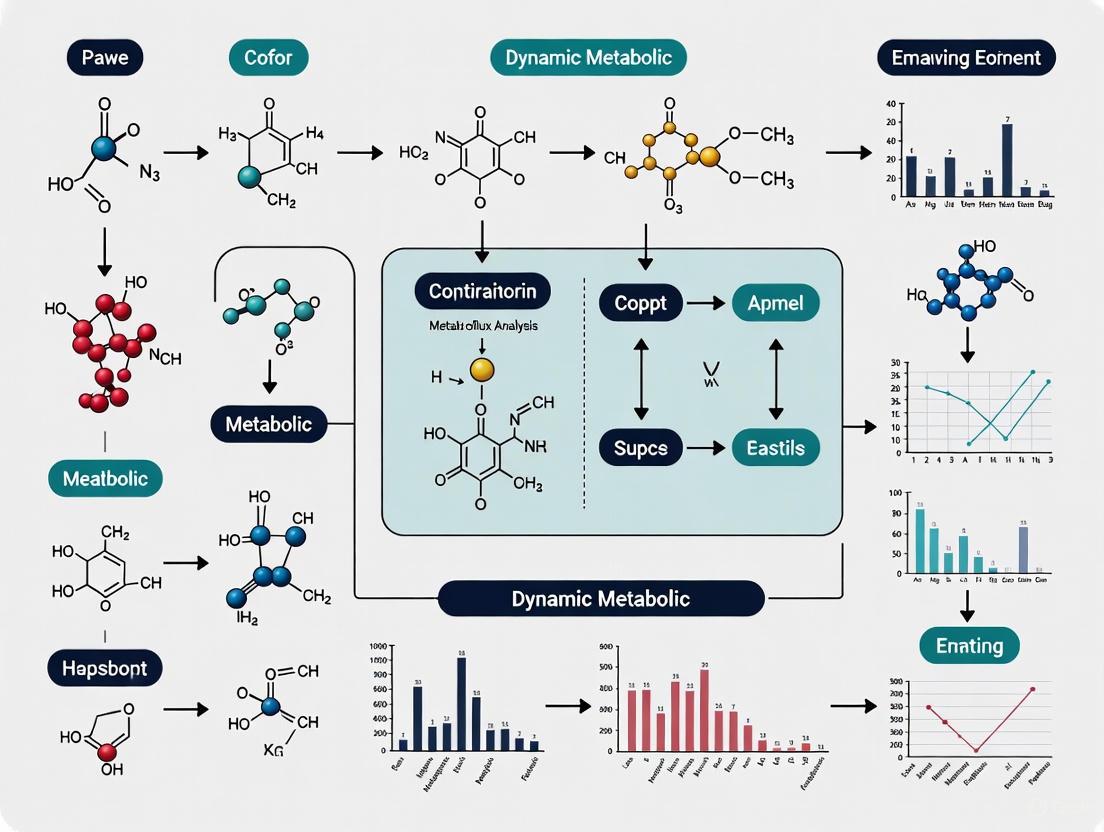
Dynamic metabolic engineering represents a paradigm shift from static genetic modification to the design of autonomous, self-regulating microbial cell factories.
Dynamic Metabolic Engineering: Revolutionizing Bioproduction with Smart Cellular Control
Abstract
Dynamic metabolic engineering represents a paradigm shift from static genetic modification to the design of autonomous, self-regulating microbial cell factories. This article provides a comprehensive overview for researchers and drug development professionals, exploring the foundational theories of dynamic control and its critical role in overcoming metabolic imbalances that limit bio-production. We delve into the core methodological toolkit—including biosensors, genetic circuits, and AI-driven regulation—and their application in optimizing the synthesis of pharmaceuticals, biofuels, and platform chemicals. The content further addresses troubleshooting central metabolism flux imbalances and showcases validation through comparative case studies that demonstrate significant enhancements in titer, yield, and productivity. By synthesizing advances from theoretical frameworks to industrial implementation, this review highlights the transformative potential of dynamic control strategies for sustainable and economically viable biomanufacturing.
From Static to Smart: The Foundations of Dynamic Metabolic Control
Dynamic metabolic engineering is a rapidly developing field that addresses biological challenges in bio-production by designing genetically encoded control systems. These systems enable microbial cells to autonomously adjust their metabolic flux in response to their external and internal metabolic state, leading to significant improvements in production titers, rates, and yields (TRY) metrics [1]. Unlike traditional static engineering, which involves fixed genetic modifications, dynamic control allows for real-time flux redistribution, balancing the often-competing demands of cell growth and product synthesis. This approach is particularly valuable for optimizing pathways where intermediate metabolites are toxic or when high product yields require complex, temporally regulated expression of pathway enzymes [1] [2].
The theoretical foundation for dynamic metabolic engineering is built upon various control strategies, including two-stage, continuous, and population-behavior control [1]. These strategies are implemented using a toolkit of biological parts and modules that function as sensors, actuators, and controllers. The advancement of this field has been enabled by synthetic biology, which provides the tools to construct sophisticated genetic circuits that can process intracellular information and execute pre-programmed logical operations to rewire metabolism efficiently [2].
Core Principles and Molecular Tools
Theoretical Control Strategies
Dynamic metabolic control systems can be categorized based on their operational logic and the signals they process:
- Two-Stage Control: This strategy separates the fermentation process into distinct growth and production phases. While conceptually simple and widely used, it lacks the flexibility to respond to real-time metabolic needs [1].
- Continuous Control: This approach allows for continuous, autonomous adjustment of metabolic fluxes throughout the fermentation process. It can be further subdivided into:
- Pathway-Dependent Control: Utilizes biosensors (e.g., transcription factors, riboswitches) that respond specifically to a pathway metabolite, linking its concentration directly to the regulation of relevant genes [2].
- Pathway-Independent Control: Employs sensors that respond to generic physiological signals, such as cell density via quorum sensing (QS), rather than specific pathway metabolites. This makes them broadly applicable across different metabolic contexts [2].
- Population Behavior Control: Leverages quorum sensing circuits to coordinate behavior across a microbial population, ensuring a unified metabolic response that is tied to the density of the culture [1] [2].
The Molecular Toolkit: Sensors and Actuators
Implementing these strategies requires a suite of molecular components that function as sensors and actuators.
Sensors: These components detect specific internal or external signals.
- Metabolite Biosensors: These include transcription factors or riboswitches that change conformation upon binding a target metabolite (e.g., glucosamine-6-phosphate), thereby regulating the expression of downstream genes [2].
- Quorum Sensing Systems: These detect population density. For example, in Bacillus subtilis, the PhrQ-RapQ-ComA system involves the PhrQ signaling peptide that accumulates extracellularly as cell density increases. It is sensed by the membrane receptor RapQ, ultimately leading to the phosphorylation and activation of the transcription factor ComA, which can then drive the expression of target genes [2].
Actuators: These components execute the control action by modulating gene expression.
- CRISPR Interference (CRISPRi): A powerful and programmable platform for gene repression. The type I CRISPRi system, which is often less toxic than the common Cas9-based type II system, uses a Cascade complex guided by CRISPR RNA (crRNA) to bind specific DNA sequences and block transcription [2].
- Transcriptional Repressors/Activators: Classical transcription factors that can be deployed to control promoter activity.
The integration of sensors and actuators creates closed-loop control circuits. For instance, a quorum-sensing module can be wired to control the expression of a CRISPRi system, enabling density-dependent repression of target metabolic genes [2].
Key Research Reagents and Solutions
Table 1: Essential research reagents and materials for implementing dynamic metabolic control.
| Reagent/Material | Function/Description |
|---|---|
| QS System Components (e.g., PhrQ, RapQ, ComA) | Genetic parts that sense cell density and transduce the signal to activate a transcriptional response [2]. |
| Type I CRISPRi System | A programmable actuator for gene repression; typically consists of genes for the Cascade complex and vectors for expressing crRNA [2]. |
| crRNA Expression Vectors | Plasmids designed for easy cloning and expression of guide RNAs that target specific metabolic genes [2]. |
| Fluorescent Reporters (e.g., GFP) | Proteins used to quantify the activity and performance of genetic circuits in vivo [2]. |
| Genome-Scale Metabolic Models (GEMs) | Computational models used to predict metabolic fluxes and identify key gene targets for intervention. Tools like Fluxer can analyze and visualize these models [3]. |
Experimental Implementation and Workflow
Implementing dynamic metabolic control is an iterative process involving design, construction, and testing. The following workflow and diagram outline the key steps for developing a QS-controlled CRISPRi (QICi) system, as demonstrated in Bacillus subtilis [2].
Diagram 1: Workflow for developing a QS-controlled CRISPRi (QICi) system.
Detailed Experimental Protocol
The following protocol details the key steps for constructing and validating a dynamic metabolic control system, based on the development of the QICi toolkit in B. subtilis [2].
In Silico Target Identification:
- Objective: Identify a key metabolic gene whose repression is predicted to enhance product yield.
- Methodology: Use a genome-scale metabolic model (GEM) of the production host. Upload the model in SBML format to a flux analysis tool like Fluxer [3].
- Procedure: Perform Flux Balance Analysis (FBA) to simulate metabolic fluxes under growth and production conditions. Analyze the resulting flux tree or dendrogram to pinpoint enzymatic reactions that act as critical control nodes (e.g., citrate synthase, citZ, in the TCA cycle for DPA production, or phosphofructokinase, pfkA, in glycolysis for riboflavin production) [3] [2].
Genetic Circuit Construction:
- Circuit Design: Design a genetic circuit where a quorum-sensing (QS)-responsive promoter (e.g., activated by ComA in B. subtilis) drives the expression of the type I CRISPRi Cascade genes. The system also includes a constitutively expressed crRNA targeting the gene identified in Step 1 [2].
- Strain and Plasmid Construction:
- Host Strains: Use an appropriate industrial chassis like B. subtilis MU8 for DPA production or B. subtilis 168 for riboflavin production [2].
- Molecular Cloning: Clone the designed crRNA sequence into a crRNA expression vector. Assemble the final plasmid(s) containing the QS-controlled CRISPRi system using TA cloning or one-step cloning methods.
- Transformation: Introduce the constructed plasmid into the host strain using standard transformation protocols. Select transformants using appropriate antibiotics (e.g., bleomycin, chloramphenicol) [2].
Fermentation and Dynamic Regulation:
- Cultivation Conditions: Grow the engineered strain in a defined medium (e.g., M9 medium with glucose) in a bioreactor. Maintain optimal temperature (37°C) and agitation (200 rpm) [2].
- Autonomous Activation: During the early exponential phase, cell density and the QS signal (PhrQ) are low. The CRISPRi system remains off, allowing expression of the target gene and supporting robust cell growth.
- Onset of Repression: As the culture reaches high cell density in the mid-to-late exponential phase, the accumulated QS signal triggers the expression of the CRISPRi system. This leads to repression of the target gene (e.g., citZ), dynamically redirecting metabolic flux away from growth-associated pathways and toward the desired product.
Validation and Analytics:
- Circuit Performance: Monitor circuit activity using a fluorescent reporter (e.g., GFP) linked to the QS-responsive promoter. Measure optical density (OD600) and relative fluorescence units (RFU) every 2 hours to correlate cell density with circuit activation [2].
- Product Quantification: Quantify the final product titer using analytical methods such as HPLC. Compare the performance of the dynamically controlled strain against control strains (e.g., wild-type, static overexpression, or knockout mutants).
- Data Analysis: Calculate key metrics including Titer (g/L), Rate (g/L/h), and Yield (g product/g substrate). Statistical analysis should be performed to confirm the significance of improvements.
Application Case Studies and Quantitative Outcomes
The efficacy of dynamic metabolic engineering is demonstrated by its application in enhancing the production of valuable compounds. The table below summarizes key experimental data from two case studies implementing the QICi system in B. subtilis [2].
Table 2: Performance metrics of dynamic metabolic engineering in B. subtilis for DPA and Riboflavin production.
| Target Product | Gene Targeted for Dynamic Regulation | Metabolic Pathway Objective | Key Engineering Interventions | Reported Titer (Fed-Batch) |
|---|---|---|---|---|
| d-pantothenic acid (DPA) | citZ (citrate synthase) | Reduce TCA cycle flux to balance growth with DPA precursor supply [2]. | Dynamic downregulation of citZ via QICi; pantoate pathway engineering; enhanced cofactor supply; suppression of sporulation [2]. | 14.97 g/L [2] |
| Riboflavin (RF) | pfkA (phosphofructokinase) | Redirect carbon flux from glycolysis (EMP) to the pentose phosphate pathway (PPP) [2]. | Dynamic downregulation of pfkA via QICi to enhance PPP precursor supply for riboflavin biosynthesis [2]. | 2.49-fold increase vs. control [2] |
The logical flow of the QICi system in redirecting central carbon metabolism for these products is visualized in the following pathway diagram.
Diagram 2: Metabolic flux redistribution using the QICi system.
Dynamic metabolic engineering represents a paradigm shift from static genetic modification to intelligent, self-regulating cellular systems. By leveraging synthetic biology tools like biosensors, quorum sensing, and programmable CRISPRi systems, it is possible to create strains that autonomously optimize their metabolic performance in real-time. The documented success in significantly boosting the production of compounds like d-pantothenic acid and riboflavin in B. subtilis underscores the transformative potential of this approach [2].
The future of this field lies in the development of more precise and robust genetic components, the integration of multiple orthogonal control systems, and the application of machine learning to design optimal control circuits. As the molecular toolkit expands and our understanding of cellular regulation deepens, dynamic metabolic engineering is poised to become a standard methodology for developing high-performance microbial cell factories for sustainable biomanufacturing of pharmaceuticals, chemicals, and materials.
Metabolic engineering, defined as the science of rewiring cellular metabolism to enhance the production of chemicals and fuels from renewable resources, has undergone a remarkable transformation since its formal inception in the early 1990s [4]. This field has progressed through three distinct waves of technological innovation, each building upon the previous to address increasingly complex challenges in bio-production. The first wave established rational approaches to pathway manipulation, the second incorporated systems-level understanding through genome-scale models, and the current third wave leverages synthetic biology tools to implement sophisticated dynamic control systems [4]. This progression has been largely driven by the need to overcome the inherent robustness of cellular metabolic networks, which resist diversion from their natural, growth-oriented functions [4]. The evolution has moved metabolic engineering from simple, static genetic modifications toward dynamic, autonomous control systems that can sense and respond to metabolic states, thereby optimizing the trade-offs between cell growth and product formation that have long challenged the field [5] [6].
The First Wave: Rational Metabolic Engineering
The first wave of metabolic engineering began in the 1990s and was characterized by rational, hypothesis-driven approaches to pathway modification. During this period, scientists recognized that natural metabolic pathways could be enumerated and assessed for converting specific substrates to target products [4]. Seminal papers by Bailey and by Stephanopoulos and Vallino essentially initiated the field by establishing the fundamental principles of metabolic flux manipulation [4].
Core Principles and Methodologies
First-wave metabolic engineering relied on the identification of potential "rate-limiting steps" in metabolic pathways through techniques such as metabolic flux analysis. The primary strategy involved the targeted overexpression or deletion of genes encoding key metabolic enzymes to redirect flux toward desired products [4]. This approach required a detailed understanding of pathway stoichiometry and regulation, but operated without the comprehensive, genome-wide perspective that would later emerge.
A classic example demonstrating the success of this approach is the overproduction of lysine in Corynebacterium glutamicum. Through metabolic flux analysis with labeled glucose, pyruvate carboxylase and aspartokinase were identified as potential bottlenecks in the lysine biosynthesis pathway. When both enzymes were simultaneously expressed, this engineered strain achieved a 150% increase in lysine productivity while maintaining the same growth rate as the control strain [4]. This case exemplified the rational approach of identifying and modifying specific control points in metabolism.
Key Experimental Protocols
Protocol: Identification and Engineering of Rate-Limiting Steps
- Pathway Analysis: Use tracer compounds (e.g., 14C-labeled glucose) to determine in vivo metabolic flux distributions in the native strain [4].
- Bottleneck Identification: Identify enzymes with significant metabolite accumulation upstream and limited flux downstream as potential rate-limiting steps.
- Genetic Modification: Clone genes encoding target enzymes into appropriate expression vectors under strong promoters.
- Strain Evaluation: Measure product titers, yields, and productivity in engineered versus control strains under controlled fermentation conditions.
The Second Wave: Systems Biology Integration
The second wave of metabolic engineering emerged in the 2000s, propelled by advances in systems biology and the development of genome-scale modeling approaches. This wave expanded the view of metabolic pathways from isolated sequences of reactions to interconnected networks functioning at a systemic level [4]. The pioneering work of Bernhard Ø Palsson was particularly influential in establishing genotype-phenotype relationships that enabled exploration of the full metabolic potential of cell factories [4].
Genome-Scale Metabolic Models (GEMs)
The cornerstone of second-wave metabolic engineering was the development and application of genome-scale metabolic models (GEMs). These computational reconstructions encompass the entire metabolic network of an organism, including all known biochemical reactions, gene-protein-reaction associations, and thermodynamic constraints [4] [7]. GEMs enabled in silico prediction of metabolic behaviors under different genetic and environmental conditions.
Key computational tools that emerged during this period included:
- Flux Balance Analysis (FBA): A constraint-based modeling approach that predicts flux distributions in metabolic networks by optimizing an objective function (e.g., biomass formation) [7].
- OptKnock: An algorithm that identifies gene knockout strategies for coupling growth with product formation [6].
- Model SEED: An automated pipeline for high-throughput generation of genome-scale metabolic models from annotated genomic sequences [7].
These tools successfully predicted strategies for bioengineering applications such as bioethanol production in Saccharomyces cerevisiae and adipic acid production in Escherichia coli [4].
Computational and Experimental Workflow
The integration of computational modeling with experimental validation became the standard approach during this wave. The typical workflow involved:
- Network Reconstruction: Building a genome-scale metabolic model using annotated genomic data and biochemical databases [7].
- In Silico Prediction: Using computational algorithms to identify genetic modifications that would enhance product formation.
- Strain Construction: Implementing predicted modifications using genetic engineering tools.
- Systems Validation: Using omics technologies (transcriptomics, proteomics, metabolomics) to verify model predictions and refine the network reconstruction.
Figure 1: Systems Biology Workflow for Metabolic Engineering. This diagram illustrates the iterative process of model building, prediction, and experimental validation characteristic of second-wave metabolic engineering.
The Third Wave: Synthetic Biology and Dynamic Control
The current third wave of metabolic engineering began in the 2010s, marked by the integration of sophisticated synthetic biology tools that enable precise control over metabolic pathways. This wave started with foundational work by Jay D. Keasling, who demonstrated that complete metabolic pathways could be designed, constructed, and optimized using synthetic nucleic acid elements for production of noninherent chemicals such as artemisinin [4]. The third wave has expanded the array of attainable products and significantly improved titers, rates, and yields through dynamic control strategies [4] [5].
Dynamic Metabolic Engineering Principles
Dynamic metabolic engineering represents a paradigm shift from static genetic modifications toward genetically encoded control systems that allow microbes to autonomously adjust their metabolic flux in response to changing internal and external conditions [5]. This approach addresses critical challenges in metabolic engineering, including metabolic burden, cofactor imbalance, and accumulation of toxic intermediates [5] [6].
Key theoretical frameworks for dynamic control include:
- Two-Stage Metabolic Switches: Decouple biomass accumulation from product formation by implementing genetic circuits that switch between growth and production phases [5].
- Continuous Metabolic Control: Utilize biosensors and feedback loops to maintain optimal flux distributions throughout the fermentation process [5].
- Population Behavior Control: Implement quorum-sensing systems to coordinate metabolic behaviors across microbial populations [5].
The theoretical benefit of dynamic control was demonstrated in early modeling studies, which predicted that dynamically switching enzyme expression could improve glycerol production by over 30% compared to static approaches [5] [6].
Molecular Tools for Dynamic Control
The implementation of dynamic control systems relies on two fundamental components: sensors that detect metabolic states and actuators that modulate gene expression accordingly [5].
Biosensors for Metabolic Intermediates:
- Transcription Factor-Based Sensors: Native or engineered transcription factors that bind specific metabolites and regulate output promoter activity.
- RNA-Based Sensors: Riboswitches and other RNA devices that undergo conformational changes upon metabolite binding.
- Protein-Based Sensors: Allosteric enzymes or two-component systems that transduce metabolic signals into genetic responses.
Actuators for Metabolic Modulation:
- Promoter Systems: Tunable promoters that respond to biosensor outputs.
- CRISPRi Systems: CRISPR-based interference for targeted gene repression.
- Protein Degradation Tags: SsrA and other tags for controlled protein degradation [6].
Figure 2: Dynamic Metabolic Control System Architecture. This diagram shows the core components of a dynamic metabolic engineering system, including biosensors, genetic circuits, and actuators that create autonomous feedback control.
Representative Experimental Protocols
Protocol: Implementing a Two-Stage Dynamic Control System
- Valve Identification: Use computational algorithms (e.g., OptSwitch) to identify metabolic reactions that can serve as effective switches between growth and production states [5].
- Biosensor Selection: Choose or engineer a biosensor that responds to a key metabolic indicator (e.g., acetyl-phosphate for glycolytic flux) [6].
- Circuit Construction: Assemble genetic elements connecting the biosensor to the metabolic valve using standard synthetic biology techniques (Golden Gate assembly, Gibson assembly).
- System Characterization: Measure the transfer function of the biosensor-circuit system and the dynamic range of the metabolic valve in laboratory strains.
- Performance Validation: Test the engineered strain in controlled bioreactors, comparing productivity metrics against static control strains.
Protocol: Biosensor-Mediated Pathway Balancing
- Pathway Analysis: Identify potential metabolic bottlenecks or toxic intermediate accumulation points in heterologous pathways.
- Biosensor Development: Engineer metabolite-responsive promoters using transcription factors that bind the target intermediate.
- Controller Design: Construct genetic circuits that downregulate upstream pathway enzymes when intermediate concentrations exceed optimal levels.
- Library Screening: Generate variant libraries with different expression levels of biosensor and actuator components.
- High-Throughput Selection: Use fluorescence-activated cell sorting (FACS) to isolate strains with desired dynamic control characteristics.
Quantitative Comparison of Metabolic Engineering Approaches
Table 1: Performance Metrics Across the Three Waves of Metabolic Engineering
| Product | Host Organism | Wave | Titer (g/L) | Yield (g/g) | Productivity (g/L/h) | Key Engineering Strategy |
|---|---|---|---|---|---|---|
| Lysine | Corynebacterium glutamicum | First | N/A | N/A | +150% | Overexpression of pyruvate carboxylase and aspartokinase [4] |
| 1,4-Butanediol | E. coli | Second | Commercial | Commercial | Commercial | Genome-scale model prediction [8] |
| Artemisinin | S. cerevisiae | Third | Commercial | Commercial | Commercial | Heterologous pathway engineering [4] [8] |
| Lycopene | E. coli | Third | 18-fold improvement | N/A | N/A | Dynamic control of pps and idi [6] |
| 3-Hydroxypropionic acid | C. glutamicum | Third | 62.6 | 0.51 | N/A | Substrate and genome editing engineering [4] |
| Lactic Acid | C. glutamicum | Third | 264 | 0.95 | N/A | Modular pathway engineering [4] |
| Succinic Acid | E. coli | Third | 153.36 | N/A | 2.13 | Modular pathway engineering, high-throughput genome engineering [4] |
Table 2: Computational Tools for Metabolic Engineering Across Development Waves
| Tool Name | Wave | Function | Application Example |
|---|---|---|---|
| Metabolic Flux Analysis | First | Quantifies in vivo metabolic fluxes | Identification of rate-limiting steps in lysine production [4] |
| Flux Balance Analysis (FBA) | Second | Predicts steady-state flux distributions | Bioethanol production optimization [4] [7] |
| OptKnock | Second | Identifies gene knockout strategies | Succinic acid production in E. coli [6] |
| ecFactory | Third | Predicts enzyme-constrained metabolic engineering targets | Production of 103 chemicals in S. cerevisiae [9] |
| GECKO Toolbox | Third | Incorporates enzyme kinetics into genome-scale models | Identification of protein-constrained products [9] |
| KEGG Pathway | Second/Third | Metabolic pathway database and analysis | Pathway prospecting and comparative analysis [7] |
| MetaCyc/BioCyc | Second/Third | Metabolic pathway database | Network reconstruction and enzyme information [7] |
The Scientist's Toolkit: Essential Research Reagents and Materials
Table 3: Key Research Reagent Solutions for Dynamic Metabolic Engineering
| Reagent/Material | Category | Function | Example Applications |
|---|---|---|---|
| Genome-Scale Models | Computational Tool | Predicts metabolic fluxes and identifies engineering targets | OptKnock for gene knockout strategies [6] |
| Biosensor Transcription Factors | Molecular Tool | Detects metabolite levels and transduces signals | Ntr regulon for acetyl-phosphate sensing [6] |
| Synthetic Promoter Libraries | Genetic Part | Provides tunable expression levels | Fine-tuning pathway enzyme expression [6] |
| CRISPRi Systems | Editing Tool | Enables targeted gene repression | Dynamic control of essential genes [5] |
| SsrA Degradation Tags | Protein Engineering | Enables controlled protein degradation | Targeted degradation of FabB for octanoate production [6] |
| Fluorescent Reporters | Screening Tool | Enables high-throughput selection | FACS screening of dynamic control systems [5] |
| Microfluidic Devices | Screening Platform | Enables single-cell analysis | Characterization of population heterogeneity [5] |
| Enzyme-Constrained Models (ecModels) | Computational Tool | Incorporates protein allocation constraints | Identification of protein-limited reactions [9] |
The evolution of metabolic engineering through three distinct waves has transformed our ability to reprogram cellular metabolism for industrial bio-production. The field has progressed from simple rational approaches to sophisticated dynamic control strategies that autonomously manage the fundamental trade-offs between cell growth and product formation. Current research continues to advance the third wave through several emerging frontiers:
Machine Learning Integration: The combination of mechanistic models with machine learning approaches promises to accelerate the design-build-test-learn cycle, enabling more predictive strain design and reducing development timelines [4] [9].
Advanced Biosensor Engineering: Expanding the repertoire of metabolite-responsive elements through protein engineering and computational design will enable more precise dynamic control over a wider range of metabolic pathways [5].
Multi-Strain Coordination: Developing communication systems between different engineered strains to distribute metabolic burden and enable division of labor in complex biosynthetic pathways [5].
Enzyme-Constrained Modeling: The integration of enzymatic capacity constraints into genome-scale models, as exemplified by the ecFactory pipeline, provides more realistic predictions of metabolic capabilities and limitations [9].
The progression from static to dynamic metabolic control represents a fundamental shift in how we approach cellular engineering. By creating systems that can autonom sense, compute, and respond to changing metabolic conditions, dynamic metabolic engineering offers a powerful framework for overcoming the inherent trade-offs that have long limited bio-production. As these tools and strategies continue to mature, they will undoubtedly enable the production of an ever-expanding range of valuable chemicals, materials, and pharmaceuticals from renewable resources, further establishing microbial cell factories as pillars of sustainable industrial processes.
Dynamic metabolic engineering represents a paradigm shift in the design of microbial cell factories, moving from static, constitutive genetic expression to engineered systems that can autonomously sense and respond to changing metabolic conditions [1] [10]. This approach addresses a fundamental challenge in metabolic engineering: the inherent trade-off between cell growth and product synthesis. Introducing heterologous pathways often disrupts native metabolism, creating burden, cofactor imbalances, or toxic intermediate accumulation that impairs host fitness and overall production metrics [11] [12]. Dynamic control strategies solve this problem by enabling real-time flux adjustment, allowing engineers to design strains that initially prioritize biomass accumulation before switching to high-yield production states, or that continuously balance these competing objectives [1]. These strategies are broadly categorized into three core frameworks—two-stage, continuous, and population-based control—each with distinct mechanisms, implementation requirements, and performance characteristics [10]. The theoretical foundation for these approaches draws from control theory, synthetic biology, and systems biology, providing a mechanistic basis for designing controllers that improve titers, rates, and yields beyond what is achievable with static optimization alone [1].
Theoretical Foundation and Design Principles
The theoretical underpinning of dynamic metabolic control rests on the formal application of control logic to biological circuits [10]. At its simplest, this involves designing genetic circuits that implement feedback control, where an intracellular metabolite or extracellular signal is sensed and used to regulate pathway enzyme expression or activity. The core design principles address the fundamental growth-synthesis trade-off, where competition for limited cellular resources between native metabolism and heterologous pathways inherently limits production performance in static strains [11]. Computational models using "host-aware" frameworks that capture competition for both metabolic and gene expression resources have revealed that maximum volumetric productivity and yield in batch cultures require an optimal sacrifice in growth rate to achieve sufficient synthesis, a balance that dynamic control strategies are uniquely positioned to deliver [11].
Table 1: Core Control Logics in Dynamic Metabolic Engineering
| Control Logic | Fundamental Principle | Key Advantage | Primary Challenge |
|---|---|---|---|
| Open-Loop (Two-Stage) | Manual, pre-programmed switching between growth and production phases based on time or external inducer [10]. | Simple design and implementation; effectively decouples growth and production. | Requires external intervention; not responsive to internal metabolic state. |
| Closed-Loop (Feedback) | Autonomous regulation based on sensing of intracellular metabolites or extracellular signals [10]. | Self-optimizing; maintains homeostasis; responds to real-time process variability. | Biosensor development can be complex; potential instability or oscillation. |
| Population Control | Coordination of behaviors across a microbial population to ensure culture-level performance [1]. | Prevents sub-population formation; ensures synchronized production phase. | Requires cell-cell communication circuits; more complex genetic design. |
Two-Stage Control Strategies
Core Theory and Implementation
The two-stage control framework, also known as two-phase dynamic regulation, deliberately decouples the fermentation process into distinct temporal phases: a growth phase dedicated to rapid biomass accumulation, followed by a production phase where metabolic flux is redirected toward the target compound [10] [12]. This decoupling buffers the inherent conflict between endogenous metabolism and heterologous pathways, as production enzymes or pathway repressions are only activated after a substantial cell population has been established [10]. The theoretical motivation is to overcome the growth-synthesis trade-off by first maximizing the catalyst (cell) concentration before activating the production machinery, thereby maximizing volumetric productivity [11].
Experimental Protocols and Induction Mechanisms
Implementing a two-stage system requires a genetic switch to transition from growth to production. This is typically achieved using inducible promoters controlled by chemical or physical signals [10].
Chemical Inducers: Common systems include aTc and IPTG in E. coli, and the glucose-repressed, galactose-activated GAL promoters in S. cerevisiae [10]. The standard protocol involves growing the culture in a non-inducing medium until the mid-exponential phase (OD600 ~0.5-0.8), followed by the addition of a predetermined concentration of the chemical inducer (e.g., 0.1-1 mM IPTG) to initiate the production phase.
Physical Inducers: Temperature and light are widely used physical triggers. The classic λ phage PR/PL promoter system, repressed by CI at 30°C and activated at 37-42°C, is a well-established tool [10]. A standard workflow involves growing cultures at 30°C until the desired density is reached, then rapidly shifting the temperature to 42°C to activate the production genes. Optogenetic systems, such as the EL222 blue-light-sensitive protein, offer high temporal precision [10]. In a reported isobutanol production system in yeast, blue light represses a competing gene (pdc), while darkness activates the biosynthetic gene (ILV2), creating a light-defined growth phase and a dark-defined production phase [10].
Table 2: Comparison of Two-Stage Induction Systems
| Inducer Type | Example System | Typical Host | Induction Protocol | Performance Gain (Example) |
|---|---|---|---|---|
| Chemical (aTc/IPTG) | TetR/TetO; LacI/LacO | E. coli | Add 0.1-1 mM inducer at mid-exponential phase | Used for anthocyanin, isopropanol, 1,4-butanediol [10] |
| Chemical (Galactose) | GAL1, GAL10 promoters | S. cerevisiae | Shift from glucose to galactose media | Increased artemisinin productivity [10] |
| Temperature | PR/PL promoter system | E. coli | Temperature shift from 30°C to 42°C | 3.8-fold increase in ethanol productivity [10] |
| Light (Blue) | EL222/Pc120 system | S. cerevisiae | Shift from blue light to darkness | 1.6-fold increase in isobutanol titer [10] |
| pH | PYGP1, PGCW14 promoters | S. cerevisiae | Allow culture to acidify or buffer at low pH | 10-fold increase in lactic acid titer |
Figure 1: Generalized experimental workflow for a two-stage dynamic control process, showing the decoupled growth and production phases.
Continuous Control Strategies
Core Theory and Implementation
Continuous control strategies, often implemented as closed-loop feedback systems, enable autonomous, real-time adjustment of metabolic flux in response to the cell's instantaneous metabolic state [1] [10]. Unlike the pre-programmed switching in two-stage systems, continuous control uses biosensors to detect specific intracellular metabolites, which then modulate the expression of pathway enzymes to maintain an optimal flux balance without external intervention [10]. This approach mimics the "just-in-time transcription" found in natural metabolic networks and is particularly valuable for managing toxic intermediate accumulation or for fine-tuning flux distribution at key metabolic branch points [10].
Key Control Logics and Circuit Designs
The functionality of continuous control systems is defined by their underlying regulatory logic, which is hardwired into the genetic circuit design [10].
Positive Feedback Control: This logic amplifies a desired metabolic state. For example, a biosensor for a pathway intermediate can be designed to activate the expression of the pathway enzymes, creating a self-reinforcing production loop that locks the cell into a high-synthesis state once a metabolite threshold is crossed [10].
Negative Feedback Control: This logic maintains homeostasis by downregulating pathway enzyme expression when intermediate concentrations become too high, preventing the accumulation of toxic metabolites and stabilizing flux [10].
Oscillation-Based Control: Some advanced circuits are designed to generate periodic pulses of gene expression. This can be useful to avoid the negative physiological impacts of sustained, high-level expression of heterologous proteins, potentially improving long-term culture stability and productivity [10].
Population-Based Control Strategies
Core Theory and Implementation
Population-based control strategies focus on coordinating behavior across the entire cellular population within a bioreactor, rather than optimizing individual cell performance [1]. The core theoretical challenge is the emergence of sub-populations, where non-producing "cheater" cells that avoid the metabolic burden of synthesis can outgrow the high-producing cells, leading to a progressive decline in overall culture productivity [1]. Population control circuits address this by ensuring all cells transition synchronously from growth to production, often by using quorum-sensing systems that link the activation of the production pathway to cell density [1].
Circuit Design and Molecular Mechanisms
The implementation of population control typically relies on cell-cell communication systems. A common design utilizes elements from natural quorum-sensing pathways, where a signaling molecule (e.g., AHL) accumulates in the medium proportionally to cell density [1]. At a critical threshold concentration, the signal is detected by a transcriptional regulator, which then activates the expression of the heterologous production genes across the entire population simultaneously. This ensures that no individual cell gains a fitness advantage by delaying production, thereby stabilizing the culture's phenotype and protecting productivity over extended fermentation times [1].
Figure 2: Logic of a population-based control strategy using quorum sensing to synchronize the metabolic state of all cells in a culture.
The Scientist's Toolkit: Research Reagent Solutions
Table 3: Essential Research Reagents for Dynamic Metabolic Engineering
| Reagent / Tool | Function | Key Examples & Notes |
|---|---|---|
| Chemical-Inducible Promoters | Enable external, manual control of gene expression. | aTc/IPTG systems (E. coli); GAL system (yeast); cost can be prohibitive at scale [10]. |
| Physical-Inducible Promoters | Enable external control without chemical cost; offer high temporal precision. | PR/PL (temperature); EL222/Pc120 (blue light); suboptimal temperatures can affect native metabolism [10]. |
| Transcription Factor (TF)-Based Biosensors | Core component for continuous control; senses metabolite and regulates transcription. | Naturally-derived (e.g., FapR for malonyl-CoA) or engineered TFs; specificity and dynamic range are key parameters [13]. |
| Quorum-Sensing Modules | Enables population-level synchronization of behavior. | LuxI/LuxR (AHL systems) from V. fischeri; used to tie production onset to cell density [1]. |
| Host-Aware Model Frameworks | Computational design to predict strain performance & resource competition. | Models capturing metabolism & gene expression; used for in silico optimization of enzyme expression levels [11]. |
| Ribosome Binding Site (RBS) Libraries | Fine-tune translation initiation rates for balanced enzyme expression. | Used to optimize the expression levels of multiple enzymes in a pathway without changing promoters [11]. |
The theoretical frameworks of two-stage, continuous, and population-based control represent a sophisticated toolkit for addressing the fundamental challenges of metabolic engineering. Two-stage control provides a straightforward method to decouple growth and production, continuous control enables intelligent, real-time self-optimization, and population control ensures robust, synchronized performance at the culture level. The choice of framework depends on the specific metabolic challenge, host organism, and process requirements. Future advancements will likely involve integrating these strategies into more complex, multi-layered control systems and expanding the library of robust, well-characterized biosensors and genetic parts to reliably implement these theoretical designs in industrial production strains [1] [10].
Metabolic engineering research is increasingly dynamic, moving beyond static genetic modifications to embrace approaches that sense and respond to cellular physiology in real-time. This paradigm shift is crucial for addressing the core biological challenges that hinder the industrial production of biofuels, pharmaceuticals, and specialty chemicals. These challenges—metabolic imbalances, product toxicity, and inherently low yields—are interconnected barriers that often undermine the economic viability of biologically engineered processes [14]. Metabolic imbalances occur when engineered pathways disrupt the host's native metabolism, leading to cofactor depletion, accumulation of intermediate metabolites, and suboptimal flux toward the desired product [15]. Product toxicity, particularly relevant in biofuel production where compounds like butanol can disrupt cellular membranes, limits the final achievable titer [14] [15]. Meanwhile, low yields stemming from inefficient substrate conversion and carbon loss through competing pathways remain a fundamental constraint across applications [16] [17].
Dynamic metabolic engineering represents the vanguard of this field, employing synthetic biology tools to create intelligent systems that automatically regulate metabolic flux in response to changing intracellular conditions [18]. This review provides an in-depth technical examination of the strategies, tools, and methodologies being deployed to overcome these persistent challenges, with a particular focus on their implementation within the context of biofuel and bioproduct synthesis. Through advanced computational models, innovative genetic circuits, and protein engineering, researchers are developing increasingly sophisticated solutions that maintain cellular homeostasis while maximizing production efficiency.
Computational Design and Modeling for Pathway Balancing
Genome-Scale Modeling and Quality Control
The foundation of modern metabolic engineering lies in computational design, which enables the prediction of metabolic behaviors before laboratory implementation. Genome-scale metabolic models (GEMs) mathematically represent an organism's entire metabolic network, integrating genomic annotation with biochemical knowledge [17] [19]. These models allow researchers to simulate cellular metabolism under different genetic and environmental conditions using Flux Balance Analysis (FBA), which calculates flow of metabolites through biochemical networks by optimizing an objective function (e.g., biomass or product formation) within physicochemical constraints [17] [19].
A significant advancement in this area is the development of the Cross-Species Metabolic Network (CSMN) model and the Quantitative Heterologous Pathway Design algorithm (QHEPath). This integrated system addresses a critical challenge: the inherent errors in universal models that can lead to biologically impossible predictions, such as infinite metabolite generation. The quality-control workflow for CSMN employs parsimonious enzyme usage FBA (pFBA) to iteratively identify and remove reactions causing network inconsistencies, ensuring calculated maximum yields align with biochemical feasibility [17]. In a comprehensive evaluation of 12,000 biosynthetic scenarios across 300 products, this approach revealed that over 70% of product pathway yields could be improved by introducing appropriate heterologous reactions, identifying 13 distinct engineering strategies categorized as carbon-conserving and energy-conserving [17].
Pathway Prospecting and Algorithmic Design
Computational tools have evolved from descriptive models to prescriptive design platforms. The QHEPath algorithm specifically addresses the challenge of identifying heterologous reactions that break the stoichiometric yield limits of native host metabolism [17]. Unlike earlier tools like OptStrain, QHEPath distinguishes between reactions necessary for pathway functionality and those specifically responsible for enhancing yield beyond native constraints, enabling more targeted engineering strategies [17].
Table 1: Computational Tools for Metabolic Network Reconstruction and Analysis
| Tool Name | Primary Function | Key Features | Application in Metabolic Engineering |
|---|---|---|---|
| QHEPath | Quantitative heterologous pathway design | Identifies yield-enhancing reactions; web server interface | Breaking stoichiometric yield limits in host organisms [17] |
| Model SEED | High-throughput model reconstruction | Integrates genome annotations, gap analysis, thermodynamics | Automated generation of genome-scale metabolic models [7] |
| BiGG Database | Curated metabolic reconstructions | Mass and charge balanced reactions; gene-protein-reaction associations | Reference database for high-quality network models [17] [7] |
| KEGG Pathway | Metabolic pathway reference | Manually drawn reference pathways; KGML export format | Comparative analysis and pathway visualization [7] |
| MetaCyc | Metabolic pathway database | Organism-specific pathway diagrams; literature references | Enzyme and reaction information for pathway design [7] |
Standardized representation formats are crucial for tool interoperability. The Systems Biology Markup Language (SBML) has emerged as the common format for representing metabolic pathway models, with 222 supporting tools as of recent counts [7]. Complementary standards like the Systems Biology Ontology (SBO) and Biological Pathway Exchange (BioPAX) language enable precise semantic annotation of pathway components, facilitating accurate knowledge exchange between databases and analytical tools [7].
Figure 1: Computational Workflow for Metabolic Engineering. The process begins with objective definition and proceeds through data gathering, model reconstruction, quality control, computational analysis, and experimental validation in an iterative cycle.
Dynamic Regulation Strategies for Metabolic Balance
Quorum Sensing-Controlled CRISPRi Systems
Dynamic regulation represents a paradigm shift from static metabolic engineering toward responsive systems that automatically adjust metabolic flux based on cellular physiology. A recent groundbreaking approach integrates quorum sensing (QS) with CRISPR interference (CRISPRi) to create a QS-controlled Type I CRISPRi (QICi) toolkit that modulates gene expression in response to cell density [18]. This system utilizes the native bacterial communication mechanism where cells produce and detect signaling molecules called autoinducers. As cell density increases, autoinducer concentration rises, triggering population-wide changes in gene expression [18].
In the optimized QICi system, key components PhrQ and RapQ were engineered to achieve a twofold enhancement in regulation efficacy [18]. When applied to Bacillus subtilis for d-pantothenic acid (DPA) biosynthesis, dynamic regulation of the citrate synthase gene citZ enabled automatic redirection of metabolic flux toward product formation during high-cell-density fermentation. Combined with pantoate pathway engineering, cofactor supply enhancement, and sporulation suppression, this approach achieved remarkable titers of 14.97 g/L in 5-L fed-batch fermentations without precursor supplementation [18]. Similarly, QICi-mediated metabolic rewiring of key nodes boosted riboflavin production by 2.49-fold, demonstrating the broad applicability of this dynamic control strategy [18].
Cofactor Engineering and Redox Balancing
Cofactor imbalance represents a fundamental challenge in metabolic engineering, particularly when engineered pathways impose unnatural demands on the host's redox state. The redox cofactors NADH and NADPH serve as essential electron carriers in cellular metabolism, and imbalances can severely limit pathway efficiency [15]. Several innovative strategies have emerged to address this challenge:
Noncanonical cofactor utilization represents a promising approach for bypassing native regulatory constraints. By engineering pathways to use alternative cofactors like NADH instead of NADPH, or vice versa, engineers can circumvent competition with native metabolism and drive flux toward desired products [15]. For n-butanol production, this strategy has shown particular promise, with protein engineering of enzymes like aldehyde/alcohol dehydrogenase (ADHE2) enabling improved coupling with preferred cofactor pools [15].
Cofactor regeneration systems create synthetic cycles that maintain optimal cofactor ratios. For example, the expression of transhydrogenase genes (pntAB) enables interconversion between NADH and NADPH, preventing depletion of either cofactor pool [14]. In E. coli engineered for biofuel production, this approach helped alleviate NADPH depletion caused by furfural toxicity, restoring sulfate assimilation and growth under inhibitory conditions [14].
Table 2: Dynamic Regulation Tools and Their Applications
| Regulation System | Key Components | Induction Mechanism | Documented Applications | Performance Achieved |
|---|---|---|---|---|
| QICi Toolkit | PhrQ, RapQ, CRISPRi | Cell density (Quorum Sensing) | d-pantothenic acid, riboflavin production | 14.97 g/L DPA; 2.49x riboflavin increase [18] |
| NAD(P)H Regeneration | Transhydrogenase (pntAB) | Cofactor imbalance | Furfural tolerance in E. coli | Restored growth under inhibitor conditions [14] |
| Noncanonical Cofactor Systems | Engineered dehydrogenases | Pathway demand | n-butanol production | Improved yield and titer [15] |
Overcoming Product Toxicity and Inhibitor Effects
Membrane Stress and Solvent Tolerance
Product toxicity presents a fundamental limitation in biofuel production, where compounds like n-butanol disrupt cellular membranes and inhibit growth at concentrations as low as 2% [15]. Clostridium acetobutylicum, a native butanol producer, has been extensively engineered to enhance tolerance through both evolutionary and targeted approaches. Adaptive laboratory evolution of strain JB200 generated mutants capable of producing 20.3 g/L butanol with a yield of 0.23 g/g glucose [15]. Targeted knockout of the cac3319 gene further enhanced tolerance, enabling production of 18.2 g/L [15].
The toxicity challenge extends beyond final products to inhibitors present in lignocellulosic hydrolysates, the primary feedstocks for advanced biofuels. Pretreatment of lignocellulose generates compounds like furfural, hydroxymethyl furfural (HMF), and phenolic compounds that inhibit microbial growth and fermentation [14]. Furfural is particularly problematic as it induces reactive oxygen species and depletes NADPH through the activity of NADPH-dependent oxidoreductases like YqhD [14]. Strategic engineering of E. coli involving deletion of yqhD coupled with cysteine supplementation significantly enhanced furfural tolerance [14]. Similarly, overexpression of alternative oxidoreductases like FucO provided reduction capacity without NADPH depletion, offering another effective tolerance mechanism [14].
Efflux Systems and In Situ Product Removal
Engineering active efflux systems represents a promising strategy for mitigating intracellular toxin accumulation. While not explicitly detailed in the search results, the principle involves overexpression of transporter proteins that actively export toxic compounds from cells. When combined with in situ product removal (ISPR) technologies, this approach can significantly enhance overall production. For example, in vacuum-assisted fermentation of C. acetobutylicum strain CAB1060, continuous butanol removal enabled unprecedented titers of 550 g/L with a yield of 0.35 g/g glucose and productivity of 14 g/L/h [15]. This demonstrates how integrated bioprocessing strategies can overcome toxicity limitations that are insurmountable through genetic engineering alone.
Figure 2: Product Toxicity Challenges and Engineering Solutions. Toxicity mechanisms (red) include membrane disruption, oxidative stress, cofactor depletion, and enzyme inhibition. Engineering solutions (green) provide targeted mitigation strategies.
Yield Enhancement Through Pathway Optimization
Non-Oxidative Glycolysis and Carbon Conservation
Yield enhancement represents the ultimate goal of metabolic engineering, with carbon efficiency directly impacting economic viability. A powerful strategy involves implementing non-oxidative glycolysis (NOG) pathways that break native stoichiometric yield limits [17]. Unlike conventional glycolysis that loses carbon as CO₂, NOG enables complete carbon conservation, theoretically allowing 100% of substrate carbon to be converted to products. Implementation of NOG in E. coli significantly enhanced poly(3-hydroxybutyrate) (PHB) yield beyond native network constraints [17]. Similarly, the yield of farnesene was dramatically improved through NOG incorporation [17].
The CSMN model and QHEPath algorithm have systematically categorized thirteen engineering strategies for yield enhancement, with five strategies effective for over 100 different products [17]. These approaches can be broadly classified as carbon-conserving and energy-conserving strategies. Carbon-conserving approaches focus on minimizing CO₂ loss and maximizing atom economy, while energy-conserving strategies optimize ATP and reducing equivalent utilization throughout the metabolic network [17].
Systems-Level Pathway Engineering
Comprehensive pathway engineering at the systems level has produced remarkable yield improvements in industrial microorganisms. A landmark achievement in C. acetobutylicum involved extensive genome rewriting combining multiple gene deletions and heterologous gene substitutions [15]. Key modifications included:
- Knockout of ptb (phosphotransbutyrylase) and buk (butyrate kinase) to eliminate competitive butyrate biosynthesis
- Deletion of ldhA to prevent lactate formation
- Knockout of ctfAB to eliminate acetone production
- Deletion of rexA, a redox-sensing transcriptional regulator that represses C4 pathway genes
- Gene substitutions including ΔthlA::atoB (incorporating acetyl-CoA acetyltransferase from E. coli) and Δhbd::hbd1 (NADPH-dependent 3-hydroxybutyryl-CoA dehydrogenase from C. kluveri) [15]
This systems-level engineering resulted in a strain capable of producing 550 g/L n-butanol in fed-batch fermentation with in-situ product recovery, achieving a yield of 0.35 g/g glucose and remarkable productivity of 14 g/L/h [15].
Table 3: Representative Yield Enhancements in Biofuel Production
| Product | Host Organism | Engineering Strategy | Yield Achieved | Reference |
|---|---|---|---|---|
| n-Butanol | C. acetobutylicum CAB1060 | Multiple gene knockouts, heterologous gene expression, in-situ separation | 0.35 g/g glucose | [15] |
| Biodiesel | Engineered microbes | Lipid pathway optimization, transesterification | 91% conversion efficiency | [16] |
| Ethanol | S. cerevisiae | Xylose utilization pathway engineering | ~85% xylose conversion | [16] |
| n-Butanol | Engineered C. tyrobutyricum | adhE2 overexpression in Ack strain | 0.27 g/g glucose | [15] |
| n-Butanol | Engineered E. coli | Balanced pathway expression, cofactor engineering | 0.34 g/g glucose | [15] |
Experimental Protocols and Methodologies
Protocol: Implementation of QS-Controlled CRISPRi
The QS-controlled Type I CRISPRi (QICi) system provides a robust methodology for dynamic metabolic regulation. The following protocol outlines key implementation steps:
Vector Construction and Optimization:
- crRNA Array Design: Clone CRISPR RNA (crRNA) sequences targeting genes of interest into expression vectors under constitutive promoters. Streamline construction using Golden Gate assembly or similar modular cloning techniques [18].
- QS Component Engineering: Optimize expression levels of key quorum sensing components PhrQ and RapQ. In the published system, this optimization yielded a twofold enhancement in QICi efficacy [18].
- Integration Cassette Assembly: Combine optimized QS components with CRISPRi machinery in a single regulatory circuit.
Strain Engineering and Validation:
- Chromosomal Integration: Introduce the QICi cassette into the host chromosome at a neutral site or via replacement of target metabolic genes.
- Circuit Characterization: Validate system responsiveness by measuring gene expression dynamics across growth phases using qRT-PCR or reporter genes.
- Fermentation Optimization: Implement controlled fed-batch processes with careful monitoring of cell density and product formation. For DPA production, this approach achieved 14.97 g/L in 5-L fermenters [18].
Protocol: Metabolic Flux Analysis Using Isotopic Tracers
Metabolic Flux Analysis (MFA) provides critical insights for identifying pathway bottlenecks and quantifying metabolic fluxes:
Tracer Experiment Design:
- Substrate Selection: Prepare labeled substrates (e.g., U-¹³C glucose or 1-¹³C glucose) with purity >99% atom percent ¹³C.
- Cultivation Conditions: Grow engineered strains in controlled bioreactors with defined medium, switching to labeled substrate during mid-exponential phase.
- Sampling Protocol: Collect samples at multiple timepoints for extracellular metabolites, biomass, and isotope labeling measurements.
Analytical Procedures:
- GC-MS Analysis: Derivatize intracellular metabolites and analyze by gas chromatography-mass spectrometry to determine mass isotopomer distributions.
- NMR Spectroscopy: Complement GC-MS data with ¹³C-NMR for positional labeling information.
- Flux Calculation: Use computational software such as INCA or OpenFlux to simulate labeling patterns and calculate metabolic flux distributions [19].
Model Validation:
- Statistical Analysis: Apply χ²-test and Monte Carlo analysis to evaluate goodness-of-fit between simulated and measured labeling patterns.
- Sensitivity Analysis: Identify reactions with high flux confidence intervals to pinpoint targets for further engineering.
The Scientist's Toolkit: Essential Research Reagents
Table 4: Key Research Reagent Solutions for Dynamic Metabolic Engineering
| Reagent/Category | Specific Examples | Function/Application | Technical Notes |
|---|---|---|---|
| Genome Editing Tools | CRISPR-Cas9, TALEN, ZFN | Precise genome modifications | CRISPR-Cas9 uses 20-nt guide RNA for targeting [16] [14] |
| Quorum Sensing Components | PhrQ, RapQ | Cell-density responsive regulation | Optimization enhanced QICi efficacy 2-fold [18] |
| Computational Algorithms | QHEPath, OptStrain | Pathway design and yield prediction | QHEPath identifies yield-enhancing reactions [17] |
| Metabolic Databases | BiGG, KEGG, MetaCyc | Metabolic network information | BiGG provides curated, balanced models [17] [7] |
| Cofactor Engineering Enzymes | Transhydrogenase (pntAB) | NADH/NADPH balancing | Addresses cofactor imbalance issues [14] |
| Tolerance Engineering Tools | FucO, YqhD oxidoreductases | Detoxification of inhibitors | FucO overexpression enhances furfural tolerance [14] |
The field of dynamic metabolic engineering has evolved sophisticated strategies to address the fundamental challenges of metabolic imbalances, product toxicity, and low yields. Through integrated computational and experimental approaches, researchers can now design self-regulating systems that maintain cellular homeostasis while maximizing production. The convergence of responsive genetic circuits, advanced modeling algorithms, and systems-level pathway optimization represents a new paradigm in metabolic engineering—one that moves beyond static designs toward dynamically controlled networks capable of adapting to changing metabolic demands. As these tools become more sophisticated and accessible, they promise to accelerate the development of efficient microbial cell factories for sustainable chemical production, ultimately bridging the gap between laboratory promise and industrial implementation.
The Dynamic Engineering Toolkit: Biosensors, Circuits, and Real-World Applications
Dynamic metabolic engineering represents a paradigm shift in the development of microbial cell factories. Unlike traditional approaches that involve static genetic modifications, dynamic metabolic engineering employs synthetic genetic circuits to enable real-time control of metabolic fluxes, allowing microbial systems to autonomously respond to metabolic states and environmental changes. This sophisticated approach is essential because the synthesis efficiency of most microbial cell factories remains low despite advances in metabolic engineering tools, with one major limiting factor being the inability to dynamically control metabolic fluxes in response to pathophysiological conditions [20]. Genetic circuits address this limitation by providing a versatile toolbox for automated control of metabolic networks and high-throughput screening of overproducers, ultimately balancing the critical trade-off between cell growth and product synthesis [20] [21].
The core architecture of these synthetic biological systems consists of molecular sensors that detect intracellular metabolites or external signals, actuators that execute regulatory functions, and circuit logic that processes information to determine appropriate cellular responses. This framework allows engineers to program living cells for advanced applications ranging from living therapeutics to the atomic manufacturing of functional materials [21]. As the field matures, increasing emphasis is being placed on creating robust and predictable systems through careful characterization of parts, adherence to engineering principles, and computational approaches for automated design [22].
Molecular Sensors: Detection and Signal Transduction
Molecular sensors serve as the critical interface between the cellular state and the synthetic genetic circuit, providing the essential input data upon which regulatory decisions are made. These sophisticated biological components detect a wide array of signals, including metabolic intermediates, external inducers, and physical environmental parameters.
Transcriptional Biosensors
Transcriptional biosensors represent one of the most well-established sensor classes in synthetic biology. These systems typically employ transcription factors that undergo conformational changes upon binding specific ligands, leading to activation or repression of downstream promoter elements. Natural metabolite-responsive regulators such as FapR (for fatty acid synthesis) and TyrP (for aromatic amino acids) have been successfully exploited for dynamic metabolic control [20]. The key advantage of transcriptional biosensors lies in their direct connection to gene expression, enabling immediate regulatory responses to metabolic changes. Recent advances have focused on expanding the biosensor repertoire through mining of microbial genomes and engineering of transcription factors with altered ligand specificity [20].
RNA-Based Sensors
RNA-based sensors, including riboswitches and toehold switches, provide an alternative sensing mechanism that operates at the transcriptional and translational levels without protein intermediaries. These systems typically undergo structural rearrangements upon ligand binding, modulating accessibility to ribosome binding sites or ribonuclease cleavage sites. The recently developed RAVEN (RNA-based Vienna Ensemble) platform exemplifies how computational models can predict RNA conformational changes for biosensor design [20]. RNA sensors offer advantages in response speed and reduced metabolic burden, as they function without requiring protein synthesis. Furthermore, their computational designability makes them particularly amenable to creating orthogonal sensor families for multiple intracellular metabolites [20] [22].
Optogenetic and Mechanosensitive Systems
Beyond chemical sensing, genetic circuits can incorporate physical signal sensors that respond to light, temperature, or mechanical stimuli. Optogenetic systems, utilizing light-sensitive domains from plants or microbial opsins, provide exceptional spatiotemporal control of metabolic processes [20] [22]. These systems are particularly valuable in bioprocessing contexts where precise induction timing is critical but chemical inducers would be impractical or costly. Similarly, temperature-sensitive variants of natural proteins can be engineered to create thermal biosensors that trigger metabolic reprogramming at specific cultivation temperatures [20].
Table 1: Characteristics of Major Molecular Sensor Classes
| Sensor Class | Detection Mechanism | Response Time | Key Applications | Design Considerations |
|---|---|---|---|---|
| Transcriptional Biosensors | Transcription factor-ligand binding | Minutes to hours | Metabolite sensing, metabolic pathway regulation | Specificity, dynamic range, host compatibility |
| RNA-Based Sensors | RNA conformational changes | Seconds to minutes | High-throughput screening, real-time metabolite monitoring | Orthogonality, prediction accuracy, sequence constraints |
| Optogenetic Systems | Light-sensitive protein domains | Seconds to minutes | Spatiotemporal control, fermenter-scale applications | Light penetration, hardware requirements, background sensitivity |
| CRISPR-Based Sensors | gRNA-dCas protein complexes | Minutes to hours | Multiplexed detection, logic operations | gRNA design, off-target effects, PAM sequence requirements |
Molecular Actuators: Genetic Circuit Outputs and Control Mechanisms
Molecular actuators constitute the functional output components of genetic circuits, executing the regulatory decisions determined by the circuit logic. These diverse protein systems enable precise control over metabolic pathway activity through targeted interventions at multiple levels of cellular information flow.
DNA-Binding Protein Actuators
DNA-binding proteins represent the most extensively characterized class of genetic circuit actuators. These include repressors that block RNA polymerase binding or progression, and activators that recruit RNA polymerase to specific promoters. Early genetic circuits relied on a limited set of well-characterized repressors such as CI, TetR, and LacI [21]. Recent efforts have significantly expanded this repertoire through discovery and engineering of zinc finger proteins (ZFPs), transcription activator-like effectors (TALEs), and novel TetR/LacI homologs [21] [22]. The primary advantage of DNA-binding protein actuators lies in their well-characterized quantitative relationship between input signal and transcriptional output, enabling predictive circuit design. Additionally, their modular nature facilitates the construction of chimeric proteins with novel DNA-binding specificities and regulatory functions [21].
RNA-Targeting Actuators
RNA-targeting actuators, particularly CRISPR-based systems, have revolutionized genetic circuit design through their unparalleled programmability and orthogonality. Catalytically inactive Cas proteins (dCas9, dCas12) can be directed to specific DNA sequences by guide RNAs, where they function as repressors (CRISPRi) by sterically blocking RNA polymerase [20] [21]. When fused to transcriptional activation domains, these same systems can function as potent activators (CRISPRa) [21]. The key advantage of RNA-targeting actuators is the ease of retargeting to new genomic loci simply by modifying the guide RNA sequence, eliminating the need for protein engineering. This programmability enables the construction of highly complex genetic circuits with dozens of orthogonal regulatory connections [21] [22].
Site-Specific Recombinases
Site-specific recombinases, including tyrosine recombinases (Cre, Flp) and serine integrases (Bxb1, PhiC31), provide a unique class of actuators that mediate permanent, heritable changes to DNA sequence [21] [22]. These systems function by catalyzing inversion, excision, or integration of specific DNA segments in response to regulatory signals. Recombinase-based actuators are particularly valuable for implementing biological memory, enabling circuits to "remember" past exposure to specific metabolites or environmental conditions [22]. This memory function can be leveraged to autonomously lock metabolic pathways into high-production states after appropriate cultivation conditions have been established. Furthermore, recombinases enable the construction of complex logic gates and state machines that can perform sophisticated computation and decision-making within living cells [21] [22].
Table 2: Performance Characteristics of Molecular Actuators
| Actuator Type | Regulatory Action | Response Dynamics | Orthogonality Potential | Metabolic Burden |
|---|---|---|---|---|
| Transcriptional Repressors | Block transcription initiation | Rapid (minutes) | Moderate (10-20 variants) | Low to moderate |
| Transcriptional Activators | Enhance transcription initiation | Rapid (minutes) | Moderate (10-20 variants) | Low to moderate |
| CRISPRi/a Systems | Modulate transcription | Moderate (hours) | High (100+ variants) | Moderate to high |
| Site-Specific Recombinases | DNA rearrangement | Slow to permanent | High (10+ variants) | Transient during action |
| RNA Interference | Target mRNA degradation | Moderate (hours) | High (100+ variants) | Low |
Genetic Circuit Design Principles and Architecture
The design of effective genetic circuits for metabolic engineering requires systematic approaches that consider both the individual component characteristics and their integrated system behavior. Several key principles guide the construction of robust, predictable genetic circuits capable of implementing complex control functions.
Circuit Topologies for Metabolic Control
Different metabolic engineering challenges require distinct circuit architectures to achieve optimal control strategies. Negative feedback loops maintain metabolic homeostasis by reducing pathway expression when metabolite concentrations exceed a threshold, preventing toxic accumulation while maintaining flux [20]. Conversely, positive feedback loops can create bistable switches that lock metabolism into high-production states after an initial induction signal [21]. Feed-forward loops enable predictive control, activating stress response pathways before metabolic imbalances become critical [20]. For complex multi-pathway optimization, Boolean logic gates (AND, OR, NOT) allow integration of multiple metabolic signals to implement sophisticated expression control strategies [21] [22].
The design process for these circuits increasingly leverages computational tools including COPARI, OptRAM, and GDA (Genetic Design Automation) to predict circuit behavior and identify optimal component combinations [20]. These tools integrate kinetic parameters of biological parts with metabolic network models to simulate system performance before experimental implementation.
Figure 1: Genetic Circuit Topologies for Metabolic Control showing negative feedback, positive feedback, and feed-forward control architectures.
Experimental Protocol for Genetic Circuit Implementation
The implementation of functional genetic circuits requires meticulous experimental workflows spanning design, construction, and validation phases. The following protocol outlines key methodological steps for reliable circuit development:
Circuit Specification and Design: Define quantitative input-output relationships and dynamic performance requirements based on metabolic modeling. Select appropriate sensors, actuators, and circuit architecture using computational tools such as iBioSim 3 or GDA platforms [20].
DNA Assembly and Parts Characterization: Assemble genetic circuits using standardized modular cloning systems (Golden Gate, MoClo). Individually characterize each component's transfer function—measuring response dynamics, leakiness, dynamic range, and cell-to-cell variability [21].
Host Strain Engineering: Select appropriate microbial chassis (E. coli, B. subtilis, P. putida) based on metabolic capabilities and genetic tool availability. Modify host genome to remove interfering regulatory systems or to incorporate necessary helper functions [20].
Circuit Integration and Validation: Integrate assembled circuits into host strains and validate functionality using reporter systems (fluorescence, enzymatic assays). Measure circuit performance under controlled cultivation conditions, assessing both metabolic output and growth impacts [20] [21].
System Optimization: Iteratively refine circuit components to achieve desired performance. Implement "tuning knobs" such as RBS libraries, promoter variants, or protein degradation tags to adjust expression levels without redesigning circuit architecture [21].
Scale-up Evaluation: Test circuit performance across scales from microtiter plates to bioreactors, assessing robustness to heterogeneous environmental conditions and population effects [20].
The Scientist's Toolkit: Research Reagent Solutions
Table 3: Essential Research Reagents for Genetic Circuit Construction and Analysis
| Reagent Category | Specific Examples | Function and Application | Key Features |
|---|---|---|---|
| Standardized Genetic Parts | Anderson promoter collection, Registry of Standard Biological Parts | Modular DNA elements for circuit construction | Characterization data, standardization, interoperability |
| DNA Assembly Systems | Golden Gate, MoClo, Gibson Assembly | Efficient combinatorial assembly of circuit variants | Standardized overhangs, scalability, reduced assembly scars |
| Reporter Systems | Fluorescent proteins (GFP, RFP), luciferases, chromogenic enzymes | Quantitative measurement of circuit activity and dynamics | Different spectral properties, stability, detection sensitivity |
| Inducer Compounds | AHL, aTc, IPTG, arabinose | Controlled induction of circuit components | Specificity, cell permeability, cost, reversibility |
| Host Strain Libraries | E. coli MG1655, B. subtilis 168, P. putida KT2440 | Chassis organisms with varying metabolic and genetic backgrounds | Genetic stability, transformation efficiency, growth characteristics |
| CRISPR Tools | dCas9 variants, guide RNA libraries, base editors | Programmable transcriptional regulation and genome editing | Orthogonality, multiplexing capability, minimal off-target effects |
| Recombinase Systems | Cre, Flp, Bxb1, PhiC31 | DNA rearrangement for memory and state changes | Directionality, efficiency, orthogonality |
Integration with Dynamic Metabolic Engineering Frameworks
The true potential of genetic circuits is realized through their integration with dynamic metabolic engineering frameworks, where they serve as the central control systems governing microbial biocatalysts. This integration enables unprecedented capabilities for real-time metabolic optimization and robust bioprocess performance.
Dynamic Flux Control Strategies
Advanced genetic circuits implement dynamic flux control strategies that automatically redistribute metabolic resources between growth and production phases. For example, a circuit can maintain low pathway expression during rapid growth, then activate production pathways once biomass accumulation nears completion [20]. This approach was successfully demonstrated in E. coli for fatty-acid synthesis through dynamic control of acetyl-CoA carboxylase, and for lactate synthesis via adenosine triphosphatase regulation [23]. The implementation typically involves metabolite biosensors that trigger expression of key pathway enzymes when specific metabolic intermediates reach threshold concentrations, creating self-regulating production systems [20] [23].
Machine Learning for Circuit Optimization
The optimization of genetic circuits for metabolic engineering is increasingly leveraging machine learning approaches, particularly reinforcement learning. These methods can identify optimal dynamic control policies by interacting with surrogate dynamic models of the metabolic system [23]. The reinforcement learning framework allows controllers to generalize across uncertainties through domain randomization, enhancing robustness when transferred to experimental systems [23]. This approach provides a powerful alternative to conventional model-based control strategies like model predictive control, as it requires only forward integration of the model rather than differentiation with respect to decision variables—a particular advantage for complex stochastic, nonlinear, and stiff systems typical of cellular metabolism [23].
Figure 2: Integration of Genetic Circuits with Metabolic Networks showing how circuits detect metabolic states and implement control actions to optimize flux distribution.
Applications in Bioprocessing and Therapeutic Development
The implementation of genetic circuits in dynamic metabolic engineering has enabled significant advances in both bioprocessing and therapeutic development. In industrial biotechnology, circuits have been deployed to enhance production of compounds including (2S)-naringenin, gamma-aminobutyric acid (GABA), and erythromycin [20]. In these applications, circuits typically control the expression of multiple pathway enzymes in response to metabolic status, increasing titers while reducing byproduct formation [20].
In therapeutic development, genetic circuits enable living microbes to perform complex therapeutic functions, including disease detection and drug synthesis at the appropriate anatomical sites [21]. For example, circuits can be designed to activate antibiotic synthesis only when pathogens are detected, or to produce therapeutic molecules in response to specific inflammatory markers [21] [22]. This sophisticated control enhances both efficacy and safety of microbial-based therapies.
Future Perspectives and Concluding Remarks
The field of genetic circuit design for dynamic metabolic engineering continues to evolve rapidly, driven by advances in synthetic biology, computational modeling, and machine learning. Future developments will likely focus on several key frontiers: the creation of more orthogonal and well-characterized parts libraries, improved computational design tools that accurately predict circuit behavior in silico, and novel circuit architectures capable of implementing increasingly sophisticated control algorithms.
Significant challenges remain in ensuring circuit robustness across varying environmental conditions and host backgrounds, minimizing metabolic burden, and scaling circuit complexity while maintaining predictability [20] [21]. However, the continuing development of sophisticated genetic circuit design principles and components promises to dramatically expand our ability to program cellular metabolism for advanced biotechnological applications. As these tools mature, they will enable the creation of next-generation microbial cell factories with unprecedented capabilities for sustainable chemical production, therapeutic synthesis, and environmental remediation.
Transcription factor-based biosensors (TFBs) are genetically encoded devices that enable living cells to detect specific intracellular metabolites and convert this recognition into a measurable output, typically a fluorescent signal or the expression of a reporter gene [24] [25]. Within dynamic metabolic engineering research, these biosensors represent a paradigm shift from traditional static engineering approaches. They provide the core component for implementing dynamic control strategies that allow engineered microbial cell factories to autonomously sense their metabolic state and adapt their regulatory networks in response to fluctuating industrial conditions or pathway imbalances [26] [27]. This capability for real-time monitoring and response is critical for advancing the robustness, scalability, and stability of bioproduction processes for pharmaceuticals, biofuels, and specialty chemicals [26] [4].
The fundamental significance of TFBs lies in their modular architecture and genetic tunability, which allows researchers to rewire cellular metabolism with unprecedented precision [24] [25]. Unlike conventional metabolic engineering that often overlooks regulatory aspects, TFBs introduce a layer of feedback regulation that mirrors natural metabolic networks, enabling engineered systems to maintain metabolic homeostasis despite environmental variations in large-scale bioreactors [26]. This review examines the operational mechanisms, performance optimization strategies, and experimental implementation of TF-based biosensors, framing their development within the broader context of creating next-generation, self-regulating microbial cell factories.
Core Mechanisms and Biosensor Architectures
Fundamental Operating Principles
Transcription factor-based biosensors function through a sequential mechanism that converts metabolite concentration into quantifiable genetic output [24]. The process begins with analyte recognition, where a specific transcription factor (TF) protein binds to its target ligand (metabolite). This binding induces a conformational change in the TF's structure, altering its DNA-binding affinity. The conformational change then enables signal transduction, where the TF either activates or represses its interaction with specific promoter regions in the DNA. Finally, this DNA interaction leads to output generation, influencing the expression of downstream reporter genes to produce detectable signals such as fluorescence, luminescence, or colorimetric changes [24] [25].
The relationship between the effector molecule and the transcription factor defines the biosensor's mode of action, which generally falls into one of four architectural configurations: repression of activator TF, activation of repressor TF, repression of repressor TF, or activation of activator TF [27]. These configurations enable the design of biological circuits with diverse and complex functions suitable for various metabolic engineering applications.
Major Biosensor Types and Characteristics
The table below compares the primary categories of genetically encoded biosensors, highlighting their distinct operational mechanisms and application considerations.
Table 1: Comparison of Major Genetically Encoded Biosensor Types
| Biosensor Category | Sensing Principle | Key Advantages | Common Applications |
|---|---|---|---|
| Transcription Factor-Based Biosensors | Protein-based; ligand binding induces conformational change affecting DNA binding [26] [24] | High stability, tunable dynamic range, integrates with host regulation [24] | Dynamic pathway regulation, high-throughput screening [26] [27] |
| RNA-Based Biosensors (Riboswitches, Toehold switches) | Ligand-induced RNA conformational change affects translation [26] | Compact genetic size, rapid response, programmable logic [26] | Real-time metabolic flux regulation, RNA-level diagnostics [26] |
| Fluorescent Protein-Based Biosensors (FRET, intensiometric) | Ligand binding alters fluorescence resonance energy transfer between protein domains [28] | High spatiotemporal resolution, single-cell measurement [28] [29] | Subcellular metabolite tracking, real-time monitoring [28] [29] |
| Two-Component System Biosensors | Sensor kinase autophosphorylates and transfers phosphate to response regulator [26] | High adaptability, environmental signal detection [26] | Extracellular signal detection, environmental sensing [26] |
Among these, TF-based biosensors are particularly valuable for metabolic engineering applications because they directly link metabolite sensing to gene regulation, enabling dynamic control of metabolic fluxes [24]. Natural TFBs have been identified for diverse targets including heavy metals (MerR, ArsR), cellular metabolites, and quorum-sensing molecules (LuxR) [24].
Critical Performance Parameters and Optimization Strategies
Key Performance Metrics for Biosensor Evaluation
Systematic evaluation of biosensor performance requires quantification of several interdependent parameters that collectively determine their effectiveness in metabolic engineering applications [26] [25]:
- Dynamic Range: The fold-change in output signal between minimal and maximal induction states [26] [25]. A wider dynamic range provides better resolution for distinguishing between different metabolite concentrations.
- Operating Range/Detection Range: The concentration window of the target metabolite where the biosensor performs optimally [26] [30]. This must align with physiological metabolite concentrations for relevant biological applications.
- Sensitivity: The change in output signal per unit change in metabolite concentration [25]. Higher sensitivity enables detection of subtle metabolic fluctuations.
- Response Time: The speed at which the biosensor reaches its maximum output signal after metabolite exposure [26]. Faster response times are critical for real-time monitoring applications.
- Signal-to-Noise Ratio: The clarity and reliability of the output signal relative to background variability [26]. Higher ratios improve detection accuracy.
- Specificity: The biosensor's ability to distinguish the target metabolite from structurally similar compounds [25]. High specificity reduces false positives in complex cellular environments.
These performance metrics are typically characterized through dose-response curves, which map the biosensor output as a function of analyte concentration [26] [25]. For applications requiring dynamic regulation, parameters such as response speed and signal noise are becoming increasingly important evaluation criteria [26].
Engineering Strategies for Performance Tuning
Optimizing biosensor performance for specific applications often requires strategic engineering of individual components. The table below summarizes key tuning approaches and their effects on biosensor parameters.
Table 2: Biosensor Tuning Strategies and Their Applications
| Engineering Target | Specific Methods | Primary Performance Effects | Example Applications |
|---|---|---|---|
| Transcription Factor Engineering | Directed evolution of ligand-binding domain [27] [25]; Mutagenesis of DNA-binding domain [25] | Alters specificity, sensitivity, and dynamic range [25] | Engineering CamR for terpene detection [25]; Engineering BmoR for alcohol isomer differentiation [25] |
| Promoter Engineering | Operator sequence modification; Promoter sequence mutagenesis [26] [25] | Adjusts detection threshold, dynamic range, and basal expression [25] | Fine-tuning biosensor response curves for specific metabolite ranges [26] |
| RBS & Translational Control | Ribosome binding site optimization [26] [25] | Modulates TF and reporter expression levels; affects sensitivity and response time [25] | Balancing TF expression to minimize leakiness while maintaining sensitivity [25] |
| Circuit Architecture | Serial or parallel circuit design; Incorporation of genetic amplifiers [25] | Enhances sensitivity and signal amplification; improves signal-to-noise ratio [25] | 9-fold sensitivity improvement through serial circuits [25] |
| Export System Integration | Co-expression of specific or nonspecific metabolite exporters [30] | Shifts detection range to higher concentrations; mitigates metabolite toxicity [30] | Using NisFEG exporter for nisin A detection; MarA-regulated AcrAB-TolC for quorum sensing [30] |
These tuning strategies can be implemented individually or in combination to achieve the desired biosensor characteristics for specific applications. For instance, TF expression tuning is particularly critical as levels that are too low result in insufficient signal change, while levels that are too high can permanently activate or repress the output [25]. Recent innovative approaches include using ligand-related exporters to shift the detection range toward higher concentrations, effectively addressing the challenge of sensor saturation in high-metabolite environments [30].
Experimental Workflows and Implementation
High-Throughput Biosensor Screening Platform
Advanced screening methodologies are essential for evaluating and optimizing biosensor variants. A state-of-the-art approach combines droplet microfluidics with automated fluorescence imaging to achieve orders-of-magnitude increases in screening throughput [31]. The following diagram illustrates this integrated workflow:
Diagram 1: High-throughput biosensor screening workflow using droplet microfluidics. This platform enables parallel evaluation of ~10,000 variants per week under multiple conditions [31].
This integrated platform addresses a critical bottleneck in biosensor development by enabling simultaneous evaluation of multiple performance features (affinity, specificity, response size) in parallel, which is essential because these features often covary during optimization [31]. The gel-shell beads (GSBs) serve as semipermeable microscale dialysis chambers that retain biosensor protein while allowing small molecule metabolites to diffuse freely, enabling rapid testing of dose-response relationships [31].
Case Study: Engineering a High-Performance Aspartate Biosensor
The development of jAspSnFR3, a genetically encoded biosensor for aspartate, demonstrates a systematic approach to biosensor engineering [29]. Researchers started with iGluSnFR, a glutamate sensor based on the E. coli glutamate/aspartate binding protein (GltI), which naturally binds both glutamate and aspartate but with higher affinity for glutamate [29]. Through structure-guided mutagenesis focused on residue S72, which interacts with the side-chain carboxylate of bound glutamate, they identified mutations (S72A, S72P, S72T) that switched specificity from glutamate to aspartate [29]. Further optimization through mutation at S27 (S27A) reduced glutamate affinity while maintaining aspartate binding, resulting in the final jAspSnFR3 sensor with a 20-fold fluorescence increase upon aspartate saturation, KD of ~50 μM for aspartate, and >100-fold specificity for aspartate over glutamate [29]. Cellular validation demonstrated the sensor's ability to resolve temporal changes in intracellular aspartate from genetic, pharmacological, and nutritional manipulations [29].
Implementation for Dynamic Metabolic Regulation
Beyond monitoring, TF-based biosensors can be integrated into genetic circuits for dynamic metabolic control. The following diagram illustrates how exporter engineering expands biosensor functionality in high-metabolite environments:
Diagram 2: Exporter-mediated shifting of biosensor detection range. This strategy addresses saturation and toxicity limitations in high-metabolite environments [30].
This exporter-based strategy has been successfully demonstrated in multiple systems. For nisin A detection, the specific exporter NisFEG was employed to shift the biosensor's detection range and mitigate the toxic effects of high nisin concentrations on the host cells [30]. Similarly, for quorum-sensing applications where specific exporters were unavailable, the nonspecific AcrAB-TolC exporter, regulated by MarA, was implemented to delay bacterial autolysis and increase the threshold population density required for activation [30]. This approach provides a generalizable framework for enhancing biosensor performance in challenging industrial environments.
Essential Research Reagents and Tools
Successful implementation of TF-based biosensor development requires specialized reagents and methodologies. The following table catalogues key resources referenced in recent studies.
Table 3: Essential Research Reagents and Experimental Tools for TFB Development
| Reagent/Tool Category | Specific Examples | Primary Function | Application Context |
|---|---|---|---|
| Database Resources | RegulonDB [27], P2TF [27], JASPAR [27], PRODORIC [27] | Provides curated information on TF binding sites, regulated genes, and ligand interactions | Initial biosensor design and component selection [27] |
| Computational Tools | Cello [24], footprintDB [27], DeepTFactor [27] | Enables in silico circuit design and TF binding site prediction | Circuit optimization and performance prediction [24] |
| Expression Systems | PUREfrex2.0 IVTT [31], E. coli MG1655 [30], L. lactis NZ9000 [30] | Provides context for biosensor expression and characterization | High-throughput screening and functional validation [31] [30] |
| Fluorescent Reporters | eGFP, mRuby3 [29], FRET pairs (ChemoG5 [28]) | Generates measurable output signals for metabolite detection | Real-time monitoring and quantification [28] [29] |
| Specialized Equipment | Droplet microfluidics platform [31], 2-photon FLIM [31] | Enables high-throughput screening and precise measurement | Parallel evaluation of biosensor libraries [31] |
| Engineering Toolkits | Golden Gate Assembly [30], BglBrick plasmids [30] | Facilitates modular construction of genetic circuits | Rapid biosensor prototyping and optimization [30] |
These resources collectively support the entire biosensor development pipeline, from initial design based on database mining to high-throughput characterization using microfluidic platforms. The trend toward standardized, modular genetic parts and integrated screening platforms continues to accelerate the development cycle for novel biosensors [31] [30].
Transcription factor-based biosensors represent a transformative technology within dynamic metabolic engineering, providing the critical link between metabolic sensing and genetic regulation. As detailed in this review, their modular architecture enables extensive performance tuning through targeted engineering of transcription factors, regulatory elements, and circuit architectures. The integration of advanced screening platforms and computational design tools has dramatically accelerated the development cycle for novel biosensors, while innovative strategies such as exporter co-expression have expanded their operational range to previously challenging high-metabolite environments.
Looking forward, several emerging trends are poised to further advance TFB capabilities. The integration of machine learning algorithms with high-throughput screening data promises to enhance our ability to predict optimal biosensor configurations and performance characteristics [26]. Additionally, the development of orthogonal biosensor systems will enable simultaneous monitoring of multiple metabolites within the same cell, providing comprehensive views of metabolic network dynamics [26] [25]. As these technologies mature, TF-based biosensors will play an increasingly central role in realizing the full potential of dynamic metabolic engineering for sustainable bioproduction, therapeutic development, and fundamental biological research.
Dynamic metabolic engineering represents a paradigm shift in microbial biotechnology, moving beyond traditional static engineering toward responsive systems that can autonomously sense and adapt to changing metabolic states. This approach enables real-time control of metabolic fluxes, allowing researchers to overcome fundamental challenges in pathway engineering, including metabolic burden, cytotoxic intermediate accumulation, and the growth-production trade-off [18] [32]. By implementing synthetic genetic circuits that respond to intracellular metabolites or environmental cues, dynamic control systems can optimize bioproduction in ways that static overexpression cannot. The field has increasingly focused on three powerful technologies: quorum sensing for population-density control, optogenetics for precise temporal regulation, and feedback inhibition loops for autonomous pathway optimization. These systems enable sophisticated metabolic programming that maintains cellular fitness while maximizing product titers, yields, and productivity in industrial biomanufacturing [32] [23].
Quorum Sensing-Controlled Metabolic Regulation
Fundamental Principles and Molecular Mechanisms
Quorum sensing (QS) is a widespread microbial communication system that enables coordinated population-wide behavior through the synthesis, secretion, and detection of small signaling molecules called autoinducers (AIs) [33]. As cell density increases, AI concentration rises proportionally until reaching a critical threshold that triggers signal transduction and changes in gene expression patterns. This density-dependent regulation mechanism has been successfully co-opted for metabolic engineering applications, particularly for implementing dynamic control strategies that automatically activate production pathways during high-density fermentation [18]. The molecular foundation of QS systems typically involves three key components: an AI synthase enzyme that produces signaling molecules, the AI molecules themselves that diffuse across cell membranes, and receptor/transcription factor complexes that detect AIs and regulate target gene expression [34] [33].
Experimental Implementation: QS-CRISPRi Toolkit
Recent advances have integrated QS systems with CRISPR interference technology to create powerful metabolic regulation tools. The QS-controlled type I CRISPR interference (QICi) toolkit represents a significant innovation that modulates target gene expression in response to cell density [18]. The system was specifically engineered for Bacillus subtilis and employs a streamlined workflow for implementation:
Key Components and Assembly:
- PhrQ and RapQ Optimization: The native QS components PhrQ (signaling peptide) and RapQ (response regulator) were engineered to achieve a twofold enhancement in QICi efficacy through promoter optimization and protein engineering [18].
- crRNA Vector Construction: A simplified cloning strategy was developed for rapid CRISPR RNA (crRNA) vector construction, enabling efficient targeting of metabolic genes [18].
- Signal Amplification Circuitry: The system incorporates positive feedback loops to sharpen the population-level response and reduce heterogeneous expression within bioreactors [18].
Implementation Protocol:
- Circuit Integration: Clone optimized PhrQ-RapQ QS module into the host chromosome under a constitutive promoter.
- crRNA Design: Design and synthesize crRNAs targeting specific metabolic genes (e.g., citZ for citrate synthase repression).
- Vector Assembly: Assemble crRNA expression cassettes with QS-responsive promoters into modular vectors.
- Fermentation Testing: Validate system performance in batch cultures before scaling to fed-batch bioreactors [18].
Table 1: Performance Metrics of QS-Controlled Metabolic Engineering
| Application | Host Organism | Target Gene | Product | Titer/Improvement |
|---|---|---|---|---|
| DPA Production | Bacillus subtilis | citZ (citrate synthase) | d-pantothenic acid | 14.97 g/L in 5-L bioreactor |
| Riboflavin Biosynthesis | Bacillus subtilis | Multiple central metabolic nodes | Riboflavin | 2.49-fold increase |
| Pathway Balancing | Escherichia coli | fabI (enoyl-ACP reductase) | Fatty acids | Not specified |
Analytical Methods for QS System Characterization
Comprehensive characterization of QS system performance requires both qualitative and quantitative assessment methods. Reporter strains with gene fusions (e.g., lasB-gfp or rhlA-gfp) enable monitoring of QS pathway activation through fluorescence measurement [34]. For metabolic engineering applications, the following analytical pipeline is recommended:
- Flow Cell Biofilm Analysis: Evaluate QSI activity and its effects on biofilm architecture and protective functions using confocal microscopy [34].
- Transcriptomic Profiling: DNA microarray-based analysis to assess global transcriptional changes in response to QS activation [34].
- Metabolite Tracking: LC-MS/MS quantification of target metabolites and pathway intermediates throughout fermentation [18].
- Fermentation Analytics: Online monitoring of oxygen consumption, carbon dioxide evolution, and nutrient utilization rates [18].
Optogenetic Systems for Metabolic Control
Molecular Foundations of Microbial Optogenetics
Optogenetic control employs light-sensitive proteins to regulate cellular processes with exceptional temporal precision and reversibility. Unlike chemical inducers, light manipulation requires no media changes, leaves no residual contaminants, and enables complex induction patterns through variation of intensity, duty cycle, and wavelength [32]. The EL222 transcription factor from Erythrobacter litoralis HTCC2594 has emerged as a particularly valuable tool for yeast metabolic engineering. This system comprises an N-terminal light-oxygen-voltage (LOV) domain that binds flavin mononucleotide (FMN) as a chromophore and a C-terminal helix-turn-helix (HTH) DNA-binding domain [32]. Upon blue light absorption, the LOV domain undergoes a conformational change that exposes the HTH domain, enabling binding to a specific DNA sequence (C20) and activation of downstream gene expression.
Advanced Optogenetic Circuit Engineering
Significant engineering efforts have focused on enhancing the performance of native optogenetic systems for metabolic control applications:
OptoEXP and OptoAMP Circuits: The basic OptoEXP circuit employs VP16-EL222 fusion proteins to activate expression from the PC120 minimal promoter. While functional, this system suffers from limited dynamic range and light sensitivity, particularly at high cell densities [32]. To address these limitations, researchers developed the OptoAMP amplification circuits that harness the yeast GAL regulon:
- Circuit Architecture: After deleting endogenous GAL4 and GAL80, GAL4 is placed under PC120 control by VP16-EL222, with constitutive VP16-EL222 expression (PTEF1) [32].
- Promoter Engineering: Native GAL promoters (PGAL1, PGAL10) were modified by removing Mig1p repressor binding sites (creating PGAL1-M, PGAL10-M) and adding extra Gal4p binding sites (PGAL1-S), boosting expression by 39-45% compared to wild-type promoters [32].
- Protein Engineering: The A79Q mutation in EL222 extends lit-state half-life from 30s to 300s, creating OptoEXP2 with 3.5-fold stronger maximal expression and enhanced light sensitivity [32].
Table 2: Performance Characteristics of Optogenetic Circuits
| Circuit | Max Fold Induction | Light Sensitivity | Leakiness | Key Applications |
|---|---|---|---|---|
| OptoEXP | ~10-fold | 57% activation at 10% light dose | Low | Basic light induction |
| OptoAMP1 | 41-fold | Full activation at 10% light dose | Low | Metabolic pathway control |
| OptoEXP2 (A79Q) | Not specified | 78% activation at 2s/80s pulses | 31× higher than OptoEXP | High-density fermentation |
| OptoAMP2 (A79Q) | >41-fold | Enhanced sensitivity at low light | 48% of PTEF1 in darkness | Chemical production optimization |
Implementation Protocol for Optogenetic Metabolic Control:
- Host Engineering: Delete GAL4 and GAL80 in S. cerevisiae to create a clean background for circuit integration.
- Circuit Integration: Stably integrate OptoAMP components (VP16-EL222, PC120-GAL4) into the host genome.
- Pathway Connection: Clone metabolic genes under control of engineered GAL promoters (PGAL1-S for strong expression).
- Light Regime Optimization: Test different light duty cycles (1-100%) to identify optimal induction patterns for specific pathways.
- Bioreactor Configuration: Implement LED arrays providing uniform blue light (460-480nm) illumination at appropriate intensities (typically 10-50 μmol/m²/s) [32].
Three-Phase Fermentation Strategy
Optogenetic systems enable novel fermentation strategies that precisely decouple growth and production phases:
- Growth Phase: Maintain dark conditions to repress metabolic pathway expression and maximize biomass accumulation.
- Transition Phase: Apply graduated light exposure to gradually induce pathway expression while monitoring metabolic burden.
- Production Phase: Implement optimized light regimes (often pulsed patterns) to sustain pathway activity while managing resource allocation [32].
This approach has demonstrated success across multiple products, including lactic acid (2.1-fold improvement), isobutanol (1.8-fold increase), and naringenin (significant titer enhancement) compared to constitutive expression [32].
Feedback Inhibition Loops and Closed-Loop Control
Principles of Feedback Control in Biological Systems
Feedback inhibition loops represent the natural paradigm for metabolic regulation, where pathway end-products allosterically inhibit early enzymatic steps to maintain homeostasis. Synthetic biology has expanded this concept through engineered feedback systems that detect metabolic states and dynamically modulate pathway expression [35] [23]. These systems can be implemented at various levels, including transcriptional, translational, and post-translational regulation, with the common goal of maintaining optimal metabolic flux despite changing intracellular conditions.
Implementation of Closed-Loop Control Systems
Optogenetic Unfolded Protein Response Control: A sophisticated example of closed-loop feedback control leverages the unfolded protein response (UPR) to optimize protein production in yeast. This system employs a UPR sensor (UPRS) that activates in response to endoplasmic reticulum stress, coupled with an optogenetic actuator (EL222) to create a proportional-integral (PI) controller [35]. The implementation involves:
- Sensor Engineering: Fusion of the UPR-activated HAC1 promoter to a transcriptional reporter (e.g., GFP) for real-time monitoring of ER stress.
- Actuator Configuration: Light-inducible expression of chaperones or protein-folding catalysts to alleviate ER stress.
- Controller Implementation: Computer-based feedback system that adjusts light induction based on sensor readings to maintain UPR at optimal levels [35].
Reinforcement Learning for Metabolic Control: Machine learning approaches represent the cutting edge of dynamic metabolic control. Reinforcement learning (RL) frameworks train control agents in silico using surrogate dynamic models before transferring them to biological systems [23]. The implementation protocol includes:
- Model Development: Construct dynamic flux balance models or kinetic models of the target metabolic network.
- Agent Training: Train RL controllers using domain randomization to enhance robustness against biological noise and uncertainty.
- Policy Transfer: Implement trained control policies in bioreactors with real-time monitoring capabilities.
- Online Fine-Tuning: Allow controllers to continue adaptation during fermentation to compensate for model-experiment mismatch [23].
This approach has demonstrated success in E. coli for dynamic control of acetyl-CoA carboxylase (fatty acid synthesis) and adenosine triphosphatase (lactate production), outperforming traditional induction schemes [23].
Integrated Control Strategies and Implementation Tools
The Scientist's Toolkit: Essential Research Reagents
Table 3: Key Research Reagents for Dynamic Metabolic Control Implementation
| Reagent/Component | Function | Example Applications | Key Characteristics |
|---|---|---|---|
| PhrQ-RapQ QS System | Density-dependent gene regulation | Bacillus subtilis metabolic engineering | Engineered for enhanced sensitivity |
| EL222 Blue Light System | Optogenetic transcriptional activation | Yeast metabolic pathways, protein production | Reversible, highly tunable |
| VP16-EL222(A79Q) mutant | Enhanced optogenetic control | High-cell-density fermentations | Extended lit-state half-life (300s) |
| PC120 Minimal Promoter | EL222-responsive promoter | Basic optogenetic circuits | Low background, moderate output |
| PGAL1-S Engineered Promoter | High-output light-regulated promoter | Metabolic pathway control in yeast | Enhanced Gal4p binding sites |
| UPR Sensor (UPRS) | Endoplasmic reticulum stress detection | Protein production optimization | Native cellular stress response |
| crRNA Library | CRISPRi-mediated gene knockdown | Multigene regulation in QICi system | Simplified vector construction |
Mathematical Modeling for System Design
Mathematical modeling provides essential quantitative frameworks for designing and optimizing dynamic control systems. For quorum sensing, deterministic and stochastic models capture population heterogeneity and signal dynamics, enabling prediction of system behavior across scales [33]. Key modeling approaches include:
- Ordinary Differential Equations: Describe population-average dynamics of AI synthesis, diffusion, and detection.
- Stochastic Models: Account for noise in gene expression and cell-to-cell variability.
- Spatial Models: Simulate QS in structured environments like biofilms or microbial consortia [33].
For optogenetic systems, kinetic models of light activation, protein expression, and metabolic flux enable in silico testing of different light regimes before experimental implementation [32].
Visualization of Core Concepts and Experimental Workflows
Quorum Sensing CRISPRi Regulatory Circuit
Optogenetic Amplification Circuit Architecture
Dynamic Metabolic Control Experimental Workflow
The integration of quorum sensing, optogenetics, and feedback control systems represents a powerful toolkit for implementing dynamic metabolic control in industrial biotechnology. These technologies enable unprecedented precision in pathway regulation, allowing researchers to overcome fundamental limitations in static metabolic engineering. As these systems mature, we anticipate increased integration of machine learning approaches for control optimization, expansion to non-model organisms, and implementation in consortia-based bioprocessing. The continued development of these dynamic control strategies will undoubtedly accelerate the transition toward sustainable, economically viable biomanufacturing across diverse sectors including pharmaceuticals, chemicals, and biofuels.
Dynamic metabolic engineering is a rapidly developing field that addresses key biological challenges in bio-production by designing genetically encoded control systems. These systems enable microbial cells to autonomously adjust their metabolic flux in response to internal and external metabolic states, leading to enhanced strain performance and improved titer, rate, and yield metrics. Unlike traditional static engineering approaches, dynamic control allows for real-time flux adjustments, making it particularly valuable for managing metabolic burdens, toxic intermediate accumulation, and pathway imbalances. This whitepaper explores the application of these advanced engineering principles to the production of four critical chemical classes: fatty acids, aromatics, terpenes, and 3-hydroxypropionic acid [1].
Theoretical studies provide a foundational framework for dynamic metabolic engineering research, leading to various implementation strategies including two-stage, continuous, and population behavior control. Molecular components for implementing these systems—including sensors that detect metabolic states and actuators that modulate flux—are increasingly available for microbial engineering. This review highlights progress in applying dynamic control to diverse metabolic pathways and examines the experimental methodologies, key reagents, and quantitative achievements that define the current state of the art [1].
Dynamic Engineering of Fatty Acid Production
Microbial fatty acid biosynthesis occurs through a conserved pathway initiating from acetyl-CoA. Dynamic control strategies have focused on regulating key nodes in this pathway to enhance flux toward free fatty acids or derived products while managing the inherent toxicity of intermediates and balancing cofactor requirements. The pathway proceeds through multiple enzymatic steps, with acetyl-CoA carboxylase (ACC) and fatty acid synthase (FAS) complex serving as primary flux-control points. Engineering interventions often target the intracellular supply of the precursor acetyl-CoA and the redox cofactor NADPH, which is consumed during the reductive synthesis of fatty acids [1].
Implemented Control Strategies and Quantitative Outcomes
Dynamic regulation in fatty acid production has primarily utilized metabolite-responsive promoters and biosensors to manage the expression of pathway enzymes. For instance, promoters responsive to fatty acyl-CoAs or other pathway intermediates have been implemented to downregulate early pathway genes when intermediate concentrations reach inhibitory levels, preventing toxic accumulation. Similarly, biosensors for energy cofactors (NADPH/NADP⁺ ratio) have been employed to dynamically regulate carbon partitioning between biomass and product synthesis [1].
Table 1: Representative Production Metrics for Dynamically Engineered Fatty Acids
| Host Organism | Control Strategy | Maximum Titer (g/L) | Key Regulated Enzymes | Reference |
|---|---|---|---|---|
| E. coli | Acyl-CoA responsive promoter | 2.1 | ACC, FAS | [1] |
| S. cerevisiae | NADPH biosensor | 1.8 | ACC, ACL | [1] |
| E. coli | Two-stage growth/production | 3.5 | TesA, 'TesA | [1] |
Experimental Protocol for Biosensor Implementation
Objective: Implement a dynamic control system for fatty acid production in E. coli using a native fatty acyl-CoA responsive promoter.
Materials:
- Plasmids: pFatTrac (contains FadR-regulated promoter driving ACC expression)
- Strain: E. coli MG1655 ΔfadD
- Media: M9 minimal media supplemented with 2% glucose
- Antibiotics: Kanamycin (50 μg/mL)
Methodology:
- Transform pFatTrac into E. coli MG1655 ΔfadD using standard heat-shock transformation.
- Plate transformed cells on LB agar with kanamycin and incubate at 37°C overnight.
- Inoculate single colonies into 5 mL LB with kanamycin and grow overnight at 37°C with shaking.
- Dilute overnight culture 1:100 into 50 mL M9 glucose medium with kanamycin in 250 mL baffled flasks.
- Incubate at 30°C with shaking at 250 rpm for 72 hours.
- Monitor cell density (OD₆₀₀) and fatty acid production via GC-MS sampling at 12-hour intervals.
- Compare performance against constitutive promoter control strain.
Aromatics Production via Dynamic Control
Pathway Architecture and Metabolic Bottlenecks
Aromatic amino acid biosynthesis in microbes occurs via the shikimate pathway, which converts phosphoenolpyruvate (PEP) and erythrose-4-phosphate (E4P) into chorismate, the common precursor for most aromatics. This pathway presents several challenges for metabolic engineering, including competition for PEP with central metabolism and regulation through feedback inhibition. Key enzymes such as 3-deoxy-D-arabino-heptulosonate-7-phosphate synthase (DAHPS) are typically subject to allosteric control by aromatic amino acids, making them prime targets for dynamic regulation [1].
Sensor-Actuator Systems for Aromatics
Dynamic control systems for aromatics production have leveraged both native and engineered transcription factors that respond to pathway intermediates. For example, variants of the TyrR regulator from E. coli have been employed to dynamically control expression of aroF and aroG genes in response to intracellular tyrosine and phenylalanine concentrations. Similarly, biosensors based on the TrpR protein have been developed to modulate tryptophan pathway flux. These systems typically operate by linking the transcription factor to the expression of key pathway enzymes, creating feedback loops that maintain intermediates at optimal levels [1].
Table 2: Dynamic Control Applications in Aromatics Production
| Target Compound | Host | Sensor System | Actuator Target | Improvement vs Static |
|---|---|---|---|---|
| p-Hydroxybenzoic acid | E. coli | FapR | AroG, Ubic | 2.8-fold |
| Caffeic acid | S. cerevisiae | HpdR, HpdR | TKL, AroB | 3.2-fold |
| Shikimic acid | E. coli | TyrR | AroF, AroE | 2.1-fold |
Engineering Terpene Biosynthesis
Pathway Diversity and Engineering Challenges
Terpenoids represent one of the largest classes of natural products with significant applications in pharmaceuticals, fragrances, and biofuels. Microbial production of terpenoids employs two primary biosynthetic routes: the mevalonate (MVA) pathway predominantly found in eukaryotes and archaea, and the methylerythritol phosphate (MEP) pathway present in most bacteria and plant plastids. Both pathways converge on the universal five-carbon precursors isopentenyl pyrophosphate (IPP) and dimethylallyl pyrophosphate (DMAPP), which are subsequently assembled into various terpene scaffolds by prenyltransferases and terpene synthases [36] [37].
The MVA pathway initiates from acetyl-CoA and proceeds through six enzymatic steps, with 3-hydroxy-3-methylglutaryl-CoA reductase (HMGR) serving as a key flux-control point subject to strict regulation. The MEP pathway begins with the condensation of pyruvate and glyceraldehyde-3-phosphate (G3P), with 1-deoxy-D-xylulose-5-phosphate synthase (DXS) representing a primary bottleneck. From an engineering perspective, the MEP pathway offers higher theoretical carbon yield, while the MVA pathway's cytosolic localization simplifies genetic manipulations in eukaryotic hosts [36] [37].
Diagram 1: Terpene Biosynthesis Pathways Showing MVA and MEP Routes
Dynamic Regulation Strategies for Terpenoids
Terpene biosynthesis presents unique challenges for dynamic control due to the cytotoxic effects of some intermediates, the competition between native metabolism and heterologous pathways, and the need to balance precursor supply across potentially competing pathways. Successful implementations have included:
- Two-stage systems that separate growth and production phases, often using inducible promoters to trigger terpene synthesis after high cell density is achieved.
- Metabolite-responsive control of HMGR or DXS expression to maintain intermediate pools within optimal ranges.
- Population control circuits that synchronize production phases across cell cultures to improve overall process stability.
These approaches have been applied to diverse terpenoids including the antimalarial drug artemisinin, ginsenosides, and fragrance compounds such as linalool, resulting in significant yield improvements over constitutive expression systems [36] [37].
Protocol for Dynamic Terpene Pathway Balancing
Objective: Implement a MVA pathway in S. cerevisiae with dynamic control of HMGR expression to enhance amorphadiene production.
Materials:
- Strain: S. cerevisiae BY4741 with integrated ADS (amorphadiene synthase)
- Plasmids: pDYMVA (dynamic MVA with Hmg1p under ERG9 promoter), pSTATMVA (constitutive control)
- Media: SC-URA dropout media with 2% glucose
- Analytical: GC-MS for amorphadiene quantification, HPLC for sterol analysis
Methodology:
- Introduce pDYMVA and pSTATMVA into separate S. cerevisiae strains.
- Grow pre-cultures in SC-URA with glucose for 24 hours at 30°C.
- Dilute to OD₆₀₀ = 0.1 in fresh medium and monitor growth and production over 96 hours.
- Sample at 12-hour intervals for OD₆₀₀ measurement, amorphadiene quantification (GC-MS), and squalene/ergosterol analysis (HPLC).
- Compare dynamic versus static control strains for titer, yield, and productivity.
- Analyze Hmg1p expression levels via western blotting at key time points.
Table 3: Terpene Production via Engineered Microbial Factories
| Terpenoid | Host | Pathway | Titer | Key Engineering Strategy |
|---|---|---|---|---|
| β-Farnesene | E. coli | MEP | 1.3 g/L | Enhanced IPP/DMAPP supply [36] |
| Artemisinin | S. cerevisiae | MVA | 2.5 g/L | Sesquiterpene cyclase evolution [36] |
| Linalool | Tobacco | MEP | 0.08 g/L | Plastid optimization + LIS overexpression [36] |
| Ginsenosides | S. cerevisiae | MVA | 1.1 g/L | P450 engineering + precursor balancing [37] |
3-Hydropropionic Acid (3-HP) Biosynthesis
Metabolic Routes and Engineering Targets
3-Hydroxypropionic acid (3-HP) has emerged as a top-tier platform chemical for bio-based manufacturing, with applications in synthesizing acrylic acid, 1,3-propanediol, and other derivatives. Microbial production predominantly utilizes two primary pathways: the glycerol pathway (via 3-hydroxypropionaldehyde) and the malonyl-CoA pathway. Each presents distinct challenges including redox balancing, cofactor dependence, and intermediate toxicity [38].
The glycerol pathway, implemented in recombinant Klebsiella pneumoniae and E. coli, employs glycerol dehydratase (DhaB) to convert glycerol to 3-hydroxypropionaldehyde (3-HPA), which is subsequently oxidized to 3-HP by aldehyde dehydrogenase (AldH). This pathway faces challenges with 3-HPA toxicity and cofactor regeneration. The malonyl-CoA pathway utilizes acetyl-CoA carboxylase (ACC) to convert acetyl-CoA to malonyl-CoA, which is then reduced to 3-HP by malonyl-CoA reductase (MCR). This route contends with ATP dependency and potential carbon loss [38].
Dynamic Control Applications for 3-HP
Dynamic metabolic engineering has been particularly valuable for 3-HP production due to the toxic intermediate 3-HPA that accumulates in the glycerol pathway. Control strategies have included:
- 3-HPA-responsive systems that dynamically regulate glycerol dehydratase expression or activity when aldehyde concentrations reach inhibitory levels.
- Cofactor-balancing circuits that modulate NAD⁺/NADH regeneration pathways to maintain optimal oxidation of 3-HPA to 3-HP.
- Two-stage fermentation strategies that separate biomass accumulation from production phase, often using nutrient limitation to trigger 3-HP synthesis.
These approaches have demonstrated significant improvements in both titer and productivity compared to static controls, with reduced accumulation of toxic intermediates [38].
Protocol for 3-HPA-Responsive Dynamic Control
Objective: Implement a 3-HPA-responsive dynamic control system for 3-HP production in E. coli.
Materials:
- Strain: E. coli BL21(DE3) with integrated dhaB (glycerol dehydratase)
- Plasmid: p3HPR (containing 3-HPA-responsive promoter controlling aldH expression)
- Media: M9 minimal medium with 2% glycerol
- Analytical: HPLC for 3-HP and 3-HPA quantification
Methodology:
- Transform p3HPR into E. coli BL21(DE3) dhaB⁺.
- Plate on selective medium and incubate at 37°C overnight.
- Inoculate single colonies into 5 mL LB with antibiotic and grow overnight.
- Dilute 1:100 into 50 mL M9 glycerol medium in 250 mL baffled flasks.
- Incubate at 30°C with shaking at 250 rpm for 72 hours.
- Sample at 6-hour intervals for OD₆₀₀, 3-HP (HPLC), and 3-HPA (HPLC) measurements.
- Compare performance against constitutive aldH expression control.
- Analyze promoter activity via reporter fluorescence measurements.
The Scientist's Toolkit: Essential Research Reagents
Table 4: Key Reagent Solutions for Dynamic Metabolic Engineering
| Reagent/Category | Example Components | Function/Application |
|---|---|---|
| Biosensor Systems | FapR, TyrR, TrpR variants; T7 RNA polymerase variants | Metabolite sensing and signal transduction |
| Actuator Parts | Metabolite-responsive promoters (pFab, pAro, pTrp); riboswitches; degrons | Dynamic regulation of gene expression |
| Pathway Enzymes | HMGR, DXS, FPPS, GGPPS, terpene synthases, AldH, MCR | Catalyzing key metabolic conversions |
| Chassis Strains | E. coli MG1655, S. cerevisiae BY4741, K. pneumoniae ΔdhaT | Optimized host backgrounds for production |
| Selection Markers | Antibiotic resistance genes, auxotrophic markers (URA3, LEU2) | Strain construction and plasmid maintenance |
| Analytical Tools | GC-MS, HPLC, LC-MS, fluorescence spectrometry | Pathway analysis and metabolite quantification |
Pathway Integration and System Workflow
Diagram 2: Dynamic Metabolic Engineering Implementation Workflow
Dynamic metabolic engineering represents a paradigm shift in microbial biotechnology, moving beyond static pathway optimization to create intelligent systems that dynamically respond to metabolic states. The application of these approaches to fatty acid, aromatic, terpene, and 3-HP production has demonstrated significant improvements in key performance metrics including titer, rate, and yield. As the molecular toolkit for implementing dynamic control expands—with increasingly sophisticated biosensors, actuators, and modeling approaches—the scope and impact of these strategies will continue to grow. The integration of dynamic control with emerging technologies such as artificial intelligence and computational protein design promises to further accelerate the development of efficient microbial cell factories for sustainable chemical production.
Dynamic metabolic engineering represents a paradigm shift in the development of microbial cell factories, moving beyond static genetic modifications to implement real-time, autonomous control of metabolic fluxes. This whitepaper explores the cutting-edge application of genetically encoded biosensors responsive to central metabolic intermediates—specifically pyruvate and the NAD+/NADH redox couple—as foundational tools for this advanced engineering approach. These biosensors enable researchers to monitor metabolic states with high temporal resolution and implement feedback-regulated circuits that dynamically optimize pathway performance. We provide a comprehensive technical examination of recently developed biosensor systems, including detailed characterization data, experimental protocols for their implementation, and visualizations of their operational mechanisms. The integration of these systems into synthetic genetic circuits allows for intelligent rerouting of carbon flux, enhanced maintenance of redox balance, and significant improvements in product titers across diverse bioproduction applications, ultimately pushing the boundaries of what is achievable in metabolic engineering.
Static metabolic engineering strategies, such as constitutive gene knockouts or overexpression, have traditionally been employed to redirect metabolic fluxes toward desired products [39]. However, these methods often lead to metabolic imbalances, accumulation of toxic intermediates, and suboptimal productivity because they cannot adjust to changing physiological conditions during fermentation [39] [6]. Dynamic metabolic engineering addresses these limitations by incorporating real-time, autonomous control systems that allow microbial hosts to self-regulate their metabolic processes in response to intracellular cues.
The core enabling technologies for this dynamic approach are genetically encoded biosensors—biological components that can detect specific intracellular metabolites and transduce this detection into a measurable or actionable output [40] [41]. When integrated into synthetic genetic circuits, these biosensors create feedback loops that dynamically modulate gene expression, enabling precise control over complex metabolic networks without requiring external intervention [40]. This capability is particularly valuable for managing central metabolism, where key intermediates like pyruvate and NADH serve as critical branch points for numerous biosynthetic pathways. Engineering control around these nodes allows for global optimization of carbon and energy flow, simultaneously enhancing product formation and maintaining cellular fitness [39] [42].
This technical guide focuses on the implementation of biosensors for two pivotal central metabolites: pyruvate, a key glycolytic intermediate and precursor to the TCA cycle, and NADH, the primary carrier of cellular reducing power. The following sections provide an in-depth analysis of the design principles, characterization data, and implementation protocols for these advanced metabolic engineering tools.
Pyruvate-Responsive Biosensors: Engineering and Applications
The PdhR-Based Pyruvate Biosensor System
The transcription factor PdhR from Escherichia coli serves as the foundation for a highly effective pyruvate-responsive biosensor. In its native context, PdhR acts as a transcriptional repressor of the pyruvate dehydrogenase complex [39]. The core sensing mechanism relies on PdhR's specific binding to its target promoter (PpdhR) in the absence of pyruvate, preventing transcription. When intracellular pyruvate concentrations rise, pyruvate binds directly to PdhR, causing a conformational change that dissociates it from the DNA, thereby derepressing the promoter and allowing expression of downstream genes [39].
Recent protein engineering efforts have significantly enhanced the performance characteristics of the native PdhR system. Through protein sequence BLAST analysis and targeted enzyme engineering, researchers have developed PdhR variants with improved sensitivity, reduced basal expression (leakage), and an expanded dynamic range [39]. Key engineering strategies included:
- Saturation mutagenesis of effector-binding residues to alter ligand affinity and specificity
- Domain swapping and truncation to optimize DNA-binding properties
- Ribosome binding site (RBS) engineering to fine-tune expression levels of the biosensor components
Table 1: Performance Characteristics of Engineered PdhR Biosensor Systems
| Biosensor Variant | Apparent Kd for Pyruvate | Dynamic Range | Response Time | Applications Demonstrated |
|---|---|---|---|---|
| Native PdhR | ~500 µM (estimated) | ~3-fold | Minutes | Proof-of-concept |
| Engineered PdhR-v1 | ~50 µM | ~8-fold | <5 minutes | Trehalose production |
| Engineered PdhR-v2 | ~150 µM | ~15-fold | <2 minutes | 4-Hydroxycoumarin production |
Experimental Protocol: Implementing the PdhR Biosensor
Materials Required:
- E. coli strain BW25113 containing F' from XL1-Blue [39]
- Biosensor plasmid: pCS-Plpp1.0-HpdR-PhpdH-egfp (or similar backbone with PdhR expression system) [43]
- Appropriate antibiotics: ampicillin (100 µg/mL), kanamycin (50 µg/mL), chloramphenicol (30 µg/mL) [39]
- M9 minimal medium with 20 g/L glucose [43]
- Microplate reader with fluorescence capabilities or flow cytometer for high-throughput screening
Procedure for Biosensor Characterization:
- Transform the PdhR biosensor plasmid into the appropriate E. coli host strain.
- Inoculate single colonies in LB medium with appropriate antibiotics and grow overnight at 37°C.
- Dilute cultures 1:100 in fresh M9Y medium with varying pyruvate concentrations (0-10 mM).
- Incubate at 37°C with shaking until mid-exponential phase (OD600 ≈ 0.6).
- Measure fluorescence output (GFP) and optical density using a microplate reader.
- Calculate fold induction by normalizing fluorescence/OD600 ratios to the negative control (0 mM pyruvate).
- Fit dose-response data to a Hill equation to determine apparent Kd and dynamic range.
Procedure for Dynamic Regulation Applications:
- Clone genes of interest (e.g., pathway enzymes, CRISPRi components) under control of the PdhR-responsive promoter.
- For bifunctional circuits, simultaneously regulate product formation genes and knockdown competing pathway genes using antisense RNA or CRISPRi [40].
- Assess production titers in flask or bioreactor cultivations comparing static vs. dynamic regulation.
- Monitor metabolite concentrations (pyruvate, target product, byproducts) via HPLC or GC-MS to validate flux redirection.
Figure 1: PdhR Pyruvate Biosensor Mechanism. The transcription factor PdhR represses its target promoter under low pyruvate conditions. Pyruvate binding relieves this repression, allowing expression of output genes.
Applications in Metabolic Pathway Optimization
The engineered PdhR biosensor has been successfully implemented in several metabolic engineering applications:
- Trehalose production: The biosensor dynamically regulated UDP-sugar-derived pathways, enhancing trehalose yield by redirecting carbon flux from competing central metabolic pathways [39].
- 4-Hydroxycoumarin biosynthesis: Application in the shikimate pathway demonstrated the system's broad applicability for different classes of compounds derived from central metabolism [39].
- Glucaric acid production: A bifunctional circuit using PdhR simultaneously activated glucaric acid synthesis genes and repressed competing glycolysis and pentose phosphate pathway genes via antisense RNAs [40].
NADH/NAD+ Redox Biosensors: Design and Implementation
The SoNar Biosensor for NAD+/NADH Redox State
The SoNar biosensor represents a significant advancement in monitoring cellular redox states. This genetically encoded fluorescent sensor was engineered by inserting circularly permuted yellow fluorescent protein (cpYFP) between specific residues of the Rex protein from Thermus aquaticus (T-Rex) [42]. SoNar exhibits exceptional properties for real-time monitoring of NAD+/NADH ratios, including intense fluorescence, rapid response kinetics, pH resistance, and a wide dynamic range.
The operational mechanism of SoNar relies on conformational changes in the T-Rex scaffold upon nucleotide binding. SoNar displays opposing fluorescence responses to NAD+ and NADH: fluorescence increases at 485 nm excitation with NAD+ binding, while fluorescence increases at 420 nm excitation with NADH binding [42]. This unique property allows SoNar to report directly on the NAD+/NADH ratio rather than absolute concentrations of either nucleotide, providing a more physiologically relevant measure of cellular redox state.
Table 2: Characterization of NAD(H)-Responsive Biosensors
| Biosensor | Ligand Specificity | Apparent Kd | Dynamic Range | pH Sensitivity | Response Time |
|---|---|---|---|---|---|
| SoNar | NAD+/NADH ratio | Kd(NAD+) ≈ 5.0 µM, Kd(NADH) ≈ 0.2 µM | ~15-fold | Low (ratio measurement) | Seconds |
| Frex | NADH only | ~1.0 µM | ~3-fold | High | Minutes |
| Peredox | NAD+/NADH ratio | Sub-µM | ~2-fold | Moderate | Slow (minutes) |
Experimental Protocol: Implementing SoNar for Metabolic Screening
Materials Required:
- SoNar expression plasmid (available from Addgene)
- H1299 human lung cancer cells or other relevant cell lines [42]
- Cell culture medium and standard transfection reagents
- Metabolites for perturbation: pyruvate (0-10 mM), oxamate (LDH inhibitor, 0-50 mM), 3-bromopyruvate (glycolysis inhibitor, 0-100 µM) [42]
- Fluorescence plate reader or flow cytometer with dual-excitation capabilities (420 nm and 485 nm)
Procedure for Redox State Monitoring:
- Transfert target cells with SoNar plasmid using standard protocols.
- Allow 24-48 hours for expression, then seed cells into 96-well or 384-well plates.
- Treat cells with metabolic perturbations (e.g., different carbon sources, inhibitors, etc.).
- Measure fluorescence with dual excitations (420 nm and 485 nm) with emission at 535 nm.
- Calculate ratio (420/485 nm) and normalize to control conditions.
- For absolute ratio quantification, perform in situ calibration using pyruvate and oxamate to clamp NAD+/NADH ratios [42].
Procedure for High-Throughput Compound Screening:
- Generate stable cell lines expressing SoNar to ensure uniform expression.
- Seed cells into multi-well plates and add compound libraries (e.g., >5,500 unique compounds [42]).
- Incubate for predetermined time (typically 6-24 hours).
- Measure fluorescence ratios using high-content imaging or plate readers.
- Identify hits based on significant changes in NAD+/NADH ratio.
- Counter-screen for cytotoxicity and validate mechanism of action.
Figure 2: SoNar NAD+/NADH Biosensor Mechanism. SoNar binds either NAD+ or NADH, producing distinct fluorescent signatures that report the cellular redox state.
Applications in Metabolic Engineering and Drug Discovery
The SoNar biosensor has enabled numerous applications in both basic research and biotechnology:
- Identification of tumor cell metabolism: SoNar revealed that certain cancer cell lines (e.g., H1299) exhibit significantly lower NAD+/NADH ratios compared to non-cancer cells, indicating a higher dependence on glycolytic metabolism [42].
- Discovery of metabolic inhibitors: In a screen of >5,500 compounds, SoNar identified KP372-1 as a potent NQO1-mediated redox cycling agent that produces extreme oxidative stress and selectively induces cancer cell apoptosis [42].
- Dynamic regulation of energy metabolism: SoNar has been used to monitor metabolic flux changes in response to nutrient availability and mitochondrial inhibitors, providing insights for engineering more efficient microbial chassis [42].
Integrated Biosensor Systems for Central Metabolic Engineering
Bifunctional and Layered Genetic Circuits
Advanced metabolic engineering applications increasingly employ sophisticated genetic circuits that integrate multiple biosensors and regulation modalities. These systems enable simultaneous upregulation of biosynthetic pathways and downregulation of competing pathways in a coordinated fashion.
Bifunctional Pyruvate-Acetate Circuit Design:
- Implement pyruvate-responsive (PdhR) activation of target pathway genes
- Simultaneously employ acetate-responsive (HpdR) repression of competing pathway genes via CRISPRi [43]
- Balance expression levels through RBS tuning and promoter engineering
- Validate circuit performance under different growth phases and carbon availability
Quorum Sensing Integration:
- Combine metabolite-responsive biosensors with population-density sensing (e.g., LuxI/LuxR system) [40]
- Implement temporal control where pathway activation occurs only at high cell density
- Apply this strategy to naringenin production, resulting in 140% titer improvement [40]
Table 3: Research Reagent Solutions for Biosensor Implementation
| Reagent/Category | Specific Examples | Function/Application | Key Characteristics |
|---|---|---|---|
| Bacterial Strains | E. coli BW25113(F') [39], XL1-Blue [39] [43] | Host for biosensor characterization and metabolic engineering | Well-characterized genetics, efficient transformation |
| Plasmid Vectors | pMK-MCS [43], pHA-PLlacO1-egfp [43] | Biosensor construction and pathway expression | Modular cloning sites, compatible origins |
| Biosensor Components | PdhR/PpdhR [39], SoNar [42], HpdR/PhpdH [43] | Metabolite sensing and signal transduction | Specific to target metabolite, tunable sensitivity |
| Inducers/Effectors | Pyruvate, sodium acetate [43], IPTG [43] | Biosensor calibration and system validation | High purity, water-soluble |
| Reporter Proteins | GFP, eGFP [43], other fluorescent proteins | Quantitative output measurement | Bright, stable, compatible with detection equipment |
| Selection Markers | Ampicillin, kanamycin, chloramphenicol resistance [39] | Strain and plasmid maintenance | Appropriate concentration for selective pressure |
Experimental Workflow for Integrated Circuit Implementation
Figure 3: Integrated Biosensor Implementation Workflow. A systematic approach to designing, building, and testing genetic circuits that incorporate metabolite-responsive biosensors for dynamic metabolic engineering.
Case Study: Phloroglucinol Production with Acetate-Responsive Regulation
A recent application demonstrates the power of overflow metabolite-sensing biosensors. Researchers developed an acetate-responsive regulation system to improve phloroglucinol production in E. coli [43]:
- Biosensor Implementation: Characterized HpdR/PhpdH variant responsive to acetate accumulation
- Circuit Design: Engineered bifunctional system that activated NADH oxidation genes (nox) and repressed competing pathways when acetate levels rose
- Performance: Achieved 2.04-fold increase in phloroglucinol titer (1.30 g/L) with concomitant reduction in acetate accumulation and NADH/NAD+ ratio
- Validation: Demonstrated general applicability for acetyl-CoA derived compounds
This case study highlights how central metabolic byproducts can serve as effective indicators for implementing dynamic control that rebalances redox metabolism and carbon flux allocation.
The integration of pyruvate and NADH-responsive biosensors into dynamic metabolic engineering frameworks represents a significant advancement in our ability to create sophisticated microbial cell factories. These systems provide unprecedented real-time control over central metabolic fluxes, enabling autonomous optimization of pathway performance while maintaining cellular fitness. The technical guidelines presented here for biosensor characterization, genetic circuit design, and implementation provide a roadmap for researchers seeking to employ these powerful tools.
Future developments in this field will likely focus on several key areas: (1) expanding the palette of available biosensors to cover a broader range of metabolic intermediates, (2) developing more sophisticated multi-input circuits that can process complex metabolic information, (3) improving biosensor orthogonality to prevent interference with host regulatory networks, and (4) implementing machine learning approaches for automated circuit design and optimization. As these technologies mature, dynamic control strategies centered on central metabolic nodes like pyruvate and NADH will play an increasingly central role in advancing industrial biotechnology for sustainable chemical production.
Solving Metabolic Imbalances: Strategies for Robust and High-Yielding Processes
Identifying and Overcoming Metabolic Flux Imbalances in Central Metabolism
Metabolic flux, defined as the rate of metabolite conversion through a biochemical pathway, is a fundamental determinant of cellular physiology and productivity in biotechnological applications [44]. In the context of dynamic metabolic engineering research, identifying and overcoming flux imbalances in central carbon metabolism—including glycolysis, pentose phosphate pathway, and tricarboxylic acid (TCA) cycle—represents a critical challenge for optimizing microbial cell factories [20] [17]. Flux imbalances often manifest as suboptimal product yields, accumulation of inhibitory intermediates, or reduced cellular growth, ultimately limiting the efficiency of bioprocesses [17]. These imbalances become particularly problematic when engineering non-native pathways or pushing metabolism beyond its natural operating ranges, creating bottlenecks that constrain carbon flow toward desired products [20].
Contemporary metabolic engineering has evolved from static optimization approaches to dynamic strategies that respond to physiological changes in real-time [20]. This paradigm shift recognizes that metabolism is inherently dynamic, with flux requirements changing throughout bioprocess phases. The emergence of sophisticated analytical techniques including 13C-metabolic flux analysis (13C-MFA), computational modeling, and genetic biosensors has enabled researchers to precisely quantify these imbalances and implement corrective strategies [44] [20]. Within the framework of Design-Build-Test-Learn (DBTL) cycles, addressing flux imbalances has become increasingly systematic, leveraging multi-omics data integration and machine learning to predict optimal intervention points [45]. This technical guide examines current methodologies for identifying flux imbalances and provides detailed protocols for implementing corrective strategies through metabolic engineering and synthetic biology approaches.
Methodologies for Identifying Flux Imbalances
Experimental Flux Measurement Techniques
Accurate identification of metabolic flux imbalances requires sophisticated experimental methodologies that quantify intracellular reaction rates. 13C-Metabolic Flux Analysis (13C-MFA) has emerged as the gold standard technique for precisely quantifying fluxes in central carbon metabolism [44] [46]. This approach utilizes stable isotope tracers, typically 13C-labeled substrates, to track carbon fate through metabolic networks. The fundamental workflow begins with cultivating cells on specifically designed isotopic tracers such as [1,2-13C]glucose or [U-13C]glucose, allowing metabolism to reach both metabolic and isotopic steady state [44]. Subsequently, mass spectrometry (MS) or nuclear magnetic resonance (NMR) spectroscopy measures the resulting labeling patterns in intracellular metabolites. These labeling data are then computationally integrated with stoichiometric models of metabolic networks to calculate flux distributions that best explain the experimental measurements [44] [47].
For systems where steady-state assumptions cannot be met, such as during rapid physiological transitions, Isotopic Non-Stationary MFA (13C-INST-MFA) provides a powerful alternative [44]. This method monitors transient label incorporation before isotopic steady state is reached, requiring solution of differential equations rather than algebraic balance equations but providing flux information for rapidly changing systems. The recently developed Dynamic MFA (DMFA) extends these capabilities further by analyzing flux changes across multiple time intervals in non-steady-state cultures, though this approach demands substantial experimental data and computational complexity [44]. For CHO cell cultures and other mammalian systems, advanced Dynamic Flux Balance Analysis (dFBA) models incorporating environmental variables like pH and temperature shifts have demonstrated remarkable predictive accuracy for flux distributions, with R² values ≥0.97 for cell growth and titer predictions [48].
Table 1: Comparison of Major Flux Analysis Techniques
| Technique | Isotopic Tracers | Metabolic Steady State | Isotopic Steady State | Primary Applications |
|---|---|---|---|---|
| Classic MFA | No | Yes | Not applicable | Constraint-based flux analysis [44] |
| 13C-MFA | Yes | Yes | Yes | Central carbon metabolism quantification [44] |
| 13C-INST-MFA | Yes | Yes | No | Systems with slow isotope equilibration [44] |
| DMFA | Optional | No | No | Dynamic bioprocesses [44] |
| dFBA | No | No | No | Computational prediction of flux under changing conditions [48] |
Computational Modeling Approaches
Complementing experimental methods, computational modeling provides a powerful framework for predicting flux distributions and identifying potential imbalances before experimental implementation. Flux Balance Analysis (FBA) represents the foundational computational approach, using stoichiometric models of metabolic networks and linear programming to predict flux distributions that optimize objective functions such as biomass production or metabolite synthesis [44] [46]. The core principle involves balancing metabolite production and consumption under steady-state assumptions while respecting reaction capacity constraints [45]. For genome-scale applications, FBA employs models incorporating thousands of metabolic reactions annotated from organism genomes, enabling system-wide flux predictions [17].
Recent computational advances have significantly enhanced flux prediction capabilities. The development of Cross-Species Metabolic Network models (CSMN) and quantitative heterologous pathway algorithms (QHEPath) enables systematic evaluation of flux enhancement strategies across multiple industrial organisms [17]. These approaches have revealed that over 70% of product pathway yields can be improved by introducing appropriate heterologous reactions, with thirteen identifiable engineering strategies effective for breaking stoichiometric yield limits [17]. For dynamic applications, advanced dFBA frameworks now incorporate kinetic constraints as functions of environmental variables like pH and temperature, dramatically improving predictive accuracy for bioprocess-relevant conditions [48]. Model quality remains paramount, however, as errors in network reconstruction can lead to physiologically impossible flux predictions, such as infinite energy generation, necessitating rigorous quality control workflows [17].
Figure 1: 13C-MFA Workflow for Flux Identification. The process begins with isotope tracer experiments, followed by analytical measurement, computational integration with stoichiometric models, and iterative refinement until acceptable quality metrics are achieved [44] [47].
Strategies for Overcoming Flux Imbalances
Genetic Circuit Design for Dynamic Regulation
Synthetic genetic circuits represent a transformative approach for dynamically regulating metabolic fluxes in response to intracellular conditions [20]. These engineered systems enable autonomous rebalancing of pathway activities without researcher intervention, effectively addressing flux imbalances as they occur during fermentation. The core design principle involves creating feedback loops that sense metabolic states and adjust enzyme expression accordingly to maintain optimal flux distributions [20]. For example, metabolite-responsive transcription factors can be implemented to downregulate competing pathways when intermediate concentrations reach inhibitory levels, thereby preventing bottleneck formation. More sophisticated circuits implement Boolean logic gates to process multiple metabolic signals simultaneously, enabling precise coordination of multiple pathway branches [20].
The design process for these regulatory systems begins with computational identification of rate-limiting steps and potential flux bottlenecks [20]. Tools such as OptRAM leverage integrative regulatory-metabolic network modeling to identify optimal intervention points, while machine learning algorithms can predict effective circuit architectures from prior experimental data [20] [45]. Implementation then proceeds through selection of robust genetic components—promoters, ribosome binding sites, and terminators—with appropriate dynamic ranges and orthogonality to minimize interference with native regulation [20]. Recent advances include the development of CRISPRi-based circuits for multiplexed gene repression and optogenetic systems for light-controlled metabolic flux regulation, providing unprecedented spatiotemporal control over pathway activities [20].
Table 2: Genetic Circuit Applications for Flux Balancing
| Circuit Type | Sensing Mechanism | Regulatory Action | Application Example |
|---|---|---|---|
| Metabolite-Responsive | Transcription factor biosensors | Expression modulation of bottleneck enzymes | Malonyl-CoA-responsive FapR regulator for fatty acid production [20] |
| Quorum Sensing | Cell density autoinducers | Phase-dependent pathway activation | N-Acyl homoserine lactone systems for trade-off balancing [20] |
| Optogenetic | Light-sensitive proteins | Light-controlled flux partitioning | Cyanobacterial phytochrome systems for TCA cycle redirect [20] |
| CRISPRi | sgRNA guidance | Targeted gene repression | Multiplexed repression of competing pathways [20] |
Computational-Guided Pathway Optimization
Computational algorithms have revolutionized metabolic engineering by enabling systematic identification of flux optimization strategies beyond intuitive design. The Quantitative Heterologous Pathway Design algorithm (QHEPath) exemplifies this approach, systematically evaluating thousands of biosynthetic scenarios to identify heterologous reactions that overcome native stoichiometric yield limits [17]. This method employs quality-controlled cross-species metabolic networks (CSMN) to eliminate thermodynamic infeasibilities, then calculates maximum theoretical yields before identifying specific reaction additions that enhance carbon conservation and redox balancing [17]. Through analysis of 12,000 biosynthetic scenarios across 300 products, researchers have identified thirteen conserved engineering strategies, with five approaches effective for over 100 different products [17].
Flux Balance Analysis remains the workhorse for computational strain design, particularly when integrated with omics data through methods like ΔFBA, which incorporates differential transcriptomic data to predict flux alterations [20]. The emerging field of enzyme-constrained metabolic modeling further enhances predictive accuracy by incorporating kinetic parameters and enzyme turnover numbers, more faithfully representing cellular resource allocation constraints [20]. For industrial applications, these computational approaches have demonstrated remarkable success in breaking theoretical yield limits, as exemplified by the non-oxidative glycolysis (NOG) pathway implementation for farnesene and poly(3-hydroxypropionic acid) production [17].
Figure 2: Computational Workflow for Flux Optimization. The process integrates metabolic network models with optimization algorithms and heterologous reaction databases to generate intervention strategies for implementation [20] [17].
Detailed Experimental Protocols
13C-Metabolic Flux Analysis Protocol
Materials Required:
- 13C-labeled substrates (e.g., [1,2-13C]glucose, [U-13C]glucose)
- Appropriate bioreactor or cultivation system
- Quenching solution (typically cold methanol-based)
- Metabolite extraction solvents (methanol, chloroform, water)
- Mass spectrometry or NMR instrumentation
- Computational analysis software (e.g., INCA, OpenFLUX, influx_si)
Procedure:
- Tracer Experiment Design: Select appropriate 13C-labeled substrates based on the specific fluxes of interest. For central carbon metabolism resolution, [1,2-13C]glucose and [1,6-13C]glucose combinations often provide optimal labeling patterns [44]. Perform in silico simulation to verify tracer suitability for your network.
Cultivation Under Metabolic Steady State: Grow cells in controlled bioreactors with the defined 13C-labeled substrate medium. Maintain constant growth conditions until both metabolic steady state (constant metabolic fluxes) and isotopic steady state (fully incorporated and static labeling patterns) are achieved [44]. For mammalian cells, this may require 4 hours to a day of cultivation [44].
Rapid Sampling and Quenching: Quickly harvest culture samples and immediately quench metabolism using cold methanol solution (-40°C) to instantaneously arrest metabolic activity [44]. Maintain samples at -80°C until extraction.
Metabolite Extraction: Implement appropriate extraction protocols for intracellular metabolites. A typical method uses cold methanol:chloroform:water (typically 5:2:2 ratio) with vigorous mixing, followed by phase separation and collection of the polar aqueous phase containing central carbon metabolites [44] [49].
Mass Spectrometry Analysis: Analyze extracted metabolites using LC-MS or GC-MS systems. For GC-MS, derivative metabolites to increase volatility using compounds like MSTFA [49]. Acquire mass isotopomer distribution data for key metabolites from central metabolism.
Computational Flux Estimation: Utilize specialized software (e.g., influx_si, INCA) to integrate labeling data with stoichiometric models [47]. Implement statistical assessment including Monte Carlo sensitivity analysis (n=100) and chi-squared goodness-of-fit tests to evaluate solution quality [47].
Flux Normalization: Normalize estimated fluxes (mmol/gDW/h) by multiplying by the number of carbon atoms in corresponding reactants, then divide by the substrate uptake rate expressed in mmol carbon/gDW/h to enable cross-condition comparison [47].
Genetic Circuit Implementation for Dynamic Control
Materials Required:
- Identified metabolic biosensor components (promoters, transcription factors)
- Genetic parts for circuit assembly (RBS, terminators, etc.)
- Molecular biology reagents for DNA assembly
- Appropriate microbial host strain
- Analytics for circuit validation (flow cytometry, RT-qPCR, LC-MS)
Procedure:
- Bottleneck Identification: Use computational modeling (e.g., FBA, dFBA) and prior 13C-MFA data to identify key flux imbalances and appropriate sensing points in the metabolic network [20] [45].
Biosensor Selection: Choose or engineer metabolite-responsive biosensors based on transcription factors that bind the target metabolite or pathway intermediate. Characterize biosensor dynamic range, sensitivity, and specificity in the host organism [20].
Circuit Design: Design genetic circuits that link biosensor activation to expression of appropriate metabolic enzymes. Implement feedback loops that upregulate bottleneck enzymes or downregulate competing pathways [20]. For complex coordination, implement Boolean logic gates to process multiple metabolic signals.
DNA Assembly and Integration: Assemble genetic circuits using standardized methods (Golden Gate, Gibson Assembly) and integrate into the host genome or maintain on expression plasmids with appropriate copy numbers [20].
Circuit Validation: Characterize circuit performance in controlled cultivation systems, measuring response dynamics, metabolic rebalancing, and product yield improvements. Use omics analyses to verify intended metabolic changes [20] [45].
Process Optimization: Implement engineered strains in bioreactor systems with appropriate induction or control schemes for dynamic circuit operation. Monitor metabolic fluxes throughout the process to validate imbalance correction [20].
Table 3: Essential Research Reagents and Computational Tools
| Category | Specific Tools/Reagents | Function/Purpose | Key Features |
|---|---|---|---|
| Isotopic Tracers | [1,2-13C]glucose, [U-13C]glucose, 13C-NaHCO3 | Carbon labeling for flux quantification | Commercially available, specific labeling patterns [44] |
| Analytical Instruments | LC-MS, GC-MS, NMR Spectroscopy | Measurement of metabolite labeling patterns | High sensitivity, isotopomer resolution [44] [49] |
| Flux Analysis Software | INCA, OpenFLUX, influx_si, Escher-FBA | Computational flux estimation from labeling data | Support for stationary/non-stationary MFA [44] [47] |
| Metabolic Modeling | COBRApy, OptFlux, Pathway Tools | Constraint-based modeling and FBA | Genome-scale network integration [50] [45] |
| Genetic Circuit Design | iBioSim, SynBioHub, AutoBioCAD | Computational circuit design and simulation | Model-based genetic circuit design [20] |
| Metabolic Databases | KEGG, BioCyc, BiGG Models | Metabolic network reference | Curated pathway information [17] [46] |
| DNA Assembly Systems | Golden Gate, Gibson Assembly | Construction of genetic circuits | Standardized, modular assembly [20] |
Metabolic engineering has entered its third wave, characterized by the application of synthetic biology to design and construct complete metabolic pathways for the production of valuable chemicals [4]. In this context, dynamic metabolic engineering has emerged as a powerful strategy for rewiring cellular metabolism without compromising cellular fitness. This approach enables real-time monitoring and control of metabolic fluxes, allowing microbial cell factories to maintain optimal productivity throughout the fermentation process. Biosensors serve as the foundational technology enabling this paradigm shift, providing the critical link between intracellular metabolic states and gene expression control [51].
Biosensors function as intracellular monitoring systems, detecting specific metabolites or environmental conditions and converting these signals into quantifiable outputs, typically gene expression [51]. Their integration into metabolic engineering frameworks allows for dynamic regulation of metabolic pathways, overcoming the limitations of traditional constitutive expression systems. This capability is particularly valuable for addressing the inherent challenges in lignocellulosic biomass conversion, where pathway imbalances and metabolic stress often limit efficiency [51]. By implementing biosensor-driven control systems, metabolic engineers can create self-regulating microbial systems that automatically adjust metabolic fluxes in response to changing substrate availability and intracellular conditions.
Biosensor Architecture and Fundamental Components
Biosensors typically consist of three core components: a sensing module, a regulatory circuit, and an output module. The sensing module contains biological elements that specifically recognize the target analyte, such as transcription factors, riboswitches, or engineered proteins. The regulatory circuit processes this signal and transduces it to control gene expression. Finally, the output module produces a measurable signal, such as fluorescence or enzyme activity, or triggers a metabolic response [51].
Major Biosensor Types and Their Mechanisms
Table 1: Comparison of Major Biosensor Types Used in Metabolic Engineering
| Biosensor Type | Sensing Mechanism | Regulatory Mechanism | Output Signal | Key Applications |
|---|---|---|---|---|
| Transcription Factor-Based | Transcription factor binds to target metabolite | Conformational change enables/blocks transcription | Reporter gene expression (e.g., GFP) | Metabolite detection, dynamic pathway control [51] |
| Whole-Cell Biosensors | Integrated sensing within living cells | Synthetic or native regulatory circuits | Fluorescence, luminescence, survival | Environmental monitoring, high-throughput screening [51] |
| Nucleic Acid-Based | Aptamer binding or toehold switch mechanism | Structural rearrangement of RNA/DNA | Fluorescence, translation activation | Real-time metabolite monitoring, synthetic circuits [51] |
| Protein-Level Biosensors | Protein conformational changes upon ligand binding | Protein-protein interaction changes | FRET, protein localization | Enzyme evolution, metabolic flux analysis [51] |
Optimization Parameters: Sensitivity, Dynamic Range, and Leakage
Quantitative Performance Metrics
The performance of biosensors is evaluated through three critical parameters that determine their effectiveness in metabolic engineering applications:
Sensitivity: Refers to the minimum analyte concentration that elicits a measurable response, often defined by the EC₅₀ value (concentration producing half-maximal response). High sensitivity enables detection of low-abundance metabolites and early response to metabolic changes [51].
Dynamic Range: The ratio between the maximum (ON state) and minimum (OFF state) output signals. A wide dynamic range provides sufficient resolution for effective metabolic control and distinguishes between different metabolic states.
Leakage: Also called background expression, represents the output signal in the absence of the target analyte. Excessive leakage wastes cellular resources and reduces the effective dynamic range of the biosensor.
Table 2: Target Performance Metrics for Optimized Biosensors in Metabolic Engineering
| Performance Parameter | Ideal Range | Impact on Metabolic Engineering Applications |
|---|---|---|
| Sensitivity (EC₅₀) | Near physiological concentration of target metabolite | Enables response at relevant metabolic concentrations |
| Dynamic Range | >100-fold induction between OFF and ON states | Provides clear signal for regulation and screening |
| Leakage | <1-5% of maximum output | Minimizes metabolic burden in absence of inducer |
| Response Time | Minutes to hours (context-dependent) | Matches metabolic flux timescales |
| Specificity | High for target over similar metabolites | Prevents cross-talk and false triggering |
Experimental Protocols for Parameter Quantification
Protocol 1: Characterizing Biosensor Dose-Response Curves
Culture Preparation: Transform the biosensor construct into an appropriate microbial host (e.g., E. coli or S. cerevisiae) and inoculate single colonies into minimal medium. Grow cultures to mid-exponential phase (OD₆₀₀ ≈ 0.5-0.6).
Induction Series: Prepare a dilution series of the target metabolite across a concentration range spanning at least 4 orders of magnitude. Include a negative control with no inducer.
Signal Measurement: Incubate cultures with inducers for a standardized period (typically 4-6 hours or until steady-state response is reached). Measure output signals (e.g., fluorescence via flow cytometry or plate reader, enzyme activity via spectrophotometric assays).
Data Analysis: Normalize data to cell density. Plot normalized output against inducer concentration on a logarithmic scale. Fit a sigmoidal curve (Hill equation) to determine EC₅₀, Hill coefficient (cooperativity), and maximum response.
Protocol 2: Quantifying Leakage and Dynamic Range
Baseline Measurement: Grow biosensor-containing cells in the absence of inducer. Measure output signal at multiple time points to establish baseline expression.
Maximum Induction: Grow parallel cultures with saturating concentrations of inducer to determine maximum output.
Calculation:
- Dynamic Range = (Maximum Output) / (Baseline Output)
- Leakage = (Baseline Output) / (Maximum Output) × 100%
Validation: Repeat measurements across multiple biological replicates (n≥3) and different growth conditions to assess robustness.
Engineering Strategies for Biosensor Optimization
Molecular Engineering Approaches
Multiple molecular engineering strategies can be employed to fine-tune biosensor performance characteristics:
Promoter Engineering: Modifying promoter sequences to alter transcription factor binding affinity and basal transcription rates. This approach directly impacts both sensitivity and leakage [51].
Ribosome Binding Site (RBS) Optimization: Engineering translation initiation rates through RBS sequence modifications, enabling independent tuning of protein expression levels without affecting transcriptional regulation.
Transcription Factor Engineering: Using directed evolution or rational design to modify DNA-binding affinity, ligand-binding specificity, and allosteric regulation properties of transcription factors [51].
Operator Site Modification: Altering the number, sequence, and positioning of transcription factor binding sites in promoter regions to modulate response curves and cooperativity.
Signal Amplification Circuits: Implementing multi-stage regulatory cascades to amplify weak signals and enhance dynamic range.
Biosensor Optimization Strategies
High-Throughput Screening and Selection Systems
The development of optimized biosensors relies heavily on high-throughput screening methodologies to identify variants with desired properties from large libraries:
Protocol 3: Fluorescence-Activated Cell Sorting (FACS) for Biosensor Evolution
Library Construction: Create diversity in biosensor components using error-prone PCR, DNA shuffling, or saturation mutagenesis focused on critical regions.
Sorting Gates:
- Low Inducer Gate: Sort cells showing minimal leakage in the absence of inducer.
- High Inducer Gate: Sort cells showing strong response at desired inducer concentration.
Iterative Sorting: Perform multiple rounds of sorting with progressively tighter gates to enrich for improved variants. Include counter-selection steps to eliminate false positives.
Characterization: Isolate single clones from sorted populations and characterize dose-response curves using Protocol 1.
Protocol 4: Biosensor-Driven Metabolic Pathway Optimization
Integration: Incorporate biosensors into metabolic pathways to dynamically regulate flux-control nodes in response to pathway intermediates.
Library Screening: Apply FACS to sort populations based on biosensor output linked to product synthesis.
Validation: Analyze sorted clones for improved product titer, yield, and productivity in fermentation studies.
Research Reagent Solutions for Biosensor Development
Table 3: Essential Research Reagents for Biosensor Engineering and Validation
| Reagent/Category | Specific Examples | Function in Biosensor Development |
|---|---|---|
| Reporter Proteins | GFP, RFP, LacZ, Luciferase | Provide quantifiable output signals for biosensor characterization [51] |
| Expression Vectors | Plasmid systems with tunable copy number, integration vectors | Delivery and maintenance of biosensor genetic circuits |
| Transcription Factor Libraries | Natural and engineered TFs with various ligand specificities | Source of sensing modules for different target metabolites [51] |
| Synthetic Promoter Libraries | Varying strength, inducible, hybrid promoters | Fine-tuning transcriptional regulation and reducing leakage [51] |
| RBS Libraries | Variable strength RBS sequences | Optimizing translation efficiency independent of transcription |
| Selection Markers | Antibiotic resistance, auxotrophic markers | Maintaining genetic stability and enabling directed evolution |
| Fluorescent Activated Cell Sorters | FACS instruments with high-throughput capability | Enabling screening of large biosensor variant libraries [51] |
| Microfluidic Devices | Single-cell analysis, droplet microfluidics | High-throughput screening at ultra-high resolution |
Applications in Lignocellulosic Biomass Conversion
Biosensor-driven metabolic engineering has shown particular promise in addressing the challenges of lignocellulosic biomass conversion, where complex substrate mixtures and inhibitory compounds often limit efficiency [51]. In this context, biosensors enable:
Real-time metabolite monitoring: Tracking key intermediates like glucose, xylose, and aromatic compounds during biomass degradation.
Dynamic pathway regulation: Automatically adjusting expression of catabolic enzymes in response to substrate availability.
High-throughput enzyme evolution: Screening for improved lignocellulolytic enzymes using biosensor-reporter systems.
Stress response management: Activating protective mechanisms in response to inhibitory compounds generated during biomass pretreatment.
Lignocellulosic Conversion Workflow
Future Perspectives and Emerging Technologies
The convergence of biosensor technology with advanced computational methods and systems biology approaches is paving the way for next-generation dynamic metabolic engineering [51]. Several emerging trends are particularly promising:
Machine Learning-Guided Design: Using predictive algorithms to design biosensors with predefined performance characteristics, reducing reliance on extensive experimental screening.
Multi-Input Biosensors: Developing integrated sensing systems that respond to multiple metabolites simultaneously, enabling more sophisticated metabolic control logic.
Orthogonal Biosensor Systems: Creating non-interfering biosensor networks that can monitor and regulate multiple pathway nodes independently.
In Vivo Biosensor Evolution: Implementing continuous evolution strategies where biosensors self-improve during actual fermentation processes.
These advancements will further solidify the role of biosensors as indispensable tools in the metabolic engineer's toolkit, enabling the development of increasingly sophisticated microbial cell factories for sustainable bioproduction. As the field progresses, optimized biosensors will play a crucial role in maximizing the efficiency of bioconversion processes, particularly for complex substrates like lignocellulosic biomass, contributing to the development of a more sustainable bioeconomy [51].
Dynamic metabolic engineering represents a paradigm shift in the development of microbial cell factories. Unlike traditional approaches that engineer static, unregulated pathways, dynamic metabolic engineering embeds built-in feedback control systems within the host organism. These systems enable real-time self-regulation of metabolic flux in response to changing physiological and environmental conditions [52].
This control mechanism relies on two core components: biosensors that detect intracellular metabolite concentrations, and genetic circuits that modulate enzyme expression levels accordingly. By closing the loop between pathway activity and gene expression, dynamic control architectures can prevent the accumulation of toxic intermediates, balance cofactor usage, and reduce metabolic burden—addressing fundamental challenges that have long constrained the efficiency of industrial bioprocesses [52]. The integration of artificial intelligence with real-time monitoring technologies is now accelerating the design and implementation of these sophisticated biological systems, paving the way for more robust and productive fermentation processes.
Biosensor Technologies for Metabolic Monitoring
Principles and Types of Biosensors
Biosensors are analytical devices that combine a biological recognition element with a physicochemical transducer to produce a quantifiable signal. In fermentation monitoring, they serve as crucial interfaces between biological systems and process control platforms. The biological element—which may include enzymes, antibodies, transcription factors, or RNA aptamers—confers specificity for the target analyte, while the transducer converts the biological recognition event into a measurable electrical, optical, or mechanical output [53] [52].
Genetically-encoded metabolite biosensors, particularly those based on transcription factors and RNA aptamers, have become indispensable tools in dynamic metabolic engineering. These biosensors can be engineered to respond to specific pathway intermediates or products, enabling real-time monitoring of metabolic activity directly within production strains. Recent advances have expanded the biosensor repertoire to include electrochemical, optical, piezoelectric, and thermal sensing platforms, each offering distinct advantages for specific fermentation applications [54].
Advanced Biosensor Platforms in Fermentation
Table 1: Biosensor Platforms for Fermentation Monitoring
| Biosensor Type | Detection Principle | Measured Parameters | Applications in Fermentation |
|---|---|---|---|
| Electrochemical | Measures electrical changes (current, potential, impedance) from bio-recognition events | Metabolites (glucose, lactate), gases (O₂), microbial activity | Real-time tracking of substrate consumption and product formation [54] |
| Optical | Detects optical property changes (absorbance, fluorescence, SPR) | Cell density, protein concentrations, specific metabolites | Non-invasive monitoring of culture density and product titer [54] [53] |
| Piezoelectric (QCM) | Measures frequency changes from mass adsorption on crystal surface | Biofilm formation, microbial adhesion | Detection of biofilm development and quorum sensing molecules [54] |
| Thermal | Detects heat changes from biochemical reactions | Enzyme activity, metabolic heat | Monitoring metabolic activity and fermentation progress [54] |
| Microbial Sensors | Uses whole cells as recognition elements | Metabolic activity, toxicity, specific metabolites | Broad-spectrum monitoring of microbial health and metabolism [55] |
Innovative biosensor platforms are revolutionizing fermentation monitoring by providing unprecedented resolution into process parameters. For instance, Prussian blue analog decorated with zinc oxide (PBA@ZnO) nanohybrids have been developed for electrochemical detection, while smartphone-linked immunosensing systems enable portable oxytocin determination [56]. The Cultivated B has introduced a multi-channel, AI-driven biosensor system that can measure glucose, amino acids, and lactic acid at concentrations below the picomolar level, eliminating the need for manual sampling and significantly reducing contamination risks [57].
Artificial Intelligence in Biosensor Data Processing
Machine Learning Methodologies for Biosensor Data
Artificial intelligence, particularly machine learning (ML) and deep learning (DL), has become instrumental in processing complex, high-dimensional data generated by biosensors during fermentation processes. ML algorithms excel at identifying hidden patterns in biological datasets and rapidly screening through large design spaces that would be prohibitively costly to navigate through experimentation alone [52].
The application of ML begins with comprehensive data pre-processing to attenuate signal noise and optimize signal quality, followed by analytical interpretation to extract meaningful patterns and support real-time decision-making [53]. These computational approaches can be categorized into several learning paradigms:
- Supervised learning utilizes labeled datasets to train models for classification (e.g., identifying fermentation abnormalities) and regression (e.g., predicting metabolite concentrations) tasks. Common algorithms include Support Vector Machines (SVM) and Random Forests (RF) [53].
- Unsupervised learning works with unlabeled data to uncover hidden structures and relationships within datasets, helping to identify novel metabolic states or process anomalies [53].
- Reinforcement learning employs intelligent agents that interact with the fermentation environment through trial-and-error procedures to optimize process parameters and maximize production yields [53].
AI-Enhanced Biosensor Performance
The integration of AI significantly enhances biosensor capabilities by improving sensitivity, specificity, and stability through advanced noise filtering and signal processing. Deep learning architectures, with their multi-layered neural networks, automatically learn hierarchical representations from raw biosensor data, eliminating the need for manual feature extraction [53]. This capability is particularly valuable for interpreting complex signals from optical spectroscopy or electrochemical impedance measurements.
AI-driven biosensors can also enable adaptive monitoring platforms capable of making real-time decisions in dynamically changing fermentation conditions. For example, AI algorithms have been employed to design sequences that influence the shape of biosensor dose-response curves, optimizing key parameters such as sensitivity, dynamic range, and leaky expression levels [52]. In one implementation, Zhou et al. applied machine learning to improve the dynamic range of a malonyl-CoA responsive transcription factor, enhancing its utility for metabolic engineering applications [52].
Real-Time Fermentation Monitoring Systems
Critical Process Parameters
Effective fermentation monitoring requires tracking multiple physical, chemical, and biological parameters throughout the fermentation cycle. Traditional approaches relied on infrequent manual sampling, which provided limited temporal resolution and introduced contamination risks. Modern systems now enable continuous, real-time monitoring of essential parameters [55]:
- pH: Critical for enzyme activity and microbial growth, typically controlled by adding acids or bases during fermentation.
- Dissolved Oxygen (DO): Essential for aerobic processes, measured by DO probes and adjusted via agitation rate, aeration, or oxygen feeding.
- Temperature: Impacts metabolic activity and enzyme function, controlled through heating/cooling jackets on bioreactors.
- Cell Growth and Viability: Monitored via optical density measurements or flow cytometry to ensure culture health.
- Substrate Concentrations: Tracked using HPLC, enzymatic assays, or NIR spectroscopy to prevent nutrient depletion.
- Metabolite Concentrations: Measured via on-line targeted metabolomics to optimize harvest timing and yields [58].
Advanced Monitoring Technologies
Table 2: Advanced Fermentation Monitoring Techniques
| Technology | Principle | Measured Parameters | Benefits |
|---|---|---|---|
| On-line Targeted Metabolomics | Mass spectrometry analysis of fermentation broth | 40+ metabolites simultaneously at high time resolution (every 5 min) | Direct measurement of compounds of interest; rich biological data [58] |
| NIR/Raman Spectroscopy | Spectral analysis of fermentation broth | Cell concentration, product formation, substrate depletion | Non-invasive, real-time monitoring without sample removal [55] |
| Automated Sampling Systems | Periodic automated sampling and analysis | Cell density, metabolites, product concentration | Reduced human error; timely intervention [55] |
| IoT Fermentation Monitoring | Continuous sensor data streaming to cloud platforms | DO, pH, gravity, pressure, temperature, conductivity | Remote monitoring and control; predictive alerts [59] |
Advanced monitoring systems like the BrewIQ platform leverage Internet of Things (IoT) technology to collect and analyze data from fermentation tanks, live-streaming it to remote devices for instant visibility into process quality. These systems provide unprecedented visibility by continuously tracking parameters such as dissolved oxygen, pH, specific gravity, pressure, temperature, and conductivity, sending automatic alerts when values deviate from set thresholds [59].
On-line targeted metabolomics represents another powerful approach, enabling monitoring of up to 40 metabolites of interest every five minutes during fermentation processes. This technology captures high-time-resolution biological data that can provide critical information for process optimization, with univariate regression models performing comparably to more complex vibrational spectroscopy multivariate models [58].
Integrated AI-Biosensor Systems in Practice
Implementation Workflows
The implementation of integrated AI-biosensor systems follows a structured workflow that begins with system configuration and proceeds through continuous optimization. Practical deployment typically involves:
System Integration: Biosensors are installed in bioreactors and calibrated for target analytes. The Cultivated B's multi-channel biosensor system, for example, can be customized to detect specific molecules relevant to particular processes [57].
Data Acquisition: Continuous, high-resolution monitoring generates real-time streams of metabolic and process data. IoT-enabled systems like BrewIQ facilitate this data collection and transmission to analysis platforms [59].
AI Processing: Machine learning algorithms process the incoming data, identifying patterns and predicting system behavior. This may involve neural networks for complex pattern recognition or random forests for classification tasks [53].
Process Control: AI-generated insights inform adjustments to fermentation parameters, either through automated control systems or operator interventions. This closed-loop control enables real-time optimization of fermentation conditions [52].
Continuous Learning: As more process data is collected, the AI models refine their predictions and recommendations, creating a self-improving system that becomes more effective over time [53].
Case Study: AI-Driven Biosensor System
The Cultivated B's AI-driven biosensor system exemplifies the practical implementation of these integrated technologies. The system incorporates real-time data analytics with continuous, high-resolution monitoring to track growth and metabolic activity with precision. Key capabilities include:
- Multi-analyte Detection: Simultaneous measurement of glucose, amino acids, lactic acid, and other metabolites at picomolar concentrations [57].
- Real-time Analytics: AI-driven analysis provides immediate insights and recommendations for optimizing bioprocess conditions [57].
- Contamination Reduction: Elimination of manual sampling minimizes contamination risks while ensuring consistent process conditions [57].
- Customization: Adaptable solution that can be tailored to various bioprocessing requirements across pharmaceuticals, food biotechnology, and alternative protein production [57].
This system demonstrates how AI-enhanced biosensors can accelerate the learning curve of bioprocessing, ensuring high-quality output and exceptional product quality while empowering industries to streamline workflows and enable scalable processes through enhanced automation [57].
The Scientist's Toolkit: Research Reagent Solutions
Table 3: Essential Research Reagents and Materials for AI-Biosensor Integration
| Reagent/Material | Function | Application Examples |
|---|---|---|
| Transcription Factor Biosensors | Genetically-encoded metabolite detection | Dynamic pathway regulation; detection of pathway intermediates [52] |
| RNA Aptamers | Synthetic RNA-based metabolite sensing | Fluorogenic detection; real-time monitoring of specific metabolites [52] |
| PBA@ZnO Nanohybrids | Electrochemical sensing element | Enhanced sensitivity in metabolite detection [56] |
| Polymerized Alizarin Red–Inorganic Hybrid Nanoarchitecture (PARIHN) | Fluorogenic labeling | Non-enzymatic fluorescent labeling for immunoassays [56] |
| Prussian Blue Analog | Electrochemical sensing | Detection of hydrogen peroxide and other metabolic byproducts [56] |
| Whole-Cell Bioreporters | Bioavailability assessment | Detection of heavy metals and toxic compounds in fermentation media [56] |
Experimental Protocols for Integration
Protocol: On-line Metabolomics for Fermentation Monitoring
This protocol outlines the procedure for implementing on-line targeted metabolomics to monitor fermentation processes, based on the work described in search results [58].
Materials:
- Triple quadrupole mass spectrometer with liquid chromatography system
- Fermentation bioreactor with aseptic sampling interface
- Standard solutions for metabolite quantification
- Data acquisition and processing software
Procedure:
- System Setup: Connect the mass spectrometer to the fermentation bioreactor using an automated, aseptic sampling interface that maintains sterility while allowing continuous analysis.
- Method Development: Develop targeted MS methods for metabolites of interest. The referenced method monitors 40 metabolites simultaneously with a 5-minute analysis cycle [58].
- Calibration: Create calibration curves for each metabolite using standard solutions at known concentrations covering the expected range during fermentation.
- Continuous Monitoring: Initiate fermentation and begin continuous sampling. The system automatically injects samples every 5 minutes for the duration of the process.
- Data Processing: Apply univariate regression models to convert mass spectrometry peak areas into concentration values for each metabolite.
- Real-time Analysis: Feed concentration data to AI algorithms for pattern recognition and process optimization decisions.
Validation: Validate the method by comparing on-line metabolomics data with off-line reference measurements (e.g., HPLC) at selected time points. The referenced study showed comparable performance between on-line metabolomics univariate models and more complex vibrational spectroscopy multivariate models [58].
Protocol: AI-Assisted Biosensor Calibration
This protocol describes the calibration of AI-driven biosensor systems for dynamic metabolic engineering applications.
Materials:
- Genetically encoded biosensor (transcription factor-based or RNA aptamer)
- Fluorescence-activated cell sorting (FACS) system
- Metabolite standards for calibration
- Machine learning platform (Python with scikit-learn or TensorFlow)
Procedure:
- Biosensor Characterization: Expose biosensor strains to a range of metabolite concentrations and measure response using fluorescence output.
- Data Collection: Record dose-response data covering the full dynamic range of the biosensor, including leaky expression and saturation points.
- Model Training: Implement machine learning algorithms (e.g., neural networks) to model the sequence-function relationship of biosensor components.
- Response Curve Engineering: Use trained models to design biosensor variants with optimized dynamic range, sensitivity, and specificity [52].
- Validation: Test predicted biosensor designs experimentally and iterate based on performance discrepancies.
- Integration: Incorporate optimized biosensors into production strains for in vivo monitoring and control.
Applications: This approach has been successfully applied to optimize malonyl-CoA biosensors [52] and glucarate biosensors [52], significantly improving their dynamic range and applicability in metabolic engineering.
Future Perspectives and Challenges
The integration of AI with biosensors and real-time fermentation monitoring holds tremendous potential for advancing dynamic metabolic engineering, yet several challenges must be addressed to fully realize this potential. Key limitations include:
- Sensor Calibration and Accuracy: Regular calibration is essential for accurate measurements, and small errors can significantly impact process optimization [55].
- Process Complexity: Fermentation involves numerous interdependent variables, making simultaneous control challenging [55].
- Data Management: The volume of data generated by advanced monitoring systems can be overwhelming, requiring robust management and analysis tools [55].
- Implementation Costs: Advanced sensors and monitoring systems entail significant setup and maintenance expenses [55].
- Standardization Gaps: Lack of standardized protocols hinders widespread adoption and comparison across different systems [54].
Future developments will likely focus on intelligent systems and wearable sensors that overcome these barriers [54]. The convergence of AI, biosensors, and fermentation monitoring is poised to revolutionize biomanufacturing by enabling unprecedented control over biological systems. As these technologies mature, they will accelerate the development of more sustainable and efficient bioprocesses for chemical, pharmaceutical, and food production.
Dynamic metabolic engineering represents a paradigm shift in the development of microbial cell factories. Unlike traditional static engineering, which involves constitutive genetic modifications, dynamic metabolic engineering employs biosensors and inducible control systems to regulate metabolic fluxes in real-time. This approach is particularly vital for complex molecules like gentamicin C1a, an important aminoglycoside antibiotic precursor, where pathway efficiency and cellular fitness must be carefully balanced. The integration of artificial intelligence with these dynamic control systems creates a powerful framework for optimizing bioproduction, enabling predictive modeling and closed-loop control that responds to changing intracellular conditions. This case study examines the application of AI-driven dynamic regulation to overcome the specific challenges in gentamicin C1a biosynthesis, presenting a comprehensive technical guide for researchers and drug development professionals.
Theoretical Foundation and Literature Review
Dynamic Metabolic Engineering Frameworks
Dynamic metabolic engineering operates on the principle of temporally separating cell growth from product synthesis, thereby mitigating the metabolic burden and potential toxicity associated with target compound production. This is achieved through sophisticated genetic circuits that sense key metabolites or physiological states and respond by modulating pathway enzyme expression. For antibiotic production, this approach is particularly advantageous as it allows high-density cell growth before triggering the production phase, which often involves toxic intermediates or energy-intensive reactions.
The core components of any dynamic regulation system include:
- Biosensors: Natural or synthetic genetic elements that detect specific metabolites or physiological conditions
- Actuators: Genetic components that execute metabolic adjustments (promoters, riboswitches)
- Controllers: Algorithms that process sensor information to determine actuator responses
Recent computational advances have enabled more sophisticated approaches to pathway design. The Quantitative Heterologous Pathway Design algorithm (QHEPath), for instance, systematically evaluates biosynthetic scenarios across numerous products and substrates in industrial organisms, revealing that over 70% of product pathway yields can be improved by introducing appropriate heterologous reactions [17]. This methodology has identified thirteen distinct engineering strategies, categorized as carbon-conserving and energy-conserving, with five strategies effective for over 100 different products [17].
Gentamicin Biosynthesis Challenges
Gentamicin is a complex aminoglycoside antibiotic produced by Micromonospora purpurea through a branched biosynthetic pathway. The C1a component is particularly valuable due to its efficacy and lower toxicity profile. However, several challenges impede its high-yield production:
- Complex regulation: The pathway involves multiple branching points that lead to different gentamicin congeners
- Metabolic burden: Precursor synthesis competes with primary metabolism
- Toxicity issues: Accumulation of intermediates can inhibit cell growth
- Inefficient precursor channeling: Carbon flux toward the specialized pathway is often suboptimal
Traditional metabolic engineering approaches have achieved limited success due to the inability to dynamically respond to the changing metabolic state of the cell throughout the fermentation process.
AI-Driven Framework Implementation
System Architecture and Workflow
The implementation of AI-driven dynamic regulation for gentamicin C1a production requires a tightly integrated system combining biological components and computational analysis. The overall workflow encompasses design, implementation, and bioprocessing phases, each with specific objectives and methodologies.
AI-Driven Gentamicin Production Workflow
Computational Design and Metabolic Modeling
The foundation of successful dynamic regulation lies in accurate metabolic modeling. We employed a modified version of the Cross-Species Metabolic Network model (CSMN) [17] specifically adapted for Micromonospora purpurea. This model integrates:
- Stoichiometric constraints: Ensuring mass and energy balance throughout the network
- Enzyme capacity constraints: Incorporating measured kcat values for key gentamicin pathway enzymes
- Regulatory constraints: Embedding known transcriptional and allosteric regulation
The model was further enhanced through the QHEPath algorithm, which systematically evaluates potential yield improvements through heterologous reactions [17]. For gentamicin C1a, this analysis revealed that introducing two heterologous reactions from Streptomyces species could increase the theoretical yield by 18.3% by creating a carbon-conserving route that bypassed a NADPH-intensive native step.
Table 1: Key Metabolic Engineering Strategies Identified for Gentamicin C1a Production
| Strategy Category | Specific Approach | Theoretical Yield Improvement | Implementation Complexity |
|---|---|---|---|
| Carbon-Conserving | Non-oxidative glycolysis bypass | 12.7% | High |
| Energy-Conserving | NADPH regeneration module | 8.9% | Medium |
| Precursor-Directing | D-glucosamine-6P channeling | 15.2% | Medium |
| Toxicity-Mitigating | Intermediate export system | N/A (improves titer) | Low |
| Hybrid | Combined precursor and energy | 23.1% | Very High |
The AI component utilizes a reinforcement learning framework that continuously improves the control policy based on fermentation outcomes. The algorithm is trained to maximize a multi-objective reward function that balances:
- Gentamicin C1a titer (g/L)
- Productivity (g/L/h)
- Yield (g/g substrate)
- Final cell density (OD600)
Experimental Protocols and Methodologies
Biosensor Implementation and Characterization
Protocol: Biosensor Integration for Precursor Monitoring
Objective: Implement a biosensor system that dynamically responds to intracellular 2-deoxy-scyllo-inosose (DOI), a key intermediate in gentamicin biosynthesis.
Materials:
- E. coli MG1655 (host for characterization)
- pSensor-DOI (biosensor plasmid containing DOI-responsive promoter fused to GFP)
- pCtrl-DOI (control plasmid with constitutive promoter)
- DOI standard (Sigma-Aldrich, ≥98% purity)
- Flow cytometer or microplate reader for fluorescence measurement
Methodology:
- Transform pSensor-DOI and pCtrl-DOI into separate E. coli MG1655 strains
- Inoculate single colonies into LB medium with appropriate antibiotics, grow overnight at 37°C
- Dilute cultures 1:100 into fresh M9 minimal medium with varying DOI concentrations (0, 0.1, 0.5, 1.0 mM)
- Incubate at 30°C with shaking at 250 rpm for 12 hours
- Measure OD600 and fluorescence (excitation 485nm, emission 520nm) at 2-hour intervals
- Calculate fold induction as (Fluorescencesample/OD600sample) / (Fluorescencecontrol/OD600control)
Validation:
- The biosensor should show minimal basal expression in the absence of DOI
- A dose-dependent response between 0.1-1.0 mM DOI with at least 10-fold induction
- Specificity testing against structurally similar molecules (e.g., scyllo-inosose, glucose)
AI-Controller Strain Construction
Protocol: Implementation of Dynamic Regulation Circuit
Objective: Construct a genetic circuit that dynamically regulates key gentamicin pathway genes in response to DOI accumulation.
Materials:
- pDynamic-Gent (base vector with DOI-responsive promoter, MCS, and terminator)
- Gibson Assembly Master Mix (NEB)
- Gentamicin pathway genes: gtmA, gtmB, gtmD (codon-optimized)
- Micromonospora purpurea GIM 4.001 (production host)
Methodology:
- Amplify gentamicin pathway genes with appropriate overlaps for Gibson assembly
- Perform three-way Gibson assembly to clone gtmA, gtmB, and gtmD into pDynamic-Gent
- Transform assembly into E. coli DH5α for propagation, verify by colony PCR and sequencing
- Conjugate verified plasmid into M. purpurea using E. coli ET12567/pUZ8002 as donor
- Select exconjugants on apramycin plates, verify by PCR and Southern blot
Circuit Logic:
- Low DOI: Minimal expression of gtm genes to reduce metabolic burden
- Moderate DOI (0.2-0.5 mM): Intermediate expression to maintain pathway flux
- High DOI (>0.5 mM): Strong expression to enhance precursor conversion
Fermentation with Real-Time Monitoring
Protocol: AI-Driven Fed-Batch Fermentation
Objective: Execute and monitor controlled fermentations comparing AI-driven dynamic regulation to constitutive expression.
Materials:
- 5L Bioreactors with off-gas analysis
- DO and pH probes
- HPLC system for extracellular metabolite analysis
- In-line cell density probe
- Custom Python AI controller with real-time data integration
Methodology:
- Inoculate 500mL seed culture of engineered M. purpurea strains, grow for 48 hours
- Transfer to 5L bioreactor containing 3L production medium
- Maintain temperature at 30°C, pH at 7.2, DO at 30% through agitation and aeration control
- Implement glucose feeding strategy based on CER (carbon evolution rate)
- For AI-driven runs: Controller receives real-time data (CER, OUR, OD, precursor levels via biosensor)
- Controller adjusts feed rate and, for dynamic strain, induces pathway expression through biosensor
- Sample every 12 hours for HPLC analysis of gentamicin C1a and byproducts
- Continue fermentation for 120 hours or until productivity declines
Analytical Methods:
- Gentamicin C1a quantification: HPLC with UV detection (λ=330nm) after derivatization
- Metabolic byproducts: LC-MS analysis
- Cell dry weight: Correlation from OD600 measurements
Results and Data Analysis
The implementation of AI-driven dynamic regulation resulted in significant improvements across all key metrics for gentamicin C1a production. The system successfully balanced growth and production phases, leading to enhanced titers, yields, and productivity compared to traditional constitutive expression.
Table 2: Performance Comparison of Engineered Strains in Fed-Batch Fermentation
| Strain/Parameter | Final Titer (g/L) | Yield (g/g glucose) | Productivity (g/L/h) | Peak Cell Density (OD600) | Byproduct Formation (g/L) |
|---|---|---|---|---|---|
| Wild Type | 0.85 ± 0.07 | 0.024 ± 0.002 | 0.007 ± 0.001 | 85.2 ± 3.1 | 0.91 ± 0.08 |
| Constitutive Expression | 1.92 ± 0.11 | 0.041 ± 0.003 | 0.016 ± 0.002 | 72.5 ± 2.8 | 1.34 ± 0.12 |
| Dynamic Regulation (AI) | 3.45 ± 0.18 | 0.067 ± 0.004 | 0.029 ± 0.003 | 88.7 ± 3.5 | 0.52 ± 0.06 |
The data demonstrates that the AI-driven dynamic regulation strain achieved a 3.6-fold improvement in final titer compared to the wild type and a 1.8-fold improvement over the constitutive expression strain. More importantly, the yield and productivity metrics showed even greater relative improvements, indicating more efficient carbon utilization and reduced metabolic inefficiencies.
The metabolic flux analysis revealed how the dynamic regulation system successfully redirected carbon toward gentamicin C1a synthesis. The relationship between pathway activation, precursor availability, and product formation can be visualized through the regulatory network:
Gentamicin Regulatory Network
The timing of pathway activation proved critical to the system's success. The AI controller learned to maintain DOI at optimal levels (0.3-0.5 mM) during the production phase, preventing both premature pathway activation (which would impair growth) and delayed activation (which would reduce productivity). This precise control resulted in a 45% reduction in byproduct formation compared to the constitutive strain, indicating more efficient carbon channeling.
The Scientist's Toolkit: Essential Research Reagents
Successful implementation of AI-driven dynamic metabolic engineering requires specialized reagents and tools. The following table details key solutions and their applications in gentamicin C1a production optimization.
Table 3: Essential Research Reagents for Dynamic Metabolic Engineering
| Reagent/Tool | Supplier Examples | Specific Application | Critical Function |
|---|---|---|---|
| DOI Biosensor Plasmid | Addgene, Custom synthesis | Precursor monitoring | Real-time detection of pathway intermediate |
| Gibson Assembly Master Mix | New England Biolabs, Thermo Fisher | Genetic circuit construction | Seamless cloning of multiple DNA fragments |
| Codon-Optimized gtm Genes | Twist Bioscience, IDT | Pathway engineering | Enhanced expression in heterologous hosts |
| HPLC Calibration Standards | Sigma-Aldrich, USP | Product quantification | Accurate measurement of gentamicin C1a |
| Streptomyces Conjugation Kit | BEI Resources, DIY | Strain engineering | Genetic manipulation of challenging hosts |
| Metabolic Flux Analysis Software | GNX Platform, CobraPy | Computational modeling | Prediction of metabolic bottlenecks |
| Reinforcement Learning Framework | TensorFlow, PyTorch | AI controller implementation | Adaptive optimization of production |
Discussion and Future Perspectives
The successful implementation of AI-driven dynamic regulation for gentamicin C1a production demonstrates the transformative potential of this approach for complex natural product synthesis. The 3.6-fold improvement in titer and even greater improvements in yield and productivity validate the core hypothesis that dynamic control can better balance the competing demands of cell growth and product synthesis.
The key innovation lies in the integration of three technological components:
- Specific biosensors for key pathway intermediates
- Sophisticated genetic circuits that translate sensor information into metabolic adjustments
- AI algorithms that learn optimal control policies from experimental data
This case study aligns with broader trends in metabolic engineering, where computational approaches like the QHEPath algorithm are revealing systematic strategies for yield improvement [17]. Our findings corroborate that carbon-conserving and energy-conserving strategies can indeed break theoretical yield limits when properly implemented.
Future developments in this field will likely focus on several key areas:
- Multi-input biosensors that respond to multiple metabolites simultaneously
- Orthogonal control systems that independently regulate different pathway modules
- Single-cell monitoring capabilities to address population heterogeneity
- Explainable AI approaches that provide biological insights alongside control recommendations
The integration of AI-driven dynamic regulation represents not merely an incremental improvement but a fundamental advancement in metabolic engineering methodology. As these approaches mature and become more accessible, they will undoubtedly accelerate the development of efficient microbial processes for pharmaceutical production, contributing to more sustainable and cost-effective manufacturing of critical therapeutic compounds.
Transitioning a bioprocess from a laboratory benchtop to an industrial-scale bioreactor represents one of the most significant challenges in metabolic engineering. While dynamic metabolic engineering has emerged as a powerful approach for optimizing microbial production strains, its implementation across scales introduces unique complexities. This field employs genetically encoded control systems that allow cells to autonomously adjust metabolic fluxes in response to changing environmental and metabolic conditions during fermentation [1]. Unlike traditional static engineering approaches, these systems enable self-regulation and redirection of pathway fluxes to maximize yields while minimizing human supervision of fermentations [60]. However, the very autonomy that makes these systems powerful also makes them vulnerable to scale-dependent variables that differ significantly between small-scale and industrial bioreactors.
The core challenge lies in maintaining the precise temporal control of metabolic fluxes achieved in laboratory settings when moving to larger volumes where gradients in substrate, dissolved oxygen, pH, and signaling molecules can develop [61]. At industrial scale, heterogeneous conditions may trigger premature or delayed activation of genetic circuits, potentially undermining the optimized timing crucial for maximizing product titers, rates, and yields (TRY metrics). This technical guide examines these scale-up challenges through the lens of dynamic metabolic engineering, providing strategies, experimental data, and practical methodologies for successfully implementing autonomous metabolic control systems from benchtop to industrial scale.
Core Principles of Dynamic Metabolic Engineering
Dynamic metabolic engineering represents a paradigm shift from traditional static approaches. Where conventional metabolic engineering relies on constitutive gene expression or pre-determined induction timing, dynamic control systems implement feedback-regulated circuitry that enables microbial hosts to self-regulate their metabolic processes. This approach is particularly valuable for addressing fundamental biological challenges in complex pathways, including: (1) depletion of essential metabolite pools by heterologous pathways; (2) branchpoints with promiscuous enzymes; and (3) synthesis of toxic intermediates or products [60].
The theoretical foundation for dynamic control lies in creating strains that can switch between "growth" and "production" modes during fermentation [62]. This is often achieved through quorum-sensing (QS) circuits that trigger metabolic reprogramming at specific cell densities, or metabolite-responsive systems that react to the accumulation of specific pathway intermediates. These systems function as biological controllers that implement proportional or switch-like control over metabolic fluxes, allowing carbon to be directed toward biomass accumulation initially, then redirected toward product formation once sufficient cell density has been achieved [1].
Mathematical modeling provides critical support for designing these systems, with approaches ranging from constraint-based modeling for steady-state predictions to kinetic models using ordinary differential equations (ODEs) that incorporate detailed enzyme mechanisms and experimental data to describe changes in metabolite concentrations over time [62]. The integration of modeling with experimental implementation creates a powerful framework for designing robust dynamic control systems that can maintain functionality across scales.
A Pathway-Independent Platform for Dynamic Control
Quorum-Sensing Based Genetic Circuit
A groundbreaking advance in scale-ready dynamic metabolic engineering came with the development of a pathway-independent quorum-sensing circuit for dynamic regulation of metabolic flux in engineered bacteria [63] [60]. This system utilizes components from the Esa QS system of Pantoea stewartii, creating a genetic control module that can be applied to virtually any metabolic pathway without custom redesign.
The circuit consists of three key components:
- EsaRI70V transcriptional regulator that binds the PesaS promoter in the absence of acyl-homoserine lactone (AHL)
- EsaI AHL synthase that produces the AHL signal
- PesaS promoter that drives expression of target metabolic genes
As cells grow and accumulate density, AHL progressively builds up in the culture. Once a threshold concentration is reached, AHL binds to EsaRI70V, causing it to dissociate from the PesaS promoter and downregulate transcription of the target gene [60]. This creates an autonomous, cell-density-dependent control system that requires no external inducers – a critical advantage for industrial implementation where inducer compounds add significant cost and complicate downstream processing [60].
Implementation for Glycolytic Flux Control
Researchers implemented this system to control glycolytic flux in Escherichia coli for improved production of myo-inositol and glucaric acid [60]. The metabolic branch point at glucose-6-phosphate (G6P) represents a crucial control node, where carbon can be directed toward native metabolism (glycolysis and pentose phosphate pathway) or into heterologous product formation.
The phosphofructokinase 1 gene (pfkA), which encodes a key enzyme in upper glycolysis, was selected as the control target. The native promoter of pfkA was replaced with the PesaS promoter, and a degradation tag (LAA) was appended to the C-terminus of the protein to enable rapid removal once transcription was halted [60]. This design created a metabolic "valve" that could dynamically redirect carbon flux from growth to production at an optimal point during fermentation.
Diagram Title: Quorum-Sensing Circuit Switching Mechanism
Quantitative Scale-Up Performance Data
The effectiveness of dynamic metabolic engineering approaches becomes particularly evident when examining performance metrics across scales. Implementation of the QS-based flux control system demonstrated significant improvements in both laboratory and scaled-up benchtop bioreactors.
Table 1: Performance Metrics of Dynamic Metabolic Engineering Across Scales
| Product | Strain Type | Lab Scale Titer | Benchtop Bioreactor Titer | Fold Improvement |
|---|---|---|---|---|
| myo-Inositol | Parent Strain | Baseline | Baseline | 1x |
| myo-Inositol | Dynamic Control | 5.5x increase | ~10x increase | 5.5-10x |
| Glucaric Acid | Parent Strain | Unmeasurable | Unmeasurable | - |
| Glucaric Acid | Dynamic Control | >0.8 g/L | ~5x increase | Significant |
| Shikimate | Parent Strain | Unmeasurable | Unmeasurable | - |
| Shikimate | Dynamic Control | >100 mg/L | >100 mg/L | Significant |
The data reveal two crucial patterns: First, the dynamic control strains not only produced dramatically higher titers of target compounds but also achieved substantially greater improvements in benchtop bioreactors compared to laboratory scales. Second, products that were essentially unmeasurable in parent strains became producible at significant titers through dynamic flux control [60]. This demonstrates that dynamic regulation can unlock production capabilities that remain inaccessible with traditional engineering approaches.
Experimental Protocols for Dynamic Flux Analysis
Dynamic Flux Analysis (DFA) Methodology
Accurate monitoring of metabolic fluxes during scale-up requires specialized analytical techniques. Dynamic Flux Analysis provides an experimental approach for fluxomics that estimates relative or absolute flow rates through metabolic pathways [64]. The protocol combines kinetic isotope labeling experiments, liquid chromatography-mass spectrometry (LC-MS), and computational analysis to relate kinetic isotope trajectories of metabolites to pathway activity.
The essential steps include:
- Culture Preparation: Grow engineered strains in defined medium with natural abundance carbon sources
- Isotope Pulse: Introduce labeled substrate (e.g., U-13C6-glucose) at appropriate cultivation phase
- Rapid Sampling & Quenching: Collect samples at precise time intervals (seconds to minutes) and immediately quench metabolism
- Metabolite Extraction: Use cold methanol/water extraction to intracellular metabolites
- LC-MS Analysis: Quantify isotopologue distributions of pathway intermediates
- Computational Flux Estimation: Calculate metabolic fluxes from labeling kinetics using mathematical models [64]
This approach enables researchers to verify that dynamic control systems are functioning as intended during scale-up and to identify any disruptions in flux patterns that may occur in larger bioreactors.
Circuit Characterization and Tuning Protocol
Proper implementation of dynamic metabolic engineering requires meticulous characterization of genetic circuit behavior across scales:
Circuit Variant Library Construction: Create a series of strains with varying expression levels of the QS synthase (EsaI) using combinatorial promoter-RBS libraries [60]
Switching Time Characterization: Monitor fluorescence from reporter genes (e.g., GFP under PesaS control) in continuous cultures to determine the cell density ("switching OD") at which circuit activation occurs
Metabolic Modeling: Build mathematical models using kinetic data to simulate QS-based autonomous valve function and predict optimal switching times for production [60]
Degradation Tag Optimization: Append appropriate degradation tags (e.g., SsrA LAA tag) to target enzymes to ensure rapid protein turnover when transcription is halted
Multi-Scale Validation: Test circuit performance across scales from microtiter plates to benchtop bioreactors to identify scale-dependent effects on circuit function
The Scientist's Toolkit: Essential Research Reagents
Successful implementation of dynamic metabolic engineering across scales requires carefully selected reagents and tools. The following table summarizes key components and their functions in developing and analyzing dynamic control systems.
Table 2: Research Reagent Solutions for Dynamic Metabolic Engineering
| Reagent/Tool | Function | Application in Dynamic Metabolic Engineering |
|---|---|---|
| Quorum Sensing Parts (EsaRI70V, EsaI, PesaS) | Autonomous genetic control circuit | Pathway-independent dynamic regulation of target genes [60] |
| Stable Isotope Labeled Substrates (U-13C6-glucose) | Metabolic flux tracing | Dynamic Flux Analysis (DFA) for experimental fluxomics [64] |
| Degradation Tags (SsrA LAA tag) | Control protein half-life | Rapid clearance of target enzymes after circuit switching [60] |
| Promoter-RBS Library | Tune expression levels | Optimize circuit switching timing for specific applications [60] |
| LC-MS Instrumentation | Analyze metabolite concentrations | Quantify isotopologue distributions for flux calculation [64] |
| Benchtop Bioreactors | Controlled scale-up environment | Characterize circuit performance under industrial-like conditions [61] |
Scale-Up Considerations and Bioreactor Design
Introducing convective fluid flow into cell culture through bioreactors significantly enhances the physiological relevance of scale-up studies, but also introduces complexities that can impact dynamic control systems [61]. The design parameters of benchtop fluid flow bioreactors must be carefully controlled to accurately mirror industrial conditions while maintaining circuit functionality.
Critical bioreactor parameters that influence scale-up success include:
- Shear stress from fluid flow that can affect cell physiology and circuit performance
- Mass transport limitations that create gradients in substrates, oxygen, and signaling molecules
- Mixing time variations between small and large scales that affect AHL distribution in QS systems
- Temperature fluctuations that can impact both cell metabolism and circuit switching dynamics [61]
The transition from laboratory flasks to benchtop bioreactors introduces fundamental changes in the culture environment that can disrupt carefully optimized dynamic control systems. For QS circuits in particular, the altered relationship between cell density and signal molecule concentration in well-mixed versus poorly-mixed regions can dramatically change circuit switching behavior. Understanding these relationships is essential for designing robust systems that maintain functionality across scales.
Diagram Title: Metabolic Engineering Scale-Up Challenge Map
The successful scale-up of dynamic metabolic engineering systems from laboratory benchtop to industrial bioreactors requires integrated consideration of genetic circuit design, metabolic network modeling, and bioreactor engineering. The implementation of pathway-independent quorum-sensing circuits represents a significant advance in this field, providing a platform technology that can be adapted to diverse metabolic pathways without complete redesign [60]. The demonstrated improvements in product titers – with 5.5 to 10-fold increases for compounds like myo-inositol and the activation of production for previously unmeasurable compounds like glucaric acid and shikimate – underscore the transformative potential of dynamic control approaches [63] [60].
Future developments will likely focus on increasing the robustness of these systems to heterogeneous industrial bioreactor conditions, potentially through the engineering of circuits that respond to multiple environmental signals or that implement more sophisticated control algorithms. Additionally, the integration of real-time monitoring and modeling approaches will enable more precise tuning of dynamic control systems during scale-up. As these technologies mature, dynamic metabolic engineering promises to deliver more reliable, efficient, and economically viable bioprocesses that maintain their optimized performance from laboratory scale to industrial implementation.
Proof of Performance: Validating Dynamic Strategies Against Traditional Methods
The pursuit of sustainable and efficient biomanufacturing processes has positioned metabolic engineering as a cornerstone technology for producing chemicals, fuels, and pharmaceuticals. Central to evaluating the success of any metabolic engineering endeavor are three critical quantitative metrics: titer (g/L), the concentration of the target product in the fermentation broth; rate (g/L/h), the speed of product formation; and yield (g product/g substrate), the efficiency of substrate conversion into the desired product. Collectively known as the TRY metrics, they represent a crucial framework for assessing the economic viability and technical feasibility of bioprocesses, dictating both capital and operational expenditures in industrial settings [11].
The field of metabolic engineering has evolved through distinct waves of innovation to optimize these metrics. The first wave relied on rational approaches to pathway analysis and flux optimization, exemplified by the overproduction of lysine in Corynebacterium glutamicum where targeted enzyme expression led to a 150% increase in productivity [4]. The second wave incorporated systems biology technologies, utilizing genome-scale metabolic models to predict gene knockout strategies and optimize flux distributions at a systemic level [4]. Currently, the third wave leverages synthetic biology tools to design and construct complete heterologous pathways for both natural and non-natural products, dramatically expanding the array of attainable compounds [4].
In this landscape, dynamic metabolic engineering has emerged as a transformative strategy to overcome the fundamental trade-offs between cell growth and product synthesis. Unlike traditional static approaches that maintain constant gene expression levels, dynamic metabolic engineering implements temporal control of pathway enzymes, allowing the fermentation process to be divided into distinct growth and production phases [6]. This review examines how dynamic regulation strategies are enabling unprecedented improvements in TRY metrics across diverse bioproduction systems.
Quantitative Analysis of TRY Metric Improvements
The application of advanced metabolic engineering strategies has yielded substantial improvements in production metrics across various microbial platforms and product classes. The following tables summarize representative achievements in both conventional and dynamic metabolic engineering.
Table 1: Representative High-Titer Production in Conventionally Engineered Strains
| Product | Host Organism | Titer (g/L) | Yield (g/g) | Rate (g/L/h) | Key Engineering Strategies |
|---|---|---|---|---|---|
| l-Lactic Acid [4] | C. glutamicum | 212 | 0.98 | - | Modular pathway engineering |
| d-Lactic Acid [4] | C. glutamicum | 264 | 0.95 | - | Modular pathway engineering |
| Lysine [4] | C. glutamicum | 223.4 | 0.68 | - | Cofactor engineering, Transporter engineering, Promoter engineering |
| Succinic Acid [4] | E. coli | 153.36 | - | 2.13 | Modular pathway engineering, High-throughput genome engineering, Codon optimization |
| l-Tyrosine [65] | E. coli | 109.2 | 0.292 | 2.18 | Precursor pool enrichment, Cofactor engineering, Efflux enhancement, Carbon co-utilization |
| 3-Hydroxypropionic Acid [4] | C. glutamicum | 62.6 | 0.51 | - | Substrate engineering, Genome editing engineering |
| Valine [4] | E. coli | 59 | 0.39 | - | Transcription factor engineering, Cofactor engineering, Genome editing engineering |
Table 2: TRY Improvements through Dynamic Metabolic Engineering Strategies
| Product | Host Organism | Dynamic Control Strategy | TRY Achievements | Improvement Over Static Control |
|---|---|---|---|---|
| Indigoidine [66] | P. putida | Multiplex CRISPRi of 14 reactions (growth-coupled production) | 25.6 g/L, 0.22 g/L/h, ~50% theoretical yield | Production shifted from stationary to exponential phase |
| 3-HP [67] | Y. lipolytica | Growth phase-dependent promoters for dynamic pathway regulation | 100.37 g/L (5-L bioreactor) | Addressed metabolic burden and precursor competition |
| Isopropanol [6] | E. coli | Genetic toggle switch for citrate synthase (gltA) repression | >2-fold increase in titer and yield | 10% improvement over constitutive downregulation |
| Gluconate [6] | E. coli | Genetic inverter for glucokinase (Glk) modulation | 30% titer improvement | Redirected glucose flux without growth impairment |
| Octanoate [6] | E. coli | Controlled degradation of FabB via SsrA tag | Increased yields and titers | Arrested fatty acid elongation at desired chain length |
| Glycerol [6] | E. coli | Theoretical dynamic control of glycerol kinase | >30% productivity increase (model prediction) | Optimal switching between growth and production phases |
Fundamental Principles of Dynamic Metabolic Engineering
The Growth-Production Trade-off and Its Resolution
At the core of dynamic metabolic engineering lies the fundamental trade-off between biomass formation and product synthesis. Microbial metabolism has evolved to optimize fitness through efficient resource allocation, primarily directing carbon and energy toward growth and replication. When engineered for chemical production, competition for limited cellular resources inevitably arises, creating a metabolic tension that limits maximum TRY metrics [11].
Computational models have been instrumental in quantifying this trade-off. Multiobjective optimization studies reveal that strains with very high growth rates consume most of the substrate for biomass rather than product, while strains with too low growth rates but high synthesis capacity achieve low volumetric productivity due to smaller population sizes [11]. The optimal balance typically involves a calculated sacrifice in growth rate to achieve maximum productivity. For instance, one analysis identified an optimal growth rate of 0.019 min⁻¹ for maximum productivity, significantly lower than the maximum possible growth rate [11].
Dynamic metabolic engineering resolves this conflict through temporal separation of growth and production phases, allowing each to occur under optimal metabolic conditions without mutual compromise. This approach mirrors natural metabolic strategies, such as the sequential enzyme expression patterns observed in E. coli amino acid biosynthesis pathways, where promoters for upstream enzymes respond more rapidly and strongly to starvation signals to maximize flux with minimal protein investment [6].
Design Principles for Dynamic Regulation
The implementation of dynamic control systems follows several key design principles informed by both theoretical and experimental studies:
Pathway Logic: For simple linear pathways, the most efficient strategy often involves initially expressing upstream enzymes to build intermediate pools, then switching to balanced expression of all pathway enzymes [6]. This minimizes the metabolic burden of protein synthesis while maximizing flux.
Sensor-Response Coordination: Effective dynamic systems employ sensing mechanisms for pathway intermediates, metabolic state indicators, or environmental conditions. The early example of lycopene production used acetyl-phosphate as a indicator of excess glycolytic flux to trigger expression of precursor-supplying enzymes [6].
Genetic Circuit Topology: Different circuit architectures offer distinct performance characteristics. Circuits that inhibit host metabolism to redirect flux toward product synthesis generally outperform those that simply activate production pathways, as they more directly address the resource competition problem [11].
Transition Timing: The optimal switching time between growth and production phases is critical. Model-based analyses for glycerol and succinate production indicate that premature switching limits biomass formation, while delayed switching wastes resources on non-productive biomass [6].
Experimental Methodologies and Workflows
The development of dynamically engineered production strains follows a systematic workflow that integrates computational design, genetic tool development, and experimental validation.
Diagram 1: Dynamic Metabolic Engineering Workflow
Computational Design and Modeling Approaches
The implementation of dynamic metabolic engineering begins with comprehensive in silico design and modeling:
Genome-Scale Metabolic Modeling (GEM): Tools such as Minimal Cut Set (MCS) analysis identify intervention strategies that couple product formation to growth. In one notable example, MCS analysis of Pseudomonas putida identified 63 solution-sets for strong growth-coupled production of indigoidine, with one experimentally feasible solution requiring 14 simultaneous reaction interventions [66]. The implementation of this strategy shifted production from stationary to exponential phase, achieving 25.6 g/L titer and approximately 50% of the maximum theoretical yield.
Dynamic Flux Balance Analysis (dFBA): This approach models time-dependent changes in metabolic flux distributions, predicting optimal switching times between growth and production phases. Studies applying dFBA to succinic acid and serine production have demonstrated the theoretical advantages of dynamic control strategies over static approaches [6].
Host-Aware Modeling Frameworks: Recent multi-scale models incorporate competition for both metabolic and gene expression resources, enabling more realistic predictions of strain performance. These models can identify optimal expression levels for host and heterologous enzymes that maximize culture-level productivity and yield rather than just cellular synthesis rates [11].
Genetic Tool Development for Dynamic Control
The implementation of dynamic regulation requires specialized genetic tools tailored to the host organism:
Promoter Engineering: Comprehensive characterization of native promoters enables fine-tuned temporal control. For example, in Yarrowia lipolytica, researchers recently identified 82 endogenous promoters with varying intensities, including 34 growth phase-dependent promoters that enable dynamic pathway regulation without external inducers [67]. The strongest of these (PU13) exhibited 1.69-fold higher activity than the commonly used pTEF promoter.
CRISPR-based Regulation: Multiplex CRISPR interference (CRISPRi) enables simultaneous repression of multiple metabolic reactions. The implementation of 14 gene knockdowns via CRISPRi in P. putida demonstrated the feasibility of complex metabolic rewiring for growth-coupled production [66].
Sensor-Response Systems: These utilize native or engineered transcription factors that respond to metabolic states. Early examples used the Ntr regulon in E. coli to sense acetyl-phosphate levels, triggering expression of pathway enzymes only when excess glycolytic flux was available [6].
Protein Degradation Systems: Controlled proteolysis via SsrA degradation tags and adaptor proteins (SspB) enables rapid post-translational regulation of metabolic enzymes, as demonstrated in the targeted degradation of FabB to enhance octanoate production [6].
Case Studies in Dynamic Metabolic Engineering
Two-Stage Production of Indigoidine in Pseudomonas putida
The production of the blue pigment indigoidine in P. putida represents a landmark demonstration of growth-coupled production through systematic metabolic rewiring. The implementation followed a structured approach:
Pathway Design and Modeling: The indigoidine biosynthesis pathway was added to the P. putida iJN1462 genome-scale model, with glutamine identified as the direct precursor. MCS analysis predicted intervention strategies that would enforce strong coupling between indigoidine production and growth [66].
Gene Target Identification: From 63 potential solution sets, one experimentally feasible set requiring 14 simultaneous reaction interventions was selected. Eight of these targeted reactions were in central metabolism, corresponding to 16 single-copy genes dispersed throughout the genome [66].
Multiplex CRISPRi Implementation: A CRISPRi system was optimized for P. putida and used to simultaneously repress all 16 target genes. This extensive rewiring created a metabolic network where indigoidine production became essential for growth [66].
Performance Assessment: The engineered strain achieved 25.6 g/L indigoidine with a productivity of 0.22 g/L/h and approximately 50% of the maximum theoretical yield. Critically, these performance metrics were maintained across scales from 100-mL shake flasks to 2-L bioreactors, demonstrating robustness [66].
This case study highlights how growth-coupled designs can shift production to the exponential phase, dramatically improving volumetric productivity while maintaining high yields.
Dynamic Pathway Balancing for 3-HP Production in Yarrowia lipolytica
The production of 3-hydroxypropionic acid (3-HP) in Y. lipolytica illustrates the application of dynamic control for balancing complex heterologous pathways:
Problem Identification: 3-HP production requires malonyl-CoA reductase (MCR), an enzyme with two functional domains (MCR-C and MCR-N). Imbalanced expression leads to accumulation of cytotoxic malonic semialdehyde, creating a metabolic bottleneck [67].
Promoter Library Development: Researchers mined transcriptome data to identify 82 endogenous promoters with varying strengths, creating a toolkit for fine-tuned gene expression. This included characterization of 34 growth phase-dependent promoters for dynamic regulation [67].
Pathway Optimization: Gradient-intensity promoters balanced MCR domain expression, while growth phase-dependent promoters dynamically attenuated FAS1 (fatty acid synthase) during stationary phase to redirect malonyl-CoA toward 3-HP production without compromising growth [67].
Performance Outcomes: The dynamically regulated strain achieved a remarkable 3-HP titer of 100.37 g/L in 5-L bioreactors using glucose as carbon source, representing one of the highest reported titers for this valuable platform chemical [67].
This approach demonstrates how dynamic control strategies can resolve multiple bottlenecks simultaneously: balancing heterologous pathway expression, managing precursor competition, and minimizing metabolic burden through temporal regulation.
The Scientist's Toolkit: Essential Research Reagents and Methods
Table 3: Key Research Reagent Solutions for Dynamic Metabolic Engineering
| Reagent/Method | Function/Application | Specific Examples |
|---|---|---|
| Genome-Scale Metabolic Models | Predicting gene knockout/knockdown targets and flux distributions | P. putida iJN1462 model for indigoidine production [66] |
| CRISPRi/a Systems | Multiplex gene repression or activation | dCpf1-based CRISPRi for 14-gene repression in P. putida [66] |
| Promoter Libraries | Fine-tuning gene expression strength | 82 endogenous Y. lipolytica promoters with 93.4-fold intensity range [67] |
| Growth Phase-Dependent Promoters | Temporal regulation without external inducers | 34 stationary-phase activated promoters in Y. lipolytica [67] |
| Genetic Toggle Switches | Binary gene expression control | IPTG-responsive gltA repression for isopropanol production [6] |
| Protein Degradation Tags | Post-translational control of enzyme abundance | SsrA tag with SspB adaptor for targeted FabB degradation [6] |
| Metabolite Sensors | Linking gene expression to metabolic states | Acetyl-phosphate responsive promoters for lycopene production [6] |
| Stable Isotope Labeling | Quantitative metabolomics and flux analysis | SILIS (Stable Isotope Labeled Internal Standards) for dynamic flux measurements [68] |
Signaling Pathways and Regulatory Logic in Dynamic Control
The effective implementation of dynamic metabolic engineering relies on sophisticated regulatory logic that mimics natural cellular control mechanisms. The following diagram illustrates the core signaling pathways and their implementation in two-stage production systems:
Diagram 2: Dynamic Control Signaling Pathways
The regulatory logic follows a cascade where external or internal signals are processed by genetic circuits to trigger metabolic transitions. External inducers provide precise experimental control but add cost in industrial applications. Internal metabolic signals enable autonomous regulation but require careful tuning to prevent premature or delayed switching. The optimal transition point between growth and production phases represents a critical engineering parameter that maximizes overall process productivity [11] [6].
Successful implementations often combine multiple sensing strategies to create robust control systems. For example, a system might respond to both dissolved oxygen levels (external) and acetyl-phosphate concentrations (internal) to ensure the metabolic transition occurs only when both the environmental conditions and intracellular metabolic state are appropriate for production.
Dynamic metabolic engineering represents a paradigm shift in how microbial factories are designed and optimized. By moving beyond static pathway manipulation to implement temporal control of metabolic fluxes, this approach achieves unprecedented improvements in the critical TRY metrics that determine commercial viability. The field has progressed from theoretical concepts to demonstrated successes across diverse host organisms and product classes.
Future advancements will likely focus on several key areas: the development of more sophisticated autonomous control systems that respond to multiple metabolic signals simultaneously; the expansion of genetic toolkits for non-model organisms with native advantageous traits; and the integration of machine learning approaches to predict optimal dynamic control strategies from high-throughput experimental data [4] [69]. As these technologies mature, dynamic metabolic engineering will play an increasingly central role in establishing sustainable biomanufacturing processes for the full spectrum of chemical products, from bulk commodities to high-value pharmaceuticals.
The quantitative framework for analyzing TRY improvements provides both a benchmark for assessing metabolic engineering success and a guidepost for future research directions. Through continued innovation in dynamic control strategies, the field moves closer to realizing the full potential of microbial cell factories for sustainable chemical production.
Metabolic engineering aims to reprogram cellular metabolism to convert inexpensive feedstocks into valuable chemicals. A central challenge in this field is the inherent conflict between cell growth and product synthesis, often leading to suboptimal production performance. Traditional static metabolic engineering strategies, such as gene knockouts and constitutive pathway overexpression, are widely used but can disrupt cellular homeostasis, causing redox imbalances and toxic intermediate accumulation [70]. In contrast, dynamic metabolic engineering has emerged as a more sophisticated approach, using synthetic genetic circuits to autonomously modulate gene expression and metabolic flux in real-time based on the internal state of the cell [70] [10].
This technical analysis provides an in-depth comparison of static versus dynamic control strategies applied to the biosynthesis of two distinct compounds: 4-hydroxycoumarin, a pharmaceutical precursor, and trehalose, a stress-protectant disaccharide with therapeutic applications. Through detailed experimental protocols, quantitative comparisons, and pathway visualizations, we demonstrate how dynamic control strategies fundamentally advance microbial biosynthesis by mimicking natural regulatory networks. This case study frames these technical advancements within the broader context of dynamic metabolic engineering research, highlighting how moving beyond static paradigms enables more efficient, robust, and sustainable biomanufacturing.
Fundamental Principles and Definitions
Static Metabolic Control
Static control involves implementing unchangeable genetic modifications that maintain constant metabolic flux distributions throughout the fermentation process. These strategies include:
- Gene knockouts: Permanently eliminating competing metabolic pathways
- Constitutive overexpression: Using strong, unregulated promoters to drive constant enzyme production
- RBS and promoter engineering: Optimizing expression levels without feedback mechanisms
While simple to implement, static approaches lack responsiveness to changing cellular conditions and often create metabolic burdens that reduce overall productivity [70] [10].
Dynamic Metabolic Control
Dynamic control enables real-time modulation of metabolic fluxes through engineered regulatory systems that respond to intracellular or extracellular signals. These systems typically comprise:
- Biosensors: Detect specific metabolites or environmental conditions
- Actuators: Execute genetic regulation (promoters, transcription factors)
- Control logic: Process inputs to determine output responses [10]
Dynamic control can be implemented through two primary strategies:
- Two-phase dynamic regulation: Manually split fermentation into growth and production phases using external inducers
- Autonomous dynamic regulation: Self-regulated systems that automatically respond to intracellular metabolites [10]
Case Study 1: 4-Hydroxycoumarin Biosynthesis
Pathway Background and Significance
4-Hydroxycoumarin serves as a key pharmaceutical precursor for anticoagulant medications such as warfarin. Its microbial biosynthesis represents an attractive alternative to plant extraction or chemical synthesis, offering improved sustainability and production control. In E. coli, 4-hydroxycoumarin biosynthesis competes for intracellular malonyl-CoA pools, creating a fundamental growth-production conflict that makes it an ideal candidate for dynamic metabolic engineering approaches [70].
Static Control Strategy
The static approach to 4-hydroxycoumarin production in E. coli involves constitutive expression of the plant-derived biosynthetic enzymes:
- 4-coumarate:CoA ligase (4CL)
- Benzalacetone synthase (BAS)
These enzymes are typically expressed under strong, constitutive promoters without regulatory elements. Competing pathways are often knocked out to increase precursor availability. This approach results in constant metabolic flux toward 4-hydroxycoumarin regardless of cellular physiological state [70].
Table 1: Static Control Strategy for 4-Hydroxycoumarin Production in E. coli
| Component | Implementation | Rationale | Limitations |
|---|---|---|---|
| 4CL Expression | Constitutive promoter | Maximum enzyme production | High metabolic burden |
| BAS Expression | Constitutive promoter | Maximum enzyme production | Potential intermediate toxicity |
| Precursor Supply | Competing pathway knockouts | Increased malonyl-CoA availability | Impaired cell growth |
| Regulation | None | Simplicity | No response to metabolic status |
Dynamic Control Strategy
The dynamic approach employs a pyruvate-responsive genetic circuit based on the E. coli transcription factor PdhR, which functions as a pyruvate-responsive repressor [70]. This circuit creates a feedback loop where central carbon metabolism directly regulates product synthesis:
Figure 1: Pyruvate-Responsive Dynamic Control Circuit for 4-Hydroxycoumarin Biosynthesis
Experimental Protocol for Dynamic Control Implementation
Strain Construction:
- Clone pdhR gene under a constitutive promoter in an E. coli expression vector
- Engineer PdhR-binding pdhO operator sequence upstream of the 4-hydroxycoumarin biosynthetic operon (4CL-BAS)
- Transform construct into production host with malonyl-CoA overproduction modifications
Fermentation Conditions:
- Medium: M9 minimal medium supplemented with 2% glucose
- Culture conditions: 37°C, 250 RPM shaking
- Induction: Auto-induced by pyruvate accumulation during growth
Analytical Methods:
- 4-Hydroxycoumarin quantification: HPLC with UV detection (275 nm)
- Pyruvate measurement: Commercial enzymatic assay kit
- Biomass monitoring: OD600 measurements
Comparative Performance Analysis
Table 2: Quantitative Comparison of Static vs. Dynamic Control for 4-Hydroxycoumarin Production
| Performance Metric | Static Control | Dynamic Control | Improvement |
|---|---|---|---|
| Final Titer (mg/L) | 145 ± 12 | 380 ± 25 | 2.6-fold |
| Productivity (mg/L/h) | 3.0 ± 0.3 | 8.2 ± 0.5 | 2.7-fold |
| Cell Growth (OD600) | 4.8 ± 0.4 | 7.2 ± 0.6 | 1.5-fold |
| Process Stability (% CV) | 22.5% | 8.7% | 61% reduction |
| Pyruvate Accumulation (mM) | 15.2 ± 1.8 | 4.3 ± 0.5 | 72% reduction |
The dynamic control strategy demonstrates substantial advantages across all key metrics, particularly in final titer and process stability. The 2.6-fold increase in product concentration, coupled with significantly reduced coefficient of variation (CV), highlights how pyruvate-responsive regulation better balances metabolic resources between growth and production phases [70].
Case Study 2: Trehalose Biosynthesis
Pathway Background and Significance
Trehalose (α-D-glucopyranosyl-(1→1)-α-D-glucopyranoside) is a non-reducing disaccharide that functions as a stress-protectant and energy reserve in fungi and other organisms. It plays crucial roles in protecting cellular structures under stress conditions, including temperature fluctuations, osmotic stress, and dehydration [71]. In fungal pathogens like Cryptococcus neoformans and Candida albicans, trehalose biosynthesis pathways represent promising antifungal drug targets because this pathway is absent in humans, potentially enabling selective therapeutic interventions [71].
Static Control Strategy
Traditional static approaches to enhance trehalose production in microbial hosts involve:
- Constitutive overexpression of trehalose-6-phosphate synthase (Tps1) and trehalose-6-phosphate phosphatase (Tps2)
- Gene knockouts of trehalase and competing glycogen synthesis pathways
- Precursor enhancement through glucose-6-phosphate and UDP-glucose overproduction
Table 3: Static Control Strategy for Trehalose Production in S. cerevisiae
| Component | Implementation | Rationale | Limitations |
|---|---|---|---|
| Tps1 Expression | Strong constitutive promoter | Maximum T6P production | Metabolic burden; redox imbalance |
| Tps2 Expression | Strong constitutive promoter | Maximum trehalose production | Potential phosphate stress |
| Trehalase Deletion | nth1Δ knockout | Prevent trehalose degradation | Loss of carbon source during starvation |
| Precursor Supply | Glycolytic enzyme overexpression | Increased G6P/UDPG availability | Growth defects |
Dynamic Control Strategy
The dynamic approach for trehalose biosynthesis employs a bifunctional genetic circuit that responds to intracellular trehalose-6-phosphate (T6P) levels, creating autonomous feedback regulation:
Figure 2: T6P-Responsive Dynamic Control Circuit for Trehalose Biosynthesis
Experimental Protocol for Dynamic Control Implementation
Strain Construction:
- Engineer Tps1 variant with allosteric regulation responsive to T6P levels
- Implement T6P-responsive promoter system to control Tps2 expression
- Develop trehalose-responsive biosensor to dynamically regulate trehalase activity
Fermentation Conditions:
- Medium: YPD or defined minimal medium with 2% glucose
- Stress conditions: Temperature shifts (25°C to 37°C) or osmotic stress (0.5M NaCl)
- Monitoring: Real-time tracking of extracellular trehalose
Analytical Methods:
- Trehalose quantification: Anthrone-sulfuric acid method or HPLC-RI
- T6P measurement: Enzymatic assay coupled to NADPH fluorescence
- Stress tolerance assays: Survival rates under heat shock (50°C, 1 hour)
Comparative Performance Analysis
Table 4: Quantitative Comparison of Static vs. Dynamic Control for Trehalose Production
| Performance Metric | Static Control | Dynamic Control | Improvement |
|---|---|---|---|
| Trehalose Titer (g/L) | 8.5 ± 0.7 | 19.2 ± 1.4 | 2.3-fold |
| Stress Tolerance (% survival) | 35 ± 5% | 78 ± 6% | 2.2-fold |
| Cell Growth (OD600) | 12.3 ± 1.1 | 16.8 ± 1.3 | 1.4-fold |
| Glucose Yield (g trehalose/g glucose) | 0.085 ± 0.007 | 0.192 ± 0.015 | 2.3-fold |
| T6P Accumulation (mM) | 5.8 ± 0.5 | 1.2 ± 0.2 | 79% reduction |
The dynamic control strategy demonstrates significant advantages for trehalose production, particularly in stress tolerance and metabolic efficiency. The 2.3-fold improvement in both titer and yield indicates superior carbon conversion efficiency, while reduced T6P accumulation prevents potential inhibitory effects on growth [71].
Integrated Discussion
Comparative Analysis of Control Strategies
Both case studies demonstrate consistent advantages of dynamic control over static approaches:
Metabolic Burden Management: Static control imposes constant metabolic burden regardless of cellular physiological state, leading to suboptimal growth and productivity. Dynamic systems automatically adjust enzyme expression to match cellular capacity, optimizing resource allocation [70] [10].
Toxic Intermediate Mitigation: Both 4-hydroxycoumarin and trehalose pathways risk intermediate accumulation (pyruvate overflow in 4-hydroxycoumarin; T6P inhibition in trehalose). Dynamic control prevents this through feedback regulation, maintaining intermediate homeostasis [70] [71].
Process Stability and Robustness: Dynamic systems showed significantly lower coefficients of variation (61% reduction for 4-hydroxycoumarin), indicating superior robustness against process disturbances and biological variability [23].
Broader Implications for Metabolic Engineering
These case studies illustrate how dynamic metabolic engineering represents a paradigm shift from static optimization to responsive system design:
From Maximization to Optimization: Static approaches maximize enzyme expression, while dynamic systems optimize expression timing and magnitude based on cellular state [10].
From Open-Loop to Closed-Loop Control: Dynamic engineering implements biological feedback loops that automatically maintain metabolic homeostasis, similar to natural regulatory networks [70] [10].
Expanded Design Space: Dynamic control enables more complex engineering objectives, including multi-stage processes, population-level behaviors, and adaptive responses to changing environmental conditions [23].
The Scientist's Toolkit: Research Reagent Solutions
Table 5: Essential Research Reagents for Dynamic Metabolic Engineering Studies
| Reagent/Category | Specific Examples | Function/Application | Case Study Relevance |
|---|---|---|---|
| Transcription Factors | PdhR (E. coli), XylR, TetR, LacI | Metabolite-responsive genetic circuit components | Pyruvate-responsive 4-hydroxycoumarin circuit [70] |
| Reporter Systems | GFP, mVenus, mCherry | Circuit characterization and validation | Fluorescent protein fusions for optimization [70] |
| Induction Systems | Light (EL222), Temperature (PR/PL), Chemical (aTC) | Two-phase dynamic control implementation | Optogenetic circuits for decoupled growth/production [10] |
| Biosensor Platforms | Transcription factor-based, RNA-based | Metabolite concentration detection | T6P-responsive trehalose regulation [71] |
| Enzyme Variants | Allosterically-regulated Tps1, PdhR mutants | Pathway-specific feedback regulation | T6P feedback inhibition in trehalose pathway [71] |
| Computational Tools | Reinforcement learning frameworks, Domain randomization | Control policy optimization without model differentiation | Robust controller training for stochastic bioprocesses [23] |
Emerging Technologies in Dynamic Metabolic Engineering
The field of dynamic metabolic engineering is rapidly evolving with several promising technological developments:
Reinforcement Learning Frameworks: Machine learning approaches, particularly reinforcement learning, enable derivation of optimal control policies through interaction with surrogate dynamic models. These methods can handle complex stochastic, nonlinear, and stiff dynamics that challenge conventional model-based control approaches like model predictive control [23].
Orthogonal Central Dogma Components: Engineered replication, transcription, and translation systems that operate independently from host machinery create insulated genetic circuits with reduced context-dependency, improving predictability and transferability across host organisms [70].
Advanced Biosensor Engineering: CRISPR-based biosensors and logic gate-integrated circuits enable more sophisticated processing of metabolic information, allowing implementation of complex control algorithms such as proportional-integral-derivative (PID) control at the cellular level [70] [10].
This comparative analysis demonstrates that dynamic metabolic control strategies significantly outperform static approaches across multiple performance metrics, including product titer, productivity, process stability, and metabolic efficiency. The case studies of 4-hydroxycoumarin and trehalose biosynthesis illustrate how metabolite-responsive genetic circuits enable automatic balancing of growth and production, prevention of toxic intermediate accumulation, and improved resource allocation.
The consistent 2.3-2.7-fold improvements observed across both systems highlight the transformative potential of dynamic metabolic engineering. As the field advances toward more sophisticated sensing, control, and optimization technologies, dynamic regulation will play an increasingly central role in developing efficient, robust, and economically viable microbial cell factories for sustainable chemical production. These approaches represent a fundamental shift from brute-force metabolic manipulation to the design of intelligent, self-regulating systems that mirror the sophistication of natural metabolic networks.
Metabolic engineering has evolved beyond achieving high titers and yields in the laboratory. For bioprocesses to achieve commercial viability and societal benefit, they must demonstrate economic feasibility and environmental sustainability alongside technical performance. This requirement is particularly critical for dynamic metabolic engineering (DME), an advanced approach where metabolic fluxes are modulated in real-time through engineered control systems [6]. While DME offers powerful capabilities for managing trade-offs between cell growth and product formation, its industrial implementation requires rigorous assessment of whether the added complexity translates to meaningful economic and environmental advantages over static approaches [6] [23].
Techno-economic analysis (TEA) and life cycle assessment (LCA) provide the quantitative framework for this benchmarking exercise. TEA evaluates whether a process can be cost-competitive by modeling all capital and operating expenses against revenue potential, while LCA quantifies environmental impacts across the entire value chain—from raw material extraction to product end-of-life [72]. For dynamic metabolic engineering strategies, which may involve inducible expression systems, genetic circuits, or real-time metabolic controls, TEA and LCA offer critical insights into whether the improved metabolic performance justifies the resource investments in more complex genetic constructs and process controls [6] [23].
This technical guide establishes a comprehensive framework for applying TEA and LCA methodologies specifically to benchmark dynamic metabolic engineering strategies against conventional approaches. By integrating these assessment tools early in the research and development pipeline, scientists and process engineers can make data-driven decisions that maximize both commercial potential and sustainability benefits of advanced metabolic engineering applications in pharmaceutical, chemical, and biofuel production [73] [72].
Methodological Foundations of TEA and LCA
Core Principles and Standardized Frameworks
The International Organization for Standardization (ISO) has established standardized methodologies for LCA, comprising four iterative phases that also provide a robust framework for TEA [72]:
Goal and Scope Definition: Formulates the research question and defines the level of detail required for decision-making. This critical first step establishes system boundaries, functional units, and key assumptions that determine study validity [72].
Inventory Analysis: Collects or calculates mass and energy balances for all unit processes within the defined system boundaries, creating a comprehensive inventory of all inputs and outputs [72].
Impact Assessment: Translates inventory data into environmental impacts (for LCA) or economic metrics (for TEA) using characterization factors or cost models specific to each impact category [72].
Interpretation: Evaluates results against the goal and scope to derive robust conclusions, identify limitations, and provide actionable recommendations for research and development [72].
For dynamic metabolic engineering applications, the functional unit—which quantifies the performance of the system being studied—must carefully account for temporal aspects of production. Examples include "1 kg of pharmaceutical intermediate produced in a 72-hour fermentation" or "1 MJ of biofuel derived from lignocellulosic biomass" [72]. The system boundaries must encompass all relevant processes, including the production of inducers, the metabolic burden of maintaining genetic circuits, and any additional monitoring and control infrastructure required for dynamic regulation [6] [72].
The Critical Role of Technology Readiness Levels (TRLs)
Technology Readiness Levels (TRLs) provide a systematic framework for qualifying technology maturity across nine levels, from basic principles observed (TRL 1) to full commercial operation (TRL 9) [72]. For DME processes, accurately determining TRL is essential for selecting appropriate assessment methodologies and managing expectations regarding data quality and uncertainty.
Table: Technology Readiness Levels (TRLs) for Chemical and Bioprocess Industries
| TRL | Description | TEA/LCA Approach |
|---|---|---|
| 1-3 | Basic research to experimental proof-of-concept | Simplified screening assessments; focus on identifying cost/environmental drivers |
| 4-6 | Laboratory validation to pilot-scale testing | Detailed assessments with primary data; scale-up assumptions required |
| 7-9 | Demonstration to full commercial operation | Rigorous assessments with operational data; limited uncertainty |
For early-stage dynamic metabolic engineering strategies (typically TRL 1-4), TEA and LCA serve as screening tools to identify potential showstoppers and guide research priorities. As technologies mature to pilot and demonstration scale (TRL 5-7), these assessments incorporate more primary data and validate scale-up assumptions, providing increasingly reliable benchmarks against conventional processes [72].
TEA and LCA for Dynamic Metabolic Engineering: Specialized Considerations
Technical Workflow for Benchmarking
The benchmarking of dynamic metabolic engineering strategies follows a structured workflow that integrates bioprocess data, economic modeling, and environmental impact assessment. This systematic approach ensures comprehensive evaluation of whether the dynamic control strategy provides meaningful advantages.
Figure 1. TEA/LCA Workflow for Dynamic Metabolic Engineering. The diagram illustrates the systematic comparison between dynamic and static metabolic engineering approaches through parallel assessment of economic and environmental performance.
Key Assessment Metrics for Comparative Analysis
Dynamic metabolic engineering strategies must demonstrate superiority across multiple economic and environmental metrics to justify their implementation. The following table summarizes the core indicators used for benchmarking studies.
Table: Key Performance Indicators for Benchmarking Dynamic Metabolic Engineering
| Category | Metric | Application to DME |
|---|---|---|
| Economic | Minimum Selling Price (MSP) | Determines price needed to break even; compared to market price |
| Capital Expenditure (CAPEX) | Includes specialized equipment for monitoring/control | |
| Operating Expenditure (OPEX) | Accounts for inducers, energy for control systems | |
| Return on Investment (ROI) | Measures profitability relative to investment | |
| Environmental | Global Warming Potential (GWP) | Carbon footprint across life cycle |
| Fossil Energy Demand (FER) | Non-renewable energy consumption | |
| Water Consumption | Total water use across value chain | |
| Land Use | Agricultural and industrial land requirements |
For DME processes, particular attention should be paid to indirect environmental impacts associated with production of genetic constructs, inducers, and monitoring equipment, which are often overlooked in conventional assessments [72]. Similarly, economic analyses must account for the metabolic burden of maintaining dynamic control systems, which may reduce growth rates and increase fermentation times despite improved product yields [6].
Experimental Protocols for Data Generation
Robust TEA and LCA require high-quality experimental data from well-designed metabolic engineering experiments. The following protocols provide guidance for generating the necessary inputs for benchmarking studies.
Protocol for Dynamic Flux Control Experiments
Purpose: To quantify the impact of dynamic metabolic control on product titers, yields, and productivities for comparison with static strains.
Materials:
- Engineered strain with dynamic control system (e.g., metabolite-responsive promoter, genetic circuit)
- Reference strain with static control (constitutive expression)
- Appropriate fermentation equipment (bioreactors preferred)
- Analytical equipment for substrate, product, and biomass quantification
Procedure:
- Inoculate pre-cultures of both dynamic and static control strains
- Transfer to production medium in parallel bioreactors with controlled environmental conditions
- For dynamic strain, apply induction/control signal at predetermined timepoint or in response to metabolic trigger
- Monitor growth, substrate consumption, and product formation throughout fermentation
- Calculate key performance metrics: final titer (g/L), yield (g product/g substrate), productivity (g/L/h)
Data Analysis: Compare performance metrics between dynamic and static strains. Statistically significant improvements in the dynamic strain indicate potential for economic and environmental advantages [6].
Protocol for Metabolic Flux Analysis (MFA)
Purpose: To quantify intracellular metabolic fluxes for understanding pathway utilization and identifying bottlenecks.
Materials:
- (^{13}\text{C})-labeled substrate (e.g., [1,2-(^{13}\text{C})]glucose)
- Quenching solution (cold methanol)
- Extraction solvents
- LC-MS or GC-MS instrumentation
Procedure:
- Cultivate engineered strain in minimal medium with (^{13}\text{C})-labeled substrate
- Collect samples at metabolic steady-state during exponential growth
- Rapidly quench metabolism and extract intracellular metabolites
- Analyze metabolite labeling patterns using mass spectrometry
- Compute metabolic fluxes using computational tools such as elementary metabolite unit (EMU) analysis
Data Analysis: Compare flux distributions between different metabolic states (e.g., before and after dynamic switch) to quantify how dynamic control redirects carbon toward desired products [74].
Computational Modeling and Advanced Analytics
Integration of Metabolic Models with TEA/LCA
Computational models play a crucial role in predicting the potential benefits of dynamic metabolic control strategies. Dynamic Flux Balance Analysis (dFBA) and related approaches integrate genome-scale metabolic models with kinetic equations to simulate time-dependent metabolic behaviors.
Figure 2. Modeling Dynamic Metabolism for TEA/LCA. Dynamic metabolic models simulate the switching behavior between growth and production phases, generating predictive data for TEA and LCA when experimental data are limited.
Case studies have demonstrated the theoretical advantages of dynamic control. For glycerol production in E. coli, dFBA predicted that switching from biomass formation to product formation could improve productivity by over 30% in a fixed 6-hour batch fermentation compared to static control [6]. Similar improvements were predicted for succinic acid and serine production through dynamic manipulation of enzyme levels [6]. These model predictions provide valuable inputs for early-stage TEA and LCA when comprehensive experimental data are unavailable.
Addressing Uncertainty in Early-Stage Assessments
Early-stage assessments of dynamic metabolic engineering strategies face significant challenges, including unknowns in scale-up performance, limited data availability, and high uncertainty compared to established commercial processes [72]. Several approaches can strengthen assessments under these conditions:
Uncertainty Analysis: Employ Monte Carlo simulations to propagate uncertainty in key parameters (e.g., enzyme activities, substrate conversion efficiencies) and quantify confidence intervals around economic and environmental metrics [72].
Sensitivity Analysis: Identify parameters with the greatest influence on overall outcomes to prioritize research and development efforts for maximum impact [72].
Scenario Modeling: Explore best-case, worst-case, and expected-case scenarios to understand the range of potential outcomes and identify critical success factors [72].
For DME processes specifically, uncertainty analysis should encompass the performance variability of genetic control elements, including leaky expression, response times, and circuit stability over long fermentations [6].
The Scientist's Toolkit: Essential Reagents and Methods
Successful implementation and assessment of dynamic metabolic engineering strategies requires specialized research reagents and methodologies. The following table catalogues essential tools for developing and evaluating dynamic control systems.
Table: Research Reagent Solutions for Dynamic Metabolic Engineering
| Reagent/Method | Function | Example Applications |
|---|---|---|
| Genetic Tools | ||
| Metabolite-Responsive Promoters | Sense intracellular metabolites and regulate gene expression | Acetyl-phosphate responsive promoters for flux control [6] |
| Genetic Circuits (Toggle Switches) | Enable switching between metabolic states | IPTG-inducible toggle for essential gene repression [6] |
| Protein Degradation Tags (SsrA) | Enable controlled protein degradation | Targeted degradation of FabB for octanoate production [6] |
| Analytical Methods | ||
| (^{13}\text{C})-Metabolic Flux Analysis ((^{13}\text{C})-MFA) | Quantify intracellular metabolic fluxes | Mapping flux redistributions after metabolic switches [74] |
| LC-MS/GC-MS | Measure metabolite concentrations and labeling | Analyzing central carbon metabolism intermediates |
| Computational Tools | ||
| Dynamic FBA (dFBA) | Simulate time-dependent metabolic behaviors | Predicting optimal switching times for production [6] |
| Reinforcement Learning | Derive optimal dynamic control policies | Robust control of acetyl-CoA carboxylase for fatty acid synthesis [23] |
Techno-economic analysis and life cycle assessment provide indispensable frameworks for evaluating the industrial relevance of dynamic metabolic engineering strategies. By systematically benchmarking DME against conventional approaches across both economic and environmental dimensions, researchers can make informed decisions about which technological approaches warrant further development and investment. The iterative application of TEA and LCA throughout the technology development pipeline—from early laboratory experiments to pilot-scale demonstrations—ensures that resources are focused on the most promising sustainable biotechnology solutions. As dynamic metabolic engineering continues to evolve with increasingly sophisticated control systems, the integration of robust sustainability assessment methodologies will be essential for guiding the field toward economically viable and environmentally beneficial outcomes.
Metabolic engineering is increasingly shifting from static, one-time genetic modifications towards dynamic, model-driven strategies that integrate continuous computational predictions with experimental validation. This dynamic approach is essential for optimizing the production of complex molecules such as antibiotics and alkaloids, where pathway efficiency is often hampered by network complexity, regulatory bottlenecks, and cellular toxicity. The discipline relies on the adjustment of metabolic and regulatory processes to improve desired cellular behaviors, such as the production of proteins and chemicals [75]. Success in this domain now hinges on the ability to rapidly iterate through design-build-test-learn (DBTL) cycles, leveraging advanced computational tools to navigate the vast biochemical design space and identify non-intuitive engineering strategies that break inherent stoichiometric yield limits [17] [76]. This whitepaper examines cutting-edge validation successes in antibiotic and alkaloid biosynthesis, highlighting the integrated computational and experimental methodologies that are reshaping bioproduction paradigms for researchers and drug development professionals.
Computational Framework for Pathway Design and Validation
Foundational Algorithms and Model Architectures
The construction of efficient cell factories begins with the rational design of metabolic pathways informed by high-quality computational models. Several advanced algorithms have emerged recently that enable the prediction and validation of complex biosynthetic routes:
SubNetX Algorithm: This innovative pipeline combines constraint-based and retrobiosynthesis methods to extract balanced subnetworks for target compound production. It connects target molecules to host native metabolism via multiple precursors and cofactors, ensuring stoichiometric and thermodynamic feasibility. The algorithm involves five key steps: reaction network preparation, graph search for linear core pathways, expansion and extraction of a balanced subnetwork, integration into a host metabolic model, and ranking of feasible pathways based on yield, enzyme specificity, and thermodynamic parameters [77].
Quantitative Heterologous Pathway Design (QHEPath): This algorithm systematically evaluates biosynthetic scenarios to identify heterologous reactions that can break the stoichiometric yield limit (Y_P0) in host organisms. By constructing a high-quality Cross-Species Metabolic Network (CSMN) model and applying quality-control workflows to eliminate errors involving infinite generation of reducing equivalents or energy, QHEPath can identify specific reaction sets that enhance product yield beyond native host capabilities [17].
Machine Learning-Enabled Enzyme Discovery: Specialized support vector machine (SVM) algorithms can predict enzyme functions from sequence data, enabling the discovery of missing links in biosynthetic pathways. Eight refined SVM models have been developed to automatically select target sequences from highly duplicated carboxy-lyase and oxidase gene families, dramatically accelerating the identification of enzymes such as aromatic acetaldehyde synthase (AAS) and phenylpyruvate decarboxylase (PPDC) in plant alkaloid pathways [78].
Integrated Workflows for Pathway Validation
Table 1: Computational-Experimental Validation Workflows
| Workflow Component | Function | Validation Output |
|---|---|---|
| 13C-Metabolic Flux Analysis (MFA) | Quantitatively maps intracellular fluxes using isotopically labeled substrates [75] | Comprehensive flux maps identifying pathway bottlenecks and network regulation |
| Elementary Metabolite Unit (EMU) Approach | Simulates isotopic labeling patterns with reduced computational complexity [75] | 10- to 5,000-fold speedup in flux calculation enabling INST-MFA applications |
| Isotopically Nonstationary MFA (INST-MFA) | Estimates fluxes without requiring isotopic steady state [75] | Flux maps for systems with large intermediate pools or pathway bottlenecks |
| Metabolite Concentration Analysis | Quantifies metabolite levels to identify thermodynamic constraints [75] | Identification of substrate-limited vs. enzyme-limited reactions and equilibrium states |
| Dynamic Metabolic Profiling | Uses mechanism-directed deuterium labeling patterns [78] | Verification of flux through alternative branches from tyrosine to downstream alkaloids |
Success Story I: Alkaloid Pathway Engineering
Machine Learning-Driven Discovery of Missing Plant Alkaloid Links
Benzylisoquinoline alkaloid (BIA) production represents a model success story for dynamic metabolic engineering, particularly in addressing the challenge of incomplete pathway knowledge. Until recently, committed aromatic precursors in BIA biosynthesis were produced using microbial enzymes that remained elusive in plants, with additional downstream "missing links" hidden within highly duplicated plant gene families [78].
A breakthrough came from applying machine learning to predict and select plant missing link enzymes from homologous candidate sequences. Researchers built eight refined SVM models to automate the selection of target sequences from over 100 candidates within carboxy-lyase and oxidase gene families. Metabolomics-based characterization of selected sequences revealed aromatic acetaldehyde synthases (AAS) and phenylpyruvate decarboxylases (PPDC) as potential missing links in reconstructed plant gene-only BIA pathways from tyrosine [78].
The validation process involved:
- In vivo functional screening of approximately 50 strains expressing various combinations of candidate sequences using LC-MS, CE-MS, and GC-MS-based metabolomics
- In vitro enzyme activity assays to detect unstable intermediates like 4-hydroxyphenylacetaldehyde (4HPAA)
- Dynamic metabolic profiling with mechanism-directed deuterium labeling patterns to confirm alternative flux branches from tyrosine to downstream alkaloids
This integrated approach led to the synergistic combination of predicted enzymes with homologous enzyme templates, achieving production of 356 µM norcoclaurine, 240 µM N-methylcoclaurine, and 74.9 µM reticuline in engineered systems without genome engineering [78].
Protocol: Machine Learning-Enabled Enzyme Validation
Table 2: Key Research Reagents for Alkaloid Pathway Engineering
| Research Reagent | Function in Validation | Application Example |
|---|---|---|
| Support Vector Machine (SVM) Models | Predicts enzyme function from sequence data [78] | Selected AAS and PPDC candidates from 100+ homologs |
| Liquid Chromatography-Mass Spectrometry (LC-MS) | Detects and quantifies alkaloid intermediates and products [78] | Confirmed norcoclaurine production from tyrosine and dopamine |
| Capillary Electrophoresis-MS (CE-MS) | Separates and identifies charged alkaloid species [78] | Metabolic profiling of engineered strains |
| Gas Chromatography-MS (GC-MS) | Volatile compound analysis and intermediate detection [78] | Detected in vitro production of 4HPAA by PsTyDC6 |
| Deuterium-Labeled Precursors | Traces metabolic flux through alternative pathway branches [78] | Dynamic metabolic profiling to confirm pathway routing |
Experimental Workflow:
- Sequence Selection: Apply pre-trained SVM models to score candidate sequences from target organism transcriptomes
- Heterologous Expression: Clone high-scoring candidates into appropriate expression vectors and transform into microbial hosts
- In vivo Screening: Incubate engineered strains with proposed pathway precursors and analyze culture extracts via LC-MS
- In vitro Characterization: Purify recombinant enzymes and assay activity with proposed substrates, detecting products via GC-MS or spectrophotometric methods
- Pathway Integration: Combine validated enzyme candidates with known pathway components in engineered host systems
- Flux Verification: Administer stable isotope-labeled precursors and track label incorporation through intermediate and product pools
Diagram 1: ML-Driven Enzyme Discovery Workflow
Success Story II: Antimicrobial Compound Production
Terpenoid Antimicrobial Pathway Optimization
Plant-derived terpenoids represent one of the largest natural product families with significant antimicrobial activities, but their complex biosynthesis has posed substantial challenges for metabolic engineering. Recent success has emerged from integrated pathway optimization approaches that combine computational design with experimental validation [79].
Research on terpenoid antimicrobial mechanisms has revealed five primary modes of action that guide pathway engineering strategies:
- Cell membrane destruction through lipophilic interactions
- Anti-quorum sensing action by inhibiting acyl homoserine lactone signaling
- Inhibition of ATP and its enzyme via disruption of membrane potential
- Inhibition of protein synthesis by interfering with essential bacterial proteins
- Synergistic effects with other antimicrobial compounds
For artemisinin—a potent antimalarial terpenoid—successful engineering involved elucidating both the cytosolic mevalonate (MVA) pathway and the plastid methyl erythritol phosphate (MEP) pathway, identifying key enzymes such as amorphadiene synthase (ADS) and cytochrome P450 monooxygenase (CYP71AV1), and reconstituting the entire pathway in engineered yeast. This allowed for industrial-scale production of artemisinic acid, which is subsequently converted to artemisinin through chemical processes [79].
Validation methodologies included:
- Heterologous production in both E. coli and S. cerevisiae to confirm pathway functionality
- Enzyme kinetics characterization to identify rate-limiting steps
- Metabolic flux analysis to optimize carbon channeling through engineered pathways
- Antimicrobial activity testing to confirm product functionality against target pathogens
Protocol: Antimicrobial Pathway Validation
Table 3: Key Research Reagents for Antimicrobial Pathway Engineering
| Research Reagent | Function in Validation | Application Example |
|---|---|---|
| Genome-Scale Metabolic Models (GEMs) | Predict host metabolism interactions and yield constraints [17] [19] | Identified yield limitations and optimal precursor routing |
| Flux Balance Analysis (FBA) | Calculates metabolic flux distributions [17] | Predicted theoretical maximum yields for terpenoid pathways |
| Cross-Species Metabolic Network (CSMN) | Provides reaction database for heterologous pathway design [17] | Enabled identification of yield-enhancing heterologous reactions |
| Mass Spectrometry Imaging | Spatial localization of antimicrobial compounds [79] | Confirmed terpenoid accumulation at site of pathogen interaction |
| Anti-quorum Sensing Assays | Measures inhibition of bacterial communication [79] | Validated mechanism of action for cinnamaldehyde and carvacrol |
Experimental Workflow:
- Pathway Design: Use SubNetX or QHEPath algorithms to extract balanced subnetworks connecting host metabolism to target antimicrobial compound
- Host Selection and Engineering: Implement designed pathway in suitable microbial host (E. coli, S. cerevisiae) using appropriate expression systems
- Initial Production Validation: Detect and quantify antimicrobial compound production using LC-MS/MS with authentic standards
- Functional Validation:
- Assess antimicrobial activity against target pathogens via minimum inhibitory concentration (MIC) assays
- Evaluate membrane disruption using ATP release assays and potassium ion efflux measurements
- Test anti-quorum sensing activity using reporter strains and AHL detection
- Pathway Optimization:
- Apply 13C-MFA to identify flux bottlenecks
- Use multiplex experimentation to test enzyme variants and regulatory elements
- Implement machine learning-guided optimization of expression levels
- Scale-up Validation: Transition successful strains to bioreactor conditions while monitoring production stability and yield
Diagram 2: Antimicrobial Pathway Validation Workflow
Emerging Technologies and Future Directions
The future of validation in complex pathway engineering lies in the tighter integration of computational prediction and experimental verification through several emerging technologies:
Multiplex Experimentation and Machine Learning: Simultaneous testing of multiple genetic modifications or pathway configurations combined with ML analysis of large experimental datasets enables rapid exploration of design space and identification of synergistic modifications. This approach has been successfully applied to optimize limonene and taxadiene production in engineered strains [76].
Automated Quality-Control Workflows: For cross-species metabolic models, automated error elimination methods based on parsimonious enzyme usage FBA (pFBA) can systematically identify and rectify errors involving infinite generation of metabolites, reducing equivalents, or energy without substrate supply [17].
Hypothetical Pathway Exploration: Integration of cheminformatics-predicted reactions with advances in structural modeling and validation tools like AlphaFold enables the exploration and engineering of hypothetical pathways with potentially higher yields than naturally occurring routes [77].
These technologies are progressively closing the gap between in silico predictions and experimental implementation, creating a more dynamic and iterative metabolic engineering paradigm where models continuously improve through experimental feedback and increasingly accurate predictions drive more efficient experimental designs.
Predictive metabolic modeling stands as a cornerstone of modern bioengineering, enabling the systematic design of microbial cell factories for sustainable chemical production. The field is witnessing a paradigm shift, moving from purely mechanistic models to sophisticated hybrid modeling approaches that integrate machine learning (ML). This evolution is crucial for overcoming the long-standing challenge of accurately predicting cellular phenotype from genetic design, thereby future-proofing metabolic engineering against the complexities of biological systems [80] [81].
The Evolution of Predictive Modeling in Metabolism
Metabolic engineering has progressed through three distinct waves of innovation, each enhancing our predictive capabilities. The first wave was characterized by rational metabolic engineering, which relied on enumerating natural pathways and using labeled glucose and flux analysis to identify metabolic bottlenecks. A classic example is the overproduction of lysine in Corynebacterium glutamicum, where the simultaneous expression of pyruvate carboxylase and aspartokinase—identified as potential bottlenecks—led to a 150% increase in lysine productivity [4].
The second wave introduced systems biology and Genome-Scale Metabolic Models (GEMs). Pioneered by researchers like Bernhard Ø Palsson, this approach provided a holistic, mechanistic view of metabolic networks. GEMs use constraints based on reaction stoichiometry, thermodynamics, and enzyme capacities to model metabolic fluxes. The most common technique, Flux Balance Analysis (FBA), searches for a flux distribution that maximizes a cellular objective (e.g., biomass production) under these constraints. While powerful for qualitative mapping and identifying engineering targets, classical FBA often lacks quantitative accuracy unless constrained by labor-intensive experimental measurements of uptake fluxes [80] [4] [82].
We are now in the third wave, driven by synthetic biology and artificial intelligence. This wave leverages high-throughput data and ML to model complex regulatory processes that are difficult to capture mechanistically. The integration of ML addresses a critical gap: while mechanistic models are built on deep biological knowledge, they often fail to account for the full spectrum of cellular regulation, such as allosteric control, post-translational modifications, and pathway channeling. Conversely, pure ML models require impractically large datasets to learn system behavior from scratch. The fusion of these paradigms into hybrid models creates a powerful framework for predictive modeling [4] [83] [81].
Table: The Three Waves of Metabolic Modeling and Engineering
| Wave | Era | Core Methodology | Key Innovation | Limitation |
|---|---|---|---|---|
| First Wave | 1990s | Rational Pathway Engineering | Identifying & overcoming specific metabolic bottlenecks via flux analysis | Limited to linear pathways; misses systemic interactions |
| Second Wave | 2000s | Systems Biology & Genome-Scale Models (GEMs) | Holistic, mechanistic modeling of metabolism using constraints (e.g., FBA) | Poor quantitative prediction without extensive experimental data |
| Third Wave | 2010s-Present | Synthetic Biology & AI/ML | Integration of machine learning with mechanistic models for enhanced prediction | Requires high-quality, high-throughput data for training |
Machine Learning Paradigms Enhancing Metabolic Models
Several ML architectures are being deployed to augment the predictive power of metabolic models, each suited to different challenges.
Hybrid Neural-Mechanistic Models
A groundbreaking approach involves embedding mechanistic models directly within machine learning architectures. For instance, Artificial Metabolic Networks (AMNs) place a trainable neural network layer before a mechanistic FBA solver. The neural layer learns to predict context-specific uptake fluxes or enzyme activities from environmental conditions (e.g., medium composition) or genetic perturbations (e.g., gene knock-outs). This output then serves as the input to the FBA-based mechanistic layer, which calculates the resulting metabolic phenotype [82].
This hybrid architecture provides two key advantages. First, it overcomes the dimensionality curse of pure ML, as the mechanistic constraints drastically reduce the parameter space that the neural network must learn. Demonstrating this, AMNs have been shown to outperform classical FBA in predicting the growth rates of E. coli and Pseudomonas putida across different media and gene knockout conditions, while requiring training set sizes orders of magnitude smaller than classical ML methods [82]. Second, the neural layer effectively captures hard-to-model cellular processes, such as transporter kinetics and resource allocation, which are major sources of error in traditional FBA predictions [82].
Supervised Learning for Pathway Dynamics
An alternative ML paradigm formulates the prediction of metabolic dynamics as a supervised learning problem. This method bypasses the need for predefined kinetic equations (e.g., Michaelis-Menten) altogether. The core idea is to learn the function f that defines the rate of change of metabolite concentrations from the current state of the system [83].
The process involves:
- Data Collection: Gathering time-series multiomics data (e.g., proteomics and metabolomics) from engineered strains.
- Training: Using ML algorithms (e.g., scikit-learn) to solve the optimization problem of finding the function
fthat best maps protein and metabolite concentrations[m(t), p(t)]to the observed time derivatives of metabolite concentrationsṁ(t)[83]. This approach has been successfully applied to predict the dynamics of limonene and isopentenol producing pathways in E. coli, outperforming traditional kinetic models built with Michaelis-Menten kinetics. A significant advantage is its systematic improvement as more time-series data is added, making it highly scalable [83].
Deep Learning for Specific Metabolic Predictions
Deep learning models are also being developed for specific, high-value predictions. For example, Rainbow XenoSite is a deep neural network trained on 20,736 human Phase I metabolic reactions. It simultaneously predicts the site of metabolism (the atom or bond modified) and the reaction type, classifying them into five categories: stable oxygenation, unstable oxygenation, dehydrogenation, hydrolysis, and reduction. This "five-color" prediction is critical for identifying potential toxic metabolites formed during drug metabolism, achieving a cross-validated accuracy of 97.1% (area under the receiver operator curve) [84].
Experimental and Computational Protocols for Model Training
The development of robust predictive models requires tightly integrated experimental and computational workflows. The following protocol, derived from a successful study on tryptophan production in yeast, details this process [81].
Integrated Workflow for Genotype-to-Phenotype Modeling
The diagram below illustrates the iterative "Design-Build-Test-Learn" (DBTL) cycle that combines mechanistic and ML models.
Detailed Methodologies
Phase 1: Model-Guided Library Design
- Mechanistic Target Identification: Utilize a Genome-Scale Model (GSM) of the host organism (e.g., S. cerevisiae) to simulate metabolic fluxes under the dual objective of growth and product formation (e.g., tryptophan). This pinpoints gene targets whose perturbation is predicted to enhance production. In the referenced study, this analysis identified 192 gene targets, leading to the selection of CDC19, TKL1, TAL1, and PCK1 [81].
- Biological Augmentation: Supplement model predictions with a priori biological knowledge. For example, the gene PFK1 was added as a target despite not being a top model prediction, due to its known role in diverting carbon flux into the pentose phosphate pathway, a source of precursor metabolites [81].
- Parts Catalog Curation: Mine transcriptomics datasets to select a suite of well-characterized, sequence-diverse promoters that span a wide range of expression strengths. This creates a parts catalog (e.g., 30 promoters) for combinatorial control of the selected genes [81].
Phase 2: High-Throughput Library Construction and Screening
- Platform Strain Development: Create a platform strain by deleting or knocking down the target genes from their native genomic loci. Integrate feedback-resistant enzymes from the pathway of interest to remove native regulation and enhance flux [81].
- Combinatorial Library Assembly: Employ a one-pot CRISPR/Cas9-mediated transformation to assemble a combinatorial library. This involves co-transforming the platform strain with all genetic parts (promoters and genes) to generate a vast array of designs (e.g., 7776 unique strains) in a single experiment [81].
- Biosensor-Mediated Phenotyping: Equip the host with a biosensor that produces a fluorescent signal in response to the intracellular concentration of the target metabolite (e.g., tryptophan). Use high-throughput flow cytometry or microplate readers to collect extensive time-series fluorescence data, enabling the calculation of synthesis rates for hundreds of strains [81].
Phase 3: Machine Learning Model Training and Prediction
- Data Compilation and Feature Engineering: Compile a dataset where the genetic design (e.g., promoter-gene combinations) and growth profiles are the input features, and the biosensor-derived synthesis rate is the output. This creates a genotype-to-phenotype mapping dataset [81].
- Algorithm Training and Validation: Train a variety of ML algorithms (e.g., Random Forest, Support Vector Machines, Neural Networks) on a subset of the experimental data. Validate the models on a held-out test set to evaluate their predictive performance [81].
- Design Recommendation and Validation: Use the trained models to predict the performance of all possible genetic designs in the original library, including those not experimentally tested. Select and build the top-ranked designs predicted by the model. In the case of tryptophan production, the best ML-guided designs improved titer and productivity by up to 74% and 43%, respectively, compared to the best designs used in the training data [81].
Table: Essential Research Reagent Solutions for Predictive Metabolic Engineering
| Reagent / Tool | Category | Function in Workflow | Example Use Case |
|---|---|---|---|
| Genome-Scale Model (GEM) | Computational Model | Provides mechanistic framework to pinpoint initial gene targets for engineering. | iML1515 for E. coli; Yeast 8 for S. cerevisiae [82] [81] |
| CRISPR/Cas9 System | Molecular Biology Tool | Enables efficient, multiplexed genome editing for combinatorial library construction. | One-pot assembly of multi-gene expression cassettes [81] |
| Metabolite Biosensor | Biological Sensor | Reports on intracellular metabolite levels via fluorescence, allowing high-throughput phenotyping. | Tryptophan riboswitch-based biosensor for screening production strains [81] |
| Promoter Library | DNA Part | Provides a range of expression strengths for fine-tuning metabolic pathway gene expression. | 30 sequence-diverse promoters from transcriptomics mining [81] |
Applications and Future Perspectives
The integration of ML into metabolic modeling is already yielding successes across biotechnology. A prime application is in drug development and toxicology, where models like Rainbow XenoSite can predict complex metabolic transformations that lead to toxic metabolites, thereby de-risking candidate drugs early in the development pipeline [84]. In industrial biotechnology, ML-guided strain engineering is accelerating the development of microbial cell factories for a wide range of products, from biofuels like 2-phenylethanol to pharmaceuticals like vinblastine and opioids [4].
The future of predictive metabolic modeling lies in the deeper integration of AI across all stages of biological engineering. As the volume and quality of multiomics data continue to grow, ML models will become increasingly accurate. We can anticipate the rise of generative AI models that not only predict the outcome of engineered changes but also actively design optimal genetic constructs and cultivation processes. Furthermore, the application of these hybrid models is expanding into new hosts, including plants, to harness their complex metabolism for sustainable production of high-value chemicals, creating a future where biological design is both predictive and robust [80] [85].
Conclusion
Dynamic metabolic engineering marks a fundamental advancement in our ability to reprogram cellular metabolism for efficient bioproduction. By moving beyond static modifications to implement autonomous, self-regulating systems, this approach directly addresses the core challenges of metabolic imbalance and suboptimal productivity that have long hindered industrial biotechnology. The integration of sophisticated biosensors, genetic circuits, and increasingly, artificial intelligence, creates a powerful framework for real-time metabolic optimization. For biomedical and clinical research, these advances promise more reliable and sustainable production routes for complex pharmaceuticals, including antibiotics, plant-derived secondary metabolites, and next-generation therapeutics. The future of dynamic metabolic engineering lies in the continued convergence of synthetic biology with AI and automation, paving the way for fully autonomous, learning-enabled cell factories that can dynamically adapt to changing conditions and maximize product formation, ultimately accelerating the development of a sustainable bioeconomy.
References
- 1. Dynamic control in metabolic engineering: Theories, tools ... [https://www.sciencedirect.com/science/article/pii/S1096717620301440]
- 2. A quorum sensing-controlled type I CRISPRi toolkit for ... [https://pmc.ncbi.nlm.nih.gov/articles/PMC12276013/]
- 3. Fluxer: a web application to compute, analyze and ... [https://pmc.ncbi.nlm.nih.gov/articles/PMC7319574/]
- 4. Hierarchical metabolic engineering for rewiring cellular ... [https://pmc.ncbi.nlm.nih.gov/articles/PMC12514951/]
- 5. Dynamic control in metabolic engineering: Theories, tools ... [https://pmc.ncbi.nlm.nih.gov/articles/PMC8015268/]
- 6. Dynamic metabolic engineering: New strategies for ... [https://pmc.ncbi.nlm.nih.gov/articles/PMC4629492/]
- 7. Computational Tools for Metabolic Engineering - PMC [https://pmc.ncbi.nlm.nih.gov/articles/PMC3361690/]
- 8. Metabolic Engineering - an overview [https://www.sciencedirect.com/topics/biochemistry-genetics-and-molecular-biology/metabolic-engineering]
- 9. Computational biology predicts metabolic engineering targets ... [https://pmc.ncbi.nlm.nih.gov/articles/PMC11892653/]
- 10. Dynamic Metabolic Control: From the Perspective of ... [https://www.sciepublish.com/article/pii/63]
- 11. Design principles for engineering bacteria to maximise ... [https://www.nature.com/articles/s41467-024-55347-y]
- 12. Engineering metabolism through dynamic control [https://www.sciencedirect.com/science/article/abs/pii/S0958166914002377]
- 13. Advances in the dynamic control of metabolic pathways ... [https://www.sciencedirect.com/science/article/pii/S2667370323000358]
- 14. Enhancing Biofuel Production Through Escherichia coli ... [https://www.mdpi.com/2227-9717/13/7/2115]
- 15. Recent Advances and Challenges in Engineering ... [https://www.sciepublish.com/article/pii/472]
- 16. Synthetic biology and metabolic engineering paving the way ... [https://pubs.rsc.org/en/content/articlehtml/2025/ya/d5ya00118h]
- 17. Unveiling Metabolic Engineering Strategies by Quantitative ... [https://pmc.ncbi.nlm.nih.gov/articles/PMC11615770/]
- 18. A quorum sensing-controlled type I CRISPRi toolkit for ... [https://pubmed.ncbi.nlm.nih.gov/40682826/]
- 19. Questions, data and models underpinning metabolic ... [https://www.frontiersin.org/journals/systems-biology/articles/10.3389/fsysb.2022.998048/full]
- 20. Review Genetic circuits for metabolic flux optimization [https://www.sciencedirect.com/science/article/pii/S0966842X24000040]
- 21. Principles of Genetic Circuit Design - PMC [https://pmc.ncbi.nlm.nih.gov/articles/PMC4230274/]
- 22. Genetic circuits in synthetic biology: broadening ... [https://www.frontiersin.org/journals/synthetic-biology/articles/10.3389/fsybi.2025.1548572/full]
- 23. Reinforcement Learning for Robust Dynamic Metabolic ... [https://pubmed.ncbi.nlm.nih.gov/41036612/]
- 24. Innovations from Design to Applications in Synthetic Biology [https://www.mdpi.com/2079-6374/15/4/221]
- 25. Applications and Tuning Strategies for Transcription Factor ... [https://www.mdpi.com/2079-6374/13/4/428]
- 26. Challenges and Opportunities in Smart Biosensing for ... [https://pmc.ncbi.nlm.nih.gov/articles/PMC12455640/]
- 27. Transcription factor-based biosensors for screening and ... [https://pmc.ncbi.nlm.nih.gov/articles/PMC9939652/]
- 28. A general method for the development of multicolor ... [https://pmc.ncbi.nlm.nih.gov/articles/PMC10449634/]
- 29. An engineered biosensor enables dynamic aspartate ... [https://elifesciences.org/reviewed-preprints/90024]
- 30. Shifting the detection range of cell biosensors toward high ... [https://www.sciencedirect.com/science/article/abs/pii/S0167779925002057]
- 31. A high-throughput multiparameter screen for accelerated ... [https://www.nature.com/articles/s41467-022-30685-x]
- 32. Optogenetic Amplification Circuits for Light-Induced Metabolic ... [https://pmc.ncbi.nlm.nih.gov/articles/PMC8721662/]
- 33. mathematical perspectives on bacterial quorum sensing [https://www.sciencedirect.com/science/article/pii/S2001037025003903]
- 34. Qualitative and Quantitative Determination of Quorum ... [https://pubmed.ncbi.nlm.nih.gov/21031317/]
- 35. Optogenetic closed-loop feedback control of the unfolded ... [https://www.sciencedirect.com/science/article/pii/S109671762300040X]
- 36. Biotechnological production of terpenoids using cell factories [https://pmc.ncbi.nlm.nih.gov/articles/PMC12568664/]
- 37. Expanding the Terpene Universe: Synthetic Biology and ... [https://www.mdpi.com/1420-3049/30/20/4065]
- 38. Advances in metabolic engineering and fermentation for 3 ... [https://pubmed.ncbi.nlm.nih.gov/41021091/]
- 39. Engineering genetic circuits for dynamic control of central ... [https://www.sciencedirect.com/science/article/abs/pii/S109671762500093X]
- 40. Biosensor-enabled Pathway Optimization in Metabolic ... [https://pmc.ncbi.nlm.nih.gov/articles/PMC9177593/]
- 41. Design, Optimization and Application of Small Molecule ... [https://www.frontiersin.org/journals/microbiology/articles/10.3389/fmicb.2017.02012/full]
- 42. SoNar, a highly responsive NAD+/NADH sensor, allows high ... [https://pmc.ncbi.nlm.nih.gov/articles/PMC4427571/]
- 43. Engineering an Overflow‐Responsive Regulation System for ... [https://pmc.ncbi.nlm.nih.gov/articles/PMC12067040/]
- 44. Metabolic flux analysis: a comprehensive review on sample ... [https://pmc.ncbi.nlm.nih.gov/articles/PMC9449821/]
- 45. Multiomics Data Collection, Visualization, and Utilization ... [https://www.frontiersin.org/journals/bioengineering-and-biotechnology/articles/10.3389/fbioe.2021.612893/full]
- 46. Measuring Metabolic Flux [https://iwasa.biochem.utah.edu/metabolism/chapter5.html]
- 47. Models and simulations. [https://bio-protocol.org/exchange/minidetail?id=7492591&type=30]
- 48. A novel dynamic flux balance analysis for modeling CHO ... [https://pubmed.ncbi.nlm.nih.gov/40914228/]
- 49. Guide to Metabolomics Analysis: A Bioinformatics Workflow [https://pmc.ncbi.nlm.nih.gov/articles/PMC9032224/]
- 50. Pathway Tools Bioinformatics Software [http://bioinformatics.ai.sri.com/ptools/]
- 51. Advancing lignocellulosic conversion though biosensor ... [https://pmc.ncbi.nlm.nih.gov/articles/PMC12315519/]
- 52. Applications of artificial intelligence and machine learning ... [https://pmc.ncbi.nlm.nih.gov/articles/PMC10657174/]
- 53. The Role of Artificial Intelligence in Advancing Biosensor ... [https://pmc.ncbi.nlm.nih.gov/articles/PMC12392873/]
- 54. Biosensors in Microbial Ecology: Revolutionizing Food ... [https://pmc.ncbi.nlm.nih.gov/articles/PMC12300841/]
- 55. Fermentation Process Monitoring [https://microbiosci.creative-biogene.com/fermentation-process-monitoring.html]
- 56. Biosensors, Volume 15, Issue 4 (April 2025) – 66 articles [https://www.mdpi.com/2079-6374/15/4]
- 57. The Cultivated B Unveils AI-Driven Biosensors to Advance ... [https://cultivated-x.com/manufacturing-technology/the-cultivated-b-unveils-ai-driven-biosensors-advance-fermentation-tech/]
- 58. On-line targeted metabolomics for real-time monitoring of ... [https://pubmed.ncbi.nlm.nih.gov/37990977/]
- 59. Precision Fermentation: Fermentation Monitoring - Real-time ... [https://www.precisionfermentation.com/]
- 60. Dynamic regulation of metabolic flux in engineered bacteria ... [https://pmc.ncbi.nlm.nih.gov/articles/PMC5340623/]
- 61. Design considerations of benchtop fluid flow bioreactors for ... [https://www.sciencedirect.com/science/article/pii/S2666534422000253]
- 62. A Review of Dynamic Modeling Approaches and Their ... [https://www.frontiersin.org/journals/microbiology/articles/10.3389/fmicb.2018.01690/full]
- 63. Dynamic regulation of metabolic flux in engineered ... - PubMed [https://pubmed.ncbi.nlm.nih.gov/28191902/]
- 64. Dynamic Flux Analysis: An Experimental Approach of ... [https://pubmed.ncbi.nlm.nih.gov/32720155/]
- 65. Systems metabolic engineering and process optimization ... [https://www.sciencedirect.com/science/article/abs/pii/S096085242500272X]
- 66. Genome-scale metabolic rewiring improves titers rates and ... [https://www.nature.com/articles/s41467-020-19171-4]
- 67. Expanding the genetic toolkit of Yarrowia lipolytica [https://www.sciencedirect.com/science/article/abs/pii/S0960852425006224]
- 68. Quantitative metabolomics for dynamic metabolic ... [https://www.sciencedirect.com/science/article/abs/pii/S1389172321002413]
- 69. Unexpected Trends Reshaping the Metabolic Engineering ... [https://www.openpr.com/news/4126381/unexpected-trends-reshaping-the-metabolic-engineering-market]
- 70. Pyruvate-responsive genetic circuit biosensors for ... [https://www.sciencedirect.com/science/article/abs/pii/S1385894725116537]
- 71. Developing the trehalose biosynthesis pathway as an ... [https://pmc.ncbi.nlm.nih.gov/articles/PMC11997177/]
- 72. Life-Cycle and Techno-Economic Assessment of Early ... [https://www.frontiersin.org/journals/climate/articles/10.3389/fclim.2022.841907/full]
- 73. Techno-economic analysis (TEA) and life-cycle ... [https://www.sciencedirect.com/science/article/abs/pii/S0961953425008013]
- 74. A guide to metabolic flux analysis in metabolic engineering [https://www.sciencedirect.com/science/article/pii/S1096717620301683]
- 75. Computational Approaches in Metabolic Engineering - PMC [https://pmc.ncbi.nlm.nih.gov/articles/PMC3092504/]
- 76. Enabling pathway design by multiplex experimentation and ... [https://www.sciencedirect.com/science/article/abs/pii/S1096717623001702]
- 77. Designing pathways for bioproducing complex chemicals ... [https://www.nature.com/articles/s41467-025-59827-7]
- 78. Machine learning discovery of missing links that mediate ... [https://www.nature.com/articles/s41467-022-28883-8]
- 79. Biosynthesis Investigations of Terpenoid, Alkaloid, and ... [https://www.mdpi.com/2079-6382/11/10/1380]
- 80. Modeling for understanding and engineering metabolism - PMC [https://pmc.ncbi.nlm.nih.gov/articles/PMC11894412/]
- 81. Combining mechanistic and machine learning models for ... [https://www.nature.com/articles/s41467-020-17910-1]
- 82. A neural-mechanistic hybrid approach improving the ... [https://www.nature.com/articles/s41467-023-40380-0]
- 83. A machine learning approach to predict metabolic pathway ... [https://www.nature.com/articles/s41540-018-0054-3]
- 84. Deep Learning Phase I Metabolism in Five Colors - PMC [https://pmc.ncbi.nlm.nih.gov/articles/PMC8716320/]
- 85. 2025 Plant Metabolic Engineering (GRS) Seminar GRC [https://www.grc.org/plant-metabolic-engineering-grs-conference/2025/]