Generational Shift: A Sustainability Comparison of First, Second, and Third-Generation Biofuels
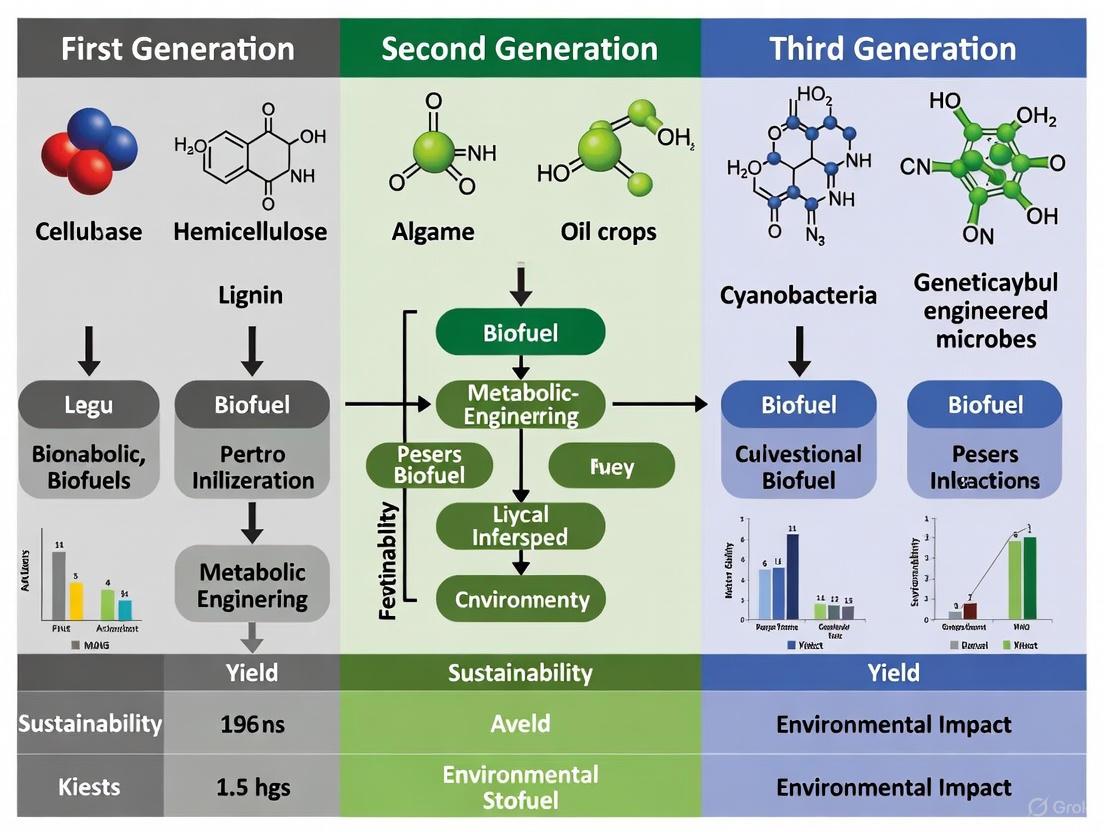
This article provides a comprehensive analysis of the sustainability profiles of first, second, and third-generation biofuels, tailored for researchers and scientists in the bioenergy sector.
Generational Shift: A Sustainability Comparison of First, Second, and Third-Generation Biofuels
Abstract
This article provides a comprehensive analysis of the sustainability profiles of first, second, and third-generation biofuels, tailored for researchers and scientists in the bioenergy sector. It explores the foundational definitions and feedstocks of each biofuel generation, delves into the methodological advances in biochemical and thermochemical conversion processes, and addresses key troubleshooting challenges in scaling production. Through a rigorous validation and comparative framework, it evaluates environmental impacts, economic viability, and carbon footprints, offering a critical perspective on the future of sustainable biofuel integration into the energy landscape.
Defining the Generations: Feedstocks, Origins, and Core Concepts
First-generation (1G) biofuels, derived primarily from food crops like corn, sugarcane, and vegetable oils, represent the initial large-scale attempt to transition from fossil fuels to renewable energy sources for transportation. While they offered a promising alternative and paved the way for advanced biofuels, their sustainability credentials have been intensely debated. This review objectively examines the origins, performance, and environmental footprint of 1G biofuels, contextualizing them within the broader research on biofuel generations. We synthesize quantitative data on their greenhouse gas emissions, land and water footprints, and explore the seminal "food vs. fuel" dilemma. The analysis is supported by detailed methodologies of life cycle assessment (LCA) and a curated toolkit of research reagents, providing a foundational resource for scientists and policymakers engaged in sustainable energy research.
The story of first-generation biofuels is one of initial promise followed by intense controversy. Emerging as a direct response to energy security concerns, rising fossil fuel prices, and early climate change mitigation policies, 1G biofuels were the first to achieve significant commercial production [1] [2]. They are classified as conventional biofuels produced through well-established processes such as fermentation of sugars and starches for bioethanol (from crops like corn and sugarcane) and transesterification of vegetable oils for biodiesel (from oils such as soybean, rapeseed, and palm) [3] [4] [2]. The initial "cornucopian views" of their potential were soon challenged by increasing speculation that their development was "racing ahead of understanding of the range of direct and indirect sustainability impacts" [1]. This review deconstructs these impacts, setting the stage for a comparative understanding of subsequent, more advanced biofuel generations.
Feedstock Origins and Production Pathways
First-generation biofuels are defined by their reliance on food-crop biomass. The production pathways are technologically straightforward, which facilitated their rapid adoption.
- Bioethanol Production: The primary feedstocks are sugarcane (notably in Brazil) and corn (in the United States), followed by wheat, sugar beet, and sorghum [4] [5]. The process involves crushing the plant material to extract sucrose (sugarcane) or hydrolyzing starch into fermentable sugars (corn), followed by microbial fermentation, typically using the yeast Saccharomyces cerevisiae, to produce ethanol [4].
- Biodiesel Production: Common feedstocks include rapeseed, soybean, and palm oil [5]. The production occurs via transesterification, a chemical reaction where triglycerides in the oils react with an alcohol (like methanol) in the presence of a catalyst (such as sodium hydroxide) to produce fatty acid methyl esters (biodiesel) and glycerol [6] [4].
The following diagram illustrates the core production pathways and the central sustainability challenge of first-generation biofuels.
Quantitative Sustainability Performance and Comparative Data
A critical appraisal of 1G biofuels reveals a complex and often mixed environmental record. The following tables synthesize key quantitative data from life cycle assessment (LCA) studies, comparing their performance with fossil fuels and highlighting variations between major feedstocks.
Table 1: Global Resource Footprint of First-Generation Biofuels (2013 Data) [5]
| Biofuel Type | Global Production (Million Tons) | Estimated Arable Land Use (Million Hectares) | Global Water Footprint (Billion m³) | Food Equivalent: Number of People That Could Be Fed |
|---|---|---|---|---|
| Bioethanol | 65 | ~27.5 | ~144 | ~200 Million |
| Biodiesel | 21 | ~13.8 | ~72 | ~70 Million |
| Total | 86 | ~41.3 | ~216 | ~270 Million |
Note: The data highlights that 1G biofuels relied on about 2-3% of global agricultural water and 4% of arable land, resources that could otherwise feed a significant portion of the malnourished population.
Table 2: Environmental Impact Comparison of Select Biofuel Feedstocks [5] [2]
| Feedstock | Biofuel Type | Land Footprint (m²/GJ) | Water Footprint (m³/GJ) | GHG Reduction vs. Fossil Fuels (No LUC) | Key Environmental Concerns |
|---|---|---|---|---|---|
| Sugarcane | Bioethanol | ~40 - 60 | ~60 - 90 | ~70-90% | Water use, air pollution from burning |
| Corn | Bioethanol | ~80 - 120 | ~150 - 250 | ~20-50% | High fertilizer use, eutrophication |
| Palm Oil | Biodiesel | ~30 - 50 | ~210 - 350 | >60% (if no peatland use) | Deforestation, biodiversity loss |
| Rapeseed | Biodiesel | ~130 - 180 | ~150 - 300 | ~45-65% | High land-use, fertilizer demand |
| Soybean | Biodiesel | ~200 - 250 | ~1300 - 2200 | ~50-70% | Very high land and water use |
Abbreviation: LUC, Land-Use Change. GHG reduction ranges are highly dependent on cultivation practices and LCA methodologies. Palm oil has high GHG emissions if associated with deforestation or peatland drainage.
Experimental Protocols: Life Cycle Assessment (LCA)
The quantitative data presented above is primarily derived from Life Cycle Assessment, a standardized methodology crucial for evaluating the environmental footprint of biofuels.
1. Goal and Scope Definition
- Objective: To evaluate the environmental impacts of a biofuel from "cradle-to-grave"—from feedstock cultivation to end-use combustion.
- Functional Unit: The study is normalized to a unit of energy or distance traveled (e.g., 1 Megajoule (MJ) of fuel or 1 vehicle-kilometer) to enable fair comparisons with fossil fuels and other biofuel generations [2].
2. Life Cycle Inventory (LCI)
- Data Collection: This phase involves compiling quantitative input and output data for all processes in the life cycle. For 1G biofuels, this includes:
- Agricultural Phase: Inputs of fertilizers, pesticides, irrigation water, and diesel for farm machinery; outputs like nutrient runoff and CO₂ from soil.
- Feedstock Transport: Energy for transporting raw biomass to processing plants.
- Conversion Phase: Energy and chemicals (e.g., enzymes, catalysts) used in fermentation or transesterification.
- Fuel Distribution & Combustion: Energy for transport and infrastructure, and emissions from burning the fuel [2].
3. Life Cycle Impact Assessment (LCIA)
- Impact Categories: The LCI data is translated into potential environmental impacts. Key categories for biofuels are:
- Global Warming Potential (GWP): Calculated in kg CO₂-equivalent, considering CO₂, N₂O, and CH₄ emissions.
- Water Footprint: Total volume of fresh water consumed.
- Land Use: Area and type of land required, often linked to biodiversity impact.
- Eutrophication and Acidification: From nutrient leaching and air emissions [2].
4. Interpretation
- Uncertainty and Sensitivity Analysis: Given the variability in agricultural practices and data, LCA outcomes are situational. A critical analysis includes addressing direct and indirect land-use change (LUC/iLUC). iLUC occurs when pasture or forest is cleared to create new cropland to replace the food crops diverted to biofuels, leading to potentially large, indirect GHG emissions [2].
The Scientist's Toolkit: Key Research Reagents and Materials
Research into optimizing 1G biofuel production and accurately assessing its impacts relies on a suite of specialized reagents and analytical techniques.
Table 3: Essential Research Reagents and Tools for Biofuel Analysis
| Reagent / Tool | Function in Biofuel Research | Example Application |
|---|---|---|
| Saccharomyces cerevisiae | Model yeast for ethanol fermentation. | Standard bioethanol production from sucrose and glucose [4]. |
| Lipase Enzymes | Biological catalysts for transesterification. | Enzymatic biodiesel production as an alternative to chemical catalysis [2]. |
| Gas Chromatography-Mass Spectrometry (GC-MS) | Analytical method for separation and identification of volatile compounds. | Quantifying biofuel purity, analyzing biodiesel (FAME) composition, and detecting contaminants [2]. |
| High-Performance Liquid Chromatography (HPLC) | Analytical method for separating ions or molecules in a solution. | Measuring sugar content in hydrolysates, organic acids, and glycerol by-products [2]. |
| Stable Isotope Tracing (e.g., ¹³C) | Tracking the fate of specific atoms in biological/chemical processes. | Elucidating metabolic pathways in fermenting microorganisms to improve yield [2]. |
| LCA Software (e.g., SimaPro, GaBi) | Modeling and database tools for conducting life cycle assessments. | Quantifying environmental impacts (GHG, water, land use) across the full biofuel supply chain [2]. |
The Food-Energy-Water Nexus and Broader Implications
The core sustainability challenge of 1G biofuels is their entanglement in the food-energy-water nexus. The diversion of food crops for fuel production creates a direct competition for arable land, water, and agricultural inputs [1] [5]. It is estimated that the crops used for biofuels in 2013 could have fed about 270 million people, underscoring the significant "food vs. fuel" trade-off [5]. Furthermore, the expansion of biofuel plantations has been linked to deforestation, loss of biodiversity, and associated increases in GHG emissions, particularly in regions like Southeast Asia due to palm oil cultivation [6] [5]. The following diagram maps the interconnected challenges within this nexus.
First-generation biofuels served as a critical proof-of-concept for renewable liquid transportation fuels but are now widely recognized as a transitional technology due to their inherent sustainability limitations. The controversies surrounding them—primarily the food vs. fuel conflict, substantial land and water footprints, and risks of deforestation—have fundamentally shaped the research agenda for advanced biofuels [1]. These challenges catalyzed the development of second-generation biofuels from non-food lignocellulosic biomass, third-generation biofuels from algae, and fourth-generation biofuels involving synthetic biology [3] [4] [7]. A key lesson from 1G biofuels is that sustainability challenges are complexly interconnected and cannot be solved by focusing on a single metric like GHG reduction alone [1]. Future research and policy must therefore adopt integrated, whole-system approaches that carefully balance energy production with food security, water conservation, and the protection of ecosystems.
The global quest for sustainable and renewable energy sources has catalyzed the development of biofuels, which are categorized into distinct generations based on their feedstocks and production technologies. First-generation biofuels are derived directly from food crops such as corn, wheat, and sugarcane, raising significant concerns regarding the "food versus fuel" debate, land use changes, and limited greenhouse gas (GHG) reduction benefits [4] [8]. In response to these challenges, second-generation biofuels emerged, utilizing non-food biomass, primarily lignocellulosic materials from agricultural residues, forestry waste, and dedicated energy crops [9] [10]. This advancement avoids competition with food supply and offers a more sustainable pathway. Subsequently, third-generation biofuels, primarily derived from algae, entered the research landscape, promising high yields on non-arable land but facing hurdles related to cost and technological maturity [4] [10]. This guide focuses on objectively comparing the performance of second-generation biofuel technologies against first- and third-generation alternatives, with a particular emphasis on the experimental methodologies and data underpinning the advancements in lignocellulosic biomass utilization.
Comparative Analysis of Biofuel Generations
The following table provides a detailed, data-driven comparison of the key characteristics of first-, second-, and third-generation biofuels.
Table 1: Comprehensive Comparison of Biofuel Generations
| Feature | First-Generation Biofuels | Second-Generation Biofuels | Third-Generation Biofuels |
|---|---|---|---|
| Feedstock | Food crops (e.g., corn, sugarcane, soybean oil) [4] | Non-food lignocellulosic biomass (e.g., wheat straw, rice husk, corn stover, wood chips) [9] [10] | Microalgae and cyanobacteria [4] |
| Primary Conversion Process | Fermentation of sugars (Ethanol), Transesterification (Biodiesel) [4] | Pretreatment, enzymatic hydrolysis, & fermentation; Pyrolysis; Gasification [9] [11] | Lipid extraction & transesterification, fermentation of algal sugars [4] |
| Land-Use Impact | High (Competes for arable land) [4] | Low (Utilizes marginal land or waste products) [9] | Very Low (Can use non-arable land & wastewater) [4] [10] |
| GHG Reduction Potential | Moderate (~20-60% vs. fossil fuels) | High (Up to 86% vs. fossil fuels) [9] | Potentially Carbon-Negative [4] |
| Technology Maturity | Commercially established [12] | Demonstration & early commercial stage [13] | Predominantly R&D and pilot phase [10] |
| Key Challenge | Food vs. fuel debate, deforestation [4] | Recalcitrance of biomass, high pretreatment cost [9] [11] | High capital and operational costs, energy-intensive harvesting [4] [10] |
| Oil Yield (L/ha/year) | ~172 (Rapeseed), ~636 (Palm Oil) [4] | Not Applicable (Solid feedstock) | Up to 61,000 (Theoretical for algae) [4] |
Quantitative Performance of Second-Generation Feedstocks
The viability of second-generation biofuels hinges on the composition and conversion efficiency of various lignocellulosic feedstocks. The table below summarizes key quantitative data for prominent agricultural residues.
Table 2: Feedstock Composition and Biofuel Yield Data for Common Agricultural Residues
| Feedstock | Global Annual Waste (Million Tons) | Cellulose Content (%) | Hemicellulose Content (%) | Lignin Content (%) | Bioethanol Yield (L/dry ton) |
|---|---|---|---|---|---|
| Wheat Straw | ~350 [9] | 35-50 [9] | 20-35 [9] | 10-25 [9] | ~100 billion L annually from total waste [9] |
| Sugarcane Bagasse | ~279-300 [9] | 45-52 [9] | 20-35 [9] | 10-25 [9] | Data not specified |
| Corn Stover | ~170 [9] | 35-50 [9] | 20-35 [9] | 10-25 [9] | 223 - 358 [9] |
| Rice Husk | ~101.8 [9] | ~35 [14] | ~25 [14] | ~15 [14] | Energy yield: ~16.72 MJ/kg [9] |
Core Experimental Protocols in Lignocellulosic Biofuel Production
The conversion of lignocellulosic biomass into biofuels is a multi-step process. The following workflow diagram outlines the core experimental pathway, with subsequent sections detailing key protocols.
Diagram 1: Experimental Workflow for Lignocellulosic Biofuel Production
Pretreatment Methodologies
Pretreatment is a critical first step to overcome the recalcitrance of lignocellulose by disrupting its complex structure, making cellulose more accessible for enzymatic attack [11] [15]. The table below compares the most prominent pretreatment methods.
Table 3: Comparison of Key Pretreatment Methodologies for Lignocellulosic Biomass
| Method | Process Description | Key Mechanism | Advantages | Disadvantages/Inhibitors |
|---|---|---|---|---|
| Hydrothermal / Steam Explosion | Biomass is treated with high-pressure saturated steam (160-260°C) for several minutes, then rapidly depressurized [9] [11]. | Hydrolysis of hemicellulose, lignin transformation [9]. | Low environmental impact (only water), no recycling needed, industrially viable [9] [13]. | Formation of furfural and HMF (inhibitors) [11]. |
| Dilute Acid Hydrolysis | Biomass is treated with dilute sulfuric acid (0.5-1.5%) at high temperature (140-200°C) [11]. | Solubilizes hemicellulose into xylose and other sugars. | High xylose yield, effective for wide range of biomass. | Equipment corrosion, formation of fermentation inhibitors (furfural), requires neutralization [11]. |
| Ammonia Fiber Explosion (AFEX) | Biomass is treated with liquid ammonia at moderate temperatures (60-120°C) and high pressure for 10-60 mins, followed by rapid pressure release [9]. | Decrystallizes cellulose, cleaves lignin-hemicellulose bonds, increases porosity. | Low inhibitor formation, high sugar yields, ammonia can be recycled. | Less effective on high-lignin biomass (e.g., wood), cost of ammonia [9]. |
| Ionic Liquid (IL) Pretreatment | Biomass is dissolved in room-temperature molten salts (e.g., 1-ethyl-3-methylimidazolium acetate) at 90-130°C [11]. | Dissolves cellulose and lignin, disrupts hydrogen bonding network. | High efficiency, tunable properties, can be recycled. | High cost, potential toxicity, need for complete recycling [11] [13]. |
| Biological Pretreatment | Uses lignin-degrading microorganisms (e.g., white-rot fungi like Trametes versicolor) to treat biomass for days to weeks [15]. | Enzymatic degradation of lignin by lignin peroxidases and laccases. | Low energy input, mild conditions, environmentally friendly. | Very slow process, large space requirement, loss of carbohydrates [15]. |
Enzymatic Hydrolysis and Fermentation
Following pretreatment, the biomass undergoes enzymatic hydrolysis. This process uses a cocktail of cellulase enzymes (e.g., endoglucanases, exoglucanases, β-glucosidases) to break down cellulose into fermentable glucose [11]. Key experimental parameters include:
- Enzyme Loading: Typically 5-20 mg enzyme protein per gram of dry biomass [11].
- Conditions: Carried out in buffered solutions (pH 4.5-5.0) at 45-50°C for 24-72 hours with constant agitation to maximize sugar yield, which can reach up to 90% of theoretical yield with optimized pretreatments [9].
The resulting hydrolysate, containing a mix of hexose (C6) and pentose (C5) sugars, is then fermented. Advanced fermentation strategies involve engineered microorganisms, such as Saccharomyces cerevisiae or Zymomonas mobilis, genetically modified to co-ferment both C5 and C6 sugars, thereby maximizing biofuel yields from the complex substrate [9] [11].
The Scientist's Toolkit: Essential Research Reagents and Materials
Successful research in second-generation biofuels relies on a suite of specialized reagents and materials. The following table details these essential components.
Table 4: Key Research Reagent Solutions for Lignocellulosic Biofuel Research
| Reagent/Material | Function/Application | Specific Examples & Notes |
|---|---|---|
| Lignocellulosic Feedstocks | Raw material for biofuel production; composition affects process design. | Wheat straw, rice husk, corn stover, sugarcane bagasse, switchgrass [9] [14]. Should be milled to a particle size of 1-2 mm. |
| Cellulolytic Enzyme Cocktails | Hydrolyzes cellulose into fermentable glucose. | Commercial blends from Trichoderma reesei (e.g., Cellic CTec2, CTec3). Contains endoglucanases, exoglucanases, and β-glucosidases [11]. |
| Ionic Liquids (ILs) | Highly efficient solvent for biomass pretreatment. | 1-ethyl-3-methylimidazolium acetate ([C2C1Im][OAc]); requires recovery and purification for economic viability [11] [13]. |
| Genetically Engineered Microbes | Co-fermentation of C5 and C6 sugars to improve yield. | Engineered Saccharomyces cerevisiae or E. coli capable of metabolizing xylose and arabinose [9] [11]. |
| Analytical Standards | Quantification of sugars and inhibitors via HPLC/GC. | Standards for glucose, xylose, arabinose, furfural, Hydroxymethylfurfural (HMF), and acetic acid [11]. |
| Anaerobic Digestion Inoculum | Source of microbes for biogas production studies. | Granular sludge from operational anaerobic digesters; requires acclimatization to the substrate [15]. |
Second-generation biofuels, derived from non-food lignocellulosic biomass, represent a critical advancement in the pursuit of sustainable energy. They offer a compelling alternative to first-generation biofuels by avoiding the food-versus-fuel dilemma and provide a more immediate and technologically mature pathway compared to third-generation algal biofuels. While challenges in pretreatment efficiency and overall process economics remain, continued research and development—particularly in robust enzyme cocktails, engineered microbial strains, and integrated biorefinery concepts—are steadily enhancing the commercial viability of this renewable energy source. The experimental data and protocols outlined in this guide provide a foundation for researchers to contribute to this vital field.
The quest for sustainable energy solutions has catalyzed the evolution of biofuels across distinct generations, each representing significant advancements in feedstock selection and production technologies. First-generation biofuels, derived from food crops like corn, sugarcane, and vegetable oils, emerged as initial alternatives to fossil fuels but sparked the "food versus fuel" debate due to competition for agricultural land and resources [3] [16]. Their production raised concerns about food security, land use changes, and limited greenhouse gas (GHG) reduction potential [17]. Second-generation biofuels addressed these concerns by utilizing non-food biomass, including agricultural residues (e.g., wheat straw, rice husks), forestry waste, and dedicated energy crops like switchgrass [3] [10]. While this approach mitigated the food competition conflict and offered better GHG reduction potential, it faced challenges related to complex conversion technologies, costly preprocessing of recalcitrant lignocellulosic biomass, and scalability issues [3] [16].
Third-generation biofuels, primarily derived from algal biomass (both microalgae and macroalgae), represent a transformative approach to biofuel production [18]. These biofuels leverage the superior efficiency of photosynthetic microorganisms that can be cultivated on non-arable land or in marine environments, thus eliminating competition with food production [19]. Microalgae, in particular, have emerged as exceptional candidates due to their rapid growth rates, high lipid content, and ability to thrive in diverse environmental conditions while consuming industrial CO₂ emissions and wastewater nutrients [20] [21]. This review comprehensively examines third-generation biofuels within the broader context of biofuel generational sustainability, focusing specifically on algal and aquatic feedstocks through detailed comparative analysis of experimental data, cultivation methodologies, conversion pathways, and sustainability metrics.
Comparative Analysis of Biofuel Generations
The progression from first- to third-generation biofuels reflects a concerted effort to improve sustainability metrics, including GHG emissions, land use efficiency, and resource consumption. Table 1 provides a detailed comparison of key characteristics across biofuel generations.
Table 1: Comprehensive Comparison of Biofuel Generations
| Characteristic | First-Generation | Second-Generation | Third-Generation |
|---|---|---|---|
| Feedstock Examples | Corn, sugarcane, soybean, palm oil [16] | Agricultural residues (wheat straw), forestry waste, energy crops (switchgrass) [3] [10] | Microalgae (Chlorella, Nannochloropsis), macroalgae (seaweed) [20] [19] |
| Land Use Impact | High; requires arable land, leading to potential deforestation [16] | Moderate; utilizes marginal land or waste, but some deforestation concerns remain [3] | Very low; can be cultivated on non-arable land, ponds, or photobioreactors [19] [21] |
| Food Competition | Direct competition, raises food security concerns [3] [17] | Minimal to no competition [10] | No competition [19] |
| GHG Reduction Potential | Limited (13-65% compared to fossil fuels) [17] | Higher than first-generation [16] | Very high; some pathways show net-negative emissions [21] [22] |
| Technical Maturity | Commercially mature [16] | Demonstration and early commercial stage [23] | Pilot-scale and R&D phase [20] [23] |
| Key Challenges | Food vs. fuel, high fertilizer/pesticide use, limited GHG savings [16] [17] | Complex and costly conversion processes, feedstock logistics [3] [16] | High cultivation and processing costs, energy-intensive harvesting [20] [3] |
Life-cycle assessment (LCA) studies provide quantitative environmental impact comparisons across generations. A recent study evaluating biorefinery pathways found that third-generation algal routes exhibited significantly lower emissions compared to second-generation pathways [22]. Specifically, algae hydrothermal liquefaction (HTL) demonstrated negative net emissions, while combined algae processing (CAP) also showed very low emissions, in contrast to palm fatty acid distillation (PFAD), a second-generation pathway, which had the highest emissions [22]. This emissions advantage stems from algae's efficient carbon capture during growth, potentially fixing 1.5–1.8 kg of CO₂ per kilogram of dry biomass produced [20].
Third-Generation Feedstock Profiles and Experimental Yields
Microalgae Species and Performance
Microalgae represent the most extensively researched third-generation feedstock, with specific species demonstrating exceptional biofuel potential due to their specialized metabolic characteristics. Table 2 summarizes the biofuel-relevant properties and experimentally measured yields of prominent microalgae species.
Table 2: Microalgae Species and Experimentally Measured Biofuel Potential
| Microalgae Species | Lipid Content (% Dry Weight) | Biomass Productivity | Biofuel Products | Experimental Conditions & Key Findings |
|---|---|---|---|---|
| Chlorella emersonii | 58–63% [20] | Not specified | Biodiesel | Cultivated under low nitrogen conditions [20] |
| Chlorella protothecoides | 55% [20] | Not specified | Biodiesel | Grown under heterotrophic conditions with corn powder hydrolysate under nitrogen limitation [20] |
| Nannochloropsis sp. | Up to 73.3% [20] | Higher with shorter light paths (e.g., ~10 cm) [20] | Biodiesel, Bio-oil | Glycerol concentrations >25–35 g/L slowed growth; at 35 g/L glycerol, lipid content reached 73.3% [20] |
| Botryococcus braunii | 12.71% (w/w) [20] | 2.31 g/L/day [20] | Biodiesel, Hydrocarbons, Biocrude | Highest biomass production at 20% CO₂ concentration with 2% sodium hypochlorite added to photobioreactors [20] |
| Schizochytrium strains | Not specified | 7.3–9.4 g/L/day [20] | Biodiesel, Omega-3 Fatty Acids | Certain strains achieve biomass densities up to 200 g/L within 90–100 hour fermentation cycles with nitrogen and glucose [20] |
The data in Table 2 illustrates how cultivation strategies significantly influence biomass and lipid productivity. For instance, nutrient stress (particularly nitrogen limitation) is a well-established strategy to enhance lipid accumulation in various Chlorella species [20]. Similarly, optimizing CO₂ concentration and light path in photobioreactors can dramatically improve growth rates and hydrocarbon content, as demonstrated with Botryococcus braunii and Nannochloropsis sp., respectively [20].
Macroalgae Potential
Macroalgae (seaweed) represent another promising aquatic feedstock for third-generation biofuels, with advantages including high growth rates, no requirement for freshwater or arable land, and ability to remediate aquatic environments [19]. While macroalgae typically have lower lipid content compared to microalgae, they contain high concentrations of carbohydrates (e.g., alginate, laminarin) suitable for fermentation into bioethanol or biogas through anaerobic digestion [19]. The cultivation of macroalgae for bioenergy is less developed than microalgae systems but offers potential for integrated multi-trophic aquaculture systems that combine energy production with environmental benefits.
Experimental Protocols and Methodologies
Cultivation Systems and Conditions
Advanced cultivation methodologies form the foundation of successful third-generation biofuel production from algal feedstocks. Two primary cultivation systems dominate current research and commercial applications:
Photobioreactors (PBRs): Closed systems offering precise control over environmental parameters including temperature, light intensity, pH, CO₂ concentration, and nutrient delivery [20]. These systems typically achieve higher biomass productivity and prevent contamination but require substantial capital investment and operational costs. Specific experimental parameters include temperature ranges of 25–35°C for most species, light intensity between 150–710 µmol/m²/s, and CO₂ concentrations ranging from 2–20% [20]. For instance, Botryococcus braunii showed optimal growth at 20% CO₂ concentration with biomass productivity reaching 2.31 g/L/day [20].
Open Pond Systems: Raceway ponds, circular ponds, and unstirred ponds represent more economical alternatives, utilizing natural light and atmospheric CO₂ [21]. While cost-effective for large-scale cultivation, they face challenges with contamination, water evaporation, and less controllable growth conditions, potentially leading to lower productivity compared to PBRs.
Experimental optimization of cultivation conditions focuses on maximizing biomass productivity and target compound accumulation (lipids for biodiesel, carbohydrates for bioethanol). Key parameters include nutrient manipulation (particularly nitrogen and phosphorus limitation to induce lipid accumulation), light path optimization (shorter light paths ~10 cm enhance productivity in Nannochloropsis sp.), and carbon source supplementation (e.g., glycerol utilization in Schizochytrium strains) [20].
Downstream Processing and Conversion Pathways
The conversion of algal biomass to biofuels involves multiple downstream processing steps, each with specific experimental protocols:
Harvesting and Dewatering: Microalgae harvesting presents significant technical challenges due to their small size (typically 1–20 µm) and low culture densities (0.5–5 g/L) [3]. Common laboratory and commercial methods include centrifugation (high efficiency but energy-intensive), flocculation (using chemical, organic, or bio-based flocculants), filtration, and floatation. Dewatering typically concentrates biomass from ~0.1% to 5–25% solid content [22].
Lipid Extraction and Transesterification: For biodiesel production, lipids must be extracted from algal biomass and converted to fatty acid methyl esters (FAME) through transesterification. Experimental protocols include:
- Solvent Extraction: Bligh and Dyer method using chloroform-methanol mixtures [19]
- Supercritical Fluid Extraction: Utilizing CO₂ at supercritical conditions for cleaner extraction [20]
- Transesterification: Acid- or base-catalyzed reaction with methanol (typically at 60–70°C for 1–2 hours) with methanol-to-oil molar ratios of 6:1 to 9:1 [19]
Thermochemical Conversion: Alternative pathways include:
- Hydrothermal Liquefaction (HTL): Converts wet algal biomass (15–20% solid content) to biocrude at moderate temperatures (250–374°C) and high pressure (5–20 MPa), avoiding energy-intensive drying [22]
- Pyrolysis: Thermal decomposition in absence of oxygen at 300–600°C to produce bio-oil, syngas, and biochar [19]
Biochemical Conversion:
The following diagram illustrates the comprehensive workflow for algal biofuel production, integrating both cultivation and downstream processing pathways:
Diagram Title: Algal Biofuel Production Workflow
The Scientist's Toolkit: Essential Research Reagents and Materials
Cutting-edge research in third-generation biofuels relies on specialized reagents, equipment, and biological materials. Table 3 catalogues essential components of the experimental toolkit for algal biofuel research.
Table 3: Essential Research Reagents and Materials for Algal Biofuel Research
| Category | Item | Specific Examples/Models | Experimental Function |
|---|---|---|---|
| Cultivation Systems | Photobioreactors | Stirred-tank, airlift, tubular, flat-panel [20] | Controlled biomass production with optimized light and CO₂ delivery |
| Open Ponds | Raceway ponds, circular ponds | Large-scale, cost-effective cultivation | |
| Growth Media | Nutrient Solutions | BG-11, F/2, Bold's Basal, wastewater [20] | Provide essential macronutrients (N, P, K) and micronutrients |
| Analytical Instruments | Lipid Analysis | GC-MS, GC-FID, Nile red staining | Quantify and characterize lipid content and fatty acid profiles |
| Biomass Assessment | Spectrophotometer, dry weight measurement, cell counters | Monitor growth kinetics and biomass concentration | |
| Carbohydrate Analysis | HPLC, phenol-sulfuric acid method | Quantify carbohydrate content for fermentation potential | |
| Harvesting & Processing | Flocculants | Chitosan, alum, ferric chloride, electroflocculation [3] | Aggregate microalgal cells for efficient harvesting |
| Cell Disruption | Sonication, bead milling, microwave, enzymatic lysis | Break cell walls to enhance lipid/extract recovery | |
| Conversion | Catalysts | Acid/alkali catalysts, nano-catalysts, lipases [20] | Facilitate transesterification for biodiesel production |
| Solvents | Hexane, chloroform-methanol mixtures, supercritical CO₂ [20] | Extract lipids from biomass | |
| Biological Materials | Model Microalgae | Chlorella vulgaris, Nannochloropsis sp., Botryococcus braunii [20] | Reference organisms for fundamental and applied research |
| Genetically Modified Strains | CRISPR-edited high-lipid strains [20] [3] | Enhanced productivity and tailored composition |
The toolkit continues to evolve with emerging technologies, particularly in the realm of genetic engineering. CRISPR-based genome editing tools enable precise modifications to algal strains to enhance lipid productivity, improve growth rates, and tailor fatty acid profiles for specific fuel applications [20] [3]. Additionally, nanomaterial-assisted cultivation strategies are being developed to improve light penetration and nutrient delivery in dense algal cultures [20].
Sustainability Assessment and Future Directions
Environmental Impact and Circular Bioeconomy
Third-generation biofuels offer significant sustainability advantages over their predecessors, particularly through their integration potential with circular economy principles. Life-cycle assessment (LCA) studies demonstrate that algae-based biofuel pathways can achieve substantially lower GHG emissions compared to first- and second-generation alternatives, with some scenarios showing net-negative emissions [22]. A key sustainability feature is algae's ability to utilize wastewater as a nutrient source and industrial flue gases as a carbon source, simultaneously treating waste streams while producing valuable biomass [20] [21]. This dual-function approach transforms environmental liabilities into resources, creating synergistic systems that address multiple sustainability challenges simultaneously.
The carbon sequestration potential of microalgae is particularly noteworthy, with studies indicating that 1.5–1.8 kg of CO₂ can be fixed per kilogram of dry biomass produced [20]. When cultivated using concentrated CO₂ sources like industrial flue gases, algae-based systems can potentially sequester 2.7 tonnes of CO₂ per hectare daily [21]. This exceptional carbon fixation capacity, combined with high areal productivity (algae can yield >100 tons of biomass per hectare annually [20]), positions third-generation biofuels as potentially carbon-negative energy sources when optimized systems are deployed at scale.
Current Challenges and Research Frontiers
Despite their significant promise, third-generation biofuels face substantial challenges that must be addressed to achieve commercial viability:
Economic Hurdles: High production costs remain the primary barrier to commercialization, with cultivation, harvesting, and processing all contributing to economic challenges [20] [16]. Current estimates suggest production costs are 50% higher than first-generation alternatives [17].
Technical Limitations: Scaling up from laboratory to industrial operations presents difficulties in maintaining productivity, with issues including light limitation in dense cultures, contamination control, and energy-intensive harvesting [20] [3].
Resource Management: While algae don't require arable land, they need significant water and nutrient inputs, though these can be supplied through wastewater and flue gases [3].
Active research frontiers addressing these challenges include:
Genetic and Metabolic Engineering: CRISPR-based technologies are being employed to develop strains with enhanced lipid productivity, improved photosynthesis efficiency, and secretion capabilities to simplify downstream processing [20] [3].
Advanced Photobioreactor Design: Innovations in reactor geometry, light delivery systems, and mixing technologies aim to maximize light utilization efficiency and biomass productivity [20].
Integrated Biorefineries: Developing multi-product systems that co-produce biofuels with high-value compounds (e.g., astaxanthin, omega-3 fatty acids, proteins) to improve economic viability [20] [19].
Novel Harvesting Technologies: Exploring electrochemical methods, bio-flocculation, and automated harvesting systems to reduce energy consumption and costs [3].
The following diagram illustrates the classification of biofuels by generation, highlighting the evolutionary trajectory of feedstock development:
Diagram Title: Biofuel Generations Classification
Third-generation biofuels derived from algal and aquatic feedstocks represent a paradigm shift in sustainable fuel production, offering compelling advantages over previous generations through their exceptional productivity, minimal land footprint, and potential for carbon-negative operation. The experimental data comprehensively summarized in this review demonstrates that microalgae species such as Chlorella, Nannochloropsis, and Botryococcus braunii can achieve lipid productivities far exceeding those of terrestrial oil crops, with the additional benefit of utilizing non-arable land and waste resources. While significant challenges in economic viability and scale-up persist, emerging technologies in genetic engineering, photobioreactor design, and integrated biorefining promise to address these limitations.
The comparative analysis presented herein substantiates that third-generation biofuels hold distinctive potential in the portfolio of renewable energy solutions, particularly for applications where electrification remains challenging, such as aviation and heavy transport. As research advances in CRISPR-based strain improvement, nanomaterial-assisted cultivation, and advanced conversion technologies, the commercial prospects for algae-based biofuels continue to strengthen. For the research community, priorities should include developing standardized assessment protocols, advancing fundamental understanding of algal metabolism, and demonstrating integrated systems at pilot scale to bridge the gap between laboratory promise and commercial reality in the global transition toward sustainable energy systems.
The transition from fossil fuels to renewable energy has positioned biofuels as a pivotal component of the global strategy for decarbonizing the transportation sector. Within this context, biofuels are categorized into generations based on their feedstock and technological maturity. First-generation biofuels are derived directly from food crops, such as corn, sugarcane, and vegetable oils [24]. Second-generation biofuels utilize non-food biomass, including agricultural residues (e.g., straw, husks) and dedicated non-food energy crops (e.g., switchgrass), thereby aiming to circumvent the food-fuel conflict [14] [23]. Third-generation biofuels, which often involve algal feedstocks, represent a further technological advancement [23] [24]. While first-generation biofuels benefit from established production technologies and significant policy support, their dependence on food crops has ignited a persistent "Fuel vs. Food" debate [25] [26]. This debate centers on the competition between the use of agricultural resources for energy production versus food security, a challenge that is less pronounced for advanced biofuel generations. This article objectively compares the performance of first-generation biofuels against subsequent generations, with a specific focus on the empirical data and sustainability metrics that underpin this central dilemma.
Quantitative Comparison: Feedstock, Land Use, and Emissions
The following tables synthesize key quantitative data from recent studies and forecasts, providing a direct comparison of the environmental and economic footprints of different biofuel generations.
Table 1: Biofuel Feedstock Composition and Land Use Efficiency (2024-2034 Projections)
| Metric | First-Generation Biofuels | Second-Generation Biofuels |
|---|---|---|
| Dominant Feedstocks | Maize (60%), Sugarcane (22%), Vegetable Oils (e.g., Soybean, Rapeseed, Palm Oil) [12] | Lignocellulosic biomass (e.g., agricultural residues, wood, municipal waste) [14] [24] |
| Global Ethanol Feedstock Share (Base Period) | 90% from food-based feedstocks [12] | Cellulosic feedstocks not expected to substantially increase share by 2034 [12] |
| Land Footprint | ~30 million acres of U.S. corn used for ethanol; supplies only ~4% of U.S. transport fuel [25] | Utilizes waste residues; does not directly require new agricultural land [14] [24] |
| Land Use Alternative | Land used for biofuels could feed 1.3 billion people [26] | 3% of land used for biofuel crops could produce equivalent energy via solar panels [26] |
Table 2: Environmental Impact and Economic Performance Indicators
| Indicator | First-Generation Biofuels | Second-Generation & Advanced Biofuels |
|---|---|---|
| GHG Emissions vs. Fossil Fuels | Emit ~16% more CO₂ than the fossil fuels they replace when accounting for land-use change [26]; Corn ethanol has 24% higher emissions intensity than gasoline [25] | Offer lower life-cycle GHG emissions; critical for decarbonizing aviation and shipping [23] [27] |
| Water Consumption | ~3,000 liters of water needed to drive 100 km [26] | Data not explicitly provided in search results, but generally lower due to non-irrigated feedstocks. |
| Market Share & Growth | Dominates current market (~89.5% share in 2024) [27]; Projected CAGR of 7.1% (2025-2035) [28] | Faster growth potential; 2G market CAGR of 26.3% (2026-2035) projected [14] |
| Production Cost | Biodiesel and bioethanol priced 70-130% higher than fossil fuels in Europe [27] | High initial investment costs; government support remains necessary [12] [23] |
Experimental Analysis: Methodologies for Evaluating Biofuel Pathways
Research into the viability of different biofuel generations relies on rigorous experimental protocols to analyze feedstock composition, conversion efficiency, and environmental impact.
Experimental Protocol 1: Compositional Analysis of Feedstocks Using Autohydrolysis
Objective: To determine the compositional changes in lignocellulosic biomass (e.g., millet switchgrass, sludge) before and after autohydrolysis pretreatment, a key step in second-generation biofuel production [14].
Methodology:
- Feedstock Preparation: Raw biomass is dried and milled to a uniform particle size to ensure consistent reactivity.
- Autohydrolysis Pretreatment: The biomass is subjected to hot, compressed water in a reactor. This process hydrolyzes hemicellulose, resulting in a solid residue with an altered composition and a liquid stream containing hemicellulose-derived sugars.
- Compositional Analysis: The original biomass and the solid residue after autohydrolysis are analyzed using standardized methods (e.g., NREL protocols) to determine the percentage composition of:
- Cellulose: The primary target for enzymatic hydrolysis to glucose.
- Hemicellulose: A polysaccharide that is partially solubilized during pretreatment.
- Lignin: A complex polymer that provides structural integrity and is recalcitrant to hydrolysis.
- Ash, Resins, Fats, and Soluble Substances.
Key Findings from Cited Data: Autohydrolysis of millet switchgrass increased cellulose content from 46.7% to 53.9% and reduced hemicellulose from 23.0% to 10.6%, thereby enriching the solid residue for subsequent enzymatic saccharification [14].
Experimental Protocol 2: Lifecycle Assessment (LCA) of Greenhouse Gas Emissions
Objective: To quantify and compare the total greenhouse gas (GHG) emissions of a biofuel (e.g., corn ethanol) against a fossil fuel baseline (e.g., gasoline) throughout its entire lifecycle [25] [26].
Methodology:
- System Boundary Definition: The assessment includes all stages from "cradle-to-grave":
- Feedstock Production: Agricultural inputs (fertilizer, pesticide production, and application), farm machinery use, and irrigation.
- Land-Use Change (LUC): Direct (conversion of natural landscapes to cropland) and indirect (iLUC) changes triggered by increased crop demand.
- Feedstock Transport: Energy for transporting raw materials to biorefineries.
- Fuel Production: Energy consumption and emissions from the conversion process (e.g., fermentation, distillation).
- Fuel Combustion: Emissions from burning the fuel in an engine.
- Data Inventory: Collecting activity data (e.g., amount of fertilizer used per hectare) and emission factors (e.g., CO₂ emitted per kg of fertilizer).
- Impact Assessment: Calculating the total CO₂-equivalent emissions, giving particular weight to the impact of land-use change, which is a major contributor to the carbon debt of first-generation biofuels [25].
Key Findings from Cited Data: A study incorporating land-use change found that the carbon intensity of corn ethanol from 2005-2019 was 24% higher than that of gasoline [25]. A separate analysis concluded that biofuels, on average, emit 16% more CO₂ than the fossil fuels they replace [26].
The logical relationships and workflow for assessing the core "Fuel vs. Food" debate and its connection to experimental analysis are summarized in the following diagram.
The Scientist's Toolkit: Essential Reagents and Materials for Biofuel Research
Table 3: Key Research Reagent Solutions for Biofuel Feedstock Analysis
| Research Reagent / Material | Function in Experimental Protocol |
|---|---|
| Cellulases | Enzyme cocktails that hydrolyze cellulose into fermentable glucose sugars; critical for evaluating second-generation biofuel yield from pretreated biomass [29]. |
| Amylases | Enzymes that catalyze the breakdown of starch into sugars; essential for the production of first-generation bioethanol from corn and other grains [29]. |
| Industrial Lipases | Enzymes used to catalyze the transesterification of vegetable oils or fats into biodiesel, a key process for first-generation biodiesel and HVO production [29]. |
| Lignocellulosic Biomass | Non-food feedstock (e.g., switchgrass, rice husks, wheat straw) used in compositional analysis and process optimization for second-generation biofuels [14] [24]. |
| Autohydrolysis Reactor | Equipment used for the pretreatment of lignocellulosic biomass with hot water to solubilize hemicellulose and improve enzymatic accessibility to cellulose [14]. |
The empirical data and comparative analysis presented herein underscore the fundamental sustainability challenge posed by first-generation biofuels: their reliance on food-based feedstocks creates an intractable competition with global food systems, often leading to adverse environmental and socioeconomic outcomes. While second-generation pathways offer a promising alternative by utilizing waste residues and non-food biomass, they currently face significant economic and scalability hurdles [12] [23]. The future of biofuels within a comprehensive sustainable energy strategy hinges on continued research and development aimed at overcoming these barriers. Key directions include the optimization of enzymatic cocktails for lignocellulosic conversion, the integration of AI and data science for supply chain efficiency, and robust policy frameworks that prioritize truly sustainable alternatives, particularly for hard-to-electrify sectors like aviation and shipping [23] [30] [27].
The transition from fossil-based energy to sustainable alternatives is a cornerstone of global decarbonization efforts. Among these alternatives, biofuels have emerged as a promising solution, evolving through distinct generations characterized by their feedstocks and production technologies. First-generation biofuels (1G) utilize food crops, second-generation (2G) rely on non-food lignocellulosic biomass, and third-generation (3G) leverage algae and microbial systems [4] [22]. This guide provides a comparative analysis of these generations based on three critical sustainability metrics: greenhouse gas (GHG) emissions, land use, and water footprint. The objective is to offer researchers, scientists, and policy makers a data-driven overview of their environmental performance to inform future research, development, and policy decisions.
Comparative Analysis of Sustainability Metrics
The environmental performance of biofuel generations varies significantly, influenced by feedstock cultivation requirements, conversion processes, and technological maturity. The table below summarizes key quantitative metrics for a comparative overview.
Table 1: Comparative Sustainability Metrics for Biofuel Generations
| Metric | First-Generation (1G) | Second-Generation (2G) | Third-Generation (3G) |
|---|---|---|---|
| Global Warming Potential (GWP) | Moderate to High | Lower than 1G; can be carbon negative [22] | Highly variable; can be very low or negative (e.g., -102 g CO₂eq/MJ [22]) |
| Land Use Impact | High (competes with food, risk of deforestation [31]) | Lower than 1G; uses marginal land or waste [10] | Lowest; does not require arable land [10] [4] |
| Water Footprint (m³/GJ) | High (high blue water footprint [32]) | Lowest (when using residues [32]) | Highest blue water footprint [32]; High total water consumption [33] |
| Feedstock Examples | Corn, sugarcane, soybean oil | Agricultural residues, switchgrass, miscanthus, woody biomass | Microalgae (e.g., Chlorella), macroalgae (e.g., Enteromorpha clathrata) |
| Key Sustainability Challenges | Food vs. fuel debate, land-use change emissions [31] | Techno-economic viability, complex conversion processes [10] | High energy and cost of cultivation and harvesting [10] [4] |
Detailed Metric Analysis
Greenhouse Gas (GHG) Emissions
Life-cycle assessment (LCA) is the standard methodology for evaluating the global warming potential of biofuels, from feedstock cultivation to fuel combustion (well-to-wheel) [22]. First-generation biofuels often exhibit moderate to high GHG emissions, particularly when indirect land-use change (iLUC) from converting forests or grasslands is accounted for [31] [34]. Second-generation biofuels demonstrate a significant improvement; for instance, bio-gasoline from miscanthus can achieve a negative GWP of -102 g CO₂eq/MJ when soil carbon sequestration is considered [34]. Third-generation pathways show the most promise, with some scenarios yielding negative net emissions. For example, algae hydrothermal liquefaction (HTL) can achieve very low emissions, and combined algae processing (CAP) can also result in negative net emissions [22]. A study on macroalgae (Enteromorpha clathrata) biofuel reported a GWP of 8,823.73 kg CO₂eq per tonne of biofuel for the most efficient process [33].
Land Use
Land use intensity and associated land-use change (LUC) emissions are critical metrics. First-generation biofuels have the highest land-use impact due to direct competition with food production, which can lead to deforestation and biodiversity loss to bring new land into cultivation [31]. Second-generation biofuels, using agricultural residues or dedicated energy crops on marginal land, drastically reduce this pressure [10]. One study notes that including cropland intensification in modeling reduces land use change and its associated emissions [34]. Third-generation biofuels, particularly those from algae, have a distinct advantage as they do not require arable land and can be cultivated in ponds or photobioreactors on non-productive land [10] [4], virtually eliminating competition with food crops.
Water Footprint
The water footprint (WF) is disaggregated into green water (rainwater), blue water (surface and groundwater), and grey water (required to assimilate pollutants) [32] [35]. First-generation biofuels typically have a high total water footprint, with significant blue water consumption for irrigation. Second-generation biofuels from agricultural residues have the smallest water footprint, as the water is attributed primarily to the food crop production [32]. In contrast, while third-generation algae biofuels do not require freshwater, their cultivation in open ponds or photobioreactors can have the largest blue water footprint due to high evaporation and maintenance of cultures [32]. For example, the water consumption for biofuel from Enteromorpha clathrata ranges from 206 to 258 m³ per tonne of biofuel depending on the process [33].
Experimental Protocols and Life-Cycle Assessment
Robust comparison of biofuel sustainability relies on standardized methodologies, primarily Life-Cycle Assessment (LCA) and economic modeling.
Life-Cycle Assessment (LCA) Methodology
LCA is a comprehensive framework for evaluating environmental impacts across a product's entire life cycle [22]. The standard protocol involves four stages:
- Goal and Scope Definition: The system boundaries are defined, typically on a well-to-wheel basis for biofuels, encompassing feedstock cultivation, processing, transportation, and combustion [22]. The functional unit (e.g., 1 MJ of energy or 1 km driven) is established.
- Life-Cycle Inventory (LCI): This involves data collection on all energy and material inputs and environmental releases associated with each stage of the life cycle. For biofuels, this includes data on fertilizer use, fuel for farming, electricity for processing, and chemical inputs [33].
- Life-Cycle Impact Assessment (LCIA): The inventory data is translated into impact categories. Key categories for biofuels are Global Warming Potential (GWP, in kg CO₂ equivalent), water consumption (m³), and land use (m²a crop eq) [33] [22].
- Interpretation: Results are analyzed to draw conclusions, identify hotspots, and assess sensitivity.
Advanced LCA models like the Greenhouse Gases, Regulated Emissions, and Energy Use in Transportation (GREET) model are widely used for such analyses [22]. Furthermore, the GTAP-BIO model is specifically designed to estimate biofuel policy-induced global land-use changes and the consequent GHG emissions, incorporating economic data and trade flows [34].
Key Experimental Setups from Literature
- Objective: To evaluate the environmental impact and water footprint of biofuel production from the macroalgae Enteromorpha clathrata.
- Feedstock Preparation: Enteromorpha clathrata biomass was dried and crushed into powder.
- Pyrolysis Experiments: Three pyrolysis pathways were investigated:
- General Pyrolysis (ENPY): Pyrolysis without a catalyst.
- Catalytic Pyrolysis with ZSM-5 (ENZSM): Using a commercial ZSM-5 zeolite catalyst.
- Self-derived Catalytic Pyrolysis (ENC): Using biochar catalyst produced from the algae itself.
- Analysis: The yields of bio-oil, biochar, and syngas were measured for each pathway. The bio-oil from each process was then upgraded and analyzed in a simulated full-scale production system.
- LCA & WF Assessment: A life-cycle assessment and water footprint analysis were conducted for each pathway, calculating the Global Warming Potential and Water Consumption per tonne of biofuel produced.
- Objective: To compare the environmental impacts of second- and third-generation biorefinery pathways.
- Model: The GREET model was used to simulate energy consumption, GHG emissions, and water requirements.
- Pathways Analyzed:
- Pathway I (3G): Algae Hydrothermal Liquefaction (HTL) to renewable diesel.
- Pathway II (3G): Combined Algae Processing (CAP) to renewable diesel.
- Pathway III (2G): Palm Fatty Acid Distillation (PFAD) to renewable diesel.
- System Boundary: A well-to-wheel framework was applied, and the U.S. electricity grid mix was used as the default energy source for all pathways to ensure consistency.
The logical workflow for such comparative analyses is summarized in the diagram below.
The Scientist's Toolkit: Key Research Reagents and Materials
The experimental research and life-cycle assessment of biofuels rely on a suite of specific reagents, models, and analytical techniques.
Table 2: Essential Reagents and Tools for Biofuel Sustainability Research
| Tool/Reagent | Function/Description | Application Example |
|---|---|---|
| GREET Model | A specialized LCA model for evaluating energy use and emissions in transportation fuels. [22] | Comparing WTW emissions of different biorefinery pathways. [22] |
| GTAP-BIO Model | A computable general equilibrium model for analyzing economic and land-use change impacts of biofuel policies. [34] | Estimating indirect land-use change (iLUC) emissions from expanded biofuel production. [34] |
| ZSM-5 Zeolite | A heterogeneous acid catalyst used to upgrade pyrolysis vapors, improving bio-oil quality and composition. [33] | Catalytic pyrolysis of microalgae or lignocellulosic biomass to increase oil yield and deoxygenation. [33] |
| Self-derived Biochar | A catalyst produced from the pyrolysis of the biomass feedstock itself, promoting circularity. [33] | Used as a sustainable catalyst in algal pyrolysis, reducing process emissions and waste. [33] |
| Hydrothermal Liquefaction (HTL) Reactor | A system that converts wet biomass into bio-crude using high temperature and pressure, avoiding energy-intensive drying. [22] | Processing wet microalgae or macroalgae into a stable bio-oil intermediate. [22] |
The evolution from first- to third-generation biofuels represents a clear trajectory toward improved sustainability, particularly in reducing land-use impacts and life-cycle GHG emissions. Second-generation biofuels effectively address the food-versus-fuel dilemma and offer lower emissions, while third-generation biofuels, especially from algae, present a paradigm shift with minimal land requirements and potential for carbon-negative pathways. However, this evolution also introduces new challenges, most notably the high blue water footprint associated with large-scale algae cultivation. Future research should prioritize the development of energy- and water-efficient cultivation systems, advanced catalysts for conversion, and the integration of robust LCA with economic modeling to guide the commercialization of the most sustainable biofuel pathways.
Production Pathways: From Biomass to Biofuel through Biochemical and Thermochemical Conversion
The transition from fossil-based fuels to sustainable alternatives has positioned biofuels at the forefront of renewable energy research. Central to biofuel production is biochemical conversion, a process that transforms biomass into liquid fuels through biological catalysts. This process is particularly critical for second-generation biofuels, which utilize non-food lignocellulosic biomass such as agricultural residues, dedicated energy crops, and wood, thereby avoiding the food-versus-fuel debate associated with first-generation biofuels [3] [2]. The biochemical conversion pathway primarily involves three interconnected stages: pretreatment to break down the recalcitrant lignocellulosic structure, enzymatic hydrolysis to depolymerize polysaccharides into fermentable sugars, and fermentation where microorganisms convert these sugars into target products like ethanol or other biofuels [36] [37].
The sustainability and economic viability of different biofuel generations are subjects of extensive research. First-generation biofuels, derived from food crops like corn and sugarcane, face limitations due to their competition with food supply and arable land use [3] [2]. Second-generation biofuels, the focus of this guide, offer a more sustainable profile by converting non-food biomass, though they contend with technical challenges related to biomass recalcitrance [3]. Third-generation biofuels, typically derived from algae, present a promising future alternative but currently face economic and scaling challenges [3] [38]. Within this context, the efficiency of the biochemical conversion process—from pretreatment to fermentation—is a decisive factor in the commercial success and environmental performance of second-generation biofuel technologies [36] [37]. This guide provides a comparative analysis of the core operational units, supported by experimental data, to inform research and development in the field.
Comparative Analysis of Pretreatment Strategies
Pretreatment is a critical first step in the biochemical conversion of lignocellulosic biomass. Its primary objective is to disrupt the robust, heterogeneous structure of plant cell walls—comprising cellulose, hemicellulose, and lignin—to facilitate enzymatic access to cellulose fibers for subsequent hydrolysis [39] [37]. An effective pretreatment method must maximize sugar yield, minimize energy and chemical input, avoid the formation of fermentation inhibitors, and be economically viable at scale.
The following table summarizes the performance of various pretreatment methods based on recent research, highlighting their impact on sugar release and energy efficiency.
Table 1: Comparison of Pretreatment Methods for Lignocellulosic Biomass
| Pretreatment Method | Biomass Tested | Key Operational Parameters | Sugar Yield / Glucose Conversion | Energy Efficiency (kg glucose/kWh) | Key Observations |
|---|---|---|---|---|---|
| Alkaline (NaOH) | Barley Straw, Bean Straw [39] | NaOH concentration, Ambient to moderate temperature | Barley: ~140 mg/gTS (48% conversion); Bean: ~171 mg/gTS (86% conversion) [39] | 1.7 (Barley), 1.9 (Bean) [39] | Most energy-efficient; effective lignin and acetyl removal; effluents showed no negative effect on seed germination [39]. |
| Microwave-Assisted Alkaline (MAA) | Coconut Husk [40] | 5% w/v NaOH, 2450 MHz, 20 min | 0.279 g sugar/g substrate [40] | Not specified | Highest sugar yield among methods tested; significantly increased cellulose content from ~20% to ~39%; drastically reduced lignin [40]. |
| Deacetylated Disc-Refining (DDR) | Corn Stover, Poplar, Switchgrass [37] | NaOH (60-100 g/kg biomass), Disc refining (gap: 0.001-0.015 in) | High conversion yields; Varies by feedstock [37] | Not specified | Does not generate inhibitors (HMF, Furfural); removes >90% acetyl and significant lignin; sugar loss is significantly lower than dilute acid pretreatment [37]. |
| Ultrasonication (US) + Alkaline | Bean Straw [39] | Combination of US and NaOH | 171 mg/gTS (86% conversion) [39] | Lower than Alkaline alone [39] | Combined physical/chemical disruption improved sugar release, but energy costs were higher than alkaline pretreatment alone [39]. |
| Dilute Acid | Corn Stover (Benchmark) [37] | Dilute H2SO4, High temperature | High sugar yield, but with significant sugar degradation [37] | Not specified | Produces fermentation inhibitors (HMF, furfural, acetate); leads to significant sugar loss due to degradation [37]. |
Experimental Protocol: Alkaline Pretreatment
The high efficiency and favorable sustainability profile of alkaline pretreatment, as shown in Table 1, make it a benchmark process. The detailed methodology from a comparative study is as follows [39]:
- Feedstock Preparation: Barley and bean straws are knife-milled and sieved to achieve a particle size below 2 mm.
- Alkali Loading: The biomass is treated with a sodium hydroxide (NaOH) solution.
- Reaction Conditions: The mixture is incubated, typically at ambient or moderately elevated temperatures (e.g., 40°C) for a defined period (e.g., 24 hours) with agitation (e.g., 150 rpm).
- Solid-Liquid Separation: After treatment, the slurry is filtered to separate the solid fraction (pretreated biomass) from the liquid fraction (black liquor containing dissolved lignin and other components).
- Washing: The solid fraction is washed with distilled water until a neutral pH is reached to remove residual alkali and dissolved compounds.
- Drying: The washed solids are dried in an oven to remove excess moisture before proceeding to enzymatic hydrolysis.
This protocol effectively swells the biomass, severs the linkages between lignin and carbohydrates, and disrupts the lignin structure, thereby increasing the accessible surface area of cellulose for enzymes [39] [40].
Pretreatment Workflow
The following diagram illustrates the general workflow for pretreatment and the subsequent stages of biochemical conversion, highlighting the decision points for different methods.
Enzymatic Hydrolysis: Releasing Fermentable Sugars
Following pretreatment, enzymatic hydrolysis converts the exposed cellulose and hemicellulose into monomeric sugars, primarily glucose and xylose. This process employs a cocktail of enzymes, including endoglucanases, cellobiohydrolases, and β-glucosidases, which work synergistically to break down cellulose into glucose [36]. A key modern advancement is the inclusion of Lytic Polysaccharide Monooxygenases (LPMOs). LPMOs are copper-dependent enzymes that perform oxidative cleavage of glycosidic bonds, creating new chain ends for classical cellulases to act upon, thereby significantly boosting saccharification efficiency [36].
However, LPMO activity requires a co-substrate (molecular oxygen) and a reductant to function. The necessity of oxygen for LPMO activity creates a process design challenge, as it can conflict with the anaerobic conditions preferred by many fermentation microorganisms [36]. The choice of enzymatic cocktail and the management of reaction conditions (e.g., temperature, oxygen availability, mixing) are therefore critical for achieving high sugar yields.
Experimental Protocol: Enzymatic Hydrolysis of Pretreated Biomass
A standard protocol for enzymatic hydrolysis, as applied to pretreated solids, involves the following steps [40]:
- Substrate Loading: The washed and pretreated biomass is loaded into a reactor at a defined solids loading (e.g., 1% w/v).
- Buffer Addition: A suitable buffer is added to maintain an optimal pH for the enzymes (typically around pH 5.0 for many commercial cellulase preparations).
- Enzyme Dosing: Commercial enzyme cocktails (e.g., Celluclast 1.5L) are added to the slurry at a specified dosage, often expressed in terms of mg of protein per g of dry substrate or Filter Paper Units (FPU) per g.
- Reaction Conditions: The hydrolysis is carried out in a shaking incubator at an optimal temperature (e.g., 50°C) with agitation (e.g., 150 rpm) for a period of several hours to several days (e.g., 5 days).
- Sampling and Analysis: Samples are withdrawn periodically, centrifuged to remove solids, and the supernatant is analyzed for sugar content using methods like the 3,5-dinitrosalicylic acid (DNS) assay for reducing sugars or HPLC for specific sugar identification and quantification [40].
Fermentation Strategies and Process Configuration
The final stage involves microbial fermentation of the sugar hydrolysate into biofuels. The choice of microorganism and the integration of hydrolysis and fermentation steps are pivotal for overall process yield and productivity. Engineered strains of Saccharomyces cerevisiae that can co-ferment both glucose and xylose are widely used to maximize carbon conversion [36] [37]. Process configuration plays a major role in mitigating challenges such as end-product inhibition of enzymes and fulfilling the oxygen requirements of LPMOs.
Table 2: Comparison of Process Configurations for Saccharification and Fermentation
| Process Configuration | Description | Key Experimental Findings | Advantages | Disadvantages |
|---|---|---|---|---|
| Separate Hydrolysis and Fermentation (SHF) | Hydrolysis and fermentation are performed in separate reactors sequentially. | Not the primary focus of recent comparative studies. | Allows each step to run at its optimal temperature (~50°C for hydrolysis, ~30°C for fermentation). | Suffers from end-product inhibition of cellulases by accumulating sugars [36]. |
| Simultaneous Saccharification and Fermentation (SSF) | Enzymatic hydrolysis and fermentation occur concurrently in a single reactor. | Faster consumption of hexose sugars; >90% xylose consumption by end of fermentation; better ethanol productivity and initial yield than HHF [36]. | Reduced end-product inhibition as sugars are immediately consumed by the microorganism [36]. | Suboptimal temperature compromise (~35°C); LPMO activity may be limited due to oxygen consumption by yeast [36]. |
| Hybrid Hydrolysis and Fermentation (HHF) | Features a short, initial enzymatic hydrolysis phase (e.g., 24-48h) often with aeration, followed by SSF. | Better glucan conversion than SSF; but poorer ethanol productivity and initial yield; aeration reduced inhibitor levels (e.g., furfural) [36]. | Can boost LPMO activity with aeration in the initial phase; higher sugar levels before fermentation starts. | Aeration and higher initial temperature can complicate the process and potentially impact subsequent fermentation efficiency [36]. |
Experimental Protocol: Demonstration-Scale Fermentation
Large-scale experiments provide critical data for process scale-up. The following protocol outlines a demonstration-scale fermentation process [36]:
- Bioreactor Setup: Experiments are conducted in large-scale stirred-tank bioreactors (e.g., 10 m³ working volume).
- Inoculum Preparation: A xylose-utilizing Saccharomyces cerevisiae strain is cultivated to a suitable cell density.
- Process Configuration:
- For SSF: The pretreated lignocellulosic slurry, enzymes (LPMO-containing cellulase preparation), and yeast are added at the beginning. The process runs at ~35°C without aeration.
- For HHF: The initial phase involves adding the pretreated slurry and enzymes, with temperature controlled at a higher level (e.g., 48-50°C) and with mild aeration (e.g., 0.15 vvm) for 24-48 hours to promote LPMO-driven saccharification. The temperature is then lowered to ~35°C, the yeast is inoculated, and aeration is stopped.
- Monitoring: Parameters like pH, temperature, and off-gas are monitored. Samples are taken regularly to track sugar consumption (glucose, mannose, xylose) and product (ethanol) formation via HPLC.
- Analysis of Inhibitors: The liquid fraction is analyzed for inhibitory by-products like furfural, HMF, and aromatic compounds, typically using chromatographic methods, to assess their fate during the process [36].
The Scientist's Toolkit: Essential Research Reagents and Materials
Successful research in biochemical conversion relies on a suite of specialized reagents and materials. The following table details key items used in the featured experiments.
Table 3: Essential Research Reagents and Materials for Biochemical Conversion Studies
| Reagent/Material | Function/Description | Example Use Case |
|---|---|---|
| LPMO-Containing Cellulase Preparations | Commercial enzyme cocktails containing Lytic Polysaccharide Monooxygenases for oxidative cleavage of cellulose, boosting hydrolysis yield. | Used in demonstration-scale SSF and HHF to enhance saccharification of pretreated softwood [36]. |
| Xylose-Utilizing Saccharomyces cerevisiae | Genetically engineered yeast strains capable of fermenting both hexose (glucose) and pentose (xylose) sugars to ethanol. | Critical for maximizing ethanol yield from lignocellulosic hydrolysates containing mixed sugars [36] [37]. |
| Cellulase (e.g., Celluclast 1.5L) | A blend of hydrolytic enzymes (endoglucanases, cellobiohydrolases) that break down cellulose into cellooligosaccharides and cellobiose. | Standard enzyme used in enzymatic hydrolysis of pretreated biomass like coconut husk [40]. |
| β-Glucosidase | An enzyme that hydrolyzes cellobiose (a dimer) into glucose, relieving end-product inhibition of other cellulases. | Often used to supplement cellulase cocktails to achieve complete conversion to glucose. |
| Sodium Hydroxide (NaOH) | A strong alkaline chemical used in pretreatment to solubilize lignin and hemicellulose, reducing biomass recalcitrance. | Key reagent in alkaline, MAA, and DDR pretreatments [39] [37] [40]. |
| Dilute Sulfuric Acid (H₂SO₄) | A strong acid used in pretreatment to hydrolyze hemicellulose into soluble sugars, but can lead to inhibitor formation. | Used in dilute acid pretreatment, a common benchmark method [37]. |
Integrated View and Sustainability Context
The interconnection between pretreatment efficiency, hydrolysis yield, and fermentation performance is fundamental to the sustainability of second-generation biofuels. Efficient pretreatment directly reduces the enzyme loading required for hydrolysis, which is a major cost driver [36] [39]. Furthermore, pretreatment strategies like Deacetylated Disc-Refining (DDR) that avoid producing microbial inhibitors (furfural, HMF) enable more robust and productive fermentation, leading to higher overall biofuel yields and improved process economics [37].
When placed in the broader context of biofuel generations, the technical advances in biochemical conversion are what make second-generation biofuels a more sustainable alternative. Life cycle assessment (LCA) studies consistently show that second-generation biofuels, when produced without causing land-use change, have significantly lower greenhouse gas emissions than first-generation biofuels and fossil fuels [2]. They also avoid the primary social and ethical concern of competing with food production [3] [2]. While third and fourth-generation biofuels from algae and genetically modified organisms promise even greater sustainability, their current technological and economic challenges highlight that optimized second-generation processes, as detailed in this guide, represent the most viable and sustainable pathway for large-scale biofuel production in the near to mid-term [3] [38] [2]. The continued refinement of pretreatment, hydrolysis, and fermentation is therefore not merely a technical pursuit but a crucial endeavor for achieving a sustainable energy future.
Syngas, a mixture primarily composed of carbon monoxide (CO) and hydrogen (H₂), serves as a vital intermediate for power generation and chemical synthesis in the transition toward renewable energy [41]. Within the framework of biofuel generations, thermochemical conversion processes like gasification and pyrolysis represent key technological pathways for producing advanced biofuels from non-food biomass, aligning them primarily with second-generation biofuel production [23] [4]. These processes utilize sustainable feedstocks such as agricultural residues, perennial grasses, and forestry waste, thereby avoiding the food-versus-fuel debate associated with first-generation biofuels [4]. Furthermore, the integration of plastic waste with biomass in co-gasification processes exemplifies the circular economy principles gaining traction in the biofuel sector, offering dual benefits of waste reduction and enhanced syngas production [41] [42].
The global transportation sector accounts for approximately 25% of energy-related CO₂ emissions worldwide, creating an urgent need for decarbonization solutions [23]. While electrification advances in passenger vehicles, sectors like aviation, shipping, and heavy-duty transport face significant challenges in transitioning away from liquid fuels. Drop-in capable sustainable fuels derived from syngas, such as renewable diesel and sustainable aviation fuel (SAF), offer a promising solution for these hard-to-abate sectors since they can utilize existing engine technologies and fuel infrastructure without requiring major modifications [23]. This positions thermochemical conversion technologies as critical enablers in the broader landscape of sustainable fuel production.
Gasification Process Fundamentals
Gasification represents a thermochemical process that converts carbonaceous materials into primarily gaseous products through partial oxidation at elevated temperatures, typically ranging from 700°C to 900°C [43]. This process occurs in controlled environments with limited oxygen or steam, producing a synthesis gas (syngas) containing CO, H₂, CH₄, CO₂, and light hydrocarbons (C2-C4) [41]. The resulting syngas serves as a versatile intermediate for various applications, including power generation, chemical synthesis, and biofuel production through subsequent processes like Fischer-Tropsch synthesis [23].
Recent research has demonstrated that gasification efficiency and syngas composition can be significantly enhanced through catalytic approaches. A 2025 study investigated using black mass (BM) derived from spent lithium-ion batteries as a catalyst for polyethylene gasification, finding that Ni-based components within the BM promote key reactions including the Boudouard reaction and reverse water-gas shift reaction [43]. This catalytic effect proved particularly effective even under low CO₂ concentrations (approximately 25%), achieving notable CO₂-to-CO conversion efficiency of 18.6% at 900°C with an optimal BM-to-polyethylene ratio of 4:1 [43].
Pyrolysis Process Fundamentals
Pyrolysis involves the thermal decomposition of organic materials in the complete absence of oxygen at temperatures typically between 400°C and 600°C [23]. This process yields three main product streams: bio-oil (liquid), syngas (gaseous), and biochar (solid). Unlike gasification, pyrolysis aims primarily to produce liquid bio-oil that can be further upgraded and refined into transportation fuels [23]. The bio-oil serves as a liquid intermediate that can undergo additional hydroprocessing to produce renewable diesel, sustainable aviation fuel, and other hydrocarbon products suitable for existing fuel infrastructure.
Advanced pyrolysis techniques continue to emerge, including microwave-assisted pyrolysis, which offers improved heating control and potentially higher quality product yields [44]. Additionally, hydrothermal liquefaction (HTL) represents a related thermochemical process that operates under high pressure with water at moderate temperatures, directly converting wet biomass into biocrude oil that can be refined into finished fuels [23]. These processes contribute to the expanding toolkit of thermochemical conversion technologies available for biofuel production.
Table 1: Comparison of Gasification and Pyrolysis Processes
| Parameter | Gasification | Pyrolysis |
|---|---|---|
| Temperature Range | 700-900°C [43] | 400-600°C [23] |
| Atmosphere | Limited oxygen or steam [41] | Absence of oxygen [23] |
| Primary Products | Syngas (CO, H₂, CH₄, CO₂, C2-C4) [41] | Bio-oil, syngas, biochar [23] |
| Main Applications | Power generation, chemical synthesis, Fischer-Tropsch fuels [23] [41] | Bio-oil for refining to transportation fuels [23] |
| Catalyst Utilization | Black mass from spent batteries enhances CO production [43] | Catalysts used in upgrading processes [23] |
| Feedstock Flexibility | Biomass, plastic waste, mixed feedstocks [41] [43] | Lignocellulosic biomass, agricultural residues [23] |
Experimental Protocols and Methodologies
Co-Gasification of Biomass and Plastic Waste
A 2025 study established an experimental protocol for biomass-plastic co-gasification to enhance syngas production while addressing plastic waste management [41]. The methodology employed a comprehensive approach combining experimental data collection with machine learning optimization:
Feedstock Preparation: Researchers compiled a dataset of 380 experimental data points covering multiple biomass types and three common plastics: Polyethylene (PE), Polyethylene terephthalate (PET), and Polystyrene (PS). The input variables included elemental composition, proximate analysis data, temperature, steam/fuel ratio, and equivalence ratio [41].
Process Optimization: Four machine learning models—CatBoost, Random Forest, Support Vector Machine, and XGBoost—were trained and compared to predict syngas composition. CatBoost demonstrated superior performance with R² values of 0.80–0.94 on the test set across major syngas components [41].
Interpretability Analysis: Shapley Additive Explanations (SHAP) analysis quantified the contribution of each variable to model predictions, identifying temperature and steam/fuel ratio as the most influential operational parameters. High temperatures promoted the conversion of CH₄ and CO₂ to CO and H₂, while increased steam raised H₂ but suppressed CO [41].
Validation: The model revealed that biomass proportion significantly affected carbon conversion, increasing CO₂ while reducing light hydrocarbons and lowering the H₂/CO ratio. The ash content of plastics emerged as a strong proxy variable reflecting key physicochemical characteristics that shape syngas composition [41].
Catalytic Gasification Using Black Mass from Spent Batteries
A novel approach utilizing spent lithium-ion batteries as catalyst for gasification was investigated with the following experimental design [43]:
Material Preparation: Black mass (BM) was derived from spent lithium-ion batteries through mechanical processing. Polyethylene (PE) was selected as a representative plastic waste feedstock.
Reactor Configuration: Experiments were conducted in a thermochemical conversion reactor under various atmospheric conditions (N₂, 25% CO₂, and 99.999% CO₂) across a temperature range of 700°C to 900°C.
Process Optimization: The BM-to-PE ratio was systematically varied, with the optimal ratio determined to be 4:1, yielding 18.6% CO₂-to-CO conversion efficiency at 900°C.
Analysis Methods: Gas profiles and syngas yields were analyzed using gas chromatography. The structural integrity and catalytic activity of processed BM were evaluated through reusability tests, confirming retained partial catalytic activity suitable for subsequent hydrometallurgical applications [43].
Comparative Process Workflow
The following diagram illustrates the general experimental workflow for thermochemical syngas production, integrating both conventional and catalytic approaches:
Diagram Title: Thermochemical Conversion Experimental Workflow
Comparative Performance Data and Analysis
Syngas Yield and Composition
Experimental data from recent studies enables direct comparison of syngas production performance across different thermochemical processes and feedstock combinations. The integration of machine learning analysis with experimental validation provides robust insights into the key factors influencing syngas quality and yield.
Table 2: Syngas Production Performance Under Different Conditions
| Process Configuration | Temperature | H₂/CO Ratio | Key Influencing Factors | Conversion Efficiency |
|---|---|---|---|---|
| Biomass-Plastic Co-gasification [41] | 700-900°C | Variable (modeled) | Temperature, steam/fuel ratio, biomass proportion | CatBoost model R²: 0.80-0.94 for syngas components |
| PE Gasification with BM Catalyst [43] | 900°C | Not specified | BM:PE ratio (optimal 4:1), CO₂ concentration | 18.6% CO₂-to-CO conversion |
| CO2-assisted Gasification with BM [43] | 700-900°C | Enhanced CO production | Ni-based components in BM, CO₂ atmosphere | Significant CO production even at ~25% CO₂ |
Influence of Process Parameters on Syngas Quality
The application of interpretable machine learning frameworks to co-gasification processes has quantified the relative importance of various operational parameters [41]:
Temperature Impact: Elevated temperatures (700-900°C) strongly promote endothermic reactions that convert CH₄ and CO₂ to CO and H₂, thereby increasing syngas yield and improving hydrogen content.
Steam-to-Fuel Ratio: Increased steam introduction raises H₂ production through water-gas shift reactions but simultaneously suppresses CO concentration, allowing strategic adjustment of the H₂/CO ratio based on downstream application requirements.
Biomass Proportion: Higher biomass content in biomass-plastic blends increases CO₂ production while reducing light hydrocarbons and lowering the overall H₂/CO ratio, necessitating careful feedstock balancing.
Catalyst Application: The use of black mass from spent lithium-ion batteries significantly enhances CO production even under low CO₂ concentrations (~25%) through promotion of Boudouard and reverse water-gas shift reactions [43].
Research Reagents and Essential Materials
The experimental protocols for thermochemical conversion research require specific reagents and materials to ensure accurate and reproducible results. The following table details essential components for conducting gasification and pyrolysis studies:
Table 3: Essential Research Reagents and Materials for Thermochemical Conversion Studies
| Reagent/Material | Function/Application | Experimental Considerations |
|---|---|---|
| Lignocellulosic Biomass | Primary feedstock for second-generation biofuel production [4] | Variability in composition requires characterization (proximate/ultimate analysis) [41] |
| Polyethylene (PE) | Model plastic waste for co-gasification studies [43] | Enhances H₂ yield; reduces tar formation in biomass blends [41] |
| Black Mass (BM) | Catalyst from spent lithium-ion batteries [43] | Contains Ni-based components promoting Boudouard and reverse water-gas shift reactions [43] |
| Polyethylene Terephthalate (PET) | Oxygenated plastic for co-gasification [41] | Influences oxygen content in syngas; varies gas composition |
| Polystyrene (PS) | Aromatic plastic for co-gasification [41] | Affects hydrocarbon distribution in syngas products |
| Steam | Gasification agent [41] | Increases H₂ production via water-gas shift reaction; optimal ratio required |
| CO₂ Atmosphere | Reaction medium for CO2-assisted gasification [43] | Enhances CO production through Boudouard reaction; works even at low concentrations (~25%) |
| Nitrogen (N₂) | Inert atmosphere for pyrolysis [43] | Prevents oxidation during thermal decomposition |
Sustainability Implications Across Biofuel Generations
Thermochemical conversion technologies for syngas production occupy a critical position in the evolving landscape of biofuel generations. While first-generation biofuels utilizing food crops face sustainability limitations, gasification and pyrolysis of non-food biomass align with the core principles of second-generation biofuels by utilizing agricultural residues, perennial grasses, and forestry waste [4]. This transition to non-food feedstocks addresses the food-versus-fuel debate while promoting more sustainable resource utilization.
The integration of plastic waste into thermochemical processes further enhances sustainability through waste valorization, contributing to circular economy principles in the biofuel sector [42]. Recent research demonstrates that biomass-plastic co-gasification not only reduces plastic waste but also improves hydrogen yield and reduces tar formation, creating synergistic benefits [41]. Additionally, the application of waste-derived catalysts, such as black mass from spent lithium-ion batteries, represents an innovative approach to enhancing process efficiency while addressing electronic waste challenges [43].
When considering environmental performance, life cycle assessment studies reveal that thermochemical processes generally offer higher biofuel yields compared to biological routes but are associated with greater carbon intensity and operational complexity [44]. The potential integration of carbon capture and storage technologies with thermochemical conversion processes could further improve their environmental profile, potentially positioning them as carbon-negative systems when coupled with biochar sequestration [44].
Gasification and pyrolysis represent complementary thermochemical pathways for syngas production from sustainable feedstocks, with distinct characteristics and application domains. Gasification operates at higher temperatures (700-900°C) with controlled oxygen, producing syngas particularly suitable for power generation and Fischer-Tropsch synthesis of drop-in biofuels [23] [43]. In contrast, pyrolysis at lower temperatures (400-600°C) without oxygen yields bio-oil as a primary product that can be refined into transportation fuels [23].
Recent experimental advances have demonstrated significant enhancements in syngas production efficiency through innovative approaches including biomass-plastic co-gasification and catalytic processes using waste-derived materials [41] [43]. The integration of interpretable machine learning frameworks has further accelerated process optimization by identifying key influential parameters and predicting syngas composition with high accuracy (R² values of 0.80-0.94) [41].
These technological advancements strengthen the position of thermochemical conversion processes within the broader context of biofuel generation sustainability. By utilizing non-food biomass and waste feedstocks, these approaches align with second-generation biofuel principles while offering pathways to decarbonize hard-to-abate transportation sectors through drop-in sustainable aviation fuels and renewable diesel [23]. Continued research and development in catalyst design, process integration, and system optimization will further enhance the economic viability and environmental performance of these technologies in the transitioning global energy landscape.
The biorefinery concept represents a transformative approach to biomass processing, mirroring the efficiency and value-added output of traditional petroleum refineries. Within the critical context of sustainability research on first-, second-, and third-generation biofuels, biorefineries stand as the operational backbone that can determine the environmental and economic viability of each pathway. This model integrates the conversion of diverse biomass feedstocks into a portfolio of valuable products including transportation fuels, commodity chemicals, and power, thereby creating a more sustainable and economically competitive bioeconomy [45].
The evolution of biofuel generations is defined primarily by their feedstock sources, which in turn dictate their sustainability profiles and technological requirements. First-generation biofuels utilize food crops like corn and sugarcane, raising concerns about competition with food supply [46] [8]. Second-generation biofuels leverage non-food biomass such as agricultural residues and dedicated energy crops, offering improved sustainability while requiring more complex conversion processes [38]. Third-generation biofuels, derived from algae and other microbial sources, present the potential for high yields without competing for arable land, though the technology remains predominantly in development [47] [8]. Across all generations, the biorefinery concept provides the framework for maximizing resource efficiency through the co-production of multiple outputs, thereby addressing the core sustainability challenges associated with each feedstock type.
Comparative Analysis of Biofuel Generations Within Biorefinery Systems
The sustainability and economic viability of different biorefinery configurations vary significantly across biofuel generations. The table below provides a systematic comparison of key sustainability metrics, which is essential for researchers evaluating biorefinery options.
Table 1: Sustainability and Technical Metrics of Biorefinery Pathways by Biofuel Generation
| Biofuel Generation | Example Feedstocks | Carbon Footprint (vs. Fossil Fuels) | Land Use Impact | Technology Readiness | Key Co-Products |
|---|---|---|---|---|---|
| First-Generation | Corn, Sugarcane, Soybeans [46] | 15-75% reduction [46] | High (food competition) [38] | Commercial [38] | Animal feed, Corn oil [45] |
| Second-Generation | Agricultural residues, Energy grasses [46] | 80-90% reduction [46] | Low (waste utilization) [38] | Early Commercial [38] | Lignin for power/chemicals, Fertilizers [45] |
| Third-Generation | Microalgae, Cyanobacteria [47] | 60-100% reduction (carbon-negative potential) [46] [38] | Very Low (non-arable land use) [38] | R&D Phase [38] [8] | Bioplastics, Nutraceuticals, High-value chemicals [46] [45] |
This comparative analysis reveals the clear trade-offs between different biorefinery pathways. While first-generation biorefineries benefit from established technology and infrastructure, their sustainability is constrained by significant land use challenges and food security concerns [38]. Second-generation systems offer substantially improved carbon reduction potential and avoid the food-versus-fuel debate, but face technical and economic hurdles in breaking down lignocellulosic biomass [46]. Third-generation algal biorefineries represent the most promising pathway in terms of land use and carbon metrics, though their commercial scalability remains unproven [47] [38].
The relationship between these generations and their core sustainability trade-offs can be visualized as a progression in biorefinery development:
Experimental Data from Biorefinery Output Assessment
Rigorous experimental validation is crucial for comparing the performance of biofuels produced across different biorefinery pathways. The following table summarizes key findings from engine tests utilizing biodiesel blends from various feedstocks, providing critical data for researchers assessing fuel performance.
Table 2: Experimental Engine Performance and Emission Characteristics of Biodiesel Blends
| Biodiesel Blend & Feedstock | Engine Performance Impact | Emission Reductions vs. Diesel | Notable Trade-offs | Research Source |
|---|---|---|---|---|
| Soybean Biodiesel (B05) | Optimal load (4.5 kg) & compression ratio (18:1) for brake power of 3 kW and SFC of 0.39 kg/kWh [48] | CO: 0.01%; NOx: 50 ppm [48] | - | [48] |
| Tung Oil Biodiesel (B10) | Power: +1.9%; Torque: +6.6% [49] | CO: -42.86% (at medium-high loads) [49] | - | [49] |
| Tung Oil Biodiesel (B20) | Power & torque: slight decline [49] | HC: -27.54% (at 50% load) [49] | - | [49] |
| Tung Oil Biodiesel (B50) | Power & torque: slight decline; fuel consumption: increased [49] | Smoke: -38.05% (at 2000 rpm) [49] | NOx emissions increased vs. diesel [49] | [49] |
These experimental results demonstrate that biodiesel blends can achieve significant emission reductions while maintaining engine performance, though optimal blend ratios vary by feedstock. The data reveals a common pattern where moderate blends (B10-B20) often provide the best balance between performance and emission benefits, while higher blends may introduce trade-offs such as increased NOx emissions or slight reductions in power [48] [49]. For researchers, these findings highlight the importance of feedstock-specific optimization and the need to consider multiple performance metrics when evaluating biorefinery outputs.
Experimental Protocols for Biorefinery Product Evaluation
Standardized experimental methodologies are essential for generating comparable data across biorefinery research. Below are detailed protocols for production and engine testing of biodiesel, representative of approaches used to evaluate second-generation biorefinery outputs.
Biodiesel Production via Transesterification
The transesterification process is a well-established method for converting lipid feedstocks into biodiesel within biorefinery systems [48] [49].
- Feedstock Preparation: For soybean or tung oil biodiesel, refine crude oil to remove impurities and reduce water content to below 0.5% [48].
- Catalyst Preparation: Prepare a sodium methoxide solution by dissolving sodium hydroxide (NaOH, 1% wt of oil) in anhydrous methanol (20% vol of oil) with constant stirring at 50°C until fully dissolved [48] [49].
- Reaction Process: Heat the oil to 60°C in a reactor equipped with reflux condensation and mechanical stirring. Gradually add the catalyst solution while maintaining stirring at 600 rpm for 60-90 minutes [49].
- Product Separation: Transfer the reaction mixture to a separation funnel and allow to settle for 8-12 hours. Drain the lower glycerol layer, retaining the upper biodiesel phase [48].
- Purification: Wash the biodiesel with warm deionized water (40°C) until neutral pH is achieved. Dry over anhydrous sodium sulfate and filter to remove residual particulates [48] [49].
Engine Performance and Emission Testing
A standardized protocol for evaluating biodiesel performance in compression ignition engines provides critical data for comparing biorefinery outputs.
- Experimental Setup: Utilize a single-cylinder, four-stroke, water-cooled compression ignition engine coupled with an eddy current dynamometer for load control. Instrument with exhaust gas analyzer for CO, CO₂, NOx, and HC measurements, and smoke meter for particulate emissions [49].
- Fuel Blending: Prepare biodiesel-diesel blends volumetrically (e.g., B5: 5% biodiesel/95% diesel; B10: 10%/90%; B20: 20%/80%) with uniform mixing prior to testing [48] [49].
- Test Procedure: Conduct experiments at varying engine loads (0%, 25%, 50%, 75%, 100% of rated power) and constant engine speed (e.g., 1500-2000 rpm). Allow engine stabilization at each condition for 5 minutes before data collection [49].
- Data Collection: Record fuel consumption rate, brake power, and exhaust emissions at each operating condition. Perform three replicate measurements to ensure data reproducibility [48].
- Uncertainty Analysis: Calculate measurement uncertainty for all instruments to validate result accuracy, typically maintaining total uncertainty below 5% for performance parameters and below 3% for emission measurements [48].
The comprehensive workflow for producing and evaluating biodiesel in a biorefinery context can be visualized as follows:
The Scientist's Toolkit: Essential Research Reagents and Materials
For researchers working in biorefinery and biofuel development, specific reagents, catalysts, and analytical tools are essential for experimental work. The following table details key materials and their applications in biofuel production and analysis.
Table 3: Essential Research Reagents and Materials for Biofuel Research
| Reagent/Material | Specification/Grade | Primary Function | Application Notes |
|---|---|---|---|
| Sodium Hydroxide (NaOH) | Reagent grade, ≥97% purity [48] | Homogeneous catalyst for transesterification [48] | Must be anhydrous; typically used at 0.5-1.5% wt of oil [48] |
| Methanol | Anhydrous, ≥99.8% purity [48] [49] | Transesterification reagent | Typical methanol to oil molar ratio 6:1 to 9:1; requires careful handling [49] |
| Sulfuric Acid (H₂SO₄) | Reagent grade, 95-98% | Esterification catalyst for high-FFA feedstocks | Used in acid pretreatment for oils with FFA >2% [49] |
| Anhydrous Sodium Sulfate | Reagent grade, ≥99% | Drying agent for biodiesel purification | Removes residual water after washing steps [48] |
| Reference Fuel Standards | Certified diesel/biodiesel | Analytical calibration | Essential for GC analysis and engine testing validation [48] |
| Titration Solutions | KOH in ethanol; phenolphthalein indicator | FFA analysis in feedstocks | Determines catalyst adjustment needed for transesterification [49] |
| Solid Acid Catalysts | Zeolites, mixed metal oxides | Heterogeneous catalysis research | Enables catalyst recovery and reuse; reduces purification steps [48] |
Future Directions: Integrated Biorefineries and CO₂ Utilization
The future of biorefineries lies in advancing integrated systems that maximize resource efficiency while minimizing environmental impacts. Emerging third-generation biorefineries utilizing atmospheric CO₂ as a carbon source represent a paradigm shift toward carbon-negative energy systems [47]. These systems employ engineered microorganisms to convert CO₂ into valuable fuels and chemicals, potentially revolutionizing the sustainability landscape for biofuels [47] [38].
The most promising development involves integrated biorefineries that combine multiple conversion pathways to process diverse biomass streams into fuels, power, and high-value chemicals [46]. These facilities mirror the efficiency of petroleum refineries by maximizing the value derived from each unit of biomass while improving overall energy efficiency and economics. For researchers, key challenges include developing robust microbial strains for CO₂ fixation, optimizing gas transfer systems, and improving the energy efficiency of conversion processes [47]. The continued advancement of these integrated systems will be essential for achieving the full potential of the biorefinery concept within a circular bioeconomy framework.
The biorefinery concept fundamentally transforms the value proposition of biofuels by integrating the production of fuels, chemicals, and power within a single efficient system. When evaluated through the critical lens of generational sustainability, integrated biorefineries demonstrate a clear progression toward increasingly sustainable solutions—from first-generation systems with their inherent food-fuel conflicts to advanced third-generation concepts capable of carbon utilization. For researchers and industry professionals, the experimental data and methodologies presented provide a foundation for ongoing optimization of these complex systems. As biorefinery technologies continue to evolve, they offer a viable pathway toward reducing dependence on fossil resources while simultaneously addressing the urgent need to mitigate climate change through sustainable energy and chemical production.
The quest for sustainable energy and chemical production has led to the evolution of biofuels, categorized into successive generations. First-generation biofuels, derived from food crops like corn and sugarcane, face limitations due to the "food versus fuel" debate and significant land and water requirements [4] [16]. Second-generation biofuels, which utilize non-food biomass such as agricultural residues and dedicated energy crops, offer improved sustainability but involve complex and costly conversion technologies [16] [2]. Third-generation biofuels, primarily from algae, provide high yields without competing for arable land but are hampered by energy-intensive processing and high costs [4] [16].
Gas fermentation emerges as a disruptive technology that transcends these traditional classifications. It is a microbial process that converts gaseous substrates—including synthesis gas (syngas, a mixture of CO, CO₂, and H₂) and waste streams containing CO₂—into commodity chemicals and fuels [50] [51]. By transforming industrial waste gases and captured CO₂ into valuable products, gas fermentation represents a paradigm shift toward a circular carbon economy. Its ability to utilize non-food gaseous feedstocks aligns it with the principles of advanced biofuels, offering a unique pathway to achieve ultra-low carbon intensities (CI) and address the pressing challenge of industrial decarbonization [52] [51].
Core Principles and Microorganisms
Gas fermentation is an autotrophic process where specialized bacteria, known as acetogens, use gaseous substrates as sources of carbon and energy [50]. These microorganisms employ the Wood-Ljungdahl pathway, a highly efficient metabolic pathway that allows them to fix carbon monoxide (CO) and/or carbon dioxide (CO₂) [50] [51]. This pathway not only provides the carbon skeletons for cellular material but also generates adenosine triphosphate (ATP), the energy currency of the cell. The primary products of this metabolism are acetic acid and ethanol, but many acetogens can also produce higher-value compounds such as butanol, butyric acid, hexanol, and hexanoic acid [50] [51].
Key acetogenic bacteria utilized in gas fermentation include:
- Clostridium ljungdahlii and Clostridium autoethanogenum: Well-studied organisms that can convert syngas into ethanol and acetate, and are genetically accessible for metabolic engineering [50] [51].
- Clostridium carboxidivorans: Notable for its native ability to produce medium-chain products like butanol and hexanol from syngas, in a process known as HBE (hexanol, butanol, ethanol) fermentation [50] [51].
- Acetobacterium woodii: A model sodium-ion dependent acetogen that has been engineered to produce acetone [51].
- Moorella thermoacetica: A thermophilic acetogen that has been genetically modified to produce lactate [51].
Comparative Advantages of the Technology
Gas fermentation holds several key advantages over thermochemical conversion routes like Fischer-Tropsch synthesis, as well as other biofuel production methods [50] [52].
Table 1: Advantages of Gas Fermentation over Alternative Technologies
| Feature | Gas Fermentation | Alternative Technologies (e.g., PTL, Geological Sequestration) |
|---|---|---|
| Reaction Conditions | Lower temperature and pressure [50] | Often require high temperature and pressure |
| Feedstock Flexibility | Tolerates a wide range of CO:H₂ ratios; not sensitive to syngas purity [50] | Often require specific and pure gas compositions |
| Sulfur Tolerance | Higher tolerance for sulfur compounds [50] | Often require extensive gas cleaning |
| Carbon Utilization | Can use a variety of waste CO₂ streams for decarbonization [52] | Limited or no utilization of waste carbon (e.g., sequestration) |
| Environmental Impact | Avoids land-use change issues associated with crop-based biofuels [52] [2] | Biochar can have land-use issues; PTL is very expensive [52] |
Furthermore, the technology offers a solution for carbon capture and utilization (CCU). It can be integrated with industrial processes such as steel milling and petroleum refining, converting their waste gas emissions into valuable products, thereby creating a low-carbon circular economy [50] [52] [51].
Experimental Data and Performance Comparison
Product Spectrum and Yields
The portfolio of products achievable through gas fermentation is diverse and can be tailored through the selection of microbial strains and process conditions. The table below summarizes key products and experimental data from recent research.
Table 2: Product Spectrum and Performance Data from Gas Fermentation Studies
| Target Product | Microorganism(s) | Feedstock | Key Performance Data | Source/Study |
|---|---|---|---|---|
| Ethanol | Clostridium autoethanogenum | Steel mill waste gases | Industrial-scale production: 47,000 tons/annum [51] | LanzaTech (2015) |
| Acetic Acid | Thermoanaerobacter kivui | CO₂ + H₂ (from electrolysis) | Production cost: 1.58 €/kg for 37 kton/y capacity [53] | Aspen Plus Simulation (2025) |
| Butyrate & Caproate | Mixed culture bioaugmented with Megasphaera sueciensis | H₂:CO₂ (80:20) | Butyrate: 3.2 g/L; Caproate: 1.1 g/L [54] | Lab-scale Trickle-bed Reactor (2025) |
| Butanol & Hexanol | Clostridium carboxidivorans | Syngas | Native producer of alcohols (HBE fermentation) [50] [51] | Multiple Studies |
Carbon Intensity Comparison
A primary driver for adopting gas fermentation is its potential to significantly reduce the carbon footprint of fuel and chemical production. The following table compares the Carbon Intensity (CI) of different ethanol production pathways, illustrating the clear advantage of gas fermentation over traditional methods.
Table 3: Carbon Intensity (CI) Comparison of Ethanol Production Pathways
| Production Pathway | Feedstock | Key CI Contributors | CI Reduction Potential |
|---|---|---|---|
| First-Generation | Corn (for Ethanol) | N₂O from fertilizers, soil carbon loss, land use, farming energy [52] | Limited; insufficient to meet EU RED targets [2] |
| Second-Generation | Lignocellulosic Biomass | Avoids food-crop CI; energy for pre-treatment [16] [2] | Higher than 1G; provided no LUC [2] |
| Gas Fermentation | Industrial Waste Gases (e.g., from steel production) | Avoids agricultural CI; energy for gas compression and mixing [50] [52] | Ultra-low CI; decarbonizes other industries [52] |
As shown, corn ethanol's CI is heavily influenced by agricultural emissions, with nearly 50% from N₂O emissions related to nitrogen fertilizer [52]. Gas fermentation bypasses these agricultural emissions entirely, instead valorizing waste carbon streams that would otherwise be vented to the atmosphere.
Detailed Experimental Protocols
Protocol 1: Gas Fermentation in a Trickle-Bed Reactor for Chain Elongation
This protocol is adapted from a 2025 study that successfully enhanced the production of medium-chain fatty acids using a mixed microbial consortium [54].
1. Reactor Setup and Configuration:
- Reactor Type: Use a borosilicate glass trickle-bed reactor column.
- Packing Material: Fill the column with high-surface-area plastic carriers (e.g., Bioflow PE).
- System Volume: The total liquid media volume is 400 mL, recirculated from a 1 L reservoir.
- Gas Supply: Use a mass flow controller to supply a gaseous substrate (e.g., H₂:CO₂ = 80:20) at a flow rate of 7 mL/min in counter-current flow to the liquid medium.
2. Microbial Culture and Inoculation:
- Source: An established mixed microbial culture, originally derived from a biogas plant and pre-adapted to acetogenesis.
- Bioaugmentation: To shift production from acetate to higher-chain acids, bioaugment with Megasphaera sueciensis (DSMZ 17042). This strain converts acetate and ethanol into butyrate and caproate via the reverse beta-oxidation pathway.
- Note: The study found bioaugmentation with Clostridium carboxidivorans under these conditions was unsuccessful for enhancing alcohol production [54].
3. Media Composition:
- The standard media should contain essential minerals and vitamins. Key components per liter include [54]:
- KH₂PO₄: 1.000 g
- NaCl: 1.000 g
- NH₄Cl: 0.250 g
- MgSO₄·7H₂O: 0.211 g
- KCl: 0.100 g
- CaCl₂·2H₂O: 0.040 g
- Add vitamin and mineral solutions as per defined tables.
- To inhibit methane production, add 40 mM of 2-Bromoethanesulfonate (BES) prior to use.
4. Process Conditions:
- Temperature: Maintain a constant temperature of 30°C using heating jackets and temperature sensors.
- pH: Operate at a pH of 6.0, which was identified as optimal for chain elongation. Use NaOH (1.0 M) for pH adjustment.
- Anaerobic Conditions: Ensure the entire system is maintained under strict anaerobic conditions.
5. Analysis and Monitoring:
- Liquid Samples: Periodically collect samples from the media reservoir to analyze metabolite concentrations (e.g., acetate, butyrate, caproate) using techniques like High-Performance Liquid Chromatography (HPLC).
- Gas Analysis: Monitor the residual gas flow exiting the reactor with a gasometer.
- Microbial Community: Use metataxonomic analysis (e.g., 16S rRNA sequencing) to track the stability of the microbial community and the integration of the bioaugmented strain.
Protocol 2: Process Simulation for Techno-Economic Analysis
For a holistic evaluation of the commercial viability of gas fermentation, a techno-economic and environmental assessment can be conducted via process simulation [53].
1. Process Simulation:
- Software: Use chemical process simulation software such as Aspen Plus.
- Scope: Model the entire process, including an upstream gas purification stage, the fermentation stage, and a downstream product separation and purification train.
2. Defining the Base Case:
- Product: Define the target product and purity (e.g., 99.9 wt% glacial acetic acid).
- Production Capacity: Set a base case capacity (e.g., 37 kton per year).
- Feedstock: Specify the sources of CO₂ (e.g., captured from biogas upgrading) and H₂ (e.g., produced via alkaline water electrolysis).
3. Key Process Parameters:
- Fermentation Pressure: Model the process at different headspace pressures (e.g., 2 bar and 10 bar) to compare productivity, production costs, and byproduct formation.
- Downstream Processing: Model a hybrid purification process, such as liquid-liquid extraction using methyl tert-butyl ether (MTBE) as a solvent, followed by azeotropic distillation.
4. Analysis Execution:
- Economic Analysis: Calculate the production cost (€/kg) for the base case and model how it decreases at larger scales. Compare this cost with the current market price and project future costs based on anticipated H₂ price reductions.
- Life Cycle Assessment (LCA): Evaluate the environmental impact of the process, quantifying reductions in climate change impact, fossil resource use, and water consumption compared to traditional fossil-based production methods.
Pathway and Workflow Visualization
The Wood-Ljungdahl Pathway for Carbon Fixation
The following diagram illustrates the key biochemical pathway that enables acetogenic bacteria to fix C1 gases.
Wood-Ljungdahl Carbon Fixation Pathway
Integrated Gas Fermentation and Analysis Workflow
This workflow outlines the key stages of a gas fermentation experiment, from setup to data analysis.
Gas Fermentation Experimental Workflow
The Scientist's Toolkit: Key Research Reagents and Materials
Successful research and development in gas fermentation rely on a suite of specialized reagents, microorganisms, and equipment.
Table 4: Essential Research Reagents and Materials for Gas Fermentation
| Category | Item | Function / Application | Example / Specification |
|---|---|---|---|
| Microbial Strains | Clostridium ljungdahlii | Model acetogen for ethanol production from syngas [50] [51] | DSMZ 13528 |
| Clostridium carboxidivorans | Native producer of medium-chain alcohols (butanol, hexanol) [50] [51] [54] | DSMZ 15243 | |
| Megasphaera sueciensis | Chain elongator for producing butyrate and caproate from acetate [54] | DSMZ 17042 | |
| Culture Media | Mineral Solution | Provides essential inorganic nutrients (e.g., P, N, S, Mg, Ca, K) for autotrophic growth [54] | KH₂PO₄, NH₄Cl, MgSO₄·7H₂O, etc. |
| Vitamin Solution | Supplies necessary vitamins for robust microbial metabolism [54] | As defined in standard tables | |
| Process Additives | 2-Bromoethanesulfonate (BES) | Inhibitor of methanogenic archaea to prevent CH₄ formation and conserve carbon [54] | 40 mM concentration |
| NaOH Solution | For pH control and adjustment to optimal range for chain elongation (e.g., pH 6.0) [54] | 1.0 M concentration | |
| Bioreactor Systems | Trickle-Bed Reactor | Provides high gas-liquid surface area for improved mass transfer [54] | Packed with plastic carriers |
| Stirred-Tank Reactor | Common lab-scale reactor; mass transfer influenced by impeller speed [50] | – | |
| Analytical Tools | HPLC / GC | For quantifying metabolite concentrations (acids, alcohols) in liquid samples [54] | – |
| Mass Flow Controller | Precisely controls and measures the input gas flow rate [54] | – | |
| Gasometer | Measures the volume of residual gas exiting the reactor [54] | Volumetric type |
Gas fermentation stands as a powerful and versatile technology that effectively blurs the lines between traditional biofuel generations. It offers a direct route to convert carbon-containing waste gases and captured CO₂ into a spectrum of low-carbon fuels and chemicals. While challenges such as gas-liquid mass transfer limitations and low volumetric productivity remain active areas of research, the technology is already proving its commercial merit [50] [52] [51].
For researchers and industry professionals, the future of gas fermentation lies in the continued optimization of reactor design, the genetic engineering of robust production strains, and the strategic integration of this process with hard-to-decarbonize industries. By doing so, gas fermentation can firmly establish itself as a cornerstone of a sustainable, circular bioeconomy, turning the carbon liability of today into the valuable resources of tomorrow.
Genetic Engineering of Microbes for Improved Yield and Substrate Range
The transition from first-generation to advanced biofuels represents a pivotal shift in sustainable energy research. First-generation biofuels, derived from food crops like corn and sugarcane, raised significant concerns regarding competition with food supply and land use [8] [3]. Second-generation biofuels utilizing non-food lignocellulosic biomass (e.g., agricultural residues, wood, dedicated energy crops) and third-generation biofuels based on algal systems emerged to address these limitations [10] [8]. Within this evolutionary framework, metabolic engineering of industrial microorganisms has become indispensable for overcoming the natural limitations of wild strains, particularly for processing complex second-generation feedstocks and optimizing third-generation algal systems [55] [3] [56].
The core challenge in second-generation biofuel production lies in the recalcitrant nature of lignocellulosic biomass, which requires robust microbes capable of utilizing mixed sugars and tolerating inhibitory compounds [55]. Similarly, realizing the potential of third-generation algal biofuels often necessitates genetic modification to enhance lipid yields and streamline processing [3] [38]. This guide objectively compares the performance of genetically engineered microbes against wild-type strains, detailing the experimental protocols and data that demonstrate their enhanced capabilities in yield, substrate range, and stress tolerance—critical metrics for advancing biofuel sustainability.
Core Engineering Targets and Comparative Performance
Genetic engineering strategies for biofuel-producing microbes focus on four primary targets to improve process economics and efficiency [55]. The comparative performance of engineered versus wild-type strains is quantified below.
Table 1: Core Genetic Engineering Targets and Outcomes in Biofuel-Producing Microbes
| Engineering Target | Key Genetic Modifications | Experimental Outcomes in Engineered vs. Wild-Type Strains |
|---|---|---|
| Driving Carbon Flux | Overexpression of biosynthetic pathway enzymes; knockout of competing pathways; redox cofactor balancing [55] [57]. | Engineered S. cerevisiae and E. coli strains can achieve product yields >90% of theoretical maximum for compounds like ethanol and organic acids [55]. |
| Expanding Substrate Range | Introduction of heterologous genes for pentose sugar transport and metabolism (xylose, arabinose) into conventional hosts [55]. | Engineered S. cerevisiae gained ability to co-ferment glucose and xylose, the main sugars in lignocellulosic hydrolysates, a capability absent in wild-type strains [55]. |
| Increasing Tolerance to Inhibitors | Global transcription machinery engineering (gTME); overexpression of detoxifying enzymes (e.g., oxidoreductases) [55]. | Significantly improved growth and fermentation rates in the presence of lignocellulose-derived inhibitors (e.g., furfurals, phenolic compounds) compared to sensitive wild-type strains [55]. |
| Enabling Novel Product Synthesis | Heterologous expression of entire biosynthetic pathways (e.g., for bioplastics like PHB, or advanced biofuels) [57] [56]. | Recombinant S. cerevisiae produced polyhydroxybutyrate (PHB), a bioplastic, by expressing the phaABC operon from Ralstonia eutropha [57]. |
Detailed Experimental Protocols and Data
To validate the efficacy of genetic modifications, researchers conduct carefully controlled experiments comparing the performance of engineered strains to wild-type controls. Key methodologies are outlined below.
Protocol for Quantifying Biomass Yield and Growth Kinetics
Objective: To experimentally determine and validate the biomass yield ((Y_{X/S})) of an engineered microorganism on a specific substrate, a key parameter for assessing metabolic efficiency [58].
Materials:
- Strains: Genetically engineered strain and wild-type control strain.
- Equipment: Fully controlled stirred-tank bioreactor (e.g., 3L scale), spectrophotometer for optical density (OD) measurements, cell counter or dry weight measurement apparatus [58].
- Media: Defined mineral medium with a single, well-defined carbon source (e.g., acetate, glycerol, succinate) [58].
Methodology:
- Inoculum Preparation: Grow both strains in a small volume of the same defined medium to mid-exponential phase.
- Bioreactor Cultivation: Transfer the inoculum to the bioreactor containing the defined medium. Maintain strict control over environmental parameters (temperature, pH, dissolved oxygen).
- Monitoring: Periodically sample the culture throughout the batch growth cycle.
- Biomass Quantification: Measure optical density (OD) and/or cell dry weight.
- Substrate Consumption: Analyze substrate (e.g., acetate) concentration in the medium using HPLC or other analytical methods.
- Data Analysis: Plot growth curve and substrate consumption over time. The biomass yield ((Y_{X/S})) is calculated as the maximum biomass produced per unit of substrate consumed (e.g., gCODbiomass / gCODacetate) [59] [58].
Supporting Data: A study on Pseudomonas putida KT2440 demonstrated the validation of in silico predictions. The experimentally determined biomass yield on glycerol was 0.61 molCBiomass molCGlycerol-1, confirming it as the most efficient carbon source among those tested, with models showing less than 10% deviation from experimental values [58].
Protocol for Assessing Substrate Range via Metabolic Flux Analysis
Objective: To confirm the functional expansion of an engineered microbe's substrate range, for example, the ability to consume pentose sugars.
Materials:
- Strains: Engineered strain with heterologous xylose assimilation genes and wild-type control.
- Equipment: Bioreactor or shake flask platform, HPLC system for sugar analysis.
- Media: Defined medium containing a mixture of sugars (e.g., glucose and xylose).
Methodology:
- Cultivation: Grow both strains in the defined medium with mixed sugars.
- Sampling: Take frequent samples to track the concentration of each sugar in the medium.
- Analysis: Use HPLC to quantify sugar concentrations. Calculate consumption rates for each sugar.
The workflow for designing, constructing, and validating an engineered microbe for biofuel production is summarized in the diagram below.
Protocol for Quantifying Inhibitor Tolerance
Objective: To evaluate the enhanced resilience of an engineered strain to hydrolysate-derived inhibitors.
Materials:
- Strains: Engineered strain (e.g., with global transcription machinery engineering) and wild-type control.
- Inhibitors: Synthetic hydrolysate medium or pure compounds (e.g., furfural, HMF, acetic acid).
- Equipment: Microplate reader or shake flasks.
Methodology:
- Exposure: Inoculate both strains into media containing varying concentrations of inhibitors.
- Growth Monitoring: Measure growth (OD) continuously or at regular intervals.
- Analysis: Determine key parameters: lag phase duration, maximum growth rate (μmax), and final biomass yield. Compare these metrics between the engineered and wild-type strains.
The Scientist's Toolkit: Essential Research Reagents and Materials
Successful genetic engineering and phenotypic validation rely on a suite of specialized reagents and tools.
Table 2: Essential Research Reagents and Materials for Microbial Metabolic Engineering
| Reagent / Material | Function / Application | Example Use Case |
|---|---|---|
| CRISPR-Cas9 System | Targeted gene editing (knock-out, knock-in, point mutations) [56]. | Disruption of a gene in a competing metabolic pathway to redirect carbon flux [56]. |
| Expression Plasmids | Vectors for heterologous gene expression and pathway engineering [57] [56]. | Expressing the xylose isomerase pathway from a bacterium in S. cerevisiae to enable xylose fermentation [55]. |
| Defined Mineral Medium | Cultivation under controlled, reproducible conditions for accurate yield determination [58]. | Quantifying biomass yield ((Y_{X/S})) of P. putida on different carbon sources like glycerol or acetate [58]. |
| Optical Coherence Tomography (OCT) | Non-invasive, in-situ monitoring and quantification of biofilm biomass [59]. | Measuring the growth of electroactive Geobacter biofilms on electrodes under different anode potentials [59]. |
| Reporter Genes (e.g., GFP) | Visual tagging and quantification of gene expression and promoter activity [56]. | Fusing the GFP gene to a promoter induced by a target pollutant to create a whole-cell biosensor [56]. |
The data and protocols detailed in this guide objectively demonstrate that genetic engineering is a powerful enabler for advancing second and third-generation biofuel processes. By systematically modifying microbes to enhance yield, expand substrate range, and increase robustness, researchers can directly address the core economic and sustainability challenges that have hindered the widespread adoption of lignocellulosic and algal biofuels. The continued refinement of tools like CRISPR-Cas9 and predictive metabolic models promises to further accelerate the development of next-generation biocatalysts, bridging the gap between laboratory potential and industrial reality.
Overcoming Hurdles: Technical, Logistical, and Economic Challenges in Scalable Production
The transition from fossil-based fuels to biofuels is a cornerstone of global decarbonization strategies, particularly for hard-to-electrify sectors like aviation, shipping, and heavy-duty transport [1] [17]. Biofuels are categorized into generations based on their feedstock sources: first-generation (1G) derives from food crops like corn and sugarcane; second-generation (2G) from non-food lignocellulosic materials such as agricultural residues and dedicated energy crops; and third-generation (3G) from algal biomass [17] [60] [61]. While the sustainability of 1G biofuels is heavily contested due to competition with food production and land use change, 2G and 3G biofuels offer the potential to overcome these challenges [1] [62]. However, a critical hurdle for all biofuel generations, particularly 2G and 3G, lies in the realm of feedstock logistics—the complex unit operations required to move biomass from the field or forest to the biorefinery [63]. The logistical supply chain, encompassing harvesting, storage, transportation, and preprocessing, is often plagued by inefficiencies and high costs that can undermine the economic viability and environmental benefits of biofuels. This article objectively compares the logistical performance of different biomass feedstocks within the context of biofuel generations, providing a synthesis of experimental data and methodologies critical for researchers and scientists in the field.
Core Logistical Challenges Across the Supply Chain
Feedstock logistics encompass all operations from biomass collection to its delivery at the throat of a conversion reactor, ensuring the feedstock is "conversion-ready" [63]. The inherent properties of biomass—such as low bulk density, seasonal availability, and susceptibility to degradation—create universal challenges, though their severity varies significantly by feedstock type and generation.
- Harvesting and Collection: The cost-effectiveness and viability of removing biomass from its source are foundational. Collection timing and strategy directly impact feedstock quality parameters, including chemical composition and structural features [63]. For agricultural residues like corn stover, harvesting is an annual event, creating a narrow collection window [64].
- Storage and Preservation: Cost-effective storage is mandatory for year-round biorefinery operation despite daily, monthly, and seasonal variations in feedstock availability [64]. The primary risks during storage include dry matter loss from microbial degradation, changes in chemical composition that increase biomass recalcitrance, and the risk of spontaneous combustion for dry, combustible materials [64]. Effective storage must preserve both the quantity and quality of biomass.
- Transportation and Handling: The low-density, non-uniform nature of raw biomass makes it incompatible with existing high-capacity bulk handling and transportation systems, leading to high costs [65] [63]. Transportation expense is a key challenge for supply chains based on dispersed biomass resources [66].
- Preprocessing: Transforming raw, unstable biomass into a stable, standardized format is often essential. Techniques like drying, densification (e.g., pelletizing), and blending improve durability for handling and transport, reduce variability, and preserve feedstock for longer-term storage [65] [63].
Comparative Analysis of Biomass Generations
First-Generation Feedstocks
Examples: Corn, sugarcane, soybean, oilseed rape [17] [61]. Overview: 1G feedstocks benefit from well-established agricultural harvesting, storage, and transport systems developed for the food industry. However, their use for biofuels creates the well-documented "food vs. fuel" dilemma, impacting food security and potentially causing indirect land-use change [1] [17]. Life-cycle assessments of US corn ethanol show it can reduce greenhouse gas emissions compared to petroleum (65.3 vs. 93 g CO₂e/MJ). Still, it incurs significantly higher environmental costs on land use and nitrogen pollution [17]. The sustainability of 1G biofuels is highly variable and heavily dependent on cultivation practices and whether production involves land-use change [17].
Second-Generation Feedstocks
Examples: Corn stover, wheat straw, miscanthus, hybrid poplar, forestry residues [64] [61]. Overview: 2G feedstocks are lauded for avoiding food competition by using non-food biomass. Their cultivation on marginal lands—estimated at 470 million to 1.25 billion hectares globally—can provide ecological services like improved soil fertility and biodiversity [62]. The primary logistical challenge is their recalcitrance, conferred by lignin in the plant cell wall, which necessitates extensive preprocessing and pretreatment before conversion [61]. These feedstocks are often bulky, dispersed, and have low energy density, making logistics a major cost component [66] [65].
Third-Generation Feedstocks
Examples: Microalgae (e.g., Chlorella, Nannochloropsis), macroalgae [60]. Overview: Algal biomass offers high oil productivity and year-round cultivation without requiring arable land [60]. It can be grown on wastewater, utilizing the nutrients, and has low lignin content, which facilitates hydrolysis [60]. The key logistical bottlenecks are the high energy and cost associated with cultivation and harvesting, with the latter consuming 20-30% of the total production cost due to the need for centrifugation or flocculation [60].
Table 1: Comparative Analysis of Feedstock Generations and Key Logistical Properties
| Feature | First-Generation | Second-Generation | Third-Generation |
|---|---|---|---|
| Feedstock Examples | Corn, Sugarcane, Soybean | Corn Stover, Switchgrass, Willow, Wood Waste | Microalgae (e.g., Chlorella, Spirulina) |
| Land Use | Arable land (high competition with food) | Marginal/degraded land (minimal food competition) | Non-arable land, ponds, photobioreactors (no food competition) |
| Key Logistical Advantage | Mature agricultural logistics infrastructure | Abundant and renewable waste resource | High oil yield per area; continuous harvest |
| Primary Logistical Challenge | Food-fuel competition & land-use change | Low bulk density, seasonal availability, recalcitrance | High harvesting cost and energy intensity |
| Typical Oil/Biomass Yield | Corn: ~172 L oil/ha [60] | Varies widely by crop and region | Microalgae: ~5,000-15,000 gal biodiesel/acre/year [60] |
Experimental Data and Methodologies in Logistics Research
Quantifying Storage Losses
A critical area of experimental research focuses on measuring and mitigating biomass losses during storage. Key methodologies involve simulating storage conditions and monitoring changes in biomass.
- Dry Matter Loss (DML) Measurement:
- Protocol: Biomass samples (e.g., wood chips, corn stover) are stored under controlled aerobic or anaerobic conditions for set periods (e.g., 180 days). Samples are weighed pre- and post-storage, and the dry weight is determined by oven-drying to calculate mass loss [64].
- Experimental Data: A study on stored wood chips found that hot water extraction before storage significantly reduced DML. While fresh and extracted chips had similar initial losses, after 180 days, extracted chips had much lower losses, demonstrating the impact of pretreatment [64].
- Impact of Moisture Content:
- Protocol: Biomass is stored at different moisture levels in highly insulated storage reactors that mimic real-world conditions like bale stacks. Degradation rates and chemical changes are tracked over time [64].
- Experimental Data: For corn stover, the rate and extent of aerobic degradation increased significantly above 36% moisture (wet basis). Studies linked this degradation to chemical changes, primarily hemicellulose degradation, though conversion potential remained unchanged at lower moisture levels [64].
Table 2: Experimental Data on Biomass Storage Stability
| Feedstock | Storage Condition | Key Measured Parameter | Result | Source |
|---|---|---|---|---|
| Wood Chips | Aerobic, 180 days | Dry Matter Loss (DML) | Fresh chips: High DML; Hot water extracted chips: Much lower DML after 180 days | [64] |
| Corn Stover | Aerobic, varying moisture | Degradation Rate | Significant increase in degradation above 36% moisture (wet basis) | [64] |
| Corn Stover | Anaerobic (Ensiling) | Structural/Chemical Change | Minor carbohydrate losses; ultrastructural changes observed (e.g., cell wall matrix removal) | [64] |
| Woody Biomass | Natural air drying (with/without added heat) | Moisture Reduction & Energy Balance | Positive energy gains achievable; faster drying under favorable conditions | [64] |
Modeling and Supply Chain Optimization
Beyond experimental studies, computational models are essential tools for understanding and improving logistics.
- Heat and Mass Transfer Modeling:
- Protocol: Development of mathematical models that predict temperature response in storage piles from microbial respiration heat. These models incorporate conductive and convective heat transfer, evaporative heat loss, and the thermal capacitance of the biomass [64].
- Application: Such models can predict how temperature increases signal storage losses under aerobic scenarios, allowing for better storage management [64].
- Supply Chain Optimization Models:
- Protocol: The use of Mixed Integer Linear Programming (MILP) and other operations research techniques to model the entire biomass supply chain, optimizing for cost, energy consumption, or reliability [66].
- Research Gap: A systematic review of 112 articles found that while MILP models dominate, they often overlook cross-chain synergies and the benefits of integrating different biomass value chains (e.g., forestry, agricultural, municipal solid waste) through shared infrastructure and collaborative planning [66].
The workflow below illustrates the interconnected nature of the biomass supply chain and the points where key challenges and optimization strategies apply.
Figure 1: Biomass Logistics Workflow and Challenges. This diagram maps the sequential unit operations of the biomass supply chain, highlighting the primary logistical challenges (in red) that impact each stage.
The Scientist's Toolkit: Research Reagents and Solutions
Research into feedstock logistics relies on a suite of analytical techniques and reagents to quantify and preserve biomass quality.
Table 3: Essential Research Reagents and Tools for Feedstock Logistics Studies
| Reagent/Solution | Function in Research | Application Context |
|---|---|---|
| Analytical Pyrolysis with GC-MS | Quantifies chemical signatures of hemicellulose modification during storage. | Used to detect and analyze storage-induced changes in biomass composition that increase recalcitrance [64]. |
| Hot Water Extraction | A pretreatment method to remove hemicellulose and other extracts from biomass. | Studied as a preconditioning step before storage to reduce dry matter loss in wood chips [64]. |
| Flocculants (e.g., Chitosan, Salts) | Agents that cause microalgae to clump together for easier separation from water. | Essential for dewatering and harvesting algal biomass, a major cost center in 3G biofuel production [60]. |
| Life Cycle Assessment (LCA) Software | Models environmental impacts (e.g., GHG emissions, water use) across the entire supply chain. | Used to compare the overall sustainability of different biofuel generations and logistics strategies [1] [17]. |
| GIS (Geographic Information Systems) | Analyzes spatial data to identify optimal locations for biomass collection, preprocessing depots, and biorefineries. | Critical for supply chain optimization and for mapping the availability of marginal lands for 2G feedstock cultivation [66] [62]. |
Integrated Logistics Strategies and Future Directions
Addressing the logistical challenges requires integrated strategies that leverage synergies between different biomass value chains. Research indicates that collaborative models, where forestry, agricultural, and municipal solid waste (MSW) value chains share infrastructure and logistics, can significantly reduce transportation costs, enhance supply stability, and improve resource utilization [66]. The concept of biomass preprocessing depots located near the source of biomass is gaining traction. These depots can transform low-density biomass into stable, densified intermediates like pellets or briquettes, dramatically lowering transportation costs and creating a more uniform commodity for biorefineries [64] [63].
The future of biofuel logistics will be shaped by several key developments. The integration of emerging technologies like Artificial Intelligence (AI), data science, and the Internet of Things (IoT) can optimize supply chain efficiency, predict storage risks, and enable real-time inventory management [66] [30]. There is also a growing policy drive towards advanced biofuels derived from waste streams and non-food biomass, as seen in EU legislation, which will incentivize the logistical systems needed for 2G and 3G feedstocks [30] [17]. Finally, the application of circular economy principles will promote the use of mixed and blended feedstocks, turning multiple waste streams into valuable resources and further enhancing the sustainability of the bioeconomy [66] [64]. The following diagram illustrates the strategic framework required to overcome these challenges.
Figure 2: Strategic Framework for Overcoming Logistical Challenges. This diagram outlines the logical relationship between core challenges, the strategies and technologies used to address them, and the resulting improvements in supply chain performance.
Technical Bottlenecks in Pretreatment and Enzymatic Hydrolysis Efficiency
The evolution of biofuels from first to advanced generations represents a critical pathway toward sustainable energy, yet each generation faces distinct technical bottlenecks, particularly in the initial stages of biomass deconstruction. First-generation (1G) biofuels, derived from food crops like corn and sugarcane, face fundamental sustainability limitations due to competition with food supply and arable land [3]. Second-generation (2G) biofuels, utilizing non-food lignocellulosic biomass such as agricultural residues and energy grasses, overcome the food-versus-fuel dilemma but encounter significant recalcitrance in pretreatment and hydrolysis [67]. Third-generation (3G) biofuels, primarily from algal biomass, avoid land competition but confront challenges in cultivation, harvesting, and cellular disruption [3] [38].
The lignin-rich matrix in 2G feedstocks and the robust cell walls of 3G microalgae present formidable barriers to efficient sugar release, impacting subsequent fermentation processes and overall economic viability. This analysis systematically compares the technical bottlenecks in pretreatment and enzymatic hydrolysis across biofuel generations, providing experimental data and methodologies relevant to researchers developing sustainable biofuel solutions.
Comparative Analysis of Technical Bottlenecks Across Biofuel Generations
Table 1: Technical Bottlenecks in Pretreatment and Enzymatic Hydrolysis by Biofuel Generation
| Biofuel Generation | Primary Feedstocks | Key Pretreatment Challenges | Key Hydrolysis Challenges | Environmental Trade-offs |
|---|---|---|---|---|
| First-Generation | Corn, sugarcane, soybean, oil palm [46] [3] | Minimal pretreatment required; simple milling or crushing | Simple enzymatic or chemical hydrolysis; low recalcitrance | High food competition, agricultural land use, biodiversity loss [46] [38] |
| Second-Generation | Agricultural residues (corn stover, straw), woody biomass, energy grasses [3] [67] | Recalcitrant lignin-hemicellulose matrix; requires intensive chemical/thermal/mechanical treatment [67] [68] | Enzyme accessibility issues; lignin inhibits cellulases; end-product inhibition [69] [68] | Lower land-use impact; utilizes waste streams; potential for carbon neutrality [67] [38] |
| Third-Generation | Microalgae, cyanobacteria [3] [38] | Cell wall disruption difficulties; small cell size, low density [3] | Low biomass concentration; sensitive to pH fluctuations; high energy for lipid extraction [3] | Minimal land use; high CO₂ absorption; potential for marine eutrophication [3] [38] |
First-Generation Biofuels: Minimal Technical Hurdles, Major Sustainability Concerns
First-generation biofuel production employs relatively straightforward pretreatment and hydrolysis processes. For corn ethanol, simple milling and either enzymatic conversion with amylases or acid hydrolysis effectively breaks down starch into fermentable sugars [3]. Similarly, sugarcane requires only pressing to extract juice for fermentation. While technically efficient with established infrastructure, 1G biofuels create substantial sustainability concerns, including food-versus-fuel competition, agricultural input intensity, and potential deforestation, limiting their long-term viability despite their technical simplicity [46] [38].
Second-Generation Biofuels: The Recalcitrance Challenge
Second-generation biofuels face the most complex technical bottlenecks centered on lignocellulosic recalcitrance. The robust plant cell wall structure, comprising cellulose microfibrils embedded in a hemicellulose and lignin matrix, resists microbial and enzymatic deconstruction [67] [68]. This recalcitrance necessitates energy-intensive pretreatment, accounting for approximately 20-30% of total production costs [68].
Pretreatment Bottlenecks: Effective pretreatment must disrupt the lignin seal, reduce cellulose crystallinity, and increase porosity without generating inhibitors that hinder downstream fermentation. No single pretreatment method optimally addresses all biomass types, with effectiveness varying significantly by feedstock composition [68].
Hydrolysis Limitations: Following pretreatment, enzymatic hydrolysis faces challenges including enzyme inactivation by residual lignin, slow reaction rates, end-product inhibition, and high enzyme loading requirements. Commercial enzyme cocktails containing cellulases, hemicellulases, and lytic polysaccharide monooxygenases (LPMOs) require precise optimization of pH, temperature, and oxygen tension for maximal activity [69].
Third-Generation Biofuels: The Harvesting and Disruption Dilemma
Third-generation algal biofuels encounter different technical hurdles, primarily in biomass harvesting and cell wall disruption. Microalgae's small cell size (3-30μm) and low culture densities (0.5-5g/L) make harvesting energy-intensive, while their complex cell walls require specialized disruption techniques [3]. Enzymatic hydrolysis of algal biomass is complicated by sensitivity to pH fluctuations and high energy requirements for lipid extraction, though genetic engineering offers promising solutions through engineered secretory systems [3].
Experimental Comparison of Pretreatment Strategies for Lignocellulosic Biomass
Table 2: Experimental Comparison of Pretreatment Methods for Lignocellulosic Feedstocks
| Pretreatment Method | Mechanism of Action | Optimal Conditions | Sugar Yield Efficiency | Key Limitations | Experimental Evidence |
|---|---|---|---|---|---|
| Dilute Acid | Hydrolyzes hemicellulose; disrupts lignin structure [68] | High temperature (160-220°C); low acid concentration (0.5-2% H₂SO₄) [68] | High hemicellulose conversion (>80%); moderate cellulose accessibility | Forms inhibitors (furfurals, HMF); equipment corrosion; neutralization required [68] | Traditional process with well-documented efficacy and limitations [68] |
| Alkaline (NaOH) | Solubilizes lignin; disrupts ester linkages [68] | Moderate temperature (60-120°C); NaOH (70kg/ton biomass) [69] | Effective delignification (>70%); improved cellulose accessibility | Long processing times; chemical recycling needed; salt formation [68] | DMR process: 10% corn stover slurry, 90°C, 2h, effective delignification [69] |
| Steam Explosion | Heated steam penetration; rapid decompression [68] | High pressure (1-3MPa); 160-240°C; several minutes | Moderate sugar yields; hemicellulose degradation | Generates inhibitors; incomplete lignin disruption [68] | Widely studied; requires post-washing to remove inhibitors [68] |
| Deacetylated Mechanically Refined (DMR) | Combined chemical and mechanical disruption [69] | Alkaline pretreatment (70kg NaOH/ton) at 90°C; mechanical refining [69] | High glucan/xylan retention; no degradation products [69] | Multiple steps required; mechanical energy input | Bench-scale demonstration; no degradation products; compatible with CEH [69] |
| Combined Pretreatment (Mechanochemical) | Mechanical size reduction with chemical action [68] | Ball milling with hot compressed water; disk milling with chemicals [68] | Enhanced sugar recovery; reduced enzyme loading | Energy-intensive mechanical step; process integration | Hideno et al.: Reduced pretreatment energy and enzyme loading [68] |
Experimental Protocol: Deacetylated Mechanically Refined (DMR) Pretreatment
The recently developed DMR pretreatment represents an advanced approach addressing limitations of traditional methods. The experimental protocol involves:
- Biomass Preparation: Corn stover is knife-milled to ¼" particles and formed into a 10% (w/v) slurry [69].
- Alkali Treatment: The slurry is treated with NaOH (70kg/ton biomass) at 90°C for 2 hours with continuous mixing [69].
- Washing Step: Treated biomass is drained and extensively washed with water to remove solubilized components and residual alkali.
- Mechanical Refining: Biomass undergoes sequential milling in a commercial disk refiner (Andritz) followed by defibrillation in a Szego mill to further disrupt fiber structure [69].
- Composition Analysis: The pretreated biomass is analyzed for glucan and xylan content to assess delignification efficiency and polysaccharide retention [69].
This method operates at lower temperatures and pressures than dilute acid or steam explosion, produces no degradation inhibitors, and requires less corrosive-resistant equipment, reducing capital costs [69].
Advanced Enzymatic Hydrolysis Methodologies
Continuous Enzymatic Hydrolysis (CEH) Experimental Protocol
Recent research demonstrates Continuous Enzymatic Hydrolysis (CEH) as a transformative approach overcoming limitations of traditional batch systems:
- Reactor Setup: Bench-scale membrane reactor system equipped with diafiltration capabilities [69].
- Enzyme Preparation: Cellic CTec3-HS enzyme cocktail (Novozymes) with protein concentration standardized to 364mg/mL using Pierce BCA Assay [69].
- Hydrolysis Conditions: DMR-pretreated corn stover slurry maintained at optimal pH (4.5-5.0) and temperature (45-50°C) with continuous mixing [69].
- Product Removal: Diafiltration membranes retain biomass solids and enzymes while removing solubilized sugars in situ to mitigate end-product inhibition [69].
- Parameter Control: Precise optimization of oxygen tension and LPMO mediator concentration to maintain lytic polysaccharide monooxygenase activity [69].
This CEH system demonstrated significant improvements over batch hydrolysis, achieving equivalent endpoint conversions with approximately 50% lower enzyme loading while increasing glucose and xylose yields by ~15% and ~4%, respectively [69].
Experimental Data: Hydrolysis Performance Comparison
Table 3: Enzymatic Hydrolysis Performance Under Different Process Configurations
| Process Configuration | Enzyme Loading | Hydrolysis Time | Glucose Yield (%) | Xylose Yield (%) | Key Advantages | Experimental Conditions |
|---|---|---|---|---|---|---|
| Traditional Batch SHF | Standard loading (100%) | 5-7 days [69] | Baseline | Baseline | Simple operation; well-established | 10% solids; pH 4.8; 50°C [69] |
| Simultaneous Saccharification and Fermentation (SSF) | Standard loading | 3-5 days | Comparable to SHF | Comparable to SHF | Reduced end-product inhibition; single vessel | Combined saccharification/fermentation vessel [69] |
| Continuous Enzymatic Hydrolysis (CEH) | ~50% of standard [69] | Continuous operation | ~15% increase [69] | ~4% increase [69] | Mitigated inhibition; lower enzyme demand; continuous operation | DMR biomass; membrane filtration; optimized LPMO conditions [69] |
Research Reagent Solutions for Pretreatment and Hydrolysis Studies
Table 4: Essential Research Reagents for Biofuel Pretreatment and Hydrolysis Experiments
| Reagent/Equipment | Function/Application | Specific Use Case | Technical Considerations |
|---|---|---|---|
| Cellic CTec3-HS | Commercial cellulase enzyme cocktail | Enzymatic hydrolysis of pretreated biomass | Contains LPMOs; requires specific redox conditions; protein concentration: ~364mg/mL [69] |
| NaOH (Sodium Hydroxide) | Alkaline pretreatment agent | Lignin solubilization in DMR process | Concentration: 70kg/ton biomass; temperature: 90°C [69] |
| Pierce BCA Assay Kit | Protein quantification | Standardizing enzyme concentrations | Uses bovine serum albumin as standard; requires desalting for viscous enzyme preps [69] |
| Citrate Buffer | pH maintenance | Optimal cellulase activity (pH 4.5-5.0) | Standard concentration: 50mM [69] |
| Diafiltration Membranes | Product separation in CEH | Retains enzymes/solids; removes sugars | Molecular weight cutoff determines separation efficiency [69] |
| HiPrep Desalting Column | Buffer exchange/enzyme preparation | Removing stabilizers from commercial enzymes | Required for accurate protein assay of viscous CTec3HS [69] |
Visualizing Technical Workflows and Bottlenecks
Lignocellulosic Biomass Recalcitrance and Deconstruction
Diagram 1: Lignocellulosic biomass recalcitrance and deconstruction pathways. The complex native structure creates multiple barriers requiring diverse pretreatment strategies to generate accessible cellulose for efficient enzymatic hydrolysis.
Continuous vs. Batch Enzymatic Hydrolysis
Diagram 2: Comparison of batch versus continuous enzymatic hydrolysis processes. CEH demonstrates advantages through lower enzyme requirements, inhibitor mitigation, and optimized conditions, resulting in improved sugar yields and operational efficiency.
Biofuel Generation Progression and Technical Focus
Diagram 3: Biofuel generation progression showing evolving technical focus and limitations. Each generation addresses previous limitations while introducing new technical challenges, with an overall trajectory toward enhanced sustainability.
Technical bottlenecks in pretreatment and enzymatic hydrolysis remain significant barriers to the commercial viability of advanced biofuels, particularly for second-generation pathways. The inherent recalcitrance of lignocellulosic biomass demands integrated pretreatment approaches combining chemical, mechanical, and biological methods to maximize sugar recovery while minimizing energy input and inhibitor formation [68].
Continuous enzymatic hydrolysis represents a promising advancement, demonstrating substantially reduced enzyme requirements and improved sugar yields through precise parameter control and inhibitor mitigation [69]. For algal biofuels, overcoming harvesting and disruption challenges requires innovative engineering solutions and genetic strategies to reduce energy inputs.
The progression from first- to advanced-generation biofuels reflects an ongoing optimization balancing technical feasibility with sustainability objectives. Future research should prioritize integrated biorefinery approaches that combine improved feedstock engineering through CRISPR and machine learning with intensified bioprocessing to achieve the economic viability necessary for widespread adoption [70] [67].
In the pursuit of sustainable energy, biofuels have been categorized into generations based on their feedstock sources. First-generation biofuels originate from food crops, second-generation from non-food lignocellulosic biomass, and third-generation from algal biomass [71] [2]. A critical challenge unites these generations in their bioconversion pathways: maximizing fermentation yield and efficiency. The core limitations of gas transfer rates and substrate availability often constrain the biological production of fuels, whether from gaseous feedstocks, cellulosic sugars, or algal hydrocarbons [72] [73]. This guide objectively compares the performance of different fermentation strategies and technological solutions designed to overcome these universal bottlenecks, providing researchers with a direct comparison of experimental approaches and their outcomes.
The Central Challenge: Gas Transfer and Substrate Limitations
In fermentation processes, particularly those involving gaseous substrates like CO₂, CO, and H₂, the dissolution of gas into the liquid medium where microorganisms reside is a major rate-limiting step. This low gas-liquid mass transfer can lead to low yields, poor reproducibility, and limited volumetric productivity [72]. Similarly, in the fermentation of solid-derived sugars, the accessibility of the sugar monomers (substrates) to the microbes can be a significant constraint [73].
The performance of a fermentation process is often quantified by key metrics such as volumetric productivity and molar yield. Overcoming the mass transfer barrier is not merely an engineering concern; it is fundamental to making advanced biofuel processes economically viable, as it directly impacts the cost and efficiency of the entire operation [72].
Comparative Analysis of Fermentation Strategies
The table below summarizes experimental data and performance outcomes for different approaches to addressing gas transfer and substrate limitations.
Table 1: Comparison of Strategies to Overcome Fermentation Limitations
| Strategy | Experimental Approach | Key Performance Outcomes | Generation Applicability |
|---|---|---|---|
| Pressurized Bioreactors [72] | Operating bioreactors at elevated pressures to enhance gas solubility as per Henry's Law. | Increased substrate availability, enhanced microbial growth, and higher volumetric productivity. | All, especially gas fermentation (2nd/3rd Gen) |
| Genetic & Metabolic Engineering [72] [74] | Modifying microbial hosts to redirect carbon flux toward desired bioproducts and improve gas consumption efficiency. | Improved organism productivity and molar yield; reduced byproduct formation. | All |
| Advanced Pretreatment (for solids) [73] | Applying chemical, thermal, or enzymatic methods to break down lignocellulosic structure for improved sugar accessibility. | Increased sugar release from biomass, leading to higher fermentation yields. | 2nd Generation |
| Process Intensification & Automation [72] [75] | Implementing continuous fermentation, automated controls, and in-situ product recovery. | Improved process stability, higher yields, reduced human error, and lower production costs. | All |
| Algal Biomass Disruption [74] | Using physical, chemical, or enzymatic methods to break algal cell walls for lipid/extract recovery. | Improved efficiency of oil extraction for biodiesel production. | 3rd Generation |
Detailed Experimental Protocols
Protocol for Assessing Gas Mass Transfer in Pressurized Bioreactors
This protocol is critical for quantifying the improvement in gas dissolution under pressure, a key parameter for scaling up gas fermentation processes [72].
Objective: To determine the volumetric mass transfer coefficient (kLa) for a gaseous substrate (e.g., CO₂ or CO) in a bioreactor system at varying pressures.
Materials:
- Bioreactor System: A high-pressure, automated, parallel bioreactor system capable of safe operation at elevated pressures.
- Gas Supply: Certified gas mixtures of the substrate gas (e.g., 40% CO, 30% H₂, 30% CO₂ for syngas).
- Dissolved Oxygen Probe: A sterilizable probe that can be used as an analog for other dissolved gases.
- Data Acquisition Software: Software for real-time monitoring and control of temperature, pH, pressure, and dissolved gas levels.
Methodology:
- Calibration: Calibrate the dissolved gas probe according to manufacturer specifications.
- Baseline Setup: Fill the bioreactor with the standard fermentation media, sterilize, and set to operational temperature and agitation speed.
- Gas Sparging: Sparge the reactor with an inert gas (e.g., N₂) to strip dissolved oxygen from the media until a zero baseline is achieved.
- Pressure Application: Set the bioreactor to the desired test pressure (e.g., 1, 2, or 3 bar).
- Gas Switch & Data Recording: Switch the gas supply from inert gas to the substrate gas mixture. Simultaneously, begin recording the dissolved gas concentration over time until saturation is reached.
- Data Analysis: Calculate the kLa value by analyzing the dynamic dissolution curve. The kLa is the slope of the linear regression of ln(1 - C/C)/t, where C is the dissolved gas concentration at time t and C is the saturation concentration.
Visualization of the Experimental Workflow: The following diagram illustrates the logical sequence of the kLa determination protocol.
Protocol for Enzymatic Hydrolysis of Lignocellulosic Biomass
This protocol details the pretreatment and hydrolysis necessary to generate fermentable sugars from second-generation feedstocks, directly impacting substrate availability [73].
Objective: To convert the cellulose and hemicellulose components of pre-treated agricultural residue (e.g., corn stover) into monomeric sugars.
Materials:
- Feedstock: Milled and pre-treated (e.g., dilute acid or steam explosion) lignocellulosic biomass.
- Enzymes: Commercial cellulase and hemicellulase enzyme cocktails.
- Buffer: Sodium citrate or acetate buffer for pH maintenance.
- Shaking Incubator: For temperature-controlled agitation.
- HPLC System: For quantifying sugar monomers (glucose, xylose).
Methodology:
- Biomass Loading: Load a known mass of pre-treated biomass (e.g., 5% w/v solids loading) into a shake flask containing the appropriate buffer.
- pH Adjustment: Adjust the slurry to the optimal pH for the enzyme cocktail (typically pH 4.8-5.0).
- Enzyme Addition: Add a defined dosage of enzyme cocktail (e.g., 15-20 mg protein/g glucan).
- Hydrolysis Incubation: Incubate the flask in a shaking incubator at 50°C for 72 hours.
- Sampling: Take samples at 0, 6, 24, 48, and 72 hours.
- Analysis: Centrifuge samples, filter the supernatant, and analyze sugar content via HPLC. Calculate the sugar yield and conversion efficiency.
The Scientist's Toolkit: Key Research Reagents and Solutions
The table below lists essential materials and their functions for experiments focused on overcoming fermentation limitations.
Table 2: Essential Research Reagents and Materials
| Item | Function/Application | Relevance to Biofuel Generation |
|---|---|---|
| High-Pressure Bioreactors [72] | Enables R&D under pressurized conditions to study enhanced gas mass transfer. | Critical for 2nd (syngas) & 3rd Gen (CO₂). |
| CRISPR/Cas9 Systems [74] | Genome editing tool for metabolic engineering of microbial hosts (bacteria, yeast, algae). | Applicable to all generations for strain improvement. |
| Cellulase & Hemicellulase Cocktails [73] | Hydrolyzes cellulose/hemicellulose into fermentable sugars from biomass. | Essential for 2nd Generation biofuel production. |
| Lipid Extraction Solvents [60] [74] | e.g., Chloroform-Methanol; used for extracting lipids from algal biomass for biodiesel. | Core to 3rd Generation algal biodiesel. |
| Anaerobic Chamber | Provides an oxygen-free environment for cultivating strict anaerobic gas-fermenting microbes. | Key for 2nd Gen syngas fermentation. |
| Dissolved Gas Probes [72] | Real-time monitoring of dissolved O₂, CO₂, and H₂ levels in the fermentation broth. | Vital for process control in all aerobic/anaerobic fermentations. |
Performance Data and Comparative Yields
The effectiveness of different strategies and feedstocks is ultimately judged by quantitative yield data. The table below compiles experimental results from various biofuel-focused fermentation processes.
Table 3: Comparative Biofuel Yields from Different Feedstocks and Processes
| Feedstock / Organism | Process / Strategy | Biofuel / Product | Reported Yield | Source/Context |
|---|---|---|---|---|
| Spirulina platensis (Algae) [60] | Acid-catalyzed transesterification | Biodiesel (FAME) | 60 g / kg lipid | Laboratory Scale |
| Scenedesmus sp. (Algae) [60] | Alkaline-catalyzed transesterification | Biodiesel (FAME) | 321.06 g / kg lipid | Laboratory Scale |
| Nannochloropsis salina (Algae) [60] | Freeze-drying, solvent extraction, transesterification | Biodiesel (FAME) | 180.78 g / kg lipid | Laboratory Scale |
| Lignocellulosic Biomass [73] | Biochemical conversion (enzymatic hydrolysis & fermentation) | Bioethanol | Varies widely with pretreatment and biomass type | Pilot Scale / R&D |
| Gaseous Feedstocks (CO/CO₂/H₂) [72] | Gas fermentation with optimized mass transfer | Ethanol, Butanol, etc. | Highly dependent on kLa and organism | Emerging Technology |
Integrated Pathways for Biofuel Production
The following diagram synthesizes the information, mapping the logical relationship between different biofuel feedstocks, the critical limitation of gas transfer, the strategies to address it, and the final fuel products.
The quest for sustainable biofuels across all generations converges on the fundamental bioprocessing challenges of gas transfer and substrate availability. As the comparative data and protocols in this guide illustrate, no single solution exists. Instead, a synergistic approach combining advanced bioreactor engineering, sophisticated genetic tools, and optimized process control is essential to overcome these limitations. Pressurized reactors directly enhance the physical mass transfer of gaseous substrates, a bottleneck for promising gas fermentation technologies [72]. Meanwhile, metabolic engineering and efficient pretreatment protocols are indispensable for maximizing substrate conversion from both lignocellulosic and algal biomass [73] [74]. For researchers, the path forward lies in the continued integration of these disciplines, scaling these solutions from the laboratory bench to commercially viable biorefineries that can meet the world's growing energy demands sustainably.
The transition from fossil-based energy to renewable biofuels is a cornerstone of global decarbonization strategies, particularly for hard-to-electrify sectors like shipping and heavy transport [76]. Biofuels are categorized into generations based on their feedstock: first-generation (1G) from food crops, second-generation (2G) from non-food lignocellulosic biomass, and third-generation (3G) from microalgae [3] [4]. While this evolution aims to improve sustainability by avoiding competition with food supply and reducing land-use impacts, each generation faces distinct economic challenges that hinder widespread commercialization. The high cost of production remains a significant barrier, with economic viability contingent on a complex interplay of feedstock availability, pre-treatment complexity, conversion efficiency, and downstream processing [3] [2]. This article objectively compares the economic and performance characteristics of different biofuel generations, supported by experimental data, and outlines the innovative pathways—from novel purification processes to machine learning optimization—that are paving the way for cost-reduction and greater commercial feasibility.
Comparative Economic and Performance Analysis of Biofuel Generations
The economic viability of biofuels is intrinsically linked to their production methodologies, feedstock costs, and resulting engine performance. The following tables provide a consolidated comparison of these aspects across generations.
Table 1: Economic and Sustainability Comparison of Biofuel Generations
| Generation | Example Feedstocks | Production Cost Challenges | Key Sustainability Trade-offs |
|---|---|---|---|
| First-Generation | Corn, Sugarcane, Soybean, Wheat [3] [12] | Relatively lower technology cost; competition with food crops raises raw material prices [3] [2]. | Food vs. fuel debate; arable land use; deforestation; insufficient GHG reductions for EU RED II without LUC [3] [2]. |
| Second-Generation | Jojoba, Jatropha, Agricultural Residues, Waste Olive Oil [77] [78] | High cost from complex lignocellulosic pre-treatment and expensive processing equipment [3]. | Avoids food competition; utilizes waste; but high production energy can impact environmental benefits [3] [4]. |
| Third-Generation | Spirulina platensis, Chlorella vulgaris Microalgae [79] | Energy-intensive harvesting, drying, and lipid extraction; currently economically unviable at large scale [3] [2]. | High CO2 absorption; non-arable land use; no fresh water requirement; but risk of marine eutrophication [3] [79]. |
Table 2: Summary of Experimental Performance Data for Different Biofuels and Blends
| Fuel Type & Blend | Key Experimental Findings | Research Context |
|---|---|---|
| Jojoba Biodiesel + MgO Nanoparticles [77] | - 7.3% increase in Brake Thermal Efficiency (BTE)- 6.7% reduction in Brake Specific Fuel Consumption (BSFC)- 12.7% and 30.1% reduction in CO and HC emissions, respectively. | Compression ignition engine; 100 ppm MgO; variable load. |
| Soybean Biodiesel (B05 Blend) [48] | - Optimal performance at B05 blend, compression ratio 18. |
Variable compression ratio engine; RSM optimization for performance/emissions. |
| Spirulina Biodiesel + CNT & Diethyl Ether [79] | - 15% improvement in BTE |
Common Rail Direct Injection (CRDI) engine; high injection pressure. |
| Waste Olive Oil Biodiesel (B20 Blend) [78] | - Performance nearly identical to conventional diesel. | Single-cylinder direct injection engine; experimental and numerical study. |
Detailed Experimental Protocols and Methodologies
Production and Testing of Second-Generation Jojoba Biodiesel with Nano-Additives
A detailed study on jojoba biodiesel, a second-generation feedstock, provides a protocol for enhancing fuel properties and engine performance [77].
- Biodiesel Production: Jojoba oil was converted to biodiesel via transesterification, a chemical reaction between the triglyceride and an alcohol (like methanol) in the presence of a catalyst to produce fatty acid methyl esters (biodiesel) and glycerol [77].
- Fuel Blend Preparation: The produced biodiesel was blended with conventional diesel. Magnesium Oxide (MgO) nanoparticles were added to the optimal blend at three distinct concentrations: 50 parts per million (ppm), 100 ppm, and 150 ppm. The mixture was stabilized using an ultrasonic homogenizer to ensure uniform dispersion [77].
- Engine Testing Protocol: The prepared fuel samples were tested in a four-stroke, single-cylinder, air-cooled compression ignition (CI) engine. The engine was operated under six different load conditions (0.5 kW to 3.0 kW). Key performance parameters measured were Brake Specific Fuel Consumption (BSFC) and Brake Thermal Efficiency (BTE). Emissions of Carbon Monoxide (CO), Hydrocarbons (HC), Carbon Dioxide (CO2), and Nitrogen Oxides (NOx) were analyzed [77].
- Optimization Technique: Response Surface Methodology (RSM), a statistical tool, was employed to model the engine's performance and find the optimum parameters. The model used engine load and MgO concentration as input variables to find the combination that resulted in the lowest BSFC and emissions, and the highest BTE. The optimum was found at 40.9 ppm MgO and a 1.49 kW load [77].
A Novel Production Method for First-Generation Soybean Biodiesel
Research on soybean biodiesel highlights a method aimed at reducing production costs, a major factor in economic viability [48].
- Novel Purification Process: Soybean oil underwent transesterification. The study introduced a single-step purification process intended to streamline the traditional multi-step purification, which is a significant cost driver in biodiesel production. This novel process aimed to cut production costs from a typical $1.63 per kg [48].
- Engine Testing and Validation: The biodiesel was blended with diesel at 5%, 10%, and 15% volumes (B05, B10, B15). These blends were tested in a variable compression ratio CI engine. The study used RSM with a Box-Behnken design to minimize the number of experimental runs, thereby reducing the overall investigation cost. Uncertainty analysis was performed to validate the reliability of the results [48].
Enhancing Third-Generation Microalgae Biodiesel with Machine Learning
A study on Spirulina platensis microalgae biodiesel demonstrates the use of advanced additives and predictive modeling [79].
- Fuel Preparation and Characterization: A blend of Spirulina platensis biodiesel with diesel was prepared. Diethyl Ether (DEE), an oxygenated additive, and Carbon Nanotubes (CNTs), non-metallic nanoparticles, were added to enhance fuel properties. The prepared samples were characterized using FTIR, XRD, FESEM, EDX, and Raman spectrum analysis to ensure homogeneity and consistency [79].
- Advanced Engine Testing: The fuels were tested in a two-cylinder, four-stroke Common Rail Direct Injection (CRDI) diesel engine under varying injection pressures to assess performance and emissions [79].
- Machine Learning Prediction: Instead of relying solely on physical experiments, the study employed Machine Learning (ML) methods—Support Vector Regression (SVR), Random Forest (RF), and Decision Tree (DT)—to accurately predict engine performance and emission characteristics. This approach saves significant time and resource costs associated with extensive experimental trials [79].
The Researcher's Toolkit: Essential Reagents and Materials
Table 3: Key Research Reagent Solutions for Biofuel Experimentation
| Reagent/Material | Function in Biofuel Research | Example Application |
|---|---|---|
| Nanoparticles (e.g., MgO, CNTs) | Act as combustion catalysts; improve atomization, combustion efficiency, and reduce harmful emissions [77] [79]. | Additives in jojoba and spirulina biodiesel to improve BTE and reduce BSFC, CO, and HC [77] [79]. |
| Oxygenated Additives (e.g., Diethyl Ether - DEE) | Increase oxygen content in fuel blend; promote more complete combustion, thereby reducing CO and HC emissions [79]. | Additive in spirulina biodiesel-diesel blends to improve combustion and emission characteristics [79]. |
| Heterogeneous Catalyst | A catalyst in a different phase (e.g., solid) than the reactants (e.g., liquid), used to facilitate the transesterification reaction; often more easily separable and reusable than homogeneous catalysts [48]. | Used in a novel single-step purification process for soybean biodiesel production to potentially reduce costs [48]. |
| Response Surface Methodology (RSM) | A statistical and mathematical technique for modeling and analyzing multiple variables to optimize processes and responses [77] [48]. | Optimizing MgO concentration and engine load for jojoba biodiesel; optimizing blend, compression ratio, and load for soybean biodiesel [77] [48]. |
| Machine Learning Models (SVR, RF, DT) | Predictive modeling tools that learn from experimental data to forecast engine performance and emissions, reducing the need for costly and repetitive tests [79]. | Predicting BTE, BSFC, and emissions of a CRDI engine running on spirulina biodiesel with additives [79]. |
Visualizing Pathways and Workflows
Biofuel Generations and Production Pathways
Biofuel Performance Optimization Workflow
The path to achieving economic viability for biofuels is multifaceted, requiring integrated approaches that span feedstock innovation, production process refinement, and performance enhancement. First-generation biofuels, while technologically mature, face insurmountable sustainability constraints that limit their long-term role [3] [2]. Second-generation biofuels offer a more sustainable feedstock base, but their economic competitiveness is hampered by high pre-treatment costs, though these can be mitigated through performance-enhancing additives like nanoparticles and process optimization using tools like RSM [77] [48]. Third-generation algal biofuels, while currently the most economically challenging, hold the greatest promise for sustainable scalability without resource competition, provided that breakthroughs in harvesting and lipid extraction can be achieved [3] [79].
The convergence of experimental optimization (e.g., RSM) and predictive digital tools (e.g., Machine Learning) is creating a new paradigm for cost-reduction. These technologies drastically reduce the time and financial resources needed for experimental trials, accelerating the development of high-performance, low-emission fuel formulations [77] [79]. Furthermore, the updated assessment from OGCI indicates a robust and growing availability of sustainable biomass, projecting global supplies to reach 3.3 billion tons by 2050, which can sufficiently support marine decarbonization alongside aviation and road transport needs [76]. This ample feedstock potential, combined with relentless innovation in production protocols and fuel optimization, paints an optimistic picture for the future economic viability of advanced biofuels, solidifying their role in a net-zero emissions future.
Process Integration and Automation for Enhanced Efficiency and Reproducibility
The global transition toward a low-carbon future has positioned biofuels as a critical component of renewable energy strategies. Within this context, the debate on the sustainability of first-, second-, and third-generation biofuels underscores a critical challenge: balancing environmental benefits with economic viability and scalability. First-generation biofuels, derived from food crops like maize and sugarcane, face significant sustainability limitations due to competition with food supply, land use changes, and substantial resource inputs [46] [3]. Second-generation biofuels, utilizing non-food lignocellulosic biomass such as agricultural residues and dedicated energy crops, offer improved sustainability profiles by avoiding direct competition with food production [3]. Third-generation algae-based biofuels present the potential for high yields with minimal land use requirements but face economic hurdles related to energy-intensive processing [3] [38].
Amidst this generational evolution, process integration and automation have emerged as pivotal enablers for enhancing the efficiency, reproducibility, and commercial viability of advanced biofuel production. This guide objectively compares current automation solutions and control systems that are transforming biofuel research and production, providing researchers with actionable data for platform selection and methodology implementation.
Comparative Analysis of Biofuel Automation Systems
Automation solutions for biofuel processes span multiple scales, from laboratory research to full-scale industrial production. The table below compares three prominent systems across critical technical specifications.
Table 1: Performance Comparison of Biofuel Process Automation Systems
| Feature | Valmet Plant-Wide Automation [80] | ILS Automation Biofuel Systems [81] | Emerson ASCO Fluid Solutions [82] |
|---|---|---|---|
| System Type & Scale | Industrial plant-wide control (DCS) | Lab to pilot-scale bioreactor controllers | Component-level fluid control |
| Target Process | Continuous & batch biorefining, SAF production | Anaerobic fermentation, biofuel process development | Liquefaction, distillation, boiler control, grain drying |
| Key Control Capabilities | Advanced Process Control (APC), safety instrumented systems, Valmet FlexBatch for recipes | pH, temperature, dissolved CO₂, low-flow fed-batch, perfusion, gas flow | Solenoid valves for aggressive fluids, combustion shutoff, filter regulators |
| Software & Integration | Valmet DNA/DNAe DCS; operational excellence | Batch Expert+ (BE+) SCADA; Modbus OPC; API integration | DeltaV DCS integration; Profibus-DP, Ethernet/IP protocols |
| Data Handling & Analytics | Real-time monitoring, predictive maintenance, advanced analytics | Customizable operator screens, data logging, integration with LIMS/SCADA | Distributed Control System (DCS) communication |
| Unique Sustainability Value | Maximizing yield from varying quality feedstock; minimal environmental impact | Optimizing long-running anaerobic processes for R&D reproducibility | Reliable control of high flows of liquid, steam, and air for peak processing performance |
Experimental Protocols for Automated Biofuel Production
To achieve the reproducibility required for comparative sustainability research, standardized experimental protocols are essential. The following methodologies detail automated processes for different biofuel generations.
Protocol for Automated Lab-Scale Fermentation (First-Generation Bioethanol)
This protocol utilizes a system like the ILS Automation platform to ensure precise control and reproducibility for first-generation bioethanol production [81].
- Objective: To produce ethanol from sugar-based feedstocks (e.g., glucose syrup) under tightly controlled, reproducible conditions for process optimization.
- Equipment: ILS Biofuel Fermentation Package with 3-7L glass bioreactor, digital probes (pH, dCO₂), gas flow controllers (MFCs), low-flow fed-batch pumps, and Batch Expert+ (BE+) software.
- Feedstock Preparation: Prepare a concentrated glucose solution (500 g/L) as a feed stock. Sterilize the bioreactor and feed line separately.
- Inoculation and Baseline: Fill the bioreactor with a defined minimal media. Inoculate with a specified volume of Saccharomyces cerevisiae pre-culture to an initial OD₆₀₀ of 0.1.
- Automated Control Parameters:
- Temperature: Maintain at 30°C ± 0.1°C via jacket cooling.
- pH: Control at 5.0 using automated addition of 2M NaOH and 2M HCl, with setpoint and integral deadband configured.
- Dissolved CO₂ (dCO₂): Control via PID loop adjusting CO₂ and/or Air/N2 flow through MFCs.
- Fed-Batch Operation: Initiate a exponential feed profile of the glucose feed stock 6 hours post-inoculation. Use integrated digital scales and pre-calibrated pump curves for accurate low-flow control (<2 revolutions per hour).
- Data Collection: The BE+ software logs all process variables (pH, temperature, dCO₂, feed rate, gas flows, vessel weight) in real-time.
- Analysis: Correlate process data with final product titers (measured via HPLC) to determine yield and productivity.
Protocol for Pilot-Scale Hydroprocessing (Second-Generation Renewable Diesel)
This protocol leverages an industrial system like Valmet's automation to handle the variability of second-generation feedstocks [80].
- Objective: To convert hydrotreated vegetable oil (HVO) or waste oils into renewable diesel, stabilizing the process against feedstock quality variations.
- Equipment: Pilot-scale hydroprocessing unit integrated with Valmet DNA DCS, Valmet FlexBatch for recipe management, and Advanced Process Controls (APC).
- Feedstock Characterization: Analyze the incoming HVO/waste oil for free fatty acid (FFA) content, moisture, and impurities. Input these parameters into the DCS.
- Reactor Setup: Load the fixed-bed reactor with a proprietary catalyst. Pressurize the system with H₂ to the target pressure (e.g., 50 bar).
- Automated Process Execution:
- The FlexBatch system executes the pre-defined recipe for the specific feedstock grade.
- APC modules adjust reactor temperature zones and H₂ flow rates in real-time based on real-time analysis of product quality and reactor bed temperatures to maximize yield.
- The integrated Safety Instrumented System monitors for pressure deviations or temperature excursions, initiating automatic shutdown sequences if required.
- Product Quality Monitoring: An online analyzer measures key fuel properties (e.g., cetane number, cloud point) of the product stream, feeding data back to the DCS for closed-loop control.
- Data for Sustainability Assessment: The system records all energy inputs, H₂ consumption, and product outputs, enabling a precise lifecycle assessment (LCA) for comparison with fossil diesel.
Workflow Visualization for Automated Biofuel Process Development
The following diagram illustrates the logical workflow for developing and scaling an automated biofuel production process, from experimental design to commercial production.
The Scientist's Toolkit: Key Research Reagent Solutions
Successful automation and reproducibility depend on the precise function of integrated components. The following table details essential materials and their roles in automated biofuel experiments.
Table 2: Essential Research Reagents and Materials for Automated Biofuel Processes
| Item | Function in Experiment | Application Context |
|---|---|---|
| Digital pH/CO₂ Probes [81] | Provides real-time, digital feedback on culture acidity and dissolved carbon dioxide levels to the control system for precise adjustment. | Critical for maintaining optimal metabolic conditions in fermentations for ethanol or algal biofuels. |
| Mass Flow Controllers (MFCs) [81] | Precisely measures and controls the flow rates of gases (e.g., Air, O₂, N₂, CO₂) into the bioreactor, enabling accurate dCO₂ control and gas blending. | Used across all generations for aeration, anaerobic atmosphere control, and carbon delivery for algae. |
| Low-Flow Fed-Batch Pumps [81] | Enables accurate, continuous addition of nutrients or feed stocks at very low flow rates (e.g., <1 gram per hour) based on calibration curves and scale feedback. | Essential for maximizing cell density and product yield in fed-batch fermentations while preventing substrate inhibition. |
| Solenoid Valves [82] | Automates the on/off control of aggressive liquids, steam, and gases in process lines, ensuring reliable and safe operation of distillation, boiler, and dryer units. | Key for industrial-scale fluid control in distillation, liquefaction, and utilities. |
| Advanced Process Control (APC) Software [80] | Uses model-based algorithms to stabilize processes and maximize yield despite variations in feedstock quality, going beyond basic PID control. | Crucial for handling the inherent variability of second-generation (lignocellulosic) and waste feedstocks in continuous processes. |
| Safety Instrumented System (SIS) [80] | A dedicated system that automatically takes the process to a safe state if hazardous conditions (e.g., over-pressure, high temperature) are detected. | Mandatory for safe operation of high-pressure and high-temperature processes like hydrotreating for renewable diesel. |
The integration of robust automation systems is not merely an operational improvement but a fundamental requirement for advancing biofuel sustainability. As the industry evolves from first-generation to advanced biofuels, the complexity of feedstocks and processes increases exponentially. Automated systems from providers like Valmet, ILS Automation, and Emerson provide the necessary control, data integrity, and operational safety to navigate this complexity. They enable researchers to generate reproducible, high-quality data for compelling sustainability assessments and help producers maximize yield and minimize environmental impact. The future of biofuel research and commercialization will undoubtedly be built upon the foundation of deeply integrated and intelligent automation, turning the promise of sustainable, scalable renewable fuel into a practical reality.
Data-Driven Sustainability Analysis: Quantifying Environmental and Economic Impacts
Comparative Lifecycle Assessment (LCA) of GHG Emissions Across Biofuel Generations
Lifecycle Assessment (LCA) is an indispensable methodological framework for quantifying the environmental impacts of biofuels across their entire value chain, from raw material extraction to end-use. This comprehensive approach is critical for evaluating the genuine sustainability and greenhouse gas (GHG) reduction potential of different biofuel generations, moving beyond simplistic carbon neutrality assumptions. First-generation biofuels are produced from food crops like corn, sugarcane, and soybean oil. Second-generation biofuels utilize non-food lignocellulosic biomass such as agricultural residues (wheat straw, corn stover), dedicated energy crops (switchgrass, miscanthus), and forestry waste. Third-generation biofuels primarily leverage algae and microbial systems, converting CO₂ and other inputs into fuel products [71] [22].
The core challenge in biofuel LCA lies in accounting for all emission sources, including direct emissions from cultivation, processing, and transportation, and significant indirect emissions, particularly from land-use changes [71] [83]. Methodological choices, such as how to allocate emissions between the primary fuel product and co-products, can significantly influence the final results, leading to variability between studies [84] [85]. This guide objectively compares the GHG performance of these biofuel generations by synthesizing quantitative LCA data and detailing the standardized protocols that enable credible cross-study comparisons.
Quantitative GHG Emission Comparison
The following tables summarize key LCA findings for GHG emissions and energy efficiency across biofuel generations, providing a clear performance comparison.
Table 1: Comparative GHG Emissions of Biofuel Generations
| Biofuel Generation | Feedstock Examples | GHG Emission Range (g CO₂ eq/MJ) | Comparison to Conventional Fuel |
|---|---|---|---|
| First-Generation | Corn, Sugarcane, Soybean | -7.3 to 329 [86] | Variable; can be higher or lower than fossil fuels [86] [87] |
| Second-Generation | Agricultural & Forestry Residues | -15.4 to 178.7 [86] | Generally greater reduction potential than first-generation [86] [30] |
| Third-Generation | Algae (HTL, CAP pathways) | -33.4 to 1910 [86] [22] | Highly technology-dependent; can achieve net-negative emissions [22] |
Table 2: Net Energy Ratio (NER) and Key Environmental Footprints
| Biofuel Generation | Net Energy Ratio (NER) Range | Water Footprint | Key Influencing Factors |
|---|---|---|---|
| First-Generation | 1.23 - 12.49 [86] | Very high [86] [87] | Fertilizer use, land-use change, farm machinery emissions [71] [88] |
| Second-Generation | 0.003 - 15.04 [86] | Lower than first-gen | Feedstock logistics, pre-treatment energy, conversion technology [71] [22] |
| Third-Generation | 3.0 - 18.5 [86] | Highly variable | Photobioreactor vs. open pond, energy source for processing [22] |
Note: The Net Energy Ratio (NER) is the ratio of the total energy obtained from the biofuel to the total non-renewable energy used to produce it. An NER > 1 indicates a positive energy balance.
Key Insights from Comparative Data
- First-Generation Biofuels: Performance is highly variable. While sugarcane ethanol can achieve significant GHG savings (55-90% reduction versus fossil fuels), biodiesel from soybean oil and corn ethanol often provides modest savings (15-65%) and can even exceed fossil fuel emissions when indirect land-use change is considered [86] [87] [88].
- Second-Generation Biofuels: These show a greater tendency for GHG reduction, particularly when using waste residues like wheat straw or forestry residues, which can achieve 65-95% emission reductions [86] [88]. The wide NER range (0.003-15.04) highlights critical dependencies on technological maturity and process efficiency [86].
- Third-Generation Algae-Based Biofuels: This generation exhibits the highest technological variability. Pathways like Algae Hydrothermal Liquefaction (HTL) can achieve net-negative emissions (-33.4 g CO₂ eq/MJ), while others may incur high emissions due to energy-intensive processing [22]. Their superior yield (over 5,000 gallons per acre annually) and minimal land-use change impacts present a compelling advantage [88] [22].
Standardized LCA Methodologies and Protocols
To ensure comparability between LCA studies, standardized protocols define the system boundaries, allocation procedures, and key assumptions. The U.S. Environmental Protection Agency (EPA) Renewable Fuel Standard (RFS) and the EU Renewable Energy Directive (RED) provide two influential frameworks.
The Well-to-Wheel (WTW) System Boundary
A foundational concept in biofuel LCA is the Well-to-Wheel system boundary, which partitions the lifecycle into two stages [83] [22]:
- Well-to-Tank (WTT): Encompasses all stages from feedstock production (cultivation, harvesting, transportation) to fuel production (conversion process) and distribution.
- Tank-to-Wheel (TTW): Covers the combustion of the fuel in the vehicle's engine.
The sum of WTT and TTW emissions provides the total WTW lifecycle GHG emissions. The diagram below illustrates this workflow and the critical emission sources within a standardized LCA, such as the EPA's methodology.
Diagram Title: LCA Well-to-Wheel Framework and Emission Sources
Critical Methodological Components
- Feedstock Production and Transportation: The EPA's analysis incorporates sector-wide impacts, including emissions from agricultural inputs (fertilizers, pesticides) and machinery, and models significant emissions from land-use changes driven by global agricultural expansion for biofuels [83]. This is a major differentiator between LCA results.
- Fuel Production and Distribution: This stage accounts for all energy and material inputs into the biorefinery conversion process. The GHG intensity depends heavily on the source of process energy (e.g., coal vs. renewable electricity) [83] [22].
- Co-product Allocation: This is a critical and often contentious methodological choice. The ISO standard recommends system expansion, where co-products (e.g., animal feed like Distillers Grains) are credited with avoiding the production of an equivalent product [84]. Alternative methods allocate emissions by mass, energy content, or economic value, each significantly influencing the final GHG tally per MJ of fuel [84] [85].
Conducting a robust biofuel LCA requires specialized tools and datasets. The following table outlines key resources used in the field.
Table 3: Essential Research Tools and Reagents for Biofuel LCA
| Tool/Resource | Type | Primary Function in LCA | Example Use Case |
|---|---|---|---|
| GREET Model | Software Model | Models energy use, GHG emissions, and water consumption for transportation fuels. | Simulating WTW emissions for novel algae-to-renewable diesel pathways [22]. |
| Land-Use Change Modeling | Analytical Framework | Quantifies carbon emissions from direct and indirect conversion of land for feedstock farming. | Estimating the "carbon debt" created by converting rainforest to palm oil plantations [83]. |
| Allocation Methods (System Expansion, Mass, Economic) | Methodological Protocol | Manages the partitioning of environmental burdens between the main product and co-products. | Comparing GHG results for corn ethanol when using mass vs. economic allocation for Distillers Grains [84]. |
| Sensitivity & Uncertainty Analysis | Statistical Technique | Evaluates how variation in input data and methodological choices affects the final LCA result. | Determining the impact of varying grid electricity carbon intensity on algae biofuel emissions [22]. |
This comparative guide demonstrates that the GHG performance of biofuels is not inherent to their generation but is a complex function of feedstock choice, conversion technology, supply chain management, and fundamental LCA methodological decisions. While first-generation biofuels present sustainability trade-offs, second-generation biofuels from waste residues offer more robust GHG reductions. Third-generation pathways, though nascent, hold the potential for the highest yields and net-negative emissions with technological optimization.
Future research must prioritize overcoming methodological inconsistencies in LCA through standardization, particularly for co-product allocation and land-use change accounting. The integration of emerging technologies like AI for supply chain optimization and advancements in genetic engineering of feedstocks are pivotal for enhancing efficiency and sustainability [71] [30]. Continued investment and policy support should be strategically directed toward second-generation waste-based systems and promising third-generation technologies to realize a truly low-carbon bioenergy future.
The transition from fossil fuels to biofuels is a cornerstone of global strategies to achieve energy security and reduce greenhouse gas emissions. However, the sustainability of this transition is fundamentally governed by the land use requirements of different biofuel feedstocks and their consequent impacts on biodiversity and global ecosystems [4]. Biofuels are categorized into generations based on their feedstock sources and technological maturity. First-generation biofuels are derived from food crops, second-generation from non-food lignocellulosic biomass, and third-generation from algae [8] [10]. A critical challenge in their sustainability assessment is Indirect Land Use Change (ILUC), a process wherein the use of land for biofuel feedstock production displaces existing agricultural activities, potentially pushing crop cultivation or grazing into ecologically sensitive areas like forests and grasslands [89]. This phenomenon can lead to significant carbon debt and biodiversity loss, undermining the environmental benefits of biofuels [90]. This article provides a comparative analysis of the land use impacts, specifically on biodiversity and ILUC, across different generations of biofuels, presenting experimental data and modeling approaches used in their assessment.
Biofuel Generations and Land Use: A Comparative Framework
Table 1: Characteristics and Land-Use Profiles of Biofuel Generations
| Generation | Feedstock Examples | Land Use Type | Direct Land-Use Change (dLUC) Impact | ILUC Risk Potential |
|---|---|---|---|---|
| First-Generation | Corn, Sugarcane, Soybean, Oil Palm [91] [4] | Arable farmland, often high-quality [4] | High; direct conversion of natural habitats for plantations [90] | High [89] |
| Second-Generation | Agricultural residues (e.g., corn stover), perennial grasses (e.g., switchgrass), forestry waste [10] [4] | Marginal land, abandoned farmland; utilizes waste products [4] | Low to Moderate; can restore soil quality on degraded land [92] | Low to Moderate [10] |
| Third-Generation | Microalgae, Cyanobacteria [10] [4] | Non-arable land; ponds or photobioreactors using salt/wastewater [4] | Very Low; minimal competition for agricultural land [4] | Very Low [10] |
The core distinction in land use impact lies in the feedstock. First-generation biofuels, derived from food crops, inherently compete with food production for finite arable land, creating a "food vs. fuel" dilemma and exerting pressure on land resources [4]. This pressure is a primary driver of ILUC. In contrast, second-generation biofuels utilize non-food biomass, including agricultural residues and dedicated energy crops grown on marginal lands, thereby significantly reducing direct competition with food production and the associated ILUC risk [10] [4]. Third-generation biofuels, based on algae, represent a further leap as they do not require agricultural land and can be cultivated on non-arable land using saline or wastewater, virtually eliminating the risk of ILUC driven by agricultural displacement [10] [4].
Experimental and Modeling Approaches for Assessing Land Use Impact
Quantifying the biodiversity effects and ILUC associated with biofuels involves complex experimental measurements and sophisticated modeling techniques.
Experimental Measurement of Thermophysical Properties
Precise laboratory measurements are crucial for understanding biofuel properties that influence engine performance and emissions, which are indirectly linked to land-use efficiency.
Experimental Protocol: Density Measurement of Biofuel Blends A study on Waste Cooking Oil Biodiesel (WCOB) and Dibutyl Ether (DBE) blends provides a template for rigorous biofuel characterization [93].
- Objective: To systematically investigate the density of WCOB and DBE blends under controlled temperature and pressure conditions.
- Materials:
- Waste Cooking Oil Biodiesel (WCOB) and Dibutyl Ether (DBE) with certified high purities (0.994 and 0.993 mole fraction, respectively).
- Preparation of four binary mixtures with precise mass fractions (0.3500, 0.4998, 0.6750, and 0.8492).
- Methodology:
- Density measurements were performed over a wide temperature range (298.15 K to 393.15 K) and pressure range (0.1 MPa to 140 MPa).
- The experimental density data were correlated using the Tait equation to determine derived thermodynamic properties like isobaric expansivity and isothermal compressibility.
- Computational Prediction:
- The study employed the PC-SAFT (Perturbed Chain Statistical Associating Fluid Theory) equation of state and an Artificial Neural Network (ANN) model to predict blend densities.
- The ANN model demonstrated superior accuracy (AAD = 0.1246%) compared to traditional models, highlighting the effectiveness of machine learning in predicting biofuel properties [93].
Assessing Biodiversity Impacts from Land-Use Change
The biodiversity impact of land-use change can be quantified at a global scale using high-resolution spatial data and ecological models.
Methodology: Global Potential Species Loss (PSLglo) A 2024 study analyzed the link between global supply chains and land-use change impacts from 1995 to 2022 [90].
- Data Integration:
- Combined the Land-Use Harmonization 2 (LUH2) dataset, which provides global land conversions, with ecoregion-specific global species loss factors from UNEP-SETAC.
- Achieved a high spatial resolution of 15 min-arc (~28 km) to identify impact hotspots.
- Impact Calculation:
- The PSLglo indicator estimates the proportion of global species committed to extinction due to habitat conversion.
- It uses countryside species–area relationships for five taxonomic groups and weights them by factors considering species endemism and IUCN threat-level scores.
- Key Finding:
- The study found a net global biodiversity impact of 1.4% PSLglo since 1995, meaning an additional 1.4% of global species are threatened by land-use change, primarily in tropical regions driven by agricultural expansion for exports [90].
Modeling Indirect Land Use Change (ILUC)
ILUC is not directly observable and must be inferred using economic and land-use models. The scientific community employs different narrative approaches that lead to divergent conclusions.
Table 2: Contrasting ILUC Assessment Narratives and Findings
| Aspect | "Trade and Market Response" Narrative | "Internal Adjustment Response" Narrative |
|---|---|---|
| Core Assumption | Biofuel demand creates a shock to a stable market equilibrium [94]. | Biofuel demand is foreseen and met by latent capacities within the existing production system [94]. |
| Mechanism | Increased demand for biofuel crops raises their prices, reducing exports of food/feed. Other countries expand production (and land use) to fill this gap [94]. | Producers adjust through means such as yield improvements, double-cropping, and using available land without significant new conversion [94]. |
| Typical Model Result | Predicts significant ILUC, e.g., U.S. corn ethanol driving deforestation in Brazil [94]. | Predicts negligible ILUC, with impacts absorbed domestically. |
| Evidence Check | Recent analyses find no statistical evidence that U.S. ethanol expansion is a causal driver for changes in corn prices or deforestation in Brazil [94]. | Observational data on crop prices, yields, and land use balances are used to question the causal relationships in the Trade narrative [94]. |
The following diagram illustrates the logical relationships and causal chains assumed by the two primary ILUC assessment narratives.
The Scientist's Toolkit: Key Reagents and Models for Biofuel Land-Use Research
Table 3: Essential Research Tools for Land-Use and Biofuel Analysis
| Tool / Reagent | Function / Application | Relevance to Land-Use Impact |
|---|---|---|
| Waste Cooking Oil Biodiesel (WCOB) | A second-generation biodiesel feedstock [93]. | Avoids dedicated land use for energy crops, utilizing waste, thereby reducing direct and indirect land-use change [93]. |
| Dibutyl Ether (DBE) | An oxygenated additive for biodiesel blends [93]. | Improves combustion efficiency, which can reduce the land footprint per unit of energy output by enhancing fuel performance [93]. |
| Artificial Neural Networks (ANN) | A machine learning technique for predicting biofuel properties [93]. | Accurately models complex thermophysical properties (e.g., density), aiding in the optimization of biofuels and their land-use efficiency [93]. |
| PC-SAFT Equation of State | A thermodynamic model for fluid behavior [93]. | Used to predict biofuel blend densities and phase behavior under high pressures and temperatures, supporting engine design for efficient biofuels [93]. |
| Multiregional Input-Output (MRIO) Analysis | A top-down economic model tracing environmental impacts through supply chains [90]. | Connects consumption in one region (e.g., biofuel use) to land-use change and biodiversity impacts in producer regions, crucial for quantifying ILUC [90]. |
| Land-Use Harmonization (LUH2) Dataset | A global, high-resolution dataset of land-use history [90]. | Provides foundational data on historical land conversions, enabling spatially explicit analysis of biodiversity impacts from biofuel-driven expansion [90]. |
The generations of biofuels exhibit a clear trajectory of improving sustainability with respect to land use and biodiversity. First-generation biofuels pose significant risks of ILUC and associated biodiversity loss, as evidenced by the concentration of land-use change impacts in tropical biodiversity hotspots linked to agri-food exports [90]. Second-generation biofuels, particularly those using waste streams like WCOB, offer a substantially better profile by reducing pressure on arable land [93]. Third-generation algae-based biofuels hold the potential for the lowest land-use impact, though technological hurdles remain [10] [4]. The assessment of ILUC remains methodologically challenging, with divergent narratives leading to different conclusions. However, a growing body of evidence suggests that the integration of advanced modeling, machine learning, and high-resolution spatial data is critical for developing a more robust, evidence-based understanding of the land-use impacts of biofuels, thereby guiding policy and innovation towards truly sustainable bioenergy solutions [93] [90] [94].
The transition from fossil-based fuels to biofuels is a cornerstone of global strategies to mitigate climate change and enhance energy security. This shift is categorized into generations, defined by the feedstocks used and the technologies employed for production. First-generation biofuels (FGBs) are derived from food crops such as corn, sugarcane, and vegetable oils. Second-generation biofuels (SGBs) utilize non-food biomass, primarily lignocellulosic materials like agricultural residues and dedicated energy crops. Third-generation biofuels (TGBs) are primarily produced from microalgae and cyanobacteria [4] [3] [2]. A critical factor in assessing the sustainability of these biofuel pathways is their efficiency in using two vital resources: water and nutrients. The competition for arable land and freshwater between food and fuel production is a significant drawback of FGBs, while SGBs and TGBs offer the potential to reduce this pressure [3] [2]. This guide provides a comparative analysis of the water and nutrient demands across these three biofuel generations, offering researchers and scientists a objective evaluation based on current data and methodologies.
Comparative Analysis of Biofuel Generations
The evolution of biofuels represents a continuous effort to improve sustainability and reduce environmental impact. First-generation biofuels face significant criticism due to their reliance on food crops, which creates competition for arable land and freshwater resources, a dilemma known as the "food vs. fuel" debate. The cultivation of these crops often requires substantial inputs of fertilizers and pesticides, leading to concerns about nutrient pollution and eutrophication [4] [3] [2]. Second-generation biofuels were developed to address these issues by using non-food biomass, such as agricultural residues (e.g., corn stover, wheat straw), forestry waste, and dedicated energy crops (e.g., switchgrass, Miscanthus) grown on marginal lands. This reduces direct competition with food production and can utilize materials that would otherwise be waste [4] [3]. Third-generation biofuels, derived from microalgae, represent a further advancement. Microalgae can be cultivated on non-arable land using saline or wastewater, avoiding the use of freshwater and fertile soil. They exhibit high growth rates and oil yields compared to terrestrial crops and can potentially utilize waste streams as nutrient sources, such as nitrogen and phosphorus from wastewater, thereby improving nutrient use efficiency [4] [3] [2].
Table 1: Key Characteristics of Biofuel Generations
| Feature | First-Generation | Second-Generation | Third-Generation |
|---|---|---|---|
| Primary Feedstocks | Corn, Sugarcane, Soybean, Palm Oil | Agricultural residues, Wood chips, Energy crops (e.g., Switchgrass) | Microalgae, Cyanobacteria |
| Land Use | High (Arable land) | Low to Moderate (Marginal land possible) | Very Low (Non-arable land, ponds) |
| Water Source | Primarily fresh water (irrigation) | Primarily rainwater (green water) | Wastewater, Brackish, Saltwater |
| Nutrient Source | Synthetic fertilizers | Soil nutrients, sometimes fertilizers | Wastewater nutrients, fertilizers |
| Key Challenges | Food vs. fuel, High fertilizer use | Complex & costly processing | High energy for harvesting, Cost |
Quantitative Data on Water and Nutrient Use
A life cycle assessment (LCA) perspective is crucial for quantifying the resource efficiency of biofuels, as it accounts for water and nutrient inputs across the entire production chain, from feedstock cultivation to fuel conversion.
Water Use Efficiency
Water demand varies dramatically between biofuel generations. FGBs typically have a high water footprint due to irrigation (blue water) requirements for crop cultivation. For example, corn-based ethanol in the US and sugarcane-based ethanol in Brazil are significant consumers of water [2]. SGBs generally have a lower blue water footprint as they often rely on rain-fed feedstocks (green water), though this is highly situation-dependent [2]. TGBs, while not requiring arable land, can have very high water demands due to evaporation in open pond systems, though this can be mitigated by using non-freshwater sources. One study noted that microalgal cultivation requires large amounts of water, which increases total production cost, but this can be addressed by using nutrient-rich wastewater [3].
Table 2: Comparative Water Use and Nutrient Impact
| Parameter | First-Generation | Second-Generation | Third-Generation |
|---|---|---|---|
| General Water Footprint | High (intensive irrigation) | Lower (primarily rain-fed) | High (evaporation losses) |
| Water Source Type | Blue water (surface/groundwater) | Green water (rainwater) | Wastewater, Brackish, Marine |
| Nutrient Pollution Risk | High (fertilizer runoff) | Moderate | Can be low if wastewater is used |
| Eutrophication Potential | High [2] | Varies, but generally lower than FGBs | Can cause marine eutrophication if mismanaged [3] |
| Key Mitigation Strategy | Improved irrigation efficiency | Use of waste biomass | Integration with wastewater treatment |
Nutrient Demand and Efficiency
Nutrient use, particularly nitrogen (N) and phosphorus (P), is a major environmental concern. The cultivation of FGB feedstocks is a primary driver of nutrient loading in aquatic systems, leading to eutrophication [2] [95]. These fertilizers are derived from energy-intensive processes, and their runoff degrades water quality. SGBs from waste residues (e.g., straw) do not add extra fertilizer demand, but energy crops grown on marginal lands may require some nutrient inputs. TGBs have a unique nutrient profile; microalgae require large amounts of N and P for growth. However, they offer the potential for nutrient recycling and can be cultivated in wastewater, effectively using it as a growth medium while remediating it [3]. This creates a pathway for improving nutrient use efficiency and reducing the overall environmental footprint.
Experimental Protocols for Resource Efficiency Analysis
To generate comparable data on water and nutrient use, standardized experimental and analytical protocols are essential. Below are detailed methodologies for assessing these parameters.
Protocol for Water Footprint Assessment
This protocol outlines the steps for calculating the water footprint of a biofuel feedstock, distinguishing between green, blue, and grey water [96].
- Goal and Scope Definition: Define the functional unit (e.g., 1 GJ of energy content or 1 liter of biofuel) and the system boundaries (e.g., "cradle-to-farm-gate" for feedstock or "cradle-to-tank" for final fuel).
- Data Inventory:
- Green Water Footprint: Calculate the volume of rainwater consumed during crop growth. This is based on evapotranspiration data from the crop growth period. Data can be sourced from local weather stations or modeled using software like CROPWAT.
- Blue Water Footprint: Quantify the volume of surface and groundwater used for irrigation that is consumed (evaporated or incorporated into the plant). This is calculated from irrigation records and water flow meters.
- Grey Water Footprint: Determine the volume of freshwater required to assimilate pollutant loads. It is calculated as the volume of water needed to dilute fertilizer runoff (specifically nitrogen) to accepted ambient water quality standards (e.g., WHO or local regulations).
- Calculation: Sum the green, blue, and grey water footprints to obtain the total water footprint per functional unit.
- Data Sources: Utilize agricultural statistics, farm management surveys, and climate databases. For novel feedstocks like microalgae, pilot-scale cultivation data on water evaporation and makeup rates are necessary.
Protocol for Nutrient Demand and Uptake Efficiency
This protocol measures nutrient use efficiency (NUE) and potential loss, critical for assessing eutrophication potential.
- Field/Cultivation Setup: Establish replicate plots for crop-based feedstocks or photobioreactors/ponds for algal strains.
- Nutrient Application: For FGBs and energy crops, apply fertilizers at a defined rate. For algae, cultivate in media with known N and P concentrations.
- Sample Collection and Analysis:
- Plant/Algal Tissue Sampling: Collect biomass samples at harvest.
- Soil/Water Medium Sampling: For terrestrial crops, collect soil samples pre-planting and post-harvest. For algae, analyze the growth medium at regular intervals.
- Laboratory Analysis:
- Tissue Analysis: Dry and grind biomass samples. Determine total N content using the Kjeldahl method or combustion analysis (Dumas method). Determine total P content via inductively coupled plasma optical emission spectrometry (ICP-OES) after acid digestion.
- Soil/Water Analysis: Analyze soil and water samples for available N (e.g., nitrate, ammonium) and P (e.g., Olsen P, Bray P) using standard colorimetric or spectroscopic methods.
- Data Calculation:
- Nutrient Uptake (kg/ha) = Biomass yield (kg/ha) × Nutrient concentration in biomass (%).
- Nutrient Use Efficiency (NUE) = (Nutrient uptake / Nutrient applied) × 100.
- Nutrient Balance = Nutrient applied - Nutrient uptake. A positive balance indicates potential loss to the environment.
Signaling Pathways and Workflows
The following diagram illustrates the logical relationship and comparative workflow for assessing the resource efficiency of different biofuel generations.
The Scientist's Toolkit: Research Reagent Solutions
This section details key reagents, materials, and instruments essential for conducting the experimental protocols outlined in this guide.
Table 3: Essential Research Reagents and Materials
| Item Name | Function/Application |
|---|---|
| Kjeldahl Digestion Apparatus | Used for the digestion of organic samples to convert organically bound nitrogen into ammonium ions for subsequent quantification of total nitrogen. |
| Inductively Coupled Plasma Optical Emission Spectrometer (ICP-OES) | A highly sensitive instrument for determining the concentration of multiple elements, including phosphorus (P), potassium (K), calcium (Ca), and magnesium (Mg), in digested plant, soil, or algal samples. |
| Spectrophotometer | Used for colorimetric analysis of specific nutrient forms, such as nitrate, nitrite, and phosphate, in water and soil extracts using standard methods (e.g., cadmium reduction for nitrate, ascorbic acid method for phosphate). |
| CROPWAT Software | A decision support tool developed by the FAO for calculating crop water requirements (evapotranspiration) and irrigation schedules based on climate, soil, and crop data, crucial for green and blue water footprint accounting. |
| Standard Nutrient Media (e.g., BG-11, F/2) | Defined chemical mixtures used for the axenic cultivation of microalgae in laboratory settings, allowing for precise control and manipulation of nutrient availability for growth and lipid production studies. |
Biofuels, categorized into generations based on their feedstock and production technology, represent a cornerstone of the global strategy to decarbonize the transportation and industrial sectors. This assessment provides a comparative analysis of the commercial readiness and infrastructure needs of first-, second-, and third-generation biofuels, framed within a broader sustainability context. The evaluation hinges on key economic and scalability metrics, including Technology Readiness Level (TRL), production cost, feedstock availability, and policy dependency [3] [97]. Understanding these parameters is crucial for researchers and scientists directing R&D investments and for policymakers crafting effective support mechanisms to accelerate the deployment of the most promising sustainable fuel pathways.
Comparative Economic and Scalability Analysis
The commercial landscape for biofuels is diverse, with each generation occupying a distinct position in terms of maturity, cost structure, and potential for scale. The following table synthesizes the core quantitative data for a direct comparison.
Table 1: Economic and Scalability Assessment of Biofuel Generations
| Assessment Metric | First-Generation Biofuels | Second-Generation Biofuels | Third-Generation Biofuels |
|---|---|---|---|
| Technology Readiness Level (TRL) | 9 (Fully Commercial) [12] | 7-8 (Demonstration to Early Commercial) [4] [12] | 4-6 (Pilot to Demonstration) [4] |
| Typical Production Cost ($/barrel of oil equivalent) | $50 - $100 [97] | $100 - $160 [97] | Significantly higher than previous generations; not yet cost-competitive [3] |
| Key Feedstock & Cost Contribution | Food crops (e.g., corn, sugarcane). Feedstock cost is a major component. | Non-food biomass (e.g., agricultural residues, waste oils). Feedstock constitutes 65-80% of total production cost [97]. | Microalgae and cyanobacteria. |
| Current Market Dominance | ~99% of U.S. ethanol from corn; dominates global supply [12] | Emerging; waste oils and fats comprise 60-80% of inputs in some retrofitted refineries [97] | Primarily at R&D and pilot scale [4] |
| Scalability Constraints | High: Competition for arable land, water, and food security ("food vs. fuel" debate) [3] [46] | Medium: Limited and geographically concentrated supply of sustainable waste feedstocks [97] | High: Energy-intensive harvesting, drying, and lipid extraction processes [3] [4] |
| Infrastructure Needs | Mature, integrated with existing agriculture and fuel distribution systems. | Requires specialized, capital-intensive preprocessing and conversion equipment [3] [97]. | Requires development of entirely new cultivation systems (e.g., photobioreactors) and harvesting infrastructure [3]. |
| Policy Dependency | Lower; established markets but often supported by blending mandates (e.g., U.S. RFS, Brazil's mandates) [12] | High; reliant on strong policy support (e.g., LCFS, RED III) to be economically viable [97] [12] | Very High; dependent on significant R&D funding and long-term policy commitments for commercialization [3] |
Key Insights from Comparative Data
- The Generational Trade-Off: The data illustrates a clear trade-off between commercial maturity and sustainability. First-generation biofuels are commercially established but face major sustainability constraints, whereas advanced biofuels offer superior environmental benefits but require substantial development and cost reduction to achieve widespread commercialization [3] [97].
- The Feedstock Challenge: For all generations, feedstock cost and availability are critical. Second-generation biofuels are particularly vulnerable to feedstock price volatility and supply chain inconsistencies, which pose a significant risk to scaling [97] [12].
- The Drop-In Fuel Advantage: A key scalability factor for second-generation "drop-in" fuels like Renewable Diesel and Sustainable Aviation Fuel (SAF) is their compatibility with existing engines, pipelines, and refineries. This allows for rapid deployment without parallel investment in new infrastructure, accelerating their market integration compared to fuels requiring new engine designs or separate distribution networks [97].
Experimental Protocols for Assessment
The quantitative data in Table 1 is derived from techno-economic analysis (TEA) and life cycle assessment (LCA), which are standard methodologies for evaluating biofuel technologies.
Techno-Economic Analysis (TEA) Protocol
Objective: To quantify the economic viability and identify the major cost drivers of a biofuel production process.
- Process Modeling: Develop a detailed process model for the biofuel pathway (e.g., fermentation for ethanol, transesterification for biodiesel, hydrothermal liquefaction for algal biofuels). The model includes all unit operations from feedstock reception to fuel purification.
- Capital Cost Estimation: Estimate the total capital investment required for the plant, including costs for equipment, installation, and indirect costs. This often uses factored estimation methods or vendor quotes for key equipment.
- Operating Cost Estimation: Calculate annual operating costs, which include:
- Feedstock Cost: Based on current market prices and projected availability.
- Utilities: Cost of energy, water, and chemicals consumed.
- Labor, Maintenance, and Overhead.
- Minimum Fuel Selling Price (MFSP) Calculation: The MFSP is the price at which the biofuel must be sold for the project to break even (Net Present Value = 0) over its lifetime. It is calculated using discounted cash flow analysis.
- Sensitivity Analysis: Identify which parameters (e.g., feedstock cost, plant capacity, catalyst price) have the greatest impact on the MFSP to guide R&D and policy focus [3] [97].
Life Cycle Assessment (LCA) Protocol
Objective: To evaluate the environmental footprint of biofuels across their entire life cycle, from feedstock production to end-use.
- Goal and Scope Definition: Define the purpose of the study and the system boundaries (e.g., "cradle-to-grave").
- Life Cycle Inventory (LCI): Compile and quantify the energy and material inputs and environmental releases for each process in the biofuel's life cycle. This includes data on cultivation, fertilizer use, transportation, conversion processes, and fuel combustion.
- Life Cycle Impact Assessment (LCIA): Translate the LCI data into potential environmental impacts, such as:
- Global Warming Potential (GWP): Measured in kg CO₂-equivalent per MJ of fuel.
- Eutrophication Potential.
- Water Consumption.
- Interpretation: Analyze the results to draw conclusions about the biofuel's sustainability performance relative to fossil fuels or other biofuel generations. This step is critical for informing sustainability certifications and policy decisions [3] [46].
The workflow below visualizes how these key protocols and market factors interconnect to determine the commercial readiness of a biofuel technology.
The Scientist's Toolkit: Key Research Reagents and Solutions
Advancing biofuel technologies, particularly second- and third-generation, requires specialized reagents and tools. The following table details essential items for a research laboratory focused on biofuel development.
Table 2: Key Research Reagent Solutions for Biofuel Development
| Research Reagent / Material | Function in Biofuel Research |
|---|---|
| Lignocellulolytic Enzyme Cocktails | Breaks down complex lignocellulosic biomass (e.g., agricultural residues) into fermentable sugars for second-generation bioethanol production [3]. |
| Genome Editing Tools (e.g., CRISPR/Cas9) | Used for metabolic engineering of microorganisms (e.g., algae, yeast, bacteria) to enhance traits like lipid synthesis, sugar utilization, and stress tolerance in third- and fourth-generation biofuels [3] [4]. |
| Heterogeneous Catalysts (e.g., Sr:La-8) | Catalyzes critical reactions such as transesterification and hydroprocessing to improve biodiesel yield and efficiency from various feedstocks [3]. |
| Analytical Standards (e.g., for FAME, Ethanol) | Essential for quantifying and qualifying biofuel products using techniques like Gas Chromatography (GC) to ensure they meet international standards (e.g., ASTM D6751, D7862) [3] [98]. |
| Specialized Microalgae Strains | High-productivity strains (e.g., Chlorella) serve as model organisms for optimizing cultivation, lipid extraction, and genetic modification for third-generation biodiesel [3] [4]. |
The relationships between the primary biofuel generations, their feedstocks, and their target sectors can be visualized as a progression from simple to complex systems, as shown in the following pathway diagram.
The economic and scalability assessment reveals a biofuel sector in transition. First-generation biofuels are commercially mature but face intractable sustainability limitations. The immediate growth vector is second-generation advanced biofuels, which are transitioning to early commercialization, driven by their role as "drop-in" solutions for hard-to-electrify sectors like aviation and shipping. However, their scalability is tightly constrained by feedstock availability and high costs, creating a strong dependency on robust and stable policy support. Third-generation algal biofuels, while holding immense long-term potential for high yields and minimal land use, remain in the R&D phase, with significant technological hurdles to overcome before they can achieve economic competitiveness. For researchers, the critical focus areas are reducing conversion costs for lignocellulosic biomass and overcoming the harvesting and processing bottlenecks for algal systems. For policymakers, creating long-term, predictable demand signals through mandates and financial incentives is the essential catalyst to bridge the commercial readiness gap and fully integrate sustainable advanced biofuels into the global energy matrix.
The global transition toward renewable energy has positioned biofuels as a critical component in the strategy to decarbonize the transportation sector, particularly for industries like aviation, shipping, and heavy-duty transport where electrification remains challenging [23]. Biofuels—energy-rich compounds produced from biomass—have evolved through distinct generations, each representing advancements in feedstock selection and production technology to address sustainability concerns [3]. This guide provides a systematic comparison of first, second, and third-generation biofuels, objectively evaluating their performance across three critical sustainability dimensions: carbon footprint, environmental impact, and economic viability.
The evolution of biofuels reflects a concerted effort to resolve the limitations of previous generations. First-generation biofuels (FGBs), derived from food crops like corn, sugarcane, and vegetable oils, initially offered promise but raised significant concerns regarding food security, arable land use, and net carbon savings [3] [4]. Second-generation biofuels (SGBs) emerged to utilize non-food biomass such as agricultural residues and dedicated energy crops, thereby mitigating food-versus-fuel conflicts [3]. Third-generation biofuels, primarily from algae and cyanobacteria, represent a further refinement, offering high yields without competing for agricultural land [38] [4]. Some research even identifies fourth-generation biofuels involving genetically modified microorganisms for carbon-negative production, though this category remains largely in development [3] [38].
Comparative Sustainability Metrics Across Biofuel Generations
A multi-criteria assessment is essential for ranking biofuel sustainability, as it reveals significant trade-offs between environmental benefits and practical implementation challenges. The following evaluation covers carbon footprint, land use, water requirements, and economic feasibility.
Carbon Footprint and GHG Reduction Potential
A central rationale for biofuel adoption is their potential to reduce greenhouse gas (GHG) emissions compared to fossil fuels.
- First-Generation: GHG reduction potential is moderate and varies significantly by feedstock. Corn ethanol typically reduces emissions by 15–30%, sugarcane ethanol by 55–75%, and biodiesel from soy or palm oil by 35–65% compared to fossil fuels [46]. The carbon benefits are offset by emissions from land-use changes, fertilizer application, and processing energy.
- Second-Generation: These biofuels demonstrate superior GHG performance, with cellulosic ethanol from agricultural waste achieving 80–90% reduction potential [46]. Their primary advantage comes from utilizing waste biomass that does not induce direct land-use change and requires lower chemical inputs.
- Third-Generation: Algae-based biofuels are near carbon-neutral as they absorb CO₂ during growth [38]. Some analyses even suggest carbon-negative potential for advanced variants, especially when grown on waste CO₂ streams [38].
Land Use and Biodiversity Impact
Land use efficiency and associated impacts on ecosystems and food production are crucial differentiators.
- First-Generation: High impact. Reliance on food crops like corn, wheat, and oilseeds creates direct competition with food production, potentially leading to deforestation, biodiversity loss, and soil degradation [3] [38]. Their land use requirement is high, at 0.25-0.9 hectares per ton of fuel [46].
- Second-Generation: Lower impact. Utilizing non-food biomass such as agricultural residues (e.g., straw, husks) and perennial grasses on marginal land significantly reduces competition with food crops [3]. Land use impact is medium, though some concerns regarding soil health and biodiversity remain if grown as dedicated monocultures [38].
- Third-Generation: Minimal impact. Microalgae can be cultivated on non-arable land using saline or wastewater, presenting virtually no competition with agriculture and earning a top rating for land use impact [3] [38].
Water Consumption and Resource Efficiency
Water footprint is a critical, though often overlooked, sustainability metric.
- First-Generation: High water demand. Crops like sugarcane and oil palm require substantial freshwater irrigation, straining resources in water-scarce regions [46].
- Second-Generation: Variable demand. Water needs depend on the feedstock; many energy grasses are developed for drought resistance, improving efficiency over traditional crops [46].
- Third-Generation: Efficient but context-dependent. Algae cultivation can be highly water-efficient if using saline or wastewater [46] [4]. However, if freshwater ponds are used, consumption can be significant, and the risk of marine eutrophication in open systems exists [3].
Economic Viability and Scalability
Commercial maturity and production costs determine the practical feasibility of large-scale deployment.
- First-Generation: High economic viability. This generation is the most commercially established, with well-developed infrastructure and production processes [38] [12]. However, it remains highly dependent on government subsidies and mandates to be cost-competitive with fossil fuels [12].
- Second-Generation: Medium viability. While technologically proven, production is complex and capital-intensive due to the recalcitrant nature of lignocellulosic biomass, which requires expensive pre-treatment and equipment [3] [23]. The global renewable diesel and sustainable aviation fuel (SAF) capacity is forecast to grow at a CAGR of 8.5% between 2025 and 2035, indicating increasing commercial uptake [23].
- Third-Generation: Low viability (currently). Despite very high potential oil yields per hectare (10,000-40,000 liters for algae vs. 5,000 liters for oil palm) [46], the infrastructure costs for photobioreactors, along with energy-intensive harvesting and drying processes, render them economically challenging at present [3] [38].
Table 1: Comprehensive Sustainability Ranking of Biofuel Generations
| Sustainability Criterion | First-Generation | Second-Generation | Third-Generation |
|---|---|---|---|
| Carbon Footprint | Moderate (★★★☆☆) | High (★★★★☆) | Very High (★★★★★) |
| Land Use Impact | High (★★☆☆☆) | Medium (★★★☆☆) | Very Low (★★★★★) |
| Food Security Impact | High Competition | Low Competition | No Competition |
| Water Footprint | High | Medium | Low-Medium (context-dependent) |
| Technology Readiness | Commercially Established | Early Commercial Stage | R&D / Pilot Stage |
| Economic Viability | High (with subsidies) | Medium (needs policy support) | Low (currently not viable) |
| Overall Sustainability Rank | 3.2/5 [38] | 3.8/5 [38] | 4.0/5 [38] |
Table 2: Quantitative Biofuel Production Metrics for Key Feedstocks (2025 Projections)
| Biofuel Source | Estimated Yield (L/Hectare) | Land Use (Hectare/Ton) | GHG Reduction vs. Fossils | Food Security Impact |
|---|---|---|---|---|
| Corn Ethanol | ~4,000 [46] | 0.25 [46] | 15–30% [46] | High [46] |
| Sugarcane Ethanol | ~7,000 [46] | 0.14 [46] | 55–75% [46] | Medium [46] |
| Soybean Biodiesel | ~1,000 [46] | 0.9 [46] | 35–45% [46] | High [46] |
| Oil Palm Biodiesel | ~5,000 [46] | 0.18 [46] | 40–65% [46] | Medium-High [46] |
| Cellulosic Ethanol | ~4,000 [46] | ~0.16 [46] | 80–90% [46] | Low [46] |
| Microalgae-based Biofuel | 10,000–40,000 [46] | 0.02 [46] | 60–100% [46] | Very Low [46] |
Methodologies for Key Sustainability Analyses
To ensure reproducibility and robust comparison, researchers employ standardized experimental and analytical protocols. Below are methodologies for three critical assessments.
Life Cycle Assessment (LCA) Protocol
LCA is the cornerstone methodology for evaluating the environmental footprint of biofuels, particularly their carbon intensity (CI).
- Goal and Scope Definition: The study is framed to evaluate the cradle-to-grave GHG emissions of the biofuel, expressed in kg CO₂-equivalent per MJ of fuel. The system boundary includes feedstock production, transportation, conversion, distribution, and combustion [3] [99].
- Life Cycle Inventory (LCI): Primary data is collected for all material and energy inputs (e.g., fertilizers, diesel, electricity, natural gas) and outputs (e.g., biofuel, co-products) for each unit process within the system boundary. Secondary data from databases like Ecoinvent is used for background processes [3].
- Life Cycle Impact Assessment (LCIA): The inventory data is translated into environmental impacts using characterization factors. The key impact category is Global Warming Potential (GWP) over a 100-year timeframe (GWP₁₀₀) [3] [100].
- Co-product Handling: The environmental burden is allocated between the biofuel and its co-products (e.g., Distiller's Grains with Solubles - DDGS, extraction meal) using methods like energy-based, mass-based, or economic allocation, or preferably, system expansion via the substitution method [99].
- Interpretation and Sensitivity Analysis: Results are analyzed to identify hotspots. Sensitivity analysis is critical, especially testing the impact of different co-product handling methods, N₂O emission factors from soil, and hypothetical land-use change scenarios [3].
Techno-Economic Analysis (TEA) Protocol
TEA assesses the economic viability and identifies cost drivers for biofuel production pathways.
- Process Modeling and Design Basis: A detailed process model is developed using software (e.g., Aspen Plus) for a defined "nth-plant" baseline capacity (e.g., 2,000 dry tons of biomass per day for cellulosic ethanol). This model generates mass and energy balances [99].
- Capital Cost Estimation (CAPEX): The total installed equipment cost is estimated, often via factored estimates. This is combined with costs for site development, buildings, and indirect costs (engineering, contingencies) to determine total fixed capital investment [99].
- Operating Cost Estimation (OPEX): Annual operating costs are calculated, including feedstock (at a defined gate price), catalysts/chemicals, labor, maintenance, and overheads [99].
- Minimum Fuel Selling Price (MFSP) Calculation: The MFSP is the price at which the biofuel must be sold for the project to break even (Net Present Value = 0) over its economic lifetime, discounted at a defined hurdle rate (e.g., 10%). This is calculated using a discounted cash flow analysis [99].
- Cost Contribution and Sensitivity Analysis: The contribution of CAPEX, OPEX, and feedstock to the MFSP is determined. Sensitivity analysis is then performed on key parameters (e.g., feedstock cost, plant capacity, yield, discount rate) to understand their influence on economic outcomes [23].
Protocol for Analyzing Soil Carbon Sequestration in Climate-Smart Agriculture
This protocol measures the carbon intensity benefits of employing climate-smart practices for biofuel feedstock cultivation.
- Experimental Design and Site Selection: Establish long-term field experiments comparing conventional management practices against climate-smart practices (e.g., no-till, cover cropping, enhanced rotation) on representative soil types [101].
- Soil Sampling and Analysis:
- Sampling: Soil cores are taken to a depth of at least 1 meter at fixed geo-referenced locations at regular intervals (e.g., annually). Samples are divided by depth increment (0-15, 15-30, 30-60, 60-100 cm).
- Analysis: Soil samples are air-dried, ground, and sieved. The total carbon content is determined using dry combustion with an elemental analyzer (e.g., CN analyzer). Inorganic carbon is measured to correct for soil organic carbon (SOC) [101].
- Bulk Density Measurement: Core samples are used to determine soil bulk density for each depth increment, which is essential for converting carbon concentration to stock (Mg C ha⁻¹) [101].
- Modeling with Multi-Model Ensembles (MME): To extrapolate findings and reduce model uncertainty, measured data is used to validate and run multiple biogeochemical models (e.g., DAYCENT, DNDC). The MME average is used to predict long-term SOC changes and generate farm-specific CI scores [101].
- GHG Flux Monitoring: Supplement SOC data with in-situ measurements of N₂O and CH₄ fluxes using static chambers or eddy covariance systems to create a comprehensive farm-level GHG budget [101].
Visualizing the Biofuel Generations and Research Workflow
The evolutionary relationship between biofuel generations and the research workflow for their sustainability analysis can be visualized through the following diagrams.
Diagram 1: The Generational Evolution of Biofuel Feedstocks
Diagram 2: Integrated Workflow for Biofuel Sustainability Research
The Scientist's Toolkit: Essential Reagents and Research Solutions
Table 3: Key Research Reagent Solutions for Biofuel Sustainability Analysis
| Research Reagent / Material | Function and Application in Biofuel Research |
|---|---|
| Lignocellulolytic Enzyme Cocktails | Complex mixtures of cellulases, hemicellulases, and accessory enzymes for the efficient saccharification of second-generation feedstocks into fermentable sugars. |
| Genetically Modified Microalgae Strains | Engineered strains of microalgae (e.g., Chlorella, Nannochloropsis) with enhanced lipid productivity, CO₂ fixation rates, or stress tolerance for third and fourth-generation biofuels [3] [4]. |
| CRISPR/Cas9 Systems | Precision gene-editing tools for metabolic engineering of microbial and algal strains to optimize biofuel yield and create fourth-generation biofuels [4]. |
| Stable Isotope Tracers (e.g., ¹³C, ¹⁵N) | Used to trace carbon and nutrient fluxes in soil and microbial systems, crucial for accurately modeling carbon sequestration and GHG emissions in LCA studies [101]. |
| Elemental Analyzer | Instrument for the simultaneous determination of carbon, hydrogen, nitrogen, sulfur, and oxygen content in biomass feedstocks, solid residues, and soil samples, a fundamental input for mass balances and SOC analysis [101]. |
| Specific GHG Proxies & Standards | Certified gas standards and chemical reagents for calibrating sensors and analyzers used in monitoring N₂O, CH₄, and CO₂ fluxes from agricultural soils and bioreactors [101]. |
| Multi-Model Ensemble (MME) Platforms | Integrated software platforms combining validated biogeochemical models (e.g., DAYCENT, DNDC) to predict soil carbon dynamics and generate farm-specific carbon intensity scores with reduced uncertainty [101]. |
This synthesis demonstrates a clear sustainability hierarchy among biofuel generations. First-generation biofuels, while economically viable, present significant trade-offs with food security and land use, capping their sustainability rating. Second-generation biofuels strike the most favorable balance between sustainability and current practical implementation, offering substantial GHG savings without competing with food production, making them the most viable short-to-mid-term alternative [38]. Third-generation biofuels hold the highest inherent environmental promise, particularly regarding land use efficiency and carbon footprint, but their economic viability remains a major barrier to widespread commercialization [3] [38].
Future progress hinges on integrated research and policy efforts. Key priorities include:
- Advancing Climate-Smart Policies: Implementing policies that reward low-carbon feedstocks grown with sustainable agricultural practices (e.g., no-till, cover crops) can bridge the gap between agriculture and bioenergy, reducing the carbon intensity of all generations [101].
- Innovation in Conversion Technologies: Continued R&D is critical to reduce the capital and operational costs of second-generation processes and to solve the harvesting and lipid extraction challenges for algae-based fuels [3] [23].
- Focus on Circular Systems: Integrating biofuel production into biorefineries that produce multiple products (fuels, chemicals, power) and utilizing waste streams (e.g., municipal solid waste, wastewater for algae cultivation) will enhance overall sustainability and economics [3] [46].
The trajectory of biofuel development is unequivocally toward advanced generations with superior sustainability profiles. While first-generation biofuels will continue to play a role in the near term due to existing infrastructure [12], the strategic focus for researchers and policymakers must be on accelerating the transition to second-generation and, ultimately, third and fourth-generation biofuels to achieve a truly sustainable and decarbonized transport sector.
Conclusion
The generational evolution of biofuels represents a clear trajectory toward greater sustainability, moving from the contentious food-crop-based first generation to the more promising waste-based and algal systems of the second and third generations. While first-generation biofuels established the market, their environmental trade-offs are significant. Second-generation biofuels offer a superior sustainability profile by utilizing non-food biomass but face steep economic and technical hurdles to reach commercial scale. Third-generation algae-based fuels present the most compelling long-term potential for minimal land use and high yields, though they remain in earlier stages of development. For researchers and policymakers, the path forward must involve continued R&D to overcome processing challenges, robust lifecycle assessments to validate environmental claims, and supportive policies that incentivize the most sustainable and technologically advanced biofuel pathways to ensure a truly low-carbon energy future.
References
- 1. Lessons from first generation biofuels and implications for the ... [https://pmc.ncbi.nlm.nih.gov/articles/PMC4048104/]
- 2. Environmental sustainability of biofuels: a review - PMC [https://pmc.ncbi.nlm.nih.gov/articles/PMC7735313/]
- 3. The generational shift in biofuels: A path toward ... [https://www.sciencedirect.com/science/article/abs/pii/S0961953425001680]
- 4. Understanding Biofuels: First, Second, Third, and Fourth ... [https://www.jord.one/blogs/understanding-first-second-third-and-fourth-generation-biofuels]
- 5. The water-land-food nexus of first-generation biofuels [https://www.nature.com/articles/srep22521]
- 6. The difference between first-generation and second- ... [https://www.rentechinc.com/2025/02/07/the-difference-between-first-generation-and-second-generation-biofuels/]
- 7. Analyzing the contributions of biofuels, biomass, and ... [https://pmc.ncbi.nlm.nih.gov/articles/PMC11994937/]
- 8. What Are the Differences between First, Second, and Third- ... [https://energy.sustainability-directory.com/learn/what-are-the-differences-between-first-second-and-third-generation-biofuels/]
- 9. Lignocellulosic biomass as a renewable resource [https://www.sciencedirect.com/science/article/abs/pii/S0961953425005446]
- 10. Second vs. Third-Generation Biofuels [https://www.leadventgrp.com/blog/second-vs-third-generation-biofuels-a-comparative-analysis]
- 11. Review of Lignocellulosic Biomass Pretreatment Using ... [https://www.mdpi.com/2071-1050/17/1/287]
- 12. Biofuels: OECD-FAO Agricultural Outlook 2025-2034 [https://www.oecd.org/en/publications/2025/07/oecd-fao-agricultural-outlook-2025-2034_3eb15914/full-report/biofuels_6d29857a.html]
- 13. Pretreatment Methods Bring Second-gen Biofuels from ... [https://cabbi.bio/pretreatment-methods-bring-second-gen-biofuels-from-oilcane-closer-to-commercialization/]
- 14. Second-Generation Biofuels Market Size & Share, Forecast ... [https://www.researchnester.com/reports/second-generation-biofuels-market/4879]
- 15. Biological Pretreatment Strategies for Second-Generation ... [https://pmc.ncbi.nlm.nih.gov/articles/PMC6420082/]
- 16. Comparing first, second, and third-generation biofuels [https://www.manufacturingtodayindia.com/comparing-first-second-and-third-generation-biofuels-which-pathway-holds-the-most-promise]
- 17. Are first-generation biofuels sustainable? [https://worldbiomarketinsights.com/are-first-generation-biofuels-sustainable/]
- 18. Third-Generation Biofuels: Bacteria and Algae for Better ... [https://link.springer.com/rwe/10.1007/978-3-031-84483-6_90]
- 19. Unveiling the dual potential of microalgae and seaweed ... [https://pubs.rsc.org/en/content/articlehtml/2025/ra/d5ra04845a?page=search]
- 20. Microalgae as a Sustainable Feedstock for Biofuels [https://www.sciencedirect.com/science/article/abs/pii/S3050475925008875]
- 21. Third-Gen Biofuels: Australia's Game-Changing Solution for ... [https://biomassproducer.com.au/uncategorized/third-gen-biofuels-australias-game-changing-solution-for-industrial-emissions/]
- 22. Life-cycle assessment of three biorefinery pathways across ... [https://www.nature.com/articles/s41598-025-96474-w]
- 23. Sustainable Biofuels & E-Fuels Market 2025-2035 [https://www.idtechex.com/en/research-report/sustainable-biofuels-and-e-fuels-market/1039]
- 24. Biofuel production: exploring renewable energy solutions for a ... [https://biotechnologyforbiofuels.biomedcentral.com/articles/10.1186/s13068-024-02571-9]
- 25. Increased Biofuel Production in the US Midwest May Harm ... [https://www.wri.org/insights/increased-biofuel-production-impacts-climate-change-farmers]
- 26. Biofuels fail to live up to climate promise, new study finds - IO+ [https://ioplus.nl/en/posts/biofuels-fail-to-live-up-to-climate-promise-new-study-finds]
- 27. Biofuels Market Size, Share, Trends | Growth Report[2032] [https://www.fortunebusinessinsights.com/biofuels-market-114282]
- 28. First Generation Biofuel Market | Global Market Analysis ... [https://www.futuremarketinsights.com/reports/first-generation-biofuel-market]
- 29. Biofuel Enzymes Market Forecasts Report 2025-2030 [https://finance.yahoo.com/news/biofuel-enzymes-market-forecasts-report-123700853.html]
- 30. Analyzing the contributions of biofuels, biomass, and ... [https://www.sciencedirect.com/science/article/pii/S2589004225004183]
- 31. Global developments in the competition for land from biofuels [https://www.sciencedirect.com/science/article/abs/pii/S0306919210001284]
- 32. Green, Blue and Grey Bioenergy Water Footprints, a ... [https://link.springer.com/article/10.1007/s40710-018-0311-x]
- 33. Environmental impact and water footprint of biofuel ... [https://www.sciencedirect.com/science/article/abs/pii/S0960148125012741]
- 34. The impact of considering land intensification and updated ... [https://biotechnologyforbiofuels.biomedcentral.com/articles/10.1186/s13068-017-0877-y]
- 35. footprint components from carbon emissions and land use to ... [https://pmc.ncbi.nlm.nih.gov/articles/PMC4988122/]
- 36. Comparison of simultaneous saccharification and ... [https://pmc.ncbi.nlm.nih.gov/articles/PMC11269131/]
- 37. Feedstock/pretreatment screening for bioconversion of sugar ... [https://biotechnologyforbiofuels.biomedcentral.com/articles/10.1186/s13068-024-02492-7]
- 38. Ranking the Sustainability of Biofuels: The 4 Generations [https://ecosystemsunited.com/ranking-the-sustainability-of-biofuels/]
- 39. Comparison of pretreatment effects on sugar release ... [https://www.sciencedirect.com/science/article/abs/pii/S0926669022012523]
- 40. Comparison of pretreatment strategies for conversion of ... [https://bioresources.cnr.ncsu.edu/resources/comparison-of-pretreatment-strategies-for-conversion-of-coconut-husk-fiber-to-fermentable-sugars/]
- 41. New AI framework boosts renewable syngas production ... [https://www.eurekalert.org/news-releases/1107196]
- 42. Frontiers | Unlocking circular economy and green innovation pathways... [https://www.frontiersin.org/journals/sustainability/articles/10.3389/frsus.2025.1668947/full]
- 43. Enhancement of syngas production via plastic gasification ... [https://www.sciencedirect.com/science/article/pii/S0301479725033687]
- 44. Biomass-to-biohydrogen conversion [https://www.sciencedirect.com/science/article/abs/pii/S096195342500354X]
- 45. Biomass Energy Basics [https://www.nrel.gov/research/re-biomass]
- 46. Biofuels and Agriculture: Boosting Sustainability in 2025 [https://farmonaut.com/blogs/biofuels-and-agriculture-boosting-sustainability-in-2025]
- 47. based biorefineries for production of fuels and chemicals [https://www.sciencedirect.com/science/article/pii/S2950155523000113]
- 48. Experimental assessment and optimization of the performance ... [https://energsustainsoc.biomedcentral.com/articles/10.1186/s13705-024-00447-2]
- 49. A Comparatively Experimental Study on the Performance ... [https://www.mdpi.com/1996-1073/16/14/5577]
- 50. Syngas fermentation [https://en.wikipedia.org/wiki/Syngas_fermentation]
- 51. Gas fermentation for commodity chemicals and fuels - PMC [https://pmc.ncbi.nlm.nih.gov/articles/PMC5609230/]
- 52. Hot new CCU technologies: Syngas and CO2 fermentation ... [https://www.nexanteca.com/blog/hot-new-ccu-technologies-syngas-and-co2-fermentation-or-how-unlock-ultra-low-cis]
- 53. Techno-economic-environmental analysis of CO2 ... [https://www.sciencedirect.com/science/article/pii/S1385894725069761]
- 54. Enhancing Gas Fermentation Efficiency via ... [https://pmc.ncbi.nlm.nih.gov/articles/PMC12109107/]
- 55. improvement of microorganisms for applications in biorefineries Genetic [https://link.springer.com/article/10.1186/s40538-014-0021-1]
- 56. Recent Advances in Genetically Microorganisms and... Engineered [https://www.imedpub.com/articles/recent-advances-in-genetically-engineered-microorganisms-and-their-risks-a-review.php?aid=50154]
- 57. Metabolic Engineering of Bacteria - PMC [https://pmc.ncbi.nlm.nih.gov/articles/PMC3209926/]
- 58. Experimental validation of in silico estimated biomass ... [https://pubmed.ncbi.nlm.nih.gov/28294579/]
- 59. Comparing theoretical and practical biomass yields calls ... [https://www.sciencedirect.com/science/article/abs/pii/S0043135423007157]
- 60. Scope of Algae as Third Generation Biofuels - PMC [https://pmc.ncbi.nlm.nih.gov/articles/PMC4324237/]
- 61. Renewable Energy Potential: Second-Generation Biomass ... [https://pmc.ncbi.nlm.nih.gov/articles/PMC11013350/]
- 62. The global energy challenge: second-generation feedstocks ... [https://chembioagro.springeropen.com/articles/10.1186/s40538-025-00729-7]
- 63. Feedstock Logistics [https://www.energy.gov/eere/bioenergy/feedstock-logistics]
- 64. Editorial: Storage of Biomass Feedstocks: Risks and ... [https://pmc.ncbi.nlm.nih.gov/articles/PMC7991297/]
- 65. What Are the Logistical Challenges of Harvesting, Storing, ... [https://energy.sustainability-directory.com/learn/what-are-the-logistical-challenges-of-harvesting-storing-and-transporting-bulky-biomass-for-fuel-production/]
- 66. A systematic literature review of the logistics planning for ... [https://www.sciencedirect.com/science/article/pii/S2590174525002375]
- 67. Advances in lignocellulosic feedstocks for bioenergy and ... [https://www.nature.com/articles/s41467-025-56472-y]
- 68. Advances in various pretreatment strategies of ... [https://link.springer.com/article/10.1007/s42452-025-06748-1]
- 69. Advancing continuous enzymatic hydrolysis for improved ... [https://biotechnologyforbiofuels.biomedcentral.com/articles/10.1186/s13068-025-02680-z]
- 70. Aligning policy, sustainability metrics and environmental ... [https://www.sciencedirect.com/science/article/abs/pii/S2589014X2500283X]
- 71. Biofuel generations: New insights into challenges and ... [https://www.sciencedirect.com/science/article/abs/pii/S0961953424001739]
- 72. Maximize biofuel and sustainable aviation fuel ... [https://helgroup.com/blog/top-5-challenges-in-maximizing-biofuel-and-sustainable-aviation-fuel-fermentation-yields/?srsltid=AfmBOooN-TWkvIOCaNt8BIuQsJu7igjMKoKjsNBzA-ALW29ZlUFWliwT]
- 73. Current Challenges in Commercially Producing Biofuels from ... [https://pmc.ncbi.nlm.nih.gov/articles/PMC4393053/]
- 74. Advancements in sustainable production of biofuel by ... [https://www.sciencedirect.com/science/article/abs/pii/S0013935124018073]
- 75. Biological Conversion of Gaseous Feedstocks [https://abpdu.lbl.gov/biological-conversion-of-gaseous-feedstocks/]
- 76. OGCI study highlights potential of biofuels to decarbonize ... [https://www.ogci.com/news/ogci-study-highlights-potential-of-biofuels-to-decarbonize-shipping/]
- 77. A method for employing nanoparticles to improve cleaner ... [https://www.sciencedirect.com/science/article/abs/pii/S1743967125000522]
- 78. Numerical and experimental study of the impact of biofuel ... [https://www.jeeng.net/Numerical-and-experimental-study-of-the-impact-of-biofuel-generated-from-waste-olive,195974,0,2.html]
- 79. Machine learning based prediction of the performance and ... [https://www.nature.com/articles/s41598-025-23747-9]
- 80. Automation for biofuels and biomaterials [https://www.valmet.com/automation/biofuels-and-biomaterials/]
- 81. Biofuel Systems for Process Development [https://ils-automation.com/solutions/process-control-equipment/biofuel-systems/]
- 82. Biofuel Fluid Automation Solutions [https://www.emerson.com/fi-fi/automation/fluid-control-pneumatics/biofuel]
- 83. Lifecycle Analysis of Greenhouse Gas Emissions under the ... [https://www.epa.gov/renewable-fuel-standard/lifecycle-analysis-greenhouse-gas-emissions-under-renewable-fuel-standard]
- 84. Greenhouse gas reporting for biofuels: A comparison ... [https://www.sciencedirect.com/science/article/abs/pii/S0301421511005106]
- 85. Comparing life cycle assessments of different biofuel options [https://pubmed.ncbi.nlm.nih.gov/23490811/]
- 86. Environmental sustainability analysis of biofuels: a critical ... [https://communities.springernature.com/posts/environmental-sustainability-analysis-of-biofuels-a-critical-review-of-lca-studies]
- 87. Biofuels globally emit more CO2 than the fossil fuels they… [https://www.transportenvironment.org/articles/biofuels-globally-emit-more-co2-than-the-fossil-fuels-they-replace-study]
- 88. Are Biofuels Carbon Neutral? Feedstocks & Applications [https://farmonaut.com/blogs/are-biofuels-carbon-neutral-feedstocks-applications]
- 89. The iLUC dilemma: How to deal with indirect land use ... [https://www.sciencedirect.com/science/article/abs/pii/S026483771100024X]
- 90. Biodiversity impacts of recent land-use change driven by ... [https://www.nature.com/articles/s41893-024-01433-4]
- 91. Biofuels and the Environment | US EPA [https://www.epa.gov/risk/biofuels-and-environment]
- 92. Land use for bioenergy: Synergies and trade-offs between ... [https://www.sciencedirect.com/science/article/pii/S1364032122003173]
- 93. Biofuels as a sustainable energy solution: Density ... [https://www.sciencedirect.com/science/article/abs/pii/S0960148125021330]
- 94. Towards an improved assessment of indirect land-use ... [https://www.ieabioenergy.com/blog/publications/towards-an-improved-assessment-of-indirect-land-use-change-evaluating-common-narratives-approaches-and-tools/]
- 95. Nutrients | US EPA [https://www.epa.gov/caddis/nutrients]
- 96. The Water Footprint of Diets: A Global Systematic Review and ... [https://pmc.ncbi.nlm.nih.gov/articles/PMC7442390/]
- 97. Biofuels as an interim solution for hard-to-electrify sectors [https://business.columbia.edu/insights/tamer-institute/biofuels-interim-solution-hard-electrify-sectors]
- 98. The Road to Renewable Fuel Readiness Runs Through ... [https://biodieselmagazine.com/articles/the-road-to-renewable-fuel-readiness-runs-through-feedstock-integrity]
- 99. Benchmarking biofuels—a comparison of technical, economic ... [https://energsustainsoc.biomedcentral.com/articles/10.1186/s13705-014-0020-x]
- 100. Will Using More Biofuels Be Good ... [https://www.environment.harvard.edu/news/will-using-more-biofuels-be-good-environment-two-experts-square]
- 101. MSU scientist partners on biofuel policy for a carbon-neutral ... [https://msutoday.msu.edu/news/2025/08/msu-researcher-partners-to-develop-climate-smart-biofuel-policy]