High-Throughput Genetic Engineering in Yeast: Foundational Concepts, Methods, and Biomedical Applications
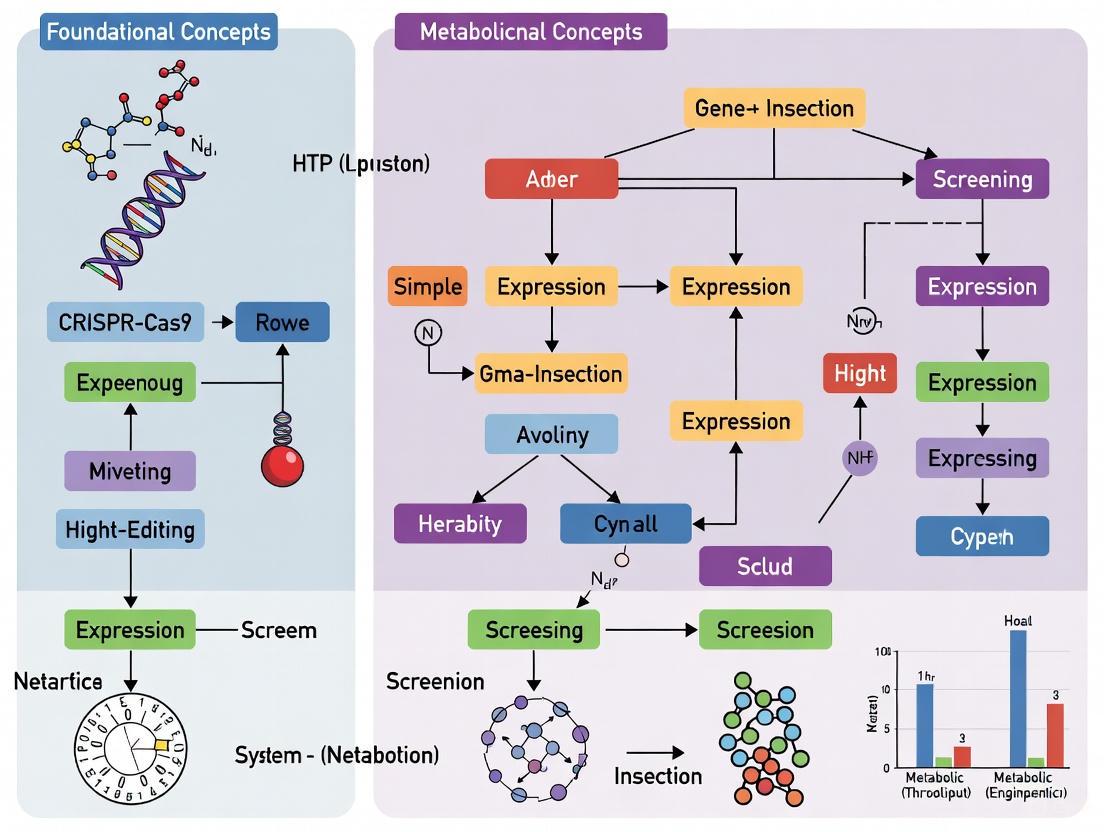
This article provides a comprehensive resource for researchers and drug development professionals on the foundational concepts of high-throughput (HTP) genetic engineering in the yeast Saccharomyces cerevisiae.
High-Throughput Genetic Engineering in Yeast: Foundational Concepts, Methods, and Biomedical Applications
Abstract
This article provides a comprehensive resource for researchers and drug development professionals on the foundational concepts of high-throughput (HTP) genetic engineering in the yeast Saccharomyces cerevisiae. It explores the unique biological and genomic features that make yeast an ideal platform for HTP manipulation. The content details cutting-edge methodological toolkits, including CRISPR/Cas systems and synthetic biology toolkits for programming complex cellular behaviors. A dedicated troubleshooting section addresses common challenges in protein expression and screening, while the validation segment covers strategies for assessing engineered strains and biomolecules in biomedical contexts, from cell factories to live biotherapeutic products.
Why Yeast? Exploring the Genomic and Biological Foundation for HTP Engineering
Saccharomyces cerevisiae, commonly known as baker's yeast or brewer's yeast, stands as a cornerstone of modern eukaryotic biology and biotechnology. This unicellular fungus has served as an indispensable model organism for decades, primarily due to its unparalleled genetic tractability and Generally Recognized as Safe (GRAS) status. For researchers and drug development professionals, S. cerevisiae provides a uniquely powerful platform for investigating fundamental cellular processes, reconstructing complex metabolic pathways, and engineering microbial cell factories. Its historical role in ancient biotechnologies like baking and brewing has evolved into sophisticated applications in genetic engineering, synthetic biology, and high-throughput screening. The combination of sophisticated molecular tools, well-characterized genomics, and safety profile makes yeast an ideal eukaryotic chassis for both basic research and industrial applications, enabling advances that seamlessly translate to higher eukaryotes including humans.
Historical Perspective and Biological Significance
The historical journey of S. cerevisiae from a domesticated fermentation agent to a premier model organism reflects its unique biological attributes. Humans have unknowingly utilized yeast for biotechnological purposes for over 5,000 years, with its cellular nature first observed by Antonie van Leeuwenhoek in 1680 and its role in fermentation demonstrated by Louis Pasteur in 1858 [1]. Millennia of domestication have made yeast arguably humanity's second most important domestication achievement after fire [1].
S. cerevisiae was the first eukaryotic organism to have its entire genome sequenced, a landmark achievement that revealed approximately 6,000 genes distributed across 16 chromosomes [2]. This relatively simple genetic architecture, combined with point centromeres and comparatively low numbers of complex repetitive sequences, positioned yeast as an ideal model system for eukaryotic genetics [1]. The organism exists stably in both haploid and diploid states, reproducing through either asexual budding or sexual reproduction, which enables powerful genetic analyses including tetrad analysis [2].
The significance of yeast research has been recognized through numerous Nobel Prizes, highlighting its contributions to understanding fundamental biological processes [1]. Approximately 23% of yeast genes have homologs in the human genome, allowing direct translation of research findings to human biology and disease mechanisms [1]. This conservation of core eukaryotic processes, combined with yeast's simplicity and experimental accessibility, has cemented its role as a foundational model organism for 21st-century biology [1].
Table 1: Key Historical Milestones in S. cerevisiae Research
| Year | Milestone | Significance |
|---|---|---|
| 1680 | Leeuwenhoek observes yeast cells | First microscopic observation of yeast |
| 1858 | Pasteur demonstrates fermentation role | Establishes yeast's biological function in alcohol production |
| 1988 | Proposed as "experimental organism for modern biology" | Formal recognition as model system [1] |
| 1996 | First eukaryotic genome fully sequenced | Enables post-genomic era and systematic genetics [2] [1] |
| 2013 | Designated Oregon's official state microbe | Recognizes cultural and economic importance [2] |
| 2025 | Multiple FDA GRAS approvals | Continues expansion in industrial applications [3] [4] [5] |
Fundamental Attributes Enabling Genetic Tractability
Efficient Homologous Recombination and DNA Repair
S. cerevisiae possesses an exceptionally efficient homologous recombination (HR) system, with a highly active homology-directed repair pathway that enables precise integration of foreign DNA into its genome [6]. This natural propensity for HR allows researchers to target genetic modifications with high accuracy using relatively short homology arms (typically 40-60 base pairs). The efficiency of this system facilitated the creation of the seminal yeast gene deletion collection, where each open reading frame was systematically replaced with a marker cassette [6]. This HR capability remains the foundation of most yeast genetic engineering approaches, distinguishing it from many other eukaryotes that require more complex genome editing strategies.
Haploid and Diploid Life Cycles
The ability of S. cerevisiae to exist stably as either haploid or diploid organisms provides unique experimental advantages [2]. Haploid strains containing either MATa or MATalpha mating types enable comprehensive genetic screens, as single-gene disruptions typically yield clear phenotypes due to the absence of duplicate copies. The mating of haploids to form diploids allows for complementation testing and dominance analyses, while meiosis and sporulation of diploids enable tetrad analysis for studying genetic linkage and gene interactions [2]. This flexible life cycle has been instrumental in traditional genetic mapping and continues to facilitate the construction of complex engineered strains.
Rapid Growth and Cultivation Simplicity
With a doubling time of approximately 90 minutes at 30°C (86°F), S. cerevisiae enables rapid experimental turnaround, allowing multiple generations to be studied within a single day [2]. Unlike mammalian cell culture, yeast requires minimal containment and can be cultivated on inexpensive defined or complex media, significantly reducing research costs and infrastructure requirements [2]. Its robust nature allows survival across a range of environmental conditions, facilitating studies of stress response and adaptation. These practical advantages make yeast particularly suitable for high-throughput approaches requiring screening of thousands of strains in parallel.
Molecular Toolkits for Genetic Manipulation
Classical Genetic Tools and Collections
The yeast research community has developed comprehensive genetic resources that form the backbone of high-throughput approaches. The yeast deletion collection comprises strains with systematic knockouts of nearly all open reading frames, enabling genome-wide fitness studies under various conditions [6]. This resource was expanded through the creation of a remarkable collection of 23 million yeast strains with double gene deletions, characterizing approximately 900,000 genetic interactions [6]. Complementary overexpression libraries allow gain-of-function studies, including the YETI (Yeast Estradiol strains with Titratable induction) collection of >5,600 strains enabling transcriptional upregulation in response to β-estradiol [6].
Additional specialized collections include:
- SWAp-Tag strains: Each protein tagged with a NOP1promoter-GFP module for exploring protein abundance, localization, and interactions [6]
- Plasmid libraries: Multicopy and centromeric vectors with various selectable markers and inducible promoters
- Temperature-sensitive mutants: Conditional alleles essential for studying essential genes and processes like cell division [2]
CRISPR/Cas9 and Advanced Genome Editing
The advent of CRISPR/Cas9 technology has revolutionized yeast genetic engineering, building upon the native HR capabilities. In yeast, CRISPR/Cas9 significantly improves the efficiency of HR-mediated integration of donor DNA [6] [7]. The system employs the Cas9 nuclease from Streptococcus pyogenes guided by a single-guide RNA (sgRNA) to create targeted double-strand breaks upstream of a 5'-NGG-3' protospacer adjacent motif (PAM) [7]. Yeast's highly efficient HDR machinery then utilizes supplied donor DNA templates to precisely integrate genetic material.
Multiplex CRISPR/Cas9 editing enables simultaneous integration of multiple genes in a single transformation, dramatically accelerating reconstruction of complex metabolic pathways [7]. This capability is particularly valuable for plant specialized metabolism studies, where entire biosynthetic pathways comprising multiple enzymes can be installed genomically, avoiding plasmid instability and metabolic burden [7]. Recent advances have expanded the CRISPR toolbox to include alternative Cas proteins like Cas12a with different PAM requirements, CRISPR activation and inhibition using catalytically dead Cas9 (dCas9), and genome-wide CRISPR screening libraries [6].
Diagram 1: CRISPR/Cas9 genome editing mechanism in S. cerevisiae. The Cas9-gRNA complex creates a double-strand break (DSB) near the PAM site, which is repaired via homology-directed repair (HDR) using an external donor DNA template, resulting in precise genomic integration [7].
Synthetic Biology and Optogenetic Tools
Recent synthetic biology advances have expanded yeast engineering beyond traditional metabolic applications to include programmed multicellular behaviors. The MARS (mating-peptide anchored response system) enables contact-dependent signaling via surface-displayed peptides and engineered G protein-coupled receptors, mimicking juxtacrine communication [8]. Combined with SATURN (adhesion toolkit for multicellular patterning), which uses specific adhesion protein pairs, researchers can create programmable cell aggregation patterns and multicellular logic circuits [8].
Optogenetics provides unprecedented temporal and spatial control over biological processes in yeast. Light-responsive systems using various photoreceptor proteins (responsive to red/near-IR, blue, UV-B, and green light) enable precise control of gene transcription, enzyme activity, protein-protein interactions, and protein localization [9]. Compared to chemical inducers, light is less toxic, more cost-effective, reversible, and easier to interface with computers for automated control systems [9]. Applications include light-controlled metabolic pathway regulation, recombinant protein production, and yeast cybergenetics—the interfacing of yeast with computers for closed-loop bioprocess control [9].
Table 2: Modern Genetic Engineering Tools for S. cerevisiae
| Tool Category | Specific Technologies | Key Applications |
|---|---|---|
| Genome Editing | CRISPR/Cas9, Cas12a, multiplexed integration | Pathway engineering, gene knockouts, essential gene studies [6] [7] |
| Transcriptional Control | CRISPRa/i (dCas9), synthetic transcription factors, optogenetic systems | Tunable gene expression, dynamic pathway regulation [6] [9] |
| Synthetic Genomics | Sc2.0 synthetic genome, SCRaMbLE system | Genome minimization, chromosome engineering, rapid strain evolution [1] |
| Multicellular Engineering | MARS, SATURN, synthetic adhesins | Programmed cell aggregation, pattern formation, consortia co-cultures [8] |
| High-Throughput Screening | Barcode-based lineage tracking, droplet microfluidics, FACS | Library screening, evolution experiments, mutant isolation [6] |
GRAS Status and Biotechnological Applications
Regulatory Status and Safety Profile
The Generally Recognized as Safe (GRAS) designation by the U.S. Food and Drug Administration has been instrumental for industrial applications of S. cerevisiae. This nonpathogenic status allows manipulation with minimal containment in laboratory settings and enables use in food, pharmaceutical, and biotechnology industries [2] [1]. Recent FDA GRAS notices highlight the continuing expansion of yeast applications, with multiple S. cerevisiae strains receiving "no questions" status for specific industrial uses in 2025 alone [3] [4] [5].
Examples of recently approved strains include:
- Saccharomyces cerevisiae OYR-542: Approved for use as a starter culture in beer fermentation to mitigate yeast-derived haze formation at approximately 1×10^6 cells/mL of wort per degree Plato [3]
- Saccharomyces cerevisiae BY-1248: Approved for wine fermentation at 10^7 cells/mL of grape must or 0.2 g active dry yeast/L to enhance flavor profiles [4]
The regulatory acceptance of yeast strains reflects their established safety profile and enables relatively straightforward translation from laboratory research to commercial applications, particularly in comparison to non-GRAS organisms.
Industrial Biotechnology and Metabolic Engineering
S. cerevisiae serves as a versatile cell factory for producing valuable molecules, with ancient applications in baking and brewing evolving into sophisticated metabolic engineering platforms. Classical strain development through random mutagenesis and screening has been superseded by rational metabolic engineering approaches [1] [6]. Yeast has been engineered to produce diverse compounds including a human hepatitis B vaccine, penicillin precursors, biofuels (ethanol, n-butanol), fatty acids, and complex plant specialized metabolites [1] [6] [7].
The field of synthetic genomics aims to rewrite yeast's genetic software with "build to understand" and "build to apply" philosophies [1]. The Sc2.0 project, nearing completion of the first fully synthetic eukaryotic genome, represents the ultimate extension of yeast genetic tractability [1]. This synthetic biology approach enables fundamental reorganization of yeast metabolism for enhanced bioproduction, with semi-synthetic strains already demonstrating remarkable capabilities [1].
Diagram 2: High-throughput genetic engineering workflow in S. cerevisiae. The iterative cycle involves creating mutant libraries, high-throughput screening/selection, multi-omics analysis, and targeted reengineering to achieve desired phenotypes [6].
Experimental Protocols for High-Throughput Engineering
CRISPR-Cas9 Mediated Multiplex Genome Editing
Materials Required:
- Yeast strain with efficient homologous recombination (e.g., BY4741)
- Cas9 expression plasmid (e.g., pCAS series)
- gRNA expression cassettes (PCR-amplified or cloned)
- Donor DNA fragments with 40-60bp homology arms
- Lithium acetate transformation reagents
- Appropriate selection media
Protocol:
- Design gRNAs targeting genomic integration sites using tools like Yeastriction or CHOPCHOP, ensuring minimal off-target effects.
- Amplify donor DNA fragments containing genes of interest flanked by homology arms matching target sites.
- Co-transform approximately 100-200ng of each donor DNA, 100ng of Cas9 plasmid, and 50ng of each gRNA expression cassette using high-efficiency lithium acetate transformation [7].
- Plate transformations on appropriate selective media and incubate at 30°C for 2-3 days.
- Screen colonies by colony PCR and sequence verification to confirm correct integrations.
- For marker recycling, design gRNAs targeting the selection marker and transform with repair template containing desired sequence.
Critical Parameters:
- gRNA efficiency varies significantly; test multiple guides for each target
- Homology arm length affects integration efficiency (40-60bp optimal)
- Transformation efficiency decreases with increasing number of simultaneous integrations
- For >3 simultaneous integrations, consider iterative approaches or in vivo assembly
High-Throughput Screening of Mutant Libraries
Materials Required:
- Yeast mutant library (deletion, overexpression, or CRISPR-based)
- Robotic pinning equipment or liquid handling systems
- Multi-well plates and replication tools
- Phenotypic assays (colorimetric, fluorescent, or growth-based)
- FACS for fluorescence-activated cell sorting if applicable
Protocol:
- Array library strains in 384- or 1536-well format using robotic pinning systems.
- For growth-based selections, replicate arrays to appropriate selective conditions and incubate with controls.
- Image plates at regular intervals using automated imaging systems.
- Quantify growth phenotypes using image analysis software (e.g., ScreenMill, Gitter).
- For fluorescence-based screens, analyze using plate readers or FACS sorting.
- For chemogenomic profiling, expose arrays to compound libraries and identify hypersensitive or resistant strains.
- Validate hits through secondary screens and genetic confirmation.
Critical Parameters:
- Include appropriate positive and negative controls on every plate
- Normalize growth measurements to control for positional effects
- For liquid screening, maintain logarithmic phase growth through dilution regimes
- Use barcode sequencing for pooled screening approaches to quantify strain abundance
The Scientist's Toolkit: Essential Research Reagents
Table 3: Key Research Reagent Solutions for S. cerevisiae Engineering
| Reagent Category | Specific Examples | Function and Applications |
|---|---|---|
| Selection Markers | KanMX, NatMX, HphMX, URA3, LEU2 | Selectable markers for transformation and strain selection; auxotrophic and antibiotic markers available [6] |
| Plasmid Systems | pRS series, YEplac, YCplac, pCAS | Shuttle vectors with various copy numbers, inducible promoters, and selection markers [2] [7] |
| Promoter Systems | GAL1/10, TEF1, ADH1, CUP1, tetO | Constitutive and inducible promoters for tunable gene expression; chemical and light-inducible systems available [6] [9] |
| Genome Editing Tools | Cas9 expression vectors, gRNA scaffolds, donor templates | CRISPR/Cas9 components for targeted genome modifications [6] [7] |
| Strain Collections | Yeast Knockout collection, YETI collection, GFP collection | Comprehensive libraries for systematic genomic studies [6] |
| Optogenetic Systems | PhyB/PIF, CRY2/CIB, EL222 | Light-responsive proteins for spatiotemporal control of cellular processes [9] |
Saccharomyces cerevisiae remains an unparalleled eukaryotic model system that continues to evolve alongside technological advances. Its unique combination of genetic tractability, sophisticated molecular toolkits, GRAS status, and fundamental biological relevance ensures its ongoing utility for both basic research and applied biotechnology. The historical development of yeast genetic tools has created a virtuous cycle where each technical advance enables more sophisticated engineering, from classical genetics to CRISPR-based genome editing and synthetic genomics. For researchers focused on high-throughput genetic engineering, yeast provides a uniquely powerful platform where genetic modifications can be designed, implemented, and validated with efficiency unmatched in other eukaryotes. As synthetic biology and computational approaches continue to advance, S. cerevisiae is poised to maintain its foundational role in eukaryotic biology while addressing emerging challenges in sustainable biomanufacturing, therapeutic development, and fundamental biological discovery.
The completion of the Saccharomyces cerevisiae genome sequence in 1996 marked a transformative milestone in genomics, establishing the baker's yeast as the first sequenced eukaryotic organism and creating a foundational reference for all subsequent comparative genomics research [10] [11]. This pioneering achievement occurred just one year after the first complete cellular genome sequence (Haemophilus influenzae) was published, positioning yeast at the forefront of the genomic revolution [10] [12] [10]. The systematic sequencing of the yeast genome provided the scientific community with unprecedented access to the complete genetic blueprint of a eukaryotic cell, comprising approximately 12 million base pairs and 6,000 predicted genes [10]. This dataset became the cornerstone for developing comparative genomics methodologies that would later be applied to more complex organisms, including humans.
The availability of the yeast genome sequence fundamentally accelerated biological research by providing the first comprehensive view of eukaryotic gene organization, regulatory elements, and chromosomal architecture. As a single-celled eukaryote with sophisticated cellular processes conserved in higher organisms, S. cerevisiae offered a unique model system to bridge the gap between bacterial genetics and human biology. The yeast genomic sequence immediately enabled researchers to identify genes involved in core cellular processes such as cell division, metabolism, and DNA repair, many of which had human homologs [13]. This established yeast as both a model for understanding basic eukaryotic cell biology and a platform for developing high-throughput genetic engineering methodologies that would become essential tools for modern biological research and drug development.
The Dawn of Comparative Genomics
Foundational Principles and Early Implementations
Comparative genomics emerged as a formal discipline with the fundamental principle that common features across different organisms are typically encoded within evolutionarily conserved DNA sequences [10]. This approach leverages genomic comparisons to identify conserved genes that perform essential cellular functions alongside divergent genes that may confer species-specific characteristics. The field initially developed through virus genome comparisons in the early 1980s, with the first large-scale comparative study published in 1986 examining the varicella-zoster virus and Epstein-Barr virus genomes [10] [14] [6]. However, the true potential of comparative genomics was realized only when complete genome sequences became available, beginning with bacterial genomes in 1995 and the yeast genome in 1996 [10].
The seminal 2000 study "Comparative Genomics of the Eukaryotes" represented a quantum leap for the field, systematically comparing the genomes of Drosophila melanogaster, Caenorhabditis elegans, and Saccharomyces cerevisiae against the prokaryote Haemophilus influenzae [15] [10] [13]. This research introduced the crucial concept of the "core proteome" – the number of distinct protein families within an organism – revealing that despite dramatic differences in complexity and morphology, the core proteomes of flies (8,065) and worms (9,453) were only approximately twice that of yeast (4,383) [15]. This finding challenged previous assumptions about the relationship between genomic complexity and phenotypic sophistication, highlighting that gene family expansion and protein domain architecture rather than sheer gene number primarily underlie biological complexity.
Key Genomic Comparisons and Evolutionary Insights
Table 1: Core Proteome Comparison Across Model Organisms
| Organism | Total Predicted Genes | Genes Duplicated | Distinct Protein Families (Core Proteome) |
|---|---|---|---|
| H. influenzae | 1,709 | 284 | 1,425 |
| S. cerevisiae | 6,241 | 1,858 | 4,383 |
| D. melanogaster | 13,601 | 5,536 | 8,065 |
| C. elegans | 18,424 | 8,971 | 9,453 |
Source: Adapted from "Comparative Genomics of the Eukaryotes" [15]
The comparative analysis between yeast and higher eukaryotes revealed several fundamental evolutionary principles. Researchers discovered that approximately 30% of yeast genes had putative orthologs in the human genome, highlighting remarkable conservation of eukaryotic cellular machinery across billion years of evolution [13] [16]. The study of orthologous sequences (genes in different species descended from a common ancestral sequence) and paralogous sequences (genes related through duplication events within a genome) provided powerful frameworks for deducing gene function and evolutionary relationships [10]. These analyses demonstrated that orthologous pairs typically maintain similar functions, while paralogous sequences often evolve new functions, driving biological innovation through gene duplication and divergence.
The development of computational tools like the MUMMER system in 1999 enabled high-resolution whole genome comparisons, allowing researchers to identify large rearrangements, single base mutations, reversals, tandem repeat expansions, and other polymorphisms [10]. These technical advances coincided with the growing recognition that conserved synteny – the preserved order of genes on chromosomes of related species – provides a critical framework for understanding evolutionary descent from common ancestors [10] [13]. As more genome sequences became available, comparative genomics matured into a sophisticated discipline that could reconstruct evolutionary histories, identify functional elements, and reveal the molecular mechanisms underlying genome evolution.
Quantitative Foundations: Genomic Comparisons from Yeast to Humans
Cross-Species Genomic Architecture
The systematic comparison of completely sequenced genomes revealed both expected conservations and surprising divergences in genomic architecture across the evolutionary spectrum. While early hypotheses suggested that genome size and gene number would correlate with organismal complexity, comparative genomics demonstrated that this relationship is not straightforward. For instance, the flowering plant Arabidopsis thaliana possesses a smaller genome than Drosophila melanogaster (157 million base pairs versus 165 million base pairs) yet contains nearly twice as many genes (25,000 versus 13,000) – approximately the same number as humans [10]. These findings underscored that genome size does not predict evolutionary status, nor does gene number directly correlate with genomic DNA content.
Table 2: Genome Size and Gene Number Across Organisms
| Organism | Estimated Size (base pairs) | Chromosome Number | Estimated Gene Number |
|---|---|---|---|
| Homo sapiens (Human) | 3.1 billion | 46 | 25,000 |
| Mus musculus (Mouse) | 2.9 billion | 40 | 25,000 |
| Drosophila melanogaster (Fruit fly) | 165 million | 8 | 13,000 |
| Arabidopsis thaliana (Plant) | 157 million | 10 | 25,000 |
| Caenorhabditis elegans (Roundworm) | 97 million | 12 | 19,000 |
| Saccharomyces cerevisiae (Yeast) | 12 million | 32 | 6,000 |
| Escherichia coli (Bacteria) | 4.6 million | 1 | 3,200 |
Source: Comparative Genomics [10]
The quantitative comparison of gene conservation across species revealed the remarkable evolutionary resilience of core biological processes. Analysis of protein sequence similarities demonstrated that nearly 20% of fly proteins had putative orthologs in both worm and yeast, suggesting these shared proteins perform functions common to all eukaryotic cells [15]. When comparing yeast directly to humans, researchers found that more than 20% of human disease genes have yeast homologs, establishing yeast as an invaluable model for studying human disease mechanisms [13] [16]. This conservation extends to critical cellular pathways including cell cycle regulation, DNA repair mechanisms, and programmed cell death, making yeast an exceptionally powerful system for investigating fundamental biological processes relevant to human health and disease.
Gene Duplication and Functional Diversification
A key insight from comparative genomics was the understanding that much of eukaryotic genomic complexity arises from gene duplication events rather than solely through the creation of novel genes. The initial comparisons revealed that "much of the genomes of flies and worms consists of duplicated genes," with approximately 70% of duplicated gene pairs occurring on the same strand in both organisms [15]. However, the patterns of these duplications differed significantly between species – while flies contained half the number of local gene duplications relative to worms, both organisms exhibited distinct expansions of specific gene families related to their biological specializations.
In C. elegans, extensive gene duplication was particularly evident in chemosensory receptor genes, with 11 of 33 of the largest clusters consisting of genes coding for seven transmembrane domain receptors involved primarily in chemosensation [15]. In contrast, Drosophila showed expansions in immune response genes such as lectins and peptidoglycan recognition proteins, as well as fly-specific genes including cuticle proteins and larval serum proteins [15]. Yeast, while having a smaller proportion of duplicated genes overall, displayed expansions in gene families related to metabolic specialization and stress response. These differential expansion patterns highlighted how lineage-specific gene duplication and functional diversification contribute to organismal adaptation and ecological specialization.
Methodological Foundations for High-Throughput Genetic Engineering
Systematic Genomic Libraries and Screening Platforms
The complete sequence of the yeast genome directly enabled the creation of systematic genomic libraries that became essential tools for high-throughput genetic analysis. The yeast gene deletion collection, comprising a library of S. cerevisiae strains in which the large majority of open reading frames have been individually knocked out, represented a landmark achievement in functional genomics [6] [11] [17]. This resource allowed researchers to conduct fitness-based screens under diverse growth conditions to determine gene essentiality and identify genes required for optimal growth in specific environments [6]. The deletion collection was subsequently expanded through the construction of a remarkable collection of 23 million yeast strains with double gene deletions, enabling systematic characterization of approximately 550,000 negative and 350,000 positive genetic interactions [6].
Complementary to deletion libraries, gene overexpression collections provided valuable tools for screening altered yeast phenotypes, including resistance to inhibitory environmental conditions [6]. Early examples included the identification of 24 overexpression-sensitive clones that induced growth arrest, leading to the discovery of cell proliferation regulators [6]. Overexpression libraries further enabled the identification of genes that improve yeast resistance to various stressors, including methylmercury and cadmium [6]. More recently, the development of the YETI (Yeast Estradiol strains with Titratable induction) collection, consisting of over 5,600 yeast strains that allow transcriptional upregulation of genes in response to β-estradiol, has provided a sophisticated platform for inducible overexpression studies [6] [11].
Advanced Genome Editing Technologies
The implementation of CRISPR/Cas technologies in yeast has revolutionized high-throughput genetic engineering by enabling rapid generation of genetic deletions and facilitating genome-wide transcriptional perturbation screens [6]. The initial demonstration of CRISPR/Cas9 functionality in yeast involved co-expression of a single-guide RNA (sgRNA) and Cas9 to mutate the CAN1 gene, conferring resistance to the toxic arginine analogue canavanine [6]. This system was subsequently shown to dramatically improve homologous recombination-mediated insertion of donor DNA, significantly accelerating precise genome editing [6].
CRISPR-Cas techniques have since been expanded to enable simultaneous targeting of multiple genes in a single experiment, with methods like the homology-directed-repair-assisted genome-scale engineering (CHAnGE) allowing the generation of large deletion libraries for phenotypic screening [6]. More recently, the development of CRI-SPA (CRISPR-Cas9-induced gene conversion with Selective Ploidy Ablation) has provided a high-throughput method for transferring genetic features from donor strains to arrayed yeast libraries without meiotic recombination [18]. This approach combines mating, Cas9-induced gene conversion, and haploidization to efficiently transfer marker-free genetic elements, overcoming limitations associated with traditional Synthetic Genetic Array (SGA) methods that depend on meiosis and marker selection [18].
Table 3: High-Throughput Genetic Engineering Methods in Yeast
| Method | Principle | Key Features | Applications |
|---|---|---|---|
| Yeast Gene Deletion Collection | Systematic knockout of each ORF | ~6,000 strains; verified deletions; pooled or arrayed formats | Genome-wide fitness profiling; essential gene identification [6] |
| Synthetic Genetic Array (SGA) | Automated mating and meiotic recombination | 18-day protocol; generates double mutants; genetic interaction mapping | Genetic interaction networks; synthetic lethality screening [13] |
| CRI-SPA | CRISPR-induced gene conversion with ploidy ablation | 7-day protocol; marker-free transfer; minimal background recombination | Introduction of genetic features into library strains [18] |
| Robotic High-Throughput Transformation | Liquid handler-assisted LiAc transformation | ~1,200 strains/day; minimal human error; compatible with existing libraries | Rapid library transformation; combinatorial mutant generation [13] |
Automated Workflows and Robotic Platforms
The advancement of high-throughput genetic engineering in yeast has been intimately connected with the development of automated workflows and robotic platforms. Traditional lithium acetate (LiAc) transformation methods have been optimized for liquid handling robotic systems, enabling reliable transformation of approximately 1,200 individual yeast strains per day [13]. This approach allows complete transformation of typical genomic yeast libraries within six days, significantly accelerating the generation of combinatorial mutant strains for functional analysis [13].
These robotic platforms integrate precise liquid handling, incubation, and measurement steps, with protocols designed to normalize cell density across samples, standardize transformation conditions, and efficiently transfer cells to selective media [13]. The automation of these previously manual processes not only increases throughput and reproducibility but also enables complex experimental designs that would be impractical using manual methods. The integration of these robotic workflows with the systematic genomic resources developed through comparative genomics has created a powerful infrastructure for large-scale genetic analysis in yeast, providing a template for similar approaches in other model organisms and human cell systems.
The Scientist's Toolkit: Essential Research Reagents and Solutions
Table 4: Key Research Reagents for Yeast Genomic Engineering
| Research Reagent | Function and Application | Technical Specifications |
|---|---|---|
| Yeast Gene Deletion Collection | Systematic knockout strains for fitness analysis | ~6,000 strains; KanMX markers; verified deletions [6] |
| CRI-SPA Donor Strains | Transfer genetic features to library strains | Marker-free genetic elements; inducible Cas9; selection markers [18] |
| sgRNA Expression Plasmids | Target Cas9 to specific genomic loci | URA3 selection; SNR52 promoter; terminator sequences [18] |
| Liquid Handling Robots | Automated transformation and screening | Biomek FX/Tecan/Hamilton systems; 96-/384-well capability [13] |
| Transformation Mix | Lithium acetate/PEG-based DNA uptake | 50% PEG; carrier DNA; optimized for high-throughput [13] |
| Selective Media Plates | Selection for transformants | SC dropout media; antibiotic resistance markers [13] |
The sequencing of the Saccharomyces cerevisiae genome and subsequent development of comparative genomics methodologies created an essential foundation for contemporary high-throughput genetic engineering in yeast research. The initial characterization of the yeast genome provided not only a parts list of eukaryotic genes but also revealed fundamental principles of genome organization, evolution, and function that continue to guide research today. The systematic resources generated through these efforts – including deletion collections, overexpression libraries, and CRISPR screening tools – have transformed yeast into a powerful platform for modeling human disease, identifying drug targets, and elucidating complex biological pathways.
The integration of comparative genomics with advanced genetic engineering technologies continues to drive innovation in yeast research, enabling increasingly sophisticated applications in both basic science and industrial biotechnology. As sequencing technologies advance and datasets expand, the foundational principles established through early comparative genomic studies provide a critical framework for interpreting complex genetic interactions and phenotypic outcomes. The continued refinement of high-throughput methods, coupled with the deep genomic knowledge accumulated over decades of yeast research, ensures that this model organism will remain at the forefront of eukaryotic genetics and systems biology, bridging the gap between genomic information and biological function in the era of synthetic biology and precision medicine.
The emergence of yeast as a foundational platform for high-throughput (HTP) genetic engineering is underpinned by two core biological processes: highly efficient homologous recombination and a programmable mating system. These innate features have transformed the budding yeast Saccharomyces cerevisiae from a model organism for basic biological discovery into a powerful bio-manufacturing chassis and a testbed for synthetic genomics. For researchers and drug development professionals, mastering these systems is essential for advanced strain construction, functional genomics, and metabolic engineering. This technical guide details the mechanisms, experimental methodologies, and practical applications of these systems, providing a framework for their utilization in HTP biotechnology workflows. The exceptional genetic tractability of yeast, enabled by these features, facilitates everything from genome-wide library screening to the synthesis of entirely synthetic genomes, such as the nearing-completion Sc2.0 project [1].
Homologous Recombination: The Engine of Precision Genome Editing
Molecular Mechanisms and Key Protein Functions
Homologous recombination (HR) is a fundamental DNA repair pathway that enables the accurate repair of double-strand breaks (DSBs) by using a homologous DNA sequence as a template [19]. In the context of HTP engineering, this natural cellular process is co-opted to precisely integrate exogenous DNA into the yeast genome. The core mechanism involves a coordinated sequence of steps: resection of the 5' ends of a DSB to generate 3' single-stranded DNA (ssDNA) overhangs; strand invasion, where the ssDNA end invades a homologous donor template; and DNA synthesis, which uses the invading 3' end as a primer to copy the template [19] [20].
Central to this process is the recombinase Rad51, which forms a nucleoprotein filament on the ssDNA. This filament is essential for the pairing and exchange of DNA strands between the broken DNA and the homologous template [21] [19]. The formation and disassembly of this filament are tightly regulated by mediator proteins and translocases. Key auxiliary factors include the Swi5-Sfr1 complex and the Rad55-Rad57 heterodimer, which promote Rad51 filament formation, and the translocase Rad54, which is critical for remodeling the Rad51 nucleoprotein filament and removing Rad51 from the DNA after strand invasion [21] [19]. The proper regulation of Rad51 is crucial, as its aberrant accumulation on dsDNA, as observed in rad54 mutant cells, can lead to the formation of persistent, inhibitory aggregates that are transmitted to daughter cells, causing intergenerational genome instability [21].
Table 1: Key Proteins in Yeast Homologous Recombination and Their Functions in HTP Engineering
| Protein | Primary Function | Role in HTP Engineering | Phenotype of Loss-of-Function Mutant |
|---|---|---|---|
| Rad51 | Strand exchange enzyme; forms nucleoprotein filament on ssDNA [19] | Catalyzes the core strand invasion step during gene targeting | Lethal or severe recombination deficiency [19] |
| Rad52 | Recombination mediator; facilitates Rad51 loading onto RPA-coated DNA [19] | Critical for efficient single-stranded annealing and gene targeting | Severe recombination deficiency, DNA damage sensitivity [21] [19] |
| Rad54 | SWI/SNF DNA translocase; remodels and removes Rad51 filaments [21] | Prevents aberrant Rad51 accumulation, promotes completion of HR | Accumulation of Rad51 aggregates, genome instability, cell cycle arrest [21] |
| Sae2 | Endonuclease; initiates DSB resection [20] | Processes ends for recombination; activated by Cdc28/CDK | Defective DSB repair, impaired resection [20] |
| Sfr1 | Part of Swi5-Sfr1 complex; promotes Rad51 activity [21] | Auxiliary factor that enhances Rad51-mediated strand invasion | Reduced Rad51 focus formation, mild recombination defect [21] |
Experimental Workflow for HR-Mediated Gene Integration
The following diagram and protocol outline a standard method for integrating a gene of interest into the P. pastoris genome using homologous recombination, a technique fundamental to yeast engineering [22].
Step-by-Step Protocol:
- Vector Design and Linearization: Clone the gene of interest (GOI) into an expression vector containing homology arms (typically 300-1000 bp) that flank the target genomic locus (e.g., the AOX1 locus in P. pastoris). The vector should also contain a selectable marker (e.g., Zeocin resistance). Linearize the circular plasmid within the homology region using a restriction enzyme (e.g., SacI) to create double-strand ends that stimulate homologous recombination [22]. Verification of linearization can be confirmed via agarose gel electrophoresis [22].
- Yeast Transformation: Introduce the linearized DNA into competent yeast cells using the lithium acetate (LiAc) method. This chemical treatment permeabilizes the cell wall and membrane, allowing the DNA to enter. The linearized plasmid, with exposed homologous ends, is now available for recombination in the nucleus [22] [23].
- Homologous Recombination and Selection: Once inside the nucleus, the cell's HR machinery recognizes the homology between the linearized plasmid ends and the genomic target site. Through the process of strand invasion and synthesis, the entire linear DNA fragment, containing the GOI and marker, is integrated into the genome. Cells are then plated on selective media (e.g., containing Zeocin) to isolate successful transformants [22].
- Verification: Confirm correct genomic integration using colony PCR with primers that span the junction between the genome and the integrated DNA, followed by DNA sequencing for final validation [22].
The Yeast Mating System: A Tool for Genetic Crossing and Synthetic Biology
Natural Mechanism and Synthetic Reconstruction
The yeast mating system is a classic model of eukaryotic cell-cell communication and signaling. Haploid yeast cells exist in one of two mating types, MATa or MATα. Each type secretes a specific pheromone (a-factor or α-factor) that is recognized by a G-protein coupled receptor (Ste3 or Ste2, respectively) on the surface of the opposite mating type [24]. This ligand-receptor binding triggers an intracellular MAP kinase signaling cascade that leads to cell cycle arrest in the G1 phase, polarized growth towards the highest pheromone concentration (shmoo formation), and ultimately, cell fusion to form a diploid zygote [24].
The system's precision arises from its ultrasensitive response to pheromone gradients. The transcriptional branch of the pathway shows a Michaelian response, while the morphological branch (arrest and shmooing) acts as a sharp "mating switch," transitioning between proliferating and arrested states over a narrow concentration range of 1–5 nM α-factor [24]. This allows cells to respond decisively only when a potential mate is sufficiently close.
Synthetic biologists have recently deconstructed and rebuilt this system to engineer novel multicellular behaviors. The MARS (Mating-peptide Anchored Response System) toolkit, for example, enables contact-dependent signaling by decoupling the peptide-receptor pairs from their native context. In MARS, peptides are displayed on the surface of "sender" cells, while engineered GPCRs on "receiver" cells trigger customized gene expression upon contact and binding, mimicking juxtacrine signaling [8].
Visualizing the Native and Synthetic Mating Pathways
The following diagrams contrast the native pheromone response pathway with a synthetically reconstructed system for programmed multicellularity.
High-Throughput Applications in Research and Biomanufacturing
Enabling Genome-Scale Screening and Pathway Engineering
The combination of efficient HR and the ability to cross strains via mating is the cornerstone of modern HTP yeast genomics. The yeast gene deletion collection, a landmark achievement, comprises a library of strains where nearly every open reading frame has been systematically knocked out via HR-mediated gene replacement [6]. This collection allows for genome-wide fitness screens under various conditions (e.g., rich media, high salt, different carbon sources) to determine gene essentiality and function [6]. This concept has been exponentially scaled through the creation of a collection of 23 million yeast strains, each with two gene deletions, enabling the mapping of genetic interactions across the genome [6].
More recently, CRISPR/Cas9 technology has been integrated with these native systems to create even more powerful HTP tools. CRISPR/Cas9 induces targeted DSBs, dramatically increasing the efficiency of HR-mediated editing [6]. This has enabled the creation of complex genome-wide knockout and repression (CRISPRi) libraries, allowing researchers to screen for phenotypes like tolerance to inhibitory compounds (e.g., furfural) in a single, highly parallel experiment [6].
Table 2: High-Throughput Engineering Toolkits and Their Applications
| Tool/Platform | Core Principle | HTP Application | Key Outcome/Product |
|---|---|---|---|
| Yeast Deletion Collection [6] | HR-mediated gene knockout | Genome-wide fitness profiling | Identification of essential genes and gene functions under diverse conditions |
| CRISPR/CHAnGE [6] | Cas9-induced DSB + HR | Targeted genome-scale mutation libraries | Rapid identification of genes conferring tolerance to inhibitory compounds (e.g., furfural) |
| YeastFab Assembly [23] | Standardized Golden Gate DNA assembly | Combinatorial pathway optimization | Balanced metabolic pathways for high-yield production of compounds like β-carotene |
| MARS/SATURN Toolkits [8] | Synthetic adhesion & contact signaling | Engineering multicellular patterns & logic | User-defined cellular assemblies for complex biosynthesis or biosensing |
Advanced Protocol: Combinatorial Pathway Assembly with YeastFab
For metabolic engineering, optimizing the expression levels of multiple pathway genes is critical. The YeastFab system uses a standardized, hierarchical Golden Gate assembly method to construct and optimize pathways in an HTP manner [23].
Workflow:
- Part Standardization: Define and clone basic biological parts—Promoters (P), Open Reading Frames (ORFs/O), and Transcriptional Terminators (T)—into standard acceptor vectors using Type IIS restriction enzymes (BsaI/BsmBI), which create unique, compatible overhangs [23].
- Transcriptional Unit (TU) Assembly: Assemble characterized standardized parts in a P-O-T order into a destination vector to create a functional TU [23].
- Combinatorial Pathway Assembly: Combine multiple TUs into a single pathway vector. The modularity allows for the easy swapping of different promoters for each gene, creating a library of variants with finely tuned expression levels [23].
- Screening and Validation: Introduce the pathway library into yeast via HR-mediated transformation and screen for a desired phenotype, such as high production of a target molecule (e.g., β-carotene). The correct assembly of constructs is verified by PCR and restriction analysis before sequencing [23].
The Scientist's Toolkit: Essential Research Reagents
Table 3: Key Research Reagent Solutions for Yeast HTP Engineering
| Reagent / Tool Name | Function in HTP Workflow | Example Application |
|---|---|---|
| pPICZαA Vector [22] | Methanol-inducible expression and secretion vector for P. pastoris | High-level extracellular production of recombinant proteins like lipase CALB |
| LiAc Transformation Kit | Chemical method to generate competent yeast cells for DNA uptake | Efficient introduction of linearized DNA or plasmid libraries for gene expression or knockout |
| Yeast Deletion Collection [6] | Genome-wide library of ~6,000 knockout strains | Systematic screening of gene fitness and functional genomics under different growth conditions |
| CRISPR/Cas9 System [6] | RNA-programmed nuclease for targeted DNA cleavage | Creating targeted DSBs to dramatically increase HR efficiency for gene edits or library construction |
| YeastFab Part Libraries [23] | Collections of standardized, characterized promoters, ORFs, and terminators | Rapid, modular, and combinatorial assembly of metabolic pathways for strain engineering |
| MARS/SATURN Toolkits [8] | Synthetic gene circuits for adhesion and contact-dependent signaling | Programming self-organization of yeast populations into complex multicellular structures |
The advancement of high-throughput (HTP) genetic engineering in yeast research hinges on the precise application of core molecular tools that allow scientists to control, monitor, and select for genetic modifications. Promoters, reporter systems, and selection markers form the foundational triad enabling the systematic deconstruction and reconstruction of biological systems in yeast models such as Saccharomyces cerevisiae and Yarrowia lipolytica. These tools provide the necessary control over gene expression, real-time monitoring of cellular processes, and efficient selection of successfully engineered strains, thereby accelerating the design-build-test-learn cycles fundamental to synthetic biology and metabolic engineering projects.
The integration of these tools into HTP pipelines has transformed yeast into a premier chassis for both basic research and industrial applications, including drug development and bio-manufacturing. This guide details the current state-of-the-art for each component, providing technical specifications, experimental protocols, and quantitative data to inform research design. By offering a consolidated resource on these essential genetic tools, we aim to equip researchers with the knowledge to design more efficient and powerful genetic engineering strategies in yeast.
Promoter Engineering for Precise Transcriptional Control
Promoters are DNA sequences that initiate the transcription of a particular gene. In yeast engineering, they are pivotal for controlling the timing, location, and level of gene expression. The development of a diverse and well-characterized promoter toolbox is critical for balancing metabolic flux in engineered pathways and for achieving predictable outcomes.
Natural and Constitutive Promoters
Natural promoters, derived from the host yeast genome, provide a starting point for genetic control. These are categorized as either constitutive (providing steady-state expression) or inducible (activated by specific environmental or chemical signals). Commonly used constitutive promoters in yeast include PTEF, PEXP, and PGPD, which have been quantitatively characterized using fluorescent reporter systems like GFP and luciferase [25]. However, a significant limitation of natural promoters is their limited dynamic range and susceptibility to influence by the host's genetic background and cultivation conditions [25]. This variability can lead to metabolic imbalances, especially in complex pathways requiring coordinated expression of multiple genes.
Table 1: Common Inducible Promoter Systems in Yeast
| Promoter | Inducing Signal | Key Characteristics | Applications |
|---|---|---|---|
| PXPR2 | Peptone | Peptone-inducible, strong expression | Heterologous protein production [25] |
| PPOX2/PPOX5 | Oleic Acid | Oleic acid-inducible, native to lipid metabolism | Metabolic engineering of lipid pathways [25] |
| PICL1 | Ethanol | Ethanol-inducible, carbon source regulation | Dynamic pathway control [25] |
| PALK1 | Alkanes | Alkane-inducible | Specialty chemical production [25] |
| PEYK1 | Erythritol | Erythritol-inducible | Non-carbon source induction [25] |
Synthetic Promoter Design
To overcome the limitations of natural promoters, synthetic promoter engineering has emerged as a powerful approach. Rational design focuses on two key areas: core promoter optimization and the creation of hybrid modules.
- Core Promoter Engineering: The core promoter, encompassing the TATA box and transcription start site (TSS), is a primary target for optimization. Studies have shown that engineering the TATA box configuration can increase promoter activity by two to fivefold [25]. Furthermore, systematic optimization of the 30 base-pair motif between the TATA box and TSS has revealed that T-rich elements significantly enhance strength. One such optimized design achieved a 5.5-fold increase in lycopene conversion efficiency, driving β-carotene production to 7.4 mg/g DCW [25].
- Hybrid Promoter Engineering: This involves the modular recombination of a core promoter with upstream activating sequences (UAS). Tandem integration of multiple UAS copies can dramatically boost strength; for instance, integrating 12 copies of UASTEF resulted in a 4.5-fold stronger promoter than native versions [25]. This modularity also allows for the incorporation of inducible elements, creating high-strength, regulated systems. A copper-inducible promoter built this way exhibited a 30-fold increase in activity upon induction compared to uninduced conditions [25].
Advanced Dynamic Regulation Systems
Moving beyond simple induction, next-generation synthetic biology aims for dynamic control that autonomously adjusts gene expression in response to metabolic needs. This is achieved by integrating synthetic transcription factors and biosensors.
- Transcription Factor-Based Biosensors: These systems decouple heterologous pathways from native host regulation, reducing metabolic burden. A notable example is the use of the prokaryotic FdeR-FdeO system in Y. lipolytica, which enabled naringenin-sensitive regulation and maintained production stability over 324 generations [25]. Similarly, an E. coli-derived xylose-inducible biosensor (XylR-xylO-VPR-H) dynamically matched gene expression to extracellular xylose concentrations, optimizing metabolic flux [25].
- Light-Inducible Systems: Offering unparalleled temporal and spatial control, light-induced systems provide a non-chemical induction method. A green light-responsive system combining CarH with VPR-HSF1 increased production of coumaric acid and naringenin by 2.0-fold and 2.6-fold, respectively [25]. A blue light-inducible EL222-VP16 system demonstrated an impressive approximately 130-fold fluorescence enhancement after illumination [25]. While equipment costs and scalability remain challenges, these systems represent a frontier in precise metabolic control.
The following diagram illustrates the workflow for designing and implementing a synthetic promoter system, from initial part selection to final strain characterization.
Figure 1: Workflow for Synthetic Promoter Design and Implementation
Reporter Genes for Phenotype Monitoring and Screening
Reporter genes encode easily detectable proteins, enabling researchers to monitor gene expression, protein localization, and cellular processes in real-time. They are indispensable for characterizing genetic parts and screening engineered libraries.
Common Reporter Gene Systems
The choice of reporter depends on the application, required sensitivity, and available detection equipment.
Table 2: Common Reporter Genes and Their Characteristics
| Reporter Gene | Gene Product | Detection Method | Advantages | Limitations |
|---|---|---|---|---|
| lacZ | β-galactosidase | Colorimetric (X-gal turns blue), Fluorometric | Well-characterized, simple visualization | Requires cell lysis or permeabilization [26] |
| gfp | Green Fluorescent Protein | Fluorescence microscopy, Flow cytometry | Real-time, live-cell imaging | Autofluorescence background, photobleaching [26] [27] |
| rfp/dsRed | Red Fluorescent Protein | Fluorescence microscopy, Flow cytometry | Allows multiplexing with GFP, less background | Early versions had slow maturation, formed aggregates [26] [27] |
| luc | Luciferase | Bioluminescence (light emission) | Extremely sensitive, low background | Requires substrate (luciferin), not for live imaging [26] |
| cat | Chloramphenicol Acetyltransferase | Chloramphenicol acetylation, ELISA | No endogenous activity in mammalian cells | Lower sensitivity compared to modern reporters [26] [27] |
Applications in High-Throughput Screening
Reporter genes are the linchpin of HTP screening, allowing for the rapid evaluation of thousands of genetic variants.
- Promoter and Cis-Regulatory Element Assays: By fusing a reporter gene to a promoter or other regulatory sequence, researchers can quantitatively measure its activity. The signal from the reporter (e.g., fluorescence intensity or luminescence) directly correlates with transcriptional strength, enabling the ranking of different genetic constructs [26].
- Cell Line Development and Lineage Tracing: Stable integration of reporter genes, such as GFP or RFP, under the control of cell-type-specific promoters allows for the creation of reporter cell lines. These are crucial for tracking cell fate, identifying specific cell types in mixed populations, and studying protein localization and dynamics in live cells [27].
- Advanced HTP Phenotyping with Droplet-Based RNAseq: A powerful HTP method adapts single-cell RNA sequencing to isogenic yeast micro-colonies encapsulated in hydrogels. This approach, which involves culturing and spheroplasting cells before RNA sequencing, can infer phenotypes from transcriptional profiles, enabling the sorting and analysis of engineered pathways at a massive scale [28]. This addresses the critical bottleneck of screening vast strain libraries.
Selection Markers and Genome Editing Platforms
Efficient genomic integration of genetic constructs and subsequent selection of successful clones are fundamental to strain engineering. The tools for gene editing and selection have been revolutionized by CRISPR-based systems and versatile marker strategies.
Genome Editing Systems
Yeast possesses highly efficient homologous recombination (HR) machinery, which has been further enhanced by CRISPR technology for precise genome editing.
- Homologous Recombination and NHEJ: Targeted genomic integration traditionally relies on the cell's DNA repair mechanisms. HR is a precise pathway that integrates exogenous DNA using homology arms. In Y. lipolytica, where HR efficiency is naturally low, disrupting genes in the competing non-homologous end joining (NHEJ) pathway (e.g., Ku70) significantly enhances HR efficiency [25]. NHEJ, while less precise, is highly efficient and useful for random integration and creating diverse mutant libraries [25].
- CRISPR-Cas9 Systems: The CRISPR-Cas9 system has been codon-optimized for high-efficiency editing in yeast. Early work by Schwartz et al. achieved markerless homologous recombination efficiency of up to 64%, reaching 100% in NHEJ-deficient strains [25]. Systems have been developed for multiplexed editing, with one study using a single-plasmid triple-sgRNA design to simultaneously knockout three target genes with ~19% efficiency [25]. An orthogonal T7 polymerase-based sgRNA expression system has also been created to function independently of the host's RNA processing machinery, offering greater design flexibility [25].
Site-Directed Mutagenesis (SDM)
SDM is a essential technique for creating specific, targeted changes in plasmid DNA, useful for studying protein function or introducing/removing restriction sites [29]. Modern PCR-based methods, such as the Q5 Site-Directed Mutagenesis Kit, use inverse PCR with back-to-back primers to amplify the entire plasmid [29]. The linear PCR product is then phosphorylated, circularized, and transformed into E. coli. This method allows for efficient creation of substitutions, deletions, and insertions.
An innovative strategy known as Designed Restriction Endonuclease Assisted Mutagenesis (DREAM) simplifies mutant screening. It involves designing primers that introduce the desired mutation along with a novel, silent restriction site. Transformants can then be rapidly screened by digesting plasmid DNA with the corresponding restriction enzyme, eliminating the need for sequencing every clone [30]. A high-fidelity DNA polymerase like Phusion is recommended to avoid spurious mutations during PCR [30].
Advanced Genome Rearrangement with SCRaMbLE
For HTP genome-scale engineering, the SCRaMbLE (Synthetic Chromosome Recombination and Modification by LoxPsym-mediated Evolution) system is a powerful tool. Integrated into synthetic yeast genomes, it allows for inducible, Cre-recombinase-mediated rearrangements (deletions, inversions, duplications) between inserted loxPsym sites [31].
- Iterative SCRaMbLE and the SCOUT System: A single round of SCRaMbLE generates random diversity. To systematically improve phenotypes, iterative cycles are used. The SCOUT (SCRaMbLE Continuous Output and Universal Tracker) reporter system was developed to efficiently isolate cells that have undergone SCRaMbLE using Fluorescence-Activated Cell Sorting (FACS) [31]. When paired with long-read sequencing, SCOUT enables high-throughput mapping of genotype abundance and genotype-phenotype relationships across a pooled population [31].
- Application in Module Optimization: This approach has been successfully applied to optimize synthetic genome modules. For example, iterative SCRaMbLE was used to rescue a poorly performing refactored histidine biosynthesis (HIS) module by generating and selecting rearrangements that improved fitness under specific growth conditions [31].
The workflow below outlines the key steps in an iterative SCRaMbLE experiment for pathway optimization.
Figure 2: Iterative SCRaMbLE Workflow for Strain Optimization
Research Reagent Solutions
Table 3: Essential Research Reagents and Kits for Genetic Tool Development
| Reagent/Kits | Function | Example Application | Key Features |
|---|---|---|---|
| Q5 Site-Directed Mutagenesis Kit | Creates targeted mutations in plasmid DNA. | Introducing point mutations, deletions, or insertions for functional studies [29]. | Uses back-to-back primer design for high efficiency; avoids nicked plasmids. |
| Phusion High-Fidelity DNA Polymerase | High-fidelity PCR amplification. | Amplifying plasmid DNA for SDM or assembly; minimizes unwanted mutations [30]. | Very low error rate (4.4×10⁻⁷ bp⁻¹), suitable for long amplicons. |
| Golden Gate Assembly Toolkits (e.g., YaliBricks, Yeast Toolkit) | Modular, standardized DNA assembly. | One-step assembly of multi-gene pathways (e.g., β-carotene, violacein) [25]. | High efficiency (67-90%); standardized parts enable rapid prototyping. |
| T4 Polynucleotide Kinase (PNK) | Phosphorylates 5' ends of DNA. | Preparing linear PCR fragments for circularization in SDM protocols [30]. | Essential for ligation-independent cloning and SDM methods. |
| CRISPR/Cas9 Toolkits (e.g., EasyCloneYALI) | Precision genome editing. | Targeted gene knockouts, integrations, and multiplexed editing [25]. | High editing efficiency (>80%); pre-optimized for specific yeast hosts. |
| Restriction Endonucleases (e.g., XhoI) | Cleaves DNA at specific sequences. | Screening mutant plasmids in DREAM method; general cloning [30]. | Enables rapid screening without sequencing. |
Visualization and Data Presentation Guidelines
Effective communication of HTP data requires careful consideration of color and design to ensure clarity and accessibility.
- Color Palette Selection for Data Visualization: The choice of color palette should be guided by the nature of the data. Categorical (qualitative) palettes are best for distinguishing distinct groups, while sequential palettes (varying lightness of a single hue) are ideal for representing ordered data or magnitudes. Diverging palettes (two contrasting hues with a light neutral midpoint) effectively show deviation from a central value [32] [33].
- Accessibility is Critical: Approximately 1 in 12 men and 1 in 200 women have a color vision deficiency (CVD). To make figures accessible, avoid red-green combinations and use tools like Viz Palette to simulate how colors appear to those with CVD [33]. Ensure sufficient contrast by adjusting lightness and saturation, not just hue.
- Recommended Color Codes: The following palettes, defined by HEX codes, provide a strong starting point for scientific figures:
The Yeast Deletion Collection and the Saccharomyces Genome Database (SGD) represent two cornerstone resources that have fundamentally enabled high-throughput (HTP) genetic engineering and functional genomics in yeast research. As the only complete, systematically constructed deletion collection for any organism, the Yeast Deletion Collection provides a unique biological toolkit for parallel functional analysis [34]. Complementarily, SGD serves as the central bioinformatics hub that provides comprehensive integrated biological information for the budding yeast Saccharomyces cerevisiae along with search and analysis tools to explore these data [35]. Together, these resources have dramatically accelerated the pace of discovery in yeast genetics, providing insights that extend to higher eukaryotes, including humans, through evolutionary conservation of gene function. This technical guide examines the composition, applications, and experimental methodologies associated with these foundational resources within the context of HTP genetic engineering frameworks.
The Yeast Deletion Collection: A Genome-Wide Mutant Library
Historical Context and Development
The concept of a yeast deletion project emerged during the S. cerevisiae sequencing project as researchers sought to assign function to newly discovered gene sequences [34]. The vision to create a complete deletion collection became technically feasible with the introduction of PCR-based, microhomology-mediated recombination techniques [34]. Funded through a collaborative grant structure, the Saccharomyces Genome Deletion Project was launched with the goal of generating precise start-to-stop deletions of ~6,000 open reading frames (ORFs) [34]. The project utilized the S288c genetic background for consistency with the sequencing project, despite its sporulation limitations [34]. Through iterative rounds of optimization, the project ultimately achieved successful disruption of 96.5% of annotated ORFs of 100 codons or larger, representing the first and only complete deletion collection for any organism [34].
Collection Composition and Strain Backgrounds
The Yeast Deletion Collection comprises over 21,000 mutant strains distributed across different genetic backgrounds, enabling investigation of gene function in both haploid and diploid contexts [34] [36]. The systematic construction replaced each ORF with a KanMX cassette, which confers resistance to the antibiotic G418 and serves as a universal selection marker [36]. Each deletion cassette incorporates unique 20-base pair "molecular barcodes" that enable parallel phenotypic analysis of the entire collection through barcode sequencing [34] [36].
Table 1: Yeast Deletion Collection Strain Backgrounds
| Strain Type | Genotype | Applications |
|---|---|---|
| MATa Haploid | BY4741: MATa his3Δ1 leu2Δ0 met15Δ0 ura3Δ0 | Standard haploid screens, synthetic genetic array analysis |
| MATα Haploid | BY4742: MATα his3Δ1 leu2Δ0 lys2Δ0 ura3Δ0 | Mating type-specific studies, genetic crosses |
| Heterozygous Diploid | BY4743: 4741/4742 | Essential gene analysis, haploinsufficiency profiling |
| Homozygous Diploid | BY4743: 4741/4742 | Recessive phenotype analysis in diploid context |
Molecular Barcoding and Functional Profiling
A key innovation of the deletion project was the incorporation of unique molecular barcodes (UP-TAG and DOWN-TAG) that flank the KanMX cassette [34]. This design enables genome-wide fitness profiling through competitive growth assays, where pooled mutant strains are cultivated together for multiple generations, and relative abundance is tracked by microarray or sequencing-based barcode quantification [34]. This approach has been used in over 1,000 genome-wide screens to identify genes involved in diverse biological processes, from basic cell growth to response to chemical and environmental stressors [34].
Saccharomyces Genome Database: Integrated Biological Knowledgebase
Data Integration and Annotation
SGD provides comprehensive integrated biological information for S. cerevisiae, enabling discovery of functional relationships between sequence and gene products in fungi and higher organisms [35]. The database incorporates multiple data types, including functional annotations, mapping and sequence information, protein domains and structures, expression data, mutant phenotypes, and physical and genetic interactions [37]. A primary focus of SGD's curation efforts involves systematic annotation of mutant phenotypes from both traditional small-scale experiments and large-scale systematic studies [37]. These phenotype annotations use controlled vocabularies with specific "observable" and "qualifier" terms to maintain consistency and enable computational analysis [37].
Recent Enhancements and Features
SGD has continuously evolved to incorporate new data types and analytical tools. Recent enhancements include:
- Integration of AlphaFold protein structures on protein pages, providing predicted protein structure information [35]
- Expanded biochemical pathways representation through the YeastPathways database, which has been transformed into Gene Ontology (GO) annotations for improved interoperability [38]
- New Yeast Phenome links that connect SGD phenotype pages to the comprehensive phenotype compendium from the Baryshnikova lab at Calico Life Sciences [38]
- Alliance of Genome Resources integration, providing cross-species data consistency and comparison tools [38]
Table 2: Key Data Types and Annotations in SGD
| Data Category | Annotation Types | Curation Source |
|---|---|---|
| Gene Function | Gene Ontology terms, protein characteristics, mutant phenotypes | Manual literature curation, large-scale datasets |
| Genetic Interactions | Synthetic lethality, suppression, enhancement | Systematic screens, classical genetics |
| Physical Interactions | Protein-protein, protein-DNA, genetic networks | High-throughput studies, focused publications |
| Pathway Information | Metabolic pathways, regulatory networks | YeastPathways curation, GO annotations |
| Expression Data | Transcriptomics, proteomics, epigenomics | Array and sequencing-based studies |
| Strain Backgrounds | Genotype-phenotype relationships | Common laboratory strains |
Phenotype Annotation Framework
SGD employs a sophisticated phenotype annotation system that captures essential experimental details. The framework includes:
- Observable terms: Describe the main feature of the phenotype (e.g., "cell cycle progression," "chemical resistance") organized within an ontology [37]
- Qualifiers: Indicate direction or type of change relative to wild type (e.g., "decreased," "increased," "abnormal") [37]
- Mutant type classification: Includes categories such as null, conditional, dominant negative, gain of function, and reduction of function [37]
- Experimental context: Documents strain background, growth conditions, chemical treatments, and assay type [37]
This structured approach enables precise querying and comparative analysis of phenotypic data across studies and experimental conditions.
Experimental Protocols for HTP Genetic Engineering
Competitive Growth Assay for Fitness Profiling
The functional profiling protocol using the Yeast Deletion Collection involves several key steps [34]:
- Strain Pool Preparation: Combine equal numbers of cells from each deletion strain to create a representative pool.
- Inoculation and Growth: Inoculate the pooled strains into the desired experimental condition and control medium.
- Serial Propagation: Culture for multiple generations (typically 15-25) to allow fitness differences to manifest.
- Sample Collection: Harvest cells at multiple time points for genomic DNA extraction.
- Barcode Amplification: PCR amplify the molecular barcodes using universal primers.
- Sequencing Library Preparation: Construct sequencing libraries with appropriate indices.
- High-Throughput Sequencing: Sequence barcode regions on an appropriate sequencing platform.
- Fitness Calculation: Map sequences to the barcode reference and calculate relative abundance changes between conditions.
Phenotype Curation and Annotation
SGD's protocol for phenotype annotation involves [37]:
- Literature Identification: Systematic surveys of yeast literature and weekly monitoring of new publications.
- Data Extraction: Identification of mutant phenotypes and associated experimental details.
- Controlled Vocabulary Application: Annotation using standardized observable terms, qualifiers, and experimental condition descriptors.
- Context Documentation: Recording of strain background, allele information, growth conditions, and assay type.
- Quality Control: Review by senior curators and integration with existing annotations.
- Data Integration: Connection with other gene-specific data and dissemination through the SGD interface.
Advanced Applications in Synthetic Biology
Integration with Synthetic Yeast Genome Projects
The Yeast Deletion Collection and SGD annotations provide essential reference data for ongoing synthetic genomics efforts, particularly the Synthetic Yeast Genome (Sc2.0) project [31]. This project has incorporated LoxPsym site insertions throughout the synthetic genome, enabling inducible genomic rearrangements via Cre recombinase through a system called SCRaMbLE (Synthetic Chromosome Recombination and Modification by LoxPsym-mediated Evolution) [31]. Recent advancements include iterative SCRaMbLE systems and SCOUT (SCRaMbLE Continuous Output and Universal Tracker) reporters that allow sorting of SCRaMbLEd cells into high-diversity pools [31]. These tools enable rapid optimization of gene arrangement and content in synthetic modules and chromosomes, demonstrating how foundational resources enable increasingly sophisticated genetic engineering approaches.
Expansion to Non-Conventional Yeasts
While SGD focuses on S. cerevisiae, the principles established through the deletion collection and database curation have informed genetic toolkit development for non-conventional yeasts with industrial applications [39]. For example, recent work with Wickerhamomyces ciferrii has developed modular plasmid systems with multiple selectable markers, replication origins, and fluorescent reporters [39]. Such efforts highlight how the standards and methodologies pioneered in S. cerevisiae provide blueprints for genetic manipulation of less-characterized species, expanding the scope of yeast synthetic biology.
The Scientist's Toolkit: Essential Research Reagents
Table 3: Essential Research Reagents for Yeast Deletion Collection Experiments
| Reagent/Resource | Function/Application | Key Features |
|---|---|---|
| YKO Individual Strains | Gene-specific functional analysis | Live cultures in YPD + G418, 15% glycerol stock [36] |
| YKO Collection Plates | Genome-wide screens | Frozen glycerol stocks in 96-well format [36] |
| KanMX Cassette | Selection of deletion strains | Confers G418 resistance; contains molecular barcodes [34] |
| Molecular Barcodes (UP/DOWN Tags) | Parallel fitness profiling | 20-bp unique sequences for strain identification [34] |
| Universal Barcode Primers | Barcode amplification | Flanking sequences for PCR amplification of tags [34] |
| G418 (Geneticin) | Selection antibiotic | Maintains selective pressure for KanMX cassette [36] |
| SGD Phenotype Annotations | Phenotype data access | Curated mutant phenotypes with controlled vocabulary [37] |
The Yeast Deletion Collection and SGD continue to evolve, with recent developments focusing on integrating artificial intelligence, big data analytics, and synthetic microbial communities into the yeast genetic improvement toolkit [16]. The emerging "3.0 era" of yeast research combines traditional methods with computational approaches to enable precise fermentation control and strain optimization [16]. SGD faces ongoing funding challenges despite its critical role in the research community, and has implemented mechanisms for direct community support through donations [35] [38].
These foundational resources have established paradigms for functional genomics that have been extended to other model organisms and human genetics. The integration of standardized mutant collections with comprehensive database curation provides an powerful framework for connecting genotype to phenotype at a systems level. As yeast research advances toward increasingly complex genetic engineering goals, including complete genome synthesis and refactoring, the Yeast Deletion Collection and SGD remain essential references that continue to enable new discoveries in basic biology and biotechnology applications.
Modern HTP Toolkits: From CRISPR Libraries to Synthetic Circuits and Their Applications
Genome-wide perturbation strategies represent foundational tools in modern yeast research, enabling systematic mapping of gene function and the engineering of complex phenotypes. Deletion and overexpression libraries provide complementary resources for high-throughput genetic engineering, allowing researchers to investigate loss-of-function and gain-of-function phenotypes at an unprecedented scale. This technical guide examines the core principles, methodological frameworks, and applications of these powerful approaches, with particular emphasis on their integration with CRISPR-based technologies for enhanced precision and scalability. The development of these systematic libraries has transformed functional genomics, chemical genetics, and metabolic engineering in yeast models, providing invaluable resources for both basic research and drug development initiatives.
Genome-wide perturbation strategies represent a paradigm shift in functional genomics, enabling comprehensive analysis of gene function without prior knowledge of gene identity or function. These approaches fall into two primary categories: loss-of-function studies (typically achieved through gene deletion) and gain-of-function studies (achieved through gene overexpression). The power of these strategies lies in their ability to systematically probe the entire genome rather than focusing on individual genes, thereby uncovering novel genetic interactions and functions that would remain hidden in targeted approaches.
The development of these resources in Saccharomyces cerevisiae has established yeast as a premier model for eukaryotic biology and biotechnology. The single-celled eukaryote shares most biochemical pathways with higher organisms and offers unparalleled genetic tractability, making it an ideal platform for functional genomics [6]. Early systematic efforts focused on creating complete deletion collections, where each non-essential gene was replaced with a selectable marker, providing the first comprehensive view of gene essentiality across the genome [6]. Subsequent technological advances have expanded these toolkits to include overexpression libraries, conditional alleles, and more recently, CRISPR-based systems that enable precise transcriptional control and editing.
These resources have become indispensable for high-throughput genetic engineering, facilitating everything from basic gene characterization to complex phenotype engineering. Their applications span multiple domains including functional annotation of unknown genes, genetic interaction mapping, drug target identification, metabolic engineering, and evolutionary studies. The integration of these libraries with advanced screening methodologies and computational tools continues to drive discoveries in both fundamental biology and applied biotechnology.
Yeast Gene Deletion Libraries
Historical Development and Design Principles
The yeast deletion collection represents a landmark achievement in functional genomics, comprising a library of S. cerevisiae strains in which the large majority of open reading frames have been systematically knocked out (one deletion per strain) [6]. This resource was enabled by the complete sequencing of the yeast genome and the organism's highly efficient homologous recombination system, which allows for precise targeting of genetic elements. The initial deletion collection utilized a PCR-based strategy to replace each open reading frame with a kanamycin resistance marker flanked by unique molecular barcodes, enabling simultaneous tracking of individual strains in pooled experiments [6].
The design incorporated two essential features: (1) complete deletion of the target ORF to ensure null alleles, and (2) incorporation of unique 20-mer barcode sequences upstream and downstream of the deletion cassette, facilitating strain identification and tracking in complex pooled cultures. This barcoding system enables fitness profiling through monitoring barcode abundance by microarray or sequencing, allowing quantitative assessment of strain growth under various conditions.
Construction Methodology
Strain Construction Protocol:
Design of deletion cassettes: For each target gene, design PCR primers with:
- 45-50 bp homology to the target gene's flanking regions
- Sequences complementary to the universal disruption cassette
- The cassette typically contains a selectable marker (e.g., KanMX for G418 resistance) flanked by two unique barcode sequences
PCR amplification: Amplify disruption cassettes using high-fidelity polymerase to minimize mutations
Yeast transformation: Introduce PCR products into diploid yeast strains using established transformation protocols (e.g., lithium acetate method)
Selection and verification: Select transformants on appropriate antibiotic media, verify correct integration via PCR and/or sequencing
Sporulation and haploid selection: Sporulate diploid heterozygous deletion strains and dissect tetrads to obtain haploid mutants of both mating types
The construction of comprehensive genetic interaction maps expanded upon this foundation through creation of double mutant libraries, comprising ~23 million yeast strains with two gene deletions per strain, enabling systematic analysis of genetic interactions across the genome [6]. This approach identified approximately 550,000 negative interactions (where the double mutant shows reduced fitness compared to single mutants) and 350,000 positive interactions (where the double mutant shows enhanced fitness) [6].
Table 1: Applications of Yeast Deletion Libraries
| Application Domain | Specific Utility | Key Insights |
|---|---|---|
| Gene Essentiality Mapping | Identification of genes required for viability under specific conditions | ~20% of yeast genes are essential in rich media [6] |
| Functional Genomics | Characterization of genes involved in specific biological processes | Identification of genes required for DNA repair, cell cycle checkpoints, and secretion [6] |
| Chemical Genomics | Drug target identification and mechanism of action studies | Hypersensitivity profiles of deletion mutants reveal drug targets [40] [41] |
| Genetic Interaction Mapping | Comprehensive analysis of functional relationships between genes | Construction of genetic interaction networks revealing pathway organization [6] |
| Evolutionary Studies | Analysis of gene fitness contributions across environments | Identification of conditionally essential genes [6] |
Advanced Applications: Morphological Profiling
Recent innovations have integrated deletion libraries with high-throughput imaging and computational analysis for morphological profiling. This approach systematically quantifies morphological changes in deletion mutants to infer gene function [40]. The methodology involves:
- Strain cultivation: Grow deletion mutants in standardized conditions
- Cell staining: Implement triple staining of cell wall, actin, and nuclear DNA
- High-throughput microscopy: Automate image acquisition using platforms like CalMorph
- Image analysis: Extract quantitative morphological features (501 parameters in typical implementations)
- Data processing: Apply principal component analysis to reduce dimensionality
- Pattern recognition: Identify mutants with similar morphological profiles
This approach has been enhanced through use of drug-hypersensitive strains (e.g., pdr1Δ pdr3Δ snq2Δ triple mutants) that exhibit amplified morphological responses to chemical treatment, enabling more sensitive detection of morphological phenotypes [40]. The platform successfully identified known drug-target relationships, such as matching bortezomib-treated cells with proteasome subunit deletion mutants [40].
Overexpression Libraries for Gain-of-Function Studies
Design Principles and Library Architectures
Overexpression libraries provide a complementary approach to deletion libraries by enabling systematic investigation of gain-of-function phenotypes. These resources facilitate identification of genes whose elevated expression confers specific phenotypes, such as drug resistance or enhanced production of metabolites. Several architectural strategies have been employed:
Constitutive overexpression libraries typically utilize strong promoters (e.g., TEF1, ADH1) driving gene expression on high-copy plasmids, enabling identification of genes that confer phenotypes when constitutively active [6]. While simple to implement, this approach may be limited for essential genes whose overexpression inhibits growth.
Inducible overexpression systems address this limitation through regulated expression, with the GAL1 promoter being historically popular due to its tight regulation and strong induction [6]. However, GAL1-based systems require metabolic shifting between carbon sources and can exhibit cell-to-cell variation.
Advanced regulated systems have been developed to overcome these limitations. The YETI (Yeast Estradiol strains with Titratable Induction) collection represents a significant advancement, featuring >5,600 yeast strains with genes engineered for transcriptional inducibility with β-estradiol at their native loci without plasmids [42]. This system utilizes:
- An artificial transcription factor (Z3EV) with zinc finger DNA-binding domain, human estrogen receptor, and VP16 activation domain
- A synthetic promoter (Z3pr) containing Z3EV binding sites inserted upstream of ORFs, displacing endogenous promoters
- Precise titratable control via β-estradiol concentration
Construction Methodologies
YETI Collection Construction Protocol:
- Parental strain engineering: Integrate Z3EV transcription factor expression cassette into strain with functional HAP1 gene and SGA markers
- Promoter replacement cassette design: Create DNA template with URA3 marker linked to Z3pr promoter
- High-throughput transformation: Introduce cassettes to replace native promoters with Z3pr
- Strain validation: Verify correct integration via PCR and phenotype assessment
- Barcode incorporation: Include unique barcodes for high-throughput genetics applications
This collection enables graded, dose-dependent gene expression controlled by a small molecule (β-estradiol) that doesn't perturb yeast metabolism, addressing key limitations of previous systems [42]. For genes that remain viable without inducer in the YETI system, a second expression system (Z3EB42) was engineered with lower basal expression and more extensive repression in the absence of inducer [42].
Table 2: Overexpression Library Types and Applications
| Library Type | Key Features | Applications | Limitations |
|---|---|---|---|
| Constitutive (Plasmid-based) | Strong promoters, high-copy plasmids | Identification of growth inhibitors, resistance genes | Limited for essential genes, plasmid instability |
| GAL1-Inducible | Strong induction with galactose | Functional analysis of essential genes, toxic genes | Metabolic perturbation, cell-to-cell variation |
| YETI Collection | β-estradiol titratable, genomic integration | Dynamic phenotypic analysis, dose-response studies | Some essential genes viable without inducer |
| CRISPR Activation | dCas9-based, programmable targeting | Multiplexed activation, essential gene analysis | Variable efficiency across targets |
Applications in Functional Genomics and Screening
Overexpression libraries have revealed critical insights across biological domains. Early screens identified 24 overexpression-sensitive clones that induced growth arrest, revealing novel regulators of cell proliferation [6]. Subsequent studies demonstrated that ferritin overexpression increases yeast replicative lifespan, while ubiquitination pathway genes (UBC3, UBC4, UBC5, UBC7) enhanced survival under methylmercury stress [6].
Chemical-genetic applications include identification of cadmium resistance genes (CAD1, CUP1) and discovery of small-molecule effectors through phenotypic screening [6]. The YETI collection specifically enabled identification of 987 genes whose overproduction reduces fitness at high β-estradiol concentrations, and 46 genes with non-monotonic fitness effects, demonstrating the value of titratable systems for exploring fitness landscapes [42].
CRISPR-Enabled Genome-Wide Perturbation Systems
CRISPR/Cas Systems for Multiplexed Genome Editing
The advent of CRISPR/Cas technology has revolutionized genome-wide perturbation by enabling precise, programmable genetic modifications with unprecedented efficiency and multiplexing capability. In yeast, the type II CRISPR/Cas system from Streptococcus pyogenes has been widely adopted for genome engineering [43]. The core system components include:
- Cas9 nuclease: Creates double-strand breaks at DNA targets complementary to the guide RNA sequence
- Guide RNA (gRNA): Chimeric RNA combining crRNA and tracrRNA functions, containing a 20-nt targeting sequence and scaffold region
- Protospacer Adjacent Motif (PAM): NGG sequence required adjacent to target site for Cas9 recognition
When expressed in yeast cells, Cas9-induced double-strand breaks are repaired primarily by homologous recombination, enabling precise genome editing when donor templates are provided [43]. The technology offers several advantages: relatively precise and flexible targeting, elimination of the need for selectable markers, and ability to engineer diploid and polyploid industrial strains [43].
gRNA Design Considerations: Effective gRNA design requires careful sequence selection to maximize on-target efficiency and minimize off-target effects. Computational tools have been developed specifically for yeast gRNA design [43]:
- CRISPy: Provides off-target analysis for S. cerevisiae reference and CEN.PK strains
- CRISPRdirect: Filters sequences with polyT presence, evaluates GC content
- CHOPCHOP: Allows user-defined parameters for off-target evaluation
- CRISPR-ERA: Facilitates design for repression or activation applications
Design principles include selecting targets with appropriate GC content (30-80%), avoiding polyT sequences (transcription termination signals), and minimizing off-target potential through genome-wide specificity checks [43].
Multi-Functional CRISPR Systems
Advanced CRISPR systems have been developed to enable simultaneous activation, interference, and deletion in a single platform. The MAGIC (Multi-functional Genome-wide CRISPR) system represents a comprehensive approach that combines CRISPR-AID with array-synthesized oligo pools to create diversified genomic libraries [44]. This system utilizes three orthogonal Cas proteins:
- dLbCas12a-VP: Catalytically inactive Cas12a fused with activation domain for CRISPRa
- dSpCas9-RD1152: Nuclease-deficient Cas9 fused with repression domain for CRISPRi
- SaCas9: Catalytic Cas9 for CRISPRd
The MAGIC library includes 37,817 guide sequences for CRISPRa, 37,870 for CRISPRi, and 24,806 for CRISPRd, covering >99.9% of genes with multiple guides per gene [44]. This comprehensive coverage enables identification of genetic determinants that require different perturbation modes for phenotype manifestation.
Implementation Workflow:
- Design and synthesize oligo pools for gRNA libraries
- Clone into appropriate gRNA expression plasmids via Golden Gate assembly
- Transform plasmid libraries into CRISPR-AID-integrated yeast strains
- Conduct pooled screens under selective conditions
- Sequence gRNA barcodes to map genotype-phenotype relationships
This system has demonstrated utility in identifying synergistic interactions among targets regulated to different expression levels, such as in furfural tolerance and protein surface display applications [44].
Integrated Experimental Design and Applications
High-Throughput Screening Methodologies
The power of genome-wide perturbation libraries is fully realized when integrated with appropriate high-throughput screening methodologies. Several established approaches enable efficient phenotype detection and characterization:
Growth-Based Selections: Monitor strain fitness in pooled cultures by tracking barcode abundance through sequencing. Applications include chemical-genetic interactions, essential gene identification, and condition-specific fitness profiling [6].
Morphological Profiling: Combine high-throughput microscopy with automated image analysis to quantify cellular morphology changes. The CalMorph system extracts 501 morphological features from triple-stained cells (cell wall, actin, DNA), enabling comparison between chemical treatments and deletion mutants [40].
Chemical-Genetic Interactions: Identify hypersensitivity or resistance patterns of deletion mutants to small molecules, revealing drug targets and mechanisms of action. This approach has been successfully applied to identify kinase inhibitors and antifungal compounds [41].
Proteomic Profiling: Recent advances enable proteome-wide quantification in deletion libraries. One study quantified 2,520 proteins on average across 4,699 gene knockout strains, generating over 9 million protein quantitations and revealing principles of proteome regulation [45]. This approach identified that 8.7% of differential protein expression affects proteins directly connected to deleted genes in functional networks [45].
Applications in Drug Discovery and Functional Genomics
Target Identification and Validation: Yeast-based screens have proven particularly valuable for kinase inhibitor discovery. Several approaches have been successfully implemented:
- Direct target screening: Express parasite kinase targets in yeast and screen compound libraries for growth inhibition
- Chemical-genetic profiling: Compare mutant sensitivity profiles to identify compounds with similar modes of action
- Thermal shift assays: Implement high-throughput differential scanning fluorimetry to detect compound binding
These approaches have identified novel inhibitors for parasites including Plasmodium falciparum, Trypanosoma brucei, and Leishmania species [41]. Yeast screens provide advantages including compatibility with automation, relevance to eukaryotic biology, and ability to exclude compounds with general toxicity early in discovery pipelines.
Functional Annotation of Unknown Genes: Integration of multi-dimensional data from deletion and overexpression screens enables functional prediction for uncharacterized genes through "guilt-by-association" approaches. Proteomic profiling of deletion strains has revealed that protein abundance changes follow predictable patterns based on network connectivity, with paralogous genes frequently showing compensatory regulation [45]. For example, ribosomal paralogs exhibited significant interdependence, with 21% showing correlation coefficients >0.5 [45].
Table 3: Integrated Applications of Perturbation Libraries
| Application | Perturbation Strategy | Readout Method | Key Findings |
|---|---|---|---|
| Drug Target Identification | Deletion library chemical-genetics | Growth profiling | Identification of kinase inhibitors for neglected diseases [41] |
| Morphological Profiling | Deletion library + drug treatment | High-content imaging | Prediction of drug mechanism of action [40] |
| Proteome Regulation | Deletion library proteomics | SWATH-MS | 8.7% of protein changes affect direct network neighbors [45] |
| Genetic Interaction Mapping | Double mutant library | Synthetic lethality | 550,000 negative and 350,000 positive interactions [6] |
| Metabolic Engineering | CRISPR-AID multiplexing | Product titers | Synergistic regulation of mevalonate pathway [44] |
The Scientist's Toolkit: Essential Research Reagents
Table 4: Key Research Reagents for Genome-Wide Perturbation Studies
| Reagent / Tool | Function | Applications | Examples / Specifications |
|---|---|---|---|
| Yeast Deletion Collection | Systematic knockout of non-essential genes | Fitness profiling, chemical genomics | ~4,800 strains with KanMX markers [6] |
| YETI Collection | β-estradiol-inducible gene expression | Titratable overexpression, essential gene study | >5,600 strains with Z3EV system [42] |
| CRISPR-AID System | Multi-functional genome engineering | Simultaneous activation, interference, deletion | Three orthogonal Cas proteins [44] |
| MAGIC Library | Genome-wide multi-modal CRISPR | High-throughput genotype-phenotype mapping | 100,493 guide sequences total [44] |
| CalMorph Software | High-throughput image analysis | Morphological profiling | 501 morphological parameters [40] |
| Drug-Hypersensitive Strain | Enhanced compound sensitivity | Chemical-genetic profiling | pdr1Δ pdr3Δ snq2Δ background [40] |
Genome-wide perturbation strategies utilizing deletion and overexpression libraries represent foundational methodologies that continue to drive advances in yeast functional genomics and genetic engineering. The integration of these classical approaches with modern CRISPR technologies has created unprecedented opportunities for comprehensive genotype-phenotype mapping and complex phenotype engineering. These resources have proven indispensable for diverse applications ranging from basic gene function annotation to drug discovery and metabolic engineering.
Future developments will likely focus on enhancing precision and temporal control of genetic perturbations, improving multiplexing capabilities, and integrating multi-omics readouts for more comprehensive functional characterization. As these tools become increasingly sophisticated and accessible, they will continue to empower researchers to address fundamental biological questions and engineer yeast strains for biotechnology applications. The continued refinement and application of these genome-wide perturbation strategies will undoubtedly yield new insights into eukaryotic biology and enable innovative solutions to challenges in biomedicine and industrial biotechnology.
CRISPR/(d)Cas-Mediated Screens for Multiplexed Knockout and Transcriptional Control
The advent of Clustered Regularly Interspaced Short Palindromic Repeats (CRISPR) and CRISPR-associated (Cas) systems has revolutionized genetic engineering, enabling precise manipulation of genes for functional genomic studies. Multiplexed CRISPR technologies, in which multiple guide RNAs (gRNAs) or Cas enzymes are expressed simultaneously, have vastly enhanced the scope and efficiency of both genetic editing and transcriptional regulation in yeast [46]. For researchers pursuing high-throughput (HTP) genetic engineering, these technologies provide powerful tools for uncovering genotype-phenotype relationships at an unprecedented scale. The foundational concept underlying multiplexed CRISPR screens is the ability to target numerous genomic loci in parallel, facilitating comprehensive functional genomic studies that were previously limited by the scalability of earlier genetic manipulation techniques [47].
The utility of Saccharomyces cerevisiae as a model organism for these studies stems from several key characteristics: its efficient homologous recombination system, well-annotated genome, and the availability of extensive genetic tools [1] [6]. With the development of CRISPR-based approaches, yeast has become an even more powerful platform for HTP genetic screens, allowing researchers to systematically probe gene function, identify genetic interactions, and engineer metabolic pathways with precision and efficiency [47] [7]. This technical guide examines the core principles, methodologies, and applications of CRISPR/dCas-mediated screens for multiplexed knockout and transcriptional control within the context of yeast research.
Core Principles of CRISPR/Cas Systems for Genetic Perturbation
From Bacterial Immunity to Genome Engineering
CRISPR-Cas systems originated as adaptive immune defenses in bacteria and archaea, providing sequence-specific protection against invading genetic elements [48] [7]. The type II CRISPR system from Streptococcus pyogenes, utilizing the Cas9 endonuclease, has been most widely adapted for genome engineering applications. The system functions through RNA-guided DNA targeting, where a single-guide RNA (gRNA) directs Cas9 to specific genomic loci complementary to a 20-nucleotide spacer sequence adjacent to a Protospacer Adjacent Motif (PAM) [7]. Upon binding, Cas9 induces double-strand breaks (DSBs) in the target DNA, which are subsequently repaired by cellular DNA repair mechanisms [49].
In yeast, the highly efficient homology-directed repair (HDR) pathway enables precise integration of donor DNA templates, making it an ideal organism for CRISPR-mediated genome editing [7]. The fundamental components required for CRISPR genome editing in yeast include: (1) Cas9 endonuclease, (2) gRNA expression cassette, and (3) when appropriate, donor DNA for HDR-mediated integration. Beyond editing, catalytically inactive "dead" Cas9 (dCas9) serves as a programmable DNA-binding platform for transcriptional regulation without altering the underlying DNA sequence [46].
Multiplexed Genetic Perturbations: Knockout and Transcriptional Control
Multiplexed CRISPR screens enable two primary types of genetic perturbations: knockout and transcriptional control. For knockout studies, Cas9-induced DSBs lead to gene disruption through error-prone non-homologous end joining (NHEJ) or by introducing frameshift mutations via small insertions or deletions (indels) [49]. In yeast, where NHEJ is less prevalent, multiplexed targeting can create large deletions between two target sites, effectively removing entire genes or regulatory elements [49].
For transcriptional control, dCas9 can be fused to effector domains to create synthetic transcription factors. CRISPR interference (CRISPRi) utilizes dCas9 fused to repressive domains (e.g., KRAB, Mxi1) to block transcription initiation or elongation, while CRISPR activation (CRISPRa) employs activators (e.g., VP64, p65) to enhance gene expression [46]. The efficiency of both CRISPRi and CRISPRa can be enhanced by targeting multiple gRNAs to a single genetic locus [46].
Table 1: Comparison of CRISPR/Cas Systems for Genetic Perturbation in Yeast
| System | Key Components | Mechanism of Action | Primary Applications | Advantages |
|---|---|---|---|---|
| CRISPR Knockout | Cas9 + gRNA(s) | DSB induction followed by NHEJ or HDR | Gene disruption, Large deletions, Gene knock-in | Complete gene disruption, Permanent effect |
| CRISPRi | dCas9 + repressor domain + gRNA(s) | Steric hindrance of transcription | Targeted gene repression, Essential gene studies | Reversible, Tunable, Minimal off-target effects |
| CRISPRa | dCas9 + activator domain + gRNA(s) | Recruitment of transcriptional machinery | Gene activation, Gain-of-function studies | Reversible, Tunable, Endogenous activation |
| Base Editing | Cas9 nickase + deaminase + gRNA(s) | Chemical conversion of DNA bases | Point mutations, SNP introduction | No DSB required, High precision |
| Prime Editing | Cas9 nickase + reverse transcriptase + PE-gRNA | Reverse transcription of edited sequence | All possible base changes, small insertions/deletions | Versatile, Minimal indels, No DSB required |
Designing Multiplexed CRISPR Screens: Methodological Framework
Strategies for Multiplexed gRNA Expression
A critical technical challenge in multiplexed CRISPR screens is the efficient expression of multiple gRNAs. Several strategies have been developed to address this challenge, each with distinct advantages and limitations [46]:
Individual Promoters: Each gRNA is expressed from its own promoter, typically Pol III promoters (e.g., SNR52, U6). This approach provides consistent expression but becomes impractical beyond a few gRNAs due to genetic instability and limited availability of orthogonal promoters [46].
tRNA-gRNA Arrays: Multiple gRNAs are flanked by tRNA sequences and transcribed as a single polycistronic RNA, which is processed by endogenous RNase P and Z to release individual gRNAs. This system enables expression of up to 10 gRNAs from a single Pol II promoter and has been successfully implemented in yeast [46].
Ribozyme-gRNA Arrays: Each gRNA is flanked by self-cleaving ribozymes (e.g., Hammerhead, HDV), which process the transcript into individual gRNAs. This strategy offers precise cleavage but can reduce overall efficiency due to incomplete processing [46].
Cas12a Processing: The native processing capability of Cas12a (Cpf1) can be leveraged to process crRNA arrays. Cas12a cleaves pre-crRNA via recognition of hairpin structures formed within spacer repeats, producing mature crRNAs [46].
The following diagram illustrates the core workflow for implementing a multiplexed CRISPR screen in yeast:
Experimental Protocol: Implementing a Genome-wide CRISPR Knockout Screen
The following protocol outlines the key steps for performing a genome-wide CRISPR knockout screen in yeast, adapted from established methodologies [47] [6]:
Stage 1: Library Design and Construction
- gRNA Design: Design 3-5 gRNAs per target gene using established bioinformatic tools (e.g., CHOPCHOP, CRISPRscan). Focus on early exons for gene disruption and include negative control gRNAs targeting non-essential regions.
- Library Synthesis: Synthesize oligonucleotide pools encoding gRNA sequences with appropriate flanking sequences for cloning into the chosen expression vector.
- Vector Assembly: Clone the gRNA library into a yeast-expression vector containing Cas9 under a constitutive or inducible promoter. Use homologous recombination or Golden Gate assembly for efficient multiplexing.
- Library Validation: Sequence the final library to confirm gRNA representation and diversity.
Stage 2: Yeast Transformation and Screening
- Strain Preparation: Grow an appropriate yeast strain (e.g., BY4741) to mid-log phase in rich medium.
- Transformation: Transform the CRISPR library using established yeast transformation methods (e.g., lithium acetate protocol). Aim for a transformation efficiency that ensures ≥500x coverage of the library.
- Selection: Plate transformed yeast on appropriate selective media and incubate for 2-3 days at 30°C.
- Phenotypic Screening: Subject the pooled yeast transformants to the desired selective condition (e.g., chemical stress, alternative carbon source, nutrient limitation). Include a control population maintained in permissive conditions.
- Harvesting: Harvest cells after appropriate selection pressure has been applied (typically after 5-15 generations).
Stage 3: Analysis and Hit Identification
- Genomic DNA Extraction: Isolate genomic DNA from both selected and control populations.
- gRNA Amplification: Amplify integrated gRNA sequences using PCR with indexing primers for multiplexed sequencing.
- Next-Generation Sequencing: Sequence amplified gRNA libraries on an Illumina platform to obtain ≥100x coverage.
- Bioinformatic Analysis: Align sequences to the reference gRNA library and quantify gRNA abundance in selected versus control populations using specialized tools (e.g., MAGeCK, CRISPR-detector) [50].
- Hit Validation: Confirm candidate genes using individual knockout strains or secondary assays.
Table 2: Key Considerations for Multiplexed CRISPR Screen Design in Yeast
| Design Parameter | Options | Recommendations | Technical Notes |
|---|---|---|---|
| Library Size | Genome-wide vs. Subset | Genome-wide for discovery, Subset for focused questions | Ensure ≥500x coverage for genome-wide screens |
| gRNAs per Gene | 1-10 | 3-5 for optimal coverage | Improves statistical confidence and targeting efficiency |
| Control gRNAs | Non-targeting, Intergenic, Essential genes | Include multiple types | Essential for normalization and quality control |
| Cas9 Expression | Constitutive vs. Inducible | Inducible for essential gene screens | Prevents toxicity during library propagation |
| Selection Marker | Antibiotic, Auxotrophic | Match to host strain genotype | Consider marker excision for sequential screens |
| Screening Timeline | Acute vs. Chronic | Match to biological question | Longer screens may identify subtle fitness effects |
| Replicates | 3-5 biological replicates | Essential for statistical power | Reduces false positives from stochastic effects |
Advanced Applications in Yeast Engineering
Metabolic Pathway Engineering and Optimization
Multiplexed CRISPR technologies have proven particularly valuable for metabolic engineering in yeast. By enabling simultaneous manipulation of multiple pathway genes, researchers can rapidly optimize production of valuable compounds without sequential genetic modifications [7]. A notable application involves reconstructing complex plant specialized metabolic pathways in yeast for pharmaceutical and nutraceutical production [7]. For example, the biosynthesis of alkaloids, terpenoids, and polyketides often requires numerous enzymes including cytochrome P450s, which can be challenging to express in prokaryotic systems. Multiplex CRISPR/Cas9 in yeast allows coordinated integration of multiple pathway genes, facilitating functional characterization and production optimization [7].
The flexibility of multiplexed CRISPR systems also supports combinatorial metabolic engineering, where multiple pathway variations can be tested simultaneously to identify optimal configurations [46]. By creating gRNA libraries targeting different pathway nodes or regulatory elements, researchers can screen for combinations that maximize flux toward desired products while minimizing accumulation of intermediates or cellular stress [47].
Functional Genomics and Genetic Interaction Mapping
Beyond metabolic engineering, multiplexed CRISPR screens enable systematic functional genomics in yeast. The development of combinatorial CRISPR screening platforms allows mapping of genetic interactions on a massive scale [49] [6]. For instance, the CRISPR-based double-knockout (CDKO) system uses paired gRNAs to simultaneously target two genes, enabling genome-wide synthetic lethal screens [49]. These approaches have revealed genetic interactions that would be difficult to identify through traditional methods, providing insights into functional relationships between genes and pathways [49] [6].
The following diagram illustrates the primary gRNA array architectures for multiplexed CRISPR screens:
The Scientist's Toolkit: Essential Research Reagents
Successful implementation of multiplexed CRISPR screens requires carefully selected reagents and tools. The following table outlines essential components for establishing these platforms in yeast:
Table 3: Essential Research Reagents for Multiplexed CRISPR Screens in Yeast
| Reagent Category | Specific Examples | Function | Implementation Notes |
|---|---|---|---|
| Cas9 Variants | Wild-type Cas9, dCas9, Cas9 nickase | DNA cleavage or binding | dCas9 for transcriptional control, nickase for reduced off-target effects |
| gRNA Expression System | tRNA-gRNA arrays, Ribozyme-flanked gRNAs | Multiplexed gRNA expression | tRNA-gRNA systems often show highest processing efficiency in yeast |
| Assembly System | Golden Gate Assembly, Gibson Assembly | Vector construction | Golden Gate enables modular, standardized assembly of gRNA arrays |
| Selection Markers | antibiotic (e.g., Geneticin), auxotrophic (e.g., URA3) | Strain selection | Consider marker recycling for sequential engineering |
| Promoters | Constitutive (e.g., TEF1), Inducible (e.g., GAL1) | Controlled expression | Inducible systems prevent Cas9 toxicity during strain propagation |
| Analysis Tools | CRISPR-detector, MAGeCK | Screen data analysis | CRISPR-detector provides specialized variant calling for editing outcomes [50] |
| Validation Tools | qPCR, Western blot, Targeted sequencing | Hit confirmation | Essential for verifying phenotypic effects of identified targets |
Multiplexed CRISPR/dCas-mediated screens represent a powerful methodology for high-throughput genetic engineering in yeast research. By enabling simultaneous targeting of multiple genetic loci, these approaches accelerate functional genomics studies, metabolic engineering, and genetic interaction mapping. The continued refinement of gRNA expression systems, Cas protein engineering, and analytical methods will further enhance the efficiency and scalability of these screens.
Future developments will likely focus on improving the precision and versatility of CRISPR technologies through base editing, prime editing, and orthogonal Cas systems with distinct PAM requirements. Additionally, integration of CRISPR screening with single-cell sequencing technologies promises to enhance resolution in analyzing complex genetic phenomena. As these tools mature, multiplexed CRISPR screens will remain foundational for advancing our understanding of yeast biology and optimizing yeast strains for industrial biotechnology, therapeutic production, and basic scientific research.
The field of yeast synthetic biology is undergoing a transformative shift from engineering single-cell functions toward programming complex multicellular behaviors. This evolution is critical for advancing high-throughput genetic engineering in yeast research, enabling the systematic interrogation of gene function and the construction of sophisticated cellular systems [51]. Traditional yeast libraries have revolutionized systems and cell biology by enabling high-throughput interrogation of gene and protein function through comprehensive collections of strains with targeted gene deletions, mutations, and protein tagging [51]. However, these resources have been limited primarily to modifying intracellular processes rather than programming intercellular behaviors.
The recent development of modular toolkits for engineering multicellularity addresses this fundamental limitation. Synthetic biology provides the foundational engineering principles for this advancement, applying standardization, abstraction, and modularity to biological systems [52]. This engineering framework allows researchers to design biological systems using a hierarchical approach with functional parts that can be combined predictably [53]. Within this conceptual framework, two pioneering platforms—MARS and SATURN—now provide researchers with standardized genetic tools to program cell-cell communication and adhesion in Saccharomyces cerevisiae, effectively establishing a new paradigm for multicellular yeast engineering [54].
Foundational Concepts: From Parts to Systems in Multicellular Engineering
The Synthetic Biology Hierarchy in Yeast Engineering
Synthetic biology operates on an abstract hierarchy that moves from basic biological components to complex systems: biological devices are formed from DNA, RNA, and proteins; modules combine multiple devices; cellular systems integrate these modules; and multicellular systems coordinate populations of cells [52]. This hierarchical approach enables researchers to apply engineering principles of standardization, decoupling, and abstraction to biological systems [52]. For yeast engineering, this means creating standardized genetic parts that can be combined in predictable ways to achieve increasingly complex functions.
The engineering of multicellular systems presents unique advantages over single-cell engineering, particularly in achieving reliability and sophisticated functionality. As noted in foundational synthetic biology research, "Most applications or tasks we set to our synthetic biological systems are generally completed by a population of cells, not any single cell" [52]. Multicellular coordination allows for task specialization, robustness through population-level effects, and emergent behaviors not possible in single cells [52] [54].
High-Throughput Genetic Engineering Frameworks
Advancements in high-throughput methodologies have been crucial for the development of complex yeast engineering projects. Automated genetic engineering pipelines enable the testing of thousands of genetic modifications individually or in combination to optimize desired functions [55]. These systems employ robotic equipment for cloning, bacterial transformations, and colony selection in 96-well plate formats, dramatically increasing the scale and efficiency of strain construction [55]. The integration of Golden Gate and Gateway cloning strategies with modular toolkits further enhances the efficiency of constructing multicellular systems [55].
Core Platform Architectures: MARS and SATURN Toolkits
MARS (Mating-peptide Anchored Response System)
The MARS platform enables contact-dependent signaling in yeast through synthetic juxtacrine communication. This system combines surface-displayed peptides with engineered G protein-coupled receptors (GPCRs) to create artificial signaling pathways that activate only when cells make physical contact [54].
Mechanism of Action: The system utilizes two key components: (1) a signaling cell that presents a specific peptide ligand anchored to its cell surface, and (2) a receiving cell that expresses a customized GP receptor engineered to recognize the surface-displayed ligand. When these cells make physical contact, the ligand-receptor interaction triggers intracellular signaling through the native yeast GPCR pathway, leading to programmed gene expression responses [54].
Genetic Architecture: The platform builds upon the native yeast mating pathway but modifies it for orthogonal, user-defined applications. Key genetic elements include:
- Surface anchor sequences for peptide display
- Engineered GPCRs with modified ligand-binding domains
- Synthetic promoters for response output
- Modular part interfaces for easy swapping of components
SATURN (Saccharomyces Adhesion Toolkit for Multicellular Patterning)
The SATURN platform provides programmable cell-cell adhesion for creating specific multicellular architectures. This system uses engineered adhesion protein pairs to control how yeast cells aggregate and form structures [54].
Adhesion Mechanism: SATURN employs synthetic adhesion pairs that confer specific, tunable cell-cell binding properties. These adhesion molecules are designed for orthogonal functionality, minimizing cross-talk with native yeast processes. The strength and specificity of adhesion can be modulated by selecting different adhesion pairs or adjusting expression levels [54].
Pattern Formation: By controlling which cells express which adhesion molecules, researchers can program specific aggregation patterns. This enables the creation of structured multicellular assemblies with defined spatial organization, mimicking natural developmental processes [54].
Table 1: Quantitative Performance Metrics of MARS and SATURN Systems
| Parameter | MARS Platform | SATURN Platform |
|---|---|---|
| Activation Fold-Change | >100-fold induction upon contact [54] | N/A |
| Response Time | Minutes to hours (GPCR signaling timescale) [54] | Immediate (binding-dependent) |
| Specificity | High (orthogonal peptide-GPCR pairs) [54] | High (specific adhesion pairs) |
| Tunability | Adjustable via promoter strength, receptor expression | Controlled by adhesion protein expression levels |
| Throughput Compatibility | Compatible with high-throughput screening [55] [54] | Compatible with high-throughput screening [55] [54] |
Integrated Workflows and Experimental Protocols
Protocol: Programming Basic Multicellular Aggregation
This protocol describes the implementation of SATURN adhesion toolkits to create programmed yeast aggregation, representing a fundamental workflow in synthetic multicellularity.
Day 1: Strain Construction
- Transform Adhesion Plasmids: Use high-efficiency lithium acetate transformation to introduce SATURN adhesion plasmids into appropriate yeast strains [55].
- Select Transformants: Plate on appropriate selective media (e.g., SC-URA for plasmids with URA3 marker) and incubate at 30°C for 2-3 days [55].
- Verify Integration: For genomic integrations, verify correct locus targeting using colony PCR with verification primers flanking the integration site [55].
Day 2-3: Aggregate Formation
- Inoculate Cultures: Pick verified colonies and inoculate in 5 mL selective media. Grow overnight at 30°C with shaking [54].
- Induce Adhesion Protein Expression: Dilute cultures to OD600 = 0.2 in fresh media containing inducer (e.g., galactose for GAL promoters). Grow for 4-6 hours to mid-log phase [54].
- Mix Strains: Combine strains expressing complementary adhesion proteins in equal ratios (based on OD600) in a total volume of 1-2 mL [54].
- Promote Aggregation: Incubate mixed cultures with gentle rotation or static incubation at room temperature for 2-4 hours to allow aggregate formation [54].
Day 3: Analysis and Validation
- Image Aggregates: Transfer 10-20 μL of culture to a glass slide and image using brightfield microscopy at 10-20× magnification [54].
- Quantify Aggregation: Use image analysis software (e.g., ImageJ) to measure aggregate size distribution and number [54].
- Validate Surface Expression: For confirmation, perform immunofluorescence or flow cytometry on stained cells using tags incorporated into adhesion proteins [54].
Protocol: Implementing Contact-Dependent Signaling with MARS
This protocol enables the establishment of synthetic juxtacrine signaling in yeast using the MARS platform, allowing programmed communication between adjacent cells.
Strain Preparation
- Engineer Signaling Strains: Transform sender strains with plasmids for surface display of peptide ligands. Use strong constitutive promoters (e.g., TDH3) for consistent expression [54].
- Engineer Receiving Strains: Transform receiver strains with plasmids expressing engineered GPCRs and response reporters (e.g., fluorescent proteins under GPCR-responsive promoters) [54].
- Validate Component Expression: Confirm surface localization of peptides and membrane expression of GPCRs using microscopy or flow cytometry [54].
Signaling Assay
- Culture Preparation: Grow sender and receiver strains separately overnight in selective media. Use appropriate controls (empty vector strains) [54].
- Cell Mixing and Co-culture: Mix sender and receiver strains at defined ratios (typically 1:1) in fresh media. Include mono-culture controls for background measurement [54].
- Incubation for Signaling: Incubate mixed cultures for 2-6 hours to allow contact-dependent signaling. For precise timing, use cultures synchronized in cell cycle [54].
- Response Measurement: Analyze reporter output (e.g., fluorescence) using flow cytometry, plate readers, or microscopy. Compare co-culture signals to mono-culture controls [54].
Data Analysis
- Calculate Fold Induction: Determine signaling activation as the ratio of reporter signal in co-culture versus mono-culture controls [54].
- Dose-Response Characterization: If applicable, test different sender:receiver ratios to characterize signaling strength and dynamics [54].
Advanced Applications: Multicellular Logic and Protein Interaction Screening
Multicellular Logic Circuits
Combining MARS and SATURN enables the construction of sophisticated multicellular logic circuits that execute programmed behaviors based on cell population contexts. These systems leverage adhesion to create specific cellular architectures while using contact-dependent signaling to trigger differentiation or functional outputs [54].
Implementation Workflow:
- Design Circuit Architecture: Define the desired multicellular behavior and cellular interactions required.
- Engineer Component Strains: Construct strains with appropriate adhesion profiles and signaling capabilities.
- Assemble Multicellular System: Combine strains to allow self-organization into target structures.
- Activate Programmed Behaviors: Utilize juxtacrine signaling to trigger differentiation or functional outputs in specific cellular positions.
- Readout and Characterization: Analyze emergent patterns and functions using microscopy, transcriptomics, or functional assays [54].
JUPITER: Juxtacrine Sensor for Protein-Protein Interactions
The JUPITER platform leverages MARS and SATURN components to create a genetic sensor for assaying protein-protein interactions and selecting high-affinity binders [54]. This application demonstrates how synthetic multicellularity tools can be repurposed for biotechnology applications.
Mechanism: JUPITER adapts the contact-dependent signaling framework to detect and report on molecular interactions. The system links interaction-dependent reconstitution of signaling components to measurable cellular outputs [54].
Screening Applications:
- Nanobody Selection: Identification of high-affinity nanobody binders against target antigens
- Interaction Mapping: Characterization of protein-protein interaction networks
- Affinity Maturation: Selection of optimized binders from mutant libraries [54]
Table 2: Research Reagent Solutions for Multicellular Yeast Engineering
| Reagent Category | Specific Examples | Function & Application |
|---|---|---|
| Cloning Systems | Golden Gate Assembly, Gateway Technology [55] | Modular, high-throughput construction of genetic circuits |
| Expression Plasmids | TDH3 promoter vectors, inducible systems [55] [54] | Controlled expression of synthetic biology components |
| Selection Markers | Antibiotic resistance (e.g., KanMX), auxotrophic markers (e.g., URA3) [55] | Selection and maintenance of engineered constructs |
| Reporter Systems | Fluorescent proteins (GFP, RFP), Nanoluciferase (NLuc) [55] [54] | Quantification of gene expression and signaling activity |
| Surface Tags | Glycosylphosphatidylinositol (GPI) anchors, mating protein fusions [54] | Localization of proteins to cell surface for adhesion and signaling |
| Engineering Toolkits | Yeast Toolkit (yTK), Standard Biological Parts [55] [53] | Standardized, modular genetic parts for consistent engineering |
Implementation Considerations and Technical Challenges
Optimization Parameters for Reliable Performance
Successful implementation of MARS and SATURN systems requires careful optimization of several parameters:
Expression Balancing: Precise control of component expression levels is critical for system functionality. Excessive expression of adhesion proteins may cause non-specific aggregation, while insufficient expression may yield weak interactions. Similarly, MARS signaling strength depends on balanced expression of ligands and receptors [54].
Orthogonality Validation: Engineered systems must be validated for minimal cross-talk with endogenous yeast processes. Controls should include testing components individually and in various combinations to confirm specific, programmed interactions [54].
Context Dependence: Synthetic biological devices function within a cellular environment that can significantly impact their performance. As noted in foundational synthetic biology literature, "Biological devices and modules are not independent objects, and are not built in the absence of a biological milieu" [52]. Performance should be validated across different strain backgrounds and growth conditions.
Integration with High-Throughput Workflows
The MARS and SATURN platforms are designed for compatibility with automated genetic engineering pipelines [55] [54]. Key considerations for high-throughput implementation include:
Standardization: Using standardized genetic parts and assembly methods enables reproducible construction of complex systems [55] [53].
Automation Compatibility: The protocols should be adapted for robotic liquid handling systems when possible, particularly for the transformation, selection, and phenotyping steps [55].
Scalable Assays: Implementation of plate-reader compatible assays (e.g., luminescence, fluorescence) enables high-throughput quantification of system performance [55].
Future Directions and Concluding Perspectives
The development of MARS and SATURN represents a significant advancement in yeast synthetic biology, transitioning the field from single-cell engineering to programmed multicellular systems. These toolkits provide versatile building blocks for constructing complex, user-defined multicellular yeast systems and significantly expand the scope of biotechnological applications [54].
Future developments in this area will likely focus on increasing the complexity and sophistication of programmable multicellular behaviors. Integration of advanced fluorescent tools and machine learning approaches promises to shape the next generation of yeast libraries and establish yeast as a blueprint for systematic, dynamic, and predictive cell biology [51]. Additionally, the application of these technologies in biomedical and industrial contexts—such as drug delivery, biosensing, and bioproduction—will continue to expand as the tools mature and become more accessible to the research community [55] [54].
The integration of synthetic multicellularity tools with high-throughput genetic engineering frameworks represents a powerful convergence that will accelerate both basic research and applied biotechnology. By providing standardized, modular systems for programming cellular interactions, these platforms enable researchers to explore new frontiers in cellular programming and organization.
The sustainable and scalable production of complex plant-derived drugs represents a significant challenge in pharmaceutical biotechnology. Traditional extraction from medicinal plants is often constrained by low yields, agricultural dependencies, and supply chain vulnerabilities, as evidenced by recent shortages of essential chemotherapeutics like vincristine [56]. Pathway engineering in microbial hosts, particularly the baker's yeast Saccharomyces cerevisiae, provides a powerful alternative through heterologous biosynthesis. This approach involves systematically transplanting and optimizing the multi-enzyme biosynthetic pathways from plants into genetically tractable yeast cells, effectively creating microbial drug factories [57] [56]. For high-throughput genetic engineering, yeast offers exceptional advantages: well-characterized genetics, efficient homologous recombination, and the capacity for complex eukaryotic protein processing and compartmentalization. The foundational principle involves deconstructing plant biosynthetic pathways into discrete genetic parts, reconstituting them in yeast, and employing systematic engineering strategies to enhance production titers to commercially viable levels [58].
Core Engineering Strategies for Pathway Reconstruction and Optimization
Metabolic Pathway Assembly and Enzyme Engineering
The initial step in pathway transplantation involves identifying all requisite biosynthetic genes from the plant source and codifying them for optimal expression in yeast. This often requires screening homologs from various sources when plant enzymes function poorly in the microbial host. For instance, in recreating the tropane alkaloid pathway for hyoscyamine and scopolamine, researchers replaced a plant enzyme with a more functional homolog from Wickerhamia fluorescens and discovered a previously unknown enzyme, hyoscyamine dehydrogenase, through systematic screening of candidate genes [56]. Advanced DNA synthesis technologies, such as Twist Gene Fragments, enable this "plug-and-play" cloning of complex pathways, allowing for the simultaneous integration of numerous genetic modifications—up to 34 in the case of the tropane alkaloid strain [56].
Table 1: Key Pathway Assembly and Enzyme Challenges
| Engineering Challenge | Solution Approach | Exemplar Case |
|---|---|---|
| Non-functional plant enzymes in yeast | Screen homologous enzymes from other microbes | Using Wickerhamia fluorescens enzyme in tropane alkaloid pathway [56] |
| Missing pathway steps / unknown enzymes | Genomic data mining & functional screening | Discovery of hyoscyamine dehydrogenase [56] |
| Low catalytic efficiency | Enzyme fusion & artificial scaffolds | 15-fold resveratrol increase with 4CL-STS fusion [59] |
| Poor enzyme solubility/activity | Compartmentalization to appropriate organelles | Targeting littorine synthesis to vacuole [56] |
Refining Metabolic Mass Transfer via Intracellular Compartmentalization
A critical bottleneck in heterologous biosynthesis is inefficient metabolic mass transfer—the movement of intermediates between enzymes and organelles. Optimizing this process is fundamental to improving pathway flux, reducing intermediate toxicity, and minimizing carbon loss to competing pathways. Two primary strategies exist: enhancing intracellular mass transfer within the cytosol and managing trans-plasma membrane mass transfer [59].
Intracellular mass transfer can be refined through:
- Enzyme Fusion: Linking consecutive enzymes in a pathway to shorten the diffusion distance for intermediates. For example, fusion expression of 4-coumarate CoA-ligase (4CL) and stilbene synthase (STS) increased resveratrol production by 15-fold, while fusing patchoulol synthase and FPP synthase doubled the titer of patchoulol [59].
- Artificial Scaffolds: Utilizing protein, RNA, or DNA scaffolds to co-localize multiple enzymes into a metabolic complex, forming substrate channels. Organizing key enzymes in the resveratrol pathway on a protein scaffold increased yield by five times [59].
- Subcellular Compartmentalization: Harnessing yeast organelles (e.g., vacuoles, mitochondria, endoplasmic reticulum) to localize pathways. This strategy confines toxic intermediates, sequesters pathways from competing reactions, and leverages localized cofactor pools. Compartmentalization has successfully produced terpenoids, sterols, and alkaloids [60]. A prominent example is the re-targeting of the littorine synthesis enzyme to the yeast vacuole by engineering it to mimic resident membrane proteins, thereby ensuring proper maturation and function [56].
Figure 1: A logical workflow for transplanting and optimizing plant biosynthetic pathways in yeast, culminating in key strategies for mass transfer optimization.
High-Throughput Screening and Strain Evolution with Advanced Tools
Identifying high-performing engineered strains from vast mutant libraries requires high-throughput screening (HTS) tools with exceptional sensitivity, speed, and scalability. While conventional methods like FACS (Fluorescence-Activated Cell Sorting) and FADS (Fluorescence-Activated Droplet Sorting) are powerful, they face limitations in versatility, sensitivity, and throughput for extracellular metabolites [61].
An emerging technology, Molecular Sensors on the Mother Yeast Membrane Surface (MOMS), adheres aptamer-based sensors specifically to mother cells during division. This platform achieves a detection limit of 100 nM, can screen over 10⁷ single cells, and processes 3.0 × 10³ cells/second. This performance enabled the isolation of the top 0.05% of vanillin-secreting strains from a library of 2.2 × 10⁶ variants in just 12 minutes—a >30-fold speed increase over droplet-based methods [61].
For systematic genetic interrogation, the CRI-SPA (CRISPR-Cas9 and Selective Ploidy Ablation) method allows rapid, marker-free transfer of genetic traits into arrayed yeast libraries (e.g., the yeast knockout collection). This automation-compatible platform can be executed in less than a week, enabling genome-wide studies of pathway-host genetic interactions without the biases of pooled cultures [18].
Table 2: High-Throughput Screening Platforms for Yeast Engineering
| Platform | Mechanism | Throughput | Sensitivity (LOD) | Key Advantage |
|---|---|---|---|---|
| MOMS [61] | Aptamer sensors on mother cell membrane | >10⁷ cells/run; 3,000 cells/sec | 100 nM | Extreme speed & sensitivity for extracellular metabolites |
| CRI-SPA [18] | CRISPR gene conversion + haploidization | ~4800 strains in <1 week | N/A (Growth-based) | Systematic, marker-free trait transfer into arrayed libraries |
| FADS [61] | Microfluidic droplets with sensors | 10-200 cells/sec | ~10 µM | Classic HTS for intracellular & some extracellular molecules |
| CRISPR Libraries [6] | Pooled CRISPR knockout/activation | Genome-wide | N/A (Growth-based) | Functional genomics for gene discovery |
Integrated Experimental Protocol: A Representative Workflow
This section outlines a generalized, high-throughput compatible protocol for transplanting a plant biosynthetic pathway into yeast, from gene discovery to strain validation.
Phase 1: Pathway Reconstitution & Library Generation
- Gene Discovery: Identify candidate genes from plant biosynthetic gene clusters (BGCs) using genomic tools (e.g., plantiSMASH) and transcriptomic data [58].
- Host Strain Engineering: Create a base yeast strain (e.g., S. cerevisiae) with enhanced precursor supply. This may involve:
- Heterologous Pathway Assembly:
- Clone candidate genes (codon-optimized for yeast) into expression vectors with strong, inducible promoters (e.g., GAL1, TEF1).
- For multi-gene pathways, use modular cloning systems (e.g., Golden Gate, Gibson Assembly) for efficient construction.
- Stably integrate the assembled pathway into the yeast genome.
- Generate Library Diversity:
Phase 2: High-Throughput Screening & Validation
- Culture Library: Grow the mutant library in deep-well plates with selective medium.
- Apply HTS Platform:
- For extracellular small molecules (e.g., vanillin, terpenoids), use the MOMS platform for ultra-sensitive screening [61]. Incubate cells with biotinylated aptamers targeting the metabolite, followed by streptavidin-conjugated reporters for detection and sorting.
- For growth-coupled phenotypes or interactions, use CRI-SPA to introduce a biosensor (e.g., betaxanthin for L-DOPA) into the library and screen based on colorimetric output [18].
- Isolate Top Performers: Use FACS or a pinning robot to isolate the highest-producing strains identified in the screen.
- Validate Hits: Cultivate isolated hits in shake flasks and quantify final product titers using analytical methods like HPLC-MS or GC-MS to confirm HTS results [61] [58].
Phase 3: Systems-Level Strain Optimization
- Analyze Genetic Interactions: Use CRI-SPA to transfer the validated pathway into the yeast knockout collection to identify host gene deletions that enhance production (e.g., mitochondrial modifications for betaxanthin) [18].
- Implement Advanced Engineering: Apply strategies from Section 2.2 to the lead strain(s):
- Test enzyme fusion constructs with varying linker peptides.
- Re-target pathway enzymes or modules to subcellular compartments (e.g., vacuole, mitochondria) [60].
- Scale-Up Fermentation: Transition the optimized strain to controlled bioreactors for fed-batch cultivation to assess performance under industrial conditions.
Figure 2: An integrated experimental workflow for high-throughput pathway engineering in yeast, from initial library generation to final strain optimization and scale-up. MTPs: Microtiter Plates.
Case Study: Engineered Yeast for Tropane Alkaloid Production
The biosynthesis of the tropane alkaloids hyoscyamine and scopolamine in engineered yeast stands as a landmark achievement in pathway engineering, demonstrating the application of multiple core concepts to solve complex biological problems [56].
Objective: Recreate the entire biosynthetic pathway from nightshade plants in S. cerevisiae to establish a microbial fermentation platform for these medicinally important compounds, thereby overcoming supply chain vulnerabilities.
Engineering Workflow and Foundational Strategies:
- Base Strain: Began with a yeast strain pre-engineered to produce the precursor tropine.
- Pathway Assembly: Introduced genes for a second precursor, PLA glucoside, and its subsequent condensation with tropine to form littorine.
- Critical Challenge - Vacuolar Localization: The enzyme for littorine synthesis requires vacuolar localization for functionality, a process guided by specific protein "passwords" that are not conserved between plants and yeast.
- Foundational Solution - Protein Engineering: Researchers bypassed this by re-engineering the plant enzyme to mimic a class of yeast membrane proteins (VIPs), granting it automatic passage through the secretory pathway to the vacuole.
- Precursor Transport: Expressed a plant transporter protein in yeast to shuttle the tropine precursor into the vacuole, completing the functional biosynthetic compartment.
- Missing Enzyme Discovery: Identified the previously unknown hyoscyamine dehydrogenase by mining transcriptomic data and screening 12 candidate genes.
Outcome: The fully engineered strain, incorporating 34 metabolic modifications (26 gene additions, 8 deletions), produced 30-80 µg/L of hyoscyamine and scopolamine, providing a proof-of-concept microbial factory for these drugs and a framework for engineering other complex plant pathways [56].
The Scientist's Toolkit: Essential Research Reagents and Solutions
Table 3: Key Research Reagent Solutions for Yeast Pathway Engineering
| Reagent / Tool | Function / Application | Example Use Case |
|---|---|---|
| Twist Gene Fragments | High-fidelity synthetic DNA for pathway assembly | Codon-optimized synthesis of plant biosynthetic genes for expression in yeast [56] |
| CRI-SPA Donor Strains | Enables systematic trait transfer into arrayed libraries | Genome-wide identification of host genes that enhance betaxanthin production [18] |
| MOMS Aptamer Sensors | Ultra-sensitive detection of extracellular metabolites | High-throughput screening of yeast libraries for vanillin secretion [61] |
| Yeast Knockout (YKO) Collection | Arrayed library of ~4800 non-essential gene deletions | Systematic screening of gene knockout effects on pathway performance [18] |
| CRISPR/dCas9 Systems | Targeted gene knockout or transcriptional regulation | Genome-wide CRISPR screens for fitness effects or gene essentiality [6] |
The transplantation of complex plant biosynthetic pathways into yeast has evolved from a theoretical concept to a viable production strategy for plant-derived drugs. This field is founded on the integration of multiple high-throughput disciplines: synthetic biology for pathway assembly, systems biology for understanding host-pathway interactions, and metabolic engineering for optimizing flux and mass transfer [57]. The continued development of foundational tools—such as MOMS for screening, CRI-SPA for systems genetics, and advanced compartmentalization strategies—is systematically removing the bottlenecks that have historically limited titers.
Future progress will be driven by the increasing integration of omics technologies, machine learning for predicting optimal enzyme configurations, and the application of continuous evolution platforms. As these tools mature, the paradigm for producing complex plant-based pharmaceuticals will irrevocably shift from agricultural fields to precision-fermentation bioreactors, ensuring a more robust and sustainable supply of essential medicines [57] [58].
Yeast surface display has emerged as a premier protein engineering platform, enabling the high-throughput screening of complex protein libraries for desired characteristics such as high binding affinity, stability, and enzymatic activity. This technical guide details the core principles and methodologies of yeast display, with a specific focus on its integration with fluorescence-activated cell sorting (FACS). We frame this technology within the broader context of high-throughput genetic engineering, highlighting its pivotal role in advancing biomedical research and therapeutic drug development.
Yeast surface display is a powerful molecular technique that involves the genetic fusion of recombinant proteins to an abundant cell wall protein of Saccharomyces cerevisiae, resulting in the presentation of up to 100,000 copies of the protein on the surface of an individual yeast cell [62]. This platform creates a critical genotype-phenotype linkage, allowing for the direct physical coupling of a protein variant (phenotype) to the yeast cell containing its genetic code (genotype). This linkage is fundamental for all downstream screening and engineering efforts.
The most widely adopted system, pioneered by Boder and Wittrup, utilizes the a-agglutinin yeast adhesion receptor [62]. In this system, the protein of interest is fused to the C-terminus of the Aga2p subunit. The Aga2p subunit then forms disulfide bonds with the Aga1p subunit, which is covalently anchored to the β-glucan of the yeast cell wall [62] [63]. This display system offers several key advantages for protein engineering:
- Eukaryotic Processing: As a eukaryotic host, yeast is capable of performing essential post-translational modifications, such as disulfide bond formation and glycosylation, which are often required for the proper folding and function of mammalian proteins [62].
- Quantitative Screening: The platform is highly compatible with flow cytometric analysis, enabling the quantitative measurement of equilibrium binding constants, dissociation kinetics, and protein stability without the need for soluble protein expression and purification [62].
- Dual-Labeling Strategy: Standard display constructs incorporate epitope tags (e.g., HA and c-myc) at the N- and C-termini of the displayed protein. This allows for the normalization of protein function (e.g., ligand binding) to its surface expression level, facilitating the identification of protein variants that are both well-expressed and highly functional [62].
Experimental Workflow and Methodologies
The general process for conducting a yeast display screen involves a sequence of well-defined steps, from library construction to the final isolation of lead candidates.
Library Creation and Transformation
Protein libraries are typically generated through random mutagenesis techniques (e.g., error-prone PCR) or DNA shuffling to create genetic diversity [62]. This diverse genetic material is then transformed into yeast cells, such as the EBY100 strain, resulting in a library where each yeast cell displays a single protein variant. Induction of protein expression, often regulated by the GAL1 promoter in a galactose-rich medium, leads to the surface display of the protein library [62] [63]. A typical library size ranges from 10^7 to 10^9 individual transformants [62].
Fluorescence-Activated Cell Sorting (FACS) Screening
Yeast-displayed libraries are screened using FACS, a high-throughput method that allows the quantitative analysis and sorting of individual cells based on their fluorescence profile [62] [63]. The general labeling and sorting procedure is as follows:
- Labeling: The yeast-displayed library is incubated with fluorescent probes. Typically, this involves:
- A fluorescently labeled ligand (e.g., an antigen) to detect binding function.
- A fluorescent antibody against an epitope tag (e.g., c-myc) to quantify surface expression levels [62].
- Analysis and Sorting: The labeled cells are passed single-file through a flow cytometer. The instrument measures the fluorescence from both the expression tag and the functional ligand binding for each cell.
- Gating and Isolation: A bi-parametric plot (expression vs. binding) is used to identify and physically sort a subpopulation of cells that exhibit the desired phenotype (e.g., high binding for a given level of expression) [62]. Sorted cells are collected and can be regrown for further rounds of sorting or analysis.
Affinity Maturation Strategies
A primary application of yeast display is the affinity maturation of proteins, such as antibodies and nanobodies. Two primary FACS-based screening strategies are employed, each with specific protocols [62]:
Table 1: FACS Screening Strategies for Affinity Maturation
| Strategy | Methodology | Key Consideration | Typical Use Case |
|---|---|---|---|
| Equilibrium Screening | Library is incubated with a soluble, fluorescently labeled ligand at a concentration ~5-10x the expected KD of the highest-affinity variants. Binding is allowed to reach equilibrium before sorting [62]. | Requires a large (≥10x) excess of ligand relative to displayed protein to avoid ligand depletion and ensure valid equilibrium binding kinetics [62]. | General affinity maturation for interactions with starting KD in the nM-μM range. |
| Kinetic Competition Screening | Library is saturated with labeled ligand, washed, and then incubated with a large excess of unlabeled ligand or in a large volume of buffer. Cells retaining the labeled ligand after a defined period are sorted [62]. | Selects for variants with slow dissociation rates (koff), which is a primary determinant of high-affinity binding [62]. | Evolving very high-affinity binders (KD < 1 nM) where equilibrium screening is impractical. |
After each sorting round, the enriched population can be subjected to additional rounds of mutagenesis and screening (directed evolution) to combine favorable mutations and further enhance protein properties [62].
Advanced Methodologies and Visualization
Molecular Visualization of Yeast Display
The following diagram illustrates the fundamental structure of the Aga2p-based yeast surface display system, highlighting key molecular components.
Experimental Workflow for Library Screening
The end-to-end process for screening a yeast-displayed library, from creation to hit isolation, is summarized in the workflow below.
An Improved Display Platform for Nanobodies
Recent innovations have optimized yeast display for specific applications. For instance, screening nanobody (single-domain antibody) libraries can be improved by fusing the nanobody to the N-terminus of Aga2p, as its C-terminus is proximal to its complementarity-determining regions (CDRs) and N-terminal fusions can cause steric hindrance [63].
A key improvement involves replacing antibody-based detection tags with an orthogonal labeling system using the E. coli acyl carrier protein (ACP). The displayed nanobody is fused to ACP, which can be covalently and specifically labeled in a one-step enzymatic reaction using the Sfp synthase and a fluorescent CoA substrate [63]. This method provides a more robust and reproducible measure of surface display level compared to traditional antibody staining, eliminating batch-to-batch variability and improving the accuracy of function-to-expression normalization during FACS [63].
The Scientist's Toolkit: Essential Research Reagents
Successful implementation of yeast display relies on a suite of specialized genetic tools, host strains, and detection reagents. The following table catalogues key components.
Table 2: Essential Reagents for Yeast Surface Display Experiments
| Reagent / Component | Function / Description | Examples / Specifics |
|---|---|---|
| Display Vector | Plasmid for expressing the protein-Aga2p fusion; contains inducible promoter and epitope tags. | pCTcon2; includes GAL1 promoter, HA and c-myc tags [62]. Improved vectors like pNACP for nanobodies include ACP tag [63]. |
| Yeast Host Strain | Engineered S. cerevisiae strain for surface display. | EBY100 [62] [63]. Engineered biosensor strains (e.g., yWS677) for secretion screening [64] [65]. |
| Anchor Protein | Cell wall protein that tethers the fusion. | Aga1p-Aga2p complex of a-agglutinin is most common [62]. |
| Epitope Tags | Short peptide sequences for normalization of surface expression. | Hemagglutinin (HA) tag, c-myc tag [62]. |
| Fluorescent Probes | Antibodies and ligands for detecting expression and function. | Fluorescently labeled anti-HA or anti-c-myc antibodies; fluorescently labeled target antigen or ligand [62]. |
| Orthogonal Labeling System | Non-antibody-based tagging for display level quantification. | ACP tag labeled with Sfp synthase and CoA-547 [63]. SNAP-tag is an alternative [63]. |
| Cloning System | Framework for high-throughput assembly of genetic constructs. | MoClo Yeast Toolkit (YTK) using Golden Gate cloning [65]. |
Yeast surface display coupled with FACS represents a foundational and robust methodology within the high-throughput genetic engineering toolkit. Its capacity for quantitative screening and direct selection of functional protein variants from highly diverse libraries has proven indispensable for engineering antibodies, enzymes, and other therapeutic proteins. Continued innovation in vector design, labeling techniques, and biosensor integration, as highlighted in this guide, ensures that yeast display will remain a cornerstone technology for researchers and drug development professionals seeking to push the boundaries of protein science.
Solving HTP Challenges: Optimization and Troubleshooting for Robust Workflows
Diagnosing System-Wide vs. Clone-Specific Failures in Display and Expression
In high-throughput (HTP) genetic engineering with yeast, a fundamental diagnostic challenge lies in distinguishing between system-wide experimental failures and clone-specific anomalies. Incorrect diagnosis leads to significant resource waste, erroneous data interpretation, and project delays. System-wide failures affect the entire experiment due to issues with core components like vectors, markers, or host strains, manifesting consistently across most clones. Clone-specific failures, in contrast, arise from stochastic events like mutations, recombination errors, or plasmid segregation defects, appearing inconsistently in a subset of clones. This guide provides a structured diagnostic framework, quantitative benchmarks, and practical protocols to accurately differentiate these failure modes, thereby enhancing the reliability and efficiency of yeast-based HTP engineering pipelines.
Core Diagnostic Framework and Failure Classification
Defining Failure Modes and Their Root Causes
System-Wide Failures originate from fundamental flaws in the experimental design or core reagents. Common causes include defective expression vectors (e.g., non-functional promoters, broken selection markers), improperly engineered host strains (e.g., incorrect genetic background, undesired mutations), miscalibrated induction conditions (e.g., wrong inducer concentration, suboptimal temperature), or toxic transgenes that universally impair cellular fitness [66] [67]. These failures present as a consistent, high-percentage lack of expression or growth across the entire clone population.
Clone-Specific Failures arise from random molecular events during library construction and propagation. Typical sources include erroneous DNA synthesis or cloning (e.g., point mutations, frameshifts, deletions), incorrect plasmid assembly, plasmid loss due to segregation instability, and positional effects from semi-random genomic integration that variably affect gene expression [31]. These failures present as a sporadic, low-percentage anomaly within an otherwise healthy and functional clone library.
Quantitative Benchmarks for Failure Analysis
The table below summarizes key quantitative indicators to help differentiate between system-wide and clone-specific failures.
Table 1: Quantitative Benchmarks for Differentiating Failure Modes
| Diagnostic Parameter | System-Wide Failure | Clone-Specific Failure |
|---|---|---|
| Failure Prevalence | High (>80% of clones affected) | Low (<20% of clones affected) |
| Phenotype Uniformity | Consistent phenotype across clones | Variable phenotypes among clones |
| Viability Correlation | Strong correlation between expression and reduced viability | Weak or no correlation with viability |
| Genetic Segregation | Non-segregable phenotype, linked to design | Phenotype segregates with specific genetic elements |
| Functional Complementation | Fails to rescue with functional copies | Rescued by introducing functional genetic elements |
Key Experimental Methodologies for Diagnosis
Protocol: Microscopy-Based Viability and Expression Analysis
This protocol simultaneously assesses cell viability and expression at the single-cell level, providing a direct correlation between a clone's health and its production capability [68].
I. Sample Preparation
- Revive and Grow Cells: Revive cryopreserved yeast stock on a YEA or YPD agar plate, incubating at the strain-specific permissive temperature (e.g., 26°C) for 3 days [68].
- Liquid Culture: Inoculate a single colony into appropriate liquid medium (e.g., YEA, pH 5.5). Grow to mid-log phase at the permissive temperature with shaking [68].
- Induction and Stress Application: Apply experimental conditions (e.g., temperature shift to restrictive temperature for ts mutants, chemical induction) [68].
II. Staining and Visualization
- Staining: Treat cells with 1 µg/mL Phloxine B for 5-10 minutes. This dye is taken up by dead cells, staining them pink/red, while viable cells remain unstained [68].
- Microscopy: Visualize using a standard microscope equipped with a stage for live cells and appropriate filters. For Phloxine B, a broad-spectrum green filter is often sufficient.
- Image Acquisition: Capture bright-field and fluorescence images for multiple fields of view to ensure a statistically significant cell count.
III. Data Processing and Interpretation
- Cell Counting: Use image analysis software (e.g., Nikon NIS Elements AR) to count the total number of cells (bright-field) and the number of dead, red-fluorescent cells (fluorescence) [68].
- Viability Calculation: Calculate viability as:
(Total Cells - Dead Cells) / Total Cells * 100. - Correlation with Expression: If possible, combine with immunofluorescence for your target protein. A system-wide failure will show high death rates correlated with lack of expression across most cells. A clone-specific failure will show isolated dead or non-expressing cells within a healthy, expressing population.
Protocol: Colony-Forming Unit (CFU) Assay for Genetic Stability
The CFU assay quantifies the ability of cells to proliferate, serving as a direct measure of viability and genetic stability after genetic manipulation [69].
I. Sample Preparation and Dilution
- Harvest cells from the culture of interest.
- Determine the cell concentration using a hemocytometer or an automated cell counter.
- Serially dilute the culture in sterile medium or buffer to achieve a concentration expected to yield 100-300 colonies per plate. A typical starting dilution series might be 1:10, 1:100, and 1:1000.
II. Plating and Incubation
- Spread 100 µL of each dilution onto selective and non-selective agar plates in duplicate.
- Incubate the plates at the permissive temperature for 2-3 days until colonies are visible.
III. Data Analysis and Interpretation
- Count the colonies on plates that have between 30 and 300 colonies.
- Calculate the CFU/mL:
(Number of colonies) / (Dilution factor * Volume plated). - Compare the titers on selective versus non-selective media. A system-wide failure (e.g., toxic construct) will show a drastic, orders-of-magnitude reduction in CFU on both selective and non-selective media. A clone-specific failure (e.g., plasmid loss) will show a significant CFU count only on non-selective media, with a sharp drop on selective media.
Leveraging SCRaMbLE for System Stress Testing
The Synthetic Chromosome Recombination and Modification by LoxPsym-mediated Evolution (SCRaMbLE) system can be repurposed as a diagnostic tool. Inducing controlled, genome-wide rearrangements tests the robustness of a genetic design [31]. A system that collapses entirely upon mild SCRaMbLE induction may have inherent system-wide fragility, whereas resilience suggests that failures are more likely to be clone-specific. The recently developed SCOUT (SCRaMbLE Continuous Output and Universal Tracker) system allows for high-throughput monitoring of these dynamics, helping to map genotype-phenotype relationships under stress [31].
The Scientist's Toolkit: Essential Research Reagents
The table below lists key reagents and their specific functions in diagnosing display and expression failures.
Table 2: Research Reagent Solutions for Diagnostic Assays
| Research Reagent | Function in Diagnosis | Application Example |
|---|---|---|
| Phloxine B | Viability stain for microscopic identification of dead cells. | Differentiating true growth failure from low expression in clone-specific variants [68]. |
| Propidium Iodide (PI) | Membrane-impermeant nucleic acid stain for flow cytometric viability analysis. | Quantifying the percentage of dead cells in a population in system-wide toxicity checks [70]. |
| DiBAC₄(3) | Membrane-potential-sensitive dye for flow cytometric viability analysis. | An alternative to PI for assessing loss of viability, often used in multiplexed assays [70]. |
| loxPsym-Cre System | Inducible system for generating genomic rearrangements. | Stress-testing genetic modules for inherent fragility (system-wide failure) [31]. |
| Constitutive Promoters (e.g., GPD) | Controls gene expression independently of native regulation. | Testing if clone-specific failures are due to faulty native promoters in complementation assays [71]. |
| Methylotrophic Yeast Strains (e.g., Pichia) | Alternative expression hosts with different physiology. | Confirming system-wide failure by testing the same construct in a different host system. |
| Detergents (e.g., DDM, Triton X-100) | Solubilizing agents for membrane proteins. | Diagnosing system-wide failures in membrane protein display by testing solubility [66]. |
Visual Diagnostic Pathways
The following diagram illustrates the integrated logical workflow for diagnosing the root cause of an observed failure, incorporating the methodologies and reagents described.
Figure 1: A logical workflow for diagnosing expression failures. This diagram guides users through a series of key questions and experimental checks (green nodes) to distinguish between system-wide (red) and clone-specific (blue) failure modes.
Data Triage and Decision Matrix
When a failure is detected, a systematic triage process is critical. The following decision matrix provides a consolidated view of the diagnostic path, linking observations, subsequent actions, and final conclusions.
Table 3: Diagnostic Triage Matrix for Observed Failures
| Initial Observation | Immediate Action | Secondary Investigation | Final Diagnosis & Action |
|---|---|---|---|
| No growth post-transformation | Check viability with Phloxine B stain [68]. | Test vector backbone and selection marker in a known working system. | System-wide failure in vector/selection. Redesign construct. |
| Growth but no expression in all clones | Verify induction conditions and promoter functionality. | Perform functional complementation with a known active gene [71]. | System-wide failure in design/induction. Optimize conditions or refactor module [31]. |
| Growth but no expression in a clone subset | Isolate failing clones and re-streak on selective media. | Sequence the construct in failing vs. working clones. | Clone-specific failure (e.g., mutation). Isolate and discard affected clones. |
| Reduced growth rate in all clones | Perform CFU assay to quantify fitness cost [69]. | Measure expression and viability (e.g., Phloxine B) to check for toxicity [68]. | System-wide failure due to metabolic burden or toxicity. Weaken promoter or use inducible system. |
| Unstable expression over generations | Passage cells and track plasmid retention via CFU on selective vs. non-selective media. | Check for genetic rearrangements using PCR or sequencing. | Clone-specific failure due to genetic instability. Improve vector design or use genomic integration. |
The optimization of protein folding represents a foundational pillar in the development of robust yeast-based expression platforms for high-throughput genetic engineering. Efficient secretion and proper folding of heterologous proteins in Saccharomyces cerevisiae and Komagataella phaffii are frequently hampered by bottlenecks within the secretory pathway, leading to reduced yields, misfolding, and aggregation. Two synergistic strategies have emerged as particularly powerful for overcoming these limitations: engineering signal peptides to optimize the initial entry into the secretory pathway, and co-expressing molecular chaperones to enhance the folding capacity of the host cell. This technical guide examines the core principles, current methodologies, and quantitative outcomes of these approaches, providing a framework for their systematic implementation in yeast research and industrial bioprocessing.
Signal Peptide Engineering: The Gateway to the Secretory Pathway
Structure and Function of Signal Peptides
Signal peptides (SPs) are short amino-terminal sequences that direct nascent polypeptides to the endoplasmic reticulum (ER) and facilitate their translocation across the ER membrane. Despite their diversity, most functional SPs share a common tripartite structure: a positively charged n-region, a central hydrophobic h-region, and a polar c-region containing a signal peptidase cleavage site [72] [73]. The hydrophobicity and charge distribution within these regions govern the efficiency of SRP recognition and subsequent entry into the secretory pathway.
In yeast, the mating factor alpha (MFα) signal sequence from S. cerevisiae remains the most widely utilized and studied signal peptide for recombinant protein production [72]. Its processing involves three critical steps: (1) recognition and translocation into the ER, (2) cleavage and N-glycosylation in the pro-region, and (3) final processing in the Golgi by Kex2 endopeptidase and Ste13 dipeptidyl aminopeptidase [72]. The MFα signal sequence directs proteins into the post-translational secretory pathway, where cytosolic chaperones including Ssa1 and Ydj1 maintain the polypeptide in an unfolded state prior to translocation [72].
Engineering Strategies for Enhanced Performance
Table 1: Signal Peptide Engineering Strategies and Outcomes
| Engineering Strategy | Key Mechanism | Model Protein | Performance Improvement | Reference |
|---|---|---|---|---|
| Hydrophobic Core Optimization | Rapid hydrophobic onset, continuous hydrophobic core | Human Serum Albumin (HSA) | 2.89-fold increase in stable yield | [74] |
| Directed Evolution (Error-Prone PCR) | Mutations in hydrophobic core and cleavage site | Unspecific Peroxygenase (UPO) | 13.9-fold improvement over wild-type SP | [73] |
| Rational Mutagenesis | Specific mutations (e.g., F12Y/A14V/R15G/A21D) | AaeUPO | 7.5-fold increase in secretion | [73] |
| High-Throughput Computational Screening | Deep learning (SignalP 6.0) screening millions of variants | Human Serum Albumin | Identified 30 novel SPs outperforming native | [74] |
| Codon Context Optimization | Improved translation initiation | Various | Variable, context-dependent | [72] |
Recent advances have leveraged both computational and experimental high-throughput approaches to engineer enhanced signal peptides. A notable development is a high-throughput computational pipeline utilizing the deep learning model SignalP 6.0 to screen millions of SP variants derived from diverse mouse/human wild-type libraries and C-region mutants [74]. When applied to human serum albumin (HSA) expression in CHO cells, this approach identified novel SPs that substantially enhanced yields—up to 2.89-fold in stable expression [74]. Hydropathicity profiling of top-performing SPs revealed distinctive signatures characterized by rapid hydrophobic onset and a continuous highly hydrophobic core [74].
For targeted improvement of specific proteins, directed evolution approaches coupled with sensitive screening systems have proven highly effective. A high-throughput screen exploiting Gaussia luciferase enabled the detection of improved SP variants for the unspecific peroxygenase from Agrocybe aegerita (AaeUPO) in S. cerevisiae [73]. This system identified previously undiscovered mutations within the SP that delivered a 13.9-fold improvement in expression over the wild-type sequence [73].
Experimental Protocol: High-Throughput Signal Peptide Screening
Protocol: Gaussia Luciferase-Based SP Screening in S. cerevisiae
This protocol enables high-throughput identification of improved signal peptides using a luciferase reporter system [73].
- Construct Design: Fuse the signal peptide library to a truncated model protein (first folded domain, ~55 amino acids) followed by the Gaussia princeps luciferase (GLuc) gene. Clone into a yeast expression vector (e.g., pESC-TRP for tryptophan selection).
- Library Transformation: Transform the constructed library into S. cerevisiae strain INVSc1 via standard lithium acetate method.
- Protein Expression:
- Inoculate single transformants in selective medium.
- Induce protein expression with galactose.
- Incubate for 24-48 hours at standard conditions (e.g., 30°C).
- Secreted Protein Assay:
- Collect supernatant by centrifugation.
- Transfer aliquots to a 96-well plate.
- Add coelenterazine substrate (final concentration 20-50 µM) to each well.
- Immediately measure luminescence at 475 nm using a plate-reading luminometer.
- Validation: Select clones exhibiting the highest luminescence signals for sequence analysis and validation with the full-length target protein.
Chaperone Co-Expression: Enhancing the Folding Environment
Cytosolic and ER Chaperone Systems
Molecular chaperones play indispensable roles in protein folding, quality control, and the prevention of aggregation. Co-expression of endogenous chaperones can be strategically deployed to overcome folding bottlenecks for heterologous proteins. The major chaperone systems utilized in yeast engineering include Hsp70 (e.g., Ssa1, BiP/Kar2), Hsp40 (e.g., Ydj1), Hsp90 (e.g., Hsc82), and protein disulfide isomerases (e.g., PDI1) [75] [72] [76].
The Hsp70 system is particularly central to both cytosolic and ER folding environments. In the cytosol, Ssa1 (Hsp70) and Ydj1 (Hsp40) collaborate to maintain precursor proteins in a translocation-competent state prior to ER import [72]. Within the ER lumen, BiP (Kar2 in yeast) facilitates polypeptide import through the Sec61 translocon via a Brownian ratchet mechanism, participates in protein folding, and acts as a master regulator of ER stress responses [77] [72].
Systematic Screening of Chaperone Combinations
Table 2: Chaperone Co-Expression Effects on Heterologous Production
| Chaperone System | Host | Target Product | Effect | Reference |
|---|---|---|---|---|
| Ydj1 + Ssa1 | S. cerevisiae | Aspulvinone E (small molecule) | 84% increase in yield | [75] |
| Various Chaperones | P. pastoris | Dextranase (DEX) | Activity increased from 121.02 U/mL to 164.78 U/mL | [78] |
| BiP (GRP78) | P. pastoris | Recombinant Human BiP (rhBiP) | Essential for high-yield production in mineral medium | [77] |
| Endogenous ER Chaperones | S. cerevisiae | Recombinant Proteins | Improved folding and reduced aggregation | [76] |
The establishment of systematic chaperone overexpression libraries has enabled the identification of optimal chaperone combinations for specific applications. One study created a library of 68 S. cerevisiae strains overexpressing one or two cytosolic chaperones or co-chaperones, covering major families including HSP40, HSP70, HSP90, and small heat shock proteins [75]. This library was screened using a mating-based strategy to identify chaperones improving production of the small molecule aspulvinone E. The combined overexpression of YDJ1 and SSA1 was identified as the best hit, increasing aspulvinone E production by 84% in batch fermentations [75]. The beneficial effect was attributed to increased levels of the MelA synthetase, a key enzyme in the biosynthetic pathway [75].
Similarly, in P. pastoris, co-expression of chaperones alongside a multi-copy dextranase gene substantially increased enzyme activity from 121.02 U/mL to 164.78 U/mL, mitigating endoplasmic reticulum stress induced by high protein load [78]. This highlights how chaperone co-expression can be effectively combined with gene dosage increases to maximize recombinant protein production.
Experimental Protocol: Mating-Based Chaperone Screening
Protocol: Identification of Beneficial Chaperones via Mating in S. cerevisiae
This protocol describes a mating-based system to efficiently screen a chaperone library for improved production of a target compound [75].
- Library and Query Strain Preparation:
- Maintain an arrayed library of haploid MATa strains (e.g., in CEN.PK113-5D background) overexpressing individual or paired chaperone genes from genomic integration sites (e.g., X-2 and X-4), with selection markers (e.g., Kl.URA3).
- Construct an isogenic haploid MATα "query strain" (e.g., in CEN.PK113-3B background) containing the heterologous biosynthetic pathway or target protein gene, with a complementary selection marker (e.g., kanMX).
- Mating Procedure:
- Use a replica pinning robot or manual pinning tool to spot the arrayed library strains and the query strain together onto solid YPG media (containing galactose) to promote mating.
- Incubate for 12-24 hours at 30°C to allow diploid formation.
- Diploid Selection:
- Transfer the mated colonies to solid selective medium (e.g., SC-Ura + Gal + G418) that only permits growth of heterozygous diploids.
- Incubate for 2-3 days until diploid colonies form.
- Phenotypic Screening:
- Transfer the array of diploid strains to production medium (solid or liquid) appropriate for the target molecule.
- Assess production levels: for fluorescent compounds like aspulvinone E, use fluorescence measurement; for proteins, use activity assays or analytics (e.g., LC-MS).
- Identify diploid strains (and thus the associated chaperone genes) that show significantly enhanced production compared to controls.
Integrated Engineering Strategies and Visualization
Pathway Visualization: Protein Secretion and Optimization Strategies
The following diagrams illustrate the key pathways and engineering strategies discussed in this guide.
Diagram 1: The Yeast Protein Secretion Pathway and Engineering Interventions. This diagram illustrates the post-translational translocation pathway for proteins with MFα-like signal peptides (SP), highlighting key cytosolic (Ssa1, Ydj1) and ER (BiP/Kar2, PDI1) chaperones. Dashed lines indicate the two primary engineering strategies: Signal Peptide Engineering (red) and Chaperone Co-Expression (green).
Diagram 2: High-Throughput Screening Workflow for Signal Peptide Optimization. This workflow outlines the key steps for screening SP libraries using a reporter system like Gaussia luciferase (GLuc) to identify top-performing variants for subsequent validation [73].
The Scientist's Toolkit: Essential Research Reagents
Table 3: Key Research Reagents for Folding Optimization Studies
| Reagent / Tool | Function / Application | Examples / Notes |
|---|---|---|
| Signal Peptides | Directs protein to secretory pathway | MFα (native & engineered variants), AaeUPO SP mutants, computational designs [74] [72] [73] |
| Chaperone Plasmid Libraries | Systematic screening of folding helpers | Arrayed yeast strains overexpressing Ssa1, Ydj1, BiP, PDI1, Hsc82, etc. [75] |
| Reporter Systems | High-throughput detection of secretion efficiency | Gaussia luciferase (GLuc), Nanoluciferase (NLuc), fluorescent proteins [55] [73] |
| Expression Vectors | Cloning and expression in yeast | pESC series (e.g., pESC-TRP), pPpT4AlphaS, commercial kits (e.g., Invitrogen) [72] [73] |
| Yeast Strains | Host organisms for expression | S. cerevisiae: INVSc1, CEN.PK series; P. pastoris: various wild-type and engineered strains [77] [73] |
| Automation & Robotics | High-throughput strain construction & screening | Hamilton Microlab VANTAGE, QPix colony pickers, plate sealers/peelers, thermal cyclers [79] |
The synergistic application of signal peptide engineering and chaperone co-expression represents a powerful paradigm for optimizing protein folding in yeast systems. The continued development of high-throughput computational and experimental methods is rapidly accelerating the identification of context-specific solutions for challenging proteins. As these foundational concepts become increasingly integrated with automated strain construction and screening pipelines [79] [6], they will significantly enhance the capacity of yeast engineering campaigns in both academic research and industrial drug development. The methodologies outlined in this guide provide a framework for systematic implementation of these strategies, with the potential to dramatically improve the success and efficiency of recombinant protein production and pathway engineering in yeast.
Low or non-existent display levels are a common roadblock that can halt a yeast surface display campaign. Effectively addressing this issue requires a systematic diagnostic approach to determine whether the problem is global (affecting the entire system, including controls) or clone-specific (affecting only certain protein variants). Your answer to this fundamental question determines the subsequent troubleshooting path, guiding you to investigate either foundational system components or the inherent properties of your protein constructs [80].
This guide provides a structured framework for auditing the two most critical areas in a display system: the plasmid construct and host cell health. By following this methodology, researchers can not only resolve experimental failures but also leverage low display as a valuable filter for selecting stable, well-behaved protein candidates with high developability potential.
Initial Diagnostic: Determining the Scope of the Problem
The first and most critical step is to characterize the nature of the low display problem, as outlined in the flowchart below. This initial diagnosis is essential for focusing your efforts on the correct root cause [80].
Path 1: Troubleshooting Global Low Display (System-Wide Issues)
If diagnostic indicates a global problem, the issue likely lies with your core system components. A thorough, sequential audit of the plasmid construct and host cells is required.
Comprehensive Plasmid Construct Audit
Errors in the DNA construct are the most common cause of global display failure. Go back to your sequence data and meticulously verify every component of your display cassette [80].
Key Elements to Verify in Your Display Cassette:
| Component | Function | Critical Verification Steps | Common Pitfalls |
|---|---|---|---|
| Promoter [80] | Drives transcription of the fusion gene. | Confirm it is the correct promoter for your host (e.g., GAL1 for yeast, CMV for mammalian). Ensure it is strong enough for sufficient expression. | Using a glucose-repressed promoter (e.g., GAL1) in repressive conditions. |
| Signal Peptide [80] | Directs the protein to the secretory pathway. | Ensure it is appropriate for your host and correctly fused in-frame to your protein. | An incorrect or inefficient signal peptide prevents ER translocation. |
| Protein of Interest | The gene to be displayed. | Verify the correct reading frame throughout the entire cassette. Check for unintended stop codons. | Frameshifts or premature stop codons truncate the protein. |
| Surface Anchor (e.g., Aga2p) [80] | Tethers the protein to the cell wall. | Confirm it is present and fused in-frame to your protein. | Missing or out-of-frame anchor prevents surface localization. |
| Affinity Tags (e.g., c-myc, HA) [80] | Allows detection of displayed protein. | Verify correct placement and sequence, ensuring they are free of stop codons. | Tags rendered unusable by mutations or incorrect folding. |
| Codon Optimization [80] | Improves translation efficiency. | Check if the sequence has been optimized for your expression host. | High concentration of rare codons can stall translation and reduce yield. |
Recent studies in mammalian cells highlight that genetic elements compete for limited cellular resources. While data is from mammalian systems, the principle of resource-aware design is highly relevant to advanced yeast engineering. The table below summarizes how different components impact the overall resource load, which can indirectly affect display efficiency and cell health [81].
| Genetic Element | Impact on Resource Load | Experimental Findings | Design Recommendation |
|---|---|---|---|
| Promoter Strength [81] | High Correlation | Stronger promoters (e.g., CMV) consume more transcriptional resources, significantly reducing capacity monitor expression. | Weaker promoters can reduce resource footprint. Select promoters based on required expression level. |
| PolyA Signal [81] | Variable, Combinatorial | Different polyAs (e.g., SV40pA, BGHpA) show variable impact on test plasmid output and resource competition; effect is promoter and cell line-dependent. | PolyA selection is critical; PGKpA and SV40pA_rv showed high interference in HEK293T cells. |
| Kozak Sequence [81] | Minimal Impact | Kozak sequences with different translational efficiencies altered test plasmid output but caused minimal change to capacity monitor expression. | Transcriptional resources may be more limiting than translational resources in eukaryotic systems. |
Host Cell Health and Viability Assessment
The health and integrity of your host cells are non-negotiable for successful display. Below are key assays and methodologies for auditing host cell health.
Table: Host Cell Health Assessment Checklist
| Aspect | Yeast-Specific Checks | Mammalian Cell-Specific Checks | Diagnostic Methods |
|---|---|---|---|
| Viability & Vitality | Check for healthy morphology, absence of excessive budding. Ensure cells are in exponential growth phase before induction [80]. | Confirm cells are healthy and in exponential growth phase before transfection [80]. Low viability leads to poor transfection. | Flow cytometry with viability dyes: • Membrane integrity: SYTO 9 & Propidium Iodide (LIVE/DEAD FungaLight Kit) [82]. • Metabolic activity: CFDA, AM & Propidium Iodide (Vitality Kit) [82]. |
| Contamination | Use correct yeast strain compatible with vector's selection marker [80]. | Test for Mycoplasma contamination regularly, as it severely impacts transfection and expression [80]. | PCR-based tests, fluorescence staining. |
| Enumeration | Ensure accurate cell counting for induction cultures. | Accurate cell counting is vital for transfection efficiency. | Flow cytometry with fluorescent beads for precise enumeration [83]. |
Path 2: Troubleshooting Clone-Specific Low Display (A Developability Problem)
When controls display correctly but specific clones show poor display, the protein variant itself is the cause. This is a critical, early-warning sign of poor developability, as the cell's quality control machinery prevents misfolded or unstable proteins from reaching the surface [80].
Root Causes of Clone-Specific Display Failures
- Intrinsic Instability: The variant may have a low melting temperature (Tm) and be inherently unstable. Selection pressure can favor mutations that improve binding at the cost of stability [80].
- Exposed Hydrophobic Patches: Mutations can expose hydrophobic regions, leading to aggregation within the secretory pathway and triggering degradation via ER-associated degradation (ERAD) [80].
- Unpaired Cysteines: An odd number of cysteine residues can lead to improper disulfide bonding, misfolding, and aggregation [80].
- Cellular Toxicity: The protein variant itself might be toxic to the host cell, leading to reduced growth and protein synthesis [80].
Advanced Strategies: Experimental Protocols and High-Throughput Screening
Detailed Protocol: Induction and Transfection Optimization
For Yeast Induction:
- Medium: Induce in galactose-containing medium (e.g., SG-CAA). Ensure there is absolutely no glucose, which represses the common GAL1 promoter [80].
- Temperature: Optimize induction temperature; often 20°C is better for folding and display than 30°C [80].
- Duration: Typical induction lasts 16-24 hours [80].
For Mammalian Cell Transfection:
- Efficiency: Quantify transfection efficiency using a GFP-co-transfection control [80].
- Parameters: Optimize DNA quantity, reagent-to-DNA ratio, and cell density at transfection [80].
- Harvest: Harvest cells at the optimal time post-transfection (typically 24-48 hours) [80].
High-Throughput Screening Using Laser Raman Spectroscopy
A novel method for rapid, non-invasive screening of recombinant protein expression utilizes Single-Cell Laser Raman Spectroscopy (SCLRS). This approach is valuable for quickly identifying high-expressing clones without cell disruption [84].
Workflow:
Key Raman Spectral Features for Recombinant Protein: Peaks at 1447 cm⁻¹, 1658 cm⁻¹ (Amide I), and 2929–2943 cm⁻¹ are correlated with protein expression levels. This method allows for the rapid screening of thousands of clones to identify those with the highest display potential [84].
Uncoupling Production from Growth
Fed-batch and retentostat cultures can be used to investigate the correlation between specific growth rate (µ) and specific protein production rates (qP). A promising strategy is to use promoters that remain active or are induced under slow-growing conditions [85].
Experimental Findings:
- The strong, constitutive PTEF1 promoter can maintain recombinant protein production at low growth rates.
- The stress-induced PHSP12 promoter shows an inverse correlation with growth rate, leading to a 10-fold increase in intracellular protein titer at very low growth rates compared to benchmarks [85].
This demonstrates that promoter selection is critical for production under slow-growing conditions and that optimal strategies differ for intracellular and secreted proteins [85].
The Scientist's Toolkit: Research Reagent Solutions
| Reagent / Tool | Function / Principle | Example Application | Reference |
|---|---|---|---|
| LIVE/DEAD FungaLight Yeast Viability Kit | Membrane integrity-based viability staining (SYTO 9 & PI). | Distinguishing live (green) and dead (red) yeast populations via flow cytometry. | [82] |
| FungaLight CFDA, AM/Propidium Iodide Vitality Kit | Metabolic activity-based vitality staining. | Assessing yeast metabolic vitality and membrane integrity simultaneously. | [82] |
| Fluorescent Beads for Flow Cytometry | Internal standard for absolute cell counting. | Accurate enumeration of yeast cell concentration independent of cell size. | [83] |
| Oxonol Dye (e.g., DiBAC₄(3)) | Membrane potential-sensitive dye; stains non-viable cells. | Flow-cytometric determination of yeast viability and cell number in brewing. | [83] |
| CRISPR/Cas9 System | Targeted genome editing and transcriptional control. | High-throughput generation of gene knockouts or transcriptional perturbations in yeast. | [6] |
Addressing low display levels through systematic plasmid and host cell audits is not merely about troubleshooting—it is a foundational practice in high-throughput genetic engineering. A structured approach that differentiates between global and clone-specific problems efficiently directs resources toward the root cause. Furthermore, viewing persistent, clone-specific low display as a developability filter rather than a pure failure enables the selection of superior protein candidates early in the discovery pipeline. By integrating these rigorous audit protocols and leveraging advanced tools like flow cytometry and Raman spectroscopy, researchers can significantly enhance the robustness and throughput of their yeast surface display campaigns.
Within the framework of high-throughput (HTP) genetic engineering, the precision of foundational laboratory protocols is a critical determinant of experimental success and reproducibility. In yeast research, Saccharomyces cerevisiae serves as a predominant eukaryotic model organism, and the optimization of core techniques for its genetic manipulation is paramount [9] [86]. This technical guide provides an in-depth analysis of three pivotal procedural pillars—induction, transfection, and cultivation—for researchers and drug development professionals. It synthesizes current advancements to deliver optimized, reliable protocols essential for robust HTP screening and strain engineering campaigns, thereby reinforcing the rigorous standards required for academic and industrial innovation.
Induction: Precision Control of Gene Expression
Induction is the cornerstone of controlled gene expression in heterologous protein production and metabolic engineering. Moving beyond simple "on/off" switches, modern induction strategies focus on fine-tuning expression levels to maximize protein yield and quality while minimizing cellular stress and metabolic burden.
Titration of Inducer Concentration
The common practice of using saturating inducer concentrations can lead to excessive metabolic burden and the accumulation of misfolded proteins. A paradigm shift towards precise, sub-saturating induction is proving highly effective, particularly for challenging-to-express membrane proteins [87].
Table 1: Optimized Induction Parameters for Recombinant Protein Production in S. cerevisiae
| Parameter | Standard Practice | Optimized Protocol | Observed Outcome |
|---|---|---|---|
| Galactose Concentration | 0.2% - 2% [87] | 0.003% (for UCP1 production) [87] | 70% solubilization efficiency vs. 3% with high induction [87] |
| Optimal Galactose for GFP-ATP7B | N/A | 0.0015% [87] | Significant improvement in functional protein yield [87] |
| Induction Timing | Mid-log phase (OD~600~ ~0.5-1.0) [88] | OD~600~ ~1.0 (Purification protocol) [87] | Maximizes protein accumulation per cell [87] |
| Medium Supplementation | Standard defined medium [88] | 0.1% Casamino acids + Tryptophan at induction [87] | Resumes cell growth and restores recombinant protein production [87] |
The data demonstrates that inducer concentration can be optimized to a small fraction of conventional levels. For the rat mitochondrial uncoupling protein (UCP1) expressed under the GAL10 promoter, reducing the galactose concentration from a standard 1% to a mere 0.003% drastically increased the proportion of correctly folded, solubilizable protein from 3% to 70% [87]. This principle was successfully extended to other membrane proteins, such as the human transporter GFP-ATP7B, which showed optimal production at 0.0015% galactose [87]. This low-level induction strategy mitigates the saturation of cellular folding and translocation machinery, thereby reducing aggregate formation.
Advanced Induction Systems and Process Control
Beyond chemical inducers, optogenetics provides a superior alternative for precise temporal and dynamic control. Light-inducible systems offer unique advantages, including minimal toxicity, reversibility, ease of tuning, and seamless integration with computer-controlled feedback loops for cybergenetic applications [9]. Systems responsive to blue, red, and near-infrared light have been developed in yeast to control processes ranging from gene transcription and protein-protein interactions to protein localization and metabolic flux [9]. For instance, the PhyB-PIF system allows for nuclear localization and subsequent gene activation using red/near-IR light [9].
Furthermore, process parameters such as induction temperature and medium composition are critical. Supplementing the culture with a mixture of amino acids (e.g., 0.1% casamino acids and tryptophan) at the time of induction can alleviate the metabolic burden associated with recombinant protein production, restoring both cell growth and target protein yields [87].
Transfection: Efficient DNA Delivery and Genome Editing
Transfection, or genetic transformation, in yeast is the critical step of introducing exogenous DNA to engineer strains. The efficiency of this process directly impacts the success of HTP engineering workflows.
High-Efficiency Lithium Acetate Transformation
The lithium acetate (LiAc) method is a robust and widely used chemical transformation technique. A highly optimized, detailed protocol is outlined below [88].
- Day 1 (Evening): Inoculate a single colony of the recipient yeast strain (e.g., CEN.PK113-11C) into 2 mL of YPD medium. Incubate overnight at 30°C with shaking at 220 rpm for 12-16 hours [88].
- Day 2 (Morning): Dilute the overnight culture to an OD~600~ of 0.1 in 20 mL of fresh YPD medium (in a 100 mL flask). Incubate at 30°C with shaking for 6-8 hours until the OD~600~ reaches 0.6-1.0. Cells in this mid-logarithmic growth phase have the highest transformation competence [88].
- Cell Harvesting and Washing:
- Transfer the culture to a 50 mL centrifuge tube and pellet the cells by centrifugation at 1000 × g for 5 minutes at 4°C.
- Discard the supernatant and resuspend the cell pellet in 1 mL of 0.1 M LiAc.
- Transfer the suspension to a 1.5 mL microcentrifuge tube and pellet the cells again at 1200 × g for 2 minutes.
- Discard the supernatant and resuspend the final cell pellet in 200 µL of 0.1 M LiAc.
- Aliquot 25-35 µL of the cell suspension into pre-chilled 1.5 mL microcentrifuge tubes. Pellet the cells once more (4°C, 21 seconds) and carefully remove the supernatant [88].
- Transformation Mix Assembly: For a single transformation, add the components in the order listed below directly to the cell pellet. For multiple transformations, prepare a master mix first [88].
Table 2: Transformation Mix Formulation
| Component | Volume for 1 Transformation (µL) |
|---|---|
| PEG 3350 (50% w/v) | 120 |
| 1.0 M LiAc | 25 |
| Single-Stranded Carrier DNA (2 mg/mL, heat-denatured) | 120 |
| Plasmid or Linear DNA Fragment | X (≤ 17 µL) |
| Sterilized Water | 17 - X |
| Total Volume | 180 |
- Incubation and Heat Shock:
- Vortex each tube vigorously until the cell pellet is completely resuspended.
- Incubate the tubes in a 30°C water bath for 30 minutes.
- Transfer the tubes to a 42°C water bath for a 25-minute heat shock.
- Immediately place the tubes on ice for 2 minutes [88].
- Plating and Incubation:
- Centrifuge the tubes at 1000 × g for 1 minute and carefully aspirate the supernatant.
- For auxotrophic marker selection, resuspend the cells in 100-150 µL of sterile water or buffer and plate directly onto the appropriate selective agar (e.g., SD -Ura/-His).
- For antibiotic resistance selection, resuspend the cells in 500 µL of YPD and incubate at 30°C for 2 hours to allow for expression of the resistance marker before plating on antibiotic-containing plates.
- Incubate the plates at 30°C for 2-4 days until transformant colonies appear [88].
CRISPR-Cas9 Mediated Genome Editing
For precise gene knockouts or insertions, the CRISPR-Cas9 system is the method of choice. The process involves co-transforming a gRNA plasmid, which directs the Cas9 nuclease to a specific genomic locus, and a linear double-stranded DNA repair template containing the desired edit flanked by homologous arms (typically 40-60 bp) [88] [6].
- gRNA Design: Design gRNAs with high on-target efficiency and minimal off-target effects. Several online tools are available for S. cerevisiae gRNA design.
- Repair Template Construction: The repair template can be a linear DNA fragment assembled via Overlap Extension PCR (OE-PCR). The first round of PCR fuses multiple fragments without primers, and the second round uses external primers to amplify the full-length product [88].
- Co-transformation: The gRNA plasmid and the purified repair template are co-transformed into the yeast strain using the optimized LiAc method described above.
- Screening and Validation: Select colonies are picked, and genomic DNA is extracted. The editing success is confirmed via colony PCR using verification primers that flank the integration site, followed by agarose gel electrophoresis analysis [88].
Troubleshooting Common Issues:
- No transformant colonies: Ensure cells are harvested at the correct OD~600~ (0.6-1.0), check DNA quality and quantity, and verify the selectivity of the screening plates [88].
- No positive clones in CRISPR editing: Redesign the gRNA if efficiency is low, extend the homologous arms of the repair template to 40-60 bp, or consider knocking out key genes in the non-homologous end joining (NHEJ) pathway to favor Homology-Directed Repair [88].
Cultivation: Optimizing Growth for Protein and Biomass Yield
The cultivation medium and conditions form the foundation for healthy cell growth and high recombinant protein titers. Moving beyond standard recipes to tailored media is often necessary.
Standard and Defined Media Formulations
YPD Medium is a rich, complex medium used for routine cultivation of non-engineered yeast strains [88].
- Tryptone: 2 g
- Yeast Extract: 1 g
- Glucose: 2 g
- Agar powder (for solid medium): 1.8-2.0 g
- ddH~2~O: to 100 mL
SD Medium is a synthetic defined medium used for the selection and maintenance of transformed strains with auxotrophic markers (e.g., SD -Ura for strains carrying a URA3 plasmid) [88].
- Yeast Nitrogen Base (YNB) without amino acids: 0.67 g
- Glucose: 2 g
- Appropriate amino acid drop-out supplement(s): e.g., Ura 0.002 g, His 0.002 g
- Agar powder (for solid medium): 1.8-2.0 g
- ddH~2~O: to 100 mL
High-Density Fermentation Media
For achieving high cell densities in fermentation, a defined medium like Deft-D is more appropriate [88].
Step 1 (Reserve Solution):
- (NH~4~)~2~SO~4~: 2.5 g
- KH~2~PO~4~: 14.4 g
- MgSO~4~·7H~2~O: 0.5 g
- Ura: 0.06 g
- His: 0.04 g
- ddH~2~O: to 900 mL
Step 2 (Final Medium, prepared before use):
- Step 1 Solution: 900 mL
- 200 g/L Glucose solution: 100 mL
- Vitamin Solution: 1 mL
- Trace Metal Solution: 2 mL
Cultivation Condition Optimization
- Carbon Source: While glucose is standard, other carbon sources like glycerol, pentoses, or methanol can be utilized by engineered S. cerevisiae strains, offering flexibility for specific applications [86].
- pH: The pH of the medium should be monitored and maintained. For example, the BG11 medium used for microalgal cultivation is optimally kept at pH 6.8 [89]. While specific optimal pH for S. cerevisiae media is not listed, it is typically acidic (pH 4-6).
- Aeration and Temperature: Consistent aeration (e.g., shaking at 220 rpm) and a stable temperature of 28-30°C are crucial for robust growth [89] [88]. A 16:8 hour light-dark photoperiod is used for phototrophic organisms like Chlorella but is not required for S. cerevisiae [89].
The Scientist's Toolkit: Essential Research Reagents and Materials
A successful HTP genetic engineering campaign relies on a suite of reliable reagents and materials. The following table details key components used in the protocols cited in this guide.
Table 3: Research Reagent Solutions for Yeast Genetic Engineering
| Item | Function/Description | Example from Context |
|---|---|---|
| pYeDP60 Plasmid | An expression vector where the gene of interest is under the control of the strong, inducible GAL10-CYC1 fusion promoter. | Used for UCP1 membrane protein expression [87]. |
| pCAMBIA1303 Vector | A common plant transformation vector, also used as a model for optimizing electrotransformation protocols in microalgae like Chlorella vulgaris. | Used to establish electroporation parameters (2.2 kV, 50 µF, 500 Ω) [89]. |
| CRISPR/Cas9 System | A genome editing system consisting of a Cas9 nuclease and a guide RNA (gRNA) plasmid for targeted DNA double-strand breaks. | Enables precise gene knockouts and insertions via homologous recombination in yeast [88] [6] [86]. |
| Lithium Acetate (LiAc) | A chemical that increases cell wall permeability, facilitating DNA uptake during transformation. | A critical component of the high-efficiency yeast transformation protocol [88]. |
| Polyethylene Glycol (PEG 3350) | A polymer that promotes the fusion of DNA with the cell membrane during chemical transformation. | Used at 50% w/v in the transformation mix [88]. |
| Single-Stranded Carrier DNA | Denatured salmon sperm or other carrier DNA; occupies nucleases that would otherwise degrade the transforming DNA. | Added to the transformation mix at 2 mg/mL (must be heat-denatured before use) [88]. |
| D-Sorbitol | An osmotic stabilizer used to maintain cell integrity during electroporation and other stressful procedures. | Used at 384 mM for washing Chlorella cells prior to electroporation [89]. |
| Casamino Acids | A mixture of amino acids and peptides derived from casein hydrolysis. Used to supplement defined media. | Supplementation at 0.1% (with tryptophan) relieves metabolic burden and restores protein production during induction [87]. |
| n-Dodecyl-β-D-Maltopyranoside (DDM) | A mild, non-ionic detergent effective for solubilizing membrane proteins while preserving their native state. | Used to solubilize UCP1 from mitochondrial membranes after low-level induction [87]. |
The meticulous optimization of induction, transfection, and cultivation protocols is not merely a procedural exercise but a fundamental requirement for advancing high-throughput genetic engineering in yeast. As demonstrated, subtle adjustments—such as drastically reducing inducer concentration, strictly controlling cell growth phase during transformation, and supplementing media with key nutrients—can yield profound improvements in the yield and quality of recombinant proteins and engineered strains. By integrating these refined foundational methods with cutting-edge tools like CRISPR-Cas9 and optogenetics, researchers can construct more reliable and efficient workflows. This rigorous approach to protocol optimization ensures that the field of yeast synthetic biology continues to be a powerful engine for discovery and application in both academic and industrial settings.
Leveraging Low Display as a Developability Filter for Therapeutic Candidates
The integration of high-throughput (HT) phenotyping platforms with surface display technologies represents a transformative approach in early-stage therapeutic candidate selection. This guide details a methodology that leverages "Low Display"—a concept integrating low-abundance candidate screening with yeast surface display—to function as a powerful developability filter. Framed within foundational concepts of HTP genetic engineering in yeast research, this approach enables the concurrent assessment of binding affinity and biophysical properties early in the discovery workflow. By implementing this integrated screening funnel, researchers can systematically eliminate candidates with suboptimal developability profiles, thereby de-risking downstream development and streamlining the path to clinical-stage therapeutics.
The high attrition rate of therapeutic candidates, with over 90% failing during clinical development, underscores the critical need for improved early-stage screening methodologies [90]. A significant contributor to this failure is the advancement of molecules with unsuitable biophysical properties, which can create substantial challenges in developing stable, high-concentration drug products for preferred routes of administration like subcutaneous injection [90]. The concept of "developability" encompasses the feasibility of molecules to successfully progress from discovery to development via evaluation of key physicochemical properties, including self-interaction, aggregation propensity, thermal stability, and colloidal stability [90].
Surface display technologies, particularly yeast surface display, have emerged as powerful platforms for selecting therapeutic candidates based on affinity and specificity. However, traditional screening approaches often overlook critical developability parameters until later stages, resulting in costly re-engineering or candidate failure. The "Low Display" framework addresses this gap by integrating developability assessment directly into the early screening process through HTP phenotyping and biophysical profiling. This whitepaper provides a comprehensive technical guide for implementing this methodology, complete with detailed protocols, data interpretation frameworks, and resource requirements tailored for research scientists and drug development professionals.
Theoretical Foundation
The Developability Concept in Biologics Discovery
Developability assessment serves as a critical gatekeeping function in therapeutic development pipelines. It involves the comprehensive evaluation of molecule suitability for manufacturing, stability, and delivery, with particular emphasis on monoclonal antibodies (mAbs) and other biologic modalities. Antibody therapeutics represent one of the fastest-growing segments in the pharmaceutical market, with over 80 monoclonal antibodies currently approved by the US FDA and more than 550 in clinical trials as of 2024 [91]. This robust pipeline necessitates efficient screening methodologies to identify molecules with optimal characteristics.
Key developability parameters include:
- Tendency for self-interaction and aggregation
- Thermal and conformational stability
- Colloidal stability
- Susceptibility to post-translational modifications (e.g., deamidation, oxidation)
- Surface hydrophobicity
- Charge distribution and isoelectric point (pI)
Molecules with suboptimal biophysical properties present significant development challenges, including poor expression yields, difficulties in purification, instability during storage, and unacceptable immunogenicity profiles [90]. The developability risk is particularly pronounced for antibodies with lambda light chains (λ-antibodies), which demonstrate higher average hydrophobicity and greater propensity for aggregation compared to their kappa light chain (κ-antibodies) counterparts [91]. Despite λ-antibodies comprising approximately 35% of natural human repertoires, they represent only about 10% of clinical-stage therapeutics, partly due to these perceived developability challenges [91].
High-Throughput Phenotyping in Yeast Systems
High-throughput phenotyping has emerged as a transformative technology across biological disciplines, enabling the rapid, automated evaluation of complex traits for large numbers of samples [92] [93]. In yeast systems, HTP platforms leverage advances in microscopy, image analysis, and data processing to quantify morphological and physiological changes in response to genetic perturbations or compound treatments [94].
Morphological profiling represents a particularly powerful omics-based approach for predicting intracellular targets of chemical compounds by systematically comparing dose-dependent morphological changes induced by compounds with morphological changes in gene-deleted cells [94]. This approach hypothesizes that a gene deletion with high morphological similarity to drug-induced changes is likely to be defective in the activity targeted by the compound [94]. The development of automated HT microscopy coupled with advanced image-processing systems like CalMorph has significantly enhanced the throughput and reliability of these analyses [94].
Table 1: Core Components of HTP Platforms in Yeast Research
| Platform Component | Function | Implementation Example |
|---|---|---|
| Drug-Hypersensitive Strain | Enhances compound accessibility by eliminating efflux transporters | pdr1Δ pdr3Δ snq2Δ triple mutant [94] |
| Automated HT Microscopy | Enables high-speed image acquisition of stained cells | Fixed imaging systems or UAV-mounted cameras [94] [92] |
| Image Processing Software | Quantifies morphological features from raw images | CalMorph system for yeast morphology [94] |
| Multivariate Data Analysis | Identifies patterns in high-dimensional morphological data | Principal Component Analysis (PCA) [94] |
| Statistical Modeling | Predicts targets from morphological profiles | Generalized Linear Model (GLM) [94] |
Integrating Surface Display with Developability Assessment
Surface display technologies enable the presentation of protein libraries on microbial surfaces, allowing for selection based on binding characteristics. The "Low Display" concept extends this capability by incorporating simultaneous developability assessment through two complementary mechanisms:
- Direct Display Readouts: Monitoring expression levels, surface retention, and structural integrity under stress conditions.
- HTP Phenotypic Correlates: Linking display characteristics to cellular morphological profiles predictive of developability issues.
This integrated approach leverages the observation that molecules with poor developability often manifest specific phenotypic signatures in host cells, including:
- Activation of cellular stress pathways
- Altered protein trafficking and localization
- Changes in cellular morphology and growth patterns
- Reduced expression and surface presentation
By correlating these phenotypic signatures with known developability issues, researchers can establish predictive models for candidate selection early in the discovery process.
Technical Methodology
Yeast Strain Engineering for Enhanced Screening
The foundation of an effective Low Display platform begins with careful strain selection and engineering. A drug-hypersensitive yeast strain with triple-deletion genetic background (pdr1Δ pdr3Δ snq2Δ) demonstrates significantly enhanced morphological responses to chemical compounds, enabling more sensitive detection of developability-related phenotypes [94]. This strain eliminates key transcription factors regulating pleiotropic drug response (PDR1, PDR3) and a multidrug transporter (SNQ2), increasing intracellular compound accumulation while maintaining conserved morphological response patterns compared to wild-type strains [94].
For surface display implementation, this hypersensitive background can be engineered to express candidate libraries using standardized display systems (e.g., Aga1p-Aga2p conjugation in S. cerevisiae). The resulting strains enable simultaneous assessment of binding characteristics and developability-related phenotypic changes.
High-Throughput Morphological Profiling Workflow
The morphological profiling workflow enables quantitative assessment of developability-related phenotypes through automated image acquisition and analysis:
Step 1: Cell Culture and Staining
- Culture yeast display libraries in appropriate selective media
- Treat with sublethal concentrations of stress inducers (thermal, oxidative, pH shift)
- Perform triple staining of key cellular compartments:
- Cell wall with Alexa Fluor 488-conjugated concanavalin A
- Actin with Alexa Fluor 555-phalloidin
- Nuclear DNA with DAPI or Hoechst 33342
Step 2: Automated Image Acquisition
- Utilize high-throughput microscopy systems for automated image capture
- Acquire multiple fields per sample to ensure statistical robustness (minimum 500 cells/sample)
- Maintain consistent imaging parameters across all samples
Step 3: Image Processing and Feature Extraction
- Process images using CalMorph or equivalent specialized software
- Extract 501 morphological traits encompassing:
- Cell size and shape parameters
- Nuclear position and morphology
- Actin distribution and organization
- Cell cycle stage distribution
Step 4: Multivariate Data Analysis
- Perform Principal Component Analysis (PCA) to reduce dimensionality
- Generate morphological profiles represented as PC scores
- Calculate Euclidean distances in morphological space to quantify treatment effects
This workflow enables the detection of subtle morphological changes indicative of underlying developability issues, with the drug-hypersensitive strain showing significantly increased morphological abnormalities following chemical treatment compared to wild-type strains [94].
Table 2: Key Morphological Features Predictive of Developability Issues
| Morphological Feature Category | Specific Parameters | Associated Developability Risk |
|---|---|---|
| Nuclear Morphology | Nuclear displacement, irregular shape | Proteostasis disruption, aggregation propensity |
| Actin Organization | Patchiness, polarization defects | Secretion pathway stress, folding issues |
| Cell Size/Shape | Increased volume, elongation | General cellular stress response |
| Cell Cycle Distribution | S/G2 phase accumulation | DNA damage response, replication stress |
| Budding Patterns | Aberrant bud placement, multiple buds | Cytoskeletal defects, trafficking issues |
Developability-Specific Stress Regimens
To unmask latent developability issues, implement controlled stress conditions during display screening:
Thermal Stress Protocol
- Culture display libraries at suboptimal temperatures (37°C for S. cerevisiae)
- Monitor surface retention and expression levels over 24-72 hours
- Compare binding capacity pre- and post-stress
Oxidative Stress Protocol
- Supplement media with sublethal hydrogen peroxide (0.1-0.5 mM)
- Assess candidate stability under physiologically relevant oxidating conditions
- Identify oxidation-sensitive motifs (e.g., methionine residues)
pH Shift Protocol
- Cycle cultures between neutral and mildly acidic conditions (pH 5.0)
- Simulate purification and storage condition variations
- Monitor aggregation and structural integrity
Mechanical Stress Protocol
- Subject cultures to repeated freeze-thaw cycles or gentle agitation
- Evaluate particle formation and stability
- Assess post-stress binding functionality
Each stress condition provides distinct insights into candidate stability, with the morphological profiling serving as a quantitative readout of cellular responses predictive of developability issues.
Data Integration and Risk Scoring
The integration of display characteristics with morphological profiles enables comprehensive developability risk assessment:
Step 1: Morphological Similarity Analysis
- Calculate correlation coefficients between treatment-induced morphological profiles and reference gene deletion mutants
- Identify biological pathways affected using gene set enrichment analysis
- Utilize a generalized linear model (GLM) to statistically compare morphological profiles [94]
Step 2: Developability Risk Index Calculation Develop a composite risk score incorporating:
- Expression level and surface retention
- Stress-induced morphological abnormality (Euclidean distance in PC space)
- Similarity to known problematic morphological profiles
- Sequence-based risk predictors (hydrophobicity, charge patches, chemical liabilities)
Step 3: Candidate Stratification Categorize candidates into risk tiers:
- Low Risk: Minimal morphological changes, high expression, good stress resistance
- Moderate Risk: Specific, limited morphological alterations, acceptable expression
- High Risk: Widespread morphological disruption, poor expression/stress resistance
This stratified approach enables prioritization of candidates with optimal balance of binding function and developability characteristics.
Implementation Tools and Reagents
Essential Research Reagent Solutions
Table 3: Key Reagents for Low Display Developability Screening
| Reagent/Category | Function | Implementation Example |
|---|---|---|
| Drug-Hypersensitive Yeast Strain | Enhanced compound sensitivity for phenotypic profiling | pdr1Δ pdr3Δ snq2Δ in BY4741 background [94] |
| Surface Display System | Candidate presentation and selection | Aga1p-Aga2p conjugation system for S. cerevisiae |
| Fluorescent Stains | Cellular compartment labeling for morphology assessment | Concanavalin A (cell wall), Phalloidin (actin), DAPI (nucleus) [94] |
| Stress Inducers | Unmask latent developability issues | Hydrogen peroxide (oxidative), elevated temperature (thermal) |
| Selection Markers | Library maintenance and selection | Antibiotic resistance (e.g., G418, hygromycin) |
| Binding Reporters | Assessment of target engagement | Fluorescently-labeled antigens, Fc-specific reagents |
Analytical and Computational Tools
Image Analysis Pipeline
- CalMorph: Specialized software for yeast morphological analysis [94]
- CellProfiler: Open-source alternative for cellular image analysis
- Custom scripts for feature extraction and normalization
Statistical Analysis Framework
- R or Python environment for multivariate statistics
- Principal Component Analysis (PCA) for dimensionality reduction
- Generalized Linear Models (GLM) for target prediction [94]
- Random forest models for feature importance assessment
Developability Prediction Tools
- Therapeutic Antibody Profiler (TAP): Computational developability assessment [91]
- ABodyBuilder2: Machine learning-based structure prediction [91]
- Aggregation propensity predictors (e.g., TANGO, SALSA)
Case Studies and Validation
Proof-of-Concept: Known Target Compounds
The morphological profiling approach has been validated using compounds with known mechanisms of action. In one study, treatment with bortezomib (proteasome inhibitor) induced morphological profiles most similar to deletion mutants of proteasome regulatory particles, particularly rpn10Δ, with a high correlation coefficient (0.735, p = 4.910e−10) [94]. Similarly, compounds targeting specific cellular processes (hydroxyurea - ribonucleotide reductase, benomyl - microtubule destabilization, tunicamycin - protein glycosylation) induced morphological changes quantitatively similar to deletions of their respective target pathways [94].
This demonstration confirms that compound-induced morphological changes reliably reflect specific target engagement and cellular consequences, providing a foundation for predicting developability issues manifesting as distinct phenotypic signatures.
Lambda vs. Kappa Light Chain Developability Assessment
Recent research applying enhanced Therapeutic Antibody Profiler (TAP) to clinical-stage therapeutics and natural antibodies revealed that while human λ-antibodies on average have higher developability risk than κ-antibodies, a substantial proportion (approximately 30%) are assigned low-risk profiles [91]. This finding challenges systematic biases against λ-antibodies in discovery pipelines and highlights the value of empirical developability assessment over generalized assumptions.
The updated TAP methodology, incorporating ABodyBuilder2 for machine learning-based structure prediction, enables more accurate profiling of surface physicochemical properties linked to developability issues [91]. Implementation of this computational assessment alongside experimental Low Display screening provides orthogonal validation of developability risk.
Predictive Value for Downstream Process Parameters
Correlations have been established between early developability assessment endpoints and key downstream process parameters, including:
- Stability during storage and handling
- Behavior during viral inactivation steps
- Chromatographic yield and purity
- Ultrafiltration/diafiltration performance
- Viscosity at high concentration [90]
These correlations demonstrate the predictive value of comprehensive early-stage screening, with molecules flagged for developability concerns during Low Display assessment showing increased incidence of downstream processing challenges.
The integration of Low Display screening with HTP morphological profiling represents a robust methodology for early identification of therapeutic candidates with optimal developability profiles. This approach enables researchers to:
- Simultaneously assess binding function and biophysical properties during initial selection
- Leverage quantitative morphological changes as sensitive indicators of developability issues
- Implement controlled stress regimens to unmask latent stability concerns
- Stratify candidates based on comprehensive risk assessment before resource-intensive development
As the field advances, the integration of machine learning-based structure prediction [91] with enhanced phenotypic profiling [94] will further improve the predictive accuracy of developability assessment. By adopting these integrated screening methodologies, discovery teams can systematically reduce attrition rates and accelerate the development of more manufacturable, stable biotherapeutics.
The systematic application of these foundational concepts in HTP genetic engineering establishes a new paradigm for biologic drug discovery—one where developability is designed into candidates from the earliest stages rather than optimized as an afterthought.
From Strain to Therapy: Validating and Applying Engineered Yeasts in Biomedicine
In the context of high-throughput genetic engineering for yeast research, the reliability of experimental and industrial outcomes hinges on robust validation frameworks. For foundational research and drug development, demonstrating that a genetically modified yeast strain maintains its engineered traits and consistently produces the target molecule is paramount. Validation provides the critical link between genetic modification and predictable, scalable performance, ensuring that observed phenotypic improvements in production yields are stable and heritable [95]. This guide details the core principles, experimental protocols, and analytical methods for constructing a comprehensive validation strategy tailored to yeast metabolic engineering.
Core Principles of Validation
Validation in yeast genetic engineering encompasses two interdependent pillars: the assessment of genetic stability and the verification of production yields.
- Genetic Stability: This refers to the ability of a strain to maintain its introduced genetic construct(s) and phenotypic characteristics over successive generations, especially under selective pressure or during long-term cultivation. Instability can arise from plasmid loss, recombination events, or mutations that silence or disrupt integrated pathways [96] [16].
- Production Yields: This quantitative measure confirms that the engineered strain produces the target compound (e.g., a therapeutic protein, enzyme, or metabolite) at the predicted levels. Yield validation must be conducted under defined conditions to ensure reproducibility and scalability from bench to bioreactor [97] [98].
A standardized framework for test validation, as adapted from clinical molecular genetics, involves a structured process from development through to ongoing verification [95]. This process ensures that a laboratory method delivers reliable results consistent with its intended diagnostic use, a concept directly transferable to strain validation in research and development.
Key Validation Parameters
A robust validation framework quantitatively assesses several key analytical parameters to define the performance and limitations of the engineered yeast strain. These parameters are summarized in the table below.
Table 1: Key Analytical Parameters for Validation
| Parameter | Description | Target for Validation |
|---|---|---|
| Accuracy | The closeness of agreement between a measured value and a true reference value. | Compare yield measurements against a certified reference material or a gold-standard method [95]. |
| Precision | The closeness of agreement between independent measurements obtained under specified conditions. | Determine repeatability (within-lab) and reproducibility (between-labs) of yield and stability data [95]. |
| Specificity/Selectivity | The ability to assess the target trait unequivocally in the presence of other components. | Ensure that production assays specifically detect the target compound and not interfering metabolites [95]. |
| Limit of Detection (LOD) | The lowest amount of a genetic variant or product that can be detected. | Critical for detecting low-frequency genetic instability or trace product in early pathway engineering [99]. |
| Range | The interval between the upper and lower levels of analyte that have been demonstrated to be determined with precision, accuracy, and linearity. | Define the operational boundaries for product concentration and generation number for stability studies [95]. |
| Robustness | The capacity of a testing procedure to remain unaffected by small, deliberate variations in method parameters. | Test stability and yield assays under slight variations in pH, temperature, or media composition [96]. |
Experimental Protocols for Assessing Genetic Stability
Genetic stability is not guaranteed; engineered strains can degenerate during serial subculturing or prolonged fermentation [96]. The following protocols provide a methodology for a systematic assessment.
Serial Subculturing and Long-Term Passaging
This foundational experiment tests a strain's ability to maintain its traits over multiple generations in the absence of selective pressure.
- Method: Inoculate the engineered yeast strain into fresh, non-selective liquid medium (e.g., YPD). Allow the culture to grow to the late exponential phase. This constitutes one passage (generation). Periodically inoculate a small sample (e.g., 1% v/v) from this culture into fresh medium to initiate the next passage. Continue this process for a predetermined number of generations (e.g., 30, 50, or 100) [96] [100] [101].
- Sampling: At key intervals (e.g., every 5 or 10 passages), collect culture samples for concurrent analysis. These samples, designated as G1, G5, G10, G15, etc., will be used for the analyses described below [96].
- Data Analysis: Compare the phenotypic and genotypic characteristics of the passaged samples (G5, G10, etc.) against the ancestral strain (G1).
Phenotypic Stability Assays
Phenotypic decay often precedes or accompanies genetic instability. The following assays monitor key functional traits.
- Fermentation Capacity: Use Durham tube fermentation tests to evaluate gas production over time. A decline in the rate of gas production or the total volume of gas accumulated in the inverted tube indicates a loss of fermentation vigor in passaged strains [96].
- Metabolic Activity: Employ a colorimetric assay using 2,3,5-triphenyltetrazolium chloride (TTC). Metabolically active yeast cells reduce TTC to red formazan. Streak strains onto TTC medium and quantify color intensity; lighter colony colors suggest reduced metabolic activity after passaging [96].
- Growth and Stress Tolerance: Generate growth curves under standard and stress conditions (e.g., high ethanol, osmotic stress, temperature shifts) by measuring optical density at 600 nm (OD600). A significant increase in doubling time or reduced final biomass in later passages indicates a decline in fitness or stress tolerance [96] [95].
Genotypic Stability Analysis
Confirming that the genotype remains unchanged is crucial. Next-Generation Sequencing (NGS) is the gold standard.
- Targeted NGS Panels: For focused validation, targeted gene panels can be designed to sequence the integrated genetic constructs and key genomic loci. This method is cost-effective for monitoring specific sites for mutations or deletions [99].
- Whole-Genome Sequencing (WGS): For a comprehensive analysis, sequence the entire genome of the ancestral strain and representative passaged strains. This approach can identify single-nucleotide variants (SNVs), small insertions and deletions (indels), copy number alterations (CNAs), and structural variants (SVs) anywhere in the genome that may contribute to phenotypic instability [99].
- Library Preparation: Two major NGS approaches are:
- Hybrid-Capture: Uses biotinylated oligonucleotide probes to capture regions of interest from fragmented genomic DNA. It tolerates mismatches better, reducing allele dropout [99].
- Amplification-Based: Uses PCR to amplify target regions. It is simpler but can suffer from amplification biases and allele dropout if polymorphisms are present in primer-binding sites [99].
The following workflow diagram outlines the key steps in a comprehensive genetic stability assessment:
Methodologies for Verifying Production Yields
Stable production of the target compound is the ultimate validation of a successful engineering effort. Verification requires rigorous, quantitative methods.
Analytical Chemistry Techniques
The choice of technique depends on the nature of the target compound.
- High-Performance Liquid Chromatography (HPLC): A workhorse for quantifying specific metabolites, organic acids, or proteins. It separates components in a mixture, allowing for precise quantification against known standards.
- Gas Chromatography (GC): Ideal for volatile compounds, such as alcohols (e.g., ethanol), esters, and organic acids. Often coupled with mass spectrometry (GC-MS) for definitive identification and quantification.
- Spectrophotometry: Used for compounds with characteristic absorption spectra. For example, heme production can be measured by its unique Soret absorption band [97]. This is a rapid, though sometimes less specific, method for quantification.
Fermentation Profiling
Production yields must be assessed under controlled fermentation conditions that mimic the intended production scale.
- Batch Fermentation: The strain is inoculated into a fixed volume of medium and allowed to grow until nutrients are depleted. This method provides a snapshot of maximum titer (e.g., mg/L) and can be used for initial strain comparison [97].
- Fed-Batch Fermentation: Nutrients, typically the carbon source, are fed incrementally to the culture. This avoids catabolite repression and allows for higher cell densities and product yields, making it highly relevant for industrial validation. For instance, a study on heme production showed a significant increase from 9 mg/L in batch to 67 mg/L in glucose-limited fed-batch fermentation [97].
Transcriptomic and Metabolic Analysis
For deeper insights into the physiological state of the production strain, omics technologies are invaluable.
- Transcriptomics: RNA-Seq can reveal global gene expression patterns. Under production conditions, this can identify unintended stress responses, bottlenecks in the engineered pathway, or compensatory metabolic shifts. For example, transcriptomic analysis of S. cerevisiae under high-glucose stress revealed significant differential expression of genes related to lipid and amino acid metabolism [96].
- Genome-Scale Metabolic Models (GEMs): These computational models, integrated with experimental yield data, can predict metabolic fluxes, identify new engineering targets, and explain why a yield may have plateaued [98].
Table 2: Summary of Production Yield Verification Methods
| Method | Application | Key Metric |
|---|---|---|
| HPLC | Quantification of specific, non-volatile metabolites (e.g., organic acids, sugars). | Concentration (g/L or mg/L), Purity. |
| GC-MS | Quantification and identification of volatile compounds (e.g., ethanol, esters). | Concentration (g/L), Positive identification. |
| Spectrophotometry | Rapid quantification of chromogenic compounds (e.g., heme, carotenoids). | Titer (mg/L), Specific activity. |
| Batch Fermentation | Determining maximum achievable titer in a simple system. | Final Titer (mg/L), Productivity (mg/L/h). |
| Fed-Batch Fermentation | Simulating industrial conditions and achieving high cell density and yield. | Final Titer (mg/L), Overall Yield (g product/g substrate). |
A Framework for Integrated Validation
A holistic validation strategy integrates stability and yield assessment with a controlled implementation process. The diagram below maps this workflow from test development through to final implementation, highlighting key decision points.
The Scientist's Toolkit: Essential Research Reagents and Materials
Successful execution of validation protocols requires specific, high-quality reagents and materials. The following table details key components for the experiments described in this guide.
Table 3: Essential Research Reagents and Materials for Validation
| Item | Function/Application | Example |
|---|---|---|
| YPD Medium | A complex, non-selective medium for general cultivation and serial passaging of yeast strains [96]. | 10 g/L yeast extract, 20 g/L peptone, 20 g/L glucose. |
| Synthetic Defined (SD) Medium | A minimal medium used for selective growth and for studying the utilization of specific carbon or nitrogen sources. | Yeast nitrogen base, ammonium sulfate, supplemented with a specific carbon source (e.g., glucose, galactose). |
| Durham Tubes | Small, inverted glass vials placed inside larger test tubes to capture and measure gas (CO₂) produced during fermentation [96]. | Used to evaluate fermentation rate and capacity. |
| TTC Medium | Contains 2,3,5-triphenyltetrazolium chloride (TTC), a redox indicator used to assess metabolic activity in yeast colonies [96]. | Active cells reduce TTC to red formazan. |
| WL Nutrient Medium | A differential medium used for the preliminary identification and characterization of yeast strains based on colony morphology and color [96]. | -- |
| CRISPR-Cas9 System | A genome editing tool used to create precisely engineered strains. Also used in validation to create isogenic controls or to repair instability. | Cas9 protein, guide RNA (sgRNA), donor DNA template [97] [98]. |
| NGS Library Prep Kit | Commercial kits for preparing genomic DNA libraries for sequencing, either via hybrid-capture or amplicon-based approaches [99]. | -- |
| Certified Reference Materials | Substances with one or more specified properties that are sufficiently homogeneous and established to be used for calibration or quality control of yield measurements [95]. | Pure analytical standard of the target compound (e.g., heme, ethanol). |
A systematic and multi-faceted validation framework is a foundational requirement for high-throughput genetic engineering in yeast. By rigorously assessing genetic stability through serial passaging, phenotypic screening, and genotypic analysis, and by correlating these findings with robust production yield data from controlled fermentations, researchers can build confidence in their engineered strains. This comprehensive approach, which integrates principles from molecular diagnostics and metabolic engineering, mitigates the risks of scale-up failures and ensures that the promising traits observed in the research laboratory can be reliably translated into stable, high-yielding industrial bioprocesses for drug development and beyond.
The engineering of Saccharomyces cerevisiae as a cell factory represents a cornerstone of modern industrial biotechnology, enabling the sustainable and efficient production of high-value therapeutics. This whitepaper explores foundational concepts for high-throughput genetic engineering in yeast research through three detailed case studies: insulin, artemisinin, and benzylisoquinoline alkaloids. We examine how advanced synthetic biology tools—including modular cloning, genome-scale engineering, and computational phenotyping—are deployed to overcome pathway complexity and optimize metabolic flux. The discussion is framed within the context of accelerating strain development cycles, with emphasis on standardized protocols and quantitative analysis critical for scaling from laboratory discovery to industrial manufacturing. Technical data on yields, timelines, and genetic modifications are summarized in comparative tables to guide research and development efforts. This analysis provides a conceptual framework for employing yeast as a versatile platform for biopharmaceutical production, highlighting key methodologies that underpin successful metabolic engineering campaigns.
Saccharomyces cerevisiae holds a well-established role as a preferred host for the production of recombinant therapeutics, a status cemented by its decades-long safe use in food production and its "Generally Regarded As Safe" (GRAS) classification by the U.S. Food and Drug Administration [102]. The organism’s well-characterized genetics, ease of cultivation, and possession of a eukaryotic protein processing machinery make it an ideal chassis for complex natural product synthesis. The foundational success of recombinant human insulin production in yeast pioneered a vast field, demonstrating that microbial factories could reliably manufacture molecules of therapeutic significance while alleviating supply chain bottlenecks associated with classical extraction methods or chemical synthesis [102].
The progression from single-gene expression to the assembly of extensive heterologous pathways marks a key transition in the field, enabled by high-throughput genetic engineering tools. Modern yeast metabolic engineering regularly involves the coordinated insertion of dozens of genes from diverse organisms to construct de novo production routes for plant-derived pharmaceuticals [102]. This technical guide details specific case studies to illustrate the core principles and methodologies driving these achievements, with a particular focus on the quantitative outcomes and experimental protocols that form the basis for reproducible research and development.
Case Study 1: Recombinant Insulin Production
Background and Significance
Insulin, essential for diabetes treatment, was the first recombinant therapeutic approved for human use. Global demand continues to rise, necessitating more efficient and decentralized manufacturing processes [103]. While E. coli was initially used, S. cerevisiae is often preferred for its ability to secrete correctly folded, soluble proteins directly into the culture supernatant, simplifying downstream purification [104] [102].
Experimental Protocols and Methodologies
Strain and Vector Construction: The haploid yeast strain S. cerevisiae 2805 (Mat α, pep4::HIS3, prb1, can1, his3-200, ura3-52, gal1, gal2, gal7, gal10, gal80) is commonly used for constitutive expression [104]. A typical episomal expression vector (e.g., YGαHL18bINS) includes the following components:
- Promoter: Strong, inducible GAL10 promoter.
- Secretion Signal: Mating factor α (MFα) pre-pro leader sequence for secretory pathway entry.
- Gene Construct: A synthetic proinsulin gene where the native C-peptide is replaced with a hydrophilic fusion partner (e.g., HL18) containing a polyhistidine affinity tag. The gene is codon-optimized for S. cerevisiae.
- Terminator: GAL7 terminator.
- Selection Marker: URA3 for selection in uracil-dropout media.
Transformation is performed using the lithium acetate method, and transformants are selected on synthetic defined (SD) medium lacking uracil [104].
Fermentation and Protein Expression: Seed culture is grown in SD-ura broth for 24 hours, transferred to rich medium (YPD), and then used to inoculate a fed-batch fermenter. The main culture medium typically contains 2% glucose, 3% yeast extract, and 1.5% peptone. Fermentation is conducted at 30°C [104].
Secretion Enhancement via UPR Engineering: To enhance the functional expression of insulin, the host's unfolded protein response (UPR) can be reinforced. This involves:
- Removing the intron from the HAC1 gene via PCR to create a constitutively active form.
- Integrating the HAC1 gene under the control of the GAL10 promoter into the yeast genome using an integration vector.
- Selecting transformants on SD-ura medium and subsequently counter-selecting on 5-fluoro-orotic acid (5-FOA) medium to obtain marker-free strains [104].
In-Vitro Processing and Purification: The HL18-proinsulin fusion protein is secreted into the culture supernatant and captured using immobilized metal affinity chromatography (IMAC) via its polyhistidine tag.
- Enzymatic Cleavage: The purified fusion protein is treated with recombinant Kex2 endoprotease (Kex2p) in a working buffer (50 mM Tris-HCl pH 8.0, 50 mM NaCl, 2 mM CaCl₂) at 37°C for 1 hour. Kex2p cleaves specifically after the dibasic residue sequence (Lys-Arg), releasing the mature insulin [104].
- Final Purification: The reaction mixture is subjected to a second round of affinity chromatography to separate the mature insulin from the cleaved HL18 tag.
Table 1: Key Quantitative Data for Recombinant Insulin Production in Yeast
| Parameter | Value / Method | Context / Outcome |
|---|---|---|
| Expression System | S. cerevisiae secretion | Secretes soluble proinsulin precursor [104] |
| Fusion Partner | HL18 peptide + His-tag | Replaces C-peptide for hypersecretion and purification [104] |
| Protease for Maturation | Kex2 endoprotease (Kex2p) | In-vitro cleavage after dibasic sites (e.g., Lys-Arg) [104] |
| Processing Time | 1 hour | Time required for Kex2p cleavage in vitro [104] |
| Host Strain Engineering | Constitutive HAC1 expression | Reinforces UPR, improves functional protein yield [104] |
Foundational Concepts for HTP Engineering
This case study highlights a modular approach to protein expression and purification. The use of a standardized, tag-fused proinsulin construct makes the system amenable to high-throughput (HTP) screening. Different insulin analogs (human, bovine, porcine, chicken) can be produced by simply swapping the insulin gene in the expression vector, leveraging the same secretion signal, fusion partner, and purification protocol [104]. Furthermore, engineering constitutive HAC1 expression is a generalizable strategy for HTP strain improvement to alleviate secretory burden, a common bottleneck in protein production.
Diagram 1: Insulin production workflow in yeast.
Case Study 2: Artemisinic Acid Production
Background and Significance
Artemisinin, a potent antimalarial drug, is traditionally extracted from the plant Artemisia annua. Plant extraction yields are low (~1.4 g/m²) and subject to seasonal and price volatility [102]. The semi-synthetic production of artemisinin via the microbial fermentation of its precursor, artemisinic acid, in yeast represents a landmark achievement in metabolic engineering, offering a reliable and scalable alternative.
Experimental Protocols and Methodologies
Pathway Engineering: The biosynthetic pathway for artemisinic acid was reconstructed in S. cerevisiae by introducing multiple genes from various sources [102]:
- Mevalonate Pathway Enhancement: Native yeast genes in the mevalonate pathway (e.g., HMG1, ERG19, ERG20) were upregulated to increase the supply of the universal precursor, farnesyl pyrophosphate (FPP).
- Heterologous Enzyme Expression: Key plant and other heterologous enzymes were introduced:
- Amorpha-4,11-diene synthase (ADS): From A. annua, cyclizes FPP to amorphadiene.
- Cytochrome P450, CYP71AV1: From A. annua, performs a three-step oxidation of amorphadiene to artemisinic acid. This enzyme requires a cytochrome P450 reductase (CPR) for function.
- Alcohol dehydrogenase (ADH1) and Aldehyde dehydrogenase (ALDH1): From A. annua, can also be involved in the oxidation steps.
Fermentation and Scaling: The engineered yeast strain is cultivated in a fed-batch fermentation process. The process is optimized to achieve high cell densities and to direct metabolic flux toward the desired product. Impressive yields of 25 g/L of artemisinic acid with high purity have been reported in the culture medium, from which it can be easily retrieved [102]. The final chemical conversion of artemisinic acid to artemisinin is performed in vitro.
Table 2: Key Quantitative Data for Artemisinin Precursor Production in Yeast
| Parameter | Value / Method | Context / Outcome |
|---|---|---|
| Key Product | Artemisinic Acid | Precursor for semi-synthesis of Artemisinin [102] |
| Reported Yield | 25 g/L | Achieved in optimized, scaled fermentation [102] |
| Key Heterologous Enzymes | ADS, CYP71AV1 | From Artemisia annua [102] |
| Comparison to Plant Extraction | ~1.4 g/m² | Yield from Artemisia annua cultivation [102] |
| Commercial Status | Scaled production by Sanofi | "Semi-synthetic artemisinin" (SSA) [102] |
Foundational Concepts for HTP Engineering
The artemisinic acid project was a pioneer in genome-scale engineering. It required the precise balancing of a long, multi-enzyme pathway, including the enhancement of native metabolic flux and the functional expression of membrane-bound cytochrome P450 enzymes. This case established a paradigm for HTP engineering: de-bottlenecking a biosynthetic pathway through iterative cycles of gene overexpression, knockdown, and codon-optimization. The use of analytics-driven fermentation optimization was also critical to translate laboratory success to industrial-scale production.
Diagram 2: Artemisinic acid engineered biosynthetic pathway.
Case Study 3: Alkaloid Production
Background and Significance
Benzylisoquinoline alkaloids (BIAs) and monoterpene indole alkaloids (MIAs) are complex plant natural products with significant pharmaceutical value, including potent analgesics (e.g., opiates) and anticancer drugs (e.g., vinblastine) [102]. Their chemical synthesis is challenging, and extraction from plants yields minuscule amounts (e.g., as low as 0.0005% dry weight for some compounds) [102].
Experimental Protocols and Methodologies
Strain Engineering for Complex Alkaloids: Production of these complex molecules requires the assembly of extensive heterologous pathways in yeast.
- BIA Production (Opiates): A key challenge was the epimerization of the (S)-benzylisoquinoline scaffold to the (R)-enantiomer, a necessary step for opiate synthesis. This was overcome by the discovery and expression of a specific enzyme in yeast [102]. Dozens of genes from plants, bacteria, and mammals have been integrated into the yeast genome to reconstruct these pathways.
- MIA Production (Vinblastine): In a landmark 2022 study, a yeast strain was engineered to produce the anticancer precursors strictosidine and vinblastine. The final production strain carried 56 genetic edits, which included the introduction of over 30 heterologous genes from multiple plant species and the deletion/upregulation of native yeast genes to direct metabolic flux. This effort resulted in a 1000-fold increase in the production of the intermediate strictosidine [102].
Pathway Diversification: Yeast cell factories also serve as platforms for creating "new-to-nature" compounds. For example, researchers have produced halogenated analogs of MIAs like serpentine and alstonine by incorporating specific enzymes into the engineered pathway, expanding the library of available molecules for drug screening [102].
Table 3: Key Quantitative Data for Alkaloid Production in Yeast
| Parameter | Value / Method | Context / Outcome |
|---|---|---|
| Product Class | Benzylisoquinoline Alkaloids (BIAs) | e.g., opiates [102] |
| Product Class | Monoterpene Indole Alkaloids (MIAs) | e.g., vinblastine, serpentine [102] |
| Key Achievement | De novo opiate synthesis | Enabled by discovery of key epimerase [102] |
| Genetic Complexity | 56 edits | Number of genetic modifications in vinblastine-producing strain [102] |
| Yield Improvement | 1000-fold increase | For intermediate strictosidine in MIA pathway [102] |
| Pathway Diversification | New-to-nature halogenated MIAs | Production of compounds like serpentine [102] |
Foundational Concepts for HTP Engineering
This case study represents the apex of complexity in yeast metabolic engineering and underscores the necessity of HTP genomic integration tools like CRISPR-Cas. Managing such a high number of genetic modifications (56 edits) is impractical with traditional methods. It demonstrates the concept of "chassis" engineering, where the host yeast is systematically stripped of competing pathways and enhanced with supportive machinery to become a dedicated platform for production. The ability to produce "new-to-nature" alkaloids also illustrates how these engineered factories can be used for HTP exploration of novel therapeutic compounds.
The Scientist's Toolkit: Essential Research Reagents and Materials
The experimental workflows described rely on a suite of core reagents and tools. The following table details essential components for building and analyzing yeast cell factories.
Table 4: Key Research Reagent Solutions for Yeast Metabolic Engineering
| Reagent / Tool | Function / Description | Application in Case Studies |
|---|---|---|
| PUREfrex 2.1 | A reconstituted, purified cell-free protein synthesis system. | Used for rapid, on-demand testing of proinsulin expression and optimization [103]. |
| Chaperone Plasmids | Vectors expressing molecular chaperones like FkpA and Skp. | Co-expression boosted soluble proinsulin yield by up to 35.1 µg/mL in cell-free systems [103]. |
| HAC1 Integration Vector | A plasmid for genomic integration of a constitutively active HAC1 gene. | Used to enforce the Unfolded Protein Response (UPR), improving secretory capacity for insulin [104]. |
| Kex2 Protease | Recombinant endoprotease that cleaves after dibasic residues (e.g., KR, RR). | Critical for the in-vitro processing of proinsulin fusion protein to mature, active insulin [104]. |
| CRISPR-Cas9 Toolkit | Plasmids or ribonucleoproteins for targeted genome editing. | Essential for making the dozens of precise genomic integrations and knockouts required for artemisinin and alkaloid pathways [102] [105]. |
| Synthetic Genetic Array (SGA) | A method for automated, high-throughput genetic crossing and screening. | Allows for systematic mapping of genetic interactions and screening of engineered strain libraries [105]. |
| Local Binary Pattern (LBP) | An image-processing algorithm for quantifying colony surface texture. | Used for high-throughput, unsupervised categorization of yeast colony morphology, a proxy for phenotype [106]. |
The case studies of insulin, artemisinin, and alkaloid production collectively demonstrate the transformative power of engineering Saccharomyces cerevisiae into a versatile and robust cell factory for pharmaceuticals. The progression from single-protein secretion to the reconstruction of complex plant biosynthetic pathways marks a significant evolution in the field, driven by advances in high-throughput genetic engineering and systems biology. Foundational concepts such as modular cloning, genomic scale-editing, secretory pathway optimization, and computational phenotyping form the bedrock of successful metabolic engineering projects. As synthetic biology tools continue to advance, the scope and efficiency of yeast-based pharmaceutical production will undoubtedly expand, further solidifying its role as a foundational platform for the sustainable and decentralized manufacturing of critical therapeutics.
The field of yeast research is undergoing a transformative shift, moving from its traditional role in fundamental biology to becoming a versatile platform for groundbreaking biomedical applications. Within the context of high-throughput (HTP) genetic engineering, two emerging applications stand out for their potential to revolutionize human health: Live Biotherapeutic Products (LBPs) and diagnostic biosensors. Engineered strains of Saccharomyces cerevisiae and other yeasts are being developed as sophisticated living therapeutics designed to prevent or treat diseases, while also serving as the core of highly specific sensing systems that detect molecules relevant to human health. These applications leverage the full repertoire of modern genetic tools—from CRISPR/Cas9 for precise genome editing to synthetic biology for constructing complex genetic circuits—enabling the creation of yeast strains with novel, therapeutically actionable functions. This whitepaper provides an in-depth technical guide to the core concepts, development methodologies, and experimental protocols underpinning these two rapidly advancing fields, framing them as quintessential examples of HTP genetic engineering in yeast research.
Diagnostic Biosensors: Yeast as a Sensing Platform
Fundamental Principles of GPCR-Based Biosensors
G protein-coupled receptors (GPCRs) are the main sensing entities of higher eukaryotes, responsible for detecting an immense diversity of signals, from chemical compounds to light [107]. The core principle of yeast-based diagnostic biosensors involves hijacking the native yeast pheromone-response pathway by replacing its natural GPCR with a human GPCR of interest. Upon ligand binding, the heterologous GPCR activates a conserved mitogen-activated protein kinase (MAPK) cascade, which ultimately drives the expression of a reporter gene, such as superfolder green fluorescent protein (sfGFP) or an enzyme for a colorimetric output [107] [108]. This modular design abstracts the system into five linearly connected functional modules [107]:
- Input Module: The heterologous GPCR protein (e.g., human cannabinoid receptor CB2 or melatonin receptor MTNR1A).
- Adaptor Module: The dedicated Gα protein (often the native yeast Gpa1 or a chimeric G-protein).
- Signal-Processing Module: The endogenous MAPK cascade.
- Actuator Module: A synthetic transcription factor (e.g., LexA-PRD).
- Output Module: A reporter gene under the control of a synthetic promoter (e.g., sfGFP under a LexO-based promoter).
This architecture allows for flexible optimization by shuffling component-encoding genes and promoters to achieve the desired sensitivity, dynamic range, and specificity for a given application [107].
Key Biosensor Construction and Optimization Methodologies
Chassis Strain Development: The foundational step involves constructing a chassis strain by knocking out genes encoding native pheromone pathway components that would otherwise cause background signaling or interfere with the heterologous system. This typically includes the deletion of the a-pheromone receptor (STE3), the Gα subunit (GPA1), and the master regulator transcription factor (STE12) [107].
Modular Assembly and Optimization: To achieve high sensitivity and a robust signal, strategic genetic modifications are employed. Research on a melatonin biosensor demonstrated that replacing the native promoter of the melatonin receptor (MTNR1A) with a stronger, constitutive promoter (e.g., TEF1p) significantly enhanced both the fluorescent signal output and sensitivity [108]. Similarly, optimizing the expression levels of the G-protein and components of the MAPK cascade can fine-tune the system's performance for detecting low ligand concentrations in complex matrices like fermented beverages [108].
HTP Screening of Transformants: Following the assembly of the biosensor construct, HTP screening is essential for identifying high-performing clones. This involves cultivating thousands of transformants in microtiter plates, inducing with a range of ligand concentrations, and measuring the reporter output (e.g., fluorescence) using plate readers. This process allows for the rapid selection of clones with the lowest limit of detection (LOD) and highest signal-to-noise ratio [6].
Experimental Protocol: GPCR Biosensor Assay for Ligand Detection
The following protocol is adapted from methodologies used for cannabinoid and melatonin detection [107] [108].
Day 1: Inoculation
- Pick a single colony of the engineered biosensor strain into 5 mL of appropriate selective synthetic complete (SC) medium.
- Incubate overnight at 28°C with constant orbital shaking at 150-200 rpm.
Day 2: Sensor Cell Preparation and Induction
- Pellet cells from the saturated overnight culture by centrifugation.
- Resuspend the cell pellet in fresh SC medium to an optical density at 600 nm (OD600) of approximately 0.9.
- Distribute 220 µL of the cell suspension into each well of a clear, flat-bottom 96-well microtiter plate.
- Incubate the plate for 30 minutes at 28°C with orbital shaking (200 rpm) to acclimatize cells.
- Induction: Add 30 µL of the sample (e.g., purified ligand, plant extract, or body fluid) to each well. For a standard curve, use aqueous solutions of the pure ligand across a concentration range (e.g., 1 nM to 10 µM).
- Incubate the plate for a defined period (e.g., 3-6 hours) at 28°C with shaking.
Signal Measurement and Data Analysis
- Measure the fluorescence (e.g., excitation 485 nm, emission 510-520 nm for sfGFP) and OD600 of each well using a microplate reader.
- Normalize the fluorescence signal to the cell density (RFU/OD600).
- Plot the normalized signal against the log of the ligand concentration to generate a dose-response curve.
- The LOD and half-maximal effective concentration (EC50) can be calculated from this curve to quantify the biosensor's performance.
The logical flow of this experimental process is visualized in the diagram below.
Applications and Performance of Yeast Biosensors
The utility of optimized yeast biosensors has been demonstrated in several demanding, real-world applications, showcasing their sensitivity and specificity.
Table 1: Performance Metrics of Yeast GPCR Biosensors in Various Applications
| Target Analytic | GPCR Used | Reported Sensitivity (EC50/LOD) | Application Demonstrated | Key Finding |
|---|---|---|---|---|
| Cannabinoids [107] | Human CB2 | High nanomolar range | Drug discovery & bioprospecting | Discovery of a new agonist, dugesialactone, from 54 screened plants |
| Designer Drug (JWH-018) [107] | Human CB2 | Not specified | Portable device for body fluid analysis | Confident detection of JWH-018 in reconstructed saliva samples |
| Melatonin [108] | Human MTNR1A | Low nanomolar range | Screening of 101 yeast strains & wine analysis | Detection of yeast-produced melatonin directly from growth media and wine |
Live Biotherapeutic Products (LBPs): Yeast as Medicine
Definition, Regulatory Status, and Mechanisms of Action
Live Biotherapeutic Products (LBPs) are a newly emergent class of medicinal products defined by three key criteria [109] [110]:
- They contain live microorganisms (e.g., bacteria or yeast).
- They are intended for the prevention, treatment, or cure of a disease or condition in humans.
- They are not vaccines.
Regulatory agencies like the U.S. FDA and the European Medicines Agency (EMA) classify LBPs as biological drugs, subject to stringent quality, nonclinical, and clinical requirements [111]. The first LBPs have received FDA approval, marking a significant milestone for the field [109]. While many LBPs in development are based on bacteria, yeast LBPs represent a promising subset, leveraging the well-established safety and engineering history of S. cerevisiae.
Yeast LBPs exert their therapeutic effects through diverse and often multifactorial mechanisms, which can include [109]:
- Modulation of the host microbiota: Restoring a balanced microbial ecosystem in the gastrointestinal tract or other body sites.
- Regulation of immune responses: Interacting with the host immune system to suppress inflammation or enhance defense.
- Production of antimicrobial substances: Secreting compounds that inhibit the growth of pathogenic organisms.
- Enhancement of barrier function: Strengthening epithelial barriers to prevent translocation of harmful substances or microbes.
- Delivery of therapeutic enzymes or proteins: Serving as an in-situ production factory for beneficial molecules.
Genetic Engineering Strategies for Therapeutic Yeasts
The creation of effective yeast-based LBPs relies heavily on HTP genetic engineering techniques to introduce or enhance therapeutic functions.
CRISPR/Cas-Mediated Genome Editing: The CRISPR/Cas9 system allows for rapid, precise gene knockouts, knock-ins, and multiplexed modifications [6]. This is instrumental for tasks such as disrupting pathways that produce undesirable metabolites, integrating synthetic gene circuits for controlled therapeutic protein secretion, or introducing multiple traits simultaneously. For example, the CHAnGE (Homology-Directed-Repair-Assisted Genome-Scale Engineering) method was used to generate a large deletion library in yeast screened for furfural tolerance, a strategy directly applicable to LBP development [6].
Advanced Non-GMO Techniques: For applications where Genetically Modified Organism (GMO) status is a barrier to regulatory approval or market acceptance, techniques like Adaptive Laboratory Evolution (ALE) are valuable. ALE is an iterative selection process that rewires complex, fitness-related phenotypes (e.g., acid tolerance, survival in the gut) without introducing foreign DNA [16]. Random Mutagenesis using UV light or chemical agents like ethyl methanesulfonate (EMS) can also generate diverse libraries for screening strains with improved therapeutic properties [16] [6].
Synthetic Gene Circuits: For sophisticated control, synthetic circuits can be designed to make yeast strains responsive to specific physiological cues in the body. For instance, a strain could be engineered to produce an anti-inflammatory molecule only in response to a local inflammatory signal, creating a self-regulating therapeutic system.
LBP Manufacturing and Quality Control: A Lifecycle View
The manufacturing of LBPs presents unique challenges, as the process must ensure the viability of the live microorganism while adhering to the strict Good Manufacturing Practice (GMP) standards required for biological drugs [112] [110]. The entire pharmaceutical lifecycle, from development to post-marketing, is governed by a framework of GxP standards [111].
Table 2: Key Stages and Considerations in LBP Manufacturing and Quality Control
| Stage | Key Activities | Critical Parameters & Controls |
|---|---|---|
| Cell Banking | Creation of Master and Working Cell Banks (MCB/WCB) [110] | Comprehensive characterization (16S rRNA/whole genome sequencing, pathogen screening); Genomic stability data; Cryogenic storage [-80°C] [110]. |
| Upstream Processing | Inoculation, Pre-fermentation, Main Fermentation [110] | Strict control of pH, temperature, and gas mix (O₂, N₂, CO₂); Anaerobic conditions for gut-derived strains; Fermentation time (strain-dependent, 1 day to 3 weeks) [110]. |
| Downstream Processing | Harvest, Concentration, Formulation, Lyophilization [110] | Closed centrifugation/filtration; Mixing with cryoprotectants (e.g., trehalose) under inert gas (N₂); Controlled-rate freezing; Lyophilization to preserve viability [110]. |
| Drug Product Formulation & Packaging | Milling, Encapsulation, Tableting, Primary Packaging [110] | Nitrogen-blanketed encapsulation lines; Humidity control; Aseptic filling; Container closure integrity testing; Cold chain logistics for stability [110]. |
| Quality Control & Lifecycle Management | In-process controls, Final product release, Post-marketing surveillance [111] [110] | Viability counts (CFU); Purity/identity testing; Stability studies (viability at 24+ months); Adherence to GPvP (Good Pharmacovigilance Practice) [111]. |
The following diagram illustrates the core manufacturing workflow for an LBP, highlighting the sequential stages and the critical GMP controls at each step.
The Scientist's Toolkit: Essential Research Reagents and Materials
The development of yeast-based biosensors and LBPs relies on a standardized set of genetic tools, reagents, and materials. The following table details key items essential for research and development in this field.
Table 3: Essential Research Reagent Solutions for Yeast Biosensor and LBP Development
| Reagent / Material | Function / Description | Example Use Case |
|---|---|---|
| Chassis Strain (e.g., Δste3 Δgpa1 Δste12) [107] | Engineered yeast strain with deleted native pheromone pathway genes to minimize background noise. | Foundational host for integrating heterologous GPCRs and synthetic signaling modules. |
| Heterologous GPCR Genes (e.g., CB2, MTNR1A) [107] [108] | Genes encoding human or other mammalian GPCRs, codon-optimized for yeast expression. | Serves as the input module for biosensors, providing specificity for target ligands like cannabinoids or melatonin. |
| Synthetic Reporter Constructs (e.g., pLexO-sfGFP) [107] [108] | Plasmid or integrated DNA containing a reporter gene (sfGFP, LacZ) under a synthetic promoter. | Forms the output module; activation is quantified to measure ligand concentration. |
| CRISPR/Cas9 System for Yeast [6] | Plasmid systems expressing Cas9 nuclease and single-guide RNA (sgRNA) for targeted genome editing. | Used for HTP gene knockouts, gene insertions, and creating genome-wide mutant libraries. |
| Yeast Gene Deletion Collection [6] | A library of S. cerevisiae strains, each with a single non-essential gene knockout. | Enables genome-wide fitness characterizations and identification of genes affecting therapeutic traits or biosensor performance. |
| Mutagenesis Agents (e.g., EMS, UV) [16] [6] | Chemical or physical agents used to induce random mutations in the yeast genome. | Creating diverse strain libraries for non-GMO improvement of complex phenotypes like stress tolerance. |
| Specialized Growth Media | Defined media (e.g., SC dropout) for selection and maintenance of engineered strains; complex media for fermentation. | Selective pressure for plasmids; supporting high-density growth during fermentation and biosensor assays [107] [108]. |
| Microfermenters & Bioreactors | Scalable vessels for aerobic/anaerobic cultivation with control over temperature, pH, and gas mixing. | Upstream processing for LBP production; optimizing biomass yield and product formation [110]. |
| Lyophilization Equipment | Freeze-drying systems used to preserve microbial viability for long-term storage and product formulation. | Critical downstream processing step for converting LBP biomass into a stable, powdered drug substance [110]. |
The convergence of advanced HTP genetic engineering tools with the inherent biological advantages of yeast is powering a new wave of biomedical innovation. As detailed in this whitepaper, the engineering of diagnostic biosensors provides powerful, user-friendly platforms for drug discovery and clinical monitoring, while the development of Live Biotherapeutic Products opens up transformative possibilities for treating a wide range of diseases. The continued evolution of CRISPR technologies, synthetic biology, and bioinformatics, combined with a maturing regulatory framework for live biotherapeutics, promises to accelerate the translation of these yeast-based technologies from foundational research concepts into tangible solutions for improving human health. The future will likely see an even greater integration of these platforms, such as the development of "theranostic" yeasts that can diagnose a pathological state within the body and respond by delivering a precisely calibrated therapeutic action.
The selection of an optimal protein expression system is a critical foundational decision in high-throughput genetic engineering and recombinant protein production. This whitepaper provides a comprehensive technical comparison of yeast, microbial, and mammalian expression systems, analyzing their respective advantages, limitations, and ideal applications within modern biopharmaceutical development. Yeast systems, particularly Saccharomyces cerevisiae and Komagataella phaffii, offer a powerful balance of eukaryotic processing capabilities, high cell-density fermentation, and genetic tractability, positioning them as indispensable chassis organisms for high-throughput genetic engineering workflows. Through systematic analysis of quantitative performance data, genetic engineering methodologies, and practical experimental protocols, this guide equips researchers with the foundational knowledge necessary to strategically select and optimize expression platforms for diverse therapeutic protein production pipelines.
Recombinant protein production represents a cornerstone of modern biotechnology, with a market value expected to reach $2850.5 million by 2022 and continuing to grow [113]. This technology enables the large-scale production of proteins for applications ranging from biopharmaceuticals to industrial enzymes, replacing traditional extraction methods from natural sources that often prove inefficient or unsustainable [113]. The selection of an appropriate expression host represents one of the most critical decisions in the recombinant protein production pipeline, with implications for protein yield, functionality, structural fidelity, and ultimately, the success of both basic research and commercial applications.
Four principal host systems dominate the current landscape: prokaryotic bacteria (primarily Escherichia coli), eukaryotic yeast (including Saccharomyces cerevisiae and non-conventional yeasts), insect cell systems, and mammalian cell lines [114]. Each system offers distinct advantages and suffers from specific limitations related to their cellular machinery, cultivation requirements, and post-translational modification capabilities. For researchers engaged in high-throughput genetic engineering, understanding these trade-offs is essential for designing efficient expression strategies, particularly when working with complex eukaryotic proteins of therapeutic interest.
This review provides a systematic comparison of these expression systems, with particular emphasis on yeast platforms and their role as versatile eukaryotic workhorses. By examining quantitative performance metrics, genetic engineering methodologies, and practical implementation protocols, we aim to establish a foundational framework for expression system selection within high-throughput genetic engineering initiatives.
Comprehensive System Comparison
The strategic selection of an expression system requires careful evaluation of multiple parameters, including the molecular characteristics of the target protein, required post-translational modifications, desired yield, timeline constraints, and available resources [114]. The biological properties of the target protein—including its native localization (intracellular, secreted, or membrane-associated), size, domain architecture, disulfide bond content, and requisite post-translational modifications—should guide this decision-making process [114].
Table 1: Strategic Selection Guide for Protein Expression Systems
| Target Protein Characteristic | Recommended System(s) | Rationale | Alternative Considerations |
|---|---|---|---|
| Simple prokaryotic proteins | E. coli | Rapid growth, high yield, low cost, extensive genetic tools [114] | Bacillus species for secretion [114] |
| Proteins requiring basic eukaryotic folding | Yeast (S. cerevisiae, K. phaffii) | Eukaryotic secretory pathway, disulfide bond formation, simple cultivation [113] [115] | - |
| Proteins requiring complex N-glycosylation | Mammalian cells (CHO, HEK293) | Complex, terminally sialylated glycans resembling human patterns [114] | Engineered yeast with humanized glycosylation pathways [86] |
| Large, multi-domain eukaryotic proteins | Insect cells/Baculovirus | Superior folding capacity for complex proteins compared to microbial systems [114] | Mammalian cells for highest fidelity |
| Membrane proteins (GPCRs, ion channels) | Mammalian cells, Insect cells | Native-like lipid membrane environment, proper folding [114] | Yeast for some classes [86] |
| Therapeutic antibodies | Mammalian cells | Essential for correct glycosylation affecting efficacy and pharmacokinetics [116] | Glyco-engineered P. pastoris for specific formats [116] |
| Rapid production for research screening | E. coli, Yeast | Speed, convenience, cost-effectiveness for initial characterization [117] | Cell-free systems for toxic proteins [114] |
Table 2: Quantitative Performance Metrics Across Expression Systems
| Parameter | E. coli | S. cerevisiae | K. phaffii | Mammalian Cells |
|---|---|---|---|---|
| Growth Rate | Very High (doubling ~20 min) [114] | High (doubling ~90 min) [1] | High (doubling ~90 min) [113] | Low (doubling ~24 hr) [115] |
| Time to Protein | 1-3 days [118] | 3-7 days [117] | 3-7 days [113] | 2-12 weeks [115] |
| Typical Yield | High (mg/L to g/L) [114] | Medium-High (mg/L to g/L) [86] | High (g/L scale possible) [113] | Medium (mg/L range) [115] |
| Cost | Low [115] [118] | Medium [115] | Medium [113] | High [115] [118] |
| Secretion Efficiency | Low (primarily periplasmic) [114] | High [115] [117] | Very High [113] [115] | High (native secretome) [119] |
| Glycosylation Type | None | High-mannose [115] [114] | Mannose (shorter chains) [115] | Complex, human-like [114] |
| Scale-up Capacity | High [115] | High [115] | Very High [113] [115] | Low-Medium [115] |
| Genetic Tools | Extensive, mature [113] | Extensive, mature [113] [86] | Developing rapidly [113] | Extensive but complex [119] |
Yeast Expression Systems: Technical Advantages
Yeast systems occupy a unique niche between simple prokaryotic systems and complex higher eukaryotic platforms, offering an optimal balance of eukaryotic functionality and microbial practicality [113] [115]. Several technical advantages make yeast particularly suitable for high-throughput genetic engineering applications:
Eukaryotic Protein Processing: Yeasts possess intracellular machinery for essential eukaryotic post-translational modifications, including protein folding, disulfide bond formation, proteolytic processing, and glycosylation, enabling production of biologically active eukaryotic proteins [115] [86]. Unlike E. coli, yeasts properly fold complex proteins and assemble multi-subunit complexes [115].
Secretion Capabilities: Both S. cerevisiae and K. phaffii efficiently secrete recombinant proteins into the extracellular medium using signal peptides such as the S. cerevisiae α-mating factor [115] [86]. This capability dramatically simplifies downstream purification, reduces intracellular proteolytic degradation, and facilitates continuous cultivation processes [117].
Genetic Tractability: Yeasts combine the genetic manipulation ease of microbes with the cellular complexity of eukaryotes. S. cerevisiae possesses a highly efficient homologous recombination system that simplifies genetic engineering [1]. Advanced tools including CRISPR/Cas9, standardized modular cloning systems (Golden Gate), and extensive libraries of characterized promoters, terminators, and selection markers enable sophisticated metabolic engineering [113] [86].
High-Density Cultivation: Yeasts grow to very high cell densities in inexpensive, defined mineral media, making them exceptionally suitable for industrial-scale fermentation [113] [117]. K. phaffii specifically demonstrates exceptional oxygen utilization efficiency and can reach extremely high cell densities under respiratory conditions [113].
Regulatory Acceptance: Multiple yeast-derived biopharmaceuticals have received FDA and EMA approval, establishing a clear regulatory pathway for yeast-based production systems [86]. Notable examples include hepatitis B vaccines, insulin, and glucagon-like peptides [115].
Limitations and Engineering Solutions
Despite their advantages, native yeast systems present specific limitations that must be addressed through genetic engineering:
Hypermannosylation: Wild-type yeasts attach large, immunogenic mannan chains to N-glycosylation sites (50-150 mannose residues in S. cerevisiae, ~20 in K. phaffii) [115] [114]. This hypermannosylation can reduce bioactivity and increase immunogenicity for therapeutic proteins intended for human use [115].
Engineering Solution: Humanization of yeast glycosylation pathways through knockout of genes responsible for mannose chain elongation (e.g., och1, pno1) and introduction of human glycosylation enzymes creates strains producing proteins with complex, human-like glycans [115] [86].
Proteolytic Degradation: The yeast secretory pathway contains proteases that can degrade heterologous proteins during secretion.
Engineering Solution: Knockout of specific proteases (e.g., PEP4, PRB1) and engineering of chaperone systems (e.g., PDI, KAR2) significantly improve functional yields of sensitive proteins [86].
Experimental Framework for High-Throughput Engineering
Implementing a robust experimental workflow is essential for successful protein expression in high-throughput genetic engineering pipelines. The following protocols outline standardized methodologies for expression vector construction, strain engineering, and protein production assessment.
Protocol 1: Modular Vector Assembly for Yeast Expression
Purpose: Standardized construction of expression vectors for high-throughput screening of protein variants in yeast.
Materials:
- Golden Gate Assembly System: Modular cloning system for K. phaffii (GoldenPiCS) or S. cerevisiae [113]
- Promoter Modules: Constitutive (TEF1, GPD, ADH1) and inducible (GAL1, AOX1) promoters [113] [120]
- Signal Peptides: S. cerevisiae α-mating factor for secretion, native leaders for intracellular expression [120] [86]
- Selection Markers: Antibiotic resistance (Zeocin, G418) or auxotrophic markers (URA3, HIS3) [120] [86]
- Integration Plasmids: pPICZ series for K. phaffii, pRS series for S. cerevisiae [120]
Methodology:
- Codon Optimization: Optimize heterologous gene sequences using host-specific algorithms that consider codon usage bias, GC content, mRNA secondary structure, and cryptic splicing sites [86].
- Modular Assembly: Assemble expression cassette using Golden Gate reaction with promoter, signal peptide, codon-optimized ORF, and terminator modules [113].
- Vector Construction: Clone expression cassette into appropriate yeast integration vector containing homologous recombination sites for genomic integration.
- Sequence Verification: Validate final construct by Sanger or next-generation sequencing to ensure integrity of the expression cassette.
Troubleshooting: If expression is low, test alternative promoter strengths, optimize 5'UTR sequences, or screen different signal peptides [86].
Protocol 2: CRISPR-Cas9 Mediated Strain Engineering
Purpose: Efficient genome editing for creating production-optimized yeast strains.
Materials:
- CRISPR-Cas9 System: Cas9 expression plasmid or integrative cassette, sgRNA expression vector [86]
- Editing Template: Double-stranded DNA repair template with 35-50 bp homology arms [86]
- Transformation Reagents: Lithium acetate/PEG method for S. cerevisiae, electroporation for K. phaffii [86]
- Selection Media: Appropriate antibiotic or auxotrophic selection plates
Methodology:
- sgRNA Design: Design and clone sgRNAs targeting genomic integration sites (e.g., AOX1 locus in K. phaffii, HO locus in S. cerevisiae) or genes for knockout (e.g., glycosylation genes).
- Transformation: Co-transform Cas9 plasmid, sgRNA vector, and repair template containing gene of interest into competent yeast cells.
- Screening: Isolate transformants and screen for correct integration by colony PCR and sequencing verification.
- Curing: Remove Cas9 plasmid through counter-selection or passage in non-selective media.
Troubleshooting: If editing efficiency is low, optimize homology arm length, test multiple sgRNAs, or use dual-sgRNA strategy for large deletions.
Protocol 3: Micro-Scale Production and Screening
Purpose: High-throughput screening of protein expression in engineered strains.
Materials:
- Deep-Well Plates: 24-well or 96-well deep-well plates for microbial cultivation
- Culture Media: Appropriate defined media (e.g., YNB for yeasts, BMM for K. phaffii induction)
- Induction Agents: Methanol (for AOX1 promoter), galactose (for GAL1 promoter), or other specific inducers
- Analytical Tools: SDS-PAGE, Western blotting, activity assays, or HPLC for protein quantification
Methodology:
- Inoculum Preparation: Grow precultures in deep-well plates with 1 mL appropriate media for 24-48 hours.
- Induction Phase: Centrifuge cells, resuspend in induction media with appropriate inducer concentration.
- Harvesting: Collect supernatant for secreted proteins or lyse cells for intracellular proteins after 24-72 hours induction.
- Rapid Analysis: Use SDS-PAGE and activity assays to identify high-producing clones for scale-up.
Troubleshooting: If expression is inconsistent across scales, optimize aeration in deep-well plates or use fed-batch mimic conditions.
Visualization of Engineering Workflows
The strategic selection of an expression system and subsequent engineering follow logical pathways that can be visualized to guide researcher decision-making.
Figure 1: Expression System Selection Workflow. This decision tree guides researchers in selecting the optimal expression system based on protein characteristics and project requirements.
Figure 2: High-Throughput Yeast Engineering Cycle. The Design-Build-Test-Learn framework for iterative optimization of yeast strains for recombinant protein production.
Essential Research Reagents and Tools
Successful implementation of yeast expression systems requires access to specialized genetic tools, cultivation reagents, and analytical methods. The following table catalogues essential resources for establishing a robust yeast protein production pipeline.
Table 3: Research Reagent Solutions for Yeast Protein Expression
| Reagent Category | Specific Examples | Function & Application | Key Considerations |
|---|---|---|---|
| Expression Vectors | pPICZ series (K. phaffii), pYES2 (S. cerevisiae), YEp/X plasmids [120] [86] | Modular cloning, stable maintenance, selection | Promoter strength, copy number, integration site |
| Genetic Elements | AOX1, GAP, GAL1, TEF1 promoters; CYC1, AOX1 terminators [113] [120] | Transcriptional control, expression level tuning | Inducible vs. constitutive, strength, regulation |
| Signal Peptides | α-mating factor (MFα1), SUC2, PHO1 leaders [120] [86] | Direct protein secretion, improve yield | Cleavage efficiency, compatibility with target |
| Selection Markers | Zeocin, G418 resistance; URA3, HIS3 auxotrophic markers [120] [86] | Strain selection, plasmid maintenance | Selection strength, cost, regulatory approval |
| Engineering Tools | CRISPR-Cas9 systems, homologous recombination tools [86] | Genome editing, pathway engineering | Efficiency, off-target effects, delivery method |
| Culture Media | YPD (rich), YNB (minimal), BMM (methanol induction) [113] | Cell growth, protein production induction | Cost, definition, regulatory compliance |
| Analytical Reagents | Glycan analysis kits, protease assays, SDS-PAGE [115] [86] | Quality control, functional assessment | Sensitivity, throughput, quantitative accuracy |
Yeast expression systems provide an optimal balance between eukaryotic functionality and microbial practicality, establishing themselves as foundational platforms for high-throughput genetic engineering and recombinant protein production. While mammalian systems remain essential for proteins requiring complex glycosylation patterns, and E. coli maintains advantages for simple prokaryotic proteins, yeast platforms offer superior capabilities for a broad range of therapeutic and industrial enzymes.
The ongoing development of synthetic biology tools—including CRISPR-Cas9, standardized modular cloning, and synthetic genomics—continues to expand the capabilities of yeast systems. Engineering approaches that address native limitations, particularly in glycosylation and secretion efficiency, further enhance their utility for producing complex biopharmaceuticals. As high-throughput methodologies advance, yeast systems are positioned to play an increasingly central role in the rapid design and production of recombinant proteins for both basic research and commercial applications.
For researchers establishing genetic engineering pipelines, investing in yeast molecular biology tools and strain development creates a versatile foundation capable of addressing diverse protein production challenges. The systematic comparison and protocols provided in this review offer a strategic starting point for selecting, optimizing, and implementing yeast expression systems within modern biotechnology workflows.
The transition from high-throughput (HTP) genetic engineering in laboratory settings to industrially relevant fermentation processes represents a critical bottleneck in biotechnology commercialization. While advanced tools in synthetic biology have dramatically accelerated the design and optimization of yeast strains, the path to commercially viable production often fails at scale. The fundamental challenge lies in the significant disconnect between conditions in microscale laboratory fermentation and those in large-scale industrial bioreactors. Successful translation requires not only genetically optimized strains but also a deep understanding of how physical and operational parameters change with increasing volume [121].
This technical guide examines the core principles and methodologies for bridging this gap, with a specific focus on foundational concepts for HTP genetic engineering in yeast research. The framework presented here addresses both the biological engineering of microbial strains and the process engineering considerations necessary for industrial implementation. By integrating scale-down methodologies, advanced modeling techniques, and strategic strain design, researchers can significantly improve the success rate of scaling genetically engineered yeast strains from microliters to cubic meters [122].
Fundamental Scaling Principles and Physical Constraints
The Impact of Reactor Geometry and Mixing
Industrial-scale fermentors operate under physical constraints that are negligible at laboratory scales. While milliliter-scale bioreactors achieve near-perfect homogeneity, industrial vessels ranging from 10,000 to 200,000 liters develop significant gradients in temperature, dissolved oxygen, pH, and nutrient concentrations [121]. These heterogeneities directly impact microbial physiology and productivity in ways that are difficult to predict from small-scale experiments alone.
In aerobic processes, oxygen concentrations are typically higher at the bottom (near the sparger) and lower at the top of the vessel. Similarly, nutrient concentrations follow an inverse pattern, being higher at the top and lower at the bottom. This creates a complex landscape of varying microenvironments to which cells are exposed as they circulate through the reactor. The consequences include reduced overall yield, altered metabolic pathways, and inconsistent product quality [121] [122].
Time-Dependent Process Considerations
Temporal factors introduce additional scaling complexities that are often overlooked during HTP development. For instance, heating and cooling times are virtually instantaneous in lab-scale equipment but may require several hours in production-scale vessels. Processes that depend on rapid temperature shifts to arrest fermentation at a specific point are therefore not directly transferable to industrial implementation [121].
Similarly, vessel-emptying times become significant operational considerations at scale. A typical industrial fermentation vessel can take several hours to empty, extending the time between fermentation initiation and downstream processing. These temporal expansions can affect product stability, microbial viability, and ultimately, economic feasibility [121].
Scaling-Down to Scale-Up: Predictive Methodologies
Scale-Down Modeling Principles
The most effective strategy for addressing scale-up challenges involves recreating industrial conditions at laboratory scale through scale-down modeling. This approach uses smaller, more manageable fermentation systems to mimic the heterogeneous conditions expected in large-scale production, enabling researchers to identify and solve potential problems before committing to costly pilot-scale trials [121] [123].
Successful scale-down modeling requires equipment that maintains geometric similarity across scales and employs identical control systems and sensors. INFORS HT's bioreactor systems, for example, offer standardized vessel geometry and consistent software interfaces from 15 L to 1,000 L scales, facilitating more accurate prediction of performance at commercial volumes [123].
Digital Twins and Process Modeling
Computational approaches complement physical scale-down modeling by creating virtual representations of fermentation processes. Through computational fluid dynamics (CFD), kinetic modeling, and metabolic flux analysis, researchers can simulate how cells will respond to the heterogeneous conditions of large-scale bioreactors [122].
The integration of artificial intelligence and machine learning further enhances these predictive capabilities. AI algorithms can identify patterns in high-throughput screening data that correlate with successful scale-up performance, creating valuable predictive models for strain selection and process optimization [16] [122]. These digital tools enable researchers to perform in silico testing of multiple scale-up scenarios before conducting physical experiments.
Strain Engineering Strategies for Industrial Performance
Genetic Toolbox for Robust Strain Development
Advanced genetic tools are essential for engineering yeast strains capable of withstanding the stresses of industrial fermentation. The table below summarizes key genetic engineering approaches and their applications in improving scalability.
Table 1: Genetic Engineering Strategies for Industrial Strain Development
| Engineering Approach | Key Features | Scalability Benefits | Technical Considerations |
|---|---|---|---|
| CRISPR/Cas9 Systems | Precise genome editing; multiplexed modifications | Enables rapid integration of complex traits; minimal background effects | GMO regulatory challenges; optimization required for different yeast species |
| Adaptive Laboratory Evolution (ALE) | Non-GMO method; iterative selection under stress conditions | Improves complex fitness-related phenotypes (ethanol tolerance, thermotolerance) | Time-intensive; requires careful screening to maintain desired product profiles |
| Genome Mining | Identification of natural genetic diversity from wild strains | Discovers novel stress-resistance genes and metabolic pathways | Bioinformatics expertise required; functional validation necessary |
| Synthetic Microbial Consortia | Division of labor between specialized strains | Distributes metabolic burden; enhances overall process robustness | Population stability challenges; complex process optimization |
Engineering for Heterogeneous Environments
Specific genetic modifications can enhance strain performance under the gradient conditions encountered in large-scale bioreactors. Promising targets include:
- Oxygen-responsive promoters that dynamically regulate metabolic pathways in response to fluctuating oxygen levels
- Stress-tolerant alleles that improve cell viability under nutrient starvation, ethanol accumulation, and temperature variations
- Metabolic pathway engineering to reduce byproduct formation and maintain product consistency despite environmental fluctuations
- Surface adhesion modifications for strains susceptible to foam formation or wall growth in agitated reactors [121] [16]
The integration of biosensor systems enables real-time monitoring of metabolic states and product formation, providing valuable data for process control strategies. Recent advances in yeast biosensors have demonstrated that fungal mating GPCRs couple effectively to conserved yeast MAP-kinase signaling cascades, creating highly sensitive detection systems for process monitoring [124].
Experimental Protocols for Scalability Assessment
Gradient Simulation Protocol
This protocol evaluates strain performance under simulated industrial heterogeneity conditions.
Materials:
- Multi-chamber bioreactor system or interconnected bioreactors
- Dissolved oxygen probes with rapid response times (<5 seconds)
- Glucose stat system for nutrient gradient simulation
- Temperature gradient plate or dual-zone bioreactor
Methodology:
- Inoculate standardized yeast culture in the gradient simulation system
- Establish spatial or temporal gradients of a key parameter (e.g., dissolved oxygen, pH, nutrient concentration)
- Maintain gradients for defined periods (typically 4-8 hours) representative of circulation times in production reactors
- Sample from different gradient zones for metabolomic and transcriptomic analysis
- Measure key performance indicators: biomass yield, product titer, specific productivity, and cell viability
- Compare results with control cultures maintained at uniform conditions [121] [122]
Interpretation: Strains showing less than 20% variation in key performance metrics between gradient zones are considered more robust for scale-up.
Scale-Down Modeling Protocol
This protocol creates a laboratory system that accurately mimics conditions in a specific production-scale fermentor.
Materials:
- Lab-scale bioreactor with similar geometry to production system (e.g., INFORS HT Techfors series)
- Identical sensor configuration to production scale (same number and type of probes)
- eve software or equivalent bioprocess control platform
- Data logging system with high temporal resolution
Methodology:
- Characterize mixing time, oxygen transfer rate (OTR), and carbon dioxide evolution rate (CER) in the production-scale fermentor
- Configure lab-scale system to match the measured parameters through adjustments to agitation, aeration, and vessel geometry
- Program controller to simulate cycle times and environmental fluctuations observed at scale
- Inoculate with test strain and run fermentation with simulated production conditions
- Monitor key parameters and compare trajectory with historical production data
- Use results to refine process parameters or identify needed strain improvements [123]
Validation: A successful scale-down model should reproduce at least 80% of the variance observed in production-scale performance metrics.
Visualization of Scaling Concepts and Workflows
Scale-Down Modeling Workflow
Diagram 1: Scale-Down Modeling Workflow
Industrial Bioreactor Gradient Effects
Diagram 2: Industrial Bioreactor Gradient Effects
Quantitative Analysis of Scaling Parameters
Understanding how key parameters change with scale is essential for successful translation. The table below summarizes critical parameters and their typical values across different fermentation scales.
Table 2: Quantitative Scaling Parameters for Yeast Fermentation
| Parameter | Lab Scale (1-10 L) | Pilot Scale (100-1,000 L) | Industrial Scale (10,000-200,000 L) | Scaling Consideration |
|---|---|---|---|---|
| Mixing Time | 5-30 seconds | 30-120 seconds | 2-10 minutes | Impacts nutrient distribution and gradient formation |
| Oxygen Transfer Rate (OTR) | 100-300 mmol/L/h | 50-150 mmol/L/h | 20-100 mmol/L/h | Limited by gas-liquid mass transfer at large scales |
| Heat Transfer Capacity | High (rapid) | Moderate | Low (slow) | Cooling times increase from seconds to hours |
| Temperature Homogeneity | ±0.1-0.5°C | ±0.5-1.5°C | ±1.0-3.0°C | Affects growth rate and metabolic consistency |
| Dissolved Oxygen Gradients | Minimal | Moderate | Significant (can vary 20-80% throughout vessel) | Impacts aerobic metabolism and stress responses |
| Power Input per Volume | 1-5 kW/m³ | 0.5-2 kW/m³ | 0.1-1 kW/m³ | Affects shear stress and mixing efficiency |
| Culture Volume to Surface Area Ratio | Low | Medium | High | Impacts gas exchange and heat transfer efficiency |
The Scientist's Toolkit: Essential Research Reagents and Solutions
Successful scale translation requires specialized reagents and tools designed to mimic industrial conditions at laboratory scale. The following table outlines key solutions for scalability research.
Table 3: Research Reagent Solutions for Scalability Studies
| Reagent/Solution | Function | Application in Scalability Research |
|---|---|---|
| Gradient Simulation Media | Creates nutrient and metabolite gradients | Testing strain robustness to heterogeneous conditions similar to industrial bioreactors |
| Peptide-GPCR Signaling Kits | Enables intercellular communication studies | Engineering synthetic microbial consortia with divided labor for complex bioproduction [124] |
| Stress Response Reporters | Fluorescent markers for stress gene activation | Identifying conditions causing cellular stress at different scales |
| Orthogonal Translation System Components | Incorporates non-canonical amino acids | Engineering novel enzyme functions and biosynthetic pathways in yeast [125] |
| Scale-Down Bioreactor Systems | Mimics large-scale conditions in lab equipment | Predictive scale-up modeling with geometric similarity across scales [123] |
| Synthetic Peptide Libraries | GPCR ligand screening and characterization | Optimizing communication interfaces in engineered microbial communities [124] |
| Process Analytical Technology (PAT) Tools | Real-time monitoring of critical process parameters | Data collection for digital twin development and process modeling [122] |
Implementation Framework for Commercial Translation
Integrated Scale-Up Strategy
A systematic approach to scaling HTP yeast engineering requires coordination across multiple disciplines. The following framework provides a structured pathway from strain development to commercial production:
Early-Stage Scalability Assessment (Weeks 1-4)
- Implement scale-down modeling during initial strain selection
- Screen for gradient tolerance in microtiter plates with oscillating conditions
- Identify potential scale-up liabilities before committing to strain development
Process Characterization Phase (Weeks 5-12)
- Determine critical process parameters (CPPs) and their interactions
- Establish design space for operating conditions using design of experiments (DoE)
- Develop preliminary control strategies for handling variability
Integrated Strain and Process Optimization (Weeks 13-24)
- Employ iterative DBTL (Design-Build-Test-Learn) cycles with scale-down reactors
- Utilize adaptive laboratory evolution to enhance robustness under production-like conditions
- Validate performance in pilot-scale systems with industrial media
Technology Transfer and Validation (Weeks 25-36)
Economic Considerations for Commercial Viability
Beyond technical success, commercial translation requires attention to economic factors:
Production Cost Optimization: Continuous fermentation technologies can significantly improve productivity and reduce costs compared to traditional batch processes. Cauldron's hyper-fermentation technology, for example, demonstrates gains in productivity through more frequent harvesting and smaller, more efficient bioreactors [126].
Capital Efficiency: Scaling fermentation processes traditionally requires massive capital investment in large bioreactors. Innovative approaches that achieve higher productivity in smaller footprints can reduce capital requirements while maintaining output [126].
Operating Expenditure: Variable costs (electricity, water consumption) and fixed costs (labor, maintenance) can be optimized through process intensification and advanced control strategies [126].
Bridging the gap between lab-scale HTP engineering and industrial fermentation requires a fundamental shift in approach. Rather than treating scale-up as a sequential step following strain development, successful translation depends on integrating scalability considerations from the earliest stages of research. Through the strategic application of scale-down modeling, digital twins, and robustness-focused strain engineering, researchers can dramatically improve the predictability and success rate of commercial translation.
The future of yeast biotechnology lies in developing strains and processes that are not just optimal under ideal laboratory conditions, but that maintain performance and productivity in the heterogeneous, dynamic environment of industrial bioreactors. By adopting the principles and methodologies outlined in this guide, researchers can accelerate the development of sustainable bioprocesses that deliver on the promise of synthetic biology at commercial scale.
Conclusion
High-throughput genetic engineering in yeast has matured into a powerful and indispensable platform for biomedical research and drug development. The foundational ease of genetic manipulation, combined with modern CRISPR and synthetic biology toolkits, allows for the systematic dissection of biological complexity and the creation of novel cellular functions. Mastering troubleshooting and optimization is critical for transforming HTP data into robust, validated strains. As the field advances, engineered yeasts are poised to play an expanding role in medicine, not only as scalable cell factories for complex natural products but also as sophisticated live biotherapeutics and diagnostic tools. Future directions will likely focus on increasing the complexity of engineered circuits, improving the predictability of scaling, and further harnessing yeast's potential for personalized and sustainable medical solutions.
References
- 1. Genetic Engineering and Synthetic Genomics in Yeast to ... [https://pmc.ncbi.nlm.nih.gov/articles/PMC7711850/]
- 2. Saccharomyces cerevisiae | Research Starters [https://www.ebsco.com/research-starters/health-and-medicine/saccharomyces-cerevisiae]
- 3. Saccharomyces cerevisiae OYR-542 - GRAS Notices - FDA [https://hfpappexternal.fda.gov/scripts/fdcc/index.cfm?set=grasnotices&id=1222]
- 4. Saccharomyces cerevisiae BY-1248 - GRAS Notices - FDA [https://hfpappexternal.fda.gov/scripts/fdcc/index.cfm?set=GRASNotices&id=1246&sort=GRN_No&order=DESC&startrow=1&type=basic&search=cerevisiae]
- 5. Summary of U.S. FDA GRAS Updates in the Third Quarter ... [https://www.cirs-group.com/en/food/summary-of-us-fda-gras-updates-in-the-third-quarter-of-2025]
- 6. High throughput mutagenesis and screening for yeast ... [https://jbioleng.biomedcentral.com/articles/10.1186/s13036-022-00315-7]
- 7. Multiplex Genome Editing in Yeast by CRISPR/Cas9 [https://www.frontiersin.org/journals/plant-science/articles/10.3389/fpls.2021.719148/full]
- 8. Engineering yeast multicellular behaviors via synthetic ... [https://www.sciencedirect.com/science/article/pii/S0092867425006919]
- 9. Lighting up yeast: overview of optogenetics in yeast and their ... [https://pmc.ncbi.nlm.nih.gov/articles/PMC12648543/]
- 10. Comparative genomics [https://en.wikipedia.org/wiki/Comparative_genomics]
- 11. Innovative Applications of Yeast in Modern Drug Research [https://www.sciencedirect.com/org/science/article/pii/S0327954525000489]
- 12. Engineering Saccharomyces cerevisiae for medical ... [https://pubmed.ncbi.nlm.nih.gov/39789534/]
- 13. High-throughput transformation of Saccharomyces cerevisiae ... [https://journals.plos.org/plosone/article?id=10.1371/journal.pone.0174128]
- 14. Foundations of Comparative Genomics [https://www.sciencedirect.com/book/9780120887941/foundations-of-comparative-genomics]
- 15. Comparative Genomics of the Eukaryotes - PMC [https://pmc.ncbi.nlm.nih.gov/articles/PMC2754258/]
- 16. 3.0 Strategies for Yeast Genetic Improvement in Brewing ... [https://www.mdpi.com/2306-5710/11/4/100]
- 17. Yeast cells can produce drugs for treatment of psychotic ... [https://www.dtu.dk/english/newsarchive/2023/11/yeast-cells-can-produce-drugs-for-treatment-of-psychotic-disorders]
- 18. CRI-SPA: a high-throughput method for systematic genetic ... [https://pmc.ncbi.nlm.nih.gov/articles/PMC10516668/]
- 19. Homologous recombination and its regulation - PMC [https://pmc.ncbi.nlm.nih.gov/articles/PMC3401455/]
- 20. Homologous recombination [https://en.wikipedia.org/wiki/Homologous_recombination]
- 21. Fission yeast Rad54 prevents intergenerational buildup of ... [https://pmc.ncbi.nlm.nih.gov/articles/PMC12360466/]
- 22. Results | DEPU - iGEM 2025 [https://2025.igem.wiki/depu/results]
- 23. YeastFab: High-Throughput Genetic Parts Construction ... [https://www.sciencedirect.com/science/article/abs/pii/S0076687918301836]
- 24. Optogenetic control of pheromone gradients and mating ... [https://www.life-science-alliance.org/content/8/6/e202403078]
- 25. Unlocking the Synthetic Potential of Yarrowia lipolytica [https://pmc.ncbi.nlm.nih.gov/articles/PMC12373488/]
- 26. Reporter gene [https://en.wikipedia.org/wiki/Reporter_gene]
- 27. Overview of the reporter genes and reporter mouse models [https://pmc.ncbi.nlm.nih.gov/articles/PMC6357428/]
- 28. High Throughput Yeast Strain Phenotyping with Droplet ... [https://pubmed.ncbi.nlm.nih.gov/32510483/]
- 29. Site Directed Mutagenesis [https://www.neb.com/en-us/applications/cloning-and-synthetic-biology/site-directed-mutagenesis?srsltid=AfmBOorscbJSOOKZ6imYG8prwy-bZm7nYmyqe6rZry4gjfk_1ySBv-Py]
- 30. An easy-to-use site-directed mutagenesis method with a ... [https://pmc.ncbi.nlm.nih.gov/articles/PMC2689561/]
- 31. Iterative SCRaMbLE for engineering synthetic genome ... [https://www.nature.com/articles/s41467-025-62356-y]
- 32. Ten simple rules to colorize biological data visualization - PMC [https://pmc.ncbi.nlm.nih.gov/articles/PMC7561171/]
- 33. Best Color Palettes for Scientific Figures and Data ... [https://www.simplifiedsciencepublishing.com/resources/best-color-palettes-for-scientific-figures-and-data-visualizations]
- 34. The Yeast Deletion Collection: A Decade of Functional ... [https://pmc.ncbi.nlm.nih.gov/articles/PMC4063906/]
- 35. Saccharomyces Genome Database | SGD [https://www.yeastgenome.org/]
- 36. Yeast Knockout [https://horizondiscovery.com/en/non-mammalian-research-tools/products/yeast-knockout]
- 37. Saccharomyces Genome Database provides mutant ... [https://pmc.ncbi.nlm.nih.gov/articles/PMC2808950/]
- 38. SGD Newsletter, Spring 2025 [https://www.yeastgenome.org/blog/sgd-newsletter-spring-2025]
- 39. A versatile genetic toolkit for engineering ... [https://www.frontiersin.org/journals/bioengineering-and-biotechnology/articles/10.3389/fbioe.2025.1586218/full]
- 40. High-throughput platform for yeast morphological profiling ... [https://pmc.ncbi.nlm.nih.gov/articles/PMC8795194/]
- 41. Yeast-based high-throughput screens for discovery of ... [https://www.sciencedirect.com/science/article/abs/pii/S187616232030078X]
- 42. A genome‐scale yeast library with inducible expression of ... [https://pmc.ncbi.nlm.nih.gov/articles/PMC8182650/]
- 43. CRISPR/Cas system for yeast genome engineering [https://pmc.ncbi.nlm.nih.gov/articles/PMC5812514/]
- 44. Multi-functional genome-wide CRISPR system for high ... [https://www.nature.com/articles/s41467-019-13621-4]
- 45. The proteomic landscape of genome-wide genetic perturbations [https://pmc.ncbi.nlm.nih.gov/articles/PMC7615649/]
- 46. Multiplexed CRISPR technologies for gene editing and ... [https://www.nature.com/articles/s41467-020-15053-x]
- 47. Advances in CRISPR-enabled genome-wide screens ... [https://pmc.ncbi.nlm.nih.gov/articles/PMC11995697/]
- 48. Visualization analysis of CRISPR/Cas9 gene editing ... [https://pmc.ncbi.nlm.nih.gov/articles/PMC5064173/]
- 49. Applications of multiplexed CRISPR–Cas for genome ... [https://pmc.ncbi.nlm.nih.gov/articles/PMC12322214/]
- 50. CRISPR-detector: fast and accurate detection, visualization ... [https://www.sciencedirect.com/science/article/pii/S1673852723000747]
- 51. A comprehensive overview of yeast libraries and their role ... [https://pubmed.ncbi.nlm.nih.gov/41268765/]
- 52. Synthetic biology: new engineering rules for an emerging ... [https://pmc.ncbi.nlm.nih.gov/articles/PMC1681505/]
- 53. Synthetic biology – merging engineering and biology [https://www.hudsonalpha.org/synthetic-biology-merging-engineering-and-biology/]
- 54. Engineering yeast multicellular behaviors via synthetic ... [https://pubmed.ncbi.nlm.nih.gov/40651472/]
- 55. A Semi-Automated, High Throughput Method for Genetically ... [https://spectrum.library.concordia.ca/id/eprint/996216/]
- 56. Yeast Engineering with Twist Genes to Build a Microbial ... [https://www.twistbioscience.com/blog/science/yeast-engineering-twist-genes-build-microbial-drug-factory]
- 57. Engineering Yeast to Produce Plant Natural Products - PMC [https://pmc.ncbi.nlm.nih.gov/articles/PMC8675177/]
- 58. Leveraging yeast to characterize plant biosynthetic gene ... [https://pmc.ncbi.nlm.nih.gov/articles/PMC10664738/]
- 59. Refining Metabolic Mass Transfer for Efficient Biosynthesis ... [https://www.frontiersin.org/journals/bioengineering-and-biotechnology/articles/10.3389/fbioe.2021.633741/full]
- 60. Metabolic engineering for compartmentalized biosynthesis ... [https://www.sciencedirect.com/science/article/pii/S0944501324002167]
- 61. Sensitive, high-throughput, metabolic analysis by ... [https://www.nature.com/articles/s41467-025-63964-4]
- 62. Applications of yeast surface display for protein engineering [https://pmc.ncbi.nlm.nih.gov/articles/PMC4544684/]
- 63. An improved yeast surface display platform for the ... [https://www.nature.com/articles/s41598-018-37212-3]
- 64. High-throughput optimisation of protein secretion in yeast ... [https://pubmed.ncbi.nlm.nih.gov/39674781/]
- 65. High-throughput optimisation of protein secretion in yeast ... [https://www.sciencedirect.com/science/article/abs/pii/S0167779924003238]
- 66. Characteristics Affecting Expression and Solubilization of ... [https://www.sciencedirect.com/science/article/abs/pii/S0022283606013428]
- 67. Correlation of gene expression and protein production rate [https://bmcgenomics.biomedcentral.com/articles/10.1186/1471-2164-12-616]
- 68. Microscopy-based protocol for the quantification of cells ... [https://pmc.ncbi.nlm.nih.gov/articles/PMC11111821/]
- 69. Rapid, scalable, combinatorial genome engineering by ... [https://www.sciencedirect.com/science/article/pii/S2667237523000838]
- 70. Determine Yeast Concentration and Viability at Your ... [https://www.thermofisher.com/us/en/home/references/newsletters-and-journals/bioprobes-journal-of-cell-biology-applications/bioprobes-issues-2012/bioprobes-67-june-2012/tali-image-based-cytometer-yeast-viability.html]
- 71. Systematic bacterialization of yeast genes identifies a near- ... [https://pmc.ncbi.nlm.nih.gov/articles/PMC5536947/]
- 72. The MFα signal sequence in yeast-based protein secretion [https://pmc.ncbi.nlm.nih.gov/articles/PMC12141369/]
- 73. Identification of improved signal peptides for heterologous ... [https://www.nature.com/articles/s41598-025-09669-6]
- 74. Engineering enhanced signal peptides: a high-throughput ... [https://www.sciencedirect.com/science/article/pii/S1871678425001037]
- 75. Chaperone overexpression boosts heterologous small ... [https://microbialcellfactories.biomedcentral.com/articles/10.1186/s12934-025-02728-7]
- 76. Protein Folding Optimization in Yeast Display [https://www.ranomics.com/protein-folding-optimization-in-yeast-display-engineering-better-expression-systems]
- 77. Development of an efficient expression system for human ... [https://pmc.ncbi.nlm.nih.gov/articles/PMC11917157/]
- 78. Increasing gene dosage and chaperones co-expression ... [https://www.sciencedirect.com/science/article/pii/S0023643823003328]
- 79. Automated strain construction for biosynthetic pathway ... [https://pmc.ncbi.nlm.nih.gov/articles/PMC12611344/]
- 80. Troubleshooting Low Display Levels in Yeast and Mammalian ... [https://www.ranomics.com/troubleshooting-low-display-levels-in-yeast-and-mammalian-cells-a-step-by-step-checklist]
- 81. Resource-aware construct design in mammalian cells [https://www.nature.com/articles/s41467-023-39252-4]
- 82. Yeast Viability and Vitality Assays for Flow Cytometry [https://www.thermofisher.com/us/en/home/life-science/cell-analysis/flow-cytometry/flow-cytometry-assays-reagents/flow-cytometry-microbiology-assays/flow-cytometry-yeast-viability-vitality-assays.html]
- 83. A flow-cytometric method for determination of yeast viability ... [https://www.sciencedirect.com/science/article/abs/pii/S1567135602001253]
- 84. Efficient extracellular expression and rapid screening of ... [https://www.nature.com/articles/s41598-025-14855-7]
- 85. Uncoupling protein production from growth [https://pmc.ncbi.nlm.nih.gov/articles/PMC12519851/]
- 86. Engineering strategies for enhanced heterologous protein ... [https://microbialcellfactories.biomedcentral.com/articles/10.1186/s12934-024-02299-z]
- 87. Fine‐tuning the yeast GAL10 promoter and growth ... [https://pmc.ncbi.nlm.nih.gov/articles/PMC12012841/]
- 88. Protocol | NMU-China [https://2025.igem.wiki/nmu-china/protocol]
- 89. A step-by-step approach to establishing an efficient genetic ... [https://pmc.ncbi.nlm.nih.gov/articles/PMC12571999/]
- 90. Predicting Antibody Developability Profiles Through Early ... [https://pmc.ncbi.nlm.nih.gov/articles/PMC7153844/]
- 91. Contextualising the developability risk of antibodies with ... [https://www.nature.com/articles/s42003-023-05744-8]
- 92. Statistical Methods for the Quantitative Genetic Analysis of ... [https://link.springer.com/protocol/10.1007/978-1-0716-2537-8_21]
- 93. 123 Phenomics enabled quantitative genetic modeling of ... [https://pmc.ncbi.nlm.nih.gov/articles/PMC11069716/]
- 94. High-throughput platform for yeast morphological profiling ... [https://www.nature.com/articles/s41540-022-00212-1]
- 95. A standardized framework for the validation and verification ... [https://www.nature.com/articles/ejhg2010101]
- 96. The Response Characteristics of One Saccharomyces ... [https://pmc.ncbi.nlm.nih.gov/articles/PMC12296049/]
- 97. Enhanced heme production in industrial Saccharomyces ... [https://www.nature.com/articles/s41538-025-00618-1]
- 98. Recent advances in genetic engineering and chemical ... [https://pmc.ncbi.nlm.nih.gov/articles/PMC11963765/]
- 99. Guidelines for Validation of Next-Generation Sequencing– ... [https://pmc.ncbi.nlm.nih.gov/articles/PMC6941185/]
- 100. Text has enhanced contrast | ACT Rule | WAI [https://www.w3.org/WAI/standards-guidelines/act/rules/09o5cg/]
- 101. Google Logo colors palette #4285f4, #ea4335, #fbbc05 [https://colorswall.com/palette/38]
- 102. Engineering Saccharomyces cerevisiae for medical applications [https://microbialcellfactories.biomedcentral.com/articles/10.1186/s12934-024-02625-5]
- 103. On-demand insulin manufacturing using cell-free systems ... [https://www.sciencedirect.com/science/article/pii/S1871678425000652]
- 104. Functional expression of recombinant insulins in ... [https://microbialcellfactories.biomedcentral.com/articles/10.1186/s12934-024-02571-2]
- 105. Yeast Genetics & Genomics 2025 - CSHL Meetings [https://meetings.cshl.edu/courses.aspx?course=C-YEAS]
- 106. Quantifying yeast colony morphologies with feature ... [https://pmc.ncbi.nlm.nih.gov/articles/PMC9114130/]
- 107. A GPCR-based yeast biosensor for biomedical ... [https://pmc.ncbi.nlm.nih.gov/articles/PMC9237071/]
- 108. Engineering a GPCR-based yeast biosensor for a highly ... [https://www.nature.com/articles/s41598-024-68633-y]
- 109. Live Biotherapeutic Products: Where Are We? [https://www.frontiersin.org/research-topics/58633/live-biotherapeutic-products-where-are-we/magazine]
- 110. Drug facility design for live biotherapeutic products [https://www.niras.com/insights/drug-facility-design-for-live-biotherapeutic-products/]
- 111. Regulatory framework and challenges for live biotherapeutic ... [https://pmc.ncbi.nlm.nih.gov/articles/PMC12213168/]
- 112. Live Biotherapeutic Products Whitepaper 2025 [https://novotech-cro.com/whitepapers/live-biotherapeutic-products-whitepaper-2025]
- 113. Comparison of Yeasts as Hosts for Recombinant Protein ... [https://pmc.ncbi.nlm.nih.gov/articles/PMC6027275/]
- 114. A concise guide to choosing suitable gene expression ... [https://pmc.ncbi.nlm.nih.gov/articles/PMC10643540/]
- 115. Why is Yeast Important for Recombinant Protein Expression [https://www.genscript.com/protein-news/why-is-yeast-important-for-recombinant-protein-expression.html]
- 116. Review Microbial protein cell factories fight back? [https://www.sciencedirect.com/science/article/pii/S0167779921002304]
- 117. What are the advantages of the yeast protein expression ... [https://www.aatbio.com/resources/faq-frequently-asked-questions/what-are-the-advantages-of-the-yeast-protein-expression-system]
- 118. Advantages & Disadvantages of Protein Expression Systems [https://www.betalifesci.com/blogs/articles/advantages-and-disadvantages-of-various-protein-expression-systems?srsltid=AfmBOorIN9Ox40EJJkQCQNtyksdSv5m3AvfRp7Q2EaBSb595DDh6YhgM]
- 119. Gene Expression in Mammalian Cells and its Applications [https://pmc.ncbi.nlm.nih.gov/articles/PMC3848218/]
- 120. Engineering genetic elements for microbial protein ... [https://pmc.ncbi.nlm.nih.gov/articles/PMC12629926/]
- 121. How to scale fermentation processes from lab to factory [https://www.foodnavigator.com/Article/2025/06/17/how-to-scale-fermentation-processes-from-lab-to-factory/]
- 122. Scientific program – Recent Advances in Fermentation ... [https://www.simbhq.org/raft/program/]
- 123. Confidently scaling-up microbial fermentation: Overcoming ... [https://infors-ht.com/en/blog/confidently-scaling-up-microbial-fermentation-overcoming-common-challenges]
- 124. A scalable peptide-GPCR language for engineering ... [https://www.nature.com/articles/s41467-018-07610-2]
- 125. Scalable Production of Precisely Engineered Proteins ... [https://gtr.ukri.org/projects?ref=BB%2FY00812X%2F1]
- 126. Cauldron | The Future of Biomanufacturing [https://www.cauldronferm.com/]