L-Threonine Biosensors: A 2025 Performance Comparison of Design Principles and High-Throughput Applications
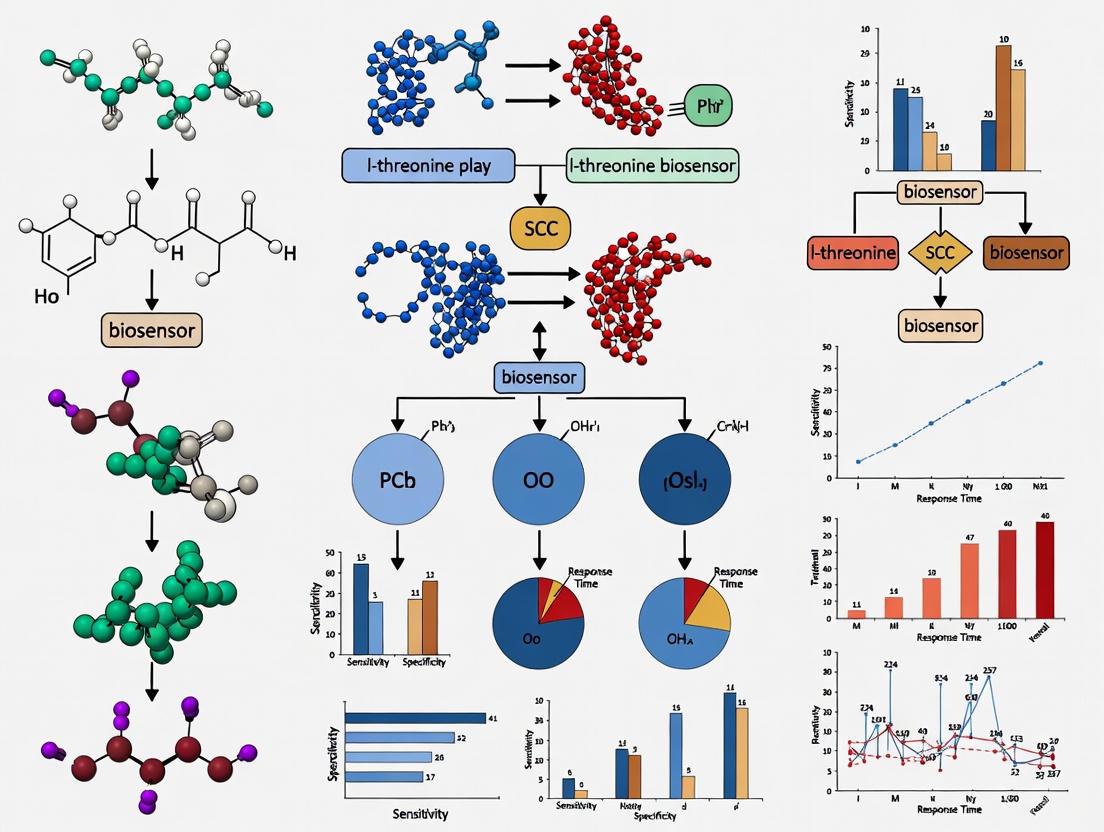
This article provides a comprehensive performance comparison of the latest L-threonine biosensor designs, a critical tool for metabolic engineers and researchers developing microbial cell factories.
L-Threonine Biosensors: A 2025 Performance Comparison of Design Principles and High-Throughput Applications
Abstract
This article provides a comprehensive performance comparison of the latest L-threonine biosensor designs, a critical tool for metabolic engineers and researchers developing microbial cell factories. We explore the foundational principles of different biosensor architectures, including transcriptional regulators, riboswitches, and rare-codon-based systems. The discussion covers methodological advances in directed evolution and high-throughput screening (HTS) applications for strain and enzyme improvement. We also detail troubleshooting and optimization strategies to enhance biosensor sensitivity and dynamic range. Finally, the article presents a comparative validation of biosensor performance against industrial fermentation data and analytical standards, offering actionable insights for selecting and implementing these powerful tools in biomedical and biomanufacturing research.
Core Principles and Architectures of L-Threonine Biosensing
Transcriptional regulator-based biosensors are indispensable tools in synthetic biology and metabolic engineering, enabling real-time monitoring of metabolic fluxes and high-throughput screening of industrial microbial strains. Among these, the LysR-type transcriptional regulators (LTTRs) CysB and SerR represent critical sensory platforms for amino acid production. This guide provides a performance comparison of biosensor designs based on CysB and SerR, focusing on their mechanistic operation, engineering potential, and application in developing L-threonine overproducers. Understanding their distinct activation mechanisms, ligand specificity, and structural dynamics is essential for selecting the appropriate biosensor framework for specific metabolic engineering goals.
Structural Mechanisms and Ligand Recognition
The functional efficacy of a transcriptional regulator-based biosensor is fundamentally governed by its structural architecture and its mechanism of ligand recognition.
CysB: A Master Regulator with Dual Ligand Binding Sites
CysB, the master regulator of sulfate metabolism in bacteria, exhibits a sophisticated allosteric activation mechanism. Structurally, CysB is a homotetramer, with each subunit comprising an N-terminal DNA-binding domain (DBD) and a C-terminal effector-binding domain (EBD) [1]. The tetrameric assembly features two distinct subunit types, resulting in DBDs arranged in pairs on the surface of a core formed by the four EBDs [1].
A key characteristic of CysB is its interaction with multiple ligands via two distinct allosteric binding sites [2]:
- Site-1: Specifically recognizes the primary inducer, N-acetylserine (NAS), and sulfate.
- Site-2: Recognizes both NAS and its constitutional isomer, O-acetylserine (OAS) [2].
Ligand binding triggers substantial conformational rearrangements that are propagated to the protein surface, altering the arrangement of the DBDs and thereby modulating DNA binding affinity [1]. The binding of OAS to site-2 remodels the primary NAS binding site-1, demonstrating a unique allosteric coupling between the two sites. This allows OAS to enhance NAS-mediated activation, forming a three-way switch that enables simultaneous activation by both inducers [2].
SerR: An Engineerable Transporter Regulator
SerR, another LTTR, transcriptionally regulates the exporter SerE in Corynebacterium glutamicum. Wild-type SerR is naturally activated by L-serine to control serine export [3]. Its potential as a biosensor for other amino acids was unlocked through protein engineering. The substrate spectrum of the SerE exporter includes L-serine, L-threonine, and L-proline [3]. Inspired by this, researchers hypothesized that its transcriptional regulator, SerR, could be engineered to recognize these additional effectors.
Unlike CysB, the wild-type SerR does not respond to L-threonine or L-proline. However, a single point mutation, F104I, generated through directed evolution, yielded the mutant SerRF104I. This mutant gained the ability to recognize both L-threonine and L-proline as effector molecules, enabling the development of a novel dual-responding biosensor [3]. This highlights a more straightforward, single-site binding pocket that is highly amenable to engineering for altered effector specificity.
Table 1: Comparative Structural and Ligand Recognition Profiles of CysB and SerR
| Feature | CysB | SerR |
|---|---|---|
| Natural Effectors | N-acetylserine (NAS), O-acetylserine (OAS) [2] | L-serine [3] |
| Engineered Effectors | L-threonine (via mutant CysB-T102A) [4] | L-threonine, L-proline (via mutant SerR-F104I) [3] |
| Quaternary Structure | Homotetramer [1] | Not Specified (LTTR family members are often tetrameric) |
| Ligand Binding Sites | Two distinct allosteric sites (Site-1 & Site-2) [2] | Single site engineered via F104I mutation [3] |
| Allosteric Mechanism | Complex, involving coupling between two ligand-binding sites [2] | Presumed simpler, single-site induced fit |
Diagram 1: Comparative signaling pathways of CysB's allosteric activation and SerR's engineered response.
Performance Comparison in L-Threonine Biosensing
The practical utility of CysB and SerR-based biosensors is demonstrated through their performance in screening and strain development for L-threonine production.
Dynamic Range and Responsiveness
The engineered versions of both biosensors show significant dynamic ranges, making them suitable for distinguishing between low- and high-producing microbial strains.
- CysB-T102A Biosensor: When coupled with the PcysK promoter, this mutant biosensor exhibited a 5.6-fold increase in fluorescence responsiveness across a 0–4 g/L L-threonine concentration range compared to the baseline [4].
- SerR-F104I Biosensor: The engineered SerR mutant enabled the development of a whole-cell biosensor that effectively distinguished strains with varying L-threonine production levels, demonstrating its utility as a high-throughput screening tool [3].
Application in High-Throughput Screening (HTS)
Both biosensors have been successfully deployed in HTS campaigns to identify superior enzyme mutants and optimize strains.
- Screening Key Enzymes: The SerRF104I-based biosensor was used to screen mutant libraries of critical biosynthetic enzymes. This led to the identification of 25 novel mutants of L-homoserine dehydrogenase (Hom) that increased L-threonine titers by over 10% [3].
- Strain Evolution and Metabolic Optimization: A CysB-based biosensor was integrated into a comprehensive engineering strategy. This involved iterative strain evolution and metabolic network optimization based on multi-omics analysis, culminating in a final strain (THRM13) that produced 163.2 g/L L-threonine in a 5 L bioreactor [4].
Table 2: Performance Metrics of Engineered L-Threonine Biosensors
| Performance Metric | CysB-T102A Based Biosensor | SerR-F104I Based Biosensor |
|---|---|---|
| Fold-Improvement in Responsiveness | 5.6-fold over 0-4 g/L [4] | Effective distinction of high producers [3] |
| Key Mutant Identified | CysB-T102A [4] | SerR-F104I [3] |
| Screening Output | Development of high-titer producer strain (163.2 g/L) [4] | Identification of 25 beneficial Hom mutants [3] |
| Reported L-Threonine Titer | 163.2 g/L [4] | Not explicitly quantified (reported as >10% increase) [3] |
Experimental Protocols for Biosensor Characterization
The development and validation of these biosensors rely on a suite of standard molecular biology and biochemical techniques.
Directed Evolution and Mutant Screening
This protocol is central to engineering effector specificity, as demonstrated with SerR.
- Library Construction: Create a mutant library of the transcriptional regulator gene (e.g., serR) using error-prone PCR or site-saturation mutagenesis [3].
- Biosensor Assembly: Clone the mutant regulator library into a genetic circuit alongside a reporter gene (e.g., eYFP or eGFP) under the control of the regulator's target promoter (e.g., PserE) [3].
- High-Throughput Screening: Transform the library into a host strain and culture clones in microplates in the presence of the target effector (e.g., L-threonine). Isolate clones exhibiting the highest fluorescence response, indicating successful engineering of effector recognition [3].
- Validation: Sequence the regulator gene from top-performing clones to identify causative mutations (e.g., F104I) [3].
DNA Binding Affinity Assays
Electrophoretic Mobility Shift Assay (EMSA) is used to validate the functional outcome of ligand binding.
- Protein Purification: Express and purify the recombinant transcriptional regulator (e.g., CysB) [2].
- DNA Probe Preparation: PCR-amplify or chemically synthesize a DNA fragment containing the regulator's operator sequence [2].
- Binding Reaction: Incubate a fixed amount of the DNA probe with increasing concentrations of the purified regulator protein, in both the presence and absence of the effector ligand (e.g., OAS, NAS) [2].
- Electrophoresis: Resolve the reaction mixtures on a native polyacrylamide gel. A shift in the mobility of the DNA probe indicates protein-DNA complex formation. Ligand-induced changes in binding affinity can be observed by altered band shift intensities [2].
Structural Characterization via Crystallography
This protocol provides atomic-level insight into the mechanism of ligand recognition.
- Protein Crystallization: Grow crystals of the regulator's ligand-binding domain or full-length protein in the presence of the effector (e.g., NAS) using vapor diffusion methods [1] [2].
- Data Collection and Processing: Flash-freeze crystals and collect X-ray diffraction data at a synchrotron facility. Index, integrate, and scale the diffraction data [1].
- Structure Solution and Refinement: Use molecular replacement with a known homologous structure to phase the diffraction data. Iteratively refine the atomic model to fit the electron density map [1].
- Analysis: Analyze the refined structure to determine the precise location of the ligand-binding site, ligand-protein interactions, and any conformational changes relative to the apo-state [1] [2].
Diagram 2: A generalized workflow for developing and characterizing transcriptional regulator-based biosensors.
The Scientist's Toolkit: Essential Research Reagents
The following table details key reagents and their functions as employed in the cited research on CysB and SerR biosensors.
Table 3: Essential Research Reagents for Biosensor Development
| Research Reagent | Function in Biosensor Research | Example from Context |
|---|---|---|
| Reporter Proteins (eYFP, eGFP) | Genetically encoded fluorescent proteins that serve as the measurable output of the biosensor, correlating with effector concentration [3] [4]. | Used as the output signal in both SerR-F104I [3] and CysB-T102A [4] biosensor circuits. |
| CysB Protein (Wild-type & Mutants) | The sensory component of the biosensor; its engineered mutants (e.g., T102A) alter ligand specificity and enable response to new effectors like L-threonine [4]. | CysB-T102A mutant used to construct a highly responsive L-threonine biosensor [4]. |
| SerR Protein (Wild-type & Mutants) | An engineerable LTTR; a single point mutation (F104I) shifts its effector recognition profile from L-serine to include L-threonine and L-proline [3]. | SerR-F104I is the core sensory element of the novel dual-responding biosensor [3]. |
| N-acetylserine (NAS) | The native, primary inducer ligand for the CysB regulator; used in structural and biochemical studies to elucidate the activation mechanism [1] [2]. | Co-crystallized with CysB to resolve the inducer-bound structure and understand allosteric transitions [1]. |
| O-acetylserine (OAS) | A native inducer of CysB and a constitutional isomer of NAS; binds a secondary allosteric site to modulate CysB activity [2]. | Used in binding assays and structural studies to reveal the two-site allosteric mechanism of CysB [2]. |
| PcysK Promoter | The natural promoter region controlled by CysB; used in genetic constructs to drive reporter gene expression in response to CysB activation [4]. | Employed in the construction of the initial L-threonine fluorescent reporter system [4]. |
CysB and SerR exemplify two powerful but distinct frameworks for constructing transcriptional regulator-based biosensors. CysB operates through a complex, allosterically coupled mechanism with dual ligand-binding sites, making it a sophisticated natural sensor for sulfur metabolism intermediates. Its engineered mutant, CysB-T102A, has proven highly effective in developing robust screening platforms for L-threonine overproduction, achieving remarkable industrial-scale titers. In contrast, SerR demonstrates the power of directed evolution to rapidly create novel biosensors from existing genetic parts. The single mutation F104I was sufficient to rewire its effector specificity, yielding a versatile biosensor for L-threonine and L-proline. The choice between these systems depends on the application: CysB-based sensors may offer a more integrated and potentially synergistic response within native metabolic contexts, while SerR-based sensors provide a streamlined and highly engineerable platform for specific, user-defined chemical detection. Both contribute significantly to the synthetic biology toolkit for advancing microbial cell factories.
The development of genetically encoded biosensors represents a pivotal advancement in metabolic engineering, providing powerful tools for monitoring metabolite concentrations and screening high-performance microbial strains [5]. Among these, riboswitches—structured noncoding RNA domains that regulate gene expression in response to ligand binding—have attracted significant interest for their potential in synthetic biology applications [6]. While over 55 distinct classes of natural riboswitches have been discovered that sense small molecules or elemental ions [6], and synthetic riboswitches have been created for amino acids like L-lysine and L-tryptophan [7], current literature reveals a conspicuous gap: no natural or engineered riboswitch specifically for L-threonine has been documented in recent scientific reports.
This absence is particularly notable given L-threonine's commercial importance as an essential amino acid with the third-largest market size among feed additives [3] [8]. The global amino acid market reached $28 billion in 2021, with expected continued growth [3] [8]. Without a dedicated riboswitch, researchers have pioneered alternative biosensor architectures for L-threonine detection, primarily employing engineered transcriptional regulators and hybrid systems. This review comprehensively compares these existing L-threonine biosensor designs, examining their performance characteristics, experimental validation, and potential for future applications where a genuine riboswitch might be deployed.
Current Landscape of L-Threonine Biosensing Technologies
Transcriptional Regulator-Based Biosensors
Table 1: Performance Comparison of Transcriptional Regulator-Based L-Threonine Biosensors
| Transcription Factor | Host Organism | Key Mutations | Response Fold-Change | Application & Performance | Reference |
|---|---|---|---|---|---|
| SerR | Corynebacterium glutamicum | F104I | Activated by L-threonine and L-proline | Identified 25 Hom mutants increasing L-threonine titer by >10% | [3] [9] [8] |
| CysB | Escherichia coli | T102A | 5.6-fold increase in fluorescence (0-4 g/L range) | Achieved 163.2 g/L L-threonine in bioreactor | [4] |
| YpItcR | Escherichia coli | Thr-4 mutant | 88.25-fold RFP increase (10 mM L-threonine) | Developed from itaconic acid biosensor; enabled sensitive detection | [10] |
The SerR-based biosensor was developed through directed evolution after researchers discovered that the SerE exporter could transport L-proline in addition to its known substrates L-threonine and L-serine [3] [8]. Although wild-type SerR responded specifically to L-serine, the F104I mutant gained the ability to recognize both L-threonine and L-proline as effectors [3]. This biosensor was successfully employed in high-throughput screening of l-homoserine dehydrogenase (Hom) mutants, identifying 25 novel variants that increased L-threonine titers by over 10% [3] [9] [8].
The CysB T102A mutant was created through a sophisticated engineering process that began with transcriptomic analysis of E. coli in response to exogenous L-threonine [4]. Researchers first identified the native PcysK promoter as responsive to L-threonine, then constructed a primary biosensor by combining this promoter with the CysB regulatory protein [4]. Directed evolution yielded the CysB T102A mutant, which exhibited significantly enhanced fluorescence responsiveness across the 0-4 g/L L-threonine concentration range [4].
The YpItcR-based biosensor represents an innovative approach to avoiding cross-reactivity with native metabolites. This system was originally developed for itaconic acid detection, which is not naturally produced in standard industrial strains [10]. Through random mutation and high-throughput screening, researchers obtained the Thr-4 mutant, which showed an 88.25-fold increase in red fluorescent protein intensity when 10 mM L-threonine was added [10].
Hybrid and Dynamic Regulation Systems
Table 2: Dynamic Regulation Systems for L-Threonine Production
| Regulation System | Components | Mechanism | L-Threonine Production | Key Advantages |
|---|---|---|---|---|
| Transporter Dynamic Regulation | PcysJ/PcysD/PcysJH promoters + rhtA/rhtB/rhtC exporters | L-threonine-activated promoter controls exporter expression | 26.78 g/L (161% increase over constitutive expression) | Avoids cytotoxicity from transporter overexpression |
| Artificial Quorum Sensing System | LuxI/LuxR modules + pyc + rhtC | Cell density-dependent autoinduction redirects carbon flux | 118.2 g/L, yield 0.57 g/g glucose | Eliminates need for expensive inducers; self-regulating |
| Toehold Switch Amplification | Riboswitch + transcriptional repressor + toehold switch | RNA-RNA interactions amplify output signal | Not quantified for L-threonine | 887-fold signal amplification demonstrated for coenzyme B12 |
Dynamic regulation of transporter expression represents a particularly effective strategy for enhancing L-threonine production. When researchers used the L-threonine-responsive PcysJ promoter to dynamically control the expression of the rhtA exporter, they achieved 21.19 g/L L-threonine production, compared to only 8.55 g/L with constitutive rhtA expression [11]. This system was further extended to native transporters rhtB and rhtC, achieving a high titer of 26.78 g/L with a 161.01% increase over controls in shake-flask fermentation [11].
The artificial quorum sensing system utilizes a LuxI/LuxR-based circuit to create a growth-phase-dependent induction system [12]. This design enables autonomous redirection of carbon flux during fermentation without expensive chemical inducers [12]. The system divides fermentation into distinct growth and production phases, self-inducing expression of pyruvate carboxylase (pyc) and the threonine exporter (rhtC) after sufficient biomass accumulation [12].
Though not yet applied to L-threonine in the available literature, toehold switch technology demonstrates the potential for signal amplification in metabolite sensing. When researchers combined a coenzyme B12 riboswitch with toehold switches, they achieved up to 887-fold amplification of the output signal by optimizing the expression levels of switch RNA and trigger RNA [7]. This approach could potentially be adapted for L-threonine detection if a suitable riboswitch were available.
Experimental Protocols for Biosensor Implementation
Directed Evolution of Transcription Factors
The development of high-performance L-threonine biosensors primarily relies on directed evolution approaches. The general workflow involves:
Library Construction: Random mutagenesis of the transcription factor coding sequence using error-prone PCR or other mutagenesis methods [10]. For SerR evolution, researchers created mutant libraries to alter effector specificity [3].
High-Throughput Screening: Transformation of mutant libraries into host strains, followed by cultivation in microtiter plates with varying L-threonine concentrations [4]. Fluorescence-activated cell sorting (FACS) may be employed for the highest throughput [5].
Response Characterization: Selected mutants are characterized by measuring fluorescence intensity across a range of L-threonine concentrations to determine dynamic range, sensitivity, and specificity [4] [10]. For the CysB T102A mutant, this involved measuring eGFP fluorescence in cultures supplemented with 0-30 g/L L-threonine [4].
Validation in Production Strains: Promising biosensors are ultimately tested in industrial production strains to verify their utility in identifying high producers [3] [4]. The SerRF104I-based biosensor successfully distinguished C. glutamicum strains with varying L-threonine production levels [3].
Dynamic Regulation Implementation
Implementing dynamic regulation systems for L-threonine production involves:
Promoter Characterization: Native L-threonine responsive promoters (PcysJ, PcysD, PcysJH) are cloned upstream of fluorescent reporters and their response characteristics are quantified [11].
Circuit Assembly: Selected promoters are combined with transporter genes (rhtA, rhtB, rhtC) using seamless cloning techniques such as Gibson assembly [11].
Fermentation Validation: Engineered strains are cultivated in bioreactors with careful monitoring of cell growth, L-threonine production, and transporter expression levels [4] [12]. The artificial quorum sensing system demonstrated automatic activation of transporter expression during the transition to stationary phase [12].
The following diagram illustrates the experimental workflow for developing and applying L-threonine biosensors through directed evolution:
Figure 1: Experimental workflow for developing L-threonine biosensors through directed evolution
The Scientist's Toolkit: Essential Research Reagents
Table 3: Key Research Reagents for L-Threonine Biosensor Development
| Reagent/Category | Specific Examples | Function & Application |
|---|---|---|
| Transcription Factors | SerR (Cgl0606), CysB, YpItcR | Sensory components for detecting L-threonine; engineered via directed evolution |
| Reporter Proteins | eYFP, eGFP, RFP | Fluorescent outputs for quantifying biosensor response |
| Promoters | PcysK, PcysJ, PcysD, PcysJH | L-threonine-responsive regulatory elements for dynamic expression |
| Export Transporters | rhtA, rhtB, rhtC, ThrE, SerE | Membrane proteins for L-threonine export; targets for dynamic regulation |
| Host Strains | E. coli MG1655, C. glutamicum ATCC 13032 | Model organisms for biosensor characterization and validation |
| Assembly Systems | Gibson assembly, Seamless cloning kits | Molecular tools for biosensor circuit construction |
| Screening Platforms | FACS, microtiter plate readers | Equipment for high-throughput biosensor characterization |
The selection of appropriate host strains is critical for biosensor development. Escherichia coli K-12 MG1655 is commonly used for initial characterization due to its well-defined genetics and compatibility with high-throughput screening methods [4] [11]. Corynebacterium glutamicum ATCC 13032 is preferred for validation in an industrial context, as it is a workhorse for amino acid production [3] [8].
For molecular cloning, Gibson assembly has emerged as the preferred method for constructing biosensor circuits due to its efficiency and flexibility [11]. Commercial seamless assembly kits from suppliers such as ABclonal and Vazyme Biotech are widely used [4] [11].
The following diagram illustrates the mechanism of transcriptional regulator-based biosensors for L-threonine detection:
Figure 2: Mechanism of transcriptional regulator-based L-threonine biosensors
The current landscape of L-threonine biosensing reveals a diverse ecosystem of solutions despite the absence of a dedicated riboswitch. Transcriptional regulator-based approaches have demonstrated remarkable success in industrial applications, with CysB and SerR mutants enabling significant improvements in L-threonine production titers. Dynamic regulation strategies have proven particularly valuable, addressing the cytotoxicity associated with constitutive transporter overexpression while maintaining high export capacity.
The potential for riboswitch-based L-threonine sensing remains largely untapped. Research in riboswitch engineering for other metabolites suggests that creating synthetic L-threonine riboswitches is theoretically feasible, though challenging. The demonstrated success of toehold switches in amplifying riboswitch signals for other compounds [7] indicates a promising direction for future research. As our understanding of RNA structure and function advances, the development of L-threonine-specific riboswitches may provide new opportunities for biosensing with the advantages of small genetic size, high orthogonality, and minimal metabolic burden.
For researchers seeking immediate solutions for L-threonine sensing and strain improvement, transcriptional regulator-based biosensors currently offer the most practical and validated approach. The CysB T102A mutant provides excellent sensitivity within the industrially relevant range of 0-4 g/L [4], while the SerR F104I system enables dual sensing of L-threonine and L-proline [3]. For metabolic engineering applications requiring autonomous regulation, the combination of L-threonine-responsive promoters with transporter genes represents the state of the art in dynamic pathway optimization [11] [12]. These established systems provide robust performance while the scientific community continues to explore next-generation solutions, including potential riboswitch-based alternatives.
The development of microbial cell factories for amino acid production is a cornerstone of industrial biotechnology. A significant challenge in this field is the rapid identification of high-performance producer strains, a process that relies heavily on effective high-throughput screening (HTS) technologies [3]. Genetically encoded biosensors serve as vital components in synthetic biology and metabolic engineering, acting as powerful devices for dynamic regulation of metabolic pathways and high-throughput screening of desirable phenotypes [3] [13]. Until recently, however, biosensors for critical amino acids like L-threonine remained unavailable, creating a technological gap in strain development pipelines [3] [13].
The exploration of rare codon-based fluorescent reporters represents a novel approach to biosensor design that operates at the translational level. This strategy leverages the fundamental principle that synonymous codons, which encode the same amino acid, are not used with equal frequency in the transcriptome [14]. The speed of translation elongation is primarily determined by the abundance of tRNAs, meaning that codon usage influences the rate at which individual mRNAs are translated [14]. Rare codons—those poorly adapted to cellular tRNA pools—typically slow translation elongation and are often associated with reduced protein expression [14] [15]. However, emerging evidence reveals that certain cellular states, particularly proliferation, can alleviate these translation bottlenecks, leading to preferential upregulation of proteins encoded by rare codon-enriched mRNAs [14].
This review provides a comprehensive performance comparison of different L-threonine biosensor designs, with particular emphasis on the novel approach of rare codon-based fluorescent reporters. We examine traditional methods alongside cutting-edge translation-level sensing strategies, providing researchers with experimental data, protocols, and analytical frameworks to advance metabolic engineering efforts.
Established L-Threonine Biosensing Approaches
Before examining rare codon-based systems, it is essential to understand the landscape of existing L-threonine biosensor technologies. Recent advancements have primarily focused on transcriptional regulator-based and riboswitch-based designs.
Transcriptional Regulator-Based Biosensors
Transcriptional regulator-based biosensors utilize natural cellular regulatory machinery to detect metabolite concentrations. For L-threonine, a significant breakthrough came with the engineering of the SerR transcriptional regulator from Corynebacterium glutamicum. Although wild-type SerR specifically responds to L-serine, directed evolution produced a SerRF104I mutant capable of recognizing both L-threonine and L-proline as effectors [3]. This mutant was incorporated into a whole-cell biosensor system using enhanced yellow fluorescent protein (eYFP) as a reporter, enabling effective distinction of strains with varying production levels [3].
In a separate approach, researchers developed a biosensor using the PcysK promoter and CysB protein. Through directed evolution of CysB, they obtained a CysBT102A mutant that resulted in a 5.6-fold increase in fluorescence responsiveness across the 0–4 g/L L-threonine concentration range compared to the original biosensor [4]. This enhanced sensitivity proved valuable for identifying high-producing strains from mutant libraries.
Riboswitch and Dual-Responding Genetic Circuits
Another innovative approach capitalized on the "inducer-like effect" of L-threonine, which was first demonstrated in 2024 [13]. Researchers designed a dual-responding genetic circuit that incorporated both the L-threonine riboswitch and a signal amplification system. This biosensor was used to screen random mutant libraries, resulting in the identification of improved variants through directed evolution of the key enzyme thrA, ultimately increasing L-threonine production by 7-fold [13].
The table below summarizes the performance characteristics of these established L-threonine biosensors:
Table 1: Performance Comparison of Established L-Threonine Biosensors
| Biosensor Type | Key Components | Dynamic Range | Response Factor | Application Results | Key Advantages |
|---|---|---|---|---|---|
| Transcriptional Regulator | SerRF104I mutant, eYFP | Not specified | Enables effective distinction of production variants | Identified 25 novel L-threonine mutants with >10% titer increase [3] | Recognizes both L-threonine and L-proline; useful for screening enzyme mutants |
| Transcriptional Regulator | CysBT102A mutant, PcysK promoter, eGFP | 0–4 g/L | 5.6-fold fluorescence increase [4] | Assisted in developing strain producing 163.2 g/L L-threonine [4] | High sensitivity; suitable for iterative strain evolution |
| Dual-Responding Genetic Circuit | L-threonine riboswitch, lacI-Ptrc amplification | Not specified | Not specified | 7-fold production increase through directed evolution of thrA [13] | Capitalizes on newly discovered inducer-like effect; includes signal amplification |
Rare Codon-Based Fluorescent Reporters: Principles and Mechanisms
The Relationship Between Codon Usage and Translation Efficiency
The genetic code is degenerate, with most amino acids encoded by multiple synonymous codons. Despite encoding the same amino acid, these codons are not used equally in genomic sequences [14] [15]. This "codon bias" has coevolved with tRNA abundances under selection for translation accuracy and efficiency [14]. Rare codons—those with low frequency of occurrence in the transcriptome—are typically recognized by less abundant tRNAs and are generally translated less efficiently than common codons [14].
While initiation is the primary rate-limiting step of translation, elongation speed also modulates protein output. elongation-induced "traffic jams" can affect initiation rates or lead to abortion of translation [14]. The decoding rate of synonymous codons varies widely, primarily depending on the abundance of cognate tRNAs [14]. This relationship forms the theoretical foundation for rare codon-based reporters.
Cellular State-Dependent Translation Enhancement
Contrary to the conventional wisdom that rare codons always impede translation, recent research has revealed that certain cellular states can preferentially enhance the translation of rare codon-enriched transcripts. Studies comparing proliferating and resting cells found that mRNAs enriched in rare codons undergo a higher translation boost during increased cell proliferation than transcripts with common codons [14]. Ribosome occupancy profiling and proteomics measurements confirmed that in rapidly dividing cells, transcripts enriched in rare codons receive a disproportionate translation enhancement [14].
This phenomenon appears to be regulated by global changes in translation capacity rather than specific adjustments to individual tRNA levels. Research suggests that a global upregulation of ready-to-translate tRNAs in proliferating cells leads to a higher increase in elongation velocity at rare codons compared to common codons [14]. The alleviation of these translation bottlenecks enables preferential upregulation of pro-proliferation proteins, which are frequently encoded by mRNAs enriched in rare codons [14].
Table 2: Key Experimental Findings on Rare Codon Translation Enhancement
| Cellular System | Key Finding | Experimental Evidence | Implications for Biosensor Design |
|---|---|---|---|
| Mouse embryonic fibroblast NIH-3T3 cells [14] | Proliferation-induced mRNAs are enriched in rare codons | Transcriptome profiling of G1 vs. G2/M phases; tRNA adaptation index calculations | Rare codon-enriched reporters naturally responsive to proliferative states |
| Multiple cell cycle phases [14] | mRNAs with higher expression in G2/M phase prefer A/U-ending codons (typically rare) | t-test analysis of codon preference; tRNA abundance correlation | Codon choice not random but linked to cellular state |
| Varying proliferation rates [14] | Rare codon-enriched transcripts show higher translation boost during proliferation | Ribosome occupancy profiling; proteomics measurements | Translation-level sensing provides dynamic response to metabolic state |
| Human 293T cell line [15] | MAPK pathway activation enhances rare codon reporter expression | Gain-of-function screen with Cancer Toolkit library; FACS analysis | Specific signaling pathways can modulate rare codon translation |
Signaling Pathways Modulating Rare Codon Translation
Research has identified specific signaling pathways that influence rare codon-dependent expression. A gain-of-function screen of human genes identified multiple components of the mitogen-activated protein kinase (MAPK) pathway as enhancers of rare codon reporter expression [15]. This pathway, comprising A, B, or CRAF kinases that phosphorylate and activate MEK1/2 kinases, which in turn activate ERK1/2 kinases, was found to boost expression of rare codon-enriched reporters in a codon-dependent manner [15].
The strongest enhancers identified were BRAFV600E (a constitutively active kinase) and oncogenic mutants of RAS isoforms (HRASG12V, NRASQ61K, KRASQ61R, and KRASQ61L) [15]. This effect was reversible with pathway inhibitors and was confirmed to occur with ectopic transcripts naturally coded with rare codons, indicating a general mechanism rather than sequence-specific effects [15].
The following diagram illustrates the signaling pathway and molecular mechanisms through which rare codon-based reporters function:
Diagram 1: Rare Codon Reporter Activation Pathway
Experimental Design and Implementation
Reporter Construction and Validation
The development of rare codon-based fluorescent reporters requires careful consideration of codon usage and experimental validation. In one approach, researchers created a fluorescent reporter system containing Green Fluorescent Protein (GFP) cDNA with a codon bias towards rare mammalian codons (GFPrare) [15]. For comparison, they developed a counterpart with common mammalian codons (GFPcom). When expressed in human 293T cells, GFPrare exhibited approximately 100-fold lower Mean Fluorescent Intensity (MFI) than GFPcom, confirming the impact of codon usage on expression [15].
To normalize for expression level variations, researchers incorporated mCherrycom cDNA (encoded with common codons) into the same vectors, creating mCherrycom:GFPrare and mCherrycom:GFPcom dual-reporter constructs [15]. This system enabled precise measurement of codon-dependent effects by calculating the GFPrare to mCherrycom ratio, effectively controlling for variables affecting general transcription and translation.
The experimental workflow for implementing and validating rare codon-based reporters typically follows this process:
Diagram 2: Rare Codon Reporter Workflow
Protocol: Implementing a Rare Codon-Based Fluorescent Reporter System
Materials:
- Fluorescent protein genes (GFP, YFP, etc.) with rare and common codon variants
- Appropriate expression vectors with selection markers
- Host strain (E. coli, C. glutamicum, or other target microorganisms)
- Flow cytometer or fluorescence plate reader
- Cell culture reagents and media
Methodology:
Reporter Design and Cloning:
- Select a fluorescent reporter gene (e.g., GFP, YFP) for codon optimization
- Design two variants: one optimized for rare codons in your host system, another with common codons
- Consider including a second fluorescent protein with common codons for normalization
- Clone each variant into appropriate expression vectors under consistent regulatory control
Host Strain Transformation:
- Transform host strains with reporter constructs
- Include appropriate controls (empty vector, common codon-only reporters)
- Validate construct integrity through sequencing
Cultivation and Expression Analysis:
- Cultivate transformed strains under standard conditions
- For proliferation-dependent response analysis, vary growth conditions (e.g., serum concentration in mammalian cells [14])
- Measure fluorescence output using flow cytometry or plate readers
- Normalize rare codon reporter fluorescence to common codon reference signals
Response Characterization:
- Expose strains to conditions that modulate translation capacity (e.g., proliferative signals, MAPK pathway activators)
- Measure dynamic response of rare codon reporters compared to common codon controls
- Calculate response ratios and establish detection thresholds
Biosensor Implementation:
- Integrate validated reporters into screening platforms
- Establish correlation between fluorescence output and metabolic states of interest
- Validate against established analytical methods (HPLC, MS)
Comparative Performance Analysis
Sensitivity and Dynamic Range
When comparing rare codon-based reporters to traditional biosensor designs, distinct performance characteristics emerge. Transcriptional regulator-based biosensors typically exhibit moderate response factors (e.g., 5.6-fold for CysBT102A-based sensor) [4], while rare codon-based systems can demonstrate substantially greater dynamic ranges under specific conditions.
In proliferation studies, rare codon-enriched mRNAs showed significantly higher translation boosts (approximately 30% increase in protein output for rare codon-recoded reporters) compared to common codon variants when cells transitioned from resting to proliferative states [14]. This enhanced dynamic response stems from the fundamental mechanism where global increases in translation capacity disproportionately benefit rare codon transcripts due to the alleviation of elongation bottlenecks [14].
Applications in Metabolic Engineering
The application potential of rare codon-based reporters extends to multiple aspects of strain development:
High-Throughput Screening: Rare codon-based fluorescent reporters enable sorting of producer strains based on translational capacity, which often correlates with metabolic activity and productivity [14] [15]. Flow cytometric sorting of populations based on rare codon reporter fluorescence can efficiently enrich for high-performing variants.
Pathway Optimization: By linking rare codon reporters to key metabolic enzymes, researchers can monitor translational efficiency of pathway components under different genetic backgrounds or cultivation conditions, guiding optimization efforts.
Dynamic Process Monitoring: The responsiveness of rare codon reporters to cellular states makes them valuable for monitoring fermentation processes in real-time, allowing for intervention and control based on physiological status.
Advantages and Limitations
Advantages of Rare Codon-Based Reporters:
- Responsive to global translational capacity rather than single metabolites
- Can detect integrated metabolic states rather than discrete pathway activities
- Potentially broader dynamic range under specific conditions
- Less susceptible to specific regulatory interference than transcription-factor-based systems
Limitations and Considerations:
- Response is influenced by multiple cellular parameters beyond target metabolites
- Requires careful host-specific codon optimization
- May need normalization controls for accurate interpretation
- Limited specificity for single metabolic targets compared to transcriptional regulators
The Scientist's Toolkit: Essential Research Reagents
Table 3: Key Research Reagents for Rare Codon Biosensor Development
| Reagent/Category | Specific Examples | Function/Application | Implementation Notes |
|---|---|---|---|
| Fluorescent Reporters | GFPrare, GFPcom, YFP, mCherry [15] | Visual readout of translational activity; rationetric normalization | Use rare and common codon variants for comparative measurements |
| Expression Vectors | Lentiviral vectors, plasmid systems with selection markers [15] | Delivery and maintenance of reporter constructs | Choose systems appropriate for host organism and screening format |
| Host Strains | E. coli, C. glutamicum, S. cerevisiae [3] [13] [4] | Production chassis for metabolic engineering | Consider codon usage preferences of specific hosts |
| Pathway Modulators | MAPK pathway activators/inhibitors [15] | Manipulation of cellular states to validate reporter response | Useful for characterizing reporter mechanism and sensitivity |
| Analytical Instruments | Flow cytometers, fluorescence plate readers [15] | Quantification of reporter signal | Enable high-throughput screening and single-cell analysis |
| Codon Optimization Tools | Gene synthesis with host-specific rare codons [15] | Reporter design for specific applications | Match codon usage to endogenous highly expressed genes in target state |
Rare codon-based fluorescent reporters represent a paradigm shift in biosensor design, moving beyond traditional ligand-receptor interactions to translation-level sensing. While transcriptional regulator-based biosensors like the SerRF104I and CysBT102A mutants offer specific L-threonine detection, rare codon-based systems provide a complementary approach that responds to integrated metabolic states and translational capacity.
The performance comparison reveals that each biosensor class has distinct advantages depending on application requirements. For targeted L-threonine detection in strain engineering, transcriptional regulators provide more specific response, while rare codon reporters offer broader dynamic range in reporting physiological states associated with high productivity.
Future developments in this field will likely focus on combining these approaches—creating dual-sensor systems that leverage both specific metabolite detection and translational state reporting. Additionally, advancing our understanding of how global tRNA pools and translation elongation rates fluctuate with metabolic states will enable more sophisticated reporter designs. As synthetic biology continues to advance, rare codon-based fluorescent reporters will play an increasingly important role in the high-throughput identification and optimization of microbial cell factories for amino acid production.
In the development of microbial cell factories for high-value chemicals like L-threonine, biosensors have emerged as indispensable tools for real-time monitoring and high-throughput screening. These biosensors typically consist of sensory components that detect specific metabolites and reporter modules that generate measurable signals. The sensory components can originate from natural biological systems or be created through protein engineering approaches, each offering distinct advantages and limitations in specificity, sensitivity, and applicability.
This guide provides a systematic comparison of natural and engineered sensory components used in L-threonine biosensors, focusing on their origins, operational mechanisms, and performance characteristics. We examine specific case studies and experimental data to objectively assess how these components function in real research scenarios, providing researchers with practical insights for selecting appropriate biosensor architectures for their specific applications in metabolic engineering and synthetic biology.
Natural Sensory Components: Native Biological Systems
Natural sensory components are derived from existing biological systems without significant modification. These components typically include transcription factor-promoter pairs that have evolved to respond to specific metabolites in their native organisms.
CysB-Based L-Threonine Biosensing System
The CysB transcription factor and its associated promoters represent a naturally occurring system that responds to L-threonine in E. coli. This system functions through the native regulatory machinery of the cysteine biosynthesis pathway, which exhibits cross-reactivity with L-threonine [4] [11].
Mechanism of Action: In its natural context, CysB activates transcription of cysteine biosynthesis genes when bound to the inducer N-acetylserine. However, researchers have discovered that this system also responds to extracellular L-threonine, enabling its repurposing as an L-threonine biosensor [11]. The CysB protein binds to specific promoter regions (PcysJ, PcysD, and PcysJH) in an L-threonine-dependent manner, activating transcription of downstream reporter genes.
Experimental Implementation: In one implementation, researchers constructed a biosensor by linking the PcysK promoter with the CysB protein to create a feedback circuit for dynamically regulating transporter expression in L-threonine production [11]. This system enabled automatic control of transporter levels based on intracellular L-threonine concentrations, addressing the cytotoxicity associated with constitutive overexpression of membrane transporters.
Table 1: Performance Characteristics of Natural CysB-Based Biosensors
| Promoter | Strength | Response Range | Application | Performance |
|---|---|---|---|---|
| PcysJ | High | 0-4 g/L L-threonine | Transporter regulation | 21.19 g/L L-threonine production |
| PcysD | Medium | 0-4 g/L L-threonine | Transporter regulation | Improved compared to constitutive expression |
| PcysJH | Low | 0-4 g/L L-threonine | Transporter regulation | 161.01% increase in shake-flask fermentation |
SerR/SerE Native Regulatory System
The SerR transcriptional regulator and its associated exporter SerE represent another natural system initially identified in Corynebacterium glutamicum. While the wild-type SerR specifically responds to L-serine in its native state, the SerE transporter exhibits broader substrate specificity, exporting L-serine, L-threonine, and unexpectedly, L-proline [3].
Functional Characterization: Experiments demonstrated that SerE overexpression increased L-proline titers by 2.41-fold, comparable to the known L-proline exporter ThrE (2.34-fold increase) [3]. Conversely, SerE deletion resulted in a 2.57-fold reduction in extracellular L-proline levels, confirming its role as a native exporter for multiple amino acids including L-threonine.
Engineered Sensory Components: Directed Evolution and Rational Design
Engineered sensory components are created through deliberate modification of natural systems using protein engineering techniques such as directed evolution and rational design. These approaches aim to enhance desirable characteristics like specificity, sensitivity, and dynamic range.
Directed Evolution of SerR for Expanded Effector Specificity
Researchers applied directed evolution to the native SerR transcriptional regulator to overcome its natural limitation of responding only to L-serine [3]. Through iterative mutagenesis and screening, they identified the SerRF104I mutant that gained the ability to recognize both L-threonine and L-proline as effectors while maintaining its function.
Experimental Protocol:
- Library Creation: Generated mutant libraries of SerR through error-prone PCR or site-saturation mutagenesis
- High-Throughput Screening: Employed fluorescence-activated cell sorting (FACS) to identify variants responsive to L-threonine
- Variant Characterization: Validified candidate mutants for effector specificity and sensitivity in whole-cell biosensor format
- Application: Utilized the engineered SerRF104I-based biosensor to screen mutant libraries of Hom (L-homoserine dehydrogenase) and ProB (γ-glutamyl kinase)
Performance Outcomes: The engineered SerRF104I biosensor successfully identified 25 novel Hom mutants and 13 ProB mutants that increased titers of L-threonine and L-proline, respectively, by over 10% [3]. Six of these mutants exhibited performance similarities to the most effective mutants previously reported, validating the biosensor's screening capability.
Engineering Enhanced CysB Variants
Similarly, the native CysB-based biosensor was improved through directed evolution to enhance its responsiveness to L-threonine [4]. Researchers generated a CysBT102A mutant that exhibited significantly improved fluorescence responsiveness across the 0-4 g/L L-threonine concentration range.
Engineering Workflow:
- Initial Characterization: Identified the native CysB-PcysK system as responsive to L-threonine but with limited sensitivity
- Mutagenesis: Created targeted mutations in the CysB coding sequence
- Screening: Employed a high-throughput screening system to identify variants with enhanced dynamic range
- Validation: Characterized the CysBT102A mutant in fermentation conditions
Performance Metrics: The engineered CysBT102A mutant exhibited a 5.6-fold increase in fluorescence responsiveness compared to the native CysB system over the 0-4 g/L L-threonine concentration range [4]. This enhanced biosensor contributed to the development of a production strain (THRM13) that achieved 163.2 g/L L-threonine with a yield of 0.603 g/g glucose in a 5 L bioreactor.
Table 2: Performance Comparison of Engineered Biosensor Components
| Engineered Component | Base System | Key Mutation | Improvement | Application Outcome |
|---|---|---|---|---|
| SerRF104I | Native SerR | F104I | Gained response to L-threonine and L-proline | Identified 25 beneficial Hom mutants |
| CysBT102A | Native CysB | T102A | 5.6-fold increase in fluorescence response | Achieved 163.2 g/L L-threonine in production strain |
Comparative Analysis: Specificity and Performance
The choice between natural and engineered sensory components involves trade-offs between specificity, development time, and performance requirements.
Specificity and Cross-Reactivity
Natural sensory components often exhibit broader specificity profiles, as observed with the native SerE transporter that exports L-serine, L-threonine, and L-proline [3]. Similarly, the CysB system naturally responds to multiple related metabolites. This cross-reactivity can be advantageous for applications requiring detection of analyte classes but problematic for specific compound detection.
Engineered components typically offer enhanced specificity through directed evolution. The SerRF104I mutant gained the ability to distinguish strains with varying production levels of L-threonine and L-proline while reducing cross-reactivity with other amino acids [3]. This precision enables more accurate screening and regulation in metabolic engineering applications.
Sensitivity and Dynamic Range
Engineered biosensors generally demonstrate superior sensitivity and dynamic range compared to their natural counterparts. The engineered CysBT102A variant exhibited a 5.6-fold increase in fluorescence responsiveness across the critical 0-4 g/L L-threonine concentration range [4]. This enhanced sensitivity allows for more precise monitoring and regulation of metabolic pathways.
Natural systems typically operate within narrower dynamic ranges optimized for physiological concentrations rather than industrial production levels. However, they provide immediately usable solutions without requiring extensive engineering efforts.
Development Timeline and Resource Requirements
Natural biosensor components offer the significant advantage of immediate usability, requiring only identification and characterization from biological sources. The CysB-based system could be rapidly implemented for dynamic regulation of transporter expression [11].
Engineered components demand substantial investment in protein engineering, including library creation, high-throughput screening, and validation. However, this initial investment yields substantial returns in performance, as demonstrated by both the SerRF104I and CysBT102A engineered variants [3] [4].
Table 3: Comprehensive Comparison of Natural vs. Engineered Sensory Components
| Characteristic | Natural Components | Engineered Components |
|---|---|---|
| Origin | Native biological systems | Directed evolution or rational design |
| Development Time | Shorter | Longer |
| Specificity | Broader, often cross-reactive | Enhanced, more precise |
| Sensitivity | Adapted to physiological ranges | Optimized for industrial applications |
| Dynamic Range | Limited | Expandable through engineering |
| Resource Investment | Lower initial investment | Higher initial investment |
| Applications | Basic regulation, proof-of-concept | High-stakes screening, precision regulation |
Experimental Protocols for Biosensor Characterization
Protocol for Biosensor Responsiveness Assay
This protocol is adapted from methods used to characterize both natural and engineered L-threonine biosensors [4] [11].
Strain Preparation:
- Transform biosensor plasmid (containing sensory component and reporter) into appropriate host strain
- Inoculate single colonies in LB medium with appropriate antibiotics, incubate 12h at 37°C, 220 rpm
Induction and Measurement:
- Dilute cultures in fresh medium containing varying L-threonine concentrations (0-30 g/L)
- Distribute into 24-well plates, incubate 8-10h at 37°C with shaking
- Measure fluorescence (e.g., eGFP excitation 488nm/emission 509nm) and OD600
Data Analysis:
- Normalize fluorescence to cell density (RFU/OD600)
- Plot normalized fluorescence against L-threonine concentration
- Calculate dynamic range (fold-change) and EC50 if applicable
Protocol for High-Throughput Screening of Enzyme Mutants
This protocol is adapted from methods used with the engineered SerRF104I biosensor [3].
Mutant Library Creation:
- Generate mutant library of target enzyme (e.g., Hom or ProB) through error-prone PCR or site-saturation mutagenesis
- Clone variants into appropriate expression vector
Biosensor Screening:
- Co-transform enzyme library with biosensor plasmid into production host
- Culture transformants in selective medium
- Use FACS to isolate populations with highest fluorescence signal
Validation:
- Isolate individual clones from sorted population
- Cultivate in deep-well plates with production medium
- Quantify L-threonine production via HPLC or LC-MS
- Sequence beneficial mutants to identify mutations
Signaling Pathways and Experimental Workflows
The following diagrams illustrate key biosensor mechanisms and experimental workflows discussed in this guide.
Diagram Title: Biosensor Mechanisms Comparison
Diagram Title: Biosensor Engineering Steps
The Scientist's Toolkit: Essential Research Reagents
Table 4: Key Research Reagents for L-Threonine Biosensor Development
| Reagent/Category | Specific Examples | Function/Application | Experimental Context |
|---|---|---|---|
| Transcription Factors | CysB, SerR | Natural sensory components for L-threonine detection | Base for biosensor development and engineering [3] [4] |
| Promoters | PcysK, PcysJ, PcysD, PcysJH | Regulatory elements for constructing biosensors | Responsive elements in natural and engineered systems [11] |
| Reporter Proteins | eGFP, eYFP | Generate measurable fluorescence signals | Quantitative readout for biosensor response [3] [4] |
| Host Strains | E. coli MG1655, C. glutamicum ATCC 13032 | Chassis for biosensor implementation and testing | Production hosts for validation [3] [11] |
| Directed Evolution Tools | Error-prone PCR, Site-saturation mutagenesis | Create genetic diversity for engineering | Generation of mutant libraries [3] [4] |
| Screening Instruments | Flow cytometers (FACS) | High-throughput screening of mutant libraries | Isolation of improved variants [3] [16] |
| Analytical Equipment | HPLC, LC-MS | Validation of L-threonine production | Quantification of biosensor application outcomes [4] [11] |
The comparison between natural and engineered sensory components for L-threonine biosensors reveals a clear trade-off between development efficiency and performance optimization. Natural components like the CysB system offer readily available solutions with moderate performance, suitable for foundational applications and proof-of-concept studies. Engineered components such as SerRF104I and CysBT102A demonstrate superior specificity, sensitivity, and dynamic range, making them invaluable for high-stakes applications like industrial strain development and precision metabolic regulation.
The choice between these approaches ultimately depends on project-specific requirements including timeline, resource availability, and performance thresholds. For rapid implementation of basic monitoring or regulation, natural systems provide immediate solutions. For applications demanding high precision, sensitivity, and reliability in industrial settings, engineered components deliver the necessary performance despite requiring greater initial investment. As synthetic biology and metabolic engineering continue to advance, the integration of both natural and engineered approaches will likely yield increasingly sophisticated biosensing platforms for L-threonine and other valuable biochemicals.
High-Throughput Screening and Directed Evolution Applications
The global amino acid market, valued at $28 billion in 2021, continues to expand at a compound annual growth rate of 6.76%, creating pressing demands for more efficient microbial production systems [8]. L-threonine represents one of the most essential amino acids in animal feed and pharmaceutical applications, ranking as the third largest feed additive by market size [8] [13]. Traditional approaches to strain improvement through rational metabolic engineering have faced significant challenges due to the complex nature of cellular regulation and incomplete understanding of metabolic networks [13]. Biosensor-assisted library screening has emerged as a transformative technology that bridges this gap by enabling researchers to rapidly identify high-producing strains from vast genetic libraries without requiring comprehensive prior knowledge of cellular metabolism [17]. This review provides a comprehensive comparison of recent advances in L-threonine biosensor designs, their operational mechanisms, and their implementation in high-throughput screening platforms, offering researchers a clear pathway for selecting appropriate biosensor architectures for specific strain development applications.
L-Threonine Biosensor Architectures: Design Principles and Mechanisms
Transcription Factor-Based Biosensors
Transcription factor (TF)-based biosensors represent the most extensively employed architecture for L-threonine detection in microbial systems. These biosensors typically consist of a transcription factor that specifically binds L-threonine or its derivatives, coupled with a promoter element that controls the expression of a reporter gene—most commonly fluorescent proteins like eGFP or eYFP [17]. The fundamental operating principle involves the TF's conformational change upon metabolite binding, which subsequently modulates its binding affinity to specific DNA sequences, thereby regulating transcription of the reporter gene [8].
CysB-Based Biosensors: A significant advancement in this category came from the development of a primary L-threonine biosensor utilizing the PcysK promoter and CysB protein [18]. Through directed evolution of the CysB protein, researchers created a CysB[T102A] mutant that exhibited a 5.6-fold increase in fluorescence responsiveness across the critical 0-4 g/L L-threonine concentration range [18]. This enhanced biosensor demonstrated exceptional performance in industrial applications, contributing to the development of a strain (THRM13) capable of producing 163.2 g/L L-threonine with a yield of 0.603 g/g glucose in a 5 L bioreactor [18].
SerR-Derived Biosensors: An alternative TF-based approach exploited the regulatory machinery of amino acid transport systems [8] [3]. Researchers discovered that SerE, previously known to export L-threonine and L-serine, also functioned as a proline exporter. This observation led to the hypothesis that its corresponding transcriptional regulator, SerR, might recognize L-threonine as an effector [8]. Although wild-type SerR responded specifically to L-serine, directed evolution produced a SerR[F104I] mutant capable of responding to both L-threonine and L-proline, creating a novel dual-specificity biosensor [8] [3]. This biosensor successfully identified 25 novel mutants of L-homoserine dehydrogenase that increased L-threonine titers by over 10% [8].
Riboswitch and Dual-Responding Genetic Circuits
Beyond transcription factor-based systems, alternative biosensor architectures have emerged that leverage different biological principles for L-threonine detection.
Dual-Responding Genetic Circuits: A particularly innovative approach capitalized on the discovery of L-threonine's "inducer-like effect" in Escherichia coli [13]. Researchers designed a sophisticated genetic circuit that integrated this effect with an L-threonine riboswitch and a lacI-Ptrc signal amplification system [13]. This multi-component biosensor demonstrated high specificity and cost-effectiveness in identifying desirable strains from large random mutant libraries, enabling a 7-fold increase in L-threonine production through directed evolution of the key enzyme thrA [13].
Terahertz Metasurface Biosensors: For analytical applications requiring specific recognition without genetic encoding, researchers have developed physical detection systems based on terahertz fingerprint spectroscopy [19]. This metasurface sensor specifically recognizes L-threonine by matching resonance peaks with the compound's unique terahertz absorption fingerprint at 1.42 and 2.11 THz, achieving a maximum frequency shift of 123 GHz when detecting L-threonine [19]. This non-destructive method provides an alternative to traditional chromatography-based approaches that often involve long detection periods and high sample loss [19].
Table 1: Performance Comparison of L-Threonine Biosensor Architectures
| Biosensor Type | Key Components | Dynamic Range | Response Factor | Applications in Strain Development |
|---|---|---|---|---|
| CysB[T102A] TF-Based | PcysK promoter, CysB[T102A] mutant, eGFP | 0-4 g/L | 5.6-fold fluorescence increase | High-throughput screening; identified mutations for 163.2 g/L production [18] |
| SerR[F104I] TF-Based | SerR[F104I] mutant, eYFP | Not specified | Effectively distinguished >10% production improvements | Dual L-threonine/L-proline sensing; identified 25 Hom mutants [8] |
| Dual-Responding Circuit | L-threonine riboswitch, lacI-Ptrc amplification | Not specified | High specificity for large library screening | 7-fold production increase via thrA evolution; pathway optimization [13] |
| Terahertz Metasurface | Split-ring resonators, THz detection | 1-4 mg/mL | 123 GHz frequency shift | Specific recognition; non-destructive detection [19] |
Experimental Workflows and Implementation Platforms
Biosensor Development and Optimization Protocols
The creation of high-performance biosensors follows meticulous experimental workflows that incorporate both rational design and directed evolution approaches.
Directed Evolution of Biosensory Components: The development of the CysB[T102A] biosensor followed a systematic protocol beginning with transcriptomic analysis of E. coli MG1655 in response to exogenous L-threonine (0, 30, and 60 g/L) to identify native regulatory elements responsive to L-threonine [18]. Researchers then cloned the complete non-coding regions of 21 candidate genes upstream of eGFP and measured fluorescence responses across L-threonine concentrations (0, 10, 20, 30 g/L) in 24-well plates, identifying PcysK as the most promising candidate [18]. Site-directed mutagenesis of CysB was performed using primers containing degenerate codons, followed by screening of the mutant library to identify the T102A mutation that significantly enhanced responsiveness [18].
Dual-Color Biosensor Engineering: To address challenges with cell heterogeneity in screening applications, researchers have developed advanced dual-color systems that normalize outputs for more accurate measurements [20] [21]. The protocol involves integrating two fluorescent reporter systems—typically GFP for metabolite response and mCherry for cell density normalization—into the host genome [20]. These systems are then validated under varied environmental conditions to quantify and correct for heterogeneity in cell growth and gene expression that could otherwise lead to false positives in screening campaigns [20].
High-Throughput Screening Implementation
The effective deployment of biosensors in strain screening requires specialized platforms tailored to library size and throughput requirements.
Fluorescence-Activated Cell Sorting (FACS): FACS represents one of the most powerful methods for biosensor-assisted screening, capable of processing thousands of cells per second based on biosensor-reported fluorescence [22] [17]. The standard protocol involves cultivating library variants in multi-well plates, incubating to allow metabolite accumulation, and then analyzing and sorting cells based on fluorescence intensity directly correlated with L-threonine production [17]. This approach was successfully applied in CRISPRi library screening for D-lactate production, where two rounds of FACS selection identified 105 and 104 mutants with significantly increased production [22].
Dual-Color Droplet Microfluidics: For ultimate screening precision, the integration of biosensors with droplet microfluidics has emerged as a cutting-edge platform [20] [21]. The workflow involves co-encapsulating producer cells and dual-color biosensors in picoliter-sized droplets, incubating to allow metabolite production and sensing, and then analyzing and sorting droplets based on normalized fluorescence ratios (GFP/mCherry) [20]. This approach demonstrated 24.2% and 11.9% higher positive rates for wild-type and industrial mutagenesis libraries, respectively, compared to single-color methods, significantly reducing false positives [20].
Figure 1: Integrated Workflow for Biosensor Development and High-Throughput Screening
Comparative Performance Analysis of Screening Platforms
The selection of an appropriate screening platform represents a critical decision point in biosensor-assisted strain development, with each method offering distinct advantages and limitations based on project requirements.
Table 2: High-Throughput Screening Platform Comparison
| Screening Platform | Theoretical Throughput | Key Advantages | Limitations | Representative Success |
|---|---|---|---|---|
| Well Plate Screening | 10^2-10^3 variants | Simple implementation; accessible equipment; suitable for initial validation | Low throughput; labor-intensive; limited library coverage | Identification of 147 new clones for lignin degradation [17] |
| FACS-Based Screening | 10^7-10^8 cells/hour | Ultra-high throughput; single-cell resolution; quantitative sorting | Requires precise biosensor calibration; potential for false positives | 15-21% D-lactate production increase via CRISPRi screening [22] |
| Dual-Color Droplet Microfluidics | 10^3-10^4 droplets/second | Normalized fluorescence signals; reduced false positives; controlled microenvironments | Technical complexity; specialized equipment required; optimization intensive | 19.6% erythromycin production improvement; 24.2% higher positive rates [20] |
| Agar Plate Screening | 10^4-10^5 colonies | Visual screening; no specialized equipment; cost-effective | Semi-quantitative; limited dynamic range; lower resolution | 123% production increase in salicylate producers [17] |
The performance differences between these platforms significantly impact screening outcomes. Dual-color droplet microfluidics demonstrates clear advantages in screening accuracy, with studies reporting 24.2% and 11.9% higher positive rates for wild-type and industrial mutagenesis libraries compared to single-color methods [20]. This enhanced accuracy directly translates to reduced rescreening efforts and more efficient identification of true high-producers. Meanwhile, FACS-based methods provide unparalleled throughput for surveying extremely diverse libraries, making them ideal for initial screening rounds where library sizes can exceed 10^9 variants [17]. Well plate and agar plate methods maintain relevance for validation stages and projects with limited access to specialized instrumentation.
Essential Research Reagent Solutions
Successful implementation of biosensor-assisted screening protocols requires specific reagent systems and molecular tools that have been optimized through extensive research.
Table 3: Essential Research Reagents for Biosensor-Assisted Screening
| Reagent Category | Specific Examples | Function in Workflow | Key Characteristics |
|---|---|---|---|
| Transcription Factors | CysB[T102A] mutant, SerR[F104I] mutant | Metabolite sensing and signal initiation | Enhanced specificity and responsiveness through directed evolution [18] [8] |
| Reporter Systems | eGFP, eYFP, mCherry | Signal output and detection | Quantitative fluorescence correlating with metabolite concentration [18] [20] |
| Library Generation Tools | ARTP mutagenesis, CRISPRi libraries, epPCR | Genetic diversity creation | Generation of comprehensive mutant libraries for screening [22] [23] |
| Assembly Systems | Gibson Assembly, MultiF Seamless Assembly Mix | Molecular cloning and construct preparation | Efficient biosensor plasmid construction and pathway integration [22] [13] |
| Sorting Platforms | FACS instruments, Droplet microfluidics | High-throughput variant isolation | Automated separation of high-performing variants based on biosensor signals [22] [20] |
Biosensor-assisted library screening has fundamentally transformed the paradigm of microbial strain development for L-threonine production and countless other valuable metabolites. The comparative analysis presented herein demonstrates that current biosensor architectures—particularly engineered transcription factor-based systems like CysB[T102A] and SerR[F104I]—coupled with advanced screening platforms such as dual-color droplet microfluidics, provide researchers with exceptionally powerful tools for identifying high-performing production strains. The experimental protocols and reagent systems refined through recent research offer clear pathways for implementation across various laboratory settings and project requirements.
Future developments in biosensor technology will likely focus on enhancing dynamic range, expanding substrate specificity, and improving signal-to-noise ratios through further protein engineering and circuit optimization. The integration of machine learning approaches with biosensor output analysis presents promising opportunities for predicting productive genetic modifications and guiding library design. As these technologies continue to mature, biosensor-assisted screening will undoubtedly remain a cornerstone methodology in metabolic engineering, enabling more efficient development of microbial cell factories for sustainable bioproduction of L-threonine and other high-value biochemicals.
Homoserine dehydrogenase is a pivotal enzyme in the aspartate pathway, catalyzing the reversible conversion of L-aspartate-4-semialdehyde to L-homoserine using NAD(P)H as a coenzyme [24] [25]. This reaction represents a critical branch point in the biosynthesis of essential amino acids including L-threonine, L-methionine, and L-isoleucine [26] [25]. The strategic position of HSD in this metabolic pathway, coupled with its absence in mammals, makes it an attractive target not only for metabolic engineering but also for the development of antifungal agents and herbicides [27] [26] [25]. The enzyme exists in both monofunctional forms, found in some bacteria and yeast, and bifunctional forms fused with aspartokinase, as observed in certain bacteria and plants [25]. Recent advances in enzyme engineering, particularly directed evolution approaches, have enabled the modification of HSD's catalytic properties, coenzyme specificity, and regulatory characteristics to optimize microbial production of valuable amino acids.
Case Study: Directed Evolution of Homoserine Dehydrogenase for Biosensor Development
Experimental Background and Objectives
A significant challenge in metabolic engineering is the development of efficient high-throughput screening technologies for identifying superior enzyme variants and production strains. While biosensors for several amino acids have been developed, there remained a pressing need for specific biosensors targeting L-threonine and L-proline, both of which have substantial market value in animal feed, food, pharmaceutical, and cosmetic industries [3]. To address this gap, researchers embarked on a project to develop a novel transcriptional regulator-based biosensor for L-threonine and L-proline, with HSD playing a central role in the screening methodology [3]. The experimental design leveraged the observation that the transporter SerE could export L-proline in addition to its known substrates L-threonine and L-serine, suggesting that its corresponding transcriptional regulator, SerR, might be engineered to respond to these effector molecules.
Directed Evolution Workflow and Methodology
The directed evolution campaign followed a systematic workflow encompassing gene library construction, high-throughput screening, and hit validation. The experimental protocol can be summarized as follows:
- Library Construction: Mutant libraries of the transcriptional regulator SerR were generated using random mutagenesis techniques. The wild-type SerR was known to specifically respond to L-serine but showed no sensitivity to L-threonine or L-proline [3].
- Screening Platform: A biosensor construct was created by linking the mutant SerR regulators to an enhanced yellow fluorescent protein (eYFP) as a reporter. This whole-cell biosensor system allowed for rapid fluorescence-based screening of effector responsiveness [3].
- Selection Pressure: Libraries were screened under selective pressure to identify mutant SerR variants that could activate eYFP expression in response to either L-threonine or L-proline, but not L-serine.
- Hit Validation: Promising candidates from primary screens were characterized for their effector specificity, dynamic range, and sensitivity. The most promising mutant, designated SerRF104I, was identified through this process [3].
- Application for HSD Engineering: The validated SerRF104I-based biosensor was subsequently employed for high-throughput screening of HSD mutant libraries to identify enzyme variants with improved catalytic efficiency in L-threonine biosynthesis [3].
The following diagram illustrates the directed evolution workflow and biosensor mechanism:
Key Findings and Experimental Outcomes
The directed evolution approach yielded significant success in engineering novel biosensor functionality. The SerRF104I mutant demonstrated a remarkable shift in effector specificity, gaining the ability to recognize both L-threonine and L-proline as effectors while effectively distinguishing strains with varying production levels [3]. When applied to screen mutant libraries of homoserine dehydrogenase (Hom), the critical enzyme in L-threonine biosynthesis, the biosensor enabled the identification of 25 novel Hom mutants that increased L-threonine titers by over 10% [3]. Notably, six of the newly identified mutants exhibited performance similarities to the most effective mutants reported to date, validating the efficacy of this directed evolution and screening approach.
Comparative Analysis of Homoserine Dehydrogenase Engineering Outcomes
Performance Metrics of Engineered HSD Variants
Table 1: Comparative kinetic parameters and properties of homoserine dehydrogenase from various species
| Source Organism | KM for Homoserine (μM) | Cofactor Specificity | Key Regulatory Features | Engineering Outcomes |
|---|---|---|---|---|
| Paracoccidioides brasiliensis | 224 ± 15 [28] | NADP+ [28] | Not sensitive to L-threonine nor dl-aspartate [28] | Target for antifungal drug discovery [27] |
| Sulfolobus tokodaii | Not reported | NAD (preferred) and NADP [26] | Inhibited by cysteine (Ki = 11 μM) [26] | Structural mechanism of cysteine inhibition elucidated [26] |
| Neisseria elongata | Not reported | NADP+-dependent (189-fold preference over NAD+) [29] | Monofunctional with C-terminal ACT domain [29] | Natural example of coenzyme specificity adaptation [29] |
| Corynebacterium glutamicum (engineered variants) | Not quantitatively reported | Not specified | Not specified | 25 mutants increasing L-threonine titer by >10% [3] |
| Leishmania donovani | Not reported | NADP+ [24] | Stable up to 45°C [24] | Potential drug target against visceral leishmaniasis [24] |
Applications and Therapeutic Potential of Engineered HSD Systems
Table 2: Research and therapeutic applications of homoserine dehydrogenase engineering
| Application Domain | Key Findings | Experimental Evidence |
|---|---|---|
| Antifungal Drug Development | HS23 and HS87 compounds identified as PbHSD inhibitors with MIC of 32 μg/ml and MFC of 64 μg/ml against P. brasiliensis [27] | Virtual screening, molecular dynamics (50 ns), MIC/MFC assays, synergy with Amphotericin B [27] |
| Metabolic Engineering for Amino Acid Production | Directed evolution of HSD enabled 10%+ increase in L-threonine production [3] | Biosensor-mediated high-throughput screening of mutant libraries [3] |
| Antiparasitic Drug Development | LdHSD characterized as potential drug target against visceral leishmaniasis [24] | Cloning, expression, kinetic characterization, structural modeling [24] |
| Enzyme Mechanism Studies | Cysteine inhibits StHSD through covalent bond formation with NAD cofactor [26] | Kinetic analysis (Ki = 11 μM), crystallography, UV difference spectroscopy [26] |
| Coenzyme Specificity Evolution | Natural variation in coenzyme preference among Neisseria species driven by adaptive evolution [29] | Phylogenetic analysis, site-directed mutagenesis, kinetic characterization [29] |
Research Reagents and Experimental Tools
Table 3: Essential research reagents and methodologies for HSD engineering studies
| Reagent/Method | Specifications | Research Application |
|---|---|---|
| Expression System | E. coli BL21(DE3) [24] [28] | Heterologous protein expression for enzymatic and structural studies |
| Purification Method | Nickel affinity chromatography [24] [28] | Isolation of recombinant His-tagged HSD variants |
| Screening Biosensor | SerRF104I-based system with eYFP reporter [3] | High-throughput identification of improved HSD mutants |
| Kinetic Assay | UV/Vis spectroscopy monitoring NAD(P)H oxidation/reduction [28] | Determination of KM, Vmax, and catalytic efficiency |
| Virtual Screening | AutoDock, Molegro, and Gold programs [27] | In silico identification of potential HSD inhibitors |
| Molecular Dynamics | 50 ns simulation protocols [27] | Validation of protein-ligand complex stability |
| Directed Evolution | Random mutagenesis and fluorescence-activated selection [3] | Engineering novel effector specificity in biosensors |
Directed evolution of homoserine dehydrogenase represents a powerful strategy for optimizing microbial production of essential amino acids and developing novel therapeutic interventions. The case studies presented demonstrate how rational engineering approaches can successfully alter enzyme properties, regulatory mechanisms, and cofactor specificities to achieve desired metabolic outcomes. The development of the SerRF104I-based biosensor exemplifies the synergy between directed evolution and high-throughput screening methodologies, enabling rapid identification of superior enzyme variants. Furthermore, the structural and mechanistic insights gained from studying HSDs across diverse species provide valuable templates for future engineering campaigns. As the fields of metabolic engineering and drug discovery continue to advance, homoserine dehydrogenase will remain a promising target for both industrial biotechnology and development of next-generation antimicrobial agents, particularly against fungal and parasitic pathogens where this enzyme offers selective therapeutic targeting.
Integration with Flow Cytometry and FACS for Single-Cell Resolution
The development of sensitive and specific L-threonine biosensors represents a significant advancement in metabolic engineering and microbial strain development. These biosensors enable researchers to monitor and screen for enhanced L-threonine production, which has substantial economic importance in animal feed, food, pharmaceutical, and cosmetic industries [3]. The integration of these biosensors with flow cytometry and Fluorescence-Activated Cell Sorting (FACS) has revolutionized our ability to analyze and isolate high-producing cells at single-cell resolution, providing unprecedented insights into cellular heterogeneity within populations. Flow cytometry offers high-throughput, multi-parametric analysis of thousands of cells per second, while FACS extends this capability by physically isolating subpopulations of interest based on their fluorescent signatures [30] [31]. This technological synergy has become particularly valuable for identifying rare, high-producing cell variants in large mutant libraries, enabling more efficient strain development for industrial bioproduction [3] [4].
Comparison of L-Threonine Biosensor Designs
Currently Developed L-Threonine Biosensors
Researchers have developed multiple biosensor designs for L-threonine detection, each with distinct mechanisms and performance characteristics. The table below summarizes three prominent approaches:
Table 1: Performance Comparison of L-Threonine Biosensor Designs
| Biosensor Design | Detection Mechanism | Detection Limit | Dynamic Range | Key Advantages | Integration with Flow Cytometry/FACS |
|---|---|---|---|---|---|
| Transcription Factor-Based (SerRF104I) | Transcriptional regulator binding L-threonine, coupled with fluorescent reporter [3] | Not specified | Responds to varying intracellular L-threonine levels | Can distinguish strains with varying production levels; useful for enzyme evolution | Directly compatible; fluorescent reporter enables single-cell sorting |
| Metabolic Regulator-Based (CysBT102A) | Evolved CysB mutant sensing L-threonine, controlling eGFP expression [4] | Responsive across 0-4 g/L range | 5.6-fold increase in fluorescence responsiveness | High sensitivity; specifically optimized for L-threonine | Excellent compatibility; eGFP ideal for flow cytometric detection |
| Terahertz Metasurface | Resonance coupling with L-threonine fingerprint peaks in THz spectrum [19] | Detects trace samples | Frequency shifts up to 123 GHz for L-threonine | Label-free; non-destructive; specific recognition | Not compatible; requires specialized THz detection equipment |
Quantitative Performance Data
The performance characteristics of these biosensors directly impact their utility in flow cytometry and FACS applications:
Table 2: Quantitative Performance Metrics of L-Threonine Biosensors
| Performance Metric | Transcription Factor-Based | Metabolic Regulator-Based | Terahertz Metasurface |
|---|---|---|---|
| Responsiveness | Effectively distinguishes production variants [3] | 5.6-fold fluorescence increase across 0-4 g/L [4] | 123 GHz frequency shift [19] |
| Specificity | Recognizes both L-threonine and L-proline [3] | Specific for L-threonine [4] | Specific recognition via fingerprint peaks [19] |
| Throughput Compatibility | High (fluorescence-based) [3] | High (eGFP-based) [4] | Low (individual measurements) [19] |
| Single-Cell Resolution | Excellent [3] | Excellent [4] | Not applicable |
Experimental Protocols for Biosensor Integration
Protocol 1: Flow Cytometry Screening with Transcription Factor-Based Biosensors
Objective: Identification of high L-threonine-producing strains using SerRF104I-based biosensor and flow cytometric analysis [3].
Materials and Reagents:
- Engineered microbial strains expressing SerRF104I biosensor
- Appropriate growth medium
- Fluorescence-activated cell sorter (e.g., BD FACS systems)
- Phosphate-buffered saline (PBS) for sample dilution
- Reference strains with known L-threonine production levels
Methodology:
- Culture Preparation: Grow engineered strains under conditions that promote L-threonine production for 24-48 hours.
- Sample Processing: Dilute cells to appropriate concentration (approximately 10^6 cells/mL) in PBS to prevent clogging during analysis.
- Flow Cytometry Analysis:
- Set up flow cytometer with appropriate laser and filter settings for detecting the biosensor's fluorescent reporter (e.g., YFP for SerR-based systems).
- Establish gating parameters using control strains with known L-threonine production levels.
- Analyze at least 50,000 events per sample to ensure statistical significance.
- Record fluorescence intensity distributions for population heterogeneity assessment.
- Data Interpretation: Correlate fluorescence intensity with L-threonine production levels using standardized curves.
Validation: Confirm sorted populations maintain enhanced production characteristics through HPLC validation of L-threonine titers [3].
Protocol 2: FACS Enrichment Using Metabolic Regulator-Based Biosensors
Objective: Isolation of high-producing L-threonine strains using CysBT102A-based biosensor and FACS [4].
Materials and Reagents:
- Mutant library expressing CysBT102A-eGFP biosensor
- Sterile growth medium
- Fluorescence-activated cell sorter with droplet deflection capability
- Collection tubes with recovery medium
- Viability staining reagents (e.g., propidium iodide)
Methodology:
- Library Preparation: Generate mutant library through random mutagenesis or directed evolution.
- Biosensor Expression: Culture library under inducing conditions to express CysBT102A-eGFP biosensor.
- Viability Assessment: Stain cells with viability marker to exclude dead cells from sorting.
- FACS Parameters:
- Set sorting gates based on eGFP fluorescence intensity correlated with high L-threonine production.
- Use 70-100 μm nozzle size to maximize cell viability during sorting.
- Implement single-cell deposition mode for isolation of clonal populations.
- Maintain sterile conditions throughout sorting process.
- Post-Sort Recovery: Collect sorted cells in nutrient-rich recovery medium and incubate for outgrowth.
- Validation Screening: Re-screen recovered clones to confirm stable high-production phenotype.
Outcome: Successful isolation of 25 novel mutants that increased L-threonine titers by over 10% in initial screening [3].
Integration with Flow Cytometry and FACS: Technical Considerations
Biosensor Design Requirements for Flow Cytometry Compatibility
For successful integration with flow cytometry and FACS, L-threonine biosensors must meet specific design criteria:
Bright Fluorescent Reporters: Biosensors must employ bright, photostable fluorescent proteins (e.g., eYFP, eGFP) that generate strong signals above autofluorescence background. The CysBT102A-based biosensor utilized eGFP, providing excellent detection sensitivity in flow cytometric applications [4].
Dynamic Range: The biosensor must demonstrate sufficient fluorescence variation across the physiologically relevant range of L-threonine concentrations (0-4 g/L) to effectively distinguish high producers [4].
Response Kinetics: Biosensor response time should be compatible with the timescale of L-threonine accumulation, providing real-time representation of metabolic activity.
Minimal Cross-Talk: The biosensor should exhibit minimal interference with endogenous cellular processes or fluorescent compounds to ensure accurate measurements.
FACS Workflow for Strain Development
The integration of biosensors with FACS enables a powerful iterative strain development cycle:
Diagram 1: FACS Strain Development Workflow
Addressing Cellular Heterogeneity in Bioproduction
Single-cell analysis through flow cytometry has revealed significant heterogeneity in microbial production systems, even in clonal populations. This heterogeneity arises from:
- Stochastic gene expression leading to variations in metabolic pathway activity
- Cell cycle-dependent effects on biosynthesis capacity
- Non-uniform substrate uptake and utilization
- Asymmetric partitioning of cellular components during division
Flow cytometry enables quantification of this heterogeneity through fluorescence intensity distribution analysis, providing insights that bulk measurements obscure [32]. The coefficient of variation (CV) of fluorescence signals across populations serves as a key metric for population uniformity, with lower CV values indicating more consistent production across the population.
Research Reagent Solutions for L-Threonine Biosensor Studies
Table 3: Essential Research Reagents for L-Threonine Biosensor Development and Application
| Reagent Category | Specific Examples | Function and Application | Performance Considerations |
|---|---|---|---|
| Transcriptional Regulators | SerR, CysB, evolved mutants (SerRF104I, CysBT102A) [3] [4] | Sensory components that bind L-threonine and trigger reporter expression | Specificity, affinity, dynamic range, minimal cross-talk with native regulation |
| Fluorescent Reporters | eYFP, eGFP, mCherry [3] [4] | Quantitative readout for detection and sorting | Brightness, photostability, maturation time, spectral compatibility with flow cytometer lasers |
| Promoter Elements | PcysK, Ptrc, constitutive promoters [4] | Control expression of biosensor components | Strength, regulation, compatibility with host expression system |
| Flow Cytometry Reagents | Propidium iodide, viability dyes, calibration beads [32] [33] | Assess cell viability, instrument calibration, and data quality | Minimal interference with biosensor signal, stability during analysis |
| Cell Sorting Media | Specialized collection buffers, recovery media [31] | Maintain cell viability during and after sorting | Osmolarity matching, nutrient composition, antibiotic content if needed |
Signaling Pathways and Molecular Mechanisms
The molecular mechanisms underlying L-threonine biosensor operation involve specific ligand-receptor interactions and signal transduction pathways:
Diagram 2: Biosensor Mechanism and Engineering
The integration of L-threonine biosensors with flow cytometry and FACS technologies has transformed microbial strain development, enabling unprecedented resolution in analyzing and isolating high-producing variants. The development of transcription factor-based biosensors like SerRF104I and metabolic regulator-based systems like CysBT102A has provided powerful tools for high-throughput screening at single-cell resolution [3] [4].
Future advancements in this field will likely focus on:
- Multiparameter biosensors that simultaneously monitor multiple metabolites or cellular states
- Dynamic regulation systems that automatically adjust metabolic flux in response to metabolite levels
- Miniaturized and automated screening platforms that further increase throughput and reduce resource requirements
- Integration with omics technologies for comprehensive characterization of sorted populations
The continued refinement of these technologies will accelerate the development of efficient microbial cell factories for L-threonine production and other valuable bioproducts, contributing to more sustainable manufacturing processes in the biotechnology industry.
Multi-Enzyme Complex Engineering Guided by Biosensor Feedback
The development of microbial cell factories for efficient production of high-value chemicals represents a cornerstone of industrial biotechnology. Within this domain, L-threonine biosynthesis stands as a critical model system, being an essential amino acid with extensive applications in animal feed, pharmaceuticals, and food industries [34] [4]. Traditional strain development approaches often face significant bottlenecks, including lengthy engineering cycles, yield plateaus, and metabolic imbalances caused by heterogeneous enzyme expression levels [16]. The integration of biosensor technology with multi-enzyme complex engineering has emerged as a transformative strategy to overcome these limitations, enabling real-time monitoring of metabolic fluxes and spatial organization of catalytic cascades within engineered microbial hosts.
This comparative analysis examines the rapidly evolving landscape of biosensor-guided multi-enzyme complex engineering for L-threonine production. By systematically evaluating recent technological breakthroughs across different microbial platforms, we provide researchers with a comprehensive framework for selecting and implementing these advanced metabolic engineering strategies. The convergence of synthetic biology, protein engineering, and systems biology has generated a diverse toolkit for optimizing L-threonine biosynthesis, with each approach offering distinct advantages and limitations that must be carefully considered for specific application contexts.
Comparative Analysis of L-Threonine Biosensor Architectures
Transcriptional Regulator-Based Biosensors
Transcriptional regulator-based biosensors represent one of the most extensively developed platforms for L-threonine monitoring. These systems typically employ allosteric transcription factors that undergo conformational changes upon L-threonine binding, thereby regulating the expression of reporter genes such as fluorescent proteins.
Table 1: Performance Comparison of L-Threonine Biosensor Designs
| Biosensor Type | Sensing Element | Dynamic Range | Response Fold-Change | Key Applications | Limitations |
|---|---|---|---|---|---|
| Transcription Factor-Based | SerRF104I mutant | 0-4 g/L L-threonine | ~5.6x fluorescence increase | HTS of Hom mutants; proline detection | Cross-reactivity with L-serine and L-proline |
| Transcription Factor-Based | CysBT102A mutant | 0-4 g/L L-threonine | 5.6-fold fluorescence increase | HTS of random mutant libraries | Requires directed evolution of native regulator |
| Rare Codon-Based | ATC-rich fluorescent proteins | N/A | 0.01% fluorescence threshold sorting | FACS of UV-mutagenized libraries | Indirect sensing mechanism |
| Electrochemical | Enzyme heterojunctions | Clinically relevant ranges | ~10x cascade efficiency | Medical diagnostics; in vitro detection | Not suitable for in vivo applications |
| Terahertz Metasurface | Fingerprint resonance coupling | Trace samples | 123 GHz frequency shift | Specific recognition; analytical applications | Limited to in vitro detection |
The SerR-based biosensor exemplifies this approach, where directed evolution of the wild-type SerR transcriptional regulator yielded the SerRF104I mutant, which gained responsiveness to both L-threonine and L-proline [3]. This engineered biosensor successfully identified 25 novel Hom (L-homoserine dehydrogenase) mutants that increased L-threonine titers by over 10%, demonstrating its utility in high-throughput enzyme engineering campaigns.
Similarly, CysB-based biosensors were developed through transcriptomic analysis of Escherichia coli promoters responsive to L-threonine addition [4]. The native CysB regulator was subjected to directed evolution, producing the CysBT102A mutant that exhibited significantly enhanced fluorescence responsiveness across the critical 0-4 g/L L-threonine concentration range. This biosensor platform enabled the development of a production strain achieving 163.2 g/L L-threonine with a yield of 0.603 g/g glucose in 5L bioreactors [4].
Rare Codon-Based Fluorescent Biosensors
A fundamentally distinct approach utilizes the principle of codon usage bias to link L-threonine production capacity to fluorescent signal output [16]. This strategy involves replacing common threonine codons with synonymous rare codons (ATC) in genes encoding fluorescent reporter proteins. In high L-threonine producing strains, the limited availability of rare tRNAs creates a bottleneck for fluorescent protein translation, thereby coupling intracellular L-threonine abundance to fluorescence intensity.
The experimental implementation involved screening genomes of E. coli and Corynebacterium glutamicum to identify proteins with high threonine content in their amino acid sequences [16]. These sequences were modified to incorporate L-threonine rare codons and fused to fluorescent proteins undergoing identical codon replacement. This design enabled high-throughput screening of mutant libraries via fluorescence-activated cell sorting (FACS), with a fluorescence intensity threshold set at 0.01% to capture metabolically enhanced strains [16].
Table 2: Multi-Enzyme Complex Engineering Strategies for L-Threonine Biosynthesis
| Engineering Strategy | Assembly Mechanism | Enzyme Targets | Production Enhancement | Key Advantages | Implementation Challenges |
|---|---|---|---|---|---|
| Cellulosome-Inspired Complex | Coh-Doc Protein Interaction | ThrC-DocA + ThrB-CohA | 31.7% increase | Shortened substrate transfer path | Requires balanced expression of scaffolding elements |
| Bulk Enzyme Heterojunctions | Tetrahedral DNA Nanostructures | SOX-HRP (model system) | ~10-fold cascade efficiency | Precise inter-enzyme distance control (~10 nm) | Limited to in vitro electrochemical applications |
| Machine Learning-Guided Engineering | Computational Prediction | Multiple pathway enzymes | 2.7→8.4 g/L titer improvement | Identifies non-intuitive gene combinations | Requires extensive training dataset |
| MUCICAT Genome Integration | CRISPR-Associated Transposase | thrC-docA-thrB-cohA cluster | Enhanced genetic stability | Eliminates plasmid burden | Complex experimental workflow |
Multi-Enzyme Complex Engineering Strategies
Cellulosome-Inspired Assembly Systems
Nature's multi-enzyme complexes, particularly the cellulosome system of anaerobic bacteria, have inspired innovative approaches to metabolic pathway optimization. The cellulosome employs a modular architecture consisting of catalytic units fused to dockerin modules that interact specifically with cohesin domains on scaffolding proteins [16]. This precise spatial arrangement creates substrate channels that minimize intermediate diffusion and enhance catalytic efficiency.
In the L-threonine biosynthesis pathway, researchers constructed an artificial multi-enzyme complex by co-locating ThrC (L-threonine synthase) fused to DocA and ThrB (homoserine kinase) fused to CohA [16]. This engineered system shortened the substrate transfer path between consecutive enzymatic steps, resulting in a 31.7% increase in L-threonine production compared to non-complexed enzymes. To address the metabolic burden associated with plasmid-based expression, the thrC-docA-thrB-cohA gene cluster was integrated into the host genome using multi-copy chromosomal integration technology via CRISPR-associated transposase (MUCICAT), significantly enhancing genetic stability [16].
DNA Nanostructure-Enabled Enzyme Organization
Beyond protein-based scaffolding, tetrahedral DNA nanostructures (TDNs) have emerged as programmable platforms for orchestrating multi-enzyme complexes at electrode interfaces [35]. This bulk enzyme heterojunction (BEH) strategy enables precise control over inter-enzyme distances, bringing enzyme pairs within the critical coupling length of approximately 10 nm.
The BEH construction involves immobilizing thiolated TDNs on gold electrodes through Au-S chemistry, with each TDN containing unique pendant linker DNA sequences for site-specific anchoring of enzyme-DNA conjugates [35]. Experimental characterization revealed that this approach achieves an enzyme density of approximately 4.3 × 10¹² cm⁻² with an inter-enzyme distance of ~5.5 nm. When applied to a sarcosine oxidase-horseradish peroxidase (SOX-HRP) model system, the BEH strategy enhanced cascade efficiency by approximately 10-fold compared to randomly immobilized enzymes [35].
Integrated Workflows and Experimental Protocols
Biosensor-Driven High-Throughput Screening
The combination of biosensors with advanced screening technologies has established powerful workflows for strain improvement. A representative protocol for biosensor-assisted high-throughput screening involves the following key steps:
Biosensor Validation: Transform the biosensor construct into wild-type production host and characterize the fluorescence response across a range of L-threonine concentrations (0-4 g/L) to establish the dynamic range and response curve [4].
Mutant Library Generation: Subject the biosensor-equipped production strain to random mutagenesis via UV treatment or employ targeted approaches such as CRISPR-enabled multiplex genome engineering [16].
Fluorescence-Activated Cell Sorting: Analyze the mutant library using FACS with appropriate gating strategies. Set fluorescence intensity thresholds based on pre-established criteria (e.g., 0.01% highest fluorescence) to capture improved producers [16].
Validation Fermentations: Cultivate sorted clones in multi-well plates followed by shake-flask fermentation to verify L-threonine production improvements using validated analytical methods (e.g., HPLC) [16] [4].
Iterative Cycling: Subject validated hits to additional rounds of mutagenesis and screening to accumulate beneficial mutations [4].
Multi-Enzyme Complex Assembly Protocol
The construction of synthetic multi-enzyme complexes for L-threonine biosynthesis involves a systematic assembly process:
Selection of Enzyme Targets: Identify consecutive enzymes in the L-threonine pathway that would benefit from substrate channeling (e.g., ThrB and ThrC) [16].
Fusion Construct Design: Genetically fuse selected enzymes to interacting protein domains (e.g., ThrC-DocA and ThrB-CohA) using flexible peptide linkers to maintain independent catalytic function [16].
Expression Optimization: Balance the expression levels of fusion constructs through promoter engineering, RBS optimization, or codon optimization to prevent metabolic bottlenecks [16].
Complex Validation: Confirm complex formation through co-purification assays, enzyme activity measurements, and fermentation performance comparison against non-complexed controls [16].
Genomic Integration: Replace plasmid-based expression with chromosomal integration using MUCICAT or similar systems to enhance genetic stability during long-term fermentation [16].
The Scientist's Toolkit: Essential Research Reagents
Table 3: Key Research Reagent Solutions for Biosensor and Multi-Enzyme Engineering
| Reagent/Category | Specific Examples | Function/Application | Experimental Considerations |
|---|---|---|---|
| Transcriptional Regulators | SerR, CysB, LysG | Biosensor sensing elements | Require directed evolution for effector specificity |
| Fluorescent Reporters | eYFP, eGFP, StayGold variants | Quantitative signal output | Codon-optimize for host organism |
| Scaffolding Systems | Coh-Doc pairs, Tetrahedral DNA nanostructures | Multi-enzyme complex assembly | Optimize stoichiometry of interacting components |
| Genome Editing Tools | MUCICAT, CRISPR-Cas systems | Stable genome integration | Verify off-target effects in production host |
| Enzyme Fusion Tags | DocA, CohA, SH3, PDZ domains | Artificial protein-protein interactions | Include flexible linkers between domains |
| Analytical Instruments | Flow cytometers, HPLC systems | Strain screening and product quantification | Establish standardized protocols for cross-experiment comparison |
| Model Organisms | E. coli MG1655, C. glutamicum ATCC 13032 | Production hosts | Consider endotoxin production for industrial applications |
Comparative Performance Analysis
Production Strain Performance Metrics
The ultimate validation of biosensor-guided multi-enzyme engineering approaches lies in the performance of resulting production strains. Recent reports demonstrate significant advancements in L-threonine production metrics:
E. coli Platforms: The highest reported L-threonine titer in E. coli reaches 170.3 g/L, achieved through systematic metabolic engineering including enhancement of L-aspartate precursor supply, cofactor regeneration, and transporter engineering [34]. Integrated biosensor screening further enabled the development of strains producing 163.2 g/L with exceptional yield of 0.603 g/g glucose [4].
C. glutamicum Platforms: While traditionally producing lower L-threonine titers than E. coli, recent engineering efforts have substantially improved performance, with the highest reported titer reaching 75.1 g/L through exporter optimization [34]. The Gram-positive nature and absence of endotoxin production make C. glutamicum an attractive platform for pharmaceutical and food applications.
Halomonas bluephagenesis: This emerging platform has achieved 33 g/L L-threonine under open unsterile and seawater-based conditions, offering potential for cost-reduced industrial bioprocessing [34].
Cross-Platform Technology Assessment
Each biosensor and enzyme engineering technology offers distinctive advantages that recommend them for specific application scenarios:
Transcription Factor Biosensors excel in direct, real-time monitoring of intracellular metabolite levels, enabling rapid screening of large mutant libraries. The CysBT102A and SerRF104I variants demonstrate particularly robust performance for L-threonine detection [3] [4].
Rare Codon-Based Systems provide an indirect but effective coupling between metabolic capacity and fluorescent signal, successfully identifying high-producing strains through FACS with 0.01% enrichment thresholds [16].
Cellulosome-Inspired Complexes facilitate substrate channeling through protein-protein interactions, achieving significant yield improvements (31.7%) while being genetically encodable for stable implementation in production hosts [16].
DNA Nanostructure Scaffolds offer unparalleled precision in controlling inter-enzyme distances and spatial organization, though currently limited to in vitro biosensing applications rather than metabolic engineering of production strains [35].
The integration of biosensor technology with multi-enzyme complex engineering represents a paradigm shift in microbial strain development for L-threonine production. Our comparative analysis reveals that while transcription factor-based biosensors currently provide the most direct route to high-throughput screening, emerging approaches including rare codon-based systems offer complementary advantages. Similarly, cellulosome-inspired enzyme complexes demonstrate substantial improvements in pathway efficiency through substrate channeling, though DNA nanostructure scaffolding provides superior control over spatial organization.
The optimal strategy for future strain development will likely involve synergistic combination of these technologies, leveraging biosensors for rapid screening of enzyme variants and multi-enzyme complexes to maximize carbon flux through engineered pathways. As these tools continue to mature, their implementation will undoubtedly expand beyond L-threonine to encompass the broader landscape of microbial chemical production, ultimately enabling more efficient and sustainable biomanufacturing processes.
Enhancing Biosensor Performance: Sensitivity and Dynamic Range
The global amino acid market, a pillar of the biomanufacturing industry with sales reaching $28 billion in 2021, relies heavily on microbial fermentation for production [8] [3]. Within this market, L-threonine holds significant economic importance as an essential amino acid widely used in animal feed additives, creating a pressing need for efficient overproducing strains [8] [3] [4]. Genetically encoded biosensors have emerged as powerful tools in synthetic biology and metabolic engineering, enabling dynamic regulation of metabolic pathways and high-throughput screening of industrial microorganisms [8] [3]. Until recently, however, biosensors for critical amino acids like L-threonine and L-proline remained unavailable, creating a technological gap in strain development pipelines [8].
Directed evolution has proven to be an effective strategy for developing and optimizing biosensors when rational design approaches fall short [36]. This review provides a comprehensive performance comparison of two distinct L-threonine biosensor designs developed through directed evolution: the CysBT102A mutant deployed in Escherichia coli and the SerRF104I mutant applied in Corynebacterium glutamicum. By examining their experimental protocols, performance characteristics, and implementation frameworks, this analysis aims to guide researchers in selecting appropriate biosensor platforms for specific metabolic engineering applications.
Molecular Mechanisms and Signaling Pathways
The CysBT102A and SerRF104I biosensors operate through distinct transcriptional regulation mechanisms in their respective host organisms. The following diagram illustrates their fundamental signaling pathways and structural relationships.
Diagram 1: Signaling pathways of CysBT102A and SerRF104I biosensor systems
The CysBT102A biosensor operates through a transcriptional activation mechanism where the engineered CysB mutant responds to intracellular L-threonine concentrations and activates expression from the PcysK promoter, driving eGFP reporter production [4]. In contrast, the SerRF104I system leverages the native regulatory relationship between the SerR transcriptional regulator and SerE exporter, but with altered effector specificity achieved through directed evolution, enabling activation of the SerE promoter and eYFP expression in response to either L-threonine or L-proline [8] [3].
Experimental Protocols and Methodologies
Directed Evolution Workflow for Biosensor Engineering
The development of both biosensors followed systematic directed evolution approaches. The following diagram outlines the general workflow employed for both systems, with specific variations noted in the textual description.
Diagram 2: Generalized directed evolution workflow for biosensor engineering
CysBT102A Development Protocol: The CysB-based biosensor development began with transcriptomic analysis of E. coli MG1655 in response to exogenous L-threonine addition (0, 30, and 60 g/L) to identify native promoters responsive to L-threonine [4]. From 21 candidate non-coding regions tested, the PcysK promoter showed the most promising linear response to L-threonine concentration [4]. Researchers then employed a rational design approach, constructing a biosensor with CysB protein and PcysK-driven eGFP, followed by site-directed mutagenesis that yielded the enhanced CysBT102A mutant with significantly improved fluorescence responsiveness [4].
SerRF104I Development Protocol: The SerR-based biosensor development was inspired by the discovery that the SerE exporter could transport L-proline in addition to its known substrates L-threonine and L-serine [8] [3]. Since wild-type SerR responded specifically to L-serine but not L-threonine or L-proline, researchers performed random mutagenesis on the SerR gene, followed by fluorescence-activated cell sorting (FACS) to isolate mutants with altered effector specificity [8]. The SerRF104I mutant was identified through this process and characterized for its ability to respond to both L-threonine and L-proline as effectors [8].
Research Reagent Solutions Toolkit
Table 1: Essential research reagents for biosensor development and implementation
| Reagent Category | Specific Examples | Function & Application |
|---|---|---|
| Transcription Factors | Wild-type CysB, SerR | Sensory components for biosensor assembly |
| Engineered Mutants | CysBT102A, SerRF104I | Enhanced specificity and responsiveness variants |
| Fluorescent Reporters | eGFP, eYFP | Quantitative output signals for detection |
| Promoter Elements | PcysK, SerE promoter | Regulatory DNA sequences for transcription control |
| Host Strains | E. coli MG1655, DH5α; C. glutamicum ATCC 13032 | Chassis organisms for biosensor implementation |
| Target Enzymes | l-homoserine dehydrogenase (Hom), γ-glutamyl kinase (ProB) | Screening targets for metabolic engineering applications |
Performance Comparison and Experimental Data
Quantitative Biosensor Performance Metrics
Table 2: Comparative performance data for CysBT102A and SerRF104I biosensors
| Performance Parameter | CysBT102A Biosensor | SerRF104I Biosensor |
|---|---|---|
| Effector Specificity | L-threonine specific | Dual specificity: L-threonine & L-proline |
| Dynamic Range | 5.6-fold improvement in fluorescence (0-4 g/L L-threonine) | Effectively distinguishes varying production levels |
| Host System | Escherichia coli | Corynebacterium glutamicum |
| Key Application | High-throughput screening of L-threonine overproducers | Screening of Hom and ProB enzyme mutants |
| Screening Outcomes | Achieved 163.2 g/L L-threonine in optimized strain | Identified 25 Hom & 13 ProB mutants with >10% titer improvement |
| Transcription Factor Type | CysB (LTTR family) | SerR (LysR-type transcriptional regulator) |
| Industrial Relevance | High production in 5L bioreactor (163.2 g/L, 0.603 g/g glucose) | Identified novel beneficial mutations for amino acid production |
Implementation Results and Validation Data
The CysBT102A biosensor demonstrated exceptional performance in industrial strain development, enabling the selection of E. coli mutants that achieved remarkable production titers [4]. The final optimized strain (THRM13) produced 163.2 g/L L-threonine with a yield of 0.603 g/g glucose in a 5L bioreactor, representing one of the highest reported titers for L-threonine production in E. coli [4]. This was accomplished through a combination of biosensor-driven high-throughput screening and subsequent metabolic network optimization based on multi-omics analysis and in silico simulation [4].
The SerRF104I biosensor showed versatile application in screening key enzymes from both L-threonine and L-proline biosynthetic pathways [8]. When applied to screen mutant libraries of l-homoserine dehydrogenase (Hom, critical for L-threonine biosynthesis) and γ-glutamyl kinase (ProB, critical for L-proline biosynthesis), researchers successfully identified 25 Hom mutants and 13 ProB mutants that increased product titers by over 10% compared to controls [8]. Notably, six of the newly identified mutants exhibited similarities to the most effective mutants reported to date, validating the screening capability of this biosensor system [8].
Discussion: Comparative Advantages and Implementation Considerations
The performance data reveal distinct advantages for each biosensor system depending on the specific application requirements. The CysBT102A biosensor in E. coli demonstrates superior performance in terms of absolute production titer achieved, making it particularly suitable for industrial strain development where maximum production capacity is the primary objective [4]. The well-established genetic tools for E. coli manipulation further enhance its utility for rapid strain engineering cycles.
In contrast, the SerRF104I biosensor offers unique capabilities for metabolic engineers seeking pathway optimization tools for multiple amino acids [8] [3]. Its dual specificity for both L-threonine and L-proline enables parallel development of production strains for both valuable amino acids using a single biosensor platform. Furthermore, the application in C. glutamicum, a workhorse organism for industrial amino acid production, provides direct relevance to existing biomanufacturing processes [8].
Both systems exemplify how directed evolution can overcome limitations of natural regulatory proteins to create tailored biosensors with optimized performance characteristics. The CysBT102A mutation (T102A) and SerRF104I mutation (F104I) both represent relatively minimal structural alterations that significantly modify effector recognition profiles, highlighting the potential for targeted manipulation of allosteric regulation in transcription factors [8] [4].
For researchers selecting between these platforms, consideration should be given to host organism compatibility, specificity requirements, and desired application outcomes. The CysBT102A system offers higher specificity for L-threonine, while the SerRF104I platform provides greater versatility for multiple amino acids. Both systems have demonstrated exceptional utility in high-throughput screening applications and have generated industrially relevant strain improvements.
Promoter and RBS Engineering to Tune Response Curves and Output Signals
In the development of microbial cell factories for high-value chemicals like L-threonine, genetically encoded biosensors have emerged as transformative tools for dynamic metabolic regulation and high-throughput screening of producer strains [3] [13]. The core functionality of these biosensors depends on precisely engineered genetic components that determine their performance characteristics—sensitivity, dynamic range, and output strength. Promoter and ribosome binding site (RBS) engineering provides synthetic biologists with a powerful methodology for tuning these response curves to optimize biosensor function for specific applications [37]. Within the context of L-threonine biosensor development, researchers have employed various strategies to manipulate these genetic control elements, enabling the creation of tailored systems capable of identifying superior producer strains from extensive mutant libraries [13] [4].
The fundamental relationship between input metabolite concentration and output signal intensity follows a sigmoidal curve that can be described mathematically using Hill function parameters [37]. By systematically modifying promoter sequences and RBS strengths, researchers can vertically scale response curves, adjust operational ranges, and alter transition steepness to create biosensors with customized performance characteristics suited for specific screening applications. This engineering approach has become increasingly important as the demand for efficient L-threonine production grows, driven by its extensive applications in animal feed, food products, and pharmaceuticals [4] [16].
Performance Comparison of L-Threonine Biosensor Designs
Recent advances in L-threonine biosensor development have yielded multiple architectural designs with distinct performance characteristics. The table below provides a quantitative comparison of three prominent biosensor systems, highlighting how promoter and RBS engineering strategies have influenced their operational parameters.
Table 1: Performance comparison of engineered L-threonine biosensors
| Biosensor Design | Key Engineering Strategy | Dynamic Range (Fold-Change) | Response Linear Range (g/L) | Application Result | Reference |
|---|---|---|---|---|---|
| CysB-PcysK Based Biosensor | Directed evolution of CysB (T102A mutant) combined with promoter engineering | 5.6× fluorescence increase | 0–4 | Achieved 163.2 g/L L-threonine in 5L bioreactor | [4] [38] |
| Dual-Responding Genetic Circuit | Inducer-like effect of L-threonine combined with riboswitch and signal amplification | 7× production improvement | Not specified | Enabled key enzyme (thrA) directed evolution | [13] |
| SerR-Based Biosensor | Directed evolution of SerR (F104I mutant) for effector specificity switching | >10% titer improvement in screened mutants | Not specified | Identified 25 novel Hom mutants and 13 ProB mutants | [3] |
| Rare Codon Biosensor | RBS engineering with threonine rare codons (ATC) in fluorescent markers | 31.7% production increase | Not specified | Enhanced multi-enzyme complex efficiency | [16] |
The comparative data reveals that both transcriptional regulator engineering and RBS manipulation can significantly impact biosensor performance. The CysB-T102A mutant developed through directed evolution exemplifies how promoter engineering combined with protein mutagenesis can yield biosensors with substantial fluorescence responsiveness across a defined L-threonine concentration range relevant for industrial screening [4]. Meanwhile, the dual-responding genetic circuit demonstrates how combining multiple sensing mechanisms (inducer-like effects and riboswitches) with signal amplification creates biosensors capable of identifying strains with dramatically improved production capabilities [13].
Table 2: Tuning parameters and their effects on biosensor performance characteristics
| Tuning Parameter | Engineering Approach | Effect on Response Curve | Application Context | |
|---|---|---|---|---|
| Vertical Scaling | Promoter copy number variation; RBS strength modification | Multiplies output signal amplitude without changing activation threshold | Increasing fluorescence intensity for better detection | [37] |
| Horizontal Scaling | DNA-binding domain engineering; effector binding pocket mutations | Shifts response curve left (increased sensitivity) or right (decreased sensitivity) | Matching biosensor dynamic range to intracellular metabolite concentrations | [3] [37] |
| Response Slope | Cooperative binding engineering; multi-component systems | Alters steepness of transition between OFF and ON states | Creating digital-like switches for clear high/low producer discrimination | [37] |
| Signal Amplification | Incorporation of transcriptional cascades; ribosomal amplification | Increases maximum output without changing sensing parameters | Enhancing detection sensitivity in high-throughput screening | [13] |
Experimental Protocols for Biosensor Engineering and Validation
Directed Evolution of Transcriptional Regulator-Based Biosensors
The development of the SerR-based biosensor illustrates a systematic approach to altering effector specificity through directed evolution [3]. The experimental workflow commenced with the identification of SerR as a potential candidate based on its regulatory relationship with the exporter SerE, which was newly discovered to transport L-proline in addition to L-serine and L-threonine. Researchers employed error-prone PCR to generate mutant libraries of the serR gene, which were then cloned into plasmid vectors containing the native serE promoter fused to a fluorescent reporter (eYFP). The library was transformed into Corynebacterium glutamicum strains with varying L-threonine production capabilities. Through fluorescence-activated cell sorting (FACS), variants exhibiting enhanced fluorescence in response to L-threonine were isolated. The critical SerR-F104I mutation was identified through this process, which enabled the transcriptional regulator to recognize both L-threonine and L-proline as effectors while losing responsiveness to L-serine. Validation experiments confirmed that the mutant biosensor could effectively distinguish strains with varying production levels, enabling high-throughput screening of enzyme mutants for L-threonine and L-proline biosynthesis pathways [3].
Dual-Responding Genetic Circuit Construction
The implementation of a dual-responding genetic circuit for L-threonine sensing involved a multi-component strategy [13]. Researchers first demonstrated the inducer-like effect of L-threonine by developing a reverse screening technique based on the competitive relationship between L-threonine and lycopene biosynthesis. They subsequently designed a biosensor incorporating both the L-threonine riboswitch and a signal amplification system. The genetic circuit was constructed by combining a promoter responsive to the L-threonine riboswitch with the lacI-Ptrc amplification system, which extended the dose-response spectrum of signals. The biosensor was validated by testing its response to varying concentrations of L-threonine, demonstrating high specificity and cost-effectiveness in identifying desired strains from large random mutant libraries. The experimental protocol included pathway optimization via RBS libraries and directed evolution of the key enzyme thrA, ultimately resulting in a 7-fold increase in L-threonine production [13].
RBS Library Construction and Screening
The development of rare codon-based biosensors employed sophisticated RBS engineering techniques [16]. Researchers constructed screening markers rich in L-threonine rare codons (ATC) by replacing all threonine codons in selected protein sequences with high proportions of threonine. These engineered sequences were linked to fluorescent proteins with identical codon replacements. For RBS library construction, researchers designed primers containing 10 degenerate bases (NNNNNNNNNN) to randomize the RBS region, followed by PCR amplification using the parental plasmid as a template. The PCR products were digested with DpnI enzyme to eliminate template DNA before transformation into E. coli host strains. Screening was performed by inoculating single clones into 24-well plates and measuring fluorescence after incubation. Strains with varying fluorescence intensities were selected, enabling high-throughput screening of L-threonine production mutant strains. This approach allowed researchers to rapidly engineer mutation libraries of millions of strains and significantly shorten the chassis construction timeline [16].
Diagram 1: Generalized workflow for engineering and optimizing biosensor response curves through promoter and RBS engineering.
Signaling Pathways and Molecular Mechanisms
Transcriptional Regulator-Based Sensing Mechanisms
The molecular mechanisms underlying transcriptional regulator-based biosensors involve allosteric binding of L-threonine to regulatory proteins, which subsequently modulates transcription of reporter genes [3]. In the native C. glutamicum system, the LysR-type transcriptional regulator SerR normally activates expression of the serE exporter gene in response to L-serine. Structural analysis revealed that the effector binding domain of SerR undergoes conformational changes upon ligand binding, enabling DNA binding and transcriptional activation. Through directed evolution, the F104I mutation in the effector binding pocket alters the binding specificity to accommodate L-threonine and L-proline while excluding L-serine. This single amino acid change modifies the hydrophobicity and steric constraints within the binding pocket, effectively reprogramming the biosensor's effector profile. The engineered SerRF104I mutant maintains its ability to bind the serE promoter region but now activates transcription in response to intracellular L-threonine concentrations, creating a functional biosensor for high-throughput screening applications [3].
Dual-Response Circuit Mechanisms
The dual-responding genetic circuit operates through a sophisticated integration of multiple sensing modalities [13]. The primary sensing mechanism capitalizes on the newly discovered inducer-like effect of L-threonine, where the amino acid indirectly influences transcriptional activity through metabolic interactions. This is complemented by an L-threonine riboswitch element that directly senses metabolite concentrations through RNA conformational changes. The signal amplification system, based on the lacI-Ptrc circuit, enhances the sensitivity of the biosensor by creating a positive feedback loop that magnifies the initial response. When intracellular L-threonine concentrations reach a threshold level, the combined action of these systems triggers robust expression of the reporter gene (eGFP), enabling visual identification of high-producing strains. This multi-layered approach creates a biosensor with enhanced sensitivity and dynamic range compared to single-mechanism systems [13].
Diagram 2: Molecular mechanisms of dual-response biosensors showing integrated sensing pathways.
The Scientist's Toolkit: Essential Research Reagents
Table 3: Key research reagents and materials for biosensor engineering
| Reagent/Material | Function | Application Example | Reference |
|---|---|---|---|
| Error-Prone PCR Kit | Generates mutant libraries of transcriptional regulators | Creating SerR and CysB mutant variants | [3] [4] |
| Seamless Cloning Kit | Assembling biosensor components without restriction sites | Constructing promoter-reporter fusions | [4] |
| Flow Cytometer (FACS) | High-throughput screening of mutant libraries | Isolating cells based on fluorescence intensity | [16] |
| Degenerate Primers (NNN...) | Creating RBS libraries with randomized sequences | Engineering translation initiation rates | [16] |
| eYFP/eGFP Reporter Genes | Quantitative output signal generation | Fluorescent readout of biosensor activation | [3] [13] |
| Multi-Enzyme Complex System | Spatial organization of metabolic pathways | Enhancing L-threonine synthesis efficiency | [16] |
Promoter and RBS engineering represents a powerful methodology for tuning the response curves and output signals of L-threonine biosensors, directly impacting their efficacy in high-throughput screening applications. The comparative analysis presented herein demonstrates that strategic manipulation of these genetic components enables researchers to create biosensors with customized operational parameters matched to specific screening requirements. The experimental protocols and molecular mechanisms detailed in this review provide a framework for researchers seeking to develop or optimize biosensors for metabolic engineering applications. As the demand for efficient microbial production of L-threonine and other valuable biochemicals continues to grow, refined approaches for biosensor tuning will play an increasingly critical role in accelerating strain development and optimizing bioprocess efficiency.
Genetically encoded biosensors are powerful tools in metabolic engineering and synthetic biology, enabling real-time monitoring of intracellular metabolite concentrations and high-throughput screening of microbial cell factories. A critical challenge in biosensor development is achieving a robust and easily detectable output signal that accurately reflects the concentration of the target metabolite. Signal amplification systems address this challenge by enhancing the transcriptional or translational response, thereby increasing the sensitivity and dynamic range of biosensors. Among these, the lacI-Ptrc system has emerged as a versatile and effective genetic circuit for amplifying cellular responses in various bacterial hosts.
The fundamental principle behind signal amplification involves creating a genetic cascade where the initial sensing event triggers a secondary response that produces a more pronounced output. This is particularly valuable for detecting subtle variations in metabolite production within large libraries of microbial variants, where distinguishing high producers from moderate ones can be challenging. By implementing engineered genetic circuits like lacI-Ptrc, researchers can significantly improve the performance of biosensor-based screening platforms, accelerating the development of industrial microbial strains for chemical production.
lacI-Ptrc Amplification System: Mechanism and Implementation
Core Components and Functional Principle
The lacI-Ptrc amplification system is a genetically encoded circuit that utilizes components from the well-characterized E. coli lac operon. The system consists of two primary elements: the lac repressor protein (LacI) and the hybrid Ptrc promoter. LacI functions as a transcriptional regulator that binds to specific operator sequences, while Ptrc is a strong synthetic promoter formed by combining elements from the trp and lac promoters.
In a typical configuration for biosensor applications, the initial metabolite-sensing element controls the expression of the lacI gene. Subsequently, the LacI protein regulates the Ptrc promoter, which drives the expression of a reporter gene such as green fluorescent protein (GFP) or yellow fluorescent protein (YFP). This creates a genetic amplification cascade where small changes in the concentration of the target metabolite result in significant changes in reporter gene expression.
Table 1: Core Components of the lacI-Ptrc Amplification System
| Component | Type | Function in Amplification Circuit |
|---|---|---|
| LacI | Transcriptional repressor | Regulates Ptrc promoter activity; expression controlled by metabolite sensor |
| Ptrc promoter | Hybrid promoter | Drives high-level expression of output reporter gene |
| Reporter gene (eGFP/YFP) | Fluorescent protein | Provides detectable signal for screening and quantification |
Implementation in L-Threonine Biosensing
In the context of L-threonine biosensing, Su et al. (2024) successfully implemented the lacI-Ptrc system to enhance the performance of a dual-responding genetic circuit [13]. Their design capitalized on both the newly discovered inducer-like effect of L-threonine and a natural L-threonine riboswitch. The lacI-Ptrc amplification system was incorporated to extend the dose-response spectrum of signals, enabling more sensitive discrimination between high and low producers in screening applications [13].
The implementation demonstrated that the amplification system could be effectively coupled with different sensing modalities, resulting in a biosensor with high specificity and cost-effectiveness for identifying desirable strains from large random mutant libraries. Through this approach, the researchers achieved a remarkable 7-fold increase in L-threonine production through directed evolution of the key enzyme thrA, highlighting the practical utility of this amplification strategy for metabolic engineering [13].
Figure 1: Genetic circuit of the lacI-Ptrc amplification system for L-threonine biosensing. The metabolite sensor controls lacI expression, whose protein product regulates the Ptrc promoter driving reporter gene expression.
Comparative Analysis of L-Threonine Biosensor Amplification Strategies
Performance Comparison of Different Systems
Recent advances in L-threonine biosensor development have explored multiple signal amplification and engineering approaches beyond the lacI-Ptrc system. These include directed evolution of transcriptional regulators and promoter engineering strategies, each offering distinct advantages and performance characteristics.
Table 2: Comparison of L-Threonine Biosensor Amplification Strategies
| Amplification Strategy | Key Components | Dynamic Range | Fold Improvement | Applications Demonstrated |
|---|---|---|---|---|
| lacI-Ptrc System [13] | L-threonine riboswitch, inducer-like effect, lacI-Ptrc | Extended dose-response spectrum | 7-fold production increase | Directed evolution of thrA, pathway optimization via RBS libraries |
| Directed Evolution of SerR [3] [39] | SerRF104I mutant, eYFP reporter | Effective strain discrimination | >10% titer increase | Screening Hom and ProB enzyme mutants |
| CysB Mutant System [4] | CysBT102A mutant, PcysK promoter, eGFP | 5.6-fold fluorescence responsiveness (0-4 g/L) | 163.2 g/L production achieved | High-throughput mutant screening, multi-omics optimization |
| Dynamic Transporter Regulation [11] | PcysJ, PcysD, PcysJH promoters | 161% production increase | 26.78 g/L titer in flasks | Transporter expression optimization |
Technical Implementation and Workflow
The implementation of these amplification systems follows a general workflow that begins with biosensor design and proceeds through experimental validation and application. The lacI-Ptrc system specifically incorporates a signal amplification stage that enhances the initial response generated by the metabolite-sensing elements.
Figure 2: General workflow for implementing amplified biosensor systems in L-threonine strain development.
Experimental Protocols for Key Amplification Systems
Implementation of lacI-Ptrc Amplification System
The experimental protocol for constructing and testing the lacI-Ptrc amplification system in L-threonine biosensing involves multiple stages of genetic engineering and validation:
Genetic Circuit Construction: The dual-responding genetic circuit is assembled using seamless cloning methods such as the MultiF Seamless Assembly Mix [13]. The circuit typically includes the L-threonine sensing elements (riboswitch or transcription factor-based) upstream of the lacI gene, followed by the Ptrc promoter driving the reporter gene (eGFP). The assembled construct is transformed into an appropriate E. coli host strain, typically MG1655 or derivative production strains [13] [4].
Characterization and Validation: Transformants are cultured in media with varying L-threonine concentrations (e.g., 0-30 g/L) to characterize the biosensor response [13] [4]. Fluorescence measurements (e.g., eGFP excitation/emission at 488/509 nm) are taken after 8-24 hours of cultivation using plate readers or flow cytometry. Dose-response curves are generated to quantify the dynamic range and sensitivity of the amplified biosensor [13].
Library Screening Applications: For high-throughput screening, mutant libraries are created through random mutagenesis or targeted approaches like RBS library construction [13]. Cells are sorted based on fluorescence intensity using flow cytometry, and high-producing clones are isolated for fermentation validation in shake flasks or bioreactors [13] [4].
Alternative System: Directed Evolution of Transcriptional Regulators
For comparison, the implementation of directed evolution approaches for biosensor amplification follows a different pathway:
Mutant Library Creation: Create saturation mutagenesis libraries of the transcriptional regulator (e.g., SerR) targeting specific residues in the effector-binding domain [3] [39]. Library size typically exceeds 10^6 variants to ensure adequate coverage.
Dual Screening Process: Employ fluorescence-activated cell sorting (FACS) with positive screening in the presence of the target effector (L-threonine) and negative screening without effector or with competing amino acids [39]. Isolate variants showing enhanced responsiveness to the target metabolite.
Biosensor Validation: Characterize selected mutants for specificity against other amino acids and dose-response relationships using fluorescence measurements [39]. Apply successfully evolved biosensors (e.g., SerRF104I-based) to screen enzyme mutant libraries for improved L-threonine production [3] [39].
Research Reagent Solutions for Biosensor Implementation
Table 3: Essential Research Reagents for Biosensor Development and Implementation
| Reagent/Category | Specific Examples | Function/Application | Experimental Notes |
|---|---|---|---|
| Cloning Systems | MultiF Seamless Assembly Mix, Gibson Assembly | Vector construction and circuit assembly | Enable seamless joining of DNA fragments without restriction sites [13] [11] |
| Host Strains | E. coli MG1655, BL21, DH5α; C. glutamicum ATCC 13032 | Biosensor host and production chassis | MG1655 for general use; specialized strains for production [13] [3] [4] |
| Reporter Genes | eGFP, eYFP, RFP | Quantitative signal output | Fluorescence enables FACS sorting and high-throughput screening [13] [3] [39] |
| Promoter Elements | Ptrc, PcysK, PcysJ, PcysD | Transcriptional regulation and amplification | Ptrc offers strong, regulated expression [13] [4] [11] |
| Sensing Elements | L-threonine riboswitch, SerR, CysB | Metabolite recognition and initial signal generation | Natural or engineered sensing domains [13] [3] [4] |
Signal amplification systems, particularly the lacI-Ptrc genetic circuit, have proven to be invaluable tools for enhancing the performance of L-threonine biosensors. The comparative analysis presented here demonstrates that while multiple approaches exist for improving biosensor sensitivity and dynamic range, the lacI-Ptrc system offers a well-characterized, versatile platform that can be integrated with various sensing modalities. The experimental data shows that this amplification strategy enables significant enhancements in screening efficiency, leading to substantial improvements in L-threonine production through directed evolution and metabolic engineering.
Future developments in biosensor amplification will likely focus on orthogonal regulatory systems that minimize interference with host metabolism, as well as the engineering of cascades with multiple amplification stages for ultra-sensitive detection. Additionally, the integration of amplification circuits with dynamic regulation approaches, similar to those used in transporter engineering [11], may provide new opportunities for autonomous strain optimization. As synthetic biology tools continue to advance, particularly in DNA assembly and screening technologies, the implementation of sophisticated amplification systems like lacI-Ptrc will become more streamlined, further accelerating the development of microbial cell factories for industrial amino acid production.
Addressing Metabolic Burden and Genetic Stability in Producer Strains
The development of robust microbial cell factories for L-threonine production necessitates addressing two interconnected challenges: the metabolic burden imposed by engineered pathways and the genetic instability of producer strains. Biosensors have emerged as powerful tools for high-throughput screening (HTS), yet their implementation often exacerbates these very challenges through resource-intensive expression and selective pressure. This guide objectively compares contemporary biosensor designs, evaluating their performance in mitigating metabolic load while maintaining strain stability, with a focus on applications for researchers and drug development professionals.
The table below summarizes the core architectures of the compared biosensor systems.
Table 1: Comparison of Core L-Threonine Biosensor Architectures
| Biosensor Type | Sensing Mechanism | Output Signal | Key Genetic Components | Primary Screening Method |
|---|---|---|---|---|
| Transcription Factor-Based (CysB) [18] | Engineered CysB protein (CysB-T102A mutant) senses L-threonine | eGFP fluorescence | PcysK promoter, CysB-T102A mutant, eGFP | Flow cytometry / Fluorescence-activated cell sorting (FACS) |
| Rare Codon-Based [16] | Intracellular L-threonine concentration via translation efficiency of rare codons | staygoldr fluorescent protein | Fluorescent protein gene with L-threonine rare codons (ATC) | Flow cytometry / FACS |
| Dual-Responding Genetic Circuit [13] | Combines L-threonine's "inducer-like effect" and an L-threonine riboswitch | eGFP fluorescence | L-threonine riboswitch, lacI-Ptrc amplification system, eGFP | Flow cytometry / FACS |
| Transcriptional Regulator (SerR) [8] | Directed evolution of SerR transcriptional regulator (SerR-F104I mutant) | eYFP fluorescence | PserE promoter, SerR-F104I mutant, eYFP | Flow cytometry / FACS |
Experimental Protocols for Biosensor Evaluation
To ensure the comparability of biosensor performance data, standardized experimental protocols are essential. The following methodologies are commonly employed in the field for characterizing and validating L-threonine biosensors.
Protocol for Biosensor Responsiveness and Dynamic Range Assay
This protocol determines the sensitivity and operational range of a biosensor in response to varying L-threonine concentrations [18] [13].
- Strain Transformation and Cultivation: Transform the biosensor plasmid into an appropriate host strain (e.g., E. coli DH5α or a production strain). Pick single colonies and inoculate them in LB medium with appropriate antibiotics. Incubate at 37°C for 8-12 hours with shaking at 220 rpm.
- Exposure to L-Threonine Gradient: Inoculate the pre-culture into 24-well plates containing fresh medium with a gradient of L-threonine concentrations (e.g., 0, 2, 4, 6, 8, 10 g/L). Each condition should have multiple replicates.
- Signal Measurement: Incubate the plates for a specified period (e.g., 8-10 hours). Measure the fluorescence intensity (e.g., eGFP, eYFP) and optical density (OD600) of the cultures using a microplate reader.
- Data Analysis: Normalize the fluorescence signal by the cell density (fluorescence/OD600). Plot the normalized fluorescence against the L-threonine concentration to determine the dynamic range, sensitivity, and fold-change induction of the biosensor.
Protocol for High-Throughput Screening of Mutant Libraries
This protocol utilizes the biosensor for sorting high-producing strains from a random mutagenesis library [16] [13].
- Library Generation: Create a mutant library of the production strain using methods like UV mutagenesis, error-prone PCR of key genes, or random RBS library construction.
- Biosensor Integration: Introduce the biosensor system into the mutant library either via plasmid transformation or chromosomal integration.
- Preparation for Flow Cytometry: Grow the library culture to mid-exponential phase. Dilute the cells in phosphate-buffered saline (PBS) or a suitable buffer to an optimal concentration for sorting (e.g., ~10^6 cells/mL).
- FACS Sorting: Use a flow cytometer to analyze and sort the cell population. Set a fluorescence intensity gate based on the signal from a low-producing control strain. Cells exhibiting fluorescence above a predetermined threshold (e.g., the top 0.01%) are collected.
- Validation of Sorted Clones: Plate the sorted cells and isolate single colonies. Ferment these isolates in shake flasks or microtiter plates, and quantify L-threonine production using High-Performance Liquid Chromatography (HPLC) to validate the screening results.
Performance Comparison of Biosensor Strategies
The effectiveness of a biosensor is not solely determined by its sensitivity but also by its impact on the host strain. The following table quantitatively compares the performance of different biosensor-aided engineering strategies in final production strains.
Table 2: Performance Metrics of L-Threonine Production Strains Developed via Different Biosensor Strategies
| Engineering Strategy / Biosensor Type | Maximum L-Threonine Titer (g/L) | Yield (g/g Glucose) | Productivity (g/(L·h)) | Key Genetic Modifications in Final Strain |
|---|---|---|---|---|
| CysB-T102A Biosensor & Multi-omics [18] | 163.2 | 0.603 | Not Specified | Metabolic network optimized based on multi-omics and in silico simulation |
| Rare Codon Biosensor & Multi-Enzyme Complex [16] | Increased by 31.7% (from baseline) | Not Specified | Not Specified | Chromosomal integration of thrC-docA-thrB-cohA multi-enzyme complex via MUCICAT |
| Artificial Quorum Sensing System [12] | 118.2 | 0.57 | 2.46 | Self-induced expression of pyrC (pyruvate carboxylase) and rhtC (transporter) |
| Dual-Responding Genetic Circuit [13] | Increased 7-fold (from baseline) | Not Specified | Not Specified | Directed evolution of the key enzyme thrA |
Analysis of Metabolic Burden and Stability
- Transcription Factor-Based Biosensors: While highly sensitive, their reliance on multi-component genetic circuits (promoter, transcription factor, reporter gene) can impose a significant metabolic load, especially when carried on multi-copy plasmids [18] [40]. This can lead to reduced host fitness and genetic instability without selective pressure.
- Rare Codon-Based Sensors and Genetic Stability: This approach addresses instability by moving away from classic biosensor circuits. The subsequent integration of the optimized metabolic pathway (e.g., the
thrC-docA-thrB-cohAgene cluster) into the chromosome using MUCICAT technology is a critical step. It eliminates the need for plasmids and antibiotics, thereby reducing the metabolic burden and enhancing long-term genetic stability for industrial fermentation [16]. - Artificial Quorum Sensing Systems: This strategy mitigates burden through temporal control. By decoupling growth and production phases, it prevents the premature expression of metabolically expensive pathways (like
pyrCandrhtC), allowing for robust cell growth before production is induced automatically [12].
The Scientist's Toolkit: Key Research Reagent Solutions
The following table details essential materials and reagents used in the development and application of L-threonine biosensors.
Table 3: Essential Research Reagents for Biosensor Development and Strain Engineering
| Reagent / Tool | Function / Application | Specific Examples from Search Results |
|---|---|---|
| Fluorescent Reporter Proteins | Serves as the output signal for the biosensor, enabling detection and high-throughput sorting. | eGFP [18] [13], eYFP [8], staygoldr [16] |
| Directed Evolution Kits | Used to create mutant libraries of sensory proteins (e.g., transcription factors) to alter effector specificity or improve sensitivity. | Kits for error-prone PCR or seamless cloning (e.g., MultiF Seamless Assembly Mix) were used to evolve CysB [18] and SerR [8]. |
| Seamless Cloning Kits | Enables rapid and efficient assembly of multiple DNA fragments, crucial for constructing complex genetic circuits and biosensor plasmids. | MultiF Seamless Assembly Mix [18] [13] |
| Chromosomal Integration Systems | For stable insertion of biosensor or pathway genes into the host genome to avoid plasmid-related instability and burden. | MUCICAT (Multi-Copy Chromosomal Integration via CRISPR-associated transposase) [16] |
| Flow Cytometer / Cell Sorter | The core instrument for high-throughput screening, allowing for the analysis and sorting of single cells based on biosensor fluorescence. | Used for FACS in all highlighted studies [18] [16] [8] |
Schematic Diagrams of Biosensor Mechanisms and Workflows
CysB Transcription Factor Biosensor Mechanism
High-Throughput Screening Workflow for Producer Strains
The choice of biosensor design is a critical determinant in balancing screening efficiency with the long-term industrial viability of L-threonine producer strains. Transcription factor-based biosensors offer high sensitivity but often at the cost of significant metabolic burden. Innovative solutions like rare-codon screens, which circumvent complex genetic circuits, and self-regulated quorum sensing systems demonstrate superior strategies for mitigating this burden. Furthermore, the stability challenge is most effectively addressed by coupling biosensor screening with subsequent chromosomal integration of the optimized pathway, as exemplified by MUCICAT technology. For researchers, the optimal path involves selecting a sensitive biosensor for initial high-throughput screening, followed by implementing stability-enhancing strategies like chromosomal integration to ensure the resulting strain is both high-yielding and robust for industrial applications.
Benchmarking Biosensor Performance Against Industrial Standards
The development of robust biosensors for L-threonine is a critical focus in metabolic engineering, enabling high-throughput screening of industrial microbial strains. The performance of these biosensors is quantitatively assessed by three core metrics: dynamic range (the fold-change in signal output between saturated and basal states), sensitivity (often represented by the half-maximal effective concentration, or EC50, which indicates the ligand concentration required for a half-maximal response), and specificity (the ability to distinguish the target analyte from similar molecules). This guide provides a systematic comparison of the quantitative performance metrics for different L-threonine biosensor designs, based on current scientific literature, to inform selection and application in research and development.
Performance Metrics Comparison of L-Threonine Biosensors
The table below summarizes the quantitative performance metrics of various L-threonine biosensor designs as reported in recent research.
Table 1: Quantitative Performance Metrics of L-Threonine Biosensors
| Biosensor Name / Type | Sensing Mechanism | Host Organism | Dynamic Range (Fold-Change) | EC50 / Sensitivity | Key Features & Specificity |
|---|---|---|---|---|---|
| Transcription Factor-Based CysBT102A [4] | Mutant transcriptional regulator CysB; eGFP reporter | E. coli | 5.6-fold (over 0-4 g/L) | Not explicitly stated | Developed via directed evolution of CysB; used for HTS. |
| Dual-Responding Genetic Circuit [13] | L-threonine riboswitch & inducer-like effect; eGFP reporter | E. coli | Not explicitly stated | Not explicitly stated | Combines riboswitch with lacI-Ptrc signal amplification; high specificity. |
| Transcription Factor-Based SerRF104I [3] | Mutant transcriptional regulator SerR; eYFP reporter | Corynebacterium glutamicum | Not explicitly stated | Effectively distinguished strains with varying production levels | Responds to both L-threonine and L-proline; used in directed evolution of key enzymes. |
| Terahertz Metasurface Sensor [19] | Physical resonance coupling with fingerprint peaks | In vitro | Not applicable (frequency shift) | Maximum frequency shift of 123 GHz for L-threonine | Specific recognition based on THz fingerprint; non-destructive. |
| Native Promoter-Based (PcysJ, PcysD) [11] | Native E. coli L-threonine responsive promoters; RFP reporter | E. coli | Not explicitly stated | Not explicitly stated | Used for dynamic regulation of transporter expression to increase production. |
Experimental Protocols for Key Biosensor Designs
Biosensor Construction and Validation
A. Transcription Factor-Based Biosensor (CysBT102A) [4]:
- Primary Sensor Construction: The native E. coli promoter PcysK was fused to an enhanced green fluorescent protein (eGFP) gene to create a primary fluorescent reporter system.
- Directed Evolution: The transcriptional regulator CysB was subjected to mutagenesis. The mutant library was screened for enhanced fluorescence responsiveness in the presence of L-threonine.
- Mutant Identification: The CysBT102A mutant was identified, which showed a 5.6-fold increase in fluorescence response over the L-threonine concentration range of 0 to 4 g/L compared to the biosensor with the wild-type CysB.
- Validation: The refined biosensor was then used in high-throughput screening campaigns to identify high-yielding L-threonine producers.
B. Dual-Responding Genetic Circuit [13]:
- Circuit Design: A genetic circuit was constructed that incorporates two sensing mechanisms:
- The native L-threonine riboswitch.
- An artificial element capitalizing on the inducer-like effect of L-threonine.
- Signal Amplification: The circuit was integrated with the lacI-Ptrc system to amplify the output signal, thereby extending the dose-response spectrum.
- Specificity Testing: The biosensor was demonstrated to have high specificity for L-threonine, enabling effective screening of mutant libraries.
C. Genetically Encoded Biosensor (SerRF104I) for C. glutamicum [3]:
- Hypothesis and Discovery: Based on the finding that the exporter SerE could export L-proline in addition to L-threonine, its corresponding transcriptional regulator, SerR, was investigated for potential cross-reactivity.
- Directed Evolution: The wild-type SerR, which was specific to L-serine, was engineered through directed evolution.
- Mutant Characterization: The mutant SerRF104I was found to recognize both L-threonine and L-proline as effectors. It was able to effectively distinguish C. glutamicum strains with varying production levels of these amino acids.
- Application: The biosensor was employed to screen mutant libraries for key enzymes in the L-threonine (l-homoserine dehydrogenase, Hom) and L-proline (γ-glutamyl kinase, ProB) biosynthesis pathways.
Physical Sensing Method
Terahertz Metasurface Biosensor [19]:
- Sensor Design and Fabrication: A metasurface micro-nanophotonic device was fabricated, consisting of a SiO2 substrate, a polyimide layer, and aluminum metal structural units arranged in symmetrical split rings and rectangular resonators.
- Fingerprint Analysis: The THz absorption spectra (fingerprint peaks) of glycine, L-arginine, and L-threonine were obtained. L-threonine has characteristic absorption peaks at 1.42 THz and 2.11 THz.
- Detection Protocol: The resonance peak of the metasurface was designed to match the fingerprint peak of L-threonine. A solution of the sample was drop-coated onto the sensor surface, and the water was allowed to evaporate.
- Measurement: The transmission spectrum of the sensor was measured. The specific recognition of L-threonine was achieved by analyzing the resonant coupling, observed as a frequency shift of the resonance peak, with a maximum shift of 123 GHz for L-threonine.
Biosensor Design Strategy and Application Workflow
The following diagram illustrates the two main design pathways for developing L-threonine biosensors and their application in strain improvement.
Diagram 1: Workflow for developing and applying L-threonine biosensors in metabolic engineering. Two primary design strategies—Transcription Factor (TF) Based and Other Mechanisms (e.g., Riboswitches, Physical Sensors)—converge on the creation of a functional biosensor. This tool is then integrated into an iterative cycle of high-throughput screening and strain improvement to enhance L-threonine production. The Terahertz Metasurface sensor represents an in vitro application path.
The Scientist's Toolkit: Key Research Reagents and Materials
Table 2: Essential Reagents and Materials for L-Threonine Biosensor Research and Application
| Reagent / Material | Function / Application | Examples from Research |
|---|---|---|
| Transcriptional Regulators | Core sensory component; binds L-threonine to initiate transcription. | CysB [4], SerR [3] |
| Reporter Proteins | Generates quantifiable signal (e.g., fluorescence) correlated with L-threonine concentration. | eGFP [13] [4], eYFP [3], RFP [11] |
| Specialized Plasmids | Vectors for hosting and expressing the genetic circuit of the biosensor. | pCL1920 [11], pTrc99A [4] |
| Native & Engineered Promoters | Regulatory DNA sequences activated by the transcriptional regulator upon L-threonine binding. | PcysK, PcysJ, PcysD [4] [11] |
| Metasurface Sensors | Physical sensor for label-free, specific recognition based on THz fingerprint spectroscopy. | Aluminum split-ring resonator on SiO2/PI substrate [19] |
| Host Strains | Chassis organisms for hosting biosensors and producing L-threonine. | Escherichia coli [13] [4] [11], Corynebacterium glutamicum [3] |
| High-Throughput Screening Equipment | Enables rapid sorting and analysis of large mutant libraries based on biosensor signal. | Flow Cytometry / FACS [16] |
The development of robust high-throughput screening (HTS) methods is essential for advancing microbial production of L-threonine, an essential amino acid with a multi-billion dollar market [3]. While high-performance liquid chromatography (HPLC) remains the gold standard for accurate quantification, it is time-consuming and low-throughput [41]. Genetically encoded biosensors offer a powerful alternative by translating intracellular metabolite concentrations into detectable fluorescent signals, enabling rapid screening of vast mutant libraries [3] [13]. This guide provides a comparative analysis of the correlation between signals from various L-threonine biosensors and HPLC-measured titers, offering researchers a framework for selecting and implementing these tools in metabolic engineering campaigns.
Experimental Protocols for Biosensor Validation
A critical step in deploying any biosensor is establishing a robust correlation between its signal and the actual intracellular or extracellular concentration of the target metabolite, typically validated using HPLC.
HPLC Reference Method
HPLC provides the reference values against which biosensor performance is calibrated. A standard protocol for amino acid analysis involves:
- Column: Amaze SC (4.6 × 250 mm, 5 μm) or similar mixed-mode column [41]
- Mobile Phase: Gradient elution with (A) 2% acetonitrile with 0.1% TFA and (B) 25% acetonitrile with 0.3% TFA [41]
- Gradient Program: From 100% A to 100% B over 20 minutes, followed by 8-minute hold [41]
- Detection: Corona CAD or ELSD detector [41]
- Sample Preparation: Centrifugation and filtration of fermentation broth to remove cells, followed by appropriate dilution [42]
Biosensor Correlation Protocols
Transcriptional Regulator-Based Biosensors (SerRF104I):
- Strain Engineering: The biosensor plasmid pSerRF104I, containing the mutant transcriptional regulator SerRF104I and an enhanced yellow fluorescent protein (eYFP) reporter, is transformed into producer strains [3] [8].
- Cultivation & Measurement: Strains are cultivated in microtiter plates. Fluorescence (excitation: 514 nm, emission: 527 nm) is measured using a plate reader. Parallel cultures are grown for HPLC analysis of extracellular L-threonine titer [3] [8].
- Data Analysis: Fluorescence intensity is plotted against HPLC-measured titer to generate a standard curve. The mutant biosensor SerRF104I showed a strong linear response (R² = 0.95) to L-threonine concentration [3] [8].
Dual-Responding Genetic Circuit:
- Circuit Design: This biosensor incorporates the L-threonine riboswitch and a signal amplification system (lacI-Ptrc) [13].
- Validation: Producer strains are cultivated and analyzed for fluorescence. A positive correlation between fluorescence intensity and HPLC-measured L-threonine titer confirms the biosensor's functionality [13].
Artificial Promoter-Based Biosensors (cysJHp):
- Sensor Construction: A fusion promoter (cysJHp) responsive to threonine is cloned upstream of the enhanced green fluorescent protein (egfp) gene [42].
- FACS Calibration: Strains with varying production capacities (e.g., ThrH vs. ThrL) are analyzed by fluorescence-activated cell sorting (FACS). The fluorescence distribution is correlated with HPLC-measured intracellular and extracellular threonine concentrations [42].
Comparative Performance Analysis of L-Threonine Biosensors
The table below summarizes the correlation performance and key characteristics of different L-threonine biosensor designs.
Table 1: Performance Comparison of L-Threonine Biosensor Designs
| Biosensor Type | Sensing Element | Reported Correlation with HPLC | Dynamic Range | Key Advantages | Key Limitations |
|---|---|---|---|---|---|
| Transcriptional Regulator (SerRF104I) [3] [8] | Evolved transcriptional regulator SerRF104I | R² = 0.95 for L-threonine [3] | 0-4 g/L (approx.) [3] | High specificity, also responds to L-proline | Requires directed evolution of regulator |
| Dual-Responding Genetic Circuit [13] | L-threonine riboswitch + lacI-Ptrc amplifier | Positive correlation confirmed [13] | Not specified | High signal-to-noise, cost-effective (inducer-free) | Complex circuit design |
| Artificial Promoter (cysJHp) [42] | Fusion promoter cysJHp | R² = 0.89 (extracted from data) [42] | 0-50 g/L (extracellular) [42] | Wide dynamic range, linear response | May respond to cellular stress |
| CysB-Based Biosensor (CysBT102A) [4] | Evolved transcriptional regulator CysBT102A | 5.6-fold increase in fluorescence response [4] | 0-4 g/L [4] | High sensitivity, enabled high-titer strain development | Requires co-expression of sensory protein |
Signaling Pathways and Experimental Workflows
Understanding the molecular mechanisms and validation workflows is crucial for implementing these biosensors. The following diagrams illustrate the signaling logic of two primary biosensor types and the general workflow for correlating their signals with HPLC.
Transcriptional Regulator Biosensor Pathway
Diagram 1: Transcriptional Regulator Biosensor Mechanism. Intracellular L-threonine binds to and activates an engineered transcription factor (e.g., SerRF104I), which then binds to its cognate promoter and drives the expression of a fluorescent reporter protein (eYFP).
Riboswitch-Based Circuit Pathway
Diagram 2: Riboswitch-Based Circuit Mechanism. L-threonine binding induces a conformational change in the riboswitch, allowing expression of the LacI repressor. LacI then derepresses a strong Ptrc promoter, leading to amplified expression of the fluorescent reporter.
Biosensor-HPLC Correlation Workflow
Diagram 3: Biosensor-HPLC Correlation Workflow. A single culture of producer strains is split for parallel analysis: fluorescence measurement for the biosensor signal and sample preparation for HPLC validation, followed by statistical correlation to build a predictive model.
The Scientist's Toolkit: Essential Research Reagents
The table below lists key reagents and materials used in the development and application of L-threonine biosensors, as cited in the research.
Table 2: Key Research Reagents for L-Threonine Biosensor Development
| Reagent/Material | Function/Application | Examples from Research |
|---|---|---|
| Sensory Proteins | Binds L-threonine and initiates signal transduction | SerRF104I mutant [3], CysBT102A mutant [4] |
| Fluorescent Reporters | Generates quantifiable signal correlated with titer | Enhanced Yellow Fluorescent Protein (eYFP) [3], Enhanced Green Fluorescent Protein (eGFP) [13] [42] |
| Specialized Promoters | Regulatory element controlling reporter expression | Native serE promoter [3], Artificial cysJHp fusion promoter [42], PcysK promoter [4] |
| Host Strains | Microbial chassis for biosensor implementation and strain engineering | Escherichia coli MG1655 [42] [4], Corynebacterium glutamicum ATCC 13032 [3] |
| Chromatography Columns | HPLC-based validation of L-threonine titer | Amaze SC, Amaze TH [41] |
The correlation between biosensor signals and HPLC-measured L-threonine titers is fundamental to deploying reliable high-throughput screening platforms. Each biosensor design presents a unique profile of sensitivity, dynamic range, and complexity. Transcriptional regulator-based biosensors like SerRF104I and CysBT102A offer high specificity and strong correlation (R² ~ 0.95), making them excellent for screening enzyme libraries [3] [4]. In contrast, artificial promoter-based sensors like cysJHp provide a exceptionally wide dynamic range suitable for screening across varying production scales [42]. The choice of biosensor should be guided by the specific screening context, including the expected titer range of the library and the required throughput. As these tools continue to evolve, they will undoubtedly accelerate the development of efficient microbial cell factories for L-threonine and other high-value chemicals.
The development of robust biosensors is a critical step in metabolic engineering for the rapid identification of high-performance microbial strains. For the production of L-threonine—an essential amino acid with significant markets in feed, food, and pharmaceutical industries—several innovative biosensor designs have recently emerged. These designs offer varying advantages in screening throughput, cost-effectiveness, and technical complexity, making them suitable for different research and development contexts. This guide provides an objective comparison of the performance of these different L-threonine biosensor designs, supported by experimental data, to inform researchers, scientists, and drug development professionals in their selection process.
Comparative Analysis of Biosensor Designs
The table below summarizes the key operational characteristics of four distinct L-threonine biosensor designs identified in recent literature.
Table 1: Performance Comparison of L-Threonine Biosensor Designs
| Biosensor Design / Strategy | Reported Throughput & Screening Scale | Estimated Cost & Equipment Needs | Key Performance Data & Experimental Evidence |
|---|---|---|---|
| Transcription Factor-Based (CysB mutant) [4] | High-throughput screening; suitable for iterative strain evolution [4]. | Standard molecular biology lab equipment; plate reader for fluorescence detection [4]. | 5.6-fold increase in fluorescence response over 0-4 g/L Thr; final strain produced 163.2 g/L in a 5 L bioreactor [4]. |
| Transcription Factor-Based (SerR mutant) [3] [39] | High-throughput screening of enzyme mutant libraries [3] [39]. | Standard molecular biology lab equipment; plate reader for fluorescence (eYFP) detection [3] [39]. | Identified 25 novel Hom mutants increasing L-threonine titer by >10% [3] [39]. |
| Dual-Responding Genetic Circuit [13] | High-throughput identification from large-scale RBS libraries; suitable for directed evolution [13]. | Standard molecular biology lab equipment; plate reader for fluorescence detection [13]. | Increased L-threonine production by 7-fold through directed evolution of the key enzyme ThrA [13]. |
| Rare Codon-Based Fluorescent Reporter [16] | High-throughput; enables screening of millions of mutants via Flow Cytometry (FACS) [16]. | Requires access to a Flow Cytometer for cell sorting; higher equipment cost and expertise [16]. | Achieved a 31.7% increase in L-threonine production after multi-enzyme complex engineering in screened strains [16]. |
Experimental Protocols for Key Biosensor Designs
This protocol involves constructing a biosensor and using it for high-throughput screening of mutant libraries.
- Biosensor Construction: A primary biosensor was constructed using the PcysK promoter and CysB protein. The CysBT102A mutant was then obtained through directed evolution, significantly enhancing fluorescence responsiveness. The biosensor plasmid (pSensorThr) links the evolved CysB mutant to a reporter gene like eGFP [4].
- Library Screening:
- Transformation: The mutant library is transformed into E. coli cells harboring the biosensor plasmid.
- Cultivation: Transformants are inoculated into 24-well or 96-well plates containing liquid medium with varying concentrations of L-threonine (e.g., 0, 10, 20, 30 g/L) and incubated for 8-10 hours [4].
- Fluorescence Measurement: The eGFP fluorescence of the cultures is measured using a microplate reader.
- Strain Isolation: Clones exhibiting the highest fluorescence intensity, which correlates with high intracellular L-threonine concentration, are selected for further validation in shake flasks or bioreactors [4].
This method uses a fluorescent reporter gene engineered with L-threonine rare codons to link fluorescence intensity to cellular L-threonine abundance.
- Reporter Construction: A gene with a high proportion of threonine in its amino acid sequence is selected. All its threonine codons are replaced with the rare ATC codon. This modified gene is fused to a fluorescent protein (e.g., StayGold) using a flexible peptide linker [16].
- Library Screening via FACS:
- Mutagenesis & Cultivation: A library of strains is created, for example, via UV mutagenesis, and cultured.
- Sample Preparation: Cells are prepared in a buffer suitable for flow cytometry.
- FACS Sorting: Cells are passed through a flow cytometer. A fluorescence intensity threshold is set (e.g., top 0.01%) to sort and collect the brightest cells, which are the high L-threonine producers [16].
- Validation: The sorted populations are regrown, and their production capability is validated using fermentation and chromatographic analysis [16].
Visualizing Biosensor Screening Workflows
The following diagram illustrates the logical workflow and key decision points for selecting and applying the different biosensor designs covered in this guide.
The Scientist's Toolkit: Essential Research Reagents and Materials
The table below lists key reagents and materials commonly used in the development and application of L-threonine biosensors, as cited in the referenced research.
Table 2: Key Research Reagent Solutions for L-Threonine Biosensor Development
| Reagent / Material | Function / Application | Example from Research |
|---|---|---|
| Fluorescent Reporter Proteins (eGFP, eYFP) | Serves as the output signal of the biosensor; fluorescence intensity is measured to quantify L-threonine concentration [4] [3] [39]. | eGFP used in a CysB-based biosensor [4]; eYFP used in a SerR-based biosensor [3] [39]. |
| Constitutive & Inducible Promoters (e.g., Ptrc, J23119) | Drives the constitutive or regulated expression of biosensor components or pathway enzymes [4] [13]. | Strong constitutive promoter J23119 used as a positive control [4]; IPTG-inducible Ptrc promoter used for gene expression [3] [39] [13]. |
| Directed Evolution Tools | Used to alter the specificity or sensitivity of transcription factors to recognize L-threonine [4] [3] [39]. | Directed evolution applied to CysB to create the CysBT102A mutant [4]; applied to SerR to create the SerRF104I mutant [3] [39]. |
| Seamless Assembly Kits | Enables rapid and accurate cloning of biosensor components and metabolic pathway genes into plasmids [4] [13]. | MultiF Seamless Assembly Mix used for plasmid construction [4] [13]. |
| Flow Cytometer (FACS) | Essential equipment for ultra-high-throughput screening using fluorescence-activated cell sorting, particularly with rare-codon reporters [16]. | Used to screen a mutation library of millions of strains for high L-threonine producers [16]. |
This guide provides a performance comparison of three primary biosensor designs for high-throughput screening of L-threonine overproducers, with a detailed case study validation of the CysB-T102A biosensor in a 5L bioreactor. The data presented demonstrates the significant potential of biosensor-driven strain engineering for commercial-scale L-threonine production.
Table 1: Performance Comparison of L-Threonine Biosensor Designs
| Biosensor Type | Sensory Element | Dynamic Range | Key Strain Performance | Identified Through |
|---|---|---|---|---|
| Transcriptional Regulator (CysB-T102A) | Evolved CysBT102A protein & PcysK promoter | 5.6-fold increase in fluorescence over 0-4 g/L [18] [38] | 163.2 g/L titer; 0.603 g/g glucose yield [18] [38] | Directed evolution of CysB [18] |
| Transcriptional Regulator (SerR-F104I) | Evolved SerRF104I protein | Responsive to L-threonine and L-proline [8] [3] | >10% titer increase in 25 novel Hom mutants [8] [3] | Directed evolution of SerR [8] [3] |
| Dual-Responding Genetic Circuit | L-threonine riboswitch & inducer-like effect | N/A | 7-fold production increase via thrA evolution [13] | Rational design combining known elements [13] |
Experimental Protocol for the CysB-T102A Biosensor
Biosensor Construction and Directed Evolution
- Primary Sensor Construction: The CysB transcriptional regulator and its cognate PcysK promoter were used to construct a primary L-threonine biosensor [18].
- Directed Evolution: The CysB protein was subjected to directed evolution to enhance its responsiveness. A single-point mutant, CysBT102A, was identified, which resulted in a 5.6-fold increase in fluorescence signal across the 0-4 g/L L-threonine concentration range compared to the original biosensor [18].
High-Throughput Screening and Strain Engineering
- Screening Process: The evolved biosensor was employed in a high-throughput, two-step screening process to isolate superior L-threonine-producing mutants from a randomized library [18].
- Systems Metabolic Engineering: The most promising mutant strain (THRM13) was further optimized through a combination of multi-omics analysis (transcriptomics) and in silico simulations of its genome-scale metabolic network (GSMN). This analysis identified key targets for engineering to maximize carbon flux toward L-threonine [18].
Bioreactor Validation
- Fermentation Conditions: The final engineered strain, THRM13, was cultivated in a 5 L bioreactor. The fermentation process involved maintaining dissolved oxygen at 30% and pH at 7.0 by adjusting agitation speed and adding ammonia [18].
- Feed Strategy: A fed-batch strategy was used, with a continuous feed of 500 g/L glucose solution to maintain the glucose concentration within a defined range (e.g., 5-20 g/L) [43].
Biosensor Signaling Pathway and Workflow
The following diagram illustrates the mechanism of the CysB-T102A biosensor and its application in high-throughput screening.
The Scientist's Toolkit: Research Reagent Solutions
Table 2: Essential Research Reagents for L-Threonine Biosensor Development and Screening
| Reagent / Material | Function / Application | Specific Example / Note |
|---|---|---|
| CysB Protein & PcysK Promoter | Core components for constructing the primary L-threonine biosensor [18]. | Native to E. coli; can be cloned from the genome [18]. |
| eGFP (Enhanced Green Fluorescent Protein) | Reporter protein for quantifying biosensor response [18]. | Fluorescence intensity correlates directly with intracellular L-threonine concentration [18]. |
| Seamless Assembly Mix | Molecular assembly for plasmid construction. | e.g., MultiF seamless assembly mix [18]. |
| Flow Cytometer / Fluorescence-Activated Cell Sorter (FACS) | High-throughput screening and isolation of high-producing mutants. | Enables sorting of single cells based on biosensor fluorescence [16]. |
| Multi-omics Analysis Services | Identification of key metabolic engineering targets. | Includes transcriptomic analysis to understand global metabolic changes [18]. |
| Genome-Scale Metabolic Model (GEM) | In silico simulation of metabolic flux. | Used to predict optimal gene knockout/overexpression targets [18]. |
The validation of the THRM13 strain in a 5L bioreactor, achieving a titer of 163.2 g/L and a yield of 0.603 g/g glucose, provides a strong case for its commercial production potential [18] [38]. This performance was enabled by the CysB-T102A biosensor, which demonstrates the critical importance of high-quality biosensors in the metabolic engineering toolkit. While other biosensor designs like SerR-F104I and dual-responding circuits show promise for specific applications, the CysB-based system currently holds the benchmark for performance in engineering high-yield L-threonine producers. The integration of directed evolution, high-throughput screening, and systems metabolic engineering presents a powerful, repeatable strategy for developing industrial microbial cell factories.
Conclusion
The comparative analysis reveals that no single L-threonine biosensor design is universally superior; the optimal choice depends on the specific application, whether for ultra-high-throughput mutant screening, dynamic process control, or absolute quantification. Modern designs, particularly engineered transcriptional regulators like CysBT102A and SerRF104I, demonstrate remarkable performance gains through directed evolution. The successful integration of these biosensors with systems metabolic engineering has proven capable of generating industrial-level producers, with reported titers exceeding 160 g/L in E. coli. Future directions should focus on developing orthogonal biosensors for multiplexed metabolite monitoring, creating non-destructive real-time monitoring systems for bioreactors, and expanding these engineering principles to biosensors for other high-value amino acids and metabolites, thereby accelerating the development of efficient microbial cell factories for the biomedical and chemical industries.
References
- 1. The Structure of the LysR-type Transcriptional Regulator ... [https://pmc.ncbi.nlm.nih.gov/articles/PMC11329422/]
- 2. Structural and biochemical characterization of ligand ... [https://www.sciencedirect.com/science/article/abs/pii/S0300908417302080]
- 3. Engineering of l-threonine and l-proline biosensors by ... [https://pmc.ncbi.nlm.nih.gov/articles/PMC11743413/]
- 4. Combining biosensor and metabolic network optimization ... [https://biotechnologyforbiofuels.biomedcentral.com/articles/10.1186/s13068-025-02640-7]
- 5. Design, Optimization and Application of Small Molecule ... [https://www.frontiersin.org/journals/microbiology/articles/10.3389/fmicb.2017.02012/full]
- 6. Discovering riboswitches: the past and the future [https://www.sciencedirect.com/science/article/pii/S0968000422002341]
- 7. Signal amplification and optimization of riboswitch-based ... [https://pmc.ncbi.nlm.nih.gov/articles/PMC7977183/]
- 8. Engineering of l-threonine and l-proline biosensors by ... [https://bioresourcesbioprocessing.springeropen.com/articles/10.1186/s40643-024-00837-6]
- 9. Engineering of L-threonine and L-proline biosensors by ... [https://pubmed.ncbi.nlm.nih.gov/39827424/]
- 10. Development of transcription factor YpItcR for the sensitive ... [https://www.sciencedirect.com/science/article/abs/pii/S0026265X25018399]
- 11. Dynamic Regulation of Transporter Expression to Increase ... [https://www.mdpi.com/2311-5637/8/6/250]
- 12. Self-regulated efficient production of L-threonine via an ... [https://www.sciencedirect.com/science/article/pii/S0944501324001216]
- 13. Design of a dual-responding genetic circuit for high- ... [https://www.sciencedirect.com/science/article/abs/pii/S096085242400110X]
- 14. A rare codon-based translational program of cell proliferation [https://pmc.ncbi.nlm.nih.gov/articles/PMC7045563/]
- 15. Expression of transgenes enriched in rare codons is ... [https://www.nature.com/articles/s41598-020-78453-5]
- 16. Efficient Production of L-Threonine by E. coli Using High- ... [https://www.mdpi.com/2311-5637/11/11/642]
- 17. Effective use of biosensors for high-throughput library ... [https://pmc.ncbi.nlm.nih.gov/articles/PMC8788864/]
- 18. Combining biosensor and metabolic network optimization ... [https://pmc.ncbi.nlm.nih.gov/articles/PMC11938683/]
- 19. Specific recognition of L-threonine by a terahertz ... [https://opg.optica.org/oe/fulltext.cfm?uri=oe-32-20-34764]
- 20. Biosensor-based dual-color droplet microfluidic platform for ... [https://www.sciencedirect.com/science/article/abs/pii/S0956566325002507]
- 21. Biosensor-based dual-color droplet microfluidic platform for ... [https://pubmed.ncbi.nlm.nih.gov/40090258/]
- 22. Biosensor-assisted CRISPRi high-throughput screening to ... [https://pmc.ncbi.nlm.nih.gov/articles/PMC10883783/]
- 23. Biosensor-assisted evolution for high-level production of 4 ... [https://www.sciencedirect.com/science/article/abs/pii/S1096717621001944]
- 24. Leishmania donovani homoserine dehydrogenase ... [https://www.sciencedirect.com/science/article/abs/pii/S0378111925001234]
- 25. Homoserine dehydrogenase [https://en.wikipedia.org/wiki/Homoserine_dehydrogenase]
- 26. Inhibition of homoserine dehydrogenase by formation of a ... [https://pmc.ncbi.nlm.nih.gov/articles/PMC5893615/]
- 27. Predicting of novel homoserine dehydrogenase inhibitors ... [https://pmc.ncbi.nlm.nih.gov/articles/PMC11492677/]
- 28. Heterologous overexpression and characterization of ... [https://www.sciencedirect.com/science/article/pii/S0300908423000652]
- 29. Characterization of five Neisseria homoserine ... [https://www.sciencedirect.com/science/article/abs/pii/S0141813025031551]
- 30. Flow Cytometry vs. FACS: Understanding the Differences [https://www.bosterbio.com/blog/post/flow-cytometry-vs-facs-understanding-the-differences?srsltid=AfmBOorI2ngrGVYPzmErS5bjIAJQ4jZTc4p8geCnRvJ2bbQPIRe2pZKQ]
- 31. FACS vs Flow Cytometry Comparison [https://www.akadeum.com/blog/flow-cytometry-vs-facs-analysis/?srsltid=AfmBOooi8vFq0gdRFr-FPb1kHITf8XBifmdL3nLxDPHqTHIX-89CrE_-]
- 32. CelltypeR: A flow cytometry pipeline to characterize single ... [https://pmc.ncbi.nlm.nih.gov/articles/PMC11367488/]
- 33. Flow Cytometry: a versatile tool for stem cell research [https://www.sciencedirect.com/science/article/abs/pii/S0006291X25017498]
- 34. Recent advances on engineering Escherichia coli and ... [https://www.sciencedirect.com/science/article/abs/pii/S1096717625000278]
- 35. Programming bulk enzyme heterojunctions for biosensor ... [https://www.nature.com/articles/s41467-020-14664-8]
- 36. Directed Evolution of Fluorescent Genetically Encoded ... [https://pubmed.ncbi.nlm.nih.gov/40090897/]
- 37. Tuning Response Curves for Synthetic Biology - PMC [https://pmc.ncbi.nlm.nih.gov/articles/PMC3805330/]
- 38. Combining biosensor and metabolic network optimization ... [https://pubmed.ncbi.nlm.nih.gov/40134016]
- 39. Engineering of l-threonine and l-proline biosensors by directed evolution of transcriptional regulator SerR and application for high-throughput screening | Bioresources and Bioprocessing [https://link.springer.com/article/10.1186/s40643-024-00837-6]
- 40. State-of-the-art in engineering small molecule biosensors ... [https://www.sciencedirect.com/science/article/pii/S2472630323000638]
- 41. HPLC Methods for analysis of Threonine [https://helixchrom.com/compounds/threonine/]
- 42. Developing a high-throughput screening method for threonine ... [https://microbialcellfactories.biomedcentral.com/articles/10.1186/s12934-015-0311-8]
- 43. Combined metabolic analyses for the biosynthesis pathway of ... [https://pmc.ncbi.nlm.nih.gov/articles/PMC9500239/]