Mastering DBTL Cycles: A Complete Guide to Accelerated Strain Improvement for Drug Development
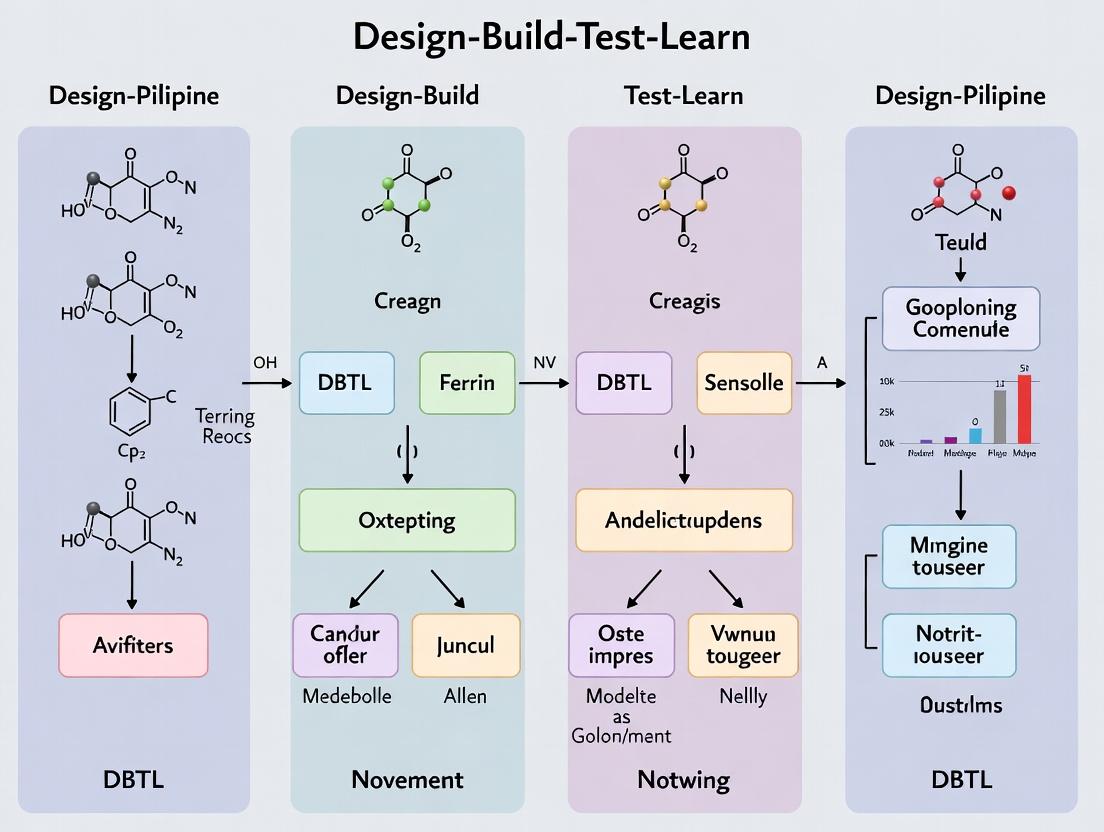
This comprehensive guide explores the Design-Build-Test-Learn (DBTL) framework for microbial strain improvement, tailored for researchers and drug development professionals.
Mastering DBTL Cycles: A Complete Guide to Accelerated Strain Improvement for Drug Development
Abstract
This comprehensive guide explores the Design-Build-Test-Learn (DBTL) framework for microbial strain improvement, tailored for researchers and drug development professionals. It covers the foundational theory of iterative engineering biology, details modern methodological workflows from computational design to high-throughput screening, addresses common troubleshooting and optimization challenges, and provides frameworks for validating strain performance and comparing platform efficiencies. The article synthesizes current best practices to enable faster, more predictable development of production strains for therapeutics, biologics, and valuable compounds.
The DBTL Engine: Core Principles and Strategic Foundations for Strain Engineering
The Design-Build-Test-Learn (DBTL) cycle is an iterative framework central to modern biotechnology and drug development, particularly for microbial strain engineering to produce therapeutics, vaccines, and other valuable compounds. It formalizes the scientific method into a closed-loop, data-driven process for rapid optimization.
The Four-Phase Framework: Detailed Application Notes
Phase 1: Design
- Objective: Formulate hypotheses and generate genetic designs for strain engineering. This phase leverages prior knowledge ('Learn' from previous cycles) and computational tools.
- Key Activities: Target identification, pathway design, selection of genetic parts (promoters, RBSs, terminators), and in silico modeling of metabolic pathways.
- Current Trends: Use of genome-scale metabolic models (GEMs), machine learning (ML) models trained on -omics data, and CRISPR-based tool design.
Phase 2: Build
- Objective: Physically construct the genetically engineered strains as designed.
- Key Activities: DNA synthesis/assembly, genome editing (e.g., CRISPR-Cas9, multiplex automated genome engineering - MAGE), and transformation.
- Current Trends: High-throughput automated DNA assembly platforms (e.g., using liquid handlers) and rapid in vivo genome editing techniques have drastically reduced build times.
Phase 3: Test
- Objective: Characterize the constructed strains to generate quantitative performance data.
- Key Activities: Cultivation in microbioreactors, measurement of titer/yield/productivity, and multi-omics analysis (transcriptomics, proteomics, metabolomics).
- Current Trends: Integration of high-throughput analytics, such as mass spectrometry coupled with liquid chromatography (LC-MS) for metabolomics and online sensors for real-time fermentation monitoring.
Phase 4: Learn
- Objective: Analyze test data to extract actionable knowledge, identify bottlenecks, and generate new hypotheses.
- Key Activities: Statistical analysis, data integration into models, and identification of correlations between genotype and phenotype.
- Current Trends: Advanced data mining and ML are used to uncover non-intuitive design rules, guiding the next Design phase and closing the loop.
Table 1: Key Metrics and Their Evolution Across DBTL Cycles
| Metric | Cycle 1 Benchmark | Cycle 2 Target | Cycle 3 Target | Primary Analytical Method |
|---|---|---|---|---|
| Target Compound Titer (g/L) | 1.5 | 4.2 | 10.5 | HPLC |
| Yield (g product / g substrate) | 0.15 | 0.22 | 0.35 | LC-MS |
| Specific Productivity (mg/gDCW/h) | 2.1 | 5.0 | 12.3 | Cell Dry Weight + HPLC |
| Byproduct A Reduction (%) | Baseline (0) | 40 | 85 | GC-MS |
| Maximum OD600 (Growth) | 15.2 | 18.5 | 20.1 | Spectrophotometry |
Experimental Protocols for Core DBTL Activities
Protocol 1: High-Throughput CRISPR-Cas9 Mediated Multiplex Genome Editing (Build Phase)
Objective: Simultaneously integrate a heterologous pathway (3 genes) and knock out a competing pathway gene in S. cerevisiae. Materials: See Scientist's Toolkit. Procedure:
- Design & Synthesis: Design 3 donor DNA fragments (with 40bp homology arms) for pathway integration and 1 donor for knockout. Synthesize all fragments and Cas9/gRNA expression plasmid (containing 4 sgRNA expression cassettes).
- Yeast Transformation: Use the LiAc/SS carrier DNA/PEG method. Combine 1µg of Cas9/gRNA plasmid, 500ng of each donor DNA, and 50µl of competent yeast cells. Incubate with 240µl PEG 3350, 36µl LiAc, and 25µl ssDNA at 42°C for 40 minutes.
- Selection & Screening: Plate on SD-URA plates to select for the plasmid. Incubate at 30°C for 72h.
- Validation: Patch colonies onto SD-5-FOA plates to counter-select for plasmid loss. Screen surviving colonies by colony PCR (using primers flanking integration sites) and Sanger sequencing to confirm edits.
Protocol 2: Microscale Fermentation and Metabolite Analysis (Test Phase)
Objective: Evaluate strain performance in a 96-deep-well plate format. Procedure:
- Inoculation: Pick single colonies into 200µL of seed medium in a 96-well plate. Grow for 24h at 30°C, 900 rpm.
- Fermentation: Using a liquid handler, transfer 10µL of seed culture into 390µL of production medium in a new deep-well plate. Seal with a breathable membrane.
- Cultivation: Incubate at 30°C, 80% humidity, 900 rpm for 72h in a shaking incubator.
- Sampling: At 24, 48, and 72h, remove 50µL of culture. Measure OD600 for growth. Centrifuge the sample at 4000xg for 5 min.
- Analysis: Transfer supernatant to a new plate. Dilute as necessary and analyze target metabolite and key byproducts via HPLC or LC-MS. Use a standard curve for quantification.
Visualizing the DBTL Cycle Workflow and Logic
Diagram 1: The DBTL Cycle Core Workflow
Diagram 2: Detailed Design Phase Logic
The Scientist's Toolkit: Key Research Reagent Solutions
Table 2: Essential Materials for High-Throughput DBTL Strain Engineering
| Item | Function/Application | Example Vendor/Product |
|---|---|---|
| CRISPR-Cas9 Plasmid Kit (Yeast) | Provides customizable vector for expressing Cas9 and multiple sgRNAs. Enables multiplex editing. | Addgene Kit #1000000074 |
| Automated DNA Assembly Mix | Enzymatic mix for Gibson or Golden Gate Assembly. Compatible with liquid handling robots for high-throughput cloning. | NEB HiFi DNA Assembly Master Mix |
| 96-Deep Well Plate (2mL) | Microscale fermentation vessel for parallel cultivation of strain variants. | Axygen P-DW-20-C-S |
| Breathable Plate Seal | Allows gas exchange while preventing contamination and evaporation during deep-well cultivation. | Sigma-Aldrich Z380059 |
| Microscale Bioreactor System | Enables controlled, parallel fermentation with monitoring of pH, DO, and feeding. | Sartorius ambr 15 or 250 |
| LC-MS Grade Solvents | Essential for high-sensitivity metabolomics and accurate quantification of target molecules. | Fisher Chemical Optima LC/MS |
| Metabolomics Standards Kit | Internal standards for quantifying central carbon metabolites via LC-MS. | Biocrates MxP Quant 500 Kit |
| Data Analysis Suite (Cloud) | Platform for integrating omics data, running statistical analysis, and training ML models. | Terra.bio, Benchling |
| Liquid Handling Robot | Automates repetitive pipetting steps in Build and Test phases (transformation, assay setup). | Beckman Coulter Biomek i7 |
The Design-Build-Test-Learn (DBTL) cycle is a cornerstone of modern, data-driven biomanufacturing. This framework systematically accelerates the engineering of microbial, mammalian, and cell-free systems for the production of therapeutics, enzymes, and biochemicals. By iteratively refining genetic designs based on experimental data, DBTL closes the loop between hypothesis and knowledge, transforming bioprocess development from an art into a predictable engineering discipline.
Application Note: Accelerating High-Titer Therapeutic Protein Strain Development
This application note details the implementation of a DBTL cycle to enhance recombinant protein yield in a Pichia pastoris expression system.
Table 1: Quantitative Outcomes of a 3-Round DBTL Cycle for P. pastoris Strain Improvement
| DBTL Cycle | Design Focus (Example) | Build Method | Test Metric: Titer (g/L) | Key Learning Informing Next Cycle |
|---|---|---|---|---|
| Baseline | Native expression cassette | Random genomic integration | 1.2 ± 0.3 | Native promoter strength is limiting. |
| Round 1 | Strong constitutive promoter library | CRISPR-mediated homology-directed repair | 3.5 ± 0.8 | High expression causes metabolic burden. |
| Round 2 | Inducible promoter + chaperone co-expression | Golden Gate assembly & high-throughput screening | 5.8 ± 1.1 | Protein folding is now the primary bottleneck. |
| Round 3 | ER-resident foldase genes + optimized codon usage | Automated DNA synthesis & assembly | 8.9 ± 0.7 | Titer goal achieved; shift focus to process optimization. |
Detailed Protocols
Protocol 1: Design & Build – Multiplexed CRISPR Integration for Pathway Prototyping
Objective: To rapidly assemble and integrate a heterologous biosynthetic pathway into the yeast genome.
Materials:
- Strain: Saccharomyces cerevisiae BY4741 ura3Δ.
- DNA Parts: Promoter, gene, and terminator modules in a Golden Gate-compatible format (e.g., MoClo).
- CRISPR Components: pCAS plasmid (expressing Cas9), sgRNA expression cassettes targeting specific "safe-haven" genomic loci.
- Recovery Media: Synthetic Complete (SC) media lacking appropriate auxotrophic markers.
Methodology:
- Design: Use genome-scale models to select target loci. Design sgRNAs with minimal off-target effects using tools like CHOPCHOP. Design homology arms (500bp) flanking the assembly for each locus.
- Golden Gate Assembly: Assemble transcriptional units from basic parts in a Level 0 reaction. Combine Level 0 modules into a multi-gene pathway in a Level 1 destination vector containing a selection marker.
- PCR Amplification: Amplify the integrated DNA fragment (pathway + homology arms) from the Level 1 vector.
- Co-transformation: Transform yeast with: a) the pCAS plasmid, b) the PCR-amplified integration fragment, and c) the sgRNA expression plasmid. Use a high-efficiency LiAc/SS carrier DNA/PEG method.
- Selection & Screening: Plate on SC -Ura (or appropriate) media to select for transformants. Screen colonies via colony PCR to verify correct genomic integration at all target loci.
- Curing: Grow positive clones in non-selective media to lose the pCAS and sgRNA plasmids.
Protocol 2: Test – High-Throughput Fermentation and Analytics in 96-Well Deepwell Plates
Objective: To phenotype dozens of engineered strains in parallel for growth and product formation.
Materials:
- Cultivation System: 96-well deepwell plates (2 mL working volume), shaking incubator capable for microtiter plates.
- Analytics: Microplate reader (OD600, fluorescence), HPLC or LC-MS system, or in-plate assay kits (e.g., colorimetric substrate for enzyme activity).
- Media: Defined fermentation media.
Methodology:
- Inoculation: Pick single colonies into 96-well plates containing 300 µL seed media. Grow for 24-48 hours.
- Fermentation: Using a liquid handler, transfer a standardized inoculum (e.g., 10 µL) into a new deepwell plate containing 1 mL of production media. Cover with a breathable seal.
- Condition Control: Maintain plates at defined temperature (e.g., 30°C) with constant agitation (e.g., 900 rpm).
- Time-Point Sampling:
- Growth: Measure OD600 at 0, 12, 24, 48, and 72h using a plate reader.
- Extracellular Metabolites: At harvest, centrifuge plates (3000 x g, 10 min). Filter supernatant (0.22 µm) into a new plate for analysis (HPLC/LC-MS).
- Intracellular Products: For proteins/enzymes, lyse cells via bead beating or chemical lysis in the plate, then clarify supernatant for activity assays.
- Data Capture: Automate data transfer from analytical instruments to a centralized database (e.g., LIMS).
Protocol 3: Learn – Multi-Omics Data Integration for Mechanistic Insight
Objective: To identify causative genetic changes and physiological bottlenecks from 'Test' phase data.
Methodology:
- Data Generation: Perform RNA-Seq (transcriptomics) and LC-MS-based metabolomics on key strains (High-Producer vs. Parental) sampled at mid-log phase.
- Differential Analysis: Use DESeq2 for transcriptomics to identify significantly up/down-regulated genes and pathways. Use MetaboAnalyst for metabolomics to identify altered metabolite pools.
- Data Integration: Map transcript and metabolite data onto a genome-scale metabolic model (GSNM). Use constraint-based modeling (e.g., Flux Balance Analysis) to predict flux redistributions.
- Hypothesis Generation: The integrated analysis may reveal, for example, a down-regulated TCA cycle, indicating redox imbalance, or a depleted amino acid pool, suggesting precursor limitation. This forms the Learning that directs the next Design phase (e.g., "Overexpress NADH oxidase to rebalance cofactors").
Visualizations
DBTL Cycle in Biomanufacturing
High-Throughput Strain Screening Workflow
The Scientist's Toolkit: Key Research Reagent Solutions
Table 2: Essential Materials for DBTL-Driven Strain Engineering
| Item | Function in DBTL Cycle | Example Product/Technology |
|---|---|---|
| Modular DNA Assembly Kit | Enables rapid, scarless construction of genetic variants in the Design/Build phase. | Golden Gate (MoClo) Toolkits, Gibson Assembly Master Mix. |
| CRISPR-Cas9 System | Facilitates precise, multiplexed genomic integration or editing in the Build phase. | Yeast/Cell Line-specific Cas9 plasmids & sgRNA scaffolds. |
| Automated Colony Picker | Enables high-throughput transition from colony to culture in 96/384-well plates for Test. | Systems from Singer Instruments, Hudson Robotics. |
| Microplate Reader | Provides growth (OD) and fluorescence (GFP/RFP) readouts for initial phenotypic Test. | SpectraMax, Tecan Spark, BioTek Synergy. |
| LC-MS System | Delivers precise quantification of target metabolites/products for definitive Test data. | Agilent 6495C QQQ, Thermo Scientific Q Exactive. |
| RNA-Seq Library Prep Kit | Prepares samples for transcriptomic analysis in the Learn phase. | Illumina Stranded mRNA Prep. |
| Genome-Scale Metabolic Model | Computational framework for integrating omics data and predicting engineering targets in Learn. | Yeast8, iCHO, CHO-K1 genome-scale models. |
| Data Analysis Platform | Unifies and analyzes diverse datasets (omics, kinetics) to extract knowledge in Learn. | JMP, RStudio with Bioconductor, Python (Pandas/Scikit-learn). |
Application Notes
The Design-Build-Test-Learn (DBTL) cycle is a foundational framework for accelerating microbial strain engineering in drug development, particularly for producing novel therapeutics, precursors, and biologics. This iterative, data-driven approach transforms strain improvement from an art into a predictable engineering discipline. The integration of computational tools, high-throughput automation, and multi-omics analytics is central to modern DBTL implementations, enabling rapid prototyping of microbial cell factories.
Key Quantitative Metrics in Contemporary DBTL Cycles
Table 1: Performance Metrics & Toolbox for Modern DBTL Cycles in Strain Engineering
| Phase | Key Quantitative Metrics | Typical Modern Turnaround Time | Primary Enabling Technologies |
|---|---|---|---|
| Design | Number of design variants, Predicted protein stability (ΔΔG in kcal/mol), Pathway flux (mmol/gDW/h) | 1-3 days | Genome-scale metabolic models (GEMs), ML-based protein design tools, CRISPR-Cas guide RNA design software |
| Build | Cloning efficiency (%), Assembly accuracy (verified by sequencing), Transformation efficiency (CFU/µg DNA) | 3-7 days | Automated DNA assembly (e.g., Golden Gate), CRISPR-Cas9/12 editing, Oligo synthesis pools, Robotic liquid handlers |
| Test | Target compound titer (g/L), Productivity rate (mg/L/h), Yield (g product/g substrate), Cell growth (OD600) | 1-5 days | Microbioreactors (e.g., 48- or 96-well plates), HPLC/UPLC-MS, Flow cytometry, Real-time metabolomics probes |
| Learn | Feature importance scores from models, Correlation coefficients (R²) between predicted vs. actual performance, Identification of significant genetic knockouts/overexpressions | 2-5 days | Multi-omics integration (RNA-seq, proteomics), Machine Learning (Random Forest, Neural Networks), Statistical Design of Experiments (DoE) analysis |
Experimental Protocols
Protocol 1: High-Throughput Strain Construction via CRISPR-Cas12a Editing Objective: To simultaneously integrate a heterologous biosynthetic pathway and knockout a competing metabolic gene in S. cerevisiae.
- Design: Use software (e.g., CHOPCHOP) to design CRISPR RNA (crRNA) sequences targeting the genomic locus for knockout and a safe-haven locus for pathway integration. Design homology-directed repair (HDR) templates containing the pathway expression cassettes (with promoters, genes, terminers) and flanking homology arms (40-80 bp).
- Build:
- Prepare a transformation mixture per reaction: 100 µL of competent yeast cells, 1 µg of linearized HDR template DNA, 500 ng of purified Cas12a protein, and 200 ng of in vitro transcribed crRNA.
- Incubate at 45°C for 15 minutes (heat shock), then plate onto selective agar medium.
- Screen colonies via colony PCR using primers flanking the integration sites.
- Test: Inoculate positive clones in 96-deep-well plates with 1 mL of defined medium. After 72 hours of growth, quantify product titer using a validated UPLC method.
- Learn: Sequence confirmed strains to correlate genotypic accuracy with phenotypic output. Use titer data to train a model predicting optimal promoter-gene combinations.
Protocol 2: Multiplexed Phenotypic Screening in Microbioreactors Objective: To characterize growth and production kinetics of an engineered E. coli library under varying induction conditions.
- Design: A library of 50 strains with varying ribosomal binding site (RBS) strengths for a key enzyme is used.
- Build: Transform the RBS library into the production E. coli background. Pick single colonies into 96-well master plates.
- Test:
- Using an automated liquid handler, inoculate 1 mL cultures in a 48-well micro-bioreactor system with controlled temperature, pH, and oxygen transfer.
- Induce expression at mid-log phase (OD600 ≈ 0.6) with a gradient of inducer concentrations (0, 0.1, 0.5, 1.0 mM).
- Monitor OD600 and fluorescence (if using a reporter) every 15 minutes for 24 hours. At harvest, centrifuge plates and submit supernatant for extracellular metabolomics analysis via LC-MS.
- Learn: Fit growth curves to calculate maximum growth rate (µmax). Correlate µmax and final product titer with RBS strength and inducer level using a response surface model to identify optimal conditions.
Visualizations
Diagram Title: The Iterative DBTL Cycle for Strain Engineering
Diagram Title: High-Throughput Build & Test Experimental Workflow
The Scientist's Toolkit: Key Research Reagent Solutions
Table 2: Essential Materials for DBTL-driven Strain Improvement
| Item | Function in DBTL Cycle | Example/Supplier Note |
|---|---|---|
| NGS-Based Library Prep Kits | Enables multiplexed verification of built strain libraries (Learn) and tracking of population dynamics. | Illumina Nextera XT, MGI EasySeq. |
| CRISPR-Cas Nucleoprotein Complexes | For precise, multiplexed genome editing in the Build phase. Increases speed and efficiency. | Alt-R S.p. Cas12a (Cpf1) Nuclease (IDT). |
| Golden Gate Assembly Mixes | Modular, scarless assembly of multiple DNA fragments for pathway construction in Build. | NEB Golden Gate Assembly Kit (BsaI-HFv2). |
| Microbioreactor Systems | Provides controlled, parallel fermentation with online analytics for high-throughput Test phase. | Beckman Coulter BioLector XT, Growth Curves USA. |
| UPLC-MS Grade Solvents & Columns | Critical for reproducible, high-resolution quantification of metabolites and products in Test. | Waters ACQUITY UPLC BEH C18 Column, Optima LC/MS grade solvents. |
| Multi-Omics Data Integration Software | Correlates genomic, transcriptomic, and metabolomic data to generate hypotheses in Learn. | Thermo Fisher Compound Discoverer, Synthace COBRA. |
| Automated Liquid Handling Workstations | Enables reproducibility and scale in Build (assembly, transformation) and Test (assay prep). | Opentrons OT-2, Beckman Coulter Biomek i7. |
The engineering of biological systems, particularly for strain improvement in bioproduction and drug development, has undergone a paradigm shift. The transition from undirected, random mutagenesis to a systematic, rational Design-Build-Test-Learn (DBTL) cycle represents the core of modern synthetic biology and metabolic engineering. This application note details this evolution, providing protocols and frameworks for implementing directed DBTL in research.
From Random Mutagenesis to Rational Design
Traditional Random Mutagenesis relied on physical or chemical agents (e.g., UV light, ethyl methanesulfonate) to induce random genomic mutations. Improved phenotypes were identified through high-throughput screening. This approach was blind to genotype-phenotype relationships.
The DBTL Cycle introduces a closed-loop, iterative process:
- Design: Hypotheses and genetic designs are generated using omics data and computational models.
- Build: Genetic constructs or mutant libraries are created using modern molecular biology.
- Test: Constructs are characterized with high-throughput analytics.
- Learn: Data is analyzed to inform the next design cycle, refining the model.
Quantitative Comparison of Strain Improvement Methods
Table 1: Comparison of Key Strain Improvement Methodologies
| Parameter | Traditional Random Mutagenesis | Directed Evolution (Mid-Transition) | Directed DBTL Cycle |
|---|---|---|---|
| Mutation Basis | Entirely random, genome-wide | Targeted to gene(s) of interest, but random within them | Rational, model-informed; can be combinatorial |
| Throughput Potential | High (screening) | Very High (screening/selection) | High (depends on Build/Test steps) |
| Cycle Time | Long (weeks-months) | Moderate (weeks) | Shortening with automation (days-weeks) |
| Knowledge Gain | Low (phenotype only) | Medium (links gene to phenotype) | High (generates predictive models) |
| Primary Tools | Mutagens, selection media | PCR mutagenesis, FACS, MAGE | CRISPR, DNA synthesis, NGS, ML, robotics |
| Typimal Titer Improvement (Case Study) | 2-5 fold over wild-type | 10-50 fold over wild-type | 100+ fold over wild-type, approaching theoretical yield |
Core Protocols for the Modern DBTL Cycle
Protocol 3.1: Design Phase –In SilicoPathway Design and Model Simulation
Objective: Generate a list of target genes for knockout/knockdown/overexpression to optimize a metabolic pathway for product Y. Materials: Genome-scale metabolic model (GEM) (e.g., for E. coli or S. cerevisiae), constraint-based modeling software (e.g., COBRApy, OptFlux), genome annotation database. Procedure:
- Load the appropriate GEM (e.g., iML1515 for E. coli).
- Set the objective function to maximize the biomass/product exchange reaction.
- Perform Flux Balance Analysis (FBA) under defined nutritional constraints.
- Use algorithms like OptKnock or MoMA to identify gene knockout targets that couple product flux to growth.
- Use Flux Variability Analysis (FVA) to identify potential overexpression targets (genes with high flux control).
- Output a ranked list of genetic perturbations for experimental testing.
Protocol 3.2: Build Phase – CRISPR-Cas9 Mediated Multiplex Genome Editing
Objective: Simultaneously knock out three target genes identified in the Design phase in E. coli. Materials: pCAS9cr plasmid (or similar), pTargetF series plasmids, oligos for gRNA synthesis, electrocompetent cells, SOC recovery medium, appropriate antibiotics. Procedure:
- Clone three unique 20-bp spacer sequences into a pTargetF plasmid using Golden Gate assembly, each under a separate promoter.
- Co-transform the pCAS9cr plasmid and the multiplex pTargetF plasmid into electrocompetent E. coli.
- Recover cells in SOC medium at 30°C for 2 hours, then plate on selective media (e.g., kanamycin + spectinomycin) and incubate at 30°C.
- Screen colonies by colony PCR across each target locus to confirm deletions.
- Cure the pTargetF plasmid by growth at 37°C without selection and verify loss.
Protocol 3.3: Test Phase – High-Throughput Metabolite Analysis via LC-MS
Objective: Quantify intracellular metabolites and product titers from a 96-well plate cultivation of engineered strains. Materials: Quenching solution (60% methanol, -40°C), extraction solvent (40:40:20 methanol:acetonitrile:water with 0.1% formic acid, -20°C), LC-MS system (e.g., Q-Exactive Orbitrap), HILIC or reversed-phase column. Procedure:
- Quenching: Transfer 400 µL of culture rapidly into 1 mL of pre-chilled quenching solution. Centrifuge immediately.
- Extraction: Resuspend cell pellet in 1 mL of cold extraction solvent. Vortex vigorously for 30 seconds. Incubate at -20°C for 1 hour. Centrifuge at max speed, 4°C for 10 min.
- LC-MS Analysis: Transfer supernatant to MS vial. Use a HILIC column (for polar metabolites) with a gradient from mobile phase A (95:5 water:acetonitrile, 20 mM ammonium acetate) to B (acetonitrile). Operate MS in negative/positive switching mode.
- Data Processing: Use software (e.g., Compound Discoverer, XCMS) for peak picking, alignment, and identification against accurate mass databases. Normalize to OD600 and internal standards.
Visualizing the DBTL Workflow and Key Pathways
DBTL Cycle for Strain Engineering
Evolution of Strain Engineering Methods
The Scientist's Toolkit: Key Reagent Solutions
Table 2: Essential Research Reagents for Directed DBTL Cycles
| Reagent / Solution | Function / Application | Example Product / Kit |
|---|---|---|
| CRISPR-Cas9 System | Enables precise gene knockouts, knock-ins, and transcriptional regulation. | pCAS series plasmids, Alt-R CRISPR-Cas9 system. |
| Golden Gate Assembly Mix | Modular, hierarchical assembly of multiple DNA fragments into a vector in a single reaction. | NEB Golden Gate Assembly Kit (BsaI-HFv2). |
| Gibson Assembly Master Mix | One-step, isothermal assembly of multiple overlapping DNA fragments. | NEBuilder HiFi DNA Assembly Master Mix. |
| Next-Gen Sequencing Library Prep Kit | Preparation of genomic or transcriptomic libraries for high-throughput sequencing. | Illumina DNA Prep, Nextera XT. |
| Metabolite Extraction/Quenching Solvent | Rapid inactivation of metabolism and extraction of intracellular metabolites for LC-MS. | Pre-mixed, cold methanol/acetonitrile/water solutions. |
| Fluorescent Activated Cell Sorting (FACS) Dyes/Reporters | Enables high-throughput screening based on fluorescence (e.g., biosensor-linked). | GFP/RFP variants, fluorescent substrate analogs. |
| Automated Liquid Handling Reagents | Compatible buffers, enzymes, and cells for use on robotic workstations (e.g., Echo, Hamilton). | Labcyte Echo Qualified enzymes, TE buffer for acoustic dispensing. |
The Design-Build-Test-Learn (DBTL) cycle represents the core operational framework for modern strain improvement and biotherapeutic development. Its accelerated, iterative efficiency is wholly dependent on a suite of Key Enabling Technologies (KETs). These tools transform DBTL from a conceptual model into a high-throughput, data-rich engine for innovation, allowing researchers to compress development timelines from years to months.
Enabling Technologies for the DESIGN Phase
The Design phase leverages computational tools to plan genetic modifications based on prior knowledge and predictive models.
Genome-Scale Metabolic Models (GSSMs) and Constraint-Based Reconstruction and Analysis (COBRA)
Application Note: GEMs are in silico representations of an organism's metabolism. Using COBRA methods, researchers can predict metabolic fluxes, identify gene knockout/up-regulation targets for enhanced product yield (e.g., of a therapeutic protein or small-molecule API), and simulate growth under different conditions.
Protocol: In Silico Gene Knockout Simulation Using a GEM
- Model Acquisition/Preparation: Obtain a organism-specific GEM from a repository like BiGG Models. Load the model into a COBRA-compatible environment (e.g., Python with COBRApy, MATLAB with the COBRA Toolbox).
- Objective Definition: Set the biochemical reaction corresponding to the desired product (e.g., "BIOMASS" for growth, "EX_lysc" for lysine secretion) as the objective function to be maximized.
- Knockout Simulation: Use the
singleGeneDeletionfunction to simulate the growth rate and product yield when each non-essential gene is knocked out individually. - Target Identification: Rank gene knockout candidates by their predicted impact on the product yield-to-growth ratio. Prioritize knockouts that minimize growth impairment while maximizing product formation.
Machine Learning (ML)-Guided Protein and Pathway Design
Application Note: ML models trained on protein sequence-structure-function data can predict beneficial mutations for stability, activity, or solubility. For pathways, ML can optimize expression levels of multiple genes simultaneously.
Protocol: Training a Random Forest Regressor for Activity Prediction
- Dataset Curation: Compile a labeled dataset of protein variant sequences (e.g., site-saturation mutagenesis library data) with corresponding activity measurements.
- Feature Engineering: Encode protein sequences using physiochemical properties (e.g., polarity, volume) or one-hot encoding.
- Model Training: Split data (80/20 train/test). Train a Random Forest regressor (e.g., using scikit-learn) to map sequence features to activity scores.
- Design Generation: Use the trained model to score in silico a vast mutational landscape (e.g., all possible combinations of top N sites). Select the top 50-100 predicted high-activity variants for the Build phase.
Table 1: Quantitative Impact of KETs on Design Phase Efficiency
| Technology | Traditional Method | KET-Enabled Method | Throughput Gain | Typical Timeframe |
|---|---|---|---|---|
| Target Identification | Literature review, manual curation | GEM/COBRA simulation | 10-100x more targets evaluated | Weeks → Hours |
| Protein Variant Design | Structure-guided intuition | ML model prediction | 100-1000x variant space scanned | Months → Days |
| Pathway Balancing | Sequential, trial-and-error | Multivariate ML optimization | 5-10x fewer cycles needed | 6-12 months → 2-3 months |
Diagram 1: KETs in the Design Phase
Research Reagent Solutions for the Design Phase
| Item | Function | Example/Provider |
|---|---|---|
| Commercial GEM Database | Provides validated, curated metabolic models for simulation. | BiGG Models, KBase |
| Cloud Computing Platform | Provides scalable computational power for resource-intensive simulations and ML training. | AWS, Google Cloud, Azure |
| ML Framework | Software library for building, training, and deploying predictive models. | TensorFlow, PyTorch, scikit-learn |
| Bioinformatics Suite | Integrated tools for sequence analysis, alignment, and feature extraction. | SnapGene, CLC Bio, Biopython |
Enabling Technologies for the BUILD Phase
The Build phase physically constructs the genetic designs. Automation and standardized DNA assembly are critical.
Automated High-Throughput DNA Assembly and Cloning
Application Note: Robotic liquid handlers enable the parallel assembly of hundreds to thousands of genetic constructs using standardized methods (e.g., Golden Gate, Gibson Assembly).
Protocol: Robotic Golden Gate Assembly for a Variant Library
- Plate Setup: In a 96-well PCR plate, use a liquid handler to dispense 20 fmol of each DNA part (vector backbone, promoter, gene variant, terminator) per well. All parts share compatible, unique Type IIS restriction sites (e.g., BsaI).
- Master Mix Dispensing: Dispense 1 µL of T4 DNA Ligase Buffer (10X), 0.5 µL of BsaI-HFv2, 0.5 µL of T4 DNA Ligase, and 3 µL of nuclease-free water to each well.
- Cycling Reaction: Seal the plate and run in a thermal cycler: (37°C for 5 min; 16°C for 5 min) x 25 cycles, then 50°C for 5 min, 80°C for 5 min.
- Transformation: Transfer 2 µL of each assembly reaction via robot into 10 µL of chemically competent E. coli in a 96-well plate. After heat shock and recovery, plate each well onto selective agar in a quadrant or using a plate spreader robot.
CRISPR-Cas Based Genome Editing
Application Note: Enables precise, multiplexed genome edits (knockouts, knock-ins, point mutations) in a single transformation, essential for rapid strain engineering.
Protocol: Multiplexed Gene Knockout in S. cerevisiae using CRISPR-Cas9
- gRNA Expression Plasmid Construction: Clone four distinct gRNA sequences, each targeting a different gene, into a single plasmid containing a tRNA-gRNA array under a Pol III promoter.
- Donor DNA Preparation: For each gene knockout, synthesize a double-stranded DNA donor fragment containing 50-bp homology arms flanking a selectable marker (e.g., KanMX). Use different markers or auxotrophic complementation for each target.
- Co-transformation: Co-transform the gRNA plasmid (with Cas9 expression) and the four pooled donor fragments into yeast using standard lithium acetate protocol.
- Screening: Plate on selective media containing all relevant antibiotics or lacking required nutrients. Screen colonies by PCR to confirm all four gene replacements.
Table 2: Quantitative Impact of KETs on Build Phase Efficiency
| Technology | Traditional Method | KET-Enabled Method | Throughput Gain | Success Rate |
|---|---|---|---|---|
| DNA Assembly | Manual, 1-2 constructs/day | Robotic, 96-384 constructs/day | ~200x | ~70% → ~95% |
| Genome Integration | Homologous recombination (low efficiency) | CRISPR-Cas9 editing | 100-1000x efficiency increase | <1% → 50-90% |
| Multiplex Editing | Sequential, iterative crosses | CRISPR multiplexing (n>5) | Reduces cycles by factor of n | N/A (enables new capability) |
Diagram 2: KETs in the Build Phase
Research Reagent Solutions for the Build Phase
| Item | Function | Example/Provider |
|---|---|---|
| Automated Liquid Handler | Precisely dispenses nanoliter-to-microliter volumes for high-throughput reactions. | Beckman Coulter Biomek, Opentrons OT-2 |
| Commercial DNA Assembly Kit | Optimized, standardized enzymes and buffers for reliable assembly. | NEB HiFi DNA Assembly, Golden Gate kits |
| CRISPR-Cas9 Nuclease | Enzyme for creating targeted double-strand breaks in genomic DNA. | IDT Alt-R S.p. Cas9 Nuclease, Thermo Fisher TrueCut Cas9 |
| Synthetic gRNA Libraries | Pre-designed, validated guide RNA sequences for targeted gene editing. | Synthego, MilliporeSigma |
| Next-Gen Competent Cells | High-efficiency cells for transformation of large or complex DNA assemblies. | NEB Turbo, Homologous Recombination competent yeast (e.g., Zymo Research YCM) |
Enabling Technologies for the TEST Phase
The Test phase quantitatively characterizes the built strains. Miniaturization and parallelization are key.
Microbioreactors and High-Throughput Fermentation
Application Note: Microbioreactor systems (e.g., 48- or 96-well plates with individual stirring, pH, and DO monitoring) enable parallel cultivation under controlled, scalable conditions, generating reproducible phenotype data.
Protocol: Fed-Batch Profiling in a 48-Well Microbioreactor System
- Inoculum Preparation: Grow clones from the Build phase in deep-well plates with 500 µL of seed medium for 24 hours.
- Reactor Inoculation: Using a liquid handler, transfer a standardized inoculum volume (e.g., 10 µL) into each well of the microbioreactor plate containing 1 mL of defined minimal medium.
- Process Control: Set and maintain parameters: temperature = 30°C, agitation = 1200 rpm, DO > 30%. Initiate a feed pump after 8 hours to deliver a concentrated carbon source feed at a defined exponential rate.
- Sampling: At defined intervals (e.g., every 4 hours), an automated sampler extracts 10 µL from each well for subsequent offline analysis (HPLC, MS).
Omics Analytics (Transcriptomics, Proteomics, Metabolomics)
Application Note: Provides a systems-level view of cellular response. Sample preparation robotics coupled with next-generation sequencers and LC-MS/MS enables high-throughput analysis.
Protocol: High-Throughput RNA-Seq Sample Preparation
- Robotic Lysis & RNA Extraction: In a 96-well plate, use a robot to add lytic enzyme/buffer to cell pellets from the Test phase. Bind RNA to magnetic beads, wash, and elute.
- Automated Library Prep: Use a system (e.g., Illumina NeoPrep) to automate mRNA selection, cDNA synthesis, adapter ligation, and PCR amplification from 96 samples in parallel.
- Pooling & Sequencing: Quantify libraries fluorometrically, pool equimolar amounts robotically, and sequence on a NextSeq 2000 (P3 flow cell, 2x50 bp).
- Bioinformatics Analysis: Use a standardized pipeline (e.g., STAR aligner → DESeq2) to map reads and calculate differential gene expression between high- and low-producing strains.
Table 3: Quantitative Impact of KETs on Test Phase Efficiency & Data Density
| Technology | Traditional Method | KET-Enabled Method | Throughput Gain | Data Points per Experiment |
|---|---|---|---|---|
| Phenotypic Screening | Shake flasks (10s of strains) | Microbioreactors (100s of strains) | 10-50x | 3-5 timepoints → 10-20 timepoints with full kinetics |
| Transcriptomics | qPCR (10s of genes) | RNA-Seq (whole genome) | 1000x gene coverage | 10-100 genes → All genes (6000+) |
| Metabolomics | Targeted HPLC (1-5 compounds) | Untargeted LC-MS (1000s of features) | 100-1000x | <10 → 1000+ metabolites |
Diagram 3: KETs in the Test Phase
Research Reagent Solutions for the Test Phase
| Item | Function | Example/Provider |
|---|---|---|
| Microbioreactor System | Enables parallel, instrumented fermentation at micro-scale. | Sartorius Ambr, Beckman Coulter BioLector |
| Robotic Sample Processor | Automates sample preparation for HPLC, MS, or sequencing. | Hamilton STAR, Tecan Fluent |
| NGS Library Prep Kit | Reagents for automated, high-throughput sequencing library construction. | Illumina Nextera XT, Twist NGS kits |
| LC-MS Metabolomics Kit | Includes standards, solvents, and columns for reproducible metabolite profiling. | Agilent Metabolomics kit, Biocrates AbsoluteIDQ p400 HR |
Enabling Technologies for the LEARN Phase
The Learn phase integrates data to generate actionable insights, closing the loop.
Data Integration Platforms and Cloud Computing
Application Note: Centralized data lakes (cloud storage) linked to analysis pipelines allow for the integration of heterogeneous data (omics, phenotype, process parameters) to identify complex correlations.
Protocol: Cloud-Based Multi-Omics Data Integration
- Data Upload: Upload structured data files (RNA-Seq counts table, proteomics abundances, metabolite levels, growth parameters) to a designated cloud storage bucket (e.g., AWS S3, Google Cloud Storage). Ensure consistent strain identifiers.
- Pipeline Execution: Launch a containerized analysis pipeline (e.g., using Docker on Google Cloud Life Sciences). The pipeline performs: a) Normalization of each dataset, b) Multi-block multivariate analysis (e.g., DIABLO via R's
mixOmics), c) Generation of correlation networks linking genes, proteins, metabolites, and product yield. - Visualization & Storage: Results (plots, key feature lists, statistical summaries) are written back to cloud storage and visualized via a web dashboard (e.g., R Shiny).
Advanced ML for Hypothesis Generation
Application Note: Beyond prediction, ML models (e.g., interpretable ML, causal inference) can identify non-intuitive genetic interactions and propose new mechanistic hypotheses for the next Design cycle.
Protocol: Using SHAP Analysis to Interpret a Strain Performance Model
- Model Training: Train a gradient boosting model (e.g., XGBoost) to predict strain titer from features including genomic edits, transcriptomics signatures, and initial metabolomics data.
- SHAP Value Calculation: Calculate SHapley Additive exPlanations (SHAP) values for the top-performing model. This assigns each feature an importance value for each prediction.
- Hypothesis Generation: Analyze the global SHAP summary plot. Identify high-impact features (e.g., "upregulation of gene XYZ" or "combination of knockouts A and B"). Examine individual force plots for top strains to understand feature interactions. Formulate a testable biological hypothesis (e.g., "Gene XYZ is a previously unknown regulator of precursor flux").
Table 4: Quantitative Impact of KETs on Learn Phase Depth
| Technology | Traditional Method | KET-Enabled Method | Data Types Integrated | Key Output |
|---|---|---|---|---|
| Data Analysis | Spreadsheets, simple stats | Cloud-based multi-omics integration | 2-3 (e.g., growth + transcripts) | 5-10+ (all omics + phenotype + process) |
| Insight Generation | Manual interpretation, literature | Interpretable ML (SHAP, causal nets) | Correlation lists | Prioritized, testable mechanistic hypotheses |
Diagram 4: KETs Close the DBTL Loop in Learn Phase
Research Reagent Solutions for the Learn Phase
| Item | Function | Example/Provider |
|---|---|---|
| Cloud Storage & Compute | Scalable infrastructure for storing large datasets and running complex analyses. | AWS S3/EC2, Google Cloud Storage/Compute Engine |
| Data Science Workbench | Collaborative platform for coding, statistical analysis, and machine learning. | JupyterHub, RStudio Server, Databricks |
| Biological Data Repository | Public/private database for storing and sharing structured experimental data. | Synapse, GitHub, private LIMS (e.g., Benchling) |
| Interpretable ML Library | Software for explaining complex model predictions and generating insights. | SHAP library, Captum, Eli5 |
Application Notes
Within the Design-Build-Test-Learn (DBTL) cycle framework for industrial biotechnology, the optimization of microbial strains for bioprocesses focuses on four interlinked objectives: Titer (final product concentration), Rate (volumetric productivity), Yield (substrate-to-product conversion efficiency), and Robustness (performance stability under scale-up conditions). Achieving a balanced TRYR profile is critical for commercial viability. The DBTL cycle accelerates this by integrating computational design, high-throughput genetic engineering, multiplexed assays, and data analytics to inform the next design iteration. This systematic approach moves beyond incremental improvement to enable disruptive gains in strain performance.
Key Protocols & Data
Protocol 1: High-Throughput Cultivation and Analytics for Titer/Rate Assessment
Objective: Quantify product titer and growth/production rates in microtiter plates. Procedure:
- Inoculation: Using a liquid handler, inoculate 200 µL of defined medium in a 96-well deep-well plate (DWP) with colonies from a transformation plate. Cover with a breathable seal.
- Cultivation: Incubate in a shaking microplate incubator at target temperature (e.g., 30°C), 80% humidity, 1000 rpm orbital shaking for 24-72 hours.
- Sampling: At defined intervals (e.g., 0, 6, 12, 24, 48 h), use the liquid handler to transfer 20 µL of culture to a separate assay plate for OD600 measurement (diluted if necessary). Centrifuge the original DWP at 3000 x g for 10 min.
- Product Quantification: Transfer 100 µL of supernatant to a new plate. Analyze product concentration via HPLC, GC-MS, or plate reader-based enzymatic/colorimetric assays calibrated with known standards.
- Data Processing: Calculate maximum specific growth rate (µ_max) from ln(OD600) vs. time. Calculate volumetric productivity (Rate) as product titer divided by fermentation time at harvest. Perform in triplicate.
Protocol 2: Yield Determination via Metabolic Flux Analysis (MFA)
Objective: Determine carbon yield (Yp/s) and map intracellular flux distribution. Procedure:
- Tracer Experiment: Grow strain in chemostat or controlled batch bioreactor with ( ^{13}\text{C} )-labeled substrate (e.g., [1-( ^{13}\text{C} )]glucose).
- Sampling: At mid-exponential phase, rapidly quench metabolism (cold methanol, -40°C). Centrifuge, wash, and lyse cells.
- Metabolite Extraction & Derivatization: Extract intracellular metabolites. Derivatize amino acids and pathway intermediates for GC-MS analysis.
- MS Data Acquisition & Analysis: Measure mass isotopomer distributions (MIDs) of proteinogenic amino acids and central carbon metabolites.
- Flux Calculation: Use software (e.g., INCA, COBRApy) to fit a metabolic network model to the MID data, estimating net fluxes. Calculate product yield from substrate (g product/g substrate).
Protocol 3: Assessing Robustness in Scale-Down Bioreactors
Objective: Evaluate strain performance under simulated industrial scale-up stresses. Procedure:
- Bioreactor Setup: Use parallel microbioreactors (e.g., 100-250 mL working volume) with controlled pH, dissolved oxygen (DO), and temperature.
- Stress Regimes: Implement oscillating feed (mimicking mixing inhomogeneity), rapid DO shifts (from 30% to 5% saturation), or temperature gradients (±2°C).
- Inoculation & Monitoring: Inoculate from a standardized seed train. Monitor online parameters (pH, DO, CO2, O2 off-gas) continuously.
- Offline Analytics: Sample periodically for OD600, substrate, product, and by-product (e.g., acetate) quantification.
- Robustness Metrics: Calculate coefficient of variation (CV%) for titer and rate across stress cycles. Compare performance stability to control conditions.
Table 1: Representative TRYR Metrics from a DBTL Cycle for a Model Compound
| Strain Generation (DBTL Round) | Titer (g/L) | Rate (g/L/h) | Yield (g/g Glucose) | Robustness (CV% Titer in Stress Test) |
|---|---|---|---|---|
| Wild Type | 1.2 | 0.025 | 0.10 | 45.2 |
| Engineered (Round 1) | 5.8 | 0.081 | 0.22 | 32.5 |
| Engineered (Round 2) | 12.4 | 0.173 | 0.35 | 18.7 |
| Engineered (Round 3) | 18.7 | 0.260 | 0.41 | 12.3 |
Table 2: The Scientist's Toolkit: Key Reagents & Solutions
| Item | Function & Application |
|---|---|
| Defined Chemostat Medium | Precisely controlled nutrient supply for steady-state cultivation and yield analysis. |
| ( ^{13}\text{C} )-Labeled Substrate (e.g., Glucose) | Tracer for Metabolic Flux Analysis (MFA) to quantify intracellular reaction rates. |
| Quenching Solution (Cold Methanol, -40°C) | Rapidly halts cellular metabolism for accurate snapshot of metabolite levels. |
| Derivatization Reagents (e.g., MSTFA) | Converts metabolites to volatile forms for GC-MS analysis in MFA. |
| High-Throughput Assay Kits (e.g., NADPH/NADH) | Enables plate reader-based quantification of cofactors or specific metabolites. |
| Genomic DNA Extraction Kit (HTP) | For rapid genotype verification (PCR, sequencing) post-Build phase. |
| Next-Generation Sequencing Kit | For whole-genome sequencing to identify unintended mutations during the Learn phase. |
Diagrams
DBTL Cycle for TRYR Optimization
Metabolic Flux to TRYR Objectives
Integrating DBTL with Quality by Design (QbD) in Pharmaceutical Development
The integration of Design-Build-Test-Learn (DBTL) cycles with Quality by Design (QbD) principles represents a paradigm shift in pharmaceutical development, particularly for biopharmaceuticals derived from microbial or cell-based systems. This synergy applies a systematic, data-driven approach to strain and process improvement, ensuring that quality is engineered into the product from the earliest stages of development, rather than tested in at the end. Within a thesis on DBTL for strain improvement, this integration focuses on defining a Quality Target Product Profile (QTPP) for the biologic or drug substance, identifying Critical Quality Attributes (CQAs), and using DBTL cycles to understand and control the Critical Process Parameters (CPPs) and Critical Material Attributes (CMAs) that impact those CQAs.
Application Notes
Application Note AN-001: Defining CQAs for a Therapeutic Enzyme via High-Throughput Screening (HTS)
- Objective: To link genetic modifications in a production host (e.g., P. pastoris) to critical quality attributes of the expressed therapeutic enzyme (e.g., glycosylation profile, specific activity, aggregation state).
- DBTL-QbD Integration: The Design phase uses prior knowledge to define the QTPP and initial CQAs. The Build phase involves constructing a diverse strain library targeting genes in the glycosylation pathway. The Test phase employs HTS assays (e.g., lectin-binding assays, activity fluoroprobes) to quantify CQAs for each variant. The Learn phase uses statistical models to identify which genetic modifications are Critical Material Attributes (CMAs of the host cell) that significantly influence the CQAs, refining the design space for the next cycle.
- Key Outcome: A predictive model linking specific genetic constructs (CMAs) to a measurable CQA (e.g., % of desired glycoform).
Application Note AN-002: Establishing the Design Space for a Fermentation Process
- Objective: To determine the multidimensional interaction of process parameters (CPPs) on critical quality and productivity attributes.
- DBTL-QbD Integration: Design a Design of Experiments (DoE) investigating parameters like pH, temperature, feed rate, and induction timing. Build the experimental runs in a parallel bioreactor system. Test by measuring CQAs (titer, product purity, charge variants) and key performance indicators (yield, productivity). Learn by applying multivariate analysis (e.g., Partial Least Squares regression) to define the proven acceptable ranges for each CPP and model their interaction effects on CQAs.
- Key Outcome: A validated design space for the fermentation unit operation, a core QbD deliverable.
Application Note AN-003: Implementing PAT for Real-Time Release in Purification
- Objective: To enable real-time release of a purification chromatographic step using Process Analytical Technology (PAT).
- DBTL-QbD Integration: Design a study to identify an in-line sensor (e.g., UV, conductivity, pH) signal pattern that correlates with the critical quality attribute of host cell protein (HCP) clearance. Build and calibrate the PAT setup on an ÄKTA system. Test by running multiple purification batches with deliberate variability in load material. Learn by developing a chemometric model that predicts HCP levels from the sensor data, establishing a control strategy.
- Key Outcome: A PAT-based real-time release control strategy that replaces off-line testing, aligning with QbD's goal of continuous quality assurance.
Experimental Protocols
Protocol P-001: High-Throughput Glycosylation Profiling of Yeast Strain Libraries
Purpose: To rapidly assess the glycosylation profile (a CQA) of a therapeutic protein expressed from a combinatorial genomic library.
Materials: See Scientist's Toolkit in Section 5.
Methodology:
- Strain Cultivation (Build Output):
- Inoculate 96 deep-well plates containing 1 mL of selective medium with individual yeast clone from the library.
- Seal with breathable film and incubate at 30°C, 850 rpm for 48 hours in a shaking incubator.
- Induce protein expression following a standardized protocol.
Micro-scale Protein Capture (Test - Sample Prep):
- Centrifuge plates at 3000 x g for 10 min to pellet cells.
- Transfer 200 µL of supernatant to a new 96-well protein capture plate pre-coated with affinity resin (e.g., Ni-NTA for His-tagged proteins).
- Incubate with shaking for 1 hour at room temperature.
Lectin-Based Glycosylation Assay (Test - Analysis):
- Wash plates 3x with 200 µL PBS.
- Add 100 µL of a cocktail of fluorescently labeled lectins (e.g., ConA for mannose, SNA for sialic acid) diluted in binding buffer.
- Incubate in the dark for 90 min.
- Wash 5x with PBS to remove unbound lectin.
- Measure fluorescence intensity (λex/λem) for each lectin channel using a plate reader.
Data Analysis (Learn):
- Normalize fluorescence signals to total protein content (via a parallel Coomassie assay).
- Perform multivariate analysis (e.g., PCA, PLS-DA) to cluster strains based on glycan signatures.
- Corlectin binding patterns with the specific genetic modifications present in each strain.
Protocol P-002: DoE for Mammalian Cell Culture Optimization
Purpose: To systematically evaluate the impact of three CPPs on cell growth, viability, and product titer (CQAs).
Materials: CHO-S cells, basal medium, feed supplements, 24-well micro-bioreactor system, automated cell counter, metabolite analyzer, HPLC.
Methodology:
- Experimental Design (Design):
- Construct a Central Composite Face-centered (CCF) DoE for three factors: Incubation Temperature (33-37°C), pH (6.8-7.2), and Feed Start Day (3-5 days post-inoculation).
- Include center point replicates for error estimation. The experimental design is summarized in Table 1.
Inoculation and Process Execution (Build & Test):
- Prepare a single large-volume inoculum of CHO-S cells in exponential growth phase.
- Aseptically inoculate each micro-bioreactor in the DoE array to a standardized viable cell density (VCD).
- Program bioreactor controllers to maintain the assigned pH and temperature setpoints.
- Initiate feeding according to the assigned schedule.
- Sample daily for VCD, viability, and metabolite (glucose, lactate, ammonia) analysis.
- Harvest cultures on day 14 and quantify product titer via HPLC.
Statistical Modeling (Learn):
- Fit response surface models for each CQA (peak VCD, integrated viable cell density, final titer).
- Analyze variance (ANOVA) to identify significant main effects and interaction terms.
- Generate contour plots to visualize the design space and identify the optimal operating region that maximizes titer while maintaining critical quality metrics.
Data Presentation and Visualization
| Run Order | Temp (°C) | pH | Feed Day | Peak VCD (10^6 cells/mL) | Final Titer (g/L) | Aggregation (%) |
|---|---|---|---|---|---|---|
| 1 | 33.0 | 6.8 | 3 | 5.2 | 1.8 | 0.5 |
| 2 | 37.0 | 6.8 | 3 | 7.1 | 2.5 | 2.1 |
| 3 | 33.0 | 7.2 | 3 | 5.8 | 2.0 | 0.7 |
| 4 | 37.0 | 7.2 | 3 | 6.5 | 2.3 | 1.8 |
| 5 | 33.0 | 6.8 | 5 | 4.9 | 1.7 | 0.4 |
| 6 | 37.0 | 6.8 | 5 | 6.8 | 2.4 | 1.9 |
| 7 | 33.0 | 7.2 | 5 | 5.5 | 1.9 | 0.6 |
| 8 | 37.0 | 7.2 | 5 | 6.2 | 2.2 | 1.5 |
| 9 (C) | 35.0 | 7.0 | 4 | 6.5 | 2.2 | 1.2 |
| 10 (C) | 35.0 | 7.0 | 4 | 6.6 | 2.3 | 1.1 |
| 11 (C) | 35.0 | 7.0 | 4 | 6.4 | 2.1 | 1.3 |
Table 2: Key Research Reagent Solutions
| Item Name | Function / Application |
|---|---|
| Fluorescent Lectin Panel | High-throughput profiling of glycan structures on recombinant proteins (links Build to CQA). |
| Multiplex Cell Health Assay | Simultaneous measurement of viability, apoptosis, and cytotoxicity in microtiter plates during Test phase. |
| Design of Experiments Software | Statistically plans efficient experiments (Design) and models complex interactions in data (Learn). |
| High-Throughput DNA Assembly Kit | Enables rapid construction of large, diverse genetic variant libraries for the Build phase. |
| PAT Probes (in-line pH, DO) | Provides real-time data on CPPs for feedback control and continuous quality verification. |
Diagram 1: DBTL-QbD Integrated Workflow for Strain Development
Diagram 2: QbD Elements Mapped to DBTL Cycle Phases
Diagram 3: PAT in a DBTL Cycle for Process Control
Executing DBTL: A Step-by-Step Workflow from Computational Design to High-Throughput Validation
In the Design-Build-Test-Learn (DBTL) cycle for microbial strain improvement, the Computational Design (Phase 1) is the critical foundation. This phase leverages Genome-Scale Metabolic Models (GSSMs) and Artificial Intelligence (AI) to generate high-probability, genetically engineered targets for optimizing the production of therapeutics, biofuels, or biochemicals. It transforms bioproduction from a trial-and-error process into a predictive, knowledge-driven endeavor, significantly accelerating the initial "Design" phase and informing the subsequent "Build" and "Learn" phases.
Core Methodologies: Application Notes
Genome-Scale Metabolic Modeling (GSSM)
GSSMs are mathematical reconstructions of an organism's metabolism, representing all known biochemical reactions, genes, and metabolites. They enable in silico simulation of metabolic fluxes under different genetic and environmental conditions.
- Application Note 1: Constraint-Based Reconstruction and Analysis (COBRA): This is the standard framework for GSSM simulation. It uses mass-balance, thermodynamic, and capacity constraints to define a solution space of possible metabolic flux distributions.
- Application Note 2: Flux Balance Analysis (FBA): A linear programming technique within COBRA that predicts an optimal flux distribution to maximize or minimize a defined objective function (e.g., biomass growth, target metabolite production).
- Application Note 3: In Silico Strain Design Algorithms: Tools like OptKnock, OptForce, and GDLS identify gene knockout, knockdown, or overexpression strategies to couple growth with product synthesis.
AI-Driven Prediction
AI, particularly Machine Learning (ML) and Deep Learning (DL), complements GSSMs by predicting complex, non-linear cellular behaviors that pure stoichiometric models cannot capture, such as enzyme kinetics, regulatory interactions, and omics-data integration.
- Application Note 4: Predictive Modeling of Gene Expression Effects: ML models (e.g., Random Forests, Gradient Boosting) trained on transcriptomic, proteomic, and phenotype data can predict the impact of genetic perturbations on product titer.
- Application Note 5: Deep Learning for Protein and Pathway Design: DL architectures (e.g., CNNs, Transformers) can predict enzyme function, stability, and activity from amino acid sequences, and suggest optimal pathways for novel compound synthesis.
Experimental Protocols
Protocol 1: Performing Flux Balance Analysis (FBA) for Target Identification
Objective: To computationally identify gene knockout targets that maximize the production yield of a target compound (e.g., artemisinin precursor amorpha-4,11-diene) in S. cerevisiae.
Materials: See "Scientist's Toolkit" (Section 6). Software: COBRA Toolbox for MATLAB/Python.
Procedure:
- Model Acquisition & Validation: Load a curated GSSM (e.g., yeast 8.3.4) into the COBRA Toolbox. Verify model functionality by simulating growth on standard medium (e.g., YPD) and ensuring a non-zero biomass flux.
- Define Objective Function: Set the objective function to maximize the exchange flux of the target metabolite (e.g.,
EX_amorpha4_11_diene(e)). - Apply Physiological Constraints: Define uptake rates for key nutrients (glucose, oxygen, ammonium) based on experimental data.
- Run Parsimonious FBA (pFBA): Execute pFBA to find the flux distribution that achieves the objective while minimizing total enzyme usage. Record the predicted maximum production flux and growth rate.
- Run Gene Deletion Analysis: Use the
singleGeneDeletionfunction to simulate the effect of knocking out each non-essential gene. Identify genes whose deletion increases the target production flux (in silico). - Triaging Hits: Rank candidate genes by: i) Predicted increase in product yield, ii) Minimal predicted impact on growth rate (<20% reduction), iii) Presence in non-essential gene lists from experimental databases.
Protocol 2: Training a ML Model for Titer Prediction
Objective: To develop a regression model that predicts product titer from combinatorial genetic modification data.
Materials: Historical strain engineering dataset (genotype + final titer), Python with Scikit-learn/PyTorch. Procedure:
- Feature Engineering: Encode genetic modifications (e.g., promoter strength, gene KO/OE) as numerical or categorical features. Include contextual features (background strain, cultivation medium).
- Data Splitting: Split data into training (70%), validation (15%), and test (15%) sets.
- Model Selection & Training: Train multiple algorithms (e.g., Random Forest, XGBoost, Neural Network) on the training set. Use the validation set for hyperparameter tuning.
- Model Evaluation: Assess the best model on the held-out test set using metrics: Mean Absolute Error (MAE), R-squared (R²). A model with R² > 0.7 is considered predictive.
- In Silico Design: Use the trained model to score a virtual library of proposed genetic designs. Proceed the top 5-10 highest-predicted-titer designs to the "Build" phase.
Data Presentation
Table 1: Comparison of Common GSSM Strain Design Algorithms
| Algorithm (Tool) | Core Principle | Primary Output | Key Strength | Key Limitation |
|---|---|---|---|---|
| OptKnock | Couples biomass & product formation via gene KOs. | List of gene knockout targets. | Ensures growth-coupled production. | Limited to KO only; may predict low-yield solutions. |
| OptForce | Identifies must-overexpress and must-suppress reactions. | Sets of required genetic interventions. | Incorporands flux variability; suggests overexpression targets. | Computationally intensive for large intervention sets. |
| GDLS | Systematic search over combinatorial gene manipulations. | Ranked lists of multi-gene strategies. | Finds synergistic combinations (KO/OE). | Search space explodes with gene number. |
Table 2: Performance Metrics for AI/ML Models in Metabolic Prediction (Representative Literature Survey)
| Model Type | Application | Dataset Size | Best Performance Metric | Reference Year |
|---|---|---|---|---|
| Random Forest | Predict succinate titer in E. coli | 150 strains | R² = 0.81 | 2022 |
| Convolutional Neural Network | Predict enzyme turnover number (kcat) | 10,000+ enzymes | Spearman ρ = 0.72 | 2023 |
| Graph Neural Network | Predict metabolic pathway efficiency | 5,000 pathways | MAE = 0.15 (log yield) | 2024 |
Visualizations
Title: Integrated GEM & AI Workflow for Strain Design
Title: DBTL Cycle with Phase 1 Highlighted
The Scientist's Toolkit: Research Reagent Solutions
| Item | Function in Computational Design Phase |
|---|---|
| Curated Genome-Scale Model (GSSM) | The foundational in silico representation of the host organism's metabolism (e.g., iML1515 for E. coli, yeast 8.3.4 for S. cerevisiae). Essential for FBA simulations. |
| COBRA Toolbox (MATLAB/Python) | The standard software suite for constraint-based modeling. Provides functions for model simulation, modification, and analysis. |
| Strain Design Algorithms Software | Specialized packages implementing OptKnock, GDLS, etc. (e.g., cameo, StrainDesign). Automates the search for genetic interventions. |
| ML/DL Framework | Software like Scikit-learn, PyTorch, or TensorFlow. Required for building and training predictive AI models from experimental data. |
| High-Quality Omics Dataset | Historical or newly generated transcriptomic/proteomic data linked to strain performance. Serves as the training data for AI models. |
| Essential Gene Database | A validated list of genes critical for growth under lab conditions (e.g., from KEIO collection for E. coli). Used to filter out lethal knockout targets predicted in silico. |
Within the Design-Build-Test-Learn (DBTL) cycle for microbial strain improvement, the Build phase is where designed genetic constructs are physically assembled and inserted into the host organism. Advanced tools like CRISPR-based genome editing and Multiplex Automated Genome Engineering (MAGE) enable rapid, precise, and large-scale genomic modifications. This accelerates iterative DBTL cycles, allowing researchers to quickly test hypotheses and incorporate learnings into subsequent designs for therapeutic protein production, metabolite overproduction, and synthetic biology applications.
Table 1: Comparison of Key Genome Editing Tools in the DBTL Build Phase
| Tool | Primary Mechanism | Typical Editing Efficiency | Multiplexing Capacity | Key Application in DBTL | Common Hosts |
|---|---|---|---|---|---|
| CRISPR-Cas9 | RNA-guided DSB, repaired by HDR or NHEJ | 10-90% (varies by host, target) | Moderate (limited by gRNA delivery) | Precise point mutations, gene knock-ins/outs, regulatory tuning | E. coli, yeast, mammalian cells |
| CRISPR-Cas12a | RNA-guided DSB with staggered ends | 20-80% | High (processed crRNA array) | Multiplex gene knockouts, large deletions | E. coli, Pseudomonas |
| MAGE | ssDNA recombineering mediated by λ-Red Beta protein | 0.1-30% per target | Very High (dozens of targets simultaneously) | Continuous, combinatorial genome-scale optimization | E. coli, Salmonella, other enterobacteria |
| Base Editors | CRISPR-guided deaminase (no DSB) | 10-70% (product purity up to 99%) | Low | Specific point mutations without double-strand breaks or donor templates | Mammalian cells, yeast, some bacteria |
Detailed Protocols
Protocol 1: CRISPR-Cas9 Mediated Gene Knock-in inE. colifor Metabolic Pathway Insertion
This protocol enables the precise insertion of a biosynthetic gene cluster into a defined genomic locus.
Materials & Reagents:
- E. coli strain with endogenous or plasmid-based λ-Red recombinase system (e.g., pKD46).
- pCRISPR plasmid (or derivative) expressing Cas9 and guide RNA (gRNA).
- Donor DNA fragment containing the gene cluster flanked by ~500 bp homology arms.
- Electrocompetent cell preparation buffers.
- Luria-Bertani (LB) broth and agar plates.
- Antibiotics for selection (e.g., Kanamycin, Chloramphenicol).
- Isopropyl β-d-1-thiogalactopyranoside (IPTG) for inducible systems.
- D-glucose for repressing leaky expression.
- PCR reagents for verification.
Procedure:
- Design & Cloning: Design gRNA targeting the desired insertion locus using validated bioinformatics tools (e.g., CHOPCHOP). Clone the gRNA sequence into the pCRISPR plasmid. PCR-amplify the donor DNA with appropriate homology arms.
- Preparation: Transform the pKD46 plasmid (or equivalent) into the target E. coli strain and induce λ-Red expression with L-arabinose. Make cells electrocompetent.
- Co-transformation: Electroporate a mixture of the pCRISPR plasmid and the donor DNA fragment (~100 ng each) into the λ-Red-induced competent cells.
- Recovery & Selection: Recover cells in SOC medium for 2 hours at 30°C. Plate on LB agar containing antibiotics selecting for both the donor DNA insert (e.g., Kanamycin) and the pCRISPR plasmid (e.g., Chloramphenicol). Incubate at 30°C (to maintain pKD46) for 24-48 hours.
- Curing Plasmids: Streak colonies onto plates with IPTG (to induce Cas9, which cleaves the original locus and selects for repaired cells) but lacking antibiotics for pKD46 and pCRISPR. Screen for loss of these plasmids.
- Verification: Validate correct insertion via colony PCR using junction primers and Sanger sequencing.
Expected Outcomes: Successful knock-in efficiencies typically range from 10-50% after screening. Precise insertion is confirmed by PCR product sizing and sequence alignment.
Protocol 2: Multiplex Automated Genome Engineering (MAGE) for Combinatorial Optimization
MAGE uses cycling of ssDNA oligonucleotide recombineering to introduce diverse mutations across the genome in a single cell population.
Materials & Reagents:
- E. coli strain expressing constitutive or inducible λ-Red Beta protein (e.g., strain with integrated gam, beta, exo genes).
- Pool of electrocompetent cells.
- Library of phosphorothioate-protected ssDNA oligos (90 bases), each designed for a specific genomic modification.
- Recovery media (e.g., SOC).
- MAGE cycling equipment (temperature-controlled water bath, electroporator, robotic system if automated).
- Solid media for screening/plating.
- Next-generation sequencing (NGS) library prep reagents for pool analysis.
Procedure:
- Oligo Design: Design 90-mer ssDNA oligos complementary to the lagging strand of replication, containing the desired mutation(s) centrally. Ensure flanking homology of ~35-45 bases.
- Cell Growth & Induction: Grow cells to mid-log phase (OD600 ~0.5-0.6). If using an inducible system, induce λ-Red Beta expression (e.g., with L-arabinose) 30-60 minutes prior to harvesting.
- Electrocompetent Cell Preparation: Chill cells rapidly on ice, wash repeatedly with cold, sterile deionized water, and concentrate 100-fold.
- MAGE Cycle: a. Electroporation: Mix 50 µL competent cells with 1-5 µL of pooled ssDNA oligos (total concentration ~1-10 nmol). Electroporate (1.8 kV, 200Ω, 25µF for E. coli). b. Recovery: Immediately add 1 mL SOC, transfer to a flask with pre-warmed rich medium, and incubate at 34°C with shaking for ~30-60 minutes. c. Dilution & Regrowth: Dilute the culture 1:1000 into fresh medium and allow to grow to mid-log phase again. d. Repetition: Repeat steps 3-4 for each MAGE cycle (typically 10-30 cycles).
- Screening/Selection: After the final cycle, plate cells on selective media or screen via colony PCR, phenotypic assays, or prepare samples for NGS to assess diversity.
- Isolation of Variants: Isolate individual clones from the final population for characterization in the Test phase of DBTL.
Expected Outcomes: Each oligo can yield editing efficiencies of 0.1-30% per cycle. After 10-20 cycles, a significant portion of the population will contain multiple desired mutations, creating a highly diversified strain library.
Visualization of Workflows and Pathways
CRISPR-Cas9 Workflow in DBTL Cycle
MAGE Oligo Recombineering Mechanism
The Scientist's Toolkit: Key Research Reagent Solutions
Table 2: Essential Reagents for Advanced DNA Assembly & Genome Editing
| Reagent/Material | Supplier Examples | Function in Build Phase |
|---|---|---|
| High-Efficiency Electrocompetent Cells | Lucigen, NEB, homemade prep | Essential for high transformation efficiency of plasmids and ssDNA in CRISPR and MAGE. |
| CRISPR-Cas9 Plasmid Systems (for bacteria) | Addgene (pCas9, pCRISPR), commercial kits | Provides regulated expression of Cas9 nuclease and customizable gRNA scaffold. |
| Phosphorothioate-modified ssDNA Oligos | Integrated DNA Technologies (IDT), Eurofins | Protects oligos from exonuclease degradation during MAGE recombineering, increasing efficiency. |
| λ-Red Recombinase Expression Plasmid (pKD46, pSIM series) | Addgene, academic sources | Inducible expression of Gam, Beta, Exo proteins for facilitating homologous recombination. |
| Homology Assembly Cloning Kits (Gibson, NEBuilder) | New England Biolabs (NEB), Thermo Fisher | Seamless assembly of donor DNA fragments with long homology arms for CRISPR HDR. |
| Next-Generation Sequencing Kits (for pool verification) | Illumina, Oxford Nanopore | Enables deep sequencing of engineered populations to quantify editing efficiency and off-target effects. |
| Cas12a (Cpf1) Expression Plasmids | Addgene, commercial vendors | Alternative nuclease for CRISPR editing with different PAM requirements, useful for multiplexing. |
| Automated MAGE Cycling Equipment | BioAutomation, custom setups | Enables high-throughput, robotic cycling for large-scale, multiplexed genome engineering. |
Application Notes
In the Test phase of the Design-Build-Test-Learn (DBTL) cycle for microbial strain engineering, high-throughput screening (HTS) and omics analytics are critical for evaluating strain performance. The integration of these platforms accelerates the identification of top-performing variants and generates multidimensional data for the subsequent Learn phase. Current methodologies leverage automation, miniaturization, and advanced data integration to manage the vast combinatorial space of genetic designs.
1. High-Throughput Phenotypic Screening: Modern microplate readers and flow cytometers equipped with advanced fluorescence and absorbance sensors enable the parallel measurement of target metabolite production, growth kinetics, and stress tolerance across thousands of microbial clones daily. For example, growth-coupled production assays using biosensors allow for the isolation of high-yielding strains without direct chemical analysis in the primary screen.
2. Omics Analytics Integration: The transition from candidate lists to mechanistic understanding is facilitated by integrated omics. Next-generation sequencing (NGS) verifies genomic edits and identifies unintended mutations. Transcriptomics (RNA-seq) and proteomics (LC-MS/MS) reveal the systemic physiological impacts of engineering interventions, linking genotype to phenotype.
3. Data Management & Multi-Omics Correlation: A central challenge is the harmonization of HTS phenomics with omics datasets. Platforms like KNIME and Spotfire are employed to correlate fitness data from screens with differential gene expression or protein abundance, pinpointing key pathways for further optimization.
Table 1: Quantitative Comparison of Common HTS & Omics Platforms
| Platform Type | Throughput (Samples/Day) | Key Measurable Outputs | Approximate Cost per Sample | Primary Application in DBTL |
|---|---|---|---|---|
| Microplate Reader (Fluorescence) | 10,000 - 50,000 | Fluorescence intensity (RFU), OD600 | $0.05 - $0.50 | Biosensor-based product titer screening, growth curves. |
| Flow Cytometry (FACS) | 100,000+ | Cell-by-cell fluorescence, size, complexity | $0.10 - $1.00 | Ultra-HTS of library variants using intracellular biosensors. |
| RNA Sequencing (Bulk) | 50 - 500 | Gene expression counts, differential expression | $50 - $500 | Transcriptional profiling of lead strains vs. control. |
| Proteomics (LC-MS/MS) | 20 - 200 | Protein identification & quantification | $100 - $500 | Validation of enzyme expression and metabolic flux changes. |
| Metabolomics (GC/LC-MS) | 50 - 200 | Metabolite identification & relative abundance | $50 - $300 | Direct measurement of pathway intermediates and products. |
Experimental Protocols
Protocol 1: High-Throughput Primary Screen Using a Metabolite-Responsive Biosensor
Objective: To rapidly isolate E. coli strains with improved production of target metabolite (e.g., L-lysine) from a large library of engineered variants.
Materials: See "The Scientist's Toolkit" below.
Method:
- Library Cultivation: Inoculate individual colonies from the transformation plate into 200 µL of defined minimal medium in 96-well deep-well plates. Seal with breathable film. Incubate at 37°C, 900 rpm for 24 hours in a shaking incubator.
- Dilution and Induction: Dilute the cultures 1:50 into fresh medium containing inducer for the biosensor and production pathway. Incubate for 6 hours.
- Fluorescence Measurement: Transfer 150 µL to a black, clear-bottom 384-well microplate. Measure fluorescence (ex: 488 nm, em: 520 nm) and OD600 using a multimodal microplate reader.
- Data Normalization: Calculate biosensor output as Fluorescence/OD600 (Relative Fluorescence Units, RFU). Normalize values to the plate median of a control strain.
- Hit Selection: Select clones from the top 5th percentile of normalized RFU for secondary validation.
Protocol 2: Integrated Transcriptomic and Proteomic Analysis of Lead Strains
Objective: To characterize the global molecular response of a high-producing engineered strain compared to the wild-type parent.
Materials: RNAprotect Bacteria Reagent, RNeasy Mini Kit, TRIzol, DNase I, LC-MS grade solvents, Trypsin.
Method: A. RNA-Seq Sample Preparation (Triplicates):
- Harvesting: Grow wild-type and lead strain to mid-log phase. Mix 1 mL culture with 2 mL RNAprotect. Incubate 5 min at RT, pellet cells.
- Lysis and Extraction: Resuspend pellet in 200 µL TE buffer with 1 mg/mL lysozyme. Incubate 10 min. Proceed with total RNA extraction using RNeasy kit, including on-column DNase I digestion.
- Quality Control: Assess RNA integrity (RIN > 8.5) using Bioanalyzer.
- Library Prep & Sequencing: Use ribosomal RNA depletion, followed by stranded cDNA library preparation (e.g., Illumina TruSeq). Sequence on a NextSeq 2000 to a depth of 20 million 150 bp paired-end reads per sample.
B. Proteomic Sample Preparation (Triplicates):
- Protein Extraction: Pellet 50 mL of culture from the same growth point. Lyse cells in 1 mL lysis buffer (6 M Guanidine HCl, 100 mM Tris, pH 8.5) via bead-beating.
- Digestion: Clarify lysate, reduce with DTT, alkylate with iodoacetamide, and digest with trypsin (1:50 w/w) overnight at 37°C.
- Clean-up: Desalt peptides using C18 solid-phase extraction tips.
- LC-MS/MS Analysis: Separate peptides on a 25 cm C18 column over a 120-min gradient. Analyze eluents on a Q-Exactive HF mass spectrometer in data-dependent acquisition (DDA) mode.
C. Data Analysis:
- Transcriptomics: Align reads to reference genome with HISAT2. Quantify gene counts with featureCounts. Perform differential expression analysis using DESeq2. Apply FDR correction (padj < 0.05).
- Proteomics: Identify and quantify proteins using MaxQuant against the UniProt proteome database. Match between runs enabled. Require ≥2 unique peptides per protein.
- Integration: Correlate log2 fold changes (strain/wt) for transcripts and their corresponding proteins. Perform pathway over-representation analysis (KEGG/GO) on concordantly upregulated entities.
Diagrams
Diagram 1: HTS-Omics Integrated Workflow in DBTL Cycle
Diagram 2: Key Signaling Pathway in Metabolite Biosensor Screening
The Scientist's Toolkit
Table 2: Essential Research Reagent Solutions for HTS and Omics in Strain Testing
| Item | Function & Application | Example Product/Brand |
|---|---|---|
| Defined Minimal Medium | Provides controlled, reproducible growth conditions for phenotypic assays, eliminating variability from complex media. | M9 Minimal Salts, Teknova |
| Biosensor Plasmids | Genetic constructs where a metabolite-responsive transcription factor drives a fluorescent reporter gene. Enables indirect product quantification. | Custom-built or repository plasmids (Addgene). |
| Live-Cell Compatible Dyes | Fluorescent probes for staining cells to assess viability, membrane potential, or enzymatic activity in flow cytometry. | SYTO 9, Propidium Iodide, Invitrogen. |
| RNA Stabilization Reagent | Immediately halts RNase activity upon mixing with bacterial culture, preserving the in vivo transcriptome snapshot. | RNAprotect Bacteria Reagent, Qiagen. |
| Magnetic Beads for Clean-up | Used for rapid, high-throughput purification of nucleic acids or proteins from multiple samples in parallel. | SPRIselect Beads, Beckman Coulter. |
| Trypsin, MS Grade | Protease for digesting extracted proteins into peptides for bottom-up LC-MS/MS proteomic analysis. | Sequencing Grade Modified Trypsin, Promega. |
| Indexed Sequencing Adapters | Oligonucleotides with unique barcodes to allow pooling and multiplexing of multiple RNA-seq libraries in one sequencing run. | Illumina TruSeq RNA UD Indexes. |
| Chromatography Columns | High-resolution, reproducible columns for separating complex peptide or metabolite mixtures prior to mass spectrometry. | Aurora Series CSI C18 Column, Ion Opticks. |
Application Notes
The "Learn" phase is the critical interpretive stage of the Design-Build-Test-Learn (DBTL) cycle, transforming high-throughput experimental data into actionable biological knowledge and predictive models for subsequent strain engineering campaigns. This phase integrates multi-omics datasets (genomics, transcriptomics, proteomics, metabolomics) with phenotypic data to elucidate genotype-phenotype relationships, validate or refute initial design hypotheses, and generate novel, testable hypotheses for the next DBTL iteration.
Core Objectives:
- Data Integration: Synthesize heterogeneous data from the "Test" phase into a unified, queryable knowledge base.
- Modeling: Develop mechanistic or statistical models that describe system behavior and predict the outcome of new genetic modifications.
- Hypothesis Generation: Identify the most promising genetic targets, pathways, or regulatory interventions for the next "Design" phase.
Key Challenges Addressed:
- Data Silos: Overcoming the compartmentalization of data from various analytical platforms.
- Biological Complexity: Distilling causal relationships from correlated multi-omics observations.
- Predictive Power: Moving from descriptive analysis to forward-engineerable models.
Table 1: Consolidated multi-omics and phenotype data from a DBTL cycle aimed at improving itaconic acid titers in *Aspergillus terreus.*
| Strain ID | Genotype Modification (Design) | Itaconic Acid Titer (g/L) (Test) | Relative cadA Expression (RNA-seq) | Key Metabolite (Citrate) Pool (mM) | Predicted vs. Actual Flux (MFA) |
|---|---|---|---|---|---|
| WT (Ref.) | None | 45.2 ± 2.1 | 1.00 ± 0.05 | 12.3 ± 0.8 | 0.95 |
| DBTL-1 | mttA overexpression | 61.5 ± 3.4 | 1.15 ± 0.07 | 8.7 ± 0.5 | 1.12 |
| DBTL-2 | cisA promoter swap | 38.9 ± 1.8 | 0.45 ± 0.03 | 22.1 ± 1.2 | 0.81 |
| DBTL-3 | mttA OE + cadA OE | 78.3 ± 4.2 | 3.20 ± 0.15 | 5.2 ± 0.4 | 1.28 |
| DBTL-4 | mttA OE + cisA knockout | 92.7 ± 5.1 | 1.10 ± 0.06 | 3.1 ± 0.3 | 1.45 |
Table 2: Statistical correlation matrix for key variables across all engineered strains.
| Variable | Titer | cadA Expression | Citrate Pool | Mitochondrial Acetyl-CoA |
|---|---|---|---|---|
| Titer | 1.00 | 0.72 | -0.94 | 0.88 |
| cadA Expression | 0.72 | 1.00 | -0.65 | 0.91 |
| Citrate Pool | -0.94 | -0.65 | 1.00 | -0.78 |
| Mitochondrial Acetyl-CoA | 0.88 | 0.91 | -0.78 | 1.00 |
Experimental Protocols
Protocol 1: Integrated Multi-Omics Data Analysis Pipeline
Objective: To uniformly process, integrate, and perform preliminary analysis on genomics, transcriptomics, and metabolomics data.
Materials:
- Raw sequencing data (FASTQ), metabolite peak areas, strain genotype manifest.
- High-performance computing cluster or cloud instance.
- Software: Nextflow/Snakemake for workflow management, R/Bioconductor, Python (Pandas, SciPy).
Methodology:
- Data Curation: Organize all data files with consistent strain nomenclature and metadata.
- Parallel Processing:
- Genomics: Align sequencing reads to reference genome using STAR (RNA-seq) or BWA (DNA-seq). Call genetic variants and confirm edits.
- Transcriptomics: Generate count matrices. Perform differential expression analysis using DESeq2 (R). Filter for |log2FC| > 1, adj. p-value < 0.05.
- Metabolomics: Normalize peak areas to internal standards and cell dry weight. Perform significance analysis using t-tests with FDR correction.
- Data Integration:
- Create a unified data matrix where rows are strains and columns are features (gene expression levels, metabolite abundances, genetic edits, final titers).
- Use Multi-Omics Factor Analysis (MOFA+) in R to identify latent factors driving variance across all data types.
- Network Inference: Construct gene-metabolite association networks using tools like
mixOmics(sparse PLS) based on cross-correlation.
Protocol 2: Constraint-Based Genome-Scale Metabolic Modeling (GEM) for Hypothesis Generation
Objective: To predict metabolic fluxes and identify overexpression/knockout targets using an organism-specific Genome-Scale Model.
Materials:
- Curated GEM for host organism (e.g., iJL1328 for A. terreus).
- Software: COBRApy (Python) or the COBRA Toolbox (MATLAB).
- Experimentally measured exchange fluxes (e.g., substrate uptake, product secretion).
Methodology:
- Model Contextualization:
- Constrain the model's exchange reaction bounds using experimental uptake/secretion rates from the "Test" phase.
- Integrate transcriptomics data via E-Flux or GIM3E to further constrain reaction bounds probabilistically.
- Phenotype Prediction:
- Perform Flux Balance Analysis (FBA) to predict growth rate and product formation for each engineered strain. Compare predictions with actual data (Table 1).
- In-Silico Design:
- Run OptKnock (bi-level optimization) to predict gene knockout combinations that maximize product yield while coupling it to growth.
- Run Flux Scanning with Enforced Objective Function (FSEOF) to identify up-regulation targets that gradually increase flux toward the desired product.
- Hypothesis Output: Generate a ranked list of proposed genetic interventions (e.g., "Knockout of citA predicted to reduce citrate pool and increase acetyl-CoA channeling to itaconate").
Visualizations
DBTL Cycle with Learn Phase Detail
Learn Phase Data Integration Workflow
The Scientist's Toolkit: Key Research Reagent Solutions
Table 3: Essential reagents and tools for the Learn phase of microbial DBTL.
| Item | Function in "Learn" Phase | Example Product/Software |
|---|---|---|
| Multi-Omics Integration Suite | Provides a unified platform for statistical integration of diverse datatypes and identification of cross-omic correlations. | MOFA+ (R Package), MixOmics (R Package), Elastic Net Regression |
| Genome-Scale Metabolic Model (GEM) | A computational representation of organism metabolism used for in-silico flux prediction and target identification. | Curated GEM (e.g., from BiGG Models), COBRApy (Python Library) |
| Cloud/High-Performance Compute (HPC) Resource | Essential for processing large sequencing datasets and running complex computational analyses. | AWS/GCP Cloud, Slurm-based HPC Cluster |
| Workflow Management System | Ensures computational reproducibility and automation of multi-step bioinformatics pipelines. | Nextflow, Snakemake |
| Statistical Visualization Tool | Creates publication-quality plots for visualizing complex, multi-dimensional data relationships. | ggplot2 (R), Plotly (Python), Tableau |
| Strain Data Registry (Electronic Lab Notebook) | A centralized, searchable database linking strain genotype (Design), construction record (Build), and all omics/phenotype data (Test). | Benchling, RSpace, custom SQL database |
1.0 Application Notes
1.1 Enabling High-Throughput DBTL Cycles in Strain Engineering The iterative Design-Build-Test-Learn (DBTL) cycle is foundational to modern microbial strain improvement for bioproduction. Automation and digital integration are critical for accelerating these cycles. Laboratory Robotics (e.g., liquid handlers, colony pickers, bioreactor arrays) execute the Build and Test phases with unprecedented speed and reproducibility. The Laboratory Information Management System (LIMS) serves as the digital backbone, capturing experimental metadata, sample lineage, and analytical results from the Test phase to inform the next Design phase. This integration transforms raw data into actionable knowledge, closing the loop more rapidly.
1.2 Quantitative Impact of Integration on DBTL Throughput A 2023 meta-analysis of synthetic biology and metabolic engineering publications demonstrates the tangible benefits of integrating robotics with LIMS.
Table 1: Impact of Automation & LIMS on DBTL Cycle Metrics
| Metric | Manual Workflow | Automated + LIMS Workflow | Improvement Factor |
|---|---|---|---|
| Strains Constructed per Week (Build) | 10 - 50 | 500 - 5,000 | 50x - 100x |
| Analytical Samples per Day (Test) | 96 - 384 | 10,000 - 100,000 | 100x - 260x |
| Data Entry Errors | 3 - 5% | < 0.1% | 30x - 50x reduction |
| Cycle Turnaround Time | 4 - 8 weeks | 1 - 2 weeks | 4x - 8x acceleration |
1.3 Key Integration Architecture: LIMS as the Central Hub The most effective architecture positions the LIMS as the central orchestrator. Robotic systems are configured to pull experimental protocols (e.g., cherry-picking lists, PCR setups) directly from the LIMS. Upon completion, analytical instruments (HPLCs, plate readers, sequencers) push raw and processed data back to the LIMS, automatically linking it to the source samples. This creates a complete, query-able digital record of each strain's genotype, construction history, and phenotypic performance, which is essential for machine learning-driven Design.
2.0 Experimental Protocols
2.1 Protocol: Automated High-Throughput Strain Screening in Microtiter Plates Objective: To test the production titer of 96 engineered E. coli strains in parallel using integrated lab robotics and LIMS-tracking.
Materials:
- 96 deep-well plates containing engineered strains in defined growth medium.
- Liquid handling robot (e.g., Hamilton STARlet, Tecan Fluent).
- Multimode plate reader (e.g., BioTek Neo2) with absorbance and fluorescence capabilities.
- LIMS (e.g., Benchling, LabWare, SampleManager).
- Specific assay reagents (e.g., alkane derivative for pigment).
Procedure:
- LIMS Initiation: In the LIMS, create a new "Screening Batch" and import the plate map linking each well to a unique strain ID from the Build phase.
- Robot Directive: The LIMS generates a worklist file. The liquid handler executes:
- a. Inoculation: Transfer 10 µL from each well of the master plate to a new deep-well plate containing 1 mL of production medium.
- b. Sealing and incubation in a stacked incubator-shaker at 37°C, 900 rpm for 48 hours.
- Sample Processing: After incubation, the robot performs:
- a. Optical Density (OD600) measurement: Dilute 10 µL culture into 190 µL PBS in a 96-well assay plate; read on plate reader.
- b. Product Quantification: For a pigment product, add 200 µL of alkane derivative to 100 µL of culture, vortex mix, phase separate, and transfer the upper phase to a clear assay plate. Measure absorbance at specific λmax (e.g., 478 nm).
- Data Ingest: The plate reader software is configured to automatically upload OD600 and Absorbance data files to a predefined network folder. The LIMS monitors this folder, parses the files, and attaches the data to the corresponding strain records in the screening batch.
- Analysis: Use the LIMS analytics module to normalize product titer (Abs/OD600) and rank strains. Export top performers for the next Learn/Design phase.
2.2 Protocol: LIMS-Managed Whole Plasmid Sequencing for Strain Verification Objective: To verify the genetic sequence of plasmid constructs from 384 engineered strains, with full sample tracking from robot to sequencer.
Materials:
- Colony picking robot (e.g., Singer RoToR, BioMicroLab).
- Automated plasmid purification system (e.g., Qiagen QIAcube 96).
- NGS library prep robot (e.g., Beckman Coulter Biomek i7).
- Illumina sequencing platform.
- LIMS with molecular biology and sequencing modules.
Procedure:
- LIMS Sample Registration: The Build phase in LIMS defines 384 E. coli clones. The LIMS generates a pick list for the colony picker.
- Automated Culture & Purification: The colony picker inoculates clones into 384-well culture blocks. After growth, the purification robot harvests cells and performs plasmid mini-preps, outputting a plate of eluted DNA. The robot barcode is scanned into the LIMS, linking the physical plate to the digital sample list.
- Library Prep: On the liquid handler, transfer 2 µL of each plasmid to a library prep plate. Execute an automated tagmentation-based library prep protocol (e.g., Illumina Nextera Flex). The LIMS records the index combinations used for each sample well.
- Pooling & Sequencing: The robot pools 5 µL from each well. The final pool volume is uploaded to the sequencer. The sequencer run ID is registered in the LIMS.
- Data Pipeline Integration: Post-sequencing, base calling files are automatically transferred. The LIMS launches an analysis pipeline (e.g., alignment to reference sequence via BLAST), and the final verification report (PASS/FAIL with annotations) is attached to each original strain record.
3.0 Diagrams
Title: DBTL Cycle with LIMS as Central Hub
Title: Automated Strain Screening Protocol Flow
4.0 The Scientist's Toolkit: Research Reagent Solutions
Table 2: Essential Materials for Automated DBTL Workflows
| Item | Function in Automated Workflow |
|---|---|
| Barcoded Microplates & Tubes | Enables unambiguous sample tracking by robotic scanners and LIMS integration. |
| Ready-to-Use Assay Kits (e.g., Luciferase, NADPH) | Provides standardized, robot-friendly reagents for high-throughput metabolic or reporter assays. |
| Matrix Tubes & Combi Caps | Specialized labware for liquid handlers to ensure accurate, high-speed pipetting from source containers. |
| PCR Master Mix Beads | Pre-aliquoted, stable reaction mixes that minimize pipetting steps and variability in automated Build steps. |
| Next-Generation Sequencing (NGS) Library Prep Kits | Optimized for automation with minimal clean-up steps, enabling hands-off sample preparation for strain verification. |
| Lyophilized Growth Media Pellets | Ensures consistent medium composition for reproducible culture in automated fermentation blocks. |
| Cryo-Robotic Compound Stores | Integrated storage systems that retrieve and deliver chemical inducers or inhibitors directly to liquid handlers. |
1. Introduction Within a Design-Build-Test-Learn (DBTL) framework for strain engineering, accelerating the development of high-yielding microbial hosts for therapeutic proteins is critical. This application note details a DBTL cycle focused on enhancing protein titer and reducing fermentation time in a Pichia pastoris strain expressing a monoclonal antibody fragment (Fab). The cycle integrates multi-omics analysis, rational engineering, and high-throughput screening.
2. DBTL Cycle Workflow
Diagram Title: DBTL Cycle for Strain Acceleration
3. Test Phase: Comparative Omics Analysis Initial proteomic and transcriptomic comparison between a low- and high-producing clone identified key pathway bottlenecks. Quantitative data is summarized below.
Table 1: Differential Expression in Key Pathways (High vs. Low Producer)
| Pathway/Process | Protein/Transcript | Fold Change | Adjusted p-value |
|---|---|---|---|
| Unfolded Protein Response (UPR) | Hac1p | 3.2 | 1.5E-04 |
| ER Chaperones | BiP (Kar2p) | 2.8 | 3.2E-04 |
| ER-Associated Degradation (ERAD) | Der1p | 1.9 | 0.012 |
| Methanol Metabolism | Aox1 | 0.4 | 7.8E-06 |
| TCA Cycle | Citrate Synthase | 0.6 | 0.003 |
4. Build & Test: Engineering & Screening Protocol Protocol 4.1: CRISPR-Cas9 Mediated HAC1 Gene Integration Objective: Constitutively express the spliced, active form of Hac1p to enhance UPR and folding capacity. Materials: pCASPp plasmid, donor DNA fragment, P. pastoris strain X-33 (Fab expressing), YPD media, electroporator. Procedure:
- Design a donor DNA fragment containing the spliced HAC1 ORF under the control of the constitutive GAP promoter, flanked by ~500 bp homology arms targeting the HAC1 native locus.
- Linearize the pCASPp plasmid (confers G418 resistance) and co-transform 5 µg each of the plasmid and donor fragment into competent P. pastoris cells via electroporation (1500 V, 10 ms).
- Recover cells in 1 mL YPD for 2 hours at 30°C, then plate on YPD plates with 500 µg/mL G418.
- Screen colonies via colony PCR (primers spanning the integration site) to confirm correct genomic integration. Confirm spliced HAC1 expression by RT-qPCR.
Protocol 4.2: 24-Deep Well Plate Microscale Fermentation & Screening Objective: Rapidly assess Fab titer and specific productivity of engineered clones. Materials: 24-deep well plates (DWP), air-pore seals, 0.75 mL MGY medium (for growth), 0.75 mL MM medium with 1% methanol (for induction), microplate shaker-incubator, Fab-specific ELISA kit. Procedure:
- Inoculate single colonies from YPD plates into DWP containing MGY medium. Incubate at 30°C, 1000 rpm for 24-36 hours (OD600 ~15-20).
- Centrifuge plates at 3000 x g for 10 min. Decant supernatant.
- Resuspend cell pellets in MM + 1% methanol induction medium. Re-seal and continue incubation.
- Sample at 24, 48, and 72 hours post-induction: dilute culture 1:10 for OD600 measurement; centrifuge and store supernatant at -20°C for analysis.
- Quantify Fab concentration in supernatants using a quantitative ELISA. Calculate specific productivity (mg Fab per L per OD600 unit per day).
Table 2: Screening Results for Engineered Clones (72h Induction)
| Strain Description | Final OD600 | Fab Titer (mg/L) | Specific Productivity (mg/L/OD/d) | % Change vs. Parent |
|---|---|---|---|---|
| Parental (WT) | 45 ± 3 | 120 ± 10 | 2.7 ± 0.2 | 0% |
| HAC1 Integrated (Clone A3) | 48 ± 2 | 185 ± 15 | 3.9 ± 0.3 | +44% |
| HAC1 + AOX1 Promoter Swap (Clone D7) | 52 ± 2 | 210 ± 12 | 4.0 ± 0.3 | +48% |
5. Learn Phase: Integrated Analysis & Pathway Model The data suggests that enhancing UPR is beneficial but not fully limiting. The moderate upregulation of ERAD (Der1p) indicates potential for co-engineering protein degradation. A simplified integrated pathway model is shown below.
Diagram Title: Engineered Strain's ER Protein Processing Pathway
6. The Scientist's Toolkit: Key Research Reagent Solutions Table 3: Essential Materials for Strain Acceleration Workflow
| Item | Function/Application | Example Product/Supplier |
|---|---|---|
| CRISPR-Cas9 System for P. pastoris | Enables precise genomic edits (knock-ins, knock-outs). | pCASPp (Addgene #113866) |
| P. pastoris Expression Kit | Vectors and host strains for heterologous protein expression. | pPICZ series (Thermo Fisher) |
| Deep Well Plate Fermentation System | High-throughput cell culture and induction. | 24-DWP with gas-permeable seals (Enzyscreen) |
| Microplate Reader with Shaking | Monitors growth (OD600) in high-throughput formats. | CLARIOstar Plus (BMG Labtech) |
| Quantitative Fab ELISA Kit | Accurate, specific titer measurement from culture supernatants. | Human Fab ELISA Kit (AssayPro) |
| RNA-Seq Library Prep Kit | Transcriptomic analysis for "Learn" phase. | NEBNext Ultra II RNA Kit (NEB) |
| Proteomics Sample Prep Kit | Protein extraction and digestion for LC-MS/MS. | S-Trap Micro Spin Columns (Protifi) |
Within the Design-Build-Test-Learn (DBTL) paradigm for microbial strain and cell line improvement, the nature of the therapeutic product fundamentally dictates the experimental strategy. From engineering pathways for small molecule production to optimizing glycosylation of monoclonal antibodies and developing viral vectors for vaccines, each product class requires tailored DBTL cycles. This note details application-specific protocols and reagents across the biopharmaceutical spectrum.
Small Molecule Production: Strain Engineering for a Novel Antibiotic Precursor
Application Note: Optimizing Streptomyces coelicolor for overproduction of Actinylomycin D precursor, a polyketide.
Key DBTL Phase: Build & Test.
Quantitative Data Summary: Table 1: Titers from Engineered S. coelicolor Strains in Shake Flask Fermentation (72h).
| Strain Modification | Precursor Titer (mg/L) | Biomass (g/L) | Yield (mg/g DCW) |
|---|---|---|---|
| Wild-Type (WT) | 120 ± 15 | 25 ± 3 | 4.8 |
| PKS Gene Amplification | 310 ± 25 | 22 ± 2 | 14.1 |
| Precursor Sink Deletion | 450 ± 30 | 20 ± 2 | 22.5 |
| Combined Modifications | 680 ± 40 | 23 ± 2 | 29.6 |
Experimental Protocol: High-Throughput Microtiter Plate Fermentation & LC-MS Analysis
1. Build Phase - Strain Construction:
- Materials: WT S. coelicolor M145, pSET152-derived integration vector, PCR reagents, Gibson Assembly Master Mix, E. coli ET12567/pUZ8002 for conjugation.
- Method: a. Amplify polyketide synthase (PKS) gene cluster actII-ORF4 activator using primers with 25bp homology to the integration site on the vector. b. Perform Gibson Assembly with linearized vector. Transform into E. coli donor strain. c. Conjugate donor E. coli with sporulated S. coelicolor. Plate on MS agar with apramycin (50 µg/mL) and nalidixic acid (25 µg/mL). d. Select exconjugants after 5-7 days at 30°C. Confirm integration by colony PCR.
2. Test Phase - Fermentation & Analytics:
- Materials: 96-well deep-well plates, FlowerPlate, BioLector or similar microbioreactor system, LC-MS system (e.g., Agilent 1290/6545), C18 column, methanol, acetonitrile, 0.1% formic acid.
- Method: a. Inoculate 1.5 mL of modified R5 medium (with 50 µg/mL apramycin) in a 96-well FlowerPlate with spores to an OD600 of 0.1. b. Ferment at 30°C, 85% humidity, 1000 rpm shaking for 72h in the BioLector, monitoring biomass via backscatter. c. At 72h, centrifugate 1 mL culture at 13,000 x g for 5 min. d. Extract metabolite from pellet with 500 µL ethyl acetate:methanol (1:1) with 0.1% acetic acid. Vortex 10 min, centrifuge. e. Transfer supernatant, dry under nitrogen, reconstitute in 100 µL methanol. f. Analyze by LC-MS: Gradient 5-95% acetonitrile in water (0.1% FA) over 10 min. Use ESI+ mode, MRM transition 432.2 -> 414.2 for precursor quantitation against pure standard curve.
The Scientist's Toolkit: Table 2: Key Research Reagents for Polyketide Strain Engineering.
| Reagent/Material | Function |
|---|---|
| Gibson Assembly Master Mix | Seamless, one-pot assembly of multiple DNA fragments for pathway engineering. |
| E. coli ET12567/pUZ8002 | Non-methylating, conjugation-proficient donor strain for Streptomyces. |
| FlowerPlate (96-well) | Microtiter plate with gas-permeable membrane enabling high-throughput aerobic fermentation. |
| BioLector Microbioreactor System | Allows online monitoring of biomass, pH, DO in microtiter plates. |
| LC-MS System with MRM Capability | Provides sensitive, specific quantitation of target small molecules in complex broth. |
Diagram 1: DBTL Cycle for Small Molecule Strain Engineering
Complex Biologics: Optimizing CHO Cell Glycosylation for a Monoclonal Antibody
Application Note: Engineering CHO-DG44 cell line to produce mAb with high, consistent galactosylation (G2F) levels.
Key DBTL Phase: Test & Learn.
Quantitative Data Summary: Table 3: Impact of Process & Genetic Modifications on mAb Glycoform Distribution.
| Cell Line / Condition | G0F (%) | G1F (%) | G2F (%) | Afucosylation (%) | Titer (g/L) |
|---|---|---|---|---|---|
| Parent CHO (Baseline Fed-Batch) | 45 ± 3 | 35 ± 2 | 12 ± 2 | 2 ± 0.5 | 3.5 ± 0.2 |
| Parent CHO (+ Galactose Feed) | 30 ± 2 | 40 ± 2 | 25 ± 3 | 2 ± 0.5 | 3.2 ± 0.3 |
| β4GalT1 Overexpression | 25 ± 2 | 38 ± 3 | 30 ± 3 | 5 ± 1 | 3.8 ± 0.2 |
| β4GalT1 OE + GSII Knockout | 15 ± 2 | 40 ± 3 | 38 ± 3 | 8 ± 1 | 4.0 ± 0.3 |
Experimental Protocol: Cell Line Engineering & Glycan Analysis via HILIC-UPLC
1. Build & Test Phases - Cell Line Development & Production:
- Materials: CHO-DG44 cells, pCHO1.0 vector, genes for β1,4-galactosyltransferase (β4GalT1) and G418 resistance, CRISPR-Cas9 reagents for N-acetylglucosaminyltransferase II (GnTII, MGAT2) knockout, electroporator, CD OptiCHO medium, galactose supplement.
- Method: a. Overexpression: Clone β4GalT1 into pCHO1.0. Linearize plasmid, electroporate into CHO-DG44 (350 V, 10 ms). Select with 500 µg/mL G418 for 14 days. Pick clones. b. Knockout: Co-electroporate Cas9 protein and sgRNA targeting MGAT2. Single-cell sort into 96-well plates after 48h. Screen clones by indel detection assay (T7E1) and Sanger sequencing. c. Fed-Batch Production: Seed triplicate 250 mL shake flasks at 3e5 cells/mL in 50 mL CD OptiCHO. Feed on days 3, 5, 7 with commercial feed. Supplement +/- 10 mM galactose from day 3. Maintain at 36.5°C, 5% CO2, 125 rpm. Sample daily for cell count (Vi-Cell) and metabolite analysis (Nova). d. Harvest: On day 14, centrifuge culture, filter supernatant (0.22 µm). Purify mAb using Protein A affinity chromatography (ÄKTA pure).
2. Test Phase - Glycan Profiling:
- Materials: Protein A-purified mAb, PNGase F, 2-AB labeling kit, HILIC-UPLC column (e.g., Waters BEH Glycan), acetonitrile, 50 mM ammonium formate pH 4.5.
- Method: a. Denature 50 µg mAb in 20 µL with 0.1% SDS at 65°C for 10 min. Add NP-40 and PNGase F, incubate 37°C overnight. b. Label released glycans with 2-AB fluorescent tag. Remove excess label with purification cartridges. c. Inject labeled glycans onto HILIC-UPLC. Gradient: 75-62% Buffer B (50mM ammonium formate) in A (ACN) over 25 min at 0.5 mL/min, 60°C. d. Detect fluorescence (Ex: 330 nm, Em: 420 nm). Identify peaks using 2-AB labeled dextran ladder and reference standards. Quantify by relative peak area %.
The Scientist's Toolkit: Table 4: Key Research Reagents for mAb Glycoengineering.
| Reagent/Material | Function |
|---|---|
| CRISPR-Cas9 RNPs | Enables precise knockout of glycosylation genes (e.g., MGAT2, FUT8). |
| CD OptiCHO Medium & Feeds | Chemically defined, animal-component-free system for consistent process development. |
| HILIC-UPLC with Fluorescence Detector | High-resolution separation and sensitive detection of released, labeled N-glycans. |
| PNGase F Enzyme | Efficiently releases N-linked glycans from the antibody Fc for analysis. |
Diagram 2: N-Glycan Processing Pathway & Engineering Targets
Vaccine Development: DBTL for a Recombinant Viral Vector Vaccine (Adenovirus)
Application Note: Rapid assembly and titer optimization of a recombinant Adenovirus Type 5 (Ad5) vector expressing a model antigen (SARS-CoV-2 Spike RBD).
Key DBTL Phase: Design & Build.
Quantitative Data Summary: Table 5: Comparison of Ad5 Vector Construction & Production Methods.
| Assembly Method | Assembly Time | Success Rate (%) | Vector Titer (VP/mL) | RC-Adventitious Agent |
|---|---|---|---|---|
| Homologous Recombination in HEK293 | 3-4 weeks | 30-50 | 1e10 - 1e11 | Higher Risk |
| Gibson Assembly in Bacteria | 2 weeks | 60-80 | 1e10 - 1e11 | Low Risk |
| Restriction-Based (Benchling) | 1 week | >90 | 1e11 - 5e11 | Very Low Risk |
Experimental Protocol: Restriction-Based Ad5 Vector Construction & TCID50 Titering
1. Design & Build Phases - Vector Construction:
- Materials: Ad5 backbone plasmid (pAd5), shuttle vector with CMV-RBD-GOI, PacI and PmeI restriction enzymes, T4 DNA Ligase, electrocompetent E. coli Stbl3, QIAGEN Plasmid Maxi Kit.
- Method: a. Design: Using Benchling, ensure RBD expression cassette is flanked by PacI and PmeI sites in shuttle vector, matching Ad5 genome coordinates E1 region. b. Digest 5 µg pAd5 backbone and 3 µg shuttle vector with PacI-HF and PmeI at 37°C for 2h. Gel purify the large pAd5 fragment (~36 kb) and the RBD expression cassette (~2 kb). c. Ligate at a 1:3 molar ratio (backbone:insert) with T4 DNA Ligase, 16°C overnight. d. Transform 2 µL ligation into Stbl3 cells via electroporation. Plate on LB+Amp. Screen colonies by analytical PacI digest. Sequence validate positive clones.
2. Build & Test Phases - Virus Production & Titration:
- Materials: HEK293A cells (ATCC), DMEM+10% FBS, Lipofectamine 3000, PacI-linearized validated plasmid, CsCl gradient materials, QuickTiter Adenovirus Titer ELISA Kit.
- Method: a. Linearize 20 µg purified plasmid with PacI. Transfect 80% confluent HEK293A in a T25 flask using Lipofectamine 3000. b. Monitor for cytopathic effect (CPE). Harvest cells when ~80% show CPE (~5-7 days). Freeze-thaw x3, centrifuge to get crude lysate. c. Amplify virus by infecting a T175 flask of HEK293A at MOI~5. Harvest, purify via double CsCl gradient ultracentrifugation. d. TCID50 Protocol: Seed HEK293A at 1e4 cells/well in 96-well plate. Next day, perform 10-fold serial dilutions of virus stock (10^-4 to 10^-12) in 8 replicates. Add 50 µL dilution to cells. Observe CPE after 10 days. Calculate titer using Spearman-Kärber method.
The Scientist's Toolkit: Table 6: Key Research Reagents for Viral Vector Vaccine Development.
| Reagent/Material | Function |
|---|---|
| PacI and PmeI Restriction Enzymes | Enable precise, directional insertion of the expression cassette into the large Ad5 genome. |
| E. coli Stbl3 Cells | Specialized strain for stable propagation of large, repeat-containing plasmids like Ad5. |
| HEK293A Cells | E1-complementing cell line essential for propagation of E1-deleted Ad5 vectors. |
| QuickTiter Adenovirus Titer ELISA | Rapid, quantitative measurement of viral particle concentration (hexon protein). |
Diagram 3: Ad5 Vector Construction & Characterization Workflow
Overcoming Hurdles: Troubleshooting Failed Cycles and Optimizing DBTL Efficiency
This application note details common bottlenecks encountered within the Design-Build-Test-Learn (DBTL) cycle for microbial strain improvement, with a focus on therapeutic molecule production. Effective navigation of these bottlenecks accelerates R&D timelines in drug development.
Phase 1: Design Bottlenecks
Identification
- Limited Genomic & Metabolic Insight: Incomplete knowledge of host metabolism and regulatory networks leads to suboptimal genetic designs.
- Predictive Tool Inaccuracy: Models (e.g., Genome-Scale Metabolic Models - GESMMs) often fail to accurately predict strain behavior under industrial conditions.
- Scale-Up Disconnect: Designs optimized for lab-scale (e.g., shake flasks) frequently fail in bioreactors due to ignored mass transfer, substrate gradients, and shear stress.
Solutions
- Integrate Multi-Omics Data: Leverage transcriptomics, proteomics, and metabolomics to inform design.
- Implement Adaptive Laboratory Evolution (ALE): Use ALE to generate evolved strains with desirable phenotypes, then reverse-engineer causal mutations to inform new designs.
- Scale-Down Models: Employ microbioreactors or advanced multiplexed cultivation systems that mimic large-scale conditions to screen designs.
Table 1: Quantitative Impact of Improved Design Strategies
| Strategy | Typical Time Reduction | Success Rate Increase* | Key Metric |
|---|---|---|---|
| GESMM + Omics Integration | 30-40% | 2-3x | Number of design iterations |
| ALE-Informed Design | 25-35% | 1.5-2x | Time to target phenotype |
| Scale-Down Model Screening | 40-50% | 3-5x | Correlation to production scale (R²) |
*Compared to traditional, non-informatic-driven design.
Protocol 1: ALE for Design Insight
Objective: To generate and identify causative mutations for a stress-tolerant phenotype.
- Culture Setup: Inoculate the base strain in a chemostat or serial batch culture in the desired selective pressure (e.g., high product titer, inhibitor presence).
- Evolution: Maintain continuous culture for ~100-500 generations, monitoring growth (OD600) and phenotype.
- Sampling & Isolation: Periodically sample, plate for single colonies, and screen isolated clones for enhanced phenotype.
- Whole-Genome Sequencing: Sequence genomes of 3-5 top-performing evolved clones and the ancestral strain using Illumina short-read sequencing.
- Variant Analysis: Align sequences (Bowtie2/BWA), call variants (GATK/SAMtools), and identify common, non-synonymous mutations across evolved clones.
- Validation: Re-introduce identified mutations into the naïve strain via CRISPR-Cas9 to confirm phenotypic contribution.
Phase 2: Build Bottlenecks
Identification
- Low Transformation Efficiency: Critical in non-model organisms, limiting library size and diversity.
- Slow & Labor-Intensive Cloning: Manual, low-throughput cloning methods create a throughput mismatch with high-throughput design and testing.
- Genetic Tool Scarcity: Lack of well-characterized promoters, RBSs, and integration sites for fine-tuned expression.
Solutions
- Optimize DNA Delivery: Develop electroporation or conjugation protocols specific to the chassis organism.
- Automate DNA Assembly: Implement robotic platforms for high-throughput Golden Gate or Gibson Assembly.
- Characterize Genetic Parts: Create and share libraries of quantified, modular genetic parts (e.g., promoter libraries, plasmid toolkits).
Table 2: Build Phase Throughput Comparison
| Method | Throughput (Constructs/Week) | Hands-On Time | Error Rate | Typical Cost per Construct |
|---|---|---|---|---|
| Manual Restriction/Ligation | 10-20 | High | Low-Medium | $ |
| Manual Gibson/Golden Gate | 20-50 | Medium | Low | $$ |
| Automated Liquid Handling | 500-1000+ | Low | Low | $$-$$$ |
| Direct Genome Editing (CRISPR) | 5-15 (but faster testing) | High | Medium-High | $ |
Protocol 2: High-Throughput Automated Strain Construction
Objective: To assemble and transform 96 genetic constructs in parallel.
- DNA Normalization: Using a liquid handler (e.g., Echo 525), transfer normalized volumes of DNA parts (promoters, genes, terminators) from source plates to a 96-well assembly plate.
- Automated Assembly: Dispense assembly master mix (e.g., Gibson Assembly Mix) into each well. Seal plate and cycle in a thermal cycler (50°C for 60 min).
- Transformation Prep: Aliquot chemically competent E. coli in a 96-well PCR plate. Chill on ice.
- Transformation: Using the liquid handler, transfer 1-2 µL of each assembly reaction to the competent cells. Heat shock at 42°C for 45 sec.
- Outgrowth & Plating: Add recovery media, incubate, and then transfer each well to a pre-labeled sector of a large bioassay dish containing selective solid media using a 96-pin replicator.
- Colony PCR: Pick 2-3 colonies per construct via robotic picker for colony PCR and sequencing verification.
Phase 3: Test Bottlenecks
Identification
- Low-Throughput Analytics: Slow, offline assays (e.g., HPLC) for product titer and metabolic byproducts create a data backlog.
- Limited Phenotypic Data: Measuring only final titer ignores critical growth parameters and dynamic metabolic fluxes.
- Poor Data Integration: Disparate data formats from different instruments hinder unified analysis.
Solutions
- Implement In-Line/At-Line Sensors: Use pH, DO, and biomass probes in bioreactors. Develop Raman or NIR spectroscopy for real-time metabolite monitoring.
- Adopt High-Throughput Analytics: Utilize LC-MS/MS platforms with automated sample preparation.
- Standardize Data Pipelines: Use Laboratory Information Management Systems (LIMS) and common data frameworks (e.g., .json).
Table 3: Test Method Capabilities
| Analytical Method | Throughput | Measured Parameters | Time per Sample |
|---|---|---|---|
| HPLC/GC | Low-Medium | Target product, key metabolites | 10-30 min |
| LC-MS/MS | Medium-High | Targeted metabolomics, pathway intermediates | 5-15 min |
| Microplate Reader | Very High | OD, fluorescence, simple enzymatic assays | < 1 min |
| In-line Raman | Continuous (Real-time) | Multiple metabolites, cell physiology | Seconds |
Protocol 3: Integrated Bioreactor Run with At-Line Sampling
Objective: To collect high-resolution, multi-parameter data from a fermentation.
- Bioreactor Setup: Configure a benchtop bioreactor (e.g., 1L working volume) with standard in-line probes (pH, DO, temperature, pressure).
- At-Line System Connection: Connect an automated sampling valve (e.g., via a peristaltic pump) to a cell density meter (OD) and a flow-injection analysis (FIA) system for key substrates (e.g., glucose, ammonium).
- Fermentation: Inoculate with the test strain. Set controller parameters (pH, DO via cascade agitation/aeration).
- Automated Sampling: Program the sampler to take 1 mL samples every 30 minutes. A portion is immediately analyzed for OD and FIA. The remainder is quenched, centrifuged, and the supernatant stored at -80°C for later LC-MS analysis.
- Data Logging: Ensure all data (probe readings, OD, FIA results) are timestamped and logged centrally via the bioreactor software or a custom script.
Phase 4: Learn Bottlenecks
Identification
- Data Silos & Incompatibility: Data stored in disparate files and formats prevents holistic analysis.
- Lack of Causal Insight: Statistical correlations from omics data do not easily reveal causative mechanisms.
- Ineffective Knowledge Transfer: Lessons from one cycle are not systematically captured to inform the next design.
Solutions
- Employ Data Warehouses: Use SQL databases or cloud platforms (e.g., AWS, Terra.bio) to unify data.
- Apply Mechanistic Modeling: Use flux balance analysis (FBA) or kinetic models to interpret omics data and generate testable hypotheses.
- Formalize the "Learn" Output: Mandate a standardized "Learn Report" summarizing hypotheses, validated discoveries, and proposed next designs.
Protocol 4: Data Integration and Hypothesis Generation
Objective: To integrate fermentation and transcriptomic data to identify metabolic limitations.
- Data Curation: Compile time-series data (growth, titer, rate, substrate) into a structured table. Normalize transcriptomic data (RNA-seq) from key time points (e.g., exponential vs. stationary phase).
- Correlation Analysis: Calculate pairwise correlations between gene expression (for all pathway genes) and product formation rate using a scripting language (Python/R).
- Pathway Mapping & Visualization: Map significantly correlated genes onto the metabolic pathway map (KEGG/ MetaCyc). Highlight up/down-regulated nodes.
- Flux Balance Analysis (FBA): Constrain a GESMM with the measured growth and substrate uptake rates. Perform FBA (using COBRApy) to predict internal flux distribution. Identify reactions with high flux control (shadow prices).
- Hypothesis Formulation: Combine correlation data and FBA results. Example hypothesis: "Downregulation of geneX in the TCA cycle coincides with byproduct Y accumulation. Overexpressing geneX may redirect flux toward product."
The Scientist's Toolkit: Key Research Reagent Solutions
| Item | Function in DBTL Cycle |
|---|---|
| CRISPR-Cas9 Toolkit (plasmid sets, synthetic gRNAs) | Enables precise genome editing for both library generation (Build) and reverse engineering (Design/Learn). |
| Modular Cloning System (e.g., MoClo, Golden Gate parts) | Standardized, interchangeable DNA parts for rapid, high-throughput assembly of genetic constructs (Build). |
| Omics Sample Prep Kits (RNA/DNA/protein extraction, library prep) | Ensure high-quality, reproducible samples for NGS and mass spectrometry, critical for Learn phase. |
| Metabolite Assay Kits (Enzymatic, colorimetric) | Provide rapid, medium-throughput quantification of key metabolites (e.g., glucose, organic acids) during Test phase. |
| Synthetic Defined Media Chemicals | Essential for controlled, reproducible fermentation experiments (Test), eliminating batch-to-batch variability of complex media. |
| Fluorescent Protein/Reporter Plasmids | Allow real-time monitoring of promoter activity and cellular responses in vivo during Test phase screening. |
| Bioinformatics Software Suites (e.g., Geneious, CLC Bio, Galaxy) | Integrated platforms for analyzing NGS data, designing constructs, and managing sequences across the cycle. |
Visualizations
Title: DBTL Cycle with Phase Bottlenecks
Title: Data-Informed Predictive Design Workflow
Title: High-Throughput Strain Construction Protocol
Title: Data Integration in the Learn Phase
In Design-Build-Test-Learn (DBTL) cycles for microbial strain improvement, the “Learn” phase is critical for iterative refinement. However, cycles can fail due to poor design predictions or inconclusive test data, halting progress. This Application Note provides structured protocols and analysis frameworks for diagnosing and recovering from such failures, ensuring research resilience.
Analysis of Common Failure Modes
Poor Design Predictions
Design failures often stem from incomplete metabolic models or off-target genetic effects.
Key Quantitative Analysis: The following table summarizes common predictive errors in metabolic engineering designs.
Table 1: Common Sources of Predictive Error in Strain Design
| Predictive Model Component | Typical Error Range | Primary Cause | Impact on Titer/Yield |
|---|---|---|---|
| Enzyme Kinetic Parameters (kcat/Km) | 10-1000 fold | In vitro vs. in vivo conditions | ± 15-40% |
| Metabolic Flux Distribution | 20-50% divergence | Regulation not captured by FBA | ± 25-60% |
| Transcriptional Regulation | 30-70% false positive/negative | Context-dependent promoter activity | ± 30-80% |
| CRISPR/gRNA Off-Target Rate | 1-10% per gRNA | Sequence homology | Leads to inconclusive phenotypes |
| Toxicity/ Burden Prediction | Poorly quantified | Resource allocation not modeled | Growth defects masking production |
Inconclusive Tests
Inconclusive results arise from high experimental variance, insufficient controls, or assay limitations.
Table 2: Contributors to Experimental Variance in Microbial Cultivation
| Variable | Acceptable CV | High-Variance Scenario | Effect on Significance (p-value) |
|---|---|---|---|
| Inoculum Density (OD600) | < 5% | > 15% | p > 0.05 likely |
| Metabolite Assay (HPLC) | < 3% | > 10% | Confidence intervals > ±20% |
| RNA-Seq Read Count | < 10% (biological) | > 35% (technical + biological) | High false discovery rate |
| Plate Reader Fluorescence | < 8% | > 25% (edge effects, quenching) | Masking of ≤ 2-fold changes |
Detailed Protocols for Failure Analysis
Protocol 1: Diagnostic Workflow for a Failed DBTL Cycle
This protocol provides a stepwise method to investigate the root cause of a cycle that did not yield expected improvements.
Title: Systematic Root-Cause Analysis of a Failed Strain Improvement Cycle
Objective: To determine whether a failed DBTL cycle resulted from flawed design predictions, poor construction, or inconclusive/confounded testing.
Materials:
- The built strain(s) and the appropriate parent/control strain.
- All relevant design documents (genetic maps, model predictions).
- Materials for analytical verification (PCR, sequencing, metabolomics).
Procedure:
- Verification of Construct (Build Quality Control):
- Perform colony PCR and Sanger sequencing to confirm all genetic modifications are present and correct.
- Check for unintended mutations via whole-genome sequencing if resources allow.
- Expected Outcome: A perfect match to design. If not, the failure is in the Build phase. Proceed to troubleshooting genetic assembly methods.
Confirmatory Phenotypic Test (Re-test under Strict Conditions):
- Inoculate biological replicates (n≥6) of the new strain and control from single colonies into fresh medium.
- Use tightly controlled fermentors or deep-well plates with controlled humidity to minimize variance.
- Measure growth (OD600) and product titer at defined intervals using a validated assay (e.g., HPLC).
- Expected Outcome: A clear, reproducible phenotype. If variance remains high (>15% CV), the failure is in the Test phase (see Protocol 2).
Interrogation of Metabolic State (Test vs. Prediction):
- If the construct is correct and phenotype is reproducible but negative, analyze the metabolic state.
- Sample mid-exponential phase cultures for targeted metabolomics (e.g., central carbon metabolites).
- Compare measured extracellular fluxes and intracellular metabolite pools to model predictions.
- Expected Outcome: Data reveals which predicted metabolic shifts did not occur (e.g., precursor depletion, redox imbalance), diagnosing the Design failure.
Learning and Re-Design:
- Integrate 'omics data (transcriptomics, metabolomics) into the metabolic model.
- Re-calibrate model parameters (e.g., constrain with measured fluxes).
- Identify the next most promising design hypothesis, accounting for newly discovered regulation or burden.
Diagram: Diagnostic Decision Tree for a Failed DBTL Cycle
Protocol 2: Protocol for Minimizing Variance in Microbial Cultivation Assays
High variance leads to inconclusive tests. This protocol standardizes culturing for reliable data.
Title: High-Stringency Microplate Cultivation for Reproducible Phenotyping
Objective: To achieve coefficient of variation (CV) <10% in growth and production metrics across biological replicates in a microplate format.
Materials:
- The Scientist's Toolkit:
- Deep-well 96-well plates (1.2 mL/well): Allows for sufficient oxygen transfer for microbial growth compared to standard plates.
- Breathable sealing film (gas-permeable): Maintains sterility while allowing aerobic conditions; critical for preventing oxygen limitation.
- Automated liquid handler: Ensures precise and consistent inoculation volumes (± 1% error) across all replicates.
- Plate reader with incubator/shaker module: Provides kinetic growth monitoring under controlled temperature and consistent shaking.
- Pre-culture media identical to assay media: Eliminates adaptation lag when transferring cells from rich pre-culture to defined assay media.
- Internal control strain: A genetically stable strain with known behavior included on every plate to normalize for inter-experiment variation.
- HPLC system with autosampler: For high-precision quantification of metabolites and product titers from culture supernatants.
Procedure:
- Pre-culture Standardization:
- Inoculate a single colony of each strain into 1 mL of pre-culture medium in a deep-well plate.
- Grow for exactly 16 hours at the assay temperature with shaking.
- Dilute the pre-culture to a target OD600 of 0.05 in fresh assay medium using the liquid handler.
Assay Setup:
- Dispense 800 µL of the diluted culture into the designated wells of a new deep-well assay plate (n≥6 per strain).
- Include media-only blanks and internal control strain wells.
- Seal the plate immediately with breathable film.
- Load onto the plate reader shaker, ensuring the platform is level.
Data Acquisition:
- Set kinetic cycle: 30 minutes of linear shaking, followed by a brief pause for absorbance measurement (OD600).
- Run for 24-48 hours.
- At endpoint, use the liquid handler to transfer 400 µL of supernatant to a PCR plate for HPLC analysis.
Data Analysis:
- Calculate the CV for the internal control's growth rate and endpoint titer. Accept if CV < 8%.
- Apply blank subtraction and normalize if necessary using the internal control.
Diagram: High-Stringency Microplate Assay Workflow
Research Reagent Solutions Table
Table 3: Essential Toolkit for Robust DBTL Cycle Execution
| Item | Function in Failure Analysis | Key Benefit |
|---|---|---|
| NGS-Based Whole Plasmid Sequencing | Verifies complete construct sequence after Build. | Identifies off-target integrations, promoter mutations, or plasmid rearrangements that cause failure. |
| CRISPR-Cas9 Off-Target Prediction Software (e.g., Cas-OFFinder) | Informs Design phase gRNA selection. | Minimizes inconclusive phenotypes caused by unintended genetic modifications. |
| Internal Standard for Metabolomics (13C-labeled cell extract) | Normalizes sample processing in Protocol 1, Step 3. | Reduces technical variance in metabolomics data, allowing accurate comparison to model predictions. |
| Liquid Handling Robot with Sterile Hood | Executes Protocol 2 for assay setup. | Eliminates human error in inoculation volume, the primary source of high biological variance. |
| Genome-Scale Metabolic Model (GSMM) Software (e.g., COBRApy) | Integrates omics data during the Learn phase. | Translates failed test data into mechanistic insights, turning a failure into a constraint for the next model. |
| Strain Preservation System (Glycerol stocks in microtiter plates) | Archives every built strain. | Ensples identical genetic material is available for repeated, conclusive testing if needed. |
In Design-Build-Test-Learn (DBTL) cycles for microbial strain improvement, the core challenge lies in maximizing the number of informative iterations per unit time and cost, without sacrificing the data quality required for predictive modeling. This application note provides detailed protocols and frameworks for optimizing throughput across the DBTL pipeline, enabling accelerated bioprocess and therapeutic molecule development.
Quantitative Comparison of High-Throughput Screening (HTS) Modalities
The selection of a screening platform is a primary determinant of the throughput-cost-quality balance. The following table summarizes current (2023-2024) capabilities of prevalent technologies.
Table 1: Comparative Analysis of HTS Modalities for Microbial Phenotyping
| Screening Platform | Theoretical Throughput (strains/day) | Approx. Cost per Data Point (USD) | Key Quality Metric (Resolution) | Primary Best-Use Context |
|---|---|---|---|---|
| Microtiter Plates (MTP) | 10^4 - 10^5 | 0.01 - 0.10 | Moderate (bulk fluorescence/absorbance) | Primary screening, growth curves, promoter activity. |
| Flow Cytometry (FACS) | 10^7 - 10^8 | 0.001 - 0.01 | High (single-cell fluorescence, size) | Library sorting, single-cell analysis, rare variant enrichment. |
| Microfluidic Droplets | 10^6 - 10^8 | 0.0001 - 0.001 | High (single-cell compartmentalization) | Enzyme evolution, antibiotic resistance, secreted product screening. |
| Raman-Activated Cell Sorting | 10^4 - 10^5 | 0.1 - 1.0 | Very High (chemical fingerprint) | Label-free sorting for intracellular compounds (e.g., lipids, carotenoids). |
| Colony-based Imaging/Sequencing | 10^5 - 10^6 | 0.05 - 0.20 | Genotype-Phenotype linkage | Solid-phase screening, spatial metabolite production. |
Data synthesized from recent reviews on Nature Reviews Methods Primers (2023) and Trends in Biotechnology (2024).
Detailed Experimental Protocols
Protocol 3.1: Coupled Growth and Product Titer Assay in 96-Well Format
Objective: To simultaneously quantify strain growth and extracellular product concentration in a high-throughput microtiter plate format, balancing speed with sufficient data quality for metabolic modeling.
Materials:
- Strains: E. coli or S. cerevisiae library variants.
- Media: Defined minimal medium with target carbon source.
- Equipment: Multichannel pipettes, sterile 96-well deep-well plates (for cultivation), clear/black-walled 96-well assay plates, plate reader with shaking incubator, spectrophotometer.
- Reagents: Phosphate Buffered Saline (PBS), product-specific assay kit (e.g., glucose assay kit for organic acids, fluorescent dye for protein fusions).
Procedure:
- Inoculation & Cultivation:
- Using a liquid handling robot or multichannel pipette, dispense 900 µL of medium into each well of a deep-well plate.
- Inoculate each well with 100 µL of standardized pre-culture (OD600 ~0.1). Include 8 wells with sterile medium as blanks.
- Seal plate with a breathable membrane. Incubate at appropriate temperature with orbital shaking (250 rpm) for 24-48 hours.
Sampling for Dual-Endpoint Assay:
- At cultivation endpoint, vortex the deep-well plate briefly.
- Transfer 200 µL from each well to two separate assay plates (Plate A for growth, Plate B for product assay).
Growth Measurement (Plate A):
- Dilute samples from Plate A 1:10 in PBS in a new clear-bottom plate.
- Measure OD600 in a plate reader.
Product Titer Measurement (Plate B - Exemplar for a Fluorescent Product):
- Perform necessary cell lysis on Plate B if product is intracellular (e.g., add 20 µL of 0.5M NaOH, incubate 10 min, neutralize).
- Follow manufacturer’s protocol for the specific product assay kit. For a fluorescent protein, measure fluorescence directly (Ex/Em per protein specifications).
- Include a standard curve of purified product on each plate.
Data Normalization:
- Subtract blank values from all measurements.
- Normalize product fluorescence or absorbance to the OD600 of the corresponding culture to yield a production-per-biomass metric (e.g., RFU/OD600).
Protocol 3.2: High-Throughput Genotype-Phenotype Linking via Barcode Sequencing (Bar-seq)
Objective: To efficiently map strain fitness (phenotype) to its genetic identity (genotype) in pooled cultivation experiments, maximizing information yield per sequencing cost.
Materials:
- Strains: Microbial library where each variant harbors a unique DNA barcode.
- Media: Selective medium for chemostat or batch cultivation.
- Equipment: Centrifuge, microcentrifuge, PCR thermocycler, Qubit fluorometer, DNA sequencing platform (Illumina recommended).
- Reagents: Genomic DNA extraction kit, PCR primers targeting barcode region, High-fidelity PCR master mix, DNA cleanup beads, indexing primers for Illumina.
Procedure:
- Pooled Cultivation:
- Mix all barcoded library strains in equal proportions.
- Inoculate this pool into the experimental condition (e.g., bioreactor, flask with stressor). Maintain samples of the initial inoculum (T0).
- Cultivate for a defined number of generations. Harvest cell pellets at T0 and final timepoint (Tend).
Genomic DNA Extraction & Barcode Amplification:
- Extract gDNA from T0 and Tend pellets using a commercial kit.
- Amplify barcode regions in a 50 µL PCR reaction using primers with partial Illumina adapter sequences. Use 8-10 cycles.
- Clean PCR product with magnetic beads.
Library Preparation & Sequencing:
- Perform a second, limited-cycle PCR to add full Illumina adapters and sample-specific dual indices.
- Pool equimolar amounts of each indexed library.
- Sequence on an Illumina MiSeq or NextSeq using a 75-150bp single-end run.
Bioinformatic Analysis:
- Demultiplex reads by sample index.
- Map barcode sequences to a reference barcode-to-strain manifest using a tool like
Bowtie2. - Count the frequency of each barcode in T0 and Tend samples.
- Calculate fitness as the log2 ratio of barcode frequency fold-change between Tend and T0.
Visualization of Workflows and Relationships
Diagram Title: Optimization Levers Across the DBTL Cycle
Diagram Title: Decision Tree for HTS Platform Selection
The Scientist's Toolkit: Research Reagent Solutions
Table 2: Essential Reagents and Materials for High-Throughput DBTL
| Item | Supplier Examples | Function in Throughput Optimization |
|---|---|---|
| Cello DNA Assembly Mix | NEB, Thermo Fisher | Enables rapid, high-efficiency Golden Gate or Gibson Assembly for constructing dozens of genetic variants in parallel ("Build" phase). |
| CloneWell or DropSynth Oligo Pools | Twist Bioscience, SGI-DNA | Provides cost-effective, synthesized pools of thousands of variant genes or barcoded constructs for massive library generation. |
| Enzymatic Cell Lysis Reagent (96-well) | MilliporeSigma, Takara Bio | Enables rapid, uniform lysis of microbial cells in microtiter plates for downstream enzymatic product assays, standardizing the "Test" phase. |
| Cell Viability Dye (e.g., Propidium Iodide) | BioLegend, Thermo Fisher | Serves as a rapid, flow cytometry-compatible readout for cell membrane integrity, allowing high-speed sorting of live/dead populations. |
| Homogeneous Fluorescent Assay Kits (e.g., NADPH/NADP) | Promega, Cayman Chemical | Provides "mix-and-measure" capability for key metabolic cofactors in a plate-reader format, eliminating separation steps and increasing assay speed. |
| Magnetic Bead-based DNA Cleanup (96-well) | Beckman Coulter, Cytiva | Automates post-PCR cleanup and normalization for barcode sequencing libraries, reducing hands-on time and improving data consistency. |
| Breathable Plate Seals | Thermo Fisher, Excel Scientific | Allows adequate aeration for microbial growth in stationary microtiter plates, improving data quality over standard seals without costly instrumentation. |
In Design-Build-Test-Learn (DBTL) cycles for microbial strain improvement, each iteration generates vast, multi-modal datasets. The "Data Overload" bottleneck impedes the translation of raw measurements into actionable genetic design decisions, slowing the pace of bioprocess optimization and therapeutic molecule development.
Foundational Data Management Strategy
Table 1: Core Data Types in a DBTL Cycle for Strain Engineering
| Data Category | Example Data Streams | Typical Volume per Cycle | Primary Challenge |
|---|---|---|---|
| Omics Data | Genomics, Transcriptomics, Proteomics, Metabolomics | 10 GB - 1 TB+ | Integration across modalities, noise reduction |
| High-Throughput Screening (HTS) | Microplate reader data, FACS, colony picker outputs | 1 - 100 GB | False positive/negative rates, hit validation |
| Fermentation/Bioreactor | pH, DO, temp, off-gas analysis, titers | 1 - 10 GB | Temporal alignment, real-time analysis |
| Genetic Design & Assembly | NGS validation, sequencing chromatograms, plasmid maps | 1 - 100 GB | Tracking design variants and performance linkage |
Protocol: An Integrated Multi-Omics Analysis Pipeline for DBTL Learning Phase
Protocol 3.1: Systematic Data Integration for Target Identification
Objective: To unify disparate data from the Test phase to pinpoint genetic targets for the next Design cycle. Duration: 3-5 days (post-data generation). Reagents & Equipment:
- Computational environment (HPC cluster or cloud instance).
- Containerized software (Docker/Singularity images for tools).
- Reference genome and annotation files for host organism.
- Standardized data templates (JSON schemas or similar).
Procedure:
- Data Curation and Normalization: a. Collate all assay data into a unified sample-keyed database (e.g., using SQLite or PostgreSQL). b. Apply batch-effect correction to HTS data using the ComBat algorithm or similar. c. Normalize omics read counts (e.g., using TPM for RNA-Seq, median normalization for proteomics).
Dimensionality Reduction and Pattern Recognition: a. Perform multi-block Partial Least Squares (mbPLS) regression on the combined metabolomics and transcriptomics dataset to identify latent variables linking gene expression to product titers. b. Cluster strains based on integrated profiles using unsupervised methods (e.g., hierarchical clustering on principal components).
Causal Inference and Network Analysis: a. Reconstruct a genome-scale metabolic network (using tools like COBRApy) constrained by transcriptomic and fluxomic data. b. Perform differential flux variability analysis (dFVA) between high- and low-performing strains. c. Apply statistical methods (e.g., LASSO regression) to rank genetic perturbations (knockouts, overexpressions) by predicted impact on the desired phenotype.
Hypothesis Generation: a. Output a ranked list of candidate genetic modifications with associated confidence metrics (p-value, effect size, network centrality).
Diagram 1: Integrated multi-omics analysis workflow.
The Scientist's Toolkit: Research Reagent Solutions
Table 2: Essential Reagents & Tools for Data-Rich DBTL Experimentation
| Item | Function in DBTL Context | Example Product/Technology |
|---|---|---|
| Barcoded Sequencing Library Prep Kits | Enables multiplexed, high-throughput NGS of engineered strain libraries, linking genotype to phenotype. | Illumina Nextera XT, Nanopore Native Barcoding |
| Cell Viability & Metabolite Assays (HTS-compatible) | Fluorogenic or chromogenic assays for microplate readers to quantify key metabolites (e.g., NADPH, target product). | Promega CellTiter-Glo, BioVision Glucose Uptake Assay Kit |
| Liquid Handling Automation Reagents | Formulated reagents (enzymes, buffers) optimized for robotic liquid handlers to ensure reproducibility in Build/Test phases. | Echo Qualified Enzymes, Labcyte Acoustic Droplet Ejection Plates |
| Cloud-Based Analysis Platform Credits | Provides scalable compute for intensive analyses (genome assembly, ML model training) without local HPC. | AWS Credits, Google Cloud Platform for Life Sciences |
| Structured Data Capture Software | Electronic Lab Notebooks (ELNs) and LIMS designed for biological workflows to enforce metadata standards. | Benchling, RSpace, Labguru |
Protocol: Implementing Active Learning for Design Prioritization
Protocol 5.1: Machine Learning-Guided Design of Experiments (DoE)
Objective: To overcome combinatorial explosion in genetic design space by using machine learning to select the most informative strains to Build and Test. Duration: Iterative, per DBTL cycle. Reagents & Equipment:
- Historical strain performance database.
- Feature matrix of genetic designs (e.g., gRNA targets, promoter strengths, gene deletions).
- Python/R environment with ML libraries (scikit-learn, GPyTorch).
Procedure:
- Model Training: a. Encode genetic designs as feature vectors (one-hot encoding for categorical variables like promoter type, continuous for strength). b. Train a probabilistic model (e.g., Gaussian Process Regression) on historical data to predict phenotype (titer, growth rate) from design features.
Acquisition Function Calculation: a. Use the model to predict mean and uncertainty for all candidate designs in the current search space. b. Calculate an acquisition score (e.g., Expected Improvement, Upper Confidence Bound) for each candidate, balancing predicted high performance (exploitation) and high uncertainty (exploration).
Design Selection: a. Select the top N designs (e.g., 96 for a plate-based Build) with the highest acquisition scores for construction in the next Build phase. b. Document the rationale (score breakdown) for each selected design.
Diagram 2: Active learning cycle for design prioritization.
Data Visualization and Insight Communication
Table 3: Quantitative Dashboard for DBTL Cycle Decision-Making
| Metric | Calculation Formula | Target (Example) | Interpretation for Learning |
|---|---|---|---|
| Cycle Success Rate | (No. of strains meeting titer threshold) / (Total strains built) * 100 | >15% | Efficiency of Design & Build phases. |
| Maximum Titer Improvement | Max(Titercyclen) / Max(Titercyclen-1) | >1.2x | Peak performance gain per iteration. |
| Median Growth Rate Change | Median(Growthmodified) / Median(Growthwildtype) | 0.9 - 1.1 | Indicator of metabolic burden. |
| Predictive Model R² | Coefficient of determination for Test data predictions. | >0.7 | Quality of the Learning phase model. |
Diagram 3: The DBTL cycle with data-driven learning closure.
Avoiding Fitness Trade-offs and Unintended Metabolic Burdens
Within Design-Build-Test-Learn (DBTL) cycles for microbial strain engineering, a primary challenge is the emergence of fitness trade-offs and unintended metabolic burdens. These phenomena occur when introduced genetic modifications, while optimizing a target pathway (e.g., therapeutic compound production), impair cellular growth, robustness, or essential metabolic functions. This creates a paradox where high-producing strains perform poorly in scaled fermentation. These Application Notes provide protocols to identify, quantify, and circumvent these liabilities, ensuring robust, scalable strains.
Key Quantitative Data on Metabolic Burden
Table 1: Quantifiable Impacts of Common Engineering Strategies
| Engineering Strategy | Typical Yield Increase (Target Product) | Common Fitness Cost (Growth Rate Reduction) | Primary Source of Burden |
|---|---|---|---|
| High-Copy Plasmid Expression | 5-20 fold | 15-40% | Resource competition, translational load |
| Genome-Integrated Strong Promoter | 3-10 fold | 10-30% | Transcriptional/translational drain, toxicity |
| Heterologous Pathway (5+ genes) | Variable | 20-60% | Precursor depletion, energy (ATP/NADPH) drain |
| CRISPRa/i-based Regulation | 2-8 fold | 5-20% | dCas9/protein expression, off-target effects |
| Dynamic Pathway Regulation | 3-15 fold | <10% | Sensor/regulator circuit maintenance |
Table 2: Omics Signatures of High-Burden Strains
| Omics Layer | High-Burden Indicator | Measurement Technique |
|---|---|---|
| Transcriptomics | Upregulation of stress (e.g., rpoH, ibpA) and ribosome genes | RNA-Seq |
| Metabolomics | Depletion of central metabolites (e.g., ATP, NADPH, AAs), accumulation of fermentation acids | LC-MS/GC-MS |
| Proteomics | Disproportionate allocation to recombinant protein, chaperones | LC-MS/MS |
| Fluxomics | Redirection of carbon flux, increased maintenance energy | 13C-MFA |
Experimental Protocols
Protocol 1: Quantifying Growth-Decoupled Metabolic Burden
Objective: Measure the immediate burden of genetic constructs independent of long-term adaptive evolution. Materials: Microplate reader, M9 minimal & rich (LB) media, isogenic strains with/without construct. Procedure:
- Inoculate biological triplicates from single colonies into 200 µL media in a 96-well plate.
- Grow in a plate reader at 37°C with continuous double-orbital shaking.
- Record OD600 every 15 minutes for 24 hours.
- Analysis:
- Fit growth curves to calculate µ_max (max growth rate) and AUC (total biomass yield).
- Compute burden as:
% Growth Rate Reduction = [1 - (µ_max_engineered / µ_max_control)] * 100. - Compare burden in minimal vs. rich media to gauge nutrient-specific sensitivities.
Protocol 2: 13C-Metabolic Flux Analysis (13C-MFA) for Burden Identification
Objective: Map intracellular carbon and energy flux redistribution due to engineering. Materials: [1-13C] Glucose, quenching solution (60% methanol -40°C), GC-MS, modeling software (e.g., INCA). Procedure:
- Cultivate control and engineered strains in chemostats at steady-state (Dilution rate = 0.1 h⁻¹).
- Switch feed to identically composed medium with [1-13C] glucose. Sample at 0, 30, 60, 120 sec.
- Quench metabolism immediately, extract and derivatize intracellular metabolites.
- Measure mass isotopomer distributions (MIDs) via GC-MS.
- Integrate MIDs, extracellular rates, and biomass composition into flux model. Compute flux distributions via iterative fitting.
- Key Output: Identify reactions with significantly altered flux (p<0.05). Increased TCA/glyoxylate flux often indicates energy/redox compensation.
Protocol 3: PRO-Seq for Transcriptional Burden Assessment
Objective: Measure nascent transcription to distinguish between direct transcriptional burden and downstream effects. Materials: Permeabilized cells, biotin-11-NTPs, streptavidin beads, library prep kit. Procedure:
- Harvest 5x10^8 cells and permeabilize with 0.1% sarkosyl.
- Perform in vitro nuclear run-on with biotin-11-NTPs for 5 min.
- Isolate total RNA, fragment to ~200 nt.
- Capture biotinylated nascent RNA on streptavidin beads. Wash stringently.
- Construct sequencing library from captured RNA.
- Analysis: Map reads. Normalized read density at promoter-proximal regions indicates polymerase loading/density, directly quantifying transcriptional resource drain.
Visualization of Key Concepts
Diagram 1 Title: DBTL Cycle with Burden Identification Loop
Diagram 2 Title: Metabolic Burden from Pathway Engineering
The Scientist's Toolkit: Key Reagents & Solutions
Table 3: Essential Research Reagents for Burden Analysis
| Item | Function & Application | Example/Supplier |
|---|---|---|
| 13C-Labeled Substrates (e.g., [1-13C]Glucose) | Enables precise metabolic flux mapping via 13C-MFA to quantify flux redistribution. | Cambridge Isotope Laboratories |
| Biotin-11-NTPs | Incorporation into nascent RNA during nuclear run-on (PRO-Seq) for transcriptional burden measurement. | Jena Bioscience |
| Marionette Biosensor Strains | Pre-engineered hosts with inducible promoters to decouple and measure resource load from gene expression. | Addgene Kit # 1000000173 |
| RNAprotect / Quenching Solution | Rapidly stabilizes in vivo metabolic state for accurate metabolomics and transcriptomics snapshots. | Qiagen / 60% Methanol (-40°C) |
| CRISPRI/dCas9 Toolkit | For tunable, genome-scale knockdowns to test burden hypotheses by modulating gene expression without knockout. | Addgene CRISPRi collection |
| Microfluidic Cultivation Chips (e.g., Mother Machine) | Enables single-cell, long-term growth phenotyping to detect fitness trade-offs and heterogeneity. | CellASIC ONIX2 |
| Flux-Prediction Software (e.g., GECKO, INCA) | Integrates proteomic constraints or 13C data to model and predict metabolic burden in silico. | COBRA Toolbox extension |
Managing Genetic Instability and Ensuring Long-Term Strain Performance
Within Design-Build-Test-Learn (DBTL) cycles for microbial strain engineering, achieving high titers, yields, and productivities often comes at the cost of genetic stability. Introduced mutations, heterologous pathways, and metabolic burdens can lead to genetic drift, plasmid loss, or inactivation of crucial genes during prolonged cultivation, especially in industrial-scale bioreactors. Managing this instability is critical for translating laboratory success into robust, reproducible, and economically viable bioprocesses.
Table 1: Common Genetic Instability Events and Their Impact
| Instability Event | Typical Frequency in Fermentation | Impact on Target Product Yield | Common Detection Method |
|---|---|---|---|
| Plasmid Loss (without selection) | 10-40% per generation | Reduction of 50-100% | Plate assays, flow cytometry |
| Transposon Mobilization | 0.001-1% per cell division | Variable; can abolish production | PCR, sequencing |
| Gene Deletion/Amplification | 0.1-5% in chemostats | -20% to +200% (unstable) | qPCR, Southern blot |
| Point Mutation in Pathway Gene | ~1x10^-6 per generation | Can reduce to 0% | Phenotypic screening, NGS |
| IS Element Insertion | Varies by host and stress | Often 100% loss | Sequencing |
Table 2: Strategies for Mitigation and Comparative Efficacy
| Strategy | Mechanism | Typical Improvement in Stability* | Key Trade-off |
|---|---|---|---|
| Genomic Integration | Stable chromosomal insertion | >95% stable over 50 gens | Lower copy number |
| Auxotrophic Selection | Links essential gene to production | >98% stability | Requires medium control |
| Toxin-Antitoxin Systems | Post-segregational killing of losers | ~99% plasmid retention | Metabolic burden |
| CRISPRi-Based Stabilization | Silences motility/escape genes | ~90% stability over 100 gens | Requires inducible control |
| Periodic Re-selection | Re-applies selective pressure | Varies with schedule | Process complexity |
| *Improvement measured as % of population retaining production capacity over stated generations. |
Application Notes
AN-01: Integrating Stability Monitoring into DBTL Cycles
Learn Phase Integration: Genetic instability is not merely a scale-up problem. Instability data from the Test phase must feed directly into the Learn phase to inform the next Design cycle. Key parameters to track include:
- Plasmid Retention Rate: Measured via selective vs. non-selective plating at multiple time points in benchmark fermentations.
- Productivity Decay Constant (k_d): Model the decline in specific productivity over generations.
- Population Heterogeneity: Use flow cytometry to assess single-cell variation in pathway expression. Design Implications: A strain with 20% higher titer but a kd > 0.05 per generation is likely inferior for manufacturing than a strain with a lower titer and kd < 0.01. The next Design cycle should prioritize stabilizing the high-titer genotype or adopting the more stable one.
AN-02: Choosing Stabilization Strategies Based on Process
- High-Density Fed-Batch (e.g., antibiotics): Auxotrophic selection or genomic integration is preferred due to long duration and cost of chemical inducers.
- Continuous/Chemostat Processes: Essential for biofuels and biochemicals. Requires the most robust stabilization, such as dual genomic integrations with redundant pathway genes or CRISPR-based kill switches for non-producers.
- Rapid, Batch Platform Strains (e.g., screening hosts): Toxin-antitoxin systems or inducible plasmid replication can suffice, as the number of generations is limited.
Experimental Protocols
Protocol 1: Quantifying Plasmid Retention and Segregational Instability
Objective: Determine the percentage of cells retaining an expression plasmid over multiple generations in the absence of selection. Materials: See "The Scientist's Toolkit" (Section 6). Procedure:
- Inoculate a single colony (from a selective plate) of the strain harboring the plasmid of interest into 5 mL of liquid medium with antibiotic. Grow overnight.
- Sub-culture the overnight culture into fresh medium without antibiotic at a 1:1000 dilution. This is considered passage 1 (P1), generation ~10.
- Grow to mid/late exponential phase. Perform serial passages (1:1000 dilution into fresh non-selective medium) daily for ~7-10 days, recording each passage (P2, P3...). This approximates 10 generations per passage.
- At each passage (P1, P3, P5, P7, etc.), perform serial dilutions and plate ~100-200 cells onto both selective and non-selective agar plates.
- Incubate and count colonies. The plasmid retention rate (R) at passage n is: R_n = (CFU on selective plate / CFU on non-selective plate) * 100%.
- Plot R_n versus estimated generations (n * 10). The decay curve can be fitted to model instability.
Protocol 2: Whole-Population Sequencing for Mutational Drift Analysis
Objective: Identify genomic changes that accumulate in a production strain during prolonged cultivation. Procedure:
- Experimental Evolution: Start a chemostat or serial batch culture of your production strain under production-like conditions (non-selective). Maintain for 100+ generations.
- Sampling: Aseptically withdraw samples at generation 0 (ancestor), 50, and 100. Centrifuge to pellet cells for DNA extraction.
- DNA Prep & Sequencing: Extract high-quality genomic DNA from each population sample. Prepare libraries for Illumina whole-genome sequencing (WGS) to a minimum coverage of 100x for the population.
- Bioinformatic Analysis:
- Map reads to the reference genome of the ancestor.
- Use variant calling tools (e.g., Breseq for populations) to identify single nucleotide polymorphisms (SNPs), insertions, deletions, and copy number variations present in the population.
- Calculate the frequency of each mutation in the population at each time point.
- Interpretation: Mutations that increase in frequency over time are likely under selection. Focus on those in pathway genes, regulatory elements, or global regulators.
Visualizations
Title: DBTL Cycle with Stability Feedback
Title: Plasmid Stability Quantification Workflow
The Scientist's Toolkit: Key Reagents & Materials
| Item | Function in Stability Management | Example/Notes |
|---|---|---|
| Dual-Marker Plasmids | Enables two-mode selection (e.g., antibiotic + auxotrophic) to reduce escape rates. | pDUAL series vectors with KanR and essential complementation gene. |
| CRISPRi Knockdown Library | Silence genes known to promote genetic escape (e.g., recombinases, transposases). | Library of dCas9 + sgRNAs targeting instability genes. |
| Fluorescent Protein Reporters | Fused to key pathway genes to monitor expression heterogeneity via flow cytometry. | sfGFP, mCherry under pathway promoter. |
| Automated Chemostat System | For controlled, long-term evolution studies under defined selective pressures. | DASGIP or BioFlo systems with OD-coupled feed. |
| Population Sequencing Kit | Prepares high-quality gDNA from whole population samples for WGS. | Illumina Nextera DNA Flex for population prep. |
| Bioinformatics Pipeline | Identifies mutations and their frequencies from population sequencing data. | Breseq (poly) or custom LoFreq/Snakemake pipeline. |
| Microfluidic Single-Cell Traps | Track lineage and product formation in single cells over time to directly observe drift. | CellASIC ONIX or custom PDMS devices. |
The Design-Build-Test-Learn (DBTL) cycle is a foundational framework for modern bioengineering and strain improvement research. Its iterative nature is central to developing high-yield microbial strains for therapeutic molecule production. However, the sequential execution of these phases creates significant bottlenecks, prolonging development timelines. This document details two pivotal tools—Parallel Processing and Predictive Scaling—for compressing these cycles, enabling faster transition from genetic design to scalable fermentation processes within the context of drug development.
Parallel Processing: Concept and Implementation
Parallel processing involves the concurrent execution of multiple, independent experimental streams within a single DBTL phase. This approach mitigates the time cost of serial experimentation.
Key Application: Parallelized Build & Test Phases
Instead of building and testing single genetic constructs iteratively, researchers can design, assemble, and phenotype multiple genetic variants simultaneously.
Table 1: Impact of Parallel Processing on Experimental Timelines
| Experimental Approach | Number of Variants | Traditional Serial Time (Weeks) | Parallelized Time (Weeks) | Time Reduction |
|---|---|---|---|---|
| Promoter Library Screening | 24 | 12 | 3 | 75% |
| Pathway Enzyme Optimization | 12 | 10 | 2.5 | 75% |
| CRISPRi Knockdown Tuning | 48 | 24 | 4 | ~83% |
Protocol: High-Throughput Clone Assembly & Microscale Fermentation
Objective: To concurrently build and test 96 plasmid variants for enzyme expression optimization. Materials: Automated liquid handler, 96-well microplate thermocyclers, 96-deep well plates (2 mL), robotic colony picker. Procedure:
- Design: Utilize library design software (e.g., J5, TeselaGen) to generate 96 variant sequences for Golden Gate or Gibson assembly.
- Parallel Build:
- Set up assembly reactions in a 96-well PCR plate using an automated liquid handler.
- Perform transformation via electroporation in a 96-well array or using high-efficiency chemical transformation in microplates.
- Use a robotic colony picker to inoculate 96 separate deep-well culture plates containing selective media.
- Incubate with shaking (900 rpm) for 24 hours at the appropriate temperature.
- Parallel Test (Microscale):
- Using the liquid handler, inoculate from the seed plates into fresh 96-deep well assay plates containing production media (fill volume: 1 mL).
- Seal plates with breathable seals and incubate in a high-capacity shaking incubator for 48-72 hours.
- Centrifuge plates. Use HPLC or LC-MS systems with plate-based autosamplers to quantify titers of the target metabolite (e.g., an antibiotic precursor) from the supernatant.
Diagram Title: Serial vs. Parallel DBTL Workflow Comparison
Predictive Scaling: From Microplate to Bioreactor
Predictive scaling uses data-driven models to forecast large-scale bioreactor performance from microscale (μL-mL) experiments, eliminating iterative, time-consuming scale-up steps.
Data Integration for Predictive Models
Machine learning models are trained on paired datasets linking microscale parameters to bioreactor outcomes.
Table 2: Key Features for Predictive Scaling Models
| Feature Category | Microscale Input | Predicted Bioreactor Output |
|---|---|---|
| Physical | Oxygen Transfer Rate (OTR), Power Input | Max Cell Density, KLa |
| Chemical | Substrate Uptake Rate, pH Drift | Yield Coefficient (Yp/s), Final Titer |
| Biological | Specific Growth Rate (μ), Fluorescence | Productivity (g/L/h), Stress Response |
| Performance | Final Titer at 96-well | Final Titer at 200L Scale |
Protocol: Establishing a Predictive Scaling Model forE. coliStrain
Objective: To predict 5L bioreactor titer from 1 mL deep-well plate data for an antibody fragment-producing strain. Materials: 96-deep well plate, BioLector or similar micro-bioreactor system (measuring biomass, pH, DO), 5L bench-top bioreactor, DASware or comparable control software. Procedure:
- Microscale Data Generation:
- Inoculate 48 variants of the engineered strain in a micro-cultivation system (1 mL volume). Monitor biomass (scattered light), dissolved oxygen (DO), and pH online for 24h.
- At harvest, measure final product titer via ELISA.
- Calculate key features: maximum specific growth rate (μmax), time of DO crash, integrated biomass signal, and substrate consumption.
- Macroscale Ground Truth Collection:
- Select 12 representative variants spanning the performance range. Run each in a controlled 5L bioreactor with standard fed-batch protocol.
- Record online data (DO, pH, temperature, off-gas) and measure final product titer.
- Model Building & Validation:
- Using a platform like Python (scikit-learn), create a dataset pairing the 48 microscale feature vectors with their corresponding 5L titers (12 direct, 36 interpolated).
- Train a regression model (e.g., Gradient Boosting Regressor). Validate using leave-one-out cross-validation.
- The validated model can now predict 5L titer for new variants using only microscale data.
Diagram Title: Predictive Scaling Model Data Flow
The Scientist's Toolkit: Research Reagent Solutions
Table 3: Essential Materials for Parallel & Predictive Workflows
| Item | Function & Rationale |
|---|---|
| Automated Liquid Handler (e.g., Hamilton Star, Echo 525) | Enables precise, high-throughput dispensing for setting up 100s of parallel reactions. |
| 96-/384-Well Microbioreactors (e.g., BioLector, Microfluidic P.R.O.) | Provides controlled, parallel cultivation with online monitoring of key parameters (pH, DO, biomass). |
| Robotic Colony Picker (e.g., Singer Rotor, BioMek) | Automates the transfer of colonies from transformation plates to deep-well culture plates, essential for parallel Build. |
| Library Assembly Kit (e.g., NEB Golden Gate, Gibson Assembly HiFi) | Optimized, highly efficient enzyme mixes for reliable assembly of multiple DNA variants in parallel. |
| Rapid Analytics (e.g., UPLC with autosampler, Cedex Bio HT) | High-throughput quantification of titer and metabolites from microscale culture supernatants. |
| Data Integration Software (e.g., Synthace, Benchling) | Platforms to track samples, link experimental metadata, and feed structured data to ML models. |
Benchmarking Success: Validating Strain Performance and Comparing DBTL Platforms
Within strain improvement research for biopharmaceuticals and industrial biotechnology, the Design-Build-Test-Learn (DBTL) cycle is the core iterative engineering framework. Its efficiency—the speed, cost, and predictive power with which each iteration generates improved strains—is the critical determinant of project success. This Application Note defines the key metrics for quantifying DBTL cycle efficiency and provides detailed protocols for their measurement, enabling objective benchmarking and process optimization.
Defining Core Efficiency Metrics
Efficiency is multi-faceted and must be measured across four interconnected dimensions: Temporal, Resource, Knowledge, and Performance.
Table 1: Core DBTL Cycle Efficiency Metrics
| Metric Category | Specific Metric | Formula / Definition | Target Benchmark |
|---|---|---|---|
| Temporal Efficiency | Cycle Turnaround Time (CTT) | Time from cycle Design initiation to Learn completion | < 4 weeks (microbial hosts) |
| Design-to-Build Lead Time | Time from genetic design finalization to validated construct in hand | < 7 days | |
| Resource Efficiency | Cost Per Cycle (CPC) | Summed costs of reagents, sequencing, analytics, and personnel time | Project-dependent; trend should decrease |
| Construct Success Rate | (Successful builds / Total builds attempted) * 100% | > 90% | |
| Knowledge Efficiency | Hypothesis Validation Rate | (Confirmed predictions / Total predictions made) * 100% | > 70% indicates high-quality models |
| Model Prediction Error | Mean Absolute Error (MAE) between predicted and measured phenotype | Minimize; target < 10% of phenotypic range | |
| Performance Efficiency | Mean Titer Improvement per Cycle | (Titern - Titern-1) / Titern-1 * 100% | Sustained positive improvement |
| Design Space Explored per Cycle | Number of genetically distinct variants built and tested per cycle | Maximize; enabled by multiplexing |
Protocols for Measurement and Analysis
Protocol 3.1: Measuring Temporal Efficiency (Cycle Turnaround Time)
Objective: Quantify the total elapsed time for one complete DBTL iteration. Materials: Project management software (e.g., JIRA, Labguru), standardized strain registry. Procedure:
- Define Cycle Boundaries: Clearly mark the start (approval of final design list for cycle n) and end (approval of learn report summarizing cycle n results and proposing designs for cycle n+1).
- Track Phase Durations: Log timestamps for phase transitions:
- Design Complete: All genetic designs are finalized and ready for DNA synthesis/cloning.
- Build Complete: All plasmid/engineered strain constructs are sequence-verified.
- Test Complete: All phenotyping data (titer, growth rate, etc.) is collected and processed.
- Learn Complete: Data analysis is complete, and new hypotheses/models are generated.
- Calculate: CTT = Timestamp(Learn Complete) - Timestamp(Design Start). Calculate phase-specific durations for bottleneck identification.
Protocol 3.2: Assessing Construct Success Rate (Resource Efficiency)
Objective: Determine the reliability of the genetic engineering (Build) pipeline. Materials: High-fidelity DNA assembly kit, sequencing service/platform, microbial host. Procedure:
- Build: Execute standard cloning (e.g., Golden Gate, Gibson Assembly) or genome editing (e.g., CRISPR-Cas9) for N constructs in a single cycle.
- Verify: Perform diagnostic colony PCR and Sanger sequencing of the modified locus for all candidate strains.
- Score: A construct is "Successful" only if sequencing confirms the exact intended genotype with no off-target errors.
- Calculate: Construct Success Rate = (Number of sequence-verified correct constructs / N) * 100%.
Protocol 3.3: Quantifying Knowledge Efficiency via Predictive Model Error
Objective: Evaluate the accuracy of the Learn phase model in predicting Test outcomes. Materials: Historical strain performance dataset, statistical software (R, Python). Procedure:
- Model Training: Use data from cycles 1 to n-1 to train a predictive model (e.g., machine learning, kinetic model) linking genotype to phenotype.
- Generate Predictions: Use the model to predict the phenotypes for the N variants designed and built in cycle n.
- Measure Actual Phenotypes: Execute the standardized phenotyping assay (Protocol 3.4) for all cycle n variants.
- Calculate Error: For a key continuous metric (e.g., titer), compute Mean Absolute Error (MAE): MAE = (Σ \|Predictedi - Actuali\|) / N. A lower MAE indicates higher knowledge gain and model quality.
Protocol 3.4: Standardized High-Throughput Phenotyping (TestPhase)
Objective: Generate consistent, high-quality performance data for engineered strains. Materials: 24- or 96-deep well plates, microbioreactor system (e.g., BioLector, DASGIP), HPLC or LC-MS for product quantification, defined growth medium. Procedure:
- Inoculum Prep: From frozen glycerol stocks, inoculate preculture in defined medium. Grow to mid-exponential phase.
- Main Culture Inoculation: Dilute preculture to a standard OD600 in fresh medium in a deep-well plate. Include biological replicates and parental control strains.
- Controlled Cultivation: Incubate in a microbioreactor system with controlled temperature, shaking, and humidity. Monitor growth via backscatter.
- Sampling: At defined timepoints (e.g., exponential phase, stationary phase), sample broth.
- Analytics: Centrifuge samples. Analyze supernatant for target product concentration (titer) and substrate/metabolite profiles using HPLC. Analyze cell pellet for relevant omics data if required.
- Data Processing: Calculate key performance indicators (KPIs): maximum specific growth rate (µmax), final titer, yield, and productivity.
Visualizing the DBTL Workflow and Metric Integration
Diagram 1: DBTL Cycle with Efficiency Metrics
Diagram 2: From Data to Decisions
The Scientist's Toolkit: Essential Research Reagents & Solutions
Table 2: Key Reagents for DBTL Cycle Implementation
| Item | Function/Application | Example/Note |
|---|---|---|
| High-Fidelity DNA Assembly Mix | Enables rapid, error-free construction of genetic designs. | Gibson Assembly Master Mix, Golden Gate Assembly kits. Critical for high Construct Success Rate. |
| CRISPR-Cas9 Genome Editing System | Allows precise, multiplexed genomic modifications in a single Build step. | Cas9 protein/gRNA ribonucleoprotein (RNP) complexes for editing in microbes. |
| Defined Chemical Medium | Ensures reproducible and interpretable Test phase phenotyping results. | Minimal medium with known carbon source; eliminates batch variation from complex extracts. |
| Microbioreactor System | Provides parallel, controlled cultivation with online monitoring for high-throughput Test. | BioLector, DASGIP SHAKE, or similar. Enables acquisition of growth kinetics. |
| NGS Library Prep Kit | For sequencing-assisted Build verification (amplicon-seq) or multi-omic Learn phase analysis (RNA-seq). | Kits for rapid, multiplexed preparation of libraries from many strains. |
| Analytical Standard | Pure chemical standard of the target product for absolute quantification during Test. | Essential for calibrating HPLC/LC-MS to calculate accurate titer. |
| Data Analysis Software | Platform for statistical analysis, machine learning, and visualization in the Learn phase. | Python (Pandas, Scikit-learn), R, JMP, or proprietary bioinformatics platforms. |
Application Notes
Within a Design-Build-Test-Learn (DBTL) cycle for microbial strain improvement, lab-scale success in shake flasks often fails to translate to industrial bioreactors. This disconnect stems from vastly different environmental conditions, including heterogeneous mixing, dissolved oxygen (DO) gradients, substrate feeding dynamics, and pH control. Comprehensive strain validation must therefore assess both performance and physiological robustness under scalable, process-relevant conditions. This protocol details a systematic approach for strain validation and scale-down modeling, integrating critical process parameters (CPPs) with key performance indicators (KPIs) to de-risk scale-up.
Quantitative Data Summary
Table 1: Key Performance Indicators (KPIs) for Flask vs. Bioreactor Comparison
| KPI | Shake Flask (Batch) | Benchtop Bioreactor (Fed-Batch) | Target for Scale-Up | Measurement Method |
|---|---|---|---|---|
| Final Product Titer | 3.2 ± 0.4 g/L | 18.5 ± 1.2 g/L | >15 g/L | HPLC |
| Volumetric Productivity | 0.13 g/L/h | 0.42 g/L/h | >0.35 g/L/h | Calculated from titer/time |
| Specific Productivity (qP) | 0.015 g/gDCW/h | 0.022 g/gDCW/h | Maximize | Calculated from titer & biomass |
| Yield (Yp/s) | 0.28 g/g | 0.35 g/g | >0.30 g/g | Mass balance |
| Maximum Biomass (Xmax) | 12.5 ± 1.1 gDCW/L | 45.8 ± 2.5 gDCW/L | N/A | Dry cell weight / OD600 correlation |
| Byproduct Accumulation | 1.8 g/L acetate | <0.5 g/L acetate | Minimize | Enzyme assay / HPLC |
Table 2: Critical Process Parameters (CPPs) and Their Impact
| CPP | Typical Flask Range | Bioreactor Setpoint (This Study) | Impact on Strain Physiology & KPIs |
|---|---|---|---|
| Dissolved Oxygen (DO) | Uncontrolled, gradient | 30% saturation (cascade control) | Low DO triggers stress responses, alters metabolism. |
| pH | Uncontrolled (drifts) | 7.0 ± 0.1 (via base addition) | Impacts enzyme activity, product stability, and cellular health. |
| Shear Stress | Low (orbital shaking) | Moderate (impeller, sparging) | Can affect morphology and viability of sensitive strains. |
| Substrate Concentration | High initial batch | Low, controlled feed (exponential/constant) | Avoids overflow metabolism (e.g., acetate formation in E. coli). |
| Temperature | Controlled, homogeneous | Controlled, homogeneous | Standard growth optimum. |
| Backpressure | Ambient | 0.3 bar | Increases O2 solubility, affects gas transfer rates. |
Experimental Protocols
Protocol 1: Scale-Down Bioreactor Validation in Parallel Mini-Bioreactors
Objective: To evaluate the performance and robustness of a novel strain (from the DBTL "Build" phase) under controlled, process-mimicking conditions before pilot-scale testing.
Materials:
- Parallel Mini-Bioreactor System (e.g., 6 x 250 mL working volume).
- Strain: Engineered E. coli or S. cerevisiae from flask screening.
- Defined or semi-defined production medium.
- Acid/Base for pH control (e.g., 2M NaOH, 2M H3PO4).
- Antifoam agent.
- Feed solution (e.g., 500 g/L glucose).
- Off-gas analyzer (for OUR, CER).
- DO and pH probes.
Method:
- Inoculum Prep: Grow strain from glycerol stock in 50 mL shake flasks to mid-exponential phase.
- Bioreactor Setup: Calibrate DO and pH probes. Add basal medium (e.g., 150 mL) to each vessel. Sterilize in situ or autoclave.
- Inoculation: Aseptically inoculate to an initial OD600 of 0.1.
- Process Parameter Setpoints: Set temperature to 37°C (E. coli), DO to 30% (controlled via stirrer speed and air/O2 blend), pH to 7.0 (via base addition), and backpressure to 0.3 bar.
- Fed-Batch Operation: Allow batch phase to proceed until initial carbon source is depleted (indicated by DO spike). Initiate exponential feed to maintain a target specific growth rate (µ) of 0.15 h-1. Switch to constant feed during production phase if required.
- Monitoring: Record OD600, DO, pH, base consumption, and off-gas data (OUR, CER) every 1-2 hours. Calculate RQ (CER/OUR) in real-time.
- Sampling: Take periodic samples for analysis of metabolites (HPLC), substrate (glucose analyzer), and biomass (DCW). Process samples immediately or quench.
- Harvest: Terminate run at a predetermined time or upon substrate exhaustion. Analyze final titer, yield, and productivity.
Protocol 2: Dynamic Stress Test for Robustness Assessment
Objective: To probe strain resilience by introducing process-relevant perturbations and measuring recovery of KPIs.
Method:
- Follow Protocol 1 for setup and initial fed-batch operation.
- At mid-exponential growth phase, induce a controlled DO starvation event by switching off air/O2 supply for 10-15 minutes, allowing DO to reach <5%.
- Restore DO control to 30% and monitor the time for metabolic recovery (return of OUR to pre-perturbation trend).
- In a separate run, after feed initiation, induce a substrate pulse (bolus addition equivalent to 5 g/L glucose).
- Monitor the rapidity of acetate (or other byproduct) formation and subsequent consumption, and the impact on final titer.
- Compare recovery profiles of different strain variants to identify the most robust candidate for scale-up.
Mandatory Visualizations
Diagram 1: Strain Validation Workflow in DBTL Cycle (79 chars)
Diagram 2: Microbial Stress Response to Process Perturbation (97 chars)
The Scientist's Toolkit: Research Reagent Solutions
Table 3: Essential Materials for Bioreactor Strain Validation
| Item | Function & Relevance |
|---|---|
| Parallel Mini-Bioreactor System | Enables high-throughput, statistically powerful comparison of strains under identical, controlled process conditions. Crucial for the "Test" phase. |
| Sterilizable pH & DO Probes | Provide real-time, in situ monitoring of two most critical CPPs. DO probes (polarographic or optical) are essential for scale-down modeling. |
| Precision Peristaltic or Syringe Pumps | For accurate and reproducible substrate feeding in fed-batch mode, preventing overflow metabolism. |
| Off-Gas Analyzer (Mass Spec or IR) | Measures O2 and CO2 in exhaust gas for calculating OUR, CER, and RQ—key indicators of metabolic state and stress. |
| Rapid Sampling/Qenching Device | Allows for immediate stopping of metabolism in sampled cells for accurate 'snapshot' metabolomics or flux analysis, capturing transient states. |
| Defined Chemical Media Components | Eliminates batch-to-batch variability from complex ingredients (yeast extract, tryptone), ensuring reproducible physiology and metabolic modeling. |
| Microbial Metabolite Assay Kits (e.g., Acetate) | High-throughput quantification of key byproducts that indicate metabolic imbalance and impact downstream purification. |
| RNA/DNA Stabilization & Prep Kits | For subsequent transcriptomic analysis (RNA-seq) of strains under bioreactor vs. flask conditions to identify scale-up relevant genes. |
Within strain improvement research, the Design-Build-Test-Learn (DBTL) cycle and traditional Adaptive Laboratory Evolution (ALE) represent two foundational paradigms. This analysis, framed within a thesis on DBTL cycle optimization, compares these approaches in generating industrially relevant microbial strains for applications like therapeutic molecule production. DBTL is a rational, engineering-driven cycle, while ALE harnesses natural selection under defined selective pressures.
Comparative Analysis: Core Principles & Outcomes
Table 1: Conceptual & Methodological Comparison
| Aspect | DBTL Cycle | Traditional ALE |
|---|---|---|
| Core Principle | Rational, hypothesis-driven engineering. | Natural selection under applied stress. |
| Driver | Prior knowledge, models, omics data. | Selective pressure (e.g., inhibitor, temperature). |
| Time Scale | Weeks to months per cycle. | Months to years. |
| Genetic Basis | Directed, known modifications (knockouts, integrations). | Non-directed, cumulative mutations. |
| Primary Outcome | Strains with predictable, targeted phenotypes. | Strains with complex, emergent phenotypes (often cryptic). |
| Key Challenge | Requires functional genomics knowledge and tools. | Labor-intensive; causative mutations hard to identify. |
Table 2: Quantitative Performance Metrics from Recent Studies (2019-2024)
| Metric | DBTL Example Outcome | Traditional ALE Example Outcome |
|---|---|---|
| Titer Improvement | 2.5-5x increase in isobutanol (S. cerevisiae) over 3 cycles. | 1.8-3x increase in furfural tolerance (E. coli) over 200+ generations. |
| Time to Result | 8-12 weeks for a complete DBTL cycle. | 4-12 months for a single ALE experiment. |
| Mutation Count | 3-10 targeted edits per strain. | 10-50+ accumulated mutations per endpoint strain. |
| Causality Clarity | High; edits are known and traceable. | Low; requires WGS and validation to pinpoint drivers. |
Detailed Experimental Protocols
Protocol 1: Core DBTL Cycle for Metabolite Overproduction
Design:
- Analyze omics data (RNA-seq, proteomics) from base strain to identify flux bottlenecks or regulatory limitations.
- Use metabolic modeling (e.g., constraint-based reconstruction) to predict gene knockout/overexpression targets.
- Design genetic parts (promoters, RBSs) and assembly strategy (e.g., Golden Gate, CRISPR-Cas9).
Build:
- Cloning: Assemble expression cassettes in a plasmid vector using a standardized DNA assembly method.
- Transformation: Introduce constructs into the host strain via electroporation or chemical transformation. Perform selection on appropriate antibiotic/sucrose plates.
- Genotype Verification: Confirm edits via colony PCR and Sanger sequencing.
Test:
- Cultivation: Inoculate verified strains in 96-deep well plates with 1 mL of defined medium. Use a microbioreactor system for controlled parameters (30°C, 800 rpm shaking).
- Analysis: At 24h and 48h, measure OD600 for growth. Quantify target metabolite via HPLC or LC-MS. Normalize titer to OD and time.
Learn:
- Perform statistical analysis (e.g., t-test) to compare strains to control.
- Integrate performance data with models to generate new hypotheses (e.g., identify next-tier targets). Initiate next cycle.
Protocol 2: Traditional ALE for Stress Tolerance
- Inoculation: Start parallel serial batch cultures (typically 3-8 independent lines) from a single ancestral clone in flasks or a serial transfer robot.
- Selection Pressure: Apply constant or gradually increasing stress (e.g., 0.5% v/v butanol, elevated temperature, low pH).
- Serial Transfer: Daily, transfer a fixed volume (e.g., 1% v/v) of culture into fresh medium containing the selective agent. Monitor OD600 to ensure consistent growth.
- Endpoint Determination: Continue until a desired phenotype is achieved (e.g., reduced lag phase, increased growth rate under stress) for ~200-500 generations.
- Isolation & Characterization: Isolate single clones from endpoint populations. Re-test phenotype. Sequence genomes (Illumina WGS) of evolved clones and ancestor to identify mutations.
The Scientist's Toolkit: Key Research Reagent Solutions
Table 3: Essential Materials for DBTL and ALE
| Item | Function | Example Product/Catalog |
|---|---|---|
| CRISPR-Cas9 System | Enables precise, multiplexed genome editing in DBTL. | Alt-R S.p. Cas9 Nuclease V3 (IDT) |
| Golden Gate Assembly Kit | Standardized, modular DNA assembly for DBTL "Build" phase. | MoClo Toolkit (Addgene) or commercial kits. |
| Automated Serial Transfer Robot | Enables high-throughput, consistent ALE experiments. | BioLector or Miller PlateMate2 with custom scripts. |
| Microbioreactor System | Provides controlled, parallel fermentation for DBTL "Test". | BioLector or DASbox Mini Bioreactor System. |
| NGS Library Prep Kit | For whole-genome sequencing of ALE endpoints. | Illumina DNA Prep Kit. |
| Metabolite Assay Kit | Quantitative measurement of target product (e.g., alcohols, acids). | Megazyme Ethanol/Glucose Assay Kit (GOPOD Format). |
Visualizations
Title: DBTL Cycle Workflow
Title: Traditional ALE Experimental Flow
Title: Decision Logic: DBTL vs. ALE
Evaluating Different DBTL Platforms and Commercial Solutions
The Design-Build-Test-Learn (DBTL) cycle is the foundational framework for accelerated microbial strain engineering and bioprocess optimization. This iterative process enables the rapid development of high-performing strains for therapeutics, enzyme production, and chemical synthesis. This document provides application notes and protocols for evaluating commercial platforms that automate and integrate components of the DBTL cycle, with a focus on strain improvement for drug development.
Quantitative Comparison of Leading Commercial DBTL Platforms
Table 1: Feature and Capability Comparison of Major Commercial DBTL Platforms
| Platform/Vendor | Core Technology Focus | Automation Integration Level (1-5) | Primary Data Type Output | Estimated Cost Model | Key Distinguishing Feature |
|---|---|---|---|---|---|
| Ginkgo Bioworks (Foundry) | High-throughput DNA assembly & screening | 5 | Genotype-phenotype linkage | Service Fee | Massive foundry-scale, end-to-end organism engineering |
| Zymergen (now Ginkgo) | ML-driven strain design & automation | 4 | Omics & performance analytics | Service/Partnership | Proprietary machine learning for design hypotheses |
| Inscripta (Onyx) | Digital genome engineering platform | 4 | Multi-plexed edit libraries | Platform Sale/Consumables | Benchtop instrument for automated, trackable genome editing |
| TeselaGen Biotech Design Platform | AI/ML for biological design & data management | 3 | Digital workflows & predictions | SaaS Subscription | Open, modular software for integrating lab hardware/data |
| Synthace (Anthra) | Digital experiment platform for DOE | 3 | Codified experimental workflows | SaaS Subscription | Focus on Design of Experiments (DOE) and workflow digitization |
| Benchling R&D Cloud | Unified data & molecular biology tools | 2 | Centralized experimental records | SaaS Subscription | ELN-centric, connects design (DNA) to experimental results |
Table 2: Quantitative Throughput and Technical Specifications
| Platform/Vendor | Max Strain Throughput (Build/Test) per Month | Standard Turnaround Time (Learn→Design) | Compatible Host Organisms | Primary "Build" Methodology |
|---|---|---|---|---|
| Ginkgo Bioworks | 10,000+ | 4-6 weeks | Yeast, E. coli, Bacillus, Fungi | Automated HTP DNA synthesis & assembly |
| Inscripta Onyx | 1,000 - 5,000 (library scale) | 2-3 weeks | E. coli, Yeast, more in development | Automated, multiplexed CRISPR-based editing |
| Typical Academic Core Lab | 100 - 500 | 6-12 weeks | Limited by project | Manual/ semi-automated cloning & transformation |
| Cloud Lab Services (e.g., Strateos) | Configurable, ~1,000 | 3-5 weeks | Depends on partner lab setup | Remote execution of codified protocols on automated cloud lab |
Application Notes & Experimental Protocols
Protocol A: Evaluating a Platform's "Build" Efficiency for Yeast Metabolic Engineering
Objective: Quantify the transformation efficiency, assembly accuracy, and hands-off time of a commercial platform compared to an in-house manual protocol for constructing a 5-gene metabolic pathway in S. cerevisiae.
Materials (Research Reagent Solutions):
- Host Strain: Saccharomyces cerevisiae BY4741 ura3Δ.
- DNA Parts: 5 codon-optimized genes for target compound pathway (e.g., amorpha-4,11-diene), each in a standardized vector backbone with 40 bp homology arms.
- Selection Medium: Synthetic Defined (SD) agar plates lacking uracil.
- Platform-Specific Reagents: (e.g., Inscripta MAD7 nuclease & RNP complex, Ginkgo proprietary assembly mix).
- Analytical Standard: Pure target compound for GC-MS calibration.
- Lysis Buffer: Zymolyase solution for yeast cell wall digestion.
Procedure:
- Design: Provide identical FASTA sequences for all 5 genes and a plasmid map for the final integrative construct to both the commercial platform and the in-house team.
- Build (Platform):
- Upload digital design to the platform's portal.
- The platform's automated system performs in silico primer design, DNA synthesis (or retrieval from bank), and assembly (e.g., Gibson Assembly, CRISPR-based integration).
- Platform transforms competent yeast cells and plates on selective medium. Hands-off time is recorded.
- Build (In-House Control):
- Perform manual PCR amplification of parts with homology arms.
- Execute Gibson Assembly reaction manually.
- Transform chemically competent E. coli for plasmid propagation, followed by plasmid extraction and yeast transformation via LiAc method.
- Test:
- After 3 days growth, pick 96 colonies from each group (Platform vs. In-House) into 96-well deep-well plates with SD-URA liquid medium.
- Grow for 72 hours at 30°C.
- Lyse cells using Zymolyase treatment. Extract metabolites with ethyl acetate.
- Analyze extracts via GC-MS for target compound production. Measure titer (mg/L).
- Learn:
- Calculate key metrics: Assembly Success Rate (% of colonies with correct construct via colony PCR), Average Titer, Titer Standard Deviation, and Total Hands-on Time.
- Statistically compare distributions (t-test) of titers between the two cohorts.
Protocol B: Benchmarking "Test" & "Learn" Throughput with Cloud Lab Automation
Objective: Assess the reproducibility, data density, and analytical integration of a cloud-based screening platform (e.g., Strateos) for a growth-coupled selection experiment.
Materials (Research Reagent Solutions):
- Strain Library: 200 variant strains of E. coli with promoter mutations upstream of a growth-essential gene in the target pathway.
- Assay Plates: 96-well optical plates with clear bottoms.
- Induction Reagent: Anhydrotetracycline (aTc) for titratable promoter induction.
- Viability Dye: Resazurin (Alamar Blue) for endpoint metabolic activity readout.
- Platform-Integrated Instruments: Cloud-lab remote plate reader (absorbance, fluorescence), automated liquid handler.
Procedure:
- Design/Setup in Cloud Portal:
- Codify the entire experiment in the platform's digital workflow language (e.g., Synthace's ACE).
- Define plate maps, liquid transfer steps (inoculation, induction with aTc gradient), incubation parameters (37°C, 900 rpm shaking), and measurement schedules (OD600 every 30 min for 24h, endpoint fluorescence for resazurin).
- Remote Execution:
- Ship strain library as glycerol stocks in a defined rack to the cloud lab facility.
- Schedule and initiate the run remotely. The automated system revives cultures, inoculates assay plates, applies treatments, and collects data.
- Data Acquisition & Integration:
- Time-series OD600 data is automatically uploaded to the platform's data lake.
- Growth curves are fitted to calculate max growth rate (μmax) and lag time for each strain/condition.
- Endpoint fluorescence (resazurin conversion) is normalized to cell density as a proxy for pathway activity/health.
- Learn Phase Analysis:
- The platform's analytics module performs clustering of strain performance (e.g., high growth/high activity, low growth/high activity).
- Data is linked back to the original genetic variant list (promoter sequence).
- A machine learning model (e.g., linear regression) is trained in silico to predict strain performance metrics based on promoter sequence features.
Visualizations
Diagram: High-Level DBTL Cycle Workflow
Diagram: Comparative Platform Integration Landscape
The Scientist's Toolkit: Key Reagent Solutions for DBTL
Table 3: Essential Research Reagents & Materials for Strain Improvement DBTL Cycles
| Item | Function in DBTL Cycle | Example Product/Vendor | Critical Specification |
|---|---|---|---|
| Standardized Genetic Parts | Provides reproducible, well-characterized DNA elements (promoters, RBS, genes, terminators) for reliable "Build". | Twist Bioscience Gene Fragments, NEB Golden Gate MoClo Kit | Sequence-verified, high-fidelity synthesis, compatibility with assembly standard. |
| HTP Cloning & Assembly Mix | Enables simultaneous assembly of many DNA constructs with minimal hands-on time for "Build". | NEB Gibson Assembly Master Mix, In-Fusion Snap Assembly Mix | High efficiency for multi-fragment assembly, compatibility with automation. |
| Automation-Compatible Plates | Standardized labware for liquid handling robots and plate readers in "Test". | Greiner Bio-One CELLSTAR 96-well plates, Labcyte Echo qualified plates | Low evaporation, optical clarity, precise well dimensions. |
| Cell Viability/Proliferation Assay | Quantifies growth or metabolic activity as a primary phenotype in "Test". | Promega CellTiter-Glo, Thermo Fisher Alamar Blue (Resazurin) | Lytic vs. non-lytic, signal stability, compatibility with host organism. |
| Next-Generation Sequencing (NGS) Kit | Validates genetic constructs ("Build") and enables genotypic analysis ("Learn"). | Illumina DNA Prep, Oxford Nanopore Ligation Sequencing Kit | Read length, accuracy, required DNA input, cost per sample. |
| Metabolite Extraction Solvent | Prepares samples from microbial cultures for analytical chemistry in "Test". | Sigma-Aldurch ethyl acetate (HPLC grade), Methanol:Water mixtures | High purity, compatibility with downstream LC-MS/GC-MS analysis. |
| Cloud Lab Compatible Reagent Tubes | Reagents formatted for remote, automated liquid handling systems. | Strateos certified reagent tubes, Labcyte acoustic compatible reservoirs | Barcoding, dimensional accuracy for robotic grippers. |
Application Notes: Financial & Strategic Metrics for DBTL ROI
The return on investment (ROI) for Design-Build-Test-Learn (DBTL) infrastructure is not merely a financial calculation but a strategic assessment of acceleration in strain engineering for biopharma. The core value proposition lies in compressing development timelines for therapeutic proteins, enzymes, and metabolites.
Key Performance Indicators (KPIs) & Quantitative Benchmarks
A robust ROI analysis must track both tangible and intangible metrics. The following table synthesizes current industry data and projected efficiencies.
Table 1: Primary Quantitative KPIs for DBTL Infrastructure ROI
| KPI Category | Specific Metric | Traditional Cycle Baseline | With Integrated DBTL Platform (Projected) | Source / Rationale |
|---|---|---|---|---|
| Cycle Time | Strain Design-to-Data Turnaround | 6-12 weeks | 2-4 weeks | Search: Synthetic biology platform papers, 2023-2024. |
| Throughput | Strains Tested per Cycle | 10-100 | 1,000-10,000 | Search: High-throughput screening automation reviews. |
| Success Rate | Hits Meeting Target Titers (%) | 1-5% | 5-15% | Search: Machine learning-guided strain engineering success rates. |
| Personnel Efficiency | FTE Hours per Cycle | 400-600 hours | 150-250 hours | Estimated from lab automation case studies. |
| Capital Utilization | Equipment Downtime (%) | 15-25% | 5-10% | Search: Integrated lab informatics system impact. |
| Project Acceleration | Time to Market for New Product | 24-36 months | 18-24 months | Industry analyst reports on bioprocess development. |
Table 2: Cost-Benefit Framework (5-Year Projection for a Mid-Size Lab)
| Cost/Benefit Line Item | Year 0 (CapEx) | Annual Recurring (OpEx) | Quantifiable Benefit (Annual) | Notes |
|---|---|---|---|---|
| Hardware & Automation | $1.2M - $2.5M | $100k - $200k | 30% reduction in manual labor costs; 3x throughput increase. | Robotic liquid handlers, bioreactor arrays. |
| Software & Informatics | $300k - $500k | $75k - $150k | 50% reduction in data analysis time; improved decision quality. | LIMS, data lakes, ML platforms. |
| Integration & Training | $200k - $400k | -- | Enables full DBTL closure; reduces protocol drift. | One-time system integration cost. |
| Operational Savings | -- | -- | $250k - $500k | Reduced reagent waste, lower repeat experiment rate. |
| Revenue Acceleration | -- | -- | $1M - $5M+ | Earlier product launch, faster out-licensing. |
| ROI Calculation | Total CapEx: ~$2M | Annual OpEx: ~$300k | Annual Net Benefit: ~$1.5M | Simple Payback Period: ~1.5 years. |
Intangible Benefits & Strategic Value
- Knowledge Capital: Structured, searchable data from every cycle builds a proprietary asset that compounds in value.
- Pipeline De-risking: Ability to explore more genetic hypotheses per project reduces technical risk.
- Talent Attraction & Retention: State-of-the-art platforms attract top scientific talent.
Experimental Protocols for DBTL Cycle Benchmarking
To empirically validate ROI, these protocols measure cycle efficiency gains.
Protocol 2.1: Benchmarking a Complete DBTL Cycle for Microbial Strain Improvement
Objective: To quantify the time, cost, and success rate improvement from an integrated DBTL platform versus a manual, disconnected workflow.
Materials: See Scientist's Toolkit below. Methods:
- Design Phase (Parallel):
- Control (Traditional): Design 100 strain variants using literature review and manual sequence design. Document in spreadsheets.
- Test (DBTL): Use ML-based design software (e.g., trained on prior cycle data) to generate 1000 prioritized variants. Designs are automatically pushed to a build queue in the LIMS.
- Build Phase:
- Control: Manual PCR, cloning, and transformation into E. coli or yeast. Plate out, pick 100 colonies via manual pipetting for sequencing verification.
- Test: Automated high-throughput DNA assembly (e.g., Gibson assembly robot). Use a colony picker to inoculate 1000 cultures in microtiter plates. Barcode samples. Automated plasmid prep and sequencing submission via LIMS integration.
- Test Phase:
- Control: Inoculate 100 verified strains in deep 96-well plates manually. Measure OD600 and target product titer via manually sampled HPLC/MS at 24h and 48h. Manually enter data into spreadsheet.
- Test: Use liquid handler to inoculate 1000 strains in bioreactor microtiter plates. Use online micro-bioreactor systems with automated sampling and analytics (e.g., HPLC autosampler feed). All data is automatically captured and tagged with strain ID in the central database.
- Learn Phase:
- Control: Scientist performs statistical analysis (t-tests) on spreadsheet data to identify top 5 strains for the next round.
- Test: Automated data analysis pipeline runs. ML models (e.g., Random Forest, CNN) are retrained on the new dataset. The model suggests 200 new designs for the next cycle, prioritizing unexplored genetic space with high predicted payoff.
- Metrics Collection: Record person-hours, calendar days, consumable costs, and the performance (titer) of the top 5 strains from each method.
Protocol 2.2: Data Integrity & Throughput Audit
Objective: To measure reduction in errors and increase in reliable data generation. Methods:
- Introduce a set of 10 known sample barcodes with expected phenotypes at the start of the Build phase.
- Track the samples through both control and DBTL workflows.
- At the final data table, count: a) Sample drop-out rate, b) Incorrect data associations (e.g., phenotype linked to wrong genotype), c) Time to trace a sample's complete history.
- The DBTL system with barcode tracking and LIMS should show <1% error rate vs. 5-15% in the manual control.
Visualizations
The Scientist's Toolkit: Key Research Reagent Solutions
Table 3: Essential Materials for High-Throughput DBTL Implementation
| Item Category | Specific Product/Technology Example | Function in DBTL Cycle |
|---|---|---|
| Automated Strain Construction | Robotic Liquid Handler (e.g., Opentron OT-2, Hamilton Microlab STAR) | Automates PCR setup, DNA assembly reactions, and colony picking in the Build phase. |
| High-Throughput Cultivation | Microscale Bioreactor Array (e.g., BioLector, Micro-24 from Pall) | Provides parallel, controlled fermentation with online monitoring (pH, DO, biomass) for the Test phase. |
| Integrated Analytics | Automated Sampling System coupled to HPLC/UPLC-MS (e.g., Gerstel MPS) | Enables unattended, high-throughput quantification of metabolites and products from micro-cultures. |
| Laboratory Informatics | Cloud-based LIMS & ELN (e.g., Benchling, BioBright) | Centralizes sample tracking, experimental metadata, and results, closing the "Learn" to "Design" loop. |
| Data Science & ML Platform | JupyterHub, Scikit-learn, TensorFlow, or commercial platforms (e.g., TetraScience) | Provides environment for building predictive models from historical data to guide new designs. |
| Standardized Genetic Parts | Commercial Cloning Kits (e.g., NEB HiFi Assembly, Golden Gate MoClo Kits) | Ensures reproducibility and efficiency in the DNA assembly Build process. |
Regulatory Considerations for Strains Developed via Engineered DBTL Pathways
Strains engineered through iterative Design-Build-Test-Learn (DBTL) cycles for applications in biopharmaceuticals, biofuels, or biomaterials face a complex global regulatory landscape. The primary agencies include the U.S. Food and Drug Administration (FDA), the European Medicines Agency (EMA), and the U.S. Environmental Protection Agency (EPA). Regulations hinge on the intended use (e.g., drug substance production, food ingredient, environmental release) and the specific genetic modifications made.
Key Regulatory Frameworks:
- FDA: For drug products, guidance follows Chemistry, Manufacturing, and Controls (CMC) requirements. For biologics, 21 CFR parts 600-680 is key. Strain construction and stability are critical parts of the Biologics License Application (BLA).
- EMA: Similar to FDA, governed by Directive 2001/83/EC for medicinal products. Advanced Therapy Medicinal Products (ATMPs) have specific guidelines (EC No. 1394/2007).
- EPA: Regulates microorganisms for industrial or environmental use under the Toxic Substances Control Act (TSCA), specifically the Microbial Commercial Activity Notice (MCAN) under 40 CFR Part 725.
- Product vs. Process: Regulators evaluate both the final product and the manufacturing process, with the engineered production strain being a Critical Process Parameter.
Application Notes: Key Considerations in DBTL Workflows
Documentation & Genetic Characterization (The "Design" & "Build" Phases)
Meticulous record-keeping throughout the DBTL cycle is non-negotiable for regulatory submissions.
- Genetic Parts Registry: Maintain a complete history of all genetic elements (promoters, ORFs, terminators, markers), including source, sequence, and function.
- Engineering Methodology: Document all protocols (e.g., CRISPR-Cas9, recombineering) and any intermediate strains.
- Sequence Verification: Final production strain genome must be fully sequenced (e.g., WGS) to confirm intended modifications and absence of unintended changes.
Table 1: Required Documentation for Regulatory Filings
| Document Type | Description | Regulatory Purpose |
|---|---|---|
| Strain Lineage History | Complete ancestry from parental to final strain, including all modifications. | Demonstrates control over the genetic background. |
| Genetic Construct Maps | Detailed, annotated sequence maps of all plasmids and genomic integrations. | Proves intended genetic design and stability. |
| Sequence Confirmation Data | Chromatograms or FASTQ files from Sanger or Next-Gen Sequencing of modified loci/full genome. | Provides definitive evidence of correct engineering. |
| Methodology Protocols | SOPs for all genetic engineering and screening steps. | Ensures reproducibility and compliance with GLP. |
| Phenotypic Characterization | Data on growth, morphology, and basic metabolism in defined media. | Establishes baseline strain performance and identity. |
Safety & Stability Assessments (The "Test" Phase)
Data from the "Test" phase must address specific safety concerns.
- Genotypic Stability: Passaging studies (e.g., ≥ 50 generations) followed by PCR or sequencing to confirm genetic integrity of the engineered traits.
- Phenotypic Stability: Consistent productivity (titer, rate, yield) across generations must be demonstrated.
- Antibiotic Resistance Marker (ARM) Fate: Regulatory agencies discourage retention of ARMs in final production strains. Document ARM removal if applicable.
- Host Strain Pathogenicity: Provide data confirming the host chassis is non-pathogenic and non-toxigenic.
Table 2: Key Stability and Safety Tests
| Test | Protocol Summary | Acceptable Criteria (Example) |
|---|---|---|
| Genotypic Stability | Inoculate strain, passage daily for 10-15 days. Isolate clones from final passage. Perform diagnostic PCR/sequencing on engineered loci. | 100% retention of engineered sequences in all clones tested (n≥10). |
| Productivity Stability | Measure product titer (e.g., by HPLC) from samples taken at passages 1, 10, 20, 30, 40, 50. | Less than ±10% variation from the mean titer across all passages. |
| ARM Exclusion | If ARM was used, demonstrate its excision via selection loss and PCR verification. | ARM sequence undetectable by PCR in final production strain. |
| Host Strain Safety | Literature review and/or in vitro assays (cytotoxicity, hemolysis) for the parental microbial host. | Parental strain is Generally Regarded As Safe (GRAS) or has a well-established safety profile. |
The "Learn" Phase: Data Management for Regulatory Submission
The "Learn" phase must generate a comprehensive data package that connects strain design to performance and safety.
- Traceability: Every data point (test result) must be traceable to a specific strain clone and cultivation protocol.
- Risk Analysis: Use learnings to perform a risk assessment of the genetic modification (e.g., potential for horizontal gene transfer, environmental impact if released).
- Control Strategy: Define how the strain's critical quality attributes (CQAs) will be controlled during manufacturing.
Detailed Experimental Protocols
Protocol 3.1: Strain Lineage Passaging for Genetic Stability Study
Objective: To assess the genotypic and phenotypic stability of an engineered strain over multiple generations. Materials: See "The Scientist's Toolkit" (Section 5). Procedure:
- Inoculate 5 mL of appropriate medium with a single colony of the engineered strain. Incubate under standard conditions.
- After 12-24h (late exponential phase), dilute the culture 1:1000 into fresh, pre-warmed medium. This is considered one passage.
- Repeat Step 2 for a total of 50 passages, maintaining consistent incubation conditions.
- At passage 1, 10, 20, 30, 40, and 50, perform the following: a. Archive: Remove 1 mL of culture, mix with sterile glycerol to 15% final concentration, and store at -80°C. b. Titer Analysis: Remove a sample, centrifuge, and analyze supernatant for product concentration using a validated assay (e.g., HPLC). c. Plating: Dilute and plate on non-selective agar to obtain single colonies.
- After passage 50, pick 10-20 single colonies from the plated samples.
- Isolate genomic DNA from each picked colony.
- Perform PCR amplification across all engineered genetic junctions using primers specific to the host genome and the integrated constructs.
- Sequence the PCR products and compare to the expected designed sequence.
Protocol 3.2: Whole Genome Sequencing for Regulatory Characterization
Objective: To confirm the intended genetic modifications and identify any unintended genomic changes in the final production strain. Procedure:
- Genomic DNA Extraction: Isolate high-molecular-weight gDNA from a purified clone of the production strain using a method that minimizes shearing.
- Library Preparation: Prepare a sequencing library using a kit compatible with short-read (Illumina) or long-read (PacBio, Oxford Nanopore) platforms. For comprehensive regulatory scrutiny, a hybrid approach is recommended.
- Sequencing: Sequence to a minimum coverage of 100x for short-read or 50x for long-read.
- Bioinformatics Analysis: a. Read Trimming & QC: Use tools like FastQC and Trimmomatic. b. De Novo Assembly: For long reads, assemble with Flye or Canu. Polish with short reads using Pilon. c. Reference-Based Analysis: Map reads to the reference genome of the parental strain using BWA or Bowtie2. Call variants (SNPs, indels) using GATK. d. Engineered Locus Analysis: Manually inspect alignments (using IGV) at all modified genomic loci to verify correct integration and sequence. e. Contaminant Screening: Align a subset of reads to a database of common contaminants (e.g., viral, bacterial).
- Reporting: Generate a report listing all verified intended modifications and any unintended variants, with an assessment of potential functional impact.
Visualizations
Regulatory Review Process for DBTL Strains
DBTL Cycle Integrated with Regulatory Gates
The Scientist's Toolkit: Key Research Reagent Solutions
Table 3: Essential Materials for Regulatory-Focused DBTL Research
| Item | Function & Regulatory Relevance |
|---|---|
| Glycerol Stock Vials | For long-term, stable archiving of every unique strain clone in the lineage. Critical for traceability and reproducibility. |
| Defined, Animal-Free Growth Media | Eliminates lot-to-lot variability and reduces regulatory concerns about adventitious agents from complex media components. |
| PCR & Sequencing Primers | Specifically designed to amplify across genome-engineered junctions. Essential for verifying correct integration and stability. |
| Whole Genome Sequencing Kit | Provides the definitive data for regulatory submission on strain genetic identity and absence of unintended modifications. |
| Antibiotic-Free Selection Systems | Use of auxotrophic markers or toxin-antidote systems avoids regulatory issues associated with antibiotic resistance genes in final strains. |
| Documentation/LIMS Software | Electronic Lab Notebook (ELN) or Laboratory Information Management System (LIMS) to maintain immutable, timestamped records of all DBTL steps. |
| Strain Repository Service | Third-party services for secure, backed-up storage of proprietary strain collections under controlled conditions. |
Application Notes: Extending DBTL to Novel Microbial Hosts
The traditional DBTL cycle, optimized for E. coli and S. cerevisiae, requires deliberate adaptation for non-model hosts (e.g., Bacillus spp., Pseudomonas putida, Yarrowia lipolytica) and novel products (e.g., non-ribosomal peptides, complex terpenoids, therapeutic proteins). Key considerations include host-specific genetic tools, metabolic network knowledge, and appropriate test assays.
Table 1: Host-Specific Toolkits for the 'Design' Phase
| Host Organism | Preferred Promoters | Selection Markers | CRISPR Tool Availability | Standard Vector Backbone |
|---|---|---|---|---|
| E. coli (Benchmark) | T7, lac, trc | AmpR, KanR | Yes (pCRISPR, pTarget) | pET, pBAD, pUC |
| Bacillus subtilis | Pveg, Phyper-spank | ErmR, SpecR | Yes (pJOE8999 derivative) | pDR111, pHT01 |
| Pseudomonas putida KT2440 | Ptac, rhamnose-inducible | GmR, TetR | Yes (pSEVA-based) | pSEVA, pBBR1MCS |
| Yarrowia lipolytica | TEF, EXP1, hp4d | HygR, NatR | Yes (CRISPR/Cas9 systems) | pINA, JMP62 |
Table 2: Quantitative Comparison of Transformation & Growth Metrics
| Host | Avg. Transformation Efficiency (CFU/μg DNA) | Doubling Time (min) in Preferred Media | Typely Final OD600 | Common Product Titers (Benchmark Molecule) |
|---|---|---|---|---|
| E. coli BL21(DE3) | 1 x 10^9 | 20-30 | 4-6 | 2.5 g/L (GFP) |
| B. subtilis 168 | 1 x 10^7 | 25-35 | 6-8 | 1.8 g/L (AmyE) |
| P. putida KT2440 | 5 x 10^6 | 45-60 | 8-10 | 1.2 g/L (mcl-PHA) |
| Y. lipolytica Po1g | 1 x 10^5 | 90-120 | 30-50 | 0.8 g/L (Lipase) |
Experimental Protocols
Protocol 1: Modular Vector Assembly for New Host Integration
Objective: Assemble a modular expression cassette compatible with a new host's genetic system.
- Design: Select host-specific promoter, terminator, and selection marker from Table 1.
- Build (Golden Gate Assembly):
- Digest backbone vector (e.g., pSEVA for P. putida) with BsaI-HFv2.
- Assemble modules (promoter, gene of interest (GOI), terminator) in a single reaction: 50 ng backbone, 10-20 fmol each module, 1 μL T7 DNA Ligase, 1 μL BsaI-HFv2, 1x T4 Ligase Buffer. Incubate: 37°C (5 min), 16°C (5 min), 37°C (5 min), repeat 30 cycles; 60°C (5 min); 80°C (5 min).
- Transform: Use host-specific electroporation protocol (see Protocol 2).
- Test: Screen colonies by colony PCR and sequence verification.
Protocol 2: High-Efficiency Electroporation forP. putidaKT2440
Objective: Achieve competent cells and transformation for recalcitrant hosts.
- Grow P. putida overnight in 5 mL LB at 30°C.
- Dilute 1:100 in 50 mL fresh LB, grow to OD600 0.5-0.7.
- Chill culture on ice 30 min. Pellet cells at 4°C, 5000 x g, 10 min.
- Wash pellet 3x with 10% (v/v) ice-cold glycerol (10 mL, then 5 mL, then 1 mL). Resuspend final pellet in 200 μL 10% glycerol.
- Mix 50 μL cells with 10-100 ng plasmid DNA. Transfer to pre-chilled 1 mm electroporation cuvette.
- Electroporate (1.8 kV, 200 Ω, 25 μF). Immediately add 950 μL SOC medium.
- Recover at 30°C for 2-3 hours with shaking. Plate on selective media.
Protocol 3: High-Throughput Microplate Assay for Novel Product Screening
Objective: Test strain libraries for product formation and growth.
- Inoculation: Using an automated liquid handler, transfer single colonies or library variants to 96-well deep-well plates containing 1 mL host-specific production medium with selection.
- Growth: Incubate at optimal host temperature with shaking (800 rpm) for 48-96 hours, monitoring OD600 every 24 hours.
- Product Quantification:
- For fluorescent products (GFP): Transfer 200 μL culture to black clear-bottom plate, measure fluorescence (Ex/Em: 485/520 nm).
- For extracellular enzymes: Centrifuge plate, transfer 50 μL supernatant to new plate with 150 μL fluorogenic/substrate. Measure kinetics.
- For intracellular chemicals: Pellet cells, perform in-well solvent extraction, analyze supernatant via LC-MS/MS.
- Data Analysis: Normalize product titers to final OD600. Calculate yield (mg product / g DCW) and productivity (mg/L/h).
Visualizations
DBTL Cycle for New Host Adaptation
Screening Workflow for Pathway Engineering
The Scientist's Toolkit: Research Reagent Solutions
Table 3: Essential Reagents for DBTL Adaptation
| Reagent / Material | Supplier Examples | Function in Adaptive DBTL |
|---|---|---|
| SEVA (Standardized European Vector Archive) plasmids | SEVA repository, Addgene | Modular, host-agnostic backbone system for rapid vector assembly for diverse Gram-negative hosts. |
| Golden Gate Assembly Kit (BsaI-HFv2) | NEB | Enables seamless, one-pot assembly of genetic modules for new pathway construction. |
| Host-Specific Electrocompetent Cell Prep Kit | Lucigen, homemade protocols | Essential for transforming hard-to-transform non-model hosts with high efficiency. |
| Chromosomal Integration Toolkits (e.g., pJOE CRISPR for Bacillus) | Academic depositors, Addgene | Enables precise, markerless genome editing in non-model hosts lacking established tools. |
| Fluorogenic Enzyme Substrates (e.g., CCF4-AM, FDG) | Thermo Fisher, Sigma | Allows high-throughput screening of enzyme activity or gene expression in novel hosts via fluorescence. |
| 96-well Deep-well Plates & Air-Permeable Seals | Corning, Thermo Fisher | Facilitates high-throughput microbial cultivation with adequate aeration for diverse host physiologies. |
| LC-MS/MS Metabolomics Standards Kit | Cambridge Isotope Labs, Sigma | Quantitative internal standards for accurate measurement of novel or unexpected metabolic products. |
| Host-Specific Genome-Scale Metabolic Models (GSMMs) | BiGG Models, CarveMe | In-silico models to guide design and interpret test data for new hosts. |
| Next-Gen Sequencing Library Prep Kit (Illumina) | Illumina, NEB | For whole-genome sequencing of evolved/engineered strains to identify mutations (Learn phase). |
Conclusion
The DBTL cycle represents a paradigm shift in strain improvement, transforming it from an art into a data-driven, iterative engineering discipline. By mastering the foundational principles, implementing robust methodological workflows, proactively troubleshooting bottlenecks, and rigorously validating outcomes, research teams can dramatically compress development timelines for critical biomedical products. The future points toward even tighter integration of AI/ML in the Design and Learn phases, fully autonomous robotic platforms for Build and Test, and the application of DBTL to novel chassis organisms for next-generation therapies. Embracing and optimizing this framework is no longer optional but essential for maintaining competitiveness and innovation in the rapidly evolving landscape of biopharmaceutical development.