Metabolic Engineering for Alkane to Diol Bioconversion: Pathways, Hosts, and Future Bioproduction
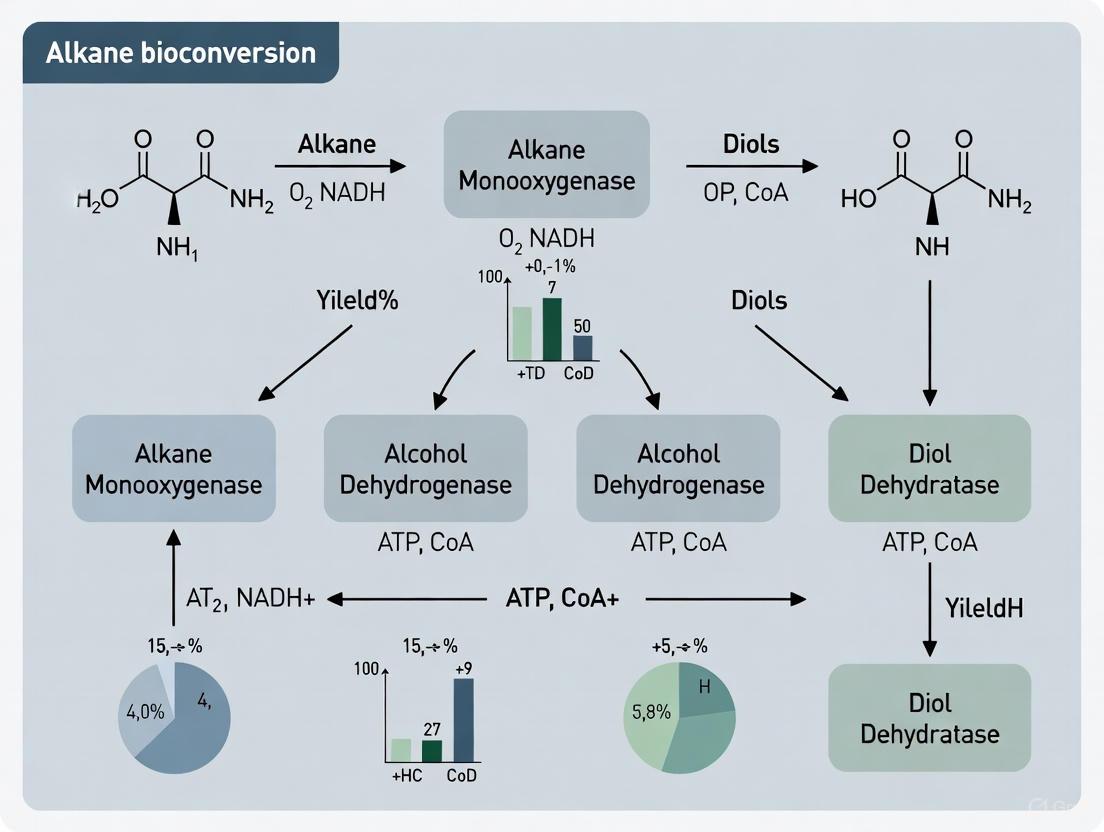
This article explores the cutting-edge metabolic engineering strategies enabling the microbial conversion of alkanes into valuable diols, key building blocks for polymers and pharmaceuticals.
Metabolic Engineering for Alkane to Diol Bioconversion: Pathways, Hosts, and Future Bioproduction
Abstract
This article explores the cutting-edge metabolic engineering strategies enabling the microbial conversion of alkanes into valuable diols, key building blocks for polymers and pharmaceuticals. Tailored for researchers and scientists, it provides a comprehensive analysis spanning foundational principles, advanced CRISPR and pathway engineering methodologies, common troubleshooting challenges, and a comparative evaluation of microbial production hosts. The scope includes recent breakthroughs in yeast and bacterial engineering, platform technologies like polyketide synthases, and future directions for advancing sustainable biomanufacturing.
From Hydrocarbons to Diols: Foundational Pathways and Host Organisms
The Chemical Value of Medium- and Long-Chain α,ω-Diols
Medium- and long-chain α,ω-diols (mcl- and lcl-diols) are aliphatic compounds containing hydroxyl groups at both terminal carbon atoms. These valuable chemical building blocks traditionally derive from fossil-based industrial processes but are increasingly produced via sustainable microbial biosynthesis [1]. The global market for key diols like 1,6-hexanediol is substantial and growing, with an expected value of $1401 million by 2025 and annual growth trends of approximately 8% [1] [2]. This application note details their chemical value, production metrics, and experimental protocols within the context of alkane bioconversion and metabolic engineering research.
Applications and Chemical Value
α,ω-Diols serve as versatile precursors and intermediates across multiple industries. Their value stems from their bifunctional nature, which enables polymerization and chemical modification.
Table 1: Industrial Applications of Medium- and Long-Chain α,ω-Diols
| Application Sector | Specific Uses | Relevant Diol Chain Lengths |
|---|---|---|
| Polymers & Materials | Monomers for polyesters (e.g., PBT) and polyurethanes; building blocks for specialty chemicals [1] [3] [2]. | C6-C12 (medium-chain); >C12 (long-chain) |
| Surfactants & Cosmetics | Ingredients in cosmetics, pharmaceuticals; moisturizers, solubilizers, preservative boosters [4] [2]. | C3-C5 (branched-chain); C6-C12 |
| Specialty Chemicals | Solvents, lubricants, feed additives [4] [5]. | C3-C12 |
Branched-chain diols such as isopentyldiol (IPDO) are particularly appealing for cosmetics due to superior skin feeling, deodorization, and antibacterial properties [4] [6].
Quantitative Production Metrics in Microbial Systems
Significant progress has been made in engineering microbial platforms for diol production. Performance varies considerably based on chassis organism, substrate, and pathway engineering.
Table 2: Production Metrics for Microbial α,ω-Diols
| Chassis Organism | Substrate | Product | Titer | Productivity | Key Engineering Strategy | Citation |
|---|---|---|---|---|---|---|
| E. coli | Glucose | 1,4-BDO | 18 g/L | - | Well-established, concise biosynthetic pathway from TCA cycle intermediates [3]. | |
| E. coli | 1,12-diacid | 1,12-dodecanediol | 68 g/L | 1.42 g/(L·h) | Expression of carboxylic acid reductase (CAR) and phosphopantetheinyl transferase [7]. | |
| Yarrowia lipolytica (YALI17) | n-Dodecane | 1,12-dodecanediol | 3.2 mM (~0.65 g/L) | - | Systematic knockout of oxidation pathway genes (ADH, FALDH) and overexpression of Alk1 [3]. | |
| E. coli | Glucose | C3-C5 Branched Diols (e.g., IPDO) | - | - | Novel pathway combining oxidative and reductive formation of OH-groups from amino acids [4] [6]. |
Experimental Protocols for Diol Production
Protocol 1: De Novo Production of 1,12-Dodecanediol from Alkanes inYarrowia lipolytica
This protocol details the metabolic engineering and biotransformation process for producing 1,12-dodecanediol from n-dodecane, resulting in a 14- to 29-fold increase in titer [3].
Strain Engineering via CRISPR-Cas9
Objective: Block competing over-oxidation pathways to prevent conversion of diol intermediates to carboxylic acids.
- Knockout Genes: Target 10 genes involved in fatty alcohol oxidation (
FADH,ADH1-8,FAO1) and 4 fatty aldehyde dehydrogenase genes (FALDH1-4) [3]. - Tool: CRISPR-Cas9 system for Y. lipolytica.
- Procedure:
- Design sgRNAs with high specificity to target gene sequences.
- Construct a repression vector harboring Cas9 and multiple sgRNA scaffolds.
- Transform the Y. lipolytica Po1g ku70Δ strain.
- Validate gene knockouts via sequencing and phenotypic screening.
Enhancing Alkane Hydroxylation
Objective: Increase flux from alkane to fatty alcohol.
- Overexpression: Introduce the alkane hydroxylase gene
ALK1into the engineered base strain (e.g., YALI17) [3]. - Procedure:
- Clone the
ALK1gene into an appropriate expression vector. - Transform the engineered Y. lipolytica strain.
- Select positive clones and confirm
ALK1expression.
- Clone the
Biotransformation and Fed-Batch Fermentation
Materials:
- Strain: Engineered Y. lipolytica (e.g., YALI17 with
ALK1overexpression). - Media: YPD (20 g/L glucose, 20 g/L peptone, 10 g/L yeast extract, pH 6.5) for pre-culture. Synthetic complete medium without leucine for selection.
- Substrate: 50 mM n-dodecane.
- Bioreactor: 5 L or 50 L system with pH and temperature control.
Procedure:
- Pre-culture: Inoculate a single colony into 20 mL YPD medium. Incubate at 28-30°C with shaking for 48 hours.
- Scale-up: Transfer pre-culture to a larger volume (e.g., 20 mL in a 100 mL flask) of the same medium. Incubate for another 48 hours.
- Bioreactor Fermentation:
- Use a defined medium with controlled pH (optimized to achieve 3.2 mM 1,12-dodecanediol) [3].
- Add 50 mM n-dodecane as the main substrate.
- Maintain optimal dissolved oxygen levels.
- Monitor cell growth and product formation over time.
- Product Extraction & Analysis:
- Centrifuge culture samples to separate cells and supernatant.
- Extract products from the supernatant using an organic solvent (e.g., ethyl acetate).
- Analyze diol concentration using Gas Chromatography-Mass Spectrometry (GC-MS) or High-Performance Liquid Chromatography (HPLC).
Protocol 2: Biosynthesis of Branched-Chain Diols from Glucose inE. coli
This protocol describes a general platform for producing structurally diverse C3-C5 diols by expanding amino acid metabolism, demonstrating a novel pathway that combines oxidative and reductive formation of hydroxyl groups [4] [6].
Pathway Design and Plasmid Construction
Objective: Construct a four-step pathway from amino acids to diols.
- Enzymatic Steps:
- Amino Acid Hydroxylase: Oxidative hydroxylation of an amino acid (e.g., L-isoleucine) to form a hydroxyl amino acid. Uses α-ketoglutarate (KG) and O₂ as co-substrates [4] [6].
- L-Amino Acid Deaminase: Deamination of the hydroxyl amino acid to form a hydroxyl α-keto acid.
- α-Keto Acid Decarboxylase: Decarboxylation of the hydroxyl α-keto acid to form a hydroxyl aldehyde.
- Aldehyde Reductase: Reduction of the hydroxyl aldehyde to form the final diol (e.g., IPDO).
Procedure:
- Select appropriate enzymes (e.g., hydroxylase MFL from Methylobacillus flagellatus KT for branched-chain amino acids) [6].
- Codon-optimize genes for expression in E. coli.
- Clone genes into compatible expression plasmids under inducible promoters (e.g., T7 or pBAD).
Strain Cultivation and Diol Production
Materials:
- Strain: Engineered E. coli (e.g., K-12 or BW25113) harboring the diol biosynthetic pathway.
- Media: LB or M9 minimal medium with appropriate antibiotics.
- Inducer: Isopropyl β-d-1-thiogalactopyranoside (IPTG) or arabinose, depending on the promoter system.
- Carbon Source: Glucose.
Procedure:
- Strain Cultivation: Grow the engineered E. coli strain in a shake flask or bioreactor with the required carbon source (e.g., glucose) [4].
- Pathway Induction: Add inducer during the mid-exponential growth phase (OD600 ≈ 0.6-0.8) to trigger the expression of the heterologous pathway.
- Process Monitoring: Maintain culture for 24-72 hours post-induction, monitoring cell density and substrate consumption.
- Product Analysis:
- Harvest cells by centrifugation.
- Analyze the culture supernatant for diol production using GC-MS or HPLC. Ten different C3–C5 diols have been successfully synthesized via this route [4].
Pathway Visualization and Metabolic Engineering Logic
The microbial production of α,ω-diols from alkanes involves sequential oxidation and protection against over-oxidation. The following diagram illustrates the core metabolic engineering strategy in Yarrowia lipolytica:
Alkane to Diol Bioconversion Pathway
The Scientist's Toolkit: Key Research Reagent Solutions
Table 3: Essential Reagents for Diol Metabolic Engineering Research
| Reagent / Material | Function / Application | Example Use Case |
|---|---|---|
| CRISPR-Cas9 System | Targeted gene knockout in non-model yeasts. | Knocking out ADH and FALDH genes in Y. lipolytica [3]. |
| Alkane Hydroxylase (ALK) | Catalyzes the initial oxidation of alkanes to primary alcohols. | Overexpression of ALK1 in Y. lipolytica to enhance flux from n-dodecane [3]. |
| Carboxylic Acid Reductase (CAR) | Reduces carboxylic acids to aldehydes. | Conversion of 1,12-dodecanedioic acid to 1,12-dodecanediol in E. coli [7]. |
| Amino Acid Hydroxylases | Introduces a hydroxyl group via oxidation of amino acids. | Biosynthesis of branched-chain diols (e.g., IPDO) from amino acids in E. coli [4] [6]. |
| L-Amino Acid Deaminase | Converts L-amino acids to α-keto acids. | Second step in the amino acid-derived diol pathway [4]. |
| α-Keto Acid Decarboxylase | Decarboxylates α-keto acids to aldehydes. | Third step in the amino acid-derived diol pathway [4]. |
| Aldehyde Reductase | Reduces aldehydes to alcohols. | Final step in diol biosynthesis pathways [4] [5]. |
Concluding Remarks
Microbial production of medium- and long-chain α,ω-diols presents a sustainable and economically viable alternative to petrochemical processes. The integration of advanced metabolic engineering strategies—including CRISPR-Cas9, pathway optimization, and the use of robust chassis like Y. lipolytica and P. putida—is key to overcoming challenges such as product toxicity and low titers [1] [3] [2]. Future efforts leveraging synthetic biology, adaptive laboratory evolution, and AI-driven enzyme design are poised to further enhance pathway efficiency and accelerate the commercialization of bio-based diols [1].
Alkane hydroxylases are pivotal biocatalysts that perform the initial and rate-limiting step of alkane activation, inserting a single oxygen atom to convert inert alkanes into primary alcohols. This process transforms abundant hydrocarbon feedstocks into valuable chiral chemicals and polymer precursors, serving as the foundational gateway for downstream bioconversion into high-value products like medium-chain α,ω-diols [3] [8]. These enzymes, including integral membrane di-iron monooxygenases (AlkB) and cytochrome P450 systems, exhibit remarkable regio- and enantioselectivity under mild conditions, a significant advantage over harsh chemical oxidation methods [3] [9]. Their function is critical for sustainable biomanufacturing, enabling the production of biodegradable polyesters and polyurethanes from renewable and waste hydrocarbon resources [3] [6]. This document details the application and characterization of these gatekeeper enzymes within metabolic engineering workflows aimed at diol synthesis.
Performance Metrics of Engineered Alkane Hydroxylase Systems
The efficiency of alkane bioconversion is highly dependent on the host organism, the specific hydroxylase employed, and the metabolic engineering strategy. The table below summarizes recent performance data for diol production from alkanes in various microbial platforms.
Table 1: Performance of microbial platforms for diol production from alkanes
| Host Organism | Engineering Strategy | Key Enzyme(s) | Substrate | Product | Titer | Citation |
|---|---|---|---|---|---|---|
| Yarrowia lipolytica YALI17 | CRISPR-Cas9 knockout of 14 oxidation pathway genes; ALK1 overexpression | Alk1 (CYP52 P450) | n-Dodecane | 1,12-Dodecanediol | 3.2 mM | [3] |
| Methylosinus trichosporium OB3b | Overexpression of epoxide hydrolase (CcEH) | pMMO/sMMO, CcEH | 1-Propene | (R)-1,2-Propanediol | 251.5 mg/L | [10] |
| Escherichia coli | General oxidative/reductive pathway from amino acids | Amino acid hydroxylase, Decarboxylase, Reductase | Glucose | 10 different C3-C5 diols (e.g., IPDO) | Not Specified | [6] |
| Pseudomonas aeruginosa ATCC 33988 | Native system; analysis of gene expression | AlkB1, AlkB2 | Jet fuel (C8-C16) | Fatty Acids (via alcohols) | Growth studies | [11] |
Different alkane hydroxylases possess distinct and sometimes overlapping substrate ranges, which is a critical consideration for pathway design. The following table outlines the substrate specificity of various characterized alkane hydroxylases.
Table 2: Substrate specificity range of different alkane hydroxylases
| Enzyme / System | Source Organism | Reported Substrate Range (Chain Length) | Citation |
|---|---|---|---|
| AlkB | Pseudomonas putida GPo1 | C5 - C12 | [9] |
| AlkM | Acinetobacter sp. ADP1 | C12 - C16 | [9] |
| CYP52 Family | Yarrowia lipolytica | Broad range (C10-C16) | [3] |
| AlkB1 | Pseudomonas aeruginosa ATCC 33988 | C12 - C16 | [11] |
| AlkB2 | Pseudomonas aeruginosa ATCC 33988 | C8 - C16 | [11] |
| LadA | Geobacillus thermodenitrificans | C15 - C36 | [12] |
| AlmA | Acinetobacter sp. | > C32 | [12] |
Application Notes & Experimental Protocols
Protocol 1: Engineering Y. lipolytica for 1,12-Dodecanediol Production
This protocol details the metabolic engineering of Yarrowia lipolytica to minimize over-oxidation and maximize the flux from n-dodecane to 1,12-dodecanediol [3] [13].
Principle
The native metabolism of Y. lipolytica efficiently oxidizes alkanes to fatty acids via alcohols and aldehydes, preventing diol accumulation. This workflow uses CRISPR-Cas9 to systematically delete genes encoding fatty alcohol oxidase and fatty aldehyde dehydrogenases, thereby blocking the over-oxidation pathway. Concurrently, the native alkane hydroxylase ALK1 is overexpressed to enhance the initial hydroxylation step [3].
Workflow Diagram
Step-by-Step Procedure
Strain Construction
- Knockout of Over-oxidation Genes: Using a CRISPR-Cas9 system for Y. lipolytica (e.g., plasmid pCRISPRyl), sequentially delete the following gene families from the parental Po1g ku70Δ strain [3] [13]:
- Fatty aldehyde dehydrogenases:
FALDH1,FALDH2,FALDH3,FALDH4. - Fatty alcohol oxidase:
FAO1. - Alcohol dehydrogenases:
FADHandADH1throughADH8.
- Fatty aldehyde dehydrogenases:
- This process generates the base engineered strain YALI17 [3].
- Alkane Hydroxylase Overexpression: Clone the ALK1 gene (or other CYP52 genes) into a Y. lipolytica expression vector (e.g., pYl) under a strong constitutive promoter. Transform the construct into the YALI17 strain [13].
- Knockout of Over-oxidation Genes: Using a CRISPR-Cas9 system for Y. lipolytica (e.g., plasmid pCRISPRyl), sequentially delete the following gene families from the parental Po1g ku70Δ strain [3] [13]:
Fermentation and Biotransformation
- Pre-culture: Grow the engineered strain in YPD medium (20 g/L glucose, 20 g/L peptone, 10 g/L yeast extract, pH 6.5) for 2 days [3].
- Production Culture: Scale up the culture in a controlled bioreactor. Use a defined mineral medium with n-dodecane (50 mM) as the sole carbon source. Maintain a controlled pH (optimized to ~6.5) and temperature (28-30°C) [3].
- Monitoring: Sample the culture periodically to monitor cell density and product formation.
Analytical Methods
- Diol Quantification: Analyze culture supernatants using High-Performance Liquid Chromatography (HPLC) or Gas Chromatography-Mass Spectrometry (GC-MS). Compare retention times and mass spectra with authentic 1,12-dodecanediol standards [3] [12].
- Alkane Consumption: Monitor n-dodecane depletion using GC-MS [12].
Protocol 2: Functional Analysis of Alkane Hydroxylase Substrate Range
This protocol describes a heterologous complementation assay to determine the substrate specificity of novel or engineered alkane hydroxylase genes [9].
Principle
The assay involves expressing a candidate alkB gene in a host strain that possesses the necessary electron transfer proteins (rubredoxin and rubredoxin reductase) but lacks a functional native hydroxylase. The host's ability to grow on alkanes of different chain lengths as the sole carbon source is restored only if the introduced AlkB hydroxylates those specific alkanes [9].
Workflow Diagram
Step-by-Step Procedure
Host and Vector Preparation
- Select a Suitable Host: Use engineered host strains such as E. coli GEc137 or P. putida GPo12 (pGEc47ΔB). These strains contain the alkG (rubredoxin) and alkT (reductase) genes but lack a functional alkB [9].
- Clone the Target Gene: Clone the candidate alkane hydroxylase gene into a compatible expression vector and transform it into the selected host strain. An empty vector serves as a negative control.
Growth Assay
- Plate Preparation: Plate transformed cells on minimal mineral salts medium (e.g., E2 medium) containing no carbon source [9].
- Substrate Provision: Provide n-alkanes of different chain lengths (e.g., C8, C10, C12, C14, C16) as the sole carbon source. For volatile alkanes (C6-C10), place an open container with the alkane inside a sealed container with the plates. For less volatile alkanes (C12+), apply the alkane to a sterile filter disk placed in the lid of the petri dish [9].
- For solid alkanes (C20+), dissolve in a carrier like dioctylphthalate before adding to the medium [9].
- Incubation and Analysis: Incubate plates at 30°C for 3-7 days. Observe and score growth compared to the negative control. Robust growth indicates that the AlkB hydroxylase can convert that specific alkane, allowing it to be used as a carbon source.
Protocol 3: Purification of Native AlkB using Liposome Reconstitution
This protocol describes a detergent-free method for partially purifying native, functional AlkB by reconstituting the native membrane of its host organism into liposomes [14].
Principle
Instead of using denaturing detergents, this novel strategy isolates the entire native membrane fraction of the microbe (e.g., Penicillium chrysogenum). The membrane fragments are then reformed into liposomes, which encapsulate AlkB in its native lipid environment, preserving its structure, cofactors, and activity [14].
Step-by-Step Procedure
Membrane Lysate Preparation
- Cell Culture and Harvest: Grow the AlkB-producing strain (e.g., P. chrysogenum SNP5) in a suitable medium with an alkane inducer like hexadecane. Harvest cells by centrifugation [14].
- Lysis and Clarification: Resuspend the cell pellet in lysis buffer (e.g., Tris-HCl with glycerol, PMSF) and disrupt cells using sonication. Remove cell debris and intact cells by low-speed centrifugation. Recover the membrane fraction containing AlkB by ultracentrifugation at high speed (e.g., 7826 g) [14].
Liposome Synthesis via Reverse-Phase Evaporation
- Lipid Extraction: Extract lipids from the membrane pellet using organic solvents like petroleum ether and diethyl ether [14].
- Formation of Water-in-Oil Emulsion: Dissolve the extracted lipids in an organic solvent (e.g., diethyl ether) and mix with the aqueous membrane lysate. Sonicate the mixture to form a stable water-in-oil emulsion [14].
- Liposome Formation: Slowly remove the organic solvent under reduced pressure using a rotary evaporator. This process leads to the formation of a lipid gel that subsequently hydrates and forms multilamellar liposomes encapsulating the AlkB enzyme [14].
- Purification: Separate the formed liposomes from non-encapsulated proteins by density gradient centrifugation.
Activity Assay
- Standard Reaction: Set up a reaction mixture containing the liposome preparation, reaction buffer (e.g., Tris-HCl, pH 7.5), NADH, and the alkane substrate (e.g., 1-bromooctane) [14].
- Measurement: Monitor the consumption of NADH by measuring the decrease in absorbance at 340 nm over time. One unit of AlkB activity is defined as the amount of enzyme required to oxidize 1 μmol of NADH per minute under specified conditions [14].
The Scientist's Toolkit: Essential Research Reagents
Table 3: Key reagents and strains for alkane hydroxylase and diol production research
| Reagent / Material | Function / Application | Example Sources / Strains |
|---|---|---|
| Specialized Microbial Hosts | Engineered chassis for pathway expression and bioconversion. | Yarrowia lipolytica Po1g ku70Δ [3]; E. coli GEc137 [9]; P. putida GPo12 [9] |
| CRISPR-Cas9 System for Y. lipolytica | Precision genome editing for knocking out competing pathways. | pCRISPRyl vector (Addgene #70007) [13] |
| Alkane Hydroxylase Genes | Key enzymes for the initial activation of alkanes. | ALK1-12 (CYP52) from Y. lipolytica [3]; alkB homologs from P. aeruginosa, A. borkumensis [9] |
| n-Alkane Substrates | Feedstocks for bioconversion; used to test substrate specificity. | n-Octane (C8) to n-Hexadecane (C16) and higher [12] [9] [11] |
| Rubredoxin (AlkG) & Reductase (AlkT) | Essential electron transfer partners for supporting AlkB activity in heterologous hosts. | Co-expressed from the P. putida GPo1 OCT plasmid or similar systems [9] [8] |
| Analytical Standards | Quantification and identification of reaction products. | 1,12-Dodecanediol [3]; (R)-1,2-Propanediol [10]; other diol isomers |
Visualization of the AlkB Enzyme Complex Mechanism
Recent structural insights, particularly from cryo-EM studies of the Fontimonas thermophila AlkB-AlkG fusion complex, have elucidated the molecular mechanism of substrate binding and electron transfer [8].
The diagram illustrates the coordinated mechanism: the alkane substrate (e.g., dodecane, D12) enters AlkB's hydrophobic channel from the lipid bilayer, stabilizing at the di-iron active site. Molecular dynamics simulations show this binding allosterically strengthens the interaction between AlkB and its electron transfer partner, rubredoxin (AlkG), enhancing the efficiency of electron flow from NADH (via AlkT and AlkG) to activate oxygen and catalyze terminal hydroxylation [8]. Key hydrophobic residues (e.g., L263, L264, I267) line the substrate channel and facilitate translocation [8].
In the pursuit of sustainable chemical production, microbial biosynthesis of diols presents a promising alternative to petroleum-based refineries. A critical strategic decision in this field lies in the choice of microbial chassis, pivoting on the fundamental comparison between native and engineered production capabilities. Some microorganisms possess innate metabolic pathways to produce specific diols, while advanced metabolic engineering can equip non-native hosts with entirely new biosynthetic capacities. This application note, framed within broader research on alkane bioconversion to diols, provides a structured comparison of native versus engineered diol production across various microbial hosts. It summarizes key quantitative data and delivers detailed experimental protocols to guide researchers and scientists in selecting and optimizing microbial platforms for efficient diol biosynthesis.
Performance Comparison: Native vs. Engineered Hosts
The table below summarizes the reported production of various diols, highlighting the chassis, its native or engineered status, and key performance metrics.
Table 1: Diol Production in Native and Engineered Microbial Hosts
| Diol Product | Microbial Host | Production Status | Carbon Source | Titer | Yield | Citation |
|---|---|---|---|---|---|---|
| 4-methylpentane-2,3-diol | Escherichia coli | Engineered | Glucose | 15.3 g/L (129.8 mM) | 72% (theoretical) | [15] |
| 1,12-dodecanediol | Yarrowia lipolytica (YALI17) | Engineered | n-Dodecane | 3.2 mM | 29-fold increase over wild type | [13] [3] |
| 1,12-dodecanediol | Yarrowia lipolytica (Wild Type) | Native | n-Dodecane | 0.05 mM | Not Reported | [13] [3] |
| 1,6-hexanediol | E. coli & P. putida (Co-culture) | Engineered | n-Hexane | 5 mM | 61.5x one-stage process | [16] |
| (R)-1,2-propanediol | Methylosinus trichosporium OB3b | Engineered | 1-Propene | 251.5 mg/L | Not Reported | [10] |
| 2,3-butanediol (2,3-BDO) | Various (e.g., K. pneumoniae) | Native | Glucose | Not Specified | Not Specified | [5] |
| 1,4-butanediol (1,4-BDO) | Escherichia coli | Engineered | Glucose | 18 g/L | Not Specified | [5] |
Experimental Protocols for Key Engineering Strategies
Protocol 1: Engineering anE. coliPlatform for Branched-Chain β,γ-Diols
This protocol details the creation of an E. coli chassis for de novo production of branched-chain diols from glucose, achieving high-tier production of 4-methylpentane-2,3-diol [15].
- 1. Principle: A recursive carboligation cycle is established in E. coli by integrating the branched-chain amino acid (BCAA) metabolism with a promiscuous acetohydroxyacid synthase (AHAS). The AHAS catalyzes the condensation of branched-chain aldehydes with pyruvate to form α-hydroxyketones, which are subsequently reduced by aldo-keto reductases (AKRs) to yield the target β,γ-diols [15].
- 2. Key Reagents and Strains:
- Host Strain: Escherichia coli chassis (e.g., BL21 or other suitable production strain).
- Plasmids: Expression vectors for genes of the biosynthetic pathway.
- Enzymes: Acetohydroxyacid synthase from Saccharomyces cerevisiae (Ilv2c, truncated) [15].
- Media: Minimal media with glucose as the primary carbon source.
- 3. Procedure:
- Pathway Design: Construct a biosynthetic pathway that links the BCAA metabolism to diol production. The pathway should start from pyruvate and involve enzymes for aldehyde generation, carboligation, and final reduction.
- Gene Expression: Express the following key elements in the E. coli host:
- Genes for the BCAA pathway to generate branched-chain aldehydes.
- The gene for Ilv2c to catalyze the condensation of aldehydes with pyruvate.
- Genes for aldo-keto reductases (AKRs) or secondary alcohol dehydrogenases (sADHs) to reduce α-hydroxyketones to diols.
- Systematic Optimization: Optimize the BCAA pathway flux by modulating gene expression levels, knocking out competing pathways, and enhancing cofactor supply.
- Fed-Batch Fermentation: Scale up production using fed-batch fermentation conditions. Monitor glucose consumption and product formation over time (e.g., up to 144 hours) [15].
- 4. Analysis: Quantify diol production using methods such as GC-MS or HPLC. Calculate the titer, yield, and specificity of the target diol.
The following diagram illustrates the core metabolic pathway engineered into E. coli for the production of branched-chain β,γ-diols.
(core pathway for branched-chain diol production in e. coli)
Protocol 2: Metabolic Engineering ofY. lipolyticafor α,ω-Diols from Alkanes
This protocol describes the enhancement of Y. lipolytica for the production of medium- to long-chain α,ω-diols directly from alkanes, such as n-dodecane, by blocking competing oxidation pathways [13] [3].
- 1. Principle: The oleaginous yeast Yarrowia lipolytica naturally metabolizes hydrophobic substrates like alkanes but possesses efficient oxidation pathways that convert alcohol intermediates to fatty acids, limiting diol accumulation. This strategy uses CRISPR-Cas9 to delete genes responsible for this over-oxidation, thereby redirecting flux toward diol production [13] [3].
- 2. Key Reagents and Strains:
- Host Strain: Yarrowia lipolytica Po1g.
- Plasmids: pCRISPRyl vector or similar for CRISPR-Cas9 genome editing in Y. lipolytica [13].
- Media: YPD or synthetic complete medium for routine growth; n-dodecane as a substrate in production phase.
- 3. Procedure:
- Strain Engineering (Gene Deletions):
- Pathway Enhancement (Gene Overexpression):
- To enhance the primary hydroxylation step, overexpress an alkane hydroxylase gene (e.g., ALK1) in the engineered base strain [13].
- Fermentation:
- Cultivate the engineered strain in a bioreactor under pH-controlled conditions.
- Use n-dodecane (e.g., 50 mM) as the primary substrate for biotransformation.
- Monitor diol production over the course of the fermentation.
- 4. Analysis: Quantify 1,12-dodecanediol production using analytical methods like GC or HPLC. Compare the titer with the wild-type strain to calculate the fold improvement.
The workflow below outlines the key steps in engineering Y. lipolytica for enhanced diol production from alkanes.
(engineering workflow for y. lipolytica diol production)
The Scientist's Toolkit: Research Reagent Solutions
Table 2: Key Reagents for Microbial Diol Production
| Reagent / Solution | Function / Application | Example & Notes |
|---|---|---|
| pCRISPRyl Vector | CRISPR-Cas9 genome editing in Yarrowia lipolytica [13]. | Enables precise deletion of multiple genes, such as those in fatty alcohol oxidation pathways. |
| Acetohydroxyacid Synthase (AHAS) | Catalyzes C-C bond formation between aldehydes and pyruvate [15]. | Truncated Ilv2c from S. cerevisiae shows high activity for branched-chain aldehydes. |
| Aldo-Keto Reductases (AKRs) | Reduces α-hydroxyketones to form diols [15]. | Used in the final step of the β,γ-diol biosynthetic pathway in E. coli. |
| Cytochrome P450 Monooxygenase | Hydroxylation of alkanes to primary alcohols [13] [3]. | ALK1 from Y. lipolytica is a key enzyme for initiating alkane conversion. |
| Terminal Thioreductase (TR) | Terminates polyketide chains by reductive cleavage to produce aldehydes [17]. | Found in PKS platforms; produces aldehyde intermediates for diol, amino alcohol, and acid production. |
| Epoxide Hydrolase (EH) | Converts epoxides to vicinal diols [10]. | Used in methanotrophs for chiral diol production (e.g., from Caulobacter crescentus). |
The comparative data and protocols presented herein clearly demonstrate that while native producers offer a starting point, strategic metabolic engineering is pivotal for unlocking high-efficiency, scalable diol production. The choice between chassis, such as the versatile E. coli for defined pathway engineering or the inherently robust Y. lipolytica for alkane conversion, depends on the target diol's structure and the desired feedstock. Future advancements will likely involve integrating these strategies with systems metabolic engineering and AI-driven design to further enhance titers, yields, and productivity, fully realizing the potential of microbial cell factories for sustainable diol production.
In the metabolic engineering of microorganisms for alkane bioconversion, over-oxidation represents a critical bottleneck that severely limits the yield of target products, including valuable diols. This process involves the unintended further oxidation of intermediate compounds, diverting metabolic flux away from the desired pathway and reducing overall process efficiency. In native metabolic pathways, endogenous microbial enzymes actively compete for aldehyde intermediates, rapidly converting them to fatty alcohols or carboxylic acids instead of allowing their channeling toward diol synthesis [18] [19]. This challenge is particularly pronounced in engineered E. coli systems, where multiple endogenous aldehyde reductases exhibit high activity toward fatty aldehydes, significantly limiting the substrate pool available for the production of alkanes and subsequently diols [18]. Overcoming this bottleneck requires sophisticated metabolic engineering strategies, including the deletion of competing enzymes, fine-tuning of pathway expression, and implementation of novel pathways to bypass native metabolic constraints.
Quantitative Analysis of Pathway Bottlenecks and Engineering Solutions
Table 1: Key Enzymes Contributing to Over-oxidation in Alkane Bioconversion Pathways
| Enzyme | Source Organism | Function | Effect on Pathway | Kinetic Parameters (if available) |
|---|---|---|---|---|
| Aldehyde reductase (YqhD) | E. coli (native) | Converts fatty aldehydes to fatty alcohols | Competes with ADO for aldehydes, reduces alkane yield [18] | Not specified |
| Alkane mono-oxygenase (AlkB) | Pseudomonas putida GPo1 | Oxidizes alkanes to 1-alkanols | Can overoxidize to carboxylic acids, bypassing alcohol dehydrogenase [19] | Not specified |
| Aldehyde dehydrogenase (AlkH) | Pseudomonas putida GPo1 | Oxidizes aldehydes to carboxylic acids | Contributes to overoxidation of alcohols to acids [19] | Not specified |
| Acyl-CoA synthetase (AlkK) | Pseudomonas putida GPo1 | Activates fatty acids to acyl-CoAs | Channels products toward β-oxidation, away from diol production [19] | Not specified |
| Alcohol dehydrogenase (PsADH) | Pantoea sp. 7-4 | Oxidizes 1-tetradecanol to tetradecanal | Can help recycle alcohol by-products back toward alkanes [18] | kcat/Km (oxidation): 171 s⁻¹·mM⁻¹; kcat/Km (reduction): 586 s⁻¹·mM⁻¹ |
Table 2: Impact of Gene Deletion on Over-oxidation Byproducts
| Genetic Modification | Substrate | Result | Implication for Diol Production |
|---|---|---|---|
| Deletion of yqhD (aldehyde reductase) | Fatty aldehydes | ~2-fold increase in alkane titer [18] | Increases aldehyde availability for diol pathways |
| Removal of alkH and alkK from alk operon | n-dodecane | Aldehyde proportion increased from 2% to 10% of oxidized products; carboxylic acids still dominant (77%) [19] | Suggests AlkB may directly produce acids; complete elimination challenging |
| Deletion of 13 aldehyde reductase genes in E. coli | Fatty aldehydes | 90% reduction in endogenous alcohol accumulation [18] | Significant but incomplete reduction in competing reactions |
Experimental Protocols for Studying and Overcoming Over-oxidation
Protocol: Assessing Over-oxidation in Alkane Bioconversion Systems
Purpose: To quantify over-oxidation products and identify key enzymatic bottlenecks in alkane-to-diol conversion pathways.
Materials:
- Engineered E. coli strains expressing alkane oxidation genes
- Minimal medium with appropriate carbon sources
- Alkane substrates (C8-C16)
- GC-MS system for product quantification
- Protein purification system for enzyme characterization
Procedure:
- Cultivate engineered E. coli strains in controlled bioreactors (37°C, pH 7.0) with alkane substrates [19].
- Sample culture broth at regular intervals over 20 hours.
- Extract metabolites using ethyl acetate or other appropriate solvents.
- Analyze extracts by GC-MS to quantify alkane, alcohol, aldehyde, and acid concentrations.
- Calculate specific yields (g product/g dry cell weight) and product distributions.
- Compare product profiles between strains with and without competing enzymes (e.g., ΔalkH, ΔalkK).
- For enzyme-level analysis, purify relevant enzymes and determine kinetic parameters (Km, kcat) for oxidation and reduction reactions [18].
Expected Outcomes: This protocol enables quantification of over-oxidation byproducts and identification of the major enzymatic steps responsible for product loss. The data obtained can guide targeted metabolic engineering interventions.
Protocol: Implementing a Transporter-Enhanced Bioconversion System
Purpose: To overcome substrate uptake limitations that exacerbate over-oxidation issues by ensuring efficient alkane delivery to engineered pathways.
Materials:
- E. coli strains expressing alkane hydroxylase complex (AlkB,F,G,T)
- Plasmids with and without alkL gene
- n-dodecane or other alkane substrates
- Controlled-expression vector for toxic transporters
Procedure:
- Transform E. coli with plasmids containing the minimal alkane oxidation genes (alkB,F,G,T) with and without the alkL transporter gene [19].
- Cultivate strains in appropriate media with inducers for controlled gene expression.
- Incubate with C8-C16 alkane substrates for 20 hours.
- Extract and quantify intracellular alkanes and oxidation products.
- Compare oxidation rates and product profiles between strains with and without AlkL.
- For toxic transporters like AlkL, use controlled induction to balance expression and host fitness.
Expected Outcomes: Strains expressing AlkL should show significantly enhanced uptake of >C12 alkanes and improved oxidation product yields (up to 100-fold improvement reported) [19].
Visualization of Metabolic Bottlenecks and Engineering Solutions
Diagram 1: Metabolic bottlenecks and solutions in alkane to diol conversion.
Diagram 2: Systematic workflow to overcome over-oxidation bottlenecks.
The Scientist's Toolkit: Key Research Reagent Solutions
Table 3: Essential Research Reagents for Studying Over-oxidation
| Reagent/Component | Function in Research | Application Example |
|---|---|---|
| AlkL transporter protein | Enhances uptake of C7-C16 n-alkanes | Improved intracellular alkane availability for oxidation; increased specific yields up to 100-fold for >C12 alkanes [19] |
| PsADH (Alcohol dehydrogenase from Pantoea sp. 7-4) | Oxidizes 1-tetradecanol to tetradecanal | Recycles alcohol byproducts back to aldehydes for alkane production; enables alcohol-to-alkane pathway [18] |
| Aldehyde-deformylating oxygenase (ADO) | Converts fatty aldehydes to alkanes | Key enzyme in alkane production pathway; requires aldehyde substrates competed for by endogenous reductases [18] |
| Controlled-expression vectors | Regulates expression of toxic genes | Enables balanced expression of toxic components like AlkL; 10-fold improvement in oxidation yields reported [19] |
| Alkane hydroxylase complex (AlkB,G,T) | Oxidizes alkanes to 1-alkanols | Initial oxidation step in alkane degradation; potential source of over-oxidation to acids [19] |
| Gas Chromatography-Mass Spectrometry (GC-MS) | Quantifies metabolic intermediates | Essential for analyzing alkane, alcohol, aldehyde, and acid concentrations in engineered strains [18] |
Advanced Engineering Strategies: CRISPR, Pathway Design, and Platform Technologies
CRISPR-Cas9 Mediated Genome Editing for Blocking Competing Pathways
In metabolic engineering, the high-flux conversion of substrates into desired products is often hindered by native metabolic pathways that compete for precursors and energy. CRISPR-Cas9 genome editing provides a powerful, precise method for disrupting these competing pathways, thereby redirecting metabolic flux toward the target product. Within the context of alkane bioconversion to diols, this approach is particularly valuable. The oleaginous yeast Yarrowia lipolytica naturally possesses efficient enzymes for alkane oxidation but also contains multiple pathways that over-oxidize valuable alcohol and aldehyde intermediates into fatty acids, thereby reducing diol yields [3]. This application note details protocols for using CRISPR-Cas9 to systematically block these competing oxidation pathways, enabling the efficient production of medium- to long-chain α,ω-diols from alkane feedstocks.
Strain Engineering and Diol Production Enhancement
Systematic gene knockout of competing oxidative pathways in Yarrowia lipolytica leads to significant improvements in diol production. The following table summarizes the key genotypic modifications and their quantitative impact on 1,12-dodecanediol production from n-dodecane.
Table 1: Engineered Yarrowia lipolytica Strains and Diol Production Performance
| Strain | Genotype Description | Key Genetic Modifications | 1,12-Dodecanediol Production (mM) | Fold Increase vs. Wild Type |
|---|---|---|---|---|
| Wild Type | Po1g ku70Δ | Parental strain | 0.05 [3] | 1x |
| YALI6 | β-oxidation + fatty aldehyde oxidation blocked | mfe1Δ faa1Δ faldh1-4Δ |
Data not provided [3] | - |
| YALI17 | β-oxidation + full alcohol & aldehyde oxidation blocked | mfe1Δ faa1Δ faldh1-4Δ fao1Δ fadhΔ adh1-8Δ [3] |
0.72 [3] | 14x |
| YALI17 + ALK1 | YALI17 with Alk1 monooxygenase overexpression | YALI17 background + ALK1 overexpression [3] |
1.45 [3] | 29x |
| YALI17 + ALK1 (pH-controlled) | YALI17 with ALK1 under optimized fermentation | Strain YALI17 + ALK1, controlled pH biotransformation [3] |
3.20 [3] | 64x |
Targeted Genes for Blocking Competing Pathways
The efficient synthesis of diols from alkanes requires blocking the over-oxidation of fatty alcohol and fatty aldehyde intermediates. The following table lists the primary gene targets in Y. lipolytica for this purpose.
Table 2: Key Gene Targets for Blocking Competing Oxidation Pathways in Y. lipolytica
| Target Category | Gene(s) | Gene Function | Effect of Deletion |
|---|---|---|---|
| Fatty Alcohol Oxidation | FADH |
Fatty alcohol dehydrogenase | Prevents oxidation of fatty alcohols to fatty aldehydes [3] |
ADH1-8 |
Multiple alcohol dehydrogenases | Reduces capacity for alcohol oxidation [3] | |
FAO1 |
Fatty alcohol oxidase | Blocks alternative oxidative route for alcohols [3] | |
| Fatty Aldehyde Oxidation | FALDH1-4 |
Fatty aldehyde dehydrogenases | Prevents oxidation of fatty aldehydes to fatty acids [3] |
| β-Oxidation | mfe1, faa1 |
Key β-oxidation pathway genes | Channels flux away from full degradation of fatty acids [3] |
Experimental Protocols
Protocol: Multiplexed sgRNA Vector Construction for Pathway Engineering
This protocol describes the construction of a CRISPR-Cas9 vector for simultaneous disruption of multiple genes within the fatty alcohol and aldehyde oxidation pathways [3].
1. sgRNA Design and Cloning
- Design: Select 20-base guide sequences targeting the open reading frames of
FADH,ADH1-8,FAO1, andFALDH1-4using online tools (e.g., CHOPCHOP). Ensure each sgRNA has minimal predicted off-target activity [20]. - Cloning: Clone sgRNA sequences into an expression plasmid containing a Cas9 nuclease and a selectable marker (e.g., puromycin resistance) for subsequent selection [20]. Multiple sgRNA scaffolds can be linked within a single vector [3].
2. hPSC Culture and Transfection (Illustrative Example)
- Cell Culture: Maintain and passage human pluripotent stem cells (hPSCs) in feeder-free conditions. Ensure cells are healthy and at an optimal density (e.g., 50-70% confluent) for transfection [20].
- Delivery: Transfect the constructed plasmid into hPSCs using an appropriate method (e.g., lipofection, electroporation). Include a marker gene (e.g., GFP) to assess transfection efficiency [20].
3. Isolation and Validation of Knockout Clones
- Selection: At 48 hours post-transfection, begin antibiotic selection (e.g., puromycin) to eliminate non-transfected cells. Continue selection for 5-7 days [20].
- Single-Cell Cloning: Isolate single-cell clones and expand them.
- Genomic DNA Extraction: Harvest cells from each clone and extract genomic DNA using a standard silica-column or salt-precipitation method [20].
- Genotype Validation: Perform PCR amplification of the targeted genomic regions and analyze products by Sanger sequencing to confirm the presence of indel mutations that disrupt gene function [20].
Protocol: Precision Genome Editing via RNP Electroporation with ssODN Donor
This protocol utilizes Cas9 Ribonucleoprotein (RNP) complexes for high-efficiency, precise editing with reduced off-target effects, suitable for introducing specific point mutations or small insertions [20].
1. In Vitro Formation of Cas9 RNP Complexes
- Complex Assembly: Combine purified Cas9 protein with synthetically produced, target-specific sgRNA in a molar ratio of 1:2 (Cas9:sgRNA). Incubate at 25°C for 10-30 minutes to form active RNP complexes [20] [21].
2. Design and Preparation of ssODN Repair Template
- Template Design: Synthesize a single-stranded oligodeoxynucleotide (ssODN) repair template. The template should be at least 60-100 nucleotides long, with the desired edit (e.g., a premature stop codon) flanked by homologous arms (30-50 bases each) complementary to the sequence surrounding the Cas9 cut site [20].
3. Co-delivery of RNP and ssODN via Electroporation
- Cell Preparation: Harvest and resuspend the target cells (e.g., hPSCs) in an electroporation buffer.
- Electroporation: Mix the cell suspension with the pre-formed RNP complexes and the ssODN repair template. Electroporate the mixture using a manufacturer-optimized program for the specific cell type [20].
4. Screening for Precise Edits
- Initial Screening: Use droplet digital PCR (ddPCR) or restriction fragment length polymorphism (RFLP) assays to rapidly screen a pool of edited cells for the presence of the desired edit [20].
- Clone Validation: Isolate single-cell clones and confirm the precise incorporation of the edit via Sanger sequencing of the targeted genomic locus [20].
Metabolic Pathway Engineering Strategy
The following diagram illustrates the competing metabolic pathways in Y. lipolytica and the strategic blocking of oxidation genes to enhance diol production from alkanes.
Experimental Workflow for Strain Development
This workflow outlines the key steps for creating and validating a high-diol-producing strain using CRISPR-Cas9.
The Scientist's Toolkit: Research Reagent Solutions
Table 3: Essential Reagents and Materials for CRISPR-Cas9 Pathway Engineering
| Reagent/Material | Function/Purpose | Example or Note |
|---|---|---|
| Cas9 Nuclease | RNA-guided endonuclease that creates double-strand breaks in target DNA [22]. | Can be delivered as plasmid DNA, mRNA, or purified protein (RNP) [20]. |
| sgRNA | Synthetic guide RNA that directs Cas9 to a specific genomic locus [20]. | Can be produced via in vitro transcription or purchased as synthetic RNA [20]. |
| Repair Template | DNA template for introducing specific edits via Homology-Directed Repair (HDR) [20]. | For small edits: single-stranded oligodeoxynucleotide (ssODN). For large inserts: double-stranded DNA plasmid [20]. |
| Delivery Vehicle | Method for introducing editing components into cells. | Includes electroporation, lipofection, or viral vectors (lentivirus, AAV) [20]. |
| Selection Marker | Allows for enrichment of successfully transfected/transduced cells. | Antibiotic resistance (e.g., Puromycin), fluorescent proteins (e.g., GFP) [20]. |
| Cell Culture Media | Supports the growth and maintenance of the target cell line. | Specific to the host organism (e.g., YPD for Y. lipolytica, specialized media for hPSCs) [3] [20]. |
Troubleshooting and Technical Notes
- Minimizing Off-Target Effects: Utilize computational tools for sgRNA design to predict and minimize off-target activity [23]. Employ high-fidelity Cas9 variants or RNP delivery, which has been shown to reduce off-target effects compared to plasmid-based delivery [20] [22].
- Optimizing HDR Efficiency: To enhance the efficiency of precise editing, consider using small molecule modulators of DNA repair pathways (e.g., RS-1 to promote HDR) or synchronizing cells to the S/G2 phases of the cell cycle where HDR is more active [22].
- Addressing Delivery Challenges: For difficult-to-transfect cell types, optimize electroporation parameters or test different viral vector systems. The use of lipid nanoparticles (LNPs) is also an emerging and promising delivery method, particularly for in vivo applications [24].
The selective functionalization of inert C-H bonds represents a significant challenge in synthetic chemistry. P450 monooxygenases and hydroxylases have emerged as powerful biocatalysts that perform this transformation with remarkable regio- and stereoselectivity under mild conditions [25] [26]. These enzymes are pivotal in the bioconversion of inexpensive alkane feedstocks into valuable diol precursors for polymers, pharmaceuticals, and fine chemicals [13] [3]. This Application Note details experimental protocols and engineering strategies for enhancing the activity of these enzyme systems within microbial hosts, specifically focusing on alkane bioconversion to diols—a key objective in metabolic engineering research.
Key Engineering Strategies and Performance Data
Table 1: Metabolic engineering strategies for enhanced diol production in microbial systems.
| Host Organism | Engineering Strategy | Key Enzymes Overexpressed | Substrate | Product | Titer | Fold Improvement |
|---|---|---|---|---|---|---|
| Yarrowia lipolytica (YALI17) | CRISPR-Cas9 knockout of 10 ADH and 4 FALDH genes; ALK1 overexpression [13] | Cytochrome P450 ALK1 (CYP52) | n-Dodecane | 1,12-Dodecanediol | 1.45 mM | 29-fold vs. WT [13] |
| Yarrowia lipolytica (YALI17, pH-controlled) | Combined pathway blocking and bioprocess optimization [13] | Cytochrome P450 ALK1 (CYP52) | n-Dodecanedioic acid | 1,12-Dodecanediol | 3.2 mM | 64-fold vs. WT [13] |
| Escherichia coli | General pathway combining oxidative and reductive OH-group formation [6] | Amino acid hydroxylases, decarboxylases, reductases | Glucose | 10 different C3-C5 diols (e.g., IPDO, 2-M-1,3-BDO) | N/A | 6 novel diols [6] |
| Methylosinus trichosporium OB3b | Overexpression of heterologous epoxide hydrolase [10] | Methane Monooxygenase (MMO), Epoxide Hydrolase (CcEH) | 1-Propene | (R)-1,2-Propanediol | 251.5 mg/L | N/A [10] |
| Saccharomyces cerevisiae | Microenvironment engineering: CPR co-expression, NADPH supply, ER expansion [27] | Cytochrome P450s for diterpenoid synthesis | Engineered for de novo production | 11,20-Dihydroxyferruginol | 67.69 mg/L | 42.1-fold vs. base strain [27] |
Essential Research Reagent Solutions
Table 2: Key reagents and materials for P450 and hydroxylase engineering experiments.
| Reagent/Material | Function/Application | Examples & Notes |
|---|---|---|
| pCRISPRyl Vector | CRISPR-Cas9 genome editing in Y. lipolytica [13] | Addgene #70007; used for multiplexed gene knockouts. |
| Alkane Hydroxylases (ALK1-12) | Primary oxidation of n-alkanes to alcohols [13] | CYP52 family P450s from Y. lipolytica; ALK1 particularly effective. |
| δ-Aminolevulinic acid (δ-ALA) | Heme precursor to enhance P450 expression [28] | Used at 0.1 mM in E. coli fermentations to boost P450 activity. |
| Heterologous Redox Partners (CPR) | Electron transfer to eukaryotic P450s [27] [28] | Co-expression of NADPH-Cytochrome P450 Reductase (CPR) is often essential. |
| NADPH Regeneration System | Sustains P450 catalytic cycle [25] | e.g., Glucose-6-phosphate + G6PDH; critical for in vitro assays. |
Experimental Protocols
Protocol 1: CRISPR-Cas9 Mediated Multiplexed Gene Knockout inY. lipolytica
Objective: To systematically delete genes involved in the over-oxidation of fatty alcohols and aldehydes to enhance diol accumulation [13] [3].
Materials:
- pCRISPRyl plasmid (Addgene #70007)
- E. coli DH5α for cloning
- Y. lipolytica Po1g ku70Δ strain
- Luria-Bertani (LB) medium with ampicillin (100 mg/L)
- YPD medium (20 g/L glucose, 20 g/L peptone, 10 g/L yeast extract)
Procedure:
- sgRNA Design and Vector Construction:
- Design 20 bp guiding sequences targeting genes of interest (e.g., FADH, ADH1-8, FAO1, FALDH1-4).
- For multiplexed targeting, insert a second sgRNA scaffold sequence downstream of the original site in pCRISPRyl.
- Clone the guiding sequences upstream of each sgRNA scaffold using overlapping PCR.
- Transform the PCR product into E. coli DH5α, then purify and sequence-verify the plasmid.
- Yeast Transformation and Strain Selection:
- Introduce the constructed pCRISPRyl plasmid into competent Y. lipolytica Po1g ku70Δ cells.
- Plate transformations on synthetic complete medium without leucine and incubate at 28-30°C for 2-3 days.
- Select and validate positive clones by colony PCR and sequencing to confirm gene deletions.
Protocol 2: Overexpression of P450 Alkane Monooxygenases
Objective: To enhance the first step of alkane oxidation by overexpressing alkane hydroxylase genes (e.g., ALK1) in engineered Y. lipolytica [13].
Materials:
- pYl yeast expression vector
- Y. lipolytica engineered strain (e.g., YALI17 with oxidation pathways blocked)
Procedure:
- Gene Amplification and Cloning:
- PCR-amplify the ALK1 gene (or other ALK genes) from Y. lipolytica genomic DNA.
- Clone the amplified gene into the pYl expression vector using Circular Polymerase Extension Cloning (CPEC).
- The pYl vector should contain a strong constitutive promoter (e.g., TEF) with an intron sequence to enhance expression.
- Strain Cultivation and Biotransformation:
- Grow the engineered Y. lipolytica strain in YPD or synthetic complete medium at 28-30°C.
- For biotransformation, scale up cultures to 20 mL in 100 mL flasks.
- Add filter-sterilized n-dodecane (or other alkane substrates) to a final concentration of 50 mM.
- To maximize production, perform biotransformation under automated pH-controlled conditions.
Protocol 3: Whole-Cell Biocatalysis for Chiral Diol Production in Methanotrophs
Objective: To produce enantiomerically pure vicinal diols from alkenes using engineered Methylosinus trichosporium OB3b [10].
Materials:
- Methylosinus trichosporium OB3b strains
- Nitrate mineral salts (NMS) medium
- Methane gas (CH₄)
- Epoxide Hydrolase (EH) gene from Caulobacter crescentus (or other sources)
Procedure:
- Strain Engineering:
- Overexpress the epoxide hydrolase (EH) gene in M. trichosporium OB3b via electroporation.
- The endogenous Methane Monooxygenase (MMO) will convert alkenes to epoxides, which EHs then hydrolyze to diols.
- Biotransformation and Process Optimization:
- Cultivate the recombinant methanotroph in NMS medium under a methane/air (1:1) atmosphere.
- For diol production, add the alkene substrate (e.g., 1-propene) to the culture.
- Optimize key process parameters: maintain pH at 7.0, temperature at 30°C, and provide sufficient copper (10 µM) for MMO activity.
- Monitor product formation via HPLC.
Pathway and Workflow Visualization
Metabolic Pathway for Alkane to Diol Conversion in EngineeredY. lipolytica
The following diagram illustrates the engineered metabolic pathway for the production of 1,12-dodecanediol from n-dodecane in Yarrowia lipolytica, highlighting the key overexpression and knockout targets.
Experimental Workflow for Strain Development and Biotransformation
This workflow outlines the key steps for developing an engineered microbial biocatalyst and performing alkane bioconversion to diols.
The strategic overexpression of P450 monooxygenases and hydroxylases, coupled with the systematic removal of competing metabolic pathways, provides a robust framework for enhancing the microbial production of diols from alkanes. The protocols detailed herein—encompassing CRISPR-Cas9-mediated genome editing, P450 overexpression, and whole-cell biocatalysis—offer researchers a validated roadmap for engineering efficient microbial cell factories. The application of these methods, supported by the accompanying reagent solutions and analytical workflows, can significantly accelerate the development of sustainable bioprocesses for producing high-value diol precursors, aligning with the growing demand for green and sustainable chemical manufacturing.
The sustainable production of industrial chemicals increasingly relies on microbial cell factories. Medium- and branched-chain diols, serving as valuable solvents, polymer building blocks, and pharmaceutical intermediates, are prime candidates for bio-based manufacturing [29]. However, their efficient microbial synthesis, particularly for non-natural structures, remains a significant challenge. This application note explores the development and implementation of polyketide synthase (PKS) platforms as a versatile and powerful solution for the biosynthesis of non-natural diols, framing this emerging technology within the established field of alkane bioconversion to diols.
Traditional metabolic engineering for diol production often struggles with the extensive genetic redesign required for each new target molecule. The PKS platform technology overcomes this limitation by harnessing the modularity of these biological assembly lines. By rearranging defined enzymatic domains, researchers can create a wide array of custom diols and related chemicals from renewable resources, offering a sustainable alternative to petroleum-derived synthesis routes [30].
Engineering Strategies for PKS Diversification
Platform Architecture and Termination Chemistry
The core innovation of modern PKS platforms for diol production lies in their engineered modularity. A platform developed in Streptomyces albus exemplifies this approach, utilizing a versatile loading module from the rimocidin PKS combined with different extension modules [29]. A key engineering feat involves the replacement of the standard terminating thioesterase domain with a thioreductase (TR). This critical swap changes the final output from a carboxylic acid to an aldehyde, a much more flexible intermediate [30].
The resulting aldehyde serves as a central branch point for further functionalization. Expression of specific downstream enzymes enables the selective production of diverse chemical families:
- Diols: Produced via reduction of the aldehyde by alcohol dehydrogenases.
- Amino Alcohols: Generated through transamination of the aldehyde by specific transaminases.
- Hydroxy Acids: Formed by oxidation of the aldehyde [29].
This platform's versatility was demonstrated by the production of at least 17 distinct diols, amino alcohols, and hydroxy acids, 13 of which were new-to-nature molecules [30].
Acyltransferase Swapping for Branching
To access even greater structural diversity, particularly branched-chain molecules, the platform allows for Acyltransferase (AT) domain swapping. Replacing the native malonyl-CoA-specific AT domain with ATs specific for methylmalonyl-CoA or ethylmalonyl-CoA introduces methyl or ethyl branches, respectively, into the growing polyketide chain. This enables the high-titer production of branched-chain diols and amino alcohols, significantly expanding the accessible chemical space from this single biosynthetic system [29].
Table 1: Engineered PKS Platform Outputs and Performance
| Product Class | Example Products | Key Engineering Feature | Titer Achieved |
|---|---|---|---|
| Linear Diols | 1,3-Propanediol, 1,5-Pentanediol | Thioreductase termination + Alcohol Dehydrogenase | High titers reported [29] |
| Branched Diols | 2-Ethyl-1,3-hexanediol | Acyltransferase swapping + Branching | High titers reported [29] |
| Amino Alcohols | 5-Aminopentan-1-ol | Thioreductase termination + Transaminase | High titers reported [29] |
| Hydroxy Acids | 5-Hydroxypentanoic acid | Thioreductase termination + Aldehyde Oxidase | High titers reported [29] |
Protocol: Implementing a PKS Platform for Diol Production
This protocol outlines the key steps for establishing a PKS-based biosynthetic platform for non-natural diols in a microbial host, based on the system developed in Streptomyces albus [30] [29].
Strain and Vector Construction
Materials:
- Host Strain: Streptomyces albus or other suitable host (e.g., Bacillus amyloliquefaciens for other natural products [31]).
- Expression Vector: A high-copy number vector with strong, constitutive promoter (e.g., native ermE promoter).
- PKS Genes: Codon-optimized genes for the desired PKS modules.
- Heterologous Enzymes: Codon-optimized genes for thioreductase, alcohol dehydrogenases, and/or transaminases.
Procedure:
- Design PKS Assembly: Select a loading module (e.g., from rimocidin PKS) and an extension module. For branched chains, incorporate an AT domain specific for methylmalonyl-CoA or ethylmalonyl-CoA.
- Incorporate Termination Domain: Clone a thioreductase (TR) gene in place of the native thioesterase gene at the terminus of the PKS gene cluster to produce an aldehyde intermediate.
- Assemble Pathway Modules: Clone the engineered PKS construct and genes for downstream enzymes (e.g., alcohol dehydrogenase for diols) into the expression vector.
- Note: Use techniques like Golden Gate assembly or transformation-associated recombination (TAR) for large DNA constructs.
- Transform Host Strain: Introduce the final construct into the chosen microbial host via electroporation or conjugation.
Fermentation and Analysis
Materials:
- Fermentation Medium: Suitable rich or defined medium (e.g., YPD for Y. lipolytica [13]).
- Extraction Solvent: Ethyl acetate or chloroform/methanol.
- Analysis: GC-MS or LC-MS system.
Procedure:
- Inoculum Preparation: Pick a single colony into 10 mL of medium and incubate with shaking (e.g., 250 rpm) at 30°C for 48 hours.
- Production Fermentation: Transfer the inoculum (1-10% v/v) into fresh medium in a baffled flask. Incubate with shaking for 96-120 hours.
- Sample Extraction:
- Take 1 mL of culture broth and extract with an equal volume of ethyl acetate.
- Vortex vigorously for 1 minute and centrifuge at 13,000 x g for 5 minutes.
- Transfer the organic (upper) layer to a new vial for analysis.
- Product Quantification:
- Analyze samples by GC-MS or LC-MS.
- Use pure commercial standards of the target diols for calibration and retention time identification.
Integration with Alkane Bioconversion Pathways
The PKS platform for diol synthesis presents a complementary strategy to direct alkane bioconversion within the broader metabolic engineering landscape. The oleaginous yeast Yarrowia lipolytica has been successfully engineered as a cell factory for converting alkanes like n-dodecane into medium-chain α,ω-dioles, such as 1,12-dodecanediol [13] [3]. This was achieved by blocking over-oxidation pathways using CRISPR-Cas9 to delete genes involved in fatty alcohol and aldehyde oxidation, and simultaneously overexpressing alkane hydroxylase genes like ALK1 [13].
While the Y. lipolytica approach utilizes and optimizes the host's native alkane oxidation machinery, the PKS platform offers a parallel, highly tunable route to a diverse range of diol structures that may be difficult or inefficient to produce via alkane hydroxylation alone. The two approaches can be conceptualized as part of a unified metabolic engineering toolkit for diol production, from simple hydrocarbon feedstocks to complex, branched molecules. Future efforts may focus on integrating these strategies, for example, by using alkane-derived intermediates as primers for engineered PKS systems.
The following diagram illustrates the logical relationship between the direct alkane bioconversion pathway and the synthetic PKS platform for diol production.
Research Reagent Solutions
Table 2: Essential Research Reagents for PKS and Metabolic Engineering of Diols
| Reagent / Tool | Function / Application | Specific Examples |
|---|---|---|
| Specialized Chassis Strains | Host organisms optimized for secondary metabolite production or alkane conversion. | Streptomyces albus [29], Yarrowia lipolytica (Po1g ku70Δ) [13] [3], Bacillus amyloliquefaciens [31]. |
| PKS Genetic Parts | Standardized, codon-optimized DNA elements for modular pathway construction. | Rimocidin PKS loading module [29], Thioreductase (TR) termination domain [30], Branched-chain specific Acyltransferase (AT) domains [29]. |
| Pathway Enzymes | Enzymes for converting PKS aldehyde intermediates into final products. | Alcohol Dehydrogenases (ADHs) [29], Specific Transaminases [29], Alkane Hydroxylases (ALK1) [13]. |
| Gene Editing Systems | Precision tools for gene knockout, repression, and integration. | CRISPR-Cas9 system for Y. lipolytica [13] [3], Plasmid pJOE8999a for B. amyloliquefaciens [31]. |
| Analytical Standards | Reference compounds for accurate identification and quantification of products. | Commercial 1,12-dodecanediol [13], 1,4-butanediol [32], and other target linear/branched diols. |
Process intensification represents a pivotal strategy in bioprocessing for achieving sustainable production goals, enhancing productivity, and reducing environmental impact. Within the context of alkane bioconversion to diols, this approach integrates advanced metabolic engineering with innovative process design to overcome fundamental bottlenecks in yield and efficiency. The oleaginous yeast Yarrowia lipolytica serves as a promising platform for these conversions, offering inherent capabilities for metabolizing hydrophobic substrates like alkanes. However, wild-type strains produce only minimal diol quantities (e.g., 0.05 mM 1,12-dodecanediol) due to competing oxidation pathways that divert intermediates to carboxylic acids [13] [3]. This application note details protocols for intensifying these bioprocesses through targeted genetic modifications and optimized fermentation conditions, enabling researchers to significantly enhance diol production from alkane feedstocks.
Research Reagent Solutions
Table 1: Essential research reagents and materials for alkane bioconversion to diols
| Reagent/Material | Function/Application | Specifications/Alternatives |
|---|---|---|
| Yarrowia lipolytica Po1g ku70Δ | Parental strain for metabolic engineering | Deficient in non-homologous end joining to improve gene targeting efficiency [3] |
| n-Dodecane | Alkane substrate for diol production | 50 mM working concentration; other alkanes (C6-C16) can be substituted [13] |
| CRISPR-Cas9 System | Precision genome editing | pCRISPRyl vector (Addgene #70007) for gene knockouts [13] [3] |
| ALK1 Overexpression Vector | Enhances primary alkane hydroxylation | pYl-based expression vector with strong promoter [13] |
| YPD Medium | Routine yeast cultivation | 20 g/L glucose, 20 g/L peptone, 10 g/L yeast extract, pH 6.5 [3] |
| Synthetic Complete Medium | Selective cultivation | 20 g/L glucose, 6.7 g/L yeast nitrogen base, amino acid mix (-Leu) [3] |
Metabolic Engineering Protocol for Enhanced Diol Production
Principle
This protocol describes the rational engineering of Yarrowia lipolytica to redirect metabolic flux from over-oxidation pathways toward the accumulation of medium-chain α,ω-diols from alkanes. By systematically deleting genes involved in fatty alcohol and aldehyde oxidation while simultaneously enhancing alkane hydroxylation capability, researchers can achieve significant improvements in diol yield [13] [3].
Equipment
- Thermal cycler (PCR)
- Electroporation system
- Microcentrifuge
- Incubator shakers (30°C and 37°C)
- Spectrophotometer
- Anaerobic workstation (optional)
Procedure
Step 1: Construction of Multiplexed CRISPR-Cas9 Repression Vectors
- Vector Preparation: Use pCRISPRyl (Addgene #70007) as the cloning template. This vector contains a Cas9 expression cassette and a sgRNA scaffold [13].
- sgRNA Design: Design 20 bp guiding sequences targeting the following genes:
- Fatty alcohol oxidation genes: FADH, ADH1-8, FAO1
- Fatty aldehyde oxidation genes: FALDH1-4 [3]
- Multiplexing: For simultaneous, combinatorial gene targeting, insert additional sgRNA scaffold sequences downstream of the original sgRNA scaffold site.
- Cloning: Insert guiding sequences upstream of each sgRNA scaffold using overlapping PCR.
- Transformation: Transform PCR products into E. coli DH5α and select on LB medium with ampicillin (100 mg/L). Verify plasmids by sequencing [13].
Step 2: Construction of P450 ALK Gene Overexpression Vectors
- Gene Amplification: PCR amplify CYP450 alkane monooxygenase genes (particularly ALK1) from Y. lipolytica genome.
- Vector Assembly: Clone amplified genes into pYl yeast expression vector using Circular Polymerase Extension Cloning (CPEC).
- Vector Modification: Replace Cas9 ORF in pCRISPRyl with the ALK1 gene and remove sgRNA scaffolds to create pYl-ALK1 [13].
Step 3: Strain Development via CRISPR-Cas9 Mediated Gene Deletion
- Preparation of Competent Cells: Grow Y. lipolytica Po1g ku70Δ in YPD medium to mid-exponential phase. Harvest cells and prepare competent cells using standard yeast protocols.
- Transformation: Co-transform competent cells with:
- Multiplexed CRISPR-Cas9 repression vectors targeting oxidation genes
- pYl-ALK1 overexpression vector
- Selection: Plate transformation mixture on synthetic complete medium without leucine and incubate at 30°C for 2-3 days [3].
- Screening: Pick colonies and screen for successful gene deletions using colony PCR and sequencing.
- Strain Validation: Validate engineered strain (designated YALI17) for correct genotype including deletion of 10 fatty alcohol oxidation genes and 4 fatty aldehyde oxidation genes, plus ALK1 overexpression [3].
Analysis
- Confirm gene deletions by PCR amplification and sequencing of target loci
- Verify ALK1 overexpression using RT-qPCR
- Evaluate 1,12-dodecanediol production using HPLC or GC-MS
Process Intensification via Simultaneous Saccharification and Fermentation
Principle
Simultaneous Saccharification and Fermentation (SSF) integrates enzymatic hydrolysis with microbial fermentation in a single vessel, offering significant advantages over separate hydrolysis and fermentation (SHF). This approach prevents end-product inhibition of enzymes by continuously consuming released sugars, reduces processing time, and decreases equipment requirements [33]. In the context of alkane bioconversion, this principle can be adapted for co-feeding strategies or complex substrate mixtures.
Quantitative Comparison of SSF vs. SHF
Table 2: Performance comparison of separate hydrolysis and fermentation (SHF) versus simultaneous saccharification and fermentation (SSF) for bioethanol production [33]
| Substrate | Process | Ethanol Concentration (g/L) | Increase in SSF | Productivity Enhancement |
|---|---|---|---|---|
| Empty fruit bunch | SHF | Data not reported | 27.5% | Factor of ≥1.9 |
| Empty fruit bunch | SSF | Data not reported | - | - |
| Cassava pulp | SHF | Data not reported | 47.7% | Factor of ≥1.9 |
| Cassava pulp | SSF | 34.7 | - | - |
| Corn stover | SHF | Data not reported | 6.0% | Factor of ≥1.9 |
| Corn stover | SSF | Data not reported | - | - |
| Loblolly pine | SHF | Data not reported | 7.3% | Factor of ≥1.9 |
| Loblolly pine | SSF | Data not reported | - | - |
| Wheat straw | SHF | Data not reported | -21.8% | Factor of ≥1.9 |
| Wheat straw | SSF | Data not reported | - | - |
Process Optimization Parameters
- Temperature: Compromise between optimal enzymatic (45-50°C) and microbial (30-37°C) temperatures [33]
- pH: Controlled at 6.0 for butyrate production; may require adjustment for different products [33]
- Substrate loading: Optimize to minimize inhibition while maximizing yield
- Enzyme cocktail: Tailor to specific substrate composition
Intensified Fermentation Protocol for Diol Production
Principle
This protocol leverages the engineered YALI17 strain for enhanced production of 1,12-dodecanediol from n-dodecane under pH-controlled conditions. The combination of blocked oxidation pathways and enhanced alkane hydroxylation enables a 29-fold improvement over wild-type production levels [13] [3].
Equipment
- Bioreactor with pH control system
- Automated sampling system
- HPLC or GC-MS system
- Centrifuge
- Spectrophotometer
Procedure
Step 1: Inoculum Preparation
- Streak engineered YALI17 strain from glycerol stock onto YPD agar plate.
- Incubate at 30°C for 48 hours.
- Pick a single colony and inoculate into 10 mL YPD medium in a 100 mL flask.
- Incubate at 30°C with shaking (200 rpm) for 24 hours.
- Transfer 1 mL of this pre-culture to 20 mL of fresh synthetic complete medium in a 100 mL flask.
- Incubate at 30°C with shaking (200 rpm) for another 48 hours [3].
Step 2: Bioreactor Setup and Operation
- Medium Preparation: Prepare defined medium with n-dodecane (50 mM) as carbon source.
- Bioreactor Inoculation: Transfer seed culture to bioreactor at 10% (v/v) inoculation ratio.
- Process Parameters:
- Temperature: 30°C
- Agitation: 300-500 rpm (maintain oxygen transfer)
- Aeration: 0.5-1.0 vvm
- pH: Automatically controlled at optimal setpoint (determined experimentally) [13]
- Fed-batch Operation: Implement fed-batch strategy with n-dodecane feeding to maintain concentration while minimizing substrate inhibition.
- Process Monitoring: Regularly sample and analyze for:
- Cell density (OD600)
- Substrate consumption (GC)
- Diol production (HPLC or GC-MS)
- By-product formation
Step 3: Product Recovery
- Harvest cells when diol production reaches maximum (typically 120-168 hours).
- Separate cells from broth by centrifugation (5000 × g, 10 min).
- Extract diols from supernatant using organic solvents (e.g., ethyl acetate).
- Concentrate extracts under reduced pressure.
- Purify 1,12-dodecanediol using column chromatography or crystallization.
Analysis
- Quantify 1,12-dodecanediol using HPLC with UV detection or GC-MS
- Calculate yield, titer, and productivity
- Compare performance with wild-type and intermediate strains
Visualization of Metabolic Pathways and Experimental Workflows
Figure 1: Metabolic engineering strategy for enhanced diol production in Y. lipolytica
Figure 2: Experimental workflow for intensified diol production
Expected Outcomes and Performance Metrics
Table 3: Performance progression of engineered Y. lipolytica strains for 1,12-dodecanediol production from n-dodecane [13] [3]
| Strain | Genetic Modifications | 1,12-Dodecanediol Production (mM) | Fold Improvement |
|---|---|---|---|
| Wild Type | None | 0.05 | 1x |
| YALI17 | Deletion of 10 alcohol & 4 aldehyde oxidation genes | 0.72 | 14x |
| YALI17 + ALK1 | Oxidation genes deleted + ALK1 overexpression | 1.45 | 29x |
| YALI17 + ALK1 + pH control | Full engineering with process optimization | 3.20 | 64x |
Implementation of these protocols should yield progressively enhanced diol production, with the fully optimized system achieving approximately 3.20 mM 1,12-dodecanediol from 50 mM n-dodecane - a 64-fold improvement over wild-type strains. This demonstrates the powerful synergy between metabolic engineering and process intensification strategies for advancing alkane bioconversion technologies.
Overcoming Production Hurdles: Troubleshooting and Yield Optimization
In the metabolic engineering of microbial cell factories for alkane bioconversion to diols, a paramount challenge is preventing the over-oxidation of valuable intermediate products. Medium- to long-chain α,ω-diols are essential building blocks for polyesters and polyurethanes, yet their microbial synthesis from inexpensive alkane feedstocks remains inefficient due to native metabolic pathways that rapidly degrade fatty alcohols and aldehydes to carboxylic acids [3] [13]. The oleaginous yeast Yarrowia lipolytica possesses inherent capabilities for metabolizing hydrophobic substrates but contains extensive oxidation machinery that must be strategically disabled to enable diol accumulation [3]. This Application Note details validated genetic strategies for knocking out alcohol dehydrogenase (ADH) and fatty aldehyde dehydrogenase (FALDH) genes to prevent over-oxidation during alkane bioconversion, providing researchers with practical protocols for enhancing diol production titers.
Target Identification: The Oxidation Machinery
Yarrowia lipolytica naturally harbors comprehensive alcohol and aldehyde oxidation systems that must be disrupted to prevent over-oxidation of diol precursors. The table below summarizes the key gene targets for metabolic engineering interventions aimed at preventing over-oxidation.
Table 1: Key Gene Targets for Preventing Over-Oxidation in Yarrowia lipolytica
| Gene Category | Gene Symbols | Number of Genes | Function in Oxidation Pathway | Impact of Deletion |
|---|---|---|---|---|
| Fatty Alcohol Oxidation | FADH, ADH1-8, FAO1 | 10 | Conversion of fatty alcohols to fatty aldehydes | Prevents oxidation of ω-hydroxy fatty alcohols to ω-oxo-fatty aldehydes |
| Fatty Aldehyde Oxidation | FALDH1-4 | 4 | Oxidation of fatty aldehydes to fatty acids | Blocks terminal over-oxidation to dicarboxylic acids |
| Alkane Hydroxylase | ALK1 (CYP52 family) | 1 (of 12 endogenous) | Initial oxidation of alkanes to alcohols | Overexpression enhances primary hydroxylation capacity |
The inherent oxidation capacity of wild-type Y. lipolytica results in minimal diol accumulation, with only 0.05 mM of 1,12-dodecanediol produced from n-dodecane without metabolic engineering [3] [13]. Systematic disruption of the identified ADH and FALDH genes is therefore essential for redirecting metabolic flux toward diol accumulation.
Quantitative Performance of Engineered Strains
The sequential disruption of oxidation pathway genes generates progressively improved strains with significantly enhanced diol production capabilities. The performance data below demonstrate the efficacy of ADH and FALDH knockout strategies.
Table 2: Performance of Engineered Y. lipolytica Strains for 1,12-Dodecanediol Production
| Strain | Genotype Modifications | Production from n-Dodecane | Fold Improvement vs. Wild Type |
|---|---|---|---|
| Wild Type | Unmodified | 0.05 mM | Reference |
| YALI6 | faldh1-4Δ | Not reported | Not quantified |
| YALI7 | fao1Δ | Not reported | Not quantified |
| YALI17 | faldh1-4Δ, fao1Δ, fadhΔ, adh1-8Δ | 0.72 mM | 14-fold |
| YALI17 + ALK1 overexpression | Full knockout suite + ALK1 enhancement | 1.45 mM | 29-fold |
| YALI17 + pH control | Engineered strain + bioprocess optimization | 3.2 mM | 64-fold |
The engineered strain YALI17, incorporating the complete suite of ADH and FALDH knockouts, produces 1,12-dodecanediol at 0.72 mM from 50 mM n-dodecane – a 14-fold increase relative to the parental strain [3] [13]. Further enhancement through ALK1 overexpression raises production to 1.45 mM, demonstrating the synergistic effect of combining oxidation pathway blocking with hydroxylase augmentation.
Experimental Protocols
CRISPR-Cas9 Mediated Multiplex Gene Knockout
Principle: The CRISPR-Cas9 system enables simultaneous disruption of multiple ADH and FALDH genes through targeted double-strand breaks followed by imperfect non-homologous end joining, resulting in frameshift mutations and functional gene knockouts.
Materials:
- pCRISPRyl plasmid (Addgene #70007) containing Cas9 and sgRNA scaffold [13]
- E. coli DH5α competent cells for plasmid propagation
- Yarrowia lipolytica Po1g ku70Δ strain (deficient in non-homologous end joining)
- Luria-Bertani (LB) medium with ampicillin (100 mg/L)
- YPD medium (20 g/L glucose, 20 g/L peptone, 10 g/L yeast extract)
- Synthetic complete medium without L-leucine
Procedure:
Design of guide RNA sequences:
- Identify 20 bp protospacer-adjacent motif (PAM) sequences (5'-NGG-3') in target regions of ADH1-8, FADH, FAO1, and FALDH1-4 genes
- Select guides with minimal off-target potential using genome alignment tools
- Design oligonucleotides for cloning into pCRISPRyl vector
Vector construction for multiplexed knockout:
- Amplify sgRNA scaffold array using overlapping PCR with guides targeting specific ADH and FALDH genes
- Digest PCR product with DpnI at 37°C for 16 hours to remove template
- Transform into E. coli DH5α and select on LB plates with ampicillin
- Verify construct sequencing using Sanger sequencing with appropriate primers
Yarrowia lipolytica transformation:
- Grow recipient Y. lipolytica strain in YPD medium at 28°C to mid-log phase (OD600 = 0.8-1.0)
- Prepare competent cells using lithium acetate method
- Transform with 1-2 μg of purified CRISPR plasmid using heat shock at 37°C for 15 minutes
- Plate on appropriate selection media and incubate at 28°C for 2-3 days
Screening and validation:
- Pick 6-12 transformants and inoculate in liquid selection medium
- Extract genomic DNA using yeast DNA extraction kit
- Amplify target regions by PCR and sequence to verify indels
- Confirm loss of protein function through western blotting or enzymatic assay where antibodies are available
Fermentation and Biotransformation Protocol
Materials:
- Engineered Y. lipolytica strains
- n-Dodecane (50 mM) as alkane substrate
- Bioreactor with pH and dissolved oxygen control
- YPD or synthetic complete medium
Procedure:
Pre-culture preparation:
- Inoculate single colony of engineered Y. lipolytica in 5 mL YPD medium
- Incubate at 28°C with shaking at 200 rpm for 48 hours
Main culture:
- Transfer 1 mL pre-culture to 20 mL fresh medium in 100 mL flask
- Incubate at 28°C with shaking at 200 rpm for additional 48 hours
Biotransformation:
- Add n-dodecane to final concentration of 50 mM
- For pH-controlled conditions, maintain pH at 6.5 using automated NaOH addition
- Continue incubation for product accumulation
Product quantification:
- Extract culture samples with ethyl acetate
- Analyze by GC-MS or HPLC for 1,12-dodecanediol quantification
- Compare against pure standard curves for quantification
Pathway Engineering Visualization
Figure 1: Metabolic Engineering Strategy for Preventing Over-oxidation in Diol Biosynthesis. The pathway shows the conversion of alkanes to diols with competing over-oxidation routes. Red octagons indicate knockout targets (ADH/FALDH genes) to block over-oxidation, while green octagons show enhancement targets (ALK1) to improve initial hydroxylation.
Experimental Workflow
Figure 2: Experimental Workflow for Developing High-Diol Producing Strains. The flowchart outlines the systematic process from target identification to validated high-producing strains, including quality control checkpoints and iterative optimization steps.
The Scientist's Toolkit
Table 3: Essential Research Reagent Solutions for ADH/FALDH Knockout Experiments
| Reagent/Resource | Function/Application | Example/Source |
|---|---|---|
| CRISPR Vector | Cas9 and gRNA expression in Y. lipolytica | pCRISPRyl (Addgene #70007) |
| Strain Background | Parental strain with high homologous recombination efficiency | Y. lipolytica Po1g ku70Δ |
| Selection Media | Transformant selection and routine cultivation | Synthetic complete medium without L-leucine |
| Alkane Substrate | Diol precursor for biotransformation assays | n-Dodecane (50 mM working concentration) |
| Analytical Standard | Product quantification reference | 1,12-Dodecanediol (pure standard) |
| Sequencing Primers | Verification of successful gene edits | Target-specific validation primers |
Strategic knockout of ADH and FALDH genes in Yarrowia lipolytica represents a critical metabolic engineering intervention for preventing over-oxidation during alkane bioconversion to diols. The implementation of the CRISPR-Cas9 protocols detailed in this Application Note enables researchers to effectively block competing metabolic pathways that otherwise divert carbon flux away from valuable diol products. When combined with alkane hydroxylase enhancement and bioprocess optimization, these genetic interventions have demonstrated remarkable success, achieving a 64-fold improvement in 1,12-dodecanediol production compared to wild-type strains. This integrated approach provides a robust framework for developing efficient microbial cell factories for sustainable production of high-value diols from abundant alkane feedstocks.
Enhancing Cofactor Supply and Electron Transport for P450 Systems
Cytochrome P450 enzymes (P450s) are versatile biocatalysts capable of performing regio- and stereoselective oxidation reactions, making them invaluable for pharmaceutical synthesis and bio-based chemical production [34]. However, their catalytic efficiency is often constrained by their reliance on NAD(P)H cofactors and intricate electron transfer systems involving redox partner proteins [35]. The inherent challenges of low cofactor concentration, costly NAD(P)H replenishment, and inefficient electron shuttling significantly limit the industrial application of P450s. This application note outlines targeted strategies and provides actionable protocols to overcome these bottlenecks, with a specific focus on applications within metabolic engineering for alkane bioconversion to diols.
Strategic Approaches for Enhancement
Cofactor Regeneration and Supply
Maintaining a sufficient supply of reduced NAD(P)H is fundamental for sustaining P450 activity. Enzymatic regeneration systems offer high selectivity and efficiency under mild conditions compatible with biocatalysis.
Key Enzymes for Cofactor Regeneration:
- Formate Dehydrogenase (FDH): Catalyzes the oxidation of formate to CO₂ while reducing NAD⁺ to NADH. It is favored for its inexpensive substrate and negligible side reactions [35].
- Glucose Dehydrogenase (GDH): Utilizes glucose to regenerate NAD(P)H. It is widely used but can lead to side product accumulation [35].
- Engineered FDH Variants: Mutants like Candida dubliniensis FDH-M4 exhibit a 75-fold increase in catalytic efficiency, dramatically improving the total turnover number (TTN) of the cofactor [35].
Host Metabolic Engineering: Intracellular NADPH pools can be bolstered by engineering central carbon metabolism. Strengthening the pentose phosphate pathway, through which glucose-6-phosphate dehydrogenase (G6PDH) operates, is an effective strategy to enhance endogenous NADPH supply [27].
Electron Transfer Pathway Engineering
P450s require electrons to be delivered from NAD(P)H to their heme center. Optimizing this electron transfer chain is critical for catalytic efficiency.
Selection of Redox-Partners: P450 systems are classified based on their required redox partners. Matching a P450 with its native partner or identifying compatible heterologous pairs is essential [35]. Common systems include:
- Class I: Found in bacteria and mitochondria, uses a ferredoxin reductase (FdR) and a ferredoxin (Fdx).
- Class II: Present in eukaryotes, uses a cytochrome P450 reductase (CPR) containing both FAD and FMN.
- Class VIII: Self-sufficient enzymes like P450BM3 from Bacillus megaterium, where the P450 is naturally fused to its reductase domain.
Engineering P450s and Redox-Partners: Protein engineering can enhance the interaction between P450s and their partners. This includes optimizing the fusion linkers in self-sufficient systems or mutating interfacial residues to improve binding and electron transfer kinetics [35].
Alternative Electron Donors: To bypass natural pathways, electrochemical or photochemical methods can drive electron transfer directly. This includes using photo-sensitizers to generate reducing equivalents upon light irradiation [35].
Peroxide Shunt Pathway Activation
A highly effective strategy to circumvent the complex NAD(P)H-dependent electron chain is to engineer P450s to utilize the peroxide shunt pathway. This allows the enzyme to use H₂O₂ directly as an oxygen and electron donor, simplifying the catalytic system [35] [36].
- Rational Design: Targeted mutations can be introduced to disrupt the native proton relay network (e.g., residues T268, H266, E267 in P450BM3) and re-engineer the active site to better stabilize and utilize H₂O₂ [34] [35].
- Dual-Functional Small Molecules (DFSM): Molecules like those with an imidazolyl group can bind near the heme and promote O–O bond cleavage of the FeIII-OOH intermediate, effectively converting a monooxygenase into a peroxygenase [35].
Application Notes: Alkane to Diol Bioconversion
The conversion of alkanes to α,ω-diols exemplifies the critical need for enhanced cofactor and electron management. Yarrowia lipolytica is a promising host for this process due to its native ability to metabolize hydrophobic substrates [3].
A key achievement in this field involved the engineered strain Y. lipolytica YALI17. The researchers employed a multi-faceted strategy:
- Blocking Competing Pathways: CRISPR-Cas9 was used to delete 10 genes involved in fatty alcohol oxidation and 4 genes for fatty aldehyde oxidation, preventing over-oxidation of alcohol intermediates to acids [3].
- Enhancing Hydroxylation: The native alkane hydroxylase gene ALK1 was overexpressed to boost the initial oxidation of n-dodecane [3].
- System-Level Cofactor/Electron Management: The net effect of these modifications was to re-route metabolic flux and reducing equivalents towards the desired diol product.
This integrated approach resulted in a 29-fold increase in 1,12-dodecanediol production, reaching 1.45 mM, and further pH-controlled optimization achieved 3.2 mM, demonstrating the power of systematic electron and pathway engineering [3].
Performance Comparison of Engineered Strains for 1,12-Dodecanediol Production
The following table summarizes the quantitative improvement in diol production through metabolic engineering.
Table 1: Production of 1,12-Dodecanediol from n-Dodecane in Engineered Y. lipolytica Strains [3].
| Strain | Genotype Modifications | Key Engineering Strategy | 1,12-Dodecanediol Production (mM) | Fold Increase vs. Wild-Type |
|---|---|---|---|---|
| Wild-Type | - | Native metabolism | 0.05 | 1x |
| YALI17 | Δfadh, Δadh1-8, Δfao1, Δfaldh1-4 | Blocking over-oxidation pathways | 0.72 | 14x |
| YALI17 + ALK1 | YALI17 background + ALK1 overexpression | Enhanced initial hydroxylation & electron channeling | 1.45 | 29x |
| YALI17 + ALK1 (pH-controlled) | As above, with bioprocess control | Optimized electron transfer & enzymatic activity | 3.20 | 64x |
Experimental Protocols
Protocol: Implementing a Cofactor Regeneration System in vitro
This protocol describes the setup of a glucose-driven NADPH regeneration system coupled to a P450 reaction.
Research Reagent Solutions
- Potassium Phosphate Buffer: 100 mM, pH 7.4.
- Glucose Dehydrogenase (GDH): From Bacillus megaterium, 5 U/mL final concentration.
- D-Glucose: 100 mM final concentration in the reaction.
- NADP⁺: 0.5 mM final concentration.
- P450 Enzyme: Purified, 1 µM final concentration.
- Alkane Substrate: e.g., n-dodecane, 10 mM final concentration.
Procedure
- Reaction Setup: In a 1.5 mL microcentrifuge tube, combine 950 µL of potassium phosphate buffer with the following components in order: NADP⁺, glucose, P450 enzyme, and the alkane substrate.
- Initiation: Start the reaction by adding 50 µL of the GDH solution to achieve the final concentrations listed above.
- Incubation: Incubate the reaction mixture at 30°C with continuous shaking at 250 rpm for 4-16 hours.
- Termination and Extraction: Stop the reaction by adding 100 µL of 10 M phosphoric acid. Extract the products by adding 500 µL of ethyl acetate, vortexing for 2 minutes, and centrifuging at 14,000 × g for 5 minutes to separate the phases.
- Analysis: Recover the organic (upper) layer and analyze it via Gas Chromatography-Flame Ionization Detection (GC-FID) or Liquid Chromatography-Mass Spectrometry (LC-MS) for diol quantification [3] [37].
Protocol: Whole-Cell Biocatalysis in a Customized Two-Liquid Phase System
This protocol is adapted for high-throughput screening of P450-mediated alkane oxidation using a two-phase system to mitigate substrate and product toxicity [37].
Research Reagent Solutions
- PTFE (Polytetrafluoroethylene) 24-Well Plates: To prevent adsorption of hydrophobic compounds and evaporation.
- Bioconversion Buffer: 150 mM potassium phosphate buffer, pH 7.2, supplemented with MgSO₄ (1 g/L), CaCl₂ (0.04 g/L), thiamine (5 mg/L), and trace minerals.
- Resting Cell Suspension: E. coli or Y. lipolytica cells expressing the P450 system, harvested during mid-log phase, washed, and resuspended in bioconversion buffer to an OD₆₀₀ of ~40 (≈8.7 gDCW/L).
- Glucose Solution: 100 g/L in bioconversion buffer, filter-sterilized.
- Alkane Substrate: e.g., n-dodecane.
Procedure
- Plate Preparation: To each well of the PTFE plate, add 280 µL of resting cell suspension and 35 µL of glucose solution.
- Substrate Addition: Add 35 µL of n-dodecane substrate to achieve a typical volume fraction of 10%.
- Sealing: Seal the plate with a gas-permeable sandwich cover or a PTFE sealing clamp to allow oxygen transfer while minimizing evaporation.
- Biotransformation: Incubate the plate at 30°C in a shaking incubator at 250 rpm for 6-24 hours.
- Sampling and Analysis: Terminate the reaction by acidifying with H₃PO₄. Extract and analyze products as described in Section 3.1 [37].
The Scientist's Toolkit
Table 2: Essential Reagents and Materials for P450 Cofactor and Electron Transfer Studies.
| Item | Function/Application | Example Sources/Notes |
|---|---|---|
| Formate Dehydrogenase (FDH) | Enzymatic regeneration of NADH from formate. | Available from Candida boidinii; engineered variants (e.g., CdFDH-M4) offer superior efficiency [35]. |
| Glucose Dehydrogenase (GDH) | Enzymatic regeneration of NAD(P)H from glucose. | Available from Bacillus megaterium; a common choice for lab-scale cofactor recycling [35]. |
| Cytochrome P450 Reductase (CPR) | Redox partner for Class II P450s; transfers electrons from NADPH to P450. | Can be cloned and co-expressed with eukaryotic P450s; available from various species (e.g., S. cerevisiae) [27]. |
| Ferredoxin (Fdx) & Ferredoxin Reductase (FdR) | Redox partner system for Class I P450s. | Required for bacterial and mitochondrial P450s; often co-expressed in a operon [35]. |
| Polytetrafluoroethylene (PTFE) Plates | High-throughput bioconversions with volatile/ hydrophobic substrates. | Minimizes substrate loss and analyte adsorption; superior to polypropylene for organic solvents [37]. |
| Heme Precursors (δ-Aminolevulinic Acid) | Supplementation to enhance heme biosynthesis in microbial hosts. | Fortifies the intracellular pool of the P450 cofactor, improving functional expression [27]. |
Visualizing Workflows and Pathways
P450 Electron Transfer and Engineering Strategies
Diagram 1: P450 electron transfer and engineering strategies. The natural NADPH-dependent pathway (top) can be enhanced or bypassed through cofactor regeneration, redox partner engineering, or activation of the H₂O₂ peroxide shunt.
Integrated Workflow for Enhanced P450 System
Diagram 2: A decision and implementation workflow for enhancing P450 systems. Researchers can choose to optimize the native electron transfer chain (Strategy 1) or engineer the system to utilize the simpler peroxide shunt pathway (Strategy 2).
Addressing Enzyme Solubility, Stability, and Substrate Toxicity
The metabolic engineering of microbial cell factories for the bioconversion of alkanes to valuable diols represents a promising sustainable alternative to traditional chemical synthesis. However, the efficient biocatalytic process is often hampered by critical bioprocessing challenges, including poor enzyme solubility during recombinant expression, limited enzyme stability under industrial conditions, and substrate toxicity towards microbial hosts. This application note details validated experimental protocols to address these interconnected challenges, providing a framework for enhancing the performance and viability of alkane bioconversion systems, with a specific focus on the production of medium-chain α,ω-diols.
The table below summarizes the core challenges in alkane bioconversion to diols and the performance improvements achieved through targeted metabolic engineering and enzyme engineering strategies.
Table 1: Summary of Key Challenges and Corresponding Engineering Outcomes in Alkane Bioconversion
| Challenge Area | Specific Problem | Engineering Strategy | Reported Outcome | Source |
|---|---|---|---|---|
| Substrate Toxicity & Product Loss | Low yield of 1,12-dodecanediol from n-dodecane in Y. lipolytica due to over-oxidation. | CRISPR-Cas9 knockout of 10 fatty alcohol oxidation and 4 fatty aldehyde oxidation genes (strain YALI17). | 14-fold increase in production (0.72 mM vs. parental strain). | [13] [38] |
| Substrate Toxicity & Product Loss | Sub-optimal hydroxylation of alkane substrate. | Overexpression of alkane hydroxylase gene ALK1 in the engineered YALI17 strain. |
Production further increased to 1.45 mM, a 29-fold improvement over wild type. | [13] [38] |
| Enzyme Stability | Reduced half-life of wild-type lactate dehydrogenase from Pediococcus pentosaceus (PpLDH). | Short-loop engineering: Mutation of a rigid "sensitive residue" (Ala99) to tyrosine (A99Y). | Half-life 9.5 times higher than wild-type enzyme. | [39] |
| Enzyme Stability | Poor stability of Urate Oxidase and D-lactate dehydrogenase. | Application of the short-loop engineering strategy to fill cavities with large side-chain residues. | Half-life increased by 3.11-fold and 1.43-fold, respectively. | [39] |
| Enzyme Solubility | Low recombinant expression yield of mined polyester hydrolases. | In silico solubility prediction using DeepSoluE (>0.48) and Protein-sol (>55.00) to filter candidates. | Successful identification of soluble candidates (e.g., Oceaniserpentilla sp.) for experimental validation. | [40] |
Experimental Protocols for Addressing Key Challenges
Protocol: Combating Substrate Toxicity and Pathway Optimization inYarrowia lipolytica
This protocol outlines the metabolic engineering steps to prevent over-oxidation of alkane substrates and alcohol intermediates, thereby reducing pathway toxicity and enhancing diol production [13] [38].
Methodology:
Strain and Cultivation:
- Use Yarrowia lipolytica as the chassis organism due to its native alkane metabolism.
- Maintain strains on YPD agar (20 g/L glucose, 20 g/L peptone, 10 g/L yeast extract, pH 6.5).
CRISPR-Cas9 Mediated Gene Deletion:
- Target Identification: Design sgRNAs to target genes responsible for over-oxidation.
- Fatty Alcohol Oxidation: Target
FADH,ADH1throughADH8, andFAO1. - Fatty Aldehyde Oxidation: Target
FALDH1throughFALDH4.
- Fatty Alcohol Oxidation: Target
- Vector Construction: Clone the sgRNA expression cassettes into a CRISPR plasmid (e.g., pCRISPRyl).
- Transformation: Introduce the CRISPR plasmid into Y. lipolytica.
- Screening: Screen for successful knockout mutants (e.g., strain YALI17) via colony PCR and sequencing.
- Target Identification: Design sgRNAs to target genes responsible for over-oxidation.
Enhancement of Alkane Hydroxylation:
- Amplify the native alkane monooxygenase gene
ALK1from Y. lipolytica genomic DNA. - Clone
ALK1into a suitable expression vector (e.g., pYl) under a strong promoter. - Transform the
ALK1overexpression vector into the engineered strain YALI17.
- Amplify the native alkane monooxygenase gene
Biotransformation and Analysis:
- Inoculate engineered strains in a defined medium with glucose as a carbon source.
- For biotransformation, add n-dodecane (e.g., 50 mM) as the substrate.
- Conduct fermentation under pH-controlled conditions (e.g., using automated systems).
- Analyze diol production (e.g., 1,12-dodecanediol) using chromatographic methods such as GC-MS or HPLC.
Protocol: Enhancing Enzyme Thermostability via Short-Loop Engineering
This protocol describes a computational and experimental strategy to identify and mutate rigid "sensitive residues" in short loops to improve enzyme kinetic stability [39].
Methodology:
Identify Candidate Short-Loop Regions:
- Analyze the target enzyme's structure (e.g., PpLDH) and identify short loops (e.g., 3-6 residues).
In Silico Virtual Saturation Mutagenesis:
- Use a computational tool like FoldX to perform virtual saturation mutagenesis on each residue within the short loop.
- Calculate the change in unfolding free energy (ΔΔG) for each mutation.
- Identify "sensitive residues" where multiple mutations, particularly to hydrophobic residues with large side chains (Tyr, Phe, Trp, Met), result in negative ΔΔG values, indicating stabilized variants.
Saturation Mutagenesis Library Construction:
- For the identified sensitive residue (e.g., Ala99 in PpLDH), construct a physical saturation mutagenesis library.
Expression and Experimental Validation:
- Express the mutant library in a suitable host (e.g., E. coli).
- Purify the mutant enzymes and assess their thermostability by measuring the half-life (
t1/2) at an elevated temperature and comparing it to the wild-type enzyme.
Molecular Dynamics (MD) Simulations (Optional):
- Run MD simulations for the wild-type and top-performing mutant (e.g., A99Y).
- Analyze Root-Mean-Square Fluctuation (RMSF) to confirm the mutation enhances rigidity not only locally but also in other structural domains. Analyze cavity volume reduction to confirm the filling mechanism.
Protocol:In SilicoScreening for Enhanced Enzyme Solubility
This protocol provides a workflow for mining and filtering potential enzymes based on their predicted solubility to increase the success rate of recombinant expression [40].
Methodology:
Homology Mining:
- Select a reference enzyme with desired activity (e.g., TfCut for polyester hydrolysis).
- Perform a
blastpsearch with stringent filters (e.g., identity ≥35%, query coverage ≥50%, E-value ≤1e-58). - Perform multiple sequence alignment (MSA) to confirm conservation of catalytic residues.
Phylogenetic Analysis:
- Construct a phylogenetic tree of candidate sequences.
- Prioritize candidates from clades associated with the target environment (e.g., marine sources for saline adaptation).
Cross-Validated Solubility Prediction:
- Input the amino acid sequences of the final candidate enzymes into two independent prediction tools:
- DeepSoluE: Use a threshold score of > 0.48.
- Protein-sol: Use a threshold score of > 55.00.
- Select only candidates that meet or exceed the thresholds on both platforms to minimize false positives.
- Input the amino acid sequences of the final candidate enzymes into two independent prediction tools:
Experimental Expression:
- Proceed with the cloning and expression of the consensus-filtered candidates for experimental validation of solubility and function.
Pathway and Workflow Visualization
The following diagrams illustrate the engineered metabolic pathway for diol production and the logical workflow for enzyme optimization.
The Scientist's Toolkit: Research Reagent Solutions
The table below lists key reagents, tools, and their applications for implementing the protocols described in this document.
Table 2: Essential Research Reagents and Tools for Alkane Bioconversion Engineering
| Tool/Reagent | Function/Description | Application Context | Source/Example |
|---|---|---|---|
| CRISPR Plasmid (pCRISPRyl) | A vector expressing Cas9 and sgRNA for use in Y. lipolytica. | Enables precise knockout of multiple genes responsible for substrate over-oxidation. | [13] |
| Alkane Hydroxylase (ALK1) | Cytochrome P450 enzyme that catalyzes the initial oxidation of alkanes to alcohols. | Overexpression enhances the flux from the alkane substrate into the desired pathway. | [13] |
| FoldX Software | A computational tool for the quantitative estimation of protein stability changes upon mutation. | Used for in silico virtual saturation mutagenesis to identify stabilizing mutations. | [39] |
| DeepSoluE & Protein-sol | Bioinformatics tools that predict protein solubility from amino acid sequence. | Used for high-throughput in silico screening of candidate enzymes to prioritize soluble targets. | [40] |
| n-Dodecane | A medium-chain alkane (C12) used as a model substrate. | Serves as the feedstock for the bioconversion process to produce 1,12-dodecanediol. | [13] |
| Rosetta Enzyme Design | A software suite for de novo enzyme design and repacking/redesign around a ligand. | Useful for computational design of enzyme active sites to optimize catalytic contacts. | [41] |
Directed Evolution of Hydrocarbon-Producing Enzymes for Improved Activity
The sustainable production of hydrocarbon fuels and chemical precursors is a critical goal in the transition toward a circular bioeconomy. Enzymes capable of catalysing the production of hydrocarbons are central to this aim, offering a path to synthesize "drop-in" fuels that are chemically identical to their fossil counterparts, thus avoiding the "blend wall" issue associated with many existing biofuels [42]. However, the native activities of these enzymes are often insufficient for industrial application, necessitating improvement through enzyme engineering [42] [43]. Directed evolution (DE) is a powerful protein engineering strategy that uses iterative rounds of mutagenesis and screening (or selection) to enhance enzyme properties such as activity, stability, and substrate specificity without requiring prior structural knowledge [42]. This Application Note details protocols for the directed evolution of hydrocarbon-producing enzymes, framed within a metabolic engineering research context focused on the bioconversion of alkanes to diols. The methodologies herein are designed for researchers and scientists engaged in developing microbial cell factories for the production of high-value chemicals and biofuels.
Background and Strategic Principles
Key Hydrocarbon-Producing Enzymes and Pathways
Hydrocarbon biosynthesis in microbes primarily proceeds via two key pathways: the fatty acid-derived pathway and the polyketide synthase (PKS)-like pathway [43]. For the production of aliphatic hydrocarbons (alkanes/alkenes), the fatty acid pathway is most relevant. It often terminates with enzymes such as:
- Cytochrome P450 fatty acid decarboxylases (e.g., OleTJE): Catalyse the oxidative decarboxylation of fatty acids to form α-alkenes [42] [43].
- Acyl-ACP reductase (AAR) and Aldehyde decarbonylase (ADO): Work in tandem to first reduce acyl-ACP to a fatty aldehyde, which is then decarbonylated to form an alkane/alkene [43] [44].
Subsequent bioconversion of these alkanes to diols, which are valuable building blocks for polymers like polyesters and polyurethanes, involves additional enzymatic steps. A prominent route utilizes alkane monooxygenases (e.g., AlkB or CYP52 P450s) for terminal hydroxylation of alkanes to fatty alcohols, which can be further functionalized [13]. Another innovative strategy for diol synthesis combines oxidative and reductive formation of hydroxyl groups from amino acid precursors, employing enzymes such as amino acid hydroxylases, L-amino acid deaminases, α-keto acid decarboxylases, and aldehyde reductases [6].
Rationale for Directed Evolution in Alkane Bioconversion
Directed evolution is particularly suited to optimizing these enzymes because their target products—hydrocarbons and diols—present unique challenges for high-throughput screening. These molecules are often insoluble, gaseous, and chemically inert, making it difficult to dynamically couple their production to cellular fitness or to detect them efficiently in vivo [42]. Therefore, developing robust screens or selections is the most critical aspect of a successful DE campaign. The general workflow, adapted for hydrocarbon-producing enzymes, is illustrated below.
Application Notes: Screening Methodologies and Quantitative Data
A primary challenge in the directed evolution of hydrocarbon-producing enzymes is the development of sensitive, high-throughput screening methods. The table below summarizes several established and emerging approaches relevant to alkane and diol production pathways.
Table 1: High-Throughput Screening Methods for Hydrocarbon-Producing Enzyme Evolution
| Method Name | Target Enzyme/Pathway | Principle of Detection | Throughput | Key Performance Metrics from Literature |
|---|---|---|---|---|
| Whole-Cell Biotransformation with GC Analysis | Alkane Monooxygenases (e.g., CYP52 in Y. lipolytica) | Extracted products from culture are derivatized and quantified via Gas Chromatography (GC). | Medium (96-deep well plates) | 1,12-dodecanediol production from n-dodecane: 3.2 mM (∼610 mg/L) in engineered Y. lipolytica [13]. |
| Biosensor-Based Selection | Hydrocarbon/Hydrocarbon-precursor producing enzymes | Transcription factor-based biosensors that link intracellular product concentration to a selectable output (e.g., fluorescence, antibiotic resistance). | Very High (FACS, plate readers) | Demonstrated for aromatic derivatives [42]; development for aliphatic hydrocarbons is an active challenge. |
| Agar Plate Colony Screening | Fatty acid/alkane decarboxylases (e.g., OleTJE) | Detection of gaseous alkenes (e.g., butene) using iron-based chemosensors or product leaching into an overlaying phase. | High (Colony pickers) | Proof-of-concept for E. coli colonies producing C3-C4 gaseous alkenes [42]. |
| Coupled Enzyme Assay (Microtiter Plate) | Epoxide Hydrolases (for chiral diol synthesis) | Conversion of epoxide (from alkene) to diol, monitored via pH change or chromogenic substrate. | High (384-well plates) | Production of enantiomerically pure (R)-1,2-propanediol from propene: 251.5 mg/L in engineered methanotroph [10]. |
The relationships between different host organisms, their engineered pathways, and the resulting products are diverse. The following diagram maps these connections, highlighting the role of directed evolution in pathway optimization.
Detailed Experimental Protocols
Protocol 1: Directed Evolution of an Alkane Monooxygenase for Improved Diol Production in Yeast
This protocol outlines a pipeline for evolving enzymes like the CYP52 Alk1 from Yarrowia lipolytica to enhance the conversion of n-alkanes to medium-chain α,ω-diols (e.g., 1,12-dodecanediol) [13].
- Objective: To increase the activity and/or specificity of an alkane monooxygenase for the terminal hydroxylation of n-dodecane, thereby increasing 1,12-dodecanediol yield.
- Workflow:
- Library Construction: Generate a mutant library of the ALK1 gene via error-prone PCR or site-saturation mutagenesis of active site residues. Clone the library into an appropriate expression vector for Y. lipolytica.
- Strain Engineering & Transformation: Use the CRISPR-Cas9 system to integrate the mutant library into a Y. lipolytica chassis strain that has been pre-engineered to minimize over-oxidation (e.g., ΔFADH, ΔADH1-8, ΔFAO1, ΔFALDH1-4) [13].
- Primary Screening on Agar Plates:
- Plate transformed colonies on solid medium containing n-dodecane as the sole carbon source.
- A colorimetric assay can be attempted using pH indicators or tetrazolium dyes to identify colonies with elevated alkane oxidation activity.
- Secondary Screening in Deep-Well Plates:
- Inoculate primary hits into 96-deep well plates containing 500 µL of liquid medium with n-dodecane (e.g., 50 mM) as the substrate.
- Culture for 48-72 hours with shaking.
- Extract metabolites from the culture broth and derivatize for analysis.
- Perform semi-quantitative screening using Fast GC-MS or HPLC to identify top producers of 1,12-dodecanediol.
- Validation and Characterization:
- Re-transform the lead mutant plasmids into a fresh host to confirm genotype-phenotype linkage.
- Cultivate the best performers in a bioreactor for detailed product quantification and kinetic analysis.
Protocol 2: Evolution of Cytochrome P450 OleTJEfor Improved Alkene Production
This protocol focuses on improving the decarboxylation activity and peroxygenase stability of the P450 OleTJE enzyme from Jeotgalicoccus sp. for the production of terminal alkenes from fatty acids [42] [43].
- Objective: To generate OleTJE variants with higher catalytic efficiency ((k{cat}/Km)) and resistance to hydrogen peroxide inactivation.
- Workflow:
- Library Generation: Create mutant libraries targeting the substrate-binding pocket and the heme environment using combinatorial codon mutagenesis.
- Expression in E. coli: Express the library in E. coli BL21(DE3) or a similar robust host.
- High-Throughput Screening via Product Leaching:
- Grow colonies on a nitrocellulose membrane placed on an agar plate.
- Induce protein expression and add a substrate (e.g., C16 fatty acid) and low concentration of H2O2.
- Use an overlaying organic phase (e.g., hexadecane) to "leach" the produced alkene (1-pentadecene) from the colonies.
- Recover the overlay and analyse the alkene content directly by GC-FID. Correlate the signal back to the colony of origin using a coordinate system.
- Hit Validation: From the primary screen, pick hits and re-test in a micro-scale liquid culture (1-2 mL) with precise control of H2O2 feeding. Quantify alkene production using GC-MS.
- Characterization: Purify the best variants and determine kinetic parameters and peroxide tolerance in vitro.
The Scientist's Toolkit: Research Reagent Solutions
Table 2: Essential Research Reagents for Directed Evolution of Hydrocarbon-Producing Enzymes
| Reagent / Material | Function / Application | Example & Notes |
|---|---|---|
| Error-Prone PCR Kit | Generation of random mutagenesis libraries. | Commercial kits (e.g., GeneMorph II, Thermo Scientific) provide controlled mutation frequencies. |
| E. coli / Y. lipolytica Expression Systems | Heterologous expression and screening of enzyme variant libraries. | pET vectors (for E. coli); pCRISPRyl-based vectors (for Y. lipolytica) [13]. |
| CRISPR-Cas9 System for Y. lipolytica | For precise genomic integration of pathway genes and creating knockout chassis. | Enables efficient generation of host strains with blocked over-oxidation pathways (e.g., ΔFADH, ΔFAO1) [13]. |
| n-Alkane Substrates | Feedstock for alkane hydroxylating enzymes. | n-Dodecane (C12) is a common substrate for medium-chain diol production [13]. |
| Fatty Acid Substrates | Feedstock for decarboxylase enzymes like OleTJE. | Palmitic acid (C16:0) is a standard substrate for alpha-olefin production. |
| GC-MS / HPLC Systems | Quantification of alkanes, alkenes, diols, and other pathway intermediates/products. | Essential for validating screen results and characterizing lead enzyme variants. |
| Epoxide Hydrolases (EHs) | Biocatalysts for converting alkene-derived epoxides to chiral diols. | Used in methanotroph platforms for producing enantiomerically pure diols like (R)-1,2-propanediol [10]. |
Directed evolution is an indispensable strategy for overcoming the inherent limitations of native hydrocarbon-producing enzymes, thereby enabling efficient microbial synthesis of alkanes and their valuable derivatives like diols. The success of a directed evolution campaign hinges on the integration of effective diversity generation methods with robust, high-throughput screening protocols tailored to the unique physicochemical properties of hydrophobic and gaseous products. By applying the principles and detailed protocols outlined in this document, researchers can accelerate the development of engineered biocatalysts, paving the way for economically viable and sustainable bio-based production of fuels and chemicals.
Benchmarking Performance: Titer Analysis and Host Organism Comparison
Within metabolic engineering for alkane bioconversion, Titer, Rate, and Yield (TRY) serve as the foundational metrics for evaluating strain performance and economic viability. Medium- to long-chain α,ω-diols, valuable building blocks for polymers, present a significant production challenge. This Application Note details the benchmarking of an engineered Yarrowia lipolytica strain for the bioconversion of n-dodecane to 1,12-dodecanediol, providing a structured comparison of TRY metrics and the experimental protocols to achieve them [13].
Results and TRY Benchmarking
Quantitative benchmarking of the engineered strains against the wild-type baseline demonstrates the profound impact of systematic metabolic engineering. The key performance metrics are summarized in the table below.
Table 1: Benchmarking of Engineered Y. lipolytica Strains for 1,12-Dodecanediol Production from n-Dodecanediol
| Strain / Condition | Genotype / Description | Titer (mM) | Titer (mg/L) * | Yield | Fold Increase (Titer) |
|---|---|---|---|---|---|
| Wild Type | Unmodified Y. lipolytica | 0.05 | ~11.1 | 0.001 | 1x [13] |
| YALI17 | ΔFADH, ΔADH1-8, ΔFAO1, ΔFALDH1-4 | 0.72 | ~159.8 | 0.014 | 14x [13] |
| YALI17 + ALK1 | YALI17 with ALK1 overexpression | 1.45 | ~321.7 | 0.029 | 29x [13] |
| YALI17 + ALK1 + pH Control | With automated pH-controlled biotransformation | 3.20 | ~710.0 | 0.064 | 64x [13] |
Note: * Calculated based on the molecular weight of 1,12-dodecanediol (C12H26O2, ~202.34 g/mol). Yield calculated as mol diol per mol n-dodecane substrate, based on 50 mM initial n-dodecane [13].
The data shows that rational pathway engineering successfully addressed the critical bottleneck of over-oxidation, culminating in a 64-fold increase in diol titer under optimized fermentation conditions [13].
Experimental Protocols
Strain Construction via CRISPR-Cas9
This protocol details the creation of Y. lipolytica strain YALI17 by knocking out genes responsible for fatty alcohol and aldehyde oxidation [13].
- Objective: To construct a base engineered strain (YALI17) with reduced over-oxidation of diol intermediates by deleting 15 target genes.
- Materials:
- Procedure:
- sgRNA Vector Construction: Design and clone 20 bp guiding sequences targeting each of the 15 genes (FADH, ADH1-8, FAO1, FALDH1-4) upstream of the sgRNA scaffold in the pCRISPRyl vector. For multiplexing, insert additional sgRNA scaffolds [13].
- Transformation: Transform the assembled CRISPR plasmid into E. coli DH5α for propagation. Isolate the validated plasmid and transform into the Y. lipolytica parental strain [13].
- Selection and Validation: Select transformants on appropriate media. Confirm successful gene deletions via colony PCR and/or sequencing [13].
Alkane Monooxygenase Overexpression
This protocol describes the enhancement of the initial alkane hydroxylation step in the YALI17 strain [13].
- Objective: To overexpress the alkane hydroxylase gene ALK1 in strain YALI17 to enhance the flux from n-dodecane to the corresponding alcohol.
- Materials:
- Plasmids: pYl yeast expression vector.
- Gene: ALK1 gene PCR-amplified from Y. lipolytica genome [13].
- Procedure:
- Vector Construction: Clone the ALK1 gene into the pYl expression vector using Circular Polymerase Extension Cloning (CPEC). The pYl vector utilizes a TEF promoter with an intron sequence for enhanced expression in Y. lipolytica [13].
- Strain Transformation: Transform the ALK1-pYl construct into the YALI17 strain [13].
- Validation: Validate ALK1 overexpression using quantitative PCR (qPCR) or Western blotting.
Biotransformation and Analytical Methods
This protocol covers the fermentation and quantification of 1,12-dodecanediol production [13].
- Objective: To produce and quantify 1,12-dodecanediol from n-dodecane using the engineered strains.
- Materials:
- Substrate: 50 mM n-dodecane.
- Media: Defined fermentation medium.
- Equipment: Bioreactor with automated pH control [13].
- Procedure:
- Seed Culture: Inoculate a single colony of the engineered strain into 5 mL of LB medium and incubate until OD600 ≥ 2.
- Scale-Up: Transfer the seed culture to 27 mL of defined medium in a 500 mL shake flask. Incubate for 2 days [13].
- Biotransformation: Add 50 mM n-dodecane to induce production. For optimal production, perform the biotransformation in a bioreactor with automated pH control [13].
- Sample Analysis: Extract metabolites from the culture broth at regular intervals. Analyze 1,12-dodecanediol concentration using Gas Chromatography-Mass Spectrometry (GC-MS) or High-Performance Liquid Chromatography (HPLC). Quantify concentrations using a standard curve from pure 1,12-dodecanediol [13].
Metabolic Pathway and Engineering Strategy
The following diagram illustrates the engineered metabolic pathway for 1,12-dodecanediol production in Y. lipolytica, highlighting the key genetic modifications.
Diagram 1: Engineered Pathway for Diol Production. The diagram shows the native alkane oxidation pathway (red) leading to over-oxidation, and the engineered route (green) for 1,12-dodecanediol accumulation. Key interventions include overexpressing ALK1 to enhance the first hydroxylation and knocking out ADH/FAO and FALDH genes to block the oxidative branch [13].
The Scientist's Toolkit: Research Reagent Solutions
Table 2: Essential Reagents for Alkane Bioconversion Strain Engineering
| Reagent / Material | Function / Application |
|---|---|
| pCRISPRyl Vector (Addgene #70007) | CRISPR-Cas9 system for precise gene editing in Y. lipolytica [13]. |
| pYl Expression Vector | Plasmid for strong, constitutive gene overexpression in Y. lipolytica [13]. |
| n-Dodecane | Model medium-chain alkane substrate for bioconversion studies [13]. |
| ALDh (FALDH) Assay Kit | Enzymatic activity assay to validate knockout of fatty aldehyde dehydrogenase genes. |
| TEF Promoter | Strong, constitutive promoter for driving high-level expression of heterologous genes. |
| Synthetic Complete Medium (without Leucine) | Defined medium for selection and maintenance of transformed Y. lipolytica strains [13]. |
Within metabolic engineering, the selection of a microbial host is a critical determinant for the success of industrial bioprocesses. The conversion of alkanes to high-value α, ω-diols presents a unique challenge, requiring a chassis organism capable of efficient hydrophobic substrate uptake, complex P450 monooxygenase function, and resilience to potential bio-products. This analysis provides a head-to-head comparison of two prominent hosts—Yarrowia lipolytica, an oleaginous yeast, and Escherichia coli, a gram-negative bacterium—for alkane bioconversion to diols. We evaluate their inherent capabilities, metabolic engineering requirements, and performance outcomes, supplemented with detailed protocols to facilitate research replication and development.
Host Organism Capabilities and Engineering Strategies
The inherent physiological and metabolic traits of Y. lipolytica and E. coli dictate distinct engineering approaches for alkane bioconversion.
Native Proficiency for Hydrophobic Substrates: Y. lipolytica is naturally equipped to handle alkanes, possessing 12 endogenous CYP52 family P450 monooxygenases (Alk1-12) for alkane hydroxylation [45]. This native pathway is supported by specialized cellular machinery, including lipid transfer proteins that facilitate alkane uptake and utilization [45]. In contrast, E. coli lacks innate alkane oxidation pathways, requiring complete heterologous pathway introduction. Successful diol production in E. coli has been demonstrated by expressing a cytochrome P450 from Acinetobacter sp. OC4, belonging to the CYP153A family [46].
Metabolic Engineering Complexity: Engineering Y. lipolytica for diol production focuses on blocking competing oxidation pathways to prevent over-oxidation of alcohol intermediates to fatty acids. A landmark study used CRISPR-Cas9 to delete ten genes involved in fatty alcohol oxidation (FADH, ADH1-8, FAO1) and four fatty aldehyde dehydrogenase genes (FALDH1-4), creating strain YALI17 [13] [38]. This strategic knockout, combined with overexpression of the native alkane hydroxylase ALK1, resulted in a 29-fold increase in 1,12-dodecanediol production compared to the wild type [13]. Engineering E. coli centers on reconstituting functional enzyme complexes. Strategies include creating chimeric fusion proteins (e.g., ADO-AAR) and employing DNA scaffolds to co-localize enzymes, which have been shown to enhance n-alkane production by 4.8-fold and 8.8-fold, respectively [47].
Table 1: Summary of Metabolic Engineering Strategies and Outcomes for α, ω-Diol Production
| Feature | Yarrowia lipolytica | Escherichia coli |
|---|---|---|
| Native Alkane Metabolism | Comprehensive; 12 CYP52 P450s (ALK1-12), specialized uptake systems [45] | Absent; requires full heterologous pathway introduction [46] |
| Key Engineering Target | Blocking over-oxidation pathways (alcohol & aldehyde dehydrogenases) [13] | Introducing & optimizing heterologous P450s and redox partners [46] |
| Primary Engineering Tool | CRISPR-Cas9 for gene deletion and pathway modulation [13] [48] | Chimeric enzymes, synthetic protein/DNA scaffolds [47] |
| Typical Product | 1,12-Dodecanediol from n-dodecane [13] | 1,8-Octanediol from n-octane [46] |
| Reported Titer | 3.2 mM (∼0.61 g/L) [13] | 722 mg/L (∼4.8 mM) from 1-octanol [46] |
Experimental Protocols for Host Engineering and Bioconversion
Protocol 1: EngineeringYarrowia lipolyticafor Diol Production via CRISPR-Cas9
This protocol details the creation of an X. lipolytica strain optimized for producing medium-chain α, ω-diols from alkanes, based on the work of Kim et al. [13].
1. Strain and Culture Conditions:
- Host Strain: Yarrowia lipolytica Po1f or other suitable strain.
- Culture Media:
- YPD: 20 g/L glucose, 20 g/L peptone, 10 g/L yeast extract (pH 6.5). For solid media, include 20 g/L agar.
- Synthetic Complete (SC) Medium: 20 g/L glucose, 6.7 g/L yeast nitrogen base without amino acids, and appropriate amino acid dropout mix (e.g., without leucine).
- Incubation: Grow cultures at 28-30°C with shaking at 200-250 rpm.
2. CRISPR-Cas9 Plasmid Construction for Gene Deletions:
- Vector: Utilize the pCRISPRyl plasmid (Addgene #70007) or similar Y. lipolytica-optimized CRISPR vector [13] [48].
- sgRNA Design: Design and clone 20 bp guide RNA (sgRNA) sequences targeting the promoter or early coding regions of the ten fatty alcohol oxidation genes (FADH, ADH1-8, FAO1) and the four fatty aldehyde dehydrogenase genes (FALDH1-4). For multiplexed editing, construct vectors with multiple sgRNA scaffolds [13].
- Transformation: Introduce the constructed CRISPR plasmid into Y. lipolytica using a standard chemical transformation protocol, such as the lithium acetate method. Select transformants on SC agar plates lacking the appropriate auxotrophic marker (e.g., without leucine).
- Screening: Screen colonies for successful gene deletions via diagnostic PCR and/or sequencing. The final engineered strain (e.g., YALI17) should show a significant reduction in over-oxidation activity [13].
3. Alkane Hydroxylase Overexpression:
- Amplification: PCR-amplify the ALK1 gene (or other ALK genes) from the Y. lipolytica genome.
- Cloning: Clone the ALK1 gene into a Y. lipolytica expression vector (e.g., pYl) under the control of a strong constitutive promoter, such as the TEF promoter [13].
- Integration: Transform the ALK1 expression vector into the engineered deletion strain (e.g., YALI17). Select and verify integrants.
4. Biotransformation and Analysis:
- Inoculum: Grow the engineered strain in YPD or SC medium to mid-exponential phase.
- Biotransformation: Harvest cells and resuspend in a production medium (e.g., phosphate buffer or minimal medium) containing 50 mM n-dodecane as the substrate. Maintain controlled pH at 6.5 [13].
- Incubation: Incubate at 28-30°C with shaking for 24-72 hours.
- Extraction & Analysis: Extract the culture broth with an equal volume of ethyl acetate. Analyze the organic phase for 1,12-dodecanediol production using Gas Chromatography (GC) or GC-Mass Spectrometry (GC-MS) [13].
Protocol 2:In VivoAlkane/Analogue Bioconversion inEscherichia coli
This protocol describes an in vivo assay for quantifying alkane or fatty alcohol conversion in E. coli, adapted from methods used for alkane production and diol synthesis [49] [46].
1. Strain and Culture Conditions:
- Host Strain: E. coli BL21(DE3) or similar expression strain.
- Media:
- LB Medium: For routine cultivation and plasmid maintenance.
- M9 Modified Medium: For the in vivo bioconversion assay. Supplement with 2% glucose, 1 mg/L thiamine, and appropriate antibiotics (e.g., 100 µg/mL ampicillin) [49].
2. Plasmid Construction and Transformation:
- Pathway Expression: Clone the genes for the desired pathway (e.g., cytochrome P450 from Acinetobacter sp. OC4 [46] or the AAR-ADO pathway [47]) into an appropriate E. coli expression vector (e.g., pQE series).
- Transformation: Introduce the expression plasmid into chemically competent E. coli cells via heat shock. Select transformants on LB agar plates with the relevant antibiotic.
3. In Vivo Bioconversion Assay:
- Primary Inoculum: Inoculate a single colony into 5 mL of LB medium with antibiotic. Grow overnight at 37°C.
- Secondary Culture: Dilute the primary inoculum (1:100) into 3 mL of M9 modified medium with antibiotic and 0.01 mM IPTG for gene induction.
- Substrate Addition: Add the substrate (e.g., 100 mg/L hexadecanal or n-octane) dissolved in absolute ethanol at the time of inoculation. Seal culture tubes with parafilm to prevent volatilization [49].
- Incubation: Incubate the cultures at 30°C with shaking at 120 rpm for 48 hours.
4. Hydrocarbon Extraction and Analysis:
- Growth Measurement: Measure the optical density (OD600) of the culture.
- Extraction: Add an equal volume of ethyl acetate (containing an internal standard, e.g., 10 mg/L octadecene) to the culture. Vortex vigorously for 20 minutes. Centrifuge at 15,700 × g for 3 minutes to separate phases [49].
- Analysis: Collect the upper organic layer and analyze via GC-FID. Use a method with an initial oven temperature of 100°C (hold 3 min), ramping to 250°C at 10°C/min, and a final hold at 250°C for 10 min. Quantify products by comparing peak areas to those of authentic standards [49].
Pathway Engineering and Workflow Visualization
The metabolic pathways for diol synthesis and the corresponding engineering workflows differ fundamentally between the two hosts.
Figure 1: Comparative Metabolic Pathways for Diol Synthesis. In Y. lipolytica (top), the native alkane assimilation pathway is engineered by blocking the conversion of fatty aldehydes to acids to shunt flux toward diols. In E. coli (bottom), alkanes or diols are synthesized via heterologous pathways, such as the AAR-ADO pathway for alkanes or a CYP153A P450 for diterminal oxidation [13] [46] [47].
Figure 2: Experimental Workflow for Host Engineering. The workflow for Y. lipolytica (top) centers on CRISPR-Cas9-mediated knockout of host genes and overexpression of native P450s. The workflow for E. coli (bottom) focuses on introducing and optimizing heterologous pathways [13] [46] [49].
The Scientist's Toolkit: Essential Research Reagents
Successful execution of the described protocols requires key reagents and tools, which are summarized below.
Table 2: Essential Research Reagents for Alkane to Diol Bioconversion
| Reagent/Tool | Function/Description | Example Sources/Identifiers |
|---|---|---|
| Plasmids | ||
| pCRISPRyl | CRISPR-Cas9 vector for gene editing in Y. lipolytica | Addgene #70007 [13] |
| pYl | General expression vector for Y. lipolytica | Derived from pCRISPRyl [13] |
| pQE30 | Protein expression vector for E. coli | Qiagen [49] |
| Strains | ||
| Yarrowia lipolytica Po1f | Common parental strain for metabolic engineering | [13] |
| Escherichia coli BL21(DE3) | Robust host for heterologous protein expression | [47] |
| E. coli DH5α | Standard cloning strain | [13] [49] |
| Culture Media | ||
| YPD Medium | Rich medium for Y. lipolytica cultivation | 20 g/L glucose, 20 g/L peptone, 10 g/L yeast extract [13] |
| M9 Modified Medium | Defined minimal medium for E. coli bioconversion | M9 salts, glucose, thiamine, trace elements [49] |
| Key Reagents | ||
| n-Dodecane | Alkane substrate for Y. lipolytica biotransformation | [13] |
| Hexadecanal | Fatty aldehyde substrate for in vivo E. coli assays | TCI America (H1296) [49] |
| SapI / BsmBI | Type IIS restriction enzymes for Golden Gate Assembly | New England Biolabs (NEB) [48] |
The choice between Yarrowia lipolytica and Escherichia coli for alkane bioconversion to diols is not a matter of superior performance but of strategic fit. Y. lipolytica stands out for its native, efficient alkane uptake and hydroxylation system, making it a powerful chassis for direct conversion of alkanes to diols with fewer heterologous expression challenges. Its primary engineering hurdle lies in rewiring its native oxidative metabolism. Conversely, E. coli serves as a highly tractable platform for testing novel pathways and engineering fundamental enzyme interactions, though it is hampered by its incompatibility with hydrophobic substrates and the complexity of functionally expressing complex P450 systems. Ultimately, the selection depends on the project's focus: leveraging native physiology for scalable production (Y. lipolytica) or pioneering new pathways and enzyme engineering strategies (E. coli).
This application note details the experimental procedures and validation data for a metabolic engineering strategy in Yarrowia lipolytica that achieved a 29-fold increase in the production of 1,12-dodecanediol from n-dodecane [3]. The engineered strain, YALI17, was developed by systematically blocking competitive oxidation pathways and enhancing alkane hydroxylation capability. The protocols and data presented herein provide a validated framework for researchers aiming to engineer microbial platforms for efficient bioconversion of alkanes to valuable diol precursors.
Results & Data Analysis
Quantitative Analysis of Strain Performance
The following tables summarize the quantitative performance of the engineered Y. lipolytica strains, highlighting the progressive improvement in 1,12-dodecanediol production.
Table 1: Engineered Strain Genotypes and Descriptions [3] [50]
| Strain ID | Genotype | Description |
|---|---|---|
| YALI1 | Po1g ku70Δ | Wild Type control strain |
| YALI2 | Po1g ku70Δ mfe1Δ faa1Δ | β-oxidation impaired mutant |
| YALI6 | Po1g ku70Δ mfe1Δ faa1Δ faldh1-4Δ | Fatty aldehyde oxidation impaired mutant |
| YALI8 | Po1g ku70Δ mfe1Δ faa1Δ faldh1-4Δ fao1Δ | Combined fatty alcohol and aldehyde oxidation impairment |
| YALI17 | Po1g ku70Δ mfe1Δ faa1Δ faldh1-4Δ fao1Δ fadhΔ adh1-8Δ | Final engineered strain with comprehensive oxidation pathway blockade |
Table 2: Comparative Production of 1,12-Dodecanediol from 50 mM n-Dodecane [3] [50]
| Strain | Key Genetic Modification | 1,12-Dodecanediol (mM) | Fold Increase vs. Wild Type |
|---|---|---|---|
| YALI1 (Wild Type) | Baseline | 0.05 | 1x |
| YALI17 | Deletion of 10 alcohol & 4 aldehyde oxidation genes | 0.72 | 14x |
| YALI17_Alk1 | YALI17 background + ALK1 overexpression | 1.45 | 29x |
| YALI17_Alk1 (pH-controlled) | Alk1 overexpression with automated pH control | 3.20 | 64x |
Key Findings and Validation
Validation of the 29-fold increase is anchored by the production data from strain YALI17_Alk1, which produced 1.45 mM of 1,12-dodecanediol compared to 0.05 mM in the wild-type strain [3]. The critical factors for this enhancement were:
- Reduction of Over-oxidation: Sequential deletion of genes encoding fatty alcohol dehydrogenases (ADH1-8, FADH), a fatty alcohol oxidase (FAO1), and fatty aldehyde dehydrogenases (FALDH1-4) in strain YALI17 minimized the diversion of the alcohol intermediate to the corresponding diacid, thereby increasing diol yield [3] [50].
- Enhanced Hydroxylation: Overexpression of the alkane hydroxylase gene ALK1 in the YALI17 background specifically boosted the initial conversion of n-dodecane to 1-dodecanol, which is the rate-limiting step [50].
- Process Optimization: Implementing an automated pH-control system to maintain a constant pH of 7.5 during whole-cell biotransformation further more than doubled the diol titer, achieving a final concentration of 3.2 mM and demonstrating the importance of operational parameters [50].
Experimental Protocols
Strain Construction via CRISPR-Cas9
Objective: To create Y. lipolytica mutants with targeted gene deletions to block over-oxidation pathways.
Materials:
- Plasmid: pCRISPRyl (Addgene #70007) as the cloning template [50].
- Host Strain: Y. lipolytica Po1g ku70Δ (a strain deficient in non-homologous end joining to improve homologous recombination efficiency) [3].
- Culture Media:
Procedure:
- sgRNA Cassette Preparation: Design and synthesize single-guide RNA (sgRNA) sequences targeting the genes of interest (e.g., FALDH1-4, FAO1, FADH, ADH1-8). Clone these sgRNA sequences into the pCRISPRyl vector [50].
- Transformation: Introduce the constructed CRISPR-Cas9 plasmid into competent Y. lipolytica Po1g ku70Δ cells using a standard transformation protocol, such as lithium acetate transformation.
- Selection and Screening: Plate the transformation mixture on SC media without leucine to select for positive clones. Incubate at 28-30°C for 2-3 days.
- Genotypic Validation: Screen colonies by colony PCR and/or DNA sequencing to confirm the successful deletion of the target genes.
- Strain Preservation: Preserve validated mutant strains in glycerol stock at -80°C for long-term storage.
Alkane Hydroxylase (ALK1) Overexpression
Objective: To enhance the conversion of n-alkane to 1-alkanol in the engineered Y. lipolytica background.
Materials:
- Expression Vector: A yeast expression vector (e.g., pYl) containing a strong constitutive promoter like TEFintron [50].
- Gene Source: ALK1 gene from Y. lipolytica.
Procedure:
- Gene Cloning: PCR-amplify the coding sequence of the ALK1 gene. Clone the amplified fragment into the multiple cloning site of the pYl vector.
- Strain Transformation: Introduce the constructed ALK1-expression vector into the engineered Y. lipolytica strain (e.g., YALI17) via transformation.
- Strain Validation: Select transformants on appropriate selective media and verify the presence of the overexpression construct through plasmid isolation and analytical digestion or PCR.
Whole-Cell Biotransformation and Product Analysis
Objective: To evaluate the performance of engineered strains in converting n-dodecane to 1,12-dodecanediol.
Materials:
- Biotransformation Buffer: 100 mM potassium phosphate buffer, pH 7.5.
- Reaction Supplement: 2% (w/v) glucose, 50 mM n-dodecane as substrate [50].
- Internal Standard for GC: 1 mM 1,11-undecanediol in chloroform [50].
Procedure:
- Cell Culture and Harvest: Grow the engineered Y. lipolytica strains in YPD or SC-Leu medium for 48 hours. Harvest cells by centrifugation.
- Cell Resuspension: Resuspend the cell pellet in 100 mM potassium phosphate buffer (pH 7.5) to an optical density (OD600) of 30.
- Biotransformation Reaction: Add 2% glucose and 50 mM n-dodecane to the cell suspension. Incubate the mixture at 30°C with shaking at 200 rpm for a defined period (e.g., 60 hours).
- For pH-controlled experiments: Perform the reaction in a bioreactor with an automated pH controller set to maintain pH at 7.5 [50].
- Product Extraction: At designated time intervals, collect 1 mL of the reaction mixture. Extract the products by adding 1 mL of chloroform containing the internal standard (1 mM 1,11-undecanediol). Vortex thoroughly and separate the organic phase.
- GC Analysis: Analyze the chloroform extract using Gas Chromatography (GC) equipped with a flame ionization detector (FID). Use the internal standard for quantification [50].
- Data Calculation: Calculate the concentration of 1,12-dodecanediol based on the standard curve generated from known concentrations of an authentic standard.
Visualizations
Metabolic Engineering Strategy
Experimental Workflow
The Scientist's Toolkit
Table 3: Key Research Reagent Solutions [3] [50]
| Reagent / Material | Function / Application in the Study |
|---|---|
| pCRISPRyl Vector (Addgene #70007) | CRISPR-Cas9 plasmid used for targeted gene deletions in Y. lipolytica. |
| Y. lipolytica Po1g ku70Δ | Parental host strain with impaired non-homologous end joining, improving precision of gene editing. |
| n-Dodecane | Hydrophobic alkane substrate used for biotransformation assays. |
| Alkane Hydroxylase (ALK1) | Key cytochrome P450 enzyme catalyzing the terminal hydroxylation of n-alkanes to 1-alkanols. |
| Potassium Phosphate Buffer (pH 7.5) | Reaction buffer for whole-cell biotransformation; optimal pH for hydroxylation activity. |
| 1,11-Undecanediol | Internal standard used for accurate quantification of 1,12-dodecanediol in GC-FID analysis. |
The strategic selection of microbial hosts is paramount for the efficient bioconversion of alkanes into valuable diols. Two bacterial hosts, methanotrophic bacteria (utilizing C1 substrates like methane and ethane) and Streptomyces species (renowned for complex secondary metabolism), present distinct advantages for metabolic engineering. This application note provides a comparative analysis of these two platforms, focusing on their inherent metabolic capabilities for alkane bioconversion to diols. We summarize key quantitative performance data, provide detailed protocols for essential metabolic engineering experiments, and visualize critical metabolic pathways to support researchers in selecting and optimizing the appropriate host for their specific biomanufacturing goals.
Methanotrophs are specialized bacteria that utilize methane monooxygenases (MMOs) to activate methane and other short-chain alkanes under mild conditions. Their ability to directly convert gaseous substrates into liquid chemicals makes them an environmentally friendly platform for gas-to-liquid processes [10] [51]. Type II methanotrophs, such as Methylosinus trichosporium OB3b, have demonstrated particular efficiency in epoxidation reactions and subsequent production of enantiomerically pure diols, such as (R)-1,2-propane diol, achieving titers up to 251.5 mg/L from 1-propene [10]. Furthermore, optimized ethane-to-ethanol bioconversion using this strain reached a volumetric productivity of 0.4 g/L/h [51].
Streptomyces species are Gram-positive bacteria known for their prolific production of secondary metabolites, including many clinically relevant antibiotics. Their complex metabolism provides a rich supply of diverse precursors, making them excellent hosts for the production of complex natural products and fine chemicals. Recent work has demonstrated the efficacy of S. explomaris as a chassis for heterologous production of complex molecules like nybomycin, achieving a fivefold increase in titer (57 mg L−1) through regulatory and metabolic engineering [52]. A key advantage of Streptomyces is the availability of versatile biosynthetic platforms, such as engineered polyketide synthases (PKSs), for generating diverse chemical structures, including diols and amino alcohols [17].
Table 1: Comparative Analysis of Methanotroph and Streptomyces Host Platforms
| Feature | Methanotrophs | Streptomyces |
|---|---|---|
| Native Carbon Source | Methane, ethane (C1-C4 alkanes) [10] [51] | Complex organic matter [52] |
| Key Catalytic Enzyme | Methane Monooxygenase (MMO) [10] | Polyketide Synthase (PKS) [17] |
| Primary Metabolic Pathway | Serine Cycle (Type II) [53] | Embden-Meyerhof-Parnas, Pentose Phosphate [52] |
| Representative Diol Product | (R)-1,2-propane diol [10] | 1,3-butanediol (1,3-BDO) [17] |
| Reported Titer (Diol/Related Product) | 251.5 mg/L (R)-1,2-propane diol [10] | Platform for various diols [17] |
| Typical Cultivation Scale | Bench-scale (0.1-5 L) bioreactors [10] [54] | Shake flasks to benchtop fermenters [52] |
| Genetic Tools | Conjugation, electroporation, CRISPR/Cas9 [54] | Highly advanced; conjugation, CRISPR, etc. [52] |
| Major Engineering Challenge | Low solubility of gaseous substrate, product toxicity [54] | Complex regulatory networks, precursor flux [52] [55] |
Table 2: Quantitative Performance Data for Bioconversion in Methanotrophs
| Strain | Substrate | Product | Titer | Volumetric Productivity | Key Optimization Factor |
|---|---|---|---|---|---|
| Methylosinus trichosporium OB3b [10] | 1-Propene | (R)-1,2-propanediol | 251.5 mg/L | Not specified | Overexpression of Caulobacter crescentus epoxide hydrolase |
| Methylosinus trichosporium OB3b [51] | Ethane | Ethanol | 0.52 g/L | 0.4 g/L/h | Cell loading (2.4 g DCW/L), pH 6.0 |
| Methylomonas sp. DH-1 [54] | Methane | D-lactic acid | 6.17 g/L | 0.057 g/L/h | Use of inducible promoter, deletion of glgC gene |
| Engineered Type II Methanotroph [56] | Methane | Taxadiene | 104.88 mg/L | Not specified | Two-stage bioreactor cultivation |
Experimental Protocols for Host Engineering and Bioconversion
Protocol: Production of Chiral Diols from Alkenes in EngineeredMethylosinus trichosporiumOB3b
This protocol details the metabolic engineering of a type II methanotroph for the conversion of alkenes to enantiomerically pure diols, based on the work of Park et al. [10].
1. Genetic Modifications:
- Vector Construction: Clone the gene encoding an epoxide hydrolase (EH), such as Caulobacter crescentus EH, into a broad-host-range vector or a chromosomal integration vector suitable for M. trichosporium OB3b.
- Strain Engineering: Introduce the constructed vector into wild-type M. trichosporium OB3b via conjugation or electroporation. Select for transformants and verify EH expression.
2. Cultivation and Bioconversion:
- Seed Culture: Inoculate the engineered strain into nitrate mineral salts (NMS) medium. Cultivate at 30°C with shaking (170 rpm) under a methane-to-air ratio of 1:1 (v/v) for 48 hours.
- Bioconversion Reaction: Harvest cells from the seed culture during the mid-exponential phase by centrifugation (4,000 x g, 10 min). Resuspend the cell pellet to an OD600 of ~10 in fresh NMS medium.
- Reaction Setup: Transfer the cell suspension to a sealed serum vial. Replace the headspace with a mixture of the target alkene substrate and air. A typical optimized condition for 1-propene is a 30% (v/v) substrate concentration [51].
- Process Control: Maintain the reaction at 30°C with shaking. Monitor diol production over time via HPLC or GC-MS.
3. Process Optimization:
- To enhance production yields, optimize key parameters including substrate concentration, cell density, pH (optimal is often near 6.0 for MMO activity), and reaction time [10] [51].
Protocol: Metabolic Engineering ofStreptomyces explomarisfor Enhanced Secondary Metabolite Production
This protocol outlines a strategy for boosting the production of valuable compounds in Streptomyces, derived from the engineering of a nybomycin-overproducing strain [52].
1. Transcriptomic Analysis for Bottleneck Identification:
- Cultivation and Sampling: Cultivate the wild-type or base engineered strain carrying the biosynthetic gene cluster in a suitable production medium. Collect cell pellets at multiple time points throughout the growth and production phases.
- RNA Sequencing: Extract total RNA from the cell pellets and perform RNA-seq analysis. Identify differentially expressed genes, focusing on those within the target gene cluster and central metabolic pathways supplying key precursors.
2. Genetic Modifications to Relieve Bottlenecks:
- Regulatory Gene Deletion: Based on transcriptomic data (e.g., identifying repressors like nybW and nybX), delete these negative regulatory genes using CRISPR-Cas9 or a marker-less deletion system.
- Precursor Pathway Enhancement: Overexpress key genes in precursor-supplying pathways. For example, overexpress zwf2 (glucose-6-phosphate dehydrogenase) to enhance NADPH and pentose phosphate pathway flux, or specific genes within the biosynthetic cluster (e.g., nybF) [52].
3. Performance Validation:
- Fermentation in Complex Media: Evaluate the performance of the final engineered strain in media containing sustainable, complex carbon sources, such as seaweed-derived hydrolysates, to assess industrial applicability [52].
Metabolic Pathways and Engineering Workflows
The core metabolic pathways for diol production in these hosts differ fundamentally. Methanotrophs directly functionalize alkanes, while Streptomyces builds complex molecules from central metabolic precursors. The following diagrams illustrate these distinct strategies and a generalized engineering workflow.
Diagram 1: A comparison of primary diol biosynthetic strategies in methanotrophs and Streptomyces. Methanotrophs employ a short, direct pathway via alkene epoxidation [10], while Streptomyces utilizes a longer pathway drawing on rich central metabolism to supply PKS systems [52] [17]. E4P: erythrose 4-phosphate; PEP: phosphoenolpyruvate.
Diagram 2: A generalized, iterative metabolic engineering workflow for strain development. The cycle involves genetic modification, cultivation, performance analysis, and the use of omics data to identify constraints for the next engineering round, applicable to both methanotrophs and Streptomyces [52] [57].
The Scientist's Toolkit: Research Reagent Solutions
Table 3: Essential Reagents and Materials for Methanotroph and Streptomyces Research
| Reagent/Material | Function/Application | Example from Literature |
|---|---|---|
| Nitrate Mineral Salts (NMS) Medium | Standard defined medium for the cultivation of methanotrophic bacteria. | Used for growing Methylosinus trichosporium OB3b and Methylomonas sp. DH-1 [10] [54]. |
| Epoxide Hydrolase (EH) Genes | Key biocatalyst for enantioselective hydrolysis of epoxides to vicinal diols. | Caulobacter crescentus EH expressed in M. trichosporium OB3b for (R)-1,2-propanediol production [10]. |
| MDH Inhibitor (e.g., EDTA) | Inhibits methanol dehydrogenase to prevent over-oxidation of primary alcohols like ethanol. | Used in whole-cell ethane-to-ethanol bioconversion to achieve product accumulation [51]. |
| Sodium Formate | Serves as an external source of reducing equivalents (NADH) to support MMO activity. | Added to replenish NADH pools during whole-cell bioconversion reactions in methanotrophs [51]. |
| Polyketide Synthase (PKS) Toolkit | Engineered enzymatic assembly lines for programmable biosynthesis of diols and complex molecules. | Used in Streptomyces albus for the production of branched-chain diols like 1,3-butanediol [17]. |
| Seaweed-Derived Hydrolysate | Sustainable, complex fermentation feedstock for cost-effective bioproduction. | Evaluated for nybomycin production in S. explomaris as a renewable carbon source [52]. |
Conclusion
The metabolic engineering of microbes for alkane-to-diol conversion has progressed from concept to demonstrated production, marked by successes like the 29-fold yield increase in engineered Yarrowia lipolytica. Key takeaways include the critical role of blocking competing β-oxidation and over-oxidation pathways, the necessity of optimizing hydroxylase expression and cofactor balance, and the emergence of versatile platform technologies like PKS. Future directions should focus on integrating directed evolution for enzyme improvement, developing robust biosensors for high-throughput screening, and engineering hosts to utilize mixed alkane feedstocks or synthesis gas (syngas). These advancements will solidify the biological production of diols as a sustainable and economically viable alternative to petrochemical synthesis, with significant implications for producing pharmaceutical intermediates and biodegradable polymers.
References
- 1. Microbial production of medium-chain-length diols [https://www.sciencedirect.com/science/article/pii/S0960852425008983]
- 2. Pseudomonas putida as a platform for medium‐chain length α ... [https://pmc.ncbi.nlm.nih.gov/articles/PMC10963910/]
- 3. Metabolic engineering of Yarrowia lipolytica for enhanced ... [https://pmc.ncbi.nlm.nih.gov/articles/PMC12588895/]
- 4. Biosynthesizing structurally diverse diols via a general ... [https://pmc.ncbi.nlm.nih.gov/articles/PMC8948231/]
- 5. Metabolic Engineering and Regulation of Diol Biosynthesis ... [https://pmc.ncbi.nlm.nih.gov/articles/PMC9138338/]
- 6. Biosynthesizing structurally diverse diols via a general ... [https://www.nature.com/articles/s41467-022-29216-5]
- 7. An End-to-End Microbial Platform for 100% Bio-Based ... [https://www.sciencedirect.com/science/article/pii/S2369969825000659]
- 8. Binding and translocation of substrate allosterically ... [https://www.sciencedirect.com/science/article/abs/pii/S002228362500614X]
- 9. Functional Analysis of Alkane Hydroxylases from Gram ... [https://pmc.ncbi.nlm.nih.gov/articles/PMC134907/]
- 10. Biosynthesis of chiral diols from alkenes using ... [https://www.sciencedirect.com/science/article/abs/pii/S0960852423012798]
- 11. Metabolic characterization of alkane monooxygenases and ... [https://pmc.ncbi.nlm.nih.gov/articles/PMC12004949/]
- 12. Comparative Transcriptomics Reveals Distinct Adaptation ... [https://pmc.ncbi.nlm.nih.gov/articles/PMC12472514/]
- 13. Metabolic engineering of Yarrowia lipolytica for enhanced ... [https://www.frontiersin.org/journals/bioengineering-and-biotechnology/articles/10.3389/fbioe.2025.1695661/full]
- 14. A novel strategy for partial purification of alkane ... [https://www.nature.com/articles/s41598-024-54074-0]
- 15. Microbial synthesis of branched-chain β,γ-diols from amino ... [https://www.nature.com/articles/s41467-025-59753-8]
- 16. Microbial production of medium-chain-length α, ω-diols via ... [https://www.sciencedirect.com/science/article/pii/S0960852422004400]
- 17. A polyketide-based biosynthetic platform for diols, amino ... [https://www.nature.com/articles/s41929-025-01299-5]
- 18. Utilizing Alcohol for Alkane Biosynthesis by Introducing a ... [https://pmc.ncbi.nlm.nih.gov/articles/PMC9746291/]
- 19. Identification and use of an alkane transporter plug-in for ... [https://www.nature.com/articles/srep05844]
- 20. Comprehensive protocols for CRISPR/Cas9-based gene ... [https://pmc.ncbi.nlm.nih.gov/articles/PMC4988528/]
- 21. Precision genome editing using CRISPR-Cas9 and linear ... [https://www.sciencedirect.com/science/article/pii/S1046202316302857]
- 22. Recent applications, future perspectives, and limitations of the ... [https://pmc.ncbi.nlm.nih.gov/articles/PMC12329533/]
- 23. Off-target effects in CRISPR-Cas genome editing for ... [https://www.sciencedirect.com/science/article/pii/S2162253125001908]
- 24. CRISPR Clinical Trials: A 2025 Update [https://innovativegenomics.org/news/crispr-clinical-trials-2025/]
- 25. Engineering cytochrome P450 enzyme systems for ... [https://pmc.ncbi.nlm.nih.gov/articles/PMC6970918/]
- 26. Oxygenating Biocatalysts for Hydroxyl Functionalisation in ... [https://pmc.ncbi.nlm.nih.gov/articles/PMC9323455/]
- 27. Engineering the microenvironment of P450s to enhance ... [https://www.sciencedirect.com/science/article/pii/S2211383524001977]
- 28. Bioactive expression of eukaryotic cytochrome P450 ferulate-5 ... [https://bioresourcesbioprocessing.springeropen.com/articles/10.1186/s40643-025-00919-z]
- 29. A polyketide-based biosynthetic platform for diols, amino ... [https://orbit.dtu.dk/en/publications/a-polyketide-based-biosynthetic-platform-for-diols-amino-alcohols/]
- 30. QB3-Berkeley researchers engineer biological assembly-line ... [https://qb3.berkeley.edu/news/qb3-berkeley-researchers-engineer-biological-assembly-line-enzymes-to-create-new-sustainable-products/]
- 31. Combination of NRPS/PKS tuning and morphological ... [https://www.sciencedirect.com/science/article/abs/pii/S1385894725034709]
- 32. Enhanced 1,4-Butanediol de Novo Synthesis in Yarrowia ... [https://pubmed.ncbi.nlm.nih.gov/40609110/]
- 33. Simultaneous fermentation and enzymatic biocatalysis—a useful process option? | Biotechnology for Biofuels and Bioproducts | Full Text [https://biotechnologyforbiofuels.biomedcentral.com/articles/10.1186/s13068-024-02519-z]
- 34. Recent Advances in the Engineering of Cytochrome P450 ... [https://www.mdpi.com/2073-4344/15/4/374]
- 35. Engineering Electron Transfer Pathway of Cytochrome P450s [https://pmc.ncbi.nlm.nih.gov/articles/PMC11173547/]
- 36. Review Unspecific peroxygenases and P450-derived ... [https://www.sciencedirect.com/science/article/abs/pii/S0141813025071053]
- 37. Customized microscale approach for optimizing two-phase ... [https://pmc.ncbi.nlm.nih.gov/articles/PMC5634833/]
- 38. Metabolic engineering of Yarrowia lipolytica for enhanced ... [https://pubmed.ncbi.nlm.nih.gov/41209299/]
- 39. Short-loop engineering strategy for enhancing enzyme ... [https://pmc.ncbi.nlm.nih.gov/articles/PMC11982487/]
- 40. BUCT - iGEM 2025 - model [https://2025.igem.wiki/buct/model]
- 41. Enzyme design application [https://docs.rosettacommons.org/docs/latest/application_documentation/design/enzyme-design]
- 42. Directed evolution of hydrocarbon-producing enzymes [https://biotechnologyforbiofuels.biomedcentral.com/articles/10.1186/s13068-025-02689-4]
- 43. Recent trends in microbial production of alkanes - PMC [https://pmc.ncbi.nlm.nih.gov/articles/PMC12405031/]
- 44. Metabolic Engineering of Hydrocarbon Biosynthesis for ... [https://www.intechopen.com/chapters/43693]
- 45. Utilization of n-alkane and roles of lipid transfer proteins in ... [https://pmc.ncbi.nlm.nih.gov/articles/PMC9925530/]
- 46. Production of alpha, omega-alkanediols using Escherichia ... [https://pubmed.ncbi.nlm.nih.gov/16794317/]
- 47. Enhanced production of n-alkanes in Escherichia coli by ... [https://www.sciencedirect.com/science/article/abs/pii/S0168165614009067]
- 48. High-throughput metabolic engineering of Yarrowia ... [https://pmc.ncbi.nlm.nih.gov/articles/PMC12168020/]
- 49. In vivo Quantification of Alkanes in Escherichia coli - PMC [https://pmc.ncbi.nlm.nih.gov/articles/PMC7842645/]
- 50. https://public-pages-files-2025.frontiersin.org/journals/ ... [https://public-pages-files-2025.frontiersin.org/journals/bioengineering-and-biotechnology/articles/10.3389/fbioe.2025.1695661/xml]
- 51. Development and Optimization of the Biological ... [https://pmc.ncbi.nlm.nih.gov/articles/PMC6384962/]
- 52. Metabolic engineering of Streptomyces explomaris for ... [https://microbialcellfactories.biomedcentral.com/articles/10.1186/s12934-025-02860-4]
- 53. Determination of the transcription unit landscape and ... [https://pmc.ncbi.nlm.nih.gov/articles/PMC12403871/]
- 54. Enhancing D-lactic acid production from methane through ... [https://microbialcellfactories.biomedcentral.com/articles/10.1186/s12934-025-02695-z]
- 55. Pan-reactome analysis of Streptomyces strains reveals ... [https://pubmed.ncbi.nlm.nih.gov/40845965/]
- 56. Metabolic Engineering of Methanotrophic Bacteria for De ... [https://www.sciencedirect.com/org/science/article/abs/pii/S2161506325002402]
- 57. State-of the-Art Constraint-Based Modeling of Microbial ... [https://www.mdpi.com/2076-2607/11/12/2987]