Precursor Engineering Strategies for Enhanced Secondary Metabolite Production in Biomedical Research
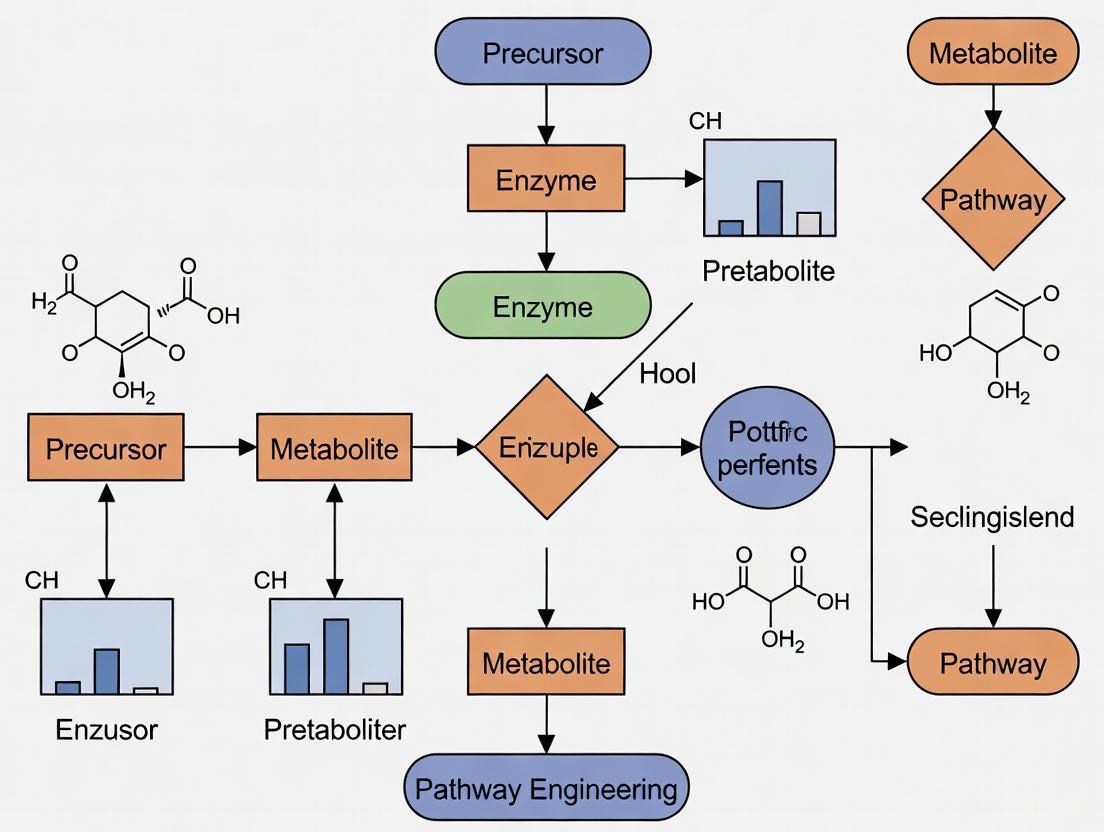
This article provides a comprehensive analysis of strategies to enhance precursor availability for optimizing secondary metabolite production, a critical focus for researchers and drug development professionals.
Precursor Engineering Strategies for Enhanced Secondary Metabolite Production in Biomedical Research
Abstract
This article provides a comprehensive analysis of strategies to enhance precursor availability for optimizing secondary metabolite production, a critical focus for researchers and drug development professionals. It explores the foundational biosynthetic pathways and key precursor molecules, details practical methodological approaches including precursor feeding and genetic engineering, addresses common challenges with advanced optimization techniques, and validates strategies through comparative analysis of successful case studies. By synthesizing the latest research, this resource aims to equip scientists with actionable knowledge to overcome yield limitations and accelerate the discovery and production of valuable bioactive compounds for pharmaceutical applications.
Understanding Precursor Molecules and Core Biosynthetic Pathways in Secondary Metabolism
Troubleshooting Guide: Precursor Feeding and Availability
Common Problem 1: Low Yield of Target Secondary Metabolites
Possible Causes and Solutions:
- Cause: Inefficient precursor uptake by plant cells or microbial hosts.
- Solution: Optimize feeding timing; add precursors during the late exponential or early stationary growth phase for microbes, or during the linear growth phase in plant cell cultures [1].
- Cause: Cytotoxicity of the precursor or its metabolites.
- Solution: Test a range of precursor concentrations and use fed-batch feeding strategies to maintain sub-toxic levels in the culture medium [1].
- Cause: Diversion of precursors into competing metabolic pathways.
Common Problem 2: Inconsistent Production Between Batches
Possible Causes and Solutions:
- Cause: Uncontrolled variations in culture conditions (pH, temperature, dissolved oxygen).
- Solution: Implement strict bioprocess control and use defined growth media. Monitor and log environmental parameters throughout the fermentation [3].
- Cause: Instability of the precursor in the storage solution or culture medium.
- Solution: Prepare fresh precursor stock solutions for each experiment and verify their stability under culture conditions (e.g., temperature, sterility) [4].
Frequently Asked Questions (FAQs)
Q1: What are the most common precursors used to enhance secondary metabolite production? Precursors are typically intermediate compounds from primary metabolism that feed into secondary metabolite biosynthetic pathways. Common examples include:
- Aromatic amino acids (L-phenylalanine, L-tyrosine): Precursors for phenolic compounds and alkaloids via the shikimic acid pathway [2].
- Mevalonic acid (MVA) or Methylerythritol phosphate (MEP): Key intermediates for terpenoid biosynthesis [2] [5].
- Glycerol: Serves as a carbon source that can enhance the production of various reduced compounds like aromatic compounds, polyols, and lipids in microorganisms [3].
Q2: How does the choice of carbon source, like glycerol, influence precursor availability? The carbon source is fundamental as it fuels both primary metabolism and the provision of precursor molecules. Glycerol is a highly reduced carbon source compared to glucose. Its metabolism generates more NADH and NADPH, which can be advantageous for synthesizing reduced secondary metabolites like lipids and polyols [3]. In some microbes, glycerol also directs more carbon flux toward product formation rather than biomass, potentially boosting secondary metabolite yields during the stationary phase [3].
Q3: What role do signalling molecules play in precursor utilization? Signalling molecules act as key regulators that activate the biosynthetic pathways of secondary metabolites. They can enhance the expression of genes encoding critical enzymes in these pathways, thereby increasing the demand for and channeling of precursors [5]. For example:
- Methyl Jasmonate (MeJA): Can trigger the production of terpenoids, alkaloids, and phenolics by upregulating pathway genes and transcription factors [5].
- Nitric Oxide (NO) and Hydrogen Sulfide (H₂S): Mitigate oxidative stress and can interact with other signalling networks to promote the synthesis of defensive secondary metabolites [5].
Experimental Protocols for Enhancing Precursor Availability
Objective: To enhance the yield of a target secondary metabolite (e.g., a specific alkaloid or flavonoid) by feeding a biosynthetic precursor.
Materials:
- Sterile plant cell suspension culture
- Standard growth medium
- Filter-sterilized precursor stock solution
- Laminar flow hood, shake flasks, orbital shaker
Methodology:
- Culture Establishment: Initiate plant cell suspension cultures in standard medium and grow under controlled conditions (e.g., 25°C, continuous light or dark, agitation at 110-120 rpm).
- Precursor Addition: At the optimal growth phase (determined empirically, often mid-exponential phase), aseptically add the filter-sterilized precursor solution to the culture medium. A range of concentrations (e.g., 0.1 - 2.0 mM) should be tested.
- Harvesting: Harvest cells by filtration or centrifugation during the stationary phase, typically 3-7 days after precursor feeding.
- Analysis: Extract and analyze the target secondary metabolite using techniques like HPLC or LC-MS. Compare yields to control cultures without precursor feeding.
Objective: To leverage glycerol for improved production of reduced secondary metabolites in yeasts like Komagataella phaffii.
Materials:
- Microbial strain (e.g., Komagataella phaffii)
- Glycerol-based fermentation medium (e.g., with yeast extract, peptone, and glycerol as the sole carbon source)
- Bioreactor or shake flasks with controlled aeration
- pH and dissolved oxygen probes
Methodology:
- Inoculum Preparation: Grow a seed culture of the microbe in a glycerol-containing medium to adapt the cells.
- Fermentation: Inoculate the bioreactor containing the defined glycerol medium. Maintain optimal conditions (e.g., 30°C, pH 5.0, high dissolved oxygen).
- Induction/Production Phase: For engineered strains, induce the expression of secondary metabolite pathways (e.g., by switching carbon source or adding an inducer) once high cell density is achieved.
- Monitoring and Harvest: Monitor glycerol consumption, cell growth, and product formation. Harvest the culture broth at the end of the production phase for downstream processing.
Quantitative Data on Precursor Efficacy
Table 1: Effect of Different Precursors on Secondary Metabolite Production in Various Systems
| Precursor / Carbon Source | Target Secondary Metabolite | Experimental System | Reported Enhancement / Yield | Key Findings |
|---|---|---|---|---|
| Glycerol | p-Coumarate, Naringenin |
Komagataella phaffii fermentation [3] | Increased titers compared to glucose | Higher degree of reduction in glycerol favors production of aromatic compounds. |
| Glycerol | Citric Acid | Yarrowia lipolytica fermentation [3] | Outperformed glucose as a substrate | Efficiently channeled into lipid and polyol biosynthesis. |
| Aromatic Amino Acids (e.g., Phenylalanine) | Various Phenolics & Alkaloids | Plant in vitro cultures [2] [1] | Concentration-dependent increase | Direct precursors from the shikimate pathway; feeding bypasses regulatory steps. |
| Methyl Jasmonate (MeJA) | Rosmarinic Acid, Terpenoids, Indole Alkaloids | Plant in vitro cultures [5] | Significant increase in production | Elicitor that upregulates transcription factors and genes of biosynthetic pathways. |
Table 2: Key Enzymes in Precursor Generation and Their Roles
| Enzyme | Pathway | Primary Function | Impact on Precursor Availability |
|---|---|---|---|
| Phenylalanine Ammonia-Lyase (PAL) | Phenylpropanoid [2] | Converts phenylalanine to cinnamic acid | Gatekeeper enzyme for phenolic compound biosynthesis; regulated by stress. |
| 3-hydroxy-3-methylglutaryl-CoA reductase (HMGCR) | Mevalonate (MVA) Pathway [2] | Catalyzes a key rate-limiting step in mevalonate production | Controls flux into sterols and sesquiterpenes. |
| Chalcone Synthase (CHS) | Flavonoid [2] | Catalyzes the first committed step in flavonoid biosynthesis | Channels p-coumaroyl-CoA from general phenylpropanoid metabolism into specific flavonoids. |
| Chorismate Mutase | Shikimate Pathway [2] | Converts chorismate to prephenate | Regulatory node for the synthesis of phenylalanine, tyrosine, and other aromatics. |
The Scientist's Toolkit: Key Research Reagent Solutions
Table 3: Essential Materials for Precursor-Based Enhancement of Secondary Metabolites
| Reagent / Material | Function / Application | Key Considerations |
|---|---|---|
| Elicitors (e.g., MeJA, Salicylic Acid) | Signalling molecules that trigger plant defence responses and activate secondary metabolite pathways [5]. | Concentration and timing of application are critical to avoid toxicity and maximize yield. |
| Specific Enzyme Inhibitors | Used to block competing metabolic pathways, thereby diverting precursors toward the target secondary metabolite [1]. | Requires detailed knowledge of the metabolic network to avoid detrimental effects on cell viability. |
| Stable Isotope-Labeled Precursors (e.g., ¹³C-Glucose) | Tracer compounds used to elucidate metabolic fluxes and identify bottlenecks in biosynthetic pathways [3]. | Essential for fundamental research but can be costly for large-scale production. |
| Genetic Engineering Tools (CRISPR, plasmids) | To overexpress limiting enzymes in a target pathway or knock out genes in competing pathways [2] [3]. | Host-dependent; requires established genetic transformation protocols for the organism. |
| Adsorbent Resins (e.g., XAD) | Added in situ to culture medium to adsorb lipophilic secondary metabolites, reducing feedback inhibition and/or cytotoxicity [1]. | Can simplify downstream purification and increase total yield by shifting equilibrium toward production. |
Biosynthetic Pathway Diagrams
Diagram 1: From Primary Building Blocks to Secondary Metabolites
Diagram 2: Signalling Network Regulating Precursor Utilization
Technical Support Center: Troubleshooting & FAQs
Q1: My microbial culture for terpenoid production shows poor yield after genetic modifications to the MEP pathway. What could be the cause? A: Imbalanced metabolic flux is a common issue. Overexpressing a single MEP pathway enzyme can lead to the accumulation of toxic intermediates like methylerythritol cyclodiphosphate (MEcPP), causing growth retardation and reduced yield.
- Solution: Implement a balanced modular approach. Co-express multiple genes in the MEP pathway (e.g.,
dxs,idi,ispDF) rather than a single gene. Consider using a tunable promoter system to fine-tune expression levels and avoid toxicity. Monitor cell growth (OD600) and product titers simultaneously.
Q2: I am observing inconsistent shikimate pathway intermediate accumulation in my plant cell cultures. How can I stabilize the flux? A: Inconsistency often stems from feedback inhibition and suboptimal nutrient conditions.
- Solution:
- Address Feedback Inhibition: The key enzyme DAHP synthase is feedback-inhibited by aromatic amino acids. Use a feedback-resistant version (e.g.,
aroG^{fbr}) in your expression system. - Optimize Media: Ensure a sufficient and balanced supply of the primary precursors, Phosphoenolpyruvate (PEP) and Erythrose-4-Phosphate (E4P). This may involve adjusting carbon source feeding (e.g., using a PEP-generating system like pyruvate) and ensuring proper phosphate levels.
- Control Culture Conditions: Maintain strict control over pH, temperature, and light (if phototrophic) to minimize environmental stress-induced flux variations.
- Address Feedback Inhibition: The key enzyme DAHP synthase is feedback-inhibited by aromatic amino acids. Use a feedback-resistant version (e.g.,
Q3: When comparing the MVA and MEP pathways for isoprenoid precursor (IPP/DMAPP) production in a heterologous host, which is generally more efficient? A: The choice is host- and product-dependent. The MVA pathway is often preferred in yeast and other eukaryotes, while the MEP pathway can be more efficient in bacterial systems like E. coli. Key quantitative comparisons are summarized below.
Quantitative Comparison of MVA and MEP Pathways in Model Systems
| Parameter | Mevalonate (MVA) Pathway | Methylerythritol Phosphate (MEP) Pathway |
|---|---|---|
| Primary Hosts | Eukaryotes (e.g., Yeast, Fungi) | Bacteria, Algae, Plastids of Plants |
| Theoretical ATP Cost (per IPP) | 3 ATP | 5 ATP |
| Theoretical Yield (mol IPP / mol Glucose) | Lower (~0.33) | Higher (~0.41) |
| Key Toxic Intermediate | HMG-CoA, Mevalonate-5-P | Methylerythritol Cyclodiphosphate (MEcPP) |
| Advantages in Engineering | Well-established in yeast; easier to compartmentalize. | Higher theoretical carbon yield; avoids acetyl-CoA competition. |
Experimental Protocol: Quantifying MEP Pathway Flux using LC-MS/MS
Objective: To measure the intracellular concentrations of MEP pathway intermediates in engineered E. coli.
Cell Cultivation & Quenching:
- Grow engineered E. coli in M9 minimal medium with 2 g/L (^{13})C-Glucose to mid-exponential phase (OD600 ~0.6-0.8).
- Rapidly quench 1 mL of culture by injecting it into 4 mL of 60% methanol (pre-chilled to -40°C). Immediately vortex for 10 seconds.
Metabolite Extraction:
- Centrifuge the quenched sample at 15,000 x g for 5 minutes at -9°C.
- Remove the supernatant and resuspend the cell pellet in 1 mL of extraction solvent (40:40:20 Acetonitrile:Methanol:Water with 0.1% Formic Acid).
- Sonicate on ice for 5 minutes (10 sec on/off pulses).
- Centrifuge at 15,000 x g for 15 minutes at 4°C.
- Transfer the clear supernatant to a new tube and dry under a gentle stream of nitrogen gas.
LC-MS/MS Analysis:
- Reconstitute the dried extract in 100 µL of water.
- Inject 5 µL onto a HILIC column (e.g., BEH Amide, 2.1 x 100 mm, 1.7 µm) maintained at 40°C.
- Mobile Phase: A) 10 mM Ammonium Acetate in Water, B) 10 mM Ammonium Acetate in 95% Acetonitrile.
- Gradient: 90% B to 50% B over 12 minutes.
- Analyze using a triple quadrupole mass spectrometer in negative MRM mode. Use authentic standards for each MEP intermediate (e.g., DOXP, MEP, MEcPP) to generate calibration curves for quantification.
Pathway and Workflow Diagrams
MEP Pathway to IPP/DMAPP
Shikimate Pathway & Regulation
Metabolic Flux Analysis Workflow
The Scientist's Toolkit: Key Research Reagent Solutions
| Reagent / Material | Function / Explanation |
|---|---|
| (^{13})C-Labeled Glucose | A stable isotope tracer used in Metabolic Flux Analysis (MFA) to track carbon atom movement through pathways via LC-MS. |
Feedback-Resistant aroG (aroG(^{fbr})) |
A genetically engineered DAHP synthase enzyme resistant to feedback inhibition by phenylalanine, used to enhance shikimate flux. |
| MEP Pathway Intermediate Standards (DOXP, MEP) | Authentic chemical standards required for developing calibration curves to absolutely quantify intracellular metabolite levels. |
| Tunable Promoter System (e.g., pTet, pBAD) | Allows for precise control of gene expression levels to avoid metabolic burden and toxicity from intermediate accumulation. |
| HILIC Chromatography Column | A hydrophilic interaction liquid chromatography column essential for separating highly polar metabolites like MEP pathway intermediates. |
| Quenching Solvent (Cold Methanol) | Rapidly halts all metabolic activity to capture a snapshot of the intracellular metabolome at a specific time point. |
FAQs: Precursor Molecules in Secondary Metabolism
Q1: What are the key precursor molecules for secondary metabolite biosynthesis? The biosynthesis of plant and microbial secondary metabolites primarily relies on a few core precursor molecules derived from central carbon metabolism. The most crucial precursors are:
- Acetyl-CoA and Malonyl-CoA: Serve as the fundamental building blocks for the acetate-malonate pathway, leading to polyketides, fatty acids, and phenolics [6] [7].
- Aromatic Amino Acids (L-Phenylalanine, L-Tyrosine, L-Tryptophan): These are the products of the shikimate pathway and act as precursors for a vast array of nitrogen-containing compounds and phenolics, including alkaloids, flavonoids, and lignin [2] [8] [7].
- Isoprenoid Units (Isopentenyl pyrophosphate - IPP, and Dimethylallyl diphosphate - DMAPP): These five-carbon units are the universal precursors for the mevalonate (MVA) and methylerythritol phosphate (MEP) pathways, which generate all terpenoids and steroids, such as artemisinin, taxol, and carotenoids [2] [5] [7].
Q2: How can I experimentally enhance the flux through a specific precursor pathway to overproduce a target metabolite? A multi-pronged strategy is often most effective:
- Precursor Feeding: Directly supplementing the culture medium with a specific precursor (e.g., shikimic acid for the shikimate pathway, mevalonolactone for the MVA pathway) can bypass regulatory bottlenecks and increase the metabolic flux toward the target compound [8].
- Genetic Engineering of Regulatory Genes: Overexpressing positive pathway-specific regulators (e.g., transcriptional factors like WRKY for artemisinin) or knocking out negative regulators (e.g., some TetR family regulators in Actinomycetes) can powerfully enhance the expression of entire biosynthetic gene clusters [6] [9].
- Elicitation: Using abiotic (e.g., UV light, metal ions) or biotic (e.g., jasmonic acid, yeast extract) elicitors can mimic stress conditions, triggering the plant's or microbe's native defense mechanisms and upregulating secondary metabolite pathways [2] [5] [9].
Q3: What are the common challenges when using precursor feeding in vitro, and how can I troubleshoot them? Common issues and their solutions are summarized in the table below.
Table 1: Troubleshooting Guide for In Vitro Precursor Feeding
| Challenge | Potential Cause | Troubleshooting Strategy |
|---|---|---|
| Low or No Yield Increase | Precursor cytotoxicity; inefficient uptake; feedback inhibition; wrong feeding timing. | Optimize precursor concentration; use esterified or permeable precursor analogs; feed during the stationary production phase; consider split feeding [8]. |
| Production Instability | Somaclonal variation; degradation of precursors in the medium; genetic instability of high-producing cell lines. | Re-select high-producing cell lines regularly; use dark/controlled conditions; test precursor stability in medium; employ organ cultures instead of cell suspensions for better stability [8]. |
| Unexpected By-product Formation | Channeling of the precursor into competing metabolic pathways; low specificity of key enzymes. | Map the metabolic network to identify competing pathways; use enzyme inhibitors for competing routes; co-express pathway-specific regulators to enhance flux toward the desired product [6] [10]. |
Q4: How do environmental factors influence precursor availability and secondary metabolism? Environmental factors significantly modulate the regulatory networks that control precursor pathways.
- Light can repress or induce specific pathways; for example, in Fusarium fujikuroi, light represses fusarin production via white collar proteins but stimulates carotenoid biosynthesis [9].
- Temperature shifts can activate silent gene clusters or optimize pathway efficiency. The optimal temperature for fumonisin biosynthesis in Fusarium verticillioides (20-30°C) is different from that for its growth [9].
- Nutrient Stress, such as nitrogen or phosphate limitation, is a classic strategy to shift metabolism from growth (primary metabolism) to defense (secondary metabolism) by altering the pool of available precursors [2] [9].
Experimental Protocols
Protocol: Precursor Feeding for Enhanced Metabolite Production in Plant Cell Cultures
This protocol outlines a standard methodology to boost the yield of high-value secondary metabolites by supplementing the culture medium with biosynthetic precursors [8].
1. Principle: The core idea is to supplement the culture medium with a known intermediate (precursor) from a target biosynthetic pathway. This external supplementation provides additional substrate, helping to overcome natural regulatory bottlenecks and push the metabolic flux toward the overproduction of the desired end product.
2. Reagents and Materials:
- Established plant cell suspension or hairy root culture.
- Standard growth medium (e.g., MS or B5 medium).
- Filter-sterilized precursor stock solution (e.g., phenylalanine, tyrosine, mevalonolactone, shikimic acid).
- Sterile Erlenmeyer flasks.
- Platform shaker.
- Laminar flow hood.
- Vacuum filtration system.
- Solvents for extraction (e.g., methanol, ethanol).
3. Procedure:
- Step 1: Culture Initiation
- Inoculate the plant cell suspension into fresh liquid medium and grow under standard conditions (e.g., 25°C, continuous dark or light, with agitation) until the late exponential growth phase [8].
- Step 2: Precursor Preparation and Feeding
- Prepare a concentrated, filter-sterilized stock solution of the precursor.
- Aseptically add the precursor to the culture medium to achieve the desired final concentration. A range of concentrations (e.g., 0.1 - 2.0 mM) should be tested in preliminary experiments to identify the optimal level and avoid cytotoxicity [8].
- Include control cultures without precursor supplementation.
- Step 3: Incubation and Harvest
- Return the cultures to the shaker and allow production to continue for a predetermined period (e.g., 24-168 hours).
- Harvest the biomass by vacuum filtration at designated time points to establish a production time-course.
- Step 4: Metabolite Extraction and Analysis
- Lyophilize the harvested biomass.
- Extract metabolites using a suitable solvent (e.g., methanol) via sonication or maceration.
- Concentrate the extracts and analyze the target metabolite using analytical techniques such as High-Performance Liquid Chromatography (HPLC) or LC-Mass Spectrometry (LC-MS) [8].
4. Data Analysis:
Compare the yield of the target metabolite in precursor-fed cultures against the control cultures. The yield enhancement can be calculated as: (Yield with precursor - Yield in control) / Yield in control * 100%.
Protocol: Activating Silent Biosynthetic Gene Clusters via Regulatory Gene Manipulation
This protocol describes a genetic approach to activate silent gene clusters in microorganisms (e.g., Actinomycetes, Fungi) to discover novel secondary metabolites or enhance the production of known ones [6] [9].
1. Principle: Many biosynthetic gene clusters (BGCs) for secondary metabolites are "silent" under standard laboratory conditions. This method involves genetically manipulating pathway-specific regulatory genes (e.g., by overexpression or deletion) to trigger the expression of the entire silent BGC.
2. Reagents and Materials:
- Microbial strain (e.g., Streptomyces, Fusarium).
- Standard culture media.
- DNA manipulation kits (for PCR, cloning).
- Plasmid vectors for overexpression or gene knockout.
- Host cells for cloning (e.g., E. coli).
- Protoplast transformation or electroporation system.
- Antibiotics for selection.
- LC-MS equipment for metabolite profiling.
3. Procedure:
- Step 1: Identification of Target
- Use genome mining tools to identify silent BGCs and their associated pathway-specific regulatory genes (e.g., TetR family, SARP family regulators) [6].
- Step 2: Genetic Construct Preparation
- Step 3: Strain Transformation
- Introduce the genetic construct into the wild-type strain via protoplast transformation, conjugation, or electroporation.
- Select for successful transformants using the appropriate antibiotic.
- Step 4: Fermentation and Metabolite Profiling
- Ferment the engineered mutant strain alongside the wild-type strain under identical conditions.
- Extract metabolites from the culture broth and/or mycelium.
- Analyze the metabolic profiles using LC-HRMS to identify newly produced compounds in the mutant strain that are absent in the wild-type [6] [9].
4. Data Analysis: Compare the chromatograms and mass spectra of the mutant and wild-type extracts. New peaks in the mutant extract indicate successfully activated secondary metabolites. Further purification and structural elucidation (e.g., by NMR) are required to identify the novel compounds.
Pathway Diagrams
Core Biosynthetic Pathways for Key Precursors
Experimental Workflow for Enhancing Precursor Availability
The Scientist's Toolkit: Research Reagent Solutions
Table 2: Essential Reagents for Precursor and Pathway Research
| Reagent / Material | Function / Application | Example Use Case |
|---|---|---|
| Shikimic Acid | A key intermediate in the shikimate pathway. Used as a precursor feed to enhance the production of aromatic amino acids and their derivatives [8]. | Overproduction of phenolic compounds, lignins, and alkaloids in plant cell cultures [8]. |
| Mevalonolactone | A hydrolyzed form of mevalonate, the core intermediate of the MVA pathway. Used to supplement the terpenoid backbone biosynthetic pathway [8]. | Enhancing the yield of sesquiterpenes (e.g., artemisinin) and triterpenes in cultured tissues [7]. |
| Methyl Jasmonate (MeJA) | A potent signaling molecule and abiotic elicitor. Triggers plant defense responses, upregulating the biosynthesis of various secondary metabolites [5]. | Inducing the production of terpenoid indole alkaloids, rosmarinic acid, and other defense compounds in plant cell and organ cultures [5]. |
| L-Phenylalanine | An aromatic amino acid and direct precursor of the phenylpropanoid pathway. Feeding directly supplies substrate for phenolic compound biosynthesis [2] [8]. | Increasing the yield of flavonoids, anthocyanins, and stilbenes (e.g., resveratrol) in Vitis vinifera cell cultures [8]. |
| Suberoylanilide Hydroxamic Acid (SAHA) | A histone deacetylase (HDAC) inhibitor. Used in epigenetic modulation to activate silent biosynthetic gene clusters in fungi and microbes [6] [9]. | Discovery of novel secondary metabolites from Fusarium and Streptomyces strains by derepressing silent gene clusters [9]. |
| Strong Inducible Promoters (e.g., ermE*) | Genetic tool for controlled gene expression. Used to overexpress pathway-specific positive regulatory genes in heterologous hosts or native strains [6]. | Activating the silent phenazine biosynthetic gene cluster in Streptomyces tendae for antibiotic production [6]. |
In the pursuit of improving precursor availability for secondary metabolite production, understanding transcriptional regulation is paramount. Transcription factors (TFs) are sequence-specific DNA-binding proteins that regulate gene expression by activating or repressing target genes [11]. They form complex gene regulatory networks (GRNs) that act in cooperative or competitive partnerships to precisely control metabolic flux [12]. In secondary metabolism, this regulation occurs at two primary levels: global transcriptional regulators that respond to cellular state and environmental conditions, and pathway-specific transcription factors (PSTFs) that directly control the biosynthetic gene clusters (BGCs) responsible for producing target metabolites [13].
The hierarchical structure of these regulatory networks allows for flexible control of metabolic pathways. Global TFs often respond to broad cellular indicators like growth state or nutrient availability, while PSTFs provide precise, dedicated control over specific metabolic pathways [14]. This dual regulatory system enables cells to maintain metabolic homeostasis while dynamically allocating precursor resources toward secondary metabolite production when conditions are favorable. For researchers engineering microbial cell factories, manipulating these TF networks offers powerful levers to enhance precursor flux toward valuable secondary metabolites, including pharmaceuticals, antibiotics, and other bio-based compounds [15] [13].
Frequently Asked Questions (FAQs)
Q1: What is the fundamental difference between global and pathway-specific transcription factors in metabolic regulation?
Global transcription factors coordinate multiple metabolic pathways in response to broad cellular signals and environmental conditions. They regulate numerous genes across the genome, often in response to metabolites that indicate cellular growth state [14]. For example, in E. coli, global TFs like Crp and Cra mediate most specific transcriptional regulation by binding to metabolites such as cyclic AMP and fructose-1,6-bisphosphate [14]. In contrast, pathway-specific transcription factors are dedicated regulators that control individual biosynthetic gene clusters. In fungal systems, PSTFs are frequently located within the BGCs they regulate and specifically activate the expression of genes required for producing particular secondary metabolites [13].
Q2: Why do some pathway-specific transcription factor overexpression experiments fail to activate their target gene clusters?
Several factors can lead to failed PSTF overexpression experiments:
- Insufficient expression levels: The promoter used for overexpression may not generate adequate TF levels to activate the cluster. Switching to a stronger inducible promoter (e.g., the xylP promoter from Penicillium chrysogenum) can significantly improve success rates [15].
- Chromatin repression: Target clusters may be silenced by repressive chromatin structures. Integrating the TF expression construct at a genomic locus not subject to such repression (e.g., the yA locus in Aspergillus nidulans) can overcome this limitation [15].
- Post-translational control: Some TFs require activation through modifications or interaction with co-factors that may be absent under experimental conditions [15] [13].
- Insufficient precursor availability: Even with successful TF overexpression, limited precursor pools can constrain metabolite production, necessitating concurrent engineering of precursor supply pathways [14].
Q3: How can I identify potential pathway-specific transcription factors in a newly discovered biosynthetic gene cluster?
PSTFs can be identified through several approaches:
- Genomic location: PSTF genes are typically located within the BGC they regulate [13].
- DNA-binding domains: They usually contain characteristic DNA-binding domains such as Zn(II)₂Cys₆, C₂H₂ zinc fingers, bZIP, or MYB domains [13].
- Bioinformatic tools: Use cluster annotation tools like SMURF (Secondary Metabolite Unknown Regions Finder) to identify potential regulatory elements within BGCs [15].
- Homology analysis: Compare with known PSTFs from characterized clusters in related organisms [12] [13].
Q4: What strategies can enhance precursor availability for improved secondary metabolite production?
- Dynamic regulation: Implement TF-based biosensors that dynamically regulate precursor pathways in response to metabolite concentrations [16].
- Local flux coordination: Engineer topologically coupled reaction networks in central metabolism to enhance flux toward desired precursors [14].
- Global regulatory manipulation: Modify global TFs that control central carbon metabolism to redirect flux toward secondary metabolite precursors [14].
- Co-culture systems: Utilize microbial consortia where different members specialize in precursor production and final synthesis [16].
Troubleshooting Guides
Low Secondary Metabolite Yields Despite Transcription Factor Overexpression
Problem: Overexpression of a confirmed pathway-specific TF fails to significantly increase target metabolite production.
Potential Causes and Solutions:
Table: Troubleshooting Low Metabolite Yields Despite TF Overexpression
| Problem Cause | Diagnostic Experiments | Solution Strategies |
|---|---|---|
| Insufficient precursor pool | Measure intracellular precursor concentrations (e.g., acetyl-CoA, malonyl-CoA); analyze transcript levels of precursor biosynthesis genes | Co-express global regulators of central metabolism; engineer precursor supply pathways; use TF-based biosensors for dynamic precursor regulation [14] |
| Chromatin-mediated repression | Perform chromatin immunoprecipitation for histone modifications; test histone deacetylase inhibitors | Target TF integration to euchromatin regions; use chromatin-modifying enzymes; engineer synthetic gene clusters with minimal epigenetic regulation [15] |
| Inadequate TF expression level | Quantify TF mRNA and protein levels; test different induction conditions | Switch to stronger promoters (e.g., xylP); optimize induction timing and duration; integrate multiple TF copies [15] |
| Missing co-activators or co-factors | Test different growth conditions; perform co-immunoprecipitation for protein partners | Identify and co-express essential co-factors; optimize cultivation media; engineer minimal regulatory circuits [13] |
Experimental Workflow:
- Quantify TF expression at both transcript and protein levels
- Analyze expression of all cluster genes to verify complete activation
- Measure intracellular precursor concentrations
- Test different cultivation conditions and media compositions
- Implement combinatorial engineering addressing multiple limitations simultaneously
Inconsistent Metabolic Pathway Activation Across Experimental Conditions
Problem: Transcription factor-mediated pathway activation shows high variability between replicates or different growth conditions.
Potential Causes and Solutions:
Table: Addressing Inconsistent Pathway Activation
| Variability Source | Control Experiments | Stabilization Approaches |
|---|---|---|
| Heterogeneous TF expression | Single-cell analysis of TF expression; monitor culture heterogeneity | Use constitutive strong promoters; implement feedback-regulated expression systems; optimize induction parameters [15] |
| Stochastic cluster activation | Time-course analysis of cluster gene expression; single-cell transcriptomics | Pre-condition cells for uniform activation; use synthetic regulatory elements with reduced noise; employ population-based control strategies [14] |
| Environmental fluctuations | Monitor dissolved oxygen, pH, nutrient depletion throughout cultivation | Implement advanced bioreactor control; use defined media with balanced C/N ratio; develop fed-batch protocols with precise nutrient feeding [16] |
| Genetic instability | Serial passage experiments; verify genetic constructs stability | Use stable genomic integration; avoid repetitive sequences; implement selection pressure maintenance [15] |
Experimental Protocols
Systematic Overexpression of Secondary Metabolism Transcription Factors
Purpose: To activate cryptic biosynthetic gene clusters for secondary metabolite discovery and production enhancement.
Materials and Reagents:
- Strong inducible promoter (e.g., xylP from Penicillium chrysogenum)
- Construction vectors for targeted genomic integration
- Appropriate transformation reagents and equipment
- Induction agent (e.g., xylose for xylP promoter)
- Analytical standards for target metabolites
- LC-MS system for metabolite profiling
Procedure:
- TF Identification and Selection:
Expression Construct Design:
- Clone selected TF genes under control of a strong inducible promoter
- Design constructs for integration into specific genomic loci (e.g., yA locus) to avoid chromatin-mediated repression [15]
Strain Generation:
- Transform host organism with expression constructs
- Verify integration by PCR and Southern blotting
- Confirm TF inducibility by Western blotting [15]
Metabolite Production Analysis:
- Grow wild-type and TF-overexpression strains under standard conditions
- Induce TF expression at appropriate growth phase (e.g., add 1% xylose at 48h for A. nidulans) [15]
- Culture for additional period to allow metabolite accumulation (e.g., 3-5 days)
- Extract metabolites from both cells and culture broth
- Analyze extracts using LC-MS with comparative metabolomics approaches [15]
Validation and Scale-up:
- Confirm cluster activation by RT-qPCR of biosynthetic genes
- Isulate and structurally elucidate novel compounds
- Optimize production conditions in bioreactor systems
Construction and Application of Transcription Factor-Based Biosensors
Purpose: To develop genetic circuits that dynamically regulate metabolic pathways in response to precursor availability.
Materials and Reagents:
- Allosteric transcription factors responsive to target metabolites
- Modular plasmid systems for biosensor construction
- Fluorescent reporter genes (e.g., GFP, RFP)
- Flow cytometer or microplate reader for signal detection
- Microfluidic systems for high-throughput screening (optional)
Procedure:
- Biosensor Design:
- Select TF with appropriate ligand specificity or engineer specificity through directed evolution [16]
- Clone TF gene under constitutive promoter
- Place reporter gene under control of TF-regulated promoter
- Include metabolic engineering targets under same regulatory control for dynamic pathway optimization [16]
Biosensor Validation:
- Transform biosensor construct into host strain
- Test response to gradient of target metabolite or precursor
- Determine dynamic range, sensitivity, and specificity
- Optimize ribosome binding sites and promoter strength for desired response characteristics [16]
Application for Strain Engineering:
- Use biosensor-response to screen mutant libraries for enhanced precursor production
- Implement dynamic regulation of pathway genes to balance metabolic flux
- Monitor population heterogeneity and implement strategies to reduce noise [16]
- Combine multiple biosensors for coordinated regulation of complex pathways
Pathway Diagrams and Regulatory Networks
Hierarchical Transcription Factor Network for Metabolic Pathway Control
Transcription Factor-Based Biosensor Mechanism
Research Reagent Solutions
Table: Essential Research Reagents for Transcription Factor Studies
| Reagent/Category | Specific Examples | Function/Application | Considerations for Use |
|---|---|---|---|
| Inducible Promoters | xylP (from P. chrysogenum), alcA, PcbC* | Controlled TF overexpression; strong, tunable expression | xylP provides stronger induction than alcA; consider promoter compatibility with host [15] |
| DNA-Binding Domain References | Zn(II)₂Cys₆, C₂H2 zinc fingers, bZIP, bHLH, Homeobox | TF classification and functional prediction | Different DBDs have distinct DNA recognition specificities; affects target gene regulation [12] [13] |
| Bioinformatic Tools | SMURF, JASPAR, TRANSFAC, CisBP | BGC identification; TF binding site prediction | SMURF identifies secondary metabolite BGCs; JASPAR/TRANSFAC provide TF binding motifs [15] [11] |
| Analytical Standards | Sterigmatocystin, monodictyphenone, asperfuranone | Metabolite identification and quantification | Use as references for LC-MS analysis; confirm cluster activation and product identity [15] [13] |
| Chromatin Modifiers | Histone deacetylase inhibitors, DNA methyltransferase inhibitors | Overcome epigenetic silencing of BGCs | Can activate cryptic clusters but may have pleiotropic effects; use with appropriate controls [15] |
Table: Quantitative Analysis of Transcription Factor Types in Characterized Fungal BGCs
| Organism | Total Characterized BGCs | BGCs with PSTFs | Most Common PSTF DNA-Binding Domains | Average PSTFs per Regulated Cluster |
|---|---|---|---|---|
| Aspergillus nidulans | 28 | 12 (42.9%) | Zn(II)₂Cys₆, C₂H2, Myb-like | 1.33 [13] |
| Aspergillus fumigatus | 18 | 10 (55.6%) | Zn(II)₂Cys₆, C₂H2, bZIP | 1.20 [13] |
Advanced Applications and Future Directions
The integration of transcription factor engineering with systems biology approaches is revolutionizing metabolic engineering for enhanced precursor flux. Local flux coordination - the natural tendency of topologically coupled metabolic reactions to be co-regulated - provides engineering targets for enhancing specific precursor pools [14]. By identifying sparse linear basis (SLB) vectors in metabolic networks, researchers can pinpoint reaction groups that function as coordinated units, enabling more precise metabolic engineering strategies [14].
Future advancements will likely focus on multi-dimensional regulation combining global and pathway-specific TFs with synthetic regulatory circuits. The development of TF-based biosensors enables dynamic regulation of metabolic pathways, allowing microbial cell factories to autonomously adjust flux in response to precursor availability [16]. Emerging approaches include:
- Directed evolution of TF specificity to create novel biosensors for target metabolites
- Artificial intelligence-driven prediction of TF-DNA binding specificities
- Cross-species TF engineering to transfer regulatory circuits between organisms
- Multi-input biosensor networks for coordinated regulation of complex pathways
These strategies will ultimately enable more predictable and efficient engineering of microbial systems for enhanced production of valuable secondary metabolites, addressing critical needs in pharmaceutical development, industrial biotechnology, and sustainable manufacturing.
The efficient production of secondary metabolites—complex chemical compounds with widespread applications in pharmaceutical, nutraceutical, and flavoring industries—is fundamentally constrained by precursor availability. These metabolites, which are not essential for the immediate survival of the producing organism but often possess valuable bioactive properties, are biosynthesized from simpler primary metabolites through dedicated metabolic pathways. The yield of any target secondary metabolite is therefore intrinsically linked to the flux of precursor molecules through its biosynthetic route. Understanding and optimizing this connection is critical for overcoming the natural low-yield limitations that hamper the commercial viability of many valuable compounds, from antimicrobial agents to anticancer drugs [17] [18].
This technical support center provides a foundational framework and practical troubleshooting guidance for researchers aiming to enhance secondary metabolite production by strategically managing precursor supply. The content is framed within the context of a broader thesis on improving precursor availability, addressing both theoretical principles and common experimental pitfalls encountered during optimization workflows.
Theoretical Foundations: Biosynthetic Pathways and Precursor Origins
Secondary metabolites are synthesized from core primary metabolic pathways. The table below summarizes the major biosynthetic routes and their key precursors.
Table 1: Major Biosynthetic Pathways for Secondary Metabolites
| Biosynthetic Pathway | Key Precursor Molecules | Example Secondary Metabolites |
|---|---|---|
| Shikimate Pathway [17] | Phosphoenolpyruvate, D-erythrose-4-phosphate | Aromatic amino acids (L-phenylalanine, L-tyrosine), gallic acid, shikimic acid, vanillin (via biotransformation) [17] |
| Mevalonate (MVA) Pathway [17] [18] | Acetyl-Coenzyme A (Acetyl-CoA) | Terpenoids, steroids, lovastatin [17] |
| Methylerythritol Phosphate (MEP) Pathway [17] [18] | Pyruvate, Glyceraldehyde-3-phosphate | Terpenoids (in most bacteria and plant plastids) [17] |
| Malonate/Acetate Pathway [18] | Acetyl-Coenzyme A (Acetyl-CoA) | Phenolic compounds, flavonoids [18] |
| Alkaloid Biosynthesis [18] | Various Amino Acids (e.g., tyrosine, tryptophan) | Harringtonine, homoharringtonine, caffeine, morphine [18] |
The relationship between primary metabolism and the activation of secondary metabolite synthesis is often regulated by elicitors. The following diagram illustrates the logical workflow of how elicitors trigger the cellular signaling that enhances precursor flow and final yield.
FAQs: Core Principles for Researchers
Q1: Why is precursor supply often a limiting factor in secondary metabolite yield? Secondary metabolites are typically synthesized after the growth phase from primary metabolites like acetyl-CoA and amino acids [17]. The cell's metabolic machinery is primarily geared towards growth and survival, so the flux of carbon and nitrogen toward these secondary pathways is naturally limited. Without intervention, the pools of key precursors can be insufficient to drive high-yield production of the target compound.
Q2: What are the main strategies for enhancing precursor availability? The two primary strategies are (1) internal pathway engineering, which involves optimizing fermentation conditions (media, pH, temperature) to maximize the cell's inherent production of precursors [19] [20], and (2) external precursor feeding, which involves supplying the culture with compounds that are direct or indirect precursors to the target metabolite [17]. A powerful adjunct to these is elicitation, using biotic or abiotic agents to trigger the plant's or microbe's own defense pathways, which often involve the upregulation of secondary metabolite synthesis [18].
Q3: Can I simply add high concentrations of a precursor to the fermentation broth? Not always. The direct addition of precursors can be ineffective or even counterproductive. Some precursors may be toxic to the producing cells at high concentrations, while others might not be efficiently taken up or might be metabolized via different pathways. Strategies like gradual feeding or using volatile precursors that can be slowly supplied via the oxygen stream have been developed to overcome these issues [17].
Q4: How do I identify which precursor to target for my metabolite of interest? The first step is to conduct a thorough literature review to identify the known or putative biosynthetic pathway of your target metabolite. This will reveal the immediate biochemical precursors and the core metabolic pathways from which they are derived (e.g., shikimate, mevalonate) [17] [18]. Genomic and metabolomic analyses can further help in mapping the complete pathway and identifying potential bottlenecks [20] [21].
Troubleshooting Guide: Common Experimental Issues
Table 2: Troubleshooting Precursor Feeding and Yield Optimization
| Problem | Potential Causes | Recommended Solutions |
|---|---|---|
| Low Yield Despite Precursor Feeding | Precursor toxicity; inefficient cellular uptake; degradation of precursor in the medium; metabolic flux diverted to other pathways. | - Test a range of precursor concentrations [17].- Use protected or prodrug forms of the precursor.- Consider fed-batch or continuous feeding to maintain low, non-toxic levels.- Use inhibitors to block competing pathways. |
| High Cell Growth but Low Metabolite Production | Decoupling of growth (trophophase) and production (idiophase); insufficient expression of biosynthetic genes. | - Use elicitors (e.g., Salicylic Acid, Methyl Jasmonate) to trigger secondary metabolism [18].- Optimize culture timing--add precursors/elicitors at the transition to stationary phase.- Manipulate C/N ratio in the media to stress cells and induce production [19]. |
| Inconsistent Results Between Batch Cultures | Uncontrolled variations in culture conditions; poor quality or unstable precursors; inconsistent timing of precursor addition. | - Strictly standardize inoculation protocols and media preparation.- Use fresh, properly stored precursor stocks.- Precisely time the addition of precursors based on growth phase (OD) rather than chronological time.- Use statistical design of experiments (DoE) for optimization [19]. |
| Difficulty in Isolating/Purifying the Target Metabolite | The enhanced precursor flux led to a more complex mixture of related metabolites or side-products. | - Optimize extraction solvents and methods (e.g., liquid-liquid extraction, flash chromatography) [20].- Scale up the purification process to handle increased complexity.- Use analytical techniques (HPLC, MS) to guide purification protocol development [20]. |
Optimized Experimental Protocols
Systematic Optimization of Physicochemical Parameters
This is a foundational protocol to establish a baseline for enhancing both biomass and intrinsic precursor synthesis before specific precursor feeding is initiated [19] [20].
Initial Screening (One-Factor-at-a-Time):
- Media: Test different standard culture media (e.g., LB, ISP2) to identify the one that maximizes growth and initial metabolite yield [19] [20].
- Incubation Time: Determine the optimal incubation period by tracking growth and metabolite production over time. The point where metabolite production peaks is often at the end of the exponential or start of the stationary phase [19].
- pH & Temperature: Screen a physiologically relevant range (e.g., pH 5-8, temperature 25-37°C) to identify initial optimal conditions [20].
Advanced Optimization (Statistical Design):
- Once key factors are identified (e.g., temperature, pH, agitation), employ a Response Surface Methodology (RSM) design like Box-Behnken to model their interactive effects [19].
- The model will predict the precise combination of factors that simultaneously maximizes biomass and metabolite yield. Note that the optimal conditions for growth and production may differ slightly [19].
Elicitor-Mediated Enhancement of Precursor Flux
This protocol uses signaling molecules to trigger the organism's native defense responses, which often involve upregulating entire biosynthetic pathways, thereby naturally enhancing precursor availability [18].
- Elicitor Selection: Choose appropriate elicitors. Common and effective chemical elicitors include Salicylic Acid (SA) and Methyl Jasmonate (MeJA) [18].
- Stock Solution Preparation: Prepare stock solutions of the elicitors. MeJA is often dissolved in ethanol, and SA in water or a mild solvent, and then filter-sterilized.
- Treatment:
- Grow the microbial culture or plant cell suspension under pre-optimized conditions from Protocol 5.1.
- At the transition to the stationary phase (or a predetermined optimal time), add the elicitor to the culture medium.
- Include a control treatment that receives an equal volume of the solvent used for the elicitor.
- Dosage and Duration Testing: Perform a dose-response experiment. Test a range of concentrations (e.g., SA from 50-200 µM) and various exposure times (e.g., 24-96 hours) to find the optimal treatment that maximizes yield without significantly compromising viability [18].
- Harvest and Analysis: Harvest cells and/or medium at the end of the treatment period. Extract metabolites and quantify the yield of your target secondary metabolite using analytical methods like HPLC or LC-MS [20].
The following workflow diagram integrates these two protocols into a coherent experimental strategy for systematic yield enhancement.
The Scientist's Toolkit: Key Research Reagent Solutions
Table 3: Essential Reagents and Kits for Metabolic Optimization Research
| Item / Reagent | Function / Application | Specific Examples / Notes |
|---|---|---|
| Chemical Elicitors | Activate plant defense signaling pathways, leading to upregulation of genes in secondary metabolite biosynthesis [18]. | Salicylic Acid (SA), Methyl Jasmonate (MeJA), Nitric Oxide donors, Sodium Fluoride (often used synergistically with MeJA) [18]. |
| Precursor Molecules | Directly feed and augment the pool of building blocks for target metabolic pathways [17]. | Amino acids (e.g., Phenylalanine, Tyrosine), Organic acids, Sugars. For vanillin production, ferulic acid is a direct precursor [17]. |
| Optimized Culture Media | Provide the foundational nutrients and optimal physicochemical environment for growth and production. | ISP2 Medium for Streptomyces [19], Expi293 Expression Medium for mammalian protein production [22]. Often requires customization of C/N sources and salts. |
| Analytical Standards | Enable identification and precise quantification of target metabolites in complex mixtures. | Certified reference standards for your target compound (e.g., harringtonine, lovastatin) are essential for calibration in HPLC and MS analysis [20]. |
| Extraction & Purification Kits | Isolate and concentrate metabolites from culture broth or cellular biomass for downstream analysis. | Solvents like ethyl acetate for liquid-liquid extraction [20]; silica gel for flash column chromatography [20]; specialized kits for nucleic acid or protein purification if working with pathway enzymes [23]. |
Practical Strategies for Precursor Supply: Feeding, Engineering, and Elicitation
Frequently Asked Questions (FAQs)
Q1: What is the fundamental purpose of using precursor feeding in secondary metabolite production? Precursor feeding is a strategy used to increase the accumulation of valuable plant or microbial secondary metabolites, such as terpenoids, flavonoids, and alkaloids. It works by supplying key building blocks (precursors) to the biosynthetic pathways, thereby enhancing the metabolic flux towards the desired compound and overcoming natural regulatory bottlenecks [1] [17].
Q2: What are the main challenges associated with direct precursor supplementation? The primary challenges include:
- Cytotoxicity: High concentrations of some precursors can be toxic to the cells or tissue culture, inhibiting growth and metabolite production [1].
- Uptake Efficiency: The biological system may not efficiently absorb the precursor from the medium [1].
- Production Stability: Ensuring consistent and stable production over time can be difficult [1].
- Foaming: In submerged microbial fermentation, direct addition can cause excessive foaming, increasing contamination risk [17].
Q3: How do volatile precursor delivery systems address these challenges? Volatile precursor delivery systems take advantage of the gas phase (e.g., oxygen supply) for the gradual introduction of volatile precursors into the solid-state fermentation system. This controlled, slow release helps to avoid the toxicity problems often encountered with a single, high-concentration dose of direct supplementation, as it prevents the precursor from accumulating to harmful levels at any one time [17].
Q4: What factors must be optimized for a successful precursor feeding experiment? Successful optimization depends on several interconnected factors [1]:
- Precursor type and concentration
- The specific plant species or microbial strain
- Culture conditions (e.g., medium composition, light, temperature)
- Timing of precursor addition during the growth cycle
Q5: In which fermentation system is volatile precursor delivery most applicable? This strategy is particularly reviewed for improving the production of secondary metabolites in Solid-State Fermentation (SSF). SSF uses a solid material (like agro-industrial residues) with low water content, which is well-suited for gaseous interactions [17].
Troubleshooting Guides
Problem 1: Low Yield of Target Metabolite Despite Precursor Feeding
| Symptom | Possible Cause | Recommended Action |
|---|---|---|
| No increase in product concentration. | Precursor cannot enter the cell or is not effectively transported to the synthesis site. | ✓ Test different precursor analogs for better uptake [1].✓ Optimize the culture medium's pH and ion concentration to facilitate transport. |
| Cell growth inhibition or death after precursor addition. | Cytotoxicity from excessive precursor concentration [1]. | ✓ Conduct a dose-response curve to find the optimal, non-toxic concentration.✓ Switch to a volatile delivery system for a gradual, sustained supply [17]. |
| Metabolite production peaks and then declines rapidly. | Instability of the produced metabolite or feedback inhibition. | ✓ Optimize the harvesting timepoint.✓ Consider in-situ extraction techniques to remove the product as it is formed. |
| Inconsistent results between batches. | Unoptimized culture conditions (aeration, pH, temperature) [1]. | ✓ Strictly control and monitor all physical culture parameters.✓ Standardize the physiological state (growth phase) at which the precursor is added. |
Problem 2: Challenges Specific to Solid-State Fermentation (SSF)
| Symptom | Possible Cause | Recommended Action |
|---|---|---|
| Inefficient biotransformation of precursor. | Poor distribution of the precursor within the solid matrix. | ✓ Improve mixing strategies or ensure the volatile precursor carrier gas is evenly distributed [17].✓ Moisten the solid substrate with a solution containing the precursor as part of the liquid inoculum [17]. |
| Low overall productivity. | Raw material used as solid substrate lacks essential precursor molecules. | ✓ Supplement the solid substrate with a precursor-rich material [17].✓ Select an agro-industrial residue that naturally contains the required precursor (e.g., using ferulic acid-rich bagasse for biovanillin production) [17]. |
Experimental Protocols
Protocol 1: Direct Precursor Feeding in Plant Tissue Culture
This protocol outlines the methodology for enhancing secondary metabolite production by adding precursors directly to the in vitro culture medium [1].
Key Reagents:
- Sterile precursor stock solution
- Plant tissue culture medium (e.g., MS medium)
- Callus or suspension cell cultures
Detailed Methodology:
- Precursor Preparation: Prepare a concentrated, sterile stock solution of the chosen precursor. Use an appropriate solvent (e.g., water, DMSO, ethanol) and sterilize by filtration (0.22 µm).
- Culture Initiation: Establish stable and rapidly growing callus or cell suspension cultures in a suitable medium.
- Precursor Addition: At the optimal growth phase (typically late exponential phase), aseptically add the sterile precursor stock to the culture medium to achieve the desired final concentration. This is determined from prior dose-response experiments.
- Incubation and Monitoring: Continue incubating the cultures under standard conditions (specific temperature, photoperiod, agitation). Monitor cell viability and growth regularly.
- Harvesting: Harvest the cultures at the predetermined optimal time point, which may be several hours or days after precursor feeding.
- Extraction and Analysis: Extract the target secondary metabolite from the biomass using an appropriate solvent (e.g., methanol, ethyl acetate). Quantify the yield using analytical techniques like High-Performance Liquid Chromatography (HPLC).
Protocol 2: Supplying Volatile Precursors in Solid-State Fermentation
This protocol describes a strategy for the gradual supply of volatile precursors in SSF to avoid cytotoxicity [17].
Key Reagents:
- Solid substrate (e.g., agro-industrial residue like wheat bran, sugarcane bagasse)
- Microbial inoculum (e.g., fungus or bacteria)
- Volatile precursor compound
Detailed Methodology:
- Substrate Preparation: The solid substrate is selected and prepared (e.g., dried, ground, and moistened with a nutrient solution to an optimal moisture level). It is then sterilized by autoclaving.
- Inoculation: The sterile solid substrate is inoculated with a mature microbial culture under aseptic conditions.
- Volatile Precursor Delivery:
- Method A (Headspace Diffusion): Place a small, open container with the volatile precursor liquid inside the sealed fermentation bioreactor, allowing it to evaporate slowly into the headspace.
- Method B (Carrier Gas): Sparge a sterile, moistened air or oxygen stream through a vessel containing the volatile precursor, then direct this carrier gas into the SSF bioreactor. This allows for more controlled delivery.
- Fermentation Process: Incubate the SSF system at the optimal temperature for the microorganism. The volatile precursor is continuously and gradually supplied via the gas phase.
- Process Monitoring: Monitor environmental parameters like temperature and gas composition.
- Termination and Extraction: After the fermentation period, terminate the process. The entire fermented solid mass is processed with a suitable solvent to extract the target secondary metabolites for subsequent analysis.
Pathway and Workflow Visualizations
Precursor Integration in Secondary Metabolism
Experimental Workflow for Precursor Feeding
The Scientist's Toolkit: Research Reagent Solutions
| Reagent / Material | Function in Precursor Feeding | Examples / Notes |
|---|---|---|
| Precursor Compounds | Building blocks supplied to enhance metabolic flux toward the target compound. | Specific to pathway (e.g., phenylalanine for phenolics; mevalonic acid for terpenoids) [1] [2]. |
| Solid Substrates | Support for microbial growth and precursor delivery in SSF; can be a source of natural precursors. | Agro-industrial residues (e.g., sugarcane bagasse, wheat bran) [17]. |
| Elicitors | Signal molecules that stimulate plant defense responses and activate secondary metabolite pathways. | Jasmonic acid, methyl jasmonate, salicylic acid [2] [24]. |
| Elicitors | Signal molecules that stimulate plant defense responses and activate secondary metabolite pathways. | Jasmonic acid, methyl jasmonate, salicylic acid [2] [24]. |
| Inert Supports | Used in SSF to provide physical structure without interfering chemically, allowing precise control of nutrients. | Polyurethane foam, amberlite resin, vermiculite [17]. |
| Analytical Standards | Essential for accurate identification and quantification of secondary metabolites during analysis. | Certified reference standards for the target compound (e.g., vanillin, paclitaxel) [25] [24]. |
Troubleshooting Guide: Common Challenges in Glycerol-Based Bioprocesses
This section addresses frequent issues researchers encounter when using glycerol as a carbon source for enhancing metabolic precursor pools.
Table 1: Troubleshooting Common Glycerol Utilization Challenges
| Problem | Possible Causes | Recommended Solutions | Key Precursors Affected |
|---|---|---|---|
| Poor Glycerol Assimilation | Non-optimized metabolic pathways; impurities in crude glycerol [26]. | Overexpress GUT1 (glycerol kinase) gene [26]; use fed-batch strategies to control metabolic flux [27]. |
Acetyl-CoA, Malonyl-CoA, Propionyl-CoA |
| Low Yield of Target Metabolites | Imbalanced acetyl-CoA/propionyl-CoA ratio; insufficient reducing power [28]. | Co-feed acetate to balance acetyl-CoA/propionyl-CoA ratio [28]; use metabolic models to predict NADH surplus [27]. | Odd-Chain Fatty Acids (OCFA), Polyhydroxyalkanoates |
| Toxic By-product Accumulation | Media components or metabolic by-products inhibiting growth. | Use robust chassis like Pseudomonas putida KT2440 [29]; implement in situ product removal strategies. | Various secondary metabolites |
| Inconsistent Fermentation Performance | Uncontrolled substrate feeding leading to redox imbalance. | Implement RQ (Respiratory Quotient) control between 4-5 to regulate glucose/glycerol feed [27]. | Ethanol, Glycerol (by-product) |
Frequently Asked Questions (FAQs)
FAQ 1: Why is glycerol considered a superior carbon source for precursor synthesis compared to glucose?
Glycerol is more reduced (degree of reduction, γ = 4.7) than glucose (γ = 4.0), meaning it carries more electrons per carbon atom [29]. This higher reduction state facilitates the synthesis of reduced biochemicals, potentially offering higher yields for products like lipids and polyhydroxyalkanoates [29]. Furthermore, it is a major, low-cost by-product of biodiesel production, making it a sustainable and economical feedstock [29] [26].
FAQ 2: How can we engineer microbial strains to more efficiently utilize crude glycerol?
A key strategy is to manipulate the glycerol assimilation pathways. For the yeast Yarrowia lipolytica, overexpression of the GUT1 gene, which codes for glycerol kinase, results in rapid glycerol assimilation [26]. This enzyme phosphorylates glycerol to glycerol-3-phosphate, funneling it directly into central metabolism. Using robust chassis strains like Pseudomonas putida KT2440, which has a high innate tolerance to physicochemical stresses and impurities in crude glycerol, is also a highly effective approach [29].
FAQ 3: What is the critical link between precursor pools and the production of odd-chain fatty acids (OCFAs)?
The synthesis of OCFAs requires a specific precursor pool of propionyl-CoA (a three-carbon unit) and acetyl-CoA (a two-carbon unit). Research in Yarrowia lipolytica has shown that simply providing propionate is not enough. Overexpressing a propionyl-CoA transferase gene (pct) from Ralstonia eutropha was necessary to efficiently activate propionate into propionyl-CoA, increasing OCFA accumulation by 3.8-fold [28]. Furthermore, balancing the ratio of acetyl-CoA to propionyl-CoA, often by co-feeding acetate, is crucial for high-level production [28].
FAQ 4: Which process control parameter can directly help minimize glycerol formation as a by-product in yeast fermentations?
The Respiratory Quotient (RQ), defined as the ratio of CO2 produced to O2 consumed, is a key indicator. In Saccharomyces cerevisiae fermentations, glycerol is produced to re-oxidize surplus NADH. By controlling the substrate feeding rate to maintain an RQ value between 4 and 5, the formation of excess NADH is minimized, thereby successfully reducing glycerol production [27].
Detailed Experimental Protocol: Enhancing OCFA Production inYarrowia lipolytica
This protocol details the methodology for engineering precursor pools to boost Odd-Chain Fatty Acid (OCFA) production, based on the work of [28].
Objective: To enhance the pool of propionyl-CoA and β-ketovaleryl-CoA precursors in Yarrowia lipolytica for increased OCFA synthesis.
Materials:
- Strain: Yarrowia lipolytica strain.
- Plasmids: For overexpression of pct (propionyl-CoA transferase) from Ralstonia eutropha and bktB (β-ketothiolase).
- Media: Defined minimal media with glycerol as the primary carbon source.
- Supplements: Sodium propionate and sodium acetate.
- Bioreactor: Fed-batch system with control for pH, temperature, and dissolved oxygen.
Procedure:
- Strain Engineering:
- Construct a recombinant Y. lipolytica strain by overexpressing the pct gene.
- In a subsequent step, co-express the bktB gene in the same strain to enhance the β-ketovaleryl-CoA pool.
Fermentation Setup:
- Inoculate the engineered strain into a bioreactor containing media with pure or crude glycerol.
- Supplement the media with sodium propionate (e.g., 2-5 g/L) as a direct precursor for propionyl-CoA.
- Co-feed sodium acetate (e.g., 1-3 g/L) to maintain a critical balance between acetyl-CoA and propionyl-CoA pools [28].
Process Optimization:
- Conduct the fermentation in a fed-batch mode.
- Optimize the Carbon-to-Nitrogen (C/N) ratio to trigger lipid accumulation. A high C/N ratio is typically used.
- Monitor cell growth, substrate consumption, and OCFA production over time.
Expected Outcome: Following this integrated approach of strain and bioprocess engineering can lead to OCFA titers up to 1.87 g/L, representing over 60% of total lipids [28].
Visualizing Metabolic Pathways and Experimental Workflows
The following diagrams illustrate the key metabolic pathways and logical workflows involved in carbon source engineering.
Glycerol Assimilation and Precursor Formation in Yarrowia lipolytica
Integrated Workflow for Precursor Pool Engineering
The Scientist's Toolkit: Key Research Reagent Solutions
Table 2: Essential Reagents and Materials for Precursor Engineering Experiments
| Item | Function/Benefit | Example Application |
|---|---|---|
| Crude Glycerol | Low-cost, renewable feedstock from biodiesel production; higher reduction state than sugars [29] [26]. | Primary carbon source for fermentative production of lipids and organic acids. |
| Propionate Salts | Direct precursor for propionyl-CoA, essential for synthesizing odd-chain fatty acids (OCFAs) and derivatives [28]. | Supplement in media for OCFA production in Yarrowia lipolytica. |
| Zirfon Diaphragm | Inexpensive and robust porous separator for electrolysis; enhances durability in carbon conversion systems [30]. | Used in electrolyzers for converting waste CO/CO₂, creating sustainable C1 carbon sources. |
| Methyl Jasmonate (MeJA) | Signalling molecule that acts as an elicitor, enhancing the production of plant secondary metabolites [5] [31]. | Added to plant cell cultures to boost synthesis of terpenes, phenolics, and alkaloids. |
| Gas Diffusion Electrodes | Enable membraneless electrochemical processes, reducing cost and maintenance in carbon capture and conversion [32]. | Key component in systems for regenerating amines in carbon capture, providing a carbon source. |
Troubleshooting Guides
Issue 1: Low Yield of Target Secondary Metabolite Despite Precursor Gene Overexpression
Problem: Researchers often overexpress a key enzyme in a biosynthetic pathway, expecting increased metabolite yield, but observe no significant improvement.
Question: I overexpressed the gene encoding a key rate-limiting enzyme, but the final product titer did not increase. What could be the reason?
Solution:
- Diagnosis: The problem likely stems from a bottleneck elsewhere in the metabolic network. Overexpression of a single gene may cause metabolic imbalance, leading to the accumulation of intermediate compounds or the diversion of flux through competing pathways [33].
- Recommended Actions:
- Analyze Intermediate Metabolites: Use metabolomic profiling (e.g., via LC-MS) to check for the accumulation of pathway intermediates. This can identify the next actual bottleneck [34].
- Engineer Multiple Steps Simultaneously: Implement a multivariate modular approach. Co-overexpress several genes in the same pathway to balance flux. For example, in terpenoid engineering, overexpress not only DXS (1-deoxy-D-xylulose-5-phosphate synthase) but also other genes in the MEP pathway [34].
- Downregulate Competitive Pathways: Identify and silence genes in pathways that consume your desired precursor. For instance, when engineering flavonoid production, RNAi-mediated suppression of the competing anthocyanin pathway in Fagopyrum tataricum can redirect flux [35].
- Employ Systems Biology Tools: Use genome-scale metabolic models (GEMs) to simulate the entire metabolic network and predict which gene combinations, when engineered, will maximize flux toward the target metabolite without causing cellular stress [36].
Issue 2: Failure of Heterologous Expression of Biosynthetic Gene Clusters (BGCs)
Problem: A BGC from a native producer (e.g., an actinomycete or plant) is successfully cloned into a heterologous host like E. coli or S. cerevisiae, but the secondary metabolite is not produced.
Question: I have successfully cloned a full gene cluster into a heterologous host, but no product is detected. What are the key areas to investigate?
Solution:
- Diagnosis: Heterologous hosts often lack the specific regulatory machinery, precursor pools, or post-translational modification systems found in native producers [34] [37].
- Recommended Actions:
- Verify Precursor Supply: Ensure your heterologous host can generate sufficient precursor molecules. You may need to engineer the host's central metabolism. For example, in E. coli, enhancing the malonyl-CoA pool is critical for producing polyketides [34].
- Check Codon Usage and Promoters: Re-code the BGC using codons optimized for your host. Use synthetic biology parts (promoters, RBSs) that are well-characterized and functional in the chosen host. In cyanobacteria, this is a particularly critical step due to a lack of standardized parts [36].
- Assess Enzyme Compatibility: Ensure that all tailoring enzymes (e.g., cytochrome P450s) in the cluster are functional in the host and can access their required cofactors. Co-expression of partner proteins may be necessary [37].
- Confirm Cluster Integrity and Regulation: Ensure the entire cluster is intact and that a strong, constitutive promoter is driving expression of the core biosynthetic genes, bypassing the need for the native, and often complex, regulatory system [34].
Issue 3: Host Viability and Toxicity of Pathway Intermediates
Problem: Engineered strains grow poorly or display genetic instability, especially when a heterologous pathway is introduced or a native pathway is strongly overexpressed.
Question: My engineered strain shows poor growth or plasmid loss, particularly after induction of the target pathway. How can I resolve this?
Solution:
- Diagnosis: The metabolic burden of expressing heterologous genes or the toxicity of accumulated intermediates can inhibit cell growth and lead to genetic instability [34].
- Recommended Actions:
- Use Tunable Expression Systems: Employ inducible promoters (e.g., tetracycline-inducible systems in Streptomyces) to separate the growth phase from the production phase, minimizing metabolic burden [37].
- Compartmentalization and Transport: Localize biosynthetic pathways to specific cellular compartments (e.g., plant vacuoles or microbial membrane systems) to isolate toxic intermediates from the cytosol. Alternatively, engineer transporter genes to export the toxic compound [35] [33].
- Adaptive Laboratory Evolution (ALE): Subject the slow-growing engineered strain to serial passaging under selective conditions to evolve mutations that restore robust growth while maintaining production capability [34].
- Genome Integration over Plasmids: Stably integrate the biosynthetic pathway into the host chromosome to avoid issues related to plasmid replication and segregation [36].
Issue 4: Inconsistent or Low Production in Scale-Up
Problem: A strain performs excellently in small-scale lab cultures (e.g., shake flasks) but fails to maintain high productivity during bioreactor scale-up.
Question: My strain produces the target compound in flasks, but the titer drops significantly in a bioreactor. What factors should I consider?
Solution:
- Diagnosis: Inconsistencies are often due to heterogeneous environmental conditions in large-scale bioreactors (e.g., gradients in nutrient concentration, dissolved oxygen, or pH) that are not present in well-mixed flasks [34].
- Recommended Actions:
- Optimize Feeding Strategies: Shift from simple batch cultures to fed-batch or continuous processes with controlled carbon and nitrogen feeding to avoid catabolite repression and maintain a metabolically active state [34].
- Fine-Tune Bioprocess Parameters: Closely monitor and control dissolved oxygen, as many secondary metabolite pathways (e.g., those in actinomycetes) are induced under oxygen limitation. Also, optimize aeration, agitation, and light conditions for photosynthetic hosts like cyanobacteria [36].
- Employ Chemical Elicitors: Add sub-lethal concentrations of antibiotics, heavy metals, or quorum-sensing molecules to the medium. These "signals" can mimic natural stress conditions and trigger the expression of silent BGCs [34] [37].
- Model-Based Scale-Up: Use systems biology tools to integrate multi-omics data (transcriptomics, proteomics, fluxomics) generated at different scales to build predictive models that can guide a more rational scale-up process [34] [36].
Frequently Asked Questions (FAQs)
FAQ 1: What are the primary strategic differences between engineering native producers versus heterologous hosts for secondary metabolite production?
The choice involves a trade-off between native capability and engineering tractability.
| Consideration | Native Producer (e.g., Streptomyces, Plants) | Heterologous Host (e.g., E. coli, S. cerevisiae) |
|---|---|---|
| Primary Advantage | Contains native pathways, regulators, and precursors; often produces the metabolite naturally [34]. | Superior genetic tools, faster growth, often easier to scale in industrial fermentation [34]. |
| Main Challenge | Complex genetics, poor genetic tools, unknown regulatory networks, and potential for silent clusters [37]. | May lack necessary precursors, cofactors, or post-translational modifications; can be toxic to the host [34]. |
| Key Engineering Focus | Awakening silent BGCs, manipulating global regulators, and overcoming rate-limiting steps within the native context [37]. | Reconstituting the entire pathway, supplying precursors via central metabolism, and ensuring functional enzyme expression [34]. |
FAQ 2: Beyond simple gene overexpression, what are advanced strategies for manipulating metabolic flux toward my target precursor?
Advanced strategies move beyond single-gene edits to systems-level engineering.
- Multivariate Modular Engineering: This involves co-expressing multiple genes in a pathway as a single "module" to optimize the flux through a specific section of the pathway. For example, the entire MEP pathway for terpenoid precursors can be treated as one module [34].
- Dynamic Metabolic Engineering: Implement genetic circuits that automatically redirect flux in response to the metabolic state of the cell. For example, a circuit could sense the buildup of an intermediate and downregulate a competing pathway [34].
- Genome-Scale Modeling (GEM): Use computational models to simulate the entire metabolic network of your host. In silico simulations can predict the consequences of gene knockouts, knockdowns, or overexpression on flux toward your target, saving extensive lab work [34] [36].
- CRISPR/Cas for Multiplexed Engineering: Use CRISPR/Cas9 to simultaneously edit multiple targets. This is powerful for knocking out several competing genes while simultaneously integrating strong promoters upstream of biosynthetic genes, as demonstrated in plants to enhance flavonoid and alkaloid production [35] [38].
FAQ 3: How can I access the "cryptic" or silent secondary metabolite potential encoded in a microbial genome?
Most BGCs are silent under standard laboratory conditions. To awaken them:
- Manipulate Global Regulators: Overexpress or delete global regulatory genes (e.g., afsR in Streptomyces) that control multiple secondary metabolite pathways [37].
- Apply Epigenetic Manipulation: Add histone deacetylase inhibitors (in eukaryotes) or DNA methyltransferase inhibitors to alter the chromatin state and activate silent clusters [38].
- Utilize Co-culture: Cultivate the producer strain alongside another "helper" microbe. The interaction can trigger defensive metabolite production that would not occur in axenic culture [34].
- Employ Ribosome Engineering: Select for spontaneous mutants resistant to antibiotics like rifampicin or streptomycin. These mutations often occur in ribosomal proteins and can pleiotropically activate the production of multiple secondary metabolites [37].
FAQ 4: What are the key quantitative performance metrics I should track when evaluating an engineered strain?
Rigorously tracking these metrics allows for objective comparison between different engineering strategies.
| Metric | Definition | Formula (Typical Units) | Significance |
|---|---|---|---|
| Titer | The concentration of the target product in the fermentation broth. | Measured (g L⁻¹ or mg L⁻¹) | Indicates the final concentration achieved, crucial for downstream processing [34]. |
| Yield | The efficiency of substrate conversion into the product. | (g product / g substrate) (g g⁻¹) | Measures metabolic efficiency and directly impacts production costs [34]. |
| Productivity | The rate of product formation per unit volume over time. | (g L⁻¹ h⁻¹) | Reflects the speed of production, critical for bioreactor throughput and economics [34]. |
Experimental Protocol: CRISPR/Cas9-Mediated Multiplexed Pathway Engineering in Plants
This protocol outlines a methodology for enhancing precursor flux in plant secondary metabolism by concurrently knocking out a competitive gene and activating a key biosynthetic gene, as exemplified in recent studies [35].
1. Design of gRNA and Construct Assembly:
- Target Selection: Identify a key precursor-biosynthetic gene (e.g., a transcription factor like FtMYB45 for flavonoids) for activation and a competing pathway gene (e.g., F3'H in the anthocyanin pathway) for knockout [35].
- gRNA Design: Design two specific guide RNA (sgRNA) sequences (~20 nt) with high on-target efficiency and low off-target potential.
- Vector Construction: Clone the sgRNA expression cassettes, each driven by a U6 or U3 snRNA promoter (e.g., AtU6-26), into a binary vector harboring a codon-optimized Cas9 gene under a plant-specific promoter (e.g., 35S CaMV).
- Control: Assemble a control vector with a non-targeting sgRNA.
2. Plant Transformation and Selection:
- Transformation: Introduce the assembled CRISPR/Cas9 construct into the plant model (e.g., Arabidopsis, tobacco) using Agrobacterium tumefaciens-mediated transformation (e.g., floral dip or leaf disc method) [35].
- Selection and Regeneration: Transfer infected explants to selection media containing appropriate antibiotics (e.g., kanamycin) to select for transformed cells. Regenerate whole plants (T0 generation) from resistant calli.
3. Molecular Confirmation of Edits:
- Genomic DNA Extraction: Isolate genomic DNA from transgenic and control plant leaves.
- PCR and Sequencing: Amplify the target genomic loci by PCR and subject the products to Sanger sequencing. Use sequence trace decomposition tools (e.g., TIDE) or T7 Endonuclease I assays to confirm indels (insertions/deletions) at the target sites, verifying successful knockout.
4. Metabolomic Phenotyping:
- Metabolite Extraction: Grind frozen plant tissue and extract metabolites using a methanol/water solvent system.
- Analysis (LC-MS/MS): Analyze the extracts using Liquid Chromatography coupled with Tandem Mass Spectrometry (LC-MS/MS). Quantify the levels of the target secondary metabolite (e.g., specific flavonoids) and potential intermediates using authentic standards.
- Statistical Analysis: Compare metabolite abundances between edited and control lines using t-tests to confirm a statistically significant increase in the target compound.
Pathway and Workflow Visualization
Diagram 1: Central Pathways for Key Secondary Metabolite Precursors
Diagram 2: Troubleshooting Logic for Failed Heterologous Expression
The Scientist's Toolkit: Essential Research Reagents and Materials
| Reagent/Material | Function/Application | Specific Examples from Literature |
|---|---|---|
| CRISPR/Cas9 System | Precise gene knockout, activation, or repression in diverse hosts. | sgRNA under U6/U3 promoter (e.g., AtU6), Cas9 nuclease (e.g., Streptococcus pyogenes) [35]. |
| Agrobacterium Strains | Stable delivery of DNA constructs into plant cells for transformation. | A. tumefaciens EHA105, GV3101 [35]. |
| Synthetic Promoters & RBSs | Controlled, high-level expression of heterologous genes in non-native hosts. | Synthetic T7/lac promoter in E. coli; engineered promoters for Streptomyces and cyanobacteria [34] [36]. |
| LC-MS/MS System | Identification and precise quantification of secondary metabolites and intermediates. | Used for metabolomic profiling to confirm engineering outcomes and identify bottlenecks [35] [34]. |
| Genome-Scale Model (GEM) | In silico prediction of metabolic flux consequences of gene edits. | GEMs of E. coli, S. cerevisiae, and emerging models for cyanobacteria and Streptomyces [34] [36]. |
| Chemical Elicitors | Activation of silent biosynthetic gene clusters by mimicking environmental stress. | Sub-lethal antibiotics, heavy metals, S-adenosyl-L-methionine (SAM) [37]. |
Troubleshooting Guides and FAQs
Frequently Asked Questions (FAQs)
Q1: My experiment failed to increase phenolic compound production after applying methyl jasmonate (MeJA). What could be wrong? The failure could be due to an incorrect concentration of MeJA, suboptimal timing of application, or unsuitable environmental conditions. We recommend testing a range of concentrations (e.g., 50-200 µM) and ensuring application occurs during the active growth phase. Also, verify that your abiotic stressor (e.g., drought, salinity) is present at a sufficient level, as signaling molecules often require a stress context to fully activate defence pathways [5].
Q2: I am getting inconsistent results with Nitric Oxide (NO) donors in my cell cultures. How can I improve reproducibility? Inconsistency with NO donors is common due to their short half-life and sensitivity to cultural conditions. First, ensure your NO donor (e.g., SNP - sodium nitroprusside) is fresh and stored correctly. Second, closely control dissolved oxygen levels in your bioreactor, as oxygen can rapidly degrade NO. Finally, pre-optimize the critical cultural parameters—such as pH (around 7.5), temperature (e.g., 30-32°C), and agitation rate (e.g., 110-120 rpm)—as demonstrated in microbial systems, to ensure consistent cellular growth and response [19].
Q3: What is the most efficient way to apply Hydrogen Sulfide (H₂S) to plant cultures? Gaseous application is complex; using chemical donors like NaHS (sodium hydrosulfide) is more common and practical in a lab setting. Prepare a fresh stock solution for each experiment to ensure consistent H₂S release. The optimal concentration is species-dependent, but a range of 50-150 µM is often effective for mitigating oxidative stress and enhancing antioxidant production. Always include a control group treated with an inactive analog of your donor to confirm the effects are H₂S-specific [5].
Q4: How can I confirm that a signaling pathway has been successfully activated in my experiment? Activation can be confirmed by measuring downstream molecular markers. For example:
- For NO: Look for an increase in S-nitrosylated proteins or the expression of key transcription factors.
- For Ca²⁺: Use fluorescent dyes (e.g., Fura-2) to visualize cytosolic calcium spikes.
- General confirmation can involve tracking the accumulation of the target secondary metabolite (e.g., alkaloids, terpenes) or using qPCR to measure the upregulation of biosynthetic pathway genes like those for rosmarinic acid or artemisinin [5].
Q5: Why is the yield of my target secondary metabolite low even after elicitation? Low yield can stem from a bottleneck in the precursor pathway or inadequate energy allocation. Review the biosynthetic pathway of your target metabolite. Ensure that key precursors are in ample supply. Consider combining your primary elicitor with a precursor-feeding strategy. Furthermore, optimize the physical culture conditions (temperature, pH, light) for your specific organism, as these dramatically impact the metabolic flux toward the desired products [19] [20].
Troubleshooting Common Experimental Problems
Problem: High variability in secondary metabolite yield between experimental replicates.
- Potential Cause 1: Inconsistent culture conditions.
- Solution: Strictly control environmental factors. Use a controlled environment growth chamber. For microbial cultures, optimize and maintain precise temperature, pH, and agitation using a statistical design like Response Surface Methodology (RSM) [19].
- Potential Cause 2: Inhomogeneous elicitor application.
- Solution: Ensure elicitors are completely dissolved and applied uniformly across all replicates. For gaseous elicitors like H₂S, use a sealed system to ensure consistent exposure [5].
Problem: Elicitor treatment causes cell death or growth inhibition.
- Potential Cause 1: Elicitor concentration is too high.
- Solution: Perform a dose-response curve to find the sub-lethal but effective concentration range. Start with literature values and test a wide range (e.g., 10-500 µM) for your specific system.
- Potential Cause 2: Cells are in an unsuitable growth phase.
- Solution: Apply elicitors during the late exponential or early stationary phase, as cells are typically more resilient and primed for secondary metabolism [20].
Problem: No detectable change in the expression of biosynthetic pathway genes post-elicitation.
- Potential Cause 1: The chosen signaling molecule does not regulate the target pathway.
- Solution: Research the known crosstalk between signaling molecules and metabolite classes. For instance, MeJA is well-known to induce terpenoid and alkaloid pathways, while NO is involved in phenolic compound production. Select an elicitor with a known effect on your pathway of interest [5].
- Potential Cause 2: Incorrect timing of sample collection for gene expression analysis.
- Solution: The upregulation of genes can be transient. Perform a time-course experiment, collecting samples at multiple time points (e.g., 0, 2, 6, 12, 24, 48 hours) after elicitation to capture the expression peak.
Quantitative Data and Optimization Strategies
Optimal Physical Parameters for Microbial Metabolite Production
The following table summarizes optimized cultural conditions for enhancing growth and metabolite yield in Streptomyces sp. MFB27, providing a reference for similar experiments [19].
| Parameter | Optimal for Biomass | Optimal for Metabolites | Significance / Impact |
|---|---|---|---|
| Temperature | 33 °C | 31 - 32 °C | Slightly lower temps can favor metabolic diversion over growth. |
| pH | 7.3 | 7.5 - 7.6 | A more alkaline pH can activate enzymes in biosynthetic pathways. |
| Agitation Rate | 110 rpm | 112 - 120 rpm | Higher oxygen transfer may be crucial for energy-intensive secondary metabolism. |
This table details key signaling molecules, their common experimental concentrations, and the primary secondary metabolite pathways they influence [5].
| Signaling Molecule | Common Experimental Range | Target Secondary Metabolite Classes | Primary Function in Elicitation |
|---|---|---|---|
| Methyl Jasmonate (MeJA) | 50 - 200 µM | Terpenoids, Alkaloids, Phenolics | Mimics herbivore/pat hogen attack, activating defence gene clusters. |
| Nitric Oxide (NO) | 50 - 200 µM (as SNP donor) | Phenolics, Alkaloids | Key redox signal; regulates protein function via S-nitrosylation. |
| Hydrogen Sulfide (H₂S) | 50 - 150 µM (as NaHS donor) | All major classes (via antioxidant effect) | Mitigates oxidative stress, protecting metabolic machinery. |
| Hydrogen Peroxide (H₂O₂) | 1 - 10 mM | Phenolics, Glucosinolates | A controlled oxidative burst that acts as a stress signal. |
| Calcium (Ca²⁺) | 5 - 20 mM (as CaCl₂) | Various (as a secondary messenger) | Activates Ca²⁺-dependent protein kinases in signal transduction. |
Experimental Protocols
Protocol 1: Optimizing Cultural Conditions for Enhanced Metabolite Yield
This methodology is adapted from the optimization of Streptomyces sp. strain MFB27 [19] [20].
1. Initial Screening (One-Factor-at-a-Time)
- Objective: Identify the most impactful parameters.
- Procedure:
- Culture Media: Test different standard media (e.g., ISP2, LB, NB) and record biomass and metabolite yield.
- Inoculum Size: Test a range of inoculum densities (e.g., 1-10% v/v).
- Incubation Time: Monitor growth and metabolite production over a time course (e.g., 3-10 days).
- Analysis: Select the conditions that maximize output for further optimization.
2. Advanced Optimization (Response Surface Methodology)
- Objective: Find the global optimum by interacting factors.
- Procedure:
- Design: Use a Box-Behnken Design (BBD) or Central Composite Design (CCD) with factors like temperature, pH, and agitation rate.
- Experiments: Run the set of experiments dictated by the statistical model.
- Validation: Perform a validation experiment at the predicted optimal conditions to confirm the model's accuracy.
3. Lab-Scale Fermentation
- Procedure:
- Prepare the optimized medium in Erlenmeyer flasks.
- Inoculate with the predetermined optimal inoculum size.
- Incubate at the optimized temperature and agitation rate for the optimal duration.
- Harvest cells and medium for metabolite extraction.
This protocol provides a framework for applying signaling molecules to plant-based systems [5].
1. Preparation of Elicitor Stock Solutions
- Methyl Jasmonate (MeJA): Prepare a 100 mM stock in ethanol. Store at -20°C.
- Nitric Oxide Donor (SNP): Prepare a 100 mM stock in distilled water. Prepare fresh for each experiment and protect from light.
- Hydrogen Sulfide Donor (NaHS): Prepare a 100 mM stock in distilled water. Prepare fresh for each experiment.
2. Elicitor Application
- Timing: Apply elicitors during the late exponential growth phase.
- Method: Add the stock solution directly to the culture medium under sterile conditions to achieve the desired final concentration. Include a control culture treated with an equivalent volume of solvent (e.g., ethanol) only.
3. Post-Elicitation Sampling and Analysis
- Sampling: Collect samples at 0, 24, 48, 72, and 96 hours post-elicitation.
- Biomass Analysis: Measure fresh and dry weight.
- Metabolite Extraction: Use solvent extraction (e.g., ethyl acetate) to isolate secondary metabolites from the cells and the medium.
- Analysis: Quantify target metabolites using techniques like HPLC or QTOF-MS [20].
Pathway Diagrams and Workflows
Signaling Molecule Crosstalk in Plant Stress Response
The Scientist's Toolkit: Research Reagent Solutions
This table lists key reagents, their functions, and examples relevant to research in elicitation and precursor pathway activation.
| Item | Function / Application | Example(s) |
|---|---|---|
| Signaling Molecule Donors | To reliably deliver specific signaling molecules in a soluble form to the culture. | Sodium Nitroprusside (SNP, NO donor), NaHS (H₂S donor), Methyl Jasmonate (MeJA). |
| Optimized Culture Media | To provide the necessary nutrients for growth while steering metabolism toward secondary product synthesis. | ISP2 Medium, Luria-Bertani (LB) broth, or customized "Specialized Medium" with precise carbon/nitrogen sources [19] [20]. |
| Ethyl Acetate | A common organic solvent for extracting a broad range of medium-polarity secondary metabolites from culture broth. | Used in liquid-liquid partitioning to concentrate crude extracts [20]. |
| Silica Gel | Stationary phase for flash column chromatography to fractionate complex crude extracts based on polarity. | 60-120 mesh size for balancing separation resolution and flow rate [20]. |
| Analytical Standards | Essential for calibrating equipment and accurately identifying and quantifying target metabolites. | Commercially available standards for compounds like rosmarinic acid, artemisinin, or specific alkaloids. |
| HPLC-MS System | High-performance liquid chromatography coupled with mass spectrometry for separating, identifying, and quantifying metabolites in a complex mixture. | Used for metabolomic profiling and confirming the presence of novel compounds [20]. |
In the pursuit of improving precursor availability for secondary metabolite production, single-factor optimization often yields diminishing returns due to the intricate regulatory networks governing microbial and plant metabolism. The "one-target, one-drug" paradigm is giving way to "network-target, multi-component therapeutics" in pharmaceutical development, and this same principle applies to metabolic engineering [39]. Naturally occurring cellular regulation and metabolism networks evolved for survival benefit rather than industrial production objectives, necessitating systematic reconfiguration of this intricate network to achieve optimal metabolite yields [40].
The biosynthesis of secondary metabolites is subject to multifaceted regulation that coordinates biosynthetic gene cluster expression, precursor provision, cofactor availability, and morphological development [40]. These multiplex targets collectively orchestrate metabolite biosynthesis, making rational combination strategies essential for significant yield improvements. Empirical combinations of regulatory targets frequently produce inferior outcomes compared to single-target operations due to unanticipated genetic interactions in biological systems [40]. This technical resource provides systematic methodologies and troubleshooting guidance for researchers implementing multi-strategy approaches to enhance metabolite production.
Core Methodologies for Synergistic Metabolic Engineering
Multi-Target Rational Combination Strategy
A screening-based rational multi-target combination strategy has demonstrated significant success in enhancing titers of non-ribosomal peptide drugs including daptomycin, thaxtomin A, and surfactin [40]. This transferable approach involves:
- Reliable Reporter System: Implementation of an analog co-expression and co-biosynthesis reporter system that establishes a correlation between target metabolite titer and a measurable colorimetric output (e.g., indigoidine).
- Genome-Wide Target Identification: Utilization of CRISPR interference (CRISPRi) to induce genome-wide differential expression and identify repressors that inhibit biosynthesis.
- Dual-Target Screening: Development of a scalable CRISPRi-based dual-screen strategy enabling massively parallel pairwise inhibition of identified targets.
- Synergy Mapping: Calculation of synergy coefficient (q) for pairwise combinations to map interaction relationships between targets, identifying those with positive synergistic effects.
- Strain Engineering: Application of synergistic multi-target combinations in final strain engineering for rational improvement [40].
Precursor Supplementation Strategies
Enhancing precursor availability represents a fundamental strategy for improving secondary metabolite production. Different fermentation systems require tailored approaches:
- Solid-State Fermentation (SSF): Precursors can be added as part of the liquid used to moisten solid fermentation material. Recent advances propose utilizing the oxygen supply for gradual delivery of volatile precursors to avoid toxicity issues [17].
- Submerged Fermentation (SmF): Direct addition of precursors to liquid media, with careful monitoring of concentration to prevent feedback inhibition or cytotoxicity.
- Biotransformation Approaches: Use of microorganisms to convert supplied precursors into valuable plant secondary metabolites (e.g., conversion of ferulic acid to vanillin) [17].
The main biosynthetic pathways for secondary metabolites and their key precursors include:
- Shikimate Pathway: Provides precursors for aromatic amino acids and phenolic compounds [17].
- Mevalonic Acid (MVA) Pathway: Generates terpenoid precursors in plants, animals, yeast, and fungi [17] [41].
- Methylerythritol Phosphate (MEP) Pathway: Produces terpenoid precursors in most bacteria, cyanobacteria, and plant plastids [17].
Statistical and Computational Optimization
Advanced statistical methods overcome limitations of traditional "one-factor-at-a-time" optimization:
- Response Surface Methodology (RSM): Effective for optimizing multiple parameters simultaneously. Demonstrated to increase lipopeptide yield from 367 mg/L to 1,169 mg/L (3-fold improvement) [42].
- Artificial Neural Networks (ANN): Machine learning approach that models complex non-linear relationships between process parameters and metabolite yield [42].
- Genetic Algorithms (GA): Evolutionary optimization technique that selects best-performing parameter combinations and iteratively recombines them toward optimal solutions [42].
- Machine Learning for Synergy Prediction: Algorithms trained on large-scale combination screening data can predict synergistic compound pairs with reported precision of 83.5% and recall of 65.1% for mild-to-strong synergies [43].
Experimental Protocols
Protocol: CRISPRi-Based Multi-Target Screening
Purpose: Identify and combine multiple synergistic regulatory targets to enhance metabolite production.
Materials:
- CRISPRi system compatible with host organism (dCas9 and sgRNA expression vectors)
- Genome-wide sgRNA library targeting regulatory genes
- Analog co-expression reporter system (e.g., idgS-sfp for colorimetric indigoidine production)
- High-throughput screening facility (FACS or robotic handling)
- HPLC/MS for metabolite quantification
Methodology:
- Reporter Strain Construction: Integrate promoterless idgS-sfp cassette into the 3' end of a target biosynthetic gene to create a co-expression system [40].
- CRISPRi Library Implementation: Transform host with genome-wide CRISPRi library targeting regulatory genes (up to 12% of total genome in Streptomyces species) [40].
- Primary Screening: Screen for high-yielding phenotypes using colorimetric output of reporter system (e.g., indigoidine measurement at 600nm) [40].
- Dual-Target Screening: Implement pairwise sgRNA combinations for identified hits to assess synergistic effects.
- Synergy Coefficient Calculation: Calculate synergy coefficient (q) for each pairwise interaction using appropriate reference models [40].
- Interaction Mapping: Construct interplay maps based on synergy coefficients to identify optimal multi-target combinations.
- Strain Validation: Engineer final production strains with synergistic multi-target combinations and validate performance in bioreactor systems [40].
Troubleshooting: If reporter system shows poor correlation with target metabolite, verify polycistronic transcript formation and assess potential metabolic burden effects.
Protocol: Precursor Feeding in Solid-State Fermentation
Purpose: Enhance secondary metabolite production through optimized precursor supplementation in SSF.
Materials:
- Agro-industrial residues as substrate/support (e.g., sugarcane bagasse, wheat bran)
- Precursor compounds (e.g., ferulic acid for vanillin production)
- Solid-state fermentation bioreactor or containers
- Moisture maintenance system
Methodology:
- Substrate Preparation: Select appropriate agro-industrial residues based on precursor content (e.g., ferulic acid-rich materials for vanillin production) [17].
- Precursor Incorporation: Add precursors as part of the liquid solution used to adjust moisture content, or utilize volatile precursor delivery through aeration systems [17].
- Inoculation and Fermentation: Inoculate with production microorganism and maintain appropriate environmental conditions (temperature, humidity, aeration).
- Process Monitoring: Track biomass growth, substrate consumption, and metabolite production.
- Product Extraction: Recover metabolites using appropriate extraction solvents and methods.
Troubleshooting: If precursor toxicity occurs, implement gradual delivery systems or lower initial concentrations. For volatile precursors, consider aeration-based delivery methods.
Signaling Pathways and Metabolic Networks
Secondary metabolite production is regulated by complex signaling networks, particularly in plants facing environmental stresses. Key signaling molecules that enhance production include:
- Nitric Oxide (NO): Stimulates or inhibits specific enzymes and transcription factors, influencing biosynthetic pathways [5].
- Hydrogen Sulfide (H₂S): Mitigates adverse effects of abiotic stress by counteracting ROS accumulation [5].
- Methyl Jasmonate (MeJA): Elicits production of broad categories of secondary metabolites including terpenoids and alkaloids [5].
- Transcription Factors: WRKY transcription factors influence alkaloid production in Taxus chinensis and Artemisia annua [5].
The relationship between signaling molecules and secondary metabolite production can be visualized as follows:
Quantitative Data and Performance Metrics
Table 1: Reported Yield Improvements from Multi-Strategy Approaches
| Metabolite | Host Organism | Strategy | Yield Improvement | Reference |
|---|---|---|---|---|
| Daptomycin | Streptomyces roseosporus | Multi-target CRISPRi combination (4 targets) | 1054 mg/L in 7.5-L fermenter | [40] |
| Longifolene | S. cerevisiae | Enzyme fusion + precursor enhancement + cofactor regeneration | 2063.7 mg/L in 5-L bioreactor | [44] |
| Thaxtomin A | Streptomyces coelicolor | Multi-target rational combination | 352 mg/L | [40] |
| Surfactin | Bacillus subtilis | Multi-target rational combination | 878 mg/L | [40] |
| Lipopeptides | Fungal production | Response Surface Methodology optimization | 367 → 1169 mg/L (3.2x) | [42] |
| Lovastatin | Aspergillus terreus | Solid-state fermentation optimization | 30x higher vs submerged fermentation | [17] |
Table 2: Optimized Process Parameters for Metabolite Production
| Parameter | Streptomyces sp. MFB27 (Growth) | Streptomyces sp. MFB27 (Metabolites) | General Optimal Range |
|---|---|---|---|
| Temperature | 33°C | 31-32°C | 28-33°C |
| pH | 7.3 | 7.5-7.6 | 6.5-7.8 |
| Agitation Rate | 110 rpm | 112-120 rpm | 100-200 rpm |
| Incubation Time | 5 days | 5 days | 3-7 days |
| Carbon Source | ISP2 medium | ISP2 medium | Slow-assimilating (e.g., galactose, lactose) |
| Nitrogen Source | ISP2 medium | ISP2 medium | Combination of organic/inorganic |
Research Reagent Solutions
Table 3: Essential Research Tools for Metabolic Engineering
| Reagent/Category | Specific Examples | Function/Application |
|---|---|---|
| CRISPR Systems | dCas9, sgRNA libraries | Targeted gene repression without DNA cleavage [40] |
| Reporter Systems | idgS-sfp (indigoidine production) | Colorimetric screening of high-yielding phenotypes [40] |
| Elicitors | Methyl jasmonate, salicylic acid, chitosan | Induction of defense responses and secondary metabolism [5] [41] |
| Precursors | Ferulic acid, aromatic amino acids, IPP/DMAPP | Enhanced flux through target biosynthetic pathways [17] |
| Statistical Packages | RSM, ANN, Genetic Algorithms | Multi-parameter optimization of production conditions [42] |
| Heterologous Hosts | Nicotiana spp., Physcomitrella patens | Alternative production platforms for plant metabolites [41] |
Frequently Asked Questions
Q: Why do multi-target approaches outperform single-gene modifications for metabolite production? A: Biological systems contain complex regulatory networks with built-in redundancies and compensation mechanisms. Single modifications often trigger compensatory responses that minimize overall impact. Multi-target strategies simultaneously address multiple bottlenecks in precursor supply, regulatory control, and energy availability, creating synergistic effects that bypass these compensatory mechanisms [40] [39].
Q: How can I identify which targets to combine for synergistic effects? A: Systematic screening approaches are essential. The most effective method involves:
- Primary genome-wide screening to identify individual beneficial targets
- Dual-target screening of pairwise combinations
- Calculation of synergy coefficients (q) for each combination
- Construction of interaction networks to identify positively synergistic target groups [40] Machine learning approaches trained on existing combination data can also predict synergistic pairs with >80% precision [43].
Q: What are the key process parameters to optimize for enhanced metabolite production? A: Critical parameters vary by organism but generally include:
- Physical parameters: Temperature (28-33°C), pH (6.5-7.8), agitation rate (100-200 rpm) [19]
- Medium components: Carbon source (prefer slow-assimilating types), nitrogen source (optimized C/N ratio), essential minerals [42]
- Temporal factors: Inoculum size, incubation time (typically 3-7 days), feeding strategies [19] Statistical experimental designs are recommended for efficient multi-parameter optimization [42].
Q: How can I enhance precursor availability without causing cellular toxicity? A: Several strategies can mitigate precursor toxicity:
- Use slow-release systems or in situ generation of precursors
- Implement fed-batch rather than batch addition
- Consider solid-state fermentation for volatile or toxic precursors [17]
- Engineer precursor tolerance through adaptive laboratory evolution
- Utilize two-phase systems where precursors are gradually partitioned into aqueous phase
Q: What are the main challenges in scaling up multi-strategy approaches from lab to industrial production? A: Key scale-up challenges include:
- Maintaining optimal conditions across different bioreactor scales
- Solving mass transfer and mixing limitations in large vessels
- Ensuring genetic stability of engineered strains in prolonged cultivation
- Economic constraints of complex media or inducers at industrial scale
- Reproducibility of synergistic effects across different bioreactor configurations [42] Successful scale-up requires early consideration of engineering constraints and iterative optimization between flask and bioreactor levels.
Systematic approaches combining multiple strategies represent a paradigm shift in metabolic engineering for enhanced secondary metabolite production. The integration of multi-target genetic interventions, precursor supplementation, optimized cultivation parameters, and statistical modeling enables synergistic yield improvements unattainable through single-factor optimization. As the field advances, the development of more sophisticated computational prediction tools and standardized combinatorial approaches will further accelerate the creation of high-yielding microbial and plant systems for pharmaceutical and industrial applications.
Overcoming Production Challenges: Advanced Optimization and Process Control
Identifying and Overcoming Rate-Limiting Steps in Precursor Supply Chains
For researchers in secondary metabolite production, the efficient biosynthesis of valuable compounds like antimicrobials and antitumor drugs is fundamentally constrained by the availability of precursor chemicals. These precursors, which are intermediate molecules derived from primary metabolism, serve as the essential building blocks for constructing complex secondary metabolite structures. In the context of a research laboratory, a rate-limiting step is the slowest stage in the precursor supply chain that determines the overall speed and yield of your final metabolite production. Identifying and overcoming these bottlenecks is critical for enhancing titers in microbial fermentation systems, a core challenge in pharmaceutical development [6] [17].
This technical support center provides targeted guidance to help you diagnose and resolve these critical pathblocks in your experiments.
FAQs: Understanding Precursors and Bottlenecks
What exactly is a precursor in the context of secondary metabolite production?
A precursor is a chemical compound, often a primary metabolite, that is assimilated and biotransformed by a microorganism during the biosynthesis of a secondary metabolite. These molecules are not part of the final product but are essential building blocks for its formation.
- In Actinomycetes, precursors for antibiotics like polyketides are often derived from primary metabolic pathways such as the acetate-malonate pathway (AA-MA pathway) or the mevalonate pathway (MVA pathway) [6].
- In Solid-State Fermentation (SSF), the raw materials (e.g., agro-industrial residues) can contain molecules that act as native precursors. However, researchers often supplement with specific precursors to dramatically improve production yields [17].
How do I identify a rate-limiting step in my precursor supply chain?
A rate-limiting step is the slowest part of a multi-step process, acting as a bottleneck that dictates the overall rate of the entire system [45] [46]. In a supply chain, this can be a physical, logistical, or metabolic constraint.
You can identify it through a combination of methods:
- Metabolic Analysis: Analyze the metabolic pathways (e.g., shikimate, mevalonate) leading to your target metabolite. The step with the slowest kinetic constant or the accumulation of a specific intermediate can indicate a bottleneck [6] [47].
- Supply Chain Mapping: Trace the entire journey of a precursor, from its source (purchase or native production within the microbe) to its incorporation into the final product. The point where consistent delays, shortages, or accumulation occurs is often the rate-limiting step [48] [49].
- Computational Modeling: Techniques like Isoconversional kinetic analysis and Density Functional Theory (DFT) can model reaction mechanisms and identify the step with the highest activation energy, which typically is the rate-limiting one [47].
What are the common causes of precursor supply chain bottlenecks?
Bottlenecks can occur at various points, which can be broadly categorized as follows:
- Metabolic and Regulatory: Inherently slow enzymatic reactions within the microbial host, or the action of regulatory genes that repress the biosynthetic pathways [6].
- Logistical and Geopolitical: Challenges in physically sourcing the precursor chemical, including trade restrictions, supplier reliability, and mislabeling of materials to evade detection [49].
- Technical and Analytical: A lack of skilled personnel or advanced technology (e.g., Raman spectroscopy) to accurately identify and quantify precursors within complex matrices [49].
What strategies can I use to overcome a metabolic bottleneck in the lab?
If the bottleneck is within the microbial strain itself, genetic and metabolic engineering approaches are highly effective:
- Overexpress Positive Regulators: Identify and overexpress pathway-specific positive regulatory genes (e.g.,
vmsR,depR1) to boost the entire biosynthetic gene cluster [6]. - Knock Out Negative Regulators: Delete genes encoding repressors (e.g.,
rapY,tfpA) that inhibit precursor biosynthesis or antibiotic efflux [6]. - Enhance Precursor Supply: Genetically modify the strain to amplify the flux through the primary metabolic pathway that generates the key precursor [6].
- Use Strong Promoters: Employ strong, constitutive promoters (e.g.,
ermE*) to activate otherwise silent biosynthetic gene clusters and enhance precursor conversion [6].
Troubleshooting Guides
Problem: Low Yield of Target Secondary Metabolite
Potential Cause: A rate-limiting step in the intracellular supply of a crucial precursor.
Diagnosis and Resolution:
- Profile Metabolic Intermediates: Use LC-MS/MS to track the concentrations of precursors and pathway intermediates over time. The accumulation of a specific intermediate just before the metabolic block strongly suggests the subsequent step is rate-limiting [6].
- Review Genetic Regulation:
- Action: Consult literature on your metabolite's gene cluster. Overexpress known positive regulators or knockout negative regulators.
- Example: Overexpression of
depR1increased daptomycin production by 41% in S. roseosporus [6].
- Supplement with Exogenous Precursors:
- Action: Directly add the suspected limiting precursor to your fermentation medium.
- Protocol: Prepare a sterile stock solution of the precursor. At a determined optimal growth phase (often late exponential/early stationary), add it to the culture. Test a range of concentrations to avoid toxicity and find the optimum [17].
- SSF-Specific Tip: For Solid-State Fermentation, precursors can be dissolved in the moistening agent. Recent strategies also explore using the oxygen supply for the gradual delivery of volatile precursors to mitigate toxicity [17].
Problem: Unreliable or Inconsistent Supply of a Key Chemical Precursor
Potential Cause: A logistical or geopolitical bottleneck in the external supply chain.
Diagnosis and Resolution:
- Map Your Supplier Network: Identify all single points of failure, such as a sole supplier for a critical precursor [48].
- Build Redundancy:
- Action: Qualify at least two suppliers for each strategically important precursor. Ideally, these suppliers should be geographically dispersed to mitigate regional disruptions [48].
- Rationale: During the COVID-19 pandemic, businesses with multiple, dispersed suppliers were better positioned to make alternative arrangements and avoid shutdowns [48].
- Improve Identification and Verification:
- Action: Use analytical technologies like handheld Raman spectrometers to verify the identity and purity of received chemicals, preventing issues from mislabeling [49].
Problem: Inability to Determine Where the Bottleneck is Located
Potential Cause: Lack of visibility into the complex, multi-step process.
Diagnosis and Resolution:
- Implement Operational Reviews:
- Action: Establish regular (e.g., weekly) review meetings focused on your experimental supply chain. Involve personnel at all levels to escalate problems and resolve key issues [48].
- Protocol: Define robust triggers and Key Performance Indicators (KPIs) for your experiments, such as "precursor concentration in cell lysate at T=24h" or "order-to-delivery time for Chemical X." Use these metrics to flag deviations [48].
- Apply Computational Analysis:
- Action: Employ computational methods to model the reaction pathway.
- Methodology: Services exist that use Monte Carlo methods to simulate kinetic constants for each reaction step or Density Functional Theory (DFT) to calculate the potential energy surface of a reaction, clearly identifying the step with the highest energy transition state as the rate-limiting one [47].
The Scientist's Toolkit: Research Reagent Solutions
The following table details key reagents and materials essential for experiments focused on optimizing precursor supply for secondary metabolite production.
| Item/Category | Function/Application |
|---|---|
| Pathway Inducers | Low concentrations of antibiotics (e.g., β-Lactams) or small molecules (DMSO, ethanol) can activate silent biosynthetic gene clusters, initiating precursor flux [6]. |
| Exogenous Precursors | Pure chemical compounds (e.g., ferulic acid, amino acids) added to fermentation media to bypass slow endogenous biosynthesis and boost final metabolite yield [17]. |
| Analytical Standards | Authentic samples of precursors, intermediates, and the final metabolite for accurate identification and quantification using LC-MS/MS or HPLC [6]. |
| Strong Constitutive Promoters | Genetic tools (e.g., ermE*) for constructing strains that overexpress key enzymes or positive regulators in precursor pathways [6]. |
| Inert Solid Supports | For SSF with defined media; an inert material (e.g., polyurethane foam) impregnated with a nutrient and precursor solution, allowing better control over environmental variables [17]. |
Experimental Workflow and Pathway Diagrams
Diagram 1: Systematic Workflow for Identifying Rate-Limiting Steps
The following diagram outlines a logical, step-by-step experimental workflow for diagnosing the nature and location of a bottleneck in your precursor supply chain.
Systematic Troubleshooting Workflow
Diagram 2: Key Biosynthetic Pathways for Precursor Generation
This diagram maps the logical relationships between primary metabolic pathways and the key precursors they supply for the biosynthesis of major classes of secondary metabolites in microorganisms like Actinomycetes.
Metabolic Pathways to Secondary Metabolites
Optimizing process parameters is fundamental to improving the yield and efficiency of secondary metabolite production in pharmaceutical research. This technical support center provides troubleshooting guidance for researchers employing key mathematical modeling approaches—Response Surface Methodology (RSM), Artificial Neural Networks (ANN), and hybrid RSM-ANN systems. These methodologies are instrumental in systematically identifying optimal precursor availability and culture conditions, thereby accelerating drug discovery and development pipelines [50]. The following sections address frequently asked questions and common experimental challenges encountered when implementing these powerful optimization tools.
Frequently Asked Questions (FAQs)
Q1: What are the fundamental differences between RSM and ANN for process optimization?
RSM is a collection of mathematical and statistical techniques that uses polynomial equations (typically quadratic) to model the relationship between several explanatory variables and one or more response variables. It is excellent for modeling relatively low-dimensional, well-behaved systems and provides explicit coefficients that show the effect of each factor [51] [52]. In contrast, ANN is a non-linear, data-driven computational model inspired by biological brains. It uses interconnected nodes to learn complex patterns, making it superior for handling highly non-linear processes without requiring prior knowledge of the system mechanics [53] [54]. ANN acts as a "black box," offering less interpretability but often higher predictive accuracy for complex systems.
Q2: When should I consider a hybrid RSM-ANN-GA approach instead of traditional RSM?
A hybrid RSM-ANN-GA (Genetic Algorithm) approach is recommended when dealing with highly non-linear processes where traditional RSM models show poor fit, or when the experimental region is large and complex. This hybrid leverages RSM for efficient experimental design, uses ANN's superior learning capability to build a more accurate predictive model, and employs GA to effectively search the complex response surface for global optima [53] [55]. Research on optimizing ultrasound-assisted extraction from Stevia rebaudiana leaves demonstrated the superiority of the ANN-GA approach over RSM, with predictions closer to experimental values [55].
Q3: How do I select an appropriate experimental design for an RSM study?
The choice of experimental design depends on your objectives and the number of factors. For initial screening, a factorial design (full or fractional) helps identify significant variables [56]. For RSM optimization, the most common designs are:
- Central Composite Design (CCD): Combines factorial points, center points, and axial points to fit a quadratic model. It is highly efficient and can estimate curvature [51] [56].
- Box-Behnken Design (BBD): An alternative to CCD that requires fewer runs for a three-factor system but does not include points at the extremes of the factor space [56]. CCD is generally preferred for a comprehensive exploration of the factor space.
Q4: My RSM model has a high R-squared but poor predictive power. What could be wrong?
A high R-squared value alone does not guarantee a good model. This issue often stems from overfitting, where the model fits the noise in your experimental data rather than the underlying relationship. To diagnose and fix this:
- Check the Adjusted R-squared and Predicted R-squared values. A large gap between R-squared and Predicted R-squared indicates overfitting [51].
- Perform residual analysis. If residuals show a non-random pattern, it suggests the model is missing important terms (e.g., interactions or quadratic effects) [52].
- Consider using cross-validation techniques to test the model's predictive performance on data not used for training [52].
- Ensure you have an adequate number of experimental runs, including replication (especially at center points) to properly estimate pure error [51] [56].
Q5: How can I validate the optimal conditions suggested by my model?
Robust validation is critical. After your model identifies an optimum set of conditions:
- Conduct confirmatory experiments: Run the process at the suggested optimum settings in triplicate.
- Compare results: The average response from these experiments should fall within the confidence interval of the model's prediction.
- Check model adequacy: Use statistical measures like the prediction error and ensure the residuals for the confirmation runs are small and random [52].
- Compare against a baseline: Compare the performance at the optimized conditions against a standard or previously used condition to demonstrate improvement [55].
Troubleshooting Guides
Poor Model Fit in RSM
Symptoms:
- Low R-squared and Adjusted R-squared values.
- Non-significant model terms (high p-values in ANOVA).
- Residual plots showing a clear pattern (non-random scatter).
Possible Causes and Solutions:
- Cause 1: Insufficient model complexity. The process may be highly non-linear, but you are using a first-order model.
- Cause 2: Important factors are missing from the experimental design.
- Solution: Revisit your initial factor screening. Conduct a literature review or preliminary experiments to ensure all influential factors are included.
- Cause 3: The experimental region is too large, and a single polynomial is a poor approximation.
- Solution: Reduce the factor space or consider splitting the region and building separate models.
ANN Training Failures and Overfitting
Symptoms:
- The model performs well on training data but poorly on unseen testing/validation data.
- Training stops due to a high number of epochs without improvement.
- Exceptionally high accuracy on training data (e.g., R² > 0.99).
Possible Causes and Solutions:
- Cause 1: The network architecture is too complex for the amount of available data.
- Solution: Reduce the number of neurons in the hidden layer(s). Determine the optimal number through a trial-and-error method, selecting the architecture that gives the lowest mean squared error on the validation set [54].
- Cause 2: Insufficient data for training a robust model.
- Solution: Increase the number of experimental data points. If this is not feasible, use data augmentation techniques or switch to a simpler model like RSM.
- Cause 3: Inadequate division of data for training and validation.
- Solution: Use a robust data splitting strategy, such as k-fold cross-validation, to ensure the model is properly evaluated [53].
Optimization Algorithm Fails to Converge
Symptoms:
- The optimization algorithm (e.g., GA, gradient descent) cannot find a stable solution.
- The predicted optimum point changes drastically with minor changes in the model or algorithm parameters.
Possible Causes and Solutions:
- Cause 1: The response surface is noisy or has multiple local optima.
- Cause 2: The search boundaries for the factors are set incorrectly.
- Solution: Re-evaluate the feasible ranges for your factors based on physical or practical constraints to ensure the algorithm is searching in a realistic region.
- Cause 3: Conflicting objectives in a multi-response optimization.
- Solution: Use a desirability function approach to convert multiple responses into a single objective function, or employ a multi-objective optimization algorithm like NSGA-II (Non-dominated Sorting Genetic Algorithm II) [57].
Experimental Protocols & Workflows
Standard Protocol for an RSM-Based Optimization Study
This protocol outlines the key steps for optimizing a process, such as culture conditions for secondary metabolite production, using RSM.
1. Define Objective and Responses: Clearly state the goal (e.g., "Maximize the yield of anthocyanins in Spirodela polyrhiza"). Identify the quantitative response variables to be measured [54].
2. Select Factors and Levels: Identify the independent variables (e.g., concentration of macronutrients like Nitrogen, Phosphorus, Potassium, temperature, pH) and their levels (low, medium, high) based on prior knowledge or screening experiments [52] [54].
3. Design of Experiments (DoE): Select an appropriate RSM design (e.g., Central Composite Design) to generate a set of experimental runs. Randomize the run order to minimize the effects of lurking variables [51].
4. Conduct Experiments and Collect Data: Execute the experiments as per the designed matrix and accurately record the response for each run.
5. Fit and Analyze the Model: Use regression analysis to fit a quadratic model to the data. Perform Analysis of Variance (ANOVA) to check the significance of the model and its terms. The model equation takes the form:
Y = β₀ + ∑βᵢXᵢ + ∑βᵢᵢXᵢ² + ∑βᵢⱼXᵢXⱼ + ε [51] [52]
6. Model Validation: Check the model's adequacy by analyzing residuals and, if possible, by conducting confirmation experiments [52].
7. Optimization and Visualization: Use the validated model to locate the optimum factor settings. Visualize the response surface using contour and 3D surface plots to understand factor interactions [51].
Workflow for a Hybrid RSM-ANN-GA Approach
For more complex, non-linear processes, a hybrid approach is more effective. The diagram below illustrates this integrated workflow.
Comparative Analysis of Modeling Approaches
The table below summarizes the key characteristics of RSM, ANN, and their hybrid when applied to process optimization.
Table 1: Comparison of RSM, ANN, and Hybrid Modeling Approaches
| Feature | Response Surface Methodology (RSM) | Artificial Neural Network (ANN) | Hybrid RSM-ANN-GA |
|---|---|---|---|
| Underlying Principle | Polynomial regression & statistics [52] | Biological neural network mimicry [54] | Integration of all three methodologies [55] |
| Model Interpretability | High (explicit coefficients) [53] | Low ("black box" nature) [53] | Medium (RSM design, ANN black box) |
| Handling of Non-linearity | Moderate (2nd-order polynomial) [53] | Excellent (highly non-linear) [53] | Excellent (leverages ANN's strength) |
| Data Requirement | Lower (efficiently designed experiments) [51] | Higher (requires substantial data) [54] | Higher (similar to ANN) |
| Best Use Case | Relatively simple, low-dimensional systems [53] | Complex, highly non-linear systems [53] [54] | Complex systems requiring robust global optimization [55] |
| Reported Performance | Good fit for linear/quadratic systems [53] | Superior predictive accuracy for non-linear data [53] [55] | Often outperforms standalone RSM or ANN [57] [55] |
The Scientist's Toolkit: Research Reagent Solutions
This table details key materials and reagents commonly used in experiments focused on optimizing secondary metabolite production, as referenced in the literature.
Table 2: Essential Research Reagents and Materials for Secondary Metabolite Optimization
| Reagent/Material | Function in Experiment | Example Application Context |
|---|---|---|
| Hoagland's Medium | A standard nutrient solution providing essential macronutrients and micronutrients for plant culture. | Used as a basal medium for growing Spirodela polyrhiza (duckweed) to study the effect of macronutrient levels on secondary metabolite production [54]. |
| Ethanol (GRAS Status) | A polar solvent used for the extraction of bioactive compounds from plant matrices. | Served as the extraction solvent in the ultrasound-assisted extraction of steviol glycosides from Stevia rebaudiana leaves [55]. |
| Plant Growth Regulators | Chemical substances that profoundly influence the growth and differentiation of plant cells and tissues. | Commonly used in plant tissue culture protocols to manipulate processes like callogenesis and shoot regeneration, which are linked to metabolite production [54]. |
| Stevia rebaudiana Leaf Powder | A source of diterpene steviol glycosides, the target secondary metabolites for optimization. | The raw plant material whose extraction process was optimized using RSM-ANN-GA to maximize yields of stevioside and rebaudioside-A [55]. |
| Model Compound (n-octane) | A simplified representative of a complex feedstock used to study fundamental reactions. | Used as a reactant in catalytic naphtha reforming studies to model and optimize the process for research octane number (RON) without the complexity of a real feedstock [53]. |
In the pursuit of improving precursor availability for secondary metabolite production, maintaining redox balance and efficient cofactor regeneration is a fundamental challenge. When pushing microbial cell factories or cell-free systems for enhanced production, the delicate metabolic equilibrium is easily disrupted, leading to common issues such as low product yields, accumulation of inhibitory by-products, and insufficient cofactor supply [58] [59]. This technical guide addresses these specific problems through targeted troubleshooting and proven experimental protocols, providing researchers with practical solutions to maintain metabolic equilibrium.
Troubleshooting Guide: Common Problems and Solutions
Table 1: Frequently Encountered Problems and Diagnostic Solutions
| Problem Category | Specific Symptoms | Potential Root Cause | Recommended Solution |
|---|---|---|---|
| ATP Depletion | ▸ Reaction slows/stops prematurely [58]� Accumulation of ADP/AMP▸ Low yield in ATP-dependent transformations (e.g., phosphorylation, NRPS activation) | ▸ Inefficient ATP regeneration system [58]▸ Accumulation of inhibitory inorganic phosphate (Pi) [58]▸ High ATP demand from competing pathways | ▸ Switch from PEP to Glucose-6-Phosphate (G6P) for longer reaction duration [58]▸ Implement polyphosphate kinase (PPK)/polyphosphate system [58] [60]▸ Use acetate kinase/acetyl phosphate for cost-effective regeneration [58] |
| Redox Imbalance (NAD(P)H) | ▸ Accumulation of intermediate metabolites▸ Incomplete reduction/oxidation reactions▸ Low yield in secondary metabolites like polyketides or terpenes | ▸ Insufficient NADPH supply for highly reduced products [59]▸ Improper cofactor ratio (NADPH/NADP+)▸ Lack of efficient regeneration cycle | ▸ Use formate dehydrogenase for NADH regeneration [60]▸ Engineer pentose phosphate pathway flux [59]▸ Consider glycerol as carbon source for higher reducing power [3] |
| System Scalability | ▸ Promising microscale results not replicating in bioreactors▸ Metabolite toxicity at higher cell densities▸ Heterogeneous cell performance | ▸ Metabolic burden from product pathways [59]▸ Changing microenvironments in large-scale bioreactors [59]▸ Strain instability over long fermentations | ▸ Implement dynamic metabolic control to decouple growth and production [59]▸ Use two-stage fermentation processes [59]▸ Apply rapid DS-FIA-MS/MS for high-throughput metabolic footprinting [61] |
| Low Product Titer in Engineered Strains | ▸ Good growth but poor product formation▸ Unusual by-product accumulation▸ Genetic instability of production strain | ▸ Metabolic burden diverting resources [59]▸ Insufficient precursor availability▸ Transcription/translation resource competition [59] | ▸ Optimize mineral salt medium via sensitivity analysis [61]▸ Use in vitro CFPS to bypass cellular toxicity [58]▸ Engineer cofactor recycling directly into pathway design [58] |
Detailed Experimental Protocols
Protocol: ATP Regeneration Using Polyphosphate Kinase
Application: For sustaining ATP-dependent reactions in cell-free systems or engineered microbes, particularly useful for secondary metabolite pathways involving adenylation domains (e.g., non-ribosomal peptide synthesis) or kinases [58] [60].
Principle: Polyphosphate kinase (PPK) catalyzes the transfer of phosphate from inexpensive inorganic polyphosphate (polyP) to ADP, regenerating ATP [60].
Procedure:
- Reaction Setup: Prepare a 1 mL reaction mixture containing:
- 50 mM HEPES buffer (pH 7.4)
- 10 mM MgCl2
- 20 mM ADP
- 10 mM inorganic polyphosphate (average chain length ~15)
- 5 U/mL polyphosphate kinase (from E. coli or Acinetobacter johnsonii)
- Your ATP-dependent enzyme(s) and substrates
- Incubation: Incubate at 30°C with mild agitation.
- Monitoring: Withdraw aliquots periodically to measure ATP concentration using a luciferase-based assay or HPLC analysis.
- Optimization: For in vivo applications, clone and express the ppk gene in your production host. Overexpression of purA and purB can further enhance ATP availability by facilitating conversion of IMP to AMP [61].
Technical Notes:
- This system is economically favorable due to the low cost and high stability of polyP [60].
- The system minimizes phosphate accumulation, a common inhibitor in other ATP regeneration methods like the PEP/pyruvate kinase system [58].
Protocol: Dynamic Two-Stage Fermentation for Redox-Sensitive Products
Application: Production of secondary metabolites where pathway enzymes place a high redox burden (NAD(P)H demand) on the cell, often leading to impaired growth and low productivity in single-stage processes [59].
Principle: Decouples cell growth from product formation, allowing independent optimization of each phase. This avoids resource competition and mitigates metabolic burden [59].
Procedure:
- Strain Engineering: Implement a genetically encoded metabolic switch (e.g., a bistable genetic circuit or a tunable promoter) that represses the product pathway during the growth phase [59].
- Growth Phase (Stage 1): Cultivate the engineered strain under conditions optimized for rapid biomass accumulation (e.g., rich medium, optimal growth temperature). The product pathway should be minimally active.
- Production Phase (Stage 2): Once high cell density is reached, induce the metabolic switch. This can be achieved by:
- Chemical Inducer: Adding a defined molecule (e.g., anhydrotetracycline, IPTG).
- Environmental Cue: Automatically shifting a parameter like temperature or dissolved oxygen.
- Substrate Shift: Depleting a growth-limiting nutrient to trigger stationary phase and activate stress-responsive promoters.
- Process Control: In the production phase, maintain conditions that favor metabolite production, which may include lower temperature, controlled feeding of carbon source (e.g., glycerol for its high reducing power [3]), and nutrient limitation (e.g., nitrogen) to trigger secondary metabolism.
Technical Notes:
- Bistable switches with hysteresis are preferred as they maintain the production state robustly, even if the inducing signal fluctuates [59].
- Model-based analyses suggest this approach is particularly beneficial for batch processes where nutrients become limited [59].
The logical workflow and key control points for this two-stage process are outlined below.
Frequently Asked Questions (FAQs)
Q1: My cell-free system for natural product synthesis runs out of ATP too quickly, even with an initial high concentration. What are my best options for sustained regeneration? A1: The initial ATP burst is a common issue. The best solution depends on your priorities:
- For Cost-Effectiveness & Simplicity: Use the acetate kinase/acetyl phosphate system. Acetate kinase is abundant in E. coli extracts and acetyl phosphate is inexpensive [58].
- For Long Reaction Duration & Minimal Inhibition: Switch from phosphoenolpyruvate (PEP) to glucose-6-phosphate (G6P) or pyruvate. These glycolytic intermediates prolong the reaction and avoid inhibitory phosphate buildup [58].
- For Industrial Scalability & Low Cost: The polyphosphate kinase (PPK)/polyphosphate system is highly recommended. Polyphosphate is very cheap and stable, making it ideal for large-scale applications [58] [60].
Q2: I am engineering a yeast strain to produce a highly reduced terpene. How can I increase the intracellular supply of NADPH? A2: Enhancing NADPH supply is crucial for reduced compounds like terpenes. Consider these strategies:
- Carbon Source Selection: Use glycerol as your primary carbon source. Its metabolism generates more NADH and NADPH per mole compared to glucose, providing a higher inherent reducing power [3].
- Metabolic Pathway Engineering: Modulate the pentose phosphate pathway (PPP), the primary source of NADPH. This can be done by overexpressing key enzymes like glucose-6-phosphate dehydrogenase (Zwf) [59].
- Cofactor Engineering: Introduce a soluble transhydrogenase to promote hydride transfer from NADH to NADP+, or engineer NADH-dependent enzymes to use NADPH instead [59].
Q3: Why does my production strain perform well in shake flasks but fail in a large-scale bioreactor? A3: This scalability problem often stems from environmental heterogeneity and metabolic inefficiency in large tanks.
- Solution 1: Implement Dynamic Control. Move beyond static, constitutive expression. Use genetically encoded biosensors and circuits that allow the cells to autonomously adjust their metabolism in response to changing substrate/product concentrations or redox state [59]. This makes the culture more robust to gradients in the bioreactor.
- Solution 2: Optimize the Medium. Use high-throughput microscale cultivation and sensitive analytics (like DS-FIA-MS/MS [61]) to identify and eliminate potential mineral salt bottlenecks (e.g., phosphate, magnesium) before scaling up.
- Solution 3: Adopt a Two-Stage Process. As detailed in the protocol above, separating growth and production can greatly improve robustness at scale by avoiding the metabolic burden during the growth phase [59].
Q4: Are there direct methods to measure the intracellular redox state (e.g., NADPH/NADP+ ratio) in my production host? A4: While several methods exist, they have trade-offs:
- Destructive Methods: Techniques like chemical derivatization followed by LC-MS provide a snapshot of the thiol/disulfide ratio (e.g., GSH/GSSG), which is a major reflector of the cellular redox environment [62]. However, they require sample destruction and offer a single time point.
- Genetically Encoded Biosensors: These are excellent for real-time monitoring in cell culture. They are fluorescent protein-based sensors that change intensity or wavelength upon binding NADH/NADPH, allowing dynamic tracking [62].
- EPR Imaging: A specialized but powerful technique. Using custom disulfide-dinitroxide spin probes and Electron Paramagnetic Resonance (EPR), it is possible to quantitatively image thiol redox status (like glutathione levels) in vivo and non-invasively, though this technology is primarily in the research phase [62].
The Scientist's Toolkit: Key Research Reagents
Table 2: Essential Reagents for Cofactor Regeneration and Redox Studies
| Reagent / Enzyme | Core Function | Specific Application Example | Notes |
|---|---|---|---|
| Polyphosphate Kinase (PPK) | Regenerates ATP from ADP using inexpensive polyphosphate [58] [60]. | Sustaining ATP supply in cell-free NRPS or RiPPs biosynthesis [58]. | Highly economical and scalable; minimizes phosphate inhibition. |
| Acetate Kinase | Regenerates ATP from ADP using acetyl phosphate [58]. | General ATP-dependent reactions in CFPS and biocatalysis. | Low-cost; enzyme is often endogenous in bacterial extracts. |
| Glucose-6-Phosphate (G6P) | Serves as a secondary energy source for ATP regeneration via glycolysis [58]. | Prolonging reaction duration in CFPS beyond PEP limitations. | Reduces inhibitory phosphate accumulation. |
| Formate Dehydrogenase | Regenerates NADH from NAD+ using formate as a cheap electron donor [60]. | Driving NADH-dependent reductases in asymmetric synthesis. | Well-established; produces non-inhibitory CO₂ byproduct. |
| Disulfide-Dinitroxide Spin Probes | EPR-active probes that report on local thiol redox status (e.g., glutathione levels) [62]. | Direct measurement of cellular redox potential in vivo. | Requires specialized EPR instrumentation. |
| Membrane-Integrated Liposomes (MIL) | Contains cytochromes for facilitating electron transfer [63]. | Studying electron transfer pathways and redox disruption. | A research tool for probing fundamental redox processes. |
| Glycerol | Carbon source with a higher degree of reduction than glucose [3]. | Boosting NADPH availability for reduced metabolite production (e.g., lipids, terpenes). | A substrate-level strategy for redox tuning. |
The One Strain Many Compounds (OSMAC) approach is a powerful, pleiotropic method in microbial natural product discovery that systematically varies cultivation parameters to activate silent biosynthetic gene clusters (BGCs) [64]. This strategy operates on the principle that microbial secondary metabolite production is highly responsive to environmental and nutritional cues [65]. By perturbing standard laboratory conditions, researchers can trigger global alterations in microbial metabolic pathways, effectively "waking up" silent genes that remain unexpressed under conventional fermentation conditions [66] [67]. For researchers focused on improving precursor availability, OSMAC provides a straightforward yet highly effective methodology to enhance the production of valuable secondary metabolites without requiring complex genetic engineering.
The fundamental strength of OSMAC lies in its ability to simultaneously affect the expression of multiple genes at different levels, thereby rewiring the metabolic network of a microbial strain [64]. This approach has proven particularly valuable given genomic studies revealing that a single Streptomyces genome typically encodes 25-50 BGCs, approximately 90% of which remain silent under standard laboratory conditions [68]. Similar patterns of silent metabolic potential exist across diverse fungal and bacterial genera, making OSMAC a universally applicable strategy for expanding the chemical diversity available from microbial sources [69].
Troubleshooting Guide: Common OSMAC Experimental Challenges
FAQ: Why are my fungal cultures not producing the expected diversity of secondary metabolites under OSMAC conditions?
Issue: Limited metabolic diversity despite varied culture conditions.
Solution:
- Systematic Media Variation: Implement a structured approach to media alteration rather than random changes. Research indicates that specific media compositions dramatically impact metabolic output. For Amazonian fungal strains, cultivation in five distinct culture media successfully modulated secondary metabolite production, yielding extracts with significant antimicrobial activity (MICs ranging from 78 to 5000 µg/mL) [65].
- Nutrient Balance Manipulation: Adjust carbon-to-nitrogen ratios systematically, as this strongly influences biosynthetic pathway activation. Studies with Diaporthe kyushuensis demonstrated that Potato Dextrose Broth supplemented with 3% NaBr or 3% sea salt, along with rice solid medium, optimally increased metabolite diversity [69].
- Precursor Supplementation: Add potential biosynthetic precursors to culture media. This approach directly addresses precursor availability limitations and can shunt metabolic flux toward desired pathways.
FAQ: How can I determine if my OSMAC experiments are successfully activating silent BGCs?
Issue: Difficulty in detecting and confirming activation of silent gene clusters.
Solution:
- Integrated Genomics and Metabolomics: Combine genome mining with chemical analysis. In one study, whole-genome sequencing of Diaporthe kyushuensis ZMU-48-1 revealed 98 BGCs, with approximately 60% exhibiting no significant homology to known clusters, highlighting their potential novelty [69]. Subsequent OSMAC optimization enabled the identification of 18 structurally diverse compounds, including two novel pyrrole derivatives.
- Chemical Profiling Techniques: Employ thin-layer chromatography (TLC), Fourier Transform Infrared Spectroscopy (FTIR), Ultraviolet-Visible (UV-Vis) spectroscopy, and Ultra-High-Performance Liquid Chromatography with Diode Array Detection (uHPLC-DAD) to characterize metabolic profiles across different culture conditions [65].
- Bioactivity Screening: Implement rapid antimicrobial or antifungal assays to functionally confirm the production of bioactive compounds. Research on Amazonian fungal extracts demonstrated activity against both Gram-positive and Gram-negative bacteria as well as pathogenic yeasts [65].
FAQ: What is the most efficient way to scale OSMAC conditions from small-scale screening to production?
Issue: Translating promising small-scale OSMAC results to larger production systems.
Solution:
- Parameter Prioritization: Identify the most influential culture parameters during small-scale screening to focus optimization efforts. Studies indicate that medium composition, aeration, and ionic strength frequently yield the most significant effects [69] [64].
- Metabolic Pathway Analysis: Determine the primary metabolic bottlenecks for your target compounds to guide precursor supplementation strategies.
- Gradual Scale-Up: Implement a systematic scale-up approach with frequent metabolic profiling to ensure consistent compound production across scales.
Key Experimental Protocols for OSMAC Implementation
Protocol 1: Systematic Media Variation for Fungal Strains
This protocol is adapted from successful studies with Amazonian fungal strains and Diaporthe kyushuensis [65] [69].
Materials:
- Fungal strain of interest
- Five distinct culture media (e.g., Potato Dextrose Broth, Malt Extract Agar, Yeast Extract Sucrose, Czapek Dox, and a specialized medium tailored to your strain)
- Elicitors (NaBr, sea salt, etc.)
- Ethyl acetate for extraction
- Analytical equipment (TLC, FTIR, HPLC)
Procedure:
- Inoculate the fungal strain onto each of the five pre-prepared media.
- Incubate at optimal temperature for 7-14 days with appropriate aeration.
- Extract secondary metabolites using ethyl acetate.
- Concentrate extracts under reduced pressure.
- Analyze chemical profiles using TLC and HPLC.
- Screen for antimicrobial activity using standard MIC assays.
- Characterize promising compounds spectroscopically (FTIR, UV-Vis).
Expected Results: Variations in metabolic profiles across different media, with specific conditions activating previously silent BGCs. In published studies, this approach revealed the presence of phenolic compounds, particularly caffeic and chlorogenic acids, in Amazonian fungal strains [65].
Protocol 2: Elicitor Supplementation for BGC Activation
This protocol outlines the use of chemical elicitors to activate silent gene clusters, based on research with Diaporthe kyushuensis [69].
Materials:
- Potato Dextrose Broth (PDB)
- Elicitors (3% NaBr, 3% sea salt)
- Rice solid medium
- Standard fermentation equipment
Procedure:
- Prepare three culture conditions: PDB alone (control), PDB + 3% NaBr, and PDB + 3% sea salt.
- Inoculate with your microbial strain and incubate with shaking (180 rpm) at 28°C for 6 days.
- Simultaneously, cultivate on rice solid medium.
- Extract metabolites using appropriate organic solvents.
- Perform chemical analysis via HPLC and LC-MS.
- Test bioactivity against relevant pathogenic strains.
Expected Results: Significant enhancement of metabolic diversity in elicited cultures compared to controls. In published research, this approach yielded 18 structurally diverse compounds, including novel pyrrole derivatives with antifungal activity against Bipolaris sorokiniana (MIC = 200 µg/mL) and Botryosphaeria dothidea (MIC = 50 µg/mL) [69].
Table 1: Antimicrobial Activity of Amazonian Fungal Extracts Under Different OSMAC Conditions [65]
| Fungal Strain | Culture Medium | MIC Range (µg/mL) | Key Metabolites Identified |
|---|---|---|---|
| Talaromyces pinophilus CCM-UEA-F0414 | Medium A | 78 - 1250 | Phenolic compounds, caffeic acid |
| Talaromyces pinophilus CCM-UEA-F0414 | Medium B | 156 - 2500 | Chlorogenic acid derivatives |
| Penicillium paxilli CCM-UEA-F0591 | Medium C | 312 - 5000 | Unidentified antimicrobial compounds |
| Penicillium paxilli CCM-UEA-F0591 | Medium D | 625 - 5000 | Mixed phenolic compounds |
Table 2: Metabolic Diversity Enhancement in Diaporthe kyushuensis Through OSMAC [69]
| Culture Condition | Total Compounds Identified | Novel Compounds | Antifungal Activity (MIC) |
|---|---|---|---|
| PDB + 3% NaBr | 12 | Kyushuenine A | Bipolaris sorokiniana (200 µg/mL) |
| PDB + 3% sea salt | 9 | Kyushuenine B | Not determined |
| Rice solid medium | 14 | 0 | Botryosphaeria dothidea (50 µg/mL) |
| Standard PDB | 6 | 0 | No significant activity |
OSMAC Experimental Workflow
OSMAC Experimental Workflow for Silent BGC Activation
Culture Parameters and Metabolic Outcomes
Relationship Between OSMAC Parameters and Metabolic Outcomes
The Scientist's Toolkit: Essential Research Reagents
Table 3: Key Research Reagents for OSMAC Experiments
| Reagent/Category | Specific Examples | Function in OSMAC | Experimental Notes |
|---|---|---|---|
| Culture Media | Potato Dextrose Broth (PDB), Malt Extract Agar, Yeast Extract Sucrose | Provides nutritional foundation for growth and metabolite production | Variations in composition dramatically alter metabolic profiles [65] [69] |
| Chemical Elicitors | Sodium Bromide (NaBr), Sea Salt | Triggers stress responses and activates silent BGCs | 3% supplementation shown effective for fungal strains [69] |
| Solvents for Extraction | Ethyl Acetate, Methanol, Dichloromethane | Extracts secondary metabolites from culture broth or solid medium | Ethyl acetate effective for broad range of compound polarities [65] |
| Analytical Standards | Caffeic acid, Chlorogenic acid | Reference compounds for metabolite identification | Phenolic compounds commonly induced in Amazonian fungi [65] |
| Chromatography Materials | TLC plates, HPLC columns (C18) | Separates and analyzes complex metabolite mixtures | Essential for monitoring metabolic diversity [65] [69] |
Advanced OSMAC Methodologies for Enhanced Precursor Availability
Beyond basic culture parameter variation, several advanced OSMAC methodologies specifically target precursor availability for enhanced secondary metabolite production:
Co-cultivation Techniques: Growing microbial strains in combination with other microorganisms can mimic natural ecological interactions and activate silent BGCs through interspecies signaling. This approach has successfully triggered the production of novel metabolites that are not formed in axenic cultures [64]. The method is particularly valuable for accessing metabolic pathways that require cross-talk between different organisms for full activation.
Epigenetic Modification: The addition of epigenetic modifiers such as DNA methyltransferase and histone deacetylase inhibitors to culture media can remodel chromatin structure and activate silent gene clusters [69] [64]. This approach effectively mimics natural regulatory mechanisms and has yielded novel compounds from various fungal strains, including deep-sea derived fungi.
Precursor-Directed Biosynthesis: The strategic addition of putative biosynthetic precursors to culture media can shunt metabolic flux toward desired pathways and enhance the production of target compounds [68]. This method is particularly effective when combined with genomic information that predicts potential metabolic pathways.
The OSMAC strategy remains a cornerstone approach for activating silent biosynthetic gene clusters and enhancing secondary metabolite production in microbial systems. Its simplicity, cost-effectiveness, and ability to induce diverse secondary metabolites without genetic manipulation make it particularly valuable for researchers focused on improving precursor availability [69] [64]. As genomic sequencing continues to reveal the vast untapped metabolic potential of microorganisms, OSMAC provides a practical methodology to translate this genetic information into chemical diversity.
Future developments in OSMAC methodology will likely involve more sophisticated integration with genomic data, automated cultivation systems for high-throughput parameter screening, and machine learning approaches to predict optimal culture conditions based on genomic features [66] [68]. For researchers engaged in drug discovery and metabolic engineering, mastering OSMAC techniques provides an essential toolset for accessing nature's full chemical repertoire and developing sustainable production platforms for valuable secondary metabolites.
Frequently Asked Questions (FAQs)
Q1: Why is crude glycerol considered a promising carbon source for the microbial production of secondary metabolites?
Crude glycerol is a major by-product of the biodiesel industry, with approximately 100 kg generated for every ton of biodiesel produced, making it abundant and low-cost [70]. Biochemically, glycerol has a higher degree of reduction than glucose, which promotes the generation of NADH and NADPH and is advantageous for synthesizing reduced secondary metabolites such as aromatic compounds, polyols, and lipids [3]. Studies have shown that glycerol can outperform traditional carbon sources like glucose in supporting the production of various valuable compounds, including p-coumarate, naringenin, and resveratrol in yeasts like Komagataella phaffii [3].
Q2: What are the primary impurities in crude glycerol that can inhibit microbial growth and metabolism?
Crude glycerol contains a variety of impurities that can interfere with fermentation processes. These typically include:
- Methanol: Remnants from the transesterification process.
- Salts: Such as residual catalysts (e.g., sodium or potassium hydroxides).
- Soaps: Formed from the saponification of fats.
- Free Fatty Acids and Methyl Esters.
- Water and other organic materials [70].
These impurities, particularly soap and salts, can have a strong inhibitory effect on the microorganisms utilized in fermentation [70].
Q3: Which microbial hosts are most suitable for utilizing crude glycerol to produce secondary metabolites?
The choice of microbial host is critical. Non-conventional yeasts are often preferred due to their robust glycerol metabolism:
- Komagataella phaffii (formerly Pichia pastoris): Known for achieving high cell densities on glycerol and offers a glycerol-induced promoter system (AOX1) for tight regulation of gene expression [3].
- Yarrowia lipolytica: Efficiently channels glycerol into lipid biosynthesis and polyol production, especially under nitrogen-limited conditions [3].
- Certain bacteria and filamentous fungi, such as Aspergillus terreus and Streptomyces clavuligerus, have also been reported to successfully produce metabolites like lovastatin and clavulanic acid from glycerol [3].
Q4: How does nutrient limitation, particularly nitrogen, influence secondary metabolite production from glycerol?
Nutrient limitation is a key strategy to trigger the shift from growth-associated (primary) metabolism to the production of secondary metabolites. Nitrogen limitation is well-known to induce secondary metabolism in many microbial systems [3]. For instance, in Yarrowia lipolytica, nitrogen limitation promotes the production of lipids and polyols from glycerol [3]. Similarly, a metabolomics study on Diaporthe caliensis demonstrated that modifying the concentration and type of nitrogen source significantly influenced the bioactivity and chemical profile of the resulting extracts, stimulating the production of antimicrobial polyketide-lactone derivatives [71].
Troubleshooting Guides
Problem 1: Low Product Yield Due to Inhibitory Impurities in Crude Glycerol
Potential Causes and Solutions:
| Problem Cause | Evidence | Solution | Preventive Measures |
|---|---|---|---|
| Inhibitory impurities (e.g., methanol, soap, salts) in the crude glycerol feed. | - Slow or stalled microbial growth.- Reduced oxygen consumption rate (OTR).- Low yield even with apparent glycerol consumption. | Purify the crude glycerol feedstock. A two-step method is effective:1. Acidification: Use phosphoric acid to adjust pH to 2-4, converting soap into free fatty acids and salts [70].2. Ion Exchange: Pass the acidified glycerol through a strong cation exchange resin (e.g., Amberlyst 15 H+) to remove free ions [70]. | - Source glycerol from a consistent biodiesel supplier.- Implement routine quality control checks on crude glycerol purity (e.g., via GC analysis) [70]. |
| Microbial host is inefficient in glycerol metabolism. | - Poor growth on glycerol as sole carbon source, even with purified feed. | Select or engineer a robust microbial platform. Use native glycerol utilizers like Y. lipolytica or K. phaffii [3]. For less efficient hosts (e.g., S. cerevisiae), consider adaptive laboratory evolution or metabolic engineering to enhance glycerol catabolic pathways [3]. | - Screen for natural isolates with high glycerol tolerance and consumption rates.- Use genomic and fluxomic analyses to identify metabolic bottlenecks [3]. |
Experimental Protocol: Two-Step Purification of Crude Glycerol [70]
This protocol can achieve glycerol purity levels up to 98.2%.
Acidification Pretreatment:
- Place crude glycerol in an Erlenmeyer flask.
- Under constant stirring (200 rpm), acidify with phosphoric acid (85 wt%) to a pH between 2 and 4.
- Continue stirring for 1 hour.
- Let the solution settle for phase separation. Three layers will form: top (free fatty acids), middle (glycerol-rich), and bottom (inorganic salts).
- Decant the top fatty acid layer and filter the glycerol-rich layer through a 0.45 μm filter to remove precipitated salts.
- Neutralize the filtered glycerol to pH 7 using sodium hydroxide (NaOH). Filter again to remove any formed salts.
Ion Exchange Process:
- Pack a glass column with a strong cation exchange resin (e.g., Amberlyst 15, H+ form), preliminarily swelled in methanol.
- Circulate the pretreated glycerol through the resin bed at a controlled flow rate (e.g., 15 mL/min).
- Collect the purified glycerol and remove any residual methanol using a rotary evaporator.
- Analyze the final glycerol content by gas chromatography (GC).
Problem 2: Inconsistent or Low Metabolite Production Under Optimal Growth Conditions
Potential Causes and Solutions:
| Problem Cause | Evidence | Solution | Preventive Measures |
|---|---|---|---|
| Sub-optimal C:N ratio or incorrect nutrient limitation. | - High biomass yield but low product formation.- Uncontrolled pH swings during fermentation. | Systematically optimize the culture medium. Use a step-wise approach:1. Identify carbon (e.g., rice starch) concentration that supports growth without oxygen limitation [71].2. Modify the nitrogen source concentration and type (e.g., yeast extract vs. corn steep liquor) to find the ratio that triggers secondary metabolism [71]. | - Use respirometric methods (e.g., RAMOS) to monitor OTR and identify nutrient limitations in real-time [71].- Design experiments based on a defined C:N ratio. |
| Inadequate pH control during fermentation. | - Drastic changes in culture pH.- Shifts in the metabolite profile. | Implement pH stabilization. Use buffered media or bioreactors with automated pH control. Research shows that buffering the pH can significantly alter the spectrum of secondary metabolites produced, for example, increasing the production of phomol-like compounds in Diaporthe caliensis [71]. | - Characterize the pH profile of the production host during preliminary experiments in bioreactors.- Choose a buffer system compatible with the microorganism and the production stage. |
| Catabolite repression or inefficient metabolic flux toward the desired product. | - Accumulation of metabolic intermediates.- Diauxic growth patterns. | Apply metabolic engineering. Overexpress key genes in the secondary metabolite biosynthetic pathway. Modulate the redox balance (NADH/NAD+, NADPH/NADP+) by engineering transhydrogenases or introducing alternative NADPH-generating pathways, as the high reduction state of glycerol can be leveraged for product synthesis [3]. | - Use systems biology tools (transcriptomics, fluxomics) to identify key regulatory nodes.- Engineer cofactor specificity of central metabolic enzymes. |
Experimental Protocol: Tailoring Culture Media for Enhanced Metabolite Production [71]
This step-wise methodology links process variables to metabolite output.
- Assess Carbon Limitation: Evaluate two different concentrations of the carbon source (e.g., a rice starch solution). Monitor the biomass yield per unit of oxygen consumed (YX/O2) and the Oxygen Transfer Rate (OTR) to establish conditions that support growth without oxygen limitation.
- Assess Nitrogen Source Concentration: Using the chosen carbon concentration, test two different concentrations of a nitrogen source (e.g., yeast extract). Analyze the bioactivity (e.g., IC50 against target bacteria) and metabolomic profile of the extracts.
- Evaluate Nitrogen Source Type: Replace the nitrogen source (e.g., switch from yeast extract to corn steep liquor) while maintaining the same total nitrogen content. Compare the chemical space and bioactivity of the extracts.
- Supplement with Micronutrients and Adjust pH: Supplement the selected medium with a micronutrient solution (e.g., salts of KH2PO4, Na2C4H4O6, MgSO4, MnSO4, FeSO4). Conduct parallel experiments with and without pH buffering to investigate the impact of pH on metabolite production.
The Scientist's Toolkit: Research Reagent Solutions
| Reagent / Material | Function in Experiment | Key Considerations |
|---|---|---|
| Crude Glycerol | Primary, low-cost carbon source for fermentation. | High variability in composition; requires purification or characterization before use [70]. |
| Phosphoric Acid (H₃PO₄) | Used in acidification step to neutralize soap into free fatty acids and salts. | A preferred acid as it leads to the formation of precipitateable phosphate salts [70]. |
| Strong Cation Exchange Resin (e.g., Amberlyst 15, H+ form) | Removes cationic impurities (e.g., Na+, K+) after acidification, increasing glycerol purity. | Requires pre-swelling with a solvent like methanol. Operational parameters like flow rate and resin amount need optimization [70]. |
| Corn Steep Liquor / Yeast Extract | Complex nitrogen source providing amino acids, vitamins, and minerals. | The type and concentration significantly influence the chemical diversity and bioactivity of secondary metabolites [71]. |
| Komagataella phaffii / Yarrowia lipolytica | Robust microbial platforms for glycerol assimilation and secondary metabolite production. | Offer distinct advantages: K. phaffii for high-density fermentations and Y. lipolytica for lipid-related compounds [3]. |
| Gas Chromatography (GC) | Analytical method for quantifying glycerol purity and concentration in feedstocks. | Essential for standardizing crude glycerol quality before fermentation [70]. |
Visual Workflows and Pathways
Glycerol Purification and Utilization Workflow
Culture Optimization Strategy for Metabolite Production
Case Studies and Efficacy Analysis: Validating Precursor Strategies Across Systems
In the quest to combat the escalating antibiotic resistance crisis, maximizing the production of existing antibiotics and discovering new ones are dual imperatives for biomedical research. A pivotal strategy in this effort is precursor engineering—the targeted manipulation of biochemical pathways to enhance the supply of building blocks for antibiotics. In both actinomycetes and fungi, the biosynthesis of secondary metabolites, including clinically vital antibiotics, depends on a sufficient supply of precursor molecules. These precursors, such as amino acids for non-ribosomal peptides and short-chain organic acids for polyketides, are funneled from primary metabolism into the complex enzymatic assembly lines that construct the final antibiotic compound [72] [73].
The biosynthetic potential of native microbial strains is often limited not by the capacity of their core biosynthetic enzymes, but by the limited intracellular pool of these precursors. Engineering the supply of precursors has therefore emerged as a foundational approach to strain improvement, enabling dramatic increases in antibiotic titers and facilitating the discovery of novel compounds by activating silent biosynthetic gene clusters (BGCs) [72] [74]. This technical support center provides a targeted guide for researchers tackling the specific experimental challenges associated with optimizing precursor supply for antibiotic production.
Foundational Concepts: Precursor Pathways in Antibiotic Producers
Key Precursors and Their Metabolic Origins
Antibiotic biosynthesis relies on precursors derived from central carbon metabolism. The table below summarizes the most critical precursors and their roles.
Table 1: Key Precursor Molecules in Antibiotic Biosynthesis
| Precursor Class | Specific Examples | Primary Metabolic Origin | Resulting Antibiotic Class |
|---|---|---|---|
| Amino Acids | D-hydroxyphenylglycine (D-HPG), Valine, Cysteine | Shikimate pathway, Branched-chain amino acid synthesis | Vancomycin, Penicillins, β-lactams [75] |
| Short-Chain CoA Esters | Malonyl-CoA, Methylmalonyl-CoA, Acetyl-CoA | Citrate cycle, Fatty acid biosynthesis | Tetracyclines, Erythromycin, Polyketides [72] [76] |
| Sugar Derivatives | TDP-deoxysugars | Glycolysis, Nucleotide sugar metabolism | Streptomycin, Doxorubicin [77] |
Regulatory Nodes Linking Primary and Secondary Metabolism
The flow of precursors from primary to secondary metabolism is tightly regulated. Key regulatory factors include:
- TetR Family Regulators: Often act as repressors of precursor biosynthesis genes. Their deletion or inactivation can lead to a derepression of precursor pathways and increased antibiotic yield [72].
- Global Regulators (e.g., LaeA in Fungi): Master regulators that influence the epigenetic landscape and transcriptional expression of multiple BGCs, thereby indirectly affecting precursor flux [78] [74].
- Carbon Catabolite Regulation: High glucose levels can repress both precursor pathway genes and BGCs, a major challenge in industrial fermentations.
The following diagram illustrates the logical workflow for a precursor engineering project, from identification to validation.
Troubleshooting Guides & FAQs
FAQ 1: How can I identify which precursor is limiting the production of my target antibiotic?
Answer: A systematic combination of genomic, transcriptomic, and metabolomic analyses is required to pinpoint the limiting precursor.
Genome Mining and Pathway Reconstruction:
- Protocol: Annotate the biosynthetic gene cluster (BGC) of your target antibiotic using tools like antiSMASH [75] [78]. Identify the core synthases (PKS/NRPS) and analyze their module and domain architecture to predict the specific precursors incorporated into the antibiotic backbone [76].
- Troubleshooting: If the BGC is silent under lab conditions, its expression must first be activated. Strategies include:
- Promoter Engineering: Replace the native promoter of the BGC or its pathway-specific regulator with a strong, constitutive promoter (e.g., ermEp* for actinomycetes) [77] [76].
- Epigenetic Manipulation: Add histone deacetylase (HDAC) inhibitors like suberoylanilide hydroxamic acid (SAHA) to the culture medium to relax chromatin and activate silent clusters [79].
Transcriptomic Profiling:
- Protocol: Perform RNA-seq on high-producing and wild-type (or low-producing) strains. Look for genes involved in both the antibiotic BGC and the predicted precursor biosynthesis pathways that are significantly upregulated in the high producer [74].
- Troubleshooting: Low RNA yield from filamentous microbes can be mitigated using specialized lysis protocols and commercial kits designed for mycelial/filamentous cells.
Metabolomic Analysis:
- Protocol: Use LC-MS/MS to profile intracellular metabolites. Compare the pool sizes of predicted precursors in producing and non-producing conditions or strains. A precursor that does not accumulate in the producing strain is a strong candidate for a bottleneck [76].
- Troubleshooting: Rapid quenching of metabolism (e.g., using cold methanol) is critical to obtain an accurate snapshot of the intracellular metabolome.
FAQ 2: What are the most effective genetic strategies for enhancing the supply of a limiting precursor?
Answer: The strategy depends on whether the precursor is a dedicated building block or a central metabolite.
Table 2: Genetic Strategies for Precursor Enhancement
| Strategy | Best For | Protocol Outline | Key Considerations |
|---|---|---|---|
| Overexpression of Precursor Biosynthesis Genes | Dedicated precursors (e.g., D-HPG for glycopeptides) | Clone and express key genes from the precursor pathway under a strong promoter in the host strain. | Ensure the host has sufficient capacity to supply the co-substrates (e.g., ATP, NADPH) for the enhanced pathway [72] [73]. |
| Deletion/Inhibition of Competing Pathways | Central precursors (e.g., Acetyl-CoA, Malonyl-CoA) | Use CRISPR-Cas9 to knock out genes that divert the precursor towards undesired products (e.g., fatty acid biosynthesis) [77] [78]. | Essential competing pathways may require down-regulation (CRISPRi) rather than knockout to maintain viability. |
| Modulation of Global Regulators | Complex, multi-precursor limitations | Delete repressors (e.g., tetR-family genes) or overexpress activators (e.g., laeA in fungi) that control multiple metabolic nodes [72] [78]. | This can have pleiotropic effects. Screening for hyper-producing mutants after random mutagenesis often selects for beneficial mutations in global regulators [74]. |
| Engineering of Central Carbon Metabolism | Maximizing flux from carbon source to precursor | Overexpress enzymes that generate the precursor (e.g., acetyl-CoA carboxylase for malonyl-CoA) or use CRISPR base-editing to modify allosteric regulation of key enzymes (e.g., to relieve feedback inhibition) [76]. | Requires a systems-level understanding to avoid creating new metabolic imbalances. |
FAQ 3: My engineered strain shows high precursor levels in assays, but antibiotic yield hasn't improved. What could be wrong?
Answer: This indicates a bottleneck downstream of precursor synthesis. Investigate the following:
Precursor Transport and Sequestration: The precursor might not be efficiently delivered to the biosynthetic enzymes. While less common, some systems may require specific transporters.
- Solution: Co-overexpress the precursor biosynthesis genes with the core BGC genes to potentially create a metabolon that channels the precursor directly [73].
Bottleneck in the Core Biosynthetic Pathway: The capacity of the PKS, NRPS, or other core synthases might be saturated.
Insufficient Energy or Cofactors: The enhanced precursor pathway might be draining cellular energy (ATP) or reducing power (NADPH), limiting the energy-intensive antibiotic assembly process.
- Solution: Profile ATP/NADPH levels. Consider engineering the central metabolism to enhance energy generation, for example, by modulating the respiratory chain or pentose phosphate pathway [74].
FAQ 4: What are the best practices for cultivating engineered actinomycetes and fungi for high-yield precursor production?
Answer: Genetic engineering must be coupled with optimized fermentation.
Carbon Source Selection:
- Protocol: Test different carbon sources (e.g., glycerol, oil, slow-release sugars) that naturally push flux towards your target precursor. For example, oils can enhance acetyl-CoA supply for polyketides [76].
- Troubleshooting: Avoid carbon catabolite repression. Use fed-batch processes with controlled, low glucose levels to maintain repression.
Precursor Feeding:
- Protocol: Supplement the fermentation medium with the purified precursor or a more complex biochemical that can be degraded to the precursor (e.g., propionate for methylmalonyl-CoA).
- Troubleshooting: Some precursors may be toxic at high concentrations or may not be taken up efficiently by the cells. Test a range of concentrations and different feeding timings.
Monitoring Strain Stability:
- Protocol: Actinomycetes and fungi are prone to genetic instability, especially when overproducing metabolites. Regularly plate out production strains and screen for colonies that maintain morphological characteristics (e.g., spore color) associated with high production.
- Troubleshooting: If the strain loses productivity rapidly, it may be due to the metabolic burden. Use genomic integration of genes rather than plasmid-based systems, and avoid antibiotic resistance markers that require constant selective pressure [77].
The Scientist's Toolkit: Essential Research Reagents
Table 3: Key Reagents for Precursor Engineering Experiments
| Reagent / Tool Type | Specific Examples | Function in Experimentation |
|---|---|---|
| Cloning & Assembly Systems | iCatch, Direct Pathway Cloning (DiPaC), Gibson Assembly | Capturing and refactoring large, high-GC content BGCs from actinomycetes and fungi [77]. |
| Genetic Engineering Tools | CRISPR-Cas9, CRISPRi (dCas9) | Targeted gene knockout, activation, and repression in both actinomycetes and filamentous fungi [77] [78] [80]. |
| Expression Vectors & Parts | ermEp promoter (actinomycetes), strong constitutive fungal promoters (e.g., gpdAp), TEF promoter | Driving high-level expression of precursor pathway genes and biosynthetic cluster genes [77] [76]. |
| Epigenetic Modulators | Suberoylanilide hydroxamic acid (SAHA), 5-Azacytidine | Small molecule inducers used to activate silent BGCs by altering histone acetylation or DNA methylation [79]. |
| Analytical Standards | Certified reference standards for amino acids, organic acids, CoA-esters | Quantifying intracellular precursor pools via LC-MS/MS for metabolomic analysis. |
| Bioinformatics Software | antiSMASH, MIBiG, BiG-SCAPE | In silico identification and analysis of BGCs for precursor prediction [75] [78]. |
Advanced Strategy: Harnessing Uncultured Microbes and Novel Tools
The search for novel antibiotics is expanding to under-explored microbial phyla. Techniques like the iChip (isolation chip) allow for the cultivation of previously "unculturable" bacteria from soil samples, providing access to a vast reservoir of new BGCs and precursor pathways [81]. Furthermore, the integration of multi-omics data (genomics, transcriptomics, proteomics, metabolomics) is becoming crucial for validating genetic edits and understanding the system-wide consequences of precursor engineering, allowing for the development of predictive models to guide future strain improvement efforts [80].
The following diagram visualizes the interconnected regulatory system governing precursor supply and antibiotic synthesis, highlighting key engineering targets.
Frequently Asked Questions (FAQs) and Troubleshooting Guides
FAQ 1: What are the key challenges when using precursor feeding in plant cell cultures, and how can I overcome them?
Precursor feeding, while promising, faces several challenges that can impact its success. The table below summarizes common issues and their solutions.
| Challenge | Description | Potential Solutions |
|---|---|---|
| Cytotoxicity & Uptake Efficiency [1] | High precursor concentrations can be toxic to cells, and inefficient uptake limits conversion to the target metabolite. | - Optimize precursor type and concentration [1].- Use precursor analogs with better uptake characteristics.- Employ controlled-release systems or nanoparticle carriers [82]. |
| Production Stability [1] | The yield of the desired alkaloid or terpenoid can be unstable across different culture batches. | - Combine precursor feeding with elicitation (e.g., Methyl Jasmonate, Salicylic Acid) to stabilize and amplify the biosynthetic pathway [18].- Use transformed cultures (e.g., hairy roots) for more consistent production [82]. |
| Limited Metabolic Flux | The supplied precursor may not be efficiently channeled into the desired pathway due to regulatory bottlenecks. | - Use metabolic engineering to upregulate key downstream genes [83].- Apply inhibitors of competing pathways to direct flux [83]. |
| Feedback Inhibition | The accumulation of the final product can inhibit the activity of key biosynthetic enzymes. | - Employ in situ product removal (ISPR) techniques, such as adsorption resins, to continuously extract the metabolite from the culture [82]. |
FAQ 2: My cell cultures are not producing the expected yield of terpenoids after precursor feeding. What could be going wrong?
Terpenoid biosynthesis is complex, involving compartmentalized pathways. Low yields can stem from several factors, which are detailed in the troubleshooting guide below.
| Problem | Possible Causes | Recommended Actions |
|---|---|---|
| Low Terpenoid Yield | - Incorrect Precursor: The fed precursor may not be specific to the target terpenoid's pathway (MVA vs. MEP) [83].- Suboptimal Culture Conditions: pH, temperature, and light are not optimized for the specific cell line [1] [84].- Lack of Elicitation: The biosynthetic pathway is not sufficiently induced [18]. | - Confirm Pathway: Use precursors like mevalonic acid (MVA pathway) or 1-deoxy-D-xylulose (MEP pathway) based on your target [83].- Re-optimize Physicochemical Parameters: Systematically test media, pH, temperature, and carbon/nitrogen sources [20].- Co-feed with Elicitors: Combine precursor feeding with Methyl Jasmonate or Salicylic Acid to activate pathway genes [18]. |
| Precursor Not Taken Up | - Precursor Polarity: The molecule cannot efficiently cross cell membranes.- Rapid Degradation: The precursor is broken down in the culture medium before uptake. | - Use cell wall-digesting enzymes (e.g., pectinases) to create protoplasts for better uptake, though scaling is challenging [82].- Experiment with different chemical analogs of the precursor or use nanoparticle carriers [82]. |
| Culture Browning/Necrosis [85] | - Precursor Toxicity: The concentration is too high, causing cell death and phenolic oxidation.- Stress from Elicitors. | - Reduce Precursor Concentration and test a wider dose range.- Add Antioxidants: Incorporate ascorbic acid or citric acid (< 3%) into the culture media to reduce phenolic oxidation [85] [84].- Subculture Frequently to remove toxic compounds [85]. |
FAQ 3: What are the best practices for scaling up precursor feeding from shake flasks to bioreactors?
Scaling up introduces new variables that must be controlled to maintain productivity.
- Aeration and Mixing: Ensure optimal oxygen transfer for cell growth and metabolism, but avoid high shear forces that can damage plant cells. Airlift bioreactors are often preferred for shear-sensitive cultures [82].
- Precursor Feeding Strategy: In a bioreactor, avoid adding the precursor in a single batch. Use fed-batch or continuous feeding strategies to maintain an optimal, non-toxic concentration in the medium over time [1].
- Process Monitoring and Control: Implement real-time monitoring of key parameters like pH, dissolved oxygen, and cell biomass to determine the optimal timing for precursor feeding, often during the late exponential growth phase [82].
- Elicitor Integration: For hairy root or adventitious root cultures in bioreactors, coordinated feeding of precursors and elicitors can synergistically enhance yields dramatically [82] [18].
Experimental Protocols for Enhanced Metabolite Production
Protocol 1: Establishing a Hairy Root Culture for Secondary Metabolite Production
Hairy root cultures, induced by Agrobacterium rhizogenes, are genetically stable and known for high production of secondary metabolites like alkaloids [82] [18].
Explant Preparation & Inoculation:
- Select young, healthy leaf or stem segments from your target plant species.
- Surface sterilize the explants using a sequence of ethanol (70%) and sodium hypochlorite solution, followed by rinsing with sterile distilled water.
- Wound the explants lightly with a sterile scalpel.
- Inoculate the wounded sites with a late-log-phase culture of A. rhizogenes.
Co-cultivation & Root Induction:
- Co-cultivate the explants with the bacterium on solid hormone-free culture medium for 2-3 days in the dark.
- Transfer the explants to a fresh solid medium containing antibiotics (e.g., cefotaxime) to kill the residual bacteria.
- Adventitious roots (hairy roots) will emerge from the infection sites within 1-4 weeks.
Root Excison & Culture Establishment:
- Once roots are ~2-3 cm long, excise them and transfer to fresh liquid medium containing antibiotics.
- Maintain the cultures on an orbital shaker (90-110 rpm) in the dark at 25°C.
- Subculture every 2-3 weeks until a stable, fast-growing root line is established.
Confirmation of Transformation:
- Confirm transformation using PCR to detect the rol genes from the Ri plasmid.
This protocol outlines a systematic approach to enhance terpenoid yield in established cell suspension or hairy root cultures [1] [18].
Culture Preparation:
- Inoculate your plant cell suspension or hairy root culture into an optimized production medium. Use a known initial cell density (e.g., 5-10% packed cell volume).
Precursor and Elicitor Treatment:
- Timing: Add the treatments during the late exponential or early stationary growth phase, typically 7-14 days after subculturing.
- Precursor Feeding:
- Filter-sterilize the precursor (e.g., Geranyl diphosphate for monoterpenes, Mevalonic acid for sesquiterpenes) and add it to the culture.
- Test a concentration range (e.g., 0.1 - 2.0 mM) to find the optimum that avoids cytotoxicity [1].
- Elicitation:
- Prepare a stock solution of Methyl Jasmonate (MeJA) in ethanol and Salicylic Acid (SA) in water. Filter-sterilize.
- Add MeJA (50-200 µM) or SA (100-500 µM) either alone or in combination with the precursor [18].
Harvest and Analysis:
- Harvest the cultures 24-168 hours post-elicitation/precursor feeding.
- Separate the biomass from the culture medium by filtration or centrifugation.
- Extract terpenoids from the biomass using organic solvents (e.g., ethyl acetate, hexane) and from the medium using liquid-liquid partition [20].
- Analyze the extracts using HPLC, GC-MS, or LC-MS to quantify terpenoid yields [20] [82].
Pathway Diagrams and Workflows
Terpenoid Biosynthesis Pathways in Plants
Experimental Workflow for Metabolite Enhancement
The Scientist's Toolkit: Research Reagent Solutions
The table below lists key reagents and materials used in plant cell culture for enhancing alkaloid and terpenoid production.
| Category | Reagent/Material | Function in Research | Example Use Case |
|---|---|---|---|
| Culture Systems | Hairy Root Culture [82] [18] | Genetically stable organ culture for high-yield, consistent metabolite production. | Production of alkaloids like harringtonine in Cephalotaxus species. |
| Cell Suspension Culture [84] [82] | Homogeneous, scalable system in liquid media for large-scale metabolite production. | Large-scale production of paclitaxel (Taxol) or other terpenoids. | |
| Key Precursors | Mevalonic Acid (MVA) [83] | A key intermediate in the cytosolic MVA pathway for sesquiterpene and triterpene biosynthesis. | Fed to cultures to enhance flux towards sesquiterpene alkaloids. |
| Geranyl Diphosphate (GPP) [83] | A direct precursor (C10) for monoterpenoid biosynthesis, typically in plastids. | Used to boost the production of specific monoterpenes in cultured cells. | |
| Elicitors | Methyl Jasmonate (MeJA) [18] | A signaling molecule that activates plant defense responses, including SM biosynthesis. | Co-fed with precursors to synergistically enhance alkaloid and terpenoid yields. |
| Salicylic Acid (SA) [18] | A phenolic phytohormone that elicits defense responses and upregulates SM pathways. | Used to stimulate the MEP/MVA pathways and enhance terpenoid production. | |
| Analytical Tools | HPLC-MS/MS [20] [82] | High-performance liquid chromatography coupled with tandem mass spectrometry for sensitive identification and quantification of metabolites. | Used to precisely measure the accumulation of specific alkaloids and terpenoids in extracts. |
| Flash Column Chromatography [20] | A preparative chromatography technique for rapid fractionation and purification of crude extracts. | Initial separation of complex metabolite mixtures from culture biomass or media. |
Frequently Asked Questions (FAQs) on Precursor Strategies
Q1: What are the primary challenges when introducing heterologous pathways for precursor production into a new host organism?
A1: Simply introducing foreign genes into a host often fails to achieve successful production. Key challenges include:
- Metabolic Burden and Imbalance: The heterologous pathway can disrupt the host's native metabolic networks, depleting essential cofactors like ATP and NADH and hindering both host growth and product yield [86].
- Insufficient Precursor Supply: The host's native metabolism may not produce enough of the required precursor molecules to feed the new pathway, creating a bottleneck [86].
- Improper Protein Folding and Processing: Especially in bacterial hosts, complex eukaryotic enzymes may not fold correctly or undergo necessary post-translational modifications, rendering them inactive [86].
- Cellular Toxicity: The target metabolite or its intermediates can be cytotoxic to the host, limiting production [1].
Q2: How can I troubleshoot low yields of the target secondary metabolite after precursor feeding?
A2: Low yields can be addressed by systematically checking the following:
- Precursor Uptake and Cytotoxicity: Verify that the precursor can efficiently enter the cells and is not toxic at the concentration used. Test a range of concentrations [1].
- Culture Conditions: Optimize physical parameters such as pH, temperature, and agitation, as these significantly influence both biomass accumulation and metabolite synthesis [20].
- Pathway Bottlenecks: Use metabolomics to profile intermediate compounds. The accumulation of a specific intermediate indicates a bottleneck at the next enzymatic step, which may require codon optimization or enzyme engineering [87].
- Host Viability: Ensure that the host growth has not been severely compromised by the metabolic load of the heterologous pathway or the accumulation of the product [86].
Q3: What host organism is best suited for expressing a pathway with large, eukaryotic enzymes (e.g., Cytochrome P450s)?
A3: Yeast systems, particularly Saccharomyces cerevisiae and Pichia pastoris, are generally preferred for several reasons [86]:
- They possess the necessary cellular machinery for the proper folding and post-translational modification of complex eukaryotic proteins.
- They are single-celled, easy to cultivate, and have a wide array of available genetic tools.
- They are classified as "Generally Recognized As Safe" (GRAS), which is beneficial for pharmaceutical applications.
- Bacterial hosts are often unsuitable for these complex enzymes without extensive modification [86].
Q4: How do signaling molecules influence precursor utilization in engineered pathways?
A4: Signaling molecules such as Methyl Jasmonate (MeJA), Nitric Oxide (NO), and Hydrogen Sulfide (H₂S) can be used to stimulate the native biosynthetic machinery of a host. They act by [5]:
- Upregulating the expression of key transcription factors and biosynthetic genes in the target pathway.
- Enhancing the metabolic flux towards the production of valuable secondary metabolites like terpenoids and alkaloids.
- Mitigating oxidative stress caused by reactive oxygen species (ROS), thereby improving the overall health and productivity of the host cell under stressful culture conditions [5].
Troubleshooting Guide: Common Issues and Solutions
| Problem Category | Specific Symptom | Possible Cause | Recommended Solution |
|---|---|---|---|
| Host Selection & Viability | Host growth is severely inhibited after pathway introduction. | High metabolic burden; toxicity of the product or an intermediate [86]. | Use inducible promoters to delay expression until after log-phase growth; consider a different host organism [86]. |
| Precursor Feeding | The precursor is added but no product is formed. | Precursor cannot cross the cell membrane; incorrect type or concentration of precursor [1]. | Test different precursor analogs (e.g., more lipophilic versions); optimize precursor concentration and feeding timing [1]. |
| Pathway Performance | An intermediate metabolite accumulates, but the final product does not. | A bottleneck exists at the enzyme converting the intermediate to the next step [87]. | Use metabolomics (LC-MS) to identify the bottleneck; optimize codon usage or enzyme expression for the slow step [87]. |
| Low Overall Yield | Precursor is consumed, but product titer is low. | Insufficient metabolic flux through the native pathway supplying the core precursor [86]. | Engineer the host's native metabolism to overproduce the core precursor (e.g., acetyl-CoA for terpenoids) [86]. |
| Product Instability | The target metabolite degrades after production. | Degradation by host enzymes; chemical instability under culture conditions [1]. | Screen for and delete genes encoding degrading enzymes; adjust culture pH and temperature to stabilize the product [1]. |
Table 1: Optimization of Physicochemical Conditions for Metabolite Production in a Cave Bacterial Isolate (Rhodococcus jialingiae) [20]
| Parameter | Tested Range | Optimal Condition for Metabolite Yield |
|---|---|---|
| Culture Medium | Various complex and defined media | Specialized Medium (SM) |
| pH | Not Specified | 7.0 |
| Temperature | Not Specified | 30 °C |
| Nitrogen Source | Various organic/inorganic sources | Peptone at 1.0 g/L |
| Carbon Source | Various sugars | Glucose at 0.5 g/L |
Table 2: In Vitro Precursor Feeding for Enhanced Phytochemical Production [1]
| Factor | Influence on Production | Optimization Strategy |
|---|---|---|
| Precursor Type | Specificity of the biosynthetic enzymes determines which precursors can be utilized. | Screen structurally similar precursor analogs to find the most efficient one. |
| Precursor Concentration | Low concentrations limit yield; high concentrations can cause cytotoxicity. | Perform dose-response experiments to identify the optimal, non-toxic concentration. |
| Plant Species | Metabolic capacity and endogenous flux differ greatly between species. | Select plant species known for high native production of the target metabolite class. |
| Culture Conditions | Light, temperature, and media composition affect overall metabolic activity. | Systematically optimize these parameters to maximize precursor uptake and conversion. |
Detailed Experimental Protocols
Objective: To increase the production of a high-value secondary metabolite (e.g., a terpenoid, flavonoid, or alkaloid) in a plant cell culture by feeding a biosynthetic precursor.
Materials:
- Sterile plant cell or tissue culture.
- Optimized growth medium.
- Filter-sterilized precursor stock solution.
- Laminar flow hood, shaker incubator.
Method:
- Culture Initiation: Initiate plant cell suspensions in a suitable medium and grow under standard conditions (e.g., 25°C, continuous light or dark, with agitation) until the late exponential growth phase.
- Precursor Feeding: At the optimal growth stage, aseptically add the filter-sterilized precursor solution to the culture medium. The concentration should be based on prior dose-response experiments [1].
- Control Setup: Set up parallel control cultures that receive an equal volume of the solvent used to dissolve the precursor.
- Continued Incubation: Return the cultures to the incubator and continue growth for a predetermined period (hours to days).
- Harvest and Extraction: Harvest cells by vacuum filtration. Extract the biomass and/or the medium with an appropriate organic solvent (e.g., ethyl acetate or methanol) to isolate the target metabolite [20].
- Analysis: Analyze the extracts using analytical techniques such as High-Performance Liquid Chromatography (HPLC) or mass spectrometry to quantify the yield of the target compound [87].
Objective: To systematically determine the optimal culture conditions for maximizing the yield of a bioactive metabolite from a microbial isolate.
Materials:
- Pure culture of the microbial isolate (e.g., Rhodococcus jialingiae C1).
- A variety of culture media (e.g., LB, Specialized Medium (SM)).
- Carbon sources (glucose, sucrose, glycerol) and nitrogen sources (peptone, yeast extract, ammonium sulfate).
- pH buffers, incubators with temperature control.
Method:
- Inoculum Preparation: Grow a seed culture of the isolate in a standard medium until the mid-log phase.
- Parameter Screening:
- Media: Inoculate different media with the same volume of seed culture.
- pH: Adjust the pH of the optimal medium to different set points (e.g., 5, 6, 7, 8).
- Temperature: Incubate the optimal medium at different temperatures (e.g., 25°C, 30°C, 37°C).
- Carbon/Nitrogen Sources: Supplement the base medium with different carbon and nitrogen sources at various concentrations (e.g., 0.5 g/L, 1.0 g/L glucose).
- Fermentation and Extraction: Incubate all cultures under set conditions with agitation for a fixed duration. Harvest the broth by centrifugation. Extract the supernatant with ethyl acetate and concentrate the crude extract using a rotary evaporator [20].
- Bioassay and Analysis: Test the crude extracts for the desired bioactivity (e.g., antibacterial activity via well-diffusion assay) or analyze them via HPLC/MS. The conditions yielding the highest activity or metabolite titer are identified as optimal [20].
The Scientist's Toolkit: Essential Research Reagents & Materials
Table 3: Key Research Reagent Solutions for Precursor Strategy Experiments
| Reagent / Material | Function in Experiment | Example Application |
|---|---|---|
| Methyl Jasmonate (MeJA) | A signaling molecule that upregulates plant defense pathways and secondary metabolism [5]. | Elicitation of terpenoid and alkaloid biosynthesis in plant cell cultures. |
| Ethyl Acetate | An organic solvent for extracting a broad range of medium-polarity secondary metabolites from culture broth or homogenized tissue [20]. | Liquid-liquid extraction of metabolites from fermented bacterial broth. |
| Silica Gel (Flash Column) | A stationary phase for chromatographic separation of crude extracts based on polarity [20]. | Fractionation of a crude microbial extract to isolate individual bioactive compounds. |
| LC-MS / QTOF-MS | Analytical platforms for characterizing metabolite profiles, identifying novel compounds, and quantifying pathway intermediates (metabolomics) [87]. | Dereplication of known compounds and identification of novel metabolites in a complex extract. |
| Specialized Medium (SM) | A growth medium formulated with specific carbon and nitrogen sources to maximize biomass and metabolite production in a given organism [20]. | High-yield fermentation of Rhodococcus jialingiae for antibiotic production. |
Signaling and Metabolic Pathway Diagrams
Frequently Asked Questions (FAQs)
FAQ 1: What are the most critical scale-dependent parameters to monitor during bioreactor scale-up? The most critical scale-dependent parameters are those related to fluid dynamics and mass transfer. These include mixing time, the volumetric oxygen mass transfer coefficient (kLa), power input per unit volume (P/V), and impeller tip speed. During scale-up, geometric similarity (maintaining consistent height-to-diameter ratios) is often a prerequisite, but the surface-area-to-volume ratio decreases dramatically. This reduction creates challenges for heat removal and gas exchange, making kLa and mixing time particularly vital to monitor as they significantly impact nutrient availability and the removal of toxic metabolites like CO₂ [88].
FAQ 2: How can I quantitatively determine if my scale-up strategy has been successful? A successful scale-up strategy is quantified by maintaining or improving key performance metrics across scales. The primary metrics are Titer (g/L), which is the concentration of your product; Productivity (mg/L/hr), which is the rate of product formation; and Yield (%), the efficiency of converting feedstock into product. Success is demonstrated when these metrics remain consistent or improve from lab to pilot to production scale. For instance, a successful scale-up of a cytochrome b5 process saw a several-fold increase in production to 72.72 mg/L after optimizing parameters like bioreactor H/D ratio and aeration [89] [90].
FAQ 3: What are the most effective strategies for enhancing precursor availability in secondary metabolite production? Effective strategies include precursor feeding, where direct biochemical precursors are added to the culture medium, and elicitation, where compounds like salicylic acid or methyl jasmonate are used to stimulate the plant's or microbe's own metabolic pathways. Furthermore, tailoring culture conditions—such as manipulating carbon-to-nitrogen ratios, employing nutrient limitation (e.g., phosphate or nitrogen), and precise pH control—can shift metabolic flux towards the desired pathways, thereby increasing the internal pool of precursors and enhancing final product yield [91] [17] [1].
FAQ 4: Why do my high-yielding lab-scale processes often fail in larger bioreactors? This failure is often due to translational limitations arising from non-linear scaling effects. Conditions that are homogeneous in a small shake flask (e.g., nutrient concentration, pH, dissolved oxygen) can develop significant gradients in a large-scale bioreactor due to longer mixing times. Cells experience a continually changing environment as they circulate, which can alter physiology and productivity. Parameters like shear force, oxygen transfer (kLa), and heat dissipation do not scale linearly, meaning a direct volumetric scale-up of agitation or aeration is rarely effective and can lead to suboptimal performance or cell death [90] [88].
Troubleshooting Guides
Problem: Low Final Titer Despite High Cell Density
Potential Causes and Diagnostic Steps:
| Potential Cause | Diagnostic Questions | Recommended Action |
|---|---|---|
| Nutrient Limitation / Imbalance | Has the carbon-to-nitrogen (C/N) ratio been optimized at this scale? Are there unused nutrients post-process? | Systemically vary C/N ratio and use analytics (e.g., HPLC) to track nutrient consumption [71]. |
| Insufficient Precursor Supply | Is the metabolic pathway known? Are key precursors being depleted? | Feed relevant precursors (e.g., amino acids for alkaloids). Use elicitors to activate endogenous pathways [91] [1]. |
| Inadequate Oxygen Transfer (Low kLa) | What is the measured kLa in the production bioreactor? Is dissolved oxygen (DO) dropping to critical levels? | Measure kLa. Increase agitation or aeration rate, or improve sparger design to enhance oxygen mass transfer [92] [89]. |
Problem: Inconsistent Product Yield Between Batches
Potential Causes and Diagnostic Steps:
| Potential Cause | Diagnostic Questions | Recommended Action |
|---|---|---|
| Inoculum Variability | Is the physiological state and concentration of the inoculum consistent? | Standardize the inoculum development protocol, including growth time and cell concentration [93]. |
| Poor Mixing & Gradient Formation | Is the mixing time characterized? Could pH or nutrient gradients exist? | Perform mixing time studies. Use computational fluid dynamics (CFD) to identify dead zones and optimize impeller design/speed [92] [88]. |
| Suboptimal Process Control | Are pH, DO, and temperature control loops properly tuned and responsive? | Calibrate probes and tune PID controllers to ensure stable environmental conditions throughout the run [89]. |
Problem: Reduced Volumetric Oxygen Mass Transfer Coefficient (kLa) at Scale
Potential Causes and Diagnostic Steps:
| Potential Cause | Diagnostic Questions | Recommended Action |
|---|---|---|
| Suboptimal Agitation/Aeration | Is the impeller speed or air flow rate scaled appropriately? | Avoid scaling by constant vvm. Use a combination of constant P/V and kLa as scale-up criteria [88]. |
| Inefficient Sparger Design | Are bubbles too large, leading to poor gas holdup and surface area? | Optimize sparger design (e.g., use micro-spargers) to create smaller bubbles and increase the interfacial surface area [92]. |
| Bioreactor Geometry | Is the H/D ratio suitable for the culture's oxygen demand? | Select a bioreactor with an appropriate H/D ratio (e.g., 2:1 to 4:1 for cell culture). CFD can model different geometries [88] [89]. |
Quantitative Data on Improvement Strategies
The table below summarizes yield improvement metrics for various strategies as documented in scientific literature.
Table 1: Quantitative Yield Improvements from Scale-Up and Optimization Strategies
| Strategy / Organism | Target Metabolite/Product | Key Performance Metric | Result & Improvement | Reference |
|---|---|---|---|---|
| Bioreactor Parameter Optimization (E. coli) | Cytochrome b5 | Volumetric Production | 72.72 mg/L (Several-fold increase after optimizing H/D ratio, aeration, PID) | [89] |
| Mimicking Native Conditions (Serratia rubidaea) | Prodigiosin | Yield per Biomass (YP/X) | 588.2 mgproduct/gbiomass (3.7-fold increase by simulating tidal O₂ shifts) | [93] |
| Tailored Media & pH Control (Diaporthe caliensis) | Antimicrobial Metabolites | Half-Maximal Inhibitory Concentration (IC50) | ~0.10 mg/mL (vs. S. aureus) via nitrogen source and pH regulation | [71] |
| Elicitation & Hairy Root Culture (General Plant Systems) | Secondary Metabolites (e.g., Berberine) | Volumetric Production | Commercial production of berberine and shikonin achieved | [91] |
| Solid-State vs. Submerged Fermentation (Aspergillus terreus) | Lovastatin | Volumetric Production | 30x higher production in Solid-State Fermentation (SSF) vs. Submerged Fermentation (SmF) | [17] |
Experimental Protocols
Protocol 1: Determining the Volumetric Oxygen Transfer Coefficient (kLa)
Principle: The kLa is a critical parameter quantifying the oxygen transfer capacity of a bioreactor. It is commonly determined using the dynamic "gassing-out" method.
Materials:
- Bioreactor system with polarographic dissolved oxygen (DO) probe
- Nitrogen gas supply
- Compressed air supply
- Data logging software
Method:
- Calibration: Calibrate the DO probe to 100% air saturation under standard operating conditions (temperature, agitation, pressure).
- Deoxygenation: With the culture medium or a saline solution (e.g., 3% NaCl) in the bioreactor, sparge nitrogen gas into the liquid. Agitate until the DO level drops to 0-10%.
- Reoxygenation: Switch the gas supply from nitrogen to air at a constant predetermined flow rate (e.g., 1 vvm). Maintain constant agitation and temperature.
- Data Collection: Record the increase in DO percentage over time until it stabilizes near 100%.
- Calculation: Plot the natural logarithm of (1 - DO) versus time. The kLa is the negative slope of the linear portion of this plot [93].
Protocol 2: Enhancing Metabolite Yield through Precursor Feeding
Principle: Adding biosynthetic precursors to the culture medium can bypass regulatory bottlenecks and increase flux through the target metabolic pathway.
Materials:
- Sterile culture (e.g., plant cell suspension, fungal fermentation)
- Sterile-filtered precursor solution (concentration optimized in prior screens)
- Control culture without precursor
Method:
- Cultivation: Inoculate and grow the culture under standard optimal conditions.
- Feeding: At a predetermined growth phase (often late exponential/early stationary phase for secondary metabolites), aseptically add the precursor solution.
- Control: Maintain a parallel control culture that receives an equivalent volume of sterile solvent or water.
- Harvesting: Harvest cells and/or medium at various time points post-feeding to determine the optimal harvest time.
- Analysis: Extract and quantify the target secondary metabolite using analytical techniques (e.g., HPLC, LC-MS). Compare the titer and yield to the control culture to calculate the fold-increase [17] [1].
Pathway and Workflow Visualizations
Diagram 2: Experimental Workflow for Yield Improvement
The Scientist's Toolkit: Research Reagent Solutions
Table 2: Essential Reagents and Materials for Yield Improvement Experiments
| Item | Function / Application in Yield Improvement |
|---|---|
| Elicitors (e.g., Methyl Jasmonate, Salicylic Acid, Chitosan) | Compounds used to stimulate a plant's or microbe's defense responses, thereby activating biosynthetic pathways for target secondary metabolites [91]. |
| Precursors (e.g., Aromatic Amino Acids, Organic Acids) | Direct biochemical building blocks fed to cultures to increase the flux through a specific metabolic pathway and enhance the final yield of the target compound [17] [1]. |
| Complex Nitrogen Sources (e.g., Soy Peptone, Meat Peptone, Yeast Extract, Corn Steep Liquor) | Provide a mixture of amino acids, peptides, and vitamins that can significantly influence cell growth and the regulation of secondary metabolite production. Selection is critical for optimization [89] [71]. |
| Acid/Base Solutions (for pH Control) | Used to maintain strict pH control, a critical environmental parameter that can dramatically influence the activity of enzymes in the biosynthetic pathway [71]. |
| Antifoaming Agents | Crucial for controlling foam in aerated and agitated bioreactors, preventing loss of culture volume, reducing contamination risk, and ensuring accurate process control [17]. |
| Salts & Micronutrients (e.g., MgSO₄, FeSO₄, KH₂PO₄) | Supply essential metals and ions that act as cofactors for enzymes involved in primary and secondary metabolism [71]. |
Troubleshooting Guide: FAQs for Scaling Up Precursor Pathways
This section addresses common challenges researchers face when scaling up processes to enhance precursor availability for secondary metabolite production.
FAQ 1: Our lab-scale precursor titers are high, but they drop significantly during industrial-scale fermentation. What are the primary causes?
A significant drop in titer during scale-up is often due to physicochemical heterogeneities in large bioreactors that are absent at the bench scale [94].
- Cause 1: Inadequate Oxygen Transfer. The oxygen transfer rate (OTR) diminishes in large vessels due to a decreased surface-to-volume ratio. This can create anoxic zones, shifting metabolic flux away from precursor synthesis.
- Solution: Perform scale-down studies using miniature stirred-tank reactors to determine the critical oxygen mass-transfer coefficient (kLa). At production scale, consider retrofitting with high-efficiency impellers (e.g., hydrofoil impellers) and microspargers to maintain kLa ≥ 200 h⁻¹ [94].
- Cause 2: Inhomogeneous Mixing. Mixing time scales with vessel diameter, leading to nutrient and pH gradients. Cells experience fluctuating microenvironments, causing inconsistent metabolic performance.
- Solution: Implement a dynamic agitation schedule and use computational fluid dynamics (CFD) models to predict and mitigate zones of poor mixing. Employ design of experiments (DoE) to model the impact of glucose or oxygen limitation [94].
FAQ 2: How can we ensure consistent precursor quality and yield across production batches?
Batch-to-batch inconsistency often stems from raw material variability and poorly defined process parameters [94].
- Cause: Raw Material Variability. Complex media components like soy peptone or corn steep liquor can have lot-to-lot differences in trace metal (e.g., Manganese) concentration, which can drastically alter metabolic pathways.
- Solution: Adopt a Quality by Design (QbD) approach. Establish a qualified supplier program and conduct elemental profiling of raw materials. Use Design of Experiments (DoE) to link Critical Process Parameters (CPPs) to Critical Quality Attributes (CQAs). Implement real-time Raman or 2D-fluorescence spectroscopy for inline monitoring to allow for feedforward control [94].
FAQ 3: Our microbial chassis struggles with the toxicity of accumulated precursors or intermediates. What strategies can we use?
Precursor toxicity is a common bottleneck that can be addressed through cellular and process engineering [95] [96].
- Strategy 1: Product Secretion. Engineer transport proteins or secretion signals to actively export the precursor from the cell into the culture medium, reducing intracellular feedback inhibition [95].
- Strategy 2: Use of Tolerant Chassis. For plant secondary metabolites, using the natural plant host (e.g., hairy roots, suspension cells) can be advantageous as they inherently possess compartmentalization and transport systems to tolerate and accumulate these compounds [96].
- Strategy 3: Dynamic Pathway Regulation. Implement genetic circuits that decouple growth phase from production phase. For example, use metabolite-responsive promoters that only activate precursor biosynthesis pathways once the cell population reaches a high density [97].
FAQ 4: What are the key considerations for choosing between a native plant host and a microbial chassis for precursor production?
The choice depends on the complexity of the pathway, the required yield, and the cost of scale-up [96].
- Use Plant-Based Chassis (e.g., Hairy Roots, Suspension Cells) when:
- The pathway is long, complex, and involves enzymes that are difficult to express functionally in microbes.
- The precursor requires plant-specific compartmentalization (e.g., chloroplasts, vacuoles) for synthesis or storage.
- The value of the compound is very high, and production volumes are relatively low (e.g., for pharmaceuticals like paclitaxel) [96].
- Use Microbial Chassis (e.g., E. coli, Yeast) when:
Quantitative Data on Production Metrics
The table below summarizes achieved titers for various organic acids and demonstrates the performance range possible with different fungal organisms and conditions [95].
Table 1: Production Metrics for Organic Acids from Filamentous Fungi
| Organic Acid | Maximum Titer (g/L) | Organism | Key Scale-Up Condition / Engineering Strategy |
|---|---|---|---|
| Malic Acid | 165 | Aspergillus oryzae | Constant pH 6; Overexpression of TCA cycle genes [95] |
| Citric Acid | 140 | Aspergillus niger | High nitrogen via molasses; Low final pH (~2) [95] |
| Fumaric Acid | 107 | Rhizopus arrhizus | Nitrogen limitation; High glucose with neutralizing agent [95] |
| Itaconic Acid | 90 | Aspergillus terreus | Elevated phosphate; Extended incubation (13 days) [95] |
| Lactic Acid | 65 | Rhizopus oryzae | Use of corncob hydrolysate; Strain adaptation [95] |
| Succinic Acid | 61 | Fungal Co-culture | Use of soybean hull and birch wood chip waste streams [95] |
| Succinic Acid | 23 | Aspergillus niger | Deletion of competing pathway genes (gox, oah) [95] |
Detailed Experimental Protocols
Protocol 1: Scale-Down Simulation for Bioreactor Optimization
This protocol is critical for identifying and overcoming scale-up bottlenecks related to mixing and mass transfer before costly large-scale runs [94].
Methodology:
- Equipment Setup: Use a miniature stirred-tank reactor (e.g., 1-2 L) with geometry similar to your production bioreactor. Ensure it is equipped with precise controls for dissolved oxygen (DO), pH, temperature, and automated feed pumps.
- Parameter Mimicking: Calculate and set the power input per unit volume (P/V) and agitation tip speed to match those of the production-scale bioreactor. The goal is to replicate the hydrodynamic shear and kLa.
- Impose Stress Conditions: Run fed-batch fermentations where you deliberately create transient periods of glucose or oxygen limitation. This is done by programming the feed pump and agitation speed to create cycles of feast and famine, simulating the heterogeneity of a large tank.
- Data Collection and Analysis: Monitor key metabolites (e.g., glucose, lactate) in real-time using on-line Raman spectroscopy or frequent off-line sampling. Track biomass, precursor titer, and the appearance of unwanted by-products.
- Strain/Process Improvement: Use the data from the scale-down simulations to:
- Engineer Strains: Identify and engineer "fermenter-phile" strains that are robust under these fluctuating conditions.
- Optimize Processes: Redesign feed schedules or control loops (e.g., for DO) to avoid the identified worst-case conditions [94].
This protocol enhances the availability of specific precursors to boost the yield of target secondary metabolites in organized plant cultures [98] [96].
Methodology:
- Culture Establishment: Generate transgenic hairy roots for your plant species by infecting explants with Agrobacterium rhizogenes. Select and maintain fast-growing, genetically stable root lines in a suitable liquid medium.
- Precursor Selection: Based on the known biosynthetic pathway of your target metabolite, identify potential rate-limiting precursors (e.g., amino acids for alkaloids, phenylalanine for phenolics).
- Feeding Experiment Design:
- Prepare concentrated, filter-sterilized stock solutions of the chosen precursor.
- At a predetermined growth phase (often mid-log phase), add the precursor to the culture medium at a range of concentrations (e.g., 0.1 mM to 2.0 mM). Include controls without precursor.
- To further boost pathway flux, combine precursor feeding with an elicitor. Common biotic elicitors include chitosan or yeast extract. Add the elicitor simultaneously or 24-48 hours after precursor feeding.
- Harvest and Analysis: Harvest roots and medium at various time points post-elicitation/feeding. Analyze for biomass accumulation and the concentration of the target secondary metabolite using HPLC or LC-MS. Compare yields to control cultures to determine the optimal feeding strategy [98] [96].
Signaling Pathways and Experimental Workflows
Diagram 1: Workflow for Scaling Precursor Production
Diagram 2: Key Precursor Pathways for Major Metabolite Classes
The Scientist's Toolkit: Research Reagent Solutions
Table 2: Key Reagents for Enhancing Precursor Availability
| Research Reagent / Tool | Function / Application in Precursor Research |
|---|---|
| CRISPR-Cas9 Systems | High-precision genome editing for filamentous fungi and other chassis to knock out competing pathways or insert heterologous genes for precursor synthesis [95]. |
| Scale-Down Bioreactors | Miniature stirred-tank systems used to mimic the hydrodynamic conditions of large production vessels, enabling identification of scale-up bottlenecks [94]. |
| Real-Time Raman Probes | Process Analytical Technology (PAT) for non-invasive, real-time monitoring of key metabolites (e.g., glucose, lactate) and precursor concentrations during fermentation [94]. |
| Elicitors (e.g., Chitosan, Yeast Extract) | Biotic compounds used in plant cell and tissue cultures to trigger defense responses, often leading to the activation and enhanced flux through secondary metabolite pathways [98]. |
| Strictosidine Synthase | A key branching point enzyme in the terpenoid indole alkaloid pathway; its expression and activity are crucial for directing precursor flux toward alkaloids like ajmalicine and quinine [96]. |
| Design of Experiments (DoE) | A statistical framework for efficiently optimizing complex processes by systematically varying multiple Critical Process Parameters (CPPs) to understand their impact on precursor yield [94]. |
Conclusion
Enhancing precursor availability emerges as a cornerstone strategy for overcoming fundamental limitations in secondary metabolite production, with significant implications for biomedical and clinical research. The integration of direct precursor feeding with advanced genetic engineering, sophisticated process control, and cost-effective substrate utilization creates a powerful toolkit for maximizing yields of high-value pharmaceuticals. Future directions should focus on multi-omics guided pathway engineering, dynamic control of precursor flux, and the development of novel chassis organisms optimized for precursor generation. As these strategies mature, they will accelerate the discovery and scalable production of next-generation therapeutics, including novel antibiotics, anticancer agents, and other bioactive compounds, ultimately strengthening the pipeline for drug development and addressing pressing global health challenges.
References
- 1. A comprehensive review of in vitro precursor feeding ... [https://www.sciencedirect.com/science/article/pii/S1878535224004209]
- 2. A Review of Secondary Metabolite Biosynthetic Pathways ... [https://pmc.ncbi.nlm.nih.gov/articles/PMC10456650/]
- 3. Harnessing glycerol for secondary metabolite biosynthesis in ... [https://pmc.ncbi.nlm.nih.gov/articles/PMC12436559/]
- 4. Troubleshooting Protocols - Biological Sciences: Summer ... [https://guides.library.cmu.edu/biologicalsciencesSRI/troubleshooting]
- 5. Production of secondary metabolites under challenging ... [https://www.frontiersin.org/journals/plant-science/articles/10.3389/fpls.2025.1569014/full]
- 6. Effect of Precursors and Their Regulators on the Biosynthesis ... [https://pmc.ncbi.nlm.nih.gov/articles/PMC10933834/]
- 7. Exploring Plant Secondary Metabolites [https://www.intechopen.com/online-first/1208952]
- 8. A comprehensive review of in vitro precursor feeding
- 9. Biosynthesis Regulation of Secondary Metabolite ... [https://www.mdpi.com/2309-608X/11/11/820]
- 10. Designing pathways for bioproducing complex chemicals ... [https://www.nature.com/articles/s41467-025-59827-7]
- 11. Cell 重磅综述:关于人类转录因子,你想知道的都在这! [https://shbio.com/articles/3025]
- 12. Lineage-specific transcription factors and the evolution of ... [https://pmc.ncbi.nlm.nih.gov/articles/PMC3096533/]
- 13. Presence, Mode of Action, and Application of Pathway ... [https://pmc.ncbi.nlm.nih.gov/articles/PMC8395729/]
- 14. Local flux coordination and global gene expression ... [https://www.nature.com/articles/s41467-023-41392-6]
- 15. Systematic over-expression of secondary metabolism ... [https://pmc.ncbi.nlm.nih.gov/articles/PMC12511407/]
- 16. Construction and advances in the applications ... [https://synbioj.cip.com.cn/EN/10.12211/2096-8280.2025-030]
- 17. Strategies for Supplying Precursors to Enhance the ... [https://www.mdpi.com/2311-5637/9/9/804]
- 18. Elicitor-mediated enhancement of secondary metabolites ... [https://www.frontiersin.org/journals/plant-science/articles/10.3389/fpls.2025.1706600/full]
- 19. Optimization of culture conditions for growth and secondary ... [https://www.sciencedirect.com/science/article/pii/S2950194625001918]
- 20. Optimization and Characterization of Bioactive Metabolites ... [https://pmc.ncbi.nlm.nih.gov/articles/PMC12383431/]
- 21. Review of Machine Learning Methods for the Prediction ... [https://pmc.ncbi.nlm.nih.gov/articles/PMC8247443/]
- 22. Mammalian Expression for High-Yield Protein Production ... [https://www.thermofisher.com/us/en/home/technical-resources/technical-reference-library/protein-expression-support-center/high-yield-protein-support/high-yield-protein-support-troubleshooting.html]
- 23. Maximizing Yield from Nucleic Acid Extraction/Purification [https://imcstips.com/how-to-maximize-yield-from-nucleic-acid-extraction-or-purification/]
- 24. Production of secondary metabolites using tissue culture ... [https://www.frontiersin.org/journals/plant-science/articles/10.3389/fpls.2023.1132555/full]
- 25. Direct supplementation with Urolithin A overcomes ... [https://pmc.ncbi.nlm.nih.gov/articles/PMC8821002/]
- 26. Engineering Strategies for Efficient Bioconversion of ... [https://www.mdpi.com/2073-4344/13/4/657]
- 27. Minimization of Glycerol Production during the High ... [https://pmc.ncbi.nlm.nih.gov/articles/PMC1393190/]
- 28. Engineering precursor pools for increasing production of ... [https://www.sciencedirect.com/science/article/pii/S2214030120300584]
- 29. Biochemistry, genetics and biotechnology of glycerol ... [https://pmc.ncbi.nlm.nih.gov/articles/PMC6922529/]
- 30. Inexpensive materials transform waste carbon into energy- ... [https://source.washu.edu/2025/11/inexpensive-materials-transform-waste-carbon-into-energy-rich-compounds/]
- 31. Elicitation strategies for enhanced secondary metabolite ... [https://www.sciencedirect.com/science/article/abs/pii/S2352407324000404]
- 32. UH Researchers Unveil Breakthrough in Carbon Capture [https://www.uh.edu/news-events/stories/2025/august/08212025-carbon-capture.php]
- 33. Engineering the plant cell factory for secondary metabolite ... [https://pubmed.ncbi.nlm.nih.gov/11131010/]
- 34. Metabolic engineering with systems biology tools to optimize ... [https://pubs.rsc.org/en/content/articlehtml/2016/np/c6np00019c]
- 35. Metabolic engineering of plant secondary metabolites [https://pmc.ncbi.nlm.nih.gov/articles/PMC10214965/]
- 36. Current Status and Future Strategies to Increase ... [https://www.mdpi.com/2076-2607/8/12/1849]
- 37. Towards a new science of secondary metabolism [https://www.nature.com/articles/ja201325]
- 38. Unlocking the genetic potential: Strategies for enhancing ... [https://www.sciencedirect.com/science/article/pii/S1658077X24000651]
- 39. Mapping drug-target interactions and synergy in multi- ... [https://www.nature.com/articles/s41540-021-00171-z]
- 40. A rational multi-target combination strategy for synergistic ... [https://pmc.ncbi.nlm.nih.gov/articles/PMC11847002/]
- 41. Production of Plant Secondary Metabolites - PubMed Central [https://pmc.ncbi.nlm.nih.gov/articles/PMC6027220/]
- 42. Secondary Metabolite Production Optimization [https://editverse.com/secondary-metabolite-production-optimization/]
- 43. A systematic and prospectively validated approach for ... [https://pmc.ncbi.nlm.nih.gov/articles/PMC5896032/]
- 44. Combining multiple metabolic strategies for efficient ... [https://www.sciencedirect.com/science/article/pii/S2405805X25001760]
- 45. Rate-limiting step - (Organic Chemistry) - Vocab, Definition, ... [https://fiveable.me/key-terms/organic-chem/rate-limiting-step]
- 46. 3.2.3: Rate Determining Step [https://chem.libretexts.org/Bookshelves/Physical_and_Theoretical_Chemistry_Textbook_Maps/Supplemental_Modules_(Physical_and_Theoretical_Chemistry)/Kinetics/03%3A_Rate_Laws/3.02%3A_Reaction_Mechanisms/3.2.03%3A_Rate_Determining_Step]
- 47. Identification of Rate-limiting Reaction Steps - Protheragen [https://wavefunction.protheragen.ai/services/identification-of-rate-limiting-reaction-steps.html]
- 48. 4 steps to overcoming supply chain challenges - CCI [https://ccitracc.com/blog/supply-chain-challenges/]
- 49. Degrading the Precursor Chemical Supply Chain to ... [https://rigaku.com/products/handheld-raman/learning/blog/degrading-the-precursor-chemical-supply-chain-to-reduce-the-distribution-of-fentanyl-in-the-homeland]
- 50. Artificial intelligence in drug discovery and development - PMC [https://pmc.ncbi.nlm.nih.gov/articles/PMC7577280/]
- 51. Machine Learning Optimizing Using Models ... Response Surface [https://www.geeksforgeeks.org/machine-learning/optimizing-machine-learning-models-using-response-surface-methodology/]
- 52. 7 Essential Steps to Master Response Surface Methodology [https://www.numberanalytics.com/blog/7-essential-steps-response-surface-methodology]
- 53. A hybrid statistical approach for modeling and optimization ... [https://www.sciencedirect.com/science/article/abs/pii/S0263876216301071]
- 54. Modelling and optimizing secondary metabolites ... [https://www.sciencedirect.com/science/article/abs/pii/S0959652624034358]
- 55. A Hybrid RSM-ANN-GA Approach on Optimization of ... [https://www.mdpi.com/2304-8158/11/6/883]
- 56. - Overview... | Neural Concept Response Surface Methodology [https://www.neuralconcept.com/post/response-surface-methodology-overview-applications]
- 57. A hybrid optimization approach for intelligent ... [https://pmc.ncbi.nlm.nih.gov/articles/PMC10710431/]
- 58. Cofactor recycling strategies for secondary metabolite ... [https://pmc.ncbi.nlm.nih.gov/articles/PMC11604874/]
- 59. Dynamic control in metabolic engineering: Theories, tools ... [https://pmc.ncbi.nlm.nih.gov/articles/PMC8015268/]
- 60. Regeneration of cofactors for use in biocatalysis [https://www.sciencedirect.com/science/article/abs/pii/S0958166903001484]
- 61. A powerful tool for bioprocess optimization - PMC [https://pmc.ncbi.nlm.nih.gov/articles/PMC11842285/]
- 62. Direct Measurement and Imaging of Redox Status with ... [https://pmc.ncbi.nlm.nih.gov/articles/PMC11386996/]
- 63. Redox disruption using electroactive liposome coated gold ... [https://www.nature.com/articles/s41467-025-58636-2]
- 64. A promising way to explore microbial cyclic peptides [https://www.sciencedirect.com/science/article/abs/pii/S0223523424000552]
- 65. An OSMAC Strategy for the Production of Antimicrobial ... [https://pmc.ncbi.nlm.nih.gov/articles/PMC12383222/]
- 66. A Natural Product Chemist's Guide to Unlocking Silent ... [https://pmc.ncbi.nlm.nih.gov/articles/PMC9148385/]
- 67. New strategies for drug discovery: activation of silent or ... [https://link.springer.com/article/10.1007/s00253-012-4551-9]
- 68. Recent Advances in Silent Gene Cluster Activation ... [https://www.frontiersin.org/journals/bioengineering-and-biotechnology/articles/10.3389/fbioe.2021.632230/full]
- 69. Genome mining and OSMAC strategies unveil diverse ... [https://www.frontiersin.org/journals/microbiology/articles/10.3389/fmicb.2025.1604639/full]
- 70. Two-Step Purification of Glycerol as a Value ... [https://pmc.ncbi.nlm.nih.gov/articles/PMC6878765/]
- 71. Tailored culture strategies to promote antimicrobial secondary ... [https://microbialcellfactories.biomedcentral.com/articles/10.1186/s12934-024-02567-y]
- 72. Effect of Precursors and Their Regulators on the ... [https://pubmed.ncbi.nlm.nih.gov/38474644/]
- 73. Synthetic Biology of secondary metabolite biosynthesis in ... [https://www.sciencedirect.com/science/article/pii/S0014579312003146]
- 74. Industrial Production of Antibiotics in Fungi: Current State ... [https://www.mdpi.com/2311-5637/9/12/1027]
- 75. Engineering of the Filamentous Fungus Penicillium ... [https://pmc.ncbi.nlm.nih.gov/articles/PMC6262359/]
- 76. Synthetic biology and metabolic engineering of ... [https://www.sciencedirect.com/science/article/abs/pii/S0734975019300412]
- 77. An Update on Molecular Tools for Genetic Engineering of ... [https://pmc.ncbi.nlm.nih.gov/articles/PMC7460540/]
- 78. Advances and Challenges in CRISPR/Cas-Based Fungal ... [https://pmc.ncbi.nlm.nih.gov/articles/PMC10058990/]
- 79. Strategies for Engineering Natural Product Biosynthesis in ... [https://www.sciencedirect.com/science/article/abs/pii/S0167779918302567]
- 80. Unlocking Fungal Potential: The CRISPR-Cas System as a ... [https://pmc.ncbi.nlm.nih.gov/articles/PMC11595728/]
- 81. Current developments in antibiotic discovery [https://pmc.ncbi.nlm.nih.gov/articles/PMC9827545/]
- 82. Plant Cell, Tissue and Organ Culture (PCTOC) [https://link.springer.com/article/10.1007/s11240-025-03180-6]
- 83. Advances in the Biosynthesis of Plant Terpenoids [https://pmc.ncbi.nlm.nih.gov/articles/PMC12114759/]
- 84. 3 Important Tips and Considerations to Improve Plant Cell ... [https://www.goldbio.com/blogs/articles/plant-cell-suspension-culture-3-tips-and-considerations?srsltid=AfmBOooWjWrwFD_FDpwlVZ5Fj_CAxPmI6dDxnXzhI2vHHtUtDcytqnnu]
- 85. Solving Common Issues in Plant Tissue Culture [https://www.greenwaylab.co/blog/solving-common-issues-in-plant-tissue-culture]
- 86. Heterologous Metabolic Pathways: Strategies for Optimal ... [https://pmc.ncbi.nlm.nih.gov/articles/PMC7385092/]
- 87. Metabolomics for Secondary Metabolite Research - PMC [https://pmc.ncbi.nlm.nih.gov/articles/PMC3937839/]
- 88. Exploring Principles of Bioreactor Scale-Up [https://www.bioprocessintl.com/bioreactors/lessons-in-bioreactor-scale-up-part-1-mdash-exploring-introductory-principles]
- 89. Optimization of Multiparameters for Increased Yields ... [https://pmc.ncbi.nlm.nih.gov/articles/PMC8306036/]
- 90. There's a Manufacturing Hell in Biotech, Too [https://www.living.tech/articles/theres-a-manufacturing-hell-in-biotech-too]
- 91. In vitro strategies for the enhancement of secondary ... [https://pmc.ncbi.nlm.nih.gov/articles/PMC8857880/]
- 92. How to increase bioreactor efficiency and productivity - CRB [https://www.crbgroup.com/insights/biotechnology/bioreactor-efficiency-guide]
- 93. Mimicking Marine Conditions to Improve Prodigiosin Yields ... [https://www.mdpi.com/2227-9717/12/9/1794]
- 94. Fermentation Scale-Up for Generic APIs [https://bio-fermen.bocsci.com/news-blogs/overcoming-scale-up-and-production-challenges-in-fermentation-for-generic-apis.html]
- 95. From the bench to the reactor: engineered filamentous ... [https://pmc.ncbi.nlm.nih.gov/articles/PMC12625039/]
- 96. Strategies, Achievements, and Potential Challenges of ... [https://www.mdpi.com/1420-3049/29/9/2106]
- 97. Scalable Production of Secondary Metabolites from ... [https://www.sciencedirect.com/science/article/pii/S2773237125000760]
- 98. Current approaches toward production of secondary plant ... [https://pmc.ncbi.nlm.nih.gov/articles/PMC3283951/]