Protoplast Screening Platforms: Accelerating High-Throughput Discovery for Plant Metabolic Engineering
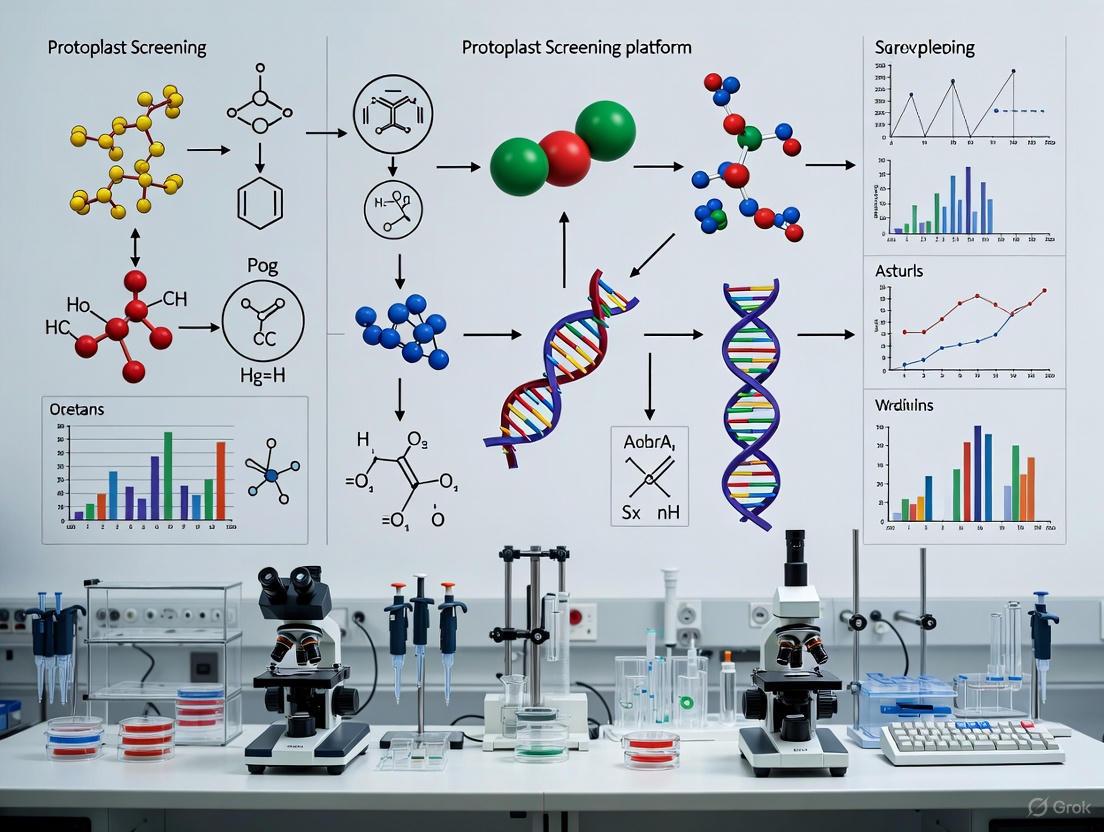
This article explores the establishment and application of protoplast-based screening platforms as powerful, high-throughput tools for plant metabolic engineering.
Protoplast Screening Platforms: Accelerating High-Throughput Discovery for Plant Metabolic Engineering
Abstract
This article explores the establishment and application of protoplast-based screening platforms as powerful, high-throughput tools for plant metabolic engineering. It covers the foundational principles of protoplast isolation and culture, details advanced methodological applications including CRISPR/Cas genome editing and library screening, provides critical troubleshooting and optimization strategies for challenging species, and discusses validation techniques and comparative performance across plant systems. Aimed at researchers and scientists in plant biotechnology and drug development, this resource synthesizes current protocols and emerging trends to enable the rapid engineering of valuable plant natural products, reducing development timelines from years to days.
The Single-Cell Frontier: Understanding Protoplast Biology and Isolation Fundamentals
What are Protoplasts? Defining the Wall-Less Plant Cell System
Protoplasts are defined as living plant, bacterial, or fungal cells that have been stripped of their rigid cell wall, resulting in a naked, spherical protoplasmic mass surrounded by an intact plasma membrane [1] [2]. The term, coined by Hanstein in 1880, originates from the Ancient Greek word prōtóplastos, meaning 'first-formed' [1]. These unique biological entities represent the smallest functional units capable of growth and regeneration and exhibit totipotency—the remarkable ability to regenerate a complete, fertile plant under appropriate in vitro conditions [3].
The significance of protoplasts in modern plant science stems from their accessibility and their ability to efficiently take up exogenous genetic material [4]. The removal of the cell wall eliminates a major barrier to the introduction of macromolecules, viruses, bacteria, and nuclei, making protoplasts an invaluable tool across a wide spectrum of biological and biotechnological applications [1] [3]. This system provides a unique experimental platform for studying the structure and function of plant cells, membrane biology, gene expression regulation, and, crucially, for plant metabolic engineering research [5] [4].
Historical Development and Isolation Techniques
Historical Milestones
The journey of protoplast technology began over a century ago. The first isolation of plant protoplasts was achieved by Klercker in 1892 using a mechanical method on plasmolyzed cells of Stratiotes aloides [6] [7]. However, this mechanical approach yielded very few viable protoplasts and was not practical for widespread application. The field transformed in 1960 when Cocking pioneered the use of enzymes to release protoplasts efficiently, opening the door for serious research and application [6] [7]. A landmark achievement came in 1971 when Nagata and Takebe demonstrated the first plant regeneration from isolated tobacco mesophyll protoplasts [6]. The following year, Carlson produced the first somatic hybrids by fusing protoplasts from two different Nicotiana species, establishing protoplast fusion as a powerful breeding tool [6].
Modern Isolation Methods
Contemporary protoplast isolation relies almost exclusively on enzymatic methods, which are safer and yield higher quantities of viable protoplasts compared to mechanical means [7]. The process involves degrading the key structural components of the plant cell wall—primarily cellulose, hemicellulose, and pectin—using a tailored mixture of enzymes [1] [7].
- Enzyme Cocktails: The specific enzymes required depend on the source of the protoplasts. For plant cells, a mixture of cellulase (to digest cellulose) and pectinase (or macerozyme, to break down pectin in the middle lamella) is standard [1] [7]. Xylanase may also be used for certain plant species [1].
- Isolation Protocols: Enzymatic isolation can be performed in two primary ways. The sequential method first uses pectinase to separate cells by degrading the middle lamella, followed by cellulase to remove the primary cell wall. The more common simultaneous method uses both enzymes together in a single step to reduce time and contamination risk [6].
- Osmotic Protection: During and after cell wall digestion, the protoplast becomes extremely sensitive to osmotic stress. The entire process must be carried out in an isotonic solution containing an osmoticum, such as mannitol or sucrose, to prevent the fragile plasma membrane from rupturing [1] [7] [3].
Table 1: Enzymes for Protoplast Preparation from Different Cell Types
| Type of Cell | Enzymes Used |
|---|---|
| Plant Cells | Cellulase, Pectinase, Xylanase [1] |
| Gram-positive Bacteria | Lysozyme, N,O-diacetylmuramidase, Lysostaphin [1] |
| Fungal Cells | Chitinase [1] |
Following isolation, protoplasts are purified from undigested tissues and cellular debris through a combination of filtration, centrifugation, and flotation on density gradients like Percoll or sucrose [7] [4]. The viability of the purified protoplasts is typically assessed using staining methods such as Fluorescein Diacetate (FDA), which fluoresces green in living cells, or phenosafranine [7].
The Role of Protoplasts in Metabolic Engineering and Screening Platforms
Protoplasts have emerged as a cornerstone technology for plant metabolic engineering, a field aimed at re-engineering crops to produce valuable compounds or possess new traits for a sustainable bio-based economy [5]. The conventional process of generating stable mutant or transgenic plants is a significant bottleneck, often taking "several months to over a year" [5]. Protoplast-based transient transformation systems offer a rapid and scalable alternative for testing genetic components.
A cutting-edge application is the development of high-throughput screening (HTS) platforms that combine protoplast transformation with Fluorescence Activated Cell Sorting (FACS) [5]. This workflow allows researchers to screen complex genetic libraries in a matter of days, as opposed to years required by conventional means [5].
- Predictive Screening: Protoplasts can serve as a predictive tool for plant engineering. For instance, tobacco protoplasts transiently transformed with genes involved in lipid biosynthesis have been shown to accumulate high levels of lipid and can be sorted via FACS based on this trait [5]. This enables the rapid identification of genes, such as the transcription factor ABI3, that play a major role in metabolic pathways like lipid accumulation [5].
- Versatility and Throughput: This strategy is not limited to lipids and can be applied to numerous other valuable metabolic traits. The capacity to test millions of genetic variants in a single experiment makes protoplast-based HTS one of the most powerful screening methods in plant biotechnology [5].
- Microfluidic Advances: Recent technological innovations, such as droplet-based microfluidics, further enhance the resolution of protoplast assays. This platform allows for the encapsulation, cultivation, and long-term observation of individual protoplasts in nanoliter-sized droplets, enabling highly controlled studies of cell development and dose-response screening at nearly single-cell resolution [8].
The following diagram illustrates the logical workflow of a protoplast-based high-throughput screening platform for metabolic engineering.
Experimental Protocols: From Isolation to Regeneration
Detailed Protocol for Plant Protoplast Isolation and Culture
A generalized, detailed protocol for the isolation and culture of plant protoplasts is outlined below. Specific conditions (e.g., enzyme concentrations, incubation times) must be optimized for each plant species and tissue type [8] [7] [3].
Stage 0: Plant Material Preparation
- Source Selection: Select healthy, young tissue. Mesophyll tissue from expanded leaves is most common, but callus, cell suspension cultures, petals, and roots are also used [7] [4]. Vigorously growing younger tissues generally yield protoplasts with higher viability and yield [4].
- Sterilization and Preparation: Surface sterilize the tissue (e.g., with ethanol and sodium hypochlorite) [8]. Cut the tissue into small, thin segments (0.5-1 mm strips) to maximize enzyme contact surface area [7].
Stage 1: Protoplast Isolation and Purification
- Enzymatic Digestion: Incubate the tissue pieces in a filter-sterilized enzyme solution (e.g., 1.6% cellulase and 0.8% macerozyme in an osmoticum solution like BNE9) for several hours (e.g., 15-17 hours at 27°C in darkness) with gentle agitation [8].
- Protoplast Release and Purification:
- Filtration: Pass the digested mixture through a 100 μm mesh sieve to remove undigested tissue and debris [8].
- Centrifugation and Washing: Centrifuge the filtrate (e.g., at 700-760 g for 5 min) and resuspend the protoplast pellet in a washing solution [8]. To further purify, gently overlay the protoplast suspension with a sucrose solution and centrifuge. Viable, intact protoplasts will float and form a band at the interphase, which can be carefully collected [8] [7].
- Viability Assessment: Assess viability by staining an aliquot with FDA and examining under a fluorescence microscope. Viable protoplasts will fluoresce green [7].
Stage 2: Protoplast Culture
- Culture Medium: Resuspend the purified protoplasts in an appropriate culture medium. This is often a modified MS or B5 medium with specific adjustments: reduced iron and zinc, no ammonia, 2-4 times higher calcium for membrane stability, and an osmoticum (e.g., glucose or mannitol) [7]. A high auxin/kinetin ratio is typically used to induce cell division [7].
- Culture Methods:
- Liquid Culture: The most preferred method, where protoplasts are cultured in liquid medium. This allows for easy dilution and transfer [7].
- Agar Culture: Protoplasts are embedded in soft agar to fix their position, which prevents clump formation and facilitates tracking individual cells [7].
- Micro-Drop Culture: Protoplasts are cultured in tiny individual droplets within specialized dishes like Cuprak dishes, which maintain high humidity [7].
Stage 3: Plant Regeneration
- Cell Wall Regeneration and Division: Within 24-48 hours, cultured protoplasts begin to synthesize a new cell wall. The first cell division usually occurs within 2-7 days, followed by subsequent divisions to form microcolonies and eventually a callus [7] [3].
- Organogenesis: Transfer the callus to a regeneration medium with a high kinetin/auxin ratio to induce shoot formation (caulogenesis). Once shoots develop, they are transferred to a rooting medium to form complete plantlets that can be acclimatized to greenhouse conditions [1] [3].
The Scientist's Toolkit: Essential Reagents for Protoplast Isolation and Culture
Table 2: Key Research Reagent Solutions for Protoplast Experiments
| Reagent / Material | Function / Purpose | Examples / Notes |
|---|---|---|
| Cell Wall Degrading Enzymes | Digest the cell wall to release protoplasts. | Cellulase (digests cellulose), Pectinase/Macerozyme (digests pectin). Concentrations vary by species (0.25%-3%) [1] [8] [4]. |
| Osmoticum | Prevents osmotic rupture of the fragile protoplast by maintaining isotonic conditions. | Mannitol, Sorbitol, Sucrose, or Glucose. Included in all solutions during isolation and early culture [1] [7]. |
| Culture Medium | Provides essential nutrients, vitamins, and plant growth regulators for protoplast survival, division, and regeneration. | Often Modified MS or B5 Media. Requires optimized balance of auxins (e.g., NAA) and cytokinins (e.g., BAP) [8] [7]. |
| Plant Growth Regulators (PGRs) | Direct cell fate; induce division or regeneration. | Auxins (e.g., 2,4-D, NAA) and Cytokinins (e.g., BAP, Zeatin). Low concentrations (20-80 µg/L) can enhance survival and growth [8] [7]. |
| Viability Stain | Assesses the health and viability of isolated protoplasts before culture. | Fluorescein Diacetate (FDA) - fluoresces green in live cells; Phenosafranine - stains dead cells red [7]. |
Advanced Applications in Genetic Engineering
Beyond screening, protoplasts are pivotal in several advanced genetic engineering applications.
Somatic Hybridization (Protoplast Fusion): This technique involves fusing protoplasts from two different plant species—even those that are sexually incompatible—to create novel somatic hybrid plants. Fusion is induced by an electric field or a solution of polyethylene glycol (PEG) [1] [6] [9]. This allows for the transfer of complex traits, such as disease resistance from a wild species into a cultivated crop, and the generation of novel nuclear and cytoplasmic genetic combinations [6] [9]. Successful examples include intergeneric fusions between Brassica napus and Diplotaxis harra [9].
DNA-Free Genome Editing: Protoplasts are an ideal system for implementing CRISPR/Cas9-based genome editing using preassembled Ribonucleoprotein (RNP) complexes [10]. This DNA-free method involves delivering the Cas9 protein complexed with guide RNA directly into the protoplast via PEG-mediated transfection. As no foreign DNA is integrated, the resulting edited plants can potentially be classified as non-GMO in some regulatory frameworks, offering a precise and efficient editing tool with reduced environmental and economic impacts [10]. This approach has been successfully established in crops like chicory and endive [10].
Transient Gene Expression Analysis: Protoplasts, especially those from Arabidopsis thaliana mesophyll, are widely used as a versatile cell system for transient gene expression analysis [6] [4]. They enable rapid functional characterization of genes, study of promoter activity, protein subcellular localization, and protein-protein interactions, often within a matter of hours after transformation [4].
The following diagram maps the advanced applications and logical progression from protoplast isolation to the generation of improved plant varieties.
Protoplasts, as wall-less plant cell systems, have evolved from a biological curiosity into an indispensable platform for advanced plant research and biotechnology. Their unique properties of totipotency and accessibility make them particularly powerful for metabolic engineering and high-throughput functional genomics. The integration of protoplast-based screening with cutting-edge technologies like FACS, microfluidics, and DNA-free genome editing is revolutionizing the pace at which scientists can decode complex metabolic pathways and engineer improved crop varieties. As optimization of isolation and regeneration protocols continues across an ever-widening range of species, the protoplast system is poised to remain a cornerstone technology for developing sustainable agricultural solutions and advancing our fundamental understanding of plant cell biology.
Protoplasts, defined as plant cells that have been stripped of their cell walls, represent a fundamental tool in modern plant biotechnology. These naked cells, surrounded only by their plasma membrane, constitute a unique single-cell system with immense regenerative potential, capable of re-entering the cell cycle, regenerating a cell wall, and developing into entire plants under suitable cultural conditions [11]. The term "protoplast" was first coined by Hanstein in 1880, with the first isolation attempts dating back to Klercker's mechanical method in 1892 [12] [13]. However, serious progress in protoplast culture began in the 1960s when Cocking pioneered enzymatic isolation techniques, revolutionizing the field [12].
Within the context of plant metabolic engineering research, protoplasts offer an invaluable screening platform for validating genetic components and metabolic pathways before undertaking lengthy stable transformation processes [5]. Their lack of cell walls facilitates efficient uptake of foreign DNA, making them ideal for transient transformation assays, CRISPR/Cas9 genome editing validation, and high-throughput screening using techniques like fluorescence-activated cell sorting (FACS) [5] [14] [11]. This technical guide details the core principles of protoplast isolation through enzymatic digestion and cell wall removal, providing researchers with the methodologies necessary to leverage this powerful system for metabolic engineering applications.
Fundamental Principles of Protoplast Isolation
The Plant Cell Wall: Structure and Composition
The plant cell wall is a complex, dynamic extracellular matrix composed primarily of cellulose microfibrils embedded in a cross-linked matrix of hemicellulose, pectin, and various structural proteins [12]. This robust structure provides mechanical support, determines cell shape, and protects against pathogen attack. Cellulose, a linear polymer of β-1,4-linked glucose residues, forms the structural framework, while hemicellulose—a diverse group of polysaccharides—cross-links cellulose microfibrils. Pectin, a heterogeneous gelatinous polysaccharide rich in galacturonic acid, forms the middle lamella that cements adjacent cells together [15]. Understanding this composition is crucial for effective enzymatic digestion, as it dictates the specific enzyme combinations required for efficient cell wall degradation.
Enzymatic Digestion Mechanism
Enzymatic isolation of protoplasts works by employing specific hydrolytic enzymes to systematically degrade the different structural components of the cell wall [11] [12]. The process begins with the breakdown of the middle lamella (primarily pectin), which separates individual cells, followed by digestion of the primary cell wall components (cellulose and hemicellulose) [13]. This sequential degradation, whether performed in a stepwise manner or simultaneously, ultimately releases protoplasts into solution while keeping the plasma membrane intact [12].
Table 1: Key Enzymes Used in Protoplast Isolation
| Enzyme | Target Substrate | Function in Protoplast Isolation | Typical Concentration Range |
|---|---|---|---|
| Cellulase | Cellulose (β-1,4-glucan chains) | Degrades cellulose microfibrils in the primary cell wall | 1.0% - 2.5% [14] [15] |
| Macerozyme (Pectinase) | Pectin (in middle lamella) | Dissolves middle lamella to separate cells | 0.1% - 0.6% [14] [15] |
| Hemicellulase | Hemicellulose | Degrades hemicellulosic cross-linking polysaccharides | Occasionally used in specific combinations |
| Pectinase Y-23 | Pectin | Alternative pectin-degrading enzyme | 0.5% [15] |
The diagram below illustrates the sequential process of enzymatic cell wall degradation and protoplast release:
Factors Influencing Protoplast Isolation Efficiency
Source Material Selection
The choice of plant material significantly impacts protoplast yield, viability, and subsequent regenerative capacity. Source tissues must be carefully selected based on the specific experimental requirements and the plant species being used.
Table 2: Common Source Tissues for Protoplast Isolation
| Source Tissue | Advantages | Limitations | Ideal Plant Status |
|---|---|---|---|
| Leaf Mesophyll | High yield, uniform cells, readily available [16] [12] | Chlorophyll interference in some assays | Young, fully expanded leaves from sterile growth [14] |
| Cell Suspension Cultures | High yield, rapid division, good regeneration [16] | Requires maintenance of suspension cultures | 3-7 day old subcultures, log phase growth |
| Callus Cultures | Dedifferentiated state, high regenerative potential [13] | Potential genetic variability, age-dependent response | Young, actively growing callus (2-week old) [13] |
| Hypocotyls/Stems | Useful for species with recalcitrant leaves | Lower yield in some species | Seedlings in active growth stage |
For metabolic engineering studies, the source tissue should ideally reflect the target metabolic pathway. For instance, leaves may be suitable for general metabolic screening, while embryonic tissues might be preferred for studying seed-specific metabolic pathways [5]. The physiological status of the source plant is equally critical—plants grown under controlled environmental conditions (light, temperature, humidity) typically yield more uniform and viable protoplasts than field-grown material [14].
Enzyme Solution Optimization
Effective enzyme solutions must be carefully formulated based on the source tissue and plant species. The composition typically includes cell wall-degrading enzymes, osmotic stabilizers, and various salts to maintain membrane integrity and protoplast viability.
Table 3: Optimized Enzyme Solutions for Different Plant Systems
| Plant System | Enzyme Solution Composition | Incubation Conditions | Reported Efficiency |
|---|---|---|---|
| Pea (Pisum sativum) | 1-2.5% Cellulase R-10, 0-0.6% Macerozyme R-10, 0.3-0.6M Mannitol [14] | Several hours, dark, gentle agitation | Viability varies with combination [14] |
| Multi-genotype Poplar | Solution I: 1.5% Cellulase R-10 + 0.5% Macerozyme R-10\nSolution II: 1.5% Cellulase R-10 + 0.5% Pectinase Y-23 [15] | Not specified | Solution I: Significantly higher viability [15] |
| General Plant Tissues | 1-2% Cellulase, 0.1-1.0% Macerozyme, 0.3-0.6M osmoticum [12] [13] | 25-30°C, several hours | Species and tissue dependent |
The pH of the enzyme solution typically ranges from 5.7 to 6.0 to optimize enzyme activity [14] [12]. Incubation times vary from a few hours to overnight digestion, depending on enzyme concentration and tissue type. Recent studies emphasize the importance of genotype-specific optimization, as demonstrated in poplar where different taxonomic sections showed striking variation in protoplast viability (11.28% to 93.87%) despite using identical isolation protocols [15].
Osmotic Stabilization
The absence of a cell wall makes protoplasts extremely vulnerable to osmotic lysis. To prevent bursting, the isolation and culture media must contain appropriate osmotic stabilizers at optimal concentrations.
Table 4: Common Osmotic Stabilizers in Protoplast Isolation
| Osmoticum | Concentration Range | Mechanism | Considerations |
|---|---|---|---|
| Mannitol | 0.3-0.6 M [14] | Osmotically active sugar alcohol | Chemically inert, non-metabolizable |
| Sorbitol | 0.3-0.6 M [13] | Sugar alcohol similar to mannitol | Commonly used in combination |
| Sucrose | 0.3-0.6 M | Disaccharide providing energy source | Can be metabolized by cells |
| KCl/CaCl₂ | 10-20 mM [14] | Salt solutions for membrane stability | Often used in combination with sugar alcohols |
Calcium ions (typically as CaCl₂) at concentrations of 10-125 mM are frequently included to enhance membrane stability [14]. The optimal osmotic pressure must be maintained throughout the isolation and initial culture phases, with gradual reduction during subsequent culture stages to allow for cell wall regeneration and division.
Experimental Protocol: Protoplast Isolation
The complete protoplast isolation process involves multiple stages from source preparation to final culture. The following diagram summarizes the key steps in this workflow:
Detailed Step-by-Step Methodology
Step 1: Plant Material Preparation
For leaf material (the most common source), select young, fully expanded leaves from healthy plants grown under controlled conditions [14]. Remove the midrib and cut leaves into 0.5-1 mm thin strips using a sterile scalpel blade to maximize surface area for enzyme penetration [14]. For species with waxy cuticles, gentle abrasion or peeling of the epidermal layer may enhance enzyme access.
Step 2: Enzyme Incubation
Transfer tissue segments to the pre-optimized enzyme solution containing cell wall-degrading enzymes and osmotic stabilizers. Incubation is typically performed in the dark at 25-28°C for 4-16 hours, with gentle agitation (30-50 rpm) to facilitate enzyme penetration [14] [12]. The digestion process can be monitored microscopically for protoplast release.
Step 3: Protoplast Purification
After digestion, filter the protoplast-enzyme mixture through a 40-100 μm mesh or cell strainer to remove undigested tissue and cell clumps [14]. Collect the filtrate and centrifuge at 100-200 × g for 5-10 minutes. Carefully remove the supernatant and resuspend the protoplast pellet in an osmoticum-containing washing solution (e.g., W5 solution: 2 mM MES, 154 mM NaCl, 125 mM CaCl₂, 5 mM KCl) [14]. Repeat this washing step 2-3 times to remove enzyme residues.
Step 4: Viability Assessment
Assess protoplast viability and quality before proceeding to culture or transformation. Multiple staining methods are available:
- Fluorescein Diacetate (FDA) Staining: Viable protoplasts with active esterases convert non-fluorescent FDA to green-fluorescent fluorescein [17] [12]. Incubate protoplasts with 0.01% FDA for 5 minutes and observe under fluorescence microscopy.
- Evans Blue Staining: Non-viable protoplasts with compromised membranes take up the blue dye, while viable protoplasts exclude it [13].
- Calcofluor White Staining: Detects newly regenerated cell walls by binding to cellulose and chitin, appearing fluorescent blue under UV light [12] [13].
The Scientist's Toolkit: Essential Reagents and Materials
Table 5: Key Research Reagent Solutions for Protoplast Isolation and Culture
| Reagent/Material | Function | Application Notes |
|---|---|---|
| Cellulase R-10 | Degrades cellulose component of cell wall | From fungus Trichoderma viride; concentration typically 1-2.5% [14] [15] |
| Macerozyme R-10 | Degrades pectin in middle lamella | From fungus Rhizopus sp.; concentration typically 0.1-0.6% [14] [15] |
| Mannitol | Osmotic stabilizer | 0.3-0.6 M concentration maintains osmotic balance [14] |
| MES Buffer | pH maintenance in enzyme solution | Maintains optimal pH (5.7-6.0) for enzyme activity [14] |
| CaCl₂ | Membrane stabilizer | 10-125 mM concentration enhances membrane integrity [14] |
| W5 Solution | Washing and resuspension solution | Contains salts for ionic balance and viability [14] |
| Fluorescein Diacetate (FDA) | Viability staining | Stock solution 1 mg/mL in acetone; working concentration 0.01% [17] |
Integration with Metabolic Engineering Research
Protoplast-based systems offer a versatile platform for plant metabolic engineering research, particularly for high-throughput screening of metabolic pathways. The isolated protoplasts can be transiently transformed with constructs encoding metabolic enzymes or transcription factors, then screened for desired metabolic traits using fluorescence-activated cell sorting (FACS) [5]. This approach enables rapid testing of multiple genetic constructs in a matter of days, significantly accelerating the design-build-test-learn cycles in metabolic engineering [5].
For lipid metabolic engineering, for instance, protoplasts transformed with transcription factors like WRI1 (WRINKLED1) or LEC2 (LEAFY COTYLEDON2) can be sorted based on lipid content using fluorescent dyes such as Nile Red [5]. This allows identification of the most effective genetic components for enhancing lipid accumulation before proceeding to stable plant transformation. Similar strategies can be applied to engineer pathways for pharmaceuticals, biopolymers, or other valuable metabolites.
The single-cell nature of protoplasts also facilitates the study of cell-type-specific metabolism when isolated from specific tissues or cell types. Furthermore, protoplasts serve as an excellent system for validating CRISPR/Cas9 constructs targeting metabolic genes, with editing efficiencies reaching up to 97% in optimized systems like pea [14]. This enables precise metabolic engineering through gene knockouts, knock-ins, or promoter replacements to redirect metabolic flux.
Protoplast isolation through enzymatic digestion represents a cornerstone technique in plant biotechnology with particular relevance for metabolic engineering research. The success of this process hinges on careful optimization of multiple parameters: selection of appropriate source material, formulation of effective enzyme solutions, maintenance of proper osmotic conditions, and execution of gentle yet thorough purification protocols. As plant metabolic engineering continues to advance toward more complex and ambitious goals, protoplast-based screening platforms will play an increasingly vital role in accelerating the development of improved crops for sustainable production of biofuels, pharmaceuticals, and valuable chemicals.
Protoplasts, plant cells devoid of cell walls, represent a fundamental tool for physiological studies and metabolic engineering in plant research. They serve as a versatile platform for gene function analysis, transient gene expression, subcellular localization, and CRISPR/Cas reagent validation [14]. The development of an efficient protoplast-based screening platform is particularly valuable for plant metabolic engineering, enabling researchers to manipulate and study the biosynthetic pathways of valuable plant natural products (PNPs) [18]. These secondary metabolites—including terpenes, phenolics, alkaloids, and glucosinolates—are not only crucial for plant defense and environmental adaptation [19] [20] but also serve as primary sources of cosmetics, food additives, and pharmaceuticals [18]. However, the successful application of protoplast technology hinges on optimizing several critical isolation factors. This technical guide examines the three pillars of efficient protoplast systems: enzyme combinations for cell wall digestion, osmotic stabilizers for membrane integrity, and appropriate tissue sources for viable protoplast yield, providing a foundation for advancing metabolic engineering research.
Core Factors in Protoplast Isolation
Enzyme Combinations for Cell Wall Digestion
The plant cell wall, a complex network of cellulose, hemicellulose, pectin, and structural proteins, requires specific enzyme combinations for efficient digestion. The composition and concentration of these enzymes must be carefully optimized for different plant species and tissue types.
Cellulases (e.g., Onozuka R-10) and pectinases (e.g., Pectolyase Y-23, Macerozyme R-10) form the core of most enzyme mixtures. Cellulases target the β-1,4-glycosidic linkages in cellulose, while pectinases break down pectin polymers in the middle lamella that hold adjacent cells together. Research across multiple species demonstrates that specific combinations and ratios significantly impact protoplast yield and viability.
In Cannabis sativa L., several enzyme solutions were systematically evaluated for isolating protoplasts from leaves and petioles. The optimized ½ ESIV solution, containing 0.5% cellulase Onozuka R-10 and 0.05% pectolyase Y-23, proved most effective, yielding 2.2 × 10⁶ protoplasts/1 g of fresh weight with 78.8% viability [21] [22]. For Brassica carinata, researchers utilized a different combination of 1.5% cellulase Onozuka R-10 and 0.6% Macerozyme R-10 in the enzyme solution for effective protoplast isolation from leaf tissues [23]. Pea (Pisum sativum L.) protoplast isolation was optimized through orthogonal experimental design (L16), which tested different concentrations of cellulase R-10 (1-2.5%), macerozyme R-10 (0-0.6%), and mannitol (0.3-0.6 M) [14].
Table 1: Optimized Enzyme Combinations for Protoplast Isolation in Different Plant Species
| Plant Species | Cellulase Concentration | Pectinase Concentration | Additional Components | Yield & Viability |
|---|---|---|---|---|
| Cannabis sativa L. | 0.5% Onozuka R-10 | 0.05% Pectolyase Y-23 | 20 mM MES, 5 mM MgCl₂, 0.5 M mannitol | 2.2×10⁶ protoplasts/g FW, 78.8% viability [21] [22] |
| Brassica carinata | 1.5% Onozuka R-10 | 0.6% Macerozyme R-10 | 0.4 M mannitol, 10 mM MES, 0.1% BSA, 1 mM CaCl₂ | High regeneration frequency (64%) [23] |
| Pisum sativum L. | 1-2.5% Onozuka R-10 | 0.25-0.6% Macerozyme R-10 | 20 mM MES, 20 mM KCl, 10 mM CaCl₂, 0.1% BSA, 0.3-0.6 M mannitol | 59±2.64% transfection efficiency [14] |
| Musa acuminata (Banana) | 1% Onozuka R-10 | 0.2% Macerozyme R-10 | 0.1% Driselase, 0.05% Pectinase, osmotic stabilizers | ~3×10⁶ protoplasts/mL SCV [24] |
Osmotic Stabilizers
Protoplasts lack the protective cell wall and are consequently extremely vulnerable to osmotic shock. Osmotic stabilizers are essential components of the enzyme solution, washing buffers, and culture media to maintain protoplast integrity by preventing rupture or plasmolysis. These compounds create an isotonic environment that balances the internal osmotic pressure of the cell.
The most commonly used osmotic stabilizer is mannitol, typically employed at concentrations ranging from 0.3 M to 0.6 M across different species [21] [23] [14]. Other osmoticums include sucrose, sorbitol, and potassium chloride. In Cannabis protoplast isolation, a sucrose/MES solution was utilized for protoplast purification through centrifugation, where protoplasts were collected at the interface between the sucrose and W5 solution layers [21] [22]. For Brassica carinata, mannitol at 0.4 M concentration was incorporated into both the plasmolysis solution and the enzyme solution [23].
The optimal concentration of osmotic stabilizers varies by species, tissue type, and physiological status of the donor plant. Excessive concentration can cause plasmolysis, while insufficient concentration may lead to protoplast swelling and rupture. Maintaining proper osmotic pressure is particularly critical during the initial stages of protoplast culture to support cell wall re-synthesis and initial divisions [23].
Tissue Source and Donor Plant Conditions
The source of explant material significantly influences protoplast yield, viability, and regeneration potential. Key considerations include the type of tissue, age of donor plants, and growth conditions prior to protoplast isolation.
Leaf mesophyll tissue is the most common source for protoplast isolation due to its accessibility and high protoplast yield. However, the developmental stage of the source leaves is critical. In Cannabis sativa, researchers compared leaves from 15- and 22-day-old plants and found that younger tissue (15-day-old) yielded more abundant and viable protoplasts [21] [22]. Similarly, for Brassica carinata, fully expanded leaves from 3- to 4-week-old seedlings were optimal, with the exact age varying slightly between genotypes [23].
Besides leaf tissues, other explant sources have been successfully utilized:
- Embryogenic Cell Suspensions (ECS): Used for banana protoplast isolation, providing approximately 3×10⁶ protoplasts per milliliter of settled cell volume [24]
- In vitro-grown plantlets: Provide sterile, uniform source material with reduced microbial contamination [21]
- Hypocotyls: Occasionally used in Brassica species, though requiring more plant material [23]
The physiological status of donor plants, including light conditions, temperature, and humidity during growth, also profoundly affects protoplast quality. Stress conditions can alter cell wall composition and metabolism, thereby influencing digestion efficiency and protoplast performance.
Table 2: Tissue Sources and Donor Plant Conditions for Optimal Protoplast Isolation
| Plant Species | Optimal Tissue Source | Donor Plant Age | Pre-conditioning | Impact on Protoplast Quality |
|---|---|---|---|---|
| Cannabis sativa L. | Leaves and petioles | 15 days | In vitro grown plants, 18/6 h photoperiod, 200 µmol m⁻² s⁻¹ light | Higher yield and viability compared to 22-day-old tissue [21] [22] |
| Brassica carinata | Fully expanded leaves | 3-4 weeks | Climate chamber: 25°C day/18°C night, 16-h photoperiod, 40 µmol m⁻² s⁻¹ | Genotype-dependent response [23] |
| Pisum sativum L. | Leaf strips | 2-4 weeks | Growth chamber: 16-h light/8-h dark at 24°C, 60-65% RH | Age affects cell wall thickness and digestion efficiency [14] |
| Musa acuminata | Embryogenic Cell Suspensions (ECS) | Regularly subcultured | Weekly subculture in liquid maintenance medium | Consistent yield of viable protoplasts [24] |
Integrated Experimental Workflow
A successful protoplast isolation and transfection protocol involves a sequence of carefully optimized steps from donor plant preparation to transient transfection. The workflow below illustrates the key stages in this process, with particular emphasis on the critical factors of enzyme combination, osmotic stabilization, and tissue source.
Detailed Methodologies for Protoplast Isolation and Transfection
Plant Material Preparation:
- Seeds of Cannabis sativa L. cultivars 'Finola' and 'Futura 75' are sterilized sequentially in distilled water bath (40°C for 30 min), 0.2% (v/v) fungicide 'Bravo' solution (30 min with shaking), and 20% (w/v) chloramin T solution (30 min)
- After each step, rinse seeds in 70% ethanol for 30 seconds, followed by three washes with sterile distilled water (5 min each)
- Germinate seeds on solid MS30 medium (MS salts, 30 g/l sucrose, 0.6% plant agar, pH 5.8) in the dark at 24±2°C
- Transfer germinated seedlings to sterile culture vessels with MS30 medium and maintain at 24±2°C with 18/6 h (light/dark) photoperiod and light intensity of 200 µmol m⁻² s⁻¹
- Harvest leaves and petioles from 15-day-old plants for optimal protoplast yield
Protoplast Isolation Procedure:
- Harvest 300 mg of leaf and petiole tissue and place in a 60×15 mm glass Petri dish with 4 ml of PSII solution (0.5 M mannitol, pH 5.6)
- Immediately cut tissue into fine pieces (approximately 0.5×0.5 mm) using two scalpels
- Incubate for 1 h in the dark at 26°C with gentle shaking (40 rpm)
- Replace PSII solution with 3 ml of ½ ESIV enzyme solution (0.5% cellulase Onozuka R-10, 0.05% pectolyase Y-23, 20 mM MES, 5 mM magnesium chloride hexahydrate, 0.5 M mannitol, pH 5.6)
- Subject to long enzymolysis for 16 h with the last hour using gentle shaking (35 rpm) at 26°C
- Filter released protoplasts through a 100 μm nylon sieve to remove undigested tissue
- Centrifuge filtrate at 100 × g for 5 min and resuspend pellet in 7 ml of sucrose/MES solution
- Slowly overlay with 2 ml of W5 solution and centrifuge at 145 × g for 10 min
- Collect protoplasts at the interface and suspend in 8 ml of W5 solution followed by centrifugation at 100 × g for 5 min
- Determine protoplast yield using a Fuchs Rosenthal hemocytometer and adjust density to 8×10⁵ protoplasts per ml for culture
Protoplast Transfection Protocol:
- Isolate protoplasts from 2-4 week-old pea leaves using optimized enzyme solution (determined through orthogonal experimental design)
- Adjust protoplast density to 400,000-600,000 cells per ml using 0.5 M mannitol
- For transfection, use 20 µg plasmid DNA per transfection reaction
- Employ 20% PEG solution for PEG-mediated transfection
- Incubate protoplast-PEG-DNA mixture for 15 minutes at room temperature
- Achieve optimal transfection efficiency of 59±2.64% with these parameters
- For CRISPR/Cas9 applications, transfert protoplasts with multiplexed gene construct carrying combination of gRNAs targeting PsPDS gene
- Achieve up to 97% targeted mutagenesis efficiency in pea protoplasts
Validation Methods:
- Assess transfection efficiency using green fluorescent protein (GFP) as reporter gene
- Validate CRISPR editing efficiency by in-vitro cleavage assay
- Confirm accuracy of gene editing through sequencing of targeted loci
- Use microscopy to observe successful transfection and editing outcomes
The Scientist's Toolkit: Essential Research Reagents
Table 3: Essential Reagents for Protoplast Isolation and Transfection
| Reagent Category | Specific Examples | Function | Application Notes |
|---|---|---|---|
| Cell Wall-Digesting Enzymes | Cellulase Onozuka R-10, Macerozyme R-10, Pectolyase Y-23, Driselase | Digest cellulose, hemicellulose, and pectin components of plant cell walls | Concentration optimization required for each species/tissue; 0.5-2.5% cellulase, 0.05-0.6% pectinase typical [21] [23] [14] |
| Osmotic Stabilizers | Mannitol (0.3-0.6 M), Sucrose, Sorbitol | Maintain osmotic balance, prevent protoplast rupture | Critical in all solutions contacting protoplasts; concentration affects viability [21] [23] [14] |
| Buffer Components | MES, CaCl₂, KCl, NaCl, BSA | Maintain pH, membrane stability, reduce enzyme toxicity | Calcium ions (5-125 mM) especially important for membrane stability [23] [14] |
| Transfection Reagents | Polyethylene Glycol (PEG), Plasmid DNA, Ribonucleoproteins (RNPs) | Deliver nucleic acids or proteins into protoplasts | 20% PEG common concentration; 15-30 min incubation typical [14] |
| Viability Assessment | Fluorescein diacetate (FDA), Evans Blue, cytoplasmic streaming observation | Evaluate protoplast integrity and metabolic activity | Microscopic observation of cytoplasmic streaming reliable indicator [24] |
The establishment of an efficient protoplast screening platform for plant metabolic engineering research hinges on the meticulous optimization of three fundamental factors: enzyme combinations, osmotic stabilizers, and tissue sources. The synergistic interaction of these elements enables researchers to obtain viable protoplasts capable of division, transfection, and regeneration. As evidenced by recent studies across species from Cannabis sativa to Brassica carinata, the precise formulation of enzyme solutions—typically containing cellulytic and pectolytic enzymes in species-specific ratios—directly determines protoplast yield and quality. Simultaneously, appropriate osmotic stabilizers, predominantly mannitol at concentrations between 0.3-0.6 M, are indispensable for maintaining structural integrity throughout the isolation and culture processes. Furthermore, the selection of optimal tissue sources, particularly young leaf materials from precisely aged donor plants, ensures consistent production of metabolically active protoplasts with enhanced regenerative capacity. By systematically addressing these key isolation factors within an integrated experimental workflow, researchers can leverage protoplast-based systems to advance metabolic engineering applications, including the manipulation of valuable secondary metabolite pathways and the development of improved crop varieties through cutting-edge technologies such as CRISPR/Cas9 genome editing.
In plant metabolic engineering research, the development of robust protoplast screening platforms is paramount for accelerating the characterization of genetic components. The efficacy of these platforms is fundamentally dependent on two core, quantifiable metrics: protoplast yield and protoplast viability. These metrics serve as critical indicators of isolation protocol efficiency and the subsequent capacity of protoplasts to withstand transfection and initiate cell division. This technical guide synthesizes current methodologies and benchmark data from recent studies across diverse species, including Brassica carinata, Cannabis sativa, and Toona ciliata, to establish foundational protocols and success criteria. By providing standardized methods for assessment, optimized isolation parameters, and clear performance benchmarks, this review aims to empower researchers in establishing reliable, high-throughput screening systems for advanced plant engineering applications.
Protoplasts, plant cells devoid of cell walls, represent a versatile and powerful toolset for modern plant research. Their applications span from transient gene expression and subcellular localization studies to CRISPR genome editing and somatic hybridization [5] [22] [25]. Within the specific context of establishing a screening platform for metabolic engineering, the quality of the starting protoplast population is the single greatest determinant of experimental success. Protoplast yield and viability are not merely preliminary data points; they are predictive metrics that directly influence transfection efficiency, culture longevity, and the overall fidelity of the screening outcome.
Protoplast Viability refers to the percentage of living, metabolically active cells within an isolated population. A high viability rate is essential for ensuring that a sufficient number of cells are capable of expressing transfected constructs and undergoing the first critical mitotic divisions. Non-viable protoplasts not only contribute nothing to the screen but can also release degradative enzymes that compromise the health of the surrounding viable cells.
Protoplast Yield, typically measured as the number of protoplasts per gram of fresh weight of source tissue, dictates the scale and statistical power of any screening campaign. High-throughput platforms, particularly those utilizing fluorescence-activated cell sorting (FACS), require millions of protoplasts to screen complex genetic libraries effectively [5]. Insufficient yield directly limits the complexity of libraries that can be interrogated in a single experiment. Therefore, the systematic optimization of isolation protocols to maximize both yield and viability is a foundational step in building a effective protoplast screening platform.
Quantitative Benchmarks: Establishing Performance Standards
Recent advances in protoplast research have established robust protocols across various species, providing clear benchmark data for yield and viability. The table below summarizes key performance metrics from recent, high-impact studies, offering a reference point for researchers developing new systems.
Table 1: Benchmarks for Protoplast Yield and Viability Across Plant Species
| Plant Species | Source Tissue | Key Enzyme Composition | Average Yield (protoplasts/g FW) | Average Viability (%) | Primary Application | Citation |
|---|---|---|---|---|---|---|
| Brassica carinata (Ethiopian mustard) | Leaf | 1.5% Cellulase R10, 0.6% Macerozyme R10 | 400,000 - 600,000 /mL (adjusted) | >80% (inferred) | CRISPR genome editing | [23] |
| Cannabis sativa (Hemp) | Leaf | 0.5-2% Cellulase R10, 0.05-0.2% Pectolyase Y-23 | 2.2 x 10⁶ | 78.8% | Transient transfection, callus formation | [22] |
| Toona ciliata (Chinese Mahogany) | Leaf | 1.5% Cellulase R10, 1.5% Macerozyme R10 | 89.17 x 10⁶ | 92.6% | Subcellular localization | [25] |
These data demonstrate that while benchmarks are species-dependent, yields exceeding 10⁶ protoplasts per gram and viabilities above 75% are achievable and form a solid foundation for initiating screening workflows. The subsequent culture performance of these protoplasts is equally critical.
Table 2: Critical Post-Isolation Metrics for Protoplast Development
| Metric | Description | Typical Benchmark | Significance for Screening | Citation |
|---|---|---|---|---|
| Cell Wall Re-synthesis | Percentage of viable protoplasts that initiate new cell wall formation. | 56.1% (Cannabis) | Essential pre-requisite for cell division. | [22] |
| Plating Efficiency | Percentage of plated protoplasts that undergo cell division. | 15.8% (Cannabis); Up to 64% regeneration (B. carinata) | Directly impacts the number of calli/colonies available for screening or regeneration. | [23] [22] |
| Transfection Efficiency | Percentage of protoplasts expressing a delivered gene (e.g., GFP). | 28-40% (Cannabis, B. carinata); 29% (T. ciliata) | Determines the pool of cells expressing the genetic construct of interest in a screen. | [23] [22] [25] |
Experimental Protocols: Assessing Viability and Yield
Standardized and accurate measurement of viability and yield is a non-negotiable practice. Below are the established methodologies employed in the cited research.
Protoplast Viability Assay
The most common method for determining viability is the Fluorescein Diacetate (FDA) Staining protocol, as used in the cannabis and Toona ciliata studies [22] [25].
Principle: Viable cells with active esterases can convert non-fluorescent FDA into fluorescent fluorescein, which is retained by intact plasma membranes.
Procedure:
- Prepare an FDA stock solution (e.g., 5 mg/mL in acetone) and store in the dark.
- Dilute the stock solution in the protoplast suspension solution (e.g., mannitol or W5 solution) to a working concentration just before use.
- Mix 50-100 µL of protoplast suspension with an equal volume of diluted FDA solution.
- Incubate for 5-10 minutes at room temperature in the dark.
- Transfer a droplet of the mixture to a hemocytometer and observe under an epifluorescence microscope with a blue excitation filter.
- Count viable protoplasts (those exhibiting green fluorescence) and total protoplasts under bright-field illumination.
- Calculate viability as: Viability (%) = (Number of fluorescent protoplasts / Total number of protoplasts) × 100.
Protoplast Yield Quantification
Procedure:
- After purification and resuspension in a known volume of solution, gently mix the protoplast suspension to ensure a uniform distribution.
- Using a wide-bore pipette tip to avoid shearing the protoplasts, transfer a small aliquot (typically 15-20 µL) to a hemocytometer.
- Under a light microscope, count the protoplasts in the predefined grid areas.
- Calculate the protoplast density using the hemocytometer's manufacturer instructions.
- Calculate the total yield normalized to the fresh weight of the original tissue: Yield (protoplasts/g FW) = (Protoplast density × Total resuspension volume) / Fresh weight of digested tissue.
Optimized Workflow for Protoplast Isolation and Culture
The following diagram synthesizes the key stages from the reviewed literature into a generalized, optimized workflow for obtaining high-viability protoplasts capable of division and transfection.
The Scientist's Toolkit: Essential Reagents and Materials
The consistent production of high-quality protoplasts is dependent on a defined set of research-grade reagents. The following table details the essential components and their functions as derived from the optimized protocols.
Table 3: Essential Research Reagents for Protoplast Isolation and Culture
| Reagent Category | Specific Examples | Function | Protocol Example |
|---|---|---|---|
| Enzymes | Cellulase 'Onozuka' R-10, Macerozyme R-10, Pectolyase Y-23 | Degrades cellulose, hemicellulose, and pectin in the plant cell wall. | [23] [22] [25] |
| Osmoticum | Mannitol (0.4-0.6 M), Sorbitol | Stabilizes protoplasts by preventing osmotic lysis; maintains osmotic pressure in culture. | [23] [22] [25] |
| Buffer Systems | MES (10-20 mM), CaCl₂ (1-25 mM), BSA (0.1%) | Maintains stable pH during digestion; Ca²⁺ stabilizes membranes; BSA reduces enzyme toxicity. | [23] [22] [25] |
| Purification Solutions | W5 Solution (154mM NaCl, 125mM CaCl₂, 5mM KCl, 5mM Glucose), Sucrose/Mannitol gradients | Washes and purifies protoplasts from debris and enzymes. | [23] [22] |
| Plant Growth Regulators (PGRs) | NAA, 2,4-D, BAP, TDZ | Critical for inducing cell wall re-synthesis, division, and callus formation in culture media. | [23] [22] |
| Transfection Agent | Polyethylene Glycol (PEG), 40% concentration | Facilitates the uptake of DNA into protoplasts for transient expression. | [22] [25] |
Critical Factors Influencing Success
Achieving benchmark metrics requires careful optimization of several biological and chemical parameters. Key factors identified across studies include:
- Genotype and Donor Plant Health: The genetic background of the source plant significantly influences protoplast yield and regeneration capacity [23] [22]. Using healthy, sterile, young seedling leaves (typically 3-4 weeks old) consistently provides the highest yields and viabilities [23] [22] [25].
- Enzyme Solution Composition and Duration: The specific cocktail and concentration of cell wall-degrading enzymes must be tailored to the species and tissue type. Digestion duration is a balance between sufficient yield and preserving protoplast health, typically ranging from 10 to 16 hours [22] [25].
- Osmotic Stability: The maintenance of appropriate osmotic pressure using mannitol or similar agents is critical at every stage—from plasmolysis and digestion to the initial culture periods—to prevent protoplast rupture [23].
- Culture Medium and PGRs: Successful progression from a protoplast to a dividing cell requires a carefully sequenced media regimen. This often involves an initial medium with high auxins (NAA, 2,4-D) for cell wall formation, followed by media with a high cytokinin-to-auxin ratio to induce shoot regeneration [23].
Protoplast viability and yield are not standalone measurements but are deeply integrated, foundational metrics that dictate the capacity and reliability of a plant protoplast screening platform. The standardized protocols and benchmark data presented here provide a roadmap for researchers to systematically develop and validate their systems. By adhering to these optimized methods for assessment, isolation, and initial culture, scientists can ensure a consistent supply of high-quality protoplasts. This, in turn, enables robust, high-throughput screening applications in plant metabolic engineering, from testing synthetic genetic circuits to advancing DNA-free CRISPR genome editing, ultimately accelerating the pace of crop improvement and trait discovery.
From Theory to Practice: High-Throughput Screening and Genome Editing Applications
Polyethylene glycol (PEG)-mediated transfection represents a cornerstone technique in plant biotechnology, enabling the delivery of diverse genetic cargo—including DNA, RNA, and ribonucleoprotein (RNP) complexes—directly into plant protoplasts. This method leverages the ability of PEG to facilitate the uptake of macromolecules through membrane fusion and endocytosis, bypassing the cell wall barrier that typically impedes genetic manipulation in plants. Within the context of a protoplast screening platform for plant metabolic engineering research, this technique offers an unparalleled tool for rapid functional genomics and trait development. The transient nature of PEG-mediated delivery allows for rapid assessment of gene function, promoter activity, and CRISPR-Cas editing efficiency without the need for stable transformation, significantly accelerating the engineering of metabolic pathways for enhanced production of valuable compounds. As plant metabolic engineering increasingly focuses on complex traits involving multiple genes and sophisticated regulation, PEG-mediated transfection provides the flexible, high-throughput capability necessary to prototype genetic designs before committing to lengthy stable transformation and regeneration processes.
Principle and Applications of PEG-Mediated Transfection
PEG-mediated transfection operates through a direct physicochemical mechanism where the PEG polymer acts as a fusogen, destabilizing the plasma membrane of protoplasts and creating transient pores that enable foreign macromolecules to enter the cell. The process involves co-incubation of protoplasts with the desired cargo (DNA, RNA, or RNPs) in the presence of PEG and supporting cations such as magnesium or calcium. These cations help neutralize the negative charges on both the protoplast membrane and the nucleic acids or proteins, reducing electrostatic repulsion and facilitating closer contact. The PEG molecules then dehydrate the membrane surface, leading to localized membrane fusion and subsequent endocytosis of the cargo-protoplast complexes.
The versatility of PEG-mediated transfection makes it particularly valuable for plant metabolic engineering applications. For functional genomics, researchers can rapidly test the effect of gene overexpression, silencing, or editing on metabolic pathways without the lengthy process of stable transformation [26]. The technique enables promoter characterization by linking regulatory sequences to reporter genes and quantifying expression levels in different protoplast types, providing insights into temporal and spatial control of metabolic genes. Most significantly, PEG-mediated delivery of CRISPR-Cas components as RNPs allows for DNA-free genome editing, avoiding regulatory concerns associated with transgenic integration while enabling precise manipulation of metabolic pathway genes [26] [14]. This application is particularly valuable for engineering complex metabolic traits where multiple gene edits may be required to redirect flux toward desired compounds.
Quantitative Performance Across Plant Species
Systematic optimization of PEG-mediated transfection has yielded high efficiency across diverse plant species, each with distinct applications in metabolic engineering research. The following table summarizes key performance metrics from recent studies:
Table 1: Optimization of PEG-Mediated Transfection Across Plant Species
| Plant Species | Tissue Source | Optimal PEG Concentration | DNA Amount | Incubation Time | Transformation Efficiency | Primary Application |
|---|---|---|---|---|---|---|
| Pisum sativum (Pea) [14] | Leaf | 20% | 20 µg | 15 min | 59 ± 2.64% | CRISPR editing validation |
| Cocos nucifera (Coconut) [27] | Juvenile plantlets | 40% (PEG-4000) | 40 µg | 30 min | 48.3% | Gene editing (CnPDS) |
| Gossypium hirsutum (Cotton) [28] | Etiolated cotyledon | 40% (PEG-4000) | 15 µg | 15 min | 71.47% | Prime editing validation |
| Vaccinium membranaceum (Huckleberry) [29] | In vitro leaves | 40% (PEG-4000) | 30 µg | Not specified | 75.1% | Transient gene expression |
| Brassica carinata [23] | Leaf | Not specified | Not specified | Not specified | 40% | Genome editing |
| Cannabis sativa [22] | In vitro plants | Not specified | Not specified | Not specified | 28% | Transient transformation |
The variation in optimal parameters highlights the species-specific nature of protoplast transfection and the importance of systematic optimization for each new experimental system. The achieved efficiencies are sufficient for most screening applications in metabolic engineering, particularly when combined with appropriate reporter systems or phenotypic assays.
Beyond standard transformation metrics, PEG-mediated delivery has proven effective for CRISPR-Cas genome editing in protoplasts, with the following documented editing efficiencies:
Table 2: CRISPR-Cas Editing Efficiency via PEG-Mediated RNP Delivery
| Plant Species | Target Gene | Editing Efficiency | Cargo Format | Reference |
|---|---|---|---|---|
| Pisum sativum (Pea) [14] | PsPDS | Up to 97% | DNA | |
| Cocos nucifera (Coconut) [27] | CnPDS | 4.02% | DNA | |
| Pinus taeda (Loblolly Pine) [26] | PAL | 2.1% | RNP | |
| Abies fraseri (Fraser Fir) [26] | PDS | 0.3% | RNP |
The exceptionally high editing efficiency in pea protoplasts demonstrates the potential for multiplexed editing of metabolic pathway genes, while the successful RNP delivery in conifers offers a DNA-free approach to engineering wood properties for industrial applications.
Detailed Experimental Protocols
Protoplast Isolation and Purification
The foundation of successful PEG-mediated transfection begins with the isolation of viable, high-quality protoplasts. The following protocol, optimized for pea leaf tissue [14], exemplifies key principles applicable across species:
- Plant Material Preparation: Surface-sterilize seeds of pea cultivar 'Kashi Mukti' and sow on Solidrite mix. Grow under controlled conditions (16-h light/8-h dark cycle at 24°C) for 2–4 weeks. Select fully expanded leaves from healthy plants.
- Tissue Pre-treatment: Remove mid-ribs and slice leaves into 0.5 mm thin strips using a sterile scalpel blade. Transfer strips to enzyme solution containing 20 mM MES (pH 5.7), 20 mM KCl, 10 mM CaCl₂, 0.1% BSA, and enzyme concentrations optimized through orthogonal experimental design: 1–2.5% cellulase R-10, 0–0.6% macerozyme R-10, and 0.3–0.6 M mannitol.
- Enzymatic Digestion: Incubate tissue in enzyme solution for 14–16 hours in the dark at room temperature with gentle shaking.
- Protoplast Purification: Stop digestion by adding an equal volume of W5 solution (2 mM MES, 154 mM NaCl, 125 mM CaCl₂, 5 mM KCl). Filter the enzymolysate through a 40 μm cell strainer to remove undigested debris. Centrifuge the filtrate at 100 × g for 10 minutes. Wash the pellet twice with W5 solution and resuspend in an appropriate volume of W5 solution.
- Viability and Yield Assessment: Determine protoplast density using a hemocytometer and assess viability via FDA staining (fluorescein diacetate) or similar fluorescent viability markers.
For species with high phenolic content, such as black huckleberry, the addition of 1% PVP-40 to the enzyme solution significantly improves protoplast yield and viability by suppressing phenolic oxidation [29].
PEG-Mediated Transfection of DNA, RNA, and RNP Complexes
The following optimized protocol for pea protoplasts [14] demonstrates high efficiency for DNA delivery, with adaptations for RNP complexes noted:
- Protoplast Preparation: Isolate and purify protoplasts as described above. Adjust density to 2.5 × 10^5 cells/mL using 0.5 M mannitol solution.
- Transfection Mixture Assembly: In a sterile tube, combine 100 μL of protoplast suspension with 20 μg of plasmid DNA. For RNP transfection [26], replace plasmid DNA with preassembled CRISPR-Cas RNP complexes (typically 10–20 μg).
- PEG Solution Addition: Add 100–120 μL of PEG solution (40% PEG-4000, 0.4 M CaCl₂) dropwise with gentle mixing. The optimal PEG concentration may vary by species (see Table 1).
- Incubation and Transformation: Incubate the mixture for 15 minutes at room temperature. The incubation time should be optimized for specific protoplast systems, as longer exposure may reduce viability.
- Washing and Culture: Gradually dilute the transfection mixture with 1–2 mL of W5 solution to reduce PEG concentration. Centrifuge at 100 × g for 5 minutes and carefully remove the supernatant. Resuspend the transfected protoplasts in appropriate culture medium for downstream applications.
For CRISPR-Cas RNP delivery in conifer species [26], the protocol follows similar principles but uses purified protoplasts from somatic embryos transfected with precomplexed RNPs targeting genes of interest like phenylalanine ammonia-lyase (PAL) in loblolly pine or phytoene desaturase (PDS) in Fraser fir.
Figure 1: Workflow for PEG-mediated transfection of plant protoplasts. The process begins with protoplast isolation and progresses through purification, cargo preparation, PEG-assisted delivery, and final analysis of transfection outcomes.
Analysis of Transfection and Editing Efficiency
Following transfection, several methods enable quantification of success:
- Microscopic Visualization: For GFP reporter constructs, examine protoplasts using fluorescence microscopy 12–48 hours post-transfection. Calculate transfection efficiency as (fluorescent protoplasts/total protoplasts) × 100%.
- Molecular Analysis of Genome Editing: For CRISPR-Cas edits, extract genomic DNA from transfected protoplasts 2–3 days post-transfection. Use targeted PCR amplification followed by either T7E1 assay, restriction fragment length polymorphism (RFLP) analysis, or high-throughput sequencing (e.g., Hi-TOM) to quantify indel frequencies [27] [14].
- Expression Analysis: For gene expression studies, extract RNA and protein at appropriate time points for qRT-PCR, western blot, or enzymatic assays to measure transcriptional and translational outcomes.
Essential Reagents and Solutions
The following table catalogues critical reagents for establishing PEG-mediated transfection in plant protoplast systems, compiled from multiple optimized protocols [26] [14] [29]:
Table 3: Essential Research Reagents for PEG-Mediated Protoplast Transfection
| Reagent Category | Specific Components | Function | Optimization Notes |
|---|---|---|---|
| Cell Wall Digestion Enzymes | Cellulase R-10, Macerozyme R-10, Pectinase, Hemicellulase | Digest plant cell wall to release protoplasts | Concentration varies by species and tissue type (0.5-2.5%) |
| Osmotic Stabilizers | Mannitol (0.4-0.6 M), Sorbitol (1 M) | Maintain osmotic balance to prevent protoplast rupture | Concentration critical for viability; mannitol most common |
| Buffer Components | MES, CaCl₂, KCl, NaCl, BSA | Maintain pH and ion balance, protect membrane integrity | MES buffer at pH 5.7 typically used |
| Antioxidants | PVP-40, β-mercaptoethanol, ascorbic acid | Reduce phenolic oxidation and browning | Essential for species with high phenolic content |
| PEG Transformation Solution | PEG-4000 (20-40%), CaCl₂ (0.2-0.4 M) | Facilitate cargo delivery through membrane fusion | Higher PEG concentrations (40%) often more efficient but may reduce viability |
| Cargo Molecules | Plasmid DNA, in vitro transcribed RNA, CRISPR-Cas RNPs | Genetic material for delivery | RNPs preferred for DNA-free editing; 10-40 μg typical amount |
| Viability Stains | FDA (fluorescein diacetate), Evans Blue | Distinguish live vs. dead protoplasts | FDA stains live cells green; critical for quality assessment |
Technical Considerations and Troubleshooting
Successful implementation of PEG-mediated transfection requires attention to several technical aspects:
- Protoplast Quality and Viability: The single most important factor for efficient transfection is starting with high-quality, viable protoplasts. Viability should exceed 80% for best results, achieved through careful handling, appropriate osmotic stabilization, and minimization of oxidative stress through antioxidants like PVP-40 in phenolic-rich species [29].
- Cargo Format Considerations: The choice between DNA, RNA, and RNP delivery depends on application requirements. DNA plasmids allow for sustained expression but risk integration. RNA offers transient expression without genomic integration. RNPs provide the most transient activity, minimizing off-target effects in CRISPR applications—particularly valuable for metabolic engineering where precise edits are required without persistent nuclease activity [26].
- Species-Specific Optimization: As evidenced in Table 1, optimal parameters vary significantly across species. Systematic optimization of PEG concentration, incubation time, and DNA amount is essential when establishing protocols for new plant systems. Factorial experimental designs can efficiently identify optimal conditions.
- Downstream Applications: For metabolic engineering research, transfected protoplasts can be used for various analyses including metabolite profiling, enzyme activity assays, and transcriptional analysis. While regeneration to whole plants remains challenging for many species, protoplast systems provide valuable screening platforms before committing to stable transformation.
PEG-mediated transfection represents a versatile and efficient method for delivering diverse cargo types—DNA, RNA, and RNP complexes—into plant protoplasts. Within a protoplast screening platform for metabolic engineering research, this technique enables rapid assessment of gene function, promoter activity, and CRISPR-Cas editing efficiency, significantly accelerating the design-build-test cycle for engineering plant metabolic pathways. The continued optimization of this method across diverse species, coupled with advances in DNA-free editing using RNP complexes, positions PEG-mediated transfection as an indispensable tool in the plant metabolic engineering toolkit. As research progresses toward more complex metabolic engineering targets, this technique will play an increasingly important role in the rapid prototyping of genetic designs before implementation in whole plants.
In the context of plant metabolic engineering, the ability to precisely modify biosynthetic pathways for enhanced production of valuable plant natural products (PNPs) is a primary research goal. However, a significant bottleneck in this process lies in the validation of CRISPR/Cas editing reagents, including guide RNAs (gRNAs) and Cas proteins. Traditional stable plant transformation methods are notoriously time-consuming, often requiring several months to generate and regenerate transformed plants, only to potentially discover that the chosen gRNAs have low editing efficiency [18] [14]. This inefficiency severely hampers the rapid iteration required for optimizing complex metabolic pathways.
To address this challenge, plant protoplast-based platforms have emerged as a powerful, rapid pre-screening system. Protoplasts—plant cells devoid of cell walls—serve as an ideal high-throughput platform for the fast and efficient validation of CRISPR/Cas reagents prior to committing to lengthy stable transformation and regeneration procedures [30] [10] [14]. By transfecting protoplasts with CRISPR ribonucleoprotein (RNP) complexes, researchers can quantitatively assess mutagenesis efficiency within hours to days, enabling the selection of the most effective reagents for subsequent stable transformation. This approach accelerates the functional characterization of genes involved in metabolic pathways and paves the way for more efficient engineering of high-value compounds in plants.
The Scientific Basis of Protoplast Screening
Advantages of a Protoplast-Based Platform
The utility of protoplasts in functional genomics stems from several key technical advantages. Their lack of a cell wall facilitates direct uptake of nucleic acids, proteins, or preassembled RNP complexes via polyethylene glycol (PEG)-mediated transfection or electroporation [14]. This system provides a uniform cellular environment for gene editing, effectively eliminating the chimerism often encountered in regenerated whole plants and allowing for a more precise and reliable assessment of editing outcomes [14].
A significant advancement is the use of preassembled Cas9 RNP complexes. This DNA-free approach offers multiple benefits over plasmid-based delivery, including higher editing efficiency, reduced off-target effects, minimal cytotoxicity, and the avoidance of transgene integration [30] [10]. Furthermore, this platform is highly versatile, supporting not only standard CRISPR/Cas9 knockouts but also more sophisticated editing strategies like homology-directed repair (HDR) and prime editing [30].
Application in Metabolic Engineering Research
For metabolic engineering research focused on PNPs, this platform is particularly transformative. Protoplast screening allows for the rapid functional validation of genes encoding critical biosynthetic enzymes and transcription factors that regulate key metabolic pathways [18]. By quickly testing multiple gRNAs targeting different nodes of a pathway, researchers can identify the most effective genetic modifications for redirecting metabolic flux toward the desired compound, thereby optimizing the production of pharmaceuticals, nutraceuticals, and other valuable metabolites without the need for resource-intensive plant harvesting [18].
Establishing the Platform: Key Protocols and Workflows
Core Experimental Workflow
The following diagram illustrates the comprehensive workflow for establishing and utilizing a protoplast platform for CRISPR reagent validation.
Optimized Protoplast Isolation and Transfection
Successful protoplast isolation is highly dependent on the careful optimization of biological and chemical parameters. The table below summarizes key factors and their optimized ranges based on recent studies in various plant species.
Table 1: Key Parameters for Efficient Protoplast Isolation
| Parameter | Optimized Conditions | Impact on Yield/Viability |
|---|---|---|
| Plant Material | Young, fully expanded leaves from 2-4 week old plants [30] [14] | Older leaves yield lower quality protoplasts with reduced transfection efficiency. |
| Enzyme Solution | Cellulase R-10 (1-2.5%), Macerozyme R-10 (0-0.6%) [14] | Critical for complete cell wall digestion without damaging the cell membrane. |
| Osmoticum | Mannitol (0.3-0.6 M) [14] | Maintains osmotic balance, preventing protoplast bursting or shrinkage. |
| Digestion Time | Several hours (species-dependent) [14] | Insufficient time reduces yield; excessive time decreases viability. |
| Purification | Filtration (40-70 μm mesh) and centrifugation in W5 solution [30] [14] | Removes undigested tissue and debris, resulting in a pure protoplast population. |
Following isolation, transfection conditions must be similarly optimized to achieve high editing efficiency.
Table 2: Optimized Parameters for PEG-Mediated Protoplast Transfection
| Parameter | Recommended Range | Function |
|---|---|---|
| PEG Concentration | 20-40% [10] [14] | Induces membrane fusion and facilitates RNP/complex uptake. |
| Plasmid/RNP Amount | 10-20 μg plasmid DNA [14] | Ensures sufficient reagent delivery; higher amounts may be cytotoxic. |
| Incubation Time | 15-30 minutes [14] | Allows for adequate cellular uptake. |
| Protoplast Density | 0.5-2 x 10^5 protoplasts/mL [30] | Optimal cell concentration for efficient transfection. |
Quantitative Validation of Editing Efficiency
A critical step in the platform is the accurate quantification of editing efficiency after transfection. Different methods offer varying levels of sensitivity, quantification capability, and multiplexing potential.
Table 3: Methods for Analyzing CRISPR Editing Efficiency in Protoplasts
| Method | Principle | Key Advantages | Reported Efficiency in Protoplasts |
|---|---|---|---|
| NHEJ-Based Reporter Assay [30] | GFP fluorescence recovery after frameshift correction via NHEJ. | Rapid, sensitive; results in 24 hours. | Up to ~85% [30] |
| HDR-Based Reporter Assay [30] | GFP fluorescence recovery only after precise HDR. | Directly measures precise editing. | Up to ~50% [30] |
| qEva-CRISPR [31] | Quantitative, multiplex ligation-dependent probe amplification. | Detects all mutation types; highly sensitive and quantitative. | High precision for target/off-target analysis [31] |
| Next-Generation Sequencing (NGS) | High-throughput sequencing of target loci. | Gold standard for comprehensive variant detection. | Up to ~97% indel frequency reported [14] |
The high efficiencies achievable with this platform are demonstrated by specific studies: Arabidopsis thaliana protoplasts showed ~90% indel formation with Cas9 RNP and dual gRNAs [30], while pea (Pisum sativum L.) protoplasts achieved a remarkable 97% targeted mutagenesis of the PsPDS gene using a multiplexed gRNA construct [14]. These high success rates underscore the platform's reliability for pre-screening.
Essential Reagents and Research Solutions
The following toolkit lists critical reagents and materials required to establish a functional protoplast screening platform.
Table 4: The Researcher's Toolkit for Protoplast-Based CRISPR Validation
| Reagent / Material | Function / Description | Example Use Case |
|---|---|---|
| Cellulase R-10 / Macerozyme R-10 | Enzymes for digesting cellulose and pectin in plant cell walls. | Protoplast isolation from leaf tissues [14]. |
| Mannitol | Osmoticum to stabilize protoplasts during and after isolation. | Maintaining tonicity in enzyme and W5 wash solutions [14]. |
| Polyethylene Glycol (PEG) | Polymer that induces membrane destabilization for delivery of macromolecules. | Mediating transfection of Cas9 RNPs into protoplasts [10] [14]. |
| Preassembled Cas9 RNP | Complex of purified Cas9 protein and synthetic sgRNA. | DNA-free editing; reduces off-targets and avoids transgenes [30] [10]. |
| Fluorescent Reporter Plasmids | e.g., GFP plasmids with disrupted coding sequence. | Rapid optimization of transfection and NHEJ/HDR efficiency [30]. |
| Single-Stranded Oligodeoxynucleotides (ssODNs) | Short, single-stranded DNA donors for HDR-mediated precise editing. | Template for introducing specific point mutations or small inserts [30]. |
The establishment of a robust protoplast platform for validating CRISPR/Cas reagents represents a significant leap forward for plant metabolic engineering research. This rapid pre-screening system directly addresses the critical bottleneck of reagent validation, enabling researchers to quickly iterate and optimize genetic designs for manipulating complex metabolic pathways. By integrating this platform, scientists can accelerate the functional characterization of biosynthetic genes and more efficiently engineer plants for the enhanced production of high-value natural products, thereby contributing to the development of more sustainable biomanufacturing pipelines.
Future developments will likely focus on extending the use of this platform for even more advanced applications, including CRISPR activation (CRISPRa) for gene upregulation without altering DNA sequence—a promising tool for activating silent biosynthetic gene clusters [32]. Furthermore, the ongoing optimization of plant regeneration protocols from protoplasts in a wider range of species will be crucial for bridging the gap between efficient single-cell editing and the recovery of non-chimeric, fully edited plants, ultimately bringing us closer to the goal of efficient and precise plant metabolic engineering [10].
Pooled effector library screening in plant protoplasts represents a transformative high-throughput platform for rapidly identifying avirulence (Avr) genes from plant pathogens. This methodology addresses a critical technology gap in plant pathology by enabling systematic screening of pathogen effector libraries against plant resistance (R) genes in a matter of days, dramatically accelerating the pace of avirulence gene discovery compared to traditional pairwise screening methods. The platform leverages protoplast systems as a scalable, versatile screening environment compatible with diverse crop species and selection traits, positioning it as a cornerstone technology for future plant metabolic engineering and disease resistance breeding programs. This technical guide details the experimental framework, optimization parameters, and implementation protocols that establish pooled protoplast screening as an indispensable tool for deciphering plant-pathogen interactions and guiding strategic R gene deployment.
Plant diseases pose persistent threats to global food security, causing significant agricultural productivity losses annually. The most sustainable approach to mitigate crop diseases involves breeding resistance (R) genes into crop varieties. Most R genes encode immune receptors that recognize specific pathogen effector proteins, known as avirulence (Avr) proteins, triggering defense responses that limit pathogen spread [33] [34]. However, pathogens continuously evolve to escape recognition through mutation of Avr genes, creating an ongoing arms race between plants and their pathogens.
Traditional approaches to identify Avr genes involve labor-intensive pairwise transient co-expression of individual candidate R-Avr gene combinations using polyethylene glycol (PEG)-mediated protoplast transformation or leaf agroinfiltration to detect induced cell death [33] [34]. These methods assay candidate effectors sequentially, requiring extensive time and resources when screening dozens or hundreds of potential effectors. With rust fungi alone encoding thousands of potential effectors in their large genomes (ranging from ~150 Mbp to over 1.0 Gbp), the limitations of one-by-one screening approaches become apparent [34].
Pooled effector library screening fundamentally transforms this paradigm by enabling simultaneous screening of entire effector libraries against R genes of interest. The core principle involves co-delivering an R gene and a pooled effector gene library to plant protoplasts, where a subpopulation of cells expressing a recognized Avr gene undergoes cell death, resulting in depletion of corresponding Avr gene transcripts in the living cell population [33]. Subsequent RNA sequencing and differential gene expression analysis then identifies effectors showing significantly reduced expression when co-expressed with specific R genes compared to empty vector controls.
Technical Foundations and Mechanism of Action
Core Screening Principle
The pooled effector library screening platform operates on a elegantly simple yet powerful selection principle that leverages the specific cell death response triggered by recognition events between plant R proteins and pathogen Avr effectors. The experimental workflow can be summarized as follows:
- Library Construction: A pooled library of putative effector genes is cloned into expression vectors under a constitutive promoter.
- Protoplast Co-transformation: Plant protoplasts are co-transformed with a resistance (R) gene of interest and the pooled effector library.
- Selection via Cell Death: Protoplasts expressing an Avr effector that is recognized by the co-expressed R protein undergo programmed cell death.
- Transcriptome Analysis: RNA-seq analysis of surviving protoplasts after 24 hours reveals depleted effector transcripts corresponding to recognized Avr genes.
- Candidate Identification: Differential gene expression analysis identifies Avr candidates showing significant depletion in R gene-expressing protoplasts versus controls [33] [34].
This approach capitalizes on the fundamental biology of plant immunity while incorporating modern high-throughput sequencing technologies to enable rapid, systematic identification of interacting R-Avr pairs.
Key Optimization Parameters
Successful implementation of pooled effector library screening requires careful optimization of several critical parameters, particularly the multiplicity of transfection (MOT) - calculated as the number of plasmid molecules present per protoplast cell in a transformation reaction.
Multiplicity of Transfection Optimization: Through systematic testing with fluorescent protein reporters, researchers determined that lower MOTs (0.07-0.7 million molecules per cell) favor independent transformation of individual constructs, with only ~1% of cells expressing both markers when delivered at 0.07 million molecules per cell [33]. This independent transformation is essential for ensuring that individual protoplasts receive single effector constructs rather than multiple effectors simultaneously.
Cell Death Response at Low MOT: A critical validation demonstrated that Avr genes delivered at low MOT (0.14 million molecules per cell) could still induce detectable cell death when recognized by corresponding R genes, with a small but significant reduction in the proportion of viable protoplasts [33]. This confirmed that the selection mechanism remains effective even at plasmid concentrations that support library-scale screening.
Library Size and Complexity: At an MOT of 0.14 million molecules per cell, approximately 700 constructs can be delivered at a total MOT of 100 million molecules per cell, providing sufficient diversity for comprehensive effector library screening [33].
Table 1: Key Experimental Parameters for Pooled Effector Library Screening
| Parameter | Optimal Range | Impact on Screening |
|---|---|---|
| Multiplicity of Transfection (MOT) | 0.14 million molecules/cell | Balances independent transformation with detectable cell death response |
| Protoplast Density | 50,000-100,000 per transformation | Ensures sufficient representation of library diversity |
| Effector Library Size | Up to 700 constructs | Maintains screening complexity while preserving selection efficiency |
| Incubation Period | 24 hours post-transformation | Allows for cell death progression and transcript depletion |
| Plasmid Architecture | Maize ubiquitin 1 promoter (Ubi1p) | Drives high-level expression in monocot systems |
Experimental Design and Workflow
Protoplast Isolation and Preparation
Protoplasts serve as the cellular foundation for the screening platform, offering several advantages: compatibility with diverse plant species and tissues, high transformation efficiency, and single-cell resolution. The protoplast isolation process involves:
Tissue Selection and Sterilization:
- Selection of healthy, young plant tissues (leaves, stems, or roots)
- Sterilization to prevent microbial contamination
- Enzymatic digestion using cellulase and pectinase (or macerozyme) to remove cell walls
- Incubation in osmoticum solution to induce plasmolysis for more efficient enzyme digestion [35]
Protoplast Purification and Viability Assessment:
- Filtration or centrifugation to separate protoplasts from cell debris and enzyme residues
- Further purification using differential centrifugation or density gradient centrifugation
- Viability assessment through fluorescence-activated cell sorting (FACS) or vital staining
- Culture in appropriate medium maintaining osmotic balance [5] [35]
The versatility of protoplast systems allows researchers to tailor the platform to specific crop species and experimental requirements, making it particularly valuable for species that are challenging to transform using other methods.
Effector Library Design and Construction
The design and construction of comprehensive effector libraries represents a crucial step in implementing the screening platform. Current approaches leverage advances in pathogen genomics and effector prediction:
Effector Identification:
- Genome sequencing of pathogen isolates to identify candidate effectors
- Computational prediction based on sequence features (signal peptides, size, cysteine content)
- Structural prediction algorithms identifying conserved effector folds [33]
- Homology-based identification using known effector families
Library Assembly:
- Synthesis of effector genes with optimized codons for plant expression
- Cloning into uniform expression vectors with strong constitutive promoters
- Quality control through sequencing to verify library completeness
- Normalization of plasmid concentrations to ensure equal representation [33]
The platform has been successfully validated with a library of 696 putative effectors from wheat stem rust (Puccinia graminis f. sp. tritici), leading to identification of both known and novel Avr genes [33].
Screening Protocol and Validation
The core screening protocol involves a series of carefully optimized steps to ensure robust identification of genuine R-Avr interactions:
Figure 1: Experimental workflow for pooled effector library screening in protoplasts, showing key steps from protoplast isolation to Avr candidate identification.
Transformation and Selection:
- Co-transformation of protoplasts with R gene and pooled effector library at optimized MOT
- Inclusion of control transformations with empty vector instead of R gene
- Incubation for 24 hours to allow expression and cell death progression
- Collection of surviving protoplast population for transcriptome analysis [33]
Transcriptomic Analysis:
- RNA extraction from surviving protoplasts
- Library preparation and RNA sequencing
- Differential gene expression analysis comparing R gene samples to empty vector controls
- Identification of significantly depleted effector transcripts (potential Avr genes) [33] [34]
Validation:
- Confirmation of candidate Avr genes through pairwise validation
- Transient expression in protoplasts with corresponding R gene
- Assessment of cell death using fluorescent reporter assays [33]
Key Research Reagents and Solutions
Successful implementation of pooled effector library screening requires carefully selected reagents and solutions optimized for each step of the protocol.
Table 2: Essential Research Reagents for Protoplast Screening Platform
| Reagent/Solution | Composition/Type | Function in Protocol |
|---|---|---|
| Protoplast Isolation Enzymes | Cellulase, Pectinase/Macerozyme | Digests plant cell walls to release protoplasts |
| Osmoticum Solution | Mannitol or Sorbitol | Maintains osmotic balance to protect fragile protoplasts |
| Transformation PEG Solution | Polyethylene Glycol, Calcium | Mediates plasmid DNA uptake into protoplasts |
| Expression Vectors | Ubi1p-driven constructs | Drives high-level expression of R genes and effectors |
| Cell Viability Markers | Propidium Iodide, Fluorescent Proteins | Distinguishes living from dead cells in flow cytometry |
| RNA Extraction Kits | Commercial RNA kits | Isolves high-quality RNA for transcriptome sequencing |
| Library Prep Kits | RNA-seq library prep | Prepares sequencing libraries from limited RNA input |
Data Analysis and Interpretation
Bioinformatic Processing Pipeline
The analysis of sequencing data from pooled effector screens follows a structured bioinformatic workflow designed to identify significantly depleted effectors with high confidence:
Read Processing and Quantification:
- Quality control of raw sequencing reads (FastQC)
- Adapter trimming and quality filtering
- Alignment to reference effector library sequences
- Transcript quantification using alignment-free methods (Salmon, kallisto) [33]
Differential Expression Analysis:
- Statistical testing for differential expression (DESeq2, edgeR)
- Normalization to account for library size differences
- Multiple testing correction (Benjamini-Hochberg)
- Threshold setting based on fold-change and adjusted p-value [33] [34]
Validation Prioritization:
- Ranking candidates by statistical significance and effect size
- Cross-referencing with known effector features
- Filtering for specific depletion in R gene samples versus controls
Interpretation and Hit Confirmation
Proper interpretation of screening results requires understanding of potential artifacts and confirmation strategies:
Specificity Assessment:
- Verification that candidate Avr genes show specific depletion with corresponding R gene
- Confirmation of no depletion with non-cognate R genes
- Evaluation of background depletion in empty vector controls [33]
Validation Approaches:
- Pairwise protoplast transformation with individual candidate Avr genes
- Quantitative cell death assays using fluorescent reporters
- Agroinfiltration in whole plants for phenotypic confirmation
- Pathogen challenge assays with Avr gene expression [33] [34]
Applications in Plant Metabolic Engineering
The pooled effector library screening platform extends beyond avirulence gene discovery to broader applications in plant metabolic engineering and trait development:
Metabolic Pathway Engineering
Protoplast systems provide a versatile platform for high-throughput screening of metabolic engineering targets:
Transcription Factor Screening:
- Identification of regulators enhancing production of valuable metabolites
- Screening for transcription factors that increase lipid accumulation
- Discovery of regulators that enhance secondary metabolite production [5]
Enzyme Variant Screening:
- Directed evolution of biosynthetic enzymes
- Identification of enzyme variants with improved kinetics or specificity
- Optimization of metabolic flux through pathway enzymes [36]
Trait Stacking and Optimization
The platform supports development of complex traits through efficient identification of optimal gene combinations:
Disease Resistance Stacking:
- Identification of Avr genes corresponding to multiple R genes
- Informed deployment of R gene combinations that recognize diverse Avr specificities
- Monitoring pathogen evolution to guide R gene rotation strategies [33] [34]
Metabolic Trait Integration:
- Combinatorial screening of multiple metabolic genes
- Identification of optimal combinations for trait expression
- Assessment of metabolic burden and compatibility [5]
Advantages and Limitations
Comparative Advantages
Pooled effector library screening offers significant advantages over traditional approaches:
Throughput and Efficiency:
- Enables screening of hundreds of effectors in a single experiment
- Reduces identification timeline from years to days
- Minimizes labor and resource requirements compared to pairwise screening [33] [34]
Versatility and Adaptability:
- Compatible with diverse crop species through protoplast systems
- Adaptable to various selection mechanisms beyond cell death
- Scalable to accommodate expanding effector libraries [33] [5]
Sensitivity and Specificity:
- Detects weak interactions through transcript depletion signal
- Identifies direct and indirect recognition events
- Provides quantitative assessment of interaction strength [33]
Technical Considerations and Limitations
Despite its powerful capabilities, the platform has several limitations that require consideration:
Technical Complexity:
- Requires expertise in protoplast isolation and transformation
- Demands specialized equipment for flow cytometry and RNA-seq
- Involves sophisticated bioinformatic analysis pipelines [33]
Biological Limitations:
- Dependent on efficient transfection and expression in protoplasts
- May miss interactions requiring specific subcellular localization
- Could overlook context-dependent recognition events [33] [34]
Resource Requirements:
- Significant upfront investment in library construction
- Sequencing costs for multiple screening replicates
- Validation requirements for candidate effectors [33]
Future Directions and Implementation
The pooled effector screening platform continues to evolve with advancements in several key areas:
Integration with Emerging Technologies:
- Single-cell RNA sequencing for enhanced resolution
- CRISPR-based screening approaches for functional validation
- Automated protoplast handling for increased throughput [5]
Expanded Application Scope:
- Screening for non-cell death traits (metabolic accumulation, stress tolerance)
- Identification of susceptibility factors and compatibility determinants
- Engineering of synthetic disease resistance systems [5] [36]
Platform Optimization:
- Improved transformation efficiency across diverse species
- Enhanced sensitivity for detecting weak interactions
- Reduced costs through protocol miniaturization and multiplexing
Figure 2: Molecular mechanism of Avr gene identification through specific cell death and transcript depletion in the protoplast screening system.
Pooled effector library screening in protoplasts represents a paradigm shift in plant-pathogen interaction research, providing an unprecedented capacity to systematically identify Avr genes at scale. This platform effectively bridges the critical technology gap between rapidly advancing R gene cloning and the historically slow pace of corresponding Avr gene identification. By leveraging the scalability of protoplast systems and the sensitivity of transcriptomic analysis, researchers can now comprehensively characterize the effector recognition landscape for any R gene of interest.
The implications for plant disease resistance breeding are profound, enabling evidence-based R gene stacking strategies informed by pathogen effector diversity. Furthermore, the adaptability of the platform to other selectable traits positions it as a foundational technology for accelerated plant metabolic engineering. As protocol refinements continue to enhance accessibility and reduce costs, pooled effector library screening is poised to become an indispensable tool in the plant biotechnology arsenal, ultimately contributing to more durable disease resistance and enhanced food security.
Protoplasts, which are plant cells that have had their cell walls enzymatically removed, have emerged as a powerful platform for high-throughput screening in plant metabolic engineering. This platform combines the biological relevance of plant cells with the scalability and single-cell resolution typically associated with microbial systems. Protoplast screening allows researchers to rapidly test genetic constructs and metabolic pathways without the need for generating stable transgenic plants, which can take months to years [5]. The versatility of protoplast systems enables their application across diverse plant species and tissue types, making them particularly valuable for engineering complex metabolic pathways for lipid and natural product accumulation [5]. By leveraging fluorescence-activated cell sorting (FACS) and automated microscopy, researchers can screen millions of protoplast variants in a matter of days, dramatically accelerating the design-build-test-learn cycle in metabolic engineering [5] [37].
The fundamental advantage of protoplast-based screening lies in its ability to bridge the gap between high-throughput microbial systems and whole-plant studies. While microbial systems offer rapid screening capabilities, they often lack the complete metabolic context of plant cells. Conversely, whole-plant studies provide full biological context but are prohibitively slow for large-scale screening. Protoplast systems address this gap by enabling rapid, high-throughput screening while maintaining the plant cellular environment necessary for proper expression and regulation of plant metabolic pathways [5].
Protoplast Platforms for High-Throughput Screening
Droplet-Based Microfluidics Platforms
Droplet-based microfluidics represents a cutting-edge approach for protoplast encapsulation and cultivation. This technology compartmentalizes individual protoplasts into nanoliter-sized droplets, creating controlled microenvironments for precise experimentation. As demonstrated in studies with Nicotiana tabacum, Brassica juncea, and Kalanchoe daigremontiana protoplasts, this platform enables long-term observation of cell development at nearly single-cell resolution [8]. The system permits dynamic tracking of cell fate within individual droplets and supports quantification of stochastic and concentration-dependent responses to chemical stimuli [8].
A key application of droplet-based microfluidics is in dose-response screening. Research with tobacco protoplasts has demonstrated that low concentrations of plant growth regulators (20-80 μg·L⁻¹ of cytokinins like BAP and auxins like NAA) significantly enhance cell survival and growth during early protoplast culture, while higher doses provide no additional benefits [8]. This type of precise quantification is enabled by the platform's ability to generate highly reproducible, scalable studies that would be difficult or impossible using conventional bulk methods.
Table 1: Performance Metrics of Protoplast Screening Platforms
| Screening Platform | Throughput Capacity | Key Applications | Temporal Resolution | References |
|---|---|---|---|---|
| Droplet Microfluidics | Thousands of droplets | Dose-response studies, Cell division tracking | Long-term (days) | [8] |
| FACS-Based Screening | Millions of cells | Library screening, Lipid accumulation sorting | Single time point (24-48h) | [5] [33] |
| Automated Microscopy | Thousands of cells | Cell expansion tracking, Proliferation monitoring | Medium-term (hours-days) | [37] |
| Pooled Library Screening | Hundreds of effectors | R-Avr pair identification, Effector discovery | Short-term (24h) | [33] |
Fluorescence-Activated Cell Sorting (FACS) Platforms
FACS-based protoplast screening enables the sorting of millions of transfected protoplasts based on desired metabolic traits. This approach has been successfully used to identify protoplasts accumulating high levels of lipids when transformed with genes involved in lipid biosynthesis [5]. The platform's power lies in its ability to screen complex genetic libraries in a single experiment, transforming processes that would conventionally take years into matters of days [5].
Critical to FACS screening is the optimization of transformation conditions, particularly the multiplicity of transfection (MOT) - calculated as the number of plasmid molecules per protoplast in a transformation reaction. Research indicates that an MOT of approximately 0.14 million molecules per cell provides an optimal balance between independent transformation frequency and detectable cell death response, allowing approximately 700 constructs to be delivered at a total MOT of 100 million molecules per cell [33]. This enables sufficient library complexity for comprehensive screening while maintaining the ability to detect meaningful biological responses.
Quantitative Single-Cell Tracking Analysis
Advanced automated microscopy coupled with sophisticated image processing pipelines enables quantitative tracking of individual protoplast development over time. This approach allows researchers to monitor various developmental properties of thousands of protoplasts during initial cultivation days by immobilizing them in multi-well plates [37]. The focus on early protoplast responses enables the study of cell expansion prior to proliferation initiation without the confounding effects of shape-compromising cell walls [37].
This methodology has revealed significant heterogeneity in growth rates even within isogenic cell populations, highlighting the importance of single-cell analysis over population-level studies [37]. For example, studies comparing wild-type tobacco cells with those expressing the antiapoptotic protein Bcl2-associated athanogene 4 from Arabidopsis (AtBAG4) demonstrated that AtBAG4-expressing protoplasts showed a higher proportion of cells with positive area increases and increased growth rates [37]. These findings illustrate how single-cell tracking can link cellular phenotypes with molecular mechanisms.
Metabolic Engineering Strategies for Lipid Accumulation
Engineering Lipid Biosynthesis Pathways
Metabolic engineering for enhanced lipid production typically targets four major modules in yeast and plant systems: the fatty acid biosynthesis module, lipid accumulation module, lipid sequestration module, and fatty acid modification module [38]. In the fatty acid biosynthesis module, key enzymes including acetyl-CoA carboxylase (ACC) and fatty acid synthase (FAS) are often overexpressed to increase carbon flux toward fatty acid production [38]. The lipid accumulation module focuses on enzymes involved in triacylglycerol (TAG) assembly, primarily diacylglycerol acyltransferases (DGATs), which catalyze the final step in TAG synthesis [38].
The lipid sequestration module involves engineering the formation and expansion of lipid droplets (LDs), which serve as storage organelles for neutral lipids. Oleosin proteins and other LD-associated proteins are frequent targets for manipulation to enhance LD stability and capacity [38]. Finally, the fatty acid modification module enables the production of specialized fatty acids with enhanced value, such as cyclopropane fatty acids, ricinoleic acid, gamma-linoleic acid, EPA, and DHA [38]. This often involves expressing heterologous desaturases, elongases, or other modifying enzymes to create valuable fatty acid derivatives.
Table 2: Key Metabolic Engineering Targets for Enhanced Lipid Production
| Engineering Module | Key Gene Targets | Engineering Strategy | Expected Outcome | References |
|---|---|---|---|---|
| Fatty Acid Biosynthesis | ACC, FAS | Overexpression of rate-limiting enzymes | Increased fatty acid precursor supply | [38] |
| Lipid Accumulation | DGAT, PDAT | Enhanced TAG assembly | Higher triacylglycerol content | [38] [39] |
| Lipid Sequestration | Oleosins, LDAPs | Modifying lipid droplet proteins | Improved lipid storage capacity | [38] |
| Fatty Acid Modification | Desaturases, Elongases | Expression of heterologous enzymes | Production of valuable fatty acids | [38] |
| Transcriptional Regulation | WRI1, LEC2, ABI3 | Master regulator manipulation | Coordinated pathway activation | [5] |
Transcriptional Regulators of Lipid Accumulation
Master transcription factors play crucial roles in coordinating lipid biosynthesis and accumulation. The highly conserved plant transcription factors ABSCISIC ACID INSENSITIVE 3 (ABI3), FUSCA3 (FUS3), LEAFY COTYLEDON1 (LEC1), and LEC2 are major regulators controlling gene networks governing seed development and storage compound accumulation [5]. These regulators have been shown to trigger triacylglycerol accumulation not only in seeds but also in leaves and liquid cell cultures when appropriately expressed [5].
A key node in the regulatory network is the Wrinkled1 (WRI1) transcription factor, which acts at the intersection between master regulatory elements and fatty acid metabolism [5]. WRI1 directly regulates the transcription of many genes essential for fatty acid synthesis, and its overexpression has been demonstrated to increase oil accumulation without undesirable side effects [5]. Protoplast screening has been particularly valuable in identifying and validating the function of these transcriptional regulators, as their effects can be rapidly assessed without the need for stable plant transformation.
Evolutionary Engineering Approaches
Evolutionary metabolic engineering provides a powerful complement to rational engineering strategies, particularly when dealing with complex traits involving multiple genes or unknown regulatory elements. This approach has been successfully applied to enhance lipogenesis in the oleaginous yeast Yarrowia lipolytica, where iterative cycles of random mutagenesis and selection based on cellular buoyancy improved lipid titers from 25 g/L to 39.1 g/L [39]. The evolved strains achieved up to 87% lipid content and significantly increased productivity metrics [39].
Genomic analysis of evolved strains can reveal novel metabolic connections. For example, genome sequencing of evolved Y. lipolytica strains revealed the importance of the GABA degradation pathway in lipogenesis, specifically through decrease/loss-of-function mutations in succinate semialdehyde dehydrogenase (uga2) [39]. This discovery, which might have been difficult to predict through rational design alone, highlights how evolutionary approaches can uncover novel gene targets for metabolic engineering.
Experimental Protocols for Protoplast Screening
Protoplast Isolation and Transformation
Protoplast Isolation Protocol:
- Plant Material Preparation: Use young leaves from 3-4 week old plants (for tobacco) or similarly aged tissue from other species. Surface sterilize leaves with 70% ethanol for 30 seconds, followed by 2% sodium hypochlorite with a drop of Tween-20 for 5-10 minutes [8].
- Enzymatic Digestion: Cut leaves into small pieces and incubate in preplasmolysis solution for 1 hour. Replace with enzyme mixture (1.6% cellulase and 0.8% macerozyme in BNE9 solution) and incubate for 14-17 hours at 26-27°C in darkness [8].
- Protoplast Purification: Filter digested material through 100 μm sieves into round-bottom centrifuge tubes. Add equal volume of 20% sucrose solution and overlay with washing solution to form two phases. Centrifuge at 760 g for 5 minutes [8].
- Collection and Washing: Collect protoplasts from the interphase and transfer to fresh tubes. Wash twice with washing solution (centrifuge at 700 g for 5 minutes each) and resuspend in appropriate cultivation medium at a density of 1.5-4×10⁵ cells·mL⁻¹ [8].
Protoplast Transformation Protocol for Library Screening:
- DNA Preparation: Prepare effector library and R gene constructs in appropriate expression vectors. For pooled library screening, maintain individual effector MOT at 0.14 million molecules per cell [33].
- Transformation Mixture: Combine protoplasts (50,000-100,000) with DNA in transformation buffer containing PEG. Maintain total MOT at approximately 100 million molecules per cell for library screenings [33].
- Transformation Reaction: Incubate transformation mixture for 15-30 minutes at room temperature. Stop reaction by diluting with W5 solution or culture medium [5] [33].
- Recovery and Analysis: Incubate transformed protoplasts for 16-48 hours to allow transgene expression before sorting or analysis [5] [33].
Lipid Staining and Flow Cytometry
Lipid Detection Protocol:
- Staining Solution Preparation: Prepare working solution of fluorescent lipid dyes such as Nile Red or BODIPY according to manufacturer recommendations [5].
- Cell Staining: Add staining solution to protoplast suspension at appropriate dilution (typically 1:1000 to 1:10000). Incubate for 5-30 minutes at room temperature protected from light [5].
- Flow Cytometry Analysis: Analyze stained protoplasts using flow cytometer with appropriate laser and filter settings. For Nile Red, use blue laser (488 nm) and collect fluorescence in FL1 or FL2 channel [5].
- Cell Sorting: Sort protoplasts based on fluorescence intensity using appropriate gating strategies. Collect high-fluorescence and low-fluorescence populations for further analysis [5].
Pathway Visualization and Workflow Diagrams
Diagram 1: Integrated Workflow for Protoplast-Based Metabolic Engineering Screening
Diagram 2: Metabolic Pathway for Lipid Biosynthesis and Key Engineering Targets
Essential Research Reagents and Materials
Table 3: Essential Research Reagents for Protoplast Screening
| Reagent Category | Specific Examples | Function and Application | References |
|---|---|---|---|
| Cell Wall Digestion Enzymes | Cellulase, Macerozyme | Protoplast isolation from plant tissues | [8] [37] |
| Plant Growth Regulators | BAP, NAA, 2,4-D | Enhance protoplast viability and division | [8] |
| Fluorescent Lipid Dyes | Nile Red, BODIPY | Detection and quantification of lipid accumulation | [5] |
| Transformation Reagents | PEG, Carrier DNA | Facilitate DNA uptake into protoplasts | [5] [33] |
| Cell Culture Media | F-PCN, 8pm7, MS Medium | Support protoplast survival and growth | [8] [37] |
| Metabolic Effectors | Cerulenin, Other Inhibitors | Modulate metabolic pathway activity | [39] |
| Viability Stains | FDA, PI, Fluorescein Diacetate | Assess protoplast viability and cell death | [33] |
Protoplast screening platforms represent a transformative technology for metabolic pathway engineering, particularly for enhancing lipid and natural product accumulation in plants. The integration of droplet-based microfluidics, FACS, and automated microscopy with advanced metabolic engineering strategies creates a powerful framework for accelerating plant metabolic engineering. These platforms enable rapid testing of complex genetic circuits and metabolic pathways that would be impractical to assess through conventional stable transformation approaches.
Future developments in this field will likely focus on increasing screening throughput, improving protoplast viability and longevity, and developing more sophisticated biosensors for detecting a wider range of metabolites. Additionally, the integration of multi-omics analyses with protoplast screening will provide deeper insights into the metabolic consequences of genetic perturbations. As these technologies mature, protoplast-based screening is poised to become an indispensable tool in the plant metabolic engineering toolkit, dramatically accelerating the development of improved crop varieties with enhanced accumulation of valuable lipids and natural products.
Protoplasts, which are plant cells that have had their cell walls removed, represent a powerful and versatile experimental system in plant biotechnology. Within the context of plant metabolic engineering, the development of high-throughput screening platforms using protoplasts is a significant advancement. These platforms combine protoplast transformation and fluorescence-activated cell sorting (FACS) to overcome a major bottleneck in the development of new crop varieties: the slow pace of traditional functional genetic studies, which can take from several months to over a year to generate and analyze transgenic plants [5]. This innovative workflow allows researchers to screen complex genetic libraries in a single experiment over a matter of days, rather than years [5]. The utility of protoplasts stems from several key advantages: they can be isolated from almost any tissue of any crop, allowing for species-targeted approaches; they exist as single cells, enabling precise studies; and very large numbers can be isolated from one preparation, permitting the testing of many variables simultaneously in one high-throughput assay [5]. The integration of flow cytometry and cell sorting into this system enables researchers to isolate rare, high-performing protoplasts based on desired metabolic traits, such as elevated lipid accumulation, for further analysis and regeneration [5] [40].
Core Principles and Experimental Design
Key Flow Cytometry Parameters for Protoplast Analysis
Flow cytometry allows for the multi-parametric analysis of individual protoplasts based on their optical properties. Understanding these core parameters is essential for effectively distinguishing and isolating specific cell populations.
Table 1: Key Flow Cytometry Parameters for Protoplast Analysis
| Parameter | Abbreviation | What It Measures | Typical Application in Protoplast Analysis |
|---|---|---|---|
| Forward Scatter [41] | FSC | Cell size/volume | Differentiating protoplasts based on size; often increases in fused or activated protoplasts [42]. |
| Side Scatter [41] | SSC | Internal complexity/granularity | Assessing protoplast internal structure; can indicate metabolic activity or fusion events [42]. |
| Fluorescence Intensity [41] | N/A | Abundance of a target molecule | Detecting fluorescent proteins (e.g., GFP) for cell typing [40] or using fluorescent dyes to quantify metabolites like lipids [5]. |
The foundational plot in protoplast analysis is the FSC vs. SSC dot plot, which helps distinguish subpopulations based on size and complexity [41]. For instance, in sugarcane protoplast fusion studies, the FSC and SSC values of heterozygous cells were 1.17–1.47 times higher than those of unfused protoplasts, allowing for their identification [42]. Furthermore, specific cell types can be isolated from complex tissues using transgenic plant lines that express fluorescent markers, like GFP, in particular cell files [40].
The Workflow: From Plant Tissue to Sorted Protoplasts
The following diagram illustrates the generalized, end-to-end workflow for isolating and screening high-performing protoplasts using flow cytometry and cell sorting.
Diagram 1: The core workflow for isolating high-performing protoplasts, from tissue preparation to sorting and analysis.
Detailed Methodologies and Protocols
Protoplast Isolation and Transformation
The initial steps of obtaining viable and transformable protoplasts are critical for the success of the entire screening platform.
Protoplast Isolation: The process begins with the selection of appropriate source tissue, such as leaves from in vitro-grown seedlings, hypocotyls, or callus material [11] [43]. Tissues are incubated in an enzyme solution typically containing cellulase, pectolyase, and macerozyme, dissolved in an osmoticum buffer (e.g., 600 mM mannitol) to prevent bursting [40] [5]. For example, a protocol for Arabidopsis thaliana roots uses 45 units/mL cellulysin and 0.3 units/mL pectolyase for 1.5 hours in the dark with gentle shaking [40]. The resulting suspension is then filtered through a 40 μm mesh to remove debris and centrifuged to pellet the protoplasts [40]. The age and type of donor material are crucial; in cannabis, for instance, the highest protoplast yields and viabilities (over 80%) were achieved using young leaves from in vitro-grown plants [43].
Transformation and Staining: Isolated protoplasts can be transiently transformed with genetic constructs using polyethylene glycol (PEG)-mediated transformation or electroporation [11] [33]. For metabolic screening, protoplasts can be stained with vital fluorescent dyes that bind to molecules of interest, such as neutral lipids, without the need for transformation [5]. A key requirement for pooled library screening is controlling the multiplicity of transfection (MOT)—the number of plasmid molecules per protoplast. Studies have shown that an MOT of 0.14 million molecules per cell is optimal for ensuring independent expression of library constructs while still inducing a detectable cell death response in a subpopulation of cells when an avirulence (Avr) gene is recognized by its corresponding resistance (R) gene [33].
Gating Strategy for Sorting High-Performing Protoplasts
The logic of identifying the target protoplast population within the flow cytometer involves a sequential gating strategy to eliminate debris and select for desired characteristics.
Diagram 2: A sequential gating strategy to purify viable, high-performing protoplasts from a heterogeneous sample.
The first gate is typically set on an FSC vs. SSC plot to exclude small debris and select for intact protoplasts [41]. Next, a "singlets" gate is applied using FSC-height versus FSC-area to exclude cell doublets or aggregates, ensuring that only single cells are analyzed [41]. Viable protoplasts are then selected by gating for cells that exclude viability dyes like propidium iodide (PI) [33]. Finally, the target population of high-performing protoplasts is isolated based on high fluorescence intensity in a specific channel, corresponding to the metabolic trait of interest, such as lipid content [5].
Quantitative Data and Performance Metrics
The effectiveness of a protoplast screening platform is quantified through yields, viabilities, and sorting outcomes. The following table summarizes key metrics from various studies.
Table 2: Quantitative Performance Metrics from Protoplast Studies
| Plant Species | Source Tissue | Protoplast Yield | Viability | Key Sorting/Performance Finding | Source |
|---|---|---|---|---|---|
| Cannabis sativa | Young leaves (in vitro) | 2.27 × 10⁶ cells/g | 82% | Partial regeneration achieved; culture density of 2 × 10⁵ cells/mL was optimal. | [43] |
| Cannabis sativa | Cotyledons (in vitro) | 1.15 × 10⁷ cells/g | 98.5% | Achieved 75.4% transformation efficiency for transient expression. | [43] |
| Sugarcane | Not Specified | Not Specified | Not Specified | Fusion rate was 1.95%; FSC/SSC of heterozygotes was 1.17-1.47x higher. | [42] |
| Tobacco | Leaf | Not Specified | Not Specified | Protoplasts sorted based on high lipid content after transformation with lipid biosynthesis genes. | [5] |
| Wheat | Leaf | Not Specified | Not Specified | At MOT of 0.14M, a subpopulation of cells expressing AvrSr50 underwent cell death when co-expressed with Sr50. | [33] |
The Scientist's Toolkit: Essential Research Reagents
A successful protoplast screening experiment relies on a suite of specialized reagents and materials.
Table 3: Essential Reagents and Materials for Protoplast Flow Cytometry
| Reagent/Material | Function | Specific Examples |
|---|---|---|
| Cell Wall-Degrading Enzymes | Enzymatically digest the plant cell wall to release protoplasts. | Cellulase, Pectolyase, Macerozyme, Driselase [43] [40]. |
| Osmoticum | Maintains osmotic balance to prevent protoplast lysis. | Mannitol, Sorbitol [40]. |
| Fluorescent Dyes | Stain and report on specific metabolic activities or cell states. | Lipid-binding dyes (e.g., Nile Red), Viability dyes (e.g., Propidium Iodide) [5] [33]. |
| Transformation Reagents | Facilitate the introduction of DNA into protoplasts. | Polyethylene Glycol (PEG), Electroporation buffers [11] [33]. |
| Sorting Sheath Fluid | The fluid that hydrodynamically focuses the cell stream in the sorter. | 0.7% NaCl solution (used to avoid MS interference) [40]. |
Downstream Applications and Integrated Analysis
Sorted protoplast populations are valuable for a wide range of downstream analyses that drive discovery in metabolic engineering.
Metabolite Profiling: Sorted protoplasts can be subjected to highly sensitive analytical techniques like gas chromatography-time of flight-mass spectrometry (GC-TOF-MS) for metabolite profiling. This approach has been used to identify distinct metabolite patterns in different cell types of Arabidopsis thaliana roots, such as cortical and endodermal cells [40]. This allows researchers to directly link the high-performance phenotype (e.g., high lipid content) with specific metabolic fluxes.
Transcriptomics and Proteomics: Integrated multi-omics analyses provide a systems-level understanding. Flow-sorted protoplasts have been used for RNA isolation and transcriptome-wide analyses to study cell-type-specific expression [5]. Similarly, combining FACS with proteomics can reveal the regulatory network underlying protoplast responses to stimuli, as demonstrated in a study on sugarcane protoplast fusion which identified differentially expressed proteins involved in RNA processing, cell cycle control, and nucleotide metabolism [42].
Regeneration and Plantlet Production: The ultimate goal for many applications is to regenerate whole plants from the selected high-performing protoplasts. This involves culturing the sorted protoplasts in a sequence of media that encourage cell wall regeneration, cell division, microcallus formation, and eventually, organogenesis [11] [43]. While challenging and species-dependent, successful regeneration, even if partial, is a critical step towards creating stable, improved plant lines [43].
Overcoming Recalcitrance: Optimization Strategies for Challenging Species
The quest for a universal plant metabolic engineering platform is often hindered by the profound genetic and physiological diversity across the plant kingdom. Species-specific recalcitrance to genetic transformation and in vitro manipulation remains a significant bottleneck in the pipeline from gene discovery to trait validation. This technical guide details the critical role of optimized, species-specific protocols, with a focus on protoplast-based screening platforms, for accelerating metabolic engineering research in both woody plants and herbaceous crops. By providing detailed methodologies and quantitative comparisons, this whitepaper serves as a strategic resource for researchers and drug development professionals aiming to harness plant natural products for pharmaceutical and industrial applications.
The Protoplast Screening Platform in Metabolic Engineering
Protoplasts, isolated plant cells devoid of cell walls, offer a unique and versatile system for high-throughput screening in plant metabolic engineering. They serve as an efficient gateway for the rapid delivery of gene-editing tools, such as CRISPR/Cas ribonucleoprotein (RNP) complexes, enabling transient gene expression and knockout studies without the need for stable transformation [44] [45]. This platform is particularly valuable for the in-vivo validation of gene function and the early identification of engineered metabolic pathways prior to committing resources to the lengthy process of whole-plant regeneration [44].
The integration of protoplast systems with advanced technologies is enhancing their utility. Droplet-based microfluidics allows for the encapsulation, cultivation, and longitudinal observation of individual protoplasts at nearly single-cell resolution, facilitating highly controlled dose-response studies and dynamic tracking of cell fate [8]. Furthermore, the advent of automated biofoundries is revolutionizing the scale and efficiency of protoplast workflows. These integrated systems can automate protoplast isolation and transfection, significantly reducing labor, time, and costs while enabling high-throughput genomic editing and screening via single-cell metabolomics [46].
Species-Specific Protocol Optimization: Case Studies
Woody Plants
Woody plant species are renowned for their recalcitrance, driven by long life cycles, high heterozygosity, and challenges in in vitro regeneration. Success is contingent upon the meticulous optimization of explant source, transformation method, and regeneration medium.
Case Study:Populusspp. (Poplar)
- Background: A model forest tree for bioenergy and carbon sequestration research.
- Optimized DNA Delivery: Agrobacterium tumefaciens-mediated transformation of leaf, petiole, or stem explants is the most widely used and efficient method, enabling stable genomic integration of transgenes [47].
- Key to Regeneration: Plant regeneration occurs via somatic embryogenesis or callus-mediated organogenesis. The use of specific developmental regulators and plant growth hormones in the culture medium has been shown to significantly enhance regeneration efficiency from transformed cells [47].
- Advanced Strategy: The successful generation of transgene-free edited poplar trees using CRISPR/Cas demonstrates a paradigm shift towards rational, predictable engineering that meets regulatory standards [47].
Case Study:Musaspp. (Banana cv. Grand Naine)
- Background: A critical, vegetatively propagated crop where developing transgene-free edited plants is a priority.
- Optimized Protoplast Source: The Embryogenic Cell Suspension (ECS) was identified as a superior source for protoplast isolation compared to leaf material, yielding protoplasts with higher viability and transfection competency [44].
- Optimized Transfection: A PEG-mediated transfection protocol was established. The efficiency was highly vector-dependent, with pJL50TRBO showing 70% GFP expression efficiency versus 30% for pCAMBIA1302 [44].
- Genome Editing Application: For RNP complex delivery, a molar ratio of 1:2 (SpCas9 to gRNA) was found to be optimal, generating a 7% indel frequency in the target gene (β-carotene hydroxylase) [44]. This streamlined platform allows for the direct in-vivo validation of gRNAs and the production of transgene-free plants.
Table 1: Key Optimization Parameters in Woody Species
| Species | Optimal Explant/Protoplast Source | Optimal DNA/Delivery Method | Optimal Regeneration/Editing Pathway | Key Metric |
|---|---|---|---|---|
| Populus | Leaf, petiole, stem explants [47] | Agrobacterium tumefaciens [47] | Somatic embryogenesis; Callus-mediated organogenesis [47] | Stable transformation; Transgene-free editing [47] |
| Banana (Grand Naine) | Embryogenic Cell Suspension (ECS) [44] | PEG-mediated transfection with plasmid/RNP [44] | RNP complex (1:2 Cas9:gRNA ratio) [44] | 70% transfection efficiency; 7% indel frequency [44] |
Herbaceous Crops
Herbaceous models provide a foundation for developing high-throughput platforms, with optimizations focusing on protoplast isolation, culture conditions, and automation.
Case Study:Nicotiana tabacum(Tobacco)
- Background: A well-established model organism in plant cell biology, used for platform feasibility testing.
- Protoplast Isolation: Enzymatic digestion of young leaves using a mixture of cellulase and macerozyme [8].
- Culture Optimization: Cultivation in droplet-based microfluidic systems demonstrated the highest viability among tested species. The effect of growth regulators was quantified, revealing that low concentrations (20–80 µg·L⁻¹) of cytokinins (BAP) and auxins (NAA) significantly enhanced cell survival and early division, while higher doses provided no additional benefit [8]. This highlights the need for fine-tuning plant growth regulator concentrations.
Case Study: High-Throughput Biofoundry Platform
- Background: A multi-institutional team (CABBI) established a FAST-PB pipeline to automate plant bioengineering [46].
- Integrated Workflow: The platform combines robotic protoplast isolation and transfection with automated tissue culture and single-cell mass spectrometry (MALDI-MS) for metabolomic analysis [46].
- Outcome: This integrated approach enabled the rapid design and testing of genetic changes, leading to a significant increase in vegetative lipid production in both plant cells and whole engineered plants. It demonstrates a scalable, high-throughput future for plant metabolic engineering [46].
Table 2: Key Optimization Parameters in Herbaceous Crops & Platforms
| Species/Platform | Optimal Explant/Protoplast Source | Key Culture Condition / Technology | Screening & Analysis Method | Key Outcome |
|---|---|---|---|---|
| Nicotiana tabacum | Young leaves [8] | Low [BAP] & [NAA] (20-80 µg·L⁻¹) in microdroplets [8] | Long-term observation in microfluidic platform [8] | Enhanced protoplast survival and first division [8] |
| Automated Biofoundry | N/A (Platform) | Robotic automation & AI-assisted data analysis [46] | Single-cell Mass Spectrometry (MALDI-MS) [46] | Increased plant oil production; High-throughput editing [46] |
The Scientist's Toolkit: Essential Research Reagent Solutions
The following reagents and tools are fundamental for implementing the protoplast screening and metabolic engineering strategies discussed.
Table 3: Essential Reagents and Materials for Protoplast-Based Metabolic Engineering
| Reagent / Material | Function / Application | Specific Examples / Notes |
|---|---|---|
| Cellulase & Macerozyme | Enzymatic digestion of cell wall for protoplast isolation [8] [44]. | Concentration and incubation time are species-specific; e.g., 1.6% cellulase/0.8% macerozyme for tobacco [8], 0.25% for both for banana [44]. |
| Polyethylene Glycol (PEG) | Induces protoplast fusion and facilitates transfection of DNA, RNA, or RNP complexes [44] [45]. | A critical reagent for PEG-mediated transfection; protocol must be optimized for molecular weight and concentration. |
| CRISPR/Cas RNP Complex | For DNA-free, transient genome editing; allows for direct delivery of pre-assembled Cas9 protein and gRNA [44]. | Molar ratio of Cas9 to gRNA must be optimized (e.g., 1:2 found optimal in banana [44]). |
| Plant Growth Regulators | Control cell division, differentiation, and regeneration in tissue culture; modulate metabolic pathways. | Auxins (e.g., NAA) and Cytokinins (e.g., BAP); low concentrations (20-80 µg·L⁻¹) are often critical for protoplast development [8]. |
| Agrobacterium tumefaciens | Biological vector for stable integration of T-DNA into the plant genome [47]. | Preferred for stable transformation in many woody plants like poplar and apple; often requires acetosyringone to induce virulence [47]. |
| Droplet Microfluidic Chip | Miniaturized platform for high-resolution, high-throughput culturing and analysis of single protoplasts [8]. | Enables precise control over chemical stimuli and long-term tracking of cell fate. |
Visualization of Experimental Workflows
Protoplast Screening for Metabolic Engineering
The following diagram illustrates the core experimental workflow for using protoplasts in metabolic engineering research, from isolation to analysis.
Automated High-Throughput Screening Pipeline
This diagram outlines the integrated, automated pipeline for high-throughput plant bioengineering, as enabled by a robotic biofoundry.
The path to successful plant metabolic engineering is unequivocally paved with species-specific optimizations. As demonstrated by the case studies, parameters ranging from the choice of explant and transfection method to the molar ratio of editing components require meticulous empirical determination. The protoplast screening platform emerges as a powerful and versatile gateway for validating metabolic pathways and genome editing efficiency, significantly de-risking and accelerating the research and development pipeline.
The future of this field lies in the convergence of biology and engineering. The integration of automated, robotic platforms like biofoundries with single-cell 'omics technologies and AI-driven data analysis promises to systematically overcome the bottlenecks of recalcitrance [46]. This will not only democratize access to advanced metabolic engineering in non-model plants, which are often the richest sources of valuable natural products, but also usher in a new era of predictive, high-throughput plant synthetic biology for drug discovery and sustainable production.
Protoplasts, plant cells devoid of cell walls, serve as a powerful single-cell platform for high-throughput screening in plant metabolic engineering research, including genome editing, synthetic biology, and functional genomics [8] [48] [18]. However, a significant technical challenge impedes their utility: the rapid oxidation of endogenous phenolic compounds upon wounding during isolation. This oxidation, often catalyzed by released polyphenol oxidases and peroxidases, leads to the formation of toxic quinones, causing browning of the culture medium, loss of cellular viability, and ultimately, cell death [48] [49]. This phenomenon is particularly acute in woody and recalcitrant species, such as members of the Ericaceae family, which are rich in diverse secondary metabolites.
Combating phenolic oxidation is therefore not merely a matter of improving cell yield; it is a fundamental prerequisite for establishing a robust and reproducible protoplast screening platform. Without effective countermeasures, the resulting cellular stress and death can skew experimental outcomes, invalidate high-throughput data, and render metabolic engineering efforts futile. This technical guide details the central role of polyvinylpyrrolidone-40 (PVP-40) and complementary antioxidant strategies in mitigating this issue. By integrating these protocols, researchers can ensure high protoplast viability and yield, creating a reliable foundation for advanced screening applications in plant metabolic engineering.
The Scientific Basis: Mechanisms of Action
PVP-40 as a Phenolic-Binding Agent
Polyvinylpyrrolidone (PVP) is a water-soluble polymer that acts through non-covalent interactions, primarily hydrogen bonding, with phenolic compounds. Its mechanism can be broken down as follows:
- Binding and Sequestration: The polar amide groups in the PVP polymer chain form robust hydrogen bonds with the hydroxyl groups of phenolic acids and other polyphenols [50]. This binding effectively sequesters the phenolics, preventing their oxidation by extracellular enzymes.
- Steric Hindrance: By complexing with phenolic compounds, PVP creates a steric hindrance that limits the access of oxidative enzymes like polyphenol oxidases to their phenolic substrates [48] [50].
- Suppression of Quinone Formation: By inhibiting the initial oxidation step, PVP-40 directly prevents the formation of brown-colored, cytotoxic quinones, thereby maintaining medium clarity and cellular health [48].
The molecular weight of PVP is critical for its efficacy. PVP-40, with a molecular weight of 40 kDa, offers an optimal balance between effective binding capacity and solubility. Lower molecular weight variants may not provide sufficient binding sites, while higher molecular weight polymers can become too viscous, potentially interfering with subsequent enzymatic or transformation procedures [50].
Complementary Antioxidant Strategies
While PVP-40 addresses the phenolics directly, a comprehensive approach often involves integrating other antioxidants that target the oxidative cascade at different points.
- Enzyme-Based Antioxidants: Compounds like catalase and superoxide dismutase function as primary cellular defense mechanisms by scavenging reactive oxygen species (ROS) such as hydrogen peroxide (H₂O₂) and superoxide radicals (O₂⁻), which are often elevated during cellular stress [49].
- Small-Molecule Antioxidants: Metabolites like ascorbic acid (Vitamin C) and glutathione act as redox buffers, donating electrons to neutralize free radicals and reactive quinones, thereby regenerating oxidized substrates [49].
The synergistic use of PVP-40 for sequestration and other antioxidants for free radical scavenging creates a multi-layered defense system, offering superior protection for fragile protoplasts. The diagram below illustrates this coordinated mechanism.
Quantitative Evidence: Efficacy of PVP-40 and Antioxidants
The protective effects of PVP-40 and antioxidants are quantitatively demonstrated through key metrics such as protoplast yield and viability. The following table summarizes experimental data from relevant studies.
Table 1: Quantitative Efficacy of PVP-40 and Antioxidants in Protoplast Isolation
| Plant Species | Treatment Conditions | Protoplast Yield (per gram FW) | Viability (%) | Key Findings | Source |
|---|---|---|---|---|---|
| Vaccinium membranaceum (Black Huckleberry) | Optimized protocol with 1% PVP-40 | 7.20 × 10⁶ | 95.1% | PVP-40 critically suppressed phenolic oxidation, significantly improving yield and viability. | [48] |
| Vaccinium membranaceum (Black Huckleberry) | Without PVP-40 supplementation | Significantly lower | Substantially lower | Omission of PVP-40 resulted in severe browning and cell death. | [48] |
| Nicotiana tabacum (Tobacco) | Low cytokinin/auxin (20-80 µg·L⁻¹) | Not Specified | High viability | Optimal hormone levels enhanced survival and growth, supporting post-isolation recovery. | [8] |
The data unequivocally shows that the inclusion of 1% PVP-40 in the enzyme solution resulted in a high yield of viable protoplasts from the recalcitrant species Vaccinium membranaceum, a species known for its high phenolic content [48]. The omission of PVP-40 led to a marked decrease in both yield and viability, underscoring its non-negotiable role in the protocol.
Experimental Protocols for Protoprotection
Optimized Protoplast Isolation Protocol with PVP-40
This protocol is adapted from the study on Vaccinium membranaceum [48] and serves as a robust template for other recalcitrant species.
Materials:
- Plant Material: Young, fully expanded leaves from 3-4-week-old in vitro-grown plantlets.
- Enzyme Solution Components:
- Cellulase R-10 (2% w/v)
- Macerozyme R-10 (1% w/v)
- Hemicellulase (1% w/v)
- Pectinase (1.5% w/v)
- Osmoticum: Mannitol (0.6 M)
- Antioxidant Agents: PVP-40 (1% w/v)
- Buffer: Digestion buffer, pH adjusted to 5.8.
Procedure:
- Preparation of Enzyme Solution: Dissolve the above enzymes and 1% PVP-40 in digestion buffer containing 0.6 M mannitol. Adjust the pH to 5.8.
- Heat Activation: Incubate the enzyme solution at 55°C for 15 minutes to activate the enzymes. Cool to room temperature and filter-sterilize using a 0.22 μm syringe filter.
- Tissue Preparation: Slice leaf tissues into thin strips (0.5-1 mm) and submerge them in 10 mL of the enzyme solution in a Petri dish.
- Vacuum Infiltration: Place the dish under a vacuum of -0.08 MPa for 30 minutes in the dark. This critical step ensures thorough infiltration of the enzyme solution into the intercellular spaces.
- Enzymatic Digestion: Transfer the dish to an incubator and digest in the dark at 25°C for 14 hours with gentle shaking (55 rpm).
- Protoplast Purification:
- Filter the digested mixture through a 100 μm nylon mesh to remove undigested debris.
- Centrifuge the filtrate at 760 × g for 5 minutes to pellet the protoplasts.
- Gently resuspend the pellet in a washing solution (e.g., 8pm7 or F-PCN medium) for further culture or transformation.
Workflow for a Comprehensive Screening Platform
Integrating the isolation protocol into a full metabolic engineering screening platform requires additional steps for transformation and analysis. The workflow below outlines this integrated process.
The Scientist's Toolkit: Essential Reagents and Materials
A successful protoplast-based screening platform relies on a suite of carefully selected reagents. The following table catalogs the key solutions required for combating phenolic oxidation and ensuring efficient isolation and transformation.
Table 2: Research Reagent Solutions for Protoplast-Based Screening
| Reagent / Material | Function / Purpose | Exemplary Use & Optimization |
|---|---|---|
| PVP-40 (40 kDa) | Primary anti-browning agent; sequesters phenolic compounds via hydrogen bonding, preventing oxidation. | Use at 1% (w/v) in enzyme solution. Critical for woody and phenolic-rich species like Vaccinium [48]. |
| Mannitol (0.6 M) | Osmoticum; maintains osmotic potential of the isolation and washing solutions to prevent protoplast bursting or shrinkage. | Standard concentration for cell stability; can be adjusted for specific species [48]. |
| Cellulase R-10 & Macerozyme R-10 | Enzyme mixture; digests cellulose and pectin in the plant cell wall to release protoplasts. | A typical combination is 2% Cellulase R-10 and 1% Macerozyme R-10; may require supplementation with hemicellulase or pectinase [48]. |
| PEG-4000 (40%) | Transformation facilitator; induces membrane perturbation and facilitates the uptake of DNA, RNA, or ribonucleoproteins (RNPs) into protoplasts. | 40% PEG-4000 with 30 µg plasmid DNA was optimal for transient expression in Vaccinium [48]. |
| Growth Regulators (e.g., BAP, NAA) | Cell signaling molecules; enhance post-isolation cell survival, division, and growth in culture media. | Low concentrations (20–80 µg·L⁻¹) of cytokinin (BAP) and auxin (NAA) are effective for tobacco protoplasts [8]. |
Integration in a Metabolic Engineering Workflow
The true value of a healthy protoplast system lies in its application. By ensuring high viability, researchers can leverage protoplasts for downstream metabolic engineering applications.
High-Throughput Transient Transformation: PEG-mediated transformation in protoplasts is highly efficient. The optimized system for Vaccinium achieved 75.1% transient expression efficiency using a GFP reporter gene, demonstrating its utility for rapid gene function validation [48]. This allows for fast screening of genetic constructs, such as those for metabolic pathway enzymes, without the need for stable transformation.
CRISPR/Cas Genome Editing: Protoplasts provide an ideal system for delivering CRISPR/Cas ribonucleoproteins (RNPs). A DNA-free editing approach in protoplasts can generate mutations in key metabolic genes, which can be identified through subsequent sequencing [18] [51]. The health of the protoplast post-transfection is critical for the success of such editing events.
Single-Cell Metabolomics: Integrating automated protoplast isolation with single-cell mass spectrometry (e.g., MALDI-MS) allows for the high-resolution profiling of metabolic changes in response to genetic modifications. This "chemical fingerprinting" can identify engineered cells with desired traits, such as increased lipid or antioxidant production, dramatically accelerating the screening process [46].
In conclusion, PVP-40 and complementary antioxidants are not merely additives; they are foundational components for establishing a reliable protoplast screening platform. By systematically implementing the protocols and strategies outlined in this guide, researchers can overcome the significant bottleneck of phenolic oxidation, thereby unlocking the full potential of protoplasts for advanced plant metabolic engineering research.
The establishment of a robust protoplast screening platform is a critical cornerstone for advancing plant metabolic engineering research. Such a platform enables the rapid validation of genetic constructs, biosynthetic pathways, and genome editing tools before undertaking lengthy stable transformation and whole-plant regeneration. The efficiency of this platform hinges predominantly on the optimization of polyethene glycol (PEG)-mediated transfection, a method prized for its simplicity and applicability across diverse plant and fungal species. This technical guide synthesizes recent findings to provide a detailed framework for optimizing the core parameters of PEG concentration, DNA amount, and incubation conditions to maximize transformation efficiency in protoplast systems. By implementing these standardized, yet adaptable, protocols researchers can significantly accelerate the functional characterization of genes and the development of plants with enhanced metabolic profiles.
Plant natural products (PNPs) are a primary source of pharmaceuticals, cosmetics, and food additives. However, their production often faces challenges such as low yields in native plants and resource-intensive extraction processes [18]. Metabolic engineering offers a promising solution, but the characterization of biosynthetic pathways and the validation of genetic manipulations require high-throughput screening methods. Isolated plant protoplasts—plant cells devoid of cell walls—provide a versatile single-cell system that is ideal for such tasks [48] [43]. They facilitate functional genomics studies, including subcellular localization, protein-protein interactions, promoter activity analysis, and, most importantly, the rapid validation of CRISPR/Cas editing reagents [14] [26].
The utility of a protoplast screening platform is fully realized only when transformation efficiency is high and consistent. PEG-mediated transfection is a widely adopted method due to its low equipment requirements and proven efficacy [52] [53]. It operates by facilitating the direct uptake of DNA or ribonucleoprotein (RNP) complexes into protoplasts. However, the optimal conditions for this process are highly species-specific and must be empirically determined. This guide details the systematic optimization of the most critical variables—PEG, DNA, and incubation—to build a reliable and efficient foundation for metabolic engineering research.
Core Principles of PEG-Mediated Protoplast Transformation
PEG-mediated transformation is a physicochemical process where PEG acts as a fusogen, destabilizing the phospholipid bilayer of the protoplast membrane and enabling foreign DNA or RNPs to enter the cell. The success of this process is a delicate balance between inducing membrane permeability and maintaining protoplast viability. Key factors influencing the outcome include the health and viability of the starting protoplasts, the purity and concentration of the nucleic acids or proteins being delivered, and the precise conditions during the transfection cocktail incubation.
- Protoplast Quality: The foundation of any successful transformation is a preparation of highly viable protoplasts. Yields and viability are optimized by carefully selecting the enzyme composition, osmotic stabilizer, and digestion time specific to the source tissue and species [48] [43].
- The Transformation Cocktail: The cocktail typically consists of the protoplasts, the transformation vector (plasmid DNA or pre-assembled RNPs), and a PEG solution in an appropriate buffer containing osmotic stabilizers and cations like calcium (Ca²⁺) to help stabilize the membrane [54].
- Critical Parameters: Among the variables in the protocol, three have been consistently identified as having the most significant impact on efficiency and are the focus of this guide:
- PEG Concentration and Type: Influces membrane fluidity and DNA uptake.
- DNA Amount and Form: Affects the number of genetic copies entering the cell.
- Incubation Time: Determines the duration of exposure to the transfection reagents.
Quantitative Optimization of Transformation Parameters
Systematic optimization of PEG, DNA, and incubation time is essential for achieving high transformation efficiency. The following tables consolidate quantitative data from recent studies across various plant and fungal species, providing a reference for researchers to initiate their optimization experiments.
Table 1: Optimized PEG-mediated transformation parameters across different species.
| Species | Optimal PEG-4000 Concentration | Optimal DNA Amount | Optimal Incubation Time | Reported Transformation Efficiency | Citation |
|---|---|---|---|---|---|
| Pea (Pisum sativum L.) | 20% | 20 µg | 15 minutes | 59 ± 2.64% (GFP expression) | [14] |
| Black Huckleberry (Vaccinium membranaceum) | 40% | 30 µg (plasmid DNA) | Not Specified | 75.1% (transient expression) | [48] |
| Banana (Musa acuminata cv. Williams) | Not Specified | Not Specified | Not Specified | ~0.75% (GFP expression) | [24] |
| Cordyceps cicadae (Fungus) | Not Specified | Not Specified | Not Specified | 37.3 CFU/µg DNA | [52] |
| Colletotrichum lindemuthianum (Fungus) | Not Specified | Not Specified | Not Specified | 56–110 transformants/µg DNA | [53] |
Table 2: Impact of PEG concentration on pea protoplast transfection efficiency [14].
| PEG-4000 Concentration | Transfection Efficiency (%) |
|---|---|
| 15% | 45 ± 3.52 |
| 20% | 59 ± 2.64 |
| 25% | 51 ± 4.12 |
The data from pea protoplasts [14] demonstrates a clear optimum at 20% PEG-4000, with efficiency declining at higher concentrations, likely due to increased cytotoxicity. Furthermore, the same study established that a 15-minute incubation period was optimal, with shorter or longer times yielding lower efficiency. The amount of plasmid DNA also showed a dose-dependent effect, plateauing at 20 µg.
Detailed Experimental Protocols for Parameter Optimization
Below is a generalized step-by-step protocol for PEG-mediated transformation, highlighting the key stages for parameter optimization, derived from multiple established methods [14] [48] [54].
Protoplast Isolation and Purification (Pre-Transformation)
- Tissue Preparation: Use young, healthy leaves or embryogenic cell cultures. Slice tissue into thin strips (0.5-1 mm) to maximize enzyme contact surface area.
- Enzymatic Digestion: Immerse tissue in a freshly prepared, filter-sterilized enzyme solution. A typical solution may contain:
- Cellulase R-10 (1-2.5%): Degrades cellulose microfibers.
- Macerozyme R-10 (0.25-0.6%): Breaks down pectins.
- Osmoticum (0.3-0.6 M Mannitol or Sorbitol): Maintains osmotic pressure to prevent protoplast bursting.
- Antioxidants (e.g., 1% PVP-40, ascorbic acid): Suppress phenolic oxidation, crucial for woody species [48] [24].
- Incubate in the dark with gentle shaking (40-60 rpm) for 6-16 hours.
- Purification: Filter the digestate through a 40-100 µm mesh to remove undigested debris. Centrifuge the filtrate at low speed (100-200 x g, 5-10 min) and carefully resuspend the protoplast pellet in W5 solution (154 mM NaCl, 125 mM CaCl₂, 5 mM KCl, 2 mM MES, pH 5.7) or a similar osmotic buffer.
- Viability and Yield Assessment: Count protoplasts using a hemocytometer. Assess viability via Fluorescein Diacetate (FDA) staining or by observing cytoplasmic streaming. Aim for >85% viability before transformation [48].
PEG-Mediated Transformation and Optimization
- Protoplast Pre-conditioning: Concentrate purified protoplasts by centrifugation and resuspend in an appropriate transfection buffer (e.g., MMg solution: 0.4 M mannitol, 15 mM MgCl₂) at a high density (e.g., 2 x 10^5 to 2 x 10^6 cells/mL).
- Transformation Cocktail Assembly: For each test condition, aliquot 100 µL of protoplast suspension into a round-bottom tube. Add the plasmid DNA or RNP complexes (vary the amount for optimization, e.g., 10-30 µg for plasmid DNA). Mix gently.
- PEG Addition: Add an equal volume (100 µL) of pre-prepared PEG solution. This is the critical optimization step.
- PEG Solution Formula: A common base is 40% (w/v) PEG-4000 dissolved in transfection buffer (e.g., 0.2 M mannitol, 0.1 M CaCl₂). The final concentration in the reaction mix will be 20% if using equal volumes [14].
- Systematic Testing: Set up parallel reactions with final PEG concentrations of 15%, 20%, 25%, and 40% to determine the optimum for your system.
- Incubation: Mix the contents gently by inverting the tube and incubate at room temperature. Systematically vary the incubation time (e.g., 5, 10, 15, 20, 30 minutes) across different tubes to find the optimum [14].
- Reaction Termination and Washing: Gradually dilute the reaction mixture 5-10 times with W5 or a similar wash solution over 10-15 minutes to reduce PEG toxicity. Centrifuge at low speed to pellet the transfected protoplasts and resuspend in an appropriate culture medium.
Efficiency Assessment and Regeneration
- Culture: Transfer transfected protoplasts to a culture medium conducive to cell wall regeneration and division. For many species, this requires a conditioned medium or nurse cultures [24].
- Efficiency Analysis: For transient expression, assess efficiency 24-48 hours post-transfection. If using a GFP reporter, count fluorescent cells under a fluorescence microscope and calculate the percentage relative to the total number of protoplasts [14] [48].
- Regeneration: While full plant regeneration from protoplasts remains a bottleneck in many species, successful protocols often involve embedding protoplasts in alginate or agarose beads and culturing in media with specific phytohormone regimes to induce microcalli and subsequent shoot organogenesis [24] [43].
Workflow and Data Analysis
The following diagram illustrates the systematic workflow for optimizing PEG-mediated protoplast transformation, from preparation to efficiency analysis.
Systematic Optimization Workflow for PEG-Mediated Transformation.
The Scientist's Toolkit: Essential Reagents and Materials
Table 3: Essential research reagents for protoplast isolation and transformation.
| Reagent / Material | Function / Purpose | Example Use Case |
|---|---|---|
| Cellulase R-10 | Digests cellulose in the plant cell wall. | Core component of enzymatic mix for leaf tissue digestion [14] [48]. |
| Macerozyme R-10 | Degrades pectins and middle lamella. | Used in combination with cellulase for efficient protoplast release [14]. |
| Mannitol / Sorbitol | Osmotic stabilizer. | Maintains osmotic pressure in digestion and transformation buffers to prevent protoplast lysis [14] [48]. |
| PEG-4000 | Polymeric fusogen. | Destabilizes the protoplast membrane to facilitate DNA/RNP uptake during transformation [14] [54]. |
| PVP-40 (Polyvinylpyrrolidone) | Antioxidant. | Suppresses phenolic compound oxidation, enhancing protoplast yield and viability in woody and phenolic-rich species like huckleberry [48]. |
| Plasmid DNA / CRISPR RNPs | Genetic material for delivery. | Plasmid DNA for transient expression; pre-assembled Cas9-gRNA Ribonucleoproteins for DNA-free genome editing [14] [26]. |
| W5 Solution | Washing and resuspension buffer. | Used to wash protoplasts free of enzymes and to resuspend them before transformation; high Ca²⁺ content helps stabilize membranes [14]. |
The optimization of PEG, DNA, and incubation conditions is not a mere procedural step but a fundamental requirement for establishing a high-throughput protoplast screening platform. The parameters detailed herein provide a reproducible roadmap for achieving high transformation efficiencies across a wide range of plant and fungal species. By systematically testing and adopting these optimized conditions, researchers can reliably use protoplasts for rapid functional genomics, CRISPR/Cas reagent validation, and the interrogation of plant metabolic pathways. This efficiency is the key to accelerating the engineering of plant natural product biosynthesis, ultimately contributing to the sustainable production of valuable pharmaceuticals and compounds.
Within the framework of modern plant metabolic engineering, the successful regeneration of whole plants from engineered single cells represents a critical, yet often limiting, step. Protoplasts—plant cells devoid of cell walls—serve as a versatile screening platform for evaluating metabolic pathways and gene edits before committing to lengthy whole-plant regeneration [5] [11]. However, a central challenge persists: only a tiny fraction of isolated protoplasts, often as low as 0.5%, successfully navigate the complex journey from a dedifferentiated state to the formation of microcalli (small cell aggregates of about 70-500 µm) and, ultimately, to a fully regenerated plant [55]. This bottleneck severely constrains the throughput of protoplast-based screening platforms. This technical guide details the latest strategies and protocols designed to address these regeneration challenges, providing scientists with actionable methodologies to enhance the efficiency of recovering whole plants from metabolically engineered protoplasts.
The Biology of Protoplast Regeneration
Understanding the biological trajectory from an isolated protoplast to a whole plant is essential for diagnosing and overcoming regeneration failures.
Developmental Stages and Key Transitions
The regeneration process is a multi-stage journey with distinct developmental checkpoints:
- Dedifferentiation and Cell Wall Regeneration: Immediately after isolation, protoplasts undergo dedifferentiation and initiate the synthesis of a new cell wall, typically within 48 hours [37].
- First Cell Division: The protoplast enters the cell cycle and undergoes its first division, a crucial indicator of viability.
- Microcallus Formation: Repeated divisions lead to the formation of a microcallus, a small cluster of cells. In Arabidopsis thaliana mesophyll protoplasts, approximately 58% of cells divide at least once by 8 days, but only a subset progresses further [55].
- Callus Formation and Organogenesis: Microcalli grow into larger calli (>500 µm), which, under the influence of specific plant growth regulators, develop somatic embryos or shoot primordia.
- Whole Plant Regeneration: Developed shoots are transferred to rooting media to establish a complete, fertile plant.
The Role of Stochastic Gene Expression
A pivotal insight from recent research is that protoplast isolation induces transcriptome chaos, characterized by genome-wide increases in chromatin accessibility and stochastic gene expression [55]. This enhanced variability creates a cellular-level evolutionary driver, where only a small proportion of cells stochastically activate key transcriptional programs necessary for regeneration. Live imaging and single-cell transcriptomics have identified that the expression of transcription factors like WUSCHEL (WUS) and DORNRÖSCHEN (DRN), while not detectable in early cultures, becomes enriched in most cells within regenerating microcalli after 30-50 days [55]. This suggests that low-frequency, stochastic activation of a core set of genes is a fundamental mechanism underlying the acquisition of totipotency in differentiated somatic cells.
Quantitative Profiling of Regeneration Efficiency
The following table summarizes quantitative data on protoplast regeneration from recent studies, highlighting the variability across species and protocols.
Table 1: Quantitative Profiling of Protoplast Regeneration Efficiencies
| Plant Species | Protoplast Source | Key Regeneration Factor | Efficiency / Outcome | Reference |
|---|---|---|---|---|
| Cabbage (Brassica oleracea) | Leaf mesophyll | Optimized enzyme mix (0.5% Cellulase RS + 0.1% Macerozyme R-10) | Yield: 2.38 - 4.63 × 10⁶ protoplasts/g FW; Viability: ≥93% | [56] |
| Cabbage (Brassica oleracea) | Leaf mesophyll | Shoot induction medium (1 mg/L BAP + 0.2 mg/L NAA) | Shoot regeneration: 23.5% | [56] |
| Arabidopsis thaliana | Leaf mesophyll | -- | Microcalli formation: ~0.5% | [55] |
| Tobacco (Nicotiana tabacum) | Leaf mesophyll | Expression of AtBAG4 | Positive area increase: Higher proportion than WT; Improved growth & proliferation rates | [37] |
| Various (Oilseed rape, Barley, Cork oak, Arabidopsis) | Microspores / Somatic tissues | LRRK2 inhibitor (JZ1.24) | Increased embryo production & microcallus formation | [57] |
Experimental Protocols for Enhanced Regeneration
An Optimized Workflow for Protoplast Isolation and Culture
This protocol, synthesized from recent studies, provides a robust starting point for generating regenerable protoplasts.
Diagram: Workflow for Protoplast Regeneration
Detailed Methodology:
Protoplast Isolation:
- Source Tissue: Use young leaves from in vitro-grown plants to maximize yield and viability [56]. The age and health of the source tissue are critical.
- Enzyme Solution: Digest tissue overnight in a solution containing 0.5% Cellulase Onozuka RS and 0.1% Macerozyme R-10 in an appropriate osmoticum (e.g., Mannitol). This combination has been shown to provide high yield and viability (>93%) in cabbage [56]. Using Pectolyase Y-23 at high concentrations (0.1%) can drastically reduce viability [56].
- Purification: Filter the digestate through a mesh (e.g., 100 µm) to remove debris. Purify protoplasts by centrifugation on a sucrose gradient and collect intact protoplasts from the interphase [56].
- Viability Assessment: Stain an aliquot with Fluorescein Diacetate (FDA) and count under a microscope. Viability should exceed 90% for optimal regeneration potential [56].
Culture and Microcalli Formation:
- Immobilization: To prevent aggregation and enable single-cell tracking, immobilize protoplasts in a matrix such as low-melting-point agarose or alginate [37] [55]. Centrifuge to form a thin monolayer at the bottom of the culture vessel.
- Culture Medium: Overlay the immobilized protoplasts with a liquid Protoplast Induction Medium (PIM). This medium should have high osmotic pressure and contain plant growth regulators, typically an auxin like 2,4-Dichlorophenoxyacetic acid (2,4-D) and a cytokinin like Thidiazuron (TDZ), to induce cell division [37] [55].
- Environmental Conditions: Culture in the dark or under low-light conditions at 25±1°C. The first cell division should occur within 2-7 days, with microcalli becoming visible after 2-4 weeks.
Whole Plant Regeneration:
- Callus Proliferation: Once microcalli reach ~500 µm, transfer them to a solid or liquid Callus Induction Medium (CIM) with a similar hormonal balance to encourage further growth.
- Shoot Induction: Transfer developed calli to a Shoot Induction Medium (SIM). This medium often has a higher cytokinin-to-auxin ratio. For cabbage, a combination of 1 mg/L BAP (a cytokinin) and 0.2 mg/L NAA (an auxin) yielded 23.5% shoot regeneration [56].
- Root Induction: Excise developed shoots (1-2 cm) and transfer to a Plant Development Medium (PDM) containing auxins like Indole-3-butyric acid (IBA) or NAA to induce rooting [55].
- Acclimatization: Transfer plantlets with well-developed roots to soil and gradually acclimatize to greenhouse conditions.
Chemical Enhancement of Reprogramming and Regeneration
Small molecules can significantly enhance the efficiency of cell reprogramming.
Table 2: Research Reagent Solutions for Enhanced Regeneration
| Reagent / Tool | Function / Mechanism | Example Application |
|---|---|---|
| LRRK2 Inhibitors (e.g., JZ1.24) | Small molecule that promotes cell reprogramming; modulates brassinosteroid signaling and induces embryogenesis marker SERK1-like. | Added to protoplast culture medium to increase microcallus formation in Arabidopsis and embryo production in crops [57]. |
| Fluorescein Diacetate (FDA) | Fluorescent viability stain. Non-fluorescent FDA is converted to green-fluorescent fluorescein by viable cells. | Used to quickly assess the viability of isolated protoplasts before culture [56]. |
| AtBAG4 Protein | An antiapoptotic protein that enhances cellular resilience, growth rates, and proliferation rates following stress. | Expression in tobacco protoplasts led to a higher proportion of cells with positive area increases and improved regeneration [37]. |
Advanced Screening and Engineering Strategies
Integrating modern technologies is key to bypassing regeneration bottlenecks.
High-Throughput Screening and Single-Cell Analysis
The fusion of protoplast technology with advanced screening methods creates a powerful predictive platform for metabolic engineering.
- Fluorescence-Activated Cell Sorting (FACS): Protoplasts transiently transformed with genes for a desired metabolite (e.g., lipids) can be sorted based on trait-linked fluorescence (e.g., LipidTOX stain) [5]. This allows for the enrichment of high-performing cells prior to regeneration, overcoming the need to regenerate a vast number of lines.
- Quantitative Single-Cell Tracking: High-throughput automated microscopy, coupled with image analysis pipelines, allows for the monitoring of thousands of individual protoplasts over time [37]. This method can quantify early growth properties (e.g., cell expansion rates) that are predictive of later regeneration success, enabling the early identification of promising lines or culture conditions.
Gene Editing and Metabolic Engineering
Protoplasts are ideal for validating CRISPR/Cas9 reagents due to their high transfection efficiency [11] [18]. Transient expression of CRISPR/Cas9 machinery enables rapid, transgene-free genome editing. Successful edits in protoplasts can be confirmed before embarking on the lengthy process of plant regeneration, ensuring that only correctly modified lines are advanced. Furthermore, protoplasts can be used to reconstitute and test multi-step specialized metabolite pathways, identifying optimal gene combinations through Design-Build-Test-Learn (DBTL) cycles before stable transformation [58] [59].
Overcoming the challenge of regenerating whole plants from microcalli is imperative for fully leveraging protoplast screening platforms in plant metabolic engineering. Success hinges on a multi-faceted strategy: optimizing isolation and culture protocols, understanding and leveraging the stochastic biological principles of cell reprogramming, and integrating chemical enhancers and high-throughput screening technologies. By adopting the detailed protocols and strategies outlined in this guide, researchers can significantly improve regeneration efficiency, thereby accelerating the development of crops with enhanced metabolic traits for a sustainable bioeconomy.
Benchmarking Performance: Validation Techniques and Cross-System Comparisons
In the development of protoplast screening platforms for plant metabolic engineering, the precise quantification of two core metrics—transformation efficiency and editing fidelity—is fundamental to success. These metrics serve as the critical indicators for evaluating and optimizing genetic engineering workflows, from the initial delivery of genetic constructs to the validation of precise genomic edits. As plant synthetic biology increasingly leverages protoplasts for high-throughput screening and DNA-free editing using technologies like CRISPR/Cas9, standardized and accurate measurement protocols become indispensable. This guide provides an in-depth technical resource for researchers, detailing established and emerging methodologies for quantifying these parameters, complete with structured data, experimental protocols, and visualization tools to ensure rigorous, reproducible analysis in metabolic engineering research.
Core Metrics and Quantitative Benchmarks
Transformation efficiency and editing fidelity are the pillars for evaluating any protoplast-based engineering pipeline. Documented benchmarks across species provide crucial reference points for experimental design and expectation setting.
Table 1: Documented Transformation Efficiencies Across Plant Species
| Plant Species | Tissue Source | Transformation Method | Reported Efficiency | Citation |
|---|---|---|---|---|
| Vaccinium membranaceum (Black Huckleberry) | Mesophyll | PEG-mediated | 75.1% | [29] |
| Cannabis sativa | Leaf / Hypocotyl | PEG-mediated | 23% - 75.4% | [43] |
| Musa acuminata (Banana cv. Williams) | Embryogenic Cell Suspension (ECS) | PEG-mediated | ~0.75% | [24] |
| Cichorium spp. (Chicory and Endive) | Leaf | PEG-mediated | High (Qualitative) | [10] |
Table 2: Key Metrics for Assessing Editing Fidelity
| Metric | Description | Common Assessment Method |
|---|---|---|
| Mutation Rate / Frequency | The percentage of target alleles that contain insertions or deletions (indels). | Sequencing of PCR-amplified target loci (TIDE, T7E1 assay, NGS). |
| Specificity | The rate of off-target effects at genomic sites with sequence similarity to the guide RNA. | In silico prediction followed by whole-genome sequencing (WGS) or targeted sequencing of potential off-target sites. |
| Homozygosity / Biallelicity | The proportion of edited events where all alleles (homozygous) or both alleles (biallelic) in a diploid plant are successfully modified. | Analysis of sequencing chromatograms or NGS data from regenerated calli or plants. |
| Chimerism | The presence of a mixture of edited and unedited cells in a regenerated plant, a key challenge in protoplast regeneration. | Sequencing of individual clones derived from a regenerated plant. |
Experimental Protocols for Quantification
Protocol 1: Flow Cytometry for Transformation Efficiency
This protocol, adapted from recent high-throughput screening platforms, allows for the rapid and quantitative assessment of transient transformation efficiency using fluorescent reporters [60] [61].
- Protoplast Transfection: Isolate and transfect protoplasts with a plasmid expressing a fluorescent reporter protein (e.g., GFP, YFP) using your optimized PEG-mediated method [29] [24]. Always include a negative control (no DNA) to assess autofluorescence.
- Incubation and Analysis: Incubate transfected protoplasts in the dark for 24-48 hours to allow for transgene expression.
- Sample Preparation: Resuspend a representative aliquot of protoplasts in an appropriate protoplast wash buffer. Filter the suspension through a cell strainer (e.g., 35-70 µm) to remove aggregates that could clog the flow cytometer.
- Flow Cytometer Setup:
- Create a forward scatter (FSC) vs. side scatter (SSC) dot plot to gate on the intact protoplast population, excluding debris.
- Use the negative control sample to set a fluorescence threshold on the appropriate detector (e.g., FITC for GFP). The threshold should be set so that >99.5% of the control events are negative.
- Data Acquisition and Analysis:
- Acquire a minimum of 10,000 events within the protoplast gate for each sample.
- The transformation efficiency is calculated as the percentage of gated protoplast events that exceed the fluorescence threshold.
Software Note: For enhanced reproducibility, automated analysis workflows using the R programming language have been developed, which minimize subjective manual gating [61].
Protocol 2: Assessing Editing Fidelity via PCR and Sequencing
This multi-step protocol is used to confirm and quantify on-target editing events following transfection with CRISPR/Cas9 ribonucleoproteins (RNPs) [10].
- Genomic DNA Extraction: Harvest protoplasts or regenerated microcalli 3-7 days post-transfection. Extract high-quality genomic DNA using a standard CTAB or commercial kit protocol.
- Target Locus Amplification: Design primers flanking the CRISPR target site (typically yielding a 400-800 bp amplicon). Perform PCR amplification using a high-fidelity DNA polymerase.
- Sequencing Analysis:
- Sanger Sequencing & Deconvolution: The PCR product is Sanger sequenced. The resulting chromatogram is analyzed for overlapping peaks starting at the target cut site, indicating a mixture of edited and unedited sequences. Use specialized software (e.g., TIDE, ICE) to deconvolute the traces and quantify the overall indel frequency and spectrum [43].
- Next-Generation Sequencing (NGS): For a more comprehensive and quantitative view, the PCR amplicons can be barcoded, pooled, and sequenced on an NGS platform. This allows for the precise identification and quantification of every unique indel variant present in the population, providing detailed data on editing fidelity and homogeneity.
Table 3: Key Reagents and Parameters for Fidelity Assessment
| Component | Function / Key Parameter | Considerations |
|---|---|---|
| gRNA | Targets the Cas9 nuclease to the specific genomic locus. | Specificity (minimizing off-targets via computational design), on-target activity. |
| Cas9 Nuclease | Creates double-strand breaks in the DNA. | Use of purified protein for RNP delivery enables DNA-free editing [10]. |
| High-Fidelity DNA Polymerase | Amplifies the target genomic locus for sequencing. | Reduces PCR-introduced errors that could be mistaken for true edits. |
| NGS Platform | Provides deep sequencing of amplicons for quantitative variant analysis. | Enables detection of low-frequency edits and detailed characterization of editing outcomes. |
The Scientist's Toolkit: Essential Research Reagents
Table 4: Key Research Reagent Solutions for Protoplast Workflows
| Reagent / Material | Function | Application in Featured Experiments |
|---|---|---|
| Polyethylene Glycol (PEG)-4000 | A fusogen that facilitates the uptake of DNA or RNPs into protoplasts by destabilizing the plasma membrane. | PEG-mediated transfection is a widely used method in protoplast-based transformation [29] [10] [24]. |
| Cellulase R-10 / Macerozyme R-10 | Enzyme cocktails used to digest plant cell walls for protoplast isolation. | Critical for obtaining viable protoplasts from various tissues (leaves, cell suspensions) [8] [29] [24]. |
| Mannitol | An osmoticum. Used in enzyme solutions and wash buffers to maintain protoplast stability and prevent lysis. | Standard component of protoplast isolation and purification buffers [29] [43]. |
| Polyvinylpyrrolidone (PVP-40) | An antioxidant that binds to and suppresses phenolic compounds released during tissue digestion, protecting protoplast viability. | Enhanced protoplast yield and viability in woody species like Vaccinium membranaceum [29]. |
| Ribonucleoprotein (RNP) Complexes | Pre-assembled complexes of Cas9 protein and guide RNA. Used for DNA-free genome editing. | Delivery of RNPs into protoplasts is a key strategy for producing transgene-free edited plants in crops like chicory [10]. |
| Fluorescent Reporter Plasmids (e.g., GFP) | Plasmid DNA encoding a fluorescent protein. Serves as a visual marker for successful transformation. | Essential for rapidly quantifying transient transformation efficiency via flow cytometry or microscopy [29] [60] [61]. |
| Conditioned Medium / Secretome | Spent medium from cultured cells containing growth factors and secreted proteins. | Supports protoplast division and microcallus formation, as demonstrated in banana regeneration protocols [24]. |
Workflow Visualization
Genotype-dependent performance represents a fundamental challenge and opportunity in plant biotechnology. The inherent genetic variability between different plant lines significantly influences their response to in vitro culture conditions, transformation efficiency, and metabolic engineering outcomes. This variability is particularly pronounced in protoplast-based systems, which serve as crucial tools for plant metabolic engineering research. Understanding and accounting for genotype-dependent responses is essential for developing robust screening platforms that can be applied across diverse species and experimental contexts.
The establishment of efficient protoplast systems requires careful optimization of numerous factors, from enzymatic digestion formulas to culture conditions and transformation protocols. These factors often interact with genotype in complex ways, making universal protocols challenging to develop. This technical guide synthesizes current research on genotype-dependent performance across plant species, providing a comprehensive framework for developing metabolic engineering platforms that account for genetic variability.
Quantitative Analysis of Genotype-Dependent Responses
Transformation and Regeneration Efficiencies Across Species
Table 1: Genotype-Dependent Transformation Efficiencies in Various Plant Species
| Plant Species | Genotype/Variety | Transformation Method | Efficiency (%) | Key Influencing Factors |
|---|---|---|---|---|
| Solanum lycopersicum (Tomato) | Multiple genotypes | Agrobacterium-mediated with SlGRF4-GIF1 | 1.8-fold increase over control [62] | GRF-GIF combination, genotype constraints |
| Cannabis sativa L. | 'Finola' & 'Futura 75' | PEG-mediated protoplast transfection | 28% (transfection), 17% plating efficiency [21] | Donor plant age, enzyme composition, embedding technique |
| Vaccinium membranaceum (Black huckleberry) | Clone 'VM31C' | PEG-mediated protoplast transformation | 75.1% transient expression [29] | PVP-40 supplementation, enzyme combination, osmotic stability |
| Cannabis sativa L. | Various | PEG-mediated protoplast transformation | 23-75.4% (literature range) [43] | Source tissue, enzyme solution, viability optimization |
Protoplast Isolation Efficiency and Viability
Table 2: Genotype-Dependent Protoplast Isolation Performance
| Plant Species | Genotype/Variety | Protoplast Yield (cells/g FW) | Viability (%) | Optimal Source Material |
|---|---|---|---|---|
| Cannabis sativa L. | Multiple cultivars | 2.2 × 10⁶ [21] | 78.8% [21] | 15-day-old leaves from in vitro plants |
| Vaccinium membranaceum | Clone 'VM31C' | 7.20 × 10⁶ [29] | 95.1% [29] | Young leaves from in vitro-grown plantlets |
| Cannabis sativa L. | Various | 1.15 × 10⁷ (highest reported) [43] | 98.5% (highest reported) [43] | Cotyledons (species-dependent) |
| Nicotiana tabacum | Samsun | 1.5-4 × 10⁵ cells/mL [8] | Species-dependent [8] | Young leaves from 3-4 week old plants |
Metabolic and Stress Response Variation
Table 3: Genotype-Dependent Metabolic and Physiological Responses
| Plant Species | Genotype/Variety | Trait Analyzed | Performance Variation | Application |
|---|---|---|---|---|
| Solanum tuberosum (Potato) | Heimeiren vs. Desiree | Anthocyanin content | High vs. low accumulation [63] | Metabolic engineering of antioxidants |
| × Triticosecale (Triticale) | DH1-3 lines, cv. Hewo | Salinity tolerance | Differential photosynthetic efficiency, pigment content [64] | Stress tolerance breeding |
| Zea mays L. (Maize) | 9 new genotypes + control | Yield stability | GEI significant for kernel yield [65] | Genotype × environment interaction analysis |
Experimental Protocols for Genotype-Dependent Performance Analysis
Optimized Protoplast Isolation Protocol
The following protocol has been demonstrated to effectively address genotype-dependent variability in protoplast isolation:
Step 1: Donor Material Selection and Preparation
- Use young, fully expanded leaves from 3-4 week old in vitro-grown plantlets [29]
- For cannabis, 15-day-old leaves from in vitro-grown seedlings yield optimal results [21]
- Pre-condition material under controlled environmental conditions (20±2°C, 16h light/8h dark, 90 µmol m⁻² s⁻¹) [29]
Step 2: Enzymatic Digestion Optimization
- Standard enzyme combination: 2% cellulase R-10, 1% hemicellulase, 1% Macerozyme R-10, and 1.5% pectinase [29]
- Alternative cannabis-optimized formulation: ½ ESIV solution (specific concentrations not detailed) with long enzymolysis (16h) [21]
- Supplement with 1% PVP-40 to suppress phenolic oxidation [29]
- Adjust osmotic pressure with 0.6 M mannitol [29]
- Maintain pH at 5.8 for optimal enzyme activity [29]
Step 3: Purification and Viability Assessment
- Filter through 100 μm nylon sieve to remove undigested tissue [21]
- Centrifuge at 100 × g for 5 minutes [21]
- Purify using sucrose density gradient centrifugation [29]
- Assess viability using fluorescein diacetate staining or similar methods [29] [21]
Transient Transformation Protocol
Step 1: Protoplast Preparation
- Adjust density to 8 × 10⁵ protoplasts per mL of culture medium [21]
- Maintain in W5 solution or appropriate osmoticum
Step 2: PEG-Mediated Transformation
- Optimal combination: 40% PEG-4000 with 30 µg plasmid DNA [29]
- Incubate for 15-30 minutes at room temperature
- Carefully stop reaction with gradual dilution
Step 3: Culture and Analysis
- Embed protoplasts in appropriate matrix (alginate or agarose)
- Culture in modified medium specific to species requirements
- Assess transformation efficiency after 24-48 hours using reporter genes (GFP, RFP, RUBY) [62]
Genotype Screening Protocol for Metabolic Engineering
Step 1: Multi-Trait Stability Analysis
- Evaluate genotypes across multiple environments [65]
- Use Multi-Trait Stability Index (MTSI) for simultaneous selection of yield and stability [65]
- Apply AMMI model and GGE biplot analysis to understand genotype × environment interactions [65]
Step 2: Metabolic Pathway Analysis
- Identify key structural and regulatory genes in target pathways [63]
- Analyze expression differences between high- and low-accumulating genotypes [63]
- Correlate gene expression with metabolite production [63]
Step 3: Regeneration Capacity Evaluation
- Test response to developmental regulators (GRF4-GIF1 fusion) across genotypes [62]
- Assess callus formation and shoot regeneration efficiency [62]
- Determine optimal growth regulator combinations for each genotype
Signaling Pathways and Molecular Mechanisms
The molecular basis of genotype-dependent performance involves complex interactions between developmental pathways, stress response mechanisms, and metabolic regulation. The following diagrams illustrate key pathways and experimental workflows relevant to protoplast screening platforms.
Figure 1: Experimental workflow for genotype-dependent protoplast system development, showing key optimization parameters that interact with genetic factors.
Figure 2: GRF-GIF mediated enhancement of plant transformation and regeneration, showing how genotype background modulates this pathway. The GRF-GIF complex enhances regeneration efficiency across species, but its effectiveness is genotype-dependent [62].
Figure 3: Genotype-dependent regulation of anthocyanin biosynthesis pathway. Expression levels of key enzymes such as F3H, F3'5'H, ANS, and AOMT show strong correlation with anthocyanin accumulation in high- and low-producing genotypes [63].
The Scientist's Toolkit: Essential Research Reagents
Table 4: Key Research Reagent Solutions for Genotype-Dependent Studies
| Reagent Category | Specific Examples | Function & Application | Genotype-Dependent Considerations |
|---|---|---|---|
| Enzyme Solutions | Cellulase R-10, Macerozyme R-10, Pectolyase Y-23, Hemicellulase | Cell wall digestion for protoplast isolation | Concentration must be optimized for each genotype [29] [21] |
| Osmotic Stabilizers | Mannitol (0.6 M), Sucrose solutions | Maintain osmotic balance in protoplasts | Concentration affects viability differently across genotypes [29] |
| Antioxidants | PVP-40 (1%), PPM (Plant Preservative Mixture) | Suppress phenolic oxidation, reduce browning | Critical for high-phenolic genotypes [29] [8] |
| Growth Regulators | BAP (20-80 μg/L), NAA, Zeatin, Thidiazuron | Enhance cell division, regeneration | Optimal concentrations vary significantly by genotype [8] [62] |
| Transformation Enhancers | PEG-4000 (40%), Developmental regulators (GRF4-GIF1) | Facilitate DNA uptake, improve regeneration | PEG concentration affects transformation efficiency; GRF-GIF effectiveness is genotype-dependent [29] [62] |
| Culture Media | Modified MS, Debnath and McRae's berry basal medium | Support protoplast development and division | Nutritional requirements vary by species and genotype [29] [8] |
| Viability Assessment | Fluorescein diacetate (FDA), DAPI, GFP/RFP/RUBY reporters | Evaluate protoplast quality, transformation success | Staining efficiency may vary; reporter choice affects detection sensitivity [29] [62] |
Discussion and Implementation Strategy
Integrating Genotype-Dependent Factors into Screening Platforms
The development of effective protoplast screening platforms for metabolic engineering requires systematic accounting for genotype-dependent variability. Implementation should follow a tiered approach:
Primary Screening Phase
- Evaluate multiple genotypes for basic protoplast isolation efficiency and viability
- Identify promising genotypes with high yield and stability
- Establish baseline transformation efficiency using standard protocols
Optimization Phase
- Customize enzyme combinations, osmotic stabilizers, and antioxidants for each genotype
- Optimize culture conditions and growth regulator combinations
- Develop genotype-specific transformation protocols
Validation Phase
- Test metabolic engineering approaches across multiple genotypes
- Assess stability of engineered traits
- Evaluate performance under scaled-up conditions
Data Management and FAIR Principles
The implementation of FAIR (Findable, Accessible, Interoperable, Reusable) data management practices is essential for genotype-dependent studies. Data Cohorts—structured packages of data from single studies—enable effective aggregation and analysis across genotypes [66]. Standardized metadata using MIAPPE (Minimum Information About Plant Phenotyping Experiments) and ISA (Investigation-Study-Assay) frameworks ensures interoperability between studies [66].
Future Directions
Emerging technologies including droplet-based microfluidics offer new opportunities for high-throughput genotype screening at single-cell resolution [8]. Combined with advances in developmental regulators like GRF-GIF chimeras [62] and DNA-free CRISPR editing systems [21], these platforms will enable more precise metabolic engineering across diverse genotypes.
The integration of genotype-dependent performance data into predictive models will further enhance screening efficiency, potentially allowing researchers to preselect optimal genotypes for specific metabolic engineering applications based on genetic markers rather than extensive empirical testing.
Dose-response profiling serves as a fundamental methodology in biological research for quantifying the biological activity of chemical stimuli and establishing their safety profiles. This technical guide examines the core principles and applications of dose-response profiling with a specific focus on assessing metabolic responses, framing these concepts within the context of a protoplast screening platform for plant metabolic engineering research. The ability to rapidly evaluate how chemical inducers, substrates, and environmental stressors influence metabolic pathways at precise concentration gradients provides researchers with powerful insights for engineering optimized plant systems. This whitepaper provides researchers, scientists, and drug development professionals with both the theoretical foundation and practical methodologies for implementing robust dose-response assessments in their metabolic engineering workflows.
Metabolomics, defined as the comprehensive analysis of small molecule metabolites, offers an instantaneous snapshot of the entire physiology of a living system [67]. When applied to dose-response studies, it enables the detection of subtle, pre-pathological biochemical perturbations that precede overt ecological or physiological damage [68]. The integration of these approaches with high-throughput protoplast screening systems creates a powerful platform for predicting whole-plant metabolic behavior and rapidly identifying genetic constructs or chemical effectors that optimally shift flux toward desired metabolic outcomes [5].
Core Principles of Dose-Response in Metabolic Studies
Dose-response relationships quantitatively describe the connection between the concentration or amount of a chemical stimulus and the magnitude of a specific biological effect on a metabolic system. In metabolic engineering, establishing this relationship is critical for identifying optimal induction concentrations, avoiding cytotoxic effects, and understanding the fundamental biochemical dynamics of engineered pathways.
Quantitative Relationship Fundamentals
Meta-analyses of metabolic responses consistently reveal predictable quantitative patterns. A recent synthesis of metabolomic studies in earthworms demonstrated a significant inverse dose-response relationship (β = -0.45, 95% CI: -0.62 to -0.28, p < 0.001), indicating intensified metabolic suppression at higher toxicant concentrations [68]. This relationship showed that a 10-fold increase in dose corresponded to a 0.45 log2FC reduction in metabolic activity, providing a quantitative framework for predicting metabolic impacts across concentration gradients.
Temporal dynamics also play a crucial role in dose-response characterization. The same analysis demonstrated progressive metabolic disruption with increased exposure duration (β = 0.023/day, 95% CI: 0.011-0.035, p < 0.001), suggesting cumulative toxic effects that must be considered in experimental design [68]. These fundamental principles translate directly to metabolic engineering applications, where both concentration and exposure time must be optimized.
Metabolic Pathway-Specific Responses
Different classes of chemical stimuli produce distinct metabolic response signatures that can be quantified through dose-response profiling. Research has revealed that neonicotinoids tend to upregulate energy metabolism (log2FC: 2.48), while organophosphates typically suppress metabolic activity (log2FC: -2.95) [68]. Understanding these class-specific effects enables more targeted metabolic engineering approaches.
Pathway-level analysis consistently shows a pattern of upregulated energy and amino acid metabolism alongside downregulated carbohydrate and Tricarboxylic Acid (TCA) cycle pathways under chemical stress, indicating a stress-induced metabolic shift [68]. These conserved response patterns provide valuable benchmarks for interpreting dose-response data in engineering contexts.
Table 1: Key Quantitative Parameters from Metabolic Dose-Response Studies
| Parameter | Value | Biological Interpretation | Study System |
|---|---|---|---|
| Dose-Response Coefficient (β) | -0.45 | Intensity of metabolic suppression per unit dose increase | Earthworm agrochemical exposure [68] |
| Temporal Coefficient | 0.023/day | Progressive disruption with prolonged exposure | Earthworm agrochemical exposure [68] |
| Neonicotinoid Response | log2FC: 2.48 | Upregulation of energy metabolism | Earthworm metabolomics [68] |
| Organophosphate Response | log2FC: -2.95 | General metabolic suppression | Earthworm metabolomics [68] |
| Tropical Species Sensitivity | log2FC: -4.2 | Higher sensitivity compared to standard models | Eudrilus eugeniae vs Eisenia fetida [68] |
Protoplast Screening Platform for Dose-Response Assessment
Protoplast systems offer a versatile high-throughput screening platform amenable to dose-response profiling in plant metabolic engineering research. These plant cells without cell walls serve as ideal predictive tools for plant lipid engineering and other metabolic engineering applications [5].
Protoplast Isolation and Transformation
The protoplast isolation process involves carefully defined steps to ensure viability and metabolic competence:
- Preparation of Plant Tissue: Selection of healthy, young plant tissue like leaves, stems, or roots, followed by sterilization to prevent contamination [69].
- Enzyme Treatment: Application of cellulase and pectinase (or macerozyme) enzymes to digest the cell wall, allowing protoplast release [69].
- Protoplast Isolation: Incubation of enzyme-treated tissue in an osmoticum solution causing cells to plasmolyze, followed by filtration or centrifugation to separate protoplasts from debris [69].
- Protoplast Purification: Implementation of differential centrifugation or density gradient centrifugation to further purify protoplasts [69].
Transient transformation of protoplasts enables rapid testing of genetic components. This approach demonstrates higher efficiency than other plant transformation systems and is well-suited for high-throughput platforms [5]. The application of fluorescence-activated cell sorting (FACS) allows screening of millions of variants in very short timeframes, representing one of the most powerful screening methods reported for plant cells [5].
Dose-Response Workflow Integration
The general metabolomics workflow adapted for protoplast dose-response screening involves multiple coordinated stages:
Figure 1: Experimental workflow for dose-response metabolomics in protoplast screening.
This workflow enables researchers to systematically evaluate how genetic constructs or chemical effectors influence metabolic pathways at various concentrations. The protoplast system provides single-cell resolution, allowing more precise studies than multicellular systems to address tissue and cell-type specific questions [5].
Analytical Techniques for Metabolic Profiling
Comprehensive metabolic profiling requires sophisticated analytical technologies capable of detecting and quantifying diverse classes of metabolites across concentration ranges. The selection of appropriate analytical techniques is critical for generating high-quality dose-response data.
Core Metabolomics Technologies
The primary methods used in metabolomics include:
- Liquid Chromatography-Mass Spectrometry (LC-MS): Offers the broadest coverage of compounds due to its ability to work with different column chemistries. Common LC-MS compounds include lipids, polyamines, and alcohols [67].
- Gas Chromatography-MS (GC-MS): Ideal for samples that are volatile or amenable to chemical derivatization. GC offers high resolving power and low cost-per-sample [67].
- Ion Chromatography-MS (IC-MS): Best suited for charged or very polar metabolites difficult to analyze by LC-MS, including sugar phosphates and amino acids [67].
- Nuclear Magnetic Resonance (NMR) Spectroscopy: Provides structural information and enables absolute quantification without separation [70].
Each platform introduces specific biases in metabolite detection. LC-MS may discriminate against certain metabolite classes based on column chemistry, while mass spectrometer settings (positive/negative ion mode) affect which compounds can be ionized and detected [67]. Employing orthogonal techniques provides more comprehensive metabolic coverage.
Multiscale Metabolomics Approaches
Multiscale metabolomics integrates analyses at various biological scales—from the whole organism to the organelle level—to enable more thorough studies of metabolic processes [71]. This approach is particularly valuable in complex systems where metabolic responses may be compartmentalized.
In plant systems, multiscale approaches can bridge protoplast screening results with whole-plant outcomes, validating the predictive value of protoplast-based assays. This validation is essential for establishing protoplast platforms as reliable predictors of metabolic behavior in intact plants [5].
Table 2: Analytical Techniques for Metabolic Dose-Response Profiling
| Technique | Optimal Application | Key Metabolite Classes | Throughput |
|---|---|---|---|
| LC-MS | Broad metabolite coverage | Lipids, polyamines, alcohols | Medium-High |
| GC-MS | Volatile compounds | Organic acids, sugars, volatiles | High |
| IC-MS | Polar/charged metabolites | Sugar phosphates, amino acids | Medium |
| NMR | Structural elucidation | Diverse classes with structural diversity | Low-Medium |
| Targeted MS | Quantitative analysis of predefined panels | Specific pathway intermediates | Very High |
Experimental Design and Methodologies
Robust experimental design is paramount for generating meaningful dose-response data. Several key considerations must be addressed to ensure results are both reproducible and biologically relevant.
Dose Selection and Temporal Considerations
Dose selection should encompass a range that includes both sub-threshold and supra-maximal concentrations to fully characterize the dose-response relationship. Temporal aspects must also be carefully considered, as metabolic responses evolve over time [68]. Research shows that metabolic disruption intensifies with prolonged exposure (β = 0.023/day, p < 0.001), highlighting the importance of multiple timepoint assessments [68].
In protoplast systems, exposure time must be optimized based on metabolite turnover rates and system viability. Shorter exposures may capture immediate stress responses, while longer exposures reveal adaptive metabolic restructuring.
Quality Control and Standardization
Methodological inconsistencies in sample preparation, analytical platforms, and statistical analyses represent significant challenges in metabolomics [68]. Implementing rigorous quality control measures is essential for data comparability:
- Pooled Quality Control Samples: Combination of aliquots from each individual sample for normalization [72].
- Internal Standards: Use of labeled standards to ensure accurate metabolite quantification [72].
- Randomization: Random injection order to account for instrument drift [72].
- System Suitability Tests: Verification of data correction and system performance [72].
Standardized protocols for sample preparation, data processing, and metabolite identification are critical for cross-study comparisons and meta-analyses [68].
Data Analysis and Interpretation
The complex datasets generated in dose-response metabolomics studies require sophisticated statistical approaches and bioinformatic tools for meaningful interpretation.
Statistical Approaches
Both univariate and multivariate statistical methods are employed in dose-response metabolomics:
- Dose-Response Modeling: Fitting response curves to quantify EC50/IC50 values and curve slopes for individual metabolites.
- Multivariate Analysis: PCA, PLS-DA, and OPLS-DA to identify metabolite patterns correlated with dose levels.
- Meta-Regression: Quantifying overall dose-response relationships across multiple studies (e.g., β = -0.45 for metabolic suppression) [68].
- Time-Course Analysis: Modeling temporal progression of metabolic effects (e.g., β = 0.023/day for disruption progression) [68].
These approaches must account for multiple testing issues inherent in metabolomics datasets, where hundreds to thousands of metabolites are measured simultaneously.
Pathway and Network Analysis
Identifying affected metabolic pathways provides mechanistic insights into dose-response relationships. Consistent patterns emerge across studies, such as upregulated energy and amino acid metabolism alongside downregulated carbohydrate and TCA cycle pathways under chemical stress [68]. Mapping dose-dependent changes onto biochemical pathways helps identify vulnerable nodes and potential engineering targets.
Figure 2: Signaling pathways in plant metabolic response to chemical stimuli.
Network analysis extends beyond predefined pathways to reveal novel connections between metabolites and dose-responsive features. Integration with other omics data (transcriptomics, proteomics) provides a systems-level understanding of dose-dependent metabolic regulation [71].
Applications in Plant Metabolic Engineering
Dose-response profiling within protoplast screening platforms enables specific applications in plant metabolic engineering with significant practical implications.
Engineering Metabolic Pathways
Protoplast screening allows rapid identification of genetic components that optimize flux through valuable metabolic pathways. For example, transcription factors such as ABSCISIC ACID INSENSITIVE 3 (ABI3), FUSCA3 (FUS3), LEAFY COTYLEDON1 (LEC1), and LEC2 have been identified as major master regulators controlling gene regulation networks governing seed development mechanisms [5]. Dose-response profiling of these regulators enables precise tuning of metabolic outcomes.
The phenylpropanoid pathway serves as an excellent case study for this approach. This pathway generates diverse compounds with industrial applications and is initiated by the enzyme PHENYLALANINE AMMONIA LYASE (PAL), which catalyses the deamination of phenylalanine [73]. Dose-response studies of PAL expression and activity can identify optimal expression levels for maximizing flux toward desired phenylpropanoid end products.
Predicting Whole-Plant Performance
A critical application of protoplast dose-response profiling is predicting metabolic behavior in whole plants. Research demonstrates that tobacco protoplasts can accumulate high levels of lipid when transiently transformed with genes involved in lipid biosynthesis and can be sorted based on lipid content, establishing protoplasts as a predictive tool for plant lipid engineering [5].
This predictive capacity enables screening of complex genetic libraries in a single experiment in a matter of days, as opposed to years by conventional means [5]. The high-throughput nature of protoplast screening dramatically accelerates the design-build-test-learn cycles essential for metabolic engineering optimization.
The Scientist's Toolkit: Essential Research Reagents
Table 3: Key Research Reagent Solutions for Dose-Response Metabolomics
| Reagent/Kit | Application | Function | Example Product |
|---|---|---|---|
| Cellulase/Pectinase | Protoplast Isolation | Digest cell wall for protoplast release | Macerozyme R-10 [69] |
| Absolute IDQ p180 Kit | Targeted Metabolomics | Quantitative analysis of 188 metabolites | BIOCRATES Absolute IDQ p180 Kit [72] |
| Osmoticum Solutions | Protoplast Handling | Maintain osmotic balance for protoplast viability | Mannitol/Sorbitol Solutions [69] |
| PEG Solution | Protoplast Fusion | Induce membrane fusion for hybridization | Polyethylene Glycol Solution [69] |
| Internal Standards | Metabolite Quantification | Enable precise concentration measurements | Labeled Amino Acids, Lipids [72] |
| Extraction Solvents | Metabolite Extraction | Precipitate proteins, extract metabolites | Methanol:Acetonitrile (1:1) [72] |
Dose-response profiling represents an essential methodology for advancing plant metabolic engineering research. When integrated with protoplast screening platforms, it enables rapid, high-throughput assessment of genetic constructs and chemical effectors across concentration gradients, dramatically accelerating the engineering cycle. The quantitative relationships derived from these studies—such as the dose-response coefficients (β = -0.45) and temporal progression factors (β = 0.023/day) established in meta-analyses—provide predictive frameworks for optimizing metabolic outcomes [68].
As metabolomics technologies continue to advance, particularly in sensitivity, throughput, and multiscale applications [71], dose-response approaches will become increasingly powerful for both basic research and applied metabolic engineering. The integration of these methodologies with emerging genome editing tools and synthetic biology approaches promises to transform plant metabolic engineering, enabling precise tuning of valuable metabolic pathways for agricultural, pharmaceutical, and industrial applications.
Protoplasts, plant cells devoid of cell walls, serve as a powerful high-throughput screening platform in plant metabolic engineering. They offer unparalleled access for transfection and allow for rapid evaluation of genetic constructs and metabolic pathways. The primary challenge, however, lies in effectively correlating the promising data obtained from these isolated cell systems with the resulting phenotypic changes in whole plants. This validation is crucial for transitioning from early-stage screening to the development of viable, engineered crops. Within the broader context of plant metabolic engineering research, establishing this correlation is fundamental for accelerating the design of crops with enhanced nutritional value [74], improved climate resilience [75], and optimized production of high-value chemicals [76] [77].
This guide provides a detailed technical framework for validating protoplast screening data, ensuring that observations at the cellular level reliably predict whole-plant performance. It integrates advanced computational tools, detailed experimental methodologies, and robust statistical approaches to bridge the gap between single-cell assays and complex plant phenotypes.
Critical Pathways and Workflows for Validation
A robust validation strategy requires a clear understanding of the experimental workflow and the key biological pathways under investigation. The following diagrams outline the core validation pipeline and a critical metabolic pathway frequently targeted in engineering projects.
Core Validation Workflow
The following diagram illustrates the integrated, multi-stage workflow for validating protoplast-to-plant data, highlighting the continuous feedback loop that refines predictions and experimental design.
Workflow Title: Protoplast to Whole-Plant Validation Pipeline
Example Metabolic Engineering Target: Flavonoid Pathway
A common application of protoplast screening is the engineering of specialized metabolic pathways, such as flavonoid biosynthesis. The following diagram summarizes a key pathway that can be initially modulated in protoplasts.
Diagram Title: Key Flavonoid Biosynthesis Pathway
Quantitative Correlation Metrics and Data Analysis
Successfully correlating data across biological scales requires quantitative metrics. The following table summarizes key performance indicators (KPIs) that should be tracked from protoplast screens to whole-plant phenotypes, along with recommended validation methodologies.
Table 1: Key Metrics for Cross-Platform Validation in Plant Metabolic Engineering
| Validation Metric | Protoplast Assay Method | Whole-Plant Measurement | Correlation Method | Acceptance Criteria (Example) |
|---|---|---|---|---|
| Gene Expression | qRT-PCR on transfected protoplasts [78] | RNA-seq from engineered plant tissue | Pearson Correlation (PCC) | PCC > 0.7 [78] |
| Enzyme Activity | In vitro activity assay from protoplast lysate | Spectrophotometric assay in plant extract | Linear Regression (R²) | R² > 0.8 |
| Metabolite Abundance | LC-MS/MS on protoplast metabolome | LC-MS/MS on fruit/seed/leaf tissue | Spearman's Rank Correlation | ρ > 0.6, p < 0.05 |
| Pathway Flux | Stable Isotope Labeling (e.g., ¹³C-Glucose) | Steady-state metabolite levels | Flux Balance Analysis | In silico/experimental flux concordance |
| Editing Efficiency | Deep sequencing (e.g., of promoter edits) [78] | Sanger sequencing of T1 plant genome | Comparison of Indel % | < 10% variance in outcome |
Advanced computational models are increasingly critical for interpreting this data. Deep learning models, such as the Basenji2 framework adapted for plants, can predict gene expression from DNA sequence (120 kbp input in maize) with a Pearson correlation coefficient (PCC) of up to 0.733 against experimental data [78]. This allows for in silico saturation mutagenesis of promoter regions to assess "editing plasticity"—the theoretical potential for expression changes via promoter editing—before moving to stable plants [78].
Detailed Experimental Protocols
This section provides step-by-step protocols for key experiments that form the backbone of a rigorous platform validation study.
Protocol: High-Throughput Protoplast Transfection and Assay
This protocol is designed for screening metabolic engineering constructs in a 96-well format.
- Protoplast Isolation:
- Plant Material: Use 3-4 week old leaves from Arabidopsis, or etiolated shoots from maize or rice.
- Enzymatic Digestion: Finely slice leaves into 0.5-1 mm strips. Digest in a solution of 1.5% Cellulase R10, 0.4% Macerozyme R10, 0.4 M Mannitol, 20 mM KCl, 20 mM MES (pH 5.7), and 10 mM CaCl₂. Supplement with 0.1% BSA before use. Incubate in the dark for 3-6 hours with gentle shaking (30-40 rpm).
- Purification: Filter the digest through a 40 μm nylon mesh. Pellet protoplasts by centrifugation at 100 x g for 5 minutes. Resuspend in W5 solution (154 mM NaCl, 125 mM CaCl₂, 5 mM KCl, 2 mM MES, pH 5.7) and incubate on ice for 30 minutes.
- Transfection:
- DNA: Use 5-10 μg of plasmid DNA per 100 μL of protoplasts (approx. 2x10⁵ cells).
- PEG-Mediated Transfection: Pellet protoplasts and resuspend in MMg solution (0.4 M mannitol, 15 mM MgCl₂, 4 mM MES, pH 5.7). Mix DNA with protoplasts, then add an equal volume of 40% PEG-4000 solution. Incubate at room temperature for 15-20 minutes.
- Termination: Slowly add 2 volumes of W5 solution to stop the reaction. Pellet protoplasts and resuspend in WI culture medium (0.4 M mannitol, 20 mM KCl, 4 mM MES, pH 5.7).
- Incubation and Harvest: Incubate transfected protoplasts in the dark at 22-25°C for 12-48 hours, depending on the assay.
- High-Throughput Metabolite/RNA Extraction: For metabolite analysis, add 80% methanol with internal standards directly to the 96-well plate, vortex, and incubate at -20°C for 1 hour before LC-MS/MS analysis. For RNA, use a commercial 96-well RNA extraction kit.
Protocol: Validating Protoplast-Derived Promoter Edits in Whole Plants
This protocol uses a case study of editing the ZmVTE4 promoter to increase α-tocopherol content [78].
- In Silico Design:
- CRE Identification: Use a sequence-to-expression deep learning model (e.g., Basenji2-long) with input gradients to identify key cis-regulatory elements (CREs) within the 120 kbp genomic context of the target gene [78].
- Predicting Editing Plasticity: Perform in silico saturation mutagenesis on the promoter region. Calculate "editing plasticity" as the standard deviation of all possible predicted expression values to prioritize promoters with high engineering potential [78].
- gRNA Design: Design CRISPR-Cas9 gRNAs to create small deletions (e.g., 4-bp) in high-importance CREs predicted to enhance expression.
- Plant Transformation:
- Use Agrobacterium-mediated transformation of maize embryogenic callus with a CRISPR-Cas9 construct containing the selected gRNAs.
- Regenerate T0 plants under appropriate selection pressure.
- Molecular Phenotyping of T1 Plants:
- Genotyping: Sequence the edited promoter region in T1 plants to confirm the intended mutation.
- Expression Analysis: Perform qRT-PCR on leaf or kernel tissue to measure ZmVTE4 mRNA levels. Compare to wild-type and protoplast expression data.
- Metabolite Profiling: Use HPLC or LC-MS to quantify α-tocopherol levels in kernels of T1 plants [78].
- Correlation Analysis:
- Plot the protoplast-derived expression fold-change (predicted and measured) against the whole-plant expression fold-change and the final α-tocopherol content.
- Perform a linear regression analysis to determine the R² value between protoplast and whole-plant data.
The Scientist's Toolkit: Essential Research Reagents
The following table catalogs key reagents and tools essential for conducting protoplast screening and validation in metabolic engineering.
Table 2: Essential Reagents and Tools for Protoplast-Based Metabolic Engineering Validation
| Reagent / Tool | Function | Example Application |
|---|---|---|
| Cellulase R10 / Macerozyme R10 | Enzymatic digestion of plant cell wall to release protoplasts. | Standard protoplast isolation from dicot (e.g., Arabidopsis) and monocot (e.g., maize) leaves. |
| PEG-4000 (Polyethylene Glycol) | Facilitates DNA uptake into protoplasts via transfection. | High-efficiency delivery of plasmid DNA encoding metabolic pathway genes. |
| UMI-STARR-seq Assay | High-throughput functional validation of enhancer elements in vitro. | Verification of AI-predicted distal cis-regulatory elements (CREs) [78]. |
| Basenji2 Deep Learning Model | Predicts gene expression from DNA sequence and identifies CREs. | Genome-wide mapping of regulatory elements; in silico assessment of promoter editing plasticity [78]. |
| Liquid Chromatography-Mass Spectrometry (LC-MS/MS) | Quantitative and qualitative analysis of metabolites. | Measuring levels of specialized metabolites (e.g., flavonoids [76], tocopherols [78]) in protoplasts and whole plants. |
| CRISPR-Cas9 Vector System | Precision genome editing for creating targeted mutations. | Knocking out silencers or editing promoters in plant genomes to validate protoplast-derived hits [78]. |
| Stable Isotope Tracers (e.g., ¹³C-Glucose) | Tracing metabolic flux through engineered pathways. | Determining if flux changes observed in protoplasts mirror those in whole plant tissues. |
The transition from protoplast screens to whole plants is a critical bottleneck in plant metabolic engineering. By adopting the integrated framework outlined in this guide—which combines high-throughput cellular assays, advanced computational predictions like editing plasticity models, and rigorous statistical correlation—researchers can significantly de-risk the R&D pipeline. This validated approach ensures that resources are focused on the most promising genetic constructs identified in protoplasts, ultimately accelerating the development of engineered crops with improved nutritional content, enhanced sustainability, and robust climate resilience [75] [74].
Conclusion
Protoplast screening platforms represent a paradigm shift in plant metabolic engineering, offering an unprecedented combination of speed, scalability, and single-cell resolution. By enabling rapid validation of CRISPR reagents, high-throughput library screening, and direct metabolic phenotyping, these systems drastically compress the traditional R&D timeline from years to mere days. The future of this technology lies in overcoming regeneration barriers to create non-chimeric, transgene-free edited plants and in integrating multi-omics data for predictive bioengineering. For biomedical research, this progress promises a more reliable and sustainable pipeline for discovering and producing high-value plant natural products with pharmaceutical applications, ultimately strengthening the foundation for a bio-based economy.
References
- 1. Protoplast [https://en.wikipedia.org/wiki/Protoplast]
- 2. Protoplast | biology [https://www.britannica.com/science/protoplast]
- 3. Protoplast culture: from single cells to whole plants [https://labassociates.com/protoplast-culture-from-single-cells-to-whole-plants]
- 4. Isolation, Purification, and Application of Protoplasts and ... [https://pmc.ncbi.nlm.nih.gov/articles/PMC10706244/]
- 5. A Versatile High Throughput Screening Platform for Plant ... [https://pmc.ncbi.nlm.nih.gov/articles/PMC7090168/]
- 6. Protoplast - an overview | ScienceDirect Topics [https://www.sciencedirect.com/topics/medicine-and-dentistry/protoplast]
- 7. Protoplast Culture: Isolation and Culture Methods [https://plantcelltechnology.com/blogs/blog/blogprotoplast-culture-isolation-and-culture-methods?srsltid=AfmBOoq01nH1fX_yElKkUf-s05MCigUQgaYzmNU43DkejBEMFaIVzMcm]
- 8. Droplet-based microfluidics platform for investigation of ... [https://www.nature.com/articles/s41598-025-28956-w]
- 9. Protoplast Fusion: A Gateway to Genetic Engineering in ... [https://plantcelltechnology.com/blogs/blog/protoplast-fusion-a-gateway-to-genetic-engineering-in-plants?srsltid=AfmBOooWe6yB-dN2Uzj4OUlj5LQV6nrIuGREkm557s1X5bXNwVVyKb1W]
- 10. Establishing a cutting-edge protoplast technology platform ... [https://www.sciencedirect.com/science/article/pii/S1871678425001049]
- 11. Advancing plant protoplasts: innovative techniques and ... [https://link.springer.com/article/10.1007/s11816-025-00957-1]
- 12. Protoplast Culture: Isolation and Culture Methods [https://plantcelltechnology.com/blogs/blog/blogprotoplast-culture-isolation-and-culture-methods?srsltid=AfmBOooQT-nDmfFqcOSj-GXnjRZgPyVHAkBuFvxURN7eiMiS38p0yJrr]
- 13. | PPT Protoplast isolation [https://www.slideshare.net/slideshow/protoplast-isolation-150578024/150578024]
- 14. Efficient protoplast isolation and transfection for CRISPR ... [https://link.springer.com/article/10.1007/s11240-025-03198-w]
- 15. Establishment and application of efficient protoplast ... [https://www.sciencedirect.com/science/article/abs/pii/S0168945225004352]
- 16. and Culture | SpringerLink Protoplast Isolation [https://link.springer.com/chapter/10.1007/978-3-642-79048-5_14]
- 17. Viable protoplast isolation, organelle visualization and ... - PMC [https://pmc.ncbi.nlm.nih.gov/articles/PMC11358197/]
- 18. Synthetic biology and metabolic engineering strategies in ... [https://www.sciencedirect.com/science/article/pii/S0926669025006065]
- 19. Production of secondary metabolites under challenging ... [https://www.frontiersin.org/journals/plant-science/articles/10.3389/fpls.2025.1569014/full]
- 20. Plant Secondary Metabolite Biosynthesis and ... [https://www.mdpi.com/2073-4395/11/5/968]
- 21. A novel protocol for protoplast isolation, transfection, and ... [https://bmcplantbiol.biomedcentral.com/articles/10.1186/s12870-025-07686-1]
- 22. A novel protocol for protoplast isolation, transfection, and ... [https://pmc.ncbi.nlm.nih.gov/articles/PMC12642208/]
- 23. Development of a highly efficient protoplast regeneration ... [https://www.frontiersin.org/journals/plant-science/articles/10.3389/fpls.2025.1604283/full]
- 24. An Improved Approach to Protoplast Regeneration and ... [https://www.mdpi.com/2813-0464/4/3/42]
- 25. Protoplast Isolation and Transient Expression in the ... [https://www.sciencedirect.com/science/article/pii/S0176161725002172]
- 26. A Protoplast System for CRISPR-Cas Ribonucleoprotein ... [https://pmc.ncbi.nlm.nih.gov/articles/PMC11990275/]
- 27. PEG-mediated transformation and CRISPR/Cas9 gene ... [https://www.sciencedirect.com/science/article/pii/S0926669025012208]
- 28. Development of an efficient and expedited cotyledon ... [https://jcottonres.biomedcentral.com/articles/10.1186/s42397-025-00227-z]
- 29. PVP-40 mediated enhancement of mesophyll protoplast ... [https://pmc.ncbi.nlm.nih.gov/articles/PMC12625477/]
- 30. A Versatile and Efficient Plant Protoplast Platform for ... [https://pmc.ncbi.nlm.nih.gov/articles/PMC8729822/]
- 31. qEva-CRISPR: a method for quantitative evaluation of ... [https://pmc.ncbi.nlm.nih.gov/articles/PMC6158505/]
- 32. CRISPR activation: identifying and using novel genes for ... [https://pmc.ncbi.nlm.nih.gov/articles/PMC12450905/]
- 33. Pooled effector library screening in protoplasts rapidly ... [https://www.nature.com/articles/s41477-024-01641-y]
- 34. Pooled effector library screening in protoplasts rapidly ... [https://pmc.ncbi.nlm.nih.gov/articles/PMC11035141/]
- 35. Protoplast Fusion: A Gateway to Genetic Engineering in ... [https://plantcelltechnology.com/blogs/blog/protoplast-fusion-a-gateway-to-genetic-engineering-in-plants?srsltid=AfmBOoqQSt75qG5RzmNZRw1ho_vjnTTXsD0LVhJaWwfGhj4AwkS9QT5u]
- 36. Establishment of High-Throughput Screening Protocol ... [https://pmc.ncbi.nlm.nih.gov/articles/PMC12409428/]
- 37. Determination of protoplast growth properties using ... [https://plantmethods.biomedcentral.com/articles/10.1186/s13007-022-00895-x]
- 38. Metabolic Engineering Strategies for Improved Lipid ... [https://pmc.ncbi.nlm.nih.gov/articles/PMC9144191/]
- 39. An evolutionary metabolic engineering approach for ... [https://www.sciencedirect.com/science/article/abs/pii/S1096717615000142]
- 40. Cell-type specific metabolic profiling of Arabidopsis thaliana ... [https://pmc.ncbi.nlm.nih.gov/articles/PMC4605972/]
- 41. Flow Cytometry Graphs for Scientific Data Analysis [https://lightningchart.com/blog/flow-cytometry-graphs/]
- 42. Integrated flow cytometric and proteomics analyses reveal ... [https://www.sciencedirect.com/science/article/pii/S0981942823004291]
- 43. Early protoplast culture and partial regeneration in ... [https://www.frontiersin.org/journals/plant-science/articles/10.3389/fpls.2025.1609413/full]
- 44. Streamlined protoplast transfection system for in-vivo ... [https://pubmed.ncbi.nlm.nih.gov/40459690/]
- 45. Protoplast Fusion: A Gateway to Genetic Engineering in ... [https://plantcelltechnology.com/blogs/blog/protoplast-fusion-a-gateway-to-genetic-engineering-in-plants?srsltid=AfmBOoo11Fm3FGaSgrFLmikal0DsHK8WhQgkfyZ4Ebz0YcPWTR2K3EC2]
- 46. Chemistry researchers are part of CABBI team working to ... [https://chemistry.illinois.edu/news/2025-04-11/chemistry-researchers-are-part-cabbi-team-working-revolutionize-plant]
- 47. Woody Plant Transformation: Current Status, Challenges, and Future Perspectives [https://www.mdpi.com/2223-7747/14/22/3420]
- 48. PVP-40 mediated enhancement of mesophyll protoplast yield ... [https://plantmethods.biomedcentral.com/articles/10.1186/s13007-025-01471-9]
- 49. Powerful Plant Antioxidants: A New Biosustainable Approach ... [https://pmc.ncbi.nlm.nih.gov/articles/PMC7765155/]
- 50. Phytochemical-Based Nanoantioxidants Stabilized with ... [https://pmc.ncbi.nlm.nih.gov/articles/PMC11429192/]
- 51. Metabolic engineering of plant secondary metabolites [https://pmc.ncbi.nlm.nih.gov/articles/PMC10214965/]
- 52. Optimization of Protoplast Preparation and Establishment ... [https://pmc.ncbi.nlm.nih.gov/articles/PMC11943176]
- 53. Establishing an efficient protoplast isolation and PEG ... [https://www.sciencedirect.com/science/article/abs/pii/S088557652500116X]
- 54. PEG-Mediated Protoplast Transformation of Penicillium ... [https://pmc.ncbi.nlm.nih.gov/articles/PMC12113252/]
- 55. Stochastic gene expression drives mesophyll protoplast ... [https://pmc.ncbi.nlm.nih.gov/articles/PMC8357238/]
- 56. Improvements in Protoplast Isolation Protocol and ... [https://www.mdpi.com/2223-7747/12/17/3074]
- 57. Small molecule inhibitors of human LRRK2 enhance in ... [https://www.sciencedirect.com/science/article/pii/S0176161724001652]
- 58. Navigating the challenges of engineering composite ... [https://pubmed.ncbi.nlm.nih.gov/40089911/]
- 59. In silico analysis of design of experiment methods ... [https://pmc.ncbi.nlm.nih.gov/articles/PMC11087228/]
- 60. A Versatile High Throughput Screening Platform for Plant ... [https://www.frontiersin.org/journals/plant-science/articles/10.3389/fpls.2020.00288/full]
- 61. Glow with the Flow: Reproducible Analysis of Transiently ... [https://pubmed.ncbi.nlm.nih.gov/40766455/]
- 62. Genotype-dependent enhancement of tomato ... [https://link.springer.com/article/10.1007/s10725-025-01381-9]
- 63. Analysis of Genotypic Variations in the Anthocyanin ... [https://pmc.ncbi.nlm.nih.gov/articles/PMC12465227/]
- 64. Physiological effects in genotype-dependent plants of ... [https://link.springer.com/article/10.1007/s11104-025-07934-1]
- 65. Integrated analysis of genotype by yield trait and ... [https://www.nature.com/articles/s41598-025-25254-3]
- 66. Order from entropy: big data from FAIR data cohorts in the ... [https://pmc.ncbi.nlm.nih.gov/articles/PMC12460556/]
- 67. Practical Guide to Metabolomics [https://www.thermofisher.com/us/en/home/industrial/mass-spectrometry/mass-spectrometry-learning-center/mass-spectrometry-applications-area/metabolomics-mass-spectrometry/practical-guide-metabolomics.html]
- 68. Meta-Analysis of Metabolic Responses of Earthworms to ... [https://www.sciencedirect.com/science/article/abs/pii/S0269749125015489]
- 69. Protoplast Fusion: A Gateway to Genetic Engineering in ... [https://plantcelltechnology.com/blogs/blog/protoplast-fusion-a-gateway-to-genetic-engineering-in-plants?srsltid=AfmBOooDIvG-bG_2FHLXuDGaBrRkdEU_Qg1Nlsygj3lKKuVWHkEIRIUq]
- 70. Metabolomic Approaches to Study Chemical Exposure ... [https://pubmed.ncbi.nlm.nih.gov/32961865/]
- 71. Multiscale metabolomics techniques: Insights into ... [https://www.sciencedirect.com/science/article/pii/S0969996124001402]
- 72. Pharmacometabolomics uncovers key metabolic changes in ... [https://pmc.ncbi.nlm.nih.gov/articles/PMC12364990/]
- 73. Nature's laboratory: plant metabolic engineering methods ... [https://biotechnologyforbiofuels.biomedcentral.com/articles/10.1186/s13068-025-02684-9]
- 74. Metabolic engineering to increase the nutritional value of ... [https://globalplantcouncil.org/metabolic-engineering-to-increase-the-nutritional-value-of-crops/]
- 75. 2025 Plant Metabolic Engineering Conference GRC [https://www.grc.org/plant-metabolic-engineering-conference/2025/]
- 76. Recent advances in biosynthesis, regulation, and ... [https://pubmed.ncbi.nlm.nih.gov/40795392/]
- 77. Plant Synthetic Biology and Metabolic Engineering | CRAG [https://www.cragenomica.es/research-programmes/311/plant-synthetic-biology-and-metabolic-engineering]
- 78. Precise engineering of gene expression by editing plasticity [https://genomebiology.biomedcentral.com/articles/10.1186/s13059-025-03516-7]