Scaling Metabolic Gap-Filling: Advanced Algorithms and Strategies for Large Networks
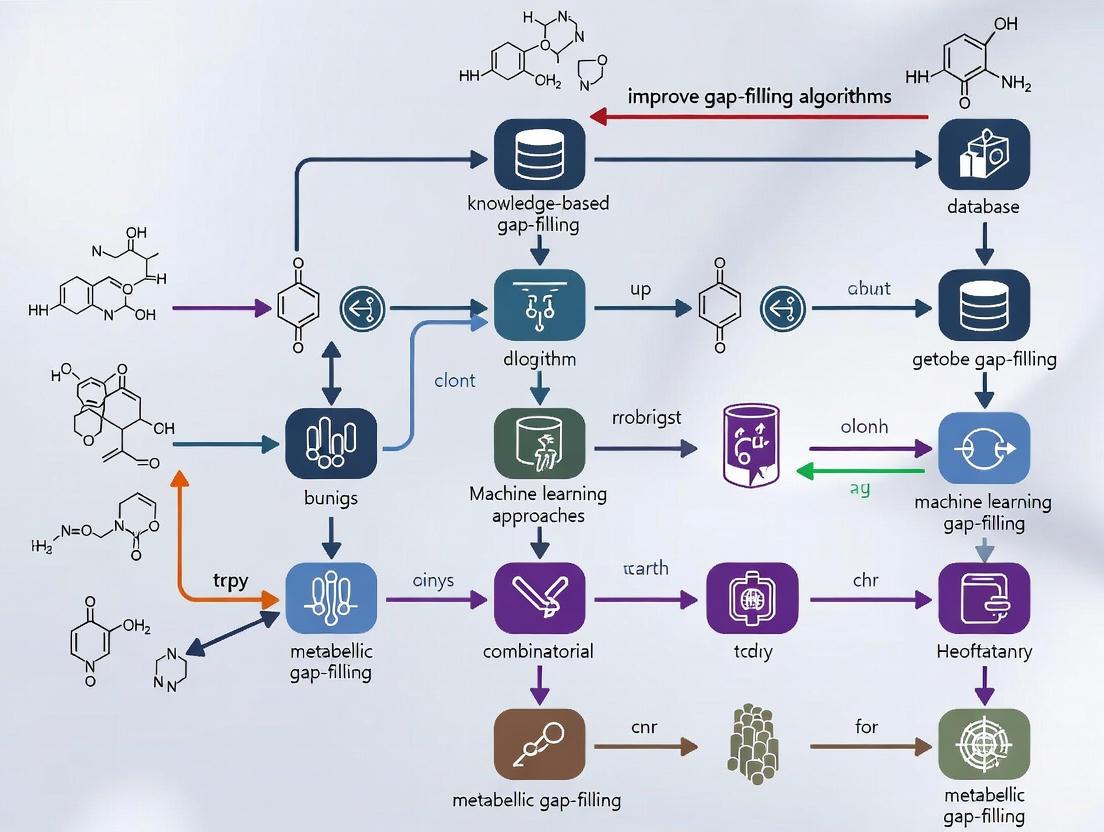
Gap-filling is a critical but computationally intensive step in refining genome-scale metabolic models (GEMs), directly impacting their predictive accuracy in drug discovery and systems biology.
Scaling Metabolic Gap-Filling: Advanced Algorithms and Strategies for Large Networks
Abstract
Gap-filling is a critical but computationally intensive step in refining genome-scale metabolic models (GEMs), directly impacting their predictive accuracy in drug discovery and systems biology. This article explores the latest computational strategies designed to overcome scalability challenges in large metabolic networks. We cover foundational concepts of metabolic gaps, examine next-generation methods from topology-based machine learning to hypothesis-driven workflows, and provide optimization techniques for efficient computation. A comparative analysis of tools and validation frameworks equips researchers and drug development professionals with the knowledge to select and implement scalable gap-filling solutions, ultimately enhancing model utility for biomedical applications.
Understanding the Scalability Challenge in Metabolic Network Gap-Filling
Metabolic gaps represent missing knowledge in genome-scale metabolic models (GEMs), which are mathematical representations of an organism's metabolic capabilities. These gaps manifest primarily as dead-end metabolites—compounds that are produced but not consumed, or consumed but not produced within the network—and phenotypic inconsistencies, where model predictions contradict experimental growth data. Identifying and resolving these gaps is crucial for creating accurate metabolic models that can reliably predict organism behavior in biotechnological and biomedical applications.
The scalability of gap-filling methods becomes particularly important when working with large metabolic networks or multiple organism models. Traditional methods often struggle with computational complexity as network size increases, prompting the development of more efficient algorithmic and machine learning approaches.
Understanding Core Concepts: FAQ
What are dead-end metabolites and why do they matter? Dead-end metabolites (DEMs) are compounds that lack the requisite reactions (either metabolic or transport) that would account for their production or consumption within the metabolic network [1]. Their presence reflects either a deficit in our representation of the network or in our knowledge of metabolism. In E. coli K-12 alone, 127 dead-end metabolites were identified from 995 network compounds, highlighting the pervasiveness of this issue [1]. DEMs act as signposts to the 'known unknowns' of metabolism and serve as starting points for database curation and experimental research.
What is the difference between gap-filling and dead-end metabolite analysis? Dead-end metabolite analysis focuses specifically on identifying metabolites that are network-isolated due to missing production or consumption reactions. Gap-filling is a broader process that addresses DEMs along with other model inconsistencies, including incorrect growth phenotype predictions. Gap-filling typically involves adding missing reactions from universal databases to resolve these issues [2] [3].
Why is scalability important in gap-filling algorithms? Large, compartmentalized metabolic models can contain thousands of reactions and metabolites, making many gap-filling algorithms computationally intractable [3]. Scalable algorithms remain efficient as model complexity increases, enabling researchers to work with comprehensive, compartmentalized models rather than simplified decompartmentalized versions that sacrifice biological accuracy [3].
What types of experimental data can help identify metabolic gaps? High-throughput phenotyping data, including growth profiles of knockout mutants under specific media conditions, can reveal inconsistencies between model predictions and experimental observations [2]. Time-course metabolomic data tracks cellular changes over time, providing dynamic insights into metabolic states that can highlight network deficiencies [4].
Troubleshooting Common Experimental Issues
Problem: Gap-filling solutions seem biologically irrelevant
- Potential Cause: The algorithm may prioritize mathematical solutions over biologically plausible ones, especially when using unweighted reaction databases.
- Solution: Use methods that incorporate biological priors. CHESHIRE utilizes topological features of metabolic networks to predict missing reactions, outperforming methods that don't use biological context [5]. DNNGIOR uses deep learning trained on >11,000 bacterial species to improve prediction relevance, achieving 14 times greater accuracy for draft reconstructions compared to unweighted gap-filling [6].
Problem: Computational time for gap-filling becomes prohibitive with large models
- Potential Cause: Non-scalable algorithms struggle with compartmentalized genome-scale models.
- Solution: Implement efficient algorithms like fastGapFill, specifically designed for compartmentalized reconstructions. This algorithm can handle models like Recon 2 (with 3,187 metabolites and 5,837 reactions) in approximately 30 minutes, compared to methods that may require 24 hours or more [3].
Problem: Model produces false-positive growth predictions
- Potential Cause: Missing regulatory constraints or incorrect essential biomass components.
- Solution: Iteratively refine model using experimental data. Use algorithms like GLOBALFIT that simultaneously match growth and non-growth data sets to correct multiple in silico growth phenotypes more efficiently than earlier methods [2].
Problem: Difficulty visualizing metabolic network dynamics
- Potential Cause: Static representations cannot adequately capture time-course data.
- Solution: Use visualization tools like GEM-Vis, which creates animated sequences of dynamically changing network maps. This method represents metabolite amounts through node fill levels, allowing researchers to observe metabolic state changes over time [4].
Methodologies & Protocols
Protocol 1: Identifying Dead-End Metabolites
Principle: Systematically detect metabolites that are produced but not consumed (or vice versa) within the metabolic network, including transport reactions.
Procedure:
- Network Compilation: Extract all metabolic reactions and transport reactions from your metabolic reconstruction.
- Metabolite-Reaction Mapping: Create a complete mapping of each metabolite to all reactions in which it participates as substrate or product.
- DEM Identification: For each metabolite, check if it has both at least one producing reaction and at least one consuming reaction (including transport).
- Classification: Tag metabolites missing either production or consumption reactions as dead-end metabolites.
- Curation: Manually inspect each DEM to identify potential missing reactions or database representation errors.
Applications: This protocol was used to identify 127 DEMs in EcoCyc's E. coli metabolic network, leading to the addition of 38 transport reactions and 3 metabolic reactions through literature curation [1].
Protocol 2: Topology-Based Gap-Filling Using CHESHIRE
Principle: Predict missing reactions purely from metabolic network topology using deep learning, without requiring experimental phenotypic data.
Procedure:
- Hypergraph Representation: Represent the metabolic network as a hypergraph where each reaction is a hyperlink connecting all participating metabolites [5].
- Feature Initialization: Generate initial feature vectors for each metabolite from the incidence matrix using an encoder-based neural network.
- Feature Refinement: Refine metabolite features using Chebyshev spectral graph convolutional network (CSGCN) to capture metabolite-metabolite interactions.
- Reaction-level Pooling: Integrate metabolite-level features into reaction-level representations using maximum minimum-based and Frobenius norm-based pooling functions.
- Scoring: Produce probabilistic scores indicating reaction existence confidence using a one-layer neural network.
Performance: CHESHIRE outperforms other topology-based methods in recovering artificially removed reactions across 926 GEMs and improves phenotypic predictions for 49 draft GEMs [5].
Protocol 3: Constraint-Based Gap-Filling with fastGapFill
Principle: Efficiently identify a near-minimal set of reactions to add from universal databases to enable growth on specified media.
Procedure:
- Problem Formulation: Identify blocked reactions in the metabolic model that cannot carry flux.
- Global Model Construction: Expand the model with a universal reaction database (e.g., KEGG) placed in each cellular compartment.
- Reaction Addition: Add intercompartmental transport reactions for metabolites in non-cytosolic compartments and exchange reactions for extracellular metabolites.
- Solution Calculation: Compute a subnetwork containing all core reactions plus a minimal number of reactions from the universal database that renders all reactions flux-consistent.
- Validation: Test the gap-filled model for growth prediction accuracy and compare with experimental data.
Scalability: fastGapFill can process large models like Recon 2 (8 compartments, 5,837 reactions) in approximately 30 minutes preprocessing and 30 minutes for the core algorithm [3].
Comparative Analysis of Gap-Filling Methods
Table 1: Comparison of Gap-Filling Algorithms and Their Scalability
| Method | Approach | Data Requirements | Scalability | Best Use Cases |
|---|---|---|---|---|
| CHESHIRE [5] | Deep learning using hypergraph topology | Network structure only | High (tested on 926 GEMs) | Draft model curation without experimental data |
| fastGapFill [3] | Linear programming optimization | Growth media specification | High (handles compartmentalized models) | Rapid gap-filling of large models with defined media |
| DNNGIOR [6] | Deep neural network | Phylogenetic context | High (trained on >11,000 bacteria) | Uncultured bacteria with incomplete genomes |
| GLOBALFIT [2] | Bi-level linear optimization | Growth and non-growth data | Medium | Resolving multiple growth phenotype inconsistencies |
| NHP [5] | Graph-based machine learning | Network structure | Medium | Small to medium networks with limited computational resources |
Table 2: Performance Metrics of Gap-Filling Methods
| Method | Accuracy | Computational Efficiency | Biological Relevance | Implementation Complexity |
|---|---|---|---|---|
| CHESHIRE | Superior in recovering removed reactions [5] | Moderate (requires GPU) | High (uses topological features) | High (specialized deep learning) |
| fastGapFill | High for core metabolic functions [3] | High (LP formulation) | Medium (mathematically driven) | Medium (COBRA toolbox) |
| DNNGIOR | F1 score 0.85 for frequent reactions [6] | High (pre-trained network) | High (incorporates phylogeny) | Medium (with pre-trained model) |
| Traditional MILP | High (optimal solutions) | Low (intractable for large models) | Medium (mathematically driven) | High (complex implementation) |
Visualization of Metabolic Gap Analysis
Metabolic Gap Analysis Workflow: This diagram illustrates the comprehensive process for identifying and resolving metabolic gaps, showing the integration of different gap-filling methodologies.
CHESHIRE Architecture: Visualizing the deep learning approach for topology-based gap-filling using hypergraph representation and spectral graph convolutional networks.
Research Reagent Solutions
Table 3: Essential Resources for Metabolic Gap Analysis
| Resource Type | Specific Tools/Databases | Function | Application Context |
|---|---|---|---|
| Metabolic Databases | KEGG, ModelSEED, BiGG Models | Universal reaction databases for gap-filling candidates | Source of potential reactions to fill metabolic gaps [3] |
| Software Platforms | COBRA Toolbox, Pathway Tools | Provide computational infrastructure for gap-filling algorithms | Implementation and testing of gap-filling methods [3] |
| Visualization Tools | GEM-Vis, Escher, Cytoscape | Dynamic visualization of metabolic networks and time-course data | Identifying network deficiencies and presenting results [4] |
| Gap-Filling Algorithms | CHESHIRE, fastGapFill, DNNGIOR | Computational methods for identifying missing reactions | Adding missing knowledge to metabolic reconstructions [5] [6] [3] |
| DEM Identification | EcoCyc DEM Finder Tool | Systematic detection of dead-end metabolites | Initial assessment of network completeness [1] |
Troubleshooting Guide: Scalability and Performance
Q: My gap-filling analysis is taking too long or running out of memory. What are the main strategies to make it more scalable?
A: Computational bottlenecks in gap-filling primarily arise from the explosion in problem size, especially with compartmentalized models or large universal reaction databases. The main strategies to improve scalability involve using more efficient algorithms, incorporating additional biological constraints to reduce the solution space, and employing parallel computing techniques [3] [7] [2].
- Strategy 1: Employ Efficient Algorithms. For traditional optimization-based gap-filling, use tools like fastGapFill, which is specifically designed as a computationally efficient and scalable extension to the COBRA Toolbox. It uses a series of L1-norm regularized linear programs to find a near-minimal set of reactions to add, making it tractable for compartmentalized genome-scale models [3].
- Strategy 2: Integrate Thermodynamic Constraints. Many topologically feasible solutions are biologically irrelevant because they are thermodynamically infeasible. Integrating Network Embedded Thermodynamic (NET) analysis, as in the tEFMA method, allows you to identify and remove these infeasible pathways during the computation. This can drastically reduce memory consumption and runtime by preventing the algorithm from exploring dead-end solutions [7].
- Strategy 3: Leverage Machine Learning and Hypergraph Topology. For a data-free approach, deep learning methods like CHESHIRE can predict missing reactions purely from the network's topology. This avoids the need to solve complex optimization problems repeatedly. CHESHIRE uses a hypergraph representation of the metabolic network and a Chebyshev spectral graph convolutional network to achieve high accuracy in recovering missing reactions without phenotypic data [5].
- Strategy 4: Utilize Parallel Computing. The core computation of fundamental pathway analyses, such as enumerating Elementary Flux Modes (EFMs), can be parallelized. For example, the parallelized Nullspace Algorithm distributes the computational workload across multiple processors to handle the combinatorial explosion in large networks [8].
Q: How do I choose between an optimization-based method and a machine learning method for gap-filling my draft network?
A: The choice depends on the availability of experimental data and the specific goal of your analysis.
- Use Optimization-Based Methods (e.g., fastGapFill, GlobalFit) when you have phenotypic data to validate the model, such as growth profiles or metabolite secretion data. These methods are powerful because they directly resolve inconsistencies between model predictions and experimental observations [2].
- Use Topology-Based Machine Learning Methods (e.g., CHESHIRE) when you are working with a draft reconstruction for a non-model organism and high-throughput phenotypic data is not readily available. These methods allow for rapid in silico curation and hypothesis generation before embarking on resource-intensive experiments [5].
Q: A gap-filling algorithm suggested a large number of reactions to add. How can I prioritize which ones to test experimentally?
A: This is a common challenge. You can prioritize candidate reactions using the following approaches:
- Confidence Scores: Machine learning methods like CHESHIRE output a probabilistic score for each candidate reaction, indicating the confidence of its existence. Focus on reactions with the highest scores [5].
- Minimal Set: Optimization-based methods like fastGapFill aim to find a near-minimal set of reactions that resolve all gaps. This set provides a compact starting point for validation [3].
- Gene Assignment Tools: Use algorithms that not only suggest reactions but also assign candidate genes to them. Tools that incorporate data like sequence similarity, co-expression, and phylogenetic profiles (e.g., GLOBUS) can provide stronger evidence for a reaction's presence [2].
Performance Comparison of Scalable Gap-Filling methods
The table below summarizes the performance of the fastGapFill algorithm on various metabolic reconstructions, demonstrating its scalability [3].
| Model Name | Original Model Size (Metabolites × Reactions) | Global Model Size (Metabolites × Reactions) | Number of Gap-Filling Reactions | fastGapFill Runtime (seconds) |
|---|---|---|---|---|
| Thermotoga maritima | 418 × 535 | 14,020 × 31,566 | 87 | 21 |
| Escherichia coli | 1,501 × 2,232 | 21,614 × 49,355 | 138 | 238 |
| Synechocystis sp. | 632 × 731 | 28,174 × 62,866 | 172 | 435 |
| sIEC | 834 × 1,260 | 48,970 × 109,522 | 14 | 194 |
| Recon 2 | 3,187 × 5,837 | 58,672 × 132,622 | 400 | 1,826 |
The table below compares the performance of topology-based machine learning methods in recovering artificially removed reactions from metabolic models, with AUROC (Area Under the Receiver Operating Characteristic curve) as a key metric [5].
| Method | Core Approach | Test Condition (vs. Negative Reactions) | Test Condition (vs. Real Database) |
|---|---|---|---|
| CHESHIRE | Deep learning on hypergraphs | 0.95 | 0.85 |
| NHP | Neural network on graph approximations | 0.93 | 0.80 |
| C3MM | Clique closure & matrix minimization | 0.90 | 0.75 |
| NVM (Baseline) | Node2Vec embedding & mean pooling | 0.83 | 0.72 |
Experimental Protocols
Protocol 1: Gap-Filling with fastGapFill
This protocol uses the fastGapFill algorithm to efficiently identify a minimal set of reactions to add from a universal database (e.g., KEGG) to a compartmentalized metabolic model [3].
- Input Preparation: Provide your metabolic model
Sand a universal biochemical reaction databaseU. - Preprocessing: The algorithm generates a global model
SUXby:- Placing a copy of
Uin each cellular compartment ofS. - Adding reversible transport reactions
Xfor metabolites in non-cytosolic compartments. - Adding exchange reactions for extracellular metabolites.
- Identifying previously blocked reactions
Bthat become flux-consistent (Bs) in the global model.
- Placing a copy of
- Core Computation: The
fastcorealgorithm is repurposed to compute a subnetwork ofSUXthat includes all core reactions (fromSandBs) plus a minimal number of reactions fromUX, ensuring all reactions in the resulting network are flux-consistent. - Output: The algorithm returns a set of candidate gap-filling reactions. The solutions can be prioritized by applying linear weightings to favor metabolic reactions over transport reactions during the computation.
Protocol 2: Thermodynamic-Feasibility Guided EFMA with tEFMA
This protocol uses the tEFMA package to compute only the thermodynamically feasible Elementary Flux Modes (EFMs), significantly reducing computational time and resources [7].
- Input Preparation: Provide the stoichiometric matrix of your metabolic network (converted to irreversible reactions) and metabolomics data (metabolite concentrations).
- EFM Enumeration: Use the binary null-space algorithm to iteratively generate intermediate EFMs.
- Thermodynamic Checking: At the beginning of each algorithm iteration, check every intermediate EFM for thermodynamic feasibility using Network Embedded Thermodynamic (NET) analysis. This is done by solving a linear program to verify if all reactions in the EFM can simultaneously proceed in their defined directions given the metabolite concentrations.
- Pruning: Immediately remove any intermediate EFM that is found to be thermodynamically infeasible.
- Output: The final output is the complete set of thermodynamically feasible EFMs. Removing infeasible modes early prevents the algorithm from exploring their supersets, which curbs combinatorial explosion.
The Scientist's Toolkit: Essential Research Reagents
This table lists key computational tools and databases essential for conducting scalable gap-filling analyses.
| Item Name | Function / Explanation |
|---|---|
| COBRA Toolbox | A fundamental MATLAB/Octave software suite for constraint-based modeling. It is the platform for tools like fastGapFill [3]. |
| fastGapFill | An algorithm for efficient gap-filling in compartmentalized metabolic networks, available as an extension to the COBRA Toolbox [3]. |
| CHESHIRE | A deep learning method that predicts missing reactions in metabolic models using only topological features from hypergraphs [5]. |
| tEFMA | A Java package that integrates metabolomics and thermodynamics into Elementary Flux Mode analysis to reduce computational costs [7]. |
| KEGG Reaction Database | A universal biochemical reaction database often used as a source of candidate reactions for gap-filling algorithms [3]. |
| BiGG Models | A resource of high-quality, curated genome-scale metabolic models, used as a benchmark for testing new methods [5]. |
Workflow Diagram for Scalable Gap-Filling
The diagram below illustrates the general workflow and decision points for applying scalable gap-filling techniques.
Method Comparison: Traditional vs. ML Gap-Filling
This diagram contrasts the fundamental workflows of traditional optimization-based gap-filling with the newer machine learning approach.
Troubleshooting Guides
Guide 1: Troubleshooting False-Positive Essential Gene Predictions
Problem: Your metabolic model incorrectly predicts that a gene is essential for growth (a false-positive), suggesting a gap in the metabolic network. Explanation: This often occurs due to unannotated genes or underground metabolism, where an existing enzyme possesses promiscuous activity that is not captured in the model.
Steps for Resolution:
- Identify Gaps: Systematically compare model predictions with experimental phenotype data (e.g., from gene knockout studies) to identify false essential gene predictions [9].
- Generate Hypothetical Reactions: Use an extensive biochemical database that includes both known and hypothetical reactions, such as the ATLAS of Biochemistry, to propose potential reactions that could fill the identified gap [9].
- Annotate Candidate Genes: Employ a tool like BridgIT to identify which enzymes in the organism's genome could potentially catalyze the proposed hypothetical reactions, providing gene-protein-reaction (GPR) associations [9].
- Score and Select Solutions: Rank the proposed gap-filling reaction sets using a scoring system that considers:
- Validate the Extended Model: Integrate the highest-ranked reactions into your model and validate its improved performance against additional experimental data (e.g., growth on different carbon sources) [9].
Guide 2: Resolving Inability to Produce Biomass in a Draft Model
Problem: A newly reconstructed draft metabolic model is unable to produce biomass when simulated, indicating missing critical reactions. Explanation: Draft models are frequently incomplete due to missing annotations, especially for transporters, leading to gaps in essential metabolic pathways [10].
Steps for Resolution:
- Perform Gapfilling: Use a gapfilling algorithm to find a minimal set of reactions that, when added to the model, enable biomass production [10].
- Choose Appropriate Media:
- For initial gapfilling, using a minimal media is often recommended, as it forces the algorithm to add reactions necessary for the biosynthesis of many common substrates [10].
- Using "Complete" media (an abstraction where any compound with a known transporter is available) will result in a different solution, often adding more transport reactions [10].
- Inspect the Gapfilling Solution: After running the gapfilling app, examine the output to see which reactions were added. Reactions marked with "=>" or "<=" are new additions, while reactions whose directionality was changed to reversible ("<=>") were already present in the draft model [10].
- Manual Curation: The gapfilling solution is a prediction and may require manual adjustment. If certain added reactions are biologically implausible, you can force their flux to zero and re-run the gapfilling to find an alternative solution [10].
Frequently Asked Questions (FAQs)
Q1: What is the fundamental cause of gaps in metabolic network models? Gaps arise primarily from incomplete biochemical knowledge and genomic information. Key sources include: (1) Unannotated genes, where a gene exists in the genome but its metabolic function is unknown; (2) Underground metabolism, where enzymes exhibit promiscuous activities not yet documented in databases; and (3) Database biases, where reliance on known reactions from limited databases fails to capture the full scope of possible biochemistry [9].
Q2: Our model fails to grow on a minimal medium even after gapfilling. What should we check? First, verify that the correct medium condition was specified during the gapfilling process. If the media field was left blank, the algorithm defaults to "Complete" media, which may not force the addition of all necessary biosynthetic pathways. Re-run the gapfilling, explicitly selecting a minimal media condition relevant to your organism [10].
Q3: How does the gapfilling algorithm decide which reactions to add? The gapfilling algorithm uses an optimization strategy (typically Linear Programming) to find a set of reactions that enables a defined objective, such as biomass production, with minimal cost. Reactions are assigned penalties; non-KEGG reactions, transporters, and reactions with uncertain thermodynamics are often penalized more heavily, steering the solution toward biologically preferred reactions [10].
Q4: What is the advantage of using hypothetical reactions from ATLAS over known reactions from KEGG for gapfilling? Using ATLAS, which contains known and hypothetical reactions, dramatically increases the number of potential solutions for filling a metabolic gap. One study found an average of 252.5 solutions per rescued reaction using ATLAS, compared to only 2.3 solutions using the KEGG database. This greatly enhances the ability to explore underground metabolism and identify novel enzyme functions [9].
Q5: What is the difference between a balanced complex and a concordant complex in metabolic network analysis? A balanced complex has a net formation rate of zero in every possible steady state. Concordant complexes are pairs (or groups) of complexes whose activities maintain a fixed, non-zero ratio across all steady states. All balanced complexes are mutually concordant, but concordance also captures more complex, multi-reaction dependencies that reveal the hidden simplicity and tight coordination in metabolic networks [11].
Quantitative Data on Metabolic Gaps and Solutions
Table 1: Comparative Performance of Gap-Filling Reaction Databases
This table summarizes a case study comparing the use of different reaction databases for filling gaps in an E. coli metabolic model [9].
| Database Type | Database Name | Number of Rescued Reactions | Average Solutions per Rescued Reaction | Key Advantage |
|---|---|---|---|---|
| Known Reactions Only | KEGG | 53 | 2.3 | Solutions are based on well-established biochemistry. |
| Known + Hypothetical Reactions | ATLAS of Biochemistry | 93 | 252.5 | Enables discovery of novel biochemistry and underground metabolism. |
Table 2: Key Reagent Solutions for Metabolic Network Research
This table lists essential computational tools and databases used in modern metabolic network reconstruction and gap-filling.
| Research Reagent | Function/Brief Explanation |
|---|---|
| ATLAS of Biochemistry | An extensive database of both known and hypothetical biochemical reactions, used as a comprehensive reaction pool for gap-filling to propose novel solutions [9]. |
| BridgIT | A computational tool that links biochemical reactions to known enzymes by identifying similarities in substrate reactive sites, facilitating gene annotation for gap-filled reactions [9]. |
| NICEgame Workflow | An integrated workflow (Network Integrated Computational Explorer for Gap Annotation of Metabolism) that systematically identifies and reconciles knowledge gaps in metabolic models using ATLAS and BridgIT [9]. |
| ModelSEED | A platform and biochemistry database used for high-throughput reconstruction, optimization, and analysis of genome-scale metabolic models (GEMs) [10]. |
| SCIP/GLPK Solvers | Optimization solvers used in constraint-based modeling. GLPK is used for pure-linear problems, while SCIP is used for more complex problems involving integer variables, such as some gapfilling formulations [10]. |
Experimental Protocols
Protocol 1: The NICEgame Gap-Filling Workflow
Purpose: To systematically identify and reconcile knowledge gaps in a genome-scale metabolic model (GEM) using both known and hypothetical reactions.
Methodology:
- Input Preparation: Gather the target GEM and high-throughput gene essentiality data (e.g., from knockout experiments) [9].
- Identify False Essentiality: Simulate single-gene knockout phenotypes using the model and compare the results with experimental data. False essential gene predictions (where the model predicts no growth but the experiment shows growth) indicate potential metabolic gaps [9].
- Propose Gap-Filling Solutions: For each gap, query a comprehensive reaction database (e.g., ATLAS) to find all possible reaction sets that would rescue growth [9].
- Annotate with Enzymes: Use BridgIT to identify potential enzymes in the organism's genome that could catalyze the proposed gap-filling reactions [9].
- Rank Solutions: Apply a scoring system to rank the reaction subsets based on thermodynamic feasibility, minimal model impact, and the confidence of the enzyme-reaction association [9].
- Validate the Expanded Model: Incorporate the highest-ranked reactions into the GEM and validate the improved model against a separate set of experimental phenotyping data [9].
Protocol 2: Identifying Concordant Complexes to Simplify Network Analysis
Purpose: To efficiently identify multireaction dependencies (concordant complexes) in a metabolic network, which can reveal functional modules and simplify the apparent complexity of the network.
Methodology:
- Network Representation: Represent the metabolic network as a set of reactions, species, and complexes (the left- and right-hand sides of reactions) [11].
- Formulate Steady-State Equations: Describe the system using the stoichiometric matrix, which can be derived from the species-complex matrix (Y) and the graph incidence matrix (A). The steady-state is given by dx/dt = YAv = 0, where v is a flux distribution [11].
- Define Complex Activity: For a given flux distribution v, the activity of a complex j is defined as αj = Aj · v, which is the net flux through that complex [11].
- Test for Concordance: Complexes i and j are concordant if there exists a non-zero constant γij such that αi - γijαj = 0 for every feasible steady-state flux distribution v in the set S [11].
- Efficient Identification: Use Linear Fractional Programming to computationally determine all pairs of concordant complexes in a large-scale network [11].
Workflow and Pathway Diagrams
Diagram Title: NICEgame Gap-Filling Workflow
Diagram Title: Primary Sources of Metabolic Gaps
Diagram Title: Gapfilling Algorithm Formulations
The Impact of Incomplete Networks on Drug Target Prediction and Phenotypic Forecasting
Frequently Asked Questions
FAQ 1: Why does my metabolic model consistently produce false-negative essential gene predictions, and how can I resolve this? False negatives often arise from knowledge gaps in the metabolic reconstruction, where the model lacks reactions that exist in the biological system. This can be addressed through computational gap-filling. A workflow like NICEgame uses extensive databases of known and hypothetical biochemical reactions to propose thermodynamically feasible solutions that reconcile these false predictions, significantly improving model accuracy [9].
FAQ 2: My phenotypic screen identified a hit, but I don't know its protein target. What in-silico methods can generate testable hypotheses? You can use platforms that combine ligand and protein-structure information. One approach involves fragmenting the hit compound and comparing these fragments to a database of protein-bound ligands from the PDB. This identifies similar sub-pockets, allowing the platform to propose and rank potential macromolecular targets in the pathogen, along with a predicted binding pose for your compound [12].
FAQ 3: How can I integrate metabolomics data to find a drug's off-targets? An effective strategy is a multi-layered workflow. This involves analyzing global metabolomics data with machine learning to identify mechanism-specific perturbations, using metabolic modeling to pinpoint pathways whose inhibition matches the data, and performing structural analysis to find proteins with active sites similar to the drug's known target. This integrated approach prioritizes candidate off-targets for experimental validation [13].
FAQ 4: Are simplified or incomplete network models still useful for predicting cell-fate decisions? Yes, due to a property known as minimal frustration in biological regulatory networks. This feature ensures that even large, complex networks exhibit simple, low-dimensional steady-state behavior. Consequently, simpler network models that lack many nodes and edges can successfully recapitulate the core steady states corresponding to biological cell fates, making them useful predictive tools [14].
Troubleshooting Guides
Problem: High False-Prediction Rates in Metabolic Models
Issue: Your Genome-Scale Metabolic Model (GEM) produces a high rate of false essentiality predictions, indicating gaps in the network.
Background: Gaps are caused by unannotated genes, promiscuous enzymes, and unknown reactions. Traditional gap-filling that relies only on known biochemical databases offers limited solutions [9].
Solution: Implement a comprehensive gap-filling workflow.
Protocol: The NICEgame Gap-Filling Workflow
- Identify False Predictions: Compare your model's gene essentiality predictions with experimental phenotype data (e.g., from gene knockout studies) in a defined medium [9].
- Source a Comprehensive Reaction Pool: Use an extensive biochemical database like ATLAS, which contains both known and hypothetical reactions, to provide a wider set of potential gap-filling solutions [9].
- Propose and Score Solutions: The algorithm will propose multiple reaction sets to fill each gap. These subsets are scored and ranked based on:
- Thermodynamic feasibility.
- Minimal introduction of new metabolites.
- Minimal introduction of novel enzyme functions [9].
- Annotate Genes: Use a tool like BridgIT to identify and score possible enzyme-encoding genes in the organism's genome for the proposed gap-filling reactions [9].
- Validate the Expanded Model: Test the performance of the gap-filled model against a new set of experimental phenotype data to validate the accuracy of its predictions [9].
Expected Outcome: Table: Example Performance Improvement from Gap-Filling
| Metric | Original Model (iML1515) | Gap-Filled Model (iEcoMG1655) | Change |
|---|---|---|---|
| Gene Essentiality Predictions (Accuracy) | Baseline | +23.6% | Improvement [9] |
| False Essential Gene Gaps Identified | 148 | - | - [9] |
| Gaps Rescued with KEGG Reactions | 53 | - | Limited [9] |
| Gaps Rescued with ATLAS Reactions | 93 | - | Significant [9] |
Problem: Target Deconvolution for Phenotypic Screening Hits
Issue: You have a compound active in a phenotypic screen but lack knowledge of its molecular target, hindering lead optimization.
Background: Experimental target identification is complex and time-consuming. Computational prediction can rapidly generate testable hypotheses by leveraging structural and systems biology data [12].
Solution: Utilize a fragment-based target prediction platform.
Protocol: Fragment-Based Target Prediction
- Input the Phenotypic Hit: Start with the 2D chemical structure of your active compound [12].
- Fragment the Compound: Generate multiple molecular fragments from the hit in silico to reduce molecular complexity, analogous to fragment-based drug discovery [12].
- Map to a PDB Fragment Database: Compare the generated fragments against a pre-computed database of fragments derived from small-molecule ligands in the Protein Data Bank (PDB). Identify the PDB fragment most similar to your hit's fragment [12].
- Search Pathogen Proteome for Similar Cavities: Identify proteins within the pathogen's proteome (from crystal structures or high-quality homology models) that possess a binding cavity similar to the one that binds the identified PDB fragment [12].
- Dock and Rank Hypotheses: Dock the entire phenotypic hit molecule into the proposed binding site of candidate targets. Generate a ranked list of potential targets and visualize the proposed binding mode to rationalize structure-activity relationships (SAR) [12].
The following workflow diagram illustrates the multi-stage process of this target prediction method:
Problem: Identifying Off-Targets from Metabolomic Perturbation Data
Issue: Metabolomics data shows your drug causes widespread perturbation, but it's difficult to pinpoint the specific protein off-targets responsible.
Background: Machine learning can find patterns in metabolomics data but lacks interpretability. Combining it with mechanistic models improves target identification resolution [13].
Solution: Apply a multi-scale analysis framework.
Protocol: Integrated Metabolomics-Guided Off-Target Discovery
- Acquire and Preprocess Data: Perform untargeted global metabolomics on the pathogen treated with your drug versus untreated control across multiple growth phases [13].
- Machine Learning Analysis: Train a multi-class classifier (e.g., logistic regression) on a reference dataset of metabolomic responses to antibiotics with known mechanisms. Use this to identify if your drug's metabolic signature aligns with a known mechanism of action [13].
- Metabolic Modeling: Use a genome-scale metabolic model (GEM) to simulate the effect of reaction knockouts. Identify pathways whose inhibition results in growth defects that can be rescued by the same metabolites that rescue your drug's effect [15] [13].
- Structural Similarity Analysis: Compare the 3D structure and active site properties of the drug's known target to other proteins in the pathogen's proteome to identify potential off-targets with similar binding sites [13].
- Experimental Validation: Prioritize candidate targets from the above steps for validation using gene overexpression, in vitro enzyme activity assays, and cellular imaging [13].
The following chart outlines the sequential stages of this integrative approach:
The Scientist's Toolkit
Table: Key Research Reagent Solutions
| Item | Function in Context | Example Use Case |
|---|---|---|
| ATLAS of Biochemistry | A database of both known and hypothetical biochemical reactions used for comprehensive metabolic network gap-filling [9]. | Provides a large solution space of possible reactions to reconcile false predictions in GEMs, moving beyond limited known reactions [9]. |
| BridgIT | A computational tool that links biochemical reactions to known enzyme sequences, suggesting candidate genes for gap-filled reactions [9]. | Annotates proposed reactions from gap-filling with possible genes in the organism's genome, facilitating experimental testing [9]. |
| Protein Data Bank (PDB) | A repository of 3D structural data of proteins and protein-ligand complexes [12]. | Serves as a source for ligand fragmentation and cavity comparison in fragment-based target prediction platforms [12]. |
| Genome-Scale Model (GEM) | A computational reconstruction of an organism's metabolism that allows for simulation of metabolic fluxes using constraints [15]. | Used with Flux Balance Analysis (FBA) to predict gene essentiality and simulate the metabolic impact of drug treatments or gene knockouts [15]. |
| Knowledge Graph (e.g., PPIKG) | A network representing relationships between biological entities (e.g., proteins, drugs) [16]. | Helps narrow down candidate drug targets from hundreds to a more manageable number for further computational or experimental validation [16]. |
Next-Generation Scalable Algorithms and Workflows for Efficient Gap-Filling
Performance Benchmarks: CHESHIRE vs. State-of-the-Art Methods
The table below summarizes the quantitative performance of CHESHIRE against other topology-based machine learning methods during internal validation on high-quality BiGG models. The evaluation is based on the ability to recover artificially removed reactions, a standard test for gap-filling algorithms [5].
Table 1: Performance Comparison on BiGG Models (n=108 models) [5]
| Method | Architecture | AUROC (Average) | Key Limitation |
|---|---|---|---|
| CHESHIRE | Hypergraph Learning with Chebyshev Spectral Graph Convolutional Network | Best Performance | Requires negative sampling during training |
| NHP (Neural Hyperlink Predictor) | Neural Network (approximates hypergraphs as graphs) | Lower than CHESHIRE | Loss of higher-order information |
| C3MM (Clique Closure-based Coordinated Matrix Minimization) | Integrated training-prediction (Matrix Minimization) | Lower than CHESHIRE | Limited scalability; model must be re-trained for each new reaction pool |
| Node2Vec-mean (NVM) | Random walk-based graph embedding with mean pooling | Baseline Performance | Simple architecture without feature refinement |
Key Experiment: Internal Validation Protocol
This protocol tests a model's ability to recover known, artificially removed reactions, which is crucial for verifying its gap-filling capability before applying it to real-world, unknown gaps [5].
Detailed Methodology
- Input Preparation: Start with a high-quality, curated Genome-Scale Metabolic Model (GEM), such as those from the BiGG database [5].
- Reaction Set Splitting: Split the metabolic reactions in the GEM into a training set (e.g., 60%) and a testing set (e.g., 40%). Perform this over multiple Monte Carlo runs (e.g., 10 runs) to ensure statistical robustness [5].
- Negative Sampling: Create artificial negative (non-existent) reactions for both training and testing sets at a 1:1 ratio with the positive reactions. This is done by replacing half of the metabolites in each positive reaction with randomly selected metabolites from a universal metabolite pool. This step teaches the model to distinguish between plausible and implausible reactions [5].
- Model Training & Testing:
- For the training phase, combine the training set of positive reactions with its derived negative reactions.
- For the testing phase, combine the testing set of positive reactions with its derived negative reactions.
- For a more challenging test, the testing set can be mixed with real reactions from a universal database (like KEGG) instead of artificial negatives [5].
- Performance Evaluation: Use classification performance metrics like the Area Under the Receiver Operating Characteristic curve (AUROC) to evaluate the model's prediction accuracy [5].
Table 2: Key Resources for Metabolic Network Gap-Filling Experiments [5] [3]
| Item Name | Function / Purpose in the Experiment |
|---|---|
| Curated GEMs (e.g., BiGG Models) | Provide the high-quality, structured metabolic network data used as the gold standard for training and internal validation [5]. |
| Universal Reaction Database (e.g., KEGG) | Serves as a comprehensive pool of known biochemical reactions from which candidate reactions can be drawn to fill gaps in a draft model [3]. |
| Reaction Pool | A curated list of candidate reactions (often sourced from universal databases) from which the gap-filling algorithm selects reactions to add to the model [5]. |
| Metabolite Pool | A comprehensive list of known metabolites used during the negative sampling process to create artificial, implausible reactions for model training [5]. |
Frequently Asked Questions (FAQs) & Troubleshooting
Q1: My model has limited phenotypic data. Can I still use CHESHIRE for gap-filling?
Yes. A key advantage of CHESHIRE and other topology-only methods is that they do not require experimental phenotypic data as input. They rely purely on the topological structure of the metabolic network, making them ideal for non-model organisms where such data is scarce or unavailable [5].
Q2: How does CHESHIRE handle the complexity of metabolic networks better than graph-based methods?
Metabolic networks are inherently hypergraphs, where a single reaction (a hyperedge) can connect multiple metabolites (nodes). Traditional graph-based methods force this structure into a simple graph where edges connect only two nodes, which loses crucial higher-order information. CHESHIRE operates directly on the hypergraph structure, preserving this information and leading to more accurate predictions [5] [17].
Q3: I am working with a very large draft model. Will CHESHIRE be scalable enough?
CHESHIRE was designed to be computationally efficient. Evidence from internal validation shows it was successfully tested on 108 BiGG models and 818 AGORA models, demonstrating its scalability. This is a significant advantage over methods like C3MM, which have limited scalability and require re-training for every new reaction pool, making them cumbersome for large models [5].
Q4: What are the most common failure points when setting up a CHESHIRE experiment, and how can I avoid them?
Table 3: Common Troubleshooting Guide
| Issue | Potential Cause | Solution |
|---|---|---|
| Poor prediction accuracy on your model. | The universal reaction pool or metabolite pool is too limited or not relevant. | Curate a comprehensive, high-quality reaction database tailored to your organism's phylogeny. |
| Model fails to learn or performs poorly during training. | Issues with negative sampling, such as generating unrealistic "negative" reactions that are actually biochemically plausible. | Review and refine the negative sampling strategy. Ensure the random metabolite replacement creates truly implausible reactions [5]. |
| The gap-filled model produces biologically unrealistic flux predictions. | Topology-based methods lack biochemical context (e.g., reaction directionality, metabolite energetics). | Use CHESHIRE's output as a prioritized candidate list. Follow up with biochemical validation and integration with constraint-based modeling techniques that incorporate directionality and thermodynamic constraints [17]. |
Frequently Asked Questions (FAQs)
Q1: What is the ATLAS of Biochemistry and how does it support hypothesis generation in metabolic engineering?
The ATLAS of Biochemistry is a comprehensive repository of all theoretical biochemical reactions based on known biochemical principles and compounds. It was developed using the computational framework BNICE.ch along with cheminformatic tools to assemble the entire theoretical reactome from the known metabolome through expansion of the known biochemistry in the KEGG database. ATLAS includes more than 130,000 hypothetical enzymatic reactions that connect two or more KEGG metabolites through novel enzymatic reactions not previously reported in living organisms. This repository allows researchers to search for all possible metabolic routes from any substrate to any product, providing potential targets for protein engineering and synthetic biology applications [18].
Q2: What percentage of previously unintegrated KEGG metabolites does ATLAS incorporate into novel enzymatic reactions?
ATLAS reactions successfully integrate 42% of KEGG metabolites that were not previously present in any KEGG reaction into one or more novel enzymatic reactions. This significantly expands the biochemical reaction space available for metabolic engineering and pathway design [18].
Q3: How can researchers access the ATLAS of Biochemistry database?
The generated repository is organized in a web-based database accessible at: http://lcsb-databases.epfl.ch/atlas/ [18].
Q4: What are the common scalability challenges when using ATLAS for gap-filling in large metabolic networks?
The primary scalability challenges include computational resource demands when processing over 130,000 theoretical reactions, identifying biologically relevant pathways among numerous possibilities, and prioritizing hypothetical enzymatic activities for experimental validation. The database's sheer size requires efficient filtering algorithms to make gap-filling computationally tractable for genome-scale metabolic models [18].
Troubleshooting Guides
Problem 1: High Computational Load During Network Gap-Filling
Symptoms: Slow processing times, memory overflow errors, or inability to complete pathway identification when using ATLAS for large-scale metabolic models.
Possible Causes & Solutions:
| Cause | Solution | Verification Method |
|---|---|---|
| Large search space from 130,000+ reactions | Apply reaction filters based on enzyme commission numbers or reaction centers | Monitor reduction in candidate reaction sets |
| Inefficient pathway ranking | Implement multi-criteria prioritization (thermodynamics, enzyme existence) | Compare pathway scores pre/post optimization |
| Memory limitations | Use chunked processing of metabolic modules | System resource monitoring during computation |
Prevention Strategies: Implement pre-filtering of ATLAS reactions to include only relevant biochemical domains for your specific organism or metabolic subsystem. Establish quantitative thresholds for pathway feasibility before initializing large-scale gap-filling analyses [18].
Problem 2: Identification of Theoretically Possible but Biologically Irrelevant Pathways
Symptoms: Identified pathways contain enzymatically challenging reactions, require incompatible compartmentalization, or generate toxic intermediates.
Possible Causes & Solutions:
| Cause | Solution | Validation Approach |
|---|---|---|
| Missing constraint integration | Incorporate thermodynamic feasibility checks | Calculate reaction Gibbs free energy |
| Organism-specific limitations | Apply compartmentalization constraints | Compare with subcellular localization data |
| Toxic intermediate accumulation | Screen for known toxic metabolites | Cross-reference with metabolite toxicity databases |
Verification Protocol:
- Apply organism-specific reaction rules to filter ATLAS output
- Check pathway stoichiometry and energy balances
- Validate against known metabolic network topology
- Test for pathway redundancy and essential reactions [18]
Problem 3: Experimental Validation Challenges for ATLAS-Predicted Novel Reactions
Symptoms: Difficulty expressing putative enzymes, inability to detect predicted metabolites, or low reaction fluxes in engineered strains.
Troubleshooting Workflow:
Systematic Approach:
- Verify enzyme expression and folding using Western blot and activity assays
- Confirm cofactor availability and compatibility with host metabolism
- Optimize reaction conditions including pH, temperature, and substrate concentrations
- Test enzyme variants from different organism sources
- Validate analytical methods for detecting novel metabolites [18]
Research Reagent Solutions
Essential materials and computational tools for implementing ATLAS-driven metabolic engineering:
| Research Reagent | Function/Application | Specification Notes |
|---|---|---|
| BNICE.ch Framework | Generate novel biochemical reactions using reaction rules | Required for expanding beyond known biochemistry [18] |
| KEGG Compound Database | Source of known metabolites for pathway reconstruction | Essential reference for mapping metabolic networks [18] |
| Cheminformatic Tools | Analyze molecular structures and predict reaction centers | Compatible with ATLAS reaction prediction pipeline [18] |
| Pathway Analysis Software | Calculate route from substrate to product | Should handle both known and hypothetical reactions [18] |
| Protein Engineering Tools | Create enzymes for novel ATLAS reactions | Critical for validating hypothetical enzymatic activities [18] |
Experimental Protocol: Validating ATLAS-Predicted Novel Pathways
Objective: Experimental verification of a novel biochemical pathway predicted by ATLAS of Biochemistry.
Workflow Diagram:
Step-by-Step Methodology:
Pathway Retrieval
- Query ATLAS database for pathways connecting desired substrates to products
- Apply organism-specific constraints to filter plausible pathways
- Select top 3-5 candidate pathways based on:
- Minimal novel steps required
- Thermodynamic feasibility
- Enzyme engineering complexity
Enzyme Selection & Engineering
- Identify homologous enzymes for predicted reaction steps
- For novel reactions without homologs:
- Apply structure-based enzyme design
- Test promiscuous activities from related enzyme families
- Use directed evolution for activity optimization
In Vitro Validation
- Express and purify candidate enzymes
- Establish assay conditions for novel reactions
- Detect intermediate and final products using:
- LC-MS for metabolite identification
- NMR for structural confirmation
- Determine kinetic parameters (Km, kcat)
In Vivo Implementation
- Construct expression vectors for pathway enzymes
- Engineer host strain with necessary genetic modifications
- Implement dynamic regulation for balanced expression
- Monitor cell growth and product formation
Pathway Optimization
- Apply flux balance analysis to identify bottlenecks
- Fine-tune enzyme expression levels
- Implement cofactor recycling systems
- Scale up production in bioreactors
Quantitative Success Metrics:
- Pathway Functionality: Production of target metabolite above detection limits
- Flux Efficiency: Minimum 30% of theoretical maximum metabolic flux
- Growth Compatibility: Engineered strain growth rate ≥70% of wild-type
- Product Titer: Economically viable yields for scaling (compound-dependent) [18]
Frequently Asked Questions (FAQs)
Q1: What is the core advantage of combining NICEgame with BridgIT over traditional gap-filling methods?
Traditional gap-filling methods are limited to databases of known biochemical reactions, which can restrict solutions for reconciling metabolic gaps [9]. The integrated NICEgame and BridgIT framework uses the ATLAS of Biochemistry, a database of known and over 150,000 hypothetical reactions, to explore a vastly larger biochemical space [19] [9]. This allows the workflow to propose novel biochemical capabilities and identify candidate genes for these reactions, systematically exploring an organism's underground metabolism and leading to more complete functional annotation [19] [9].
Q2: What specific quantitative improvement does this framework offer for genome annotation?
In a case study on the E. coli model iML1515, the framework identified gaps linked to 152 false essentiality predictions. It proposed 77 new reactions associated with 35 candidate E. coli genes, reconciling 47% of the identified gaps [19] [9]. This enhanced the model's accuracy for gene essentiality predictions on 15 carbon sources by 23.6% [9].
Q3: How does the framework rank alternative gap-filling solutions?
The framework uses a scoring system to rank alternative reaction sets. It penalizes solutions that introduce longer pathways (energetically costly), add new metabolites, or propose novel enzyme functions not present in the original model. Reactions annotated by BridgIT with higher confidence scores are favored [9].
Q4: My research involves non-model organisms with limited phenotypic data. Can this framework still be applied?
Yes. A key strength of the NICEgame workflow is that it can be applied to any organism with a Genome-scale Metabolic Model (GEM) and functions with open-source software [19]. While the initial identification of metabolic gaps is enhanced by comparing in silico predictions with experimental phenotyping data (e.g., gene knockout studies), the gap-filling process itself leverages the ATLAS of Biochemistry and BridgIT, which are not dependent on an organism's specific experimental data [19].
Troubleshooting Guides
Issue: Low Yield of Plausible Gap-Filling Solutions
Problem: The workflow runs, but the proposed gap-filling reaction sets are biologically implausible, introduce too many new metabolites, or are thermodynamically unfavorable.
Solutions:
- Check Reaction Pool Parameters: NICEgame allows the use of different subsets of the ATLAS database. To reduce uncertainty and complexity, start with the "E. coli metabolites subset," which adds reactions involving only metabolites already in your GEM, thus avoiding an expansion of the metabolite space [19].
- Review Thermodynamic Feasibility: The workflow includes an assessment of the thermodynamic feasibility of suggested reactions. Ensure this step is activated and carefully review the scores. Prioritize solutions with higher thermodynamic feasibility [19] [9].
- Adjust Solution Ranking Criteria: Revisit the scoring system's weights. Increase the penalty for solutions that introduce a large number of new reactions or metabolites and those that add redundant functionality to the network [19] [9].
Issue: Poor Confidence in Candidate Gene Annotations
Problem: The BridgIT tool assigns low confidence scores to the candidate genes proposed for the gap-filling reactions.
Solutions:
- Validate with Genomic Context: Do not rely solely on the BridgIT score. Perform additional checks on the genomic context of the candidate gene (e.g., operon structure, co-expression data) to see if it supports a metabolic function [9].
- Consider Enzyme Promiscuity: Many of the candidate genes identified may function through enzyme or substrate promiscuity. In the E. coli case, 33 of the 35 candidate genes were already present in the original model but were assigned new, promiscuous functions [9]. Consult literature for known promiscuous activities of similar enzymes.
- Iterative Experimental Validation: Use the computational predictions as a starting point for targeted experimental validation, such as in vitro enzyme assays for the top-ranked candidate genes [19].
Issue: Handling Large Metabolic Networks and Scalability
Problem: The computational workflow becomes slow or fails to complete when applied to a large, complex metabolic network.
Solutions:
- Benchmark Against Advanced Methods: For large-scale or draft networks, consider that newer deep learning methods like CHESHIRE have been developed specifically for rapid gap-filling using only network topology and can handle large reaction pools efficiently [5]. It may be used as a complementary pre-processing step.
- Parallelize Computations: Check the NICEgame implementation for opportunities to run independent processes (e.g., gap-filling for different subsystems) in parallel to reduce total runtime.
- Utilize High-Performance Computing (HPC): Deploy the workflow on a cluster or HPC environment to manage the significant computational resources required for genome-scale analyses [19].
Key Experimental Protocols & Data
Core Workflow of the NICEgame and BridgIT Integration
The following diagram summarizes the integrated seven-step workflow for annotating knowledge gaps in metabolic reconstructions.
Quantitative Performance Data
Table 1: Performance Comparison of Gap-Filling Reaction Pools in E. coli Case Study [9]
| Reaction Pool Used for Gap-Filling | Number of Rescued Reactions (out of 152) | Average Number of Solutions per Rescued Reaction |
|---|---|---|
| KEGG (Known reactions) | 53 | 2.3 |
| ATLAS of Biochemistry (Known & Hypothetical) | 93 | 252.5 |
Table 2: Outcomes of Applied Framework on E. coli iML1515 Model [19] [9]
| Metric | Result |
|---|---|
| Identified False Essential Gene Predictions | 148 genes |
| Associated False Essential Reactions | 152 reactions |
| New Reactions Proposed | 77 reactions |
| Candidate E. coli Genes Proposed | 35 genes |
| Resolved Metabolic Gaps | 47% |
| Accuracy Increase in Gene Essentiality Prediction (iEcoMG1655) | 23.6% |
The Scientist's Toolkit: Research Reagent Solutions
Table 3: Essential Computational Tools and Databases for the Workflow
| Item Name | Type | Function / Description |
|---|---|---|
| ATLAS of Biochemistry | Reaction Database | A comprehensive database of known and over 150,000 hypothetical biochemical reactions, providing the solution space for novel metabolic pathways [19] [9]. |
| BridgIT | Tool / Algorithm | A computational method that maps biochemical reactions, including hypothetical ones from ATLAS, to candidate enzymes and genes in a genome [19] [9]. |
| NICEgame | Computational Workflow | The core workflow that identifies and curates non-annotated metabolic functions in genomes using GEMs and the ATLAS database [19]. |
| Genome-Scale Model (GEM) | Model / Data Structure | A mathematical representation of an organism's metabolism used to simulate metabolic capabilities and identify gaps [19] [9]. |
| CHEASHIRE | Tool / Algorithm | A deep learning-based method for gap-filling that uses network topology alone, useful for large networks or when phenotypic data is scarce [5]. |
Troubleshooting Guides
Installation and Dependencies
Q: What are the common installation errors and how can I resolve them?
| Error Message | Possible Cause | Solution |
|---|---|---|
'lib = "../R/library"' is not writable |
R library directory permissions [20] | Run: Rscript -e 'if( file.access(Sys.getenv("R_LIBS_USER"), mode=2) == -1 ) dir.create(path = Sys.getenv("R_LIBS_USER"), showWarnings = FALSE, recursive = TRUE)' [20] |
Error: Unknown argument: "qcov_hsp_perc" |
Outdated NCBI BLAST+ version [20] | Upgrade to BLAST+ version 2.2.30 (10/2014) or newer [20] |
| Blast test fails in Singularity | Tool downloads data into read-only repository [21] | Clone GitHub repo in your home/project folder, not in the container itself [21] |
| Missing R packages | Packages not installed in correct R environment [20] [21] | Run R installation commands from the gapseq documentation [20] |
Q: How do I install and configure gapseq for different operating systems?
The following table summarizes the key system dependencies for different environments.
| System | Dependencies (Command Line) | R Packages [20] [21] |
|---|---|---|
| Ubuntu/Debian/Mint | sudo apt install ncbi-blast+ git libglpk-dev r-base-core exonerate bedtools barrnap bc parallel curl libcurl4-openssl-dev libssl-dev libsbml5-dev bc [20] |
data.table, stringr, getopt, R.utils, stringi, jsonlite, httr, pak, Biostrings, Waschina/cobrar [20] |
| Centos/Fedora/RHEL | sudo yum install ncbi-blast+ git glpk-devel BEDTools exonerate hmmer bc parallel libcurl-devel curl openssl-devel libsbml-devel bc [20] |
Same as above [20] |
| MacOS (Homebrew) | brew install coreutils binutils git glpk blast bedtools r brewsci/bio/barrnap grep bc gzip parallel curl bc brewsci/bio/libsbml [20] |
Same as above (Note: Some Mac-specific issues may occur) [20] |
| Conda (Stable) | conda create -c conda-forge -c bioconda -n gapseq gapseq [20] |
Pre-installed in the conda environment [20] |
Workflow Execution and Performance
Q: My "doall" run is taking several hours. Is this normal?
Yes, this is expected behavior. The gapseq doall command is a comprehensive workflow that can take up to four hours for a single genome, as noted in the documentation [22]. The process involves multiple computationally intensive steps: homology searches (find), draft network reconstruction (draft), and gap-filling (fill) [23] [22]. For high-throughput analyses, consider leveraging the newer pan-Draft module, which uses a pan-reactome-based approach to reconstruct species-representative models from multiple genomes more efficiently [24].
Q: How can I improve the solver performance for gap-filling large networks?
gapseq uses Linear Programming (LP) for its gap-filling algorithm [23]. While GLPK is the default open-source solver, you can install and configure the commercial CPLEX solver, which is typically faster [20]. CPLEX is available for free to students and academics through the IBM Academic Initiative. After installing CPLEX, you can install the R interface cobrarCPLEX from GitHub (Waschina/cobrarCPLEX) to enable this integration [20].
Frequently Asked Questions (FAQs)
General Usage
Q: What input formats does gapseq accept?
gapseq is flexible and requires only a genome sequence in FASTA format as its primary input. It does not need a pre-computed annotation file, as it performs its own annotation internally [23].
Q: Can gapseq be used for eukaryotes or archaea?
The current version of gapseq and its core biochemistry database are primarily optimized for bacterial metabolism [23]. The developers note that archaea-specific and eukaryotic-specific reactions are not fully included but are planned for a future release [23].
Q: What is the pan-Draft module and how does it improve scalability?
pan-Draft is an extension integrated into the gapseq pipeline that addresses a key challenge in scalability: generating high-quality models from incomplete Metagenome-Assembled Genomes (MAGs) [24]. Instead of building a model from a single, often fragmented genome, pan-Draft leverages multiple MAGs from the same species cluster. It performs a pan-reactome analysis to determine a solid core set of metabolic reactions, resulting in a more complete and accurate species-level model [24]. This is particularly valuable for large-scale studies of uncultured species.
Interpreting Results
Q: How accurate are gapseq's predictions compared to other tools?
gapseq has been benchmarked against other automated tools like CarveMe and ModelSEED. The following table summarizes its performance based on experimental data.
| Prediction Type | gapseq Performance | Comparison to CarveMe/ModelSEED | Validation Basis |
|---|---|---|---|
| Enzyme Activity | 53% True Positive Rate [23] | Outperforms CarveMe (27%) and ModelSEED (30%) [23] | 10,538 enzyme activity tests for 3,017 organisms [23] |
| Fermentation Products & Carbon Utilization | High accuracy in predicting metabolic phenotypes [23] | Outperforms state-of-the-art tools [23] | Scientific literature and experimental data for 14,931 bacterial phenotypes [23] |
| Pathway Prediction | Based on key enzyme detection and reaction completeness [25] | N/A | Internal curated database and homology searches [23] [25] |
Q: How do I interpret the main output files from gapseq find?
*-Pathways.tbl: This file details the predicted metabolic pathways. Key columns includePrediction(true/false for pathway presence),Completeness(% of reactions found), andKeyReactionsFound(number of key enzymes detected) [25].*-Reactions.tbl: This file lists all checked reactions and the evidence for them. Thestatuscolumn indicates the homology search result (e.g.,good_blast,no_blast), and thepathway.statusexplains why a pathway was predicted (e.g.,full,keyenzyme) [25].
Visualized Workflows
Core gapseq Workflow
The following diagram illustrates the standard workflow for reconstructing a metabolic model from a single genome using gapseq, integrating the individual commands into a logical pipeline [22].
pan-Draft Workflow for Scalable Reconstruction
For large-scale studies, the pan-Draft module provides a more robust and scalable workflow by leveraging multiple genomes from the same species cluster to overcome the limitations of individual, often incomplete, MAGs [24].
The Scientist's Toolkit: Research Reagent Solutions
The following table lists key resources and materials used in a typical gapseq experiment for metabolic network reconstruction.
| Item | Function / Purpose | Example / Note |
|---|---|---|
| Genomic Sequence | Primary input for predicting metabolic potential. Format: FASTA [22] | Can be a complete genome or a Metagenome-Assembled Genome (MAG) [24]. |
| Curated Reaction Database | Universal set of biochemical reactions and pathways used for annotation and model building [23] | gapseq uses a manually curated database derived from ModelSEED, comprising ~15,150 reactions [23]. |
| Reference Protein Sequences | Dataset of known enzyme sequences used for homology searches (BLAST) [23] | Sourced from UniProt and TCDB; updated automatically by gapseq [23]. |
| Growth Medium Definition | List of available metabolites in the environment; crucial for the gap-filling step [22] | A CSV file specifying extracellular metabolites. Pre-defined media are included (e.g., TSBmed.csv) [22]. |
| Linear Programming (LP) Solver | Software that performs the optimization during gap-filling and Flux Balance Analysis (FBA) [23] [20] | GLPK (open-source, default) or CPLEX (commercial, faster, free for academics) [20]. |
Optimizing Performance and Overcoming Common Pitfalls in Large-Scale Gap-Filling
Frequently Asked Questions (FAQs)
1. What is reaction pool curation and why is it critical for gap-filling? Reaction pool curation is the process of selecting and managing a database of biochemical reactions used to fill knowledge gaps in genome-scale metabolic models (GEMs). The quality and composition of this pool directly impact the accuracy and computational cost of gap-filling. A poorly curated pool can lead to biologically irrelevant solutions, while an overly large one makes the optimization problem prohibitively expensive to solve [5].
2. How do I choose between different gap-filling algorithms? The choice depends on your specific goals and available data. Optimization-based methods like ModelSEED, which use Linear Programming (LP), are well-established for ensuring growth on a specified medium [10]. For scenarios where no phenotypic data is available, topology-based machine learning methods like CHESHIRE can predict missing reactions using only the network structure, often with superior performance over earlier methods [5].
3. What is the trade-off between using LP vs. MILP in gapfilling? KBase's experience shows that a Linear Programming (LP) formulation, which minimizes the sum of flux through gapfilled reactions, often finds solutions just as minimal as the more complex Mixed-Integer Linear Programming (MILP) but requires far less computation time. While MILP guarantees a minimal set of reactions, LP's minimization of total flux typically results in a similarly minimal set of reactions when using a stoichiometrically consistent database [10].
4. Why does my gapfilled model include seemingly irrelevant reactions? Gapfilling algorithms prioritize network functionality (e.g., biomass production) over biological precision. Reactions are added from the pool based on a cost function, which may penalize, but not entirely exclude, less likely reactions (e.g., transporters or non-KEGG reactions). The solution is a mathematical prediction that requires manual curation to ensure biological relevance [10].
5. How does the selection of a growth medium influence the gapfilling solution? The chosen media condition dictates which nutrients the model can import. Using "complete" media will cause the algorithm to add many transport reactions, as all transportable compounds are available. Using a minimal, biologically relevant media is often recommended for an initial gapfill, as it forces the model to biosynthesize essential substrates, leading to a more functionally complete metabolic network [10].
Troubleshooting Guides
Problem 1: High Computational Cost and Long Run Times Issue: Gapfilling a large metabolic network is taking too long or failing to complete. Solutions:
- Switch to LP Formulation: If using a MILP-based gapfilling tool, see if an LP alternative is available. As demonstrated in KBase, this can drastically reduce compute time with minimal impact on solution quality [10].
- Curate the Reaction Pool: Prune the universal reaction pool to remove biologically irrelevant reactions for your organism (e.g., plant-specific reactions in a bacterial model). This reduces the search space for the algorithm.
- Leverage Topology-Based Pre-Screening: Use a fast, topology-based method like CHESHIRE to generate a shortlist of high-probability missing reactions. This refined pool can then be fed into a more computationally intensive optimization-based gapfiller [5].
Problem 2: Biologically Implausible Gapfilling Solutions Issue: The model grows after gapfilling, but the added reactions are not genetically encoded or are inappropriate for the organism. Solutions:
- Adjust Reaction Costs: Many gapfilling algorithms use a cost function. Increase the penalty for adding reactions from less trusted sources, such as non-KEGG reactions or those with unknown thermodynamics [10].
- Iterative Gapfilling with Manual Curation: Do not accept the first solution. Manually review the added reactions, disable those that are implausible (e.g., by setting their flux bounds to zero), and re-run the gapfilling to find an alternative solution [10].
- Use a Context-Specific Reaction Pool: Instead of a universal database, use a reaction pool tailored to your organism's phylogeny or ecological niche to improve biological relevance.
Problem 3: Model Fails to Grow After Gapfilling Issue: Even after gapfilling, the model is still unable to produce biomass on the expected medium. Solutions:
- Verify Media Composition: Double-check that your growth medium includes all essential nutrients and that the corresponding exchange reactions are open.
- Inspect Dead-End Metabolites: Identify metabolites that cannot be produced or consumed. Their presence may indicate gaps that the algorithm failed to fill, requiring a broader reaction pool or manual intervention.
- Stack Gapfilling Solutions: Perform an initial gapfill on a rich ("complete") media to ensure all basic metabolic functions are present. Then, gapfill the same model a second time on your target minimal media to add only the additional reactions required for growth in that condition [10].
Quantitative Performance of Gap-filling Methods
The table below summarizes the performance of various methods for predicting missing reactions, a key part of reaction pool curation.
| Method | Type | Key Feature | Reported Performance (AUROC) | Reference |
|---|---|---|---|---|
| CHESHIRE | Topology-based (ML) | Uses hypergraph learning and Chebyshev spectral graph CNNs. | Outperformed NHP and C3MM in tests on 926 GEMs. | [5] |
| NHP (Neural Hyperlink Predictor) | Topology-based (ML) | Approximates hypergraphs as graphs for node feature generation. | Lower performance than CHESHIRE in comparative benchmarks. | [5] |
| C3MM (Clique Closure-based Coordinated Matrix Minimization) | Topology-based (ML) | Integrated training-prediction process. | Lower performance than CHESHIRE; limited scalability. | [5] |
| ModelSEED Gapfill | Optimization-based | Uses LP to minimize flux through gapfilled reactions. | Found to be just as minimal as MILP with faster computation. | [10] |
| SynRBL (Rule-based) | Rebalancing | Rule-based for non-carbon compounds; MCS-based for carbon compounds. | 81.19% to 99.33% accuracy for carbon compounds. | [26] |
Experimental Protocols
Protocol 1: Topology-Based Gapfilling with CHESHIRE This protocol is for predicting missing reactions using only the network topology of a GEM [5].
- Input Preparation: Represent your metabolic network as a hypergraph, where each reaction is a hyperlink connecting all its substrate and product metabolites.
- Feature Initialization: Generate an initial feature vector for each metabolite using an encoder-based neural network applied to the hypergraph incidence matrix.
- Feature Refinement: Refine the metabolite features using a Chebyshev Spectral Graph Convolutional Network (CSGCN) on a decomposed graph to capture metabolite-metabolite interactions.
- Pooling and Scoring: Pool the refined metabolite features into a single feature vector for each candidate reaction. Feed this vector into a neural network to produce a confidence score for the reaction's existence.
- Validation: The method's efficacy can be internally validated by artificially removing known reactions and assessing recovery rates (AUROC). External validation involves testing if the gapfilled model improves predictions for metabolic phenotypes like fermentation product secretion.
Protocol 2: Optimization-Based Gapfilling with ModelSEED This protocol uses the KBase framework to enable model growth on a specified medium [10].
- Model and Media Selection: Input a draft metabolic model and select a growth media condition. If none is specified, "complete" media is used by default.
- Problem Identification: The algorithm identifies gaps by detecting dead-end metabolites and inconsistencies that prevent the model from producing biomass.
- Linear Programming Optimization: The algorithm uses the SCIP solver to find a minimal set of reactions from a database that, when added to the model, allows it to achieve biomass production. The cost function minimizes the sum of flux through the added reactions.
- Solution Integration: The set of gapfilled reactions is integrated into the model, creating a new, growing model.
- Manual Curation: The output must be manually reviewed. Reactions with undesired directionality can be constrained, and gapfilling can be re-run to find alternative solutions.
Workflow and Pathway Diagrams
Diagram: Strategic reaction pool curation workflow.
Diagram: CHESHIRE architecture for topology-based gap-filling.
The Scientist's Toolkit: Research Reagent Solutions
| Item / Resource | Function / Description |
|---|---|
| ModelSEED Biochemistry Database | A comprehensive, standardized database of biochemical reactions and compounds used as a reference reaction pool for gapfilling in the KBase environment [10]. |
| SCIP Optimization Solver | A powerful solver used for mixed-integer and linear programming problems, such as the one underlying the ModelSEED gapfilling algorithm, especially for larger problems [10]. |
| GLPK (GNU Linear Programming Kit) | An open-source solver used for pure-linear optimizations in metabolic modeling tasks, offering a free alternative for LP problems [10]. |
| BiGG Models Database | A repository of high-quality, curated genome-scale metabolic models used as a gold standard for benchmarking and validating new gapfilling methods [5]. |
| CHEBI (Chemical Entities of Biological Interest) | A detailed molecular database used for standardizing metabolite identifiers and structures, which is crucial for building consistent reaction pools and avoiding errors during gapfilling [26]. |
Troubleshooting Guides
FAQ 1: How can I quickly identify if my metabolic model contains thermodynamically infeasible cycles (TICs)?
Answer: Thermally infeasible cycles (TICs) can be efficiently detected using specialized algorithms that analyze network topology without requiring experimental thermodynamic data.
- Primary Method: Use the ThermOptEnumerator algorithm, part of the ThermOptCOBRA toolbox. This tool leverages network topology and reaction directionality to efficiently identify TICs. Testing has shown it achieves an average 121-fold reduction in computational runtime compared to previous methods like OptFill-mTFP, making it suitable for large-scale models [27].
- Alternative Approach: Employ Probabilistic Thermodynamic Analysis (PTA), which uses a statistical approach to assess thermodynamic consistency. It models the uncertainty of free energies and concentrations with a joint probability distribution to detect groups of reactions that cannot satisfy thermodynamic constraints given their irreversibility annotations [28].
FAQ 2: What strategies exist to remove thermodynamically infeasible cycles from an existing model?
Answer: Beyond simple detection, several strategies can eliminate TICs, ranging from network refinement to advanced sampling techniques.
- Refine Reaction Directionality: Use tools like ThermOptCC to identify reactions that are blocked due to thermodynamic infeasibility. By correcting reaction directionality constraints, you can remove the underlying cause of many TICs [27].
- Incorporate Constraints During Flux Analysis: Implement loopless constraints in Flux Balance Analysis (FBA) or use ThermOptFlux to project flux distributions to the nearest thermodynamically feasible space, effectively removing loops from predictions [27].
- Build Thermally Consistent Models from the Start: When building context-specific models (CSMs), use the ThermOptiCS algorithm. Unlike standard methods (e.g., Fastcore), ThermOptiCS integrates TIC removal constraints directly into the construction process, resulting in compact models free of thermodynamically blocked reactions in 80% of cases [27].
FAQ 3: My gap-filled model produces unrealistic ATP yields. Is this a sign of TICs, and how can I prevent this during gap-filling?
Answer: Yes, unrealistic energy yields are a classic symptom of TICs. Standard gap-filling can introduce reactions that create these cycles.
- Use Thermodynamically-Aware Gap-Filling: Implement gap-filling workflows that score and prioritize thermodynamically feasible solutions. The NICEgame workflow, for example, penalizes gap-filling solutions that are thermodynamically infeasible, ensuring that added reactions do not create perpetual motion machines within the network [9].
- Validate with Loopless Sampling: After gap-filling, use loopless flux samplers (e.g., those enabled by ThermOptFlux) to verify that generated flux samples are free of thermodynamically infeasible loops. This provides a post-gap-filling validation step [27].
Experimental Protocols
Protocol 1: Detecting TICs using the ThermOptCOBRA Framework
Objective: To identify all thermodynamically infeasible cycles in a genome-scale metabolic model (GEM).
Materials:
- A genome-scale metabolic model in SBML format.
- MATLAB software.
- COBRA Toolbox.
- ThermOptCOBRA extension.
Methodology:
- Load the Model: Import your metabolic model into the MATLAB environment using the COBRA Toolbox.
- Configure Thermodynamic Constraints: Provide the algorithm with the stoichiometric matrix (
S), reaction directionality (reversibility/irreversibility), and flux bounds (lb,ub). Note that external data like Gibbs free energy is not required [27]. - Execute ThermOptEnumerator: Run the ThermOptEnumerator algorithm. The tool will:
- Analyze the network's intrinsic topological characteristics.
- Systematically search for and enumerate cyclic flux modes that violate the second law of thermodynamics.
- Analyze Output: The algorithm returns a list of reactions involved in one or more TICs. This output is valuable for subsequent model curation steps [27].
Protocol 2: Constructing a Thermodynamically Consistent Context-Specific Model
Objective: To build a context-specific metabolic model that is inherently free of thermodynamically blocked reactions.
Materials:
- A high-quality genome-scale metabolic reconstruction.
- Transcriptomics data (e.g., RNA-Seq) for the specific condition.
- ThermOptCOBRA toolbox.
Methodology:
- Define the Core Set: Identify a set of core reactions with strong transcriptomic evidence using your preferred statistical thresholds.
- Run ThermOptiCS: Execute the ThermOptiCS algorithm, inputting the GEM and the core reaction set.
- Model Construction: The algorithm adds a minimal set of reactions required to enable flux through the core reactions. Crucially, it integrates TIC removal constraints during this process, ensuring the resulting network does not contain thermodynamically blocked reactions that can only carry flux if a TIC is active [27].
- Validate the Model: The output is a compact, thermodynamically consistent CSM. Compare its size and properties to models generated by other algorithms (e.g., Fastcore) to confirm the reduction in network size and the elimination of blocked reactions [27].
Data Presentation
Table 1: Comparison of Thermodynamic Analysis Tools and Methods
| Method/Tool | Primary Function | Underlying Approach | Key Advantage | Scalability for Large Networks |
|---|---|---|---|---|
| ThermOptCOBRA [27] | TIC identification & removal, consistent model construction | Topological analysis & optimization | 121x faster TIC detection than OptFill-mTFP; integrates multiple functions | High |
| PTA (Probabilistic Thermodynamic Analysis) [28] | Probabilistic assessment of thermodynamic space | Statistical modeling of free energy and concentration uncertainties | Accounts for correlation in uncertainty of reaction energies | Moderate to High |
| NICEgame [9] | Thermodynamically-aware gap-filling | Hypothetical reaction incorporation with feasibility scoring | Uses extensive ATLAS database; penalizes thermodynamically infeasible solutions | High |
| CHESHIRE [5] | Topology-based reaction prediction (gap-filling) | Deep learning on hypergraph network representations | Does not require experimental phenotypic data as input | High |
| fastGapFill [3] | Efficient stoichiometric gap-filling | Linear Programming (LP) to minimize added reactions | Computationally efficient for compartmentalized models | High |
Table 2: Essential Research Reagent Solutions
| Item | Function in Thermodynamic Analysis | Example/Note |
|---|---|---|
| COBRA Toolbox | A foundational MATLAB suite for constraint-based modeling. | Required platform for tools like ThermOptCOBRA and fastGapFill [27] [3]. |
| Universal Biochemical Database | Provides a pool of known biochemical reactions for gap-filling algorithms. | KEGG, MetaCyc, or BiGG databases are commonly used [3] [29]. |
| ATLAS of Biochemistry | An extended database of known and hypothetical biochemical reactions. | Used by NICEgame to explore a wider solution space for gap-filling [9]. |
| Loopless Flux Sampler | Generates thermodynamically feasible flux distributions for sampling and validation. | Tools like ll-ACHRB or methods enabled by ThermOptFlux [27]. |
Workflow Visualization
The following diagram illustrates a logical workflow for diagnosing and resolving thermodynamically infeasible solutions, integrating both traditional and advanced scalable methods.
Leveraging High-Throughput Phenotypic Data to Constrain and Guide Predictions
Frequently Asked Questions (FAQs)
FAQ 1: Why is the media composition used during automated gap-filling so critical for my metabolic model?
The media composition specifies the available nutrients and metabolites during the gap-filling process and plays a dominant role in accurately predicting auxotrophies (an organism's inability to synthesize essential biomass precursors) [30]. If a rich medium is used for gap-filling, the algorithm may only add transport reactions for abundant amino acids, omitting biosynthetic pathways. This can result in a model that predicts numerous auxotrophies when simulated in a minimal medium, even for organisms known to grow in such conditions [30]. Conversely, using a minimal medium for gap-filling forces the algorithm to add missing biosynthetic reactions, which can fundamentally alter the model's predicted metabolic capabilities. Therefore, defining a realistic, biologically relevant media composition is crucial for generating reliable models, especially for uncultured organisms where experimental validation is not possible [30].
FAQ 2: What is the fundamental difference between metabolomics data and high-throughput phenotypic data from techniques like metabolic tracing?
Metabolomics provides a static snapshot of metabolite levels in a system at a single point in time. A key limitation is that if a metabolite level changes, it is impossible to tell from the data alone whether this was due to increased production or decreased consumption [31]. Metabolic tracing, a form of high-throughput phenotyping, uses isotope-labeled nutrients to track the fate of individual atoms through metabolic pathways over time. This provides dynamic insights into pathway activity, measuring both where a metabolite comes from (production) and where it is going (consumption) [31]. Thus, metabolic tracing helps fill the gap left by static metabolomics data by directly measuring flux through pathways.
FAQ 3: My draft genome-scale metabolic model (GEM) has gaps. What are my main computational options for gap-filling, and when should I use them?
Your approach depends on the availability of high-throughput phenotypic data.
| Method Type | Description | Data Requirements | Best Use Case |
|---|---|---|---|
| Phenotype-Guided Gap-Filling | Optimization algorithms that add reactions from a database to resolve dead-end metabolites and inconsistencies between model predictions and experimental data [5]. | Requires experimental phenotypic data (e.g., growth profiles, metabolite secretion). | When you have reliable experimental data for the specific organism to constrain the model. |
| Topology-Based Gap-Filling | Machine learning methods (e.g., CHESHIRE) that use the existing network structure to predict missing reactions [5]. | Requires only the metabolic network topology (stoichiometric matrix). | For non-model organisms where high-throughput phenotypic data is scarce or unavailable. |
FAQ 4: What are common high-throughput phenotyping strategies, and what kind of data can they generate for model refinement?
High-throughput phenotyping uses automation and sensing technologies to rapidly characterize traits across large populations [32]. The strategies and their applications are summarized below.
| Phenotyping Strategy | Example Methods | Applicable Data for Model Constraint |
|---|---|---|
| Plant & Microbial Phenotyping | Multispectral sensors, thermal sensors, red-green-blue (RGB) cameras [32]. | Growth rates under different nutrient or stress conditions. |
| Cellular Phenotyping | Fluorescent microscopy, various cell-based assays [32]. | Nutrient consumption rates, waste product secretion, essentiality data. |
| Metabolic Tracing | Mass spectrometry, NMR to track isotope-labeled nutrients [31]. | Detailed maps of pathway usage, nutrient fates, and production/consumption rates. |
| Behavioral Studies | Automated monitoring of activity patterns [32]. | Indirect data on metabolic state and health. |
Troubleshooting Guides
Problem: Model Predicts Incorrect Auxotrophies Your model fails to grow on a minimal medium, predicting amino acid auxotrophies that are not supported by your experimental observations.
- Potential Cause 1: Incorrect Media Definition during Gap-Filling. The model was originally gap-filled using a rich media composition, causing biosynthetic pathways to be omitted.
- Solution: Re-run the gap-filling procedure using a minimal media composition that matches your experimental growth conditions. This forces the algorithm to add the necessary biosynthetic reactions [30].
- Potential Cause 2: Missing or Incomplete Pathways in the Draft Model. The genomic annotation may have missed key genes, leaving gaps in essential biosynthesis pathways.
- Solution:
- Utilize Topology-Based Gap-Filling: Employ computational tools like CHESHIRE, which can predict missing reactions purely from metabolic network topology, to propose candidate reactions to fill these gaps [5].
- Incorporate Phenotypic Data: If you have experimental data showing growth without a specific amino acid, use a phenotype-guided gap-filling algorithm. Provide the growth data as input to force the model to find a set of reactions that restore growth in silico [5].
Problem: Poor Prediction of Metabolic Phenotypes Your model does not accurately predict known metabolic outputs, such as the secretion of specific fermentation products or amino acids.
- Potential Cause: Knowledge Gaps in the Draft Network. The initial automated reconstruction missed critical reactions that are necessary for the observed phenotype.
- Solution:
- Gather Relevant Phenotypic Data: Conduct high-throughput phenotyping experiments. For instance, use metabolic tracing with
13C-glucoseto map how carbon flows through central metabolism and into the secretion products [31]. - Phenotype-Guided Gap-Filling: Use the secretion data (e.g., "organism secretes acetate") as a constraint in a gap-filling algorithm. The tool will search a universal reaction database (e.g., ModelSEED, BiGG) and add the minimal set of reactions required for the model to reproduce the observed phenotype [5].
- Gather Relevant Phenotypic Data: Conduct high-throughput phenotyping experiments. For instance, use metabolic tracing with
Problem: Model is Not Scalable for Large-Scale Analysis The gap-filling process becomes computationally intractable when working with large metabolic networks or microbial communities.
- Potential Cause: Limitations of Classical Computing. Traditional optimization-based gap-filling methods can struggle with the combinatorial complexity of large models.
- Solution:
- Employ Advanced Topology-Based Methods: Newer machine learning methods like CHESHIRE are designed for efficient gap-filling without experimental data and can handle large networks more effectively than some classical methods [5].
- Explore Emerging Algorithms: Keep abreast of developments in high-performance computing for systems biology. Early research into quantum interior-point methods for flux balance analysis suggests a potential future path for accelerating simulations in very large networks, such as those of microbial communities [33].
Experimental Protocols for Key Phenotyping assays
Protocol 1: Metabolic Tracing with 13C-Labeled Glucose to Constrain Central Carbon Metabolism
Objective: To dynamically track the utilization of glucose and its distribution into downstream pathways, providing high-throughput phenotypic data to validate and gap-fill central metabolism in a GEM.
1. Reagent Solutions:
| Item | Function/Brief Explanation |
|---|---|
| U-13C-Glucose | Uniformly labeled glucose; all carbon atoms are the 13C isotope. Serves as the primary metabolic tracer to follow carbon fate [31]. |
| Cell Culture Medium | A defined, minimal medium without unlabeled glucose to ensure the tracer is the sole carbon source. |
| Quenching Solution | Cold methanol or acetonitrile to rapidly halt metabolism for accurate snapshot of metabolic state. |
| Mass Spectrometer | Analytical instrument for detecting and quantifying the mass and abundance of labeled metabolites. |
2. Methodology:
- Tracer Introduction: Incubate your cell culture with the
U-13C-Glucoseas the sole carbon source. The incubation time is a critical parameter determined by the kinetics of your biological process of interest [31]. - Metabolism Quenching: At designated time points, rapidly quench metabolic activity by adding culture aliquots to the cold quenching solution.
- Metabolite Extraction: Perform metabolite extraction from the quenched cells. Common methods involve liquid-liquid extraction with chloroform/methanol/water.
- Mass Spectrometry Analysis: Analyze the extracted metabolites using liquid chromatography-mass spectrometry (LC-MS) or gas chromatography-mass spectrometry (GC-MS). The instrument will detect the relative abundance of unlabeled and labeled forms of metabolites (mass isotopologues).
- Data Integration for Gap-Filling: The resulting labeling patterns provide a high-throughput phenotypic dataset. Use this data to constrain your model: for example, if
13C-labelfrom glucose is found in a secreted amino acid that your model cannot produce, it indicates a gap in the relevant biosynthetic pathway that must be filled [31].
Protocol 2: High-Throughput Growth Profiling in Defined Media
Objective: To systematically generate phenotypic data on growth capabilities and auxotrophies across a range of defined nutrient conditions, providing a robust dataset for model gap-filling.
1. Reagent Solutions:
| Item | Function/Brief Explanation |
|---|---|
| 96-well or 384-well Microplates | Enable high-throughput parallel culturing under hundreds of conditions. |
| Defined Media Library | A collection of liquid media, each lacking a single essential nutrient (e.g., a specific amino acid, vitamin, or nitrogen source). |
| Automated Liquid Handler | Robotics for accurate and efficient dispensing of media and cell cultures into microplates. |
| Plate Reader | An instrument that automatically measures optical density (OD) as a proxy for growth in each well over time. |
2. Methodology:
- Experimental Setup: Using an automated liquid handler, dispense different defined media from your library into the wells of a microplate.
- Inoculation: Inoculate each well with an equal, small volume of a standardized cell suspension.
- Growth Monitoring: Place the microplate in a plate reader and incubate with continuous shaking. Program the instrument to take OD measurements at regular intervals over 24-48 hours.
- Data Analysis: Calculate growth rates and final biomass yields for each condition. A condition where little to no growth occurs indicates a potential auxotrophy for the missing nutrient.
- Model Constraint: This growth/no-growth phenotypic data serves as a direct constraint for gap-filling. The algorithm can be tasked with adding reactions to the model so that it correctly predicts growth in conditions where it was observed experimentally and no growth where it was not [30].
The Scientist's Toolkit: Essential Research Reagent Solutions
| Item | Function/Brief Explanation |
|---|---|
| Isotope-Labeled Nutrients (e.g., 13C-Glucose) | Tracers that allow for dynamic tracking of atoms through metabolic pathways via techniques like mass spectrometry [31]. |
| Defined Media Kits | Pre-mixed media with precisely known compositions, essential for conducting controlled auxotrophy and nutrient utilization studies [30]. |
| Reaction Databases (BiGG, ModelSEED) | Curated universal databases of biochemical reactions used as pools from which to select candidate reactions during gap-filling [5]. |
| Automated Gap-Filling Software (CHESHIRE, FastGapFill) | Computational tools that automatically propose missing reactions to restore network functionality, with or without phenotypic data [5]. |
| Flux Balance Analysis (FBA) Software (COBRA Toolbox) | A mathematical framework to simulate growth and metabolic flux distributions, used to test model predictions before and after gap-filling [30]. |
Workflow Diagrams
Diagram 1: Workflow for leveraging phenotypic data in gap-filling.
Diagram 2: How media composition during gap-filling influences auxotrophy predictions.
In the field of metabolic network research, genome-scale metabolic models (GEMs) are mathematical representations of an organism's metabolism, inferred primarily from genome annotations [34] [2]. A persistent challenge in constructing high-quality GEMs is gap-filling—the process of identifying and adding missing metabolic reactions to correct network connectivity issues and inconsistencies between model predictions and experimental data [2] [5]. As researchers construct models for increasingly complex organisms, the scalability of gap-filling algorithms becomes critical. Linear Programming (LP) and Evolutionary Algorithms, such as Genetic Algorithms (GA), represent two fundamentally different computational approaches to this optimization problem, each with distinct efficiency characteristics and scalability profiles. Understanding their computational complexity and practical performance is essential for selecting the appropriate method in large-scale metabolic research projects.
Computational Complexity and Algorithmic Mechanisms
Foundations of Computational Complexity
Big O Notation is the standard mathematical notation used to describe the asymptotic upper bound of an algorithm's time or space complexity as the input size grows [35] [36]. It provides a framework for classifying algorithms according to how their resource requirements scale with input size, which is crucial for predicting performance on large metabolic networks [37].
- Key Complexity Classes:
- O(1): Constant time - runtime independent of input size
- O(n): Linear time - runtime proportional to input size
- O(n²): Quadratic time - runtime proportional to square of input size
- O(2ⁿ): Exponential time - runtime doubles with each additional input
Linear Programming (LP) Complexity
Linear Programming is an optimization method for a linear objective function subject to linear equality and inequality constraints [38]. The computational complexity of LP solutions depends on the specific algorithm used:
- The simplex method typically exhibits polynomial time complexity for practical problems, though it has exponential worst-case complexity
- Interior-point methods generally achieve polynomial time complexity (often O(n³.5) for problem size n)
- LP approaches to gap-filling typically formulate the problem as finding a minimal set of reactions to add from a database to enable network connectivity [2]
Genetic Algorithm (GA) Complexity
Genetic Algorithms are search heuristics inspired by natural selection that operate through selection, crossover, and mutation operations [39] [38]. Their time complexity can be expressed as:
- O(P × G × O(Fitness) × ((Pc × O(crossover)) + (Pm × O(mutation)))) [39]
- Where P = population size, G = number of generations
- Pc = crossover probability, Pm = mutation probability
- O(Fitness) = complexity of fitness evaluation
For gap-filling applications, the fitness function typically evaluates how well a candidate set of added reactions resolves network gaps while minimizing additions [5].
Comparative Analysis: Quantitative Efficiency Metrics
Table 1: Computational Complexity Comparison for Gap-Filling Applications
| Algorithm Characteristic | Linear Programming (LP) | Evolutionary Algorithms (GA) |
|---|---|---|
| Theoretical Worst-Case Complexity | Polynomial (typically O(n³.5)) to Exponential | O(P × G × O(Fitness) × (O(crossover) + O(mutation))) |
| Typical Scalability | Handles thousands of constraints and variables efficiently | Population size and generations needed grow with problem complexity |
| Solution Guarantees | Global optimum for convex problems | Near-optimal, non-guaranteed |
| Gap-Filling Implementation | FASTGAPFILL, GlobalFit [2] | CHESHIRE (hypergraph learning) [5] |
| Parallelization Potential | Limited | High (fitness evaluations can be distributed) |
Table 2: Empirical Performance in Reservoir Operation Study [38]
| Performance Metric | Linear Programming Model | Genetic Algorithm Model |
|---|---|---|
| Objective Function Value | 11,420 units | 11,735 units |
| Computational Time | Lower | Higher |
| Solution Quality | Suboptimal | Superior (approximately 2.7% improvement) |
| Constraint Handling | Direct through linear constraints | Penalty functions or specialized operators |
| Implementation Complexity | Lower | Higher |
Troubleshooting Guide: Common Experimental Scenarios
FAQ 1: How do I choose between LP and EA for my specific gap-filling problem?
Consider Problem Size and Structure:
- For networks with up to several thousand metabolites and linear constraints, LP approaches generally provide faster convergence to guaranteed optimal solutions [2] [38]
- For larger networks or those with non-linear, discontinuous, or noisy objective functions, Evolutionary Algorithms often perform better despite higher computational costs [38]
Evaluate Solution Quality Requirements:
- If you require mathematically proven optimality for convex problems, LP is preferable
- When seeking robust solutions across multiple local optima or when problem structure is poorly understood, GAs provide better exploration of the solution space [38]
Assess Available Computational Resources:
- With limited computational resources or need for rapid iteration, LP is more efficient
- With access to parallel computing resources (clusters, GPUs) and time for extended computation, GAs can leverage parallelism effectively [39]
FAQ 2: What are the primary factors affecting Genetic Algorithm performance in gap-filling?
Population Sizing:
- Insufficient diversity leads to premature convergence to suboptimal solutions
- Resolution: Implement adaptive population sizing or diversity maintenance mechanisms
Function Evaluation Complexity:
- The fitness function (evaluating gap-filling solution quality) often dominates computation time [39]
- Resolution: Optimize fitness evaluation code, use approximation techniques for initial generations, or implement caching
Parameter Tuning:
- Crossover and mutation rates significantly impact performance [39]
- Resolution: Conduct systematic parameter sweeps or implement self-adaptive parameters
FAQ 3: Why might LP fail to find feasible solutions for complex gap-filling problems?
Non-Linear Constraints:
- Problem: Traditional LP requires linear constraints, but biological systems often exhibit non-linear dynamics
- Solution: Reformulate as Mixed-Integer Linear Programming (MILP) or use non-linear extensions
Discontinuous Solution Spaces:
- Problem: LP assumes convex solution spaces, but biological constraints may create discontinuities
- Solution: Implement decomposition strategies or switch to evolutionary approaches
Numerical Instability:
- Problem: Large stoichiometric matrices with varying numerical scales cause precision issues
- Solution: Apply matrix preconditioning or scaling techniques
Experimental Protocols for Efficiency Comparison
Protocol 1: Controlled Benchmarking Study
Objective: Quantitatively compare LP and GA performance on standard gap-filling tasks.
Methodology:
- Dataset Preparation:
- Select curated metabolic networks from databases (e.g., BiGG, MetaNetX)
- Artificially introduce gaps by removing known reactions [5]
- Use standardized reaction databases (e.g., KEGG, MetaCyc) as candidate pools for gap-filling
Algorithm Configuration:
- LP Setup: Implement using optimization frameworks (e.g., COBRA Toolbox)
- Objective: Minimize number of added reactions
- Constraints: Network connectivity, reaction directionality
- GA Setup:
- Population size: 100-500 individuals
- Generations: 100-1000
- Crossover rate: 0.5-0.8, Mutation rate: 0.01-0.1 [39]
- Fitness function: Combine gap resolution with parsimony penalty
- LP Setup: Implement using optimization frameworks (e.g., COBRA Toolbox)
Evaluation Metrics:
- Computational time to solution
- Solution quality (number of added reactions, biological validity)
- Scalability with network size
Protocol 2: Hybrid Approach Development
Objective: Leverage strengths of both LP and GA through hybrid implementation.
Methodology:
- Initial Solution Generation:
- Use LP to generate initial feasible solution quickly
- Identify critical constraints and active solution regions
Refinement Phase:
- Employ GA to explore solution space around LP solution
- Maintain LP solution as elite individual in GA population
Constraint Handling:
- Use LP to repair infeasible GA solutions
- Implement LP-based local search within GA framework
Research Reagent Solutions: Computational Tools for Gap-Filling
Table 3: Essential Software Tools for Metabolic Network Gap-Filling
| Tool Name | Algorithm Type | Primary Function | Implementation Considerations |
|---|---|---|---|
| COBRA Toolbox | LP/MILP | Constraint-based reconstruction and analysis | MATLAB-based, well-documented |
| RAVEN Toolbox | Homology-based | Semi-automated draft model reconstruction | MATLAB, template-based [34] |
| CHESHIRE | Deep Learning (Hypergraph) | Topology-based missing reaction prediction | Python, no phenotypic data required [5] |
| CarveME | Top-down | Organism-specific model creation from reaction databases | Python, BiGG database [34] |
| FastGapFill | LP | Efficient minimal reaction addition | COBRA-compatible [2] |
| GlobalFit | LP | Resolves multiple in silico growth phenotypes simultaneously | Efficient for large models [2] |
Workflow Visualization: Algorithm Selection Framework
Algorithm Selection Framework
The comparative analysis of Linear Programming and Evolutionary Algorithms reveals a clear trade-off between computational efficiency and solution quality for metabolic network gap-filling. Linear Programming provides mathematically rigorous solutions with predictable polynomial scaling for problems with linear constraints, making it suitable for well-characterized metabolic networks where optimality guarantees are valued. In contrast, Evolutionary Algorithms offer superior exploration of complex, non-linear solution spaces at the cost of higher computational requirements, making them appropriate for poorly-characterized networks or when biological realism necessitates non-linear constraints.
For the pressing challenge of improving scalability in large metabolic network research, a hybrid approach that leverages the rapid convergence of LP for initial solution generation followed by EA refinement of promising regions offers a promising direction. Additionally, emerging machine learning methods like CHESHIRE demonstrate that purely topology-based approaches can effectively predict missing reactions without expensive optimization, particularly for non-model organisms with limited experimental data [5]. As metabolic networks continue to increase in scale and complexity, the strategic selection and potential integration of these computational approaches will be essential for advancing metabolic engineering, drug discovery, and systems biology research.
Benchmarking Tools and Validating Predictive Accuracy for Biomedical Research
Frequently Asked Questions
Q1: What are the key quantitative metrics for internal validation of reaction recovery in a computational model? Internal validation of a reaction recovery method involves benchmarking its ability to correctly identify known reactions that have been artificially removed from a metabolic network. Key quantitative metrics are derived from classification performance, which measures how well the method distinguishes between true missing reactions and false positives [5].
The table below summarizes the primary metrics used for internal validation of gap-filling algorithms like CHESHIRE:
| Metric | Description | Interpretation |
|---|---|---|
| Area Under the Receiver Operating Characteristic Curve (AUROC) | Measures the overall ability to discriminate between true positives (correctly predicted reactions) and false positives across all classification thresholds [5]. | A value of 1.0 represents perfect prediction, while 0.5 represents a performance no better than random chance. |
| Area Under the Precision-Recall Curve (AUPRC) | Evaluates the balance between precision (the fraction of correct predictions among all predicted reactions) and recall (the fraction of correct predictions among all known missing reactions) [5]. | Particularly useful for evaluating performance on imbalanced datasets where the number of non-existing reactions far exceeds the number of true missing reactions. |
| F1 Score | The harmonic mean of precision and recall [6]. | Provides a single score that balances the two metrics, with a maximum value of 1.0. |
Q2: How do I design an internal validation experiment to test a new gap-filling method? A robust internal validation experiment tests a method's performance by creating artificial gaps in a metabolic network with a known, complete set of reactions. The following protocol is adapted from the validation of the CHESHIRE method [5].
Experimental Protocol: Internal Validation via Artificially Introduced Gaps
- Input Preparation: Start with a high-quality, curated Genome-Scale Metabolic Model (GEM). The set of reactions in this model is considered the known, complete set of positive reactions.
- Data Splitting: Split the complete set of metabolic reactions into a training set (e.g., 60% of reactions) and a testing set (e.g., 40% of reactions) over multiple Monte Carlo runs to ensure statistical robustness [5].
- Negative Sampling: Generate an equal number of negative (non-existent) reactions for both the training and testing sets. This is typically done by replacing half of the metabolites in each positive reaction with randomly selected metabolites from a universal metabolite pool [5].
- Model Training and Prediction: Train your gap-filling prediction model (e.g., a deep learning algorithm) exclusively on the training set (positive reactions and their generated negative reactions). Then, use the trained model to predict the likelihood of each reaction in the testing set being part of the true network.
- Performance Calculation: Compare the model's predictions for the testing set against the ground truth. Calculate the performance metrics (AUROC, AUPRC, F1 Score) to evaluate the method's accuracy.
The workflow for this internal validation process is illustrated below.
Q3: What is "network connectivity" in the context of metabolic networks, and why is validating it important for gap-filling? In metabolic networks, connectivity refers to the topological structure defined by metabolites (nodes) and the biochemical reactions (hyperlinks) that connect them [5]. A well-connected network ensures that metabolites can be produced and consumed, allowing metabolic pathways to function. Gap-filling aims to restore this connectivity by adding missing reactions, thereby enabling the model to simulate biological functions like biomass production [10]. Validating that a gap-filling method not only adds reactions but also correctly restores the network's topological structure is a crucial aspect of internal validation.
Q4: Our lab is focusing on improving the scalability of gap-filling for large networks. Which algorithmic approaches show the most promise? Scalability is a major challenge when moving from small, curated models to large, draft metabolic networks. The following approaches, which leverage machine learning and efficient computation, are designed to address this:
- Hypergraph Learning with CHESHIRE: This method frames the problem of finding missing reactions as a hyperlink prediction task on a hypergraph. It uses a Chebyshev spectral graph convolutional network (CSGCN) to learn from the network's topology without requiring experimental data, making it highly scalable for large networks [5].
- Linear Programming (LP) for Gap-filling: While some systems use Mixed-Integer Linear Programming (MILP), the KBase platform has moved to a Linear Programming (LP) formulation that minimizes the sum of flux through gapfilled reactions. From extensive experience, LP solutions are found to be just as minimal as MILP solutions but require far less computation time, which is critical for scaling to large networks [10].
- Deep Learning for Reaction Imputation (DNNGIOR): This approach uses a deep neural network trained on thousands of bacterial genomes to predict and impute missing metabolic reactions. This is particularly useful for scaling gap-filling to the vast number of incomplete genomes derived from metagenomic studies [6].
The logical relationship between a metabolic network, its hypergraph representation, and the deep learning-based prediction of missing links is shown in the following diagram.
The Scientist's Toolkit
The table below lists key software and methodological solutions used in the development and validation of scalable gap-filling methods.
| Research Reagent / Solution | Function in Validation & Research |
|---|---|
| CHESHIRE (CHEbyshev Spectral HyperlInk pREdictor) | A deep learning method that predicts missing reactions in GEMs purely from metabolic network topology, enabling rapid gap-filling without prior phenotypic data [5]. |
| DNNGIOR (Deep Neural Network Guided Imputation of Reactomes) | Uses AI to improve metabolic model gap-filling by learning from reaction presence/absence across diverse bacterial genomes [6]. |
| Linear Programming (LP) Formulation | An optimization approach used in gap-filling algorithms to find a minimal set of reactions that restore model growth, favored for its computational efficiency over MILP for large-scale problems [10]. |
| SCIP Solver | An optimization solver used for complex computational problems in gap-filling, particularly those involving integer variables [10]. |
| BiGG Models | A repository of high-quality, curated genome-scale metabolic models used as a gold-standard benchmark for the internal validation of new gap-filling methods [5]. |
| Area Under the ROC Curve (AUROC) | A critical statistical metric used during internal validation to quantify the overall diagnostic power of a reaction recovery prediction method [5]. |
Frequently Asked Questions (FAQs)
Q1: My model's gene essentiality predictions disagree with experimental results. What are the first things I should check? Begin by verifying the metabolic network's completeness, particularly for the specific pathways where discrepancies occur. Gap-filling on appropriate media is crucial; using "complete" media for initial gapfilling can add unnecessary transporters, so consider using a defined minimal media that reflects your experimental conditions for a more targeted solution [10]. Next, confirm the accuracy of the Gene-Protein-Reaction (GPR) rules in your model, as incorrect associations are a common source of error [40].
Q2: How can I improve predictions for higher-order organisms where standard optimality assumptions may not hold? Flux Balance Analysis (FBA) relies on an optimality principle (like growth rate maximization) which can reduce its predictive power in complex organisms [41]. Consider using a method like Flux Cone Learning (FCL), which uses Monte Carlo sampling and supervised learning to correlate the geometry of the metabolic space with experimental fitness data, without requiring a predefined cellular objective [41]. This method has demonstrated best-in-class accuracy for metabolic gene essentiality prediction in organisms of varied complexity [41].
Q3: What is the difference between gapfilling on "Complete" media versus a specific minimal media, and why does it matter for validation? Gapfilling on "Complete" media allows the algorithm to add any transport reaction available in the biochemistry database to enable growth, often resulting in a less specific model [10]. Gapfilling on a defined minimal media forces the model to biosynthesize necessary substrates, typically leading to the addition of internal metabolic reactions and a more biologically realistic network that is better suited for predicting gene essentiality and carbon utilization in specific conditions [10].
Q4: Which computational method provides the most accurate prediction of gene essentiality? Recent research shows that Flux Cone Learning (FCL) can outperform the traditional gold standard, Flux Balance Analysis (FBA) [41]. In studies on E. coli, FCL achieved about 95% accuracy in predicting gene essentiality, a improvement over FBA's 93.5% accuracy, with particular improvements in identifying essential genes [41].
Experimental Protocols for Validation
Protocol 1: Computational Validation of Gene Essentiality Predictions
Objective: To compare computational predictions of gene essentiality against experimental gold-standard data.
Methodology:
- Model Preparation: Start with a genome-scale metabolic model (GEM). Ensure the model is gapfilled on a relevant media condition [10].
- Generate In Silico Deletion Strains: For each gene of interest, create a model simulation where the gene is knocked out. This is done by zeroing the flux bounds of all reactions associated with the gene via the GPR rules [41].
- Run Predictions:
- Compare with Experimental Data: Use a confusion matrix to compare computational predictions with experimental essentiality data. Calculate accuracy, precision, and recall.
Troubleshooting:
- Systematic false positives/negatives: This suggests model incompleteness. Re-run gapfilling on a more appropriate media or manually curate affected pathways [10].
- Poor FBA performance in complex organisms: Consider switching to an objective-free method like FCL [41].
Protocol 2: Experimental Validation of Carbon Utilization Phenotypes
Objective: To validate model predictions of growth capabilities on different carbon sources.
Methodology:
- Phenotypic Prediction: Use FBA or FCL to simulate growth on a panel of single carbon sources. Predict growth (positive) or no growth (negative).
- Experimental Growth Assays: In the lab, cultivate the wild-type strain in minimal media with each predicted carbon source as the sole carbon source.
- Measure Growth: Use optical density (OD) measurements over time to determine actual growth capabilities.
- Validation: Compare the computational growth predictions with the experimental growth results for each carbon source.
Troubleshooting:
- Incorrect growth predictions: Verify the presence and functionality of required transport reactions and metabolic pathways in the model for the carbon source in question.
- Partial growth not captured: Models often predict binary growth/no growth. Refining constraints with experimental uptake rates can improve accuracy [40].
Data Presentation
Table 1: Comparison of Gene Essentiality Prediction Methods
| Method | Core Principle | Key Inputs | Best Use Case | Reported Accuracy (E. coli) |
|---|---|---|---|---|
| Flux Balance Analysis (FBA) | Optimization of a biological objective (e.g., growth) [40]. | GEM, Growth Medium, Objective Function | Microbes with known cellular objectives [41]. | 93.5% [41] |
| Flux Cone Learning (FCL) | Machine learning on metabolic flux space geometry [41]. | GEM, Experimental Fitness Data, Monte Carlo Samples | Organisms of varied complexity, no optimality assumption needed [41]. | 95.0% [41] |
| Gene Minimal Cut Sets | Identifies minimal reaction sets to block a function [41]. | GEM, Target Function | Predicting synthetic lethality and engineering targets [41]. | Specific to task |
Table 2: Key Reagent Solutions for Metabolic Modeling & Validation
| Research Reagent | Function in Validation Experiments |
|---|---|
| Genome-Scale Metabolic Model (GEM) | A computational representation of an organism's metabolism; the core scaffold for simulations [40]. |
| Curated Media Formulation | A defined set of extracellular metabolites; provides environmental context for simulations and lab experiments [10]. |
| Experimental Fitness Data | Gold-standard data from deletion screens; used for training ML models (FCL) and validating predictions [41]. |
| Gapfilling Biochemistry Database | A reference of all known biochemical reactions; used to complete draft metabolic models [10]. |
Methodologies Visualization
Computational Validation Workflow
Gapfilling & Model Improvement Process
Technical Support Center
Tool Comparison and Selection Guide
Q: What are the core methodological differences between CHESHIRE, NICEgame, and gapseq that impact their scalability for large networks?
A: The fundamental difference lies in their computational approaches: CHESHIRE uses deep learning based on network topology, while gapseq uses constraint-based modeling, and comprehensive information on NICEgame's methodology is limited in current literature. This leads to significant differences in their scalability and data requirements.
Table: Comparative Analysis of Gap-Filling Tools
| Feature | CHESHIRE | gapseq | NICEgame |
|---|---|---|---|
| Core Methodology | Deep learning via hypergraph topology analysis [42] [5] | Constraint-based metabolic modeling & pathway analysis | Information limited |
| Scalability | Highly scalable; validated on 926 GEMs [42] | Information limited | Information limited |
| Data Requirements | Requires only network topology; no phenotypic data needed [42] [5] | Typically requires phenotypic data for gap-filling [2] | Information limited |
| Key Innovation | Chebyshev Spectral Graph Convolutional Network (CSGCN) [42] [5] | Integrates curated reaction databases & pathway tools | Information limited |
| Typical Use Case | Rapid curation of draft models before experimental data collection [42] | Metabolic engineering and phenotype prediction | Information limited |
Q: How do I choose the right tool if I am working with a non-model organism with no experimental phenotype data?
A: For non-model organisms lacking experimental data, CHESHIRE is the recommended starting point. Its topology-based approach requires only the metabolic network structure, making it uniquely suited for this scenario [42] [5]. gapseq and similar optimization-based methods typically require phenotypic data (e.g., growth profiles) to identify model-data inconsistencies for gap-filling [2].
Troubleshooting Common Experimental Issues
Q: My gap-filled model generates biologically implausible reactions. How can I validate and refine the predictions?
A: This is a common challenge. Implement a multi-step validation protocol:
- Database Cross-Referencing: Check predicted reactions against biochemical databases (e.g., KEGG, MetaCyc) for known enzymatic evidence.
- Stoichiometric Consistency Check: Use tools like
fastGapFillto identify and remove stoichiometrically inconsistent reactions that violate mass conservation [3]. - Gene Assignment Analysis: For reactions predicted by CHESHIRE, use bioinformatics tools (e.g., sequence similarity, co-expression analysis) to search for potential encoding genes [2].
- Experimental Validation: Design knockout/growth experiments or enzyme assays to test the phenotypes associated with the gap-filled reactions [2].
Q: The gap-filling process is computationally intensive and does not scale for my large, compartmentalized model. What solutions exist?
A: Scalability limitations are a known hurdle. Consider these strategies:
- Algorithm Selection: CHESHIRE was specifically designed for efficiency and has been tested on models with over 58,000 metabolites and 132,000 reactions, demonstrating its scalability [3] [42].
- Preprocessing: For other algorithms, decompartmentalization can reduce dimensionality and make gap-filling more tractable, though this may underestimate missing information [3].
- Tool Integration: Later versions of tools may integrate constraint-based and pattern-based methods (e.g., BoostGAPFILL) to improve prediction fidelity and efficiency [2].
Detailed Experimental Protocols
Protocol 1: Topology-Based Gap-Filling with CHESHIRE
This protocol is for predicting missing reactions using only the topological features of a metabolic network [42] [5].
- Input Preparation: Format your metabolic reconstruction into a hypergraph representation, where each reaction is a hyperlink connecting all its metabolite nodes.
- Feature Initialization: Use a one-layer neural network encoder to generate an initial feature vector for each metabolite from the network's incidence matrix.
- Feature Refinement: Apply the Chebyshev Spectral Graph Convolutional Network (CSGCN) to refine metabolite features by incorporating information from neighboring metabolites in reactions.
- Reaction Pooling & Scoring: Generate a feature vector for each candidate reaction by pooling the features of its metabolites. Feed this vector into a scoring network to obtain a confidence score for the reaction's existence.
- Model Training & Prediction: Train the CHESHIRE model using known reactions (positives) and artificially generated reactions (negatives). Use the trained model to score reactions from a universal database and select high-confidence candidates to fill gaps.
Protocol 2: Phenotype-Guided Gap-Filling (Generic for tools like gapseq)
This protocol uses experimental data to guide the gap-filling process [2].
- Phenotypic Data Collection: Acquire high-throughput phenotyping data, such as growth profiles under different conditions or carbon source utilization data.
- Inconsistency Identification: Simulate the phenotype using your draft model and identify gaps by detecting dead-end metabolites and incorrect growth predictions (false negatives/positives).
- Reaction Database Curation: Compile a universal database of biochemical reactions (e.g., from KEGG).
- Solve Optimization Problem: Use an algorithm to find a minimal set of reactions from the database that, when added to the model, resolve the phenotypic inconsistencies.
- Gene Assignment & Validation: Propose gene candidates for the added reactions using bioinformatics and validate predictions genetically or biochemically.
Workflow and Pathway Visualizations
Gap-Filling Strategy Selection Workflow
CHESHIRE Deep Learning Architecture
The Scientist's Toolkit: Essential Research Reagents and Materials
Table: Key Reagents for Gap-Filling Validation Experiments
| Reagent / Material | Function / Application |
|---|---|
| Universal Reaction Database (e.g., KEGG) | Provides a comprehensive set of candidate biochemical reactions for gap-filling algorithms to draw from [3] [2]. |
| Phenotypic Microarray Plates | High-throughput platform for collecting growth data on various carbon, nitrogen, and nutrient sources to identify model-data inconsistencies [2]. |
| Gene Knockout Kit (e.g., CRISPR-Cas9) | For validating gene-reaction associations by creating knockout mutants and testing for predicted loss-of-function phenotypes [2]. |
| Enzyme Assay Reagents | To biochemically validate the promiscuous activity of enzymes proposed to catalyze gap-filled reactions [2]. |
| Stoichiometric Consistency Checker | Software tool to identify and remove reactions that violate mass conservation, ensuring biochemical fidelity in the gap-filled model [3]. |
Frequently Asked Questions (FAQs)
Q1: What is metabolic model gap-filling and why is it a bottleneck for scalability in pathogen research? Gap-filling is the computational process of adding missing metabolic reactions to a draft genome-scale metabolic model (GSMM) to enable it to produce biomass and simulate growth on a given medium [10]. Draft models contain gaps due to incomplete genome annotations or missing knowledge, particularly in transporters [10]. This process is a scalability bottleneck because traditional methods struggle with the incomplete metagenome-assembled genomes of uncultured pathogens, requiring efficient algorithms to find biologically relevant solutions from thousands of possible reactions [6] [10].
Q2: How do I choose an appropriate growth medium for gap-filling my pathogen model? The choice of media is critical. Using "Complete" media, which contains all compounds for which a transport reaction is available in the biochemistry database, is the default and adds the maximal set of reactions [10]. However, for a more targeted approach, specifying a minimal or defined media that reflects the pathogen's known environmental niche is often beneficial. This ensures the algorithm adds reactions necessary to biosynthesize essential substrates that wouldn't otherwise be available [10]. KBase provides over 500 predefined media conditions, or you can upload a custom one [10].
Q3: What is the difference between LP and MILP in gap-filling, and which should I use? Gap-filling can be formulated as an optimization problem. While Mixed-Integer Linear Programming (MILP) was used historically, Linear Programming (LP) is now often preferred in platforms like KBase [10]. LP minimizes the sum of flux through gapfilled reactions and, based on extensive experience, provides solutions that are just as minimal as MILP but require far less computational time, thus improving scalability [10]. The KBase gapfilling app uses the SCIP solver for these optimizations [10].
Q4: Can AI methods improve the gap-filling process for large-scale networks? Yes, novel deep learning approaches are being developed to address the limitations of traditional methods. For instance, the DNNGIOR (Deep Neural Network Guided Imputation of Reactomes) method uses a neural network trained on over 11,000 bacterial species to predict and recover missing reactions [6]. Key factors for its accuracy are the reaction frequency across all bacteria and the phylogenetic distance of the query organism to the training genomes [6]. This AI-guided gap-filling has been shown to be significantly more accurate than unweighted methods [6].
Q5: After gap-filling, how can I identify which reactions were added and validate them? After performing gap-filling, you can view the output and sort the reactions by the "Gapfilling" column to identify added reactions [10]. A new, irreversible reaction (direction "=>" or "<=") is one that was absent from the draft model [10]. It is important to remember that gapfilling solutions are heuristic predictions and require manual curation. If a particular added reaction is not biologically justified, you can set its flux bound to zero and re-run the gapfilling to find an alternative solution [10].
Troubleshooting Guides
Problem: Draft Metabolic Model Fails to Produce Biomass Even After Gap-Filling
| Symptom | Possible Cause | Solution |
|---|---|---|
| Model cannot grow after gap-filling on a medium where the pathogen is known to grow. | The specified growth media does not match the pathogen's physiological conditions. | 1. Verify the pathogen's nutritional requirements from literature.2. Switch from "Complete" media to a defined, minimal media that reflects the host environment for gap-filling [10]. |
| The draft model is missing critical, non-metabolic functions or has incorrect gene-protein-reaction (GPR) rules. | 1. Manually check GPR rules for essential pathways.2. Consider using an AI-based method like DNNGIOR that leverages phylogenetic context to impute missing reactions more accurately [6]. | |
| Gap-filling solution adds an implausibly large number of transport reactions. | Using "Complete" media, which allows the model to transport any compound in the database [10]. | Re-run gapfilling on a physiologically relevant minimal media to obtain a more biologically parsimonious solution [10]. |
Problem: Gap-Filling Algorithm Fails to Find a Solution or Takes Too Long
| Symptom | Possible Cause | Solution |
|---|---|---|
| Solver fails to return a solution within a reasonable time frame. | The problem size is too large for the chosen solver and computational resources. | 1. Ensure you are using the efficient LP formulation for gapfilling instead of MILP where possible [10].2. Prune the model's reaction list to include only those relevant to the media condition. |
| The gap-filling solution is not minimal, adding many unnecessary reactions. | The cost function for reactions is not properly penalizing less likely reactions (e.g., transporters, non-KEGG reactions) [10]. | 1. Check the penalty settings in the gapfilling algorithm.2. Manually review the solution and iteratively disable unwanted reactions to force an alternative solution [10]. |
Experimental Protocols & Data Presentation
Protocol: A Bioinformatics Workflow for Novel Antifungal Target Identification
This protocol is adapted from a study identifying novel drug targets in Aspergillus fumigatus [43].
1. Comparative Proteomics:
- Objective: Identify pathogen-specific proteins absent in the human host and non-pathogenic model organisms.
- Methods:
- Retrieve the complete proteomes of the pathogen (A. fumigatus) and the reference organism (Saccharomyces cerevisiae) from NCBI.
- Use sequence alignment tools (e.g., LAST, MUMMer) to find sequences unique to the pathogen.
- Perform a BLASTP analysis against the human proteome to remove proteins with significant homology (E-value cutoff of 10^-3), minimizing the chance of cross-reactivity [43].
2. Functional and Physicochemical Screening:
- Objective: Filter the unique, non-homologous proteins to find stable, druggable targets.
- Methods:
- Analyze the theoretical physicochemical properties (e.g., molecular weight, instability index) using the Expasy ProtParam server. Select proteins with an instability index below 40, indicating stability [44].
- Predict subcellular localization using PSORTb. Focus on cytoplasmic proteins for their role in essential survival functions [44].
- Perform druggability analysis by comparing the filtered proteins against databases like DrugBank and the Therapeutic Target Database (TTD) to prioritize proteins with known potential to bind drug-like molecules [44].
3. Experimental Validation:
- Objective: Confirm the essentiality and assess the inhibitory potential of the target.
- Methods:
- Generate gene knockout or knockdown mutant strains (e.g., using RNAi).
- Characterize the mutant's growth phenotype compared to the wild-type strain.
- Determine the Minimum Inhibitory Concentration (MIC) of known or potential inhibitors against the wild-type and mutant strains to confirm increased sensitivity [43].
Protocol: Subtractive Genomics for Novel Antibacterial Target Identification
This protocol summarizes the workflow for identifying targets in MRSA, as detailed in the search results [44].
Diagram 1: Subtractive genomics workflow for novel antibacterial target identification in MRSA, based on [44].
Table 1: Key Reagents and Databases for Novel Drug Target Identification
| Reagent / Database | Function in the Workflow | Source / Reference |
|---|---|---|
| NCBI Protein Database | Source for retrieving the complete proteome of the pathogen and host. | https://www.ncbi.nlm.nih.gov/protein |
| CD-HIT Suite | Removes duplicate or paralogous protein sequences from the proteome to create a non-redundant dataset. | [44] |
| BLASTP | Identifies non-homologous proteins by comparing the pathogen proteome against the host (Homo sapiens) proteome. | [43] [44] |
| Expasy ProtParam | Computes physicochemical properties; the instability index is used to filter for stable proteins. | [44] |
| PSORTb | Predicts subcellular localization of bacterial proteins; used to filter for cytoplasmic targets. | [44] |
| DrugBank/TTD | Databases used for druggability analysis to prioritize proteins with known potential as drug targets. | [44] |
The Scientist's Toolkit: Research Reagent Solutions
Table 2: Essential Computational Tools for Metabolic Modeling and Gap-Filling
| Tool / Resource | Function | Application Context |
|---|---|---|
| KBase (Microbial Metabolic Model Reconstruction) | An integrated platform for reconstructing, gap-filling, and analyzing genome-scale metabolic models. | Provides a user-friendly interface and standardized apps for building and troubleshooting metabolic models, including the gapfilling app [10]. |
| ModelSEED Biochemistry Database | A curated database of biochemical reactions, compounds, and pathways. | Serves as the foundation for reaction biochemistry and the "Complete" media in KBase-based metabolic modeling [10]. |
| SCIP / GLPK Solvers | Optimization solvers used to find solutions in constraint-based modeling. | SCIP is used for more complex problems like gapfilling, while GLPK is used for pure-linear optimizations like Flux Balance Analysis (FBA) [10]. |
| DNNGIOR | A deep learning-based method for imputing missing reactions in metabolic models. | Used to improve the accuracy of gap-filling for incomplete genomes by learning from reaction patterns across thousands of bacterial species [6]. |
| AutoDock Vina | A program for molecular docking of small molecules to protein targets. | Used in the drug discovery phase to predict the binding affinity of potential inhibitors (e.g., flavonoids) to a identified novel target protein [44]. |
Diagram 2: A troubleshooting workflow for resolving model growth issues, integrating traditional and AI-enhanced gap-filling methods.
Conclusion
Scalable gap-filling is paramount for constructing high-quality, predictive metabolic models, especially as we move towards modeling complex microbial communities and human tissues. The integration of machine learning methods like CHESHIRE for rapid, topology-based prediction with hypothesis-driven frameworks like NICEgame that incorporate biochemical knowledge represents the future of the field. Success hinges on selecting the right tool for the task—topology-based for non-model organisms with limited data, and data-integrated methods when phenotypic data is available. Future directions will involve tighter coupling with AI for gene annotation, greater incorporation of enzyme promiscuity, and the development of standardized validation protocols. These advances will profoundly impact biomedical research by providing more accurate models for identifying essential genes in pathogens, understanding host-microbiome interactions, and discovering novel therapeutic targets.
References
- 1. Dead End Metabolites - Defining the Known Unknowns of the E. coli Metabolic Network | PLOS One [https://journals.plos.org/plosone/article?id=10.1371/journal.pone.0075210]
- 2. Advances in gap-filling genome-scale metabolic models and model-driven experiments lead to novel metabolic discoveries - ScienceDirect [https://www.sciencedirect.com/science/article/abs/pii/S0958166917302045]
- 3. fastGapFill: efficient gap filling in metabolic networks - PMC [https://pmc.ncbi.nlm.nih.gov/articles/PMC4147887/]
- 4. Visualizing metabolic network dynamics through time-series ... [https://pmc.ncbi.nlm.nih.gov/articles/PMC7119163/]
- 5. Teasing out missing reactions in genome-scale metabolic networks through hypergraph learning | Nature Communications [https://www.nature.com/articles/s41467-023-38110-7]
- 6. Improving genome-scale metabolic models of incomplete ... [https://www.sciencedirect.com/science/article/pii/S2589004224025744]
- 7. Metabolomics integrated elementary flux mode analysis in large ... [https://www.nature.com/articles/srep08930?error=cookies_not_supported&code=b055b078-386b-4465-8845-bc64189081e1]
- 8. Parallelization of Nullspace Algorithm for the computation of... [https://pmc.ncbi.nlm.nih.gov/articles/PMC3205353/]
- 9. Filling gaps in metabolism using hypothetical reactions [https://pmc.ncbi.nlm.nih.gov/articles/PMC9894222/]
- 10. FAQ: Metabolic Modeling [https://docs.kbase.us/workflows/metabolic-models/faq-metabolic-modeling]
- 11. The hidden simplicity of metabolic networks is revealed by ... [https://pmc.ncbi.nlm.nih.gov/articles/PMC8967225/]
- 12. A platform for target prediction of phenotypic screening hit ... [https://pmc.ncbi.nlm.nih.gov/articles/PMC6983931/]
- 13. Empowering drug off-target discovery with metabolic and ... [https://www.nature.com/articles/s41467-023-38859-x]
- 14. Minimal frustration underlies the usefulness of incomplete ... [https://pmc.ncbi.nlm.nih.gov/articles/PMC9910462/]
- 15. A metabolic network approach for the identification and ... [https://pmc.ncbi.nlm.nih.gov/articles/PMC3299924/]
- 16. A novel approach for target deconvolution from phenotype ... [https://www.nature.com/articles/s41598-025-86166-w]
- 17. Multi-modal hypergraph neural networks for predicting ... [https://www.sciencedirect.com/science/article/abs/pii/S0020025525000921]
- 18. ATLAS of Biochemistry: A Repository of All Possible ... [https://pubmed.ncbi.nlm.nih.gov/27404214/]
- 19. A workflow for annotating the knowledge gaps in metabolic ... [https://pmc.ncbi.nlm.nih.gov/articles/PMC9674266/]
- 20. Installation — gapseq documentation - Read the Docs [https://gapseq.readthedocs.io/en/latest/install.html]
- 21. gapseq enviroment - Basic Singularity/Apptainer [https://pmitev.github.io/UPPMAX-Singularity-workshop/CaseStudies/gapseq/]
- 22. Basic usage - gapseq documentation - Read the Docs [https://gapseq.readthedocs.io/en/latest/usage/basics.html]
- 23. gapseq: informed prediction of bacterial metabolic pathways ... [https://genomebiology.biomedcentral.com/articles/10.1186/s13059-021-02295-1]
- 24. pan-Draft: automated reconstruction of species-representative ... [https://genomebiology.biomedcentral.com/articles/10.1186/s13059-024-03425-1]
- 25. Output files — gapseq documentation - Read the Docs [https://gapseq.readthedocs.io/en/latest/usage/output.html]
- 26. Reaction rebalancing: a novel approach to curating reaction ... [https://jcheminf.biomedcentral.com/articles/10.1186/s13321-024-00875-4]
- 27. ThermOptCobra: Thermodynamically optimal construction and ... [https://pmc.ncbi.nlm.nih.gov/articles/PMC12329557/]
- 28. Probabilistic thermodynamic analysis of metabolic networks - PMC [https://pmc.ncbi.nlm.nih.gov/articles/PMC8479673/]
- 29. Gap-filling analysis of the iJO1366 Escherichia coli metabolic ... [https://ncbi.nlm.nih.gov/pmc/articles/PMC3423039]
- 30. The media composition as a crucial element in high ... [https://pmc.ncbi.nlm.nih.gov/articles/PMC9912011/]
- 31. A Beginner's Guide to Metabolic Tracing [https://bitesizebio.com/81841/metabolic-tracing-guide/]
- 32. What is High-Throughput Phenotyping? [https://htds.wordpress.ncsu.edu/topics/what-is-high-throughput-phenotyping/]
- 33. Quantum Algorithm Targets Metabolic Networks in Step ... [https://thequantuminsider.com/2025/11/25/quantum-algorithm-targets-metabolic-networks-in-step-toward-biological-modeling/]
- 34. ReCodLiver0.9: Overcoming Challenges in Genome-Scale ... [https://pmc.ncbi.nlm.nih.gov/articles/PMC7726423/]
- 35. Big O Notation Tutorial - A Guide to Big O Analysis [https://www.geeksforgeeks.org/dsa/analysis-algorithms-big-o-analysis/]
- 36. Big O notation [https://en.wikipedia.org/wiki/Big_O_notation]
- 37. Complexity and Big-O Notation [https://pages.cs.wisc.edu/~vernon/cs367/notes/3.COMPLEXITY.html]
- 38. Comparison between genetic algorithm and linear ... [https://www.sciencedirect.com/science/article/abs/pii/S1570644308000671]
- 39. Time Complexity of Genetic Algorithm [https://stackoverflow.com/questions/9146086/time-complexity-of-genetic-algorithm]
- 40. Using Genome-Scale Models to Predict Biological Capabilities [https://pmc.ncbi.nlm.nih.gov/articles/PMC4451052/]
- 41. Accurate prediction of gene deletion phenotypes with Flux ... [https://www.nature.com/articles/s41467-025-63436-9]
- 42. Teasing out missing reactions in genome-scale metabolic ... [https://pmc.ncbi.nlm.nih.gov/articles/PMC10130184/]
- 43. Identification and Evaluation of Novel Drug Targets against ... [https://pmc.ncbi.nlm.nih.gov/articles/PMC5274715/]
- 44. Identification of novel drug targets and small molecule ... [https://www.frontiersin.org/journals/bioinformatics/articles/10.3389/fbinf.2025.1562596/full]