Strategic Host Organism Selection for Microbial Cell Factories: A Comprehensive Guide for Biomanufacturing and Drug Development
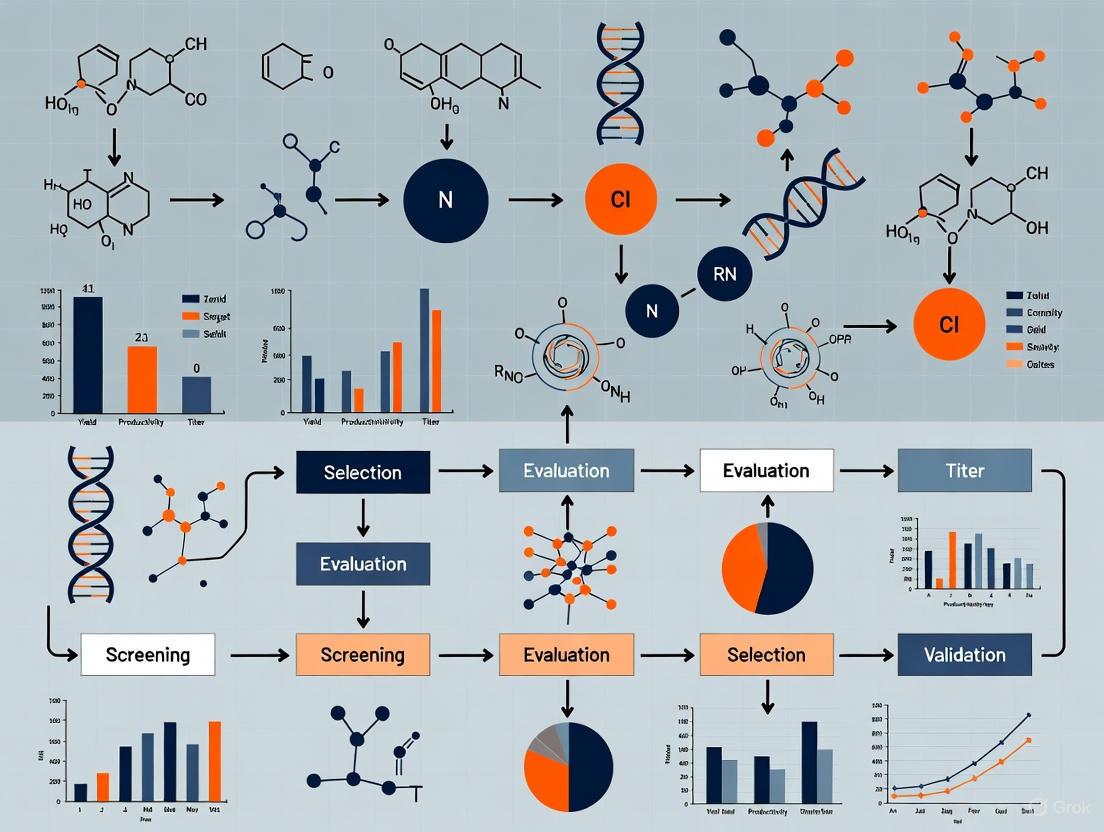
Selecting the optimal microbial host is a critical, multi-factorial decision that determines the success of biomanufacturing processes for pharmaceuticals and chemicals.
Strategic Host Organism Selection for Microbial Cell Factories: A Comprehensive Guide for Biomanufacturing and Drug Development
Abstract
Selecting the optimal microbial host is a critical, multi-factorial decision that determines the success of biomanufacturing processes for pharmaceuticals and chemicals. This article provides a systematic framework for researchers and drug development professionals, covering the foundational principles of host evaluation, advanced methodological tools for engineering and application, strategies for troubleshooting the universal growth-production trade-off, and rigorous validation techniques. By integrating the latest advances in systems metabolic engineering, dynamic control, and broad-host-range synthetic biology, this guide serves as a strategic resource for developing efficient, scalable, and economically viable microbial cell factories.
The Host Selection Landscape: From Core Principles to Emerging Chassis
In the development of microbial cell factories (MCFs), the selection of an optimal host organism is a foundational decision that fundamentally shapes the entire bioprocess. This selection process requires rigorous quantitative evaluation based on three key performance metrics: titer, yield, and productivity. Collectively referred to as TRY, these parameters form the essential trifecta for assessing the economic viability and technical feasibility of biomanufacturing processes [1] [2]. The integration of systems metabolic engineering—which combines tools from synthetic biology, systems biology, and evolutionary engineering—has accelerated the development of high-performing microbial cell factories [3]. However, constructing an efficient microbial cell factory still requires exploring and selecting various host strains, a process demanding significant time, effort, and costs [3].
The economic implications of TRY metrics are substantial, as substrate costs alone represent 40-60% of the total production expenses in industrial biotechnology [4]. Furthermore, the shift toward second-generation feedstocks, such as lignocellulosic biomass, introduces additional complexity with inhibitor compounds and mixed sugar compositions, making the objective assessment of host performance even more critical [4]. This technical guide provides an in-depth examination of these core metrics, their interrelationships, measurement methodologies, and their pivotal role in selecting microbial production hosts within industrial bioprocess development.
Defining the Core Metrics
Quantitative Definitions and Calculations
The table below summarizes the fundamental definitions, standard units, and calculation methods for the three core bioprocess metrics.
Table 1: Core Bioprocess Evaluation Metrics
| Metric | Definition | Standard Units | Calculation |
|---|---|---|---|
| Titer | Concentration of product accumulated in the bioreactor | g/L, mg/L | Measured concentration at harvest or endpoint |
| Yield | Efficiency of substrate conversion into product | g product/g substrate, mol/mol | (Total product mass)/(Total substrate consumed) |
| Productivity | Rate of product formation per unit volume | g/L/h, kg/m³/day | (Total product mass)/(Reactor volume × Time) |
Titer represents the concentration of the product accumulated in the bioreactor at the end of a fermentation process, typically measured in grams per liter (g/L) [5]. For example, in fed-batch fermentation of Pichia pastoris, a final titer of 3.7 g/L might be achieved after a 6-day campaign [5]. This metric is particularly crucial for downstream processing, as higher titers generally reduce purification costs and volume handling requirements.
Yield quantifies the efficiency of substrate conversion into the desired product [1]. It can be expressed in multiple formats, including mass yield (g product/g substrate) or molar yield (mol product/mol substrate) [3]. In metabolic engineering, two yield concepts are particularly important: the maximum theoretical yield (Yₜ), determined solely by reaction stoichiometry, and the maximum achievable yield (Yₐ), which accounts for cellular maintenance and growth requirements [3]. For instance, Saccharomyces cerevisiae shows a maximum theoretical yield of 0.8571 mol/mol glucose for l-lysine production under aerobic conditions [3].
Productivity (or volumetric productivity) measures the rate of product formation per unit reactor volume per unit time (e.g., g/L/h) [2]. A related metric, space-time yield (STY), is defined as the total mass of protein produced per bioreactor working volume per cultivation day, providing a normalized metric particularly valuable for comparing different cultivation modes [5] [6]. For example, continuous fermentation processes can achieve significantly higher space-time yields than fed-batch processes—13 grams of harvested protein over 12 days compared to 3.7 grams in 6 days for P. pastoris [5].
Advanced Yield Concepts in Metabolic Engineering
Table 2: Advanced Yield Concepts in Metabolic Engineering
| Concept | Definition | Application Context |
|---|---|---|
| Maximum Theoretical Yield (Yₜ) | Maximum production per carbon source when resources are fully used for target chemical production | Stoichiometric calculation ignoring metabolic fluxes toward growth and maintenance |
| Maximum Achievable Yield (Yₐ) | Maximum production per carbon source considering cell growth and maintenance | More realistic yield prediction accounting for cellular resource allocation |
| Substrate-Specific Productivity (SSP) | Productivity normalized to substrate consumption | Strain design evaluation, though limited as it doesn't fully capture volumetric productivity |
The Interrelationship of TRY Metrics
Fundamental Trade-Offs and Optimization Challenges
In practice, significant trade-offs in the TRY space must be addressed, as these metrics cannot be simultaneously maximized [1] [2]. The fundamental challenge arises from the cellular resource allocation dilemma: for a given substrate uptake rate, a higher growth yield typically leads to a higher growth rate but at the expense of product yield [1]. This creates an inherent tension between biomass production and product formation.
The development of the Dynamic Strain Scanning Optimization (DySScO) strategy specifically addresses these trade-offs by integrating dynamic flux balance analysis (dFBA) with existing strain design algorithms [2]. This approach recognizes that constrained by the yield trade-off, previous strain-design efforts often prioritized product yield optimization by restricting the growth rate to an arbitrarily low level [2]. However, this strategy can be counterproductive, as "a strain with a reduced growth rate would yield lower biomass concentration in bioreactors, which may reduce the volumetric productivity despite the increase in product yield" [2].
Diagram 1: TRY Trade-offs in Metabolism
Gene Expression Impact on TRY Space
The relationship between gene expression levels and TRY metrics reveals another critical dimension of these trade-offs. Research shows that "at low expression levels, gene transcription mainly defined TRY, and gene translation had a limited effect; whereas, at high expression levels, TRY depended on the product of both" [1]. This has significant implications for host engineering, as the optimal expression strategy varies depending on the desired production level.
Diagram 2: Multi-scale Factors Affecting TRY
Experimental Protocols for Metric Evaluation
Laboratory-Scale Bioprocess Evaluation
Accurate determination of TRY metrics requires standardized cultivation protocols and analytical methods. The following workflow outlines a comprehensive approach for evaluating host performance at laboratory scale:
Fermentation Setup: Cultivations are typically performed in bioreactors with controlled temperature, pH, dissolved oxygen, and feeding strategies [7]. Both batch and fed-batch fermentations are commonly carried out in fully anaerobic or controlled aerobic conditions, depending on the microbial host and metabolic pathway requirements [2]. Initial biomass is typically set to 0.01 g/L, with initial glucose concentration of 20 mM (or other carbon source) and initial liquid volume of 1L for standardized screening [2].
Process Monitoring: Regular sampling throughout the fermentation tracks biomass growth (optical density or dry cell weight), substrate consumption (HPLC, GC), and product formation (HPLC, GC, MS) [8]. Advanced microbioreactor platforms like the Biolector system enable online monitoring of biomass, dissolved oxygen, and pH in microtiter plates, allowing for high-throughput screening [8]. These systems can be fully integrated into liquid-handling platforms enclosed in laminar airflow housing for automated cultivation and sampling [8].
Analytical Measurements:
- Biomass: Dry cell weight (DCW) determined by filtering known culture volume through pre-weighed filters, drying at 80°C until constant weight [4]
- Substrate and Product Concentrations: HPLC with refractive index or UV detection for sugars, organic acids; GC-MS for volatile compounds [4] [8]
- Metabolite Analysis: Targeted metabolomics platforms for quantifying extracellular metabolites above 0.1 g/L threshold [4]
Data Analysis:
- Titer: Maximum product concentration measured at harvest
- Yield: Total product divided by total substrate consumed
- Productivity: Total product divided by (reactor volume × fermentation time)
Dynamic Strain Scanning Optimization (DySScO) Protocol
The DySScO strategy represents an advanced integrated approach for designing microbial strains with balanced TRY properties [2]. This methodology consists of three major phases broken down into nine algorithmic steps:
Table 3: DySScO Strategy Workflow
| Phase | Step | Description | Tools/Methods |
|---|---|---|---|
| Scanning | 1 | Find production envelope for desired product | COBRA Toolbox, FBA |
| 2 | Create N hypothetical flux distributions | Pareto frontier sampling | |
| 3 | Perform dynamic simulations of hypothetical strains | dFBA, DyMMM framework | |
| 4 | Evaluate performance using Y, T, P | CSP = W₁·Y/Yₘₐₓ + W₂·T/Tₘₐₓ + W₃·P/Pₘₐₓ | |
| 5 | Select optimal growth rate range | Based on CSP ranking | |
| Design | 6 | Find high-yield strain designs in optimal range | OptKnock, GDLS, OptReg |
| 7 | Simulate dynamic behaviors of designed strains | dFBA | |
| 8 | Evaluate performances of designed strains | CSP calculation | |
| Selection | 9 | Select best strain design | Highest CSP |
This protocol explicitly acknowledges that "while existing algorithms can optimize the product yield of the strain, they cannot optimize the productivity and titer of the strain because they are process-level concepts and cannot be predicted using standard metabolic models" [2]. By integrating dFBA simulations with strain design algorithms, DySScO enables simultaneous optimization of all three metrics.
The Scientist's Toolkit: Essential Research Reagents and Materials
Table 4: Essential Research Reagents and Equipment for TRY Evaluation
| Category | Item | Function/Application | Examples/Specifications |
|---|---|---|---|
| Bioreactor Systems | Microbioreactor Platforms | High-throughput cultivation with online monitoring | Biolector system integrated with liquid-handling robotics [8] |
| Laboratory-scale Bioreactors | Controlled environment for process optimization | 1-20L systems with temperature, pH, DO control [7] | |
| Analytical Instruments | HPLC Systems | Quantification of substrates, metabolites, products | RI or UV detection, Aminex HPX-87H column for organic acids [4] |
| GC-MS Systems | Analysis of volatile compounds and gases | Suitable for fermentation inhibitors (furfural, HMF) [4] | |
| Spectrophotometer | Biomass measurement (OD600) | Integrated in microbioreactor platforms [8] | |
| Software & Databases | Constraint-Based Modeling Tools | Metabolic flux analysis and strain design | COBRA Toolbox, FBA, dFBA [2] |
| Genome-Scale Metabolic Models | Host selection and pathway analysis | GEMs for E. coli, S. cerevisiae, B. subtilis, etc. [3] | |
| Strain Engineering Tools | CRISPR Systems | Genome editing for strain optimization | Cas9-based editing for gene knockouts [3] |
| Pathway Construction Tools | Heterologous pathway assembly | Golden Gate, Gibson assembly [9] |
Application in Host Organism Selection
Metabolic Capacity Evaluation Framework
Selecting the optimal microbial production host requires a systematic evaluation of metabolic capabilities relative to target products. The comprehensive evaluation of microbial cell factories involves calculating both maximum theoretical yield (Yₜ) and maximum achievable yield (Yₐ) for target chemicals across different host organisms [3]. This analysis can be performed for various carbon sources (e.g., glucose, xylose, glycerol) under different aeration conditions (aerobic, microaerobic, anaerobic) [3].
For example, when evaluating five representative industrial microorganisms (Bacillus subtilis, Corynebacterium glutamicum, Escherichia coli, Pseudomonas putida, and Saccharomyces cerevisiae) for production of 235 different bio-based chemicals, researchers found that "while most chemicals achieve their highest yields in S. cerevisiae, a few chemicals display clear host-specific superiority" [3]. These findings highlight the necessity of evaluating each chemical individually rather than applying universal rules for host selection.
Second-Generation Feedstock Considerations
The transition from first-generation to second-generation feedstocks introduces additional complexity in host selection. Lignocellulosic biomass hydrolysates contain mixed sugars (glucose, xylose, arabinose, galactose, mannose) and various inhibitors (furfural, HMF, acetic acid, salts) that significantly impact microbial performance [4]. A comparative study of six industrially relevant microorganisms (E. coli, C. glutamicum, S. cerevisiae, Pichia stipitis, Aspergillus niger, and Trichoderma reesei) revealed "large differences in the performance" related to "carbon source versatility and inhibitor resistance" [4].
Notably, the study found that "fungi were more resistant to the tested inhibitors than the other host organisms," with P. stipitis and A. niger providing the overall best performance on renewable feedstocks [4]. This supports the conclusion that "a substrate oriented instead of the more commonly used product oriented approach towards the selection of a microbial production host will avoid the requirement for extensive metabolic engineering" [4].
The systematic evaluation of titer, yield, and productivity provides an essential framework for selecting and engineering microbial cell factories. These interdependent metrics collectively determine the economic viability of bioprocesses, with optimal host selection requiring careful consideration of the inherent trade-offs between them. The ongoing development of advanced tools—including genome-scale metabolic models, dynamic flux balance analysis, high-throughput screening platforms, and sophisticated strain design algorithms—continues to enhance our ability to rationally engineer microbial hosts with balanced TRY characteristics.
As the field progresses toward more complex second-generation feedstocks and novel bioproducts, the fundamental principles of TRY optimization remain central to successful bioprocess development. By applying the methodologies and frameworks outlined in this technical guide, researchers can make more informed decisions in host selection and strain engineering, ultimately accelerating the development of sustainable microbial cell factories for industrial applications.
The selection of an appropriate host organism is a foundational decision in microbial cell factory research, with profound implications for the success of bioproduction processes. For decades, Escherichia coli, Saccharomyces cerevisiae, and Bacillus subtilis have served as the principal workhorses of industrial biotechnology. Each organism possesses a unique combination of physiological traits, genetic backgrounds, and operational advantages that make them suitable for specific applications. This whitepaper provides a comprehensive technical comparison of these three model systems, focusing on their respective strengths, limitations, and ideal use cases in biomanufacturing. By synthesizing current research and experimental data, we aim to equip researchers with the analytical framework necessary for informed host selection in metabolic engineering and synthetic biology projects. The growing emphasis on sustainable bioprocessing and the expansion of synthetic biology tools have further solidified the importance of these organisms, while also highlighting their specialized roles in the evolving landscape of industrial microbiology.
Organism Profiles and Key Characteristics
Core Biological Attributes
Table 1: Fundamental characteristics of E. coli, S. cerevisiae, and B. subtilis
| Characteristic | Escherichia coli | Saccharomyces cerevisiae | Bacillus subtilis |
|---|---|---|---|
| Taxonomy | Gram-negative bacterium | Ascomycete fungus (Yeast) | Gram-positive bacterium |
| Native Habitat | Mammalian gastrointestinal tract | Various natural niches (e.g., fruit, plants) | Soil, plant roots, gastrointestinal tracts |
| Regulatory Status | Varies by strain; some lab strains approved for specific products | Generally Recognized as Safe (GRAS) | Generally Recognized as Safe (GRAS) [10] [11] [12] |
| Growth Rate | Very fast (doubling time ~20 min) | Moderate (doubling time ~90 min) | Fast (doubling time ~30 min) [10] |
| Oxygen Requirement | Facultative anaerobe | Facultative anaerobe | Obligate aerobe [13] |
| Secretion Capability | Limited; outer membrane barrier | Limited; primarily periplasmic | Excellent; high-capacity secretion into medium [10] [11] |
| Genome Size | ~4.6 Mbp | ~12 Mbp | ~4.2 Mbp [10] |
| Gene Number | ~4,300 (K-12) | ~6,000 | ~4,100 (strain 168) [10] |
Industrial and Biotechnological Applications
Table 2: Comparative industrial applications and product profiles
| Application Area | E. coli | S. cerevisiae | B. subtilis |
|---|---|---|---|
| Recombinant Proteins | Excellent for intracellular expression; widely used for therapeutics (e.g., insulin, growth hormones) | Suitable for secreted and intracellular proteins; performs eukaryotic post-translational modifications | Ideal for secreted enzymes; dominant host for industrial enzymes (amylases, proteases) [10] [11] |
| Metabolic Engineering | Platform for organic acids, biofuels (e.g., isobutanol), polymer precursors, and complex natural products | Platform for biofuels (ethanol, advanced biofuels), organic acids, and pharmaceutical precursors (e.g., artemisinin) | Platform for vitamins (e.g., riboflavin B2), bio-based chemicals, and functional peptides [10] [13] |
| Specialty Applications | - | Surface display for biocatalysis and biosensing; food and beverage fermentation | Surface display (spores and vegetative cells) for biocatalysis, vaccines, and biosensing [11] |
| Food & Feed Products | Limited direct use | Fermented foods, baking, nutritional supplements | Probiotics, fermented foods (e.g., natto), direct-fed microbes [12] |
Genetic and Metabolic Features
Genomic Architecture and Evolutionary History
The evolutionary histories of these model organisms have significantly shaped their genomic architectures and metabolic capabilities. E. coli exhibits remarkable genomic stability, with approximately 87.0% of its genes belonging to the evolutionarily oldest phylostratum, indicating a core genome heavily enriched for essential cellular functions [14]. In contrast, B. subtilis demonstrates a more dynamic evolutionary past, with only 71.8% of its genes classified in the oldest category, reflecting a greater propensity for horizontal gene transfer and gene emergence [14]. This characteristic may contribute to B. subtilis's metabolic versatility and environmental adaptability. S. cerevisiae, with its eukaryotic genome organization, possesses a complex regulatory architecture featuring introns, extensive transcriptional regulation, and compartmentalized metabolism.
Metabolic Network Properties
The metabolic capabilities of these organisms are formally represented through Genome-Scale Metabolic Models (M-models), which have been instrumental in guiding metabolic engineering strategies. For B. subtilis, the development of next-generation Metabolism and Gene Expression models (ME-models) such as iJT964-ME has enabled more accurate predictions of proteomic responses to stress and protein overproduction capabilities [15]. This ME-model contains 964 genes, 6,282 reactions, and 4,208 metabolites, explicitly linking enzyme production costs to metabolic fluxes [15]. Similarly, sophisticated models exist for E. coli (e.g., iJL1678b-ME) and S. cerevisiae (e.g., Yeast8), allowing for comparative in silico analysis of metabolic capabilities and engineering targets.
Figure 1: Logical framework for host organism selection based on fundamental biological characteristics and application requirements.
Synthetic Biology Tools and Engineering Methodologies
Genetic Manipulation Tools
The genetic tractability of all three organisms has been significantly enhanced by the development of advanced synthetic biology tools:
CRISPR-Based Systems: CRISPR technologies have been successfully implemented in all three platforms for gene knockouts, transcriptional regulation (CRISPRi), and base editing. A modified CRISPRi system using partially mismatched sgRNAs has been applied to titrate essential gene expression in both E. coli and B. subtilis, revealing conserved expression-fitness relationships between homologous genes despite ~2 billion years of evolutionary separation [16].
Specialized Toolkits: Platform-specific genetic toolkits have been developed to standardize and accelerate engineering workflows. The SubtiToolKit (STK) provides a standardized Golden Gate assembly system for B. subtilis and other Gram-positive bacteria, enabling rapid construction of genetic circuits and pathway engineering [17]. Similar modular cloning systems exist for E. coli (e.g., EcoFlex) and S. cerevisiae (e.g., MoClo Yeast Toolkit).
Gene Editing Technologies: While CRISPR-Cas systems dominate current engineering approaches, earlier technologies like Zinc Finger Nucleases (ZFNs) and Transcription Activator-Like Effector Nucleases (TALENs) continue to have specialized applications, particularly in organisms where CRISPR efficiency may be limited [18].
Surface Display Technologies
B. subtilis offers unique capabilities through its surface display technology, which utilizes both vegetative cells and spores for presenting target proteins on the cellular surface [11]. This system employs various anchor proteins, including transmembrane proteins, lipoproteins, and LPXTG-like proteins for cell surface display, and spore coat proteins (CotB, CotC, CotG, CotX) for spore display [11]. The remarkable resilience of B. subtilis spores to harsh conditions (heat, dehydration, UV exposure) enhances the stability of displayed proteins, making this platform particularly valuable for applications in biosensing, vaccine development, and biocatalysis under industrial conditions [11].
Table 3: Key research reagents and solutions for microbial cell factory engineering
| Reagent/Tool | Function | Organism |
|---|---|---|
| SubtiToolKit (STK) | Standardized Golden Gate assembly system for genetic parts | B. subtilis, Gram-positive bacteria [17] |
| Mismatch-CRISPRi Library | Titrated knockdown of essential genes using mismatched sgRNAs | E. coli, B. subtilis [16] |
| iJT964-ME Model | Metabolism and gene expression model for proteome allocation predictions | B. subtilis [15] |
| Spore Display System | Surface presentation of proteins using spore coat anchors (CotB, CotC, CotG) | B. subtilis [11] |
| Cell Surface Display | Surface presentation on vegetative cells using anchor proteins (LysM, YhcR) | B. subtilis [11] |
Experimental Protocols for Key Analyses
Protocol: Engineering B. subtilis for Enhanced Metabolite Production
This protocol outlines the metabolic engineering workflow for enhancing production of pyridine-2,6-dicarboxylic acid (DPA) in B. subtilis, demonstrating generalizable strategies for pathway optimization [13].
Gene Disruption and Promoter Replacement:
- Design homologous recombination cassettes containing antibiotic resistance markers.
- Knock out sporulation-related genes (e.g., spo0A, spoIIE, spoIVB) to redirect metabolic flux.
- Replace native promoter of dipicolinate synthase gene (spoVF) with constitutive promoter (PyvyD) using seamless genome editing.
- Transform B. subtilis PS832 strain with editing constructs via natural competence or electroporation.
Transcriptomic Analysis:
- Culture wild-type and engineered strains in appropriate medium (e.g., LB or defined minimal medium).
- Harvest cells at mid-exponential phase (OD600 ~0.6-0.8) for RNA extraction.
- Perform RNA sequencing (Illumina platform) with triplicate biological replicates.
- Analyze differential gene expression, focusing on spore coat assembly genes and metabolic pathways.
Fermentation Optimization:
- Inoculate optimized strain (e.g., BSDYvyDVF-gerE) in shake flask cultures.
- Scale up to bioreactor (1.5 L working volume) with controlled parameters (pH 7.0, 37°C, dissolved oxygen >30%).
- Implement fed-batch strategy with carbon source feeding during stationary phase.
- Monitor biomass (OD600) and DPA production over 72-96 hours via HPLC analysis.
Figure 2: Experimental workflow for engineering high-yield metabolite production in B. subtilis [13].
Protocol: Assessing Probiotic Properties of B. subtilis Strains
This methodology provides a framework for comprehensive characterization of probiotic candidates, as demonstrated for B. subtilis YZ01 [12].
Acid and Bile Salt Tolerance:
- Prepare 16-hour B. subtilis cultures in LB broth (OD600 adjusted to ~1.0, approximately 10^8 CFU/mL).
- For acid tolerance: Transfer bacterial suspension to acidic conditions (pH 2.0, 2.5, 3.0, 4.0, 5.0) using HCl acidification.
- Incubate at 37°C for 3 hours with shaking (200 rpm).
- For bile salt tolerance: Transfer bacterial suspension to LB broth containing bile salt (0.1, 0.2, 0.3, 1, and 2% w/v).
- Incubate at 37°C for 5 hours with shaking.
- Serially dilute and plate on LB agar to determine surviving bacteria counts.
- Calculate survival rates: (Final log CFU/mL / Initial log CFU/mL) × 100.
Uric Acid Biodegradation Assay:
- Culture B. subtilis for 24 hours in appropriate medium.
- Harvest cells by centrifugation (8,000 × g, 10 minutes) and wash twice with stroke-physiological saline solution.
- Resuspend cells in phosphate buffer solution (PBS, 0.1 M, pH 7.4) containing uric acid (1.68 g/L).
- Incubate at 37°C for 24 hours with shaking.
- Terminate reaction by adding equal volume of 0.5 M NaOH.
- Filter mixture through 0.22-μm membrane filter.
- Quantify uric acid concentration by HPLC with standard curve (0.02-0.10 g/L).
- Calculate biodegradation ratio: (C0 - Ct)/C0 × 100%, where C0 is initial concentration and Ct is residual concentration.
Whole Genome Sequencing and Safety Assessment:
- Extract genomic DNA using commercial kit (e.g., MagPure Bacterial DNA Kit).
- Sequence on Illumina NovaSeq 6000 platform.
- Assemble genome using SPAdes v3.15 and annotate with Prokka v1.10.
- Screen for antibiotic resistance genes using CARD database and virulence factors using VFDB.
Comparative Performance and Industrial Implementation
Production Capabilities and Limitations
Each organism demonstrates distinct performance characteristics in industrial settings:
B. subtilis achieves remarkable success in protein secretion, making it the preferred platform for industrial enzyme production. Its GRAS status and efficient secretion machinery enable production yields exceeding 20 g/L for certain enzymes [10]. The implementation of ME-models like iJT964-ME has improved prediction of protein overproduction limits and stress responses, facilitating further yield improvements [15].
E. coli remains unmatched for intracellular production of recombinant proteins and small molecules, with well-established high-cell-density fermentation processes achieving biomass concentrations exceeding 100 g/L dry cell weight. However, its endotoxin production and limited secretion capacity present challenges for certain pharmaceutical applications.
S. cerevisiae provides the critical advantage of eukaryotic post-translational modifications, making it indispensable for producing complex eukaryotic proteins. Its industrial implementation in both traditional bioprocessing (e.g., ethanol fermentation) and modern biopharmaceutical production demonstrates remarkable versatility.
Emerging Applications and Future Directions
The continuing development of synthetic biology tools is expanding the application horizons for all three platforms:
B. subtilis is seeing increased utilization in sustainable manufacturing through surface display technologies that enable whole-cell biocatalysts for environmental remediation and green chemistry applications [11]. The development of food-grade probiotic strains with specialized functions, such as B. subtilis YZ01 for uric acid degradation, demonstrates the expanding health applications [12].
E. coli engineering continues to push the boundaries of complex molecule biosynthesis, including medicinal plant compounds and advanced biomaterials.
S. cerevisiae remains at the forefront of cell factory development for plant natural products and next-generation biofuels.
The integration of systems biology approaches, including ME-models and machine learning, across all three platforms is accelerating the design-build-test-learn cycle and enabling more predictive metabolic engineering strategies.
The comparative analysis of E. coli, S. cerevisiae, and B. subtilis reveals a complementary landscape of microbial platforms for cell factory applications. E. coli provides unparalleled growth kinetics and genetic tractability for intracellular production. S. cerevisiae offers essential eukaryotic functionality and established industrial heritage. B. subtilis delivers superior protein secretion, GRAS status, and unique capabilities in spore-based applications. The optimal host selection depends critically on the target product, required post-translational modifications, secretion needs, and regulatory considerations. Future advances will likely involve further specialization of each platform through continued tool development and systems-level understanding, ultimately expanding the boundaries of microbial manufacturing across diverse sectors including therapeutics, chemicals, and sustainable materials.
Evaluating Non-Model and Non-Canonical Hosts for Specialized Applications
The strategic selection of host organisms is a cornerstone of microbial cell factories (MCFs) research, directly influencing the efficiency, scalability, and economic viability of biomanufacturing processes. While model organisms like Escherichia coli and Saccharomyces cerevisiae have historically dominated the field due to their well-characterized genetics and extensive engineering toolkits, their inherent limitations for specialized applications are increasingly apparent [19] [20]. This has catalyzed a paradigm shift towards exploring non-model and non-canonical hosts—microbes possessing unique, innate physiological and metabolic traits that are difficult to engineer from first principles [21] [9]. These hosts represent a vast and largely untapped reservoir of biodiversity, offering natural capabilities such as robustness under industrial conditions, tolerance to inhibitory compounds, and specialized metabolic pathways [19] [20] [9]. Framing host selection within this broader context is essential for advancing the bioeconomy, as it enables the development of more sustainable processes that utilize next-generation feedstocks, including one-carbon (C1) compounds and lignocellulosic hydrolysates [19] [20].
Promising Non-Model Hosts and Their Innate Advantages
The selection of a non-model host is profoundly dictated by the specific demands of the bioprocess and the target product. The table below summarizes several prominent non-model hosts and their key native advantages for specialized applications.
Table 1: Promising Non-Model Microbial Hosts and Their Native Characteristics
| Microbial Host | Key Native Characteristics | Potential Specialized Applications |
|---|---|---|
| Zymomonas mobilis | High ethanol tolerance and yield; unique anaerobic Entner-Doudoroff (ED) pathway; high sugar uptake rate [20]. | Lignocellulosic bioethanol production; platform for other biochemicals like D-lactate and 2,3-butanediol [20]. |
| Bacillus subtilis | Generally Recognized As Safe (GRAS) status; high protein secretion capacity; proficient sporulation; clear genetic background [22]. | Industrial enzyme production; heterologous protein secretion; production of vitamins and antimicrobial peptides [22]. |
| Corynebacterium glutamicum | GRAS status; natural secretion of amino acids; high flux through TCA cycle; robust under industrial conditions [3]. | Amino acid production (e.g., L-glutamate, L-lysine); organic acid synthesis; metabolic engineering chassis [3]. |
| Pseudomonas putida | Metabolic versatility and broad substrate spectrum; high tolerance to solvents and toxic compounds; robust central metabolism [3]. | Bioremediation; conversion of lignin-derived aromatics; production of biopolymers [3]. |
| Methylotrophic Bacteria | Native ability to utilize C1 substrates (e.g., methanol, methane) as carbon and energy sources [19]. | Single-cell protein; valorization of greenhouse gases into chemicals and fuels [19]. |
| Acetogens | Ability to fix CO/CO2 via the Wood-Ljungdahl pathway; anaerobic fermentation of syngas [19]. | Carbon capture and utilization; conversion of syngas into biofuels (e.g., ethanol) and chemicals [19]. |
Quantitative Evaluation of Host Metabolic Capacity
A rational selection process requires a quantitative comparison of the innate metabolic capabilities of potential hosts. Genome-scale metabolic models (GEMs) are indispensable tools for this purpose, allowing in silico prediction of theoretical production yields. The following table provides a comparative analysis of the calculated metabolic capacities of five industrial microorganisms for producing key chemicals, demonstrating that the optimal host is often chemical-specific.
Table 2: Metabolic Capacity Comparison for Selected Chemicals under Aerobic Conditions with Glucose [3]
| Target Chemical | Host Organism | Maximum Theoretical Yield (YT) (mol/mol Glucose) | Maximum Achievable Yield (YA)* (mol/mol Glucose) |
|---|---|---|---|
| L-Lysine | Saccharomyces cerevisiae | 0.857 | - |
| Bacillus subtilis | 0.821 | - | |
| Corynebacterium glutamicum | 0.810 | - | |
| Escherichia coli | 0.799 | - | |
| Pseudomonas putida | 0.768 | - | |
| L-Glutamate | Corynebacterium glutamicum | - | - |
| Other Hosts | - | - | |
| Sebacic Acid | Pseudomonas putida | - | - |
| Other Hosts | - | - | |
| Propan-1-ol | Escherichia coli | - | - |
| Other Hosts | - | - |
YA accounts for non-growth-associated maintenance energy and a minimum growth requirement, providing a more realistic yield estimate than YT [3].
Engineering and Optimization Strategies for Non-Model Hosts
A Roadmap for Synthetic C1 Assimilation
Engineering non-model hosts for non-native substrate utilization, such as C1 compounds, requires a systematic workflow. The following diagram outlines the key stages, from initial bioprocess design to fermentation optimization.
Genome Reduction for Chassis Streamlining
Genome reduction is a powerful top-down approach to create streamlined and robust microbial chassis from non-model hosts [21]. This process involves the systematic deletion of non-essential genomic regions, including mobile genetic elements, pathogenicity islands, and redundant metabolic functions. The benefits are multifaceted:
- Enhanced Genomic Stability: Removal of insertion sequences (IS) and prophages reduces the frequency of random, undesirable mutations. For example, constructing an IS-free E. coli strain increased recombinant protein production by 20-25% [21].
- Improved Metabolic Efficiency: Eliminating the biosynthesis of unwanted secondary metabolites (e.g., native antibiotics) simplifies the metabolic background and redirects cellular resources toward the target product. In Streptomyces albus, deleting 15 native antibiotic gene clusters doubled the production of heterologously expressed biosynthetic pathways [21].
- Increased Transformation Efficiency: A reduced genome can alleviate the cellular burden, leading to higher competency and easier genetic manipulation [21].
The Dominant-Metabolism Compromised Intermediate-Chassis (DMCI) Strategy
A significant challenge in engineering microbes with strong native pathways (e.g., ethanol production in Zymomonas mobilis) is completely redirecting carbon flux. The DMCI strategy provides a solution by creating an intermediate chassis where the dominant metabolism is intentionally compromised [20]. This is achieved not by directly engineering for the final target product, but by introducing a less toxic, cofactor-imbalanced intermediate pathway that weakens the native flux. Subsequently, this intermediate chassis serves as a more amenable platform for constructing efficient producers of the desired biochemical. This approach enabled the engineering of Z. mobilis to produce over 140 g/L of D-lactate with a yield greater than 0.97 g/g glucose, a feat unattainable in the wild-type strain due to its overwhelming ethanol production [20].
Essential Research Reagents and Methodologies
The Scientist's Toolkit: Key Reagents for Engineering Non-Model Hosts
Table 3: Essential Research Reagents and Their Applications
| Research Reagent / Tool | Function in Strain Development |
|---|---|
| Genome-Scale Metabolic Models (GEMs) | In silico prediction of metabolic fluxes, identification of gene knockout targets, and guidance for pathway design (e.g., iZM516 for Z. mobilis) [3] [20]. |
| Enzyme-Constrained Models (ecGEMs) | Enhanced GEMs that integrate enzyme kinetics, providing more accurate simulations of proteome-limited growth and metabolic fluxes (e.g., eciZM547) [20]. |
| CRISPR-Based Genome Editing Tools | Enables precise gene knockouts, knock-ins, and multiplexed editing, even in non-model and polyploid organisms [22] [20]. |
| Native and Synthetic Promoters | Fine-tuning of gene expression; native C1-inducible promoters are particularly valuable for regulating synthetic C1 assimilation pathways [19] [22]. |
| Plasmids and Genetic Parts | Vectors for heterologous gene expression; a library of standardized parts (RBS, terminators) is crucial for reliable genetic manipulation [21] [22]. |
| Omics Analysis Tools (Transcriptomics, Proteomics, Fluxomics) | Provides systems-level data on cellular responses, guiding rational engineering and revealing metabolic bottlenecks [19]. |
Experimental Protocol: Implementing the DMCI Strategy
The following detailed methodology outlines the key steps for applying the DMCI strategy, as demonstrated in Zymomonas mobilis for D-lactate production [20].
Systematic In Silico Pathway Analysis:
- Utilize an enzyme-constrained genome-scale model (ecGEM) like eciZM547 to simulate the dynamics of flux distribution.
- Analyze the energy (ATP) and cofactor (NADH/NADPH) balances of the native dominant pathway (e.g., ethanol production) and potential intermediate pathways (e.g., 2,3-butanediol).
- Select an intermediate pathway that introduces cofactor imbalance or mild toxicity to strategically weaken the dominant metabolism without crippling cell growth.
Construction of the Intermediate Chassis:
- Genetic Tool Application: Employ a robust genome-editing system (e.g., CRISPR-Cas12a or endogenous Type I-F CRISPR-Cas for Z. mobilis) [20].
- Pathway Integration: Assemble and integrate the genes for the selected intermediate pathway (e.g., 2,3-butanediol biosynthesis) into the host chromosome under the control of a strong constitutive promoter.
- Validation: Confirm genomic integration via PCR and sequence verification. Quantify the reduction in the dominant pathway's flux (e.g., ethanol titer) and the emergence of the intermediate product.
Engineering for the Target Product:
- In the validated intermediate chassis, introduce the heterologous pathway for the final target product (e.g., D-lactate dehydrogenase).
- Simultaneously, knockout or downregulate key enzymes in the native dominant pathway (e.g., pyruvate decarboxylase) to further minimize carbon loss.
Strain Evaluation and Adaptive Laboratory Evolution (ALE):
- Cultivate the engineered strain in a bioreactor with minimal media and the target carbon source.
- Monitor the titers, yields, and productivities of both the target product and any by-products.
- Subject the strain to ALE under selective pressure (e.g., high substrate or product concentration) to improve growth and production characteristics.
The strategic evaluation and deployment of non-model and non-canonical hosts are imperative for the next generation of microbial cell factories. By moving beyond traditional model systems, researchers can leverage a wealth of native physiological and metabolic traits that are optimally suited for specialized applications, from C1 gas valorization to lignocellulosic biorefining. Success in this endeavor hinges on an integrated approach that combines quantitative metabolic evaluation, advanced genome engineering, and strategic chassis design principles like genome reduction and the DMCI strategy. As synthetic biology tools continue to mature for a wider range of microorganisms, the systematic development of these powerful hosts will be a key driver in establishing a sustainable, circular bioeconomy.
The Role of Genome-Scale Metabolic Models (GEMs) in Predicting Metabolic Capacity
Genome-scale metabolic models (GEMs) have emerged as indispensable computational tools for predicting the metabolic capacity of microorganisms, providing a robust framework for rational host organism selection in microbial cell factory development. By mathematically representing gene-protein-reaction associations, GEMs enable researchers to simulate organism metabolism under various genetic and environmental conditions, predicting metabolic fluxes and phenotypic outcomes with systems-level precision. This technical guide explores the fundamental principles, reconstruction methodologies, and computational applications of GEMs, with particular emphasis on their critical role in identifying optimal microbial hosts for industrial bioproduction. We further present standardized protocols for GEM-based analysis and provide a comprehensive toolkit for implementing these approaches in strain selection and metabolic engineering pipelines.
Genome-scale metabolic models (GEMs) are computational frameworks that systematically represent the metabolic network of an organism through gene-protein-reaction (GPR) associations for nearly all metabolic genes [23]. These models integrate stoichiometric, compartmentalization, biomass composition, thermodynamic, and regulatory information to enable quantitative prediction of metabolic behavior [23]. By imposing systemic constraints on the entire metabolic network, GEMs allow researchers to simulate cellular responses to genetic modifications and environmental perturbations, providing a powerful platform for metabolic engineering and host selection [23] [24].
The reconstruction of GEMs begins with genome annotation, followed by the compilation of metabolic reactions into a stoichiometric matrix (S-matrix) where rows represent metabolites and columns represent reactions [24]. This matrix forms the mathematical foundation for constraint-based reconstruction and analysis (COBRA) methods, primarily flux balance analysis (FBA), which uses linear programming to predict flux distributions that optimize a cellular objective (typically biomass production) under steady-state assumptions [24] [25]. The first GEM was reconstructed for Haemophilus influenzae in 1999, and since then, GEMs have been developed for an extensive range of organisms across bacteria, archaea, and eukarya [24].
Evolution and Quality Improvements in GEM Reconstruction
Historical Development of High-Quality GEMs
The development of GEMs for model organisms has undergone continuous refinement, with successive iterations incorporating expanded reaction networks, improved annotation accuracy, and additional constraints. The trajectory of Saccharomyces cerevisiae GEMs exemplifies this evolution, beginning with the first model iFF708 in 2003 [23]. The international collaboration that produced the consensus model Yeast1 addressed inconsistencies across earlier models, and this foundation has been progressively enhanced through versions Yeast4, Yeast7, Yeast8, and the most recent Yeast9 [23] [24]. Similar progression is evident in Escherichia coli GEMs, from the initial iJE660 model to the contemporary iML1515, which contains 1,515 open reading frames and demonstrates 93.4% accuracy in gene essentiality predictions across multiple carbon sources [24].
Enhancements in Model Quality and Predictive Capability
Recent GEM versions incorporate critical improvements that significantly enhance their predictive accuracy and application scope:
- Mass and charge balance corrections eliminate thermodynamically infeasible flux solutions [23]
- Refined gene associations improve mapping between genotypes and metabolic phenotypes [23]
- Incorporation of thermodynamic parameters enables more physiologically realistic flux predictions [23]
- Pan-genome models capture metabolic diversity across multiple strains of a species [23]
For example, Yeast9 includes updates to SLIME reactions and GPR associations, while pan-GEMs-1807 was developed based on the pan-genome of 1,807 S. cerevisiae isolates, enabling the generation of strain-specific GEMs (ssGEMs) that reflect niche-specific metabolic adaptations [23]. These advancements have transformed GEMs from basic metabolic networks into sophisticated, multiscale models capable of integrating diverse omics data and predicting complex phenotypic outcomes.
GEMs in Host Organism Selection for Microbial Cell Factories
Systematic Comparison of Metabolic Capacities
The selection of optimal host organisms represents a critical initial step in developing efficient microbial cell factories. GEMs enable systematic comparative analysis of metabolic capabilities across candidate organisms, calculating key performance metrics such as maximum theoretical yield (YT) and maximum achievable yield (YA) for target biochemicals [3]. A comprehensive evaluation of five major industrial microorganisms (Bacillus subtilis, Corynebacterium glutamicum, Escherichia coli, Pseudomonas putida, and Saccharomyces cerevisiae) demonstrated the utility of this approach, calculating yields for 235 different bio-based chemicals across nine carbon sources under varying aeration conditions [3].
Table 1: Metabolic Capacity Comparison for Representative Chemicals in Selected Host Organisms [3]
| Target Chemical | Host Organism | Maximum Theoretical Yield (mol/mol glucose) | Maximum Achievable Yield (mol/mol glucose) | Required Heterologous Reactions |
|---|---|---|---|---|
| L-lysine | S. cerevisiae | 0.8571 | - | - |
| L-lysine | B. subtilis | 0.8214 | - | - |
| L-lysine | C. glutamicum | 0.8098 | - | - |
| L-lysine | E. coli | 0.7985 | - | - |
| L-lysine | P. putida | 0.7680 | - | - |
| L-glutamate | C. glutamicum | - | - | Native pathway |
| Sebacic acid | E. coli | - | - | 3-5 heterologous reactions |
Strain Selection Based on Metabolic Characteristics
GEM-based analysis reveals that different host organisms exhibit distinct metabolic advantages for specific product classes. For instance, S. cerevisiae achieves the highest theoretical yield for L-lysine production (0.8571 mol/mol glucose) via the L-2-aminoadipate pathway, while other strains utilize the diaminopimelate pathway with varying efficiencies [3]. This systematic approach enables researchers to:
- Identify native producers of target chemicals, minimizing the need for extensive pathway engineering
- Determine pathway length and complexity for non-native products, with most chemicals requiring fewer than five heterologous reactions [3]
- Evaluate host compatibility with available substrates and process conditions
- Predict trade-offs between biomass formation and product synthesis
Hierarchical clustering of host performance across multiple chemicals reveals that while some organisms show broad superiority (e.g., S. cerevisiae for many chemicals under aerobic conditions), specific compounds display clear host-specific advantages that may not follow conventional biosynthetic categories [3]. This underscores the importance of chemical-specific evaluation rather than applying universal host selection rules.
Methodologies and Protocols for GEM-Based Analysis
Fundamental Workflow for GEM Reconstruction and Simulation
The standard pipeline for GEM development and application involves multiple stages, from initial genome annotation to context-specific model simulation. The following diagram illustrates the core workflow:
Protocol for Host Selection Using GEMs
Objective: Systematically identify the optimal microbial host for production of a target biochemical using GEM-based analysis.
Materials and Computational Tools:
- Genome-scale metabolic models for candidate host organisms (e.g., Yeast9 for S. cerevisiae, iML1515 for E. coli, iBsu1144 for B. subtilis)
- COBRA Toolbox or RAVEN Toolbox for MATLAB for constraint-based modeling
- Python with COBRApy package for simulation environment
- Agora2 database for gut microbes or BioModels Database for curated metabolic models
- Rhea database for biochemical reaction information
Procedure:
Model Acquisition and Validation
- Obtain high-quality GEMs for candidate host organisms from curated repositories
- Verify model functionality by simulating growth on standard media and comparing with experimental data
- Ensure mass and charge balance for all reactions
Pathway Reconstruction
- For non-native products: Identify biosynthetic pathway using biochemical databases (e.g., Rhea, KEGG)
- Add necessary heterologous reactions to host GEMs, including transport reactions
- Verify pathway functionality by maximizing product formation flux
Yield Calculation
- Constrain substrate uptake rates (e.g., glucose: 10 mmol/gDW/h)
- Set non-growth associated maintenance (NGAM) based on experimental data
- For maximum theoretical yield (YT): Optimize for product formation without growth constraints
- For maximum achievable yield (YA): Implement a minimum growth constraint (e.g., 10% of maximum growth rate) and optimize for product formation [3]
Growth Condition Screening
- Test metabolic capacity across different carbon sources (e.g., glucose, xylose, glycerol)
- Evaluate performance under varying aeration conditions (aerobic, microaerobic, anaerobic)
- Identify potential nutrient limitations or toxic byproduct accumulation
Strain Ranking and Selection
- Compare yields, growth rates, and pathway efficiency across candidates
- Evaluate genetic engineering feasibility based on pathway length and complexity
- Consider additional factors: process compatibility, safety status, available genetic tools
Advanced GEM Applications in Metabolic Engineering
Multiscale and Condition-Specific Models
Beyond basic stoichiometric modeling, advanced GEM formulations incorporate additional biological constraints to enhance predictive accuracy:
- Enzyme-constrained GEMs (ecGEMs) integrate proteomic limitations and enzyme kinetic parameters, improving predictions under conditions of resource reallocation [23]
- Metabolism and gene expression models (ME-models) couple metabolic networks with macromolecular biosynthesis, enabling proteome allocation predictions [23] [26]
- Context-specific GEMs integrate omics data (transcriptomics, proteomics, metabolomics) to generate condition-relevant metabolic networks [24]
For example, ecYeast8 incorporates enzyme abundance data, while yETFL and pcYeast represent ME-models for S. cerevisiae that successfully predict flux distributions under temperature and oxidative stresses [23] [26]. These advanced models more accurately capture metabolic trade-offs between growth and production, addressing a key limitation of classical FBA.
Strain Design and Optimization
GEMs facilitate targeted metabolic engineering through systematic identification of genetic modifications:
- Gene knockout predictions using algorithms such as OptKnock identify disruption targets that couple growth with product formation [3]
- Up/down-regulation targets pinpoint reactions whose flux modulation enhances product yields
- Cofactor engineering strategies optimize redox and energy balance for improved pathway performance
In one application, GEM-based analysis identified gene knockout targets for improved L-valine production in E. coli that would have required extensive experimental screening [3]. Similarly, model-guided identification of gene editing targets enabled overproduction of the immune-modulating metabolite butyrate in probiotic strains [26].
Table 2: Essential Research Reagents and Computational Tools for GEM-Based Analysis
| Tool/Resource | Type | Function | Application Example |
|---|---|---|---|
| RAVEN Toolbox | Software | Automated GEM reconstruction | Reconstruction of draft GEMs for 332 yeast species [23] |
| CarveMe | Software | Automated GEM reconstruction | Building GEMs for non-model yeasts [23] |
| COBRA Toolbox | Software | Constraint-based modeling | FBA, gene knockout simulations, pathway analysis [3] |
| AGORA2 | Database | Curated GEMs for gut microbes | 7,302 strain-level GEMs for microbiome studies [26] |
| Rhea Database | Database | Biochemical reactions | Constructing mass- and charge-balanced equations [3] |
| BioModels | Database | Curated computational models | Access to validated GEMs for model organisms |
Emerging Frontiers and Future Perspectives
The continued evolution of GEMs is expanding their applications in several promising directions. The development of pan-genome scale models captures metabolic diversity across multiple strains, enabling population-level analyses and identification of strain-specific metabolic capabilities [23]. The integration of GEMs with machine learning approaches enhances pattern recognition from high-dimensional omics data, potentially accelerating strain design cycles. Furthermore, the application of GEMs to non-model organisms with innate biosynthetic capabilities for valuable compounds is broadening the repertoire of microbial cell factories [23] [27].
In therapeutic applications, GEMs are being employed to design live biotherapeutic products (LBPs) through systematic evaluation of strain functionality, host interactions, and microbiome compatibility [26]. This approach enables rational selection of microbial consortia based on predicted metabolic interactions and therapeutic metabolite production. As GEM reconstruction methodologies become more automated and accessible, their implementation is expected to expand further, ultimately contributing to the development of customized synthetic microbial cell factories for sustainable biomanufacturing [27].
Genome-scale metabolic models represent a powerful paradigm for predicting metabolic capacity and guiding host organism selection in microbial cell factory development. By integrating genomic information with biochemical knowledge, GEMs enable quantitative prediction of metabolic phenotypes under various genetic and environmental conditions. The continued refinement of model quality, coupled with advanced computational frameworks, is enhancing their predictive accuracy and expanding application scope. As the field progresses, GEMs are poised to play an increasingly central role in rational strain design, ultimately accelerating the development of efficient microbial cell factories for sustainable bioproduction in the emerging bioeconomy era.
The selection of an optimal carbon source is a foundational decision in the development of microbial cell factories, directly influencing the economic viability, sustainability, and scalability of bioprocesses. This selection is intrinsically linked to host organism choice, as the native metabolism and engineering potential of a microbe determine its capacity to utilize different feedstocks efficiently. Traditional biomanufacturing has heavily relied on sugar-based carbon sources derived from agricultural crops, raising concerns about competition with food supply and land use. The field is now undergoing a significant paradigm shift toward the use of one-carbon (C1) feedstocks such as methanol and formate, which can be derived from the hydrogenation of captured CO2 with green hydrogen [28]. This transition represents a critical strategy for decarbonizing the biomanufacturing industry and advancing toward a circular bioeconomy.
The core challenge in this transition lies in the fundamental rewiring of microbial metabolism. While the pathways for sugar assimilation are native and well-understood in many industrial workhorses, C1 assimilation often requires the introduction of synthetic pathways and extensive metabolic remodeling to achieve sufficient carbon conversion efficiency and target product yields [29]. This technical guide provides an in-depth analysis of carbon source options, from traditional sugars to emerging C1 feedstocks, with a specific focus on their integration into host selection and engineering strategies for microbial cell factories.
A systematic evaluation of carbon sources is essential for aligning feedstock properties with process goals, including target product value, volumetric productivity, and sustainability metrics. The table below summarizes the key characteristics of prominent carbon sources.
Table 1: Technical Comparison of Carbon Sources for Microbial Biomanufacturing
| Carbon Source | Degree of Reduction | Typical Origin | Key Advantages | Key Challenges | Representative Host Organisms |
|---|---|---|---|---|---|
| Glucose | Fully Reduced (C6) | Lignocellulosic biomass, crops | High uptake rates, well-understood metabolism, supports high growth rates | Food-fuel competition, price volatility, requires arable land | E. coli, S. cerevisiae, B. subtilis [3] [30] |
| Xylose | Fully Reduced (C5) | Hemicellulose in plant biomass | Abundant in agro-industrial waste, reduces process cost | CCR in many hosts, requires specific transporters and pathways | Engineered E. coli, S. cerevisiae, P. putida [30] |
| Glycerol | Reduced (C3) | Biodiesel production byproduct | Low cost, reduced state favors reduced bioproducts | May require aerobic conditions for efficient assimilation | E. coli, P. putida, Y. lipolytica |
| Methanol | Reduced (C1) | CO2 + H2 (green H2) | High energy content, avoids food-fuel competition, liquid at RT | Toxic intermediates, inefficient native pathways in most hosts, low energy efficiency | Ogataea polymorpha, Methylorubrum extorquens [28] [31] |
| Formate | Intermediate (C1) | CO2 + H2 (green H2) | High solubility, non-toxic, simple structure | High oxygen requirement for energy generation, low carbon content | Engineered E. coli, C. autoethanogenum |
| Lignin-Derived Aromatics | Varied | Lignocellulosic biomass | Valorizes underutilized stream, unique precursor for aromatics | Heterogeneous mixture, toxic to many microbes, complex catabolism | Pseudomonas putida [32] |
The "degree of reduction" of a carbon source is a critical biochemical parameter, as it influences the maximum theoretical yield of reduced target products like biofuels and biopolymers. C1 feedstocks like methanol offer a promising alternative to sugars because they can be produced independently of arable land [28]. Their utilization, however, often demands specialized methylotrophic hosts such as the yeast Ogataea polymorpha or the bacterium Methylorubrum extorquens, which possess native C1 assimilation pathways like the serine cycle or xylulose monophosphate (XuMP) pathway [28] [31]. In contrast, the robustness of platforms like E. coli and S. cerevisiae with sugars must be weighed against the sustainability limitations of sugar production.
Host Organism Selection and Metabolic Capacities
Selecting a microbial host is a decision deeply intertwined with the chosen carbon source. A comprehensive evaluation of a host's innate metabolic capacity for target chemical production is a critical first step in strain design. Genome-scale metabolic models (GEMs) are indispensable tools for this purpose, enabling in silico prediction of maximum theoretical yield (YT) and maximum achievable yield (YA), which accounts for energy diverted to growth and maintenance [3].
Table 2: Maximum Theoretical Yields (Y_T) of Selected Chemicals in Different Hosts on Glucose (mol/mol) [3]*
| Target Chemical | E. coli | S. cerevisiae | B. subtilis | C. glutamicum | P. putida |
|---|---|---|---|---|---|
| L-Lysine | 0.799 | 0.857 | 0.821 | 0.810 | 0.768 |
| L-Glutamate | Data from source | Data from source | Data from source | Data from source | Data from source |
| Sebacic Acid | Data from source | Data from source | Data from source | Data from source | Data from source |
| Propan-1-ol | Data from source | Data from source | Data from source | Data from source | Data from source |
A study comprehensively evaluating five industrial microorganisms for the production of 235 bio-based chemicals revealed that while S. cerevisiae often achieves the highest yields for many compounds, certain chemicals display clear host-specific superiority [3]. For instance, the production of pimelic acid was highest in Bacillus subtilis. This underscores that there is no universally superior host; the optimal choice depends on the specific chemical and pathway. For lignin-derived aromatic compounds, Pseudomonas putida is a prominent chassis due to its native catabolic pathways for compounds like ferulate, p-coumarate, and vanillate [32]. Quantitative fluxomic studies of P. putida grown on these substrates have revealed extensive metabolic remodeling, including activation of the glyoxylate shunt and anaplerotic routes, to generate the necessary NADPH and ATP required for aromatic ring cleavage [32].
For C1 feedstocks, native methylotrophs are the primary candidates. Engineering these hosts often focuses on channeling central metabolites toward the target product. For example, metabolic modeling of M. extorquens predicted a superior theoretical yield of 1.0 C-mol Glycolic acid per C-mol Methanol, which surpasses theoretical yields from sugar fermentation. This high yield is facilitated by the native production of glyoxylate, a key precursor for glycolic acid, within the serine cycle of M. extorquens [31].
Engineering Strategies for C1 Feedstock Utilization
Pathway Engineering and Optimization
Engineering non-methylotrophic model organisms like E. coli and S. cerevisiae to utilize methanol is a major goal in synthetic biology, but it remains challenging. Key strategies include:
- Introduction of Heterologous C1 Assimilation Pathways: This involves the expression of modules for methanol oxidation to formaldehyde and subsequent assimilation via pathways like the ribulose monophosphate (RuMP) or XuMP cycles.
- Cofactor Balancing: Native methanol dehydrogenase enzymes often depend on specific cofactors (e.g., PQQ in bacteria). Engineering compatible cofactor systems is crucial for efficient carbon flux.
- Protein and Enzyme Engineering: Improving the kinetics of C1-assimilating enzymes, such as methanol dehydrogenases and sugar phosphate synthases, is often necessary to achieve sufficient flux [29] [31].
- Dynamic Pathway Regulation: Implementing sensors and regulators that respond to intracellular metabolite levels can help balance energy generation and carbon assimilation, preventing the buildup of toxic intermediates like formaldehyde [29].
A promising alternative is to engineer native methylotrophs, which already possess optimized C1 assimilation machinery. In Ogataea polymorpha, the production of malate from methanol was successfully demonstrated by engineering the reductive TCA cycle in the cytosol and introducing an efficient malate transporter. Through process optimization, a titer of 13 g/L malate with a production rate of 3.3 g/L/d was achieved [28]. Similarly, M. extorquens was engineered for glycolic acid production via a heterologous NADPH-dependent glyoxylate reductase, demonstrating the feasibility of producing platform chemicals from methanol [31].
Diagram 1: C1 metabolic engineering workflow.
Systems Metabolic Engineering and In Silico Tools
Advancements in systems biology provide powerful tools for engineering C1 utilization. GEMs are used to simulate metabolic fluxes and identify potential bottlenecks and engineering targets. For instance, flux balance analysis of O. polymorpha showed that minimizing flux through the TCA cycle was beneficial for malate production, guiding the choice of overexpressing the reductive TCA pathway [28]. Elementary Flux Mode analysis of M. extorquens helped identify pathway configurations that couple growth with obligate production of glycolic acid, informing long-term strain engineering strategies [31].
13C-fluxomics, which involves feeding 13C-labeled substrates and tracking the label through metabolisms, offers quantitative insights into in vivo carbon flux. Application of this technique in P. putida grown on phenolic acids revealed how the metabolism is rewired to generate reducing equivalents (NADPH) by increasing fluxes through pyruvate carboxylase and the glyoxylate shunt, providing a quantitative blueprint for cofactor balancing [32]. The integration of multi-omics data with artificial intelligence is an emerging trend to guide protein engineering, predict metabolic imbalances, and optimize system-level performance of C1-based cell factories [29].
Experimental Protocols for Evaluating Carbon Utilization
Protocol: Evaluating Microbial Growth and Production on C1 Feedstocks
Objective: To assess the growth kinetics and product formation of an engineered microbial strain using methanol as the sole carbon source.
Materials:
- Strain: Engineered Ogataea polymorpha or Methylorubrum extorquens.
- Media: Defined mineral medium (e.g., Verduyn medium) [28].
- Carbon Source: Methanol, filter-sterilized.
- Bioreactor/Shake Flasks: Baffled flasks for improved aeration or bioreactors for controlled feeding.
- Analytical Instruments: HPLC for metabolite analysis (methanol, organic acids), GC-MS for volatile products, spectrophotometer for OD measurement.
Procedure:
- Pre-culture: Grow a pre-culture using a standard rich medium (e.g., YPD with glucose) to generate sufficient biomass. Note that heterologous genes under methanol-inducible promoters will not be activated at this stage.
- Cell Harvest and Induction: Harvest cells by centrifugation, wash with sterile saline or minimal medium without a carbon source to remove residual sugars. This is a critical step to ensure methanol is the sole carbon source.
- Production Phase: Resuspend the cell pellet in defined mineral medium containing methanol (e.g., 0.5-1% v/v) as the sole carbon source. Use buffered media or pH control to maintain optimal pH, as acid production can inhibit growth.
- Fed-Batch Cultivation: For extended fermentations, employ a fed-batch strategy with continuous or pulsed feeding of methanol to maintain a low, non-toxic concentration and prevent excessive evaporation.
- Monitoring and Sampling: Regularly sample the culture to measure optical density (OD600), substrate consumption (methanol), and product formation (e.g., malate, glycolate). Correlate product titers with cell growth (biomass).
- Analysis: Quantify metabolites using HPLC. Compare the experimental yield (g product / g methanol) to the theoretical yield predicted by metabolic models [28] [31].
Protocol: 13C-Fluxomics Analysis for Carbon Tracing
Objective: To quantitatively map the intracellular carbon flux distribution in a host organism utilizing a specific feedstock.
Materials:
- 13C-Labeled Substrate: e.g., 13C-Methanol or 13C-Glucose.
- Quenching Solution: Cold aqueous methanol (-40°C).
- Extraction Solvent: Methanol/chloroform/water mixture.
- Derivatization Reagents: e.g., Methoxyamine hydrochloride and N-methyl-N-(tert-butyldimethylsilyl)trifluoroacetamide (MTBSTFA).
- Instrumentation: GC-MS coupled to a mass spectrometer.
Procedure:
- Cultivation and Labeling: Grow the microbial culture in a bioreactor with the unlabeled substrate until mid-exponential phase. Rapidly switch the feed to an identical medium containing the 13C-labeled substrate. This "isotope pulse" should be short (e.g., 30-60 seconds) to capture initial label incorporation or longer for metabolic steady-state.
- Rapid Sampling and Quenching: Withdraw culture samples rapidly and immediately quench in cold quenching solution to instantaneously halt metabolic activity.
- Metabolite Extraction: Extract intracellular metabolites using the extraction solvent. Centrifuge to separate phases and collect the polar (aqueous) phase for central metabolite analysis.
- Derivatization: Derivatize the metabolite extracts to make them volatile for GC-MS analysis.
- GC-MS Measurement: Inject the derivatized samples. The mass spectrometer will detect the mass isotopomer distribution (MID) of each metabolite fragment, indicating the incorporation of 13C atoms.
- Flux Calculation: Use computational software (e.g., INCA, OpenFlux) to fit the experimental MID data to a metabolic network model, thereby calculating the intracellular metabolic flux map [32].
The Scientist's Toolkit: Essential Reagents and Solutions
Table 3: Key Research Reagents and Materials for Carbon Source and Host Engineering Research
| Reagent/Material | Function/Application | Example Use Case |
|---|---|---|
| Defined Mineral Medium | Supports growth without interfering carbon sources; essential for C1 fermentation studies. | Cultivating O. polymorpha or M. extorquens on methanol [28]. |
| 13C-Labeled Substrates | Tracer for fluxomics studies to quantify in vivo metabolic fluxes. | Mapping carbon flow through the TCA cycle and glyoxylate shunt in P. putida [32]. |
| Methanol-Inducible Promoters | Tightly regulates gene expression, induced only when methanol is present. | Controlling heterologous gene expression in methylotrophic yeasts like O. polymorpha [28]. |
| Genome-Scale Metabolic Model (GEM) | In silico prediction of metabolic capabilities, yields, and gene knockout targets. | Predicting maximum yield of glycolic acid from methanol in M. extorquens [31]. |
| CRISPR-Cas9 System | Enables precise genome editing for gene knockouts, knock-ins, and regulatory engineering. | Creating targeted mutations in potential bottleneck genes (e.g., vdh, pobA) in P. putida [3] [32]. |
| HPLC/GC-MS Systems | Quantitative analysis of substrate consumption, product formation, and metabolite pools. | Measuring malate, acetone, and isoprene titers in culture supernatants [28]. |
The strategic selection and engineering of carbon sources are pivotal for the future of sustainable biomanufacturing. While sugar-based feedstocks continue to be important, particularly for high-value products, the compelling environmental and economic potential of C1 feedstocks like methanol and formate is driving intensive research and development. The successful implementation of C1-based processes hinges on a deeply integrated approach to host selection and metabolic engineering. This involves not only introducing heterologous pathways into versatile chassis like E. coli but also expanding the product spectrum of native methylotrophs like O. polymorpha and M. extorquens through advanced genetic tools [28] [31].
Future progress will be accelerated by the convergence of systems biology, synthetic biology, and artificial intelligence. AI-assisted protein design can help evolve enzymes with higher activity for C1 conversion, while multi-omics integration will guide the rational remodeling of central metabolism for optimal cofactor balancing and carbon efficiency [29]. Furthermore, the development of robust processes that integrate upstream green methanol production with downstream fermentation will be crucial for achieving true carbon neutrality. As these technologies mature, microbial cell factories powered by C1 feedstocks will play an increasingly vital role in displacing petrochemical processes, mitigating climate change, and establishing a circular bioeconomy.
The selection of an optimal microbial host organism is a foundational step in developing efficient microbial cell factories (MCFs) for sustainable bioproduction. This decision directly impacts the maximum theoretical yield, productivity, and ultimate economic viability of the bioprocess. While model organisms like Escherichia coli and Saccharomyces cerevisiae have historically been the primary workhorses of metabolic engineering, a systematic comparison of a broader range of industrial hosts across a wide spectrum of target chemicals has been lacking. This case study scrutinizes a comprehensive evaluation of the innate metabolic capacities of five representative industrial microorganisms for the production of 235 bio-based chemicals. The findings provide a strategic resource for researchers and scientists in the field of systems metabolic engineering, offering data-driven guidance for rational host selection and subsequent pathway optimization.
Methodology for Metabolic Capacity Evaluation
Host Strains and Target Chemicals
The analysis focused on five industrially relevant microorganisms: Bacillus subtilis, Corynebacterium glutamicum, Escherichia coli, Pseudomonas putida, and Saccharomyces cerevisiae [3]. These strains were selected due to their prevalence in both academic research and industrial biomanufacturing. The study encompassed a total of 235 bio-based chemicals, including bulk chemicals, fine chemicals, fuels, polymers, and natural products, providing a broad overview of microbial production potential [3].
Genome-Scale Metabolic Modeling (GEM) and Pathway Construction
The core of the evaluation relied on Genome-Scale Metabolic Models (GEMs) to mathematically represent the gene-protein-reaction associations within each organism [3].
- Model Construction: A separate GEM was constructed for each chemical biosynthetic pathway in each host, resulting in a total of 1,360 individual models [3].
- Pathway Reconstruction: For 1,092 of these models, heterologous reactions not natively present in the host strain's metabolic network were introduced to establish functional biosynthetic pathways. The remaining 268 models utilized existing native pathways [3]. Notably, for over 80% of the target chemicals, fewer than five heterologous reactions were required to construct a functional pathway across all hosts [3].
- Mass and Charge Balancing: All metabolic reactions were organized into mass- and charge-balanced equations using the Rhea database, with manual curation for reactions not present in the database [3].
Calculation of Metabolic Capacity Metrics
The metabolic capacity of each host for every chemical was quantified using two key yield metrics, calculated under varied conditions of carbon source (e.g., D-glucose, glycerol, xylose) and aeration (aerobic, microaerobic, anaerobic) [3].
- Maximum Theoretical Yield (YT): This represents the maximum production of the target chemical per given carbon source when all cellular resources are theoretically allocated toward production, ignoring metabolic fluxes required for cell growth and maintenance [3].
- Maximum Achievable Yield (YA): A more realistic metric, YA accounts for the cell's requirement for non-growth-associated maintenance energy (NGAM) and sets a lower bound for the specific growth rate (e.g., 10% of the maximum biomass production rate) to ensure minimum growth requirements are met [3].
The following diagram illustrates the comprehensive workflow for constructing the metabolic models and calculating the key yield metrics.
Key Findings and Comparative Analysis of Host Performance
The systematic analysis revealed that while S. cerevisiae achieved the highest yields for the majority of the 235 chemicals under aerobic conditions with D-glucose, no single host was universally superior [3]. Performance was highly chemical-dependent, with clear host-specific superiority observed for certain compounds. For instance, pimelic acid production was highest in B. subtilis [3]. Hierarchical clustering of host ranks based on yield showed that chemicals with the highest yields in a particular host did not group according to conventional biosynthetic pathways or chemical categories, underscoring the necessity of evaluating each chemical individually [3].
Case Study: L-Lysine Production
A comparative analysis of L-lysine production highlights how different innate metabolisms influence metabolic capacity. The maximum theoretical yield (YT) for L-lysine from D-glucose under aerobic conditions varied significantly among the hosts [3]:
- Saccharomyces cerevisiae: 0.8571 mol/mol (via the L-2-aminoadipate pathway)
- Bacillus subtilis: 0.8214 mol/mol
- Corynebacterium glutamicum: 0.8098 mol/mol
- Escherichia coli: 0.7985 mol/mol
- Pseudomonas putida: 0.7680 mol/mol
While S. cerevisiae showed the highest theoretical yield, the authors note that C. glutamicum is widely used for industrial L-glutamate production due to its actual in vivo metabolic fluxes and high chemical tolerance, indicating that yield is not the sole selection criterion [3].
Metabolic Capacity Comparison Table
The table below summarizes the general metabolic characteristics and performance highlights of the five industrial hosts, as derived from the comprehensive analysis.
| Host Organism | Preferred Carbon Sources | Metabolic Characteristics | Representative High-Yield Chemicals | Key Engineering Considerations |
|---|---|---|---|---|
| Bacillus subtilis | D-Glucose, Sucrose [3] | Native capacity for many primary metabolites | Pimelic acid [3] | Efficient protein secretion; GRAS status [33] |
| Corynebacterium glutamicum | D-Glucose [3] | Naturally high amino acid producer; diaminopimelate pathway for L-lysine [3] | L-Lysine, L-Glutamate [3] | Industrial workhorse for amino acids; known for high tolerance [3] |
| Escherichia coli | D-Glucose, Glycerol, Xylose [3] | Versatile metabolism; extensive genetic toolset | L-Lysine (via diaminopimelate pathway) [3] | Fast growth; well-characterized physiology [34] |
| Pseudomonas putida | D-Glucose, Glycerol [3] | Robust metabolism; tolerance to solvents and aromatics | Chemicals requiring robust redox metabolism [3] | High native stress resistance; suitable for complex feedstocks [33] |
| Saccharomyces cerevisiae | D-Glucose, Sucrose, Galactose [3] | L-2-aminoadipate pathway for L-lysine; eukaryotic protein processing [3] | L-Lysine, Mevalonic acid [3] | GRAS status; compartmentalization offers engineering opportunities [34] |
Advanced Pathway and Strain Optimization Strategies
Expanding Innate Metabolic Capacity
To overcome the innate metabolic limitations of a chosen host, the study systematically analyzed strategies for pathway optimization.
- Heterologous Reaction Integration: The introduction of non-native reactions is a primary method for creating novel biosynthetic pathways. The analysis confirmed that the majority of bio-based chemicals require only a minimal expansion of the native metabolic network [3].
- Cofactor Engineering: Swapping or engineering cofactor specificities (e.g., changing a reaction from NADH-dependent to NADPH-dependent, or vice versa) can significantly rewire metabolic flux and improve yield by aligning with the host's native cofactor supply and regeneration capacity [3].
- Computational Pathway Design: Tools like SubNetX have been developed to extract and assemble stoichiometrically balanced subnetworks from biochemical databases, connecting target molecules to host metabolism through multiple precursors. This approach allows for the identification of branched, high-yield pathways that are more efficient than simple linear pathways [35].
Dynamic Metabolic Control
Beyond static pathway engineering, dynamic metabolic control strategies are increasingly used to address challenges such as metabolic burden and metabolite toxicity. This approach involves designing genetically encoded circuits that allow cells to autonomously adjust flux distributions in response to external or internal metabolic states [36]. For example, such systems can be designed to divert resources away from growth and toward product formation only after a certain biomass density is reached, or to downregrate a pathway when a toxic intermediate accumulates, thereby enhancing overall production robustness [36] [37].
Experimental Protocol and Research Toolkit
Core Computational and Experimental Workflow
The following diagram outlines a generalized experimental protocol for conducting metabolic capacity analysis and validation, from in silico design to in vivo strain construction and testing.
Essential Research Reagent Solutions
The table below details key reagents, tools, and methodologies essential for executing the metabolic capacity analysis and subsequent strain engineering.
| Category / Reagent | Specific Examples & Functions | Key Applications in Workflow |
|---|---|---|
| Genome-Scale Models (GEMs) | Curated models for B. subtilis, C. glutamicum, E. coli, P. putida, S. cerevisiae [3]. | Foundation for in silico yield prediction (YT/YA) and gene target identification [3]. |
| Pathway Design Algorithms | SubNetX, retrosynthesis tools [35]. | Designing balanced, stoichiometrically feasible biosynthetic pathways from precursors to target chemicals [35]. |
| Gene Editing Tools | CRISPR-Cas9, SAGE (Serine Recombinase-Assisted Genome Engineering) [3]. | Precise genomic integration of heterologous pathways, gene knockouts, and regulatory element engineering [3] [38]. |
| Fermentation Systems | Bioreactors for controlled aerobic, microaerobic, and anaerobic cultivation [3]. | Validating model predictions and measuring key performance metrics (titer, yield, productivity) [3] [39]. |
| Analytical Chemistry | HPLC, GC-MS for quantifying metabolites, substrates, and products [39]. | Accurate measurement of experimental yields and titers for comparison with model predictions [39]. |
This comprehensive case study demonstrates that host selection is both chemical-specific and context-dependent. While the metabolic capacity, quantified by YT and YA, provides a crucial primary filter for selecting a host, it must be integrated with other critical factors for successful industrial application. These include the host's native chemical tolerance, the availability of genetic tools for engineering, its safety status (e.g., GRAS), and its ability to thrive in industrial-scale fermentation conditions [3] [33].
The resources generated from this type of analysis—including the yield data for 235 chemicals across five hosts—serve as a foundational guide for the systems metabolic engineering community. They enable researchers to make data-driven decisions at the outset of a project, significantly reducing the time and cost associated with host screening. Future work will involve further refining these models with kinetic parameters, integrating regulatory network information, and employing advanced machine learning algorithms to predict optimal engineering strategies, thereby accelerating the development of robust microbial cell factories for a sustainable bio-based economy [3] [35] [40].
Engineering and Implementation: Tools and Workflows for Strain Development
Genetic Toolkits and Manipulation Techniques Across Diverse Hosts
The development of high-performing microbial cell factories (MCFs) depends not only on selecting hosts with superior innate metabolic capacities but equally on the availability of sophisticated genetic toolkits to reprogram these organisms. While systems metabolic engineering can identify ideal host strains for producing specific chemicals based on metrics like maximum theoretical yield [3], this theoretical potential can only be realized through practical genetic manipulation. The expanding CRISPR toolbox and standardized genetic parts are revolutionizing our ability to engineer diverse microbial hosts, from established workhorses to non-model organisms with unique metabolic capabilities. This technical guide examines the current state of genetic toolkits across diverse hosts, providing a framework for selecting and engineering organisms within the context of MCF development.
Host Organism Landscape and Selection Criteria
Quantitative Evaluation of Host Metabolic Capacities
Selecting an appropriate host organism is the foundational step in constructing an efficient microbial cell factory. A comprehensive evaluation of five representative industrial microorganisms—Bacillus subtilis, Corynebacterium glutamicum, Escherichia coli, Pseudomonas putida, and Saccharomyces cerevisiae—reveals significant differences in their metabolic capacities for producing 235 different bio-based chemicals [3]. The study calculated both the maximum theoretical yield (YT), determined solely by reaction stoichiometry, and the maximum achievable yield (YA), which accounts for cellular growth and maintenance requirements.
Table 1: Metabolic Capacities of Representative Industrial Microorganisms
| Host Organism | l-lysine Yield (mol/mol glucose) | Primary l-lysine Pathway | Notable Metabolic Features |
|---|---|---|---|
| Saccharomyces cerevisiae | 0.8571 | L-2-aminoadipate pathway | Highest yield for many chemicals |
| Bacillus subtilis | 0.8214 | Diaminopimelate pathway | Strong secretory capabilities |
| Corynebacterium glutamicum | 0.8098 | Diaminopimelate pathway | Industrial amino acid production |
| Escherichia coli | 0.7985 | Diaminopimelate pathway | Extensive genetic tools available |
| Pseudomonas putida | 0.7680 | Diaminopimelate pathway | Broad substrate utilization |
For over 80% of the 235 target chemicals examined, fewer than five heterologous reactions were required to construct functional biosynthetic pathways across the five host strains [3]. This suggests that most bio-based chemicals can be synthesized with minimal metabolic network expansion, though yield remains influenced by host-specific metabolic architecture.
Emerging and Non-Model Chassis Organisms
Beyond conventional hosts, numerous non-model microorganisms offer attractive physiological and metabolic traits for specialized applications. The development of Paracoccus pantotrophus DSM 2944 as a synthetic biology chassis exemplifies the systematic approach to unlocking the potential of unusual microbes [41]. This Gram-negative bacterium possesses innate salt tolerance (>10% NaCl), versatile metabolism encompassing C1 and C2 compounds, and the ability to produce polyhydroxyalkanoates, making it suitable for bioremediation and circular bioeconomy applications.
Similarly, bacteria from the genera Photorhabdus and Xenorhabdus have been recognized as prolific producers of specialized metabolites with pharmaceutical potential [42]. The complex life cycle of these organisms, involving symbiosis with entomopathogenic nematodes, has driven the evolution of diverse biosynthetic gene clusters encoding natural products with antibiotic, antifungal, insecticidal, and cytotoxic activities.
Table 2: Emerging Chassis Organisms and Their Distinctive Features
| Organism | Classification | Distinctive Features | Potential Applications |
|---|---|---|---|
| Paracoccus pantotrophus DSM 2944 | Alphaproteobacteria | High salt tolerance, C1/C2 metabolism | Bioremediation, bioplastics |
| Photorhabdus & Xenorhabdus spp. | Gammaproteobacteria | Diverse specialized metabolites | Drug discovery, agrobiology |
| Komagataella phaffii | Yeast | Strong secretion, GRAS status | Recombinant food proteins |
| Zymomonas mobilis | Alphaproteobacteria | High ethanol productivity | Biofuel production |
Core Genetic Toolkits and Modular Systems
Standardized Vector Systems and Parts
The development of standardized, modular genetic toolkits has dramatically accelerated the engineering of diverse microbial hosts. The Standard European Vector Architecture (SEVA) platform provides a modular system where functional elements like origins of replication, antibiotic resistance markers, and cargo sequences can be readily exchanged [42]. This standardization enables rapid prototyping of genetic constructs and facilitates technology transfer between different laboratories and host systems.
For the yeast Komagataella phaffii, the GoldenPiCS toolkit employs hierarchical Golden Gate assembly with defined fusion sites, enabling modular assembly of promoter, gene, and terminator modules into transcription units [43]. This system bypasses the need for selection markers—particularly valuable for food-grade applications—and enables precise, markerless integration of expression cassettes via CRISPR/Cas9.
CRISPR-Based Genome Editing Technologies
The CRISPR toolbox has expanded far beyond simple gene knockouts, now enabling precise genome manipulations without introducing double-strand breaks [44] [45]. These advanced editing technologies each offer distinct advantages for metabolic engineering:
- CRISPR Base Editors: Fuse nCas9 with cytidine deaminase or adenosine deaminase to enable C:G to T:A or A:T to G:C conversions without double-strand breaks. These have been used to identify furfural tolerance genes and optimize metabolic pathways, resulting in a 4.8-fold increase in lycopene production [44].
- Prime Editing: Combine nCas9 with reverse transcriptase to directly write new genetic information into a target DNA site, enabling all types of edits without donor DNA templates [45].
- EvolvR Systems: Fuse nCas9 with error-prone DNA polymerase to introduce random mutations in a tunable window near the nCas9 cleavage site, useful for directed evolution of enzymes [44].
CRISPR Editing Tools Comparison
Advanced Manipulation Techniques for Pathway Engineering
Heterologous Pathway Integration and Optimization
Chromosomal integration of biosynthetic pathways represents a more stable alternative to plasmid-based expression, particularly for industrial applications. CRISPR-mediated homology-directed repair enables efficient, markerless integration of large DNA fragments up to 12 kb in a single step [44]. This approach has been used to integrate entire lycopene and isobutanol synthesis pathways, with the chromosomal lycopene strain achieving a 4.4-fold higher yield than plasmid-based counterparts [44].
For complex pathway optimization, CRISPR-enabled multiplex editing allows simultaneous manipulation of multiple genomic loci. The CRISPR-facilitated multiplex pathway optimization technique has been applied to improve Escherichia coli xylose utilization, resulting in a 3-fold higher utilization rate [44]. This capability to coordinate edits across multiple genes dramatically accelerates the design-build-test-learn cycle for metabolic pathway engineering.
Compatibility Engineering Between Host and Pathway
The successful integration of synthetic pathways requires careful consideration of host-pathway compatibility across multiple levels [46]. A hierarchical framework addresses four distinct compatibility levels:
- Genetic Compatibility: Ensuring stable inheritance and maintenance of pathway DNA, achieved through chromosomal integration or stabilized plasmid systems.
- Expression Compatibility: Matching heterologous gene expression levels with host capabilities through promoter engineering, ribosome binding site optimization, and codon usage adjustment.
- Flux Compatibility: Balancing metabolic flux through dynamic regulation, pathway insulation, and removal of metabolic bottlenecks.
- Microenvironment Compatibility: Engineering subcellular organization through synthetic protein scaffolds or compartmentalization to create favorable reaction environments.
Global compatibility engineering addresses the fundamental trade-off between cell growth and product formation [46]. Strategies include "decoupling" growth and production phases, using dynamic regulation to activate pathways only after sufficient biomass accumulation, and implementing metabolic valves that redirect flux at critical nodes.
Case Studies: Toolkit Implementation Across Diverse Hosts
Photorhabdus and Xenorhabdus Toolbox for Natural Products
The development of a comprehensive genetic toolbox for Photorhabdus and Xenorhabdus has enabled the activation and optimization of biosynthetic gene clusters for natural product discovery [42]. The toolkit includes:
- SEVA-based expression vectors with broad-host-range origins and three antibiotic resistance markers
- CRISPR/Cpf1 genome editing system delivered on an "all-in-one" plasmid (pAR20) for efficient deletion and integration
- Heterologous expression systems for BGC refactoring
Implementation of this toolbox enabled the activation and optimization of the safracin B biosynthetic pathway in Xenorhabdus sp. TS4, achieving a final production titer of 336 mg/L [42]. Safracin B serves as a semisynthetic precursor for the anticancer drug ET-743, demonstrating the pharmaceutical relevance of these genetic tools.
Komagataella phaffii Platform for Food Protein Production
The development of markerless CRISPR/Cas9 integration systems in Komagataella phaffii has established this yeast as a premium platform for producing recombinant food proteins [43]. The experimental protocol involves:
- sgRNA Design: Construction of Cas9/sgRNA plasmids (CRISPi04576, CRISPiPFK1, CRISPi_ROX1) targeting three genomic loci
- Donor Cassette Assembly: GoldenPiCS-based assembly of expression cassettes into crBB3 donor helper plasmids with 500 bp homology regions
- Transformation: Co-transformation of Cas9/sgRNA plasmid and donor DNA
- Screening: Identification of correct integrants without selection markers
This system achieved successful expression and secretion of chicken ovalbumin, representing the first report of CRISPR/Cas9 application for producing this recombinant food protein [43]. Whole genome sequencing revealed variable copy numbers of integrated expression cassettes among clones, corresponding with increasing fluorescence levels for eGFP reporters.
Paracoccus pantotrophus DSM 2944 Chassis Development
The systematic development of Paracoccus pantotrophus DSM 2944 from wild-type isolate to SynBio chassis demonstrates the comprehensive roadmap required for new chassis establishment [41]. Key milestones included:
- Antibiotic resistance profiling to determine minimum inhibitory concentrations and selectable markers
- Origin of replication testing identifying RK2 as the most suitable replicon
- Conjugation optimization achieving superior DNA transfer efficiency compared to electroporation
- Standardized promoter characterization using a synthetic promoter library
- pEMG-based scarless gene deletion enabling precise genome editing
This genetic toolkit enabled the integration of a terephthalic acid degradation cassette, creating a strain capable of growing on both monomers of polyethylene terephthalate (PET) [41]. Subsequent adaptive laboratory evolution further increased the growth rate, demonstrating the combination of genetic engineering and evolutionary approaches for strain improvement.
Chassis Development Roadmap
Research Reagent Solutions for Genetic Manipulation
Table 3: Essential Research Reagents for Genetic Manipulation Across Hosts
| Reagent Category | Specific Examples | Function | Host Applications |
|---|---|---|---|
| CRISPR Systems | pAR20 (Cpf1 + λ Red), CRISPi plasmids | Genome editing, gene regulation | E. coli, Photorhabdus, K. phaffii |
| Modular Cloning Toolkits | GoldenPiCS, SEVA vectors | Standardized assembly, parts exchange | K. phaffii, P. pantotrophus, E. coli |
| Origins of Replication | RK2, R6K, p15A | Plasmid maintenance, copy number control | Broad host range applications |
| Selection Markers | Kanamycin, Chloramphenicol, Geneticin | Selective pressure, enrichment | Host-specific resistance profiles |
| Promoter Systems | Arabinose, Vanillic acid, IPTG inducible | Heterologous expression control | Tuned expression across hosts |
| Homology Templates | crBB3 plasmids, Synthetic dsDNA | Homology-directed repair, genome integration | CRISPR editing across platforms |
The continued expansion of genetic toolkits is fundamentally transforming our approach to microbial cell factory development. Rather than being constrained to a handful of model organisms, metabolic engineers can now select hosts based on innate metabolic capabilities with the confidence that genetic tools can be developed or adapted accordingly. The integration of CRISPR technologies with modular DNA assembly systems and standardized parts creates a powerful foundation for engineering diverse microbial hosts.
Future developments will likely focus on increasing the precision and scalability of genetic manipulations, particularly through the refinement of DSB-free editing technologies like prime editing and base editing [45]. The application of machine learning to predict optimal genetic configurations and editing outcomes will further accelerate the design process [46]. As the toolkit expands, so too will our ability to harness the vast metabolic potential of the microbial world for sustainable bioproduction.
The development of microbial cell factories (MCFs) for sustainable bioproduction relies heavily on the effective design and implementation of biosynthetic pathways. Pathway construction strategies enable researchers to engineer microorganisms to produce high-value chemicals, pharmaceuticals, and materials from renewable resources instead of fossil fuels [9]. Within this framework, heterologous expression—the introduction of genetic material from a donor organism into a heterologous host—and modular optimization have emerged as cornerstone methodologies for activating silent biosynthetic gene clusters (BGCs), optimizing metabolic flux, and achieving commercial-scale production of target compounds [47] [48]. These approaches are integral to systems metabolic engineering, which combines synthetic biology, systems biology, and evolutionary engineering to develop high-performing industrial strains [3].
The selection of an appropriate host organism represents a critical initial decision point that fundamentally influences all subsequent pathway engineering efforts. As highlighted by a comprehensive 2025 evaluation, the innate metabolic capacity of different microbial hosts varies significantly, directly impacting the maximum theoretical and achievable yields of target chemicals [3]. This technical guide details the current methodologies for pathway construction within the overarching context of host selection for microbial cell factory development.
Host Organism Selection for Heterologous Expression
Selecting a suitable host strain is the foundational step in designing an efficient microbial cell factory. The ideal host provides a compatible physiological and metabolic background for the heterologous pathway, ample precursor supply, and genetic tractability for engineering [49]. A 2025 systematic analysis of microbial cell factory capacities calculated the metabolic potential of five major industrial microorganisms—Bacillus subtilis, Corynebacterium glutamicum, Escherichia coli, Pseudomonas putida, and Saccharomyces cerevisiae—for producing 235 different bio-based chemicals [3]. This evaluation emphasized that selecting a host with high innate metabolic capacity for the target chemical is a promising strategy for developing efficient production systems.
Table 1: Representative Microbial Chassis and Their Applications in Heterologous Expression
| Host Organism | Key Features | Preferred Chemical Products | Notable Engineering Example |
|---|---|---|---|
| Escherichia coli | Rapid growth, extensive genetic tools, well-characterized metabolism [50] | Naringenin, organic acids, flavonoids, non-ribosomal peptides [50] [48] | De novo synthesis of (2S)-naringenin at 100.64 mg/L from D-glucose via modular pathway engineering [50] |
| Streptomyces spp. | Native capacity for secondary metabolism, efficient protein secretion, GC-rich DNA handling [49] | Antibiotics, antifungals, complex natural products (e.g., xiamenmycin, griseorhodin) [49] | S. coelicolor A3(2)-2023 chassis with deleted endogenous BGCs and multiple recombinase-mediated cassette exchange (RMCE) sites [49] |
| Aspergillus niger | Exceptional protein secretion capacity, GRAS status, strong promoters [51] | Industrial enzymes (glucoamylase, glucose oxidase), organic acids [51] | AnN2 chassis strain with 13/20 glucoamylase gene copies deleted and extracellular protease PepA disrupted [51] |
| Saccharomyces cerevisiae | Eukaryotic protein processing, GRAS status, well-developed tools [3] [52] | Terpenoids, alkaloids, fatty acid-derived compounds, insulin, steviol glycosides [3] [9] | Production of the antimalarial drug artemisinin and the sweetener stevia [9] |
Beyond the metabolic capacity quantified by yield calculations, practical host selection considers multiple additional criteria:
- Genetic Tool Availability: The presence of robust gene-editing tools (e.g., CRISPR-Cas systems, recombinase systems) and expression vectors is essential for pathway refactoring and optimization [49] [51].
- Handling of Complex Pathways: Actinomycetes like Streptomyces are often superior for expressing large, complex BGCs from other actinobacteria due to similar codon usage and cellular machinery [49].
- Safety and Regulatory Status: Generally Recognized As Safe (GRAS) status of hosts like S. cerevisiae and A. niger simplifies regulatory approval for products in food and pharmaceuticals [51] [9].
- Tolerance to Products and Substrates: The host's resilience to high titers of the target product or inhibitory substrates is critical for achieving high volumetric productivity [3].
DNA Assembly and Pathway Construction Methods
Reconstructing complete biosynthetic pathways in a heterologous host requires sophisticated DNA assembly techniques capable of handling large, multi-gene constructs. These methods can be broadly categorized into in vitro assembly, in vivo assembly, and direct cloning.
In Vitro DNA Assembly Methods
Table 2: Selected DNA Assembly Methods for Pathway Construction
| Method | Principle | Efficiency / Size Assembled | Key Applications |
|---|---|---|---|
| Modular Cloning (MoClo) | Uses Type IIs restriction enzymes for Golden Gate cloning to assemble multiple fragments seamlessly [47] | 90-100% for 10 fragments; up to 50 kb [47] | High-throughput assembly of multiple genetic elements and construct variants [47] |
| MASTER Ligation | Employs restriction endonuclease MspJI to recognize methylated sites and generate arbitrary overhangs for hierarchical assembly [47] | Not Available; demonstrated 29 kb cluster [47] | Assembled the 29 kb actinorhodin biosynthetic cluster from Streptomyces coelicolor [47] |
| Site-Specific Recombination-based Tandem Assembly (SSRTA) | Uses φBT1 integrase to join multiple DNA modules flanked by pairs of non-compatible attB and attP sites in a defined order [47] | Not Available | Efficient and accurate joining of multiple DNA molecules in vitro in a one-step approach [47] |
In Vivo and Direct Cloning Methods
- DNA Assembler: This method utilizes the powerful in vivo homologous recombination mechanism of Saccharomyces cerevisiae to assemble multiple overlapping DNA fragments directly in yeast cells. Its efficiency, fidelity, and modularity have been greatly improved, enabling assembly of constructs up to 50 kb. This method is particularly useful because it does not require internal restriction sites and allows for simultaneous assembly and cloning into a destination vector [47].
- Transformation-Associated Recombination (TAR): A direct cloning method that also exploits yeast homologous recombination. TAR allows for the selective isolation of large genomic regions, including entire BGCs, directly from genomic DNA by using linearized vectors with targeting hooks homologous to the ends of the desired cluster. This is a robust method for the direct cloning of whole BGCs, though it can be technically challenging [48].
- ExoCET (Exonuclease combined with RecET recombination): A linear-plus-linear homologous recombination method that utilizes the RecET system from E. coli. ExoCET enables direct cloning of large BGCs by co-transforming a linear vector and genomic DNA, which are recombined via short homology arms. This method benefits from using E. coli as a cloning host, which is more tractable for some applications than yeast [48].
The following diagram illustrates the general workflow for cloning and expressing a biosynthetic gene cluster (BGC) in a heterologous host, integrating several of the methods described above:
Modular Pathway Optimization Strategies
Modular pathway engineering is a powerful strategy for balancing complex metabolic pathways by organizing genes into functional units that can be independently optimized. This approach overcomes the limitation of sequential gene-by-gene optimization, which may not resolve system-level bottlenecks [50].
Core Principles and Methodologies
A seminal example of this strategy is the de novo synthesis of (2S)-naringenin in E. coli, where the complete biosynthetic pathway was divided into three discrete modules [50]:
- Module 1 (Precursor Formation): Contained genes for the conversion of the endogenous carbon source (D-glucose) to L-tyrosine (e.g., feedback-resistant aroG and tyrA).
- Module 2 (Heterologous Pathway): Comprised the plant-derived enzymes for converting L-tyrosine to (2S)-naringenin (TAL, 4CL, CHS, CHI).
- Module 3 (Cofactor Supply): Included genes for enhancing the malonyl-CoA pool (matB, matC), a critical co-substrate for the CHS reaction.
Combinatorial tuning was achieved by varying two key parameters: plasmid copy number (using different Duet vectors) and promoter strength. This systematic balancing of gene expression across the modules minimized the accumulation of toxic intermediates and maximized flux toward the final product, achieving a titer of 100.64 mg/L of (2S)-naringenin directly from D-glucose, the highest reported titer in E. coli at the time of the study [50].
Advanced Refactoring and Platform Strains
Beyond basic modular assembly, advanced refactoring involves rewriting genetic elements within a BGC to optimize expression and regulation in a heterologous host. The Micro-HEP platform exemplifies this approach for expressing BGCs in Streptomyces [49]. Its workflow involves:
- Chassis Engineering: The chassis strain S. coelicolor A3(2)-2023 was generated by deleting four endogenous BGCs to minimize native metabolic interference and introducing multiple orthogonal recombinase-mediated cassette exchange (RMCE) sites (e.g., loxP, vox, rox, attP).
- Vector Engineering in E. coli: A rhamnose-inducible Redαβγ recombination system facilitates precise insertion of RMCE cassettes into BGC-containing plasmids. These cassettes include the transfer origin oriT, integrase genes, and corresponding recombination target sites.
- Conjugal Transfer and Integration: The engineered plasmid is mobilized from E. coli to the Streptomyces chassis via conjugation. The BGC is then integrated into the pre-engineered chromosomal loci via RMCE, which precisely exchanges the cassette without integrating the plasmid backbone, allowing for stable, multi-copy integration.
This platform successfully increased the yield of the anti-fibrotic compound xiamenmycin by increasing the copy number of its BGC and led to the discovery of a new compound, griseorhodin H [49].
The following diagram illustrates the logical relationship between different optimization levels in modular pathway engineering:
Experimental Protocols for Key Techniques
This protocol outlines the key steps for constructing and optimizing a heterologous pathway using a modular approach, as demonstrated for (2S)-naringenin production.
Step 1: Pathway Design and Segmentation
- Identify all required genes for the target molecule's biosynthetic pathway from a chosen carbon source.
- Divide the pathway into logical modules (e.g., upstream precursor supply, core heterologous pathway, cofactor amplification).
- Select a set of compatible expression vectors with varying copy numbers (e.g., pETDuet-1, pCDFDuet-1, pRSFDuet-1, pACYCDuet-1).
Step 2: DNA Part Preparation and Module Cloning
- Obtain codon-optimized genes for expression in the host (e.g., E. coli).
- Clone genes into their respective modules on the chosen vectors. Ensure that the genes within a single module are functionally related and can be co-regulated.
Step 3: Combinatorial Screening
- Co-transform the host strain (e.g., E. coli BL21(DE3)) with different combinations of the modular plasmids.
- For each combination, perform small-scale fermentations in a defined medium (e.g., MOPS minimal medium with D-glucose) under inducing conditions.
- Measure the titer of the final product and key intermediates after a set fermentation time (e.g., 48 hours) using analytical techniques like HPLC or LC-MS.
Step 4: Analysis and Strain Selection
- Identify the plasmid combination that yields the highest final product titer with minimal intermediate accumulation, indicating a balanced pathway.
- Scale up the fermentation of the best-performing strain for further characterization and optimization.
This protocol describes a modern method for transferring and expressing large BGCs in an optimized Streptomyces chassis.
Step 1: BGC Capture and Plasmid Preparation
- Capture the target BGC in an E. coli vector using a method like TAR or direct cloning.
- Introduce the capture vector into a specialized E. coli donor strain (e.g., GB2005 or GB2006) that contains the rhamnose-inducible Redαβγ recombination system and conjugation machinery.
Step 2: Plasmid Modification via Recombineering
- Induce the Redαβγ system to integrate an RMCE cassette into the BGC-containing plasmid. The cassette should contain an oriT for conjugation, a selectable marker, and the appropriate recombination sites (e.g., loxP, vox).
Step 3: Intergeneric Conjugation
- Perform a biparental conjugation between the engineered E. coli donor and the Streptomyces chassis strain (e.g., S. coelicolor A3(2)-2023).
- Select for exconjugants that have received the plasmid based on antibiotic resistance.
Step 4: RMCE-Mediated Genomic Integration
- Introduce a plasmid expressing the corresponding recombinase (e.g., Cre for loxP sites) into the exconjugant.
- The recombinase will catalyze the exchange of the BGC from the delivery plasmid into the pre-engineered chromosomal RMCE site.
- Screen for clones that have successfully undergone RMCE, which will have lost the plasmid backbone.
Step 5: Fermentation and Metabolite Analysis
- Cultivate the integrated strain in an appropriate production medium (e.g., GYM or M1 medium).
- Extract metabolites from the culture broth and mycelia and analyze them using LC-HRMS to detect and characterize the target natural product.
The Scientist's Toolkit: Essential Research Reagents and Materials
Table 3: Key Reagents and Tools for Heterologous Pathway Construction
| Reagent / Tool Category | Specific Examples | Function and Application |
|---|---|---|
| Bioinformatics Tools | antiSMASH [47] [49], MIBiG [48] | BGC identification and analysis: Predict and annotate biosynthetic gene clusters from genomic data; compare with known clusters. |
| Cloning & Assembly Systems | MoClo Toolkit [47], Gibson Assembly [48], DNA Assembler [47] | Pathway reconstruction: Seamlessly assemble multiple DNA fragments into functional pathways and expression vectors. |
| Specialized E. coli Strains | ET12567(pUZ8002) [49], GB2005/GB2006 [49], BL21(DE3) [50] | Conjugation and recombination: Serve as donors for intergeneric conjugation or as hosts for recombineering and protein expression. |
| Expression Vectors | pETDuet, pRSFDuet series [50], pESAC13 [48], FAC vectors [48] | Modular expression and large-insert cloning: Vectors with compatible replicons for modular cloning; BAC/FAC vectors for stable maintenance of large BGCs. |
| Recombineering Systems | λ-Red (Redα/β/γ) [49], RecET [48] | Precise genetic manipulation: Enable efficient, PCR-based editing of DNA in E. coli using short homology arms. |
| Site-Specific Recombinases | Cre-loxP, Vika-vox, Dre-rox, φC31-attB/P [49] | Genomic integration and cassette exchange: Facilitate precise, marker-free integration of DNA into specific chromosomal loci in heterologous hosts. |
| Analytical Techniques | LC-HRMS (Liquid Chromatography-High Resolution Mass Spectrometry) [49] [52] | Metabolite detection and characterization: Identify and validate the structure of natural products produced by heterologous expression. |
Harnessing Broad-Host-Range Synthetic Biology for Functional Versatility
Broad-host-range synthetic biology represents a paradigm shift in microbial engineering, repositioning host selection from a fixed platform to a tunable design variable. This approach leverages diverse microbial chassis to enhance the functional versatility of engineered biological systems, enabling optimized performance across biomanufacturing, environmental remediation, and therapeutic applications. By moving beyond traditional model organisms, researchers can access a broader biological design space, overcoming host-context dependency challenges that have historically limited genetic circuit predictability and stability. This technical guide examines the core principles, enabling technologies, and practical methodologies for implementing broad-host-range strategies, providing researchers with a framework for selecting and engineering microbial chassis to advance microbial cell factory research and development.
The Paradigm Shift in Chassis Selection
Traditional synthetic biology has predominantly focused on optimizing genetic constructs within a limited set of well-characterized chassis organisms, such as E. coli and S. cerevisiae, often treating host-context dependency as an obstacle to be overcome [53]. However, emerging research demonstrates that host selection is a crucial design parameter that fundamentally influences the behavior of engineered genetic devices through resource allocation, metabolic interactions, and regulatory crosstalk [53]. The broad-host-range approach redefines the role of microbial hosts in genetic design by systematically exploring and leveraging microbial diversity to enhance the functional versatility of engineered biological systems [53].
This conceptual shift positions microbial chassis as active components in synthetic biology systems rather than passive platforms, enabling researchers to select hosts based on intrinsic physiological attributes that align with specific application requirements [53]. The strategic expansion of chassis selection represents a fundamental advancement in microbial engineering, moving from organism-specific optimization to platform-level design principles that maintain functionality across diverse taxonomic groups.
Advantages and Application Scope
The implementation of broad-host-range synthetic biology offers multiple strategic advantages for microbial cell factory development. By leveraging native capabilities of non-model organisms, researchers can reduce engineering complexity and improve system performance for specific applications [54]. This approach enhances functional portability by ensuring genetic devices operate predictably across different taxonomic groups, addressing context-dependent variability that often plagues traditional synthetic biology approaches [53].
The application scope encompasses several key biotechnology domains, as detailed in Table 1. The versatility of applications demonstrates how host-specific advantages can be leveraged across industrial microbiology sectors, from sustainable manufacturing to environmental biotechnology [54].
Table 1: Applications of Broad-Host-Range Synthetic Biology in Industrial Biotechnology
| Application Domain | Example Chassis | Target Products/Functions | Strategic Advantage |
|---|---|---|---|
| Biomanufacturing | Corynebacterium glutamicum | L-lysine, amino acids [54] | High yield optimization (221.30 g/L) [54] |
| Biofuel Production | Saccharomyces cerevisiae, Cyanobacteria [54] | Bioethanol, biodiesel [54] | Diverse substrate utilization |
| Environmental Remediation | Stenotrophomonas, Achromobacter [54] | Plastic degradation [54] | Native metabolic capabilities |
| Pharmaceutical Development | Streptomyces spp. [54] | Antibiotics, therapeutic compounds [54] | Native biosynthetic pathways |
| Bioplastics Production | Bacillus megaterium [54] | Polyhydroxyalkanoates (PHA) [54] | Direct biosynthesis from substrates |
Key Enabling Technologies
Genetic Tool Development
Advanced gene editing technologies form the foundation of broad-host-range synthetic biology by enabling precise genomic modifications across diverse microbial hosts. The CRISPR-based systems have revolutionized this space by providing a programmable platform that can be adapted for different bacterial species [54]. These systems employ guide RNA molecules to direct nuclease enzymes to specific genomic locations, creating double-strand breaks that can be repaired through various pathways to achieve desired edits.
Earlier technologies, including zinc finger nucleases (ZFNs) and transcription activator-like effector nucleases (TALENs), established the principle of programmable nucleases but faced limitations in re-engineering efforts for new targets [54]. The modularity and adaptability of CRISPR systems have significantly accelerated the development of genetic tools for non-model organisms, reducing the barrier to chassis expansion.
Essential genetic tools for broad-host-range applications include:
- Modular vector systems with adaptable replication origins and broad-host-range promoters [53]
- Standardized assembly systems compatible with multiple chassis organisms
- Host-agnostic genetic devices with minimal context dependency [53]
- Characterized regulatory elements validated across taxonomic groups
Metabolic Engineering Framework
Metabolic engineering within broad-host-range synthetic biology involves the optimization and reconstruction of metabolic pathways to enhance production of target compounds. This framework leverages host-specific advantages such as native precursor availability, cofactor balance, and energy metabolism to maximize productivity [54].
A key strategy involves modular pathway design, where metabolic modules are engineered for portability across different chassis while maintaining functionality. This approach was demonstrated in the engineering of Corynebacterium glutamicum, where introduction of exogenous fructokinase ScrK and ADP-dependent phosphofructokinase, combined with overexpression of ATP synthase genes, significantly enhanced L-lysine production to 221.30 g/L using fructose as the primary carbon source [54].
The metabolic engineering workflow incorporates:
- Host-specific pathway optimization based on native metabolism
- Balanced heterologous expression to minimize metabolic burden
- Cofactor engineering to align with host physiology
- Dynamic regulation systems to manage metabolic fluxes
High-Throughput Screening and Automation
The development of high-throughput screening and automated platforms has enabled large-scale gene editing and metabolic engineering experiments essential for broad-host-range applications [54]. These systems facilitate rapid characterization of genetic parts and device performance across multiple chassis organisms, accelerating the design-build-test-learn cycle.
Implementation typically involves:
- Robotic liquid handling systems for standardized assembly
- Multi-chassis cultivation platforms for parallel testing
- Automated phenotypic characterization using flow cytometry and plate readers
- Biosensor-integrated screening for rapid product detection
The integration of automation with computational design tools has created a systematic framework for chassis evaluation and selection, enabling data-driven decisions in host engineering strategies.
Experimental Framework and Workflows
Protocol for Developing Synthetic Biology Toolkits
The development of genetic toolkits for non-model bacteria follows a systematic methodology for part characterization and system validation, as demonstrated in protocols for R. palustris and other non-model organisms [55]. This workflow enables researchers to expand the range of engineerable chassis by establishing standardized genetic parts with predictable behaviors.
Table 2: Essential Research Reagent Solutions for Broad-Host-Range Synthetic Biology
| Reagent Category | Specific Examples | Function and Application |
|---|---|---|
| Editing Platforms | CRISPR-Cas systems, ZFNs, TALENs [54] | Targeted genome modifications across diverse hosts |
| Modular Vectors | Broad-host-range plasmids with standardized origins [53] | Genetic material transfer between diverse bacterial species |
| Standardized Parts | BioBricks from iGEM registry [56] | Modular DNA components for predictable system assembly |
| Selection Markers | Antibiotic resistance, auxotrophic markers | Identification of successfully transformed clones |
| Characterization Tools | Promoter probes, RBS libraries | Quantification of part performance in new hosts |
The experimental workflow begins with vector adaptation for new chassis, modifying replication origins and selection markers to ensure stable maintenance. This is followed by promoter characterization using reporter systems to establish expression profiles, and part compatibility testing to verify functionality of standardized genetic devices.
Chassis Evaluation and Selection Methodology
A critical component of broad-host-range synthetic biology is the systematic evaluation of potential host organisms for specific applications. The selection methodology incorporates multiple parameters to identify optimal chassis:
- Native metabolic capabilities assessment for target pathways
- Genetic accessibility and transformation efficiency
- Regulatory network compatibility with engineered systems
- Growth characteristics and scalability
- Stress tolerance relevant to application environment
This evaluation framework enables researchers to match host intrinsic capabilities with application requirements, reducing engineering complexity and improving overall system performance.
Visualization of Conceptual and Experimental Frameworks
Broad-Host-Range Engineering Concept
Experimental Workflow for Toolkit Development
Implementation Strategies and Future Directions
Practical Implementation Framework
Successful implementation of broad-host-range synthetic biology requires a structured approach to chassis engineering and selection. The implementation framework incorporates several key strategies:
- Modular design principles to ensure part functionality across taxonomic groups
- Comparative genomics to identify host-specific factors affecting device performance
- Orthogonal systems to minimize host interference and improve predictability
- Adaptive laboratory evolution to optimize host performance for specific applications
These strategies work synergistically to address the fundamental challenge of context-dependency in genetic circuit design, enabling reliable deployment of synthetic systems across diverse microbial hosts.
Emerging Trends and Research Priorities
The continued development of broad-host-range synthetic biology is focused on several key research priorities that will further enhance functional versatility:
- Host-agnostic genetic parts with minimal context dependency for improved predictability [53]
- Automated chassis characterization platforms for rapid evaluation of new organisms
- Machine learning approaches to predict host-device interactions and performance
- Synthetic genomics for developing highly customized chassis with tailored functions [54]
These emerging capabilities will accelerate the expansion of engineerable hosts, particularly for non-model organisms with unique metabolic capabilities that address specific industrial and environmental challenges.
Broad-host-range synthetic biology represents a fundamental advancement in microbial engineering, transforming host selection from a constraint to a design variable. This approach significantly expands the functional versatility of engineered biological systems, enabling applications across diverse biotechnology sectors. By leveraging microbial diversity through advanced genetic tools, metabolic engineering strategies, and systematic characterization workflows, researchers can develop optimized microbial cell factories with enhanced capabilities. The continued development of host-agnostic genetic devices and modular engineering platforms will further accelerate the adoption of broad-host-range principles, positioning microbial chassis as tunable components in the synthetic biology design paradigm.
The development of efficient microbial cell factories (MCFs) is a cornerstone of the emerging bioeconomy, enabling sustainable production of chemicals, pharmaceuticals, and materials [27]. Selecting an optimal microbial host is critical, as strains possess innate metabolic capacities that significantly influence production yields [3]. However, harnessing this potential requires advanced genetic tools for precise genome engineering. Systems metabolic engineering integrates strategies from synthetic biology, systems biology, and evolutionary engineering to transform selected hosts into high-performing production strains [3]. Within this framework, DNA assembly and transfer technologies serve as fundamental enablers.
Conjugation and recombineering have emerged as powerful techniques that overcome limitations of traditional cloning methods, particularly for large DNA fragments. These methods facilitate the targeted cloning of multi-gene pathways—often spanning tens to hundreds of kilobases—that encode complex functions such as complete metabolic pathways or protein secretion systems [57]. This technical guide provides an in-depth examination of these advanced systems, detailing their methodologies, applications, and integration into the broader context of host organism selection for microbial cell factories research.
Core Principles: Conjugation and Recombineering
Recombineering: In Vivo Genetic Engineering
Recombineering (recombination-mediated genetic engineering) utilizes bacterial homologous recombination systems, such as the λ Red system, for precise genetic modifications directly within the host cell. This approach allows for targeted gene knockouts, insertions, and point mutations without relying on traditional restriction enzyme-based cloning [58]. Key advantages include:
- Precision: Enables targeted modifications at specific genomic loci.
- Efficiency: Bypasses the need for restriction sites and in vitro ligation.
- Versatility: Facilitates both small-scale changes and large DNA fragment integrations.
Conjugation: Horizontal Gene Transfer
Conjugation is a natural process of horizontal gene transfer mediated by conjugative plasmids, allowing DNA to be transferred directly from a donor to a recipient cell through cell-to-cell contact. When a conjugative plasmid integrates into the chromosome, it can facilitate the transfer of chromosomal fragments, creating High-frequency recombination (Hfr) strains [59]. The recent development of high-throughput conjugation methods enables the generation of recombinant libraries with remarkable diversity, revealing that transferred DNA fragment sizes can vary from less than 10 kilobases to over a megabase [59]. This diversity is strain-specific, suggesting genetic control over recombination patterns.
Synergistic Application
The power of these systems is magnified when used together. Recombineering can prepare the donor DNA in the host chromosome, while conjugation enables its transfer into diverse and often hard-to-transform recipient strains. This combination is particularly valuable for working with non-model organisms or pathogenic isolates that may have robust restriction-modification systems or other barriers to conventional transformation [60] [57].
Quantitative Analysis of DNA Transfer Capabilities
The performance of DNA transfer systems can be evaluated through key quantitative metrics, including transfer efficiency, fragment size capacity, and application specificity. The following table summarizes the capabilities of different systems based on current research.
Table 1: Quantitative Analysis of DNA Assembly and Transfer Systems
| System Type | Typical Fragment Size | Key Performance Metrics | Primary Applications | Notable Examples |
|---|---|---|---|---|
| High-Throughput Conjugation [59] | <10 kb to >1 Mb | Strain-dependent recombination patterns; enables kilobase-scale locus identification. | Trait mapping; genomic library generation; strain diversification. | Mass Alleile Exchange (MAE); Hfr library generation. |
| Recombineering/Conjugation Cloning [57] | ~20 kb to ~50 kb | Convenient, reproducible cloning of large genomic segments. | Targeted cloning of specific multi-gene pathways (e.g., secretion systems). | VEX-Capture and modified R995 plasmid systems. |
| Decentralized DNA Synthesis & Golden Gate Assembly [61] | ~5.5 kb fragments assembled into >1 Mb constructs | 75% success rate for ≤12 fragment assemblies; 3-5 fold cost reduction; 4-day workflow. | De novo gene synthesis; assembly of complex, difficult-to-synthesize sequences. | SynNICE system for 1.14-Mb human DNA assembly. |
The data reveals a trade-off between the maximum achievable fragment size and the precision or throughput of the method. For instance, while high-throughput conjugation excels at generating diverse recombinant libraries, targeted recombineering/conjugation cloning offers more controlled transfer of specific, large genomic regions.
Detailed Experimental Protocols
Protocol 1: Targeted Genomic Cloning Using VEX-Capture
The VEX-Capture technique combines recombineering and conjugation to clone large, targeted genomic fragments from donor to recipient strains [57].
Materials:
- Donor strain containing the target genomic region.
- Recipient strain (e.g., E. coli).
- Suicide plasmids (e.g., pVEX series) for inserting recombinase sites.
- Broad-host-range conjugative plasmid (e.g., R995).
- Electroporation apparatus.
- LB agar plates with appropriate antibiotics.
Method:
- Insert First Recombinase Site: Use λ Red recombineering to insert a suicide plasmid (e.g., pVEX) carrying a selectable marker (e.g., KanR) and a recombinase site (e.g., loxP or FRT) upstream of the target genomic region in the donor strain.
- Insert Second Recombinase Site: Insert a second suicide plasmid with a different selectable marker (e.g., CmR) and a recombinase site downstream of the target region.
- Introduce Conjugative Plasmid: Transfer a broad-host-range, conjugative plasmid (e.g., R995) into the modified donor strain.
- Induce Excision: Express the corresponding recombinase (Cre or Flp) to excise the genomic fragment between the two inserted sites, circularizing it into a transferable plasmid co-integrated with R995.
- Conjugate into Recipient: Mate the donor strain with a recipient strain. Select for transconjugants that have received the plasmid containing the cloned genomic fragment.
Applications: This protocol has been successfully used to clone functional gene clusters, such as protein secretion systems, for heterologous expression and study [57].
Protocol 2: High-Throughput Conjugation for Recombinant Library Generation
This protocol generates a diverse library of Hfr donors for unbiased genetic mapping and trait identification [59].
Materials:
- Recipient E. coli strains.
- IS-free conjugative suicide plasmid (e.g., pNTM3TetA-sacBKmR).
- Transposon mutagenesis system (e.g., Tn5 or Mariner transposon).
- LB media and agar plates with antibiotics (Kanamycin, Tetracycline).
Method:
- Create Landing Pad Library: Use transposon mutagenesis to randomly insert a Kanamycin resistance (KmR) cassette throughout the chromosome of the donor strain, creating a library of variants.
- Integrate Conjugative Plasmid: Introduce the suicide conjugative plasmid pNTM3TetA-sacBKmR into the transposon library. In cells lacking the pir gene, the plasmid can only be maintained by integrating into the chromosome via homologous recombination at the KmR landing pad, creating a library of Hfr strains.
- Conjugate Library: Mix the Hfr donor library with the recipient strain to allow conjugation.
- Select and Sequence: Select for transconjugants that have received a marker from the donor. Sequence individual clones or the entire population to identify the transferred genomic fragments.
Applications: This high-throughput approach is ideal for identifying genetic determinants of complex phenotypic traits and studying the patterns of recombination across different strains [59].
Protocol 3: Benchtop Gene Assembly via Golden Gate Assembly
This decentralized workflow allows for rapid, cost-effective construction of gene sequences in-house, bypassing commercial synthesis [61].
Materials:
- Pooled oligonucleotides.
- NEBridge SplitSet Lite High-Throughput web tool.
- PCR reagents and thermocycler.
- NEBridge Golden Gate Assembly mix (Type IIS restriction enzyme, e.g., BsaI-HFv2, and T4 DNA Ligase).
- Competent E. coli.
Method:
- Design and Retrieve Fragments:
- Use the NEBridge SplitSet Lite High-Throughput tool to divide the target gene sequence into codon-optimized, equal-sized fragments. The tool appends Type IIS restriction sites and assigns unique barcodes.
- Order a pool of oligonucleotides covering all fragments.
- Retrieve each specific DNA fragment from the oligo pool via a single round of multiplex PCR using barcoded primers.
- Golden Gate Assembly:
- Set up a one-pot reaction containing the retrieved DNA fragments, a Type IIS restriction enzyme (e.g., BsaI-HFv2), and T4 DNA Ligase.
- The enzyme cleaves the fragments, generating unique, custom overhangs that direct the assembly order. The ligase then joins the fragments seamlessly, creating the final construct.
- Transformation and Verification:
- Transform the assembled product into competent E. coli.
- Screen colonies and verify the construct by sequencing.
Applications: This method is particularly useful for assembling genes with high GC content, repetitive sequences, or other complex structures that are often rejected by commercial synthesis services. It can construct hundreds of genes in parallel within days [61].
Visualizing Workflows and Signaling Pathways
The following diagrams illustrate the logical flow and key components of the DNA assembly and transfer systems discussed.
High-Throughput Conjugation Workflow
Diagram 1: High-Throughput Conjugation for Trait Mapping. This workflow creates a diverse library of Hfr donors to enable unbiased identification of genetic traits through conjugation and sequencing.
Targeted Genomic Cloning via VEX-Capture
Diagram 2: Targeted Cloning of Large Genomic Fragments. The VEX-Capture method uses sequential recombineering to flank a target region, which is then excised and transferred via conjugation into a recipient cell.
Decentralized Gene Construction Workflow
Diagram 3: Streamlined Workflow for In-House Gene Synthesis. This decentralized approach integrates computational design with Golden Gate Assembly to rapidly produce synthetic genes at a fraction of the cost and time of commercial services.
The Scientist's Toolkit: Essential Research Reagents
Successful implementation of these advanced genetic techniques relies on a core set of validated reagents and tools. The following table catalogs key solutions for recombineering and conjugation experiments.
Table 2: Essential Research Reagents for Recombineering and Conjugation
| Reagent/Tool Name | Type | Key Function | Application Context |
|---|---|---|---|
| pKD46 [58] | Plasmid | Encodes λ Red recombinase proteins (Gam, Bet, Exo) under arabinose-inducible promoter. | PCR-based gene disruption and modification in E. coli and other Gram-negative bacteria. |
| pNTM3TetA-sacBKmR [59] | Suicide Plasmid | IS-free conjugative plasmid for random chromosomal integration via homologous recombination. | Generation of High-frequency recombination (Hfr) donor libraries for high-throughput conjugation. |
| R995 Derivatives [57] | Conjugative Plasmid | Broad-host-range IncP plasmid series with various marker combinations and FRT sites. | Facilitates capture and transfer of large excised genomic fragments in VEX-Capture. |
| NEBridge Golden Gate Assembly [61] | Enzyme Mix | Type IIS restriction enzyme (e.g., BsaI-HFv2) and T4 DNA Ligase for seamless DNA assembly. | De novo assembly of multiple DNA fragments into a single, scarless construct. |
| NEBridge SplitSet Lite HT [61] | Bioinformatics Tool | Web tool for designing optimal fragment boundaries and primers for gene assembly. | Pre-design phase for decentralized gene synthesis via Golden Gate Assembly. |
The integration of advanced DNA assembly and transfer systems is a critical factor in the rational design of microbial cell factories. As research progresses, the synergy between host selection and genetic engineering becomes increasingly important. The choice of host organism—whether a conventional model like E. coli or a non-model specialist—is informed by systems-level analyses of metabolic capacity [3]. Once a suitable host is identified, the tools of recombineering and conjugation enable the precise installation of complex biosynthetic pathways and the optimization of metabolic fluxes.
Future directions in this field point toward greater integration of automation and artificial intelligence to streamline the design-build-test-learn cycle [27]. Furthermore, the ongoing development of tools for multiplex genome engineering and the application of these techniques to an ever-widening range of non-model industrial hosts will expand the frontiers of what can be produced biologically. By leveraging the advanced DNA assembly and transfer systems outlined in this guide, researchers can more effectively engineer robust microbial cell factories, accelerating the transition to a sustainable bioeconomy.
The selection of an optimal host organism is a critical first step in constructing efficient microbial cell factories for sustainable bioproduction. While model organisms like Escherichia coli and Saccharomyces cerevisiae offer well-established genetic tools, they often lack the specialized metabolic capacity required for producing complex natural products (NPs). Streptomyces* species, renowned as prolific producers of bioactive compounds, have emerged as premier chassis strains for heterologous expression of biosynthetic gene clusters (BGCs) [62]. This case study examines the development and application of a specialized heterologous expression platform in *Streptomyces, evaluating its role within the broader context of host organism selection for microbial cell factories. The platform addresses a critical bottleneck in natural product discovery: the inability to express cryptic BGCs—which may encode novel antibiotics or therapeutics—in their native hosts under laboratory conditions [63] [62].
2Streptomycesas a Specialized Chassis: Advantages and Rationale
Selecting Streptomyces as a heterologous expression platform offers distinct advantages over conventional microbial hosts, aligning with key criteria for effective cell factory design.
Genomic and Metabolic Compatibility: Streptomyces share high GC content and codon usage bias with many NP-producing actinobacteria, reducing the need for extensive gene refactoring [62]. Their native metabolism is naturally primed for secondary metabolite synthesis, containing essential precursors, cofactors, and energy systems (e.g., ATP and cofactor pools) required for complex compound assembly [46] [62].
Regulatory and Physiological Adaptations: These bacteria possess sophisticated regulatory networks that can be co-opted for heterologous expression [62]. They exhibit remarkable tolerance to cytotoxic compounds, making them ideal for producing potentially bioactive molecules that would inhibit growth in more sensitive hosts [62].
Technical and Scalability Advantages: Advanced genetic tools and well-established fermentation processes enable smooth transition from lab-scale production to industrial biomanufacturing [62]. This combination of intrinsic physiological advantages and technical maturity positions Streptomyces as a superior specialized chassis for natural product discovery compared to general-purpose model organisms [3].
Platform Architecture and Core Components
A robust heterologous expression platform requires integrated systems for DNA manipulation, strain engineering, and pathway optimization. The Micro-HEP (microbial heterologous expression platform) represents a recent advanced implementation comprising three core components [63].
BifunctionalE. coliDonor Strains
These specialized strains serve as efficient intermediaries for BGC manipulation and transfer [63]:
Recombineering System: Features a rhamnose-inducible Redαβγ recombination system for precise genetic modifications using short homology arms (50 bp). Redα generates 3' single-stranded DNA overhangs, while Redβ facilitates homologous recombination [63].
Conjugation Apparatus: Engineered with transfer origins (oriT) and Tra proteins from IncP plasmids to enable efficient biparental conjugation with Streptomyces, surpassing the capabilities of traditional E. coli ET12567 (pUZ8002) systems [63].
Sequence Stability: Demonstrates superior stability for repetitive sequences often found in BGCs, overcoming a significant limitation of previous systems [63].
EngineeredStreptomyces coelicolorChassis Strain
The chassis strain S. coelicolor A3(2)-2023 was systematically optimized for heterologous expression [63]:
Reduced Metabolic Competition: Four endogenous BGCs were deleted to minimize native metabolic interference and redirect flux toward heterologous pathways [63].
Multi-Site Integration: Multiple recombinase-mediated cassette exchange (RMCE) sites were incorporated into the chromosome, enabling stable, targeted integration of multiple BGC copies without plasmid backbone integration [63].
Modular Integration System
The platform employs orthogonal serine recombinase systems for precise BGC integration [63]:
Multi-Site Recognition: Utilizes Cre-lox, Vika-vox, Dre-rox, and φBT1-attP recombinase-site pairs that operate without cross-reactivity [63].
RMCE Capability: Enables precise cassette exchange between plasmid and chromosome, allowing reusable integration sites and avoiding plasmid backbone integration [63].
Experimental Workflow and Protocols
The heterologous expression process follows a systematic workflow from BGC identification to compound characterization, with detailed methodologies for key steps.
BGC Capture and Refactoring
Transformation-Associated Recombination (TAR) Cloning [64]:
- Principle: Utilizes the innate homologous recombination system of Saccharomyces cerevisiae to capture large DNA fragments directly from genomic DNA [64].
- Procedure:
- Design and synthesize linearized vector and targeting fragments with 40-60 bp homology arms matching BGC flanks
- Co-transform S. cerevisiae with genomic DNA and linearized vector
- Select recombinant clones on appropriate dropout media
- Isolate yeast plasmids and transform into E. coli for amplification
- Verify captured BGC by restriction analysis and sequencing
Cas9-Assisted Targeting of Chromosome Segments (CATCH) [64]:
- Principle: Combines CRISPR/Cas9 with Gibson assembly for targeted extraction of BGCs from native genomes [64].
- Procedure:
- Design guide RNAs targeting sequences flanking the BGC
- Perform in vitro Cas9 digestion of genomic DNA to liberate BGC fragment
- Purify linear BGC fragment using gel electrophoresis or size-selection columns
- Perform Gibson assembly with linearized vector and purified insert
- Transform assembled product into E. coli and verify clones
BGC Engineering inE. coliDonor Strains
Two-Step Red Recombination for Markerless Manipulation [63]:
- Procedure:
- Transform BGC-containing plasmid into E. coli harboring pSC101-PRha-αβγA-PBAD-ccdA
- Induce recombinase expression with 10% L-rhamnose and 10% L-arabinose
- Electroporate targeting cassette containing desired modifications and counter-selectable marker (amp-ccdB or kan-rpsL)
- Select for successful recombinants on appropriate antibiotics
- Perform second round of recombineering to remove selection marker
- Verify final construct by PCR and sequencing
RMCE Cassette Integration [63]:
- Amplify RMCE cassette containing oriT, integrase gene, and corresponding RTS
- Insert cassette into BGC-containing plasmid via Red recombination
- Verify correct integration by diagnostic PCR and restriction mapping
Conjugative Transfer and Heterologous Expression
Biparental Conjugation [63]:
- Procedure:
- Cultivate E. coli donor strain containing engineered BGC plasmid and Streptomyces recipient
- Mix donor and recipient cells at appropriate ratios (typically 1:1 to 1:10)
- Collect cells by centrifugation and resuspend in minimal volume
- Spot mixture on appropriate solid medium and incubate 16-20 hours
- Overlay with selective antibiotics and water to inhibit donor growth
- Isplicate exconjugants after 3-7 days of incubation
Heterologous Expression and Analysis:
- Inoculate exconjugants into liquid production media (e.g., GYM or M1 medium) [63]
- Incubate at 30°C with appropriate agitation for 5-14 days [63]
- Extract metabolites using organic solvents (e.g., ethyl acetate or methanol)
- Analyze extracts by LC-MS/MS and compare to controls for novel compound identification [63]
- Ispute and structurally characterize novel compounds using NMR and HRMS [63]
Diagram Title: Heterologous Expression Workflow
Performance Metrics and Validation
The Micro-HEP platform was validated using two distinct BGCs, demonstrating its efficacy for natural product discovery and yield optimization.
Quantitative Performance Data
Table 1: Platform Validation with Model BGCs
| BGC | Product | Integration Method | Copy Number | Relative Yield | Novel Compounds Identified |
|---|---|---|---|---|---|
| xim | Xiamenmycin | Cre-lox RMCE | 1 | 1.0× (baseline) | - |
| xim | Xiamenmycin | Cre-lox RMCE | 2 | 1.8× | - |
| xim | Xiamenmycin | Cre-lox RMCE | 4 | 3.2× | - |
| grh | Griseorhodin | Vika-vox RMCE | 1 | Detectable production | Griseorhodin H |
Comparison to Alternative Host Systems
Table 2: Host Organism Comparison for Natural Product Production
| Host Organism | Genetic Tools | BGC Size Capacity | Metabolic Precursors | Post-translational Modifications | Example Products |
|---|---|---|---|---|---|
| Streptomyces spp. | Advanced | Large (>150 kb) | Specialized | Native | Xiamenmycin, Griseorhodins |
| E. coli | Extensive | Moderate (<50 kb) | Limited | Limited | Simple polyketides, Plant flavonoids |
| S. cerevisiae | Advanced | Moderate (<50 kb) | Intermediate | Eukaryotic | Terpenoids, Alkaloids |
| B. subtilis | Moderate | Small-Moderate | Limited | Limited | Ribosomally synthesized peptides |
Integration with Host Selection Criteria for Microbial Cell Factories
When evaluated against systematic host selection frameworks, the Streptomyces platform demonstrates alignment with key criteria for effective microbial cell factory design.
Metabolic Capacity and Theoretical Yield
Genome-scale metabolic models (GEMs) enable quantitative comparison of host metabolic capacities through maximum theoretical yield (YT) and maximum achievable yield (YA) calculations [3]. While S. cerevisiae shows superior yields for certain chemicals like L-lysine (0.8571 mol/mol glucose), Streptomyces excels in complex natural product biosynthesis due to its native supply of specialized precursors and energy systems [3].
Compatibility Engineering Framework
The platform addresses multiple levels of the compatibility engineering hierarchy [46]:
- Genetic Compatibility: RMCE systems provide stable, marker-free integration with re-usable sites [63] [46].
- Expression Compatibility: Endogenous Streptomyces regulatory elements and codon optimization enhance heterologous gene expression [46] [62].
- Flux Compatibility: Deletion of competing BGCs redirects metabolic flux toward heterologous pathways [63] [46].
- Microenvironment Compatibility: Native subcellular organization and cofactor pools support complex biosynthetic pathways [46].
Growth-Production Balance
The platform manages inherent trade-offs between cell growth and product synthesis through [65]:
- Temporal Separation: Exploiting native Streptomyces differentiation where secondary metabolite production occurs after active growth [62] [65].
- Resource Allocation: Engineered chassis strains optimize precursor and energy allocation toward product synthesis [63] [65].
The Scientist's Toolkit: Essential Research Reagents
Table 3: Key Reagents for Streptomyces Heterologous Expression
| Reagent / Tool | Type | Function | Example |
|---|---|---|---|
| Recombinase Systems | Protein | Facilitates homologous recombination in E. coli | Redαβγ system [63] |
| RMCE Cassettes | DNA | Enables precise chromosomal integration | Cre-lox, Vika-vox [63] |
| Conjugative Plasmid | DNA | Mediates DNA transfer from E. coli to Streptomyces | oriT-containing vectors [63] |
| Optimized Chassis | Microbial strain | Dedicated host for heterologous expression | S. coelicolor A3(2)-2023 [63] |
| Promoter Libraries | DNA | Controls gene expression strength and timing | ermEp, kasOp [62] |
| CRISPR Tools | Protein/RNA | Enables genome editing and transcriptional regulation | CRISPR/Cpf1 system [64] |
This case study demonstrates that Streptomyces-based heterologous expression platforms represent a specialized, high-performance solution within the diverse landscape of microbial cell factories. The platform successfully addresses key challenges in natural product discovery, including cryptic BGC activation, yield optimization through copy number control, and access to structurally novel compounds. When evaluated against systematic host selection criteria, the platform excels in metabolic compatibility, genetic stability, and specialized biosynthesis capacity. Future development directions include further chassis streamlining, integration of adaptive laboratory evolution, and implementation of AI-driven pathway prediction and optimization tools. As synthetic biology tools continue to advance, Streptomyces platforms will play an increasingly vital role in unlocking microbial biosynthetic diversity for pharmaceutical and biotechnological applications.
Integrating Techno-Economic Analysis (TEA) and Life Cycle Assessment (LCA) in Early Design
The design and development of microbial cell factories represent a cornerstone of sustainable industrial biotechnology. Within this domain, the selection of an optimal host organism is a pivotal decision that irrevocably shapes the technical, economic, and environmental trajectory of a bioprocess. Historically, Techno-Economic Analysis (TEA) and Life Cycle Assessment (LCA) have been employed as retrospective tools for validating nearly finalized processes. However, a paradigm shift is underway, moving these assessments from the end of the design pipeline to its very beginning. Early-stage integration of TEA and LCA is emerging as a critical strategy for guiding research and development (R&D) decisions, de-risking scale-up, and ensuring that novel microbial processes are not only economically viable but also environmentally sustainable [66] [67].
Current integrations often treat LCA as a top-level assessment tool, which can risk superficial integration and the perpetuation of conventional design assumptions that overlook critical environmental trade-offs [68]. This is particularly salient in the context of host organism selection for one-carbon (C1) biomanufacturing, where choices between model and non-model organisms, or between different C1 substrates (e.g., CO2, CO, methanol, formate), carry profound implications for both the minimum selling price (MSP) of the final product and its life-cycle carbon footprint [66] [67]. This technical guide provides a structured framework for seamlessly weaving TEA and LCA into the early design phases of host selection and engineering, ensuring that sustainability and cost-effectiveness are foundational principles rather than afterthoughts.
Theoretical Foundations: TEA and LCA in Bioprocess Design
Techno-Economic Analysis (TEA)
TEA is a systematic methodology for evaluating the economic feasibility of a process by modeling its technical parameters and translating them into financial metrics. In early-stage host selection, TEA helps identify the primary cost drivers and establishes economic benchmarks that a microbial cell factory must achieve to be competitive.
- Key Economic Metrics: The primary output is often the Minimum Selling Price (MSP) of the target biochemical, which can be compared to the market price of its fossil-based equivalent. Other critical metrics include Capital Expenditures (CAPEX), Operating Expenditures (OPEX), and Internal Rate of Return (IRR) [66] [69].
- Link to Host Performance: TEA models are directly sensitive to host-specific performance parameters, including:
- Carbon Yield: The efficiency of converting substrate carbon into product carbon. Low carbon yield is a major economic barrier in C1 biomanufacturing, as it forces significant increases in bioreactor scale and feedstock consumption, thereby inflating both CAPEX and OPEX [66].
- Titer and Productivity: These factors dictate the size of downstream processing equipment and the annual production volume, directly impacting capital and operating costs.
- Feedstock Cost: The choice of substrate, influenced by the host's metabolic capabilities, is frequently the largest contributor to OPEX, accounting for over 50% of costs in some analyses [66].
Life Cycle Assessment (LCA)
LCA is a standardized methodology (ISO 14040/44) for quantifying the potential environmental impacts of a product or process across its entire life cycle. For microbial cell factories, this typically involves a cradle-to-gate analysis, encompassing everything from raw material extraction (e.g., feedstock production) to the factory gate where the product is released.
- Key Environmental Impact Categories: The most commonly assessed category is Global Warming Potential (GWP), measured in kg CO₂-equivalent. Other relevant categories include acidification, eutrophication, and water use [69].
- Link to Host Selection: The host organism influences LCA outcomes through:
- Feedstock Source and Origin: Utilizing waste greenhouse gases (e.g., from steel mills) or sustainable biomass can lead to net-negative GHG emissions, whereas using fossil-derived C1 feedstocks undermines environmental benefits [66] [67].
- Energy Consumption: The oxygen requirement of the host (aerobic vs. anaerobic) dictates aeration energy, a major contributor to the carbon footprint of fermentation processes [67].
- Inputs and Emissions: The model highlights that studies often focus on energy and material inputs while frequently overlooking emissions and wastewater, leading to an incomplete environmental profile [68].
The Synergy of Integrated TEA-LCA
When implemented in isolation, TEA can favor designs that are economically optimal but environmentally detrimental, while LCA can identify environmentally superior pathways that are economically unviable. Integrated TEA-LCA reveals trade-offs and synergies, enabling researchers to pinpoint designs that achieve a favorable balance. For instance, a host engineered for high product yield can simultaneously improve economics (by reducing feedstock needs) and environmental performance (by lowering the carbon footprint per unit of product) [20]. This synergy is essential for guiding the development of a true circular bioeconomy [66].
A Framework for Integrated TEA-LCA in Host Organism Selection
Adopting a goal-oriented design mindset—"beginning with the end in mind"—is paramount for successful integration [67]. The following workflow provides a structured protocol for implementing this approach.
Step 1: Bioprocess Context Definition
Before evaluating specific hosts, the fundamental parameters of the bioprocess must be established, as these will define the boundaries for all subsequent TEA and LCA modeling.
- Experimental Protocol:
- Define Target Product: Identify the desired biochemical and its target purity.
- Specify Feedstock: Choose the C1 substrate (e.g., CO₂, methanol, syngas) based on local availability, cost, and sourcing sustainability (e.g., industrial off-gas vs. fossil-derived) [66] [67].
- Establish System Boundaries: Define the TEA/LCA analysis boundaries (e.g., cradle-to-gate). A critical review notes that 74% of studies focus only on cradle-to-gate, neglecting use and end-of-life phases, while 89% fail to define the functional unit clearly [68].
- Set Performance Benchmarks: Determine preliminary targets for titer, yield, and productivity based on literature for analogous processes or economic thresholds.
Step 2: Preliminary Host and Pathway Screening
This stage involves selecting candidate host organisms and metabolic pathways for initial evaluation based on the defined bioprocess context.
- Experimental Protocol:
- Candidate Identification: Compile a list of potential hosts, including:
- Model Organisms (e.g., E. coli, S. cerevisiae): Offer well-developed genetic tools and known physiology [67].
- Non-Model Organisms (e.g., Zymomonas mobilis, Gluconobacter oxydans, Cupriavidus necator): May possess superior native traits like substrate tolerance, robustness, or unique metabolic pathways [67] [20] [70].
- Pathway Selection: Identify natural or synthetic metabolic pathways (e.g., the reductive glycine pathway - rGlyP, serine cycle) for C1 assimilation and product synthesis. Linear pathways like the rGlyP can be simpler to implement than circular, autocatalytic cycles [67].
- Metabolic Modeling: Use Genome-Scale Metabolic Models (GEMs) and Enzyme-Constrained Models (ecModels) to simulate carbon flux and predict theoretical yields. For example, the updated eciZM547 model for Z. mobilis provided more accurate predictions of metabolic flux than its predecessor, guiding effective pathway design [20].
- Candidate Identification: Compile a list of potential hosts, including:
Step 3: Ex-Ante TEA and LCA Modeling
"Ex-ante" (forward-looking) analysis uses preliminary data from Steps 1 and 2 to model economic and environmental outcomes before extensive laboratory work is conducted.
- Experimental Protocol:
- Data Collection: Gather input parameters for models. Table 1 outlines key data requirements.
- Stochastic Modeling: Account for uncertainty in key parameters (e.g., yield, feedstock cost) by using probability distributions and performing Monte Carlo simulations. This generates a range of probable outcomes for MSP and GWP, providing a more robust decision-making basis than single-point estimates [69].
- Sensitivity Analysis: Identify the most influential technical parameters (e.g., carbon yield, product titer, fermentation volume) on MSP and GWP. This pinpoints the most critical areas for host engineering and process optimization [66] [69].
Table 1: Key Data Requirements for Integrated Ex-Ante TEA-LCA Modeling
| Category | TEA Inputs | LCA Inputs | Data Source |
|---|---|---|---|
| Feedstock | Cost ($/kg), Annual Consumption | GHG footprint (kg CO₂eq/kg), Land use | Supplier quotes, Literature LCA databases |
| Fermentation | Duration, Titer (g/L), Yield (g/g), Productivity (g/L/h) | Electricity (kWh) & Heat (MJ) per unit volume | Lab-scale experiments, Metabolic models |
| Downstream Processing | Number of unit operations, Recovery yield (%) | Energy & Chemical consumption per unit operation | Literature, Pilot-scale data |
| Capital Costs | Bioreactor cost, Installation factor, Lifespan | Material & Energy for equipment construction | Vendor quotes, Engineering studies |
Step 4: Strain Engineering and Experimental Validation
The insights from the ex-ante TEA-LCA guide priority areas for host organism engineering. The resulting strains are then validated in the lab.
- Experimental Protocol:
- Targeted Engineering: Focus genetic modifications on the parameters identified as cost and environmental drivers. For example, if carbon yield is the primary bottleneck, engineer the host to minimize byproduct formation or to enhance the flux through the target pathway [66] [20].
- Lab-Scale Fermentation: Cultivate engineered strains in bioreactors under defined conditions (e.g., pH, temperature, substrate feed) to measure key performance indicators (KPIs) such as titer, yield, and productivity [70].
- Data Collection for Iteration: Collect comprehensive data on substrate consumption, product formation, and utilities (e.g., electricity for stirring/aeration) to refine the TEA and LCA models.
Step 5: Iterative Analysis and Scale-Up Projection
The experimental data from Step 4 is fed back into the TEA and LCA models, creating an iterative "Design-Build-Test-Learn" cycle.
- Experimental Protocol:
- Model Refinement: Update the TEA and LCA models with experimentally obtained KPIs.
- nth-Plant Projection: Perform TEA and LCA based on the nth-plant concept, which assumes that the technology is mature and deployed in a commercial-scale facility, providing a realistic view of its long-term viability and impact [66].
- Go/No-Go Decision: Compare the updated MSP and GWP against pre-defined benchmarks. The results inform whether to proceed with scaling up the lead host, re-engineer the current host, or return to Step 2 to select a new candidate organism.
Case Studies in Host Selection and Engineering
Case Study 1: EngineeringZymomonas mobilisfor D-Lactate Production
- Challenge: Z. mobilis has a dominant ethanol production pathway that diverts carbon away from target products, limiting its utility as a biorefinery chassis [20].
- Integrated Approach:
- Metabolic Modeling: Researchers used an improved enzyme-constrained metabolic model (eciZM547) to simulate flux distributions and guide design.
- Host Engineering Strategy: Instead of direct engineering for D-lactate, they developed a Dominant-Metabolism Compromised Intermediate-Chassis (DMCI). This involved introducing a low-toxicity but cofactor-imbalanced 2,3-butanediol pathway to attenuate the native ethanol flux.
- TEA-LCA Validation: The resulting D-lactate producer achieved high titers (>140 g/L) from glucose and corncob residue hydrolysate. Subsequent TEA and LCA confirmed both the commercialization feasibility and a significant reduction in greenhouse gas emissions for the lignocellulosic D-lactate process [20].
Table 2: Economic and Environmental Impact of 3-HP Production Routes from C1 Feedstocks [66]
| Production Route | Feedstock | Key Challenge | MSP Relative to Fossil-Based | Carbon Conversion Efficiency |
|---|---|---|---|---|
| Two-Stage Biological | Steel mill off-gas (CO) | Low Carbon Yield | Higher | < 10% |
| Electro-Bio Hybrid | Atmospheric CO₂ + Renewable H₂ | Costly Feedstock & Low Yield | Higher | < 10% |
Case Study 2: Evaluating C1 Hosts for 3-Hydroxypropionic Acid (3-HP)
- Challenge: Commercializing the platform chemical 3-HP via C1 biomanufacturing faces techno-economic hurdles [66].
- Integrated Analysis:
- Process Design: Two routes were analyzed: a two-stage biological system using steel mill off-gas and an electro-bio hybrid system converting CO₂ to methanol, then to 3-HP.
- TEA-LCA Insights: As shown in Table 2, both routes suffered from low carbon conversion efficiency (<10%), directly increasing CAPEX and OPEX. The TEA identified feedstock cost as the largest OPEX component (>57%), while the LCA underscored that the environmental benefit is contingent on using renewable energy and waste-derived feedstocks [66].
- Host Selection Implication: This analysis highlights that for C1-based processes, the host's carbon conversion efficiency is a more critical engineering target than its maximum growth rate, as it is a primary driver of both cost and emissions.
The Scientist's Toolkit: Essential Reagents and Solutions
The following table details key reagents and computational tools essential for executing the integrated workflow described in this guide.
Table 3: Research Reagent Solutions for Integrated TEA-LCA in Host Selection
| Item Name | Function/Application | Specification Notes |
|---|---|---|
| Genome-Scale Metabolic Model (GEM) | Predicts theoretical yields and metabolic fluxes for a host organism. | Models like iZM547 for Z. mobilis are crucial for in silico design [20]. |
| Enzyme-Constrained Model (ecModel) | Enhances GEM by incorporating enzyme kinetics, improving prediction of proteome-limited growth and flux [20]. | Built using tools like ECMpy2 and kcat values from AutoPACMEN [20]. |
| Stochastic Modeling Software | Performs Monte Carlo simulations for uncertainty analysis in TEA and LCA. | Enables propagation of input parameter uncertainty (e.g., yield, cost) to output metrics (MSP, GWP) [69]. |
| C1 Feedstocks (e.g., Methanol, CO/CO₂ Mix) | Substrates for cultivating and testing C1-utilizing microbial chassis. | Purity, source (waste gas vs. fossil-derived), and cost are critical for realistic TEA-LCA [66] [67]. |
| Native C1-Inducible Promoters | Genetic parts for regulating gene expression in non-model hosts in response to C1 substrates. | Leverages host's native metabolism for tight and efficient control of synthetic pathways [67]. |
The integration of TEA and LCA at the earliest stages of host organism selection is no longer a best practice but a necessity for developing microbial cell factories that are viable in the market and sustainable for the planet. This guide outlines a actionable framework where economic and environmental considerations actively guide the selection and engineering of microbial hosts, moving beyond mere retrospective analysis. By adopting this integrated, iterative approach and leveraging emerging tools from synthetic biology and computational modeling, researchers can systematically navigate the complex trade-offs in bioprocess design. This will accelerate the development of robust microbial chassis that are primed to contribute to a de-fossilized, circular bioeconomy.
Overcoming Production Hurdles: Balancing Growth, Burden, and Output
Addressing the Fundamental Trade-off Between Cell Growth and Product Synthesis
The conflict between cell growth and product synthesis represents a central challenge in the development of efficient microbial cell factories (MCFs). This trade-off emerges from the competition for fundamental cellular resources—precursors, energy, and catalytic machinery—between the anabolic processes required for growth and the engineered pathways for target compound production. Framed within the critical context of host organism selection, this technical guide explores systematic strategies to overcome this limitation. By integrating insights from systems metabolic engineering, synthetic biology, and computational modeling, we detail methodologies for dynamic metabolic flux optimization. The discussion emphasizes that strategic host selection, informed by quantitative metabolic capacity analysis, provides the foundational chassis upon which advanced engineering solutions are built to decouple growth from production, thereby enhancing biomanufacturing efficiency.
In microbial bioprocesses, cellular metabolism is tasked with two primary, and often competing, objectives: sustaining cell growth and generating the desired product. The metabolic network has a finite capacity for converting substrates into cellular building blocks, energy (ATP), and redox cofactors (e.g., NADPH). When an engineered production pathway is introduced, it competes with native growth-associated pathways for these shared pools of metabolites and resources. This competition often leads to suboptimal performance, characterized by reduced cell growth, low product titers, or both [71]. This fundamental trade-off is a major bottleneck in developing cost-effective MCFs for chemicals, fuels, and pharmaceuticals.
The selection of the host organism is not a mere preliminary step but a decisive design parameter that defines the boundaries of this trade-off. Different microbial chassis possess innate metabolic capabilities, regulatory networks, and physiological characteristics that predispose them to particular production profiles. Escherichia coli and Saccharomyces cerevisiae have traditionally been the workhorses of metabolic engineering due to their well-annotated genomes and extensive genetic toolkits. However, a paradigm shift towards broad-host-range synthetic biology encourages the consideration of non-model organisms whose native physiology may be more aligned with the target bioprocess, thereby inherently mitigating the growth-production conflict [72]. This guide provides a technical framework for selecting an appropriate host and implementing advanced engineering strategies to balance these competing objectives.
Host Organism Selection: A Quantitative Foundation
The first systematic approach to managing the growth-production trade-off is the rational selection of a host organism with superior innate capacity for the target product. This involves a quantitative comparison of potential chassis using genome-scale metabolic models (GEMs).
Metabolic Capacity Evaluation Using GEMs
GEMs are computational representations of the metabolic network of an organism. They enable in silico prediction of metabolic fluxes and yields under different genetic and environmental conditions. To evaluate a host's potential, two key yield metrics are calculated [3]:
- Maximum Theoretical Yield (Y_T): The stoichiometric maximum of product per unit of substrate, calculated assuming all cellular resources are diverted to product synthesis, ignoring the demands for growth and maintenance.
- Maximum Achievable Yield (Y_A): A more realistic yield that accounts for the energy and resource demands of non-growth-associated maintenance (NGAM) and a minimum specific growth rate (typically set to 10% of the maximum).
A comprehensive evaluation of five industrial microorganisms (Bacillus subtilis, Corynebacterium glutamicum, E. coli, Pseudomonas putida, and S. cerevisiae) for the production of 235 bio-based chemicals revealed that the most suitable host is highly chemical-dependent [3]. For instance, the analysis identified S. cerevisiae as having the highest Y_T for L-lysine, whereas other chemicals showed clear superiority in different hosts.
Table 1: Comparative Metabolic Capacities of Representative Host Organisms for Selected Chemicals under Aerobic Conditions with D-Glucose
| Target Chemical | Host Organism | Maximum Theoretical Yield (mol/mol glucose) | Native Pathway Present? |
|---|---|---|---|
| L-Lysine | Saccharomyces cerevisiae | 0.8571 | No (requires heterologous pathway) |
| Bacillus subtilis | 0.8214 | Yes | |
| Corynebacterium glutamicum | 0.8098 | Yes | |
| Escherichia coli | 0.7985 | Yes | |
| Pseudomonas putida | 0.7680 | Yes | |
| L-Glutamate | Corynebacterium glutamicum | Data from source | Yes (Industrial production strain) |
| Sebacic Acid | Escherichia coli | Data from source | No |
Criteria for Strategic Host Selection
Beyond maximum yield, several organism-specific factors must be considered when selecting a chassis to alleviate the growth-production trade-off [72] [27]:
- Native Pathway Presence: A host with a native or partially native pathway for the target product reduces metabolic burden and engineering complexity.
- Physiological Robustness: Traits such as tolerance to high substrate/product concentrations, extreme pH, temperature, or osmolarity (e.g., Halomonas bluephagenesis) can streamline bioprocess conditions.
- Genetic Tractability: The availability of advanced molecular tools (CRISPR, SAGE) is crucial for implementing complex dynamic regulation strategies.
- Resource Allocation Patterns: Innate variations in how different hosts allocate resources like RNA polymerase and ribosomes can significantly impact the performance of heterologous pathways [72].
Engineering Strategies for Dynamic Decoupling
Once a suitable host is selected, the next level of intervention involves engineering genetic circuits that dynamically manage metabolic fluxes. The goal is to allow for robust cell growth in the initial phase before triggering high-level product synthesis.
Genetic Circuits for Dynamic Metabolic Control
Genetic circuits are synthetic biological constructs that process intracellular signals to control gene expression. They are essential for implementing dynamic regulation strategies that automatically balance metabolism [71]. The core principle is to decouple the production phase from the growth phase.
Diagram 1: Two-Phase Growth-Production Decoupling. The process is split into a growth phase where resources are dedicated to biomass accumulation, and a subsequent production phase triggered by a specific sensor signal.
Key Circuit Architectures and Experimental Protocols
A. Metabolite-Responsive Biosensors
Biosensors translate the intracellular concentration of a specific metabolite into a measurable output, typically gene expression. They are foundational for implementing feedback control.
- Principle: A transcription factor (TF) native to the host or engineered to bind a metabolite of interest regulates the expression of a reporter gene or a key enzyme in the production pathway.
- Experimental Protocol:
- Sensor Identification/Engineering: Select a natural TF that binds the target metabolite (e.g., a key intermediate in the production pathway). For non-native metabolites, engineer an RNA aptamer-based sensor.
- Output Promoter Characterization: Place the TF-binding site upstream of a minimal promoter and fuse it to a reporter gene (e.g., GFP). Characterize the dynamic range, response curve, and sensitivity to the metabolite in different cultivation media.
- Circuit Integration: Replace the reporter gene with genes for rate-limiting enzymes in the product synthesis pathway. This creates a closed-loop system where the accumulation of a pathway metabolite automatically upregulates its own flux [71].
B. Quorum Sensing (QS) Systems
QS systems allow microbial populations to coordinate behavior based on cell density. They are ideal for triggering a population-wide shift from growth to production.
- Principle: Cells produce and secrete a signaling molecule (autoinducer). As cell density increases, the autoinducer concentration rises until it binds to and activates a receptor, triggering the expression of target genes.
- Experimental Protocol:
- System Selection: Choose a well-characterized QS system (e.g., LuxI/LuxR from Vibrio fischeri or LasI/LasR from Pseudomonas aeruginosa). The luxI gene produces the autoinducer (AHL), and luxR encodes the receptor.
- Circuit Assembly: Construct a genetic circuit where the AHL-LuxR complex activates a promoter (pLux) driving the expression of the product synthesis genes.
- Fermentation Testing: Cultivate the engineered strain in a bioreactor. Monitor biomass (OD600) and product titer. Validate that product synthesis initiation correlates with the transition from exponential to stationary phase, demonstrating decoupling [71].
Table 2: Key Genetic Components for Dynamic Regulation Circuits
| Component Type | Example | Function in Circuit |
|---|---|---|
| Sensor/Input Device | Transcription Factor (TyrR, FapR) | Binds a specific intracellular metabolite (e.g., L-lysine, malonyl-CoA) |
| RNA Aptamer | Binds small molecules; used in riboswitches | |
| Quorum Sensing System (LuxI/LuxR) | Detects population density via autoinducer concentration | |
| Processor/Logic Gate | AND Gate | Requires two inputs (e.g., metabolite AND cell density) for output |
| NOT Gate | Suppresses output in the presence of an input signal | |
| Actuator/Output Device | Constitutive Promoter (J23100) | Provides steady, tunable baseline expression |
| Inducible Promoter (pLac, pTet) | Allows external induction for system validation | |
| CRISPRi/a | Provides powerful, multiplexed gene repression (CRISPRi) or activation (CRISPRa) |
The Scientist's Toolkit: Essential Reagents and Solutions
Implementing the above strategies requires a suite of reliable molecular biology tools and reagents.
Table 3: Research Reagent Solutions for Metabolic Engineering
| Reagent / Solution | Function / Application | Example & Notes |
|---|---|---|
| Broad-Host-Range Vectors | Plasmid maintenance and gene expression across diverse bacterial species. | SEVA (Standard European Vector Architecture) plasmids [72]. |
| Modular Genetic Parts | Assembly of genetic circuits with standardized, interchangeable components. | Promoters, RBSs, and terminators from repositories like the iGEM Parts Registry. |
| CRISPR-Cas9 System | Targeted gene knockouts, repression (CRISPRi), and activation (CRISPRa). | Enables multiplexed engineering without marker limitations [71]. |
| Cell-Free Protein Synthesis (CFPS) Systems | Rapid prototyping of genetic circuits and biosensors without cellular constraints. | Prokaryotic (E. coli extract) or eukaryotic (wheat germ) systems; market growing at 7.3% CAGR [73]. |
| Genome-Scale Metabolic Models (GEMs) | In silico prediction of metabolic fluxes, yields, and gene knockout targets. | Models for major hosts (e.g., iML1515 for E. coli, iYK726 for yeast) [3]. |
Integrated Workflow for Strain Development
A systematic, iterative process is required to successfully engineer a strain that overcomes the growth-production trade-off.
Diagram 2: Integrated Strain Development Workflow. This Design-Build-Test-Learn (DBTL) cycle emphasizes the use of computational models to guide the design of genetic interventions, which are then tested experimentally, with the data used to refine the models for the next cycle.
Addressing the fundamental trade-off between cell growth and product synthesis is paramount for the economic viability of microbial biomanufacturing. This guide has outlined a dual-pronged strategy: first, the rational selection of a host chassis based on quantitative metabolic capacity and innate physiological traits, and second, the implementation of sophisticated genetic circuits for dynamic metabolic control. The integration of these approaches, facilitated by genome-scale models and synthetic biology tools, allows for the deliberate decoupling of growth and production phases, maximizing the efficiency of both.
Future progress will be driven by the continued expansion of broad-host-range synthetic biology, making non-model organisms with superior phenotypes more tractable [72]. Furthermore, the integration of automation and artificial intelligence will accelerate the DBTL cycle. AI can predict optimal genetic designs, while automation enables high-throughput assembly and screening of engineered strains [27]. The convergence of these technologies will usher in an era of customized "smart" cell factories capable of self-optimizing their metabolism for industrial-scale production, fully realizing the potential of the bioeconomy.
In the development of microbial cell factories (MCFs), a fundamental conflict exists between the cellular objective of growth and the engineering objective of production. This growth-production trade-off often limits the yield, titer, and productivity of target chemicals [74] [46]. Dynamic metabolic engineering, particularly through two-phase systems that decouple growth from production, has emerged as a powerful strategy to overcome this limitation. By temporally separating biomass accumulation from product synthesis, these systems allow the microorganism to dedicate maximum resources to each phase independently, leading to substantial improvements in process performance [75] [74].
The strategic selection of host organisms is paramount in metabolic engineering, as the innate metabolic capacity of different microorganisms varies significantly for the production of specific chemicals [3]. When integrated with a two-stage bioprocess, host selection must consider not only the maximum theoretical yield but also the organism's compatibility with dynamic regulation strategies and its ability to maintain metabolic activity after growth cessation. This approach represents a shift from traditional static metabolic engineering toward more sophisticated, controlled systems that mimic natural metabolic regulation [75] [46].
Conceptual Framework and Fundamental Mechanisms
The Theoretical Basis for Growth-Production Decoupling
In a conventional single-stage fermentation, growing cells must allocate resources between biomass formation and product synthesis, creating inherent competition for precursors, cofactors, and energy. This resource allocation conflict fundamentally limits the maximum achievable production yield [74]. Two-stage bioprocesses circumvent this limitation by physically or temporally separating growth and production phases. In the first stage, cells grow at maximum rates under optimal conditions without the metabolic burden of product synthesis. Once sufficient biomass is accumulated, a metabolic switch is triggered to transition cells into a production phase where growth is minimized or halted, and metabolic resources are redirected toward product formation [75] [74].
The conceptual framework of two-phase systems relies on creating a unique physiological state distinct from both exponential growth and natural stationary phase. This "switched" state maintains high metabolic activity while ceasing replication, enabling sustained product synthesis without the competing demand for biomass formation [74]. From a host selection perspective, organisms that can maintain metabolic activity and protein synthesis capacity in non-growing states are particularly valuable for implementing this strategy effectively.
Key Regulatory Mechanisms for Metabolic Decoupling
Several sophisticated regulatory mechanisms have been developed to implement the growth-to-production switch in two-stage systems:
Nutrient Limitation: Strategic limitation of essential nutrients (typically phosphorus, sulfur, or magnesium) while maintaining carbon availability constrains growth while keeping central metabolism active [75] [74]. Phosphate limitation has been successfully implemented in E. coli two-stage processes, inducing a stationary phase where cells remain metabolically active for production.
Metabolic Valves: These approaches dynamically regulate key metabolic nodes to redirect carbon flux from biomass formation to product synthesis. This can involve downregulating enzymes in central metabolism, nucleotide biosynthesis, or other pathways essential for growth [75] [46]. Metabolic valves often employ synthetic biology tools like CRISPR/dCas9 for gene silencing or degron tags for targeted proteolysis.
Genetic Switches: More recent approaches use precise genetic interventions to permanently halt growth. One innovative method removes the origin of replication (oriC) from the E. coli chromosome using a temperature-inducible serine recombinase system. This prevents new rounds of DNA replication while maintaining transcriptional and translational activity [74].
The effectiveness of these mechanisms varies across host organisms, highlighting the importance of selecting strains with compatible genetic tools and regulatory systems for implementing dynamic control strategies.
Host Organism Selection Framework for Two-Stage Processes
Selecting an appropriate host organism is a critical first step in designing efficient two-stage bioprocesses. The ideal host should not only possess high innate metabolic capacity for the target chemical but also demonstrate favorable physiological characteristics for growth-production decoupling [3].
Table 1: Metabolic Capacities of Industrial Microorganisms for Representative Chemicals
| Target Chemical | Host Organism | Maximum Theoretical Yield (mol/mol glucose) | Pathway Type | Key Considerations for Two-Stage Processes |
|---|---|---|---|---|
| L-Lysine | S. cerevisiae | 0.8571 | L-2-aminoadipate | High yield but slower growth; compatible with nutrient limitation |
| L-Lysine | C. glutamicum | 0.8098 | Diaminopimelate | Industry standard; proven in scale-up; responsive to phosphate limitation |
| L-Lysine | E. coli | 0.7985 | Diaminopimelate | Extensive genetic tools; suitable for dynamic regulation |
| L-Glutamate | C. glutamicum | High (precise value not provided) | Native | Natural excretion; industry proven; responsive to process triggers |
| Mevalonic Acid | S. cerevisiae | High (precise value not provided) | Heterologous | Compartmentalization advantages; strong acetyl-CoA flux |
When evaluating host organisms for two-stage processes, several criteria beyond maximum theoretical yield should be considered [3]:
- Genetic Tool Availability: The existence of well-characterized inducible promoters, genome editing tools, and synthetic biology parts for implementing metabolic switches.
- Physiological Robustness: The ability to maintain metabolic activity and membrane integrity under non-growing conditions.
- Process Scalability: Demonstrated performance consistency from laboratory to industrial scale.
- Regulatory Status: Safety considerations and existing regulatory approval for industrial applications.
Computational approaches using genome-scale metabolic models (GEMs) can systematically evaluate these aspects by calculating maximum theoretical yield (YT) and maximum achievable yield (YA) that accounts for maintenance energy and minimal growth requirements [3]. For non-native products, the number of heterologous reactions needed to establish functional pathways also influences host selection, with most chemicals requiring fewer than five heterologous reactions across common industrial hosts [3].
Implementation Strategies and Experimental Methodologies
Dynamic Deregulation of Central Metabolism
A sophisticated approach to two-stage processes involves the dynamic deregulation of central metabolic pathways to improve flux toward target products. This strategy has been successfully implemented in E. coli for producing compounds like citramalate and xylitol [75]. The methodology employs synthetic metabolic valves combining proteolysis and CRISPR-mediated gene silencing to precisely control enzyme levels during the production phase.
Table 2: Dynamic Deregulation Targets and Metabolic Effects in E. coli
| Target Enzyme | Biological Function | Regulation Method | Reduction Efficiency | Metabolic Effect | Application Example |
|---|---|---|---|---|---|
| Citrate synthase (GltA) | TCA cycle entry | Proteolysis + Silencing | 80% reduction | Reduced α-ketoglutarate pools, alleviated inhibition of glucose uptake | Citramalate production |
| Glucose-6-phosphate dehydrogenase (Zwf) | PPP entry | Proteolysis + Silencing | >95% reduction | Reduced NADPH pools, activated SoxRS regulon, increased acetyl-CoA flux | Citramalate production |
| Enoyl-ACP reductase (FabI) | Fatty acid synthesis | Proteolysis | 75% reduction | Decreased fatty acid metabolite pools, improved NADPH fluxes via transhydrogenase | Xylitol production |
| Transhydrogenase (UdhA) | NADPH/NADH interconversion | Proteolysis | 30% reduction | Modulation of cofactor balancing | Xylitol production |
The experimental workflow for implementing dynamic deregulation involves [75]:
Strain Engineering: Chromosomal integration of C-terminal degron (DAS+4) tags to target proteins for proteolysis and introduction of pCASCADE plasmids expressing CRISPR Cascade components and silencing gRNAs.
Two-Stage Process Setup:
- Growth Phase: Cells are cultivated in complete medium until mid-exponential phase.
- Transition Trigger: Phosphate depletion automatically induces the phosphate-responsive promoter (yibD), initiating proteolysis and gene silencing.
- Production Phase: Carbon source feeding continues while growth ceases due to targeted protein degradation.
Process Monitoring: Regular sampling for cell density, substrate consumption, product accumulation, and metabolic flux analysis.
This approach has demonstrated remarkable process robustness, enabling successful scale-up from microfermentations to instrumented bioreactors without extensive process optimization [75].
Origin of Replication Excision System
A novel genetic switch for growth decoupling involves the precise removal of the origin of replication (oriC) from the E. coli chromosome [74]. This method creates a permanent growth arrest while maintaining metabolic activity, representing a distinct physiological state different from both exponential growth and nutrient-limited stationary phase.
The experimental protocol for this system includes [74]:
Strain Construction:
- Redesign the oriC genomic region by inserting phiC31 integrase recognition sites (attB and attP) on both sides.
- Include a GFP reporter gene downstream of attB configured to express only after oriC excision.
- Introduce a medium-copy plasmid with phiC31 integrase under control of the lambda pR promoter regulated by the temperature-sensitive cI857 repressor.
Two-Stage Cultivation:
- Stage 1 (Growth): Inoculate switcher strain and control strain (containing inactive integrase fragment) in appropriate medium. Incubate at 30°C with shaking to allow normal growth.
- Stage 2 (Production): When culture reaches desired density (OD~600~ ≈ 0.3-0.5), shift temperature to 37°C to inactivate cI857 repressor and induce integrase expression.
- Continue incubation at 37°C with monitoring of culture density, CFU, and product formation.
Switching Efficiency Assessment:
- Monitor colony-forming units (CFUs) on solid medium after temperature shift.
- Use PCR with preswitch and postswitch configuration primers to verify genomic rearrangement.
- Measure GFP fluorescence as indicator of successful switching and production capability.
This system enables selection of final cell density based on switching time, with switched cultures reaching a plateau density dependent on cell concentration at induction. The technology maintains protein synthesis capacity for extended periods, with switched cells showing up to 5-fold higher protein levels compared to non-switching controls [74].
Compatibility Engineering in Two-Phase Systems
Integrating synthetic pathways with chassis cells in two-stage processes requires careful consideration of compatibility across multiple levels. A hierarchical framework for compatibility engineering addresses these challenges systematically [46]:
Hierarchical Compatibility Levels
Genetic Compatibility: Ensuring stable maintenance and expression of heterologous genes throughout both process stages. This includes addressing plasmid stability, genome integration sites, and genetic instability under production conditions.
Expression Compatibility: Matching transcriptional and translational machinery between host and heterologous pathways. Strategies include RBS optimization, codon optimization, and promoter engineering to balance expression levels across growth and production phases.
Flux Compatibility: Balancing metabolic fluxes between native and synthetic pathways to prevent bottlenecks, intermediate accumulation, or cofactor imbalance. This is particularly crucial during the transition from growth to production phase.
Microenvironment Compatibility: Creating appropriate physicochemical conditions for heterologous pathway function, including substrate channeling, compartmentalization, and cofactor regeneration.
Global Compatibility Engineering
Beyond these hierarchical levels, global compatibility engineering addresses system-wide coordination between cell growth and production capacity [46]. In two-stage processes, this involves:
Growth-Production Coupling/Decoupling Strategies: Strategic management of the trade-off between growth and production, potentially using different coupling approaches in each process phase.
Population Stability: Maintaining consistent performance across cell populations during extended production phases.
Evolutionary Robustness: Preventing genetic drift or selection for non-productive variants during scale-up and prolonged cultivation.
Compatibility engineering provides a systematic framework for selecting and engineering host organisms that function effectively within two-stage bioprocesses, considering both molecular-level interactions and system-wide properties [46].
Quantitative Analysis and Scale-Up Considerations
Performance Metrics and Economic Considerations
The successful implementation of two-stage processes requires careful evaluation of key performance metrics that impact economic viability:
Titer: The final concentration of product achieved, with reported examples reaching ~200 g/L for xylitol and ~125 g/L for citramalate in dynamically deregulated E. coli systems [75].
Productivity: The volumetric production rate (g/L/h), particularly important during the production phase where metabolic activity must be sustained at high levels.
Yield: The conversion efficiency of substrate to product, often improved in two-stage systems by eliminating competing fluxes toward biomass formation.
Different two-stage systems exhibit varying performance characteristics. The oriC excision system demonstrates sustained protein production with up to 5-fold higher protein levels compared to non-switching controls [74]. Metabolically deregulated systems show significantly improved process robustness, facilitating direct scale-up without extensive re-optimization [75].
Scale-Up Challenges and Solutions
The transition from laboratory-scale to industrial-scale implementation presents several challenges for two-stage processes:
Timing Precision: Achieving synchronized metabolic switching in large-scale reactors where environmental gradients may exist.
Metabolic Consistency: Maintaining consistent metabolic states and production capabilities across scales.
Process Control: Implementing reliable monitoring and control strategies for the transition point between stages.
Dynamic deregulation approaches have demonstrated exceptional scalability, with studies reporting successful translation from microfermentation systems to instrumented bioreactors without traditional process optimization [75]. This scalability advantage stems from reduced metabolic responsiveness to environmental variations in deregulated strains, making performance more predictable across scales.
The Scientist's Toolkit: Essential Research Reagents
Table 3: Key Research Reagents for Implementing Two-Stage Systems
| Reagent/Category | Specific Examples | Function | Application Notes |
|---|---|---|---|
| Inducible Expression Systems | Temperature-sensitive cI857/pR system [74]; Phosphate-responsive yibD promoter [75] | Controlled expression of switches, integrases, or metabolic valves | Choose based on induction precision, leakiness, and compatibility with host |
| Genome Editing Tools | CRISPR/Cas9 [3]; Serine recombinases (phiC31) [74]; CRISPR Cascade [75] | Chromosomal modifications, att site integration, gene silencing | Efficiency varies by host; requires optimization |
| Protein Degradation Systems | C-terminal degron tags (DAS+4) [75]; Targeted proteolysis systems | Post-translational control of enzyme levels | Combined with transcriptional control for enhanced regulation |
| Metabolic Model Platforms | Genome-scale metabolic models (GEMs) [3] [76]; Constraint-based modeling | In silico prediction of metabolic fluxes, yields, and gene targets | Essential for host selection and pathway design |
| Two-Stage Process Media | Phosphate-limited media [75]; Defined transition media | Support growth phase followed by production phase | Critical for nutrient limitation-based switching |
| Reporter Systems | GFP [74]; Enzymatic reporters | Monitor switching efficiency and metabolic state | Real-time monitoring enables process control |
Two-phase systems for decoupling growth and production represent a paradigm shift in metabolic engineering, moving from static pathway optimization to dynamic metabolic control. The integration of these approaches with strategic host selection creates powerful synergies, enabling substantial improvements in product titer, yield, and process robustness. As synthetic biology tools continue to advance, particularly in the precision and orthogonality of metabolic regulation, the implementation of two-stage processes will become increasingly sophisticated and widespread across industrial biotechnology.
The future of dynamic metabolic engineering lies in the development of more precise and autonomous regulation systems, the expansion of these approaches to non-model organisms with innate biosynthetic capabilities, and the integration of multi-omics data with computational models for predictive strain design. By continuing to bridge the gap between cellular physiology and process engineering, two-stage systems will play a crucial role in establishing economically viable bioprocesses for a expanding range of chemical products.
Orthogonal System Design to Minimize Metabolic Burden and Crosstalk
The construction of efficient microbial cell factories (MCFs) necessitates extensive genetic manipulation to rewire cellular metabolism for target compound production rather than native physiological functions. However, conventional metabolic engineering approaches often encounter two fundamental limitations: metabolic burden and regulatory crosstalk. Metabolic burden describes the fitness cost imposed on host cells by heterologous pathway expression, redirecting precursors, energy, and catalytic resources away from growth and maintenance [77] [78]. Regulatory crosstalk occurs when synthetic genetic components improperly interact with the host's native regulatory networks or interfere with each other, leading to unpredictable performance and circuit failure [79] [80]. These challenges are exacerbated when engineering complex pathways requiring multiple gene expression modules.
Orthogonal system design addresses these limitations by creating synthetic genetic circuits that operate independently of host physiology and from each other. An orthogonal genetic part functions without interacting with the host's native systems, enabling predictable performance in diverse chassis organisms. This independence is crucial for distributing complex metabolic pathways into manageable, independently tunable modules, thereby minimizing the negative synergistic effects that can arise from metabolic burden and pathway component crosstalk. The strategic implementation of orthogonal systems is, therefore, a cornerstone of advanced MCF development, directly influencing the critical choice of host organism by determining which chassis can support complex pathway expression without significant fitness trade-offs.
Key Orthogonal Systems and Their Quantitative Performance
Several orthogonal systems have been developed and characterized, each offering distinct advantages for metabolic engineering. The table below summarizes the key features and performance metrics of three primary orthogonal platforms.
Table 1: Comparison of Major Orthogonal Systems for Metabolic Engineering
| System Type | Core Components | Key Orthogonality Features | Reported Performance & Applications |
|---|---|---|---|
| ECF Sigma Factors [79] | Alternative σ factors, cognate promoters, anti-σ factors. | 20 highly orthogonal σ/promoter pairs identified; minimal cross-activation between subgroups. | Used to build synthetic genetic switches; enables subdivision of pathways into independently controlled modules. |
| Quorum-Sensing Channels [80] | AHL synthases, transcription factors, cognate promoters. | Software-identified up to 4 orthogonal channels; quantified chemical crosstalk for 6 systems. | Demonstrated simultaneous use of 3 orthogonal channels in co-culture for distributed computation. |
| CRISPR-AID System [81] | Orthogonal CRISPR proteins (dSpCas9, dSaCas9, dLbCpf1), gRNAs. | Enables simultaneous activation, interference, and deletion without competition. | Achieved 3-fold increase in β-carotene and 2.5-fold improvement in endoglucanase display in yeast. |
The selection of an orthogonal system depends heavily on the specific host organism and engineering goals. ECF sigma factors provide a natural and diverse set of parts for orthogonal transcription in bacteria [79]. Quorum-sensing systems are ideal for designing microbial consortia where different cell populations communicate via dedicated channels [80]. The CRISPR-AID platform offers unparalleled combinatorial control within a single cell, allowing multiplexed gene activation, repression, and deletion [81]. This multi-functional capability is particularly valuable for comprehensively rewiring metabolic networks.
Experimental Workflow for Implementing Orthogonal Systems
Implementing an orthogonal strategy requires a structured workflow encompassing design, construction, and validation. The following diagram and protocol outline the key stages.
Diagram 1: Orthogonal System Implementation Workflow
Protocol: Characterizing Orthogonality and Metabolic Burden
This protocol details the critical steps for characterizing and validating orthogonal systems, based on established methodologies [79] [80] [78].
Characterization of Orthogonality (Crosstalk Measurement)
- Construction: Assemble reporter constructs for each orthogonal module. For a system with N modules, this requires N reporter plasmids, each containing a unique orthogonal promoter (e.g., ECF σ-specific promoter) driving the expression of a easily quantifiable reporter gene (e.g., GFP, RFP).
- Transformation: Co-transform all N reporter plasmids into the chosen host strain. A control set with single plasmids should be included for baseline measurements.
- Cultivation and Induction: Grow cultures of the transformed strains to mid-exponential phase. If using inducible systems for the orthogonal regulators (e.g., inducible expression of ECF σs), induce with the appropriate molecule.
- Flow Cytometry Analysis: Measure the fluorescence intensity of each reporter using flow cytometry. For each strain, analyze a minimum of 10,000 cells to capture population heterogeneity.
- Data Analysis:
- Calculate the mean fluorescence for each reporter.
- Orthogonality Matrix: Construct an N x N matrix where the element (i,j) represents the expression level of reporter i when module j is intended to be active. High values on the diagonal and low off-diagonal values indicate high orthogonality.
- Specificity: Calculate the fold-change between the cognate (diagonal) and non-cognate (off-diagonal) activation for each pair. A library of ECF σs was successfully characterized this way, identifying 20 highly orthogonal pairs [79].
Assessment of Metabolic Burden
- Strain Cultivation: Grow the engineered strain harboring the orthogonal system and a control strain (empty vector or wild-type) in parallel in appropriate media.
- Growth Kinetics Monitoring: Measure the optical density (OD600) at regular intervals (e.g., every 30-60 minutes) over a period of at least 12-16 hours.
- Plate Counting for Viability: At key growth phases (early exponential, late exponential, and stationary), perform serial dilutions and plate on solid media. Count colony-forming units (CFU/mL) after incubation.
- Flow Cytometry for Membrane Integrity: Use propidium iodide (PI) staining to assess cell viability and membrane integrity. PI is a DNA stain that only penetrates cells with compromised membranes.
- Data Interpretation: Compare the maximum growth rate (μmax), final biomass yield, and viability between the engineered and control strains. A significant reduction in any of these parameters indicates a substantial metabolic burden. Studies have shown that the inducer itself (e.g., IPTG) can exacerbate this burden, which can be mitigated by switching to natural inducers like lactose [78].
The Scientist's Toolkit: Essential Research Reagents
Successful implementation of orthogonal design relies on a suite of specialized genetic tools and reagents. The following table catalogs key solutions for building and testing orthogonal systems.
Table 2: Research Reagent Solutions for Orthogonal System Design
| Category & Reagent | Specific Example(s) | Function & Application |
|---|---|---|
| Orthogonal Transcriptional Systems | ||
| ECF Sigma Factor Kit [79] | 86 σs from diverse bacteria, 62 anti-σs, 26 promoters. | Provides a pre-mined library of parts for building orthogonal genetic switches in E. coli. |
| AHL-Quorum Sensing Library [80] | Devices from lux, las, rhl, tra, cin, rpa systems. | Enables construction of up to 4 orthogonal cell-to-cell communication channels in microbial consortia. |
| Combinatorial Engineering Tools | ||
| CRISPR-AID System [81] | dSpCas9-VPR, dSpCas9-MXI1, SpCas9, SaCas9. | Enables simultaneous transcriptional activation (CRISPRa), interference (CRISPRi), and gene deletion (CRISPRd). |
| Golden Gate Assembly [82] | Type IIS restriction enzymes (BsaI). | Facilitates rapid, standardized, and sequence-independent assembly of combinatorial pathway libraries. |
| Analysis & Screening Tools | ||
| Naringenin Biosensor [82] | pSynSens1.100 plasmid. | Enables high-throughput screening of pathway library variants based on product-derived fluorescence. |
| Software for Orthogonal Channel Selection [80] | Custom algorithm for AHL systems. | Automates the identification of optimal combinations of communication devices with minimal crosstalk. |
Integrating Orthogonal Design with Host Organism Selection
The choice of host organism is a primary determinant in the success of an orthogonal strategy. An ideal chassis must not only possess favorable native metabolism but also provide a clean background for the chosen orthogonal system to operate without interference.
Minimizing Native Crosstalk: When selecting a host, it is critical to screen for the absence of endogenous systems that could interfere with the orthogonal parts. For example, when implementing the ECF sigma factor toolbox, promoters must be screened against the host's native sigma factors (e.g., σ⁷⁰ in E. coli) to ensure they are not accidentally activated [79]. Similarly, hosts for quorum-sensing systems should lack native AHL synthases and receptors that could disrupt designed communication logic.
Metabolic Burden and Host Physiology: Different hosts exhibit varying tolerances to the metabolic burden of heterologous expression. The E. coli BL21(DE3) strain, a common choice for protein production, is particularly susceptible to burden from strong, IPTG-induced T7 systems, especially when processing toxic compounds [78]. In such cases, tuning inducer concentration or switching to lactose can dramatically improve fitness. Alternatively, yeasts like S. cerevisiae offer eukaryotic processing and are compatible with advanced orthogonal tools like the CRISPR-AID system, which was successfully used to optimize β-carotene production [81].
Leveraging Host Metabolism with Orthogonal Control: The most powerful applications involve using orthogonal systems to dynamically regulate native host metabolism. This can involve using CRISPRi to downregulate competitive pathways or deploying biosensors to trigger orthogonal expression in response to metabolite levels, thereby balancing growth and production [82] [83]. This creates a feedback loop where the host's physiology informs the design of the orthogonal control system, and the orthogonal system, in turn, optimizes the host's production phenotype. This integrated approach is fundamental to realizing the full potential of microbial cell factories.
Protein and Enzyme Engineering to Optimize Catalytic Efficiency and Pathway Flux
Within the framework of developing efficient microbial cell factories, selecting a suitable host organism is a critical first step. However, the innate metabolic capacity of a host is often insufficient for industrial-scale production, necessitating the optimization of the catalytic machinery itself. Protein and enzyme engineering provides a powerful suite of tools to refine and enhance metabolic pathways, thereby increasing the flux toward desired products. By focusing on the optimization of catalytic efficiency, substrate specificity, and enzyme stability, researchers can overcome inherent bottlenecks in biosynthetic pathways. This technical guide details the core principles, methodologies, and cutting-edge computational tools in protein engineering, providing a roadmap for researchers and scientists to systematically improve pathway performance within engineered microbial hosts.
Host Organism Selection: The Foundation for Metabolic Engineering
The selection of an appropriate host organism is a foundational decision that significantly influences the potential success of a metabolic engineering project. A comprehensive evaluation of a host's innate metabolic capacity is essential before embarking on resource-intensive pathway engineering.
Evaluating Metabolic Capacity
A systematic analysis of five representative industrial microorganisms—Bacillus subtilis, Corynebacterium glutamicum, Escherichia coli, Pseudomonas putida, and Saccharomyces cerevisiae—for the production of 235 different chemicals provides a critical resource for host selection [3]. The metabolic capacity is typically quantified using two key metrics:
- Maximum Theoretical Yield (Y_T): The maximum production of a target chemical per given carbon source when all cellular resources are theoretically allocated for production, ignoring requirements for growth and maintenance.
- Maximum Achievable Yield (Y_A): A more realistic yield that accounts for non-growth-associated maintenance energy and a minimum specific growth rate (e.g., 10% of the maximum biomass production rate) [3].
Table 1: Metabolic Capacity of Selected Host Strains for Representative Chemicals under Aerobic Conditions with D-Glucose [3]
| Chemical | Host Strain | Maximum Theoretical Yield (mol/mol glucose) | Maximum Achievable Yield (mol/mol glucose) | Key Notes |
|---|---|---|---|---|
| L-Lysine | S. cerevisiae | 0.8571 | - | Utilizes the L-2-aminoadipate pathway |
| B. subtilis | 0.8214 | - | ||
| C. glutamicum | 0.8098 | - | Industrial producer; uses diaminopimelate pathway | |
| E. coli | 0.7985 | - | Uses diaminopimelate pathway | |
| P. putida | 0.7680 | - | ||
| L-Glutamate | C. glutamicum | - | - | Widely used industrial producer despite calculated Y_T |
| Pimelic Acid | B. subtilis | Highest Y_T | - | Example of host-specific superiority |
For over 80% of the 235 chemicals analyzed, the construction of a functional biosynthetic pathway required the introduction of fewer than five heterologous reactions into the host strains [3]. This finding indicates that most target chemicals are accessible with minimal metabolic network expansion, shifting the engineering challenge from pathway creation to pathway optimization.
Core Protein Engineering Methodologies
Once a suitable host is selected, protein engineering is employed to overcome limitations associated with the enzymes themselves, such as low catalytic activity, substrate promiscuity, or instability. The primary methodologies can be categorized into directed evolution, rational design, and semi-rational design, each with distinct advantages.
Directed Evolution
This approach mimics natural evolution in a laboratory setting and does not require prior structural knowledge of the enzyme [84].
- Process: Iterative rounds of creating genetic diversity followed by screening or selection for improved variants [84].
- Generating Diversity: Common methods include error-prone PCR, DNA shuffling, and chemical mutagenesis [84].
- Screening/Selection: Employing colorimetric assays, growth-based assays, or fluorescence-activated cell sorting (FACS) to identify improved mutants [84].
- Advantages: Explores a vast mutational space and can identify beneficial mutations distant from the active site through allosteric effects.
- Disadvantages: Often requires high-throughput screening methods, which can be time-consuming and difficult to develop.
Rational Design
This knowledge-driven process uses a priori information about the enzyme's structure or sequence to make targeted mutations [84].
- Sequence-Based Approach: Involves comparing homologous protein sequences to identify residues that may influence activity.
- Structure-Based Design: Utilizes three-dimensional crystal structures to visualize and redesign the active site, for example, by mutating residues to alter substrate specificity or enlarge the binding pocket [84] [85].
- De Novo Design: Creates entirely new enzymes by constructing an idealized active site that stabilizes the transition state of a desired reaction, often using computational tools like Rosetta [84].
- Advantages: Reduces library size and focuses experimental efforts.
- Disadvantages: Relies on the availability of accurate structural or mechanistic information.
Semi-Rational Design and Combined Approaches
Modern protein engineering often blurs the lines between directed evolution and rational design by combining their strengths [84].
- Semi-Rational Design: Targets specific residues or protein domains for saturation mutagenesis based on structural knowledge, thereby reducing library size and increasing the success rate [84].
- Combined Workflow: A common strategy involves using rational design or de novo computation to create an initial enzyme, followed by directed evolution to refine and improve its activity [84].
The following diagram illustrates the integrated workflow of these protein engineering methodologies within the broader context of the Design-Build-Test-Learn cycle, a fundamental principle in synthetic biology [85].
Computational and Data-Driven Engineering Tools
The field of protein engineering has been revolutionized by computational tools and data-driven approaches, which accelerate the design process and improve the prediction of functional variants.
Data-Driven Modeling for Enzyme Engineering
Data-driven strategies use statistical modeling, machine learning (ML), and deep learning (DL) to decipher the sequence-structure-function relationships of enzymes [86].
- Objective: To move beyond the low success rate (often <1%) of random beneficial mutations by enabling in silico screening and design [86].
- Numerical Features: Enzymes can be represented by features derived from their amino acid sequence (e.g., one-hot encoding, physicochemical feature vectors, language model embeddings) or three-dimensional structure (e.g., geometric descriptors, distance maps) [86].
- Model Types:
- Statistical Models: Linear/logistic regression, LASSO, Gaussian process regression, used to infer feature-observable relationships.
- Machine Learning: Random Forests, Support Vector Machines (SVM), XGBoost, which use meaningful descriptors for prediction.
- Deep Learning: Employs artificial neural networks to automatically derive features and perform classification or regression tasks [86].
Benchmarking Computational Metrics with Experimental Validation
A significant challenge is predicting whether computationally generated protein sequences will fold and function correctly. A 2025 study benchmarked 20 diverse computational metrics for their ability to predict in vitro enzyme activity of sequences generated by neural networks and other models [87].
- Generative Models Tested: Ancestral Sequence Reconstruction (ASR), a Generative Adversial Network (ProteinGAN), and a protein language model (ESM-MSA) [87].
- Experimental Findings: The initial "naive" generation of sequences resulted in a low rate of experimental success (only 19% of tested sequences were active). Common failure modes included improper truncations that disrupted protein folding or multimerization (e.g., in copper superoxide dismutase) [87].
- COMPSS Framework: Through iterative testing, a composite computational metric (COMPSS) was developed, which improved the rate of experimental success by 50-150% by effectively filtering for functional sequences prior to experimental testing [87].
Table 2: Overview of Common Computational Model Types in Enzyme Engineering
| Model Type | Examples | Key Principle | Application in Enzyme Engineering |
|---|---|---|---|
| Statistical | Linear Regression, Gaussian Process | Infers association between enzyme features and observables | Identify physicochemical properties correlated with function |
| Machine Learning (ML) | Random Forest, XGBoost, SVM | Uses pre-defined features for classification/regression | Predict enzyme catalytic properties from sequence descriptors |
| Deep Learning (DL) | Convolutional Neural Networks, Protein Language Models | Uses neural networks to derive features automatically | Design new enzyme sequences; predict stability and activity |
| Generative Models | GANs, VAEs, Language Models | Learns training distribution to sample novel sequences | Explore vast sequence space for new or enhanced functions |
Experimental Protocols for Key Engineering Strategies
This section provides detailed methodologies for implementing key protein engineering strategies to optimize pathway flux.
Protocol: Engineering Enzyme Specificity or Selectivity
Objective: To reduce by-product formation and shift carbon flux exclusively toward the desired pathway [84].
Background: Enzyme promiscuity can lead to inefficient pathways, accumulation of intermediates, and generation of toxic by-products.
Methodology:
- Identify Undesirable Activity: Determine the secondary reaction catalyzed by the enzyme (e.g., a keto reductase domain in a fatty acid synthase that consumes NADPH to produce an unwanted fatty acid).
- Select Engineering Approach:
- Rational Design: Use sequence homology and structure-function analysis to identify active site residues critical for the undesirable activity. For instance, target residues involved in NADPH binding or catalysis [84].
- Directed Evolution: If structural data is lacking, create an error-prone PCR library and develop a high-throughput screen for variants with reduced undesirable activity (e.g., a colorimetric assay for the by-product).
- Validate Mutants:
- Clone and express the engineered gene variant in the production host.
- Quantify the titer of the desired product and the problematic by-product (e.g., via HPLC or GC-MS).
- Measure enzyme activity in vitro to confirm the specific ablation of the secondary activity while retaining primary function.
Example: To produce triacetic acid lactone (TAL), the keto reductase domain of a fungal fatty acid synthase was rationally designed and inactivated, preventing NADPH consumption and palmitic acid production, thereby shifting flux exclusively to TAL [84].
Protocol: Computational Scoring and Experimental Evaluation of Generated Enzymes
Objective: To functionally characterize enzymes designed by neural networks and other generative models [87].
Background: Generative models can produce vast numbers of novel sequences, but predicting their functionality remains challenging.
Methodology:
- Sequence Generation & Filtering:
- Generate sequences using models like ESM-MSA, ProteinGAN, or ASR.
- Apply the COMPSS filter or similar composite metrics (combining alignment-based, alignment-free, and structure-based scores) to select phylogenetically diverse sequences with a high probability of being functional [87].
- Gene Synthesis & Cloning:
- Synthesize the selected genes with codon optimization for the expression host (e.g., E. coli).
- Clone genes into an appropriate expression vector (e.g., pET series with T7 promoter).
- Protein Expression & Purification:
- Transform the expression host and induce protein expression.
- Lyse cells and purify the protein using affinity chromatography (e.g., His-tag purification).
- Assess protein solubility and folding via SDS-PAGE and size-exclusion chromatography.
- Activity Assay:
- Perform in vitro enzyme activity assays with spectrophotometric readout. For malate dehydrogenase (MDH), monitor NADH oxidation at 340 nm. For copper superoxide dismutase (CuSOD), use a standard xanthine oxidase/cytochrome c assay [87].
- Define an enzyme as "experimentally successful" if it expresses solubly and shows activity significantly above background levels.
The Scientist's Toolkit: Essential Research Reagents
Table 3: Key Research Reagent Solutions for Protein and Pathway Engineering
| Reagent / Tool | Function | Example Use Case |
|---|---|---|
| Error-Prone PCR Kit | Introduces random mutations throughout the gene | Creating diverse libraries for directed evolution |
| Site-Directed Mutagenesis Kit | Introduces specific, targeted point mutations | Validating hypotheses from rational design |
| Expression Vector (e.g., pET) | High-level protein expression in hosts like E. coli | Producing and purifying enzyme variants for characterization |
| Affinity Chromatography Resin | Purifies recombinant proteins based on a tag (e.g., His-tag) | Isolating soluble enzyme variants from cell lysates |
| Genome-Scale Metabolic Model (GEM) | Mathematical representation of cellular metabolism | Predicting metabolic capacity and identifying engineering targets in silico [3] |
| Rosetta Software Suite | Models protein structures and designs new sequences | De novo enzyme design and stability prediction |
| AlphaFold2 | Predicts protein 3D structures from amino acid sequences | Providing structural data for rational design when no crystal structure exists |
| COMPSS Framework | Composite computational metric for sequence evaluation | Filtering AI-generated protein sequences for experimental testing [87] |
Protein and enzyme engineering is an indispensable component in the development of high-performance microbial cell factories. By leveraging a synergistic combination of traditional methods (directed evolution and rational design) with powerful new computational tools (machine learning and generative models), researchers can systematically overcome pathway bottlenecks. The integration of these engineering strategies with a rational selection of the host organism, based on comprehensive metabolic evaluations, creates a robust framework for optimizing catalytic efficiency and pathway flux. As computational predictions become increasingly accurate and high-throughput experimental methods continue to advance, the cycle of designing, building, and testing engineered enzymes will accelerate, paving the way for the efficient and sustainable bioproduction of a wide array of valuable chemicals.
The "chassis effect" represents a fundamental challenge in synthetic biology and metabolic engineering, referring to the phenomenon where identical genetic constructs exhibit different behaviors depending on the host organism they operate within [72]. This context-dependency arises from complex host-construct interactions through resource allocation, metabolic interactions, and regulatory crosstalk [72]. When introducing synthetic pathways into microbial cell factories (MCFs), the expression of exogenous gene products perturbs the host's metabolic state, triggering resource reallocation that can lead to unpredictable changes in system performance [72]. These interactions manifest through multiple mechanisms, including divergence in promoter-sigma factor interactions, differences in transcription factor structure or abundance, temperature-dependent RNA folding, and, most significantly, competition for finite cellular resources such as RNA polymerase, ribosomes, and metabolites [72].
Understanding and combating the chassis effect is critical for developing robust, industrial-scale bioprocesses. The performance of MCFs is defined by three key metrics: titer (the amount of product per volume), productivity (the rate of production per unit of biomass or volume), and yield (the amount of product per amount of consumed substrate) [3]. Among these, yield directly determines raw material costs and significantly affects overall bioprocess economics. The chassis effect can substantially impact all these metrics, making its management essential for predictable biomanufacturing outcomes. As synthetic biology progresses beyond traditional model organisms like Escherichia coli and Saccharomyces cerevisiae to exploit the unique capabilities of non-model hosts, developing systematic approaches to manage host-construct interactions becomes increasingly important for the successful deployment of microbial cell factories in the bioeconomy era [72] [27].
Fundamental Mechanisms Underlying Host-Construct Interference
Resource Competition and Metabolic Burden
The introduction of synthetic genetic constructs inevitably creates competition for the host's finite cellular resources. This competition occurs at multiple levels: RNA polymerase for transcription, ribosomes for translation, energy in the form of ATP, and precursor metabolites for biosynthesis. Prior studies have demonstrated that resource competition and growth feedback significantly shape genetic circuit behavior in unpredictable ways [72]. For example, Espah Borujeni et al. showed how RNA polymerase flux and ribosome occupancy impact circuit dynamics, while Gyorgy modeled resource-competition effects on performance [72].
This resource competition creates a metabolic burden that manifests through several observable effects: reduced cellular growth rates, decreased protein synthesis capacity, and impaired metabolic functionality. The burden arises because the host must divert resources from native processes, including growth and maintenance, to sustain the heterologous construct [46]. The concept of "metabolic load" in heterologous gene expression has been recognized since the 1990s, but recent studies have provided more quantitative understanding of how this load impacts overall system performance [46]. The metabolic burden can select for mutant populations that minimize this burden, often by debilitating circuit function, leading to loss of productivity over time in industrial fermentation processes [72] [88].
Molecular Incompatibility and Metabolic Imbalance
Beyond resource competition, molecular incompatibilities between host and construct create significant challenges. These include weak expression of heterologous genes, low activity of heterologous enzymes, metabolic toxicity from pathway intermediates, and interference from metabolic rewiring [46]. At a fundamental level, these incompatibilities arise from the robust regulatory mechanisms inherent in biological systems that buffer environmental fluctuations and genetic perturbations to maintain metabolic homeostasis [46]. Introducing heterologous pathways disrupts this balance, generating multiple forms of incompatibility.
The framework of compatibility engineering categorizes these incompatibilities into four hierarchical levels [46]:
- Genetic compatibility: Ensuring stable maintenance and replication of genetic material
- Expression compatibility: Achieving proper transcription, translation, and post-translational modification
- Flux compatibility: Balancing metabolic fluxes to support heterologous pathway function
- Microenvironment compatibility: Creating appropriate physical and chemical conditions for pathway operation
This multi-level framework provides a systematic approach for diagnosing and addressing host-construct incompatibilities. Fundamentally, these challenges arise from the limited compatibility between synthetic pathways and the host chassis, highlighting the need for advanced compatibility engineering strategies [46].
Systematic Framework for Managing Host-Construct Compatibility
Hierarchical Compatibility Engineering
Hierarchical compatibility engineering employs a stepwise strategy for resolving the four tiers of incompatibility between synthetic pathways and chassis cells [46]. This systematic approach begins at the most fundamental level and progresses to increasingly complex integration challenges.
Genetic Compatibility focuses on ensuring stable inheritance and maintenance of genetic constructs. Strategies include:
- Genome integration: Incorporating pathway genes directly into the host chromosome to avoid plasmid instability
- Stabilized plasmid systems: Developing segregationally stabilized plasmids that improve production of commodity chemicals in continuous fermentation [46]
- Landing pad systems: Implementing specific genomic sites for reliable multicopy gene integration, as demonstrated in Issatchenkia orientalis [46]
Expression Compatibility addresses proper transcription, translation, and protein folding through:
- Promoter engineering: Screening and characterizing strong constitutive promoters specific to the host organism, as performed for Thermus thermophilus [89]
- Ribosome binding site (RBS) optimization: Tuning translation initiation rates
- Codon optimization: Matching codon usage to host preferences without disrupting regulatory elements
- Terminator design: Ensuring efficient transcription termination
Flux Compatibility involves balancing metabolic fluxes to support heterologous pathway function while maintaining host viability. Key strategies include:
- Dynamic pathway regulation: Implementing biosensor-controlled systems that respond to metabolite levels [46]
- Fine-tuning gene expression: Modulating expression levels to match enzyme activities with host capacity
- Co-factor balancing: Ensuring adequate supply of essential cofactors (NAD(P)H, ATP, etc.)
- Growth-production decoupling: Separating biomass accumulation from product synthesis phases
Microenvironment Compatibility focuses on creating appropriate physical and chemical conditions for pathway operation through:
- Spatial organization: Co-localizing pathway enzymes to enhance substrate channeling [90]
- Bacterial microcompartments: Creating specialized protein-bound compartments for specific metabolic functions
- Scaffold systems: Using protein, DNA, or RNA scaffolds to organize enzyme complexes [90]
Global Compatibility Engineering
While hierarchical compatibility engineering addresses specific incompatibilities at discrete levels, global compatibility engineering focuses on the overall coordination between cell growth and production capacity [46]. This approach strategically manages the fundamental trade-off between growth and production through two complementary strategies:
Growth-Production Decoupling separates biomass generation from product synthesis, either temporally (two-stage processes) or spatially (co-culture systems). Examples include:
- Two-stage cultivations: Optimizing conditions separately for growth and production
- Dynamic regulation: Implementing genetic circuits that activate production pathways only after sufficient biomass accumulation
- Co-culture systems: Distributing metabolic tasks between specialized strains
Growth-Production Coupling directly links product synthesis to cellular growth, making production essential for survival. This can be achieved through:
- Metabolic addiction: Engineering strains that require product formation or substrate utilization for growth
- Auxotrophic complementation: Making product synthesis essential for biomass formation
- Negative autoregulation: Coupling production with essential cellular processes
Global compatibility engineering explicitly addresses population stability and evolutionary robustness to prevent the selection of non-productive mutants during extended cultivation, a critical consideration for industrial bioprocesses [46].
Quantitative Assessment of Host Performance and Robustness
Metabolic Capacity Evaluation
Rational host selection begins with quantitative assessment of microbial performance characteristics. Computational approaches, particularly Genome-scale Metabolic Models (GEMs), enable systematic evaluation of host potential. GEMs represent gene-protein-reaction associations in organisms through mathematical models, allowing in silico analysis of biosynthetic capacities and engineering strategies [3].
Two key metrics for evaluating metabolic capacity are [3]:
- Maximum Theoretical Yield (YT): The maximum production of target chemical per given carbon source when resources are fully used for target chemical production, ignoring cell growth and maintenance
- Maximum Achievable Yield (YA): The maximum production of target chemical per given carbon source, accounting for cell growth and maintenance requirements
A comprehensive evaluation of five representative industrial microorganisms (Bacillus subtilis, Corynebacterium glutamicum, Escherichia coli, Pseudomonas putida, and Saccharomyces cerevisiae) for producing 235 different bio-based chemicals revealed substantial variation in metabolic capacities [3]. For example, analyzing l-lysine production under aerobic conditions with d-glucose showed S. cerevisiae had the highest YT (0.8571 mol/mol glucose), followed by B. subtilis (0.8214), C. glutamicum (0.8098), E. coli (0.7985), and P. putida (0.7680) [3].
Table 1: Metabolic Capacities of Industrial Microorganisms for Selected Chemicals
| Target Chemical | Host Organism | Maximum Theoretical Yield (mol/mol glucose) | Maximum Achievable Yield (mol/mol glucose) | Key Application |
|---|---|---|---|---|
| l-Lysine | S. cerevisiae | 0.8571 | Not specified | Animal feed, nutrition |
| l-Lysine | B. subtilis | 0.8214 | Not specified | Animal feed, nutrition |
| l-Lysine | C. glutamicum | 0.8098 | Not specified | Animal feed, nutrition |
| l-Lysine | E. coli | 0.7985 | Not specified | Animal feed, nutrition |
| l-Lysine | P. putida | 0.7680 | Not specified | Animal feed, nutrition |
| Sebacic acid | Multiple hosts | Varies by organism | Not specified | Biopolymer precursor |
| Putrescine | Multiple hosts | Varies by organism | Not specified | Biopolymer precursor |
Experimental Robustness Quantification
Beyond computational predictions, experimental quantification of microbial robustness is essential. A recently developed method combines dynamic microfluidic single-cell cultivation (dMSCC) with robustness quantification to assess performance stability in fluctuating environments [88]. This approach enables analysis at population, subpopulation, and single-cell resolution, revealing heterogeneity in response to environmental perturbations.
The robustness quantification formula, derived from the Fano factor (variance-to-mean ratio), allows comparison of robustness for process-relevant functions across different strains [88]:
- Robustness Metric: Based on variance-to-mean ratio of specific functions across perturbations
- Application: Identification of trade-offs between robustness and performance
- Resolution: Single-cell tracking over time under controlled perturbations
In practice, this method has been applied to Saccharomyces cerevisiae CEN.PK113-7D exposed to glucose feast-starvation cycles with oscillation intervals from 1.5 to 48 minutes [88]. Results demonstrated that cells subjected to 48-minute oscillations exhibited the highest average ATP content but the lowest temporal stability and highest population heterogeneity, highlighting the importance of quantifying both performance and robustness [88].
Table 2: Experimental Methods for Chassis Effect Characterization
| Method | Key Features | Resolution | Applications | Limitations |
|---|---|---|---|---|
| Dynamic Microfluidic Single-Cell Cultivation (dMSCC) | Precise environmental control, live-cell imaging | Single-cell | Quantifying robustness in dynamic conditions, population heterogeneity | Limited throughput, specialized equipment required |
| Genome-Scale Metabolic Modeling (GEM) | In silico prediction of metabolic capabilities | Whole-cell metabolism | Host selection, pathway design, predicting theoretical yields | Does not capture all regulatory mechanisms |
| Flow Cytometry | Population heterogeneity analysis | Population and subpopulation | Monitoring culture heterogeneity, evolutionary dynamics | No temporal tracking of individual cells |
| Scale-Down Bioreactors | Simulation of industrial-scale gradients | Population | Testing strain performance under industrial-relevant conditions | Population-averaged data, limited parallelization |
Computational and Modeling Approaches
Predictive Modeling of Host-Construct Interactions
Computational approaches provide powerful tools for predicting and mitigating chassis effects before experimental implementation. Genome-scale metabolic models (GEMs) have evolved beyond simple constraint-based modeling to incorporate more sophisticated representations of cellular processes [3]. These advanced models can now simulate:
- Gene-protein-reaction associations: Connecting genetic information to metabolic capabilities
- Metabolic resource allocation: Accounting for competition for enzymes, cofactors, and energy
- Regulatory constraints: Incorporating known transcriptional and translational regulation
- Cell growth requirements: Ensuring realistic maintenance energy and biomass composition
The integration of artificial intelligence with metabolic modeling has significantly accelerated pathway design and optimization [46] [27]. AI tools now enable:
- Pathway prediction: Identifying optimal metabolic routes to target compounds [46]
- Functional enzyme identification: Selecting the most appropriate enzyme variants [46]
- Metabolic network optimization: Balancing fluxes for improved production [46]
- Host strain selection: Matching pathway requirements with host capabilities [3]
A comprehensive study evaluating microbial cell factories for 235 different chemicals demonstrated how GEM-based approaches can guide host selection, metabolic pathway construction, and metabolic flux optimization [3]. For more than 80% of target chemicals, fewer than five heterologous reactions were required to construct functional biosynthetic pathways across the five industrial hosts studied, indicating that most bio-based chemicals can be synthesized with minimal expansion of native metabolic networks [3].
Design Principles for Context-Independent Circuits
Emerging strategies for combating the chassis effect include designing genetic circuits with reduced host dependency through several key principles:
Resource-Aware Design involves engineering circuits that minimize resource competition and are robust to fluctuations in cellular capacity. Strategies include:
- Consumption matching: Tuning expression demands to host capacity
- Feedback control: Implementing regulatory loops that adjust expression based on resource availability
- Orthogonal systems: Using components that minimize interference with host processes
Context-Insensitive Parts focus on developing genetic elements that function consistently across different hosts. This includes:
- Broad-host-range parts: Promoters, RBSs, and terminators validated across multiple species [72]
- Host-agnostic expression systems: Genetic elements designed to bypass host-specific regulation
- Standardized vector architectures: Platforms like the Standard European Vector Architecture (SEVA) that facilitate part interchangeability [72]
Host-Circuit Co-Design represents a paradigm shift where the circuit and host are engineered together as an integrated system rather than as separate components. This approach:
- Leverages host-specific traits: Utilizes native host capabilities rather than engineering around limitations
- Accounts for host-circuit feedback: Anticipates and manages emergent interactions
- Treats the chassis as a tunable module: Views host selection as an active design parameter [72]
Experimental Methodologies and Protocols
Chassis Engineering and Characterization Protocol
Engineering robust microbial chassis requires systematic modification and validation. The following protocol for enhancing Thermus thermophilus as a protein expression chassis illustrates key steps applicable across different hosts [89]:
Step 1: Genetic Tool Development
- Strong promoter identification: Screen endogenous promoter regions using a β-galactosidase reporter system
- Plasmid engineering: Develop shuttle vectors with appropriate selection markers
- Genome reduction: Construct plasmid-free strains to reduce metabolic burden
Step 2: Protease Engineering
- Protease gene identification: Annotate genome for putative non-essential proteases
- Systematic knockout: Use CRISPR-Cas systems for targeted gene deletion
- Characterization: Assess extracellular proteolytic activity and recombinant protein accumulation
Step 3: Strain Validation
- Growth characterization: Measure growth rates under production conditions
- Transformation efficiency: Quantify genetic tractability of engineered strains
- Production testing: Evaluate performance with model recombinant proteins
This approach resulted in strain DSP9 with 10 protease deletions, showing robust growth and enhanced recombinant protein accumulation compared to parental strains [89].
Robustness Quantification Workflow
Quantifying microbial robustness in dynamic environments follows this established workflow [88]:
Step 1: Experimental Setup
- Implement dynamic microfluidic single-cell cultivation (dMSCC) system
- Design feast-starvation cycles with appropriate oscillation frequencies (1.5-48 minutes)
- Incorporate biosensors for monitoring intracellular metabolites (e.g., ATP)
Step 2: Data Acquisition
- Conduct live-cell imaging with phase-contrast and fluorescence microscopy
- Track individual cells over extended periods (≥20 hours)
- Automate image capture at regular intervals (e.g., every 8 minutes)
Step 3: Image and Data Analysis
- Apply semi-automated image analysis pipeline in Fiji/ImageJ
- Extract single-cell trajectories using tracking software
- Quantify function stability using robustness metric (variance-to-mean ratio)
Step 4: Robustness Calculation
- Apply robustness quantification formula to function data across perturbations
- Compare robustness values across strains or conditions
- Identify trade-offs between performance and stability
This methodology enables investigation of function stability in dynamic environments at population, subpopulation, and single-cell resolution [88].
Diagram 1: Host-Construct Interaction Mechanisms and Effects. This diagram illustrates the primary mechanisms through which host organisms and genetic constructs interact, leading to the observed chassis effects that impact bioproduction performance.
Advanced Mitigation Strategies
Spatial Organization of Metabolic Pathways
Spatial organization of enzymes represents a powerful strategy for enhancing pathway efficiency and reducing host-construct interference. By co-localizing sequential enzymes in metabolic pathways, synthetic biologists can achieve substrate channeling that increases local metabolite concentrations, minimizes diffusion losses, and reduces cross-talk with host metabolism [90]. Multiple approaches have been developed for spatial organization:
Protein Scaffold Systems utilize specific protein-protein interaction domains to bring enzymes into close proximity. The pioneering work by Dueber et al. used SH3, PDZ, and GBD domains with their corresponding ligands to construct multi-enzymatic complexes, improving mevalonate production in E. coli by ~77-fold compared to control systems [90]. Key considerations for protein scaffolds include:
- Domain selection: Choosing interaction pairs with appropriate affinity and specificity
- Arrangement optimization: Testing different stoichiometries and orientations
- Host compatibility: Ensuring proper folding and function in the chosen chassis
Nucleic Acid-Based Scaffolds employ DNA or RNA molecules as programmable scaffolds for enzyme organization. Early demonstrations used single-strand DNA scaffolds to mount glucose oxidase and horseradish peroxidase, showing significant pathway enhancement [90]. RNA aptamer-based systems have increased hydrogen production efficiency by up to 48-fold through the ferredoxin-[Fe-Fe] hydrogenase pathway [90]. Advantages of nucleic acid scaffolds include:
- Programmability: Precise control over positioning and stoichiometry through sequence design
- Predictability: Well-understood base-pairing mechanisms enable rational design
- Modularity: Standardized parts facilitate system assembly and optimization
Bacterial Microcompartments are native protein-based organelles that can be engineered for synthetic pathways. These self-assembling structures create specialized environments that:
- Concentrate enzymes and substrates
- Sequesters toxic intermediates
- Enhances cofactor recycling
- Provides physical separation from host metabolism
Genome-Editing Inspired Approaches leverage DNA-binding proteins from systems like ZFNs, TALENs, and CRISPR-Cas for spatial organization. These systems enable:
- Sequence-specific targeting to genomic loci
- Multiplexed enzyme recruitment
- Scalable complex assembly
- Integration with host regulation
Orthogonal Systems and Resource Allocation
Creating synthetic systems that operate independently from host processes provides another powerful strategy for combating the chassis effect. Orthogonal systems minimize interference by utilizing components that don't interact with host machinery:
Orthogonal Central Dogma components include:
- Transcription: Using T7 RNA polymerase or other bacteriophage systems
- Translation: Implementing orthogonal ribosomes with specialized rRNA
- Genetic code expansion: Incorporating non-canonical amino acids
Orthogonal Metabolic Pathways redesign metabolism to avoid native regulation:
- Synthetic cofactors: Creating NAD-like molecules that work only with synthetic pathways
- Orthogonal energy systems: Developing ATP analogs specifically for heterologous enzymes
- Compartmentalized metabolism: Physically separating synthetic pathways from host metabolism
Resource Allocation Engineering directly addresses competition for cellular resources:
- Ribosome profiling: Identifying and eliminating unnecessary translation
- Transcriptome optimization: Reducing expression of non-essential host genes
- Metabolic resource mapping: Quantifying and redistributing metabolic fluxes
Diagram 2: Spatial Organization Strategies for Pathway Enhancement. This diagram summarizes different approaches for enzyme co-localization and their demonstrated effectiveness in improving product yields across various metabolic pathways.
The Scientist's Toolkit: Essential Research Reagents and Materials
Table 3: Key Research Reagent Solutions for Chassis Effect Investigation
| Reagent/Material | Function | Application Examples | Key Characteristics |
|---|---|---|---|
| SEVA Vectors (Standard European Vector Architecture) | Broad-host-range genetic engineering | Cross-species genetic part testing [72] | Modular architecture, standardized parts |
| Dynamic Microfluidic Cultivation Chips | Single-cell analysis under controlled dynamics | Robustness quantification [88] | Femto-nanoliter chambers, rapid medium switching |
| Genome-Scale Metabolic Models (GEMs) | In silico prediction of metabolic capabilities | Host selection, pathway design [3] | Gene-protein-reaction associations, constraint-based modeling |
| CRISPR-Cas Genome Editing Systems | Precise genetic modifications | Protease deletion, chassis engineering [89] | Programmable targeting, multiplex capability |
| Orthogonal Expression Systems | Host-independent genetic regulation | Context-independent circuit operation [91] | Minimal host crosstalk, standardized parts |
| Metabolic Biosensors | Real-time monitoring of metabolic states | Dynamic pathway regulation [46] | Specificity, sensitivity, real-time detection |
| Protein/RNA/DNA Scaffolds | Spatial organization of pathway enzymes | Enzyme co-localization [90] | Programmable assembly, specific binding |
Combating the chassis effect requires a fundamental shift in how we approach microbial cell factory design. Rather than viewing host-construct interactions as obstacles to be overcome, synthetic biologists are increasingly recognizing that host selection represents a crucial design parameter that actively influences the behavior of engineered genetic systems [72]. This perspective transforms the chassis from a passive platform into a tunable component that can be rationally selected and engineered to optimize system function.
The future of chassis effect management will be shaped by several emerging trends. Broad-host-range synthetic biology is expanding the repertoire of organisms available for bioproduction, enabling selection of hosts with innate capabilities matched to specific applications [72]. Multi-omics integration combines genomics, transcriptomics, proteomics, and metabolomics to develop comprehensive models of host-construct interactions. Automation and artificial intelligence are accelerating the design-build-test-learn cycle, enabling rapid iteration and optimization of strain designs [27]. Quantitative robustness assessment provides standardized metrics for evaluating strain performance under industrial-relevant conditions [88].
As these technologies mature, the field will move toward increasingly predictive design of microbial cell factories that perform reliably across scales and environments. By systematically addressing host-construct interactions through the integrated application of hierarchical compatibility engineering, spatial organization, orthogonal systems, and computational modeling, synthetic biologists can overcome the chassis effect and unlock the full potential of microbial cell factories for sustainable bioproduction in the bioeconomy era.
Strategies for Enhancing Tolerance to Substrates, Products, and Process Conditions
In the broader context of host organism selection for microbial cell factories (MCFs), enhancing tolerance to operational stresses is not merely an optimization step but a fundamental prerequisite for industrial viability. Microbial cells employed in biomanufacturing face a complex matrix of stressors, including toxic inhibitors from raw material pretreatment, metabolic burden from heterologous pathways, end-product toxicity, and harsh process conditions such as extreme pH, high osmotic pressure, and elevated temperatures [92] [93]. These factors collectively undermine production metrics—titer, yield, and productivity—and compromise process scalability.
The concept of microbial robustness extends beyond simple tolerance. Where tolerance describes the ability of cells to grow or survive under stress, robustness defines the capacity of a strain to maintain stable production performance under variable and unpredictable industrial conditions [93]. A robust cell factory ensures reliable and sustainable production efficiency, making the engineering of stress-tolerant microbes a central goal in systematic host organism development. This guide details the advanced strategies available to engineer such robustness, positioning tolerance enhancement as a critical parameter in the selection and design of optimal microbial chassis.
Core Tolerance Engineering Strategies
Knowledge-Based Engineering of Cellular Components
This approach leverages established biological knowledge to rationally redesign specific cellular components for enhanced resilience.
Transcription Factor (TF) Engineering
Transcription factors regulate the expression of gene networks in response to environmental cues. Engineering TFs provides a powerful "multi-point regulation" mechanism to orchestrate complex stress responses [93].
- Global Transcription Machinery Engineering (gTME): This method introduces mutations into generic transcription factors, such as sigma factors or the cAMP receptor protein (CRP), to reprogram global gene expression networks. For example, engineering the housekeeping sigma factor δ70 in E. coli improved tolerance to 60 g/L ethanol and high concentrations of SDS, while also enhancing lycopene yield [93].
- Specific Transcription Factors: Engineering regulon-specific TFs, such as the Haa1 regulator in S. cerevisiae involved in acetic acid response, can effectively improve tolerance to specific inhibitors [93].
Table 1: Examples of Engineered Transcription Factors for Enhanced Tolerance
| Transcription Factor | Host Organism | Engineering Strategy | Enhanced Tolerance To | Reference |
|---|---|---|---|---|
| δ70 (rpoD) | E. coli | gTME (mutant library) | Ethanol (60 g/L), SDS | [93] |
| Spt15, Taf25 | S. cerevisiae | gTME (mutant library) | Ethanol (6% v/v), high glucose | [93] |
| IrrE (from D. radiodurans) | E. coli | Heterologous expression | Ethanol, butanol | [93] |
| CRP | E. coli | Directed evolution | Vanillin, naringenin, caffeic acid | [93] |
Membrane and Transporter Engineering
The cell membrane serves as the primary barrier against environmental stress. Engineering its composition and associated transporters directly improves integrity and controls permeability [93].
- Fatty Acid and Lipid Composition: Modulating the ratio of unsaturated to saturated fatty acids (UFAs) is a key strategy. Overexpression of the Δ9 desaturase OLE1 in S. cerevisiae increased membrane oleic acid content, improving resistance to acid, NaCl, and ethanol [93]. The heterologous expression of a cis-trans isomerase (Cti) can also enhance membrane fluidity under stress [93].
- Two-Component Systems: Engineering systems like CpxRA in E. coli, which senses acidification and upregulates fabA and fabB genes, boosts UFA synthesis and enhances growth at pH 4.2 [92] [93].
Stress Protein and Metabolic Pathway Engineering
Heterologous expression of protective proteins or rewiring of endogenous pathways can directly counter stress.
- DNA Repair Enzymes: Expression of an ATP-dependent DNA repair enzyme like mo-uvrA enabled E. coli survival at pH 3 [92].
- Synthetic Modules: Incorporating multi-gene modules, such as gadE-hdeB-sodB-katE in E. coli, has been shown to improve the robustness and productivity of industrial strains [92].
Adaptation and Evolutionary Engineering
When knowledge of complex traits is limited, non-rational approaches like Adaptive Laboratory Evolution (ALE) are highly effective. ALE involves serially passaging microbes under a target stress for many generations, selecting for mutants with enhanced fitness [94].
- Long-Term Adaptation: A classic example is the adaptation of S. cerevisiae for 65 days in a mixed inhibitor (furfural, acetic acid, phenol) environment. The adapted strain showed an 80% higher ethanol yield and could rapidly detoxify furfural [94].
- Short-Term Adaptation: Short exposures (e.g., 8 minutes in 1M sorbitol) can also prime microorganisms, leading to a faster response upon re-exposure to the same stress hours later [94].
The underlying mechanisms of ALE can involve genomic mutations, epigenetic modifications, and cross-protection effects. The evolved strains can be analyzed using genomics and transcriptomics to identify the basis of tolerance, which can then be reverse-engineered into other production hosts [94].
Computational and AI-Assisted Design
The integration of computational tools accelerates the design of robust cell factories by providing systems-level insights and predictions.
- Genome-Scale Metabolic Models (GEMs): GEMs are mathematical representations of an organism's metabolism. They can calculate the maximum theoretical yield (YT) and maximum achievable yield (YA) of a target chemical for different host strains, considering cell growth and maintenance under various conditions [3]. This allows for the data-driven selection of a host whose innate metabolic capacity is best suited for the production process.
- Machine Learning and AI: These tools can analyze complex omics datasets from evolved or engineered strains to identify non-intuitive gene targets for engineering. AI can also optimize the design of genetic parts and predict the performance of synthetic circuits, facilitating the construction of robust systems [92] [27].
Experimental Protocols for Key Tolerance Engineering Workflows
Protocol: Global Transcription Machinery Engineering (gTME)
Objective: To generate and screen a mutant library of a global transcription factor for multi-faceted tolerance improvement.
Materials:
- Strain: The microbial host to be engineered (e.g., E. coli, S. cerevisiae).
- Plasmids: Plasmid vector for the expression of the target TF gene (e.g., sigma factor, Spt15).
- Reagents: Error-prone PCR kit, transformation reagents, growth media, stressor compounds (e.g., ethanol, acids, inhibitors).
Methodology:
- Library Construction: Amplify the target transcription factor gene (e.g., rpoD for δ70 in E. coli) using error-prone PCR to introduce random mutations [93].
- Cloning and Transformation: Clone the mutated gene library into an appropriate expression plasmid and transform into the host strain.
- High-Throughput Screening: Plate the transformants on solid media or grow in liquid culture containing a sub-lethal concentration of the target stressor(s) (e.g., 40 g/L ethanol). Isolate colonies showing improved growth.
- Validation and Characterization: Re-test the selected mutants in shake-flask fermentations under stress conditions. Evaluate not only growth (OD600) but also key production metrics (titer, yield, productivity) to confirm enhanced robustness [93].
- Sequencing: Sequence the mutated TF gene in the best-performing strains to identify causative mutations.
Protocol: Adaptive Laboratory Evolution (ALE)
Objective: To evolve a microbial strain with enhanced tolerance to a specific substrate, product, or process condition through serial passaging.
Materials:
- Strain: The starting microbial strain.
- Bioreactors or Multi-Well Plates: For controlled, prolonged cultivation. Automated systems (e.g., BioLector) are ideal.
- Growth Medium: Defined or complex medium, with the stressor applied at a constant or gradually increasing concentration.
Methodology:
- Inoculation and Passaging: Inoculate the strain into a medium containing a sub-inhibitory level of the stressor. Allow the culture to grow for a set number of generations or until it reaches a specific growth phase [94].
- Dilution and Transfer: Dilute the culture into fresh medium with the same or a slightly increased concentration of the stressor. Repeat this serial transfer for dozens to hundreds of generations.
- Monitoring: Continuously monitor growth parameters (e.g., specific growth rate, biomass yield) to track adaptive progress.
- Isolation and Archiving: Periodically isolate single clones from the evolving population and archive them for later analysis.
- Screening and Characterization: Screen the archived clones for improved performance under the target stress condition in controlled fermenters. Compare production metrics to the ancestral strain.
- Omics Analysis: Sequence the genome and/or transcriptome of the best-evolved clones to identify the mutations responsible for the acquired tolerance [94].
The Scientist's Toolkit: Essential Reagents and Solutions
Table 2: Key Research Reagent Solutions for Tolerance Engineering
| Reagent / Solution | Function / Application | Example Use Case |
|---|---|---|
| Error-Prone PCR Kit | Generates random mutations in a target DNA sequence for library construction. | Creating mutant libraries of global transcription factors (e.g., rpoD) in gTME [93]. |
| Fluorescent Probes / Dyes | Enable high-throughput screening via FACS or FADS by reporting cell viability or product formation. | Sorting a mutant library based on fluorescence intensity linked to stress survival [92]. |
| Stressor Compounds | Define the selective pressure for evolution or screening experiments. | Using furfural, acetic acid, or ethanol to evolve inhibitor-tolerant strains for biofuel production [94]. |
| Specialized Growth Media | Support microbial growth while applying defined nutritional or stress conditions. | Using minimal media with a non-preferred carbon source (e.g., xylose) to adapt strains for improved substrate utilization [94]. |
| Genome-Scale Metabolic Model (GEM) | In silico platform for predicting metabolic fluxes, yields, and gene knockout targets. | Identifying a suitable host and engineering targets for l-lysine production by comparing theoretical yields [3]. |
Integrating Tolerance into Host Organism Selection
Selecting a host organism is a foundational decision where tolerance must be balanced with other critical factors. The concept of Broad-Host-Range Synthetic Biology encourages moving beyond traditional model organisms to select a chassis whose native physiology aligns with process demands [72].
A systematic evaluation should consider:
- Innate Metabolic Capacity: Use GEMs to calculate the maximum achievable yield (YA) of the target product for different candidate hosts. A strain with a higher innate YA provides a superior starting point [3].
- Native Stress Resistance: Consider extremophiles for harsh process conditions. Halomonas spp. are naturally halophilic and alkali-tolerant, ideal for open, non-sterile fermentations at high pH and salinity [92] [72]. Thermophiles like Bacillus subtilis TTP-06 can offer advantages in high-temperature processes, reducing cooling costs and contamination risk [92].
- Genetic Tractability: The availability of efficient gene-editing tools (e.g., CRISPR-Cas) and well-characterized biological parts is crucial for implementing tolerance strategies in a timely manner [3] [22].
- Safety and Regulatory Status: For food, feed, or pharmaceutical applications, hosts with GRAS (Generally Recognized As Safe) status, such as Bacillus subtilis, are often mandatory [22].
Enhancing the tolerance of microbial cell factories is a multi-faceted challenge that requires a strategic combination of host selection and targeted engineering. No single approach is universally superior; the most successful outcomes often integrate rational design (e.g., TF and membrane engineering), evolutionary methods (ALE), and computational guidance (GEMs, AI). By systematically evaluating a host's innate capabilities and employing a suite of engineering tools, researchers can construct robust cell factories capable of withstanding the rigors of industrial bioprocessing, thereby ensuring efficient, stable, and economically viable bioproduction.
From Bench to Scale: Analytical Frameworks and Performance Validation
Computational and Experimental Methods for Strain and Pathway Validation
In the development of microbial cell factories (MCFs), the selection of an optimal host organism is a foundational step that dictates the success of all subsequent engineering efforts. This process is advanced through a synergistic combination of in silico computational predictions and rigorous in vitro experimental validation. This guide details the core methodologies for validating microbial strains and biosynthetic pathways, providing a structured framework for researchers and scientists in drug development and industrial biotechnology.
Computational Prediction for Strain Selection and Pathway Design
Computational tools provide a powerful first principles approach for evaluating the potential of microbial hosts, enabling systematic and high-throughput analysis before any laboratory work begins.
Genome-Scale Metabolic Modeling (GEM)
Genome-scale metabolic models (GEMs) are mathematical representations of the metabolic network of an organism. They are pivotal for in silico assessment of a strain's potential to produce a target chemical.
- Model Construction and Simulation: GEMs are built to encompass all known gene-protein-reaction associations within a host strain. For pathway validation, a GEM is expanded to include all heterologous reactions required for the biosynthesis of the target chemical. Simulations are typically performed using constraint-based methods, such as Flux Balance Analysis (FBA), to predict metabolic flux distributions under defined growth and production conditions [3].
- Key Predictive Metrics: GEMs are used to calculate two critical yields for a target chemical:
- Maximum Theoretical Yield (YT): The stoichiometric maximum yield when all cellular resources are devoted to production, ignoring maintenance and growth [3].
- Maximum Achievable Yield (YA): A more realistic yield that accounts for non-growth-associated maintenance energy (NGAM) and a minimum specific growth rate (e.g., 10% of the maximum), ensuring cellular viability [3].
- Application in Host Selection: By calculating and comparing the YA of a target chemical across multiple host organisms, researchers can identify the most promising chassis. For instance, a comparative GEM analysis of five industrial microorganisms (Bacillus subtilis, Corynebacterium glutamicum, Escherichia coli, Pseudomonas putida, and Saccharomyces cerevisiae) for 235 bio-based chemicals revealed that while S. cerevisiae often achieved the highest yields, certain chemicals showed clear host-specific superiority [3].
Table 1: Key Metrics for Computational Evaluation of Microbial Strains
| Metric | Definition | Interpretation | Example Calculation |
|---|---|---|---|
| Maximum Theoretical Yield (YT) | The stoichiometric maximum amount of product per unit of substrate, assuming all metabolism is devoted to production. | Represents the absolute upper limit of production potential for a given pathway and host. | For l-lysine in S. cerevisiae: 0.8571 mol/mol glucose [3]. |
| Maximum Achievable Yield (YA) | The maximum product yield considering constraints of cellular growth and maintenance energy. | A more realistic benchmark for expected production performance in a fermentative process. | Calculated by setting a lower bound on growth rate and including NGAM in the GEM [3]. |
| Pathway Length | Number of enzymatic steps from a central metabolic precursor to the target product. | Generally shows a weak negative correlation with maximum yield; shorter pathways are often preferred [3]. | >80% of 235 chemicals required <5 heterologous reactions in most hosts [3]. |
The following diagram illustrates the standard workflow for the computational prediction of optimal microbial cell factories.
Metabolic Engineering Strategies from GEMs
Beyond selection, GEMs can predict specific metabolic engineering strategies to optimize flux.
- Identification of Knockout Targets: In silico gene knockout simulations (e.g., using OptKnock) can systematically identify gene deletion targets that couple growth to the production of the desired compound, as demonstrated for L-valine production in E. coli [3].
- Analysis of Cofactor Balance: GEMs allow for the systematic analysis of heterologous metabolic reactions and cofactor exchanges (e.g., NADH/NADPH) to identify potential bottlenecks and opportunities for pathway balancing [3].
- Upscaling Host Considerations: Computational frameworks also help evaluate non-model hosts. For example, the halophile Halomonas is identified as a promising Next-Generation Industrial Biotechnology (NGIB) chassis due to its ability to grow under high-salt, non-sterile conditions, reducing contamination risk and production costs [95]. GEMs can be used to simulate its metabolism on various waste-derived substrates [95].
Experimental Validation of Engineered Strains
Computational predictions must be confirmed through rigorous experimental methods that assess both the functionality of the engineered pathway and the overall performance of the strain.
Pathway Construction and Robustness Engineering
The implementation of designed pathways requires a suite of molecular biology and synthetic biology tools.
- Genetic Tool Development: Establishing a new host as a reliable chassis requires the development of a synthetic biology toolbox. For Halomonas, this has included the creation of specialized cloning vectors, genetic parts (promoters, RBSs), and efficient genome editing systems like CRISPR-Cas9 [95].
- Metabolic Flux Optimization: Systems metabolic engineering integrates tools from synthetic biology, systems biology, and evolutionary engineering. Strategies include:
- Promoter Engineering: Fine-tuning the expression levels of pathway enzymes to balance metabolic flux [96].
- Enzyme Engineering: Improving enzyme efficiency, substrate specificity, and stability [96].
- Competitive Pathway Blocking: Knocking out genes that divert flux away from the target product [96].
- Cofactor Balancing: Modulating the intracellular ratios of cofactors (e.g., NADPH/NADP⁺) to support high-yield production [96].
Analytical Methods for Performance Validation
Quantifying the output of an engineered MCF is critical for validation.
- Process Performance Metrics: The performance of a validated strain is evaluated using three key metrics during fermentation [3]:
- Titer: The concentration of the product per liter of fermentation broth (g/L).
- Productivity: The rate of product formation, expressed as volumetric (g/L/h) or specific (g/g cell/h) productivity.
- Yield: The efficiency of substrate conversion into product (g product/g substrate or mol/mol).
- Fermentation and Analysis: Strains are cultivated in controlled bioreactors under defined conditions (aerobic, microaerobic, anaerobic). Products in the culture broth are quantified using analytical techniques such as High-Performance Liquid Chromatography (HPLC) or Gas Chromatography-Mass Spectrometry (GC-MS). For example, engineered H. bluephagenesis has been validated to produce polyhydroxybutyrate (PHB) at a titer of 64.74 g/L with a productivity of 1.46 g/L/h under non-sterile conditions [95].
Table 2: Experimental Validation Metrics and Case Studies
| Validation Aspect | Method/Technique | Example Application & Result |
|---|---|---|
| Pathway Functionality | Heterologous gene expression; HPLC/GC-MS product detection. | Reconstruction of biosynthetic pathways for 235 chemicals in five host strains [3]. |
| Strain Performance | Fed-batch fermentation in bioreactors; product titer/yield/productivity analysis. | H. bluephagenesis TD01 produced 64.74 g/L PHB in a 6 L bioreactor [95]. |
| Genetic Stability | Long-term serial passage; plasmid retention assays; genome re-sequencing. | Cultivation of Halomonas under open, continuous conditions demonstrates robust growth [95]. |
| Substrate Utilization | Growth and production profiling on alternative carbon sources. | H. halophila produced PHB from glucose, fructose, xylose, and other sugars [95]. |
The experimental validation phase forms a critical cycle with computational design, as illustrated below.
The Scientist's Toolkit: Essential Reagents and Materials
The following table catalogues key reagents and solutions essential for conducting the computational and experimental validation processes described.
Table 3: Research Reagent Solutions for Strain and Pathway Validation
| Reagent/Material | Function | Application Example |
|---|---|---|
| Genome-Scale Metabolic Model (GEM) | In silico prediction of metabolic flux, yield, and gene knockout targets. | Pre-screening host candidates (E. coli, S. cerevisiae, C. glutamicum) for production of 235 chemicals [3]. |
| Cloning Vectors & Genetic Parts | Introduction and control of heterologous gene expression in the host chassis. | Development of plasmid systems and promoters for metabolic engineering of Halomonas [95]. |
| CRISPR-Cas9 System | Precision genome editing for gene knockouts, knock-ins, and regulatory tuning. | Creating defined mutations in host strains to eliminate competitive pathways or insert heterologous genes [3] [95]. |
| Fermentation Media & Substrates | Provides nutrients and carbon/energy source for microbial growth and product synthesis. | Using glucose, sucrose, or waste-derived feedstocks (e.g., fruit peel hydrolysates) for production of PHB in Halomonas [95]. |
| Analytical Standards | Calibration and quantification of target chemicals during analysis. | Accurately measuring titers of products like ectoine, mevalonic acid, or fatty alcohols via HPLC/GC-MS [3] [96]. |
| RNA Isolation & qPCR Kits | Extraction and stability assessment of RNA, and quantification of gene expression. | Validating the expression levels of heterologous pathway genes and stable reference genes in engineered strains [97]. |
Selecting optimal host organisms is a critical first step in developing efficient microbial cell factories for sustainable chemical production [3]. While traditional approaches relied on limited phenotypic data, systems metabolic engineering now leverages multi-omics technologies to comprehensively evaluate host potential at the molecular level [3] [98]. The integration of fluxomics, transcriptomics, and proteomics provides a powerful framework for analyzing the complex interplay between genetic potential, metabolic flux, and protein expression that ultimately determines host performance [99] [98].
This multi-layered approach enables researchers to move beyond trial-and-error methods toward predictive host selection and engineering. By simultaneously quantifying metabolic fluxes, gene expression patterns, and protein abundances, scientists can identify rate-limiting steps, predict metabolic bottlenecks, and select hosts with innate capacities aligned with target chemical production [3] [99]. The following sections detail the principles, methodologies, and integration strategies for each omics technology within the context of host selection for industrial biomanufacturing.
Fluxomics: Quantifying Metabolic Flux for Host Evaluation
Principles and Methodologies
Fluxomics involves the systematic quantification of metabolic reaction rates within biological systems, providing a dynamic perspective on carbon and energy flow through metabolic networks [99]. Unlike other omics technologies that measure static pool sizes, flux analysis reveals how microorganisms actually utilize their metabolic machinery, making it particularly valuable for predicting a host's potential for target chemical production [3].
The gold standard approach is 13C-based metabolic flux analysis (13C-MFA), which tracks stable isotope labels from specifically labeled substrates (e.g., 13C-glucose) through metabolic pathways [99]. Experimental protocols typically involve:
- Culture Preparation: Growing the microbial host in minimal medium with 13C-labeled substrate as the sole carbon source during exponential growth phase to achieve metabolic steady-state [99].
- Isotope Labeling: Using an optimal mixture of labeled substrates (e.g., 56% uniformly labeled glucose and 44% 1-position labeled glucose) to maximize flux resolution [99].
- Mass Spectrometry Analysis: Measuring 13C labeling patterns in proteinogenic amino acids or intracellular metabolites via GC-MS or LC-MS.
- Flux Calculation: Computational estimation of intracellular fluxes using mathematical models that fit the experimental labeling data to genome-scale metabolic reconstructions [3].
Application in Host Selection and Engineering
Fluxomics provides critical quantitative metrics for host selection, particularly maximum theoretical yield (YT) and maximum achievable yield (YA) [3]. A comprehensive evaluation of five industrial microorganisms (Bacillus subtilis, Corynebacterium glutamicum, Escherichia coli, Pseudomonas putida, and Saccharomyces cerevisiae) revealed significant differences in their metabolic capacities for producing 235 bio-based chemicals [3]. For example, when producing the amino acid L-lysine under aerobic conditions with glucose, S. cerevisiae showed the highest YT (0.8571 mol/mol glucose), while P. putida showed the lowest (0.7680 mol/mol glucose) [3].
Flux analysis also identifies engineering targets once a host is selected. In Streptomyces lividans producing heterologous cellulase A, 13C-fluxomics revealed increased fluxes through the pentose phosphate pathway (PPP) and tricarboxylic acid (TCA) cycle, redirecting metabolism toward higher NADPH production required for protein synthesis and secretion [99].
Table 1: Key Metabolic Flux Metrics for Host Selection
| Metric | Definition | Application in Host Selection |
|---|---|---|
| Maximum Theoretical Yield (YT) | Maximum production of target chemical per carbon source when resources are fully used for production alone [3] | Determines stoichiometric upper limit; identifies hosts with innate metabolic advantages [3] |
| Maximum Achievable Yield (YA) | Maximum production considering cell growth and maintenance requirements [3] | Provides realistic production potential; accounts for energy trade-offs [3] |
| Pentose Phosphate Pathway Flux | Relative flux through PPP versus glycolysis [99] | Indicates NADPH generation capacity; critical for reduced biochemicals [99] |
| TCA Cycle Flux | Metabolic activity through central carbon metabolism [99] | Reveals energy generation and precursor supply capabilities [99] |
Transcriptomics: Mapping Gene Expression Patterns for Host Analysis
Technological Platforms and Workflows
Transcriptomics technologies quantify genome-wide mRNA expression, providing insights into how hosts respond to genetic engineering and production stresses. While bulk RNA-seq has been widely used, recent advances in microbial single-cell RNA-seq (scRNA-seq) now enable resolution of heterogeneous responses within microbial populations [100].
Key technological platforms include:
- Combinatorial Indexing Methods (PETRI-seq, microSPLiT, BaSSSh-seq): These techniques use split-pool barcoding to tag individual cells' mRNAs without physical separation, enabling throughput of 103-105 cells without specialized equipment [100].
- Droplet-Based Methods (smRandom-seq, ProBac-seq, BacDrop): These approaches use microfluidics to encapsulate single cells in droplets with barcoded beads, achieving throughput of 103-104 cells with higher transcript capture efficiency [100].
- Flow Sorting Methods (MATQ-seq): This method uses FACS to sort individual cells into multiwell plates, allowing deeper sequencing of 102-103 cells but with lower throughput [100].
- Microscopy-Based Approaches (par-seqFISH, bacterial-MERFISH): These techniques use sequential fluorescence in situ hybridization to visualize and quantify hundreds to thousands of mRNA molecules in individual cells, preserving spatial information [100].
A standard RNA-seq workflow for host analysis includes: (1) culture sampling during key growth phases (e.g., exponential vs. stationary), (2) immediate RNA stabilization, (3) rRNA depletion to enrich mRNA, (4) library preparation with barcoding, (5) high-throughput sequencing, and (6) bioinformatic analysis for differential expression and pathway enrichment [101] [99].
Application in Host Characterization and Optimization
Transcriptomics identifies stress responses and expression bottlenecks during heterologous production. In E. coli engineered for pyridoxine (vitamin B6) production, RNA-seq analysis of high-producing strains revealed 306 differentially expressed genes (193 downregulated, 113 upregulated) with significant enrichment in amino acid metabolism and TCA cycle pathways [101]. This guided fermentation optimization targeting succinate and amino acid supplementation, achieving pyridoxine titers of 1.95 g/L in fed-batch fermentation [101].
In Streptomyces lividans producing heterologous cellulase, transcriptomics revealed upregulation of the OsdR regulon (associated with oxidative stress and development) and DNA damage response genes, indicating cellular stresses triggered by protein overproduction [99]. This knowledge enables targeted engineering to alleviate production-associated burdens.
Proteomics: Characterizing Protein Expression and Function in Host Organisms
Analytical Techniques and Experimental Design
Proteomics comprehensively characterizes protein expression, post-translational modifications, and protein-protein interactions that directly execute cellular functions [102] [103]. For host analysis, proteomics bridges the gap between genomic potential and observed phenotype, revealing how genetic modifications actually manifest at the functional level [103].
Core proteomics technologies include:
- Liquid Chromatography-Mass Spectrometry (LC-MS): The workhorse of modern proteomics, utilizing nanoflow LC separation coupled to high-resolution mass spectrometers for identification and quantification of thousands of proteins in complex mixtures [102].
- Data-Dependent Acquisition (DDA): Discovery-based approach that selects the most abundant peptides for fragmentation, ideal for comprehensive proteome cataloging [102].
- Data-Independent Acquisition (DIA): Systematic fragmentation of all ions in predefined m/z windows, providing more consistent quantification across samples [102].
- Targeted Proteomics (SRM/PRM): Hypothesis-driven quantification of specific proteins using predefined transitions, offering highest sensitivity and reproducibility for validating candidate proteins [102].
A typical host characterization protocol includes: (1) culture harvesting at defined growth phases, (2) cell lysis and protein extraction, (3) protein digestion (typically with trypsin), (4) peptide desalting and fractionation, (5) LC-MS/MS analysis, and (6) database searching and statistical analysis [102]. For novel hosts, establishing a spectral library enables subsequent targeted analyses [102].
Application in Novel Host Characterization and Validation
Proteomics is particularly valuable for characterizing non-model hosts with incomplete annotations. For Halomonas bluephagenesis—an emerging halophilic host with cost advantages due to high-salt growth conditions—a baseline proteomics study identified and quantified 1,063 proteins (27% of the predicted proteome) during late-log/early stationary phase [102]. This resource provided protein-level validation of annotated genes and established quantitative baselines for future engineering campaigns.
In heterologous expression systems, proteomics reveals expression bottlenecks and unintended metabolic perturbations. When expressing exotic genes in Myxococcus xanthus, proteomic analysis showed that genomic integration sites significantly influenced host protein expression patterns, leading to varied production efficiencies of target compounds [104].
Table 2: Proteomics Workflows for Host Analysis
| Workflow Stage | Key Considerations | Typical Applications in Host Selection |
|---|---|---|
| Sample Preparation | Culture conditions, quenching method, lysis efficiency, protease inhibition [102] | Comparison of hosts under production-relevant conditions; stress response analysis [102] |
| Protein Separation & Digestion | Gel-based vs. solution-based, enzymatic cleavage specificity, fractionation depth [102] | Comprehensive proteome mapping; post-translational modification detection [103] |
| Mass Spectrometry Analysis | Instrument resolution, acquisition mode (DDA/DIA/targeted), quantification method [102] | Absolute quantification of pathway enzymes; verification of heterologous protein expression [102] |
| Data Analysis | Database completeness, false discovery rate control, normalization strategy [102] | Pathway activity inference; identification of expression bottlenecks [104] |
Multi-Omics Integration: A Systems Approach to Host Selection
Data Integration Frameworks and Computational Modeling
Integrating fluxomic, transcriptomic, and proteomic data creates a comprehensive view of host physiology that exceeds the capabilities of any single approach [99] [98]. Genome-scale metabolic models (GEMs) serve as powerful frameworks for this integration, using mathematical representations of metabolic networks to simulate and predict host behavior [3] [105].
The integration process typically involves:
- Constraint-Based Reconstruction and Analysis (COBRA): Using GEMs to simulate metabolic fluxes under physiological constraints, validated with experimental fluxomics data [3] [105].
- Gene-Protein-Reaction (GPR) Associations: Mapping transcriptomic and proteomic data onto metabolic reactions to create context-specific models [3].
- Multi-Omics Model Integration: Simultaneously incorporating multiple data types to improve flux predictions and identify regulatory constraints [99].
For host-microbe interactions, these approaches can model metabolic interdependencies and predict how engineered modifications will affect system performance [105].
Application in Predictive Host Selection
Integrated multi-omics analysis enables predictive host selection by quantifying innate metabolic capacities and identifying hosts with naturally favorable flux distributions for target chemicals [3]. A systematic evaluation of five industrial workhorses for 235 chemicals demonstrated that while S. cerevisiae achieved highest yields for many compounds, certain chemicals showed clear host-specific superiority (e.g., pimelic acid in B. subtilis) [3].
Beyond yield predictions, multi-omics reveals production-associated burdens that might limit long-term stability. In S. lividans, combined transcriptomics and 13C-fluxomics showed that heterologous protein production increased PPP and TCA fluxes, altered expression of stress regulons, and activated secondary metabolism connections [99]. Such insights help select hosts better equipped to handle production stresses or guide targeted engineering to alleviate burdens.
The Scientist's Toolkit: Essential Research Reagents and Platforms
Table 3: Essential Research Reagents and Platforms for Omics-Driven Host Analysis
| Category | Specific Tools/Reagents | Function and Application |
|---|---|---|
| Sequencing Platforms | PacBio Sequel System [102], Illumina platforms [100] | Genome sequencing; RNA-seq library sequencing [100] [102] |
| Mass Spectrometry Systems | Nanoflow LC-ESI-MS [102], GC-MS [99] | Proteome quantification; 13C flux determination [102] [99] |
| Single-Cell RNA-seq Kits | PETRI-seq [100], microSPLiT [100], BacDrop [100] | Microbial single-cell transcriptomics; population heterogeneity analysis [100] |
| Cloning Systems | SliCE [106], Gibson Assembly [106], BioBrick/3A Assembly [106] | High-throughput vector construction; expression library generation [106] |
| CRISPR Tools | Cas9 nucleases [3], CRISPRi/a systems | rRNA depletion [100]; host genome engineering [3] |
| Specialized Media | Defined minimal media [99], 13C-labeled substrates [99] | Fluxomics experiments; controlled cultivation conditions [99] |
| Database Resources | Rhea database [3], KEGG [102] [101], PRIDE [102] | Metabolic reaction balancing [3]; pathway analysis [101]; proteomic data deposition [102] |
The integration of fluxomics, transcriptomics, and proteomics provides an unprecedented multi-dimensional view of host physiology that is transforming how researchers select and engineer microbial cell factories. By moving beyond traditional single-parameter assessments to systems-level understanding, these approaches enable predictive selection of hosts with innate advantages for specific production goals [3]. As these technologies continue to advance—particularly through developments in single-cell resolution [100] and computational integration [105]—they promise to further accelerate the design of efficient microbial cell factories for sustainable biomanufacturing.
Comparative Host Performance Analysis for Specific Product Classes
Selecting an optimal microbial host organism is a critical determinant of success in developing efficient microbial cell factories. This whitepaper provides a comparative performance analysis of five major industrial microorganisms—Bacillus subtilis, Corynebacterium glutamicum, Escherichia coli, Pseudomonas putida, and Saccharomyces cerevisiae—for producing specific chemical product classes. By synthesizing recent systems metabolic engineering data and genome-scale modeling results, we present a structured framework for host selection based on metabolic capacity, substrate versatility, and inhibitor resistance. The analysis incorporates quantitative yield comparisons, detailed experimental protocols for capacity assessment, and visualizations of key metabolic pathways to guide researchers in making data-driven decisions for bioprocess development.
The development of microbial cell factories for sustainable chemical production relies heavily on selecting a host strain with innate physiological and metabolic advantages for the target product [3]. Traditional metabolic engineering has heavily favored model organisms like E. coli and S. cerevisiae due to their well-characterized genetics and extensive engineering toolkits [72]. However, this approach often overlooks non-model microorganisms that may possess superior native capabilities for specific applications. A paradigm shift toward broad-host-range synthetic biology reconceptualizes the host organism as an active, tunable design component rather than a passive biological platform [72]. This host-oriented strategy is particularly valuable for specific product classes, where innate metabolic pathways, cofactor availability, and regulatory networks significantly influence production efficiency. By systematically comparing host performance across product categories, researchers can identify optimal chassis organisms, thereby reducing development timelines and enhancing production economics.
Metabolic Capacity Analysis for Key Product Classes
The metabolic capacity of a host—its potential to convert carbon substrates into valuable products—can be quantitatively assessed through genome-scale metabolic models (GEMs). Calculations of maximum theoretical yield (YT) and maximum achievable yield (YA) provide critical metrics for comparing host potential [3]. YT represents the stoichiometric maximum yield when all resources are dedicated to product formation, while YA accounts for obligatory energy diversion for cellular growth and maintenance, offering a more realistic production estimate [3].
Comparative Yield Analysis of Representative Products
The table below presents a comparative yield analysis for five representative industrial microorganisms producing six chemically diverse products under aerobic conditions with d-glucose as the carbon source.
Table 1: Maximum Theoretical Yields (mol product/mol glucose) of Selected Chemicals in Different Hosts
| Chemical | B. subtilis | C. glutamicum | E. coli | P. putida | S. cerevisiae |
|---|---|---|---|---|---|
| L-Lysine | 0.8214 | 0.8098 | 0.7985 | 0.7680 | 0.8571 |
| L-Glutamate | Information Missing | Information Missing | Information Missing | Information Missing | Information Missing |
| Ornithine | Information Missing | Information Missing | Information Missing | Information Missing | Information Missing |
| Sebacic Acid | Information Missing | Information Missing | Information Missing | Information Missing | Information Missing |
| Putrescine | Information Missing | Information Missing | Information Missing | Information Missing | Information Missing |
| Propan-1-ol | Information Missing | Information Missing | Information Missing | Information Missing | Information Missing |
| Mevalonic Acid | Information Missing | Information Missing | Information Missing | Information Missing | Information Missing |
Note: Data adapted from a comprehensive evaluation of microbial cell factories [3]. Yields represent maximum theoretical yield (YT). The highest yield for each chemical is highlighted.
Analysis of Host Performance by Product Class
- Amino Acids (e.g., L-Lysine, L-Glutamate, Ornithine): As shown in Table 1, S. cerevisiae demonstrates the highest theoretical yield for L-lysine, despite utilizing the distinct L-2-aminoadipate pathway compared to the diaminopimelate pathway used by the bacterial hosts [3]. In industrial practice, however, C. glutamicum is a predominant workhorse for amino acid production like L-glutamate, highlighting that ultimate host selection must balance theoretical capacity with practical factors like flux control, scale-up performance, and product secretion [3].
- Diols and Alcohols (e.g., Propan-1-ol): This product class often relies on engineered pathways in bacterial hosts. E. coli is a common chassis for propan-1-ol production due to its well-established tools for manipulating central carbon metabolism and redox balance.
- Polymer Precursors (e.g., Sebacic Acid, Putrescine): Dicarboxylic acids like sebacic acid and diamines like putrescine require specific precursor availability from the TCA cycle or amino acid metabolism. Hosts with strong precursor supply, such as E. coli or C. glutamicum, are often targeted, but non-model organisms with unique metabolic routes may offer superior performance [72].
- Isoprenoid Precursors (e.g., Mevalonic Acid): The production of mevalonic acid, a key intermediate for terpenoids, often necessitates the introduction of the heterologous mevalonate pathway. E. coli and S. cerevisiae are the most engineered hosts, with yeast providing a native sterol synthesis background that can be co-opted.
Experimental Protocols for Host Evaluation
A standardized methodology for evaluating host performance is essential for generating comparable data. The following protocol outlines a systematic approach for assessing microbial production hosts.
Protocol: Comprehensive Evaluation of Host Metabolic Capacity
Objective: To quantitatively compare the growth, substrate utilization, and product formation capabilities of different microbial hosts on defined and complex feedstocks.
Methodology:
Strain Preparation and Pre-culture
- Select wild-type or benchmark engineered strains of target hosts (e.g., B. subtilis, C. glutamicum, E. coli, P. putida, S. cerevisiae).
- Maintain strains on appropriate agar plates. Inoculate a single colony into a defined minimal medium with a standard carbon source (e.g., 10 g/L glucose) and incubate overnight under standard conditions (aerobic, 30-37°C).
Controlled Fermentation in Bioreactors
- Use batch fermentation in bench-scale bioreactors with controlled temperature, pH, and dissolved oxygen.
- Inoculate fermenters at a standard optical density (e.g., OD600 = 0.1). Use at least three different carbon sources representative of target feedstocks: a hexose (e.g., glucose), a pentose (e.g., xylose), and glycerol [4].
- Sample the culture periodically for analysis.
Analytical Measurements
- Growth: Monitor optical density (OD600) or cell dry weight (CDW).
- Substrate Consumption: Quantify concentration of carbon sources (glucose, xylose, glycerol) using HPLC or enzymatic assays.
- Product Formation: Quantify target product and major by-products (e.g., organic acids, ethanol) using HPLC, GC-MS, or other suitable techniques.
- Inhibitor Tolerance (Optional): For hydrolysate evaluations, include a parallel experiment where defined medium is supplemented with common inhibitors (e.g., furfural, HMF, acetic acid) at relevant concentrations and measure the impact on growth and production [4].
Data Analysis and Key Metric Calculation
- Calculate maximum specific growth rate (μmax), substrate consumption rate, biomass yield (YX/S), and product yield (YP/S).
- For a systems-level perspective, compute the Maximum Achievable Yield (YA) using a genome-scale metabolic model (GEM) of each host, constraining the model with the experimental substrate uptake rates and setting a lower bound for growth [3].
Deliverables: A dataset of kinetic parameters and yields for each host-substrate combination, enabling direct comparison of innate metabolic performance.
Figure 1: Workflow for the systematic evaluation of microbial host performance.
Visualization of Key Metabolic Pathways
Understanding the native and engineered metabolic routes in different hosts is crucial for selection. The diagram below illustrates the two distinct biosynthetic pathways for L-lysine found in major industrial hosts.
Figure 2: Key pathways for L-lysine biosynthesis in bacteria and yeast.
The Scientist's Toolkit: Research Reagent Solutions
The following table details essential reagents and materials required for conducting the host evaluation experiments described in this guide.
Table 2: Essential Research Reagents for Host Performance Evaluation
| Reagent/Material | Function & Application in Host Evaluation |
|---|---|
| Defined Minimal Media | Provides a controlled, reproducible environment for quantifying growth kinetics, substrate consumption, and product yield without the variability of complex media. |
| Lignocellulosic Hydrolysates | Complex second-generation feedstocks used to test host performance under industrially relevant conditions, including mixed sugar utilization and inhibitor tolerance [4]. |
| HPLC/GC-MS System | Essential analytical equipment for the precise quantification of substrate concentrations, target product titers, and major by-products in fermentation broth. |
| Genome-Scale Metabolic Models (GEMs) | Computational frameworks used to predict metabolic flux, calculate maximum theoretical and achievable yields (YT/YA), and identify potential metabolic engineering targets [3]. |
| Inhibitor Standards (Furfural, HMF, Acetic Acid) | Pure chemical compounds used to spike defined media for systematic evaluation of host tolerance to inhibitors found in biomass hydrolysates [4]. |
This comparative analysis underscores that host organism selection is a multidimensional optimization problem that extends beyond single-metric comparisons. While theoretical yield calculations from GEMs provide a valuable starting point [3], practical factors such as substrate versatility, inhibitor resilience, and genetic stability are equally critical for industrial implementation [4]. The movement toward broad-host-range synthetic biology promises to unlock a wider array of chassis organisms, each with unique metabolic capabilities that can be harnessed for specific product classes [72]. By adopting the standardized evaluation protocols and analytical frameworks outlined herein, researchers can make more informed, data-driven decisions in selecting and engineering microbial cell factories, ultimately accelerating the development of economically viable bioprocesses.
Scaling up a bioprocess from laboratory shake flasks to industrial bioreactors represents a critical juncture in the development of microbial cell factories. This transition is not merely an increase in volume but a complex engineering challenge where biological systems meet physical constraints. For researchers and drug development professionals, successful scale-up is paramount, as the financial investment to scale a microbial process to manufacturing scale often exceeds the cost of developing the lab-scale process and can reach hundreds of millions to billions of dollars [107]. The time required to transition from lab-scale to manufacturing typically spans 3-10 years, making scale-up efficiency crucial to project viability [107].
Within the broader context of host organism selection for microbial cell factories, scale-up considerations must be integrated early in the research and development pathway. A host strain selected solely for its performance in microtiter plates or shake flasks may possess inherent limitations—whether in oxygen demand, shear sensitivity, or genetic instability—that only manifest at industrial scales. Therefore, understanding scale-up principles is not merely a downstream engineering concern but a fundamental aspect of strategic host selection and process development. This technical guide explores the core principles, parameters, and methodologies essential for navigating this critical transition successfully.
Fundamental Principles of Bioreactor Scale-Up
Scale-Dependent versus Scale-Independent Parameters
A foundational concept in scale-up is distinguishing between parameters that remain constant across scales and those that inevitably change with increasing bioreactor volume.
- Scale-Independent Parameters: These include pH, temperature, dissolved oxygen (DO) concentration, media composition, and osmolality. Typically optimized in small-scale bioreactors, these parameters are maintained constant during scale-up to preserve the biochemical environment critical for cell growth and productivity [108].
- Scale-Dependent Parameters: These are affected by a bioreactor's geometric configuration and operating parameters, including impeller rotational speed (N), gas-sparging rates, and working volume. These parameters influence fluid flow, mixing homogeneity, and physical forces acting on cells, requiring optimization at each scale [108].
Key Scale-Up Criteria and Their Interdependencies
Several engineering criteria are traditionally used to guide the scale-up process, each with distinct advantages and limitations for different biological systems. The table below summarizes the primary scale-up criteria and their implications.
Table 1: Key Scale-Up Criteria and Their Implications
| Scale-Up Criterion | Definition | Primary Application | Limitations |
|---|---|---|---|
| Constant Power per Unit Volume (P/V) | Maintains similar power input relative to volume across scales. | Common for mixing-sensitive processes; often used for microbial systems. | Increases tip speed and circulation time at larger scales, potentially increasing shear stress [108]. |
| Constant Impeller Tip Speed | Maintains the linear speed at the impeller edge. | Useful for shear-sensitive cultures, such as mammalian cells or filamentous fungi. | Reduces P/V by a factor of 5 and decreases kLa, potentially limiting oxygen transfer [108]. |
| Constant Volumetric Mass Transfer Coefficient (kLa) | Ensures similar oxygen transfer capacity across scales. | Critical for aerobic processes with high oxygen demand. | May require impractical agitator speeds or gas flow rates at large scale [108] [109]. |
| Constant Mixing Time | Aims to maintain the time required to achieve homogeneity. | Important for processes sensitive to nutrient or pH gradients. | Results in a 25-fold increase in P/V, which is mechanically infeasible [108]. |
| Constant Reynolds Number (Re) | Maintains dynamic similarity of flow patterns. | Primarily for academic studies of fluid dynamics. | Dramatically reduces P/V (by a factor of 625), making it infeasible for production [108]. |
The interdependence of these parameters means that no single criterion can be perfectly maintained without affecting others. For instance, scale-up based on equal P/V increases circulation time by almost threefold, which can lead to substrate, pH, and oxygen gradients in large-scale bioreactors [108]. Consequently, the objective of scale-up is not to keep all scale-dependent parameters constant but to define operating ranges that maintain cellular physiology and product-quality profiles across scales [108].
Integrating Host Organism Selection with Scale-Up Strategy
Assessing Metabolic Capacity for Production
Selecting a host organism with innate metabolic advantages for a target product can mitigate scale-up challenges. Computational tools, particularly Genome-Scale Metabolic Models (GEMs), enable the quantitative evaluation of host strains by calculating their maximum theoretical yield (YT) and maximum achievable yield (YA) for specific chemicals [3]. A comprehensive evaluation of five industrial microorganisms (Bacillus subtilis, Corynebacterium glutamicum, Escherichia coli, Pseudomonas putida, and Saccharomyces cerevisiae) revealed that for more than 80% of 235 bio-based chemicals, fewer than five heterologous reactions were needed to construct functional biosynthetic pathways [3]. This analysis allows researchers to select a host strain with the highest innate biosynthetic capacity, providing a stronger foundation for scale-up.
Table 2: Exemplary Metabolic Capacities of Host Strains for Selected Products
| Target Chemical | Host Organism | Maximum Theoretical Yield (mol/mol Glucose) | Key Considerations for Scale-Up |
|---|---|---|---|
| L-Lysine | Saccharomyces cerevisiae | 0.8571 | Different pathway (L-2-aminoadipate) vs. bacterial diaminopimelate pathway; lower oxygen demand may be beneficial [3]. |
| L-Lysine | Corynebacterium glutamicum | 0.8098 | Industry workhorse; well-understood scale-up profile; high secretion capacity [3]. |
| Green Fluorescent Protein (GFP) | E. coli (WG mutant) | N/A | Reduced glucose uptake rate minimizes acetate formation, a common scale-up challenge; leads to higher titer (342 mg/L vs. 50.51 mg/L in wild type) [110]. |
Engineering for Robustness and Stress Tolerance
At an industrial scale, cells encounter various predictable and stochastic disturbances, including nutrient gradients, metabolite toxicity, and shear stress. A host's robustness—its ability to maintain stable production performance despite these perturbations—is critical [111]. Several engineering strategies can enhance robustness:
- Transcription Factor (TF) Engineering: Global transcription factors control large regulons and can be engineered to reprogram cellular responses. For example, engineering the sigma factor δ70 (rpoD) in E. coli improved tolerance to 60 g/L ethanol and high SDS concentrations [111]. Global Transcription Machinery Engineering (gTME) is a high-throughput method to generate mutant TFs that confer enhanced tolerance phenotypes.
- Membrane and Transporter Engineering: Modifying membrane composition or efflux pumps can enhance tolerance to toxic end-products or inhibitors.
- Adaptive Laboratory Evolution (ALE): Subjecting cultures to prolonged stress under selective pressure can evolve genetically stable mutants with improved industrial fitness.
The following diagram illustrates the strategic integration of host selection and pre-adaptation for successful scale-up.
Experimental Protocols for Scale-Up Evaluation
Scale-Down Approach: Mimicking Large-Scale Gradients
A powerful methodology for de-risking scale-up is the scale-down approach, where large-scale heterogeneities are mimicked and studied at a small, manageable scale [107]. This involves creating laboratory bioreactors with oscillating nutrient feed or intermittent mixing to replicate the cycling environment cells experience as they move between well-mixed and stagnant zones in a production tank.
Protocol: Evaluating Strain Response to Substrate Gradients
- Equipment Setup: Use a standard laboratory bioreactor (1-5 L) equipped with programmable feed pumps and agitator control.
- Process Configuration: Establish a fed-batch process. Instead of continuous feeding, implement an oscillating feed profile with periods of high substrate flux alternating with periods of zero feed.
- Parameter Definition: The oscillation frequency should simulate the circulation time of the target large-scale bioreactor (can be 30 seconds to several minutes) [108].
- Strain Evaluation: Compare the performance (growth, productivity, product quality) of candidate production strains under homogeneous (ideal) and heterogeneous (scale-down) conditions.
- Analysis: Strains that maintain stable productivity and metabolic activity under gradient conditions are better candidates for successful scale-up.
Protocol for Direct Scale-Up from Microtiter Plates to Bioreactors
Demonstrating a successful scale-up from a microtiter plate (MTP) to a stirred tank fermenter (STF) validates the use of high-throughput systems for process development [109].
Case Study: E. coli and Hansenula polymorpha GFP Production [109]
- Microscale Cultivation:
- Vessel: 96-well microtiter plate.
- Working Volume: 200 μL.
- Conditions: Continuous shaking, controlled temperature.
- Monitoring: Use an online monitoring system (e.g., BioLector) to track biomass (via backscatter) and GFP fluorescence in real-time.
- Key Parameter: Measure the volumetric mass transfer coefficient (kLa), which ranged from 100 to 350 h⁻¹ in the MTP.
Macroscale Cultivation:
- Vessel: Stirred tank fermenter.
- Working Volume: 1.4 L (7,000-fold scale-up).
- Conditions: Control temperature, pH, and dissolved oxygen. Maintain kLa value similar to the MTP condition (370-600 h⁻¹ was used in the study).
- Monitoring: Use standard in-line probes for DO and pH, and offline sampling for biomass and GFP.
Comparison and Validation:
- Compare growth kinetics, GFP expression profiles, and fermentation times between the two scales.
- A successful scale-up is indicated by identical kinetics and maximum signal deviations below 10% [109].
The Scientist's Toolkit: Essential Reagents and Solutions
The following table details key reagents and materials critical for conducting robust scale-up studies, as derived from the cited experimental protocols.
Table 3: Key Research Reagent Solutions for Scale-Up Experiments
| Reagent / Material | Function in Scale-Up Studies | Exemplary Use Case |
|---|---|---|
| Synthetic Minimal Media (e.g., Wilms-Reuss) | Provides defined nutrient composition, eliminating variability from complex ingredients; essential for reproducible metabolic studies. | Used in E. coli GFP scale-up studies to precisely control carbon (glycerol) and nitrogen sources [109]. |
| Inducer Compounds (e.g., IPTG) | Precisely activates recombinant gene expression; timing and concentration are critical scale-up parameters. | Used to induce GFP expression from the T7 promoter in E. coli at both MTP and STF scales [109]. |
| Online Fluorescent Reporters (e.g., GFP) | Serves as a real-time, non-destructive marker for protein expression kinetics, allowing direct comparison across scales. | Enabled online monitoring of protein expression in both MTPs (via BioLector) and STFs [109]. |
| Acid/Base Solutions for pH Control | Maintains constant pH, a scale-independent parameter; consumption rate can reveal metabolic shifts at large scale. | Standard in bioreactor runs; variability in consumption can indicate differences in metabolic activity [108] [112]. |
| Antifoaming Agents | Controls foam formation, which is often more pronounced in aerated large-scale bioreactors due to protein-rich broths. | Critical for preventing bioreactor overflows and ensuring stable operation; testing at small scale is advised [108]. |
Addressing Common Scale-Up Challenges and Mitigation Strategies
Despite meticulous planning, scale-up introduces inherent challenges. The following table outlines common issues and proven mitigation strategies.
Table 4: Common Scale-Up Challenges and Mitigation Strategies
| Challenge | Root Cause | Impact on Process | Mitigation Strategies |
|---|---|---|---|
| Oxygen Transfer Limitation | Decreased surface-to-volume ratio in large tanks; lower maximum kLa [113] [112]. | Reduced growth and productivity; metabolic shifts (e.g., to acetate production in E. coli) [110]. | Optimize impeller design and sparging; use oxygen-enriched air; engineer hosts for lower oxygen demand [108] [113]. |
| Shear Stress | Higher power input and tip speed needed for mixing; bursting of bubbles from sparging [112]. | Cell damage, reduced viability, especially in shear-sensitive cells (e.g., mammalian, filamentous fungi) [114]. | Scale-up based on constant tip speed; use low-shear impellers (e.g., hydrofoils); add shear-protectant polymers [108]. |
| Mixing Inefficiency & Gradients | Increased blending and circulation times in large tanks [108] [113]. | Zones of substrate, pH, and dissolved CO₂ gradients; causes subpopulations of cells, variable product quality [108]. | Use scale-down models to test strain tolerance to oscillations; optimize feed and base addition points; use multiple impellers [108] [107]. |
| Accumulation of Inhibitory Metabolites | Altered fluid dynamics and longer residence times at scale; e.g., CO₂ stripping is less efficient [108]. | Dissolved CO₂ can inhibit growth and metabolism; acetate can slow growth and reduce yields [108] [110]. | Engineer strains with reduced by-product formation (e.g., E. coli PTS mutants to reduce acetate) [110]; optimize overlay gassing for CO₂ removal [108]. |
| Raw Material Variability | Switch from reagent-grade to industrial-grade raw materials for cost reasons [107]. | Lot-to-lot variability can cause inconsistent performance, affecting yield and product quality. | Rigorous raw material qualification and supplier quality agreements; design robust processes that tolerate minor variability [107]. |
The diagram below maps the logical workflow for diagnosing and addressing a common scale-up problem, creating a systematic framework for troubleshooting.
Successful scale-up from laboratory shake flasks to industrial bioreactors is a multidisciplinary endeavor that must be woven into the fabric of host organism selection and early process development. By leveraging computational tools like GEMs to select hosts with high innate metabolic capacity, engineering for robustness against industrial stresses, and employing scale-down experimental models to de-risk the transition, researchers can significantly increase the probability of scale-up success. The guiding principle is to "begin with the end in mind" [107], designing processes and selecting microbial cell factories not just for performance at the bench, but for their ability to thrive in the complex and heterogeneous environment of the industrial bioreactor.
The selection of an optimal host organism is a foundational decision in the development of microbial cell factories (MCFs). This process has evolved beyond simple metrics like product titer or yield; it now demands a holistic framework that integrates technical feasibility, economic viability, and environmental sustainability at the earliest stages of research and development. This guide provides a structured approach for establishing these integrated success criteria, enabling researchers to select and engineer microbial hosts that are not only scientifically innovative but also primed for scalable, sustainable, and economically feasible industrial application. The transition from a linear, fossil-based economy to a circular bioeconomy hinges on such multi-faceted evaluation, positioning MCFs as powerful tools for converting waste pollutants into valuable products [115] [66].
The drive for integrated benchmarks is fueled by several pressing needs. Firstly, economic competitiveness with established petrochemical processes is a significant barrier to commercialization. Secondly, there is a growing regulatory and consumer demand for sustainable manufacturing processes that reduce carbon footprints and utilize renewable feedstocks. Finally, the inherent complexity of biological systems requires a systems-level approach that can predict and optimize host performance in an industrial context. By adopting the criteria and methodologies outlined in this guide, researchers can de-risk the development pipeline and accelerate the translation of laboratory discoveries into real-world biomanufacturing solutions [19] [66].
Core Quantitative Metrics for Host Evaluation
A rigorous, quantitative evaluation forms the backbone of rational host selection. The following metrics provide a standardized way to compare the potential of different microbial strains.
Metabolic Capacity and Yield Analysis
The innate metabolic capacity of a host strain for producing a target chemical is a critical primary filter. This is quantitatively assessed through genome-scale metabolic models (GEMs) by calculating two key yields:
- Maximum Theoretical Yield (Y~T~): The stoichiometric maximum production of a target chemical per given carbon source when all resources are fully allocated to production, ignoring cell growth and maintenance.
- Maximum Achievable Yield (Y~A~): A more realistic yield that accounts for non-growth-associated maintenance energy (NGAM) and a minimum specific growth rate (e.g., 10% of the maximum), ensuring cellular viability [3].
Systematic computation of Y~T~ and Y~A~ for a panel of candidate hosts and target products allows for direct comparison. For example, a comprehensive evaluation of five industrial microorganisms (Bacillus subtilis, Corynebacterium glutamicum, Escherichia coli, Pseudomonas putida, and Saccharomyces cerevisiae) for the production of 235 different bio-based chemicals revealed that while S. cerevisiae often showed the highest yield for certain compounds like L-lysine (0.8571 mol/mol glucose), other hosts displayed clear superiority for specific chemicals, underscoring the need for product-specific analysis [3].
Table 1: Key Metabolic and Process Yield Metrics for Host Evaluation
| Metric Category | Specific Metric | Definition and Calculation | Interpretation and Benchmark |
|---|---|---|---|
| Metabolic Yield | Maximum Theoretical Yield (Y~T~) | Stoichiometric maximum product per mole of substrate (mol/mol). Calculated via GEM without growth constraints. | Defines the absolute biochemical upper limit for the pathway. |
| Maximum Achievable Yield (Y~A~) | Maximum product yield accounting for maintenance energy and minimum growth. Calculated via GEM with constraints for NGAM and growth. | Represents a realistic target for metabolic engineering efforts. | |
| Carbon Efficiency | Carbon Conversion Rate | (Carbon in product / Carbon in substrate) x 100%. | Critical for C1 feedstocks; rates <10% are a major economic barrier [66]. |
| Process Economics | Required Product Yield | The yield value needed to achieve economic viability, determined via Techno-Economic Analysis (TEA). | Target is product- and substrate-dependent; guides engineering goals. |
Techno-Economic and Sustainability Benchmarks
Beyond metabolic potential, early-stage screening must incorporate projections of economic and environmental performance.
- Techno-Economic Analysis (TEA): A preliminary (ex-ante) TEA model is essential for defining the required product yield and titer to meet a target minimum selling price that is competitive with fossil-based alternatives. This analysis highlights the primary cost drivers, which are often the bioreactor capital expenditure (CAPEX) and the cost of the substrate. For C1-based biomanufacturing, the cost of feedstocks like CO or CO₂ can constitute over 57% of operating expenditures (OPEX), emphasizing the need for cost-effective or waste-derived carbon sources [66].
- Life Cycle Assessment (LCA): A cradle-to-gate LCA evaluates the environmental impact of the proposed bioprocess, with a key focus on the Global Warming Potential (GWP). The carbon footprint of the substrate is a major factor. For instance, utilizing CO₂ or waste gases can lead to a negative GWP, while using fossil-derived methanol would negate many environmental benefits. The integrated hybrid approach combining electrochemical conversion of CO₂ to methanol with microbial conversion shows promise for fully renewable pathways [19] [66].
Table 2: Integrated Techno-Economic and Sustainability Benchmarks
| Assessment Type | Core Metric | Data Inputs | Impact on Host Selection |
|---|---|---|---|
| Techno-Economic Analysis (TEA) | Minimum Selling Price (MSP) | Projected yields, substrate cost, energy inputs, CAPEX/OPEX. | Identifies if the process can be economically viable; sets yield targets. |
| Cost Contribution of Substrate | Market price and availability of C1 source (e.g., CO, CO₂, methanol). | Favors hosts that can utilize low-cost, waste-derived feedstocks. | |
| Life Cycle Assessment (LCA) | Global Warming Potential (GWP) | GHG emissions from substrate production, energy use, and process. | Favors hosts that can use renewable feedstocks and operate under energy-efficient conditions. |
| Resource Depletion | Water usage, land use, and consumption of non-renewable resources. | Favors hosts with high carbon efficiency and low nutrient requirements. |
Experimental Protocols for Data Acquisition
Translating theoretical benchmarks into practical data requires standardized experimental workflows. Below are detailed methodologies for key analyses.
Protocol for Genome-Scale Metabolic Modeling (GEM)
Objective: To calculate the maximum theoretical (Y~T~) and achievable (Y~A~) yields for a target chemical in a candidate host organism. Materials: Genome-scale metabolic model of the host (e.g., from the BIGG database); Software environment (e.g., COBRApy in Python); Computational workstation. Procedure:
- Model Curation: Acquire a mass- and charge-balanced GEM for the host organism. For non-model hosts, this may require de novo reconstruction from genomic annotation.
- Pathway Incorporation: If the biosynthetic pathway for the target chemical is non-native, add the necessary heterologous reactions to the model. Use databases like Rhea to ensure reaction balance.
- Constraint Definition:
- Set the upper and lower bounds of exchange reactions to reflect the experimental conditions (e.g., glucose uptake rate).
- For Y~T~: Set the biomass reaction lower bound to zero to simulate production without growth.
- For Y~A~: Constrain the biomass reaction to a minimum of 10% of its maximum theoretical value and include a non-growth-associated maintenance (NGAM) value, if known [3].
- Simulation Execution:
- Set the objective function to maximize the production of the target chemical.
- Perform Flux Balance Analysis (FBA) to obtain the flux distribution that maximizes product formation.
- Yield Calculation: Y~T~ or Y~A~ = (Maximum production flux rate) / (Substrate uptake flux rate). Report in mol/mol.
Protocol for Early-Stage Techno-Economic Analysis (TEA)
Objective: To estimate the economic viability of a bioprocess and identify the key cost drivers and yield requirements. Materials: Process modeling software (e.g., Aspen Plus, SuperPro Designer); TEA software (e.g., Excel with customized models); Laboratory-scale process data. Procedure:
- Process Synthesis: Define the entire process flow diagram, including feedstock pre-treatment, bioreactor operation, and product separation/purification.
- Data Input:
- Use experimental data (e.g., yield, titer, productivity) from laboratory-scale cultivations to size major equipment.
- Obtain quotes or literature values for equipment costs, substrate prices, and utility costs.
- Economic Modeling:
- Calculate total capital investment (CAPEX) and operating costs (OPEX).
- Determine the Minimum Selling Price (MSP) of the product using a discounted cash flow analysis, typically targeting a specific internal rate of return (IRR).
- Sensitivity Analysis: Identify the parameters (e.g., product yield, titer, substrate cost) to which the MSP is most sensitive. This pinpoints the most critical areas for research and development [66].
Integrated Workflow Visualization
The following diagram synthesizes the multi-stage process for establishing and applying integrated success criteria in host selection, from initial screening to the final engineering decision.
Diagram 1: An integrated workflow for establishing and applying economic and sustainability benchmarks in host organism selection. The process moves from initial screening (Phase 1) through benchmark definition (Phase 2) and experimental validation (Phase 3) to a final, data-driven decision.
The Scientist's Toolkit: Essential Research Reagents and Solutions
The experimental phase of host evaluation relies on a suite of specialized reagents and tools. The following table details key materials and their functions for the critical tasks of strain engineering and performance validation.
Table 3: Key Research Reagent Solutions for Host Evaluation
| Reagent / Material | Function in Host Evaluation | Specific Application Example |
|---|---|---|
| CRISPR-Cas9 System | Enables precise gene knock-ins, knock-outs, and edits in the host chromosome. | Essential for integrating heterologous pathways or deleting competing pathways in both model and non-model organisms [3]. |
| Broad-Host-Range Vectors (e.g., RSF1010) | Facilitates gene expression in a wide range of bacterial hosts before stable genomic integration. | Useful for rapid testing of pathway functionality across multiple candidate strains [116]. |
| Specialized Growth Media | Supports the cultivation of fastidious non-model hosts or provides defined conditions for metabolic studies. | Using agro-industrial residues as media components to reduce cost and enhance sustainability [117]. |
| Analytical Standards (e.g., Organic Acids, Alcohols) | Enables accurate quantification of metabolites, substrates, and products via HPLC, GC-MS, or LC-MS. | Critical for measuring key performance metrics like titer, yield, and productivity during fermentation [66]. |
| Stable Isotope Tracers (e.g., ¹³C-Glucose) | Allows for experimental determination of intracellular metabolic fluxes via fluxomics. | Used to validate GEM predictions and understand carbon routing in engineered strains [19]. |
The establishment of integrated economic and sustainability benchmarks is no longer an optional postscript but a critical prerequisite for strategic host organism selection in microbial cell factory research. By adopting a forward-looking, systems-level approach that combines quantitative metabolic evaluation with preliminary techno-economic and environmental profiling, researchers can make more informed, impactful, and resource-efficient decisions. This methodology ensures that engineering efforts are directed towards microbial hosts and processes that are not only scientifically feasible but also possess a genuine potential for scalable, sustainable, and economically viable industrialization, thereby accelerating the transition to a circular bioeconomy.
Within the broader thesis on host organism selection for microbial cell factories, this whitepaper addresses the pivotal challenge of systematically validating host superiority for specific chemical production. The selection of an optimal microbial chassis represents a foundational decision that fundamentally constrains or enables the ultimate production efficiency, titer, and yield of target compounds. While conventional approaches often default to well-established model organisms, comprehensive evaluation frameworks that integrate metabolic capacity analysis, host-specific engineering, and performance validation can reveal superior, sometimes non-obvious, production hosts for industrial applications.
This technical guide presents a structured methodology for host superiority validation, employing detailed case studies of amino acid and polymer precursor biosynthesis. We demonstrate how systems-level evaluation combining in silico predictions with experimental validation can identify hosts with innate metabolic advantages, then detail the subsequent engineering strategies required to realize this potential. The protocols and frameworks provided herein serve as a replicable roadmap for researchers and scientists engaged in developing efficient microbial production platforms for chemicals ranging from therapeutic intermediates to biodegradable polymer precursors.
Theoretical Framework: Quantifying Innate Metabolic Capacity
Metabolic Capacity Evaluation Using Genome-Scale Models
A systematic approach to host selection begins with quantifying the innate metabolic potential of candidate organisms using genome-scale metabolic models (GEMs). This computational analysis evaluates the capability of a microbial strain's metabolic network to convert a specified carbon source into a target chemical. Researchers should calculate two key metrics for each host-chemical pair [3]:
- Maximum Theoretical Yield (YT): The stoichiometric maximum production of the target chemical per given carbon source when all resources are dedicated to production, ignoring cellular growth and maintenance requirements.
- Maximum Achievable Yield (YA): The maximum production per carbon source accounting for non-growth-associated maintenance energy (NGAM) and a minimum specific growth rate (typically 10% of the maximum), providing a more realistic assessment of production potential under real fermentation conditions.
For the five most frequently employed industrial microorganisms—Bacillus subtilis, Corynebacterium glutamicum, Escherichia coli, Pseudomonas putida, and Saccharomyces cerevisiae—GEM-based analysis reveals substantial variation in metabolic capacities across different chemical products. This host-dependent variability necessitates product-specific evaluation rather than reliance on universal rules [3].
Host Selection Decision Framework
Beyond metabolic capacity calculations, a comprehensive host selection framework must integrate multiple additional dimensions [3] [46]:
- Native Pathway Presence: Evaluate whether the host possesses native biosynthetic pathways for the target chemical.
- Genetic Engineering Toolbox: Assess the availability of genetic tools for metabolic engineering in the candidate host.
- Process Condition Compatibility: Consider tolerance to process parameters like osmolarity, temperature, and product toxicity.
- Regulatory Status: Account for safety classification (e.g., GRAS status) for the intended application.
- Substrate Utilization Range: Evaluate the ability to utilize low-cost, non-conventional feedstocks.
Table: Host Organism Characteristics for Microbial Chemical Production
| Host Organism | Typical Applications | Key Advantages | Common Limitations |
|---|---|---|---|
| Escherichia coli | Recombinant proteins, organic acids, biofuels | Extensive genetic tools, rapid growth, well-characterized | Endotoxin production, relatively low product tolerance |
| Corynebacterium glutamicum | Amino acids, organic acids, diamines | GRAS status, high product secretion, native precursor availability | Fewer genetic tools compared to E. coli |
| Bacillus subtilis | Enzymes, biopolymers | Strong secretion capacity, GRAS status | Competence development, protease activity |
| Saccharomyces cerevisiae | Ethanol, organic acids, natural products | Eukaryotic protein processing, GRAS status | Limited precursor availability for some chemicals |
| Pseudomonas putida | Aromatic compounds, difficult substrates | Broad substrate spectrum, high stress tolerance | More complex metabolic regulation |
Case Study 1: Propionic Acid Production via Novel β-Alanine Pathway
Background and Experimental Rationale
Propionic acid serves as a key three-carbon platform chemical with applications in food preservation, pharmaceuticals, and polymer production. Traditional production employing Propionibacterium species faces limitations including slow growth, complex nutrient requirements, and limited genetic tools [118]. This case study validates host superiority between E. coli W3110 and Corynebacterium glutamicum ATCC 13032 for propionic acid production via a novel, vitamin B12-independent β-alanine pathway, representing a sustainable alternative to conventional processes.
Pathway Engineering and Strain Construction
The novel propionic acid biosynthetic pathway was engineered into two modular components [118]:
- Upstream β-alanine-forming module: Generates the pathway precursor β-alanine.
- Downstream propionic acid-forming module: Converts β-alanine to propionic acid.
The experimental workflow involved first constructing and validating the downstream pathway in E. coli W3110. Subsequently, co-expression of the upstream module enabled de novo propionic acid production from glucose. For C. glutamicum, the same downstream pathway was introduced into a previously developed β-alanine-overproducing strain to enable production from glucose.
Host-Specific Optimization Strategies
E. coli Engineering [118]:
- Enzyme screening to identify optimal heterologous enzymes for the pathway
- Precursor flux enhancement to increase carbon direction toward propionic acid
- Optimization of phosphoenolpyruvate carboxylase (PPC) flux
- Fed-batch fermentation process development
C. glutamicum Engineering [118]:
- Utilization of a previously developed β-alanine-overproducing strain as base host
- Disruption of competing pathways (ack-pta) to reduce byproduct formation
- Elimination of propionic acid catabolic pathways (prpD2B2C2) to prevent product degradation
- Fed-batch fermentation process development
Performance Comparison and Host Superiority Validation
Quantitative comparison of the final engineered strains in fed-batch fermentation demonstrates clear host superiority of C. glutamicum for propionic acid production via the β-alanine pathway.
Table: Performance Comparison of Engineered E. coli and C. glutamicum for Propionic Acid Production
| Performance Metric | E. coli W3110 | C. glutamicum ATCC 13032 |
|---|---|---|
| Final Propionic Acid Titer | 14.8 g/L | 47.4 g/L |
| Engineering Strategy | Enzyme screening, precursor flux enhancement, PPC optimization | β-alanine overproducing base strain, competing pathway disruption (ack-pta), catabolic pathway elimination (prpD2B2C2) |
| Pathway Characteristics | Vitamin B12-independent, novel β-alanine route | Vitamin B12-independent, novel β-alanine route |
| Reported Significance | Functional pathway demonstration | Highest reported heterologous propionic acid titer |
The 3.2-fold higher titer achieved in C. glutamicum demonstrates its inherent advantages for this production pathway, attributed to its superior natural tolerance to propionic acid and potentially more favorable precursor supply. This case study exemplifies how combining innate host capacity with targeted engineering can unlock superior production performance [118].
Case Study 2: Hyaluronic Acid Production in Gram-Positive vs. Gram-Negative Hosts
Background and Experimental Rationale
Hyaluronic acid (HA) is a valuable mucopolysaccharide with diverse applications in biomedical, pharmaceutical, and cosmetic industries. While traditionally produced by streptococcal fermentation, concerns about toxin contamination and complex growth requirements have motivated development of recombinant production platforms. This case study systematically compares the performance of Gram-negative (E. coli) and Gram-positive (Bacillus megaterium) hosts for heterologous HA production [119].
Pathway Engineering and Strain Construction
The HA biosynthetic pathway from Streptococcus equi subsp. zooepidemicus was reconstituted in both host systems through multiple plasmid configurations [119]:
- Minimal pathway: hasA gene (encoding hyaluronan synthase) alone
- Extended pathway: hasABC genes
- Complete pathway: hasABCDE genes (entire HA operon)
Multiple E. coli Rosetta strains and B. megaterium MS941 were transformed with these plasmid configurations to assess host-dependent performance differences.
Performance Comparison and Host Superiority Validation
Quantitative analysis revealed substantial differences in production capability between the host systems across all pathway configurations.
Table: Performance Comparison of Engineered E. coli and B. megaterium for Hyaluronic Acid Production
| Performance Metric | E. coli Rosetta-gamiB(DE3)pLysS | Bacillus megaterium MS941 |
|---|---|---|
| Titer with hasABC | 500 ± 11.4 mg/L | 2116.7 ± 44 mg/L (LB + sucrose)1988.3 ± 19.6 mg/L (A5 + MOPSO) |
| Titer with hasABCDE | 585 ± 2.9 mg/L | 2476.7 ± 14.5 mg/L (LB + sucrose)2350 ± 28.8 mg/L (A5 + MOPSO) |
| Molecular Weight Range | 10^5 - 10^6 Da | 10^5 - 10^6 Da |
| Capsule Formation | Extensive capsules observed | No capsule formation |
| Host Classification | Gram-negative | Gram-positive |
The results demonstrate clear superiority of the Gram-positive B. megaterium host, which achieved approximately 4-5 fold higher HA titers compared to the best-performing E. coli strain. Importantly, the molecular weight distribution of HA produced by both hosts was similar (10^5-10^6 Da), indicating that the host superiority primarily manifested in production quantity rather than polymer quality. The absence of capsule formation in B. megaterium suggests different spatial organization of HA synthesis and export compared to E. coli [119].
Case Study 3: Amino Acid Production – L-Lysine Host Capacity Analysis
Theoretical Metabolic Capacity Comparison
L-lysine, an essential amino acid with significant markets in animal feed and human nutrition, provides an illustrative case for comparing innate biosynthetic capacity across host organisms. Computational analysis of metabolic networks under aerobic conditions with D-glucose as sole carbon source reveals distinct host-dependent theoretical production potentials [3].
Table: Maximum Theoretical Yield (YT) of L-Lysine Production in Different Microbial Hosts
| Host Organism | Maximum Theoretical Yield (mol/mol glucose) | Native Pathway | Key Pathway Characteristics |
|---|---|---|---|
| Saccharomyces cerevisiae | 0.8571 | No (requires heterologous pathway) | L-2-aminoadipate pathway |
| Bacillus subtilis | 0.8214 | Yes | Diaminopimelate pathway |
| Corynebacterium glutamicum | 0.8098 | Yes | Diaminopimelate pathway |
| Escherichia coli | 0.7985 | Yes | Diaminopimelate pathway |
| Pseudomonas putida | 0.7680 | Yes | Diaminopimelate pathway |
Interpretation and Industrial Relevance
While S. cerevisiae demonstrates the highest theoretical yield, this calculation assumes successful implementation of a heterologous L-2-aminoadipate pathway, which presents significant engineering challenges. Among organisms employing the native diaminopimelate pathway, B. subtilis shows the highest theoretical capacity. However, in industrial practice, C. glutamicum has emerged as the dominant production host for L-lysine, highlighting that theoretical metabolic capacity represents only one consideration in host selection [3].
This disparity between theoretical prediction and industrial practice underscores the importance of additional factors including [3]:
- Actual in vivo metabolic fluxes under production conditions
- Genetic stability and long-term production performance
- Product tolerance and secretion efficiency
- Scale-up compatibility in industrial bioreactors
Essential Methodologies for Host Validation
Genome-Scale CRISPRi Screening for Physiological Optimization
Recent advances in CRISPR interference (CRISPRi) enable genome-scale identification of genetic targets that improve host physiology for specific production goals. The following workflow exemplifies how this powerful methodology can identify non-obvious targets for host improvement [120]:
This approach identified pcnB repression (encoding poly(A) polymerase I) as a key determinant enhancing free fatty acid production in E. coli, demonstrating how host physiology can be optimized for specific product classes [120].
Metabolic Flux Analysis and Cofactor Balancing
Advanced analytical techniques enable quantitative analysis of intracellular metabolic fluxes and cofactor usage, providing critical insights for host optimization [3] [121]:
- Isotope-Assisted Metabolite Tracking: Employ ^13^C-labeled substrates to trace carbon fate through metabolic networks
- Intracellular Metabolite Quantification: Measure concentrations of key intermediates and cofactors (e.g., CoA thioesters, NADPH/NADP+)
- Metabolic Flux Analysis: Compute in vivo reaction rates from isotopic labeling patterns and extracellular fluxes
- Cofactor Engineering: Systematically modify cofactor specificity and regeneration pathways to support production goals
For example, analysis of intracellular CoA thioesters in pamamycin production revealed how precursor availability influences the spectrum of polyketide derivatives, enabling targeted engineering to shift production toward desired homologs [121].
The Scientist's Toolkit: Essential Research Reagents and Solutions
Table: Key Research Reagents for Host Evaluation and Engineering
| Reagent/Category | Function/Application | Specific Examples |
|---|---|---|
| Cloning & Expression Vectors | Heterologous gene expression in different hosts | pMM1522, pPT7 for E. coli and B. megaterium [119]; Customized plasmids with URA3 marker, 2µ origin, GPD promoter for yeast [122] |
| Genome Editing Systems | Targeted genetic modifications | CRISPR/Cas9 for gene knockout [122]; CRISPRi for gene repression [120] |
| Selection Markers | Selective maintenance of plasmids or genetic modifications | Antibiotic resistance (hygromycin B, nourseothricin, ampicillin) [122] [119]; Auxotrophic markers (URA3) [122] |
| Culture Media | Support growth and production in different hosts | LB, SOC, TB media for E. coli [119]; YP, YPD, SC-ura for yeast [122]; Minimal media with defined carbon sources for production studies [118] [3] |
| Induction Compounds | Controlled gene expression | IPTG for lac-based systems [119] [120] |
| Analytical Standards | Product quantification and identification | Commercial HA polymers for FTIR validation [119]; Pure chemical standards for GC/MS, HPLC quantification |
| Staining Reagents | Product detection and quantification | Nile Red for lipid staining and FACS sorting [120] |
This technical guide demonstrates that validating host superiority requires an integrated, multi-dimensional approach that combines computational prediction with experimental validation. Key principles emerge from the case studies:
First, innate metabolic capacity provides a valuable starting point but must be evaluated in the context of engineering flexibility. While C. glutamicum showed superior performance for propionic acid production, theoretical calculations suggested B. subtilis might have advantages for lysine production that don't necessarily translate to industrial practice [118] [3].
Second, host physiology often outweighs simple pathway efficiency considerations. The marked superiority of B. megaterium for HA production and the identification of pcnB repression as a key physiological determinant for FFA production in E. coli highlight the importance of cellular context beyond pathway stoichiometry [119] [120].
Third, compatibility engineering across genetic, expression, flux, and microenvironment levels is essential for realizing a host's full potential [46]. Successful host engineering must address multiple compatibility layers simultaneously, from genetic stability to metabolic flux balance and spatial organization of pathways.
The methodologies and frameworks presented herein provide researchers with a systematic approach to host selection that moves beyond conventional wisdom toward data-driven decision making. As the field advances, integrating artificial intelligence with high-throughput experimental validation promises to further accelerate the identification and optimization of microbial chassis for specific production goals [123]. By applying these principles, researchers can more efficiently develop superior microbial cell factories that meet the growing demand for sustainable chemical production.
Conclusion
Strategic host selection has evolved from a default choice of model organisms to a central, tunable parameter in the design of microbial cell factories. Success hinges on a holistic approach that integrates foundational metabolic capacity with advanced engineering strategies to navigate the growth-production dichotomy. The future of biomanufacturing and drug development lies in leveraging microbial diversity through broad-host-range synthetic biology, supported by predictive multi-scale models and high-throughput engineering platforms. By adopting this comprehensive framework, researchers can systematically develop robust production strains that not only achieve high yields but also meet the critical demands of economic viability and sustainability for clinical and industrial translation.
References
- 1. Gene Expression Space Shapes the Bioprocess Trade-Offs ... [https://www.mdpi.com/2076-3417/11/13/5859]
- 2. an efficient strain design strategy for balanced yield, titer, and ... [https://bmcbiotechnol.biomedcentral.com/articles/10.1186/1472-6750-13-8]
- 3. Comprehensive evaluation of the capacities of microbial ... [https://www.nature.com/articles/s41467-025-58227-1]
- 4. Microbial production host selection for converting second ... [https://microbialcellfactories.biomedcentral.com/articles/10.1186/1475-2859-8-64]
- 5. The Optimal Metric of Space-Time Yield [https://www.biopharminternational.com/view/the-optimal-metric-of-space-time-yield]
- 6. Enhancing Biomanufacturing with Space-Time Yield [https://www.genengnews.com/topics/bioprocessing/enhancing-biomanufacturing-with-space-time-yield/]
- 7. Deep dive: Fermentation upstream bioprocess design [https://gfi.org/science/the-science-of-fermentation/deep-dive-fermentation-upstream-bioprocess-design/]
- 8. An automated workflow for enhancing microbial bioprocess ... [https://microbialcellfactories.biomedcentral.com/articles/10.1186/1475-2859-11-144]
- 9. Microbial Cell Factories: Biodiversity, Pathway ... [https://www.mdpi.com/2036-7481/15/1/18]
- 10. Engineering Bacillus subtilis for high-value bioproduction [https://pmc.ncbi.nlm.nih.gov/articles/PMC12341298/]
- 11. Bacillus subtilis surface display technology: applications in ... [https://biotechnologyforbiofuels.biomedcentral.com/articles/10.1186/s13068-025-02635-4]
- 12. comprehensive characterization of Bacillus subtilis YZ01 ... [https://www.frontiersin.org/journals/microbiology/articles/10.3389/fmicb.2025.1624208/full]
- 13. Bacillus subtilis as cell factory for enhanced production of the ... [https://pmc.ncbi.nlm.nih.gov/articles/PMC12613536/]
- 14. Gene age and genome organization in Escherichia coli and ... [https://pmc.ncbi.nlm.nih.gov/articles/PMC12218254/]
- 15. Predicting stress response and improved protein ... [https://www.nature.com/articles/s41540-022-00259-0]
- 16. Mismatch-CRISPRi Reveals the Co-varying Expression ... [https://www.sciencedirect.com/science/article/pii/S2405471220303665]
- 17. a bioengineering kit for Bacillus subtilis and Gram-positive ... [https://www.sciencedirect.com/science/article/pii/S0167779925000411]
- 18. Key Technologies of Synthetic Biology in Industrial ... [https://www.mdpi.com/2076-2607/13/10/2343]
- 19. A blueprint for designing the next-generation of synthetic C ... [https://www.nature.com/articles/s41467-025-64483-y]
- 20. Paradigm of engineering recalcitrant non-model ... [https://www.nature.com/articles/s41467-024-54897-5]
- 21. Promising non-model microbial cell factories obtained by ... [https://www.frontiersin.org/journals/bioengineering-and-biotechnology/articles/10.3389/fbioe.2024.1427248/full]
- 22. Engineering Bacillus subtilis for high-value bioproduction [https://microbialcellfactories.biomedcentral.com/articles/10.1186/s12934-025-02818-6]
- 23. Evolution and applications of genome-scale metabolic models ... [https://pmc.ncbi.nlm.nih.gov/articles/PMC12509835/]
- 24. Current status and applications of genome-scale metabolic ... [https://genomebiology.biomedcentral.com/articles/10.1186/s13059-019-1730-3]
- 25. Metabolic shifts: a fitness perspective for microbial cell factories [https://pmc.ncbi.nlm.nih.gov/articles/PMC3487007/]
- 26. Genome-scale metabolic model-guided systematic ... [https://www.nature.com/articles/s41540-025-00555-5]
- 27. Microbial Cell Factories in the Bioeconomy Era [https://www.sciencedirect.com/science/article/pii/S269312572400030X]
- 28. Methanol bioconversion into C3, C4, and C5 platform ... [https://microbialcellfactories.biomedcentral.com/articles/10.1186/s12934-023-02283-z]
- 29. Advancing Synthetic Biology for Sustainable One-Carbon ... [https://www.sciencedirect.com/science/article/pii/S2950155525000655]
- 30. Engineered microbial host selection for value- ... [https://www.sciencedirect.com/science/article/abs/pii/S073497501930014X]
- 31. A novel engineered strain of Methylorubrum extorquens for ... [https://microbialcellfactories.biomedcentral.com/articles/10.1186/s12934-024-02583-y]
- 32. Quantitative decoding of coupled carbon and energy ... [https://www.nature.com/articles/s42003-025-08723-3]
- 33. Industrial–scale production of various bio–commodities by ... [https://www.sciencedirect.com/science/article/abs/pii/S1385894724091708]
- 34. Metabolic pathway engineering - PMC [https://pmc.ncbi.nlm.nih.gov/articles/PMC5884275/]
- 35. Designing pathways for bioproducing complex chemicals ... [https://www.nature.com/articles/s41467-025-59827-7]
- 36. Dynamic control in metabolic engineering: Theories, tools ... [https://www.sciencedirect.com/science/article/pii/S1096717620301440]
- 37. Regulating cellular activity to enhance microbial cell factory ... [https://www.sciencedirect.com/science/article/abs/pii/S0734975025002319]
- 38. How Berkeley Lab is Leading the Biology-Based Industrial ... [https://newscenter.lbl.gov/2025/05/01/how-berkeley-lab-is-leading-the-biology-based-industrial-revolution/]
- 39. Recent advances in bio-based production of top platform ... [https://biotechnologyforbiofuels.biomedcentral.com/articles/10.1186/s13068-024-02508-2]
- 40. Metabolic engineering with systems biology tools to optimize ... [https://pubs.rsc.org/en/content/articlehtml/2016/np/c6np00019c]
- 41. A genetic toolbox to empower Paracoccus pantotrophus DSM ... [https://microbialcellfactories.biomedcentral.com/articles/10.1186/s12934-024-02325-0]
- 42. Genetic toolbox for Photorhabdus and Xenorhabdus: pSEVA ... [https://microbialcellfactories.biomedcentral.com/articles/10.1186/s12934-024-02363-8]
- 43. A toolkit for facilitating markerless integration of expression ... [https://microbialcellfactories.biomedcentral.com/articles/10.1186/s12934-025-02716-x]
- 44. The expanded CRISPR toolbox for constructing microbial cell ... [https://pmc.ncbi.nlm.nih.gov/articles/PMC10808275/]
- 45. The expanded CRISPR toolbox for constructing microbial ... [https://www.sciencedirect.com/science/article/abs/pii/S0167779923002044]
- 46. Compatibility engineering of synthetic metabolic pathways ... [https://www.sciencedirect.com/science/article/abs/pii/S0009250925014447]
- 47. New tools for reconstruction and heterologous expression of ... [https://pmc.ncbi.nlm.nih.gov/articles/PMC4742407/]
- 48. Genetic platforms for heterologous expression of microbial ... [https://pmc.ncbi.nlm.nih.gov/articles/PMC6750982/]
- 49. A highly efficient heterologous expression platform to facilitate ... [https://microbialcellfactories.biomedcentral.com/articles/10.1186/s12934-025-02722-z]
- 50. Modular Optimization of Heterologous Pathways for De Novo ... [https://journals.plos.org/plosone/article?id=10.1371/journal.pone.0101492]
- 51. Development of an efficient heterologous protein ... [https://pmc.ncbi.nlm.nih.gov/articles/PMC12236015/]
- 52. Developing fungal heterologous expression platforms to ... [https://www.sciencedirect.com/science/article/pii/S0734975021001725]
- 53. Broad-Host-Range Synthetic Biology: Rethinking Microbial ... [https://pubmed.ncbi.nlm.nih.gov/40964802/]
- 54. Key Technologies of Synthetic Biology in Industrial Microbiology [https://pmc.ncbi.nlm.nih.gov/articles/PMC12566113/]
- 55. Protocol to develop a synthetic biology toolkit for the non- ... [https://www.sciencedirect.com/science/article/pii/S2666166723001168]
- 56. Lab Manual: Synthetic Biology Protocols [https://bio.libretexts.org/Bookshelves/Biotechnology/Lab_Manual%3A_Synthetic_Biology_Protocols]
- 57. Recombineering and Conjugation as Tools for Targeted ... [https://www.intechopen.com/chapters/42537]
- 58. Genome modifications and cloning using a conjugally ... [https://www.sciencedirect.com/science/article/pii/S2215017X15000478]
- 59. High-throughput conjugation reveals strain specific ... [https://pmc.ncbi.nlm.nih.gov/articles/PMC12594344/]
- 60. Engineering microbial hosts for production of bacterial natural ... [https://pmc.ncbi.nlm.nih.gov/articles/PMC4963277/]
- 61. Building Genes Faster and Cheaper with Decentralized ... [https://www.neb.com/en-au/nebinspired-blog/building-genes-faster-and-cheaper-with-decentralized-workflows?srsltid=AfmBOopK_v5mRgp9atdmnaS9OmvykaeHaOdTOtwKzMefGLiniUgcDdw6]
- 62. Streptomyces as a versatile host platform for heterologous ... [https://pubs.rsc.org/en/content/articlehtml/2025/np/d5np00036j]
- 63. A highly efficient heterologous expression platform to facilitate ... [https://pmc.ncbi.nlm.nih.gov/articles/PMC12076808/]
- 64. Recent advances in natural products exploitation in ... [https://pmc.ncbi.nlm.nih.gov/articles/PMC6999378/]
- 65. Balancing Cell Growth and Product Synthesis for Efficient ... [https://pmc.ncbi.nlm.nih.gov/articles/PMC12561436/]
- 66. Economic and sustainable revolution to facilitate one- ... [https://www.nature.com/articles/s41467-025-60247-w]
- 67. A blueprint for designing the next-generation of synthetic C1 ... [https://pmc.ncbi.nlm.nih.gov/articles/PMC12494876/]
- 68. Towards sustainable chemical process design: Revisiting ... [https://www.sciencedirect.com/science/article/pii/S0959652625001817]
- 69. Integrated Stochastic Life Cycle Assessment and Techno ... [https://www.mdpi.com/2071-1050/14/15/9007]
- 70. Gluconobacter oxydans DSM 50049 – an efficient biocatalyst ... [https://microbialcellfactories.biomedcentral.com/articles/10.1186/s12934-025-02689-x]
- 71. Review Genetic circuits for metabolic flux optimization [https://www.sciencedirect.com/science/article/abs/pii/S0966842X24000040]
- 72. Broad-Host-Range Synthetic Biology: Rethinking Microbial ... [https://pmc.ncbi.nlm.nih.gov/articles/PMC12538584/]
- 73. Cell-free Protein Synthesis Market worth $308.9 million by ... [https://www.marketsandmarkets.com/PressReleases/cell-free-protein-synthesis.asp]
- 74. Decoupling Growth and Production by Removing the Origin of ... [https://pmc.ncbi.nlm.nih.gov/articles/PMC9397407/]
- 75. Two-stage dynamic deregulation of metabolism improves ... [https://www.sciencedirect.com/science/article/abs/pii/S109671762100149X]
- 76. Questions, data and models underpinning metabolic ... [https://www.frontiersin.org/journals/systems-biology/articles/10.3389/fsysb.2022.998048/full]
- 77. Relieving metabolic burden to improve robustness and ... [https://www.sciencedirect.com/science/article/pii/S0734975024000958]
- 78. Exacerbation of substrate toxicity by IPTG in Escherichia coli ... [https://microbialcellfactories.biomedcentral.com/articles/10.1186/s12934-015-0393-3]
- 79. Design of orthogonal genetic switches based on a crosstalk ... [https://pmc.ncbi.nlm.nih.gov/articles/PMC3817407/]
- 80. Tools for engineering coordinated system behaviour in ... [https://www.nature.com/articles/s41467-018-05046-2]
- 81. Combinatorial metabolic engineering using an orthogonal ... [https://www.nature.com/articles/s41467-017-01695-x]
- 82. Biosensor-driven, model-based optimization of the ... [https://microbialcellfactories.biomedcentral.com/articles/10.1186/s12934-022-01775-8]
- 83. Balancing Cell Growth and Product Synthesis for Efficient ... [https://pubmed.ncbi.nlm.nih.gov/40966432/]
- 84. Protein Design for Pathway Engineering - PMC [https://pmc.ncbi.nlm.nih.gov/articles/PMC3732524/]
- 85. Structure-driven protein engineering for production of ... [https://www.sciencedirect.com/science/article/abs/pii/S136013852200303X]
- 86. Data-driven enzyme engineering to identify function ... [https://pmc.ncbi.nlm.nih.gov/articles/PMC10365845/]
- 87. Computational scoring and experimental evaluation of ... [https://www.nature.com/articles/s41587-024-02214-2]
- 88. Quantifying microbial robustness in dynamic environments ... [https://microbialcellfactories.biomedcentral.com/articles/10.1186/s12934-024-02318-z]
- 89. Construction of primary chassis cells with efficient protein ... [https://microbialcellfactories.biomedcentral.com/articles/10.1186/s12934-025-02785-y]
- 90. Spatial organization of enzymes to enhance synthetic ... [https://microbialcellfactories.biomedcentral.com/articles/10.1186/s12934-018-0965-0]
- 91. Context-dependent redesign of robust synthetic gene circuits [https://www.sciencedirect.com/science/article/pii/S0167779924000039]
- 92. Advances in stress-tolerance elements for microbial cell factories - PMC [https://pmc.ncbi.nlm.nih.gov/articles/PMC11277822/]
- 93. Strategies to increase the robustness of microbial cell factories | Advanced Biotechnology [https://link.springer.com/article/10.1007/s44307-024-00018-8]
- 94. Microbial Adaptation to Enhance Stress Tolerance - PMC [https://pmc.ncbi.nlm.nih.gov/articles/PMC9093737/]
- 95. Establishing Halomonas as a chassis for industrial ... [https://microbialcellfactories.biomedcentral.com/articles/10.1186/s12934-025-02757-2]
- 96. Review Advances in developing metabolically engineered ... [https://www.sciencedirect.com/science/article/abs/pii/S0960852421008506]
- 97. Comparative Evaluation of Computational Methods for ... [https://www.mdpi.com/2227-9059/13/8/2036]
- 98. Omics technologies in microbial drug factories [https://www.sciencedirect.com/science/article/pii/B9780443330322000162]
- 99. Transcriptomic and fluxomic changes in Streptomyces lividans ... [https://microbialcellfactories.biomedcentral.com/articles/10.1186/s12934-018-1040-6]
- 100. Dissecting microbial communities with single-cell ... [https://pmc.ncbi.nlm.nih.gov/articles/PMC12467864/]
- 101. Enhancement of vitamin B6 production driven by omics ... [https://microbialcellfactories.biomedcentral.com/articles/10.1186/s12934-024-02405-1]
- 102. Baseline proteomics characterisation of the emerging host ... [https://www.nature.com/articles/s41597-022-01610-0]
- 103. Proteomics and Host—Pathogen Interactions: A Bright Future? [https://pmc.ncbi.nlm.nih.gov/articles/PMC7150365/]
- 104. Allopatric integrations selectively change host transcriptomes ... [https://microbialcellfactories.biomedcentral.com/articles/10.1186/s12934-015-0294-5]
- 105. Metabolic modeling of host-microbe interactions [https://www.sciencedirect.com/science/article/pii/S2001037025004076]
- 106. High-throughput process development from gene cloning to ... [https://microbialcellfactories.biomedcentral.com/articles/10.1186/s12934-023-02184-1]
- 107. Scale-up of industrial microbial processes - PMC [https://pmc.ncbi.nlm.nih.gov/articles/PMC5995164/]
- 108. Exploring Principles of Bioreactor Scale-Up [https://www.bioprocessintl.com/bioreactors/lessons-in-bioreactor-scale-up-part-1-mdash-exploring-introductory-principles]
- 109. Scale-up from microtiter plate to laboratory fermenter ... [https://microbialcellfactories.biomedcentral.com/articles/10.1186/1475-2859-8-68]
- 110. Growth-dependent recombinant product formation kinetics can ... [https://microbialcellfactories.biomedcentral.com/articles/10.1186/s12934-019-1073-5]
- 111. Strategies to increase the robustness of microbial cell ... [https://pmc.ncbi.nlm.nih.gov/articles/PMC11740849/]
- 112. Challenges in Scaling Up Bioprocesses in Bioprocessing [https://www.idbs.com/knowledge-base/challenges-in-scaling-up-bioprocesses-in-bioprocessing/]
- 113. Scaling Up in Bioprocessing - Bridging the Gap from Lab ... [https://www.scientificbio.com/blog/scaling-up-in-bioprocessing]
- 114. Scale-up vs. scale-out in bioprocessing [https://greenelephantbiotech.com/blog/scale-up-vs-scale-out-in-bioprocessing/]
- 115. From pollutants to products: Microbial cell factories driving ... [https://www.sciencedirect.com/science/article/abs/pii/S1385894724086431]
- 116. Comparison of alternative integration sites in the chromosome ... [https://microbialcellfactories.biomedcentral.com/articles/10.1186/s12934-021-01622-2]
- 117. Microbial lipases: advances in production, purification ... [https://microbialcellfactories.biomedcentral.com/articles/10.1186/s12934-025-02664-6]
- 118. Microbial Production of Propionic Acid through a Novel β- ... [https://www.sciencedirect.com/science/article/abs/pii/S1096717625001661]
- 119. The Superiority of Bacillus megaterium over Escherichia ... [https://pmc.ncbi.nlm.nih.gov/articles/PMC9787986/]
- 120. Genome-scale CRISPRi screen identifies pcnB repression ... [https://www.nature.com/articles/s41467-025-58368-3]
- 121. Superior production of heavy pamamycin derivatives using a ... [https://microbialcellfactories.biomedcentral.com/articles/10.1186/s12934-021-01602-6]
- 122. Engineering Saccharomyces boulardii for enhanced surface ... [https://microbialcellfactories.biomedcentral.com/articles/10.1186/s12934-025-02702-3]
- 123. Advances in Microbial Cell Factories, 3rd Edition [https://www.mdpi.com/journal/microorganisms/special_issues/G8ICG586CR]