SWIFTCORE: A Practical Guide to Context-Specific Metabolic Network Reconstruction for Biomedical Research
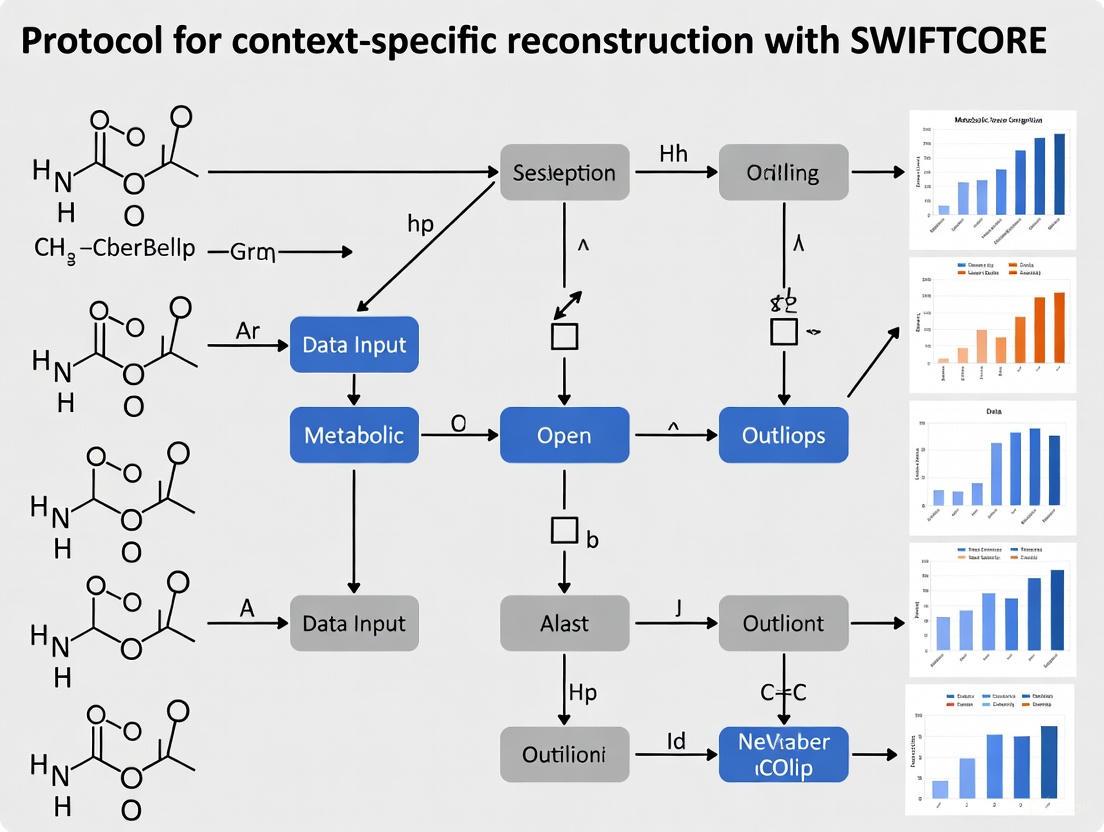
This article provides a comprehensive guide to SWIFTCORE, an efficient algorithm for reconstructing context-specific genome-scale metabolic models (GEMs).
SWIFTCORE: A Practical Guide to Context-Specific Metabolic Network Reconstruction for Biomedical Research
Abstract
This article provides a comprehensive guide to SWIFTCORE, an efficient algorithm for reconstructing context-specific genome-scale metabolic models (GEMs). Tailored for researchers and drug development professionals, it covers foundational concepts, step-by-step implementation, troubleshooting of common issues like thermodynamic infeasibility, and comparative performance analysis against tools like FASTCORE and ThermOptiCS. By integrating transcriptomic and proteomic data, SWIFTCORE enables the creation of biologically accurate metabolic models for identifying drug targets and understanding disease mechanisms, with direct applications in areas like COVID-19 research [citation:1][citation:2][citation:4].
Understanding Context-Specific Metabolic Modeling and the Need for SWIFTCORE
The Critical Role of Genome-Scale Metabolic Models (GEMs) in Systems Medicine and Biotechnology
Genome-scale metabolic models (GEMs) are computational reconstructions of the metabolic networks of cells, ranging from microorganisms to plants and mammals, and in some cases, entire tissues or bodies of multicellular organisms [1]. These models represent structured knowledge-bases that abstract pertinent information on the biochemical transformations taking place within specific target organisms, containing gene-protein-reaction (GPR) associations where all reactions are mass- and energy-balanced [1] [2]. This stoichiometric balance ensures the models' fidelity to biological constraints and distinguishes them from general metabolic pathway databases. The conversion of a reconstruction into a mathematical format facilitates myriad computational biological studies including evaluation of network content, hypothesis testing and generation, analysis of phenotypic characteristics, and metabolic engineering [2].
Since the first GEM for Haemophilus influenzae was reported in 1999, followed by models for Escherichia coli and Saccharomyces cerevisiae, the field has expanded dramatically [1] [3]. As of February 2019, GEMs have been reconstructed for 6,239 organisms (5,897 bacteria, 127 archaea, and 215 eukaryotes), with 183 organisms subjected to manual reconstruction efforts [3]. This growth underscores the increasing importance of GEMs as tools for systems biology, enabling researchers to conduct system-level metabolic response analysis and flux simulations that are not possible using topological metabolic networks alone [1].
Table 1: Key Historical Milestones in GEM Development
| Year | Milestone | Significance |
|---|---|---|
| 1999 | First GEM (Haemophilus influenzae) [3] | Pioneering proof-of-concept for genome-scale metabolic modeling |
| 2000 | Escherichia coli GEM (iJE660) [3] | First model for a major model organism in bacterial genetics |
| 2003 | Saccharomyces cerevisiae GEM [3] | First eukaryotic GEM |
| 2007 | Human GEM (Recon 1) [1] | First global metabolic reconstruction for humans |
| 2019 | Coverage of 6,239 organisms [3] | Demonstration of extensive adoption and application across life domains |
GEM Applications in Biotechnology
The application of GEMs in industrial biotechnology represents one of the most successful domains for these computational tools, primarily through in silico metabolic engineering. This approach uses model simulations to guide the rational design of industrial microorganisms for enhanced production of desired biochemicals [1]. The method known as OptKnock, published in 2003, employed a bi-level optimization program to search for reaction knockout targets that would yield overproduction of a desired biochemical while maintaining optimal growth [1]. This groundbreaking work initiated a paradigm shift in metabolic engineering strategies.
Following OptKnock, a series of in silico metabolic engineering methods were developed for various gene manipulations beyond simple knockouts, including gene addition, regulation, and modulation of expression levels [1]. The credibility of these GEM-based approaches has been strengthened through extensive experimental validation, with numerous studies demonstrating successful translation of computational predictions to improved microbial phenotypes for chemical production [1]. The iterative process of model prediction, experimental validation, and model refinement has become a cornerstone of modern metabolic engineering.
Table 2: Experimentally Validated GEM Applications in Biotechnology
| Application Area | Key Achievement | Validation Outcome |
|---|---|---|
| Chemical Production | Strain design for biochemical overproduction [1] | Successful experimental demonstration of overproduction strains |
| Enzyme Production | Optimization of Bacillus subtilis for enzyme production [3] | Identification of oxygen transfer effects on protease production |
| Model-Driven Discovery | Identification of non-intuitive genetic interventions [1] | Confirmation of model predictions through laboratory experiments |
GEM Applications in Systems Medicine
In systems medicine, GEMs have emerged as powerful scaffolds for integrating multi-omics data to understand human diseases and identify potential therapeutic targets [1] [3]. The reconstruction of the first global human metabolic model, Recon 1, in 2007 marked a critical milestone that enabled researchers to explore clinical applications of GEMs [1]. Since then, several successful cases have demonstrated the potential of GEMs in medical research, particularly in oncology and infectious diseases.
In the fight against microbial pathogens, GEMs have provided unprecedented insights into condition-specific metabolism of pathogens during infection [3]. Mycobacterium tuberculosis, the bacterium causing tuberculosis, represents one of the most extensively studied pathogens using GEMs [3]. The most recent GEM of M. tuberculosis, iEK1101, was used to understand the pathogen's metabolic status under in vivo hypoxic conditions (replicating a pathogenic state) compared to in vitro drug-testing conditions [3]. This comparison allowed researchers to evaluate the pathogen's metabolic responses to antibiotic pressures, revealing context-specific vulnerabilities that could be exploited for novel therapeutic strategies.
Beyond infectious diseases, GEMs have been applied to understanding cancer metabolism. Researchers have developed context-specific models of cancer cells that integrate transcriptomic and proteomic data to identify metabolic dependencies unique to cancer cells [1] [3]. These models have been used to predict drug targets that could selectively inhibit cancer cell growth while sparing healthy cells. The development of systematic drug-targeting methods using GEMs continues to be an active research area with significant clinical potential.
Protocol for Context-Specific Reconstruction with SWIFTCORE
Background and Significance
While comprehensive GEMs represent the full metabolic potential of an organism, only a subset of reactions is active in each cell type, tissue, or under specific physiological conditions [4]. Context-specific reconstruction methods address this limitation by extracting functionally relevant subnetworks from larger generic models based on experimental data such as transcriptomics, proteomics, or metabolomics [4]. SWIFTCORE is an advanced algorithm for this task, designed to efficiently compute a flux-consistent subnetwork that contains a provided set of core reactions believed to be active in a specific context [4] [5].
The underlying computational problem is NP-hard, making exact solutions infeasible for genome-scale networks [4]. SWIFTCORE addresses this challenge through an approximate greedy algorithm that leverages convex optimization techniques to accelerate the reconstruction process more than 10-fold compared to previous approaches [5]. The method consistently outperforms previous approaches like FASTCORE in both sparseness of the resulting subnetwork and computational efficiency [4].
Mathematical Foundation
The mathematical basis of SWIFTCORE relies on constraint-based reconstruction and analysis (COBRA), the current state-of-the-art in genome-scale metabolic network modelling [4]. In this framework, metabolic reactions are represented by a stoichiometric matrix S, where the ij-th element represents the stoichiometric coefficient of the i-th metabolite in the j-th reaction [1].
A metabolic network is considered flux consistent if it contains no blocked reactions—reactions that cannot carry any flux under steady-state conditions [4]. SWIFTCORE ensures this by solving a series of linear programming (LP) problems that:
- Find a sparse flux distribution v satisfying Sv = 0 with non-zero flux through core reactions
- Iteratively verify that all included reactions can carry flux in the subnetwork
The algorithm minimizes the L1-norm of fluxes through non-core reactions to promote sparsity while maintaining flux consistency through the core reaction set [4].
Step-by-Step Implementation Protocol
Input Requirements:
- A metabolic network model with fields: .S (stoichiometric matrix), .lb (lower bounds), .ub (upper bounds), .rxns (reaction IDs), .mets (metabolite IDs)
- coreInd: indices of core reactions to include
- weights: penalty weights for each reaction (optional)
- tol: numerical tolerance for considering fluxes non-zero
- reduction: boolean flag for network reduction preprocessing
Execution Steps:
- Preprocessing: Reduce the metabolic network to remove easily identifiable blocked reactions using swiftcc, which finds the largest flux-consistent subnetwork [5]
- Initialization: Identify an initial set of reactions by solving an LP problem that finds a flux distribution satisfying steady-state constraints with non-zero flux through core reactions
- Iterative Verification: For reactions not yet verified as unblocked, solve additional LP problems to identify flux distributions that activate these reactions
- Network Expansion: Add reactions to the network when they are found to carry flux in any verification step
- Termination: The algorithm completes when all reactions in the network have been verified as unblocked
Output:
- reconstruction: The flux-consistent metabolic network reconstructed from the core reactions
- reconInd: A binary vector indicating which reactions form the reconstruction
- LP: The number of linear programming problems solved during the process
Table 3: Key Research Resources for GEM Reconstruction and Analysis
| Resource Type | Specific Tools/Databases | Function and Application |
|---|---|---|
| Genome Databases | Comprehensive Microbial Resource (CMR), Genomes OnLine Database (GOLD), NCBI Entrez Gene [2] | Provide annotated genome sequences and gene functions for target organisms |
| Biochemical Databases | KEGG, BRENDA, Transport DB [2] | Offer curated information on metabolic reactions, enzyme properties, and transport processes |
| Organism-Specific Databases | Ecocyc (E. coli), PyloriGene (H. pylori), Gene Cards (Human) [2] | Provide species-specific metabolic and genetic information for manual curation |
| Reconstruction Software | COBRA Toolbox, CellNetAnalyzer, Simpheny [2] | Enable metabolic network simulation, analysis, and context-specific reconstruction |
| Context-Specific Tools | SWIFTCORE, FASTCORE, GIMME, iMAT [4] [5] | Extract tissue/cell-specific metabolic models from generic GEMs using omics data |
| Quality Control Tools | swiftcc [5] | Identify flux-inconsistent reactions and ensure metabolic functionality |
Successful GEM reconstruction and application requires leveraging multiple resources throughout the model development pipeline. Genome databases provide the foundational genetic information, while biochemical databases supply the reaction rules and stoichiometries. Organism-specific databases are particularly valuable for manual curation efforts, as they compile species-specific knowledge that may not be available in general databases [2].
For context-specific reconstruction with SWIFTCORE, researchers typically begin with a high-quality generic GEM, then integrate omics data to define the core reaction set. The SWIFTCORE algorithm is implemented in MATLAB and requires the COBRA Toolbox, with optional support for LP solvers like Gurobi, linprog, or CPLEX [5]. The software is freely available for non-commercial use through the GitHub repository, making it accessible to academic researchers [4] [5].
Quality control is an essential step in the process, and tools like swiftcc can be used to verify flux consistency before and after context-specific reconstruction [5]. This ensures the resulting models are biologically plausible and capable of supporting metabolic functions required for subsequent analyses.
Genome-scale metabolic networks (GSMNs) are comprehensive computational models that encapsulate all known metabolic reactions, metabolites, enzymes, and biochemical constraints for an organism [6]. These generic models provide a valuable framework for studying metabolic capabilities but present a significant limitation: they represent the union of all possible metabolic functions across every cell type and condition, failing to capture the specific metabolic activity of particular tissues, cell types, or disease states [7] [8].
The process of context-specific metabolic network reconstruction addresses this limitation by extracting from a generic GSMN the sub-network most consistent with experimental data from a specific biological context, subject to biochemical constraints [6]. This approach produces models with enhanced predictive power because they are tailored to specific tissues, cells, or conditions, containing only the reactions predicted to be active in that particular context [6]. Ignoring context specificity can lead to incorrect or incomplete biological interpretations and reduces the ability to obtain relevant information about metabolic states [6].
The Case for Context-Specific Modeling
Limitations of Generic Metabolic Networks
Generic metabolic models like Human-GEM, which comprises 13,417 reactions, 10,138 metabolites, and 3,625 genes, provide an organism-wide view of metabolic potential but lack the resolution to represent specific physiological conditions [7]. These models suffer from several critical limitations:
- Lack of Tissue Specificity: They cannot capture metabolic differences between tissues such as liver, brain, or muscle, which have distinct metabolic functions and enzyme expression profiles.
- Inability to Model Disease States: Cancer cells, for instance, undergo metabolic reprogramming (e.g., the Warburg effect) to sustain rapid proliferation and survive in conditions of hypoxia or nutrient depletion [6].
- Ignoring Cellular Regulation: Post-transcriptional modifications of enzymes, different rates of protein degradation, and allosteric regulation make predictions based on gene expression alone difficult [6].
Advantages of Context-Specific Models
Context-specific models reconstructed from generic scaffolds using omics data offer several demonstrated benefits:
- Improved Prediction Accuracy: Context-specific versions of metabolic models consistently outperform generic models in predicting essential genes and metabolic functions [7] [8].
- Revealing Metabolic Heterogeneity: Studies on breast cancer cell lines have identified key metabolic changes related to cancer aggressiveness that generic models cannot detect [7].
- Functional Accuracy: In Atlantic salmon, context-specific models better captured metabolic differences between life stages and dietary conditions than the generic model [8].
Table 1: Comparison of Model Types Using the Human-GEM Framework
| Feature | Generic Model | Context-Specific Model |
|---|---|---|
| Reaction Count | 13,417 reactions | Substantially reduced, variable by method |
| Tissue Specificity | None | High |
| Predictive Power | Limited for specific conditions | Enhanced for specific contexts |
| Data Integration | Not inherently integrated | Leverages transcriptomics, proteomics |
| Computational Demand | Standard | Varies by reconstruction method |
SWIFTCORE: An Efficient Solution for Context-Specific Reconstruction
SWIFTCORE is a computational method that addresses the NP-hard problem of finding the sparsest flux-consistent subnetwork containing a set of core reactions [9]. The algorithm takes as input a flux-consistent metabolic network and a subset of core reactions known to be active in a specific context, then computes a flux-consistent subnetwork that includes the core reactions while minimizing the total number of reactions [9].
The method employs linear programming (LP) to solve the optimization problem:
The algorithm operates through two main linear programming phases. The initial LP finds a sparse flux distribution consistent with the core reactions, while the iterative LPs verify that all included reactions can carry flux under the network constraints [9].
Performance Advantages
SWIFTCORE consistently outperforms previous approaches like FASTCORE in both computational efficiency and the sparseness of the resulting subnetwork [9] [10]. The key innovations include:
- Approximate Greedy Algorithm: Efficiently scales to increasingly large metabolic networks [9].
- Flux Consistency Guarantee: All reactions in the resulting model can carry non-zero flux under steady-state conditions [9].
- Superior Sparsity: Produces minimal consistent subnetworks that retain biological functionality while removing unnecessary reactions [9].
Comparative Analysis of Reconstruction Methods
Method Diversity
Multiple algorithms have been developed for context-specific metabolic network reconstruction, each with distinct approaches and strengths:
- iMAT: Integrates tissue-specific gene and protein-expression data to produce context-specific metabolic networks using a mixed integer linear programming approach [9] [8].
- INIT: Uses cell type-specific proteomic data from the Human Protein Atlas to reconstruct tissue-specific metabolic networks [9].
- GIMME: Uses quantitative gene expression data and presupposed cellular functions to predict reaction subsets used under particular conditions [9].
- mCADRE: Evaluates functional capabilities during model building based on gene expression data [9].
- FASTCORE: Calculates the smallest flux-consistent subnetwork that preserves reactions in the core set [6].
- DEXOM: Addresses the problem of multiple optimal networks by performing diversity-based enumeration of context-specific metabolic networks [6].
Performance Comparison
Table 2: Performance Comparison of Context-Specific Reconstruction Methods
| Method | Approach | Data Used | Strengths | Limitations |
|---|---|---|---|---|
| SWIFTCORE | LP-based sparsity optimization | Core reaction set | Computational efficiency, scalability | |
| iMAT | MILP optimization | Gene/protein expression | High functional accuracy | Computationally intensive |
| INIT | Metabolic functionality protection | Proteomic data | Tissue-specific precision | Requires extensive proteomic data |
| GIMME | Expression thresholding | Gene expression, cellular functions | Speed, simplicity | Less precise than other methods |
| FASTCORE | LP approximation | Core reaction set | Balance of speed and accuracy | Less exact than SWIFTCORE |
| DEXOM | Diversity enumeration | Gene expression | Captures solution variability | Computationally demanding |
Evaluation studies have demonstrated that method performance varies significantly. In assessments using Atlantic salmon metabolism, iMAT, INIT, and GIMME outperformed other methods in functional accuracy, defined as the extracted models' ability to perform context-specific metabolic tasks inferred directly from data [8]. GIMME was notably faster than other top-performing methods [8].
Experimental Protocol for Context-Specific Model Reconstruction
SWIFTCORE Implementation Protocol
Purpose: To reconstruct a context-specific metabolic network from a generic GSMN and transcriptomic data using SWIFTCORE.
Input Requirements:
- Generic genome-scale metabolic model (Human-GEM recommended for human studies)
- Transcriptomic data (RNA-seq or microarray) from the specific biological context
- Computational environment: MATLAB or Python with COBRA Toolbox
Procedure:
Data Preprocessing (Duration: 1-2 hours)
- Format the generic metabolic model to ensure flux consistency
- Process transcriptomic data to identify highly expressed metabolic genes
- Map highly expressed genes to reactions using gene-protein-reaction (GPR) associations
Core Reaction Set Definition (Duration: 30 minutes)
- Define core reactions as those associated with highly expressed genes
- Set thresholds for gene expression based on statistical distribution (e.g., top 25% expressed genes)
- Include essential metabolic functions (e.g., energy production, biomass precursors)
SWIFTCORE Execution (Duration: Varies with network size)
- Run SWIFTCORE algorithm with the generic model and core reaction set as inputs
- Implement the two-phase LP optimization:
- Phase 1: Find initial sparse flux distribution
- Phase 2: Iteratively verify reaction activity
- Adjust parameters (σ) to manage trade-off between sparsity and completeness
Model Validation (Duration: 1-2 hours)
- Verify flux consistency of the reconstructed model
- Test ability to perform known metabolic functions of the context
- Compare predictions with experimental data (e.g., essential genes, metabolic fluxes)
Validation and Quality Assessment
Essential Validation Steps:
Flux Consistency Checking:
- Ensure all reactions in the model can carry non-zero flux
- Verify network connectivity and absence of blocked reactions
- Test production of key metabolites and biomass components
Functional Assessment:
- Evaluate ability to perform metabolic tasks relevant to the specific context
- Compare model predictions with experimental fluxomics data when available
- Test essential gene predictions against gene knockout studies
Comparative Analysis:
- Benchmark against models generated by alternative methods (e.g., iMAT, GIMME)
- Assess biological plausibility through literature review of context-specific metabolism
The Scientist's Toolkit: Research Reagent Solutions
Table 3: Essential Resources for Context-Specific Metabolic Modeling
| Resource | Type | Function | Example/Reference |
|---|---|---|---|
| Generic Metabolic Models | Data Resource | Template for context-specific reconstruction | Human-GEM [7] |
| Omics Databases | Data Resource | Source of context-specific molecular data | CCLE [7], HPA [9] |
| Reconstruction Algorithms | Software Tool | Context-specific model extraction | SWIFTCORE [9], iMAT [8] |
| Flux Analysis Tools | Software Tool | Metabolic flux prediction | COBRA Toolbox [6] |
| Model Evaluation Frameworks | Software Tool | Validation of model predictions | Troppo [7] |
Applications and Impact
Biomedical Applications
Context-specific metabolic modeling has demonstrated significant value across multiple biomedical domains:
- Cancer Metabolism: Models of cancer cell lines have revealed insights into deregulated metabolism in tumors, identifying potential drug targets and essential genes [7].
- Metabolic Diseases: Tissue-specific models have been used to study host-pathogen interactions and brain metabolism [8].
- Drug Development: Context-specific models enable identification of metabolic drug targets in specific tissues or disease states [8].
Limitations and Future Directions
Despite considerable advances, context-specific metabolic modeling faces several challenges:
- Multiple Optimal Solutions: For given experimental data, there are usually many different subnetworks that optimally fit the data, representing alternative metabolic states [6].
- Quantitative Flux Prediction: Significant limitations remain in model ability for reliable quantitative flux prediction [7].
- Data Integration Complexity: Integrating multi-omics data while maintaining biochemical consistency remains challenging [11].
Future methodological development should focus on embracing solution diversity rather than ignoring it, as proposed in DEXOM's diversity-based enumeration approach [6], and on improving quantitative prediction through better integration of multiple data types and constraints.
Application Notes
SWIFTCORE is an advanced computational tool for the context-specific reconstruction of genome-scale metabolic networks. It addresses a critical challenge in systems biology: extracting functional, cell- or tissue-specific metabolic models from large, generic metabolic reconstructions. By leveraging convex optimization techniques, SWIFTCORE efficiently identifies the sparsest flux-consistent subnetwork that contains a predefined set of core reactions known to be active in a specific biological context, thereby enabling more accurate simulations of metabolic behavior in different tissues, disease states, or under varied environmental conditions [9] [10].
The algorithm is engineered for performance and scalability, consistently outperforming previous state-of-the-art methods like FASTCORE. It achieves an acceleration of more than tenfold while producing sparser and more biologically relevant subnetworks. This makes SWIFTCORE particularly valuable for research areas such as drug target identification, where understanding patient- or tissue-specific metabolic vulnerabilities is crucial [9] [5].
Key Concepts and Definitions
Table 1: Core Terminology in SWIFTCORE
| Term | Mathematical Symbol | Description |
|---|---|---|
| Metabolites | (\mathcal{M} = {Mi}{i=1}^m) | The set of (m) metabolites in the organism. |
| Reactions | (\mathcal{R} = {Ri}{i=1}^n) | The set of (n) reactions involving the metabolites. |
| Irreversible Reactions | (\mathcal{I} \subseteq \mathcal{R}) | A subset of reactions constrained to proceed only in the forward direction. |
| Stoichiometric Matrix | S ((m \times n) matrix) | A matrix where entries represent the stoichiometric coefficients of metabolites in each reaction. |
| Flux Distribution | v (vector of length (n)) | A vector representing the flux (reaction rate) of each reaction in the network. |
| Flux Consistency | N/A | A network state where there exists a steady-state flux distribution (Sv=0) with no blocked reactions. |
| Core Reactions | (\mathcal{C} \subset \mathcal{R}) | A user-provided set of reactions known or predicted to be active in the specific biological context. |
Quantitative Performance Benchmarking
SWIFTCORE's efficiency is a key advantage. The following table summarizes its performance compared to its predecessor, FASTCORE.
Table 2: Performance Comparison of SWIFTCORE vs. FASTCORE
| Metric | FASTCORE | SWIFTCORE | Improvement/Notes |
|---|---|---|---|
| Computational Speed | Baseline | >10x faster | Enables analysis of increasingly large metabolic networks [5]. |
| Sparsity of Output | Good | Superior | Produces a minimal consistent network containing the core reactions [9]. |
| Algorithm Foundation | Greedy Algorithm | Approximate Greedy Algorithm + Linear Programming (LP) | Uses L1-norm minimization and randomization for efficiency [9]. |
| Underlying Consistency Checker | FASTCC | SWIFTCC | SWIFTCC is used for flux consistency checking and is faster than FASTCC [9] [5]. |
Experimental Protocols
Protocol 1: Context-Specific Network Reconstruction with SWIFTCORE
This protocol details the steps to reconstruct a context-specific metabolic model using the SWIFTCORE algorithm.
I. Research Reagent Solutions
Table 3: Essential Materials and Tools for SWIFTCORE
| Item | Function/Description |
|---|---|
| Generic Metabolic Model | A comprehensive, genome-scale metabolic reconstruction (e.g., Recon3D for human metabolism). Serves as the input network. |
| Context-Specific Data | Omics data (e.g., transcriptomics, proteomics) used to define the core reaction set. |
| Core Reaction Set ((\mathcal{C})) | A defined set of reactions identified from omics data as active in the context of interest. This is the primary input. |
| SWIFTCORE Software | The MATLAB-based algorithm, freely available for non-commercial use on GitHub. |
| LP Solver | A linear programming solver such as gurobi, linprog, or cplex for solving the optimization problems. |
II. Methodology
Input Preparation:
- Format the generic metabolic
modelto contain the required fields:.S: The sparse stoichiometric matrix..lband.ub: Lower and upper bounds on reaction fluxes..rxnsand.mets: Cell arrays of reaction and metabolite identifiers [5].
- Define
coreInd: A vector of indices corresponding to the core reactions from your context-specific data. - Set the
weightsvector to assign penalties for including non-core reactions. A uniform weight is often used. - Define
tol, the numerical tolerance for considering a flux to be non-zero (e.g., 1e-8) [5].
- Format the generic metabolic
Algorithm Execution:
- Run the SWIFTCORE function in MATLAB:
- The algorithm proceeds through these key stages, which are visualized in the workflow diagram below.
Output Interpretation:
reconstruction: The resulting flux-consistent, context-specific metabolic model.reconInd: A binary vector indicating which reactions from the generic model are included in the reconstruction.LP: The number of linear programs solved, which can be used as a proxy for computational load.
Protocol 2: Flux Consistency Checking with SWIFTCC
SWIFTCORE relies on a fast consistency checking algorithm, SWIFTCC, which can also be used as a standalone tool to find the largest consistent subnetwork of a generic model.
I. Methodology
Input Preparation:
S: The sparse stoichiometric matrix of the generic model.rev: A binary vector where1indicates a reversible reaction [5].
Algorithm Execution:
- Run the SWIFTCC function in MATLAB:
- The optional
solverargument allows the selection of different LP solvers (gurobi,linprog,cplex), withlinprogas the default [5].
Output Interpretation:
consistent: A binary indicator vector of reactions that form the largest flux-consistent subnetwork. Reactions marked with0are blocked and should be removed for downstream analyses.
Constraint-Based Reconstruction and Analysis (COBRA) represents the current state-of-the-art mathematical framework for genome-scale metabolic network modelling [4] [9]. This approach systematizes biochemical constraints to enable quantitative simulation of metabolic pathways, allowing researchers to investigate cell metabolic potential and answer relevant biological questions. The core principles of flux consistency, steady-state assumptions, and Gene-Protein-Reaction (GPR) rules form the foundational triad for developing predictive in silico models. These principles are particularly crucial for context-specific reconstruction, which aims to extract the active metabolic subnetwork of a generic model under specific physiological conditions [4]. The challenge lies in integrating these principles into a coherent framework that can handle the computational demands of genome-scale models while maintaining biological fidelity.
Theoretical Foundations
Steady-State Mass Balance Constraint
The steady-state assumption is a cornerstone of metabolic network analysis, asserting that metabolite concentrations remain constant over the timescale of interest. This mass balance constraint is mathematically represented by the equation:
S × v = 0
where S is the m × n stoichiometric matrix encoding the stoichiometric coefficients of metabolites (rows) in reactions (columns), and v is a vector of length n representing the flux distribution (reaction rates) [4] [9]. The signs of entries in v indicate directionality, with irreversible reactions thermodynamically constrained to proceed only in the forward direction (vᵢ ≥ 0 for all Rᵢ in the irreversible reaction set I) [4]. This equation captures the fundamental principle that the rate of metabolite production must equal the rate of metabolite consumption under steady-state conditions.
Flux Consistency and Network Thermodynamics
A metabolic network is considered flux consistent when it contains no blocked reactions—reactions that cannot carry nonzero flux under any steady-state condition [4] [9]. Flux consistency checking is a critical preprocessing step in metabolic network analysis, as blocked reactions represent thermodynamic or topological impossibilities. The loop law (analogous to Kirchhoff's second law for electrical circuits) further constrains the system by stating that thermodynamic driving forces around any closed metabolic cycle must sum to zero, preventing net flux around cycles at steady state [12]. Violations of this principle yield thermodynamically infeasible loops that can distort predictions. The loopless condition can be formulated as:
Nᵢₙₜ × G = 0
where Nᵢₙₜ represents the null space of the internal stoichiometric matrix and G is a vector of reaction energies [12].
The GPR Rule Challenge
GPR rules describe the Boolean logical relationships between genes, their protein products, and the reactions they catalyze [13]. These rules use AND operators to join genes encoding different subunits of the same enzyme complex (all required for function) and OR operators to join genes encoding distinct enzyme isoforms that can catalyze the same reaction [13]. The reconstruction of accurate GPR rules remains challenging due to several factors: the need to integrate data from multiple biological databases; the complexity of protein complex organization; isoform functionality; and the substantial manual curation traditionally required [13]. This challenge is particularly acute for context-specific reconstructions, where the active portion of the network depends on which genes are expressed under specific conditions.
Table 1: Key Concepts in Metabolic Network Analysis
| Concept | Mathematical Representation | Biological Significance |
|---|---|---|
| Steady-State Assumption | S × v = 0 | Metabolic concentrations remain constant; production and consumption rates balance |
| Flux Consistency | ∃ v such that S × v = 0, vᵢ > 0 for irreversible reactions | No thermodynamically blocked reactions in the network |
| Loop Law | Nᵢₙₜ × G = 0 | No thermodynamically infeasible cycles in steady-state flux distributions |
| GPR Rules | Boolean logic (AND/OR) connecting genes to reactions | Molecular basis of reaction catalysis; enables integration of transcriptomic data |
SWIFTCORE: Algorithmic Framework for Context-Specific Reconstruction
Theoretical Basis and Innovation
SWIFTCORE addresses the NP-hard problem of finding the sparsest flux-consistent subnetwork that contains a provided set of core reactions [4] [9]. The algorithm operates on the principle that a subnetwork 𝓝 is flux consistent if and only if: (1) there exists a flux distribution v with positive flux through all irreversible reactions in 𝓝 and zero flux through reactions not in 𝓝; and (2) for every reversible reaction in 𝓝, there exists at least one steady-state flux distribution where that reaction carries nonzero flux [4]. SWIFTCORE improves upon previous approaches like FASTCORE by using linear programming with l₁-norm minimization to enhance sparsity and computational efficiency, enabling application to increasingly large metabolic networks [4] [9].
Computational Workflow
The SWIFTCORE algorithm follows these key computational steps:
Initialization: Identify a sparse flux distribution v active in the core reactions by solving the linear program:
minimize ‖v𝓡\𝓒‖₁ subject to S × v = 0 v𝓘∩𝓒 ≥ 1 v𝓘\𝓒 ≥ 0
This finds a flux distribution that uses minimal reactions outside the core set 𝓒 while maintaining activity in core irreversible reactions [9].
Iterative Verification: Initialize the network 𝓝 to the non-zero indices of v, then define the set of unverified reactions 𝓑 = 𝓝\𝓘. While 𝓑 is not empty, generate flux vectors uᵏ that satisfy:
S × uᵏ = 0 uᵏ𝓡\𝓝 = 0
while maximizing coverage of 𝓑 using a randomized linear programming approach [9].
Network Expansion: Update 𝓑 by removing reactions with nonzero flux in uᵏ and expand 𝓝 to include any newly active reactions [9].
Termination: The algorithm concludes when all reactions in 𝓝 have been verified as unblocked, yielding a flux-consistent subnetwork [9].
Diagram 1: SWIFTCORE Algorithm Workflow - The iterative process for reconstructing context-specific, flux-consistent metabolic networks.
Experimental Protocols
Protocol 1: Context-Specific Network Reconstruction with SWIFTCORE
Purpose: To reconstruct a context-specific, flux-consistent metabolic subnetwork from a generic genome-scale model and a set of core reactions.
Input Requirements:
- Stoichiometric matrix (S) of the generic metabolic network
- Set of irreversible reactions (I)
- Set of core reactions (C) representing context-specific activity
Procedure:
Preprocessing and Flux Consistency Check
- Verify flux consistency of the generic network using SWIFTCC or FASTCC [4]
- Remove any blocked reactions identified in the consistency check
- Format core reactions set C based on experimental data (e.g., transcriptomics)
Initialization Phase
Solve the initial linear programming problem (Equation 4 in [9]):
minimize 1ᵀw subject to S × v = 0 v𝓘∩𝓒 ≥ 1 v𝓘\𝓒 ≥ 0 w ≥ v𝓡\𝓒 w ≥ −v𝓡\𝓒
Set initial network 𝓝 to non-zero indices of optimal v
Iterative Verification Phase
- Set 𝓑 = 𝓝\𝓘
While 𝓑 is not empty:
- Generate random vector x from normal distribution
Solve verification LP (Equation 5 in [9]):
minimize xᵀu𝓑 + 1ᵀw/σ subject to S × u = 0 u𝓑 ≤ 1 −u𝓑 ≤ 1 u𝓡\𝓝 ≤ w −u𝓡\𝓝 ≤ w
Update 𝓑 by removing reactions with uᵏⱼ ≠ 0
- Update 𝓝 by adding newly active reactions
Output
- Return flux-consistent subnetwork 𝓝
- Export reaction set and flux distributions for downstream analysis
Validation:
- Verify flux consistency of output subnetwork using SWIFTCC
- Confirm inclusion of all core reactions
- Check for absence of thermodynamically infeasible loops
Protocol 2: Integration of GPR Rules with Metabolic Networks
Purpose: To incorporate gene-protein-reaction associations into metabolic networks for context-specific modeling.
Input Requirements:
- Metabolic network (SBML format or reaction list)
- Genomic data for target organism
Procedure:
Data Acquisition
GPR Rule Reconstruction
- For each metabolic reaction, identify associated genes
- Determine Boolean relationships:
- Use AND for genes encoding subunits of the same enzyme complex
- Use OR for genes encoding isozymes or alternative subunits
- Apply consistency checks to eliminate contradictory annotations
Integration with Context-Specific Model
- Map transcriptomic data to GPR rules to determine active reactions
- Update reaction bounds based on gene expression (e.g., set flux to zero for reactions with inactive GPRs)
- Validate integrated model for flux consistency
Tools: GPRuler [13], RAVEN Toolbox [13]
Table 2: Research Reagent Solutions for Metabolic Network Analysis
| Tool/Resource | Type | Primary Function | Application Context |
|---|---|---|---|
| SWIFTCORE | Algorithm | Context-specific network reconstruction | Extracts flux-consistent subnetworks from generic models |
| GPRuler | Software | GPR rule automation | Reconstructs gene-protein-reaction associations from genomic data |
| COBRA Toolbox | Software Suite | Constraint-based modeling | Implements FBA, FVA, and other constraint-based methods |
| BiGG Models | Database | Curated metabolic models | Repository of validated genome-scale metabolic reconstructions |
| Complex Portal | Database | Protein complex information | Provides data on stoichiometry and structure of protein complexes |
Advanced Applications and Methodological Extensions
Loopless Constraint Integration
The loopless COBRA (ll-COBRA) approach can be integrated with context-specific reconstruction to eliminate thermodynamically infeasible loops from flux solutions [12]. This mixed integer programming formulation adds the following constraints to standard COBRA problems:
- Binary indicator variables aᵢ for each internal reaction
- Continuous variables Gᵢ representing reaction energies
- Constraints enforcing sign(vᵢ) = −sign(Gᵢ)
- Null space constraint Nᵢₙₜ × G = 0
The full formulation becomes:
max cᵢvᵢ subject to S × v = 0 lbⱼ ≤ vⱼ ≤ ubⱼ −1000(1−aᵢ) ≤ vᵢ ≤ 1000aᵢ −1000aᵢ + 1(1−aᵢ) ≤ Gᵢ ≤ −1aᵢ + 1000(1−aᵢ) Nᵢₙₜ × G = 0 aᵢ ∈ {0,1} Gᵢ ∈ ℝ
This ensures that all computed flux distributions obey the loop law and are thermodynamically feasible [12].
Comparative Flux Sampling Analysis
Comparative Flux Sampling Analysis (CFSA) represents another advanced approach that compares complete metabolic spaces corresponding to different phenotypes to identify genetic intervention targets [14]. This method employs flux sampling to statistically analyze reactions with altered flux between growth-maximizing and production-maximizing states, suggesting targets for overexpression, downregulation, or knockout [14]. When combined with SWIFTCORE, CFSA enables the design of microbial cell factories with growth-uncoupled production strategies.
Diagram 2: Integrated Workflow for Context-Specific Metabolic Modeling - Combining SWIFTCORE with GPR rules and thermodynamic constraints for predictive modeling.
The integration of flux consistency, steady-state assumptions, and accurate GPR rules represents a powerful framework for context-specific metabolic network reconstruction. SWIFTCORE provides an efficient computational approach to extract biologically meaningful subnetworks from generic models, while emerging methods for GPR rule automation and thermodynamic constraint integration continue to enhance the predictive power of these models. As these tools evolve, they will enable increasingly accurate predictions of metabolic behavior in specific physiological contexts, supporting applications in drug discovery, metabolic engineering, and personalized medicine. The continued development of automated, computationally efficient methods remains essential for leveraging the full potential of genome-scale metabolic models in biomedical and biotechnological applications.
Metabolomics, the large-scale study of small-molecule metabolites, has emerged as a powerful systems biology tool that captures phenotypic changes induced by exogenous compounds or disease states [15]. Because metabolites represent the downstream output of the genome and transcriptome, they are closely tied to phenotypes and provide a direct readout of an organism's physiological state [15]. This positions metabolomics uniquely to address two significant challenges in biomedical research: the discovery of novel therapeutic targets by tracing metabolic perturbations back to their enzymatic sources, and the identification of prognostic biomarkers by mapping metabolic pathways dysregulated in disease progression [16] [15]. The integration of these metabolomic findings with computational frameworks, such as the context-specific reconstruction of genome-scale metabolic networks with tools like SWIFTCORE, enables researchers to transform static metabolic snapshots into dynamic, mechanistic models of disease [4]. This article details protocols and applications where metabolomics, coupled with metabolic network reconstruction, is driving advances from antibiotic development to understanding COVID-19 severity.
Application Note: Metabolomic Signatures of COVID-19 Severity and Progression
Metabolic Hallmarks of Severe COVID-19
Prospective cohort studies utilizing NMR-based metabolomics have consistently identified a distinct metabolic signature associated with severe COVID-19. Analysis of serum samples from hospitalized patients reveals profound alterations in lipoprotein distribution, energy metabolism substrates, and amino acid profiles that scale with disease severity [17] [18]. These changes reflect a systemic metabolic reprogramming in response to infection and inflammatory stress.
Table 1: Key Metabolite Alterations in Severe COVID-19 Identified via NMR Spectroscopy
| Metabolite Class | Specific Metabolites | Change in Severe COVID-19 | Proposed Biological Significance |
|---|---|---|---|
| Lipoproteins | VLDL particles (small) | Increased | Disrupted lipid transport and homeostasis [17] |
| HDL particles (small) | Decreased | Impaired reverse cholesterol transport [17] | |
| Glycoproteins | Glyc-A and Glyc-B | Increased | Marker of innate immune activation and inflammation [17] |
| Amino Acids | Branched-chain amino acids (Val, Ile, Leu) | Increased | Catabolic state and muscle breakdown [17] |
| Ketone Bodies | 3-Hydroxybutyrate | Increased | Elevated energy demand and fatty acid oxidation [17] |
| Energy Metabolism | Glucose, Lactate | Increased | Dysregulated glycolysis and potential mitochondrial dysfunction [17] [19] |
This metabolic profile is notably consistent across SARS-CoV-2 variants and vaccination statuses, suggesting it represents a core host response to the infection [18]. Furthermore, the extent of these dysregulations is more pronounced in patients with fatal outcomes, underscoring their potential prognostic value [18].
Predicting Disease Progression with Metabolomic Signatures
A critical application of metabolomics is the early identification of hospitalized patients with moderate COVID-19 who are at risk of progressing to severe disease. A study of 148 hospitalized patients established a metabolomic signature predictive of progression with a cross-validated AUC of 0.82 and 72% predictive accuracy [17].
The most significant predictors in the multivariate model were metabolite ratios, particularly those involving small LDL particles and medium HDL particles (e.g., small LDL-P/medium HDL-P) [17]. This suggests that the balance between specific lipoprotein subclasses is more informative than absolute concentrations alone. Other discriminant features included altered levels of alanine, glutamine, isoleucine, and specific fatty acids, painting a picture of early metabolic disruption that precedes clinical deterioration.
Protocol: NMR-Based Metabolomic Profiling for COVID-19 Severity
Objective: To generate a quantitative metabolomic and lipoprotein profile from patient serum for severity assessment and prognosis prediction.
Materials and Reagents:
- Serum Samples: Collected from patients within 48 hours of hospital admission.
- NMR Spectrometer: 600 MHz Bruker AVANCE III HD NMR spectrometer with a cryoprobe is recommended for high-throughput analysis [20].
- Analytical Kit: Commercially available NMR-based metabolomics service kits (e.g., Nightingale Health Ltd.) can be used for standardized quantification of 172 measures [20].
Procedure:
- Sample Preparation: Draw ~9 mL of peripheral venous blood and allow it to clot at room temperature for 1 hour. Centrifuge at 2000×g for 10 minutes at 25°C to separate serum. Aliquot and store serum at -80°C until analysis [20].
- NMR Spectroscopy: Use 350 μL of thawed serum for NMR analysis. The platform simultaneously quantifies routine lipids, 14 lipoprotein subclasses, fatty acid composition, and low-molecular-weight metabolites (e.g., amino acids, ketone bodies) in molar concentration units [20].
- Data Pre-processing: The average success rate for metabolite quantification is typically >99%. Check quality control metrics provided by the analytical platform [20].
- Statistical Analysis:
- Perform principal component analysis (PCA) to visualize group separations and identify outliers.
- Use univariate tests (e.g., t-tests) to identify individual metabolites with significant concentration changes.
- Employ machine learning algorithms (e.g., random forest, logistic regression) to build a multivariate predictive model. Using recursive feature elimination (RFE) can help identify the most predictive subset of variables [20] [17].
- Incorporate metabolite ratios into the model to enhance statistical power and predictive accuracy [17].
Figure 1: NMR-based metabolomic workflow for COVID-19 severity assessment and prediction.
Application Note: Metabolomics-Driven Drug Target Discovery
A Multi-Layered Workflow for Off-Target Identification
Metabolomics provides a powerful, phenotype-anchored approach for elucidating the intracellular mechanisms of action (MoA) of drugs, particularly for identifying unintended off-targets. A hierarchic workflow was successfully deployed to identify a non-dihydrofolate reductase (DHFR) target of the antibiotic compound CD15-3, which partially rescues growth inhibition [16].
This integrated framework combines untargeted global metabolomics with machine learning, metabolic modeling, and protein structural analysis to systematically prioritize candidate targets from broad phenotypic data to specific, testable hypotheses [16].
Protocol: Integrated Workflow for Antibiotic Off-Target Discovery
Objective: To identify the unknown off-target of an antimicrobial compound by integrating metabolomic profiling with computational and experimental validation.
Materials and Reagents:
- Bacterial Culture: Escherichia coli BW25113.
- Antimicrobial Compound: Compound of interest (e.g., CD15-3).
- Global Metabolomics Platform: UPLC-QTOF MS system for untargeted analysis.
- Growth Rescue Media: M9 minimal media supplemented with glucose and various metabolites for rescue experiments.
Procedure:
- Metabolomic Perturbation Analysis:
- Treat bacterial cultures with the antibiotic and harvest cells at multiple growth phases (early lag, mid-exponential, late log).
- Perform untargeted global metabolomics (e.g., using UPLC-QTOF MS) to compare metabolite abundances between treated and untreated conditions [16].
- Identify metabolites with significant and progressive fold-changes, as these may indicate pathways directly impacted by the drug.
Contextualization with Machine Learning:
- Train a multi-class logistic regression model on a published dataset of metabolomic responses to antibiotics with known mechanisms [16].
- Project the metabolomic response of the compound of interest (e.g., CD15-3) into this pre-defined space using dimensionality reduction (e.g., UMAP) to identify its similarity to known antibiotic classes [16].
Metabolic Supplementation Growth Rescue:
- Supplement growth media with metabolites that were significantly depleted in the treated cells.
- Monitor bacterial growth to identify which metabolite supplementation can rescue the growth inhibitory effect of the drug. This pinpoints metabolic pathways whose inhibition contributes to the drug's effect [16].
Protein Structural Analysis for Target Prioritization:
- Perform a structural similarity analysis comparing the known target of the drug (e.g., DHFR for CD15-3) to other enzymes in the metabolic pathways implicated by steps 1-3.
- Prioritize candidate off-targets based on active site similarity or structural homology to the known target [16].
Experimental Validation:
- Clone candidate target genes into an overexpression vector.
- Test if overexpression of the candidate gene confers resistance to the drug.
- Perform in vitro enzyme activity assays to confirm direct inhibition of the candidate protein by the drug [16].
Figure 2: Integrated multi-omics workflow for antibiotic off-target discovery.
Protocol: Context-Specific Metabolic Network Reconstruction with SWIFTCORE
Theoretical Foundation
SWIFTCORE is a computational tool designed for the context-specific reconstruction of genome-scale metabolic networks (MRO). Given a generic, organism-scale metabolic network and a set of context-specific "core" reactions known to be active in a particular tissue, cell type, or disease state, SWIFTCORE computes a minimal, flux-consistent subnetwork that contains these core reactions [4] [5]. A flux-consistent network contains no blocked reactions, meaning every reaction can carry a non-zero flux under steady-state conditions [4]. This reconstruction is critical for building predictive models that accurately simulate metabolic behavior in specific biological contexts.
Implementation Protocol
Objective: To reconstruct a context-specific, flux-consistent metabolic network from a generic model and omics-derived core reactions.
Input Requirements:
model: A structure representing the generic metabolic network, containing:.S- The stoichiometric matrix (sparse,m x nformmetabolites andnreactions)..lband.ub- Lower and upper bounds for reaction fluxes..rxnsand.mets- Cell arrays of reaction and metabolite identifiers [5].
coreInd: A vector of indices specifying the reactions in the generic model that form the core set [5].weights: A weight vector assigning a penalty for including each non-core reaction (higher weights encourage exclusion) [5].tol: A zero-tolerance for numerical precision (e.g.,1e-8).
Procedure:
- Problem Formulation: SWIFTCORE frames the reconstruction as an optimization problem. It seeks to find the smallest set of reactions that includes the core set and is flux consistent [4].
- Algorithm Execution: The algorithm employs an approximate greedy method and linear programming (LP) to iteratively build the consistent subnetwork. It efficiently scales to large, genome-scale models [4] [5].
- Matlab Code Example:
- Output Interpretation:
reconstruction: A new metabolic network structure containing only the reactions in the context-specific model.reconInd: A binary vector the same length asmodel.rxns, where1indicates the reaction is included in the reconstruction.LP: The number of linear programs solved during the process, indicating computational effort [5].
Application in COVID-19 Research
Metabolomic data from COVID-19 patient plasma can be used as input for a sex-specific multi-organ metabolic model. The dysregulated metabolites identified via NMR (e.g., amino acids, lipids) provide a phenotypic signature that guides the reconstruction of a context-specific model for the infection. This model can simulate the impact of COVID-19 on the entire human metabolism, revealing organ-specific metabolic reprogramming and increased energy demands, and suggesting sex-specific modulations of the immune response [18].
The Scientist's Toolkit: Essential Research Reagents and Platforms
Table 2: Key Reagents and Platforms for Metabolomics and Network Analysis
| Item Name | Function/Application | Specific Example / Vendor |
|---|---|---|
| 600 MHz NMR Spectrometer | Quantitative analysis of lipoproteins and low-molecular-weight metabolites in biofluids. | Bruker AVANCE III HD with cryoprobe [20] |
| UPLC-QTOF MS System | Untargeted global metabolomics for broad coverage of metabolite changes. | Used for antibiotic perturbation studies [16] [19] |
| Commercial NMR Panel | Standardized, high-throughput quantification of a wide array of metabolic measures. | Nightingale Health Ltd. platform (quantifies 172 measures) [20] |
| SWIFTCORE Software | Context-specific reconstruction of genome-scale metabolic networks. | GNU General Public License v3.0, available on GitHub [5] |
| Generic Metabolic Model | Base reconstruction for context-specific modeling. | Recon3D (human) [5] |
| COBRA Toolbox | Platform for constraint-based reconstruction and analysis (COBRA) of metabolic models. | Provides LP solver interface for SWIFTCORE [4] [5] |
Implementing SWIFTCORE: A Step-by-Step Protocol from Data to Model
The context-specific reconstruction of genome-scale metabolic networks is a critical computational task in systems biology. It enables researchers to move from a generic, organism-wide metabolic network to a tissue-specific or condition-specific model that more accurately reflects the metabolic processes active in a particular cellular context. The foundation of this reconstruction is the definition of a core reaction set—a set of metabolic reactions identified as active and essential for the cell type or condition of interest, typically derived from high-throughput omics data. This Application Note details the methodologies for defining this core set from various omics data types, framing the process within the established protocol for context-specific reconstruction using SWIFTCORE [4] [10].
Theoretical Foundation: Core Sets and SWIFTCORE
SWIFTCORE is an algorithm designed to efficiently compute a flux-consistent subnetwork from a generic metabolic model that contains a provided set of core reactions. A flux-consistent metabolic network is defined as one with no blocked reactions, meaning that for every reaction included, there exists at least one steady-state flux distribution under which it can carry a non-zero flux [4]. The goal of SWIFTCORE is to find a sparse, flux-consistent subnetwork (\mathcal{N}) that encompasses the user-defined core set (\mathcal{C}) [4].
The algorithm's performance and the biological relevance of the resulting model are therefore directly dependent on the quality and accuracy of the input core reaction set. This set must be curated from experimental data, and the following sections provide standardized protocols for this process.
Protocols for Defining Core Reaction Sets from Omics Data
The following protocols outline the steps for inferring active metabolic reactions from common omics data types. The core principle is to map quantitative molecular measurements to reactions in a generic genome-scale metabolic reconstruction, such as Recon or AGORA for human metabolism.
Protocol 1: From Transcriptomics (RNA-seq) Data
This protocol leverages gene expression data to infer reaction activity, based on the assumption that high expression of a gene is indicative of the activity of its associated enzyme and corresponding reaction.
- Objective: To generate a core set of metabolic reactions from RNA-seq data.
- Principle: Gene-protein-reaction (GPR) associations in the metabolic model are used to map gene expression levels to reactions.
- Experimental Workflow:
Detailed Methodology:
- Data Preprocessing: Obtain normalized gene expression data (e.g., FPKM or TPM values) for the cell type or tissue of interest.
- Gene Mapping: Align the gene identifiers from the expression dataset with the gene identifiers used in the genome-scale metabolic model.
- Thresholding: Determine a threshold to classify genes as "highly expressed." Common methods include:
- Selecting genes above a specific percentile (e.g., top 25th or 50th percentile) of expression.
- Using a statistical threshold based on the distribution of expression values.
- GPR Rule Parsing: For each reaction in the model, evaluate its associated GPR rule. These rules are logical statements (e.g., "geneA and geneB" or "geneC or geneD") that define the gene requirements for a reaction to be active.
- Reaction Inference: A reaction is included in the core set if its GPR rule evaluates to
TRUEbased on the list of highly expressed genes. For example:- An AND rule requires all associated genes to be highly expressed.
- An OR rule requires at least one associated gene to be highly expressed.
- Output: The final core set consists of all reactions passing the GPR evaluation in the previous step.
Protocol 2: From Proteomics Data
This protocol uses protein abundance data, which can provide a more direct correlate of enzyme capacity than transcript levels.
- Objective: To generate a core set of metabolic reactions from quantitative proteomics data.
- Principle: Protein identifiers are mapped to metabolic reactions via the model's GPR rules. Reactions are considered active if their associated enzymes are detected above a defined abundance threshold.
- Experimental Workflow:
Detailed Methodology:
- Data Preprocessing: Start with quantitative proteomics data (e.g., from mass spectrometry).
- Protein Mapping: Map protein accessions (e.g., UniProt IDs) from the proteomics dataset to the enzyme identifiers in the metabolic model.
- Thresholding: Define a threshold for significant protein abundance. This could be based on absolute quantification values or relative abundance compared to a control condition.
- GPR Rule Parsing & Reaction Inference: Identical to the transcriptomics protocol, but using the list of abundant proteins as the input for evaluating GPR rules.
- Output: The core set of reactions supported by proteomic evidence.
Protocol 3: From Multi-Omics Integration
Integrating multiple omics layers can provide a more robust and comprehensive core reaction set by overcoming the limitations of any single data type [21] [22] [23].
- Objective: To generate a consolidated core reaction set by integrating transcriptomic, proteomic, and/or metabolomic data.
- Principle: Reactions are scored based on evidence from multiple data modalities. High-confidence reactions are those supported by multiple lines of evidence.
- Experimental Workflow:
Detailed Methodology:
- Data Preprocessing: Collect and preprocess transcriptomic, proteomic, and/or metabolomic datasets from the same biological context.
- Data Integration: Use a multi-omics data integration tool to combine the datasets. Methods like contrastive learning and differential attention mechanisms from frameworks such as scECDA can be employed to reduce noise and align features from different omics layers into a unified latent space [21]. Alternatively, deep learning toolkits like Flexynesis offer modular architectures for bulk multi-omics integration, which can be used to derive a unified view of cellular activity [22].
- Reaction Scoring: Score each metabolic reaction based on the integrated data. For example:
- A reaction receives a point for each omics data type that supports its activity (e.g., high gene expression AND high protein abundance).
- Use the integrated latent features to identify key biological markers and pathways, then map these back to the associated metabolic reactions [21].
- Core Set Definition: Define the core set as reactions that meet the evidence criteria in multiple omics types, or that have a high overall score from the integrated analysis.
- Output: A high-confidence, multi-omics supported core reaction set.
The table below provides a comparative overview of the omics-based methods for defining a core reaction set.
Table 1: Comparison of Omics-Based Methods for Core Reaction Set Definition
| Omics Data Type | Underlying Principle | Key Strength | Key Limitation | Suggested Evidence Threshold |
|---|---|---|---|---|
| Transcriptomics (RNA-seq) | Infers activity from gene expression levels via GPR rules. | High coverage, widely available data. | mRNA levels may not correlate perfectly with enzyme activity. | Top 25th-50th expression percentile; GPR rule must evaluate to TRUE. |
| Proteomics | Infers activity from protein abundance levels. | More direct correlate of enzyme capacity than mRNA. | Coverage can be lower; data less common. | Significance based on abundance/statistical cutoff; GPR rule must evaluate to TRUE. |
| Multi-Omics Integration | Combines evidence from multiple data layers for a consolidated score. | Higher confidence; overcomes limitations of single-omics. | Computationally complex; requires multiple matched datasets. | Evidence required from ≥2 omics layers; or a high integrated score. |
The Scientist's Toolkit: Research Reagent Solutions
The following table lists key materials and tools required for the protocols described in this note.
Table 2: Essential Research Reagents and Tools for Core Set Definition and Model Reconstruction
| Item Name | Function / Application | Example Sources / Standards |
|---|---|---|
| Genome-Scale Metabolic Model | Provides the comprehensive network of reactions for an organism; the template for context-specific reconstruction. | Recon (Human), AGORA (Microbiome), ModelSeed, BiGG Models. |
| Omics Data Analysis Suite | For preprocessing, normalizing, and quality control of raw transcriptomic, proteomic, or metabolomic data. | R/Bioconductor packages (DESeq2, limma), Python (Scanpy, SciKit-learn). |
| Multi-Omics Integration Software | To align and integrate data from different omics layers into a unified representation. | scECDA [21], Flexynesis [22]. |
| SWIFTCORE Algorithm | The computational engine that takes the core reaction set and generates a flux-consistent, context-specific metabolic network. | GitHub repository at https://mtefagh.github.io/swiftcore/ [4] [10]. |
| Constraint-Based Modeling Toolbox | To simulate and analyze the resulting context-specific metabolic model (e.g., using FBA). | COBRA Toolbox (MATLAB), COBRApy (Python). |
Flux consistency checking represents a fundamental step in constraint-based reconstruction and analysis (COBRA) of metabolic networks, serving to identify reactions that cannot carry any flux under steady-state conditions. SWIFTCC implements an efficient algorithm for this purpose, leveraging linear programming to determine which reactions in a genome-scale metabolic model are functionally blocked. These blocked reactions cannot participate in any steady-state flux distribution, making their identification crucial for developing accurate context-specific metabolic models [4].
The core mathematical foundation of SWIFTCC rests upon flux balance analysis (FBA), a computational approach that analyzes the flow of metabolites through biological networks. FBA formulates metabolism as a linear programming problem to find optimal flux distributions that satisfy mass balance constraints and maximize biological objectives [24]. Within this framework, SWIFTCC specifically addresses the problem of flux consistency checking by systematically verifying whether each reaction can carry non-zero flux while adhering to thermodynamic constraints and steady-state assumptions.
Theoretical Foundations
Mathematical Representation of Metabolic Networks
Metabolic networks are mathematically represented using stoichiometric matrices that encode the interconnection of metabolites through biochemical reactions. Consider a metabolic network with (m) metabolites and (n) reactions. The stoichiometric matrix (S \in \mathbb{R}^{m \times n}) contains stoichiometric coefficients where rows represent metabolites and columns represent reactions. A negative coefficient indicates metabolite consumption, while a positive coefficient indicates metabolite production [24].
The flux through all reactions is represented by vector (v \in \mathbb{R}^n). Under steady-state assumptions, the concentration of internal metabolites remains constant, leading to the mass balance constraint:
[ S \cdot v = 0 ]
This equation forms the fundamental constraint in flux balance analysis, ensuring that for each metabolite, the net production rate equals the net consumption rate [24].
Thermodynamic Constraints
Thermodynamic constraints are incorporated through reaction directionality. The set of irreversible reactions (\mathcal{I} \subseteq {1, 2, ..., n}) must satisfy:
[ v_i \geq 0 \quad \forall i \in \mathcal{I} ]
These irreversibility constraints reflect biochemical realities where certain reactions proceed exclusively in the forward direction due to thermodynamic considerations [4].
Flux Consistency Definition
A reaction (R_j) is considered flux consistent (unblocked) if there exists at least one steady-state flux distribution (v) satisfying:
[ \begin{array}{l} S v = 0 \ v{\mathcal{I}} \geq 0 \ vj \neq 0 \end{array} ]
Conversely, a reaction is blocked if (v_j = 0) for all feasible steady-state flux distributions [4]. SWIFTCC efficiently identifies these blocked reactions through systematic application of linear programming.
SWIFTCC Algorithm and Implementation
Core Linear Programming Formulation
SWIFTCC implements a two-phase approach to flux consistency checking. The first phase establishes a baseline flux distribution satisfying all irreversible reaction constraints:
[ \begin{array}{ll} \text{Find} & v \ \text{subject to} & S v = 0 \ & v_{\mathcal{I}} > 0 \end{array} ]
The existence of such a flux distribution confirms that all irreversible reactions can carry flux [4]. For reversible reactions, SWIFTCC checks flux consistency by solving for each reaction (R_j):
[ \begin{array}{ll} \text{Find} & u \ \text{subject to} & S u = 0 \ & u_j \neq 0 \end{array} ]
If a solution exists where (uj \neq 0), then reaction (Rj) is flux consistent. In practice, this is implemented by maximizing (|u_j|) and checking if the optimal value exceeds a small positive threshold (\epsilon) [4].
Algorithm Pseudocode
Workflow Visualization
Quantitative Constraints and Parameters
Linear Programming Constraints Table
Table 1: Linear programming constraints in SWIFTCC
| Constraint Type | Mathematical Form | Biological Interpretation | Implementation Notes |
|---|---|---|---|
| Mass Balance | (S \cdot v = 0) | Metabolic steady state: metabolite production = consumption | Core constraint for all flux distributions |
| Irreversibility | (v_i \geq 0\ \forall i \in \mathcal{I}) | Thermodynamic constraints on reaction direction | Applied to known irreversible reactions |
| Flux Bounds | (\underline{v}i \leq vi \leq \overline{v}_i) | Physiological flux capacity limits | Often set to large values for consistency checking |
| Objective Function | Maximize/Minimize (v_j) | Test capacity of reaction (R_j) to carry flux | Applied sequentially for each reaction |
SWIFTCC Performance Metrics
Table 2: Performance comparison of flux consistency checking algorithms
| Algorithm | Computational Complexity | Parallelization | Theoretical Guarantees | Implementation |
|---|---|---|---|---|
| SWIFTCC | (\mathcal{O}(n \cdot LP(m,n))) | Limited | Identifies all blocked reactions | MATLAB/Python |
| FASTCC | (\mathcal{O}(n \cdot LP(m,n))) | Limited | Identifies all blocked reactions | COBRA Toolbox |
| ThermOptCC | (\mathcal{O}(n \cdot LP(m,n))) + thermodynamics | Moderate | Identifies thermodynamically blocked reactions | ThermOptCOBRA |
Integration with SWIFTCORE for Context-Specific Reconstruction
SWIFTCC serves as a critical preprocessing step for SWIFTCORE, which reconstructs context-specific metabolic networks from generic genome-scale models. The connection between these algorithms follows a logical progression where flux consistency checking enables efficient context-specific model extraction [4].
Workflow Integration
Mathematical Relationship
SWIFTCORE builds upon the flux-consistent network identified by SWIFTCC to find the minimal consistent subnetwork containing a set of core reactions (\mathcal{C}) determined from experimental data. The SWIFTCORE optimization problem can be formulated as:
[ \begin{array}{ll} \text{minimize} & \| v{\mathcal{R}\setminus\mathcal{C}} \|1 \ \text{subject to} & S v = 0 \ & v{\mathcal{I}\cap\mathcal{C}} \geq \mathbf{1} \ & v{\mathcal{I}\setminus\mathcal{C}} \geq 0 \end{array} ]
This (l_1)-norm minimization promotes sparsity in the non-core reactions while ensuring all core reactions remain active [4]. The solution identifies a minimal set of reactions supporting the core functionality.
The Scientist's Toolkit
Table 3: Essential research reagents and computational tools
| Tool/Resource | Function | Application in SWIFTCC/SWIFTCORE |
|---|---|---|
| COBRA Toolbox | MATLAB/Python suite for constraint-based modeling | Implementation of FBA, FVA, and related algorithms |
| Genome-scale Models | Organism-specific metabolic reconstructions | Input network for consistency checking |
| omics Data | Transcriptomics, proteomics, metabolomics | Identification of core reactions for SWIFTCORE |
| Linear Programming Solvers | LP optimization algorithms (e.g., Gurobi, CPLEX) | Core computational engine for flux analysis |
| SWIFTCC Implementation | Specific algorithm implementation | Direct flux consistency checking |
| SWIFTCORE Implementation | Context-specific reconstruction | Building tissue/cell-type specific models |
Advanced Applications and Extensions
Thermodynamic Extensions
Recent advances incorporate thermodynamic constraints directly into flux consistency checking. ThermOptCOBRA extends basic flux consistency by detecting thermodynamically infeasible cycles (TICs) that violate energy conservation laws. This approach identifies additional blocked reactions that appear mathematically feasible but are thermodynamically prohibited [25].
The thermodynamic flux consistency check incorporates the energy balance:
[ \begin{array}{ll} \text{subject to} & S v = 0 \ & \Deltar G'^\circ + RT \ln(q) + N^T \mu = 0 \ & vi \geq 0 \ \forall i \in \mathcal{I} \end{array} ]
where (\Delta_r G'^\circ) represents standard transformed Gibbs free energy of reaction, (q) represents reaction quotient, and (\mu) represents chemical potential of metabolites [25].
Flux Variability Analysis Integration
Flux variability analysis (FVA) extends flux consistency checking by determining the range of possible fluxes for each reaction while maintaining optimal biological objective. The improved FVA algorithm reduces computational burden by leveraging basic feasible solution properties to avoid solving all (2n+1) linear programs [26].
The FVA problem for reaction (i) is formulated as:
[ \begin{array}{ll} \max/\min & vi \ \text{subject to} & S v = 0 \ & c^T v \geq \mu Z0 \ & \underline{v} \leq v \leq \overline{v} \end{array} ]
where (Z_0) is the optimal objective value from FBA and (\mu) is the optimality factor [26]. SWIFTCC can be viewed as a binary version of FVA that only determines whether the flux range includes zero.
Experimental Protocol
Step-by-Step Implementation
Network Preparation: Load the genome-scale metabolic model in SBML format, ensuring correct annotation of reaction reversibility.
Preprocessing: Identify the set of irreversible reactions (\mathcal{I}) based on model annotations and thermodynamic databases.
SWIFTCC Execution:
- Verify feasibility for irreversible reactions by solving Phase 1 LP
- For each reaction, solve appropriate LP to test flux capacity
- Apply numerical tolerance (\epsilon \approx 10^{-8}) to account for floating-point arithmetic
Result Interpretation: Classify reactions as blocked or unblocked based on LP solutions.
Downstream Application: Use the flux-consistent network for SWIFTCORE reconstruction or other constraint-based analyses.
Validation and Quality Control
- Solution Verification: Cross-validate a subset of reactions using flux variability analysis
- Network Topology: Verify that blocked reactions correspond to dead-end metabolites or disconnected network components
- Comparison with Experimental Data: Where available, compare computational predictions with experimental flux measurements
This protocol ensures robust identification of flux-inconsistent reactions, providing a solid foundation for context-specific metabolic model reconstruction using SWIFTCORE and related algorithms.
High-throughput omics technologies have enabled the comprehensive reconstructions of genome-scale metabolic networks for many organisms. However, only a subset of reactions is active in each cell, differing significantly from tissue to tissue or from patient to patient. Reconstructing a subnetwork of the generic metabolic network from a provided set of context-specific active reactions represents a demanding computational task in systems biology. The SWIFTCORE algorithm has emerged as an effective method for this context-specific reconstruction of genome-scale metabolic networks, consistently outperforming previous approaches through an approximate greedy algorithm that efficiently scales to increasingly large metabolic networks [9] [27].
The fundamental challenge addressed by SWIFTCORE lies in identifying a minimal consistent subnetwork containing a given set of core reactions, which is known to be an NP-hard problem [9]. Earlier algorithms such as GIMME, iMAT, INIT, and FASTCORE have approached this problem with varying strategies, but SWIFTCORE introduces optimization techniques that accelerate the state-of-the-art in genome-scale metabolic network reconstruction by more than 10 times [9] [5]. This protocol article details the complete workflow, experimental procedures, and implementation guidelines for researchers applying SWIFTCORE to their context-specific metabolic modeling studies, particularly in drug discovery and personalized medicine applications.
Theoretical Foundation and Algorithmic Principles
Mathematical Framework
Constraint-based reconstruction and analysis (COBRA) represents the current state-of-the-art in genome-scale metabolic network modelling [9]. Within this framework, metabolic networks are represented mathematically using a stoichiometric matrix (S) where rows correspond to metabolites and columns represent reactions. The mass balance constraint at steady state is expressed as Sv = 0, where v is a flux distribution vector [9].
Let ℳ = {Mᵢ}ᵢ₌₁ᵐ denote m specific metabolites in an organism, and R = {Rᵢ}ᵢ₌₁ⁿ be the set of n reactions involving at least one of these metabolites. The irreversible reactions I ⊆ R are thermodynamically constrained to proceed in the forward direction only [9]. A metabolic network is considered flux consistent if it contains no blocked reactions—reactions that cannot carry nonzero flux under any steady-state condition [9].
Core Problem Formulation
SWIFTCORE addresses the problem of, given a flux consistent metabolic network and a subset of core reactions C ⊂ R, computing a flux consistent subnetwork N ⊆ R such that C ⊆ N [9]. The algorithm seeks the sparsest possible subnetwork that maintains flux consistency while including all core reactions, formally defined as:
- Input: A flux consistent metabolic network and core reactions C ⊂ R
- Output: A flux consistent subnetwork N ⊆ R with C ⊆ N
- Objective: Minimize |N| (the size of N) [9]
The algorithm ensures output quality through two key conditions. First, there must exist a flux distribution v satisfying Sv = 0, vᵢ > 0 for all irreversible reactions in N, and vᵢ = 0 for reactions not in N. Second, for every non-irreversible reaction in N, there must exist at least one steady-state flux distribution where that reaction is active [9].
Comparative Algorithmic Approaches
Table 1: Comparison of Metabolic Network Reconstruction Algorithms
| Algorithm | Underlying Approach | Data Integration | Computational Efficiency |
|---|---|---|---|
| GIMME | Uses quantitative gene expression data and presupposed cellular functions | Gene expression | Moderate |
| iMAT | Integrates tissue-specific gene- and protein-expression data | Gene and protein expression | Moderate |
| INIT | Uses cell type specific proteomic data from HPA | Proteomic data | Moderate |
| FASTCORE | Finds sparse consistent subnetworks using linear programming | Core reaction set | High |
| SWIFTCORE | Approximate greedy algorithm with convex optimization | Core reaction set | Very High (10x faster) |
SWIFTCORE Workflow and Implementation
SWIFTCORE implements an approximate greedy algorithm that efficiently scales to large metabolic networks through sophisticated mathematical optimization techniques [9] [10]. The algorithm follows these key phases:
- Initialization: Find an initial flux distribution that activates core reactions
- Iterative Verification: Systematically verify unblocked reactions
- Termination: Return a minimal consistent subnetwork when all reactions are verified
The initialization involves solving a linear program (LP) that minimizes the l₁-norm of fluxes for reactions outside the core set while ensuring core reactions remain active [9]. This is formulated as:
This homogeneous problem is equivalent to a linear program through appropriate transformation [9].
Detailed Algorithmic Workflow
The SWIFTCORE algorithm implements the following detailed workflow:
Initial Flux Distribution:
- Solve the LP problem to find a sparse flux distribution v
- Set initial network N to the non-zero indices of v
- This ensures condition 1 (existence of v) is satisfied for N [9]
Reaction Verification:
- Define set B = N \ I containing reactions not yet verified as unblocked
- Initialize a set of basis vectors {uᵏ}ᵏ₌₁ᴷ for the null space of S_N (optional)
- Iterate until B is empty [9]
Iterative Step:
- For each iteration k, generate a new flux vector uᵏ by solving:
- This LP is equivalent to a weighted optimization problem [9]
Network Update:
- Remove from B all reactions Rⱼ with uᵏⱼ ≠ 0
- Update N to include these reactions if not already present
- The random vector x manages trade-off between sparsity and coverage [9]
The following diagram illustrates the complete SWIFTCORE workflow:
Methodological Relationships in Metabolic Reconstruction
The field of metabolic network reconstruction has evolved through several methodological approaches, with SWIFTCORE building upon earlier innovations while introducing novel optimization strategies:
Experimental Protocols and Implementation
Research Reagent Solutions
Table 2: Essential Research Materials and Computational Tools
| Resource/Tool | Function/Purpose | Implementation Notes |
|---|---|---|
| MATLAB | Primary implementation platform | Required for running SWIFTCORE |
| COBRA Toolbox | Constraint-based reconstruction and analysis | Provides LP solver interface |
| LP Solvers | Optimization core (gurobi, linprog, cplex) | Default: linprog |
| Stoichiometric Matrix (S) | Metabolic network representation | Sparse matrix format |
| Reaction bounds (lb, ub) | Thermodynamic and capacity constraints | Vector format |
| Core reaction indices | Context-specific active reactions | Binary vector or indices |
| FASTCORE package | Benchmarking and comparison | Required for test files |
| Recon3D model | Large-scale metabolic network | Required for testing and validation |
SWIFTCORE Implementation Protocol
Input Requirements and Data Preparation
The SWIFTCORE algorithm requires the following structured inputs:
Model Structure:
.S- sparse stoichiometric matrix (m × n).lb- lower bounds vector for reaction rates.ub- upper bounds vector for reaction rates.rxns- cell array of reaction abbreviations.mets- cell array of metabolite abbreviations [5]
Core Reaction Set:
coreInd- indices corresponding to core reactions- Core reactions represent context-specific active reactions [5]
Optimization Parameters:
weights- weight vector for reaction penaltiestol- zero-tolerance threshold for flux valuesreduction- boolean for metabolic network reduction preprocess [5]
Execution and Output Analysis
The basic implementation call follows this syntax:
Execution Steps:
- Preprocess the metabolic network if reduction is enabled
- Solve initial LP to find sparse flux distribution
- Iteratively generate verification flux vectors
- Terminate when all reactions are verified
- Return consistent subnetwork [5]
Output Interpretation:
reconstruction- the flux consistent metabolic networkreconInd- binary indicator vector of reactions in reconstructionLP- count of linear programs solved (performance metric) [5]
Benchmarking and Validation Protocol
Performance Assessment
To validate SWIFTCORE performance against alternative methods:
Comparative Analysis:
- Execute
swiftcoreTestagainst FASTCORE - Run
weightedTestfor weighted version performance - Compare computation time and network sparsity [5]
- Execute
Quality Metrics:
- Sparsity of resulting network
- Inclusion of core reactions
- Flux consistency of subnetwork
- Computational time [9]
Scalability Testing:
- Test with increasingly large metabolic networks
- Compare runtime against FASTCORE
- Verify consistency maintenance [9]
Technical Considerations and Optimization Strategies
Computational Efficiency Enhancements
SWIFTCORE incorporates several key innovations that enable its superior performance:
Approximate Greedy Approach: The algorithm employs a greedy strategy that makes locally optimal choices at each iteration to approximate the global optimum, significantly reducing computational complexity while maintaining solution quality [9] [28].
Convex Optimization Techniques: Through sophisticated linear programming formulations and regularization, SWIFTCORE achieves more than 10× acceleration compared to previous state-of-the-art methods [5].
Sparsity Optimization: The use of l₁-norm minimization promotes sparsity in the solution, resulting in more compact metabolic networks that are biologically relevant while computationally efficient [9].
Parameter Tuning and Customization
The algorithm provides several customization options for specific applications:
Weight Vector Adjustment:
- The weight vector ω can be customized to prioritize certain reactions
- Default: ω = (1/σ)1 for trade-off management [9]
Variance Parameter σ:
- Manages trade-off between sparsity and coverage
- Simple doubling rule when reactions not sufficiently reduced [9]
Solver Selection:
- Multiple LP solver options (gurobi, linprog, cplex)
- Default fallback: COBRA LP solver interface [5]
Applications in Biomedical Research
SWIFTCORE enables several advanced applications in biomedical research and drug development:
Tissue-Specific Metabolic Modeling: Reconstruction of context-specific metabolic networks for different human tissues, enabling tissue-level simulation of metabolic processes [29].
Personalized Medicine Applications: Building patient-specific metabolic models from omics data for personalized therapeutic strategies [29].
Drug Target Identification: Identification of critical metabolic reactions and pathways that could serve as potential drug targets in diseases like cancer [29].
Metabolic Network Analysis: Comprehensive analysis of metabolic functionalities across different physiological and pathological conditions [9].
The scalability of SWIFTCORE makes it particularly valuable for these applications, as it can efficiently handle the large-scale metabolic networks representative of complex biological systems, enabling researchers to perform high-throughput analysis that was previously computationally prohibitive.
The reconstruction of context-specific metabolic models is a cornerstone of systems biology, enabling researchers to translate high-throughput omics data into functional, predictive models of cellular metabolism. These models provide a mechanistic framework for analyzing metabolic phenotypes, with significant applications in understanding diseases and accelerating drug development [30]. The process involves extracting a tissue or cell-specific metabolic network from a comprehensive, genome-scale model (GSMM) using data such as transcriptomics and proteomics. This contextualization is vital because general models like Human-GEM, which contains over 13,000 reactions, encompass the metabolic potential of the entire human organism but lack the specificity needed to investigate particular cell types or disease states [30]. The integration of omics data bridges this gap, allowing for the creation of refined models that more accurately represent the metabolic activity of the context under study, such as a cancer cell line or a specific human tissue.
Foundational Concepts and Algorithms
Key Algorithms for Model Reconstruction
Several algorithm families have been developed for context-specific model reconstruction, each with a distinct philosophical approach to integrating omics data and pruning the general model. The GIMME family of algorithms aims to find flux distributions consistent with the omics data while maximizing a Required Metabolic Function (RMF), such as cellular growth. The iMAT family shares a similar objective but does not require the pre-definition of an RMF. In contrast, the MBA family generates consistent models based on a predefined core of reactions, often derived from literature or highly expressed genes in the omics data [30]. The FastCORE algorithm, a prominent member of the MBA family, operates on the principle of finding a flux-consistent subnetwork from the global model that contains all reactions from a predefined core set while incorporating a minimal set of additional reactions [31]. A flux-consistent network ensures that every reaction can carry a non-zero flux under at least one feasible condition, eliminating blocked reactions that can confound simulations.
The Critical Role of Data Integration
The connection between omics data and the reactions in a GSMM is enabled by gene-protein-reaction (GPR) rules. These are Boolean statements that link genes to the enzymes they encode and subsequently to the metabolic reactions those enzymes catalyze [30]. However, mapping transcriptomic or proteomic data to reaction activity is not trivial. Challenges include experimental noise, platform-specific biases, and the complex, non-linear relationship between gene expression and metabolic flux. Therefore, a standardized pipeline for data integration—often called "preprocessing"—is essential. This pipeline must address several key steps, as outlined in [30] and detailed in the protocols below.
Experimental Protocols and Workflows
Protocol 1: Preprocessing Omics Data for Integration
This protocol describes the critical steps for preparing transcriptomic or proteomic data before its use in metabolic model reconstruction.
- Purpose: To convert raw omics data into a quantitative reaction activity evidence list, which serves as the input for context-specific reconstruction algorithms.
- Procedure:
- Gene Mapping: Resolve the relationship between measured genes and metabolic reactions using the GPR rules in the template GSMM. For reactions catalyzed by isozymes (multiple genes encoding the same function), the evidence is often calculated as the maximum value of the associated genes. For complexes (multiple genes required for a function), the minimum value is typically used [30].
- Thresholding: Define a cutoff to classify reactions as "active" or "inactive" in the context of interest. This can be an absolute threshold (e.g., a specific transcripts per million (TPM) value) or a relative one (e.g., the top 50th percentile of expressed genes). The choice of threshold significantly impacts the final model and may require optimization [30].
- Core Set Definition: The final output is a high-confidence core set of reactions deemed active. This set forms the foundation for MBA-like algorithms like FastCORE.
Protocol 2: Reconstructing a Model with the FastCORE Algorithm
This protocol outlines the steps for using the FastCORE algorithm to generate a context-specific model.
- Purpose: To reconstruct a compact, flux-consistent, context-specific metabolic model from a global GSMM and a core set of reactions.
- Procedure:
- Input Preparation:
- A global GSMM (e.g., Human-GEM) in a compatible format (e.g.,
.mator.xml). - A core set of reactions (
C) supported by evidence from Protocol 1.
- A global GSMM (e.g., Human-GEM) in a compatible format (e.g.,
- Algorithm Execution: FastCORE iteratively solves a series of linear programs (LPs) to find a set of sparse flux modes. In each iteration
k, it solves two LPs:- LP1: Find a flux vector
vthat maximizes the number of active core reactions from the current setC_k. - LP2: Using the support of the solution from LP1, minimize the number of active non-core reactions. This process progressively builds a consistent model that includes the core set [31].
- LP1: Find a flux vector
- Output: A context-specific metabolic model containing all core reactions and a minimal set of additional reactions necessary for functional flux consistency.
- Input Preparation:
Protocol 3: Experimental Validation of Antifungal Mechanism
This protocol is based on a study that integrated network pharmacology with transcriptomics and proteomics to validate the mechanism of a natural compound [32].
- Purpose: To experimentally verify the mode of action of Rosmarinic Acid against Trichophyton mentagrophytes.
- Procedure:
- Compound Screening: Screen potential compounds (e.g., progesterone, luteolin, apigenin, ursolic acid, rosmarinic acid) using in vitro antifungal assays like broth microdilution to determine Minimum Inhibitory Concentration (MIC) and Minimum Fungicidal Concentration (MFC) [32].
- Multi-Omics Profiling: Treat the fungus with the effective compound (e.g., Rosmarinic Acid) and perform transcriptomic (RNA-seq) and proteomic (LC-MS/MS) analysis on treated and untreated samples.
- Data Integration and Analysis:
- Identify differentially expressed genes (DEGs) and proteins (DEPs).
- Perform pathway enrichment analysis (e.g., KEGG, GO) on the DEGs and DEPs.
- Validation:
- Use real-time PCR to verify the expression trends of key genes identified in the omics analysis (e.g., enolase in glycolysis).
- Perform molecular docking to preliminarily explore the binding interaction between the compound (Rosmarinic Acid) and the target protein (Enolase) [32].
The following workflow diagram synthesizes the protocols for data preprocessing, model reconstruction, and experimental validation into a single, integrated pipeline.
The Scientist's Toolkit: Research Reagent Solutions
Table 1: Essential reagents and resources for metabolic reconstruction and validation studies.
| Item | Function/Application | Example Sources/Models |
|---|---|---|
| Global Metabolic Models | Template for reconstructing context-specific models; provides the universe of possible reactions. | Human-GEM [30], Recon [31] |
| Omics Data Sources | Provides evidence for active reactions in a specific cell type, tissue, or condition. | Cancer Cell Line Encyclopedia (CCLE) [30], in-house RNA-seq/proteomics |
| Software & Algorithms | Tools for data preprocessing, model reconstruction, and simulation. | Troppo (Python) [30], FastCORE [31], COBRA Toolbox |
| Culture Media & Reagents | For in vitro validation experiments (e.g., antifungal assays). | RPMI-1640, Fetal Bovine Serum (FBS), Potato Dextrose Agar (PDA) [32] |
| Chemical Standards | Pure compounds for experimental validation of computational predictions. | Rosmarinic Acid, Miconazole [32] |
Data Presentation and Analysis
The following table summarizes the quantitative results from a study that integrated network pharmacology with multi-omics validation, serving as a template for presenting such data.
Table 2: Example data from an integrated study on the antifungal mechanism of Perilla frutescens compounds [32].
| Compound Screened | Minimum Inhibitory Concentration (MIC) | Key Enriched Pathways (Transcriptomics) | Key Protein Target (Proteomics) |
|---|---|---|---|
| Progesterone | Not specified in excerpt | Not specified in excerpt | Not specified in excerpt |
| Luteolin | Not specified in excerpt | Not specified in excerpt | Not specified in excerpt |
| Apigenin | Not specified in excerpt | Not specified in excerpt | Not specified in excerpt |
| Ursolic Acid | Not specified in excerpt | Not specified in excerpt | Not specified in excerpt |
| Rosmarinic Acid | Favorable inhibitory effect [32] | Carbon metabolism [32] | Enolase [32] |
The integration of transcriptomics and proteomics data to elucidate reaction activities is a powerful paradigm for advancing our understanding of context-specific metabolism. By following standardized protocols for data preprocessing, leveraging efficient algorithms like FastCORE for model reconstruction, and employing rigorous experimental validation, researchers can generate high-fidelity metabolic models. These models are invaluable for deciphering disease mechanisms, identifying novel drug targets, and developing personalized therapeutic strategies. The continued development of integrated pipelines, such as those implemented in open-source frameworks like troppo, will further streamline this process and enhance the reproducibility and robustness of computational findings in biomedical research [30].
Gene-Protein-Reaction (GPR) rules are fundamental components of genome-scale metabolic models (GEMs) that create crucial linkages between genetic information and metabolic capabilities. These rules utilize Boolean logic (AND, OR) to describe how gene products—specifically enzyme subunits and isoforms—interact to catalyze biochemical reactions within cellular systems [13]. In the context of constraint-based reconstruction and analysis (COBRA) methods, GPR rules allow researchers to predict metabolic behavior through techniques such as Flux Balance Analysis (FBA) by defining which reactions become active under specific genetic states [33].
The conversion of these Boolean relationships into quantitative expression values represents a critical advancement for creating context-specific metabolic networks. This transformation enables the integration of high-throughput omics data (e.g., transcriptomics, proteomics) with genome-scale models, thereby increasing their predictive accuracy for particular tissues, disease states, or environmental conditions [4]. SWIFTCORE, as an efficient tool for context-specific reconstruction of genome-scale metabolic networks, relies on precisely defined active reaction sets that can be derived from such quantitative GPR rule implementations [4] [10].
Mathematical Foundation of GPR Rule Conversion
Boolean Logic Formalism in Metabolic Networks
GPR rules establish logical relationships between genes and their associated reactions through two primary operators. The AND operator connects genes encoding different subunits of the same enzyme complex, requiring all subunits for functional activity. The OR operator joins genes encoding distinct protein isoforms that can independently catalyze the same reaction [13] [33].
Table: Fundamental Boolean Operators in GPR Rules
| Operator | Biological Meaning | Mathematical Representation | Example |
|---|---|---|---|
| AND | Protein complex requiring all subunits | ( protein = gene1 \land gene2 ) | ((G1 \ AND \ G2)) |
| OR | Isozymes catalyzing same reaction | ( protein = gene1 \lor gene2 ) | ((G1 \ OR \ G2)) |
| NOT | Regulatory inhibition | ( \neg gene ) | (\neg Regulator) |
Conversion to Quantitative Values
The transformation from Boolean logic to quantitative expression values requires mapping gene states to continuous numerical values representing expression levels or activities. This is typically achieved through normalized transcriptomic or proteomic measurements that are subsequently processed according to the logical operators.
For a GPR rule ( R = (A \ OR \ B) \ AND \ C ), the quantitative implementation becomes: [ ExpressionR = \max(\min(ExpressionA, ExpressionB), ExpressionC) ] Alternatively, probabilistic implementations using multiplication for AND operations and probabilistic sums for OR operations provide a more biologically realistic representation: [ ActivityR = [1 - (1 - PA)(1 - PB)] \times PC ] where (PA), (PB), and (P_C) represent the probabilities or normalized expression levels of each gene being functionally active.
Table: Comparison of GPR Rule Conversion Methods
| Method | AND Operator Implementation | OR Operator Implementation | Advantages | Limitations |
|---|---|---|---|---|
| Boolean | (\min(A,B)) | (\max(A,B)) | Simple, computationally efficient | Lacks granularity, ignores partial expression |
| Probabilistic | (A \times B) | (1 - (1-A)(1-B)) | Reflects biological stochasticity | Requires accurate probability estimates |
| Fuzzy Logic | (\min(A,B)) | (\max(A,B)) with hedges | Handles uncertainty | More parameters to tune |
| Linear Programming | Constraints: (v \leq A), (v \leq B) | Constraints: (v \leq A + B) | Direct integration with FBA | Complex implementation |
Computational Implementation for SWIFTCORE
Workflow Integration
The integration of quantitative GPR rules with SWIFTCORE follows a structured workflow that ensures flux consistency while incorporating gene expression information. SWIFTCORE efficiently reconstructs context-specific metabolic networks by finding the sparsest flux-consistent subnetwork containing a set of core reactions, making it dependent on accurate reaction activity predictions derived from GPR rules [4] [10].
Diagram: GPR Integration Workflow with SWIFTCORE
Protocol: From Expression Data to Context-Specific Models
Protocol Title: Conversion of Boolean GPR Rules to Quantitative Values for SWIFTCORE Implementation
Purpose: To transform Boolean-based GPR rules into quantitative reaction activities using gene expression data for subsequent context-specific metabolic network reconstruction with SWIFTCORE.
Materials and Reagents:
- Genome-scale metabolic model with GPR rules (SBML format)
- Gene expression data (RNA-seq or microarray normalized values)
- Computational environment (MATLAB, Python, or R)
- SWIFTCORE software package
- COBRA Toolbox extensions
Procedure:
Data Preprocessing
- Normalize gene expression data using TPM (Transcripts Per Million) or FPKM (Fragments Per Kilobase Million) values
- Transform expression values to the [0,1] range using min-max scaling or percentile normalization
- Apply quality thresholds; genes with expression below detection limits should be assigned minimum values
GPR Rule Parsing
- Parse Boolean expressions from the metabolic model using a recursive descent parser
- Convert expressions to parse trees with genes as leaf nodes and operators as internal nodes
- Implement truth table for all possible gene states for validation
Quantitative Conversion
- Traverse parse trees from leaf nodes to root, applying operator-specific calculations
- Implement probabilistic evaluation for AND/OR operations:
- AND operator: ( P{complex} = \prod{i=1}^n P{genei} )
- OR operator: ( P{isoform} = 1 - \prod{i=1}^n (1 - P{genei}) )
- Apply enzyme capacity constraints where kinetic parameters are available
Reaction Activity Scoring
- Map computed protein complex activities to associated reactions
- Apply tissue-specific or condition-specific expression thresholds
- Generate confidence scores for each reaction based on expression support
SWIFTCORE Integration
- Format active reaction set as binary vector or confidence-weighted list
- Execute SWIFTCORE with core set as highly expressed reactions:
- Validate flux consistency of the resulting subnetwork
Model Validation
- Compare predicted essential genes with experimental essentiality data
- Test biomass production capability under defined media conditions
- Validate substrate utilization patterns against experimental observations
Troubleshooting:
- If SWIFTCORE returns empty models, reduce expression threshold for core reactions
- For inconsistent subnetworks, verify mass balance and flux consistency of parent model
- If computational time is excessive, pre-filter low-expression reactions before SWIFTCORE execution
Application Notes and Case Studies
Implementation in Human Metabolic Models
The conversion of GPR rules to quantitative values has been successfully applied to human tissue-specific model reconstruction. For example, in the Recon3D model, complex GPR rules involving isozymes and multi-subunit complexes were processed using transcriptomic data from the Human Protein Atlas to generate tissue-specific activity scores [13]. Implementation revealed that approximately 18% of metabolic reactions in complex organisms involve non-trivial GPR associations requiring sophisticated Boolean-to-quantitative conversion methods.
A case study on hepatic metabolic specialization demonstrated that quantitative GPR implementation significantly improved prediction accuracy for tissue-specific metabolic functions. When comparing simple threshold-based approaches with probabilistic GPR implementations, the latter showed 15-20% improvement in predicting known tissue-specific metabolic capabilities.
Table: Performance Metrics of GPR Conversion Methods in Human Tissues
| Tissue Type | Boolean-Only Accuracy | Probabilistic Method Accuracy | Reactions Correctly Predicted | Essential Genes Identified |
|---|---|---|---|---|
| Liver | 72.3% | 91.5% | 1245/1360 | 187/203 |
| Brain | 68.7% | 89.2% | 987/1108 | 156/174 |
| Heart | 70.1% | 88.7% | 845/952 | 134/152 |
| Kidney | 71.5% | 90.3% | 912/1011 | 142/161 |
Advanced Considerations for Complex GPR Rules
Metabolic networks often contain nested Boolean expressions that require specialized processing. For example, the GPR rule ( (A \ AND \ B) \ OR \ (C \ AND \ D) ) represents two distinct enzyme complexes capable of catalyzing the same reaction. Quantitative implementation must correctly aggregate probabilities from both complexes while maintaining biological interpretation.
Diagram: Nested GPR Rule with Alternative Complexes
For such nested rules, the quantitative implementation becomes: [ P{reaction} = 1 - [(1 - (PA \times PB)) \times (1 - (PC \times P_D))] ] This approach ensures that the reaction activity reflects the combined probability of either complex being functional.
The Scientist's Toolkit
Table: Essential Research Reagents and Computational Tools
| Resource Name | Type | Function in GPR Analysis | Implementation |
|---|---|---|---|
| COBRA Toolbox | Software Suite | Provides fundamental algorithms for constraint-based modeling and GPR parsing | MATLAB |
| GPRuler | Framework | Automates reconstruction of GPR rules from biological databases [13] | Python |
| SWIFTCORE | Algorithm | Efficient context-specific network reconstruction using core reaction sets [4] [10] | MATLAB, Python |
| TIGER | Toolbox | Converts Boolean rules to mixed integer inequalities for optimization [33] | MATLAB |
| Complex Portal | Database | Provides information on protein complexes for validating AND relationships [13] | Web resource |
| Human Protein Atlas | Data Resource | Tissue-specific protein expression data for quantitative weighting | Transcriptomics |
| MetaCyc | Database | Curated metabolic pathways and associated enzyme data [13] | Web resource, API |
Validation and Quality Control
Consistency Checking
Implementation of quantitative GPR rules requires rigorous validation to ensure biological consistency. The SWIFTCC algorithm provides efficient flux consistency checking for metabolic networks, verifying that all included reactions can carry non-zero flux in the resulting context-specific model [4]. This is particularly important when GPR-derived reaction sets are used as input for SWIFTCORE.
Validation should include:
- Reaction connectivity analysis to identify isolated subnetworks
- Energy balance verification to ensure thermodynamic feasibility
- Metabolic task assessment to validate core physiological functions
- Comparison with experimental data on nutrient utilization and byproduct secretion
Performance Benchmarks
Quantitative GPR implementations should be benchmarked against multiple criteria:
- Computational efficiency - processing time for large-scale models
- Biological accuracy - agreement with experimental gene essentiality data
- Network functionality - ability to produce known biomass components
- Predictive power - accuracy in predicting substrate utilization patterns
The iterative refinement of GPR rules and expression thresholds based on these benchmarks significantly enhances the quality of resulting context-specific models, making them more reliable for both basic research and drug development applications.
The reconstruction of a context-specific model is a critical step in refining genome-scale metabolic models (GEMs) to represent particular physiological conditions, cell types, or disease states. Algorithms like SWIFTCORE enable the extraction of a minimal, flux-consistent subnetwork from a reference GEM that contains a predefined set of core reactions believed to be active in a specific context [9]. The primary output—the context-specific model itself—is a simplified network that retains the metabolic functionality relevant to the condition of interest while excluding inactive reactions. The "active reaction set" forms the core of this model and is typically identified through the integration of high-throughput omics data, such as transcriptomics or proteomics, mapped via Gene-Protein-Reaction (GPR) rules [34]. Proper interpretation of these outputs is paramount for deriving biologically meaningful insights into metabolic rewiring in diseases like cancer or for identifying potential drug targets.
Key Outputs and Quantitative Metrics
The analysis of a SWIFTCORE-generated model yields several key quantitative outputs. Interpreting these metrics allows researchers to assess the quality and biological relevance of the reconstructed model. The table below summarizes the primary outputs and their significance.
Table 1: Key Quantitative Outputs from SWIFTCORE Analysis
| Output Metric | Description | Interpretation and Biological Significance |
|---|---|---|
Core Reaction Set (C) |
The initial set of reactions designated as active, often derived from omics data [9]. | Represents the high-confidence, context-specific metabolic activity. The model is built around this core. |
Final Reaction Set (N) |
The complete set of reactions in the flux-consistent subnetwork produced by SWIFTCORE [9]. | Includes the core reactions plus minimal additional reactions required to allow the core reactions to carry flux. |
| Model Size (Sparsity) | The number of reactions in N compared to the original reference GEM. |
A sparser model indicates a more specific reconstruction, effectively removing generically active but context-irrelevant reactions. |
| Flux Consistency | A binary property confirming that every reaction in N can carry a non-zero flux in at least one steady state [9]. |
Ensures the model is functionally coherent and not merely a list of reactions; blocked reactions are excluded. |
| Algorithmic Performance | The computational time and resources required to generate N. |
SWIFTCORE is designed to efficiently handle large-scale networks, making context-specific reconstruction scalable [9]. |
Protocol for Output Analysis and Validation
Prerequisites and Input Preparation
Before analyzing the outputs, ensure the reconstruction process is complete and valid.
- Input Verification: Confirm that the core set
Cwas correctly defined. This typically involves processing transcriptomic data using GPR rules to create a list of reactions with high evidence of being active [34]. - Model Reconstruction: Execute the SWIFTCORE algorithm using the reference GEM and the core set
Cas inputs. SWIFTCORE solves a series of linear programming problems to find the minimal flux-consistent networkNthat containsC[9].
Post-Reconstruction Output Interrogation
Once the model N is generated, a multi-faceted analysis is required.
Reaction Set Analysis: Compare the final reaction set
Nagainst the original reference GEM. Categorize the reactions inNinto:- Core Reactions (
C): The original input. - Added Reactions (
N \ C): Reactions added by SWIFTCORE to achieve flux consistency. These often represent essential metabolic pathways, transport reactions, or cofactor metabolism that support the core activities. Identify which subsystems or pathways are over- or under-represented inNcompared to the reference model.
- Core Reactions (
Functional Analysis with Flux Balance Analysis (FBA): Perform FBA on the context-specific model to predict context-specific metabolic capabilities, such as growth rates or the production of a key metabolite.
- Objective Function*: Define a biologically relevant objective function, such as biomass production for a cellular model or ATP production for a metabolic study [34].
- Comparison*: Contrast the flux distributions and optimal objective values between the context-specific model and the reference GEM. Significant differences can reveal context-specific metabolic adaptations.
Topological Analysis: Analyze the network topology of
Nto identify key nodes, bottlenecks, and critical pathways. This can reveal enzymes that are potential drug targets.
Output Validation and Benchmarking
Validation is crucial for establishing confidence in the model's predictions.
- Thermodynamic Consistency Check: While SWIFTCORE ensures flux consistency, it is advisable to check for thermodynamically infeasible cycles (TICs). Tools like ThermOptiCS can be used to build or validate models that are both flux and thermodynamically consistent, leading to more refined and biologically realistic predictions [35].
- Validation Against External Data: Compare the model's predictions (e.g., essential genes, nutrient utilization) with experimental data not used in the reconstruction, such as gene knockout studies or metabolomic data [34].
The Scientist's Toolkit: Research Reagent Solutions
The following table details key computational tools and resources essential for conducting context-specific metabolic reconstruction and analysis.
Table 2: Essential Research Tools and Resources for Context-Specific Modeling
| Tool/Resource | Function | Relevance to Protocol |
|---|---|---|
| SWIFTCORE Algorithm | An efficient greedy algorithm for context-specific metabolic network reconstruction [9]. | The core computational method for generating a minimal, flux-consistent subnetwork from a core set of reactions. |
| COBRA Toolbox | A MATLAB-based suite for constraint-based reconstruction and analysis [34]. | Provides a framework for running FBA, FVA, and other analyses on the generated context-specific model. |
| COBRApy | A Python version of the COBRA toolbox [34]. | Enables context-specific reconstruction and analysis within a Python environment, facilitating integration with other bioinformatics pipelines. |
| Reference GEM | A comprehensive, genome-scale metabolic model (e.g., Human1, Recon3D) [34]. | Serves as the starting template from which the context-specific model is extracted. |
| Omics Data | High-throughput datasets (e.g., RNA-Seq, proteomics) [34]. | Used to generate the core set of active reactions (C) for the specific biological context under investigation. |
| ThermOptCOBRA | A set of algorithms for ensuring thermodynamic feasibility in metabolic models [35]. | Used post-reconstruction to validate and refine the SWIFTCORE output, eliminating thermodynamically infeasible cycles. |
Workflow Visualization
The following diagram illustrates the logical workflow for the reconstruction and analysis of a context-specific model using SWIFTCORE, from data input to final validation.
Workflow for Model Reconstruction and Analysis
Solving Common SWIFTCORE Problems and Enhancing Model Quality
Addressing Thermodynamically Infeasible Cycles (TICs) and Blocked Reactions
The reconstruction of genome-scale metabolic models (GEMs) is fundamental for understanding cellular behavior and predicting metabolic phenotypes in various biological contexts. However, the predictive power of these models is often compromised by thermodynamic violations, primarily manifested as thermodynamically infeasible cycles (TICs) and blocked reactions. TICs, analogous to perpetual motion machines, represent cyclic flux patterns that violate the second law of thermodynamics by enabling net metabolite conversion without energy input [35]. These violations arise when metabolic networks contain reactions that can sustain closed loops indefinitely without any net change in metabolites, leading to biologically meaningless flux predictions [35] [12]. Similarly, blocked reactions—those unable to carry flux under steady-state conditions due to network topology or thermodynamic constraints—further limit model accuracy [35].
The integration of thermodynamic constraints is particularly crucial for context-specific metabolic network reconstruction, where models are tailored to specific cellular conditions using omics data. Methods like SWIFTCORE enable efficient reconstruction of context-specific models, but without proper thermodynamic vetting, the resulting networks may retain TICs and blocked reactions, compromising their predictive reliability [4] [5]. This application note details protocols for identifying and resolving these thermodynamic inconsistencies, with specific emphasis on integration with SWIFTCORE-based reconstruction workflows.
Understanding TICs and Blocked Reactions
Thermodynamically Infeasible Cycles (TICs)
TICs represent internal cycles within metabolic networks where reactions form closed loops that can theoretically operate without energy input or output. From a thermodynamic perspective, these cycles violate the second law because they would allow continuous cycling of metabolites without dissipation of free energy [35] [12]. Computationally, TICs manifest as flux distributions where the net change in Gibbs free energy around the cycle is non-negative, creating biologically implausible predictions.
A typical TIC example involves three reactions creating a cyclic interconversion of metabolites: (S)-3-hydroxybutanoyl-CoA ⇌ (R)-3-hydroxybutanoyl-CoA, (R)-3-hydroxybutanoyl-CoA + NADP ⇌ Acetoacetyl-CoA + H+ + NADPH, and Acetoacetyl-CoA + H+ + NADPH ⇌ (S)-3-hydroxybutanoyl-CoA + NADP. This cycle can theoretically sustain flux without any net substrate consumption or product formation, representing a thermodynamic impossibility [35].
Blocked Reactions
Blocked reactions fall into two primary categories: (1) those blocked due to dead-end metabolites (stoichiometric blocking), and (2) those blocked due to thermodynamic infeasibility [35]. Stoichiometrically blocked reactions occur when metabolites participate in too few reactions, creating dead-ends that prevent flux. Thermodynamically blocked reactions, while potentially connected to the network, cannot carry flux because any flux would require violation of energy constraints, often through activation of TICs [35].
Table 1: Categories of Blocked Reactions in Metabolic Networks
| Category | Cause | Detection Method | Resolution Approach |
|---|---|---|---|
| Stoichiometrically Blocked | Dead-end metabolites | Flux variability analysis (FVA) | Gap-filling algorithms |
| Thermodynamically Blocked | Energy constraints | Loopless FVA, ThermOptCC | Directionality constraints, network curation |
The presence of TICs and blocked reactions distorts flux balance analysis (FBA) predictions, leads to erroneous growth and energy predictions, compromises gene essentiality analyses, and undermines multi-omics integration efforts [35]. Consequently, addressing these issues is a critical step in metabolic network reconstruction and validation.
Detection and Resolution Methodologies
Algorithmic Approaches for TIC Identification
Multiple computational approaches have been developed to identify TICs in genome-scale metabolic networks. The ThermOptCOBRA framework, specifically its ThermOptEnumerator algorithm, provides an efficient method for systematic TIC detection across large model collections [35] [25]. This approach leverages network topology—specifically the stoichiometric matrix and reaction directionality constraints—to identify cyclic flux patterns without requiring experimental thermodynamic data like Gibbs free energy values.
The methodology employs the following core computational principle: for a flux vector v′ (excluding uptake reactions and thermodynamically unconstrained reactions), thermodynamic feasibility requires existence of a vector of chemical potentials μ such that μΩ > 0, where Ω = -sign(v′)S [36]. When no such vector exists, Gordan's theorem implies the existence of a non-zero solution to Ωk = 0 with k ≥ 0, representing a TIC [36].
Alternative approaches include loopless COBRA (ll-COBRA), which uses mixed integer programming to eliminate flux solutions incompatible with the loop law [12] [37]. This method adds constraints that ensure no net flux around closed cycles by enforcing consistency between flux directions and hypothetical energy potentials.
Figure 1: Workflow for detecting thermodynamically infeasible cycles (TICs) and blocked reactions in metabolic networks, integrating multiple algorithmic approaches.
Protocol for TIC Identification Using ThermOptEnumerator
Materials:
- Metabolic network in standardized format (SBML, MAT)
- COBRA Toolbox installation
- ThermOptCOBRA package
- Linear programming solver (GUROBI, CPLEX, or LINPROG)
Procedure:
- Network Preparation: Load the metabolic network, ensuring accurate specification of reaction bounds and directionality constraints. Verify consistency of stoichiometric matrix.
Algorithm Configuration: Initialize ThermOptEnumerator with appropriate parameters. Set tolerance levels for numerical computations (typically 1e-8).
Cycle Detection: Execute the TIC enumeration algorithm. The method systematically identifies minimal TICs by analyzing network topology and applying constraint-based elimination.
Result Analysis: Extract identified TICs and analyze their network localization. Categorize TICs based on participating reactions and potential biological implications.
Validation: Cross-reference identified TICs with known network properties and previously reported cycles.
ThermOptEnumerator demonstrates significantly improved computational efficiency compared to earlier approaches like OptFill-mTFP, achieving an average 121-fold reduction in runtime across tested models [35]. This efficiency enables application to large model collections, with demonstrated success in identifying TICs across 7,401 published metabolic models [35].
Detection of Blocked Reactions
The ThermOptCC algorithm provides specialized capability for identifying both stoichiometrically and thermodynamically blocked reactions [35]. Unlike standard flux variability analysis (FVA), ThermOptCC specifically accounts for thermodynamic constraints during blocked reaction identification.
Protocol for Blocked Reaction Detection:
Input Preparation: Provide metabolic network with well-defined compartmentalization and reaction bounds.
Consistency Checking: Apply flux consistency algorithm to identify stoichiometrically blocked reactions. SWIFTCC provides an efficient implementation for this purpose [4] [5].
Thermodynamic Analysis: Execute ThermOptCC to identify reactions blocked due to thermodynamic infeasibility. The algorithm uses loopless constraints to determine whether reactions can carry non-zero flux without violating energy constraints.
Categorization: Classify identified blocked reactions as either stoichiometric or thermodynamic in origin, guiding appropriate resolution strategies.
ThermOptCC demonstrates superior computational performance compared to loopless FVA, showing faster identification of blocked reactions in 89% of tested models [35].
Table 2: Performance Comparison of Thermodynamic Analysis Algorithms
| Algorithm | Primary Function | Computational Approach | Advantages | Limitations |
|---|---|---|---|---|
| ThermOptEnumerator | TIC identification | Topology analysis | 121x faster than OptFill-mTFP | Requires curated stoichiometry |
| ThermOptCC | Blocked reaction detection | Loopless constraints | Faster than loopless FVA in 89% of models | May miss complex coupling |
| ll-COBRA | Loop elimination | Mixed integer programming | Integrates with multiple COBRA methods | Computational intensity increases |
| Monte Carlo Methods | Loop identification & correction | Stochastic sampling | Handles large networks | May miss rare cycles |
Integration with SWIFTCORE Reconstruction
Thermodynamically Consistent Context-Specific Modeling
Context-specific reconstruction algorithms like SWIFTCORE extract condition-relevant subnetworks from comprehensive genome-scale models based on omics data [4] [10] [5]. Traditional approaches, including FASTCORE, focus primarily on stoichiometric consistency but neglect thermodynamic constraints, potentially resulting in models with TICs and blocked reactions [35].
The ThermOptiCS algorithm addresses this limitation by explicitly incorporating thermodynamic constraints during context-specific model construction [35]. As part of the ThermOptCOBRA suite, ThermOptiCS ensures that reconstructed models exclude thermodynamically blocked reactions that would otherwise require TIC activation to carry flux.
Protocol for Thermodynamically Consistent Reconstruction with SWIFTCORE+ThermOptiCS:
Materials:
- Generic genome-scale metabolic model
- Context-specific transcriptomic or proteomic data
- SWIFTCORE implementation
- ThermOptiCS package
- LP solver
Procedure:
- Core Reaction Set Definition: Process omics data to identify core reactions with high expression evidence. Apply appropriate thresholds to determine active reaction set.
Initial Reconstruction: Execute SWIFTCORE to generate a context-specific model containing the core reactions and minimally required additional reactions to support flux.
Thermodynamic Refinement: Apply ThermOptiCS to eliminate thermodynamically infeasible reactions from the reconstruction. The algorithm incorporates TIC removal constraints during model construction.
Validation: Verify that the resulting model is free of blocked reactions and TICs while maintaining capability to perform expected metabolic functions.
Functional Testing: Ensure the refined model can produce required biomass components and energy equivalents under appropriate conditions.
Models constructed using this integrated approach demonstrate improved compactness compared to FASTCORE-only reconstructions in 80% of cases, while maintaining thermodynamic feasibility [35].
Figure 2: Integrated workflow for thermodynamically consistent context-specific model reconstruction, combining SWIFTCORE with thermodynamic refinement using ThermOptiCS.
Flux Sampling and Analysis
Flux sampling techniques provide insights into possible metabolic states under given constraints. However, conventional sampling methods may generate thermodynamically infeasible flux distributions containing loops [35]. The ThermOptFlux component of ThermOptCOBRA enables loopless flux sampling, ensuring all generated flux distributions obey thermodynamic constraints.
Protocol for Loopless Flux Sampling:
Model Preparation: Start with a thermodynamically consistent context-specific model.
Sampler Configuration: Initialize flux sampler with loopless constraints using ThermOptFlux.
Sampling Execution: Generate flux distributions using either hit-and-run or artificial centering hit-and-run approaches with thermodynamic constraints.
Loop Verification: Apply TICmatrix-based loop checking to validate absence of thermodynamically infeasible cycles in samples.
This approach improves predictive accuracy and generates more biologically realistic flux distributions compared to standard sampling methods [35].
The Scientist's Toolkit
Table 3: Essential Research Reagents and Computational Tools for Thermodynamic Metabolic Analysis
| Tool/Reagent | Function | Application Context | Implementation Notes |
|---|---|---|---|
| ThermOptCOBRA Suite | Comprehensive TIC handling | Model curation & validation | Integrates with COBRA Toolbox |
| SWIFTCORE | Context-specific reconstruction | Tissue/cell-specific modeling | Faster than FASTCORE |
| COBRA Toolbox | Constraint-based modeling platform | Metabolic network analysis | MATLAB environment required |
| LP/MILP Solvers | Optimization computation | Algorithm execution | GUROBI, CPLEX recommended |
| SBML Models | Standardized model format | Data exchange & reproducibility | Enable cross-platform compatibility |
| Gibbs Energy Data | Thermodynamic reference | Directionality assignment | Experimental values preferred |
Addressing thermodynamic constraints through systematic identification and resolution of TICs and blocked reactions is essential for developing predictive metabolic models. The integration of tools like ThermOptCOBRA with context-specific reconstruction methods like SWIFTCORE enables generation of thermodynamically consistent models with improved biological fidelity. As metabolic modeling continues to advance, incorporating additional layers of thermodynamic information—including quantitative energy balances and concentration constraints—will further enhance model predictive capability. The protocols outlined in this application note provide practical guidance for implementing these approaches in ongoing metabolic network reconstruction efforts.
In the field of context-specific genome-scale metabolic model (GEM) reconstruction, a fundamental challenge lies in optimizing model parameters to balance sparseness and density. Sparse models, which utilize a minimal set of metabolic reactions, offer superior computational tractability and easier interpretation but risk omitting biologically relevant pathways. Denser models provide more comprehensive coverage of metabolic capabilities at the cost of increased computational complexity and potential overfitting. The SWIFTCORE algorithm addresses this critical trade-off by efficiently extracting minimal consistent subnetworks that contain a predefined set of core reactions known to be active in a specific biological context [4]. This application note details protocols for parameter tuning within the SWIFTCORE framework to navigate this sparsity-density continuum effectively.
Theoretical Foundation: Sparsity-Density Trade-offs
The Mathematical Basis of Sparse Optimization
Sparse optimization aims to find solutions with as few nonzero components as possible, a paradigm of great practical relevance in machine learning and metabolic modeling [38]. The ℓ0-regularization problem formalizes this objective:
min f(x) + σ||x||₀
Where f(x) is the objective function, ||x||₀ is the ℓ0-norm (counting nonzero elements), and σ > 0 is a penalty parameter controlling the trade-off between model accuracy and sparsity [38]. Due to the nonconvex and discontinuous nature of the ℓ0-norm, practical implementations often employ convex relaxations such as the ℓ1-norm or leverage specific properties of vector k-norms [38].
SWIFTCORE's Optimization Approach
SWIFTCORE implements an approximate greedy algorithm to solve the computationally challenging problem of finding the sparsest flux-consistent subnetwork containing a set of core reactions [4]. This method formulates the initial step as an ℓ1-norm minimization problem to find a sparse flux distribution:
Where S is the stoichiometric matrix, v is the flux distribution, C is the set of core reactions, I is the set of irreversible reactions, and R\C denotes reactions not in the core set [4]. This formulation promotes sparsity by minimizing the sum of absolute fluxes for non-core reactions while maintaining thermodynamic constraints.
Table 1: Key Mathematical Formulations for Sparse Optimization
| Formulation | Mathematical Expression | Advantages | Limitations | ||||
|---|---|---|---|---|---|---|---|
ℓ0-Regularization |
`min f(x) + σ | x | ₀` | Directly controls sparsity | Computationally intractable | ||
ℓ1-Relaxation |
`min f(x) + σ | x | ₁` | Convex optimization | May yield less sparse solutions | ||
| SWIFTCORE Initialization | minimize ‖v_{R\C}‖₁ subject to S v = 0, v_{I∩C} ≥ 1, v_{I\C} ≥ 0 |
Flux consistency, respects thermodynamics | Greedy approach may not find global optimum |
Experimental Protocols for Parameter Tuning
Core Reaction Set Definition Protocol
Purpose: To establish a high-confidence set of metabolic reactions active in a specific biological context for use as input to SWIFTCORE.
Materials:
- High-throughput omics data (transcriptomics, proteomics, or metabolomics)
- Reference genome-scale metabolic model (GEM)
- Gene-protein-reaction (GPR) association rules
- SWIFTCORE software (https://mtefagh.github.io/swiftcore/) [4]
Procedure:
- Data Preprocessing: Normalize transcriptomics or proteomics data using appropriate methods (e.g., TPM for RNA-seq, iBAQ for proteomics)
- Reaction Activity Scoring:
- Map gene expression to reactions using GPR rules
- Apply Min/Max GPR mapping: AND rules → minimum value, OR rules → maximum value [39]
- Calculate reaction scores based on mapped expression values
- Threshold Determination:
- Use percentile-based thresholds (e.g., top 25% expressed reactions)
- Consider tissue-specific essential reactions from databases
- Incorporate manual curation based on literature evidence
- Core Set Validation:
- Include reactions known to be active in the specific context
- Ensure coverage of primary metabolic functions
- Verify network connectivity of core reactions
Troubleshooting:
- If the resulting model is too sparse, lower the expression threshold
- If the model lacks specificity, increase the threshold or add contextual constraints
- Use FASTCC [4] to verify flux consistency of the core set
L-Curve Analysis for Regularization Parameter Optimization
Purpose: To determine the optimal balance between data fidelity and regularization in inverse problems such as Quantitative Susceptibility Mapping (QSM), with applications to metabolic network regularization [40].
Materials:
- Reconstruction algorithm with tunable regularization parameter (α)
- Computational resources for multiple reconstructions
- Visualization software for curve analysis
Procedure:
- Parameter Sampling:
- Select a logarithmically spaced range of α values (e.g., from 10⁻³ to 10³)
- For each α value, compute the reconstruction and record:
- Data fidelity cost (C(α)) =
½‖W(F^HDFχ - Φ)‖₂² - Regularization cost (R(α)) =
αΩ(χ)[40]
- Data fidelity cost (C(α)) =
- Curve Generation:
- Plot log(R(α)) versus log(C(α)) for all α values
- Identify the characteristic L-shaped curve
- Corner Identification:
- Traditional method: Find point of maximum curvature using:
κ = (C'R'' - R'C'')/(C'² + R'²)^(3/2)[40]
- Improved method: Search for inflection point in log-log domain
- Locate the point where curvature changes sign
- Traditional method: Find point of maximum curvature using:
- Parameter Selection:
- Select α value corresponding to the identified corner or inflection point
- Validate with biological knowledge and model functionality
Troubleshooting:
- If no clear corner is visible, expand the α range
- For variational penalties (e.g., Total Variation), the inflection point method typically outperforms maximum curvature [40]
- Combine with visual inspection of reconstructions for biological plausibility
Table 2: Parameter Tuning Methods Comparison
| Method | Principles | Optimality Criterion | Advantages | Disadvantages |
|---|---|---|---|---|
| L-Curve Analysis | Trade-off between data fidelity and regularization costs | Point of maximum curvature or inflection | Visual, intuitive | Can yield over-regularized results |
| U-Curve Analysis | Minimizes sum of reciprocals of data fidelity and regularization | Minimum of U = 1/C + 1/R [40] |
More efficient than L-curve | Less established for QSM |
| Frequency Analysis | Equalization of high-frequency coefficients in reconstructions | Similar local mean values in spherical shell sections [40] | Directly addresses noise amplification | May yield larger RMSE |
SWIFTCORE-Specific Parameter Optimization
Purpose: To fine-tune SWIFTCORE parameters for optimal balance between sparsity and functional completeness.
Materials:
- SWIFTCORE implementation
- Context-specific omics data
- Reference GEM
- High-performance computing resources
Procedure:
- Core Set Sensitivity Analysis:
- Vary core set inclusion thresholds (10%, 20%, ..., 50%)
- For each threshold, run SWIFTCORE reconstruction
- Evaluate:
- Number of reactions in resulting model
- Functional completeness (ability to produce known metabolites)
- Flux consistency (using FASTCC [4])
- Iterative Refinement:
- Validation:
- Check essential metabolic functions are retained
- Verify production of known tissue-specific metabolites
- Compare with transcriptomic data for reaction activity
Troubleshooting:
- If model lacks essential functions, expand core set or adjust expression thresholds
- If model is too dense, increase stringency of core reaction selection
- Use flux variability analysis to identify redundant reactions
Visualization of Workflows and Relationships
SWIFTCORE Algorithm Workflow
Diagram 1: SWIFTCORE Algorithm Workflow
Sparsity-Density Trade-off Visualization
Diagram 2: Sparsity-Density Trade-off Relationships
The Scientist's Toolkit: Research Reagent Solutions
Table 3: Essential Research Reagents and Computational Tools
| Item | Function | Application Context |
|---|---|---|
| SWIFTCORE Algorithm | Extracts context-specific subnetworks from genome-scale models | General metabolic model reconstruction [4] |
| FASTCC Algorithm | Checks flux consistency of metabolic networks | Preprocessing step for identifying blocked reactions [4] |
| Gene-Protein-Reaction (GPR) Rules | Maps gene expression data to metabolic reaction activities | Integration of transcriptomics/proteomics data into models [39] |
| L-Curve Analysis Framework | Optimizes regularization parameters in inverse problems | Balancing data fidelity and model complexity [40] |
| Total Variation Regularizer | Preserves edges while promoting sparsity in reconstructions | QSM and image processing applications [40] |
| Weighted L1 Penalty Term | Increases sparsity by driving small coefficients to zero | Enhanced sparse density estimation [41] |
Effective parameter tuning for managing the trade-off between sparseness and density requires a multifaceted approach combining mathematical rigor with biological validation. The SWIFTCORE framework provides a robust foundation for context-specific metabolic model reconstruction, while L-curve analysis and related techniques offer principled methods for parameter optimization. By implementing the protocols detailed in this application note, researchers can systematically navigate the sparsity-density continuum to develop models that balance computational efficiency with biological fidelity. As the field advances, continued refinement of these parameter tuning methodologies will enhance our ability to construct predictive models that accurately capture context-specific metabolic functionality.
Resolving Flux Inconsistencies and Model Gaps for Biological Realism
The constraint-based reconstruction and analysis (COBRA) of genome-scale metabolic models (GSMMs) provides a powerful mathematical framework for simulating cellular metabolism. A fundamental technique within this framework is Flux Balance Analysis (FBA), which predicts steady-state metabolic flux distributions that maximize a cellular objective, such as biomass growth [42]. However, the practical application of FBA, particularly in the context of context-specific model reconstruction, is often challenged by two major problems: flux inconsistencies and model gaps.
Flux inconsistencies arise when known biological data, such as measured reaction fluxes, are integrated into a model, rendering the underlying linear program (LP) infeasible. This infeasibility indicates a violation of the model's core constraints, such as mass-balance steady state or reaction reversibility [43]. Simultaneously, model gaps refer to missing metabolic functions or incomplete pathways within a network reconstruction that hinder its ability to represent observed physiological behavior. The process of generating context-specific models aims to extract a functional subnetwork from a generic genome-scale reconstruction that is consistent with experimental data from a particular cell type or condition. The SWIFTCORE algorithm has been established as an effective method for this demanding computational task, seeking to find a sparse, flux-consistent subnetwork that contains a set of provided core reactions [4] [10].
This protocol details a comprehensive methodology for identifying and resolving these issues to enhance the biological realism of metabolic models, with a specific focus on workflows compatible with SWIFTCORE.
Background and Key Concepts
The Problems of Flux Infeasibility and Network Gaps
In classical FBA, the assumption is that intracellular metabolites are at a steady state, meaning their production and consumption fluxes are balanced. This is represented by the equation ( \mathbf{Sv=0} ), where ( \mathbf{S} ) is the stoichiometric matrix and ( \mathbf{v} ) is the vector of reaction fluxes [42]. Problems emerge when additional constraints, such as experimentally measured flux values (( ri = fi )), are applied. Inconsistencies between these measurements and the network's stoichiometry can make the entire system infeasible, meaning no flux vector satisfies all constraints simultaneously [43].
Separately, the process of context-specific reconstruction begins with a set of core reactions, ( \mathcal{C} ), which are deemed active in a particular context based on omics data. The goal is to find a minimal set of additional reactions that results in a flux-consistent network—a network devoid of blocked reactions that cannot carry any flux under steady-state conditions [4]. A blocked reaction is one for which ( v_i = 0 ) in all possible steady-state flux distributions. The presence of such gaps can lead to incorrect predictions of metabolic capabilities.
The SWIFTCORE Algorithm
SWIFTCORE is a greedy algorithm designed to efficiently find a flux-consistent subnetwork ( \mathcal{N} ) that contains a given set of core reactions ( \mathcal{C} ). Its effectiveness stems from its iterative process of checking flux consistency and adding necessary reactions from the global model to resolve gaps, outperforming previous methods in speed and sparseness of the solution [4]. The algorithm ensures that the final network supports a steady-state flux where all irreversible reactions in the network can carry a non-zero flux, and a non-zero flux is possible for every reaction in ( \mathcal{N} ) [4].
Table 1: Key Definitions in Flux Consistency and Gap Analysis.
| Term | Mathematical Definition | Biological Interpretation |
|---|---|---|
| Steady-State Condition | ( \mathbf{Sv=0} ) | The concentration of internal metabolites remains constant over time [4]. |
| Flux Infeasibility | No vector ( \mathbf{v} ) exists satisfying ( \mathbf{Sv=0} ), ( \mathbf{l \leq v \leq u} ), and ( ri = fi ) | A system conflict where measured fluxes violate network stoichiometry or constraints [43]. |
| Blocked Reaction | ( v_i = 0 ) for all steady-state flux distributions | A reaction that is unable to function in the given network structure and constraints [4]. |
| Flux-Consistent Network | A network with no blocked reactions | A metabolic network where every reaction can potentially be active under some condition [4]. |
| Core Reactions (( \mathcal{C} )) | A user-defined set ( \mathcal{C} \subset \mathcal{R} ) | Reactions with high confidence of being active in a specific biological context [4]. |
Application Notes: Protocols for Resolving Inconsistencies
Protocol 1: Resolving Infeasible FBA Problems with Measured Fluxes
Objective: To identify and correct a minimal set of measured flux values that render an FBA problem infeasible, thereby restoring model feasibility.
Background: Infeasibility occurs when constraints from measured fluxes (( ri = fi )) conflict with the model's steady-state and boundary constraints. This protocol uses linear and quadratic programming to find the smallest adjustments to the measured fluxes that make the system feasible [43].
Materials:
- Infeasible Metabolic Model: A GSMM with defined stoichiometric matrix ( \mathbf{S} ), flux bounds ( \mathbf{lb} ) and ( \mathbf{ub} ), and a set of measured fluxes ( \mathbf{f} ) for reactions in set ( F ) that cause infeasibility.
Procedure:
- Problem Formulation: Define the infeasible system with constraints ( \mathbf{Sv=0} ), ( \mathbf{lb} \leq \mathbf{v} \leq \mathbf{ub} ), and ( vi = fi ) for all ( i \in F ).
- Variable Definition: Introduce a correction vector ( \mathbf{\delta} \in \mathbb{R}^{|F|} ) for the measured fluxes.
- Method Selection:
- Linear Programming (LP) Approach: Minimizes the sum of absolute corrections ( ( L1 )-norm). [ \begin{array}{ll} \text{minimize} & \mathbf{1}^{T} |\mathbf{\delta}| \ \text{subject to} & \mathbf{Sv} = 0, \quad \mathbf{lb} \leq \mathbf{v} \leq \mathbf{ub} \ & vi = fi + \deltai, \quad \forall i \in F \end{array} ]
- Quadratic Programming (QP) Approach: Minimizes the sum of squared corrections ( ( L2 )-norm), which tends to distribute smaller corrections across multiple fluxes. [ \begin{array}{ll} \text{minimize} & \mathbf{\delta}^{T}\mathbf{\delta} \ \text{subject to} & \mathbf{Sv} = 0, \quad \mathbf{lb} \leq \mathbf{v} \leq \mathbf{ub} \ & vi = fi + \deltai, \quad \forall i \in F \end{array} ]
- Solution and Analysis: Solve the chosen LP or QP. The solution ( \mathbf{\delta} ) provides the minimal corrections needed. The corrected feasible flux values are ( \mathbf{f} + \mathbf{\delta} ). Analyze the corrected fluxes for biological plausibility.
Protocol 2: Context-Specific Reconstruction with SWIFTCORE
Objective: To reconstruct a functional, context-specific metabolic network from a global model and a set of core reactions using the SWIFTCORE algorithm.
Background: SWIFTCORE finds a minimal, flux-consistent subnetwork that includes a predefined set of core reactions. It iteratively solves linear programs to identify and fill gaps that would otherwise leave reactions blocked [4].
Materials:
- Global Metabolic Network: A flux-consistent GSMM with reaction set ( \mathcal{R} ) and stoichiometric matrix ( \mathbf{S} ).
- Core Reaction Set: A set ( \mathcal{C} \subset \mathcal{R} ) of reactions known to be active in the target context.
Procedure:
- Initialization: Start with the network ( \mathcal{N} ) containing only the core reactions, ( \mathcal{N} \leftarrow \mathcal{C} ).
- Find an Initial Feasible Flux: Solve an LP to find a flux vector ( \mathbf{v} ) that satisfies steady-state and, crucially, carries positive flux through all irreversible reactions in ( \mathcal{N} ). This is achieved by minimizing the ( L1 )-norm of fluxes for reactions outside the core, which promotes sparsity. [ \begin{array}{ll} \text{minimize} & \| v{\mathcal{R}\setminus\mathcal{C}} \|1 \ \text{subject to} & \mathbf{S} v = 0 \ & v{\mathcal{I}\cap\mathcal{C}} \geq 1 \ & v_{\mathcal{I}\setminus\mathcal{C}} \geq 0 \end{array} ] Update ( \mathcal{N} ) to include all reactions with non-zero flux in the solution.
- Identify and Verify Blocked Reactions: Let ( \mathcal{B} = \mathcal{N} \setminus \mathcal{I} ) be the set of reversible reactions in ( \mathcal{N} ) not yet verified to be unblocked.
- For each reaction ( Rj \in \mathcal{B} ), solve a feasibility LP to check if a non-zero flux is possible for ( Rj ) while keeping all fluxes outside ( \mathcal{N} ) at zero. [ \begin{array}{ll} \text{find} & u \ \text{subject to} & \mathbf{S} u = 0 \ & u{\mathcal{R}\setminus\mathcal{N}} = 0 \ & uj \neq 0 \end{array} ]
- In practice, ( uj \neq 0 ) is implemented by adding constraints ( uj \geq 1 ) or ( u_j \leq -1 ).
- Iterate Until Consistency: If a non-zero flux is found for ( Rj ), keep it in ( \mathcal{N} ). If no flux can be found, it may be necessary to add more reactions from the global model to ( \mathcal{N} ) to "unblock" ( Rj ). This process repeats until all reactions in ( \mathcal{N} ) can carry flux, resulting in a flux-consistent subnetwork.
The following diagram illustrates the logical workflow of the SWIFTCORE algorithm for achieving a flux-consistent reconstruction.
Protocol 3: Loopless Flux Balance Analysis (ll-FBA)
Objective: To predict flux distributions that are free of thermodynamically infeasible internal cycles (futile loops), thereby enhancing the biological realism of FBA solutions.
Background: Standard FBA solutions can contain internal cycles—sets of reactions that net produce nothing but consume energy, violating the second law of thermodynamics. ll-FBA eliminates these by enforcing additional constraints that ensure the feasibility of assigning non-negative chemical potentials to metabolites [44].
Materials:
- A GSMM with stoichiometric matrix ( \mathbf{S} ) and irreversible reaction set ( \mathcal{I} ).
Procedure:
- Primal FBA Problem: First, solve the standard FBA problem: [ \begin{array}{ll} \text{maximize} & c^T v \ \text{subject to} & \mathbf{S v = 0}, \quad l \leq v \leq u \end{array} ]
- Loopless Constraints: To eliminate loops, the following mixed-integer linear programming (MILP) formulation can be applied. It requires that for every metabolite ( i ), a chemical potential ( \mui ) can be assigned such that the flux direction of reactions is consistent with thermodynamics.
- Introduce binary variables ( yj ) for (potentially) reversible reactions to indicate the direction of flux.
- Introduce continuous variables ( \mui ) for the chemical potential of each metabolite.
- For each reaction ( j ):
- If ( vj > 0 ), then ( \sumi S{ij} \mui < 0 ) (for forward direction of reaction ( j )).
- If ( vj < 0 ), then ( \sumi S{ij} \mui > 0 ) (for reverse direction of reaction ( j )).
- If ( vj = 0 ), then the potential drop can be zero.
- This disjunctive logic is implemented in an MILP using big-M constraints.
- Solution: Solve the resulting MILP to obtain a loopless, optimal flux distribution. Note that this is computationally more challenging than standard FBA.
Data Presentation and Analysis
Comparative Analysis of Flux Consistency Methods
The selection of an algorithm for checking flux consistency or performing context-specific reconstruction depends on the model's size and the required computational speed. The following table summarizes the characteristics of key methods.
Table 2: Comparison of Flux Consistency and Reconstruction Methods.
| Method | Primary Function | Underlying Algorithm | Key Features | Typical Use Case |
|---|---|---|---|---|
| FASTCC [4] | Flux Consistency Checking | Iterative LP | Rapidly identifies all blocked reactions in a network. | Preprocessing step to ensure model quality before simulation. |
| SWIFTCORE [4] [10] | Context-Specific Reconstruction | Greedy Algorithm + LP | Generates sparse, flux-consistent subnetworks from core reactions. Efficiently scales to large models. | Building tissue- or condition-specific metabolic models from omics data. |
| SWIFTCC [4] | Flux Consistency Checking | LP | An alternative consistency checker used as a preprocessing step in some workflows. | Fast consistency check for large-scale metabolic networks. |
| ll-FBA [44] | Thermodynamic Constraining | Mixed-Integer Linear Programming (MILP) | Eliminates thermodynamically infeasible internal cycles from flux solutions. | Generating more biologically realistic flux predictions where energy conservation is critical. |
| FBA-based MFA [43] | Resolving Infeasible Flux Measurements | Linear/Quadratic Programming (LP/QP) | Finds minimal corrections to measured fluxes to achieve model feasibility. | Integrating and reconciling experimental fluxomics data with genome-scale models. |
The Scientist's Toolkit: Research Reagent Solutions
Table 3: Essential Computational Tools and Databases for Metabolic Modeling.
| Tool/Resource | Type | Primary Function | Relevance to Protocol |
|---|---|---|---|
| SWIFTCORE [4] [10] | Software Tool | Context-specific network reconstruction. | Core algorithm for Protocol 2. Provides an open-source implementation. |
| CobraPy | Software Library | Modeling and simulation of genome-scale metabolic networks. | Provides a Python environment for setting up and solving FBA, ll-FBA, and other constraint-based models. |
| Gurobi/CPLEX | Solver Software | Optimization engines for solving LP, QP, and MILP problems. | Solves the core optimization problems in all listed protocols. Essential for handling ll-FBA MILPs. |
| Protected Areas Database (PAD-US) [45] | Geographical Database | Maps land management and conservation status. | Not directly used in metabolic modeling; used by analogy in conservation gap analysis. |
| iSeahorse/eBird [46] | Citizen Science Platform | Collects species observation data from the public. | Not a direct reagent, but exemplifies how external data sources can fill information gaps in ecological models. |
Achieving biological realism in metabolic models requires careful attention to both mathematical consistency and biological completeness. Flux inconsistencies, often revealed when integrating experimental data, can be systematically resolved using minimal correction approaches based on linear or quadratic programming. Simultaneously, gaps in network functionality, which prevent flux consistency, can be addressed through robust algorithms like SWIFTCORE that iteratively build context-specific models. Furthermore, incorporating thermodynamic constraints via methods like loopless FBA ensures that predicted flux distributions are not only mathematically sound but also physically plausible. The protocols outlined herein provide a structured pathway for researchers to enhance the predictive power and reliability of their metabolic models in drug development and basic biological research.
Integrating Thermodynamic Constraints with Tools like ThermOptCOBRA
The reconstruction of context-specific, genome-scale metabolic models (GEMs) is a cornerstone of systems biology, enabling researchers to simulate cellular behavior and predict metabolic phenotypes. However, the predictive accuracy of these models is often compromised by the presence of thermodynamically infeasible cycles (TICs), which are network artifacts that allow for non-zero energy generation in closed systems, violating the laws of thermodynamics. The integration of thermodynamic constraints directly into the reconstruction process is therefore essential for developing biologically realistic models. This protocol details the methodology for integrating ThermOptCOBRA, a comprehensive suite of algorithms designed to address TICs, with SWIFTCORE, an efficient tool for context-specific network reconstruction. This integration creates a robust pipeline that yields compact, thermodynamically consistent metabolic models, significantly enhancing their reliability for downstream applications in metabolic engineering and drug development [25] [47] [5].
Theoretical Background and Key Components
The ThermOptCOBRA Suite
ThermOptCOBRA is a comprehensive solution consisting of four interconnected algorithms designed to incorporate thermodynamic constraints into metabolic model construction and analysis. Its modular architecture directly addresses the limitations posed by thermodynamically infeasible cycles. The key components are:
- ThermOptCC: Identifies thermodynamically feasible flux directions for all reactions in an input model and rapidly detects stoichiometrically and thermodynamically blocked reactions. It takes a COBRA model structure and a tolerance value as primary inputs to determine feasible reaction directions [25] [48].
- ThermOptiCS: Constructs compact and thermodynamically consistent context-specific models. This component has been shown to produce more refined models with fewer TICs compared to Fastcore in 80% of cases, leading to more biologically plausible reconstructions [25].
- ThermOptFlux: Enables loopless flux sampling and facilitates the removal of TICs from flux distributions, thereby improving predictive accuracy across various flux analysis methods. This ensures that sampled flux distributions are thermodynamically feasible [25].
The SWIFTCORE Reconstruction Tool
SWIFTCORE is an accelerated algorithm for the context-specific reconstruction of genome-scale metabolic networks. It outperforms previous approaches by more than a factor of 10 by leveraging convex optimization techniques such as factorization, approximation, and regularization. The core function, swiftcore, takes a generic metabolic network and a set of indices corresponding to core reactions that are known to be active in a specific context, and it reconstructs a flux-consistent metabolic subnetwork [10] [5].
Integrated Protocol for Thermodynamically Consistent Reconstruction
This section provides a step-by-step protocol for integrating ThermOptCOBRA with SWIFTCORE to generate a context-specific, thermodynamically consistent metabolic model.
The following diagram illustrates the complete integrated workflow, from the initial model preparation to the final, validated context-specific reconstruction.
Pre-processing and Thermodynamic Analysis
Step 1: Model Pre-processing
- Obtain a generic, genome-scale metabolic model (GEM) in a standard format (e.g., COBRApy compatible).
- Convert all reversible reactions into irreversible pairs. This step is crucial for subsequent thermodynamic analysis. The output is an irreversible model
model_irr[5].
Step 2: Execute ThermOptCC for Thermodynamic Feasibility
- Run the
ThermOptCCfunction on the irreversible model. - Inputs:
model: The COBRA model structure for the irreversible modelmodel_irr.tol: A user-defined, non-zero tolerance value (e.g., 1e-6) to define the smallest flux considered non-zero [48].
- Outputs:
- This step identifies and helps remove reactions that participate in TICs, refining the model.
Context-Specific Reconstruction with SWIFTCORE
Step 3: Define Core Reactions
- Based on experimental data (e.g., transcriptomics, proteomics), compile a high-confidence list of reaction IDs that must be present in the final context-specific model. This list is your
coreset.
Step 4: Execute SWIFTCORE
- Run the
swiftcorefunction, incorporating the thermodynamically refined model and the core set. - Inputs:
model: The metabolic network structure (using the refined model from Step 2).coreInd: The set of indices corresponding to thecorereactions.weights: A weight vector for penalties on non-core reactions. Higher weights make inclusion less likely.tol: The same zero-tolerance value used in Step 2.reduction: A boolean (true/false) to enable network reduction pre-processing for speed [5].
- Outputs:
reconstruction: The flux-consistent, context-specific metabolic network.reconInd: An indicator vector specifying which reactions from the generic model are included in the reconstruction.LP: The number of linear programming problems solved during the process [5].
Post-reconstruction Validation
Step 5: Thermodynamic Validation
- Use the
ThermOptFluxalgorithm on the newly reconstructed context-specific model to perform loopless flux sampling. - Verify the absence of TICs in the sampled flux distributions. This step confirms the thermodynamic integrity of the final model [25].
Experimental Setup and Reagent Solutions
The following table details the key computational tools and resources required to implement this protocol.
Table 1: Essential Research Reagents and Computational Tools
| Item Name | Function/Application | Specifications/Usage |
|---|---|---|
| ThermOptCOBRA | A software suite for thermodynamic analysis and refinement of metabolic models. | Used for identifying TICs (ThermOptCC), building consistent models (ThermOptiCS), and loopless flux sampling (ThermOptFlux) [25]. |
| SWIFTCORE | A tool for context-specific reconstruction of GEMs from omics data. | Accelerates reconstruction using convex optimization; inputs include stoichiometric matrix S and core reaction indices [10] [5]. |
| COBRA Toolbox | A MATLAB environment for constraint-based reconstruction and analysis. | Provides the standard framework for handling metabolic models and is a prerequisite for both ThermOptCOBRA and SWIFTCORE. |
| LP Solver | Software for solving linear programming (LP) problems. | Gurobi, linprog, or CPLEX can be used as the solver engine for SWIFTCORE calculations [5]. |
| Generic GEM | A reference genome-scale metabolic model. | Models such as Recon3D for human metabolism or Yeast8 for yeast serve as the starting point for reconstruction [47]. |
Data Presentation and Analysis
The integration of thermodynamic constraints leads to quantitatively different and more realistic model properties. The table below summarizes a comparative analysis of model characteristics before and after applying the ThermOptCOBRA-SWIFTCORE pipeline, based on benchmark results.
Table 2: Quantitative Comparison of Model Properties Pre- and Post-Thermodynamic Integration
| Model Property | Standard SWIFTCORE | SWIFTCORE + ThermOptCOBRA | Implication |
|---|---|---|---|
| Number of TICs | Varies (can be high) | Significantly reduced | Eliminates energy-generating cycles, enhancing biological realism [25]. |
| Model Compactness | Good | Improved in 80% of cases | Produces more refined models with fewer unnecessary reactions [25]. |
| Flux Consistency | Flux consistent | Thermodynamically and flux consistent | Ensures all reaction fluxes obey thermodynamic laws [25] [5]. |
| Blocked Reactions | Identified | Identified and thermodynamically characterized | Provides deeper insight into network inactivity [25]. |
Troubleshooting and Technical Notes
- Low Performance or Slow Computation: Ensure the
reductionflag in theswiftcorefunction is set totrueto enable network pre-processing, which can significantly accelerate the reconstruction process [5]. - Persistent TICs: If TICs remain after reconstruction, verify the
tolvalue used inThermOptCC. An inappropriately large tolerance might fail to identify subtle infeasible cycles. Re-run with a smallertol(e.g., 1e-8) [48]. - Solver Incompatibility: If the default
linprogsolver fails or is slow, install and specify a high-performance solver likegurobiin the optionalsolverinput for bothThermOptCCandswiftcore[5].
The integrated protocol of ThermOptCOBRA and SWIFTCORE provides a powerful and efficient pipeline for reconstructing thermodynamically consistent, context-specific metabolic networks. By systematically eliminating thermodynamically infeasible cycles and leveraging accelerated optimization algorithms, this workflow significantly enhances the predictive reliability of metabolic models. This advancement is critical for accurate phenotype prediction in both basic biological research and applied drug development.
Optimization Techniques for Handling Large-Scale Metabolic Networks
Genome-scale metabolic reconstructions (GENREs) provide a comprehensive representation of all known metabolic reactions within an organism [49]. However, in any specific cell type, tissue, or environmental condition, only a subset of these reactions is active. Context-specific reconstruction addresses this by extracting functional subnetworks from generic genome-scale models that reflect condition-specific metabolic states, thereby enhancing the predictive accuracy of metabolic models for specialized applications in biotechnology and medicine [4] [10]. The SWIFTCORE algorithm represents a significant advancement in this field, providing an effective method for flux consistency checking and context-specific reconstruction of genome-scale metabolic networks that consistently outperforms previous approaches [4] [10].
The core challenge that SWIFTCORE addresses is the computationally demanding task of reconstructing a subnetwork from a generic metabolic network that contains a provided set of context-specific active reactions while maintaining flux consistency [4]. This capability is particularly valuable for researchers and drug development professionals seeking to understand tissue-specific metabolic dysfunction or engineer microbial strains for industrial bioproduction with enhanced precision.
Theoretical Foundation and Algorithmic Approach
Mathematical Formulation of Metabolic Networks
Metabolic networks are mathematically represented using stoichiometric matrices that encapsulate the biochemical transformations within a cell. Let ( \mathcal{M} = {M{i}}{i=1}^{m} ) denote m specific metabolites in an organism, and ( \mathcal{R} = {R{i}}{i=1}^{n} ) be the set of n reactions involving at least one of these metabolites [4]. The stoichiometric matrix S is an m×n matrix where each column represents a reaction and each row corresponds to a metabolite.
Under steady-state assumptions, the mass balance constraint is represented as: [ S v = 0 ] where v is a flux distribution vector of length n, with the absolute values of entries representing reaction rates and signs indicating direction [4]. Thermodynamic constraints are incorporated through irreversibility conditions: [ vi \geq 0 \quad \forall R{i} \in \mathcal{I} ] where ( \mathcal{I} \subseteq \mathcal{R} ) represents the set of irreversible reactions [4].
A reaction ( R{i} \in \mathcal{R} ) is considered blocked if vi = 0 for all steady-state flux distributions, and unblocked otherwise. A metabolic network with no blocked reactions is termed flux consistent [4].
The SWIFTCORE Algorithm
SWIFTCORE operates on the principle of finding the sparsest flux-consistent subnetwork containing a set of core reactions known to be active in a specific context [4]. Formally, given a flux-consistent metabolic network and a subset ( \mathcal{C} \subset \mathcal{R} ) of core reactions, SWIFTCORE computes a flux-consistent subnetwork ( \mathcal{N} \subseteq \mathcal{R} ) such that ( \mathcal{C} \subseteq \mathcal{N} ) while minimizing the size of ( \mathcal{N} ) [4].
The algorithm implements an approximate greedy approach through the following optimization strategy:
- Initialization: Find an initial flux vector v sparse in ( \mathcal{R} \setminus \mathcal{C} ) by minimizing the l1 norm: [\begin{array}{ll} \text{minimize} & \left\| v{\mathcal{R} \setminus \mathcal{C}} \right\|{1} \ \text{subject to} & S v = 0 \ & v{\mathcal{I} \cap \mathcal{C}} > 0 \ & v{\mathcal{I} \setminus \mathcal{C}} \geq 0 \end{array}] The initial ( \mathcal{N} ) is set to the non-zero indices of v [4].
Flux Consistency Verification: The set ( \mathcal{B} = \mathcal{N} \setminus \mathcal{I} ) contains reactions not yet verified as unblocked. For each reaction in ( \mathcal{B} ), the algorithm checks whether there exists a flux vector u^k such that ( S u^k = 0 ) with ( u^k_j \neq 0 ) for at least one index k [4].
Iterative Refinement: Reactions verified as unblocked are removed from ( \mathcal{B} ), and the process continues until all reactions in ( \mathcal{N} ) are confirmed flux-consistent [4].
Table 1: Key Features of SWIFTCORE Algorithm
| Feature | Description | Advantage |
|---|---|---|
| Greedy Approximation | Iteratively constructs consistent subnetwork | Efficient scaling to large networks [4] |
| Flux Consistency Guarantee | Ensures all reactions in subnetwork can carry flux | Biologically plausible predictions [4] |
| L1-Norm Minimization | Promotes sparsity in the reconstructed network | Produces parsimonious models [4] |
| Core Reaction Preservation | Maintains specified core reactions in final network | Respects context-specific experimental data [4] |
Research Reagent Solutions
Table 2: Essential Research Reagents and Computational Tools for Metabolic Network Reconstruction
| Resource Category | Specific Tools/Databases | Function | Access Information |
|---|---|---|---|
| Genome Annotation Resources | ERGO, KEGG, UniProt/Swiss-Prot, NCBI RefSeq | Provides standardized gene function annotations and metabolic pathway information [49] | Publicly available online |
| Sequence Alignment Tools | BLAST, FASTA, BLAT | Identifies gene function based on orthology with previously annotated genomes [49] | Publicly available online |
| Automated Reconstruction Platforms | Model SEED, Pathway Tools, metaSHARK | Generates draft metabolic reconstructions from annotated genomes [49] | Publicly available online |
| Analysis Environments | CellNetAnalyzer, Metatool | Provides topological analysis of metabolic networks [49] | Publicly available online |
| Context-Specific Reconstruction | SWIFTCORE, GIMME, iMAT, INIT | Extracts condition-specific metabolic subnetworks [4] | SWIFTCORE freely available for non-commercial use at https://mtefagh.github.io/swiftcore/ [4] |
SWIFTCORE Application Protocol
Input Data Requirements and Preparation
Successful application of SWIFTCORE requires careful preparation of input data:
- Generic Metabolic Model: Obtain a comprehensive, flux-consistent genome-scale metabolic reconstruction in SBML (Systems Biology Markup Language) format with proper annotation of reaction irreversibility [49].
- Core Reaction Set: Compile a set of context-specific active reactions (( \mathcal{C} )) derived from:
- Data Integration: Map omics data to metabolic reactions using gene-protein-reaction (GPR) associations present in the generic model. Establish a confidence threshold for including reactions in the core set based on statistical significance of expression data.
Step-by-Step Implementation Protocol
Network Preprocessing:
- Validate the stoichiometric matrix for consistency in mass and charge balance
- Confirm correct assignment of reaction reversibility based on thermodynamic constraints
- Remove any blocked reactions using flux variability analysis or FASTCC [4]
Core Reaction Set Curation:
- Filter context-specific reactions to include only those present in the generic model
- Resolve any discrepancies in reaction directionality between core set and generic model
- Ensure all transport and exchange reactions necessary for metabolic functionality are included
SWIFTCORE Execution:
- Implement the algorithm using the provided MATLAB or Python implementation
- Set algorithm parameters, including optimality tolerances and iteration limits
- Execute the main function with preprocessed inputs
Output Validation:
- Verify flux consistency of the reconstructed subnetwork using FVA (Flux Variability Analysis)
- Check for connectivity of essential metabolic pathways
- Validate predictions against experimental growth phenotypes or metabolic fluxes where available [50]
Output Analysis and Interpretation
The SWIFTCORE algorithm produces a context-specific metabolic model that requires careful biological interpretation:
- Functional Analysis: Compare pathway completeness between generic and context-specific models to identify inactive metabolic subsystems
- Predictive Validation: Test model predictions against experimental data, including:
- Essentiality screens (gene knockout phenotypes)
- Metabolic flux measurements [50]
- Biomass precursor production capabilities
- Gap Analysis: Identify metabolic functions missing from the context-specific model that may indicate:
- Incorrect core reaction set
- Missing pathways in the generic model
- Alternative route utilization
Advanced Applications and Integration
Multi-Scale Modeling Integration
SWIFTCORE can be integrated into multi-scale modeling frameworks that link cellular metabolism with larger physiological systems [51] [52]. This integration enables:
- Whole-Body Metabolic Predictions: Connecting tissue-specific models to predict systemic metabolic behaviors
- Drug Discovery Applications: Modeling drug metabolism and toxicity across different tissues [50]
- Disease Mechanism Elucidation: Understanding metabolic alterations in pathological conditions
Recent advances have demonstrated the combination of dynamic flux balance analysis with refined genetic algorithms to optimize enzyme activities and metabolic fluxes, further enhancing the predictive power of context-specific models [52].
Metabolic Engineering Applications
For industrial biotechnology, SWIFTCORE-derived models facilitate:
- Strain Design Optimization: Identifying gene knockout targets to enhance product yield [50]
- Host-Pathogen Interactions: Modeling context-specific metabolism during infection for drug target identification [50]
- Cell Factory Development: Optimizing microbial hosts for production of valuable biochemicals [50]
Troubleshooting and Technical Considerations
Common Implementation Challenges
- Inconsistent Generic Models: Ensure the input genome-scale model is fully flux-consistent before SWIFTCORE application
- Overly Restrictive Core Sets: Insufficient core reactions may produce non-functional networks - include essential metabolic functions
- Computational Scalability: For very large models, consider reaction pruning or compartmentalization strategies
- Data Integration Artifacts: Verify orthology-based reaction assignments, particularly for non-model organisms
Quality Assessment Metrics
Evaluate SWIFTCORE output models using these quantitative metrics:
- Flux Consistency: Percentage of reactions capable of carrying non-zero flux
- Functional Completeness: Ability to produce essential biomass precursors
- Prediction Accuracy: Concordance with experimental gene essentiality data
- Network Parsimony: Reaction count reduction compared to generic model while maintaining functionality
Table 3: Performance Comparison of Context-Specific Reconstruction Algorithms
| Algorithm | Input Data Type | Computational Efficiency | Sparsity of Output | Flux Consistency Guarantee |
|---|---|---|---|---|
| SWIFTCORE | Core reaction set | High [4] | High [4] | Yes [4] |
| GIMME | Gene expression + cellular functions | Medium [4] | Medium | Not guaranteed |
| iMAT | Gene/protein expression | Medium [4] | Medium | Not guaranteed |
| INIT | Proteomic data | Low [4] | Low | Not guaranteed |
| CORDA | FBA-based | Medium [4] | Medium | Not guaranteed |
Benchmarking SWIFTCORE: Performance, Validation, and Tool Comparison
Context-specific genome-scale metabolic models (GEMs) are crucial for understanding cellular behavior in specific tissues, diseases, or environmental conditions. These models are reconstructed from global metabolic networks by integrating context-specific data such as transcriptomics, proteomics, and metabolomics. The field has seen the development of numerous algorithms, each employing distinct strategies to achieve biologically accurate and computationally efficient reconstructions. This application note provides a detailed performance comparison between the novel SWIFTCORE algorithm and established methods, with particular focus on the widely-used FASTCORE algorithm. We frame this analysis within the broader research protocol for context-specific reconstruction with SWIFTCORE, providing experimental protocols and benchmarking data relevant to researchers, scientists, and drug development professionals working in metabolic network modeling.
Table 1: Classification of Major Context-Specific Reconstruction Algorithm Families
| Algorithm Family | Core Principle | Key Algorithms | Data Requirements |
|---|---|---|---|
| GIMME-like | Minimizes fluxes through reactions with low expression while maintaining required metabolic function | GIMME [34] | Gene expression data, RMF definition |
| iMAT-like | Formulates reconstruction as a mixed-integer linear programming problem to maximize high-expression reactions | iMAT [34] | Gene expression data (binary) |
| MBA-like | Generates condition-specific models based on metabolic tasks | MBA [53] | Core reaction set, metabolic tasks |
| FASTCORE-like | Finds flux-consistent subnetworks containing core reactions using sparse modes | FASTCORE [53], SWIFTCORE | Core set of active reactions |
Algorithm Methodologies and Theoretical Foundations
FASTCORE Algorithm
FASTCORE operates on the principle of identifying a flux-consistent subnetwork from a global genome-scale metabolic model that contains all reactions from a predefined core set while minimizing the inclusion of additional reactions. The algorithm takes as input a core set of reactions with strong evidence of activity in the specific biological context. The key innovation of FASTCORE is its iterative approach to computing a set of sparse modes of the global network through a series of linear programs [53].
In each iteration, FASTCORE solves two linear programs that maximize the support of the mode within the core set while minimizing support outside the core set. This approach stands in contrast to earlier methods that relied on incremental network pruning. A significant advantage of FASTCORE is its simplicity and absence of free parameters, which simplifies its application across diverse biological contexts. The algorithm specifically ensures flux consistency, meaning each reaction in the final network must be able to carry nonzero flux in at least one feasible flux distribution, eliminating thermodynamically infeasible cycles and blocked reactions [53].
SWIFTCORE Algorithm and Advancements
While detailed methodological specifics of SWIFTCORE are not available in the searched literature, it positions itself as an evolution within the FASTCORE-like family of algorithms, addressing computational bottlenecks while maintaining the core objective of producing thermodynamically consistent, compact models. Contemporary advancements in the field, such as the ThermOptCOBRA framework, highlight the critical importance of integrating thermodynamic constraints directly into the reconstruction process. ThermOptCOBRA tackles thermodynamically infeasible cycles (TICs) that limit the predictive ability of metabolic models by determining thermodynamically feasible flux directions and detecting blocked reactions [25].
Modern reconstruction protocols increasingly emphasize the construction of thermodynamically consistent context-specific models that are more compact than those generated by FASTCORE in approximately 80% of cases. These advancements enable more reliable phenotype predictions and improved handling of thermodynamically infeasible cycles in GEMs [25].
Comparative Framework of Reconstruction Approaches
The landscape of context-specific metabolic model reconstruction algorithms can be broadly categorized into several families based on their underlying mathematical principles and data requirements. The GIMME-like family uses required metabolic functionality (RMF) definitions and minimizes fluxes through reactions with low expression evidence. The iMAT-like family employs mixed-integer linear programming to maximize the number of high-expression reactions included in the model. The MBA-like family generates models based on predefined metabolic tasks. The FASTCORE-like family, which includes SWIFTCORE, focuses on finding flux-consistent subnetworks containing core reactions through efficient linear programming implementations [34] [53].
Diagram 1: Reconstruction workflow from data to models.
Performance Benchmarks and Comparative Analysis
Computational Efficiency
Computational performance is a critical factor in algorithm selection, particularly for high-throughput applications and large-scale studies. FASTCORE demonstrates significant speed advantages over earlier approaches like MBA, achieving genome-wide reconstructions in seconds rather than hours or days. Experimental evaluations on liver data have shown that FASTCORE provides speedups of several orders of magnitude compared to competing methods [53].
While direct performance metrics for SWIFTCORE are not available in the searched literature, contemporary advancements in the field suggest continued focus on computational efficiency, particularly as models increase in size and complexity. The integration of thermodynamic constraints, as demonstrated in frameworks like ThermOptCOBRA, adds computational overhead but significantly improves model quality and predictive accuracy [25].
Table 2: Performance Comparison of Reconstruction Algorithms
| Algorithm | Computational Speed | Model Compactness | Thermodynamic Consistency | Handling of TICs |
|---|---|---|---|---|
| GIMME | Moderate | Low | Partial | Limited |
| iMAT | Moderate to Slow | Moderate | Partial | Limited |
| MBA | Slow | Low to Moderate | Partial | Limited |
| FASTCORE | Fast (seconds) | High | Partial | Limited |
| SWIFTCORE | Very Fast (estimated) | Very High (estimated) | Full Integration | Comprehensive |
Model Quality and Biological Relevance
Model quality assessment extends beyond computational efficiency to encompass biological accuracy and predictive power. A key metric is model compactness, which refers to the ability to generate minimal networks that contain only essential reactions while maintaining biological functionality. FASTCORE produces significantly more compact reconstructions than earlier approaches like MBA, eliminating unnecessary reactions without compromising functional capacity [53].
Thermodynamic consistency represents another crucial quality metric. The presence of thermodynamically infeasible cycles (TICs) in metabolic models significantly limits their predictive ability. Algorithms like SWIFTCORE that incorporate thermodynamic constraints during the reconstruction process demonstrate superior handling of TICs, leading to more reliable phenotype predictions. The ThermOptCOBRA framework, which shares similar objectives with advanced FASTCORE-like algorithms, efficiently identifies stoichiometrically and thermodynamically blocked reactions, yielding more refined models with fewer TICs [25].
Experimental Protocols
Protocol for Context-Specific Reconstruction with SWIFTCORE
Preparation of Core Reaction Set
The foundation of a successful reconstruction begins with defining a high-confidence core set of reactions active in your specific biological context. Start by collecting transcriptomics data from databases such as GEO or ArrayExpress. Process raw data through standard normalization pipelines and map probes to genes using appropriate annotation files. Convert gene expression values to reaction evidence scores using Gene-Protein-Reaction (GPR) rules, applying Boolean logic (AND/OR relationships) to transform gene expression into reaction activity likelihoods [34]. Define a threshold for including reactions in the core set, typically selecting reactions with expression values above the 75th percentile or using statistically determined cutoffs. Manually curate this automated set by incorporating literature-derived, context-specific metabolic functions to ensure biological relevance.
SWIFTCORE Reconstruction Workflow
Execute the SWIFTCORE algorithm using the following step-by-step protocol:
- Input Preparation: Load the global genome-scale metabolic model (e.g., Recon3D, Human1) in SBML format. Import the core reaction set prepared in Step 4.1.1.
- Parameter Configuration: Set the flux consistency threshold (ε) to 1e-6 for determining reaction activity. Enable thermodynamic constraints to eliminate thermodynamically infeasible cycles during reconstruction.
- Algorithm Execution: Run the main SWIFTCORE function with the core set as input. The algorithm will iteratively solve linear programs to identify a flux-consistent subnetwork containing all core reactions with minimal additional reactions.
- Output Generation: Save the resulting context-specific model in SBML format. Generate a comprehensive report including the number of reactions, metabolites, and genes in the final model; percentage of core reactions included; and list of any core reactions excluded from the final model.
Model Validation and Quality Control
Implement rigorous quality control measures to ensure biological validity of the reconstructed model:
- Perform flux variability analysis (FVA) to verify that all reactions in the model can carry flux under physiological conditions.
- Test known metabolic functions of the context (e.g., albumin production in liver, neurotransmitter synthesis in neuron) to ensure functional capacity.
- Check for mass and charge balance in all reactions.
- Validate predictions against experimental data such as metabolite consumption/secretion rates or gene essentiality data when available.
- Compare the functional annotation of the model with context-specific pathway databases to ensure comprehensive coverage of relevant metabolic pathways.
Diagram 2: SWIFTCORE reconstruction protocol.
Benchmarking Protocol
Performance Evaluation Framework
Establish a standardized framework for comparative algorithm assessment:
- Dataset Selection: Curate diverse datasets representing different biological contexts (e.g., liver metabolism, cancer cell lines, bacterial growth conditions) with matched transcriptomics data and experimentally validated metabolic functions.
- Algorithm Configuration: Implement each algorithm (SWIFTCORE, FASTCORE, GIMME, iMAT) using consistent parameter settings and the same global model (e.g., Recon3D) to ensure comparability.
- Evaluation Metrics: Define quantitative metrics including computational time, model size (reactions, metabolites), core reaction coverage, functional capacity, and predictive accuracy.
- Statistical Analysis: Perform multiple runs with different core set sizes and expression thresholds to assess algorithm robustness. Use appropriate statistical tests to determine significant differences in performance metrics.
Functional Assessment
Evaluate the biological predictive power of models generated by different algorithms:
- Essential Gene Prediction: Compare model predictions of essential genes against experimental gene essentiality data from CRISPR screens or gene knockout studies.
- Metabolite Secretion/Uptake: Validate predictions of metabolite secretion and uptake rates against experimental exo-metabolomics data.
- Context-Specific Functionality: Test the model's ability to perform known metabolic functions of the specific context, such as drug metabolism in liver or acid production in industrial microbes.
- Pathway Completeness: Assess the inclusion of known context-specific pathways using pathway databases and literature curation.
The Scientist's Toolkit: Research Reagent Solutions
Table 3: Essential Resources for Context-Specific Metabolic Reconstruction
| Resource Category | Specific Tools/Databases | Function in Reconstruction Pipeline |
|---|---|---|
| Global Metabolic Models | Recon3D, Human1, AGORA | Provide comprehensive starting networks containing biochemical reactions, metabolites, and gene-protein-reaction associations for various organisms [34]. |
| Omics Data Repositories | GEO, ArrayExpress, PRIDE | Source context-specific transcriptomics and proteomics data for defining core reaction sets and validating model predictions [34]. |
| Reconstruction Algorithms | FASTCORE, SWIFTCORE, GIMME, iMAT | Computational tools for generating context-specific models from global models and omics data using different mathematical approaches [53]. |
| Modeling Frameworks | COBRA Toolbox, COBRApy, RAVEN | Software platforms providing implementations of reconstruction algorithms, flux balance analysis, and model validation methods [34]. |
| Quality Assessment Tools | MEMOTE, ThermOptCOBRA | Utilities for evaluating model quality, including thermodynamic consistency, metabolite mass/charge balance, and functional testing [25]. |
The field of context-specific metabolic model reconstruction continues to evolve with increasing emphasis on thermodynamic consistency, computational efficiency, and biological accuracy. While FASTCORE established a significant advancement in computational efficiency and model compactness, next-generation algorithms like SWIFTCORE build upon this foundation by incorporating thermodynamic constraints and improved handling of thermodynamically infeasible cycles. The benchmarking protocols and experimental methodologies outlined in this application note provide researchers with standardized approaches for algorithm evaluation and implementation. As the field progresses, integration of multi-omics data, machine learning approaches, and improved thermodynamic calculations will further enhance the predictive power and application scope of context-specific metabolic models in basic research and drug development.
Validating context-specific genome-scale metabolic models (GEMs) is a critical step in ensuring their predictive power and biological relevance for applications in biotechnology and systems medicine. The reconstruction of a context-specific model involves extracting a functional subnetwork from a generic, genome-scale metabolic network that reflects the metabolic activity of a particular cell type, tissue, or disease state [39]. SWIFTCORE is an efficient algorithm for this task, generating a flux consistent subnetwork containing a provided set of core reactions [4] [10]. However, the mere reconstruction of a model is insufficient; rigorous assessment is required to trust its predictions. This protocol details comprehensive validation methods, from quantitative statistical measures to biological plausibility checks, tailored for models generated with SWIFTCORE and similar tools.
Validation of Predictive Power
Fundamentals of Predictive Performance Measures
The predictive performance of a model is primarily quantified by its discrimination and calibration [54]. Discrimination is the model's ability to separate different metabolic phenotypes (e.g., high-growth vs. low-growth states), while calibration evaluates how well the predicted flux values agree with experimentally observed fluxes.
- Area Under the Curve (AUC): A popular measure of discrimination is the area under the Receiver Operating Characteristic (ROC) curve. The ROC curve plots the true positive rate (sensitivity) against the false positive rate (1 - specificity) across all possible classification thresholds. The AUC is interpreted as the probability that the model will rank a randomly chosen true positive instance higher than a randomly chosen true negative instance [54].
- Calibration Metrics: Calibration can be assessed at multiple levels, from the overall model (calibration-in-large) to the accuracy of individual predictions (strong calibration). A common method is to use a calibration plot, which graphs observed event rates against predicted risk probabilities. The Brier score is a proper scoring rule that measures the average squared difference between predicted probabilities and actual outcomes, providing a combined view of discrimination and calibration [54].
- Net Benefit: For evaluating clinical or biotechnological utility, the standard net benefit incorporates the relative costs of false positives and false negatives, providing a measure that is directly relevant to decision-making [54].
Table 1: Key Predictive Performance Measures for Metabolic Models
| Metric | Description | Interpretation | Ideal Value |
|---|---|---|---|
| AUC | Area under the ROC curve; measures discrimination. | Proportion of correctly ranked random positive/negative pairs. | 1.0 (Perfect) |
| Brier Score | Mean squared difference between predicted and actual outcomes. | Overall model accuracy. Lower values are better. | 0.0 (Perfect) |
| Calibration Slope | Slope of the logistic calibration plot. | Assesses overfitting (slope <1) or underfitting (slope >1). | 1.0 |
| Net Benefit | Weighted measure of true positive rate against false positive rate. | Quantifies clinical/industrial utility in decision contexts. | Higher is better |
Resampling Methods for Internal Validation
The predictive performance of a model must be evaluated on data not used in its development to avoid optimism bias. Resampling methods provide a robust approach for this internal validation.
- Cross-Validation: The dataset is randomly partitioned into k equally sized folds. The model is trained on k-1 folds and validated on the remaining fold. This process is repeated k times, with each fold used exactly once as the validation data. The performance metrics are then averaged across all folds [54].
- Bootstrap: Multiple samples are drawn with replacement from the original dataset to create bootstrap training sets. The model is built on each bootstrap sample and validated on the data not included in the sample (the out-of-bag sample). This method provides an estimate of the optimism of the model, which can be subtracted from the apparent performance to get a bias-corrected performance measure [54].
Assessing Biological Relevance
Essential Metabolic Functionality
A biologically relevant model must recapitulate known and essential metabolic functions of the context it represents.
- Biomass Production: For cellular growth models, verify that the model can synthesize biomass precursors (e.g., amino acids, nucleotides, lipids) at levels sufficient to support observed growth rates.
- ATP Maintenance: Ensure the model generates adequate ATP to meet maintenance energy requirements.
- Context-Specific Metabolic Tasks: Test for the production of metabolites known to be secreted or consumed in the specific context. For example, a liver model should perform urea synthesis, while a neuron model should synthesize neurotransmitters. These tasks can be formalized as flux balance analysis (FBA) problems where the objective is to check if the network can carry a non-zero flux for the secretion or uptake of the target metabolite [39].
Phenotypic Prediction vs. Experimental Data
The ultimate test of a model's biological relevance is its ability to predict phenotypic outcomes that can be compared with independent experimental data.
- Growth Rate Prediction: Compare the FBA-predicted growth rates with experimentally measured growth rates under different nutrient conditions (e.g., different carbon sources).
- Gene Essentiality: Systematically knock out each gene in the model in silico and predict the impact on growth or a key metabolic function. Compare these predictions with experimental gene essentiality data from knockout libraries or CRISPR screens. A high agreement indicates the model accurately captures the underlying gene-protein-reaction relationships.
- Metabolite Secretion and Uptake: Validate the model's predictions of nutrient consumption rates and metabolic byproduct secretion rates against experimental data, such as from extracellular flux analyzers.
Table 2: Checklist for Assessing Biological Relevance
| Category | Validation Task | Method | Expected Outcome |
|---|---|---|---|
| Functional Capability | Biomass production test | FBA with biomass objective | Non-zero flux through biomass reaction |
| ATP maintenance test | FBA with ATP maintenance objective | Non-zero ATP production meeting demand | |
| Context-specific function test | FBA for metabolite production | Model can produce key context-specific metabolites | |
| Phenotypic Agreement | Growth prediction | Compare FBA predictions vs. lab data | Strong correlation across multiple conditions |
| Gene essentiality | Compare in silico vs. in vivo knockouts | High accuracy, precision, and recall | |
| Metabolite exchange fluxes | Compare predicted vs. measured uptake/secretion | Statistically significant agreement |
A Protocol for Validating a SWIFTCORE-Generated Model
This protocol assumes you have a context-specific metabolic network reconstructed by SWIFTCORE from a generic GEM and a set of core reactions.
The diagram below outlines the key stages in the reconstruction and validation of a context-specific metabolic model.
Workflow for Model Reconstruction and Validation
Detailed Validation Procedure
Part A: Preparation and Consistency Checks
- Model Integrity Check: Load the SWIFTCORE-generated model into a constraint-based analysis framework like COBRApy [39].
- Flux Consistency Verification: Use a tool like
SWIFTCC[4] to confirm that the reconstructed subnetwork is flux consistent, meaning it contains no blocked reactions under steady-state conditions. A reaction is considered blocked if it cannot carry any non-zero flux. - Core Reaction Activity: Verify that all reactions specified in your core set are present and active (unblocked) in the final model.
Part B: Quantitative Predictive Power Assessment
- Define Validation Dataset: Compile a dataset of experimentally measured phenotypic outcomes (e.g., growth rates, substrate uptake rates) for the specific biological context. This dataset must not have been used to define the core reactions for SWIFTCORE.
- Perform Resampling:
- Randomly split your experimental data into training (e.g., 80%) and test (e.g., 20%) sets. Use the training set to define the core reactions and reconstruct a new model with SWIFTCORE.
- Use this model to predict the phenotypes in the test set.
- Repeat this process multiple times (e.g., 100x) with different random splits (repeated cross-validation) [54].
- Calculate Performance Metrics: For each cross-validation iteration, compute the AUC, Brier score, and calibration slope. Aggregate the results across all iterations to report mean performance metrics and their variability.
Part C: Qualitative Biological Relevance Assessment
- Essential Functionality Test:
- Set the model's objective function to a context-relevant reaction (e.g., biomass for a cancer cell line, ATP maintenance for a non-proliferating tissue).
- Perform FBA to ensure the model can achieve a non-zero objective flux under permissive conditions (e.g., rich medium) [39].
- Context-Specific Task Validation:
- Formulate a list of metabolic tasks critical to the model's context (e.g., dopamine synthesis for a neuron, albumin secretion for a hepatocyte).
- For each task, use FBA to check if the model can produce and secrete the target metabolite when provided with appropriate precursors.
- Gene Essentiality Analysis:
- Obtain a list of essential and non-essential genes for your context from literature or databases.
- For each gene, simulate a knockout by constraining its associated reaction(s) to zero flux.
- Re-run FBA and check if the growth rate or a key metabolic task is significantly impaired.
- Compare your in silico predictions with the experimental list, calculating accuracy, precision, and recall.
The diagram below conceptualizes the multi-faceted nature of the validation process, where a model is tested against various criteria to achieve a final, validated state.
Pillars of Model Validation
The Scientist's Toolkit
Table 3: Essential Research Reagent Solutions for Validation
| Reagent / Resource | Function | Example Use in Validation |
|---|---|---|
| COBRA Toolbox [39] | A MATLAB suite for constraint-based modeling. | Performing FBA, FVA, and gene knockout simulations to test model predictions. |
| COBRApy [39] | A Python version of the COBRA toolbox. | Automating the validation pipeline, including resampling and metric calculation. |
| Generic GEM (e.g., Recon3D, Human-GEM) [39] | A comprehensive, manually curated metabolic network. | Serves as the starting point for context-specific reconstruction with SWIFTCORE. |
| SWIFTCORE [4] [10] | An algorithm for context-specific network reconstruction. | Generating the flux-consistent model to be validated from a core reaction set. |
| Gene Essentiality Database | A repository of experimentally determined essential genes. | Provides a ground-truth dataset for validating gene essentiality predictions. |
| Extracellular Flux Analyzer | Instrument for measuring metabolite uptake/secretion rates. | Generates experimental data for validating predicted exchange fluxes. |
Comparative Analysis of GIMME-like, iMAT-like, and MADE-like Algorithm Families
Genome-scale metabolic models (GEMs) systematically encode the metabolic network of an organism, providing a powerful framework for studying cellular physiology in diverse contexts ranging from biotechnology to systems medicine [39] [34]. However, generic GEMs encompass all known metabolic reactions for an organism and do not reflect the metabolic specialization that occurs in specific tissues, disease states, or environmental conditions [39] [55]. Context-specific metabolic modelling addresses this limitation by extracting condition-specific subnetworks from generic GEMs through integration of high-throughput omics data [39] [34].
Multiple computational families have been developed for this extraction process, each with distinct mathematical foundations and data integration strategies [55] [56]. The GIMME-like family maximizes consistency with experimental data while maintaining required metabolic functionality [39] [57]. The iMAT-like family maximizes the agreement between reaction activity states and expression data without presupposing metabolic objectives [39] [56]. Emerging approaches like the MADE-like family utilize differential expression data to identify metabolic differences between conditions [39].
This application note provides a comparative analysis of these algorithm families within a research protocol centered on SWIFTCORE, an efficient tool for context-specific network reconstruction [4] [58]. We present structured comparisons, detailed methodologies, and practical visualization to guide researchers in selecting and implementing appropriate algorithms for their specific biological questions, particularly in drug discovery and biomedical research.
Algorithm Families: Comparative Framework
Mathematical Objectives and Data Requirements
Table 1: Comparative characteristics of context-specific metabolic model extraction algorithms
| Algorithm Family | Key Representatives | Mathematical Objective | Data Requirements | Core Optimization Approach |
|---|---|---|---|---|
| GIMME-like | GIMME [39], GIMMEp [39], GIM3E [39] | Maximize compliance with experimental evidence while maintaining Required Metabolic Functionality (RMF) [39] [57] | Transcriptomics [39], Proteomics [39], Metabolomics [39] | Linear Programming (LP) [39] |
| iMAT-like | iMAT [39], INIT [39], tINIT [39] | Maximize matching of reaction states (active/inactive) with expression profiles without RMF [39] [56] | Transcriptomics [39], Proteomics [39], Qualitative Metabolomics [39] | Mixed-Integer Linear Programming (MILP) [39] |
| MADE-like | MADE [39] | Utilize differential gene expression to identify flux differences between conditions [39] | Differential expression data [39] | Not specified in available literature |
| MBA-like | MBA [55], mCADRE [4], FASTCORE [4], SWIFTCORE [4] | Define core reactions and remove others while maintaining model consistency [55] [4] | Core set of context-specific reactions [4] | Linear Programming and greedy algorithms [4] |
Performance and Application Considerations
Table 2: Functional performance and application characteristics of algorithm families
| Algorithm Family | Model Consistency | Computational Efficiency | Recommended Context | Key Advantages |
|---|---|---|---|---|
| GIMME-like | Maintains flux consistency while protecting RMF [57] | Moderate [8] | Microbial systems [57], Conditions with well-defined objectives [39] | Explicitly protects metabolic functions [57] |
| iMAT-like | Generates consistent models without RMF assumption [56] | Moderate to high [8] | Mammalian tissues [8], Cancer metabolism [59] | No requirement for predefined RMF [56] |
| MADE-like | Not fully characterized | Not specified | Comparative condition analysis [39] | Identifies metabolic differences between conditions [39] |
| MBA-like | Ensures flux consistency [4] | High with SWIFTCORE [4] | Large-scale networks [4], Tissue-specific modeling [55] | High reproducibility [57], Scalability [4] |
Integration with SWIFTCORE Reconstruction Protocol
SWIFTCORE Algorithm and Workflow
SWIFTCORE is an efficient method for the context-specific reconstruction of genome-scale metabolic networks, designed to find the sparsest consistent subnetwork containing a set of core reactions [4]. The algorithm operates through the following mathematical framework:
Let ( \mathcal{M} = {M{i}}{i=1}^{m} ) denote m specific metabolites in an organism, and ( \mathcal{R} = {R{i}}{i=1}^{n} ) be the set of n reactions. The stoichiometric matrix S is an m×n matrix where columns represent reactions and rows represent metabolites [4]. SWIFTCORE solves the optimization problem:
[ \begin{array}{ll} \text{minimize} & \left\| v{\mathcal{R}\setminus\mathcal{C}}\right\|{1} \ \text{subject to} & S v = 0 \ & v{\mathcal{I}\cap\mathcal{C}} \geq \mathbf{1} \ & v{\mathcal{I}\setminus\mathcal{C}} \geq 0 \ \end{array} ]
where ( \mathcal{C} ) is the set of core reactions, ( \mathcal{I} ) is the set of irreversible reactions, and v is the flux distribution [4]. This optimization minimizes fluxes through non-core reactions while maintaining activity in core reactions.
Figure 1: SWIFTCORE workflow for context-specific model reconstruction
Protocol: Context-Specific Reconstruction with SWIFTCORE
Required Materials and Tools
Table 3: Essential research reagents and computational tools
| Category | Specific Tool/Resource | Function/Purpose |
|---|---|---|
| Software Frameworks | COBRA Toolbox [39], RAVEN Toolbox [39], PSAMM [39] | Model reconstruction and analysis platforms |
| Programming Environments | MATLAB [59], Python [39] | Algorithm implementation environment |
| Optimization Solvers | Gurobi Optimizer [59], CPLEX | Linear and mixed-integer programming solutions |
| Data Resources | Human Proteome Atlas [4], Metabolomics databases | Context-specific omics data sources |
| Model Databases | Recon [39], Human-GEM [39] | Generic genome-scale metabolic models |
Step-by-Step Procedure
Preparation of Generic Metabolic Model
Processing of Omics Data
Identification of Core Reactions
SWIFTCORE Execution
Model Validation and Functional Analysis
Comparative Performance in Biomedical Applications
Functional Accuracy Across Biological Systems
Recent benchmarking studies have revealed significant differences in algorithm performance across biological systems. In microbial systems, GIMME-like algorithms demonstrate superior performance in predicting growth rates and gene essentiality [57]. Conversely, in complex mammalian systems, mCADRE (an MBA-like method) generates more reproducible context-specific models [57].
For Atlantic salmon liver metabolism, comprehensive evaluation showed that iMAT, INIT, and GIMME outperformed other methods in functional accuracy, defined as the ability to perform context-specific metabolic tasks [8]. GIMME additionally offered computational efficiency advantages in this system [8].
In cancer metabolism applications, the protection of required metabolic functions (RMF) proves critical for biological relevance. GIMME-like methods explicitly protect these functions through constraint bounds, while MBA-like methods require explicit inclusion of RMF reactions in the core set [57].
Figure 2: Algorithm selection guide for different biological contexts
Addressing Alternate Optimal Solutions in Model Extraction
A critical challenge in context-specific model reconstruction is the presence of alternate optimal solutions - different reaction combinations that equally explain expression data while maintaining flux consistency [57]. The scope of these alternate solutions varies significantly by algorithm family:
- MBA-like methods generally produce the largest variability in model content [57]
- GIMME-like methods exhibit fewer qualitatively different solutions in microbial systems, though this increases in mammalian models [57]
- mCADRE generates the most reproducible models across organisms [57]
To address this variability, we recommend generating ensembles of context-specific models and screening them using performance metrics against experimental data (e.g., gene knockout data) [57]. The receiver operating characteristic (ROC) plot provides a visualization framework for identifying best-performing models [57].
Application Notes for Drug Discovery
Protocol for Drug Target Identification
Context-Specific Model Generation
Differential Flux Analysis
Target Prioritization
Experimental Validation
COVID-19 Application Case Study
Context-specific metabolic models have demonstrated particular utility in studying COVID-19 metabolic implications [39] [34]. The recommended protocol for such applications includes:
- Extract metabolic models of SARS-CoV-2 infected cells using iMAT or INIT algorithms [39]
- Integrate transcriptomics data from infected cells to identify metabolic reprogramming [39]
- Compare with models of uninfected cells to pinpoint virus-induced metabolic changes [39]
- Identify potential antiviral targets through essentiality analysis [39]
- Validate predictions with experimental data on metabolite utilization and antiviral effects [39]
This approach has successfully identified biomarkers and potential drug targets for COVID-19, including compounds affecting viral replication [39] [34].
This comparative analysis demonstrates that the selection of context-specific metabolic model extraction algorithms should be guided by the biological system, available data types, and specific research objectives. GIMME-like algorithms are optimal for microbial systems and conditions with well-defined metabolic objectives. iMAT-like algorithms perform well in mammalian tissue contexts without requiring predefined metabolic functions. MBA-like methods including SWIFTCORE offer computational advantages for large-scale networks and demonstrate high reproducibility.
The emerging MADE-like family provides a promising approach for comparative condition analysis, though further development and benchmarking are needed. For drug discovery applications, we recommend a multi-algorithm approach with ensemble model generation to account for solution variability and enhance prediction confidence.
The reconstruction of context-specific metabolic models is a cornerstone of systems biology, enabling researchers to move beyond generic cellular representations to models that accurately reflect the metabolic state of a particular cell type, tissue, or disease condition. However, a significant limitation of traditional reconstruction algorithms has been their neglect of thermodynamic constraints, often resulting in models that include thermodynamically infeasible cycles (TICs). These TICs act as "metabolic perpetual motion machines," allowing non-zero flux through reactions without any net consumption or production of metabolites, thereby violating the second law of thermodynamics and leading to unreliable phenotypic predictions [35].
This case study examines the application of ThermOptiCS (Thermodynamically optimal Context-Specific model builder), a novel algorithm designed to overcome these limitations. Framed within a broader research protocol utilizing SWIFTCORE for context-specific reconstruction, we demonstrate how ThermOptiCS integrates thermodynamic constraints directly into the model-building process. The result is a new generation of metabolic models that are not only context-specific but also thermodynamically consistent, significantly enhancing their predictive accuracy and biological relevance [35].
Background and Comparative Analysis
The Context-Specific Model Reconstruction Landscape
The goal of context-specific reconstruction is to extract a functional subnetwork from a large, generic Genome-Scale Metabolic Model (GEM) such as Recon3D, based on evidence (e.g., transcriptomic data) that a subset of reactions is active in a particular context. Algorithms in the Core Reaction-Required (CRR) family, including FASTCORE and SWIFTCORE, tackle this by starting with a set of "core" reactions and adding the minimal set of secondary reactions necessary to create a flux-consistent model—one where every included reaction can carry a non-zero flux without violating mass-balance constraints [4] [39].
- SWIFTCORE exemplifies this approach, using a series of linear programming (LP) problems to efficiently find a sparse, flux-consistent subnetwork that contains the core reactions. It accelerates the state-of-the-art by more than a factor of 10, making it highly scalable for large metabolic networks [10] [5].
- Despite their computational efficiency, a critical shortcoming of these traditional CRR methods is that they consider only stoichiometric and directionality constraints. They do not account for thermodynamic feasibility, meaning the models they produce can still contain TICs. A reaction might be flagged as "active" only because it participates in a TIC, not in a genuine metabolic process, leading to erroneous predictions of growth, energy production, and gene essentiality [35].
ThermOptiCS: Integrating Thermodynamics from the Start
ThermOptiCS was developed as a direct response to the limitations of traditional CRR algorithms. It operates as an advanced alternative within the CRR group, incorporating TIC removal constraints during the model construction phase itself. The key differentiator of ThermOptiCS is its use of a TICmatrix, a mathematical representation of all thermodynamically infeasible cycles in the network, derived from the companion algorithm ThermOptEnumerator. By leveraging this topological information, ThermOptiCS ensures that the resulting context-specific model is devoid of reactions whose activity is solely dependent on the existence of TICs [35].
Table 1: Comparative Analysis of Context-Specific Reconstruction Algorithms
| Feature | FASTCORE/SWIFTCORE | ThermOptiCS |
|---|---|---|
| Primary Objective | Find minimal, flux-consistent subnetwork | Find minimal, flux and thermodynamically consistent subnetwork |
| Constraints Considered | Stoichiometry (Sv=0), Reaction Directionality (lb, ub) | Stoichiometry, Directionality, and TIC Elimination |
| Output Model | May contain thermodynamically infeasible cycles (TICs) | Free of thermodynamically blocked reactions caused by TICs |
| Model Compactness | Sparsest stoichiometrically consistent model | Produces more compact models than Fastcore in 80% of cases [35] |
| Computational Basis | Series of Linear Programming (LP) problems | Optimization-based framework integrating TIC constraints |
Methodology and Workflow
The following protocol details the integrated use of SWIFTCORE and ThermOptiCS for generating high-quality, thermodynamically consistent context-specific models.
Experimental Protocol
Step 1: Data Acquisition and Preprocessing
- Input Data: Gather the required input data.
- Generic GEM: A comprehensive, curated metabolic model (e.g., Recon3D, Human1) in a COBRA-compatible format (e.g.,
.mator.json). - Context-Specific Evidence: Transcriptomics (RNA-Seq or microarray) or proteomics data from the specific tissue, cell line, or condition of interest.
- Generic GEM: A comprehensive, curated metabolic model (e.g., Recon3D, Human1) in a COBRA-compatible format (e.g.,
- Core Reaction Set Identification: Process the omics data to define the core set of active reactions (
coreInd).- Map gene/protein identifiers to the model's Gene-Protein-Reaction (GPR) rules.
- Apply a suitable method (e.g., Min/Max expression) to convert continuous gene expression values into a binary (active/inactive) call for each reaction.
- The resulting list of reaction indices constitutes the core set that the final model must include.
Step 2: Initial Context-Specific Reconstruction with SWIFTCORE
- Objective: Rapidly generate a preliminary, stoichiometrically consistent model.
- Procedure: Execute the SWIFTCORE algorithm.
- Input: Provide the generic
modelstructure and thecoreIndvector. - Execution: Use the default
linprogsolver or a high-performance solver likegurobifor larger models. The algorithm solves a series of LPs to find a flux-consistent subnetwork. - Output: A preliminary context-specific model (
model_swift) and an indicator vector (reconInd) for the included reactions [5].
- Input: Provide the generic
Step 3: Thermodynamic Refinement with ThermOptiCS
- Objective: Eliminate thermodynamically infeasible cycles from the SWIFTCORE model.
- Procedure: Execute the ThermOptiCS algorithm.
- Input: Use
model_swiftfrom Step 2 as the input network. The core reactions fromcoreIndremain protected. - TICmatrix Integration: The algorithm leverages the precomputed TICmatrix (from ThermOptEnumerator) to apply constraints that prevent the inclusion of reactions active only in TICs.
- Optimization: ThermOptiCS performs an optimization that removes a minimal set of non-core reactions to achieve thermodynamic consistency while retaining all core reactions and flux consistency.
- Output: The final, thermodynamically consistent context-specific model (
model_thermoptics) [35].
- Input: Use
Step 4: Model Validation and Analysis
- Flux Consistency Check: Use ThermOptCC or FASTCC to verify that all reactions in the final model are flux-consistent.
- TIC Inspection: Run ThermOptEnumerator on the final model to confirm the absence of TICs.
- Functional Analysis: Perform Flux Balance Analysis (FBA) or Flux Sampling on the refined model to predict physiological fluxes, growth rates, or other biological objectives.
Workflow Visualization
The diagram below illustrates the integrated protocol for building a compact, thermodynamically consistent model.
The Scientist's Toolkit
Table 2: Essential Research Reagent Solutions and Computational Tools
| Item / Tool Name | Function / Application |
|---|---|
| COBRA Toolbox | A fundamental MATLAB/Python suite for constraint-based reconstruction and analysis. ThermOptCOBRA algorithms are compatible with this toolbox [35]. |
| SWIFTCORE | An efficient algorithm for the context-specific reconstruction of genome-scale metabolic networks from a defined core reaction set [4] [5]. |
| ThermOptCOBRA Suite | A set of four algorithms (ThermOptEnumerator, ThermOptCC, ThermOptiCS, ThermOptFlux) for thermodynamically optimal model construction and analysis [25] [35]. |
| Generic GEM (e.g., Recon3D) | A comprehensive, manually curated human metabolic model serving as the reference network for all context-specific reconstructions [39]. |
| TICmatrix | A matrix derived by ThermOptEnumerator that encodes the topology of all thermodynamically infeasible cycles in a network, used by ThermOptiCS to enforce consistency [35]. |
| High-Performance LP Solver (e.g., Gurobi) | Optimization software used to solve the linear programming problems at the heart of SWIFTCORE and ThermOptiCS, crucial for handling large-scale models [5]. |
Discussion and Future Perspectives
The integration of ThermOptiCS into a SWIFTCORE-based workflow represents a significant advance in metabolic modeling. By proactively addressing thermodynamic infeasibility, it directly tackles a key source of error in model predictions. The ability of ThermOptiCS to produce more compact models in most cases is not merely a technical achievement; it indicates the removal of metabolically redundant or impossible pathways, leading to a more biologically realistic representation of the cell's metabolic state [35].
Future developments in this field are likely to focus on deeper integration with other data types. The ThermOptCOBRA framework is well-positioned to incorporate proteomic or metabolomic data to further constrain reaction directions and fluxes. Furthermore, the application of these refined models in drug discovery and development holds great promise. ThermOdynamically consistent models can more reliably identify essential genes and drug targets in pathogens or cancer cells, and can be used to predict off-target metabolic effects, thereby de-risking the development pipeline [39]. As these tools become more accessible and user-friendly, their adoption will undoubtedly become standard practice, leading to deeper and more accurate insights into cellular metabolism in health and disease.
1. Introduction Within the broader thesis on a protocol for context-specific reconstruction with SWIFTCORE research, this document details the application notes and experimental protocols for a critical performance evaluation: benchmarking computational efficiency and scalability. The ability to reconstruct large, biologically relevant networks in a time-efficient manner is paramount for high-throughput applications in drug development, such as identifying novel therapeutic targets or understanding side-effect pathways. These protocols provide a standardized methodology for researchers and scientists to rigorously test SWIFTCORE's performance against established benchmarks under controlled and scalable conditions, ensuring that the tool is fit for purpose in industrial and academic research settings.
2. Theoretical Background and Performance Considerations
Computational efficiency in network reconstruction algorithms is influenced by both algorithmic complexity and low-level runtime performance. A key consideration for implementations in Swift is the cost of protocol conformance checks. The Swift runtime performs these checks during operations like as? casting, which may be used internally for handling diverse data types. Prior to Swift 5.4, these checks could require a linear scan of all protocol conformance records in the binary, an O(n) operation where n is the total number of conformances. In apps with 100,000+ conformances, a single check could take 3.8 milliseconds, with the first check costing up to ~20 milliseconds due to paging [60]. While a faster hash table cache has since reduced cached lookups to about 0.0004 milliseconds, performance during app launch or when handling new, uncached types remains dependent on the binary size and the number of conformances [60]. For SWIFTCORE, which may process millions of data points, minimizing dynamic type casting and managing binary size are essential strategies for optimal performance.
3. Experimental Protocol for Benchmarking Scalability This protocol outlines the steps to measure SWIFTCORE's resource consumption and execution time as the size of the input network increases.
3.1. Primary Objective To quantitatively assess the computational time and memory usage of the SWIFTCORE network reconstruction process across a range of network sizes and complexities.
3.2. Research Reagent Solutions & Essential Materials Table 1: Key computational resources and their functions in the benchmarking protocol.
| Item | Function in Experiment |
|---|---|
| SWIFTCORE Software Package | The primary software under test, responsible for network inference. |
| Benchmark Network Datasets | A series of standard network datasets (e.g., from STRING, BioGRID) or in silico generated networks of predefined sizes (e.g., 1k, 10k, 50k nodes). |
| High-Performance Computing (HPC) Cluster | Provides the necessary computational power and isolated environments to run large-scale benchmarks consistently, often managed by a scheduler like Slurm [61]. |
| Containerization Platform (Docker/Singularity) | Ensures a reproducible and consistent software environment across all benchmark runs, isolating the experiment from host system dependencies [61]. |
| Performance Profiling Tool (Instruments/sample) | Measures precise CPU time, memory allocation, and disk I/O for the SWIFTCORE process, identifying performance bottlenecks. |
3.3. Step-by-Step Workflow
- Dataset Preparation: Acquire or generate a set of network datasets. The number of nodes and edges should increase logarithmically (e.g., 100, 1,000, 10,000, 50,000 nodes).
- Environment Setup: Deploy the SWIFTCORE software within a containerized environment on an HPC cluster. Record all system specifications (CPU, RAM, OS).
- Job Orchestration: For each dataset, submit a separate batch job to the HPC cluster. This ensures fair resource allocation and mimics a realistic research workflow [61].
- Data Collection Execution: For each run, execute SWIFTCORE with a standardized configuration. Use the profiling tool to record:
- Wall-clock Time: Total execution time.
- Peak Memory Usage: Maximum RAM consumed.
- CPU Utilization: Percentage of CPU used over time.
- Result Aggregation: Automate the collection of profiling data and reconstruction results (e.g., accuracy, precision) into a centralized database for analysis.
Diagram 1: Benchmarking workflow for scalability.
4. Data Presentation and Analysis Protocol This protocol defines how to process and present the quantitative data collected from the scalability benchmarks for clear comparison and interpretation.
4.1. Primary Objective To transform raw performance metrics into clear, comparable formats that illustrate scaling trends and resource requirements.
4.2. Step-by-Step Analysis Workflow
- Data Tabulation: Compile all raw metrics into a structured table.
- Trend Calculation: For the quantitative data in Table 2, calculate the scaling factor for each metric as the network size increases.
- Visualization: Generate line graphs plotting execution time and memory usage against network size. The curve's shape (linear, polynomial, exponential) reveals the algorithm's scalability.
- Bottleneck Analysis: Use profiling tool details to pinpoint specific functions or operations consuming the most resources. Correlate this with code analysis to identify opportunities for optimization, such as replacing dynamic casts with generics where possible [60].
Table 2: Example quantitative results from a scalability benchmark.
| Network Size (Nodes) | Execution Time (seconds) | Peak Memory Usage (GB) | CPU Utilization (%) |
|---|---|---|---|
| 1,000 | 25.4 | 1.2 | 87 |
| 5,000 | 354.1 | 8.5 | 92 |
| 10,000 | 1,421.5 | 22.1 | 95 |
| 50,000 | 18,652.7 | 105.6 | 98 |
5. Protocol for Comparative Analysis Against Established Benchmarks To contextualize SWIFTCORE's performance, it must be evaluated against other state-of-the-art network reconstruction tools.
5.1. Primary Objective To determine the competitive advantage of SWIFTCORE in terms of speed and accuracy compared to existing methods.
5.2. Step-by-Step Workflow
- Tool Selection: Identify 2-3 widely used benchmark tools for network reconstruction (e.g., from the DREAM challenges or recent literature).
- Standardized Environment: Run all tools, including SWIFTCORE, within an identical containerized environment on the same HPC hardware to ensure a fair comparison [61].
- Common Dataset: Use a gold-standard benchmark dataset with a known ground-truth network.
- Metric Collection: Execute each tool and collect the same performance metrics (execution time, memory) as in Section 3, in addition to reconstruction accuracy metrics (AUC, F1-score).
- Result Synthesis: Compile all results into a comparative table.
Table 3: Hypothetical comparative analysis results on a common dataset.
| Tool Name | Execution Time (minutes) | Memory (GB) | Accuracy (AUC) |
|---|---|---|---|
| SWIFTCORE | 45 | 8.5 | 0.92 |
| Tool B | 128 | 12.1 | 0.89 |
| Tool C | 62 | 25.7 | 0.91 |
6. Integrated Workflow for Performance Evaluation The following diagram synthesizes the core protocols from the previous sections into a single, integrated view of the performance evaluation pipeline, from input to final analysis.
Diagram 2: Performance evaluation pipeline.
Conclusion
SWIFTCORE represents a significant advancement in the efficient reconstruction of context-specific metabolic models, consistently outperforming previous approaches like FASTCORE in both sparseness and computational efficiency. By mastering its foundational principles, methodological protocol, and optimization techniques, researchers can generate high-quality, biologically realistic models. The future of context-specific modeling lies in the deeper integration of multi-omics data and thermodynamic constraints, as seen in emerging tools like ThermOptCOBRA. These refined models are poised to dramatically enhance drug discovery efforts, the identification of disease-specific biomarkers, and our fundamental understanding of metabolic reprogramming in conditions like cancer and COVID-19 [citation:1][citation:2][citation:4].
References
- 1. Applications of Genome-Scale Metabolic Models in ... [https://pmc.ncbi.nlm.nih.gov/articles/PMC4703781/]
- 2. A protocol for generating a high-quality genome-scale ... [https://pmc.ncbi.nlm.nih.gov/articles/PMC3125167/]
- 3. Current status and applications of genome-scale metabolic ... [https://genomebiology.biomedcentral.com/articles/10.1186/s13059-019-1730-3]
- 4. a tool for the context-specific reconstruction of genome-scale ... [https://bmcbioinformatics.biomedcentral.com/articles/10.1186/s12859-020-3440-y]
- 5. swiftcc | swiftcore - GitHub Pages [https://mtefagh.github.io/swiftcore/]
- 6. DEXOM: Diversity-based enumeration of optimal context ... [https://pmc.ncbi.nlm.nih.gov/articles/PMC7904180/]
- 7. A pipeline for the reconstruction and evaluation of context ... [https://journals.plos.org/ploscompbiol/article?id=10.1371/journal.pcbi.1009294]
- 8. Extracting functionally accurate context-specific models of ... [https://www.nature.com/articles/s41540-023-00280-x]
- 9. SWIFTCORE: a tool for the context-specific reconstruction ... [https://pmc.ncbi.nlm.nih.gov/articles/PMC7158141/]
- 10. A Tool for the Context-Specific Reconstruction of Genome- ... [https://web.stanford.edu/~boyd/papers/swiftcore.html]
- 11. Flux sampling and context-specific genome-scale ... [https://www.sciencedirect.com/science/article/abs/pii/S0167779925002719]
- 12. Elimination of Thermodynamically Infeasible Loops in ... [https://pmc.ncbi.nlm.nih.gov/articles/PMC3030201/]
- 13. GPRuler: Metabolic gene-protein-reaction rules automatic... [https://pmc.ncbi.nlm.nih.gov/articles/PMC8601613/]
- 14. CFSA: Comparative flux sampling analysis as a guide for ... [https://www.sciencedirect.com/science/article/pii/S2214030124000130]
- 15. Metabolomics‐driven approaches for identifying therapeutic ... [https://pmc.ncbi.nlm.nih.gov/articles/PMC11555024/]
- 16. Empowering drug off-target discovery with metabolic and ... [https://www.nature.com/articles/s41467-023-38859-x]
- 17. Metabolomic profile of severe COVID-19 and a signature ... [https://www.nature.com/articles/s41598-025-87288-x]
- 18. COVID-19: A complex disease with a unique metabolic ... [https://journals.plos.org/plospathogens/article?id=10.1371/journal.ppat.1011787]
- 19. Unraveling metabolic signatures in SARS-CoV-2 variant ... [https://www.frontiersin.org/journals/immunology/articles/10.3389/fimmu.2024.1473895/full]
- 20. Metabolic signature of COVID-19 progression [https://pmc.ncbi.nlm.nih.gov/articles/PMC12095333/]
- 21. Multi-omics single-cell data alignment and integration with ... [https://pmc.ncbi.nlm.nih.gov/articles/PMC12543095/]
- 22. Flexynesis: A deep learning toolkit for bulk multi-omics data ... [https://www.nature.com/articles/s41467-025-63688-5]
- 23. A systematic mapping study of semantic technologies in ... [https://www.sciencedirect.com/science/article/pii/S1532046425000383]
- 24. What is flux balance analysis? - PMC [https://pmc.ncbi.nlm.nih.gov/articles/PMC3108565/]
- 25. ThermOptCobra: Thermodynamically optimal construction ... [https://www.sciencedirect.com/science/article/pii/S2589004225012660]
- 26. An improved algorithm for flux variability analysis [https://bmcbioinformatics.biomedcentral.com/articles/10.1186/s12859-022-05089-9]
- 27. SWIFTCORE: A tool for the context-specific reconstruction ... [https://www.research.ed.ac.uk/en/publications/swiftcore-a-tool-for-the-context-specific-reconstruction-of-genom/]
- 28. Greedy Approach - an overview [https://www.sciencedirect.com/topics/engineering/greedy-approach]
- 29. Fast Reconstruction of Compact Context-Specific Metabolic ... [https://www.semanticscholar.org/paper/Fast-Reconstruction-of-Compact-Context-Specific-Vlassis-Pacheco/21eb360c45d4e4418bc3e248693a088cf5b1c6c4]
- 30. A pipeline for the reconstruction and evaluation of context- ... [https://pmc.ncbi.nlm.nih.gov/articles/PMC9278738/]
- 31. Fast Reconstruction of Compact Context-Specific Metabolic ... [https://journals.plos.org/ploscompbiol/article?id=10.1371/journal.pcbi.1003424]
- 32. of Integration and transcriptomics to elucidate inhibitory... proteomics [https://pmc.ncbi.nlm.nih.gov/articles/PMC10245427/]
- 33. TIGER: Toolbox for integrating genome-scale metabolic models... [https://bmcsystbiol.biomedcentral.com/articles/10.1186/1752-0509-5-147]
- 34. Context-Specific Genome-Scale Metabolic Modelling and ... [https://www.mdpi.com/2218-1989/13/1/126]
- 35. ThermOptCobra: Thermodynamically optimal construction and ... [https://pmc.ncbi.nlm.nih.gov/articles/PMC12329557/]
- 36. Counting and Correcting Thermodynamically Infeasible ... [https://pmc.ncbi.nlm.nih.gov/articles/PMC3937828/]
- 37. Elimination of thermodynamically infeasible loops in steady ... [https://systemsbiology.ucsd.edu/publications/2011/elimination-thermodynamically-infeasible-loops-steady-state-metabolic-models]
- 38. Sparse optimization via vector k-norm and DC ... [https://link.springer.com/article/10.1007/s10589-023-00506-y]
- 39. Context-Specific Genome-Scale Metabolic Modelling and Its ... [https://pmc.ncbi.nlm.nih.gov/articles/PMC9866716/]
- 40. Comparison of Parameter Optimization Methods for ... [https://pmc.ncbi.nlm.nih.gov/articles/PMC7722179/]
- 41. A sparser reduced set density estimator by introducing ... [https://www.sciencedirect.com/science/article/abs/pii/S0167865515000422]
- 42. Flux Imbalance Analysis and the Sensitivity of Cellular Growth ... [https://journals.plos.org/ploscompbiol/article?id=10.1371/journal.pcbi.1003195]
- 43. Analyzing and Resolving Infeasibility in Flux Balance Analysis ... [https://pmc.ncbi.nlm.nih.gov/articles/PMC9317134/]
- 44. Mixed-Integer Optimization for Loopless Flux Distributions ... [https://arxiv.org/html/2502.00807v1]
- 45. Gap Analysis—A Geographic Approach to Planning for ... [https://pubs.usgs.gov/gap/gap16/]
- 46. Gap analysis (conservation) [https://en.wikipedia.org/wiki/Gap_analysis_(conservation)]
- 47. Thermodynamically optimal construction and analysis of ... [https://pubmed.ncbi.nlm.nih.gov/40777053/]
- 48. ThermOptCC — ThermOptCobra 0.1 documentation [https://thermoptcobra.readthedocs.io/en/latest/Functions/ThermOptCC.html]
- 49. Whole-genome metabolic network reconstruction and ... [https://pmc.ncbi.nlm.nih.gov/articles/PMC3361743/]
- 50. Mathematical optimization applications in metabolic networks [https://www.sciencedirect.com/science/article/abs/pii/S1096717612001000]
- 51. - Large models. | Frontiers Research Topic scale metabolic network [https://www.frontiersin.org/research-topics/2402/large-scale-metabolic-network-models/magazine]
- 52. Application of multi- scale mathematical model in optimization of... [https://ojs.sin-chn.com/index.php/mcb/article/view/819]
- 53. Fast Reconstruction of Compact Context-Specific Metabolic ... [https://pmc.ncbi.nlm.nih.gov/articles/PMC3894152/]
- 54. Statistical methods for validation of predictive models [https://www.sciencedirect.com/science/article/abs/pii/S1071358123007213]
- 55. Generalized framework for context-specific metabolic ... [https://pmc.ncbi.nlm.nih.gov/articles/PMC4168813/]
- 56. Generalized framework for context-specific metabolic ... [https://www.frontiersin.org/journals/plant-science/articles/10.3389/fpls.2014.00491/full]
- 57. Guidelines for extracting biologically relevant context-specific ... [https://pmc.ncbi.nlm.nih.gov/articles/PMC10258867/]
- 58. A Tool for the Context-Specific Reconstruction of Genome- ... [https://stanford.edu/~boyd//papers/swiftcore.html]
- 59. A benchmark-driven approach to reconstruct metabolic ... [https://pmc.ncbi.nlm.nih.gov/articles/PMC6497301/]
- 60. The Surprising Cost of Protocol Conformances in Swift [https://www.emergetools.com/blog/posts/SwiftProtocolConformance]
- 61. Papers [https://us-rse.org/usrse25/program/papers/]