Transcription Factor Engineering for Enhanced Microbial Strain Tolerance: Strategies, Applications, and Future Directions
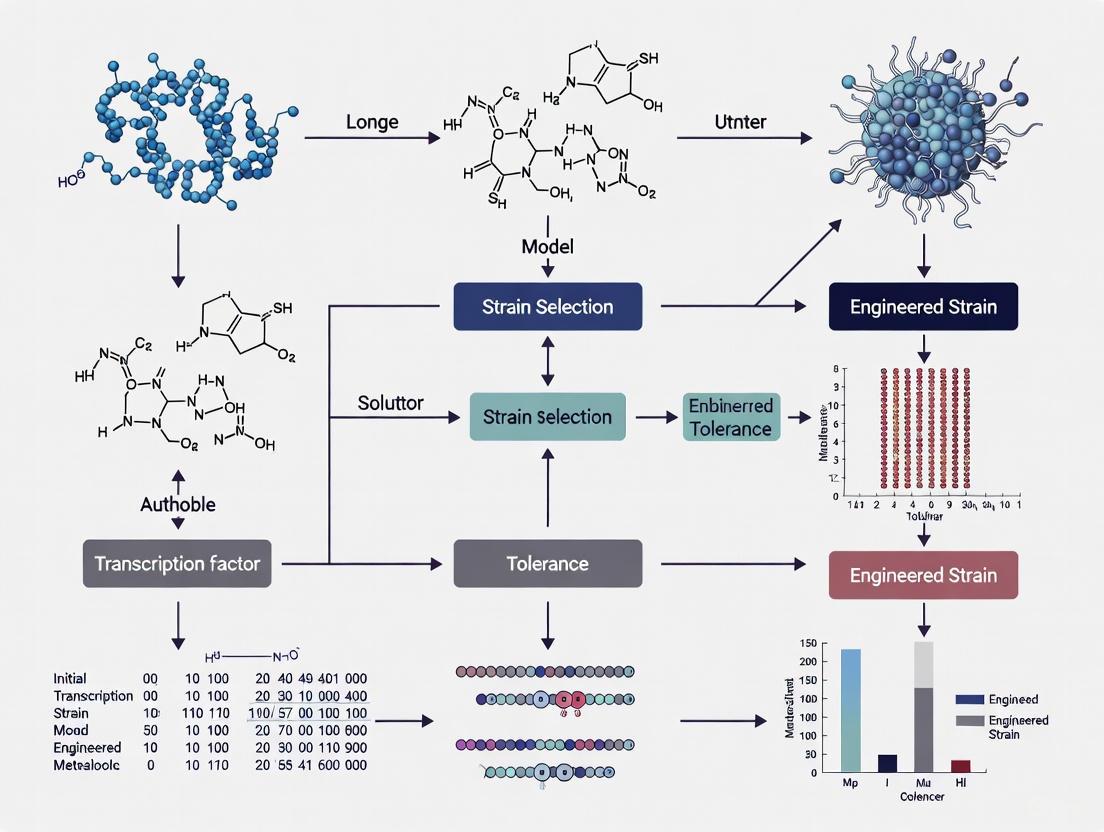
This comprehensive review explores transcription factor (TF) engineering as a powerful strategy to enhance microbial strain tolerance, a critical bottleneck in industrial biotechnology and bioprocessing.
Transcription Factor Engineering for Enhanced Microbial Strain Tolerance: Strategies, Applications, and Future Directions
Abstract
This comprehensive review explores transcription factor (TF) engineering as a powerful strategy to enhance microbial strain tolerance, a critical bottleneck in industrial biotechnology and bioprocessing. We examine the foundational principles of TFs as master regulators of complex stress response networks and detail cutting-edge methodological approaches for their identification and engineering. The article synthesizes recent advances in troubleshooting tolerance mechanisms and optimizing TF performance, highlighting validated applications across diverse microbial hosts. By integrating foundational knowledge with practical applications and validation frameworks, this resource provides researchers and scientists with a strategic guide for developing robust industrial microbial cell factories, with significant implications for biofuel production, pharmaceutical development, and biochemical manufacturing.
Master Regulators of Stress Response: Foundational Principles of Transcription Factors in Microbial Tolerance
Transcription Factors as Central Hubs in Stress Regulatory Networks
Transcription Factors (TFs) function as master regulators within cellular stress regulatory networks, interpreting stress signals and orchestrating complex transcriptional reprogramming to enable organismal adaptation [1] [2]. In both plant and microbial systems, TFs including WRKY, HSF (Heat Shock Transcription Factor), and specialized secondary metabolism regulators form intricate hubs that coordinate responses to abiotic stresses such as drought, salinity, extreme temperatures, and nutrient deprivation [2] [3] [4]. Recent advances in TF engineering, leveraging tools from synthetic biology and computational modeling, are now enabling researchers to rewire these native networks to enhance stress tolerance phenotypes in crops and industrial production strains [5] [1]. This Application Note details practical methodologies for the identification, engineering, and deployment of TFs to bolster stress resilience, providing standardized protocols for the research community.
Application Notes
Key Transcription Factor Families in Stress Regulation
Several conserved TF families have been identified as central mediators of stress responses across diverse biological systems. Understanding their distinct roles provides a foundation for targeted engineering approaches.
WRKY Transcription Factors: WRKY TFs are prevalent in higher plants and are designated as "central regulators" of the abiotic stress response [2]. They recognize and bind to W-box cis-elements (A/TAACCA; C/TAACG/TG) in the promoters of target genes. They modulate responses to drought, salinity, and cold by regulating downstream genes involved in osmotic balance, antioxidant defense, and sugar metabolism pathways [2]. For instance,
IgWRKY50andIgWRKY32from Iris germanica enhance drought resistance in transgenic Arabidopsis, whileGmWRKY17in soybean activates drought-responsive genes likeGmDREB1DandGmABA2[2].Heat Shock Transcription Factors (HSFs): HSFs are highly conserved eukaryotic TFs that drive thermal tolerance [4]. In diatoms like Phaeodactylum tricornutum, HSFs are the most abundant TF family, with 69 genes identified. Overexpression of
PtHSF2significantly enhances heat tolerance and is associated with increased cell size and the upregulation of protective genes likeLhcx2(light-harvesting complex protein) andPtCdc45-like(cell division cycle protein) [4].Secondary Metabolism Regulators: In fungi, cluster-specific TFs regulate the biosynthesis of secondary metabolites, many of which have bioactive properties [6]. These TFs are often located within biosynthetic gene clusters (BGCs) and remain transcriptionally silent under standard conditions. Systematic overexpression of these TFs, as demonstrated in Aspergillus nidulans, can activate cryptic BGCs, leading to the production of novel metabolites with antibacterial, antifungal, and anticancer activities [6].
Lipid Metabolism Regulators: In microalgae, specific TFs control lipid accumulation, a key trait for biofuel production that is often enhanced under stress like nitrogen deprivation [7]. In Chlamydomonas pacifica, overexpression of TFs such as
CpaLRL1(Lipid Remodeling Regulator 1),CpaNRR1(Nitrogen Response Regulator 1), andCpaPSR1(Phosphorus Starvation Response 1) significantly increases triglyceride (TAG) accumulation, even under normal growth conditions forCpaPSR1[7].
Quantitative Outcomes of Transcription Factor Engineering
Engineering transcription factors through overexpression or genome editing has yielded measurable improvements in stress tolerance and production metrics. The following table summarizes key quantitative findings from recent studies.
Table 1: Quantitative Outcomes of Transcription Factor Engineering in Various Organisms
| Organism | Transcription Factor | Engineering Approach | Stress Condition | Key Phenotypic Outcome | Reference |
|---|---|---|---|---|---|
| Aspergillus nidulans | 51 SM TFs (e.g., DbaA) |
Systematic OE with strong inducible promoter | Standard/Induced | >50% of OE strains produced novel metabolites; DbaA-OE extract showed ~90% bacterial growth inhibition |
[6] |
| Chlamydomonas pacifica | CpaPSR1 |
Overexpression | Normal Media | 2.4-fold increase in triglycerides (TAGs) vs. wild-type | [7] |
| Phaeodactylum tricornutum | PtHSF2 |
Overexpression | High Temperature (30°C) | Markedly enhanced thermal tolerance and increased cell size | [4] |
| Sorghum bicolor | SbWRKY30 |
Overexpression | Drought Stress | Direct activation of drought-response gene SbRD19, improving growth and survival |
[2] |
| Zea mays | ZmWRKY104 |
Overexpression | Salt Stress | Enhanced tolerance via positive regulation of ZmSOD4, reducing ROS accumulation |
[2] |
Advanced Tools for Predicting TF Function and Interaction
The integration of computational tools and multi-omics data is revolutionizing the prediction of condition-specific TF activity, accelerating the identification of engineering targets.
CTF-BIND Framework: This novel computational framework integrates Bayesian causal networks and Graph Transformer deep learning to model TF binding across diverse abiotic stress conditions in Arabidopsis [3]. Trained on ~23TB of multi-omics data (ChIP-seq, RNA-seq, PPI), it can identify condition-specific TF binding directly from RNA-seq data with ~93% accuracy, bypassing the need for costly ChIP-seq experiments [3]. The model is available as an open-access web server, enabling researchers to predict dynamic shifts in regulatory pathways under stress.
Genome-Wide In-Silico Analysis: A computational pipeline successfully identified endogenous TFs (
CpaLRL1,CpaNRR1,CpaCHT7,CpaPSR1) for enhancing lipid accumulation in the microalga Chlamydomonas pacifica, which were subsequently validated in vivo [7]. This demonstrates the power of bioinformatic prediction for guiding metabolic engineering.
Experimental Protocols
Protocol: Systematic Overexpression of Transcription Factors to Activate Cryptic Metabolic Pathways
This protocol, adapted from a high-throughput study in Aspergillus nidulans, details a strategy for activating silent biosynthetic gene clusters (BGCs) by overexpressing cluster-specific transcription factors [6].
Principle: Strong, inducible overexpression of pathway-specific TFs can overcome transcriptional silencing and trigger the production of secondary metabolites.
Applications: Discovery of novel bioactive compounds (antibacterial, antifungal, anticancer) and investigation of regulatory networks governing secondary metabolism.
Materials and Reagents
Table 2: Research Reagent Solutions for TF Overexpression
| Reagent / Material | Function / Description | Example / Note |
|---|---|---|
| Strong Inducible Promoter | Drives high-level, conditional expression of the target TF gene. | xylP promoter from Penicillium chrysogenum [6] |
| Expression Vector | Plasmid backbone for constructing the TF overexpression cassette. | Contains selectable marker and sequences for genomic integration. |
| Host Strain | The organism harboring the silent BGCs of interest. | Aspergillus nidulans, or other fungi/microalgae [6] [7] |
| Inducing Agent | Chemical that triggers the inducible promoter. | 1% Xylose (for xylP promoter) [6] |
| Liquid Culture Medium | Supports growth and metabolite production. | ANM medium or other defined media [6] |
| Analytical Equipment | For detecting and analyzing induced metabolites. | LC-MS (Liquid Chromatography-Mass Spectrometry) |
Procedure
TF Selection and Construct Design:
- Select TF genes located within predicted BGCs using tools like SMURF or antiSMASH, or TFs known from literature to regulate secondary metabolism [6].
- Clone the coding sequence of the selected TF downstream of a strong, inducible promoter (e.g., the
xylPpromoter) in an expression vector designed for targeted genomic integration (e.g., at a neutral locus likeyA).
Strain Transformation:
- Introduce the constructed overexpression vector into the host strain using standard transformation protocols (e.g., PEG-mediated protoplast transformation for fungi).
- Select stable transformants on appropriate selective media and confirm integration via genomic PCR.
Induction and Culture:
- Inoculate transgenic and wild-type control strains into liquid culture medium and incubate with shaking (e.g., 48 hours at 37°C for A. nidulans).
- Add the inducing agent (e.g., 1% xylose) to the culture. Continue incubation for several days to allow for metabolite production (e.g., 3 additional days) [6].
- Monitor cultures for phenotypic changes, such as pigment production in the mycelium or culture broth.
Metabolite Extraction and Analysis:
- Separate the culture broth from the biomass by filtration or centrifugation.
- Extract metabolites from both the broth and the biomass using appropriate organic solvents (e.g., ethyl acetate).
- Analyze crude extracts using LC-MS to profile metabolites and identify novel compounds. Compare chromatograms to wild-type controls.
Bioactivity Screening:
- Screen crude extracts for desired bioactivities (e.g., antibacterial activity against Bacillus subtilis or Staphylococcus aureus, antifungal activity, or cytotoxicity against cancer cell lines) [6].
The following workflow diagram illustrates the key steps in this protocol:
Protocol: Computational Prediction of Condition-Specific TF Binding
This protocol outlines the use of the CTF-BIND deep learning framework to predict TF binding events under specific stress conditions using RNA-seq data as input [3].
Principle: A pre-trained Graph Transformer model uses RNA-seq data and protein-protein interaction networks to infer active TF-target gene relationships, eliminating the need for ChIP-seq.
Applications: Deciphering dynamic gene regulatory networks (GRNs) in response to abiotic stress; identifying key TFs and their targets for crop improvement strategies.
Materials and Software
- Input Data: RNA-seq data (from the condition of interest) and a reference genome for the organism (e.g., Arabidopsis thaliana).
- Web Server Access: The CTF-BIND web server is freely available at:
https://hichicob.ihbt.res.in/ctfbind/[3]. - Computational Resources: Standard computer with internet access for using the web server.
Procedure
Data Preparation:
- Generate or obtain RNA-seq data from your organism under the specific stress condition(s) and appropriate control conditions.
- Process the raw sequencing data to obtain gene-level read counts or normalized expression values (e.g., TPM, FPKM).
Web Server Submission:
- Access the CTF-BIND web server.
- Upload the processed RNA-seq expression matrix as instructed.
- Select the TFs and stress conditions of interest from the available options (the server is pre-trained for 110 abiotic stress-related TFs in Arabidopsis).
Analysis Execution:
- Submit the job. The server will use its deep learning model to predict condition-specific TF-binding events and generate a causal regulatory network.
Result Interpretation:
- Download the results, which typically include:
- Lists of TFs predicted to be active under the queried condition.
- Their predicted target genes.
- Visualizations of the regulatory network.
- Use this output to prioritize TFs for experimental validation (e.g., overexpression) to confer stress tolerance.
- Download the results, which typically include:
The logical flow of this computational analysis is shown below:
The Scientist's Toolkit: Research Reagent Solutions
A summary of key reagents and tools essential for transcription factor engineering projects is provided in the table below.
Table 3: Essential Research Reagents for Transcription Factor Engineering
| Category | Reagent / Tool | Function / Application |
|---|---|---|
| Delivery Platforms | Cell-penetrating peptides, Extracellular vesicles, Lipid-based nanoparticles, Viral vectors | Overcoming challenges in cellular uptake and nuclear translocation for effective TF delivery [5] |
| Engineering Tools | CRISPR/Cas9 genome editing | For precise knockout or knock-in of TF genes or their regulatory elements (e.g., uORFs, miRNA sites) [1] |
| Expression Systems | Strong Inducible Promoters (e.g., xylP, alcA) |
To drive controlled, high-level expression of target TFs, crucial for activating silent gene clusters [6] |
| Computational Resources | CTF-BIND Web Server, SMURF, AntiSMASH | Predicting condition-specific TF binding; identifying secondary metabolite BGCs and their associated TFs [6] [3] |
| Analytical Methods | CUT&Tag, CUT&Tag-qPCR, RNA-seq, LC-MS | Validating direct TF targets (CUT&Tag); assessing transcriptomic changes (RNA-seq); profiling induced metabolites (LC-MS) [6] [4] |
Visualization of a Core Stress Response Signaling Pathway
The diagram below illustrates a generalized signaling pathway whereby a transcription factor, such as a WRKY or HSF, acts as a central hub to regulate a plant's or microbe's response to abiotic stress. This pathway integrates signal perception, TF activation, and the transcriptional regulation of diverse protective genes.
Transcription factors (TFs) are master regulators of gene expression that bind to specific cis-elements in the promoters of target genes, orchestrating complex transcriptional reprogramming in response to environmental stresses. In plants, several large TF families have been identified as crucial players in abiotic and biotic stress tolerance, including the NAC, AP2/ERF, bZIP, WRKY, and HSF families. These TFs function as molecular switches that integrate stress signals and activate downstream defense mechanisms, making them prime targets for genetic engineering strategies aimed at enhancing crop resilience. This article provides a comprehensive overview of these five major TF families, their structural characteristics, regulatory functions in stress responses, and practical applications in plant stress tolerance research.
Structural Features and Classification
Table 1: Characteristic features of major plant transcription factor families involved in stress tolerance
| TF Family | DNA-Binding Domain | Key Conserved Motifs | Recognized cis-Elements | Family Size in Plants |
|---|---|---|---|---|
| NAC | NAC domain (150-160 aa) at N-terminus | Subdomains A-E; A, C, D are conserved | NACRS, SNAC-specific motifs | 117 in Arabidopsis, 151 in rice [8] |
| AP2/ERF | AP2/ERF domain (60-70 aa) | YRG and RAYD elements | DRE/CRT (A/GCCGAC), GCC-box | Large family, plant-specific [9] [10] |
| bZIP | bZIP domain (60-80 aa) | Basic region + leucine zipper | ABRE (PyACGTGGC), G-box (CACGTG) | 78 in Arabidopsis, 89 in rice [11] [12] |
| WRKY | WRKY domain (~60 aa) | WRKYGQK motif + zinc finger | W-box (T/CTGACC/T) | One of the largest plant TF families [2] |
| HSF | DNA-binding domain (DBD) | Winged helix-turn-helix | HSE (nGAAn inverted repeats) | 27 in potato, 21 in Arabidopsis [13] |
The NAC family represents one of the largest plant-specific TF families, characterized by a conserved N-terminal NAC domain of approximately 150-160 amino acids that is further divided into five subdomains (A-E) [8]. The C-terminal region is highly divergent and functions as a transcriptional regulatory domain. The AP2/ERF family is defined by the AP2/ERF DNA-binding domain consisting of 60-70 amino acids that form a three-dimensional structure with three β-sheets and one α-helix [9]. This family is divided into five main groups: AP2, ERF, DREB, RAV, and Soloist [9] [10]. The bZIP family possesses a highly conserved bZIP domain comprising a basic region that facilitates DNA binding and nuclear localization, and a leucine zipper region that mediates dimerization [11]. WRKY TFs contain one or two WRKY domains characterized by the highly conserved WRKYGQK motif followed by a zinc finger structure [2]. HSF proteins feature a conserved DNA-binding domain that forms a winged helix-turn-helix structure, with class A Hsfs generally functioning as activators and class B as repressors [13].
Functional Roles in Stress Responses
Abiotic Stress Tolerance
Table 2: Documented roles of transcription factors in abiotic stress tolerance
| TF Family | Stress Response | Representative TFs | Mechanistic Actions |
|---|---|---|---|
| NAC | Drought, salinity, cold, submergence | SNAC1, OsNAC6 | Stomatal closure, root development, antioxidant defense [8] |
| AP2/ERF | Drought, salinity, cold, heat, waterlogging | DREB2A, RAP2.12 | Osmolyte accumulation, ROS scavenging, hypoxia response [9] [10] |
| bZIP | Drought, cold, oxidative stress | OsbZIP62, BcbZIP72 | ABA signaling, CBF pathway activation, antioxidant gene regulation [11] [12] [14] |
| WRKY | Drought, salinity, heat, nutrient stress | IgWRKY50, GmWRKY17, ZmWRKY104 | ROS homeostasis, ion transport, sugar metabolism [2] |
| HSF | Heat stress | StHsfB5, HsfA3, HsfA4C | Chaperone induction, protein protection, thermomemory [13] |
NAC transcription factors function as critical regulators of drought, salinity, and cold stress responses. The SNAC subgroup, in particular, has been demonstrated to improve drought and salt tolerance when overexpressed in transgenic plants [8]. These TFs regulate various stress-adaptive mechanisms including stomatal closure, root system modification, and activation of antioxidant systems. AP2/ERF TFs, particularly the DREB subfamily, are central regulators of abiotic stress responses. DREB proteins bind to DRE/CRT elements in the promoters of stress-responsive genes, activating the expression of genes involved in osmoprotection, ROS detoxification, and cellular protection [9] [10]. The RAP2.12 TF mediates hypoxia responses during waterlogging stress [10].
bZIP TFs primarily function in ABA-dependent stress signaling pathways, with members such as OsbZIP62 playing crucial roles in drought and oxidative stress tolerance [12]. Recent research has identified BcbZIP72 as a positive regulator of cold tolerance through CBF-dependent pathways, directly activating BcCBF1 expression by binding to the G-box in its promoter [14]. WRKY TFs participate in multiple abiotic stress responses by regulating various physiological processes, including sugar metabolism, ROS scavenging, and ion homeostasis. For instance, ZmWRKY104 enhances salt tolerance by positively regulating ZmSOD4 and reducing ROS accumulation [2]. HSF transcription factors are master regulators of heat stress responses, controlling the expression of heat shock proteins (Hsps) that function as molecular chaperones to protect proteins from thermal denaturation. StHsfB5 promotes heat resistance by directly regulating the expression of sHsp17.6, sHsp21, sHsp22.7, and Hsp80 genes [13].
Biotic Stress Resistance
NAC transcription factors play crucial roles in plant immunity through multiple signaling pathways. They participate in both PTI and ETI - the two main layers of plant immune system [15]. NAC TFs regulate plant disease resistance by modulating hormone signaling pathways (SA, JA, ABA), reactive oxygen species (ROS) production, and the hypersensitive response (HR) [15]. For example, rice OsNAC066, OsNAC096, OsNAC6, and OsNAC111 overexpression enhances resistance to blast disease [15]. AP2/ERF TFs, particularly those in the ERF subfamily, contribute to biotic stress resistance by binding to GCC-box elements in the promoters of pathogenesis-related (PR) genes. Similarly, certain bZIP and WRKY TFs have been implicated in defense responses against pathogens, though their roles in biotic stress are generally less prominent compared to their functions in abiotic stress adaptation.
Transcription Factor Engineering Strategies
Overexpression Approaches
Constitutive or stress-inducible overexpression of stress-responsive TFs represents a powerful strategy for enhancing crop tolerance. The coding sequence of the target TF is cloned under the control of a constitutive promoter (e.g., CaMV 35S) or stress-inducible promoter (e.g., RD29A) and transformed into plants via Agrobacterium-mediated transformation or biolistic methods. For TFs lacking intrinsic transactivation activity, fusion with strong activation domains like VP64 may be necessary. For instance, OsbZIP62 fused to VP64 (OsbZIP62V) significantly enhanced drought and oxidative stress tolerance in transgenic rice, while the native protein showed limited activity [12].
Genome Editing Applications
CRISPR/Cas9-mediated genome editing enables precise modification of endogenous TF genes. This approach allows for the creation of superior alleles with enhanced transcriptional activity, altered expression patterns, or modified protein stability. The technology can also be used to generate loss-of-function mutants for functional characterization. For example, osbzip62 mutants generated via CRISPR/Cas9 showed reduced drought tolerance, confirming the gene's function in stress responses [12]. When designing editing strategies, focus on modifying regulatory domains rather than DNA-binding domains to preserve TF specificity while enhancing regulatory activity.
Experimental Protocols for TF Functional Characterization
Subcellular Localization Assay
Purpose: Determine the nuclear localization of TFs, a prerequisite for their function as transcription factors.
Procedure:
- Amplify the TF coding sequence without stop codon and clone into GFP fusion vector (e.g., pCAMBIA1302-GFP)
- Transform the construct into rice protoplasts or Arabidopsis leaf mesophyll protoplasts via PEG-mediated transfection
- Incubate transformed protoplasts for 16-24 hours at 22-25°C in darkness
- Observe GFP fluorescence using confocal microscopy with appropriate filters (excitation 488 nm, emission 505-530 nm)
- Counterstain nuclei with DAPI (excitation 358 nm, emission 461 nm) for confirmation
Expected Outcome: Nuclear localization of GFP fluorescence, as demonstrated for OsbZIP62-GFP which showed exclusive nuclear targeting [12].
Transcriptional Activation Assay
Purpose: Determine whether a TF functions as a transcriptional activator or repressor.
Yeast One-Hybrid Procedure:
- Clone full-length and truncated TF sequences into pGBKT7 or similar DNA-binding domain vector
- Transform into yeast strain (e.g., Y2HGold) and plate on SD/-Trp medium
- Transfer grown colonies to SD/-Trp/-His/-Ade medium supplemented with X-α-Gal for activity assay
- Incubate at 30°C for 3-5 days and monitor colony growth and blue color development
- Quantitative assessment can be performed using ONPG liquid assays
Expected Outcome: For activators like BcbZIP72, yeast growth on selective medium and β-galactosidase activity indicates transcriptional activation capability [14]. Note that some TFs like OsbZIP62 may require deletion analysis to identify activation domains, as the full-length protein might lack transactivation activity [12].
DNA-Binding Specificity Analysis
Purpose: Identify specific cis-elements recognized by the TF.
EMSA (Electrophoretic Mobility Shift Assay) Procedure:
- Express and purify recombinant TF protein from E. coli (GST or His-tagged)
- Label double-stranded oligonucleotides containing putative cis-elements with [γ-32P]ATP or biotin
- Incubate 10-20 fmol labeled probe with 100-500 ng purified protein in binding buffer (10 mM Tris, 50 mM KCl, 1 mM DTT, 2.5% glycerol, 0.05% NP-40, 5 mM EDTA) with 1 μg poly(dI-dC) as nonspecific competitor
- Resolve protein-DNA complexes on 5-6% non-denaturing polyacrylamide gel in 0.5× TBE at 100 V for 1-2 hours
- Transfer to nylon membrane (if using biotinylated probes) and detect using chemiluminescence
Expected Outcome: Shifted bands indicating protein-DNA complexes, as demonstrated for StHsfB5 which directly bound to promoters of sHsp genes [13]. For competition assays, include 100-200× molar excess of unlabeled probe.
Signaling Pathways and Regulatory Networks
The diagram illustrates the key regulatory pathways through which different TF families mediate stress responses. HSFs directly activate HSP expression under heat stress [13]. For cold stress, both ICE1-CBF and bZIP-CBF pathways converge on COR gene activation [14]. NAC and bZIP TFs respond to drought stress through both ABA-dependent and independent pathways to regulate downstream stress-responsive genes [8] [12]. These networks highlight the complexity and crosstalk between different TF families in coordinating plant stress responses.
The Scientist's Toolkit: Research Reagent Solutions
Table 3: Essential research reagents for transcription factor studies
| Reagent/Category | Specific Examples | Research Applications | Key Features |
|---|---|---|---|
| Expression Vectors | pCAMBIA1302-GFP, pGBKT7, pGEX-4T-1 | Subcellular localization, protein purification, Y2H | Gateway compatibility, various tags (GFP, GST, His) |
| Plant Transformation | Agrobacterium strains (GV3101, EHA105), CRISPR/Cas9 systems | Stable transformation, genome editing | Binary vectors, selectable markers, tissue-specific promoters |
| Yeast Systems | Y2HGold, Y187 yeast strains, SD dropout media | Protein-protein interaction, transactivation assays | Multiple reporter genes, low background |
| Antibodies | Anti-GFP, Anti-GST, Anti-His tag | Protein detection, western blot, ChIP | High specificity, various conjugates |
| Detection Kits | Chemiluminescent EMSA kit, ChIP assay kit | DNA-protein interaction, in vivo binding | High sensitivity, optimized protocols |
| Plant Growth Regulators | ABA, JA, SA, ethylene | Stress treatment, signaling studies | Hormone signaling pathway studies |
Concluding Remarks and Future Perspectives
Engineering transcription factors from the NAC, AP2/ERF, bZIP, WRKY, and HSF families represents a powerful strategy for developing stress-tolerant crops. The experimental protocols outlined provide robust methodologies for characterizing TF functions, from subcellular localization to DNA-binding specificity. Future research should focus on understanding the complex regulatory networks and crosstalk between different TF families, as well as developing tissue-specific or inducible expression systems for precise temporal and spatial control of TF activity. The integration of CRISPR-based genome editing with traditional overexpression approaches will enable more sophisticated engineering of TF-mediated stress tolerance pathways, contributing to the development of climate-resilient crops for sustainable agriculture.
Cells constantly encounter internal and external stressors that disrupt homeostasis, including proteotoxic stress, nutrient deprivation, oxidative damage, and osmotic imbalance. To survive these challenges, cells execute rapid and extensive transcriptional reprogramming, a process masterfully coordinated by a network of transcription factors (TFs). These TFs function as central processors of stress signaling, integrating diverse stress signals into coordinated genomic responses that reallocate cellular resources from growth to survival. The molecular mechanisms underlying this reprogramming involve sophisticated regulation of RNA polymerase II (Pol II) dynamics, chromatin organization, and enhancer activity across timescales ranging from minutes to hours [16].
Understanding these coordinated mechanisms provides a critical foundation for transcription factor engineering, a promising approach for enhancing cellular tolerance in industrial bioprocessing and therapeutic contexts. By harnessing the natural plasticity and regulatory capacity of stress-responsive TFs, researchers can pre-program robust adaptive responses that protect cells against diverse stressors, thereby improving productivity and resilience in manufacturing environments and addressing stress-related disease pathologies [17] [18] [19].
Molecular Mechanisms of Transcriptional Reprogramming
RNA Polymerase II Dynamics and Control Points
Stress-induced transcriptional reprogramming involves precise regulation of Pol II at multiple control points. Genome-wide studies using Precision Run-On sequencing (PRO-seq) have revealed that stress triggers rapid repression of thousands of genes while simultaneously activating hundreds of others. This reprogramming occurs through distinct mechanistic patterns:
- Promoter-Proximal Pausing: In mammalian cells, heat stress causes Pol II to accumulate at the promoter-proximal pause region of repressed genes, creating a poised state for potential recovery. In contrast, Drosophila shows decreased Pol II density across entire gene bodies [16].
- Rapid Induction Dynamics: At activated genes such as those encoding molecular chaperones, increased Pol II density along coding sequences can be detected within 2.5 minutes of stress exposure, demonstrating nearly instantaneous responsiveness [16].
- Temporal Expression Patterns: Different gene classes exhibit distinct kinetic profiles during stress response. Genes involved in translation machinery are repressed within 10 minutes, while RNA-processing complexes show more delayed repression. Some genes, like those encoding cytoskeletal components, display transient induction with expression peaks followed by decline below basal levels [16].
Table 1: Key Control Points in Stress-Responsive Transcription
| Regulatory Step | Mechanism | Impact on Gene Expression |
|---|---|---|
| Promoter Opening | Nucleosome remodelling increases regulatory region accessibility | Enables TF binding and pre-initiation complex formation |
| Transcription Initiation | Pre-initiation complex (PIC) assembly at promoters | Determines transcription start site selection and frequency |
| Promoter-Proximal Pausing | P-TEFb kinase-mediated release of paused Pol II | Controls transition to productive elongation; rate-limiting step for many stress genes |
| Transcriptional Elongation | Pol II progression along DNA template with nascent RNA synthesis | Influences transcriptional output and co-transcriptional processing |
| Termination & Recycling | Transcription machinery recycling to transcription start sites | Maintains transcriptional capacity through chromatin looping |
Chromatin and Epigenetic Regulation
The chromatin landscape undergoes significant reorganization during stress responses, facilitating targeted gene expression:
- Pre-established TF Occupancy: ATF4 binds to hundreds of gene promoters even under non-stress conditions, particularly at genes involved in protein homeostasis. This pre-binding primes these genes for stronger and faster activation upon stress exposure, representing a "pre-wired" response system [20].
- Histone Modification Dynamics: Stress triggers changes in histone acetylation patterns, with increased H3K27 acetylation at activated genes during heat shock. However, ATF4-mediated gene activation during Integrated Stress Response (ISR) occurs independently of increased H3K27 acetylation, indicating alternative epigenetic mechanisms [16] [20].
- 3D Genome Architecture: Higher-order chromatin organization influences stress-responsive transcription. Transcriptional responses during ISR are linked to intrinsic chromatin properties, with CEBPγ preferentially targeting genomic regions exhibiting unique higher-order chromatin structures [20].
Enhancer Reprogramming
Beyond promoter regulation, enhancers undergo extensive reprogramming during stress responses. In heat-stressed human cells, thousands of enhancers show altered Pol II density, with some activated while others are repressed. These changes correlate with modifications to the local chromatin environment, including nucleosome dynamics and histone acetylation, demonstrating that stress responses involve comprehensive reshaping of both coding and regulatory elements [16].
Major Stress-Responsive Transcription Factor Families
Conserved TF Families Across Biological Systems
Multiple TF families have been identified as key regulators of stress responses across evolutionary lineages:
Table 2: Major Stress-Responsive Transcription Factor Families
| TF Family | Representative Members | Stress Signals | Regulatory Functions |
|---|---|---|---|
| AP2/ERF | ERF5, ARF6, ABI3/VP1 | Drought, salinity, heat | Osmolyte production, antioxidant defense, growth regulation |
| bZIP | ATF4, ABF3, GCN4 | Nutrient deprivation, ER stress, oxidative stress | Amino acid metabolism, antioxidant response, autophagy regulation |
| NAC | NAC10, NAP | Drought, salt, cold | Senescence regulation, reactive oxygen species scavenging |
| HSF | HSF1, HSFA6a | Heat shock, proteotoxic stress | Chaperone induction, proteostasis maintenance |
| WRKY | WRKY30, WRKY53 | Pathogen response, drought | Defense gene activation, salicylic acid signaling |
| bHLH | PDR1, PDR3, ICE1 | Organic solvents, cold | Efflux pump regulation, membrane modification |
ATF4 as a Master Regulator of Integrated Stress Response
ATF4 exemplifies the sophisticated regulatory capabilities of stress-responsive TFs. As a central mediator of the Integrated Stress Response (ISR), ATF4 coordinates adaptation to diverse stressors through multiple mechanisms:
- Translational Control: ATF4 expression is primarily regulated at the translational level through phosphorylation of eukaryotic initiation factor 2α (eIF2α) by stress-sensing kinases (PERK, GCN2, PKR, HRI). eIF2α phosphorylation reduces global protein synthesis while selectively promoting ATF4 translation [21] [20].
- Metabolic Reprogramming: ATF4 regulates key metabolic processes under nutrient stress, including serine synthesis through PHGDH, PSAT1, and PSPH enzymes; cystine uptake for glutathione synthesis; and mitochondrial function through asparagine-sensitive signaling [21].
- Heterodimerization Versatility: ATF4 functions as a hub TF by forming heterodimers with other bZIP proteins, particularly C/EBP family members. During ISR, transcriptional activation is linked to redistribution of CEBPγ from non-ATF4 sites to ATF4-bound regions, forming ATF4/CEBPγ heterodimers with distinct DNA-binding preferences [20].
Single-Cell Heterogeneity in Stress Responses
Single-cell RNA sequencing has revealed extensive heterogeneity in stress responses even within isogenic populations. During osmoadaptation in yeast, the osmoresponsive program exhibits highly variable expression across individual cells, organizing into combinatorial patterns that generate distinct cellular programs [22].
- Differential Gene Usage: At the peak of stress response, less than 25% of osmoresponsive genes are expressed in most cells (>75% of population), while the majority show expression in only a fraction of the population, creating cell-specific transcriptional "fingerprints" [22].
- Functional Specialization: Cluster analysis identifies distinct cellular subpopulations with specialized functional orientations. Some cells strongly induce protein folding chaperones (HSP82, SSA4), while others activate metabolic and oxidative stress genes, suggesting division of labor within the stressed population [22].
- Fitness Implications: Cells exhibiting basal expression of stress-responsive genes before stress exposure demonstrate hyper-responsiveness and increased stress resistance. This heterogeneity provides a bet-hedging strategy that maximizes population survival in fluctuating environments [22].
Experimental Protocols for Analyzing TF-Mediated Stress Responses
Protocol 1: Genome-Wide Mapping of Transcription Factor Dynamics During Integrated Stress Response
Objective: To characterize temporal changes in ATF4 binding, chromatin organization, and transcriptional output during ISR activation.
Materials:
- C2C12 mouse myoblast cells or HeLa cells
- Thapsigargin (100 nM) or CCCP (ISR inducers)
- Formaldehyde for crosslinking
- Anti-ATF4 antibody (validated for ChIP)
- Proteinase K
- TRIzol reagent for RNA isolation
- Library preparation kits for sequencing
Methodology:
- ISR Induction and Time-Course Sampling:
- Treat cells with 100 nM Thapsigargin for 0, 2, 6, and 12 hours
- Collect samples at each time point for ChIP-seq, ATAC-seq, Hi-C, and RNA-seq
Chromatin Immunoprecipitation Sequencing (ChIP-seq):
- Crosslink cells with 1% formaldehyde for 10 min at room temperature
- Quench crosslinking with 125 mM glycine for 5 min
- Sonicate chromatin to 200-500 bp fragments (Bioruptor Pico, 8 cycles of 30 sec ON/30 sec OFF)
- Immunoprecipitate with 5 μg anti-ATF4 antibody overnight at 4°C
- Reverse crosslinks, purify DNA, and prepare sequencing libraries
Assay for Transposase-Accessible Chromatin (ATAC-seq):
- Harvest 50,000 cells per condition
- Perform transposition reaction using Illumina Nextera DNA Library Preparation Kit (37°C for 30 min)
- Purify and amplify libraries for sequencing
RNA Sequencing:
- Extract total RNA using TRIzol reagent
- Prepare polyA-selected RNA libraries (Illumina TruSeq Stranded mRNA kit)
- Sequence on Illumina platform (minimum 30 million reads per sample)
Data Analysis:
- Map sequencing reads to reference genome (STAR for RNA-seq, Bowtie2 for ChIP-seq)
- Identify differentially expressed genes (DESeq2, log2FC >1, padj <0.05)
- Call ATF4 binding peaks (MACS2)
- Integrate multi-omics data to correlate ATF4 binding with transcriptional changes and chromatin accessibility
Applications: This protocol enables comprehensive characterization of ISR dynamics, revealing pre-established ATF4 occupancy that primes genes for rapid activation and identifying chromatin features that determine transcriptional responses [20].
Protocol 2: Engineering Transcription Factors for Improved Alkane Tolerance in Yeast
Objective: To enhance microbial tolerance to biofuel alkanes through engineering of PDR1 and PDR3 transcription factors.
Materials:
- S. cerevisiae BY4741 pdr1Δ pdr3Δ strain (BYL13)
- pESC-Ura expression vector
- Site-directed mutagenesis kit
- n-decane (C10) and n-undecane (C11)
- Galactose (inducer)
- Antibodies for Western blot (anti-Pdr1p, anti-Pdr3p)
- ROS detection kit (DCFH-DA)
- Membrane integrity dyes (propidium iodide)
Methodology:
- Transcription Factor Engineering:
- Introduce point mutations F815S and R821S in PDR1, and Y276H in PDR3 using site-directed mutagenesis
- Clone wild-type and mutated TF genes into pESC-Ura vector under GAL10 promoter
Strain Development and Screening:
- Transform constructs into BYL13 strain
- Induce TF expression with 0.5 g/L galactose (reduces growth inhibition)
- Challenge strains with 1% C10 or 5% C11 alkanes
- Monitor growth (OD600) and viability over 24-48 hours
Tolerance Mechanism Analysis:
- Intracellular Alkane Measurement: Extract intracellular alkanes with hexane, analyze by GC-MS
- Reactive Oxygen Species (ROS) Quantification: Stain cells with DCFH-DA, measure fluorescence by flow cytometry
- Membrane Integrity Assessment: Stain with propidium iodide, quantify fluorescence
- Gene Expression Analysis: Perform qPCR on PDR-regulated genes (ABC transporters, membrane modifiers)
Alkane Transport Assays:
- Measure alkane import and export rates using radiolabeled [14C]-alkanes
- Calculate intracellular accumulation over time
Applications: This engineering approach significantly improved yeast tolerance to medium-chain alkanes, with Pdr1mt1 + Pdr3mt expression reducing intracellular C10 alkane by 67% and ROS by 53%, while Pdr3wt reduced intracellular C11 alkane by 72% and ROS by 21% [17].
Research Reagent Solutions
Table 3: Essential Research Reagents for Transcription Factor Stress Response Studies
| Reagent/Category | Specific Examples | Function/Application |
|---|---|---|
| TF Antibodies | Anti-ATF4, Anti-HSF1, Anti-phospho-eIF2α | Immunodetection, chromatin immunoprecipitation, localization studies |
| Stress Inducers | Thapsigargin (ER stress), CCCP (oxidative stress), NaCl (osmotic stress), Heat shock | Controlled induction of specific stress pathways |
| Sequencing Kits | Illumina TruSeq (RNA-seq), Nextera (ATAC-seq), ChIP-seq library prep kits | Genome-wide mapping of transcriptional and epigenetic changes |
| Expression Vectors | pESC-Ura (yeast), pcDNA3.1 (mammalian), pET-based (bacterial) | Heterologous TF expression and engineering |
| Reporter Systems | Luciferase, GFP/YFP, LacZ | Real-time monitoring of TF activity and promoter responses |
| Cell Lines/Strains | C2C12, HeLa, S. cerevisiae BY4741, E. coli KO strains | Model systems for stress response studies |
| Chemical Inhibitors | ISRIB (ISR inhibitor), KNK437 (HSF1 inhibitor), kinase inhibitors | Pathway dissection and validation |
Visualization of Key Signaling Pathways
TF-Mediated Stress Response Signaling
Applications in Strain Tolerance Engineering
The mechanistic understanding of TF-mediated stress responses enables sophisticated engineering approaches for enhancing strain tolerance:
- Core Stress Response Activation: Engineering conserved TF networks (AP2/ERF-ERF, NAC, bZIP, HSF) that regulate both universal and stress-specific pathways provides broad-spectrum tolerance. In maize, 744 core stress-responsive genes identified across six abiotic stresses were enriched for these TF families, representing key targets for engineering resilient crops [23].
- TF-Based Biosensor Development: Engineering TFs to create metabolite-responsive biosensors enables high-throughput screening of tolerant variants. Modified LuxR variants detect butanoyl-homoserine lactone at concentrations as low as 10 nM, while engineered BmoR mutants achieve 0-100 mM detection ranges for isobutanol [18].
- Pleiotropic Engineering: Manipulating master regulators like Pdr1p and Pdr3p in yeast simultaneously upregulates efflux pumps, membrane modifiers, and antioxidant systems, providing multi-mechanism tolerance against biofuel alkanes without requiring pathway-specific engineering [17].
Concluding Perspectives
Transcription factors function as the central processing units of cellular stress responses, integrating diverse signals into coordinated transcriptional programs through sophisticated regulation of Pol II dynamics, chromatin organization, and enhancer activity. The emerging paradigm reveals that stress responses are partially "pre-wired" through pre-bound TFs at primed genes, with response specificity determined by combinatorial TF expression, heterodimerization partnerships, and intrinsic chromatin properties.
Future directions in transcription factor engineering will leverage these mechanistic insights to design synthetic regulatory circuits that pre-program robust stress tolerance. Key opportunities include engineering TF promiscuity to create novel stress response circuits, designing synthetic heterodimerization pairs to rewire gene regulation, and developing dynamic control systems that automatically activate protection mechanisms before stress-induced damage occurs. These advanced engineering approaches promise to transform industrial bioprocessing and therapeutic interventions by creating cells with precisely calibrated adaptive capabilities.
The Heat Shock Transcription Factor (HSF) family represents a cornerstone of the cellular defense system, acting as master regulators of gene expression in response to proteotoxic stress caused by elevated temperatures. These evolutionarily conserved DNA-binding proteins activate a complex transcriptional program that restores cellular proteostasis by orchestrating the synthesis of molecular chaperones, facilitating protein refolding, and targeting irreparable aggregates for degradation [24] [25]. Beyond this canonical role, emerging evidence reveals that HSFs participate in diverse physiological processes, including development, metabolism, and comprehensive stress adaptation networks [25] [26].
The critical importance of HSF-mediated pathways extends across biological kingdoms, from safeguarding medicinal plants in vulnerable ecosystems to enhancing thermal resilience in marine diatoms fundamental to global carbon cycling [27] [4]. This universal conservation, coupled with functional diversification, makes the HSF family a prime target for transcription factor engineering aimed at improving stress tolerance in crops, protecting biodiversity, and understanding fundamental biological resilience mechanisms. This application note examines pivotal case studies that dissect the HSF family's role in thermal adaptation, providing detailed protocols and resources to empower research in this field.
Genome-wide studies across diverse species reveal significant variation in HSF family size and composition, reflecting evolutionary adaptations to specific environmental niches. The table below summarizes key findings from recent investigations.
Table 1: Genome-Wide Identification of HSF Gene Family Members Across Species
| Species | Total HSF Members | Class A | Class B | Class C | Notable Expansion Features | Citation |
|---|---|---|---|---|---|---|
| Phaeodactylum tricornutum (Diatom) | 69 | N/A | N/A | N/A | Most abundant TF family; 44.2% of all TFs | [4] |
| Anisodus tanguticus (Medicinal Plant) | 20 (AntHSFs) | 3 subfamilies | 3 subfamilies | 3 subfamilies | Lineage-specific diversification | [27] |
| Ammopiptanthus mongolicus (Desert Shrub) | 24 (AmHSFs) | 5 primary classes | 5 primary classes | 5 primary classes | 13 phylogenetic subgroups | [28] |
| Rhodomyrtus tomentosa (Shrub) | 25 (RtHSFs) | HSFA | HSFB | HSFC | Major expansion via gene duplication | [29] |
| Populus trichocarpa (Poplar) | 30 | A1-A9 | B1-B5 | C1-C2 | Segmental duplication as main driver | [26] |
The data demonstrates that the HSF family has undergone significant expansion in plants, particularly through duplication events, resulting in a complex repertoire that enables nuanced regulatory control over stress responses [26] [29]. The extraordinary abundance of HSFs in diatoms suggests a specialized adaptation to the highly variable marine environment, where they may function as central regulators of environmental sensing [4].
Molecular Mechanisms of HSF-Mediated Thermal Tolerance
The HSF Activation Cycle and Regulatory Complexity
HSF activation follows a multi-step cycle that transforms latent monomers into potent transcriptional activators. Under non-stress conditions, HSFs are maintained in an inactive monomeric state through intramolecular interactions and association with repressive complexes including heat shock proteins (HSPs) like HSP90 [24] [25]. Thermal stress causes widespread protein misfolding, sequestering HSP90 and relieving this repression. This allows HSF trimerization via their coiled-coil oligomerization domains (HR-A/B), leading to nuclear translocation, binding to target gene promoters at Heat Shock Elements (HSEs; consensus sequence nGAAnnTTCn), and recruitment of the transcriptional machinery [27] [24] [30].
Diagram: The HSF Activation Pathway and Cellular Stress Response
Post-translational modifications (PTMs) including phosphorylation, acetylation, and sumoylation create a sophisticated "HSF code" that fine-tunes this activation cycle, determines target gene specificity, and ultimately shapes the physiological outcome [24] [25]. For example, HSF1 phosphorylation at specific residues (e.g., Ser230) activates DNA binding, while acetylation of Lys80 dissociates HSF1 from DNA to attenuate the response [24].
Case Studies of Diverse Adaptive Mechanisms
Antioxidant System Coordination inAnisodus tanguticus
In the high-altitude medicinal plant Anisodus tanguticus, HSFs demonstrate a specialized role beyond chaperone regulation. Under heat treatment, specific AntHSF members (AntHSF7, AntHSF9) exhibit stage-specific expression patterns that closely coordinate with the activity of key antioxidant enzymes like Malondialdehyde (MDA), GSTT, GSTF, and Cu/ZnSOD [27]. This temporal regulation suggests that the AntHSF family critically manages the oxidative stress component of heat damage, directly linking proteostasis defense to redox homeostasis. Evolutionary analysis and sub-cellular localization further indicate that AntHSF7 and AntHSF9 are uniquely adapted for plateau-specific environmental challenges [27].
Cell Size Plasticity and Genome Replication in Marine Diatoms
Research on the diatom Phaeodactylum tricornutum reveals a novel HSF-mediated adaptive mechanism. Overexpression of PtHSF2 significantly enhanced survival at 30°C and induced a pronounced increase in cell size [4]. CUT&Tag analysis demonstrated that PtHSF2 directly targets and upregulates PtCdc45-like, a key DNA replication initiation factor. Functional studies confirmed that PtCdc45-like overexpression alone recapitulated the large-cell phenotype and improved thermal tolerance, indicating a direct regulatory axis where HSF activity modulates fundamental cell cycle processes to confer stress resistance [4].
Functional Divergence in theRhodomyrtus tomentosaHSFA2 Subfamily
In the thermotolerant shrub Rhodomyrtus tomentosa, functional divergence has occurred within the HSFA2 subfamily. While RtHSFA2a responds to drought, salt, and cold stresses, RtHSFA2b is specifically induced by heat stress [29]. Arabidopsis plants overexpressing RtHSFA2b outperformed RtHSFA2a-expressing lines under heat stress, and RtHSFA2b exhibited stronger transcription activity on specific Heat Shock Response (HSR) gene promoters. This subfunctionalization exemplifies how gene duplication and subsequent specialization can refine the stress response network, with RtHSFA2b playing a more vital role in thermotolerance [29].
Experimental Protocols for HSF Functional Analysis
Protocol 1: Genome-Wide Identification and Phylogenetic Classification of HSF Genes
This foundational protocol is essential for characterizing the HSF family in any species of interest [27] [26] [29].
Materials:
- High-quality genome assembly and annotation file (FASTA, GFF/GTF)
- High-performance computing cluster or workstation
- HMMER software suite (v.3.3 or later)
- PFAM HSF DNA-binding domain profile (PF00447)
- Multiple sequence alignment software (e.g., MAFFT, MUSCLE)
- Phylogenetic tree construction software (e.g., IQ-TREE, RAxML)
Procedure:
- HMMER Search: Using the
hmmsearchcommand from the HMMER suite, search the entire proteome of the target species against the PF00447 Hidden Markov Model (HMM) profile. Use an E-value cutoff of < 1 × 10⁻⁵ to identify candidate HSF proteins. - Domain Validation: Submit candidate protein sequences to the SMART and Pfam databases to confirm the presence of the characteristic HSF DNA-binding domain (DBD) and oligomerization domain (OD). Manually curate the final list to remove fragments and false positives.
- Sequence Alignment: Perform a multiple sequence alignment of the validated HSF protein sequences from the target species with reference HSF sequences from well-studied models (e.g., Arabidopsis thaliana, Oryza sativa).
- Phylogenetic Tree Construction: Construct a maximum-likelihood phylogenetic tree (e.g., with 1000 bootstrap replicates) using the aligned sequences. Classify genes into subfamilies (HSFA, HSFB, HSFC) and subgroups (A1-A9, B1-B5, etc.) based on their clustering with known reference clades.
- Bioinformatic Analysis: Analyze gene structure (exon-intron organization), conserved motifs (using MEME suite), and chromosomal location. Identify gene duplication events (tandem and segmental) by examining syntenic relationships within the genome and with related species.
Protocol 2: Expression Profiling Under Controlled Heat Stress
This protocol details the treatment and sampling methods for analyzing HSF transcript dynamics [27].
Materials:
- Uniform plant/microbial materials (e.g., seedlings, cell cultures)
- Precision growth chamber with temperature and light control
- Liquid nitrogen and -80°C freezer for sample preservation
- RNA extraction kit (e.g., TRIzol-based methods)
- Equipment for RNA-seq library prep and sequencing, or qRT-PCR instrumentation
Procedure:
- Plant Growth & Acclimation: Grow plants under controlled conditions (e.g., 16h light/8h dark, 22°C, 60% humidity) for a standardized period (e.g., 3 months for A. tanguticus).
- Heat Treatment Application: Subject biological replicates to a defined heat stress (e.g., 35°C for plants, 30°C for diatoms). Maintain control groups at the baseline growth temperature.
- Time-Course Sampling: Collect tissue samples at critical time points post-stress onset (e.g., 0 h, 4 h, 6 h, 12 h, 24 h). Immediately freeze samples in liquid nitrogen and store at -80°C until RNA extraction.
- Transcriptional Analysis:
- For RNA-seq: Extract total RNA, check quality (RIN > 7.0), prepare libraries, and sequence on an appropriate platform (e.g., Illumina). Map reads to the reference genome, calculate gene expression values (FPKM/TPM), and identify differentially expressed HSF genes.
- For qRT-PCR: Synthesize cDNA from DNase-treated RNA. Design gene-specific primers for each HSF gene and reference housekeeping genes. Perform qPCR and analyze data using the 2^(-ΔΔCt) method to determine fold-change in expression.
Protocol 3: Functional Validation via Transgenesis
This protocol outlines the core steps for validating HSF function using genetic modification, a key approach demonstrated in diatoms and plants [4] [29].
Materials:
- Species-specific overexpression and/or RNA interference (RNAi) vector system
- Gateway or Golden Gate cloning reagents
- Agrobacterium tumefaciens strain (for plants) or electroporator (for diatoms/algae)
- Selection agents (e.g., antibiotics, herbicides)
- Phenotyping equipment (e.g., growth chambers, imaging systems)
Procedure:
- Vector Construction:
- Overexpression: Clone the full-length coding sequence (CDS) of the target HSF gene into a binary expression vector downstream of a strong constitutive or inducible promoter.
- Knockdown/Knockout: For RNAi, clone an inverted repeat of a specific gene fragment into an RNAi vector. For CRISPR-Cas9, design and clone single-guide RNAs (sgRNAs) targeting the gene.
- Transformation: Introduce the constructed vector into the target organism.
- For plants: Use Agrobacterium-mediated transformation or biolistics.
- For diatoms: Use electroporation or microparticle bombardment.
- Regeneration and Selection: Regenerate transformed cells on selective media containing the appropriate agent to generate stable transgenic lines.
- Molecular Confirmation: Validate transgenic lines using genomic PCR to confirm transgene integration, qRT-PCR to measure transcript levels, and western blotting (if a specific antibody is available) to detect the protein.
- Phenotypic Assay: Subject T1 generation transgenic lines and wild-type controls to standardized heat stress assays. Evaluate key physiological parameters, including:
- Survival rate and chlorophyll content
- Photosynthetic efficiency (Fv/Fm)
- Antioxidant enzyme activities (SOD, CAT, POD)
- Marker gene expression (e.g., HSPs) via qRT-PCR
Diagram: Experimental Workflow for HSF Gene Functional Characterization
The Scientist's Toolkit: Key Research Reagent Solutions
Table 2: Essential Reagents and Resources for HSF Stress Research
| Reagent/Resource | Specifications & Examples | Primary Function in HSF Research |
|---|---|---|
| Antibody Reagents | Anti-HSF (species-specific); Anti-HSP70/HSP90; Anti-GFP for tagged proteins | Protein-level detection, quantification, and subcellular localization via western blot, ELISA, or immunostaining. |
| Enzyme Activity Assay Kits | SOD, CAT, POD, MDA, H₂O₂ detection kits (e.g., from Nanjing Ruiyuan Biotechnology) | Quantification of oxidative stress markers and antioxidant enzyme activity correlated with HSF activation. |
| Cloning & Expression Vectors | Gateway-compatible vectors; pCAMBIA series; species-specific overexpression/RNAi vectors | Genetic manipulation for functional studies (overexpression, knockdown, CRISPR-Cas9 knockout). |
| Live-Cell Reporting Systems | Hsp70-promoter::GFP/YFP reporter constructs (e.g., Hsp70-GFP fusion gene) | Real-time monitoring of HSF pathway activation and dynamics via fluorescence (flow cytometry, microscopy). |
| Controlled Environment Chambers | Precision growth chambers with programmable temperature, light, and humidity | Application of standardized, reproducible heat stress and other environmental challenges. |
The case studies presented herein underscore the crucial and versatile role of the HSF family in mediating thermal adaptation across diverse organisms. From coordinating antioxidant defenses in plateau plants to directly regulating cell cycle components in marine diatoms, HSFs employ a rich array of mechanisms that extend far beyond the induction of classic heat shock proteins. The intricate "HSF code" governed by post-translational modifications and isoform-specific interactions allows for precise, context-dependent regulation of transcriptional programs that are fundamental to cellular resilience [24] [25].
The experimental frameworks and resources provided offer a roadmap for deconstructing these complex networks in non-model organisms, enabling researchers to identify key HSF candidates for genetic engineering. Future efforts should prioritize CRISPR-based functional studies in planta, exploration of HSF interplay in combined stress scenarios, and the translation of these discoveries into sustainable conservation and crop improvement strategies [27] [31]. By leveraging the HSF family's inherent plasticity and central regulatory position, we can develop innovative solutions to enhance thermal tolerance in a warming world.
The Pleiotropic Drug Resistance (PDR) network in Saccharomyces cerevisiae is a master regulatory system that controls cellular responses to a broad spectrum of environmental stresses and toxic compounds. This network, governed primarily by the zinc cluster transcription factors Pdr1p and its functional homolog Pdr3p, represents a paradigm for understanding multidrug resistance mechanisms with significant implications for both antifungal research and cancer biology [32] [33]. These transcription factors recognize specific DNA sequences called Pleiotropic Drug Response Elements (PDREs), with the canonical sequence 5'-TCCGCGGA-3', to activate approximately 50 target genes involved in cellular detoxification [32]. The PDR network is triggered by diverse stressors including mitochondrial damage, heat shock, membrane damage, translational stress, and exposure to cytotoxic chemicals [33]. Through their regulatory control over ATP-binding cassette (ABC) transporters and major facilitator superfamily transporters, Pdr1p and Pdr3p enhance cellular capacity to export toxic substances, thereby conferring resistance to multiple drugs simultaneously [32] [33]. This application note details experimental frameworks for investigating Pdr1p and Pdr3p, with direct relevance to transcription factor engineering for enhanced microbial strain tolerance in industrial biotechnology.
Quantitative Profiling of PDR Network Components
Key Regulatory Targets and Experimental Phenotypes
Systematic studies have identified numerous genes under Pdr1p/Pdr3p regulation, with distinct and overlapping functions within the PDR network. The table below summarizes quantitatively expressed targets and documented loss-of-function phenotypes.
Table 1: Experimentally Determined PDR Network Targets and Functional Phenotypes
| Gene Target | Encoded Protein Function | Regulating TF(s) | Documented Phenotype of Mutant |
|---|---|---|---|
| PDR5 | ABC transporter | Pdr1p, Pdr3p | Hypersensitivity to cycloheximide, oligomycin [32] |
| SNQ2 | ABC transporter | Pdr1p, Pdr3p, Yrr1p | Hypersensitivity to 4-nitroquinoline-N-oxide (4-NQO) [34] |
| YOR1 | ABC transporter | Pdr1p, Pdr3p, Yrr1p | Hypersensitivity to oligomycin [34] |
| PDR10 | ABC transporter | Pdr1p, Pdr3p | |
| PDR15 | ABC transporter | Pdr1p, Pdr3p | |
| FLR1 | Major Facilitator Superfamily permease | Pdr1p, Yrr1p | |
| YRR1 | Zn₂Cys₆ transcription factor | Pdr1p | Hypersensitivity to 4-NQO, oligomycin [34] |
Quantitative Analysis of Transporter Efficacy in Metabolic Engineering
The application of PDR engineering has demonstrated significant quantitative improvements in product secretion. Recent research on vitamin A production in engineered S. cerevisiae provides a clear example.
Table 2: Effect of PDR Component Overexpression on Vitamin A Production Titers
| Engineered PDR Component | Retinoid Product | Concentration (mg/L) | Secretion Ratio |
|---|---|---|---|
| None (Control) | Retinol/Retinal | Baseline | <95% |
| PDR3 | Retinol/Retinal | >400 mg/L | >95% [35] |
| PDR10 | Retinol/Retinal | >400 mg/L | >95% [35] |
| PDR3 + PDR10 | Retinal only | 638.12 mg/L | 98.7% [35] |
| SNQ2 | Retinol only | 430.14 mg/L | >93% [35] |
| PDR3 + PDR10 (with promoter balancing) | Retinol only | 549.79 mg/L | 94.5% [35] |
Experimental Protocols for PDR Network Analysis
Protocol 1: Genomic Occupancy Profiling Using CUT&RUN
Purpose: To identify genome-wide binding sites for Pdr1p and Pdr3p under basal and stress conditions with high resolution.
Principle: CUT&RUN (Cleavage Under Targets and Release Using Nuclease) uses micrococcal nuclease tethered to specific antibodies to cleave and release target-bound DNA fragments, offering low background and high signal-to-noise ratio compared to ChIP-seq [33].
Procedure:
- Strain Development: Engineer yeast strains expressing epitope-tagged transcription factors (e.g., Pdr3p-3xMyc) in the desired genetic background (e.g., FY1679-28c).
- Nuclei Isolation: Grow yeast to mid-log phase (OD₆₀₀ ≈ 0.6-0.8). Spheroplast cells using Zymolyase 100T and isolate nuclei.
- Chromatin Capture: Immobilize purified nuclei on Concanavalin A-coated magnetic beads.
- Antibody Binding: Incubate bead-bound nuclei with primary antibody (e.g., anti-c-Myc, 0.5 µg per sample) overnight at 4°C. Include control samples with non-specific IgG.
- pAG-MNase Binding: Wash beads and incubate with Protein A-MNase fusion protein (pAG-MNase) for 2 hours at 4°C.
- Chromatin Cleavage: Induce targeted chromatin cleavage by adding 100mM CaCl₂ and incubating on ice for 30 minutes.
- DNA Extraction: Stop reactions, release cleaved fragments, and extract DNA using phenol-chloroform with glycogen carrier.
- Library Preparation & Sequencing: Construct sequencing libraries using kits such as NEBNext Ultra II DNA Library Prep Kit for Illumina. Sequence and map reads to the reference genome to identify binding peaks [33].
Protocol 2: CRISPRi/a-Mediated TF Expression Tuning for Acetic Acid Tolerance
Purpose: To precisely modulate PDR1 or YAP1 expression levels using CRISPR interference/activation (CRISPRi/a) to investigate and enhance acetic acid tolerance.
Principle: A catalytically dead Cas9 (dCas9) fused to transcriptional repressor (Mxi1) or activator (VPR) domains is guided to promoter regions by specific sgRNAs to fine-tune transcription factor expression [36].
Procedure:
- sgRNA Design: Design 4-8 sgRNAs targeting regions within -400 bp to +1 of the transcription start site (TSS) of PDR1 or YAP1 using tools like CRISPR-ERA or CHOP CHOP.
- Vector Assembly: Clone sgRNA sequences into a pRS416-based vector containing TetR-dCas9-Mxi1 (for CRISPRi) or TetR-dCas9-VPR (for CRISPRa) and a URA3 selection marker.
- Yeast Transformation: Introduce assembled plasmids into the target S. cerevisiae strain (e.g., CEN.PK 113-5D) using standard lithium acetate transformation.
- Tolerance Screening: Inoculate transformants in appropriate selective medium and grow to mid-log phase. Spot serial dilutions (10-fold) onto solid YPD media containing acetic acid at inhibitory concentrations (e.g., 4-5 g/L). Incubate at 30°C for 3-5 days.
- Growth Quantification: For quantitative analysis, grow strains in liquid medium with acetic acid and monitor growth kinetics by measuring OD₆₀₀ every 2 hours for 24-48 hours. Calculate specific growth rates.
- Validation: Confirm changes in TF expression and downstream target gene activation via qRT-PCR [36].
Protocol 3: Electrophoretic Mobility Shift Assay (EMSA) for PDRE Binding
Purpose: To validate direct binding of Pdr1p or Pdr3p to candidate PDRE sequences in vitro.
Procedure:
- Probe Preparation: Amplify ~200 bp promoter regions containing putative PDREs from genomic DNA using high-fidelity polymerase. End-label purified PCR products with [γ-³²P]ATP using T4 polynucleotide kinase.
- Protein Extraction: Express and purify DNA-binding domains of Pdr1p/Pdr3p from E. coli or prepare whole-cell extracts from yeast overexpressing the TFs.
- Binding Reaction: Incubate 1-10 fmol of labeled DNA probe with purified protein or cell extract in binding buffer (e.g., 10 mM Tris, 50 mM KCl, 1 mM DTT, 0.1 mg/mL BSA, 5% glycerol) for 20-30 minutes at room temperature.
- Electrophoresis: Resolve protein-DNA complexes on a pre-run 4-6% non-denaturing polyacrylamide gel in 0.5X TBE buffer at 100-150 V for 1-2 hours.
- Detection: Transfer gel to filter paper, dry, and visualize shifted bands using phosphorimaging or autoradiography.
- Specificity Controls: Include competitions with excess unlabeled wild-type (specific) or mutated (non-specific) PDRE oligonucleotides to confirm binding specificity [34].
The Scientist's Toolkit: Research Reagent Solutions
Table 3: Essential Research Reagents for PDR Network Studies
| Reagent / Tool | Function / Purpose | Example Use Case |
|---|---|---|
| Epitope-Tagged TF Strains (e.g., Pdr3p-3xMyc) | Immunoprecipitation and visualization of endogenous protein | CUT&RUN, co-immunoprecipitation [33] |
| PDR-LacZ Reporter Plasmid | Measure transcriptional activation from a PDRE | Quantifying Pdr1p/Pdr3p activity under different conditions [32] |
| pCB-GAD Fusion Plasmid | Expressing DNA-binding domain fused to activation domain | Identifying direct targets via artificial transactivation [34] |
| CRISPRi/a System (dCas9-Mxi1/VPR) | Precise transcriptional repression or activation | Fine-tuning PDR1 expression for acetic acid tolerance [36] |
| PDR1/PDR3 Deletion Strains (ΔPDR1, ΔPDR3) | Loss-of-function studies | Identifying TF-specific regulons and phenotypes [32] [33] |
| Gain-of-Function Mutants (e.g., pdr1-3) | Hyperactive transcription phenotype | Studying PDR network overexpression effects [32] |
Regulatory Network and Experimental Workflow Diagrams
Diagram 1: The Core PDR Regulatory Network and Key Engineering Strategies. This diagram illustrates the central role of Pdr1p and Pdr3p in transducing diverse stress signals into a multidrug resistance phenotype through regulation of effector genes. Dashed boxes categorize network components. Engineering strategies like CRISPRi (red 'i') and CRISPRa (green 'a') can modulate transcription factor activity to enhance desired traits like acetic acid tolerance [32] [36] [34].
Diagram 2: Integrated Workflow for PDR Transcription Factor Analysis and Engineering. This workflow outlines a multi-faceted approach to characterize transcription factor function, from initial genomic binding studies and expression analyses to the final engineering of strains with enhanced tolerance traits [33] [36] [37].
Engineering Strategies and Practical Applications: From TF Modification to Strain Improvement
High-Throughput Methods for Novel TF Identification and Characterization
Transcription factor (TF) engineering represents a powerful strategy for developing microbial and plant strains with enhanced tolerance to environmental stresses and industrial production conditions [38] [31]. The foundation of rational TF engineering relies on comprehensive characterization of TF-DNA binding properties, including specificity, affinity, and sequence requirements. High-throughput methodologies have dramatically accelerated our capacity to profile TFs, moving beyond traditional low-throughput approaches that were impractical for systematic analysis [39] [40]. These advanced methods enable researchers to obtain quantitative binding data for thousands of DNA sequences simultaneously, providing the rich datasets necessary to build predictive models of TF binding behavior and identify novel TFs with desirable properties for strain engineering [39] [41].
The transition to high-throughput analysis addresses critical limitations in traditional TF characterization. Conventional methods like electrophoretic mobility shift assays (EMSAs) provide valuable data but are limited in throughput to approximately 10 binding sites, making comprehensive profiling impractical [40]. Similarly, Systematic Evolution of Ligands by Exponential Enrichment (SELEX) traditionally identified only consensus binding sites without detailed affinity information [40]. Modern high-throughput approaches overcome these constraints by leveraging microarray technology, next-generation sequencing, and microfluidic systems to generate extensive binding datasets that capture both strong and weak interactions across sequence space [39] [40].
Comparative Analysis of Methodologies
Table 1: Comparison of High-Throughput TF Characterization Methods
| Method | Throughput (DNA Sequence Space) | Data Type | Key Measurements | Resolution | Materials Required |
|---|---|---|---|---|---|
| Protein Binding Microarray (PBM) | Up to 1 million sites [40] | Semi-quantitative [40] | Relative KD, PWM [40] | Nucleotide resolution feasible [40] | µg of protein [40] |
| HT-SELEX/Bind-n-Seq | >200,000 sites [40] | Semi-quantitative [40] | Relative KD, PWM [40] | Nucleotide resolution feasible [40] | mg of protein [40] |
| Mechanical Trapping (MITOMI) | 1,000 to 10,000 sites [40] | Quantitative [40] | Absolute KD, kon, koff [40] | Nucleotide resolution [40] | ng of protein [40] |
| Surface Plasmon Resonance (SPR) | Up to 100 sites [40] | Quantitative [40] | Absolute KD, kon, koff [40] | Few binding sites only [40] | µg of protein [40] |
| ChIP-seq | All genomic sites [40] | Qualitative [40] | In vivo binding sites [40] | 100-500 bp [40] | ng of DNA [40] |
Table 2: Data Type Classification for TF-DNA Interaction Methods
| Data Classification | Methods | Key Characteristics | Applications in TF Engineering |
|---|---|---|---|
| Qualitative | Traditional SELEX, DNA footprinting, initial ChIP-chip [40] [41] | Identifies consensus sequences without affinity data [40] | Preliminary TF screening, consensus motif identification [41] |
| Semi-Quantitative | PBM, HT-SELEX, DIP-chip [40] | Provides relative affinity measurements [40] | Binding site characterization, specificity profiling [39] |
| Quantitative | MITOMI, SPR, EMSA, ITC, MST [40] [41] | Determines absolute binding constants (KD) [40] | Accurate affinity measurements, biophysical characterization [41] |
| Kinetic | SPR, MITOMI [40] | Measures binding rates (kon, koff) [40] | Understanding binding mechanics, residence times [40] |
Core Experimental Protocols
Protein Binding Microarray (PBM) Protocol
Principle: PBMs utilize high-density DNA microarrays to measure TF binding specificity across thousands to millions of potential DNA binding sites simultaneously [39] [40]. Double-stranded DNA probes are immobilized on glass slides, incubated with the TF of interest, and binding events are detected via fluorescently labeled antibodies [39].
Step-by-Step Workflow:
Array Fabrication: Design and spot DNA oligonucleotides representing variant binding sites onto polyacrylamide-modified glass slides using appropriate surface chemistry (e.g., polyacrylamide/ester glass activation for 5'-amino-modified DNA) [39].
DNA Duplex Preparation: Prepare 34 bp oligonucleotides containing common sequences and binding site-specific regions. Anneal complementary oligonucleotides modified with 5' amino groups or biotin, then extend the complementary strand by polymerization [39].
Protein Binding Reaction: Incubate arrays with 80 μL of protein binding mixture containing:
- 6 mM HEPES (pH 7.8)
- 40 mM KCl
- 0.5 mM EDTA
- 0.5 mM EGTA
- 6% glycerol
- 0.25 μg/μl dIdC (non-specific competitor)
- 2% milk (blocking agent)
- Purified TF at 50-125 ng/μl concentration [39]
Detection and Visualization: Wash arrays to remove non-specifically bound protein, then incubate with TF-specific primary antibody followed by Cy5-conjugated secondary antibody [39].
Data Acquisition and Normalization: Scan slides using a microarray scanner (e.g., Axon 4000B), analyze with appropriate software (e.g., GenePix 4.1), and normalize protein binding signals against DNA concentration in each spot using Sybr Green or Texas Red-streptavidin [39].
High-Throughput SELEX (HT-SELEX) Protocol
Principle: HT-SELEX combines traditional SELEX methodology with next-generation sequencing to identify TF binding preferences across a pool of random DNA oligonucleotides [40]. Unlike traditional SELEX with multiple selection rounds, HT-SELEX typically uses fewer rounds coupled with deep sequencing to capture both high and moderate affinity binders [40].
Step-by-Step Workflow:
Library Preparation: Synthesize a double-stranded DNA library containing random oligonucleotide sequences (typically 10-20 bp random core) flanked by constant regions for amplification.
Binding Reaction: Incubate the purified TF with the DNA library in appropriate binding buffer to allow complex formation.
Partitioning: Separate protein-bound DNA sequences from unbound sequences using methods such as:
- Nitrocellulose filter binding (retains protein-DNA complexes)
- Immunoprecipitation with tagged TFs
- Electrophoretic mobility separation
Elution and Amplification: Recover bound DNA sequences and amplify by PCR for subsequent rounds of selection or sequencing.
Sequencing and Analysis: Subject enriched pools to high-throughput sequencing after 1-3 rounds of selection. Analyze sequence enrichment patterns to determine binding specificities and generate position weight matrices (PWMs) [40].
Mechanically Induced Trapping of Molecular Interactions (MITOMI) Protocol
Principle: MITOMI is a microfluidics-based approach that enables quantitative measurements of TF-DNA binding affinity and kinetics by mechanically trapping interactions between TFs and DNA sequences [40]. This method provides absolute binding constants and can measure both association and dissociation rates [40].
Step-by-Step Workflow:
Device Fabrication: Fabricate polydimethylsiloxane (PDMS) microfluidic devices containing:
- Flow channels for reagent delivery
- Button membrane design for mechanical trapping
- Array chambers for parallel measurements
Surface Functionalization: Activate glass substrates for DNA immobilization using appropriate chemistry (e.g., epoxy silane, aldehyde silane).
DNA Printing: Spot double-stranded DNA sequences onto activated surfaces within device chambers.
TF Binding Assay:
- Introduce purified TF through flow channels
- Allow binding equilibrium to establish
- Activate "button" membrane to mechanically trap TF-DNA complexes
- Wash away unbound material while maintaining trapped complexes
Detection and Quantification: Measure bound TF using fluorescent tags (e.g., GFP-fusions or immunofluorescence). Quantify binding levels and calculate affinity constants from concentration-dependent binding curves [40].
Data Analysis and Integration
Binding Affinity Prediction Models
Principal Coordinates Analysis (PC) Model: This statistical approach models TF binding affinity by treating variant DNA sequences as points in high-dimensional Euclidean space, with coordinates reflecting sequence composition [39]. The model offers several advantages over traditional position weight matrices:
- Incorporates effects of interactions between base pair positions
- Requires experimental data from only a subset of binding sites to generate accurate predictions for the entire sequence space
- Sensitive to subtle differences in binding specificities of homologous TFs [39]
Sequence Selection Algorithm: A greedy algorithm can generate spanning sets of sequences that uniformly cover the consensus binding space [39]. This approach begins with a seed sequence having the maximum number of neighboring sequences (one base change distant), then iteratively selects additional sequences to cover the space efficiently, enabling comprehensive profiling with minimal experimental effort [39].
Integration with Strain Engineering Applications
Table 3: TF Engineering Applications in Strain Tolerance
| TF Engineering Approach | Experimental Evidence | Impact on Strain Tolerance | Molecular Mechanisms |
|---|---|---|---|
| Pleiotropic Drug Resistance (Pdr) TF Engineering | Site-mutated Pdr1p (F815S) and Pdr3p (Y276H) in S. cerevisiae [38] | Enhanced tolerance to C10 and C11 alkanes [38] | Reduced intracellular alkane accumulation (67-72%), decreased ROS (21-53%), membrane protection [38] |
| MYB TF Family Engineering | BrMYB116 overexpression in Chinese cabbage and yeast [42] | Improved Cd stress tolerance [42] | Activation of FIT3-mediated transport, reduced Cd accumulation [42] |
| Master Regulator Modulation | Pdr1 and Pdr3 modulation in S. cerevisiae [38] | Biofuel tolerance [38] | Differential regulation of ABC transporters, stress response genes, membrane modification genes [38] |
The Scientist's Toolkit: Essential Research Reagents
Table 4: Essential Research Reagents for High-Throughput TF Characterization
| Reagent/Category | Specific Examples | Function and Application | Protocol References |
|---|---|---|---|
| DNA Microarray Platforms | Polyacrylamide/ester glass slides, streptavidin-coated slides [39] | Covalent attachment of 5'-amino-modified DNA duplexes, minimizes non-specific binding [39] | PBM [39] |
| TF Detection Systems | Anti-HIS (H-15), anti-p50 (NLS) antibodies, Cy5-conjugated secondary antibodies [39] | Immunofluorescent detection of bound transcription factors [39] | PBM, SPR [39] |
| Protein Purification Tags | HIS-tag, bacterial expression systems (pET32a) [39] | Recombinant TF production and purification [39] | PBM, SPR, MITOMI [39] |
| Microfluidic Components | PDMS devices, button membranes, epoxy-activated glass [40] | Mechanical trapping of molecular interactions for kinetic measurements [40] | MITOMI [40] |
| Binding Site Selection Libraries | Random oligonucleotide pools with flanking constant regions [40] | Comprehensive sampling of sequence space for binding specificity [40] | HT-SELEX [40] |
| Quantitative Calibration Standards | Reference DNA motifs (GGGGTTCCCC for NF-κB, GTATGCAAAT for OCT-1) [39] | Signal normalization and cross-experiment comparison [39] | PBM, SPR [39] |
Implementation Considerations for Strain Engineering Research
Method Selection Guide
Choosing appropriate high-throughput methods depends on specific research goals in TF engineering for strain tolerance:
- For comprehensive binding specificity profiling: PBMs offer the most extensive coverage of sequence space (up to 1 million sites) and are ideal for initial characterization of novel TFs [40].
- For quantitative affinity and kinetic measurements: MITOMI provides the highest quality quantitative data but with lower sequence coverage, making it suitable for detailed characterization of selected TF variants [40].
- For cost-effective binding site identification: HT-SELEX balances throughput and cost, requiring less specialized equipment than PBM [40].
- For validating engineered TF function in cellular contexts: Integration with in vivo methods like ChIP-seq is essential to confirm that in vitro binding properties translate to cellular environments [40].
Applications in Tolerance Engineering
The integration of high-throughput TF characterization with engineering approaches has demonstrated significant success in enhancing strain tolerance. For instance, engineering Pdr transcription factors in yeast through site-directed mutagenesis (Pdr1 F815S and Pdr3 Y276H) significantly improved tolerance to C10 and C11 alkanes, key components of biofuels [38]. Mechanistic studies revealed that these engineered TFs reduced intracellular alkane accumulation by 67-72% and reactive oxygen species by 21-53%, while also maintaining membrane integrity [38].
Similarly, characterization of MYB family TFs has identified candidates like BrMYB116 that enhance cadmium stress tolerance when expressed in yeast, providing potential targets for engineering heavy metal tolerance in crops [42]. These successes highlight the power of combining comprehensive TF characterization with targeted engineering approaches to address specific tolerance challenges in industrial and agricultural applications.
The engineering of transcription factors (TFs) through site-directed mutagenesis represents a cornerstone of modern strain tolerance research. This rational design approach enables precise alterations in key regulatory domains to enhance desirable traits such as stress resilience, productivity, and metabolic efficiency. Site-directed mutagenesis allows researchers to introduce specific, predetermined changes into DNA sequences, facilitating the functional analysis of regulatory domains and the creation of improved variants for biotechnological applications [43]. Within the context of transcription factor engineering, this technique has become indispensable for dissecting structure-function relationships and optimizing TF performance under industrial stress conditions.
The fundamental principle of site-directed mutagenesis involves using synthetically designed oligonucleotide primers that contain the desired mutation to amplify the target DNA sequence during a polymerase chain reaction (PCR). The mutation is incorporated into the newly synthesized DNA strand, ultimately replacing the original sequence [43] [44]. This precision makes it particularly valuable for modifying key regulatory domains in transcription factors, including DNA-binding domains, transactivation domains, and protein-protein interaction interfaces, thereby altering their target gene specificity, expression levels, or regulatory properties [31] [2].
Site-Directed Mutagenesis Methodologies
Core Principle and Mechanism
Site-directed mutagenesis relies on the use of mutagenic primers that are complementary to the target DNA sequence except for the specific nucleotide change(s) intended for introduction. These primers anneal to the template DNA and are extended by a DNA polymerase during PCR, resulting in amplified DNA fragments that incorporate the desired mutation. Following amplification, template DNA is selectively degraded, and the mutated plasmids are transformed into bacterial cells for propagation [44]. The efficiency of this process depends critically on several factors, including primer design, DNA polymerase selection, and template quality.
Optimized Protocol for High-Efficiency Mutagenesis
Recent advancements have led to refined protocols that significantly improve mutagenesis efficiency. One such method utilizes partially complementary primer pairs with 3'-overhangs, which has demonstrated substantial improvements over traditional approaches like the QuickChange method [45].
Basic Protocol Steps:
Primer Design: Design forward and reverse primers that are partially complementary (typically 18-20 bp overlapping regions) with 10-11 bp non-overlapping 3'-overhangs. The mutation is incorporated within the overlapping region. Primer length should be approximately 30 nucleotides to minimize synthesis errors [45].
PCR Amplification: Set up the PCR reaction using:
- 0.1-1.0 ng/μL of highly purified plasmid template DNA
- High-fidelity DNA polymerase (e.g., PfuUltra, TransStart FastPfu Fly) with 3'→5' exonuclease activity
- dNTP mix (2.5 mM each)
- Designed mutagenic primers
- Thermocycling conditions appropriate for the primer annealing temperatures and plasmid size
Template Elimination: Digest the PCR product with DpnI restriction enzyme, which specifically cleaves methylated parental DNA from Dam+ E. coli strains (e.g., DH5α), leaving the newly synthesized, unmethylated mutated DNA intact [45] [44].
Transformation and Screening: Transform the DpnI-treated product into highly competent DH5α cells. Screen resulting colonies for the desired mutation using restriction fragment length polymorphism (RFLP) analysis or sequencing validation [45] [44].
This optimized approach achieves an average efficiency of approximately 50%, with some instances approaching 100%, significantly reducing the number of colonies that need to be screened (typically only 3 colonies per reaction) [45].
Primer Design Strategies
Table 1: Comparison of Site-Directed Mutagenesis Primer Design Strategies
| Strategy | Primer Characteristics | Efficiency | Key Applications |
|---|---|---|---|
| Traditional Complementary Primers | Fully complementary primers; mutation in middle; typically 25-45 nucleotides | Lower efficiency; higher primer-dimer formation | Basic mutagenesis; small plasmids |
| 3'-Overhang Primers (P3 Method) | Partially complementary with 18-20 bp overlap + 10-11 bp 3' overhangs; ~30 nucleotides | High efficiency (~50%); reduced primer-dimers | Large plasmids (7-13 kb); high-throughput workflows |
| Inverse PCR Primers | Primers oriented away from each other; amplification of entire plasmid | Optimal for deletion mutagenesis | Domain deletion; removal of regulatory elements |
Critical Reagents and Equipment
Table 2: Essential Research Reagents for Site-Directed Mutagenesis
| Reagent/Equipment | Specification | Function | Notes |
|---|---|---|---|
| Template DNA | Highly purified plasmid (0.1-1.0 ng/μL) from Dam+ E. coli (e.g., DH5α) | Provides the base sequence for mutagenesis | Must be methylated for DpnI digestion; GC-rich templates may require DMSO |
| DNA Polymerase | High-fidelity polymerase (Pfu, Phusion, Vent) with 3'→5' exonuclease activity; lacks 5'→3' exonuclease activity | Amplifies plasmid with incorporated mutation | Must produce blunt-ended products; Taq polymerase unsuitable |
| Mutagenic Primers | ~30 nucleotides; mutation positioned centrally with flanking complementary sequences | Introduces specific mutation during PCR | High-purity synthesis (HPLC purified) recommended |
| DpnI Enzyme | Restriction endonuclease specific for methylated GATC sites | Selective degradation of parental template | Critical step to reduce background |
| Competent Cells | High-efficiency chemocompetent DH5α E. coli (>10^8 CFU/μg) | Propagation of mutated plasmid | Preparation quality crucial for transformation efficiency |
Applications in Transcription Factor Engineering for Strain Tolerance
Engineering Abiotic Stress Tolerance
Transcription factors regulate complex gene networks that determine how organisms respond to environmental stresses. Rational design of these TFs through site-directed mutagenesis has enabled significant improvements in stress tolerance across multiple species:
Heat Shock Transcription Factors (HSFs): In marine diatoms, HSFs have been identified as crucial mediators of thermal tolerance. Overexpression of PtHSF2 in Phaeodactylum tricornutum significantly enhanced survival at elevated temperatures (30°C). This enhanced thermotolerance was associated with increased expression of target genes including cell division cycle protein 45-like (PtCdc45-like) and light-harvesting complex protein 2 (Lhcx2), demonstrating how targeted manipulation of a single TF can activate protective cellular pathways [4].
WRKY Transcription Factors: WRKY TFs play pivotal roles in plant responses to drought, salinity, and extreme temperatures. These proteins contain highly conserved WRKYGQK domains that recognize specific W-box cis-elements in target gene promoters [2]. Rational mutagenesis of these domains has enabled the creation of variant TFs with enhanced regulatory properties:
- In Glycine max, GmWRKY17 was shown to directly bind promoters of drought-inducible genes GmDREB1D and GmABA2, activating transcription under water deficit conditions [2].
- ZmWRKY104 in Zea mays enhances salt tolerance through positive regulation of ZmSOD4, reducing reactive oxygen species accumulation and cellular damage [2].
Enhancing Transcriptional Efficiency and Specificity
Beyond stress tolerance, rational design of regulatory domains has been applied to optimize TF function for biotechnological applications:
DNA-Binding Domain Engineering: Site-directed mutagenesis of specific amino acid residues within DNA-binding domains (e.g., basic helix-loop-helix, zinc finger, or WRKY domains) can alter binding affinity and sequence specificity, enabling custom regulation of target genes [31] [46].
Transactivation Domain Optimization: Mutagenesis of transactivation domains can enhance transcriptional activity or modify response to specific signals. For example, in maize, genetic variation at transcription factor binding sites (cis-elements) has been shown to explain the majority of heritable trait variation across approximately 72% of 143 phenotypes, highlighting the potential impact of precise modifications to these regulatory sequences [47].
Experimental Workflows and Validation
Comprehensive Mutagenesis Workflow
The following diagram illustrates the complete experimental workflow for site-directed mutagenesis of transcription factor domains:
Regulatory Network Analysis
Understanding how mutated transcription factors function within broader regulatory networks is essential for rational design. The following diagram illustrates how engineered TFs integrate into cellular stress response pathways:
Validation and Functional Analysis
Rigorous validation is essential following site-directed mutagenesis to confirm both the introduction of desired mutations and the functional consequences:
Molecular Validation:
- DNA Sequencing: Comprehensive sequencing of the entire modified region to confirm the intended mutation and exclude unintended secondary mutations [44].
- Restriction Fragment Length Polymorphism (RFLP): If the mutation introduces or ablates a restriction site, RFLP analysis provides a rapid screening method [44].
- Expression Analysis: Quantitative PCR or RNA-seq to verify expression levels of the mutated TF [4].
Functional Validation:
- In Vitro Binding Assays: Electrophoretic mobility shift assays (EMSA) or chromatin immunoprecipitation (ChIP) to assess DNA-binding properties of the engineered TF [47] [4].
- Transcriptional Activity Reporter Assays: Luciferase or GFP-based reporter systems to quantify transactivation potential [2].
- Phenotypic Screening: Assessment of strain performance under stress conditions relevant to the engineered trait (e.g., high temperature, osmotic stress) [2] [4].
Rational design of transcription factors through site-directed mutagenesis of key regulatory domains represents a powerful strategy for enhancing strain tolerance in biotechnological applications. The optimized methodologies detailed in this protocol, particularly the use of primers with 3'-overhangs, enable efficient and precise genetic modifications that can alter transcriptional networks and improve stress resilience. As our understanding of transcription factor structure-function relationships continues to grow, coupled with advances in mutagenesis techniques, the potential for engineering customized regulatory proteins with enhanced properties will continue to expand, opening new avenues for strain improvement in industrial, agricultural, and pharmaceutical contexts.
TF-Based Biosensors for Metabolite Monitoring and Dynamic Regulation
Transcription factor (TF)-based biosensors are genetically encoded devices that sense specific intracellular metabolite concentrations and convert this information into a quantifiable output, typically gene expression [48]. Within synthetic biology and metabolic engineering, these biosensors are pivotal for advancing microbial cell factories, enabling high-throughput screening of production strains and implementing dynamic regulation of metabolic pathways [48] [49]. For strain tolerance research, a major challenge in industrial bioprocesses, TF-based biosensors provide a powerful tool for understanding cellular responses to stress and for engineering robust microbial strains capable of withstanding harsh production conditions, such as high temperatures and inhibitor concentrations [50] [19]. Their modular nature, consisting of a sensing component (the allosteric transcription factor) and a reporter component, allows for extensive engineering and tuning to meet specific application needs [51].
Key Performance Parameters for Biosensor Design
The performance of a TF-based biosensor is characterized by several quantifiable parameters that determine its suitability for a given application. Tuning these parameters is essential for deploying biosensors in different hosts or under varying industrial conditions [49].
Table 1: Key Performance Parameters for TF-Based Biosensors
| Parameter | Definition | Impact on Application |
|---|---|---|
| Specificity | The difference in output signal upon binding the target ligand versus alternative ligands [49]. | High specificity reduces false positives, ensuring accurate metabolite detection [49]. |
| Sensitivity | The change in biosensor output per unit change in metabolite concentration [49]. | Greater sensitivity provides information on subtle metabolic fluctuations [49]. |
| Dynamic Range | The fold-change between the maximal and minimal biosensor output levels [49]. | A larger dynamic range provides a clearer signal for screening and avoids output saturation [49]. |
| Detection Range | The concentration range of a metabolite over which the biosensor can respond [49]. | Determines the upper and lower limits of metabolite concentration that can be measured [49]. |
| Response Time | The time required for the output signal to reach its half-maximal value after induction [49]. | Faster response is critical for targeting toxic compounds and for real-time monitoring [49]. |
Engineering and Tuning Strategies
Biosensors often require extensive engineering to achieve optimal performance in a new host or for a novel application. Tuning strategies can target the transcription factor, the promoter, or other genetic parts of the circuit [49].
Engineering the Transcription Factor
As the core sensing component, the TF's properties profoundly affect biosensor performance.
- TF Expression Level: The intracellular concentration of the TF must be carefully tuned. Too little TF results in low sensitivity and a small dynamic range, while too much can lead to constitutive activation or repression [49].
- Ligand and DNA Binding Affinity: Mutating the TF's ligand-binding domain or its cognate DNA operator sequence can alter the biosensor's detection threshold, basal signal (leakiness), and dynamic range [51] [49].
- Ligand Specificity: Directed evolution and site-saturation mutagenesis of the ligand-binding pocket can enhance a TF's specificity for a target metabolite over similar compounds or even rewire it to sense entirely new molecules [51] [52]. For example, mutations in the TrpR ligand-binding pocket successfully increased its specificity for tryptophan over 5-hydroxytryptophan [49].
Engineering the Promoter and Circuit Architecture
The promoter controlled by the TF is a primary tunable element.
- Operator Position and Copy Number: The location and number of TF-binding sites (operators) within the promoter region significantly impact the dynamic range and repression efficiency. Testing operators at different positions relative to the transcription start site and using multiple operator copies is a common optimization strategy [53].
- Promoter Strength: Combining the TF-operated system with promoters of varying intrinsic strengths can help achieve the desired output level and dynamic range [53].
- Ribosome Binding Site (RBS) Engineering: Modifying the RBS of either the TF or the reporter gene provides translational-level control, fine-tuning the expression levels of these components without altering transcriptional regulation [49].
Application Notes and Protocols
Protocol 1: Construction and Optimization of a Repressive Biosensor inSaccharomyces cerevisiae
This protocol details the construction of a TF-based biosensor for transcriptional repression in yeast, using the malonyl-CoA sensing FapR/fapO system as an example [53].
Workflow Overview:
Detailed Procedure:
- Construct the Synthetic Activator: Fuse the gene encoding the prokaryotic TF (e.g., FapR from Bacillus subtilis) to a strong transcriptional activation domain (AD) for yeast. The choice of AD is critical:
- Gal4 AD: A standard, well-characterized activator.
- VP16 AD: A strong viral-derived activator.
- Med2 AD: A subunit of the yeast mediator complex; demonstrated superior activation efficiency in the FapR system, yielding a 46.4-fold increase in output compared to the baseline [53].
- VPR AD: A synthetic tripartite activator (VP64-p65-Rta) that is highly efficient [53].
- Engineer the Reporter Promoter: Insert the TF's operator sequences (e.g., the 17-bp fapO sites for FapR) upstream of a minimal promoter (e.g., the weak LEU2 promoter) that controls the expression of a reporter gene (e.g., GFP).
- Systematically test the number of operator copies (e.g., 1x to 4x) and their precise positions relative to the core promoter to maximize the dynamic range [53].
- Assemble the Genetic Circuit: Clone the synthetic activator (FapR-AD) and the engineered reporter promoter driving GFP into an expression vector and transform into the target S. cerevisiae strain.
- Characterize Biosensor Performance:
- Measure the fluorescence output (GFP) in the absence of the ligand (malonyl-CoA) to establish the maximum activated state.
- Induce ligand accumulation. For malonyl-CoA, this can be achieved by adding cerulenin (e.g., 0-20 µM), which inhibits fatty acid synthesis and causes malonyl-CoA to accumulate [53].
- Measure fluorescence output at saturated ligand concentration. The repression ratio is calculated as:
(1 - (Fluorescence_with_ligand / Fluorescence_without_ligand)) * 100%. Using the FapR-Med2 construct, a repression ratio of 72% was achieved [53].
Protocol 2: Assessing Biosensor Performance Across Growth Rates
The performance of biosensors is context-dependent and can be significantly influenced by cellular growth rates, which vary between laboratory and industrial conditions [54]. This protocol outlines how to characterize this relationship.
Workflow Overview:
Detailed Procedure:
- Strain and Biosensor Preparation: Use a biosensor with a repressed-repressor architecture (e.g., LacI-PLacUV5 for IPTG sensing) cloned into a plasmid with a stable, low-copy origin of replication (e.g., SC101) to minimize copy number variation with growth rate [54].
- Vary Growth Conditions: Grow the biosensor strain in a series of minimal media supplemented with different carbon sources (e.g., acetate, glycerol, succinate, sorbitol, xylose) to achieve a wide range of steady-state growth rates (e.g., 0.24 to 0.51 h⁻¹) [54].
- Measure Sensor Outputs: For each growth condition, during exponential phase, measure the biosensor's output (e.g., fluorescence):
- Minimum Output: Measure in the absence of the target metabolite.
- Maximum Output: Measure under a saturating concentration of the target metabolite (e.g., 1 mM IPTG for LacI) [54].
- Calculate Dynamic Range: For each growth rate (µ), compute the dynamic range:
DR(µ) = Maximum Output(µ) / Minimum Output(µ)[54]. - Data Analysis: Plot DR as a function of growth rate (µ). Note that the relationship can be positive or negative depending on the biosensor and metabolite transport mechanism. For example, IPTG and aTc sensors showed a positive DR-µ dependence, while a fatty acid sensor showed a negative dependence [54].
The Scientist's Toolkit: Research Reagent Solutions
Table 2: Essential Research Reagents for TF-Based Biosensor Development
| Reagent / Material | Function / Application | Examples / Notes |
|---|---|---|
| Allosteric Transcription Factors (aTFs) | Core sensing element; binds ligand and DNA. | FapR (malonyl-CoA), XylR (xylose), TetR (aTc), LacI (IPTG). Can be sourced from databases like RegulonDB or P2TF [48]. |
| Transcriptional Activation Domains (ADs) | Creates synthetic activators for repressive biosensors in eukaryotes. | Gal4 AD, VP16 AD, Med2 AD (showed high efficiency in yeast) [53]. |
| Reporter Genes | Provides a quantifiable output for biosensor activity. | GFP, RFP (fluorescent proteins); LacZ (enzymatic); luciferase (luminescent) [54] [53]. |
| Metabolite Analogs / Inducers | Used to characterize and validate biosensor response without complex metabolic engineering. | IPTG (for LacI), aTc (for TetR), Cerulenin (inhibits FAS, causes malonyl-CoA accumulation) [54] [53]. |
| Operator Sequences | DNA binding sites for the TF; inserted into promoters to create biosensor-responsive promoters. | fapO (for FapR), tetO (for TetR), lacO (for LacI) [53]. |
| Specialized Growth Media | To test biosensor performance under different growth rates and industrial-relevant stress conditions. | Minimal media with varying carbon sources (acetate, glycerol, etc.); media with stress inducers (e.g., ethanol, high salt) [50] [54]. |
Applications in Strain Tolerance and Robustness
TF-based biosensors are instrumental in developing robust industrial microorganisms by enabling two key applications:
- High-Throughput Screening of Tolerant Strains: Biosensors can be designed to respond to stress biomarkers or intracellular metabolites linked to tolerance. For example, research identified key transcription factors like DAL80 and CRZ1 that enhance tolerance to heat and ethanol stress in S. cerevisiae. A biosensor linked to these pathways could rapidly screen mutant libraries for strains with superior fermentation performance under industrial stress conditions [50].
- Dynamic Metabolic Regulation for Robustness: Biosensors can be integrated into genetic circuits that dynamically control gene expression in response to stress. This allows a cell to autonomously activate stress-response pathways or re-route metabolism when a toxic intermediate or stressor reaches a critical threshold, thereby maintaining viability and productivity in fluctuating industrial environments [48] [52]. This approach is more sophisticated than static engineering and can help manage the trade-offs between growth and production [19].
In the field of synthetic biology and metabolic engineering, a central challenge is developing robust microbial strains that can withstand industrial bioprocessing conditions, such as the presence of inhibitory compounds, extreme temperatures, or osmotic stress. Transcription Factor (TF) engineering has emerged as a powerful strategy to reprogram cellular responses and enhance tolerance. While engineering single TFs has yielded successes, a more sophisticated approach involves the synergistic combination of multiple TFs to create complex, robust regulatory programs. This application note details the rationale, experimental protocols, and reagent solutions for implementing multi-TF engineering to achieve enhanced strain tolerance, providing a structured framework for researchers and scientists in drug development and industrial biotechnology.
The core principle of multi-TF engineering lies in leveraging the combinatorial functionality of transcriptional effectors. As demonstrated in high-throughput studies, pairing specific activator domains can produce synergistic effects, where the combined output is greater than the sum of individual effects, while repressor domains can combine linearly to produce full gene silencing [55]. This capability allows for the design of precise genetic circuits that can sense stress signals and mount a coordinated, multi-faceted tolerance response, moving beyond the limitations of single-gene manipulations.
Key Research Reagent Solutions
The following table catalogs essential materials and tools for constructing and testing multi-TF systems for tolerance engineering.
Table 1: Key Research Reagent Solutions for Multi-TF Engineering
| Reagent/Tool | Function and Description | Application in Tolerance Engineering |
|---|---|---|
| LacI/GalR Chimeric Scaffold [56] | A modular protein scaffold where the regulatory core domain (RCD) can be swapped with homologs (e.g., CelR, FruR, GalR) to change ligand response while maintaining DNA-binding function. | Enables the creation of novel TFs that can be induced by specific stress-associated metabolites or small molecules. |
| Alternate DNA Recognition (ADR) Domains [56] | Engineered DNA-binding domains (e.g., NAR, HQN, TAN) that bind to non-natural operator sequences, enabling orthogonal regulation. | Allows for the construction of parallel, non-interfering genetic logic gates (AND, OR, NOT) to process multiple stress signals. |
| Cross-Species Promoters (Psh) [57] | Engineered promoters designed through the integration of motifs from multiple species, enabling broad functionality across prokaryotic and eukaryotic chassis. | Facilitates the portability of tolerance circuits between different production hosts, standardizing genetic tools. |
| Effector Domain Concatenations [55] | Pairs of transcriptional activation or repression domains linked together, which can exhibit synergistic or linear combined effects on gene expression. | Used to build synthetic TFs with tunable output strengths, driving high-level expression of tolerance genes or strongly repressing sensitivity factors. |
| Polycistronic Expression Cassettes [58] | Vectors encoding multiple TFs separated by 2A peptides, ensuring coordinated expression from a single transcript. | Critical for delivering a defined combination of TFs, such as SPI1, FLI1, and CEBPA, to efficiently reprogram cell fate or response. |
| Barcoded TF Libraries [58] | Lentiviral or plasmid-based libraries where each TF construct is tagged with a unique nucleotide barcode for tracking in pooled screens. | Enables high-throughput identification of optimal TF combinations that confer tolerance from a large pool of candidates. |
Quantitative Analysis of Effector Domain Interactions
Systematic, high-throughput characterization of TF effector domain combinations provides a quantitative basis for rational design. A study measuring the transcriptional activity of 8,400 effector domain pairs in human cells revealed fundamental principles of how domains combine [55]. The key findings are summarized below.
Table 2: Principles of Transcriptional Effector Domain Combinations [55]
| Combination Type | Interaction Principle | Typical Effect on Gene Expression | Implication for Circuit Design |
|---|---|---|---|
| Activator + Activator | Weak and moderate activators often synergize, while strong activators do not. | Synergy: Combined effect > sum of individual effects. Antagonism: Combined effect < sum of individual effects. | Stack weak/moderate activators to achieve strong output without using large, strong domains. |
| Repressor + Repressor | Repressor domains frequently combine in a linear, additive manner. | Linear Additivity: Combined effect ≈ sum of individual effects. | Multiple weak repressors can be combined to achieve complete gene silencing. |
| Activator + Repressor | Repressive domains typically dominate over activating domains. | Dominant Repression: The repressive effect often overpowers activation. | Ensures robust "OFF" states in logic gates; careful balancing is required for tunable outputs. |
Experimental Protocol: An Iterative Screening Workflow for Identifying Tolerance TF Combinations
This protocol describes an iterative, high-throughput screening method to identify optimal TF combinations that confer a desired tolerance phenotype. The workflow, adapted from a study that successfully differentiated iPSCs into microglia-like cells [58], is outlined in Figure 1 and detailed in the steps below.
Figure 1. Iterative screening workflow for identifying tolerance-enhancing TF combinations.
Protocol Steps
Step 1: Candidate TF Selection and Library Construction
- Candidate Selection: Compile an initial list of TF candidates (e.g., 40 TFs) based on literature reviews of the stress response in your host organism, transcriptomic data of tolerant strains, and known regulators of pathways related to the target tolerance (e.g., heat shock, solvent efflux, oxidative stress response) [58].
- Library Cloning: Clone each TF into an inducible expression vector, such as a PiggyBac transposon system with a doxycycline (Dox)-inducible promoter. A critical step is the incorporation of a unique 20-nucleotide barcode between the stop codon and the poly-A sequence of each TF to enable tracking in pooled cultures [58].
Step 2: First Round of Pooled Screening and Analysis
- Pooled Transfection: Transfect the pooled TF library into the host cells (e.g., an industrial yeast or bacterial strain) at a DNA dose that ensures a single-digit copy number of multiple TFs per cell. This allows for the testing of vast combinatorial space [58].
- Selection and Induction: After a recovery period, induce TF expression with Dox and simultaneously apply the selective pressure (e.g., the inhibitory solvent, high temperature). Culture the cells under these conditions for a predetermined period (e.g., 4 days).
- Cell Sorting: Use Fluorescent Activated Cell Sorting (FACS) to isolate the population exhibiting the desired tolerance phenotype. This can be direct, using a fluorescent reporter gene under a tolerance-related promoter, or indirect, using viability dyes or surface markers indicative of the stress response [58].
- Sequencing and Hit Identification: Perform single-cell RNA sequencing (scRNA-seq) on the sorted population. Simultaneously, amplify and sequence the TF barcodes from the cDNA. Bioinformatic analysis correlating TF barcode abundance with phenotypic enrichment identifies the top candidate TFs driving the tolerance phenotype [58].
Step 3: Iterative Screening and Validation
- Second Library Construction: Construct a second, more focused TF library based on the top hits from the first round. This library should include combinations of the highest-ranking TFs.
- Repeat Screening: Repeat the transfection, induction, sorting, and sequencing process with this focused library to identify the most potent TF combinations.
- Validation: Validate the performance of the final TF cocktail by cloning the TFs into a polycistronic vector (using 2A peptides for eukaryotic systems or internal ribosome entry sites for prokaryotes) or as individually expressed genes. Test this final construct in a low-throughput, benchtop assay to confirm the enhanced tolerance phenotype under realistic bioprocessing conditions [58].
Engineering Logical Circuits for Dynamic Tolerance Control
Building on identified TF combinations, synthetic gene circuits can be engineered to process environmental signals and enact logical control over tolerance mechanisms. A key strategy involves using engineered TFs and orthogonal operators to create basic Boolean logic functions.
Figure 2. Genetic architectures for implementing logical control over tolerance genes.
Protocol: Implementing a TWO-Input AND Gate for Precise Activation
This protocol describes the construction of a parallel architecture AND gate, where two inputs (e.g., high temperature AND high osmolarity) are required to activate a tolerance gene.
- Step 1: Select Orthogonal TFs and Operators. Choose two non-interacting, engineered repressor systems (e.g., X+ADR repressors from the LacI scaffold family that bind to orthogonal operators Ogta and Otta) [56].
- Step 2: Construct the Promoter Region. Engineer a synthetic promoter driving the expression of your target tolerance gene (e.g., a chaperone protein). Place the cognate operator sequences for both repressors immediately downstream of this promoter in a parallel configuration [56].
- Step 3: Integrate Inducible Control. Ensure that the genes for the two repressors are themselves under the control of inducible promoters that respond to specific stress signals. For example, place Repressor 1 under a heat-shock inducible promoter and Repressor 2 under an osmolarity-responsive promoter.
- Step 4: Circuit Function. Under non-stress conditions, both repressors are expressed and bind to their respective operators, physically blocking transcription and keeping the tolerance gene OFF. Only when both stress signals are present, causing the simultaneous de-repression of both operators, is the tolerance gene transcribed (AND logic) [56]. This prevents unnecessary gene expression, conserving cellular resources until the specific combination of stresses is encountered.
Transcription factors (TFs) are sequence-specific DNA-binding proteins that act as master regulators of cellular machinery, controlling the rate of gene transcription in response to environmental and metabolic signals [59]. In industrial biotechnology, engineering these regulators provides a powerful strategy for overcoming a critical bottleneck in microbial production: strain tolerance to toxic end-products. By rewiring transcriptional networks, researchers can enhance microbial robustness, improve productivity, and achieve economically viable yields of biofuels and organic acids. This application note details specific, successful case studies where transcription factor engineering has led to significant advances in the production of these valuable compounds.
Case Studies in Biofuel Production
Engineering Global Transcription for Enhanced Ethanol Tolerance inZymomonas mobilis
Background The bacterium Zymomonas mobilis is a promising ethanologen with a unique metabolism suited for biofuel production. However, its industrial application is limited by its inherent sensitivity to the ethanol it produces [60].
Experimental Approach: Global Transcription Machinery Engineering (gTME) Researchers applied gTME to the main sigma factor, RpoD (σ70), which is responsible for promoter recognition and transcriptional initiation [60]. A random mutagenesis library of the rpoD gene was created via error-prone PCR and cloned into a low-copy expression vector. This library was transformed into Z. mobilis ZM4, and transformants were subjected to successive rounds of selection under increasing ethanol stress (7%, 8%, and 9% v/v) [60].
Results and Key Findings A mutant strain, ZM4-mrpoD4, exhibited superior growth and glucose consumption under 9% ethanol stress. This was linked to a significant increase in the activity of key fermentation enzymes. Table: Performance Metrics of ZM4-mrpoD4 Under 9% Ethanol Stress
| Parameter | ZM4-mrpoD4 (Mutant) | Control Strain | Improvement |
|---|---|---|---|
| Glucose Consumption Rate | 1.77 g L⁻¹ h⁻¹ | 1.39 g L⁻¹ h⁻¹ | 27% faster |
| Pyruvate Decarboxylase (PDC) Activity | 62.23 U/g (24 h) | 23.94 U/g (24 h) | 2.6-fold higher |
| Alcohol Dehydrogenase (ADH) Activity | Increased at 24h and 48h | Baseline | ~1.4-fold higher |
| Net Ethanol Production (30-54 h) | 13.0-14.1 g/L | 6.6-7.7 g/L | ~80% higher |
Quantitative PCR confirmed that the expression of the pdc gene was upregulated by 9.0 to 12.7-fold in the mutant strain, illustrating how a single mutation in a global transcription factor can reprogram central metabolic pathways for enhanced tolerance and production [60].
Improving Tolerance to Next-Generation Biofuels via Efflux Pumps
Background Next-generation biofuels (e.g., long-chain alcohols, alkanes) are often more toxic to microbial hosts than ethanol. A primary mechanism of toxicity is their accumulation in the cell membrane, which disrupts integrity and impairs essential physiological functions [61].
Experimental Approach: Heterologous Expression of Efflux Pumps Solvent-resistant efflux pumps, particularly from the Resistance-Nodulation-Division (RND) family, were cloned from various tolerant organisms (e.g., Pseudomonas putida) and expressed individually in an E. coli host. These pumps use proton motive force to recognize and export toxic compounds from the cell [61].
Results and Key Findings This targeted approach successfully improved E. coli tolerance to a range of biofuels, including biogasoline, biodiesel, and bioaviation fuels [61]. Crucially, the expression of these heterologous pumps also directly improved biofuel production titers in engineered strains. It is important to note that this strategy is most effective for longer-chain hydrocarbons; RND efflux pumps are generally ineffective at exporting short-chain alcohols like n-butanol and isobutanol [61].
Case Studies in Organic Acid Production
Developing a Synthetic Acid-Tolerance Module inEscherichia coli
Background Industrial production of organic acids and amino acids subjects bacterial cells to significant acid stress. While base can be added to neutralize the fermentation broth, engineering intrinsically acid-tolerant strains is a more cost-effective and elegant solution [62].
Experimental Approach: Modular Design of an Acid-Resistance System Researchers constructed synthetic acid-tolerance modules by fine-tuning the expression of a multi-gene block using a library of engineered acid-responsive promoters (asr). The module comprised genes from three key acid-resistance systems [62]:
- Proton consumption: gadE (key activator of the AR2 acid resistance system).
- Periplasmic chaperone: hdeB (prevents protein aggregation in the periplasm at low pH).
- ROS scavengers: sodB and katE (detoxify reactive oxygen species generated under stress).
Results and Key Findings The synthetic modules were screened in a stepwise manner, first for improved growth in laboratory E. coli MG1655 at pH 5.0, and then for lysine production in an industrial E. coli strain (SCEcL3) in bioreactors [62]. The best-performing module enabled the industrial strain to achieve a lysine titer and yield at pH 6.0 that was comparable to the parent strain's performance at the more optimal pH 6.8. This demonstrates the power of synthetic biology to design and implement complex tolerance traits that enhance production robustness [62].
Identifying a Novel Transporter for 3-Hydroxypropionate (3-HP) Tolerance
Background 3-HP is a platform chemical for the synthesis of numerous value-added compounds. Its toxicity, however, severely inhibits the growth of production hosts like E. coli [63].
Experimental Approach: Systems Biology-Driven Discovery A highly 3-HP-tolerant E. coli W strain was previously isolated through adaptive laboratory evolution (ALE). Genomic analysis pointed to a key mutation in a less-studied transcription factor, yieP [63]. To unravel the mechanism, researchers employed a systems biology approach, combining transcriptomic profiling (RNA-seq) with genome-wide mapping of YieP binding sites (ChIP-exo).
Results and Key Findings The deletion of yieP was highly specific in improving tolerance to 3-HP, with no significant effect on tolerance to other C2-C4 organic acids [63]. Systems analyses revealed that the yieP deletion led to the upregulation of the yohJK operon, which encodes putative transmembrane proteins. Functional studies confirmed that YohJK acts as a novel exporter for 3-HP. Strains lacking yohJK had reduced tolerance, while its overexpression drastically reduced intracellular 3-HP concentrations and increased tolerance [63]. This case highlights how elucidating TF function can lead to the discovery of new cellular components for tolerance engineering.
Experimental Protocols
Protocol: gTME for Enhanced Solvent Tolerance
This protocol outlines the process for improving microbial tolerance to biofuels or other solvents through global transcription machinery engineering [60].
Library Construction:
- Amplify the gene encoding a global transcription factor (e.g., rpoD for σ70) using error-prone PCR to generate a diverse mutant library.
- Clone the mutated PCR products into an appropriate expression vector under the control of a constitutive or inducible promoter.
Transformation and Selection:
- Transform the plasmid library into the target production host.
- Plate transformants on solid medium to create a library and harvest cells for liquid culture selection.
Phenotype Selection under Stress:
- Inoculate the liquid library into a medium containing a sub-lethal concentration of the target solvent (e.g., ethanol, butanol).
- Subject the culture to sequential rounds of selection by transferring to fresh media with progressively higher solvent concentrations.
- After 3-4 rounds, plate cells on solid medium containing the high-concentration solvent to isolate individual tolerant colonies.
Validation and Characterization:
- Isolate plasmids from tolerant clones and sequence the mutated TF gene to identify causative mutations.
- Re-introduce the identified mutant TF gene into a fresh host to confirm the phenotype.
- Characterize the performance of the validated mutant in shake-flask or bioreactor fermentations, measuring key metrics like growth rate, substrate consumption, and product titer under stress.
Protocol: Assembly and Testing of a Synthetic Acid-Tolerance Module
This protocol describes the construction and screening of synthetic gene modules for acid tolerance, as applied in E. coli [62].
Promoter Engineering:
- Select a native acid-responsive promoter (e.g., the asr promoter).
- Randomize key nucleotides in the promoter spacer region using degenerate primers to create a strength and expression-tuned promoter library.
Module Assembly:
- Select key tolerance genes from critical pathways (e.g., gadE for proton consumption, hdeB for chaperone function, sodB and katE for oxidative stress protection).
- Assemble transcriptional units by combining variants from the promoter library with each tolerance gene.
- Clone these units into a single plasmid or integrate them into the chromosome to create a library of module variants.
Stepwise Screening:
- Primary Screening (Growth): Transform the module library into a laboratory strain. Screen for improved growth in 96-well microplates containing minimal medium at low pH (e.g., pH 5.0) using an automated turbidimeter.
- Secondary Screening (Production): Introduce the best-performing module variants from the primary screen into an industrial production strain. Evaluate acid tolerance and product yield in high-throughput micro-bioreactors (e.g., 10 mL volume) under controlled acidic conditions.
- Tertiary Validation (Bioreactor): Test the top-performing strain(s) from the secondary screen in parallel bench-top bioreactors (e.g., 1.3 L) to validate performance under industrially relevant, controlled fermentation conditions.
The Scientist's Toolkit: Research Reagent Solutions
Table: Essential Reagents for Transcription Factor Engineering and Tolerance Research
| Research Reagent / Tool | Function and Application in Strain Engineering |
|---|---|
| Error-Prone PCR Kits | Generates random mutagenesis libraries of transcription factor genes for directed evolution [60]. |
| Degenerate Primers | Used in promoter engineering to create libraries of regulatory sequences with a gradient of strengths [62]. |
| Low-Copy Expression Vectors | Plasmid backbones for stable expression of mutant transcription factors without overburdening the host [60]. |
| TF-Based Biosensors | Reporters (e.g., GFP, RFP) under the control of TF-responsive promoters; used for real-time monitoring of metabolite levels and high-throughput screening [59]. |
| RNA-seq & ChIP-exo | Systems biology tools for transcriptomic profiling and genome-wide mapping of TF binding sites to identify downstream targets and mechanisms [63]. |
| Micro-bioreactor Systems | Enables parallel, medium-throughput screening of strain libraries under controlled fermentation-like conditions [62]. |
Visual Summaries
Workflow for Engineering a 3-HP Tolerant Strain
Synthetic Acid-Tolerance Module Workflow
Overcoming Implementation Challenges: Optimization Strategies for Robust Performance
Addressing Trade-offs Between Tolerance, Growth, and Productivity
Transcription factor (TF) engineering presents a powerful strategy for enhancing cellular tolerance to environmental stresses, a key objective in industrial biotechnology and pharmaceutical development. However, a significant challenge persists: engineering for robust stress tolerance often inadvertently impairs cellular growth and productivity, creating a fundamental trade-off that can limit industrial application. This application note provides detailed protocols and data frameworks to guide researchers in systematically identifying, evaluating, and resolving these trade-offs. By focusing on the characterization of TFs known to concurrently modulate stress resilience and metabolic output, such as certain NAC and HSF family members, we outline a structured pathway for developing high-performance engineered strains.
Key Trade-offs and Quantitative Benchmarks
Engineering cellular tolerance often involves metabolic re-prioritization, which can impact key performance indicators. The table below summarizes core trade-offs and quantitative benchmarks observed in TF engineering studies.
Table 1: Common Trade-offs in Transcription Factor Engineering for Stress Tolerance
| Parameter | Tolerance Phenotype | Impact on Growth & Productivity | Exemplary TF & Study |
|---|---|---|---|
| Water-Deficit Stress | Significant enhancement in water-deficit tolerance; Improved photosynthetic performance [64]. | Increased biomass accumulation and overall productivity in transgenic lines [64]. | KfNAC83 (CAM plant NAC TF) overexpression in Arabidopsis thaliana [64]. |
| Thermal Stress | Marked enhancement of thermal tolerance and cell survival at elevated temperatures [4]. | Pronounced increase in cell size; Enhanced antioxidant capacity [4]. | PtHSF2 (Diatom Heat Shock Factor) overexpression in Phaeodactylum tricornutum [4]. |
| Salt Stress | Significantly enhanced tolerance to NaCl stress [64]. | Improved photosynthetic performance and biomass accumulation [64]. | KfNAC83 (CAM plant NAC TF) overexpression in Arabidopsis thaliana [64]. |
Experimental Protocols for Systematic Evaluation
A multi-level experimental approach is crucial for dissecting the complex interplay between tolerance, growth, and productivity.
Protocol 1: Phenotypic Screening for Tolerance and Growth
This protocol provides a simultaneous assessment of stress resilience and growth dynamics in a microplate format.
I. Materials
- Strains: Wild-type and TF-engineered strains.
- Equipment: Multimode microplate reader with shaking and incubation control; 96-well or 24-well cell culture plates.
- Reagents: Standard growth medium; Stressor agents (e.g., PEG for osmotic stress, NaCl for salt stress).
II. Procedure
- Inoculation: Pre-culture all strains to mid-log phase. Dilute cultures to a standardized low optical density (OD) (e.g., OD600 ~0.05) in fresh medium. Dispense 200 µL (96-well) or 1 mL (24-well) per well into the plate. Include at least 6 biological replicates per strain/condition.
- Stressor Application: For stress conditions, prepare medium supplemented with the desired stressor at the target concentration.
- Continuous Monitoring: Load the plate into the plate reader. Set the protocol:
- Incubation: Temperature appropriate for the organism (e.g., 28°C for yeast, 22°C for Arabidopsis cultures).
- Shaking: Continuous orbital shaking at medium amplitude.
- Measurement: Measure OD600 every 15-30 minutes for 24-72 hours.
- Data Analysis:
- Growth Curves: Plot OD600 versus time for all conditions.
- Maximum Growth Rate (µ_max): Calculate the steepest slope of the log(OD) vs. time plot for each replicate.
- Final Biomass Yield: Calculate the average OD600 during the stationary phase.
- Stress Tolerance Index: For each strain, calculate (Final Biomass under Stress) / (Final Biomass under Control). Use this to quantitatively rank tolerance.
Protocol 2: Transcriptomic Analysis of Underlying Mechanisms
This protocol uses RNA-seq to uncover the global gene expression changes responsible for observed phenotypes.
I. Materials
- Strains: Wild-type and TF-engineered strains, harvested during mid-log phase under both control and stress conditions.
- Equipment: Microcentrifuge; RNA extraction kit; Bioanalyzer or TapeStation; RT-qPCR system.
- Reagents: RNA stabilization reagent (e.g., RNAlater); TRIzol; DNase I; cDNA synthesis kit; SYBR Green qPCR master mix.
II. Procedure
- Sample Collection: Harvest cells from at least three independent biological replicates per condition. Rapidly pellet cells and snap-freeze in liquid nitrogen. Store at -80°C.
- RNA Extraction & QC: Extract total RNA using a commercial kit. Assess RNA integrity and concentration using a Bioanalyzer (RIN > 8.0 is recommended).
- Library Prep & Sequencing: Submit 1 µg of high-quality total RNA per sample for library preparation (e.g., poly-A selection) and sequencing on an Illumina platform (e.g., 30 million paired-end 150 bp reads).
- Bioinformatic Analysis:
- Alignment: Map quality-filtered reads to the reference genome using STAR or HISAT2.
- Quantification: Count reads per gene using featureCounts.
- Differential Expression: Identify significantly differentially expressed genes (DEGs) using DESeq2 or edgeR (adjusted p-value < 0.05, |log2FoldChange| > 1).
- Pathway Enrichment Analysis: Perform Gene Ontology (GO) and KEGG pathway enrichment analysis on the DEGs using tools like clusterProfiler to identify activated or suppressed biological processes.
- Validation by RT-qPCR: Select key DEGs for technical validation using RT-qPCR with gene-specific primers and a stable reference gene.
Protocol 3: Direct In Vivo Assessment of TF-DNA Binding
This protocol utilizes CUT&Tag to identify genome-wide binding sites of the engineered TF, distinguishing direct from indirect regulatory effects.
I. Materials
- Strains: Engineered strain expressing a tagged version of the TF (e.g., HA-tag, GFP-tag).
- Equipment: Magnetic stand for Eppendorf tubes; Nutator or end-over-end rotator; Thermomixer; PCR machine. Reagents: Concanavalin-coated magnetic beads; Primary antibody against the tag; pA-Tn5 adapter complex; Magnesium chloride; DNA purification kit.
II. Procedure
- Cell Harvest & Permeabilization: Harvest ~500,000 cells. Bind cells to Concanavalin A beads to immobilize them. Permeabilize cells with Digitonin buffer.
- Antibody Binding: Incubate beads with a primary antibody against the TF tag (e.g., anti-HA) in Antibody Buffer for 2 hours at room temperature.
- pA-Tn5 Binding: Wash away unbound antibody. Incubate with the pA-Tn5 adapter complex for 1 hour at room temperature.
- Tagmentation: Wash beads to remove unbound pA-Tn5. Resuspend in Tagmentation Buffer containing MgCl2 to activate Tn5. Incubate for 1 hour at 37°C.
- DNA Extraction & Library Amplification: Stop the reaction with EDTA and SDS. Extract and purify the DNA. Amplify the library using barcoded primers for 12-15 PCR cycles. Purify the final library.
- Sequencing & Analysis: Sequence the library on a high-output Illumina sequencer. Analyze the data by aligning reads to the reference genome and calling peaks (binding sites) using specialized tools like SEACR. Integrate binding sites with transcriptomic data from Protocol 2.
The Scientist's Toolkit: Research Reagent Solutions
Table 2: Essential Reagents for Transcription Factor Engineering Studies
| Item | Function/Application | Key Characteristics |
|---|---|---|
| Gateway LR Clonase II Enzyme Mix [64] | Facilitates the rapid and efficient recombination of a TF gene from an entry vector into a destination expression vector. | High efficiency; Directional cloning; Versatile system for creating multiple expression constructs. |
| pGWB Vectors (e.g., pGWB415, pGWB405) [64] | A series of binary vectors for plant (or other host) transformation. Used for constitutive (35S) expression of the TF, often with tags (e.g., 3xHA, sGFP). | Multiple selection markers; Various C-terminal and N-terminal tags; Gateway compatible. |
| HA-Tag or GFP-Tag Antibodies [64] [4] | Critical for detecting the engineered TF in Western blot analysis, confirming expression, and for use in CUT&Tag assays to pull down TF-DNA complexes. | High specificity and affinity; Validated for use in the target organism (e.g., plant, diatom). |
| pA-Tn5 Adapter Complex [4] | The core enzyme in CUT&Tag protocols. Protein A-Tn5 fusion is pre-loaded with sequencing adapters and binds to the TF-bound antibody, enabling targeted "tagmentation" and library creation. | High sensitivity; Low background; Enables low-input epigenomic profiling. |
| Agrobacterium tumefaciens Strain GV3101 [64] | A standard disarmed strain for the genetic transformation of a wide range of plant species via the floral dip method. | Effective T-DNA delivery; Good virulence; Compatible with common binary vectors. |
Resolving Trade-offs: A Strategic Framework
Successfully balancing tolerance with productivity requires moving beyond simple TF overexpression to precise regulatory control.
- Promoter Engineering: Replace strong constitutive promoters (e.g., CaMV 35S) with stress-inducible or synthetic promoters. This restricts TF expression to periods of actual stress, minimizing fitness costs during optimal growth conditions [64].
- Synthetic Protein Degron Tags: Fuse the TF to a degron that targets it for proteasomal degradation. The stability of the TF can then be chemically controlled (e.g., using Shield-1 for dTAG systems), allowing temporal and dose-dependent regulation of the tolerance module.
- Combinatorial Engineering: Co-express the tolerance TF with TFs or enzymes that directly enhance flux through productivity pathways. This can compensate for any metabolic diversion caused by the stress response, effectively "re-wiring" the network to support both traits simultaneously.
- CRISPR-Mediated Gene Activation/Repression: Use catalytically dead Cas9 (dCas9) fused to transcriptional activators/repressors to directly modulate the expression of the TF's key downstream target genes, bypassing the TF's native regulon and its potential negative effects.
Optimizing Expression Levels and Induction Conditions for Maximum Benefit
Within the context of transcription factor (TF) engineering for strain tolerance research, optimizing the expression levels and induction conditions of TFs is a critical determinant of success. Biological processes, particularly transcriptional regulation, are inherently dose-dependent, meaning that the precise quantity of a TF can dictate cell fate, metabolic output, and stress resilience [65]. The challenge for researchers and drug development professionals lies in moving beyond traditional, often binary, expression systems toward fine-tuned, quantitative control of endogenous gene expression. This Application Note details the principles and protocols for achieving such optimal control, leveraging advanced methods like CRISPR-based tuning and degron systems to study and enhance strain tolerance in biomanufacturing and therapeutic development [65] [66].
Core Principles of Dose-Dependent Transcriptional Regulation
Mathematical Modeling of Dose-Response
The relationship between TF dosage and target gene expression can be quantitatively described using dose-response curves. The Hill equation is a fundamental model for characterizing this relationship, offering parameters with direct biological significance [65].
The general form of the Hill equation for activation is:
Response = (Vmax * [TF]^n) / (K^n + [TF]^n)
Where:
Vmaxis the maximum expression level of the target gene.[TF]is the concentration of the transcription factor.Kis the TF concentration producing half-maximal response, inversely related to binding affinity.nis the Hill coefficient, indicating cooperativity (n=1 for non-cooperative binding, n>1 for positive cooperativity) [65].
The following table summarizes the key parameters and their biological interpretations:
Table 1: Key Parameters of the Hill Equation for Transcriptional Regulation
| Parameter | Symbol | Biological Interpretation | Impact on Dose-Response Curve |
|---|---|---|---|
| Dissociation Constant | K | TF concentration for half-maximal response; inversely related to binding affinity. | Lower K values shift the curve left, indicating higher sensitivity. |
| Hill Coefficient | n | Degree of cooperativity in TF-DNA or TF-TF binding. | n=1: Hyperbolic curve; n>1: Sigmoidal curve, sharper response. |
| Maximal Response | V~max~ | The theoretical maximum rate of transcription or expression output. | Defines the plateau of the response. |
The Critical Role of TF-TF Interactions
Recent genome-wide studies have revealed that the gene regulatory code is expanded through extensive, DNA-guided interactions between TFs. A large-scale CAP-SELEX screen of over 58,000 human TF pairs identified 2,198 interacting pairs, many of which bind to novel composite DNA motifs distinct from the binding sites of the individual TFs [67].
- Composite Motifs: TF pairs can form complexes that recognize DNA sequences markedly different from their individual motifs, greatly diversifying regulatory potential [67].
- Spacing and Orientation: Interacting TF pairs often exhibit strict preferences for the spacing and orientation of their binding sites, with short distances (≤5 bp) being generally preferred [67].
- Biological Implication: These interactions are enriched in cell-type-specific regulatory elements and help explain how TFs with similar intrinsic DNA-binding specificities (e.g., HOX proteins) can enact distinct developmental programs [67]. When engineering TF expression, the potential for these cooperative interactions must be considered.
Methodologies for Fine-Tuning Endogenous Gene Expression
Achieving precise, physiologically relevant TF expression levels requires specialized tools. The table below compares the primary methods available for tuning endogenous gene expression, highlighting their relevance to strain tolerance engineering.
Table 2: Comparison of Endogenous Gene Expression Tuning Methods
| System | Tuning Mechanism | Key Strengths | Key Limitations | Relevance to Strain Tolerance |
|---|---|---|---|---|
| Inducible Promoters | Graded levels of a chemical inducer modulate transcription from an integrated promoter [65]. | Wide variety available (Tet-ON/OFF, etc.); potential for orthogonal control. | Leakiness; difficulty in achieving stable intermediate levels; overexpression may be non-physiological. | Moderate. Useful for initial proof-of-concept but less suited for precise, long-term tolerance studies. |
| CRISPRi/a | dCas9 fused to activator/repressor domains is targeted to gene promoters by sgRNAs [65]. | No locus editing required; strong up/down-regulation. | Traditional systems often binary; overexpression can be non-physiological. | High for knockdown/out. Can be used to simulate haploinsufficiency in tolerance genes [65] [66]. |
| Degron-dCas9 (e.g., CasTuner) | Ligand titration controls stability of a degron-fused dCas9-repressor, fine-tuning repression [65]. | No locus editing; enables fine-tuning with single-cell resolution. | Some heterogeneity in repression; requires optimization. | Very High. Ideal for establishing dose-response curves for TFs in tolerance pathways [65]. |
| RNAi (siRNA) | Different siRNA sequences with varying activity degrade target mRNA to achieve intermediate expression [65]. | No genetic editing required; widely available. | Significant off-target effects; requires a different siRNA for each expression level. | Moderate. Useful in screening applications where transient knockdown is sufficient. |
| Degrons fused to POI | A degron tag is added to the protein of interest (POI); ligand controls its degradation rate [65]. | Rapid kinetics; maintains endogenous transcriptional regulation. | Requires genetic editing; basal degradation may occur; can interfere with protein function. | Very High. Excellent for post-translational, rapid titration of TF protein levels to study immediate stress responses. |
Featured Protocol: Fine-Tuning with the CasTuner System
The CasTuner system represents a powerful method for precise, dose-dependent repression of endogenous genes and is highly applicable to TF studies [65].
Principle: A destabilizing domain (degron) is fused to a dCas9-hHDAC4 (histone deacetylase) repressor. The degron's stability, and thus the repressor's cellular concentration, is controlled by the titration of a specific ligand (e.g., shield-1 for the DHFR degron). This allows for quantitative control of repression levels by varying the ligand concentration [65].
Diagram 1: CasTuner system workflow for fine-tuning gene expression.
Step-by-Step Protocol:
System Design and Delivery:
- Stably integrate the gene encoding the degron-dCas9-hHDAC4 fusion protein into your host strain (e.g., HEK293, iPSCs, or industrial yeast).
- Design and deliver sgRNAs targeting the promoter region of the TF gene of interest.
Ligand Titration and Induction:
- Prepare a dilution series of the stabilizing ligand (e.g., 0 nM, 10 nM, 100 nM, 500 nM, 1000 nM shield-1) in the culture medium.
- Apply the ligand series to parallel cultures of cells expressing both the CasTuner system and the target sgRNA.
- Incubate cells for a defined period (e.g., 24-72 hours) to allow the system to reach a new steady state.
Response Quantification:
- Harvest cells and quantify the mRNA expression level of the target TF using qRT-PCR.
- Normalize expression levels to housekeeping genes.
- For strain tolerance applications, simultaneously measure relevant phenotypic outputs (e.g., cell growth, metabolite production, survival under stress).
Data Analysis:
- Plot the normalized TF expression (and phenotypic output) against the ligand concentration.
- Fit the data to a Hill equation to derive the key parameters (K, n, V~max~) that define the dose-response relationship for your specific TF and system.
Integrating Tuning Strategies into Strain Engineering Cycles
Optimizing TF expression is not an isolated event but an integral part of the iterative Design-Build-Test-Learn (DBTL) framework used in modern strain engineering [66].
Diagram 2: The DBTL cycle integrated with TF optimization.
- Design: Based on prior knowledge or omics data (e.g., transcriptomics of tolerant strains), select a target TF hypothesized to influence tolerance. Define the expression variants (e.g., target repression levels from 20% to 80% of wild-type) to test [66] [68].
- Build: Implement the chosen tuning method (e.g., construct the CasTuner system with sgRNAs for the target TF) in the host production strain [66].
- Test: Subject the library of strains with varying TF expression levels to stress induction conditions (e.g., high temperature, osmotic shock, toxic metabolites). Measure TF levels, pathway activity, and overall strain performance and resilience [4].
- Learn: Analyze the dose-response data to identify the optimal TF expression level that maximizes the desired tolerance phenotype. Use this data to inform the next DBTL cycle, which may involve tuning additional TFs or combining optimal alleles [66].
The Scientist's Toolkit: Research Reagent Solutions
Table 3: Essential Reagents for Transcription Factor Tuning and Strain Tolerance Research
| Reagent / Tool Category | Specific Example(s) | Primary Function in TF/Strain Research |
|---|---|---|
| Fine-Tuning Systems | CasTuner (degron-dCas9-hHDAC4) [65] | Enables precise, dose-dependent repression of endogenous TF genes to establish dose-response curves. |
| CRISPR Activation/Interference | dCas9-VPR (activator), dCas9-KRAB (repressor) [65] | Provides strong, targeted up- or down-regulation of gene expression for screening TF effects. |
| TF Interaction Mapping | CAP-SELEX System [67] | Identifies cooperative binding and novel composite DNA motifs for TF pairs, informing combinatorial engineering. |
| Inducible Degrons | DHFR-, TMP-, or Auxin-based degrons fused to POI [65] | Allows rapid, post-translational control of TF protein abundance via a small molecule. |
| Host Strain Engineering | SCRaMbLE (in synthetic yeast) [69] | Generates diverse host genetic backgrounds to identify those that enhance heterologous pathway function and stress tolerance. |
| Analytical & Phenotyping Tools | RNA-seq, LC-MS, Growth/Stress Assays [68] [4] | Quantifies transcriptomic changes, metabolite production, and fitness under stress conditions. |
Concluding Remarks
The precise optimization of transcription factor expression levels is a cornerstone of engineering robust, high-performing strains for industrial biomanufacturing and therapeutic development. By moving beyond simple knockout/overexpression approaches and embracing quantitative, dose-dependent frameworks, researchers can uncover optimal expression landscapes that maximize stress tolerance without crippling fitness. The integration of advanced tuning tools like CasTuner into systematic DBTL cycles provides a powerful and rational path toward achieving these goals, enabling the creation of next-generation cell factories and model systems.
Engineering TF Specificity and Dynamic Range for Improved Sensing
Transcription factors (TFs) are regulatory proteins that control gene expression by binding to specific DNA sequences. They typically contain a DNA-binding domain (DBD) and an effector domain (ED), which responds to intracellular metabolites or environmental signals [70]. The engineering of TF specificity and dynamic range is a cornerstone of synthetic biology, enabling the development of sophisticated biosensors for applications ranging from metabolic engineering to therapeutic drug monitoring. By manipulating TF-DNA interactions and their responses to effector molecules, researchers can create tailored sensors with enhanced sensitivity and operational range for detecting specific ligands, such as biofuels or therapeutic compounds, thereby contributing significantly to strain tolerance and efficacy research [70] [71] [17]. This document provides detailed protocols and application notes for key experiments in this domain.
Engineering transcription factors can lead to significant improvements in microbial tolerance, a critical factor for bioproduction. The table below summarizes quantitative data from studies where TFs were engineered to enhance tolerance to alkane biofuels in Saccharomyces cerevisiae [17].
Table 1: Performance of Engineered Pdr Transcription Factors in Yeast for Alkane Biofuel Tolerance
| Transcription Factor Variant | Alkane Stressor | Intracellular Alkane Reduction | Reactive Oxygen Species (ROS) Reduction | Key Physiological Outcome |
|---|---|---|---|---|
| Pdr1F815S + Pdr3Y276H | 1% C10 (decane) | 67% | 53% | Significant alleviation of membrane damage; higher cell density and viability. |
| Pdr3wt | 5% C11 (undecane) | 72% | 21% | Higher cell density and viability. |
The data demonstrates that specific point mutations in regulatory TFs like Pdr1 and Pdr3 can profoundly alter cellular physiology. These enhancements are achieved by modulating the expression of downstream target genes involved in efflux pumps, membrane modification, and stress response, leading to reduced intracellular toxin accumulation and oxidative stress [17].
Experimental Protocols
Protocol for Enhancing Biofuel Tolerance via TF Engineering in Yeast
This protocol details the process of engineering Pleiotropic Drug Resistance (Pdr) transcription factors in S. cerevisiae to improve tolerance to medium-chain alkanes, based on the work of [17].
Key Research Reagent Solutions
- Strain: S. cerevisiae BY4741 with pdr1Δ pdr3Δ double gene deletion (e.g., BYL13).
- Plasmids: pESC-Ura vector for expressing wild-type and site-mutated PDR1 and PDR3 genes.
- Site-Directed Mutagenesis Kits: For introducing point mutations (e.g., F815S in Pdr1p; Y276H in Pdr3p).
- Induction Medium: Synthetic media with 0.5 g/L galactose for protein induction.
- Tolerance Assay Medium: Synthetic media supplemented with 1% C10 or 5% C11 alkane.
Procedure
- Plasmid Construction: Clone wild-type PDR1 and PDR3 genes into the pESC-Ura vector. Generate site-mutated variants (e.g., Pdr1F815S, Pdr3Y276H) using site-directed mutagenesis kits. Verify all constructs by Sanger sequencing.
- Yeast Transformation: Introduce the recombinant plasmids into the S. cerevisiae BYL13 strain using a standard lithium acetate transformation protocol.
- Protein Induction and Tolerance Screening:
- Inoculate transformed yeast into induction medium containing 0.5 g/L galactose. Grow for 24 hours.
- Subculture induced cells into tolerance assay medium containing the relevant alkane (1% C10 or 5% C11).
- Monitor cell density (OD600) and viability over 24-72 hours to identify strains with improved tolerance.
- Molecular Phenotyping (for validated tolerant strains):
- Gene Expression Analysis: Perform quantitative RT-PCR using a stable reference gene (e.g., UBC6) to analyze expression of Pdr-regulated genes (e.g., efflux pumps, stress response genes).
- Intracellular Alkane Quantification: Use gas chromatography-mass spectrometry (GC-MS) on cell lysates to measure alkane accumulation.
- Reactive Oxygen Species (ROS) Assay: Employ a fluorescent probe (e.g., H2DCFDA) to measure oxidative stress levels via flow cytometry.
- Membrane Integrity Assessment: Use propidium iodide staining and fluorescence microscopy to evaluate membrane damage.
Protocol for Mapping TF-TF Interactions using CAP-SELEX
This protocol describes CAP-SELEX, a high-throughput method for identifying cooperative binding between transcription factor pairs, which is crucial for understanding and engineering TF specificity [67].
Key Research Reagent Solutions
- TF Library: A comprehensive library of human TF DNA-binding domains (DBDs) cloned for expression in E. coli.
- CAP-SELEX Plates: 384-well plates containing immobilized TF pairs.
- Random DNA Library: A pool of random double-stranded DNA oligonucleotides.
- Sequencing Reagents: Kits for preparing next-generation sequencing (NGS) libraries.
Procedure
- Protein Expression: Express and purify the individual TF DBDs from the library in E. coli.
- TF Pair Assembly: Combine the purified TFs into over 58,000 pairwise combinations in a 384-well microplate format.
- CAP-SELEX Cycles:
- Incubate the TF pairs with the random DNA library.
- Perform consecutive affinity purification to selectively isolate DNA bound by cooperative TF complexes.
- Amplify the bound DNA for subsequent rounds of selection (typically 3 cycles).
- Sequencing and Analysis:
- Sequence the selected DNA ligands using massively parallel sequencing.
- Data Analysis:
- Use a mutual information-based algorithm to identify TF pairs with preferred binding site spacing and orientation.
- Apply a k-mer enrichment analysis algorithm to discover novel composite motifs that differ from the individual TF binding specificities.
- Validate novel composite motifs using ENCODE ChIP-seq data and mixture-SELEX experiments.
Signaling Pathways and Workflows
TF Engineering for Biofuel Tolerance Workflow
General Mechanism of Signal-Induced TF Activation
CAP-SELEX for Mapping TF Interactions
Membrane Engineering and Efflux Pump Coordination with TF Regulation
In bioprocessing and microbial fermentation, achieving high-yield production is often constrained by cellular susceptibility to product and by-product accumulation. This Application Note delineates a synthetic biology framework that integrates transcription factor (TF) engineering with the strategic deployment of membrane efflux pumps to engineer robust microbial strains. By coupling the cell's internal regulatory machinery with its export capabilities, this approach significantly enhances tolerance to industrial stressors such as solvents, organic acids, and biofuels, thereby improving overall productivity and process viability. This protocol is framed within a broader thesis on leveraging transcriptional regulation for comprehensive strain improvement.
The efficacy of this approach is underpinned by quantitative data on TF-mediated tolerance and membrane processes, summarized in the tables below.
Table 1: Quantitative Performance of Engineered Transcription Factors in Microbial Systems
| Transcription Factor / Gene | Host Organism | Stress Condition | Key Performance Metric | Reported Improvement/Effect |
|---|---|---|---|---|
| Spt15 (Global TF) [72] [73] | Saccharomyces cerevisiae (Yeast) | High Osmolarity, High Temperature, Ethanol | Fermentation Capacity | >1.5x increase in multiple mutant strains |
| PtHSF2 (Heat Shock TF) [4] | Phaeodactylum tricornutum (Diatom) | High Temperature (30°C) | Cell Survival | Markedly enhanced thermal tolerance |
| WRKY TFs (e.g., GmWRKY17) [2] | Plants (e.g., Soybean) | Drought, Salt | Activation of Drought-Responsive Genes | Direct binding to promoters of GmDREB1D and GmABA2 |
Table 2: Performance Metrics of Membrane Engineering for Green Processes
| Membrane Process [74] | Primary Application | Key Performance Metric | Value/Outcome |
|---|---|---|---|
| Seawater Reverse Osmosis (SWRO) | Seawater Desalination | Global Contracted Capacity (2016) | ~95.6 million m³/day |
| Integrated Membrane Systems (IMS) | Zero Liquid Discharge, Raw Material Recovery | Goals | Reduced energy consumption, total raw material utilization |
Experimental Protocols
Protocol for TF Engineering using Base Editor Scanning Mutagenesis
This protocol details the method for creating and screening TF mutants for enhanced stress tolerance, as demonstrated in S. cerevisiae [72] [73].
Key Reagents:
- Target-AID Cytidine Base Editor: A fusion of cytidine deaminase and Cas9 nickase.
- gRNA Library: Designed to target the entire coding sequence of the global transcription factor gene SPT15.
- Selection Marker: An appropriate antibiotic or auxotrophic marker for plasmid maintenance.
Procedure:
- gRNA Library Design: Design a series of single-guide RNAs (sgRNAs) tiling the SPT15 gene to facilitate comprehensive scanning mutagenesis.
- Plasmid Construction: Clone the sgRNA library and the Target-AID editor into a suitable expression vector for S. cerevisiae.
- Transformation: Introduce the constructed plasmid library into the yeast host strain.
- Mutant Library Generation: Induce base editor expression to generate a library of SPT15 point mutants in situ.
- High-Throughput Screening: Subject the mutant library to sequential or simultaneous stresses (e.g., high osmolarity, 37-40°C heat, elevated ethanol concentrations).
- Hit Validation: Isolate clones showing superior growth under stress. Validate specific point mutations (e.g., A140G, P169A) via sequencing and reconfirm phenotype in fresh transformations.
- Systems Analysis: Perform comparative transcriptomics (RNA-seq) on validated mutants to elucidate the global transcriptional reprogramming underlying the tolerant phenotype.
Protocol for Validating TF-Efflux Pump Genetic Interactions
This protocol, adapted from diatom studies, describes how to identify and characterize downstream targets of an engineered TF, which may include efflux pumps or other membrane-related proteins [4].
Key Reagents:
- CUT&Tag Assay Kit: For in situ profiling of protein-DNA interactions.
- qPCR Reagents: For quantitative validation of gene expression.
- Antibodies: Specific to the TF of interest (e.g., anti-PtHSF2).
Procedure:
- Strain Development: Generate TF-overexpressing (OE) and TF-silenced (e.g., RNAi) lines.
- Phenotypic Characterization: Assess the OE and silenced lines under stress conditions for tolerance (e.g., survival at 30°C) and physiological changes (e.g., cell size).
- RNA-seq & Target Identification: Perform transcriptome profiling on OE vs. wild-type strains to identify differentially expressed genes.
- CUT&Tag Assay:
- a. Harvest cells and permeabilize the cell wall/membrane.
- b. Incubate with primary antibody against the TF.
- c. Add a secondary antibody conjugated to protein A-Tn5 transposase.
- d. Activate the transposase to simultaneously cleave and tag TF-bound genomic regions with sequencing adapters.
- e. Purify the tagged DNA fragments and prepare a library for high-throughput sequencing.
- Data Integration: Overlap the CUT&Tag data (direct binding targets) with RNA-seq data (differentially expressed genes) to identify high-confidence direct regulatory targets (e.g., PtCdc45-like).
- Functional Validation: Engineer strains overexpressing the identified target gene (e.g., PtCdc45-like) and assay for the specific tolerant phenotype (e.g., antioxidant capacity, cell survival).
System Visualization and Workflows
The following diagrams illustrate the core regulatory network and the integrated experimental workflow.
Diagram 1: TF-Regulated Tolerance Network
Diagram 2: Integrated Strain Engineering Workflow
The Scientist's Toolkit: Research Reagent Solutions
Table 3: Essential Reagents for Implementing TF-Membrane Coordination Studies
| Reagent / Tool | Function / Application | Example Use Case |
|---|---|---|
| Cytidine Base Editor (e.g., Target-AID) | Enables precise C-to-T base editing for in situ scanning mutagenesis without requiring donor DNA. [72] [73] | Creating a library of point mutations in the global transcription factor Spt15 in yeast. |
| CUT&Tag Assay Kit | Profiles genome-wide transcription factor binding sites in situ; superior to ChIP-seq for low cell numbers. [4] | Identifying direct genomic targets (e.g., PtCdc45-like) of PtHSF2 in diatoms. |
| Integrated Membrane Systems (IMS) | Synergistic combination of membrane operations for separation, concentration, and purification. [74] | Coupling a fermentation bioreactor with downstream processing for product separation and zero liquid discharge. |
| Reverse Osmosis (RO) Membranes | High-pressure filtration for desalination and solute concentration. [74] | Concentrating feedstock or removing inhibitory solutes from process streams. |
In strain tolerance research, the fundamental challenge often lies not in the absence of a functional stress response network, but in its imbalance. These imbalances—manifesting as mis-timed, over-, or under-expressed transcriptional programs—compromise cellular fitness and industrial productivity. Multi-omics data provides a comprehensive readout of these dysregulations, from the transcriptional to the metabolic level. This Application Note details a protocol for the systematic identification and subsequent resolution of such network imbalances through the targeted engineering of transcription factors (TFs), enabling the rational design of robust, stress-tolerant strains.
A Multi-omics Framework for Identifying Network Hubs
The initial step involves the integrative analysis of multi-omics datasets to pinpoint key TFs that act as central regulators, or "hubs," in the stress response network. The following workflow and table summarize the core data types and analytical steps.
- Table 1: Key Multi-omics Data Types for Network Analysis
| Data Type | Role in Identifying Imbalances | Example Methodology |
|---|---|---|
| Transcriptomics | Identifies genome-wide expression changes; reveals differentially expressed TFs and their target genes. | RNA-sequencing (RNA-seq) aligned to a reference genome, followed by differential expression analysis (e.g., DESeq2) [75]. |
| Proteomics | Confirms translation of transcriptional responses and identifies post-translational modifications critical for TF activity. | Mass spectrometry-based quantification of protein abundance; can reveal disparity between mRNA and protein levels [76]. |
| Prior Knowledge Graphs | Provides structured biological context (e.g., protein-protein interactions, pathways) to guide network construction and interpretation. | Integration of databases like Pathway Commons to define functional modules (e.g., Biodomains) and relationships between genes/proteins [76]. |
A meta-analysis of 100 wheat RNA-seq datasets under multiple abiotic stresses identified 3,237 multi-stress resistance genes. Among these, eight hub genes, including TFs like BES1/BZR1, were recognized as critical integrators of the stress response [75]. This demonstrates the power of large-scale, cross-study transcriptomic analysis to filter out noise and reveal core regulatory components.
Experimental Protocol for Hub TF Validation and Engineering
Once candidate hub TFs are identified, their function must be validated and their activity modulated to rebalance the network.
Protocol: Functional Validation of Candidate Hub TFs
Objective: To confirm the role of a candidate TF in mediating stress tolerance and understand its regulatory mechanism.
Materials:
- Strain: Target microbial or plant strain.
- Plasmids: For overexpression (OE) and RNA interference (RNAi) or CRISPR-knockout of the candidate TF gene.
- Growth Media: Standard and stress-inducing media (e.g., with high salt, temperature extremes).
- Reagents: qPCR reagents, antibodies (if available for the TF), chromatin immunoprecipitation (ChIP) kit.
Method:
- Generate Transgenic Lines:
- Construct OE and RNAi/KO plasmids for the candidate TF gene.
- Transform the target strain and confirm genomic integration via PCR and expression changes via qRT-PCR and Western blot [4].
- Phenotypic Screening:
- Subject wild-type, OE, and KO lines to controlled stress conditions (e.g., heat, drought, salt).
- Quantify tolerance through growth curves, cell survival rates, and biomass yield [4].
- Mechanistic Investigation:
- Transcriptional Profiling: Perform RNA-seq on the transgenic lines under stress to identify genes differentially regulated by the TF.
- Direct Target Identification: Use ChIP-seq or CUT&Tag assays to map the genome-wide binding sites of the TF. CUT&Tag-qPCR can be used for validation of specific targets [4].
- Functional Validation of Targets: Repeat steps 1-2 for key downstream target genes (e.g., PtCdc45-like, identified as a target of PtHSF2 [4]) to confirm their role in the tolerance mechanism.
Protocol: Explainable AI for Multi-omics Integration and Biomarker Identification
Objective: To integrate heterogeneous omics data and identify the most predictive biomarkers for the tolerant phenotype using a supervised, interpretable model.
Materials:
- Datasets: Processed and normalized transcriptomic, proteomic, and other omics data.
- Software Environment: Python with PyTorch/TensorFlow and libraries for GNNs (e.g., PyTor Geometric).
Method (Based on the GNNRAI Framework [76]):
- Graph Construction: For each sample and omics modality, represent the data as a graph. Nodes are genes/proteins, node features are their expression/abundance, and edges are defined by prior knowledge graphs (e.g., from Pathway Commons).
- Model Training:
- Process each modality-specific graph through a Graph Neural Network (GNN) to generate low-dimensional embeddings.
- Align the embeddings from different modalities to enforce shared patterns.
- Integrate the aligned embeddings using a set transformer and feed them to a classifier to predict the stress-tolerant phenotype.
- Biomarker Identification:
- Apply explainable AI (XAI) techniques like Integrated Gradients to the trained model.
- This method calculates the contribution of each input feature (i.e., each gene/protein node) to the final prediction, generating an importance score.
- Rank features by these scores to identify the top predictive biomarkers, which are prime candidates for engineering.
The Scientist's Toolkit: Research Reagent Solutions
- Table 2: Essential Reagents for TF Engineering in Strain Tolerance
| Research Reagent | Function / Application | Key Feature / Consideration |
|---|---|---|
| CUT&Tag Assay Kit | Maps genome-wide protein-DNA interactions for TFs without cross-linking. Identifies direct regulatory targets [4]. | Higher signal-to-noise ratio and requires fewer cells than traditional ChIP-seq. Essential for defining TF regulons. |
| Graph Neural Network (GNN) Frameworks (e.g., PyTorch Geometric) | Implements supervised integration of multi-omics data structured as graphs. The backbone of the GNNRAI approach [76]. | Allows incorporation of prior biological knowledge as graph topology, improving interpretability and functional relevance of findings. |
| Pathway Commons Database | Provides a comprehensive resource of publicly available biological pathway and interaction data [76]. | Serves as the source for prior knowledge graphs that define functional relationships between genes/proteins in analysis. |
| Overexpression/RNAi Plasmids | Genetic tools for modulating (increasing or decreasing) the expression level of a candidate hub TF in the target strain. | Critical for establishing a causal link between TF activity and the stress-tolerant phenotype during validation [4]. |
Resolving Imbalances via TF Engineering: A Case Study in Diatoms
The power of this approach is illustrated by research on the heat shock transcription factor PtHSF2 in the diatom Phaeodactylum tricornutum. A multi-omics investigation revealed PtHSF2 as a key hub upregulated under thermal stress [4]. Functional validation via overexpression demonstrated a direct link to enhanced thermal tolerance and an increase in cell size. Subsequent CUT&Tag analysis identified its direct targets, including PtCdc45-like (a cell cycle regulator) and Lhcx2 (involved in photoprotection) [4]. This precise mapping of the TF-target relationship allowed researchers to not only understand the network but also to successfully rebalance it—engineering a strain with improved resilience by overexpressing the hub TF itself.
Validation Frameworks and Performance Assessment: From Laboratory to Industrial Scale
Multi-omics integration has revolutionized systems biology by enabling comprehensive analysis of complex biological systems across multiple molecular layers. For transcription factor (TF) engineering in strain tolerance research, validating phenotypic outcomes requires correlating transcriptional changes with subsequent metabolic adaptations and functional flux alterations. This application note details protocols for integrating transcriptomic, metabolomic, and metabolic flux data to validate engineered strains, with particular emphasis on identifying regulatory hubs that control stress-responsive metabolic pathways. By implementing these validated multi-omics workflows, researchers can systematically identify key transcription factors that rewire central metabolism to enhance strain tolerance under industrial stress conditions.
Core Multi-omics Integration Methodology
Experimental Design Considerations
Table 1: Key Experimental Considerations for Multi-omics Validation
| Design Aspect | Recommendation | Rationale |
|---|---|---|
| Sample Collection | Simultaneous sampling for all omics layers from same biological replicates | Minimizes technical variability between datasets |
| Time Points | Multiple time points post-stress application | Captures dynamic regulatory events |
| Controls | Isogenic wild-type alongside engineered strains | Enables separation of engineered effects from background |
| Replicates | Minimum of 4-6 biological replicates per condition | Provides statistical power for integration algorithms |
Proper experimental design is crucial for meaningful multi-omics integration. Samples for transcriptomic, metabolomic, and flux analysis should be collected simultaneously from the same biological replicates to minimize technical variability. Time-course experiments are particularly valuable for capturing the cascade of events from transcriptional regulation to metabolic outcome. The OMELET (Omics-Based Metabolic Flux Estimation without Labeling for Extended Trans-omic Analysis) framework demonstrates how simultaneously obtained multi-omic data can reconstruct quantitative trans-omic networks [77].
Transcriptomic Profiling Protocol
RNA-seq for Differential Gene Expression Analysis
- Sample Preparation: Extract total RNA using silica-membrane columns with DNase I treatment. Assess RNA quality using Bioanalyzer (RIN > 8.0 required).
- Library Construction: Prepare stranded mRNA-seq libraries using poly-A selection. Use unique dual indexing to enable sample multiplexing.
- Sequencing: Sequence on Illumina platform to depth of 25-40 million reads per sample (150bp paired-end recommended).
- Bioinformatic Analysis:
- Quality Control: FastQC v0.11.9 for read quality assessment
- Adapter Trimming: fastp v0.20.1 with parameters:
--adapter_sequence=auto --qualified_quality_phred 20 --length_required 50[75] - Alignment: HISAT2 v2.2.1 with parameters:
--dta --phred33 --max-intronlen 5000[75] - Quantification: featureCounts v2.0.3 with parameters:
-t exon -g gene_id -s 0[75] - Differential Expression: DESeq2 v1.34.0 with |log₂(fold change)| ≥ 1 and adjusted p-value < 0.05 [75]
For transcription factor engineering validation, focus on differentially expressed TFs and their known target genes. Cross-study normalization approaches like Random Forest-based batch correction can enhance robustness when integrating multiple datasets [75].
Metabolomic Profiling Protocol
LC-MS Based Untargeted Metabolomics
- Metabolite Extraction: Use 80% methanol:water extraction at -20°C (1:5 sample:solvent ratio). Add internal standards for quality control.
- LC-MS Analysis:
- Chromatography: HILIC and reversed-phase columns for comprehensive coverage
- Mass Spectrometry: Q-TOF instrument in both positive and negative ionization modes
- Quality Controls: Pooled quality control samples and solvent blanks
- Data Processing:
- Feature Detection: XCMS or MS-DIAL for peak picking and alignment
- Compound Identification: Match against databases (HMDB, KEGG) using accurate mass (±5ppm) and MS/MS fragmentation
- Statistical Analysis: Identify significantly altered metabolites (p < 0.05, fold change > 1.5)
Metabolomic analysis should focus on central carbon metabolism, stress-responsive metabolites (e.g., antioxidants, compatible solutes), and pathway intermediates related to the engineered TF's function.
Metabolic Flux Analysis Protocol
OMELET: Computational Flux Inference without Isotopic Labeling
The OMELET method enables metabolic flux estimation from label-free multi-omic data by integrating transcriptomic, proteomic, and metabolomic measurements [77].
Input Data Requirements:
- Relative metabolite levels for substrates, products, and effectors
- Enzyme abundance data from proteomics or transcriptomic proxies
- Transcript levels for regulatory inference
Computational Workflow:
- Network Reconstruction: Map measured molecules to genome-scale metabolic network
- Flux Estimation: Calculate relative flux changes between conditions using constraint-based modeling approaches
- Regulator Contribution Analysis: Decompose flux changes into contributions from metabolites, enzymes, and transcripts
Validation: Compare computational flux predictions with limited isotopic tracer experiments for key pathways
This approach successfully identified that increased gluconeogenic flux in ob/ob mice resulted primarily from increased transcripts, while pyruvate cycle flux changes involved both transcripts and substrate alterations [77].
Data Integration and Analytical Framework
Multi-omics Integration Algorithms
Table 2: Multi-omics Data Integration Approaches
| Method Type | Examples | Applications | Advantages |
|---|---|---|---|
| Statistical/Enrichment | IMPaLA, MultiGSEA, PaintOmics | Pathway enrichment across omics layers | Straightforward implementation |
| Network-Based | SPIA, iPANDA, OMELET | Topology-aware pathway activation | Incorporates biological context |
| Machine Learning | DIABLO, OmicsAnalyst | Predictive modeling of complex traits | Identifies complex patterns |
| Constraint-Based Modeling | Flux Balance Analysis, Constraint-Based Flux Sampling | Metabolic flux prediction | Mechanistic interpretation |
Network-based approaches that consider pathway topology generally outperform other methods in benchmarking studies [78]. The Signaling Pathway Impact Analysis (SPIA) algorithm combines enrichment statistics with pathway topology to calculate pathway activation levels [78]:
Diagram 1: SPIA pathway activation workflow integrating enrichment and topology.
Identifying Regulatory Hubs in Tolerance Mechanisms
Multi-omics studies across species reveal that key transcription factors function as regulatory hubs that coordinate stress responses by rewiring metabolic networks:
- NtMYB28 in Tobacco: Promotes hydroxycinnamic acid synthesis by modifying Nt4CL2 and NtPAL2 expression, enhancing antioxidant capacity [79]
- NtERF167: Amplifies lipid synthesis via NtLACS2 activation, potentially supporting membrane integrity under stress [79]
- Core Stress Response TFs in Wheat: Meta-analysis identified MYB, bHLH, and HSF transcription factors as central regulators across drought, heat, cold, and salinity stresses [75]
These regulatory hubs achieve substantial metabolic rewiring by coordinately regulating multiple pathway enzymes, thereby shifting metabolic flux toward protective compounds.
Application to Transcription Factor Engineering Validation
Workflow for Validating Engineered Transcription Factors
Diagram 2: Multi-omics validation workflow for engineered transcription factors.
Case Study: Bat vs. Human Metabolic Adaptation
Comparative multi-omics analysis of bat versus human fibroblasts revealed fundamental differences in central metabolism that confer stress resistance [80]. Bats exhibited:
- Transcriptomic/Proteomic Adaptation: Higher expression of Complex I components but lower oxygen consumption
- Metabolomic Profile: Decreased central metabolite levels with increased succinate/fumarate ratio
- Flux Prediction: Computational modeling suggested low or reversed Complex II activity, resembling an ischemic state
- Functional Validation: Increased antioxidant reservoirs (glutathione, NADPH/NADP ratio) and resistance to ferroptosis
This integrated analysis demonstrates how coordinated adjustments across omics layers create a distinct metabolic phenotype with enhanced stress tolerance - a model system for understanding principles applicable to engineered strain tolerance.
The Scientist's Toolkit: Essential Research Reagents
Table 3: Key Research Reagent Solutions for Multi-omics Validation
| Reagent/Category | Specific Examples | Function in Multi-omics Workflow |
|---|---|---|
| RNA Sequencing | TruSeq Stranded mRNA Kit, NEBNext Ultra II Directional RNA | Library preparation for transcriptome profiling |
| Metabolite Standards | MS-Customized Isotope-labeled Internal Standard Mix | Quality control and quantification in metabolomics |
| Pathway Analysis | OncoboxPD, SPIA, IMPaLA Algorithms | Topology-aware pathway activation assessment |
| Multi-omics Integration | OmicsNet, PaintOmics, DIABLO Platforms | Statistical integration of multiple omics datasets |
| Flux Analysis | OMELET Algorithm, INCA, OpenFlux | Metabolic flux estimation from multi-omics data |
| Reference Databases | KEGG, Recon3D, MetaCyc, GO | Metabolic pathway and functional annotation |
Troubleshooting and Technical Considerations
Data Quality Assessment
- Transcriptomics: Ensure RIN > 8.0 and >20 million reads per sample
- Metabolomics: Monitor retention time stability (<0.1min drift) and mass accuracy (<5ppm)
- Flux Inference: Validate key predictions with targeted isotopic tracing where possible
Normalization Challenges
Cross-study normalization is critical when integrating multiple datasets. Random Forest-based normalization effectively removes study-specific technical artifacts while preserving biological variation [75]. For cross-species comparisons, gene length correction methods like GeTMM (gene length corrected trimmed mean of M-values) improve differential expression detection [80].
Visualization and Accessibility
Effective visualization of multi-omics data should adhere to accessibility standards:
- Ensure sufficient contrast (≥3:1 ratio) for all visual elements [81]
- Use dual encodings (color plus shape/texture) to convey meaning [82]
- Provide text summaries and accessible table formats as alternatives [82]
Integrated transcriptomic, metabolomic, and flux analyses provide a powerful framework for validating transcription factor engineering outcomes in strain tolerance research. The protocols and methodologies outlined here enable researchers to move beyond correlative observations to mechanistic understanding of how engineered TFs rewire cellular metabolism. By implementing these multi-omics validation strategies, metabolic engineers can systematically identify and optimize key regulatory hubs that enhance strain performance under industrial stress conditions, ultimately accelerating the development of robust microbial cell factories.
Quantitative Metrics for Assessing Tolerance Improvement and Physiological Impact
Transcription factor (TF) engineering has emerged as a powerful strategy for enhancing microbial and plant tolerance to abiotic stresses, a core objective in strain tolerance research and industrial biotechnology [83] [17] [31]. A critical component of this approach is the rigorous quantification of the resulting phenotypic and physiological changes. This Application Note provides a consolidated framework of quantitative metrics and detailed experimental protocols for assessing tolerance improvement and its underlying physiological impacts in engineered strains. The protocols are designed to deliver actionable, reproducible data that can directly inform the development of robust industrial bioprocesses.
Quantitative Metrics for Tolerance and Physiological Impact
The assessment of an engineered strain's performance should integrate metrics that evaluate both the final tolerance outcome and the key physiological changes driving that improvement. The tables below summarize essential quantitative measures.
Table 1: Core Metrics for Assessing Tolerance Improvement
| Metric Category | Specific Metric | Measurement Technique | Interpretation & Significance |
|---|---|---|---|
| Growth & Viability | Growth rate (μ), Maximum cell density (OD₆₀₀), Cell viability (%) | Spectrophotometry, Plate counts [17] | Direct indicator of fitness and functional tolerance under stress. |
| Survival & Cell Integrity | Survival rate (%), Membrane integrity | Viability staining (e.g., propidium iodide), Electrolyte leakage assays [17] [2] | Measures cell death and physical damage to the cell envelope. |
| Productivity | Product titer, yield, productivity | HPLC, GC-MS [17] | Crucial for evaluating commercial feasibility of engineered strain. |
Table 2: Metrics for Assessing Physiological Impact and Mechanism
| Physiological Parameter | Quantitative Metric | Measurement Technique | Interpretation & Significance |
|---|---|---|---|
| Intracellular Stressor Accumulation | Intracellular alkane, ion, or toxin concentration | GC-MS, Atomic absorption spectroscopy [17] | Directly measures the effectiveness of efflux systems or barriers. |
| Oxidative Stress | Reactive Oxygen Species (ROS) levels | Fluorescent probes (e.g., H₂DCFDA) [17] | Indicates activation of oxidative stress responses. |
| Membrane Damage | Lipid peroxidation (MDA content) | Thiobarbituric acid (TBA) assay [2] | Marker for oxidative damage to cell membranes. |
| Gene Expression | Expression of TF target genes | qPCR, RNA-Seq [17] [4] | Validates TF activity and identifies regulated pathways. |
| Transport Kinetics | Solute import/export rates | Radiolabeled or fluorescent substrate transport assays [17] | Elucidates changes in membrane transport physiology. |
Experimental Protocols for Key Assays
Protocol: Growth and Viability Assessment Under Stress
Purpose: To quantitatively determine the enhancement in growth and survival of TF-engineered strains exposed to a specific stressor (e.g., alkane biofuels, heat) [17].
Materials:
- TF-engineered strain and control strain (e.g., empty vector)
- Appropriate liquid growth medium
- Sterile stressor compound (e.g., n-decane, n-undecane) or equipment for temperature stress
- Spectrophotometer and cuvettes
- Anaerobic chamber or sealed flask (for oxygen-sensitive stressors)
Procedure:
- Pre-culture: Inoculate both engineered and control strains into liquid medium and grow to mid-exponential phase.
- Induction: Induce TF expression if under an inducible promoter (e.g., with 0.5 g/L galactose) [17].
- Stress Exposure: Sub-culture induced cells into fresh medium containing a pre-determined inhibitory concentration of the stressor (e.g., 1% C10 alkane, 5% C11 alkane) or shift to a stress temperature [17].
- Monitoring: Measure the optical density (OD₆₀₀) at regular intervals (e.g., every 2-4 hours) over a 24-48 hour period.
- Viability Assay: At key time points, perform serial dilutions and plate on solid non-selective medium. Count colony-forming units (CFUs) after incubation.
- Data Analysis: Calculate maximum OD, growth rate (μ), and percent survival relative to the initial inoculum.
Protocol: Quantifying Intracellular Stressor Accumulation and Efflux
Purpose: To determine if improved tolerance is correlated with reduced intracellular accumulation of the toxic compound [17].
Materials:
- Cell cultures from Protocol 3.1
- Centrifuge and microcentrifuge tubes
- Phosphate Buffered Saline (PBS)
- Glass beads or sonicator for cell disruption
- Gas Chromatography-Mass Spectrometry (GC-MS) system
Procedure:
- Harvesting: Harvest cells from stress-exposed cultures by centrifugation.
- Washing: Wash cell pellets twice with ice-cold PBS to remove extracellular compound.
- Extraction: Lyse cells mechanically (bead beating) or by sonication in a suitable solvent (e.g., hexane for alkanes).
- Analysis: Analyze the extract using GC-MS to quantify the intracellular concentration of the stressor compound.
- Normalization: Normalize the measured concentration to total cellular protein or cell dry weight.
- Interpretation: A significant reduction in intracellular stressor in the engineered strain indicates enhanced efflux or reduced uptake.
Protocol: Measuring Reactive Oxygen Species (ROS) and Membrane Damage
Purpose: To assess the level of oxidative stress and membrane integrity in engineered strains under stress [17] [2].
Materials:
- Cell cultures from Protocol 3.1
- H₂DCFDA (2',7'-Dichlorofluorescin diacetate) fluorescent dye
- Microplate reader or flow cytometer
- Thiobarbituric acid (TBA) and Trichloroacetic acid (TCA) solutions
Procedure for ROS (H₂DCFDA Assay):
- Loading: Incubate cells with H₂DCFDA (e.g., 10 μM final concentration) for 30-60 minutes in the dark.
- Measurement: Wash cells and resuspend in buffer. Measure fluorescence (Ex/Em: 485/535 nm) in a microplate reader or analyze by flow cytometry.
- Analysis: Fluorescence intensity is proportional to intracellular ROS levels. Report as fold-change relative to the unstressed control.
Procedure for Lipid Peroxidation (MDA Assay):
- Homogenization: Homogenize cell pellet in PBS.
- Reaction: Mix homogenate with TBA-TCA solution and heat at 95°C for 30 minutes.
- Measurement: Cool and centrifuge the mixture. Measure the absorbance of the supernatant at 532 nm.
- Calculation: The concentration of MDA, a product of lipid peroxidation, is calculated using its extinction coefficient and normalized to total protein.
Signaling Pathways and Regulatory Networks
Engineered TFs often function within complex regulatory networks. The diagram below illustrates a generalized pathway through which an engineered TF, such as a mutated Pdr1p/Pdr3p in yeast, orchestrates a tolerance response.
TF-Mediated Tolerance Pathway
The diagram above shows how an engineered TF, activated by stress, binds to specific DNA sequences (e.g., PDREs in yeast) to modulate the expression of target genes. This regulation leads to measurable physiological changes that culminate in enhanced tolerance [17].
The Scientist's Toolkit: Research Reagent Solutions
Table 3: Essential Research Reagents for Tolerance Mechanism Analysis
| Reagent / Tool | Function / Assay | Key Application in Tolerance Research |
|---|---|---|
| H₂DCFDA Fluorescent Probe | Detection of intracellular ROS [17] | Quantifying oxidative stress levels in cells exposed to abiotic stressors. |
| Propidium Iodide (PI) | Viability and membrane integrity staining [2] | Differentiating live/dead cells; assessing membrane damage. |
| Thiobarbituric Acid (TBA) | Quantification of lipid peroxidation (MDA assay) [2] | Measuring oxidative damage to cell membranes. |
| Galactose-Inducible Promoter | Controlled gene expression in yeast [17] | Fine-tuning the expression levels of engineered transcription factors. |
| qPCR Reagents | Quantitative analysis of gene expression [17] [4] | Validating TF activity and profiling expression of downstream target genes. |
| GC-MS System | Identification and quantification of small molecules [17] | Measuring intracellular accumulation of toxic compounds (e.g., alkanes). |
The quantitative framework and standardized protocols outlined herein provide a robust foundation for deconstructing the complex phenotype of stress tolerance in TF-engineered strains. By systematically applying these metrics—from overall growth and survival to specific mechanistic changes in transport, oxidative stress, and gene expression—researchers can move beyond simply observing improved tolerance to understanding its fundamental drivers. This depth of analysis is critical for the rational design of next-generation engineered strains with optimized performance for industrial applications under stressful production conditions.
Comparative Analysis of Single vs. Multi-TF Engineering Approaches
Transcription factor (TF) engineering has emerged as a powerful strategy for enhancing microbial strain tolerance, a critical factor in industrial biotechnology for improving the production of biofuels and fine chemicals. TFs function as master regulators of gene expression, controlling complex networks of stress-responsive genes, making them prime targets for engineering robust production strains [83] [84]. This application note provides a comparative analysis of two fundamental approaches: single-TF engineering, which modifies individual regulatory proteins, and multi-TF engineering, which simultaneously manipulates multiple TFs to achieve synergistic effects. We detail experimental protocols, quantitative outcomes, and practical resources to guide researchers in selecting and implementing appropriate strategies for specific strain tolerance applications, with particular emphasis on overcoming toxicity challenges in biofuel production [17].
Comparative Performance Analysis
Engineering transcription factors can significantly improve strain tolerance, but the choice between single and multi-TF approaches depends on the specific stressor and desired outcome. The quantitative performance differences between these strategies are critical for experimental design.
Table 1: Quantitative Comparison of Single vs. Multi-TF Engineering Outcomes
| Engineering Approach | Specific TF(s) Used | Tolerance Improvement | Intracellular Stressor Reduction | Key Mechanisms Identified |
|---|---|---|---|---|
| Single-TF | Pdr3wt | 72% reduction in C11 alkane accumulation [17] | 72% reduction in intracellular C11 alkane [17] | Enhanced export, reduced import of C11 alkane [17] |
| Multi-TF | Pdr1mt1 (F815S) + Pdr3mt (Y276H) | 67% reduction in C10 alkane accumulation [17] | 67% reduction in intracellular C10 alkane, 53% reduction in ROS [17] | Enhanced alkane export, reduced membrane damage [17] |
The data reveal that multi-TF engineering can address multiple cellular damage mechanisms simultaneously, while single-TF approaches may be sufficient for stressors with primary damage pathways. The Pdr1mt1 + Pdr3mt combination notably reduced both alkane accumulation and reactive oxygen species (ROS), indicating broader cellular protection [17].
Figure 1: Mechanistic comparison of cellular protection strategies between single and multi-TF engineering approaches
Experimental Protocols
Protocol 1: Multi-TF Engineering for Alkane Tolerance in Yeast
This protocol describes the implementation of a multi-TF engineering strategy to enhance alkane tolerance in Saccharomyces cerevisiae, based on the successful engineering of Pdr1 and Pdr3 transcription factors [17].
Sample Preparation
- Obtain S. cerevisiae BY4741 pdr1Δ pdr3Δ (BYL13) strain
- Culture in appropriate selective medium (e.g., synthetic complete without uracil)
- Induce TF expression with 0.5 g/L galactose (optimized concentration to minimize growth inhibition) [17]
Experimental Procedures
- Clone wild-type and site-mutated PDR1 (F815S, R821S) and PDR3 (Y276H) into pESC-Ura vector under galactose-inducible promoters [17]
- Transform constructs into BYL13 strain using standard yeast transformation protocols
- Induce TF expression with low-concentration galactose (0.5 g/L) for 24 hours
- Expose to stress conditions: 1% C10 alkane or 5% C11 alkane (concentrations determined from growth inhibition assays) [17]
- Assess tolerance metrics: cell density (OD600), viability assays, intracellular alkane accumulation, and ROS production
Validation Methods
- Western blot to confirm TF expression (Pdr1mt1 + Pdr3mt, and Pdr3wt) [17]
- Quantitative PCR to analyze expression patterns of target genes
- Alkane transport assays to measure import/export dynamics
- Membrane integrity assessment through fluorescence-based assays
- ROS measurement using dichloro-dihydro-fluorescein diacetate (DCFH-DA)
Critical Steps and Troubleshooting
- Optimal galactose concentration is critical: higher concentrations may cause growth inhibition
- Alkane exposure timing should coincide with peak TF expression
- Include appropriate controls: empty vector and non-induced cultures
- For troubleshooting, verify plasmid integrity and promoter functionality
Protocol 2: Engineering Non-Natural Transcription Factor Systems
This protocol describes the creation of engineered transcription factor systems with orthogonal ligand response and DNA recognition capabilities, enabling sophisticated genetic programming for strain engineering [85].
Sample Preparation
- Use E. coli strains suitable for protein expression and circuit characterization
- Prepare recipient strains with reporter constructs (e.g., GFP under promoter with cognate operator)
- Maintain appropriate antibiotic selection throughout
Modular Engineering Procedure
- Select regulatory core domains (RCD) from LacI/GalR family (CelR, FruR, GalR, GalS, RbsR) [85]
- Combine with alternate DNA-binding domains (ADR: NAR, HQN, TAN, GKR, HTK, KSL) and native YQR [85]
- Assemble chimeric TF constructs using standardized molecular biology techniques
- Characterize DNA binding specificity using electrophoretic mobility shift assays (EMSAs) or reporter systems
- Test ligand responsiveness against potential inducers
- Implement logical genetic architectures (parallel and series) for combinatorial control
Characterization and Validation
- Measure fluorescence output in presence/absence of effector ligands
- Determine induction ratios and dose-response relationships
- Test orthogonality by examining cross-talk between non-cognate TF-operator pairs
- Assess digital vs. analog performance characteristics
Applications in Strain Engineering
- Implement AND, OR, NOT, and NOR logical controls over stress response genes [85]
- Develop biosensors for metabolites relevant to strain tolerance
- Create dynamic control systems that respond to multiple stress signals
Figure 2: Experimental workflow for implementing single versus multi-TF engineering approaches
The Scientist's Toolkit
Table 2: Essential Research Reagents and Resources for TF Engineering Experiments
| Reagent/Resource | Specifications | Application and Function |
|---|---|---|
| Yeast Strains | S. cerevisiae BY4741 pdr1Δ pdr3Δ (BYL13) [17] | Engineered host for TF characterization with deleted native regulators |
| Expression Vectors | pESC-Ura with galactose-inducible promoters [17] | Controlled expression of wild-type and mutant TFs |
| Site-Mutated TFs | PDR1 (F815S, R821S), PDR3 (Y276H) [17] | Engineered TFs with enhanced regulatory activity |
| Inducers | Galactose (0.5 g/L optimized concentration) [17] | Controlled induction of TF expression |
| Stressors | n-decane (C10, 1%), n-undecane (C11, 5%) [17] | Alkane biofuels for tolerance challenges |
| Reporter Systems | GFP with operator-modified promoters [85] | Quantitative assessment of TF activity and specificity |
| Characterization Tools | Western blot, qPCR, ROS assays, transport assays [17] | Multi-level validation of engineering outcomes |
Discussion and Implementation Guidance
Application Scenarios and Decision Framework
The choice between single and multi-TF engineering approaches should be guided by the complexity of the stress response and the desired breadth of cellular protection. Single-TF engineering is particularly effective when:
- A primary damage mechanism dominates stress toxicity
- Minimal cellular perturbation is desired
- Resources are limited for extensive characterization
- The stressor has a specific molecular target
Multi-TF engineering demonstrates superiority when:
- Multiple parallel damage mechanisms must be addressed simultaneously
- Comprehensive cellular protection is required against complex stressors
- Synergistic effects between regulatory networks can be exploited
- Production conditions involve dynamic or variable stress profiles
Advanced Engineering Strategies
Beyond the approaches described herein, emerging methodologies include the development of TF-based biosensors for real-time monitoring of metabolite levels during fermentation processes [84] [18]. These biosensors can be integrated with the engineered TF systems to create dynamic control circuits that automatically regulate stress response pathways based on intracellular conditions. Additionally, machine learning approaches are now being applied to predict optimal TF combinations for desired phenotypic outcomes, potentially accelerating the engineering cycle for novel tolerance traits [86].
The field is advancing toward more predictive engineering of transcription factors, with computational tools helping to identify key residues for mutation and optimal combinations of TFs for specific tolerance objectives. As our understanding of regulatory networks grows, the precision and effectiveness of both single and multi-TF approaches will continue to improve, enabling more robust microbial catalysts for industrial biotechnology applications.
The translation of biological innovations from laboratory research to industrial-scale production is a critical pathway for advancing biotechnological and pharmaceutical applications. This process is particularly pivotal in the field of transcription factor (TF) engineering, where genetic regulators are manipulated to enhance microbial strain tolerance, metabolic pathway efficiency, and recombinant protein yields. Strain tolerance research focuses on developing robust microbial cell factories capable of withstanding industrial stress conditions such as temperature fluctuations, solvent exposure, and osmotic pressure changes. While laboratory demonstrations of TF engineering show remarkable promise, their industrial implementation faces substantial challenges including cellular uptake limitations, inefficient nuclear translocation, low cargo stability, and insufficient target specificity [5]. Successfully scaling these sophisticated biological systems requires meticulous attention to manufacturing scalability, regulatory compliance, and economic viability [87]. This application note examines the key challenges, successful strategies, and detailed methodologies for translating TF engineering innovations from laboratory research to industrial implementation, with particular emphasis on their application in strain tolerance research for pharmaceutical and bioprocessing applications.
Fundamental Scaling Principles and Challenges
Scaling Laws in Bioprocess Engineering
The transition from laboratory-scale bioreactors to industrial-scale production vessels necessitates strict adherence to fundamental scaling principles to maintain consistent system behavior across different volumes. Geometric similarity ensures proportional dimensions are maintained, while kinematic similarity preserves consistent velocity profiles and flow patterns critical for nutrient distribution. Dynamic similarity maintains proportional forces (inertial, viscous, gravitational) across scales [88]. These principles are governed by key dimensionless numbers that must be conserved during scale-up:
Table 1: Key Dimensionless Numbers for Bioprocess Scale-Up
| Dimensionless Number | Formula | Physical Significance | Scale-Up Consideration |
|---|---|---|---|
| Reynolds (Re) | ρvL/μ | Ratio of inertial to viscous forces | Predicts flow regime transition from laminar to turbulent |
| Damköhler (Da) | τflow/τreaction | Ratio of reaction rate to mass transfer rate | Determines rate-limiting step at production scale |
| Froude (Fr) | v2/(gL) | Ratio of inertial to gravitational forces | Critical for gas-liquid interfaces in aerated reactors |
| Nusselt (Nu) | hL/k | Ratio of convective to conductive heat transfer | Governs temperature control in large bioreactors |
Scale-Up Challenges in TF Engineering and Strain Tolerance
The industrial implementation of transcription factor engineering faces several formidable challenges that emerge specifically during scale-up:
Mass Transfer Limitations: Laboratory-scale systems typically exhibit excellent mass transfer characteristics due to favorable surface-area-to-volume ratios. At industrial scales, poor mixing can create concentration gradients of nutrients, dissolved oxygen, and signaling molecules, reducing TF-mediated metabolic efficiency by up to 60% in some documented cases [88]. This directly impacts the performance of TF-based biosensors used for metabolic monitoring [59].
Heat Transfer Dynamics: Microbial fermentation systems generate substantial metabolic heat at production scales. Changing surface-area-to-volume ratios during scale-up can lead to thermal hotspots that denature thermosensitive TF proteins and disrupt their regulatory functions, despite the presence of engineered heat shock transcription factors [4].
Genetic Instability in Prolonged Cultures: Laboratory validations typically involve small-scale, short-duration cultures, while industrial fermentations may extend for hundreds of hours. This extended duration can lead to plasmid loss or mutational inactivation of engineered TF circuits, particularly when the TFs confer a metabolic burden on the host strain [89].
Population Heterogeneity: At industrial scales, microbial populations exhibit greater phenotypic heterogeneity than laboratory cultures, leading to inconsistent TF expression across the population and reduced overall process efficiency [87].
Regulatory Pathway Complexity: Engineered TF circuits that function predictably at laboratory scales may exhibit unpredictable emergent behaviors in industrial environments due to unanticipated interactions with native regulatory networks or cross-talk with stress response pathways [1].
Success Stories in Industrial Translation
Enhanced Thermal Tolerance in Diatoms via HSF Engineering
A notable success in scaling TF engineering for industrial applications comes from research on marine diatoms, where heat shock transcription factors (HSFs) were engineered to confer enhanced thermal tolerance. This approach addressed the critical industrial challenge of maintaining productivity in large-scale photobioreactors exposed to fluctuating temperature regimes [4].
Experimental Overview: Researchers identified PtHSF2, a key HSF in Phaeodactylum tricornutum, and demonstrated that its overexpression markedly enhanced thermal tolerance and increased cell size. The engineered strains showed significant differential expression of several genes, including cell division cycle protein 45-like (PtCdc45-like), ATM, ATR, light-harvesting complex protein 2 (Lhcx2), and fatty acid desaturase [4].
Scale-Up Achievement: The TF-engineered diatoms maintained robust growth and productivity at 30°C, representing a significant improvement over wild-type strains. This enhanced thermal tolerance is particularly valuable for industrial cultivation where cooling large photobioreactors is energetically and economically challenging. Cleavage Under Targets and Tagmentation (CUT&Tag) and CUT&Tag-qPCR analyses confirmed that PtHSF2 directly targets and upregulates PtCdc45-like and Lhcx2 while downregulating ATP-binding cassette transporter, providing a clear mechanistic understanding of the tolerance mechanism [4].
Industrial Relevance: This TF engineering success demonstrates the potential for creating robust production strains capable of withstanding industrial stress conditions, a critical requirement for economically viable algal bioprocesses for pharmaceutical intermediates and nutraceuticals.
Combinatorial Optimization of Gene Expression
The GEMbLeR (Gene Expression Modification by LoxPsym-Cre Recombination) platform represents a groundbreaking approach for combinatorial optimization of gene expression in yeast, enabling rapid strain improvement for industrial applications [90].
Technology Overview: GEMbLeR exploits orthogonal LoxPsym sites to independently shuffle promoter and terminator modules at distinct genomic loci, creating large strain libraries where expression of every pathway gene ranges over 120-fold and each strain harbors a unique expression profile [90].
Industrial Application: When applied to the biosynthetic pathway for astaxanthin, an industrially relevant antioxidant with pharmaceutical applications, a single round of GEMbLeR improved pathway flux and doubled production titers. This multiplexed, combinatorial expression optimization addressed the critical industrial challenge of balancing expression of multiple heterologous genes in complex biosynthetic pathways [90].
Scale-Up Advantage: Unlike traditional trial-and-error optimization, GEMbLeR enables rapid in vivo optimization without requiring expensive oligonucleotide libraries or high technical expertise, significantly accelerating the design-build-test-learn cycle for industrial strain development [90].
Table 2: Industrial Translation Success Stories
| Application Area | TF Engineering Strategy | Scale-Up Achievement | Industrial Impact |
|---|---|---|---|
| Microbial Production of Recombinant Proteins [89] | Engineering strains for enhanced expression of disulfide-bonded proteins via TF-modified redox regulation | Successful production of multi-disulfide-bonded proteins in E. coli FA113 (trxB gor ahpC*) | Enabled industrial-scale production of complex therapeutic proteins |
| Diatom-based Biotechnology [4] | Overexpression of PtHSF2 for thermal tolerance | Stable performance at 30°C in scale-mimicking conditions | Reduced cooling requirements for industrial photobioreactors |
| Astaxanthin Production [90] | Combinatorial optimization of pathway gene expression using GEMbLeR | Doubled production titers in scaled fermentation | Improved economic viability for industrial antioxidant production |
| Crop Improvement [1] | TF engineering for improved yield and immunity | Enhanced disease resistance without yield penalty | Reduced agricultural inputs for pharmaceutical crop cultivation |
Experimental Protocols
Protocol: Engineering Thermal Tolerance via HSF Overexpression
This protocol describes a methodology for enhancing microbial thermal tolerance through heat shock transcription factor engineering, adapted from successful implementations in diatom systems [4].
Materials and Reagents:
- Phaeodactylum tricornutum wild-type strain
- HSF gene sequence (e.g., PtHSF2, Phatr3_J55070)
- Overexpression and RNA interference plasmids
- f/2 medium components
- Antibiotics for selection (appropriate for expression system)
- TRIzol reagent for RNA extraction
- Western blot equipment and reagents
- Temperature-controlled photobioreactors
Procedure:
- Gene Cloning and Vector Construction
- Amplify the HSF coding sequence (PtHSF2) from genomic DNA
- Clone into overexpression vector under control of a strong constitutive promoter
- Verify sequence fidelity through Sanger sequencing
- Prepare empty vector control for comparison studies
Strain Transformation and Selection
- Introduce constructed plasmid into host strain via biolistic transformation or electroporation
- Plate on selective medium containing appropriate antibiotics
- Incubate at optimal growth temperature (e.g., 20°C for P. tricornutum) for 7-10 days
- Select individual colonies for expansion and verification
Molecular Validation
- Perform genomic PCR to confirm successful integration
- Conduct quantitative real-time PCR to verify transcriptional overexpression
- Implement western blotting to confirm increased HSF protein levels
- Establish 3-5 independent overexpression lines to account for position effects
Phenotypic Characterization at Laboratory Scale
- Inoculate verified transgenic and control strains in f/2 medium
- Expose to temperature gradient (15°C, 20°C, 25°C, 30°C) in triplicate
- Monitor growth kinetics via optical density (OD750) daily
- Assess cell size distribution using microscopy or flow cytometry
- Measure photosynthetic efficiency via chlorophyll fluorescence
Mechanistic Studies
- Perform RNA sequencing to identify differentially expressed genes
- Conduct CUT&Tag analysis to identify direct HSF targets
- Validate key target genes (e.g., PtCdc45-like) through functional studies
- Assess reactive oxygen species scavenging capacity
Scale-Up Validation
- Transfer promising laboratory-validated strains to 5L photobioreactors
- Implement temperature ramp protocols simulating industrial conditions
- Monitor productivity metrics under scaled conditions
- Assess genetic stability over 50+ generations
Troubleshooting Notes:
- If transformation efficiency is low, optimize DNA quantity and cell density
- If phenotypic effects are minimal, verify HSF expression levels and consider alternative TF candidates
- If scale-up performance diverges from laboratory results, analyze mixing and light penetration in scaled systems
Protocol: Combinatorial Pathway Optimization Using GEMbLeR
This protocol outlines the implementation of the GEMbLeR platform for multiplexed optimization of gene expression in heterologous biosynthetic pathways [90].
Materials and Reagents:
- S. cerevisiae host strain
- Library of upstream promoter elements (UPEs) of varying strengths
- Collection of terminator sequences
- Orthogonal LoxPsym site variants
- Cre recombinase expression system
- Fluorescent reporter genes (e.g., yECitrine)
- Astaxanthin biosynthesis pathway genes
- HPLC equipment for product quantification
Procedure:
- GEM Module Design and Construction
- Design 5' GEM modules containing arrays of UPEs separated by LoxPsym sites
- Design 3' GEM modules containing terminator sequences separated by orthogonal LoxPsym sites
- Strategically position LoxPsym sites to minimize impact on gene expression
- Assemble modules using golden gate assembly or Gibson assembly
Pathway Integration
- Replace native promoters and terminators of target pathway genes with 5' and 3' GEM arrays
- Implement different orthogonal LoxPsym sites for each pathway gene
- Verify correct integration via diagnostic PCR and sequencing
- Include fluorescent reporter genes for rapid expression assessment
Library Generation Through Cre-Mediated Recombination
- Introduce Cre recombinase via inducible expression system
- Induce recombination for predetermined duration
- Terminate recombination through temperature shift or promoter repression
- Plate cells for single colony isolation
High-Throughput Screening
- Screen for expression variation using fluorescence-activated cell sorting (FACS)
- Isolate subpopulations with varying expression profiles
- Characterize individual clones in microtiter plates
- Assess pathway balance via intermediate accumulation profiles
Performance Validation
- Cultivate top-performing clones in bench-scale bioreactors
- Quantify final product titers via HPLC or GC-MS
- Assess growth characteristics and genetic stability
- Identify optimal expression profiles through correlation analysis
Industrial Strain Selection
- Scale up top candidates to pilot-scale fermentation (5-50L)
- Evaluate performance under industrial-relevant conditions
- Assess scalability and process robustness
- Select final production strain for manufacturing implementation
Troubleshooting Notes:
- If recombination efficiency is low, optimize Cre expression level and duration
- If expression range is limited, expand diversity of UPE and terminator collections
- If pathway performance is suboptimal, include additional pathway genes in the optimization process
Visualization of Key Concepts
Transcription Factor Engineering Workflow for Strain Tolerance
Diagram 1: Transcription Factor Engineering Workflow for Strain Tolerance. This diagram illustrates the complete pathway from laboratory research to industrial implementation of TF-engineered strains, highlighting key challenges and corresponding solutions at each transition point.
Scale-Up Considerations for TF-Engineered Bioprocesses
Diagram 2: Scale-Up Considerations for TF-Engineered Bioprocesses. This diagram compares key engineering parameters across different production scales, highlighting the technical challenges that emerge during scale-up of transcription factor-engineered strains.
The Scientist's Toolkit: Research Reagent Solutions
Table 3: Essential Research Reagents for TF Engineering and Scale-Up Studies
| Reagent/Category | Specific Examples | Function/Application | Industrial Scale Considerations |
|---|---|---|---|
| Expression Vectors | pET, pRSF, pBAD systems | Controlled TF expression; tunable promoters enable optimization of expression levels | Compatibility with industrial fermentation media; genetic stability over 50+ generations |
| Chaperone Plasmids | GroEL/GroES, DnaK/DnaJ/GrpE | Improve folding of recombinant TFs; increase functional protein yield | Co-expression optimization to balance metabolic burden with folding assistance |
| TF Engineering Tools | CRISPR/Cas9, MAGE, CREATE | Precision genome editing for TF modification; enable rapid iteration of TF designs | Scalable transformation methods; minimal introduction of antibiotic resistance markers |
| Biosensor Systems | TF-based metabolite sensors (e.g., for 3-HP, itaconic acid) | Real-time monitoring of metabolic fluxes; high-throughput screening of TF variants | Robustness under industrial conditions; compatibility with fermentation monitoring systems |
| Scale-Down Models | Microbioreactors, multi-well plates with control | Mimic industrial conditions at laboratory scale; enable high-throughput process optimization | Accurate reproduction of industrial mass/heat transfer limitations |
| Analytical Tools | RNA-seq, CUT&Tag, HPLC/MS | Mechanistic studies of TF function; product quantification | High-throughput capability for analyzing multiple scale-up conditions simultaneously |
| Selection Markers | Antibiotic resistance, auxotrophic markers | Stable maintenance of TF constructs in host strains | Regulatory compliance; cost-effectiveness at industrial scale |
| Strain Engineering Kits | Yeast Toolkit (YTK), EcoFlex | Modular assembly of TF circuits and metabolic pathways | Compatibility with industrial host strains; genetic stability |
The successful translation of transcription factor engineering from laboratory research to industrial implementation requires addressing multifaceted challenges across biological, engineering, and regulatory domains. As demonstrated by the case studies presented, strategic approaches including combinatorial optimization of gene expression [90], engineering of stress-responsive TFs [4], and implementation of robust biosensor systems [59] can effectively bridge the gap between laboratory promise and industrial reality. The continued advancement of scale-up methodologies for TF-engineered strains will play a pivotal role in enabling the next generation of industrial biotechnology applications, particularly in pharmaceutical production where precision control of metabolic pathways is paramount. By integrating sophisticated biological design with rigorous engineering principles, researchers can overcome the traditional barriers to scale-up and deliver on the immense potential of transcription factor engineering for strain tolerance and bioprocess optimization.
Long-term Stability and Evolutionary Robustness of Engineered Strains
The engineering of robust microbial and plant strains is pivotal for advancing industrial biotechnology and sustainable agriculture. A primary strategy involves enhancing abiotic stress tolerance—such as resistance to drought, heat, and salinity—to ensure long-term stability and productivity under challenging environmental conditions. This application note, framed within the broader context of transcription factor engineering for strain tolerance research, details protocols and analytical frameworks for developing and characterizing such strains. We focus on leveraging transcription factors (TFs) from extremophile species, which offer a rich source of genetic material for engineering resilient phenotypes. The following sections provide a summarized quantitative comparison of engineered strains, detailed experimental methodologies, visualizations of underlying mechanisms, and a curated list of essential research reagents.
Quantitative Analysis of Engineered Strain Performance
The table below summarizes key quantitative findings from recent studies on strains engineered for enhanced stress tolerance, providing a basis for comparing the efficacy of different transcription factors.
Table 1: Performance Metrics of Strains Engineered with Transcription Factors
| Engineered Strain / TF | Origin Species | Target Host | Enhanced Tolerance To | Key Quantitative Improvements | Proposed Molecular Mechanism |
|---|---|---|---|---|---|
| KfNAC83 [64] | Kalanchoë fedtschenkoi (CAM plant) | Arabidopsis thaliana (C3 plant) | Water-deficit, NaCl stress | Improved photosynthetic performance, biomass accumulation, and productivity [64]. | Upregulation of the jasmonate (JA) signaling pathway; induction of partial CAM-like traits [64]. |
| PtHSF2 [4] | Phaeodactylum tricornutum (Diatom) | Phaeodactylum tricornutum | High temperature | Increased cell size; enhanced antioxidant capacity; improved cell survival at elevated temperatures (30°C) [4]. | Direct upregulation of target genes PtCdc45-like (cell division) and Lhcx2 (light-harvesting) [4]. |
| TF with IDR [91] | Theoretical/Eukaryotic | In silico / General | N/A | Enhanced binding affinity and accelerated search time for target DNA sites [91]. | "Octopusing" mechanism: IDR enables random walk on DNA, enhancing stability and exploration [91]. |
Experimental Protocols for Strain Engineering and Validation
This section provides detailed methodologies for the genetic engineering and phenotypic characterization of robust strains, as exemplified by the referenced studies.
Protocol: Constitutive Overexpression of Transcription Factors in a Model Plant System
This protocol is adapted from the functional characterization of KfNAC83 in Arabidopsis thaliana [64].
Key Materials:
- Gene of Interest: e.g., KfNAC83 coding sequence.
- Vectors: pENTR/D-TOPO entry vector and pGWB415 (for 3xHA-tagged expression) or pGWB405 (for C-terminal sGFP-tagged expression) binary vectors [64].
- Cloning Reagents: Gateway LR Clonase II Enzyme Mix.
- Host Strain: Agrobacterium tumefaciens strain GV3101.
- Plant Material: Arabidopsis thaliana (Col-0 ecotype) plants.
Methodology:
- Cloning and Vector Construction:
- Clone the TF of interest into the pENTR/D-TOPO entry vector via topoisomerase I-mediated ligation.
- Perform an LR recombination reaction to transfer the gene into the desired pGWB destination binary vector (e.g., pGWB415 for 35S::3xHA-KfNAC83).
- Transform the recombinant plasmid into E. coli for amplification, then extract and sequence-verify the final construct.
- Agrobacterium Transformation:
- Introduce the verified binary vector into Agrobacterium tumefaciens GV3101 using the freeze-thaw method.
- Plant Transformation and Selection:
- Transform Arabidopsis thaliana plants via the floral dip method [64].
- Collect T0 seeds and screen for transformants on MS medium supplemented with the appropriate antibiotic (e.g., 50 µg/mL kanamycin).
- Select T1 and subsequent generations based on segregation analysis until homozygous T3 lines are obtained.
- Molecular Validation:
- Confirm TF overexpression and subcellular localization (e.g., using confocal microscopy for sGFP-tagged constructs and DAPI staining for nuclei).
- Verify expression levels in different tissues (leaf, root, stem) using quantitative RT-PCR (qRT-PCR) with primers specific to the transgene and a reference gene like ACT2.
Protocol: Assessing Abiotic Stress Tolerance in Transgenic Plants
Key Materials:
- Transgenic and wild-type seeds.
- Full-strength Murashige and Skoog (MS) medium.
- Soilless-perlite potting mixture.
- NaCl for salt stress induction.
Methodology:
- Water-Deficit and Salt Stress Assays:
- Grow transgenic and wild-type plants under controlled conditions.
- For water-deficit stress, withhold irrigation for a defined period while monitoring soil moisture.
- For salt stress, grow plants on MS medium supplemented with NaCl (e.g., 100-150 mM) or irrigate soil-grown plants with NaCl solutions.
- Phenotypic and Physiological Analysis:
- Monitor and document survival rates, biomass (fresh and dry weight), and morphological changes.
- Measure photosynthetic parameters (e.g., chlorophyll fluorescence, gas exchange) to assess photosynthetic performance.
- Biomass and Productivity Assessment:
- Harvest plants at a defined developmental stage and measure rosette diameter, shoot biomass, and, if applicable, seed yield.
Protocol: Functional Analysis of Transcription Factors in Diatoms
This protocol is adapted from the study of PtHSF2 in Phaeodactylum tricornutum [4].
Key Materials:
- Diatom strain (e.g., Phaeodactylum tricornutum).
- Overexpression and RNA interference (RNAi) plasmids.
- Specific antibodies for western blotting (e.g., for PtHSF2).
Methodology:
- Strain Generation:
- Construct overexpression and RNAi vectors for the TF of interest.
- Generate transgenic diatom lines via transformation.
- Validate transgenic lines using genomic PCR, qRT-PCR, and western blotting.
- Thermal Tolerance Phenotyping:
- Grow wild-type and transgenic lines across a temperature gradient (e.g., 15°C, 20°C, 25°C, 30°C).
- Measure growth rates, cell size, and cell survival.
- Downstream Target Identification:
- Employ RNA-seq to identify differentially expressed genes in transgenic lines.
- Use techniques like CUT&Tag (Cleavage Under Targets and Tagmentation) to confirm direct binding of the TF to promoter regions of target genes (e.g., PtCdc45-like).
- Validate the function of key target genes by creating and analyzing their own overexpression lines.
Visualization of Key Mechanisms and Workflows
The following diagrams, generated using Graphviz DOT language, illustrate the logical relationships in signaling pathways and experimental workflows central to transcription factor-mediated stress tolerance.
KfNAC83-Mediated Stress Tolerance Pathway
Transcription Factor DNA Search Mechanism via IDRs
Experimental Workflow for Strain Engineering & Validation
The Scientist's Toolkit: Research Reagent Solutions
Table 2: Essential Reagents for Transcription Factor Engineering in Strain Tolerance Research
| Reagent / Tool | Function / Application | Specific Examples / Notes |
|---|---|---|
| Gateway Cloning System | Facilitates rapid and efficient transfer of DNA sequences between vectors for functional analysis. | pENTR/D-TOPO entry vector; pGWB415 (3xHA-tag) and pGWB405 (sGFP-tag) destination vectors [64]. |
| Binary Vectors | Plasmids used for stable transformation of plants via Agrobacterium tumefaciens. | Vectors with CaMV 35S promoter for constitutive expression and selectable markers (e.g., kanamycin resistance) [64]. |
| Agrobacterium tumefaciens | A bacterium used as a vehicle for plant transformation. | Strain GV3101 is commonly used for the floral dip method in Arabidopsis [64]. |
| CUT&Tag Assay Kits | For mapping genome-wide protein-DNA interactions and identifying direct TF targets. | Used to confirm PtHSF2 binding to promoters of PtCdc45-like and Lhcx2 [4]. Superior to ChIP-seq for low-background and high-resolution mapping. |
| Antibodies for Western Blot | Validation of TF protein expression in transgenic lines. | Specific antibodies against the TF (e.g., for PtHSF2) or against tags like HA [64] [4]. |
| qRT-PCR Kits & Primers | Quantitative analysis of transgene and target gene expression levels. | Used for validating overexpression and analyzing downstream gene expression (e.g., JA pathway genes) [64]. Requires primers for the transgene and stable reference genes (e.g., ACT2). |
Conclusion
Transcription factor engineering represents a paradigm shift in microbial strain improvement, moving beyond single-gene approaches to system-wide network modulation. The integration of foundational knowledge with advanced engineering strategies enables precise reprogramming of microbial behavior under stress conditions. Key takeaways include the superiority of multi-TF approaches for complex tolerance traits, the critical importance of validation through multi-omics frameworks, and the demonstrated success across diverse industrial applications from biofuel production to pharmaceutical precursors. Future directions should focus on developing predictive models for TF network behavior, expanding the TF toolbox through novel discovery methods, and advancing dynamic regulation systems for real-time stress adaptation. These advances will accelerate the development of next-generation microbial cell factories with enhanced robustness for sustainable bioprocessing and advanced biomanufacturing applications.
References
- 1. Recent advances in improving yield and immunity through ... [https://pubmed.ncbi.nlm.nih.gov/40396540/]
- 2. WRKY transcription factors participate in abiotic stress ... [https://www.frontiersin.org/journals/plant-science/articles/10.3389/fpls.2025.1646357/full]
- 3. Decoding stress specific transcriptional regulation by ... [https://www.sciencedirect.com/science/article/pii/S2214662825000891]
- 4. Heat shock transcription factor-mediated thermal tolerance ... [https://www.nature.com/articles/s41467-025-58547-2]
- 5. Advances in transcription factor delivery: Target selection, ... [https://www.sciencedirect.com/science/article/pii/S016836592500505X]
- 6. Systematic over-expression of secondary metabolism ... [https://www.nature.com/articles/s42003-025-08840-z]
- 7. Identification and overexpression of endogenous ... [https://www.sciencedirect.com/science/article/pii/S2211926425003030]
- 8. Roles of NAC transcription factors in the regulation of biotic ... [https://pmc.ncbi.nlm.nih.gov/articles/PMC3759801/]
- 9. Understanding AP2/ERF Transcription Factor Responses ... [https://pmc.ncbi.nlm.nih.gov/articles/PMC10815832/]
- 10. AP2/ERF transcription factors and their functions in ... [https://www.sciencedirect.com/science/article/abs/pii/S0098847224001217]
- 11. bZIP Transcription Factors: Structure, Modification, Abiotic ... [https://pmc.ncbi.nlm.nih.gov/articles/PMC11313983/]
- 12. A stress-responsive bZIP transcription factor OsbZIP62 ... [https://bmcplantbiol.biomedcentral.com/articles/10.1186/s12870-019-1872-1]
- 13. StHsfB5 Promotes Heat Resistance by Directly Regulating ... [https://pubmed.ncbi.nlm.nih.gov/38003725/]
- 14. The bZIP transcription factor BcbZIP72 positively regulates ... [https://www.sciencedirect.com/science/article/abs/pii/S0981942825010502]
- 15. Plant NAC transcription factors in the battle against pathogens [https://bmcplantbiol.biomedcentral.com/articles/10.1186/s12870-024-05636-x]
- 16. Molecular mechanisms driving transcriptional stress ... [https://pmc.ncbi.nlm.nih.gov/articles/PMC6036639/]
- 17. Engineering transcription factors to improve tolerance against ... [https://biotechnologyforbiofuels.biomedcentral.com/articles/10.1186/s13068-015-0411-z]
- 18. Transcription Factor Engineering for High-Throughput ... [https://www.frontiersin.org/journals/bioengineering-and-biotechnology/articles/10.3389/fbioe.2020.00098/full]
- 19. Strategies to increase tolerance and robustness of ... [https://www.sciencedirect.com/science/article/pii/S2405805X21000983]
- 20. Pre-established ATF4 occupancy and chromatin ... [https://www.nature.com/articles/s41467-025-64577-7]
- 21. Activating transcription factor 4: a regulator of stress response ... [https://pmc.ncbi.nlm.nih.gov/articles/PMC11004295/]
- 22. Transcriptional heterogeneity shapes stress-adaptive ... [https://www.nature.com/articles/s41467-025-57911-6]
- 23. Stress-responsive transcription factor families are key ... [https://pmc.ncbi.nlm.nih.gov/articles/PMC11870519/]
- 24. Regulation of heat shock transcription factors and their roles in ... [https://pmc.ncbi.nlm.nih.gov/articles/PMC5794010/]
- 25. The heat shock factor code: Specifying a diversity of ... [https://www.sciencedirect.com/science/article/pii/S1355814524001251]
- 26. Genome-Wide Identification and Expression Analysis of the ... [https://www.mdpi.com/1999-4907/14/3/510]
- 27. Evolutionary and functional insights into HSF gene family ... [https://pmc.ncbi.nlm.nih.gov/articles/PMC12551341/]
- 28. Genome-Wide Identification and Expression Analysis of the ... [https://pubmed.ncbi.nlm.nih.gov/39451558/]
- 29. A genome-wide-level insight into the HSF gene family of ... [https://www.sciencedirect.com/science/article/abs/pii/S0981942824011288]
- 30. Sensing the Heat Stress by Mammalian Cells - PMC [https://pmc.ncbi.nlm.nih.gov/articles/PMC3180696/]
- 31. Transcription factors – Insights into abiotic and biotic stress ... [https://www.sciencedirect.com/science/article/pii/S2214662825000027]
- 32. Pdr1p [https://en.wikipedia.org/wiki/Pdr1p]
- 33. Activity of the pleiotropic drug resistance transcription factors ... [https://pmc.ncbi.nlm.nih.gov/articles/PMC10843404/]
- 34. New Insights into the Pleiotropic Drug Resistance Network ... [https://pmc.ncbi.nlm.nih.gov/articles/PMC133742/]
- 35. Engineered yeast transport and energy pathways enable ... [https://www.alphagalileo.org/en-gb/Item-Display?ItemId=264456]
- 36. ChIP-exo and CRISPRi/a illuminate the role of Pdr1 and Yap1 ... [https://pmc.ncbi.nlm.nih.gov/articles/PMC12016514/]
- 37. Quantitative transcription dynamic analysis reveals candidate ... [https://bmcmicrobiol.biomedcentral.com/articles/10.1186/1471-2180-10-169]
- 38. Engineering transcription factors to improve tolerance against ... [https://pmc.ncbi.nlm.nih.gov/articles/PMC4696261/]
- 39. Quantitative high-throughput analysis of transcription factor ... [https://pmc.ncbi.nlm.nih.gov/articles/PMC390317/]
- 40. Experimental strategies for studying transcription factor–DNA ... [https://pmc.ncbi.nlm.nih.gov/articles/PMC3080775/]
- 41. Experimental approaches to investigate biophysical ... [https://www.sciencedirect.com/science/article/pii/S1874939924000701]
- 42. BrMYB116 transcription factor enhances Cd stress ... [https://www.frontiersin.org/journals/plant-science/articles/10.3389/fpls.2024.1388924/full]
- 43. - Site : Methods and Applications Directed Mutagenesis [https://geneticeducation.co.in/site-directed-mutagenesis-methods-and-applications/]
- 44. by PCR Site Directed Mutagenesis [https://blog.addgene.org/site-directed-mutagenesis-by-pcr]
- 45. Efficient Site ‐ Directed Mediated by Primer Pairs with... Mutagenesis [https://pmc.ncbi.nlm.nih.gov/articles/PMC11823567/]
- 46. JASPAR Predicted Mouse Transcription Factor Targets 2025 [https://maayanlab.cloud/Harmonizome/dataset/JASPAR+Predicted+Mouse+Transcription+Factor+Targets+2025]
- 47. Genetic variation at transcription factor binding sites largely ... [https://www.nature.com/articles/s41588-025-02246-7]
- 48. Transcription factor-based biosensors for screening ... - PMC [https://pmc.ncbi.nlm.nih.gov/articles/PMC9939652/]
- 49. Applications and Tuning Strategies for Transcription Factor ... [https://www.mdpi.com/2079-6374/13/4/428]
- 50. Identification of key transcription factors, including DAL80 and ... [https://pmc.ncbi.nlm.nih.gov/articles/PMC12048999/]
- 51. Advances in engineering and optimization of transcription ... [https://www.sciencedirect.com/science/article/abs/pii/S0958166922000878]
- 52. Transcription factor-based biosensors: a molecular-guided ... [https://www.sciencedirect.com/science/article/abs/pii/S0958166921000136]
- 53. Engineering transcription factor-based biosensors for ... [https://microbialcellfactories.biomedcentral.com/articles/10.1186/s12934-020-01405-1]
- 54. The Growth Dependent Design Constraints of Transcription ... [https://pmc.ncbi.nlm.nih.gov/articles/PMC9994378/]
- 55. High-throughput functional characterization of ... [https://pmc.ncbi.nlm.nih.gov/articles/PMC10642976/]
- 56. Transcriptional programming using engineered systems of ... [https://pmc.ncbi.nlm.nih.gov/articles/PMC6803630/]
- 57. Engineering artificial cross-species promoters with different ... [https://www.sciencedirect.com/science/article/pii/S2405805X24001145]
- 58. Iterative transcription factor screening enables rapid ... [https://www.nature.com/articles/s41467-025-59596-3]
- 59. Transcription Factor Engineering for High-Throughput ... [https://pmc.ncbi.nlm.nih.gov/articles/PMC7042172/]
- 60. Using global transcription machinery engineering (gTME ... [https://pmc.ncbi.nlm.nih.gov/articles/PMC4711062/]
- 61. Engineering microbes for tolerance to next-generation biofuels [https://biotechnologyforbiofuels.biomedcentral.com/articles/10.1186/1754-6834-4-32]
- 62. Synthetic acid stress-tolerance modules improve growth ... [https://microbialcellfactories.biomedcentral.com/articles/10.1186/s12934-022-01795-4]
- 63. Systems evaluation reveals novel transporter YohJK ... [https://www.nature.com/articles/s41598-020-76120-3]
- 64. Overexpression of the CAM-Derived NAC Transcription Factor ... [https://pmc.ncbi.nlm.nih.gov/articles/PMC12468989/]
- 65. Transcriptional regulation as a dose-dependent process [https://pmc.ncbi.nlm.nih.gov/articles/PMC12324873/]
- 66. Optimizing the strain engineering process for industrial-scale ... [https://pmc.ncbi.nlm.nih.gov/articles/PMC10548853/]
- 67. DNA-guided transcription factor interactions extend human ... [https://www.nature.com/articles/s41586-025-08844-z]
- 68. Transcriptional regulation reveals potent drought tolerance ... [https://bmcplantbiol.biomedcentral.com/articles/10.1186/s12870-025-07174-6]
- 69. Rapid host strain improvement by in vivo rearrangement of ... [https://www.nature.com/articles/s41467-018-03143-w]
- 70. Mechanisms and biotechnological applications of transcription ... [https://pmc.ncbi.nlm.nih.gov/articles/PMC10482752/]
- 71. Transcription Factors and Methods for the Pharmacological ... [https://www.mdpi.com/1422-0067/26/13/6394]
- 72. 酿酒酵母碱基编辑扫描突变及胁迫耐受性改造研究获进展 [https://www.cas.cn/syky/202107/t20210719_4799031.shtml]
- 73. 酿酒酵母碱基编辑扫描突变及胁迫耐受性改造研究获进展 [https://news.bioon.com/article/51d3e1593872.html]
- 74. 面向绿色过程的膜工程 [https://www.engineering.org.cn/engi/CN/10.1016/J.ENG.2017.03.026]
- 75. Transcriptomic Meta‐Analysis Reveals Hub Genes Integrating ... [https://pmc.ncbi.nlm.nih.gov/articles/PMC12415591/]
- 76. Effective integration of multi-omics with prior knowledge to ... [https://www.nature.com/articles/s41540-025-00519-9]
- 77. - Multi -based label-free metabolic omics inference reveals... flux [https://pmc.ncbi.nlm.nih.gov/articles/PMC8859528/]
- 78. Multi-omics data integration for topology-based pathway ... [https://pubs.rsc.org/en/content/articlehtml/2025/mo/d5mo00151j]
- 79. Multi-omics analyses reveal regulatory networks ... [https://www.nature.com/articles/s41467-025-65299-6]
- 80. - Multi of bat versus human fibroblasts reveals altered... omic analysis [https://elifesciences.org/articles/94007]
- 81. How Accessibility Standards Can Empower Better Chart ... [https://www.smashingmagazine.com/2024/02/accessibility-standards-empower-better-chart-visual-design/]
- 82. 10 Guidelines for DataViz Accessibility [https://www.highcharts.com/blog/tutorials/10-guidelines-for-dataviz-accessibility/]
- 83. The Potential of Transcription Factor-Based Genetic ... [https://pmc.ncbi.nlm.nih.gov/articles/PMC4175970/]
- 84. Transcription Factor Engineering for High-Throughput Strain Evolution and Organic Acid Bioproduction: A Review - PMC [https://www.ncbi.nlm.nih.gov/pmc/articles/PMC7042172/]
- 85. Transcriptional programming using engineered systems of ... [https://www.nature.com/articles/s41467-019-12706-4]
- 86. Machine-guided cell-fate engineering [https://www.sciencedirect.com/science/article/pii/S2211124725004978]
- 87. Perspectives in translating microfluidic devices from ... [https://pmc.ncbi.nlm.nih.gov/articles/PMC8933055/]
- 88. Engineering Scale-Up: Overcoming Challenges from Lab ... [https://www.linkedin.com/pulse/engineering-scale-up-overcoming-challenges-from-lab-industry-saylam-5gpze]
- 89. Strain engineering for improved expression of recombinant ... [https://microbialcellfactories.biomedcentral.com/articles/10.1186/1475-2859-10-32]
- 90. Combinatorial optimization of gene expression through ... [https://www.nature.com/articles/s41467-024-44997-7]
- 91. Design principles of transcription factors with intrinsically ... [https://elifesciences.org/articles/104956]