Transcriptional Regulator Libraries: Engineering Cellular Factories for Optimized Metabolic Pathways
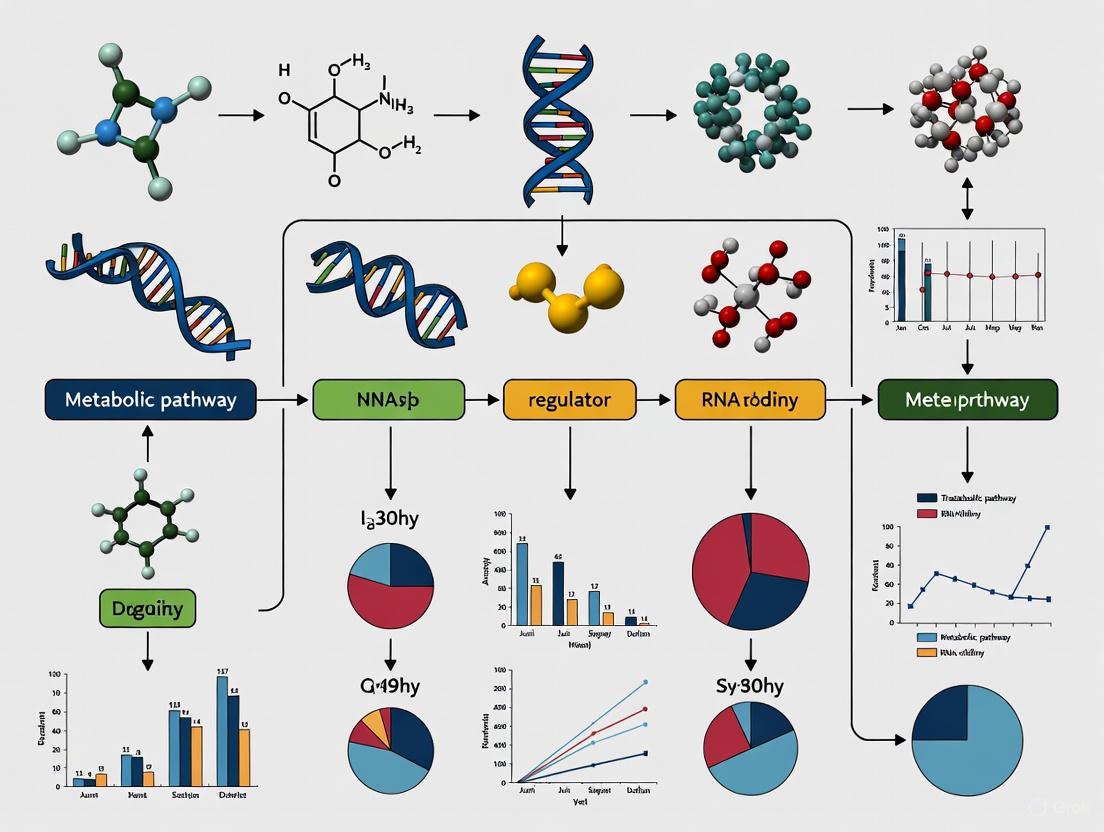
This article explores the cutting-edge application of transcriptional regulator libraries as powerful tools for metabolic pathway optimization.
Transcriptional Regulator Libraries: Engineering Cellular Factories for Optimized Metabolic Pathways
Abstract
This article explores the cutting-edge application of transcriptional regulator libraries as powerful tools for metabolic pathway optimization. Aimed at researchers and scientists in metabolic engineering and synthetic biology, it covers the foundational principles of rewiring cellular metabolism, details high-throughput methodologies for constructing and screening regulatory libraries, and provides strategies for troubleshooting and optimizing strain performance. By integrating validation techniques and comparative analyses, the review demonstrates how these approaches systematically enhance the production of valuable chemicals, biofuels, and pharmaceuticals, offering a comprehensive guide for advancing microbial cell factory development.
The Foundation of Control: How Transcriptional Regulation Rewires Cellular Metabolism
Metabolic engineering, the directed modulation of metabolic pathways for metabolite overproduction or the improvement of cellular properties, has undergone a remarkable evolution since its inception [1]. This field has transformed from a discipline focused on modifying a handful of genes with clear metabolic network relationships to increasingly complex designs requiring the modification of dozens of genes spanning diverse metabolic functions [1]. The progression of this field can be conceptualized through three distinct waves of technological innovation, each building upon the previous to enhance our capability to rewire cellular metabolism for bioproduction [2]. These waves represent a paradigm shift from simple genetic manipulations to sophisticated cellular engineering, enabling the development of efficient microbial cell factories for production of chemicals, biofuels, and materials from renewable resources [2] [3].
The evolution of metabolic engineering mirrors the computational and engineering sciences' Design-Build-Test-Learn (DBTL) cycle, which has become a fundamental framework for the field [3] [1]. This iterative approach links pathway design algorithms with active machine learning, next-generation DNA synthesis and assembly with genome engineering, and laboratory automation with ultra-high throughput genomics methods [1]. Within this framework, transcriptional regulator libraries have emerged as powerful tools for optimizing metabolic fluxes, allowing researchers to precisely control gene expression levels in metabolic pathways and balance the trade-offs between cell growth and product synthesis [4] [5].
The Three Waves of Metabolic Engineering: Historical Progression and Technical Evolution
The First Wave: Rational Design and Single-Gene Manipulations
The first wave of metabolic engineering was characterized by rational design approaches focused on single-gene manipulations. Early efforts primarily targeted native metabolic pathways through the overexpression of rate-limiting steps, deletion of competing pathways, and introduction of heterologous enzymes [1]. These strategies were largely based on prior knowledge of enzyme network pathways and their kinetics, with genetic manipulation targets identified through reverse metabolic engineering by investigating substrate-product stoichiometric relationships [1].
Seminal achievements during this period included the production of 1,3-propanediol and 1,4-butanediol in engineered Escherichia coli by DuPont and Genomatica, respectively [1]. These successes demonstrated the commercial potential of metabolic engineering but also revealed limitations in relying solely on rational design. The approach required extensive understanding of metabolic pathways, co-factor balances, and regulatory networks, and often encountered unexpected physiological consequences due to the complex, interconnected nature of cellular metabolism [1].
The Second Wave: Evolutionary and Combinatorial Approaches
The second wave incorporated evolutionary and combinatorial strategies to overcome the limitations of purely rational design. This period saw the development of methods such as the customized optimization of metabolic pathways by combinatorial transcriptional engineering (COMPACTER), which enabled rapid tuning of gene expression in heterologous pathways across different metabolic backgrounds [4]. COMPACTER created libraries of mutant pathways by de novo assembly of promoter mutants of varying strengths for each pathway gene, followed by high-throughput screening and selection [4].
This approach demonstrated remarkable success in generating host-specific pathways for xylose and cellobiose utilization in yeast strains, achieving some of the highest efficiencies reported in literature [4]. The integration of combinatorial methods with high-throughput screening capabilities marked a significant advancement, allowing engineers to explore a broader design space without requiring complete prior knowledge of pathway regulation and kinetics. Inverse metabolic engineering also gained prominence during this wave, where environmental or genetic conditions were considered for desired phenotypes before genetic manipulation [1].
The Third Wave: Systems and Synthetic Biology Integration
The third wave of metabolic engineering represents the current frontier, characterized by the full integration of systems and synthetic biology approaches. This wave leverages computational tools, genome-scale engineering, and sophisticated genetic circuitry to optimize metabolic networks holistically [2] [1] [5]. The five hierarchies of metabolic engineering—part, pathway, network, genome, and cell level—exemplify the comprehensive nature of contemporary approaches [2].
A key advancement in this wave is the application of genetic circuits for dynamic regulation of metabolic fluxes [5]. These circuits enable microbial cell factories to autonomously adjust intracellular metabolic flux based on their own metabolic and cellular status, balancing the trade-off between cell growth and product synthesis [5]. Computational-assisted design, including genome-scale metabolic models and machine learning algorithms, now guides the identification of critical metabolic nodes and genetic circuit design automation [5]. The construction of high-performance genetic circuits with superior dynamic range, response threshold, sensitivity, and orthogonality has provided a versatile toolbox for automated control of metabolic networks [5].
Table 1: Key Characteristics of the Three Waves of Metabolic Engineering
| Wave | Time Period | Primary Strategies | Key Technologies | Representative Achievements |
|---|---|---|---|---|
| First Wave: Rational Design | 1990s-2000s | Overexpression of rate-limiting steps, deletion of competing pathways, heterologous enzyme introduction [1] | Classical genetics, molecular cloning, analytical chemistry [1] | 1,3-propanediol production in E. coli [1] |
| Second Wave: Evolutionary & Combinatorial | 2000s-2010s | Combinatorial transcriptional engineering, evolutionary engineering, high-throughput screening [4] [1] | Promoter libraries, genome sequencing, lab automation [4] [6] | COMPACTER for xylose utilization pathways in yeast [4] |
| Third Wave: Systems & Synthetic Biology | 2010s-Present | Dynamic regulation, genetic circuits, multi-omics integration, machine learning [2] [5] | CRISPR tools, biosensors, genome-scale models, AI [3] [5] | Autonomous genetic circuits for flux balancing [5] |
Transcriptional Regulator Libraries as Tools for Metabolic Pathway Optimization
Design Principles and Construction Methods
Transcriptional regulator libraries represent a powerful methodology for metabolic pathway optimization that spans the second and third waves of metabolic engineering. These libraries consist of collections of genetic elements with varied transcriptional strengths that can be systematically assembled to fine-tune expression levels of multiple genes in a metabolic pathway [4]. The COMPACTER method exemplifies this approach, where mutant pathways are created through de novo assembly of promoter mutants of varying strengths for each pathway gene [4]. This strategy allows for customized optimization of metabolic pathways tailored to specific host backgrounds, addressing a significant challenge in metabolic engineering where optimal pathway expression often varies across different strain genotypes [4].
The construction of effective transcriptional regulator libraries involves several key considerations. First, selection of appropriate genetic elements—including promoters, ribosome binding sites, and transcriptional terminators—with known ranges of expression strengths is essential [4]. Second, efficient assembly methods that enable combinatorial construction of pathway variants without introducing scars or unwanted sequences are critical for generating comprehensive library diversity [4]. Third, the library design must account for the metabolic burden and potential toxicity associated with heterologous pathway expression, which can be mitigated through dynamic regulation strategies [5].
Implementation Workflow for Pathway Optimization
The implementation of transcriptional regulator libraries follows an established workflow that integrates with the DBTL cycle. The process begins with the identification of target pathways and selection of regulatory elements with varying strengths. These elements are then combinatorially assembled into pathway variants, which are transformed into the host organism [4]. The resulting library undergoes high-throughput screening or selection based on desired phenotypes, such as product yield, growth characteristics, or fluorescence signals from biosensors [3] [5].
Advanced screening approaches have significantly enhanced the effectiveness of transcriptional regulator libraries. Biosensors capable of sensing metabolite concentrations and converting them to fluorescence signals enable high-throughput screening of strains with improved chemical synthesis capabilities [3] [5]. For example, highly selective fluorescent biosensors have been developed for compounds like genistein, facilitating the identification of high producers [3]. Similarly, droplet-based microfluidic systems allow ultra-high-throughput screening of enzyme variants or metabolic pathways by encapsulating individual cells in picoliter droplets and analyzing them via fluorescence-activated droplet sorting [5].
Diagram 1: Transcriptional Regulator Library Workflow
Applications and Case Studies
Transcriptional regulator libraries have demonstrated remarkable success in optimizing metabolic pathways for diverse applications. In one notable case, a single round of COMPACTER was used to generate both a xylose utilization pathway with near-highest efficiency and a cellobiose utilization pathway with the highest efficiency ever reported for both laboratory and industrial yeast strains [4]. Interestingly, these optimized pathways were host-specific, highlighting the importance of customizing metabolic pathways for different strain backgrounds [4].
Another significant application involves the combinatorial metabolic engineering of Saccharomyces cerevisiae for improved production of 7-dehydrocholesterol, a key intermediate for vitamin D3 synthesis [3]. Similarly, transcriptional regulator libraries have been employed to rewire central metabolism in yeast for terpene production, with proteomics analysis identifying the role of Hxk2 degradation in regulating glucose depression and improving terpene synthesis [3]. These examples illustrate how transcriptional regulator libraries enable rapid optimization of complex metabolic traits that would be difficult to engineer through rational design alone.
Advanced Applications: Genetic Circuits for Dynamic Metabolic Control
Principles of Genetic Circuit-Assisted Metabolic Engineering
Genetic circuits represent a sophisticated third-wave approach that extends beyond static transcriptional regulator libraries by enabling dynamic control of metabolic fluxes in response to cellular conditions [5]. These circuits are designed to endow microbial cell factories with the ability for self-learning and decision-making, allowing them to spontaneously adjust intracellular metabolic flux according to their own metabolic and cell status [5]. This capability is particularly valuable for balancing the trade-off between cell growth and product synthesis, a fundamental challenge in metabolic engineering [5].
Genetic circuits for metabolic engineering typically incorporate sensing modules that detect specific metabolites, cellular states, or environmental conditions, and actuation modules that regulate gene expression in response to these signals [5]. Advanced circuit designs implement various Boolean logic gates (AND, OR, NOT) to process multiple input signals and generate precise output responses [5]. The development of standardized formats and automated software for genetic circuit design has accelerated the construction of these sophisticated systems, making them more accessible to metabolic engineers [5].
Implementation Protocols for Genetic Circuit Construction
The construction of genetic circuits for metabolic flux optimization follows a systematic protocol that integrates computational design with experimental implementation. The process begins with the identification of critical metabolic nodes and bottlenecks in the metabolic network of the target product through computational analysis, including flux balance analysis, metabolic modeling, and machine learning approaches [5]. Subsequently, appropriate genetic components—such as promoters, ribosome binding sites, coding sequences, and terminators—are selected from repositories like SynBioHub or designed de novo [5].
Circuit assembly employs modern DNA synthesis and assembly techniques, such as Golden Gate assembly or Gibson assembly, to combine genetic components into functional circuits [5]. The performance of these circuits is then characterized and optimized through iterative tuning of parameters, including promoter strengths, ribosome binding site efficiencies, and protein degradation tags [5]. Finally, the optimized circuits are integrated into the host genome and validated under production conditions [5].
Table 2: Genetic Circuit Components for Dynamic Metabolic Control
| Component Type | Function | Examples | Application Notes |
|---|---|---|---|
| Sensing Modules | Detect metabolites or cellular states | Transcription factor-based biosensors, riboswitches, two-component systems [5] | Must have appropriate dynamic range and specificity for target metabolite |
| Actuation Modules | Regulate gene expression in response to signals | CRISPRi, antisense transcription, protein degradation tags [5] | Different actuation strengths required for different metabolic nodes |
| Logic Gates | Process multiple input signals | AND, OR, NOT gates implemented via transcriptional interference [5] | Enable sophisticated decision-making based on multiple metabolic signals |
| Memory Elements | Maintain cellular state over time | Genetic toggle switches, recombinase-based systems [5] | Useful for maintaining metabolic states across generations |
Case Studies: Genetic Circuits in Action
Genetic circuits have demonstrated remarkable success in optimizing metabolic pathways for diverse products. In one implementation, a genetic circuit was designed to dynamically regulate the malonyl-CoA node for (2S)-naringenin biosynthesis in Escherichia coli [5]. The circuit created a growth-coupled dynamic regulation network that significantly improved production titers by automatically adjusting pathway expression in response to cellular metabolic status [5].
Another innovative application involved the engineering of Corynebacterium glutamicum for high-level gamma-aminobutyric acid production from glycerol using dynamic metabolic control [5]. The genetic circuit implemented in this system coordinated the expression of multiple pathway genes in response to precursor availability, resulting in dramatically improved product yields. Similarly, quorum sensing-mediated protein degradation has been employed for dynamic metabolic pathway control in Saccharomyces cerevisiae, enabling population-level coordination of metabolic fluxes [5].
These applications demonstrate how genetic circuits can overcome key limitations in metabolic engineering, including metabolic burden, intermediate toxicity, and imbalanced cofactor regeneration. By enabling autonomous adjustment of metabolic fluxes, genetic circuits represent a powerful tool for developing robust microbial cell factories that maintain high productivity under industrial cultivation conditions.
Diagram 2: Genetic Circuit for Metabolic Control
The Scientist's Toolkit: Essential Research Reagents and Solutions
The implementation of transcriptional regulator libraries and genetic circuits requires a comprehensive toolkit of research reagents and synthetic biology solutions. These tools enable the design, construction, and optimization of metabolic pathways through systematic engineering approaches.
Table 3: Essential Research Reagents for Metabolic Pathway Engineering
| Reagent/Solution | Function | Application Examples | Key Features |
|---|---|---|---|
| Modular Promoter Libraries | Provide graded transcriptional strengths for fine-tuning gene expression [4] | COMPACTER for xylose and cellobiose utilization pathways [4] | Wide dynamic range, host-specific activity, minimal cross-talk |
| CRISPRi Screening Tools | Enable genome-scale identification of genetic targets for metabolic engineering [3] | Identification of chromatin regulation mechanisms for formic acid tolerance in yeast [3] | High-throughput, programmable, reversible gene repression |
| Transcription Factor-Based Biosensors | Connect metabolite concentrations to measurable outputs for high-throughput screening [5] | Genistein biosensor for screening high producers [3] | High selectivity, sensitivity, and dynamic range |
| Optogenetic Control Systems | Enable precise temporal control of metabolic pathway expression using light [5] | Dynamic regulation of central carbon metabolism | High temporal precision, tunable, orthogonal to host regulation |
| Metabolite-Binding Riboswitches | Provide RNA-based sensors for real-time monitoring and control of metabolic fluxes [5] | Dynamic regulation of amino acid biosynthesis pathways | Small genetic footprint, modular, applicable across diverse hosts |
| Quorum Sensing Modules | Enable population-level coordination of metabolic behaviors [5] | Distributed metabolic engineering for reduced burden | Cell-density dependent activation, programmable communication |
| Protein Degradation Tags | Control metabolic enzyme half-life for dynamic flux control [5] | Auxin-mediated protein depletion in terpene-producing yeast [3] | Rapid degradation, tunable, orthogonal to native degradation |
The field of metabolic engineering has undergone a remarkable transformation through its three waves of development, evolving from simple rational design to sophisticated synthetic biology approaches integrated with computational tools and automation. Transcriptional regulator libraries and genetic circuits represent powerful methodologies within this evolutionary framework, enabling unprecedented control over metabolic pathways for bioproduction. As these technologies continue to advance, several promising directions emerge for future development.
The integration of machine learning and artificial intelligence with metabolic engineering is poised to dramatically accelerate the DBTL cycle [2] [5]. Active machine learning algorithms can guide the design of optimized transcriptional regulator libraries by predicting the performance of pathway variants before construction, reducing the experimental screening burden [5]. Similarly, AI-assisted analysis of multi-omics data can identify non-obvious genetic targets for pathway optimization that would be difficult to discover through traditional approaches [5].
Another promising direction involves the development of more sophisticated genetic circuits with memory functions and complex logic capabilities [5]. These advanced circuits could enable microbial cell factories to "learn" from their environment and adapt their metabolic processes accordingly, creating more robust production systems that maintain high productivity under industrial conditions [5]. The application of these circuits in consortia of different microbial species also presents opportunities for distributed metabolic engineering, where complex biosynthetic pathways are divided among specialized microbial partners [5].
As metabolic engineering continues to evolve, the integration of transcriptional regulator libraries and genetic circuits with other emerging technologies—including cell-free systems, microfluidics, and in vivo biosensors—will further enhance our ability to design and optimize microbial cell factories [3] [5]. These advances will accelerate the development of bio-based production processes for chemicals, materials, and pharmaceuticals, contributing to the transition from fossil-resource dependent processes to sustainable bio-manufacturing [3].
In conclusion, the three waves of metabolic engineering represent a progression from simple genetic manipulations to increasingly sophisticated cellular engineering strategies. Transcriptional regulator libraries and genetic circuits exemplify the powerful tools available to contemporary metabolic engineers, enabling precise control over metabolic fluxes for optimal bioproduction. As these technologies continue to mature and integrate with computational design tools, they will undoubtedly unlock new possibilities for microbial manufacturing and contribute to the development of a sustainable bioeconomy.
Metabolic engineering has emerged as a key enabling technology for rewiring cellular metabolism to enhance the production of chemicals, biofuels, and materials from renewable resources [7]. This field has evolved through distinct waves of innovation, with the current third wave leveraging advanced synthetic biology tools to design and optimize complex biosynthetic pathways in microbial cell factories [7]. A critical framework for understanding and implementing these advances is hierarchical metabolic engineering, which operates across five distinct levels: part, pathway, network, genome, and cell [7]. This structured approach enables researchers to systematically address the robust nature of cellular metabolism and maximize product titers, yields, and productivity.
Within this hierarchical framework, transcriptional regulator libraries have emerged as powerful tools for optimizing metabolic flux. These libraries provide a means to precisely control gene expression at multiple levels, allowing for fine-tuning of pathway components without the need for extensive genetic reconstruction. This article presents application notes and protocols for implementing hierarchical metabolic engineering strategies, with particular emphasis on the deployment of transcriptional regulator libraries for metabolic pathway optimization.
Part-Level Engineering: Foundational Components
Part-level engineering focuses on the fundamental biological components that constitute metabolic pathways, including enzymes, promoters, ribosome binding sites (RBS), and other genetic elements. At this level, protein engineering plays a crucial role in enhancing enzyme functionality.
Engineering Enzyme Properties
Natural enzymes often exhibit limitations in catalytic efficiency, substrate specificity, or stability when implemented in heterologous hosts. Protein engineering strategies address these challenges through:
Substrate Promiscuity Engineering: Modifying enzyme active sites to accept non-native substrates, thereby expanding the range of producible compounds [8]. For instance, engineering 2-pyrone synthase (2PS) to accept larger aromatic-CoAs enables synthesis of psychoactive kavalactone precursors [8].
Reaction Mechanism Engineering: Introducing new-to-nature reactivities by repurposing existing metallocofactors or incorporating artificial metalloenzymes (ArMs) with non-native cofactors [8]. This approach has enabled novel transformations not found in natural metabolic pathways.
Transcriptional Regulator Library Construction for Part Optimization
Protocol: Design and Assembly of Transcriptional Regulator Libraries for Tunable Expression
Objective: Create a diverse library of transcriptional regulators to enable precise control of gene expression levels within metabolic pathways.
Materials:
- Plasmid vectors with modular cloning sites
- Library of promoter sequences with varying strengths
- Collection of transcriptional repressor/activator genes
- Inducer compounds (e.g., IPTG, aTc, arabinose)
- Host strain (e.g., E. coli DH10B for library propagation)
Methodology:
- Promoter-RBS Library Assembly:
- Amplify promoter sequences of varying strengths (weak, medium, strong) from biological parts repositories.
- Combine with synthetic RBS sequences using overlap extension PCR or Golden Gate assembly.
- Clone these cassettes into a suitable expression vector upstream of a reporter gene (e.g., GFP).
Regulatory Element Integration:
- Select transcriptional regulators (e.g., TetR, LacI, AraC) and their corresponding operator sequences.
- Introduce operator sites at strategic positions within promoter regions.
- Clone regulator genes under constitutive expression into compatible plasmid vectors.
Library Validation:
- Transform the assembled library into the target production host.
- Characterize expression levels using flow cytometry or fluorescence microscopy.
- Measure dose-response curves for each regulator-inducer pair to determine dynamic range and sensitivity.
Library Application:
- Implement the characterized regulatory parts to control expression of pathway enzymes.
- Use combinatorial assembly to create multivariate expression tuning systems for complex pathways.
Pathway-Level Engineering: Orchestrating Multi-Enzyme Sequences
Pathway-level engineering focuses on optimizing the coordinated function of multiple enzymes to achieve efficient conversion of substrates to desired products. This involves balancing expression levels, coordinating timing, and minimizing metabolic bottlenecks.
Applications of Engineered Pathways
Engineered pathways with expanded substrate scopes and novel reaction mechanisms have enabled significant advances in bioproduction:
Structural Diversification of Natural Products: Engineering polyketide synthases (PKSs) to incorporate alternative starter units has generated structural diversity in polyketide compounds [8]. Similarly, engineering tryptophan halogenases has enabled site-specific chlorination of alkaloid precursors [8].
Creation of Alternative Metabolic Routes: Computational design and protein engineering have created novel pathways for natural product synthesis, such as the development of a cascade reaction converting formate to formaldehyde in E. coli [8].
Protocol: Balancing Pathway Expression Using Regulator Libraries
Objective: Optimize flux through a metabolic pathway by systematically tuning the expression of individual enzymes using transcriptional regulator libraries.
Materials:
- Characterized transcriptional regulator library
- Pathway genes cloned in modular vectors
- Analytics for product quantification (HPLC, GC-MS)
- Microfermentation system
Methodology:
- Pathway Segmentation and Regulator Assignment:
- Divide the target pathway into functional modules (e.g., upstream precursor supply, core transformation steps, downstream processing).
- Assign unique, orthogonal transcriptional regulators to control each module.
Combinatorial Library Construction:
- Assemble pathway variants with different regulator-promoter pairs controlling each gene.
- Use automated strain construction to generate the combinatorial library.
High-Throughput Screening:
- Cultivate library variants in microtiter plates with inducer concentration gradients.
- Monitor growth and product formation over time.
- Identify top-performing combinations for further characterization.
Systems Analysis:
- Model the relationship between regulator induction levels, enzyme expression, and product titer.
- Identify optimal expression profiles for balanced flux.
Validation and Scale-Up:
- Verify performance of optimized strains in bioreactor systems.
- Evaluate genetic stability over extended cultivation periods.
Table 1: Representative Metabolic Engineering Achievements Through Pathway Optimization
| Product | Host Organism | Titer | Key Pathway Engineering Strategy |
|---|---|---|---|
| 3-Hydroxypropionic acid | C. glutamicum | 62.6 g/L | Genome editing engineering combined with substrate engineering [7] |
| L-Lactic acid | C. glutamicum | 212 g/L | Modular pathway engineering for stereospecific production [7] |
| Succinic acid | E. coli | 153.36 g/L | Modular pathway engineering with high-throughput genome editing [7] |
| Lysine | C. glutamicum | 223.4 g/L | Cofactor engineering, transporter engineering, and promoter engineering [7] |
| Muconic acid | C. glutamicum | 54 g/L | Modular pathway engineering combined with chassis engineering [7] |
Network-Level Engineering: Systems-Wide Optimization
Network-level engineering considers the metabolic system as an interconnected whole, addressing interactions between native metabolism and engineered pathways. This approach leverages computational modeling and omics data to identify systemic bottlenecks and optimization targets.
Computational Framework for Network Optimization
The integration of computational tools has dramatically enhanced network-level engineering capabilities:
Genome-Scale Metabolic Models (GEMs): Constraint-based models like flux balance analysis (FBA) enable prediction of metabolic fluxes and identification of gene knockout targets [7] [9].
Cross-Species Metabolic Network (CSMN) Models: Integrated models incorporating reactions from multiple species expand the solution space for pathway design [9]. The QHEPath algorithm leverages such models to identify heterologous reactions that break native yield limits [9].
Machine Learning Approaches: Advanced algorithms analyze complex datasets to predict optimal engineering strategies, enabling more efficient design-build-test-learn cycles [8].
Thirteen Universal Strategies for Breaking Yield Barriers
Computational analysis of 12,000 biosynthetic scenarios across 300 products revealed 13 conserved engineering strategies for breaking stoichiometric yield limits [9]. These can be categorized as:
- Carbon-Conserving Strategies: Minimizing carbon loss through pathway redesign
- Energy-Conserving Strategies: Improving ATP and cofactor utilization efficiency
Five of these strategies were effective for over 100 different products, demonstrating their broad utility in metabolic engineering [9].
Protocol: Network Balancing Using Regulator-Mediated Resource Allocation
Objective: Implement dynamic control of central metabolism to redirect resources toward product formation while maintaining cellular fitness.
Materials:
- Regulator library targeting central metabolic genes
- Real-time metabolite sensors (e.g., NADH/NAD+ biosensors)
- Fermentation equipment with online monitoring
- ({}^{13}C)-labeling substrates for flux analysis
Methodology:
- Network Analysis and Target Identification:
- Use flux balance analysis to identify key nodes controlling carbon allocation.
- Select transcriptional regulators that can dynamically control these nodes.
Sensor-Regulator System Design:
- Engineer feedback loops linking metabolic sensors to regulator expression.
- Implement proportional, integral, or derivative control algorithms.
System Characterization:
- Map the dynamic response of the network to regulator perturbations.
- Quantify trade-offs between growth and production at different induction levels.
Multi-Layer Optimization:
- Coordinate regulation across multiple network nodes.
- Balance immediate precursor supply with redox and energy cofactor regeneration.
Performance Validation:
- Compare network fluxes under static and dynamic control.
- Measure yield, titer, and productivity improvements.
Diagram: Network-level metabolic engineering integrates central metabolism with engineered pathways under precise regulatory control. The system utilizes metabolite sensors and transcription factors to dynamically balance carbon flux between biomass formation and product synthesis.
Genome-Level Engineering: Chromosomal Integration and Stability
Genome-level engineering focuses on creating stable, high-performing production strains through chromosomal modifications, multigene integration, and genome-scale editing. This level represents the most comprehensive approach to strain development.
Advanced Genome Engineering Tools
CRISPR-Cas Systems: Enable precise genome editing, multiplexed gene regulation, and high-throughput strain construction [10].
Multiplex Automated Genome Engineering (MAGE): Allows simultaneous modification of multiple genomic sites in a single experiment [7].
Genome-Reduced Chassis: Minimized genomes reduce metabolic burden and eliminate competing pathways [7].
Protocol: Genome-Scale Integration of Regulated Pathway Arrays
Objective: Stably integrate complex metabolic pathways with optimized regulation into the host chromosome.
Materials:
- CRISPR-Cas9 genome editing system
- Donor DNA fragments with homology arms
- RecET or Lambda Red recombinase system
- Selection markers (antibiotic resistance, auxotrophic markers)
Methodology:
- Integration Site Selection:
- Identify genomic loci with high transcription activity and stability.
- Avoid essential genes and repetitive regions.
- Verify absence of polar effects on downstream genes.
Pathway Cassette Design:
- Assemble pathway genes with optimized regulatory elements from the transcriptional regulator library.
- Include appropriate selection markers flanked by recombinase sites for subsequent removal.
Multiplexed Integration:
- Execute sequential or simultaneous integration of pathway modules.
- Use CRISPR-Cas9 with multiple guide RNAs to target integration sites.
- Employ counter-selection for marker recycling in multi-round engineering.
Strain Validation:
- Verify correct integration through PCR and sequencing.
- Assess genetic stability through serial passage without selection.
- Measure pathway performance under production conditions.
Adaptive Evolution:
- Subject integrated strains to prolonged cultivation under selective pressure.
- Isolate improved mutants and identify causative mutations.
Table 2: Research Reagent Solutions for Hierarchical Metabolic Engineering
| Reagent/Category | Specific Examples | Function/Application |
|---|---|---|
| Transcriptional Regulators | TetR, LacI, AraC, custom synthetic regulators | Fine-tuned control of gene expression at part and pathway levels [10] |
| Protein Engineering Tools | RosettaCM, HotSpot Wizard, machine learning-guided directed evolution | Enzyme optimization for novel substrate specificity and reaction mechanisms [8] |
| Computational Design Algorithms | QHEPath, OptStrain, FBA, GEM construction pipelines | In silico prediction of optimal pathways and network balancing strategies [9] |
| Genome Editing Systems | CRISPR-Cas, MAGE, RecET/Red recombinase systems | Chromosomal integration and multiplex genome modifications [7] |
| Metabolic Sensors | Transcription factor-based biosensors, riboswitches | Real-time monitoring of metabolic states and dynamic pathway regulation [11] |
Integrated Application: Multi-Level Engineering of a Natural Products Pathway
This case study demonstrates the implementation of hierarchical metabolic engineering across all levels for the production of a complex natural product.
Target: Psilocybin production in S. cerevisiae [7] Challenge: Balancing expression of four heterologous enzymes while maintaining host viability Solution: Multi-level engineering approach
Implementation Protocol
Objective: Optimize psilocybin production through coordinated engineering at part, pathway, network, and genome levels.
Materials:
- S. cerevisiae production strain
- Psilocybin pathway genes (PsiD, PsiK, PsiM, PsiH)
- Transcriptional regulator library for yeast
- Analytics (LC-MS for psilocybin quantification)
Methodology:
- Part-Level Optimization:
- Engineer PsiM methyltransferase for improved solubility and activity in yeast.
- Generate promoter-RBS libraries for each pathway gene.
- Characterize expression dynamics using the transcriptional regulator library.
Pathway-Level Balancing:
- Assemble pathway variants with different expression combinations.
- Identify optimal expression ratios that minimize intermediate accumulation.
- Implement feed-forward control to coordinate enzyme expression.
Network-Level Integration:
- Modify central metabolism to enhance precursor supply (tryptophan and SAM).
- Implement dynamic regulation to balance growth and production phases.
- Engineer cofactor regeneration systems (NADPH, SAM recycling).
Genome-Level Stabilization:
- Integrate optimized pathway into neutral genomic sites.
- Remove selectable markers to ensure genetic stability.
- Verify consistent performance over multiple generations.
Diagram: Hierarchical metabolic engineering workflow progresses from foundational part-level engineering through pathway, network, and genome levels, with specialized implementation tools applied at each stage.
Hierarchical metabolic engineering provides a systematic framework for addressing the complexity of cellular metabolism. By structuring engineering efforts across distinct biological levels - part, pathway, network, and genome - researchers can more effectively optimize microbial cell factories for chemical production. Transcriptional regulator libraries serve as versatile tools throughout this hierarchy, enabling precise control of gene expression from individual components to system-wide networks.
The integration of computational design tools with experimental validation has dramatically accelerated the engineering cycle, enabling forward engineering of complex biological systems. As these technologies continue to mature, hierarchical approaches will play an increasingly important role in the sustainable production of pharmaceuticals, commodity chemicals, and advanced biofuels.
In molecular biology, the regulation of gene transcription is governed by the interplay between two fundamental classes of components: cis-acting elements and trans-acting factors [12]. Cis-acting elements are specific DNA sequences that serve as binding sites and regulatory landmarks, functioning exclusively on the same chromosome from which they are transcribed. They do not code for proteins or RNA molecules that diffuse through the cell. In contrast, trans-acting factors are diffusible molecules, typically proteins or RNAs, that are encoded by genes located anywhere in the genome. They bind to cis-regulatory elements to activate or repress the transcription of target genes [12] [13].
This framework is foundational to metabolic engineering, where the goal is to rewire cellular metabolism to convert renewable resources into valuable chemicals, materials, and biofuels [7]. The precise manipulation of these regulatory components enables the optimization of metabolic fluxes, overcoming cellular robustness to develop efficient microbial cell factories [7] [5].
Core Principles and Component Characterization
Cis-Acting Elements
Cis-acting elements are non-coding DNA sequences that constitute the "address" on a chromosome where regulatory events occur. Their action is allele-specific, meaning they influence only the gene physically connected to them on the same DNA molecule.
- Promoters: The primary cis-acting element where RNA polymerase and the basal transcription machinery assemble. They are typically located immediately upstream of the transcription start site.
- Terminators: Sequences that signal the end of transcription, ensuring RNA polymerase dissociates and releases the nascent transcript. In eukaryotes, terminators for mRNA genes are often coupled with cleavage and polyadenylation signals [14].
- Enhancers: Can be positioned anywhere relative to the gene—upstream, downstream, or within introns—and can act over long distances to enhance transcription levels [13].
Trans-Acting Factors
Trans-acting factors are the "readers" of the information encoded in cis-elements. Because they are diffusible, a single factor can regulate multiple genes across the genome, creating coordinated regulatory networks [12] [13].
- Transcription Factors (TFs): Proteins that bind sequence-specifically to cis-elements like promoters and enhancers. They can recruit or hinder the assembly of the RNA polymerase complex, thereby controlling the initiation of transcription [13]. They often function as dimers (homo- or heterodimers), which expands the repertoire of gene targets and regulatory finesse [13].
- Other Trans-Actors: This category includes regulatory RNAs, such as microRNAs, that can bind to target mRNAs and influence their stability or translation [12].
Table 1: Comparative Features of Cis-Acting Elements and Trans-Acting Factors
| Feature | Cis-Acting Elements | Trans-Acting Factors |
|---|---|---|
| Biochemical Nature | DNA sequences | Proteins (e.g., TFs) or functional RNAs (e.g., miRNAs) |
| Genomic Location | Same chromosome as the regulated gene | Any genomic location; can be on a different chromosome |
| Mode of Action | Intramolecular (acts on the same molecule) | Intermolecular (diffusible product acts on different molecules) |
| Allele Specificity | Yes (affects only the linked allele) | No (affects both alleles of a target gene equally) |
| Functional Examples | Promoters, terminators, enhancers | Transcription factors, RNA-binding proteins, microRNAs |
Quantitative Contributions to Gene Expression
Understanding the relative contribution of cis and trans mechanisms is critical for predicting the outcome of genetic engineering. A study in mice quantified this contribution in two brain regions, providing a model for such analysis.
Table 2: Relative Contribution of Cis and Trans Regulatory Mechanisms in Mouse Brain Regions (RNA-seq Data from F1 Hybrids) [15]
| Brain Region | Genes with Expression Divergence | Cis-Regulated Only | Trans-Regulated Only | Cis + Trans Regulated |
|---|---|---|---|---|
| Prefrontal Cortex | 20% | 84% | 8% | 8% |
| Amygdala | 20% | 55% | 32% | 13% |
The data reveals a striking tissue-specificity in regulatory logic. The prefrontal cortex is dominated by cis-regulation, whereas the amygdala shows a four-fold increase in genes regulated primarily by trans-acting mechanisms [15]. This implies that engineering genes expressed in a trans-dominant context requires careful consideration of the cellular background and the expression levels of relevant transcription factors.
Application in Metabolic Pathway Optimization
The deliberate engineering of cis and trans components is a cornerstone of the third wave of metabolic engineering, enabling the production of complex natural and non-natural products [7].
Engineering Cis-Acting Elements for Pathway Control
- Promoter Engineering: Native promoters are replaced with synthetic or heterologous promoters to fine-tune the expression levels of pathway enzymes. This includes using inducible promoters for temporal control or libraries of synthetic promoters with varying strengths to balance flux [7] [5].
- Terminator Engineering: Optimizing terminators ensures efficient transcription cessation and can enhance mRNA stability, directly impacting the yield of the encoded enzyme [14].
Employing Trans-Acting Factors for Dynamic Regulation
- Transcription Factor-Based Biosensors: Native or engineered TFs are used to create genetic circuits that link the concentration of a pathway intermediate or product to the expression of key pathway genes. This allows for dynamic, feedback-regulated control of metabolism, automatically balancing cell growth and product synthesis [5].
- Global Regulators: Overexpression or knockout of global TFs can rewire large segments of cellular metabolism in a single step, redirecting carbon flux toward the desired product [7].
Integrated Strategies: Genetic Circuits
Advanced metabolic engineering employs synthetic genetic circuits that combine custom cis-elements and trans-factors to create complex logic gates (e.g., AND, NOT). These circuits can perform tasks such as:
- Dynamic Flux Control: Sensing metabolic burdens and down-regulating inefficient pathways while up-regulating productive ones [5].
- High-Throughput Screening: Coupling product titers to a selectable or fluorescent marker, enabling rapid screening of high-producing strains from vast libraries [5].
Diagram 1: Integrated genetic circuit for metabolic pathway optimization. The circuit shows how an intracellular metabolite (a trans-acting signal) is sensed by a transcription factor, which then binds to a cis-element to regulate the expression of a metabolic enzyme, creating a feedback loop for dynamic pathway control.
Key Experimental Protocols
Protocol: Electrophoretic Mobility Shift Assay (EMSA) for Analyzing Trans-Action
Purpose: To validate the binding of a purified trans-acting factor (e.g., a transcription factor) to a specific cis-acting DNA element (e.g., a promoter or operator sequence) in vitro [16].
Methodology:
- Probe Preparation: A short DNA fragment containing the putative cis-element is labeled with a fluorophore or radioisotope.
- Binding Reaction: The labeled probe is incubated with the purified protein. A series of control reactions should include:
- Probe alone.
- Probe + protein.
- Probe + protein + a large excess of unlabeled identical "self" competitor DNA (should abolish binding).
- Probe + protein + a large excess of unlabeled non-specific competitor DNA (e.g., salmon sperm DNA; should not abolish binding).
- Electrophoresis: The reaction mixtures are loaded onto a non-denaturing polyacrylamide gel. A stable protein-DNA complex migrates more slowly than the free DNA probe.
- Detection: The gel is visualized to detect the signal from the labeled probe. A shifted band indicates successful complex formation.
Interpretation: The formation of a slower-migrating "supershift" confirms binding. Specificity is demonstrated by competition with the self oligonucleotide but not with non-specific DNA [16].
Protocol: DNase I Footprinting for Mapping Cis-Elements
Purpose: To precisely identify the nucleotide sequence within a cis-acting element where a trans-acting factor binds [16].
Methodology:
- End-Labeling: A long DNA fragment containing the region of interest is labeled at one end.
- Binding and Digestion: The end-labeled DNA is incubated with the purified protein and then treated with a low concentration of DNase I, which randomly cleaves the DNA backbone. A control reaction without the protein is run in parallel.
- Denaturing Gel Electrophoresis: The digested DNA is purified, denatured, and resolved on a high-resolution sequencing gel.
- Visualization: The gel is autoradiographed. The region protected by the bound protein will appear as a clear "footprint" – a gap in the ladder of DNA cleavage fragments present in the control lane.
Interpretation: The missing bands in the footprint region define the physical location of the protein-binding cis-element on the DNA sequence [16].
The Scientist's Toolkit: Research Reagent Solutions
Table 3: Essential Research Reagents for Investigating Cis and Trans Regulation
| Reagent / Tool | Function / Description | Application Example |
|---|---|---|
| Reporter Plasmids | Vectors containing a minimal promoter upstream of a reporter gene (e.g., GFP, luciferase). | Testing the function of cloned cis-elements by inserting them upstream of the promoter and measuring reporter output. |
| Expression Vectors for TFs | Plasmids designed for the high-level, inducible expression of transcription factors. | Providing a source of trans-acting factor in a heterologous host to test its effect on a target promoter. |
| Synthetic Oligonucleotides | Chemically synthesized single-stranded DNA sequences. | Used as probes in EMSA, for site-directed mutagenesis of cis-elements, or to construct synthetic genetic circuits. |
| Chromatin Immunoprecipitation (ChIP) Kits | Reagents for crosslinking, shearing chromatin, and immunoprecipitating protein-DNA complexes. | Mapping the in vivo binding sites of trans-acting factors (e.g., TTF-I [17]) across the genome. |
| Genome-Scale Metabolic Models (GEMs) | Computational models that simulate metabolic network fluxes. | Identifying key metabolic nodes (potential targets for trans-factor regulation) to optimize production [7] [5]. |
| Genetic Circuit Design Automation (GDA) Software | In silico tools for designing and simulating complex genetic circuits. | Automating the design of circuits that integrate multiple cis-elements and trans-factors for dynamic metabolic control [5]. |
Visualization of a Key Regulatory Mechanism: rRNA Gene Looping
Research on mouse ribosomal RNA (rDNA) genes provides a sophisticated example of integration. The transcription termination factor TTF-I (trans-factor) binds to specific terminator elements (cis-elements, T0-T10) at both the beginning and end of the transcription unit. This binding facilitates the formation of a chromatin loop, juxtaposing the promoter and terminator regions [17].
Diagram 2: TTF-I-mediated looping of rRNA genes. This diagram illustrates how the trans-acting factor TTF-I binds to cis-acting terminator elements at both ends of the gene, bringing them into close proximity to form a looped structure that enhances transcriptional re-initiation [17].
In the field of metabolic engineering, the pursuit of efficient microbial cell factories necessitates a deep understanding of cellular control logic. While traditional efforts have focused on modifying individual enzymatic steps, this often triggers complex cellular responses that counteract engineering objectives. The third wave of metabolic engineering, heavily influenced by synthetic biology, has emphasized the design and construction of complete, non-natural metabolic pathways [7]. However, the success of these endeavors is inherently linked to the host's native regulatory architecture. Global transcriptional regulators represent master switches within this architecture, governing systems-level metabolic flux by coordinating the expression of multiple genes in response to physiological and environmental cues [18]. Engineering these regulators provides a powerful strategy to override native control loops that limit production, rewire cellular priorities towards product formation, and unlock the full potential of engineered pathways. This Application Note details the integration of transcriptional regulator libraries into a structured workflow for the systems-level optimization of metabolic networks, providing researchers with practical protocols to uncover and manipulate global regulatory nodes.
Key Concepts and Quantitative Frameworks
The Hierarchical Control of Metabolism
Cellular metabolism is governed by multi-layered regulation. Metabolic regulation involves the short-term modulation of enzymatic activity through mechanisms such as allosteric effectors and post-translational modifications. In contrast, gene-expression regulation constitutes a longer-term strategy, where transcriptional regulators alter enzyme concentrations by modulating gene expression [18]. Global regulators operate primarily at this hierarchical level, acting as central nodes that can synchronously regulate multiple operons or regulons, thereby exerting system-wide control over metabolic flux.
Analytical Frameworks: MCA, HCA, and FBA
Understanding and quantifying control is essential for effective engineering.
- Metabolic Control Analysis (MCA): Quantifies how control over pathway fluxes and metabolite concentrations is distributed among individual enzymatic reactions [18].
- Hierarchical Control Analysis (HCA): An extension of MCA that incorporates the contribution of gene-expression regulation to the control of metabolic fluxes, providing a more complete picture of cellular control strategies [18].
- Flux Balance Analysis (FBA): A constraint-based modeling approach that uses genome-scale metabolic models to predict the flux distribution that optimizes a cellular objective (e.g., growth or product synthesis). FBA is instrumental in identifying potential metabolic engineering targets in silico [18] [19].
The following table summarizes the trade-offs between production optimality and robustness, a central consideration when engineering global regulators.
Table 1: Trade-offs between optimality and robustness in metabolic network engineering.
| Engineering Goal | Impact on Optimality | Impact on Robustness | Key Considerations |
|---|---|---|---|
| Overexpression of a single rate-limiting enzyme | Can increase flux to a specific product in the short term. | Low; can create network imbalances and reduce fitness. | Control may shift to other steps; high metabolic burden. |
| Knockout of competing pathways | Increases carbon yield toward the desired product. | Moderate; reduces metabolic flexibility and adaptability. | Can create auxotrophies or stress responses that impair growth. |
| Engineering allosteric regulation | High; can directly increase precursor availability. | Low to Moderate; bypasses important homeostatic loops. | Can be toxic to the cell if homeostasis is severely disrupted. |
| Rewiring global regulons | High; can reorient entire metabolic modules. | High; can maintain internal homeostasis while changing objectives. | Requires systems-level understanding to avoid pleiotropic effects. |
Experimental Protocol: A Workflow for Uncovering and Engineering Global Regulators
This integrated protocol outlines the process from system design to validation for engineering global regulators.
Phase 1: In Silico Design and Target Identification
Objective: To identify potential global regulator targets and design a combinatorial regulator library.
Procedure:
- Genome-Scale Model Reconstruction: Reconstruct or obtain a high-quality genome-scale metabolic model for your host organism (e.g., E. coli, B. subtilis, S. cerevisiae).
- Flux Balance Analysis (FBA):
- Set biomass formation as the objective function to simulate native growth.
- Add a reaction for the synthesis of your target product and set this as the objective to simulate maximum theoretical yield.
- Perform gene knockout simulations (e.g., using OptKnock) to identify gene deletions that couple product synthesis with growth.
- Perform flux variability analysis to identify reactions with high control over the product flux.
- Regulator Target Identification:
- From the FBA results, map high-impact reactions to their corresponding genes.
- Use regulatory network databases and literature mining to identify transcriptional regulators (e.g., activators, repressors, sigma factors) that bind to the promoters of these key genes.
- Priority should be given to regulators that control multiple genes in the target pathway or in competing/auxiliary pathways (e.g., redox cofactor regeneration).
- Library Design:
- For each selected regulator, design a library of genetic variants. This can include:
- Constitutive or inducible overexpression cassettes.
- CRISPR-based base editing systems (e.g., bsBETTER for B. subtilis) to create a library of ribosomal binding site (RBS) variants for fine-tuning regulator expression levels [20].
- Mutant regulator libraries (e.g., for allosteric deregulation).
- For each selected regulator, design a library of genetic variants. This can include:
Diagram 1: In silico design and multi-omics analysis workflow.
Phase 2: Library Construction and High-Throughput Screening
Objective: To build the regulator library and screen for clones with enhanced production phenotypes.
Procedure:
- Library Construction:
- For RBS Libraries: Utilize a CRISPR-base editing system (e.g., bsBETTER for B. subtilis). This system uses a deaminase-linked Cas9 nickase to introduce point mutations in the RBS regions of target regulator genes without requiring donor DNA templates, generating up to 255 out of 256 theoretical RBS combinations per gene [20].
- For Overexpression Libraries: Clone the candidate regulator genes under the control of a series of promoters with varying strengths into a plasmid or genomic integration vector.
- Strain Transformation: Transform the constructed library into the production host strain.
- High-Throughput Screening:
- Plate the library on solid media or grow in liquid culture in microplates.
- Use a high-throughput assay relevant to your product (e.g., colorimetric assays for pigments like lycopene [20], biosensors coupled to FACS, or rapid LC-MS/MS).
- Isolate the top ~1-5% of clones exhibiting the desired production phenotype for further analysis.
Phase 3: Systems-Level Validation and Multi-Omics Analysis
Objective: To characterize the phenotypic and metabolic impact of the engineered regulatory perturbations.
Procedure:
- Fermentation and Phenotyping: Characterize the selected hits in controlled bioreactors to measure key performance indicators (Titer, Yield, Productivity).
- Multi-Omics Data Collection:
- Transcriptomics: Perform RNA-seq on engineered and control strains to analyze global changes in gene expression resulting from the regulator manipulation.
- Metabolomics: Conduct LC-MS or GC-MS to profile intracellular and extracellular metabolites.
- Metabolic Regulatory Network Construction:
- Integrate the transcriptomic and metabolomic data.
- Use network inference algorithms to construct a genome-scale metabolic regulatory network. This involves mapping genes and metabolites and inferring regulatory pairs to identify key transcriptional hubs [21].
- Flux Analysis: Use (^{13})C Metabolic Flux Analysis (MFA) to quantify changes in central carbon metabolic flux, revealing how the engineered regulator has rewired core metabolism (e.g., enhanced MEP pathway flux, improved NADPH generation) [20].
Table 2: Key performance indicators from a representative study engineering global regulators in B. subtilis for lycopene production.
| Engineered Strain / Intervention | Lycopene Titer Fold-Change | Key Systems-Level Observations | Reference |
|---|---|---|---|
| Wild-type control | 1.0 x | Baseline MEP pathway flux and redox balance. | [20] |
| Direct genomic overexpression | ~3.0 x | Increased pathway gene expression, but potential metabolic burden. | [20] |
| Combinatorial RBS tuning (bsBETTER) | 6.2 x | Rewired MEP flux, enhanced NADPH-generating capacity, improved metabolic balance. | [20] |
The Scientist's Toolkit: Research Reagent Solutions
Table 3: Essential reagents and tools for engineering global regulators.
| Item Name | Function / Application | Example / Specification |
|---|---|---|
| CRISPR-Base Editing System | Scalable, template-free multiplex gene regulation. Enables high-diversity RBS variant generation. | bsBETTER system for B. subtilis; similar systems for other hosts. |
| Genome-Scale Metabolic Model | In silico prediction of gene knockout and overexpression targets. | Model organisms: iJO1366 (E. coli), iMM904 (S. cerevisiae). |
| Flux Balance Analysis Software | Constraint-based modeling of metabolic networks. | CobraPy, OptFlux, RAVEN Toolbox. |
| Multi-Omics Data Integration Platform | Constructing metabolic-regulatory networks from transcriptomic and metabolomic data. | In-house pipelines; commercial software like CytoScape for visualization [22] [21]. |
| High-Throughput Biosensor | Real-time monitoring and screening for product formation. | Transcription factor-based biosensors for metabolites (e.g., malonyl-CoA, lycopene). |
Visualization and Data Interpretation
Effective visualization is critical for interpreting systems-level data. Tools like Cytoscape can be used to map multi-omics data onto metabolic networks, allowing researchers to visually identify key regulatory hubs and flux changes [22]. The following diagram summarizes the core experimental workflow from this protocol.
Diagram 2: Core experimental workflow for regulator engineering.
The strategic engineering of global transcriptional regulators moves metabolic engineering beyond a single-gene, single-pathway perspective to a systems-level paradigm. By leveraging combinatorial libraries and multi-omics analysis, researchers can systematically uncover the master control switches of cellular metabolism and rewire them to create robust, high-performance cell factories. The integrated Design-Build-Test-Learn cycle outlined in this Application Note provides a robust framework for harnessing the power of global regulators, ultimately accelerating the development of sustainable bioprocesses for chemical, fuel, and pharmaceutical production.
Building the Toolkit: High-Throughput Methods for Constructing Regulatory Libraries
The field of metabolic engineering faces a fundamental challenge: the inability to accurately predict which genetic modifications will yield a desired industrial phenotype. This uncertainty necessitates testing numerous engineering hypotheses, making traditional strain development costly and time-consuming. High-throughput (HTP) metabolic engineering approaches address this by enabling the simultaneous construction and testing of many genetic variants. The non-conventional oleaginous yeast Yarrowia lipolytica has emerged as a premier industrial cell factory for producing lipids, omega-3 fatty acids, steviol glycosides, and other valuable chemicals. However, advanced HTP tools for genome engineering in this yeast have lagged behind those for model organisms. The TUNEYALI method represents a transformative CRISPR-Cas9-based platform for HTP gene expression tuning in Y. lipolytica, offering a powerful solution for accelerating both applied strain development and fundamental functional genomics research [23] [24].
The TUNEYALI Platform: Principles and Design
Core Methodology
TUNEYALI (TUNing Expression in Yarrowia lipolytica) is a CRISPR-Cas9-based method designed for scarless promoter replacement to systematically modulate gene expression levels [23]. The system's innovation lies in addressing a key limitation in library-scale genome editing: ensuring the correct pairing of single guide RNA (sgRNA) with its corresponding repair template. Traditional methods that co-transform pools of separate linear repair elements and sgRNA plasmids suffer from low editing efficiency due to improbable matching elements entering the same cell. TUNEYALI overcomes this by encoding both the sgRNA and its homologous repair template on a single plasmid, guaranteeing their coordinated delivery [23].
The method employs a clever cloning strategy utilizing SapI restriction sites to create a seamless junction between the inserted promoter and the target gene's coding sequence. The 3-bp overhang generated by SapI corresponds to a start codon (ATG), preventing the formation of scars between the promoter and the downstream homologous recombination element [23]. This scarless design ensures native-like regulation of gene expression.
Workflow Implementation
The TUNEYALI workflow involves several optimized steps [23]:
- Design of synthetic DNA elements containing target-specific sgRNA and homologous recombination arms (62 bp or 162 bp) flanking a double SapI restriction site.
- Gibson assembly of these constructs into a plasmid backbone.
- Golden Gate assembly using SapI enzyme to insert selected promoter elements between the homologous recombination arms.
- Transformation of the promoter-replacement library into Y. lipolytica.
- Screening of transformants for desired phenotypic changes.
- Sequencing of inserted plasmids in selected clones to identify genetic modifications.
Critical to this workflow is the optimization of homologous recombination arm length. Research demonstrates that 162 bp arms yield "significantly higher" editing efficiency compared to 62 bp arms, producing hundreds of transformants with a greater proportion displaying successful modifications [23].
Application Notes: Transcription Factor Library for Metabolic Optimization
Library Design and Composition
To demonstrate TUNEYALI's capabilities, researchers created a comprehensive library targeting 56 transcription factors (TFs) in Y. lipolytica. For each TF, the library enables expression to be adjusted to seven different levels using native Y. lipolytica promoters of varying strengths or through promoter removal entirely [23] [24]. This design allows for fine-tuning of regulatory networks rather than complete gene knockouts, facilitating precise optimization of metabolic pathways.
The library was transformed into both reference strains and betanin-producing strains of Y. lipolytica, enabling screening for multiple phenotypes including morphology changes, thermotolerance, and betanin production enhancement [23].
Performance and Outcomes
Application of the TUNEYALI TF library led to several significant findings [23]:
- Identification of multiple TFs whose regulatory changes increased thermotolerance
- Discovery of two TFs that eliminated pseudohyphal growth
- Selection of several TFs that increased betanin production
These results demonstrate the power of systematic expression tuning for uncovering non-obvious genetic regulators of industrially relevant phenotypes. The success of this approach highlights how TUNEYALI enables functional genomics research at scale in Y. lipolytica.
Table 1: Quantitative Performance Metrics of Genome Editing Systems in Y. lipolytica
| Editing System | Editing Efficiency | Key Features | Targets Demonstrated | Reference |
|---|---|---|---|---|
| TUNEYALI (162 bp HR arms) | Significantly higher than 62 bp arms | Single-vector sgRNA+repair template, scarless promoter replacement | 56 TFs at 7 expression levels | [23] |
| Optimized eSpCas9 (with tRNA-sgRNA) | 92.5% (single gene), 57.5% (dual gene) | Integrated eSpCas9, no outgrowth step required | TRP1, LIP2 | [25] |
| SCR1-tRNA promoted sgRNA | 92.5% disruption efficiency | tRNA-sgRNA architecture for enhanced expression | KU70, Rad52, Sae2 | [26] |
| EasyCloneYALI | >80% editing efficiency | Marker-free integration using DNA oligo repair fragments | Multiple genome loci | [27] |
Experimental Protocols
Protocol 1: TUNEYALI Library Construction
Materials:
- Plasmid backbone with Cas9 expression cassette
- SapI restriction enzyme
- Gibson assembly reagents
- Golden Gate assembly reagents
- Synthetic DNA fragments with sgRNA + HR arms (162 bp recommended)
Procedure:
- Design synthetic DNA elements (∼300-500 bp) containing:
- Target-specific sgRNA sequence
- Upstream HR arm matching region preceding native promoter
- Downstream HR arm matching start of target gene CDS
- Double SapI site between HR arms with generated ATG overhang
- 20 bp Gibson assembly homology arms
Perform Gibson assembly to clone synthetic constructs into plasmid backbone.
Prepare promoter elements with SapI-compatible ends.
Execute Golden Gate assembly to insert promoters between HR elements using SapI.
Verify library diversity by sequencing representative clones.
Transform library into E. coli for amplification and isolate plasmid library for yeast transformation [23].
Protocol 2: Yeast Transformation and Screening
Materials:
- Y. lipolytica Po1f strain (leucine and uracil auxotrophic)
- YPD medium (1% yeast extract, 2% tryptone, 2% glucose)
- Selective media (YNBD with appropriate amino acid supplements)
- Transformation reagents (typically lithium acetate/PEG method)
Procedure:
- Initialize Y. lipolytica from glycerol stock by streaking on YPD plate; incubate at 28°C overnight.
Inoculate single colony in 5 mL YPD medium; grow overnight to create seed culture.
Subculture with 1% inoculation dose in fresh YPD; grow to mid-log phase.
Transform plasmid library using optimized Y. lipolytica transformation method.
Plate transformants on appropriate selective media based on auxotrophic markers.
Incubate at 28°C for 2-3 days until colonies appear.
Screen colonies for desired phenotypes (e.g., betanin production, thermotolerance, morphology).
Isploy plasmid rescue or PCR amplification followed by sequencing to identify inserted promoters in selected clones [23] [25].
Visualization of Experimental Workflows
The Scientist's Toolkit: Essential Research Reagents
Table 2: Key Research Reagent Solutions for TUNEYALI Implementation
| Reagent/Component | Function | Specifications & Alternatives |
|---|---|---|
| TUNEYALI-TF Library | Ready-made plasmid library targeting 56 TFs | Available via AddGene (#1000000255 & #217744) [23] |
| eSpCas9 | Engineered Cas9 variant with enhanced fidelity | Reduces off-target effects; can be integrated into genome [25] |
| SapI Restriction Enzyme | Creates seamless promoter-gene junctions | Generates ATG overhang for scarless assembly [23] |
| SCR1-tRNA Promoter | Drives high-efficiency sgRNA expression | Enables >92% editing efficiency in Y. lipolytica [26] |
| Homologous Repair Templates | 162 bp arms recommended | Significant efficiency improvement over 62 bp arms [23] |
| Y. lipolytica Po1f Strain | Standard host for engineering | MatA, leu2-270, ura3-302, xpr2-322, axp-2 [25] |
| DeepGuide Algorithm | Predicts high-activity sgRNAs | Organism-specific guide design for Y. lipolytica [28] |
Discussion and Future Perspectives
The TUNEYALI method represents a significant advancement in the CRISPR engineering toolbox for non-conventional yeasts. By enabling systematic, HTP modulation of gene expression rather than simple knockouts, it addresses a critical need in metabolic engineering for fine-tuning metabolic pathways. The platform's modular design allows targeting of any gene or gene group beyond transcription factors, potentially extending to all genes in the genome [23].
Future developments will likely focus on integrating TUNEYALI with other emerging technologies in the Y. lipolytica engineering ecosystem. The DeepGuide algorithm, which uses deep learning to predict high-activity sgRNAs specifically for Y. lipolytica, could enhance TUNEYALI efficiency when selecting target sites [28]. Additionally, optimized Cas9 variants like eSpCas9 and iCas9 (Cas9D147Y, P411T) have demonstrated improved editing efficiency and fidelity in Y. lipolytica and could be incorporated into future iterations of the platform [26] [25].
While CRISPR systems have revolutionized genome editing, researchers should remain aware of potential structural variations and genomic aberrations that can occur with CRISPR editing, particularly when using strategies that enhance homology-directed repair [29]. Appropriate controls and validation steps should be incorporated when using TUNEYALI for critical applications.
The TUNEYALI platform significantly accelerates the design-build-test-learn cycle in metabolic engineering by enabling parallel testing of multiple expression hypotheses. As synthetic biology continues advancing toward more predictive design of microbial cell factories, tools like TUNEYALI provide the essential experimental data needed to refine computational models and deepen our understanding of complex biological systems.
Promoter engineering serves as a foundational tool in metabolic engineering and synthetic biology, enabling precise control over gene expression to optimize pathway performance. Within the broader context of developing transcriptional regulator libraries for metabolic pathway optimization, the ability to swap and fine-tune promoter strength allows researchers to balance metabolic flux, overcome rate-limiting steps, and maximize product yields in microbial cell factories. Promoter engineering methodologies have evolved from simple constitutive promoter replacements to sophisticated combinatorial and computational approaches that generate expression levels across a wide dynamic range. These techniques are particularly valuable for constructing tailored metabolic pathways that remain functional across diverse genetic backgrounds and industrial conditions, where fixed expression systems often fail to maintain optimal performance. This protocol outlines key methodologies and applications for implementing promoter engineering strategies in metabolic engineering workflows.
Quantitative Analysis of Promoter Performance
The selection of appropriate promoters requires understanding their quantitative performance characteristics, including strength, leakiness, and inducibility. Systematic characterization of promoter libraries provides essential data for informed selection in metabolic engineering projects.
Table 1: Core Promoter Properties in Mammalian Systems [30]
| Core Promoter | Relative Basal Expression (%) | Fold Induction | Key Characteristics |
|---|---|---|---|
| minCMV | >15% | Low | Highest leakiness; robust induced expression |
| CMV53 | - | - | minCMV with upstream GC box |
| minSV40 | - | Moderate | Moderate leakiness |
| YB_TATA | Low | High | Low basal with high transcription rate; highest fold-induction |
| miniTK | - | - | Herpes simplex thymidine kinase derivative |
| MLP | - | - | Adenovirus major late promoter |
| pJB42CAT5 | - | - | Derived from human junB gene |
| TATA box alone | Low | - | Minimal promoter element |
Table 2: Synthetic Promoter Applications in Microbial Systems
| Organism | Engineering Approach | Expression Range | Application Outcome |
|---|---|---|---|
| E. coli | DeepSEED AI platform [31] | N/A | Improved constitutive, IPTG-inducible promoter properties |
| A. niger | UAS element tandem assembly [32] | 5.4-fold stronger than PgpdA | Increased citric acid production (145.3 g/L) |
| Y. lipolytica | CRISPR promoter swapping [23] | 7 expression levels per TF | Improved betanin production, thermotolerance |
| S. cerevisiae | COMPACTER [4] | Host-specific optimization | Near-highest efficiency xylose/cellobiose utilization |
Experimental Protocols
COMPACTER for Customized Pathway Optimization
The COMPACTER (Customized Optimization of Metabolic Pathways by Combinatorial Transcriptional Engineering) method enables simultaneous optimization of multiple genes in a heterologous pathway through combinatorial promoter assembly [4].
Materials:
- Library of promoter mutants with varying strengths
- Target organism chassis strain
- Pathway gene sequences
- High-throughput screening/selection system
Procedure:
- Design Promoter-Gene Fusions: For each gene in the target pathway, create fusions with a library of promoter variants covering a range of transcriptional strengths.
- Combinatorial Assembly: Use de novo assembly to generate all possible combinations of promoter-gene fusions, creating a diverse library of mutant pathways.
- Library Transformation: Introduce the combinatorial library into the target host organism.
- High-Throughput Screening: Apply appropriate selection pressure or screening methodology to identify optimized clones.
- Validation and Characterization: Isolate promising clones and quantitatively assess pathway performance metrics.
Key Considerations: COMPACTER generates host-specific optimized pathways through a single round of engineering, making it particularly valuable for industrial strains where metabolic backgrounds differ significantly from laboratory strains [4].
CRISPR-Cas9 Mediated Promoter Swapping (TUNEYALI Method)
The TUNEYALI method enables high-throughput, scarless promoter replacement in yeast systems, specifically developed for Yarrowia lipolytica but adaptable to other organisms [23].
Materials:
- CRISPR-Cas9 system with appropriate sgRNA expression vector
- Repair template plasmids with homologous recombination arms (62-162 bp)
- Promoter library elements with SapI restriction sites
- Target strain with selection marker
Procedure:
- sgRNA and Repair Template Design:
- Design sgRNA to target the native promoter region of the gene of interest
- Synthesize DNA constructs containing:
- Target-specific sgRNA sequence
- Upstream HR element (matches region upstream of native promoter)
- Downstream HR element (matches start of CDS)
- Double SapI restriction site between HR elements (generates ATG start codon)
Plasmid Library Construction:
- Clone individual synthetic constructs (300-500 bp) into backbone vector via Gibson assembly
- Mix plasmids with promoter library elements
- Insert promoter elements between HR elements using Golden Gate assembly with SapI enzyme
Transformation and Screening:
- Transform plasmid library into target strain
- Select for successful integration using appropriate markers
- Screen for desired phenotypic changes (production, tolerance, morphology)
Sequence Verification:
- Isolate plasmids from improved clones
- Sequence inserted regions to identify specific promoter combinations
Technical Notes: Using 162 bp homologous arms significantly increases editing efficiency compared to 62 bp arms. The single-plasmid system ensures correct pairing of sgRNA and repair elements during library-scale editing [23].
Synthetic Promoter Engineering with UAS Elements
This protocol for constructing synthetic promoters with tunable strengths in filamentous fungi like A. niger can be adapted for other eukaryotic systems [32].
Materials:
- Identified upstream activation sequence (UAS) elements
- Core promoter elements (PgpdA, PcitA, PpkiA)
- CRISPR/Cas9 system for fungal transformation
- Fluorescent reporter (e.g., sfGFP) for promoter characterization
Procedure:
- UAS Element Identification:
- Mine highly expressed gene promoters for conserved UAS elements
- Select UAS candidates (e.g., UASa from amylase, UASb from agdA, UASc from glaA)
Modular Vector Construction:
- Amplify core promoter elements (PgpdA, PcitA, or PpkiA)
- Synthesize oligonucleotides with overlapping sequences for UAS tandem repeats
- Perform first-round PCR for self-annealing and amplification of tandem UAS elements
- Conduct second-round PCR with flanking homology arms
Assembly of Synthetic Promoters:
- Fuse UAS elements upstream of core promoter using one-step cloning
- Construct libraries with varying UAS copy numbers (1x, 2x, 4x)
- Create hybrid promoters with different UAS combinations
Promoter Strength Characterization:
- Clone synthetic promoters upstream of fluorescent reporter
- Transform into target strain via CRISPR/Cas9
- Analyze fluorescence intensity via flow cytometry
- Calculate relative promoter strength compared to reference
Application Example: For citric acid production in A. niger, regulate citrate exporter (cexA) expression using the synthetic promoter library to optimize efflux [32].
Workflow Visualization
Promoter Engineering Workflow Selection
High-Throughput CRISPR Promoter Swapping
The Scientist's Toolkit
Table 3: Essential Research Reagents for Promoter Engineering
| Reagent / Tool | Function | Example Applications |
|---|---|---|
| CRISPR-Cas9 System | Targeted DNA cleavage for precise genome editing | Promoter replacement, gene integration, knockout [23] |
| Homology-Directed Repair Templates | Template for precise DNA integration | Promoter swapping with flanking homology arms [23] |
| Synthetic Promoter Libraries | Source of transcriptional variability | COMPACTER, TUNEYALI, pathway optimization [4] [23] |
| Fluorescent Reporters | Quantitative promoter strength measurement | sfGFP, mNeonGreen for flow cytometry analysis [30] [23] |
| AI-Guided Design Tools | Predictive promoter optimization | DeepSEED for flanking sequence engineering [31] |
| Upstream Activation Sequences | Enhancer elements for synthetic promoters | UAS elements for tunable expression in fungi [32] |
| High-Throughput Screening Systems | Rapid identification of optimized variants | Biosensors, FACS, microfluidics [5] |
Promoter engineering through swapping and strength tuning represents a powerful methodology for achieving precise expression control in metabolic pathway optimization. The integration of combinatorial approaches, CRISPR-based editing, synthetic biology, and AI-guided design provides researchers with an extensive toolbox for tailoring gene expression to specific metabolic contexts. These strategies enable the balancing of complex metabolic fluxes, overcome trade-offs between cell growth and product synthesis, and generate microbial cell factories with enhanced production capabilities. As promoter engineering continues to evolve with advances in computational prediction and genome editing, these methodologies will play an increasingly vital role in the development of efficient bioproduction platforms for pharmaceuticals, chemicals, and biofuels.
Metabolic engineering is entering a third wave characterized by the application of sophisticated synthetic biology tools for comprehensive pathway optimization [7]. Within this paradigm, the construction and screening of transcriptional regulator libraries represents a powerful strategy for balancing metabolic flux. However, traditional methods for creating genetic diversity face significant bottlenecks in throughput and precision. The development of template-free multiplex base editing systems, such as bsBETTER for Bacillus subtilis, provides an unprecedented capability to generate combinatorial genomic diversity at scale, offering a complementary approach to transcriptional regulator engineering [33]. This protocol details the application of base editor-guided systems for rewiring cellular metabolism through ribosomal binding site (RBS) engineering, enabling the creation of vast variant libraries for metabolic pathway optimization without requiring donor DNA templates.
The bsBETTER (base editor-guided, template-free system enabling high-diversity expression tuning) platform addresses a critical bottleneck in metabolic engineering: the need for scalable and precise multi-gene regulation in a GRAS (Generally Recognized As Safe) certified chassis like B. subtilis [33].
Core Mechanistic Principle
bsBETTER utilizes a base editor protein to directly convert nucleotide bases at defined genomic targets without introducing double-strand DNA breaks (DSBs) or requiring homologous recombination. This system is specifically deployed to engineer ribosome binding sites (RBSs), which control translation initiation rates and consequently fine-tune protein expression levels of metabolic pathway enzymes [33]. By editing multiple RBS sequences simultaneously, researchers can generate thousands of combinatorial genomic variants in situ, creating diverse expression states for systematic optimization of metabolic fluxes.
Key Advantages Over Traditional Methods
Compared to conventional metabolic engineering approaches, bsBETTER offers several transformative advantages:
- Template-Free Editing: Eliminates the need for donor DNA templates and homologous recombination machinery [34]
- Multiplexing Capability: Enables simultaneous editing of multiple genomic loci in a single experiment
- High Diversity Generation: Achieves up to 255 of 256 theoretical RBS combinations per targeted gene [33]
- Precision Modifications: Creates specific nucleotide conversions without random indels or genomic rearrangements
- Functional Screening Focus: Allows direct selection based on phenotypic outcomes rather than predetermined designs
Table 1: Comparison of Genome Engineering Technologies in Microbial Systems
| Technology | Editing Method | Multiplexing Capability | Cloning Steps | Editing Precision | Primary Applications |
|---|---|---|---|---|---|
| bsBETTER (Base Editing) | Deaminase-mediated base conversion | High (12+ genes) | Single step | Single-nucleotide changes | RBS engineering, pathway optimization |
| Conventional Homologous Recombination | DSB repair with donor template | Limited | Multiple | Varies with efficiency | Gene knockouts, insertions |
| CRISPR-Cas9 Nuclease | DSB induction & repair | Moderate | Multiple | Indels, potential errors | Gene knockouts, large deletions |
| CRISPR-Cas12a Nuclease | DSB induction & repair | High with array processing | Multiple | Indels, potential errors | Multiplex gene disruption |
Application Notes: Metabolic Pathway Rewiring in B. subtilis
Case Study: Lycopene Overproduction via MEP Pathway Optimization
The bsBETTER system was successfully applied to rewire the methylerythritol phosphate (MEP) pathway in B. subtilis for lycopene overproduction [33]. This case study demonstrates the power of combinatorial RBS engineering for metabolic optimization.
Experimental Design and Scaling
Researchers targeted 12 lycopene biosynthetic genes for comprehensive RBS engineering, creating a library of variants with expression levels tuned across the entire pathway rather than individual enzymes. This systems-level approach acknowledged the context dependence of RBS strength revealed by subsequent measurements, highlighting that RBS functionality is influenced by genomic position and sequence context [33].
Performance Outcomes and Validation
The bsBETTER-driven library screening identified optimized strains exhibiting a 6.2-fold increase in lycopene production compared to control strains carrying direct genomic overexpression of MEP pathway genes [33]. Multi-omics analysis confirmed extensive transcriptional and metabolic rewiring in high-producing strains, including enhanced MEP pathway flux and increased NADPH-generating capacity to support the redox demands of lycopene biosynthesis.
Table 2: Quantitative Performance Metrics of bsBETTER-Mediated Pathway Engineering
| Parameter | Performance Metric | Experimental Context |
|---|---|---|
| Combinatorial Diversity | Up to 255 of 256 theoretical RBS combinations per gene | 12 lycopene biosynthetic genes targeted |
| Productivity Enhancement | 6.2-fold increase in lycopene production | Versus direct genomic overexpression controls |
| Metabolic Flux Changes | Enhanced MEP pathway flux & NADPH-generating capacity | Multi-omics analysis of high-producing strains |
| Editing Efficiency | High-diversity expression tuning across multiple loci | Thousands of combinatorial variants generated in situ |
Integration with Transcriptional Regulator Libraries
The bsBETTER platform complements transcriptional regulator library approaches by operating at a distinct regulatory level. While transcriptional regulator libraries modulate mRNA abundance, RBS engineering directly controls translation initiation efficiency, providing an orthogonal dimension for metabolic optimization. Combined strategies enable comprehensive gene expression control from transcription through translation, offering unprecedented precision in metabolic pathway balancing.
Experimental Protocols
Protocol 1: bsBETTER Platform Implementation for RBS Engineering
gRNA Array Design and Assembly for Multiplexed RBS Targeting
Objective: Design and construct a gRNA array targeting multiple RBS sequences for simultaneous editing.
Materials:
- bsBETTER base editor plasmid system [33]
- B. subtilis strain with integrated lycopene pathway or target pathway
- Golden Gate Assembly reagents (BsaI restriction enzyme, T4 DNA ligase)
- gRNA spacer oligonucleotides targeting RBS regions
Procedure:
- Identify Target RBS Sequences: Select 15-25 bp protospacer sequences adjacent to PAM sites compatible with the base editor system for each RBS to be engineered.
- Design gRNA Spacers: Incorporate spacers into gRNA expression cassettes with the following considerations:
- Position editing window (typically positions 4-8 of the protospacer) over critical RBS nucleotides
- Avoid secondary structure formation in array transcripts
- Balance GC content across spacers (optimally 30-70%)
- Assemble gRNA Array: Utilize Golden Gate Assembly with BsaI restriction sites to clone spacers into the bsBETTER vector backbone [34].
- Transform into B. subtilis: Use electroporation or natural competence for plasmid delivery.
- Verify Array Integrity: Sequence validate the complete gRNA array to confirm proper spacer integration.
Base Editor Delivery and Library Generation
Objective: Introduce the base editor system and generate diverse variant libraries.
Procedure:
- Culture Conditions: Grow B. subtilis harboring the gRNA array plasmid in appropriate medium with antibiotic selection.
- Base Editor Induction: Induce base editor expression using an optimized inducer concentration and timing.
- Library Expansion: Allow sufficient generations (typically 5-7 days post-transfection) for editing events to accumulate and segregate [35].
- Library Harvesting: Collect cells at optimal density for screening or further analysis.
Protocol 2: High-Throughput Screening of RBS Variants
Phenotypic Screening for Metabolic Output
Objective: Identify high-producing variants from the RBS-engineered library.
Materials:
- Fluorescence-activated cell sorting (FACS) system
- Lycopene extraction solvents (acetone/methanol)
- Spectrophotometer or HPLC for quantification
- Microtiter plates and high-throughput culturing systems
Procedure:
- Library Dilution: Prepare appropriate dilutions of the variant library for screening.
- Primary Screening: Use FACS or colony screening to isolate variants with enhanced product fluorescence or marker expression.
- Secondary Validation: Culture hit variants in deep-well plates for quantitative product analysis.
- Product Quantification: Extract and quantify target compound (e.g., lycopene) using spectrophotometric methods (A472 for lycopene) or HPLC.
- Strain Validation: Confirm genotype-phenotype relationships through sequencing and reconstitution.
Multi-Omics Validation of Pathway Rewiring
Objective: Characterize system-wide changes in engineered strains.
Procedure:
- Transcriptomic Analysis: Perform RNA-seq on high-producing variants to identify transcriptional changes.
- Metabolomic Profiling: Use LC-MS to quantify intracellular metabolites and flux changes.
- Proteomic Verification: Validate enzyme abundance changes via Western blot or targeted proteomics.
- Flux Analysis: Compute metabolic flux distributions from isotopomer labeling data.
The Scientist's Toolkit: Research Reagent Solutions
Table 3: Essential Research Reagents for Base Editing-Mediated RBS Engineering
| Reagent / Tool | Function | Specifications & Considerations |
|---|---|---|
| bsBETTER Vector System | Base editor delivery | Contains dCas12a-deaminase fusion, gRNA array, selection marker |
| gRNA Spacer Oligos | Target specificity | 20-nt spacers complementary to RBS regions with appropriate PAM |
| Golden Gate Assembly Kit | gRNA array construction | BsaI restriction enzyme, ligase, buffer for modular assembly |
| B. subtilis Chassis | Production host | GRAS-certified, engineered with target metabolic pathway |
| HTS Cultivation System | Library screening | Automated microfermenters or deep-well plates with aeration |
| Flow Cytometer | High-throughput screening | FACS capability for library sorting based on fluorescent markers |
| EditR Software | Editing efficiency analysis | Quantifies base conversion rates from sequencing data [36] |
Visual Workflows and Signaling Pathways
Experimental Workflow for bsBETTER-Mediated Pathway Rewiring
Mechanism of Base Editor-Mediated RBS Engineering
Metabolic engineering has emerged as a powerful discipline for rewiring cellular metabolism to enhance the production of valuable natural products. This application note explores three key showcases—betanin, lycopene, and terpenoids—where advanced metabolic engineering strategies have demonstrated significant success. We focus specifically on the implementation of transcriptional regulator libraries and combinatorial approaches for metabolic pathway optimization, providing detailed protocols and quantitative data to guide research and development efforts. The convergence of synthetic biology tools with high-throughput screening technologies has created unprecedented opportunities for optimizing complex metabolic pathways in diverse host systems.
Betanin Production Enhancement
Engineering Betanin Biosynthesis in Yarrowia lipolytica
Betanin, a red-violet betalain pigment, possesses significant nutritional value and industrial application potential as a natural food colorant. Traditional extraction from red beet faces limitations in yield and production stability. Metabolic engineering of the oleaginous yeast Yarrowia lipolytica presents a promising alternative production platform [37].
Key Achievements: The EXPRESSYALI combinatorial toolkit enabled six rounds of iterative metabolic engineering, dramatically increasing betanin titers from an initial 30 mg/L to a final 130 mg/L in small-scale cultures, with fed-batch bioreactors achieving remarkable yields of 1.4 g/L [37]. This demonstrates the power of systematic, multi-round optimization for enhancing complex pathway performance.
Table 1: Betanin Production Optimization in Y. lipolytica
| Engineering Round | Modifications | Betanin Titer (mg/L) |
|---|---|---|
| Initial | Integration of core pathway genes (TyH, DOD, GT) | ~20 |
| Round 2-5 | Additional biosynthetic genes integration; precursor supply optimization | 70 |
| Round 6 | Deletion of three beta-glucosidase genes | 130 |
| Fed-batch bioreactor | Scale-up with optimized conditions | 1,400 |
Experimental Protocol: Combinatorial Engineering with EXPRESSYALI Toolkit
- Library Construction: Assemble combinatorial libraries of up to three gene expression cassettes using GoldenGate cloning in E. coli. The toolkit employs Level 0 (biopart plasmids), Level 1 (single expression cassette plasmids), and Level 2 (multiple expression cassette plasmids) in a hierarchical structure.
- Strain Transformation: Integrate assembled plasmid libraries into precise genomic loci of Y. lipolytica via CRISPR-Cas9. Use replicative gRNA vectors with alternating antibiotic resistance markers (NatMX for nourseothricin and HphMX for hygromycin) for selection without marker removal requirements.
- High-Throughput Screening: Employ automated color-based colony picking to identify high-producing strains. The distinctive red-violet pigmentation of betanin facilitates visual screening.
- Iterative Rounds: Conduct consecutive transformation rounds, with each round integrating new genetic modifications based on screening results from the previous round.
- Bioreactor Validation: Scale promising strains to fed-batch bioreactors with optimized media composition and feeding strategies.
Metabolic Interactions in Plant Systems: Engineering betanin biosynthesis in tobacco triggers significant metabolic reprogramming, with betanin production promoting carbohydrate metabolism while repressing nitrogen metabolism in leaves. Supplemental nitrogen (nitrate or ammonium) increases betanin accumulation by 1.5-3.8-fold in leaves and roots, confirming nitrogen's pivotal role in betanin production [38]. This highlights the importance of considering host metabolic network interactions when engineering heterologous pathways.
Betanin Pathway Engineering Diagram
Figure 1: Betanin Biosynthetic Pathway Engineered in Heterologous Hosts. Key enzymes are highlighted in blue, substrates and intermediates in yellow, and the final product in green. Regulatory interactions are shown in red.
Lycopene Production Optimization
Plug-in Repressor Library for Flux Control
Precise regulation of metabolic flux is essential for optimizing lycopene production in engineered microbes. The plug-in repressor library approach provides a powerful tool for dynamic flux control without expensive inducers or complex optimization processes [39].
Key Achievements: Implementation of plug-in repressor libraries in E. coli enabled 2.82-fold enhanced lycopene production, reaching 11.66 mg/L, by precisely rebalancing carbon flux around precursor nodes [39]. This approach demonstrates the effectiveness of targeted repression strategies for optimizing precursor allocation.
Experimental Protocol: Plug-in Repressor Library Implementation
- Library Design: Select orthogonal repressors (PhlF and McbR) and their cognate promoter sets with high orthogonality and fold repression characteristics.
- UTR Diversification: Generate degenerate 5' untranslated region (5' UTR) sequences using UTR Library Designer to create translation level variants.
- Library Validation: Confirm expression level ranges using fluorescent protein reporters. The PhlF and McbR libraries achieved 18.57-fold and 15.14-fold expression ranges, respectively.
- Strain Engineering: Introduce repressor libraries into lycopene-producing E. coli strains to regulate key metabolic nodes.
- Screening and Selection: Screen variants for improved lycopene production using high-throughput methods, selecting optimal repressor expression levels for maximal yield.
Protein Nanocage Strategy for Metabolic Channeling
Bacterial microcompartments offer innovative solutions for metabolic channeling in lycopene biosynthesis. The organization of enzymes into synthetic protein nanocages enhances pathway efficiency through substrate channeling and reduced metabolic cross-talk [40].
Key Achievements: Engineered isopentenyl pyrophosphate (IPP) synthetic nanocages based on α-carboxysome shells co-immobilizing key enzymes (ScCK, AtIPK, and MxanIDI) increased metabolic flux toward lycopene production, resulting in a 1.7-fold increase in engineered E. coli compared to control strains [40].
Experimental Protocol: Protein Nanocage Assembly
- Shell Protein Engineering: Utilize carboxysome shell proteins from Prochlorococcus marinus MED4 as scaffolding elements.
- Enzyme Immobilization: Employ SpyTag/SpyCatcher system for specific cargo loading of IPP biosynthetic enzymes (ScCK, AtIPK, MxanIDI) onto nanocage exteriors.
- Pathway Coordination: Co-express IPP synthetic nanocages with lycopene biosynthetic enzymes (CrtE, CrtB, CrtI) in E. coli.
- Fermentation Optimization: Cultivate engineered strains in defined media containing peptone (15 g/L), yeast extract (12 g/L), and glycerol (10 g/L) with addition of Tween-80 (5 g/L) to enhance lycopene accumulation.
- Analytical Quantification: Extract lycopene using organic solvents and quantify via spectrophotometry or HPLC against commercial standards.
Regulatory Gene Discovery in Fungal Systems
In Blakeslea trispora, the SR5AL gene (steroid 5α-reductase-like gene) has been identified as a key regulator of lycopene biosynthesis in response to trisporic acids [41].
Key Achievements: Overexpression of SR5AL upregulated sex determination and carotenoid biosynthesis genes, enhancing lycopene production regardless of trisporic acid addition. Conversely, 5α-reductase inhibitors reduced lycopene biosynthesis and downregulated these key genes [41].
Table 2: Lycopene Enhancement Strategies Across Different Host Systems
| Host System | Engineering Strategy | Key Genetic Elements | Fold Improvement |
|---|---|---|---|
| E. coli | Plug-in repressor library | PhlF, McbR with degenerate 5' UTRs | 2.82-fold |
| E. coli | IPP synthetic nanocage | ScCK, AtIPK, MxanIDI immobilized on carboxysome shells | 1.7-fold |
| B. trispora | Regulatory gene overexpression | SR5AL gene | Significant (quantitative data not provided) |
Terpenoid Biosynthesis Engineering
Multi-platform Engineering Approaches
Terpenoids represent a diverse class of natural products with significant pharmaceutical applications. Metabolic engineering strategies have been successfully implemented across three complementary platforms: native medicinal plants, microbial chassis, and heterologous plant hosts [42].
Key Achievements: Strategic co-expression and optimization approaches have yielded substantial improvements, including a 25-fold increase in paclitaxel production and a 38% enhancement in artemisinin yield [42]. Microbial systems have achieved remarkable titers, including artemisinic acid at >25 g/L in yeast and taxadiene at >1 g/L in E. coli [42].
Experimental Protocol: Multi-platform Terpenoid Engineering
Platform Selection: Choose appropriate host system based on target terpenoid complexity:
- Microbial chassis (E. coli, yeast) for simpler terpenoids and precursors
- Heterologous plant hosts (Nicotiana benthamiana) for complex diterpenes/triterpenes
- Native medicinal plants for incremental yield improvements in established systems
Pathway Elucidation: Employ multi-omics approaches (genomics, transcriptomics, metabolomics) to identify key biosynthetic genes and regulatory networks.
CRISPR-Mediated Optimization: Implement CRISPR-Cas9 for knockout of competing pathways and precise integration of heterologous genes.
Subcellular Targeting: Engineer chloroplast localization for diterpene biosynthesis or endoplasmic reticulum targeting for cytochrome P450-mediated modifications.
Fermentation Scale-up: Transition from shake flasks to industrial-scale bioreactors (10,000+ L) with optimized feeding strategies and process control.
Hierarchical Metabolic Engineering
The third wave of metabolic engineering employs synthetic biology tools for comprehensive pathway design and optimization across multiple hierarchical levels [7].
Key Achievements: Hierarchical approaches have successfully engineered complex pathways for valuable terpenoids, including artemisinin, paclitaxel, and ginsenosides, with significant improvements in titer and yield [7].
Table 3: Representative Terpenoid Production Achievements in Engineered Systems
| Terpenoid | Host System | Titer/Yield | Key Engineering Strategies |
|---|---|---|---|
| Artemisinic acid | S. cerevisiae | >25 g/L | Synthetic pathway reconstruction, fermentation optimization |
| Taxadiene | E. coli | >1 g/L | MVA pathway engineering, precursor balancing |
| Protopanaxadiol | S. cerevisiae | 11 g/L | Cytochrome P450 engineering, cofactor regeneration |
| Ginsenoside K | S. cerevisiae | 5.74 g/L | Glycosyltransferase optimization, transporter engineering |
| Baccatin III | Taxus media var. hicksii | 10-30 μg/g DW | Single-cell transcriptomics, 17-gene pathway reconstruction |
Terpenoid Biosynthesis Pathway Engineering Diagram
Figure 2: Terpenoid Biosynthesis Pathways Showing Key Engineering Targets. The core terpenoid backbone pathway is shown with critical branch points for different terpenoid classes. Key engineering targets are highlighted with red regulatory arrows.
The Scientist's Toolkit: Research Reagent Solutions
Table 4: Essential Research Reagents and Tools for Metabolic Pathway Engineering
| Reagent/Tool | Function/Application | Examples/Specifications |
|---|---|---|
| EXPRESSYALI Toolkit | Combinatorial engineering of Y. lipolytica | GoldenGate cloning system; Level 0-2 plasmids; CRISPR-Cas9 integration [37] |
| Plug-in Repressor Libraries | Precise flux control in E. coli | PhlF and McbR repressors with degenerate 5' UTR variants; 15-18 fold expression range [39] |
| Carboxysome Shell Proteins | Synthetic nanocage scaffolding | α-carboxysome from Prochlorococcus marinus MED4; SpyTag/SpyCatcher immobilization [40] |
| CRISPR-Cas9 Systems | Genome editing across platforms | Cas9 variants; gRNA expression vectors; editing efficiency >90% in most systems |
| GoldenGate Cloning | Modular DNA assembly | Type IIS restriction enzymes (BsaI, BsmBI); one-pot reaction; high fidelity assembly [37] |
| Trisporic Acids | Regulatory molecules for B. trispora | Sex hormones; induce carotenoid biosynthesis; extracted from mated cultures [41] |
The application showcases presented demonstrate the remarkable progress in engineering betanin, lycopene, and terpenoid production through advanced metabolic engineering strategies. Transcriptional regulator libraries, combinatorial approaches, and synthetic protein compartments have emerged as powerful tools for optimizing metabolic flux and enhancing product yields. These successes highlight the importance of systematic, iterative engineering combined with high-throughput screening methodologies. As the field advances, integration of machine learning, multi-omics data, and automated design algorithms will further accelerate the development of efficient microbial and plant-based production systems for high-value natural products.
The construction of microbial cell factories for the production of high-value chemicals necessitates precise temporal control over heterologous pathway expression. This control is critical to balance the inherent trade-off between cell growth and product synthesis, thereby minimizing metabolic burden and maximizing production titers [5]. The yeast Saccharomyces cerevisiae is a predominant eukaryotic chassis in metabolic engineering, yet the genetic tools for sophisticated metabolic regulation have lagged behind those for prokaryotic systems [43].
The endogenous galactose-inducible (GAL) system is widely used in yeast metabolic engineering but suffers from several drawbacks: unintended induction during routine laboratory development and maintenance, and unintended repression during industrial production processes, which collectively decrease overall production capacity [43] [44] [45]. To address these limitations, synthetic biology offers the potential to design artificial regulatory circuits. However, eukaryotic synthetic circuits have not been extensively explored to overcome these specific problems [43].
This protocol details the application of a modular engineering strategy to deploy new, eukaryote-like genetic circuits that expand control mechanisms for metabolic engineering in S. cerevisiae. We focus on two key circuits: a stringent tetracycline-mediated repression circuit to prevent unintended induction during strain development, and a novel 37°C thermal induction circuit to relieve glucose-mediated repression during bioprocessing [43]. When implemented in a terpenoid production strain, this combined approach achieved a 44% increase in the production of nerolidol, reaching 2.54 g L⁻¹ in flask cultivation [43] [45].
Theoretical Foundation: Eukaryotic vs. Prokaryotic Control Mechanisms
A fundamental consideration in designing genetic circuits for yeast is the choice between prokaryote-like and eukaryote-like regulatory mechanisms. Prokaryote-like circuits often rely on high-level expression of bacterial repressors and require intensive optimization to achieve ideal ON/OFF response ratios [43]. In contrast, eukaryote-like circuits exploit native eukaryotic regulatory principles, such as modular trans-activation and trans-repression.
In natural eukaryotic systems, transcription factors (TFs) are typically expressed at moderate to low levels, much lower than the levels achievable from strong constitutive promoters [43]. Characterization of fourteen native yeast TF promoters revealed that their strength was 1–2 orders of magnitude weaker than the strong TEF1 promoter [43]. This principle was leveraged in circuit design by using the moderate-strength, stable HAC1 promoter to control artificial transcription factors, thereby mimicking natural expression levels and potentially improving circuit performance and reducing cellular burden [43].
Key Circuit Modules
The designed circuits function through the interaction of specific, modular components:
- Trans-Activating Domains (TADs): These domains, such as VP16, B112, B42, Gal4 activation domain, Gcn4, and mediator complex subunits (Med3, Med15), bind to transcriptional co-regulator proteins to determine the magnitude of transcriptional response [43].
- DNA-Binding Domains: Typically derived from zinc-finger proteins or bacterial repressors like TetR, these domains provide sequence specificity for target promoter recognition.
- Cis-Regulatory Elements: Synthetic promoter sequences are engineered by fusing operator sites (e.g., tetO for TetR) upstream of minimal/core yeast promoters [46].
Material and Equipment
Research Reagent Solutions
Table 1: Essential Research Reagents and Materials
| Reagent/Material | Function/Application | Specifications/Notes |
|---|---|---|
| S. cerevisiae Strain | Metabolic engineering chassis | Preferably with gal80Δ background for modified GAL system [43] |
| Tetracycline/Doxycycline | Small-molecule inducer for repression circuit | Doxycycline is a more effective analog of tetracycline [46] |
| HAC1 Promoter | Controls expression of artificial transcription factors | Provides moderate, stable expression mimicking natural TF levels [43] |
| TetR Repressor Protein | Core component of tetracycline-responsive circuit | Bacterial-derived repressor protein used in eukaryotic context [43] [46] |
| VP16 Trans-Activating Domain | Enhances transcriptional activation | Strong viral-derived activation domain [43] [46] |
| Zinc-Finger DNA Binding Domain | Provides sequence-specific DNA targeting | e.g., Zif268, often fused with SV40 nuclear localization signal [43] |
| yEGFP Reporter | Quantitative reporter for promoter characterization | Enhanced yeast Green Fluorescent Protein [43] |
| Nerolidol Biosynthesis Pathway | Model heterologous pathway for circuit validation | Sesquiterpene production pathway [43] [45] |
Laboratory Equipment
- Thermostated Shaking Incubators: Capable of maintaining precise temperatures from 30°C to 37°C for thermal induction experiments.
- Flow Cytometer or Fluorescence Plate Reader: For quantitative measurement of yEGFP reporter expression.
- Microbial Bioreactors or Baffled Flasks: For terpenoid production cultures.
- GC-MS or HPLC Systems: For quantification of nerolidol and metabolic intermediates.
- Standard Molecular Biology Setup: Including thermocyclers, gel electrophoresis equipment, and transformation apparatus.
Protocol & Application Notes
Engineering the Tetracycline-Repressible Circuit
This circuit is designed to prevent unintended metabolic burden during strain development and maintenance by providing stringent repression of heterologous pathways until induction is desired.
Procedure:
Circuit Design:
- Create a synthetic transcription factor by fusing the TetR repressor domain to a eukaryotic trans-activating domain (e.g., VP16) and a nuclear localization signal (NLS) [43] [46].
- Express this fusion protein under the control of the moderate-strength, constitutive HAC1 promoter to mimic natural TF expression levels [43].
- Engineer the target promoter by embedding tetO operator sequences upstream of a minimal/core yeast promoter (e.g., from CYC1) driving your gene of interest [46].
Strain Transformation:
- Integrate both the synthetic transcription factor expression cassette and the tetO-controlled target gene into the yeast genome using homologous recombination. Single-copy integration at defined genomic loci is recommended for reproducible expression [43].
Repression Assay:
- Inoculate transformed yeast strains in synthetic complete medium with 2% glucose.
- Add varying concentrations of doxycycline (0 – 1000 ng/mL) to test the dynamic range of repression [46].
- Grow cultures at 30°C with shaking for 16–24 hours.
- Measure reporter output (e.g., fluorescence from yEGFP) or target protein expression during the mid-exponential growth phase.
Validation:
- The circuit should exhibit minimal leaky expression ("OFF" state) in the presence of doxycycline, and strong expression ("ON" state) in its absence. The "Tet-OFF" system activates transcription when the inducer is removed [46].
Engineering the 37°C Thermo-Inducible Circuit
This circuit is designed to be combined with the tetracycline-repressible circuit, and functions to relieve glucose-mediated repression of the native GAL system during a bioprocess, leveraging a simple temperature shift.
Procedure:
Circuit Integration:
- This module is designed to work in tandem with an engineered gal80Δ GAL system, where the heterologous pathway is under the control of a GAL promoter [43].
- The circuit is designed to respond to an increase in temperature from standard growth conditions (30°C) to 37°C.
Induction Protocol:
- Grow the pre-culture in a medium with glucose as the primary carbon source. The tetracycline-repressible circuit should be active (i.e., no doxycycline) to allow for future expression.
- When glucose is depleted (typically at the diauxic shift), transfer the culture to a 37°C incubator.
- The temperature shift triggers the circuit to alleviate Mig1-mediated repression on the GAL promoter, leading to induction of the heterologous pathway even in a glucose-grown culture [43].
Validation and Analysis:
- Monitor culture density, glucose consumption, and product formation over time.
- Compare the production titer and yield against a control strain lacking the circuit and induced with traditional methods (e.g., galactose addition).
Combined Circuit Application for Nerolidol Production
The following workflow integrates both repression and induction circuits to optimize the production of the terpenoid nerolidol.
Integrated Experimental Workflow:
Strain Development & Maintenance:
- Maintain the engineered nerolidol production strain in medium containing doxycycline. The tetracycline-repressible circuit ensures the GAL-driven nerolidol biosynthesis pathway is tightly repressed [43] [45].
- This prevents metabolic burden during storage, sub-culturing, and initial scale-up, ensuring robust cell growth and genetic stability.
Production Bioprocess:
- Inoculate the main production bioreactor from a pre-culture without doxycycline to de-repress the circuit.
- Allow the culture to grow on glucose. The engineered gal80Δ GAL system prevents premature induction.
- Upon glucose depletion, trigger the thermo-inducible circuit by shifting the culture temperature to 37°C. This relieves any residual Mig1-mediated repression and strongly induces the nerolidol pathway [43].
- Continue cultivation for the desired production period, typically 24-96 hours post-induction.
Product Quantification:
- Extract nerolidol from culture broth using an organic solvent (e.g., ethyl acetate or dodecane overlays).
- Quantify nerolidol concentration using Gas Chromatography-Mass Spectrometry (GC-MS).
- Compare the final titer, yield, and productivity with a control strain lacking the synthetic circuits.
Table 2: Expected Performance Metrics for Nerolidol Production
| Strain/Condition | Nerolidol Titer (g L⁻¹) | Relative Improvement | Key Observations |
|---|---|---|---|
| Control (Standard GAL system) | ~1.76 | Baseline | Unintended repression/induction can limit output [43] |
| With Synthetic Circuits | 2.54 | +44% | Combined TET-repression & 37°C induction [43] [45] |
| Tetracycline-Repressible Only | Data not specified | Prevents burden during development | Critical for stable strain maintenance [43] |
| 37°C Induction Only | Data not specified | Relieves glucose repression | Enhances pathway induction in production phase [43] |
Troubleshooting
- High Background (Leaky Expression): Ensure the gal80Δ background is intact. Titrate the doxycycline concentration for optimal repression. Verify the strength of the minimal promoter used in the synthetic circuit [46].
- Low Induction Fold: Check the efficiency of the temperature shift and ensure glucose is fully depleted before induction. Characterize the thermal stability of your enzyme of interest, as 37°C might affect the activity of some heterologous proteins.
- Genetic Instability: Avoid using high-copy plasmids for circuit expression. Opt for stable genomic integration at characterized loci to maintain circuit integrity over generations [43].
- Low Final Titer: The combined circuits manage expression timing but may not address other potential bottlenecks (e.g., precursor supply, cofactor availability). Further metabolic engineering of the host strain may be required [7].
The eukaryote-inspired genetic circuits described herein provide a robust and efficient solution for expanding artificial control over heterologous pathways in S. cerevisiae. By leveraging a tetracycline-repressible circuit for stringent control during strain development and a 37°C thermo-inducible circuit to boost induction during production, this modular system directly addresses critical limitations of the widely used GAL expression system [43] [45].
The successful application of these circuits, resulting in a 44% increase in nerolidol production, demonstrates their significant potential for enhancing the performance of yeast cell factories. This approach offers a versatile framework that can be adapted and integrated with other synthetic biology tools, such as CRISPRa/i systems [5] and advanced genome-editing techniques [47], to further refine metabolic control and drive the next wave of innovations in metabolic engineering.
Beyond the Build: Troubleshooting Library Performance and Optimizing Strain Output
In the field of metabolic engineering, achieving optimal production of target chemicals in microbial cell factories is often hampered by metabolic burden. This phenomenon occurs when the host organism's resources are diverted from growth and maintenance to sustain the expression of heterologous pathways, leading to reduced viability and productivity [47]. The core of the problem lies in the inability of static, constitutively expressed pathways to respond dynamically to cellular needs, resulting in imbalanced resource allocation and accumulation of intermediate metabolites [48].
This Application Note outlines practical strategies for implementing tight repression and inducible expression systems to minimize metabolic burden. We focus specifically on the use of transcriptional regulator libraries for dynamic pathway optimization, providing detailed protocols for constructing and testing combinatorial repression systems in Escherichia coli. The strategies presented herein enable researchers to delay heterologous pathway expression until biomass accumulation is sufficient, dynamically re-route metabolic flux, and fine-tune the expression of multiple genes in complex pathways without constructing numerous individual variants [49].
Key Strategies and Molecular Tools
Inducible Promoter Systems
Inducible promoters form the foundation of dynamic control in metabolic engineering. These regulatory elements remain inactive until a specific inducer molecule is present, allowing precise temporal control over gene expression.
Table 1: Characteristics of Common Inducible Promoter Systems
| Promoter | Strength | Inducer | Regulator | Key Features |
|---|---|---|---|---|
| Plac/Lac | Weak | IPTG/Allolactose | LacI/LacIQ | Well-characterized, tunable with IPTG concentration |
| ParaBAD | Moderate | L-Arabinose | AraC | Tight repression in absence of arabinose |
| PTet | Moderate | Anhydrotetracycline | TetR | High sensitivity to inducer, low background |
| PLtetO-1 | Strong | Anhydrotetracycline | TetR | Hybrid promoter with very low leakage |
| T7/Lac | Strong | IPTG | LacI/T7 RNAP | Extremely strong expression when induced |
The optimal selection of promoter systems depends on the specific application requirements. For metabolic engineering applications where minimal basal expression is critical, promoters with low background leakage and high dynamic range are essential [49]. The orthogonal inducible promoters PlacO1, PLtetO-1, and ParaBAD have been successfully optimized to exhibit these properties, making them ideal for controlling multiple genes simultaneously with minimal cross-talk [49].
CRISPR Interference (CRISPRi) for Combinatorial Repression
CRISPRi technology repurposes the CRISPR-Cas system for transcriptional control rather than DNA cleavage. A catalytically inactive Cas protein (dCas9) is directed to specific DNA sequences by single-guide RNAs (sgRNAs), where it sterically blocks transcription initiation or elongation [49]. This system enables simultaneous repression of multiple genes by expressing several sgRNAs targeting different genomic locations.
The key advantage of CRISPRi for addressing metabolic burden is its scalability and programmability. By designing sgRNAs with different inducible promoters, researchers can create complex repression logic that responds to multiple environmental or intracellular cues [49]. This approach allows for dynamic redistribution of metabolic flux without permanent genetic modifications, maintaining the host's genetic stability while optimizing production.
Synthetic Operon Design with Tunable Intergenic Regions
For polycistronic operons, the non-coding sequences between genes play a crucial role in determining relative expression levels. A combinatorial approach to designing these intergenic regions enables fine-tuning of operon architecture without modifying the coding sequences themselves [50].
Libraries of post-transcriptional regulatory elements can be cloned into the intergenic spaces to control mRNA stability, secondary structure, and translation initiation rates [50]. These elements can include ribosome binding sites of varying strengths, RNase cleavage sites, and structured RNA elements that influence transcript longevity. Screening these libraries identifies sequences that optimize the stoichiometric ratios of proteins expressed from synthetic operons, thereby minimizing metabolic burden while maximizing pathway efficiency [50].
Experimental Protocols
Protocol 1: Construction of a Combinatorial CRISPRi Repression System
This protocol describes the implementation of a multi-gene combinatorial repression system using CRISPRi and orthogonal inducible promoters in E. coli, based on the system developed by [49].
Materials and Reagents
- E. coli strains: DH5α (cloning), BW25113 or MG1655 (system characterization)
- Plasmid backbone with spectinomycin resistance
- dCas9 expression plasmid
- Oligonucleotides for sgRNA spacer sequences (Table S3 in [49])
- Type IIS restriction endonucleases (BbsI, BsaI, SapI)
- T4 DNA Ligase, T4 Polynucleotide Kinase (PNK)
- T5 DNA Exonuclease
- Phanta Super-Fidelity DNA Polymerase
- LB and MTB media with appropriate antibiotics
Procedure
Step 1: sgRNA Expression Plasmid Assembly
- Design three sgRNA targeting sequences (20 bp each) for your genes of interest, ensuring they are complementary to the non-template DNA strand near the transcription start sites.
- Synthesize complementary single-stranded oligonucleotides for each sgRNA and anneal to form double-stranded fragments.
- Prepare the p3gRNA-LTA vector containing three sgRNA expression sites, each flanked by different Type IIS restriction enzyme recognition sites (BbsI, BsaI, and SapI).
- Perform sequential Golden Gate Assembly:
- Set up a 20 µL reaction containing 0.5 µL of the first sgRNA fragment, 1 µg p3gRNA-LTA vector, 1 µL BbsI, 0.5 µL T4 DNA ligase, 0.5 µL T4 PNK, and 2 µL T4 DNA ligase buffer.
- Cycle ten times: 37°C for 5 min, 25°C for 15 min.
- Add 1 µL of the second sgRNA fragment, 1 µL BsaI, 0.5 µL T4 DNA ligase, 0.5 µL T4 PNK, 2 µL buffer, and 16 µL ddH₂O.
- Repeat cycling.
- Add 1 µL of the third sgRNA fragment, 1 µL SapI, 0.5 µL T4 DNA ligase, 0.5 µL T4 PNK, 2 µL buffer, and 16 µL ddH₂O.
- Repeat cycling.
- Transform the assembly reaction into E. coli DH5α competent cells and plate on LB agar with 25 µg/mL spectinomycin.
- Verify correct assembly by colony PCR and Sanger sequencing.
Step 2: CRISPRi-Mediated Repression Optimization
- Co-transform the verified p3gRNA-LTA plasmid and a dCas9 expression plasmid into your production strain.
- Inoculate single colonies into 2 mL LB medium with appropriate antibiotics in 24-well plates.
- Grow cultures at 37°C with shaking to mid-exponential phase (OD600 ≈ 0.5).
- Add inducers according to your experimental design:
- IPTG for PlacO1-controlled sgRNAs
- Anhydrotetracycline for PLtetO-1-controlled sgRNAs
- Arabinose for ParaBAD-controlled sgRNAs
- Continue incubation for 4-6 hours to allow repression to take effect.
- Measure repression efficiency via qPCR of target genes or through phenotypic assays.
Protocol 2: High-Throughput Evaluation of Metabolic Pathway Variants
This protocol describes a method for screening combinatorial libraries of pathway variants to identify optimal configurations that minimize metabolic burden while maximizing production.
Materials and Reagents
- Combinatorial pathway library in appropriate expression vector
- Production strain (e.g., E. coli, S. cerevisiae)
- Deep well plates (96- or 384-well)
- Microplate reader with fluorescence and absorbance capabilities
- Metabolite standards for HPLC or GC-MS analysis
- Lysis buffer (if measuring intracellular metabolites)
Procedure
Step 1: Library Transformation and Cultivation
- Transform the combinatorial pathway library into your production strain using high-efficiency transformation protocols.
- Plate transformed cells on selective agar to obtain well-isolated colonies.
- Inoculate individual colonies into deep well plates containing 500 µL-1 mL of appropriate medium with selection.
- Grow cultures with shaking at appropriate temperature until saturation.
Step 2: Production Screening
- Inoculate from saturated pre-cultures into fresh production medium (typically 1:50 to 1:100 dilution).
- Incubate with shaking for an appropriate period based on your production system.
- Induce expression at the optimal cell density (typically mid-exponential phase).
- Continue incubation for the duration of the production phase.
Step 3: Analysis and Hit Identification
- Measure culture density (OD600) to assess growth characteristics.
- For intracellular products, harvest cells by centrifugation, wash, and resuspend in lysis buffer.
- Extract and quantify target metabolites using appropriate analytical methods (HPLC, GC-MS, etc.).
- Normalize production metrics to cell biomass to account for growth differences.
- Calculate specific productivity (product formed per unit biomass per unit time).
- Identify variants that balance high specific productivity with robust growth.
Pathway Visualization and Workflows
The following diagrams illustrate key experimental workflows and system architectures for implementing tight repression strategies.
Diagram 1: Combinatorial CRISPRi Repression System Workflow
Diagram 2: Modified Golden Gate Assembly for Multi-sgRNA Constructs
Application Examples and Case Studies
N-Acetylneuraminic Acid (NeuAc) Production in E. coli
In a recent application, the combinatorial CRISPRi system was used to optimize NeuAc production in E. coli [49]. Researchers targeted three endogenous genes: pta (phosphotransacetylase), ptsI (phosphotransferase system enzyme I), and pykA (pyruvate kinase I), which compete for precursors and energy resources needed for NeuAc biosynthesis.
Table 2: Optimization of NeuAc Production Through Combinatorial Gene Repression
| Repression Combination | Inducer Combination | Relative NeuAc Yield | Key Findings |
|---|---|---|---|
| No repression | None | 1.0 ± 0.1 | Baseline production |
| pta only | IPTG | 1.4 ± 0.2 | Moderate improvement |
| ptsI only | AHT | 1.6 ± 0.1 | Significant improvement |
| pykA only | Arabinose | 1.2 ± 0.1 | Minor improvement |
| pta, ptsI, pykA | IPTG + AHT + Arabinose | 2.4 ± 0.3 | Optimal combination |
The implementation of this system enabled rapid testing of multiple repression combinations without constructing individual plasmids for each combination, significantly accelerating the optimization process [49]. The best-performing strain with combinatorial inhibition of all three genes showed a 2.4-fold increase in NeuAc yield compared to the control, demonstrating the power of this approach for metabolic engineering applications where multiple nodes in competing pathways need to be regulated simultaneously.
Isopentyl Glycol Production Through Precursor Channeling
In another case study, Kim et al. applied combinatorial CRISPRi to enhance isopentyl glycol production by strategically repressing genes that competitively utilize precursors, cofactors, or intermediates of the mevalonate pathway [49]. From an initial set of 32 candidate genes, the researchers identified the optimal combination through systematic testing, ultimately achieving the highest titers by simultaneously inhibiting adhE, ldhA, and fabH using sgRNA arrays. The engineered strain produced 12.4 ± 1.3 g/L of isopentyl glycol during 2 L fed-batch cultivation, demonstrating the scalability of this approach.
The Scientist's Toolkit: Essential Research Reagents
Table 3: Key Research Reagent Solutions for Metabolic Burden Optimization
| Reagent Category | Specific Examples | Function | Application Notes |
|---|---|---|---|
| Inducible Promoters | PlacO1, PLtetO-1, ParaBAD | Control timing and level of gene expression | Use orthogonal systems for multi-gene regulation [49] |
| CRISPRi Components | dCas9, sgRNA scaffolds | Targeted transcriptional repression | Optimize sgRNA handle sequences to reduce leakage [49] |
| Assembly Systems | Golden Gate, Gibson Assembly | Construct multi-gene pathways | Type IIS enzymes enable modular cloning [49] [51] |
| Reporter Systems | Fluorescent proteins, enzymatic reporters | Quantify regulatory effects | Use for rapid system characterization [49] |
| Analytical Tools | HPLC, GC-MS, LC-MS | Quantify metabolites and products | Essential for evaluating pathway performance [51] |
Troubleshooting Guide
Problem: High basal expression despite repression system
- Potential cause: Promoter leakage or insufficient sgRNA-dCas9 binding
- Solution: Optimize sgRNA handle sequences; use promoters with lower background; increase repressor protein concentration
Problem: Poor dynamic range in induction
- Potential cause: Non-optimal inducer concentration or cross-talk between regulatory systems
- Solution: Titrate inducer concentrations; ensure orthogonality of inducible systems; verify regulator specificity
Problem: Reduced growth after pathway implementation
- Potential cause: Metabolic burden from heterologous expression
- Solution: Implement tighter repression during growth phase; use dynamic regulation that ties expression to physiological cues
Problem: Inconsistent results across culture conditions
- Potential cause: Context-dependent regulation efficiency
- Solution: Characterize system performance under production conditions; consider host strain effects on regulatory elements
The strategic implementation of tight repression and inducible expression systems represents a powerful approach for addressing metabolic burden in engineered microbial cell factories. By applying the combinatorial CRISPRi system and optimization protocols outlined in this Application Note, researchers can dynamically control metabolic flux, balance resource allocation, and ultimately enhance the production of target compounds. The integration of these strategies with high-throughput screening methods enables rapid identification of optimal strain configurations, accelerating the development of efficient bioproduction platforms.
As the field advances, the combination of these approaches with machine learning algorithms and multi-omics analysis will further enhance our ability to predictively engineer microbial metabolism, opening new possibilities for sustainable bioproduction of valuable chemicals, pharmaceuticals, and materials [47] [52].
Application Note
This application note details how multi-omics analyses can decode the intricate balance between cofactor supply and demand in engineered microbial systems. For metabolic engineers, particularly those utilizing transcriptional regulator (TR) libraries for pathway optimization, understanding this balance is crucial for maximizing product yield. Recent studies demonstrate that integrating proteomics, metabolomics, and 13C-fluxomics provides a quantitative blueprint of cellular metabolism, revealing how native metabolic networks are remodeled to meet the energetic and redox demands of heterologous pathways [53] [54]. Such insights are directly applicable to predicting and resolving cofactor imbalances that arise when TR libraries alter metabolic fluxes.
A key finding from multi-omics studies is that microbes undergo significant metabolic remodeling to maintain cofactor balance. In Pseudomonas putida grown on lignin-derived phenolic acids, this involves upregulation of specific anaplerotic and cataplerotic reactions to ensure sufficient generation of NADPH and NADH [53] [54]. The table below summarizes quantitative fluxomics data that can guide the interpretation of phenotyping results from TR library screens.
Table 1: Quantitative Cofactor Yields from Remodeled Metabolic Pathways in Pseudomonas putida Grown on Phenolic Acids
| Metabolic Pathway | Function in Cofactor Metabolism | NADPH Yield | NADH Yield | ATP Surplus (Relative to Succinate) |
|---|---|---|---|---|
| TCA Cycle (via Pyruvate Carboxylase) | Anaplerotic carbon recycling | 50-60% | 60-80% | Up to 6-fold greater |
| Glyoxylate Shunt (via Malic Enzyme) | Cataplerotic flux | Supplies remaining NADPH | - | - |
The selection of optimal TR variants from a library can be informed by such quantitative flux data. Strains exhibiting desirable production phenotypes can be probed with multi-omics to determine if their success is linked to the efficient metabolic routing detailed above.
Protocols
Protocol 1: A Multi-omics Workflow for Evaluating Cofactor Balance in TR Library Strains
This protocol describes how to identify the metabolic basis for improved performance in strains from a TR library screen, focusing on cofactor metabolism.
I. Experimental Design and Cultivation
- Strain Selection: Select high- and low-performing variants from your TR library screen for a target pathway (e.g., lipid production in Yarrowia lipolytica or lignin valorization in P. putida).
- Cultivation for Omics: Grow biological replicates of selected strains in controlled bioreactors to ensure reproducible environmental conditions. Use a chemically defined medium to avoid unknown variables.
- Metabolite Sampling: For extracellular metabolite analysis (e.g., substrate consumption, product, and by-product formation), take culture broth samples throughout the growth phase.
II. Multi-omics Data Collection
- Intracellular Metabolomics:
- Proteomics:
- Harvest cells by centrifugation.
- Lyse cells and digest proteins.
- Analyze peptides using LC-MS/MS.
- Identify and quantify protein levels, paying special attention to enzymes in central carbon metabolism, product pathways, and known cofactor-generating pathways like the TCA cycle and pentose phosphate pathway [55].
- 13C-Fluxomics (for selected strains):
III. Data Integration and Analysis
- Identify Key Nodes: Integrate proteomics and metabolomics data to identify potential metabolic bottlenecks. For example, high abundance of an enzyme coupled with accumulation of its substrate suggests a bottleneck.
- Calculate Fluxes: Use the 13C-labeling data to constrain a genome-scale metabolic model and calculate quantitative carbon fluxes.
- Evaluate Cofactor Economy: Map the calculated fluxes onto the metabolic network to determine production and consumption rates of ATP, NADH, and NADPH. Compare these profiles between high- and low-performing TR library strains [54].
Protocol 2: Targeting Key Metabolic Nodes for Engineering Based on Multi-omics Data
When multi-omics analysis reveals cofactor imbalances, key metabolic nodes can be targeted for engineering. This protocol uses the TUNEYALI method for Yarrowia lipolytica as an example of a high-throughput promoter replacement strategy [23].
I. Identify Engineering Targets from Multi-omics Data
- Analyze the integrated multi-omics data from Protocol 1 to pinpoint metabolic nodes controlling cofactor flux.
- Example Targets: The multi-omics study on P. putida identified pyruvate carboxylase (anaplerotic, ATP-consuming) and the glyoxylate shunt/malic enzyme (cataplerotic, NADPH-producing) as key nodes for cofactor balance [54]. In a TR library project, the expression of genes at these nodes can be fine-tuned.
II. Design a CRISPR-Cas9 Library for Promoter Replacement
- sgRNA Design: Design sgRNAs to target the promoter region immediately upstream of the coding sequence (CDS) of each target gene (e.g., pyruvate carboxylase, malic enzyme).
- Repair Template Design: Synthesize a library of DNA constructs for each target gene. Each construct should contain:
- A target-specific sgRNA sequence.
- Upstream and downstream homologous recombination (HR) arms (162 bp recommended for higher efficiency in Y. lipolytica) [23].
- A double SapI restriction site between the HR arms for scarless promoter insertion.
- Promoter Library: Assemble a library of native promoters with varying strengths. Clone these promoters into the repair template plasmids via Golden Gate assembly using SapI [23].
III. Library Transformation and Screening
- Transformation: Co-transform the pool of promoter-swap plasmids into the production host strain.
- Screening: Screen the resulting library of engineered strains for improved phenotypes (e.g., higher product titer, growth rate, or stress tolerance) under production conditions [23].
- Validation: Isolate top-performing strains and sequence the modified genomic loci to confirm the promoter swap. Validate the resulting cofactor balance using the metabolomics methods from Protocol 1.
Table 2: Research Reagent Solutions for Cofactor-Focused Multi-omics and Engineering
| Research Reagent / Tool | Function / Application | Example Use Case |
|---|---|---|
| CRISPR-dCas9 TR Libraries | Fine-tuning gene expression without knocking out genes. | Identifying optimal expression levels of pathway genes to balance cofactor demand [47]. |
| TUNEYALI Method | High-throughput, scarless promoter replacement in Y. lipolytica. | Systematically tuning the expression of key metabolic nodes like pyruvate carboxylase [23]. |
| 13C-labeled Substrates | Tracing carbon fate and quantifying metabolic fluxes. | Performing 13C-fluxomics to map how carbon flow generates NADPH and ATP [53] [54]. |
| Genome-Scale Metabolic Models | Computational frameworks for integrating multi-omics data. | Predicting cofactor imbalance and testing engineering strategies in silico [55]. |
| LC-MS/GC-MS Platforms | Identifying and quantifying metabolites and cofactors. | Measuring intracellular levels of ATP, NADPH, and central carbon metabolites [54]. |
A central challenge in metabolic engineering and synthetic biology is the context-dependent behavior of biological parts, where the performance of genetic elements is unpredictably influenced by their genomic environment and host cellular machinery. This phenomenon poses a significant barrier to the reliable design of microbial cell factories. While traditional plasmid-based expression systems offer convenience, they frequently suffer from instability and inconsistent performance due to their extrachromosomal nature [57]. Genome-integrated expression systems provide a superior alternative by offering enhanced genetic stability and enabling optimization within authentic genomic context. This Application Note examines strategies for overcoming context dependence through genome-integrated approaches, with particular focus on their application in engineering transcriptional regulator libraries for metabolic pathway optimization. The integration of synthetic circuits directly into the host genome ensures more predictable behavior and stable inheritance, which is crucial for industrial bioprocesses that require sustained pathway operation over many generations [57] [5].
Quantitative Analysis of Optimization Outcomes
Performance Metrics of Genome-Integrated Optimization Systems
Table 1: Comparative analysis of genome-integrated optimization systems
| System/Strategy | Host Organism | Key Mechanism | Quantitative Outcome | Reference |
|---|---|---|---|---|
| bsBETTER | Bacillus subtilis | Multiplex base editing of RBSs | 6.2-fold increase in lycopene production; 255/256 RBS combinations per gene | [20] |
| iDRO | Human cells/Heterologous | Deep learning-based mRNA sequence optimization | Higher protein expression vs. conventional UTR optimization | [58] |
| BGM/iREX Vectors | Bacillus subtilis | Integration of large DNA fragments with controlled RecA | Stable integration of >100 kb DNA fragments; improved DNA stability | [57] |
| Chimeric TF Libraries | Escherichia coli | Fusion of PBPs with DBDs | Construction of 4275 core chimeras; two functional benzoate sensors | [59] |
| Essential Gene Coupling (pl36) | Bacillus subtilis | floB knockout with plasmid rescue | Enhanced plasmid stability through essential gene dependence | [57] |
Impact of Optimization Strategies on System Properties
Table 2: Functional improvements from genome-integrated optimization approaches
| Optimization Target | Specific Approach | Performance Enhancement | Context Dependence Mitigation | |
|---|---|---|---|---|
| RBS Strength | bsBETTER multiplex base editing | Up to 255 combinatorial variants per gene; identification of optimal strength variants | Revealed strong context dependence, underscoring need for genome-integrated optimization | [20] |
| Vector Stability | Essential gene coupling (floB) | Stable inheritance for 40+ generations without selection | Eliminates segregational instability through metabolic dependence | [57] |
| Full mRNA Optimization | iDRO deep learning algorithm | Optimized ORF, 5'UTR, 3'UTR as coordinated system | Generates sequences with human-derived pattern for improved heterologous expression | [58] |
| Multiplex Regulation | bsBETTER combinatorial editing | Simultaneous tuning of 12 lycopene biosynthetic genes | Multi-omics revealed rewired MEP flux and NADPH balance | [20] |
| Sensor-Responder Creation | Chimeric TF libraries | Novel benzoate-specific biosensors from PBP-DBD fusions | Provides specific induction without native regulatory cross-talk | [59] |
Experimental Protocols for Genome-Integrated Optimization
Protocol: Multiplex Base Editing for Combinatorial RBS Optimization (bsBETTER System)
Principle: The bsBETTER system enables scalable, template-free diversification of ribosome binding site (RBS) sequences across multiple genomic loci in Bacillus subtilis using CRISPR-based base editing technology [20].
Materials:
- Bacillus subtilis chassis strain
- bsBETTER base editor plasmid system
- sgRNA expression arrays targeting RBS regions of interest
- Lycopene production assay reagents (spectrophotometer or HPLC)
- Multi-omics analysis tools (RNA-seq, metabolomics)
Procedure:
Target Selection and sgRNA Design:
- Identify RBS sequences of 12 target genes in the lycopene biosynthetic pathway
- Design sgRNA arrays to target each RBS region with base editors
- Prioritize regions with potential for strength modulation while maintaining coding integrity
System Delivery:
- Construct bsBETTER base editor plasmid with sgRNA expression cassettes
- Transform into B. subtilis using electroporation or natural competence
- Verify integration and editor functionality through sequencing
Combinatorial Library Generation:
- Induce base editor expression under controlled conditions
- Allow editing to proceed across multiple generations to maximize diversity
- Screen for successful editing events using selection markers or PCR verification
High-Throughput Screening:
- Measure lycopene production via spectrophotometry (472 nm) or HPLC
- Isolate high-producing variants using fluorescence-activated cell sorting if applicable
- Sequence RBS regions of top performers to correlate sequence with performance
Multi-Omics Validation:
- Conduct RNA-seq analysis to assess transcriptional rewiring in optimal variants
- Perform metabolomic analysis to verify flux redistribution through MEP pathway
- Validate NADPH/NADP+ ratio improvements as indicator of redox balance optimization
Technical Notes: The bsBETTER system achieves up to 255 of 256 theoretical RBS combinations per gene through base editing without donor templates. Optimal editing efficiency typically requires 3-5 cycles of growth and induction. Essential controls include unedited parental strain and single-gene edited variants to distinguish individual from synergistic effects [20].
Protocol: Deep Learning-Assisted mRNA Sequence Optimization (iDRO Pipeline)
Principle: The integrated Deep-learning-based mRNA Optimization (iDRO) algorithm simultaneously optimizes open reading frame (ORF) codon usage and untranslated region (UTR) sequences based on human genomic patterns to maximize translation efficiency in heterologous expression contexts [58].
Materials:
- Amino acid sequence of target protein
- iDRO software platform (available from original publication)
- Training dataset of human mRNA sequences (NCBI, UCSC.hg19.knownGene)
- Mammalian cell line for validation (HEK293, HeLa, etc.)
- mRNA in vitro transcription kit
- Lipid nanoparticle formulation reagents
Procedure:
Dataset Preparation:
- Curate human mRNA sequences with 5'UTR (50-500 bp), ORF (<2500 bp), and 3'UTR regions
- Filter for high-confidence sequences with annotated expression data
- Split dataset into training (80%), validation (10%), and test (10%) sets
ORF Optimization:
- Input target amino acid sequence into iDRO BiLSTM-CRF module
- Generate codon-optimized ORF using bidirectional long-short-term memory with conditional random field
- Maintain amino acid sequence while optimizing codon usage bias
UTR Generation:
- Process optimized ORF through RNA-Bart (Bidirectional Auto-regressive Transformer)
- Generate humanized 5' and 3' UTR sequences with appropriate regulatory features
- Verify absence of destabilizing elements and inappropriate regulatory motifs
Sequence Validation:
- Analyze minimum free energy and secondary structure of optimized mRNA
- Compare with native viral sequence and conventional optimization approaches
- Verify maintenance of all cis-regulatory elements critical for function
Experimental Verification:
- Synthesize optimized mRNA sequence via gene synthesis
- Formulate into lipid nanoparticles for delivery
- Transfect mammalian cells and measure protein expression vs. conventional designs
- Assess expression kinetics and duration
Technical Notes: The iDRO pipeline treats mRNA optimization as a two-step process: ORF optimization followed by UTR generation. The algorithm assumes human genes represent optimal sequences for translation in human cells. Experimental validation shows iDRO-optimized sequences yield higher protein expression compared to conventional UTR substitution approaches like globin UTR usage [58].
Visualization of Workflows and Regulatory Networks
Genome-Integrated Optimization Workflow
Transcriptional Regulator Library Construction
The Scientist's Toolkit: Research Reagent Solutions
Table 3: Essential research reagents for genome-integrated expression optimization
| Reagent/System | Supplier/Reference | Function and Application | Key Features |
|---|---|---|---|
| bsBETTER System | [20] | Multiplex base editing in B. subtilis | Enables template-free RBS diversification; 255+ combinations per gene |
| BGM/iREX Vectors | [57] | Large fragment integration in Bacillus | Stable integration >100 kb; xylose-induced RecA control |
| Chimeric TF Library Kit | [59] | Construction of novel biosensors | Fusion of PBPs with DBDs; 4275 core chimera designs |
| iDRO Algorithm | [58] | mRNA sequence optimization | Deep learning-based ORF and UTR humanization |
| ProUSER 2.0 Toolbox | [57] | Modular genetic circuit construction | Standardized parts for B. subtilis synthetic biology |
| Genetic Circuit GDA | [5] | Automated circuit design | Computationally assisted prediction of metabolic nodes |
Applications in Metabolic Pathway Optimization
Genome-integrated expression optimization serves as a foundational technology for advancing metabolic engineering in microbial cell factories. The combinatorial optimization enabled by systems like bsBETHER allows comprehensive exploration of expression space that would be impractical with traditional sequential approaches [20]. When applied to the lycopene biosynthetic pathway, multiplex RBS editing of 12 genes simultaneously identified non-intuitive expression configurations that increased production 6.2-fold beyond conventional overexpression strategies. Multi-omics analysis confirmed that optimal variants achieved this improvement through coordinated flux rewiring of both the MEP pathway and NADPH regeneration systems, demonstrating the critical importance of systems-level optimization [20].
The integration of biosensor libraries with genome-encoded metabolic pathways creates powerful regulatory circuits for dynamic pathway control. Chimeric transcription factors constructed from periplasmic binding proteins fused to DNA-binding domains establish novel input-output relationships that can be tailored to specific metabolic intermediates [59]. These synthetic regulators enable autonomous control strategies that balance growth and production phases, overcoming the traditional trade-offs that limit productivity in static engineered systems [5]. The combination of genome-integrated pathway expression with synthetic regulatory circuits represents the next frontier in metabolic engineering, creating microbial cell factories with the capacity for self-optimization in response to metabolic status and environmental conditions [5].
Resolving Off-Target Effects and Improving Homologous Recombination Efficiency in Library Construction
The construction of high-quality transcriptional regulator libraries is a cornerstone of modern metabolic engineering, enabling the systematic rewiring of cellular metabolism for the overproduction of biofuels, pharmaceuticals, and chemicals [7] [47]. However, two significant technical challenges often impede the development of effective libraries: the prevalence of off-target effects in CRISPR-Cas systems, which compromises library specificity, and the inherently low efficiency of Homology-Directed Repair (HDR), which limits the precision of genomic integrations [60] [61].
This application note provides a consolidated guide of established and emerging strategies to overcome these hurdles. We detail specific protocols for assessing and mitigating off-target activity and for boosting HDR rates, framed within the context of building reliable transcriptional regulator libraries for metabolic pathway optimization. The subsequent sections feature structured quantitative data, step-by-step experimental workflows, and a curated toolkit to equip researchers with the practical means to enhance their library construction pipelines.
Resolving Off-Target Effects in CRISPR-Based Library Construction
Off-target effects pose a substantial risk to the integrity of CRISPR-based libraries, as unintended edits can lead to misleading phenotypic data and obscure genuine genotype-phenotype relationships [60]. Addressing this issue requires a multi-faceted strategy encompassing gRNA design, prediction tools, and validation assays.
Quantitative Comparison of Off-Target Assessment and Mitigation Strategies
The following table summarizes the key methods available for managing off-target effects, which can be integrated into the library design and validation workflow.
Table 1: Strategies for Off-Target Assessment and Mitigation
| Strategy | Description | Key Metrics/Output | Application in Library Construction |
|---|---|---|---|
| In Silico gRNA Design | Selection of guide RNAs with maximal on-target and minimal off-target potential using computational tools [60] [62]. | Cutting Frequency Determination (CFD) score >0.8; strict off-target thresholds (e.g., <20% of on-target score for exonic regions) [62]. | Primary filter during library design to pre-emptively eliminate guides with high off-target potential. |
| Biochemical Assays (GUIDE-seq, CIRCLE-seq) | Genome-wide, unbiased methods for identifying off-target sites cleaved by Cas9 [60]. | List of empirically determined off-target sites with sequencing read counts. | Gold-standard validation for a subset of library guides, particularly those targeting critical genomic regions. |
| High-Throughput Phenotypic Screening | Using multi-targeted sgRNAs to overcome functional redundancy and reveal phenotypes masked by buffering [62]. | Phenotypic success rate of generated mutant lines. | In tomato, a library of 15,804 sgRNAs successfully identified over 100 lines with distinct phenotypes [62]. |
Experimental Protocol: In Silico Design of High-Fidelity sgRNAs for a Library
This protocol is adapted from the design pipeline used for a genome-scale, multi-targeted CRISPR library in tomato [62].
- Input Gene List Preparation: Compile the coding sequences for all transcriptional regulators or target genes to be included in the library.
- Gene Family Grouping: Cluster the input genes into families based on amino acid sequence similarity (e.g., using tools like OrthoMCL). This is crucial for designing guides that can overcome functional redundancy or for avoiding cross-talk within families [62].
- sgRNA Design and Scoring: For each gene or gene family, design sgRNAs targeting the first two-thirds of the coding sequence. Calculate an "on-target" score for each sgRNA using the Cutting Frequency Determination (CFD) scoring function [62].
- Specificity Filtering: Scan the entire reference genome for sequences with similarity to the designed sgRNA.
- Discard any sgRNA with an off-target score exceeding 20% of its on-target score in exonic regions.
- Apply a more lenient threshold (e.g., 50%) for off-targets in non-exonic regions [62].
- Final Library Assembly: Select the top-performing sgRNAs that pass all filters and compile them into the final library format.
Diagram: Workflow for Designing a High-Fidelity sgRNA Library
Improving Homology-Directed Repair (HDR) Efficiency
HDR is the primary mechanism for achieving precise gene edits, such as inserting transcriptional regulators or making specific point mutations. However, its efficiency is limited by the competing, error-prone Non-Homologous End Joining (NHEJ) pathway [63] [61]. The strategies below can significantly increase HDR rates.
Quantitative Comparison of HDR Enhancement Strategies
The table below compares several methods for improving HDR efficiency, which can be used individually or in combination.
Table 2: Strategies for Enhancing HDR Efficiency
| Strategy | Mechanism | Reported HDR Efficiency | Key Advantages |
|---|---|---|---|
| HDR-Boosting ssDNA Donors | Incorporating RAD51-preferred binding sequences (e.g., SSO9, SSO14) into the 5' end of the ssDNA donor to promote recruitment to DSB sites [63]. | Up to 90.03% (median 74.81%) when combined with NHEJ inhibition [63]. | Chemical modification-free; works with Cas9, nCas9, and Cas12a; augments endogenous repair machinery. |
| Chemical Inhibition of NHEJ | Using small molecules (e.g., M3814) to inhibit key NHEJ proteins, shifting repair balance toward HDR [64] [63]. | Synergistic effect with other methods; specific quantitative data points are obtained via HTS [64]. | Highly compatible with other HDR-enhancing strategies; readily available compounds. |
| High-Throughput Chemical Screening | Screening chemical libraries to identify novel compounds that enhance HDR efficiency using a quantifiable readout (e.g., β-galactosidase activity) [64]. | Identifies reliable HDR-enhancing compounds from large libraries in a single assay [64]. | Unbiased discovery of new enhancers; adaptable to different cell types. |
| Optimal Donor Design | Using single-stranded DNA (ssDNA) donors with long homology arms and disrupting the gRNA/PAM site in the donor template to prevent re-cleavage [61]. | ssODNs can achieve 25-50% editing efficiency in mouse models via methods like Easi-CRISPR [61]. | Well-established principle; critical for all HDR experiments. |
Experimental Protocol: High-Throughput Screening for HDR-Enhancing Chemicals
This protocol is based on a recent study that describes a 96-well plate-based screening method [64].
Cell Line Preparation:
- Use HEK293T cells or a similar model cell line. Culture cells in DMEM supplemented with 10% Fetal Bovine Serum and 1% antibiotic-antimycotic (e.g., Zell Shield or Penicillin-Streptomycin) [64].
- Coat 96-well plates with poly-D-lysine (PDL) to enhance cell adhesion. Add 50 μL of 1x PDL solution per well, incubate for at least 1 hour, then remove the solution thoroughly before seeding cells [64].
HDR Reporter Assay Setup:
- Design a donor plasmid containing your gene of interest (e.g., a transcriptional regulator) flanked by ~500 bp homology arms targeted to your specific genomic locus (e.g., the LMNA locus) [64].
- Co-transfect cells with the Cas9/gRNA RNP complex and the donor plasmid.
- Treat cells with chemical compounds from a library of interest. Include controls (DMSO vehicle) on each plate.
HDR Efficiency Quantification via LacZ Assay:
- Cell Lysis: After an appropriate incubation period (e.g., 72 hours post-transfection), lyse cells using a buffer containing 125 mM Tris-HCl (pH 8.0), 10 mM EDTA, 50% Glycerol, and 5% Triton X-100 [64].
- β-Galactosidase Reaction: Incubate the cell lysate with a freshly prepared ONPG (o-nitrophenyl-β-D-galactopyranoside) solution. The conversion of ONPG to o-nitrophenol by β-galactosidase produces a yellow color, which is quantifiable.
- Absorbance Measurement: Measure the absorbance at 420 nm using a standard plate reader. Normalize the signal to cell viability (e.g., using an MTT or resazurin assay) to control for compound toxicity [64].
Data Analysis:
- Calculate HDR efficiency for each well as the normalized β-galactosidase activity.
- Identify "hits" as compounds that significantly increase HDR efficiency compared to the DMSO control without reducing cell viability.
Diagram: HDR Enhancement via Modular ssDNA Donors and NHEJ Inhibition
The Scientist's Toolkit: Key Reagents for Library Construction
Table 3: Essential Research Reagents for Overcoming Library Construction Challenges
| Reagent / Tool | Function | Application Example |
|---|---|---|
| High-Fidelity Cas9 Variants | Engineered nucleases with reduced off-target activity while maintaining high on-target cleavage [60]. | Base editor for introducing precise point mutations in transcriptional regulators with minimal off-target effects. |
| RAD51-Preferred Sequence Modules (e.g., SSO9, SSO14) | Short DNA sequences incorporated into ssDNA donors to enhance RAD51 binding and recruitment to DSB sites, boosting HDR [63]. | Generating modular ssDNA donors for precise knock-in of regulator genes in microbial or mammalian cell factories. |
| NHEJ Inhibitors (e.g., M3814) | Small molecule inhibitors of key NHEJ pathway proteins (e.g., DNA-PKcs) to shift DNA repair toward HDR [64] [63]. | Treatment during or after transfection to increase the proportion of cells with precise edits in a regulator library. |
| Poly-D-Lysine | A synthetic polymer used to coat tissue culture surfaces, enhancing cell adhesion [64]. | Coating 96-well plates in HTS campaigns to prevent cell loss during washing steps, improving assay robustness. |
| ONPG (o-Nitrophenyl-β-D-galactopyranoside) | A colorimetric substrate for β-galactosidase. Cleavage produces a yellow product quantifiable at 420 nm [64]. | Serving as a readout in LacZ-based HDR reporter assays to screen for HDR-enhancing chemicals or optimal donor designs. |
| CRISPys Algorithm | A computational algorithm for designing optimal sgRNAs that can target multiple genes within a family, overcoming functional redundancy [62]. | Designing a compact, multi-targeted sgRNA library for a large family of transcription factors in a metabolic engineering host. |
Proving Efficacy: Validation Techniques and Comparative Analysis of Engineering Strategies
Metabolic flux is the rate at which metabolites flow through biochemical pathways, ultimately determining the output of target compounds in metabolic engineering. Flux rewiring describes the intentional redirection of these metabolic flows through genetic intervention to optimize the production of desired molecules [18]. In the context of developing transcriptional regulator libraries for metabolic pathway optimization, validating the success of these interventions is crucial. Integrating transcriptomics and metabolomics provides a systems-level approach to this validation, connecting changes in gene expression, governed by engineered transcriptional regulators, with corresponding alterations in metabolic output and network dynamics [21] [65]. This Application Note details a protocol for employing this multi-omics strategy to confirm that engineered transcriptional regulators successfully rewire metabolic flux toward a desired phenotype.
Key Concepts and Theoretical Framework
The Role of Transcriptional Regulators in Metabolic Optimization
Transcriptional regulators function as central control points in the cellular factory. By binding to specific promoter sequences, they can modulate the expression of multiple genes within a pathway simultaneously. This capability makes them powerful tools for overcoming rate-limiting steps and bottlenecks in metabolic networks without accumulating intermediate metabolites that may be toxic or cause feedback inhibition [5]. Engineering these regulators allows for the amplification of entire pathway modules, a strategy more efficient than the traditional overexpression of single enzymes.
Information Flow from Gene to Metabolite
A multi-omics validation workflow rests on the principle of information flow through biological systems:
- Transcriptional Intervention: An engineered transcriptional regulator (e.g., a synthetic transcription factor) alters its DNA-binding or transactivation activity.
- Transcriptomic Response: This intervention causes Differential Expression of its target genes, which can be captured via RNA-Seq. These target genes often encode enzymes, transporters, or even other regulators within the pathway of interest.
- Metabolomic Outcome: Changes in enzyme abundance lead to Metabolic Flux Rewiring, shifting the concentrations of pathway intermediates and final products, which are quantified through metabolomics [21] [66].
- Phenotypic Validation: Successful rewiring results in a measurable phenotype, such as the enhanced production of a valuable compound like hydroxycinnamic acids, lipids, or aroma molecules [21].
The following diagram illustrates this conceptual workflow for validating flux rewiring using multi-omics data.
Research Reagent Solutions and Computational Tools
Successful multi-omics studies rely on a suite of wet-lab and computational reagents. The table below summarizes key solutions for generating and analyzing transcriptomic and metabolomic data.
Table 1: Essential Research Reagents and Tools for Multi-Omics Validation
| Category | Item/Software | Function/Benefit | Example/Reference |
|---|---|---|---|
| Transcriptomics | Poly(A) Selection / rRNA Depletion | Enriches for mRNA from total RNA, ensuring efficient cDNA synthesis for RNA-Seq. | [67] |
| HISAT2, STAR | Aligns short sequencing reads to a reference genome. | [67] | |
| featureCounts | Quantifies the number of reads mapping to each gene. | [67] | |
| DESeq2, edgeR | Identifies differentially expressed genes (DEGs) from count data. | [67] | |
| Metabolomics | LC-MS / GC-MS Platforms | High-resolution separation and detection of a wide range of metabolites. | LC-MS for lipids; GC-MS for volatiles [68] [69] |
| XCMS, MZmine | Processes raw spectral data for peak detection, alignment, and integration. | [68] | |
| HMDB, METLIN | Public databases for metabolite annotation and identification. | [68] | |
| Data Integration & Analysis | mixOmics (R package) | Provides a suite of tools for multi-omics integration (e.g., DIABLO, sPLS). | [70] |
| Metabolic Network Models | Genome-scale models used to predict flux distributions and identify key nodes. | [5] | |
| Public Data Repositories | The Cancer Genome Atlas (TCGA) | Source of publicly available multi-omics data for validation and comparison. | Includes RNA-Seq, metabolomics, etc. [65] |
| Gene Expression Omnibus (GEO) | Archive for functional genomics data. | [67] |
Experimental Protocol: A Step-by-Step Guide
This protocol outlines the key steps for validating flux rewiring in an engineered organism, such as yeast or tobacco, using integrated transcriptomics and metabolomics.
Step 1: Experimental Design and Sample Preparation
- Strain Design: Generate test and control strains. The test strain expresses an engineered transcriptional regulator (e.g., NtMYB28, NtERF167) [21] from your library, while the control is an empty vector or wild-type strain.
- Growth and Harvest: Cultivate biological replicates (recommended n ≥ 5) of both strains under controlled, physiologically relevant conditions. For field-grown crops like tobacco, account for environmental variables like temperature [21]. For microbial fermentations, sample at multiple time points (e.g., growth vs. production phase).
- Quenching and Sampling: Rapidly quench metabolism (e.g., using cold methanol) to snapshot the metabolic state. Harvest cells/tissues and immediately flash-freeze in liquid nitrogen.
- Sample Division: Divide each sample aliquot for parallel transcriptomic and metabolomic extraction to ensure direct comparability.
Step 2: Multi-Omics Data Generation
A. Transcriptomics via RNA-Seq
- RNA Extraction: Isolve total RNA using a method that ensures high integrity (RIN > 8).
- Library Prep & Sequencing: Prepare sequencing libraries, typically involving mRNA enrichment, cDNA synthesis, and adapter ligation. Sequence on an Illumina platform to generate high-quality FASTQ files [67].
B. Metabolomics via LC-MS/GC-MS
- Metabolite Extraction: Extract metabolites from the divided samples using a pre-chilled solvent system (e.g., methanol/acetonitrile/water, 2:2:1) [66]. This co-extracts a broad range of polar and semi-polar metabolites.
- Data Acquisition: Analyze extracts using LC-MS or GC-MS in untargeted mode. For volatile aroma compounds (e.g., ionones, damascenones), consider specialized headspace techniques [21] [69].
- Quality Control: Inject pooled Quality Control (QC) samples throughout the run to monitor instrument stability and perform data correction [68].
The experimental workflow from sample preparation to data acquisition is summarized in the following diagram.
Step 3: Bioinformatics Data Processing
A. Transcriptomics Data Processing
- Quality Control: Use
FastQCto assess read quality. Trim adapters and low-quality bases withTrimmomatic[67]. - Alignment & Quantification: Align cleaned reads to a reference genome using
HISAT2. Convert SAM files to BAM usingSamtools. Generate a count matrix usingfeatureCounts[67]. - Differential Expression: Input the count matrix into
DESeq2in R to identify statistically significant DEGs between test and control groups.
B. Metabolomics Data Processing
- Preprocessing: Use
XCMSorMZminefor peak picking, retention time correction, and peak alignment across samples [68]. - Compound Annotation: Annotate metabolic features by matching accurate mass and fragmentation spectra (MS/MS) against databases (e.g., HMDB). Follow the Metabolomics Standards Initiative (MSI) levels of confidence [68].
- Differential Abundance: Perform statistical analysis (e.g., t-tests, ANOVA) to identify differentially accumulated metabolites (DAMs).
Step 4: Data Integration and Network Analysis
This is the critical step for validating flux rewiring.
- Concatenation-based Integration: Use multi-block statistical methods like Integrative Multivariate Analysis.
- Tool:
mixOmicsR package [70]. - Method: Apply a multi-group Discriminant Analysis (e.g., DIABLO) to identify a set of highly correlated mRNA transcripts and metabolites that best discriminate between the control and engineered strains. This directly links the transcriptional regulator's action to the metabolic outcome.
- Tool:
- Gene-Metabolite Network Construction:
- Correlation Analysis: Calculate pairwise correlation coefficients (e.g., Spearman) between all DEGs and DAMs.
- Pathway Mapping: Map both DEGs and DAMs onto KEGG metabolic pathways to visualize coordinated changes [66]. For example, the simultaneous upregulation of genes Nt4CL2 and NtPAL2 and the accumulation of hydroxycinnamic acids strongly indicates successful flux rewiring through the phenylpropanoid pathway [21].
- Network Visualization: Use
Cytoscapeto build and visualize an interaction network, highlighting key transcriptional hubs and their connected metabolites.
Table 2: Quantitative Data Analysis for Validation
| Analysis Type | Key Metrics | Interpretation of Successful Flux Rewiring | ||
|---|---|---|---|---|
| Transcriptomics | Number of DEGs (FDR < 0.05, | log2FC | > 1); Significant enrichment of target pathway genes (e.g., Adjusted p-value < 0.05 in KEGG enrichment). | Target pathway genes are among the most significantly upregulated DEGs. |
| Metabolomics | Number of DAMs (FDR < 0.05, | log2FC | > 0.5); Significant accumulation of target pathway end products. | The desired end product(s) show significant accumulation. Pathway intermediates may also shift predictably. |
| Integrated Analysis | High canonical correlations (> | 0.8 | ) between DEG and DAM datasets in DIABLO; Strong positive correlations (r > 0.9) between upregulated pathway genes and accumulated end products. | A tight, significant correlation is established between the expression of the engineered regulator's target genes and the increased flux to the desired metabolites. |
Anticipated Results and Interpretation
Successful validation of flux rewiring is demonstrated by a coherent multi-omics signature:
- Transcriptomic Signature: Significant upregulation of genes in the targeted biosynthetic pathway (e.g., lipid biosynthesis genes NtLACS2 under NtERF167 control) [21].
- Metabolomic Signature: Significant accumulation of the target pathway's end product (e.g., triacylglycerols, hydroxycinnamic acids, or aroma compounds like dihydroactinidiolide) [21].
- Integrated Validation: A strong statistical correlation between the transcriptomic and metabolomic signatures, confirming that the engineered transcriptional regulator directly drives the enhanced metabolic flux.
Failure to observe this coherent signature suggests that the engineering strategy may have caused compensatory adaptations, that the regulator does not effectively bind its targets in vivo, or that other non-targeted pathways are creating a bottleneck. In such cases, the data should be re-examined to identify these unexpected regulatory interactions, informing the next cycle of library design and testing.
Troubleshooting and Best Practices
- Low Correlation Between Omics Layers: Ensure samples were split immediately after harvesting. Re-examine the timing of sample collection, as changes in metabolites can lag behind changes in mRNA.
- High Technical Variance in Metabolomics: Maintain a rigorous QC protocol with pooled samples throughout the run to correct for instrument drift [68].
- Weak Phenotype Despite Strong Omics Signals: Confirm that protein levels of key enzymes are also increased. The flux rewiring might be countered by allosteric regulation or product degradation.
- Data Overload: Use structured, version-controlled workflows (e.g., Snakemake, Nextflow) for reproducible bioinformatics analysis. Employ the multi-omics repositories like TCGA and OmicsDI for benchmarking [65].
Within metabolic engineering and the development of microbial cell factories, a central challenge is the precise rewiring of cellular metabolism to enhance the production of valuable chemicals [7]. A critical strategy for probing gene function and optimizing metabolic pathways involves loss-of-function studies [71]. For over a decade, RNA interference (RNAi) and its tool derivative, short hairpin RNA (shRNA) libraries, have been dominant technologies for gene silencing. However, the emergence of programmable genome-editing technologies, specifically Transcription Activator-Like Effector Nucleases (TALENs) and the Clustered Regularly Interspaced Short Palindromic Repeats (CRISPR) system, has provided powerful alternatives for complete gene knockout [71] [72]. This application note provides a comparative benchmark of sRNA, TALEN, and CRISPR technologies, framing their use within the context of constructing transcriptional regulator libraries for metabolic pathway optimization. We present structured data, detailed protocols, and experimental workflows to guide researchers in selecting and implementing the optimal tool for their specific engineering goals.
The fundamental distinction between these technologies lies in their mechanism of action: sRNA libraries achieve gene knockdown by degrading mRNA, while TALEN and CRISPR facilitate permanent gene knockout via DNA double-strand breaks (DSBs) and subsequent mutagenic repair [71] [72].
Table 1: Core Technology Comparison for Metabolic Engineering Applications
| Feature | sRNA/shRNA Knockdown | TALEN | CRISPR-Cas9 |
|---|---|---|---|
| Mechanism of Action | Post-transcriptional mRNA degradation [72] | DNA double-strand break (DSB) via FokI nuclease dimer [71] [73] | DNA double-strand break (DSB) via Cas9 nuclease [73] |
| Genetic Outcome | Transient or stable knockdown (hypomorph) [71] [72] | Permanent knockout (null allele) [72] | Permanent knockout (null allele) [72] |
| Targeting Molecule | Short hairpin RNA (shRNA) | Customizable TALE protein repeats (RVDs) [71] [73] | Single-guide RNA (sgRNA) [73] |
| Key Targeting Constraint | mRNA accessibility, seed region specificity [71] | Target must be preceded by a thymine (T) [74] | Target must be adjacent to a PAM sequence (e.g., 5'-NGG-3' for SpCas9) [73] |
| Typical Efficiency | High silencing but residual expression always remains [72] | High; can be comparable to CRISPR (e.g., ~33% indel formation reported) [73] | Very high (e.g., >70% indel formation reported) [73] [74] |
| Specificity & Off-Targets | Sequence-specific off-targets via 3'UTR interactions; can saturate endogenous miRNA machinery [71] | Very high specificity; low off-target effects due to long binding site and FokI dimer requirement [73] [74] | High on-target efficiency, but can tolerate mismatches in sgRNA; off-target concerns are documented but mitigatable [73] [74] |
| Ease of Design & Construction | Simple; commercial libraries available for genome-wide screens [72] | Complex; requires protein engineering and cloning of repetitive sequences [71] [73] | Very simple; sgRNA design is straightforward and highly modular [73] |
| Ideal Use-Case in Metabolic Engineering | Rapid validation of multiple gene targets, essential gene knockdown, tuning expression levels [71] | High-specificity knockout in repetitive or high GC-content regions where CRISPR may struggle [75] | High-throughput library generation, multiplexed gene knockouts, rapid pilot studies [75] [73] |
Table 2: Quantitative Performance Benchmarking
| Parameter | sRNA/shRNA Knockdown | TALEN | CRISPR-Cas9 |
|---|---|---|---|
| Modification Rate | Not applicable (knockdown) | Up to 33% indel formation shown in specific studies [73]; 4.8x lower than CRISPR in one CCR5 editing study [74] | Up to 70%+ indel formation commonly reported; 4.8x higher than TALEN in one CCR5 editing study [73] [74] |
| Cell-to-Cell Uniformity | High consistency within a transfected cell pool [72] | Low; highly non-uniform due to stochastic mutation patterns [72] | Low; highly non-uniform due to stochastic mutation patterns [72] |
| Phenotype Analysis | Analyze pooled cell population | Requires isolation and sequencing of single-cell clones to find biallelic knockouts [72] | Requires isolation and sequencing of single-cell clones to find biallelic knockouts [72] |
| Off-Target Validation Strategy | Use multiple independent shRNAs targeting the same gene; consistent phenotype argues against off-targets [72] | Sequence bioinformatically predicted off-target sites in analyzed clones [72] | Use truncated sgRNAs (<20 nt) [73] [74] or paired nickases [73]; sequence predicted off-target sites |
Application in Metabolic Pathway Optimization
The "third wave" of metabolic engineering is characterized by the use of synthetic biology to design and construct complete metabolic pathways for non-inherent chemicals [7]. Within this framework, sRNA, TALEN, and CRISPR libraries serve distinct but complementary roles.
- sRNA Libraries for Dynamic Regulation and Essential Gene Targeting: sRNA knockdown is ideal for probing the function of essential genes where complete knockout is lethal. It allows for fine-tuning metabolic flux by partially repressing competing pathway enzymes. Furthermore, sRNA systems can be integrated into genetic circuits for dynamic regulation, where a metabolite-responsive promoter drives the shRNA to balance growth and production [5].
- TALENs for High-Fidelity, Precision Editing: TALENs are a strong choice for projects requiring the highest specificity, such as introducing precise point mutations in transcriptional regulators or editing genes in regions with high sequence homology, where CRISPR's off-target activity may be a concern [75] [73].
- CRISPR for High-Throughput Library Screening and Multiplexing: The ease of sgRNA design makes CRISPR the premier technology for building genome-scale knockout libraries to screen for transcriptional regulators that enhance product yield. Its ability to target multiple genes simultaneously is invaluable for interrogating complex genetic networks and combinatorial effects within metabolic pathways [75].
Figure 1: Decision workflow for selecting gene perturbation tools in metabolic engineering.
Experimental Protocols
Protocol for CRISPR Library Screening for Transcriptional Regulators
This protocol outlines the steps for using a CRISPR-Cas9 knockout library to screen for transcriptional regulators that enhance the production of a target metabolite.
- Library Design and Cloning: Design a sgRNA library targeting all known and putative transcriptional regulators in the host organism. Cloning is typically performed en masse into a lentiviral vector expressing the sgRNA and the Cas9 nuclease, often with a fluorescent (e.g., GFP) or antibiotic resistance marker for selection [73] [74].
- Library Delivery and Cell Sorting: Transduce the host microbial cell factory with the lentiviral library at a low Multiplicity of Infection (MOI) to ensure most cells receive a single sgRNA. Allow time for integration and gene editing. Select successfully transduced cells using fluorescence-activated cell sorting (FACS) for GFP or antibiotic selection [74].
- Phenotypic Screening: Grow the selected cell population under conditions that select for the desired metabolic phenotype (e.g., high product titer). This can be achieved through high-throughput screening in microtiter plates or using more advanced methods like fluorescence-activated droplet sorting (FADS) if a fluorescent biosensor for the product is available [5].
- Genomic DNA Extraction and Next-Generation Sequencing (NGS): Extract genomic DNA from the selected population and from a control unselected population. Amplify the integrated sgRNA sequences by PCR and subject them to NGS.
- Hit Identification: Quantify the enrichment or depletion of each sgRNA in the selected population compared to the control. sgRNAs that are significantly enriched are likely targeting transcriptional repressors of your pathway, while depleted sgRNAs may target activators.
Protocol for TALEN-Mediated Gene Knockout
This protocol describes the generation of a biallelic gene knockout in a cell line using TALENs, suitable for validating individual hits from a screen.
- TALEN Design and Construction: For the target gene, design a pair of TALENs that bind opposite each other with a spacer of 14-20 base pairs. The DNA-binding code (RVDs: NI for A, HD for C, NN for G, NG for T) is used to assemble the TALE repeat arrays. This process is modular but labor-intensive, requiring several cloning steps [71] [73] [74].
- Co-transfection and Reporter-Based Sorting: Co-transfect the target cells with plasmids encoding the left- and right-arm TALENs along with a reporter plasmid. The reporter plasmid contains a TALEN target site that, when cleaved and repaired by NHEJ, can restore the reading frame of a fluorescent protein like GFP [74]. After 48-72 hours, sort the GFP-positive cells using FACS, as these cells have active TALEN expression and activity.
- Single-Cell Cloning and Expansion: Plate the sorted GFP-positive cells at a very low density to isolate single-cell clones. Expand these clones for 1-2 weeks.
- Genotyping and Validation: Extract genomic DNA from expanded clones. Amplify the targeted genomic region by PCR and sequence it directly or after subcloning to assess the spectrum of mutations. Identify clones with biallelic frameshift mutations that result in a complete gene knockout.
Protocol for shRNA-Mediated Gene Knockdown
This protocol is for stable gene silencing to validate gene function or tune metabolic flux.
- shRNA Design and Vector Construction: Design 3-5 different shRNA sequences targeting different regions of the mRNA of the transcriptional regulator. Clone the oligonucleotides into a lentiviral vector containing a RNA polymerase III promoter (e.g., U6) for shRNA expression and a selection marker [72].
- Lentivirus Production and Cell Transduction: Produce lentiviral particles by transfecting a packaging cell line with the shRNA vector and packaging plasmids. Transduce the target cells with the viral supernatant.
- Selection and Pool Creation: Select transduced cells with the appropriate antibiotic (e.g., puromycin) for several days to create a stable polyclonal pool. This pool can be used for initial phenotypic assays.
- Phenotypic Analysis and Validation: Analyze the knockdown pool for the metabolic phenotype of interest (e.g., changes in metabolite levels). Validate knockdown efficiency by quantifying target mRNA levels using qRT-PCR and/or protein levels by western blotting. Using multiple independent shRNAs that produce a consistent phenotype strengthens the conclusion that the effect is on-target [72].
Figure 2: CRISPR library screening workflow for metabolic pathway optimization.
The Scientist's Toolkit: Key Research Reagent Solutions
Table 3: Essential Reagents and Resources for Gene Perturbation Experiments
| Item | Function/Description | Example Application |
|---|---|---|
| Lentiviral shRNA/CRISPR Libraries | Pre-designed, arrayed or pooled libraries for genome-wide or pathway-specific screening. | Knocking down/out all transcriptional regulators in a host organism to identify pathway modulators. |
| TALEN Repeat Assembly Kits | Modular kits using Golden Gate or other cloning methods to streamline the construction of custom TALEN plasmids. | Building high-specificity TALEN pairs for targeted knockout of a single, critical gene. |
| Cas9-Expressing Cell Lines | Stable cell lines (microbial or mammalian) that constitutively express the Cas9 nuclease. | Simplifies CRISPR workflows to a single transduction/sgRNA delivery step. |
| Fluorescent Reporter Plasmids | Plasmids containing a TALEN target site upstream of an out-of-frame fluorescent protein. | Enables FACS-based enrichment of cells with active TALENs, increasing knockout efficiency [74]. |
| NHEJ Inhibitors (e.g., Scr7) | Small molecules that inhibit the classical NHEJ DNA repair pathway. | Can be used to bias DNA repair toward HDR, improving the efficiency of precise gene edits when a donor template is present. |
| Next-Generation Sequencing Services | Services for deep sequencing of PCR-amplified target sites or sgRNA regions. | Essential for quantifying indel spectra, validating clonal knockouts, and deconvoluting screening hits. |
The choice between sRNA, TALEN, and CRISPR technologies for constructing transcriptional regulator libraries is not a matter of one being universally superior, but rather of selecting the right tool for the specific experimental question and context within metabolic pathway optimization. CRISPR-Cas9 stands out for its unparalleled ease of use and scalability for high-throughput library screens. TALENs remain a valuable asset for applications demanding the utmost specificity. sRNA libraries provide a unique ability to fine-tune gene expression and target essential genes. By leveraging the comparative data and detailed protocols provided herein, researchers can make informed decisions to strategically employ these powerful technologies, accelerating the engineering of robust microbial cell factories.
High-throughput screening (HTS) has become an indispensable methodology for metabolic engineering, enabling researchers to rapidly identify productive microbial variants from extensive libraries that can exceed 10^9 members [76]. The core challenge in this field lies in the efficient evaluation of these vast libraries to discover the limited subset of variants demonstrating significantly improved performance for metabolite production. Traditional analytical methods, such as mass spectrometry or chromatography, though accurate, are prohibitively time-consuming for screening at this scale, creating a substantial bottleneck in the discovery pipeline [76].
Biosensors, particularly transcription factor (TF)-based biosensors, have emerged as powerful tools to overcome this limitation. These biological devices detect internal stimuli such as metabolite concentration, pH, cell density, or stress response and produce a quantifiable, proportional output [76]. By transforming the intracellular concentration of an inconspicuous target metabolite into a readily measurable signal (typically fluorescence), biosensors bypass the need for direct chemical quantification, dramatically accelerating the screening process. This approach is particularly valuable for optimizing metabolic pathways using transcriptional regulator libraries, as it allows for direct coupling between pathway performance and selectable output.
Biosensor Screening Modalities and Applications
The application of biosensors in HTS can be implemented through several distinct modalities, each offering different throughput capacities and suited to specific experimental needs. The primary operational modes are well plates, agar plates, fluorescence-activated cell sorting (FACS), droplet-based screening, and selection-based methods [76]. The choice of method depends on factors including required throughput, biosensor characteristics, available equipment, and the biological system under investigation.
Comparison of Screening Methodologies
The table below summarizes the key biosensor-based screening methods, their throughput, and representative applications in metabolic engineering.
Table 1: High-Throughput Screening Modalities Using Biosensors
| Screen Method | Throughput Capacity | Organism | Target Molecule | Library Type | Key Improvement |
|---|---|---|---|---|---|
| Well Plate | ~10^4 variants | E. coli | Glucaric acid | Enzyme library (degenerate nucleotides) | 4-fold improvement in specific titer [76] |
| Y. lipolytica | Erythritol | ARTP whole-cell library | 2.4-fold improved production [76] | ||
| Agar Plate | ~10^6 variants | E. coli | Mevalonate | RBS library | 3.8-fold improved production [76] |
| E. coli | Triacetic acid lactone | epPCR & SSM enzyme libraries | 19-fold improved catalytic efficiency [76] | ||
| FACS | ~10^8 variants | S. cerevisiae | cis, cis-muconic acid* | UV-mutagenesis whole-cell library | 49.7% increased production [76] |
| C. glutamicum | L-Lysine | epPCR enzyme library | Up to 19% increased titer (plasmid) [76] | ||
| E. coli | 3-Dehydroshikimate | ARTP mutant library | 90% increased production [76] |
Figure 1: Generalized workflow for high-throughput screening using biosensors, from library generation to hit characterization.
Research Reagent Solutions
The successful implementation of a biosensor-based HTS campaign relies on a suite of specialized reagents and genetic tools.
Table 2: Essential Research Reagents for Biosensor-Based Screening
| Reagent/Tool | Function/Description | Example Application |
|---|---|---|
| Transcription Factor (TF) Biosensors | Protein-based sensors that bind a target metabolite and regulate reporter gene transcription [76]. | Dynamic regulation of pathway genes; FACS-based enrichment of high-producers. |
| Riboswitches | RNA-based sensors that undergo conformational change upon metabolite binding, regulating gene expression [76]. | Selection-based screening on agar plates; real-time monitoring of metabolite levels. |
| Fluorescent Reporters (e.g., GFP) | Genetically encoded proteins that produce a quantifiable fluorescent signal linked to biosensor activation [76]. | Quantitative screening in well plates, agar plates, and FACS. |
| Library Diversification Tools | Methods to create genetic diversity (e.g., error-prone PCR (epPCR), Atmospheric and Room-Temperature Plasma (ARTP)) [76]. | Generating mutant enzyme libraries or whole-genome mutant strains for screening. |
| Standardized Genetic Parts | Promoters, RBSs, and terminators from repositories like SynBioHub for reliable circuit construction [5]. | Assembling predictable and tunable genetic circuits for biosensors and pathways. |
Experimental Protocols
Protocol 1: FACS-Based Screening Using Transcription Factor Biosensors
This protocol is designed for ultra-high-throughput screening of microbial libraries using FACS, with an example for isolating Corynebacterium glutamicum strains with enhanced L-lysine production [76].
Materials:
- Library of C. glutamicum variants (e.g., generated via epPCR of key pathway genes) [76].
- TF-based biosensor plasmid responsive to the target metabolite (e.g., L-lysine), controlling expression of a fluorescent protein [76] [5].
- Appropriate growth medium (e.g., CGXII).
- Fluorescence-Activated Cell Sorter.
Procedure:
- Library Transformation: Introduce the biosensor plasmid into the library of C. glutamicum variants. Confirm plasmid maintenance and biosensor baseline function.
- Cultivation: Inoculate transformed library into deep-well plates containing production medium. Cultivate with shaking for a period sufficient for metabolite accumulation (e.g., 48-72 hours).
- Sample Preparation: Dilute cultures to an appropriate cell density (e.g., 10^6 cells/mL) in a FACS-compatible buffer. Keep samples on ice to halt metabolism and fluorescence changes.
- FACS Gating and Sorting:
- Analyze control strains (low- and high-production) to establish fluorescence gates.
- Set the FASC to isolate the top 0.1-1% of the population with the highest fluorescence intensity.
- Collect sorted cells into recovery medium supplemented with antibiotics.
- Recovery and Validation:
- Allow sorted cells to recover in rich medium for 12-24 hours.
- Plate cells on solid medium to form single colonies.
- Re-test individual clones for product titer using standard analytical methods (e.g., HPLC) to validate FACS enrichment.
- Scale-Up: Cultivate validated hits in shake flasks or bioreactors for final performance assessment.
Protocol 2: Agar Plate Screening for Metabolite Overproducers
This protocol details a solid-phase screening method suitable for libraries of up to ~10^6 variants, using a mevalonate biosensor in E. coli as an example [76].
Materials:
- Library of E. coli strains with a diversified mevalonate pathway (e.g., RBS library) [76].
- Agar plates designed for production (specific carbon source, inducers).
- If applicable, a biosensor system that produces a visible output (e.g., chromogenic protein like LacZ for blue-white screening) [76].
Procedure:
- Plate Preparation: Pour production agar plates containing all necessary inducers for pathway and biosensor activation.
- Library Plating: Spread or plate the cell library onto the agar surface at a density that ensures well-isolated colonies.
- Incubation: Incubate plates at the optimal growth temperature until colonies are visible. Continue incubation to allow for metabolite accumulation and biosensor response.
- Phenotype Identification:
- For fluorescent biosensors: Image plates using a fluorescence scanner or gel documentation system. Identify colonies with highest fluorescence.
- For chromogenic outputs (e.g., blue-white): visually identify colonies displaying the desired color intensity (e.g., darkest blue).
- Colony Picking: Using a sterile pipette tip or toothpick, pick the top ~100-200 candidate colonies. Inoculate them into a 96-well deep-well plate containing liquid production medium.
- Secondary Screening: Cultivate the picked clones in the 96-well plate and quantify production using standard assays (e.g., HPLC, GC-MS). This step confirms the initial screen results.
- Hit Selection: Select the best 5-10 performers from the secondary screen for further strain characterization and genetic analysis.
Figure 2: Mechanism of a transcription factor (TF)-based biosensor for linking metabolite concentration to a fluorescent reporter signal.
Integrating Transcriptional Regulator Libraries
The screening strategies described above are powerfully synergistic with the use of combinatorial transcriptional regulator libraries for metabolic pathway optimization. The COMPACTER (Customized Optimization of Metabolic Pathways by Combinatorial Transcriptional Engineering) method exemplifies this approach [4]. COMPACTER involves creating a library of mutant pathways by de novo assembly of promoter mutants of varying strengths for each gene in a heterologous pathway [4].
Application Workflow:
- Library Construction: Generate a comprehensive library of transcriptional configurations for your target pathway. This involves cloning a set of promoters with defined and varying strengths upstream of each pathway gene.
- Biosensor Integration: Introduce a biosensor for the final pathway product or a key intermediate into the host strain.
- High-Throughput Screening: Apply FACS or droplet screening to isolate clones where the combinatorial promoter library configuration results in optimal flux, as reported by the biosensor's fluorescence.
- Host-Specific Optimization: A key outcome is that the optimized pathway configuration (the "hit") is often specific to the host strain's metabolic background, a result difficult to achieve with rational design alone [4]. This approach has been successfully used to generate highly efficient, host-specific xylose and cellobiose utilization pathways in yeast [4].
Concluding Remarks
Biosensor-driven high-throughput screening represents a paradigm shift in metabolic engineering, transforming the optimization of complex pathways from a sequential, rational process into a parallel, empirical search. The integration of these screening technologies with combinatorial transcriptional libraries, such as those generated by the COMPACTER method, provides a robust framework for tailoring metabolic flux in a host-specific manner [4]. As biosensor design becomes more sophisticated with computational assistance and genetic circuit automation [5], and as screening throughput continues to increase with technologies like droplet microfluidics, the capability to rapidly identify high-performing microbial cell factories will be a cornerstone of advanced bio-based production.
Microbial production of high-value terpenoids presents a sustainable alternative to plant extraction and chemical synthesis. This case study provides a comparative evaluation of advanced metabolic engineering strategies for the overproduction of two model terpenoids: the tetraterpene lycopene and the sesquiterpene nerolidol. Within the broader context of transcriptional regulator libraries for metabolic pathway optimization, we demonstrate how combinatorial approaches and dynamic regulation enable significant titer improvements in diverse microbial chassis. The engineered strains and methodologies discussed herein offer valuable blueprints for pathway optimization in secondary metabolite biosynthesis.
Performance Comparison of Engineered Production Strains
Recent metabolic engineering efforts have achieved remarkable improvements in lycopene and nerolidol production across various microbial platforms. The quantitative performance of these advanced strains is summarized in Table 1 for direct comparison.
Table 1: Performance Metrics of Engineered Lycopene and Nerolidol Production Strains
| Product | Host Organism | Key Engineering Strategy | Titer | Yield | Productivity | Carbon Source | Citation |
|---|---|---|---|---|---|---|---|
| Lycopene | Yarrowia lipolytica | Enhanced phospholipid biosynthesis; SCFA utilization | 3.41 g/L | 462.9 mg/g DCW | N/A | Butyrate | [77] |
| Lycopene | Komagataella phaffii | Peroxisomal compartmentalization; methanol pathway reprogramming | 10.2 g/L | N/A | N/A | Methanol/Glycerol | [78] |
| Lycopene | Komagataella phaffii | Dynamic regulation of MVA pathway; sterol-responsive promoters | 8.4 g/L | N/A | N/A | Glucose | [78] |
| Lycopene | E. coli | Multidimensional Heuristic Process (MHP) pathway optimization | N/A | 46.1 mg/g DCW | N/A | N/A | [79] |
| Lycopene | Bacillus subtilis | GGPPS enzyme screening; MEP pathway engineering (dxs overexpression) | 55 mg/L | N/A | N/A | Glucose/Glycerol | [80] |
| trans-Nerolidol | Corynebacterium glutamicum | Trace element optimization (MgSO₄); metabolic engineering | 0.41 g/L (Fed-batch) | N/A | N/A | Glucose | [81] [82] |
| trans-Nerolidol | Corynebacterium glutamicum | Combined trace element refinement and metabolic engineering | 28.1 mg/L | N/A | N/A | Glucose | [81] [82] |
| Nerolidol | E. coli | Multidimensional Heuristic Process (MHP) | N/A | N/A | N/A | N/A | [79] |
| Nerolidol | E. coli | Synthase expression optimization (monocistronic design) | Data not quantified | N/A | N/A | N/A | [83] |
Strain Engineering Methodologies and Host Selection
Microbial Chassis Selection Rationale
The choice of microbial host is critical for efficient terpenoid production, with selection based on intrinsic metabolic capabilities, regulatory status, and engineering tractability.
- GRAS Status Organisms: Yarrowia lipolytica, Bacillus subtilis, and Corynebacterium glutamicum offer Generally Recognized As Safe (GRAS) status, making them ideal for food, pharmaceutical, and cosmetic applications [77] [80]. Their lack of endotoxins simplifies downstream purification processes.
- Metabolic Versatility: Y. lipolytica demonstrates exceptional flexibility in utilizing diverse carbon sources, including short-chain fatty acids (SCFAs) like acetate, butyrate, and propionate, converting them into acetyl-CoA precursors for terpenoid biosynthesis [77].
- Industrial Robustness: K. phaffii (formerly Pichia pastoris) enables high-density fermentation on inexpensive media, with methanol as a renewable, reduced one-carbon feedstock that supports efficient terpenoid synthesis [78].
- Established Workhorses: E. coli remains a preferred host for pathway prototyping and optimization due to its well-characterized genetics, rapid growth, and extensive synthetic biology toolkit [79].
Key Metabolic Engineering Strategies for Pathway Optimization
Genetic Circuit Design for Dynamic Regulation
Advanced genetic circuits enable autonomous regulation of metabolic flux, balancing the inherent trade-off between cell growth and product synthesis. These self-learning circuits allow microbial factories to spontaneously adjust intracellular metabolic flux according to real-time metabolic status, maximizing product yield without compromising viability [5]. Strategies include:
- Dynamic Regulation: Implementation of metabolite-responsive promoters that downregulate competitive pathways or upregulate bottleneck enzymes upon detection of key pathway intermediates.
- Quorum Sensing Mechanisms: Utilization of cell-density-dependent signaling systems for population-level control of pathway expression [5].
Multidimensional Heuristic Process (MHP) for Complex Pathways
The MHP framework addresses limitations in traditional modular engineering by simultaneously optimizing multiple regulatory dimensions [79]:
- Global Transcriptional Control: Use of promoters of varying strengths to regulate entire modules.
- Local Translational Control: Employment of ribosomal binding sites (RBS) with different efficiencies to fine-tune gene expression within modules.
- Enzyme Variant Screening: Testing homologous enzymes from diverse organisms or engineered variants with improved catalytic properties.
Subcellular Compartmentalization in Yeast Platforms
Compartmentalization of terpenoid pathways within organelles enhances productivity and reduces cytotoxic effects. In K. phaffii, researchers demonstrated that cytoplasmic farnesyl pyrophosphate (FPP) can penetrate peroxisomes, enabling dual-localized lycopene synthesis. This strategy leverages the hydrophobic peroxisomal interior for improved terpene storage and stability while alleviating potential metabolic burden in the cytoplasm [78].
Precursor Pool Enhancement via Pathway Engineering
Increasing the flux through precursor-supplying pathways is fundamental to terpenoid overproduction.
- MEP/MVA Pathway Engineering: Overexpression of rate-limiting enzymes, particularly 1-deoxy-D-xylulose-5-phosphate synthase (Dxs) in the MEP pathway, enhances carbon flux toward isopentenyl diphosphate (IPP) and dimethylallyl diphosphate (DMAPP) [80].
- FPP Pool Manipulation: Dynamic downregulation of squalene synthase (ERG9) competes for FPP in yeast, redirecting this central intermediate toward sesquiterpene production instead of essential sterols [78].
Experimental Protocols
High-Performance Fermentation Protocol for Lycopene Production in Y. lipolytica
This protocol enables high-yield lycopene production using engineered Y. lipolytica strains grown on short-chain fatty acid substrates [77].
Strain Construction
- Gene Selection: Codon-optimize and synthesize four key lycopene biosynthetic genes from Pantoea agglomerans: crtE (GGPP synthase), crtB (phytoene synthase), crtI (phytoene desaturase), and idi (isopentenyl diphosphate isomerase).
- Vector Assembly: Employ Golden Gate Assembly for simultaneous integration of multiple genes into transcriptionally active genomic loci to minimize position effects.
- Host Transformation: Introduce expression constructs into a Y. lipolytica background previously engineered for enhanced phospholipid biosynthesis.
Fermentation Process
- Inoculum Preparation: Grow seed culture in YPD medium (10 g/L yeast extract, 20 g/L peptone, 20 g/L glucose) for 48 hours at 30°C.
- Main Culture: Inoculate defined fermentation medium containing butyrate (20 g/L) as primary carbon source at initial OD600 of 0.1.
- Process Parameters: Maintain temperature at 30°C, pH at 6.0, and dissolved oxygen above 30% through aggressive aeration and agitation.
- Fed-Batch Operation: Implement carbon-limited feeding strategy with butyrate concentrate once initial carbon is depleted to maintain high cell density and productivity.
- Harvest: Centrifuge culture at 72-96 hours when lycopene accumulation peaks, typically reaching approximately 3.41 g/L titer.
Integrated Strain and Medium Optimization Protocol for Nerolidol Production in C. glutamicum
This protocol combines metabolic engineering of the terpenoid backbone pathway with statistical medium optimization to achieve high nerolidol titers [81] [82].
Strain Engineering
- Pathway Construction: Introduce heterologous nerolidol synthase gene into C. glutamicum deleted for competing carotenoid pathways.
- Precursor Enhancement: Overexpress key enzymes of the methylerythritol phosphate (MEP) pathway (dxs, idi, ispDF) to increase carbon flux toward isoprenoid precursors.
- Alternative Pathway Installation: Consider introducing the heterologous mevalonate (MVA) pathway to circumvent potential endogenous regulation of the native MEP pathway.
Design of Experiments (DoE) for Medium Optimization
- Screening Phase: Utilize Plackett-Burman design to identify significant trace elements from CGXII minimal medium components. Test 6-8 variables in 12-16 experimental runs with nerolidol titer as response.
- Optimization Phase: Apply Response Surface Methodology (RSM) with Central Composite Design (CCD) to determine optimal concentrations of significant factors identified in screening.
- Validation: Confirm model predictions by culturing engineered strain in refined medium and quantifying nerolidol yield improvement.
Analytical Methods
- Extraction: Add 10% (v/v) dodecane overlay during cultivation for in situ extraction of nerolidol.
- Quantification: Analyze organic phase using GC-MS or GC-FID with authentic nerolidol standards for calibration.
Metabolic Pathway Engineering and Optimization Workflows
Lycopene Biosynthesis Pathway Engineering
The following diagram illustrates the core metabolic pathways and engineering strategies for lycopene overproduction in microbial hosts.
Multidimensional Heuristic Process (MHP) for Pathway Optimization
The MHP workflow enables systematic optimization of complex metabolic pathways through multidimensional tuning, as demonstrated for astaxanthin, lycopene, and nerolidol production in E. coli [79].
Research Reagent Solutions
Table 2: Essential Research Reagents and Resources for Terpenoid Pathway Engineering
| Reagent/Resource Type | Specific Examples | Function/Application | Implementation Example |
|---|---|---|---|
| Genetic Parts Toolkits | Golden Gate Assembly system [77]; SynBioHub repository [5] | Standardized assembly of multi-gene pathways; repository of standardized biological parts | Simultaneous integration of crtE, crtB, crtI, idi genes in Y. lipolytica [77] |
| Inducible Promoter Systems | IPTG-inducible T7 system [79]; sterol-responsive native promoters [78] | Controlled gene expression; dynamic pathway regulation | Dynamic downregulation of squalene synthase in K. phaffii [78] |
| Enzyme Variants/Libraries | GGPPS homologs from A. fulgidus, C. glutamicum [80]; ketolases/hydroxylases for astaxanthin [79] | Identification of optimal enzyme candidates for specific hosts and pathways | Screening of 5 GGPPS enzymes in B. subtilis identified idsA from C. glutamicum as most efficient [80] |
| Analytical Standards | Lycopene (Sigma-Aldrich); trans-nerolidol (Sigma-Aldrich) | Quantification of product titer via HPLC/GC; method validation | Nerolidol quantification via GC-MS/FID using authentic standards [81] |
| Specialized Media Components | Short-chain fatty acids (acetate, butyrate, propionate) [77]; optimized trace element mixes [81] | Inexpensive, renewable carbon sources; enhanced pathway performance | CGXII medium with refined MgSO₄ concentration increased nerolidol production by 34% [81] |
| Pathway Design Software | iBioSim tool [5]; machine learning prediction models | In silico pathway design and optimization | Computational prediction of critical metabolic nodes for genetic circuit targeting [5] |
This comparative evaluation demonstrates that successful overproduction of lycopene and nerolidol relies on integrated engineering approaches that combine host selection, pathway optimization, and fermentation strategies. The implementation of multidimensional heuristic processes, dynamic regulation circuits, and compartmentalization strategies has enabled remarkable improvements in terpenoid titers across diverse microbial platforms. These advanced methodologies provide a framework for systematic optimization of complex metabolic pathways, with direct relevance to the development of transcriptional regulator libraries for fine-tuning microbial cell factories. Future advances will likely incorporate machine learning-guided design and high-throughput screening methodologies to further accelerate the development of industrial terpenoid production strains.
Conclusion
Transcriptional regulator libraries represent a paradigm shift in metabolic engineering, moving beyond static pathway expression to dynamic, systems-level control. By integrating foundational knowledge with high-throughput construction methods, robust troubleshooting, and rigorous validation, these tools enable the precise rewiring of cellular metabolism for superior production of target compounds. Future directions point toward the increased use of machine learning to predict optimal regulatory targets, the expansion of these toolkits to non-model organisms, and the deeper integration of multi-omics data for predictive design. These advances will significantly accelerate the development of efficient microbial cell factories, with profound implications for sustainable manufacturing and drug development.
References
- 1. Metabolic Engineering - an overview [https://www.sciencedirect.com/topics/biochemistry-genetics-and-molecular-biology/metabolic-engineering]
- 2. Hierarchical metabolic engineering for rewiring cellular ... [https://pubmed.ncbi.nlm.nih.gov/41014236/]
- 3. Metabolic engineering: Tools and applications - PMC [https://pmc.ncbi.nlm.nih.gov/articles/PMC11610952/]
- 4. Customized optimization of metabolic pathways by ... [https://pubmed.ncbi.nlm.nih.gov/22718979/]
- 5. Review Genetic circuits for metabolic flux optimization [https://www.sciencedirect.com/science/article/pii/S0966842X24000040]
- 6. Yeast Metabolic Engineering: Methods and Protocols [https://link.springer.com/book/10.1007/978-1-4939-0563-8]
- 7. Hierarchical metabolic engineering for rewiring cellular ... [https://pmc.ncbi.nlm.nih.gov/articles/PMC12514951/]
- 8. Creating novel metabolic pathways by protein engineering for bioproduction - ScienceDirect [https://www.sciencedirect.com/science/article/abs/pii/S0167779924003081]
- 9. Unveiling Metabolic Engineering Strategies by Quantitative ... [https://pmc.ncbi.nlm.nih.gov/articles/PMC11615770/]
- 10. The Need for Integrated Approaches in Metabolic Engineering - PMC [https://www.ncbi.nlm.nih.gov/pmc/articles/PMC5088530/]
- 11. Regulation of gene expression through protein-metabolite ... [https://www.nature.com/articles/s44324-024-00047-w]
- 12. Trans-acting [https://en.wikipedia.org/wiki/Trans-acting]
- 13. Regulation of Transcription by Transcription Factors - NCBI - NIH [https://www.ncbi.nlm.nih.gov/books/NBK28086/]
- 14. and trans-Acting Determinants of Transcription Termination by ... [https://pmc.ncbi.nlm.nih.gov/articles/PMC1430333/]
- 15. Differential contribution of cis and trans gene transcription ... [https://www.nature.com/articles/s41598-018-24544-3]
- 16. 11: Transcription: Promoters, terminators and mRNA [https://bio.libretexts.org/Bookshelves/Genetics/Working_with_Molecular_Genetics_(Hardison)/Unit_III%3A_The_Pathway_of_Gene_Expression/11%3A_Transcription%3A_Promoters_terminators_and_mRNA]
- 17. Epigenetic regulation of TTF-I-mediated promoter–terminator ... [https://pmc.ncbi.nlm.nih.gov/articles/PMC2367401/]
- 18. Synthetic biology and regulatory networks: where metabolic ... [https://pmc.ncbi.nlm.nih.gov/articles/PMC4874428/]
- 19. A systems level approach to study metabolic networks in ... [https://www.frontiersin.org/journals/genetics/articles/10.3389/fgene.2022.1084727/full]
- 20. Multiplex base editing of RBSs rewires Bacillus subtilis ... [https://www.sciencedirect.com/science/article/abs/pii/S1096717625001594]
- 21. Multi-omics analyses reveal regulatory networks ... [https://www.nature.com/articles/s41467-025-65299-6]
- 22. 12. Styles — Cytoscape User Manual 3.10.4 documentation [https://manual.cytoscape.org/en/stable/Styles.html]
- 23. High-throughput metabolic engineering of Yarrowia ... [https://pmc.ncbi.nlm.nih.gov/articles/PMC12168020/]
- 24. High-throughput metabolic engineering of Yarrowia ... [https://pubmed.ncbi.nlm.nih.gov/40460129/]
- 25. Improving and Streamlining Gene Editing in Yarrowia ... [https://pmc.ncbi.nlm.nih.gov/articles/PMC10817246/]
- 26. Optimizing the CRISPR/Cas9 system for gene editing in ... [https://www.sciencedirect.com/science/article/pii/S2667370325000050]
- 27. EasyCloneYALI: CRISPR/Cas9-based synthetic toolbox for ... [https://orbit.dtu.dk/en/publications/easycloneyali-crisprcas9-based-synthetic-toolbox-for-engineering-/]
- 28. Genome-wide functional screens enable the prediction of ... [https://www.nature.com/articles/s41467-022-28540-0]
- 29. The hidden risks of CRISPR/Cas: structural variations and ... [https://www.nature.com/articles/s41467-025-62606-z]
- 30. Quantitative Analyses of Core Promoters Enable Precise ... [https://pmc.ncbi.nlm.nih.gov/articles/PMC4874895/]
- 31. Deep flanking sequence engineering for efficient promoter ... [https://www.nature.com/articles/s41467-023-41899-y]
- 32. Promoter engineering with programmable upstream ... [https://pmc.ncbi.nlm.nih.gov/articles/PMC11734539/]
- 33. Multiplex base editing of RBSs rewires Bacillus metabolism... subtilis [https://pubmed.ncbi.nlm.nih.gov/41109444/]
- 34. Development of a base editor for convenient and multiplex ... [https://pmc.ncbi.nlm.nih.gov/articles/PMC11324792/]
- 35. Precision multiplexed base editing in human cells using ... [https://www.nature.com/articles/s41467-025-59653-x]
- 36. Highly efficient multiplex human T cell engineering without ... [https://pmc.ncbi.nlm.nih.gov/articles/PMC6864045/]
- 37. Combinatorial iterative method for metabolic engineering ... [https://www.sciencedirect.com/science/article/abs/pii/S1096717624001101]
- 38. Heterologous biosynthesis of betanin triggers metabolic ... [https://www.sciencedirect.com/science/article/pii/S1096717624001447]
- 39. Plug-in repressor library for precise regulation of metabolic ... [https://www.sciencedirect.com/science/article/abs/pii/S1096717621001233]
- 40. Enhancement of Lycopene Biosynthesis Using Self ... [https://pmc.ncbi.nlm.nih.gov/articles/PMC12029616/]
- 41. SR5AL serves as a key regulatory gene in lycopene ... [https://microbialcellfactories.biomedcentral.com/articles/10.1186/s12934-022-01853-x]
- 42. Metabolic Engineering of Terpenoid Biosynthesis in Medicinal ... [https://pmc.ncbi.nlm.nih.gov/articles/PMC12468511/]
- 43. Engineering eukaryote-like regulatory circuits to expand ... [https://pmc.ncbi.nlm.nih.gov/articles/PMC8850539/]
- 44. Engineering eukaryote-like regulatory circuits to expand ... [https://research-repository.uwa.edu.au/en/publications/engineering-eukaryote-like-regulatory-circuits-to-expand-artifici]
- 45. Engineering eukaryote-like regulatory circuits to expand ... [https://pubmed.ncbi.nlm.nih.gov/35173283/]
- 46. Engineering of Synthetic Transcriptional Switches in Yeast [https://www.mdpi.com/2075-1729/12/4/557]
- 47. Application of combinatorial optimization strategies in ... [https://www.nature.com/articles/s41467-020-16175-y]
- 48. Advances in the dynamic control of metabolic pathways ... [https://www.sciencedirect.com/science/article/pii/S2667370323000358]
- 49. A rapid and efficient strategy for combinatorial repression ... [https://pmc.ncbi.nlm.nih.gov/articles/PMC11951683/]
- 50. Optimization of Synthetic Operons Using Libraries of Post ... [https://pmc.ncbi.nlm.nih.gov/articles/PMC9146903/]
- 51. High-throughput evaluation of synthetic metabolic pathways [https://pmc.ncbi.nlm.nih.gov/articles/PMC4955671/]
- 52. A high-throughput synthetic biology approach for studying ... [https://www.sciencedirect.com/science/article/pii/S1097276524004489]
- 53. Quantitative decoding of coupled carbon and energy ... [https://pubmed.ncbi.nlm.nih.gov/40883435/]
- 54. Quantitative decoding of coupled carbon and energy ... [https://www.nature.com/articles/s42003-025-08723-3]
- 55. Multi-Omics Driven Metabolic Network Reconstruction and ... [https://pmc.ncbi.nlm.nih.gov/articles/PMC7873862/]
- 56. Quantitative decoding of coupled carbon and energy ... [https://impact.ornl.gov/en/publications/quantitative-decoding-of-coupled-carbon-and-energy-metabolism-in-/]
- 57. Optimization Strategy of Expression Vectors and Regulatory ... [https://pmc.ncbi.nlm.nih.gov/articles/PMC12652682/]
- 58. Integrated mRNA sequence optimization using deep learning [https://pmc.ncbi.nlm.nih.gov/articles/PMC9851294/]
- 59. Biosensor libraries harness large classes of binding ... [https://www.nature.com/articles/s41467-018-05525-6]
- 60. Off-target effects in CRISPR-Cas genome editing for ... [https://www.sciencedirect.com/science/article/pii/S2162253125001908]
- 61. CRISPR 101: Homology Directed Repair [https://blog.addgene.org/crispr-101-homology-directed-repair]
- 62. Construction of multi-targeted CRISPR libraries in tomato ... [https://www.nature.com/articles/s41467-025-59280-6]
- 63. Enhancing homology-directed repair efficiency with HDR ... [https://www.nature.com/articles/s41467-024-50788-x]
- 64. Protocol to screen chemicals to enhance homology ... [https://pmc.ncbi.nlm.nih.gov/articles/PMC12491152/]
- 65. Multi-omics Data Integration, Interpretation, and Its Application [https://pmc.ncbi.nlm.nih.gov/articles/PMC7003173/]
- 66. Integrated Metabolomics and Transcriptomics Reveals ... [https://pmc.ncbi.nlm.nih.gov/articles/PMC12466421/]
- 67. A Guide to Basic RNA Sequencing Data Processing and ... [https://en.bio-protocol.org/en/bpdetail?id=5295&type=0]
- 68. Guide to Metabolomics Analysis: A Bioinformatics Workflow [https://pmc.ncbi.nlm.nih.gov/articles/PMC9032224/]
- 69. Protocol for visualizing complex volatile metabolomics data ... [https://www.sciencedirect.com/science/article/pii/S266616672300775X]
- 70. A Comprehensive Protocol and Step-by-Step Guide for ... [https://app.jove.com/t/66995/a-comprehensive-protocol-step-step-guide-for-multi-omics-integration]
- 71. Choosing the Right Tool for the Job: RNAi, TALEN or ... [https://pmc.ncbi.nlm.nih.gov/articles/PMC4441801/]
- 72. shRNA Knockdown Versus CRISPR Or TALEN Knockout [https://en.vectorbuilder.com/resources/faq/shrna-vs-crispr-vs-talen.html]
- 73. GE: Which Should I Choose, TALEN or CRISPR [https://www.genecopoeia.com/resource/genome-editing-talen-or-crispr/]
- 74. Comparison of the editing patterns and editing efficiencies ... [https://pmc.ncbi.nlm.nih.gov/articles/PMC5901495/]
- 75. CRISPR-Cas9 vs TALEN vs ZFN: Precision Gene Editing ... [https://synapse.patsnap.com/article/crispr-cas9-vs-talen-vs-zfn-precision-gene-editing-compared]
- 76. Effective use of biosensors for high-throughput library ... [https://pmc.ncbi.nlm.nih.gov/articles/PMC8788864/]
- 77. Advances in Lycopene Production: From Natural Sources to ... [https://pmc.ncbi.nlm.nih.gov/articles/PMC12608319/]
- 78. Engineering Komagataella phaffii to produce lycopene ... [https://www.sciencedirect.com/science/article/abs/pii/S1096717625000497]
- 79. Multidimensional heuristic process for high-yield ... [https://pmc.ncbi.nlm.nih.gov/articles/PMC5948211/]
- 80. Enhancing lycopene production in Bacillus subtilis by ... [https://www.frontiersin.org/journals/bioengineering-and-biotechnology/articles/10.3389/fbioe.2025.1670015/full]
- 81. Enabling and improving trans-nerolidol production by ... [https://www.frontiersin.org/journals/bioengineering-and-biotechnology/articles/10.3389/fbioe.2025.1621955/full]
- 82. Enabling and improving trans-nerolidol production by ... [https://pmc.ncbi.nlm.nih.gov/articles/PMC12230084/]
- 83. Gene [https://www.sciencedirect.com/science/article/abs/pii/S0378111925001829]